Category Archives: Television

Christmas Commercialism

hqdefaultChristmas and commercialism; the two go hand-in-hand. For what is Christmas without it? Just another day off. Oh, and apparently there’s some religious thing going on too, or something. Cynical? Sure, but this is the world we live in and have lived in for decades. It’s been almost fifty years since A Charlie Brown Christmas first aired on television lambasting the commercial aspect of Christmas. Which is funny, because I’m pretty sure the Hallmark Store down the street had an entire section of its shelves devoted to Peanuts Christmas memorabilia this year. Don’t bite the hand, Chuck.

I’ve made lots of posts about Christmas films and television specials, so why not a post about Christmas commercials? I’m not going to kid anyone and say my life has been enriched by any commercials, but I do get a little uptick in my mood when Christmas commercials show up on television. Sure, the vast majority of them will be annoying and overplayed come the 25th but a select few are able to buck that trend. And while I’d never rank a good Christmas commercial alongside a good holiday special, it does surprise me sometimes when I realize how many of these things still remain in my brain years later. It helps that I spent a huge chunk of my childhood re-watching the same VHS tape full of television specials and commercials each holiday season (and adulthood, since I have it on right now).

Advertisements are supposed to pitch a product, naturally, and convince those who view it to go out and purchase said product. Considering the biggest custom surrounding Christmas is giving gifts, it makes a lot of sense why it’s become such a giant commercial. And since it also tends to invoke warm, happy, feelings, it makes sense for all advertisers to try and tap into that. If an advertiser can successfully create an emotional attachment to its product then that’s going to go a long way towards making that product stick out when it comes time for shopping. Let’s take a look at a few that stand out as being pretty “Christmassy” from past years (apologies for when the youtube links inevitably break, if you’re reading this long after it was originally posted).

Oreo

Who comes down the chimney to deliver presents on Christmas Eve? Santa. And what do kids leave as a “thank you” for Santa? Cookies. It makes quite a bit of sense for cookie makers to come out and tap into that for a commercial, so that’s what Nabisco did with this Oreo cookie commercial from the 1980’s. Another seemingly full-proof advertising strategy is to craft a catchy jingle. That sort of thing likely predates radio and television by decades, if not centuries. Just take a minute and think about how many commercial jingles you can recall easily. I bet tons of people in New England can still remember the New England Telephone commercial jingle, and that company has been dead for decades. Oreo had a catchy jingle for a long time (and maybe they still do) that drew attention to the habit of dunking the cookie in milk and drawing parallels to being a child. It’s a pretty effective ploy. It was also an adaptable jingle as words could be substituted to change things up and have it relate to something else, like Christmas. In this commercial we have little Alex trying to stay up on Christmas Eve to catch Santa. Of course, he can’t keep his eyes open and when Santa comes down that chimney he’s delighted to find a plate of Oreos. Before Alex can wake, Santa is gone but he left a little note. It’s a cute commercial, and it’s likely the jingle that makes it stick out for me.

McDonald’s – “Star Wish”

Fast food doesn’t exactly bring about the holiday spirit, but considering fast food retailers often include toys in their kid’s meals, it makes sense for one to show up here. This commercial from McDonald’s though is fairly unique. It’s not pitching an actual product such as a food item or Happy Meal toy. It’s basically just a short little Christmas story that serves as a video Christmas card of sorts. Today with all of the negative press surrounding fast food and how unhealthy it is, it seems like a strategy that might be worth revisiting. In 1987 though, I don’t think the stigma was as strong. Instead this is probably McDonald’s wanting to push its characters that appeal to kids to create further good will with them. The short stars Ronald McDonald, Birdy, and Grimace, all characters that I believe have been deemphasized by the corporation in recent years. Society has basically decided it’s kind of shitty for fast food retailers to push their unhealthy food on children so these characters may be foreign to today’s kids (I would think they still know who Ronald McDonald is, but I’m not positive), but in the 80’s and early 90’s they were quite prevalent on television. The short features Birdy and Grimace looking for a gift for Ronald, and happen to stumble upon a falling star. They put the obviously alive little bugger in a box (since he came from space he probably doesn’t require oxygen to live, so we can excuse the lack of air holes, I suppose) and give him to Ronald. Ronald sees this amazing thing in a box and rightly decides he shouldn’t enslave it so they send him home. The star, who exists as a hand-drawn animated character, actually interacts pretty well with the real characters in the commercial and the set is far too good than it has any right being. McDonald’s spent some money.

Fruity Pebbles

I don’t know why, but it seems many advertisers decided the best way to market cereal was to have one character possess the cereal and another desperately seek it. There were the kids trying to get Lucky Charms, the Trixx rabbit, and the Cookie Crisp crook, to name a few. Another was Barney Rubble of Flintstones fame always trying to get Fred’s Fruity and Coco Pebbles cereal. It’s kind of bizarre as there’s really nothing about the Barney character that suggests he should obsess over cereal. It’s also kind of funny that the Flintstones are used to market food items and vitamins long after their day in the sun has set. This Christmas commercial stands out for me. I don’t know why, but it probably has something to do with Barney actually getting to have some Fruity Pebbles. I can’t think of a time when the Trixx rabbit actually got to enjoy a bowl of Trixx. I think most kids always wanted these characters to just get some cereal. And in the case of Fruity Pebbles, maybe Barney would finally see that what he’s been chasing is actually pretty terrible and he could move on with his life. So even though this commercial is memorable for me, it never made me want to eat this cereal since I knew it was awful. Who knows, though? Maybe I saw it so often each year that it convinced me to beg my mom to pick up a box just so I could be reminded that I didn’t actually enjoy it. I also find it alarming how effective a job this commercial did at staying with me as I can recite the damn thing word for word. Brainwashing at its finest.


It’s Christmas Eve, so this likely ends the Christmas posts of 2014. I hope you enjoyed them.

Merry Christmas!


Beavis and Butt-Head Do Christmas

Beavis and Butt-head Do Christmas (1995)

Beavis and Butt-head Do Christmas (1995)

Last year, I posted about the many Christmas specials featured in the animated series South Park. Well, before South Park came Beavis and Butt-head: the subversive, moronic duo who entertained millions during the 1990s on MTV. Created by Mike Judge, who’s now probably more famous for King of the Hill and Office Space, Beavis and Butt-head were basically a rip on the MTV generation. They were dim, violence obsessed, and wasted away their lives in front of the television watching music videos and eating nachos. Despite the fact that the two were clearly presented as losers on their own show, kids liked to emulate them and if the duo approved of a band or video on MTV it offered a credibility boost to said band. Every rock and metal act wanted to be endorsed by Beavis and Butt-head, because it’s what the kids were into at the time.

Beavis and Butt-head embrace the holiday spirit. Kind of.

Beavis and Butt-head embrace the holiday spirit. Kind of.

Beavis and Butt-head first debuted with “Frog Baseball” on MTV’s Liquid Television block. It was so successful that it was spun-off into its own show which ran from 1993 until 1997 with a brief one season return in 2011. Along the way there was also a feature-length movie, television specials, and a spin-off called Daria. A few years ago, I made an entry of what I considered essential Christmas viewing and among the many movies and specials was Beavis and Butt-head Do Christmas. Well here’s a full write-up on the special from 1995.

Beavis and Butt-Head Do Christmas refers to two shorts with other holiday content woven in. Do Christmas has been released on DVD and VHS though is likely out of print at this point. The two shorts are parodies of classic Christmas stories/movies that should be obvious just by reading the titles of the two cartoons: “Huh-Huh Humbug” and “It’s a Miserable Life.” First stars Beavis and the second Butt-head and are roughly 12 minutes a piece. This was one of the few episodes of Beavis and Butt-head that didn’t have any music videos (a prior Christmas special for the show featured nothing but the two riffing on Christmas videos) but is still pretty hilarious, nonetheless.

In "Huh-Huh-Humbug," Beavis just wants to enjoy a porno but various ghost won't let him.

In “Huh-Huh-Humbug,” Beavis just wants to enjoy a porno but various ghost won’t let him.

“Huh-Huh-Humbug” puts Beavis in the role of Scrooge only he’s more of an idealized version Beavis sees of himself as opposed to a truly financially successful human being. The cartoon opens with Beavis squishing a rat on the grill at Burger World on Christmas when his boss comes over to admonish him for his lack of ambition and to brag about his position of assistant manager of a fast food restaurant. Beavis soon falls asleep on the job and dreams he is the manager of Burger World who gets to boss around Butt-head and Principal McVicker and make them work on Christmas while he goes home to watch a porno and jerk-off. When Beavis settles in to watch his porno, the various ghosts from A Christmas Carol start interrupting him beginning with Butt-head playing the role of Marley. The other ghosts admonish Beavis and point out how awful he treats McVickers, to which Beavis shows no empathy. He even disagrees with the Ghost of Christmas Yet-to-Come’s version of the future, instead choosing to imagine himself as a Terminator-like robot laying waste to the customers of Burger World.

A horrible future, indeed.

A horrible future, indeed.

The cartoon works because there’s no attempt to show one worthwhile quality within Beavis. He’s a selfish, stupid, person who is incapable of any kind of empathy. To add to the humor, there’s a lot of one-liners and the porno Beavis watches (also a parody of A Christmas Carol) is a great source for gags.

The second cartoon, “It’s a Miserable Life” stars Butt-head, but like the prior one, still features plenty of Beavis too. The twist on this parody is that the guardian angel for Beavis and Butt-head is sent to kill the two after God received numerous requests to make them disappear. The Clarence character here first tries to simply kill the two by freezing a bridge they’re walking on in hopes the two will slip and fall to their deaths. When that fails, he opts to show Butt-head what the world would be like if he never existed and how much better off people would be. Naturally, without Butt-head everyone is a lot happier and more successful. Bevies, in particular, is best friends with the dorky Stuart and volunteers at the soup kitchen on Christmas. After seeing all of this, Butt-head just gets pissed off and he and Beavis just determine that the world sucks, but would suck even more without them. The guardian angel tries to kill them again, but just ends up killing himself by accident.

Once again, the cartoon works by not resorting to any kind of Christmas sentimentality at all. Butt-head is portrayed as a parasite on society who refuses to embrace anything remotely “good.” It’s amusing to see the Butt-head-less world, but it’s more amusing to see Butt-head’s reaction to it. “Huh-Huh-Humbug” is probably my favorite of the two, but they’re both entertaining and pretty much for the same reasons.

Butt-head's guardian angel isn't here to help him, he's here to kill him.

Butt-head’s guardian angel isn’t here to help him, he’s here to kill him.

In between the specials we’re also tested to the Ask Santa Butt-head segments and a scene of a burning Yule log that the two riff over in place of music videos. The Santa Butt-head segments feature the duo playing Santa and reindeer, with Butt-head as Santa and Beavis the reindeer. Butt-head reads fan letters, with most of them being from women who want to have carnal relations with Beavis. Butt-head doesn’t understand this and refuses to give Beavis the letters. Since he’s roped up to the sleigh in his reindeer costume, there’s little he can do about it. When a letter-writer requests Butt-head kick Beavis’ ass, he’s happy to oblige by whipping the day-lights out of him. These segments are brief but do bring about a good amount of laughs with the two staying true to their characters even while playing other characters.

Beavis and Butt-head Do Christmas is not your typical holiday special. There’s no holiday cheer, unless you consider any amount of laughter brought on by a Christmas special a form of holiday cheer. It’s mean-spirited, low-brow, but also full of good satire that will make most people who remember the 90’s laugh often and frequently. Beavis and Butt-head are dumb, but the humor really isn’t which some people failed to “get.” I’ve always felt they were underrated in that regard, and perhaps South Park would end up better combining toilet humor with biting satire, but it doesn’t diminish what Mike Judge did with Beavis and Butt-head beforehand.


A Flintstones Christmas Carol + Christmas Flintstone

A Flintstones Christmas Carol (1994)

A Flintstones Christmas Carol (1994)

That’s right, it’s December! Which means The Nostalgia Spot starts to become more like The Christmas Spot as I attempt to spread holiday cheer through my little blog-spot. The first (and last? I’ve been slacking lately) Christmas entry this year belongs to The Flintstones: The Modern Stone Age Family. The Flintstones were the first cartoon family to break through in prime-time television slots in the 1960s paving the way for future animated shows like The Simpsons and Family Guy. Even though the last episode of The Flintstones debuted in 1966, the family maintained a strong presence through spin-offs and television specials for years to come, even into the 90s.

One such special from the 1990s is A Flintstones Christmas Carol, yet another take on the venerable Dickens story of A Christmas Carol. The special first aired in 1994, and naturally, a lot of the actors who made these characters famous were no longer around. The two most notable were Mel Blanc, the man of a thousand voices, who voiced Barney Rubble and Alan Reed who voiced Fred. Taking over for those two, are Frank Welker and Henry Corden. Welker is quite famous for his voice-over roles on numerous programs, but the less known Corden is the standout as his Fred is nearly indistinguishable from Reed’s. The cast, as a whole, is quite fine and the improved animation of the 1990s serves the Flintstones quite well.

The DVD release of the special includes the classic episode from the original series, Christmas Flintstone. This was the first Christmas episode of the series and was a part of season 5. In it, Fred decides he needs to earn a little extra money for Christmas shopping so he gets a part-time job as a Santa Claus impersonator at a local department store. He does such a good job that he attracts the attention of Santa’s elves, who are looking for someone to fill-in for the big guy as he’s come down with a bad illness. Fred, who is a lover of all things Christmas, obliges and accompanies the elves in the sleigh as they fly around the world delivering presents. Santa even takes care of Fred in the end by getting gifts for the family.

In Christmas Flintstone, Fred fills in for an ailing Santa Claus.

In Christmas Flintstone, Fred fills in for an ailing Santa Claus.

If this sounds familiar to A Flintstones Christmas, well it is. A Flintstones Christmas is often thought of as a remake of this episode. It aired as a one hour special in the 70s, and aside from some minor changes, is more or less the same thing. I’m actually torn as to which one is the better Christmas special. A Flintstones Christmas is longer and includes more characters, but Christmas Flintstone is the tighter story and gets some bonus points for coming first. The two are not related from a continuity perspective. I don’t know if either is truly considered canon by Flintstones aficionados but the two definitely don’t exist in the same universe.

As far as bonus features go, Christmas Flintstone is pretty awesome but the main event is A Flintstones Christmas Carol. With a running time of 70 minutes, it’s clearly the main course. In this special, the Rubbles and Flintstones are taking part in a local play of A Christmas Carol. Fred landed the lead of Scrooge and has let stardom go to this head. He’s consumed with his acting and inadvertently ends up coming across as rather mean when engaging with his costars. Naturally, they’re all pretty fed up with Fred as a result. In addition to being a jerk, Fred forgets to purchase presents for his family and neglects his daughter by not picking her up at “cave care.” When the play starts, several actors and actresses end up coming down with the Bedrock Bug, a flu-like illness making the rounds, forcing Wilma to step in for several parts. The whole thing takes on a metta feel as Wilma’s real frustrations with Fred rear themselves during the play, forcing Fred to reflect on what an ass he’s been. As the play goes on, Fred experiences the same emotions as Scrooge, and like Scrooge, is a better person in the end.

In A Flintstones Christmas Carol, Fred plays a convincing version of Scrooge, too convincing for Wilma.

In A Flintstones Christmas Carol, Fred plays a convincing version of Scrooge, too convincing for Wilma.

A Christmas Carol re-telling is the most tired version of any Christmas special. A Flintstones Christmas Carol at least attempts something different with how it’s version of Scrooge is forced to confront his past transgressions and improve himself in the end. It’s a little annoying how little it regards the past Christmas specials. Previously we were shown that Fred is a Christmas die-hard but in this special he’s almost indifferent to the season. Perhaps he’s just so consumed with his own brand of method acting that his usual Christmas spirit is suppressed, but it’s still hard to accept. Especially considering the inclusion of Christmas Flintstone as a bonus feature. The end result is that the bonus episode is the better viewing experience. One thing that does bother me about this special is the lack of creativity with the Flintstones technology. During the series, modern technology was included in creative ways, mostly by having the dinosaurs act as pseudo slaves to the people of Bedrock. Here there’s really no attempt to explain how they’re able to include holograms in their play or how a department store could possess a silent alarm. It feels rather lazy, and it’s something I noticed in another 90s Flintstones Christmas special:  A Flintstone Family Christmas. Nonetheless, A Flintstones Christmas Carol is entertaining by itself, if a bit redundant considering all of the other versions of A Christmas Carol out there. It’s cheap in most places though, so if you’re out at the store looking to pick-up something to add to your Christmas queue this holiday season, it won’t hurt to drop five bucks on A Flintstones Christmas Carol.


Batman: The Movie

Batman:  The Movie (1966)

Batman: The Movie (1966)

The Batman character certainly has changed a lot over the past 50 years. Sure, under the mask he’s still Bruce Wayne, his parents are still dead, and he can usually be found prowling the streets of Gotham City by night accompanied by a juvenile in a red and yellow costume. Many things have changed though. For one, Bruce Wayne is no longer content to be a millionaire so he’s jumped into the billionaire ranks. The blue and gray spandex Batman used to wear is now often black and gray and even armor-plated, depending on the artist. Robin, thankfully, isn’t parading around in tights either or a bright yellow cape (no wonder why he’s usually the one getting picked off as opposed to Batman) and sometimes he even gets to be an adult. Mostly though, the tone of the work has changed. A lot of writers have received credit for turning Batman into a more serious and mature character during the 70’s and 80’s with most of it going to Frank Miller, but the change was actually rather gradual. In order for a character to survive decades upon decades and remain relevant, he has to change with the times as the general tastes of the public are always evolving.

In 1965, Batman was faced with becoming irrelevant. His comic book sales were down and he hadn’t appeared in a film reel in decades. Television was still pretty new, and pretty limited, but the idea to give the caped crusader a shot at television came up and by 1966 Batman was more than relevant once again; he was a star! Starring Adam West and Burt Ward as the dynamic duo, Batman appeared twice a week (a rarity at the time) on television in a serialized nature, often with the first night’s program continuing into the second’s. The show was a hit with children mostly, but also adults who grew up reading the Batman comics. Color TV was new at the time, and Batman was presented in eye-popping color for those fortunate enough to have a color set. The jazz-infused soundtrack was catchy, and the wild cast of villains gave the show a new flavor each week. Stars were born, of course, with classic comic villains such as The Joker and The Penguin seeing their star burn even brighter while villains mostly abandoned by the books, such as Catwoman and The Riddler, found a new lease on life. The show was basically a farce, with Batman and Robin presented in an ever serious manner oblivious to the ridiculous circumstances they would find themselves in week after week. The supporting cast of Commissioner Gordon (Neil Hamilton) and Chief O’Hara (Stafford Repp) were equally oblivious while the villains came across as the only ones in on the joke. Batman and Robin would find themselves in dire situations often, but would always get out of it either thru ingenuity, sheer coincidence, or via an oddly situation specific “Bat” gadget. This was Batman in the 60’s and it’s what people wanted.

Look out, caped crusaders! The Joker, Catwoman, Penguin, and Riddler have joined forces!

Look out, caped crusaders! The Joker, Catwoman, Penguin, and Riddler have joined forces!

When the show was first conceived, it was decided that a movie would be created to help launch the program. Plans changed, however, when the network involved surprisingly picked up the show with production needing to start immediately to meet a January air date. The movie was back-burnered for awhile in order to focus on the television show, but filming resumed in the early spring to make a summer release possible. This ended up being a boon for the show, and the film as well, as Batman took off and created great anticipation for the film. The increased budget for a feature also meant that new gadgets and vehicles, such as the Batcopter and Batcycle, could be created for the film and then used again for the television show. In order to make the film feel bigger than the show, four villains were present instead of the usual one: Joker, Penguin, Riddler, and Catwoman. The only complication was Julie Newmar, Catwoman on the show, was unavailable so the part had to be recast and went to Lee Meriwether. Cesar Romero, Burgess Meredith, and Frank Gorshin were able to play their roles as Joker, Penguin, and Riddler, respectively, and the rest of the television cast was available for the film as well.

The style of the television show was incorporated into the film. The art direction is distinctly pop for the era. There’s an abundance of bright, primary colors. When the characters are put into a more realistic setting, such as Batman during the infamous bomb segment, they stand-out against the background and appear as out of place as a man in a batsuit should (though the extras in the shots carry on as if this is business as usual). The action sequences are surprisingly kept to a minimum, but when a fight breaks out expect many haymakers and somersaults (the editors saved the famous “pow” animations for the film’s climactic battle). The Batman theme is present but in small doses. The film’s main theme is perhaps relied upon a bit too heavily as it’s used for every long shot of Batman and Robin in their various vehicles used throughout the film.

Still the coolest Batmobile ever created.

Still the coolest Batmobile ever created.

The plot from the film is rather rudimentary. The four villains have teamed up to kidnap the world leaders using a bizarre dehydrating ray that reduces any human it touches into a pile of dust to be rehydrated later. The protagonists deduce their foes’ motives thru absurd means presented as deductive reasoning but are either lazy writing or an attempt at humor. Batman is the straight man while Robin is more of a hot-head (and possibly a sociopath who wants to murder alcoholics). The villains are as over-the-top as their TV personalities. Gorshin and Romero present their characters as cackling madmen with The Riddler having the added flaw of feeling compelled to leave Batman and Robin clues in the form of riddles. The film actually draws attention to how similar the two villains became once they hit television, but both actors perform so well in their roles it’s mostly forgiven. Meredith is a delight as The Penguin. He waddles everywhere and gets so much personality out of that long cigarette holder always stuck between his teeth. Meriwether’s Catwoman is basically the same as Newmar’s with her always feeling compelled to use the word “perfect” when describing something she approves of, but drawing it out into a long “purrrrrfect” because she is, after all, a crazy cat-person. Catwoman also gets to have an alter-ego in the form of Miss Kitka, who seduces Bruce Wayne to lure him into a trap so that he may be used as bait for Batman. As a kid, I found it odd how easily Batman is able to see thru a disguise The Penguin uses later in the film, but he’s blind to Catwoman’s. Apparently, even Batman sometimes ends up thinking with the wrong head from time to time.

The special effects in the film will impress no one accustomed to the movies of today. When Batman is attacked by a shark early in the film it’s clearly made of rubber and its teeth leave no imprint on Batman or draw blood. A scene of some ducks in the water are obviously decoys, and every character who throws a punch whiffs by about six inches on their target. And who could forget the climbing scenes? Scene thru the lens of today, these shortcomings just add to the campy charm. The comical bomb Batman is forced to dispose of is cheeky and the ray-gun effects are delightfully cliche.

Some days, you just can't get rid of a bomb (I had to do it!).

Some days, you just can’t get rid of a bomb (I had to do it!).

The film is a farce, an exercise in the absurd, and it is entertaining. I grew up watching the television show in syndication during the 80’s. I suspect my generation may be the last who can say that as I assume most kids today have never seen Adam West as Batman and I wonder if they would appreciate it. Perhaps if this is the fist Batman they’re exposed to they’ll see what the kids of the 60’s saw, or maybe they’ll just see a very ordinary looking man in gray and blue spandex. Batman was fun for me as a kid with all of the different villains and bat-gadgets and as an adult I find it funny and charming. It’s not really clever comedy, but I wouldn’t call it stupid either. The Batman premise is one that’s far-fetched and unrealistic, and the writers approach the character as such. While writers and filmmakers today are more interested in a realistic portrayal of a masked vigilante, it’s kind of fun to see the character portrayed in the only manner he could actually exist. The entire 1960’s television series is finally set for release this holiday season in a massive, and expensive, box set. That might be overload but for anyone seeking out just a taste of the Batman from 1966, the movie represents a good, and cheap, snap-shot. The blu ray from which this review is for, looks great considering the film’s age. The colors pop as they should, the picture is sharp, and there’s quite a bit of extra content. The film doesn’t look as old as it really is, which is often the best compliment one can give to such an old movie. This was my first Batman on television and I would go on to enjoy Tim Burton’s take on the character and fall in love with The Animated Series. I never lost my affection for this Batman though, and even though I view it in a different way than I did as a five year old, I am still charmed by it. Hopefully, I’m not the only one.


Essential Halloween Viewing

When it comes to holiday themed television specials and films, Christmas leads the way with its countless amount. Coming in second is likely Halloween. Unlike Christmas, there usually isn’t some serious undercurrent to Halloween specials. It also feels less sinister when it comes to marketing, even though there’s certainly lots of money to be made off of Halloween by costume and candy suppliers. For the most part, Halloween is just fun and it’s emphasis on scares helps to distinguish it from other holidays. Like many people, I enjoy a good Halloween special whenever the season rolls around, but with so many out there it can be hard to make time for them all in what amounts to only a month. There are some modern ones out there, like the entertaining Toy Story of Terror, but for the most part I like to watch the specials I watched as a kid. Without further adieu, here’s The Nostalgia Spot’s Halloween viewing guide.

Mickey Mouse in “Lonesome Ghosts”

220px-Lonesome_GhostsHere’s an oldie from way back in 1937, something that would have entertained my adolescent grandfather. Since I only discovered it a few years back, it’s not exactly something I remember from my childhood but certainly fits the theme of this blog. In this cartoon, professional ghost exterminators Mickey, Donald, and Goofy investigate paranormal activities in an old house. The twist is that the trio were hired by the ghosts themselves because no one ever enters their haunted house anymore and they’re just plain bored. Less creepy than it is humorous, it’s mostly a slapstick affair as the ghosts play tricks on their would-be exterminators. It’s an entertaining short, and one can’t help but wonder if it maybe partly inspired Ghostbuster, or at least the theme song, especially when Goofy declares, “I ain’t afraid of no ghosts!” The short has been shown on television numerous times over the years as part of Halloween specials. It was also re-released to theaters in the 1960’s and has been released on VHS and DVD as well. The easiest way to see it these days is probably youtube.

Donald Duck in “Trick or Treat”

By the late 40’s and into the 1950’s, Donald Duck was basically the only classic Disney character still receiving new short films. There just wasn’t much money in the format anymore and the budget for each short was scaled back considerably. For the 1952 short “Trick or Treat,” Disney decided to increase the budget to give Donald a proper Halloween special. It has its own theme song and the animation is quite nicely done in comparison with other shorts from around that time. In this one, Donald’s nephews Huey, Duey, and Louie are out trick or treating and come upon their uncle’s house. When the boys knock on his door and request their tricks or treats, Donald (not surprisingly) elects trick. A witch, Witch Hazel, passing by happens to see this and decides to help the boys get their treats out of Donald. Apparently, the Halloween spirit does not include the tricks portion of the ages old phrase. Hazel uses her magic on Donald and a lot of physical comedy follows. Like “Lonesome Ghosts,” this one has been released on VHS and DVD over the years either on Halloween compilations or as a bonus feature with certain films. There’s a chance it could pop up on one of the Disney channels this Halloween, but if you want to see it better head to youtube.

The Real Ghostbusters – “When Halloween Was Forever”

Samhain, the spirit of Halloween!

Samhain, the spirit of Halloween!

A cartoon that centers around four guys (and a ghost) who hunt down paranormal creatures naturally lends itself well to Halloween. Pretty much any episode could qualify for such a holiday, but the episode “When Halloween Was Forever” happens to deal with the holiday directly. This episode features the ghost Samhain, the spirit of Halloween, who decides to freeze time on Halloween night so that it lasts forever. Since Halloween is said to be derived from the Pagan holiday Samhain, it’s a nice touch to name the ghost after it. The Real Ghostbusters was a DIC production and if you’re familiar with any of their cartoons from the 80’s then you likely know what to expect out of the audio and animation. It’s standard for the era, with the soundtrack being appropriately spooky. While no episode of this cartoon can come close to matching the film it was based on, it’s actually not a bad show and time has been far kinder to it than it has the more popular Teenage Mutant Ninja Turtles.

Ren & Stimpy – “Haunted House”

The premise for this one is conventional, Ren and Stimpy stumble upon a creepy looking house and, in need of shelter for the night, decide to head inside. Unbeknownst to them, the house is haunted and a malicious ghost lurks inside who can’t wait to scare them. The twist here is that Ren and Stimpy are seemingly in on the joke as they break the fourth wall and end up impervious to the ghost’s efforts. This naturally frustrates the ghost, to the point that he becomes depressed and suicidal (apparently, ghosts can “die” in Ren and Stimpy’s world). Highlights of the episode include a Psycho shower-scene parody and the previously mentioned fourth-wall breaking remarks (“This looks like a good place to kill 12 minutes!”). There’s also the usual random humor found in a Ren and Stimpy short that people either find amusing or stupid. This one is unlikely to show up on television so anyone looking to watch it will either have to pick it up on DVD or turn to the internet. Be warned, the version found on the official Ren & Stimpy Volume 1 is censored with the Bloody Head Fairy bit removed completely. Apparently it was considered too gruesome after the fact.

Beavis and Butt-Head – “Bungholio:  Lord of the Harvest”

Beavis and Butt-Head on a quest for candy.

Beavis and Butt-Head on a quest for candy.

Sometimes referred to as “Buttoween,” this episode features everyone’s favorite dim-witted duo as they go trick or treating in search of free candy. Since they weren’t even aware Halloween was coming until trick or treaters showed up at their house, the two do not have costumes so Butt-Head covers his head in cheese sauce (“I’m nachos.”) while Beavis wears his underwear on his head (“I’m a nad!”). Beavis eventually has too much sugar and his alter-ego, The Great Cornholio, shows itself. The two soon find themselves on a farm ripped right from a slasher film. Most of the humor comes from watching the two try and get some candy in the first part of the episode, while the second part puts the two in an obvious bad situation that they’re apparently oblivious to. The animation is pretty terrible, but anyone who has seen an episode of Beavis and Butt-Head before should already be aware of this. It’s stupid humor, but it is pretty funny. You either like it or you don’t.

South Park – “Pinkeye”

South Park is more known for its numerous Christmas specials, but early seasons often featured other holiday themed episodes. The first season episode, “Pinkeye,” remains the show’s top Halloween special. In this one, a mishap with worcestershire sauce causes a dead Kenny to turned into a zombie. Kenny, as patient zero, spreads a zombie plague all through-out South Park that a clueless doctor mistakes as a severe case of pinkeye. It’s up to Chef and the boys to put a stop to the zombie menace so they can go trick or treating and get some candy. The episode includes some notable gags such as Cartman’s mom on the cover of Crack Whore Magazine and a memorable parody of Michael Jackson’s “Thriller.” It also features Cartman’s attempt to find a non-offensive Halloween costume.

The Simpsons – “Treehouse of Horror V”

Treehouse of Horror V is best-remembered for its parody of Stephen King's "The Shining."

Treehouse of Horror V is best-remembered for its parody of Stephen King’s “The Shining.”

The Simpsons Halloween special, Treehouse of Horror, has become an annual tradition. With 24 to choose from, some may consider it a daunting task to select only one. As is the case with most things “Simpsons,” the earlier episodes are usually considered the better, and for me, it came down to a choice between Treehouse of Horror II and V. V is just slightly stronger and a little more horror-themed than the more sci-fi II. Treehouse of Horror V features parodies of The Shining, The Sound of Thunder, and Soylent Green. In the first segment, “The Shinning,” the Simpsons are basically dropped into the plot of its source material and includes the memorable line “No beer and no TV make Homer go something, something.” The second segment, “Time and Punishment,” puts a time-traveling toaster in Homer’s hands resulting in Homer unintentionally creating a new present time ruled by Flanders. The third segment, “Nightmare Cafeteria,” has Principal Skinner resort to cannibalism of the student body to cope with budget cuts at Springfield Elementary. If a Treehouse of Horror is able to hit on two out of three, it’s generally considered a good iteration of the venerable television special, but Treehouse of Horror V is the rare one where all three are pretty entertaining. With The Simpsons now being featured on the FXX channel, hopefully a Treehouse of Horror marathon is in the near future. The 25th version of the special is set to air tonight.


Teenage Mutant Ninja Turtles (Nickelodeon) Season 2

TMNTThe resurgence of the Teenage Mutant Ninja Turtles has been one of the more fun story lines from pop culture for me over the past two years. With an all new comic line, cartoon, and feature film, the TMNT are almost as relevant today as they were in 1990. Considering other old properties from the 80’s have been successfully resurrected recently, perhaps it’s not all that surprising the Turtles were able to accomplish the same. What has been surprising though is how successful the relaunch has been from an artistic standpoint. The general consensus for the vast majority of new films based on properties from the 80’s is that the material has been lacking. While no one can dispute how commercially successful a franchise like the Transformers has been for Hollywood, the movies themselves come across as overstuffed toy commercials. Like the Transformers, the return to the big screen for the Turtles was decidedly lacking when the new film was released in 2014 (I’d call the film trash but I personally have not watched it and don’t plan to). However, the comic book line launched in 2012 has been pretty well-received while the television show has been a smashing success.

When the cartoon was announced by Nickelodeon I was not optimistic about its chances at success. I was borderline indifferent, but my past romance with the Turtles was enough to make me curious. I set the DVR to record season one, and by its end, I was a fan. The show is witty, action-packed, and stuffed with enough in-jokes and material to appeal to 30-somethings who grew up with the Turtles. The cartoon successfully melds the old cartoon with the comic books while also taking its own path. The 2003 cartoon attempted the same, but was probably too reliant on the original Mirage comics. The old comics are an entertaining read, though nothing magical, but they do not possess an energy that lends itself well to animation. While on the other hand, the original cartoon was set on creating a fun series that appealed only to children. It never put the characters in any real danger and would eventually lose its audience as it grew up and acquired an appetite for more mature material. When the show finally made an attempt at change, it was too late.

What's old is new.

What’s old is new.

Like with season one, season two of Teenage Mutant Ninja Turtles opts for a more serialized nature with plots carrying over from one episode into another with few stand-alone episodes and characters. When a stand-alone episode does pop up, it serves as a palette cleanser from the main plot and is often a more offbeat episode. Most of these episodes are packed with humor with season two’s “Mazes & Mutants” topping the list of funniest TMNT episodes so far. The writers have found a nice balance in the humor for the show with it coming up at opportune times and resisting the urge to go for the easiest joke or pun. The show is genuinely funny, but it also knows when to let up on the humor and isn’t overly-reliant on the Michelangelo character.

Season two picks up right where season one left off with The Kraang being beaten back temporarily. Shredder and The Kraang have appeared to have forged an alliance, and an early mishap with a canister of mutagen mutates April’s father, Kirby, into a bat monster causing tension between the Turtles and their lone human friend. Meanwhile, Splinter (and this is a spoiler for those who missed season one) is coming to terms with the fact that his daughter is alive and well but has been brainwashed by the Shredder into believing she is actually the daughter of the Foot Clan’s leader and not Splinter. These two threads, April’s distrust of the Turtles and Karai’s lineage, are major plot points for the bulk of season two. The Karai plot twist could be seen coming from a mile away, but it was still effective as the writers handle it well. Karai naturally does not react well when the truth is first presented to her, and her response to it is complicated and appropriately remains unresolved for several episodes. The Kraang maintain a healthy presence throughout the season as well, often playing a role in a small way in most of the episodes. The season concludes with another big face-off between the Turtles and Kraang and it would seem the alien race will not be going anywhere anytime soon.

Casey Jones and Raph team-up yet again.

Casey Jones and Raph team-up yet again.

Season two introduces several characters, old and new. As was revealed in press kits, Casey Jones made his series debut in season two. Like April, he has been aged-down for the show from his original depiction but remains a vigilante of sorts. And like the Casey of old, he forms a bond with Raph pretty quickly and the two are a crime-fighting duo in some episodes. And as predicted by me (and likely many others), Casey forms the third corner of a pseudo love triangle with Donatello over April. Naturally, April is more taken with the human and this creates tension between Don and Casey that is sometimes entertaining, and sometimes feels a little stuffy, but is one of the ongoing aspects of the show that serves to remind the audience that these characters are, in fact, teenagers after all. Other characters familiar to fans of the old show that make their debut in season two include Slash, Mutagen Man, and Pizza Face while other characters are obvious references to old ones (Kirby bares an uncanny resemblance to Wingnut, for example). The show also does a good job of hinting at future characters. When a thief with a purple mohawk shows up it’s only natural for fans of the old show to assume this character has a date with a warthog and some mutagen in his future.

Don't be surprised if Kirby's Party Wagon gets a make-over in season 3.

Don’t be surprised if Kirby’s Party Wagon gets a make-over in season 3.

My main point of criticism with the show early on was for its lifeless take on the city of New York, and while the show has done a better job of making it look like people actually inhabit this city, it’s still a relevant criticism for season two. The character designs though have improved. Some of the villains in season one were pretty boring to look at, and that has mostly been remedied (though some are underwhelming, I’m looking at you Tiger Claw). There’s very little for me to complain about when it comes to this show. The writers have also wisely made the Foot Clan robots in season two (and not just randomly, it’s explained in an episode) so the Turtles are free to user their weapons against them. The more graphic violence is handled offscreen, but the consequences are shown. When Leonardo gets isolated from his brothers in the season finale and beat-up by Shredder, we don’t see any of Shredder’s bladed strikes landing. However, when an unconscious Leo is tossed through the window in April’s apartment where the other turtles are holed up (awesome reference to the comic and original film, by the way) his body is cut and bruised.

Just like with season one, season two does a great job of tossing in winks and nods to the old material that came before it. They’re sometimes hidden in the background and other times in your face (the party wagon!). Shredder remains a credible threat to the Turtles throughout the season and is a more than competent ass-kicker when pressed into battle. And while the April plot is resolved during the season, the other big ones are still open heading into season three. The season concluded with an hour long special that was perhaps the best in the show’s short existence thus far. It was satisfying on an emotional level while also delivering the humor and action the show has become known for. I’m even more enthusiastic for the show’s third season than I was the second (aside from the fact that Seth Green is set to takeover the voice-acting duties for Leonardo). If you were a fan of the Turtles in your youth and still have a fondness for them residing somewhere inside of you then you should be watching this show.


Teenage Mutant Ninja Turtles – NES

Teenage Mutant Ninja Turtles (1989)

Teenage Mutant Ninja Turtles (1989)

One of the most successful games of all time, and one of the most divisive, Teenage Mutant Ninja Turtles, arrived in 1989 for the Nintendo Entertainment System and flew off the shelves or retailers and rental stores across the United States. Turtle-mania had a strong grip on the nation’s adolescent and it would have been a huge embarrassment if the game actually failed. And while it was named as 1989’s Game of the Year by Nintendo Power, the first ever NES TMNT game is often regarded as a disappointment. Calling it divisive in the opening line may have been misleading, for the game is almost universally loathed for numerous reasons: too hard, not enough recognizable characters from the cartoon, no multi-player, and not the game fans wanted. In 1989, another game based on the TMNT was released, the equally successful arcade game. Based on the animated series, the arcade game boasted 2 to 4 player play allowing each kid to select his or her favorite turtle and wail away on an almost endless supply of Foot Soldiers, Bebop, Rocksteady, and of course, Shredder. When it was announced the Turtles were coming to the NES, many fans expected a port of the arcade game, but instead they got a solo side-scrolling adventure with few recognizable elements from the cartoon making an appearance.

The original Teenage Mutant Ninja Turtles game is best called infamous than famous. It was notably the subject of one of the earliest Angry Video Game Nerd videos in which The Nerd (James Rolfe) reminded many of us of the same frustrations we experienced as children playing this maddeningly frustrating game. As a kid, I never was able to beat the game without the near essential Game Genie peripheral, usually failing to make it beyond the battle with Slash/Mecha-Turtle/whatever the Hell that thing is at the end of act three. And like many, I preferred pretty much every other TMNT based game that followed over this one, which all took the form of arcade style beat-em-ups. I’ve since relived this game many times as a teen and adult but recently felt compelled to revisit it and see if the reputation this game had acquired was entirely justified. Just what is that reputation? Many Google searches will return this game on the list of hardest NES titles as well as worst or most disappointing NES games. The only way to answer my questions was to dust off the old NES and sit down in front of the TV.

Definitely not the arcade game...

Definitely not the arcade game…

For starters, the game was developed by Konami’s Ultra division, a secondary label created to circumvent Nintendo’s then policy of limiting publishers to how many games they could release in a year. Konami probably paid a boatload of cash for the TMNT franchise, and considering Konami was known to gamers for its Contra and Castlevania franchises, it seemed like the TMNT license was in good hands. Right from the start though, some things seem out of place. For one, the cover art depicts the four turtles all sporting red bandanas. For kids accustomed to the television show, this looked wrong while comic book readers would have recognized the cover to issue number 4. When the game boosts up, an unfamiliar tune plays as the four turtles are introduced. No player select screen is displayed once start is pressed, instead the game drops the player right onto a map-like screen with a tiny Leonardo in the center and some steam-roller like vehicle driving around. To summarize, there’s no licensed music, no option for 2-player, and no option to select which turtle to play as.

As the game unfolds, things start to become clearer. This overhead, Zelda-like perspective, leads into more traditional side-scrolling levels whenever the player enters an open manhole or building. A quick look at the pause screen is enough to clue the player in on the objective (rescue April, big surprise) and the ability to switch between turtles. The player is free to change-out a turtle on the fly. Each one has his own health bar, and since the game has no 1-up pickups, they function as extra lives. If a turtle loses all of his health, he’s out of action until the final level where a turtle can be rescued. Each turtle uses his own unique weapon and it will soon become obvious which turtle to use. Donatello, with his boring but long-reaching bo-staff, is easily the superior turtle in this game. When walking or standing still, Don thrusts his bo-staff out in front a great distance and even slightly behind him as well. He can thrust up and down as well with a press of the D-pad and take out multiple foes at once as a result. Because the animation for his attack lingers so long, he even seems to benefit from a double-hit, and as a result, does more damage per strike than the other turtles. If you lose Don, you’re in big trouble because the drop-off is huge to the next most useful turtle, which should be obvious for those familiar with the four heroes in a half-shell, Leonardo. Leo swings a lone katana in a downward arc when attacking and it’s useful for enemies at eye-level, but his reduced range and damage when compared with Donatello makes him far less suitable for the environments ahead. After Leo, Michelangelo is probably the next-best option as his nunchaku has slightly better reach than Raphael’s sai, which is pathetically useless. Raph and Mike are best treated like canon fodder and used only when attacking is not an option, such as when driving the turtle van or during the infamous swimming level. Each turtle can hold one secondary weapon, most of which appear as pickups randomly and range from throwing stars to boomerangs, to a weird energy wave that kicks a whole ton of ass (shell).

What the hell are these things attack Don, and is that a Foot Balloon?!

What the Hell are these things attacking Don, and is that a Foot Balloon?!

Gameplay wise, Teenage Mutant Ninja Turtles is fairly straight-forward. The turtles can attack and jump as they move left to right, right to left, and across gaps and platforms. The pace is fairly slow and reminiscent of Castlevania, including the ever annoying jump-backwards animation after being struck. If you’re not familiar with Castlevania, when the character takes damage they always jump backwards. This is ever annoying when trying to negotiate a series of platforms as enemies frequently appear in mid-jump leaving the player helpless to defend. The turtles handle kind of like trucks as they’re heavy and clunky. Pressing fully on the jump button will cause them to go into a ninja flip of sorts that has a floaty affect on the character, which sometimes helps to re-align a jump but mostly just seems to cause panic in the player leading them to miss a platform. Enemies are numerous, and for the most part, unrecognizable from the show. There’s foot soldiers and mousers here and there, as well as boss encounters with Bebop and Rocksteady early on, but aside from that there’s a lot of just weird enemies. There’s some chainsaw-wielding maniac, a guy composed entirely of fire, and weird butterfly enemies that dive-bomb the turtles, among others. The obstacles are pretty standard for the era and take on the form of conveyor belts, water, and spiked floors/walls. The game gets bogged down frequently when too many enemies are on screen and slowdown is a frequent annoyance. Enemies on the map scenarios tend to flicker in and out which harms the presentation elements of an otherwise underwhelming looking game.

So what makes Teenage Mutant Ninja Turtles so difficult? Well, for one, three out of the four turtles are borderline useless. As I mentioned earlier, Donatello is by far the best suited to overcome the various obstacles placed in the turtles’ path. The other three are so bad that you might as well quit if Don falls in battle. Enemies who can be felled in one strike are manageable, but the ones that require multiple hits pose a challenge as they do not react to taking damage. The game also loves having the player enter a new screen with an enemy literally right on top of you, forcing the player to take at least some damage. The pizza power-ups, which restore health, become scarce the deeper into the game you go and are sometimes intentionally placed in impossible to reach locations. Platforms are often placed above turtles, making some jumps particularly challenging as if the turtle hits his head on a platform above, his forward progress is stunted and the jump falls short. There’s one really annoying jump in a sewer scenario that’s actually impossible in the PC port. There’s also no password feature, but unlimited continues, so this is one that has to be completed in one sitting which adds to the challenge. And if the game wasn’t annoying enough, Ultra did include a beeping alarm for when the selected turtle is low on health.

Even though this level isn't as bad as people make it out to be, Leo is totally about to end up dead.

Even though this level isn’t as bad as people make it out to be, Leo is definitely about to end up dead.

All of that said, this game does do some things well and some of the things it has become known for (negatively speaking) aren’t as bad as they’ve been made out. For one, the ability to swap the turtles into and out of battle is pretty cool. Yeah, it sucks that there’s no two-player and it really sucks that three of the four turtles are horrible to play as, but the thought was a good one and one I’d like to see revisited in a new game. The under water level that has become so reviled and is the part of the game often cited as being hard, unfair, and noteworthy, isn’t as bad as its reputation. If you get to it with little health on each turtle, then it’s pretty damn hard. As a kid, I failed many times. As an adult, I just save Raph for it and have no problem making it out with minimal damage taken. It, like just about every swimming level in recorded existence, is not a fun stage by any means, but it’s far from being among the hardest sequences in gaming history (and is among the easier parts of this game). And aside from the turtles not really handling like ninjas, the control is satisfactory and the ability to drive the turtle van is pretty cool (though why it doesn’t have its own health bar is a mystery still to this day). The soundtrack is actually enjoyable, even if it doesn’t contain any music from the TV show, and isn’t something I’d change about the game.

In conclusion, Teenage Mutant Ninja Turtles was destined for commercial success just because of the license alone, but doomed to disappoint gamers for not being the game they truly wanted. Unfortunately, the game was not able to make-up for not being the arcade game by offering a lesser experience. The good news is that gamers didn’t have to wait long as a port of the arcade game arrived on NES consoles in 1990 as Teenage Mutant Ninja Turtles II: The Arcade Game. Yes, it wasn’t a perfect port due to the system limitations of the NES, but it was suitably fun and is often remembered fondly by gamers from that era. The one that arrived first though is not, and it’s hard to defend the title even today. While it’s far from being the worst NES game, and certainly not the most difficult, it’s definitely not good and just another example of a licensed game gone wrong, but at least it’s not as bad as E.T.


Lego Simpsons

lego-simpsons-minifigs-01When I was a kid, the coolest and most colossal Lego sets were often pirate ships or castles. These things required hours upon hours to assemble and cost a lot of money. My parents, when looking to spend money on me at Christmas or for a birthday, opted for video games or a bicycle as a “big” present, not massive Lego sets. I had a cousin who was rather fortunate when it came to gifts. He usually had all of the best stuff before anyone else, be they new Ghostbusters vehicles, gaming consoles, and so on. He also had some of these massive Lego sets but anytime I would visit his home they were always just partially assembled, as if construction was started one day and then forgotten. I always wanted to get my hands on such a set (the commercials made them seem like they contained endless amounts of fun) but the closest I ever got was a lone keep that came with a dragon. It was rather small, but I liked it plenty and got many hours of enjoyment out of it. Prior to that, I only ever had a general set of Legos. They were housed in a hard, red, plastic case and I would just build whatever. There was an included book that contained plans for numerous objects but rarely did I ever make use of it. Typically, I would build a pick-up truck or Jeep but then wouldn’t want to disassemble it to create anything else.

Among those bricks was a lone Lego mini figure. This was the 1980’s so the mini figure might have been new, or maybe not. I had other generic Legos before this collection and never had I come across a little figure before. He was rather plain: a black shirt and blue pants with a black baseball cap. I thought he was pretty cool though and started noticing these more and more in toy stores and commercials. I especially liked that I could rip him apart and even take off his head without breaking him. It seemed absurd but was a lot of fun especially when I would later get mini figures dressed as knights and armed with swords to apply a purpose for figure decapitation. Over the years the mini figure has become quite popular and in the last dozen years or so the mini figure is no longer just a generic pirate or knight, it’s Luke Skywalker or Batman. The mini figure is now sold both with sets and separately, and for a brand, having a Lego version of one of your characters is like a new rite of passage. Lego, because of its popularity, is able to strike deals amongst rivals so that consumers are able to pit Lego Superman against Lego Hulk. Lego has spread to video games, and most recently, to film. The brand has never been more popular than it is today which is why we now have The Simpsons in Lego form.

I’m not sure how the agreement started, if those behind The Simpsons reached out first to Lego or vice versa, but The Simpsons entered the Lego universe in 2014 in both television and the material world. An episode of The Simpsons aired this past May featuring the show’s many characters in a Lego setting. Interestingly, these Lego versions of the Springfield residents were more faithful to the Lego brand than the actual Lego product which arrived at retailers a couple of weeks before the episode. The Lego version of The Simpsons characters are unique, though represent a new trend not solely reserved for The Simpsons brand, in that they make use of the standard mini figure body but have unique head pieces. This creates a more aesthetically pleasing mini figure, though it does disappoint the Lego purists out there. In my hunt for these, I encountered one girl who was a Lego fan, not really a Simpsons fan, who wanted a couple of Marge figures thinking her hair would just be a Lego piece that attached to the usuall Lego head piece. She was likely disappointed to find that it wasn’t when she got home.

Nelson doing what Nelson does.

Nelson doing what Nelson does.

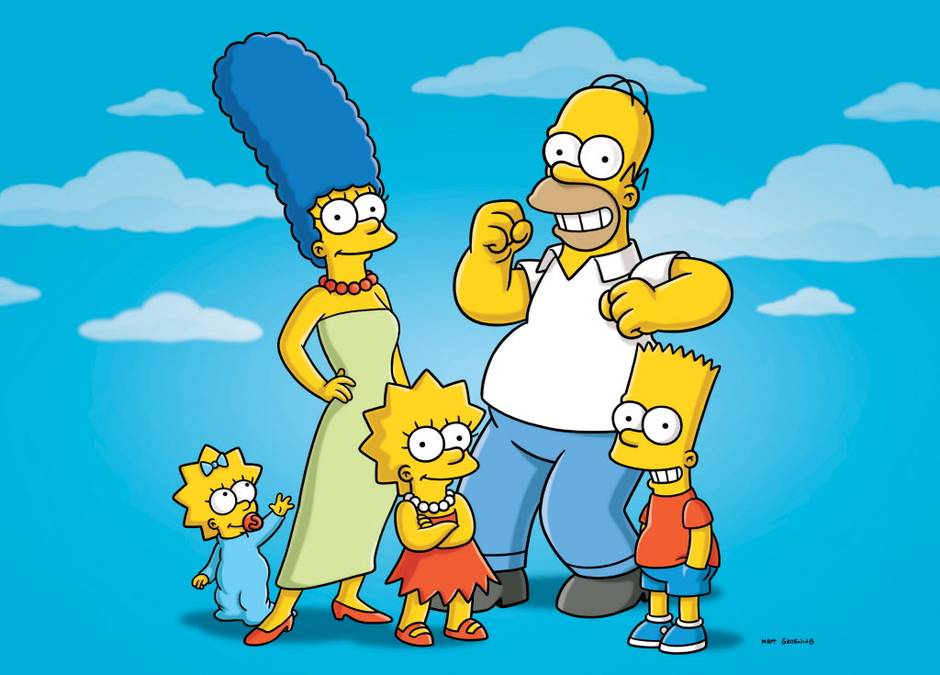
Lego put out sixteen figures in May, and they are a collection of usuals and some that may have surprised fans:  Homer, Marge, Bart, Lisa, Maggie, Grandpa, Ned Flanders, Milhouse, Ralph, Nelson, Chief Wiggum, Apu, Mr. Burns, Krusty, Itchy, and Scratchy. A pretty solid collection, especially when one considers Lego’s policy of no alcohol references which may have played a role in not having a Moe or Barney. Itchy and Scratchy are the sort of oddball choices given that they’re cartoon characters in the show, but few are likely to complain. Because the show’s cast is so massive, there’s going to be characters missing and it would have been impossible to satisfy fans with just one wave (I’m not aware of a planned second wave, but these seemed to sell well so it wouldn’t be a surprise to see more). Wiggum could certainly use some help on the force, while Flanders is missing his boys, and what’s a Burns without a Smithers? There’s tons of characters people likely want, so hopefully if a wave two does come around Lego doesn’t waste slots on variants of Homer and Bart.

Each mini figure comes in a plastic pouch that conceals the identity of the figure inside. Retailing for about four dollars, some may be willing to give in to chance and pick them blind but anyone with some extra time and a little determination can prod at the bags and figure out who’s in each one. The head sculpts of the figures make this easy, but also the included accessories. Bart’s skateboard is pretty easy to pick out, as is Nelson’s baseball bat. The hardest ones for me were Ralph and Milhouse as both characters are the same size and their accessory is a flat square Lego piece. This meant finding the head, and being extra certain. I ended up with three Ralphs before I found a Milhouse. The accessories are pretty cool though. The piece that comes with Ralph and Milhouse is a bit overused, but they’re all printed differently and contain some classic show references such as Ralph’s “I Choo Choo Choose You” valentine and Grandpa comes with his newspaper with the headline “Old Man Yells at Cloud.” Homer comes with a unique donut piece and TV remote and Burns has a transparent Lego head piece with Blinky the fish printed on it. Maggie has Bobo the teddy bear, and Itchy and Scratchy each come with an instrument of violence. All of the figures look really good, the only one that looks off to me is Wiggum because he should be morbidly obese. Instead, he uses the same body as every other figure with no attachments to make him look fatter. Homer, since his shirt is white, has a line printed on him to mark his bulging stomach, but since Wiggum wears dark blue, the same technique doesn’t really work.

If Lego had stopped there with The Simpsons it still would have been cool, but they didn’t. Enter The Simpsons House!

IMG_0153

Consisting of over 2500 pieces, the home of The Simpsons is a large set that is a site to behold. I couldn’t resist the call

The Couch.

The Couch.

of it, even if it was excessive, and purchased my own set. The set contains bricks to construct the house and also Homer’s famous pink car complete with dents. Included with the set is another version of The Simpson family plus another Flanders. Each figure differs slightly from the stand-alone ones; Homer is dressed for work and Marge has an apron, Ned is dressed for grilling while Bart is missing his slingshot from his back pocket. Most also have half-closed eyes while Maggie has a more neutral expression compared with her other figure’s concerned look. The differences are minor, and while some may see this as a missed opportunity to get more figures, Lego pretty much had to include a set of the family in both the house set and the retail figures. Perhaps the addition of Flanders could have been re-evaluated. Lego could have just made him exclusive to the house set and put someone else in the mini figure release. The only thing I feel they really messed up on was not including Lego versions of Santa’s Little Helper and Snowball II. Both pets are featured on the box as part of the family but are strangely absent from the set.

The cut-away view of the house.

The cut-away view of the house.

Lego had a somewhat difficult task of creating a three-dimensional set of an animated home. Early in the show’s life, the house didn’t seem to always have a defined layout but over the years the animators and artists have clarified this more. The first floor is pretty standard though: through the front door is a short hallway with a closet at the end and stairs on the right. To the left is the den, to the right the dining room. Up from the den is the living room which has an entryway on the top right which goes into the kitchen which wraps around to connect with the dining room. On a few occasions there’s been a bathroom on the first floor as well as a rumpus room. There’s also a basement entrance somewhere and the door to the garage. Lego, perhaps fearing the set would be much too large, chose not to really adapt the true layout of the house and attempted to just hit on the important stuff.

The other side of the cut-away. The room on top is removable.

The other side of the cut-away. The room on top is removable.

From the outside, the house looks pretty great, almost perfect. There’s the bay windows on the front, the ancient TV antennae on the roof, and even the chimney looks good. Veteran viewers will notice that while the garage is in the right place, the house doesn’t wrap around behind it like on the show. This becomes a bit of an issue when constructing the second floor as it’s pretty cramped. Aside from that though, the house looks great. Inside on the first floor there are just two rooms: the kitchen on the left and living room on the right. The living room is kind of an amalgamation of the den and living room from the show. The famous couch and TV are present (modeled after the old tube TV from the earlier seasons) from the living room, while the rug and piano are there from the den. Missing is the fireplace since the chimney is on the other side of the house and there’s no ceiling fan, as well as other things. There’s a closet of sorts tucked behind the stairs where

Marge can store her vacuum, and the sailboat picture is above the couch where it should be. Breaking from logic though, is the entryway to the garage being right in the living room with no door to separate it. This doesn’t make much sense and is kind of disappointing. Over in the kitchen, the color scheme is pretty faithful to the show between the two-toned floor and the pink and orange cabinets. The included table is kind of odd looking but more odd is the absence of a fridge. How are The Simpsons supposed to live without a refrigerator? Plus that ugly green fridge is kind of iconic, isn’t it? The kitchen is also pretty cramped, especially with the table in it, but space had to be sacrificed in order to make the living room larger.


A bird's eye view of Bart's room and part of Lisa's, as well as the garage. Grandpa is apparently over for a visit.

A bird’s eye view of Bart’s room and part of Lisa’s, as well as the garage. Grandpa is apparently over for a visit.

On the second floor, the biggest casualty is Maggie as she doesn’t get her own room. Instead, she gets a crib in Homer and Marge’s bedroom. Bart and Lisa’s rooms are done rather well with Bart’s shining brighter because his personality is captured well. Homer and Marge have a larger room but it’s strangely empty and doesn’t connect to the bathroom. The second floor should have two bathrooms, but there’s only one and it’s too small to even get a bathtub. The roof rests right on top of the house and garage as opposed to snapping on so that users can easily remove it to access the rooms underneath. Bart’s room and the top of the stairs also just rest on top of the second floor so it too can easily be lifted out to access the living room while the whole house can open vertically for a cut-away look at everything. The garage is roomy enough to fit the car in comfortably, and even includes numerous power tools for Homer to neglect. Outside the house is the mailbox as well as Ned’s grill. There’s also two lawn chairs and Bart has a skateboard ramp. The wife and I assembled the entire house over the course of about a week. We didn’t do construction on it daily and took our time though impatient builders could likely put this thing together in a day with some determination. The instructions were easy enough to follow and thankfully only a few stickers are involved (I assume hatred for stickers is pretty much universal amongst Lego builders).

We're all filthy perverts for looking at this.

We’re all filthy perverts for looking at this.

It’s easy to nitpick this set because it’s not all that faithful to the show and the show has been around for over twenty years. Fans of The Simpsons are intimately familiar with how the house is supposed to look so it must have been intimidating for Lego to even tackle it. Inaccuracies and all, this is a set worth investing the time in for Simpsons enthusiasts. Lego did do a good job of getting the smaller details right like Bart’s half-open desk drawer and the “Property of Ned Flanders” sticker adorning the air conditioner hanging off the house. It’s my hope that Lego does not stop here. We already have an Apu mini figure so how about a Kwik-E-Mart? And it would be a shame if The Android’s Dungeon were not created, at the very least, as a Comic Con exclusive or something (I assume Moe’s Tavern is a no-go considering the alcohol policy). Lego could easily milk this franchise for a lot more, so we’ll see what the future holds, but if this is all we get then at least it looks cool and The Simpsons have a place to sleep and watch TV.


The Ren & Stimpy Show: Seasons 1 & 2

51KRQ4AZ4SL._SY300_It’s probably safe to say that there has never been a more controversial Nickelodeon show than Ren & Stimpy. Conceived by John Kricfalusi and his team of writers/animators at Spumco, The Ren & Stimpy show was a throwback to the days of Tex Avery and Chuck Jones when cartoons didn’t need a message or contain any sort of educational content. Beyond the format, there were numerous controversies behind the scenes as well as Spumco was slow to deliver new episodes and John K. was constantly fighting with the censors at Nick over the content of his show, eventually leading to his firing with Nickelodeon/Viacom still holding the rights to the characters. Because of this, seasons 1 and 2 of The Ren & Stimpy Show are easily the seasons held in the highest regard by cartoon fans as they’re the only two series creator John K. worked on. The show would last another 34 episodes after John K’s firing and would eventually be revived in the new millennium when the rights reverted back to Kricfalusi as the short-lived Adult Party Cartoon. Kricfalusi’s right-hand man, Bob Camp, remained onboard with Nickelodeon and there were some good episodes released in season 3 and beyond, but the best was definitely contained in the first two seasons.

Ren & Stimpy was another take on the venerable cat and dog genre of comics and cartoons. The two were designed to play off each other with Ren being the smart, cunning, and less conscionable one, and Stimpy the dim-witted, good-natured character. There was no continuity from one short to the next allowing Ren and Stimpy to hold-down whatever kind of job fit the mood of the short, live in any part of the world, or just plain exist in a more ridiculous version of reality than the next. Sometimes they lived in a house, sometimes a trailer, sometimes a tree, though usually they were poor and sometimes even homeless (as was the case in the pilot). Spumco’s addition to the genre was more gross-out humor, more surrealist imagery, and just out and out lunacy. Save for perhaps Marvin The Martian, most Loony Tunes shorts occurred in reality with anthropomorphic characters. There were different rules for physics, and firearms certainly never functioned as intended, but there did seem to be clearly defined rules. The Ren & Stimpy show shunned such rules. Ren, in particular, seemed to lack a definite form as his face and body would constantly change shape to suit the scene. Expression was important to John K. and his characters often exhibited new and interesting expressions, with Kricfalusi allegedly demanding his animators not repeat expressions in subsequent cartoons. The backgrounds often lacked form and were more interested in surrealism. The pilot, “Big House Blues,” is probably the best example of this. Whether it was by design or to keep costs down, I’m not sure, but it added a unique dimension to the show.

Backgrounds weren't always clearly defined and often used to evoke a certain emotion.

Backgrounds weren’t always clearly defined and often used to evoke a certain emotion.

Aside form the presentation aspects, The Ren & Stimpy Show differentiated itself from other programs of its day and past with its own brand of humor. Violence was a staple of the program with Ren often getting irritated with Stimpy and resorting to slapping him across the face while berating him for being a “fat, bloated, eeeediot!” Even the characters would react to a situation in a violent fashion with their eyes bugging out impossibly far and their brain smashing through their skull. The show also delighted in poking fun at its audience by creating parody commercials for children’s products that really weren’t that far off from the real thing (I bet 90% of the viewing audience wanted some powdered toast). There was also plenty of gross gags throughout the show. The gross humor is probably what the show is remembered for best over 20 years since its debut. If it wasn’t Stimpy’s hairballs making you gag, it was the close-up still shots of characters like the fat lady from “Fire Dogs.” These hyper-detailed, unanimated sights, were another unique feature of the show often utilized to show just how ugly the world of Ren & Stimpy was. There was plenty of scatological humor as well surrounding used kitty litter or even Stimpy’s personified fart.

It should be pretty obvious at this point that The Ren & Stimpy Show was not for everyone. For those of us who grew up with Bugs Bunny and Daffy Duck, it wasn’t such a radical departure but the inclusion of the gross elements turned off a lot of the older generation. Kids like gross stuff though, well, some do. I was probably the right age when the show premiered for it to leave an impression on me. Sometimes the humor was over my head, and it took me several years to notice the not-so-subtle homosexual innuendo between the main characters, but for the most part I got it and it worked for me. And now when I re-watch it, it’s almost better because a part of me is surprised at just how much made it to air and how Ren & Stimpy couldn’t exist in today’s world. Seasons 1 and 2, in particular, hold a special place in my heart. I watched the show until the end, but these episodes are the ones I remember the best and the ones I enjoyed the most. If I were to make a top ten list of my favorite Ren & Stimpy cartoons, all ten would likely come from this set.

The show often utilized highly detailed still shots to illustrate gross imagery.

The show often utilized highly detailed still shots to illustrate gross imagery.

The first DVD release of The Ren & Stimpy Show took awhile to arrive, and when it finally did it was greeted with a mixed reaction. Not because of the episode selection though. Sorted in their original air date order, the episodes span the best of the era. There’s “Stimpy’s Invention” and its memorable “Happy, Happy, Joy, Joy” sequence. There’s the visit from Ren’s cousin Sven and the absurdity of that ending. The trilogy of Commander Hoek and Cadet Stimpy are here as well, along with other notable episodes such as “Rubber Nipple Salesmen,” “Fire Dogs,” and “In the Army.” This set basically could be titled the John K. era, and while John K. proved with the Adult Party Cartoon that he didn’t exactly possess the golden touch, the show was at its best when he was in control and voicing Ren. His Ren is a little more sinister sounding than Billy West’s, who voiced Stimpy and would voice Ren for season three and beyond (he also voiced him in a couple of season two episodes, though I am not certain why). The show embodied those surrealist elements more freely under John K’s watch and following his departure the show focused in more on the gross aspects. It lost a little bit of its soul, but I suppose that should have been expected.

The show created other stars other than just Ren and Stimpy, probably none no bigger than Powdered Toast Man.

The show created other stars other than just Ren and Stimpy, probably none no bigger than Powdered Toast Man.

This DVD set’s biggest selling point was the inclusion of the original pilot and the infamous “banned” episode, “Man’s Best Friend,” starring George Liquor. Emblazoned in bold letters on the cover of the DVD is the word “UNCUT” designed to grab the attention of any who see it. What isn’t explained, is that the word only applies to a select few episodes. By the time this DVD was created, Ren & Stimpy were airing on the Spike network in conjunction with the new Adult Party Cartoon. The Adult cartoon was cancelled almost immediately, but Spike continued to air what it dubbed the “Remastered Classics” of old Ren & Stimpy cartoons. Unfortunately, the television landscape had changed and Spike demanded more time for commercials so these remastered classics were less remastered, and would have been more appropriately titled as edited for time. These new masters served as the basis for most of this set and some things were lost. “Ren’s Toothache” seems to be the biggest casualty as much of Stimpy’s oral hygiene sequence is missing, which was an excellent example of the show’s use of sound effects to create an uncomfortable reaction. The other big victim is “Haunted House” and its removal of the insane Bloody Head Fairy. Basically, the cover is a lie and a pretty cheap trick to attract attention. It’s for that reason I actually waffled on buying this set until recently when it was down to around ten bucks. I don’t regret my purchase, but it still bugs me that many of these episodes have been edited and aren’t the episodes I saw as a kid.

At least we now have “Man’s Best Friend” and didn’t have to resort to the internet to view it. It’s not the best episode of Ren & Stimpy, but it’s a solid B+ affair with perhaps the show’s most violent sequence. It’s also nice to finally see the unedited version of “Big House Blues” and the full scenes we’ve been seeing in brief clip form during the show’s opening sequence for years (specifically, Ren drinking from a very gross looking toilet). There’s some bonus content in the form of a brief documentary on the show’s creation and around half a dozen commentaries. Because the show was only a half hour, this set is the type you can basically blow through in a weekend, but it will be a pretty good weekend.


Ranking the WrestleMania Main Events: The Top 3

We are now just a little over 24 hours away from WrestleMania XXX. Considering it’s the 30th edition of the WWE’s flagship show we should expect something grand and whether we get it or not will surely be debated come Monday. What has come before it has been a mix of good and bad, immortal and forgettable, but these last three main events have all been great, for one reason or another. Though as a sort-of final thought on the WrestleMania main events on the whole, I would offer that they do not represent the best of WrestleMania. In doing this feature I realized that most of the greatest matches of all time occurred during the undercard. I’m not sure what that says about the event, other than that Hulk Hogan was a pretty poor and predictable wrestler, but I suppose it doesn’t matter much in the long-run so long as the entire show is good. That said, these last three matches actually do represent the best of the card from their respective WrestleManias and the fans should have been sent home happy after witnessing these three.

wrestlemania153. The Rock vs Stone Cold Steve Austin (WrestleMania XV)

The main event for WrestleMania XV is your classic good guy battles through adversity and comes out on top at the biggest show of the year. It’s a pretty common formula for the industry and that’s because it works. WrestleMania often has the good-guy challenger come out on top in the main event with successful title defenses being pretty rare. Successful heel title defenses are even rarer. For XV, The Rock was the undisputed top heel in the business, and fresh off a long feud with Mankind, he was set to take on Austin. Austin and The Rock had previously battled over the Intercontinental title so a match between the two wasn’t foreign to wrestling fans, but by 1999 both were so huge that it felt like an all new feud. Austin was coming off of his feud with Vince McMahon which had finally resulted in an actual match between the two at St. Valentine’s Day Massacre the previous month. The feud would carry-over in the next pay-per view, Backlash, but was at long last starting to wane.

Austin and The Rock put on a great show for the fans with lots of outside the ring work and humorous character spots. This match strikes a nice balance between wrestling and entertainment. The Rock’s character was so over-the-top that his main event matches needed to have something special added to them to take advantage. Their follow-up WrestleMania match at XVII had a little more of this extra-curricular stuff, but the finish to it was too drawn out and I disliked Austin’s heel turn, which is why I rank this one ahead of it. Hopefully we one day get another match-up between two huge superstars like this in a WrestleMania main event (some would argue we did with Rock and Cena, but Cena’s love from fans is not universal like Austin and Rock’s was in 1999) because it is awesome when the crowd is this into it.

Two of the best.

Two of the best.

2. Shawn Michaels vs The Undertaker (WrestleMania XXVI)

Shawn Michaels and The Undertaker stole the show at WrestleMania XXV in what many fans consider the greatest WrestleMania match of all time. WWE recognized how well-received it was so they did it again at WrestleMania XXVI only this time in the main event and with Michaels’ career on the line as the match stipulation. Other than the career vs streak booking, there were no actual titles on the line in this main event and no one cared. At this point, Undertaker’s “streak” is bigger than any belt when it comes to WrestleMania. Maybe next year I’ll rank his best WrestleMania matches and that way I can find out just when the streak became a major plot device for the WWE. It’s now the only time The Undertaker even wrestles giving WrestleMania this video game vibe where Undertaker is like the final boss of the last level.

I believe I am in the minority when I say the rematch between Michaels and Undertaker is actually my favorite of the two. They’re both excellent, but I enjoy the added drama of Michaels’s career being on the line (though I also love the moonsault-tombstone ending of the previous match) which helps add even greater weight to the whole thing. This match seemed quicker with fewer pauses for rest holds and such (aided greatly by Undertaker not botching a suicided dive to the outside of the ring). Undertaker and HBK just work exceptionally well as opponents. HBK has always been able to effectively sell his own offense despite often being much smaller than his opponents. Michaels is also the perfect size to sell Undertaker’s more high impact offense as he can carry Michaels around the ring and toss him like a rag doll, if he so pleases.

The two go all out, which is something a superstar can do if he knows it’s his last match or that it will be his only match of the year. There’s a nice diving moonsault to the outside by Michaels and plenty of stiff shots. As I mentioned earlier, the storyline ending is just icing on the cake and Michaels gets the send-off he deserves as one of the greatest of all time. This one was a strong contender for greatest WrestleMania main event of all time, but it comes up just a little bit short to the next one.

Michales and Hart would battle for over an hour to determine the WWF Champion.

Michales and Hart would battle for over an hour to determine the WWF Champion.

1. Shawn Michaels vs Brett Hart (WrestleMania XII)

The Iron Man Match. That’s all that really needs to be said to any wrestling fan and they’ll know what you’re talking about. Iron Man Matches had occurred before but most fans had never heard of it. Even today, it’s not a common match type as it requires its competitors be willing and able to wrestle for an hour. I think many guys could pull it off, but not sell it as a great match. Even two guys in excellent physical shape like Shawn Michaels and Brett Hart had to stop for rest holds and such, but the vigor at which they’re able to go at each other impresses me every time I view this match.

For those unaware, an iron match is a timed match in which the competitor who scores the most “falls” in the allotted time limit wins the match. For this contest that meant pinfalls, submissions, count outs, and disqualifications were all on the table. The beauty of this match was that there were no falls recorded during the sixty minute time limit. When it seemed like the match would end in a draw, Brett Hart was ordered back to the ring to continue into overtime where Michaels eventually won via pinfall for his first WWF Championship. The finish is great, but getting to it was better. Yes, there are the previously mentioned rest holds and slow parts, but the match really takes off during the middle stages and the two competitors somehow keep it going. There are great moments of aerial superiority from Michaels, while Hart is able to sink in a  sharpshooter at one point as well. Michaels and Hart worked so well together that it’s a shame they didn’t have more main events at WrestleMania (they were supposed to main event WrestleMania XIII, but Michaels pulled out due to injury). Their chemistry in the ring is unrivaled as they’re able to realistically sell each other’s offense and pull off what should be unrealistic counters. They have a flow like two expert dancers and their contrasting personalities help to elevate the show side of the match. The Iron Man Match is not only the greatest main event in WrestleMania history, it’s also the greatest match in WrestleMania history and it will take one-hell-of-a-match to knock it off the top of the mountain.