When I received Mondo’s Ray Stantz from The Real Ghostbusters I thought my collection was complete. I had all four Ghostbusters, plus Samhain, which made for a tidy display. And best of all, I had it all in place well in advance of Halloween 2026. When Mondo first put Peter Venkman and Samhain up for preorder in October 2024, that was the goal for me: get all four Ghostbusters on the shelf by 2026. And at $101 a pop ($202 if you went in for the two-pack with the ghosts) I wasn’t exactly interested in a hypothetical tuxedo Peter or casual Winston. Just the core four for me and the most memorable ghost – perfect.
Then came Mondo with Janine. Janine was there from the beginning serving as the sarcastic secretary for the Ghostbusters. She would go on to become the fifth buster as she would, at times, dawn a jumpsuit and proton pack and get her hands dirty. She is absolutely deserving of a figure, but at these prices did I really need such a thing? Especially since she wasn’t being bundled with a ghost, but her desk. A hundred dollar desk is fun, but impractical. Then Mondo surprised me with the price of $140. Then my job surprised me with a spring bonus. The stars were seemingly aligned. I tuned into Mondo’s Toy Talk on Janine and came away sold. She looked great, shipping was still free, and really the only downer was that the tariff surcharge was still in effect ($12, in this case). My once mighty resolve faltered and I soon found myself ordering a Janine I had never intended to get. She wasn’t scheduled to ship until December and would miss that Halloween window I had placed so much value on, but that wasn’t a big deal. I’d have the four guys and Janine would just have to wait until 2027 to assume a place of prominence in my home. What I wasn’t counting on was a Halloween miracle.
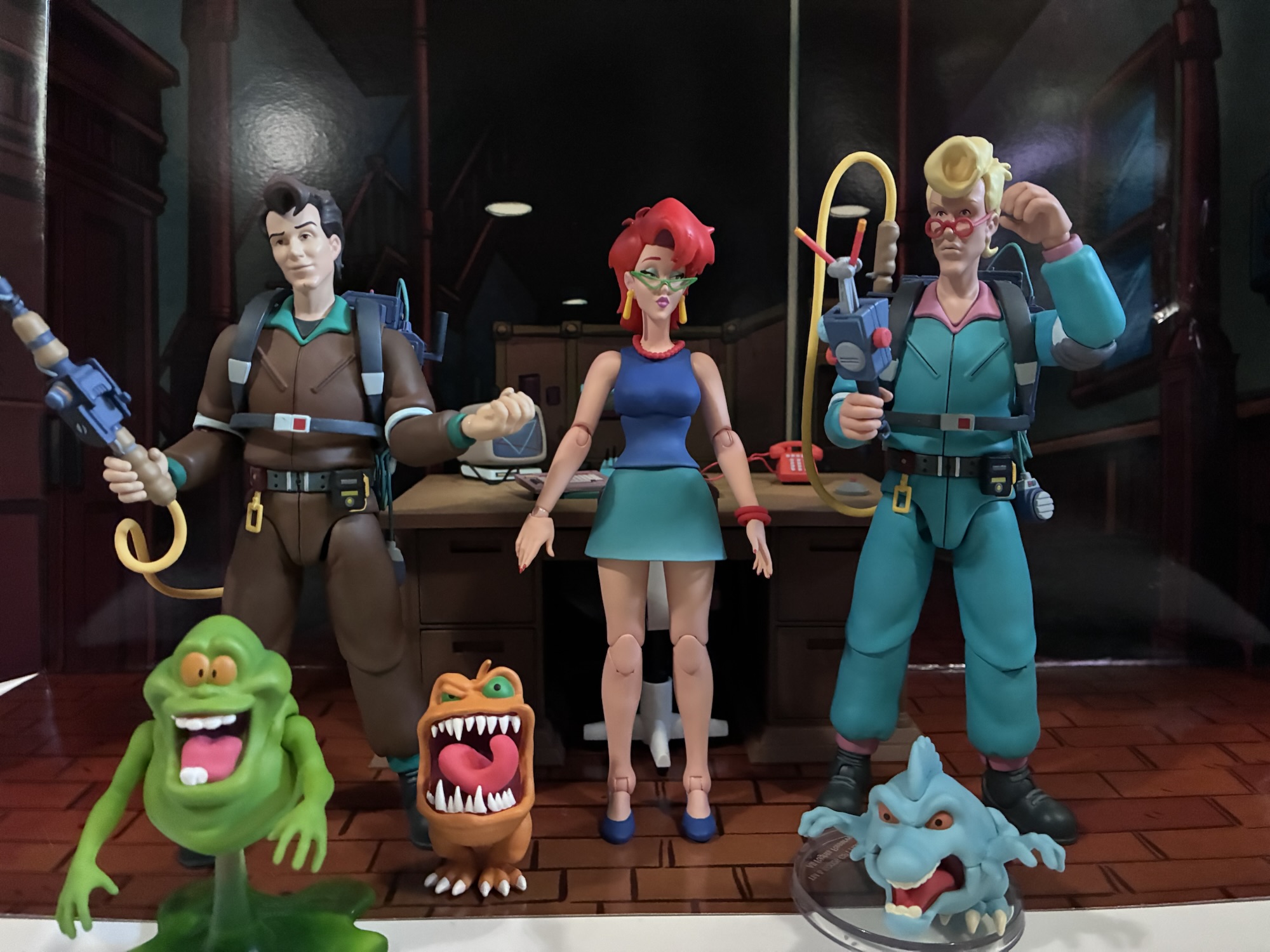
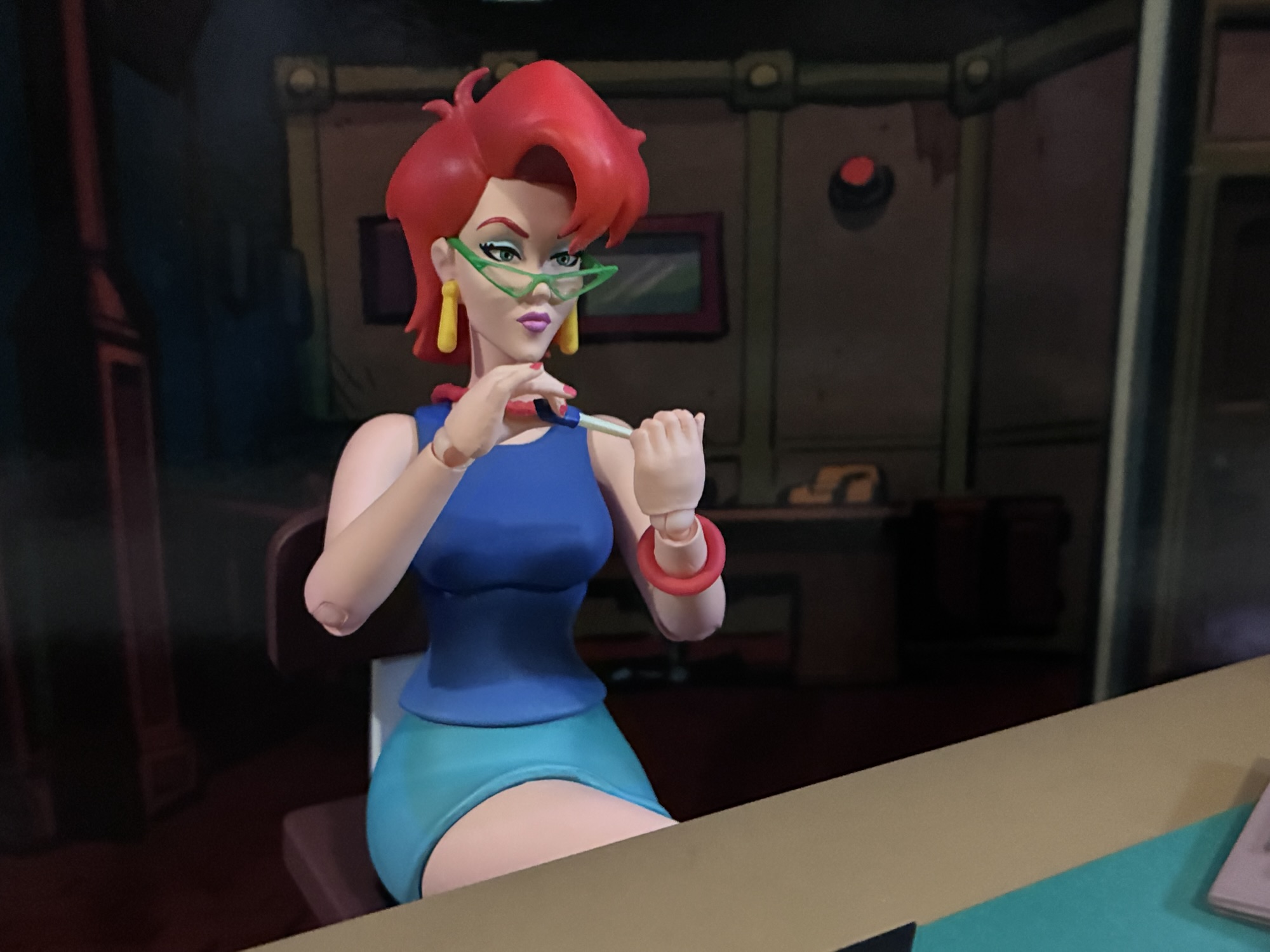
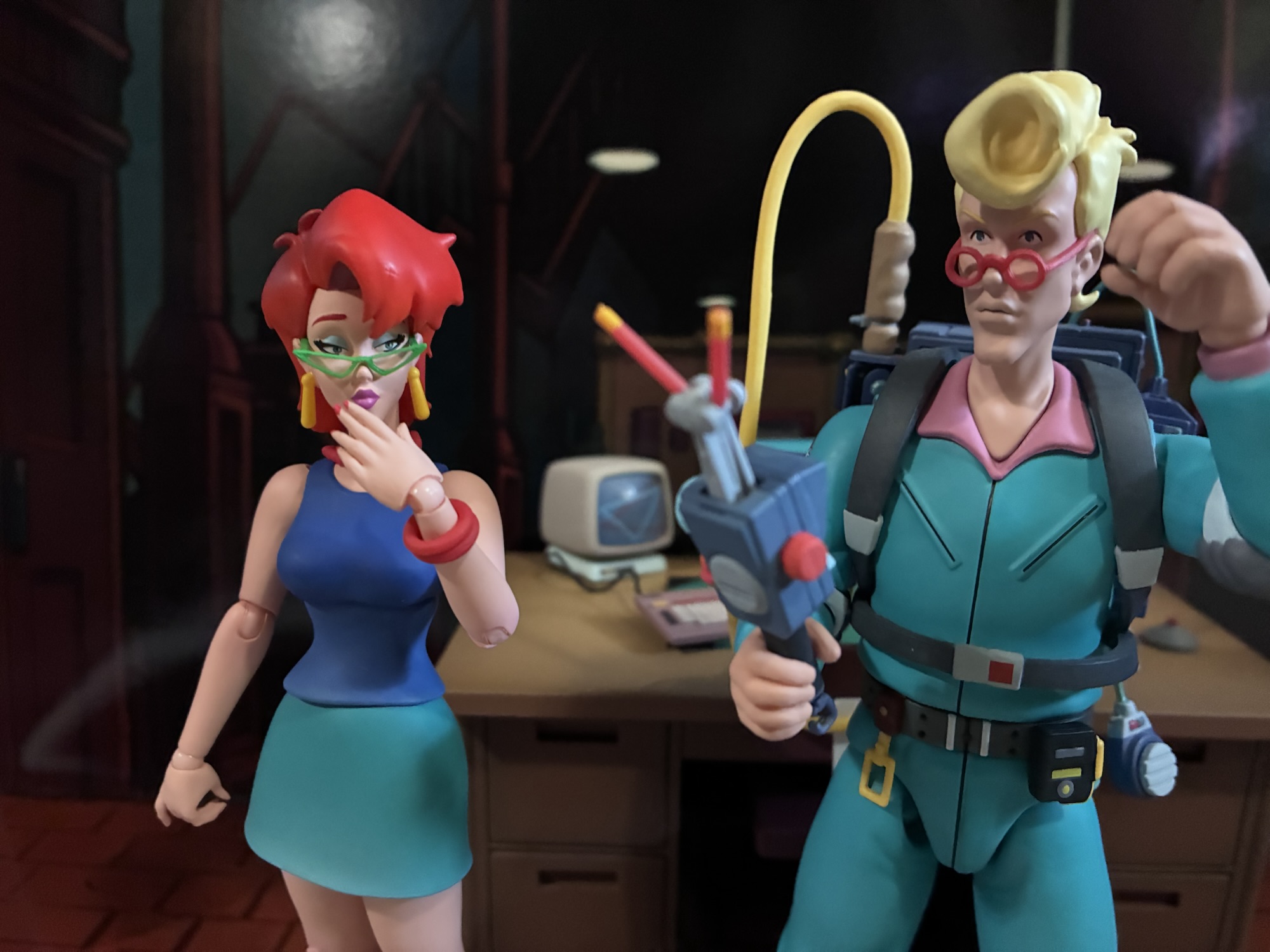
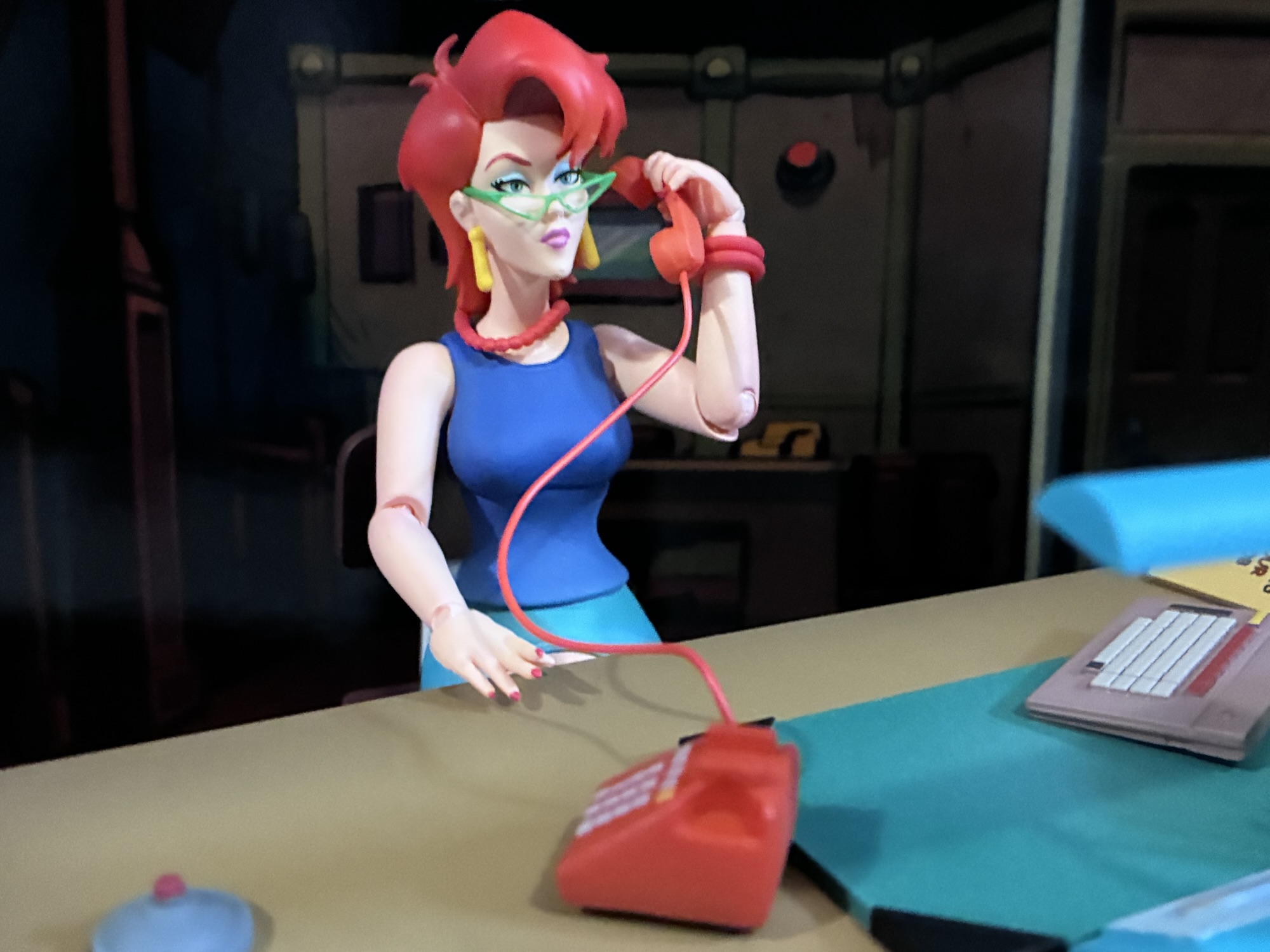
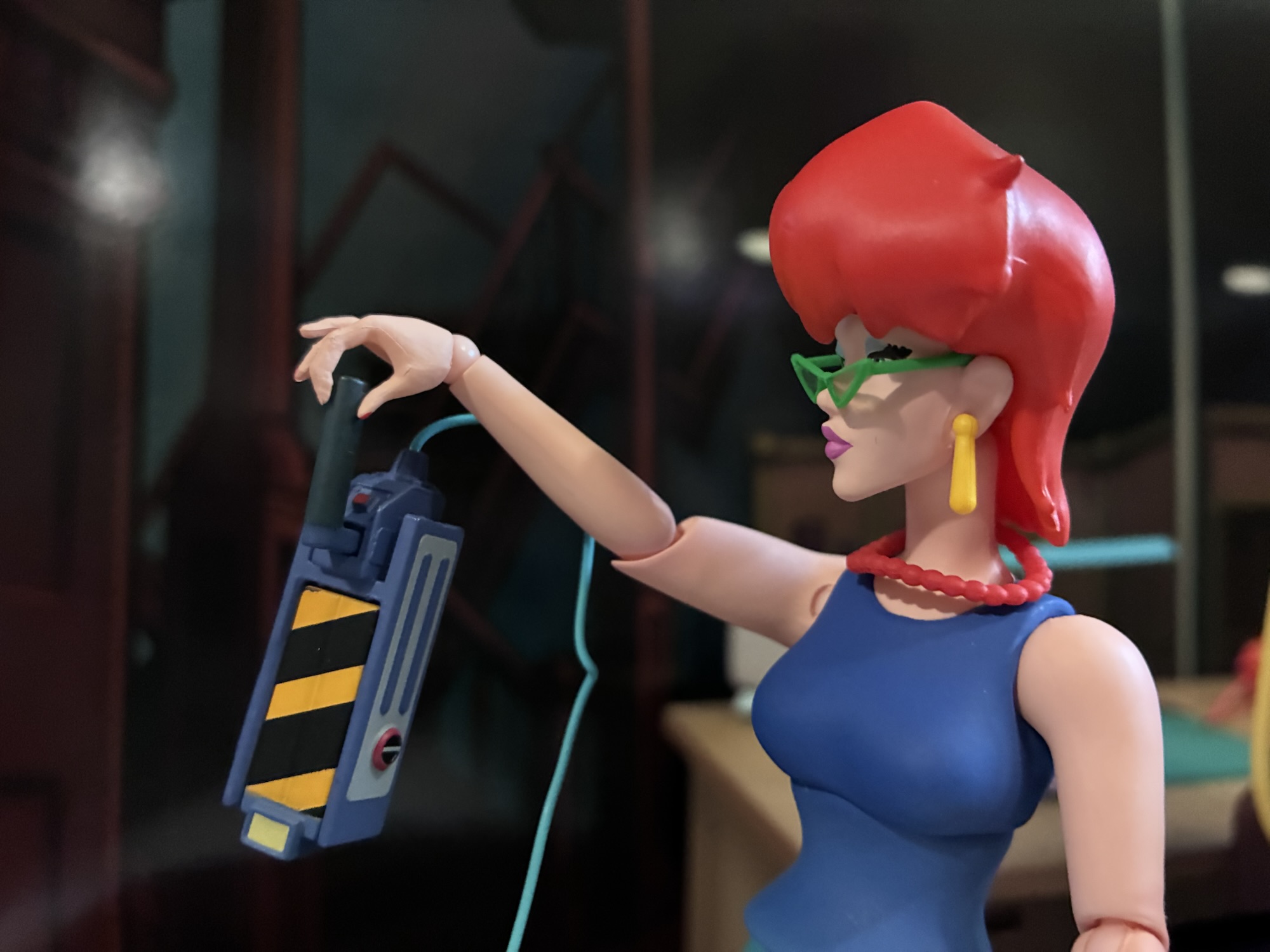
Because of efficiencies or maybe just good planning on Mondo’s part, Janine did indeed arrive in time for Halloween 2026! I was quite surprised to receive a shipping notification in mid-October. When I got an email for it I just assumed it was the Jean Grey figure scheduled for November and I was quite surprised to see Janine was shipping two months early. Mondo is usually spot-on with their release windows, but this is a nice surprise. She comes in the ghost trap packaging that the solo ‘busters come in and the pack-out is pretty damn good. This is another Alex Brewer sculpt with paint by Mark Bristow and it lives up to the standards this line has set. Janine stands at around 6.5″ putting her in-line with the boys which looks pretty accurate to me (and since it’s October I have been watching some The Real Ghostbusters). She’s sporting her opening title look of purple, sleeveless, blouse with a turquoise mini skirt. She has her purple pumps, two bracelets, and those iconic green glasses with the triangle lenses. Her proportions are great as she’s slim, but not rail thin. Her hair, a bit of a challenge to adapt to 3D, is big and orange just like it should be. From a head-on perspective it looks like a lot, but turn her to a three quarters angle and it’s pretty much a perfect match to how we’re first shown Janine in the opening for the show.
The paint for Janine is pretty clean, if not pristine. Her clothing and hair has that saturated, matte, look the boys have which is one of the most effective ways to translate cartoons to plastic. There’s some shading to her arms that’s almost pink in appearance and most noticeable around the elbow and bicep area. It may be a touch overdone, but she does have a distinct complexion in the show. There’s some shading in the hair which is more subtle and adds some depth to the curves. What really impressed me though is the paint on the glasses. It’s a tiny piece of plastic to paint green, but the factory Mondo entrusted with this project absolutely nailed it. And there’s even transparent plastic in use for the lenses which looks terrific. No exaggeration, these are the best action figure glasses I’ve ever seen. The only true blemish is a dot of either black or dark red behind the right ear on one portrait. I may be able to scratch it off, though it did not come off with a simple use of a thumb nail. The only real criticism I could levy at this figure is that her necklace is just colored, red, plastic and it kind of shows. A glossy coat of paint may have been the way to go here. The necklace is also technically an accessory as she’s not wearing it in the box. She is wearing her dual bracelets on her left wrist which were heavily wrapped in the box, like almost everything. I had to pop her hand and head off to get it all off of the figure. It means she won’t display well for those who leave her in-box, but that is not a concern of mine.
Since there are a ton of accessories to talk about with this set, I’m going to go over the articulation first. Janine surprises in this department as she’s actually more articulated than the Ghostbusters: double ball head, hinged shoulders, single elbows, wrist swivel and hinge, diaphragm joint, waist, ball-socket hips, thigh swivel on the hip socket, double-jointed knees, ankle hinge and rocker. I’m guessing that since she doesn’t have to wear a jumpsuit, Mondo felt more secure in cutting up the sculpt a bit more and it’s for the better. The single-hinged elbows are still an aesthetic choice, but they do bend beyond 90 degrees which is probably enough. The diaphragm joint rotates and tilts in all directions a bit. She’s not going to get deep crunches, but there’s some room for nuance posing. The double-jointed knees are the surprise as I thought they might find a single joint more aesthetically pleasing, but we’ve been living with this style of joint for so long as collectors that I don’t even notice it. The skirt had the potential to be a real impediment, but thankfully she likes her skirts short so it’s not the traffic cone some turn out to be. She doesn’t get a full 90 degree kick forward, nor does she perform splits, but it’s good enough for walking and running poses. The ankles work well, but since she is in high heels the ankle rocker is a little less useful than it would be for other figures, but there isn’t much helping that. Her right ankle on my figure doesn’t want to tilt inward much and I think it’s catching on the side of the ankle. I think the joint is not quite snug. Nothing is loose or overly tight and considering she’s a character mostly known for sitting behind a desk I would say the articulation is plenty good enough.
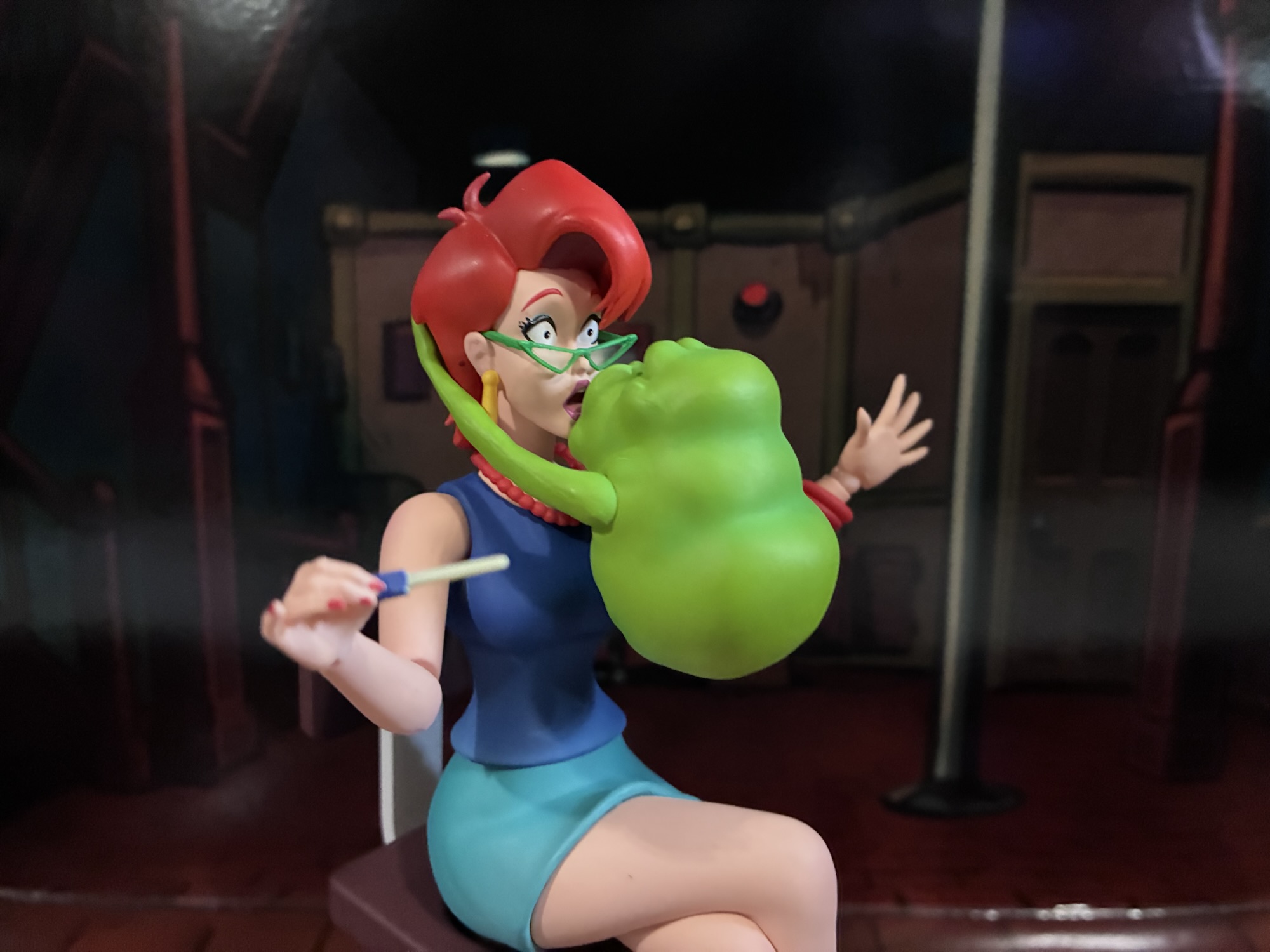
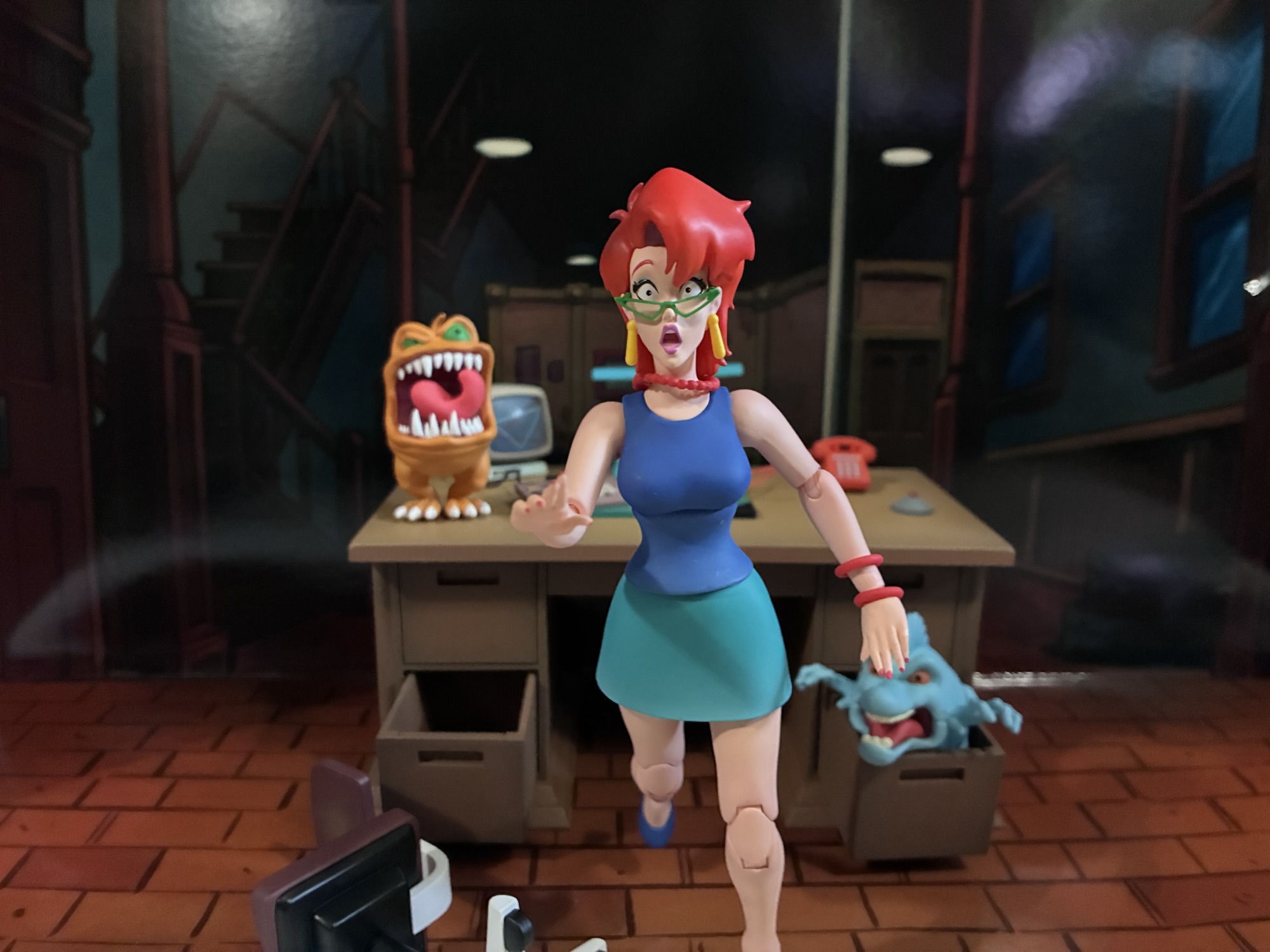
Ok, so there’s a lot of stuff to go over and we might as well start with portraits. Janine not only outdoes the male Ghostbusters when it comes to articulation, but also with personality. She has three portraits to swap between: neutral, side-eye, and scared or surprised. The side-eye is perhaps my favorite as it has a lot of personality within it. She’s dishing sass to that “doctor” Venkman here. For hands, she has three symmetrical sets: relaxed, splayed, and gripping. She also has a right hand with nail file, a left hand with curled fingers for use with said nail filer, and a more nuanced gripping hand for holding something between two fingers and her thumb. I’m not really sure what that last one is for. I even went through all of Mondo’s pictures on their website to see how it was being utilized, but I don’t see it in any shots. It looks like the type of gesture one might use when picking up something gross. I’m curious if I’ll be able to get her to hold a trap with this hand.
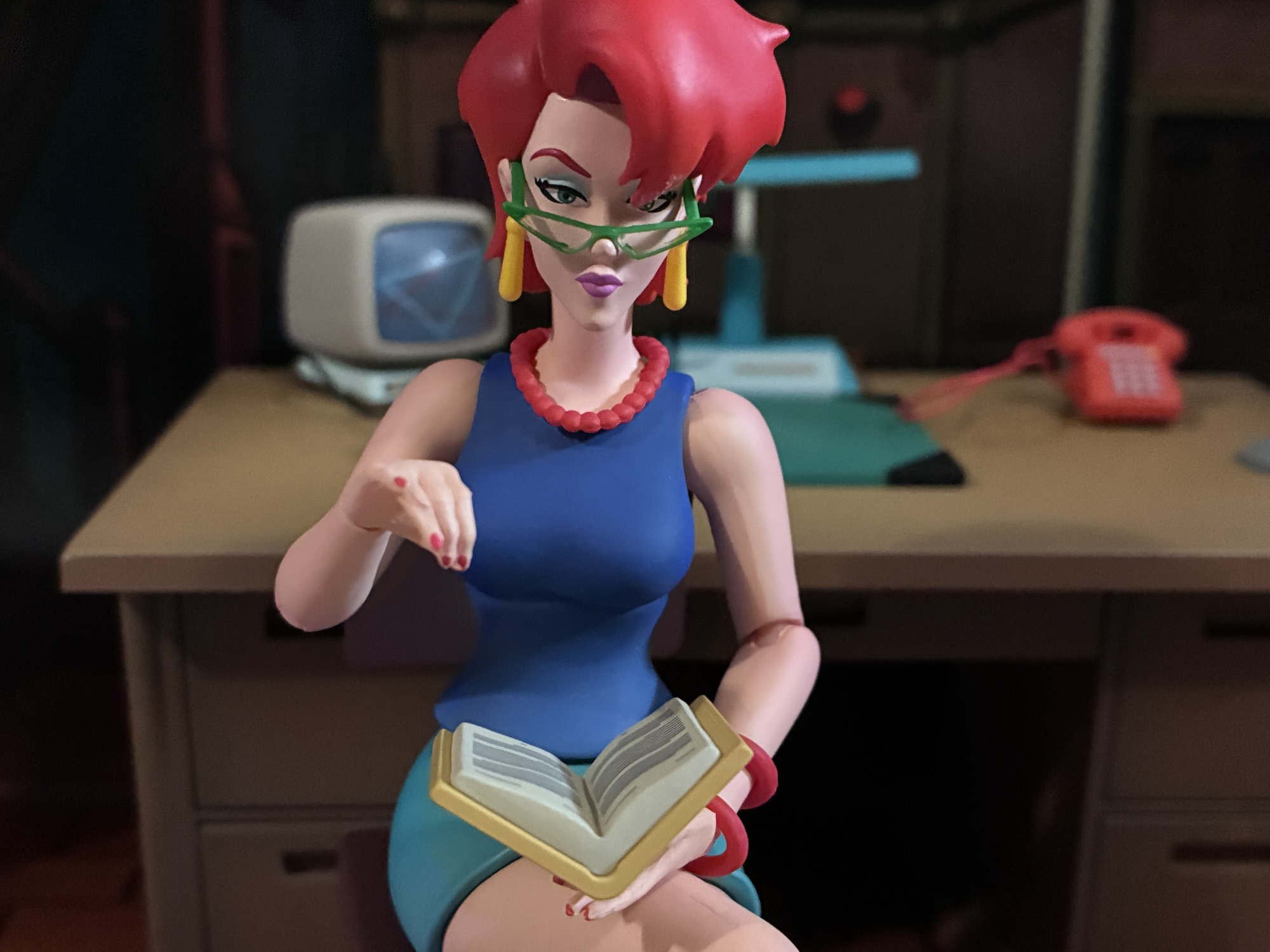
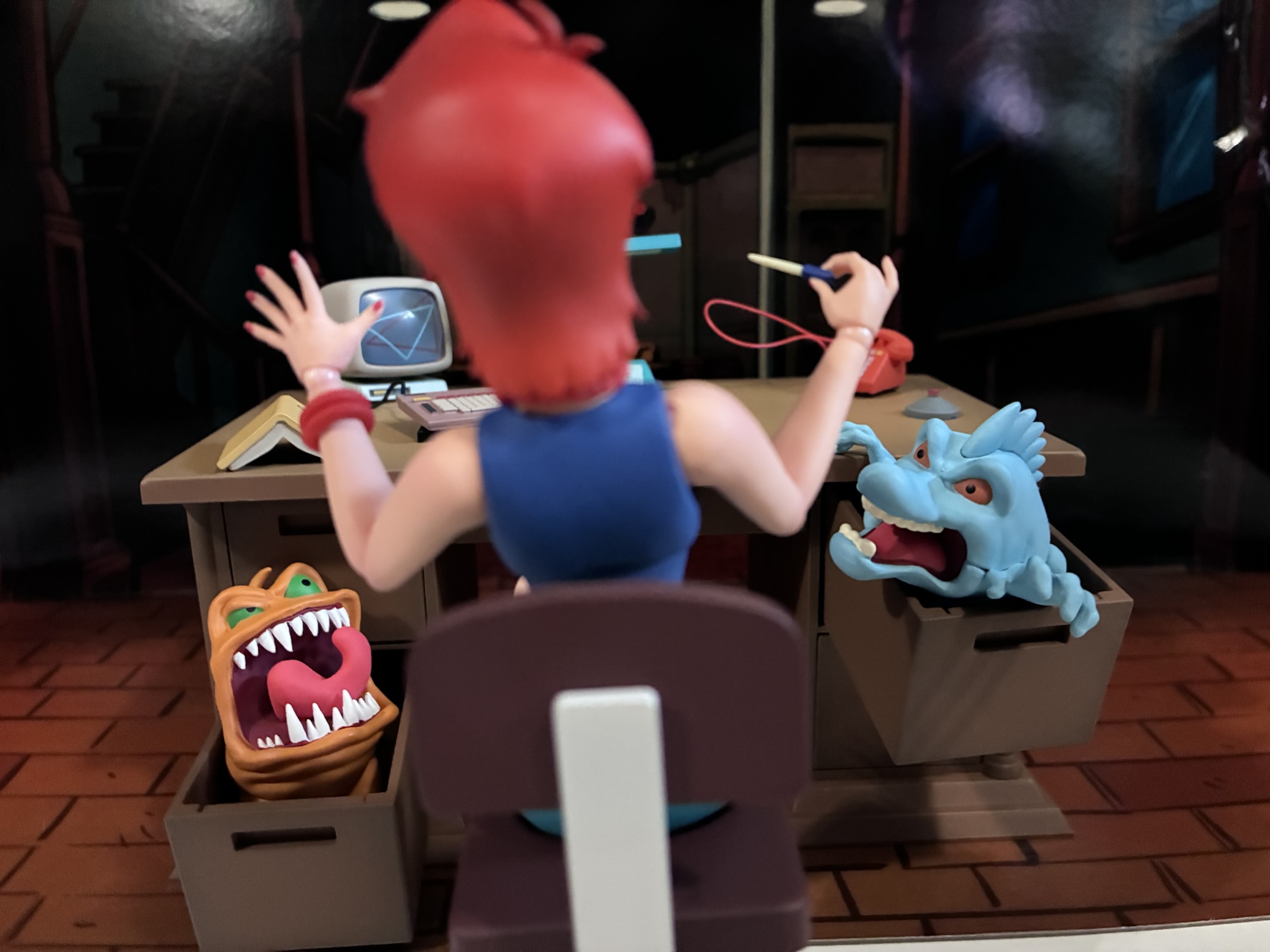
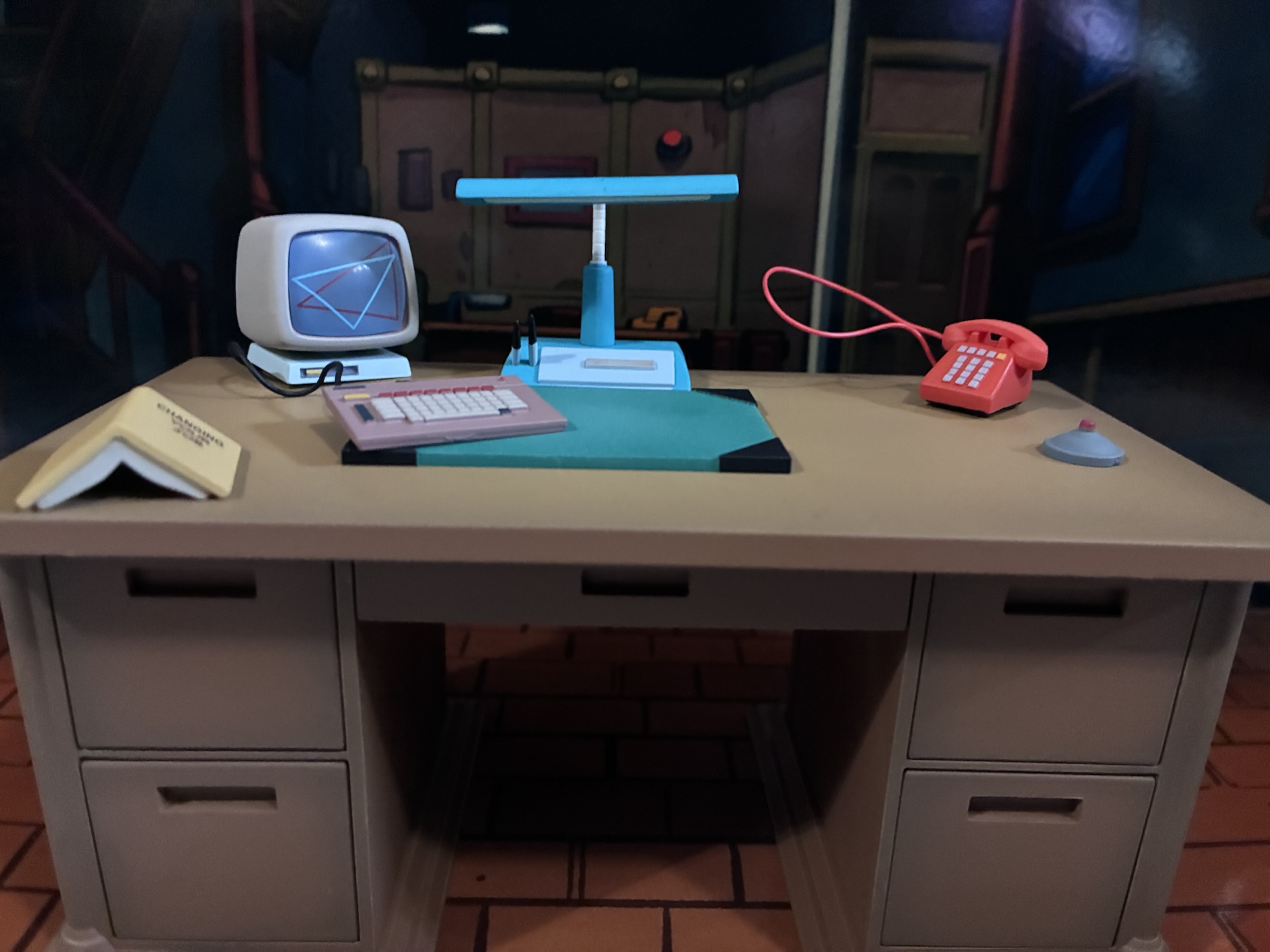
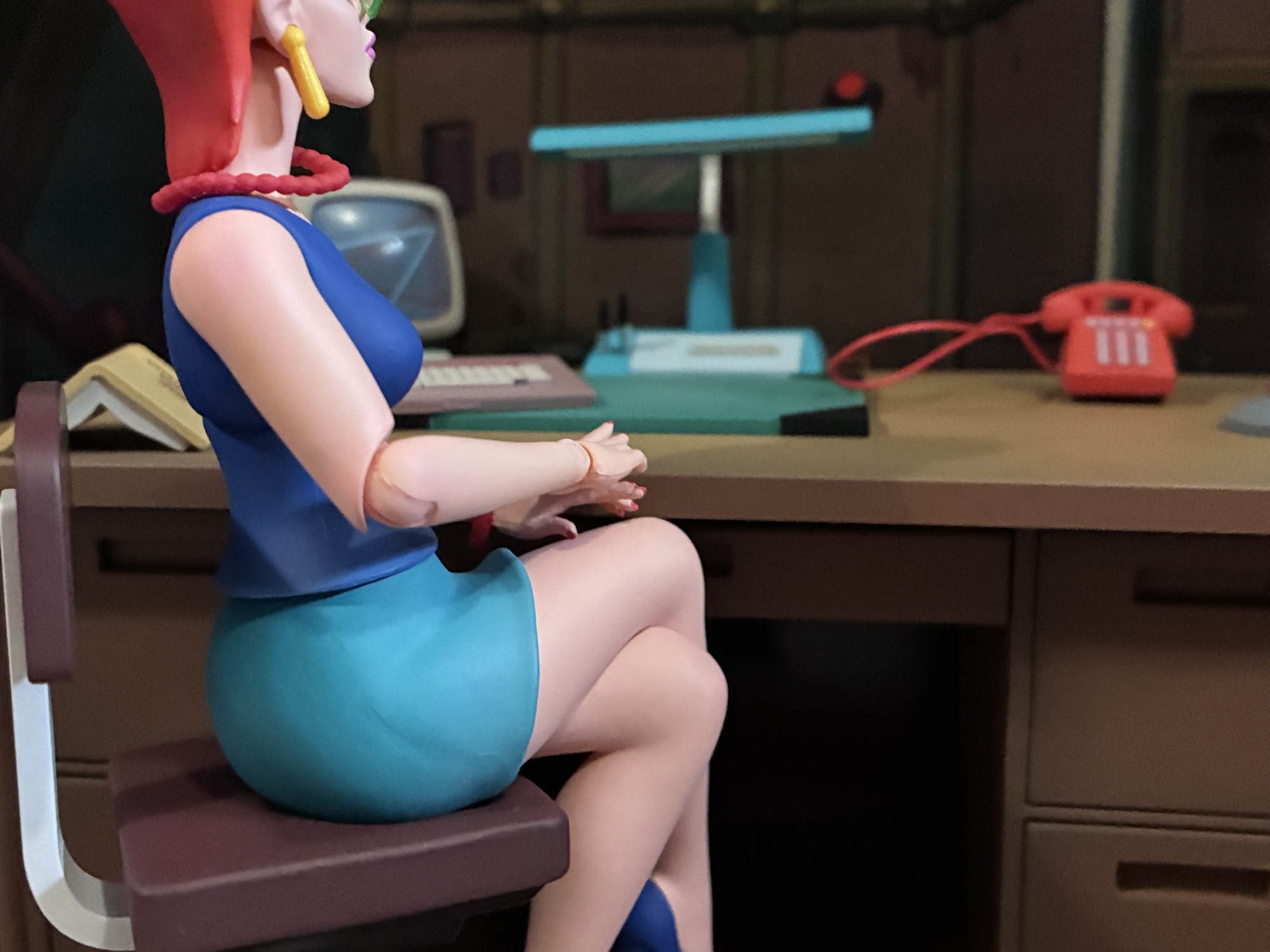
And then there’s the desk which is practically a figure all its own. It’s a pretty nice looking representation of the desk from the show and it’s definitely appropriately sized. It has a nice, matte, appearance and contains five drawers which all open and close. For the surface of it there’s a desk mat, PC, desk lamp, phone, and the buzzer she uses to alert the Ghostbusters when a call comes in. Everything looks like it’s pulled right from the show and the PC has a keyboard which looks great to really sell the whole office vibe. Mine, unfortunately, arrived with the keyboard chord not connected to the monitor like it’s supposed to (confirmed with a few others who also got this set), but a little glue should remedy that. There’s also a desk chair which has two seats for it: a standard one and one with a butt print, for lack of a better term. The butt print is for Janine if you want her sitting at the desk as the indent will help to keep her from falling off the chair. To actually sit at the desk, Mondo included a separate lower half featuring Janine’s legs in a seated position and it works well. It even has a magnet in it so she sticks to the seat. The only downer is her legs can’t quite fit underneath the desk which is a bit of a bizarre oversight. It will tuck in under the lip of the desk, but not all the way under it. Lastly there’s an open book titled “Changing Your Job” which is a very Janine-coded thing to read.
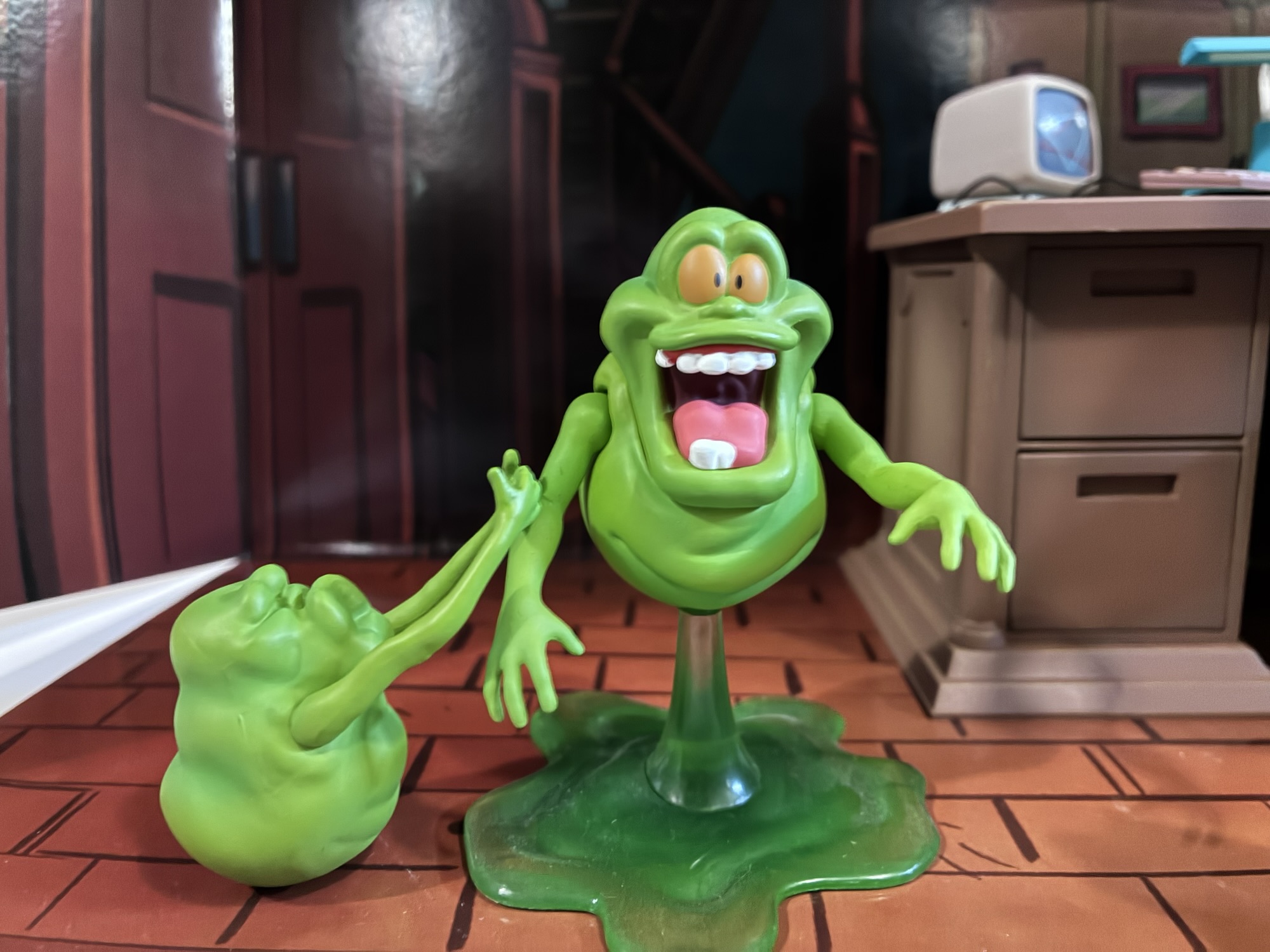
Like the boys, Janine doesn’t come alone. Included with her are three ghosts: kissing Slimer and two companion ghosts. Someone more into the cartoon could probably tell you where these companion ghosts are from, but I am not that someone. One is orange and one is a light blue and they’re designed to fit in any of the side drawers like they’re bursting out to scare Janine. They could also stand on their own if you prefer, but they’re slug figures with no articulation. The blue one has a peg hole on the bottom and Mondo did include two, clear, stands. I believe one is for Janine and the other for the ghost. The orange ghost does not feature a peg hole, but seems to stand just fine on his own. The sculpt and paint on both are great and there’s plenty of personality to them. Kissing Slimer is basically what you would expect based on that description as it’s Slimer with his eyes closed and his lips puckered. His arms are outstretched and his fingers locked as this is designed to hang off of the heads of other figures. It works well with Janine’s scared portrait and also Venkman’s salty expression. I wish there was a burst of acrylic “slime” coming from Slimer’s lips to help create the illusion of slime being left on the recipient of the kiss, but then it probably would have to be more specifically molded which would limit the applications. It would be great if Mondo could come up with a way for the characters to appear “slimed” with a later release. Slimer is noticeably smaller than the one that came with Peter, but I assume this was done to make the figure work better for the effect they’re going for. He is a little plain as he’s just all green, but there’s also not really much room for more given that his eyes are closed and we can’t see his teeth or anything. It’s a solid inclusion and he’s probably going to end up with Peter in my display.
Janine is a pretty terrific release from Mondo. In many ways, she impresses me more than the actual Ghostbusters. I wish they had as many portraits and hand options as Janine as she just feels so much more substantial. With the Ghostbusters, so many of the accessories are shared so there was a sense of diminishing returns with each release and I really wanted each to have a scared expression and more hands. Janine is more expensive compared to a solo Ghostbuster, but I have to believe that desk and all of the stuff associated with it are a major driver of that. I’m definitely glad I talked myself into this release as now it would be much harder to come by. Janine was a timed release on Mondo’s website and obviously that time has passed. She could end up in a Mondo Vault sale somewhere down the road, but those are impossible to predict and I’m not sure how well Mondo publicizes them in advance. They seem to coincide with conventions, so maybe keep an eye out. Mondo had said on the edition of Toy Talk where Janine was showcased that they have no planes to do another run of her like this. She did sport a look almost identical to this one in the show, but with a yellow blouse and red skirt so that could be an option down the road. I do expect them to also do a jump suit Janine in the future and if the line keeps on selling well then maybe we’ll get a Janine with her second hairstyle? This exact release may not happen again, but I doubt this is the end of Janine.
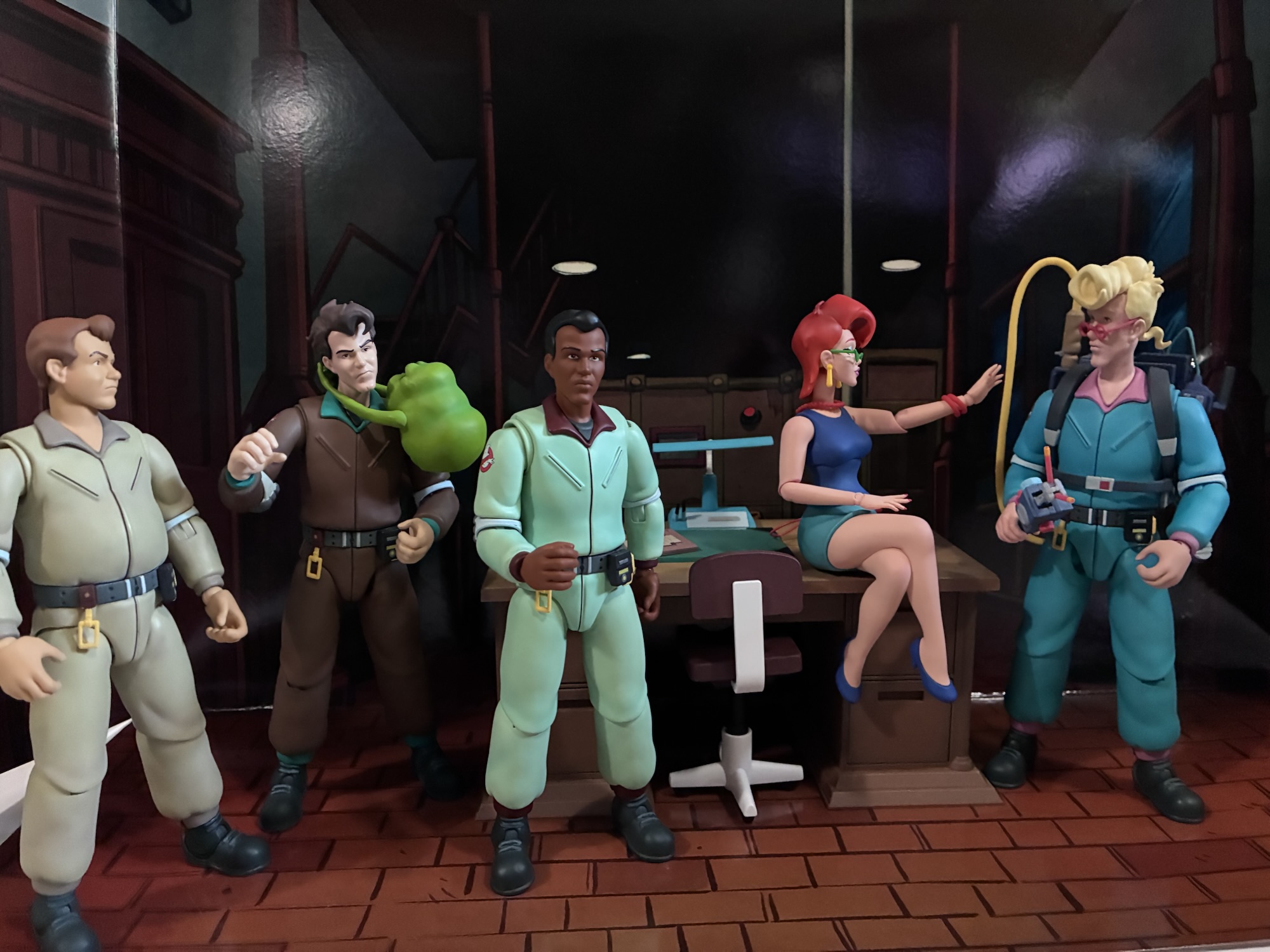
And it’s definitely not the end of Mondo’s The Real Ghostbusters. Already solicited was Louis Tully with The Grundel and Mondo is planning on soliciting The People Busters before the year is through. I believe those are being released as a set so start saving your money if you think you may want them. They’ve also teased another Halloween release and last year they put out a variant Samhain so expect something similar (confirmed before this went live that it’s a glow-in-the-dark Boogieman). And then, of course, there’s the incredible Ecto-1 Mondo showed at San Diego Comic Con. It was originally scheduled to go up for preorder around Halloween, but Mondo has decided to bump it to 2027 out of a desire to spare the wallets of its customer base. That thing is going to be expensive so the more time the better. In fact, I wish they would just announce pricing now so people could plan for it since ordinarily their pre-order window is a mere two weeks. I don’t know if I’m in for that one as much as I’d want it. I’d consider it around $300, but I’m expecting something double that. For their part, Mondo has said they think people will be pleasantly surprised by the price of the car, but I’ll believe it when I see it. I also have some concern about the guys being able to actually sit in it as their articulation is not the best. Still, whether I get it or not, it’s a pretty exciting time for fans of The Real Ghostbusters and that’s someone no one has been able to say for a long, long, time.
Missed some of the other reviews of The Real Ghostbusters figures from Mondo?:
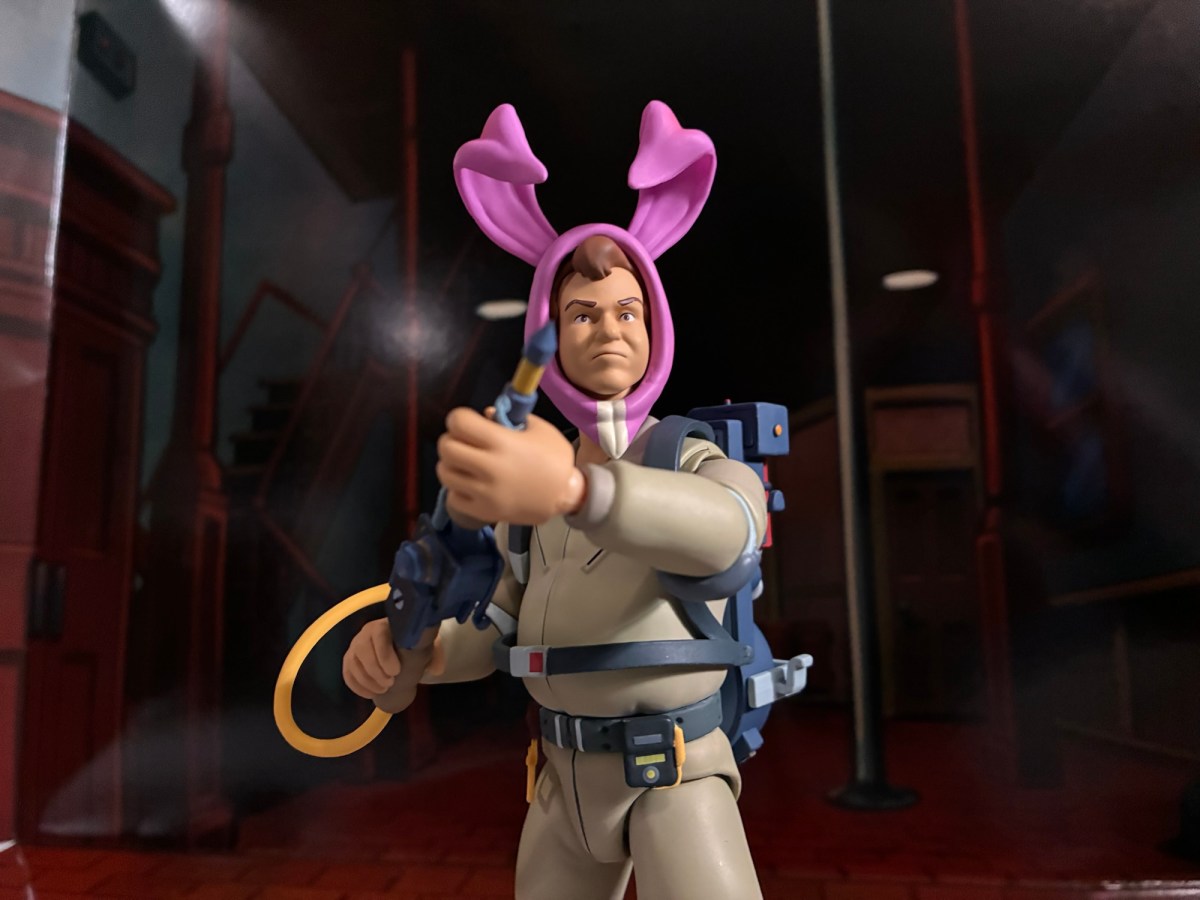
Mondo The Real Ghostbusters Ray Stantz
And with that, another bucket list item can be crossed off for Mondo has released the fourth action figure in its line of The Real Ghostbusters toys: Ray Stantz. Ray follows Peter, Egon, and Winston and completes the quartet from the 1986 cartoon series which has been sorely underrepresented in the adult collectible market. There…
Keep reading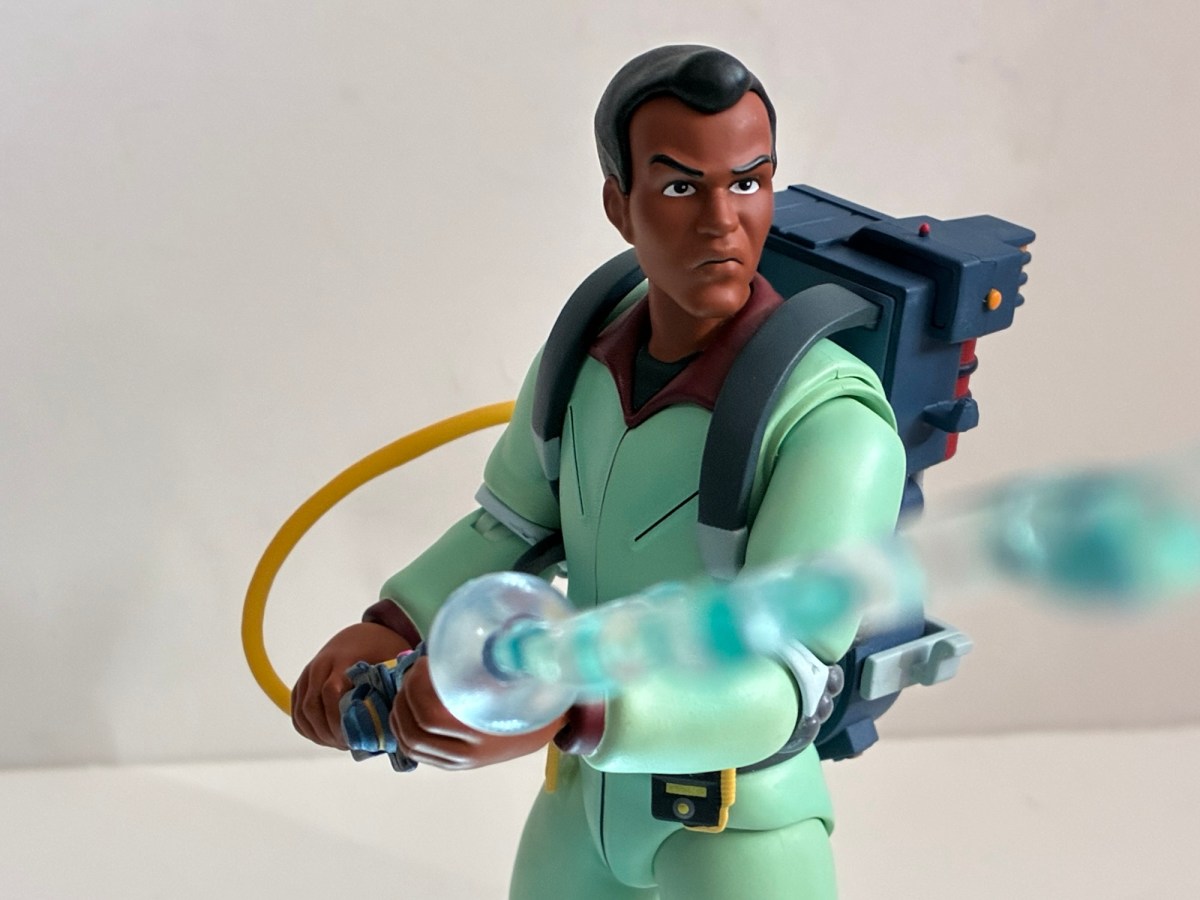
Mondo The Real Ghostbusters Winston Zeddemore
We are now three deep into Mondo’s line of 1:12 scale action figures based on The Real Ghostbusters. Well, we’re now six deep counting the ghosts, but I personally passed on both Boogie Man and now The Sandman who has been released in tandem with our third Ghostbuster, Winston Zeddemore. At this point, we know…
Keep reading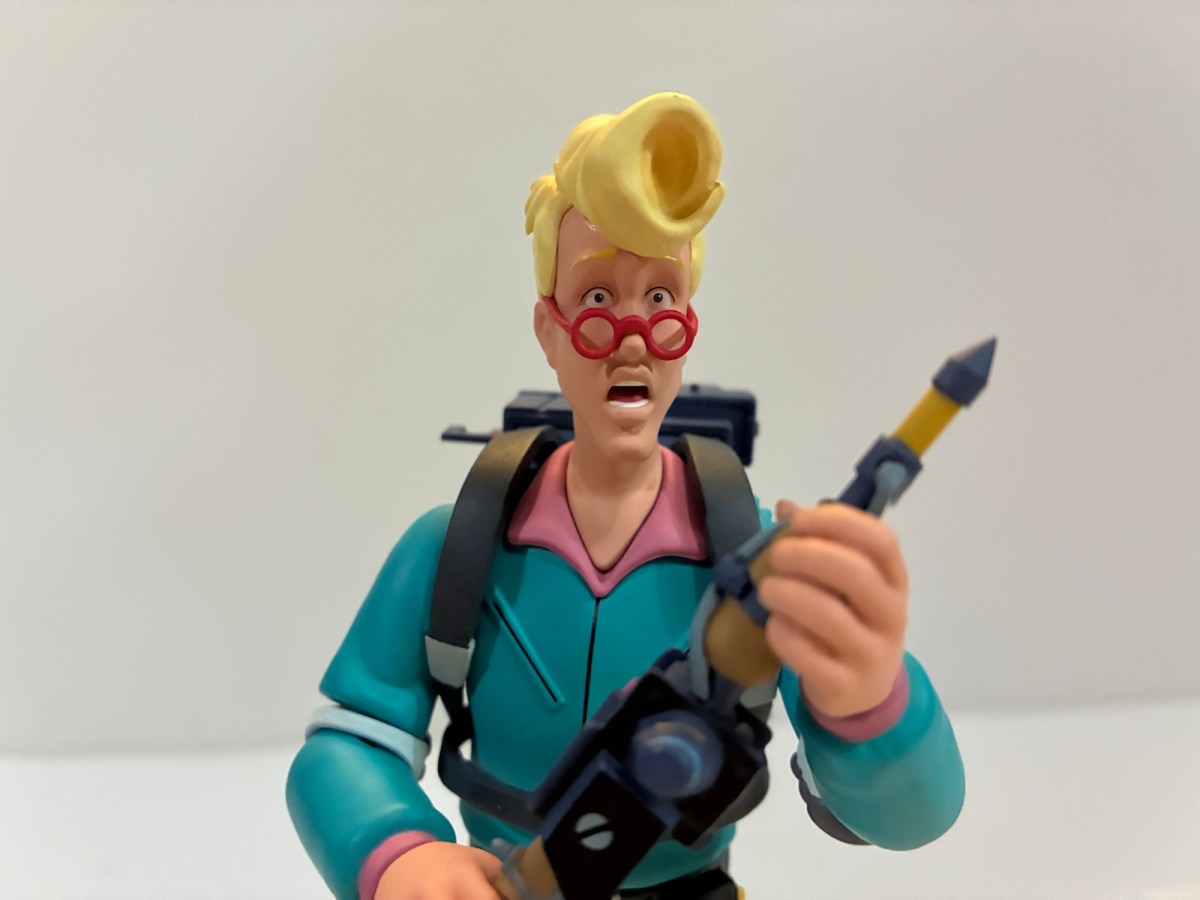
Mondo The Real Ghostbusters Egon Spengler
It’s a Halloween miracle! The second figure in the Mondo The Real Ghostbusters line of action figures, Egon Spengler, had been bumped to November. Even when I got my shipping notification from Mondo it said a delivery date of November 1st. It felt almost cruel to receive a Ghostbusters toy the day after Halloween, but…
Keep reading