Category Archives: Television

Batman: The Animated Series – “Day of the Samurai”

Day_of_the_Samurai-Title_CardEpisode Number:  44

Original Air Date:  February 23, 1993

Directed by:  Bruce W. Timm

Written by:  Steve Perry

First Appearance(s):  Kairi Tanaga, Master Yoru


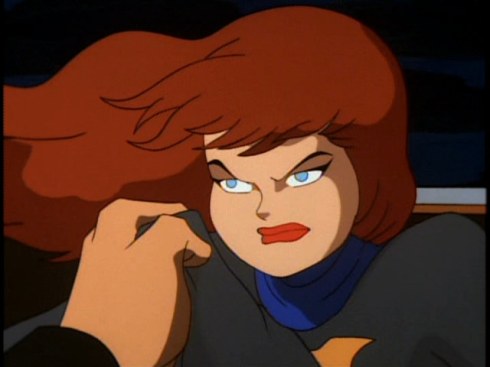
“Day of the Samurai” is basically the follow-up to “Night of the Ninja.” The plots for the two aren’t necessarily connected, which is why it didn’t necessitate a two-parter designation, but both feature the ninja character Kyodai Ken and hinge on his rivalry with Bruce Wayne. Ken (Robert Ito) has returned to Japan following his defeat at the hands of Bruce Wayne and is seeking an ancient scroll in order to strengthen himself presumably to exact his revenge on those who have wronged him. It will have direct call-backs to the prior episode while also bringing in Wayne and Ken’s sensei, Master Yoru (Goh Misawa), in a proper fashion (he was previously only featured in a flashback sequence). It also loosely introduces Yoru’s new star pupil Kairi Tanaga (Julia Kato), who will go on to make a follow-up appearance in the sequel series Batman Beyond as a much older woman.

Day_of_the_Samurai_Fight

Get ready for an episode of weird looking art, by Batman standards.

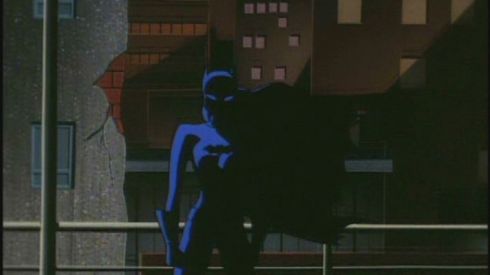
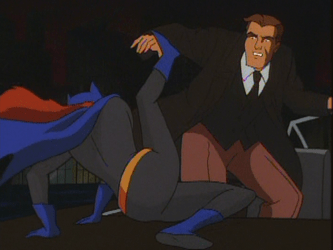
The episode opens on a dojo in Japan. Kairi is alone at night practicing her martial arts when she’s visited by the ninja Kyodai Ken. Ken is not there on a social visit, and the two square-off for battle. In a nice touch, they both speak in Japanese and the image is subtitled, even though they’re just exchanging typical pre-fight banter. Ken is no match for Kairi, and he takes her out rather quickly and efficiently with a roundhouse kick to the head. The camera is cleverly positioned so that we can see that Ken is administering a kick, but we don’t actually see it strike the young woman in what I hope is for obvious reasons. Ken scoops up the unconscious Kairi and leaves a piece of rolled parchment affixed to the wall via shuriken. The following morning, Sensei Yoru is shown finding the document.

The setting shifts to the Batcave and Alfred is shown bringing the phone to Batman. He tells him it’s his sensei and Batman answers in his Bruce voice. We quickly leave those two behind to jump back to Japan where Ken is explaining his intentions to Kairi. He intends to ransom her, for what we don’t know. Bruce and Alfred are then shown arriving in Japan and Bruce meets with his old sensei. Yoru lets him know that he’s aware that Ken returned from Gotham in shame having been defeated. Bruce insists it was Batman’s doing and Yoru goes along with it, but I suspect we’re supposed to understand that Yoru has deduced the identity of this Batman. Either way, Yoru needs the help of the Batman in saving Kairi and hopefully keeping his family’s secrets away from Ken.

Yoru

Master Yoru seeks the help of Batman is recovering his star pupil.

It’s those secrets that Ken is after in return for the safety of Kairi. Yoru’s great-great grandfather uncovered the secret to a fighting style called Kiba no Hoko, which translates to The Way of the Fang. Part of that discipline includes the o-nemuri technique, otherwise known as  The Fatal Touch, or if you’re Bart Simpson, The Touch of Death. Yoru’s ancestor determined the discipline was too dangerous and refused to teach it to anyone. Instead, he wrote down the art’s secrets on a single scroll and hid it in a cave. He told only his family and they’ve kept it a secret these past few generations. Yoru has no sons though, so when he dies the secret dies with him, forcing Ken to act now if he wants to find the scroll (why the ancient master didn’t just let the discipline’s secrets die with him is a mystery).

Bart Touch of Death

Beware! The Touch of Death!!

Yoru, citing his strict adherence to the code of Bushido, refuses to lie or deceive Ken and gives up the location of the scroll by giving Bruce a map to exchange with Ken for Kairi’s safe return. Bruce is, of course, supposed to then give the map to Batman who is to confront Ken, which he does. Ken is quite happy to see Batman once again, and their brief banter allows Kairi a chance to get the upper hand on Ken and attempt an escape. It’s a good try, but Ken is able to give chase and knock her from the rooftop their meeting is taking place on. Batman is forced to drop the map and dive off the roof after Kairi. He saves her, and in doing so does a neat trick with his grapple gun in which the cable disengages from the firing mechanism so that they don’t swing into the side of a building. Batman then goes back for Ken, but the slippery ninja is able to escape.

Day_of_the_Samurai_Find

The scroll, just before it crumbles in Ken’s hands.

Ken is able to follow the map to a volcanic region. Unfortunately for him, Father Time has seen to it that the scroll is barely legible and crumbles at first touch. Ken is angered at first, but then smiles as he picks up a larger piece of the scroll that didn’t completely fall apart. Following Ken’s departure, Batman finds the cave himself and the crumbled scroll. He brings it back to the dojo where Bruce and Yoru are shown examining it. Bruce thinks they’re in the clear, but Yoru notices a large piece of the tattered document is missing and he apparently knows it’s the portion that contains the information for The Fatal Touch.

Bruce is then left to decide if he can risk pursuing Ken. Kairi pops in to basically pass on her admiration for Batman (she doesn’t seem to be in on the double-identity thing) while Alfred is sort of surprised they can’t head home just yet. Alfred is then shown the next day in the local market shopping for goods, when a suspicious character pursues him. Batman is also able to find Ken’s hideout. He’s looking for information that could help him understand The Fatal Touch, since no one knows where the touch has to be administered (Yoru never allowed himself to view the scroll). He comes across Ken’s practice dummy, which he lingers on, until a phone call interrupts him. It’s Ken, and he’s calling to let Batman know that he’s taken Alfred hostage and desires a final battle. Batman is able to trace the call (which shows an American number, even though they’re in Japan), and our final showdown is all set and ready to go.

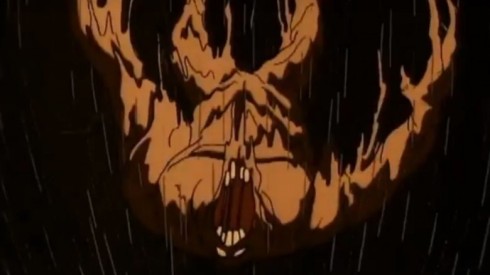
Ken Death Touch

We call that a bad touch.

Ken has chosen a volcano, one apparently near eruption, as the setting for their showdown. When Batman arrives, he expresses a desire to fight as men and the two remove their masks. Batman also removes his cape, and Ken his shirt since he has that large demon tattoo on his back to show off. The two fight, and Bruce tries to keep his distance. Ken notices and taunts him, asking if he fears his touch. Ken is able to gain the upper hand, his fingers thrust forward hunting for Bruce’s chest. Turns out, the special spot for The Fatal Touch is basically right where you would expect, and when Ken plants his two fingers on the Batman logo on Bruce’s chest, Bruce lets out a howl. His eyes roll back into his head, and his limp body hits the ground. Ken, satisfied with himself, begins to walk away, until a gloved hand clamps down on his shoulder. It’s Bruce! He’s not dead after all, and he soon dominates Ken in hand-to-hand combat. Ken is aghast that his touch didn’t work, and forced to regroup, he begins to retreat. The erupting volcano splits the terrain in two, and the combatants find themselves separated by the river of lava. Bruce tosses a rope to Ken, imploring him to take it and jump across. Ken kicks it into the lava, takes a bow, and becomes engulfed in an explosion. Bruce then frees Alfred, and explains how he survived Ken’s touch. By examining the practice dummy, he was able to figure out the spot Ken struck repeatedly and assumed that was where The Fatal Touch had to be administered. He placed some sort of padding over his chest, under his shirt, to protect him from the attack.

Back at the dojo, Yoru expresses his admiration for Batman to Bruce. When Bruce questions why since Batman is more ninja-like than samurai, Yoru explains his reasoning and it’s pretty obvious he’s speaking to Bruce with the knowledge that Bruce is Batman, in case anyone was still wondering. It’s a nice little pick-me-up for Bruce as he’s basically gained the endorsement of his old sensei on top of his recent victory.

Kyodai_Bows_to_Bruce

Kyodai Ken takes a bow before departing the series for good, though no one really requested one.

“Day of the Samurai” marks the last appearance of Kyodai Ken. He was created just for this show, and he’s basically just remained confined to these two episodes. As an old rival from Bruce’s formative years, he’s fine. What I don’t like about him and the episode is the approach to Japanese culture and placing this hokey, fantasy, martial arts story onto it. The idea of a touch of death just feels like a western viewpoint of Japan, and it was mocked by The Simpsons, which feels like the proper approach as opposed to this sincere one. It also felt kind of dumb to play the angle that no one knew where the touch had to be administered, and yet it ends up being the center of the chest. Isn’t that basically where one would assume? Maybe a little off to the side and over the heart, but pretty much that general area. As we went over in the “Night of the Ninja” entry, ninjas were rather popular at the time so it was hardly a surprise to see one show up in Batman. I guess in short, no one likely missed Kyodai Ken following this episode and his apparent death.

This episode was also the second, and last, episode animated by Blue Pencil, S.I. Previously, that company had worked on the Riddler episode “If You’re So Smart, Why Aren’t You Rich?” and I wasn’t a huge fan of the visual style present there. It’s much the same here, with the whole thing having more of a “toon” vibe. Here it’s more apparent as we’re dealing with a pretty mature plot and the cartoonish visual flair works against the episode’s aura. Bruce Wayne even looks off model at times, and not really for the better. Batman himself looks all right though, as his cape has a little more personality and flair. The movements are kind of floaty, but they are frequent, so in some respects this style was ambitious. Everyone just kind of looks like they’re made of water though, so it’s a give and take. There’s a few animation gaffes as well such as attire changing color from one shot to the next and a few instances where a character’s mouth isn’t moving even though they’re speaking. I did like that they didn’t shy away too much from the physical style of Ken, and allowing him to assault a woman is a rather bold move. The sequences were story-boarded and executed well to please the censors while still retaining their impact. Lastly, the final fight between Batman and Ken gets a little slapstick following Bruce’s bounce-back from apparent death, which just didn’t work as comedy or within the context of the fight and I have no idea why they went that route. Maybe someone got cold feet and felt they needed to dial back on the tension of the scene.

Kairi_Old

This may be the end for Kyodai Ken, but Kairi gets to show up in Batman Beyond.

As a send-off for Kyodai Ken, I guess this one is fine. Since no one was really looking for one anyway. I’m not sad to see Blue Pencil go either, though I couldn’t dig up anything online about them regarding why they were never asked to animate another episode. Bruce Timm, who directed this episode, expressed a displeasure with the animation when it gets too “anime,” so it wouldn’t surprise me if he wasn’t a fan of their work here as well. This episode also gave us a break from weird mutated monster enemies, but apparently we’re in for another one of those next week so I will see you then for “Terror in the Sky.”


Rise of the Teenage Mutant Ninja Turtles – “Mystic Mayhem”

rise_of_the_tmntOn July 20th, Nickelodeon offered up a preview of its newest take on the Teenage Mutant Ninja Turtles. Dubbed Rise of the Teenage Mutant Ninja Turtles, the new show is the heir-apparent to the one Nick ran from 2012-2017. Simply titled Teenage Mutant Ninja Turtles, that show was a modern re-telling of the story we’re all familiar with. It was presented in CG and featured the main characters from the comics and older television shows while mostly adhering to the personalities that had been long established throughout the various media. It was the fourth attempt at bringing the Turtles to television, and by all accounts it was pretty successful. Likely no future version of gang green will ever be as impactful as the 1987 series, but that doesn’t mean it can’t still be a success.

The show was well-received and it was one that even I, a 30-something, mostly kept up with. It likely ended for business reasons, though possibly artistic ones as the show-runners may have felt they had told all of the stories they wished to tell. I think it’s more likely the network felt the toy franchise was mostly tapped out and there were probably new contracts that needed to be negotiated. Television shows for older kids are also transitioning away from CG and back to 2D as technological advances have made that medium a lot cheaper, and easier, to work with. Which is likely one of the many reasons we are here today talking about a new version of the Teenage Mutant Ninja Turtles arriving just a year after the previous one ended.

riseofthetmnt-skylight-turtles-700x318Rise of the Teenage Mutant Ninja Turtles is an entirely new show with a new cast of characters. In some ways, this is the most ambitious reboot we have ever seen for the franchise. The 1987 series took the most recognizable characters from the Mirage comics and adapted them for television while also stripping out the violence. Each turtle was given his own personality, something they kind of lacked in the comics, and Shredder was made the main villain and given an accomplice in Krang. Ever since that series found success, it would seem each successive iteration tried to incorporate more of the original comic. Starting with the 1990 movie, Raphael would see his prickly and combative nature made his default personality, the tone would be a touch more serious, and Shredder more deadly. The 2003 4Kids series practically adapted the early books, and even Michael Bay’s turtles tried to keep some of that spirit, while also bringing the turtles closer to their cartoon counterparts.

The 2012 series did the same while also making sure to make everything appear modern. It’s biggest change was making April O’Neil and Casey Jones adolescents, but it mostly took the comic and cartoons that arrived before it and melded them together. It was a show that really wanted to appeal to adults who grew up with the Teenage Mutant Ninja Turtles and likely hoped these adults would get their kids hooked. Rise of the Teenage Mutant Ninja Turtles is attempting to no such thing. For the first time since that 87 series debuted, this is a version of the Turtles made to appeal to kids first and foremost. It doesn’t care if you’re familiar with the property. It doesn’t even need to be a TMNT show, but the brand recognition is certainly easier to sell than a new IP.

april and splinter

April and Splinter are two of the more radical redesigns, but also two of the most effective.

Of course, some things will naturally never change. The Turtles are still Leonardo, Raphael, Michelangelo, and Donatello. They live in the sewer with their sensei Splinter, a mutated rat, and reside in New York City. Their only human friend is a girl named April. What’s different is both radical and superficial. For the first time, each turtle is actually a different sub-species of turtle. Most notably is the large and spiky Raphael who is a snapping turtle and kind of looks like the old Slash. Donatello is a soft-shell turtle, and as a result, he creates backpack-like shells to wear to protect himself. Leonardo is now a wise-cracking turtle and Raph is an ineffective leader, as the two have sort-of swapped personalities from the 87 show. When the episode opens they all have their signature weapons, but that will change by episode’s end. Splinter is not the stoic Ninja Master we’re used to, and instead is a chubby little rat who likes to fall asleep in front of the television. April is once again a kid, though just how young is hard to gauge. She’s also African American and sports a pair of oversized glasses. In some respects, she reminds me of Irma from the old cartoon.

The episode opens with some light crime taking place in New York and the Turtles on the prowl. We’re supposed to think they’re patrolling the city as usual, but they’re actually just looking to discreetly take a dip in a rooftop swimming pool. It will become clear soon enough that these turtles are not proper ninjas. They don’t really know what they’re doing or appear to have any designs on fighting crime or anything. April is kind of just there and we’re not sure what the relationship is, but at least they appear to be having fun. The palette of the show is incredibly bright and vibrant, but the animation is not smooth in the least bit. Everything feels loud as characters move suddenly and quickly as if frames of animation are skipped. I don’t think this is a cost-cutting decision, but an artistic one to make the show feel heightened and manic and strikes me as an example of the show going for kids.

john-cena-tmnt-villain

On the right, new villain Baron Draxum, and on the left a big, white, blank, space.

The Turtles will encounter a weird teleporting dog/cat creature that takes an instant shine to April. It’s being pursued by some sketchy looking individuals and the Turtles feel compelled to help. This will result in them taking a trip through an inter-dimensional portal where they’ll meet the big baddie of the series, Baron Draxum, and also acquire new weapons. All except Donatello that is, who prefers to stick with his techy-looking bo staff. From here on out, Raph will wield twin tonfa in battle while Leo downgrades to one sword. Michelangelo will wield a kusari-fundo and all of their weapons have some mystical property that they’ll likely need to learn more about as the series moves along. Baron Draxum is a large, some-what Shredder-like figure, who is apparently behind the mutation of the Turtles. He has scores of underlings presumably, and some odd mosquito things that carry mutagen. The episode is an establishing one, and it’s likely the Ninja Turtles will need to get a touch more serious following this episode if they want to challenge Draxum in the future, since their fighting prowess is severely lacking.

It bares repeating that Rise of the Teenage Mutant Ninja Turtles is a show very much aimed at today’s children. It’s not a show made for me, and that’s fine as the children of 2018 deserve their own TMNT. As a show, it feels very similar to Cartoon Networks Teen Titans Go! It shares a similar look and the show wants to make kids laugh and is less concerned with wowing them via action sequences. The characters take nothing seriously, and I suspect they’ll have some failures along the way. The structure of the show is also to be two 11 minute cartoons for each episode, so the scale of each plot is obviously small.

raph and mikey

I couldn’t get much of a read on Michelangelo in this debut episode, but he definitely doesn’t seem as goofy as other iterations.

The voice cast struck me as fine. Ben Schwartz is Leonardo and he’s essentially just playing Dewey Duck from DuckTales. I thought it would be odd seeing Leonardo act in such a manner, but it was fine. Omar Benson Miller is Raph and he’s obviously being tasked to play a very different Raphael. He’s a leader, which just feels off, and he’s a bad one too, but not because of the usual Raph traits. He’s more indecisive and uncertain as opposed to abrasive and headstrong. Donatello is played by Josh Brener and he’s more or less the same Donatello we’re used to, with maybe a touch of dryness. Michelangelo is played by Brandon Mychal Smith and is the character I felt the least impressed by. I just didn’t get much of a sense for his personality, though he did refer to himself as an artist. The press material labels him a prankster, but we didn’t really see that side of him in this episode. This episode was probably too concerned with establishing Leonardo as the new Mikey type at the expense of the other turtles.

albearto

Looks like there will be no shortage of interesting villain designs.

Splinter is voiced by Eric Bauza, who had previously voiced Tiger Claw for the last TMNT series, doing a stereotypical Japanese master voice. It almost feels out of place with so much of the other personalities mixed-up, though his personality is obviously different as well. He’s rather funny looking, and I presume he will have to actually train his sons eventually. We didn’t see much of the lair, but it appears to follow in the same mold as the other cartoons in that it’s lavishly outfitted with Donnie’s tech. April is voiced by Kat Graham, and she’s another character I didn’t get much of a read on. She seems more heroic than the actual turtles, and obviously felt an instant connection with the little dog/cat creature she acquires in the episode. WWE’s John Cena is Baron Draxum and I forgot he had been cast in this series. Draxum looks like a high resolution Xavier Renegade Angel, which isn’t a compliment, but his personality seems interesting. He doesn’t want to be a foe to the Turtles, though he obviously will be, and he came across as less cartoonish than the villains from the 87 show, which surprised me. He may prove to be a worthy foe after all.

rise toys

And don’t forget the toy-line! Meat Sweats is also an awesome name for a mutant pig.

I can see what Nickelodeon and executive producers Andy Suarino and Ant Ward are going for with this show. I also know that very little of it appeals to me. I welcome the change back to 2D, but I’m not crazy about the design of the characters. They’re a bit too similar to the Bay Turtles, which I found gross, but I concede they have a marketable look. I just feel it’s a bit too similar to other shows out there and it doesn’t strike me as unique. I did not enjoy the janky animation techniques and I hope they tone that down. The pivot to humor is fine, and it does feel like Teen Titains Go!, but it’s not naturally funny like that show. I didn’t watch it with any children present, so maybe they’ll disagree with me, which is what matters most. This isn’t a show I’ll seek out and watch as I did the 2012 show, but as a parent it won’t bother me if my kids start watching it. I like seeing the TMNT brand relevant, so for that reason I hope it’s a success.

“Mystic Mayhem” is just the debut for the show. Additional episodes are available right now online via Nickelodeon’s website and app. The actual series premier is scheduled for September 17, and the ever important toy line is expected to launch in October. Each episode will consist of two segments, but this first episode was one long segment. If you’re an adult fan of the brand I would still say give this one a peek just to check it out. Maybe you’ll like it, most likely you won’t. In a world where a lot of cartoons are hitting wider audiences (OK K.O.!, Gravity Falls, Craig of the Creek, etc.) it’s a little disappointing that this one does not, but not everything has to. Sometimes it’s fun for kids to have something that’s just for them.


Batman: The Animated Series – “Moon of the Wolf”

Moon_of_the_WolfEpisode Number:  43

Original Air Date:  November 11, 1992

Directed by:  Dick Sebast

Written by:  Len Wein

First Appearance(s):  Anthony Romulus, The Werewolf


Something happened in-between episodes 42 and 43 that feels like a big deal, to me anyway:  we hit the halfway point! The original run of Batman:  The Animated Series consists of 85 episodes and we are now halfway through that batch. I suppose our next milestone will be episode 52 since that will mark one year of posts on the subject, followed by episode 65 which marks the end(!) of the first season. For episode 43 we have a new villain and a returning one. I mentioned it in last week’s write-up, but coming up with an immediate 65 episode order is pretty challenging, and rather than come up with 65 unique, original, stories the staff on Batman sometimes turned to the comics for a story. This week’s episode is one such episode in which comic writer Len Wein was asked to adapt his story about a werewolf from Batman #255 for the show. It’s kind of a weird concept for Batman, but it’s in-line with the Man-Bat villain from episode one in terms of feasibility. It also feels like kind of anti-drug PSA. Government standards require a certain amount of educational content in children’s programming and I’m not sure if this one qualified for it, but we’ll get to that in the write-up.

Moon_Of_The_Wolf

Not a good night to be walking your dog.

The episode opens on a gentleman (Peter Scolari) walking his dog on a typical Gotham evening. The dog becomes agitated at something offscreen, but it turns out to be just a jogger. Or was it? A massive werewolf (Frank Welker) soon emerges from the brush and attacks! The man is helpless against the beast, but fortunately for him Batman is in the area. He confronts the beast, but their fight is cut short when the gentleman is flung from the park bridge. Batman dives into the water to save him, and as he pulls him from the water the wolf-man flees.

The setting shifts to Gotham PD and Gordon is wrapping up some business for the night. Batman interrupts him to fill him in on what happened in the park. He wants to know if anything could be linked to the werewolf character, but the only thing Gordon can find is some timber wolves were stolen from the zoo recently. The victim of that night’s attack, John Hamner, is a security guard for the zoo and Batman thinks that’s not likely to be a coincidence. As he leaves Gordon’s office, he floats an interesting possibility:  what if that wolf creature wasn’t wearing a mask?

MW_14_-_Wolf

Honey, I’m home!

Of course it’s not a mask, Batman, because where would the fun be in that? The episode is not at all interested in even making that a question as we’re taken to a construction yard and an individual with an unmistakable bowl cut is re-introduced. Professor Milo (Treat Williams), the villain from “Cat Scratch Fever,” is seated at a desk when the werewolf barges in. He’s rather calm in the face of such a frightening creature, but that’s because he knows exactly when this transformation will wear off. The creature becomes a huddled mess on the floor as he turns into an adult male. We don’t know who he is, and he isn’t shown in full frame, but he tells Milo that Hamner got away as he was foiled by Batman. Milo resolves to take care of that nuisance once and for all.

hqdefault-48

Tony Romulus is an expert long-jumper and track and field star.

Immediately, the show cuts to a skyline shot at day and a news broadcast can be heard. The broadcast refers to Anthony “Tony” Romulus (Harry Hamlin), a local Olympian about to make a large charitable donation. Geez, I wonder who the werewolf could be? Tony is training at a gym with Bruce Wayne, and his plan is discussed: he’ll make a 2 million dollar donation to charity, but only if Batman comes to his home and accepts the check. Wayne tries to figure out what his interest in Batman is, and Tony convincingly plays it off as wanting to meet the only man in Gotham who may be a superior athlete to him.

Romulus

Anyone with a unibrow and scarf is a bad guy – come on, Batman!

Batman heads to the home of Romulus that night and finds the superstar athlete in his study. He’s dressed in an absurd leisure suit with a scarf, and welcomes Batman in. He offers him a drink, Batman declines, and gets to making out a check as an impatient Batman looks on. We see Romulus flip a switch underneath his desk, and soon Batman notices the room getting hotter. He realizes that he’s being gassed, but before he can retrieve his gas mask from his utility belt he collapses and Milo enters. Romulus removes Batman’s utility belt, while Milo acts threatening.

Moon_of_the_Wolf_desperate

Milo and Romulus in a flashback when the lycanthropy first started to show.

Batman is then shown at the construction yard from earlier chained and unconscious in what looks to be an unfinished colosseum. Milo and Romulus are in the nearby shack and we get an in-depth look into their relationship. Milo is obviously responsible for Romulus’s condition, and he holds the cure to lycanthropy in a safe. He’s blackmailing Romulus, but don’t feel too bad for him. A flashback details how the two came to be involved. Romulus, seeking an edge, sought out Milo for steroids. Milo gave him a special, undetectable, steroid laced with wolf estrogen and Romulus greedily snatches it and drinks it down. The serum worked, and Romulus had a great fall games which enriched him exponentially. Romulus initially refused to pay Milo for his steroids, but soon the transformations began. They were only partial, and Milo was able to dupe Romulus into taking more of the formula to become a full-blown werewolf. His argument was the hybrid state he was in couldn’t be cured, but lycanthropy could be. We don’t know if he was lying, but it resulted in the Romulus we see now. Detective Bullock will soon confront Hamner at his security job at the zoo, and we’ll find out he’s the source of the timber wolf DNA as Milo paid him to unlock the cage, hence why the werewolf was sent to kill him at the start of the episode.

Moon_of_the_Wolf_fight

Ride ’em, cowboy!

Romulus soon transforms, and Milo wants him to kill Batman. He attacks Milo first, and in the scuffle the antidote is dropped and broken (we don’t see why Milo removed it from the safe). He spares Milo, and targets Batman, who has regained consciousness. Finding a pin nearby, Batman picks the locks on his chains to free himself just in time to meet the werewolf. The two scuffle, and Batman quickly realizes he can’t just go toe-to-toe with Romulus. He heads for high ground as the Gotham PD arrive on the scene (some citizens out for a walk saw the commotion and called the police) and surround the place. Bullock lets Batman deal with Romulus, as the two battle on top of the colosseum. Romulus winds up swinging from a crane and gets struck by lightning causing him to fall into a nearby river, ending the confrontation. The police are able to apprehend Milo, who is in need of medical attention, and he taunts Gordon that they’ll never be able to make charges stick (this sounds like the writers setting up for a return of Milo, but this is his last appearance). The episode ends with a pair of individuals touring the home of Tony Romulus. It’s up for sale as Romulus never returned following the fight with Batman. The episode ends on a most predictable note, with the werewolf howling at the moon.

This is a mostly straight-forward episode, and really uneven. It takes a lot of shortcuts, most obviously in how the werewolf is dealt with. There’s no indication that lightning is in the air prior to Romulus being struck, so it feels rather cheap. Maybe they didn’t have the budget for a full-blown thunderstorm. Milo and Romulus are also apparently uninterested in Batman’s secret identity, since they have him at their mercy and they choose to leave his mask on. The episode as no interest in setting up a mystery, basically answering the questions as they come up. There’s a throw-away scene between Batman and Alfred in the Bat Cave where Batman bemoans his lack of progress in figuring out who the werewolf is (this is just before he goes to meet Romulus) that didn’t need to be there. We do get to see Alfred casually working on the Batmobile though which is kind of neat. If the steroid angle was supposed to be an anti-drug message, I’m not sure how effective it could be since most 8 year old boys watching the show probably thought being a werewolf was pretty cool.

Romulus_DCAU_002

The episode ends in perhaps the most predictable fashion possible.

This episode was animated by Akom, and if you recall from the write-up on “Joker’s Wild,” Akom was fired for how poorly that episode came out. Who knows where this episode was at the time of the firing, but it was probably close to completed. It’s better than that episode, but not by a whole lot. The backgrounds feel sparse and boring, at least the external ones, and there’s a weird disconnect between the background and the characters in the early scenes on the bridge. The guard, Hamner, looks almost exactly like the guard from “Tyger Tyger” though he’s voiced by a different actor here so I don’t know if he’s supposed to be the same person. There are a bunch of animation errors though, with Milo’s jacket changing color at times and Batman’s yellow symbol going from yellow to white. The biggest screw-up though is with Batman’s utility belt. It’s removed immediately after he’s drugged, but it’s mysteriously back on when we next see Batman chained up. Since he does not use it at all during his fight with the werewolf, I half to assume it wasn’t supposed to be there. It certainly wouldn’t have made any sense for Milo to return it to him, though it didn’t make sense for Milo to let the werewolf kill him when he could have done it effortlessly once Batman had passed out.

In Akom’s defense, the werewolf looks pretty cool. He’s fearsome looking with saliva dripping from his open mouth. He might be my favorite design of the creature enemies, being more interesting than Man-Bat or Tygrus. Akom doesn’t attempt anything too grand with him, but what he does is interesting enough. Unfortunately, he’s the only interesting part of the episode as the plot and fight sequences are rather droll. This is filler television, further demonstrated by the lack of a re-appearance from either Romulus or Milo in future episodes. I will say I like the music in this episode, the werewolf has a fun theme and I probably do not sing the praises of Shirley Walker enough, who’s work on this series is fantastic and I take it for granted. Akom still has one episode left in the tank, “What is Reality?” and I’m interested in seeing how that one looks in light of their firing, but it’ll be six weeks or so before we get to discuss that one.


PhatMojo DuckTales – Scrooge McDuck and Donald Duck

IMG_2498It’s been nearly a year since DuckTales returned to television airwaves. Scrooge McDuck, along with his nephews and surrogate niece Webby are back to solve mysteries and rewrite history. It’s a fun show that adheres more to the work of Carl Barks than to the series that ran in the 1980s while also doing its own thing. For the first time really ever, the nephews Huey, Dewey, and Louie are distinguishable by more than just the color of their clothes and the cast is large enough that the writers don’t seem to feel pressured into fitting everyone into every episode. Sometimes Scrooge will be missing, other times Donald will be. It seems to be a show more about the kids and how they view the almost mythological Scrooge. And it also has other mysteries to uncover and it’s mostly good fun.

Back when the original series ran it surprisingly did not coincide with a ton of merchandise. Maybe this was a deliberate attempt by Disney to distinguish its cartoons from the competition which were often toys first, shows second. The only DuckTales toy I can remember owning was a Gizmoduck that came in a box of cereal. It seemed like this new incarnation was going to befall the same fate, but along came PhatMojo to rectify that. Now, I know nothing of this company and this is my first introduction to them, but I’ll say it’s mostly a positive one. Alongside some figurines and plush dolls, PhatMojo has put out its first line of DuckTales actions figures. Apparently exclusive to Target, the inaugural line contains single-carded figures of Scrooge, Donald, Launchpad, and Flintheart Glomgold. In addition to those figures are a pair of two-packs of Huey and Dewey and one of Webby and Louie. Also available is Launchpad’s airplane which also comes with his figure and Scrooge’s Money Bin playset, which seems more like a storage device for your toys than a full-fledged play set.

I have a weakness for toys, that is obvious to anyone who reads this blog, and perhaps a greater weakness for Donald Duck merchandise. Despite that, I’ve actually never owned a proper Donald Duck figure until now. I have statues and Lego mini-figures, but no action figures. Most of the is due to scarcity. There is a phenomenal Donald Duck figure available by a company called Herocross, but to import him is over $100. Yikes! There have been some Kingdom Hearts Donald Duck figures, but those have never spoke to me for one reason or another. Years ago there was a line of figures based on Mickey’s Christmas Carol and I do kind of kick myself for not collecting it. I was in high school when those came out and just didn’t have much money for action figures. I’m guessing if I looked them up on eBay right now I would not like what I see in terms of price too. As for Scrooge, he received a pretty darn good figure just last year from Funko, purveyors of those Pop! figures you’ve probably seen everywhere. That Scrooge was part of a line based on the old Disney Afternoon so it’s Scrooge with his blue coat. Herocross also released a version of Scrooge from that series and it’s both awesome and terribly expensive.

IMG_2502

“Hello?”

Not wanting to get too far into another line of toys, I forced myself to just stick with Donald and Scrooge when I encountered them over the weekend at my local Target. Might as well start with an overview of the line as a whole. These are mass-market retail figures, and even though I’m a man in his mid-30s, I can admit these are aimed at children. As such, it stands to reason you shouldn’t expect collector grade quality with these figures, and the price of 8.99 a piece captures that. The figures have unique sculpts with simple paint apps and even simpler articulation. The heads sit on a ball-joint that offers solid range of motion, but that’s it for fancy joints. The shoulders are on simple pegs and there’s no elbow or wrist articulation. The legs are also on simple peg joints at the hip with no knee articulation. As a result, these figures are very limited in what they can do as far as posing goes, but what’s there has a solid build and isn’t flimsy or anything.

IMG_2503

That’s the best he can do as far as taking a picture goes.

Let’s talk Donald Duck first. In case you are unfamiliar with the show or the work of Carl Barks, this Donald is in his comic accurate attire, which is how he’s presented in the show (his more popular light blue shirt gets set on fire in the first episode). His shirt is black with gold buttons and he wears a white hat instead of a blue one. The character is brought to life once again by Tony Anselmo and it’s really fun to see this Donald on television for the first time. He’s not as quick to anger as his personality in the cartoon shorts dictates and he’s very much a doting uncle most interested in the well-being of his nephews. Donald stands just under 4″ and comes with two accessories:  a camera and a smart phone.

IMG_2505

What you see is what you get, but what you see also is pretty good.

First of all, this figure is a dead-ringer for the show. He has that rounded look in the head with harder lines on the beak. The paint app is simple because it doesn’t call for much, and my figure looks pretty good in that area (some on the pegs were less impressive). Because of the limited articulation, he can’t really do much with his accessories, but he can kind of hold the phone like he’s talking into it. My only criticism of the sculpt is in how the legs meet the body which looks odd, but it was obviously done this way to keep it simple. The little tassel on his hat is also molded to his head and I wish it was jutting out on its own to impart a touch more personality, but again, this is the simple approach. Donald has a sunny disposition to him which may have felt out of place for his toon counterpart, but for DuckTales this feels appropriate. Overall, this is a very solid figure that, while not much fun to pose, definitely nails the likeness.

For Scrooge, we have a slightly more ambitious design. His tophat, glasses, and overcoat make him slightly harder to sculpt, but once again PhatMojo pretty much nails it. His hat pushes him close to 4 1/2″ and he has his little tuffs of hair pushing out from underneath it. Some may be disappointed that the hat is non-removable, but I think it looks better this way. Like Donald, this Scrooge is more in-line with the design of Barks and features a red coat instead of the blue one from the 1980s. Voicing him in the show is David Tennant, and man did he have some pretty big shoes to fill, but so far he’s pretty much nailed it. He comes with two accessories of his own, his trusty cane and a little gold colored idol that just sort of sits there. His articulation is the same as his nephew, only his overcoat really limits what can be done with his legs. In fact, I can’t even tell if his legs are articulated or not since they basically can’t move.

Paint-wise, he’s a bit more of a mixed bag. I had a hard time finding a good one at the store and had to settle for what I have. He has a little red dot on the brim of his hat and in a few places on his coat is a dab of white or black that shouldn’t be there. It’s not killer, but I notice these things. His eyeglasses are also kind of funky. Rather than use a piece of transparent plastic like Funko did with their Scrooge, PhatMojo just made a block of plastic to place on his beak and painted on glasses. This means the open area where there are no glasses is just painted yellow. It looks okay from a head-on perspective, as his nose should probably be there anyway, but from an angle of any kind it’s a bit clumsy. Again, this feels like a cost-cutting move as cutting out the dead-space would mean a more fragile piece in the end, but I wish they did a little better here. All of the figures I saw also had a weird little gap underneath Scrooge’s belt buckle. Not really noticeable when the figure is just displayed, but pick it up and you’ll see it. It’s probably the result of how the bottom part of his overcoat was connected to his torso.

Even with the problems I highlighted with Scrooge, I still think he’s a sound figure and he looks great on my desk alongside Donald and Funko’s Scrooge. Both Donald and Scrooge look like they’re supposed to given the source material. And considering the price, it’s hard to quibble with them too much. When I was a kid, I paid upwards of 7.99 for ToyBiz figures and that was in the early and mid 90s. To only pay 8.99 for these in 2018 is a pretty tremendous value. I don’t know how fun they are for kids given how limited they are in what they can do, but I played with similar as a kid and had no shortage of good times. If you like the look of the new DuckTales and want some figures from it, give these a look. You may want to catch them in person rather than through the web given the paint issues I saw. And if you’re a stickler for scale you may be a little disappointed with the others as Launchpad is definitely on the small side and the kids a little too big relative to Scrooge and Donald. The two-packs also run a tad more expensive at 12.99 each, but given you’re getting two 3″ figures instead of one 4″ the value seems about equal. For me, I’m probably content to just stick with these two. If a Darkwing Duck or Gizmoduck shows up I may give them a look. I’ll also probably try and push my kid towards these things as I’m always looking to foster more duck-enthusiasm in him. Got to start them young!


Batman: The Animated Series – “Tyger, Tyger”

Tyger_Tyger-Title_CardEpisode Number:  42

Original Air Date:  October 30, 1992

Directed by:  Frank Paur

Written by:  Michael Reaves, Randy Rogel, and Cherie Wilkerson

First Appearance(s):  Emile Dorian, Tygrus

A 65 episode order must feel like both a blessing and an unbearable burden. On one hand, that’s a big pay day. Plus 65 episodes also means syndication which is a pathway to even more riches. On the other hand, that’s suddenly 65 stories to be developed, 65 screen plays to be written, 65 story boards to be parsed through, not to mention the actual production. All of this is following what was likely months of work on a pilot and series bible so that everything was good to go for a successful pitch to the network. In the case of a property like Batman, at least there’s over 50 years worth of comic books to go through for ideas and few characters are created from scratch. No one wants to just adapt other people’s work though, so the bulk of the stories are mostly original. And they come with deadlines.

tyger03

I like the Garth from Wayne’s World better.

Such a daunting task is probably how you end up with an adaptation of The Island of Dr. Moreau in a Batman cartoon. Batman has always been one of the more grounded super heroes. His villains usually don’t possess actual super powers and instead are just mentally deranged individuals with wrestling gimmicks and henchmen. This series did establish right from the first episode that there can at least be room for some science fiction via mad scientist quackery. “Tyger, Tyger” doubles-down on that with Dr. Emile Dorian (Joseph Maher) who is basically a stand-in for old Dr. M. He’s a genetic scientist driven away from society because of his crazy ideas and crimes against nature. He’s also a big-time cat enthusiast, proving you really can’t trust those crazy cat folks (I say this as someone who has only ever had cats as pets). And since he’s a cat person, well obviously we’re going to need to bring in our old friend Catwoman, Selina Kyle (Adrienne Barbeau), to assist with this story.

TT_10_-_Selina_meets_Tygrus

Selina meet Tygrus, he’s going to be your mate!

The episode opens with Ms. Kyle visiting a zoo at night. It seems an odd thing to do, but she’s kind of an odd person. She’s looking mournfully at a tiger, a rather odd looking tiger at that, when someone from the trees behind her takes aim at her with a rifle and fires. The weapon is armed with some sort of dart, and after striking her the assailant bounds from the trees to claim his prey. He’s an ape man (voiced by Jim Cummings), and Selina tries putting up a fight, but is no match for the brute. A security guard comes to her aid, but he winds up in the tiger pen as a result while the ape-man makes off with Selina.

185023

Old friend Kirk Langstrom gets to make a cameo.

Bruce Wayne is shown waiting at a restaurant and his date is obviously late since he’s checking his watch. He phones home to see if his date, Selina, called Alfred to cancel (apparently Bruce can’t afford a 1992 cell phone). A member of the waitstaff lets him know that Selina called to say she was stopping by the zoo and would be late. He heads over there to find the crime scene. The cops are interviewing the guard who is obsessing over the ape man, and has really nothing to offer about Selina. Bruce finds a spent dart near the tiger pen (once again, the Gotham PD proves its incompetence) and brings it home for analysis.

Selina is shown a prisoner of a mad scientist – Dr. Emile Dorian. He’s all about cats and wants to experiment on her and turn her into some cat-lady. He thinks she’ll like it, but Selina seems less than thrilled.

Batman discovers the chemical compound contained in the dart is similar to the serum that turned Kirk Langstrom (Marc Singer) into the Man-Bat way back in episode number one, “On Leather Wings.” He brings a sample to Langstrom for confirmation, and the good doctor lets him know he’s correct. He hypothesizes that it’s the work of disgraced geneticist Dr. Emile Dorian and even shows Batman one of Dorian’s early experiments he just so happens to keep right there in the lab – a half cat, half monkey creature. He gives Batman a tip on where to find him, and Batman wastes no time in heading off to Dorian’s island.

TT_41_-_Cat-Woman

In this episode, Batman gets to see Selina naked. It’s not what he expected.

Once there, Batman finds a huge citadel-like structure and scales the wall 60s style. He’s met on the roof by Garth, the ape-man from earlier, and the two crash through the ceiling into the lab. It’s there he sees Selina, now in an enclosure. He’s horrified to see that she’s been transformed into a human-cat hybrid. Her entire body is covered in a mustard colored fur and she has claws and cat ears to match. She seems content, but Batman reacts violently and starts smashing the place to get at her. This attracts the attention of Dorian’s prized creation – Tygrus (Cummings). Unlike Selina, Tygrus was created “from scratch” and is a massive cat-man creature with sleek features and a barrel chest. He overpowers Batman, while Selina indicates she still has some humanity within her and reacts to the presence of her old crush.

Dorian informs Batman that Selina’s transformation is not yet complete. It can still be undone, but if Batman wants to do that he’ll have to defeat Tygrus. He sets the two loose, with Batman getting a head start, on his island. Tygrus is instructed by Dorian to kill Batman, and it looks like he has no issues obeying his father. Meanwhile, Dorian and Garth set out to administer the final component of the transformation formula to Selina, Dorian obviously having no intention of playing by his own rules.

TT_32_-_Dorian_and_Tygrus

Dorian and his “son,” Tygrus.

Batman is forced to duke it out with Tygrus who is a more than formidable foe. He is able to incapacitate the creature long enough to find out it can talk. Since it can talk, it can also be reasoned with. Batman is able to convince the rather dim creature that he’s not his enemy just because his father says he is, and the two return to the lab. By now, Selina has decided she doesn’t want to remain a cat and has broken away from Dorian. This sets up a confrontation where Tygrus is caught in between Dorian and the others. He wants Selina to stay and remain a cat (and he apparently intends to mate with her), but he’s apparently learned enough about consent and he isn’t going to force it upon her. This puts him into direct conflict with his father, and he ends up destroying the lab in a fiery explosion.

TT_64_-_Tygrus_Sacrifice

Imagine what they could have been.

Batman, Selina, and Garth escape, but there’s no sign of Tygrus or Dorian. At first. Tygrus soon emerges from the burning wreckage with Dorian in his arms. He lays him down at Batman’s feet with the hope that Batman will see to him. He makes one last play for Selina, and when she rejects a life as a cat, he quietly slips the antidote into her hands. She implores him to come with them, but he turns and remarks he doesn’t belong with them, or anywhere, and our episode ends on a somber note with Batman reciting a portion of the William Blake poem “The Tyger” as the episode fades out.

hqdefault-47

Tygrus bids us all a sad goodbye.

Even with the call back to the Man-Bat, there’s no shaking that this is a weird episode. It’s not an all together bad episode, it’s just not a favorite of mine. The story is kind of rushed, and Tygrus is easily persuaded into a noble role. I also don’t particularly care for his design, though the episode looks fine as a whole. Dorian is a simple villain with no redeeming qualities so the episode doesn’t have to work hard to get us to hate him. I would have liked to see more of his creations, but since what we did see was so visually uninteresting then maybe it’s fine we didn’t. Selina is again kind of mishandled by the show. She’s lost all touch with her Catwoman persona at this point and is in need of some serious rehabilitation. Worse, she’s been pushed into this damsel in distress role which is borderline insulting. Her cat look is kind of stupid, and I have no idea why they went with the color that they chose for her fur. I guess it helps to make her pop against the dark and drab backgrounds and it’s a similar shade to her hair color. It’s also fun to have veteran voice actor Jim Cummings play a large role in an episode, though he isn’t given a whole lot to work with.

What we’re left with is not a particularly good episode of Batman:  The Animated Series, and it’s in an odd place as three out of four episodes will feature a genetic engineering subplot. It’s an odd obsession for the show to settle on, but it’s also something that the show leaves behind. We won’t hear from Dorian or Tygrus again, and I’m not particularly broken up about that. Meanwhile, Selina Kyle will finally get to go back to being Catwoman in a few weeks, though once again in more of an anti-hero role as opposed to true foil. It will be awhile before we see her do anything remotely villainous again.


Batman: The Animated Series – “Joker’s Wild”

Jokers_Wild-Title_CardEpisode Number:  41

Original Air Date:  November 19, 1992

Directed by:  Boyd Kirkland

Written by:  Paul Dini

First Appearance(s):  None


Episode 41 of Batman:  The Animated Series is written by show runner Paul Dini and it plays like a love letter to old Warner cartoons. It’s timely that we’ve arrived at this episode right now as we just recently we celebrated the 30th anniversary of Who Framed Roger Rabbit, a film that could also be described as a love letter to classic cartoons. And if you’re going to do a send-up to the old Looney Tunes then who better to man that ship than The Joker (Mark Hamill) himself?

MV5BYTJmYTExN2QtM2IyNS00ZTE5LTllOGUtZTUxM2ZlYTFlMzRmXkEyXkFqcGdeQXVyNjI4OTE1MTA@._V1_

Joker and Poison Ivy sharing a moment.

The episode begins at Arkham Asylum where the happily incarcerated Joker is fighting over the television in the common area with Poison Ivy (Diane Pershing). They bicker like children and it’s rather amusing to see The Joker reduce Ivy to that of a whiney child, but apparently he has that effect on people. He’s delighted to be causing her such consternation to the point that he doesn’t mind when the guard forces them to watch the news since they couldn’t agree on a show before (Joker wanted to watch Letterman, Ivy a gardening program). The news is covering the opening of a new casino by Cameron Kaiser (Harry Hamlin) and even Bruce Wayne is in attendance. When the casino is unveiled to contain a Joker motif, complete with a laughing depiction of The Joker’s unmistakable visage atop the building, the audience reacts in disgust – including Wayne. The Joker is immediately ticked off to see his likeness infringed upon and Ivy delights in seeing this change in mood from him. It’s all the motivation he needs though to break out of Arkham once again (revealing how pathetically easy it is to do so in the process) and set his sights on Kaiser and his shiny new casino – Joker’s Wild.

Jokertasname2

Another instance of the show maintaining continuity with the Burton Batman film.

Joker arrives in his top hat and overcoat and is kind of impressed with what he sees. The place looks like a tribute to him complete with ushers dressed as The Joker and waitresses clad in Harley Quinn attire (who is not present in this episode marking a rather lengthy absence for her). Joker is immediately mistaken for a worker and is instructed by another attendant to go work the blackjack table where he immediately starts winning hand after hand. He may be there to wreck the place, but it’s pretty clear he’s going to have a little fun before he does.

Jokers_Wild_Revealed

The head spins and laughs, because it wasn’t garish enough.

Bruce Wayne, after seeing the unveiling, decided to book a room knowing that there was no way The Joker would stand for this. It basically highlights how quickly The Joker broke out and got himself situated that Wayne is still there. Alfred brought him his gear, and Wayne points out how he thinks something is off with the place by pealing back some wallpaper to reveal an older design. He thinks this switch to a Joker theme was a last minute addition, and plans to do some sleuthing.

MV5BZGFkOGI3MTctYTI4Yi00NjI5LTk2ZTItMzZkYzdkN2QzZTdlXkEyXkFqcGdeQXVyNjI4OTE1MTA@._V1_

Hard to imagine even The Joker himself designing a casino so lovingly dedicated to him.

Batman does some nosing around in Kaiser’s office and, because Kaiser is apparently stupid, finds all he needs to find. The casino is already deeply in debt, and apparently Kaiser has no faith in it generating enough money to pay down that debt in a timely fashion. Rather than file for bankruptcy, he made the (probably costly) change in theming to attract The Joker in hopes that he would sabotage the whole thing and Kaiser could collect on insurance. I do wonder how well that plan would have worked if the plan went off without a hitch. In a world where villains like The Joker are sort of commonplace I wonder if an insurance company would even payout for such an action? Batman attracts the attention of security, but it’s nothing he can’t handle, as he makes a hasty retreat.

Joker's_Wild

That is some room.

Joker has also attracted the attention of security (the guard is voiced by Ernie Hudson which seems like a really small role for him. I thought maybe he had a bigger part in another episode and just recorded some filler but I don’t see any other credits for him under this show) who alerts Kaiser of what’s going on. The Joker is seen clearly cheating on the security footage, but Kaiser doesn’t seem bothered and tells the guard to ignore him. Meanwhile, the patrons at Joker’s table have fled in disgust, but Bruce Wayne arrives to take their place. They make small talk, in which Bruce remarks on the distasteful decor which irritates Joker, before getting down to business. Joker hits a 20, but Bruce hits on 21 and pockets his cash and moves along. He saw what he needed, and in an exchange with Alfred, we see Bruce knows how to cheat at cards with the best of them.

041-JW

Even Wayne looks kind of off model here.

Having seen all he needs to see, Wayne hops into his Batman attire and goes to apprehend The Joker, only to find that he’s switched tables. When the real Joker sees Batman harassing a harmless worker, he decides to flee. He commandeers a Joker mobile, a dragster sort of car with Joker stylings, that was on display as a prize (I assume, because it looks like the sign to win it was lost in translation, literally, when animated overseas) and takes off. Batman jumps in, but Joker crashes the car into a pier causing Batman to plummet into the nearby bay while Joker is able to safely eject.

Joker-9

I love how Joker needs to have his likeness on his own gun. No wonder why he’s so irritated at another man stealing that very likeness.

We next see Joker wheeling a bunch of explosives under the guise of a food service cart into a closed section of the casino. It looks like it’s supposed to be a play area someday as there’s a giant roulette wheel and some other things scattered about. Kaiser notices this on camera and immediately calls for his private helicopter to be prepared for a swift exit. Batman confronts him as he’s filling a suitcase full of money and reveals to him he knows what’s going on. Kaiser, unfazed, activates some sort of electrical floor trap beneath Batman which incapacitates him. He orders his two lackeys to bring Batman down to the Joker for disposal.

jokerswild

Battle on the helicopter!

Batman stumbles out of an elevator only to be clobbered with a 2×4 by The Joker, knocking him unconscious. He wakes up to find he’s been bound to the enormous roulette wheel with its giant caricature of The Joker leering down at him. Joker taunts him, and while doing so the animation gets real wonky and he appears off-model numerous times. Batman reveals Kaiser’s plans to Joker, who seems pretty bummed that he’ll have to abort his plans to demolish the casino. That doesn’t get Batman off the hook though as Joker activates the roulette and leaves him with a live grenade bouncing around on the wheel. Joker makes the same mistake he always makes in leaving Batman to his own demise, which means he obviously is going to get out of this one. Using his trusty grapple gun, Batman makes a shot that’s even amazing by his standards as he not only hits the bounding grenade (while spinning at an extremely high rate of speed) with his grapple gun, but also causes the grenade to go into the giant Joker structure demolishing it in the process causing it fall on him and free him from his bindings. That is some crazy shot.

Jokers_Wild_Out_voted

Joker back in Arkham with very weird looking representations of Ivy, The Mas Hatter, and Scarecrow.

Joker is able to beat Kaiser to the helipad as he’s trying to flee the casino and takes over piloting duties of his helicopter (eerily similar to his actions in his last appearance, “The Strange Secret of Bruce Wayne”). When Kaiser realizes it’s The Joker and not his pilot, he gets pretty angry that The Joker isn’t down there demolishing his casino. Joker reveals he’s decided to take over the casino instead, after he knocks off Kaiser, though he does compliment him on the attempted scheme. Batman arrives too late to get on the helicopter, but he somehow manages to get high enough to soar after it in his hang glider, much to the frustration of The Joker. The animators redeem themselves with a brief, but nice looking, chase sequence that ends with Batman and Joker tussling in the cockpit of the helicopter. They crash into the casino and not only do they manage to not kill anyone in the process, they all walk away from the crash despite not being restrained at all. Joker tries to get away, but Batman knocks him into a slot machine and change pours down over him. The still image looks rather poor and the bottom of the image almost looks like a half-finished animation cel that was supposed to be cut-off in the actual picture.

JW_44_-_Bugs_Bunny

Hey! I know that guy!

The episode concludes with Joker back in Arkham amongst cameos from Scarecrow and The Mad Hatter (looking really off model) while they all enjoy watching the coverage of Joker’s failure. He tries to change the channel to Looney Tunes, but they all shout at him in protest. The camera settles on Joker’s grumbling as “The Merry-Go-Round Broke Down,” better known as the Looney Tunes theme, plays before changing back to the news coverage, and eventually Joker’s theme, which takes us out. It’s a fitting way to end this one as throughout the whole episode we’ve had little Looney Tunes nuggets tossed about. The Joker is humming that very song early in the episode, while he also makes numerous one-liners basically lifted directly from those old cartoons. He even calls someone a “maroon.” It’s really silly, and I actually wouldn’t blame someone for thinking it’s too silly and a bit out of character for the show. We do often get dueling Jokers in this show where he’s sometimes really calculating and murderous, while other times he’s looney and breaks the fourth wall (as seen in his debut “The Last Laugh”). This episode might push things a little too far in that direction, but as someone who unabashedly loves the Looney Tunes, it’s hard for me to be too bothered by it.

Joker_DCAU_026

Joker’s eyes are right triangles in this show. I never want to see that again.

Our villain of the week, Cameron Kaiser, will never be heard from again. He served his purpose, but the conflict of him vs Joker means this episode doesn’t rely a whole lot on Batman. That’s nothing new for the show, but he feels especially buried in this one. He has some really generic and corny lines as the episode feels like its rushing through his scenes. It’s not the worst we’ve seen him, but it sticks out in a Paul Dini episode which are usually the show’s best. It’s also weird because kids don’t really understand insurance, for the most part, so they might not quite understand the plot and yet so much of the humor and direction feels aimed at children. In particular, the bickering of the inmates in which the line “I know you are, but what am I?” is uttered more than once. The hang glider thing also really bothered me. I know I should be willing to overlook how unrealistic it is for Batman to get as high as a helicopter without an obvious launching point, but some things just can’t be ignored. Just have him grapple gun the stupid helicopter!

JW_26_-_Batman_and_Joker

The blackness around Joker’s eyes constantly pops in and out in this episode and it’s very distracting.

The animation for this one is all over the place. I made mention of it during the summary portion, but it warrants further mentioning. The Joker’s face is often tricky to animate as he’s always grinning, but the animators seemed to have more trouble than usual here as he sometimes has some off mouth flaps. The black around his eyes is really inconsistent too, and it’s particularly egregious when he’s confronting Batman. Batman is also really stiff and the action scenes don’t feel especially dynamic. He’s slow, and when he’s strapped to the spinning roulette wheel we don’t really get a sense of motion out of the scene. It feels very detached. The hang glider sequence is well done though, so maybe they blew the budget on that part. The backgrounds also look good, and since the setting is rather unique, there probably wasn’t too many opportunities for cost-savings. It was handled by Akom, who has been responsible for more bad than good episodes. I actually wasn’t aware of this while watching, but Akom was apparently fired because this episode came out so poorly. In addition to the issues I pointed out, there also just some silly gaffes in some shots, like items appearing and disappearing at random. Apparently Akom had a bad reputation amongst the staff often referring to it as “The Kiss of Death” when an episode was assigned to the studio.

“Joker’s Wild” is an okay piece of comedic filler for the series. It’s not the best Joker episode, but the images of the Joker casino help make it more memorable than it deserves. How much you enjoy the episode will partly hinge on if you enjoy the humor and the little nods to Looney Tunes shorts. At this time, Tiny Toon Adventures was a thing and the shows had some overlap in terms of talent so it isn’t surprising to see something like this make it to air. Previously we had seen some sight gags in past episodes, but this one really went for it and the results were…okay? We’ve got some less than stellar episodes upcoming though, so after about four weeks this one may seem positively divine by comparison.


Batman: The Animated Series – “If You’re So Smart, Why Aren’t You Rich?”

If_You're_So_Smart,_Why_Aren't_You_RichEpisode Number:  40

Original Air Date:  November 18, 1992

Directed by:  Eric Radomski

Written by:  David Wise

First Appearances(s):  The Riddler


It only took 40 episodes, but we’ve finally made it to the debut of what I would consider the last of Batman’s most famous adversaries:  The Riddler. Thanks to his inclusion in the 60’s television series as well as Batman:  The Movie, The Riddler (John Glover) was a very well known villain and was so well known that it was basically considered a given that he would be the featured villain in the sequel to Batman Returns. And it turns out he was! That version of The Riddler, played by Jim Carrey, ended up being very similar in character to the one from the 60’s most famously portrayed by Frank Gorshin right down to the green spandex. For Batman:  The Animated Series, a more cerebral version of the character was chosen. Clad in a green and gray suit with bowler hat, he’s not very much like what we had seen before in popular media. He still is all about riddles though and the essence of the character is preserved. He’s also given an interesting motivation, and he’s yet another villain who was wronged in the past, but flouts the law in order to rectify what happened bringing him into conflict with the one and only Batman.

maxresdefault-35

Enter The Riddler.

Edward Nygma is a computer game designer who’s latest creation, The Riddle of the Minotaur, has become exceedingly popular. He works for Competitron, a company owned by Daniel Mockridge (Gary Frank), and unfortunately for Nygma all of his work has come under a work for hire agreement. He enters his office one day to find that he actually has no office. Mockridge is there gleefully waiting for him to let him know he’s being terminated. Nygma, irate at this treatment, points out how much money he’s made the company while Mockridge dangles his contract in front of him essentially boasting that he’s completely right, but there’s nothing he can do about it. Because he’s essentially a contractor, he receives no royalties for the game (or if he does, they’re not large) and no creative control. As a parting shot, Mockridge throws the episode’s title right in his face, “If you’re so smart, then why aren’t you rich?”

SR_11_-_Billboard_Riddle

Mockridge being taunted as he makes his pitch to Wayne and Fox.

The episode jumps forward two years and Mockridge is pitching Competitron to Bruce Wayne and Lucius Fox. Mockridge is looking to sell and cash-out of his growing business while Bruce is interested in moving the company to Gotham to create more jobs. As Mockridge is making his pitch, a word crawl on a building across the street (like one you would see outside a stock exchange) taunts him with a riddle and makes a reference to the big deal he’s trying to negotiate. Mockridge is unnerved, though Wayne and Fox aren’t aware of the message since it’s behind them, and are rather confused when the pitch is cut short. After Mockridge leaves, Wayne notices the riddle and begins reading it aloud while the shot transitions to the Batcave for Batman to finish the riddle. It’s a neat little trick as it points out how voice actor Kevin Conroy portrays Wayne and Batman just slightly differently.

Dick is also in the Batcave and he just so happens to be playing The Riddle of the Minotaur on the Batcave’s computer (which Alfred reveals cost 50 million dollars) which features sound effects lifted straight out of Super Mario Bros. Since Bruce Wayne had to pour over documents relating to the sale of Competitron to Wayne Enterprises, he knows about the creator of the game, Edward Nygma. The riddle also made reference to The Wasteland, which is both a region in the game and a night club owned by Mockridge. Batman decides that’s the most logical place to check-out and declares that Mockridge is in danger.

SR_33_-_Riddler

There’s something “off” with how Riddler’s expressions are animated. It’s animation more befitting Tiny Toons or Animaniacs.

It turns out, Batman was correct. Mockridge arrives at his club’s office and finds Nygma seated at his desk. He’s now The Riddler and he taunts Mockridge with a ring puzzle. He also has help in the form of two very large goons. Batman and Robin soon arrive, dramatically crashing through a stained glass skylight, but they find no one. The Riddler soon appears to let them know they’re too late, and Mockridge is bound within the ring puzzle The Riddler had been playing with. They have a scuffle with the hired muscle, who put up a pretty good fight. Robin is rather proud of himself when he literally kicks one of them in the rear. The Riddler eventually traps Robin in an over-sized finger trap as a fire breaks out, forcing Batman to either save Robin or pursue The Riddler, who flees with Mockridge. Batman obviously decides to save his ward, allowing Riddler to escape.

As the dynamic duo speed away in the Batmobile, Robin notices all of the lights in the city are flickering on and off. Batman, affixing some sort of mini computer to his glove which looks kind of cool, recognizes that the lights are flickering in a pattern indicating Morse Code. The code contains a riddle, because what else would it, who’s solution leads them to a maze in a closed amusement park. During the prior confrontation, Batman revealed that he knows The Riddler’s identity, so The Riddler determined that he needs to take out Batman to protect his secret. By luring Batman and Robin to his maze he hopes to do just that while also taking care of Mockridge.

hqdefault-43

The Riddler welcoming Batman and Robin to his maze.

The maze is a literal recreation of the one from Nygma’s game. Robin, having played it quite a bit, is familiar with it and Batman is gradually brought up to speed as they go along. Nygma has made this version of the maze much more lethal than the video game counterpart, and Batman and Robin have their hands full. The Riddler is able to taunt them from various video screens throughout the maze and he lets them know they only have a few minutes to make it to the center and save Mockridge, who is gagged and bound beneath the blade of the Minotaur. The problem is, no one has ever solved the riddle of the Minotaur and made it through the maze, meaning Batman and Robin will have to be the first if they want to save Mockridge and apprehend The Riddler.

Batman is willing to play along only so much, but when they make a wrong move The Hand of Fate is sprung on them. We saw the video game version earlier in the episode as The Hand of Fate is a game mechanic that punishes wrong answers by bringing the player back to the maze’s start. In the real world, it’s a literal flying hand that Batman and Robin are able to avoid. When it becomes apparent that they have no chance at making it to the center of the maze in time, Batman intentionally makes a wrong move to draw the hand to him. Using a piece of shrapnel from an earlier trap (The Riddler made them leave their utility belts outside the maze in order to gain entry), Batman is able to hack The Hand of Fate, and together with his little glove computer, is able to pilot the hand to the maze’s center. It’s cheating, but effective. There they have to answer one final riddle in order to prevent the Minotaur from killing Mockridge, and it’s actually a pretty simple riddle. Not content to make it so easy, The Riddler springs the Minotaur on them as one final obstacle that Batman is more than capable of dealing with, in his own way.

batman-the-animated-series-if-youre-so-smart-why-arent-you-rich-3

A confrontation with the Minotaur awaits at the center of the maze.

With Mockridge saved, the only thing left is to catch The Riddler. Unfortunately for them, he’s no where to be found. He’s been speaking to them from aboard an airplane and he’s now long gone. In the episode’s epilogue, we find out the deal was completed and Mockridge came away with a cool ten million. Dick is kind of disappointed as they’re well aware that Mockridge is a creep who took advantage of Nygma’s genius, but Bruce points out that all the money in the world can’t buy a good night’s sleep as we’re shown a very paranoid Mockridge locking his doors at night and keeping a gun by his bed as he shivers in fear.

This episode very much reminded me of Mr. Freeze’s debut, “Heart of Ice.” The only difference is that Freeze’s adversary was a criminal himself, while Mockridge is just your typical corporate sleezeball taking advantage of a system that’s rigged in his favor at the expense of someone much poorer than he. Mockridge hasn’t broken any laws, but he’s obviously a morally bankrupt individual. It’s not that surprising to see a show who’s origins stem from a comic book incorporate such a villain into an episode as Mockridge’s tactics are similar to the ones comic publishers used to box out the artists and creators that made the comics successful. It would be many years later that we would find out a similar travesty occurred with Batman as Bill Finger never received credit for his contributions to the character during his lifetime. Finger, appropriately enough, was also the creator of The Riddler.

hqdefault-44

Mockridge “enjoying” his money.

As a result of Mockridge being such a lame person, we’re in essence rooting for Nygma during this episode. In reality, he probably could have filed a lawsuit against Mockridge and Competitron and possibly could have won. For all we know he did during the two year time-jump and maybe lost. He chose to take things into his own hands though and turn to crime to exact revenge against the man and company that wronged him. How he was able to finance that ridiculous maze is not explained and I suppose we’re supposed to just ignore it so the episode can work. Even though we’re supposed to disagree with The Riddler’s methods, I have to assume we were supposed to take some satisfaction in his escape at the episode’s conclusion.

This episode is one of two animated by Blue Pencil, S.I., and it’s not a particularly strong episode. A lot of new backgrounds had to be utilized so there was some cost there, but the animation is inconsistent and there are numerous visual errors. The Riddler’s mask at one point changes from pink to gray and a key re-appears on a wall when it shouldn’t be there, among other little flaws. That stuff was common in a lot of kid’s cartoons of the era, though not so much in this one, so it stands out more. The Riddler himself is also some-what toon-like in his movements and mannerisms with his face stretching and contorting into odd shapes as he speaks. It looks out of place, and there’s some odd shots of Batman as well. The Minotaur at the episode’s conclusion, who is supposed to be a robot, also moves like this making it seem like he’s more flesh-like than steel. Blue Pencil only worked on one other episode, which we’ll get to in about a month from now, and I wonder if it’s because the quality wasn’t up to par.

The Riddler is not a villain we’ll be hearing from very much. It’s kind of a shame because John Glover’s take on the character is quite good and I much prefer it to the Gorshin and Carrey portrayal. I do wonder if he was avoided because it’s pretty hard to come up with clever riddles to dot his episodes with. The ones in this episode are kind of weak, but not embarrassingly so or anything. I can definitely see it being a very intimidating task to write a Riddler episode. I always liked The Riddler though and I kind of wish we saw him in the Nolan trilogy as I think he would have made his Riddler similar to this one. We had to wait awhile for him to show up in this series, but it would seem he was mostly worth the wait.


Batman: The Animated Series – “Heart of Steel: Part II”

Heart_of_Steel_Part_II_Title_CardEpisode Number:  39

Original Air Date:  November 17, 1992

Directed by:  Kevin Altieri

Written by:  Brynne Stephens

First Appearance(s):  None


When we last saw our hero, Batman was being attacked by his own Batcave after it had been hacked by Randa Duane and H.A.R.D.A.C. The situation seemed some-what dire when the previous episode ended, but I mean come on, there’s no way Batman is being done in by his own devices. He extricates himself and gets the Batcave back under his control without too much fuss, and immediately his attention turns to Duane who is no where to be found. He had left her in the mansion alone and she works for a man who creates robots, and Batman is smart enough to realize the sabotage at his own home and her profession probably overlap.

Batman_TAS_Heart_of_Steel_27

Barbara gets to play detective in this one.

Meanwhile, Karl Possum (William Sanderson) is feeling some heat from the police and decides to have second thoughts about how much free will he programmed H.A.R.D.A.C. to possess. When he says this out-loud and starts to fiddle with the super computer’s innards, H.A.R.D.A.C. (Jeff Bennett) decides he’s not onboard with this and Rossum is soon incapacitated. This is the beginning of H.A.R.D.A.C.’s next phase as he communicates wth the imposter Commissioner Gordon about taking out Bruce Wayne. He also deploys a copy, which the show canon refers to as a duplicant, of Mayor Hill (Lloyd Bochner) who brazenly marches into the real mayor’s office to take his place.

Batman_TAS_Heart_of_Steel_29

Bullock’s been working out.

Caught up in all of this is Barbara Gordon (Melissa Gilbert). She knows something is up with her dad, and Detective Bullock (Robert Costanzo) gave her a tip about Rossum. Barbara does what I assume most people would want to do in this world when they have a problem, but maybe don’t have the means – she calls Batman. Activating the signal on the roof of Gotham PD summons the caped crusader who is surprised to find it’s the younger Gordon who called him this time. He’s concerned about what’s been going on in Gotham, but before they can get too into detail they’re confronted by Bullock. Now, Batman and Bullock have not had a particularly warm relationship in this show. Bullock is openly hostile towards Batman, probably some-what because he’s jealous of the fact that Batman gets to operate outside that pesky thing called “The Law” while he’s held to a higher standard. He also just plain doesn’t trust a guy in a mask, and who can blame him? Even though the two share no love for each other, they’ve worked together in the past and have never really appeared close to coming to blows or anything.

Heart_of_Steel_Emerge

It’s crazy what we look like on the inside.

That has all changed. Bullock approaches Batman this evening with the aim of instigating a fight. He’s ready to go, and much to Batman’s surprise, he’s pretty damn powerful. Batman is reluctant to fight at first, but is forced to defend himself. With a little help from Barbara, Batman is able to toss Bullock into the Bat-Signal which brings the fight to an end. Since this is a cartoon, tossing a body into anything electrical means it gets lit-up in a blaze of electricity! When this occurs, Bullock’s skin hardens and falls away revealing an android body underneath. In a move right out of a sci-fi movie, the robot crawls towards Batman fighting until the very end, forcing Batman to cut its head off with a shuriken. Seeing the imposter Bullock is enough evidence for Barbara to make the assumption that her father has been replaced with a robot as well. Batman, of course, knows what’s going on now and advises Barbara to go stay with a friend. She grabs his cape and tries to pull a power-move in announcing she’s coming with him, but Batman is having none of it.

Bruce Wayne has an appointment at some sort of rich person’s social club. He arrives and is greeted by Mayor Hill who possesses some tell-tale glowing red eyes, along with everyone else at the club. Randa Duane (Leslie Easterbrook) shows up with her little stun gun and tries to take out Bruce, who is able to get away and jumps into an elevator – a handy place for a quick costume change. Other robots pursue and pry the door open, but Batman is gone. He snuck out the top of the elevator car and cuts the cables, sending the robots to a smashing end.

HS_II_41_-_Batman

Robots are kind of goofy.

Barbara, not willing to take Batman’s advice, shows up at Cybertron’s lab and is able to cleverly sneak in past security. Unfortunately for her, she couldn’t have anticipated that basically everything in the lab is a robot, and a wastebasket takes notice of her intrusion, sprouts legs, and begins to follow her. Before she finds anything juicy, the robot transforms into a more humanoid machine and subdues her. Rossum and Duane then confront her and give her the cliche line of “You’ll be joining your father soon.”

Batman is also snooping around Cybertron and slips inside the building. H.A.R.D.A.C. has been waiting for him though so there’s no sneaking for The Dark Knight this evening as some robot security robots pounce on him. He battles his way to the main lab where the massive H.A.R.D.A.C. is stored only to find that Barbara is the latest person to be captured by the super computer. Even though H.A.R.D.A.C. is not human, it demonstrates it’s still susceptible to pride and gleefully boasts (well, as gleeful as an emotionless robot can) about his grand plan to replace humanity with robots. Humanity is imperfect, and in H.A.R.D.A.C.’s estimation robots are superior because they don’t make mistakes. This idea was implanted in him by Rossum, who first created robots as a result of losing his daughter in a car accident. He felt he could improve upon humanity for some actions, but H.A.R.D.A.C. is taking that premise many steps forward. In some respects, it’s not really any different from our society’s own desire for self-driving vehicles.

zkmaohw2gbxbj3sni7iw

I’m pretty sure there’s a rule in entertainment that if you have humanoid robots you must include a shot where one loses half its face.

H.A.R.D.A.C. may be willing to replace humanity, but for some reason he’s not willing to destroy it. It reveals that the individuals who have been replaced are still alive, being kept in a sort of suspended animation floating in some water tank (why is it always a water tank?). Seeing the captives springs Batman into action, and he’s able to smash the tank freeing the likes of Gordon, Bullock, Hill, and the real Rossum. Batman is forced into conflict with the various robots while Barbara and the others try and escape. Rossum knows the ins and outs of his own lab and is able to lead everyone out, but when Batman doesn’t soon follow, Barbara races back in to help.

Heart_of_Steel_Save

Batman’s going to need some help here, and that lazy, good-for-nothing, ward of his is no where to be found.

Batman is forced into a fight with Randa, and it’s finally confirmed that she too is a robot. Batman is able to maneuver her under an elevator, which drops down and crushes her (kind of odd that they used the same method of an elevator crushing robots more than once). Batman is a little worse for ware following the fight, but Barbara shows up to aid him in getting out. H.A.R.D.A.C., feeling it has no other alternative, initiates a self-destruct mechanism to kill Batman and Barbara, but of course they make it out.

Following their escape, Barbara and her dad get to have a proper reunion while Rossum laments his role in all that happened. A surprisingly cheerful Mayor Hill comforts him and lets him know the resulting investigation will almost certainly clear him of any real wrong-doing (good luck dodging lawsuits, though). The usual “let’s go home,” line is uttered and the camera gets ready to pan out. Commissioner Gordon remarks he’s getting too old for this line of work, while Barbara says she enjoyed herself tonight. She might as well have winked at the camera after that one.

“Heart of Steel – Part II” does a good job of building off of the first episode in a satisfying way. The two-parters have demonstrated a strong ability to setup a story with a very methodical first half, but sometimes the second doesn’t really deliver. This one does as it relies a lot on action sequences. It saves answering the questions raised in Part I almost entirely for this second act, even though some of the questions had fairly obvious answers. It’s still satisfying though, and the writers and animators seem to have a lot of fun with giving Batman robotic enemies to destroy. Since they’re not living, Batman gets to act a bit more ruthlessly and does things he normally would not do, similar to the Captain Clown fight from way back in episode 4. Most importantly, the episode foreshadows the vigilante Barbara Gordon will become. It’s a far more satisfying way of introducing the character rather than immediately jumping to the Batgirl plot. The groundwork has been laid, so it will have more weight behind it when the change inevitably does come. The Barbara character is also handled exceptionally well. She’s smart and crafty and doesn’t pull-off anything in this episode that feels far-fetched. She comes off as natural and genuine and viewers likely wanted more of her following the events of this episode.

30-5

And everybody’s happy in the end.

The episode is obviously influenced by films like The Terminator, as Terminator II was pretty popular around this time. The duplicants, which share a nod to Blade Runner’s replicants, function very similarly to the Terminators from that franchise with the only thing missing being time travel. H.A.R.D.A.C. is basically Skynet, a sophisticated A.I. gone rogue, with a logical motivation. It could have felt out of place in a Batman story, but the writers made it work. And if you enjoyed H.A.R.D.A.C. then I am happy to report that it will make one more appearance in the series before all is said and done.

“Heart of Steel” is a dark-horse contender for best two-parter in the show’s history. It moves along at a good clip and contains a fun, and interesting story. Perhaps it’s not all that unique given the obvious nods to other popular franchises, but the story is executed in a manner that feels fresh and is ultimately rewarding. The introduction of Barbara Gordon is icing on the cake. I am not much of a fan of Batgirl (or Robin, for that matter), but this episode at least makes me forget that. I don’t know if I’ll feel that way when Batgirl ultimately does show up, but for now I am not down on the character. I like that the show was willing to give Karl Rossum a tragic motivation for his inventions in the death of his daughter. It’s a plot device that works, I only wish they had delved into it a bit more, but maybe they felt that would be too heavy for a kid’s show. There are some moments of obvious corn. The resolution for the episode feels abrupt and a tad lazy given the bow put on everything. It also doesn’t make much sense for H.A.R.D.A.C. to have kept his captives alive, but I understand they don’t want to off a whole chunk of the supporting cast. And I’m still shocked that Batman defeating robots with an elevator on multiple occasions in this one episode made it past the storyboard stage. The short-comings are forgivable though and I can safely recommend “Heart of Steel” as a two-part episode that is very much worth watching.


Dragon Ball Z Movie Mondays!

2VMZ1zRFPnUQtQp5K4WRXvDYBjhWhen I first started this blog back in 2011, I just wrote whenever I felt like it. I was a bachelor at the time with no significant other so you would be safe to assume that I had a lot of free time on my hands. Despite that though, I didn’t post a ton here. I felt like if I could do one post per week I was doing pretty well, and then I think that slid to twice per month. That’s not a lot of content, but I’ve also never blogged here for any reason other than pleasure so it’s not as if I really felt like I needed to do more. By and large, it doesn’t matter to me how many people read or follow what I do here, I just do it because it’s kind of fun to talk to myself via blogging and it’s rewarding to see my thoughts preserved. I love and appreciate any attention I get from subscribed readers and commenters, but I’d probably keep posting even if no one read at all.

I’ve found over the years though that creating goals for myself in relation to this blog is what gets me to actually write. And the more I write, the more rewarded I feel. Doing annual Christmas posts gives me a goal and something to work towards and starting the feature on Batman: The Animated Series last year gave me a goal to keep up with throughout the whole year (as well as provided me a good reason to revisit an old cartoon I enjoy). Since starting that I’ve been in search of another goal. Writing about Batman constantly does get a bit old, which is why it’s probably a good thing I at least limited myself to one a week. If you like that feature though, don’t worry, it’s not going anywhere and I’m as committed to it now as I was when it started, but I am posting today to announce my next little project:  the movies of Dragon Ball Z!

As a smaller project than Batman, blogging about the 13 theatrically released Dragon Ball Z movies accomplishes similar goals, just on a smaller scale. I’ve wanted to revisit the movies for a long time, and a few I’ve actually never seen. They’re quite affordable on DVD, and since there are only 13 it makes for a nice summer time feature. Which is why every Monday this summer I’ll post a review/synopsis of each of the 13 original DBZ movies. Now you may be thinking to yourself, “What about the other two movies released in the last few years?” Well, I already did reviews for them, and if you want to check out my thoughts for Battle of Gods or Resurrection ‘F’ you can do so. Even though they are branded as Dragon Ball Z films, they’re actually part of Dragon Ball Super, but I suppose it’s all the same anyways.

91DujzIdUrL._SY445_

Most of the movies can be purchased in multi-pack DVDs or as two-part Blu Rays.

The original 13 films were produced and created by Toei without input from series creator Akira Toriyama. They’re supplemental stories to the overall narrative of the Dragon Ball Z story. They all have an obvious, general time in which they take place relative to the story, but almost none of them could actually exist in the main story for the simple reason that it doesn’t contain room for them. Movie 3 for instance, The Tree of Might, obviously takes place around the time that Goku fought Vegeta because of how powered-up Goku is, but Goku spent that time either in a hospital bed or in a spaceship heading for Planet Namek so the events of that movie could not have possibly occurred in the same universe. And that’s fine, why should it have to? These movies are just for fun and not intended to intrude upon the actual Dragon Ball Z plot. The sooner you’re able to get past that the sooner you can start enjoying them for what they are.

For my reviews, I’ll be going in chronological order and using the English release titles and character names for simplicity’s sake. These movies are all available both dubbed and subtitled so you can enjoy them however you wish, it makes little difference. They’re mostly extended fight scenes with minimal plot developments rendering the non-visual aspects of each film kind of moot. That’s not to say that some aren’t better than others. For the most part, the films all seem to try and take some aspect of the main series, like Goku unlocking the ability to turn Super Saiyan, and truncating that story into a 45 minute movie. Most of the films are under an hour with the longest only lasting 72 minutes, so there’s not a lot of room for complicated narratives. I mostly want my posts to be spoiler-free reviews, but I found my main point of criticism is often in how the film’s choose to wrap-up the story and they’ve turned into more of a discussion/analysis than a true review. I don’t really think there’s much to spoil in these movies, since often the cover art or title gives away most of the plot and each film needs to reset the status quo at the end. I’ll still try my best to avoid them though and warn those who haven’t watched these movies ahead of time if I’m about to spoil something major.

Dragonball.Z.-.Movie.09.-.1080p.BluRay.x264.DHD.mkv_snapshot_13.27_[2013.12.01_16.35.45]

Since the movies are non-canon, you’ll sometimes get to see match-ups that you would have never seen in the main series, like Trunks vs. Tien.

If you haven’t seen all of them though then I encourage you to watch along with me as I go. Dragon Ball Z is largely an imperfect series, but it’s also inherently fun. Because of the wish-fulfilling Dragon Balls, the stakes are often pretty low even when they seem vast and the movies are full of plenty of humorous moments as well. They’re often a place for the underused characters, especially Oolong, to have a little moment to themselves which is often quite nice. The super-powered Saiyans seem to soak up a lot of the attention in the series, and they do in the movies too, but it’s easy to forget that the franchise boasts some pretty entertaining supporting characters as well. If this all sounds like fun to you, then check back this Monday for our very first movie – Dead Zone! And if you’re seeing this for the very first time and I’m well into the series, use the drop-down menu to your right to find all of the Dragon Ball Z movie reviews in one handy place. And if you love Dragon Ball, but don’t care for the movies so much, well good news because I have a few other posts on the way concerning the subject. I hope to see you Monday!


Batman: The Animated Series – “Heart of Steel: Part I”

Heart_of_Steel_Part_IEpisode Number:  38

Original Air Date:  November 16, 1992

Directed by:  Kevin Altieri

Written by:  Brynne Stephens

First Appearance(s):  Barbara Gordon, Karl Rossum, H.A.R.D.A.C.


There’s quite a bit to unpack in this one, which may seem odd since this is an episode that does not feature a “name” villain. Debuting in this episode is H.A.R.D.A.C. (Jeff Bennett), a clear nod to HAL2000 from 2001:  A Space Odyssey who’s existence in this cartoon probably owes a lot to James Cameron’s Terminator franchise which was red hot in ’92. H.A.R.D.A.C., which stands for Holographic Analytical Reciprocating Digital Computer, is basically an A.I. like Skynet capable of integrating with the machines around it, as well as able to construct robots that resemble humans. H.A.R.D.A.C. will obviously appear in the second part of this two-part story and will also make another appearance in the series, but the big debut this week is none other than the someday Batgirl, Barbara Gordon (Melissa Gilbert). Up until this point, we have seen nothing of Commissioner Gordon’s home-life, but anyone who grew up with the comics or watched the 60’s television series knew that Gordon had a daughter named Barbara and she is Batgirl. What we don’t know about this version of Barbara is where she is at currently in her life. We also don’t know anything about her mother, but it would seem Gordon is a single father and I honestly can’t recall if that’s ever addressed in a future episode. The episode is also written by Brynne Stephens, who now goes by Brynne Chandler and at one point as Brynne Chandler Reaves. You may recognize that surname if you’ve been paying attention to the writing credits in this show as her former husband, Michael Reaves, is also a writer for this show. Stephens is interesting because she was given the role of basically being the Barbara Gordon writer as she is the main writer for all of her appearances. They must have felt she had a good grasp on the character, and maybe the show runners were just smart enough to realize it’s a good idea to have a woman write their most important female character. In addition to her credits here, she also contributed to some other stellar (and admittedly some not so stellar) shows like Gargoyles and Teenage Mutant Ninja Turtles (the good episodes, trust me).

Heart_of_Steel_Briefcase

Meet the newest addition to Batman’s rogues gallery:  Briefcase Robot!

The episode opens at Wayne Enterprises. A blond woman in a white dress is shown walking in from behind and starts chatting with the officer at the security desk. She places a briefcase on the floor and just walks out. Now, if this was done in 2018 security would likely notice it and call in a bomb squad, but in 1992 they probably would just consider it a lost item. That night, the briefcase reveals itself as some kind of a robot by sprouting legs and producing a little camera that kind of looks like an eyeball. It sneaks into a restricted area and produces a laser to cut its way into a safe to vacuum out what look like fairly large microchips. At the same time, Bruce Wayne is heading home and he needs security assistance to make sure he doesn’t trip the alarm as he leaves. As he’s being lead out, the alarm goes off and they see the odd device on a security camera. The guard ushers Wayne into a safe room and tells him to remain there, just to be safe, which of course Wayne has no intention of doing. He activates some sort of revolving corner in the room vanishing from sight.

Batglider

He really does have some wonderful toys.

As the little robot tries to escape, Batman emerges from an elevator armed with a trusty Batarang. Batman chases it to the rooftop where the robot fires off a rocket towards the beach. Apparently disabled, Batman retrieves a Bat-glider from a storage shed on the roof and takes off in the direction the rocket was fired. Meanwhile, the rocket touches down on the beach and the same woman from earlier is there to retrieve it. She picks up the stolen microchips and hops into a car with no traditional steering implements. She simply orders it “home” and the car obeys. Batman sees the vehicle speeding off from above. The woman notices, and the vehicle begins firing on Batman and strikes his glider knocking him from the sky.

Batman, failing to stop the thief, returns to the Batcave where Alfred is waiting. Some mechanical arms descend from the ceiling to hoist the battered Bat-Glider above for repairs. As Batman fiddles with it, Lucius Fox (Brock Peters) calls to inform him of what was stolen. The chips are apparently part of what Wayne Enterprises is referring to as wetware, a new advanced type of artificial intelligence. The good news though is that without the accompanying data files they’re useless, and the robot was not able to grab those from the mainframe.

10-4

Bruce getting a little creepy with Barbara.

The next day, Wayne and Fox meet with the Gotham Police at Wayne Enterprises over the theft. Fox informs Bruce that a Cybertron Industries is a competitor in this field, and he thinks they’re the only ones who could possibly make use of the chips. He doesn’t accuse them of being behind it, but it’s enough of a lead that Batman wants to investigate. This is where Barbara also makes her debut as she comes into the room to check on her father, Commissioner Gordon. She just returned home from college, and Bruce sort of pokes fun at the beat-up old teddy bear in her purse. Apparently, her dad always brings it along when he picks her up from the airport. As everyone leaves, Barbara forgets the bear and Commissioner Gordon returns for it in kind of a cute, and humorous moment. The implication being he obviously has more of an attachment to his daughter’s childhood toy than she does.

HS_I_41_-_Randa_Duane

Randa Duane, who can blame Bruce for wanting to get to know her a little better?

It turns out, Wayne knows the founder of Cybertron, Karl Rossum (William Sanderson), who apparently taught Wayne about artificial intelligence. Bruce pays him a visit the and Rossum is happy to invite him into his laboratory to show him some of his work. He apparently knows about the break-in from the night before, but basically claims no knowledge of Wayne’s wetware seemingly because he wouldn’t need it. He then shows Bruce H.A.R.D.A.C., his newest A.I. which he seems to have high hopes for. He struggles to find the right words to explain how the colossal device functions, but they’re soon interrupted anyway by Rossum’s assistant who emerges from the machine. Clad all in a tight-fitting silver bodysuit, Wayne seems more than a little interested in Randa Duane (Leslie Easterbrook) and pulls the power move of asking her to dinner right in front of her boss (I mean, come on Bruce, you don’t know what her relationship is to Rossum) and she accepts.

BruceRandaMeet

Judging by Rossum’s expression, it would appear he is not too thrilled with this development.

Satisfied with landing a hot date for the following night, Bruce departs and Duane returns to H.A.R.D.A.C. The A.I. is apparently sentient, and it scolds Duane for not getting it the information it needs to make use of the chips stolen the night before. At this point, Duane removes her hood to reveal herself as the blond woman who orchestrated the theft. She apologizes, as quick cuts to inside H.A.R.D.A.C. reveal he’s constructing a humanoid robot that is to aid them in securing whatever it is it seeks. There’s a bunch of smoke obscuring the robot’s face as it emerges from inside H.A.R.D.A.C., but Duane seems impressed.

HeartofSteel1

A couple of visitors at the Gordon residence.

We’re then taken to the Gordon residence, where Barbara is working on some homework on the floor while her father is reading the newspaper on the coach beside the grubby old teddy bear. When there’s a knock at the door, Jim goes to see who it is. When he opens the door he’s met by Duane and another individual who looks exactly like him. Duane hits him with some kind of stun-gun device, and soon Jim returns to the living room. Barbara, concerned by what she heard, asks him if he’s all right and he replies curtly that he’s fine. She notices he feels ice cold, and he continues to assure her he’s fine. Then he smacks the teddy bear to the floor and sits down on the couch to resume reading his paper. Barbara is shocked by this action, but says nothing.

The next day, Bruce is back in his office discussing new security measures with Fox when Randa Duane comes waltzing in. She’s clad in her white dress and pulls out a compact mirror to freshen up as Bruce and Fox continue their discussion. When they’re through, they all take their leave, but Randa leaves behind her compact. Just like the briefcase from before, it sprouts robotic appendages and a camera and starts messing around on Bruce’s computer.

hqdefault-40

H.A.R.D.A.C. has a continued presence throughout the episode, even though it’s rarely on screen.

At Wayne Manor, Bruce and Randa are enjoying a meal by the fire. Bruce is awkwardly still dressed in a full suit as he lays on the floor with her. He receives a call from Fox about a break-in at Wayne Enterprises, and he leaves to go check it out telling Randa to just sit tight. Once he leaves, H.A.R.D.A.C. contacts Randa (apparently he can communicate directly with her like some sort of robot telepathy) to inform her that the files the little spy robot acquired were false. They deduce together the real files must be at Wayne’s residence some where. She assures her robot overlord that she’ll find them, as Alfred comes into the room with tea. She unleashes that same stun weapon that she used on Gordon on Alfred and begins her search. Wearing some high-tech looking goggles, Randa is able to find the entrance to the Batcave, and lets H.A.R.D.A.C. know about her amazing discovery.

Wayne and Fox check out the database to see what the robot stole, and Wayne then lets Fox know about the dummy files. He tells him he has the real ones at home, and then calls to check-in on Randa and Alfred. When there’s no answer he leaves immediately. When he arrives home he finds Alfred unconscious. He wakes him up and Alfred is confused by what he happened, apparently not remembering what Randa did to him. Bruce puts on his Batman costume and heads into the Batcave. He quickly realizes his computer system has been hacked as it starts going crazy. The mechanical arms that once held the Bat-glider drop from the ceiling, grabbing Batman by the shoulders and hauling him high into the ceiling as the episode fades to black with the ominous “To Be Continued” emblazoned on the screen.

Heart_of_Steel_Captured

Well, that wasn’t supposed to happen.

“Heart of Steel:  Part I” follows the same general formula as the other Part Ones that we have seen so far. It’s very methodical with little action as the main players are all introduced, and since we’re dealing with a lot of new characters, there’s a lot of information to unload on the viewer. There’s a mysterious aura around Rossum and Duane, but a lot of the lingering questions are answered by the narrative, just not explicitly. We obviously know that Jim Gordon has been replaced by a robot, and since he’s ice cold and Wayne made the same observation about Randa, we know she must be a robot as well. What we don’t know is how Rossum fits into all of this. Is he an unwilling participant in the crimes of his A.I.? He seemed almost afraid of H.A.R.D.A.C. when describing it to Bruce, but it’s possible he’s up to something. I’ve, of course, seen Part II before, but I’m purposely writing this before re-watching it as I don’t remember a lot of what happens, just bits and pieces.

Our villains are pretty intriguing though. We don’t know what exactly it is that H.A.R.D.A.C. wants out of Wayne’s wetware. We also don’t know how the issue of robot Commissioner Gordon is going to play out. He hasn’t been called on yet, but he obviously serves a purpose. Barbara also knows that something is up, but we’re not sure what she is capable of. For all we know, she’s already Batgirl, but since we’ve never heard even a whisper about that character we can probably assume that isn’t the case.

27-4

This scene probably bothered me more than it should.

There are some fun little trivia bits in this episode as well. Randa Duane seems to clearly be modeled after Marilyn Monroe, and considering she was likely built by a middle-aged man in 1992, I suppose it’s not a surprise he would want to model her after the actress. Karl Rossum also has a lot built into his simple name. He’s likely a combination of Karl Capek, who is credited with creating the word “robot,” and “R.U.R” is a play of his. That acronym is seen on the license plate of the getaway car early in the episode which apparently stands for Rossum’s Universal Robots. To top it all off, he’s voiced by William Sanderson who played inventor J.F. Sebastion in Blade Runner, the inventor of that film’s replicants. And I don’t know if this was intentional or not, but Cybertron Industries also shares a name with the homeward of the Transformers from that franchise. It’s not uncharacteristic for the show to have a bunch of Easter Eggs in it, but I’m struggling to think of a single episode with this many.

Batman_TAS_Heart_of_Steel_06

Crafty or Careless?

There are a few downers as well. This episode features a lot of people just walking and talking, which is notoriously hard to animate and it shows. There’s some awkward animation, and also one really bad image of Batman when he emerges from the elevator early in the episode. He looks really oafish and crude, like a Ren & Stimpy drawing. I also find it silly how many Bat-measures are built into Wayne Enterprises. The revolving corner of the safe room would be clearly visible, and storing a Bat-glider on the roof behind a rickety looking door seems pretty risky. I sort of touched on it in the write-up, but I also really hated the shot of Bruce casually laying on his side when dining with Randa while still wearing his full suit. They’ve shown Bruce in more casual clothes before, they couldn’t use one of those sheets? I suppose in an episode with a lot of new characters and backgrounds, some sacrifices had to be made somewhere.

There’s a lot going on in “Heart of Steel,” and it’s setup is pretty damn good. It somewhat lacks the shock value that “Two-Face” and “Feat of Clay” had at the end of their respective first chapters, but it feels like we’re well positioned for a successful conclusion next week. My main critique of the two-parters so far is that they’ve been really good at the build part, but the payoff has been disappointing. “Feat of Clay” is probably our current champion, but I’m optimistic that “Heart of Steel” can give it a run for its money.