Category Archives: Film

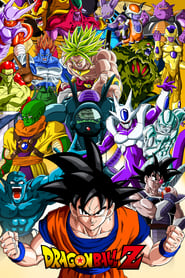
Dragon Ball Z Movie Mondays!

2VMZ1zRFPnUQtQp5K4WRXvDYBjhWhen I first started this blog back in 2011, I just wrote whenever I felt like it. I was a bachelor at the time with no significant other so you would be safe to assume that I had a lot of free time on my hands. Despite that though, I didn’t post a ton here. I felt like if I could do one post per week I was doing pretty well, and then I think that slid to twice per month. That’s not a lot of content, but I’ve also never blogged here for any reason other than pleasure so it’s not as if I really felt like I needed to do more. By and large, it doesn’t matter to me how many people read or follow what I do here, I just do it because it’s kind of fun to talk to myself via blogging and it’s rewarding to see my thoughts preserved. I love and appreciate any attention I get from subscribed readers and commenters, but I’d probably keep posting even if no one read at all.

I’ve found over the years though that creating goals for myself in relation to this blog is what gets me to actually write. And the more I write, the more rewarded I feel. Doing annual Christmas posts gives me a goal and something to work towards and starting the feature on Batman: The Animated Series last year gave me a goal to keep up with throughout the whole year (as well as provided me a good reason to revisit an old cartoon I enjoy). Since starting that I’ve been in search of another goal. Writing about Batman constantly does get a bit old, which is why it’s probably a good thing I at least limited myself to one a week. If you like that feature though, don’t worry, it’s not going anywhere and I’m as committed to it now as I was when it started, but I am posting today to announce my next little project:  the movies of Dragon Ball Z!

As a smaller project than Batman, blogging about the 13 theatrically released Dragon Ball Z movies accomplishes similar goals, just on a smaller scale. I’ve wanted to revisit the movies for a long time, and a few I’ve actually never seen. They’re quite affordable on DVD, and since there are only 13 it makes for a nice summer time feature. Which is why every Monday this summer I’ll post a review/synopsis of each of the 13 original DBZ movies. Now you may be thinking to yourself, “What about the other two movies released in the last few years?” Well, I already did reviews for them, and if you want to check out my thoughts for Battle of Gods or Resurrection ‘F’ you can do so. Even though they are branded as Dragon Ball Z films, they’re actually part of Dragon Ball Super, but I suppose it’s all the same anyways.

91DujzIdUrL._SY445_

Most of the movies can be purchased in multi-pack DVDs or as two-part Blu Rays.

The original 13 films were produced and created by Toei without input from series creator Akira Toriyama. They’re supplemental stories to the overall narrative of the Dragon Ball Z story. They all have an obvious, general time in which they take place relative to the story, but almost none of them could actually exist in the main story for the simple reason that it doesn’t contain room for them. Movie 3 for instance, The Tree of Might, obviously takes place around the time that Goku fought Vegeta because of how powered-up Goku is, but Goku spent that time either in a hospital bed or in a spaceship heading for Planet Namek so the events of that movie could not have possibly occurred in the same universe. And that’s fine, why should it have to? These movies are just for fun and not intended to intrude upon the actual Dragon Ball Z plot. The sooner you’re able to get past that the sooner you can start enjoying them for what they are.

For my reviews, I’ll be going in chronological order and using the English release titles and character names for simplicity’s sake. These movies are all available both dubbed and subtitled so you can enjoy them however you wish, it makes little difference. They’re mostly extended fight scenes with minimal plot developments rendering the non-visual aspects of each film kind of moot. That’s not to say that some aren’t better than others. For the most part, the films all seem to try and take some aspect of the main series, like Goku unlocking the ability to turn Super Saiyan, and truncating that story into a 45 minute movie. Most of the films are under an hour with the longest only lasting 72 minutes, so there’s not a lot of room for complicated narratives. I mostly want my posts to be spoiler-free reviews, but I found my main point of criticism is often in how the film’s choose to wrap-up the story and they’ve turned into more of a discussion/analysis than a true review. I don’t really think there’s much to spoil in these movies, since often the cover art or title gives away most of the plot and each film needs to reset the status quo at the end. I’ll still try my best to avoid them though and warn those who haven’t watched these movies ahead of time if I’m about to spoil something major.

Dragonball.Z.-.Movie.09.-.1080p.BluRay.x264.DHD.mkv_snapshot_13.27_[2013.12.01_16.35.45]

Since the movies are non-canon, you’ll sometimes get to see match-ups that you would have never seen in the main series, like Trunks vs. Tien.

If you haven’t seen all of them though then I encourage you to watch along with me as I go. Dragon Ball Z is largely an imperfect series, but it’s also inherently fun. Because of the wish-fulfilling Dragon Balls, the stakes are often pretty low even when they seem vast and the movies are full of plenty of humorous moments as well. They’re often a place for the underused characters, especially Oolong, to have a little moment to themselves which is often quite nice. The super-powered Saiyans seem to soak up a lot of the attention in the series, and they do in the movies too, but it’s easy to forget that the franchise boasts some pretty entertaining supporting characters as well. If this all sounds like fun to you, then check back this Monday for our very first movie – Dead Zone! And if you’re seeing this for the very first time and I’m well into the series, use the drop-down menu to your right to find all of the Dragon Ball Z movie reviews in one handy place. And if you love Dragon Ball, but don’t care for the movies so much, well good news because I have a few other posts on the way concerning the subject. I hope to see you Monday!


The Chronological Donald – Volume 2

1e_66925_0_TheChronologicalDonaldVolume21What day is today? It’s Donald’s birthday! He made his debut in the Silly Symphonies short “The Wise Little Hen” on this day back in 1934 making him one of the oldest reoccurring characters at Disney. And while he may not be the oldest, he’s the most entertaining. Yes, more so than Mickey Mouse, Goofy, and all the rest. He was basically the star of Disney’s shorts in the 40’s and 50’s when other characters were seeing their workload reduced. It was basically the creation of Donald that allowed Mickey to settle into his more everyman role as the wholesome and unblemished face of the brand. And while Goofy and Pluto continued to receive steady work during these years, they never came very close to eclipsing Donald Duck who proved to be the most versatile and naturally funny character in the company’s arsenal. He was likable enough that the audience could be asked to root for him, but possessed enough bad qualities that audiences could also delight in seeing him get his comeuppance.

donaldv2-04

Volume Two of The Chronological Donald is best known for containing the WWII cartoons.

The Walt Disney Treasures collection is a series of DVD releases now long out of print. They fetch a pretty penny on the resale market now mostly because Disney has never really revisited them or printed them in mass quantities. They were the brainchild of film critic/historian Leonard Maltin, who felt these treasured shorts that defined Disney in the early days should be celebrated and made available. Since Disney no longer directly profits off of these cartoons, save for a bonus feature here and there on conventional releases, most of the shorts can actually be viewed on various streaming platforms online at no cost. Disney is expected to launch its own streaming service next year, so it will be interesting to see if lots of copyright claims start going up this year to get them pulled down.

Donald_Duck_-_In_Der_Fuehrer's_Face_2

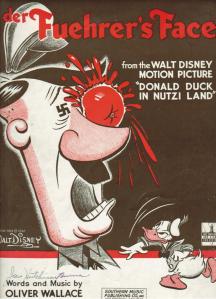
“Der Furher’s Face” contains some rather surreal imagery.

The DVDs are the way to go though if you want to watch these treasured shorts. Donald Duck had enough material to span four volumes, each being two discs, and of the four I think it’s safe to say the best overall collection is Volume 2. This captures the era of cartoons when Donald had settled into a nice groove, but had yet to become too formulaic. Released just after the Great Depression, there’s a lot of historical nuggets to chew on during disc one with Donald being rather poor and forced to ration things like rubber and gas. Perhaps most famously, are the World War II era cartoons contained in the “Vault” section on disc one. A lot of these could best be described as propaganda today, with Donald excitedly signing up for war in one and tackling Adolf Hitler in another.

hqdefault-42

The boys have some fun at the expense of their uncle in “Donald’s Off Day.”

A great many Donald Duck cartoons typically place Donald in a fairly ordinary role, maybe in a conventional job or portraying a farmer, and then have him face-off with an adversary. In “Bellboy Donald,” he’s a bellhop on his last chance on the job to keep guests happy and he’s forced to deal with Pete’s punk kid who really tries his patience. In “Donald’s Garden” he’s a simple farmer with a rodent problem. A gopher, perhaps a precursor to the more famous duo of Chip and Dale, wants to eat his crops but Donald isn’t about to share. And then of course there’s his nephews which he clashes with at times such as in “Donald’s Snow Fight,” in which Donald wrecks their snowman and they plot revenge via a spectacular, over the top, snowball fight.

Other cartoons basically pit Donald against himself. In “The Plastic Inventor,” Donald tries to build a plane out of plastic, but he makes the mistake of getting it exposed to water while flying causing it to melt. In perhaps the best cartoon on disc two (and maybe the whole set), “Donald’s Crime,” he steals from his nephews’ piggy bank for a night on the town and is forced to confront the guilt he feels. And sometimes he’s also basically just playing the victim and we laugh at his misfortune, like in “Donald’s Off Day” where he just want to golf on his day off but the weather won’t allow it, forcing him to stay home with his nephews who play a vicious prank on him.

DonaldDuckInNutziLand_zpscc10584aThe war cartoons though, are definitely the most infamous on this set. Because they’re in The Vault and contain politically incorrect humor, they have a sort of forbidden fetish attached to them. They’re not all straight propaganda though. In “Donald Gets Drafted,” we see our duck protagonist in a very eager mood to enlist while a song cheerily lets us know that the Army is better than it’s ever been before. In the end though, while Donald hopes to be a fighter pilot, he just ends up going through basic training and is forced to peel potatoes. He gets some revenge against his mean drill sergeant, played by Pete, in the next cartoon, “The Vanishing Private,” when Donald uses invisible paint to disappear and harass his sergeant causing the general to think he’s crazy. “Der Fuehrer’s Face” is probably the most famous of these shorts, and not simply because it won an Academy Award. It depicts Donald in Nazi Germany being subjected to Hitler’s numerous brainwashing techniques and portraying daily life as horrible there. It also contains a rather unflattering portrayal of the Japanese, which also shows up in other shorts. It’s a surreal short though, and in the end it’s revealed to be a dream and Donald wakes up in the most garishly decorated bedroom of an unabashed American patriot. Everything about the cartoon is over the top, but it’s just so fascinating to watch as someone very far removed from that era.

ccf7a09

Goofy isn’t too good to appear in a Donald Duck cartoon.

If there is a shortcoming to this era of cartoons it’s that they’re not always the best looking. Some just weren’t properly taken care of, like “The Village Smithy” in which the film had aged so poorly Donald is basically yellow. Money was tight because of the war effort, so backgrounds are sometimes bland or sparse. The animation, by and large though, is still exceptional Disney quality animation. Another drawback though is perhaps the absence of more classic adversaries for Donald. Chip and Dale won’t show up until Volume 3, and they’re often thought of as Donald’s best foils. Pete is present in several shorts, and Donald pairs up with Goofy in a few others. There’s no Mickey though as he always receives top billing in any cartoon he shows up in. There are some one-off villains like a buzzard and gorilla, and if anything it’s nice to see some variety. The cartoons featuring Chip and Dale are more of a novelty than anything, as those two basically possess the same qualities as the gopher from “Donald’s Garden,” they just happen to be more recognizable.

vlcsnap-2012-01-30-14h14m12s52

“A Day In The Life of Donald Duck” is probably my favorite special feature across the entirety of The Walt Disney Treasures line.

Volume 2 not only perhaps possesses the best set of Donald Duck cartoons ever created, but it also has arguably the best bonus features of any of the four. “A Day in the Life of Donald Duck” highlights the first disc and it’s a fake documentary of Donald’s day to day life from the old Disneyland TV series. He’s super imposed over live-action as he visits the Disney Studios in Burbank and even runs into his voice actor, Clarence Nash, at one point. It’s pretty funny and the effects still hold up well enough today. My own kids are convinced Donald is really interacting with the environment in it. Disc Two contains a sit-down between Maltin and current Donald Duck voice actor, Tony Anselmo. It’s a great interview and Anselmo details how he got the role, what it’s like to play Donald, and even discusses drawing and animating him. There’s also a retrospective on Carl Barks, long somewhat forgotten and ignored, Barks was the writer and artist for the Donald Duck and Scrooge McDuck comic books that often didn’t even bare his name. He has since experienced somewhat of a renaissance as Disney tried to remedy that during the 90’s and 2000’s. It’s nice finally seeing him get his due.

4-2

“Donald’s Crime” may not be as famous as the WWII cartoons, but it might be the best on the set.

If you wanted to get just one collection of Donald Duck cartoons, then Volume Two of The Chronological Donald is the way to go. It tends to be the cheapest due in part to 125,000 sets being produced, which is more than Volumes 3 and 4 combined, though not as many as Volume One. You may not get the fun first appearances of Daisy, the nephews, or Chip and Dale, but what you do get is a collection of really entertaining cartoons. All of the sets are pretty entertaining in their own right, but Volume Two is the one I come back to most frequently. The cartoons are just really funny and feature good variety, though I could understand if someone preferred Volume Three over this one since it has more familiar adversaries, some great cartoons in its own right, plus it features the more memorable Donald Duck theme song. If you’re a fan of The Duck, or a fan of classic animation in general, then you should probably just try and get all four volumes because I don’t think you can count on Disney re-releasing these anytime soon or in a better package.

The Shorts

1940

  • The Volunteer Worker (presented as a Bonus Cartoon on disc two)

1942

  • Bellboy Donald
  • The Village Smithy
  • Donald’s Snow Fight
  • Donald’s Garden
  • Donald’s Gold Mine

1943

  • Donald’s Tire Trouble
  • Flying Jalopy

1944

  • Trombone Trouble
  • The Plastics Inventor
  • Donald’s Off Day
  • Donald Duck and the Gorilla
  • Contrary Condor

1945

  • The Eyes Have It
  • Donald’s Crime
  • Duck Pimples
  • No Sail
  • Cured Duck
  • The Clock Watcher
  • Old Sequoia

1946

  • Donald’s Double Trouble
  • Wet Paint
  • Dumb Bell of the Yukon
  • Lighthouse Keeping
  • Frank Duck Brings ‘Em Back Alive

The Vault

  • Donald Gets Drafted (1942)
  • The Vanishing Private
  • Sky Trooper
  • Der Fuehrer’s Face (1943)
  • Fall Out – Fall In
  • The Old Army Game
  • Home Defense
  • Commando Duck (1944)

Dragon Ball Z – Resurrection ‘F’

Dbz_movie_2015_poster

Resurrection ‘F’ (2015)

Dragon Ball Super still feels very much like a new series to me, which is kind of funny since it just concluded with episode #131. Although it may have just ended (and production company Toei Animation has suggested it’s likely to continue), I’m currently about 80 episodes behind since I’ve been watching it on Cartoon Network’s Toonami block which just aired episode #59. It’s been really interesting seeing the franchise resurrected, no pun intended, after being seemingly relegated to video games for the foreseeable future. Maybe it was getting older, maybe there were just new stories to tell, but something compelled series creator Akira Toriyama to return to the franchise that made him famous around the world. And wouldn’t you know? The fans have been there and willing to re-embrace this franchise. It’s been something to behold as I personally never saw it coming after Dragon Ball GT was so poorly received, but here we are.

Battle of Gods was the film that got the ball rolling on this new era of Dragon Ball. It brought the old gang back together and introduced some new characters in Beerus, the God of Destruction, and his attendant Whis. It was a mostly fun little film that managed to rise above the Toei Dragon Ball Z films that were largely generic filler. It certainly helped that Toriyama wrote the picture, but it also really helped that it was both canon and it is basically a replacement for the unimpressive GT. Still, some fans were left feeling a bit underwhelmed. The movie was heavy on personality and humor and light on DBZ’s trademarked action. It may have also disappointed fans to see their hero, Goku, actually fail in his bid to top the God of Destruction giving the film a very different feel from the usual fair. I was actually pretty receptive to the film. While I could see the obvious faults and the age-old formula at play (minus the little twist ending) I found it very charming and really enjoyed the introduction of both Beerus and Whis.

Battle of Gods was a fairly simple reintroduction for the Dragon Ball franchise, enough so that it was adapted as the first arc of Dragon Ball Super (along with the movie I swear this post is about), but it was light on fan service. In to make up for that is 2015’s Resurrection ‘F,’ and make no mistake, the ‘F’ is for Frieza.

12647_5

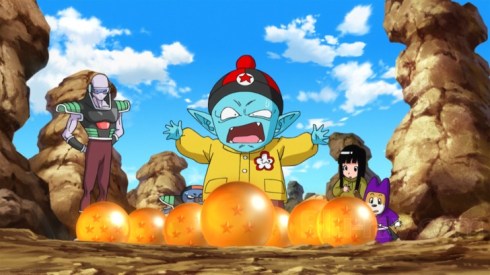
Pilaf always has to be starting trouble.

Frieza was the big baddie of DBZ’s second major story arc. In some ways, he was the ultimate villain of DBZ as he was responsible for the death of Goku’s father and his home world, though to Goku neither was a huge loss. Frieza was also the catalyst for Goku’s transformation into a Super Saiyan, the blond-haired ultra-powerful version of the character that’s almost now more famous than the old black-haired spiked version. He was an incredibly detestable villain, a ruthless tyrant willing to kill anyone who stood in his way – including children. He casually ended the lives of many of Planet Namek’s inhabitants as well as both Krillen and Vegeta, just when the audience was warming up to the Saiyan Prince.

Toriyama apparently felt there was more to do with old Frieza, even though the protagonists of Dragon Ball Z have long since surpassed the villain’s strength. Frieza barely survived his battle with Goku, needing to be partially rebuilt using cybernetics, and briefly returned to battle only to meet his end at the hands of a debuting new character – Trunks. Ever since then he’s been dead, confined to Hell which is where our story begins. What looks like the setting of a preschool show is actually Frieza’s own personal torment. Teddy bears and bunnies happily prance about playing happy songs in a pastel paradise where the once mighty Frieza (Chris Ayres) dangles from a tree like a pupa. He’s obviously agitated and the implication is this has been going on ever since the tyrant’s demise many years ago.

resurrection-f-frieza-dragon-ball

He’s back! Technically again, since Cyborg Frieza was his first surprising return.

In deep space, the remnants of the Frieza Force, lead by the diminutive Sorbet (Jeremy Schwartz), are struggling to maintain control over Frieza’s once vast empire. Sorbet has decided they can no longer continue without their lord, and having failed to locate the new Planet Namek, he decides that he and a small force need to head to Earth and find the Dragon Balls there to revive Frieza. He’s done his homework and knows that the fighters of Earth are capable of detecting power levels without a scouter and thus the decision to only bring along one attendant is made. Aiding him in his mission is that fact that both Goku and Vegeta have journeyed to the home world of Beerus to be trained by Whis while the other earthlings are too busy with their own day-to-day lives to notice Sorbet’s presence.

maxresdefault-25

Goku and Vegeta have been spending their time training with Whis, apparently ignoring their families back home.

Using the aid of an old enemy, Pilaf, Sorbet is able to locate the Dragon Balls and make his wish. Unfortunately for Frieza, since Trunks decimated his body the dragon can do little except restore life to a pile of flesh and cybernetics. Sorbet indicates they have the technology to heal Frieza, even from this state, without the need for cybernetics. Pilaf’s underling, the canine-like Shou, uses the second wish to acquire a million Zeni and Sorbet, along with the remnants of Frieza, take their leave.

In space, Frieza is healed and quickly decides his first order of business is revenge. When some of his followers politely suggest that this may be unwise, considering that Goku has since defeated Majin Buu who even Frieza feared in his old life, he lashes out killing some and making his point clear. For the first time in his life, Frieza decides to train and work hard to make himself stronger, which is how Toriyama is going to convince the audience that Frieza could perhaps go toe-to-toe with the current version of Goku. Apparently Frieza’s power before was just natural talent. He was never tested or forced to work and was able to effortlessly take whatever he wanted. He concludes four months should be enough, and thankfully, we’re in for a time jump.

dbzrf-still-1

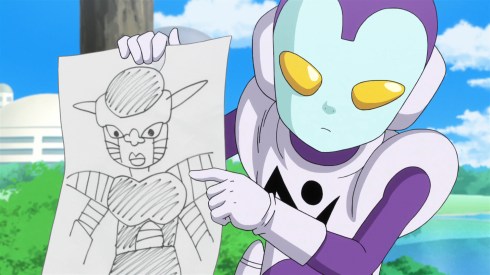
Making the leap from manga to anime is Jaco, and his impressive artist’s rendering of Frieza.

On earth, the Galactic Patrolman Jaco (Todd Haberkorn) makes his series debut when he arrives on Earth to warn Bulma (Monica Rial) that Frieza was alive and coming for Goku. Bulma is only slightly concerned, but there is the issue of Goku being too far away to get ahold of easily. She explains to Jaco that Whis can be lured to Earth with tantalizing sweets, and Jaco doubts that Beerus and Whis even exist assuming the God of Destruction is the stuff of fairy tales. Still, Bulma is only slightly annoyed when Whis fails to notice the strawberry sundae she’s waving at the sky, but then becomes a bit concerned when Jaco informs her that Frieza will be there within the hour. Well, that changes things a bit!

81YXcPJlykL._SL1500_

Some old friends are going to have to get their hands dirty while they wait for Goku and Vegeta to arrive. Nothing really changes.

Krillen (Sonny Strait), introduced doing some cop stuff, along with the other fighters assemble. Krillen even has his wife 18 (Meredith McCoy) shave his head so he can capture that classic Krillen look before he heads out to take on Frieza. 18 correctly reminds him that she’s stronger than he and should go, but he thinks it’s more important she stay behind to take care of their daughter and she puts forth no argument. She remarks that he’s so cool as he flies away, which is the most affection we’ve ever seen her show up to this point (that I can recall, anyway).

In the outer reaches of space, Goku (Sean Schemmel) and Vegeta (Christopher R. Sabat) are sparring with their latest teacher, Whis (Ian Sinclair). Unable to land even a single blow, Whis explains to the two their weaknesses. In his estimation, Vegeta is always one step behind Goku because of the rather large chip on his shoulder. Meanwhile, Goku is too arrogant and lets his guard down too easily, which Whis demonstrates with a sucker punch. Their training awakens Beerus, who nearly annihilates them all with a simple sneeze. Whis warns the Saiyans to be careful around him for Beerus once accidentally destroyed the sun their planet orbits around. Goku is pretty shocked to hear that and assumes they have the power to give birth to the very stars, but Whis corrects him by explaining he can actually rewind time by a few minutes and was able to undo Beerus’s mistake. Beerus is still agitated about being woken up from his slumber, but Whis cures his angst with some pizza he acquired on Earth. If you didn’t see Battle of Gods, the gimmick, if you will, of Beerus and Whis is their fascination with Earth cuisine. They love experiencing new dishes and could best be described as foodies. It’s also why Beerus decided to spare the Earth from destruction.

dbzf47

Goku’s got a new look to debut.

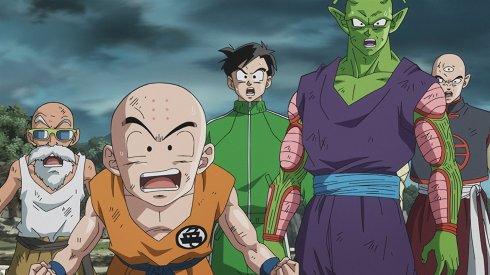
With Goku and Vegeta occupied, the other fighters of Earth are forced to confront Frieza and his army of 1,000 men when they show up. Leading the charge is Gohan (Kyle Hebert) along with Krillen, Piccolo (Chris Sabat), Tien (John Burgmeier), and Master Roshi (Mike McFarland). Two notable absentees are Trunks and Goten, and it’s explained that Bulma didn’t want them to know about Frieza to keep them safe. Frieza’s army offers little resistance when it engages the fighters, which is fine because it’s a way for the film to shine a light on some of these forgotten characters. It’s been a long time since Master Roshi, in particular, got to mix it up and do some damage and it’s definitely a whole bunch of fan service. When they’re out of the way, it’s down to Frieza who quickly puts Gohan on his back. Since this is a film, we don’t have time to mess around and Goku and Vegeta quickly show up to challenge the old tyrant.

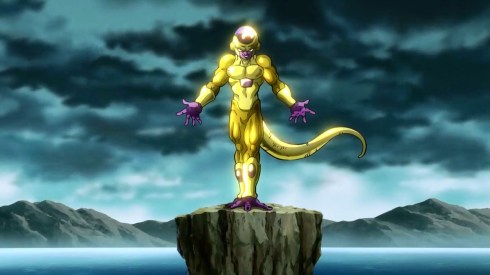
Frieza is delighted to see Goku and immediately goes to his final form. Goku does a lot of posturing while Vegeta angrily waits his turn. After some warming up, the two decide there’s no point in holding back. Goku unveils his new form, Super Saiyan God Super Saiayan. That mouthful of a form will eventually be simplified as Super Saiyan Blue as it’s basically just Super Saiyan but with blue hair instead of yellow. Of course, in terms of power it’s well beyond even Super Saiyan 3. Not to be outdone, Frieza unveils a new golden form that appears to be roughly equal with Goku’s new form. The two trade blows until Goku boasts about discovering Frieza’s weakness. When he starts to take control of the fight, Frieza resorts to some dastardly tricks and interference like a classic wrestling heel, forcing Vegeta to enter the fray. Frieza, holding out some hope that Vegeta will return to him and kill Goku, is shocked when Vegeta turns down his offer to be his Supreme Commander and he too transforms into this blue-haired form for a final showdown.

friezaj

Frieza’s new form is quite statuesque.

As a plot, it’s simple and fast-moving though the picture still ends up around 90 minutes. It doesn’t drag at all, unlike the Dragon Ball Super version of this arc which stretches it out over the course of 13 episodes. It’s packed with fan-service as a pretty sizable portion of the plot is devoted to the Goku/Vegeta rivalry and how the two view it and each other. It firmly confronts and establishes how those two coexist and view each other, and it’s kind of sweet to see it confronted openly. It’s also a source for a lot of humor and having both Beerus and Whis around adds to that. The film also teases a team-up between the two proud warriors, with both of the god-like characters remarking the two Saiyans would be unstoppable if they worked together.

Vegeta-Super-Saiyan-God-Dragon-Ball-Z

For once, Vegeta and Goku have reached a new level of power together making the two as close to equals as they’ve ever been.

Resurrection ‘F’ is also the best Dragon Ball Z has ever looked. There’s still some of that CG junk that marred Battle of Gods, but it’s relied upon sparingly here. The opening, featuring an underwater scene, is kind of ugly, but thankfully not a harbinger of things to come. The colors all pop and are richly vibrant. There are no obvious animation shortcuts and some genuinely nice uses of CG like a battle among some colossal trees that invokes images of Endor, only the speeder bikes have been replaced by supersonic warriors. The film also slightly upends the old formula of the other DBZ movies which often featured Goku having to clean-up after Vegeta was defeated. It’s a small change, but welcomed.

The score for the picture is also quite well done. It feels very much like a DBZ score, but with a modern touch. There’s some contributions from two noted Japanese bands, Momoiro Clover Z and Maximum the Hormone, the latter of which served as the inspiration for the plot as Toriyama was a fan of their song “F,” which was all about the villain, Frieza. It’s good stuff, and the English voice cast is pretty great as well. Voicing Frieza is Chris Ayres, who took over voicing duties for the character when Funimation went back and re-dubbed the series for Dragon Ball Z Kai. His Frieza is stupendous, and he does an especially great job of screaming as the character. And I continue to be a huge fan of both Whis and Beerus, even though their obsession with food will start to feel repetitive come Dragon Ball Super, but here it’s still funny.

maxresdefault-26

Oh, and this is apparently what Hell looks like.

Battle of Gods was the return to Dragon Ball Z I never knew I wanted. Resurrection ‘F’ manages to top it, even if it sounds kind of stupid on the surface. Somehow the film is able to make Frieza a compelling threat so many years after his defeat and I didn’t realize how much I appreciated him as a villain until I revisited him. It’s also nice that he’s just confined to this movie, as opposed to a massive arc where a single confrontation is spread over 30 episodes or whatever the old fight encompassed. And since I had already seen this plot covered in Dragon Ball Super, it was interesting to see what changed when they stretched it out over more than a dozen episodes. Super did deal with one long lingering pothole that the film does not touch, the frog version of Captain Ginyu, but other than that it doesn’t add anything important and really just contains a lot of subpar filler. That’s Dragon Ball though, you kind of have to both love it and hate it at the same time. At least here, for a brisk 94 minutes, you’re able to mostly just love it.


Disney’s Best Five Film Run

walt_disney_pictures_logo_slice_01The Walt Disney Company has been producing animated features for 80 years now. In that time, the company has released 55 films with a 56th on the way later this year and others in development. I’m only talking about the animated ones, because if you add in live-action and all of the films released by Pixar or under the Marvel or Star Wars banner then you’ll easily eclipse 100 films. Disney’s bread and butter has been the animated feature though, beginning in 1937 with Snow White and the Seven Dwarfs. Over the years they’ve had ups and downs and had to keep up with changes in technology and film production techniques. It’s a very interesting history, and likely numerous rankings exist around the internet listing out the films in order of best to worst, or vice versa.

For this post, I wanted to do something different. I wanted to look more at the eras of the films produced. At first I thought about just going in 5 year chunks, but that made things unbalanced as Disney has had periods where they churn out a bunch of films and periods where they don’t. Instead, I felt it would be more interesting to just divide the films up into groups, and with there being 55 total films as of this writing, it made sense to go with groups of five. These groups seem to work well as they tend to span around 7 or 8 years and result in some fun pairings. At first, I listed them out and then just did a totally subjective ranking. I was fine with the end result, but just for some added fun I added a score to each film on a scale of one to five with five being the best and then ranked them by total score and I ended up with almost the exact same list. Since that ranking felt a little more interesting, I’ll keep it and include my totally subjective score for each film as we go along while also linking to any films I may have reviewed here, so let’s get to it.
MV5BZTgyMGI1YzUtNTI0ZC00MGM5LTk3MGYtOTkyYzMwMDBlYmM2XkEyXkFqcGdeQXVyNjI1Mjk4MTg@._V1_UX182_CR0,0,182,268_AL_

Saludos Amigos (1942)

1942 -1949 – 10 points

Well, this isn’t surprising. By going with groups of five I inadvertently grouped basically all of the package films together in one grouping. These were the films produced during World Word II when Disney was cut-off from overseas revenue streams on its films. As a result, the company had to settle for cheaper releases. None of these films are particularly good, though each also has its moments which is why they all scored a 2 across the board (you have to be pretty bad to score less than 2, and really great to score a 5 from me). Saludos Amigos is basically a propaganda film aiming to improve opinions of South America as Disney was not opposed to making such crap. At least it has Donald Duck in it though. The Adventures of Ichabod and Mr. Toad definitely has its fans too, but I personally don’t enjoy that picture very much. Basically anyone doing a ranking like this one is going to start with this quintet.

MV5BMTkwOTU5MTA2M15BMl5BanBnXkFtZTYwMjYyNTc3._V1_UY1200_CR89,0,630,1200_AL_

Lilo & Stitch (2002)

2002 – 2005 – 11.5 Points

  • Lilo & Stitch – 5
  • Treasure Planet – 2.5
  • Brother Bear – 2
  • Home on the Range – 1
  • Chicken Little – 1

Also not surprising for Disney fans, this era captures Disney’s struggle to stay relevant in the field of 2D animation while also exploring CGi. Treasure Planet is a hybrid picture that at least looks good, but doesn’t offer much else. Brother Bear is okay, but feels outdated and like a picture that’s struggling to match some of the old Disney classics. The latter two are just plain awful and probably the two worst Disney animated features. Home on the Range has the fun distinction of essentially being the film that killed 2D animation at Disney – thanks! Propping this group up and keeping it from a dismal finish behind even the package film era is Lilo & Stitch, a supremely wonderful picture about two sisters trying to cope and understand each other following the loss of their parents. It basically explores depression in adolescents, but kind of hides it by also injecting the incredibly fun Stitch to the mix and it’s also gorgeous to boot. It’s really on my short list of the best films put out by Disney.
51WA7XEB92L._SY445_

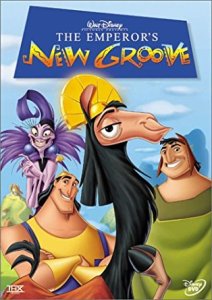
The Emperor’s New Groove (2000)

1999 – 2001 – 12.5 Points

  • Tarzan – 3
  • Fantasia 2000 – 2
  • Dinosaur – 2
  • The Emperor’s New Groove – 3.5
  • Atlantis – 2

This era represents the winding down of the New Renaissance era started in the late 1980s. You basically have two perfectly good Disney films in Tarzan and Emperor’s New Groove together with two forgettable ones and one sequel that really didn’t impress. Emperor’s New Groove might be on the studio’s most underrated films as it’s a really fun story with some great animation. Tarzan is the more popular due to its legendary character and for some reason the Phil Collins soundtrack was really popular. It’s one of those films that I think looks better than it is, but it’s fine. Dinosaur is pretty bad, it’s earnest so I won’t drop it to the dismal rankings but it just doesn’t work and has aged poorly. Atlantis, like Treasure Planet, is visually interesting and little else. And Fantasia 2000 was about as big a flop as the original. While the original benefits from being unique when it was released, and for containing the iconic Sorceror’s Apprentice (re-including that in 2000 doesn’t really count for as much) while the 2000 version just looks better and doesn’t introduce really anything noteworthy.

Unknown-40

The Many Adventures of Winnie the Pooh (1977)

1977 – 1986 – 14.5 Points

  • The Many Adventures of Winnie the Pooh – 3.5
  • The Rescuers – 3
  • The Fox and the Hound – 3
  • The Black Cauldron – 2
  • The Great Mouse Detective – 3

Commercially, this era of films is looked on rather badly. This is when critics were sounding the bells of doom for Disney wondering if the studio could turn it around. The Black Cauldron was one of the biggest flops the company ever endured, costing a boatload of money to produce while failing to connect with critics and audiences. Because of that status it might be lumped in with a few others as being among Disney’s worst, but it’s really not that bad. It at least contains a really memorable, and frightening, villain in The Horned King and brings back some of that old scary fairy tale vibe. It has its fans, like noted critic Roger Ebert. As for the rest, they’re all pretty good films just none are able to really rise above the cream of the crop. The Pooh shorts collected in The Many Adventures are pretty much considered classics by now while The Great Mouse Detective gets the credit for turning the studio around. It’s a fun adventure and one I’m a little surprised didn’t get a sequel. The Rescuers will get that honor a few years later, but the first outing for Bernard and Miss Bianca is the superior one. And then there’s The Fox and the Hound, a nice little buddy movie that aims big, but doesn’t quite deliver as impactful a story as it wants to. It’s still a nice little picture though.

tangled2010

Tangled (2010)

2007 – 2011 – 15 Points

If this era had a title it would probably be The Great Turn-Around. After bottoming out with the pair of Home on the Range and Chicken Little, Disney really needed to reassert itself as a leading producer of quality animated features. Pixar had eclipsed them and this group of films marks the moment when things finally started to get going in the right direction, though they still needed to take a couple more lumps. It’s also, sadly, the last of the 2D animation and marks the full commitment to CG pictures going forward. Meet the Robinsons and Bolt were another duo of clumsily animated CG pictures. Bolt is the better of the two, and I considered going with a 2.5 score, but in the end it’s also really not a film I care to watch again. The Princess and the Frog is gorgeous, and Winnie the Pooh is a delightful continuation of The Many Adventures that should please most children. Tangled is the clear star though and it’s the first CG film Disney made that is on par with Pixar in terms of visuals and it’s also a modern princess film that works. It helped lay what is a new foundation for that sub-genre of films and it kind of gets overlooked because of the success of another princess movie still to come, but I actually prefer it to all of the CG princess tales.

MV5BYTYxNGMyZTYtMjE3MS00MzNjLWFjNmYtMDk3N2FmM2JiM2M1XkEyXkFqcGdeQXVyNjY5NDU4NzI@._V1_UX182_CR0,0,182,268_AL_

The Lion King (1994)

1994 – 1998 – 15.5 Points

  • The Lion King – 4
  • Pocahontas – 2
  • The Hunchback of Notre Dame – 3
  • Hercules – 3
  • Mulan – 3.5

The coasting years. Hot off the success of early 90s films like Aladdin and Beauty and the Beast, Disney settled into a nice groove of pretty films with big songs and good enough stories. The Lion King is probably the studio’s last hallmark offering of the 90s. It’s a film some might give a higher score, but I think it’s definitely not as good as the group of films that preceded it. Meanwhile, the only dud of the group is Pocahontas, a film that has its heart in the right place, but plays too loose with actual history and is hampered by the G rating from telling the story it probably wants. The Hunchback of Notre Dame, on the other hand, found a way to tell a more mature story under the restraints placed upon it by the studio. Hercules is a fun film, nothing more and nothing less, while Mulan is a greater triumph than all but The Lion King. It tells its own Joan of Arc tale through the eyes of a strong, young Chinese woman. I wish it had a little better of a climax, which is the only thing keeping it from being among Disney’s best, but at the time it was a much needed film as it took the lead woman out of the damsel in distress role. All of these films follow the broadway format, which was getting tiresome by this stage, but all of them also look and sound fantastic. If we were ranking just by visual fidelity, then this group would probably place near the top.

220px-One_Hundred_and_One_Dalmatians_movie_poster

One Hundred and One Dalmatians (1961)

1961 – 1973 – 16 Points

The Xerox era. Finding animation was too costly, Disney turned to a new technique that utilized Xerox to copy cels and thus reduce the load on the animators. The studio basically gives credit to this process for even allowing them to create One Hundred and One Dalmatians as animating all of those puppies the old-fashioned way would have just been too daunting. As a group of films, that gives them a pretty distinct look as the earliest films done this way have a very rough, sketch quality to them. It has its own charm, though I prefer the old days. This is a solid, almost spectacular, grouping though. You have The Sword in the Stone and Robin Hood, both fun little tales that can please a gathering of all ages. And then you have One Hundred and One Dalmatians and The Jungle Book, two pretty big releases for the Disney company. Dalmatians, in particular, is one of the studio’s best and it’s a fun caper set in a modern setting that doesn’t beat you over the head with songs. The Jungle Book is just a good buddy comedy of sorts, and Mowgli is a relatable and sympathetic character throughout while the shadow of Shere Khan adds intrigue along the way. It also features some of the best work of the renowned Sherman Brothers. Lastly, there’s The Aristocats. If Dalmatians hadn’t come before it I wonder if I’d look upon it more fondly as it basically feels like a retread of that picture, but with cats instead. It has one pretty good song though, so at least there’s that.

921845-338

Lady and the Tramp (1955)

1950 – 1959 – 17 Points

Perhaps the most divisive grouping. This is a group of films lots of people grew up with, so they pack a lot of nostalgic value. They’re also a bit divisive as well since you have some old-fashioned princess tales where a kind, submissive woman is rescued by a dashing prince. There’s the racial imagery in Peter Pan, also not a high point for Disney, and then just the manic atmosphere of Alice in Wonderland that you either like or don’t like. As you can tell by my score, I’m among those who do not particularly care for Alice in Wonderland. I think it starts off fine, but then just gets too bogged down in being “wacky” and I struggle to remain invested whenever I watch it. Sleeping Beauty was another huge flop for the studio, but it seems like over time it’s become much more beloved. I don’t particularly enjoy the very angular features of the characters and the flatness of the visuals, plus the story is kind of the studio’s low point as far as making interesting leading women. It’s saved by the iconic Maleficent from being truly dreadful. At the other end of the spectrum is Cinderella, which tells the tale of a victim of circumstance who finds a way to be a decent person throughout it all and is rewarded in the end. By itself, it’s a nice film and I don’t find fault with the film’s message. It’s only when lumped in with other “princess” movies that it starts to feel problematic. Peter Pan is merely fine. I think it’s weak in terms of song and as an adventure it’s ho-hum. It’s more of a kid’s fantasy film, than anything. The best though is Lady and the Tramp, a really fun “dog movie” with interesting characters, a simple but effective premise, and the best visuals of any Disney movie. This one is beautiful and I get a little sad every time I watch it because Disney just doesn’t make movies that look like this anymore and maybe never will. It also doesn’t feature a ton of songs, which is a plus in my book. I understand those who may find it boring or slow, but for me it’s almost perfectly paced and just too visually stimulating for me to lose interest at any point.
pinocchio1sh

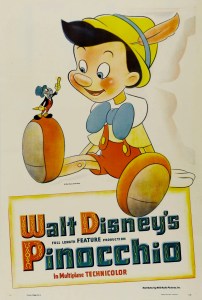
Pinocchio (1940)

1937 – 1942 – 17 Points

The group that started it all. It’s actually tied with the group preceding this one at 17 points a piece. My tiebreaker was simply to pick the best film of the bunch and go with that group, and if you’ve read my reviews for some of these films then you would know that Pinocchio is my all-time favorite Disney picture. It’s a great story that’s captivating, warm, scary, suspenseful and is pushed along by wonderful visuals and timeless songs. It’s the best example of Disney’s old way of creating an animated movie which wasn’t as reliant on song-breaks like the films of the late 80s and 90s. Joining Pinocchio is, of course, the one that started it all – Snow White and the Seven Dwarfs. I recently reviewed this one in light of the fact that it recently turned 80(!) and it seemed like a good time to revisit it. It’s breath-takingly beautiful, even by today’s standards, which helps to cover-up a sometimes slow moving plot. It may have scored a half-point for nostalgic reasons now that I think about it, but I’m sticking with the 3.5 since it feels like it should be elevated about the likes of Dumbo and Bambi, which round out this list. Both are adorably sweet films that also have moments of fear and sadness to balance them out. Dumbo is the simpler of the two, while Bambi is the more visually impressive. Fantasia was basically Walt’s pet project and something that I think was made to appeal to him first and foremost, which makes it rather interesting. It’s not really for me, but I recognize that it has value and The Sorcerer’s Apprentice segment is pretty wonderful. It also has the distinction of being one of the only Disney movies to never be aired on free television.

1200x630bb

Wreck-It Ralph (2012)

2012 – 2016 (Present) – 18 Points

  • Wreck-It Ralph – 4
  • Frozen – 4
  • Big Hero 6 – 3
  • Zootopia – 4
  • Moana – 3

You may think this one is up this high because of recency bias, but let me assure that is not the case. This is the first, and only, grouping of all CG films and it just so happens all of them are pretty damn good. While none managed a 5 rating from me, none also fell below a 3 which is also a first on our list. Let’s start with my pick of the worst, which is Big Hero 6. It’s a great visual film, but it suffers because it just feels too derivative of other Disney films in its turning points. It also is a victim of being essentially a super hero film and there’s certainly some fatigue associated with that genre these days. If you’re a younger person who is only familiar with Disney’s modern output then it might be more appealing to you since its tragic elements feel less repetitive, but for me it’s just okay. Moana is slightly better. It’s a pretty solid adventure with a fun pairing between its heroine and Maui, a god, that would probably be better if it was a bit shorter and knocked out a song or two. Zootopia is ambitiously serious and it’s a pretty fantastic one-time viewing experience. Its lack of “fun” and reliance on mystery and plot twists cause it to not hold up as well on repeated viewings, but just judged by itself it’s actually pretty great. Frozen is the most popular film on this list, though I think it’s visually the worst. It had a whole bunch of problems during production, originally starting off as a hand-drawn picture, so it’s not really surprising to see it doesn’t look its best, but it makes up for it in charm. This is a likable cast that puts a nice twist on the princess formula. I think, musically, it’s a bit overrated. Not “Let It Go,” that song is fantastic, but other than “Do You Want to Build A Snowman?” I could do without the rest. Wreck-It Ralph is the star for me, and not because it’s a video game movie, but because it best combines characters, heart, plot, and visuals into a total package. In looking at my ratings, I’m actually thinking maybe I should bump it up a half-point to separate it from the rest, but I’ll stick with what I’ve got. It’s only real failing is that it doesn’t really take advantage of the cameos from video games, outside of the therapy session, and it does feel a bit on the long side. Still, a great movie and one I tend to get sucked into whenever it’s on television (which is a lot, it seems).

61F14ZAHR6L._SY445_.gif

Aladdin (1992)

1988 – 1993 – 19 Points

At last, we’ve come to our top spot and perhaps not surprisingly it captures the peek of Disney’s New Renaissance. This is a three-headed monster of films that really changed the game on what an animated feature could deliver, including the first one to be nominated for an Academy Award for best picture. It’s also a gauntlet of pictures as each one was released in a different year – five pictures for five years. The amusing part is it also contains two films that are certainly not beloved. Oliver & Company holds some nostalgic value for me because it’s the first film I can recall seeing in a movie theater. As such, I probably like it a bit more than the 2 rating I gave it, but I can see it’s faults as a film. It does deserve credit for establishing the new format that our big three would adopt. The Rescuers Down Under has the distinction of being the only theatrically released direct sequel of any animated Disney feature, a distinction that will end later this year when the Wreck-It Ralph sequel is released. By itself, it’s fine and Bernard and Miss Bianca are actually interesting enough to justify another feature, even if no one was really begging for it. Hardly Disney’s worst, but possibly its most forgettable considering the film that preceded it and the ones to follow. This group is defined by the three big ones:  The Little Mermaid, Beauty and the Beast, and Aladdin. Some dislike The Little Mermaid for being another princess tale, with Ariel needing to be rescued from the likes of her father, King Triton, and her love interest Eric – the dashing prince. I see it more as a tale of adolescence with Ariel embodying the personality of many 16 year olds I’ve come across. She has passion, a rebel spirit, and is perhaps too quick to identify what she wants. Perhaps an ending where she decides that Eric isn’t all that great would have turned things on its head and been more interesting, but it’s not as if Eric is a bad person. He actually is pretty great, so maybe happily ever after isn’t so bad? It’s also Disney’s best film when judging it strictly on the merits of its soundtrack thanks to the triumvirate of “Under the Sea,” “Part of Your World,” and “Kiss the Girl.” With Beauty and the Beast we’re treated to a heroine that’s a bit more realistic and willing to take charge of her situation. She sacrifices herself to The Beast to free her father, a noble gesture for sure even though it’s not what any father would want for their daughter. The film is hurt slightly by the fact that they need to gloss over the warming-up of The Beast and Belle, but that’ what happens with 90 minute features. Lavishly animated and wonderfully scored, it’s not a surprise why so many think it’s the best the studio has produced to date. And lastly, there’s Aladdin – Disney’s greatest tale of adventure. It’s almost surprising it took the studio this long to tackle the story of Aladdin as it fits in with a lot of the adventure pieces from both the animation department and the live-action one from the decades before, but Aladdin benefits greatly from being made in the 90s because it looks incredible and packs an iconic performance from the late Robin Williams as The Genie. This is a supremely entertaining film that might be my favorite of the bunch, but really on  any given day I could make a case for why any of those three are the best.


Walt Disney’s Snow White and the Seven Dwarfs

Snow_White_1937_poster

Snow White and the Seven Dwarfs (1937)

This past December, Walt Disney’s Snow White and the Seven Dwarfs turned 80. On December 21, 1937 the world was introduced to feature-length animation. Well, maybe not the world since that date was just the premiere. It wasn’t until February 4, 1938 that the rest of the United States was introduced to the picture. The film was behest by production delays and budgeting concerns and the mood was that this would be Disney’s greatest failure before it arrived. That wasn’t the case, and it’s a good thing because had Snow White failed we likely would not have the many subsequent pictures, or maybe even a Disney. This post should have ran in December, but since I was elbow-deep in Christmas I sat on it until now, timing it with the picture’s wide release. Snow White and the Seven Dwarfs is a remarkable achievement and a film worth celebrating any day, but especially so when it turns 80.

Snow White and the Seven Dwarfs had to be a special film in order to justify the need for an extended running time. Prior to its release, cartoons were relegated to the pre-show, if you will. Theaters would run a Mickey Mouse or Betty Boop or some other toon before a picture along with news reels and other pieces of film. Since there was less competition from other past times, a trip to the movie theater was practically an all day affair as opposed to modern times when movie-goers are left griping that a cartoon short is too long. In order to make Snow White and the Seven Dwarfs stand out, Disney naturally injected a huge amount of cash into the production. Live footage was recorded to animate over, numerous backgrounds were painted in lovingly detail, and a new camera technique even had to be invented. The Multiplane camera is a massive structure that basically separates three backgrounds at three different distances from the camera. This creates a literal foreground, middle-ground, and background for a given scene and the camera can zoom or pan on the image creating an illusion of depth. It’s on display right at the beginning of the film and it’s a fun little trick that would be utilized for basically all of Disney’s animated films to come.

maxresdefault-20

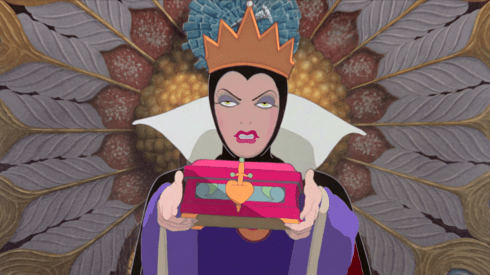
The Queen approaches her magic mirror.

Originally, Walt Disney thought he could produce the film for around $250,000. That’s a tiny sum by today’s standards, but in the 1930’s a typical Silly Symphony cartoon cost about $25,000 to produce. Disney must have assumed the feature would be ten times as long and cost ten times as much money as a result. If that was his reasoning, he failed to account for all of improvements he wanted to make to the process as the picture ended up costing around 1.5 million dollars. That was a rather colossal sum at the time, especially for a cartoon few thought would be a success, including brother Roy and wife Lillian. Disney had to mortgage his own home and most likely put up every piece of collateral he could to get the picture made. It was a gamble, but it paid off since what makes the film so special is the production values which help to cover a fairly pedestrian story.

snow-white-and-the-seven-dwarfs-animals

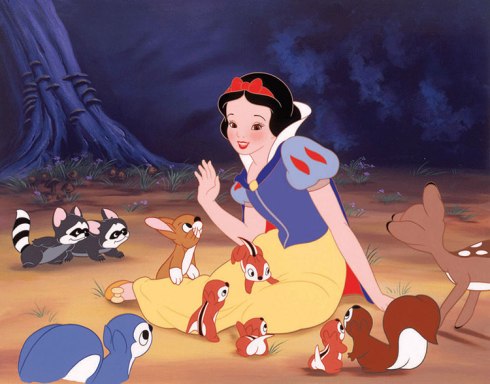
Young Snow White will spend quite a bit of time socializing with the various animals of the forest.


Snow White and the Seven Dwarfs
basically establishes the template for the Disney “Princess Movie.” A kind and good-natured young woman is made the target of a ruthless villainess through no fault of her own. This young woman, either a princess or soon to be, then just sort of lets everything happen around her hoping against hope that a prince will come to her rescue and take her away to live happily ever after. It’s a common setup for fairy tales and it’s a pattern that will be reused in both Cinderella and Sleeping Beauty years down the road. Of the three, Snow White is the one that follows it most closely. When the film begins, we find out that Snow White has lost her parents and is left with only her cruel step-mother, the Queen Grimhilde (Lucille La Verne). Despite being a princess, she’s forced to tend to the castle like a commoner while her jealous step-mother looks on concerned that Snow White’s beauty will soon surpass her own. When her magic mirror on the wall confirms this, the Queen responds with violence and commands her huntsman to lead Snow White into the forest where he is to kill her and return to his queen with the maiden’s heart in a box.

Snow White (Adriana Caselotti) is a happy and contented young woman despite her station in life. I suppose being a servant in a castle is probably better than a peasant, but we are introduced to her washing the castle steps in a tattered dress while she sings a happy song (“I’m Wishing”) to the birds that swarm around her. A dashing prince (Harry Stockwell) hears her song from outside the castle walls, scales them, and surprises her by sneaking up alongside her and joining in her song. Frightened, Snow White retreats into the castle proper disappointing the prince, but a little peak his way lets us know she’s more than a little curious.

image_21459143

The box intended to hold Snow White’s heart.

Love will have to wait, as the Huntsman (Stuart Buchanan) leads Snow White off to pick wild flowers where he is to do as his queen commands and end her life. When first confronted by the Queen, he is alarmed at the request and once the moment is upon him he finds he is unable to go through with it. Sobbing, he begs Snow White to flee from the evil woman sending her into a panic. She runs through the forest which takes on a supernatural quality. Trees reach out to her with thorny fingers and hideous visages as she screams and runs this way and that. Her dress gets caught multiple times, she stumbles into a bog, and bats and owls frighten her further. When the animals of the forest come to her aid she reacts with fear once more causing them to flee. Seeing their fear seems to snap her back into reality, and Snow White is soon apologetic and gradually calms down.

1453901969_1

The cautious dwarfs return home to find an intruder in their house.

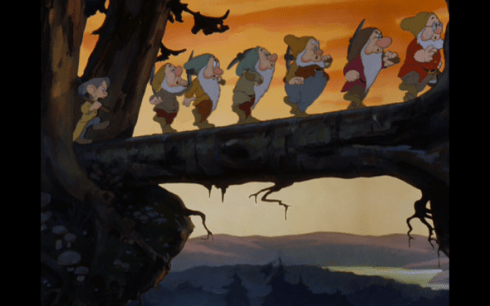
She walks through the forest which leads her to a little cottage. Inside she finds the place a mess with dust everywhere and dishes piled high in a wash basin. She notices the tiny furniture and the many beds upstairs adorned with silly names like Sneezy and Bashful and deduces this must be the home of some children. She happily cleans and prepares a meal while the many critters assist her. Of course, this home does not belong to children but to the seven dwarfs who are hard at work in a nearby mine harvesting various wonderful gems. They sing their little song as they work, which leads into perhaps the film’s most famous tune, “Heigh-Ho,” as their work day concludes and they set off for home.

snow-white1

Snow White meets the seven dwarfs.

Upon arrival, they find the house is occupied and they immediately suspect the worst. Doc, the dwarf with glasses, is apparently the leader of the troop but Grumpy is the one with the loudest opinions. Little, beardless Dopey, is apparently the one lacking in wits and he’s encouraged to venture upstairs and see who is sleeping in their beds. He sees Snow White and mistakes her for some kind of monster and the other six dwarfs need little convincing that he did not as they all scamper away in fright. Eventually, they return to the second level and see that the individual resting in their beds is not a monster, but a beautiful young maiden. She awakes to her own surprise that the inhabitants of the castle are not children, but seven dwarfs. The ice is broken almost immediately, and the new friends set in for a night of feasting, laughter, and dance.

Meanwhile, the evil queen knows her huntsman has betrayed her, and utilizing her magic mirror once more, she finds where Snow White is hiding. Turning to her book of spells, she concocts a potion that will disguise her as a hideous old hag and another that will coat an apple in poison. Any who consume a portion of the apple will fall into an eternal slumber. Only love’s first kiss can break the spell, and the Queen dismisses the possibility as soon as she reads it.

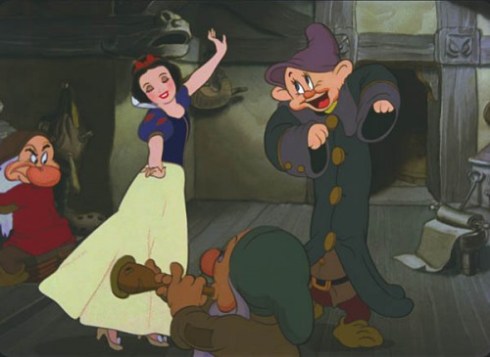
snow-white-and-dopey-500x365

Lots of singing, lots of dancing. This particular sequence will be re-animated numerous times in other productions, most notably in Sleeping Beauty when Aurora dances with the owl.

The rest of the story is likely not foreign to anyone reading this. The dwarfs head off to work the next morning while the Queen finds the cottage and is able to trick Snow White into taking a bite of the poisoned apple. The dwarfs, alerted by the forest critters wise to the Queen’s plan, are too late, but they do successfully chase off the Queen indirectly causing her to meet an untimely end. Unable to bring themselves to bury Snow White, they instead incase her in a glass coffin and stand vigil for many months until her prince eventually finds her and wakens her with a kiss. What convinced a prince to kiss a long-dead maiden is beyond me, but I suppose you can’t argue with results.

Snowwhite-disneyscreencaps_com-11655

The story is capable of charm especially when the dwarfs all line up for a goodbye kiss before work.

Snow White and the Seven Dwarfs is an achievement not because of its story, but because of its production. The plot is well-paced leading up to and including the introduction of the dwarfs to Snow White. The whole sequence of a frightened group of men tip-toeing through their cottage is a delight and genuinely amusing. Their warming period to Snow White is needed to make their reactions to her eventual “death” convincing, though it’s hard to argue that there isn’t a significant amount of padding at this point of the picture. Not accustomed to creating features, Snow White and the Seven Dwarfs falls victim to long stretches of time where nothing really happens. Just seeing characters dance and be merry might have been enough entertainment for a crowd in 1937, but to a modern audience it starts to feel long. Watching the film with young ones at home and this becomes even more obvious as their attention wanders. And yet, the film ends in a some-what rushed fashion reducing the emotional payoff of the moment when Snow White awakens. Despite that though, the dwarfs feel genuine in their remorse when they find Snow White apparently dead. From an emotional standpoint, it’s the film’s highest point as the little men, especially Grumpy, are reduced to tears at the horrible sight.

Evil_queen_as_old_lady

The Queen in her witch guise will probably put a little chill in the hearts of viewers even today.

Even 80 years after the fact, the animation of Snow White and the Seven Dwarfs is still remarkable to behold. Because live-action actors were utilized to map out the movement of the characters, everything has an elegant flow to it. It’s eerily realistic and the Queen looks especially splendid with her large flowing robes and dramatic movements. As an old hag she creeps along convincingly. If not for her cartoonish nose you’d think it was live footage and not animation. The only limitation of this approach, essentially tracing live footage onto animation cels, is in the facial animations. The small details and realistic proportions for Snow White are difficult to translate to a drawing (hence why so many animated characters have over-sized eyes and mouths) so her mouth kind of “floats” on her face and her eyes sometimes lack any semblance of life to them. The dwarfs, by comparison, have a more cartoonish appearance so they don’t have the same limitations. They mostly have large, bulbous noses and simple, but expressive, eyes. Live footage was tracked for them as well so their movements are not out of place when compared with the more human characters. All of this adds up to create one spectacularly animated film.

The backgrounds in the film are also lovingly crafted. Disney would perhaps learn eventually that not so much detail was required, but considering this was the first feature it’s not surprising they went a little overboard here. Every dusty little nook and cranny of the cottage is created. Wood grain appears on every wooden object and you can even see little hinges and bolts where appropriate. There’s also a nice water effect early in the film from the perspective of the wishing well that Snow White looks into. Such an animation trick is hard to pull off and I can only imagine how breath-taking it was in 1937. The scary forest and the Queen’s laboratory are also exquisitely drawn. In the case of the lab, it’s convincing to believe the Queen has been inhabiting this place for a long time. Her transformation into the old hag is perhaps not as ambitiously animated as it would be if done today, but is still effective and even a bit frightening. I also really enjoyed the little touches, such as a pair of buzzards stalking the old woman seemingly foretelling of her demise. And when she actually convinces Snow White to taste the poisoned apple we experience it through her eyes as she eagerly rubs her hands together and looks upon the girl with hungry eyes. When Snow White collapses, we just see her hand hit the ground by the witch’s feet as the apple rolls away. I don’t know if this was an artistic call or a bit of self-censorship on their part not wanting to show Snow White’s death onscreen, but it’s effective nonetheless.

snow-white-and-the-seven-dwarfs-31

The most iconic scene and song from the picture probably belongs to the “Heigh-Ho” sequence.

Snow White and the Seven Dwarfs is as much remembered for it’s stellar look as it is for its music. Music and Disney are intertwined and many of the studio’s animated productions are synonymous with their musical numbers. That is certainly the case for Snow White as many tracks have gone on to become celebrated and often associated with the Disney brand:  “Heigh-Ho,” “I’m Wishing,” “Whistle While You Work,” and “Someday My Prince Will Come.” These songs are all often referenced and sung today by children and adults alike. Though societal attitudes have somewhat tarnished “Someday My Prince Will Come” as this is an easy point of reference when deriding the trope of a young woman simply waiting for a man to come and better her life. A song that has aged just fine though has got to be “Heigh-Ho,” as who hasn’t left work on occasion singing that one to themselves?

Certainly the notion that a “Princess Movie” should seek to empower young women is perhaps the biggest obstacle for an old picture like Snow White and the Seven Dwarfs to be enjoyed by a modern audience. As an amateur animation historian, I enjoy this picture for the story behind the scenes, the real-world struggle to get it made and the fantastic artistic results. As for the actual story within the film, I do recognize the short-comings of the Snow White character. While it’s not a bad message to encourage unfailing optimism, like a character hoping against hope that their life will improve if they stay the course and be a good person, it is a bit unfortunate to see a young woman simply rely on a prince to carry them off to the happily ever after. I suppose it would have been nice to see more resolve from the title character. Instead of running off like a frightened child she could have shown some determination or maybe even fought off her attacker. The short run time necessitates a hastening of the romance in basically all of these films, so that part I can forgive. As a “Princess Move” though, Snow White is guilty of many of that genre’s sins. When compared with Disney’s other films, I’d probably slide the character ahead of the rather boring Aurora, but behind Cinderella who is at least more sympathetic given her relationship with her step-mother is explored in greater depth than what we have here.

Snow-White-And-The-Seven-Dwarfs

Given the film’s historical significance, it hardly comes as a surprise that the characters can still be found at the various Disney parks around the world.

Given that there are numerous “Princess Movies” to show your sons and daughters, I don’t think the message contained within Snow White and the Seven Dwarfs is particularly damaging or anything. Today’s kids can find better role models in modern pictures, but I also personally doubt many would seek to truly emulate the characters here because they’re fairly shallow. The dwarfs are the real stars are they’re consistently funny and charming and the Queen is memorable for being scary and cruel sure to leave a mark on a young child. Snow White, by comparison, is a bit boring and her look and even singing are some-what dated and not likely as captivating as modern characters. If your child prefers her to Elsa then consider me surprised. Because the film is a bit slow for children, Snow White and the Seven Dwarfs feels more like a picture that will entertain adults more than children, especially if the audience is just looking to drink-in the glorious animation. As the first feature-length animated production in the US, Snow White and the Seven Dwarfs is definitely worthy. Even with a pedestrian story, it looks fantastic and stands the test of time as a result. I imagine that when production began way back in 1934, that’s exactly what Walt Disney hoped to accomplish. Well done, Mr. Disney.


Dec. 11 – Beauty and the Beast: The Enchanted Christmas

51TJMMA0AVL._SY445_

November 1997

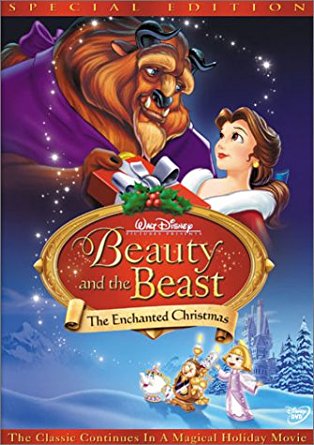
So this one is a little different. Basically all of the entries up until now have been for television specials and cartoon shorts. Beauty and the Beast: The Enchanted Christmas is a feature-length direct-to-video Christmas special based on Disney’s version of Beauty and the Beast. It’s sort of confusing to describe, because I guess you would call it a midquel (assuming that’s a real word), but it’s also a sequel since the events of the film are told via a flashback. See how that can get confusing? Anyways, I’ve mostly been running through the plots of these specials scene by scene, but doing so for a feature would take quite awhile, even though it’s admittedly a pretty short sequel since it only runs about 71 minutes, so I’ll try to be brief here, but probably won’t succeed.

The Enchanted Christmas was released in November of 1997 and is yet another direct-to-video film based on a popular animated one. Disney was churning these things out left and right during the 90s until John Lasseter was hired to oversee all of Disney’s animation and basically put an end to them. They’re mostly terrible and do nothing to enhance the value of the original films that spawned them. They’re basically cash grabs meant to capitalize on the popularity of those films without sinking in the capital required to make a legitimate sequel. They did more harm than good to both the Disney brand and the original films, and I honestly haven’t seen one that I consider good, though I admittedly haven’t seen many of them because of their subpar reputation.

As you may have guessed, The Enchanted Christmas is no exception. I did enter into this thing expecting the worst, and I can at least say my expectations were not met. This film isn’t terrible. On its own, its a serviceable piece of entertainment. It would probably be more fondly remembered if it had just been a television Christmas special rather than something you actually had to spend money on to either purchase or rent (and these videos usually weren’t any cheaper than the released to theaters features) in order to view.

beauty-and-the-beast-the-enchanted-christmas-robby-benson-paige-ohara-e1482392060443

Belle and The Beast get to enjoy a nice moment early in this one, but some meddlesome instruments mess it all up.

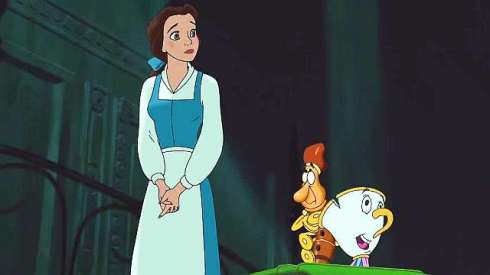
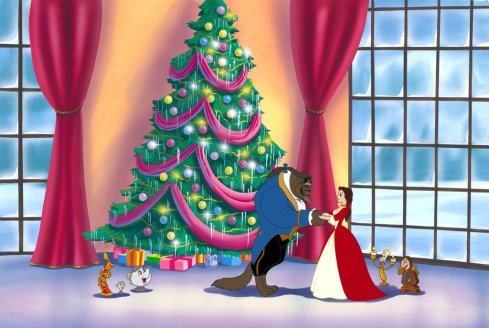
The Enchanted Christmas opens with the characters from the film preparing for Christmas. They’re human, so we know this is occurring after the events of the movie. They start talking about the previous Christmas, which is what sets up Mrs. Potts to tell us about the Christmas that almost wasn’t. Now we’re back in time and everyone is enchanted as household objects. Belle is imprisoned in the castle following her escape attempt and The Beast is somewhere licking his wounds. The main chunk of the movie is going to take place in this window, or essentially the montage from the original film in which Belle grows accustomed to The Beast and they have a snowball fight and it all leads to the ballroom sequence. The main plot of this story is Christmas is coming and Belle is a bit excited about it. The servants of the castle also view her enthusiasm for the holiday and the general good vibes it typically brings about as an opportunity to perhaps bring Belle and Beast closer. The problem is that the curse they’re all under was apparently inflicted upon The Beast and his subjects during the Christmas season, so Beast has a hatred for the holiday as a result. It’s a convoluted setup for a film, but in the end it’s a pretty conventional setup for a Christmas special.

0-3

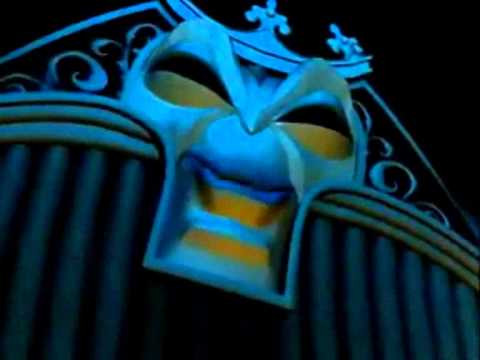
This is Forte and he looks pretty terrible, but with Tim Curry’s voice at least he sounds good.

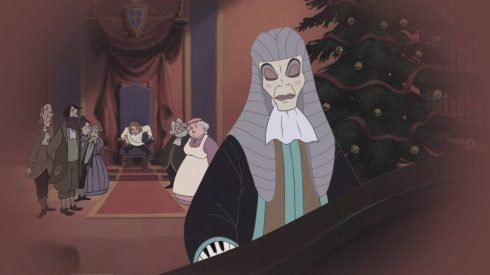
Surprisingly, basically everyone from the film has returned to voice their character for this. I’m not sure if they were contractually obligated to, but at least Disney was willing to spend money to make the characters sound the way they’re supposed to. There are some newcomers, of course, and one of them is unveiled early. Tim Curry is the voice of Forte, a large organ in the bowels of the castle. He apparently is a trusted advisor for The Beast and someone he confides in alone, making it at least somewhat believable that he could have existed during the events of the original film without our knowing. Forte is actually quite content as an organ since he’s essentially immortal. He doesn’t need to eat, or sleep, and is free to compose his music for as long as he pleases. Since he likes being this way, he has a vested interest in keeping The Beast from falling in love with Belle. He also has an assistant named Fife, a piccolo voiced by Paul Reubens. We’ll also be introduced to Angelique, the former castle decorator who was turned into a Christmas angel decoration and Axe, who works in the boiler room.

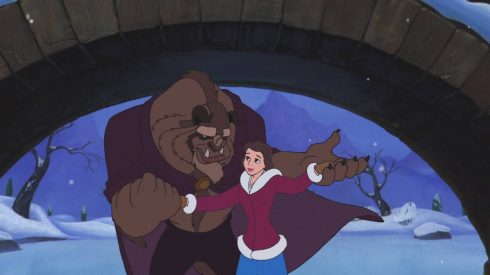
The gist of the movie is Belle trying to bring Christmas to the castle, and something preventing that from happening. Fife works for Forte because Forte promised him a solo in an opera he’s written. It seems like a pretty silly incentive, but I guess when you’re a literal musical instrument something like that sounds promising. He’s so eager that he interrupts Belle and Beast when they’re having a little moment while ice skating. He basically serves as Forte’s eyes and ears since Forte is immobile in his present form. Meanwhile, Belle sets out to decorate the castle, only for The Beast to intercede and forbid it.

Belle’s machinations lead her to finding Angelique among the castle’s Christmas decorations. Angelique is convinced that The Beast’s foul mood and general pessimism towards Christmas won’t end well and does not wish to participate. She’s also a bit glum, since being a Christmas decoration, she’s not really free to roam the castle either because she’s out of season or because The Beast hates Christmas – I’m not sure which is the reason. Belle uses her gift of song to raise Angelique’s spirits and gets her to come around to the whole Christmas idea allowing this feature to at least pretend that it’s a typical Disney movie.

12369514_1016802028363654_1846613750_o

Angelique, who as a Christmas decoration is apparently banished from sight until December, or at least until after Halloween.

Fife lets Forte know what Belle is planning, and he basically uses that info to further drive a wedge between she and The Beast. He tells Beast that Belle doesn’t care how Christmas makes him feel, only how it will make her feel and trys to play it off as Belle being selfish. It works too as we find out Beast is pretty easily swayed. This sets up a nasty confrontation between Belle and The Beast when she tries to secure a Yule log from Axe. She explains to Beast that everyone is to place their hand on the log and make a Christmas wish, to which The Beast mocks her by asking what her wish was last year, because it certainly could not have come true for her to be where she is now.

55

The little guy next to Chip is Fife, who is voiced by Paul Reubens.

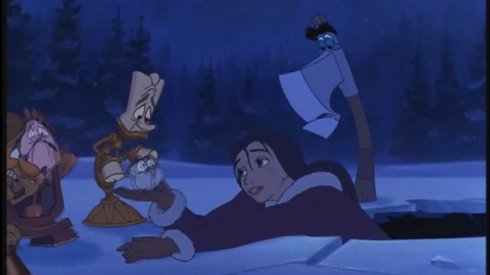
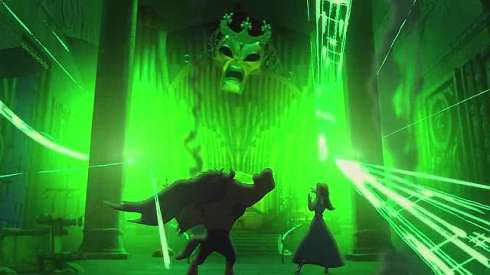
Like most Christmas stories, a heartfelt gift is a way to thaw a frozen heart. Belle creates a book for Beast, and even though he’s put a wrench in her plans, she still gives it to him. When Beast is alone with Lumiere he ponders opening it, but the candlestick man says he can’t open it until Christmas, but does remind him that people typically make gifts for others they care about. This gets through to Beast, and he returns to Forte to command him to write a song for Belle as a gift. Forte is not surprisingly pretty irritated at this request, but he goes along with it and starts playing an enchanting melody. It gets the attention of Belle who comes into the room to check it out. Prior to this, she was talking about getting a Christmas tree, and Forte preys on that by telling her where to go for a tree:  The Black Forrest. Now, Belle is apparently none too bright because that sounds like a pretty ominous place to venture. Of course, Forte is setting her up, and Belle plays right into it.

maxresdefault-15

I bet you can’t guess which one is Axe.

To my surprise though, The Black Forrest isn’t so bad. All Forte wants is for Belle to break her promise to never leave the castle. Following that whole wolf attack in the first film, it sounds like a sensible idea anyways. Once Belle sets off with Chip and Axe, Forte brings her absence to the attention of The Beast which just sets him off. He destroys the Christmas decorations in the main hall and races off to bring her back. Before he gets there, Belle and her horse Philippe fall through some ice after Fife startles the horse. The Beast arrives in time to save her, but that doesn’t spare her from the dungeon.

Angelique visits Belle during her incarceration in the dungeon. She admits that she was wrong to deny Christmas and gives us our first lesson of the holiday:  Christmas isn’t about fancy decorations and gifts, it’s about being with those you love. They resolve to have the best Christmas they can, given the circumstances. Beast, after being told to destroy the rose by Forte and give up on being human again, finds himself alone with the enchanted rose and watches as another petal falls and lands on his gift from Belle. Opening it, his heart grows three sizes that day and the true meaning of Christmas enters his soul and The Beast gains the strength of ten Beasts – plus two! Maybe not exactly, but pretty much, and he goes and apologizes to Belle and lets her out.

beauty-and-the-beast-the-enchanted-christmas-flashback-e1482392861406

Forte, before the enchantment took hold. How did Beast not know this guy was a villain?!

Forte is pretty pissed at this point and decides it’s time to just reduce the castle to rubble. He begins playing as loudly as possible, and since his pipes run through the castle wall he’s capable of really getting the place shaking. Fife finally figures out a solo in some opera for no one probably isn’t a good enough reason to allow a bunch of people to die, and he gets The Beast. When The Beast enters the room he’s not really sure what to do, but Fife instructs him to destroy the keyboard on Forte. In doing so, Forte is unable to continue playing and he gets destroyed. The Beast mourns him a bit, but who’s going to let such a thing stop them from having a good Christmas? Certainly not The Beast! We jump back to the present and everyone seems happy to have relived those events through story and Belle receives a single rose from The Prince as a gift. She seems happy to have it, though I personally think he could do better.

83

Beast’s showdown with Forte is very…green.

Beauty and the Beast: The Enchanted Christmas is okay. I’ve seen worse. It kind of retreads a lot of tropes from Christmas specials that came before it. As a midquel, it does okay at fitting the story into the events of the movie. We can kind of believe that the story could have taken place without some of these extra characters showing up. It would have been nice if instead of creating new characters like Fife and Angelique if they could have just given a voice to a background character from the film, but I can’t say it really bothers me much. The animation is obviously not on par with the original film, and Forte is animated using some rather crude CGi. This is that era of film making where CGi was new and exciting and being shoe-horned into traditional animation even though it looks way out of place. Forte isn’t the worst instance of this sort of thing, but he doesn’t look good. Tim Curry gives a nice performance though, and I actually enjoyed the concept of Forte more than I expected. He works as a villain, just not as a visual. Had he been animated in the same style as the others he would have been all the better for it. The new songs are not memorable though, and it’s a major drop from the original film.

Beauty-Beast-Enchanted-Christmas-1997

And a merry Christmas was had by all! The end.

If you want to see this film you’re best bet is to just go out and get it. It went out of print for a little while, but I started seeing it show up at retail last year probably to capitalize on the excitement over the forthcoming live action film. My guess is that Disney probably prints off a few this year as well to sell at Christmas and that’s that. Whether or not you encounter a copy “in the wild” might be a matter of luck, but online retailers are likely to have some stock and it’s available digitally too. For a little while, it was a bit pricey on the second hand market, but that seems to have come down. I’ve never seen this film shown on television, and since most of these sequels, prequels, and midquels are kind of regarded as Disney’s dirty little secrets it’s probable that the studio likes to distance itself from them and not air them on television. Or they actually sell well enough on their own at retail and they don’t want to diminish that return (and this one has made a ton of money for Disney, reportedly almost $200 million). If you choose not to watch it though this holiday season you probably won’t be missing much. This basically exists for those who really adore the original film to the point that they don’t care about the quality of the story here, they just want a chance to spend some time with these characters once again.


Dec. 6 – “Gift Wrapped” starring Tweety Bird

Gift-wrapped-title

“Gift Wrapped” (1952)

After yesterday’s rather lengthy write-up, I need something a bit more bite-sized today, so how about a Looney Tunes short? Surprisingly, there really aren’t a lot of Christmas themed Looney Tunes/Merrie Melodies shorts out there. Sure there’s a Christmas gag here and there, but usually those are not in cartoons actually taking place on Christmas. Bugs Bunny did have a television Christmas special in the 70s, and Daffy Duck got one decades later, but when it comes to classic shorts the most well known starring a Looney Tunes character is probably “Gift Wrapped.”

“Gift Wrapped” is a Tweety Bird short so naturally it also features Sylvester the cat and Granny. Tweety isn’t one of my favorites as his shorts are almost all interchangeable. Yeah, you could say the same of most of these characters, but his just stuck out the most. In that sense, “Gift Wrapped” isn’t particularly remarkable as a cartoon, but it does take place at Christmas and if you’re only going to watch one Tweety cartoon why not go with the Christmas one?

giftwrapped8p

If ever your cat eats one of your other pets just give him a firm slap on the butt.

The short opens with a shot of a cozy looking house in the falling snow. A narrator is reciting “A Visit From Saint Nicholas” and Sylvester feels compelled to confirm that there are indeed no mice stirring as he hungrily sits outside a mouse hole. The narration cuts out soon after and it’s Christmas morning. Sylvester comes running down the stairs like a kid all excited to see what Santa brought him. When he unwraps his gift to find a rubber mouse he’s dejected – he wants a real mouse. He soon overhears a small voice singing “Jingle Bells” and notices one of the gifts for Granny is a bird cage with a little yellow canary inside. In a move a little too clever for Sylvester, he re-wraps his gift and switches tags with Granny’s gift.

Granny soon emerges excited for Christmas. She’s a bit puzzled when she opens her gift and finds a rubber mouse, but quickly realizes the tags must have been switched. When she goes to give Sylvester his mouse she finds a contented cat and an empty bird cage, feathers floating in the air. She grabs him and starts smacking him on his rear and out pops Tweety, none too pleased. She dangles some mistletoe over the little bird and tries to get Sylvester to be nice, but it’s a non-starter.

Gift Wrapped (12)

Yeah, this isn’t going to work. Nice try, Granny.

From here the cartoon becomes a pretty typical Tweety vs Sylvester face-off. Tweety is in his cage and Sylvester is going to try his hardest to get that bird. Sylvester get his hands on the little canary, only to be directed to a Christmas present for him which turns out to be a giant dog. Sylvester tries to use a toy crane to snatch Tweety’s cage, only to accidentally grab Granny instead which earns him a few whacks with a broom. A classic Looney Tunes gag is utilized in which Sylvester cuts a hole in the ceiling to retrieve Tweety’s cage, only for Tweety to hop out and replace himself with a stick of dynamite. The explosion occurs offscreen, and Sylvester quietly lowers the now battered cage back into place before emerging from the ceiling a smoldering wreck. A Sylvester as Native American gag plays out next, only for Tweety to produce a cowboy outfit and pop gun, which wouldn’t you know, ends up firing like a real gun right in Sylvester’s face. Tweety then tries to take a ride on a model train around the Christmas tree, and Sylvester adds additional pieces of track to the train so it drives right in his mouth. The big dog from earlier is waiting though, and once Sylvester eats Tweety the dog eats him forcing Granny to swat the dog until Sylvester pops out, and then do the same to the cat in order to free Tweety.

sylvester

Take that, cat!

By now Granny is fed up that none of her pets can get along, especially with it being Christmas! She declares that they will get along and we next see a shot of the three animals from behind as Granny is seated at a piano playing a Christmas tune. The camera eventually circles around and we see over-sized Christmas stamps have been placed over Sylvester and the dog’s mouths while Tweety is free to sing happily. The end!

gift-wrapped-blast

It just wouldn’t be a Looney Tunes short if someone didn’t get shot in the face.

As I said, this a pretty straight-forward Tweety cartoon with Sylvester trying different schemes to get the bird, only for Tweety to outsmart him. All the while Tweety is free to break the fourth wall and talk into the camera uttering his typical catch phrases. Granny at least adds a fun dynamic as she gets involved in foiling most of Sylvester’s schemes and the Christmas theme is worked into almost all of the gags in some way. I also appreciate that all of the characters are happy that “Santa came” and no other origin for those gifts is suggested. Lets keep the kids in the dark, right? This is a fun short though, and while I don’t think it measures up to the Disney Christmas shorts from that era it’s still good enough. In the 90s, Cartoon Network could be counted on to play this and other non Looney Tunes Christmas shorts around the holidays, but they basically ditched all of that programming and kicked it on over to Boomerang, which can also no longer be counted on to show these. It used to be readily available on Youtube, but it would seem Warner has cracked down on that practice as I had a hard time finding it there so if you want to watch it I recommend getting the Looney Tunes Golden Collection which has this plus over 300 other cartoons and is usually pretty cheap, like under $40 cheap. There may not be a lot of Christmas cartoons in that set, but how can you go wrong with nearly 400 Looney Tunes cartoons? And you still have time to add it to your list for Santa!


Neca 1/4 Scale TMNT Movie Michelangelo

IMG_1679The good thing about NECA’s Michelangelo, the final turtle to be released from their quarter-scale line of action figures based on the 1990 film, is that it’s just like the previous three turtles to be released. The bad thing about it is that it’s just like the previous three turtles to be released.

Let’s start with the good. Mikey is made of the same high quality parts that his brothers are made up of. The paint applications are excellent, the texture of the skin spot-on, and the articulation better than you would expect of a 16″ turtle. He comes with an assortment of extra hands, which are basically identical to what his brothers feature, as well as the customary slice of pizza which fits so much better with Mikey than it does the other three. He has his twin nunchaku which are connected by a pair of nylon ropes to simulate his ‘chuks from the film which did not feature actual chains. He also sports a sublime bag of pork rinds, a unique accessory exclusive to Mikey and another that feels oh so appropriate. His head sculpt, which is naturally the only part of his body different from the others, features a happy expression as opposed to a grim one which also feels appropriate for the character. His wide-eyed gaze makes him look a bit less “alive” than his narrow-eyed brothers, but I wouldn’t trade this head sculpt for another.

Mikey is also just as poseable as the other three, though his choice of weaponry makes finding good poses a little more challenging. The rope between each end of the nunchaku  is pretty short. On the back of his packaging, there’s a picture of him with one end of his nunchaku going over his shoulder so his left hand can grasp it under his arm while his right hand holds the other end. Try as I might, I can’t come close to replicating this pose with my figure. I don’t know if they had to stretch the ropes to pull it off or dislocate the left arm or something. That’s okay though, Mikey isn’t really itching for a fight anyways and I’ve chosen to pose him on my shelf without his weapons at the ready opting instead for pizza and pork rinds.

That’s basically the good stuff. However, there are some flaws with Mikey not really shared by his brothers. For one, he has no holsters for his weapons. There’s a gap between the shell and belt under each arm that they can be wedged into, but in the 1990 film he had holsters on the rear of his shell (they would be moved to under the arm for the sequel) that NECA opted not to include. Curiously, NECA also sent out a promotional image to most retailers featuring Mikey balancing his nunchaku on his finder, but this special piece is not included. Supposedly it’s part of an upcoming set of baby turtles. If that’s the case, the image probably should have been circulated to promote that set and not this figure. However, the thing that bothers me the most about Mikey is his size. Since he uses the same body as his brothers he’s the same height as them as well. In the film, Mikey is noticeably shorter than his brothers and it really stands out to me when he’s posed alongside them. I suppose I could drop him to one knee or try to pose him sitting to hide this fact, but it does bother me, probably more so than it will most people though.

Because of the inaccuracies of this figure, I do feel Michelangelo is probably the worst of the four turtles released. That doesn’t mean he’s a bad figure though. I still think he looks great on his own, and I’d never buy three quarters of the TMNT and not the fourth. I love his head sculpt and I really love that he came with the bag of pork rinds. It’s such a throw-away moment in the film, but for some reason I always loved that scene of Don and Mike avoiding another Leo and Raph confrontation by stuffing pork rinds in their faces.  It also amused me as a kid to see the turtles eating something other than pizza.

This isn’t the end of NECA’s quarter scale line of figures based on the original film. As I mentioned earlier, a set of four baby turtles based on the origin flashback scene is on the way and they’ll also come with a box of pizza in addition to Mikey’s extra piece. I will admit I’m really not interested in that set, so don’t expect a review here. What I am interested in is the Shredder due out sometime next year. He hasn’t been unveiled yet, and NECA isn’t displaying anything at the New York Comic Con so we probably have to wait until Toy Faire to see him. I have high expectations. Another version of Raph is also coming and as far as I can tell it’s a re-release of the figure we have, but with a trench coat, hat, and backpack in addition to his sai. Supposedly, sales of this edition of Raph will determine if NECA goes ahead with a foot soldier figure. I kind of hate it when toy companies do this as it’s basically a lesser form of blackmail, “Re-buy this figure if you want this one. Oh, but he has a new hat!” I would have loved it if NECA had included the coat and hat with the first release, or made it available by itself, but I’m not buying another 100 dollar figure that’s essentially one I already have in the hope that it will lead to a future figure. That and honestly I don’t have much interest in a quarter scale foot solider. I would just want multiples for a small army, but at $99.99 there’s no way I’m buying more than one. So Shredder will likely be the final piece of this line I collect, and that’s fine as I primarily want the four turtles and their arch nemesis. If a Casey Jones comes around I’ll give it some thought.

Donatello was slightly scarce, as was Raph, but it seems NECA has upped their production numbers so a set of the four turtles is not hard to come by. You can find them at various specialty shops online and NECA sells direct through eBay too. And sometimes they even show up at Toys R Us. This is probably the best set of TMNT figures I own, and I own some good ones. I know some out there are holding out for a smaller scale version, but at this large scale I can’t deny they look awesome. I heartily recommend all four, but I understand that at $99.99 MSRP they’re not for everyone. It’s still great to finally have a quartet of turtles based on the original movie as that’s the best they’ve ever looked, in any medium. Don’t sleep on this set.


Batman: Mask of the Phantasm Blu Ray

Batman-Mask-of-the-Phantasm-Blu-rayI’ve written about Batman: Mask of the Phantasm on more than one occasion, often in glowing terms. I dubbed it the definitive take on the Batman character for film and ranked it pretty highly on my list of best Batman movies of all time. In addition to that, I did a straight-up review of the film as well. Most of these articles are old by the standards of this blog, but all of those write-ups were based on the DVD release of the film. It’s taken Warner years to finally put this film on Blu Ray, but it’s finally here and I’m going to tell you about it.
Now since I’ve already done an actual review of the film, I’m not going to go into much detail though I did re-read my review and I have some embellishments I can make in order to pad this post out. The Blu Ray itself is what is important for this post. Mask of the Phantasm is a film I always felt would benefit from a high-definition transfer because of all of the deep blacks, particularly in the backgrounds. The DVD release was an old one and not particularly good by the standards of DVD. It was re-released in multi-packs with the direct-to-video Batman films based on the animated series and I don’t know if any of those were handled better than the version I have. As far as the transfer goes, the Mask of the Phantasm Blu Ray is a mixed bag. My assumption the blacks would benefit was spot-on. Not only are they rich, but the deep blue of Batman’s cape looks great as well and the animation is nice and fluid. Sadly, there’s some blurring that takes place, particularly early in the film. I’m not sure if it persisted throughout at times and I just became engrossed in the plot or if it was confined to the beginning of the picture. Either way, it’s disappointing the transfer isn’t better.

The other disappointing aspect of the release is the complete lack of special features. The DVD did the same as both only include a standard definition version of the trailer for the film and nothing else. I find it hard to believe the likes of Paul Dini and Bruce Timm weren’t interested in doing something for this release, be it a commentary or a short piece on the making of the film. The subpar transfer and lack of special features really makes it feel like Warner cared little about the integrity of this release, which is a shame because it’s a film deserving of more respect.

Batman_Mask_Phantasm_Blu-ray_review_menu

What you see is what you get.

And what a film it is! In re-watching it for this write-up I’m just reminded of how well it gets the Batman character. Seeing Bruce’s early years as a vigilante really drives home the tragedy of the Batman character. And I don’t mean the sad origin of Batman, but in how Bruce has given up any chance at a healthy life by committing to being Batman. He’s fighting an un-winnable battle to rid Gotham of crime and foregoing marriage, children, and the simple pleasures of life. He’s unquestionably doing good in the community and helping people, but it’s probably not a fulfilling lifestyle.

batmanmask3

The Joker could have felt tacked-on to give the film a recognizable villain, but his inclusion pays off

The other aspect of this film that really merits praise, because it feels overlooked in light of The Dark Knight, is its depiction of The Joker. The Joker of the cartoon series is somewhat of a cornball. There’s some danger to the character, but standards and practices kind of holds him back. He’s overshadowed by the likes of Mr. Freeze and Two-Face as far as memorable villains go. Instead he’s kind of the old reliable stand-by for Batman as decades of Joker material from the comics means it’s relatively easy to come up with a decent episode. Here we get The Joker that the animated series probably wanted to give us, but couldn’t. He’s still a nut, but so much more menacing. There’s a real tension in his scenes because he feels unpredictable. Is he going to aid a character? Kill him? What’s his endgame? It’s a shame he doesn’t share screen time with a character we as an audience are invested in, instead he’s paired with scum and we don’t mind if Joker opts to murder them. And what more can be said of Mark Hamill’s performance as The Joker? He’ll always be my favorite.

What we have here is a mixed bag, a great film undermined by a mediocre release. Even so, the Blu Ray is an easy recommend for those who do not have the film already, especially if you’re into Batman and you’ve never seen it. It may be a brief experience, but it’s worthwhile. For those like me who already had the DVD, it’s a tougher sell. This strikes me as a release that will be discounted to the ten dollar bin by this time next year, so maybe waiting on it is the right move if you’re not eager to re-watch. If you’re perfectly happy with the DVD then sure, feel free to pass on this one. I don’t feel burned by it, but I do feel like at 19.99 it’s probably five bucks too expensive. Next year is the film’s 25th anniversary so perhaps there’s an outside shot of Warner doing a more robust release, but I kind of doubt it. This is probably all we’ll get with maybe a future two-pack coming along with an HD transfer of Batman & Mr. Freeze: SubZero, but I doubt that would feature any additional content aside from the films themselves.


Neca 1/4 Scale TMNT Movie Leonardo

IMG_1387NECA is now 3/4 of the way through the release schedule of their TMNT 1990 movie line with the release of Leonardo – the REAL leader of the group. And like Donatello and Raphael before him, he’s a pretty impressive specimen.

The original 1990 movie impossibly never had dedicated action figures. Playmates half-assed a line in recent years that didn’t seem like it committed to being a representation of either of the first two films and tried to have it both way, similar to how their own “classic” turtles were an amalgamation of the original cartoon and toy line. These giant figures from NECA have done an admirable job of filling that void, and while I do wish they came in a friendlier scale, I can’t deny how awesome these 16″ behemoths look.

Leonardo has all of the same articulation as his two brothers and that’s primarily because he’s essentially the same figure with a different head and belt. Of the three I have thus far received, I found Leo to be the easiest to pose right out of the box as his joints were pretty nimble and I never felt like I was in danger of breaking anything. His ab crunch however, hidden underneath the shell, is a little loose compared with Raph and similar to my Donatello. This means he has a tendency to pitch forward slightly and it’s hard to get his head to look straight out in front of him. The rest of his joints are tight and accommodating and the paint applications are flawless on my turtle. His belt is film accurate featuring two thing strips of leather crossing his chest from his right shoulder. I have no idea if the sheaths on the back of his shell are film accurate since you never really get a good look at them onscreen, but they look fine to me.

Leonardo naturally comes equipped with his twin katana. They’re very light which kind of surprised me and I do worry some about their durability. Currently, I’m a little scared that he’s going to fall off of my shelf and snap his blades, but hopefully that does not happen. They look pretty accurate to the film, and even have the octagonal hand guards and taped hilts. The film makes them seem a bit more dingy and worn, but that could just as easily have more to do with the lighting of the picture than anything. I can’t deny they look good, and their length seems spot on. Leonardo also comes with the same set of extra hands as Raphael. I’m a little disappointed that his pointing hand isn’t the reverse of Raph’s. He also comes with the same slice of pizza as the other two, but surprisingly he also comes with a canister of that famous ooze. Unlike the canister that came with Donatello, this one does not feature the crack from which the ooze leaked out and thereby justifying its existence. This means Leonardo comes with more accessories than brothers, though not by much. I would have preferred extra pizza to complete a pie, but oh well. Maybe Mikey will comes with that, though I doubt it since his weapons are probably the most costly to produce.

Aside from that, there isn’t much more to say since he’s fundamentally the same figure as the other two I’ve already reviewed. The only real downside to that is Leo should be a little taller than his brothers, and Mikey should be noticeably shorter (we’ll see how that turns out later), but it’s not egregious. The head sculpt looks fantastic and captures that grim seriousness embodied by the character in the film. The likeness is flawless, and I’m really glad to have this version of my favorite turtle upon my shelf. I very much look forward to completing this set when Michelangelo ships later this summer.