
 It’s been hard for me to find the time to sit down at the computer and contribute to this blog since becoming a dad in the spring of 2015. It has become especially hard as my offspring has learned to crawl, and then walk. Even so, that event occurred well after I posted my review of Teenage Mutant Ninja Turtles: The Ultimate Collection Vol. 3 in January 2013. Hopefully, no one has been sitting around waiting for this post since then, but at long last, I’m finally getting around to reviewing volume 4 of The Ultimate Collection.
For the uninitiated, The Ultimate Collection is a five volume set of hardcover, oversized comic book compilations chronicling the early years for the TMNT and collecting only the works of their original creators: Kevin Eastman and Peter Laird. The comics are presented in their original black and white with new cover art and liner notes by both creators. As someone who primarily experienced the Turtles as a kid via the cartoon and the films, I wanted to get this collection to experience firsthand the genesis of the original Teenage Mutant Ninja Turtles.
If you go back and read my review of Volume 3, you will notice I apparently took a long time in getting to that one as well. That was due to my lack of enthusiasm towards the product. For Volume 4, much is the same, unfortunately. Though I should point out right off the bat that Volume 4 is a better read than 3 as it compiles the last major arc of the original run: City at War. Volume 3 concluded with the re-death of The Shredder and Volume 4 picks up right where that one left off with the two-part Shades of Gray plot commencing in Issue 48. This volume runs in perfect continuity as it contains issues 48-55 as it represents a point in time where Eastman and Laird both had a renewed interest in the comic and a desire to put a finishing touch, of sorts, on everything before going their separate ways.
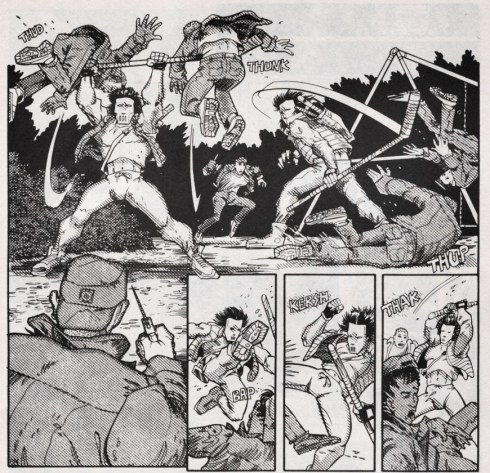
This encounter ends up making a large impact on Casey Jones.
Shades of Gray focuses on the Return to New York fallout and takes stock of where all of the main characters are presently at, in terms of their frame of mine. The Turtles return back to North Hampton but intend to return to New York after consulting with Splinter. Splinter is not coming with them, and Donatello wrestles with where his place is. Meanwhile, Casey is returning to his vigilante routes and accidentally takes a life in self defense, which gets the attention of Nobody, another vigilante introduced in the Tales of TMNT stories. Casey is spared, with some help from the Turtles, but is a wreck in the aftermath. April is also shown as lost and decides she needs to leave, especially with Casey being so distant. There’s some nice attention paid to Donatello as the story succeeds in giving his character a little more color than usual and he and Casey have a poignant encounter in the woods nearby.
Shades of Gray is basically a setup for City at War as it sets all of the characters out in new directions. April, searching for a fresh start, heads west to LA where her older sister Robyn resides. The Turtles head to New York, and Casey resolves to go after April after he clears his head. City at War also welcomes back Eastman and Laird to the artist’s chair for issue 1. Aside from that though, all of the pencils are handled by Jim Lawson in this collection. Eastman and Laird’s crowded, cross-hatching heavy art lends itself well to the congested city setting and their take on the Turtles is a welcomed return. Their still pretty amateurish when it comes to illustrating the human characters, in particular April, but overall I enjoy their artwork the most in this collection. It’s a shame it’s only for one issue.
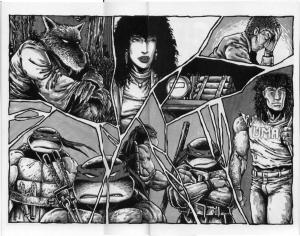
City at War Part 1 marks the return of Eastman and Laird as artists.
The City at War arc is primarily focused on the Turtles and their place in the New York community. They take on a Batman like role upon their initial return which frustrates Raph. The other brothers confide in one another that they’re unsure of what their place is and Leo has the hardest time with it and struggles with his role as leader for much of the collection. Meanwhile, the Foot Clan is in disarray and has splintered off into multiple factions. We see a rag-tag group of the ninjas mostly making trouble, but also a more sophisticated faction that targets the others financially via cyber warfare. And then there’s the Japan faction which is teased throughout the entire collection. They’re lead by Karai, who finally reaches New York by issue 55, but her presence isn’t felt until Volume 5. The Foot Elite are also around making trouble, and their allegiance is unclear. One encounter seems to place their allegiance still firmly with their deceased master making them a chaotic force simply out for revenge. It’s also unclear how large their numbers are, but considering they’re the elite force, probably few.
April’s adventures in LA are shown and they’re dull by comparison. Her scenarios often retread familiar ground as she still feels lost and without a home even with her sister and her sister’s young son. Robyn is the foil who tries to get April to loosen up, have fun, meet a guy, and so on. She humors her sister, to a point, and shows some genuine enthusiasm in the upcoming Christmas celebration she’ll be able to share with her sister, but not a lot happens.
Casey, on the other hand, gets sidetracked out in New Mexico when his truck gets stolen. He falls in with a waitress named Gabby, and the two quickly become an item. When Gabby confesses to Casey that she’s four months pregnant, he seems to find some new purpose for himself. The scenes between the two are hard to get a read on as Casey becomes consumed by this new role for himself. Does he genuinely have feelings for Gabby or is he too just looking for some new purpose for himself? Someone to take care of and protect?

AC Fairly handles the covers and he prefers a “chunky” kind of turtle that I’m not particularly fond of.
It hurts that Eastman and Laird aren’t the most gifted storytellers or script writers. There’s a lot of groan-inducing dialogue, some intentional as Casey is basically a lunkhead, throughout the two more grounded arcs. The parts with the Turtles have minimal dialogue at times. It is frustrating to see, that after such a strong character-driven opening with Shades of Gray, that the Turtles mostly return to their personality-less roles for City at War. Only Leo and Raph are given room to show-off their personalities, which has become a reoccurring problem for the books as a whole. Mikey is the most criminally overlooked as his comic book counterpart has almost no defining characteristics beyond his weapons. Perhaps it was an unintentional reaction to his oversized personality everywhere else that Eastman and Laird chose to keep the spotlight away from him.
Not to be forgotten, is the Splinter arc which is mostly small, but contains a nice reveal at its end in this collection. Another Tales of TMNT character makes their main-line debut and one that is familiar to longtime TMNT fans. The setup is done well and I really enjoyed the brief depiction of this character. Hopefully it pays off in Volume 5.
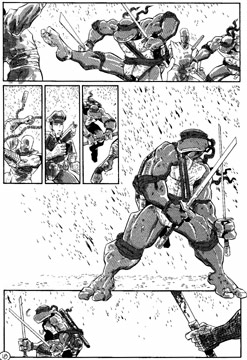
Lawson’s version of the Turtles is not one of my favorites.
As I mentioned before, Jim Lawson handles almost all of the pencils in this collection and it was the reason I grew so disinterested in the volume to begin with. I do not enjoy his take on the Turtles. They’re blocky and his art is sometimes sloppy. I’m mostly okay with his April, even if she seems to not have any of the physical traits of the Eastman and Laird version, and his Casey is fine. His backgrounds are a lot less crowded which works for some of the action scenes but sometimes there’s an emptiness to them. Perhaps the over-sized format draws more attention to all of the white space. He does have some awkward transitions where he tries to convey too much motion on one page, but at least he’s not beholden to the traditional panel approach. There’s also an overuse of splash pages in issues 54 and 55 that feel like filler. Even Laird admits in the liner notes he’s not sure why they went with so many. Lawson’s art does shine some in issue 54 when he gets to depict a cloaked Mikey in the snow. For some reason, the snow is abandoned in the following issue. I guess they had a heat wave.
The cover art and some of the interior art is new and handled by Eastman. It’s in line with the other collections, though not my favorite. I think the back cover would have been better off as the front as it depicts the Turtles surrounded by Foot Ninjas which is a nice representation of what’s contained inside. Otherwise though, it’s fine. The liner notes feel more substantial here as well, especially from Laid. Eastman is still too in love with everything they did while Laird is a little more critical. The quality of the set is once again very high and there’s little to complain about there. The pages are nice and thick and the whole set has a nice weight to it.
Teenage Mutant Ninja Turtles continues to be a mostly action-oriented affair. The attempts at actual story-telling work better here than they did in some of the other issues, but a lot of it is also cliche and amateurish. No one picks up a TMNT comic expecting Shakespeare though, and there are some genuinely good bits of character development contained in these issues. I just wish they had a better artist.
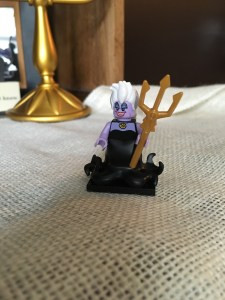
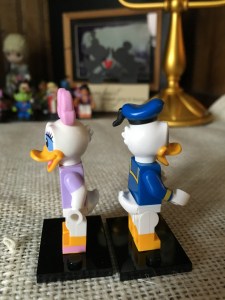
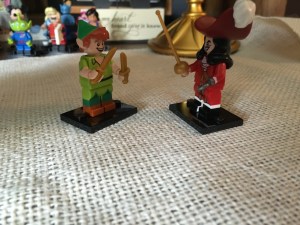
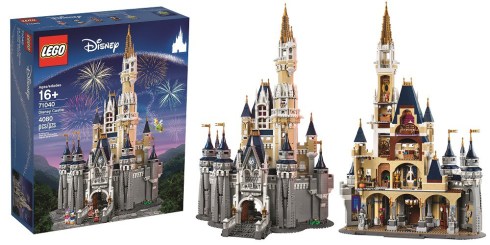
 This past spring Lego released its third line of mini figures to be based on an official license. Following two straight years of The Simpsons, Lego turned to Disney and its cast of classic characters. Going with a mix of old school, Pixar, and movie characters not touched by the existing Lego Disney Princess line, the line appeared to sell really well for Lego and the likelihood of future releases for the license seemed almost certain.

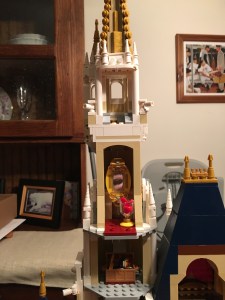


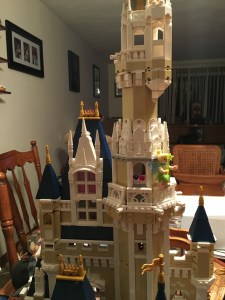
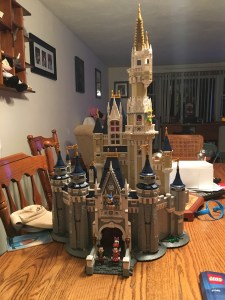
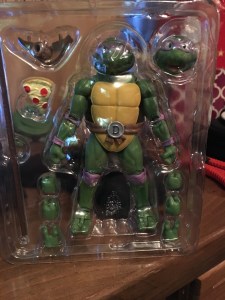
 Over the years I’ve been able to shake my compulsion to collect action figures. I went nuts with it in my late teens and into my early twenties. Outside of a couple of purchases here and there (





 We’re down to the top four in our rankings for the best games in The Legend of Zelda franchise. As far as climaxes go, this one is probably fairly anti-climactic as there’s a pretty clear top two in this series that the majority of gamers agree on. Though, as these games collectively get older there is undoubtedly more affection for the more recent games as suddenly a title like The Wind Waker is a normal gateway for players in their teens and twenties. Nostalgia always plays a role in a subjective exercise such as this one, though I sincerely feel these four games are the most dense and most fun Zelda experiences that Nintendo has put out. And I’m also not beholden to them. I really hope the next game in the series dethrones our champ, or at least forces its way into the conversation. Time will tell.
 3. Breath of the Wild (Wii U/Switch 2017)


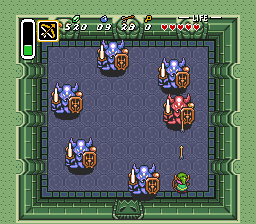

 Part 2 of this ranking feature for the games in the Legend of Zelda series should be less controversial than Part 1. Hopefully that doesn’t make it boring because we are just about at that point with this list where I’m splitting hairs. It’s probably not really a spoiler to say that the top 2 Zelda games are not really in question, and I think for many, the order is mostly agreed upon. I also think the next two games on our list are pretty clearly inferior to what follows, though some of that does depend on what your appetite for retro gaming is (suffice to say, if you were born sometime after 1990 the order of the following games is probably different from mine). Let’s move along though to take a look at these prestigious games which made it deep into the top ten.
 8. Oracle of Seasons (Gameboy Color 2001)
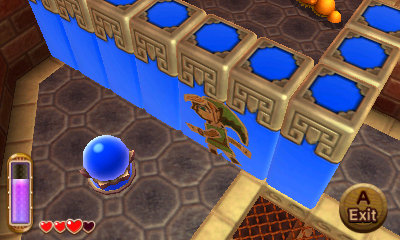

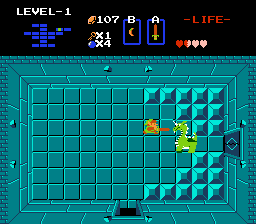
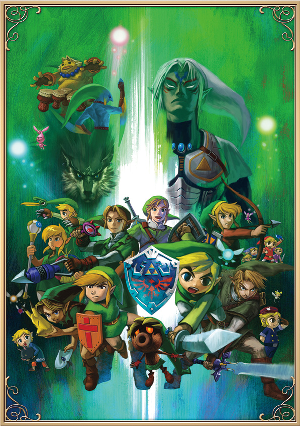 If Mario is to video games what Budweiser is to beer, then Zelda is like the Alchemist Brewery. If you’re not a beer enthusiast that’s to say that Zelda is like fine wine to Mario’s table offering. And if you’re not a wine person, well I’m just saying that while Nintendo is best known for Mario, it’s Zelda that is their true flagship offering. Ever since The Legend of Zelda debuted in 1986 for the NES, it’s been the franchise that Nintendo is most apt to make sure isn’t over-exposed and benefits from long development cycles to best ensure a quality product is delivered. That’s not a slight against Mario, it’s just he has way more spin-offs and lesser outings than Link tends to (not that he’s immune from the occasional Hyrule Warriors or Crossbow Training).


 Nintendo 64 – How to rank this one? You all know it, that oddly shaped, three-handled device released in 1996 alongside the Nintendo 64. It wasn’t the first controller to feature an analog thumb-stick, but it certainly made it standard, which is about the only good thing I can say about it. It was chunky, the face buttons felt cheap, and the shoulder buttons offered little satisfaction. The Z-trigger was a nice touch, but unless you were playing one of the many 3D platformers featured on the N64, this one was lacking.
 Atari Jaguar – Just look at this thing. If you never handled one consider yourself lucky. Ignoring that the system was a terrible waste of money, this controller was a beast of unwieldy proportions. See that key pad? Of course you do because it’s gigantic. That thing had inserts that could be snapped over it depending on the game, but it was mostly a tacky, useless feature that just made the controller obtuse. The cheap feel didn’t help things either.
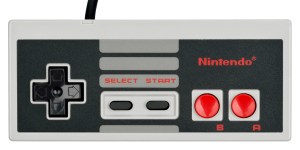 The NES controller – It’s the one that standardized the modern layout of basically every controller. The d-pad on the left, and action buttons on the right. Maybe the squared edges weren’t the best idea but the re-designed “dog bone” bundled with the later model NES rectified that mistake. It’s been improved upon by leaps and bounds, but few people thought at the time there was anything wrong with it.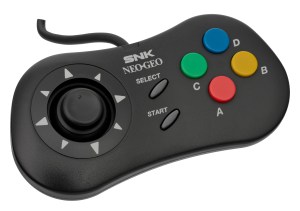


 It was only a matter of time before the 1990’s received the same treatment as the decades that preceded it. Even when living in the moment I knew it would happen some day. My dad’s favorite radio station when I was a kid was Oldies 103.3 playing mostly hits from the 60’s and 70’s, at the time. Sometimes I would think to myself that this could be me one day, only the radio would be playing the hits of the 80’s and 90’s. Of course, this didn’t quite happen as FM radio is practically irrelevant in the year 2016, but the 90’s are striking pop culture today in numerous ways.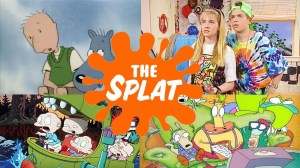





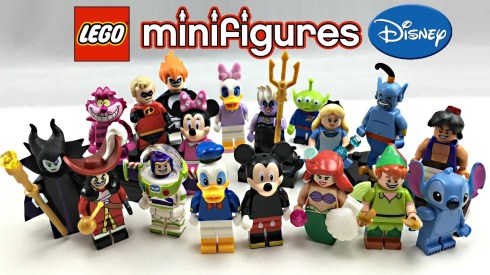 Lego is one of the most popular toy manufacturers on the planet. They’ve become known for their building block style toys that come in various shapes, sizes, and colors and can be combined to form castles, pirate ships, space crafts, and other fantastic designs. They also have struck gold with their mini figures, simplistic action figures that embody the Lego design and make great pilots, captains, and heroes to pair with the various sets. It used to be you had to buy a construction set to get a figure or two, but for several years now Lego has capitalized on the appeal of its mini figures by releasing them individually in blind bag assortments. Even more recently, Lego has decided to apply a popular license for these blind bag releases. For the past two years, that license was
 The Nostalgia Spot