Author Archives: Joe

12 Films of Christmas #11: The Santa Clause

220px-the_santa_clause

The Santa Clause (1994)

A successful formula for any would-be Christmas film to adopt is that of shining a new light on the character of Santa Claus. Anytime a film can make Santa more believable to the viewer is usually something worthy of exploration. A lot of films, books, and other media have attempted to add to the Santa mythos which mostly originated in the classic poem Twas the Night Before Christmas, and the ones that have done it the best are the most memorable.

The Santa Clause is just such a picture which set out to answer many of the questions children have about the character. For the life of many a youngster, Santa is someone believed in without question at first. After all, who wants to have doubts about a nice guy who leaves you presents for just being a good boy or girl (with the “good” part being highly subjective and a very low bar to clear)? As adolescents get older, they naturally become more inquisitive and thats when the questions about Santa Claus start to show up. How do reindeer fly? How can one man visit every kid on earth in a single night? How does he fit all of those toys in his sleigh?

The Santa Clause actually has one answer for just about every question a kid could have about Santa:  magic. It’s a rather easy explanation, but given the unbelievable nature of the character it’s often the best we have. The Santa Clause, in typical 90’s fashion, relies upon visual effects to make these answers entertaining beyond the whole “it’s magic, stupid!” Like many films from that era, the effects have not aged as well as maybe was expected.

15994bb3-cb03-4f6d-a97b-3e502ce95f67

Charlie and Scott take Santa’s sleigh for a spin after accidentally killing him. Not many Christmas movies begin by killing Santa.

Tim Allen stars as Scott Calvin, a toy developer with a son who doesn’t believe in Santa Claus. Charlie, played by Eric Lloyd, has been lead to believe by his mother Laura (Wendy Crewson) and step-father Neil (Judge Reinhold) that Santa is not real, which naturally irritates Scott. Scott is a bit of an absentee father, partly because of the divorce, and because he works a lot. Charlie doesn’t have much faith in his father, and he clearly dreads spending Christmas Eve with his old man. Not much goes right, but Scott does succeed in restoring his son’s faith in Santa, and himself, when the real Santa falls off his roof to his own demise and Scott, unwittingly, picks up the mantle for himself.

the-santa-clause-6

Scott unwillingly morphing into Santa. I’d probably freak out if my kid tried to sit on that guy’s lap.

Scott’s first adventure as Santa is when we get to see the magic at work. Scott and the audience share in the experience as neither knows how any of this stuff is supposed to work – Santa can’t really be real, can he? When Scott picks up an empty sack, presents appear inside. It hovers and directs him to a chimney to slide down. When no chimney exists, a septic exhaust is used and a fireplace magically appears inside the house. I remember these effects delighting my family and I when the film first came out, but viewed at now they do leave something to be desired. The illusion isn’t destroyed, but parents showing this one to their modern kids may be disappointed in their reaction.

The rest of the film mostly takes place after Christmas as we lead-up to the next one. No one believes Charlie’s account of what happened, which causes his mother and step-father to think Scott is brainwashing the kid and to seek sole custody. Meanwhile, Scott is physically transforming into Santa whether he likes it or not (he read the Santa Clause after the first one died, and apparently he would need a really good attorney to get out of it) which only strengthens his ex-wife’s argument for sole custody. This makes Laura (Charlie’s mom) and Neil the villains of the film, even if they’re only looking out for Charlie. It’s a Christmas movie, so everything comes together at the end, but this is one of those plots where the viewer knows what really happened and has to be frustrated by the actions of those who aren’t in the know.

Tim Allen is essentially allowed to be himself in his role as Scott Calvin/Santa Claus. He’s basically no different than Tim Taylor from Home Improvement, and even does his trademarked grunt at one point in the film. How much you like the film will probably hinge on your affection for Allen. I think I mostly liked him when I was younger, but the years haven’t been kind to Allen’s style of humor. I find him irritating in many scenes now, and his punchlines are often punch-less. As an adult, I find myself identifying more with the stiffs around him than the Scott character. He’s not all bad, but I hesitate to call his performance a strength.

sleigh

By the film’s conclusion Scott is all-in on this Santa thing.

The other aspect of this film that annoys me is the end, and to some degree, the Charlie character. The end of the film just goes on way too long and we’re kind of done with the Christmas cheer before Charlie starts shaking his snow globe. The Charlie character also can’t help but be annoying throughout the picture. Some of his actions are defensible, because he’s a kid, others are not and seem to betray the intelligence we see out of Charlie in other parts. By and large, Lloyd is a pretty good actor, but the director asks him to get sad and cry at one point which he clearly wasn’t up to the task for.

The Santa Clause is still recent enough to be considered modern, and it can probably be described as a modern classic. It brings enough to the table as far as a Santa story goes (even if parts of the plot mirror the Flintstone’s Christmas Special) to be memorable. If you’re easier on the effects and overall 90’s look and style of the picture (I for one, find the techno-junk look of Santa’s sleigh off-putting) then you probably like this film a lot more than I do. And if you’re a fan of Tim Allen, then it might even be your favorite Christmas movie.


The 12 Films of Christmas #12: The Muppet Christmas Carol

muppet_christmas_carol

The Muppet Christmas Carol (1992)

The bare minimum a Christmas television special or film can do to inject some Christmas cheer is to do an adaptation, or parody, of a popular public domain Christmas treasure like Dickens’ A Christmas Carol. In general, these are lazy and trite and form the foundation of the worst holiday dreck imaginable. Just tune into the Hallmark Channel at this time of year to find several variations on familiar stories, all of which bring nothing to the table other than sentimentality. So it is with some trepidation that I include one such work in this 12 Films of Christmas featurette, but hear me out.

The Muppet Christmas Carol starring Michael Caine and those wonderful puppets manages to be a worthwhile endeavor not because it does anything to shake up a familiar story, but because it tells that story with the charm and wit of The Muppets. When it comes to these types of Christmas stories, we likely all have our preferred vehicle of delivery. For me personally, it’s Mickey’s Christmas Carol which is one of my favorite holiday shorts. If I’m going to go feature-length though, I’m likely to turn to The Muppets if I want to hear about old Scrooge.

Caine stars as main character, Ebenezer Scrooge, and his supporting cast is made up of mostly Muppets. Kermit is his foil as the poor, but kind-hearted, Bob Cratchit and Robin stands in for Tiny Tim. That makes Miss Piggy Emily Cratchit, naturally. Stadler and Waldorf play the Marley brothers and are predictably hilarious in their role. Gonzo and Rizzo the rat are used as narrators and exist outside the story, despite occupying a physical presence on screen. They’re the main source of the physical comedy and the film made a star out of Rizzo, a mostly bit part in Muppet films and television specials prior to this. Fozzy, Animal, Beaker, and all of the other familiar gang show-up for spot roles throughout. The Muppets are all playing the role of someone from the original work, but still possess their own personality and character traits. In other words, Fozzy is still Fozzy even if his character is referred to by another name.


4be19790ab8dd48e069752acfac873d4-jpg

Michael Caine is a natural at playing alongside the Muppets.

Caine is relied upon to carry the picture and act convincingly beside his non-human cast mates. For roles that correlate directly to Scrooge, a human actor is cast so it’s not as unbelievable as it could have been. For instance, Isabelle is played by Meredith Braun and Scrooge’s nephew Fred by Steven Mackintosh. Only Caine is really asked to do any heavy lifting and he’s surprisingly emotive and effective as a Scrooge. There may have been some expectations that a Muppet version of A Christmas Carol would just be a straight comedy, but the film doesn’t shy away from the dramatic moments. In fact, it probably does so to its detriment as the film sometimes spreads the laughs out too far apart. Some plodding occurs during Scrooge’s journey that likely will turn off younger viewers, and even some older ones. The redemptive portion of the film also feels rushed and the audience is denied in savoring Scrooge’s turn at the end. Perhaps this was done to keep the film under a 90 minute runtime, but if that was the goal, then other parts of the film should have been trimmed instead to allow more time for the fun at the end.

maxresdefault-5

Rizzo and Gonzo are the true show-stealers in this picture as the duo is easily responsible for the most laughs.

From a production standpoint, the film is a true star as the sets, puppets, and costumes all look fantastic. It’s obviously no surprise that a Muppets work would come out looking so well. The production department did a great job in giving the film a true big screen feel when compared with the various TV properties of the Muppets and their made for TV films. The film is in part a musical, like most Muppet productions, and the songs are actually on the light side. I personally consider that a positive, but others may not feel the same way.

In the end, The Muppet Christmas Carol succeeds because it brings its own heart and spunk to a dated work. Other films, like Disney’s A Christmas Carol, just try to retell the same story and possess no charm, and ultimately have no real reason to exist. At least with The Muppets you’re getting that Muppet brand of humor to add a dash of color to A Christmas Carol, ultimately making it worth your time each holiday season.


The 12 Films of Christmas

Last year I did an advent calendar sort of deal where I counted down the best Christmas television specials from December 1st through Christmas. Naturally, I wanted to do the same this year but with Christmas themed films instead!

Unfortunately, Christmas movies are pretty terrible. Sure, there are countless amounts of terrible Christmas television specials, but there are also enough that narrowing it down to 25 really wasn’t that hard. I even left out some that I genuinely like and make it a point to watch annually, especially repeat Christmas episode from long-running series. When I sat down to come up with 25 films I found it pretty trying. Now, I’m not an actual expert on Christmas movies, but I have seen a lot of them, but definitely not all of them. I’d love to say that I’m the foremost expert on them, but I’m not. Still, my original list of 25 was really shitty on the back-end. Since it was so poor, and my free time is even less than it was a year ago, I decided to go with a Twelve Days of Christmas spoof and do 12 Films of Christmas.

Starting tomorrow, you will see one entry per day on a Christmas movie I think is worth an annual viewing. That doesn’t mean they’re all great movies, but they work when viewed in that sweet spot between Thanksgiving and Christmas. I also created some rules for myself. All of the films I’m posting on were theatrically released, so if you’re a lover of those Hallmark Channel movies you’ll be disappointed to know that not one of them is among my twelve (they suck anyway). I also decided that each film needed to be, unquestionably, a Christmas movie. This is perhaps a controversial stance as it eliminates from contention films that take place during Christmas, but aren’t really Christmas movies. To be specific, there’s no Die Hard. Same for Batman Returns, though I don’t think that omission would cause much controversy. Other than that though, anything goes. I’m ranking these films based on pure enjoyment, not the amount of Christmas spirit contained therein or the presence of Santa Claus. I have no affection for the Jesus aspect of Christmas either, so don’t expect much of him in these films either.

So if you want to read about Christmas movies, check back tomorrow for number 12 and continue visiting each day for another film. I don’t make any money off of this site and I’m just doing it for the enjoyment of it and I hope you too enjoy reading about the dozen Christmas films to follow.635850679509887126969022607_wjud-dot-net

#12. The Muppet Christmas Carol

#11. The Santa Clause

#10. Scrooged

#9. Gremlins

#8. The Nightmare Before Christmas

#7. Bad Santa

#6. It’s a Wonderful Life

#5. Home Alone

#4. National Lampoon’s Christmas Vacation

#3. Miracle on 34th Street

#2. Elf

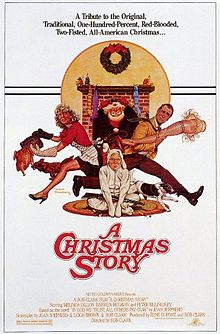
#1. A Christmas Story


Bandai SH Figuarts Teenage Mutant Ninja Turtles Raphael

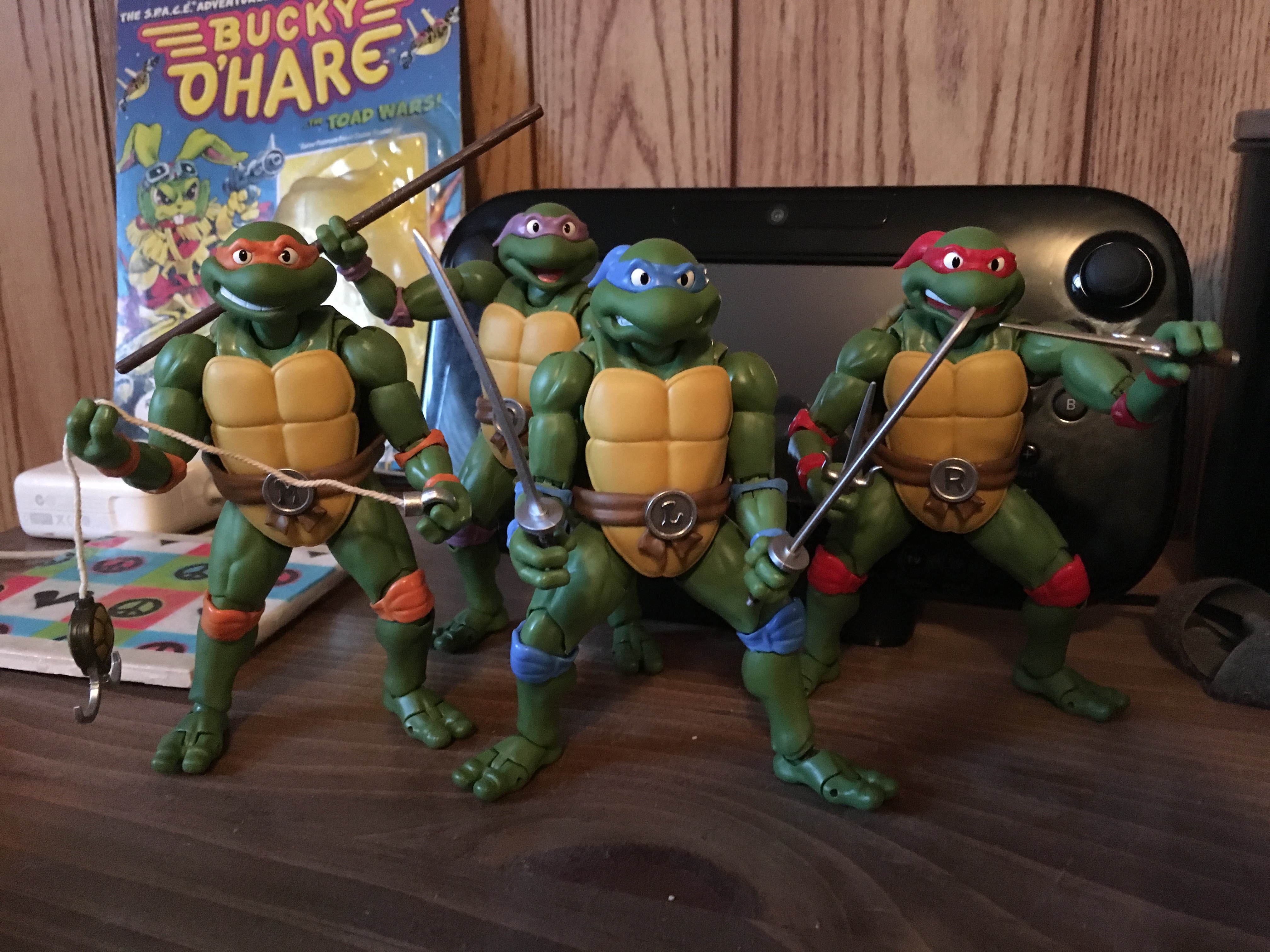
img_0717A couple of months ago I posted about the Bandai SH Figuarts release of Leonardo and Donatello from their new line based on the Teenage Mutant Ninja Turtles cartoon from the late 80’s/early 90’s. Well, now I’m back to tell you about the next mutant to be released:  Raphael.

Everyone’s favorite wise-crackin’ turtle was the one to see the biggest change in personality between the comics and cartoon. Where Raph was a hot-tempered and moody character in print, he was more jokey and sarcastic in the cartoon. And really, this version of Raph only exists in the old cartoon which makes him rather unique among the four turtles, who mostly are depicted the same across all mediums. His personality may have been different, but his other traits were kept intact. He’s the only turtle to sport a red bandana no matter where he’s found and he is armed with his customary sai.

Raphael’s action figure in the Figuarts line is pretty much in line with what we saw out of Leonardo and Donatello. He comes with four sets of hands: closed fists, closed fists with holes for his weapons, partially closed fists with space between the index finger and thumb, and open hands. He has two heads, the grim, serious expression both Leo and Dona featured, and a unique head where his mouth is open. He comes with two additional accessories unique to Raph:  a kunai and shuriken. Raph’s construction is the same as well, featuring a plastic body with die cast shins and feet. His chest is soft plastic so it has some given when posing, and his belt buckle also happens to be die cast. He also has the same swappable belt piece feature on the back of his shell so his holsters for his sai appear as needed, just as they did on television.

img_0715Since this sure is essentially the same as the Leo and Don ones, just with different accessories, it should come as no surprise to read here that he’s of excellent quality. There’s virtually no paint slop to be found anywhere or chipping of any kind. Everything is clean and tidy. He has lots of pose-ability, though the shell will always limit any TMNT figure when compared with something like Batman or Spider-Man. For my particular figure, his belt piece fits quite snug and there’s no fear of it falling (unlike my Donatello). The sai sit in the holsters loosely, probably to prevent stripping of the paint when inserting and removing them. The bandana knot that’s swappable between head pieces is especially tight on my Raph and I did worry I was going to damage it when inserting it into the yelling head. The sai and kunai fit in both the closed fist and the partially closed fit hands, though the shuriken can only be held in the partially closed hand.

Raphael is a fine figure, but there’s also room for improvement. I’m a little disappointed with the unique head sculpt. His mouth opening almost looks like a smile, but his eyes are in a scowl indicating to me this is supposed to be an aggressive position. Sure, Raph and all of the other turtles sported a look like this at one point or another, but something that captured his more easy-going nature would have felt better. I’m also disappointed in the accessories. I understand the shuriken, but I can’t recall ever seeing any of the turtles use a kunai in the cartoon. Maybe one appeared in the background, and Splinter or Shredder may have produced one on a rare occasion, but I don’t think Raph ever did. Donatello came with a pizza slice, and Leonardo a manhole cover, so Bandai hasn’t exactly impressed in this department, unfortunately. I suppose in that sense, Raph’s accessories are better than Leo’s, but that’s not something to boast about.

Raphael obviously makes three, so we’re one turtle away from a full set. Michelangelo was expected to release in November, so I would guess he’s not too far from release at this point. Criticisms aside, this is the best set of turtles based on the original cartoon we’ve ever seen and it will take quite an effort to top them. I look forward to completing my set.

img_0720


Forecasting the Eventual SNES Classic

snesWe’re now past Thanksgiving here in the US which means the holiday shopping season is already well underway. The recently released NES Classic continues to be a hot seller, perhaps the hottest of the season, though that seems to have more to do with product scarcity than true demand (after all, children by and large are not interested in a gaming device with 30 year old games on it). That said, no one would deny that even in limited quantities the NES Classic has been a commercial success for Nintendo, something that’s been hard to come by for the venerable game developer of late. Most analysts peg the NES Classic as being pretty cheap to manufacture, and the power under the hood is likely sufficient to support a comparable quantity of N64 games, so speculating on a potential SNES Classic seems like a waste of time:  it’s going to happen. And if we’re going to get an SNES Classic then immediately the mind next moves onto what games will Nintendo include on that collection?

The Super Nintendo has arguably the greatest library of games of any console ever released (not giving modern consoles credit for digital backwards compatibility, of course), so Nintendo has its work cut out for it when narrowing that library down to 30 titles. Why 30? Well, that’s what the NES Classic contains so might as well stick with it. This post is my prediction of what the SNES Classic will include, and isn’t a collection of games I would necessarily choose if given free reign to do so. In looking over the games of the NES Classic, it became rather obvious that Nintendo wanted to include as many Nintendo developed and published titles as possible, likely for licensing reasons. Also, games featuring licensed characters from outside gaming (Mickey Mouse, TMNT, etc.) weren’t included, so let’s assume the same will be true of the SNES Classic. I’m going to order this list by what titles I think are most likely to be included, starting with the most obvious. Before we get to that, let’s quick-hit a few games I think won’t be included, but probably should be.

Demon’s Crest – A spin-off of the Ghosts ‘N Goblins games, Demon’s Crest is a platform title with RPG elements, a genre almost always referred to as “unique” on a game-by-game basis even though it’s uncommon. The game is available on the virtual console, and if you never played it (and considering it was a late era release for the SNES you probably did not) you’d do well to check it out.

Fire Emblem:  Mystery of the Emblem – For many years, Fire Emblem was the series American audiences were left to wonder about. It was the rare Nintendo property kept in Japan, likely out of fear that American audiences wouldn’t enjoy the gameplay. Wrong! This one would have a shot of being included on the SNES Classic if it had been properly localized, but I’m guessing Nintendo won’t want to do that. It, or another Fire Emblem, is a virtual lock for the Super Famicom Classic though.

Mortal Kombat II – Mortal Kombat was a smash-hit in the arcades, and when it was released for consoles it was a huge hit for the Sega Genesis. That’s because Sega allowed Midway to include blood and gore as long as they put it behind a code. Nintendo did not, and when Mortal Kombat II came out they wisely reversed course. MKII was a huge hit, and while it hasn’t held up over the years as well as its chief rival Street Fighter, it feels like it should be included as it was just so oppressively popular. Nintendo has never had a great relationship though with the Mortal Kombat franchise, so it’s unlikely they see it as important enough to include.

Some other games I considered include TMNT IV: Turtles in Time but that won’t be included for licensing reasons. Sparkster was an awesome platform title and sequel to Rocket Knight Adventures, a Genesis exclusive. Mutant League Football, Shadowrun, and Harvest Moon are also deserving of consideration.

  1. 250px-super_mario_world_coverartSuper Mario World (Nintendo 1991) – The original pack-in title for the SNES and best Mario game to date, it’s a no-brainer. The more interesting thing to ponder is how will Nintendo pack the SNES Classic with Nintendo branded games as easily as they could the NES Classic since Mario, Link, and others had fewer outings on the SNES.
  2. yoshis_island_super_mario_world_2_box_artSuper Mario World 2: Yoshi’s Island (Nintendo 1995) – I loved this game when it first came out, and for awhile after. More recently, I’ve found it hard to get into as a lot of the gameplay frustrates me. Not to mention the audio. Still, it will be included and it remains Yoshi’s best solo adventure.
  3. smkSuper Mario Kart (Nintendo 1992) – Arguably Nintendo’s most reliable franchise today, it seems every Nintendo console since has had at least one Mario Kart game. The only one that did not was the ill-fated Virtual Boy. For awhile, the original game was my favorite of the series. Those who grew up with its sequel on the N64 as their gateway of the series are probably surprised to hear that most people felt it was inferior to the SNES game when it first came out. It’s no longer the best, but it’s still playable and the battle mode is still a lot of fun.
  4. attpThe Legend of Zelda: A Link to the Past (Nintendo 1992) – The best game of the series, and perhaps the best game ever? I suppose I could have said the same of Super Mario World, and I could say that about more SNES titles which further illustrates how awesome the system was. This game will be included, and it will be enjoyed by any who purchase it.
  5. 250px-star_fox_snesStar Fox (Nintendo 1993) – Nintendo’s flashy on-rails shooter, the Super FX powered Star Fox was a pretty big deal at the time, even if it’s one of Nintendo’s lesser franchises these days. The game was so good that Nintendo has essentially remade and released it several times with minor alterations. It’s probably too much to ask for Nintendo to include the never released Star Fox 2 on this set.
  6. 250px-smetroidboxSuper Metroid (Nintendo 1994) – If any of the games on the NES Classic had a “Super” version on the SNES, then it’s probably fair to assume they’ll make it to the SNES Classic. Not that Super Metroid needs to be included for that reason, it needs to be included because it too has a claim to greatest game ever made. It was very influential, especially for the Castlevania series, and the only downside to including it is that it might make people a little depressed when they think about how the franchise is treated by Nintendo today.
  7. kss_boxartKirby Super Star (Nintendo 1996) – Another late arrival for the SNES, Kirby Super Star takes what was good about the NES game and multiplies it tenfold. Easily Kirby’s best game, Super Star is a bit of a forgotten gem on the SNES and holds up quite well. It also features some fun 2-player action so be prepared to have to hunt down an additional controller.
  8. snes_f-zero_boxartF-Zero (Nintendo 1991) – Nintendo kind of ignored the racing genre with the NES, so it’s not surprising they rectified that with the SNES. Racing games were one of those genres that really benefitted with the move to the SNES as the hardware could finally keep up with the speed needed to make these type of games as fun as they could be. F-Zero was a flashy title with its futuristic visuals and also plenty difficult. Not one of my favorites, but I’d be shocked if it was left out.
  9. pilotwings_boxPilotwings (Nintendo 1991) – Pilotwings was kind of the debut of the Nintendo developed tech demo released with all of their future console launches to show off the new console’s capabilities. It was to the SNES what Wii Sports was to the Wii. It’s basically a collection of mini games, and personally I remember all of my friends looking down on this title. I haven’t played it in years so I can’t say if I’d enjoy it more now, but since Nintendo developed it they’ll likely include it on the SNES Classic.
  10. dkc_snes_boxartDonkey Kong Country (Nintendo 1994) – The title that reinvented and brought modern relevance to the Donkey Kong character, Donkey Kong Country was a visual wonder when it was first released and an instant hit. Some people love this franchise more than the 2D Mario one. I’m not one of them, but there’s no way Nintendo doesn’t include this one.
  11. 250px-dk_country_2Donkey Kong Country 2 (Nintendo 1995) – Nintendo had three main series Mario games to help pad the NES Classic, chances are they’ll look to DK to help do the same for the SNES Classic. Some think this one is the best of the SNES trilogy of DKC games, I have no real opinion on the matter as I don’t remember even playing this one.
  12. 250px-dkc3_snes_boxartDonkey Kong Country 3 (Nintendo 1996) – This game arrived really late for the SNES, though if memory serves it still sold all right. This one might not make the SNES Classic, it’s certainly the least likely of the three, but since Nintendo wants to put as many of their games on the system as possible it feels like a safe assumption to include it here.
  13. superpunchoutboxSuper Punch-Out!! (Nintendo 1994) – Punch-Out!! was immensely popular for the NES, Super Punch-Out!! was less so for the SNES. It wasn’t bad by any means, and it felt more like the arcade version of the original, but aside from a visual upgrade it didn’t really feel much improved. I think part of that was the new perspective of being behind Little Mac made him feel like more of an equal to his opponents as opposed to being a diminutive underdog.
  14. 2363827-snes_finalfantasyiiFinal Fantasy II (Square 1991) – Now we’re into the non-Nintendo games, and this is actually where the list really begins for me as far as ordering by most likely. The first 13 could be ordered however you want, aside from maybe DKC3, they’re all going to be included for sure. The SNES was the console where the JRPG really took off, and it’s kind of where Final Fantasy was truly born (at least in the West). Final Fantasy III is the better game, but for some reason I suspect that II is more likely to be included if only one is.
  15. chrono_triggerChrono Trigger (Square 1995) – Another one of those “best ever” contenders, Chrono Trigger is as beloved as any game in the Final Fantasy series, even if it never took off as a franchise on its own. The only thing that would keep it from being included is if Square-Enix wants to be protective of how often they re-release the game. Or if they want too much money in the form of royalties, which could be a problem since they made a lot of awesome SNES games…
  16. 250px-secret_of_mana_boxSecret of Mana (Square 1993) – …like Secret of Mana! Lazily referred to as a Zelda clone, Secret of Mana is a delightful action RPG and the type of game Square-Enix has seemingly forgotten how to make. The sequel was also excellent, but never released outside of Japan. Following that though, virtually every other game in the series has been a shallow hack n’ slash and a major disappointment. Thankfully, this one holds up so well we really don’t need another (though Square-Enix really should just finally localize the damn sequel for some kind of release).
  17. 250px-super-bomberman-box-art-snes-palSuper Bomberman (Hudson Soft 1993) – The ultimate party game for the SNES, Super Bomberman was probably my most rented title for sleepovers and such as the four-player mode rocked. If Nintendo does include this title, and it should, it needs to make sure the SNES Classic can handle four-players, even if it means messing with the aesthetics of the system by including four controller ports on the front.
  18. 35805c88363c1f2ef17b39288c11676f-650-80Street Fighter II (Capcom 1992)- Capcom’s fighting game is almost certain to make an appearance, it’s just a question of what version. They should probably just go with Super Street Fighter II, but maybe they think the importance of the original makes it the more worthy title.
  19. mega_man_x_coverartMega Man X (Capcom 1993) – Mega Man was huge for the NES, so he’ll be included on the SNES Classic even if he played a lesser role for the console. His one main entry, Mega Man 7, is regarded as one of the worst in the series so Capcom will probably push for Mega Man X, and it should. Mega Man X was what the character needed to remain relevant and remains an excellent Mega Man game to this day.
  20. super_castlevania_iv_north_american_snes_box_artSuper Castlevania IV (Konami 1991) – another NES tentpole franchise, Castlevania would see its stock plummet in the 16 bit era, even though Super Castlevania was an excellent game. It’s one of the last traditional Castlevania titles as Symphony of the Night would soon follow with its Metroidvania gameplay becoming the preferred style of future titles in the series.
  21. supermariorpgsnescoverartusSuper Mario RPG (Nintendo/Square 1996) – could Mario do RPGs as well as he could platformers? If Square is handling most of the game design, then yeah of course he can! Super Mario RPG was a surprise hit and remains a fun game to this day. In a way, it might be more likely to appear on this collection than the Final Fantasy games as at least Nintendo shares publishing rights with Square-Enix on this one.
  22. contra_iii_game_coverContra III (Konami 1992) – Probably the last relevant title in the Contra series, Contra III was more of the same which is what people were happy to have at the time. Being a sequel to an NES Classic game is what guarantees it a spot here.
  23. 1130115-snessimcityfSim City (Nintendo 1991) – Another Nintendo published title but with the royalties a little messy compared to a Mario or Zelda game. Sim City was another surprise hit in that there was skepticism the city builder simulation would find an audience on a home console. It did and it did well with its success leading to other sim games being released for the SNES, including “classics” like Sim Ant…
  24. 2363896-snes_killerinstinct_3Killer Instinct (Midway/Rareware/Nintendo 1995) – Nintendo, and Rare’s, answer to Mortal Kombat, Killer Instinct was a perfectly acceptable fighter for the era. Rare, and now Microsoft, hold the publishing rights for the franchise and I don’t know how that affects the original game’s inclusion. If Nintendo needs to only split royalties with Microsoft/Rare then I think it will be included. Anything more and it probably won’t be.
  25. earthbound_boxEarthbound (Nintendo 1995) – Nintendo’s answer to Dragon Quest, Earthbound (known as Mother 2 outside the US) has never been real popular with Nintendo. It’s the only title in the series to be released outside Japan even though Nintendo fans seem to adore it for its quirky humor and real world setting. It’s a game that has amassed a cult following over the years, though personally I don’t think it’s one that really lives up to the reputation. It’s a Nintendo game though, so it will most likely find a way onto the SNES Classic.
  26. 510ahyhdidl-_sx300_Final Fantasy III (Square 1994) – You know it, I know it, and I bet even Nintendo knows that this game should definitely be included among the top SNES games released. Will it make it to the SNES Classic though is a harder question. If Final Fantasy II does, then it may not, even though it seems ludicrous to split those two games up.
  27. 250px-tetris_attack_box_artTetris Attack (Nintendo 1996) – Many have tried to improve upon the formula of Tetris, and few have succeeded. Tetris Attack found a way with a competitive two-player mode that’s a blast to play. It’s been ripped off for other puzzle games like Puzzle Fighter and Pokemon Puzzle League. And thankfully there’s no Super Dr. Mario to bump this one from the collection.
  28. actraiser_coverartActraiser (Enix 1991) – A legitimately unique game that combines the sim elements of a world builder with the action RPG gaming of Castlevania, Demon’s Crest, and so forth. Few games have tried to do what Actraiser did (Dark Cloud being the only one I can recall off the top of my head) and even though it wasn’t an immensely popular title, it feels like one that received its due in the years since so if Nintendo leaves it out I’d actually be pretty surprised.
  29. 2364727-snes_zombiesatemyneighborsZombies Ate My Neighbors (Konami 1993) – This game was so thematically outrageous at the time that it couldn’t be ignored. People remember it, even though it never turned into a bankable franchise or anything (though zombies in general certainly have). It’s extremely memorable as a Super Nintendo game, so much so that it seems like Nintendo won’t be able to ignore it.
  30. 250px-the_legend_of_the_mystical_ninja_coverartThe Legend of the Mystical Ninja (Konami 1992) – Our last title is from a franchise that was far more popular in Japan than the US, but worth including. The co-op play was some of the best on the system. I never owned the game, but I remember renting it multiple times as it was a lot of fun to have around when friends were over for the night.

So there you have it, my prediction of what Nintendo will do for the eventual SNES Classic. In addition to the games, hopefully Nintendo smartens up and doesn’t pull the intentional scarcity card again. It would also be nice to see Nintendo correct some of the issues the NES Classic has such as the lack of expandable software and absurdly short controller cords. My guess is that the NES Classic isn’t natively able to add additional games so that Nintendo doesn’t cut into its own Virtual Console market, but that just seems like a bad move on their part. If the NES Classic continues to sell as well as it has been then I suppose Nintendo will have no reason to change anything. And even though I feel pretty good about this list of games as a prediction, it still feels like Nintendo will try to cram more of their own games into the console than what I’ve included. I’ll put it on record though, if they include Mario is Missing then I’m not buying the damn thing.


The Games of the NES Classic

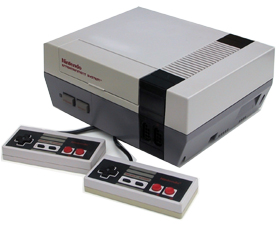
nes_classic_retro_blast_splashIf you’re into video games then you have probably heard by now about the NES Classic, the plug and play gaming device that resembles a mini Nintendo Entertainment System. You’ve also probably heard about how Nintendo shipped a minuscule amount of the units for the system’s launch date and now it’s impossible to find at retail. It’s a cute product that’s going to be popular due to the nostalgia factor and low price ($60), but if properly stocked it’s probably not flying off the shelves in mass quantities like the current shortage would indicate. It’s a particularly great device for those who do not still own, or never owned, an actual NES and want to get a retro gaming fix. The NES Classic comes pre-loaded with 30 games and each one has four save state slots making hard to beat classics like Zelda II that much more manageable.

This isn’t a post about the NES Classic on the whole though. If you want my opinion on it, it’s definitely a neat little device worthy of your hard-earned sixty dollars. It’s definitely not worth six times that amount which is what some people are paying on the secondary market right now for one. And I also expect the console will be re-stocked in the coming weeks in greater numbers, so if you want one just be patient. The only real knocks against the device are the much maligned short controller wires and the lack of a way to add to the game’s library. Which brings me to the topic of this post:  the 30 pre-loaded games of the NES Classic.

There were over 500 titles released for the NES. That number rises if you include Famicom games never released outside of Japan. A lot of those games are forgettable and not worth anyone’s time in the year 2016, but there’s enough quality on that console to make even narrowing things down to thirty a difficult endeavor. And when it comes to crafting that list, what takes precedent? The games the system was known for? The ones that were the most revolutionary? The ones that sold the most? There’s also a financial and legal component as well. Nintendo could load the thing with thirty games it self-published to save money on royalties, but then you would be missing out on the classics released by Konami, Capcom, and others. And if you want to include a Konami Teenage Mutant Ninja Turtles game, well then you have to compensate Nickelodeon who holds the rights to TMNT in 2016. Obviously, that makes things messy and Nintendo had a lot of factors to weigh when selecting these thirty games. I’m not going to hold myself to those standards though as I’m going to rank all thirty for you, and where I deem it necessary, suggest an alternate title that should have been included instead. Let’s start with number 30:

250px-iceclimberboxartnes30. Ice Climber (Nintendo 1985) – Most probably know Ice Climber as that weird double-character controlled by a single player in the Super Smash Bros. series. Older folks remember it as an NES launch title that the unlucky ones received instead of one of the better games. Ice Climber represents the early, primitive NES games that were little more than better looking Atari 2600 games. Some of these games were worthwhile because they first existed in the arcade and were just now getting home versions on par with those arcade originals. Ice Climber is not one of those games though, but it costs Nintendo nothing to include it here. As a title for the NES Classic, the only thing it has going for it is that it features 2-player simultaneous play.

What Nintendo Should have included:  Blades of Steel, Konami’s excellent hockey game that was mostly known for its fighting mini-games ahead of its hockey. It features an ice element and simultaneous play for 2 players, and the simple game of hockey can be enjoyed by anyone when experiencing it via video games. If Nintendo wanted to stick with an ice motif but save money, they could have just gone with their own Ice Hockey, also a very good game.

220px-balloonfightnesboxart29. Balloon Fight (Nintendo 1986) – Another early Nintendo game, this one first appeared in arcades before making it home. It’s slightly more interesting than Ice Climber, but isn’t a game you will have much interest in returning to over and over. It’s been re-released a ton over the years, and including it here is just overkill.

What Nintendo Should have included:  Battle Toads, the relentlessly difficult brawler featuring TMNT knock-offs Rash and Zits (gross). With save states, the game might actually be beatable, though Turbo Tunnel would still be a nightmare.

mariobrothers28. Mario Bros. (Nintendo 1983) – Super Mario Bros. is the game most synonymous with the NES, the original Mario Bros. is not. If you had a copy of Super Mario Bros. 3 (and you probably did) then you experienced all you needed to from this game. It was never a popular NES title and Nintendo is basically only including it because it has Mario in the title.

What Nintendo should have included:  DuckTales, one of the best platforming games released for the NES. There’s really not much debating that, and it’s likely not featured on this set because of licensing costs, or because Nintendo wants to save a few games for a second edition of the NES Classic.

1881188-578616_35495_front27. Donkey Kong Jr. (Nintendo 1982) – Donkey Kong Jr is another arcade classic (I’m using that term liberally here) that was never really all that popular on the NES, but Nintendo obviously felt the old arcade games needed (significant) representation on the NES Classic. Donkey Kong Jr. is most notable for putting Mario in the role of villain as the player takes control of Kid Kong and tries to save his old man, I mean, ape. It’s fine, but lack replay value outside of just shooting for a high score isn’t much of a home console experience.

What Nintendo should have included:  Bucky O’Hare, Konami’s unofficial take on the Mega Man franchise. My love affair with Bucky has been fairly well documented on this blog, but my opinion is not clouded by that affection. Bucky O’Hare is an awesome game, and I can’t imagine it would have cost Nintendo much of anything to include it.

nes_galaga_box_europe26. Galaga (Namco 1981) – a slightly younger generation maybe familiar with Galaga not as an arcade classic, but as a popular loading screen diversion of Playstation era Namco games. Galaga is another arcade great that never had much of a life on the NES. Tastes had moved on, and Galaga really doesn’t need to be included in a set of great NES games.

What Nintendo should have included:  Teenage Mutant Ninja Turtles II: The Arcade Game is what was most representative of the arcade scene when the NES was popular and would have made for a much better option within this set.

pac-man-box-art-front25. Pac-Man (Namco 1980) – Pac-Man was Mario before Mario. Unlike a lot of the other games on this list so far, there actually was some appetite for an arcade perfect version of Pac-Man on the NES. It’s a game almost everyone is familiar with, but still not really one that people are clamoring to play.

What Nintendo should have included:  Dragon Warrior II, or Dragon Quest II for you purists. It’s the classic RPG series that started it all, and not including at least one title from the series is pretty lame.

donkey_kong_throwing_barrels_on_mario24. Donkey Kong (Nintendo 1981) – Donkey Kong, like Pac-Man, is another game that consumers did have some appetite for when the NES made it to retail. And since DK is one of Nintendo’s most popular characters, it’s not surprising that he’s included. Still, there’s a lot of arcade games on this set, too many if you ask me.

What Nintendo should have included: How about Faxanadu, a relatively obscure game that still holds up really well. A device like the NES Classic should in part be utilized to give new life to games that were overlooked.

tecmobowlfront23. Tecmo Bowl (Tecmo 1987) – More known for how game-breaking Bo Jackson was, Tecmo Bowl was the first great football game of its kind. It’s pretty dated at this point, but is a top 50 NES title, and for diehard sports fans, probably a top 30 one too.

What Nintendo should have included: You could argue a game like Double Dribble has held up better than Tecmo Bowl, but for the most part, I have no issues with Nintendo including it here.

250px-ff1_usa_boxart22. Final Fantasy (Square 1987) – Few franchises are as synonymous with gaming as Final Fantasy. The first title is also known as the game that saved Square, now Square-Enix, hence why it was called Final Fantasy since there was a very real chance it was the publisher’s final title. It was a Dragon Quest clone that did a few interesting things on its own, but played today it’s quite clear that Father Time has not taken a liking to it. Only the truly dedicated NES Classic owners will see this title to the end.

What Nintendo should have included: I already mentioned Dragon Quest II, and this set doesn’t need another Dragon Quest title. Final Fantasy is pretty important, so it’s place is earned based on that, though if some people think it should have been passed over I won’t argue.

dr-_mario_box_art21. Dr. Mario (Nintendo 1990) – One of the first examples of Nintendo realizing it could just slap Mario on anything and boost sales, Dr. Mario is a Tetris clone that does enough to separate itself from its predecessor, but not enough to better it.

What Nintendo should have included: Tetris! Duh!

250px-excitebike_cover


20. Excitebike (Nintendo 1984) – Excitebike has been re-released so many times it hardly seems worth talking about anymore, let alone including it here. It’s an okay racing game, and the level editor was pretty cool, but dated by today’s standards. It’s not the best racer on the NES though, and if Nintendo was only going to include one racing game on the NES Classic it picked the wrong one.

What Nintendo should have included: R.C. Pro-Am, another Nintendo published title though one that was developed by Rare. It holds up as one of the best racing games for the system, and likely wouldn’t have affected Nintendo’s bottomline to include it.

4ca050f712700fd48cb4957af38a315219. Gradius (Konami, 1985) – Gradius is a classic on-rails shooter by Konami known for its difficulty. The on-rails shooter genre has actually aged really well, because there isn’t really much better technology can do for it aside from make it look better. So from that standpoint, it holds up.

What Nintendo should have included: I’m not really an on-rails shooter fan, and it feels like River City Ransom should have been included somewhere on this set, doesn’t it?

250px-zelda_ii_the_adventure_of_link_box18. Zelda II: The Adventure of Link (Nintendo 1987) – I’ve talked about this one a lot already, but to keep things short, I appreciate that Zelda II tries something different but the execution was lackluster. I rank it as high as a I do here because the longer gameplay experience offered by it will likely feel pretty rewarding among these other games. And the save state feature will make it a lot easier for players to actually beat the game.

What Nintendo should have included:  If you love Gradius, then kick this one out for River City Ransom. Otherwise, I really don’t see an issue with Nintendo including Zelda II.

nes_double_dragon_ii_packaging_front17. Double Dragon II (Acclaim 1989) – The arcade beat-em-up most synonymous with the NES. It was a good debate over which was superior, Double Dragon II or TMNT II, but both were fun games, particularly for two-players. Double Dragon II is also miles ahead of the original so good call by Nintendo for being able to recognize that including it over the original was the right move.

What Nintendo should have included:  Nothing, Double Dragon II belongs as the only knock against it is that the NES version wasn’t as good as the arcade one.

castlevania_ii_simons_quest16. Castlevania II: Simon’s Quest (Konami 1987) – The sequel to the smash-hit original, Castlevania II, like Zelda II, is known mostly for its big shift in gameplay. Simon Belmont still handles the same way, but the RPG mechanics make for a vastly different experience. Some people loved it, some people hated it, everyone was frustrated by it’s cryptic puzzles. That last part isn’t really an issue today thanks to the wonderful invention known as the internet, making this game actually more playable now than it was in 1987.

What Nintendo should have included: You could argue that Castlevania III is the better game, and I wouldn’t disagree, but it’s also really similar to the original Castlevania which is also included on this set. For that reason, I like Castlevania II being on here over that. If you think one Castlevania title is enough, then maybe Nintendo should have raided Konami’s library and selected Jackal in its place.

bubble-bobble-usa15. Bubble Bobble (Taito 1986) – A simple, but challenging, two-player experience is how I remember Bubble Bobble. It strangely holds up really well, and its timeless gameplay plus two-player simultaneous play makes for a worthy selection.

What Nintendo should have included:  I have an admitted soft spot for this title, and I’m not sure why. Naturally, I don’t see a reason to kick it out of the NES Classic.

2362264-nes_superc14. Super C (Konami 1988) – Also known as Super Contra, it’s the sequel to Contra and features the same basic run n’ gun gameplay. For whatever reason, no one seems to remember this game even though the first Contra was mega popular. As an aside, it’s pretty amazing how many Konami games made this release.

What Nintendo should have included:  Contra, obviously. I’m pretty sure everyone who picks up the NES Classic will wonder why Super C was included instead.

86c02e32ef3ea0deaa4bca99502e95ed13. Super Mario Bros (Nintendo 1985) – Obviously, this one was going to be included because it’s probably the most important game that Nintendo ever released, and it could be considered the most important and famous game of all time.

What Nintendo should have included:  All that being said, am I the only one who is just really sick of this game? I have no desire to play it again and would have preferred The Lost Levels for the simple reason that I’m less familiar with it.

ghosts-n-goblins-nes-box-art12. Ghosts ‘N Goblins (Capcom 1986) – Finally, a Capcom game! It surprised me how many Konami games made this release vs Capcom as I always viewed the two as equal during the NES days. Ghosts ‘N Goblins was a hard, but fun, game and gamers will really appreciate the save states on the NES Classic when they tackle this one. It’s another run n’ gun styled game, a genre that has held up really well.

What Nintendo should have included:  Nothing, this one belongs, as do all of the rest of the games to follow thus eliminating the need for this postscript on each release.

250px-castlevania_nes_box_art11. Castlevania (Konami 1986) – A no doubt classic. I don’t think I really need to say much about this one, right? It’s hard, but fair (mostly), and it’s style of play is still rewarding today. None of the NES sequels really did enough to warrant consideration over it either (and Nintendo included Castlevania II anyways) making this selection completely warranted.


metroid_boxart10. Metroid (Nintendo 1986) – It’s a good thing games were so expensive in the 80s, otherwise how would anyone have gotten anything done in ’86 and ’87 with so many killer releases on the NES? Metroid is a bit of a tough one to rank as it hasn’t aged too well, but the game’s mood is still so captivatingly barren and lonesome that I find it charming even today. Obviously, future games in the series were able to vastly improve upon the original formula, but since none of them were NES games it makes Metroid’s inclusion a no-(mother)brainer.

250px-kirbys_adventure_coverart9. Kirby’s Adventure (Nintendo 1993) – Kirby is a character who peaked early. Kirby’s Adventure, only his second outing, is probably second only to his outing on the SNES among all of the Kirby games. Kirby’s Adventure is a great inclusion here because not only is it a fun and unique platformer, but it was also a late release for the NES when a lot of gamers had moved onto the Genesis and SNES. The NES Classic gives those gamers who missed it the first time a second chance to experience it.

kid_icarus_nes_box_art8. Kid Icarus (Nintendo 1986) – Poor Pit has been mistreated for years by Nintendo, but at least he gets to be among the 3o games on the NES Classic. His original outing was a difficult platforming/RPG hybrid that may be more appreciated today than it was in 1986. The controls aren’t the best, but they work, and the save state feature gives this one new life. Since it is so often cited as a forgotten Nintendo classic it has probably ceased to be one, but many gamers will probably still get their first taste of Kid Icarus with this set.

220px-punch-out_mrdream_boxart7. Punch-Out!! (Nintendo 1990) – Obviously, this is the version featuring Mr. Dream and not Mike Tyson. It’s the same game though, and while one could argue that this one has been re-released too much, it’s harder still to argue it’s not one of the most fun games released for the NES. It’s timing based gameplay also means it’s held up well in the age department. It’s challenge has always been fair and rewarding, though people will still probably abuse save states to beat it.

250px-super_mario_bros_26. Super Mario Bros. 2 (Nintendo 1988) – Ever notice how no one, and I mean no one, ever acknowledges the box art’s Mario Madness subtitle? What was that even supposed to mean? Anyways, you probably know all about Super Mario Bros. 2’s odd path to release, so I won’t bore you here. It’s a great game, even if it’s very different from its predecessor, and Nintendo wasn’t going to exclude it from this release.


250px-startropics_box5. StarTropics (Nintendo 1990) – StarTropics is an often overlooked game from the NES era that feels like the spiritual sequel to Zelda, since Zelda II felt so different. It improves on the original Legend of Zelda in some ways, and it’s use of contemporary items as weapons definitely feels a lot like Earthbound. It’s a really good game, and one you probably haven’t played, so go ahead and play this one first. You have my permission. Just be warned that you will need to consult the internet to make it through one particular part.

ninja_gaiden_nes4. Ninja Gaiden (Tecmo 1990) – Few characters on the NES are as fun to control as Ryu Hayabusa. It’s just too bad the world around our badass ninja Ryu makes him feel not so badass since everything can kill him. Ninja Gaiden is a brutal game, but it still manages to be a fun one. Some of the stuff it does seems unfair, but it always manages to bring gamers back after some rage-induced quiting. Just remember, the chord on that NES Classic controller is really short before you throw it.

250px-megaman2_box3. Mega Man 2 (Capcom 1988) – Naturally, you can’t have a collection of thirty of the best NES games ever created and not include Mega Man. And if Nintendo was limiting itself to just one Mega Man, then Mega Man 2 is probably the best option. Yeah, future games introduced elements like the slide and Rush, but Mega Man 2 is iconic for its boss selection, music, and stage setup. It’s considered the best in the franchise by many still to this day. The only real argument is why did Nintendo include one Mega Man game but two Castlevania titles? The easy answer is that Simon’s Quest is pretty different from its predecessor, while all of the Mega Man games are very similar. It still feels odd, though.

legend_of_zelda_cover_with_cartridge_gold2. The Legend of Zelda (Nintendo 1986) – It’s The Legend of Zelda.


Okay, and it’s a great game. Really though, there isn’t a whole lot more I can say about this one. If you’ve never played it because you were born after A Link to the Past, Ocarina of Time, or even later, then go back and play the original. Once you get accustomed to the visuals (which were never considered good, to be honest) you’ll likely find that the core Zelda gameplay is present here and it’s captivating even at its most primitive.


250px-super_mario_bros-_3_coverart-21.Super Mario Bros. 3 (Nintendo 1990) – Super Mario Bros. 3 is among the greatest games ever made, and it’s the best game on the NES, so obviously it was going to be included. There’s no argument against it, other than maybe that everyone has already played it before. The only negative thing I can even say about it is that Mario has brown sideburns but a black mustache on the box art, which makes no sense. Then again, Nintendo really hasn’t mined the Mario back catalogue like it has some other games so it really doesn’t feel exploited. I may have suggested playing StarTropics first, but come on, you’ll play this one first. Just about everyone will.


The Return of Bucky O’Hare?

boss-fight-buxky-o-hare-anouncement-928x483Just announced today, toy company Boss Fight Studios is bringing Bucky O’Hare back to the world of action figures in a four inch scale assortment. Bucky O’Hare fans will likely refrain from getting too excited, as it was about ten years ago the company Shocker Toys promised to do the same and never delivered. Bucky O’Hare has largely been a dormant franchise since the early 90’s when his television show and toy line were cancelled after one season and series, respectively. Efforts to bring the characters back have been fruitless, so it will be interesting to see how this turns out. Likely this will be a one and done affair as I don’t see a new toy line resurrecting the brand from obscurity, but it’s certainly better than nothing. Should these things make it to retail, you can bet that yours truly will be doing a write-up of them on this very website.


Update April 2017 – Boss Fight has unveiled the first images of completed Bucky and Jenny prototypes for release this fall! Check out the coverage FWoosh.com has for images.


Consoles, Handhelds, and Switch Puns by Nintendo

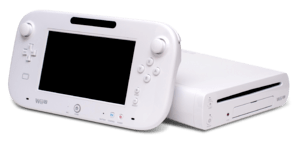
nintendo-switchIf you consider yourself an avid gamer then you are probably by now aware that Nintendo has unveiled its latest console/handheld:  The Nintendo Switch. Previously known by the code name NX, the Switch was officially revealed in a short promotional video on October 20th. Prior to this promotional video, the Switch had only been seen via patent applications by Nintendo containing early drawings that gave some indication of what the console was going to look like. It’s design resembled the Wii U tablet, but with some notable distinctions such as a slot for cartridge based games not unlike Nintendo’s current handheld, the 3DS.

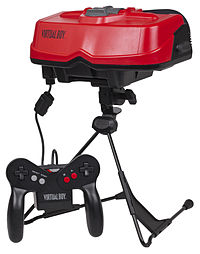
It’s no secret that the Wii U, Nintendo’s most recent entry into the console market, has been a commercial failure. If it weren’t for the abomination known as the Virtual Boy, the Wii U would represent Nintendo’s greatest failure. I was an early adopter of the Wii U mostly out of obligation. I’ve owned every Nintendo console and handheld at some point in my life, and I had the means to get a Wii U at launch, so I did. At worst, I expected to be able to play new entries in classic Nintendo franchises that would provide many hours of entertainment. The gimmick, in this case a tablet with a second screen, was essentially Nintendo’s way of bringing the DS experience to the home console, with a couple of twists. Being on a console meant being able to do different things with the second screen, like hiding information from those who could only view the television or playing the console strictly via the tablet with no TV required. Turns out, that last little feature ends up being the Wii U’s legacy as the Switch is essentially taking that concept of not needing the TV to play and running with it.

nintendoswitch_hardware-0-0

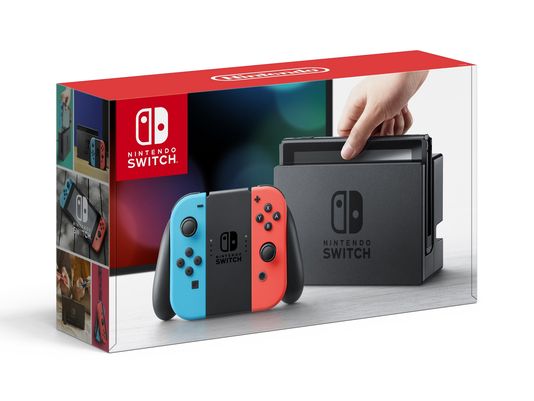
What I assume comes in the box (minus the TV, of course).

Nintendo was never able to prove that the Wii U’s setup was conducive to innovative game design, so naturally neither were third parties. The Switch’s attempt at innovation is far more obvious as Nintendo wants to turn every console game into a portable experience as well. The Switch is fundamentally a tablet that just so happens to have a dock to make play on a TV seamless. Its design is quite similar to the Wii U tablet but noticeably smaller. It appears to be somewhere in size between a Vita and Wii U Gamepad, which is to say for a portable a bit on the large side. The Vita is already sizable for a portable and not exactly pocket friendly, so it goes without saying that the Switch is more of a backpack accessory than a pocket one. The edges of the Switch, which feature the button inputs, are detachable so you can play the Switch like a Vita or use the included kick stand and set it up on a surface and detach the controllers. Some games appear to only require one of these tiny controllers to play, meaning the Switch can natively support two players for certain games. For home use, it looks the Switch will come bundled with a controller “dock” that turns the two pads into something resembling a more traditional controller. The video also shows off a version of Nintendo’s Pro controller that likely will be an extra accessory. The dock also contains USB ports so existing controllers for the Wii U that utilize those ports may be compatible as well.

Nvidia is providing the architecture for the Switch. Some of the preliminary specs have been shared with the public, but just how powerful the Switch is remains a mystery. Given Nintendo’s track record, its likely the Switch will be competitive with the current consoles on the market from Sony and Microsoft, but will likely fall behind in raw power when their advanced models hit shelves over the next year. As long as the Switch is capable of handling ports from those machines, and given that neither Sony or Microsoft is going to ignore the original PS4/Xbox One, the power of the system should be satisfactory. It’s also unknown what the screen’s resolution and makeup is. LED? OLED? Can it support 4k? Is it a touch screen? The display of the Wii U Gamepad is nothing special, and if the promo video is showing actuall gameplay on the device then it at least looks like the Switch is superior to the Gamepad as far as resolution is concerned. If it’s on par with the original Vita then that would be fantastic.

first_look_at_nintendo_switch_-_youtube_-_google_chrome_2016-10-20_10-13-34-1

If you thought using the Wii remote was uncomfortable…

The system’s concept is an appealing one for me. These days I spend more time with my handhelds than I do my consoles because it’s hard for me to make time to actually play with my consoles when I’m home. A machine that functions as both offers a lot of potential. I had hoped to utilize the Wii U in a similar fashion when I first got it around the house, but its range is severely limited so I never took advantage of using the Gamepad as a dedicated console as much as I had envisioned. Sony has offered remote play for several years now through its handhelds, but it’s something I’ve never taken full advantage of. With the PSP, it just plain didn’t work very well. With the Vita, it seems to work fine, but the Vita has fewer buttons than a PS4 controller making some games pretty awkward as those features end up being mapped to the rear touchpad. The Switch is basically just a straight portable that’s convenient to play on a television, and it’s a bit surprising that no one has really done this before. The only thing similar is the NeoGeo X which was released a few years ago. The X is a handheld that has a console dock which resembles the original NeoGeo AES system and more or less functions the same, right down to the wired controllers. The X is actually pretty cool, but the quality is a little suspect. With Nintendo, I have few fears about quality so the Switch should provide for a better experience.

nintendo-switch-cartridges

A brief look at a game cartridge and headphone jack (take that, Apple).

Naturally, there are concerns with any new console, especially a Nintendo one. Third Party support has been a major issue for Nintendo ever since the days of the Nintendo 64. The Wii initially had a fair amount of support because it sold so well that publishers couldn’t ignore it, but there always seems to be the perception that Nintendo owners are fiercely loyal to Nintendo’s games and not as interested in others. So far, numerous developers are pledging support though none are confirming games (likely because of a non-disclouse agreement with Nintendo). Based on the video, it looks like the NBA 2K franchise is heading to Switch, and perhaps most exciting of all, Skyrim was shown as well. The video is likely a mock and what we saw of these games may not even be running on the Switch hardware, but it’s at least encouraging. I do wonder how a game as massive as Skyrim will fit on an SD card and what the costs will be. It’s possible the card in the video is a blank, and to play games on the go you have to transfer from an internal HDD in the dock to a flash style card,but that seems cumbersome. It also sounds like the type of thing that would make piracy easier and publishers hate that. Most likely games are going to come on these cards and I’m over-thinking it, but it will be interesting to see how this all works out. My fear is that the storage medium will compromise a title like Skyrim, and if I can’t have the full Skyrim experience on the Switch, then what’s the point?

nintendoswitch_hardware2-0

The “joy-cons” slide onto the side of the Switch. In order to preseve a traditional four button layout on each one, it looks like we have to endure possibly the world’s shittiest D-Pad.

The main concern I have, and probably most gamers have after viewing the video, is with battery life. A tablet plus two mini controllers seems like the type of thing that will drain batteries quickly. The Wii U’s Gamepad has horrible battery life, but how much of that is because the Gamepad has to constantly communicate with the actual console? Modern handhelds aren’t much better though, with 4-6 hours being the new standard. After owning both a launch 3DS and a launch Vita for a few years, I can say both of my handhelds are closer to that 4 hour lifespan than the 6 at this stage and it gets discouraging. How well the Switch handles that part will determine just how portable it truly is. Aside from that, the standard concerns apply such as how much will it cost and how does it feel to actually play it? I’ll admit, those little controllers (I think Nintendo is referring to them as joy-cons or joy-pads) don’t look optimal. My guess is they work in a pinch, but I suspect most will be buying a pro controller. The fact that they slide into the side of the tablet is a minor concern as well. Will they slide out during some intense gaming sessions? Probably not, but we’ll see.

I did find it interesting that the promotional video’s target audience clearly seems to be adults. There are no children at all in the video which is in stark contrast to Nintendo’s family audience we’re used to seeing. This probably all factors into the name, Switch, as the console represents a very different approach by the company to remain relevant. At this moment in time, I can’t commit to buying it without seeing more. The Wii U’s tech was never very interesting to me, but I purchased it largely on faith that Nintendo would deliver with excellent software. The Wii U never did, and even the first party titles from Nintendo have really started to suffer. This even goes back to the days of the Wii. Triple A franchises like Star Fox, Metroid, and Mario have really taken a hit lately and Nintendo needs to win me back in that respect. The company really hasn’t shown off any games yet. The video mostly appears to show off enhanced versions of Wii U games like Splatoon and Mario Kart 8 which leads me to believe the unveiling of the big titles is still to come. There is a glimpse of a new Mario game in there that appears to be very much in the style of Super Mario 64, and of course we know that the new Zelda game is likely to be a launch title with a simultaneous or delayed Wii U release (similar to what Nintendo did with Twilight Princess). A new Zelda game, even if it was largely developed with the Wii U in mind, might be all the Switch needs for a successful launch. After that, it will fall to Nintendo to provide reason for gamers to keep coming back. No one is really talking about it right now, but if the Switch is a failure it could mark the end of Nintendo as a console developer, and there’s no way to spin that as a good thing for gamers.


Teenage Mutant Ninja Turtles: The Ultimate Collection Vol. 4

1336705It’s been hard for me to find the time to sit down at the computer and contribute to this blog since becoming a dad in the spring of 2015. It has become especially hard as my offspring has learned to crawl, and then walk. Even so, that event occurred well after I posted my review of Teenage Mutant Ninja Turtles:  The Ultimate Collection Vol. 3 in January 2013. Hopefully, no one has been sitting around waiting for this post since then, but at long last, I’m finally getting around to reviewing volume 4 of The Ultimate Collection.

For the uninitiated, The Ultimate Collection is a five volume set of hardcover, oversized comic book compilations chronicling the early years for the TMNT and collecting only the works of their original creators:  Kevin Eastman and Peter Laird. The comics are presented in their original black and white with new cover art and liner notes by both creators. As someone who primarily experienced the Turtles as a kid via the cartoon and the films, I wanted to get this collection to experience firsthand the genesis of the original Teenage Mutant Ninja Turtles.

If you go back and read my review of Volume 3, you will notice I apparently took a long time in getting to that one as well. That was due to my lack of enthusiasm towards the product. For Volume 4, much is the same, unfortunately. Though I should point out right off the bat that Volume 4 is a better read than 3 as it compiles the last major arc of the original run:  City at War. Volume 3 concluded with the re-death of The Shredder and Volume 4 picks up right where that one left off with the two-part Shades of Gray plot commencing in Issue 48. This volume runs in perfect continuity as it contains issues 48-55 as it represents a point in time where Eastman and Laird both had a renewed interest in the comic and a desire to put a finishing touch, of sorts, on everything before going their separate ways.

2659266-tmntvol1_48page12

This encounter ends up making a large impact on Casey Jones.

Shades of Gray focuses on the Return to New York fallout and takes stock of where all of the main characters are presently at, in terms of their frame of mine. The Turtles return back to North Hampton but intend to return to New York after consulting with Splinter. Splinter is not coming with them, and Donatello wrestles with where his place is. Meanwhile, Casey is returning to his vigilante routes and accidentally takes a life in self defense, which gets the attention of Nobody, another vigilante introduced in the Tales of TMNT stories. Casey is spared, with some help from the Turtles, but is a wreck in the aftermath. April is also shown as lost and decides she needs to leave, especially with Casey being so distant. There’s some nice attention paid to Donatello as the story succeeds in giving his character a little more color than usual and he and Casey have a poignant encounter in the woods nearby.

Shades of Gray is basically a setup for City at War as it sets all of the characters out in new directions. April, searching for a fresh start, heads west to LA where her older sister Robyn resides. The Turtles head to New York, and Casey resolves to go after April after he clears his head. City at War also welcomes back Eastman and Laird to the artist’s chair for issue 1. Aside from that though, all of the pencils are handled by Jim Lawson in this collection. Eastman and Laird’s crowded, cross-hatching heavy art lends itself well to the congested city setting and their take on the Turtles is a welcomed return. Their still pretty amateurish when it comes to illustrating the human characters, in particular April, but overall I enjoy their artwork the most in this collection. It’s a shame it’s only for one issue.

tmntv1_050_015-016

City at War Part 1 marks the return of Eastman and Laird as artists.

The City at War arc is primarily focused on the Turtles and their place in the New York community. They take on a Batman like role upon their initial return which frustrates Raph. The other brothers confide in one another that they’re unsure of what their place is and Leo has the hardest time with it and struggles with his role as leader for much of the collection. Meanwhile, the Foot Clan is in disarray and has splintered off into multiple factions. We see a rag-tag group of the ninjas mostly making trouble, but also a more sophisticated faction that targets the others financially via cyber warfare. And then there’s the Japan faction which is teased throughout the entire collection. They’re lead by Karai, who finally reaches New York by issue 55, but her presence isn’t felt until Volume 5. The Foot Elite are also around making trouble, and their allegiance is unclear. One encounter seems to place their allegiance still firmly with their deceased master making them a chaotic force simply out for revenge. It’s also unclear how large their numbers are, but considering they’re the elite force, probably few.

April’s adventures in LA are shown and they’re dull by comparison. Her scenarios often retread familiar ground as she still feels lost and without a home even with her sister and her sister’s young son. Robyn is the foil who tries to get April to loosen up, have fun, meet a guy, and so on. She humors her sister, to a point, and shows some genuine enthusiasm in the upcoming Christmas celebration she’ll be able to share with her sister, but not a lot happens.

Casey, on the other hand, gets sidetracked out in New Mexico when his truck gets stolen. He falls in with a waitress named Gabby, and the two quickly become an item. When Gabby confesses to Casey that she’s four months pregnant, he seems to find some new purpose for himself. The scenes between the two are hard to get a read on as Casey becomes consumed by this new role for himself. Does he genuinely have feelings for Gabby or is he too just looking for some new purpose for himself? Someone to take care of and protect?

tmnt-teenage-mutant-ninja-turtles-mirage-comic-54-city-at-war-nm-htf-a8d88acc01400d9fa7e5e5acf5d210b2

AC Fairly handles the covers and he prefers a “chunky” kind of turtle that I’m not particularly fond of.

It hurts that Eastman and Laird aren’t the most gifted storytellers or script writers. There’s a lot of groan-inducing dialogue, some intentional as Casey is basically a lunkhead, throughout the two more grounded arcs. The parts with the Turtles have minimal dialogue at times. It is frustrating to see, that after such a strong character-driven opening with Shades of Gray, that the Turtles mostly return to their personality-less roles for City at War. Only Leo and Raph are given room to show-off their personalities, which has become a reoccurring problem for the books as a whole. Mikey is the most criminally overlooked as his comic book counterpart has almost no defining characteristics beyond his weapons. Perhaps it was an unintentional reaction to his oversized personality everywhere else that Eastman and Laird chose to keep the spotlight away from him.

Not to be forgotten, is the Splinter arc which is mostly small, but contains a nice reveal at its end in this collection. Another Tales of TMNT character makes their main-line debut and one that is familiar to longtime TMNT fans. The setup is done well and I really enjoyed the brief depiction of this character. Hopefully it pays off in Volume 5.

5303

Lawson’s version of the Turtles is not one of my favorites.

As I mentioned before, Jim Lawson handles almost all of the pencils in this collection and it was the reason I grew so disinterested in the volume to begin with. I do not enjoy his take on the Turtles. They’re blocky and his art is sometimes sloppy. I’m mostly okay with his April, even if she seems to not have any of the physical traits of the Eastman and Laird version, and his Casey is fine. His backgrounds are a lot less crowded which works for some of the action scenes but sometimes there’s an emptiness to them. Perhaps the over-sized format draws more attention to all of the white space. He does have some awkward transitions where he tries to convey too much motion on one page, but at least he’s not beholden to the traditional panel approach. There’s also an overuse of splash pages in issues 54 and 55 that feel like filler. Even Laird admits in the liner notes he’s not sure why they went with so many. Lawson’s art does shine some in issue 54 when he gets to depict a cloaked Mikey in the snow. For some reason, the snow is abandoned in the following issue. I guess they had a heat wave.

The cover art and some of the interior art is new and handled by Eastman. It’s in line with the other collections, though not my favorite. I think the back cover would have been better off as the front as it depicts the Turtles surrounded by Foot Ninjas which is a nice representation of what’s contained inside. Otherwise though, it’s fine. The liner notes feel more substantial here as well, especially from Laid. Eastman is still too in love with everything they did while Laird is a little more critical. The quality of the set is once again very high and there’s little to complain about there. The pages are nice and thick and the whole set has a nice weight to it.

Teenage Mutant Ninja Turtles continues to be a mostly action-oriented affair. The attempts at actual story-telling work better here than they did in some of the other issues, but a lot of it is also cliche and amateurish. No one picks up a TMNT comic expecting Shakespeare though, and there are some genuinely good bits of character development contained in these issues. I just wish they had a better artist.


Lego: Disney’s Cinderella Castle

disney-lego-castle-5This past spring Lego released its third line of mini figures to be based on an official license. Following two straight years of The Simpsons, Lego turned to Disney and its cast of classic characters. Going with a mix of old school, Pixar, and movie characters not touched by the existing Lego Disney Princess line, the line appeared to sell really well for Lego and the likelihood of future releases for the license seemed almost certain. I reviewed those figures back when they came out, and in that review I mentioned my desire to see Lego tackle some famous Disney World and Disneyland attractions, specifically Cinderella’s Castle from Walt Disney World. Ask and you shall receive, as it wasn’t too long after the fact that Lego did indeed announce such a set was coming late in the summer.

Now, my wife is a Disney fanatic. She loves Disney and going to the park, so much so that I made sure I proposed to her in front of the imposing castle. Considering I purchased myself a pair of Simpsons sets and a Ghostbusters Firehouse, I kind of owed it to her to get this set as well. It arrived at the end of August, but since we were in the middle of moving to a new house, construction did not commence until the first week of September. After a fairly leisurely build schedule, we completed this masterpiece over the weekend and both my wife and I are quite pleased with the results.

First and foremost, this set is large and expensive. It retails for $350, which seems to be the going rate for 4,000+ piece sets based on a licensed brand. It’s the same price as the Ghostbusters set, and comparable to some Star Wars sets as well (though cheaper than the upcoming Death Star re-release). Disney is likely not a cheap license to acquire, so there was little sticker shock for me, as much as I hate to spend that kind of money on what ends up being a big plastic, sculpture of sorts. Compared to the firehouse, it’s probably a lesser value. The piece count is comparable, but many of the pieces to the castle are of the smaller variety. It’s been many years since I last built a Lego castle of any kind, but I’m left to believe there are a fair amount of unique pieces to this set, which is obviously a factor in cost. There is minimal use of stickers, which is something any expensive set should be trying to achieve. All of the stickers felt reasonable to me as they’re basically confined to the outer brick detail for the wall (which are simple to place), three shields that adorn the main hall, and a single mirrored sticker for, naturally, a mirror. There are some printed pieces that, in a lesser set, could have opted for stickers instead.

img_0523

A look at The Royal Suite. Below it is where Mickey hides his sorcerer garb and above it is the domain of the Evil Queen.

The mini figure count is where this set may come up short for some. The Ghostbusters set came with 9, and even the Kwik-E-Mart came with 6. Cinderella’s Castle comes with 5, four of which are re-releases with one being unique to the set. Of the four, Donald Duck is the only one who is identical to the mini figure released a few months back. It always disappoints me when a toy line repeats a figure within a set. It would have been easy enough to re-color Donald as he sometimes sports a white cap instead of a blue one. Or even just lighten the color of his shirt, or gone with a full reprint of his body to match one of his many Disney World attires. Both Daisy and Minnie are re-colored versions of their previous release. Daisy has a pink color scheme while Minnie is in her more traditional red and white polka-dot attire. Mickey is the only one getting a whole new outfit as he’s in his park-appropriate tuxedo. Tinker Belle is the new addition, and she fits in with the previously released Peter Pan and Captain Hook and also makes sense as she’s pretty central to the various Disney World ceremonies centered around the castle. Disappointingly, she does not come with a flight “peg” like the ghosts did with the firehouse making it hard to find a fun place to pose her on the castle. As a figure, her likeness is well-done and includes two wands, wings, a hair piece, and a fabric skirt. In addition to those five figures, there’s also two sets of display armor for the interior of the castle that are essentially mini figures with all black heads.

img_0522

A closer look at the infamous mirror. Below is a chest containing her spell components with the fireworks shooter behind.

Building the castle is a pretty painless experience. There’s some very large pieces composing the outer wall area which makes that fairly simple. As you start to move up the castle and towards the towers, more small pieces are introduced and there are some tedious spots. The numerous little white accents you see along the top of the walls and around the towers can drive you mad if you’re insistent about making sure everything is perfectly square. Some of those pieces are anchored by solid bricks behind them, while others are on blue pegs. Those ones have a tendency to swing and I found them irritating. Other places, like around the front clock above the main door, are resting as opposed to being snapped in tight which is something I do not care for. I want everything on a Lego set to be as solid as possible, and the only resting items should be the kind that need to be easily removed like the roof on a house. The set builds basically in three parts:  the outer wall and main hall, the base of the tower, and the tallest main tower itself. The last step in the process is putting all three together and they go together very simply. In total, there are 14 steps in the instruction booklet and there are quite a few leftover pieces when complete. Mostly, they’re small pieces that could be easily lost or overlooked while there are a couple of spare accessories, like a second pair of shears and a sword. I did notice at least one printing error in the booklet where some of the necessary parts for one step are not included in the parts summary at the top of the page. They’re mistakenly included in the following step, even though the graphic for placing them is on the previous step. It’s an easily catchable error as the parts are a couple of traditional bricks, but just be on the lookout (I think it was part of step 11 or 12).

For Disney fans, building the castle offers other rewards beyond the simple satisfaction of construction as the set is loaded with numerous easter eggs. One of the earliest in the build process is the magic carpet from Aladdin being draped on a wall with the Genie’s lamp included as well. The enchanted rose from Beauty and the Beast receives its own room with a familiar looking candelabra looking on. The menacing spinning wheel from Sleeping Beauty is present, as well as the apple for the Evil Queen from Snow White and the Seven Dwarfs. One of my favorites, is a stash of objects from Cinderella hidden under a steeple at the base of the tower which includes her famous glass slipper. There’s also a main suite, which I assume is to represent the actual Royal Suite from the actual castle in Disney World, as there’s nothing obvious within the room to tie it to a film. There’s also a kitchen which could be a stand-in for numerous films (the cleaver on the wall makes me think of Louie from The Little Mermaid) while there’s also an archery set atop the main wall in front of the tower. The included booklet connects that Merida from Pixar’s Brave, but I prefer to think of it as a an homage to Robin Hood, since everything else appears connected to a classic Disney film. There’s a fireworks shooter towards the top of the tower which is another connection to the actual tower in Disney World. By far though, my favorite is the room towards the middle of the set which features Mickey’s hat from The Sorcerer’s Apprentice as well as a couple of buckets and mops and a spell book for good measure. Sadly, the hat does not fit on the Mickey mini figure.

img_0520

High above where Tinker Belle dwells. I wish it came with a piece to simulate her flying around the tower.

When all is said and done, you’re left with a pretty imposing looking structure. It’s easily the tallest Lego structure I own and I assume it ranks among the tallest the company has ever produced. The likeness to the actual building is pretty impressive, though it’s certainly possible to nit-pick the Hell out of it. The open design on the back means it really only displays from the front. I don’t know if a clamshell design was considered, but it definitely would have added a considerable amount of pieces and complexity to the set. I’m guessing Lego chose to prioritize the front and making sure the size of the set felt appropriate for such an iconic landmark. I would also assume that, even though the box suggests this is for teens and adults, this castle has a lot of playability for a child given all the rooms and accessories. I wish the previously released mini figures supplemented it a little better, but the Disney Princess line obviously would fit in well and it’s a significant upgrade over that line’s Cinderella’s Castle.

img_0519

The finished product. It’s hard to get the whole thing in frame.

Where will Lego take Disney next? Given that The Simpsons received two waves of mini figures, I’ve been assuming Disney would too. There’s a more obvious fit between Disney and Lego than there was with The Simpsons so maybe this could continue for awhile. Even if Lego chooses not to devote entire lines of mini figures to the brand, there’s still a wealth of potential sets from the parks themselves. Sleeping Beauty Castle from Disneyland seems like an obvious potential candidate, while Main Street USA would fit in with this set. If they wanted to do something different but also tie it to a park, Mickey’s Fun Wheel from California Adventure would be another attractive piece for Disney enthisiasts to display. It’s fun to speculate but even more fun to build, so I hope the line continues beyond this set, even if my wallet does not.