Category Archives: Television

Batman: The Animated Series – “The Last Laugh”

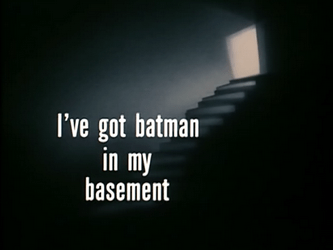
The_Last_Laugh-Title_CardEpisode Number:  4

Original Air Date:  September 22, 1992

Directed by:  Kevin Altieri

Written by:  Carl Swenson

First Appearance (s):  Batboat, Joker Gas

Despite the finality of the title, “The Last Laugh” is not the last appearance of The Joker, Batman’s greatest foil. While The Joker’s first production appearance in “Christmas With The Joker” featured a pretty slap-stick version of the character, The Joker depicted in “The Last Laugh” is a bit more dangerous and more in-line with his future appearances. Even though “The Last Laugh” marks The Joker’s second appearance in the series, it still isn’t the first appearance the character would make on television as we haven’t come to his broadcast debut yet. This is also the second holiday themed episode of the show, in this case April Fool’s Day, though thankfully The Joker would refrain from only appearing on holidays.

April Fool’s Day has arrived in Gotham, and with it a barge full of garbage is sailing down a canal in the city sending a foul order through-out that also happens to make all who inhale burst into uncontrollable laughter. This is obviously the work of The Joker, and our hero makes the same connection just as quickly as the viewer when the news reports break. Strangely, Batman doesn’t actually set out to put a stop to this until the gas creeps into Wayne Manor, turning Alfred (now voiced by Efrem Zimbalist Jr.) into a destructive force as he happily smashes various objects around the mansion.

The Last Laugh 1

Joker, breaking the fourth wall, declares “When the going gets tough, the tough go shopping,” which is a line I can’t decide if it’s just not funny, or intentionally not funny.

Meanwhile, Joker and his goons are galavanting around Gotham happily looting stores and emptying the pockets of those who are paralyzed with laughter. Unlike other depictions of Joker’s famous Laughing Gas, this version appears to only induce laughter without the fatal component; appropriate for a kid’s show. Batman eventually tracks down the barge with the debuting Batboat, which also appears to function as a submarine (surprisingly, it does not resemble the Bat Ski-Boat from Batman Returns) when needed. Batman is forced into conflict with Joker’s henchman, where one turns out to be not a henchman at all, but an android that is able to surprise and overpower Batman. Captain Clown, as The Joker affectionately refers to his robotic minion, stuffs Batman in a trashcan with a lockable lid and tosses it into the bay, but not before Joker stabs a few air-holes in it. Batman, naturally, avoids death by drowning and tracks the Joker down to a waste management facility where he dispatches with the goons, and eventually corrals The Joker himself.

lastlaugh2

The Joker always brings out Batman’s playful side.

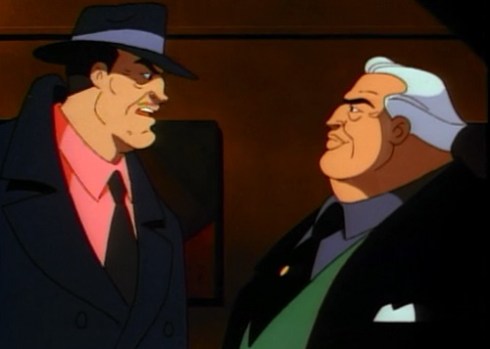
Despite the title, this episode is some-what short on laughs as writer Carl Swenson seems to view The Joker as the type of comedian who just makes bad jokes that only he finds funny. While it may not be all that humorous, the visual style is exceptional. There’s some wonky animation early in the episode with Bruce and a shower scene (not as sexy as it sounds), but after that the rest is gorgeous. The initial fight scene between Batman and The Joker’s men features Batman ably darting around and throwing punches. Captain Clown, being a robot, allows for Batman to really tee-off on him in a manner the censors likely wouldn’t allow had the character been human. He even gets to smash him repeatedly in the head with a steel pipe, the clown’s frozen expression is probably rather creepy for those who hate clowns. Batman’s eyes are also allowed to emote in their most expressive manner yet as they’re constantly changing shapes to show fear, worry, and even dizziness. Joker is allowed to get serious and even a little scary when he reacts to Batman “killing” Captain Clown. There’s also a fun playful moment at the end between Joker and Batman, and Bruce even gets to make a joke to close the episode out at Alfred’s expense. The only other criticisms I can levy at the episode from a technical perspective is one shoddy-looking Batman chest emblem at the 9:40 mark and the abundance of eye black on The Joker, which at times makes it look like he’s wearing a bandit mask. The animators also, at times, appeared to have trouble with Joker’s mouth movements. Either that, or they re-recorded some lines after the fact. I’ll have to be on the look-out for this in future episodes featuring The Joker.

960-2

I’m not sure he’d still be smiling if he could help it.

Not to be outdone, the audio section of the episode is particularly lively this time around. Normally, the show can be a bit understated, relying on the Batman theme for its big moments. Joker has his jubilant theme which the series will return to time and again, and this episode has its own unique opening theme that’s really good. It has a nice build and I wish the show had returned to it more in other episodes, but then maybe it wouldn’t be as special.

This is a very good episode for the series, even if it probably isn’t among the very best. It’s harmed some-what by the mostly directionless Joker who has no real motivation here other than to rob Gotham. The show kind of does that sometimes with him as his primary goal appears to just be to stir up trouble and draw Batman out. Maybe I’d feel satisfied if we saw Joker just casually toss all of the stolen goods into the pile of garbage and not really care about it. Instead we don’t really see it at all. Even so, The Joker is easy to write as he’s Batman’s polar opposite so as long as the two get to share some screen time the results are typically entertaining.


Batman: The Animated Series – “Nothing to Fear”

Nothing_To_Fear-Title_CardEpisode Number:  3

Original Air Date:  September 15, 1992

Directed by:  Boyd Kirkland

Written by:  Henry T. Gilroy and Sean Catherine Derek

First Appearance (s):  The Scarecrow, Thomas Wayne

Episode 3 of Batman:  The Animated Series introduces us to what is probably the standard episode template. A physically unimposing villain with a gimmick shows up to cause some sort of havoc while leading a gang of incompetent muscle who mostly exist just to get pummeled by Batman. That’s not necessarily a criticism as its a format that works just fine so long as the main villain is interesting enough.

Enter The Scarecrow (Henry Polic II), a costumed villain armed with a fear-inducing toxin and a grudge. The Scarecrow will see a redesign later this season, but for his first appearance he’s uniquely toon-like with a tear-drop shaped masked head that’s not at all indicative of the shape of the skull beneath it. His eyes, like Batman’s, are void of pupils and his head will curve in natural ways. He’s rail-thin with claw-tipped fingers with a rather ordinary looking attire to go with it. He’s fairly creepy looking, probably because of the unique shape of his model. His future version will add pupils and a more natural shaped head as well as teeth to the hideous moth and some straw hair. This original version is basically the under-stated version, though I like it, despite the simplicity.

NtF_12_-_Scarecrow_and_thugs

The Scarecrow as seen in this episode. He will undergo a redesign before his next appearance in “Fear of Victory.”

This episode also introduces us to the Bruce Wayne character by showing us how some in the public view him. The episode opens with Gotham University head Dr. Long (Kevin McCarthy) fretting over a recent crime wave impacting the school and being chased down by Summer Gleason for comment. A chance encounter with Wayne, in which Long refuses to shake his hand before admonishing him, shows us that some view Bruce as just some billionaire play boy not living up to the Wayne name. It’s an aspect of the character that’s really not going to be explored much outside of this episode, but I’m glad it’s at least touched upon here. The comments naturally sting Bruce, even if his actions as Bruce are just an intentional cover for his Batman persona.

Batman soon has his first encounter with The Scarecrow, who appears to be robbing a vault on university grounds but may in fact just be looking to harm the university by any means. He’s able to show off his toxin, first on a hapless guard and then on Batman himself. Dr. Long’s words come back in a big way by unveiling to the viewer that Batman’s greatest fear is that he’s letting his parents down. The Scarecrow escapes, but the effects of the toxin linger throughout the episode. It’s not until the climax, where Batman being confronted by a vision of his dead father as a giant skeleton, utters his most famous line from this show:  “I am vengeance! I am the night! I. Am. Batman!” It’s a bit corny, but I know at the time I thought it was awesome and it’s a still a fun little catch-phrase for Batman.

thomas-wayne-2

That’s probably not how your dad wants you to remember him looking, Batman.

Batman naturally figures out The Scarecrow’s identity as that of Johnathon Crane, a former university employee specializing in fear. I should say, Batman’s computer figures out who Scarecrow is in what is easily my biggest pet peeve with this show. Batman’s computer basically knows everything and responds to voice commands in 1992 better than Siri does in 2017. The computer is often the detective with Batman taking all of the credit.

There are some fun little easter eggs in this episode. When Batman is confronted by Bullock after Scarecrow escapes, Bullock refers to him as Zorro with a mocking tone. Zorro is often cited as the real-life inspiration for the Batman character, although the in-universe inspiration will be established later. Also, when Batman is looking at a list of possible sources of The Scarecrow’s mask, Axis Chemicals pops up which is the same name as the chemical plant from the Batman movie that gave birth to The Joker. The vault guard from early in the episode is also seen reading an issue of Tiny Toon Adventures, and enjoying it immensely.

ntf27

If this is how everyone on Scarecrow’s toxin would view him, then maybe Batman should start arming himself with it.

Plot wise, this is the best episode so far and The Scarecrow is an interesting villain in his own right. Unfortunately, it’s a low point for the animation quality of the program. I already covered the minimalist approach taken in designing The Scarecrow, but also the character just animates unnaturally. Bruce looks especially off-model in his appearance early in the episode and we get a really bad shot of the Batmobile at one point, as well as the first instance of bendy Batmobile. The vault guard who is the first affected by The Scarecrow’s fear toxin hallucinates spiders all over his body, which strangely only appear to have four legs apiece. On the plus side, I like the added stubble on Bruce when he’s in the Batcave essentially withdrawing from The Scarecrow’s fear toxin. His hands are shaky as he tries to pick up a picture of his parents and he looks appropriately disheveled. There’s also a nice bit of artistic licensing in the closing shot of the episode where Bruce’s shadow is cast as Batman.

This is a good episode, and for a lot of kids this was probably their first look at The Scarecrow. He’s a unique villain who has a good look that gets better and his fear toxin is a fun weapon for the writers to play with. He’ll actually be one of the most used villains by the show which is a bit surprising on the surface, but his episodes tend to deliver which is why the show runners kept returning to him. Also of note, we get to see Batman actually driven to strike Bullock over his mocking, heightening their rivalry. We also get to see one of The Scarecrow’s henchmen, after being exposed to the toxin and revealing his fear as returning to prison, basically kill himself by jumping out of a zeppelin rather than risk capture by Batman. He lands on some trees with a nice leafy canopy. The censors probably intended for us to think those leaves cushioned his fall, but I’m not buying it. That guy is dead. This is also the last episode for Clive Revill as Alfred who will be recast. We hardly knew ye, Clive.


Batman: The Animated Series – “Christmas With The Joker”

Christmas_With_the_Joker-Title_CardEpisode Number: 2

Original Air Date: November 13, 1992

Directed By: Kent Butterworth

Written By: Eddie Gorodetsky

First Appearance(s):  Robin, Joker, Summer Gleason, Arkham Asylum

An interesting choice for a second episode of a series. It’s a Christmas episode, which feels kind of inline with Batman thanks to Batman Returns. It’s also the debut of The Joker, and introducing him through a Christmas themed episode also feels odd. Naturally, since the show premiered in September this episode was held back to be more topical when it did eventually air, though its original air date still came before Thanksgiving which still feels off.

In this episode, we are immediately introduced to The Joker, who with other inmates at the famed Arkham Asylum, is decorating a Christmas tree and singing “Jingle Bells.” In a moment that would probably now be described as “metta,” Joker adds in the “Batman smells,” variation which probably delighted 8 year old me at the time while he improbably blasts away on a rocket-powered Christmas tree just as he arrives at the “and The Joker got away,” part of the song. Right away, we see this episode isn’t going to care much for realism as Joker is going to quickly establish lots of unique traps and engineer a few kidnappings in a short amount of time with zero explanation on how he accomplished any of that. And unlike many of the villains who will follow, this is not a depiction of Batman’s first encounter with The Joker. It’s pretty clear that the two have a relationship that predates the events of this show and have been at this game for years, assumedly, just as this isn’t Robin’s first foray into crime-fighting even though it’s his first appearance in the show (we’ll get to see his origin later).

joker02

The Joker’s humorous, but improbable, escape from Arkham.

Batman is naturally unnerved by The Joker’s Christmas break-out, while Robin (Loren Lester) thinks even villains prefer to spend the holidays with family. Batman is quick to remind him that The Joker has no family. Naturally, Batman is right and when Bruce Wayne and Dick Grayson sit down to watch a television broadcast of It’s A Wonderful Life they soon find the airwaves taken over by The Joker. Joker has kidnapped three pretty important figures in Gotham:  Commissioner Gordon, Detective Bullock, and television news reporter Summer Gleeson (Mari Devon). Joker, lacking a family to spend the holidays with, has dubbed this trio the Awful Lawful Family and given them personalities of Mommy, Daddy, and Baby (Bullock gets to wear the adorable bonnet). They’re hog-tied, and presumably in danger, as are other citizens of Gotham.

christmas-with-the-joker-batman-4673283-512-384

The Joker and his “family.”

Joker lays some traps, including taking out a railroad bridge and arming an observatory with a giant cannon, all while tormenting his captors in a mostly PG sort of way on television. His use of a discontinued toy is what clues Batman in on the fact that The Joker must be housed in an abandoned toy factory and he and Robin race to the rescue. They have a mostly slapstick encounter with The Joker and his toy-themed gadgets, and Robin even gets to make a pretty terrible bat pun when Batman makes use of a baseball bat. The ultimate goal of The Joker’s crime is to get Batman to open a Christmas present from him, and it’s genuinely amusing and makes The Joker look like a psycho, albeit a G-rated one, and I kind of appreciated that fact.

joker08

Merry Christmas, Batman.

“Christmas With The Joker” is a middling episode of this series that’s neither great nor bad. It’s hamstrung somewhat by the Christmas theme and just feels inappropriate as the debut for The Joker. Of course, if I were going in broadcast order it wouldn’t be The Joker’s debut, and those of us watching at the time were introduced to the character in a better fashion. As the debut of The Joker though, it still is a fine reception for Mark Hamill in his second most famous role. His Joker is often regarded as the best voice for the character. It’s mostly goofy and fun, especially in this episode, but when he needs to get a little more malevolent he can slip into a darker tone with ease. And his laugh is brilliant.

BTAS - S1E2 First Appearance - Robin

Not to be forgotten, this episode also marks the first appearance of Robin.

As a Christmas episode, I will give this one props for not being an adaptation of a more popular Christmas story. At first, I was afraid it would go in a It’s A Wonderful Life direction (a non-Christmas episode kind of will much later this season) when Robin name-dropped the film, but it thankfully did not. I do hate how Gordon and Bullock are just assumed kidnapped, and the episode is too eager to “yada yada” over such details. It’s the only episode written by Eddie Gorodetsky, and if he could do better it’s too bad he didn’t get a chance to show it. For a show that does a good job of elevating what children’s entertainment could be, this one feels too close to the cartoons of the 80s which treated its audience as imbeciles. It’s not as bad as those old shows, but definitely lacking when compared to future episodes. I’m probably being a little too hard on it, as even this mostly serious show is entitled to just have fun now and then. It’s still a worthwhile episode to toss into your Christmas viewing experience though.


Batman: The Animated Series – “On Leather Wings”

On Leather Wings

The series features great title cards for each episode. I like the simplicity of this one quite a bit.

Episode Numer: 1

Original Air Date:  September 6, 1992

Directed by:  Kevin Altieri

Written by:  Mitch Brian

First Appearance(s):  Batman, Alfred, Commissioner Gordon, Detective Bullock, Man-Bat, Kirk Langstrom, Francine Langstrom, Dr. March, Mayor Hill, Harvey Dent,

On this day 25 years ago, Batman returned to television with a show simply titled Batman. Almost immediately, the show came to be recognized as Batman:  The Animated Series and is even referred as such on the DVD volumes released much later. When it premiered, Batman was riding high on a new wave of popularity thanks to two Tim Burton directed features:  Batman and Batman Returns. Batman had returned to his more brooding roots and away from the camp of the television series from the 60s starring Adam West (RIP). And while the Batman of this new show would more closely align himself with Michael Keaton’s portrayal than what was featured on various incarnations of The Super Friends, it was still an animated show featured on Fox Kids that would appeal to a general audience.

Before Christopher Nolan came along, the Batman of this cartoon series (voiced by Kevin Conroy) was often cited as the preferred Batman above all others to escape the comic books. And for a great many fans, it still is. Batman:  The Animated Series tackled mature stories and treated its legendary hero with respect. Primarily the work of Bruce Timm and Paul Dini, it has become a landmark for animated television and is often considered the best comic-book adaptation to ever grace a television set.

btas-onleatherwings6

In the series’ first episode, Batman tackles an unfamiliar foe to most of the audience.

To celebrate 25 years of Batman:  The Animated Series, I’m going to take a trip through each episode in short write-up reviews. The posts will be in production order, so even though the series premiered with “The Cat and the Claw Part 1,” the first post is for “On Leather Wings,” which was the second episode to debut. The air dates are all over the place, as Batman’s first season was a 65 episode order designed to immediately qualify it for syndication. It was successful enough that more episodes were ordered (these are The New Adventures of Batman & Robin) and WB would order a third and final season many years later (The New Batman Adventures) to pair with their Superman animated series. I intend to get to all of them, including The New Adventures, though I have no idea how long it will take me. Hopefully I can refrain from typing 2000 words about each episode in order to move along at a decent pace.

With that out of the way, let’s talk about the first production episode “On Leather Wings.” This is a natural for the first episode because it’s a Batman solo adventure and does not feature a noteworthy villain who will hog the spotlight. This show very much follows a villain of the week/day type of format. There’s very little continuity from episode to episode and few callbacks, especially in the first season. This particularl episode was directed by Kevin Altieri and written by Mitch Brian. It’s sort of a surprise that Dini and Timm aren’t directly credited with the first episode, but since 65 were done at once I suppose it doesn’t matter much which is first. That and they also likely had a hand in just about every episode from some point in the development. Altieri will direct several episodes in this first season. Brian is credited as a co-creator on the show, though he only shows up a couple more times as a story writer.

images-234

Commissioner Gordon and Detective Bullock, who will make many appearances in this show.

“On Leather Wings” feels like an introduction for Batman as the plot involves people confusing the villain with him and attributing his crimes to Batman. That villain is Man-Bat, a B-level villain who’s essentially a were-bat, if you will. The story calls on Batman to use his detective work to figure out who is the man behind the Man-Bat, essentially. Batman’s sleuthing skills take him to a bat exhibit in Gotham Zoo where he meets the irritable Dr. March. March, who seems to prefer bats to humans, is our episode’s red-herring though he’s clearly hiding something. Bruce also encounters March’s daughter and son-in-law, who have followed in his footsteps as bat experts.

On_Leather_Wings_50_-_Batman_bleeds

Fox was pretty good about letting the show depict some blood as well as guns and general, tasteful, violence.


Having Batman investigate a bat monster is a fun way to debut the series. We also get introduced to series mainstays Commissioner Gordon (Bob Hastings) and Detective Bullock (Robert Costanzo), and we also get a glimpse of Bullock’s distrust of Batman which will be an ongoing thing. Trusty butler Alfred is also debuted, though oddly enough voiced by Clive Revill. He will be voiced by Efram Zimbalist Jr. for all but three of Alfred’s appearances. The episode is also a nice exhibit of the show’s unique look. We get to see the Gotham skyline at night, done on black backgrounds and Batman and the Man-Bat pop nicely against it. The Batcave is also featured and we get to see Batman’s super-powered computer in action which will help him solve many mysteries through-out the series. It’s a tight little plot, which is resolved by the end in a mostly satisfying manner, though Batman seems very trusting of the bat experts to make sure this never happens again (spoiler alert – it does!) and declines bringing them to the police. In short, it’s a good episode though probably no one’s favorite. The production values are quite nice (we get some nice sound effects in particular for Man-Bat) and consistent through-out. Episodes both better and worse are still to come.

Like what you just read? Check back here every Friday, starting this Friday, for another episode recap of Batman:  The Animated Series. If you want to follow along we’re going in production order which just so happens to be how the DVDs are arranged. Individual sets can be had fairly cheaply these days, and there’s a complete collection for those with finer taste. All of the episodes are also currently airing on Amazon Prime so if you have a subscription you can watch there. I hope you enjoy reliving this series as much as I plan to enjoy writing about it.


Mickey Mouse Season One

disney_mickey_mouse_vol_1For many years Mickey Mouse was the star of Disney’s theatrical shorts. As his popularity grew he started to shift into more of a supporting role while the likes of Donald Duck, Goofy, and even his dog Pluto stepped in to do more of the heavy lifting with the shorts business. Mickey Mouse became more than just a cartoon character, he became a symbol of the Walt Disney Company which soon branched out from the movie theaters to television, merchandising, theme parks, and now own Spider-Man, Luke Skywalker, and have an omnipresence unlike any other. Through it all, Mickey has remained the top figurehead, especially after the passing of Walt Disney who has really been the only public face associated with the company that the average person could pick out of a line-up. With Mickey in that capacity, his animated outings dwindled. He’d show up here in there, most famously in 1983’s Mickey’s Christmas Carol and 1995’s Runaway Brain. His presence was bolstered on television, but mostly in the realm of programming for the very young. Perhaps someone at Disney was unhappy with the status of the company’s mascot, and the characters associated with him, as in 2013 he was brought out of his forced retirement to resume the role he was born to play.

Simply titled Mickey Mouse, the 2013 “show” isn’t much of a show at all, but just branding for a new line of short cartoons. They primarily air as filler on the various Disney cable platforms and can be easily found on various Disney websites. They’re also packaged together in groups of three for more traditional block programming, but considering their short run time of approximately 4 minutes, even these blocks are quite brief. The first season of shorts was released on DVD in August of 2014. Now three years later, it’s still the only season of the program to receive a physical release (a holiday collection was just released on August 29th, 2017 in limited quantities) and may end being the only one to receive such.

Mickey-Mouse-2013-shorts-mickey-and-friends-37990211-312-500

Goofy’s new look comes across as the most drastic of the main cast.

The series is credited to Paul Rudish who was long associated with Cartoon Network before developing this program. Most of the voice actors associated with the classic Disney characters were brought on to voice their respective character. Bill Farmer is Goofy, Tony Anselmo is Donald, Russi Taylor voices Minnie Mouse, and Tress MacNeille does Daisy. The only exception was with the star character himself:  Mickey Mouse. Mickey had been voiced by Brett Iwan since the passing of Wayne Allwine who had been voicing Mickey since the late 70s. Someone involved with the casting of this show felt Iwan’s portrayal of Mickey wasn’t suited for a more cartoon-like portrayal so Chris Diamantopoulos was hired to voice Mickey. This basically means that for the first time in Mickey’s 80+ years existence he has two official voice actors. While it’s true a number of individuals stepped in during the Walt years to voice Mickey here and there, none were ever considered an official voice of The Mouse. It’s strange and somewhat upsetting for Disney historians (I tackled the subject in this post about Donald Duck suddenly having two voices) for Mickey to have more than one official voice, but I suppose it is what it is.

Brett Iwan probably could have handled voicing Mickey just fine for these shorts. Ignoring that though, Diamantopoulos’ Mickey is similar in that he’s still a high-voiced character with a smooth delivery. This Mickey is more manic than what we’re accustomed to seeing. He often overreacts to simple slights and obstacles and is prone to screaming. Most of the characters are interpreted through this more outlandish lens as the toon quality of the show is emphasized in almost every scene. Minnie is very similar in attitude to Mickey as she’s more or less a female version of the same character. That doesn’t mean she’s uninteresting as she still possesses a personality, it just happens to be very similar to Mickey’s making the two feel like a natural couple who’s been together for decades – which they have! Daisy, on the other hand, is snobbish and materialistic and often likes to brag about her man, err duck, Donald. Goofy is more dim-witted than ever, and he’s also seen the most extreme redesign. The other characters are basically just stylized takes on their classic looks, but Goofy almost looks like a different character. His model reminds me of the George & Junior 90’s “What A Cartoon” show designs. He’s kept his hat and vest, but ditched his pants and even grew a tale. He’s pretty gross too, with stinky feet and is seen scratching himself and picking lint out of his belly button. Donald actually comes across as slightly more mellow than his usual persona. He’s sometimes dismissive of Mickey, but still has his meltdowns. He’s a bit mean-spirited too and isn’t above laughing at another’s misfortune, and that’s pretty much in tune with his classic portrayal. Appearing sporadically is Peg-Legged Pete voiced by Jim Cummings. For the first time in a long time, Pete is even portrayed with his old peg leg. This is also the most cat-like his appearance has been outside of his earliest appearances.

mickey-mouse-2013-bad-ear-day-web

Mickey’s ears sometimes have a mind of their own.

Visually, the show is very 90s in its looks. Mickey and gang are still fundamentally cute in appearance, but they’re also shown in ugly lights too. When Mickey is worn out or sad his snout will droop making him resemble Mortimer Mouse more than Mickey. It’s a part of Mickey’s anatomy I’ve never seen emphasized before. His eyes and coloring are consistent with his first run of shorts in color. The only real change there is in his over-sized shorts which impossible stay around his waist. The artists and animators love playing with his ears. They slide around on his head, pop-up off of his skull when he screams, and at times they’re even detached. The physics in play are very much of the Looney Tunes variety, with that 90s twist popularized by the likes of Ren & Stimpy, Rocko’s Modern Life, and Animaniacs. The animation is done in a modern way, meaning it’s likely all CG, but it resembles classic animation with its 2D look and backgrounds.

mickeymouse-secondseason-a-580x333

The animators do not shy away from portraying Mickey in an unfavorable light when the situation calls for it.

The show is very visual, with gags being the name of the game in a great many episodes, especially the season one shorts. Some of these gags are a play on the world and characters. The first broadcast short, “No Service,” tackles the age old question of why it’s permissible for Donald to strut around pants-less and Mickey without a shirt when the two are denied entry into Goofy’s burger joint. Donald ends up taking Mickey’s shorts so he can go inside and order food, leaving Mickey naked and vulnerable outside as he tries to hide from Minnie and Daisy. It’s one of the more hilarious shorts and lays the groundwork for basically all of the others in that Mickey is often presented with a simple obstacle or objective and he has to go through an awful lot to get around it. In “Stayin’ Cool,” Mickey, Donald, and Goofy have to try and beat the heat somehow. When they get tossed out of some guy’s pool they’re forced to search all over the city for a way to stay cool and wind up in an ice cream truck. You get some weird visual gags such as Goofy filling his shorts with ice cream. In “Third Wheel,” Goofy invites himself out on a date with Minnie and Mickey, and through some rather crazy machinations, the duo end up inside Goofy’s stomach enjoying a romantic dinner. When the camera leaves Goofy’s innards just as the two kiss, Goofy’s outer stomach starts a moving and a grooving. These suggestive visual gags are a bit shocking for those accustomed to only a certain brand of humor from Disney, and Mickey especially, but it’s hard to deny their effectiveness.

The music is appropriately upbeat for many of the high energy scenes in this collection of shorts. There’s also a nice sampling of low key jazz and big band music which is evocative of the classic shorts. And where appropriate, the shorts will even dig into Disney’s rich catalogue of original music here and there. There’s even cameos from classic Disney characters I won’t spoil, though some of my favorite cameos actually occur in later seasons. Some of the shorts take place in foreign countries, and in an interesting move, Mickey and his co-stars will speak the native language when the setting changes. Usually these shorts end up having minimal dialogue, but it’s a pretty neat attention to detail and down-right bold as well.

noservice-mickey-580x338

Mickey’s mocking of Donald in “No Service” makes me laugh every time I see it.

Mickey Mouse is a great return for the ageless mouse and his cast of friends and foes. There’s an infectious energy in this cartoon series that can’t be ignored. Watching it, one gets a sense of appreciation for these characters on the part of the creators as well as a desire to re-imagine them to a point and place them in new settings and new situations to see how they would respond. I can understand if some longtime fans of Mickey and Goofy, especially, are uncomfortable with this take or find their look unappealing, but I do hope they can appreciate the humor in this series. Really, for the first time in his existence, Mickey Mouse is actually a funny character on his own. He’s been the straight man for so many years, and prior to that he was somewhat of a thrill seeker and even a trickster, but rarely comedic. The series is still ongoing and is in the midst of its fourth season with over 60 shorts released, plus the holiday specials. I hope more is on the way and a physical release is considered for the episodes that have been stranded on cable and the internet.  Season One includes 18 shorts, plus a brief making of type of feature that’s not really worth watching, and is readily available for less than 10 dollars. If you’re a Disney or animation fan it’s basically a no-brainer at such a low price point, and considering my own offspring is addicted to this disc, I can safely recommend it for children and adults alike.


DuckTales Premiere “Woo-oo”

ducktales_2017_by_xeternalflamebryx-db1zb8bWhen Disney set out to reintroduce DuckTales to a new generation of youngsters they clearly decided the most enduring legacy of the late 1980s cartoon series was its catchy theme song. Penned by Mark Mueller and covered in exhausting detail in a new Vanity Fair piece, the DuckTales theme has remained a unifying force of nostalgia for those who heard and watched cartoons during its run. It’s upbeat, poppy, and entrancingly catchy qualities are essentially the one aspect of the old cartoon preserved almost exactly for this new edition of DuckTales. Sure, it’s now sung by Felicia Barton and that final verse is altered ever so slightly, but it’s relatively unchanged from its origins and it still rocks.

The theme has been a central part to the advertising blitz laid out by Disney which seems to know it has something in DuckTales. So confident is the sense coming from the company that it’s a wonder this wasn’t attempted sooner. Is there something magical about waiting for the 30th anniversary of the original program as opposed to the 10th or 20th? Or have we just arrived at a moment in time technologically speaking where this show can be done at a reasonable cost without resorting to the 3D computer-generated imagery of many of Disney’s modern cartoons? Whatever the reason, the song appeared in a quick teaser for the show last year along with the unmistakable “Yeah!” of Donald Duck. The new cast was introduced via a YouTube video where they all sing the song with great exuberance and some pretty impressive timing. And why not? The song is perhaps the best cartoon theme ever concocted and should be leaned upon heavily to bring this franchise back.

DuckTales-2017-1

The money bin is still a thing, and looks to be harder to penetrate this time around.

And DuckTales is indeed back. Saturday August 12th marked the debut for the new series, and much like its predecessor, it debuted with an hour long special. Disney XD was the chosen landing spot and the entire day’s programming has been dedicated to airing the new episode of DuckTales, titled “Woo-oo”, for the entire duration of the day. It’s a bold way to announce a new show and it will also be streaming on Disney’s websites and apps presumably until the show’s re-debut in September.

Resurrecting a beloved franchise isn’t easy and often thankless. Fanbases seem to become increasingly protective of that which they love as time marches forward and the slightest change can cause the biggest disruptions. Perhaps that’s why the show has felt so secretive with Disney waiting what felt like an eternity before showing off even a still image from the show. In general, it seems most took the show’s new look with enthusiasm. Scrooge now sports his traditional red coat from the comics from which he first made his name. The show is presented in 2D as opposed to 3D, and all of the familiar faces are still there. The children have received a makeover, as expected, but they don’t feel as forced as the ones the nephews got for the short-lived Quack Pack program in which Disney seemed to be forcing teenaged culture into the show in a mostly unauthentic fashion. The show also promised to send its cast on more timeless adventures, seeking treasure and uncovering all manners fantastic all while maintaining not just the spirit of the original toon, but those Carl Barks stories as well.

DuckTales_2017_2

Expect to see some old foes pop-up eventually.

Naturally, some voices had to change as well and Disney kept its casting decisions under wraps for some time. Alan Young was basically the only Scrooge my generation knew, but Father Time made sure it wouldn’t be possible for him to continue the role for the new series (RIP). David Tennant has brought his Scottish charm to the new series. His Scrooge is a lot more youthful sounding, but comes across as authentic and dashing and I think it’s a voice that will suit him. Terry McGovern, who voiced Launchpad McQuack in the original series as well as in Darkwing Duck, lobbied hard for the role here but was passed over in favor of Beck Bennet. Bennett is fine, and I understand the feeling in the building that this should be a new show for a new generation, but Bennett basically sounds like he’s doing his best McGovern impression which makes me wonder what’s the point in re-casting him? The nephews Huey, Dewey, and Louie have unique voice actors for really the first time in their existence in Danny Pudi, Ben Schwartz, and Bobby Moynihan. I’ll miss the adorable duck voice of Russi Taylor, but I can’t argue against the decision to make the nephews feel like distinguishable characters from one another. It used to be that only the color of their shirt differentiated one from the other, but in this series all three have their own unique personality. It seems like Huey will be the boy scout, Dewey the crafty trouble-maker, and Louie more of a laid back sort. Kate Micucci is Webby, who too seems like she’ll have a more pronounced character other than girl duck. Mrs. Beakly has perhaps received the most pronounced makeover as she’s gone from grandma-like in appearance to a hulking behemoth. She’s voiced by Toks Olagundoye and I’m curious to see what kind of backstory has been crafted for her to explain this brawny physique. Last, but certainly not least, is Donald Duck voiced by the irreplaceable Tony Anselmo. Donald was reduced to a cameo role for the original DuckTales due in part to Disney being sensitive about using its classic characters for TV and over concerns of his sometimes unintelligible speech pattern. Thankfully Donald has been restored to full-time cast member as he was in the comics and DuckTales 2017 already has a huge leg-up over the original.

maxresdefault-10

Donald and his nephews have a very hum-drum sort of existence when the show opens.

The premiere opens with Donald and his nephews aboard a houseboat that they apparently live on. It’s seen better days, and Donald is preparing for a job interview. When he realizes he can’t leave his nephews home alone, he decides to ask his estranged uncle for a favor. We find Scrooge in a state of depression as his life has become rather mundane and unexciting. He’s still fabulously wealthy, but doesn’t appear to be living a truly rich life. He and Donald had an unexplained falling out and their first encounter in many years is hardly warm and fuzzy. Still, Scrooge agrees to help out his nephew by watching his grand-nephews, who before today had no idea they were related to the famous Scrooge McDuck. They think they’re meeting a great adventurer, but are pretty disappointed in what is presented to them. They soon meet Webby, the grand daughter of Mrs. Beakly who lives with Scrooge and takes care of the household. Webby is starved for adventure and her sheltered life in the mansion appears to be driving her a little crazy. The boys and Webby make some fun discoveries while poking around the mansion, which helps to bring out Scrooge’s adventurous side. Meanwhile, Donald gets his job, but his new employer is going to cause some problems for his uncle. Everyone ends up on a collision course for Atlantis, the adventure is appropriately grand.

MV5BYjFjMjMyNGUtMWM2OS00ZjZlLTg0NDUtMDgzZjEzMWQxN2RmXkEyXkFqcGdeQXVyNDQxNjcxNQ@@._V1_SY1000_CR0,0,1109,1000_AL_

Scrooge will have no shortage of enemies and challengers to his title of World’s Wealthiest Duck.

Right off the bat I find myself in love with the visual style of DuckTales. There’s a very Barksian quality to the look of the show with some of the images appearing very influenced by Barks’ later works of art. The animation is undoubtedly done on a computer, whether it’s done South Park style by creating 2D models that are animated or if they’re hand-drawn onto computer tablets I do not know, but it does work. It’s not stiff and it’s not lazy and it doesn’t really look like anything else on television right now. Scrooge warms up to his adventuring lifestyle pretty fast, but it’s fun so I’m not going to quibble with a fast-moving plot. The adolescents are convincing and there is room for exploration with all of them. Mostly, of course, I really am fascinated by this Donald Duck. He possesses his trademarked short temper, but it also appears he’ll be the voice of reason in the group who at least tries to keep everyone in check. It’s a role Donald has really never served on film and it will be a lot of fun exploring this rarely seen side of an 80 year old character. The easter eggs and callbacks are also handled as well as fan-service can be with only one line spoken by a reporter sounding forced, but I won’t pretend like I didn’t enjoy it. And I really loved the reveal at the very end of the episode, which I won’t spoil here, as it seems to suggest this version of DuckTales will have something very new to explore.

If you can’t tell, I’m pretty high on this new version of DuckTales. I may have done things a little differently if given the chance, but I can’t deny the finished product looks and feels great. This show has a lot of potential and something about the way it’s being marketed just exudes an infectious amount of confidence in the material that’s very reassuring. It sounds like there’s a lot of fun stuff to look forward to on the horizon, with other Disney Afternoon properties even rumored to resurface. Whether you loved the original series or never watched it, I encourage you to check out DuckTales as this looks like it’s going to be a really fun ride.


NECA San Diego Comic Con Exclusive TMNT Animated Series Action Figure Set

IMG_1436Teenage Mutant Ninja Turtles is the franchise that won’t go away for me. I’ve been involved with it since the 80s when the cartoon series debuted and the first line of action figures started popping up in retail. I dropped the series when The Next Mutation came around, but picked it right back up when the 4Kids version of the Turtles debuted on Fox in 2003. And always there was a line of toys to go along with them that I happily indulged in. The only toy line I’ve really passed on was the current line that ties in with the Nickelodeon show. Even though I like that show, I never felt the need to go buy the toys. I thought, perhaps, I was finally maturing, but nostalgia for the original 1987 cartoon series has pulled me back into the world of TMNT toys.

Last year, Bandai gave us its take on the fearsome foursome based on the 87 series through its SH Figuarts brand. I reviewed all four and they were very impressive, but also costly. Those toys exist because they’re technically imports, though some retailers carry them in the US. When it comes to the real domestic products, Playmates still has a stranglehold on all things TMNT when it comes to action figures. Because of this, toy companies have had to get creative or get discouraged from even trying. NECA has been the leader in US TMNT toys and they’re willing to jump through the loopholes to get their versions of the Turtles to the public. When they wanted to do a set last year, they had to base it on the original TMNT arcade game which meant a bright, faux-digitized paint app for the figures. When NECA wanted to do a line of figures based on the 1990 movie, it meant they had to release them in a massive quarter-scale (and they’re awesome). Not satisfied, NECA has wanted to get cartoon accurate Turtles to market and finally got the clearance to do so. The catch, of course, was that it had to be a convention exclusive. Also possibly apart of the stipulation, was that it had to be a box set, which is how we ended up with this brand new set.

NECA’s San Diego Comic Con exclusive set of the TMNT is proving hard to get. NECA was granted permission to sell them on their website as pre-orders to be delivered the week of the convention. In addition to that, the set is available to buy at the convention the old fashioned way. It’s an eight figure set with a price tag of $200 that comes housed in a box meant to resemble the old action figure carrying cases of the 80s and 90s. I was fortunate enough to score one of the pre-orders which went live last month over the course of 4 days (and each day they sold out in about a minute) and my set arrived at my door last night. NECA is referring to this as the definitive take on the 87 Turtles, so how did they do?

The set comes housed in an attractive case. It’s decorated with all new artwork by Archie Comics artist Ken Mitchroney and depicts the Turtles outside the San Diego Convention Center with Shredder and Krang on the reverse. The case is likely made out of cardboard with a vinyl outer coating. Two clasps on the side made of metal close it up, though the case isn’t too rigid making the clasps hard to engage. This is clearly a case designed for decoration and to add a “Wow!” factor to the presentation, it’s not something you would have wanted to ferry back and forth between home and grandma’s like the case you probably had when you were a kid. I do find it a bit odd they went with an Archie look as the Turtles on the cover do not resemble the television show, but at least it’s original and not a stock image.

The set itself contains eight figures:  Leonardo, Michelangelo, Raphael, Donatello, Shredder, Krang, and two Foot Soldiers. The figures are packaged in a black plastic trays with a transparent outer shell that fits over it like a clamshell design. The trays are stacked in two layers, with the Turtles on top and the Foot on the bottom. The packaging is designed to be resealable, though it’s probably not durable enough to withstand repeated use. The figures themselves were pretty easy to remove, though some of the accessories were a bit trying (and there’s a lot of them, more on that later) and I worried I’d crack the plastic shell casing, but it held up.

If you’ve purchased prior NECA TMNT sets, then this one should feel some-what familiar. The Turtles are essentially the same figures released last year, just with a cartoon-specific paint application. Shredder is a composite of the two Shredders released last year (the arcade one and the Mirage Comics one), but with an all new head sculpt and re-tooled abdomen. The Foot Soldiers also borrow parts from last year’s Mirage Foot, but obviously with new head sculpts and new arms to represent the very long-armed look of the cartoon. The only all new sculpt is Krang, and that’s because he’s a pretty unique character and not one NECA has released before.

Let’s talk about the heroes first. The Turtles feature a dark, almost olive, paint-app for the majority of their body with a darker green used for shading on the backside of their limbs. Lots of black lines are used for definition and the look is certainly striking. The skin tone is quite close to that of the cartoon’s first season, especially for the scenes taking place in dimly lit areas like the sewers. The decision to add shading is a bit of a controversial one in the collector community; some like it, most don’t seem to care for it. I don’t think it works as natural light would have accomplished the same thing. A paint wash may have been a better approach, but it’s not something that kills the figures or anything. The colors of the pads and masks are vibrant, and each turtle sports a fighting expression. The articulation is pretty standard, and NECA hides the joints and cuts well within the sculpt. The only drawback is the hips feel a bit loose and some more ankle articulation would have been welcomed. The shells look great, and there’s no noticeable paint slop on any of mine. The only production error appears to be with Raph’s pupils, as one is centered in the eye and the other towards the top of the eye, making him look weird from head on.

The actual sculpt of the figures is also pretty solid. They’re about 5 1/2″ tall and fit nice in scale with Shredder and the Foot. The wrist bands and pads are all part of the sculpt and not separate pieces, and they look pretty good. NECA was able to get the kneepads to sort of hide the knee joints like an actual pad, though the elbow pads sit above the elbow joints. I’m always torn on what facial expression these 87 Turtles should possess since the show was so light-hearted and campy. In a perfect world, NECA would have included swappable heads, but those obviously add a lost of cost. Grim and serious works for Leo and Don, though I wish Raph’s sarcasm could have been reflected and Mikey’s more jovial nature. NECA also ran into the challenge of how to mold the head. These sculpts worked really well in nailing the likeness of the arcade TMNT, but they’re a little too frog-like for the cartoon. That’s partly because the Turtles in the cartoon look very different when they’re presented head-on or at an angle, versus a profile look (just watch the opening credits). The season one Turtles often had a vertical line on their beaks to give the impression of a sharper mouth that was mostly dropped after season one. NECA wisely didn’t try to incorporate that as I don’t think it would have turned out well had they. Overall, I do really like the look of these figures, though I think they come up just a tad short if they’re trying to be the definitive take on these characters.

The accessories for the Turtles are numerous and appropriate. Each character comes with his specific weapons which means Leo has two katana, Raph a pair of sai, Don a bo staff, and Mikey twin nunchucks. Don’s bo is especially well-detailed and probably the finest bo staff the character has ever come with. It also breaks apart in the middle which can make storing it in his belt a bit easier to manage as it’s really tight. Leo’s swords are quite broad and resemble a falchion more than a katana. This is consistent with the show, though the broadness might be exaggerated some (though his swords were kind of all over the place and not very consistent in the show). He has holsters too for his blades and they too are also really tight. I couldn’t really get them in and didn’t want to force it, though I’ve seen holstered pics online so it’s certainly possible. Raph’s sai are probably the worst of the bunch as they’re really out of scale and resemble tuning forks. Raph also carried his sai in his belt near his buckle on the show which isn’t possible with the figure as the belt is glued on. It would have been nice it NECA had found a way to make it possible without taking away from the look, but I see why they wouldn’t want to add a pouch or something where there really isn’t supposed to be one. Mikey’s nunchucks are twin pieces of plastic connected by actual metal linkage, a practice NECA basically started with its Mirage version of the figure 9 years ago that has been adopted by pretty much everyone since. One ‘chuck handle can detach and a “spinning” chuck attachment can go in its place, which is a pretty nice feature. Like Raph though, he can’t store his weapons in his belt, though I suppose you could wedge them under his arm if you wanted. In the show, Mikey stored them on his shell in little holsters that basically disappeared when he was holding his weapons (Don and Leo’s holsters often did this too, especially after season one) and NECA must have valued the look of his holster free belt over one that basically never existed in the cartoon.

Additional accessories include four turtlecoms; two are open and two are closed, that look awesome. There’s also an additional four pairs of hands that can be used on any turtle, since their wristbands are part of the arms. There’s a box of pizza from Weird Pizza with one slice missing. That slice is also present and even has a hole through the center for placement on Raph’s sai. The turtle-hook, which showed up in later seasons, is also here if you wish to change-up Mikey’s weapon. It’s slightly oversized but that’s likely because the hooks actually come out of it slightly. It’s not a great effect, but still appreciated.

Naturally, these editions of the TMNT invite comparisons with the Figuarts ones from last year. I think, overall, the Figuarts ones are superior, but they should be since they retail for around $65 a piece. Their articulation is better, the swappable heads help make the likeness better, and I really love that Bandai came up with those swappable belt pieces so all of the Turtles can holster their weapons. NECA’s chosen skin tone is definitely closer to that of the main show, while Bandai’s resembles the opening credits and later seasons. The Bandai Turtles also each had four pairs of hands, while the NECA ones share a community of hands. If I had to pick one I’d take the Bandai ones, but I wouldn’t feel disappointed if I only had these NECA ones. Both look great and they complement each other pretty well as now we have turtlecoms and a closed turtle-hook.

Of course, the NECA Turtles have one big advantage over the SH Figuarts ones:  they come with a Shredder! Shredder, for some reason, has really received some bad treatment from toy manufactures. Even from NECA, who delayed the release of their Mirage Comics Shredder by eight years (with part of that being attributable to Playmates, but mostly to a marketing decision). Toy manufacturers are scared that Shredder and other villains won’t sell. Playmates cancelled their own toon Shredder after showing prototypes, and Bandai has yet to bring theirs to market even though he was unveiled over a year ago. And the old Shredder toys from the original line? They were terrible, with Shredder having blue spikes and no shirt, plus that really weird semi-crouching pose. Naturally, this Shredder is the crowned jewel of the set as he’s a near perfect likeness to the cartoon. He comes in at nearly 7″ tall making him much larger than the Turtles. The head sculpt is perfect and conveys a lot of personality despite the restrictive nature of the character’s helmet. The spikes are a nice, soft, pliable plastic and the fabric cape adds a nice touch. I had to watch old episodes of the cartoon to spot any differences, and the only inaccuracy I could find was with the shoulder pads that featured fewer spikes on television, but I’m not going to complain about some additional spikes! My only other criticism would be the two-tone paint job is again a bit overdone, especially on the helmet, though overall it works better on Shredder than it does on his adversaries. His open hands also have some excess plastic from the mold that’s a bit ugly, though if it really bothers me I could probably trim it off with a razor blade.

Shredder comes with a few accessories of his own to go along with his excellent sculpt. He has a katana of his own, which is unique to him, for sword-fighting with Leo. He also has a gun that resembles the retro-mutagen ray from the cartoon and looks good in his hands. He has three sets if hands: fists, gripping hands, and open hands. He also has a com-link with a little picture of Krang on it as well as a blue canister of mutagen. I do not remember this blue canister from the show, but I’m sure it existed. I only remember the standard glass one with glowing, pink, mutagen contained inside.

The two Foot Soldiers are identical to each other. They are slightly stooped over and feature those long limbs they were known for. They too come with three sets of hands each:  fists, gripping fists, and open hands in a karate chop like pose. There’s also a rifle and a large gun with a bowl-shaped end which was featured in the cartoon and also with the Playmates version of the character as well. The two-toned paint works well on the Foot, probably due to their clothing have a lot of molded creases and folds, and it’s hard to find any fault with these figures.

Lastly, we have Krang, who too looks fantastic. He’s a light pink and features his trademark scowl lots of lumps and veins. Liberal use of black lining gives his face added definition, though they may have gone just slightly overboard with it. His tentacles are on ball joints and are also easily removable. This is so Krang can hop into his bubble walker and the tentacles clip onto outside joints to resemble the cartoon look. When not in his bubble walker, he also has his little tripod from the first season that he scooted around on before Shredder completed his body. This is a great touch by NECA as I don’t think this has ever been done before. It snaps into a recessed area on his underside so it stays in pretty well.

The villains really help round out this set as NECA hit a homer on each figure. It’s nice to have a new set of the Turtles without having to worry if they’ll ever have some villains to tangle with. Naturally, there are people who probably wish they could get more Foot Soldiers for display purposes, but that has more to do with licensing than NECA’s wishes. I have no idea what the future is for this property as it concerns NECA. The popularity of this set leads me to believe that NECA would like to do more, but it may have to wait until next year. Fans undoubtedly would love a Bebop and Rocksteady and Krang is just over here begging for a body. Other characters like Splinter, April, Baxter Stockman, and others would probably be welcomed too. I personally have no desire to go in too deep, but I definitely am hoping for more. If the property dies here though, it’s still a very satisfying collection of figures that will display well for years to come. I hope to be done with buying anymore action figures of the Turtles from this show, and I may even pass on the Bandai Shredder should he ever see release as I’m more than happy with this one. If you have the opportunity to get this set at a reasonable price, I fully recommend it.

UPDATE 2019! – If you’re finding this late and want to get a set of your own, in early 2019 NECA announced a new relationship with Target that will allow them to sell these figures at retail. The catch? Playmates mandates they not be in the toy section and retail for at least $50. NECA has a spot in electronics and as of this update you should start seeing TMNT two-packs on shelves either really soon or already. Each turtle comes with one villain and all of the accessories from this set are spread across the releases. Check them out if you can because these are absolutely worth owning and future figures are expected in the fall of 2019! Happy hunting!


The Other Disney Afternoon Games

Capcom recently released a digital collection of NES games called The Disney Afternoon Collection. It’s available for Playstation 4, Steam, and Xbox One (though curiously not for a Nintendo console despite all of the games originating from one)and is a pretty solid collection of not quite classic games at a budget friendly price. And that last part can’t be understated since copies of DuckTales II sell for hundreds of dollars on the aftermarket thanks to low release totals. By most measures, the collection of games represent Capcom’s best licensed titles, but certainly not all of them. It also doesn’t capture every title released with the Disney Afternoon branding and this post is about the leftovers.

1Bonkers (Super Nintendo 1994)


Bonkers_SNES_ScreenShot2

Expect some indirect cameos from famous Disney characters.

Bonkers was a short-lived series that ran from September 1993 to February 1994. In that window, the show managed to feature 65 episodes, the magic number for most Disney cartoons as that met syndication guidelines. Bonkers is reminiscent of Who Framed Roger Rabbit? as it pairs a cartoon bobcat with a human who both work for the Toon Police. They go around solving crimes in a toon world that’s basically inhabited by all of Disney’s classic characters, many of whom make cameos in the show. Disney even allowed Mickey to cameo breaking with tradition that basically kept Mickey shielded from the television properties.


In December of ’94 Bonkers came to the Super Nintendo. In a game developed by Capcom (who else?), Bonkers allowed the player to play as the titular character as he tried to recover some famous cartoon assets stolen from a museum. His partner, Lucky, is laid up in a hospital bed forcing Bonkers to go solo. The items he needs to recover, and the places he visits to find them, should feel familiar to Disney fans young and old as they include Mickey’s iconic sorcerer’s hat and Ariel’s voice.

bonkers-usa-europe

The Genesis Bonkers wasn’t developed by Capcom and took the gameplay in a very different direction.

The gameplay for Bonkers is very similar to a Konami contemporary, Buster Busts Loose, released in ’93 and based on the Tiny Toons character Buster Bunny. Both games are platformers with large sprites where a main feature of gameplay is a dash meter. Bonkers can dash as a means of attack and to navigate the levels. Special items will bestow upon him invincibility and unlimited dash for a brief period, which is also a feature of an earlier Capcom Mega Drive/Genesis title Quackshot starring Donald Duck. The dash is your bread and butter and what a player needs to master in order to make it through the game. In addition to that, Bonkers can take out most enemies Mario style with a jump attack and he also can toss bombs, though his supply is limited. The game contains just five levels, with the first three being selectable from the game’s hub menu and can be completed in any order. Bonkers never earns additional power-ups or special abilities beyond what he starts with, so there’s no preferred order to them.


Bonkers for the SNES is a solid title, though not really spectacular so it’s not surprising to see it’s not a fondly remembered one. The cartoon from which it came is also not one that possesses a huge following, though it was an interesting premise and is probably worthy of revisiting. Bonkers also received another video game, this one for the Genesis and developed by Sega. It’s kind of like a tower defense game in which Bonkers is primarily featured in the foreground defending a position by tossing items at enemies in the background. There are some platforming parts as well, but most probably agree that the SNES game is superior. There was also a Brazil-only Game Gear title called Bonkers: Wax Up! that I know very little about. Judging it based on some YouTube long plays, it doesn’t look like a title that needs to be sought out.

250px-SNES_Goof_Troop_BoxGoof Troop (Super Nintendo 1993)

Following DuckTales, the flagship series for the Disney Afternoon seemed to shift to Goof Troop. Starring Goofy and his son Max, Goof Troop was a mostly wholesome program about adolescence and being a single parent. It’s really melancholy for a series starring Goofy and definitely added a new dimension to a mostly one-note character. For fans of the more action-oriented cartoons like Rescue Rangers and Darkwing Duck, Goof Troop was a bit of a hard sell, but I recall watching it somewhat frequently and thinking it all right.

33901-Goof_Troop_(USA)-1486776716

A standard screen in Goof Troop with a standard set of obstacles for Goofy to navigate.

The game is definitely an odd duck amongst the other Disney Afternoon titles. Once again developed by Capcom, Goof Troop is an adventure game in which the player controls either Goofy or Max and simultaneous co-op is possible. I suppose it isn’t surprising that the game is unlike its sister titles since Goof Troop, being more of a sitcom than most cartoons, doesn’t have a natural ability to become a video game. In this one, Goofy and Max somehow end up ship-wrecked on an island and need to find a way off of it. It’s basically a survival game, and the player controls one of the two Goofs from a top-down perspective similar to The Legend of Zelda. Goofy and Max can hold a maximum of two items at a time, and the player has to constantly find and drop items in order to progress. The game is more puzzle-like than the others, and since Goofy and Max can’t directly damage the enemies they encounter you’re almost encouraged to avoid conflict.

images-233

Co-op is the preferred way to tackle this one.

The game was developed by Shinji Mikami, who was basically the mind behind Resident Evil. Yes, Resident Evil owes something to Goof Troop and it’s rather remarkable to see how some of the survival elements from that series were first born in Goof Troop. Even right down to how awkward it is to control Goofy and Max and how frustrating it can be to avoid enemies. The game feels like it’s designed for two players as opposed to one as some rooms are really hard to clear without the aid of a second player. The other player can help act as a lure for enemies allowing player one to activate a switch, move a block, or trigger something else on the screen. In two player mode, Goofy and Max can only hold one item each, but it’s an easy trade-off to make in order to gain an ally. Playing solo, I had a hell of a time trying to clear one room where the enemies could kick blocks, blocks that I needed to kick into a certain spot to pass the room. The problem was getting to the enemies and taking them out before they could kick one into a spot where I couldn’t make any use of it, forcing me to leave the screen and re-enter, also re-spawning the enemies.

Goof Troop is an interesting game, and played through the lens of knowing it’s a pseudo Resident Evil predecessor certainly adds to it. As a change of pace from the other Capcom developed Disney Afternoon games, it’s acceptable, but I found it a bit too frustrating to really want to come back to it again and again. Given the license though, this is probably the best Capcom could have done short of just making a platformer that made little thematic sense.

250px-Gargoyles_game_coverGargoyles (Genesis 1995)

Lastly, we have Gargoyles, our only featured game to only be released on the Genesis without a SNES counterpart and (gasp!) to not be developed by Capcom. This one was done by Buena Vista Interactive, and if you know anything about Disney you know that’s likely the name for an internal studio. At some point, someone high up at the company must have got the bright idea that they could make more money if they developed their own games rather than licensing them out to Capcom. Big mistake, as doing so ultimately lead to a severe reduction in quality for Disney based video games and Gargoyles is no exception.

Gargoyles is a series I’ve covered pretty extensively here. It was basically The Disney Afternoon’s answer to WB’s Batman which aired during Fox’s afternoon block of programming. Batman was a hit, so naturally others copied it and Gargoyles was perhaps the most blatant. Don’t confuse that with criticism, as Gargoyles was a pretty entertaining show and was able to develop its own identity during its run. And unlike say Goof Troop, it pretty obviously lent itself well to video games being an action-oriented show starring some pretty bad ass characters.

Gargoyles_Sega_Genesis_Disney_retro_16-Bit_action_license_cartridge_childhood-1

At least it looks pretty good.

The game stars Goliath and is essentially another platform-styled action game with some exploration elements. It’s sort of like DuckTales on steroids and with an overt gothic theme. The game starts off in the past with the fall of the castle and the gargoyles being turned to stone before taking the player to the present timeline. All of the main baddies from the show make an appearance, and Goliath handles like Goliath should possessing powerful strikes, a running attack, and the ability to climb walls and double-jump with his wings.

Visually, the game is probably the best out of any Disney Afternoon title and is one of the better looking Genesis titles around. The music even sounds great and you could almost trick someone into believing it came from a Super Nintendo. Sadly, that’s where the positives mostly dry-up. While the music is great, the sound effects are horrendous with awful enemy death screams that sound like they were recorded through a tin can. Goliath is a chore to control as negotiating tight spaces is problematic and his ability to cling to walls is automatic, resulting in numerous occasions where he’ll grab a wall when you don’t want him to. The opening level is particularly frustrating as it features lots of tiny spaces and towers to ascend. Enemies will routinely strike from offscreen and finding enough room to get a running start to smash through a wall can also be harder than it should be. Goliath should feel like a powerful beast, but he’s too easily felled by the humans who serve as foes. The rotten icing on the cake is spotty collision detection when attacking enemies, making their defeat feel wholly unsatisfying.

Gargoyles3

There are plenty of familiar faces from the show.

Gargoyles is one of those games that I want to like, but it just makes it too hard to do so. It’s a great license that should have lead to a great, or at least passable, game and it looks awesome. Unfortunately, it just isn’t remotely fun and I’m sure lots of people were conned into buying, or renting, this one based on the track-record of Disney Afternoon titles and because the screenshots looked promising. The game ended up being released only in North America, and there was a Super Nintendo port planned but it was scrapped, either due to poor sales of the Genesis version or because the 16-bit era was essentially over. Stay away, stay far away.


Bucky O’Hare – The Arcade Game

250px-Bucky_O'Hare_arcade_poster

Bucky O’Hare (1992)

One of the underplayed downsides to the death of the arcade in America is the amount of arcade games that remained solely in the arcade realm. Arcade technology was always ahead of what was available in-home. Arcade cabinets were also often equipped with 4 or 6 player possibilities while virtually every home console in the 80s and 90s could only natively handle 2 players. Sometimes, companies would release two distinct games for the arcade and the home console. While gamers were enjoying co-op play with X-Men at the arcade the home console gamer was forced to experience Marvel’s most famous mutant team via a hideous top-down shooter/action game with horrendous technical issues. X-Men was a popular enough arcade game that it would eventually be released digitally about 20 years after it first hit arcades. It took awhile, but it made it. Other games were not so lucky, and one of them is Bucky O’Hare.

Bucky O’Hare has been a topic more than once here as I take a small sense of pride in being one of the small areas of the internet where Bucky can still exist. Bucky originated in the comics, and when the Teenage Mutant Ninja Turtles exploded he was one of the main beneficiaries. Suddenly, toy companies and television studios were scooping up licenses for any kind of anthropomorphic action series that could be tossed in front of children to make piles of money. These properties were often fast-tracked to the consumer as everyone assumed the TMNT were just some fad that would die a quick death. This meant television shows, toys, and even games were all put into development at around the same time and Bucky O’Hare got the full treatment. So even though the cartoon series would only last 13 episodes and see a quiet cancellation, the aspects of the license that took the longest to develop would still see release after the fall of the show.

arcade1

Good luck finding one of these.

Most people into retro-gaming or who had a Nintendo Entertainment System back in the day are familiar with Konami’s Bucky O’Hare for the NES; the Mega Man clone of surprising depth and skill. It’s become a bit of a cult hit these days and copies of the NES cart fetch a pretty decent price on the after-market. Lesser known, is Konami’s Bucky O’Hare game for the arcade, also simply titled Bucky O’Hare.

Like most of Konami’s  arcade games for licensed properties, Bucky O’Hare is a 4-player beat-em-up where the player takes on wave after wave of enemies before reaching the game’s conclusion. And like most games of this style, it sometimes feels like it was designed first and foremost to eat quarters and force gamers to spend a decent chunk of change in order to see the game to its conclusion. Where Bucky O’Hare differentiates itself from Konami’s other brawlers is in that the primary attack for each character is a projectile. All four characters; Bucky, Jenny, Deadeye, and Blinky – all possess a handgun to shoot at the bad guys with. This naturally allows the player to maintain some distance between them and the enemy which actually seems to result in fewer deaths when compared with X-Men or Turtles in Time. Each character also possesses a special attack, referred to as a gimmick weapon, that can be activated at any time and surprisingly doesn’t cost any health to activate. There’s also bomb attacks available and they’re pretty abundant and clear the screen of enemies or deal a significant chunk of damage to a boss, which feels really generous for a game of this genre.

buckyohare-11

The game is enjoyable with one of two players, but these ones are always best with four.

The game also further distinguishes itself in style. The previously mentioned gimmick weapons though are sadly the only thing that really differentiates the characters. Of the four, I found Deadeye to be the most useful (though you would think a four-armed duck would possess more than one pistol) as his weapon is basically a temporary shield that orbits around him until it hits something. Jenny’s is a homing attack that’s also useful, though her attack animation is a liability. Bucky just tosses a bomb forward, and Blinky has a flame-thrower. Most of the levels move from left to right, but there’s variety from stage to stage. Some levels have the characters moving at an angle towards the screen (think the second stage from the first TMNT arcade game) and there’s a stage where you’re falling and another where the characters are all riding Toad Croakers that can even stomp on the enemies. Brawlers can get quite stale by design, and Bucky O’Hare does as good a job as any in keeping things as fresh as possible for the game’s duration (of roughly 45 minutes).

bucky6

Minimally animated, but fully voiced, cut scenes help to move the story along.

Perhaps surprisingly, the production values on Bucky O’Hare are quite high. It’s very bright and visually appealing with all of the characters looking like the source material. Bucky is the only one that looks a bit off to me, and Blinky is definitely too tall, but for the most part the characters and animations look great. The enemies are especially striking, though the variety is not great as you’ll mostly spend the game fighting Toad Storm Troopers and these little robots. The boss characters look awesome though and they’re mostly taken straight from the cartoon series. Toadborg is appropriately menacing looking and the final battle is against a Komplex-to-Go contraption that even looks like it’s suffered some damage since its encounter against Bucky in episode 13 of the series.

bucky-ohare

You’ll be killing lots of Toad Storm Troopers in this one.

Which brings me to the aspect some Bucky fans seem to appreciate most is that this game seems to take place after the cartoon ended and serves as a nice book-end to the series. You take the fight straight to the Toad homeworld and vanquish Komplex seemingly forever. Konami made liberal use of the voice talent from the show and only a couple of voices are off (Blinky most notably being voiced by Scott McNeil). Even characters who aren’t playable still make voiced appearances like Willy and Bruiser. And if you’re into the comic, the omniscient mouse race that never made it into the series shows up in this game and it really feels like someone at Konami really cared about the representing the license as best as possible. It’s pretty cool considering they must have known already that this was to be the last major release for the license and that no season two was coming for the animated series.

maxresdefault-8

Willy and Bruiser even get to cameo in some cut scenes.

Bucky O’Hare for the arcade is a satisfying experience, especially so for fans of the license. It possesses some of the short-comings inherent with the genre, and I do wish a character like Bruiser or Dogstar was playable as neither was in the NES game, but this is a fun title worth tracking down. Of course, being that it’s been over 25 years since the game’s release, it’s unlikely you’ll be able to find a cabinet in the wild and it’s even rare to see them come up for sale on eBay. There are other means available to you, if you want to seek them out, and I’ll let you research that on your own should you wish to play it. Sadly, licensed games like these rarely receive a digital release in this day and age, but maybe this very mild Bucky comeback in 2017 could lead to a digital release of this game and the NES game, though I certainly wouldn’t hold my breath for either.


A Quiet Change for a Loud Duck

donald-duck-madOne of the things I admire about the Walt Disney Company is the care in which they manage their most famous assets. Specifically, I’m speaking of Mickey Mouse and the practice of passing on the role to Disney Studio lifers.

Mickey was first voiced by Walt himself, which I would guess most people are aware of. Next came Jimmy MacDonald, a veteran sound effects man at the company, who took over during production of Mickey and the Beanstalk from the Fun and Fancy Free package film. MacDonald would then hand the role over to his assistant, Wayne Allwine, who is the voice many of my peers grew up knowing from television and Disney World attractions. Along the way, other actors chipped in here and there, but no one else voiced Mickey full-time. Since Allwine’s passing in 2009, the role has actually been passed on to two individuals:  Bret Iwan and Chris Diamontopolous. Not to disparage the work of either of the current Mickeys, their taking on the role ended the tradition of longtime Disney employees taking over, which is kind of unfortunate. Part of that can be blamed on Allwine’s sudden passing, but even before that when his health was failing, Iwan was hired to be Allwine’s understudy, though the two never got to work together.

clarencenash01

Clarence Nash, Donald’s original voice actor and creator, held the role from 1934-1985.

After Mickey, the most famous Disney character is likely Donald Duck, and Donald has benefitted from having just two voice actors in his 80-plus years of existence. Clarence Nash was the first to provide a voice for the irascible duck, and he did so up until his death in 1985 when the role was then passed on to Tony Anselmo, an animator with the company. As Anselmo tells it, Nash was quietly and unofficially training him for the gig for quite sometime leading up to his death from cancer. It was also Nash who told Anselmo that he would take over as the voice of Donald in what was probably a pretty emotional moment for the both of them.

When only two people have handled a singular role, it’s fun to analyze the two and figure out who did it better. Of course, Nash is the original and will always represent the best of Donald Duck. He voiced the character for all of Donald’s classic theatrical shorts as well as his appearances in Mickey Mouse shorts, with his final theatrical performance being Mickey’s Christmas Carol. Anselmo’s Donald is very close to Nash’s, and I’d wager most people can’t tell the difference upon a casual viewing. For those who consider themselves duck enthusiasts, Anselmo’s Donald is definitely a littler higher, and raspier. His delivery allows Donald to better enunciate, which probably makes his version more suitable for early childhood programs like The Mickey Mouse Clubhouse. Anselmo’s Donald does sound like it requires more effort, and sometimes it sounds too gassy. Voicing Donald is not an easy thing, and Nash was even said to have even passed out during a recording session, so I don’t intend for that to sound like criticism of Anselmo’s work, but as an observation.

ducky

Tony Anselmo took over for Nash and was hired out of the animation department.

Very quietly though, Donald has been given a new voice. Just released this past January, a new cartoon starring Mickey and the gang began airing on the Disney Channel:  Mickey and the Roadster Racers. It’s said to be a pseudo-sequel series for The Mickey Mouse Clubhouse, though the target audience is definitely older by a few years. The show stars the same cast:  Mickey, Minnie, Donald, Daisy, Goofy, and Pluto with numerous appearances by the likes of Chip and Dale, Pete, Clarabelle Cow, and other Disney staples. They even featured an episode with a Three Caballeros reunion and a rare Horace Horsecollar appearance (I know these things because I’m a father to a Mickey Mouse addict).

Because I’m a Donald Duck nerd, I noticed when watching the first episode that he sounded a little different. When I pulled up IMDB at the time it didn’t list a voice actor (I took my son to an early viewing of the show in October), but I kept checking as TV spots were regularly aired to remind me and eventually a voice cast appeared with this name beside Donald Duck:  Daniel Ross.

I’ve been unable to find any info on why Donald was recast. The prevailing theory seems to be that Anselmo doesn’t have the time, or his voice can’t handle, voicing Donald in multiple series. This summer, a reboot of DuckTales is set to begin airing which is said to feature Donald more heavily than the original did. There’s also Mickey Mouse shorts, the occasional Clubhouse special, and whatever other roles come up throughout the course of the year so perhaps Anselmo just can’t handle another full-time series.

Like the guys who took over for Mickey, Ross is a professional voice actor and not someone previously tied to the company. It would seem a once time-honored tradition is no more, and as the actors who have played these characters for years get older they’ll be replaced with talent from outside of Disney. A part of me is disappointed in that, though I don’t begrudge anyone for taking on such an iconic role as Donald Duck or Mickey Mouse. From what I’ve observed, Ross’s Donald is very similar to Anselmo’s. It’s quite raspy, as opposed to Nash’s more guttural performance. Ross apparently got the job through conventional means, and I found one story on the subject that’s pretty cute online, but couldn’t find anything relating to Anselmo and why he isn’t voicing the character. I’d be curious to know if Anselmo intends to stop voicing the character in the near future (he’s only 56) and if he turned down doing the series. I also wish the company made a bigger deal about Donald getting a new voice, it’s only his third voice actor, after all. Unlike with Mickey, I’m not aware of anyone else even filling in for a spot here or there for Donald which is pretty incredible (though Nash was understandably likely never as busy as Walt Disney was which is what lead to Mickey having an occasional fill-in, once even voiced by Nash) and it would have been nice to see the company acknowledge that, even if it was just a simple press release. I noticed though, and I doubt I’m the only one, so congratulations to Daniel Ross. I would guess Anselmo isn’t going anywhere, especially with Donald less than 20 years away from turning 100, which is probably a nice goal to aim for. I suspect when that day comes there will be a far bigger celebration for America’s favorite duck than what was made of his new voice.

duck-tales-2017-173056

Donald is to be voiced by Tony Anselmo in the upcoming DuckTales reboot.

Postscript:  When I published this piece I never could have anticipated the reach it would have. It was mostly just me thinking aloud on the internet about a subject I thought was really only interesting to me, but as is the case with anything Disney, that is certainly not the case. Since then, this post continues to be my most popular as it usually gets a hit or hits every day. And if you’re reading this for the first time, please check out the comments as much of what was speculated at the time has been answered by none other than Tony Anselmo himself. Some have expressed disbelief that Mr. Anselmo would make a comment on some random blog, but I assure you it is indeed the real deal as I confirmed as much outside of this blog space (I did not go out of my way to verify the comments from Daniel Ross and Gary Marsh). It is my sincere hope that he didn’t get any heat from anyone at Disney for sharing the real story here. I assume he’s doing just fine since he continues to voice the character and he’s never asked me to remove the comments. He’ll always have my thanks for the generosity displayed here, and because he’s freakin’ Donald Duck!

In short, the role of Donald Duck was recast because that’s what the showrunner for the program decided on. It should go without saying that was the wrong thing to do. The role of Donald Duck is Anselmo’s and it should remain his until he retires. Programs that have since premiered such as Legend of the Three Caballeros and DuckTales should be proof enough that Anselmo’s Donald is as good as ever. Now, as fans there’s little we can do when we disagree with the whims of a mega-corporation like Disney. I have done my part to the best of my ability. I wrote to CEO Bob Iger, though I never received a response (not that I expected one) and expressed my displeasure with the move. I was also fortunate that my children never developed an attachment to the Roadster Racers program so it was easy to phase it out. Similarly, I do not put on the Mixed-Up Adventures which features Ross as Donald for them either, and I do not buy any of the merch associated with those programs. And I will continue to only support projects that Donald appears in so long as it’s Anselmo voicing the character. Whenever he does decide to hang ’em up and pass the torch I will embrace that new actor whole-heartedly, because a character as iconic as Donald Duck is bigger than all of us. That time has not come though and I don’t think it should for a long while yet.

3caballeros

You can still hear Anselmo’s Donald on DuckTales and Legend of the Three Caballeros, perhaps the two best television programs ever to feature Donald Duck.

Post Postscript: Turn’s out, there’s a bit more to this story and it’s one with a happy ending. Donald Duck voice actor Tony Anselmo reached out to me once more and this time we actually had a little chat on the phone. It would seem the casting decisions for the show, Mickey and the Roadster Racers and the follow-up Mixed-Up Adventures, will not be repeated. Perhaps to no one’s surprise, Disney CEO Bob Iger was not aware of what had happened and when he found out he put a stop to it. There is only one Donald Duck at The Walt Disney Company, and it’s Tony Anselmo. That is why it’s his voice featured on the new preschool show Mickey Mouse Funhouse which feels like the official successor to The Mickey Mouse Clubhouse. Now, Disney has been transitioning to a new CEO, Bob Chapek, so who knows how he’ll handle things, but it would seem that, for now, Disney is going back to the one voice per character rule (with the exception, oddly enough, of Mickey himself who continues to have a “toon” voice and an “ambassador” voice). And that’s the way it should be, honestly. The role of Donald Duck should be Anselmo’s until he decides to retire just like the role belonged to Clarence Nash until his retirement, or like how Minnie Mouse was Russi Taylor’s until her untimely passing. This would appear to be the end of this story though, which has certainly been an interesting and exciting one. I first wrote about this in 2017 and it’s still a topic of conversation in 2021, which is certainly beyond anything I expected. It put me in contact with one of the heroes of my youth which is something I never could have, or would have, predicted. What a ride!