Author Archives: Joe

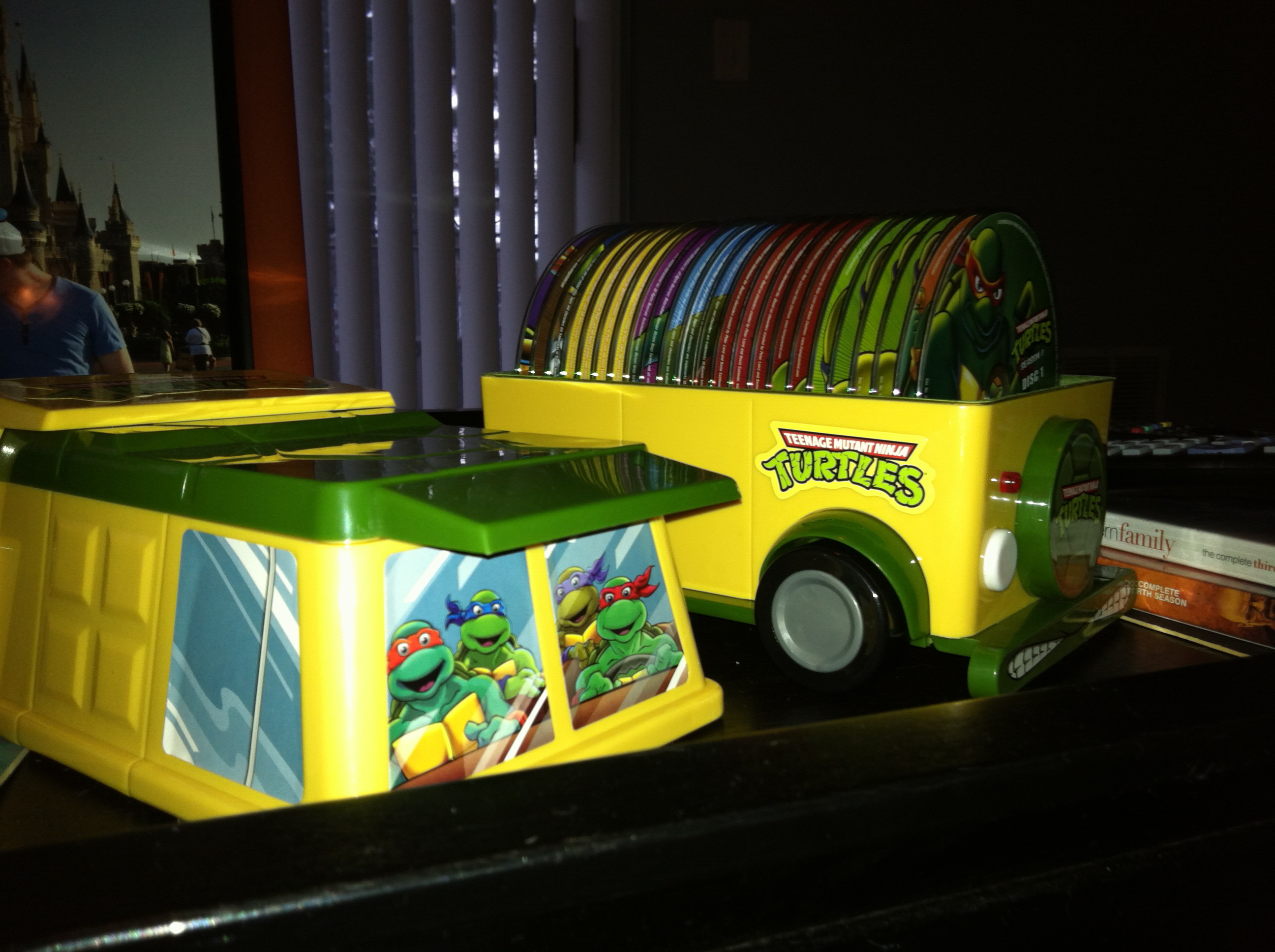
Teenage Mutant Ninja Turtles: The Ultimate Collection – Vol. 2

Teenage Mutant Ninja Turtles: The Ultimate Collection Vol. 2

There was a time in my life when I thought I was done with the Teenage Mutant Ninja Turtles.  They had dominated my childhood, but come the early 90’s I had mostly moved on.  I still had a soft spot for them, but their cartoon had become too predictable, the toy lines too ridiculous, and I was already on to my next obsession.  When the television show moved to CBS’s new Saturday morning block the studio revamped it, giving it a darker look in an attempt to mature the series to better appeal to changing tastes.  It didn’t last long in this new format, and the Turtles began to fade away from the mainstream.  In 1997 Fox and Saban Entertainment brought the four-some back for a new live action show, possibly to try to appeal to fans of the Power Rangers, but the show only lasted one season and 26 episodes before being cancelled.

The Turtles mostly vanished from television after the cancellation of The Next Mutation.  It seemed like they were now destined to become just a memory of a silly era where anthropomorphic characters were all over the place in children’s programming.  Something people in the future would look back on and say, “What were they thinking?”  Then a funny thing happened, and the Turtles were suddenly relevant again.

It all started with Fox and 4Kids Entertainment revitalizing the franchise thru a new cartoon developed in collaboration with Peter Laird’s Mirage Studios (by this point in time, co-creator Kevin Eastman wasn’t involved with the TMNT) that premiered on Fox’s Saturday morning cartoon block in early 2003.  Simply titled Teenage Mutant Ninja Turtles, this new series adapted the original Mirage comics more faithfully then its predecessors while still keeping the show appropriate for younger viewers.  The Turtles had an edgier appearance with blank eyes and a more lean appearance.  Each one had a personality mirroring the ones from the original comic.  Really, the only holdover from the wildly popular 80’s cartoon was the unique bandana color for each turtle.  At times, the show almost directly paralleled the old books before the creators started to branch out and do their own thing, but the show worked and the Turtles were once again relevant.  This helped get a new movie green-lit that was eventually released in 2007, titled TMNT, and has helped keep the franchise alive to this day.  Now the Turtles are owned by Nickelodeon with IDW handling the new comic book line.  A new show and a bunch of new toys (including these awesome retro themed ones) are slated for release later this year in addition to the ongoing comic run now headed by Eastman.  Along the way, IDW has chosen to give the old fans some new collections to thumb thru, and my old Turtle-fandom is back in full-force!

Michaelangelo’s solo issue, featuring the debut of Klunk the cat.

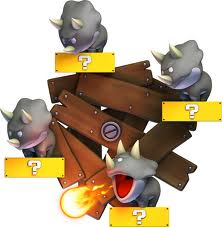
I already talked about IDW’s first release of collected works, and now I’m ready to talk about Volume 2.  Volume 2 is another high-quality release and contains issues 8-11 of the original run, plus the micro issue one-shots for Michaelangelo, Donatello, and Leonardo.  The cover contains new artwork done by Eastman, though it confusingly includes the Triceratons and Fugitioid who don’t appear in this collection, but looks nice.  The interior has been enhanced to a larger size, like the first volume, and is kept in its original black and white.  Each issue is followed by reflections from both Eastman and Laird.  For this collection, Laird has contributed more thoughts and it looks like he was a more active participant.  It’s particularly interesting to read the comments for the later issues when the two discuss their fraying relationship with each other.  Neither guy takes shots at one another, and both come across as sincere when they express their disappointment for how things turned out.

The issues covered by this collection essentially wrap-up the original run of the books.  After issue #11, more people were brought on board and Eastman and Laird didn’t really work together any longer.  The Turtles were also exploding on television and the first movie was in production for a 1990 release.  The issues bring the Turtles back to earth following their exploits in space, and outside of a couple of issues, the story-lines are more reality based this time around (when one ignores the fact that the protagonists are walking, talking, fighting turtles, of course).

The first few issues have a sort of one-shot feel to them as the plot-lines do not tie in with any of the previous narratives.  Issue #8 was a collaborative with Dave Sims’ Cerebus the Aardvark, a comic at the time Eastman was said to be particularly fond of.  It’s some wacky time-travel thing that sees the Turtles accidentally warped to Cerebus’s medieval setting where the two join forces.  There’s some decent humor here, but for someone who isn’t a fan of Cerebus, the cross-over appeal was lost on me and I was interested in getting back to the New York setting.  Issue #9 is a flash-back of one of the Turtles’ earliest outings that sees Splinter switch bodies with a dying master in Japan.  While still containing a supernatural element, I enjoyed this one more than issue #8 as it felt more like a traditional TMNT adventure and it was fun seeing the younger Turtles do their thing.  Design wise, Eastman and Laird gave the Turtles full bandanas that covered their heads which was kind of a cool look.

He’s back!

The micro series for Mike, Don, and Leo are interwoven throughout the collection.  Mike and Don’s are more of the one-shot variety, while Leo’s directly ties into the next arc for the comic.  In Mike’s, we get to see the youngest of the Turtles foil a robbery on Christmas and make a new friend out of a stray cat he dubs Klunk.  It’s a fun chance to see Mike go off on his own and adds depth to the character.  The issue would eventually be used as inspiration for an episode of the 2003 cartoon titled “The Christmas Aliens.”  Donatello’s one-shot, “Kirby and the Warp Crystal,” would also be adapted for the cartoon as “The King.”  This issue was Eastman and Laird’s tribute to the legendary Jack Kirby.  Initially, the two wanted to rasie money for Kirby who was in a legal battle with Marvel Comics over licensing fees.  In the old days, writers who worked for Marvel worked under a work-for-hire agreement and anything they created was the property of Marvel and Marvel alone, meaning they saw no royalties for other works using the characters they created.  Kirby and his family refused to take Eastman and Laird’s money, but the sentiment was likely still appreciated.  The story is kind of fun, and it’s obvious the two had great affection for Kirby’s work as his influence is all over the series.

The Leonardo one-shot is probably my favorite from this collection as it kicks off the plot that re-introduces The Shredder.  This book and the following ones would be adapted in part for the first film.  In Leo’s book, he gets attacked by the returning Foot clan and eventually overwhelmed (in the film, it’s Raphael in place of Leo).  The encounter spills over into April’s apartment as the issue ends with Leo crashing thru the window and warning his brothers that The Shredder is back.  The full-page illustration is one of my favorites from the series.

From here, the Turtles are attacked by the Foot and the action takes them into April’s antique shop.  When things are looking bad, Casey Jones shows up and aids in their escape but Shredder sees to it that April’s store (and home) is destroyed in the process.  From here, the story takes us to Northampton, Massachusetts where Casey’s grandmother has an old farm house.  Issue #11 is told mostly thru the eyes of April as she writes in her journal about how the Turtles cope with defeat and how she deals with the loss of her father’s antique shop.  I’ve been critical of Eastman and Laird’s writing in the past, but here they do a nice of job of presenting their theme for the story with care and levity, making this issue (and arc) their best yet.  The overall theme of issue #11 ends up being to appreciate what is most important in life, and not to place too much importance in material things.  The issue ends with the Turtles coming together as both April and the gang arrive at that same conclusion simultaneously.

Overall, I think I enjoyed Volume 2 more than I enjoyed Volume 1.  The writing is tighter and more focused, and the micro issues really do a good job of adding depth to the characters.  Eastman and Laird are also able to bring out the individual personalities for each turtle in the other issues as well, and they’ve all finally had their traits firmly established by the end of the collection.  I’m still a bit surprised that the Leo/Raph rivalry hasn’t been hinted at yet, though perhaps I’ve been misled and that is a dynamic that was added to the group by outside sources before Eastman and Laird considered exploring it.  It’s also a lot of fun seeing the stories for the first time that ended up making it into the movie I saw so long ago as a kid.  It makes me appreciate that film even more.  And while most of the books were lifted in a more thematic sense for the film, the scene where Don and Casey work on the old truck even had some of the dialogue lifted word for word.  Only in the comic it’s Raph in place of Don and some of the insults are different.  There is a sense of finality at the end of the collection, especially in the write-ups from Eastman and Laird, but a volume 3 is on the way that will cover issues #12, 14, 15, 17, and 19-21 which contains the “Return to New York” story-line.  Following that arc, Eastman and Laird had little direct involvement with the comics so it figures that volume 3 may be the last for the The Ultimate Collection.  It is possible a fourth volume could be produced covering the massive “City at War” arc that spanned 13 issues and was co-written by the original creators.  Volume 3 is currently due out in July, though don’t be surprised if it gets delayed as both of the previous collections were.  I’ve really enjoyed the fist two volumes, and already have volume 3 pre-ordered!  For longtime fans, I suggest you do the same.


The Hyperkin SupaBoy!

The Hyperkin SupaBoy.

My interest in portable gaming has always exceeded the reality of how much time I spend with it.  From the very beginning, I’ve always been enamored with the concept of shrinking down a home console and taking it on the road.  I was positively thrilled the first time I saw a Gameboy cartridge and how it looked pretty much exactly like a miniature NES cart.  The Gameboy also had the same color scheme as the NES and boasted its own versions of Mario, Zelda, and Metroid.  However, while the physical game may have looked like a mini NES cart, the actual games were not on the same technological level.

I touched on this concept when talking about the new Playstation Vita.  The Vita has a cool cross-platform feature that allows gamers to share save files between Vita games and their PS3 counterpart.  It’s an expensive feature, but a cool one.  And while Vita games aren’t quite on the same technological level as PS3 ones, they’re fairly close and some less-demanding titles are nearly identical in looks and features.  This is pretty close to having the home console experience on the go.  Before the closest anyone had got to this was Sega when it released the Nomad in the mid 90’s.  The Nomad was a portable Genesis that could also be used like a home console.  It was pretty cool, but the system’s wretched battery life made it portable in concept only.  The thing basically went thru an entire package of batteries in one session.  Sure you could use an AC adapter as well, but sometimes a power outlet isn’t readily available when you’re on the go.
Apparently I’m not the only intrigued by the idea of being able to carry a console in my pocket as recently clone systems have gained in popularity.  For those unfamiliar, a clone system is a console created by a third party that mimics the original first party offering.  Since these companies that create these systems owe no allegiance to Nintendo or Sega, a clone system can be compatible with multiple systems.  One of the most popular ones is the Retron 3 which has a cartridge slot for NES, SNES, and Genesis games.  The quality of these machines is definitely not up to par with the originals, and often some software gives them issues, but for the most part they get the job done.  Lately, portable clone systems have started to show up in greater frequency which is what brings me to the subject of this post:  Hyperkin’s SupaBoy.

Super Metroid to go? Yes, please!

The SupaBoy is a portable Super Nintendo.  It is a true console for the commuting gamer.  Sure the technology is nearly 20 years old, but it’s a Super Nintendo, arguably the greatest video game console of all time!  It uses a standard SNES game cart and, as best I can tell, can play pretty much every game released for the SNES.  Now, that statement isn’t without some controversy.  When the SupaBoy was first released, several gamers took to youtube to review it and comment on what games worked and what didn’t.  The big culprits with any SNES clone system are Super Mario RPG, Star Fox, and Earthbound.  SMRPG and Star Fox cause problems because of the graphical technology needed to power the games (Star Fox, if you recall, famously made use of the Super FX chip) while Earthbound has a unique feature to prevent it from working on pirated consoles that causes the game to overload the screen with non-player characters and enemies, making it virtually unplayable.  The first batch of SupaBoys appeared to not work with these games, as well as others, though there was some confusion over Super Mario RPG and if it mattered where the game was manufactured.  Since Hyperkin released the second round, more videos have popped up of users getting these games to work.  I don’t at present have any of the games alleged to not work, so I cannot confirm anything.  Buyer beware.

Hyperkin wisely played to the nostalgic crowd when it designed the SupaBoy as it looks exactly like an oversized US SNES controller.  It has the same color scheme and the buttons and D-pad are in the same style.  Start and Select had to be moved but that hardly takes away from the look of the machine; it’s pretty cool.  Hyperkin also added two controller inputs to the front of the system so this bad boy can be hooked up to a TV with the included AV cable and used as a standard SNES.  The system is big, but feels good in the hands.  It’s made of hard plastic, and though it’s definitely not of a high quality in terms of feel, it’s better than expected.  On mine, the D-pad feels a little funky, it has more play on one side, but it works fine.  The buttons are very “clicky” which makes it kind of a noisy system to play.  There are games I won’t play on the train as they’d just be too noisy and would likely irritate the patron sitting beside me.  Because SNES game cartridges are fairly large, the SupaBoy has to be large to accommodate.  As a result, this isn’t the most portable system around as it’s not likely to fit in your pocket.  In a backpack sure, but it’s got nothing on the DS, for example.  And since the game carts are so large you’re probably not going to carry too many around, but beggars can’t be choosers.

Still the best TMNT game.

Enough of the specs, how does it play?  Quite well.  When plugged into a TV, it looks no different to me than my old SNES.  The picture quality is sharp, the audio is good, and I haven’t noticed any new glitches or slowdown.  On the go, it also looks and plays great.  The color palette on the system’s screen is perhaps slightly darker, but it’s just as clear as it is on a television.  It does take some getting used to, but after 10 minutes or so I found myself fully immersed in the gameplay experience.  So far I’ve only tried three titles on the system:  Super Mario World, Turtles in Time, and Super Metroid.  Of the three, I’ve spent the most time with Super Metroid as I work my way thru that classic title.  I’ve switched between playing with a controller and playing with just the SupaBoy and I don’t notice any change in how well I play the game.  The experience is fully realized when using the SupaBoy, which is exactly what I was looking for.

I suspect a fair majority of the hits I end up getting for this blog post will revolve around the hardware itself.  Specifically, the audio.  Take one look at the SupaBoy on amazon.com and you’ll notice several reviewers complaining about the audio.  On a lot of models there was a defect that caused a high pitch sound to come over the speakers.  There apparently was no fix and owners either returned their system in hopes of getting a better one or learned to deal with it.  When I purchased my SupaBoy I was told this had been fixed and the audio screw-up was isolated to the first batch of systems produced.  So far, this seems to be true as I haven’t had any issues.

Another common complaint with clone systems is that the pin connectors are inferior in some way.  This is a common complaint with another Hyperkin product, the Genesis portable clone the Gen Mobile, which became popular enough to even get Sega’s official branding.  On that system, many gamers have had problems removing cartridges because the pin connector is just too snug and the system ends up breaking.  The SupaBoy does provide a fairly snug fit, but it’s not too bad and I don’t feel like I’m doing any damage to the unit when I insert and remove games.  It would have been nice if Hyperkin could have included an eject button like the original console, but it seems fine.  Another concern some have is aimed at the battery and battery life.  The SupaBoy uses a rechargeable battery that comes with the system.  It’s removable too, so once it can’t hold a charge it can be replaced.  I’ve never gone longer than 2 hours with the SupaBoy and the battery indicator did not yet reach red status, indicating it would need to be re-charged soon.  Hyperkin says expect 2 and a half to 3 hours per charge, which isn’t great but is on par with current handhelds.

Not only is it a portable SNES, the SupaBoy is a fully functioning home console as well.

I purchased my SupaBoy from Game Swap USA, a Florida based retailer that sells on eBay.  My unit came with two clone controllers so I could easily play on my TV or invite a friend to play as well (haven’t tried that, but I assume it would be a bit weird sharing the tiny screen with one player holding the unit and the other playing via controller).  The system can use regular SNES attachments and can also use some other third-party devices like the Game Genie.  It does play Super Famicom games, which is pretty cool if there are any in your collection you would like to enjoy on the go.  Some PAL games work as well, but not all.

Now, it’s not all fun and games with clone systems, and unfortunately the SupaBoy is no different when it comes to that.  I found this out the hard way.  After pro-longed play the unit appears to be prone to over-heating which can cause freezing.  I had a game of Super Metroid freeze on me after I had been playing it for less than two hours.  When I turned the unit back on the next day, I found all of my save data had been erased.  Damn!  It gets worse.  I hadn’t re-charged the unit and started over my game.  After maybe a half hour the screen started to get buggy.  I hadn’t seen it do this before, but I knew I was probably running low on battery.  I immediately plugged the unit into a wall outlet and the screen corrected itself.  I turned the unit off and just for piece of mind inserted Super Mario World to make sure the unit was fine.  It wouldn’t boot up.  I figured it was due to the battery being run down so I tried it again an hour later and Super Mario World booted up fine, but with one problem:  no save data!  So, I lost my save game data that was around 20 years old.  I’ve read online some people have had this issue as well, and were able to avoid having their save data erased by reseting the unit before turning it off when it freezes.  I guess I’m going to have to be really careful and baby the Hell out of this system.

Hyperkin’s SupaBoy is not alone in the portable SNES gaming world.  Other companies have put out their own version of a portable SNES unit.  The SupaBoy appeared to get the most praise from the gaming community so it was the one I went with, but there are supporters for other devices out there such as the FC-16 Go by Yobo and the RetroDuo by Retro-Bit.  If you love classic games and think a portable Super Nintendo is something you would be interested in then I can safely recommend the SupaBoy, but do your homework first and don’t expect Nintendo-level quality.  It has its own strengths and weaknesses, but at the end of the day, it’s a freaking portable Super Nintendo, which says it all!


The Simpsons – Season One

The list of television shows that were on the air when I was a kid and are still on the air as I near 30 is a pretty short one.  Not including non-fiction news stories, there’s really only one that was there when I was a kid and is still airing new episodes today, and that show is The Simpsons.  There are many characters that had shows when I was younger that have shows today.  There’s always a new take on Batman or Spider-Man and I lost count when it comes to the different iterations of the Teenage Mutant Ninja Turtles (there’s a new one set to air this fall).  South Park came around when I was in my early teens, and Futurama began airing when I was in high school.  The Simpsons though, that came when I was in the first grade and it’s quite amazing that it’s still on television today.

That said, there are some that would argue the show should not still be one and that it should have ended years ago.  From a business standpoint, if people are still consuming the product and it’s making money then why not keep producing episodes?  And apparently there’s a dedicated core of fans out there that will probably watch it until they can’t.  What will ultimately end that show will be rising costs, or if enough key members of the cast decide to retire.  And even though there’s a loud contingent of people on the internet decrying the quality of the show, there’s still plenty who insist it’s as funny and fresh as ever.

As for me, I guess I’m in the middle when it comes to that debate regarding the current quality of The Simpsons, but I lean towards the side that says the show is well past its prime.  I really don’t watch it anymore and haven’t for years.  When I do catch an episode I’m usually left underwhelmed.  Rarely do I hate it, but I forget about them pretty fast.  The only one I’ll go out of my way to watch is the annual “Treehouse of Horror,” and that’s mostly just out of tradition.

Recently The Simpsons has been on my mind.  I’m not sure why.  As I see other animated programs start to lose “it” and diminish in quality, it makes me wonder how much of that stems from me, the viewer, getting bored with the same old thing or if the show is actually getting worse.  To answer this question I decided to buy the first season of The Simpsons and relive some of those cartoons that I used to watch religiously.  The Simpsons was on weekly initially, but soon had enough episodes to enter into syndication.  When I was probably around 11 or 12 I would watch an hour of The Simpsons every weeknight I was home via syndication.  I got a lot of enjoyment out of it and it was my routine, so I have a lot of fond memories when it comes to those early seasons of The Simpsons.  The die hard fans insist the show started off a bit uneven, and outside of a few special moments in the first two seasons, it really didn’t take off until season three.  I’m not sure when this golden age is said to have concluded, but I suppose it doesn’t matter.

One of the more memorable scenes from the debut episode; Homer in Santa Class.

The first season of The Simpsons is the shortest season the show had.  This is pretty common of first seasons, especially animation, as networks don’t want to order too many episodes only to see the show fail.  Half seasons are pretty typical, and the first season of The Simpsons contains thirteen episodes beginning with  the Christmas themed “Simpsons Roasting on an Open Fire” and concluding with “Some Enchanted Evening.”  Not only is the first season the shortest, it’s also the most crudely drawn.  Again, not surprising as I’m sure the budget was pretty tight, but it at least looks a lot better than the shorts that used to air on the Tracey Ullman Show.  The characters are actually less defined in their roles, though the base is still there.  Homer is dim-witted and selfish, Bart is a troublemaker, Lisa a poindexter, and Marge is a stereotypical house wife.  Maggie is there too, but being that she’s a baby there isn’t much of a personality to her.  A lot of the secondary characters are introduced as well including Moe, Flanders, and Mr. Burns.  Still, there are differences and some moments where characters act in a manner that is perhaps inconsistent with how they’ll be presented in future seasons.  Some fans consider this a negative, but I kind of appreciate these moments.  Just like a real person would do, these characters have grown and changed over time.

What I hoped to see in season one was a more focused show, less reliant on Homer’s buffoonery and more reliant on the concept of the Simpsons being America’s most dysfunctional family.  For the most part, that ended up being true.  Homer wasn’t the dominant presense that he would become and while he’s definitely not a smart man, he’s not absurdly stupid either.  There’s definitely a lot of Bart though, and there would be a lot more in season two as he was the early star of the show.  I almost forgot how huge Bart Simpson was when I was a kid and he was definitely pushed as the fan favorite.  And it’s easy to see, he’s a fun character.  He’s rebellious and does whatever he wants but does pause to let us know he’s a good kid at heart.  In his first lead episode, “Bart the Genius,” he’s actually the target and the one we feel bad for and he reacts by pulling a prank that gets overblown (and earns Bart some green skin in the process).

The animation was a bit more crude in the early going.

The series premiere, “Simpsons Roasting on an Open Fire,” introduces the whole family and some of the extended family (Grampa and Marge’s sisters).  We see how the family dynamic works and the themes established by the episode are still alive today.  Homer tries hard to be a good father and husband, but his low level of skills and lack of a sharp mind ultimately doom him.  And yet, they still all come out okay in the end.  From there, the writers of the show definitely wanted us to get a good look at each member of the Simpson family in season one and would devote an episode to each key member of the family.  It’s a good strategy and the writers were able to pull it off organicly.  In later seasons, it sometimes would feel like a Marge or Lisa episode was forced into the season just for the sake of having one which always drove me nuts.  Those episodes often fail because they don’t bring anything new to the table, and usually include some silly gimmick (like Marge becoming a cop).  In Lisa’s episode, “Moaning Lisa,” we’re shown just how different she is from both her peers and her family.  It’s done well enough that we really don’t need future episodes that center on that premise, but there’s dozens.

That’s not to say it’s all gravy.  Some of the episodes go for cheap laughs and the story attached isn’t very engaging.  “The Call of The Simpsons” is one such episode that relies mostly on visual gags and absurd situations.  Other episodes just don’t appeal to me too much, like “The Crepes of Wrath” which sees Bart switch places with an Albanian kid as part of a foreign exchange program.  The writers also seem to enjoy getting Homer into trouble with Marge, as it feels like their marriage is tested in every other episode.  Homer routinely does things that should probably get him in trouble, but I always felt Marge’s reaction to Homer dancing with a stripper in “Homer’s Night Out” was particularly over the top.

“The Telltale Head” features perhaps Bart’s most infamous prank.

Some of my all-time favorite episodes are in season one though, including “The Telltale Head” and “Krusty Gets Busted.”  The first is the infamous episode where Bart cuts off the head of a statue of the town’s founder, triggering a wave of patriotic anger from the locals.  It uses the story-telling gimmick of starting the episode at the end and having the events that lead the characters into their current situation relayed as a flashback.  “Krusty Gets Busted” is the first time we’re introduced to Sideshow Bob as a villain. Voiced by Kelsey Grammer, Sideshow Bob would make many returns often with the intent to kill Bart Simpson.  Grammer is one of the few guest stars of season one, which I find immensely refreshing.  So many of the newer episodes have fallen into this trap where the writers feel like each episode needs a celebrity guest of some sort.  They also don’t follow the simple format adopted by later episodes where the plot opens with one story that leads into a completely different one.

There’s some other differences and quirks I noticed about season one that separates it from future seasons.  For one, the intro is different and I had forgotten just how different.  It’s longer and features some generic characters that would be replaced for season 2 with actual supporting characters from the show.  The couch gag is in place, but there were only a couple different ones in season one, most revolving around the theme of one character getting forced off the couch.  The premiere episode actually doesn’t feature an opening at all.  There’s some other character changes too.  Smithers makes his debut in “Homer’s Odyssey” (as does Mr. Burns, voiced by a different actor) as a black man, which is kind of funny.  Apparently this was an error and is corrected for his next appearance.  Chief Wiggum also looks pretty different as he sports black hair and an odd skin complexion of his own.  In general, there’s also less use of music in each episode as well, and the transition from one scene to the next is usually sudden which gives the show a different “feel” when compared with future seasons.

Currently, The Simpsons is nearing the end of its 23rd season with a 24th already in production.  Obviously, any show that has been on that long is going to change over the years and The Simpsons has certainly undergone numerous changes.  I don’t know if season one is necessarily better than season 23.  I definitely enjoyed reliving it, and I’m currently enjoying reliving season two as well, and my opinion is tainted by nostalgia.  It’s a simpler show and I do find that more enjoyable than the current stuff.  The characters seem slightly less typecast and are a little more exciting as a result.  And whatever your opinion is of the current season, I think we can all agree it’s pretty damn amazing for a show, especially a prime-time animated one, to be on the air as long as The Simpsons have been.


Greatest Games: Devil May Cry

Devil May Cry (2001)

Capcom has gone thru many identities throughout its existence.  Early on Capcom made its mark with the blue bomber, Mega Man, and his blend of run and gun platforming.  Mega Man had six games released on the original Nintendo, plus many more on the Gameboy, Super Nintendo, and so on with entries in both the main series and several spin-offs.  In the 90’s Capcom would establish itself as the leader in the fighting genre.  Championed by Street Fighter, Capcom’s games were the measuring stick for all 2D fighters.  The genre exploded, and like all things popular, it eventually became over-saturated.  Capcom needed a new identity as video games headed into the third dimension.  Mega Man was a 2D experience through and through, and no one knew if Street Fighter could make the jump, so it fell onto Capcom to create a new money-making franchise.  Enter Resident Evil and its focus on what would become survival horror.  Alone in the Dark was the first game to be called survival horror, but Resident Evil defined it.  It was hugely popular and it too would spawn many imitators, but Capcom had a new hit and in a new genre to boot.

A company that has always been linked to Capcom for me is Konami.  The two had a strong presence on the original NES with Konami’s most popular title probably being Contra.  Similar to Mega Man, it too was a run and gun platformer but with a much different focus.  Konami’s other big franchise was the Castlevania series, a side-scrolling action/adventure title that popularised the non-linear format of gameplay.  When systems like the Playstation and Nintendo 64 started showing up with their fancy new 3D graphics, both Konami and Capcom found themselves in the same boat when trying to bring their classics to the new hardware.  Both had some stumbles, but Konami experienced a most spectacular failure when it came to Castlevania.  Konami arguably released the best Castlevania it had ever produced and did so on the Playstation with Castlevania:  Symphony of the Night.  Even though it was on the Playstation, Konami kept the game rooted in the 2D perspective.  It garnered quite a bit of positive press, but it was mostly ignored at retail and Konami blamed that fact on the presentation.  Feeling pressured to bring Castlevania to 3D, Konami released Castlevania 64 in 1999 and it was not met well.  The press at the time seemed to think it was okay, but time has not been kind and the Castlevania diehards were not impressed.  It’s sequel later that year was not met well by critics or fans and many wondered if Castlevania could exist in 3D.

Devil May Cry went with a gothic approach for its style, which helped separate it from Onimusha and Resident Evil, but not Castlevania.

Leave it to Konami’s rival, Capcom, to get it right.  No, Capcom did not develop a Castlevania title for Konami but it might as well have done just that when it released Devil May Cry in 2001.  Devil May Cry (DMC) is one of Capcom’s greatest mistakes and best games they ever released.  It’s a mistake in that originally the game was supposed to be Resident Evil 4, but the development team would eventually realize they had something different on their hands.

When Devil May Cry came out, Resident Evil was still a bankable product.  It had also spawned a pseudo spin-off franchise in the form of Onimusha.  Onimusha had nothing to do with Resident Evil from a narrative perspective, but it was basically survival horror in feudal Japan.  It focused more on combat and was pretty successful in its own right.  Devil May Cry took that formula, and added something very familiar to gamers:  a jump button.

It seems like such a simple device, but jumping completely changed the Resident Evil/Onimusha formula.  DMC’s protagonist, Dante, could jump from ledge to ledge like Mega Man and attack from the air, leap over enemies, and soar to new heights Jill and Chris could never hope to reach.  Dante was also super-powered being a half-demon so it wasn’t like he was jumping two or three feet, he was leaping twelve or fifteen!  He could drop from any height without getting hurt, and all in all pretty much controlled like one would imagine Castlevania’s Alucard would.

Dante's demon blood lets him turn into a demonic creature giving him enhanced powers and special abilities.

DMC is an action heavy experience, and even though Dante is a half-demon, he still needs some weapons to get thru the hordes of vile machinations and weird creatures that stand in his way.  At the onset Dante is armed with a sword and a pair of revolvers, Ebony and Ivory.  The revolvers have unlimited ammo and can be fired in rapid fashion, but do little damage.  They’re used more as a means of linking damage from one enemy to the next until Dante gets close enough to hack ’em up with his blade.  Gamers can just mash the attack button and get by some of the early enemies, but more precise timing and maneuvers are needed to progress further.  Dante has a couple of moves including a rapid stabbing technique and slower hack and slash.  Arguably, the move he is known best for is the air juggle where the player upper cuts an enemy into the air with the sword and then fills them full of bullets as they hang suspended in the air.  Other weapons change things up some, including a lightning blade and a shotgun.  There’s also the ogre gauntlets that let Dante roll with just his fists.

Both the lightning blade and gauntlets can be powered up using soul orbs that are mined from fallen enemies.  The power-ups unlocked all make Dante’s devil form more powerful.  As a half-demon, Dante is able to activate his devil trigger and morph into a demonic form for a short period of time.  In said form, Dante moves faster and does more damage.  He also has special moves that let him fly and rain lightning down on his enemies or hurl massive fireballs.  The mode is activated by filling an onscreen meter, flashy kills and general good play cause the meter to fill faster.  Activating the devil trigger can quickly turn the tide of battle and is one move the player will often keep in reserve until the time is right.

As I said earlier, the game is really action heavy and is not afraid to pit the player against hordes of enemies.  DMC really popularized the recent trend in action games like God of War, Ninja Gaiden and even Arkham Asylum to have the hero fight off a crowd of foes.  The standard difficulty setting is a suitable challenge for most gamers, but the harder difficulty settings will test any gamer’s skill with a controller.  And even though the focus of the game is on action, the game does pause for some exploration elements and even  some platforming scenarios.  The game arguably shines brightest during one of its boss encounters which often present a good test for Dante.

Visually, the game was a stunner when it was released in 2001 and has aged pretty well.  The gothic aesthetic the developers went for suits the game’s mood and the boss characters are large and imaginative (though not as massive as future installments would get).  The story is just filler to give the game purpose, and that’s fine.

The new Dante featured in DmC. Fans have unkindly dubbed this "Emo Dante."

Devil May Cry was so obviously perfect an approach for Castlevania that Konami’s next game in the series was practically a clone.  And as I mentioned, lots of other action titles followed suit and tried to replicate what DMC had done.  The franchise was perhaps never more popular than when it debuted as it was considered a really fresh take on the action genre.  A sequel would follow in 2002 and was not met well.  Devil May Cry 3 mostly served as a make-up title, but by the time Devil May Cry 4 was released it felt like other titles had leapfrogged it.  Now Capcom is trying to rebrand the game as DmC and features a redesigned Dante.  Time will tell if this reboot is worthwhile, but for my money the original Devil May Cry is still the finest action title I’ve ever played.  When I first played it as a demo (bundled with the PS2 version of Resident Evil:  Code Veronica) it was like nothing I had played before.  It captivated me instantly and I have no idea how many times I played thru that 3 mission demo.  A gamer playing it for the first time today would not likely have the same experience, and they would be missing out.


Record Store Day!

My target for today.

Today is Record Store Day!  A day that hasn’t been around for too long but intends to celebrate the good old fashioned record store.  As a means of celebration, several labels and bands participate by releasing limited edition twelve and seven inch records (go here for a full list of what’s available today) to get people into the stores which usually are offering sales of their own.  Only independently owned stores are allowed to participate and the organizers of the event take a mostly hands off approach.  This leads to swings in pricing from one store to the next and certain records are only available in certain stores.  Unfortunately, this also leads to some stores forgoing the event and just hawking the limited releases on eBay for inflated prices.  This is also the type of event that attracts scalpers of all kinds only interested in making a quick buck, which takes some of the fun out of it.  It’s become a pretty big deal these past few years and the amount of stuff released each year seems to grow and grow and get more and more interesting.

Last year was my first time taking part.  I was more interested in the spectacle than the actual albums released on that day.  I went over to my local Newbury Comics, one of the few small chains to really break thru and thrive in this day and age.  I got there a little after they opened and found the place pretty packed.  I ended up snatching an Opeth 7″ single released for RSD, “The Throat of Winter,” and picked up some odds and ends taking advantage of the sales.  This year was different though.

There's some black streaks on the record as well, though they don't show up in the picture.

Just a few weeks ago Rhino Records announced that they would be releasing a limited edition of The Misfits’ debut record Walk Among Us to commemorate the 30th anniversary of the release.  This version is limited to 3000 copies:  1250 on red vinyl, 1250 on blue, and 500 clear.  They’re packaged in a blind style, meaning you don’t know what color you have.  Overseas, a purple copy is being released.  The stores that participate in RSD have adopted a 1 copy per person policy to give more people a shot at the record they covet.  This unfortunately means the completist collectors out there either need to round up some friends or take to eBay to get one copy of each.  I was content to get just one, but I had to have it!  Given the vast number of retailers participating and the limited nature, I figured each store would only receive two or three copies, meaning I had to get there early if I wanted one.  Complicating things is the fact that not every store gets a copy of every release.  My local shop didn’t know what it was getting as of Thursday so I was taking a shot in the dark this morning when I jumped in my car and headed over.

I got there early; 7:15.  The store is located in a shopping mall and the doors for the mall open at 8 while the store doesn’t open until 10.  I was going to sit in my car for awhile but became too eager to just sit there so before 7:30 even hit I was up in front of the door just waiting outside.  Once the mall opened its doors I was the first to the store (ended up walking in with the manager) and took a seat right outside to begin the 2 hour wait.  It wasn’t too bad as I brought my Vita with me and had my phone too.  By the time 9:30 came around I was too excited to play games any longer and stood and waited anxiously.  I was the first one there, but by the time the doors opened I was one of 50+ and the first inside.  The manager knew what record I was after and made sure to point it out to me before the doors even opened.  I snatched the first copy and then proceeded to mill around poking at the other exclusives.  A wave of people washed over me with hands darting and grabbing at each release.  It was frantic, but fairly orderly.  No one was pushy or rude at all and it seemed like the crowd was mostly record enthusiasts just hoping to score something from a favorite artist.

Side A of the Nightwish disc.

I ended up grabbing the Nightwish picture disc as well, along with a super cheap copy of Batman:  Sub-Zero since it was the only Batman film I didn’t own (other than the wretched Schumacher films I want no part of).  My purchases came with a tote bag and a ton of freebies I have yet to go thru.  They’re mostly CD samplers and some stickers and stuff.  I don’t know if there will be anything good on them, but it will be fun to find out.

Once I got home I was pretty eager to check out my new Misfits record to see what version I ended up with.  This release is designed to mimic the original first edition release right down to the insert it comes with.  It’s pretty cool, and I actually don’t have a first edition of Walk Among Us as I have so far stuck to the 7″ releases.  I didn’t really care what version I got, but certainly I was hoping for the more limited clear, especially since I don’t own any clear vinyl.  My elation was certainly audible when I did indeed pull a clear piece of vinyl from the packaging.  My day could not have gone any better!

And side B.

The Nightwish picture disc is also quite nice too.  Titled Trials of Imaginaerum, it’s a 10″ release and contains four demo tracks from their last album.  It also comes with a download code to get an .mp3 version of a fifth track.  Currently, the web address doesn’t appear to be up and running yet so I’ll have to try again later*.   The artwork is nice and this release is limited to 1500 copies.

*I tried the download address on Sunday with no success, but it worked tonight(Monday).  It took me to a page that asked for my email address, and then a download link was sent there.  The fifth track is titled “The Heart Asks Pleasure First” (previously released on the single “The Crow, The Owl, and The Dove”) and it’s a folky little number that’s quite pleasing.

All in all, a good day to hit the record store!  Record Store Day is fun, but the getting up early to wait in line for hours does sap a little fun out of it.  I don’t mind it when there’s something I really want, but I certainly wouldn’t do that for most releases.  Turns out I probably could have strolled in at 10 and have been fine, though I probably wouldn’t have ended up with the clear version of Walk Among Us.  I encourage everyone who’s into  vinyl to check out their local record store today.  You might stumble upon something truly special!


Catching Up With WWF: No Mercy

WWF: No Mercy (2000)

It’s been awhile since my last post, 3 weeks to be exact.  It’s been a busy time and for me, and a busy time of year.  There were concerts to attend, personal relationships to pursue, Game of Thrones to catch up on, and WrestleMania!  Yes, even though I do not really consider myself an active wrestling fan I do get caught up once a year for WrestleMania as that’s traditionally when the company is at its best.  It also helps that the NFL season is over and there’s usually a lull in television programming all around (though this year, video games have been kicking my ass).  This year’s WrestleMania, like most of them, failed to live up to expectations.  I think I’m in the minority when I say that, but I really didn’t enjoy it.  I thought CM Punk and Chris Jericho put on a good show, and it’s always a nostalgic trip to see The Rock in action, but the rest of the card under-performed.  It certainly didn’t help things when one of the better matches, featuring perhaps the company’s best worker in Daniel Bryan, lasted a mere 10 seconds or so to kick off the show.  It’s one thing when an unscripted boxing match or shoot fight lasts seconds, but for a booked match like that (featuring one of the company’s major championships) to last only seconds is just cheap.  Especially when several less interesting matches receive more time, or when the show stops for terrible hip hop concerts.  Blah!

This isn’t about WrestleMania though, it’s about a little game called WWF:  No Mercy.  WrestleMania, for me, means a gathering of friends and a wrestling theme gathering pretty much requires a working Nintendo 64 and some wrestling action.  This year’s event featured WCW/nWo:  Revenge, No Mercy, and Virtual Pro-Wrestling 2.  For fans of wrestling games, the connection is obvious.  All three were developed by AKI Corporation who have become synonymous with wrestling games.  American audiences were first introduced to them in 1997 when WCW vs. nWo:  World Tour was released for the Nintendo 64 and was a major success.  The game laid the groundwork for the company’s many future games.

World Tour was fairly straight-forward in its game modes.  It was basically just one on one, two on two, or battle royal which put four wrestlers in the ring at the same time.  There were no over-the-top entrances and the single player mode just put the player up against a series of opponents culminating in a title match.  The roster was huge and included all of the main wrestlers from WCW at the time and even a bunch of wrestlers from Japan.  All of the wrestlers controlled the same, which is good because that’s what won fans over.

Stay away from this game. Far away.

AKI’s approach to gameplay for this title revolved around the grapple button.  The B button made wrestlers throw punches and kicks, but the A button caused them to tie-up by grabbing each other’s shoulders.  From there, the player who initiated the grapple could initiate a move with either the A or B button plus a direction on the D-Pad for a total of 10 possible moves.  Holding the grapple button caused the wrestler to use a strong grapple, opening up another 10 potential moves.  Most wrestlers had several repeat moves but the potential to really flesh out an arsenal was there.  And more over, the gameplay system worked.  Up to this point, most wrestling games tried too hard to emulate the ever popular fighting genre of video games.  This would peak with the WWF game In Your House for the Playstation, which was basically a straight-up fighting game complete with fireballs and everything.  It was absolutely atrocious and not at all what wrestling fans wanted.  Acclaim was the developer with the WWF license and essentially owned the wrestling video game world in America.  World Tour changed that, and for the better.

World Tour was followed by Revenge which was basically more of the same but with a little more of that American wrestling flair.  The graphics were better, the individual wrestlers had a bit more personality, and wrestling fans were genuinely happy.  Acclaim tried to counter with WWF: Warzone and its successor WWF:  Attitude.  Both games were successful for the time and generally well received, but just about any unbiased fan of wrestling knew AKI (with THQ) had the better game.  Acclaim was still going with a pseudo-fighting game approach.  Each move required a series of directional buttons followed by an action button.  They did introduce some good things, particularly running grapple attacks, signature moves, and the create-a-wrestler feature (though that had been available in Japanese games dating back to the Super Nintendo, as did others, but Acclaim popularized them with American audiences and AKI would soon adopt all).  Even so, WWF’s marketing arm must have noticed how well received the WCW games were and when their contract with Acclaim was up, and WCW’s with THQ, WWF was there to pounce.

This resulted in big switch of brands and developers.  Acclaim reached an agreement with ECW and would make a couple of games for them using their Attitude engine.  WCW would sign a lucrative deal with EA which lead to the ambitious, but lousy, WCW:  Mayhem.  THQ and WWF soon became a very profitable alliance and is the only one left today.  For the Playstation, THQ enlisted the support of Yukes which developed the Smackdown games and continues to do so.  AKI was left on the Nintendo 64 and was pretty much tasked with making their WCW games into WWF games.

The ladder match was a big addition for WWF: No Mercy.

Wrestlemania 2000 was the first game under this partnership, and a good one, but the follow-up is the one fans seem to remember the most fondly.  No Mercy arrived in November of 2000 and was an instant success.  The same gameplay that originated with World Tour was left mostly the same but with a few additions.  AKI had now finally adopted the running grapple maneuver, a simple addition but a welcomed one.  AKI also took a stab at new gimmick matches such as the steel cage match and the ladder match.  The announcer’s table was also available to smash opponents thru, and a new story-line mode added some spice to the single player action.  Tons of unlockables gave gamers incentive to keep playing to earn Smackdown Cash to purchase new create-a-wrestler attires, moves, weapons, and even additional superstars including Cactus Jack and Andre the Giant.  And it’s a good thing there was so much to do because No Mercy would be AKI’s last with THQ.

I’ve always felt this fact, plus nostalgia for WWF’s “Attitude Era,” has made fans remember No Mercy more fondly than they perhaps should.  It’s remembered so well that there is still a large section of fans that feel No Mercy is the best grappler ever, and certainly the best to feature the WWF (now WWE) branding.  That’s rather high praise for a game over 10 years old and a testament for how good the basic gameplay system is.

At the time No Mercy came out, it was the fourth game in four years to feature basically the same gameplay.  Other than a few small additions and a fresh coat of paint, this was still World Tour.  It’s a system that works extremely well to make the game playable even if it’s not entirely authentic.  How many wrestling matches take place in a similar manner where every move is initiated by a tie-up?  None I’ve seen.  If the gameplay is fun though, should gamers and wrestling fans care?

I have fired up No Mercy several times over the last couple of weeks.  My first reaction when I did was at the visuals and general presentation.  The presentation for this game was never its strong point and at this point in time it’s fairly ugly.  The graphics engine though is still passable.  It’s no secret this era of video games has aged rather poorly as far as looks go, but each wrestler is easily identifiable, though the height is kind of off.  There’s little or no difference between a monster like Kane and a little guy like Taka Michinoku.  It’s one of those things that took a while for wrestling developers to get right.

The game's story mode was a mixed bag, but it did give gamers incentive to keep playing.

The story mode shows a lot of age.  Developers were trying really hard at this point in time to create games that let players experience the television product for themselves.  Great emphasis was placed on making the story-lines feel random and yet authentic, but in the end it’s still just a series of matches with some distractions in between.  The game, for some reason, loves putting the player in handicap matches.  Handicap matches are no fun no matter what side you’re on.  If you’re part of a team of two going against one it’s just a squash.  If you’re the one taking on two then it becomes a frustrating game of trying to exploit the weaknesses within the game’s artificial intelligence (top rope moves work well here).  Gimmick matches and the Royal Rumble often play a role too, but unfortunately nothing is as fun as the standard one on one or triple threat.

In those matches where the gameplay is the focus, this one still holds up pretty well.  Fans used to current wrestling games will definitely notice the slower pace.  The wrestlers all have a slightly clunky feel to them.  When just striking and grappling, it’s fine, but they don’t run too well and lining up running attacks can be a chore.  It would be fine if the larger wrestlers handled this way and the cruiser-weights speedier, but that’s not the case.  The A.I. is at least competent and won’t let you get away with spamming wake-up attacks, for example, to gain an upper hand.  I’m definitely rusty, and most of my gaming was spent on Sony consoles, but my matches aren’t automatic wins for me which is actually a welcomed thing.

Admittedly, a big part of No Mercy's appeal today is the era from which it came.

There are a couple of other glaring negatives with this title.  One of which is the slowdown that takes place with four wrestlers in the ring.  In normal matches, it’s not too bad but gimmick matches can get clippy.  Collision detection is very spotty, but perhaps the worst is for the early adopters.  The first batch of games have a defect that THQ didn’t offer to correct aside from fixing future releases.  This defect causes the saved data to become corrupt and the game erases itself.  This includes unlocked items and created wrestlers.  Mine seemed fine for several years but last week I turned it on and found my unlocked items were gone.  It’s definitely frustrating, and when buying copies on eBay you’re forced to rely on the word of the seller because there’s no obvious way to tell a good copy from a bad one.

There are a lot of little things that drag this game down, but even so I found myself having a blast with it.  There’s still so much depth to this game and that couldn’t have been more apparent than when two of my buddies hooked up for a one on one match of old veterans.  They spent far more time with this title and other AKI ones when they first came out.  It took a few minutes for them to get their legs back under them, but before long the match was a series of reversals and set-ups that spanned about 15 minutes before a victor was decided.  It was fun to watch and a reminder of how well developed the basic gameplay is.

It may not be perfect, but get a group of friends together and No Mercy is still a damn good time.

AKI did not leave the wrestling world after THQ dropped them.  I don’t know why the two companies ended their relationship.  I assume it was a cost-cutting move on the part of THQ who basically handed over the WWF license to Yukes.  I’m guessing it was sales related as even though most fans preferred No Mercy to Smackdown 2, there were still far more Playstations out there than Nintendo 64s so it wouldn’t surprise me if Smackdown 2 was the better seller.  And Smackdown 2 was a good game in its own right, just entirely different in approach.  AKI would go on to use it’s engine to create the Def Jam wrestling game as well as several in the anime Ultimate Muscle universe.  I never played any of them, but I understand the same basic principles still apply with obvious changes to suit the subject matter.

WWF:  No Mercy is still a great grappler.  It’s really a shame AKI hasn’t been able to take another shot at developing a WWF game for American audiences.  Yukes has put out some excellent Smackdown themed games since, but it’s not surprising that there still exists a strong fan-base for No Mercy.  A fan-base that still considers it king.  While I don’t consider it the best one out there, I really can’t begrudge any who do and it’s still easily in the top 5, and for a genre as bloated as the wrestling one, that’s some pretty high praise.


Epica – Requiem for the Indifferent

Epica - "Requiem for the Indifferent" (2012)

I love Epica!  I have all of their studio albums, (except the instrumental one) plus their live album The Classical Conspiracy, and each one is fantastic.  The band is a relatively new obsession for me but that doesn’t mean I wasn’t looking forward to their latest effort, Requiem for the Indifferent, which was released this past week in the US.  Oh, and if you hadn’t heard, it’s good!

Probably like a lot of the band’s fans, I was introduced to Epica through Kamelot.  The band actually began as Sahara Dust, but changed it to Epica after several of the members heard Kamelot’s album of the same name.  This must have got back to the members of Kamelot, as soon they were taking Epica on the road with them.  Epica’s primary vocalist, Simone Simons, did a guest spot on Kamelot’s follow-up to Epica, The Black Halo, on the song “The Haunting.”  Simons would join the band on stage for live performances of the song, and Epica’s other vocalist and primary song composer Mark Jansen, would also show up to do the death growls featured in the song “March of Mephisto.”  Kamelot’s then vocalist Roy Khan would also appear on Epica’s sophomore release, Consign to Oblivion, on the track “Trois Vierges.”

This relationship has continued on to this day.  Simons even began dating Kamelot’s keyboard player, Oliver Palotai, which has made working together fairly easy.  Palotai has even played with Epica when their keyboard player Coen Janssen was unavailable.  Simons has had a vocal part on all of Kamelot’s albums ever since The Black Halo and was part of the band’s most recent tour where she not only sang her parts from various songs but also performed lead vocals for the Kamelot song “Don’t You Cry” at several shows.

Simone became a regular part of the Kamelot live experience following her appearance on the band's album "The Black Halo."

It was love of Simone Simons’ vocals that got me to ultimately pursue Epica.  Her early appearances with Kamelot mostly added color and character to the tracks she appeared on.  Her voice was basically in the background, but on Kamelot’s latest effort, Poetry for the Poisoned, she was moved into more of a duet type of role and really shined.  I had checked out some of the band’s stuff on youtube and had a muted experience.  Epica is a symphonic metal act at it’s core but adds dashes of death metal as well, mostly through the vocals of Mark Jansen.  I like all metal to some degree and have written about acts that use death growls with great admiration like Opeth and Children of Bodom.  That said, I found Jansen’s vocals off-putting.  They sometimes sound like they exist just because someone in the band feels that they must.  There’s usually little melody to how they’re presented and are very monotone.  It didn’t help that I was checking out Epica primarily because I enjoyed the work of Simone Simons with Kamelot and mostly wanted to hear her front a band.  Eventually I decided I needed to give the band a real chance though, and picked up their album Design Your Universe.

As with most things, repeated exposure to Jansen’s vocals softened my opinion of them.  I gravitated towards the tracks that featured them minimally, but then I started to enjoy the others as well.  Design Your Universe is a great, fantastic album.  I’m still not a big fan of the use of death growls, as they sometimes just don’t fit, but they don’t bother me.  The musicianship and composition of the songs stood out to me, as well as the work of Simons.  I soon sought out the album that preceded DYU, The Divine Conspiracy, and found it hard to decide which I enjoyed more.  I stopped there for awhile, as Epica’s other albums are a pain to locate in the US, but eventually I ordered the remaining ones off of amazon and have enjoyed them all.  I really can’t pick a favorite, though the debut album The Phantom Agony is probably my least favorite.  Not because it’s bad or anything, it’s quite good, it just sounds like a band still finding its voice.

Which brings me to the latest effort from this Dutch outfit, Requiem for the Indifferent.  At it’s heart, Requiem is a natural extension of the last album, Design Your Universe.  There’s a metal base to the record that’s accentuated with classical and Hollywood style orchestration.  There’s a bit more ambition this time out in terms of song structure.  Even the album’s lead single, often the album’s “safest” track, experiments with interesting time signatures.  It’s a bit more of an aggressive lead over something like “Never Enough” from The Divine Conspiracy, but also a superior track.  This lead single, “Storm the Sorrow,” is arguably the album’s best song which is a rarity for a single.  This makes the album a more challenging listen, but a very rewarding one.  Epica is the rare band that seems to get slightly heavier in sound with each subsequent album.

The album begins in the same fashion as the last few, with an instrumental that leads into a soaring epic.  “Monopoly on Truth” is an excellent choice for an album opener as it serves as a pseudo preview of the whole, but still is a viable song on its own merit.  It’s one of the heavier tracks, and there are quite a few of other such tracks.  “Internal Warfare,” dedicated to the victims of the terrorist attack in Norway last year, is another heavy and bold track that gives the head-bangers something to get excited over.  There’s also plenty of softer moments.  “Delirium” is the token ballad of the bunch where a pleasant composition is content to stay in the background while Simons does her thing upfront to really drive the song along.  The US exclusive track “Twin Flames,” is another similar ballad though distinct enough from “Delirium,” and a very capable ballad at that.

The band is often at it’s best though when it can intertwine the heavy and the serene.  The title track is one such instance.  It begins with an unusual (for Epica) “jangly” guitar riff that soon introduces a sitar before the song gets going.  There’s a soaring chorus and lots of extension as the song finds a

There are a few special releases for this album. Pictured is the double LP on white, 180 gram vinyl which is limited to 150 copies. It contains both bonus tracks, "Nostalgia" and "Twin Flames" plus a poster of the album cover.

way to fill eight minutes without feeling long.  Epica is quite fond of exceeding the six minute mark with its songs, and usually does so capably.  “Deep Water Horizon” is a song most will probably find stuck in their head.  It contains an almost out of place chorus, but it’s so good that the song makes it work.  It intertwines the dark and the light and is the kind of song that temps the listener to immediately “rewind” and listen to again upon completion.  The closing number (not including bonus tracks), “Serenade of Self-Destruction,” is the album’s most ambitious song and possibly it’s brightest moment.  Every aspect of the song works well in it’s favor and the chorus has an appropriately “epic” feel to it.  For the track, Epica makes liberal use of choirs and Simon’s more operatic vocals while Jansen adds some brutal undertones with his grunts.  There’s even a spoken word section, something Epica would probably do well to make less use of, that doesn’t derail the song’s momentum as it doesn’t stop to let the speaker speak.  The CD version of the album was actually released without the final version of this track and the lead vocal tracks are missing.  Nuclear Blast, the label for Epica, wisely corrected this error by releasing the song for free over the internet in both .mp3 and .wav formats.  Future pressings will most likely include the full version of the song, but the instrumental version is still an engaging listen and allows the listener to appreciate the composition.  The chorus is so expertly crafted that it works just as well without the lead vocals.

Requiem for the Indifferent is another excellent release from this now firmly established Dutch outfit.  There are moments that do not shine as bright as others, but there is not a single bad composition here.  The production from noted producer Sascha Paeth is fantastic.  The drums are full, the guitars distinct, and the bass audible where it needs to be.  This is Epica’s best album in terms of guitar playing and composition.  There are some great lead riffs and just a ton more variety than their previous albums.  Vocally, Simone Simons is excellent, as always.  There is slightly less ambition as most songs are content to keep her in mid-ranges.  There’s no “Tides of Time” moment, but she stays within herself and when she does push her range it’s with great effect.  It’s much too soon to declare if this latest release is Epica’s best, but the fact that it’s already in the discussion is a very good thing.  Don’t sleep on this one, folks!

Top Tracks:

  • Storm the Sorrow
  • Deep Water Horizon
  • Serenade of Self-Destruction

Getting Cloud Connected with MLB and the Vita

MLB 12 The Show (PS3, Vita)

One of my main motivations for acquiring a Playstation Vita was the potential for connectivity between it and the Playstation 3.  It’s been the main focus of Sony’s advertising campaign to get consumers interested in their new handheld and while the launch titles did little to exploit this feature, it didn’t take long for Sony to release a game that did.

Enter MLB 12 The Show.  The game is the latest in Sony’s first-party, and much heralded, baseball title.  Released for both the PS3 and the Vita last week, it makes use of the Vita’s cloud feature in the most logical manner by letting the user take their franchise on the road.  Now when you finish a game on the PS3, you can upload the save file to Sony’s cloud and then download it onto the Vita.  The process is as simple as it sounds and it only takes a moment.  Once it’s been loaded onto the Vita, it’s just like any save file and can be saved down to the Vita’s memory card.  Then you can play it on the Vita while you’re out and about, and once done re-upload it to the cloud to download onto the PS3.  The only limitation is the Vita obviously needs an internet connection to make use of the cloud. I’m not sure if it works over the 3G network for those who opted for that  version of the Vita.

There are some limitations.  For one, there’s only one save available on the cloud per user.  In other words, you can’t upload both a franchise save and a Road to the Show save at the same time.  You can upload either one, but not at the same time.  The other limitation is that in-game saves can’t be uploaded to the cloud, which seems to contradict the ad campaign running on television at the moment.  It’s a little annoying when you’re in your living room but have to finish a game on the Vita before transferring to the PS3, but it’s not the end of the world.

The power of the PS3 in the palms of your hands! Mostly.

It helps that the two versions of The Show are pretty similar.  Visually, the PS3 version is superior.  It’s most noticeable in the textures as everything just has a nice coating to it.  There’s also some minor frame-rate drops on the Vita version during some animations, mostly batter walk-up ones for some reason.  It’s more of a presentation issue than anything.  The Vita is also limited slightly in the control department, though San Diego Studios tried to compensate for this by adding touch controls.  I haven’t used many of them, but also haven’t felt my gameplay experience hindered much by absence of the R2 and L2 buttons.  I do like the touch controls for pitching as riding the train can make precise pitch locations a little challenging.  If you wish, you can simply touch the screen where you want the pitcher to throw the ball, then use the buttons to deliver the pitch.

The game itself is pretty similar to past versions.  There’s some new controller configurations for both hitting and fielding that I personally have no use for.  I stick with meter pitching and zone batting, and it’s plenty hard enough as is.  Hitting is particularly challenging and takes a lot of practice, especially if you’re like me and haven’t played a baseball game in a couple of years.  I’ve only used franchise mode, exhibition, and practice.  I assume Road to the Show is pretty much unchanged.  Franchise mode has actually been simplified to a certain extent when it comes to ballpark upkeep, but roster management has become more complex.  The added complexity makes the game more authentic, but just be careful when using the “Auto” function when it comes to roster moves.  Sometimes it’s tempting to let the CPU auto-fill your Double A or Triple A lineup but sometimes it takes way too many liberties and makes changes to the MLB roster, which can be unwelcome.  I made the mistake of simming Spring Training in one year of my franchise and found my roster turned into a disaster by the AI management.

Uploading to the cloud (or downloading from it) is about as simple as this image makes it look.

I hear online still sucks, but I haven’t tried it myself since I’d just get thrashed.  Online being laggy and unplayable is unfortunately nothing new for this series.  It’s borderline criminal that they haven’t been able to fix it over the years, but I guess it’s on us at this point.  I mentioned in my last post that Sony also chose to knock 20 bucks off the price of the Vita version if bought alongside the PS3 one.  This makes sense since Sony wants people to experience the cross-platform play.  It still means it will set you back 80 bucks for the full MLB experience.

Is the novelty of being able to bring the console experience to the road worth the price?  Depends on how much you like baseball, I suppose.  I really like baseball, though even I have to admit this is probably a one-time thing for me.  It’s a cool thing to have, and the game runs well enough on the Vita to not diminish the experience much, but it’s still 20 bucks just to play your franchise or other single player mode on the go.  Though now that I think about, 20 bucks for a full-fledged portable baseball game isn’t really that bad.  I guess everything depends on your outlook!


Playstation Vita (Helpless in the Face of New Technology II)

I didn’t go back and look, but I think I mentioned the Playstation Vita in three posts and in all three I said I wasn’t going to get one at launch.  I had purchased a 3DS at launch last year and it didn’t turn out to be the best purchasing decision of my life.  The software at launch was terrible and the entry price pretty steep.  Roughly six months later Nintendo would slash the price of the unit by a significant margin.  As an early adopter, dubbed a Nintendo Ambassador, I received ten free NES games and ten free GBA games but if given the choice I might have just chosen the cheaper unit.  And the 3DS isn’t a bad system at all.  I’ve enjoyed it now that the software has caught on and even purchased the new add-on.  It seemed unwise to be an early adopter again, especially for a Playstation product.  I’m not sure if any Playstation console has had a good launch lineup and they’re always expensive.

I could have said it until I was blue in the fact, but the simple fact of the matter is, when new technology comes out I can’t help myself.  And when I got a glimpse of what Uncle Sam was sending me as a refund I found it harder and harder to make excuses.  I lasted over a week, so I guess I can be proud of that, but as of March 4th I am an owner of a Playstation Vita.

Vita game cart. Pretty small, as you can see.

Now, I said Sony consoles tend to have expensive and poorly supported system launches and in one way the Vita is no exception.  The Vita is expensive.  There’s no way around it.  I’m a bachelor with a home and a good job.  I have no kids and my living expenses aren’t too cumbersome.  I have disposable income to throw at video games, but even so, it still didn’t entirely sit right to spend $350 on a new handheld system.  What did my $350 get me?  Well, it got me a Wi-Fi enabled Vita ($250), a 16 GB ($60) memory card, and one game ($40).  The price tag of the Vita itself isn’t awful.  It’s the same price the 3DS launched at but the Vita is the far more powerful system which makes it seem reasonable.  However, the 3DS came with a 2 GB SD card and most of the games save directly to the game’s cartridge.  There were also some pre-loaded games, nothing great but it’s something.  The Vita comes with nothing.  There’s a USB chord, an AC adapter, and some documentation.  There are some augmented reality cards that I admittedly haven’t even done anything with, but I’m not expecting much entertainment from them.  There’s no onboard memory though, and that’s the Vita’s biggest hurdle.

The memory cards are a joke.  Sixty dollars for 16 GB of memory?  That’s obscene.  And you need a memory card to play just about every game and there isn’t any onboard memory to download games to.  It looks like most of the games will require between 4,000 KB and 5,000 KB for save files.  This isn’t a scientific observation, merely what I saw on the back of each game case I looked at.  The packaging for the memory card itself says you can expect to hold 4 to 8 complete games on it, so if you’re planning on acquiring most of your games digitally you may want to go even larger.

Even smaller than the the games; the Vita's stupidly expensive memory cards.

Because of the costly memory, I suspect most will just buy game cartridges.  The cartridges are small, thumb-shaped cards.  Most will set you back $40, but there are some for $50 like Uncharted: Golden Abyss.  I picked up Rayman Origins and that cost me $40.  The cases are small but proportionately similar to a Blu Ray case.  In the case of Rayman, there was nothing inside the case except the actual game.  There is a clip for an instruction booklet, so maybe other games come with one, but this one only comes with an electronic booklet.  It’s kind of strange to have a case even this size for one tiny cartridge but whatever.  For Rayman, the load times are pretty minimal and I’m not sure how they compare with the PS3 version.  I would expect this type of medium would have pretty quick load times and would certainly be faster than the PSP’s UMD format.  I don’t know why they lack their own means of storage for game saves and have never seen it addressed.  It seems to me like they should be able to do that, but maybe I’m underestimating just how much space these games take up.

The Vita itself is an impressive piece of tech.  Which makes sense, because if it wasn’t I wouldn’t have bought it.  I’m going to skimp on the features since they’ve been covered elsewhere, but the screen is an OLED screen with touch capabilities.  There’s a second touch “panel” on the back of the system as well.  There’s cameras on the front and back and all of the buttons from the PSP are returned.  The biggest additions are the analog sticks.  The PSP’s nub is no more as the Vita features twin mini sticks that feel very similar to the PS3’s.  They do not double as buttons like the PS3 ones, which is unfortunate as that’s the only setback for the Vita.  Without the additional triggers and buttons the PS3 has, it will make certain ports trickier than others but the addition of a second analog stick is pretty significant.  And the quality of the hardware is exceptional.  The unit is larger than a PSP, but is surprisingly light.  It’s thin and very portable if you carry a messenger bag (or purse, if you’re a woman) but it’s probably not going to fit in most pockets.  And you probably wouldn’t want to try anyways without a screen protector or some kind of case.  I didn’t spring for one but I might have to eventually.

I mentioned earlier I got the Wi-Fi model.  For another $50 there’s a 3G one with service through AT&T that costs a monthly fee.  I have no interest in a monthly fee for my handheld gaming device so deciding which one to get was a no-brainer.  The device is also equipped with Blue Tooth and I assume it can be connected to certain headsets.  It also can communicate with the PS3 and the two can share a PSN account.  I checked out the remote play feature, as I never tried it with my PSP, and found it worked fine.  It basically turns your Vita into your PS3, but not all games can be accessed (for me, no games could be).  I think all of the PSOne Classics are supposed to work with the Vita, but might not yet.  Some games available across both platforms will be able to communicate with each other and some of the early releases include both a Vita version and a PS3 version.  Most of them will require a double purchase though.  It would be nice if buying the PS3 version of MLB The Show got you a discount for the Vita version, but I don’t expect Sony to go that far to please the consumer (edit: after publishing this I looked on both amazon and Gamestop’s websites and saw that if you buy both versions it will cost you $80, which is a $20 saving which is better than having to spend $100).  I’ll probably buy both versions of that one as I’m eager to test out the cross platform features with that particular title.

I spent multiple hours with Rayman Origins and found the Vita pretty comfortable.  Surprisingly, my left thumb is a bit tender which I would not have expected but it isn’t bad.  The buttons are all easy to reach though the shoulder buttons are slightly awkward, but not too bad.  Visually, the Vita (and Rayman Origins) does not disappoint.  The OLED screen is bright and vibrant offering a better picture than most plasma TVs.  It has to be seen to be truly appreciated.

The Vita, side by side with a Circle Pad Pro equipped 3DS. Neither is very portable.

It helps when the game is gorgeous too.  Rayman Origins is a direct port of the critically acclaimed PS3/360/Wii title from last year.  It’s an old school 2D platformer that will test your jumping abilities with lots of timing based challenges.  The gameplay is tried and true, and though I’m only a short way into it, I’m impressed.  Visually though it’s one of the most appealing games I’ve ever played and it doesn’t appear to have suffered one bit in being ported from consoles to the Vita.  It looks like a living cartoon.  Some cel-shaded games, like Super Paper Mario, came close to achieving such a feat but none have managed to pull it off like Rayman Origins.  The art style reminds me of 90’s era cartoons like Ren & Stimpy and Rocko’s Modern Life.  There’s a “zany-ness” to everything and a lot of the movements of the characters are exaggerated.  There’s more screaming than speaking, and the whole thing just seems crazy.  If you haven’t played it, and like platform games, definitely check it out.  It can be found for about $30 new for home consoles and is the type of game developers should be rewarded for making.

So for $350 I got an excellent game and a new handheld with (hopefully) plenty of memory.  I feel okay about it, but the other risk one takes on when buying a new system at launch is long-term support.  The Vita got off to an okay start in Japan, but shortly after launch sales were ground to a halt.  I haven’t seen sales figures for the US launch yet, but most of the stores I’ve been to over the last week or so are not over-flowing with units.  I’ve even seen a few sell-outs, so it would seem that the Vita is off to a good start.  I’ll be curious to see if it can maintain that momentum as the PSP wasn’t a huge success in the US, certainly not compared with Japan.

Whether it survives or not will depend largely on price and software.  The price is already out there and quite an obstacle, but if it’s moving units then maybe I’m placing too much emphasis on it.  That other problem most Sony systems face at launch is not an issue for the Vita.  There are plenty of good, and even great, games available right now.  Some, like Rayman Origins, are ports of console titles and some, like Uncharted, are all new.  For the system to flourish, developers will have to continue to support the Vita with both new titles and ports.  Some games are perfect to see ported to a handheld, especially sports titles.  If that’s all that’s out there though then gamers might get bored.  If given the choice, more often than not gamers will take a home console game over a portable.  A pick-up and play title like Rayman Origins is a rare exception, as I think that’s a game that works great for a portable.  A more in depth experience like Arkham City though is best on a home machine.

So I guess I’m happy with the Vita, for now.  I have so many games to play now, it’s borderline obscene.  It may actually be a week or more before the Vita even accompanies me on the train as I’m currently splitting my time between Tactics Ogre for the PSP and Resident Evil Revelations for the 3DS.  I will get MLB for the Vita though, and at that point I may not be able to resist playing it during my commute, but after that I have no idea what my next Vita game will be.  I guess I’ll have to start paying attention to all of these games.  I have a problem.


Greatest Games: Castlevania: Symphony of the Night

Castlevania: Symphony of the Night (1997)

There are several core genres of video games, but few games can actually be summed up as one genre.  A game can be called a role-playing game, but there’s a big difference between Chrono Trigger and Baldur’s Gate.  The same can be said for platform games, as few will confuse Super Mario Bros. with Ratchet and Clank.

The Castlevania series has long struggled with genres.  The original game is often described as a hybrid action-adventure title.  Famous for its great, but punishing, gameplay it’s no surprise it spawned several sequels.  The first of which, Castlevania II: Simon’s Quest, was a radical departure.  For that title, Konami decided to take the non-linear gameplay fans seemed to enjoy so much about the first game, and expand upon it by introducing many RPG elements.  Simon’s Quest was an ambitious title, but probably one that had more failures than successes.  As a result, Konami would simplify the many sequels and slowly work its way towards something more complex.

With new hardware and many more attempts are crafting quality Castlevania games, it was time for Konami to get bold once more.  The arrival of the 32 bit era brought about realistic opportunities for 3D gameplay design.  Not 3D as we know it today (the optical illusion), but 3D polygons instead of hand-drawn 2D sprites as a visual and gameplay style.  If Konami was attempted to explore this style with Castlevania, it wisely held off and stuck with what worked.  Symphony of the Night was born on the Playstation and unveiled to the world in 1997 in a very quiet manner.  Because it was not 3D, and was up against the massive hype-machine known as Final Fantasy VII, it was overlooked initially.  Review outlets were generally impressed by the title, though some would probably like a do-over as even many of those old reviews look like they were done as after-thoughts.

In Symphony of the Night, players will take control of Alucard; son of Dracula!

No matter, Symphony of the Night would receive its due eventually.  SotN took Simon’s Quest and married it with Nintendo’s Super Metroid.  This has lead some fans to affectionately refer to the title as “Metroidvania,” which should not be mistaken as an insult.  SotN sees the player dropped into a familiar setting; Dracula’s Castle.  Only this castle is different than before.  The player can explore it at will as the game doesn’t merely force the player to go left to right.  There are many ledges and secret rooms to find and explore and roadblocks, especially early in the game, are quite frequent forcing the player to back-track.  This emphasis on exploration made the game more than just an action title and really put the focus on the adventure aspect.

In the starring role this time was a familiar, and yet unfamiliar, face.  Alucard, son of Dracula, is the primary protagonist.  The first scene of the game teases a starring role for Richter Belmont, but Alucard is the one who will receive the majority of the playing time.  Alucard plays very differently from the other protagonists to appear in a Castlevania game before him.  As a half-vampire, he’s far more powerful than any Belmont.  He can dash, leap to impressive heights, and change his form.  He has spells at his disposal, input like fighting game commands, and can be built up to god-like levels.  As he kills enemies, Alucard gains experience and levels up.  When the game first starts off he’s fairly weak and most of the player deaths experienced in the game will come in the first hour or so.  As the player “level grinds” and explores more weapons and abilities will be found.  Alucard does not use the traditional whip, but can use pretty much every other type of weapon one can think of.  Most will include various swords and spears but tough guys can also roll with just their fists if they wish.

And since Alucard is the son of the game’s main antagonist, many storyline possibilities are opened up.  While this game came before story became a major point of emphasis in video games, it manages to weave an interesting tale.  SotN sets out to finally bring all of the previous games together under one massive narrative.  Old questions are answered, and new ones born, and for longtime fans it’s a very satisfying experience.  The only drawback is with the voice acting.  Voice acting was ever growing in popularity at the time, but few did it well.  SotN is no exception in that regard and the original release features some atrocious acting.  It’s not used a lot, thankfully, but is pretty groan-inducing.  Ports of the game have improved upon it, though I can’t say how much since I’ve never bothered to play them (I still have my PSX copy).

Symphony of the Night takes a traditional visual approach for the series and even returns many familiar foes.

Visually, the game is a delight!  Alucard’s sprite has smooth animation and nice effects to go with it.  The game makes liberal use of all of the 2D tricks perfected in the 16 bit era and enhances them.  There are some polygons in the game, but they’re mostly used to dress up the background.  Because of this approach, the game holds up quite well to this day.  Some of those old Playstation and Nintendo 64 games that were much heralded in their day cannot say the same thing.  This is still a pretty game, by any standard.  And since it’s a Castlevania title, the soundtrack must be mentioned.  It contains many of the old tracks made famous by the series, but also has a ton of new compositions that all suit the game’s mood.  The synth-metal approach to many of them is a great deal of fun to listen to and there are numerous elements of techno, classical, and other genres blended in.  This is still my all-time favorite video game soundtrack.

The game controls tighter than any previous Castlevania title.  Perhaps it’s because of Alucard’s inhuman nature, but he is much more nimble than any Belmont before him.  This makes controlling him a more enjoyable experience, but also makes the game much easier.  As I mentioned before, the early part of the game can be a challenge as Alucard is de-powered early on, but as you level up and find new weapons and spells the game becomes increasingly easier.  There are a couple of items that practically break the game because of how over-powered they are.  You can, of course, choose not to use them but it’s hard to resist.  There are many boss battles though, and most are fun affairs and offer some of the game’s best challenges.  There are also multiple endings as this is one of those games where just when you think you’ve finished, more is revealed.  Get to 100% completion and the castle gets literally flipped upside down and the game practically starts over again!  There’s also a code to play the entire game as Richter, and later ports include a third character as well; Maria Renard.

Fans looking for a more traditional experience could take control of Richter Belmont in lieu of Alucard via code in the original release.

When I first set out to cover my favorite games I mentioned I was going to mostly stay away from the consensus classics.  Symphony of the Night is probably one of those classics, but to me it has always felt overlooked which is why I chose to include it.  It was largely ignored by audiences when it was first released but as time went on gamers went back to it.  I was one such gamer who first ignored it.  I don’t even remember there being much coverage for it at the time, but I eventually made the time for it and picked up a used copy.  And even though I grabbed that used copy a couple years later, I was still ahead of a lot of people to even be able to find a used copy for cheap money!  Now that black-label game is considered a collector’s item, and while it doesn’t go for huge money in the secondary market, it’s not likely to be found in a bargain bin.

Symphony of the Night, for me, represents Castlevania at its absolute best.  Some long-time fans think it’s too easy to be the best of the best, and since the main gameplay does not feature a whip of any kind it can turn off some traditionalists.  It’s still the most fun I’ve ever had with a Castlevania title and the one I remember most fondly.  Several of the new handheld games have copied the style of SotN but I’m not sure any have truly improved upon it.  Oh, those games are good, but the crown still belongs to the game almost no one played when it was first released nearly 15 years ago.