Author Archives: Joe

New Super Mario Bros. 2

New Super Mario Bros. 2 (2012)

For awhile it seemed like Nintendo had adopted a one Mario title per console policy.  Back on the original Nintendo when Mario was first making a name for himself we were treated to several wonderful titles that lead into the launch of the Super Nintendo which gave us Super Mario World.  After that though, Mario stopped showing up as frequently in his own adventures.  Sure he’d pop up here and there to play some sports and race some go-karts, but he was held to one lone outing on the Super Nintendo, Nintendo 64, and the Gamecube.  And it wasn’t like he was taking his talents to the handhelds, after Super Mario Land 2 he pretty much stopped showing up there as well.  The Gameboy Color and the Gameboy Advance didn’t even have a Super Mario Bros. game of their own, just ports of the old ones.

The Nintendo DS looked to be heading in the same direction when it launched alongside a port of Super Mario 64.  It was around that time that Nintendo had really fallen back in terms of market share, losing considerable ground to Sony in its native Japan and lagging behind both Sony and Microsoft in other parts of the world.  Nintendo needed a boost, so they turned to their old reliable mascot.  They decided to appeal to their older gamers through nostalgia and crafted a game that was as much about entertaining the gamer as it was about being a tribute to the original Super Mario Bros.  That game ended up being New Super Mario Bros. and when it arrived on the scene in 2006 for the DS gamers and critics alike were taken back to the good old days where Mario hopped and bopped his way through a level and found a flag pole at the end.  New Super Mario Bros. quickly became the best-selling title on the DS as the handheld took off.  The Nintendo Wii arrived later that year and really helped boost Nintendo’s popularity.  For that console, three traditional Mario games have been released to date which is quite a change in direction.  The Wii was given the Galaxy series as well as its own entry in the New Super Mario Bros. franchise.  The successor to the Wii, the Wii U, is expected to launch this fall with its own New Super Mario Bros. game and the Nintendo 3DS just received New Super Mario Bros. 2 this past Sunday.

For the Nintendo 3DS, New Super Mario Bros. 2 is the second dedicated Mario title following last fall’s Super Mario 3D Land.  3D Land was tasked with bringing Mario into stereoscopic 3D.  It retained a lot of the 2D Mario gameplay mechanics, but instead of Mario only being able to fall off 2 sides of a platform, he can fall off all 4!  Keeping the basic gameplay to something akin to the 2D titles kept gamer’s in their comfort zone while positioning the camera to acknowledge that this was indeed a fully realized world that Mario inhabited allowed for Nintendo to make better use of the 3D effect.  It worked quite well and 3D Land ended up being well-received.  It’s probably already the best game on the 3DS and it hasn’t been challenged all that seriously since its release.

Mario’s new power-up: Pimp Mario.

New Super Mario Bros. 2 has no such gimmicks to sell.  It exists as simply the next game in the franchise.  It doesn’t seem to care about the system’s 3D capabilities and the game actually looks awful with 3D enabled.  And if we needed a reminder that this game represented a piece of the Nintendo cash-cow there’s a new emphasis on coin-collecting this time around with the ultimate goal, or rather the challenge put forth by Nintendo, being to collect one million coins.  In previous titles, the act of coin-collecting was just an impulse and a way to “buy” additional lives for Mario.  It’s no secret that recent games have sort of made a mockery of this.  Even without making every effort to obtain every coin on-screen most gamers have had no trouble racking up hundreds of extra lives for Mario as the games have become progressively easier.

To better emphasize this approach Nintendo has given Mario a new power-up:  the gold flower.  This power-up functions like the regular fire flower power up only now Mario is gold and his fireballs turn enemies and brick blocks into coins.  The fireballs have more density to them as well and pass right through enemies to take out whatever is in their path.  It’s the lone new power-up and it doesn’t show up a whole lot in the regular game unless one seeks it out via the various Toad Houses.  It is featured prominently in the new Coin Rush mode that gives the player a randomized trio of levels to rush through and collect as many coins as possible.  This mode is the one that works in conjunction with Nintendo’s street pass feature and gamers can challenge one another to beat their high score just by walking passed each other with a street pass enabled 3DS in pocket.  The mode is okay, and one million coins is quite a challenge (most will have roughly 40,000 after beating the game, so you have your work cut out for you should you attempt the million mark), but it adds nothing to the gameplay.

The original NSMB was not a very ambitious title.  In fact, it seemed intentionally basic as it tried to harken back to the original SMB.  The levels were straight-forward and Mario’s only plentiful power-ups were the fire flower and star.  There were a couple of new ones, but they appeared sparingly and almost seemed like they were included just for fun.  As a kid, I can remember discussing with other kids how cool it be if Mario could get even bigger by consuming more mushrooms.  Nintendo must have heard those conversations as it introduced the mega mushroom which made Mario the size of the screen and blessed him with destructive powers on par with Godzilla.  To pair with this, Nintendo introduced the mini mushroom which shrunk Mario down to miniscule size and allowed him to walk on water and enter pipes too small for normal Mario.  There was also a turtle shell power-up that appeared in some stages though it was mostly a dud.  It gave Mario some protection in a ducking position and allowed him to slide into enemies.  It certainly wasn’t as imaginative as the super leaf.  The mini mushroom ended up being the best of the three as it opened up new gameplay possibilities the others really didn’t.  Some critics seemed to really love NSMB, and while I definitely had a ton of fun with it, I never once thought of it as being superior to Mario’s best.  I actually thought it might end up being a one and done kind of thing, but it made so much money for Nintendo that proved impossible.

I was hoping the sequels would be more ambitious, but the first sequel really didn’t add much.  NSMBWii added co-op play and a couple of new power-ups like the unwieldy penguin suit and the propeller suit.  It was a big game, and a fun one, but it seems Nintendo is only really interested in imitating the old games and not really pushing things.  Which brings me back to New Super Mario Bros. 2.

The Koopalings, or Koopa Kids, are back and they’ve even brought with them an old toy!

NSMB2 borrows a page from Super Mario 3D Land and resurrects an old favorite, this time the super leaf.  The leaf was present in 3D Land but in that game it bestowed Mario with a tanooki suit.  This time it’s returned to its old function which is to give Mario raccoon ears and a tail and allows him to fly, just as it did in Super Mario Bros. 3.  The mega mushroom and mini mushroom are here as well, but their presence is more like a cameo than anything as they show up quite sparingly.  Gameplay wise, it’s the same old thing as Mario goes from world to world, level to level, combating Bowser and trying to save the princess.  The Koopalings return and Mario will have to topple one at the end of each of the game’s five levels before taking on Bowser at the end of world six.  That’s not a typo.  There are only six worlds this time around when traditionally there’s always been eight.  There are secret worlds but having only six main ones is kind of a letdown.  The secret worlds are the Mushroom, Flower, and Star worlds.  The Mushroom and Flower worlds can be accessed by finding secret exits in one of the levels which lead to warp canons.  Instead of the canons firing Mario (or Luigi, don’t want to forget about him!) to the world it fires him through a special stage.  These stages are brief but remind me of Sonic the Hedgehog as Mario is forced to run full speed.  Mario has to time his jumps perfectly and bounce off of enemies to clear gaps.  Or he can use a super leaf and mostly fly over the whole thing.

These canon levels end up being some of the game’s most challenging, because the rest is a cake-walk.  Super Mario 3D Land was pretty easy and I had over a hundred extra lives when I beat it, but in this one I had over 400.  It’s just not a hard game.  At all.  The boss encounters are particularly pathetic.  There’s a castle and a fortress in each world.  In the fortress, Super Mario World’s Reznor returns as the boss there.  If you forgot, Reznor is actually a group of fire-breathing dinosaurs on a big wheel contraption.  In SMW, Mario would have to bop all four off their place on the wheel while the ground he stood on was destroyed.  Reznor gets a bit more inventive in this one as some fortresses feature dual wheels, but the floor is much slower to deteriorate making the encounters even easier than they were in SMW.  The boss fights with the Koopalings are at least more imaginative than they were in SMW, but again, they’re probably easier too.  None of them are particularly memorable and I certainly never died while taking them on.  The final encounter with Bowser can be counted on to up the difficulty though, right?  Ehh, not really.  It’s two parts, and the first part is just a new take on the original Bowser boss fight and exists merely as a nod to SMB.  The second part is where it’s supposed to get hard, but without spoiling anything, it’s not.  After beating the six words plus two secret ones, the Star World is opened.  I thought maybe the Star World would be like the Special World from SMB and feature the game’s biggest challenges but it really doesn’t.  The levels are shockingly basic though the final castle is noticeably more challenging than any other level.  At the end of that castle gamers will encounter Dry Bowser, a skeletal version of the terrible turtle, but the mechanics of the fight are exactly the same as they were before.

Remember these guys? They’re back too.

It’s been established that the game is exceptionally easy and not particularly long, but that doesn’t mean it isn’t any fun.  I’ve had a pretty good time steering Mario along his course to rescue the princess.  One thing the NSMB series may have over the likes of SMB3 is in its controls.  Mario handles like a dream which may be one reason why these games seem so much easier than the old ones.  It’s much easier to stop Mario from sliding off a platform or to time his jumps precisely.  He has the perfect amount of weight and very rarely did I die and found myself blaming the controls.  The star coins scattered through-out the levels present a fun challenge.  They’re often not cleverly hidden but they’re also not always in plain sight.  They’re definitely easier to obtain in this game than some of the past ones.  In other games there’s usually a handful that would kill me over and over as I tried to snag it but there wasn’t a single one in this game that I had trouble with.

At the end of the day, I’m left to ponder the question at what point do I expect something more?  I’ve always had fun playing these games in the New Super Mario Bros. franchise but I don’t get the sense that Nintendo takes them entirely serious.  It’s been six years and three titles, but at no point have any of these games approached the heights of Super Mario Bros. 3 or Super Mario World.  And it’s not that I expect them to, as those are two of the greatest games ever made, but it’s just I don’t feel like Nintendo is even trying to top them.  I bought NSMB2 last Sunday and have since invested 12 hours into it and have accomplished everything.  I beat every level and acquired every star coin.  I could just play it over and over until I get a million coins, but I think I’ll hate the game if I play it that much.  There’s supposedly going to be some downloadable content in the future, but I don’t know how I feel about that.  I feel Nintendo already short-changed us on the levels in the game, so paying for more doesn’t sit well with me.  I’ll reserve judgement though for a later date.  Ultimately, anyone who buys this game knows what they’re buying.  This franchise is if anything consistent and it will entertain you, just don’t expect it to do so for very long or to offer much challenge.


Greatest Games: Chrono Cross

Chrono Cross (1999)

I have been intentionally avoiding the topic of video games of late.  I felt like this blog was getting too video game oriented when it’s meant to capture more.  I think the break has been long enough and so I return to my Greatest Games feature with the latest addition, Squaresoft’s Playstation masterpiece:  Chrono Cross.

Chrono Cross was burdened by hype from the get-go.  One of the most fondly remembered games from the 16 bit era is Square’s Chrono Trigger, the time-traveling RPG that won over many gamers in 1995.  It came late in the Super Nintendo lifecycle and at a time when the RPG was starting to get a bit stale.  It changed things up though thru it’s then innovative battle system and time traveling dynamic which made the game feel extremely fresh.  Those who played it loved it, and those who found out about it much later felt like they really missed out driving the after-market prices of SNES game carts to unexpected heights.  Squaresoft would wisely capitalize on this by re-releasing Chrono Trigger for the Playstation with Final Fantasy IV as part of the Final Fantasy Chronicles compilation.  They would also develop and release a sequel in 1999 called Chrono Cross.

By the time Chrono Cross arrived the fans who had missed out on Chrono Trigger had caught on and expectations were high.  The game was well met by critics when first released, becoming one of only seven titles reviewed by Gamespot to receive a perfect score.  Other outlets were eager to praise the title and it was one of the best reviewed games of 1999 and is still the 8th best reviewed title for the Playstation behind games such as Metal Gear Solid and Gran Turismo 2 and ahead of genre-mate Final Fantasy VII.  Even with all of that praise though, it still feels like Chrono Cross gets overshadowed by the game it followed.  Chrono Trigger has been re-released numerous times for both home consoles and portables.  Chrono Cross, on the other hand, has never been re-released in the US and only recently was made available on the Playstation Network in Japan.  The game sold pretty well, but it didn’t move a real noteworthy amount of units (though most RPG’s don’t).  It feels like the game is still fighting for recognition, even when few are there to put it down.

Serge, the game’s primary protagonist.

Chrono Cross is my preferred game of the Chrono series.  That’s not a knock against Chrono Trigger, a truly wonderful and memorable game, but Cross is just a tiny bit better.  The scope of the game is enormous.  There are over 45 characters for the player to recruit and use and a select few have hidden special moves that can be used in conjunction with other characters.  The game encourages repeat playings as it’s impossible to recruit all of the game’s characters in one play-through.  The game’s plot does not take the player across millions of years but it does include parallel worlds.  In an interesting twist, the game’s main character is alive in one world but died as a small child in the other.  In sort of typical Japanese RPG plot-lines, nothing is what it seems and things do get a bit convoluted by the game’s end but it’s an engrossing and worthwhile story to experience.

The gameplay is similar to Chrono Trigger and other Japanese RPG’s, but it is different in several key areas.  Chrono Cross felt remarkably progressive when it first came out as the game did away with genre staples such as experience points and random encounters.  Instead of experience points, characters get progressively better after performing actions in battle up to a certain point.  There’s a cap placed on the player that can only be extended by defeating a boss character and gaining a “star.”  There’s also no magic points, or mana, and these stars serve as a fuel of sorts to summon creatures to aid in battle.  Magic and special abilities are all labeled as elements, and they are one-time use in battle.  If you want your character to cast Aqua Ball twice you simply equip the spell twice.  Each character has an element grid that grows with the character.  Characters have their own unique abilities at certain levels and are free to equip anything else.

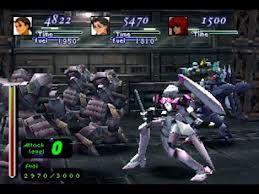
A look at the game’s battle scenario. Not bad for a game that’s over 10 years old!

To go along with this element system is a color coded element field.  The field exists on every battle and is comprised of three parts.  There are six element colors that can affect the field and using any of the six adds it to the field and bumps one off.  For example, if three consecutive red elements are used between the player and enemy, then the whole field is red.  Each character has an innate elemental color associated with him or her which makes them more proficient with that color and weak to its opposite.  When the field is in that character’s favor, that character gets a boost in stats and all elements of that color are more potent.

Standard attacks use attack points.  At the onset of a turn, a character has seven stamina points to use.  Using any kind of element uses up seven while physical attacks are tiered and consume 1, 2, or 3 points.  The player can use all seven up on physical attacks or elements.  Elements can be used at any time, but if the player only has two stamina points remaining then he’ll end that turn with negative 5 stamina points which will likely impact the character’s next turn.  It becomes a management tool and sometimes the player will be tempted to go all out and exhaust his or her characters in an effort to deal a killing blow.  And since the element field is affected by everyone who uses elements it affects how the player uses all of the characters in the party (three total).

The battle system encourages tactical thinking, more so than most Final Fantasy games.  And because the roster of available characters is so large it gives the player lots of freedom to swap characters in and out of the main party.  Usually who’s in it will be determined by the environment as it’s good to have an opposite aligned character to deal out major damage, though going too heavy on the opposite element means your characters are more susceptible to the enemies as well.  These kinds of trade-offs are not foreign to gamers, but it works to great effect in Chrono Cross and keeps even the more mundane enemy encounters amusing.

If you’re a fan of the genre and never played this one then you’re really missing out.

As I mentioned earlier, the plot can get a bit murky but overall it’s pretty fun and will keep most gamers entertained.  The game pulls the old switcheroo midway through by having the main character change rather drastically which gives the game a new feel.  The art direction and visuals were quite stunning in 1999 and hold up surprisingly well today.  A lot of games from the Playstation era cannot say the same.  There’s many lush environments, especially early in the game, and there’s liberal use of FMV for the more spectacular moments.  The audio is also fantastic.  Sure the characters don’t talk and it’s a pretty text-heavy title, but the soundtrack is exceptional and one of the best of all time.  Above all, it’s just a fun game.  This is the Japanese RPG perfected and the genre’s popularity maybe well behind us at this point but it’s still fun to go back and relive the classics.  New games are great and all, but there’s nothing like firing up an old classic and if you’re going to play an older RPG, Chrono Cross is the one to reach for.


TMNT Classic Collection

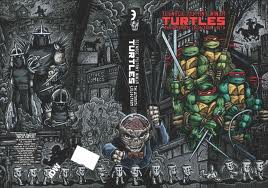
Teenage Mutant Ninja Turtles Classics are here!

I’ve been out of the toy collecting game for several years now.  I used to enjoy it as a hobby and it was a nice way to link my childhood to my adult life as I pursued action figures of characters I loved as a kid.  It became a compulsion eventually.  I started off just buying the characters I was particularly fond of like Venom and Iceman, but once it became a full-fledged hobby I was suddenly finding myself scouring department store toy aisles six at a time looking for an obscure Man-Thing or Warbird.  That’s when it became about the hunt.  Tracking down the exclusive Wal-Mart wave of Marvel Legends was especially thrilling.  It seems silly in hindsight, but it was kind of addicting.  Eventually though the quality of the figures declined and I also ran out of room for all of these toys.

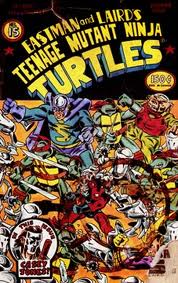
I got a little taste of that rush today when I tracked down a set of Teenage Mutant Ninja Turtles Classics.  It was a pretty easy hunt as I found a full set at the first place I went to, but I can’t deny it was a lot of fun.  The wondering, the hoping they’d be there.  I credit my interest in the line to my love for the TMNT as a kid and the new collections put out by IDW Publishing of the old books.  I’m currently onto volume 3, expect a review once I finish it.

The reverse side of the packaging.

I’ve talked about it many times, so I won’t go into too much detail here, but I did love the TMNT as a kid and they still hold a soft spot in my heart.  One of my last toy-related purchases before today was for a set of the turtles puts out by NECA.  I dubbed them my all time favorite as they’re a wonderful representation of the turtles as they appeared in the pages of Mirage Studios brand comic books back in the 80’s.  These collections, plus a new line of comics launched by TMNT co-creator Kevin Eastman, have helped to contribute to a renaissance for the turtles that will soon culminate in a new television show aimed at kids on the Nickelodeon network.  To capitalize on this, and the original cartoon’s coming 25th anniversary, Playmates has launched a new line of toys aimed at those who fell in love with the turtles through the toys and cartoon back in 1988.

This new line, appropriately titled TMNT Classics, was first shown last February at the New York Toy Fair and has recently hit shelves in speciality shops and big box stores like Toys R’ Us.  The packaging on these new turtles states that they’re based on the look of the turtles from the old cartoon, but it would be more appropriate to say they’re combination of that look along with the style of the old toys.  Back in the 80’s, kid’s shows were basically extended commercials for toy lines and the turtles were no exception.  The toys were developed alongside the show and since Playmates only had concept art to go off of they ended up having their own look.  Each turtles had his own unique skin-tone and all sported solid, white eyes.  It was basically a hybrid of the comic look and the one the cartoon would go with.  These new toys sport the rounded features of the cartoon along with pupils in their eyes but retain their unique skin-tones, though they’ve been changed some.  Raphael has a darker green complexion while Don isn’t as brown as he used to be.  Donatello and Leonardo also retain their shoulder straps and each turtle, excepting Donatello, has wraps around the handles of their respective weapons featuring their trademark color (Raph’s sais are red, Leo’s katana handles are blue, etc).  It’s an interesting approach though I do kind of find myself wishing that Playmates just went all out in trying to make these turtles television accurate.  We already have comic accurate turtles, and the 2003 toy line paid homage to the original toy line, but we’ve never had cartoon accurate turtles.  Yes there was a wave of Toon Turtles in the 90’s but they were pretty crappy looking.

Group shot! Notice how some of the pupils are oddly placed.

Even though they’re not entirely cartoon accurate, these turtles are pretty nice to look at.  They’re loaded with articulation but their features are more reminiscent of the TMNT movie line of figures than the NECA one.  NECA went through the trouble of trying to hide the articulation but Playmates didn’t see need to, so while a lot of poses are possible, the numerous holes and joints do detract from the look of the figures.  And if the joints aren’t tight, it really hinders the amount of poses one can achieve.  My Raph has pretty loose leg joints which makes standing him a chore.  The hands on all of them are particularly combative as each features articulated fingers and thumb.  The finger piece on the left hand of my Leo figure even fell off in the packaging.  They can never get a good, solid grip on their weapons and the hands on all four definitely feel fragile.  There’s also an abdominal joint in each turtle that’s kind of odd.  The show’s animators definitely did take liberties in how the turtles could bend and move in those shells but I’m not sure the abdominal joint adds much.  Playmates at least had the foresight to only insert the joint in the front and not the rear of the shell, which would have looked horrible.

I’m pretty disappointed with Mike’s face sculpt. It just doesn’t suit the character.

Scultp wise, all four turtles are the same with the exception of a unique head sculpt.  The head sculpts are a call back to the original toy line as each turtle features the same or similar expression he had back in 1988.  This means they all look angry and I kind of wish they had gone with less intense expressions.  Leonardo should probably be grim and serious, but Raph and Mike definitely shouldn’t be.  The figures are tall, around six inches, so they don’t fit in with any other TMNT toy line.  They’re not too stocky looking either, and their proportions do remind me a bit of the movie line for the TMNT film.  They have kind of odd looking forearms and really long arms in relation to their legs.  Overall though, the sculpt is pretty solid for each turtle and they look good side by side though I really do wish Mike had a better face sculpt.

As far as accessories go, these are pretty bare-boned.  While the original toy line came with a bunch of ninja stars and other oddities, these turtles only come with their trademark weapons and Don only comes with one bo staff.  Each turtle also comes with a personalized manhole cover stand and their belts can hold their weapons easily.  Some toon specific items would have been fun like a mouser or turtle-com, but oh well.  The quality of the weapons is pretty standard, though Playmates did go above and beyond with Mike and gave him actual chains on his nunchaku which is a nice addition.  I never want to see another Mike action figure that doesn’t feature this.

NECA Don with TMNT Classics Don.

The paint job for each turtle is solid, though not very demanding.  Playmates opted for colored plastic for most of the parts with the paint only really coming into play with the bandanas, eyes, and teeth.  In the case of the eyes, it leaves something to be desired.  The rounded shape of each turtle’s head makes it difficult to paint on pupils that appear to be focusing on the same spot.  As a result, both my Don and Mike almost look like they have a lazy eye.  This has convinced some collectors to just paint over the pupils on their figures and go with the classic all white look.  From what I’ve seen, this actually looks pretty good but does take away from the cartoon look.  I’m not one to modify my toys anyways.

So did Playmates deliver with their classic TMNT line?  Mostly.  These are the most cartoon accurate turtles to date and they feature a lot of articulation which will allow fans to pose them in almost any position they can dream up, provided the joints are tight enough.  Even though they are the most cartoon accurate figures of the turtles to date, they’re still not the definitive take on the source material and the copious amounts of articulation does take away from the look a bit.  They’re also light on accessories which is hard to take considering these are the most expensive turtle figures I’ve ever bought.  I paid 20 bucks a turtle at a specialty shop, though the MSRP is said to be $18.  That’s still a lot of money for an action figure that’s pretty basic but hardcore fans will probably pay it.  I’ll have a hard time finding display space for these guys, but the nostalgic factor alone makes me mostly happy with my purchase.  They don’t top what NECA did with the turtles a few years ago, but they’re pretty damn good in their own right.  If you’re the sort of fan that’s really in love with the TMNT, then these figures are for you.


The Dark Knight Rises

The Dark Knight Rises (2012)

I mentioned in my look at Batman’s best films that I had gone into total lockdown mode for The Dark Knight Rises.  I got off of social media, stayed away from review sites, and just basically blocked the world out where Batman was concerned.  I wanted to walk into this film with an unformed opinion.  I wanted to be outside the hype.  The first two Christopher Nolan directed Batman films are fantastic.  That’s not to say they are instantly in the running for best movies ever, but in the world of entertainment (and comic book adaptations especially) they are certainly worthy of the highest praise.  The hype surrounding The Dark Knight was intense, and the film actually lived up to it.  I assumed the hype could only grow louder for the trilogy’s conclusion.

It’s a poorly kept secret in Hollywood that trilogies often end badly.  I won’t cite examples as I don’t want to distract from the review of this film, but I’m sure most people reading this can think of at least one trilogy that lost a lot of luster in the third and final act.  And I don’t consider this a spoiler since it’s been stated numerous times by both Nolan and Batman himself, Christian Bale, that this is it for the two of them where Batman is concerned.  And since it was reportedly never a sure thing that Nolan would even return for a third film I’m going to take the both of them at their word.  Warner Bros. may back a truckload of money up to both of their doorsteps but I think this is it.  And if you’re a concerned fan fearing that Batman may end up like Spider-Man (there I go, making an example), worry not:  The Dark Knight Rises delivers.

If you’re concerned about spoilers, this is a spoiler-free review.  Basically all of mine are, even for films that are over ten years old.  With that said, I’m going to talk about the plot to some degree and anything in the trailers or that is considered common knowledge (basically anything I knew going in) is on the table.  If you want as pure an experience as possible though, I do recommend doing what I did and avoid all reviews until after you’ve seen it.  If you’re a Batman fan or just a fan of either of the other two films, you should definitely see this.

Easily the most iconic image of Bane from the “Knightfall” arc.

The movie starts out in a similar manner to The Dark Knight; by introducing the main antagonist for the film.  In this case we have Bane, played by Tom Hardy.  For those of you unfamiliar with Bane, you don’t need to know anything about him going in.  For those who do, know that this is a much better incarnation than what was presented in Batman & Robin, though I imagine that goes without saying.  Many writers of comics, television, and even video games have often chosen to focus on the brawn that is Bane.  That’s to be expected as Bane first and foremost exists as a physical threat to Batman.  He is someone Batman can’t simply engage in a one on one fight and expect to beat, unlike most of his rogue’s gallery.  However, Bane has a tactical side to his character which makes him especially deadly.  The film wishes to display Bane in that light, though don’t worry, he still possesses impressive brute strength.  The character was introduced in the “Knightfall” story arc from the 90’s, which makes Bane a rather recent addition to Batman’s rogue’s gallery when compared with others.  Some of that persona is adapted here, and some of the plot from that arc is as well, which kind of surprised me though I suppose it shouldn’t have.

In the comics Bane is a big guy made bigger when he pumps a fictional type of steroid into his noggin called venom.  In this film there is no such serum and the many tubes going into the character’s head are not needed.  He does sport a mask, though it looks more like a gas mask than the luchador style one he wears in the comics.  The mask does serve a purpose, though the film never makes it clear.  I assume he can survive without it since a guy’s got to eat.  There’s no way he can get a physique like that living off a liquid diet.  The mask necessitates his speech to be dubbed.  Early viewings of the initial teaser for the film left several fans complaining about how inaudible Bane’s speech was.  I assume Nolan wanted to go a realistic route with the character, but pressure from the audience did apparently bring about change.  He’s not always clear in the picture, but his voice is quite loud and almost jarringly so.  It reminds me of Shredder’s voice from the first Teenage Mutant Ninja Turtles film.  It may not be realistic, but it beats the alternative.

In the trailers we are shown not just Bane, but Catwoman (Anne Hathaway) as well.  Her lines to Bruce Wayne at a costume ball recall some of the sentiments being thrown about in the Occupy Wall Street movement from last summer.  And yes, that is part of the film’s central plot, to a degree.

Campy? Perhaps, but given the source material I think they did all right.

After Bane is introduced in a most menacing fashion, we are taken back to Gotham where eight years have passed since the death of Harvey Dent.  Bruce Wayne has become a recluse and all of those years playing Batman have taken a toll as well.  The cast from the previous films is returned.  Gary Oldman is back as Commissioner Gordon and Michael Caine as Alfred.  Morgan Freeman is there as well and there’s a couple of new comers in officer Blake (Joseph Gordon-Levitt) and Miranda Tate (Marion Cotillard).  The three veterans of the films are just as good as always, with Caine especially being effective as Alfred.  I feared the Alfred character would get too preachy, and almost too omnipotent much like Rosemary Hariss’ Aunt May in the Spider-Man films, but my fears proved unfounded.  The new-comers serve a nice role with the Blake character mirroring Gordon’s from Batman Begins.

Tate is an ally to Bruce in his corporate life, which we soon learn is not going well.  With Gotham now at peace and organized crime all but exterminated, there’s no need for Batman so Wayne tried devoting all of his resources at Wayne Tech to making the world a better place.  In doing so he has stymied profits but Tate seems to share his outlook.  Selina Kyle, aka Catwoman, makes her presence felt early on as well by swiping some jewelry from Wayne which gets her into the story.

I was on the fence about the Catwoman character being used here and thought the film may become too crowded, but again my fears are mostly unfounded.  While there are a couple of scenes between Batman and Catwoman that border on camp, the film soon remembers what it is and distances itself from any such thing.  In the comics, Catwoman is known for being a tweener in that she isn’t really a villain but isn’t necessarily a hero either.  In TDKR she’s played pretty much the same way.  Her character is definitely adapted in part from Frank Miller’s Year One arc, which was used as a basis for Batman Begins, minus the prostitution angle (which DC has always tried to distance itself from). Her character views herself as a sort of Robin Hood, though her motives are entirely selfish.  She gets herself mixed up with Bane, which is how she stays in the picture.  And her presence doesn’t crowd anything or take away from the film’s hero, Batman.  He’s in this one just the right amount, and his heroic appearances are staged exceptionally well.

Gordon-Levitt’s Blake is a welcomed addition to the cast.

The main plot for the film involves Bane trying to basically pick up where Ras al Ghul left off and bring down Gotham.  He infiltrates the corporate sector, the market, and even the physical infrastructure of Gotham itself (as evidenced in the trailer).  Make no mistake, he’s a real threat to the city in an even bigger way than Ras could have hoped to be and his motives and actions help tie the trilogy together.  A lot of TDKR harkens back to Batman Begins which helps maintain a feeling of continuity and in the end makes for a better pay-off for longtime fans.

That’s the film, in a nutshell, but how does it fare as entertainment and how does it stack up with the other two films in the trilogy?  To put it simply, The Dark Knight Rises is a hard film to watch.  I don’t say that because it’s long (approximately two hours and forty-five minutes) but because it’s pretty bleak.  For most of the film’s running time there’s not a lot of reason for optimism.  The Dark Knight was a pretty dreary movie at times, but even that had little moments of triumph throughout.  The Dark Knight Rises has fewer of those moments which make it one exhausting movie to watch.  I went back for seconds and thirds on The Dark Knight during it’s theatrical run, once is enough for me with this film (though I’ll definitely be a day one buyer when it hits stores).

Oh yeah, expect to see some new “toys.”

Don’t confuse my proclamation that this is a hard film to watch as a criticism.  Some films are truly brilliant but hard to sit thru.  Think Schindler’s List or Grave of the Fireflies, though certainly not on that scale.  There is a real danger to this film.  I think part of it is born from knowing that this is the final film in this trilogy, and possibly this “universe,” which makes it feel like anything is fair game.  I would like to think though, that even without knowing that, I’d still feel the same unease I felt throughout this film.  Bane is a truly monstrous individual on a different level than The Joker.  That doesn’t make him better, just different.  Many were likely worried about how Nolan could possibly move on after The Joker but he found a way.  I found myself hating him and I really was hoping he’d get his due in the end, which is an emotion I never really felt towards The Joker.

The Dark Knight Rises is a very good film and quite exceptional, though it doesn’t top Batman Begins for sheer entertainment value and will probably wind up behind The Dark Knight for most.  There’s no shame in that and I feel quite confident in saying that Christopher Nolan’s Batman trilogy will go down as one of the all-time greats.  There’s certainly no comparison as far as comic book movies go, and I doubt it will ever be as beloved as the original Star Wars trilogy, but from start to finish this is the most consistent.  The films are connected not just by style and the names attached but in theme and narrative.  The Dark Knight Rises is a grueling experience at times, but is the pay-off the fans wanted.  I feel slightly stupid for even having my doubts about this one, but Christopher Nolan once again delivers a fantastic piece of art.  I will never doubt that man again.


Batman’s Top 10 Feature Length Films

No other super hero has taken to the big screen as well as The Dark Knight.

I didn’t do an official count, but I am going to go out on a limb and say that Batman has had more movies made featuring him than any other comic book superhero.  Over the years he’s been featured in both live action and animated films, wide release and direct to home video.  Some of these films have been among the handful of movies I’ve enjoyed above all others, while others have been truly dreadful.  When a character has been around as long as Batman, that’s bound to happen.  He’s not only had great and terrible films made about him, but he’s also had great comic book stories and poor ones, fantastic television moments and truly embarrassing ones.

Recently though, it’s been mostly good films that have found their way to audiences worldwide.  And I’m not just talking about the much praised Christopher Nolan directed projects, but also some of the smaller ones that never made it to theaters.  Today we are on the eve of the release for the third and final film in the Nolan trilogy.  You may have heard of it, it’s called The Dark Knight Rises and it figures to take in money hand over fist for the next several weeks and make the executives at Warner Bros. very happy, and even more wealthy than they already are.  It probably doesn’t even have to be a good movie for it to be a cash cow, just look at the much maligned Spider-Man 3, which made more money than either of its two superior predecessors.  Hype is a powerful thing.

As most are looking forward to The Dark Knight Rises I am looking back.  I started to reflect on the films that came before it to feature Batman and decided it would be fun to make a top 10 list.  For some only familiar with the live-action stuff, it may be surprising to know that there have been more than 10 Batman films made, but that man gets around.  Truth be told, there are even a couple I haven’t seen such as the Batman Vs Dracula one that was taken from the The Batman universe.  I just never got into that show as it was geared towards a younger audience but if someone thinks I’m really missing out on something special feel free to let me know in the comments section.  Otherwise, let’s take a look at number 10…

Batman: The Movie (1966)

10.  Batman:  The Movie

It was actually a tough call between this and Batman Forever.  Batman Forever tends to get lumped in with Batman & Robin since they both share the same director.  While Batman & Robin is one of the worst movies I’ve had the misfortune of seeing, Batman Forever is merely average.  It’s quite different in tone from the Burton directed pictures, and whether that’s a good thing or not is a matter of taste.  I’m not really a fan and I don’t think anyone who skips Batman Forever is really missing out, but it does contain an entertaining performance from Jim Carrey as The Riddler, even if he’s just playing the same screwball he was playing in every other movie at the time.

Batman The Movie, on the other hand, is a truly unique entry among the Batman films.  Based on the television series starring Adam West, it’s basically the definition of camp.  It exists purely to entertain movie-goers of all ages and never takes itself all that seriously (with the exception of Burt Ward’s rather intense portrayal of Robin, which is kind of an in-joke in and of itself).  For fans of the show, this was like the ultimate as the best of Batman’s rogue’s galleries team up to take down the caped crusader.  The plot is rather hokey, but the film isn’t short on laughs.  Fans who take their Batman stories very seriously probably find this one off-putting, but this was more or less Batman in the 1960’s.  The comics were geared towards six-year-olds and at least the television show made an attempt to appeal to adults as well which actually helped keep Batman relevant.  This one’s a guilty pleasure and is placed here for nostalgic value, if nothing else.

9. Batman:  Mystery of the Batwoman

Mystery of the Batwoman is the third feature length film based on Batman:  The Animated Series and the second that was direct-to-video.  It was the only one based on the relaunched version of the animated series which featured new character designs and improved animation.  I prefer the style of the first three seasons as opposed to this one, but it’s not too off-putting.  Mystery of the Batwoman is exactly what the title implies; a mystery story.  There’s a new vigilante in town and Batman has to deduce the identity of this female who has borrowed his image.  The film features a few “names” in prominent roles such as Kelly Ripa and Kyra Sedgwick while the usual cast is excellent, as always.  The villains featured in the film include The Penguin and Bane and this mysterious Batwoman apparently has a bone to pick with them, among others.  Not surprisingly, her methods are more ruthless than Batman’s which is what drives Batman to try and figure out her identity and put a stop to her activity.  The film’s mystery proves to be pretty satisfying, and as a whole it’s an entertaining story.  The minimalist production values tend to make it feel more like an extended episode of the show though which is why it doesn’t place higher.

I’m still amazed at how awesome (cool?) Bruce Timm and Co. were able to make Mr. Freeze.

8.  Batman & Mr. Freeze:  SubZero

SubZero is the second film based on The Animated Series and was the first to go direct-to-video.  Unlike Mystery of the Batwoman, it’s production values are more on par with Mask of the Phantasm, the only animated Batman film to receive a true theatrical release.  Mr. Freeze was a surprise star in the television show and it was clear that the writers really enjoyed working with him so it’s no surprise to see him receive the movie treatment.  As was the case in the excellent episode “Heart of Ice,” Freeze is driven to crime in an effort to save his beloved wife, Nora, whom he has cryogenically frozen until he can find a way to cure her of the illness that threatens her life.  Once again, the writing crew prove they’re up to the task of creating a worthwhile Mr. Freeze story but unfortunately the film sort of feels like an extended version of the “Heart of Ice” episode, and an inferior take.  Despite feeling like a retread, it’s still an engaging film and I’d love to see more from Freeze in a future feature film.

7. Batman Returns

Tim Burton’s Batman was a huge success with movie goers when it was released in 1989, so a sequel was pretty much a foregone conclusion.  Burton’s Batman brought the caped crusader back to his roots.  The work of writers such as Neal Adams started to bring some semblance of maturity back to the character in the 70’s, while the work of Frank Miller in the 80’s really drove it home.  This Batman, portrayed by popular comic actor Michael Keaton, was the strong silent type not interested in bantering with his foes.  The first film featured an iconic performance from Jack Nicholson as The Joker, and the feeling going into Returns must have been more is better as the sequel featured three prominent villains.  Fans were used to both The Penguin and Catwoman, but created for the film was Christopher Walken’s Max Shreck who is perhaps the film’s true villain.  In keeping with the style of the first film, both Catwoman and Penguin feature unique designs that represented quite the departure from what fans were used to.  Catwoman comes across as a cat-obsessed dominatrix while The Penguin is a truly hideous creature.

Perhaps Burton felt like the Batman character was explored and developed enough in the first film, because he’s kind of brushed aside here.  The focus of the film is placed squarely on the villains as we learn what brought them to this state.  Burton is also more comfortable here interjecting his brand of humor into the franchise, more so than he did with the first.  Both The Penguin and Catwoman are pretty ridiculous, but the film plays them straight.  It starts to fail though in the final act as even the most forgiving members of the audience will find it hard to accept an army of penguins packing serious heat.  DeVitio (who actually received an undeserved Razzie nomination) and Pfeiffer are both memorable in their roles, but even they can’t carry a Batman movie that’s light on Batman.  A fun, but ultimately flawed experience.

This one’s not for the kids.

6. Batman:  Under the Red Hood

I was pretty surprised to see Warner Bros. was releasing an animated Batman film that did not feature Kevin Conroy in the leading role, or would include The Joker but no Mark Hamill.  To me, so long as neither actor is demanding an absurd wage for their services, Conroy and Hamill should be the voice of Batman and Joker, respectively, until they can no longer do it.  That said, both Bruce Greenwood and John DiMaggio do an acceptable job as Batman and The Joker in Under the Red Hood, an animated film that adapts parts of popular comic plots such as “A Death in the Family,” “Hush,” and “Under the Hood.”

It’s that first story that attracted me to this direct-to-video feature and the one that made it most interesting.  For those not in the know, “A Death in the Family” is the iconic story where Robin is murdered by The Joker.  It was one of those rare stories where comics crossed over into the mainstream as it was a pretty big deal to see Robin go down.  Under the Red Hood starts off like a mystery, but it’s one that is solved almost immediately.  Batman and Nightwing (Neil Patrick Harris) both encounter the new vigilante/villain Red Hood and are unsure of his motives.  He appears to be positioning himself as an adversary for crime boss Black Mask, and doing a good job of it.  As I said, the mystery is revealed fairly early in the film, and the second act deals with Batman confronting this new foe.  The animation is fluid and quite enjoyable to behold, and the opening scene featuring the murder of Robin is appropriately disturbing and graphic.  The film’s signature scene though is not the death of the boy wonder, but the climax which features Batman, Red Hood, and The Joker in a memorable stand-off.  The true motivation for the Red Hood is revealed and it serves as a believable and some-what heartbreaking reveal.  It’s really that climax that pushes this one up to the position of number 6 on this list.

5. Batman Beyond:  The Return of the Joker

I’ve mentioned before how I wasn’t a believer when I first heard about Batman Beyond.  It seemed too gimmicky and totally unnecessary; a cheap way to go after the younger crowd.  Were there really no stories left to tell for Bruce Wayne?  I was proven wrong though and Batman Beyond, while not as good as the series it followed, proved to be a worthwhile entry into the Batman canon.  The Return of the Joker though, ended up being one of the best Batman stories every brought to animation which is something I don’t think anyone could have predicted.

One of Batman Beyond’s major weaknesses as a series was the absence the classic rogue’s gallery.  A few good villains would be created to battle this new Batman, and even Mr. Freeze would make an appearance, but few could hold a candle to some of Batman’s most memorable foes.  One who was missed perhaps the most was The Joker.  How can you have Batman without The Joker?  I think most fans suspected his presence would one day be felt, but as the actual Joker who terrorized Bruce Wayne’s Batman so long ago?  That seemed crazy, but The Return of the Joker proved it could be done.  Sure there was a sci-fi explanation for how The Joker could still be around and the film took some liberties in getting the audience to buy into the explanation, but at the end of the day, we were willing to believe anything if it meant the return of perhaps Batman’s greatest foe.  And this Joker, once again played by Mark Hamill, is an even darker take on the character.  He’s even more sadistic than before and kind of pissed off to boot.  The production values are no better than an episode of the television series, but no one cares when the plot is this well executed.  If I have one complaint with the film it’s that the final encounter between Batman and The Joker isn’t quite as satisfying as it probably should have been, but the film makes up for it by showing us the final confrontation between the original Batman and Joker which was just as excellent as it should have been.

Now there’s a dynamic duo.

4. Batman (1989)

I’ve already done a full review for this one, so I won’t get into too much detail here.  Simply stated, this was the film that proved Batman could be a box office juggernaut and appeal to both kids and adults.  Perhaps more so adults with this dark and gritty take on the caped crusader.  The choice of Michael Keaton as Batman was much maligned at the time, but he easily won crowds over.  The look of the film was particularly striking and would go on to influence The Animated Series in a major way.  Jack Nicholson’s Joker was so good that, as hard as it may be to believe now, many people felt like no one could ever come close to matching it.  This one may not hold up as well today when compared with the Nolan films, but this Batman is still pretty unique and the one most like the Dark Knight featured in Frank Miller’s work.

3. Batman:  Mask of the Phantasm

Last year I dubbed Mask of the Phantasm as the definitive take on the character to make it to film.  I also said that is not to be confused with best film to feature Batman.  Mask of the Phantasm, quite simply, fully captures the essence of the character in a way that not even Christopher Nolan’s works can match.  The film focuses on the early challenges faced by Bruce Wayne as he struggles with keeping to the promise he made to his deceased parents and the graveyard scene is the most memorable scene, for me, from any Batman film.  I love this movie, so much that I made a full entry on it last year shortly after my verdict on the definitive Batman film.  If you like Batman, you absolutely owe it to yourself to track this one down.

Well done, Mr. Ledger.

2. The Dark Knight

Considering the work done by the other directors and actors featured on this list, it’s pretty high praise to award the top two spots (yeah, that’s right, hope I didn’t ruin the surprise) to the team of Christopher Nolan and Christian Bale.  Of course, The Dark Knight owes a great deal of its success to the late Heath Ledger who’s turn as The Joker is already one of the most memorable performances in a comic book movie to date.  Batman Begins was a successful movie, but it wasn’t the massive hit The Dark Knight turned out to be.  A great deal of that probably is due to the aura the film garnered after Ledger’s demise and word of mouth of the actor’s fantastic performance.  It cannot be understated;  Heath Ledger’s Joker is phenomenol!

That said, The Dark Knight is not a perfect movie.  It’s certainly very good, excellent even, but Batman has seen better.  Part of that is due to the same thing that harmed Batman Returns, which is a de-emphasis of the Batman character.  Nolan explored Batman in great depth in Batman Begins, so he probably felt like that afforded him a lot of freedom with this picture.  Nolan also approached this one as a crime drama and often cited the popular heist film Heat when discussing the picture.  Batman still has a strong presence, as both himself and his alter ego Bruce Wayne, but the scenes with The Joker are just so good, so memorable, that they over-shadow the rest of the film.

I do find Bale’s performance to be noticeably worse in this one than the previous film.  Some of that is some quentionable dialogue in the script, but a big piece of it is the dreaded bat voice.  In Batman Begins, Bale uses a lower and slightly throaty voice when speaking as Batman.  In The Dark Knight, the voice is almost distorted and Batman sounds like he’s auditioning for a death metal band.  It doesn’t work, especially when Batman is asked to have full conversations with characters, and really detracts from many of the film’s most critical scenes.  I also feel like the Two-Face part of the story was rushed and the resolution still leaves a sour taste in my mouth.

Criticisms aside, you can’t be number 2 on this list and be a bad film.  The Dark Knight is an engrossing crime flick and is tremendously entertaining.  Its faults are forgivable, and its biggest fault is that it’s just not as good as the number one film on this list.

There’s just no topping this.

1. Batman Begins

When Christopher Nolan was brought on to reboot the Batman franchise many people had no idea what to expect.  Nolan, at that time, was best known for Memento, a really cool and engaging film but not one that could easily be applied to the Batman franchise.  The often rumored to be in development Batman 5 never got off the ground, and Warner Bros. wisely decided to distance itself from the catastrophe that was Batman & Robin.

A fresh start is really what the doctor ordered, and by doing so it gave Nolan a chance to do what no director had really done before:  tell a complete origin story.  Batman Begins is exactly what Batman needed.  The film goes into meticulous detail to explain to the audience how Batman came to be and what truly motivates him.  His morals and methods are fully defined for the first time and the film is focused fully on Batman with no villain to steal the spotlight.  Nolan’s universe is grounded and absent of most of the characters we’re used to seeing which gives the film it’s own sense of authenticity.  Christian Bale proves to be worthy of dawning the cape and cowl, but some of the supporting cast really steal the show.  Michael Caine is perfectly cast as Alfred, the closest thing to a maternal figure Bruce has, and Gary Oldman is easily my favorite actor to portray Jim Gordon.  Rachel Dawes, an assistant to Gotham’s D.A. and childhood friend to Bruce, is created to help the Bruce Wayne character feel more real.  Played by Katie Holmes, she’s a strong female type that actually works pretty well in that role.  My only major complaint with the film is when they try to force a romantic undertone to Rachel and Bruce’s relationship which just lacks any chemistry and feels unnecessary.

Batman Begins is the best Batman film created thus far.  It just hits all of the right notes and I still get chills when I watch the film’s final scene.  Will it remain the best?  As I sit and type this up we are just over 3 hours away from the release of The Dark Knight Rises.  I have intentionally avoided all press related to the film.  I do not know how it has been received by critics, I do not intend to speak to anyone tomorrow about it as I want to experience it in a pure way to form my own opinions. I’ve never taken a film this serious, and I’m not sure why I am now.  I think it’s because I just haven’t been excited by the few trailers I’ve seen or the concepts I’ve heard that the film is supposed to contain.  I fear I’m already approaching it with too much of an opinion, and I want to distance myself from that.  I have tickets to see it in IMAX this Sunday, and I’ll try to post a review that night for anyone who is interested.  Regardless, I fully expect this trilogy of Batman movies to be among the best trilogies comic book fans, or movie fans in general, have ever received.  I doubt very much it will top Batman Begins as a stand-alone experience, but so long as it’s on par that’s all anyone can ask for.


Devin Townsend Project – By A Thread: Live in London 2011

Devin Townsend Project – By A Thread: Live in London 2011

2011 for me was the year of Devin Townsend.  After being a casual fan of Townsend’s work for a few years, I dove in headlong into his back catalog while also enjoying the two albums he put out in 2011 under the Devin Townsend Project moniker:  Deconstruction and Ghost.  Those were two albums that could not be more different from one another, which is something Townsend is known for.  After establishing his name with Strapping Young Lad as a destructive force in heavy metal, he felt secure enough to branch out and really get experimental with his sound.  There probably is a traditional Devin Townsend sound, but for the most part his stuff is all over the place.

One of Townsend’s most creative outlets is with his latest band, The Devin Townsend Project.  Prior to creating this outfit, Townsend was touring and releasing music as The Devin Townsend Band.  After resolving some items in his personal life (namely getting sober) he decided to focus his efforts on a new project.  He envisioned it spanning four albums and decided it would be different enough from what he was currently doing to change the name of his band.  The lineup of musicians that would appear on these albums would be fluid and feature several guests and no two albums would sound alike.  The first of these albums was released in 2009 and titled Ki, the second would follow that year and is called Addicted!  To celebrate the release of the third and fourth albums last year, Townsend decided to do a special series of concerts in London.  The shows would span four days and each night a different album would be featured.  Naturally, the shows went in order of release and lasted four nights.  Not wanting this experience to go to waste, Townsend had each show recorded and the end result is the new CD/DVD box set By A Thread:  Live in London 2011.

The contents of the release which comes housed in a sturdy booklet style holder and cardboard sleeve.

By A Thread was released this past month in both Europe and North America.  The box set includes 4 DVDs and 5 CDs.  Each concert is on its own DVD, while the CDs are arranged by albums with a fifth disc comprising all of the encore tracks played over the course of the four days.  The first three shows were held at the University of London, while the Ghost set was done at The Union Chapel.  I’m guessing this was done to give the more intimate Ghost record a different feel.  Despite the change in venue, the audio quality is consistent across the board and is quite clear and crisp.  The audio wasn’t optimized for 5.1 though, which has left some fans disappointed.  They also aren’t intended for playback in a PC DVD drive, if that’s something that is important to you.

Visually, the DVDs are okay but nothing spectacular.  The venues are modest in size and the image sometimes feels a bit cramped.  The image also won’t be confused with an HD one, but as far as concert DVDs go it gets the job done.  The menu graphics are interesting and fun to look at.  They also contain loads of hidden easter eggs for the curious type.  Most of which are sound-checks and other behind-the-scenes shots.

As for which concert is best, well that’s a matter of opinion.  Chances are, whatever you favorite DTP album is will be the star here.  Where possible, Devin tried to recruit the musicians that actually played on the album, but some were unavailable.  The star-studded Deconstruction suffers the most as none of the guest musicians could contribute.  Rather than use someone else, Devin opted to use recordings to fill the gap as it would seem he went to great lengths to try and recreate the album sound live.  This means instead of hearing someone else sing Floor Jansen’s parts, for instance, you just hear her track from the actual album.  A lot of the backing vocals are also richened with audio samples from the albums, especially some of the songs from Addicted!  I’m the sort of person who prefers as little of that as possible, but it doesn’t harm the experience for me.  Even with that element, the Addicted! set is my favorite.  That’s due in part to it being my favorite of the four albums, and also because Townsend was able to assemble the key contributors from that album (basically Anneke).  The encores are also some of my favorites.

The image quality on the DVDs won’t blow you away, but it gets the job done.

Speaking of which, Townsend took a different approach to each encore.  For the Ki and Ghost sets, the band mostly did bonus tracks from those albums that didn’t make the original release.  For Deconstruction, Townsend reached deep into his back catalog to pull out some tracks from the Punky Brüster LP.  The reasoning behind this, as explained by Devin, is that since Deconstruction was such a nightmare to learn they’d follow it up with a bunch of stuff they didn’t know!  He flubs some of the lyrics too, but it’s all good.  The Addicted! set features some songs selected just to take advantage of Anneke van Giersbergen and includes the tracks “Pixilate,” “Life,” and “Kingdom.”  There’s also some Ziltoid appearances, which is to be expected.

The crowd is pretty good for most of the sets.  They seem particularly into the Ki and Addicted! sets, though slightly flat for the Deconstruction one.  I’m pretty disappointed they didn’t play along with the Ziltoid campaign speech, but maybe by then they were pretty drained.  That album is punishing.  They also didn’t seem too interested in the Punky Brüster tracks, though I enjoyed their inclusion.

All in all, this is a nice set but it’s definitely for the Devin Townsend Project enthusiast as opposed to the casual fan.  It’s cool to have live versions of these four albums, but not really necessary since how often are you really going to opt to listen to the live version over the studio one?  Probably not all that often.  The videos are cool though and Devin and the boys make it fun to watch (especially the previously mentioned Ziltoid campaign speech).  Devin did a commentary track for each set too that gets into more of the nuts and bolts of the production for you gear-heads out there.  The physical package is attractive and makes for a nice display piece.  A word of caution though, the North American edition apparently has a defect with the Addicted! DVD.  I’m not certain what it is exactly as I bought the European edition, so if you have a choice, go for that one.  Apparently the production company is issuing replacements so it’s more of an inconvenience than anything.

Devin Townsend is one of the most interesting musicians around, so even if this set isn’t for you, check out some of his other works.  There’s pretty much something for everyone in his rather diverse catalog.


The 3DS XL: Nintendo’s Imperfect Update

Nintendo has an odd relationship when it comes to portable gaming devices.  The company has experienced immense success and great failure at the same time.  And even though the company rarely is ahead of the technological curve when it comes to its hardware, it still manages to dominate in sales.  The portable section of Nintendo’s portfolio is one the company can rely on to almost always turn a profit.  The only true failure was the Virtual Boy, a complete and total misfire.  The 3DS had a failed launch, but since a dramatic price cut and better software releases, the handheld has surged.  It may not have been profitable in 2011, but it almost certainly will be in 2012.

Nintendo’s approach to its main handheld units has been fairly consistent.  The original Game Boy was launched in 1989 and was Nintendo’s first true portable console.  The company had already made a name for itself in portable stand-alone games under the Game & Watch label, but the Game Boy operated like a home console and could switch out the software whenever the user wished.  The unit was fairly powerful for the time, though not on par with home console devices.  It had the same button layout as Nintendo’s home console, which made adapting games easy once accounting for the reduced tech.  Many companies tried to usurp the Game Boy as the market leader in portable gaming devices and all took the approach of releasing more powerful, color based systems.  Nintendo’s strategy of sacrificing power for better battery consumption proved correct as the Game Boy lasted for the entire duration of the 90’s while more powerful handhelds like the Game Gear and Lynx faded away (though the Game Gear was moderately successful in its own right, but sales for it amounted to about 1/10 of Game Boy’s).

In 1996 Nintendo introduced a new Game Boy to market, the Game Boy Pocket.  It was the same hardware, just shrunk down to a more portable style that required fewer batteries to operate.  This was the first major revision for the Game Boy, and the second would come in 1998 with the introduction of the long-awaited Game Boy Color.  The Game Boy Color did have the distinction of being slightly more powerful than the old hardware, but not by leaps and bounds.  Some games designed for it would not work on older Game Boys, making it arguably its own distinct handheld and not an actual revision.

The first revision to the Game Boy, the Game Boy Pocket, made the device more portable and more economical.

The Game Boy’s first true successor was the Game Boy Advance which was released in 2001.  While all previous Game Boys had a vertical format, the GBA had a horizontal one similar to the Game Gear.  It had a 32-bit processor but a lack of any 3D capabilities made it more comparable to a Super Nintendo than say a Playstation.  Aside from the enhanced tech capabilities, the only other major addition was the inclusion of two shoulder buttons.  Many fans were disappointed that Nintendo didn’t add two additional face buttons which would have made SNES to GBA ports near perfect.  Like the original Game Boy, the GBA would receive multiple revisions.  The first was the GBA SP, which made the GBA resemble an old Game Boy Pocket but with a hinge in the middle so it could be folded and stored away to protect the screen (and make it more portable).  The major addition to the SP though was the inclusion of a front-light, something gamers had been demanding for over a decade.  No additional buttons were added though, and the new design was less comfortable than the original but the inclusion of the light, rechargeable battery, and screen protection made it superior.  A third revision would follow in 2005, the GBA Micro.  The Micro removed the backwards compatibility of the SP with original Game Boy cartridges, but shrunk the whole thing into a tiny size that resembled a Famicom/NES controller.  The unit was also back-lit and provided a slightly better picture, though at a reduced size.   At the same time, a new GBA SP was released that had a back-lit screen instead of a front-lit, which was much more effective.  This was more of a running change than a true revision, but worth noting.

The Nintendo DS followed the GBA in 2005 and has been no stranger to revisions.  The original was bulky and unattractive, and a new model was released in 2006.  Dubbed the DS Lite, it was a more streamlined take on the console.  The DSi would follow the Lite and add better networking capabilities, an SD card slot, camera, and slightly larger screen.  The final revision to the DS came in the form of the DSi XL, just an over-sized DSi.

Which brings me to the 3DS.  When the 3DS was launched last year most gamers assumed a revision was inevitable.  I was a day one purchaser of the unit, and while I’ve enjoyed it quite a bit, there’s no denying there are some obvious short-comings that could be addressed with a future update.  The system is designed just like a DS, but Nintendo made some odd choices with the unit that do cause minor problems.  For one, the bottom screen is smaller than the top.  This isn’t necessarily an issue in and of itself, but there’s a raised border around the bottom screen that causes lines to form on the top screen when the unit is closed.  Mine hasn’t caused any permanent damage, but it is annoying to have to clean the top screen every time I use it.  The circle pad causes a similar issue on the top piece, but not on the screen thankfully.  And ever since the unit’s reveal, gamers have yearned for a second circle pad, which was addressed by Nintendo with the Circle Pad Pro attachment.  The attachment not only adds the desired second circle pad, but also adds two additional shoulder buttons to the unit putting it on par with home console controllers.  The attachment works, but is bulky as Hell and using the face buttons with it is some-what cumbersome.  The overall power of the unit, particularly the screen resolution, is not very impressive either.  Especially when compared with the more recently released Playstation Vita.

Most expected Nintendo to unveil a new 3DS at E3 this year.  Early reports out of China before the show seemed to confirm this, but come show-time nothing was seen.  In a questionable move, Nintendo chose to reveal the 3DS XL after E3 in an online developer conference.  The 3DS XL is the expected update to the 3DS, but is it the update gamers had been looking forward to?  In short:  No.

The 3DS XL is exactly what the name implies.  It’s an over-sized 3DS.  This isn’t a bad thing on its own.  While a larger 3DS is less portable, the original is pretty cramped and a larger one would work better for those who tend to play their 3DS in longer play sessions as opposed to quick bursts.  And even though it presumably requires more power to function when compared with the current model, the XL will reportedly have slightly better battery life (5-8 hours for 3DS games).

Congrats Nintendo! It only took you a few short months to render this attachment useless!

If the biggest issue gamers had with the 3DS were its size and battery life (a legitimate complaint), the XL would be well received.  And when it hits stores it very well may be.  For me, this update is fairly pointless.  The screen size has been enhanced, but the resolution remains the same.  The resolution on the current 3DS is underwhelming at best.  Games that look good on the unit do so in spite of the unit’s resolution.  A game like Resident Evil: Revelations is fairly impressive from a visual standpoint, but the low-res picture washes out the image and adds a blurry texture to everything.  Especially in the darker environments, I felt like I needed to wipe off the screen constantly even though there was nothing on it.  I played the game with the Circle Pad Pro, which as I mentioned, is a cumbersome add-on.  It does improve the gameplay though, but for some reason Nintendo did not incorporate it into the design of the XL.  The unit is bigger, one would think this would allow Nintendo to add the additional shoulder buttons, or at the very least, a second circle pad!  Nintendo chose not to, which not only seems foolish, but renders the Circle Pad Pro unusable with the XL.  A game like RE: Revelations will most likely play worse on the XL because of the controller configuration, and look worse because the low-res image is being blown-up beyond its intended size.  And perhaps just to add one last bit of insult to injury, the bottom screen is still smaller than the top and the raised border still exists so it’s likely the same screen line problem of the current 3DS will be prevalent here.

Obviously, I can’t pass judgement on a piece of hardware that isn’t even available yet.  It’s entirely possible that the 3DS XL is superior to the current 3DS based on the increased size and superior battery life enough to justify a purchase, or even an upgrade.  I’ll be surprised if that’s my opinion come August when the unit hits stores alongside New Super Mario Bros. 2 as it fails to address the real problems I personally have with the 3DS.  Plus if I were to upgrade it would render my Circle Pad Pro useless which is not something I am eager to do (but would have been willing to do if the new 3DS made it obsolete by incorporating its features into the design).  This just seems like a completely unnecessary update to the current hardware.


Danzig: The Lost Tracks of Danzig

The Lost Tracks of Danzig (2007)

At this point I have now blogged about every Danzig studio album as well as the few live recordings that exist.  The only two albums I haven’t touched on are the two Glenn Danzig releases under the Black Aria title.  Those two albums are classical pieces and I don’t intend to post about them in any great depth. All I will say on the subject is that the first Black Aria is worth checking out, but the second isn’t.  Even without talking about those records, that’s still a lot of content I’ve covered and there’s still one more to go.

Without question, the most anticipated Danzig release for me since I became a fan in ’98 has been The Lost Tracks of Danzig.  It might sound kind of odd on the surface, as how could a collection of songs deemed not worthy of an album release generate so much excitement?  Credit for that goes to former Danzig bassist Eerie Von who had a short-lived telephone hotline in the 90’s following his departure from the band.  Fans who called up were sometimes treated to clips of unreleased Danzig material that Von had held onto.  I can’t precisely recall just how many songs Von featured, but I do know a track called “Cold, Cold Rain” was one and I needed to hear the rest of it.  “Cold, Cold Rain” is a ballad and one with an old 50’s sound to it.  It was recorded for the album Danzig II: Lucifuge but was omitted, likely in favor of “Blood and Tears.”  It features these awesome Danzig wails that still sounded excellent over a telephone line and I was positively despondent over the fact that I couldn’t hear the whole thing, and perhaps never would.

When Glenn Danzig was doing press for the Samhain Box Set released in 2000 he started talking about doing a Danzig one.  The Danzig one would come in a box shaped like an inverted cross and would contain a bunch of unreleased stuff.  At this time, Glenn had just got the rights to his unreleased stuff from American Recordings, his old label and home to the first four Danzig albums.  It had taken years to get all of that stuff back, but now Glenn knew he was sitting on a bunch of songs that he could probably make some money off of.  Unfortunately for fans, Danzig decided to focus on the home video type stuff at first and put out two DVDs featuring the old music videos from Danzig III and Danzig IV.  Glenn would be asked and would comment on the potential box set for years and years.  Not until he became burned out on touring and album making did he finally focus his attention on what would become The Lost Tracks of Danzig.

The cover for the booklet with artwork by Joe Chiodo is very tongue-in-cheek.

The Lost Tracks of Danzig compilation was finally released in the summer of 2007.  Along the way, the idea of a box set was dropped and instead the album was released on an oversized digibook.  The packaging was kind of like the old CD long-boxes that were around in the 80’s and it housed two discs stored vertically as opposed to a more traditional fold-out design.  On the inside cover was a booklet glued in.  Within that booklet was a bunch of photos of the band through-out it’s existence as well as liner notes for almost every song by Glenn.  These notes are fairly minimal, but most exist for Glenn to offer his opinion on the track and why it never was released in the first place.  There’s also some original artwork on the cover of the booklet by Joe Chiodo.  The exterior design was done by long-time collaborator Simon Bisley.

Not all of the tracks ended up being previously unreleased.  There were a couple that once appeared as B-sides or on non Danzig releases.  “When Death Had No Name” is one such track which was originally released as a B-side for the “Dirty Black Summer” single.  It also appears on this collection twice as it was recorded for both Danzig I and Danzig III (and supposedly, it was recorded for Danzig II as well) with the Danzig III version being the superior one.  The track “Deep” from the X-Files show compilation also appears here, as do a couple of remixes at the end of disc two for “Belly of the Beast” and “Unspeakable.”

Even with a couple of previously released tracks occupying space on this collection, there’s still a ton of stuff that is new to fans.  Both discs are packed pretty much to capacity with 13 tracks apiece.  Disc one spans from 1988 thru 1996, while disc two covers the rest.  Most fans were probably really looking forward to hearing the oldest stuff, but a lot of the songs from the 2000’s are pretty enjoyable as well.

Disc one opens up with a really crunchy, rocking track titled “Pain is Like an Animal.”  Written and recorded for the first Danzig album, it’s easy to see how this up-tempo number didn’t quite fit.  The quality of the recording is a bit lo-fi, but still enjoyable.  This track is somewhat controversial amongst the Danzig fan-base as Glenn’s vocals make it sound like this one was recorded later, perhaps during the Danzig III sessions, but Glenn says otherwise.  It’s quite possible that this one was recorded several times, like “When Death Had No Name,” and Glenn just forgot which recording was which.

This is a mighty fine release, Mr. Danzig, but why did you have to make us wait so damn long?!

The Danzig II tracks are pretty sweet, further cementing my opinion that Danzig II is the band’s best album.  “Angel of the Seventh Dawn” is another rock-heavy tune with some nice blues elements.  It would not sound out of place at all on Danzig II, but maybe Glenn just thought he had better tracks.  “Cold, Cold Rain” did not disappoint me, and it’s a great old-school Danzig ballad.  It’s slow but with a big sound.  It probably would have clashed with “Blood and Tears,” though Glenn says he always liked the song, but producer Rick Rubin did not.  “You Should Be Dying” is unfortunately one of the collection’s low points.  It has a cool “Sabbathy” intro but doesn’t go anywhere with it.  The vocals also sound like they were re-recorded for the collection as that’s just not how Glenn’s voice sounded in 1990.  According to him, though, the only vocals that had to be re-recored for this release were for the song “Come to Silver.”  Even though it’s basically a bad song, the chorus will get stuck in your head.  You have been warned!

Apparently there were few holdovers from Danzig III, or Glenn didn’t see fit to release any others, because it’s one of the more under-represented albums on this compilation.  The previously mentioned “When Death Had No Name” is present from that session, but it’s the same version as the one from the “Dirty Black Summer” single.  A good song, just nothing new.  “Buick McKane” is the only other track from Danzig III and it’s a cover of a T. Rex song.  It’s a pretty standard rock track but it has a cool jam quality to it that makes it stand out amongst Danzig songs.  It was likely intended to be a B-side somewhere down the road or was recorded just for fun.

The Danzig IV era brings about some interesting tracks for this collection.  There’s the joke song “Satan’s Crucifiction” that actually ends up being one of the best songs on this collection.  It was recorded for the sole purpose of messing with the executives at American who wanted to capitalize on the band’s recent break-out success with a record that wasn’t too “satanic.”  It’s a dark and menacing track with great atmosphere.  The lyrics are appropriately cheesy but the song’s a lot of fun.  “The Mandrake’s Cry” is a song best described as filler.  Neither strong nor weak, it was likely an easy omission from the 4p record.  It’s also another track where the vocals sound like they may have been re-recorded, or were just recorded with substandard quality.  “White Devil Rise” is a song recorded in response to Louis Farrakhan and his labeling of the white race as The White Devil.  It’s about  a race war and has a very apocalyptic feel to it.  The song is under-developed though and the chorus is fairly banal and kind of annoying.  It’s one of my least liked tracks on this collection.

The error “groovy” font edition of the album. It’s unclear how many of these were printed off, but they seem fairly rare from what I’ve noticed.

Danzig 5:  Blackacidevil is probably Danzig’s least liked record amongst fans, but the tracks from it on this collection are actually pretty good.  “Come to Silver” isn’t a new song, but this version removes the vocal distortion and other effects and strips it down to just Glenn and an acoustic guitar.  These vocals were re-recorded for this collection as the original masters weren’t usable.  The vocal performance could be described as understated, but it works.  I still prefer the original from Blackacidevil, but this a cool track.  “Deep” is not a new track, as mentioned earlier, but “Warlok” is. It borrows the simple chord progression from “Mother” but adds some fuzz and other effects.  Glenn’s vocals are free of distortion and he sings in a quasi-falsetto voice which works really well.  Short and sweet, “Warlok” is a nice surprise for this collection.

Danzig 6:66 Satan’s Child had over twenty tracks recorded for it but only twelve made it to the final LP.  It’s no surprise that a few tracks made it to this collection.  Kicking off disc 2 is “Lick the Blood Off My Hands” which is a bluesy track but with some industrial elements.  I’m not sure if it’s ever been confirmed if this was a Danzig 5 holdover or one from Danzig 6, it’s not a bad song though.  “Crawl Across Your Killing Floor” is from Danzig 6, though the guitars on this track were done by Todd Youth who would join the band after Danzig 6 was completed.  I’m assuming the song was done, but Glenn wanted to re-do the guitars for an eventual release and had Youth step in.  It’s a pretty bad ass song and one of Glenn’s longest.  Youth’s leads are excellent too.  This is a stand-out track and the only one to receive a music video clip from this collection (the concept for the video was pretty cool, but the execution laughable).  “I Know Your Lie” is another holdover that Glenn claimed he just plain got sick of during the recording of the album.  It’s a decent song, but I can see how Glenn could get annoyed with it.  Rounding out the 6:66 sessions is a cover of The Germs’ “Caught in My Eye.”  Some industrial effects were added and Glenn delivers his vocals with that whisper track adding an eerie quality to the atmosphere.  It works, and the punk vibe is still present for those looking for it.

“Cat People” follows, which was recorded during the Danzig: 777 I Luciferi sessions.  It was intended as a B-side, but was never released until now.  It’s a David Bowie cover that most people probably know today as the song from the film Inglourious Basterds.  It’s quite effective and the song exists mostly to build-up to an explosive second act.  “Bound by Blood,” per Glenn, was a tough omission from Danzig 7 and it’s clear why once heard.  One of my favorites from this collection, it’s an uncharacteristically sweet number from Danzig with some dynamite lead work by Youth once again.  It starts off slow, but rises to explosive levels fairly quickly.  “Who Claims the Soulless” is a pleasant enough track.  The guitar has a nice groove to it, and Joey Castillo’s drums work quite well for this one.  “Malefical” is a brooder.  Not a stand-out number, but not really a weak effort either.  “Dying Seraph” closes things out for I Luciferi and it’s a nice one too.  It has a bit of a jazz feel to it with some nice vocals by Glenn.  The big chorus serves as the cherry on top.

Circle of Snakes has just one representative on here and it’s “Lady Lucifera.”  It’s kind of a typical modern era Danzig track, though the production just doesn’t do it for me.  It’s muddy, like Circle of Snakes, and Glenn’s vocals just aren’t crisp.  Apparently he likes the track a lot, but I could do without.  The last two tracks are likely here just to fill space.  “Underbelly of the Beast” is from The Crow:  Salvation soundtrack and is a remix of “Belly of the Beast” that doesn’t really add much to the original.  “Unspeakable (Shango Mix)” is another remix, though this one was done for the adult film Grub Girl which was based on a character from Glenn’s Verotik publication.  The best thing that can be said for this one is it sounds like background music for a porn film.

In the end, The Lost Tracks of Danzig comes across like a greatest hits collection, even if few of the tracks were ever released!  It’s a great compilation with a surprising amount of quality.  I played the Hell out of this thing when it first came out, and even though there’s a few tracks I don’t particularly care for, it’s still something I like to come back to.  I’d love to hear a few more of these tracks live, but as far as I know, only “Pain is Like An Animal,” “Satan’s Crucifiction,” and “Lady Lucifera” have been played live, and none are played presently.  The collection was released as a two disc CD and also as a 4 LP on 180 gram vinyl and colored vinyl.  The vinyl release contains liner notes for one additional track over the CD version, “Cat People,” and the colored edition sort of varies from a blue to a light purple.  A small number of the CD version were released with an incorrect “groovy” Danzig font that was quickly changed to the traditional one so there’s some items out there for collectors to go after.  This is a set any Danzig fan should pick up, and even fans that checked out following the break-up of the original lineup will probably find material on disc 2 to enjoy.  This was one release that proved to be worth the wait!

Top Tracks

  • Cold, Cold Rain
  • Warlok
  • Bound by Blood

What to Make of E3 2012?

If you’re even remotely into video games then you know that every June the Electronic Entertainment Expo (better known as E3) takes place in LA and all of the major players in the video game world unveil to the public what they have in store for the masses.  Often times E3 is the first chance for gamers to get a look at the next big “thing” from the major developers, be that thing a new console or the return of a beloved franchise.  This year’s E3 promised to reveal more about Nintendo’s next machine, the Wii U, and the public figured to get its first look at the latest in long-running franchises like Halo and Super Mario Bros.  As for surprises, well it was entirely possible, though not likely, we’d get some info on the successors to the Playstation 3 and Xbox 360 and maybe a new 3DS.  Now that E3 2012 is in the books, what did I think of it?  I’m glad you asked!

Microsoft/Sony

I’m lumping these two together for reasons that will be obvious once I’m done.  Both console publishers weren’t expected to unveil new hardware at E3 and instead would aim to boost their current market share.  Microsoft, predictably, threw a bunch of Kinect stuff at the attendees since that’s presently making them a boatload of money even if the “hardcore” gaming community couldn’t care less about it.  There was Halo 4 though, which was the game most Xbox fans were interested in.  As the first Halo not developed by Bungie, there is some uncertainty surrounding it but it seems like most were satisfied.  Beyond that it was mostly third party games that were spotlighted and some kind of fancy touch-screen junk.  Ho-hum.

Sony was expected to tout the Vita to PS3 connectivity in hopes of boosting the Vita’s severely lacking sales.  Sony’s presentation ended up looking like a business meeting at times and was a total snooze-fest.  They did talk up the connectivity of the Vita and PS3, but really didn’t get behind the Vita like I thought they would.  Like Microsoft, the emphasis was on third-party releases but Sony did flash some new exclusives such as The Last of Us and the latest from Heavy Rain developer, Quantic Dream; a new title similar to Heavy Rain called Beyond:  Two Souls.  I was surprised at how shitty 2012 looks for the Vita as the best titles coming to the handheld are PS3 ports like Sly Cooper: Thieves in Time and Guacamelee, making me feel less secure in my purchase.

Studio Ghibli is being used to help develop a game? You bet I want in on that!

If you can’t tell, I was pretty unimpressed with the offerings Sony and Microsoft made.  The game that excited me most on their machines was probably Ni No Kuni, the Level 5 and Studio Ghibli collaboration for the PS3 that’s already out in Japan.  I already knew enough about that title though, so it wasn’t like E3 was some big unveiling for it.  Plus it’s a JRPG which doesn’t attract much attention these days.  There was really nothing from Square-Enix, which surprised me, other than their produced revival of Tomb Raider which got a lot of people talking (IGN gave it the title of best game of E3), but I just can’t get excited about a Tomb Raider game.  Microsoft and Sony essentially punted on E3, and with next year’s E3 expected to showcase their new machines, I suppose it’s understandable.

Nintendo

Nintendo had the most to gain with E3 2012 so I expected the Big N to pull out the big guns.  After all, E3 marked the best opportunity for the company to sell the public on its latest console the Wii U, while also pumping up the money-printer known as the 3DS.

Before I get to the Wii U, let’s look at the 3DS.  Interestingly, around this time last year the handheld was floundering and Nintendo was already contemplating a price cut which it would eventually implement.  That price reduction, along with some better software, propelled the 3DS to the top of the sales charts.  Nintendo may be losing money on each unit sold right now, but it’s better than having them sit on the store shelves.  It was thought that Nintendo would show off a 3DS Lite, or as media reports before the show appeared to leak, a 3DS XL which would basically combine the existing hardware with the Circle Pad Pro attachment.  These reports proved erroneous, for now anyways, as Nintendo did not have a new 3DS to show off.  This probably has a lot to do with the current model both selling well and at a loss.  Why sink more R&D into it now?  Nintendo will likely wait for sales to slow down before unveiling a new SKU.

Ghost-busting, Luigi style.

As for the games, well the 3DS didn’t show off much new, and instead finally gave the public a glimpse into games it had already announced but had yet to really show off.  These games included both a new entry in the Paper Mario franchise and a sequel to the decade-old Luigi’s Mansion.  Both were on display at E3 this year and both pretty much delivered what I think most gamers were expecting.  Neither one appears to break the mold much, and Paper Mario:  Sticker Star has some weird sticker gimmick that I’m not sure I like, but gameplay-wise both titles appear solid.  Luigi’s Mansion:  Dark Moon is perhaps slightly more interesting just because it’s a franchise Nintendo has yet to exploit.  The first game, released as a Gamecube launch title, was a solid enough title but one that felt like it needed a sequel to fully realize its potential.  It’s surprising a sequel has taken this long and hopefully it’s a more complete game this time out.

I hope you like coins…

The big, new, title for the 3DS announced just before E3 is New Super Mario Bros. 2.  New Super Mario Bros. is one of the DS’s all-time best sellers, while New Super Mario Bros. Wii is one of the all-time best sellers period, so it’s no surprise the game is returning in 2012.  NSMB2 looks to be more of the same.  Nintendo is bringing back the leaf power-up, much as it did with Super Mario 3D Land, though this time it’s function is identical to it’s original powers in Super Mario Bros. 3, complete with P Meter and all.  It’s also incorporating the Wii version’s simultaneous play, as two players can play as Mario and Luigi at the same time, which sounds like more fun than it looks.  This edition also places emphasis on coin collecting (one of the new power-ups, a gold fire flower, lets Mario turn pretty much everything into coins) with the goal being to collect a million over the course of the game.  It’s unclear if that’s some sort of requirement or just a challenge, but it’s not something that has me excited at all.  Coin collecting, and collecting things in general in platformers, is mundane.  I don’t mind a few hidden items, like the star coins, which are usually some-what challenging to get, but just grabbing coins is often an after-thought.  The games are so easy that the player doesn’t really have to go out of their way to get coins and yet will still end up with over 100 lives.  I’ve recently been playing a lot of the Super Nintendo classic Super Mario World and I wish Nintendo would look to that title for inspiration.  The challenge in that game was finding numerous secret exits and extra levels which was far more gratifying than coin collecting.  NSMB2 does at least return the Koopalings, something I wish had been included in Super Mario 3D Land, so that’s a plus.

It also wasn’t enough to have just one new entry in the New Super Mario Bros. franchise as Nintendo also showed off New Super Mario Bros. U, the lead title for the new Wii U console.  It’s basically what you would expect, though Nintendo hopes to high-light the Wii U’s new controller.  By doing so, the Wii U game uses the Wii remotes for general play, but one person can use the new controller to add items to the levels, kind of like a Dungeon Master or something.  The game will have co-op play and will have a different set of levels than the 3DS game plus Yoshi and a new suit; the flying squirrel.

Mario’s new suit: The Flying Squirrel. At least it makes more sense than the raccoon tail.

That little segue brings me to the Wii U and why I really couldn’t care less at this point.  If you weren’t aware, the Wii U’s main selling point is this new controller.  It’s basically like a DS only with one screen and two analog sticks.  The touchscreen on it will be used differently for each game.  In ZombiU, it’s used to display little puzzles like key-code readers for doors and it’s designed to get the player to look away from the screen while hoards of zombies are descending upon the player to enhance the excitement.  In Batman: Arkham City, it just displays Batman’s gadgets and instead of selecting them with a touch of a button you use the touchscreen.  It’s also used to steer his remote bat-a-rang and control his de-encoder device.  A new title called Nintendo Land figures to show off other uses for the controller (the game is basically the Wii U’s version of Wii Sports, though marketed better by using Nintendo characters) but Nintendo hasn’t committed to it as a pack-in title, which would be a huge mistake, in my opinion.

If the uses for the controller do not wet your appetite, then I’m afraid there isn’t much going for the Wii U.  For me, it just doesn’t sound all that interesting.  It’s basically taking the DS experience to the home console.  And it’s being reported a single charge will only get you about 2 and a half hours of gameplay out of the controller which will make owning two a necessity for anyone looking to game for that length of time.  Also hurting it is the fact that some titles, like Arkham City and Mass Effect 3, will have been available for quite some time on other consoles by the time they’re released.  Do the additions to Arkham City make you want to buy it again?  I think for most the answer will be “no.”  And it’s also being reported that the Wii U may not even be as powerful as the 360 and PS3.  All of this tells me that Nintendo needs to get its big franchises onto this thing fast if it expects to move a bunch of units, because I don’t see any system sellers for it right now.

Wreck-It Ralph

I love this concept, hopefully it’s utilized well.

Have you heard about this one?  E3 isn’t known for movie reveals, but there’s also never been a movie like Wreck-It Ralph.  Best described as video game’s Who Framed Roger Rabbit?, Wreck-It Ralph is an animated feature from Disney that’s like a love letter to gaming.  The main character (voiced by John C. Reilly), is the antagonist in a Donkey Kong-like game who is sick of being the bad guy.  The trailer features a visually amusing gag of Ralph sitting in a therapy session with some of gaming’s biggest villains including Bowser and M. Bison.  The CG-animated film is directed by Rich Moore who was the lead director on the first several seasons of Futurama which certainly bodes well for the film.  I love the concept, but honestly found the trailer underwhelming.  The jokes just weren’t very funny, but I’ll refrain from passing judgement until I actually see it.  The film is currently set for a November release.

All in all, I think E3 2012 was one of the least interesting E3’s in recent memory.  Perhaps if Nintendo had yet to unveil the Wii U it would have been more exciting, but we already saw this thing in action a year ago and this year it was all about the launch-window software, which really didn’t impress.  Nintendo also didn’t unveil any pricing, which has me concerned, as I’m sure the company doesn’t want to sell this thing at a loss like it currently is doing for the 3DS.  I’m expecting a bare-bones release, as in one controller and no pack-in games, for around $300.  Any higher and Nintendo is crazy.

And if Nintendo failed to seize the moment, Microsoft and Sony weren’t willing to steal the spotlight.  Neither company really unveiled anything new and preferred to rest on its laurels.  Sure this year’s E3 was the public’s first look at Halo 4 and The Last of Us, but I think we all have a reasonable expectation of what they’ll play like.  There were no new games shown that have me excited, and the most interesting for me was Beyond:  Two Souls but that one is still a long way off.  2012 started off with a bang, but the fall looks to be easier on the wallet, I’ll leave you to decide if that’s a good thing or not.


Dragon Ball – Season Two

Dragon Ball – Season Two

Last Summer I acquired the entire series of Dragon Ball on DVD when amazon.com was having a big sale on anime.  I had seen some of the series, but not all of it, and what I had seen was edited for television.  I had always wanted to revisit the series as the little of it I saw was charming, but just never got around to it.  That sale presented the perfect opportunity and by summer’s end I had seen every episode.  In December of last year, I made my first entry on the subject and promised to review the entire series on a season by season basis.  My initial idea was to post one review a month, but as is plainly obvious considering it is now past Memorial Day, that didn’t happen.  Better late than never!

Season one ended with Goku striking out on his own to find his grandpa’s four-star dragon ball.  By taking Goku and sending him off on another adventure, it brings the series back to how it started, only this time Goku is flying solo.  Let’s get it out of the way up front:  season one of Dragon Ball is the best season.  Everything is new and fresh from Goku’s indomitable will to Master Roshi’s inappropriate advances towards the show’s female characters.  That’s not to say the rest of the series is lackluster, not at all, but some of the shine does ware off.  Akira Toriyama must subscribe to the theory that you should stick with what got you there.  He’ll re-use a lot of the same gags and gimmicks, and while Roshi’s perverted nature is usually pretty funny, the more dramatic elements become tiresome (such as when a villain disappears in a cloud of smoke and the heroes foolishly think it’s dead, oh yeah, that one will be used a lot).

While Toriyama is comfortable sticking with what he knows, changing the show’s focus to just Goku is a pretty bold move.  He has essentially removed the entire supporting cast from season one (I should point out, the “seasons” are pretty much arbitrarily broken out by Funimation for the localization process and DVD releases and aren’t true seasons in the literal sense) and is relying on Goku to carry the show.  That doesn’t mean Goku is going to go it alone entirely.  Along his travels he’ll meet several new friends and many new foes.  Some exist to better serve the plot, and some for comic relief, but there are some pretty good characters introduced in season two that will make a lasting impression on the series and our hero.

General Blue; he’s basically a massive douche.

The major conflict of season two revolves around Goku V.S. the Red Ribbon Army.  The Red Ribbon Army (RRA) was introduced at the tail end of season one and is an organization after the dragon balls(what else?).  Emperor Pilaf was the main villain in the first part of season one and he too was after the dragon balls, but at no point does the audience consider him a threat.  He’s a bumbling sort of villain used mostly for comedic relief.  Even Goku has trouble remembering who he is and clearly doesn’t take him seriously.  The Red Ribbon Army, on the other hand, is well equipped to give our hero fits and is considerably more dangerous than Pilaf.  Early on, that won’t be quite as clear as they feel out Goku and learn (slowly) that conventional means will have little to no effect on him.

While some of their membership is quite nefarious, others are here to make us laugh.  When Goku’s travels lead him to a remote mountain village he agrees to help free their chief, who has been captured by the RRA.  This brings him to Muscle Tower, where he has to work his way from the bottom to the top in true video game fashion.  Along the way he encounters various foes, including the imbecile Ninja Murasaki.  Initially Murasaki seems like a foe worthy to take on Goku, but over the course of several episodes we realize that isn’t the case.  Their encounter is best described as slapstick and there’s some nice visual gags (particularly when Murasaki has a painful encounter with Goku’s power pole).

Along the way Goku encounters his first android.  Dragon Ball Z fans know the androids as homicidal robots created by Dr. Gero with the sole purpose to kill Goku, but Goku’s first android encounters go much different.  One is the Arnold Schwarzenegger inspired Major Metallitron.  He’s pretty much a rampaging killing maching, but Android 8 ends up being a gentle giant.  The Frankenstein-inspired 8 is quickly dubbed Eighter by Goku and they become fast friends.

Muscle Tower ends up being little trouble for our hero (hope that isn’t spoiling anything), but when Goku doesn’t find his beloved 4-star dragon ball, he seeks out Bulma once more.  This brings the old gang together for The General Blue Saga.  This saga further brings along the RRA and introduces the pirate robot too.  The heroes (Goku, Krillen, and Bulma) go on a wild run thru the maze-like undersea base of the RRA and there’s a lot of action and a healthy dose of comedy.  The saga runs perhaps a touch too long but it’s good to have Bulma and Krillen back in the fold for a few episodes.  As the name of the saga implies, General Blue is the main adversary here and he has enough tricks that he can put up a fight against Goku, something few have managed up to this point.  His “threat” is kind of short-lived and he soon ends up as another slapstick villain, especially when he and Goku end up in Penguin Village where things get a bit weird.

Mercenary Tao ends up being Goku’s most formidable opponent yet.

The last part of the season has Goku off on his own once more.  The RRA send the famed Mercenary Tao after him this time, who actually proves to be a very capable opponent for the young hero.  Here, Toriyama will employ an effective tool for the first time to get the viewer emotionally invested in the conflict:  death.  Tao is a cold-blooded killer with no redeeming qualities, and Goku figures this out pretty quickly.  He’s a true threat, and the season ends with Goku setting off on a strange quest of sorts to gather enough strength to make sure he can stop Tao for good.

Season two contains a lot of the charms that made season one so enjoyable.  Goku is off on his own for a large portion of it, but he’s never truly alone as other allies fill the void.  Few of these allies are as entertaining as Bulma or Master Roshi, but it’s nice to change things up.  Of the new characters, I find Blue, Tao, and Korin the most interesting though Korin only appears in the season’s finale.  Season three is probably a little better as Goku’s conflict with the Red Ribbon Army gets ratcheted up a notch and the next round of the World’s Martial Arts tournament begins again.  Season two establishes Dragon Ball as a fun and pretty consistent television show.  Don’t watch it for depth, just watch it for the sheer enjoyment of it.