Tag Archives: cartoons

Batman: The Animated Series – “Pretty Poison”

Pretty_Poison-Title_CardEpisode Number: 5

Original Air Date:  September 14, 1992

Directed by:  Boyd Kirkland

Written by:  Paul Dini, Michael Reaves

First Appearance(s): Poison Ivy, Renée Montoya

“Pretty Poison” is another early production episode that’s confident to give viewers a lesser villain rather than a heavy hitter. As the title implies, this episode is the introduction of Poison Ivy (Diane Pershing) and she’s debuting as a new villain, not as one with a prior relationship with Batman (so far, only Joker has been introduced as an already existing villain) making this an origin story for her. Also central to the plot is Harvey Dent (Richard Moll). We saw him briefly in the pilot “On Leather Wings,” but this episode is really his introduction to the audience.

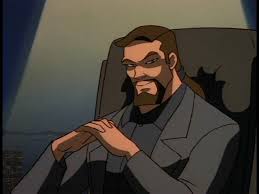
The episode opens in black and white as we see a pair of hands saving a wild rose from being torn up to make way for a new prison in Gotham. An old news broadcast serves to provide a framing device for this prison as it’s the brainchild of Gotham’s new district attorney, Dent, with considerable financial backing from some guy named Bruce Wayne. The show uses colored images to take us to the present, five years later, and a current prisoner of that fancy new establishment is making an escape with the help of a helicopter. This sets up a fun little back and forth where we’re shown scenes of Batman going after this guy and a scene of Dent enjoying dinner with a dashing redhead. They’re waiting for Wayne, and we get some humorous comments from Dent about his boring buddy who is always late while Batman is shown doing mostly Batman things. It’s a scene that will basically be adapted for the first Spider-Man movie.

1280x720-sxZ

Bruce meets Harvey and his new girlfriend Pam for dinner.

Bruce eventually shows up at dinner, having thwarted the escape, and is introduced to Dent’s fiancé, Pam Isely. After she gives him a long, lingering, kiss she departs and Bruce begins to caution Dent on moving too fast (he’s only known her a few weeks). Dent begins to complain about not feeling well, and then passes out into his pudding and Gotham PD is alerted. Dent’s been poisoned, and Wayne naturally is on the case as Batman.

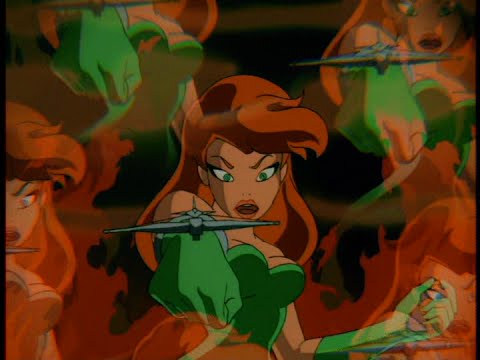
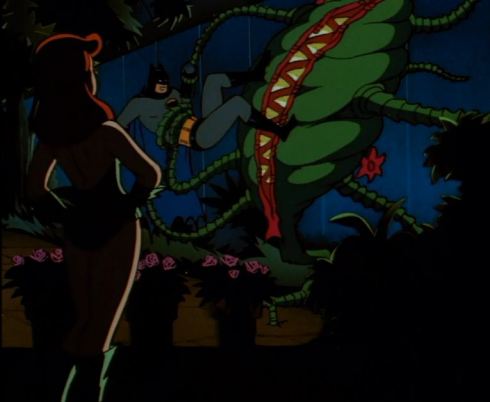
Through the use of his awesome computer, Batman discovers the poison is derived from an extinct species of rose. He also learns that Dent’s new flame is a botanist, who is currently giving a lecture on extinct plants. You would think Batman’s villains would be more careful? Anyway, it’s pretty clear who’s behind the poisoning and Batman confronts Isley, who’s hopped into a backless green outfit with a wrist-strapped crossbow and is now calling herself Poison Ivey. She has some sentient plants that do her bidding and basically makes it clear she values the life of the plant Dent drove into extinction by building his prison (apparently Gotham has a bad environmental works department) more than the life of Dent. I can’t help but wonder if Ivy was created by someone who thought vegetarians were crazy and that they valued animal life more than human life and decided to make a more extreme version?
hqdefault-8

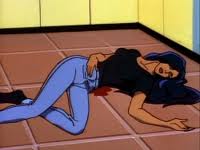
I always thought Poison Ivy’s mini crossbow was pretty cool.

Nonetheless, this is a good episode with some pacing problems. I really enjoy the setup, and it’s great that we get to see the Bruce/Harvey friendship before a different tragedy befalls the Dent character. I like that Isley is not too on the nose at first. While it’s not hard to figure out who poisoned Dent, it’s handled about as well as it can be. Ivy does come across as a bit incompetent, even basically just giving up in the end after almost losing her precious plant. It’s always a challenge to put Batman at odds with a female because the censors don’t want Batman handling them in the same manner he would The Joker, but Ivy’s plant monsters work well to take a beating and they’re pretty cool looking. I can’t help but think this episode would have benefitted from being a two-parter though, as it wraps really fast. A second part would have allowed for the introduction of some red herrings to make things seem less obvious leading to a better pay-off in the end.
Captur2e_zpse0f51feb

Given how Ivy’s feminine features are very much a part of her arsenal, I really hope that mutant plant isn’t supposed to be representative of a certain part of the female anatomy.

Visually, this is a solid episode. There’s some stiff animation at times, but I liked the artistic take of utilizing black and white and color as a way to distinguish the past and present. Batman gets a little beat up too which is always kind of fun to see. There’s also a little visual humor as we get Gordon and his subordinates racing out of the police headquarters when that unnamed prisoner attempts a break-out repeated when they find out Dent gets poisoned. Both times Bullock is just trying to enjoy some donuts because he’s a cop, and he’s fat. Cheap humor, but for some reason it made me laugh a bit when the scenario was repeated. Alfred also gets some nice lines here, and he’ll be even better in the next episode, making him a dark horse early favorite for season MVP.

This episode is a good introduction for Poison Ivy, who could be considered one of the break-out players from this series. Prior to The Animated Series, Ivy wasn’t a big player in the comics, but this series treated her as Batman’s #1 female adversary (it would mishandle Catwoman, coming later), and yes I realize this is the show that gave us Harley Quinn. Without this show, she probably isn’t a featured villain in Batman & Robin, which was a pretty big moment for the character, even if the film is trash.

#9 Best in TV Animation: The Ren & Stimpy Show

renstimpylogoThe thumping bass line leads into a frantic percussion section punctuated with a quick strike of a guitar and The Ren & Stimpy Show is on! The third and most unique of Nickelodeon’s early 90’s Nicktoons, the show was a throwback to the Golden Era of cartoons embodied by directors such as Chuck Jones and Tex Avery. This was a show for animators, for cartoon lovers, for people that wanted a show to just make them laugh. The process of creating an episode, from start to finish, was handled by one director and just a few writers who bounced ideas off one another. There was no rigid, segmented process where every aspect of the show had to be overseen by a specialist and there was no nefarious merchandizing gimmick turning the program into an extended commercial. The Ren & Stimpy Show simply existed for the love of it.

The early days of Nickeldeon consisted of live-action programming mixed in with educational programming for young children. The animation came from outside sources with the most notable being the Looney Tunes package program featuring classic cartoons. As the network grew, the desire to produce its own cartoons naturally arose and thus the Nicktoons were born. Consisting originally of Doug, Rugrats, and The Ren & Stimpy Show, the block first began airing on Sunday morning in 1991 and were so successful that they ended up being just the first in a long line of cartoons. While Doug and Rugrats were fairly tame in their approach to entertainment, Ren & Stimpy stood out for their crass, gross-out style of humor that would eventually land them on Nick’s late-night block of Saturday night programming and even a handful of MTV appearances.

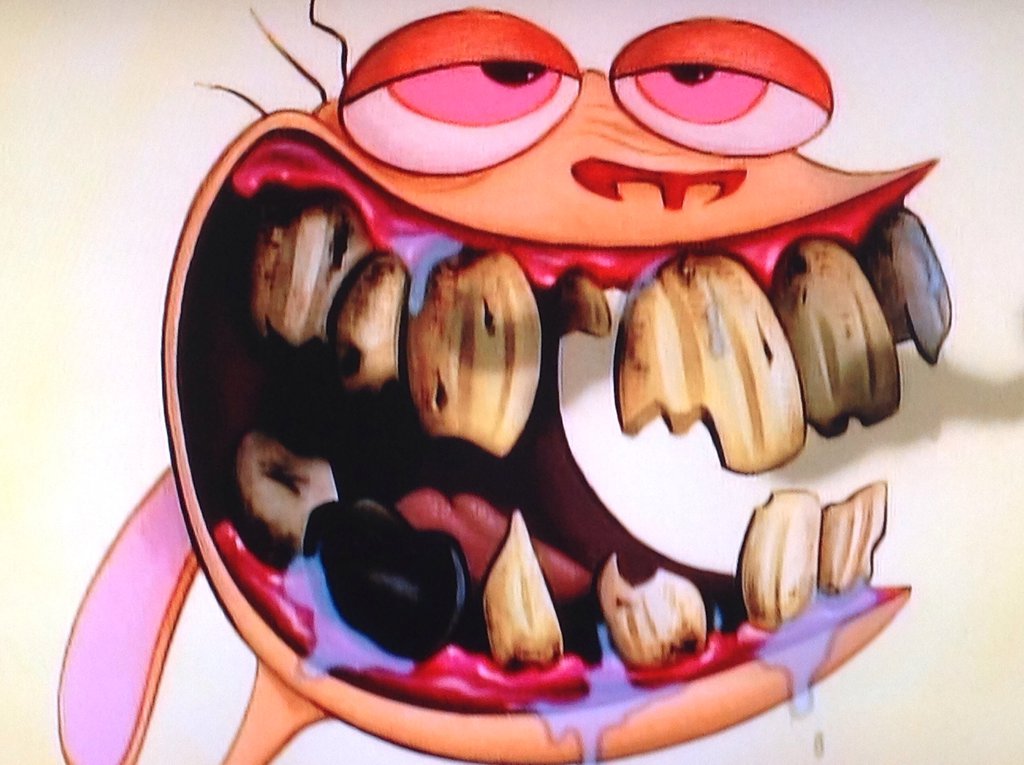
Ren's rotting teeth, as seen here, are an example of the highly detailed (and often gross) still images the show would make use of.

Ren’s rotting teeth, as seen here, are an example of the highly detailed (and often gross) still images the show would make use of.

Conceived primarily by animator John Kricfalusi, Ren and Stimpy were atypical characters existing in a fairly typical format. They were a natural odd couple, being a dog and cat, but broke the mold in a sense by being rather unappealing to look at. Ren, gangly and liver-spotted, resembled a mosquito more than a chihuahua at times while Stimpy was a cat in name only. Rotund with a big, blue nose, he had no worries of being mistaken for Sylvester or Tom. The show was a half-hour program but mostly consisted of two shorts that would drop Ren and Stimpy into completely new environments with no continuity from one episode to the next. In fact, several episodes ended with the characters in hopeless situations or even implied death

The show’s intention was to make the viewer laugh. There were some bits of sentimentality tossed in to appease the network, but mostly the show wanted to be funny in the most obnoxious way possible. The characters often screamed with Ren in particular prone to violent tirades. Stimpy was the dumb one with a good heart while Ren often abused him both physically and emotionally. The show was able to retain its humor because Ren usually got what was coming to him making the show feel like it earned the laughs that came at Stimpy’s expense. The show often resorted to gross imagery for its humor. Stimpy would frequently cough up a lumpy hairball or show viewers his collection of snot he kept under a coffee table. Kitty littler featured prominently in multiple episodes with characters even eating the stuff right out of the litter box. By far, the show’s most memorable gross gag was the long-running extreme and highly detailed close-up shots of characters. These still images usually depicted characters at their worst with bloodshot eyes and hairy moles. The most memorable may have been when Ren revealed a mouth full of rotting teeth in response to Stimpy’s proper dental hygiene.

Because of its penchant for violence and toilet humor, Kricfalusi often found himself battling with standards and practices at Nickelodeon. One very memorable episode featured the characters playing a board game called “Don’t Wiz on the Electric Fence” climaxing with Ren doing just as the box suggested he not do and all the characters being sent to Hell. Another episode, “Man’s Best Friend,” climaxes with Ren violently beating a man with an oar. The animation goes into slow-motion as Ren strikes the man and his head violently squishes and twists with each strike of the oar. It’s the episode often cited as being the last straw for Kricfalusi, who was fired by Nickelodeon in 1992, barely a year after the first episode aired.

Nickelodeon would turn to co-creator Bob Camp to head up the show for the remainder of its run through 1995. Voice acting dynamo Billy West, originally hired to voice Stimpy, took over as Ren and added to his impressive resume (though one wonders what lasting damage all of the screaming from this show did to his vocal chords). Still, without Kricfalusi the show was doomed. It was still capable of making people laugh at times but it often felt directionless, even pointless.

The background was often used as a tool to heighten the emotion and intensity of the onscreen action as opposed to merely being a set piece.

The background was often used as a tool to heighten the emotion and intensity of the onscreen action as opposed to merely being a set piece.

From an animated perspective, the show was quite excellent. Everything was hand-drawn and the backgrounds often popped with detail. The show was not afraid to borrow from several styles of art, even abstract. In addition to the detailed still shot the show was known for, there was also frequent use of emotive backgrounds, usually when a character screamed or was frightened. Instead of the standard background being present, it might be a splatter effect or just splotches of color. Music was a big part of the show as well. The jazzy theme song was unmistakeable, and some of the show’s most iconic scenes include song such as the “Happy, Happy, Joy, Joy” segment from “Stimpy’s Invention” or the theme for the Royal Canadian Kilted Yaksmen. The music and visual effects all came together to help give the show it’s off the wall vibe.

The Ren & Stimpy Show could be described as one of those programs, or events, that burned too hot for it to last long. It may have remained in production until 1995, but the show’s creative output was only at its peak for a year or so. For that reason, it’s inclusion on such a list as this one could be debated, but it left such a mark on the 1990’s that it felt too hard to exclude. Many shows would follow and try to imitate what The Ren & Stimpy Show started but virtually none of them succeeded. Even Kricfalusi tried reviving the show in 2003 as an adult-oriented comedy program but the magic was long gone. It’s possible Ren and his pal Stimpy were simply not meant to last as long as Bugs or Daffy, but for the short while they were around they made an impact and their cartoons stand the test of time.


The Best in Televised Animation – Introduction

ARCHIVAL PHOTOProbably 90% of the posts here could be separated into two broad categories:  video games and animation. Thus it would come as no surprise to anyone who has spent even a small sum of time browsing this blog that I love animation, especially the classic hand-drawn kind. I’ve never given much thought as to why I enjoy animation so much. I would guess it’s because animation can do anything, even things live-action cannot. It can imitate real life or do the exact opposite. It’s often a haven for comedy and a natural destination for characters who began life as a comic book.

Animation has spent considerable time on the big screen and on television. As film, animation often takes the form of a general audience picture running around ninety minutes. It of course began life as a short subject often pre-empting a more traditional picture, then Walt Disney came along and decided animation could go feature-length. On television, animation often occupies children’s programming, but select shows have broken through as animated sitcoms and adults-only comedy acts. Trying to narrow down the best animated films and television shows is quite a tall task, which is why this feature is going to concern itself with television for now. This I envision will be a long-running feature. I’ve settled on what I consider to be the ten best animated programs, but there’s always the possibility I could continue to add to it even after I do a write-up on my ten favorites. It’s also possible I never finish. The possibilities are endless!
Before getting to my top 10, I wanted to make an introductory post on the feature and use it as an opportunity to highlight the shows that just missed the cut. My list does not exclude the animation aimed at children and my top ten is almost half kid’s shows and half adult programs. I tried to approach all of them with the same basic questions:  Is the show entertaining? Is the medium used well? Is the artwork pleasing to the eye while suiting the show’s needs? Naturally, the list will be influenced by the era I grew up in, the 80’s and 90’s, so the shows that came before that time are unfairly penalized (though in my opinion, most of the cartoons from that era are garbage). I also didn’t include the package shows like Looney Tunes. I loved those cartoons growing up, but they’re theatrical shorts

With that out of the way, it’s time to hit on the ones that just missed my list. One of the first cartoons I can remember watching daily as a kid is DuckTales. DuckTales was extremely pleasing to the eyes, like just about all of the Disney cartoons from that era, and featured a fun, engaging plot with likable characters and a catchy soundtrack. It holds up pretty well today, but is obviously aimed at children. The show could get redundant as well as the premise for most episodes was Scrooge having to thwart the Beagle Boys, but as far as children’s entertainment goes, it’s hard to beat DuckTales.

Spider-Man has made numerous appearances on television, but the oddest looking is probably the best.

Spider-Man has made numerous appearances on television, but the oddest looking is probably the best.

DuckTales was an adventure program, and another adventure program that’s still fun to this day is Dragon Ball. Hailing from Japan, Dragon Ball tells the tale of Goku who travels the world in search of the seven magic dragon balls. The plot gets more complicated than that as the show moves along, but it’s packed with equal parts action and humor. Since it arrived in the states after its sequel series, Dragon Ball Z, anime dubbing was able to improve and english speaking audiences were treated to a wonderful dub, something that was rare during the 90’s. Dragon Ball Z is the more popular show, but it doesn’t hold a candle to the quality of Dragon Ball.

Superheroes have seen a great many takes on their comics in the world of televised animation. One such character has received numerous adaptations: Marvel’s Amazing Spider-Man. Two adaptations stand-out for the wall crawler, the simply titled Spider-Man from the 1990’s and the more recent Spectacular Spider-Man. The 90’s Spider-Man was a great introduction for kids unfamiliar with the character. It hit on lots of Spidey’s most famous stories from the comics, and even though it was for children, it took itself very seriously. Sometimes too seriously. Spectacular Spider-Man distinguished itself with a unique look. It’s style was a bit off-putting at first, but the animation was crisp and the show packed a ton of energy. Sadly, it was a casualty of the Marvel purchase by Disney and an inferior Spider-Man program took its place.

Superhero shows were quite popular in the 90’s, but one stood out amongst the crowd for its satirical take on the genre. I am, of course, talking about The Tick. The Tick closed out the mega-popular Fox Saturday Morning block of programming and was a particularly zany take on the superhero genre. It was probably too weird and too out there for a lot of kids, but it’s definitely a show that works better on older audiences. So obvious was this fact that Fox attempted a live-action sitcom starring the dim-witted blue hero starring Patrick Warburton. It was not a success.

The Tick was a breath of fresh air coming on the heels of numerous melodramatic superhero cartoons.

The Tick was a breath of fresh air coming on the heels of numerous melodramatic superhero cartoons.

In the world of adult cartoons, Family Guy is pretty popular these days. It was roughly animated when it first showed up, but the increased ratings lead to better production and the show looks much better these days. Unfortunately, like another very famous adult cartoon that I’ll get to much later, its current output is far less creative than the first couple of seasons. Family Guy really only had 2 and a half seasons of good content before the formula became too obvious and the characters unlikable. An even more vulgar program for older audiences, Beavis and Butt-head dominated a small chunk of the 90’s. It was impossible to find a teen that didn’t know who those two were. The show was a lot sharper than most gave it credit for, though the animation was as crude as it comes. It would make a Hell of a nice time capsule kind of show.

When it comes to cartoons not aimed primarily at children though, all present cartoons owe a great deal to The Flintstones. The Flintstones were basically a stone-aged take on The Honeymooners and the first primetime cartoon. It’s premise is clever, and the setting is a good example of one that works far better in animation that it ever could have as live-action (just watch The Flintstones movie if you’re not convinced of that). It’s also a show hurt by the age of your humble writer. I grew up watching The Flintstones in syndication when it aired as just another cartoon among many others. I enjoy it for what it is, but it doesn’t engage me enough to make my top ten. It very nearly did though just on its laurels, but I wanted to go with the programs that I personally enjoy the most, because after all, it is my list.

All of those shows I just mentioned were good at one point or another, though truthfully, other than The Flintstones, it wasn’t hard for me to leave any of them off my list. The ten I have picked as the best really are ten shows I enjoy quite a lot and I look forward to doing write-ups on them as I find time. And now, a few others I considered for this post:  Rugrats, Teenage Mutant Ninja Turtles (2012, 2003), Rocko’s Modern Life, Sealab 2021, Batman Beyond, and Bob’s Burgers.


Lego Simpsons: The Kwik-E-Mart and Mini Figures Series 2

IMG_0445Last year, Lego released its first set and series of mini figures styled after The Simpsons, the animated institution that has anchored Fox’s Sunday Night lineup longer than Justin Bieber’s been alive. Debate the merits of the program’s more recent seasons all you want, but it couldn’t diminish my curiosity for a set of Legos based on the venerable series. The first set, predictably, was the home of the Simpsons while series one of the mini figures focused on most of the key characters from the show. Because the cast is so large, and the world so developed, there was already instant demand for a series two and Lego has delivered. And for the second construction set Lego tabbed Springfield’s most iconic convenience store:  The Kwik-E-Mart.

A few months ago I blogged on the subject of a series two for Lego and concluded that the Kwik-E-Mart was the most likely follow-up set. The only location that could possibly rival it is Moe’s Tavern, but Lego’s anti-alcohol policy makes that one a no-go right from the start. The Kwik-E-Mart may seem like a smaller set when compared with the Simpsons’ house, but Lego managed to stuff almost as many bricks into it as it did for the house, due in large part to all of the goods being peddled by Apu and his corporate masters. The set retails in the US for the same $200 the house retailed for, which felt high but wasn’t enough of a deterrent to keep me from purchasing it. In hindsight, it’s probably still too high but I think I actually like this one more than the Simpsons’ house, and I’ll tell you why.

imageThe Kwik-E-Mart is fairly large when compared with the house. It’s only one story high but the floorplan is more square and deeper than the house. It too features hinged portions to open it up for viewing/play and the roof lifts off for easy access to the store’s innards. Two of the store’s walls are lined with freezers, one of which features a decal of Frostillicus, and their construction is creative and adds depth. There’s a teeny, tiny, backroom that’s not true to the actual layout of the store, but I appreciate the fact that Lego at least attempted to include it. The other walls are lined with a cash machine, arcade games, and a coffee area. The central desk features a hot dog heater and a donut rack. Behind the desk is the all important Squishee machine and display cases come with copies of Angry Dad and other prints recognizable to Simpsons fanatics. All of the little details, like the puddle of Squishee on the floor or the different levels of the fruit punch and lemonade coolers are creative and extremely well done. Some of the aisle goods are a bit bland, but they’re the exception. Much of the detail of the freezer goods is almost wasted considering how unnoticeable it is and I love that Lego included a lone hot dog wedged between the counters. Adjacent to the store is a dumpster area and the roof features a crude representation of Apu’s garden. It may not come close to resembling the television garden, but it’s great that Lego included it.
A familiar site for Apu.

A familiar site for Apu.

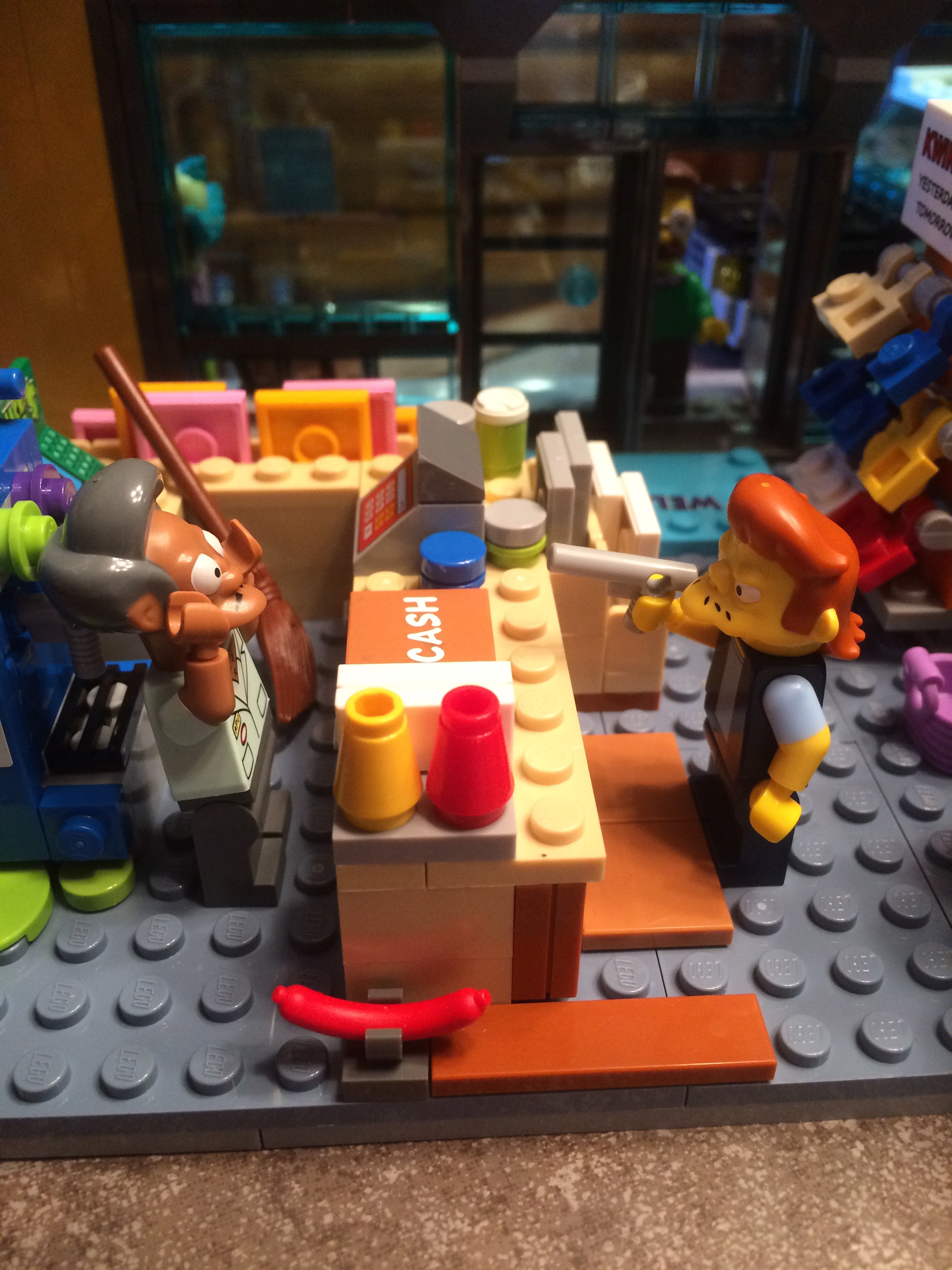
The set comes packed with five mini figures:  Apu, Homer, Marge, Bart, Chief Wiggum, and Snake. Of the five, only Snake is exclusive to the set. Apu and Wiggum feature new outfits with Apu in clerk attire and Wiggum in a donut-stained suit. Homer, Marge, and Bart are essentially the same figures released in wave one of last year’s mini figure line. I understand that Lego likely feels compelled to include members of the Simpsons clan in any set it does, but it could have done something to make these three feel a little special. Marge and Bart could have had screen-printed jackets and Homer could have come with the giant hat he wore to spy on Apu for the local investigative news report. Or he could have been clothed in his clerk attire from the episode he took a part-time job at the Kwik-E-Mart. At any rate, it wouldn’t have required much effort to make these three figures unique but Lego opted not to. Also included is a squad car for Wiggum that can actually fit both he and Snake inside it. Accessories-wise, Lego doesn’t really do guns but there is a piece in the set that certainly resembles a gun (pictured) that Snake can utilize. It’s the same piece that’s also used to create Bart’s spray-paint. Marge has a basket, and Wiggum has some handcuffs. Nothing exciting, but certainly appropriate. The store has the better accessories, including a better looking Squishee cup (when compared with the coffee-like cup the mini-figure of Apu came with) and tiny cans of buzz cola.

image

It’s like kissing a peanut!

The Kwik-E-Mart, minor nitpicks aside, is a success for Lego and fans of the Simpsons. As for series two of the mini figures, it’s somewhat a success but not as obviously so. First, let’s talk about the bad. As expected, each member of the family gets another figure. For Homer, Marge and Lisa, they’re given more formal attire. For Homer and Marge it’s their date attire we see from time to time while Lisa is wearing the dress we most often see her wearing when the family attends church. Bart is dressed as his alter ego Bartman, which was expected. Joining him is Milhouse as Fall-Out Boy. I don’t think anyone was clamoring for another edition of Milhouse, but at least he pairs well with Bartman. Maggie is also back but this time she’s exactly the same as she was in series one. This is unacceptable. Lego could have at least put her in her white onesie she sometimes wears or her starfish snow suit. Unfortunately, Maggie comes packed with Santa’s Little Helper (who really should have been included with the house last year) so fans who want to have a complete Simpsons’ family will have to pick her up again (Lisa comes with Snowball). The other members of the wave include some familiar faces: Willie, Professor Frink, Dr. Hibbert, Pattie, Selma, Smithers, Hans Moleman, Martin, Comic Book Guy, and Mrs. Krabappel.  It’s easy to second-guess Lego here as should we really have received a Frink before a Skinner? Dr. Hibbert before Sideshow Bob? Complaints about the selection aside, most of the new characters look great. My only gripes there are with Hibbert and Frink’s lab coats, which are printed on instead of being actual pieces. Comic Book Guy also, like Wiggum from last year, appears too thin. I wish Lego would do something to make the really obese characters stand-out as such, but it’s apparent they’re not going to do that. The included accessories for each character make sense, with the Simpsons’ pets being the obvious stand-outs. Willie probably should have come with a rake, and Hans a cane, but that’s no great omission.

Like all of Lego’s mini figures, these are released in blind bags. Those willing to swallow their pride and hang out by the display case feeling-up the bags should have little trouble in coming away with a complete set with minimal doubles. I was hasty in my first attempt and mistook a Selma for a Pattie, a Hans for Martin, and a couple other screw-ups. I ended up keeping one double, the Hans, and made use of the many Barts that have been released by swapping heads and depicting Hans as he appeared in the episode “Burns’ Heir,” when he briefly joined the Simpsons.

The two sets side by side.

The two sets side by side.

In the end, this wave of figures and the Kwik-E-Mart are fun and rewarding for longtime fans. They also accomplish the goal of making fans hungry for a series three. There are numerous essential characters that have yet to be featured and still plenty of Homer and Bart variants that Lego could fall-back on. As for a third set, Springfield Elementary seems like a logical resting point, though some sacrifices would have to be made to keep it in scope with both the house and Kwik-E-Mart in terms of the amount of bricks. Other locations that could be featured are The Android’s Dungeon and Krusty Burger. Series one sold well, and as far as I know series two has continued that trend so a third seems likely. Hopefully Lego can come up with a worthwhile successor to the Kwik-E-Mart, but even if they don’t, there’s a good chance I’ll buy it anyways


Beavis and Butt-Head Do Christmas

Beavis and Butt-head Do Christmas (1995)

Beavis and Butt-head Do Christmas (1995)

Last year, I posted about the many Christmas specials featured in the animated series South Park. Well, before South Park came Beavis and Butt-head: the subversive, moronic duo who entertained millions during the 1990s on MTV. Created by Mike Judge, who’s now probably more famous for King of the Hill and Office Space, Beavis and Butt-head were basically a rip on the MTV generation. They were dim, violence obsessed, and wasted away their lives in front of the television watching music videos and eating nachos. Despite the fact that the two were clearly presented as losers on their own show, kids liked to emulate them and if the duo approved of a band or video on MTV it offered a credibility boost to said band. Every rock and metal act wanted to be endorsed by Beavis and Butt-head, because it’s what the kids were into at the time.

Beavis and Butt-head embrace the holiday spirit. Kind of.

Beavis and Butt-head embrace the holiday spirit. Kind of.

Beavis and Butt-head first debuted with “Frog Baseball” on MTV’s Liquid Television block. It was so successful that it was spun-off into its own show which ran from 1993 until 1997 with a brief one season return in 2011. Along the way there was also a feature-length movie, television specials, and a spin-off called Daria. A few years ago, I made an entry of what I considered essential Christmas viewing and among the many movies and specials was Beavis and Butt-head Do Christmas. Well here’s a full write-up on the special from 1995.

Beavis and Butt-Head Do Christmas refers to two shorts with other holiday content woven in. Do Christmas has been released on DVD and VHS though is likely out of print at this point. The two shorts are parodies of classic Christmas stories/movies that should be obvious just by reading the titles of the two cartoons: “Huh-Huh Humbug” and “It’s a Miserable Life.” First stars Beavis and the second Butt-head and are roughly 12 minutes a piece. This was one of the few episodes of Beavis and Butt-head that didn’t have any music videos (a prior Christmas special for the show featured nothing but the two riffing on Christmas videos) but is still pretty hilarious, nonetheless.

In "Huh-Huh-Humbug," Beavis just wants to enjoy a porno but various ghost won't let him.

In “Huh-Huh-Humbug,” Beavis just wants to enjoy a porno but various ghost won’t let him.

“Huh-Huh-Humbug” puts Beavis in the role of Scrooge only he’s more of an idealized version Beavis sees of himself as opposed to a truly financially successful human being. The cartoon opens with Beavis squishing a rat on the grill at Burger World on Christmas when his boss comes over to admonish him for his lack of ambition and to brag about his position of assistant manager of a fast food restaurant. Beavis soon falls asleep on the job and dreams he is the manager of Burger World who gets to boss around Butt-head and Principal McVicker and make them work on Christmas while he goes home to watch a porno and jerk-off. When Beavis settles in to watch his porno, the various ghosts from A Christmas Carol start interrupting him beginning with Butt-head playing the role of Marley. The other ghosts admonish Beavis and point out how awful he treats McVickers, to which Beavis shows no empathy. He even disagrees with the Ghost of Christmas Yet-to-Come’s version of the future, instead choosing to imagine himself as a Terminator-like robot laying waste to the customers of Burger World.

A horrible future, indeed.

A horrible future, indeed.

The cartoon works because there’s no attempt to show one worthwhile quality within Beavis. He’s a selfish, stupid, person who is incapable of any kind of empathy. To add to the humor, there’s a lot of one-liners and the porno Beavis watches (also a parody of A Christmas Carol) is a great source for gags.

The second cartoon, “It’s a Miserable Life” stars Butt-head, but like the prior one, still features plenty of Beavis too. The twist on this parody is that the guardian angel for Beavis and Butt-head is sent to kill the two after God received numerous requests to make them disappear. The Clarence character here first tries to simply kill the two by freezing a bridge they’re walking on in hopes the two will slip and fall to their deaths. When that fails, he opts to show Butt-head what the world would be like if he never existed and how much better off people would be. Naturally, without Butt-head everyone is a lot happier and more successful. Bevies, in particular, is best friends with the dorky Stuart and volunteers at the soup kitchen on Christmas. After seeing all of this, Butt-head just gets pissed off and he and Beavis just determine that the world sucks, but would suck even more without them. The guardian angel tries to kill them again, but just ends up killing himself by accident.

Once again, the cartoon works by not resorting to any kind of Christmas sentimentality at all. Butt-head is portrayed as a parasite on society who refuses to embrace anything remotely “good.” It’s amusing to see the Butt-head-less world, but it’s more amusing to see Butt-head’s reaction to it. “Huh-Huh-Humbug” is probably my favorite of the two, but they’re both entertaining and pretty much for the same reasons.

Butt-head's guardian angel isn't here to help him, he's here to kill him.

Butt-head’s guardian angel isn’t here to help him, he’s here to kill him.

In between the specials we’re also tested to the Ask Santa Butt-head segments and a scene of a burning Yule log that the two riff over in place of music videos. The Santa Butt-head segments feature the duo playing Santa and reindeer, with Butt-head as Santa and Beavis the reindeer. Butt-head reads fan letters, with most of them being from women who want to have carnal relations with Beavis. Butt-head doesn’t understand this and refuses to give Beavis the letters. Since he’s roped up to the sleigh in his reindeer costume, there’s little he can do about it. When a letter-writer requests Butt-head kick Beavis’ ass, he’s happy to oblige by whipping the day-lights out of him. These segments are brief but do bring about a good amount of laughs with the two staying true to their characters even while playing other characters.

Beavis and Butt-head Do Christmas is not your typical holiday special. There’s no holiday cheer, unless you consider any amount of laughter brought on by a Christmas special a form of holiday cheer. It’s mean-spirited, low-brow, but also full of good satire that will make most people who remember the 90’s laugh often and frequently. Beavis and Butt-head are dumb, but the humor really isn’t which some people failed to “get.” I’ve always felt they were underrated in that regard, and perhaps South Park would end up better combining toilet humor with biting satire, but it doesn’t diminish what Mike Judge did with Beavis and Butt-head beforehand.


Teenage Mutant Ninja Turtles (Nickelodeon) Season 2

TMNTThe resurgence of the Teenage Mutant Ninja Turtles has been one of the more fun story lines from pop culture for me over the past two years. With an all new comic line, cartoon, and feature film, the TMNT are almost as relevant today as they were in 1990. Considering other old properties from the 80’s have been successfully resurrected recently, perhaps it’s not all that surprising the Turtles were able to accomplish the same. What has been surprising though is how successful the relaunch has been from an artistic standpoint. The general consensus for the vast majority of new films based on properties from the 80’s is that the material has been lacking. While no one can dispute how commercially successful a franchise like the Transformers has been for Hollywood, the movies themselves come across as overstuffed toy commercials. Like the Transformers, the return to the big screen for the Turtles was decidedly lacking when the new film was released in 2014 (I’d call the film trash but I personally have not watched it and don’t plan to). However, the comic book line launched in 2012 has been pretty well-received while the television show has been a smashing success.

When the cartoon was announced by Nickelodeon I was not optimistic about its chances at success. I was borderline indifferent, but my past romance with the Turtles was enough to make me curious. I set the DVR to record season one, and by its end, I was a fan. The show is witty, action-packed, and stuffed with enough in-jokes and material to appeal to 30-somethings who grew up with the Turtles. The cartoon successfully melds the old cartoon with the comic books while also taking its own path. The 2003 cartoon attempted the same, but was probably too reliant on the original Mirage comics. The old comics are an entertaining read, though nothing magical, but they do not possess an energy that lends itself well to animation. While on the other hand, the original cartoon was set on creating a fun series that appealed only to children. It never put the characters in any real danger and would eventually lose its audience as it grew up and acquired an appetite for more mature material. When the show finally made an attempt at change, it was too late.

What's old is new.

What’s old is new.

Like with season one, season two of Teenage Mutant Ninja Turtles opts for a more serialized nature with plots carrying over from one episode into another with few stand-alone episodes and characters. When a stand-alone episode does pop up, it serves as a palette cleanser from the main plot and is often a more offbeat episode. Most of these episodes are packed with humor with season two’s “Mazes & Mutants” topping the list of funniest TMNT episodes so far. The writers have found a nice balance in the humor for the show with it coming up at opportune times and resisting the urge to go for the easiest joke or pun. The show is genuinely funny, but it also knows when to let up on the humor and isn’t overly-reliant on the Michelangelo character.

Season two picks up right where season one left off with The Kraang being beaten back temporarily. Shredder and The Kraang have appeared to have forged an alliance, and an early mishap with a canister of mutagen mutates April’s father, Kirby, into a bat monster causing tension between the Turtles and their lone human friend. Meanwhile, Splinter (and this is a spoiler for those who missed season one) is coming to terms with the fact that his daughter is alive and well but has been brainwashed by the Shredder into believing she is actually the daughter of the Foot Clan’s leader and not Splinter. These two threads, April’s distrust of the Turtles and Karai’s lineage, are major plot points for the bulk of season two. The Karai plot twist could be seen coming from a mile away, but it was still effective as the writers handle it well. Karai naturally does not react well when the truth is first presented to her, and her response to it is complicated and appropriately remains unresolved for several episodes. The Kraang maintain a healthy presence throughout the season as well, often playing a role in a small way in most of the episodes. The season concludes with another big face-off between the Turtles and Kraang and it would seem the alien race will not be going anywhere anytime soon.

Casey Jones and Raph team-up yet again.

Casey Jones and Raph team-up yet again.

Season two introduces several characters, old and new. As was revealed in press kits, Casey Jones made his series debut in season two. Like April, he has been aged-down for the show from his original depiction but remains a vigilante of sorts. And like the Casey of old, he forms a bond with Raph pretty quickly and the two are a crime-fighting duo in some episodes. And as predicted by me (and likely many others), Casey forms the third corner of a pseudo love triangle with Donatello over April. Naturally, April is more taken with the human and this creates tension between Don and Casey that is sometimes entertaining, and sometimes feels a little stuffy, but is one of the ongoing aspects of the show that serves to remind the audience that these characters are, in fact, teenagers after all. Other characters familiar to fans of the old show that make their debut in season two include Slash, Mutagen Man, and Pizza Face while other characters are obvious references to old ones (Kirby bares an uncanny resemblance to Wingnut, for example). The show also does a good job of hinting at future characters. When a thief with a purple mohawk shows up it’s only natural for fans of the old show to assume this character has a date with a warthog and some mutagen in his future.

Don't be surprised if Kirby's Party Wagon gets a make-over in season 3.

Don’t be surprised if Kirby’s Party Wagon gets a make-over in season 3.

My main point of criticism with the show early on was for its lifeless take on the city of New York, and while the show has done a better job of making it look like people actually inhabit this city, it’s still a relevant criticism for season two. The character designs though have improved. Some of the villains in season one were pretty boring to look at, and that has mostly been remedied (though some are underwhelming, I’m looking at you Tiger Claw). There’s very little for me to complain about when it comes to this show. The writers have also wisely made the Foot Clan robots in season two (and not just randomly, it’s explained in an episode) so the Turtles are free to user their weapons against them. The more graphic violence is handled offscreen, but the consequences are shown. When Leonardo gets isolated from his brothers in the season finale and beat-up by Shredder, we don’t see any of Shredder’s bladed strikes landing. However, when an unconscious Leo is tossed through the window in April’s apartment where the other turtles are holed up (awesome reference to the comic and original film, by the way) his body is cut and bruised.

Just like with season one, season two does a great job of tossing in winks and nods to the old material that came before it. They’re sometimes hidden in the background and other times in your face (the party wagon!). Shredder remains a credible threat to the Turtles throughout the season and is a more than competent ass-kicker when pressed into battle. And while the April plot is resolved during the season, the other big ones are still open heading into season three. The season concluded with an hour long special that was perhaps the best in the show’s short existence thus far. It was satisfying on an emotional level while also delivering the humor and action the show has become known for. I’m even more enthusiastic for the show’s third season than I was the second (aside from the fact that Seth Green is set to takeover the voice-acting duties for Leonardo). If you were a fan of the Turtles in your youth and still have a fondness for them residing somewhere inside of you then you should be watching this show.


Gargoyles: Season One

Gargoyles - The Complete First Season (2004)

Gargoyles – The Complete First Season (2004)

In the early 90’s, Fox cornered the market when it came to television shows for young demographics, particularly boys in that 7-12 age group.  They had hit shows with Batman The Animated Series, X-Men, and Power Rangers and their Saturday morning programming was unrivaled.  Batman, in particular, ushered in an era of cartoons where the writers didn’t feel like they had to dumb-down the show to please its audience.  The stories were mostly grounded within the fantasy world the show created, while X-Men wasn’t afraid of creating serialized episodes that asked more from its viewers.  These weren’t stand-alone episodes with the same throw-away clichés prevalent in most children’s programming.  And while the shows were, first and fore-most, children’s shows they didn’t make adults feel like idiots for watching.

Disney, by contrast, had seen its viewership decline.  The once popular Disney Afternoon programming was mostly content to keep things the same.  Duck Tales and Tailspin were successful early on, and Darkwing Duck was Disney’s own answer to Batman but with a comedic core.  If Darkwing Duck was supposed to reel in Batman viewers then Disney missed the point.  Putting a cape and mask on a character and having him fight crime isn’t what people tuned into Batman for.  Those viewers wanted to see the show take itself seriously, present real threats, and overall just make it a credible show.  Disney needed a show that matched Batman’s tone and not his costume, so they turned to comic book writer Greg Weisman and from that relationship came Gargoyles.

Gargoyles could be described as modern fantasy mixed with Greek tragedy.  Stylistically, the show is reminiscent of the aforementioned Batman and X-Men with similarities to contemporary cartoon Jim Lee’s Wild C.A.T.S.  The color palette is muted with lots of deep violets and blues and plenty of black.  The first season has a split setting between modern-day New York and turn of the first millennium Scotland.  The gargoyles, lead by the hulking Goliath, are a humanoid, bat-like race that spends the daylight hours encased in stone and owns the night.  In 994 Scotland, they’re protectors of a castle inhabited by humans that, for the most part, view the gargoyles in an unfavorable light.  When the gargoyle clan finds itself betrayed by those it trusted, most are smashed to death during the day while the few survivors are magically encased within stone until the castle they inhabit rises above the clouds.

The Manhattan Clan (left to right):  Lexington, Brooklyn, Goliath, Hudson, and Broadway.

The Manhattan Clan (left to right): Lexington, Brooklyn, Goliath, Hudson, and Broadway.

The existence of the extraordinary gargoyle race is all but wiped away from history, but one noted wealthy individual by the name of David Xanatos, is well-aware of their past.  It is he who purchases the castle along with the gargoyles and moves them to Manhattan where he places it atop a massive skyscraper, thus ending the spell placed upon them.  The rest of the first season deals with the gargoyles coming to terms with what happened to them a thousand years ago and finding a way to relate to this new, modern world and find their place in it.  Themes of tragedy, isolation, trust, family, and acceptance help frame the show.  In this there are many similarities to X-Men as both the gargoyles and mutants find themselves as unwelcomed protectors of humanity.  Their isolation, seemingly alone in this world with the exception of their one human ally, Elisa, helps evoke the Batman similarities.

Detective Elisa Maza heads the short list of allies for the Manhattan Clan.

Detective Elisa Maza heads the short list of allies for the Manhattan Clan.

The remaining gargoyles, now known as the Manhattan Clan, are a small group of varying personalities.  Goliath is the unquestioned leader.  He’s noble, proud and a bit stubborn at times.  He’s always learning and isn’t immune to mistakes, but he does everything with purpose and conviction.  Hudson is the elder statesman of the clan and its former leader.  He prefers to stay on the sidelines and leave the fighting to the younger gargoyles.  Brooklyn, Broadway, and Lexington are the younger members of the clan and rookery mates, which is gargoyle speak for siblings.  Brooklyn is a curious sort who seems to model himself after Goliath while Lexington is consumed by modern technology.  The gluttonous Broadway is sometimes relegated to comic relief though the show mostly avoid slapstick and jokes.  Rounding out the clan is the dog-like Bronx who is the only gargoyle incapable of speech and lacking in wings.  Detective Elisa Maza is the sole ally of the gargoyles in season one.  She’s a strong-willed character who is able to give the gargoyles leads on the goings-on of their enemies while also sometimes acting as almost a mentor to Goliath.

Much like the clan itself, the rogues gallery for the show is kept fairly compact for the first season.  It’s dominated by Xanatos, who poses as an ally early on to the clan but is soon revealed as duplicitous and self-serving.  His main weapons are cunning and money, but he also possesses some high-tech weaponry including his own cybernetic army of gargoyles.  He splits time as the main foe for the clan with Demona, Goliath’s former lover who was complicit in the destruction of their clan a thousand years ago.  While her intentions were without malice, her persona is consumed with a bloodlust for humanity as she blames them for their near extinction.  She is the Magneto to Goliath’s Charles Xavier.  Other villains include the sportsmen MacBeth and the television actors turned criminals The Pack, a group of men and women who fashion their personas after wild canines.

Demona, Goliath's former lover, is one of the primary antagonists for season one and beyond.

Demona, Goliath’s former lover, is one of the primary antagonists for season one and beyond.

The show opens with a very ambitious five-part mini-series titled “Awakening” (it was also released direct-to-video as Gargoyles:  The Movie) that sets up the series.  Right from the start, viewers are able to get a sense of the large-scale story-telling the show is aiming for while also being able to take in the peak of the show’s production values.  The animation quality is a grade above the usual afternoon cartoon fare, making it possibly the best looking cartoon of the mid 90’s.  The score is also exemplary and the voice acting contains notable actors such as Keith David (Goliath, various voices) and Edward Asner (Hudson) as well as numerous vets of various Star Trek programs.  Following the five-part debut, the show mostly settles into stand-alone episodes that also call upon happenings in previous ones.  Each gargoyle, with the exception of Bronx, is basically given his own episode to star in which helps the viewers get better acquainted with each one individually.  It’s similar to the tactic utilized by X-Men in season two and is an effective way to flesh out an ensemble cast.  There are thirteen episodes in total for season one, and pretty much all of them are good.  Some standouts include “Deadly Force,” which stresses the importance of gun safety without being ham-fisted (possibly created because main character Elisa is shown wielding realistic weaponry as opposed to fantasy, laser type devices).  “Her Brother’s Keeper” helps define what family means to the gargoyles and how it’s not so different from what it means to humans.  “Reawakening” is the bookend for the season and is a satisfying conclusion for the show’s first major arch.

Xanatos would be the other main foe for the gargoyles.

Xanatos would be the other main foe for the gargoyles.

What I appreciate most about the show is its commitment to realism.  This is a show starring unreal creatures but it takes them very seriously.  Their culture is defined as is their biology when Goliath points out early on that they can’t fly, merely glide on air currents.  As previously mentioned, Elisa is armed with a realistic handgun as are most of the police force.  Many of the villains do use lasers and other such fantasy fare but they come across as credible, in part due to a willingness to throw around phrases like “Die!” at their targets.  And when it’s called for, the show is not afraid to show blood which helps add severity to a scene.  The show also wasn’t afraid to be a little progressive as it’s revealed (casually) that Elisa is of mixed-race, having a white father and black mother.  And if you’re a fan of keeping movies and television as they were, you’ll be happy to know that the numerous shots of the New York skyline have not been edited to remove the twin towers.  Recent shows like Teenage Mutant Ninja Turtles and Beware the Batman have mostly empty city streets and lifeless scenery, it was refreshing to watch Gargoyles with its fully realized and very much alive New York.

The DVD release for season one is fairly basic.  There are animated menu screens depicting the gargoyles emerging from their stone prisons accompanied by music and sound effects.  The transfer is of good quality for this type of release and the case is a standard DVD case with a hinged insert for the second disc.  Bonus features include the original show pitch by Weisman which is worth a look just to see the original designs of the gargoyles.  There’s also a brief feature on The Gathering of the Gargoyles, a convention that used to be held in the US for fans of the show, that I suppose is worth a look though it’s basically just a bunch of fanboys and girls gushing over the program.  There’s also audio commentary on the fist five episodes, but I have yet to check it out (and probably won’t as it’s just not my kind of thing).

The show did not shy away from placing its characters in real danger.

The show did not shy away from placing its characters in real danger.

Gargoyles felt overlooked during its hey-day and today feels kind of like a forgotten series.  This is due, in part, to Disney’s stubbornness over releasing the entire series on DVD.  Season one was released in 2004 with the first half of season two following in 2005.  The rest of season 2 was in limbo until recently when it was released quietly as part of the Disney Movie Club.  Still remaining are the thirteen episodes from the abbreviated season three, rebranded as The Goliath Chronicles .  While fans would likely appreciate having those thirteen released, all but the season premiere were done without Weisman and thus are not considered canon by him for the show’s storyline, which lived on in comic book form for a short while following the show’s cancellation.  Unlike many cartoons from my youth that I have chosen to revisit, Gargoyles still holds up and impressed me a great deal.  I would love to see Disney revisit the show with Weisman for either a short fourth season or direct-to-video movie to provide additional closure.  Expect to see more of Gargoyles from me as I make my way through both volumes of season 2.


The Adventures of Super Mario Bros. 3

The Adventures of Super Mario Bros. 3 (1990)

The Adventures of Super Mario Bros. 3 (1990)

It seems to me that video game cartoons are much less popular today than they were when I was young.  Then again, I don’t have any kids so I’m not often watching children’s programming so I could be mistaken.  I’m sure Pokemon is still kicking around some network and Sonic may be running in syndication, but that’s all I can come up with off the top of my head.  When I was young there were several video game adaptations for the small screen.  Just going off the top of my head I can come up with Dragon Lair, Super Mario, Zelda, Captain N (not a strict adaptation of a game, but comprised almost entirely of characters from popular games), Sonic, Battletoads, Mega Man, Street Fighter, and Mortal Kombat.  I’m almost positive I’m forgetting some but that’s still a pretty solid sample for comparison.  Maybe it’s because so many popular games these days seem to be of the M and T rated variety that we don’t see many cartoon adaptations.  Or maybe it’s because companies like Nintendo are still shell-shocked from less than stellar cartoons based on their properties.  If that is the case, then we can lay a lot of the blame on The Adventures of Super Mario Bros. 3.

The Adventures of Super Mario Bros. 3 was, naturally, based on the video game Super Mario Bros. 3.  It was also the sequel of sorts to the more popular Super Maro Bros. Super Show which featured Mario cartoons that took place in a world based off of Super Mario Bros. 2 (the American version).  That show is mostly remembered for the live-action Mario and Luigi and the songs the welcomed viewers and saw them off (Do the Mario!).  The Super Mario Bros. 3 adaptation contained no live actors and no such songs.  The opening is simply a narrator talking over an animated sequence that sets up the series.  There’s no continuity from one episode to the next and each one runs a little over 10 minutes with 26 total episodes.  The retail release is three discs worth of content and I would be surprised if any of the discs is filled to near capacity.  Mario and Luigi had their voice actors recast to Walker Boone and Tony Rosato but the rest of the cast remains intact.  The animation style is also slightly different, most notably Mario is a little trimmer and the Koopa Troopa design from the previous show was scrapped.

The Koopa Kids are probably the best thing going in this show.

The Koopa Kids are probably the best thing going in this show.

The biggest changes from the previous show to this one occurred with the villains and the location.  Location wise, this is a more faithful depiction of the Mushroom Kingdom from the game complete with numerous warp pipes and floating blocks.  For the villains, King Koopa is still the antagonist but now he’s accompanied by his seven Koopa Kids.  The Koopalings resemble their video game counterparts in design but all have different names.  Allegedly, this was due to the series being developed before Nintendo had provided the names.  The characters, for the most part, have pretty stupid and unimaginative names.  Morton Koopa Jr. is now just called Big Mouth, because he has a (you guessed it) big mouth.  There’s a Bully Koopa, Cheatsy, and Wendy is now Kootie Pie.  It’s not very important what their names are but I’ll give credit to the writers for mostly giving each of the seven a distinct personality (with the exception of the twins Hip and Hop, who are basically the same).  The ones that end up standing out include Cheatsy, who’s cunning seems to surpass his father’s as he is often able to manipulate him (usually with flattery).  Cookie is the evil genius of the kids and is definitely the most insane.  And Kootie Pie, being Koopa’s only daughter, is not surprisingly a spoiled brat and her father is a slave to her whims.

Apparently the eyes are fully-functioning on the frog suit.  Does that mean Mario can see out of them?  I must know!

Apparently the eyes are fully-functioning on the frog suit. Does that mean Mario can see out of them? I must know!

The Koopa Kids are perhaps the only bright spot of this program.  Well, that and the power-ups.  Super Mario Bros. 3 is famous for its numerous power-ups and they’re all represented here, for the most part.  For some reason I get a giddy thrill from seeing them used in the show from the common raccoon tail to the absurd frog suit.  Even Koopa gets in on the action in the series finale which is certainly noteworthy.  The rest of the show though is comprised of tired writing and simple plots.  Not much has changed from the previous show and the majority of the episodes follow the same formula of the Mario Bros. having to foil one of Koopa’s attempts at taking over the Mushroom Kingdom.  There’s usually a chase sequence or montage set to a parody of a licensed song which had to be removed from the DVD release.  There is one exception in the episode “Recycled Koopa” which contains a song called “Trash City USA” (2:05 mark in video link).  It sounds suspiciously like the Glenn Danzig song “Spook City USA” and I wonder if it was intended by someone as a parody of that.  Since the song is so obscure it wouldn’t surprise me if it snuck past the legal team (at the time the episode was produced, the song only existed as a B side to the single “Who Killed Marlyn?” which was not exactly a wide release).  There’s also the requisite episode where things get turned around and Mario and Luigi have to be saved by the Princess and Toad.  There’s also a celebrity appearance by Milli Vanilli in one episode, “Kootie Pie Rocks.”  This may be the most hilarious episode in hindsight.

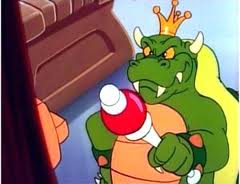
Koopa is backed, armed with an assortment of magic wands this time around.

Koopa is backed, armed with an assortment of magic wands this time around.

This series also establishes the existence of the home world of the Mario brothers as The Real World.  This means several episodes take place on earth and in places like New York and Venice.  There’s even one episode where each koopaling takes over a continent.  This labeling of this world as The Real World bugs the crap out of me.  This show isn’t like Teenage Mutant Ninja Turtles with characters often breaking the fourth wall, instead that’s how the characters view this supposed real world.  What does that make the Mushroom Kingdom then?  The fake world?  I’m surprised the princess would stand for that!

Because of the short run-time, plots are often resolved quickly and haphazardly.  It’s clear the writers had little respect for children as the show is fairly thoughtless.  The animation isn’t anything to get excited over either.  For the most part, it’s fairly typical of its era but there are other shortcuts that bother me.  Most notably, whenever a character morphs into another form there’s no transition animation, it just happens, which is utter laziness.  Unfortunately, the transfers by Shout! Factory for the DVD release are atrocious.  Some episodes are okay while others drop out and look worse than what can be found on the internet.  Supposedly the master tapes for the series no longer exist, so I don’t know what the source was for the DVD, but clearly it sucked and no attempt was made for the episodes that are really bad.  The last two episodes on the set are especially bad and should have never been released in such a state.

I bought this set when I found it on sale and did so only for nostalgic purposes.  I liked the show enough when I was a kid but my memory of it wasn’t strong.  It didn’t last long as it was quickly replaced by a Super Mario World themed cartoon.  Even though the set was relatively cheap, it still wasn’t worth the purchase.  Don’t make the same mistake I did, just let this one pass, as your memories of the show are likely much better than the actual product.


Walt Disney’s Peter Pan

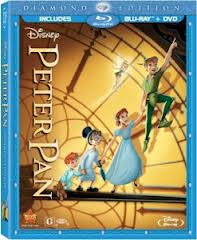
Walt Disney's Peter Pan (1953)

Walt Disney’s Peter Pan (1953)

The story of the boy who shunned time and refused to grow up is a timeless one that has captured the hearts of many who experienced it.  Michael Jackson was famously said to be obsessed with the story.  He probably took things too far.  Walt Disney was another individual who found the story captivating and the producer within knew he could market it to a wide audience.  He was so eager to get Peter Pan into production that it was originally planned as the follow-up to the hugely successful Snow White and the Seven Dwarfs but the technology of the time wasn’t where it was needed in order to fulfill Disney’s vision.  Disney also had a harder than expected time of securing the rights to create the film.  All of this meant putting Peter Pan off for a little while and it would eventually see release in 1953 making it the 14th film in the Disney Classics series.  It was also the last Disney film to be released via RKO while later pictures would be released through Disney’s own Buena Vista Distribution.

Watching old films from my youth can be enjoyable for many reasons.  There’s the intrinsic nostalgia value of seeing something I remember fondly.  There’s also the feeling of a new discovery.  Peter Pan falls into the latter as it wasn’t a film I was exposed to much as a child.  VHS tapes could be pretty pricey when I was a kid, especially Walt Disney releases that tried to make things seem more special with better packaging and a heightened sense of tradition.  The whole vault concept was around then too, which for those unaware, is the concept by Disney of only supplying stores for a set amount of time with a given film before ceasing production.  I remember the commercials would make it seem like these films would never be released again, which of course wasn’t true as most have been released multiple times since.  As a kid, I never owned Peter Pan or saw it in theaters but I was exposed to it.  It’s possible I had only seen it once before watching it recently following its latest release on Blu Ray.  This kind of viewing experience is almost more fun as I get to approach the film almost for the first time where I’m more apt to take notice of the things I wouldn’t have as a kid.  For the most part, only the film’s opening scene felt familiar to me.  I attribute that to a poor attention span as a child.  Even something with a running time under 80 minutes is a long period for a child to sit still.  More often than not, when a movie was put on in front of me I’d watch the first twenty minutes before being inspired to play.  Only the most exciting moments could hold my attention.

Peter's grand entrance.

Peter’s grand entrance.

The film opens with the audience being introduced to the Darling family.  The Mr. and Mrs. are getting ready for a party while the children are getting ready for bed.  Mr. Darling is presented as a bit of a neurotic while Mrs. Darling is calm and together.  The eldest of their children, Wendy, is a bit of a romantic with a love of fairy tales, especially Peter Pan.  She has two younger brothers, John and Michael.  John is the brainier of the two with a very naive sense of the world around him as illustrated by his willingness to fight pirates and Indians.  Michael is the youngest and most impressionable.  They’re all of a good nature with Wendy being the most strong-willed and the boys the most impressionable.  Nana, the nurse dog, may be a canine but embodies the characteristics of a nanny.  She dotes on the children and tries, in vain, to keep the nursery clean and organized.  She is only slightly anthropomorphized in that she doesn’t speak or display any ability to maneuver in a way unfamiliar to a dog but is obviously of a human intelligence.  A series of events leads to Mr. Darling getting short with the children and expressing a need to his eldest that she grow up.  Wendy, unlike 99.9% of young girls, is heartbroken when her father informs her it’s time she move out of the nursery and into her own bedroom.

Peter Pan is introduced soon after as the Mr. and Mrs. leave for a party with the children tucked in for the night.  Peter is presented as a boy of about twelve who embodies all of the characteristics of a child but heightened in a way to make them obvious.  He’s brash, egocentric, and almost incapable of anything resembling empathy.  He takes no situation seriously and is used to getting his way.  He’s also fun-loving, care-free, and eager to share the fun experiences of life with other children.  He has no desire to mature and grow up and seeks only to play for the rest of his days.  With him is Tinker Bell, his pixie companion, as the two are attempting to retrieve Pan’s shadow which somehow ended up in the Darling household.  The children are delighted to meet the real Peter Pan, and when he proposes they join him in Never Land, the boys are most excited to go.  Wendy is a bit more reserved but the thrill of flying and seeing Never Land is too much for her to ignore.

Captain Hook is consumed by his need for vengeance against Peter Pan, who famously chopped off his hand.  I wonder what he was called before that happened?

Captain Hook is consumed by his need for vengeance against Peter Pan, who famously chopped off his hand. I wonder what he was called before that happened?

The setting of London is presented always at night giving it a cold and charmless quality.  Never Land is almost always presented during the day and is bright and colorful.  It’s populated by a host of interesting characters that are both charming and menacing though rarely scary.  Even the film’s chief villains, the pirates, are presented in a colorful manner.  The man-eating crocodile, who seems to only have an interest in Captain Hook, is more funny than frightening and even the youngest of children are unlikely to be scared by this film.

Captain Hook is the film’s primary antagonist.  He embodies all of the characteristics of a traditional Disney villain.  He’s mean-spirited, hot-tempered, cowardly, and manipulative.  The film suggests a mutiny may play out early in the film as Hook has kept the ship docked in Never Land as he has become obsessed with getting revenge against Pan, the boy who chopped off his hand and fed it to the crocodile.  His first mate, Mr. Smee, is his most loyal servant that is ceaselessly bossed around by Hook.  The film hints that he may be a decent person but never expressly confirms that.  Also joining the supporting cast are the Lost Boys who all dress in animal-like costumes and follow Pan whole-heartedly.  There are Indians on the island of Never Land as well who appear to engage in a friendly rivalry with the Lost Boys until the chief’s daughter, Tiger Lily, goes missing.  Perhaps the most interesting member of the supporting cast is none other than Tinker Bell.  Tinker Bell has become a popular character with young girls in recent years, even starring in her own series of direct-to-video movies.  I’ve never seen any of those films for what I hope are obvious reasons, so I don’t know how she is portrayed in them but I assume it is not how she is portrayed in Peter Pan.  Young fans of the character may be surprised to see she is a jealous, brat of a pixie.  Her actions can, in part, be blamed on Peter who she clearly has strong affection for but he is dubious of such feelings.  She is almost instantly jealous of Wendy and the attention Peter gives her.  Tinker Bell is so jealous and spiteful of Wendy that at one point she attempts to trick the Lost Boys into killing her.  Her actions actually cast her as a minor villain to Hook’s role of primary antagonist.  Only by redeeming herself in the end does she avoid the label of true villain

Tinker Bell has become a star since her debut in "Peter Pan," despite being a very unlikable character.

Tinker Bell has become a star since her debut in “Peter Pan,” despite being a very unlikable character.

The story plays out rather expectedly with Wendy eventually seeing the faults in Peter’s view of the world and accepts the responsibility of growing up.  There’s a spectacular confrontation between Pan and Hook, while the stubborn character of George Darling sees the beauty in viewing the world through the eyes of a child.  It’s a nice little tale on the wonders of youth that doesn’t beat the audience over the head with the notion of being a responsible adult.  As with pretty much all Disney films, the exquisite visuals are set to song at times with most of the songs fitting into the narrative of the story as opposed to the broadway approach of the recent animated outputs.  The only exception to this rule is the film’s most famous song, “You Can Fly!,” which occurs during the flight from London to Never Land.  It’s a fun, uplifting, tune that is very much in the same style as all of the Disney songs from that era with a choir of individuals used for the vocals.  It has that old, fuzzy, quality to the vocals but still manages to sound clear.  “A Pirate’s Life” is probably the other well-known song from the film, with the “What Made the Red Man Red?” being known for more dubious reasons (more on that to follow).  As someone who doesn’t often enjoy the song portions of Disney films, I can say these are not too intrusive but I did grow bored with most of the sequences, the only exception being the flying scene.  “You Can Fly!” is the kind of uptempo song I can get into and enjoy and the scene is just long enough that it doesn’t overstay its welcome.

The film is not without controversy, as illustrated by this image.

The film is not without controversy, as illustrated by this image.

Over the years Peter Pan has become noteworthy for reasons beyond its visuals or story.  The portrayal of the Indians has become somewhat of a touchy subject as it contains many of the old Hollywood stereotypes.  When first encountered they greet others with the tired expression “How?,” and often charge into a scene with the battle-cry formed by shouting while patting their mouths repeatedly with an open palm.  Their skin is of a reddish tint, some being obviously exaggerated, and the children hold a negative view of the Indians.  At least John and Michael do, while the Lost Boys basically view them as playmates.  The film early on teases that Indians are a savage and stupid lot, but this is the viewpoint of the naive John and the film dispels this notion by having him humorously outsmarted by the Indians while he explains their stupidity to the other boys.  For anyone who grew up being able to view old Looney Tunes shorts on television, the portrayal of Indians in this film is far from shocking.  This was commonplace for the era and as recently as the early 90’s this kind of thing was shown during children’s programming.  I learned in school at a very early age that this was not an honest portrayal of Native Americans, and kids today might not even be familiar with the old “How?” greeting, but some unfamiliar with this film who buy it for their kids may be caught by surprise.  To add a little extra shock value is the musical number “What Made the Red Man Red?” which is certainly not politically correct by today’s standards.  I find it hard to get worked up by the number though, considering the most popular sport in the country today has a team in the nation’s capital called the Redskins.  Beyond the reference to color, I didn’t pick anything out of the song that sounds particularly offensive, but I’ve never read the lyrics either.  Apparently it suggests they became red as a result of blushing in their pursuit of women or something.  Unquestionably, if the film were made today the song wouldn’t exist and it’s possible the Indians wouldn’t be included at all.  If it sounds like something that would bother you then by all means look elsewhere for entertainment.  There are plenty of other animated films out there with less controversial material.

On the whole, Peter Pan is a mostly enjoyable film and, controversy aside, a fairly harmless one at that.  It doesn’t set out to make any bold, life-affirming statements and exists primarily as entertainment.  As far as visual entertainment goes, it’s well done though it lacks a definitive visual moment such as Monstro from Pinocchio or the forest fire in Bambi.  The flying sequence comes close, but falls a bit short of iconic status.  It makes up for this with its signature song, “You Can Fly!,” and by having a very even presentation with no wasted scenes.  At a running time of just 76 minutes, it doesn’t overstay its welcome and has a neat and tidy presentation.  It’s an entertaining movie, more so for children than adults, but it does possess the ability to charm even older audiences.  I don’t love it like I do some of the other Disney animated features, but it’s something I can watch from time to time and it’s a film that’s worthy of the term “classic.”


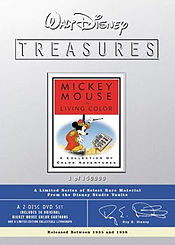
Mickey Mouse: In Living Color

Mickey Mouse:  In Living Color

Mickey Mouse: In Living Color

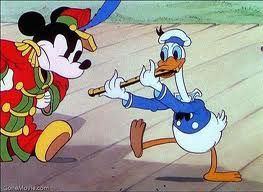
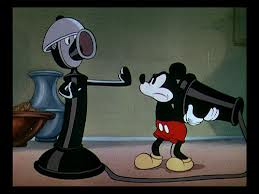
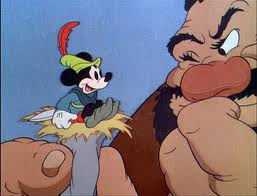
I love classic cartoons.  They just seem to be so much more developed than present day television shorts.  There’s an emphasis placed on the score and plot while not forgetting the laughs.  The most iconic of cartoon characters from this era include Bugs Bunny and Daffy Duck, but is any more well known than Mickey Mouse?  The mouse that built an empire, Mickey was Disney’s original star.  While he ruled the world in the 20’s during his black and white career, he was eclipsed later on by other characters, most notably brand-mate Donald Duck.  Mickey was eclipsed more out of choice than anything.  He became the Disney brand which necessitated him becoming a more wholesome character.  Early portrayals had him playing the role of the trickster at times, but he evolved into more of a straight man (err, mouse) with Donald becoming the more devious character.

As a result, while he wasn’t the most watched cartoon character in the 1930’s he still received all-star quality toons.  When Disney set out to re-release collections of their classic shorts they wisely lead off with this set, Mickey Mouse:  In Living Color which covers the years 1935-1938.  Some of Mickey’s most famous shorts are contained on this set and all appear uncut (save for a minor audio change in “Clock Cleaners”).  Either Disney wanted to create strong demand for these collections, or the company failed to predict how popular they would become because now they can be hard to come by.  They’re worth it though for animation buffs and I’m going to tell you why.

I currently own three sets from the Walt Disney Treasures line.  This one as well as Donald Duck Volume 2 and Mickey Mouse: In Black and White Volume 2.  Picking a favorite is an exercise in futility, and this one is a great starting point for anyone.  It features a total of 26 shorts (listed at the end of this post) all starring Mickey with many featuring Donald, Goofy, Minnie and Pluto.  Perhaps starring is too strong a word as some of the ensemble pieces feature equal screen time for the trio of Mickey, Donald and Goofy and some feature very little of Mickey.  There’s also an easter egg short that’s kind of amusing as it was sponsored by Nabisco so it’s basically an extended commercial (and may have been the first Mickey cartoon to give him pupils).

Mickey and Donald are often friends but also often adversaries.

Mickey and Donald are often friends but also often adversaries.

A few feature Mickey playing off of Donald.  As I mentioned earlier, Mickey became relegated to the role of straight-man with Donald being relied upon for the comedy aspect.  Mickey’s most famous cartoon (other than “Steamboat Willy”) is probably “The Band Concert” where Donald tries to ingratiate himself to Mickey to hilarious results.  There’s also solo cartoons like “Thru the Mirror” which puts Mickey into the book “Through the Looking-Glass” and has him interacting with personified objects.  Fans of the 8 bit and 16 bit era Mickey video games will recognize several scenes from some of these cartoons.  “Thru the Mirror” is a visual delight and one of the stronger cartoons on the set.  For pure comedy there’s “Moose Hunters” which features the trio going after a moose and failing spectacularly.  Another I adore, partly because I had this cartoon on VHS as a kid, is “Mickey’s Trailer” which again features Donald and Goofy.  In this one, Goofy is towing Mickey’s camper while Mickey and Donald are inside.  Goofy, predictably “goofs up” and it leads to some amusing physical comedy.  There’s also a great sequence where Mickey has to get Donald out of bed and relies on the trailer’s technology to assist him.  Another nostalgic favorite for me is “On Ice” which used to be included, in quick clips, with the Mickey’s Christmas Carol broadcasts from the 80’s.  In it, Mickey teaches Minnie how to skate while Goofy tries to ice fish and Donald plays a prank on Pluto.  It’s one of the funnier cartoons included.

Some of these shorts offer a nice glimpse at the era from which they’re from.  In the 30’s, the nation was still coming out of The Great Depression and the short “Moving Day” reflects that as Mickey and Donald face eviction from their landlord.  “Mickey’s Polo Team” features several caricatures of popular actors from that period including the likes of Charlie Chaplin and Harpo Marx.  This  particular toon should be a real treat for film buffs out there and adds another dimension to the viewing experience.  Another short I was familiar with before picking up this set was “Brave Little Tailor.”  This one is another visual treat as it pits Mickey against a giant.  The plot is setup when the king confuses Mickey’s boast of killing seven flies in one blow with killing seven giants with one blow.  Mickey attempts to correct the viewpoint but when he finds out Princess Minnie is his reward if he solves the kingdom’s giant problem he finds it hard to say no.

Mickey Mouse in "Thru the Mirror."

Mickey Mouse in “Thru the Mirror.”

The set comes housed in a tin with images printed on both sides.  Later sets would replace the back print with an insert instead which is actually beneficial as these tins are susceptible to shelf ware.  Leonard Maltin is the host on all of them and there’s a mini documentary included where he goes over Mickey in the 30’s.  He’s also present to educate the masses since these cartoons are not always politically correct.  There’s smoking in some, even by the protagonists, and some jokes that may be considered tasteless.  This set is fairly harmless in that regard when compared with others.  Other sets contain episodes dubbed as “From the Vault” that usually contain images that could be considered racist.  This one contains no such section which is a good thing as those Vault sections contain a mandatory word of caution from Maltin that can’t be skipped.  It just becomes annoying whenever you want to watch those episodes and you have to sit through it each time.  I did mention that there is one edit on “Clock Cleaners” and that’s because some people insisted a Donald Duck line contained the word “fuck,” which was an absurd claim to make since Disney would have never tried to get away with such in the 30’s, let alone now.  Nevertheless, the line was replaced to avoid confusion but it has been released uncut in other sets.  I don’t consider it a big deal though and it’s not something that should affect anyone’s purchasing decision.

Mickey gets to take on a giant in "Brave Little Tailor."

Mickey gets to take on a giant in “Brave Little Tailor.”

This is a wonderful collection of cartoons and anyone who enjoys the medium should try and track down a copy.  Even though these sets only exist in standard definition, the visual quality is very good.  Especially considering these cartoons are over 70 years old.  Some are better than others, but there aren’t any that appear to have deteriorated too bad.  Mickey’s face is pretty much always white and doesn’t appear dirty.  The only one that seemed a little rough around the edges to me was “On Ice,” but it was nothing that could dampen the viewing experience.  This is a fun set to watch and it’s great to experience the joy of these shorts as an adult and I’m sure kids today would still get a kick out of them.  To a lot of children Mickey is just a logo, a character that is featured prominently at Disney’s theme parks, but few have experienced him as a cartoon star.  This set is from an era where Mickey was king of the cartoon world, and it’s not hard to see why.

As promised, here’s the full list of the cartoons included as part of this collection:

  • The Band Concert
  • Mickey’s Garden
  • On Ice
  • Pluto’s Judgement Day
  • Mickey’s Fire Brigade
  • Thru the Mirror
  • Mickey’s Circus
  • Mickey’s Elephant
  • Mickey’s Grand Opera
  • Mickey’s Polo Team
  • Alpine Climbers
  • Moving Day
  • Mickey’s Rival
  • Orphans Picnic
  • Hawaiian Holiday
  • Moose Hunters
  • The Worm Turns
  • Magician Mickey
  • Mickey’s Amateurs
  • Clock Cleaners
  • Lonesome Ghosts
  • Mickey’s Parrot
  • Boat Builders
  • The Whalers
  • Mickey’s Trailer
  • Brave Little Tailor