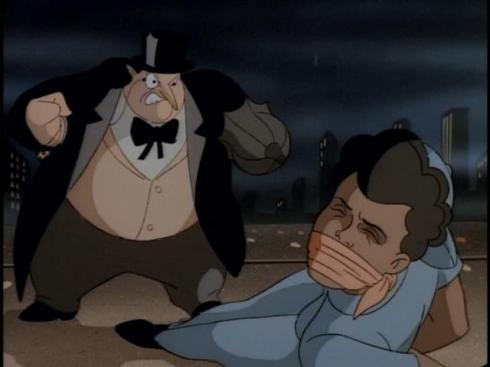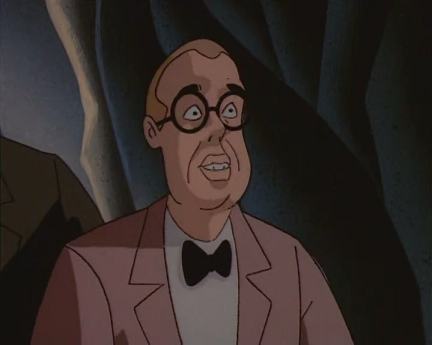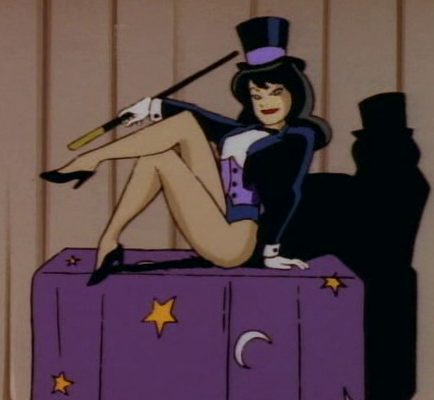
Author Archives: Joe

Batman: The Animated Series – “If You’re So Smart, Why Aren’t You Rich?”

If_You're_So_Smart,_Why_Aren't_You_RichEpisode Number:  40

Original Air Date:  November 18, 1992

Directed by:  Eric Radomski

Written by:  David Wise

First Appearances(s):  The Riddler


It only took 40 episodes, but we’ve finally made it to the debut of what I would consider the last of Batman’s most famous adversaries:  The Riddler. Thanks to his inclusion in the 60’s television series as well as Batman:  The Movie, The Riddler (John Glover) was a very well known villain and was so well known that it was basically considered a given that he would be the featured villain in the sequel to Batman Returns. And it turns out he was! That version of The Riddler, played by Jim Carrey, ended up being very similar in character to the one from the 60’s most famously portrayed by Frank Gorshin right down to the green spandex. For Batman:  The Animated Series, a more cerebral version of the character was chosen. Clad in a green and gray suit with bowler hat, he’s not very much like what we had seen before in popular media. He still is all about riddles though and the essence of the character is preserved. He’s also given an interesting motivation, and he’s yet another villain who was wronged in the past, but flouts the law in order to rectify what happened bringing him into conflict with the one and only Batman.

maxresdefault-35

Enter The Riddler.

Edward Nygma is a computer game designer who’s latest creation, The Riddle of the Minotaur, has become exceedingly popular. He works for Competitron, a company owned by Daniel Mockridge (Gary Frank), and unfortunately for Nygma all of his work has come under a work for hire agreement. He enters his office one day to find that he actually has no office. Mockridge is there gleefully waiting for him to let him know he’s being terminated. Nygma, irate at this treatment, points out how much money he’s made the company while Mockridge dangles his contract in front of him essentially boasting that he’s completely right, but there’s nothing he can do about it. Because he’s essentially a contractor, he receives no royalties for the game (or if he does, they’re not large) and no creative control. As a parting shot, Mockridge throws the episode’s title right in his face, “If you’re so smart, then why aren’t you rich?”

SR_11_-_Billboard_Riddle

Mockridge being taunted as he makes his pitch to Wayne and Fox.

The episode jumps forward two years and Mockridge is pitching Competitron to Bruce Wayne and Lucius Fox. Mockridge is looking to sell and cash-out of his growing business while Bruce is interested in moving the company to Gotham to create more jobs. As Mockridge is making his pitch, a word crawl on a building across the street (like one you would see outside a stock exchange) taunts him with a riddle and makes a reference to the big deal he’s trying to negotiate. Mockridge is unnerved, though Wayne and Fox aren’t aware of the message since it’s behind them, and are rather confused when the pitch is cut short. After Mockridge leaves, Wayne notices the riddle and begins reading it aloud while the shot transitions to the Batcave for Batman to finish the riddle. It’s a neat little trick as it points out how voice actor Kevin Conroy portrays Wayne and Batman just slightly differently.

Dick is also in the Batcave and he just so happens to be playing The Riddle of the Minotaur on the Batcave’s computer (which Alfred reveals cost 50 million dollars) which features sound effects lifted straight out of Super Mario Bros. Since Bruce Wayne had to pour over documents relating to the sale of Competitron to Wayne Enterprises, he knows about the creator of the game, Edward Nygma. The riddle also made reference to The Wasteland, which is both a region in the game and a night club owned by Mockridge. Batman decides that’s the most logical place to check-out and declares that Mockridge is in danger.

SR_33_-_Riddler

There’s something “off” with how Riddler’s expressions are animated. It’s animation more befitting Tiny Toons or Animaniacs.

It turns out, Batman was correct. Mockridge arrives at his club’s office and finds Nygma seated at his desk. He’s now The Riddler and he taunts Mockridge with a ring puzzle. He also has help in the form of two very large goons. Batman and Robin soon arrive, dramatically crashing through a stained glass skylight, but they find no one. The Riddler soon appears to let them know they’re too late, and Mockridge is bound within the ring puzzle The Riddler had been playing with. They have a scuffle with the hired muscle, who put up a pretty good fight. Robin is rather proud of himself when he literally kicks one of them in the rear. The Riddler eventually traps Robin in an over-sized finger trap as a fire breaks out, forcing Batman to either save Robin or pursue The Riddler, who flees with Mockridge. Batman obviously decides to save his ward, allowing Riddler to escape.

As the dynamic duo speed away in the Batmobile, Robin notices all of the lights in the city are flickering on and off. Batman, affixing some sort of mini computer to his glove which looks kind of cool, recognizes that the lights are flickering in a pattern indicating Morse Code. The code contains a riddle, because what else would it, who’s solution leads them to a maze in a closed amusement park. During the prior confrontation, Batman revealed that he knows The Riddler’s identity, so The Riddler determined that he needs to take out Batman to protect his secret. By luring Batman and Robin to his maze he hopes to do just that while also taking care of Mockridge.

hqdefault-43

The Riddler welcoming Batman and Robin to his maze.

The maze is a literal recreation of the one from Nygma’s game. Robin, having played it quite a bit, is familiar with it and Batman is gradually brought up to speed as they go along. Nygma has made this version of the maze much more lethal than the video game counterpart, and Batman and Robin have their hands full. The Riddler is able to taunt them from various video screens throughout the maze and he lets them know they only have a few minutes to make it to the center and save Mockridge, who is gagged and bound beneath the blade of the Minotaur. The problem is, no one has ever solved the riddle of the Minotaur and made it through the maze, meaning Batman and Robin will have to be the first if they want to save Mockridge and apprehend The Riddler.

Batman is willing to play along only so much, but when they make a wrong move The Hand of Fate is sprung on them. We saw the video game version earlier in the episode as The Hand of Fate is a game mechanic that punishes wrong answers by bringing the player back to the maze’s start. In the real world, it’s a literal flying hand that Batman and Robin are able to avoid. When it becomes apparent that they have no chance at making it to the center of the maze in time, Batman intentionally makes a wrong move to draw the hand to him. Using a piece of shrapnel from an earlier trap (The Riddler made them leave their utility belts outside the maze in order to gain entry), Batman is able to hack The Hand of Fate, and together with his little glove computer, is able to pilot the hand to the maze’s center. It’s cheating, but effective. There they have to answer one final riddle in order to prevent the Minotaur from killing Mockridge, and it’s actually a pretty simple riddle. Not content to make it so easy, The Riddler springs the Minotaur on them as one final obstacle that Batman is more than capable of dealing with, in his own way.

batman-the-animated-series-if-youre-so-smart-why-arent-you-rich-3

A confrontation with the Minotaur awaits at the center of the maze.

With Mockridge saved, the only thing left is to catch The Riddler. Unfortunately for them, he’s no where to be found. He’s been speaking to them from aboard an airplane and he’s now long gone. In the episode’s epilogue, we find out the deal was completed and Mockridge came away with a cool ten million. Dick is kind of disappointed as they’re well aware that Mockridge is a creep who took advantage of Nygma’s genius, but Bruce points out that all the money in the world can’t buy a good night’s sleep as we’re shown a very paranoid Mockridge locking his doors at night and keeping a gun by his bed as he shivers in fear.

This episode very much reminded me of Mr. Freeze’s debut, “Heart of Ice.” The only difference is that Freeze’s adversary was a criminal himself, while Mockridge is just your typical corporate sleezeball taking advantage of a system that’s rigged in his favor at the expense of someone much poorer than he. Mockridge hasn’t broken any laws, but he’s obviously a morally bankrupt individual. It’s not that surprising to see a show who’s origins stem from a comic book incorporate such a villain into an episode as Mockridge’s tactics are similar to the ones comic publishers used to box out the artists and creators that made the comics successful. It would be many years later that we would find out a similar travesty occurred with Batman as Bill Finger never received credit for his contributions to the character during his lifetime. Finger, appropriately enough, was also the creator of The Riddler.

hqdefault-44

Mockridge “enjoying” his money.

As a result of Mockridge being such a lame person, we’re in essence rooting for Nygma during this episode. In reality, he probably could have filed a lawsuit against Mockridge and Competitron and possibly could have won. For all we know he did during the two year time-jump and maybe lost. He chose to take things into his own hands though and turn to crime to exact revenge against the man and company that wronged him. How he was able to finance that ridiculous maze is not explained and I suppose we’re supposed to just ignore it so the episode can work. Even though we’re supposed to disagree with The Riddler’s methods, I have to assume we were supposed to take some satisfaction in his escape at the episode’s conclusion.

This episode is one of two animated by Blue Pencil, S.I., and it’s not a particularly strong episode. A lot of new backgrounds had to be utilized so there was some cost there, but the animation is inconsistent and there are numerous visual errors. The Riddler’s mask at one point changes from pink to gray and a key re-appears on a wall when it shouldn’t be there, among other little flaws. That stuff was common in a lot of kid’s cartoons of the era, though not so much in this one, so it stands out more. The Riddler himself is also some-what toon-like in his movements and mannerisms with his face stretching and contorting into odd shapes as he speaks. It looks out of place, and there’s some odd shots of Batman as well. The Minotaur at the episode’s conclusion, who is supposed to be a robot, also moves like this making it seem like he’s more flesh-like than steel. Blue Pencil only worked on one other episode, which we’ll get to in about a month from now, and I wonder if it’s because the quality wasn’t up to par.

The Riddler is not a villain we’ll be hearing from very much. It’s kind of a shame because John Glover’s take on the character is quite good and I much prefer it to the Gorshin and Carrey portrayal. I do wonder if he was avoided because it’s pretty hard to come up with clever riddles to dot his episodes with. The ones in this episode are kind of weak, but not embarrassingly so or anything. I can definitely see it being a very intimidating task to write a Riddler episode. I always liked The Riddler though and I kind of wish we saw him in the Nolan trilogy as I think he would have made his Riddler similar to this one. We had to wait awhile for him to show up in this series, but it would seem he was mostly worth the wait.


Dragon Ball Z: Dead Zone

DBZmovie1_JapanJapanese Title:  Return My Gohan!!

Original Release Date:  July 15, 1989

English Release Date:  December 17, 1997 (Pioneer/Ocean Productions), May 31, 2005 (Funimation)

Directed by:  Daisuke Nishio

Screenplay by:  Takao Koyama

Running Time:  42 minutes

For the very fist Dragon Ball Z movie I feel like we need to do a little house-keeping before we get into it. When Pioneer tried to bring Dragon Ball Z to North America, they contracted Ocean Productions to dub the first 100 or so episodes as well as the first three movies. As a result of many re-runs on Cartoon Network, English speaking fans are likely pretty familiar with the first three films:  Dead Zone, The World’s Strongest, and Tree of Might. The original dubs were edited and contained some odd choices in terms of translation, though Ocean at least hired quality talent. They held the rights to the films long after Funimation started dubbing the episodes Ocean never tackled, and once the rights expired Funimation went back and re-dubbed the first three films with their own cast that fans are now likely more familiar with. In doing so, they also inserted a new soundtrack that was okay, at least it didn’t utilize a bunch of awful licensed music like their dub of the OVAs, but I’m sure it was frustrating for fans of the Japanese dub. When Funimation re-mastered and re-released all of the movies in 2011 they wisely restored the Japanese soundtrack (though oddly they went with their generic butt-rock opening theme instead of “Cha-la Head Cha-la” for the English dub with Japanese BGM. If you want the original opening music you have to watch the full Japanese audio) while still including the US soundtrack for people who wanted it. There’s also the option to listen to the Japanese audio with subtitles, something that’s pretty much a given these days, but once upon a time was not a guaranteed feature.

DragonballZ-Movie1_1265

The dreaded Dead Zone, from which the English version of the film takes its name.

Dead Zone, or Return My Gohan!!, is basically set before the events of Dragon Ball Z. If not for the fact that Master Roshi and co. are unaware of the existence of Gohan to start DBZ then this film could be shoe-horned into the canon. It features the villain Garlic Jr. (Chuck Huber), and if you’re wondering who Garlic Sr. is and concerned you may have forgotten about him – don’t worry, he’s never existed in Dragon Ball. The film was originally released theatrically in Japan right after the conclusion of the Raditz conflict, and grossed around 9 million USD. I don’t know if that performance was viewed as positive or not, but for comparison 1988’s My Neighbor Totoro and Grave of the Fireflies is estimated to have grossed around 5 million, so it would seem this was pretty solid. Especially considering that Dead Zone is largely animated in the same manner as the anime series. There’s little in the way of extra flourishes, instead it just looks like Toei utilized their full budget and best team so it looks like one of the ‘A’ episodes of Dragon Ball Z. Stylistically, it also fits right-in with the style of the early episodes of the series with more curved lines and rounded musculature on the characters as opposed to the later, more straight-line heavy look of the series that’s likely the defining style of the show these days.

dragon-ball-z-movie-collection1-dead-zone-screenshot3

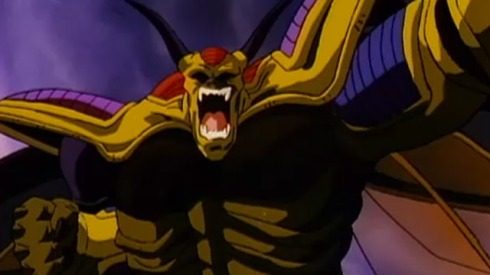
Garlic Jr. is our featured enemy. He kind of looks like a cross between Piccolo and Emperor Pilaf (and basically sounds just like Pilaf in the Funimation dub).


Dead Zone
has a cold open, a trend for the films, and starts on Piccolo (Christopher Sabat) quietly training on his own before he’s accosted by some shady characters. They mention Kami and it’s obvious they want to eliminate not just Piccolo but also the Earth’s guardian. Unknown to them, apparently, is that both are linked to the Dragon Balls because the characters mention them as well. Piccolo is overwhelmed and apparently left for dead. We’re then taken to Goku’s house where Gohan (Stephanie Nadolny) is quietly studying in the woods nearby. When his mother Chi-Chi (Cynthia Cranz) calls him in, his Grandpa the Ox King (Kyle Hebert) pulls up and Gohan cheerfully greets him. The same shady characters that accosted Piccolo show up. They quickly dispatch the giant Ox King and Chi-Chi and make off with Gohan before Goku (Sean Schemmel) can return from fishing.

dragon-ball-z-dead-zone-3

Garlic Jr.’s somewhat effective henchmen.

Our enemy is revealed to be Garlic Jr. and he has a gang of demonic looking underlings by the names of Ginger (Troy Baker), Nicky (Doug Burks), and Sansho (Eric Dillow). Garlic Jr. is collecting the Dragon Balls so that he may wish for eternal life. He also apparently has a score to settle with both Kami (Christopher Sabat) and Piccolo. The gang has kidnapped Gohan not because they have any interest in the boy, but because his hat bares the four-star Dragon Ball, as it does in the earliest episodes of the show. Garlic Jr. immediately notices the boy has hidden strength and decides to keep him on as a ward of sorts. When Gohan says his daddy Goku will rescue him, the gang is familiar with the name as Goku famously toppled Piccolo in the most recently completed World Martial Arts tournament.

c64ec65831723ba756b0a12d82cd13866a66131b_hq

The sight of his defeated wife is enough to anger any man, even Goku.

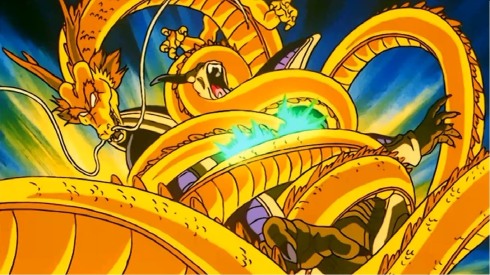
Goku returns home to find his wife and father-in-law incapacitated, but Chi-Chi was able to tell him what happened. Goku then heads for Kame House where Bulma (Tiffany Volmer), Master Roshi (Mike McFarland), and Krillin (Sonny Strait) are hanging out. Goku needs Bulma’s dragon radar so he can track the Dragon Ball on Gohan’s hat to find his location. He retreves it, and Master Roshi gives him a warning to be careful as he takes off on the Flying Nimbus armed with his power pole to save his son. Along the way, he notices the tell-tale dark clouds forming in the sky indicating that all seven Dragon Balls have been united and Shenron, The Eternal Dragon, has been summoned.

dbz_a

There’s a very Dumbo-like scene of Gohan eating some kind of apple that is apparently not intended for children which causes him to act like a drunk.

Garlic Jr. is able to summon the dragon, and if you think one of the good guys is going to jump in just in time to prevent him from making his wish then you are mistaken. Garlic Jr. is granted immortality, and his path to ruler of the world appears clear. Goku shows up, unimpressed by the diminutive kidnapper and unafraid of his new power, and takes on all of Garlic’s fiends. Kami also arrives to challenge Garlic Jr. himself, the two apparently having a score to settle. Goku is overwhelmed by the multiple opponents, but luckily for him, Krillin apparently had followed him and shows up to help. Even more of a surprise for Goku, Piccolo comes strolling in and he too has an obvious score to settle (at this point in time, Goku and Piccolo are fierce rivals with Piccolo seeking to end Goku’s life) with Garlic Jr. and his gang.

MV5BYzNhY2NjMDUtOWE4My00MmI0LTgyOGEtMzY5OGVhZmQyYmNkXkEyXkFqcGdeQXVyNTAyODkwOQ@@._V1_SX1777_CR0,0,1777,999_AL_

This team-up would have been a lot cooler if it hadn’t just occurred in the anime.

With their combined might, a final showdown is imminent and we also get an explanation from Kami about why Garlic Jr. hates him. Apparently his father, Garlic Sr., was a rival to Kami when he sought the role of Guardian of Earth. Kami was granted the title, having bested Garlic in some sort of a trial, and enraged, Garlic tried to take the title by force. Being some sort of demon ruler, he summoned hordes of fiends to aid him but was beat back by Kami and his predecessor and sealed away for eternity, apparently in the place our film is titled after, The Dead Zone. Garlic Jr., therefore wants to avenge his father’s defeat while also usurping Kami. He transforms and goes from being a small, goblin-like creature to a massive one who towers over Piccolo and Goku. He also has a trump card he can play if things go wrong for he is capable of opening a portal to the Dead Zone that once trapped his dear old dad.

1001_animations__dead_zone_by_regulas314-da0p6s8

Kami is not match for Garlic Jr.

The final 20 minutes or so of this rather brief feature is mostly fighting, and it’s a lot of fun to witness this old style of DBZ combat. This is before Goku could even fly so the action is quick, but there’s none of that cheap “teleporting” combat that can be rather boring to watch. Garlic Jr.’s minions also have this neat ability to basically pull blades out of their anatomy. There’s some nice swordplay and dodging on display, as the action builds. By comparison though, the actual fight between Garlic Jr. and the duo of Piccolo and Goku is quite short. The ending is a bit odd, and it’s actually better explained later in the anime during the Garlic Jr. Saga (Garlic Jr. being the only movie enemy who got to make a jump into the main series as part of some of Toei’s continuity-busting filler), though the general way it unfolds is somewhat expected.

maxresdefault-28

In what is commonplace for DBZ, the once un-intimidating villain transforms into something more deadly. Of course, Frieza will eventually take this one step further by going from tame, to scary, and back to tame again.

Dead Zone is a perfectly solid way to kick-off the Dragon Ball Z movie franchise. The story almost fits in with the series, and it’s kind of like an alternate way to introduce the character of Gohan and bridge Dragon Ball and Dragon Ball Z. I like how it tries to kind of upend the status quo by having the villain very early in the picture actually make a wish for immortality. It’s one of those wishes that has been teased and will be teased numerous times in the show, but never feels like something that will actually be attained. Garlic Jr. is also fine as a villain, and it’s nice seeing Kami get a chance to do something since he’s mostly a background character in the anime. It’s guilty of relying a little too much on characters just popping in at the right time to help out, which will become overplayed eventually, but with characters capable of moving at the speed of sound it’s not as glaring an issue as it would be for other franchises. There’s also some nice, very Toriyama-like humor, with Gohan and the bad guys. It is impressive how well Toei is able to maintain the tone of the show without input from its author proving that the company does understand the material quite well. Goku is also less of a doofus and it’s kind of refreshing to see him actually get pretty angry when he finds Chi-Chi defeated and his son missing.

MV5BODUzYWFkYTQtOTk0OC00YWJjLWIxZjctMzRlNTU2N2Y3NGMwXkEyXkFqcGdeQXVyMzM4MjM0Nzg@._V1_

If you liked Garlic Jr., then I have good news for you! Unlike the other villains we’ll see in these films, he actually gets to appear in the anime series right after the Frieza arc and just before The Androids Saga.

Overall, I enjoyed catching up with Dead Zone after not seeing it for many years. Having previously only seen the Ocean version, it was nice to see some scenes restored (like a funny urination joke) and hear that the dub works well. Dead Zone is available on Blu Ray as a two-pack with the second film, The World’s Strongest, or as part of a five-pack on DVD with movies 2-5. I watches this on the remastered DVD, and it definitely shows its age. The picture is grainy and there’s some film burns here and there as well. I find that aged look, as long as it’s done naturally, kind of charming so it doesn’t bother me. I never saw the HD transfer so that might be superior, but the five-pack can probably be had for 20 bucks or cheaper which is hard to beat. If you only ever saw it on Cartoon Network, it’s definitely worth a re-watch.


Who Framed Roger Rabbit (1988)

220px-Movie_poster_who_framed_roger_rabbitNormally, I don’t like doubling-up on posts in a single day on this blog, and ever since last fall Friday has belonged to Batman. Well, I’m breaking my own self-imposed rule today, but it’s for a very good reason. Today is the 30th anniversary of the film Who Framed Roger Rabbit. On this day in 1988, the then most expensive movie in film history was released to the general public with a lot of buzz and a lot of trepidation. It was a collaborative effort between some of Hollywood’s hottest names; Steven Spielberg, Robert Zemeckis, and Walt Disney Studios. Adapted from the Gary Wolf novel Who Censored Roger Rabbit?, there was a lot of fear that the movie would be too “out there” for a general audience. So uncertain about how the film was to be received, actress Kathleen Turner, who voiced Jessica Rabbit, declined to be credited for her role in the film. There was some fear this thing would be received about as well as Howard the Duck, a notorious flop at the time, but it ended up being so much more.

Who Framed Roger Rabbit is the story of a rabbit named Roger (voiced by Charlie Fleischer) who is framed for a murder he did not commit. Aside from the fact that he’s a rabbit, the plot sounds rather pedestrian at face value. What sets the film apart is its world and the world it shares with the “real world.” Roger Rabbit is a toon. He is a literal cartoon character. In the world created by this work of fiction, cartoons are just as real as you and me. They go to work, make cartoons, and go home. The toons behave like golden era cartoons – they’re wacky, prone to accidents, and always on the lookout for a laugh. At one point in the film, Roger is handcuffed and needs to get himself out. He ends up simply removing his hand from the cuff at one point, then putting it back. When his partner, Eddie, notices and gets furious with him for not just doing that to begin with, Roger explains he could only remove his hand when it was funny.

whoframedrogerrabbit

Bob Hoskins stars alongside Robert as private eye Eddie Valiant.

Roger works for R.K. Maroon (Alan Tilvern) and is a star of Maroon Cartoons. Set in 1947, the film basically takes place during the waning days of the animated cartoon short. He is married to the impossibly attractive Jessica Rabbit, a buxom, hourglass figured toon who more or less resembles a human. The film starts out with Roger stressed out because there are rumors that Jessica has been up to no good with another man. Maroon wants private investigator Eddie Valiant (Bob Hoskins) to do some digging to help his star out. The problem is, Eddie hates toons, but he loves money more. Eddie takes the job, and finds out that Jessica has actually been playing pat-a-cake with Marvin Acme (Stubby Kaye), the owner of Toon Town. When shown the images of his wife playing such a lurid game with another man, Roger goes off the deep end and is plunged into a depression (pat-a-cake is serious business to a toon, apparently). Then things take a dark turn when Marvin Acme turns up dead, and Roger is suspect number 1. Roger proclaims his innocence to Eddie, and Eddie is forced to decide if he wants to help out the incredibly annoying, but likely innocent, Roger or just walk away from the whole thing.

brig

Even humans are drawn to Jessica Rabbit.

The story unfolds like a classic mystery. You have the gruff detective, the innocent victim, and the femme fatale. Of course, nothing is ever truly what it seems. Shadowing the protagonists is the villainous Judge Doom (Christopher Lloyd) who too seems to have a hatred for toons. Eddie and Roger are going to have to do some sleuthing, and even take a trip to Toon Town where all of the toons reside, in order to solve this case.

2728670.jpg-r_1280_720-f_jpg-q_x-xxyxx

Roger’s co-star, Baby Herman, is used sparingly, but he’s a scene-stealer.

The story is admittedly fairly simple. The character of Jessica Rabbit is the most intriguing, and not because of her figure, but because she is a femme fatale done well. She possesses an air of mystery and uncertainty, the fact that she is apparently the most attractive toon and is attached to the rather goofy Roger helps to play this up. What truly sets Who Framed Roger Rabbit apart is the presentation. Live actors mix with cartoon ones in truly spectacular ways. We’ve seen this before from Walt Disney with the likes of Mary Poppins and Bedknobs and Broomsticks, but not on this level. Those films merely feature a few sequences of cartoons and actors co-mingling, where as Who Framed Roger Rabbit is built around that dynamic, and it looks spectacular! When Eddie rides along in the toon cab, Benny, he looks like he’s really riding in it. When he wields a toon gun, it’s convincing. And the world of Toon Town is especially marvelous to look at with its impossible architecture and lavish color scheme. The movie is so visually stimulating that you could watch it in mute and still enjoy it.

who-framed-roger-rabbit

Christopher Lloyd is appropriately sinister as Judge Doom.

Even with the flashy presentation, the film still needed true chemistry between its real-life lead Eddie, and it’s toon co-lead Roger. Hoskins is fantastic at playing the straight-man Eddie. He takes everything seriously and has explosive reactions to all of the nonsense around him, but not in such a manner that would break the film. Helping to make sure he was able to form good chemistry with Roger, voice actor Charlie Fleischer dressed up as the character and would voice it off-camera. Seth McFarlane utilized a similar method when filming the more recent Ted to similar effect. I suppose it’s impossible to say if this truly worked or did not, but the results speak for themselves.

who-framed-roger-rabbit-bob-hoskins-roger-rabbit-cab

Eddie and Roger go for a ride in Benny the Cab.

Who Framed Roger Rabbit was a unique looking film that was impossible to ignore when it was released, but it was still relying on a lead that had never been seen before in Roger. That’s why to help spruce up the film, Spielberg and Zemeckis wanted to make sure that Roger’s world was inhabited by recognizable cartoon characters. That ended up being the film’s strongest selling point as it promised, for the first time ever, that characters from both Disney and Warner Bros. would share scenes together. This leads to the wild team-up between Donald Duck (Tony Anselmo, with some archivable Clarence Nash) and Daffy Duck (Mel Blanc, in one of his last performances) who have a dueling pianos scene where the more outlandish Daffy seems to get on Donald’s nerves more and more as the scene goes on. Mickey Mouse (Wayne Allwine) and Bugs Bunny (Blanc) also get to share a brief scene, which contains an easter egg of Bugs flipping Mickey the bird (apparently, Disney was a bit of a pain to work with concerning how the characters could be portrayed and this was one way for the animators to have a little fun at their expense). Those represent the biggest cameos, but there are many, many more throughout the film from both companies, both major and minor. Part of the fun of watching the film is looking out for them and there’s always a chance that on re-watch you’ll see another you may have missed.

framed201

Toon Town is a rather chaotic place.

There are so many things to pick out of Who Framed Roger Rabbit that it’s way too much for me to cover here. Suffice to say, if you’ve never seen this baby then you owe it to yourself to check it out. Much of the effects still stand up today, and much of the credit is owed to animation director Richard Williams. The toons are two-dimensional, but a lot of effort is made to make sure they look like they’re really inhabiting this world in the manner in which lighting is utilized and how often the camera moves. Working on this film must have been exhausting, but oh so rewarding in the end. Due to the nature of the license rights, the complexity of it shots, and incredible of expense of animating over live-action, a sequel has never truly got off the ground. Author Gary West has returned to the character for his novels, and Disney and Spielberg would probably both love to cash-in on the brand, but there are just too many hurdles to clear. Zemeckis has campaigned for a sequel on multiple occasions, but he’s been less vocal about it in recent years. Additional Maroon Cartoon shorts of Roger Rabbit were produced after the film, but even that was a touchy subject as Spielberg wanted to run them alongside his films while Disney wanted them for theirs. And supposedly Disney wanted to create a television show starring Roger Rabbit for their Disney Afternoon block, but Spielberg who was working on televised cartoons of his own (Tiny Toon Adventures, Animaniacs, etc) wouldn’t allow Roger to be utilized forcing Disney to create the character Bonkers the Bobcat. Roger has at least been allowed to live on in Disneyland’s Toon Town where he still has a dark ride to this day. Given that Disney has been replacing a lot of older dark rides to make way for more current franchises, one has to wonder if Roger’s days there could be numbered.

RR_tf

One of the more character-packed shots in the whole film.

Who Framed Roger Rabbit is likely one of the most popular and successful films to never get a sequel. It took in around $330M in 1988 dollars, a pretty substantial haul, which more than covered its estimated $50M cost. Its story and presentation are both timeless and also proof that Tex Avery styled humor and gags may never truly go out of style. The rather manic Roger Rabbit can appear off-putting to some, especially younger folks who may not have grown up on Looney Tunes, but apprehensions tend to fade away once the movie really gets going. I’ve introduced this film to a few people that weren’t enthusiastic about giving it a shot, only to see them won over in short order. It’s really one of the best things the Walt Disney Company has ever produced, even if it was released on their Touchstone label. I know it’s a Friday, but if you don’t have plans tonight, you could do a lot worse than settling in on the couch with your favorite snack and beverage for a showing of Who Framed Roger Rabbit.


Batman: The Animated Series – “Heart of Steel: Part II”

Heart_of_Steel_Part_II_Title_CardEpisode Number:  39

Original Air Date:  November 17, 1992

Directed by:  Kevin Altieri

Written by:  Brynne Stephens

First Appearance(s):  None


When we last saw our hero, Batman was being attacked by his own Batcave after it had been hacked by Randa Duane and H.A.R.D.A.C. The situation seemed some-what dire when the previous episode ended, but I mean come on, there’s no way Batman is being done in by his own devices. He extricates himself and gets the Batcave back under his control without too much fuss, and immediately his attention turns to Duane who is no where to be found. He had left her in the mansion alone and she works for a man who creates robots, and Batman is smart enough to realize the sabotage at his own home and her profession probably overlap.

Batman_TAS_Heart_of_Steel_27

Barbara gets to play detective in this one.

Meanwhile, Karl Possum (William Sanderson) is feeling some heat from the police and decides to have second thoughts about how much free will he programmed H.A.R.D.A.C. to possess. When he says this out-loud and starts to fiddle with the super computer’s innards, H.A.R.D.A.C. (Jeff Bennett) decides he’s not onboard with this and Rossum is soon incapacitated. This is the beginning of H.A.R.D.A.C.’s next phase as he communicates wth the imposter Commissioner Gordon about taking out Bruce Wayne. He also deploys a copy, which the show canon refers to as a duplicant, of Mayor Hill (Lloyd Bochner) who brazenly marches into the real mayor’s office to take his place.

Batman_TAS_Heart_of_Steel_29

Bullock’s been working out.

Caught up in all of this is Barbara Gordon (Melissa Gilbert). She knows something is up with her dad, and Detective Bullock (Robert Costanzo) gave her a tip about Rossum. Barbara does what I assume most people would want to do in this world when they have a problem, but maybe don’t have the means – she calls Batman. Activating the signal on the roof of Gotham PD summons the caped crusader who is surprised to find it’s the younger Gordon who called him this time. He’s concerned about what’s been going on in Gotham, but before they can get too into detail they’re confronted by Bullock. Now, Batman and Bullock have not had a particularly warm relationship in this show. Bullock is openly hostile towards Batman, probably some-what because he’s jealous of the fact that Batman gets to operate outside that pesky thing called “The Law” while he’s held to a higher standard. He also just plain doesn’t trust a guy in a mask, and who can blame him? Even though the two share no love for each other, they’ve worked together in the past and have never really appeared close to coming to blows or anything.

Heart_of_Steel_Emerge

It’s crazy what we look like on the inside.

That has all changed. Bullock approaches Batman this evening with the aim of instigating a fight. He’s ready to go, and much to Batman’s surprise, he’s pretty damn powerful. Batman is reluctant to fight at first, but is forced to defend himself. With a little help from Barbara, Batman is able to toss Bullock into the Bat-Signal which brings the fight to an end. Since this is a cartoon, tossing a body into anything electrical means it gets lit-up in a blaze of electricity! When this occurs, Bullock’s skin hardens and falls away revealing an android body underneath. In a move right out of a sci-fi movie, the robot crawls towards Batman fighting until the very end, forcing Batman to cut its head off with a shuriken. Seeing the imposter Bullock is enough evidence for Barbara to make the assumption that her father has been replaced with a robot as well. Batman, of course, knows what’s going on now and advises Barbara to go stay with a friend. She grabs his cape and tries to pull a power-move in announcing she’s coming with him, but Batman is having none of it.

Bruce Wayne has an appointment at some sort of rich person’s social club. He arrives and is greeted by Mayor Hill who possesses some tell-tale glowing red eyes, along with everyone else at the club. Randa Duane (Leslie Easterbrook) shows up with her little stun gun and tries to take out Bruce, who is able to get away and jumps into an elevator – a handy place for a quick costume change. Other robots pursue and pry the door open, but Batman is gone. He snuck out the top of the elevator car and cuts the cables, sending the robots to a smashing end.

HS_II_41_-_Batman

Robots are kind of goofy.

Barbara, not willing to take Batman’s advice, shows up at Cybertron’s lab and is able to cleverly sneak in past security. Unfortunately for her, she couldn’t have anticipated that basically everything in the lab is a robot, and a wastebasket takes notice of her intrusion, sprouts legs, and begins to follow her. Before she finds anything juicy, the robot transforms into a more humanoid machine and subdues her. Rossum and Duane then confront her and give her the cliche line of “You’ll be joining your father soon.”

Batman is also snooping around Cybertron and slips inside the building. H.A.R.D.A.C. has been waiting for him though so there’s no sneaking for The Dark Knight this evening as some robot security robots pounce on him. He battles his way to the main lab where the massive H.A.R.D.A.C. is stored only to find that Barbara is the latest person to be captured by the super computer. Even though H.A.R.D.A.C. is not human, it demonstrates it’s still susceptible to pride and gleefully boasts (well, as gleeful as an emotionless robot can) about his grand plan to replace humanity with robots. Humanity is imperfect, and in H.A.R.D.A.C.’s estimation robots are superior because they don’t make mistakes. This idea was implanted in him by Rossum, who first created robots as a result of losing his daughter in a car accident. He felt he could improve upon humanity for some actions, but H.A.R.D.A.C. is taking that premise many steps forward. In some respects, it’s not really any different from our society’s own desire for self-driving vehicles.

zkmaohw2gbxbj3sni7iw

I’m pretty sure there’s a rule in entertainment that if you have humanoid robots you must include a shot where one loses half its face.

H.A.R.D.A.C. may be willing to replace humanity, but for some reason he’s not willing to destroy it. It reveals that the individuals who have been replaced are still alive, being kept in a sort of suspended animation floating in some water tank (why is it always a water tank?). Seeing the captives springs Batman into action, and he’s able to smash the tank freeing the likes of Gordon, Bullock, Hill, and the real Rossum. Batman is forced into conflict with the various robots while Barbara and the others try and escape. Rossum knows the ins and outs of his own lab and is able to lead everyone out, but when Batman doesn’t soon follow, Barbara races back in to help.

Heart_of_Steel_Save

Batman’s going to need some help here, and that lazy, good-for-nothing, ward of his is no where to be found.

Batman is forced into a fight with Randa, and it’s finally confirmed that she too is a robot. Batman is able to maneuver her under an elevator, which drops down and crushes her (kind of odd that they used the same method of an elevator crushing robots more than once). Batman is a little worse for ware following the fight, but Barbara shows up to aid him in getting out. H.A.R.D.A.C., feeling it has no other alternative, initiates a self-destruct mechanism to kill Batman and Barbara, but of course they make it out.

Following their escape, Barbara and her dad get to have a proper reunion while Rossum laments his role in all that happened. A surprisingly cheerful Mayor Hill comforts him and lets him know the resulting investigation will almost certainly clear him of any real wrong-doing (good luck dodging lawsuits, though). The usual “let’s go home,” line is uttered and the camera gets ready to pan out. Commissioner Gordon remarks he’s getting too old for this line of work, while Barbara says she enjoyed herself tonight. She might as well have winked at the camera after that one.

“Heart of Steel – Part II” does a good job of building off of the first episode in a satisfying way. The two-parters have demonstrated a strong ability to setup a story with a very methodical first half, but sometimes the second doesn’t really deliver. This one does as it relies a lot on action sequences. It saves answering the questions raised in Part I almost entirely for this second act, even though some of the questions had fairly obvious answers. It’s still satisfying though, and the writers and animators seem to have a lot of fun with giving Batman robotic enemies to destroy. Since they’re not living, Batman gets to act a bit more ruthlessly and does things he normally would not do, similar to the Captain Clown fight from way back in episode 4. Most importantly, the episode foreshadows the vigilante Barbara Gordon will become. It’s a far more satisfying way of introducing the character rather than immediately jumping to the Batgirl plot. The groundwork has been laid, so it will have more weight behind it when the change inevitably does come. The Barbara character is also handled exceptionally well. She’s smart and crafty and doesn’t pull-off anything in this episode that feels far-fetched. She comes off as natural and genuine and viewers likely wanted more of her following the events of this episode.

30-5

And everybody’s happy in the end.

The episode is obviously influenced by films like The Terminator, as Terminator II was pretty popular around this time. The duplicants, which share a nod to Blade Runner’s replicants, function very similarly to the Terminators from that franchise with the only thing missing being time travel. H.A.R.D.A.C. is basically Skynet, a sophisticated A.I. gone rogue, with a logical motivation. It could have felt out of place in a Batman story, but the writers made it work. And if you enjoyed H.A.R.D.A.C. then I am happy to report that it will make one more appearance in the series before all is said and done.

“Heart of Steel” is a dark-horse contender for best two-parter in the show’s history. It moves along at a good clip and contains a fun, and interesting story. Perhaps it’s not all that unique given the obvious nods to other popular franchises, but the story is executed in a manner that feels fresh and is ultimately rewarding. The introduction of Barbara Gordon is icing on the cake. I am not much of a fan of Batgirl (or Robin, for that matter), but this episode at least makes me forget that. I don’t know if I’ll feel that way when Batgirl ultimately does show up, but for now I am not down on the character. I like that the show was willing to give Karl Rossum a tragic motivation for his inventions in the death of his daughter. It’s a plot device that works, I only wish they had delved into it a bit more, but maybe they felt that would be too heavy for a kid’s show. There are some moments of obvious corn. The resolution for the episode feels abrupt and a tad lazy given the bow put on everything. It also doesn’t make much sense for H.A.R.D.A.C. to have kept his captives alive, but I understand they don’t want to off a whole chunk of the supporting cast. And I’m still shocked that Batman defeating robots with an elevator on multiple occasions in this one episode made it past the storyboard stage. The short-comings are forgivable though and I can safely recommend “Heart of Steel” as a two-part episode that is very much worth watching.


Dragon Ball Z Movie Mondays!

2VMZ1zRFPnUQtQp5K4WRXvDYBjhWhen I first started this blog back in 2011, I just wrote whenever I felt like it. I was a bachelor at the time with no significant other so you would be safe to assume that I had a lot of free time on my hands. Despite that though, I didn’t post a ton here. I felt like if I could do one post per week I was doing pretty well, and then I think that slid to twice per month. That’s not a lot of content, but I’ve also never blogged here for any reason other than pleasure so it’s not as if I really felt like I needed to do more. By and large, it doesn’t matter to me how many people read or follow what I do here, I just do it because it’s kind of fun to talk to myself via blogging and it’s rewarding to see my thoughts preserved. I love and appreciate any attention I get from subscribed readers and commenters, but I’d probably keep posting even if no one read at all.

I’ve found over the years though that creating goals for myself in relation to this blog is what gets me to actually write. And the more I write, the more rewarded I feel. Doing annual Christmas posts gives me a goal and something to work towards and starting the feature on Batman: The Animated Series last year gave me a goal to keep up with throughout the whole year (as well as provided me a good reason to revisit an old cartoon I enjoy). Since starting that I’ve been in search of another goal. Writing about Batman constantly does get a bit old, which is why it’s probably a good thing I at least limited myself to one a week. If you like that feature though, don’t worry, it’s not going anywhere and I’m as committed to it now as I was when it started, but I am posting today to announce my next little project:  the movies of Dragon Ball Z!

As a smaller project than Batman, blogging about the 13 theatrically released Dragon Ball Z movies accomplishes similar goals, just on a smaller scale. I’ve wanted to revisit the movies for a long time, and a few I’ve actually never seen. They’re quite affordable on DVD, and since there are only 13 it makes for a nice summer time feature. Which is why every Monday this summer I’ll post a review/synopsis of each of the 13 original DBZ movies. Now you may be thinking to yourself, “What about the other two movies released in the last few years?” Well, I already did reviews for them, and if you want to check out my thoughts for Battle of Gods or Resurrection ‘F’ you can do so. Even though they are branded as Dragon Ball Z films, they’re actually part of Dragon Ball Super, but I suppose it’s all the same anyways.

91DujzIdUrL._SY445_

Most of the movies can be purchased in multi-pack DVDs or as two-part Blu Rays.

The original 13 films were produced and created by Toei without input from series creator Akira Toriyama. They’re supplemental stories to the overall narrative of the Dragon Ball Z story. They all have an obvious, general time in which they take place relative to the story, but almost none of them could actually exist in the main story for the simple reason that it doesn’t contain room for them. Movie 3 for instance, The Tree of Might, obviously takes place around the time that Goku fought Vegeta because of how powered-up Goku is, but Goku spent that time either in a hospital bed or in a spaceship heading for Planet Namek so the events of that movie could not have possibly occurred in the same universe. And that’s fine, why should it have to? These movies are just for fun and not intended to intrude upon the actual Dragon Ball Z plot. The sooner you’re able to get past that the sooner you can start enjoying them for what they are.

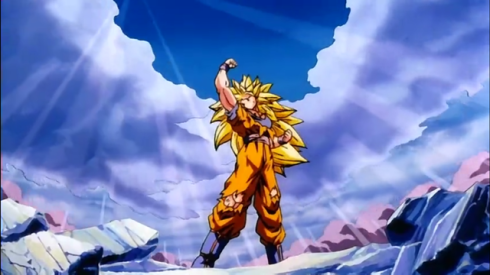
For my reviews, I’ll be going in chronological order and using the English release titles and character names for simplicity’s sake. These movies are all available both dubbed and subtitled so you can enjoy them however you wish, it makes little difference. They’re mostly extended fight scenes with minimal plot developments rendering the non-visual aspects of each film kind of moot. That’s not to say that some aren’t better than others. For the most part, the films all seem to try and take some aspect of the main series, like Goku unlocking the ability to turn Super Saiyan, and truncating that story into a 45 minute movie. Most of the films are under an hour with the longest only lasting 72 minutes, so there’s not a lot of room for complicated narratives. I mostly want my posts to be spoiler-free reviews, but I found my main point of criticism is often in how the film’s choose to wrap-up the story and they’ve turned into more of a discussion/analysis than a true review. I don’t really think there’s much to spoil in these movies, since often the cover art or title gives away most of the plot and each film needs to reset the status quo at the end. I’ll still try my best to avoid them though and warn those who haven’t watched these movies ahead of time if I’m about to spoil something major.

Dragonball.Z.-.Movie.09.-.1080p.BluRay.x264.DHD.mkv_snapshot_13.27_[2013.12.01_16.35.45]

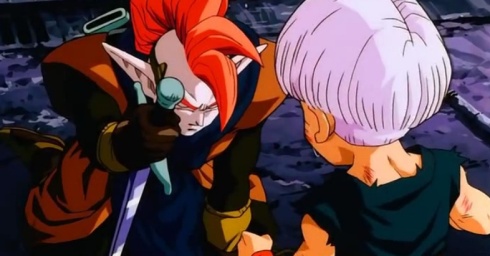
Since the movies are non-canon, you’ll sometimes get to see match-ups that you would have never seen in the main series, like Trunks vs. Tien.

If you haven’t seen all of them though then I encourage you to watch along with me as I go. Dragon Ball Z is largely an imperfect series, but it’s also inherently fun. Because of the wish-fulfilling Dragon Balls, the stakes are often pretty low even when they seem vast and the movies are full of plenty of humorous moments as well. They’re often a place for the underused characters, especially Oolong, to have a little moment to themselves which is often quite nice. The super-powered Saiyans seem to soak up a lot of the attention in the series, and they do in the movies too, but it’s easy to forget that the franchise boasts some pretty entertaining supporting characters as well. If this all sounds like fun to you, then check back this Monday for our very first movie – Dead Zone! And if you’re seeing this for the very first time and I’m well into the series, use the drop-down menu to your right to find all of the Dragon Ball Z movie reviews in one handy place. And if you love Dragon Ball, but don’t care for the movies so much, well good news because I have a few other posts on the way concerning the subject. I hope to see you Monday!


Batman: The Animated Series – “Heart of Steel: Part I”

Heart_of_Steel_Part_IEpisode Number:  38

Original Air Date:  November 16, 1992

Directed by:  Kevin Altieri

Written by:  Brynne Stephens

First Appearance(s):  Barbara Gordon, Karl Rossum, H.A.R.D.A.C.


There’s quite a bit to unpack in this one, which may seem odd since this is an episode that does not feature a “name” villain. Debuting in this episode is H.A.R.D.A.C. (Jeff Bennett), a clear nod to HAL2000 from 2001:  A Space Odyssey who’s existence in this cartoon probably owes a lot to James Cameron’s Terminator franchise which was red hot in ’92. H.A.R.D.A.C., which stands for Holographic Analytical Reciprocating Digital Computer, is basically an A.I. like Skynet capable of integrating with the machines around it, as well as able to construct robots that resemble humans. H.A.R.D.A.C. will obviously appear in the second part of this two-part story and will also make another appearance in the series, but the big debut this week is none other than the someday Batgirl, Barbara Gordon (Melissa Gilbert). Up until this point, we have seen nothing of Commissioner Gordon’s home-life, but anyone who grew up with the comics or watched the 60’s television series knew that Gordon had a daughter named Barbara and she is Batgirl. What we don’t know about this version of Barbara is where she is at currently in her life. We also don’t know anything about her mother, but it would seem Gordon is a single father and I honestly can’t recall if that’s ever addressed in a future episode. The episode is also written by Brynne Stephens, who now goes by Brynne Chandler and at one point as Brynne Chandler Reaves. You may recognize that surname if you’ve been paying attention to the writing credits in this show as her former husband, Michael Reaves, is also a writer for this show. Stephens is interesting because she was given the role of basically being the Barbara Gordon writer as she is the main writer for all of her appearances. They must have felt she had a good grasp on the character, and maybe the show runners were just smart enough to realize it’s a good idea to have a woman write their most important female character. In addition to her credits here, she also contributed to some other stellar (and admittedly some not so stellar) shows like Gargoyles and Teenage Mutant Ninja Turtles (the good episodes, trust me).

Heart_of_Steel_Briefcase

Meet the newest addition to Batman’s rogues gallery:  Briefcase Robot!

The episode opens at Wayne Enterprises. A blond woman in a white dress is shown walking in from behind and starts chatting with the officer at the security desk. She places a briefcase on the floor and just walks out. Now, if this was done in 2018 security would likely notice it and call in a bomb squad, but in 1992 they probably would just consider it a lost item. That night, the briefcase reveals itself as some kind of a robot by sprouting legs and producing a little camera that kind of looks like an eyeball. It sneaks into a restricted area and produces a laser to cut its way into a safe to vacuum out what look like fairly large microchips. At the same time, Bruce Wayne is heading home and he needs security assistance to make sure he doesn’t trip the alarm as he leaves. As he’s being lead out, the alarm goes off and they see the odd device on a security camera. The guard ushers Wayne into a safe room and tells him to remain there, just to be safe, which of course Wayne has no intention of doing. He activates some sort of revolving corner in the room vanishing from sight.

Batglider

He really does have some wonderful toys.

As the little robot tries to escape, Batman emerges from an elevator armed with a trusty Batarang. Batman chases it to the rooftop where the robot fires off a rocket towards the beach. Apparently disabled, Batman retrieves a Bat-glider from a storage shed on the roof and takes off in the direction the rocket was fired. Meanwhile, the rocket touches down on the beach and the same woman from earlier is there to retrieve it. She picks up the stolen microchips and hops into a car with no traditional steering implements. She simply orders it “home” and the car obeys. Batman sees the vehicle speeding off from above. The woman notices, and the vehicle begins firing on Batman and strikes his glider knocking him from the sky.

Batman, failing to stop the thief, returns to the Batcave where Alfred is waiting. Some mechanical arms descend from the ceiling to hoist the battered Bat-Glider above for repairs. As Batman fiddles with it, Lucius Fox (Brock Peters) calls to inform him of what was stolen. The chips are apparently part of what Wayne Enterprises is referring to as wetware, a new advanced type of artificial intelligence. The good news though is that without the accompanying data files they’re useless, and the robot was not able to grab those from the mainframe.

10-4

Bruce getting a little creepy with Barbara.

The next day, Wayne and Fox meet with the Gotham Police at Wayne Enterprises over the theft. Fox informs Bruce that a Cybertron Industries is a competitor in this field, and he thinks they’re the only ones who could possibly make use of the chips. He doesn’t accuse them of being behind it, but it’s enough of a lead that Batman wants to investigate. This is where Barbara also makes her debut as she comes into the room to check on her father, Commissioner Gordon. She just returned home from college, and Bruce sort of pokes fun at the beat-up old teddy bear in her purse. Apparently, her dad always brings it along when he picks her up from the airport. As everyone leaves, Barbara forgets the bear and Commissioner Gordon returns for it in kind of a cute, and humorous moment. The implication being he obviously has more of an attachment to his daughter’s childhood toy than she does.

HS_I_41_-_Randa_Duane

Randa Duane, who can blame Bruce for wanting to get to know her a little better?

It turns out, Wayne knows the founder of Cybertron, Karl Rossum (William Sanderson), who apparently taught Wayne about artificial intelligence. Bruce pays him a visit the and Rossum is happy to invite him into his laboratory to show him some of his work. He apparently knows about the break-in from the night before, but basically claims no knowledge of Wayne’s wetware seemingly because he wouldn’t need it. He then shows Bruce H.A.R.D.A.C., his newest A.I. which he seems to have high hopes for. He struggles to find the right words to explain how the colossal device functions, but they’re soon interrupted anyway by Rossum’s assistant who emerges from the machine. Clad all in a tight-fitting silver bodysuit, Wayne seems more than a little interested in Randa Duane (Leslie Easterbrook) and pulls the power move of asking her to dinner right in front of her boss (I mean, come on Bruce, you don’t know what her relationship is to Rossum) and she accepts.

BruceRandaMeet

Judging by Rossum’s expression, it would appear he is not too thrilled with this development.

Satisfied with landing a hot date for the following night, Bruce departs and Duane returns to H.A.R.D.A.C. The A.I. is apparently sentient, and it scolds Duane for not getting it the information it needs to make use of the chips stolen the night before. At this point, Duane removes her hood to reveal herself as the blond woman who orchestrated the theft. She apologizes, as quick cuts to inside H.A.R.D.A.C. reveal he’s constructing a humanoid robot that is to aid them in securing whatever it is it seeks. There’s a bunch of smoke obscuring the robot’s face as it emerges from inside H.A.R.D.A.C., but Duane seems impressed.

HeartofSteel1

A couple of visitors at the Gordon residence.

We’re then taken to the Gordon residence, where Barbara is working on some homework on the floor while her father is reading the newspaper on the coach beside the grubby old teddy bear. When there’s a knock at the door, Jim goes to see who it is. When he opens the door he’s met by Duane and another individual who looks exactly like him. Duane hits him with some kind of stun-gun device, and soon Jim returns to the living room. Barbara, concerned by what she heard, asks him if he’s all right and he replies curtly that he’s fine. She notices he feels ice cold, and he continues to assure her he’s fine. Then he smacks the teddy bear to the floor and sits down on the couch to resume reading his paper. Barbara is shocked by this action, but says nothing.

The next day, Bruce is back in his office discussing new security measures with Fox when Randa Duane comes waltzing in. She’s clad in her white dress and pulls out a compact mirror to freshen up as Bruce and Fox continue their discussion. When they’re through, they all take their leave, but Randa leaves behind her compact. Just like the briefcase from before, it sprouts robotic appendages and a camera and starts messing around on Bruce’s computer.

hqdefault-40

H.A.R.D.A.C. has a continued presence throughout the episode, even though it’s rarely on screen.

At Wayne Manor, Bruce and Randa are enjoying a meal by the fire. Bruce is awkwardly still dressed in a full suit as he lays on the floor with her. He receives a call from Fox about a break-in at Wayne Enterprises, and he leaves to go check it out telling Randa to just sit tight. Once he leaves, H.A.R.D.A.C. contacts Randa (apparently he can communicate directly with her like some sort of robot telepathy) to inform her that the files the little spy robot acquired were false. They deduce together the real files must be at Wayne’s residence some where. She assures her robot overlord that she’ll find them, as Alfred comes into the room with tea. She unleashes that same stun weapon that she used on Gordon on Alfred and begins her search. Wearing some high-tech looking goggles, Randa is able to find the entrance to the Batcave, and lets H.A.R.D.A.C. know about her amazing discovery.

Wayne and Fox check out the database to see what the robot stole, and Wayne then lets Fox know about the dummy files. He tells him he has the real ones at home, and then calls to check-in on Randa and Alfred. When there’s no answer he leaves immediately. When he arrives home he finds Alfred unconscious. He wakes him up and Alfred is confused by what he happened, apparently not remembering what Randa did to him. Bruce puts on his Batman costume and heads into the Batcave. He quickly realizes his computer system has been hacked as it starts going crazy. The mechanical arms that once held the Bat-glider drop from the ceiling, grabbing Batman by the shoulders and hauling him high into the ceiling as the episode fades to black with the ominous “To Be Continued” emblazoned on the screen.

Heart_of_Steel_Captured

Well, that wasn’t supposed to happen.

“Heart of Steel:  Part I” follows the same general formula as the other Part Ones that we have seen so far. It’s very methodical with little action as the main players are all introduced, and since we’re dealing with a lot of new characters, there’s a lot of information to unload on the viewer. There’s a mysterious aura around Rossum and Duane, but a lot of the lingering questions are answered by the narrative, just not explicitly. We obviously know that Jim Gordon has been replaced by a robot, and since he’s ice cold and Wayne made the same observation about Randa, we know she must be a robot as well. What we don’t know is how Rossum fits into all of this. Is he an unwilling participant in the crimes of his A.I.? He seemed almost afraid of H.A.R.D.A.C. when describing it to Bruce, but it’s possible he’s up to something. I’ve, of course, seen Part II before, but I’m purposely writing this before re-watching it as I don’t remember a lot of what happens, just bits and pieces.

Our villains are pretty intriguing though. We don’t know what exactly it is that H.A.R.D.A.C. wants out of Wayne’s wetware. We also don’t know how the issue of robot Commissioner Gordon is going to play out. He hasn’t been called on yet, but he obviously serves a purpose. Barbara also knows that something is up, but we’re not sure what she is capable of. For all we know, she’s already Batgirl, but since we’ve never heard even a whisper about that character we can probably assume that isn’t the case.

27-4

This scene probably bothered me more than it should.

There are some fun little trivia bits in this episode as well. Randa Duane seems to clearly be modeled after Marilyn Monroe, and considering she was likely built by a middle-aged man in 1992, I suppose it’s not a surprise he would want to model her after the actress. Karl Rossum also has a lot built into his simple name. He’s likely a combination of Karl Capek, who is credited with creating the word “robot,” and “R.U.R” is a play of his. That acronym is seen on the license plate of the getaway car early in the episode which apparently stands for Rossum’s Universal Robots. To top it all off, he’s voiced by William Sanderson who played inventor J.F. Sebastion in Blade Runner, the inventor of that film’s replicants. And I don’t know if this was intentional or not, but Cybertron Industries also shares a name with the homeward of the Transformers from that franchise. It’s not uncharacteristic for the show to have a bunch of Easter Eggs in it, but I’m struggling to think of a single episode with this many.

Batman_TAS_Heart_of_Steel_06

Crafty or Careless?

There are a few downers as well. This episode features a lot of people just walking and talking, which is notoriously hard to animate and it shows. There’s some awkward animation, and also one really bad image of Batman when he emerges from the elevator early in the episode. He looks really oafish and crude, like a Ren & Stimpy drawing. I also find it silly how many Bat-measures are built into Wayne Enterprises. The revolving corner of the safe room would be clearly visible, and storing a Bat-glider on the roof behind a rickety looking door seems pretty risky. I sort of touched on it in the write-up, but I also really hated the shot of Bruce casually laying on his side when dining with Randa while still wearing his full suit. They’ve shown Bruce in more casual clothes before, they couldn’t use one of those sheets? I suppose in an episode with a lot of new characters and backgrounds, some sacrifices had to be made somewhere.

There’s a lot going on in “Heart of Steel,” and it’s setup is pretty damn good. It somewhat lacks the shock value that “Two-Face” and “Feat of Clay” had at the end of their respective first chapters, but it feels like we’re well positioned for a successful conclusion next week. My main critique of the two-parters so far is that they’ve been really good at the build part, but the payoff has been disappointing. “Feat of Clay” is probably our current champion, but I’m optimistic that “Heart of Steel” can give it a run for its money.


The Chronological Donald – Volume 2

1e_66925_0_TheChronologicalDonaldVolume21What day is today? It’s Donald’s birthday! He made his debut in the Silly Symphonies short “The Wise Little Hen” on this day back in 1934 making him one of the oldest reoccurring characters at Disney. And while he may not be the oldest, he’s the most entertaining. Yes, more so than Mickey Mouse, Goofy, and all the rest. He was basically the star of Disney’s shorts in the 40’s and 50’s when other characters were seeing their workload reduced. It was basically the creation of Donald that allowed Mickey to settle into his more everyman role as the wholesome and unblemished face of the brand. And while Goofy and Pluto continued to receive steady work during these years, they never came very close to eclipsing Donald Duck who proved to be the most versatile and naturally funny character in the company’s arsenal. He was likable enough that the audience could be asked to root for him, but possessed enough bad qualities that audiences could also delight in seeing him get his comeuppance.

donaldv2-04

Volume Two of The Chronological Donald is best known for containing the WWII cartoons.

The Walt Disney Treasures collection is a series of DVD releases now long out of print. They fetch a pretty penny on the resale market now mostly because Disney has never really revisited them or printed them in mass quantities. They were the brainchild of film critic/historian Leonard Maltin, who felt these treasured shorts that defined Disney in the early days should be celebrated and made available. Since Disney no longer directly profits off of these cartoons, save for a bonus feature here and there on conventional releases, most of the shorts can actually be viewed on various streaming platforms online at no cost. Disney is expected to launch its own streaming service next year, so it will be interesting to see if lots of copyright claims start going up this year to get them pulled down.

Donald_Duck_-_In_Der_Fuehrer's_Face_2

“Der Furher’s Face” contains some rather surreal imagery.

The DVDs are the way to go though if you want to watch these treasured shorts. Donald Duck had enough material to span four volumes, each being two discs, and of the four I think it’s safe to say the best overall collection is Volume 2. This captures the era of cartoons when Donald had settled into a nice groove, but had yet to become too formulaic. Released just after the Great Depression, there’s a lot of historical nuggets to chew on during disc one with Donald being rather poor and forced to ration things like rubber and gas. Perhaps most famously, are the World War II era cartoons contained in the “Vault” section on disc one. A lot of these could best be described as propaganda today, with Donald excitedly signing up for war in one and tackling Adolf Hitler in another.

hqdefault-42

The boys have some fun at the expense of their uncle in “Donald’s Off Day.”

A great many Donald Duck cartoons typically place Donald in a fairly ordinary role, maybe in a conventional job or portraying a farmer, and then have him face-off with an adversary. In “Bellboy Donald,” he’s a bellhop on his last chance on the job to keep guests happy and he’s forced to deal with Pete’s punk kid who really tries his patience. In “Donald’s Garden” he’s a simple farmer with a rodent problem. A gopher, perhaps a precursor to the more famous duo of Chip and Dale, wants to eat his crops but Donald isn’t about to share. And then of course there’s his nephews which he clashes with at times such as in “Donald’s Snow Fight,” in which Donald wrecks their snowman and they plot revenge via a spectacular, over the top, snowball fight.

Other cartoons basically pit Donald against himself. In “The Plastic Inventor,” Donald tries to build a plane out of plastic, but he makes the mistake of getting it exposed to water while flying causing it to melt. In perhaps the best cartoon on disc two (and maybe the whole set), “Donald’s Crime,” he steals from his nephews’ piggy bank for a night on the town and is forced to confront the guilt he feels. And sometimes he’s also basically just playing the victim and we laugh at his misfortune, like in “Donald’s Off Day” where he just want to golf on his day off but the weather won’t allow it, forcing him to stay home with his nephews who play a vicious prank on him.

DonaldDuckInNutziLand_zpscc10584aThe war cartoons though, are definitely the most infamous on this set. Because they’re in The Vault and contain politically incorrect humor, they have a sort of forbidden fetish attached to them. They’re not all straight propaganda though. In “Donald Gets Drafted,” we see our duck protagonist in a very eager mood to enlist while a song cheerily lets us know that the Army is better than it’s ever been before. In the end though, while Donald hopes to be a fighter pilot, he just ends up going through basic training and is forced to peel potatoes. He gets some revenge against his mean drill sergeant, played by Pete, in the next cartoon, “The Vanishing Private,” when Donald uses invisible paint to disappear and harass his sergeant causing the general to think he’s crazy. “Der Fuehrer’s Face” is probably the most famous of these shorts, and not simply because it won an Academy Award. It depicts Donald in Nazi Germany being subjected to Hitler’s numerous brainwashing techniques and portraying daily life as horrible there. It also contains a rather unflattering portrayal of the Japanese, which also shows up in other shorts. It’s a surreal short though, and in the end it’s revealed to be a dream and Donald wakes up in the most garishly decorated bedroom of an unabashed American patriot. Everything about the cartoon is over the top, but it’s just so fascinating to watch as someone very far removed from that era.

ccf7a09

Goofy isn’t too good to appear in a Donald Duck cartoon.

If there is a shortcoming to this era of cartoons it’s that they’re not always the best looking. Some just weren’t properly taken care of, like “The Village Smithy” in which the film had aged so poorly Donald is basically yellow. Money was tight because of the war effort, so backgrounds are sometimes bland or sparse. The animation, by and large though, is still exceptional Disney quality animation. Another drawback though is perhaps the absence of more classic adversaries for Donald. Chip and Dale won’t show up until Volume 3, and they’re often thought of as Donald’s best foils. Pete is present in several shorts, and Donald pairs up with Goofy in a few others. There’s no Mickey though as he always receives top billing in any cartoon he shows up in. There are some one-off villains like a buzzard and gorilla, and if anything it’s nice to see some variety. The cartoons featuring Chip and Dale are more of a novelty than anything, as those two basically possess the same qualities as the gopher from “Donald’s Garden,” they just happen to be more recognizable.

vlcsnap-2012-01-30-14h14m12s52

“A Day In The Life of Donald Duck” is probably my favorite special feature across the entirety of The Walt Disney Treasures line.

Volume 2 not only perhaps possesses the best set of Donald Duck cartoons ever created, but it also has arguably the best bonus features of any of the four. “A Day in the Life of Donald Duck” highlights the first disc and it’s a fake documentary of Donald’s day to day life from the old Disneyland TV series. He’s super imposed over live-action as he visits the Disney Studios in Burbank and even runs into his voice actor, Clarence Nash, at one point. It’s pretty funny and the effects still hold up well enough today. My own kids are convinced Donald is really interacting with the environment in it. Disc Two contains a sit-down between Maltin and current Donald Duck voice actor, Tony Anselmo. It’s a great interview and Anselmo details how he got the role, what it’s like to play Donald, and even discusses drawing and animating him. There’s also a retrospective on Carl Barks, long somewhat forgotten and ignored, Barks was the writer and artist for the Donald Duck and Scrooge McDuck comic books that often didn’t even bare his name. He has since experienced somewhat of a renaissance as Disney tried to remedy that during the 90’s and 2000’s. It’s nice finally seeing him get his due.

4-2

“Donald’s Crime” may not be as famous as the WWII cartoons, but it might be the best on the set.

If you wanted to get just one collection of Donald Duck cartoons, then Volume Two of The Chronological Donald is the way to go. It tends to be the cheapest due in part to 125,000 sets being produced, which is more than Volumes 3 and 4 combined, though not as many as Volume One. You may not get the fun first appearances of Daisy, the nephews, or Chip and Dale, but what you do get is a collection of really entertaining cartoons. All of the sets are pretty entertaining in their own right, but Volume Two is the one I come back to most frequently. The cartoons are just really funny and feature good variety, though I could understand if someone preferred Volume Three over this one since it has more familiar adversaries, some great cartoons in its own right, plus it features the more memorable Donald Duck theme song. If you’re a fan of The Duck, or a fan of classic animation in general, then you should probably just try and get all four volumes because I don’t think you can count on Disney re-releasing these anytime soon or in a better package.

The Shorts

1940

  • The Volunteer Worker (presented as a Bonus Cartoon on disc two)

1942

  • Bellboy Donald
  • The Village Smithy
  • Donald’s Snow Fight
  • Donald’s Garden
  • Donald’s Gold Mine

1943

  • Donald’s Tire Trouble
  • Flying Jalopy

1944

  • Trombone Trouble
  • The Plastics Inventor
  • Donald’s Off Day
  • Donald Duck and the Gorilla
  • Contrary Condor

1945

  • The Eyes Have It
  • Donald’s Crime
  • Duck Pimples
  • No Sail
  • Cured Duck
  • The Clock Watcher
  • Old Sequoia

1946

  • Donald’s Double Trouble
  • Wet Paint
  • Dumb Bell of the Yukon
  • Lighthouse Keeping
  • Frank Duck Brings ‘Em Back Alive

The Vault

  • Donald Gets Drafted (1942)
  • The Vanishing Private
  • Sky Trooper
  • Der Fuehrer’s Face (1943)
  • Fall Out – Fall In
  • The Old Army Game
  • Home Defense
  • Commando Duck (1944)

Batman: The Animated Series – “The Strange Secret of Bruce Wayne”

The_Strange_Secret_of_Bruce_Wayne-Title_CardEpisode Number:  37

Original Air Date:  October 29, 1992

Directed by:  Frank Paur

Written by:  David Wise, Judith and Garfield Reeves-Stevens

First Appearance(s):  Hugo Strange

“The Strange Secret of Bruce Wayne” is another episode of Batman:  The Animated Series that can trace its roots back to a story from Detective Comics, in this case issues #471 and #472 “The Dead Yet Live” and “I Am the Batman!” by Steve Englehart. It introduces Hugo Strange to the Bat-verse, a scientist with a penchant for extortion. Strange uses a machine that can read the minds of individuals. Under the guise of therapy, Strange seduces wealthy individuals into agreeing to his services and when he unearths something nefarious from their subconscious he’s able to blackmail them in exchange for keeping their secrets. If that sounds familiar, then you’ve probably seen Batman Forever, where The Riddler used a similar scheme. We’re only 37 episodes deep, but we’ve already seen a few instances of where this animated series influenced a movie to come. Batman Forever borrowed some of the Two-Face bits from the episode of the same name, and Batman Begins basically adapted The Scarecrow’s scheme from “Dreams in Darkness.” It’s just another example of how far reaching this show was. This episode also marks the first time we’ll see a team-up of sorts out of Batman’s rogues gallery when Joker, The Penguin, and Two-Face show up in the episode’s second act.

StrangeSecret2

Hugo Strange is today’s villain, and while there were tentative plans to bring him back, this ends up being his only appearance in the series.

The episode opens with a woman (who looks a lot like the woman being victimized by Poison Ivy in “Eternal Youth”) being approached on a bridge by some routine looking gangsters. The woman is revealed to be a judge in Gotham by the name of Maria Vargas (Carmen Zapata) and the gangsters want her to pay up in order to protect some information they have on her. Batman, apparently was tipped off or just happens to be in the right place at the right time, is watching from above as the judge hands over a briefcase full of money only to be told the price just went up. When she pleads with them that she can’t possibly pay more the crooks prepare to leave and Batman enters the fray. Vargas tries to take off and gets herself in some danger on the bridge, accidentally knocking herself out. Batman is forced to abandon his pursuit of the crooks in order to save her.

After the commotion is over and the police are on the scene, Commissioner Gordon explains he knows Vargas and can’t imagine her having a secret she doesn’t want out. He reveals he just dined with her recently and that she had just returned from vacation. He gets a call on his gigantic cell phone about the license plate on the limo the gangsters were driving and finds out it’s registered to the same resort Vargas just vacationed at. Batman then takes off via the Batwing, being piloted by Robin, and he playfully asks Robin if he seems stressed while remarking it may be time for a vacation.

MV5BMGQyYzNjMzMtMDVjZi00OGU0LTlkMTEtY2U2NjIzNDM5NTNlXkEyXkFqcGdeQXVyNjI4OTE1MTA@._V1_

Strange’s memory extracting machine is a bad place for someone with an alter-ego to find themselves in.

Bruce Wayne and Alfred immediately depart for Yucca Springs, a resort that just so happens to be owned by Roland Dagget (a piece of info that’s never elaborated on) and is home to Dr. Hugo Strange (Ray Buktenica). Wayne signs up for a therapy session and finds himself in the doctor’s machine. He’s told the machine will help ease his stress by forcing him to confront his past. It seems a little risky for Bruce to enter such a device, but he goes along with it. Strange pries at Wayne to reveal information on his past, specifically the death of his parents. Bruce’s thoughts are transmitted to a screen for Strange to monitor, and when he pries further bats appear along with a gloved fist and an unmistakable logo. Bruce hops out of the machine and remarks it doesn’t seem to be an effective stress reliever for him. Strange tells him the first session is often hard, but they’ll do better tomorrow. As Bruce leaves he removes a tape from his machine and refers to him as Batman. Dun dun duuuuun!

maxresdefault-29

Bruce Wayne’s secret revealed!

Strange immediately starts calling around, and we’re treated to a pretty dark, but hilarious, answering machine greeting from The Joker. Strange is going to auction off his perhaps priceless information and in addition to Joker he also calls The Penguin and Two-Face. For Joker, this is the first time we’re seeing him since his apparent death in “The Laughing Fish” and no explanation for his survival is presented. It’s also a rare Joker appearance that occurs without Harley Quinn. For Two-Face, this is the first time we’ve seen him in anything more than a cameo since his debut. Apparently Arkham was unable to rehabilitate him. As for The Penguin, this is only his second appearance in the show after kind of a comedic debut in “I Have Batman in my Basement,” one of the more divisive episodes the show output.

StrangeSecret1

Three fellas who would likely be interested in knowing who Batman is under the mask.

While Strange is busy peddling his tape, Wayne sneaks into his laboratory to get a closer look at the machine. He finds the tape on Judge Vargas (as well as many other, most of which are Easter Eggs) and sees what she’s been hiding in her past. When she was a little girl, she was playing with matches which lead to a fire at the Gotham Docks, apparently a pretty big story back in its day, as well as a destructive blaze. Bruce realizes his tape is missing and Alfred, sneaking around outside, radios him to let him know who Strange just welcomed to the resort. Bruce then begins erasing all of the tapes before finally destroying the machine. Strange and his muscle come in just as Bruce really gets going. He’s disappointed at the loss of his device, but he still has the tape of Bruce’s alter-ego so he’s in a pretty good mood. Bruce is tied up and tossed somewhere with Alfred. Alfred apologizes for failing him, but Bruce is taking things in stride claiming everything is going according to plan as he produces a lock pick and gets to work.

MV5BMjA0ODU2MjA2N15BMl5BanBnXkFtZTgwOTg3MTg3MjE@._V1_

Making deals with the likes of Joker and Two-Face carries certain risks.

Meanwhile, Strange is presenting his finding to the villains. Surprisingly, they go along with the bidding and decide to pool their money together so they all can see what’s on the tape know it supposedly contains the true identity of Batman. I’m a bit puzzled why someone like The Joker wouldn’t just kill Strange and take the tape, but I’ll go along with it. Strange is very happy for his payment of approximately 50 million dollars, and gets ready to play the tape for them. Unknown to him, Batman is lurking in the rafters and he switches out the input on the projector to a different tape player. What plays is a video of Strange speaking with his cohorts about his plan to produce a phony tape about Batman in order to extort a bunch of villains out of their not so hard-earned money. This naturally enrages the attendants and Strange is forced to flee.

Joker, Two-Face, and Penguin eventually capture Strange and take him to the airport. Alfred, in their limo, picks up Batman and the two give chase while Alfred remarks he’s contacted Master Dick. The villains drag Strange onto an airplane and take to the sky. They plan to chuck him out and Strange starts begging for his life. He tells them Batman is Bruce Wayne, but no one believes him. Batman, able to stow-away on the plane, cuts the fuel line and the whole thing begins going down. It crashes, and somehow everyone on the plane is able to walk away fine just as the Gotham Police show up. As Strange is being lead away, he taunts Batman. He knows he used the machine to create a false tape of him to fool Joker, Penguin, and Two-Face. As he goes on and on, Bruce Wayne shows up, much to the shock of Strange. Batman says the two worked together to bring him down under the guise that Wayne and Judge Vargas are close friends and he wanted to get back at him. Once Gordon and Strange are out of earshot, Wayne is revealed to be Dick in disguise and everyone is ready to head home.

hqdefault-38

Bruce Wayne?! Batman?! How could this be?!?

“The Strange Secret of Bruce Wayne” is a fun story – what would someone do with Batman’s secret identity? Strange’s actions are entirely logical for an extortionist, even if it’s a bit unrealistic to think he could get in touch with the likes of Joker and company so easily. The episode does jump through some hoops to preserve Batman’s secret in the end. I don’t like how the writers are afraid to show Batman as being fooled, and he instead needs to be one step ahead of Strange the whole time. The Bruce Wayne impersonation is also pretty unrealistic since Dick not only is able to look exactly like Wayne, but also sound like him as well. It’s the kind of thing a cartoon can get away with that live action would not. I guess they’re just taking advantage of the medium, but it does feel cheap. A lot happens in this episode so it moves really fast, which is fine. I suppose you could argue that the plot could have been dragged out across two episodes, but I’m fine with it as is. I did find it odd that Two-Face’s coin never came into play, he was ready to toss Strange out of the airplane, but I do like how he mentions that he knows Bruce Wayne and it’s why he can’t possibly believe that he would be Batman. Still, it’s kind of surprising that it was never revisited in a later episode with one of the three villains at least entertaining the notion. I feel like the plot of this episode is memorable, making this one of the most popular episodes of the show. I don’t know if it’s a top 10 episode, but it’s probably at least in the top 25. Just a good, some-what flawed, but entertaining episode.


Getting Creative With Lego Creator – 31052

lego 31052It’s been a few years since Lego released its Simpsons products. Somewhat tied in with the show’s 25th anniversary, Lego released two waves of mini figures and two sets over the course of a little over a year. I was a pretty big fan of the stuff Lego did with the license and scooped it all up. The Simpsons ended up being a part of the short-lived Lego Dimensions brand, an offshoot of Skylanders and Disney Infinity in which toys interact with a video game. Aside from that though, the Lego flirtation with The Simpsons ended there. I’m not sure what the reason was for it to come to an end. It’s probably a simple one in that Lego only licensed it for two sets and two waves of figures. Lego has maintained a fairly wholesome image for the life of the company so it’s also possible there was some minor discomfort with the brand and ending it sooner than later was for the best. It seemed to me like the figures and sets sold rather well, so I doubt Lego lost money, but they only put out so many waves of mini figures per year and devoting a third to a niche product like The Simpsons may have felt unnecessary.

Whatever the reason, I’ve been a little bummed at the line’s discontinuation. It’s true I had a hard time foreseeing it continue for the simple fact that there aren’t many iconic locales from the show that could be done as a $200 set. Springfield Elementary and The Nuclear Power Plant would probably require a bigger investment, and Lego isn’t going near a Moe’s Tavern or Duff Brewery. The Flanders residence is probably too niche, as is the Springfield Retirement Castle. The only one that felt like it had a shot of getting made was The Android’s Dungeon. Lego may have had to do it smaller than the Kwik-E-Mart which would have necessitated a lower MSRP and maybe the license made that difficult. They could have tried to make it as large as the famous convenience store, but that might have been too silly. I think they could have done it though, but evidently it wasn’t meant to be.

IMG_2380And that’s a shame, because what’s really missing is not so much more sets, but more figures. Without a third set it seemed unlikely we would see more figures, and the figures are probably a little on the costly side since Lego makes unique head sculpts for each one. Just look at the characters Lego did not touch (I’m not bothering to list ones tied in with alcohol, religion, or organized crime for obvious reasons):  Skinner, Superintendent Chalmers, Sideshow Bob, Lenny, Carl, Otto, Lionel Hutz, Troy McClure, Frank Grimes, Sideshow Mel, Kent Brockman, Radioactive Man, Bumblebee Man, Roger Myers Jr, Agnes Skinner, Poochie. I could keep going, but the one that really bugs me is Principal Skinner since we have a Mrs. Krabappel and it’s kind of sad we have Ned Flanders, but not the rest of his family. Chief Wiggum doesn’t have his boys, Homer doesn’t have any co-workers – like I said, I could go on and on.

Wanting to do something with Lego, while also adding to my Simpsons collection, I picked up a set of Lego Creator. Set 31052, to be specific, which is a 3 – in – 1 set dubbed Vacation Getaways that can be constructed as an RV with boat, a camp with Jeep-like vehicle, or a massive boat. I eyed it for the RV construction which appears to be its main function. Why? Because it bares a strong resemblance to the RV Flanders has in “Call of the Simpsons” and “Lemon of Troy.” Since Ned doesn’t have a house, I figured I could give him some wheels. And as a bonus, it comes with a bear that Maggie can befriend as she did in “Call of the Simpsons.”

Ned_RV

What we’re going for.

Construction of the RV is pretty simple and straight-forward. It’s a little on the narrow side, but a lot is packed into it (kind of like a real RV). The roof is removable in two places and intended to act as a place to store fold-up chairs and tables. There’s a portable grill as well that can be placed on top. The interior features a breakfast nook, sleeping area, kitchenette, and latrine with a two-seat cockpit upfront. One section can slide out where the bed is to make it a little roomier, and there’s lots of little built-in pieces that add to the livable nature of the set. The rear also opens up for better access. It comes with two mini figures of its own:  an adult woman and an adolescent boy. A little speedboat and trailer can be built and attached (also a plus since Ned has a boat in “Homer Loves Flanders”) and it works really well. There’s also the bear and two trees that can be built as well.

Some other accessories featured are a side-mounted canopy that can be rolled out. It works much better than I thought it would. There’s a skateboard, camera, some periodicals, and a suitcase as well. The RV itself is white with a red and black stripe that, wouldn’t you know, is actually pretty damn close to what Ned’s RV looked like in the show right down to the number of windows. The likeness is so close that if Lego had done a Flanders RV set it probably wouldn’t deviate much from what’s here. The only things missing are the pink curtains and a giant lemon tree to strap to the top.

The only real downside to this set is it probably wouldn’t be a ton of fun to play with. The interior is so narrow there isn’t a lot of room for the figures. The cockpit is especially tricky to seat figures in because it’s not easily accessible, even with the roof off. Still, that’s rather minor for what I need it to do since it’s basically going to sit on a shelf with the other Simpsons Lego sets and figures. It was a fun build, and it scratched an itch I had to construct a Lego set. I just wish we had all of the characters from “Lemon of Troy” to pile into the RV to really recreate something special. This set has been retired, but it can still be easily found new on various websites for around MSRP. That might not be true for much longer, so if you’re like me and looking to expand for Simpsons Lego presence in your home you may want to act fast.


Batman: The Animated Series – “Cat Scratch Fever”

Cat_Scratch_Fever_Title_CardEpisode Number:  36

Original Air Date:  November 5, 1992

Directed by:  Boyd Kirkland

Written by:  Sean Catherine Derek, Buzz Dixon

First Appearance(s):  Professor Milo


After watching so many episodes of Batman:  The Animated Series some patterns start to become obvious. A typical episode is split into two main parts: the discovery phase and the climactic confrontation between Batman and the villain of the day. Sometimes the episodes are uneven with one end of the episode not able to hold its own weight. Most of the time they’re both perfectly fine, but sometimes you get an episode where neither half really works, which brings me to “Cat Scratch Fever.” Aside from the fact that the title invokes unpleasant thoughts of Ted Nugent, in a Batman context it certainly brings to mind a certain woman, a cat woman, if you will. After a pretty lengthy layoff, we’re finally going to check-in with Selina Kyle (Adrienne Barbeau) and see what she’s up to while also getting a look at Roland Dagget’s latest scheme. This is also a noteworthy episode because it’s the final one animated by Akom. Akom was a frequent player in television animation. Based out of Korea, they would get a contract for work and often outsource it to other studios of varying quality (they famously did some rather shoddy work on X-Men’s pilot) and as a result they’ve produced some great episodes of animated television and some not so great, this episode being of the not so great variety which lead to their dismissal from the series.

Cat_Scratch_Fever_Trial

Selina facing the music.

The episode opens with Ms. Kyle at a hearing concerning the events of “The Cat and the Claw.” If you need a refresher, Catwoman and Batman foiled the plans of Red Claw who could have unleashed devastation on Gotham City if not for their intervention. Her heroic deeds did not score her many points with Batman however, as following the defeat of Red Claw Batman still placed her in handcuffs for petty burglary. This was a case of the show trying to have Batman be stoic in his attitude towards the law – it’s not for him to decide if Catwoman should be punished, but the court. It’s hypocritical considering Batman breaks the law all of the time with forced entry and witness intimidation. It’s why he’s a vigilante after all, so he can operate above the law. Thankfully our unnamed judge here (played by Virginia Capers) sees things my way as she gives Selina probation on the condition that she never dawn her Catwoman costume to commit crimes (so I guess she’s free to break the law out of costume?).

maxresdefault-27

A friend to cats everywhere.

An elated Selina returns home to her penthouse apartment and her assistant Maven is still there. We don’t know how much time has passed between appearances, but it seems like this is the first time Selina is home even though I would think she would have been able to post bail. Anyway, Maven informs her that her precious kitty Isis is missing and she supposes the cat went out looking for Selina, so Selina goes out looking for Isis. Deciding against dressing as Catwoman, she’s just plain old Selina. While looking for Isis, she stumbles upon a couple of hoodlums out collecting strays. They’re not with the pound, and Selina suspects the worst of them. Jessy (Denny Dillon) and Paunch (who isn’t voiced) are the two goons and they put up a fight. When things look like they’re going bad for Selina, guess who shows up. With Batman’s help, the two are put away effortlessly (the animation is careful to make sure Batman doesn’t strike the female thug, Jessy), but before Selina can thank him properly, Batman runs off as the police arrive. Finding a recently released individual like Selina Kyle in such a situation naturally prompts the arriving officers to bring her to the precinct, but Selina’s other knight in shining armor is there to bail her out.

Bruce and Alfred pick up Selina, who politely declines the advances of Bruce. She mentions the two thugs were quickly bailed out by Roland Dagget, which is a pretty good lead not just for Batman, but Catwoman as well. She somehow figures out that whatever is going on with the stray cat population is coming from a specific Dagget owned laboratory on the outskirts of Gotham. Inside, we get a peek at Dagget (Ed Asner) himself discussing some plans with a Professor Milo (Treat Williams, who I would have bet money on was Rob Paulsen) who has devised a rather nasty toxin. The toxin is placed into an animal which seems to cause the animal to react as if it’s rabid (he demonstrates on a dog). Their plan is to infect the stray animal population, which will in turn cause the disease to spread to humans, and then Dagget can sell the only cure for a rather tidy profit. We also see Isis is among the captured animals, and she’s Milo’s next specimen.

Cat_Scratch_Fever_Bite

Bad kitty!

When Catwoman enters the lab she finds it’s dark and quiet. She quickly locates her beloved cat and frees her from her cage. Isis at first seems docile, but she quickly turns on Catwoman and bites her, then flees out an open window. The thugs, Jessy and Paunch return along with Milo and Catwoman is forced to flee. Milo takes note of the bite wound she received and lets his cohorts know they don’t need to pursue aggressively as the toxin will do the work for them. And sure enough, Catwoman is rather woozy and off-balance almost right away. She discards her mask and collapses in the snow as Isis runs off.

Cat_Scratch_Fever

Paging Dr. Batman.

Elsewhere, Bruce Wayne has done some sleuthing on his own to figure out what the Dagget connection could be. Lucius Fox (Brock Peters) is able to provide some important info about a new drug Dagget is believed to be developing and no one knows what it’s for (the dialogue in this scene is very similar to another Dagget episode “Appointment in Crime Alley,” so much so that it had to be intentional though it could have also just been lazy writing). Batman heads out to investigate, which is a good thing since he finds Selina collapsed in the snow. He takes her to a nearby shack, of sorts, where she gets him up to speed on what happened before taking a little rest.

While Batman is busy tending to Selina, Dagget is getting impatient with the progress being made. He orders Milo to commence with the operation, while he explains he’s just waiting on Paunch to fetch some of the anti-toxin from another lab in case anything goes wrong. Unfortunately for Paunch, he’s going to run into Batman while he’s out doing Milo’s bidding. Batman was hoping to get some info out of Paunch, but he picked the wrong guy considering he’s mute and all. Still, Selina shared enough information with him to figure out Dagget’s scheme, but just in case he didn’t, Dagget and Jessy show up to confirm his suspicions (Dagget, like many villains, just can’t help himself).

15-4

Not the most fearsome trio, but left to right is Milo, Jessy, and Paunch.

Batman is going to be forced to deal with the likes of Paunch and Jessy, who are now armed with machine-guns, as well as the infected dog from earlier. The show is careful to not show Batman being too mean to the dog, he’ll use his cape and wits to subdue him before embarking on a “super fun happy slide” of his own through the snow. Paunch and Jessy confront him on a frozen lake, and their guns are able to cause a huge mess of things. Batman goes through the ice, but of course he isn’t down for good and ends up subduing the brutes. He’s able to utilize the anti-toxin on Selina, as well as our poor canine friend.

The episode ends with Selina back at home. Maven informs her that she’s being hailed a hero once again for her part in stopping Dagget’s plot, and this time it sounds like Dagget won’t escape justice as he’s under investigation for his role in the whole thing. Selina should be happy, but she never found Isis and she’s despondent over her still missing cat. As she sees Maven out, a basket is lowered in the background from the roof of her building containing her precious kitty. It would seem Batman knows how to make a romantic gesture, and best of all, Isis has been cured of the toxin. The episode ends with Selina lovingly hugging the cute little cat.

CSF_46_-_Batmobile-2

The episode mostly looks rather subpar, but it has its moments.

Your enjoyment of this episode likely hinges on how big an animal lover you are. I like them as much as most people, I suppose. I’ve had a cat all my life and when this episode aired I even had a little black cat like Isis myself. Even so, the whole poisoning of animals does little for me, and Professor Milo seems kind of cartoonishly evil. Jessy is especially annoying, but I suppose that’s by design. The whole scheme seems small and kind of odd, but I suppose it’s unique. The episode also re-establishes that Selina has a thing for Batman and only Batman, while Bruce lusts after her. By the conclusion, she’s also pushed to the sideline with an uncertain role going forward. She’s not really a villain, but does she have it in her to be some sort of vigilante on equal footing with Batman? The show will do a rather poor job with her from here on out, even the show runners have agreed as much.

What really can’t be denied is how crummy this episode looks. Character models are inconsistent and the facial details, in particular with Selina, look off-model at times. The effects on the infected dog are poor as well, with the foam/drool basically being the same color as the dog’s fur. I do appreciate the sort of rugged appearance of Jessy, though Paunch is so cartoonish he almost looks like he’s not from this series. He kind of reminds me of a Popeye character, or something. If I can give the visuals one compliment, it’s the the snowy scenery looks pretty good and it’s a nice change of pace from the usual visuals.

The only real noteworthy aspect of this episode is it reintroduces Catwoman, and also introduces a villain who will at least make a future appearance in Professor Milo. Milo isn’t exactly an A-list villain, but at least the episode does directly deal with the fall-out of a previous episode where Catwoman is concerned. It’s not one I was particularly excited to revisit, and one I won’t likely watch again anytime soon.