Author Archives: Joe

#2 Best in TV Animation: Cowboy Bebop

Cowboy Bebop (1998)

Cowboy Bebop (1998)

Three…Two…One…Let’s jam!

Of all the mainstream arts, television is the one that has seen the biggest advancement in terms of relevance over the past fifteen years. It used to be that TV was nothing more than the idiot box, a thing to rot our brains with. It was the home of the sitcom, a mostly safe way to kill 25 minutes on a weeknight, or daytime soap operas with outlandish and never-ending plotlines. Even the more celebrated dramas often had a “play it safe” mentality designed to entertain for a single episode before putting everything back in place for next week. There wasn’t much going on that seemed worthy of the term “art,” and an actor jumping ship from Hollywood to the small screen was seen as an admission of failure on said actor’s part.

Things are different now and some of the best stories, acting, and directing are occurring on television. Most of this is attributed to premium cable network HBO and their series The Sopranos and The Wire often cited as the two most influential. Basic cable has jumped in on the fun over the past eight years or so with much celebrated hits like The Walking Dead, The Americans, and of course, Breaking Bad. The main networks are still mostly home to popcorn fair but they’re slowly catching on to the changing television landscape.

Before all of these shows were breaking the mold, there was Cowboy Bebop. Cowboy Bebop is an example of strong story-telling with great character development that refused to be a slave to the popular TV tropes. The fact that it was coming out of Japan likely had something to do with it because Cowboy Bebop would never have existed as-is if it were American made. Just imagine a hugely successful show voluntarily ending after just one season of twenty-six episodes (a film would later be released but there’s never been talk of a season two or spin-off that I’m aware of). Cowboy Bebop set out to tell a complete story, and that’s what it did. If there was a temptation to double-back on that and have a second season it was ignored and probably for the better.

From left to right: Ein, Ed, Spike, Jet, and Faye.

From left to right: Ein, Ed, Spike, Jet, and Faye.

Cowboy Bebop is largely credited to director Shinichiro Watanabe, who presided over the twenty-six “sessions” that make up the series. Cowboy Bebop follows the crew of the Bebop, comprised of bounty hunters in the year 2071. In this setting earth has largely been abandoned by humanity due to asteroid activity. A large collection of people now live on Mars, but a lot of the solar system as we know it has been colonized. The Bebop is captained by Jet Black, a former cop with a cybernetic arm. His main running mate is Spike Spiegel who was formerly messed-up with a criminal syndicate but now hunts bad guys for coin. They’re a fairly unsuccessful duo when the series begins but they’re soon joined by Faye Valentine, a woman with no memory of her past and a huge debt to settle, and the sexually ambiguous child Edward, who speaks in the third person and is a computer whiz and hacker extraordinaire. Rounding out the group is a welsh corgi by the name of Ein, a dog with near-human intelligence. They’re mostly a motley crew and often their bounties get away or find a way to devalue themselves preventing the group from really cashing in. Most of their relationships are a bit strained with Spike and Jet often wondering how their duo came to be this group. Faye basically comes and goes at her leisure while Ed just seems to enjoy hanging out with the crew. The various dynamics work out well as they clash often but all seem to reluctantly accept one another’s help when needed.

All of the characters are interesting and well-developed in their own right, but Spike is the show's main character.

All of the characters are interesting and well-developed in their own right, but Spike is the show’s main character.

The animation for Cowboy Bebop is a sophisticated take on the standard anime style. The characters do not possess the exaggerated features of many anime programs but retain enough of the art form’s style to be considered anime. Characters tend to be long of limb. They look like they should animate in a stiff manner but they tend to have a certain flow about their movements. There’s a mixture of handrawn animation and CG with most of the CG reserved for the spaceships. Some episodes are visually dark, others bright. Some settings have an industrialized look to them, others are leafy and green, and some neon and futuristic. There’s a lot going on in the twenty-six sessions and the nomadic nature of the crew adds considerable variety in both story-telling and visuals.

Music is a big point of emphasis by Cowboy Bebop. In fact, each session title is a reference to either a song or style of music. There’s “Sympathy for the Devil,” “Bohemian Rhapsody,” and “Jupiter Jazz,” just to name a few. The music was done by Yoko Kanno and a better anime soundtrack you will not find. The opening title “Tank!” is a jazz-fusion track that has undoubtedly influenced several shows since like The Venture Brothers and Archer. The closing track for each episode, “The Real Folk Blues,” perfectly captures the show’s more melancholy moments. The show’s dub is also particularly impressive. Several of the names attached to it are well-known in the animation community such as Steve Blum (Spike), Wendee Lee (Faye), and Beau Billingslea (Jet).

By far though, the best thing going for Cowboy Bebop is its story-telling. The show slowly peels back the layers of each character throughout the series. At first, Spike comes across as a reckless cowboy who cares only about collecting his bounties. As the series moves along, we see he’s actually a good person at heart and when push comes to shove he usually opts to do the right thing. His story is what I would consider to be the main story. Some of his past, including his rivalry with current syndicate member Vicious, is revealed in the fifth episode “Ballad of Fallen Angels.” More is then revealed in the two-part “Jupiter Jazz” which is essentially the midpoint for the series before wrapping with the two part finale, “The Real Folk Blues.” His story is compelling often alternating between exciting and sad. Faye also has a window to her past opened as the series moves along and hers is just as captivating and arguably more tragic. The episode most centered around her, “Hard Luck Woman,” is one the show’s more satisfying. Jet and Edward are also examined and each has difficult choices to make. We learn a lot about these characters and it’s painful saying goodbye after just twenty-six episodes, but that’s part of the show’s lasting impact.

The Spike/Vicious rivalry is one of the show's main conflicts, but it's never overplayed.

The Spike/Vicious rivalry is one of the show’s main conflicts, but it’s never overplayed.

Interspersed amongst the episodes are one-off palate cleaners, if you would. These episodes take on the form of a “bounty of the week” and we get to see the Bebop crew in action. Some are laden with humor such as the psychedelic “Mushroom Samba” while others are dark and violent, like “Pierrot le Fou.” Even though these episodes are lighter in content, they still offer moments for the characters to deepen our understanding of them or make use of creative story-telling devices, like the Alien inspired “Toys in the Attic.” Truly, there are episodes more likely to be cited as favorites but there is no bad episode among the twenty-six.

Cowboy Bebop nails it at pretty much every level. It’s visually engaging, aurally amazing, and its story-telling was ahead of its time. If the show had a smell or taste attached to it I’m sure they too would have been excellent. It’s rather unique among the other shows on this list, most of which are either comedies or children’s shows. Cowboy Bebop will make you laugh, but it’s definitely not a comedy and its mature subject matter puts it squarely in the adult zone. It’s really one the greatest shows made for television and one of Japan’s finest exports. Thirteen hundred words can not do it justice.


The Tale of the Princess Kaguya

The Tale of the Princess Kaguya (2013)

The Tale of the Princess Kaguya (2013)

Hayao Miyazaki is the most celebrated director of Studio Ghibli, and one of the most celebrated directors of animation in the entire world. Lurking just behind him, however, is the immensely talented Isao Takahata. Takahata is the director of the delightful and underrated Pom Poko, as well as the heartbreaking and immensely affecting Grave of the Fireflies, one of the very best animated films of all time. When Miyazaki announced his retirement before the release of his final film, The Wind Rises, it reasoned to assume that Studio Ghibli would turn to Takahata to lead the company from the director’s chair. Apparently that is not to be, as the studio would end up announcing it was suspending development on all projects to revaluate its business strategy. Before that though, the company announced Takahata would be directing The Tale of the Princess Kaguya, giving the world at least one last Studio Ghibli film directed by the immensely talented director.

The Tale of the Princess Kaguya is an adaptation of an old Japanese folktale known as “The Tale of the Bamboo Cutter.” The general premise of the tale is that an old bamboo cutter finds a tiny girl inside a bamboo shoot who grows into a princess. In the film, the bamboo cutter is voiced by James Caan for the english adaptation, who finds the tiny woman in the bamboo shoot. Upon removing her she immediately becomes a baby and grows in size. He takes her home to his wife (voiced by Mary Steenburgen, making this the second time Caan and Steenburgen have portrayed a married couple, with Elf being the first) and they simply refer to the baby as Princess (Chloe-Grace Moretz). She soon starts growing rapidly and reaches her teenage years much faster than she had any right to. Her father decides she must be an actual princess, and upon returning to the forest where he found her to discover gold in the bamboo shoots, has the funds to make it happen. Princess, often referred to as Little Bamboo by her friends in the forest, would much rather live a peasant’s life among the trees but is reluctant to disobey her father. They move to the city where the princess is dubbed Kaguya and counseled in the ways of nobility. The meekness she is expected to take on does not suit her and she is best described as a fish out of water amongst the other noble folk. Her father is blind to this and pushes her to choose a suitor and marry a prince, but as the film progresses it becomes clear to the viewer that this is the path that will bring about the most unhappiness for the main character.

An ordinary bamboo cutter makes an unbelievable discovery in the forest.

An ordinary bamboo cutter makes an unbelievable discovery in the forest.

The film does a good job of portraying the father as a well-meaning individual. It would be easy for the audience to turn on him completely given how miserable his actions make his daughter feel, but we can tell he truly believes he’s doing the right thing by forcing the noble lifestyle upon her. He views his daughter, as many fathers do, in a perfect light and wants only the best for her. He’s not acting out of any sense of selfishness. He’s not a gold-digging individual or in search of fame for his own name. Unfortunately, he is just completely blind to how he’s making his daughter feel and doesn’t realize he’s deprived her of the only thing she really wants. In this, the film is sort of an anti-princess movie in comparison to the old fairy tales popularized by Disney. For many of those, the lady in waiting yearns to be a princess and is forced to wait around for her prince to come save her and remove her from a life of poverty. Today’s movie-going audience values strength of character, especially from its female leads after years of weak ones, and in this Kaguya succeeds at crafting a modern princess tale.

The running scene, my pick for best visual sequence in the film.

The running scene, my pick for best visual sequence in the film.

Unfortunately, it isn’t successful in telling a truly compelling story. The character of the princess is the best thing going for it. She is easy to root for and also easy to empathize with. Aside from her, there are few other memorable characters. Her plight is so obvious and easy to grasp onto that the many scenes of the film that illustrate just how depressed she’s become are almost unneeded. The film is dreadfully slow and plodding (a bloated 137 minutes), so much so that I would be surprised if children would generally find it immersive. Often the time-consuming nature of animation production forces shorter runtimes upon directors. This can be frustrating for the truly captivating animated films out there, but at the same time, these limitations can also have a positive impact by forcing the director to focus on the story and the most important aspects of it. Such constraints apparently were not place on Takahata, but a persuasive voice in his ear would have benefitted this film tremendously.

Perhaps the reason for the film’s extended run time is the minimalist approach to animation it takes. The film adopts a sketchbook look thats low on color and detail. Sometimes backgrounds are dominated by emptiness with maybe a few shrubs or tall grass for the woodland scenes or simple textures in the village scenes. Whether you like it or not is a matter of taste, but I personally did not find it enjoyable to view. The only time I found the sketchbook visuals gave it a compelling look was during a scene where the princess is running through the countryside. There the undefined nature of the pencils imparts a sense of speed to the scene. Mostly though, the film looks messy or even bland. With the plot dragging and not every scene feeling important, the film has a hard time relying on the visuals to set the mood or carry a particular segment of the film.

The princess, in one of her few moments of happiness in the film.

The princess, in one of her few moments of happiness in the film.

All of these short-comings lead me to the conclusion that The Tale of the Princess Kaguya would have made a better short film than a feature. The visuals, if only on screen for a short time, would not be allowed to overstay their welcome and the plot could be resolved in a more expedient fashion. I’m the type of person who often enjoys a long composition, be it book, film, or song, but I just felt this film was hard to sit through. It was not a joyful experience for me, and though I found the ultimate resolution of the film to be interesting and appropriate, by the time I happened upon it the characters had lost all of their goodwill with me. I just wasn’t entertained, which was really frustrating to me because of the track record of Takahata and Studio Ghibli. Thankfully, The Tale of the Princess Kaguya is just the penultimate film (for now) for Studio Ghibli, because it would be really unfortunate for it to go out on such a low note.


#3 Best in TV Animation: Futurama

FuturamaWhen Futurama was first announced I didn’t think much of it. It felt like an unofficial spin-off of The Simpsons with a stupid title. The premise, a 20th century slacker getting cryogenically frozen to awake in the 30th century, probably should have interested me more than it did. As a result, I, along with most of America, mostly ignored the show during its initial run. Only when re-runs started surfacing on Cartoon Network’s Adult Swim block of programming did I truly give the show a chance. And what do you know? – I loved it!

Futurama follows the exploits of Fry, Bender, Leela, and the rest of the Planet Express package delivery crew as they parade around the universe getting into more trouble than a normal package delivery company would expect to. Like The Simpsons, Futurama relies on satire and a diverse cast of characters for its humor, and setting the series a thousand years in the future actually makes the satire come rather easy. It’s almost as if show runners Matt Groening and David X. Cohen watched Back to the Future Part II and decided a show that centers entirely on the future portion of that film would be a great idea. The future is a lot like our present, only America essentially rules the entire globe with President Nixon, now a head preserved in a jar, coming into power early in the show’s life. There’s also the Democratic Order Of Planets, or DOOP, which attempts to police the entire known universe with the incompetent Zapp Brannigan as its leading general. Robots handle a lot of the menial labor on earth with relations between humans and robots tenuous at best.

This picture essentially tells you all you need to know about Bender.

This picture essentially tells you all you need to know about Bender.

The principal cast revolves around the Planet Express crew itself. Fry (Billy West) is the main protagonist who is time-displaced due to a mishap in 1999 and doesn’t seem to mind it all that match. He’s a well-meaning but plainly stupid sort of character. His best friend is the robot Bender (John DiMaggio), who would rather chain smoke and steal than actually do any work around the office. Leela (Katie Sagal) is the pilot of the Planet Express ship and nominal love interest of Fry, a subplot that actually takes quite a while to fully develop. She also happens to be a one-eyed mutant. Professor Farnsworth (also voiced by West) runs the company (mostly incompetently) with the help of Hermes Conrad (Phil LaMarr), Amy Wong (Tress MacNeil)e, and Dr. Zoidberg (West). As you may have noticed, the voice cast is pretty well stocked with talented individuals, some who made a name for themselves with Groening’s Simpsons. West is the obvious star and one of the very best at his craft, but everyone is pretty top-notch making Futurama arguably the most well-voiced program in the history of animation.

Visually, the show is excellent and for most of its run was superior to its predecessor, The Simpsons. Fox clearly was pretty generous with the budget for the show’s first four seasons as traditional hand-drawn animation was blended well with computer-aided visuals where appropriate. The show is bright and vibrant and the setting helps to give it a unique look. As expected, there are some pretty standard tropes of the future setting like transportation tubes and laser weapons to go along the obvious hover cars. The show doesn’t make too many attempts at actually predicting the future, and given the setting is a thousand years away there’s little need to. The various aliens and robots are usually pretty fun to take-in and is where most of the show’s visual creativity ends up being on display.

Billy West lends his voice to many characters on the show.

Billy West lends his voice to many characters on the show.

Most importantly, the show is just plain funny. The characters tend to work well with each other. Fry and Bender are often the ones getting into mischief, and early in the show’s run, Leela was often left to play the straight man (woman). Bender is the unofficial star of the show as his general selfishness and law-breaking ways make him both hilarious and popular in the same way Bart Simpson did ten years prior, only with the debauchery and lewdness magnified considerably. Dr. Zoidberg, likely the universe’s worst doctor, is often a source of humor at the character’s expense considering he is both poor and foul-smelling. Professor Farnsworth is probably my pick for the most unsung hero of the cast. Whenever the show turns to him for a one-liner or a visual gag he seems to always deliver. The simple delivery of his “Tell them I hate them,” from “Fry and The Slurm Factory” gets me every time.

Where the show really found a way to separate itself from others is with its heart. It sounds sappy, but the show is surprisingly effective when it wants to make the viewer experience something other than laughter. The first episode where the show really successfully delivered on such was the Fry-centric “The Luck of the Fryish.” In that episode, Fry finds out his brother essentially stole his identity after he was frozen and basically lived out all of Fry’s dreams while becoming a national treasure. He owed it all to Fry’s lucky seven-leaf clover. Fry, in anger, wants his clover back and will go to great lengths to get it back, even if it means digging up his brother’s corpse. There’s a twist in the end and good luck keeping your eyes dry when it comes about. Of course, the show’s most infamous episode in this style is “Jurassic Bark,” in which we find out what happened to Fry’s dog, Seymour, after he was frozen and left him behind. I still remember the first time I caught the episode on television and the ending really snuck up on me and obviously made an impact. In general, the show does a really strong job of finding the humor in almost any situation. And even when the characters have to do something mean for laughs, the show is able to keep them from straying too far from a moral baseline so that the audience never turns against them. Even Bender has his moments where he does something nice.

Like The Simpsons, Futurama's cast became exceptionally large.

Like The Simpsons, Futurama’s cast became exceptionally large.

Futurama was originally unsuccessful during its initial run on Fox, though it did manage to last for the better part of four seasons. After the reruns performed well for Cartoon Network and DVD sales excelled, the show went the direct-to-video route with four feature-length films. They would eventually be chopped up into episodes that aired on Comedy Central, who picked up the show for an additional three seasons. Having the show come back from the dead was pretty awesome, but you would have a hard time finding a Futurama fan that felt the post-cancellation episodes were up to the same standards of quality as the first four seasons. Still, there were episodes here and there that stood out and subpar Futurama is better than most shows. The show ended with its 140th episode, a healthy run by any standard. In those 140 episodes the show made a bigger impact than all but two others, according to this list, and really stand among all television shows, animated or otherwise, as being among the very best.


X-Men ’92

X-Men '92 (2015)

X-Men ’92 (2015)

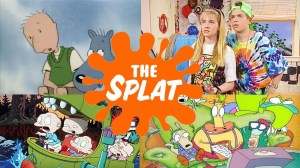
Nineties nostalgia is running wild over pop culture like never before. Apparently enough time has passed for the 90’s to truly be considered retro. There’s a new Power Rangers movie in development, Jaleel White is appearing in Scion commercials, Nickelodeon has resurrected its 90’s programming via The Splat, and now Marvel Comics has turned to the X-Men for a new series of comics based on the early 90’s team featured in the popular cartoon. X-Men ’92 is a tie-in to Marvel’s ongoing Secret Wars, it too a resurrected plot from the past (only this time, the 80’s) that appears set to bring about more 90’s relics. Written by Chris Sims and Chad Bowers, X-Men ’92 is not exactly a continuation of that team from the cartoon series, but seeks to emulate it’s tone and characters in telling a new story in a new setting.

Being a tie-in with Secret Wars, X-Men ’92 has its origins rooted in the story that preceded it. Not being a regular comic book reader myself, I found it to be somewhat confusing but also not really important how we reached this point. Magneto has apparently been defeated and the X-Men are celebrities of sorts residing in Westchester, New York. Baron Robert Kelly, complete with cape and warwolves, rules over Westchester as an ally to the X-Men and Dr. Doom is some kind of god entity. The story begins much like the animated series did with the X-Men getting into a tussle with some sentinels at a mall. The camp is strong in this scene, particularly with Storm, and the first chapter of the story (which consists of four books split into two chapters apiece) reads more like a parody than an homage to the X-Men cartoon.

The plot moves fast and consists of the X-Men traveling to Clear Mountain, a sort of Betty Ford clinic for evil mutants. The director of the facility is Cassandra Nova, who longtime X-Men fans know as the clone of Charles Xavier from the New X-Men comics. The mission is one of peace and the X-Men are Nova’s invited guests. Of course, it’s a trap and Nova, allied with the Shadow King, imprisons the X-Men and back at the mansion psionically attacks Charles Xavier, rendering him unconscious. Nova’s plan is then to psychically infiltrate each member of the X-Men to determine which ones she can take advantage of through their personality flaws and ultimately brainwash. The ones she cannot are tossed into a cell. Her ultimate goal is to create her own X-Men and assassinate Kelly with a monstrous sentinel referred to as Ten-Sentinel (because it’s ten sentinels in one, naturally) while making his death appear to be the fault of the X-Men.

Cassandra Nova is the chosen villain here, which is odd considering she's a villain from the 2000's.

Cassandra Nova is the chosen villain here, which is odd considering she’s a villain from the 2000’s.

As the situation grows dire for our heroes, some familiar allies resurface in the form of X-Force. Consisting of Cable, Domino, Bishop, Archangel, Psylocke, and Deadpool, X-Force attempts a rescue mission at the mansion and Clear Mountain. As they too seem to have been left behind in the 90’s, it makes sense to resurrect the alternate X-Men for this story (though Cable is severely lacking in the pouch department) and they seem mostly true to their old personas (save for Deadpool, who’s more in-line with his current one). X-Force is able to free the X-Men, who are then left to do battle with the Ten-Sentinel, Nova, and their brainwashed former teammates. Everything ends with multiple epilogues and cliff-hangers, so apparently X-Men ’92 won’t be limited to these four issues.

X-Men ’92 exists seemingly purely for its nostalgic value. As I mentioned earlier, the personalities of the various X-Men are very much inline with their personas from the first season of the show. Wolverine is stubbornly independent, Beast is bookish, Gambit flirtatious, and Storm takes herself way too seriously. If anything, certain characters are magnified in their portrayals with the Gambit/Rogue dynamic being a point of emphasis. It’s sometimes hard to tell if the writers are poking fun at the old nineties team or just having fun with it. In the backgrounds lurk many cameos from the era and the final issue even features a few surprise cameos that I was not expecting. Easily the greatest joy in flipping through X-Men ’92 is scouring the pages for all of these callbacks, some of which are also worked into the dialogue.

Issue #3 is my pick for best cover. Note Deadpool's 90's era "selfie stick."

Issue #3 is my pick for best cover. Note Deadpool’s 90’s era “selfie stick.”

Unfortunately, the plot for X-Men ’92 is severely lacking. While the characters feel like parodies of the old cartoon, the story feels more like a rejected plot from the cartoon. It’s messy and Nova is such a typical children’s cartoon villain that it renders her as dull as a butter knife. The confrontation with the massive Ten-Sentinel is actually pretty boring, and the art is too busy to really appreciate what it’s trying to depict. The art, in general, is basically good enough, though the style of artist Scott Koblish doesn’t really fit the whole 90’s theme. Cyclops in particular is rather lean and appears a little short compared to how he would have been drawn 1992. Given how Sims and Bowers seem to enjoy poking fun at the era, it’s surprising they didn’t take a few shots at how over-muscled and glamorous the characters often appeared in that era.

If you are like me and expected X-Men ’92 to be a tie-in with the old cartoon then you’ll probably be disappointed by it. It has some nostalgic value, but the plot and pacing is so poor you would be better off just grabbing one issue out of the four (and it doesn’t really matter which, but I suppose the first issue was the overall best) if you really want a dose of X-Men nostalgia. The ending of the final chapter is slightly interesting in terms of what it foreshadows, but I suspect the featured villain will not be handled well by this writing team. The series must be selling well for Marvel to be continuing it beyond issue #4, but I bet those who have latched on would not mind it at all if Marvel hit the abort button and started over with X-Men ’92 where the animated series left off. That’s a comic I’d consider buying.


#4 Best in TV Animation: South Park

imageViewers have been going down to South Park for nearly 20 years. That’s pretty incredible considering its humble origins, and if it weren’t for The Simpsons, we would likely all be marveling even more at the show’s longevity. More so than any other series featured on this list, South Park has demonstrated a willingness to change with the times in natural, almost seamless, ways. Originally the show focused on its four main characters:  Stan, Kyle, Kenny, and Cartman. These four eight-year-olds got into trouble, cursed like sailors, and often found themselves being confused about the world around them. Even though it’s a comedy, it sometimes felt like a more authentic coming-of-age series than most programs that aim to be just that. Being constantly puzzled by the actions of the adults around them while more or less trying to act like them often reminds me of how I was at that age, when profanity was a new and exciting tool to make use of. Over the years, South Park has taken on a more satirical tone often poking fun at current events, politics, and celebrity culture. Throughout all of this, it’s remained one of the funniest programs on television.

By now most people are aware of the origins of the show. College students Trey Parker and Matt Stone experimented with a crude form of stop-motion animation that utilized paper characters as opposed to puppets or clay and created a short work depicting a fight between Frosty the Snowman and Santa Claus. This short would be remade with Jesus taking the place of Frosty and would eventually lead to Comedy Central making them an offer to produce their own series. Ditching the pain-staking stop-motion process for computer animation that mimicked it helped to create the show’s signature look. The look of the program back in 1997 when it debuted could probably be classified as crude, but has improved by leaps since though the show has never abandoned its signature style. Improvements in technology mean Parker and Stone can now create great looking content in as little time as a few days. This quick turn-around makes South Park unique in the world of animation, and in non-live television in general, in that fairly recent events can be satirized rather quickly.

The show often looks to pop culture for its humor.

The show often looks to pop culture for its humor.

Part of the charm of South Park is that not only has the style changed with the times but characters have grown and changed throughout the years as well. Cartman is the most obvious as he’s gone from an annoying little twerp to a true sociopath with some homicidal tendencies. Randy Marsh has gone form a well-meaning father to become more of a narcissist with some (admittedly cliche by animation standards) moronic tendencies. Mr. Garrison has gone from a closeted homosexual, to transgender woman, and back again (I think?). Characters that initially existed for shock value, such as Big Gay Al when it was still rare to see homosexuals on television, have been discarded before they ceased to be funny any longer.

Perhaps most remarkable is how South Park has primarily remained a two-man show. Sure, Parker and Stone now oversee their own studio with a full staff but the two of them still write virtually all of the material for the show and do 90% of the voice work. It’s somewhat surprising they’ve been able to resist the urge to simply hand the show off to some underlings while sitting back to collect checks. Most shows that last this long see full turnover in their writing staff. Larry David didn’t last half as long with Seinfeld, for comparison.

While the show has become more intelligent, there's still plenty of gross humor to be found.

While the show has become more intelligent, there’s still plenty of gross humor to be found.

This isn’t all to say that South Park is a perfect show. There have been plenty of moments where the show seemed to be running low on creative ideas. In its lowest moments, some may have considered what the show would look like with new voices contributing content but Parker and Stone have shown an ability to bounce back. The show has yet to truly hit rock bottom, but it’s probably safe to say its best years have past. So much of the program relies on shock value and after so many years there’s little the show can do to shock its viewers. When Cartman first sought revenge against Scott Tenorman by tricking the boy into eating his own parents I had to pick my jaw up off the floor. Now seeing the character casually murder someone brings a much smaller reaction. Characters have been vomiting and defecating on each other for so long that the gags are neither truly funny or gross at this point. And of course the show’s longest running gag of Kenny dying each episode has long since been abandoned when that ceased to be funny.

When the show is firing on all cylinders though, it still proves to be very funny. Last year’s season premiere which lampooned the NFL and crowd-funding sites was poignant with its observational humor and seems almost funnier now in light of recent events with the NFL and Roger Goodell, in particular. The show has been so good for so long that viewers just have great expectations. When South Park sets out to poke fun at the latest celebrity scandal it almost needs to go for the less obvious joke. To liven up the last two seasons the show has opted to adopt a more serialized format with plot lines lasting multiple episodes and callbacks being inserted. It’s a change I don’t think many saw coming, but it’s one that has worked to make even the lesser episodes feel more important.

By far, the show's greatest source of humor rests in its celebrity "guest" stars.

By far, the show’s greatest source of humor rests in its celebrity “guest” stars.

It remains to be seen how long the show will run for. Recently the season orders have been cut in half as Parker and Stone find it too daunting to create a full season’s worth of programs. Prior to that, the show had operated with two-part seasons occurring in the spring and fall so that Parker and Stone could have more material to work with. Clearly, it’s become more of a challenge for them to keep the show fresh but both insist that South Park is a part of them and the end is not yet in sight. This can only be considered a good thing for those enjoying satirical humor with their animation. The show has progressed from being about some potty-mouthed kids with an accident prone friend to something that’s actually pretty intelligent and cleverly produced (though the show is not above the occasional dumb or crude joke). And unlike most shows on this list, there’s still room for it to grow. Maybe in ten years we’ll be talking about South Park as the greatest animated comedy of all-time. Who could have predicted that back in 1997?


Halloween is Grinch Night

Halloween is Grinch Night (1977)

Halloween is Grinch Night (1977)

In 1966, a Chuck Jones produced TV special by name of Dr. Seuss’ How the Grinch Stole Christmas arrived. Ever since it’s been a staple of the Christmas television schedule each year and with it nearing its 50th anniversary expect it to only become even more celebrated in the near future. What’s not as celebrated is the spiritual sequel produced eleven years later, Halloween is Grinch Night, despite the fact that it won an Emmy. Like its predecessor, it too was produced by a legend of the animated short:  Friz Freleng. It’s become so obscure that most people have never even heard of it. It has yet to receive its own stand-alone DVD or Blu Ray release and finding it on television at Halloween time is often an exercise in futility.

Halloween is Grinch Night is sometimes cited as being a prequel to the more popular How the Grinch Stole Christmas. If it is, it creates a plot hole or two, but how it relates to the prior special is of little importance. The character of the Grinch seems like a natural fit for Halloween. He’s mean looking and kind of scary and would most likely enjoy a holiday such as Halloween over one like Christmas. Because the first special was so successful, it’s not surprising that the Halloween special would try to use a similar format. There’s a narrator present, Hans Conried, who also happens to voice the titular character just as Boris Karloff did before him. There’s music and the people of Whoville, as well as the Grinch’s dog Max, are here to play foil. Thurl Ravenscroft even shows up again in a singing role.

The Grinch once again is accompanied (reluctantly) by his dog Max.

The Grinch once again is accompanied (reluctantly) by his dog Max.

What isn’t the same is the animation and general look of the special. How the Grinch Stole Christmas is a very clean production. It’s brightly colored with simple backdrops and is quite stylized looking. It’s a perfect mash-up of Chuck Jones’ work and that of Dr. Seuss. Halloween is Grinch Night is less sophisticated to behold. The Seuss designs almost seem downplayed to a point and the Grinch himself has a more cat-like appearance. The backgrounds are exceedingly busy and the characters sometimes appear lost on the screen. When the story takes the visuals to a more surreal place, this style starts to prove its worth, if only for a brief moment. I do appreciate how most of the colors utilized are shades of brown, red, and orange which does enhance the feeling of autumn. This basically looks like a late 70s production, an era when animation was less celebrated, which is partly why it looks the way that it does.

The story of the picture involves the people of Whoville noticing a sour-sweet wind blowing, a harbinger for the Grinch that sends most scurrying into their homes. A young Who by the name of Euchariah steps out to hit the outhouse (referred to as a euphemism by the story) and gets caught up by the breeze and eventually encounters the Grinch. Once encountered, the Grinch makes it a point to try and scare Euchariah, who is either brave or simply feels emboldened when faced with the Grinch’s ghostly apparitions because his poor eyesight renders them less scary. His confrontation with the Grinch is the meat of the story and his ability to face him is what ultimately brings about the story’s resolution.

The plot is certainly less straight-forward than the Christmas special. It’s also less satisfying. The story spends too much time away from the only interesting characters in the special; the Grinch and his abused little dog Max. It would seem the approach this time was to build the Grinch up as a character to be feared, not understood, and to do that a little mystery needed to be created by having much of the story follow Euchariah. If that is indeed what Freleng and Seuss were going for then they should have committed to it fully and further reduced the Grinch’s screen time. At no point does the viewer truly feel like the Grinch is someone to be feared because there’s just nothing very fearsome about him. If anything, we’re just trained to not like him because he’s a terrible dog owner. Perhaps had this story originated in the pages of a Dr. Seuss book it would have come out better and with a tighter narrative.

There seems to always be a lot present in the background of each image with little shading to create depth. It looks much more congested when animated.

There seems to always be a lot present in the background of each image with little shading to create depth. It looks much more congested when animated.

The cast for the picture and the production in general is also less than impressive. Conried does all right as the Grinch, once you get over the fact that he and Captain Hook (from the Disney version of Peter Pan) have the same voice. His singing is probably something I could have done without, and the songs in general just aren’t very memorable. The only time they really caught my ear was when one included an inner monologue from Max. This felt cheap to me as the beauty of the Max character from How the Grinch Stole Christmas was the way in which we were able to understand him without the need to personify him.

Halloween is Grinch Night can be found on a few compilation DVDs as well as some old VHS tapes. It’s included in at least one version of How the Grinch Stole Christmas and also on the Dr. Seuss: On the Loose compilation. I found a copy of the latter for fifty cents, so it’s a pretty easy special to acquire for the curious. It’s never received a proper release though because it’s just not that good. It’s visually inferior to its more popular cousin and the plot, while promising in concept, is poorly executed and utterly forgettable. There’s room for the Grinch at Halloween time, but just not like this.


#5 Best in TV Animation: Batman – The Animated Series

Batman_the_Animated_Series_logoChildren of today can probably hardly imagine a world in which super heroes aren’t dominating the pop culture landscape. We’re in an era where even the Fantastic Four have received three chances at making a successful movie and less popular characters like Antman and Dr. Strange have either become mainstream or soon will. That wasn’t the case before 1990. Prior to that, only Batman and Superman had ever made a buck at the box office while The Incredible Hulk had a semi-successful television series for Marvel. When it came to cartoons, there was basically the many variations on the Super Friends and the Marvel Action Hour. The quality for these cartoons was something less than satisfactory.

When Tim Burton and Michael Keaton helped to make Batman popular once again, the powers that be at DC and Warner Bros. decided to give television another go with the caped crusader. Instead of another colorful super hero mash-up they opted to adapt the more current iteration of Batman. The resulting “Batman” (often subtitled “The Animated Series)” returned Batman to the night from which he was born. Developed chiefly by Eric Radomski, Bruce Timm and Paul Dini, the show embodied much of the recent films as well as the tone of the current comics. Robin was there, but only in a handful of episodes initially and he no longer dressed like Tinker Bell’s older brother. Villains that were popular on the older 60’s television program returned, but with a more serious take. Joining them were the more grounded villains like Roland Dagget and Rupert Thorne, mobsters who waged war from the comfort of their homes. Adding even more of a sense of realism to the program was the fact that the villains (and cops) carried and fired realistic weaponry as opposed to cartoonish laser guns that are always conveniently set to stun.

The pervasive darkness of the show is like a character by itself.

The pervasive darkness of the show is like a character by itself.

The Batman present in the animated series was not the ever-present optimist from the 60’s with the serious, but often cheerful, demeanor. This Batman, voiced exceptionally well by Kevin Conroy, was a moody, no nonsense, hero who truly embodied the term The Dark Knight. He’s driven by a quiet anger, it’s root cause being the murder of his parents he bore witness to as a child. Batman is fiercely driven and consumed by his urge to avenge his parents by cleaning up the streets of Gotham, a seemingly never ending task. His alter-ego Bruce Wayne exists only as a cover for Batman. This Batman has a lot in common with Frank Miller’s, only the delivery isn’t so heavy-handed and extreme. As usual, Batman has allies around him. By his side is his butler, Alfred Pennyworth, who is more of a sidekick in the series as opposed to a moral arbiter. That role falls to Dr. Leslie Tompkins who often counsels Batman away from his life of crime-fighting. Commissioner Gordon heads the Gotham police department and relies on Batman probably more than he should while Detective Bullock is Gordon’s foil and often mistrusts the Batman. Robin is also around with an equally tragic backstory and Batgirl eventually comes into the fold during the second “season.”

Batman has no shortage of allies but he’d be nothing without his rogue’s gallery. The usual suspects are present such as The Joker (voiced by Mark Hamill) and Penguin. They’re presented well, but the show is best remembered for its fresh approach when adapting the lesser villains. Two-Face is introduced slowly as district attorney Harvey Dent before his eventual transformation. His character is handled with care and his sympathetic nature is sort of a calling card for the series. The villain most often cited as coming out of the show for the better is Mr. Freeze. Once a fairly corny player in the comics, the depiction of Freeze in the animated series is that of a vindictive killer. Juxtaposing his cold demeanor is the origins for his madness over his wife’s apparent murder. His debut episode, “Heart of Ice,” is often mentioned among the show’s best. The show doesn’t always rely on its villain of the week (day, actually, since the program aired week days originally) as illustrated in “Beware the Grey Ghost.” In this episode, the show runners have some fun by pairing Batman with an out of work actor typecast for his work as a super hero in an old television show. His voice actor? None other than Adam West.

The rogue's gallery for the show is a clever mix of classics and unknowns, with the unknowns often shining brightest.

The rogue’s gallery for the show is a clever mix of classics and unknowns, with the unknowns often shining brightest.

The artwork in the show is heavily based off of the set designs of Eric Radomski and the character designs of Bruce Timm. If you are not familiar with Timm’s work, it’s a low-detail approach with lots of angular lines. Lots of pointy-chinned females and square-headed males populate the show. His take on the various villains is often influenced by both classic works and the Burton films. Joker and Penguin are obviously takes on Jack Nicholson’s Joker and Danny DeVito’s more monstrous Penguin. Catwoman too resembles her look from Batman Returns but with the S&M aspect toned down. There’s a minimalist approach to the details with lots of flat, muted colors. Backgrounds were even done on black paper, most noticeably the opening title sequence, with light colors painted over them. This technique is credited to Radomski and often referred to as “Dark-Deco.” The show’s biggest contribution to the world of Batman though is easily the character of Harley Quinn, who first originated on television before making the leap to comics.

Whether you like the look of the show or not is a matter of opinion. It certainly needed to grow on me, but I appreciated the style of the show. Like the Burton films, Gotham is a modern city rooted in the stylings of the 30s and 40s. Batman possesses some pretty advanced technology but for some reason also watches a black and white television half the time. The low detail approach for the show’s look is a benefit to the animation itself. Rather than the somewhat stiff X-Men, Batman animates rather smoothly. The later series, The New Batman Adventures, who further reduce the detail to boost the animation but some would suggest they went too far as certain characters came across as too cartoonish.

The show maybe fairly serious in tone, but Batman still has plenty of toys at his disposal. Just no shark repellent this time.

The show maybe fairly serious in tone, but Batman still has plenty of toys at his disposal. Just no shark repellent this time.

Batman The Animated Series is truly one of the great achievements in kid’s programming. Its serious approach to the character of Batman and his many villains really enhanced the product above what is typically expected of children’s programming. The only thing holding it back is the show’s consistency. It was originally ordered as one season of 65 episodes which is a pretty daunting task to come up with 65 well-executed episodes. The show is often one of those programs where the good episodes are really special but there’s a lot of filler to work around. The show becomes more watered-down when the short second season is added to the mix as well as The New Adventures which surfaced years later. That run produced maybe 2 or 3 worthy episodes with the rest being kid stuff, sadly.

Even so, the good produced by Batman The Animated Series is worthy enough to place it at fifth on my top ten list for animated television programs. The show also spawned some feature films, though only one was released theatrically, the fantastic Mask of the Phantasm. When the films jumped the shark with Batman Forever and Batman and Robin, it was the animated series that kept Batman relevant. It’s unlikely another super hero show could ever surpass it.


Best of the Beast: The Iron Maiden Albums Ranked

Iron Maiden has been making music and releasing albums for over three decades.

Iron Maiden has been making music and releasing albums for over three decades.

Happy Iron Maiden Day, everyone! It’s Friday, September 4th, the street date for Iron Maiden’s 16th studio album: The Book of Souls. To commemorate this event I thought it would be fun to take a look back at the Maiden catalog and rank the studio efforts put out by the band. Obviously, for a band to have a 16th album means it’s been around for a long time and Maiden has certainly withstood the test of time. At one point it seemed like the group would not be able to emerge from the 80s, overtaken by grunge and other forms of “new” metal, but the group came back strong and in more recent years has enjoyed some of its greatest success thanks in large part to its stunning stage shows. I have, to my own surprise, never blogged about Iron Maiden in any extensive way which is kind of odd for a blog centered on nostalgia with some musical presence (though admittedly, this has become more of a video game/animation blog than a music one) so it makes sense to do a big blow-out here. After I compose and post this, I’ll most likely head to the store to grab a copy of the new album and race home to digest it. If I can find the time, I’ll look to post a review as a supplement to this topic. Now, onto the rankings!

15. Virtual XI (1998):  In 1995, Blaze Bayley had the unfortunate task of trying to replace a heavy metal legend as frontman for one of the biggest metal acts of the 80s. Bayley is a capable vocalist, but his talents are not particularly suited for the Iron Maiden sound. Worse still, the band did not seem to try to augment its sound to suit Bayley in the least, resulting in two rather poor albums. Only one song, The Clansman, has survived the reunion and even that has been brushed aside in favor of older songs and new ones. Not all of that can be blamed on the vocalist, of course. The songs in general are just rather bland and represent a low point for the band creatively. This was really a continuation of the malaise that affected the group in the 1990’s that wouldn’t be rectified until 2000’s Brave New World.

Blaze Bayley was a hard sell for the Iron Maiden faithful.

Blaze Bayley was a hard sell for the Iron Maiden faithful.

14. The X Factor (1995): I could basically cut and paste the synopsis for Virtual XI here as well, right down to only one song making it to the stage post-reunion, “The Sign of the Cross.” The X Factor is the marginally better of the two Blaze albums as there is a slight uptick in energy. Some of the songs though, such as Man on the Edge, sound like they were written with Dickinson in mind and then handed to Bayley and they suffer for it. Both Blaze albums are for Maiden completists only.

13. No Prayer for the Dying (1990): Iron Maiden entered the 1990s with a dud. By now, the Maiden formula had been well established: fast songs, catchy leads, galloping bass lines, and soaring vocals. The problem being that variety was becoming hard to come by as the band chugged along like a machine for the duration of the 80s. An album would drop, followed by a huge world tour and then a trip back to the studio. It was a pace no band could maintain. Come 1990’s No Prayer for the Dying, that heavy workload was starting to show. The production on the album sounds like it was handled in a quick, lazy, manner and Dickinson’s voice is throaty and weather-beaten. There’s little imagination in the songs from both a structural standpoint and lyrically. The result was the worst Maiden record of the Dickinson era and none of the songs are played live any longer.

12. Iron Maiden (1980): Debut records seem to go one of two ways: they’re either really good or really forgettable. Count Iron Maiden’s debut album amongst the forgettable ones. Most of that is due to poor production and the band not quite yet finding its sound. The band feels like it’s being held back and that’s really easy to see now since we can compare the studio tracks from this album with the live versions. Paul Di’Anno, Iron Maiden’s original vocalist, brings a kind of punk sound to the band that may sound like a poor fit to those who grew up on Dickinson’s Maiden, but it actually works in some places. “Prowler” is a nice opener that suits Di’Anno but a slower tempo track such as “Strange World” is a poor fit (the song as a whole really feels like a poor fit for Maiden in general). The slower parts of “Charlotte the Harlot” also sound off, but then again, the song is unspectacular. Out of all the tracks on the album, only the title track, “Prowler,” and “Phantom of the Opera” are really memorable. “Running Free” was a concert mainstay for a long time and I never really understood why as it’s a rather boring tune. “Sanctuary” isn’t very good on the album, but is an example of a song sounding better when the band plays it live.

Fear of the Dark was the final album of the first Bruce Dickinson era of the band.

Fear of the Dark was the final album of the first Bruce Dickinson era of the band.

11. Fear of the Dark (1992): The last album before Bruce Dickinson departed the band, Fear of the Dark was more of the same when compared with its predecessor, No Prayer for the Dying. Boring compositions, poor production, and Dickinson’s voice sounding shot after years of touring. As a whole, the songs are better than the ones on No Prayer, but that’s not saying much. The saving grace for the album is its epic closing title track, but numerous live renditions recorded since illustrate how poor the production on the studio version was. It’s the only song from the album that’s still played live.

10. Dance of Death (2003): I’m happy to report, that we’ve exited the realm of poor to sub par Iron Maiden albums and we’ve entered the “okay” range. 2000’s Brave New World was a true return to form kind of album for Iron Maiden. It marked the return of vocalist Bruce Dickinson as well as guitarist Adrian Smith. It also felt like it had a real fresh, quasi-modern approach to song writing and production. It was the album that made Iron Maiden relevant once more. When the band went back into the studio to record its follow-up, they pretty much just tried to copy the formula that made Brave New World great. As a result, Dance of Death feels like the B-sides for Brave New World. There’s some good stuff, but a lot of it just feels like filler. Hurting the album is that its three lengthiest tracks are more “miss” than “hit.” Some fans really dig “Paschendale” but I’ve always found it too boring, and I’m someone who typically enjoys long compositions. Dance of Death is an okay album, simply put. Whenever I return to it I’m usually left satisfied, but I’m also cognizant of the fact that I could have spent my time listening to a better Maiden album.

9. A Matter of Life and Death (2006): A Matter of Life and Death was a return to form in a bad way: the muddy production of the 1990s albums. For whatever reason, the band decided to forego traditional mastering and opted for a raw sound. That kind of approach would probably work for a punk band or maybe even a thrash band, but not for a metal band such as Maiden that made its mark with complicated lead work and soaring vocals. The oppressive sound does suit the subject matter, which is a bleak and cynical take on the world climate at the time. A Matter of Life and Death is a complicated release. It’s easy to see what the band was going for, but they just didn’t quite get there. That said, there’s some really strong compositions on this record such as “For the Greater Good of God,” “Brighter Than A Thousand Suns,” and “Lord of Light.” Unfortunately, a lot of the songs just don’t work well with each other. They’re just way too similar with seven out of the ten tracks basically starting and ending the same way: slow, sometimes acoustic, intro, crescendo into a fast part or gallop, a chorus that’s pretty much just the song’s title, quiet outro. It becomes exhausting by the album’s end. The album essentially feels like a series of singles. Maybe if they had broken up tracks 7-10 better it wouldn’t have been as overbearing. This approach makes A Matter of Life and Death the band’s most uneven release.

The Final Frontier was the best album for the band since Brave New World, but few fans felt came close to capturing the greatness of the earlier works.

The Final Frontier was the best album for the band since Brave New World, but few fans felt came close to capturing the greatness of the earlier works.

8. The Final Frontier (2010): Despite the album’s title, The Final Frontier is not the final album for Iron Maiden, which can only be considered a good thing. In comparison with its immediate predecessor, The Final Frontier is an improvement in almost every area. The production is stellar, the song structure more varied, and the album does an overall better job of blending new elements with some of the more traditional, old school, traits of Maiden’s past. The only major issue carried over is, once again, the arrangement of the backside tracks. Maybe the album could have been arranged better, though I’m not sure they could have avoided the redundancy effect. Really, some of the songs should just have their intro/outro portions removed. I feel compelled to point out that The Final Frontier contains Maiden’s best power ballad, the Dickinson penned “Coming Home.” That one easily has the best chance at becoming a set list mainstay going forward.

7. Seventh Son of a Seventh Son (1988): I swear ranking this album as seventh is merely a coincidence! Seventh Son has the distinction of being perhaps the only Maiden album to go from being underrated by the fan base to overrated. The presence of synthesizers on it and the previous album were controversial at the time and disliked by many, but the dredge that would follow seems to have made fans appreciate the lightness of the record in hindsight. The only thing holding Seventh Son back is the absence of a killer track. From track 1 to 8, this is a solid and entertaining record but when it’s over it’s over. Some of the tracks, like “The Clairvoyant” and “Moonchild,” have made a return to the stage but the album lacks a defining track. Even lesser albums, like Fear of the Dark, can’t say the same, making Seventh Son of a Seventh Son the classic example of a good, not great, album.

6. Killers (1981): The follow-up to the first Maiden record and only other featuring Paul Di’Anno on vocals marked a big improvement over the debut record. Everything felt faster, and tighter, and Di’Anno was at his best and comfortable with the material. The title track, “Wrathchild,” “Ghengis Khan,” “Murders in the Rue Morgue,” and “Purgatory” are among my picks for standout tracks. Unlike with the debut record, not many of these songs survived the transition to Dickinson with really only “Wrathchild” being a semi-common occurrence in set lists. That mostly feels like a reaction to a lot of these being tailored to suit Di’Anno’s vocals, particularly his falsetto. This is probably the most underrated album in the Maiden catalog, don’t sleep on it!

The stage for the Powerslave tour is what set the standard for subsequent Maiden tours.

The stage for the Powerslave tour is what set the standard for subsequent Maiden tours.

5. Powerslave (1984): If Killers is the most underrated Maiden album, Powerslave just might be the most overrated. This is mostly due to the album’s high points being really high, but the lows really low. This album contains perhaps my all-time favorite Maiden track, “Aces High,” and my most detested, “Back in the Village.” “2 Minutes to Midnight” might also be my pick for most overrated Maiden song as it always felt like a filler track to me but its inclusion in the set list over the years says otherwise. A far better song, “Flash of the Blade,” is criminally underplayed but the album’s title track has enjoyed a nice run. I also can’t talk about Powerslave without mentioning the epic at the end, the 13 minute “Rime of the Ancient Mariner,” which up until now, has remained Iron Maiden’s longest song. It is a pretty excellent tune, when it’s rocking, but it also feels like it’s long for the sake of being long. There’s a portion in the middle that could have, and should have, been trimmed down some as it derails the song’s momentum. I’m guessing the band disagrees with that take, especially now that it has returned to the live show and affords the band a nice break during the show.

4. Brave New World (2000): Brave New World was the comeback no one expected and few probably knew that they were anticipating. It was such a shock to hear Iron Maiden be relevant again that I almost didn’t believe it. “The Wicker Man” announced the band’s triumphant return, and heralded the return of Bruce Dickinson to where he belonged. While I could easily criticize the album for giving rise to the slow, fast, slow approach to song structure I so lampooned on A Matter of Life and Death, in 2000 it just wasn’t as noticeable or as overdone. Here’s one album I wish would be played more at concerts, but at least we have the DVD for Rock in Rio that included a ton of cuts from this album. The band plays the songs with such a contagious exuberance that makes it so easy to get into. This is a band making an album out of sheer enjoyment and it shows. Now please, pretty please, play “Out of the Silent Planet” on the next tour!

3. Somewhere in Time (1986): Sometimes after I finish listening to Somewhere in Time I’m left thinking it’s my favorite Iron Maiden album. I could also say that about each of the next two albums on this list, which speaks to how close I feel they are. Somewhere in Time is a true Maiden classic. While it contains equal parts greatness and filler, its high points really justify its ranking. The lead track, “Caught Somewhere in Time,” is one of Maiden’s best and I remain flabbergasted as to why it gets overlooked today while lesser, though still good, tracks like “Heaven Can Wait” are not. In terms of filler, “Deja-vu” is one the better tracks, a quick, catchy little number that would make a great B-side for a lead single. “Sea of Madness” is a weird track with odd time signatures for this era of Maiden, making it one of their most forward-thinking tunes. The only things holding the album back is the awful “Loneliness of the Long Distance Runner” which feels like a song that needed more work and the ho-hum closer (when compared to Powerslave’s “Rime of the Ancient Mariner”) “Alexander the Great,” which tries too hard to feel like a Maiden epic.

It doesn't get more iconic than this.

It doesn’t get more iconic than this.

2. The Number of the Beast (1982): Here we arrive at the album that made Iron Maiden a household name, inspiring protests and album burnings across the world. The Number of the Beast is a classic heavy metal album and the fact that it heralded the Bruce Dickinson era of Maiden makes it even more memorable. The holy trinity of “The Number of the Beast,” “Run to the Hills,” and “Hallowed be thy Name” represent three of Maiden’s finest compositions with “Hallowed…” being my pick as the definitive Iron Maiden song. A lot of Maiden’s modern tracks feel like a callback to “Hallowed…” though few have approached its perfectly constructed pace. The only thing that kind of bugs me about this album is that it chose not to lead with the title track. I have no idea how the band resisted that temptation, or why it did, as it would have ranked among the best album openers in metal history. I’m just thankful it was the first Bruce Dickinson track I ever heard because that’s an introduction I can never forget.

1. Piece of Mind (1983): Just narrowly edging The Number of the Beast, by the slimmest of margins, is the follow-up record Piece of Mind. If I were to rank every track on both records I’d probably pick “Hallowed Be Thy Name” and “The Number of the Beast” one and two, but the back-end of that list would feature more tracks from The Number of the Beast than Piece of Mind. And Piece of Mind has its own stand-out tracks to be proud of too. I’m talking songs like “Flight of Icarus,” “Still Life,” “Sun and Steel,” and “The Trooper,” Maiden’s signature gallop. Piece of Mind is the more complete record, and the only reason why it’s close is because the closing track, “To Tame a Land,” sucks. That song may be Maiden’s most boring and is just a toothless way to end an album. It’s to Piece of Mind what “Invaders” is to The Number of the Beast, a filler track placed inexplicably in a position of prominence. The only difference being there isn’t an obvious closing track on Piece of Mind that could have taken its place.

So there you have it, Iron Maiden’s fifteen studio albums ranked according to me. I am by no means the authority on the subject, but if you’re someone looking to get into Iron Maiden those top three albums I selected are rather hard to debate. Here’s hoping the new album, The Book of Souls, makes a case to enter the top ten. Considering the album tops 90 minutes it’s already risen to number one in terms of length and there will be plenty to chew on.


Dragon Ball Z: Battle of Gods

Dragon Ball Z:  Battle of Gods (2013)

Dragon Ball Z: Battle of Gods (2013)

I’ve made no secret of the fact that I find Dragon Ball Z to be a pretty overrated anime. Some of that sentiment stems from the fact that it’s considerably more popular than its predecessor, Dragon Ball, despite being the inferior product. Part of that also stems from the fact that Dragon Ball Z fans seem to regard it as the greatest anime of all time, rather than what it really is; the most popular anime of all time. This is not to say I find the show to be a bad one. For awhile during the 1990’s I found myself quite captivated by the show. I was incredibly disappointed that the dub, for many years, ended right in the middle of the Namek Saga with Goku preparing to take on The Ginyu Force (I was also really disappointed when the series finally returned with an all new and quite terrible dub). Little did I know, that I had basically seen the best of the show up to that point. While the Cell Games and Buu Saga have their moments, for the most part the show became almost a self-parody with extended filler sequences and familiar plot lines.

It’s the formula of Dragon Ball Z that makes it a rather pedestrian television program. The characters are all simply constructed and tend to embody one archetype. Each “season” consists of the gang being forced to take on the latest “Most Powerful Being in the Universe” with the same familiar pattern: dispatch weak enemy, hear latest prophecy of doom, be defeated by said enemy, train endlessly, power-up and defeat enemy. The stakes are always the same, and even though characters are killed off several times, they usually find their way back to the land of the living and there are few lasting repercussions on the show (aside from the novel concept that the characters do age over time). It was basically like watching an animated fighting video game: it just moves from one battle to the next with very little connecting tissue in-between. As such, it’s quite easy to take a cynical view towards the show but it still has its moments where it’s genuinely entertaining and even charming.

Beerus and Whis are the latest antagonists to threaten earth.

Beerus and Whis are the latest antagonists to threaten earth.

If one were to be jaded with the prospects of another extension of the Dragon Ball Universe, they’d likely be less interested in yet another Dragon Ball Z film. The show was so successful that it rather logically spawned feature films. These films were little more than cash-grabs and often contained less plot than the show and an even more obvious formula. Thirteen films in all were released based off of Dragon Ball Z with virtually none fitting into the canon of the show’s storyline. Aside from a select few that contained some genuine entertainment value, most are just mediocre with the only contribution they made being the superior animation when compared with the show. As a result, I was not all that enthused to hear that Toei Animation was returning to the series for a new film:  Battle of Gods. The only cause for optimism was that it was announced series creator Akira Toriyama, who had little involvement with the awful Dragon Ball GT, was handling the screenplay and character designs. Toriyama, unlike some of his fans, seems to understand what makes Dragon Ball special. It’s not some super sophisticated anime meant to challenge the likes of Neon Genesis or Cowboy Bebop, it’s strictly intended to entertain with humor and action.

Battle of Gods opens with some familiar characters pondering the awakening of The God of Destruction. Supreme Kai, along with Elder Kai, fear what this god may do now that he’s awoken early while King Kai gives Goku a quick lesson on who this guy is. It’s not a very promising open for the film as it’s pretty much in line with most of the movies and we know Goku and this god are going to have to have a showdown. We’re then taken to this god’s home world and are introduced to Beerus, The God of Destruction, and his attendant Whis. One of the themes of Dragon Ball is to never a judge a book by its cover, and Beerus embodies that concept quite well. He’s basically an anthropomorphized sphinx cat complete with tall ears and a wrinkly cat muzzle on his face. Not only does he look like a cat, but he also embodies one as well. When we first meet him he’s just waking up from a 39 year slumber much in the same way we’d expect any cat to awaken. He’s lethargic, hungry, and summons for Whis almost immediately. Later we’ll see him acting rather petulantly and impatiently while also toying with his prey, further driving home the point that he doesn’t just simply look like a cat, he is one. Whis gives him a refresher on what transpired during his slumber, and he’s quite pleased to learn that Frieza dealt with those insolent Saiyans by destroying their planet. He’s further surprised to learn that one dubbing himself a Super Saiyan defeated Frieza, which reminds him of a dream he had where he encountered a Super Saiyan God. Remembering this, Beerus decides to journey to earth to meet the one who defeated Frieza and to hopefully find out more of this Super Saiyan God.

Beerus and Goku reenacting the infamous WCW Finger Poke of Doom.

Beerus and Goku reenacting the infamous WCW Finger Poke of Doom.

When Beerus arrives he encounters Goku almost immediately, and in true DBZ movie fashion, they fight and Goku is easily outclassed. Unlike other films, Beerus is essentially neither friend nor foe. He isn’t a good guy, but he’s also not really a bad guy. Sure he’s The God of Destruction, but apparently someone has to be. He decides to seek out Vegeta to see if he knows anything of this Saiyan God, since he learned nothing from Goku, and finds the Saiyan prince at his wife’s birthday party. Beerus loses interest in his pursuit of a Super Saiyan God when it turns out Vegeta knows nothing, and not wanting to turn down an opportunity to feast, invites himself to the party. Some hijinks involving some familiar faces for Dragon Ball fans occur at the party and things seem to be going well until Buu hogs all of the pudding, sending Beerus into a rage. Only Vegeta knows just who Beerus is and what he’s capable of, which is why the other party-goers jump to their friend’s defense further irritating Beerus. This causes him to declare that it’s time he destroy earth, just as Goku shows up. The heroes are able to request Beerus give them five minutes to consult The Eternal Dragon on the matter of a Super Saiyan God, and when Shenron reveals the secret of how to produce one, Beerus gets his wish.

Of course, Goku is the one to step-up and challenge him as the very underwhelming Super Saiyan God. If you were expecting a fantastic new transformation then you’ll be let down to see that “God Mode” is essentially a skinny Goku with a bad dye-job giving his hair a reddish hue. He possesses a fiery aura, which looks kind of cool but is also visually distracting, but that’s about it. Goku and Beerus fight, and I won’t spoil the outcome but you can probably guess at the ultimate end result.

The gang's all here.

The gang’s all here.

The plot for the film is rather familiar, and judged solely on that, the film is a disappointment. However, how it navigates the plot is what helps to elevate it above the normal DBZ fare. For one, Toriyama’s humor is sharp, and while there are some in-jokes to be found for longtime fans, the majority of the humor is fairly natural. It’s also refreshing as Beerus is the source for much of it. He’s definitely one of the better villains Toriyama has conceived of and his ambiguous nature and ambivalence towards mortals makes him almost charming, in a way. He plays off of his attendant Whis fairly well, a character who also embodies a notable Toriyama trait in that he’s a supremely powerful male with obvious feminine features. Toriyama’s affinity for food-related humor shows up in both Whis and Beerus as they’re very interested in the different flavors present on earth. Thankfully, we’re spared the often repeated visual of Goku stuffing his face which stopped being funny somewhere around the character’s first visit to King Kai’s planet.

For fans of DBZ’s unique action sequences, the film may be a disappointment. A lot of the time is spent on Beerus interacting with the earthlings at the expense of the big fight scenes the show is known for. When the film does go there, the action is a bit restrained. Some of that is a plus. As the characters grew in power during the show there was basically no way to visually establish they were stronger and faster than they were 100 episodes prior making many fight scenes look visually lazy as the characters “moved too fast for the naked eye.” In Battle of Gods the action is slowed down and there’s a satisfying weight to the blows landed. There’s still a few instances of old standby DBZ staples, but they’re not overused. Despite that though, the action is underwhelming and some curious uses of CG effects didn’t help things.

Goku's "God" form is a bit underwhelming, but at least it's better than Super Saiyan 4.

Goku’s “God” form is a bit underwhelming, but at least it’s better than Super Saiyan 4.

Visually, DBZ never looked better. The animation is smooth and every scene pops with bright colors. Some may have thought the more muted color palette of the manga would be present since Toriyama was so heavily involved but that is not the case. The only criticism I have of the visuals is the just mentioned CG used in the fight scenes. While the characters fly through a city landscape, it’s rather obvious the backgrounds are being drawn by a computer. This is a fairly common effect going back to the 1980’s but I’ve always found it jarring. Less forgivable are the few instances in which the characters themselves are CG animated making them look like they’ve been ripped right out of the latest DBZ video game. It looks silly and something I would recommend they scrap for future features.

Dragon Ball Z has had an up and down relationship when it comes to the english dub. The original Ocean Group dub was a mixed bag, but was miles ahead of the original Funimation dub that followed. Funimation first starting dubbing DBZ over 15 years ago, and all of that time with the series has actually lead to a pretty wonderful english cast. The voice actors, most of whom have been on the series since the beginning, really know their characters. The writers handling the localization also know these characters and they’ve created a very lively and witty script. The language is probably of a PG nature though there’s very little in the way of graphic violence. If you’re a longtime fan of the series who prefers to watch it subtitled, then by all means, watch it subbed but you won’t be missing anything if you go the dub route.

Dragon Ball Z:  Battle of Gods managed to both meet my expectations and also exceed them. The general plot is typical for a DBZ movie and rather boring, but the presentation is excellent (aside from a few visual hiccups) and the film is genuinely entertaining. It’s probably too long by about fifteen minutes, but not long enough to feel like a drag. The way the film is written makes this feel more like Dragon Ball than Dragon Ball Z. For me, I consider that a good thing but those who enjoy DBZ for the over-the-top action may be disappointed. Lastly, the introduction of Beerus was a success as I’m actually interested to see more from him. Apparently, Toei and Toriyama were banking on that as he’s in the recently released Dragon Ball Z: Resurrection F and is also a recurring character in the new television show, Dragon Ball Super.  I have no idea if more Dragon Ball Z is a good thing or not, but I do know that Battle of Gods was a fun nostalgia trip. Time will tell just how long that trip lasts.


#6 Best in TV Animation: The Venture Bros.

2011-03-22-Venture_brothers-533x399Our number seven entrant on this list, Archer, has a lot in common with the number six entrant. So much so, that I couldn’t, in good conscience, rank it ahead of this one. Archer’s creators got their start on Cartoon Network’s adult swim, which is where The Venture Bros. currently (I use that term loosely) reside. Both shows are essentially animated sitcoms, with Venture being the more traditionally animated one. And like Archer, both utilize a setting that’s both dated yet futuristic. And while Archer may be a more modern Get Smart or a parody of James Bond and other spy-centric shows and movies, The Venture Bros. is basically a spoof of Johnny Quest with lots of nods towards comics and geek culture sprinkled about.

The Venture Bros. is the brainchild of Jackson Publick and Doc Hammer. It first began as a fifteen minute crudely animated pilot that first debuted in 2003 on adult swim. Unlike most adult swim programs at the time (the ones created for adult swim, that is), The Venture Bros. did not use repurposed animation from other programs like Sealab 2021 or Space Ghost: Coast to Coast. The animation it did sport though was certainly still low-budget when compared with other similar cartoons. The pilot successfully introduced the main cast for the series. There’s Doctor Venture, a “super” scientist of questionable morals and credentials who is apparently riding the coat tails of his long deceased father. Doc is essentially the Johnny Quest of this show, only he grew up to be a complete failure. In the pilot, he’s trying to hawk a death ray to the UN at a peace conference. His body-guard, Brock Samson, is a short-tempered bad ass with a righteous blond mullet. He’s Race Bannon without a conscience, and the appearance of the assassin Molotov Cocktease implies that Brock has a secret past. The actual Venture brothers the title refers to are Doctor Venture’s twin sons, Hank and Dean. They basically serve as caricatures of the goody two-shoes characters that often showed up in adventure shows. Hank looks like Fred from Scooby Doo, while Dean looks like a Hardy Boys reject. They’ve, up to this point, lived sheltered lives at the family compound and have almost no sense of danger or any awareness of the world around them. The two get into some trouble, without being fully aware of it, while their dad attends the peace conference. Both are pursued by The Monarch, Dr. Venture’s self-appointed arch-enemy. For as bad as Dr. Venture is at science, The Monarch is every bit his equal as a super villain. They’re also pursued by a one-off character, a ninja, who we are lead to believe wishes to assassinate Dr. Venture but it turns out he just wants to masturbate on Venture’s death ray.

The cast started small, but continues to expand.

The cast started small, but continues to expand.

This is the type of humor the series would become known for. The pilot was deemed a success and the show was given a thirteen episode first season with each episode running a half hour, a rarity for original adult swim programs. The animation was given a boost in quality, as was the writing and voice acting. Public and Hammer voice the majority of the cast, with Seinfeld’s Patrick Warburton voicing Brock Samson. The main cast of Venture, Brock, and the two boys were kept intact, with “wacky neighbor” Dr. Orpheus brought in later (he’s a necromancer). The Monarch though was fleshed-out further, given a back story, as well as a stable of disposable henchmen. Conflicts between he and his right-hand woman, Dr. Girlfriend, highlight some episodes while his two most prominent henchmen, 21 and 24, are the other featured members of his stable. The Monarch, as it turns out, is a professional super villain contracted to harass Dr. Venture. He’s a member of The Guild of Calamitous Intent, which governs the conflicts between heroes and super villains and ensures the conflicts exist in perpetuity, essentially providing a reason why certain villain cliches exist. Venture, by virtue of his adventuring past with the original Team Venture, is still considered some kind of hero even though he’s almost irrelevant. The main theme for the show is failure, and both Dr. Venture and The Monarch embody it. Venture as the failed scientist, and Monarch as the failed villain for Venture often ignores his very existence.

Several other characters debut in the first season that would go on to make repeat appearances. There’s Professor Impossible and his family who are an obvious parody of the Fantastic Four. Unlike the comic book heroes, Professor Impossible (voiced by Stephen Colbert) is a villain who keeps his mutated family hidden. His wife’s skin is transparent, his brother in-law is constantly on fire and in tremendous pain, while the their take on The Thing is a special needs man covered by a giant callous. There’s also Baron Von Ünderbheit, a hulking man with a steel lower jaw, who is best characterized by The Monarch as a “dime store Dr. Doom.” As the seasons have gone on the cast has been increased ten-fold. Many characters who seemed like they were just part of a throw-away gag-line in past seasons, like Sergeant Hatred, would eventually show up and play meaningful roles down the road.

The Monarch is a consistent source of comedy, and despite technically being a villain, is easily one of the stars of the show.

The Monarch is a consistent source of comedy, and despite technically being a villain, is easily one of the stars of the show.

The Venture Bros. distinguishes itself from other comedies by being adaptive. During the first season, the show seemed like it would parody Johnny Quest indefinitely with the family going on a new adventure each week. Instead, to throw everyone off, two of the main characters were killed-off in the season finale. This proved to signify that the show would not always remain so static, as there was a major shake-up with The Monarch as well and new villains were brought into the fold. Later seasons would further change the dynamic of the main cast and more hero and villain organizations were introduced. The plot of the show would become more complicated and intricate, and to the surprise of probably many, its various mysteries and cliff-hangers are actually quite interesting and rewarding. It still could be criticized for becoming too complicated, as no longer can one simply tune-in to any given episode and understand what’s going on. And some of the major changes to the cast could be criticized as being the wrong move. One very funny comedic duo was broken up when one of the characters was killed off, and it being several years since that happened, I’m still not convinced it was the right move.

As the show became more popular, adult swim kicked in more money. The show is now well-animated, and while it still retains its retro charm, it also just plain looks good. The fact that the characters actually change their appearance from season to season, even sometimes episode to episode, makes it a more interesting viewing experience than many animated shows on television. By far, the show’s greatest strength though is its writing. The plot for an episode can fall flat at times, but the dialogue is often so good, and so funny, that it doesn’t matter. The show is full of colorful one-liners that could serve as the basis alone for a blog entry. The characters also remain consistent, even amid the numerous backstabs and double-crosses, and very rarely does the show introduce anyone who isn’t worthwhile.

Expect to see plenty of comic book parodies such as Professor Impossible.

Expect to see plenty of comic book parodies such as Professor Impossible.

While some of the choices to take the plot in complicated directions can be criticized, by far the easiest way to criticize the show resides in the length of time that elapses between seasons. Publick and Hammer handle the writing, and like another great comedic duo Parker and Stone, are procrastinators. Unlike Parker and Stone, Publick and Hammer aren’t locked into a contract with their network which demands episodes be delivered by a certain date, so there have been numerous hiatuses for The Venture Bros. Part of the delay also is tied up in the show’s budget, which is much larger than most adult swim shows so renewals likely do not occur fast enough for a normal turn-around between seasons. To further illustrate the point, here is the premiere date and episode count for each season:

Season 1: 8/7/2004 (13)

Season 2: 7/25/2006 (13)

Season 3: 7/1/2008 (13)

Season 4.1: 10/18/2009 (8)

Season 4.2: 9/12/2010 (8) *the season finale was an hour-long

Season 5: 6/2/2013 (8)

A mockumentary on Shallow Gravy, a fake band in the series, aired in 2011 while a Halloween special aired in 2012. A “movie” “All This and Gargantua-2” aired on January 19th of this year and was basically an hour-long special to tide fans over until season 6 begins, but there’s no air date set for the first episode of season 6. It was first expected to premier in the fall of 2014, and then early 2015 (though the hour-long special is technically the first episode of season 6 so I guess it made the premiere of early 2015), but so far we have no idea when it will continue.

The lengthy production cycle, and the some-what sub par season 5, has dimmed enthusiasm for The Venture Bros. going forward. I wonder if season 6 will be the final season, or if there’s desire from all parties to continue the show beyond that. What the show has provided so far has been comedic gold. The humble parody it first began as has evolved into something so much more and hopefully when season 6 does resume it will reignite the franchise. Even so, the first five seasons have been so strong that The Venture Bros’ place on my list is well-deserved. With a strong season 6, it could even continue to rise higher!