Overwhelmed by Games

The last 6 months have been pretty spectacular for gamers.  It’s safe to say, if you have even a passing interest in video games you’ve been pretty busy.  I’m not sure I can recall such a period ever occurring before.  There’s been some excellent falls before where several quality titles were released, but I can’t recall one like this where that epic fall carried over into the new year so strongly.  I’m looking at the upcoming releases and looking at the games I have that I’ve yet to play and wondering how I’m going to get to everything.  I suppose it’s a good problem to have, but some things are going to go missing.  There’s already been one casualty for me, WWE 12, as I just didn’t have the time.  I very nearly bought it anyways as I wanted to do a follow-up on a post I did last year but the reviews I were reading just did not excite me.  I passed on it, better luck next year THQ.

I have begun organizing, in my head, the games I have yet to play.  This is what I’ve come up with:

Games I own But Have Yet to Play

I’ll probably finally finish my adventure in the land of Skyrim this weekend.  I’ve played through every

Soon, my friend, soon.

major quest, save the final one, and even acquired every trophy on the Playstation Network which is something I never do.  When I do finish with that I have a decision to make.  Two other games have been sitting on my coffee table since Christmas unplayed; Batman: Arkham City and The Legend of Zelda:  Skyward Sword.  My plan has been to dust off my much neglected Wii and settle into the land of Hyrule once again but I am wavering a bit.  Skyward Sword may be a very different adventure/RPG type of game than Skyrim but the same sense of grandeur still applies.  I also just finished The Minish Cap on my 3DS, and combine that with several other Zelda games that I played through in 2011, and I’m bordering on Zelda exhaustion.  I don’t want an over-exposure to Zelda to impact my impressions of Skyward Sword any, so a break may be in order.  Plus the alternative is Batman, and Batman kicks ass.  On the other hand, It’s likely to be a long adventure and maybe I should just get it started.  I also bought a new Wii remote and am eager to test out Wii Motion Plus.  I also have Infamous 2 from last summer that I’ve only played once.  Even though I really liked the first one, and the second is pretty much more of the same, I’ve had a really hard time finding the motivation to play it.  I’m not sure if I’ll ever go back to it.

Following my write-up on Final Fantasy Tactics, I found myself really eager to go check out the original Tactics Ogre.  I recently was able to find a used copy of the PSP edition and have that for play during my morning and evening commute.  I’m currently spending that time playing Mario Kart 7, but I just finished unlocking everything in that so I may be ready to make the switch from 3DS to PSP soon.  If not this week, then probably next.  I still have a bunch of those Gameboy Advance downloads as part of Nintendo’s Ambassador Program.  I really want to play through Fire Emblem at some point, but it looks like that will have to wait.

Games Set for Release Soon

This is where things get complicated.  February and March are loaded with new game releases.  It’s almost to the point where I’m rooting against some of these titles and hoping the review scores come in low so I can just skip them with little regard.  That seems unlikely though.

Tight corridors and zombie-like creatures, now THIS is Resident Evil!

First up on February 7th is Resident Evil Revelations on the 3DS.  Revelations represents a return to the more survival horror roots of the franchise as opposed to the run and gun mechanics of Resident Evil 5.  This is a welcome development for me and it’s been a long time since I’ve played through a true RE game.  The first reviews are starting pop up and they’re pretty positive, though not exemplary. Released alongside Revelations will be the Circle Pad Pro, an attachment for the 3DS that adds additional shoulder buttons and a second circle pad.  It’s being sold exclusively through Gamestop.  I hate Gamestop and as a result never shop there, but someone gave me a gift card to there for Christmas so I’ll just use that on the Circle Pad Pro.  That attachment should also enhance the gameplay experience of another February release, Metal Gear Solid 3D: Snake Eater.  This is a port of MGS 3, my favorite of the Solid series, for the 3DS.  It looks every bit as good as the original and is actually a port of the Subsistence version of that title which added a better camera angle amongst other additional content.  I never played that version which just makes me even more interested in this title.  My handheld gaming is looking quite busy!

Not to be undone, the home consoles are fixing for a crowded release schedule as well.  I made an entry on the Kingdoms of Amalur: Reckoning demo last week, and that gets released in February.  I wasn’t blown away by the demo, but the various gaming media outlets seem pretty high on it.  Regardless, it’s looking like I’ll pass it over for now and maybe pick it up at a later date when things have settled down (if they ever do).  Also being released in February is the latest entry in the Twisted Metal series, simply titled Twisted Metal.  This is the first true TM game since 2001’s Twisted Metal Black, one of the best games released for the Playstation 2.  I was an early adopter of the TM franchise, and save for the shoddy 989 releases, have long loved the series.  This one has me a bit concerned though as it sounds like the developers have focused more on the multi-player aspect at the expense of the single player one.  The various stories in TM Black were what made the game for me, and it’s really disappointing to know that only 3 characters are receiving such treatment.  They’ve also, for the first time, allowed the various drivers to be paired with different vehicles, kind of like the latest entries in the Mario Kart franchise.  This should add more customization to the experience, but it just sounds lazy to me.  I should be super excited for this game, but I’m not.  If it wasn’t called Twisted Metal, I wouldn’t be making a post on it.  We shall see.

March and Beyond

I'm not sure how I feel about this development.

There’s potentially two big console releases in February, combined with two 3DS releases and the games I already own but haven’t played.  March is proving to be no kinder.  The 3DS will continue to get new software including a first-party release; Kid Icarus Uprising.  Kid Icarus has long been neglected by Nintendo since his first and only console experience from way back on the original Nintendo Entertainment System.  He showed up on in the last Smash Bros. game but Uprising will be his first solo title in over 20 years.  Early returns show promise, as Uprising combines on-rail shooting with conventional platforming elements.  The controls are what has garnered the most attention as aiming is controlled with the stylus and has received mixed reviews.  It’s possible the game will support the Circle Pad Pro as an alternative intended for left-handed gamers, but that may be preferred by all.  To help combat the cumbersome controls, Nintendo is including some kind of stand for the 3DS that’s supposed to help alleviate cramping.  This kind of detracts from the portable nature of the system, but whatever.  I’ll be checking in on this one to see how it fares in reviews.

Looming large for console gamers is perhaps the early favorite for Game of the Year: Mass Effect 3.  This is a must play title for me.  Anything less than amazing will be a disappointment.  All of my gaming in the interim will be done with the idea of having a clean slate for when this game hits.  There’s no way I can get through Zelda and Batman before then, let alone any games released in February, so I have no idea how I’ll fit this one in.  I like to only have one game going at a time, and it’s possible the games I have are so good that I’ll be okay with putting ME3 on hold for awhile, but that seems unlikely at this point in time.

Less than a month after ME3 is released Xenoblade Chronicles arrives on Wii.  This figures to be my final Wii purchase but if early indications are to be believed, it should be a memorable final outing.  The struggles to get this one released in the US have been well-documented, and for that reason alone I almost feel obligated to purchase it.  Hopefully the game ends up being worth the wait.

Oh Hell yeah!

Those are just the big titles, the ones I expect to be must buys.  I didn’t even mention the others, the ones that may prove worthy of both my time and money.  I’m talking about games such as Soul Caliber V, Resident Evil: Operation Raccoon City, MLB 12, Street Fighter x Tekken, Final Fantasy XIII-2, and more!  Those are all games I’m interested in, but may be forced to bypass.  MLB 12: The Show seems like the most likely to be purchased because I love MLB and haven’t bought a new game since 2009.  I just hope the new game finally makes the changes I’ve long wanted to see from the franchise.  And just to amke things even more crowded and uncertain, Sony is launching the PSP successor at the end of February as well.  Called the Vita, it very much resembles the PSP but with a ton more power.  This thing is practically a portable PS3 and the launch games actually look pretty damn good.  I’ll have a hard time resisting the urge to check it out, though I know I should.  What is absolutely guaranteed is that I’ll have no shortage of games to play.  If I ever find myself sitting on my couch with nothing to do I’ll be sure to scold myself.  Happy gaming everyone!
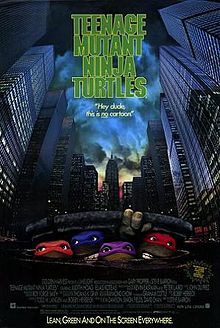

Teenage Mutant Ninja Turtles (1990)

Teenage_Mutant_Ninja_Turtles_(1990_film)_posterHollywood loves to go after us folks who are suckers for nostalgia.  We’re easy targets as it doesn’t take much to lure someone in with a touch of nostalgia.  Especially today.  We live in a world of 24 hour news networks and the internet puts information at our fingertips at all times.  The media’s tactics haven’t changed either, there’s still a lot of doom and gloom coming over the airways, especially in trying economic times.  It’s easy to let nostalgia take over as for most it’s the act of bringing one back to their childhood, which for many, was a happier time.  The sad truth though is that Hollywood usually lets us down when it revitalizes an old product.  Over the years we’ve seen movies based on Transformers and G.I Joe, none of which proved very satisfying.  If you want to indulge in a bit of a nostalgia, your best bet is to seek out an old television show or movie on home video.


Teenage Mutant Ninja Turtles is a great start for anyone looking to recapture that nostalgic magic.  The original film arrived at the height of Turtle-mania when every kid in school was seemingly sporting a Teenage Mutant Ninja Turtles lunchbox, backpack, or pencil set.  It was inescapable.  Recently I acquired the new compilation of TMNT comics and had a blast looking through them for the first time.  It really got me to thinking about the Turtles from my youth, the animated and the live action.  I thought that after reading the original books that it was a good time to go back and check out the original film.  I always had held the impression that it was pretty faithful to the comics and wanted to confirm that.  Instead I came away thinking it was a success because it combined both the animated series and the comics in a truly harmonious way.

It’s hard to consider Teenage Mutant Ninja Turtles a comic to film adaptation because it’s quite obvious that without the cartoon, this movie never happens.  The comic may have started this whole thing, but it was the cartoon (and probably the toys) that reached the biggest audience.  And it was that audience comprised mostly young boys that made the Turtles into such a big thing in the late 80’s and early 90’s.  Even if the writers wanted to adapt the comic for film, they would have never secured enough funding without targeting the cartoon’s audience.  This put the developers behind the film into a position where they could take from both mediums while adding their own touch.

The similarities between the comic and film are quite apparent.  The Turtles themselves live in a sewer that looks like a sewer, unlike the TV show.  There’s a damp and dank feel to the scenes shot in their sewer home that’s certainly comforting from the couch.  The Turtles’ origin is also mostly intact.  Splinter was now always a rat, like the comic, and Oroku Saki murdered his master Hamato Yoshi.  The only difference is the removal of Saki’s brother, Nagi, who in the comic feuded with Yoshi over the love of a woman.  The removal of Nagi just shortens the story slightly and doesn’t lessen the impact of Saki’s actions against Yoshi.  The writers even decided to make it slightly more personal by having Splinter get some licks in on the would-be Shredder, who responds by slicing his right ear off.

“I bet he never has to look for a can opener!”

The Shredder may actually be the most faithfully adapted character from the comics to film.  It was pretty much a given that the writers were not going to use the bumbling screw-up Shredder that the cartoon possessed, but they also ditched that Shredder’s design.  Not that there was much separating the two Shredders visually, but the film’s Shredder is basically lifted from the pages of Mirage comics.  He sports a red suit and all of the appropriate blades are in place (save for his right hand which is missing the two hand blades for some reason).  They even toss a cape on Shredder for his first big scene, some weird zebra-print thing that they wisely ditch for when Shredder finally confronts the Turtles.  Shredder also gets to show his lack of honor, when he tries to sneak a dagger into Splinter which is reminiscent of him pulling a grenade on the Turtles in the comics.  The writers do give the character a bit more depth.  In the comics we really don’t know much about Shredder’s operation in NYC.  In the film we see it’s a process where kids are brought in at a young age and brainwashed by the Shredder into thinking of their order as a family.  They presumably graduate to pickpockets as they get older until the best show they can handle being full-fledged members of the Foot.  And the foot soldiers themselves are pretty faithful in appearance to the comics.

Don and Mike have a close relationship with one another.

As for the Turtles, they’re pretty much a mash-up of the two mediums.  Leonardo is the most faithful to his comic book counterpart, which makes him pretty faithful to his cartoon persona as well.  No turtle really changes as little as Leo when moving from one medium to the next.  Here he is the unquestioned leader of the Turtles, and serves as an extension to Splinter.  He’s also a bit uptight when compared to his brothers, but not to a fault.  Raphael is definitely more similar to his comic approach.  He’s the hot head and loner of the group, only here that loner quality is amplified for dramatic effect.  Splinter laments how hard he tries to get Raphael to let go of his anger and to let others in.  We get the impression that it’s a constant battle, but Raphael grows and changes in a believable way as the film moves along.  Michelangelo is the turtle who most clearly takes after his cartoon character than the comic book one.  He’s a goof ball and has a hard time being serious about anything.  His lingo isn’t quite so surfer heavy as the cartoon but he’s always expressive and exhuberant.  Donatello, on the other hand, doesn’t really fit the mold of either portrayal.  In the comic book he’s a quiet gear head, a bit introverted though not a loner like Raph.  In the cartoon he’s basically a genius and his genius is practically a super power.  In the film, he’s got more of a goofy side and comes off as kind of a dork.  He struggles to come up with the interjections that Mike is so fond of but other things come much quicker.  He seems pretty intellectual though not showy.  His sense of humor also comes across as a coping mechanism.  He’s arguably the most developed character and that might have to do with his voice actor being the biggest “name” in the film, Corey Feldman.  Either way, this is my favorite take on the Donatello character.  It should also be noted, that the Turtles do bring their strong affection for pizza from the cartoon to the big screen (and Dominoes paid a lot of money to make sure we knew it was their pizza the Turtles preferred).

As for the supporting characters, April (Judith Hoag) is not surprisingly a news reporter instead of a lab assistant.  This just works better and suits the plot.  The writers are able to work her old VW into the story, as well as her antiques store from the comics.  Casey Jones (Elias Koteas) also shows up and his portrayal is pretty spot on.  He plays off of Raph and the other turtles quite well and makes for a good addition to the story.  The romance angle between him and April does feel a bit forced and unnecessary though.  April’s boss Charles and his son Danny (who apparently loves Sid Vicious) serve as a minor subplot to the tale as well, and as far as I know, were created just for the film.

The plot of the movie borrows quite heavily from issues 1, 2, and the Raph micro issue for its plot.  It’s mostly the issue #1 but with the Shredder on the offensive as opposed to the Turtles.  Certainly it’s a lot easier for parents to buy into these characters as appropriate for their kids if they don’t come across as blood thirsty creatures out for revenge.  The writers take what Eastman and Laird already had done, and do a good job of turning it into a different story.  The film, at its heart, is basically a father-son tale with emphasis placed on the Turtles and Splinter as well as Danny and Charles.  There’s certainly an element of brotherly love as well, as the Turtles learn to rely on each other as they’re basically all they have.  It’s a nice approach that I find charming.

Jim Henson has plenty of reasons to smile in this picture.

The visuals are what people remember most about this film.  It was a risk taking the Turtles to live-action as anthropomorphic creatures rarely play well in that form.  New Line Cinema wisely recruited Jim Henson’s Creature Shop to create the turtle costumes and what a great job they did.  The Turtles stylistically combine the comic and cartoon look, keeping the comics understated belts but keeping the cartoon’s color-specific bandanas.  The design of the Turtles is pretty spot-on, they look like turtles!  To achieve the proper look, the masks were outfitted with some sophisticated animatronics for facial expressions and mouth movements.  It’s quite impressive the range of emotions exhibited by the Turtles through-out the film.  I’m not sure if they had to swap out masks for the actors for certain scenes or if each head was capable of sadness, joy, anger, etc.  It is obvious that they had at least one other mask for the fight sequences.  Those masks full of gears were probably pretty heavy and tough to backflip in, so during the fight scenes the Turtles are noticeably sporting slimmer heads with static expressions.  It’s really noticeable if you’re looking for it and not really jarring.  The director does a good job of hiding each turtle’s mouth if they had to speak during one of these sequences.  The most obvious scene is Mikey’s nunchaku duel with a foot solider as his head there is an almost entirely different shape.

I have a home movie where members of my family can be seen watching this scene in the background. Everyone busts up laughing over Don’s “It’s a Kodak moment,” line. The reaction of people laughing at that moment is way funnier than the actual line.

Script-wise, the performance is a mixed bag.  There’s lots of one-liners and puns and plenty of them are groan inducing.  This is the downside of watching a movie geared towards kids.  There are a couple of bright spots though.  I do love Mikey’s line for the pizza guy (“Wise men say, forgiveness is divine, but never pay full price for a late pizza.”) and Casey’s misunderstanding of the word claustrophobic is quite amusing as well.  And even though it may be a tad on the cheesy side, Splinter’s “Cowabunga!” is pretty awesome too.  The film’s score is mostly up-beat pop tunes.  It’s nothing special, but the main theme is pretty damn catchy.

When I watch this movie it’s pretty much an experience of pure joy.  I can notice its short-comings but really few of them bother me.  A lot of fans, as the kids of 1990 become the adults of 2012, have gone on to really embrace the original comics and are aching for a true to comic film, but it’s never going to happen.  No studio is interested in making a TMNT movie that alienates the kids in the audience.  And even if one did I really don’t see how the Turtles could better be adapted for the big screen.  Teenage Mutant Ninja Turtles is, by no means, a perfect film.  However, it is the perfect Teenage Mutant Ninja Turtles film and needs no improvement.


Kingdoms of Amalur Demo Impressions

Kingdoms of Amalur: Reckoning (2012)

As a Red Sox fan, I was made aware of future Hall of Fame pitcher Curt Schilling’s video game obsession early on.  Perhaps not as early on as Diamondbacks or Phillies fans, but certainly well before the formation of 38 Studios (at one point, Green Monster Games), the developer behind the latest RPG Kingdoms of Amalur:  Reckoning.

Schilling was a noted EverQuest junkie.  For those unfamiliar, EverQuest was World of Warcraft before WoW.  It wasn’t the first massively multi-player online RPG, but it was certainly the first one to reach a large audience.  Schilling was not at all embarrassed by his nerdy obsession, and why would he be?  He was a multi-millionaire athlete with a hot wife.

It’s been a good, long while since Schilling decided to stop just being a fan and decided to create games for himself.  When that announcement was made I wasn’t sure what to expect.  I thought maybe he’d get into developing on a small scale with iPhone type games, and if he got into the big boy stuff, it would be a MMORPG for the PC, which seemed to be the only game he was into.  Or, as is often the case with this kind of wishful thinking announcement, I figured I’d never hear about 38 Studios again and the company would be dissolved before Schilling lost too much money.  When the first trailer for Kingdoms of Amalur surfaced over a year ago I was both surprised and officially intrigued.

In 2009, 38 Studios made a big acquisition when it acquired small developer Big Huge Games.  Big Huge Games is mostly known for its work with the RTS game Rise of Nations, but it was allocated to Reckoning in an effort to create a single-player experience.  Schilling also brought on board noted fantasy scribe R.A. Salvatore to help design the game world and create a robust history.  Todd McFarlane was also brought in for character designs giving 38 Studios an almost all-star quality.

Suddenly, Reckoning had a lot going for it and the first reveal only made fans more interested getting their paws on a finished product.  Just this past week a playable demo was released for PC, Xbox 360, and PS3 and I gave it a test run.

First of all, Reckoning is a third-person western style RPG.  If you don’t know what that means (you must not read this blog regularly) it just means the game is more like Skyrim than Final Fantasy.  You’re given control of one character and right away you get to customize him to your liking.  You can be as detail oriented as you wish or go with a randomly generated character produced by the game.  There are four base races to choose from that each are more suited towards a particular play style (one makes for an obvious mage, the other warrior, and so on).  The game then lets you pick a deity for your character to follow which incurs some bonuses to certain stats, or you can go atheist if you wish.  The level of customization is pretty much on par with recent entries into this genre such as Dragon Age and Skyrim.

Reckoning places a lot of emphasis on combat, and mostly succeeds in crafting some fun gameplay mechanics.

The demo has you play through an introductory level of sorts.  It gives you some context and, as expected, lets you know that your character is unique and somehow really important to this game’s world.  It’s pretty standard stuff.  From what I gathered from the giant opening cinematic, is that the game is focused on war between mortals and immortals.  These immortals (they have a special name that I forgot) are not immortal in the literal sense, it would be seem.  They die when you fight them, and during the cinematic one gets stabbed through the chest and appears as dead as anything else.  I’m going to assume their immortality comes into play after “death” and that they’re resurrected or something.  Regardless, the story has potential but doesn’t seem all together different from the first Dragon Age when you get right down to it.  It’s good vs evil and the evil guys are way cooler and more ferocious looking.

The introductory dungeon does a good job of giving you a chance to try out seemingly everything.  It encourages you to give melee a try and even throws in some stealth and magic play.  When it comes to an end you select your character class and start customizing it the way you want to play.  The game breaks everything down into three parts where character class is concerned:  warrior, rogue, and mage.  They have their own unique heading instead of that, I know the rogue abilities are called finesse and the warrior ones might be maul or something.  Each one has its own tech tree and at each level up you get 3 points to spend however you wish.  Even if you’re playing a mostly warrior type character you can invest points in the other two schools.  Considering you get 3 points at each level, it seems like it won’t take that long to fill-out a tree but we shall see.  As you spend points in each one the game keeps track which allows you to open up class advancements in each one.  For example, the base finesse class can become a thief or an assassin as more points are invested in it.  You can also dual and triple class if you like variety, which definitely has me intrigued.  I suspect few will play one dimensional characters.  Apparently, as part of the game, you’ll be able to meet characters that (for a fee, I assume) will wipe away all of your point allocations and let you reallocate them from scratch.  This means if you’ve played the game for 30 hours as a warrior but decide you want to switch it up and be a mage/thief, you can!  That seems pretty cool to me and is a good way to let your players experience everything the game has to offer without starting over.

While Bethesda tries to make their creatures seem plausible, Reckoning just wants them to look cool.

Visually, the game is a pretty solid looking title.  It reminds me a lot of EA’s (the publisher for Reckoning) other RPG series Dragon Age.  Both go for a clean look with a rich color palette, which is in contrast to Bethesda’s Skyrim which has a gritty feel with a muted, gray palette.  The character designs also follow a similar philosophy in that they’re straight-up fantasy fare.  Where Skyrim tries to take these creatures and make them seem realistic, Reckoning just throws them in.  This gives some characters, like the gnomes, an almost toon quality to them.  Structurally, the game is also similar to Dragon Age in its approach to the environment.  The map is huge, though in the demo I was obviously restricted to a small piece, but it looks like Reckoning will favor condensed but connected areas as opposed to Skyrim’s wide-open terrain.  This makes sense considering the game’s focus on combat.

How is that combat?  Quite good actually.  At first, it feels like Reckoning may be another button masher like Dragon Age 2 or (gulp) Dynasty Warriors.  Instead, there is importance placed on blocking or parrying and there are time-sensitive special moves you unlock as you advance in levels.  I was concerned when I first started playing that combat would be too simple but the longer I got in the more varied the opponents became.  I could probably approach it like a Diablo and just keep attacking and spamming potions but I found myself dodging and weaving amongst my enemies always trying to avoid being ganged up on.  There’s also a special slow motion type attack that’s triggered by a meter.  When activated, it slows everyone down but your character and you can deal out some serious damage.  It’s player activated so you’ll find yourself saving a fully charged meter for a tough encounter, at least I did.  Main attacks are done with one button, while special abilities and spells are mapped to a trigger.  The game makes liberal use of the radial menu popularised by BioWare for easy access to potions.  There’s also always a secondary weapon mapped to another face button on the controller letting you change things up on the fly.  And like with Skyrim, you can also enter a stealth mode and try to sneak up on enemies to deal massive damage.

Reckoning looks pretty nice, and the combat seems fun, but I’m not sure where I stand on the product as a whole.  I like its ambition, I like pretty much everything I talked about, but there’s stuff I don’t like.  For one, the game’s camera is way too loose.  I liken it to the inFamous series as it has a similar feel.  The camera also feels like it’s too close to my character.  I found myself constantly spinning it around with the right analog stick to get a look at something.  The character also has a floaty feel and landing hits on enemies just lacks something that I can’t quite place my finger on.  The game just doesn’t feel as fun to play as it should, given all that’s gone into it and all that it gets right.

Downloading this demo will also score you some sweet armor in Mass Effect 3.

This game is ultimately going to be compared to Skyrim because both fit into the same genre and will be released relatively close together (Reckoning hits stores February 7th).  The experience of the two is vastly different though.  Skyrim is more an exploration, sandbox kind of title.  Reckoning has a large map, but exploration seems like it will be more tedious than wondrous.  There’s some emphasis placed on free will in Reckoning as well (you can pick pocket, target civilians for attacks and so on) but some of the world’s real feel is dampened by archaic video game conventions like breakable boxes strewn about.  I can run into some guy’s house and just start smashing things for loot and he doesn’t give a shit, which is disappointing.  This game reminds me more of Microsoft’s Fable series than Skyrim, though I think the finished product will be superior.

In the end, I feel like I can’t offer a fair assessment of Kingdoms of Amalur because I’ve just been playing too much Skyrim.  I’m nearing 150 hours with that beast and playing something different just feels too foreign right now.  I have legitimate concerns about Reckoning, enough that I know I won’t be a day 1 purchaser.  That was unlikely anyways as I have too many games I have yet to play as is, but I’m definitely holding out for some full reviews.  And after my experience with Skyrim and its stability (terrible) I’m a little gun-shy to jump right into a new, massive game before knowing how well it runs.  I do recommend that people try this demo out.  It’s quite generous and after the tutorial dungeon you’re given 45 minutes to do whatever you want.  They closed off some areas and I think they removed a lot of the NPC audio to make the download smaller, but you get a good test run.  What will make this game a success or not is how well player’s enjoy the gameplay mechanics and quest variety.  Skyrim offers the same quest over and over but gives it unique context, plus the world is just fun to explore and I’m not sure Reckoning’s will have that same feel.  The story-telling and NPC audio in Skyrim is often times less then stellar but if the quest has me doing something interesting I can overlook it.  If Reckoning just has the player fetching items and clearing dungeons endlessly it may get boring pretty quickly.  We’ll just have to wait and see.  My expectations after playing the demo though are that it probably won’t eclipse Skyrim as the definitive fantasy RPG experience, but should at least top my pick for 2011’s most disappointing release, Dragon Age 2.  And if so, that’s a pretty nice spot to occupy.


Teenage Mutant Ninja Turtles: The Ultimate Collection – Volume 1

Teenage Mutant Ninja Turtles: The Ultimate Collection Vol. 1 (IDW Publishing, 2011)

When I was a wee-lad growing up in the 1980’s I loved the Teenage Mutant Ninja Turtles.  And I don’t mean I just liked watching them on television or playing with their toys, I was obsessed.  And I was the norm.  It seemed like every boy my age loved the Turtles, and what was there not to love?  They were ninjas, they were young, they kicked ass, ate pizza, and even cracked a few jokes along the way.  Plus, their theme song was totally tubular, dude.

As was the case for most, my interactions with this new era fab four was mostly contained to television, until the movies started coming out.  Sure I knew the Turtles existed in the print form as well, I saw them fairly frequently in the check-out aisle at the grocery store, but always thought the TV show came first.  Those were the turtles I knew best.  Then the first film came along and changed things up a bit, most notably the Raphael character.  He was a hot-head on film and kind of hard to predict.  On TV though he was the wise guy known for breaking the fourth wall.  Even though the television show never adapted the stronger personality of movie Raph, that was the persona that took over the character for me.

Little did I know that was how Raphael was always intended to be.  For as many are now aware the Teenage Mutant Ninja Turtles actually first found success in the print form through Mirage Studios.  Created by Kevin Eastman and Peter Laird, the original story set the stage for all future endeavors and introduced readers to the four turtles we know best:  Leonardo, Michaelangelo, Donatello, Raphael, and their sensei Splinter.  It’s intended as a bit of a parody of early 80’s comics, especially Frank Miller’s Daredevil.  The concept of four anthropomorphic turtles roaming the sewers of New York City is about as far-fetched as it gets.  And Eastman and Laird didn’t stop there, for like the television show with its forays into sci-fi, Eastman and Laird take the Turtles across the galaxy and back.

As a kid, this was all I knew of the Teenage Mutant Ninja Turtles.

Yes, I’ve been well-aware of these Ninja Turtles for quite some time, and have even seen some of the comics long since my obsession faded away.  Never before though have I actually taken the time to read through these early works.  It hit me out of no where sometime last summer, a need to see how my beloved childhood heroes were supposed to be portrayed.  It probably started a little earlier with the 4 Kids Entertainment television movie Turtles Forever, a feature that tried to blend the cartoon from the 80’s with the cartoon from 2003.  It also included the original Mirage Comics turtles and was a really fun production, though nothing stellar.  I found that the old trade paperbacks printed off during the 90’s collecting the old works were quite hard to come by at this point.  I was pretty frustrated with the prices I was seeing on eBay and trips to my own local comic book store proved fruitless as well.  My spirits were elevated though when I came across a new TPB on amazon.com set for release in the coming months.  I pre-ordered it right away and then began to wait, and wait, and wait…

I had pretty much forgotten about that pre-order when I finally received a notification in December that my copy of Teenage Mutant Ninja Turtles:  The Ultimate Collection – Volume 1 had shipped, more than three months after it was supposed to ship and six months after I had ordered it.  I wasn’t mad about the delay or anything, I just had simply forgotten about the thing and actually thought it might have been cancelled.  I’m glad it wasn’t, as I quite enjoyed my foray into Classic Turtles and I’m going to tell you all about.

First of all, this collection is very well put together.  It’s hard cover and oversized when compared with a normal comic book.  The artwork inside has been enlarged over the originals to accommodate this format and is presented in its original black and white.  The cover features new artwork from Turtles co-creator Kevin Eastman and both he and Laird have a brief write-up following the first comic.  Eastman breaks down each issue page by page and offers some nice insight and really does a good job of putting the reader in a frame of mind to look at the Ninja Turtles from his perspective back when this thing all got started.

The company is IDW Publishing who acquired the rights to the printed turtles in early 2011 and wasted no time in getting this out.  Mirage, now controlled by Laird, is actually not involved with this at all.  Laird’s sparse commentaries apparently were taken from his blog (with his permission) and it doesn’t look like he contributed really at all to this release.  Eastman, more or less, abandoned the TMNT in the 90’s so it’s a bit surprising to see him team-up with IDW to put out new TMNT comics.  In addition to working on this collection, he is overseeing a new line of comics that began hitting shelves sometime late last summer.  Perhaps his funds are running low and he needs to turn back to old reliable once again.

Cover for TMNT #4, though most probably know this as the cover for the NES game.

If Eastman was burnt out on the Turtles in the 90’s he no longer is, or hides it well.  As I said, he does a great job of taking the reader back to the infancy of the Turtles and shows great exuberance.  He comes across as someone who loves to talk about the Turtles and is truly excited about this project.  If I have one minor quibble with his commentary it’s that he may be a little too reverential about his own work.  He seems to love everything he and Laird did, and maybe that’s true, but I feel like most artists when looking back on their old works would notice some areas for criticism.  Maybe he just wanted to keep things positive.  Despite that he doesn’t really come across as stuck-up or anything, he just sounds like a super fan.

The actual stories should be familiar to anyone well-versed in Ninja Turtles lore.  Both the animated show and the film borrow heavily from the comics when discussing the origin of the Turtles though neither adapted it completely.  In both the cartoon and film, Hamato Yoshi’s chief rival is Oroku Saki but in the comic book it was Oroku Nagi.  Yoshi kills Nagi while defending his love and it’s Nagi’s younger brother, Saki, who seeks revenge.  From there, it’s basically the same as the film with Yoshi fleeing to New York and Saki eventually following with his own faction of the Foot Clan.  Saki kills Yoshi, but during the scrum Yoshi’s pet ret is able to escape who would go on to become Splinter.

The first comic is both an introduction to the Ninja Turtles and a revenge piece.  After their first taste of live combat, the triumphant Turtles return to their master who finally shares the tale of how they came to be.  This sets the wheels in motion for a showdown with Oroku Saki, now called The Shredder, and Splinter dispatches Raphael to send a message to Shredder to meet the Turtles for a fight to the death.  True to their word, the Turtles do battle Shredder to the death, which closes out the first issue.

The artwork is quite rough.  The style suits the Turtles but the human characters look oddly proportioned.  The scenery is sometimes too busy as well, as the background clouds the action scenes at times.  The writing is also fairly amateurish.  The ideas are there but Eastman and Laird struggle to bring them out from a literary perspective.  I do like the approach of the opening though, with Leonardo serving as narrator, and the layout and pacing of the book is anything but amateurish and easily the book’s strength.  The violence that everyone speaks of when referencing the original books is a bit exaggerated.  Yes there’s more violence here than what was present on TV, but I feel it compares to what was presented in the first film, only with blood and actual death.  There’s no gore really, and while the Turtles aren’t a bunch of wise-cracking butt kickers I wouldn’t call the mood of the book “dark.”  Gritty yes, but not dark.

Short-comings aside, the first issue is actually quite enjoyable.  The action sequences and sheer uniqueness of the characters is what sells it.  Issue 2 brings in April O’Neil and Baxter Stockman.  O’Neil is a lab assistant for Stockman, not a news reporter, and Stockman is busy perfecting his mousers.  The Turtles end up encountering O’Neil in a similar manner to how they have in every other medium and do battle with Stockman and his creations, who hold a more sinister agenda than simple rat extermination.  Stockman is fairly clever and devious, a far cry from the bumble-head shown on television, and proves a formidable foe though he too is ultimately dispatched.  Not before, however, apparently claiming the life of Master Splinter leaving the Turtles devastated and without a home.

The rest of the comics carry forward the narrative as the Turtles search for answers regarding Splinter’s disappearance.  Their story takes them into space, of all places, where they meet the benevolent Fugitoid and the nefarious Triceratons.  The more sci-fi stories are less interesting for me, but it’s enjoyable to watch Eastman and Laird’s abilities improve for each issue.  The artwork improves, and though it never rivals a Frank Miller or Allen Moore, the writing does improve as well.  Their imaginations should certainly be commended, if nothing else.

The Raphael solo issue.

The collection includes the first 7 issues of Teenage Mutant Ninja Turtles and also includes the Raphael one-shot “micro” issue.  Each turtle received his own issue at one point and this collection includes Raph’s which introduces the character Casey Jones.  Jones is designed to hold up a mirror to Raphael and show him what he’d become if he gave into his rage wholly.  Jones shows no mercy when dealing with common street punks and Raph basically has to save the criminals from him.  They duke it out in a pretty brutal contest before eventually becoming pals.  Their relationship in the first film was pretty faithful to how it’s presented here.

If these issues have one major short-coming for me it’s with the actual characters of Leonardo, Michaelangelo, Donatello, and Raphael.  Leonardo is given the most attention and he’s clearly the most mature and the one that takes after Splinter the most.  He’s not given the title of leader, he takes it.  Raphael is shown as a bit of a loose cannon, but not to the degree he was in the film.  He really isn’t shown to have much of a rivalry with Leo, which is something that surprised me.  Donatello is shown to be more studious than the others and does get a few chances to show off his tech-savy abilities, but nothing to the degree that the television show would adopt.  Michaelangelo ends up being the least developed character and has no real personality to call his own.  He’s shown to be a pretty talented fighter in a sparring match with Raph, and some of his care free persona shows through but only slightly.  And if anyone who’s never seen the stories is curious, no, there’s no pizza or surfer talk.  In one panel Raph actually asks April to fetch him a beer.

All in all, this compendium did meet my expectations.  I always assumed the self-professed hardcore TMNT fans oversold the original works in terms of its violence and tone and found that to be mostly the case.  While I was surprised by some developments, this was mostly how I envisioned the Turtles came across in print.  IDW exceeded my expectations with the quality of this release, and I suppose they should have since the MSRP is $50!  Amazon sells it for much cheaper for those interested and I’d say any TMNT fans looking for a collection should check this one out.  I don’t know how many of these Eastman and IDW are preparing but I have Volume 2 already pre-ordered which is currently slated for release at the end of March.  It will include the next 4 issues plus the rest of the micro books which I hope will add more depth to the individual turtle personalities.  I look forward to getting my hands on it in the coming months.


Danzig 777: I Luciferi

Danzig 777: I Luciferi (2002)

By the time June of 2002 rolled around the world was ready for some relevant Danzig once again.  Well, maybe most of the world didn’t much care, but I certainly was.  After two disappointing studio albums and a mostly bad live album, Danzig needed to make a statement.  For better or worse, that statement would come in the form of Danzig 777: I Luciferi.

I Luciferi was released on Glenn’s evilive label through Spitfire Records and would be the band’s only release with the Spitfire logo.  The band thought it had a new long-term relationship with label E-Magine Music but Danzig ended up being that label’s biggest acquisition, and as much as I love Danzig, it can’t carry a label.  By the time I Luciferi hit stores it had been just about 2 and a half years since Satan’s Child was released to mostly negative reviews.  The band had a decent showing on the road due in part to the inclusion of a Samhain set and fans had also been treated to several other releases including a Samhain Box Set and re-issues of Danzig 5 and Black Aria.  Danzig suddenly was a very busy band and even though it had been over 2 years since the last studio effort it sure didn’t feel that long.

The lineup for Danzig 7 was the same as the touring band for Danzig 6 and included guitarist Todd Youth, bassist Howie Pyro, and drummer Joey Castillo.  For all three this would be the last Danzig album they’d play on.  Pyro and Youth would go off to try to make a name for themselves elsewhere while Castillo was offered the drummer position with the much higher profile Queens of the Stone Age.  For the most part, all three go out on a relative high note and have nothing to be embarrassed by.  Like most of the modern Danzig releases, there aren’t a ton of guitar solos for Youth to show off on but what’s there is played capably.  Castillo continues to be the stand out for the group and Pyro’s bass actually has a presence here, which is not often the case with Danzig albums.

Stylistically, Danzig 7 could be called more of the same.  It’s a little louder and more varied than Danzig 6 but with less of an industrial presence.  Where Danzig 6 stuck mostly to power chords and low notes, Danzig 7 brings back the old pinch harmonics the band was known for and some more traditional Danzig-style guitar riffs.  Some of the songs are tried and true Danzig, such as the moody “Black Mass” and powerful outro “Without Light, I Am.”  There are also some new sounds though like the destructive “Coldest Sun” or Gary Glitter inspired “Kiss the Skull.”

That’s not to say it’s all good.  “Black Mass” is a fantastic opener (following the instrumental “Unendlich”) but “Wicked Pussycat” tries its best to derail any momentum gained.  Glenn’s vocals are clear and pristine on “Black Mass,” but “Pussycat” brings back that hoarse delivery fans seemed to dislike on Danzig 6.  That and the song’s subject matter is about as silly as the title suggests and Danzig’s “rapping” on the chorus caused many to double-take.  Talk to a Danzig die hard today and many will try to tell you he isn’t rapping, but consider me unconvinced.

“God of Light” follows and can best be described as nu-metal sludge.  It took a long time for me to come to grips with that, but it’s true.  The song is melodically offensive and one of the worst Danzig songs ever recorded.  “Liberskull” begins the album’s long, winding road to recovery.  The main riff is a bit too bouncy for my taste, but the chorus and build up to it is well executed and quite pleasing.

From there the album is a bit uneven.  Songs like “Dead Inside” and the title track show promise but ultimately fail to deliver on it.  It’s towards the back end of the album where things pick up.  “Angel Blake” represents perhaps Glenn’s first classic horror tale since his days with The Misfits and proves quite pleasant, if a bit simple.  “The Coldest Sun” combines a dreary and kind of odd verse with one of Glenn’s catchiest choruses of all time.  His vocals are quite strong here, as they are on the closer “Without Light, I AM,” which strikes me as a kind of darker version of 4p’s “Let it be Captured.”

The musicianship is adequate, and while this isn’t the best collection of songs Glenn Danzig has put together it’s certainly quite listenable.  What most fans were really concerned with heading into this album was Glenn’s voice.  I Luciferi eased a lot of concerns amongst the Danzig faithful.  While most seemed satisfied with the vocals during the Satan’s Child tour, the following live album Live on the Black Hand Side caused people to question if what they heard on the road really was any good.  Live on the Black Hand Side contained two discs, one from the band’s glory days from ’92-’94 and a second disc with material from the Satan’s Child tour.  Disc 2 is practically unlistenable.  Some of that is likely due to the band skimping on good tech for a quality recording, but Glenn’s vocals just aren’t very good.  From the opening line of “Black Mass” though people were breathing a sigh of relief.  Danzig’s classic croon was back, and even though virtually no other song on the album sounds like “Black Mass” there are plenty of other stand-out moments.

The production is a little bit of a mixed bag.  While it’s no where near as bad as some of the future releases would present, it’s not quite on par with Satan’s Child.  Love it or hate it, the whisper backing track is still used on some songs but for the most part there’s little or no vocal distortion this time around.  While some people still want to call Danzig 6 an industrial metal album, Danzig 7 is pretty much a straight-up metal album with a modern sound.  The guitars are still tuned low (C once again) but there’s actual attempts made at crafting lead riffs this time around.  The quality of Castillo’s drumming, as I mentioned earlier, is quite good but the production on them is spotty at best.  On some songs it sounds like he’s drumming in your living room, on others it sounds too hollow and distant.  There’s a nice drum solo at the end of “Naked Witch” that could have sounded much better if given a full sound.  Mostly the album is lacking in those warm, full tones which is either a production short-coming or a stylistic choice.

“I Luciferi” vinyl release contents.

As for some technical notes on the release, it was released in 2002 on CD only and came in a blood-red jewel case.  The booklet contains photos of the band posturing with porn star Devon and looking mostly ridiculous.  Danzig has these big rubber gloves that make me think of comic book villain/hero Venom and he would sport them on tour.  Not all of the lyrics are printed in the booklet, a trend started by this release that would annoy most fans.  A vinyl version of the album was released in 2010 in Italy on Night of the Vinyl Dead Records.  Not much is known on how this came to be, presumably the distributor approached Spitfire about wanting to do it and they came to an agreement because the release wasn’t approved by Glenn (or he at least claimed to not know anything about it).  While it’s not technically a bootleg, it wasn’t endorsed by Glenn though I hear he has no qualms about signing it should you own a copy and wish to have him put his signature on it.  Release wise, it’s solid.  The booklet is nice and large and the record has an attractive inner sleeve.  The outer sleeve is the same as the CD artwork (which, admittedly, is pretty shitty though I kind of like the waxy new cross logo) and there’s also a skull lithograph included.  I assume the image is the artist’s interpretation of the classic Danzig logo.  This edition is limited to 500 copies.

Ultimately, Danzig 777: I Luciferi is a bit of an uneven release and isn’t going to make anyone forget about the band’s peak in the 1990’s.  It was the best album from Danzig since 1994’s 4p, and while it wasn’t a return to the classic sound, it was a return to respectability.  For a long time after this one was released I listened to it daily.  It was the album of my summer that year and I was never shy to bust it out when someone would ask me if Danzig was still around.  Some of the songs are among my favorite, and for me this is probably a top 5 Danzig release and a job well done.

Top Tracks:

  • Black Mass
  • The Coldest Sun
  • Without Light, I Am

Where, oh Where, is Yorick Brown?

Y: The Last Man (Issue 23, Vertigo)

With a new film in the Ghost Rider series set for release in the upcoming weeks, it got me to thinking about the comic book medium and how it has translated to the big screen.  Hollywood has always been interested in comics.  This interest for a long time was reserved really for the super elite characters of Superman and Batman.  Over the last two decades though, that has changed tremendously.

I suppose it started in the 80’s to some degree.  During that decade we were treated to such cinematic gold as The Punisher and Howard the Duck.  They were, of course, something far less than gold and today are only viewed by those looking for a laugh.  I can sort of see why a production company would think the Punisher character would work for a movie.  Especially considering that this was the time when the action hero picture was making big bucks.  I have no idea how Howard the Duck ever received the green light.  It was a terrible idea, and the results were pretty terrible as well.

I suppose we have Fox’s X-Men, and to a lesser extent Blade, to thank for this wave of comic book films.  X-Men seemed to do just enough to satisfy critics and fans of the comic, and in turn, it made quite a bit of money.  This made Marvel Comics, which had struggled financially during a lot of the 90’s, all kinds of happy as it quickly began licensing all of its franchises for films.  At the time I think a lot of people expected little to come from these agreements, but it seems like the opposite occurred.  Not only did the X-Men make it to film, but Spider-Man, The Fantastic Four, The Punisher (again), Daredevil, and more.  Some of these sucked, but it seems like most actually made money so the studios keep going back again and again.  Not to be out done by its chief rival, DC also got into the game with not just Batman and Superman films, but Catwoman, Watchmen and Green Lantern.  We’ve even seen the less popular titles make it to film as well such as Hell Boy, Road to Perdition, and V for Vendetta.

If you’re reading this then it’s probably safe to assume you like both comic books and film, so I’m going to assume most are aware of the relative quality of the above pictures.  There’s some good ones in there and some even bring about good debates, but there’s also a lot of garbage.  You’re probably also aware that even Marvel’s Man-Thing character managed to get a movie during this period, it just didn’t play in theaters.  That’s a pretty obscure character and when you combine that with Ghost Rider and Thor it almost seems crazy that there are people who think these characters can make a good movie.  I know Thor is kind of a classic character in the Marvel Universe.  I’ve never been a fan so maybe I’m biased but I look at a character like Thor and I just don’t see a good film.  I don’t even really see an interesting character.  Thor works best when he’s paired with other characters, not when he’s the star.  As for Ghost Rider, well, at least he looks cool (when not played by Nicholas Cage).  Which leaves me with one big question:  Where is Yorick Brown?

Has any comic series come along in the last 20 years that is better equipped to make the leap to the big screen than Brian K. Vaughan’s Y: The Last Man?  I would argue no and for several reasons:

One, the main character is not a super hero.  Yorick is just a college-age kid who happens to be the last man alive.  He’s an amateur escape artists so that gives him a unique set of skills to be worked into the main plot, but there’s nothing flashy about him.  This means no awkward looking costumes and no big, expensive special effects.  In other words, he’s cheap!

Two, the main character fits right into the target demographic.  He’s young and he’s male, isn’t that who the studios are trying to attract?  Make him played by a cute actor and now suddenly the women want to see the movie.  This is easy!  He’s also a pretty charming character with a quick wit not, unlike Peter Parker, but also has some pretty common insecurities when it comes to women.  If anything, he’s too perfect for film.

Three, the story is unique and interesting.  All of the men on the planet suddenly drop dead except one.  There are so many questions that initial premise creates, enough to last a full trilogy.  It also avoids the whole over-played super villain character.  We don’t have to deal with some misguided scientist who accidentally gave himself super powers but warped his own mind in the process.  No one is out for world domination, and the antagonists are relatively unknown.  There’s an ultra feminist cult that shows up from time to time, but they’re not the main villain.

Four, it’s a pretty small cast.  There’s Yorick and his two female companions Agent 355 and Dr. Allison Mann.  They meet quite a few people on their trek across the globe, but there aren’t many re-occurring characters.  This means no awkward, giant cast like with X-Men or the upcoming Avengers flick.

Ampersand, a star just waiting to be born!

Five, there’s a monkey!  Americans love monkeys, and Yorick’s other companion is Ampersand, a male capuchin monkey who happens to be the only other living, male mammal on the planet.  He also throws poop.

Yorick’s search for answers plays out across 60 issues like a good adventure story.  I suppose that’s another plus for Hollywood, this story has a beginning and an end.  It’s not an on-going book like most comics and it’s been over for quite a while.  60 issues sounds a like a lot to fit into a trilogy, but they’re pretty action and scenery driven books easily classified as light reading.  I think I breezed through most of the story in about a weekend.  And given that it’s 60 issues it allows the director and screenplay writers to break it up into thirds.  It was released in 10 graphic novels after the main run, which is how I experienced it, and if I was to write a screenplay for the first movie I’d focus on the first three books.  Some stuff would obviously be trimmed out, book 4 seems like an obvious one to see some cutting down, but I think it would be fairly easy to adapt the entire run over three films.

Which is actually the answer to my question.  As much as I’d like to think I am, I’m not smarter than the studio heads of the major production companies.  Anyone who even looked at a summary for Y: The Last Man knows it could be adapted for film and that it would have a chance to do well.  That’s why the rights to the film property have already been secured by New Line Cinema, which is a sister company of Vertigo, the comic book company that ran Yorick’s story.  Unfortunately, New Line isn’t one of the biggest in the game and it’s their bottom-line that’s preventing the biggest obstacle.  Vaughan has done a screenplay for a potential film, and D.J. Caruso was attached to direct, but one major obstacle has reared its rather ugly head.  New Line is hell-bent on doing Y: The Last Man as a stand-alone movie, while Caruso and Vaughan see it as a trilogy.  It would seem like the compromise would be to do the film the way Vaughan and Caruso wish to, and if it makes money, to go ahead with two more, but I guess things aren’t that simple.

I know exactly what you're thinking, "You mean to tell me there's ninjas too?! Why hasn't this happened?!"

As of right now, that’s where we stand.  Things were moving pretty quickly for Yorick for awhile, but not much has been said since 2008.  Caruso has since walked away and no replacement has been announced.  There was talk of potentially turning the comic into a television series, but I don’t think such talk was ever serious.  I could see it working for TV in a one hour format, but would fear that it would never reach the end.  If the show was a success, there would be a temptation to just run with it until people got sick of it, meaning new story-lines would be created on the fly.  And if it failed, we’d just end up with a season or two and not the complete tale.  I still think a trilogy is the best way to go about it, and I’m puzzled that New Line thinks it won’t make money on a trilogy.  There’s just no way to condense a 60 issue comic into a two hour film and do it right.  I also don’t think a studio could get away with the Watchmen approach of one giant movie.

It’s really too bad, as I think Yorick Brown could be a minor star on film.  Because the book was put out by Vertigo, it hasn’t reached the audience it would have if done by Marvel or DC.  And if it had been done by Marvel, it would undoubtedly have been made into a film by now.  It’s plot line is thought-provoking and quite interesting.  Mostly, the story is just fun and that translates to any medium.  Maybe the studio will budge on its demands in time and let a film-maker do it the way he or she wants to.  Kick-Ass and other off-beat comic films have done well and made their studios money, so it seems like eventually Yorick will have his story told as well.  The wait is killer though, and the longer it goes the possibility that The Last Man will be forgotten starts to seem more and more likely.


Why I’m Not Excited for Diablo III

Blizzard Entertainment, the developer for the upcoming PC game Diablo III, has earned a reputation over the years as one of the best, most consistent developers in gaming today.  Once called Silicon & Synapse, Blizzard was an American developer in an industry still dominated by the far east.  It focused on game ports at first, before going on to developing its own titles in the early 90’s.  The company had some minor hits on consoles with games like Rock n’ Roll Racing and The Lost Vikings, but the developer really became known when it released a real time strategy (RTS) game for the PC titled Warcraft:  Orcs and Humans.  Warcraft was an example of great timing on the part of Blizzard.  It wasn’t all that unique from a gameplay standpoint as the RTS genre had already been firmly established by the Dune series from Westwood Studios, the other big name in the RTS genre.  Blizzard and Westwood would have a rivalry through-out the 90’s with the two producing big name franchises like Blizzard’s Warcraft and Westwood’s Command & Conquer.

What Blizzard is often most credited with when it comes to the RTS genre is adding plot to the game.  This goes beyond merely setting up the conflict but extends to in game missions.  Where Dune was comfortable to have the player focus on annihilating the opponent on a given map, Warcraft added purpose.  There were many straight-forward kill the enemy missions, but there were also rescue missions or establish a satellite base type of thing.  It seems like a small thing, but it did help break up the monotony of the game.  And Warcraft’s setting did go a long way as well as the medieval/fantasy theme worked well within the game and the major conflict of orcs v.s. humans proved surprisingly dramatic.  It wasn’t high brow kind of stuff of course, though the plots would become more complicated in later games, it was basically good v.s. evil but that worked well enough at the time.

Most people today know Warcraft more for the World of Warcraft franchise than anything else.  Like with the RTS series of games, WoW came at a great when the massively-multiplayer online (MMO) role-playing genre was taking off.  Blizzard again didn’t do much to rock the boat from a gameplay perspective, but the Warcraft franchise worked well in this setting and Blizzard made everything easy on the new comer.  This made WoW the most accessible title in the genre and a main reason why it has become the studio’s biggest cash cow.

Of course, Blizzard didn’t just make money off of the Warcraft franchise.  Also paying out dividends was the massively popular StarCraft.  As most would suspect given the name, it’s basically Warcraft in space.  The conflict is new, and has now been expanded to three parties instead of two, but the basic gameplay is still the same.  StarCraft did prove more complex.  While Warcraft and its sequel established a pretty basic strategy, StarCraft’s game challenged players a bit more.  Resource management was more complex and simply overwhelming the opposition didn’t always work as the factions waging war against one another were now quite different.  In Warcraft, the orcs and humans were practically palette swaps as they were so similar.  There were a couple noticeable differences (mainly in spells earned by higher level units, which actually proved to be a pretty big difference as the Ogre Mage’s bloodlust was ultra-powerful) but for the most part each side had its own main melee unit, ranged unit, siege unit, etc.  StarCraft’s humans (Terrans), Protoss, and Zerg each came with their own gameplay strategies that the player needed to exploit in order to win.  A Protoss player would not approach a fight the same way a Zerg player would, nor would he attack a Zerg enemy the same way he would a Terran enemy.  This helped make StarCraft hugely popular online and in competitive settings.  Strangely, StarCraft wouldn’t receive a proper sequel for over 10 years.

Diablo (1996)

Blizzard’s other big franchise, and the one this post is supposed to be about, is the Diablo franchise.  First released in 1996, the Diablo franchise is your basic dungeon crawler.  It’s the most straight-forward and simple title in Blizzard’s catalog.  The first one was especially basic.  It only included three characters: the warrior, rogue, and mage.  Each one had its obvious strengths and weaknesses. The player took the character through the game’s lone dungeon of 16 levels with the main goal of destroying the game’s antagonist, Diablo.  There were quests along the way given out by the game’s townspeople or just stumbled upon while journeying through the dungeon.  None were of the head-scratching variety and merely added a little back-story to why you were killing a certain enemy.  The game’s narrative was mostly non-essential, the real drive was to simply level up and make your character as strong as possible.  Finding loot was the main goal as you never know what the next monster would drop or what would be in the next destructible barrel.  Each level of the dungeon was also randomly generated which encouraged replay.  Once the game was beaten it didn’t end there as the player could continually take the same character through the dungeon again and again until boredom set in.

Diablo was quite successful, and its sequel Diablo II even more so.  Diablo II arrived in 2000 and carried over the same point and click mechanics but added more variety to the character classes.  Where there were once 3, now there were 5.  There was also a skill tree implemented to make each class feel different.  Now the warrior class wasn’t just stronger, he could do special attacks or leap (he was also now called the barbarian).  The game’s expansion would add more classes as well giving gamers far more variety.  The game was also much bigger and more challenging, but was still mostly just a dungeon crawl with the main goal of the player to create the most powerful character possible.

The theme for Diablo II: more is better.

I was hooked on the original Diablo.  I beat the game with each of the three classes multiple times.  My favorite was the rogue, though the mage character ended up being the most powerful if enough time was invested.  His magic was so strong that I rarely had to equip him with a weapon.  In Diablo II, I found myself suitably addicted once more but the game’s massive size cut down on my willingness to play through it again and again.  As such, I only really played through it twice; once with the necromancer and once with the amazon.  By the time I was nearing the end with the amazon (and truthfully, I can’t remember if I beat it or not with her) I had had enough.  By this time I felt Diablo had been eclipsed by Bioware in the dungeon crawler genre.  Baldur’s Gate, and later Neverwinter Nights, offered a more rewarding experience.  Diablo could be boiled down to the fact that you just clicked on the enemy you wanted dead and spammed potions to stay alive.  Diablo II did liven up the experience with the skills system, and some characters introduced supporting characters as well but they weren’t as tactile as the multi-person party found in Baldur’s Gate.

This sort of leads into the main point of this post:  I’m not excited for Diablo III.  Diablo III is set for release this year, and maybe as early as next month, for the PC and Mac.  Whether or not I’m excited to play it is actually irrelevant, as I don’t think I own a machine that could run it.  My laptop can run StarCraft II in the low settings just fine, but I suspect more muscle is needed to do the same with Diablo III.  Even if the game was coming out on Playstation 3, I don’t think I’d have much desire to play it.  It’s possible I’d end up getting it at some point, but unenthusiastically.  That’s fine and all, but I feel like I’m in the minority.  I feel like Blizzard has created a reputation for itself that includes amazing games.  Blizzard notoriously takes forever to release anything with a focus put on quality.  It’s in some ways kind of ridiculous considering it now has powerful financial backing from Activision which means the development teams are much larger than what they once were.  It made sense for a small developer to take awhile to get things to market, but now it just seems like a marketing strategy.  Blizzard cried about not having enough time to get out StarCraft II, so it removed the Zerg and Protoss campaigns in order to make its release date.  It was announced in 2007, but work basically had begun in 2003, and yet the game was released in an incomplete state in 2010.  The not enough time excuse just rang hollow and it sounded more like a money-grab than anything as now gamers will have to buy two more games to complete the story.

Gameplay shot from Diablo III. As one can see, aside from looking better, not much has changed.

Diablo III has had a more quiet release schedule.  Perhaps Blizzard has learned to better manage its resources or just wisely has kept its mouth shut until the game is within a couple of years of release.  Still, I was surprised when I looked up the game for this post that it was announced in 2008, nearly 4 years ago.  I suppose it just feels like it hasn’t been that long because my interest has remained low.  Diablo offers a fun, but shallow gameplay experience and one that just doesn’t work for me anymore. When I was in my teens I could play these dungeon crawl types with more enthusiasm but now they’re just boring for me.  A lot of them seem to receive similar critical reactions to my own, but I suspect Diablo III will be a critical darling despite not doing much different.  Blizzard will deliver a solid narrative, something the company has become well-versed in doing, which will go a long way towards giving the game greater purpose.  Gameplay wise, I suspect it will be the same experience just with a different lens.  For fans of the first two games, that will probably be good enough as Blizzard’s long development windows does help to create an increased interest.  If Diablo had an almost annual release schedule like some franchises it would have died a long time ago.  The same could really be said of StarCraft and Warcraft as the RTS genre really became over-saturated in the last decade to the point of nearly killing it.  Spreading out the releases helped keep things fresh, though Blizzard did justifiably change and enhance the gameplay experience when moving from Warcraft II’s straight-forward approach to the hero one of Warcraft III (which is why I consider Warcraft III Blizzard’s finest hour).

Diablo III will be released at some point, probably sooner rather than later (though one should never hold their breath where Blizzard is concerned) and will probably be a commercial success.  I won’t be among those purchasers though as I feel like I’ve already played it.  This post isn’t meant to slam the franchise, the company, or its fans.  Just the ruminations of one gamer who can’t help but look at Blizzard and wonder what all the fuss is about at this point.  It’s been a long time since Blizzard really did something unique, and if it wants to be considered one of the best developers around, it’s time to see the company do something different.  Diablo III is, without question, anything but different.


Nintendo Wii: 2006 – 2012

I was recently checking out a list for upcoming video games in 2012 over at ign.com.  I don’t usually look at such lists, I prefer to live in the moment, but I wanted to see when the new Resident Evil title was being released on the 3DS.  As I browsed the list I noticed several games I’m looking forward to:  Twisted Metal, Mass Effect 3, Kid Icarus Uprising, and so on.  It looks like my consoles will be well represented, but there’s one notable console with a severe lack of new software:  Nintendo Wii.

2012 figures to be a transition year.  2011 marked the end for the Nintendo DS as it was replaced by the 3DS.  There were a few notable titles released on the old hardware, and there figures to be a couple of stragglers in 2012, but for the most part the DS is dead.  The Sony PSP also, more or less, died in 2011 as its successor was released in Japan at the end of the year, the Vita (and it should be noted, that despite a pretty impressive batch of launch titles it’s off to a terrible start sales-wise).  The Vita’s release state-side next month will all but end the life of the PSP.  2012 figures to include announcements for the successors of both the Xbox 360 and Playstation 3 with new consoles arriving sometime in 2013 or early 2014.  Even though the current hardware still seems totally viable to me, there’s always this need to be the first to market with the next best thing.  That’s Nintendo’s strategy with the Wii’s successor, the Wii U, scheduled for release this fall.

The Wii U was announced last spring.  It created some buzz around the gaming community for its unique controller which basically is a Nintendo DS with twin circle pads.  It remains to be seen what kind of impact it will have, but it, and the list I was looking at yesterday, got me to thinking about the Nintendo Wii and what its legacy will be.

It's almost hard to imagine anyone viewing the Wii as a holy grail of sorts today, but pre-release...

Nintendo did take a risk with the Wii, banking on its motion controls as the system’s true selling point since graphically it wasn’t much better than Nintendo’s previous console, the Gamecube, and under-powered when compared with Microsoft and Sony’s offerings.  It was also cheaper though, which no doubt helped turn the thing into a retail juggernaut.  When it launched in the fall of 2006 I was a day one purchaser.  When South Park worked the wait for the Wii’s release into an episode I empathized with Cartman as I was dying to get my hands on one of those wii-motes just as badly as him (well, maybe not quite as badly).  And unlike the 3DS, the launch went pretty well for the Wii.  I purchased just two titles, but one of them was a brand new Zelda game so I wasn’t needing much else.  Wario Ware soon followed which was like a glorified tech demo and a surprising entry in the Dragon Ball Z line of fighting games proved to be a blast.  And with some major titles lined up, such as a new Mario title and another entry in the Smash Bros. series, things were looking pretty nice for Nintendo.  Parents struggled to find units around Christmas time for their kids, and anyone with a Wii could make a killing on eBay (I resisted the urge to do just that).

And things remained pretty solid for a little.  Super Mario Galaxy ended up being an all-time great, Metroid Prime 3 proved the Wii had something on first-person shooters that even a mouse and keyboard couldn’t duplicate, and other first-party titles gave Nintendo fans exactly what they were looking for (and Sonic made an appearance in Smash Bros., imagine that!), but cracks in the armor were starting to show themselves.  The motion controls were unique and different, but gamers soon took notice that the movement wasn’t true 1:1.  A lot of third-party developers were taking their titles and simply adding some “waggle” controls that proved more monotonous than fun.  The much maligned (by me) EA was surprisingly one of the few third-party developers willing to take the time to tailor their games to Wii, but they were the exception.  It became clear early on that Nintendo would have to be the ones to innovate and lead the way for the Wii and hope the other developers would follow suit.  The problem was, Nintendo was coming up short in that department.  Super Mario Galaxy was awesome, but it succeeded in spite of its waggle controls which really added nothing to the experience.  Twilight Princess wasn’t clearly any better on the Wii than it was on the Gamecube, and fans would have to wait 5 years to truly experience what it was like to control Link’s sword thrusts.  The Mario Kart and Smash Bros. games didn’t do much of anything to advance motion controls, and the most obvious franchise that would benefit from the scheme, Pikmin, was missing in action.

MotionPlus could have served as a catalyst for innovation on the Wii, instead it went mostly ignored.

It became clear after only a short while that Nintendo needed to do something to freshen-up the Wii experience, which lead to the release of Wii MotionPlus.  Bundled with Wii Sports Resort, MotionPlus was released in 2009 and finally offered true 1:1 motion controls.  Sports Resort, like Wii Sports, was basically a tech demo that had little lasting appeal, but it did demonstrate effectively what the peripheral could do.  Unfortunately, little arrived following the release to justify the purchase.  Again, the only developer to really take advantage was EA with its Tiger Woods franchise, but Nintendo was shockingly slow to utilize its own peripheral.  It could be argued that MotionPlus wasn’t even worth owning until 2011’s Skyward Sword, which requires the use of MotionPlus.  With every Nintendo console since the Nintendo 64 gamers have come to expect a lack of third-party support, but they could always count on Nintendo.  Now even the Big N was coming up short which left most scratching their heads.

I received Skyward Sword as a gift this past Christmas which necessitated the purchase of MotionPlus for me.  I had never bothered with it so I went out and bought a new Wii Remote since I couldn’t even find the stand-alone attachment.  The new Wii Remotes come with the MotionPlus technology built into them which is definitely nice for new adopters of the console, but I wonder how many are rushing out to buy Wii’s in 2012?  Before Skyward Sword, the last new game I got for the Wii was Super Mario Galaxy 2 in 2010.  Galaxy 2 is a good game, a very good game actually, but it doesn’t add much to the experience offered up by its predecessor.  I actually never finished it, which is surprising to me because I loved the original.  My Wii has mostly been a dust magnet for the last 3 years receiving only sporadic use at best.  It’s probably been more than 6 months since I last used it, and while I am looking forward to sitting down and taking Skyward Sword for a spin, I am left to ponder the question “Was the Wii a success?”

Financially, there’s no question.  The Wii, more or less, saved Nintendo.  Had it failed we may never have seen another home console from Nintendo again.  The Gamecube was a nice machine, but its lack of quality third-party support really hurt.  Nintendo has also seen its own stock as a first-party developer take a few hits over the years.  I’ve found myself becoming more and more critical of Nintendo over the years as they seem content to just do what makes the most money and are shunning innovation.  By most accounts, Skyward Sword is a great game and I’m pretty optimistic it will be, but I am concerned it will be too similar to the last several Zelda games.  I’ve also played a ton of Zelda this past year so if there isn’t enough new elements added I’m concerned I’ll get bored.  The last really interesting Zelda game was Majora’s Mask, as it did something new and different that worked.  Twilight Princess was a fun game, but it was basically Ocarina of Time 2 with a gimmick that hurt more than it enhanced the experience (yes, I’m talking about wolf Link).

The next big thing or just another gimmick? Only time will tell.

Nintendo did start something with motion controls.  Like they did with touch screens with the original DS, now motion controls are showing up everywhere.  Sony shamelessly ripped off the Wii with its Move peripheral that, as far as I know, has bombed commercially.  Microsoft tried to one-up Nintendo with the Kinect, which offers motion controls without the controller.  It’s done quite well commercially and has tapped into the casual crowd Nintendo has milked the last 5 years, but it has yet to be embraced by the “hardcore” gaming crowd.  Most look at Nintendo’s innovation as a negative, as we now just have annoying waggle games that are hard to fit into today’s modern living room.  I think I’d enjoy the Wii more if it was still 1992 and all of my video game playing was done on a 20″ television set in a small room in the house.  In a wide open living room though where I’m 10′ away from my television it can be a pain in the neck to lounge in a chair and have the sensor bar pick up the remote’s signal.  It’s a far cry from the PS3’s Blu Ray controllers that send a perfect, delay free signal from almost anywhere in my house.  I can basically sit or lay anyway I want and enjoy a video game on my PS3, I can’t say the same for the Wii.  I’m actually dreading on how I’ll have to adjust my playing habits to accommodate Skywayrd Sword.

I’ll give credit where credit is due though, Nintendo’s Virtual Console has been a great success.  I haven’t take advantage of it as much as I probably should have, but it’s been awesome to have almost every great game from Nintendo systems’ past at my fingertips.  Sure, the pricing can be off on some, especially the third-party games where more people need to get paid, but it has been nice to have.  My only hope is that the current Virtual Console for the 3DS is expanded.  Currently, Nintendo is content to just release old Gameboy games on it, but I want to see Super Nintendo and Gameboy Advance games added as well.

"Xenoblade" should at least keep 2012 from completely sucking for Wii gamers.

Which again, leads me back to the question of whether or not the Wii was a success or failure.  As a gaming machine and entertainment device, I feel like I have to rate the system a D+.  That may seem harsh, but I’m holding Nintendo to high standards.  The system has been dead the last few years with only a game or two worthy of attention released each year.  2012 looks extremely bleak for the Wii as only one notable game on the horizon, the eagerly anticipated and almost cancelled Xenoblade Chronicles, which figures to be the last game I purchase for the Wii.  Perhaps I’ll be inclined to bump my rating up to a C- if I come away feeling Skyward Sword is the best Zelda title of all-time (an argument some are willing to make), but a C- is still a pretty poor score for a Nintendo console.  As a result, my level of interest in the Wii U is miniscule.  I simply do not trust Nintendo at this point with home consoles.  Portables sure, but I have a hard time viewing a Nintendo console as the centerpiece for my living room set at this point.  I hope I am proven wrong come the fall, but that seems unlikely at this point.


Greatest Games: Final Fantasy Tactics

Final Fantasy Tactics (1997)

It’s been stated multiple times here at The Nostalgia Spot, but it will be said at least one more time:  the RPG landscape in America was dominated by Squaresoft in the 90’s.  Mostly, it was dominated by one franchise, Final Fantasy.  Ignoring the absurdity of a franchise titled Final Fantasy spawning over a dozen sequels, there seemed to be little room for other games in the RPG genre in America.

Things would change on the Playstation.  Suddenly, gamers were embracing the genre more than the franchise.  This was only a recent development in America, but in Japan gamers were consuming every RPG under the sun.  Enix was perhaps the biggest developer, or it at least had the biggest franchise, Dragon Quest (Dragon Warrior in the US during that time), and Atlus was also around with its Megami Tensei series.  For all of these games to compete they had to do things differently.  American gamers were used to only one kind of RPG at the time, the turn-based medieval type, but other developers were popularizing a different take on that genre.  The developer leading the charge was called Quest, and found a nice niche for itself with the strategy RPG genre popularized by its Ogre Battle franchise.  Ogre Battle was released in small quantities in the US making it very hard to come by.  Those who did play it seemed to enjoy it quite a bit and this small developer was attracting a lot of attention for itself.  When its head developer Yasumi Matsudo left the company, Square was there to scoop him up which lead to the development and release of Final Fantasy Tactics for the Playstation in 1997 (’98 in the US).

Square basically had Matsudo take his critically acclaimed Tactics Ogre game and dress it up with the Final Fantasy franchise.  This wasn’t anything new for Squaresoft as was noted in my write-up on Seiken Densetsu 3, Square loved taking lower profile franchises and slapping the Final Fantasy brand on them to garner more attention and sales.  There are similarities between the traditional Final Fantasy games and Final Fantasy Tactics, making this one branding a little more genuine than some of the others.  Both follow traditional RPG conventions of hit points, magic points, experience points, and so on.  The job system featured in Final Fantasy III and V is also used here with most of the jobs, or classes, being directly lifted from those titles.  There was even a cross-over between Tactics and Final Fantasy VII as users could find Cloud and recruit him to their army.  Later games in the Final Fantasy series would return to the setting of Tactics, most notably Final Fantasy XII.

The battle screen.

Where things change though is when the player takes control.  In a traditional Final Fantasy, a lot of time is spent roaming the plains, mountains, and other scenery as well as frequenting towns and conversing with the locals.  Tactics cuts all of that stuff out, and instead the player really only moves from one battle to the next.  The other major difference is how those battles unfold.  They’re still turn-based, meaning the characters do not attack one another in real time, only now battles unfold on a grid-based map.  Each character has a speed and movement rating that determines when they attack and how many spaces they can move in a given turn.  In a lot of ways, the gameplay is what happens when one takes a traditional turn-based RPG and combines it with Chess.  Placement of enemies becomes important, as attacks are more deadly from the side or behind as opposed to face to face (Tactics rewards cowardice).  Magic users are particularly frail and should be kept away from direct combat.  Their spells also often strike in a set pattern so players are forced to be careful about how they arrange their units as a bunched up group is more vulnerable to spells.  This also leads to risk VS reward scenarios where you may have to hit one of your units to strike at an enemy with a potentially devastating spell.  Another big change is death, which can be permanent if you aren’t careful.  When a unit falls in battle, the player has a set number of turns to revive the unit before death becomes permanent.  It sucks to lose that character you’ve been building up for hours upon hours.

The job system was wonderfully utilized for this game.  In fact, it’s almost always utilized well but here it’s particularly strong.  A lot of the jobs are interesting and useful, which makes mixing and matching a lot of fun.  Though if there’s one super job it’s definitely the ninja.  Ninjas are perhaps famously over-powered in Tactics.  They’re fast, can dual wield katanas, and have a large range of movement.  Their only downside is they’re fairly weak defensively and start off a bit weak offensively as well.  Invest enough time though and they become a destructive force to be reckoned with.  Early on it’s suicide to send one straight into the fray because of their weak armor rating, but once they can dole out enough damage, it doesn’t matter.  They’ll take out their target in one attack and counter-attack anyone who tries to hit them.  I never tried it, but I bet a team of mostly ninjas could take out most anything.

Despite playing very differently, there were some familiar sites in Tactics for Final Fantasy veterans.

That wouldn’t be much fun though, as the other classes are interesting in their own right.  Magic users are particularly lethal, but a challenge to use because their spells take a while to cast.  There’s a lot of trial and error with them as you get used to how long it takes a given spell to charge and then discharge.  The summoners are even tougher to use but can be rewarding if enough time is invested.  There’s also the seemingly weak chemist who’s basically a medic, until you realize they can utilize rifles later in the game and become deadly snipers.  There’s a ton of options for mixing and matching and that’s a big part of the fun.  Beyond the customization options though, the battles are just a blast to play through.  Which is a good thing because they’re not short and sweet like a typical Final Fantasy battle.  A random encounter with some monsters in the woods can take a good 20 minutes to get through, sometimes longer.  There’s a lot that goes into each one and it’s extremely rewarding to see your plan executed to perfection.  It’s also rewarding to see that plan fail and find a way to troubleshoot what your opponent is throwing at you.  Winning with only one unit standing at the end has its own kind of reward when compared with a route.  As a result, “level-grinding” in this game is a lot more interesting than in other Final Fantasy games.

Another aspect of the game many cite as feeling fresh is the plot.  In truth, the gameplay is so engrossing the game could have easily overcome a weak plot (that’s basically what all of the sequels have done) but it manages to turn that into a strong point.  At it’s heart, it depicts two friends on opposite sides of a war; protagonist Ramza, and commoner Delita.  Ramza is of noble birth, and Delita a commoner but they became best friends as kids.  Their world of Ivalice has a strong class system and is in a state of turmoil following its king’s death.  This results in The Lion War, which is the main conflict but through so many twists and turns it becomes muddled.  There’s treachery, deceit, heresy, murder, and everything you can think of.  It’s incredibly dense, so much so that it can become hard to follow.  Most of that is due to the technical limitations of the Playstation.  Long cut scenes full of text can be tiresome to read following a long battle, and the battles are so good sometimes there’s a temptation to just mash the X button to get to the next one.  If one takes the time to really read and digest the story line though it’s quite rewarding and perhaps the best one out of every Final Fantasy game Square has produced.  The original localization kind of stunk though, I’m not sure if future releases have remedied it or not.

The PSP re-release from 2007.

Final Fantasy Tactics was released shortly after the mega hit Final Fantasy VII.  It kind of got overlooked, especially because it was so different.  I remember a few of my friends at the time not liking it because it was so different and not what they expected.  That’s the risk a developer takes when it pastes a familiar franchise name onto a different game.   Those that went in with open minds though found something truly engrossing and memorable.  Even though it didn’t move a tremendous amount of units upon release, Sony chose to re-release it as a Greatest Hits title and Square-Enix would later port the game to the PSP as Final Fantasy Tactics: The War of the Lions.  Because so many gamers skipped out on it in 1997-98, it’s become one of those games that has seen its reputation improve with age.  If you’re one of those gamers and enjoy strategy RPG’s, go back and play this one.  The more recent entries in the Tactics series can’t hold a candle to it.


2012 and Beyond!

Last night 2011 went and 2012 began.  2011 was the first year for The Nostalgia Spot, and in looking it over, I think it was fairly productive.  I never set any goals for myself when I started blogging my thoughts on all things dorky, but I feel like if I had I would have met most of them.  I made over 80 posts, and since I do not know how to make a short, quick, entry that’s quite a few.  In glancing over the topics I can see that I hit on most of the things I enjoy most:  Danzig, video games, comics, Danzig, movies, collecting, Danzig…

There were also things I wanted to post more on, but never did.  If one were to peruse my entries they may even find some of those things.  I know I really wanted to hit on the Sega CD a few more times.  I made just one entry about my purchase of a Sega CDX and Sonic CD but stopped there.  That had a lot to do with timing.  Around that period my personal life got a little more busy, and then Skyrimcame out and I’ve touched hardly any other video games since.  There’s more coming though.  I scoured the

In 2012, there will be Neo Geo!

net for the best, but also obscure, Sega CD titles and settled on Popful Mail.  I already bought a copy off of ebay, I just haven’t played it much yet, but I’ll eventually make an entry surrounding that.  The same day I got a Sega CDX, I also purchased a consolized SNK Multi Video System (MVS).  In short, someone took the motherboard out of an SNK arcade cabinet and turned it into a console.  It’s basically a Neo Geo system but takes the MVS cartridges instead of the Neo Geo ones.  Why get one of these instead of an actual Neo Geo?  Cost.  While getting a custom system like that costs more than getting the Neo Geo home console, the games are usually much cheaper.  I had good intentions of getting a bunch of titles and making a series of entries on them, but I only ended up with two games and just haven’t invested the time (and additional money) into acquiring more.  At any rate, there will be some Neo Geo in 2012, I promise!

Other things I plan on blogging about:

Greatest Games – I started this late in 2011 and it’s been slow going.  I’m purposefully spreading these entries out as I go.  I feel like if I make too many successive entries on a similar topic I get bored which leads to lower quality posts.  If you’ve kept track, you know I’ve only made 3 entries on the subject and profiled 2 of the eventual 10 I plan to hit on.  Expect my posts on the subject to pick up a little as I do intend to finish it.  I already have all 10 games selected and some of them are being saved for a topical occasion.

Kind of like Jell-O, there's always room for more Danzig!

More Danzig! – What more could really be said at this point, you ask?  Actually, not a whole Hell of a lot.  2011 will go down as The Year of Danzig for me, mostly because of all the records I collected and the Legacy show last October.  This site mostly focuses on the nostalgic, and while Danzig holds some nostalgia for me it’s not the first thing that comes to mind when that word is brought up.  As a side bar, of sorts, to this site though I wanted to amass a series of entries hitting on every major Danzig release.  I’m almost there.  There’s just a couple more studio albums for me to hit on and some loose ends to tie up.  There will be Danzig in 2012, but not as much as there was in 2011.

Dragon Ball – In 2011 I spent a lot of time talking about one of my favorite childhood shows; X-Men.  I’ll probably never do something quite that extensive again, going episode by episode, but season by season seems like a reasonable expectation for other shows.  My next subject has already been revealed as Dragon Ball.  No, Dragon Ball is not a show I watched and enjoyed as a kid, mostly because it wasn’t on American TV when I was a kid.  It is a show that I think is somewhat overlooked though and I want to give it some attention.  Yes, Dragon Ball Z is huge in America and other parts of the world, so there’s been no lack of exposure for Goku, Piccolo, and the rest of the gang, but the original Dragon Ball is way overshadowed by that program even though it’s far superior.  I’ve only made one entry so far, and there are 5 seasons total, so you can figure out from here the math on that one.

He's back!

Those are just the topics left over from 2011 that will continue into the new year.  Expect a whole bunch of other stuff relating to video games and other junk that amuses me.  2012 figures to be a big year for Batman, so expect more Batman stuff.  The Venture Bros should also make their return to TV and I have not talked enough about the brothers Venture, so I may have to work them into some more posts in 2012.  Some other things you can expect in the near future:  more 3DS chatter (while Skyrim may dominate my home playing right now, I have to commute to get to work so there’s always time for portable gaming), Game of Thrones, more Zelda (once I’ve conquered Skyrim, Skyward Sword awaits plus more thoughts on The Minish Cap), Twsited Metal, Epica, Beavis & Butt-Head, TMNT, toys and more!  I’ll never run out of things to talk about.