 Episode Number: 30
Original Air Date: October 19, 1992
Directed by: Boyd Kirkland
Written by: Laren Bright, Michael Reaves, and Joe R. Lansdale
First Appearance(s): Martha Wayne
“Perchance to Dream” is one of my favorite episodes of Batman: The Animated Series, and in looking around the internet, I’m apparently not alone in my enjoyment of it. It’s a story that originated in part from Detective Comics #633 and it’s a story that’s basically been retold several times over, just in a different fashion. When drilled down to its core, it’s simply a story of what-if Bruce Wayne gave up being Batman or never became Batman to begin with. The way it’s presented in this episode is fun and clever, and for a young adolescent mind, it was delightfully confusing even if everything about the episode’s resolution is telegraphed basically from the start. Because the episode does revolve around a mystery, I’ll just say you should watch it before reading this. It’s fun and not something I want to spoil for anyone, but there’s some really obvious clues too so it’s no Rosebud.
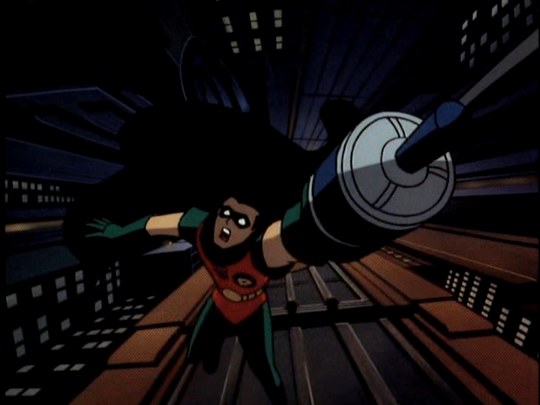
The episode opens, as many do, with Batman pursuing some criminals in the Batmobile. They flee into a warehouse and Batman gives chase, but he stumbles into a trap. We get a quick cut of Batman looking up at something descending from the ceiling onto him and then a jump-cut to Bruce Wayne waking up in a cold sweat. Alfred is there to open his curtains and get him up and also inquire about the alarmed state Bruce awoke in. He brushes it off as a bad dream and gets on with his day. When he goes to open the entrance to the Batcave he finds it’s not there. When he asks Alfred about it he’s confused and thinks Bruce is playing a joke. This just annoys Bruce and he seems about to get angry until his dad enters the room.
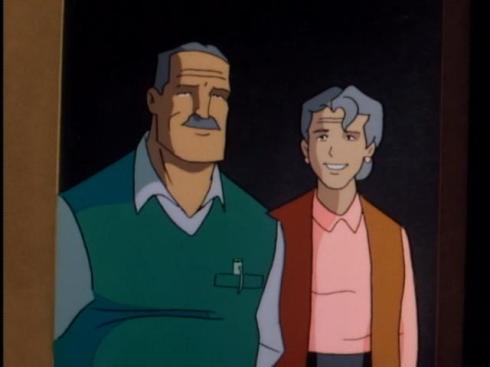
We’ve seen and heard from Thomas Wayne before, but this is the first time Martha gets to speak (well, sort of).
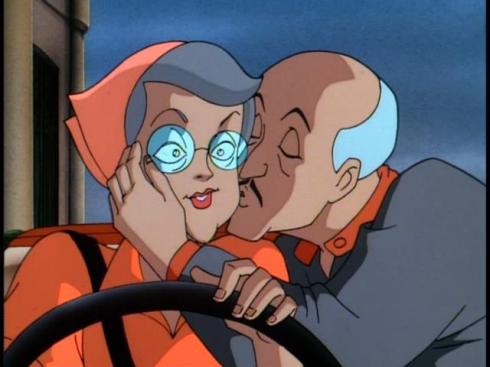
Bruce is shocked to find his parents, Thomas (Kevin Conroy) and Martha (voiced by Adrienne Barbeau, the first time the character spoke) are alive and well and enjoying retirement. He doesn’t understand how this could be, and his parents are concerned. He soon finds out that he’s also engaged to be married – to Selina Kyle of all people. Bruce seeks out Leslie Thompkins for some guidance and she’s no help in sorting out what’s going on, but she is able to steer him towards being happy and accepting of his current life. Things get really weird though when he and Selina have a run-in with Batman. Batman apparently showed up in Gotham recently and he behaves just like how we would expect Batman to.
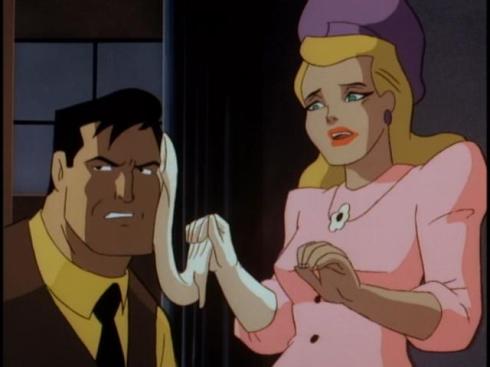
You woke up engaged to the woman of your dreams Bruce, just go with it!
Bruce is left to assume that his life as Batman was nothing more than a dream. A very detailed dream. He’s resigned to accept this as his life is pretty great. After all, he’s still fabulously wealthy, has two living parents, and is engaged to a fine looking lady (we know from “The Cat and the Claw” that Selina is very much what Bruce finds attractive) who isn’t a cat burglar. Everything is fine until he opens up a book and finds it’s full of gibberish. He soon realizes all writing is just a nonsense collection of letters. He starts to get enraged and his parents are once again concerned about his well-being. He resolves that Batman is the key to what’s going on and he storms off to confront the caped crusader.
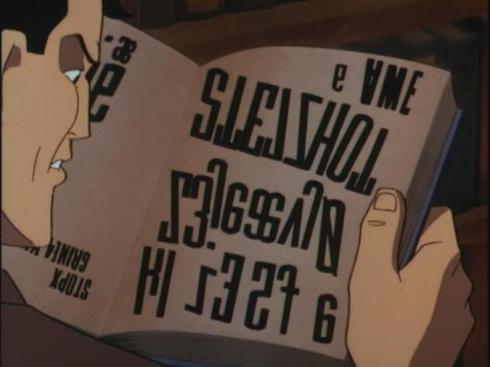
Looks like a worthwhile read.
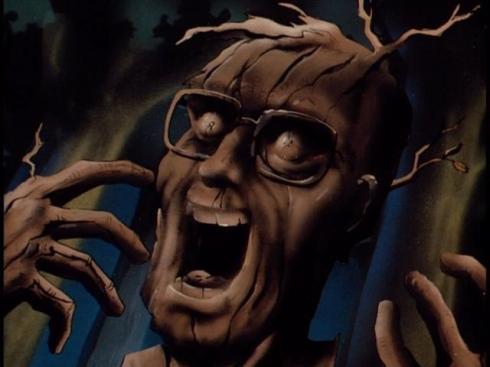
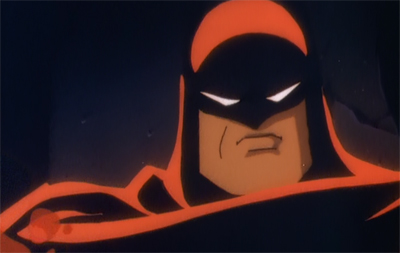
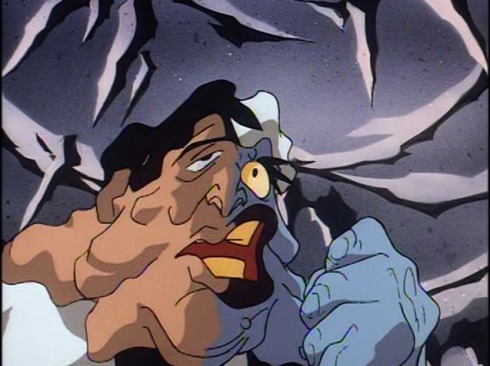
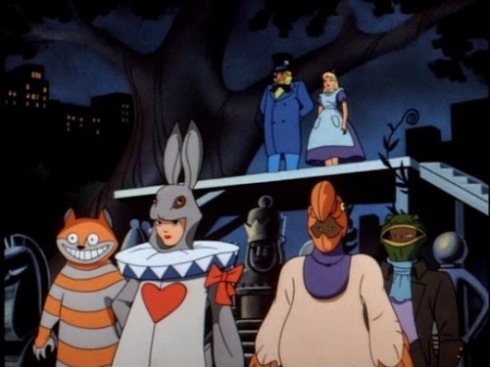
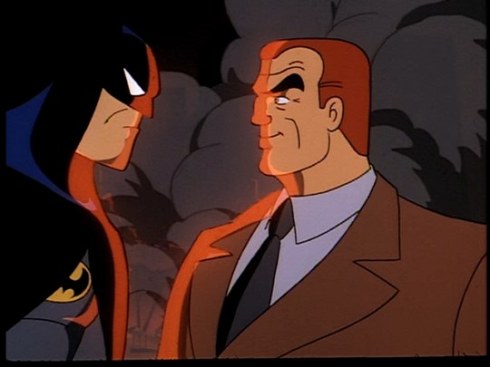
Wanting to get Batman’s attention, Bruce sets his sights on an enormous clock tower in Gotham Cemetery. To make things a bit more challenging, the Waynes called the police about their son, and when Bruce runs from the cops they decide they need to give chase. He never expressly states his plan, but by climbing to the top of the clock tower it’s implied that Bruce wants to make Batman think he’s contemplating suicide. Sure enough, Batman does show up and the two are forced to confront each other. Meanwhile, a storm rages in the background and the setting for Bruce Wayne vs Batman takes on a sullen feeling as opposed to an exciting one. Bruce then brings us all up to speed about what he’s realized. The garbled text indicated to him that he’s living in a dream world, since dreams and the ability to read are located on different hemispheres of the human brain (this is the part where everyone watching begins to wonder if they’ve ever read in a dream). Batman is indifferent to Bruce’s claims and the two tangle, but Bruce is able to wrestle the mask off of Batman to reveal the face below – The Mad Hatter!
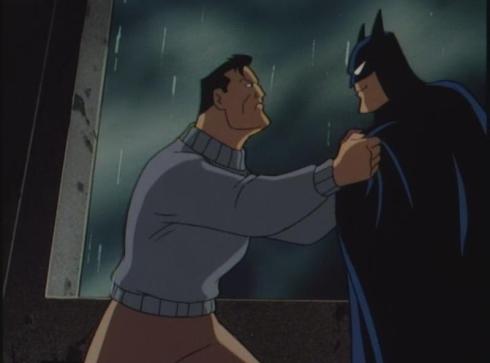
Not something you see everyday.
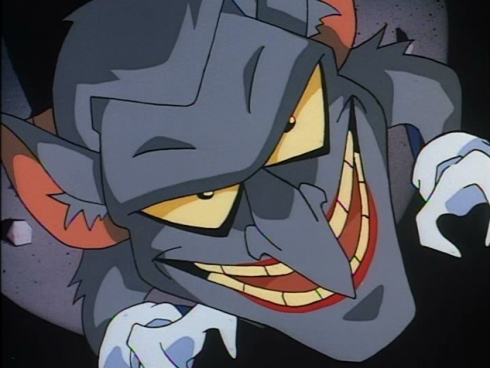
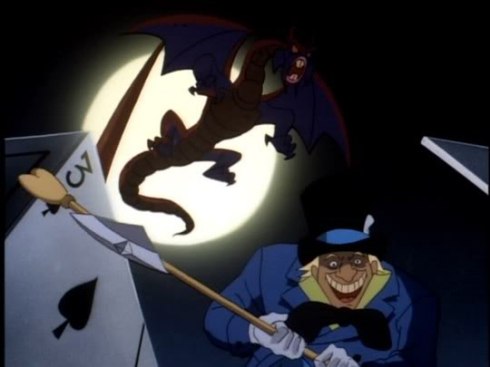
The Mad Hatter explains that he’s not really the Mad Hatter, just an aspect of him in Bruce’s mind. He’s not really there, and thus not privy to the details of what’s going on in Bruce’s head (in other words, he doesn’t know Bruce is really Batman). He’s placed Batman, in the real world, into his dream machine. The goal is to keep Batman happy and comatose so he’s free to do whatever it is he wants to do – which we really have no idea what that is since the last time we saw him he just wanted the affections of his assistant. Satisfied that The Mad Hatter has no knowledge of what’s really transpiring inside Batman’s head, Bruce jumps from the bell tower as the police storm in with horrified expressions on their faces. The suicidal act jolts Batman back to consciousness and we see him hooked up to some Dr. Frankenstein kind of machine. Mad Hatter is beside himself with frustration and is incensed that Batman would pull himself from an idyllic world just to foil his plans. He’s The Mad Hatter, so there’s little resistance he can put up once Batman is free and the cops show up to take him away. When Gordon asks Batman just what the machine does he replies with, “It’s the stuff that dreams are made of.” How poetic.
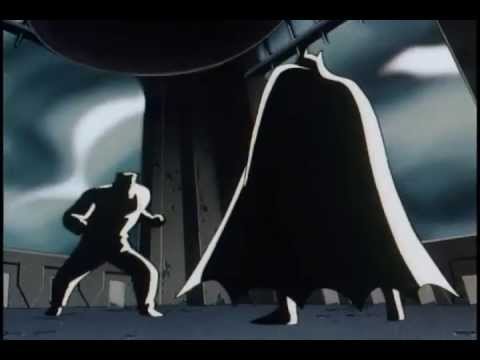
I love the lighting all through-out this sequence.
“Perchance to Dream” is largely fun because of the what-if question it poses. Like most of the episodes of this show, you can pick it apart incessantly in a bid to ruin it. Why didn’t The Mad Hatter unmask Batman once he had him restrained? Why not just kill him? He seemed to try and kill Batman in their last encounter so it doesn’t seem like he’s averse to murder. I suppose it is different to try and kill someone in the act of fighting them as opposed to killing a sleeping enemy. Basically, he had Batman beat and blew it. Also, the whole way the dream world unravels with the writing thing doesn’t really hold up in the real world. It’s the type of fact you might read about and form your own conclusions, it certainly sounds clever. If you’re actually dreaming you can certainly read things because it’s just your subconscious telling you what it is you’re seeing. I think what the writers were trying to get at is that the dream world inhabited by Bruce is partly created by his subconscious, but also partly created by the device he’s strapped into. If he were to pick up a random book that was put there by The Mad Hatter’s invention then Bruce’s subconscious wouldn’t be able to have a frame of reference to fill the book with words. It also would explain how Bruce would need to open a book or newspaper to realize this, as his subconscious could easily fill in the blank spot on a McDonald’s sign or something because it’s a familiar sight (though there is a background clue during the episode that features a jumbled sign briefly so maybe I’m putting more thought into this than the writers did).
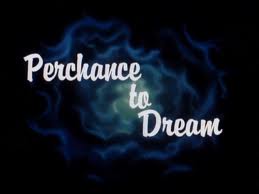
There is a quiet tragedy to this episode as well. As a viewer, part of me wants to see Bruce give into The Mad Hatter and just be happy. Batman is cool and all, but what kind of life is that really? We know Bruce was very much taken by Selina in her prior appearance and I think most viewers root for the Bruce/Selina pairing. Obviously, it’s not to be. As a vehicle for The Mad Hatter, this plot is satisfying since it draws on his mind control device, though this is another example of villains just existing outside of Arkham with no explanation of how they got there. The Mad Hatter will not be a frequently relied upon villain, which I’m okay with since he’s kind of lame, and this is easily his best appearance of the series. I did find it funny that they use The Mad Hatter’s theme over the title card, something I didn’t notice in previous viewings, which blatantly gives away the villain of the episode. On television, The Mad Hatter’s first two appearances were only separated by a week so the theme was still fresh in the minds of viewers. The mystery isn’t what makes the episode a success though, so I suppose it doesn’t matter. You could replace him with basically any villain and the episode would still be fun. The episode worked so well that I have to believe it at least partly inspired the much later episode of The New Batman Adventures “Over the Edge,” which is often considered the best of that batch of episodes. It’ll be awhile before I get to that one.
 Episode Number: 29

 Wave 2 of Boss Fight Studio’s Bucky O’Hare line is now shipping to consumers and comic shops across the US. Wave 1 was extremely well received nabbing a few Toy of the Year awards and earning the approval of yours truly right here at The Nostalgia Spot. Wave 1 was pretty hotly anticipated among Bucky O’Hare fans since it was the inaugural wave in a new line of action figures and because it contained the long-awaited First Mate Jenny action figure – a character we were denied back in the Hasbro days. Wave 2, which consists of Stealth Bucky, Astral Projection Jenny, and Dead-Eye Duck is perhaps just as much anticipated because Dead-Eye has long been a fan-favorite. The four-armed former pirate and current gunner on the Righteous Indignation, was brought to life by Scott McNeil for the cartoon with a ton of moxie and a bad ass attitude – traits always endearing to young boys. Also shipping is the special Holiday Bucky, an Easter variant of the Wave 1 figure presented as a chocolate bunny, though not as literal chocolate.
 Wave 2 still runs approximately $35 per figure, a steep price for a single 4″ figure, and thus why this review is only for Dead-Eye and the holiday variant. I’m not a professional reviewer and my blog is hardly large enough to attract enough attention to the point where I can receive review copies of toys, so I had to take a pass on the Wave 1 variants and just stick to Dead-Eye. When it came to the Holiday Bucky, I was just too charmed by the packaging and concept to resist. For the time being, I’ve opted to keep Easter Bucky in his packaging, even though it’s fairly easy to remove the figures and reassemble the packaging thanks to an ingenious design that just clips the blister to the card stock. As a result, I’m not going to go into much detail for him. He’s the same figure as before, just with a different paint application. I consider the Easter themed packaging to be part of the appeal and I just think he displays better in box.


 Dead-Eye Duck is a welcomed addition to the Bucky O’Hare line and the most appropriate choice for a third figure due to his fun design and popularity with the fanbase. He’s just as good, if not better, than the figures that preceded him. His anatomy makes his facial expressions less imaginative, but he makes up for it with easy to swap face pieces without the troubling stubbornness exhibited by the Wave 1 Bucky. And Holiday Bucky is a silly and fun variant for the line. Really, a chocolate Easter Bucky design? I would have never thought of it. Both Dead-Eye and Holiday Bucky, who is limited to 400 pieces, are available at
  Episode Number: 28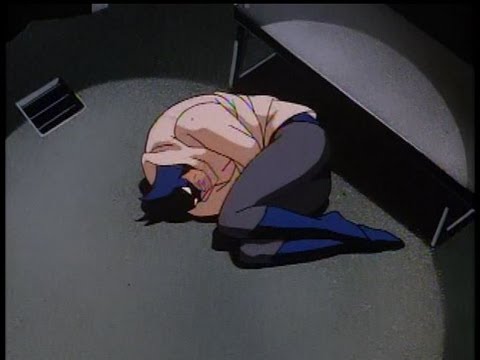
 Episode Number: 27
 I was so happy with my Super Saiyan Vegeta from SH Figuarts that the very next day I purchased a second figure: Kid Goku. Now I’ve mentioned more than once here that I prefer Dragon Ball to Dragon Ball Z. It’s just a tighter and more fun series with better action sequences. The characters become so overpowered in Dragon Ball Z that the fight scenes became a series of dashing lines as characters move faster than sight and lots and lots of posturing. Dragon Ball has some of that too, but not nearly as much. And shining like a beacon through out it is young Goku. His ignorance of virtually all of society is what drives much of the show’s humor (as well as the perversions of one Master Roshi) and it’s a personality trait that suits the youthful version of our hero better than the adult version. This isn’t to say the adult Goku of DBZ isn’t charming, he’s just less believable.


 Kid Goku is a damn fine piece of plastic. I think I like him more than the Vegeta figure, but that’s mostly due to my fondness for the IP. He looks great, moves great, and has enough accessories to keep you entertained if you’re the sort that likes to re-pose your display constantly. If you’ve been aching for a good Dragon Ball accurate Goku, it’s hard to imagine a better one than this will come along anytime soon (unless there’s a blue gi repaint, then maybe).
 Episode Number: 26


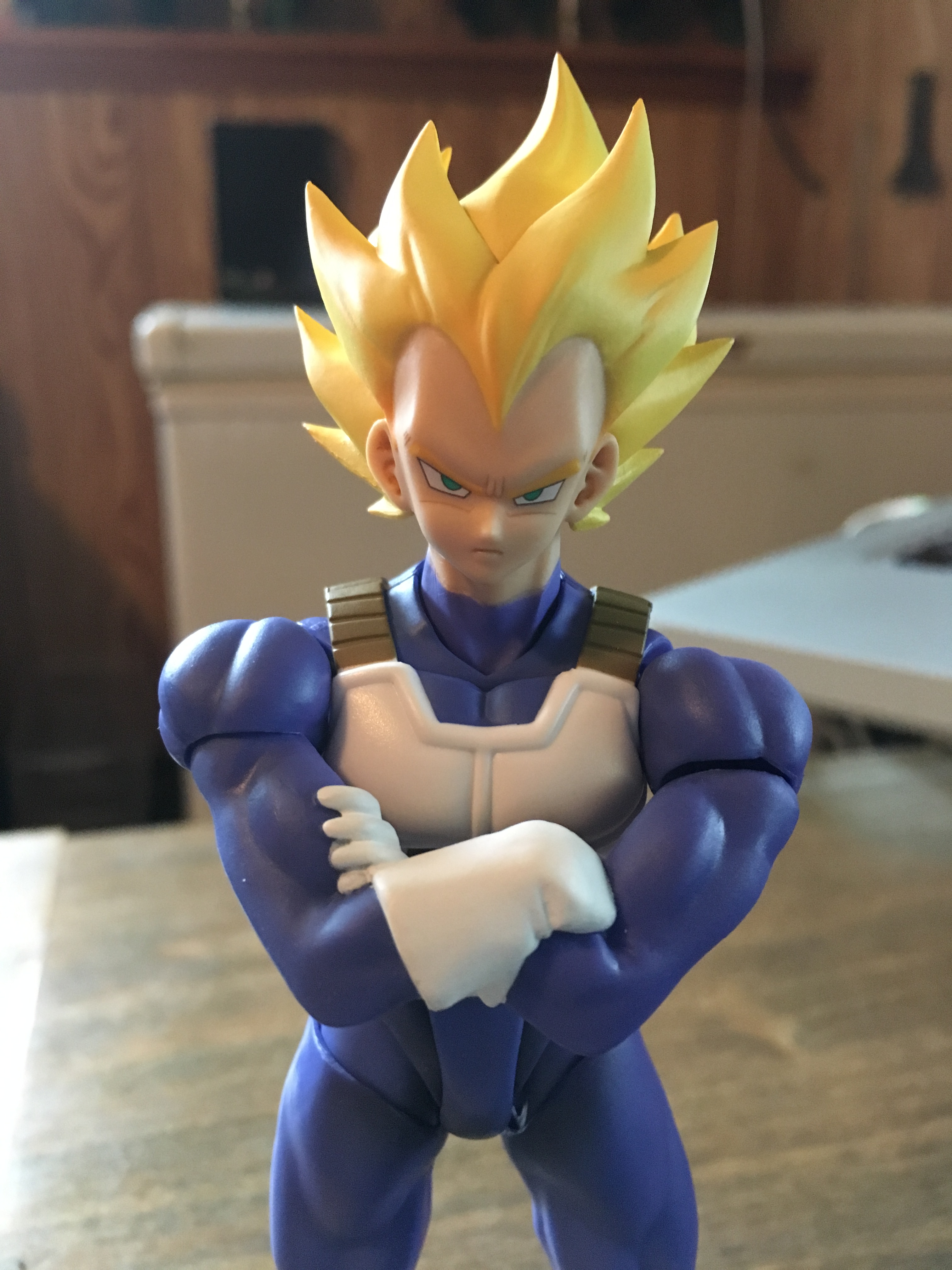
 He’s the Prince of all Saiyans. The last survivor to have laid eyes on Planet Vegeta, home world of the mighty warriors and birthplace of the legendary Goku. And he’s also a pretty fine toy. Vegeta, arguably the most popular character to emerge from Dragon Ball Z, has seen his likeness cast in numerous forms of plastic over the years. The Dragon Ball franchise is probably the most recognizable anime franchise around the globe and probably the most beloved. Despite concluding over 20 years ago, Dragon Ball Z remains insanely popular. It has experienced a renaissance over the past few years due in large part to the launch of Dragon Ball Super, the Akira Toriyama blessed true sequel to Dragon Ball Z which basically erases the lackluster Dragon Ball GT from canon. It’s thanks to that series, as well as Giant Bomb’s new Dragon Ball Kai podcast All Systems Goku, that I’m feeling awash in Dragon Ball related nostalgia. And when I get nostalgic, I often turn to toys.




 Episode Number: 25


 Episode Number: 24