Author Archives: Joe

The Game Boy Micro

img_1501I guess this is a great time for me to dust off some of my less common pieces of video game paraphernalia. Yesterday I talked about Popful Mail which I played on a Sega CDX, and today it’s the Game Boy Micro. My timing is also pretty good as the original Game Boy just turned 31 on April 21, 2020 which is still hard to believe. I consider myself a collector of various things, but one thing I’m not really a collector of is video games. I’m certainly a compiler as after years of regrettable trade-ins at GameStop when I was a poor college student I’ve basically vowed to never part with a game again unless I know I’ll never come to regret it. As a result, I have a lot of games hanging around my house with the vast majority coming from the 2000s. I have some older, classics, but not a ton. And some games I have could be considered rare or hard to find, but I have them because I wanted them at the time. I’ve never really bought a video game for the purpose of collecting. The closest I suppose I came to that was buying the collector’s edition of Arkham Asylum which came in a gigantic bat-shaped box. That thing is so big that I don’t even know what to do with it. It just sits in a closet.

I purchased a Game Boy Micro over ten years ago and at the time I bought it simply because I wanted to play some Game Boy Advance software on-the-go. I had traded in my original Game Boy Advance for a Game Boy Advance SP, which I in turn traded in for a Nintendo DS, that was then traded in for a Nintend DSi. That last trade-in was important because I lost the ability to play GBA software. Years later, I wanted to come back and rediscover the GBA. That handheld mostly existed for me during my college years and I really didn’t devote much of my time to it. I mostly played home consoles instead or busied myself with other distractions. As a working man though I had ample time to play portables during my commute to and from work so the time was right.

The Game Boy Micro is Nintendo’s third take on the Game Boy Advance. The original version had a horizontal layout similar to Sega’s Game Gear, but it ran on double A batteries and lacked any sort of backlight. It was still a great little system, just a flawed one. The SP addressed both issues while also reverting back to the traditional, more vertical, layout of the Game Boy but with the addition of a hinge in the center so the screen could fold down onto the unit. It was great to have a front-light and a rechargeable battery, though the choice to return to the old format was odd as the system was quite cramped. The shoulder buttons were tiny, little, nubs and I could never play my SP for much longer than 45 minutes.

gbmicro_hand

Nintendo mandates that all reviews of the Micro include a shot of it sitting in the reviewer’s hand.

When Nintendo announced the Nintendo DS in 2005, it was insistent that it was not the end of the Game Boy and as proof it offered up the Game Boy Micro. The Micro, as the name implies, was the smallest Game Boy yet. It’s roughly 2″ x 4″ with a thickness of less than an inch. It featured a backlit screen and rechargeable battery. The horizontal layout also had the added perk of making the system resemble a classic Nintendo Entertainment System/Famicom controller only with a screen in the center. The LCD screen is even tinier at roughly 1.69″ x 1.89″ making this perhaps the first Game Boy that truly could fit comfortably in your pocket. It’s so small that one has to wonder just how much smaller it could have been had it not needed to accommodate the comparably bulky GBA cartridges and instead had something similar to a DS or Switch card.

img_1496

Unfortunately, I do not have a Famicom controller for comparison so the classic NES controller will have to do.

When the Micro was first announced I though it looked kind of neat, but I wasn’t feeling compelled to ditch my SP for it. Plus if I was going to upgrade I would have just gone with a DS which was backwards compatible with the GBA. And since the Micro no longer supported legacy Game Boy software, it was placed in an odd spot where it basically only targeted those who had yet to get a GBA or Nintendo enthusiasts that would buy everything. The only other defining feature it had was the ability to swap out the faceplate for other ones. Perhaps Nintendo conceived of a vast third party network of custom faceplates in addition to its own, but from the start the Micro was never positioned very well.

I basically decided to get a Micro over another model of the GBA for the novelty of it. I did like the idea of a truly portable gaming device, but I also thought the system was just plain cute. And when I settled on one to buy, I even spent a little extra to get the special Famicom edition (released in December 2005) which was colored to mimic a Famicom controller. It came in a box emblazoned with classic Super Mario pixel art and the only drawback to going this route (aside from the added cost, which at the time was actually somewhat minimal) was it didn’t come with a tool to remove the faceplate as Nintendo didn’t think anyone would want to remove the Famicom faceplate. In fact, the faceplate on this model is supposedly non-removable, but it wouldn’t surprise me if it’s not that hard to get off for someone who is determined to do so.

img_1499

The Micro in front of a 3DS which is in front of a Sony PSP.

When I received my Micro I did play it quite a bit. I picked up Metroid Fusion, a game I had overlooked when first released, and also grabbed the Super Mario Bros. 3 port to go along with the other GBA software I still had. Playing these games on the Micro, I was taken by how quickly I got used to the small screen. It’s a bit shocking when first powered up to see just how small it is, but once absorbed in gameplay it basically goes away. The screen is said to be much better than the previous GBA screens, though it’s still not as vibrant as modern handhelds. Helping it is the mostly sprite-based art of GBA games with the small screen size reducing noticeable pixilation. The light is strong and can be adjusted manually as well, and I found the battery would last around five hours which was basically enough to get me through a week of commuting.

img_1498

Here’s the Micro beside big brother, the 3DS.

Obviously, a system this small does have some drawbacks. The Micro is so small that it’s arguably too small. I mentioned earlier I found the SP to be a bit tight and this unit isn’t much better. I find the layout minimizes the cramping issue slightly, but it gets rough when playing games that rely on the shoulder buttons. Metroid Fusion became particularly challenging after a half hour as the shoulder buttons are used in that game to angle Samus’ blaster. It’s not as easy to play as it probably would be if it were on the Super Nintendo or being played via the Gamecube’s GBA Player, but it was still an enjoyable experience. I beat the game, and would go on to play Metroid:  Zero Mission as well so it’s not like the Micro prevented me from enjoying Metroid. The only other game I ever had issue with was Final Fantasy VI, specifically performing some of Sabin’s moves as the small d-pad and hand fatigue might dissuade you from unleashing the dreaded Bum Rush attack! Games like A Link to the Past or Super Mario Bros. are comparatively simple, though some hand fatigue will still set in after lengthy sessions. Super Mario Bros. even alleviates some hand-cramping by allowing the R button to function as a second B button which is nice for running, though it takes getting used to if you’ve been playing Mario since the 80s and are accustomed holding B all of the time.

img_1502

It’s tiny, but it plays just fine.

The system itself has a rather nice feel to it. The stereo speakers aren’t going to wow you, as they didn’t on any other version of the GBA, but the overall weight feels good. The system is quite glossy making it actually far more attractive looking than a plastic Famicom controller. The format does mean there’s no way to protect the screen, but the system did come with a simple cloth carrying case which has always done the job for me. I wouldn’t recommend tossing it into a kid’s backpack or something, but slip that thing on and drop it in a pocket and you should manage just fine. It has a standard headphone jack, and since it’s quite old at this point it obviously lacks any sort of wireless hookup, but considering the Switch shunned Blue Tooth it probably wouldn’t feature that even if it were re-released today.

img_1500

I bought this “new,” but as you can see the box had a rough time getting to me.

If I were to sum up the Game Boy Micro in one word it would be “cute.” It’s meant to be a physically appealing gaming device even more so than a functional one. It doesn’t punt on functionality though and it’s a totally viable way to experience the Game Boy Advance library.  When I bought mine roughly a decade ago it was comparable in price to the Game Boy Advance SP with maybe 20 dollars or so separating the two. Since then it’s become more expensive and standard versions of the unit in clearly used condition now command more money than I paid for my limited edition version. As a result, I wouldn’t really recommend anyone buy a Micro if they’re simply looking to experience the GBA library of games. The SP is much more reasonable, or even an older DS. If you don’t mind spending the money though and you think the Micro is charming in pictures then you’ll probably be happy with your purchase. It’s a fun little device that will probably start a conversation if you pull it out in public and as the last official Game Boy it certainly holds a special place in the hearts of many Nintendo fans.


Popful Mail (Sega CD)

popfulmailThe Sega CD was quite possibly Sega’s first real misstep when it came to hardware and add-on peripherals for its products. It’s hard to say if it truly was though, as I don’t know if the Sega CD returned a profit for Sega. The mere fact that the company released three versions of the add-on suggests it at least viewed it as important to the company, but even if it did financially benefit Sega it’s hard to imagine it really helped the company’s image. And that’s because the Sega CD was pretty expensive and also pretty terrible. Sure, there are fans out there for the Sega CD and its library of games, just as there are for the Virtual Boy, but for the most part the software for the Sega CD was mediocre or downright terrible. Fans likely remembered that when Sega tried to introduce another add-on to extend the life of the Genesis/Mega Drive in the form of the 32X, which basically all acknowledge as a true flop. Sega’s hardware sales following this era of game consoles was poor enough to see the company exit the hardware space in 2000 and pivot to a software only company.

When I made a post about the Sega CD in 2011, my intention at the time was to do more. That inaugural post concerned a recent purchase of mine:  the Sega CDX. The CDX was the third iteration of the device following the first two versions released by Sega for the Model 1 and Model 2 Genesis. The CDX was the company’s first, and only, attempt at releasing what is essentially a stand-alone Sega CD as it also functioned as a Genesis. It was expensive, like all things seemingly related to the Sega CD, and retailed for an eye-opening $399 at release. Which is actually a bargain compared with some of the other non-Sega versions of the product. Pioneer actually released the LaserActive which could support Sega CD games, among other things, but the total would run a consumer $1,600! Premium game consoles were obnoxiously priced in the 90s and it’s no wonder they basically all failed.

img_1467

If you’re going to play a Sega CD game might as well do it on a CRT television.

I only purchased the CDX because I had forgotten it even existed until stumbling upon some eBay listings at the time and because I was a bachelor with disposable income. I never had a Sega CD growing up, but loved my Genesis, and I had always wanted one. The CDX was quirky and cute and it was much smaller than most consoles and was actually marketed as a portable CD player as well (a task it can do, but not very well) because of its diminutive size. It was pretty cool, and I ended up finding one in great shape that was only missing the original box. I cared little about that though and set myself to playing Sonic CD pretty much right away. The problems came when Sonic CD was finished.

img_1470

Popful Mail stars a bounty hunter by the same name who is quite terrible at being a bounty hunter.

I wanted to play more Sega CD games, and had a few others as the CDX came bundled with additional software, but there really wasn’t a lot out there worth playing. Basically all of the truly great Sega CD titles saw release on other consoles. And I’m mostly referring to the Lunar series when I say great. After Lunar, there was a smattering of worthwhile software, the problem though was that most of that software consisted of Genesis ports with enhanced audio and slightly upgraded visuals. After that though is the unique, Sega CD exclusive, software of which most is poor. You have likely heard about Nightrap which became infamous because some felt it was a weird fetish game about peeping on young girls and watching them get murdered. The actual title is far less interesting and it’s terrible. So many Sega CD titles went this route though where it was essentially video with occasional button prompts. And if you have watched video lifted from a CD before then you know it’s rather ugly.

img_1471

The game is reasonably nice to look at and it runs smooth with few interruptions for loading.

There was one game though that I wanted to play and I actually secured a copy relatively close to the time I purchased my CDX and that game is Popful Mail: Magical Fantasy Adventure. I don’t know why it’s taken me this long to get to it, but Popful Mail is a game that caught my eye because it’s a hybrid game. The game is a Platformer/RPG and I arrange the classifications in that order for a reason. It’s definitely more in-line with a traditional platformer, but it does indeed toss in some RPG mechanics. In the game, you play as Mail, a spritely young anime babe with a small outfit and a big personality. You run through the various levels which are all interconnected smiting bad guys and collecting gold. Along the way you’ll be able to spend some of that gold upgrading Mail’s equipment while also meeting non-player characters, some of which will ask for Mail’s help in tracking down an item or defeating an enemy. It’s a bit similar to Link on the NES, though without a robust leveling system. It’s a Falcom game published by Working Designs, so the production values are there and the gameplay is solid making it a relatively safe bet for purchase.

img_1473

The golem will likely be the first boss many encounter some difficulty with. Trial and error is the name of the game here.

The game opens with our protagonist, Popful Mail, out attempting to secure a bounty. Mail is an elven bounty hunter who, according to the game’s manual, sucks at her job. When the bounty goes bust, she turns her attention to a new target:  Muttonhead. This absurdly named character is a wizard with a 2 million gold bounty on his head so naturally Mail is pretty interested. The intro is done in anime and for a Sega CD title it looks pretty nice and the voice acting is lively. When the game drops you into play you’ll find yourself in control of Mail. She moves rather fast and has a heavy feel to her when she jumps. It takes some time to get adjusted, but it lends itself well to a speedy style of play. Or it would, if enemies didn’t sometimes take repeated jabs from Mail’s sword to fall. Each enemy encountered will have a health bar displayed in the game’s HUD at the bottom of the screen. Mail’s info is there as well and while she has 100 health she’s not particularly durable. If you just try to barrel ahead you may find yourself dead in short order.

img_1480

As you make your way through the game more characters join in Mail’s quest to take down Muttonhead.

In order to navigate this dangerous world, Mail will need to make use of all of her skills, of which there aren’t many. Her sword is her main method of attack and she can attack while standing, crouching, or jumping. When crouching, Mail can pull up her shield which will completely protect her from projectile attacks. It’s important to get used to this as Mail will often be tasked with dispatching one enemy while an enemy behind it shoots at her. One of the barriers for newcomers is learning the quirks of the game. Popful Mail basically requires you to abuse the fact that when enemies are blinking after a hit the player won’t take damage from them. It’s a key to beating the first really tricky boss, the golem, as he slides across the screen and can’t be cleared with a leap. Mail instead needs to just whack him and let him pass by her unscathed. If your timing is off though, the duration of this blinking state won’t be long enough and Mail will take a beating. The biggest hindrance to Mail’s existence is her natural desire to go fast. The game positions Mail approximately two-thirds of the way across the screen so if the player is zooming along there isn’t much chance to react to a new enemy. When enemies are defeated most will drop a small sum of gold while healing items (like various fruits and herbs) are hard to come by. The player is at least free to save their game whenever they wish so the penalty for death isn’t too terrible if the player saves often. When loading a game, the player will typically spawn wherever they entered the screen they were on at death.

img_1472

While out and about, the player will also encounter other characters in need of some help.

The game takes place mostly in levels that are long and connected. There is also a brief overheard map to traverse at times that more resembles Super Mario World than Link. Mail will be tasked with exploring the many stages both horizontally and vertically. There are different paths to take some of which lead to treasure and some of which advance the plot. Mail will often encounter NPC’s that need help before the plot can advance, like freeing someone from captivity who will then open a way to continue onward. Sometimes Mail will find little towns where she can spend her gold on upgrades. Mail can upgrade her weapons and armor which in turn improve her underlying stats, though she can’t level-up. These upgrades seem to do little though. If you’re struggling with an area and think the solution is to backtrack and buy better equipment then you’ll probably be disappointed. The solution is often to simply “get good” and take advantage of those saves.

img_1482

Gaw is the last to join the fun, but he’s certainly the most unique.

During Mail’s journey, she will eventually find some allies in her quest to stop Muttonhead. Tatto is the first ally Mail will add. He’s a wizard with a score to settle with our antagonist and he becomes available roughly an hour or so into the game. Eventually, Gaw will join the group as well. He’s a monstrous little bat creature that can’t fly, but he can jump higher than anyone else. The characters are largely distinguished in how they move. Mail is the fastest, but her jump is the worst. Gaw is the slowest, but he can jump the highest with Tatto settling somewhere in between. The other characters can also attack from a distance. Mail can as well if you supply her with daggers, but they’re costly. You’ll be able to augment Tatto’s abilities by buying new staves while Gaw can also improve his attacks by buying…a new tail? It’s odd, but it works well enough. Changing characters is done by accessing the menu and switching there. It would have been nice if selecting a character could have just been mapped to a button to cycle through, but it’s possible the game needs a little time to load the new sprite since this is a CD system. Each character also has his or her own health bar so unlocking a new character effectively doubles the available hit points. If one character falls though it’s game over, so you have to remember to switch them or heal if near death.

img_1483

If you’ve played a Working Designs game before then you should be familiar with the company’s brand of humor.

The game is not super long. The goal to unlock the best post credits content (basically just voice outtakes) is five hours. Most players will probably need six or seven on their first playthrough not accounting for deaths and reloads. The game is challenging, and it’s also arguably one of those games that starts harder before getting progressively easier as new characters and abilities are unlocked. It’s a mostly fun play, though it’s not going to “wow” most who play it. There’s not a ton of nuance in how to attack and Working Designs’ decision to make the enemies more resilient when localizing this wasn’t a great choice as things can get a bit tedious. Some enemy placements feel a bit cheap too as this is a game less about finesse and more fixated on trial and error. There’s a reason Falcom has continued with the Ys franchise and not the Popful Mail franchise all these years.

img_1469

Almost all of the dialogue in this game is voiced and there’s plenty of anime to help push the plot forward.

Being a CD game and one localized by Working Designs, it shouldn’t surprise many to know that what stands out most are the production values. The game is nice to look at, though visually it’s not really any more impressive than most Genesis titles. Character designs are kept simple and some of the boss characters are considerably larger than the player and are fun to take in. The voice acting is about as good as one could hope for in the early 90s as anime and video games didn’t exactly attract the best talent. Melissa Gulden, who voiced Mail, stands out as a bright spot for the game while some other performances can be a bit wooden. According to the manual, roughly 3 hours of voice work had to be compressed to fit onto the CD and it’s certainly noticeable when you hear it. That’s the reality of game development though back before DVD and high capacity media. The anime cut scenes are also compressed significantly, but it still looks all right.

img_1466

My own personal copy. I was fortunate to find one in terrific shape that even has this supplemental card and the foam insert.

I would say if you happen to be the owner of a Sega CD then Popful Mail is a worthwhile addition to your collection for the simple fact that it’s actually worth playing. The game was also released on the Super Famicom where it stands out less as that console is practically bursting with quality content. By far though, the biggest hindrance to playing Popful Mail in 2020 is cost. When I purchased this game in 2011 it wasn’t exactly cheap, but it wasn’t where it’s at today either. The Sega CD version for just the game is now routinely listed for hundreds of dollar. There are some sellers trying to get more than $500 for complete versions. Perhaps that makes me foolish for still clinging to my complete version. My copy is missing the mail-in survey card on the back of the manual, but I do have the “Attention!” card the game came with which tells owners how to properly format their console’s system memory for saving. Easily, the most economical way to play the game is to go after the alternate versions. They’re still not exactly cheap, but the Super Famicom version is far less expensive as is the PC Engine version. Even the Mega CD version is a lot cheaper, though it lacks that Working Designs polish (it’s also supposedly easier).

pervy_mail

Considering the game stars a buxom, anime, woman with no pants it probably comes as no surprise to learn there’s plenty of pervy art out there.

If Popful Mail were available to anyone who had a Sega CD and wanted the game then I’d say go for it. Since that isn’t the case though I can’t exactly recommend it. The price point has put this game into the territory of “For serious collectors only.” The Sega CD library is actually trending towards that. When I first purchased my CDX, the Sega CD wasn’t as sought after as it is today. It seems as people get older and get more interested in collecting retro games, everything has gradually gone up. It started with Nintendo games before spanning to the 16-bit games. As the actual good software disappears, collectors turn to other untapped libraries. And the Sega CD is desirable to collectors partly because the library isn’t massive compared with the Genesis or NES. It’s also more harrowing though as Sega CD hardware isn’t as reliable as cartridge-based hardware as those lasers are just ticking time bombs. If the Sega CD version of Popful Mail were to become available overnight on an E-shop it would be worth a look just to see what all the fuss is about. It’s a genre that’s been done much better, but the game is not without its charm.


Rocko’s Modern Life – Season One

rocko_season_oneThe late 80s and early 90s were such a fun time for cartoons. Television was rapidly expanding and there was huge demand for content for both children and adults. People who had grown up on Looney Tunes and Tom and Jerry were also making the cartoons and wanted to do better than what had become the standard for television animation. Disney got the ball rolling by injecting more money into the animation and overall production for its shows. In the process, the company proved that it wasn’t as big a risk as some thought to go straight for a syndicated order of episodes because there was always room for more cartoons on television. Other artists also started getting opportunities to create better and more diverse cartoons. These were actually funny and largely felt like a response to the very dry and formulaic works put out by Hanna Barbera and Dic.

Nickelodeon was one of the first cable networks to really go after children. It was somewhat of a contrast to its sister channel, MTV, which was going for a teen and young adult audience with the obvious focus being music. MTV grew more experimental as the years went on though and it even started airing animation. Up until that point, Nickelodeon was largely a network consisting of low budget live-action programs like You Can’t Do That on Television as well as re-runs of old general audience programming (Dennis the Menace, Flipper, etc.) with classic sitcoms at night. The only cartoons really being shown were Looney Tunes and some children’s animation the network licensed such as The Little Koala and David the Gnome. Parent company Viacom was seeing the success the big networks were having with exclusive children’s content and also with the stuff being made for MTV and decided it was time for Nickelodeon to get into the cartoon business.

games_animation

Games Animation was created so that Nickelodeon could keep production of its Nicktoons in-house.

The Nicktoons were born of this creative desire. The network sought upstart creators and basically gave them free reign to create a show that Nickelodeon would air as part of a block on Sunday morning. Saturday morning was the domain of the broadcast networks, but Sunday was essentially ripe for the taking especially as fewer and fewer families were spending the morning at church. The block launched in August of 1991 with three brand new cartoons:  Doug, Rugrats, and The Ren and Stimpy Show. The construction of the block is interesting in that it began with a very grounded show about a middle-school aged kid in Doug, then went to a more imaginative show where babies go on adventures largely created in their own head, to the surreal and more classically constructed comedy show with Ren and Stimpy. The block was a huge success virtually guaranteeing future Nicktoons. It’s debatable which was more impactful, Rugrats or The Ren and Stimpy Show, but the latter definitely seemed to be the most influential on subsequent Nicktoons. Problems with that show also caused Nickelodeon to go ahead and found its own animation studio:  Games Animation.

rock_cast

The main cast of the show (left to right): Rocko, Spunky, Heffer, Bev Bighead, Filburt, Ed Bighead.

The first show launched by Games Animation was the Joe Murray created Rocko’s Modern Life. Premiering in the late summer of 1993, Rocko’s Modern Life was the fourth Nicktoon and first cartoon to be added to the lineup since its premiere two years earlier. It was a pretty big deal to have a new Nicktoon, and it also completed the Sunday block making it an even two hours. Joe Murray had wanted to make an independent film called My Dog Zero and only when Nick passed on that did he turn to Rocko. Rocko was originally conceived as a comic, but Murray wasn’t able to find anyone willing to publish it when peddling it around in the late 80s. He pitched the concept to Nick when it passed on My Dog Zero expecting them to pass, but hoping they’d at least give him some money for a pilot that he could put towards his passion project, My Dog Zero. Nickelodeon ended up not only commissioning a pilot, but also a 13 season order. After largely animating the pilot himself (“Trash-O-Madness”), Murray found himself in the unfamiliar role of a TV creator and director with a staff of over 200 people split between the US and Asia.

rocko_brain

Plenty of classic animation gags are relied upon such as Rocko’s brain constantly jumping out of his head when he screams.

Rocko’s Modern Life would run for 4 seasons totaling 52 episodes (100 segments). During its run it helped further the careers of some pretty important people. It basically launched the career of voice actor Carlos Alazraqui (Rocko, Spunky) who went on to star in other Nicktoons as well as many Cartoon Network originals. Charlie Adler was already a name familiar to cartoon fans at the time, but his portrayal of the husband and wife duo Ed and Bev Bighead really showcased his talents as he often would record the duo’s interactions with each other in one take. It’s hard to imagine him being entrusted to perform the roles of Cow and Chicken for the show Cow and Chicken without the Bigheads. Tom Kenny was also cast as Heffer Wolfe and he is likely best known now as the voice of SpongeBob SquarePants. And it isn’t just Kenny who went on to star there, the first director hired by Murray for the show was the late Stephen Hillenburg who went on to create the aforementioned SpongeBob SquarePants.

rocko_sucker

Many episodes contain Rocko tackling a common task only with disastrous results.

The first season of Rocko’s Modern Life consists of 26 segments spread across 13 episodes. In this current climate of increased television time, I decided to take a trip down memory lane with Rocko and his buddies. A local retailer, Bull Moose, specializes in media such as music, games, and movies and I sometimes take a stroll through its retail location in nearby Salem, New Hampshire. It’s a great store that fills a niche that has been all but abandoned by most retailers. The current COVID-19 pandemic has shuttered all such spaces, but Bull Moose continues to operate as an online space. More importantly, the company continues to pay all of its employees which is an incredibly noble gesture and one that should be emulated by other companies. I wanted to show my appreciation for that by spending some money at the website, which is how I ended up with the complete Rocko’s Modern Life collection. In truth, this was a long time coming as I wanted to reconnect with the show. I see it sometimes on one of Nickelodeon’s channels, but the network seems to re-air a lot of the same episodes over and over. I also was originally holding off on buying this series as I hoped an uncensored version would arrive some day, but I have since given up on that.

Which is a good thing, because my re-watch of the first season could not have gone much better. Rocko’s Modern Life is a show about a wallaby named Rocko who has recently set out on his own in a 90s world. He’s an immigrant from Australia living in the US in the fictional town of O-Town, basically an every town USA concept. The show does not expressly state how long he’s been in the US, but long enough to have formed close bonds with friends Heffer and Filburt (Mr. Lawrence). Rocko lives alone in a small house with his happy, but dim-witted, dog Spunky. He works as a clerk at a comic book shop and he’s basically just struggling to get by. Many episodes focus on the mundane, like taking out the garbage or doing the laundry, but things go wrong with Rocko often remarking “[Blank] Day is a very dangerous day.” Episodes of the show are mostly stand-alone, but there is some semblance of continuity from one episode to another. We see Rocko get fired from one job and hired at a new one, characters reference past experiences, and eventually we’ll even see Filburt enter into a relationship with another character.

love_spanked

Each episode is introduced with a hand-painted title card.

As a children’s show, Rocko’s Modern Life packs enough laughs to satisfy most kids, especially early 90s kids who had spent the past two years with Ren and Stimpy. It’s a disservice to call Rocko’s Modern Life a Ren and Stimpy clone, but both do love to indulge in gross humor. There’s lots of boogers, drool, farts, and vomit gags in this cartoon. Rocko and his friends are also prone to screaming with exaggerated results such as eyes popping out and brains bursting out of a skull. It’s a visual treat for those who enjoy physical comedy in their cartoons, especially cartoons that really take advantage of what the medium can do. It also allows the show to go to wild locations with Heffer spending an episode in “Heck” while Rocko gets to visit many different locations such as the beach, the movies, a plane, and so on. The show also possesses some surreal qualities such as the episode “Flu-In-U-Enza” where Rocko as a fever dream in which his vomit comes to life to coach him through his illness. Most of the world is also slanted with lines going to great lengths to not meet up. It’s a very stylized show, with good animation and colors.

bev_seduction

Bev Bighead is one of the break-out stars in Season One. Her attempts to seduce Rocko in “Leap Frogs” is a real highlight of the first season.

Where Rocko really separated itself from its peers though is in its depiction of everyday life. Rocko being short on money and newly set free from adolescence makes the show extremely relatable for anyone in a similar situation or who has gone through it. Stretching a paycheck, managing responsibilities, taking care of yourself – these are things many of us only really become attuned to when we’re out on our own. Most can probably recall a gag or two from this show that went over their head at the time, only to have it make sense later on. Some of the plots are also very adult in nature with perhaps the best example being “Leap Frogs” in which Bev Bighead feels unwanted by her husband. It’s almost like a Simpsons plot or maybe even a sitcom as Bev tries to then make herself attractive to Rocko in hopes of making her husband jealous. It’s a really fun and interesting episode that was eventually deemed too adult and was pulled from Nickelodeon’s regular rotation.

Rocko’s Modern Life is profoundly funny in its writing, acting, and direction, but it also has some value to impart on its audience beyond that. It’s never preachy, and it also never feels like an arbitrary quota for educational content was in play, but nevertheless some episodes are beneficial for its younger audience in ways beyond mere entertainment. “Who’s For Dinner?” deals with adoption and the emotions one goes through when they first discover they’re an adopted child. Rocko is also a role model character for just how loyal and unfailingly kind he can be. He is at times meek to a fault, but learns to stand up for himself when the world really tries to screw him over. He is patient towards buddy Heffer, who in turn is a harmful glutton mostly oblivious to how harmful his actions are for Rocko. He does have his own reckoning in “To Heck and Back,” though his behavior doesn’t really change much following the episode.

heffer_milk_machine

Sadly, we’ve been deprived of Heffer’s romantic tryst with a milking machine. The full clip can be easily found on the Internet, but it would have been great to have the original toon restored.

As mention previously, there is some censorship when it comes to Rocko’s Modern Life. Often, the show got away with a lot and the episodes made it to air without controversy, only to be edited later. That’s true with the episode “The Good, The Bad, and The Wallaby” where a segment involving Heffer, a male, getting hooked up to a milking machine has been removed. My understanding is the segment wasn’t restored largely because it can’t be cheaply. When these shows were edited for air, no one had the foresight to think money could be made down the road so they just edited the masters and basically lost the footage forever. The episode was released on VHS unedited so they could have transferred it off of that if they were willing, but that didn’t happen. Future edits would be made to the show, such as rebranding the restaurant The Chokey Chicken as The Chewy Chicken, but Nickelodeon didn’t have anyone go back and remove the offending name from prior seasons.

The DVD release of Rocko’s Modern Life – Season One is bare bones. It was originally released by Shout! Factory on two discs with no bonus features. It’s also arranged in airdate order, which is not the preferred order to watch the episodes. The compilation release put out in 2018 containing the whole series is the same. It would have been fun to hear some commentary tracks by Joe Murray and some of the other creative people involved, but oh well. The episodes really stand on their own though, and Season One is the only season to feature the original theme song which I prefer to the one performed by the B-52’s in the subsequent seasons. Season One is also incredibly strong and it might be my favorite season of the show, but that remains to be seen as I work my way through the show. As a kid, The Ren and Stimpy Show was always my favorite of the Nicktoons, but as I get older I find Rocko’s Modern Life has taken over that throne. It’s funny, manic, and very 90s in its style and presentation, but also surprisingly relatable. I’ve had a hard time shutting it off and it’s been a real crowd pleaser in my home of four. Hopefully my enthusiasm continues and I come back and tell you how much I loved Season Two and beyond.


Teenage Mutant Ninja Turtles: Turtles in Time (1991)

turtles_in_time_arcade

The “hired birthday party turtle” look was certainly a bold presentation decision.

Last week we took a look back at the 1989 Teenage Mutant Ninja Turtles arcade game. As a result, it only makes sense to this week look back at that game’s official sequel, Turtles in Time. Turtles in Time is almost fundamentally the same game. It’s a 4-player beat ’em up from Konami starring the Teenage Mutant Ninja Turtles. Players take control of their preferred turtle and battle their way through stages populated by a seemingly endless supply of Foot Soldiers, only this time they’re trying to rescue the Statue of Liberty instead of April and Splinter (yeah, it’s a bit odd).

Being that Turtles in Time came out a couple years after the first arcade game it’s noticeably better looking. Konami didn’t just take the old assets and clean them up, but rather seemed to redesign the game from the ground up. The Turtles have new animations and even new moves, while the boss characters (aside from Shredder and Krang) are all new as well. It’s still a mostly left-to-right side-scroller though, and surprisingly Konami removed the multi-level features some stages in the previous game had and instead keep things on the same plane. There are two auto-scrolling levels to break things up and most of the settings are different as well. And that should be expected, since as the title implies this game features a time travel gimmick. It’s just a plot device as the players have no agency over the time travel, Shredder just pops in at the end of the third stage to say he’s banishing the player to a past time. You then battle through a prehistoric world, a pirate ship, an old west train stage, a futuristic street world (complete with hoverboards), and a moon base before returning to modern day New York. It’s a fun gimmick though as you get to fight Foot Soldiers in cowboy attire and some come riding in on dinosaurs. Pretty much the only aspect of this game that’s inferior to its predecessor is the lack of voice actors from the cartoon. Instead you get generic voices for the characters. The Turtles and Shredder are fine, but Krang sounds really stupid without the work of Pat Fraley.

img_1217

“Pizza power!”

The biggest change from the prior game is in how the Turtles control. They’re still limited to two action buttons:  jump and attack, but now possess advanced moves as well. Pressing the two simultaneously will unleash a special attack unique to each character. This move is usually one that increases the range of the attack as Leonardo will spin in place with his swords, Donatello will vault forward, and so on.  Holding down a direction will also cause the player character to run and from there the Turtle can either lower its shoulder for a ram attack or go into some handstands and even perform a sliding attack. It’s most often from these maneuvers that players can initiate an attack that sends the enemy flying at the screen. It’s mostly a neat gimmick, but it also functions a bit like a one-hit kill attack. The improved animations also not only make the game look better, but enable the Turtles to better fight off attacks from both the front and the rear as they no longer need to completely turn around in order to attack an enemy behind them and instead can deliver a little kick. Jump kicks are still effective and each Turtle can also perform a hovering jump attack in which they contort themselves into a funny looking cannonball like formation while “flapping” their weapons in an attacking motion.

For Turtles in Time, Konami returned the pizza power-up which simply restores health, but also introduced a new one. A red pizza box with a bomb on top of it is featured in a few levels and once collected causes the turtle to rapidly spin for a short duration. The character is free to move all around the screen and is invulnerable in this form. Players who replay the game over and over can learn where these are and when to grab them as often times the screen isn’t densely populated with enemies when you first see it. In one instance, a bunch of Foot Soldiers serve almost like a red herring and once dispatched the much stronger rock soldiers enter. Smart players know to save the pizza bomb for when they show up and not waste it on the fodder.

img_1218

The catalyst for this adventure.

The Turtles may possess more maneuvers to utilize when fending off enemies, but the enemies are also improved as well. There are various new Foot Soldiers that wield a variety of weapons like bombs, spiked discs, and giant axes among other things. The rock soldiers are quite durable and some come packing machine guns or grenade launchers.  Boss characters are also pretty stout and some are tough to stagger. You end up learning who you can just wail away at and who you need to back off from. It’s still a pretty tough game in an arcade setting, since it wants to eat quarters, but it feels a bit more fair than its predecessor. The final battle with Shredder is actually one of the easiest fights in the game as he can be staggered relatively easily. The cheapest one might be from the penultimate level which is manned by Krang. He pilots a spacecraft that has this bubble gun that fires from each side, only you can be in front of Krang away from those guns, but it will still connect. And like the first game, there’s also a double boss fight at the end of one stage, only this time it’s Tokka and Rahzar instead of Bebop and Rocksteady. They’re surprisingly manageable though as their main method of attack is a ramming attack in which they can inflict damage upon each other with if you get them lined up right.

img_1219

This is the only way you’ll get to battle a Foot Soldier riding a dinosaur.

An unexpected highlight of this game is its soundtrack. Instead of opening with the cartoon theme, the game begins with “Pizza Power” from the Coming Out of Their Shells tour, a mostly terrible stage show that did at least give us one catchy track. The rest of the soundtrack was composed by Mutsuhiko Izumi and it’s awesome. The various level themes from this game still pop into my head from time to time at random. The same boss theme is utilized for each boss encounter, but it’s excellent so you’re not likely to get sick of it. I guess no one should be surprised as Konami routinely releases games with strong soundtracks.

img_1221

Krang and his damn bubble gun are super annoying.

Like Teenage Mutant Ninja Turtles, Turtles in Time received a home port for the Super Nintendo. Since the final NES Turtles game was titled Teenage Mutant Ninja Turtles III, the SNES version of Turtles in Time was titled Teenage Mutant Ninja Turtles IV:  Turtles in Time. Unlike the previous arcade game, the SNES experience is arguably better than the arcade. The game looks almost the same with only a slight downgrade for some of the boss characters and some animations removed. A lot of the voice samples were removed as well, but they still kept most of the speech from the Turtles themselves. The only clear negative is that lack of 4-player options even with a SNES multi-tap. The special moves each Turtle possesses also costs some health to utilize, as they did in TMNT III, and the game is adjustable in how many lives the players begin with: 3, 5, or 7. Players can also earn more lives by accruing points as every 200 points earns a one-up. To make it even easier to accumulate points, the auto-scrolling levels were re-branded as Bonus Stages. You can still die in these, but enemies basically take one hit to kill so you can really rack up the points. The futuristic scrolling level, Neon Night Riders, was also altered to position the camera at the back of the Turtles to give it a different flavor (and show off those sweet Mode7 graphics) before returning to the side view for the boss fight.

img_1227

The added battle with Shredder is a highlight of the SNES port.

In addition to the gameplay tweaks, the SNES version also adds new bosses and stages. A Technodrome level is added in-between the third and fourth stage which is a welcomed addition as it was pretty strange to go through the arcade version without a Technodrome level. It ends with the boss fight with Tokka and Rahzar, and they even have new attacks:  a freeze blast for Tokka and fire attack for Rahzar as well as a team-up maneuver. Following that, the players go into an elevator area that ends with a showdown against Shredder. The encounter is perhaps the most memorable in the entire game as Shredder is positioned in the foreground and to damage him you have to throw Foot Soldiers at him via the screen-toss maneuver. In addition to those boss fights, the end of the third stage had the pizza monsters (who are reduced to just regular enemies in the stage) replaced with the Rat King, Slash replaces the cement monster in “Prehistoric Turtlesaurus,” while Bebop and Rocksteady (in pirate attire) replace the original Tokka and Rahzar encounter. And lastly, the end fight with Shredder basically has Shredder re-skinned with a Super Shredder look. He still functions the same, though instead of generic energy wave attacks he can shoot a fire attack that covers the floor, an ice attack that he aims at an angle (basically a jump attack counter), and a mutagen blast that looks like a green hadoken fireball and temporarily turns the Turtles into ordinary turtles.

img_1228

Bebop and Rocksteady also get to join in on the fun on the SNES. You have to admire their commitment to the gimmick.

Because the SNES port is so good, Turtles in Time is a far easier game to return to than its predecessor in 2020. You could go out and find an old arcade cabinet, or buy the Arcade1Up one, but it’s a far better deal to just grab the SNES version. It doesn’t look quite as nice due to the removal of some animations, and since the game didn’t utilize the cartoon voice actors you won’t miss the speach it removed, but the added levels and boss encounters more than makes up for any missing animation. It’s also far more manageable as I think this is the first game I ever beat on Hard Mode. There’s even an option to change the skin of each character making the Turtles resemble the original Playmates action figures. There was a remake of this game released in 2008 titled Turtles in Time Re-Shelled for the PlayStation 3 and Xbox 360. It’s a remake of the arcade version and it was done on the cheap. It has 3D visuals, but they aren’t particularly impressive. About the only benefit the game featured was online play, but I don’t know if you can even take advantage of that anymore. There was also a port of the arcade version of this game stashed away on the 2005 PlayStation 2/Gamecube/Xbox title Teenage Mutant Ninja Turtles 3: Mutant Nightmare. The game is based on the 2003 franchise and isn’t very good, but the arcade port contained as a bonus feature is playable. It’s a bit choppy looking and lacks the original soundtrack though. And since it’s an arcade port, it doesn’t have the added features of the SNES game. The player characters are also mapped to the controller ports, like an arcade game, so you would need the PS2 multi-tap if you had that version and wanted to play as Michelangelo or Raphael.

img_1230

If you want to experience this game in 2020 just get the SNES version so you can experience those sweet, sweet, Mode7 visuals.

If you grew up in the 80s and 90s on the Teenage Mutant Ninja Turtles then Turtles in Time is still a good time in 2020. It’s much better than the other Konami brawlers and is better than most of the TMNT games that followed. No version for the Sega Genesis was made, but that console did receive The Hyperstone Heist, which re-used the assets from this game and is a comparable experience, though not quite as good. Because I find the SNES version superior to the arcade one, it’s really the only one I recommend today. If you happen to come across the arcade version though, you’ll probably still have a good time. As long as you don’t have to use actual quarters.


An Easter Viewing Guide

easter_south_park

Never forget the reason for the season.

If you are a regularly reader at The Nostalgia Spot, then you’re probably familiar with the holiday version that comes every December:  The Christmas Spot. Christmas is such a big deal in our society that there is an abundance of Christmas themed media, enough to sustain an annual blog for 25 consecutive days. And people like Christmas, despite how much grumbling surfaces every year about decorations appearing in stores in October or the music filling grocery store aisles for weeks on end. I know people like it, because in all likelihood The Christmas Spot has more regular readers than the rest of the stuff I do. My readership always spikes in December and I assume there are a handful of readers that bookmark the page only to come around for December.

When it comes to television, no holiday compares with Christmas and the only one that comes close is Halloween. When I was a kid though, the holiday tier list when like this:  Christmas, Halloween, Easter, Thanksgiving, any holiday that resulted in a day off from school, and then the rest. Christmas was number one because it was the big one:  the toy holiday. I loved toys as a kid, and I still do, so it was a clear number one. Halloween came at number two because it was a unique experience, and it came with lots and lots of candy. Easter was like the compromise holiday. I had Catholic parents, but the religious aspect of the holiday was never enforced in my house so it was just a day that Santa-Light, aka The Easter Bunny, entered my home at night and hid a basket of goodies somewhere for me to find in the morning. That basket contained assorted Easter candies, all of which were awesome:  Reese’s Eggs, pastel M&M’s, Peeps, Cadbury Eggs, and so on. Usually there was one central, big, piece of candy be it a chocolate bunny or one of those giant candy bars that went beyond a king size. In my house, the Easter Bunny also always brought a toy of some kind. Usually it was a modest thing. At most I seemed to get a couple of action figures or a small toy vehicle playset like a TMNT motorcycle thing or something. And that’s why Easter felt like a compromised merger of Christmas and Halloween in my house. There were toys, but way fewer than what Santa would bring, but also a good amount of candy, but not as much as I’d come away with on Halloween.

The combination of toys and candy, plus the fun of hunting for an Easter basket or Easter eggs, made Easter an important day in my house. And I carry forward that tradition now for my kids and I look forward to watching them experience the holiday each year. And in my house, holidays are marked by indulging in moves and television based around that holiday theme. For Easter, I’ve had to put in some work to find stuff. There’s an assortment of biblical videos and such that are just terrible. I mean, if you’re into that component of Easter and get enjoyment from them then more power to you, but they’re not for me. I look for the fun stuff that centers around rabbits and junk. Somewhat to my surprise, I’ve put together a solid collection of Easter specials for my kids and I to take in this year and I thought I’d share that with you all. It might seem a little late in the game with Easter so close, but we’re not talking a massive volume here. And most are suitable for all audiences, so that’s a plus, though I did include one that would probably best be reserved for adults only, or at least teens and adults. And I should stress, I’m not saying these are all necessarily good or essential, there’s definitely some crap here, but it’s crap that at least has nostalgic appeal. And when you’re talking one, annual, viewing there’s a considerable tolerance level in place. Let’s get this going and we’ll go in chronological order of release starting with…

iwantaeasteregg

I can hear this image.

Easter Yeggs (1947)

The classic Easter themed Bugs Bunny short directed by Robert McKimson is probably best remembered for the annoying little kid that just says “I want an Easter egg!” over and over. He, like everyone else in the short, is voiced by the legendary Mel Blanc. In this cartoon, Bugs Bunny agrees to help out the Easter Bunny whom he stumbles upon early in the short who appears to be pretty stressed out over this whole Easter thing. Turns out he’s actually just lazy, but Bugs is game and finds out that being the Easter Bunny is no fun. He eventually encounters Elmer Fudd who has designs on consuming the Easter Bunny (what a killjoy) leading to a fairly traditional Bugs and Elmer cartoon. Which is just fine because Bugs Bunny cartoons are pretty wonderful and I need to write about them more. If you want to watch this one, it’s available as part of The Looney Tunes Golden Collection: Volume 3 and I can’t recommend the entire Golden Collection enough. It’s also available in HD on the Platinum Collection Volume 3. If you’re strapped for cash though, it can easily be found online for free.

happy_go_ducky

He’s just so cute!

Happy Go Ducky (1958)

I completely forgot about this cartoon until this year when I just happened to stumble upon it. This is a Tom and Jerry short from the tandem of William Hanna and Joseph Barbera, who are better known for producing some of the worst cartoons you’ve ever seen. Back in the 40s and 50s though, they were the Tom and Jerry guys churning out award-winning cartoons to rival what Warner and Disney were doing. This little short features an appearance by Quackers, a seldom-used duckling character voiced by Red Coffee doing his best “duck” voice a-la Donald Duck. Quackers is just adorable, as he’s left as a gift for Tom and Jerry by the Easter Bunny, but proceeds to drive them nuts as he floods the home in search of an adequate swimming pool to meet his needs. The sweet thing is that he eventually overwhelms and wins over the duo with his cuteness. Watch this one with young kids and you’ll be hearing them imitate Quackers, as best they can, and his frequent line, “Happy Easter!” This short is available as part of the Tom and Jerry Spotlight Collection Volume 3 which is still easy to find and cheap to acquire (especially if you opt for a used copy). It can also be found online, but many places feature a cropped version that probably aired on television years ago as this cartoon was originally done in Cinemascope. Interestingly, there’s an edited version on YouTube just titled “Happy Easter” that isn’t cropped, but is missing several scenes as nearly 2 minutes were shaved off of the running time. This might be my favorite of this list.

easter_beagle

Snoopy helping Linus avoid more embarrassment. He’s a good boy.

It’s the Easter Beagle, Charlie Brown (1974)

You can always count on The Peanuts gang for a holiday special. These kids even have an Arbor Day special, for crying out loud. Charlie Brown and his friends seem to have a problem with everything, including Easter. For Peppermint Patty, it’s teaching her friend Marcy how to color eggs. For Sally, it’s finding the right pair of shoes for the holiday. And for Linus, it’s people mocking him for his belief in an Easter Beagle. As was the case with Halloween, Linus appears to have picked the wrong holiday mascot to back. What’s rewarding is the other kids remind him of his Halloween foolishness, but he’s somewhat vindicated in this one. And then there’s Lucy, getting victimized by Snoopy once again. Despite the title, Charlie Brown plays a very small role in this one though he still gets reminded that he is indeed Charlie Brown come Easter. This cartoon gets bonus points for making a good Christmas joke when the kids go to the mall and find it already decorated for that holiday. See people, it’s not a new thing to complain about Christmas arriving early in stores as this thing was made in 1974. Strangely, it doesn’t look any network is airing this special this week (I may have missed an earlier airing this month), but it is available to stream on Amazon. Or you could be like me and just buy a DVD to watch at your leisure each season. Charlie Brown holiday DVDs and Blu Rays are often really easy to find at a cheap price during the offseason. And as a bonus, you’ll get that Arbor Day special!

easter_daffy

This one just might cause you to miss the old shorts.

Daffy Duck’s Easter Egg-citement! (1980)

After the era of the cartoon short ended, but before the explosion of cable providing for a landing spot for old cartoons, Warner Bros. put their now meager staff to work making television specials starring the Looney Tunes characters. Many of them featured Bugs Bunny and some included old shorts with some new wrap-around animation connecting them, but many also featured all new toons. The catch for these though was that the quality was abysmal. If you thought the Warner shorts of the 50s looked poor then you better make sure you sit down before watching anything made in the 70s or 80s. Daffy Duck’s Easter Egg-citment is no except as it looks downright terrible in some places. There’s a shot of Daffy and Sylvester both digging for food out of the trash that is so garish and bright it makes me feel ill. This TV special contains three new shorts:  The Yolks on You, The Chocolate Chase, and Daffy Flies North. In between the shorts, Daffy is present to argue with the animator as he did in the classic short Duck Amuck only it’s far less amusing this time around. None of these shorts are particularly good and all recycle old gags and concepts from past toons. Some even recycle assets from other cartoons. Of the three, I suppose Daffy Flies North is my favorite, but it’s also the least festive. Mel Blanc is at least on hand to do the voices, though he’s obviously a little old at this point. It was also an odd choice to pair Daffy with Sylvester in The Yolks on You since both characters sound so similar. This TV special isn’t a very good Looney Tunes production, but a not very good Looney Tunes production is still better than a lot of other stuff. Plus it’s a lot shorter than The Ten Commandments! If you want to watch this, it’s included on The Looney Tunes Golden Collection Volume 6 as well as The Essential Daffy Duck. It’s also received a stand-alone release. Warner isn’t particularly protective of it, so you can also find it online without too much issue.

hokum_hare_easter

This really happened.

Teenage Mutant Ninja Turtles – “The Turtles and the Hare” (1991)

The Fred Wolf produced Teenage Mutant Ninja Turtles cartoon that dominated the late 80s and early 90s did not feature a Christmas episode, but it did find time for an Easter one. In it, the Turtles are preparing for Easter when they have a chance encounter with Hokum Hare who actually isn’t the Easter Bunny, but is actually the hare from the fable The Tortoise and the Hare, hence the episode’s title. He sure looks the part through as he’s a big, white, bunny in purple overalls. He’s also pretty annoying. The Turtles end up in his world, Fableland, in pursuit of some crystal and the story turns into mostly nonsense as many episodes of this show do. It all ends with Hokum serving as the Easter Bunny for some Channel 6 Easter Egg Hunt. Most of the episodes of this show are terrible and this really isn’t an exception. It’s amusing for how absurd a concept it is to basically have the Turtles meet a pseudo Easter Bunny, and as terrible as the show is it usually never fails to produce a smile or two from me just because I once loved it so. For nostalgia lovers only. You can find this episode as part of Season 4 of the old cartoon which is available on DVD. If you’re feeling really retro it received a stand-alone VHS release back in the day too. It’s also not particularly hard to find online as well.

easter_cartman

Cartman is relegated to one scene in this episode, but it just might be my favorite one.

South Park – “Fantastic Easter Special” (2007)

South Park has had a pretty nice run of holiday specials, and it saved one of its best shots for Easter. A parody of The Da Vinci Code takes on the form of an Easter special in which Stan questions all of the bizarre traditions surrounding Easter and tries to square them up with the whole Jesus thing. They don’t make sense, and he soon uncovers an underground Easter Bunny cult of sorts that his father belongs to which seeks to protect the true meaning of Easter, as well as the true pope of the Catholic faith. It’s bonkers, and it never lets up as it finds a way to just keep escalating the crazy as the episode continues ultimately building to a pretty satisfying conclusion. This one being South Park, it’s not for the kids nor is it for those who take the holiday seriously. It’s pretty hilarious though, and it came around when the show really hit its peak. If you want to indulge in this one, you’ll be able to see it for certain on Comedy Central (as well as the other, lesser, Easter special) tonight at 5 EST and it’s available in various formats as part of Season 11 of the show.

creepy_easter_bunny

Horrifying.

Teen Titans Go! – “Easter Creeps” (2017)

The Teen Titans Go! series has become a reliable source of holiday entertainment. Often times, they find a way to work Santa into the mix too as they did in the first Easter special and in the “Halloween vs Christmas” episode. “Easter Creeps” is amusing to me because the show envisions the Easter Bunny as a humanoid rabbit. He basically looks like The Noid only he’s pink and wears a vest. He lays eggs, which grosses every one out, and he’s overall just kind of creepy as the episode title implies. And because of that, he’s declared the worst thing about this otherwise wonderful holiday. This episode is a bit like the “Halloween vs Christmas” one as it’s going to pit the Easter Bunny vs the Tooth Fairy. It’s a silly experience that’s funny enough without overstaying its welcome. Cartoon Network airs this show all the time and tonight is no exception. A block of Easter programming is premiering at 7 EST tonight that will feature a new Easter special from the show. I can only assume this episode will be featured as well since it’s a full hour of programming.

That’s my list for 2020. If you think I missed any worthwhile Easter entertainment feel free to let me know. I’m always on the look-out for more holiday specials. Happy Easter!


Teenage Mutant Ninja Turtles (1989 Arcade)

Teenage_Mutant_Ninja_Turtles_(1989_arcade_game)

Faithful to the cartoon in every way except the cabinet art. It has since become charming on its own.

What began as a joke between aspiring comic book creators, Kevin Eastman and Peter Laird, eventually morphed into a multi-media juggernaut bestowing wealth and status upon the two. Along the way though, few predicted such big things out of a property titled Teenage Mutant Ninja Turtles. The books sold well, but they were independently produced and in small numbers limiting how much money could be earned. Plus they were pretty violent and would never be considered suitable for a general audience. Eastman and Laird believed in it though, they just needed to convince those with the means to catapult their franchise to believe in it. Toy companies passed though, but eventually doll maker Playmates, needing to add a “boy’s toy” to its portfolio decided to take a chance. In order to help market the toys though, they needed something more suitable than the black and white, ultra-violent, comics that existed and a cartoon was born.

The Teenage Mutant Ninja Turtles cartoon was conceived basically as a means of promotion. A direct-to-syndication order was out of the question, and even a full season was apparently deemed too extravagant. Instead, a five episode mini-series was produced for air in 1987. The confidence in the property was still too low to even warrant a more traditional half-season order of 13 episodes. Five episodes was all it took though, and kids were hooked pretty quickly causing them to flock to stores and leave bare the TMNT section of the action figures aisle. A second season would be ordered, and apparently confidence was still a bit tepid as that was only 13 episodes. It wasn’t until the third season, which premiered in 1989, that the property received a direct-to-syndication massive order of episodes.

Because of the wavering, Turtle-mania basically had to wait until 1989 to really flourish. That’s when all of the merchandise started to arrive now that it was a proven hit. The first movie would arrive the following year, with the second close behind in 1991. 1989 was also the first year when video games started to arrive, and the no doubt biggest video game release of the year for Teenage Mutant Ninja Turtles was the arcade game of the same name.

img_1185

The Turtles made their arcade debut in 1989.

The Teenage Mutant Ninja Turtles arcade game gave fans a chance to basically play through an episode of the show. It was as true to the cartoon as any game would get and even featured voice talent from the show. The very first stage has Splinter sending the Turtles into a burning building to rescue April O’Neil and culminates in a showdown with Rocksteady and ends with Shredder making an appearance. The game throws a seemingly endless supply of Foot Soldiers at the Turtles and brings in more characters from the show such as Baxter Stockman (in human form), Bebop, Krang, among others and ends with a showdown against Shredder himself.

The game was created by Konami, who was awarded the license for all of the video games for this era. At this stage, Double Dragon had taken arcades by storm ushering in the era of the Beat-Em-Up genre of games. This genre, in which one or more players controlled a character who fended off wave after wave of enemies, became the preferred dumping ground for licensed software. Konami was arguably the leader in this development as it looked to the genre to support not just the Turtles, but also The Simpsons and X-Men. Konami’s take on the genre was far simpler when compared with rival Capcom or Sega. Rather than introduce complicated maneuvers to the action, Konami focused mostly on performance and presentation making sure their game resembled the source material while remaining accessible.

img_1186

Battling Bebop and Rocksteady with all four Turtles at the same time was something few thought was possible at the time.

Even by Konami standards, Teenage Mutant Ninja Turtles is a fairly simple gameplay experience. Players control one of the four Turtles with each one being mapped to a specific joystick on the four-player version of the arcade cabinet (the less popular two-player edition allowed players to select a character). Michelangelo was oddly assigned the color yellow instead of orange, a mistake Konami would double-down on with the sequel, Turtles in Time. Each Turtle could perform just two actions:  jump and attack. Players could combine them for a jump attack, but special super moves were years away. Players simply walked right for the most part and took down whatever came their way. A skateboarding level was tossed in to mix things up, though that just made the level auto-scroll instead of the usual deliberate pace. Still, little tricks like that work wonders on kids and most cited the skateboarding level as the highlight of the gameplay experience. Stages also introduced multi-level layouts and there were some interactive elements in the stages too. The only power-up was a pizza to restore health, a logical decision.

img_1187

The skateboarding level was just as mindless as the others, if not more so, but damn was it cool!

The music and visuals were where Konami really distinguished itself. The gameplay may be shallow, but there was enough glitz to sort of hide that. The Turtles looked and moved great and the boss characters were often bigger and a touch more elaborate. It felt like a real technological marvel to battle Rocksteady at the end of stage 1 followed by Bebop in the next stage, only to later take on both of them at the same time! The game was also murder on quarters as it was primarily designed to extract as much money as possible out of kids (or more appropriately, parents) and the game was pretty long to boot. Enemies are not staggered easily, or at all, forcing the players to either be deliberate or just charge in. The game is noticeably easier with 4 players, especially for the final boss who splits into three enemies. My most vivid memory of the game is playing it at a cousin’s birthday party at a roller-skating rink (yeah, dated). We made it to the Technodrome and were in the midst of battling Krang, the penultimate confrontation before Shredder arrives, when a kid who had been hanging around watching the whole time accidentally stepped on the power chord ending the game. My cousin, the birthday boy, was apoplectic while my aunt was probably relieved that she no longer had to feed us quarters. I was disappointed as I think it was the first time I even saw that much of the game, but I couldn’t help but feel bad for the kid who accidentally stepped on the thing.

tora

The NES port was woefully inferior, but it gave us Tora!

As was the case with any popular arcade game, Konami moved to release the title to home consoles. Since it arrived after Teenage Mutant Ninja Turtles (NES), it had to be re-titled as Teenage Mutant Ninja Turtles II:  The Arcade Game. It was a severe downgrade as the sprites all had to be redone with less detail and fewer colors. The Turtles were just green and whatever color their mask was, while the boss characters often were limited to two or three colors as well. Konami tried to make up for this by adding additional stages, but you can’t put lipstick on a pig. It was also a lot easier so the game was actually beatable without a ton of quarters, but it was an immensely inferior experience.

arcade1up_tmnt

The Arcade1Up release bundles the game with its sequel, but it’ll cost ya. Plus the smaller scale makes playing as Leo and Raph more than a little awkward.

Teenage Mutant Ninja Turtles was a huge thrill for arcade-goers and fans of the cartoon in 1989. It had the look, the sounds, and the swagger to get attention and mostly satisfy. In 2020, the nostalgia does make up for the diminished returns, but only so much. This is a simple and depth-free gameplay experience so it’s really only worth playing for the experience of seeing everything, before it runs out of steam. It makes it hard to recommend as an arcade cabinet for one’s home, whether you’re talking about buying an old cabinet or investing in Arcade1Up’s emulation machine as you’re not only devoting a considerable sum of money towards such a thing, but also the space it will occupy in your home or place of business. The NES port holds up even worse, and while I considered it a passable experience as a kid, I think I’d rather play any of the other TMNT NES games over it. The time to get one has mostly passed on it as in the late 90s one could have acquired a cabinet in decent shape for a reasonable sum as the nostalgia wasn’t quite there yet to drive up the price. Still, there are other ways to experience it and those might be worth a look for individuals wanting to take a stroll down memory lane or introduce a kid to the game. If you’re in the right headspace, you can have a bit of fun with this one, just don’t expect the fun to last very long.


Onward (2020)

onward_tease2020 is probably going to be remembered for a lot of things, as most years are, but it’s hard to imagine it being more remembered for anything other than Covid-19, aka coronavirus. The global pandemic has shuttered businesses, cost people their jobs (and lives), while turning us all into hermits. Social distancing is a phrase we’ve all learned and are unlikely to forget. And as we move beyond this era which will hopefully end in a return to normalcy, there will be things forever associated with this period in time and one of those items forever linked to Covid-19 is the Pixar animated feature Onward.

Onward was wide-released on March 6, 2020. Roughly two weeks later, the film industry came to a screeching halt. Even when the film opened, some were already staying away from crowded places before many states in the US started forcing closures of non-essential businesses. As a result, Onward became Pixar’s lowest grossing movie through no fault of its own. As of this writing, it’s estimated to have earned a little over 100 million dollars. With no end in sight to the current climate, Disney saw no reason to keep it in theaters. Disney decided to make the best of the current situation and quickly pivoted Onward to digital using it as a lure to get more subscribers to its relatively new streaming service Disney+. Patrons could pay to rent the film digitally on March 20, or wait for it to arrive on Disney+ on April 4, less than a month after its theatrical release. Because it’s so new and people are forced to stay at home, it’s possible more eyeballs will be trained on this film than some other recent Pixar fare because it’s quite a novelty to have a brand new Pixar feature so readily available.

null

Brothers and Ian and Barely are going on a quest to resurrect their father and maybe learn a thing or two about each other.

Onward is a buddy comedy starring two brothers, Ian (Tom Holland) and Barley (Chris Pratt), who embark on a “quest” to restore their late father to life for one day. The hook of the feature is that it’s set in a modern-day fantasy world. The premise is essentially what would a classic fantasy world have evolved into once things like electricity were discovered? The answer seems to be that magic was largely abandoned in favor of modern technology which advanced largely in step with our world. The main difference is that elves and orcs live side-by-side and some never found better housing than hollowed out giant mushrooms. The film was conceived by director Dan Scanlon who shares a similar backstory to the central characters here in that he and his brother lost their dad at a young age. Jason Headley and Keith Bunin were brought on to refine the screenplay and the story centers on the brother protagonists and explores their relationship with each other.

Ian is the more central figure of the story. He’s about to turn 16 and is a shy individual with few friends. Barley, his older brother, is more boisterous and in-love with the world’s fantastical history. He’s also a bit of an activist, as he sometimes clashes with their mother’s (Julia Louis-Dreyfus) police officer boyfriend (a centaur voiced by Mel Rodriguez) when he stands in the way of demolition crews looking to tare down old world relics. When their mother was pregnant with Ian, and Barely was quite young, their father passed away after suffering an illness. With Ian coming to age though, their mother presents them with a gift their father left for them and it turns out to be a magic staff with instructions how to bring their father back for one day. Ian sees this as a way to finally meet the man he only knows through pictures and an audio recording. When the spell goes wrong though, the boys are forced to seek out a new source of magic which takes them on a road trip. Barley, being a history buff, is excited to embark on what he considers a quest while Ian just wants to get it done and over with as quickly as possible so they have the maximum amount of time available to them to spend with their dad.

ONWARD

An early, quiet, moment where Ian listens to a recording of his dad he’s probably played a thousand times.

The film is largely a comedy with some fantastic set pieces and visual moments. The humor is derived from both physical comedy and conventional gags. The film mostly puts the visual gags of introducing fantasy creatures into suburbia upfront freeing it to be more creative as the film rolls along. It’s genuinely funny, though like the best Pixar features it relies more on heart and characters. Barley, being the excitable one, is often impulsive which clashes with Ian’s cautious approach. Barley would rather follow his gut while Ian wants to stick to a map the two find early on. The two need each other though, for it turns out Ian has an aptitude for magic and is able to make use of their father’s staff and the spells in Barley’s possession normally relegated to a Dungeons & Dragons type of game. And Ian needs Barley’s help because he can do practical things like drive. There are natural moments of conflict that can arise from this situation, and it’s easy to see these moments coming as Ian largely keeps quiet and defers to Barley, but you know he’s simmering on the inside at times. The film is a bit of a disguised film about what it means to be brothers. It seems to want viewers to think of it as a father-son pic at the onset, before pivoting to this brotherhood theme.

As someone who grew up reading lots of fantasy books, I welcome this setting and premise of Onward. Ian’s magical staff starts off rather neat, but it does threaten to become a crutch in order to advance the plot. The boys often run into an obstacle with the answer to such being a new spell for Ian to try out that Barley suggests. The film does at least utilize this arrangement to force the characters to learn how to work together. Initially, Barely’s suggestions on spells will be met with doubt from Ian with the miscasts even affecting Barley in a negative fashion. Ian will have to learn to trust his brother’s knowledge of the arcane, as well as his own abilities, in order to actually wield it effectively. It still ends up functioning as a deus ex machina, for the most part, but at least there’s the added goal of bringing the two characters closer.

ONWARD

Barley’s enthusiasm for history, which for this world is basically Dungeons & Dragons, is a source of embarrassment for brother Ian.

Because the film does deal with death in some way, it naturally lends itself to comparisons to Coco (and I suspect the upcoming film Soul will as well). It’s a bit unfortunate as Coco is quite possibly the best film Pixar has ever produced, it’s certainly my favorite. And it’s a wonderful film that Onward really can’t match. The plot beats here are pretty easy to see coming and it’s basically accepted at the outset that this is a film that will try to make you cry come the end. It’s at least more sincere and focused than a similar Pixar flick The Good Dinosaur. Where that film felt manipulative at times, this one does a better job of being sincere and earning its watery moments. Some viewers might feel conflicted about the ending, but it’s at least the one moment where the film does wander off the formula a touch. It’s accepted that things won’t go perfectly for Ian and Barley in their quest to be reunited with their father, but that also won’t stop viewers from yearning for that outcome.

corey_mom

Corey and Laurel could have been an interesting pair for the film’s B-plot, but it doesn’t really find anything unique for them to do.

Ian and Barley’s adventure is the main focus of the film, and it’s smart to do so. There are some solid side characters, but they have a hard time taking our focus away from Ian and Barley. The main side plot involves their mother , Laurel, who pairs up with a manticore named Corey (Octavia Spencer), who happens to know where the brothers are heading and, more importantly, knows they’re about to unleash a curse upon the world. The two are in a race to stop them, but we mostly know how that will play out based on similar stories. The brothers also have a couple of brushes with the law, but that’s mostly resolved fairly quickly before the film can get all Smokey and the Bandit on us. Mostly when the film was away from the brothers I just wanted to get back to them. I understand it needs to show us what’s happening elsewhere so the eventual meet-up between all of the characters is earned, but it wasn’t as fun as it could have been. Which is a shame, because the characters of Laurel and Corey have chemistry together and I think there was room for them in the film, but they just weren’t able to find it.

Mychael and Jeff Danna handled the film’s score and it’s not afraid to lean into that fantasy setting vibe. There’s also an original song over the ending credits performed by Brandi Carlile. The score is mostly fine, though I was disappointed with it in some areas. It doesn’t take many chances to meld the fantasy with modern sounds. When it goes for a gag in which Barley selects some questing music it also falls flat. Maybe they originally intended to license something, but instead it’s just bland synth-rock when I was looking for something bombastic akin to Rhapsody of Fire.

ian_magic

There’s magic to be found in this world, but the film doesn’t rely on it for visual spectacles too much.

Onward is a film rescued by its heart. It has a solid premise for a story and finds a way to arrive at a clever conclusion, even if the plot beats to get there feel very familiar. I think it could have done more with its setting. The idea is there, and some of the gags are well-played, but the whole thing feels surprisingly underplayed both visually and in the score. The actual technical abilities of the film also are not wow-inducing. Pixar is somewhat harmed by its own legacy in that respect since we’re so used to the studio raising the bar, but instead Onward is just comfortably fine. It does save its best piece of technical art for the end, which is a logical move, but it’s also not the type of visual you’ll walk away from saying “You have got to see this!” The relationship of brothers Ian and Barely though is what makes the film, and it’s not afraid to lean on the two. Pratt and Holland are both charismatic and believable in their roles and the characters are handled with grace. It’s hard for the audience to side with one over the other. They’re both right in some places, and weak in others. It’s easy to relate to both and thus hard to even pick a favorite.

It should also go without saying that the focus of the film on loss is easy to relate to. We either are that someone or know someone who has lost their father. Many can even relate to Ian as someone who never knew a parent due to tragedy. It’s a very compelling plot device to ask an audience what they would do in order to have one more day with someone they love. As a result, it’s almost impossible to separate this film from real world examples. If the film dwelled on that too much it would have felt manipulative, but instead it presents the premise and then lets it mostly simmer on the back burner. Because that sense of loss is such a personal thing, I suspect this movie will appeal more to people willing to allow themselves to “go there” and be vulnerable for 100 minutes or so. I would say Onward will be among the most polarizing for Pixar, but I think that’s too strong a word. There will be some who cite this as their new favorite from the studio, but few will number it among the worst. I think the divide will largely fall on the line of those who consider it great, and those who found it entertaining.

I lean more towards the latter, as I think the film offers a totally worthwhile and enjoyable experience, but it won’t be threatening to dethrone the likes of Coco and Finding Nemo for me. And in many ways I don’t think my opinion matters. Onward feels like a movie made by Dan Scanlon (and other talented people) for Dan Scanlon to process and deal with the tragedy in his past. He wasn’t able to wield a magical staff, but hopefully he and his brother were able to arrive at a similar place to Ian and Barley. And ultimately, I hope Onward ended up being the movie he wanted to make.


Teenage Mutant Ninja Turtles II: The Secret of the Ooze

turtlesIICowabunga dudes, it’s the 30th anniversary of the original Teenage Mutant Ninja Turtles movie! On March 30, 1990, New Line Cinema together with Golden Harvest released a film to theaters that seemingly no one wanted to make. This isn’t that surprising considering when Kevin Eastman and Peter Laird first started soliciting offers for a toy-line based on their comic book property there were also few takers. Still, considering how successful the cartoon and toys had become, one would think studios would have learned a lesson from the likes of Mattel and Hasbro in not passing on the property, but the Turtles concept was so uniquely weird that many just weren’t able to accept it as a bonafide franchise.

The Turtles originated in the pages of Mirage comics, but it was the cartoon that really catapulted the franchise to the heights it eventually reached. Despite that, the original film was a nice olive branch to those who first fell in love with the property as a comic. That first film took very little from the cartoon, basically just the colored masks, April’s profession, and an affinity for pizza, and took far more from the comic. The basic plot was lifted almost directly from that source material with just a few changes. The end result was a tonally dark film as the Turtles dwelled in the murky sewers of New York City and did most of their fighting at night. It was also probably a practical choice to obscure the costumes and puppets (in the case of Splinter) a bit to maintain realism. Jim Henson’s Creature Shop was brought in to create those wonderful suits and the film holds up pretty well for what it is even today.

img_1161

Grab your pizza and pork rinds and celebrate – the first TMNT movie is turning 30!

The only problem I have with that first film is that I already reviewed it on this blog years ago. With no new media based on the film to talk about here, I’m forced to get a bit creative with my celebration of that film and instead turn to the 1991 sequel. Incredibly, New Line was able to fast track a sequel and have it land in theaters on March 22, 1991 –  just days before the first film turned 1! It’s basically another instance of the powers that be having misgivings about the franchise. Everyone assumed the property was a fad and would die out quickly. And while Turtle-mania did probably peak in 1990, it certainly wasn’t dead come 91 and the original cartoon series wouldn’t air its season finale until 1996. Part of the reason the sequel was fast-tracked is because of how few believed in the first film. Even Playmates, holder of the master toy license and party responsible for the creation of the cartoon, passed on creating toys for that film assuming it would bomb. There wasn’t a ton of marketing tie-ins for that film, and even TMNT branded Pork Rinds (as seen in the film) arrived well after the film premiered.

A sequel was basically a way to course-correct for those poor decisions leading up to that first film. The quick turn-around though meant some actors weren’t available for the sequel, and some didn’t return for other reasons. The Casey Jones character was not brought back, though he did return in the sequel to this one. Judith Hoag was also recast as April O’Neil with Paige Turco. It is alleged that Hoag had made a fuss on set of the first film in defense of the stunt actors and that was partly to blame. Since this film has a different director, it could just be he wanted to cast an actress that more resembled the character in the cartoon (something that will impact other areas of the film). Robbie Rist and Brian Tochi return as the voices of Michelangelo and Leonardo, respectively, while Raphael (Laurie Faso) and Donatello (Adam Carl) were recast. Ernie Reyes Jr, a stunt double for Donatello on the first film, impressed the producers enough to get a role in the sequel as a proper actor playing the pizza deliveryman Keno, who understandably crosses paths with the Turtles. Shredder was also recast, now played by Francois Chao and voiced by David McCharen. Kevin Clash is also back as the voice and puppeteer on Splinter.

aprilpaige

Paige Turco hopefully got a nice pay day for this thing.

Director Michael Pressman sought, either on his own or at the urging of other parties, to make this film resemble the cartoon more than the first film had. As a result, co-creators Eastman and Laird had little input on the film. They wanted to continue the story began in Mirage Comics and bring in the scientist Baxter Stockman and have the secret of the ooze match-up with the comic in being alien in origin. Pressman and others apparently disagreed and pretty much the only thing it appears Eastman and Laird got away with was keeping specific elements of the cartoon, such as Bebop and Rocksteady, out. The film downplayed the dark and grime and removed almost all of the violence in favor of slapstick. The Turtles basically never utilize their weapons outside of the opening fight scene, and even there they barely use them. Michelangelo would rather pop bad guys with a yo-yo and sausage links, swung around like nunchaku, and just generally act goofy. Most of the scenes are also brightly lit, and while there’s some conflict between brothers Leo and Raph, it’s hastily done and the stakes feel smaller as Raph no longer comes across as a troubled soul.

tokkamomma

Shredder is back and he’s got mutants of his own this time.

For the plot of the film, Pressman and writer Todd Langden take the picture to a pretty logical place. After being dispatched at the end of the first film, Shredder returns rising from a landfill where he was apparently dumped (the NYPD and Sanitation Commission apparently unknowingly dumped a body left in a garbage truck) and has setup shop in a junkyard. His motivation is now simply revenge, but he needs help. For that, he turns to TGRI, the company responsible for creating the ooze that turned four baby turtles and their caretaker rat into the beings we know and love today. He kidnaps TGRI scientist Professor Jordan Perry (David Warner) to enlist him in creating super mutants of his known, settling on a wolf and a snapping turtle he’ll name Rahzar and Tokka (both voiced by Frank Welker), respectively.

turtlesiicostumes

Donnie had some reconstructive beak surgery between films.

The Teenage Mutant Ninja Turtles will be forced to deal with Shredder and his new minions, as well as the remnants of the Foot Clan. Adding to the drama is their search for a new home, having been cooped up in April’s swanky new apartment since the events of the first film. It’s a straight-forward plot that does fine with its modest 88 minute running time. Fans likely expected Shredder to return, as he always does in the cartoon, and while they probably wanted to see Bebop and Rocksteady it wasn’t a surprise to see surrogates in their place. Tokka and Rahzar are surprisingly even dumber than the warthog and rhino as they’re barely intelligible, but balance that out with impressive strength. I know some fans to this day are disappointed the proper duo wasn’t realized here, it’s hard to argue with the end result though as Jim Henson’s Creature Shop did an amazing job with both characters.

Henson’s Creature Shop is actually the film’s greatest strength. The Turtles were all re-tooled between films and remain plenty convincing. Michelangelo is basically the only one of the four that looks almost identical to the costume in the first film, as he had expressive eyes in that film while the other three seemed to have their eyes obscured by their masks. Now all four have a more approachable appearance and there’s definitely less grit here. Donatello is the one that looks the most different as his head-shape is completely different. I don’t know why this is the case, but he also feels like the character changed the most in general from film-to-film, possibly to de-emphasize the performance of Corey Feldman or maybe just to nerd him up to bring him more in-line with the cartoon. Shredder’s costume also looks great, and the big surprise at the end (yeah, you probably know what that surprise is, but I’ll still retain some mystery for a 29 year-old film review) also looks pretty great.

mikeyoyo

The Turtles would rather fight with toys than weapons this time around. In the film’s defense though, I thought Mikey’s yo-yo routine was hilarious when I was 8.

Sadly, other than the costumes there isn’t much to like about this film. The script has been punched-up to be far more jokey and all-together less serious. Unfortunately, the script seems to think little of its audience and the jokes barely please 8-year-olds. The only true laugh in this film is one line by Mikey in the junkyard when they first spot the individual they’re looking for. Again, I’m not spoiling anything here. Otherwise, everything else is stupid and predictable. The fight choreography, apparently partly owing to the fact that the new masks had even worse visibility than the originals, is abysmal. The bad guys just stand around to get punched or kicked or hit with some jokey object and the Turtles basically never get hurt. Some complained the first film was too violent, but at least it showed the consequences of that violence. This film does not.

warnerooze

David Warner is one of the newcomers for the sequel.

This is also the type of film one watches and just feels bad for the actors involved. David Warner does his best with what he’s given, and he’s actually game for some of the corniness of the script. Turco unfortunately has less to work with while the April character is firmly placed in the backseat for this one. The Keno character feels like an audience surrogate. He’s a teen, but possesses enough child-like enthusiasm to potentially allow kids to relate to him. He’s given some of the worst lines in the film, but again, I can’t really fault the performance of Reyes Jr. for my dislike of Keno. To perhaps no surprise, Keno has never resurfaced in any other media based on this franchise.

icenmike

Yes, this really happened in 1991.

I liked Teenage Mutant Ninja Turtles II as a kid, and that’s the only audience the movie cared about. I liked seeing my favorite heroes back in a live-action setting, and seeing the new mutants was a trip. I even liked the “Ninja Rap” and I actually have some affection for that even to this day as it’s the moment the movie just says “Screw it, this is what this film is about,” as it embraces it’s corn-ball nature. And the costumes are great, but just about everything else is dumb. All of the things I liked and still enjoy in the original film aren’t here, aside from the costumes. None of the questions that film left open at its conclusion are even addressed here. We don’t know what happened between April and Casey, and we never really get a rematch between Turtles and Shredder. It’s a shame, as the costumed actors (Michelin Sisti, Mark Caso, Kenn Scott, Leif Tilden as the four turtles) are still asked to do some pretty impressive stuff considering all of the gear they’re wearing, but not in a visually interesting manner. As a result, I cannot recommend this movie unless you’ve watched the first film so many times that you’re just desperate to watch something different. Though I hope you will have sense enough to stop here and not go onto the third film.

pizzasokay

“You mean, you don’t like us anymore, dude?”

If you want to watch this film or its much better predecessor (and you should watch that if you’re reading this on the date of publication) you can find all of the original films on Netflix. They’re also available on DVD and Blu Ray and should be quite affordable.


WCW/nWo Revenge

revenge

Released October 26, 1999

The late 90s was a great time to be a fan of pro wrestling and especially pro wrestling video games. World Championship Wrestling had been riding high with its New World Order stable, a collection of heels (bad guys) largely culled from the roster of competitor the World Wrestling Federation. It was a meta angle as it blurred the lines for fans between what was real and what was fake. When performers Scott Hall and Kevin Nash arrived for Monday Nitro it was unclear if they were still employed by the WWF. Of course they were not, but it was a surreal moment in wrestling history.

img_1138

If you saw this before your wrestling game you knew you were in for a good time.

1998 was the apex of the Monday Night Wars. WWF’s Raw is War had been on television for years before it was challenged by WCW’s Monday Nitro. Eager to be the king in the ratings war, WCW went all out to topple WWF by signing major stars away from the brand and occupying the same timeslot as Raw. Eventually, WCW added a third hour to its broadcast making it start a full hour before Raw. Fans would tune into Nitro at 8 EST, and if the product was good enough they might just hang around until 11 ignoring Raw all together. This was the era before DVR and on demand viewing so wrestling fans had to make a choice each week and stick with it, or tape one of the programs.

img_1140

The intro to this game is some bonkers stuff.

1997 was the nadir for WWF. The stars Vince McMahon was able to hang onto and invest in were failing him. Shawn Michaels had injuries and substance abuse problems which kept him off television for long stretches. He also didn’t get along with Vince’s chosen top guy, Brett Hart. So paranoid was McMahon that he would lose Hart to WCW like he had so many others that he signed him to a massive 20 year deal. Vince then had to back out of the deal, either because he couldn’t afford it or felt he had made a mistake, leading to the infamous Montreal Screwjob and another WCW defection.

Basically saving WWF was the unexpected rise of Stone Cold Steve Austin. Cast aside by WCW, Austin took his talents to Extreme Championship Wrestling where he did enough on the mic to get WWF’s attention. He initially was wasted on the roster as The Ringmaster, but when times got dark and things desperate, WWF basically turned to its talent and told them to “go to work.” Having creative freedom allowed performers to show off their real talents. Some got over, some did not, but certainly the biggest benefactor was Austin. Unfortunately, his ascension was put on pause when an accident at Summerslam 97 caused him to miss time with a serious neck injury. By early 1998 though, Austin was the new champ and WWF was back in the ratings lead.

img_1142

Late 90s wrestling was all about sex appeal, even in polygons.

WCW’s counter to the rise of Austin was another fresh face. Bill Goldberg somewhat looked the part of Stone Cold:  black trunks, black boots, goatee, though his character was quite different. Goldberg was a no nonsense battering ram who took down all challengers usually in less than 2 minutes. He basically had two moves, but they were two moves that looked pretty nice on TV. Crowds went nuts for him, and so desperate was WCW to maintain its hold on the ratings crown that it pit Goldberg vs Hollywood Hogan on cable television for the World Heavyweight Championship rather than using that match to sell a Pay-Per-View.

That was basically WCW’s last hurrah. After that it was mostly all downhill, but arriving at retail during Goldberg-mania was WCW/nWo Revenge. The sequel to WCW vs nWo – World Tour, Revenge was a much anticipated wrestling simulation for the Nintendo 64. The video game landscape had become just as competitive as the television one and WCW was the clear front-runner, until 1999, much like the shows. THQ was the license holder for WCW and while the games it produced for Sony’s PlayStation were pretty lackluster, the N64 games were much celebrated. By comparison, Acclaim had held the WWF license for the better part of a decade and was struggling to remain relevant. The games of the 16 bit era had been okay, but were extremely similar to each other and had grown quite stale. Acclaim would try to revamp its process with WWF Warzone, but most felt that WWF had the inferior game when compared with WCW.

ugly goldberg

This was the video game debut for Goldberg, who has looked better.

THQ turned to the AKI Corporation and Asmik Ace Entertainment for development of its N64 WCW games. AKI would come up with a tremendously accessible system that it would use for its flagship Virtual Pro Wrestling series in Japan and adapt it for WCW games in the US. The approach to a match was fairly simple. Players controlled their chosen wrestler with the controller’s d-pad, as opposed to the analog stick, and had two primary modes of attack:  strikes and grapples. Both were context-sensitive in that pressing the strike button resulted in a quick strike, while holding it down resulted in a slower, but stronger, attack. With the grapple, wrestlers would enter the classic tie-up position. Whoever initiated the grapple would then select a move. Pressing either the grapple or strike button resulted in a move, as would pressing one in conjunction with a direction on the D-pad allowing for each wrestler to have a wealth of available maneuvers. Reversals were possible with the R button and a key to mastering the game’s CPU. The C-buttons were used for running, opponent selection, and entering/exiting the ring or ascending a turnbuckle. It was easy to learn and pick-up and proved quite addicting.

img_1147

AKI really injected some personality into the game giving wrestlers like Scott Hall their signature finishing maneuvers instead of something more generic.

World Tour, released in 1997, was a blast, but its clear shortcoming was the lack of bells and whistles. Revenge largely sought to rectify this with a refreshed roster and an injection of personality. The new arenas were modeled after the actual television arenas and looked pretty good, all things considered. AKI was also able to add-in all of the major championships including minor titles like the Cruiserweight belt and Television title. There was a lengthy intro added to the game, and the whole presentation just screamed WCW.

img_1143

The visuals get the job done in that you mostly know who is who just by looking at them, but they’ve certainly aged.

Visually, the game also looks better. Wrestlers are easy to distinguish from one another and if you were at all familiar with the television roster then you knew who each character was. Though it should be pointed out, this was never a great looking game even in 1998. It was functional, as the characters are quite blocky and the faces a bit weird. There was at least a difference in height between the really tall and the not quite as tall, though the cruiserweights in general look a bit too large compared with most. Technological limitations also prevented the game from including entrance music so everyone just enters to a generic theme. Entrances are also largely limited to the talent just doing their taunt on the way to the ring and upon entering. Some enter with a manager or valet, which is a nice a touch. There’s a stable system in place too so there’s nWo red and white as well as Raven’s Flock. Affiliated wrestlers will sometimes receive help from a comrade during a match too without the penalty of a disqualification.

img_1151

Allies will sometimes rush to the aid of a buddy, which can get a bit annoying when it happens every match in your opponent’s favor.

In the ring, everyone basically moves at the same speed and with the same weight. Super heavyweights can’t ascend a turnbuckle, but nothing will stop other wrestlers from suplexing them. The whole goal of a match is to ware your opponent down and get the crowd on your side. Once your spirit meter fills you’ll gain access to a Special status for a brief moment of time allowing you to unleash your wrestler’s signature move, or steal your opponent’s. Usually there’s enough time to hit your move twice, unless your wrestler has a long animation for it. Sometimes just hitting this special move is enough to score a pinfall, but most of the time just one won’t do unless your opponent is on the ground and twitching. Repeated blows to the head will also bust your opponent open, no weapons needed, which is a nice badge of honor. Taking the action outside the ring opens up the possibility to yank weapons out of the crowd. They’re not nearly as effective as they would be on TV, but it’s still fun to assault your opponent with a chair or baseball bat.

img_1149

Some guys even start matches with weapons. Lucky for them, there’s no DQ.

The in-ring action is all around solid, but does show its age. Collision detection was always a problem for this game. It’s not terrible, but there are moments where characters will partially pass through each other and you’ll have to time your attacks to avoid invulnerable animations your opponent may be in. There are no running grapples, and submission moves aren’t particularly effective making guys like Brett Hart and Chris Jericho a little less fun to use. And as simple and effective this gameplay is, it can be argued it’s not particularly realistic when compared with the televised product. How many matches consist of dozens of collar and elbow tie-ups leading to moves? None, really.

img_1148

Match types aren’t very robust and are limited to singles, tag team, battle royal, and handicap matches.

As far as game modes and match types go, Revenge definitely feels lacking and it always has. World Tour wasn’t robust either, and it’s a shame Revenge didn’t really do anything to rectify that. You basically have your choice of Championship and Exhibition modes. In Championship, you select the title you want to go after and then battle through 9 grapplers and become champion. It’s fine, but can get a little annoying as the CPU often gets outside assistance which lengthens the matches without making them really much harder. The order and grapplers faced are also a bit random as I encountered Sting in the US Title hunt when one would assume he’d be in the World Heavyweight Championship ranks. The opponents get harder as you go along, though what makes an opponent harder than the next is largely just how successful they are at reversing moves. This is something that always annoyed me with AKI games as it’s not something you have any control over, you just have to answer with reversals as well and hope to get lucky that your moves will stop being reversed.

title select

You can go after basically all of the major titles, but you have to win the minor belts first before the bigger ones open up.

In the exhibition mode, you have the option to compete in single and tag matches and there’s also an option for Special matches. These are just the battle royal and handicap matches. Battle royals are fine and most fun with four human players in a local setting. You can select as many as 40 entrants, but are limited to just 4 in the ring at once. Handicap is just two on one or three on one, if you like a challenge. When it comes to match types, it’s more about what’s missing. It’s kind of weird to have the ability to do a battle royal, but not a triple threat. Cage matches were also becoming a common match type in games so there being none in this game was a disappointment. And on TV, hardcore elements were all the rage so a lack of things like tables was always disappointing, though at this point in time ladder matches had yet to become a thing in games. This game also came before Create-A-Wrestler was a standard feature, but you can at least edit the attires of the existing guys.

img_1154

In terms of visuals, the arenas hold up better than expected.

WCW/nWo Revenge is a superior game to its predecessor. It was also better than WWF Warzone even if that game had more match types. It also had a shorter shelf life though since it’s a game that really relies on the gameplay alone. And it’s a good thing that an individual match against the CPU or a friend is quite fun, but there does come a time when you decide you can only topple a champ so many times. Back in 98, it was fun to try and keep up with the TV product so when Kevin Nash beat Goldberg at Starrcade 98 you could go into the game and battle your way with Nash to the title. Of course, game development being what it is, there were plenty of missing wrestlers. In 98, the biggest omissions were Ric Flair and The Warrior. It’s still weird to have a WCW game without Flair, though from a 2020 perspective I can’t say I miss Warrior since his WCW run was terrible. It’s a harder play through now since it’s missing so much of what modern games have. There’s still a lot of nostalgic fun in coming back to this old, flawed, yet beloved gameplay system. And if your nostalgia for wrestling in 1998 is slanted towards WCW, then this is the game for you.
img_1152

Over 20 years later, this game is still the best celebration of WCW you’re going to find in video game form.

If your nostalgia is for WWF though, then you’re probably playing either WrestleMania 2000 or No Mercy. Not long after Revenge was released, THQ’s agreement with WCW came to an end and WWF pounced. It was a crazy time as Acclaim still had a game in development in WWF Attitude. That game would arrive on the PlayStation in July 1999 with the N64 version following in August. Just a few months later came the AKI developed WrestleMania 2000 giving Attitude an incredibly short run of just two months as the newest WWF sim on the N64. WWF basically cannibalized one game in favor of another, but that’s how popular these AKI games were. It’s something we’re not likely to ever see again. Hopefully AEW can land a killer licensing agreement with someone so we have more options for wrestling games. For now, we’ll always have 1998-2000.


Verotika (2019)

verotika

Verotika (2019)

Say what you will about the various art Glenn Danzig has released to the public, but the man should be admired for doing what he wants with said art. At a young age, Danzig decided he wanted to be a musician and for over 40 years he’s been committed to that industry. Along the way he’s taken risks, both creatively and commercially, and some have worked out well financially and some have not. Always though, he’s stayed true to his own vision and rarely does it feel like he’s ever compromised that vision.

In the mid-90s, Danzig decided he had other pursuits he wanted to undertake. He launched his own comic book publishing company and named it Verotik. Verotik specialized in horror and hyper sexualized stories that the main publishers in the world of comics would never touch. Around the same time, he also started poking around the world of Hollywood eventually taking a small role in the film The Prophecy II in which he was almost comically dispatched of in a few seconds of screen time. It was also around this time he was boasting about being sought for the role of Wolverine in a future X-Men film, though how serious such overtures were at the time are unknown.

For who knows how long, Danzig has wanted to climb into the director’s chair and oversee the creation of his own film. In 2019, that dream came true. And true to Danzig’s musical legacy, his film is undoubtedly uncompromised and the film Glenn Danzig wanted to make. Verotika is a horror anthology film based on properties launched by Danzig’s comic line. Some of the stories are more or less taken right from the page and adapted for the big screen. In creating the film, Danzig formed a partnership with Cleopatra Entertainment in what looks to be a multi-film deal. The movie was released in June of 2019 in very limited amounts, basically just special screenings attended by Danzig himself in high profile markets like LA and New York.

danzigsmile

Glenn Danzig steps off the stage and into the director’s chair and appears to be pretty happy with the end result.

Verotika was never screened in a city near me so I never had to make the perhaps difficult decision of whether or not to attend. The film has been nearly universally panned by critics with the often repeated comparison being that this is The Room of horror films. That doesn’t mean all of the reviews have been necessarily negative. Some expressed that film is not good, but it’s charmingly bad in ways that some of the most awesomely bad movies are. The film is low budget and full of the sex and violence that appeals to Danzig. The cast is populated by trained actors and actresses as well as veterans of the adult film industry, so I think anyone familiar with Danzig’s work likely has a good idea of what kind of experience they’re in for.

As a longtime fan of Glenn Danzig’s music, I felt like I basically owed it to myself to watch this film. I love the music of Danzig, but my fandom has largely ended there. What little of Verotik I thumbed through rarely appealed to me. Danzig’s directorial efforts with his music videos are mostly bad, and I basically assumed that I am going to dislike this film. Maybe I’ll be able to laugh at it, but I don’t know. I’m not the type of person that enjoys watching bad movies typically. At least with Verotika I’m signing up for an anthology that totals just 90 minutes, so it’s not a huge investment of time and there is a built in mechanism to reset my attention span. And even though I have in some ways dreaded viewing this film, I know my curiosity is too much to ignore so when the film went up for pre-order on Amazon I placed my order and waited.

morella

Fans of the Verotik comics will likely get a thrill out of seeing these characters come to life on the big screen. Here we have Morella played by Kayden Kross.

Verotika arrived and alongside it came an unexpected surprise. The physical release for the film is the standard Blu Ray and DVD combo, but it also includes a CD soundtrack as well which is pretty cool. It’s not a particularly great soundtrack, and the only Danzig track is the previously released “Eyes Ripping Fire,” but it’s still a nice gesture. The soundtrack is also available separately on vinyl, for interested parties. I settled into watch this one, and since it is an anthology film, it presents nice opportunities for breaks during the feature. There are three segments and they are:  The Albino Spider of Dajette, Change of Face, and Drukija:  Contessa of Blood. There’s a framing device in-between them all hosted by Morella (Kayden Kross) in a Vampira-like role as she introduces the macabre to come while some hapless girl (Noelle Ann Mabry, with possibly the best performance of the entire film) is tortured.

Women being victimized by other women seems to be the name of the game in this film. All three stories feature that in some capacity, though in the first segment the woman, Dajette (Ashley Wisdom), is inadvertently harming women. I was prepared for a lot of things when I sat down to watch this. I knew there would be gore, I expected plenty of nude women, and I also anticipated some unintentional comedy on account of the fact that this is a relatively low budget film. What I did not anticipate was boredom. Yes, Verotika is a bad movie, but as far as awesomely bad is concerned I’m not sure I’d classify this as such. There’s a lot of bad acting, and what’s not helping the actors out is the need to utilize accents in two of the three segments. The script is poor and at times laughable, but not gratuitously so. It’s a just a lot of wooden scenes surrounded by poor lighting, hollow audio, and irrational editing. There’s even a shot where a corpse blinks and it’s confusing how something like that makes it into the final cut of any film.

dajettewisdom

Dajette and the spider that haunts her.

The three stories ask very little of the audience. Only the first felt the least bit ambitious as it concerns a woman, who when sleeps unleashes some sort of spider-demon on the populace. The spider wants to mate and kill in that order, and our protagonist needs to come up with a way to stop it. The segment relies way too much on actress Ashley Wisdom who is not up to task. The spider (Scotch Hopkins) does better, but the script gives him little to work with. He’s also burdened by some ambitious prosthetics that really aren’t all that bad, but could have been helped out with better lighting choices.

That segment might actually be the most narratively sound as the other two leave a lot to be desired. “Change of Face” follows the not very mysterious Mystery Girl (Rachel Alig) as she goes around cutting the faces off of young women and then masquerading as a stripper during the night. A detective pursues her, but is laughably played by Sean Kanan and hard to take serious. This segment features the most padding as on three occasions it resorts to extended segments of strippers performing their routine in a rather mundane fashion. Verotika would actually disappoint in the titillation department if stumbled upon at two AM on Cinemax.

drukija

Verotika is not particularly gory, but it does bring the blood by the tub-full.

The third segment is even more droll as it casts Alice Tate (who performs quite well under the circumstances) as Drukija, an Elizabeth Bathory type who poaches young girls from a village to bathe in their blood. She one-ups the countess by also feasting on the heart of a young girl. The story has no pay-off and is more of a fetish as we watch Drukija murder several young women. It takes place in a medieval setting so the costumes are a bit interesting and her ceremonial bathing apparatus is certainly a sight to see, but it offers little else.

Verotika is neither sexy, nor particularly gory. There is a lot of blood in some scenes, but the most gratuitous probably occurs during the film’s opening minutes. The film is not thought-provoking and it isn’t interested in exploring much of anything. And at 90 minutes it overstays its welcome by a lot. It’s hard to even pick which segment is the superior one. The concept of the spider is the most complex, while the “Change of Face” segment is the most procedurally ambitious as it attempts to present a murder-mystery thriller, but it really just exposes the weakness of the talent on hand. I guess the third is the best by default since it’s at least visually interesting and presents a decent premise. It just doesn’t move beyond its premise and could easily have been half as long. Or better yet, it could have just been a music video.
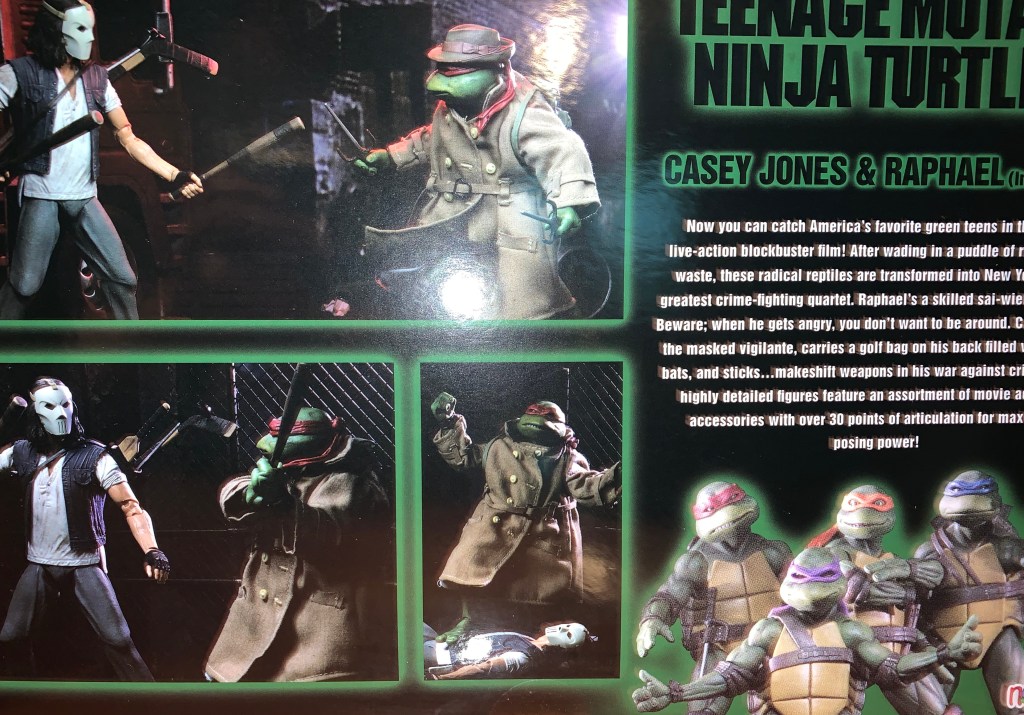
Glenn Danzig not only wrote and directed this picture, but he also provided the score. If you’re familiar with his Black Aria albums then it should sound mostly familiar. There are a few moments where I liked what I was hearing, but for the most part it’s forgettable. The licensed tracks are largely reserved for the stripper scenes, and in that respect they work fine. They’re not particularly sexy, but it’s not like Danzig was going to pay Rick Rubin to utilize “She Rides.”
Obviously I did not enjoy my time with Verotika. That doesn’t change what I started off with though. This is a film made by Glenn Danzig for Glenn Danzig. He’s gone around the country and personally shown this film to audiences and he appears to be quite proud of it. I can only assume that this is the film he wanted to make. And that is great. I wish I could put myself in position to pursue my own art in such a fashion, so even though I didn’t enjoy it I still applaud the man for the film he created. There’s just no way I’m going to seek out his next film.