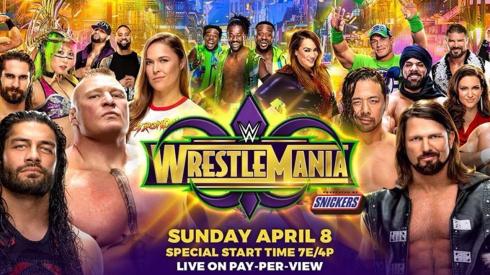
 I swear the WWE won’t rest until it dominates every facet of my life. WWE already wants me to watch 5 hours of television programming per week, plus 2 hours of additional content on the Network each week. Then they drop in a special Facebook tag team tournament and a Pay-Per View event almost every other week that routinely runs 4 hours. Now they want me to devote upwards of 7 hours of my Sunday to WrestleMania every year. Let’s be realistic, 7 hours is way too long for any single event be it a World Series game, Super Bowl, Daytona 500, or whatever. I’m not even sure how often I’ve sat and watched 7 hours of a favorite TV show in a marathon fashion. And in the case of WrestleMania, that 7 hours is the capper to a weekend of wrestling content as the Hall of Fame ceremony and NXT Takeover events occur the previous nights.
I’m exhausted just thinking about it, and honestly it does dampen my enthusiasm for WrestleMania, which I otherwise normally really look forward to. I like that it’s over the top and the big capper on what feels like a “season” for WWE programming. And I do understand why it ends up being so damn long because the talent on the roster all know how important WrestleMania is so WWE seems to try its best to include everyone. This is how you end up with a giant card and two battle royals. It used to be that everyone on the card would receive a payment proportional to the “gate” for the event, which included PPV buys. As a result, WrestleMania was always one of the best pay days of the year for wrestlers. Now, with everything being on the WWE Network for the low, low price of $9.99 per month, that annual payment probably is much smaller since fewer people watch the event via PPV, but it’s still probably a better pay day than every other event they put on.
Nonetheless, I try to do a wrestling post once per year around this time, though i failed to last year. It’s something I still follow, though I can’t keep up with everything as there’s just too much content (as highlighted earlier). This WrestleMania though is pretty interesting. It’s a start for some, and an end for others. There’s some uncertainty on the card, and the roster is just so damn big now that it’s hard to figure out where all of the moving pieces are going after the event. And since this card is so massive, and this post is also kind of a year-in-review for WWE, this entry is going to be equally massive so maybe I should stop with the introductions and just get on with it. Let’s start with the Pre-Show matches:
The Andre the Giant Memorial Battle Royal
 The big battle royal, named after the 8th Wonder of the World, has seen its prestige drop over past few years. It debuted at WrestleMania XXX and was won by Cesaro who went on to experience a push immediately following the event. He was paired with Paul Heyman and seemed destined to be a singles star, but behind the scenes Vince McMahon wasn’t sold (as he openly discussed on an episode of Steve Austin’s podcast) and the push was quickly cooled. Cesaro would then suffer a pretty serious shoulder injury and miss a bunch of time and ever since returning to health he’s been relegated to the tag division once more where he and Sheamus currently hold the Raw Tag Team Championship. Despite all of that, he’s still the most successful winner of this battle royal. The following year, The Big Show won as sort of a lifetime achievement award that did nothing to really further his character. Following him, a debuting Baron Corbin won. He received a push on Smackdown that peaked with him winning the Money in the Bank briefcase. He then suffered the embarrassment of being one of the very few to fail to win the championship with that security blanket and he now finds himself competing in the battle royal once again. Would winning a second time be an achievement or the ultimate rib? Last year, with help from New England Patriots Tight End Rob Gronkowski, Mojo Rawley won the battle royal and he too is featured in the match again this year. Unlike Corbin, he has really nothing to show for winning the event other than a heel turn. One year later, it seems clear he was allowed to win more for his real life friendship with Gronkowski than anything else. This year, who wins seems less important than ever. Is this match a true stepping stone for a young wrestler, a gift for an old reliable superstar, or just the pre-show filler it truly is? I have no idea, and thus my prediction feels kind of pointless so I’ll say a new version of Bray Wyatt debuts and wins, because why not?
Prediction: Bray Wyatt
WrestleMania Women’s Battle Royal
 The women’s roster, thanks in part to a rise in the quality of women’s wresting on WWE programming and the brand split, is now large enough that it can support its own battle royal. Decades ago, the women were more likely to be tossed into some stupid pillow fight or just used as eye candy for an unrelated match or event, so even though I kind of dumped on the men’s battle royal, this one does feel like progress. Next year we can get cynical about it. Though WWE almost dropped the ball with this by originally naming it after The Fabulous Moolah who has been accused of stealing from other wrestlers and for essentially being a pimp. In other words, whether true or not you probably shouldn’t name a match after her on your brightest stage. Rather than finding someone else to name it after, they just went with a conventional name. This match actually has some storylines heading into it as both Absolution and The Riot Squad have been booked as invading wrestlers on Raw and Smackdown respectively, so a number of the other women probably want to get their hands on them. There’s also the rivalry between one-time bestie Sasha Banks and Bailey. The feud between those two is deserving of its own match, so it’s rather disappointing to see it relegated to this event. Unfortunately, the card is so stacked that there wasn’t really any room for a traditional grudge match. Personally, I would rather see that match instead of either of the non-title tag team matches, but I get why those are on the card and this is not. Because of their rivalry though, I don’t expect either Banks or Bailey to win this match. It’s possible this match goes to a debuting NXT star, but I’m not sure if any of the ladies at NXT are in-line for a promotion at this point in time. Instead, it may be used to elevate one of the members of the aforementioned stables, or as a lifetime achievement award to a vet like Natalya. WrestleMania typically doesn’t feature many heel victories, and this card appears to be no exception, so perhaps this is an easy spot to toss in a heel win.
Prediction: Mandy Rose
WWE Cruiserweight Championship (vacant)
Cedric Alexander vs Mustafa Ali
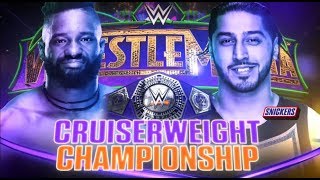 Two wrestlers making their WretleMania debut, Alexander and Ali will be competing for the vacant Cruiserweight title. The Cruiserweight Division experienced a rather tumultuous 2017 marked with outside of the ring scandal and beset with poor story-telling and little direction. The brand has been sort-of rebooted over the past six weeks and I hear its show, 205 Live, is much improved, but I personally haven’t watched it. As a result, I’ve got little to say about this match. I doubt these two talented wrestlers will be given enough time to really shine under the bright lights, but there’s a small chance they put on a show-stealer. Alexander seems like the rising star of the division so a win for him is likely, though it could really go either way.
Prediction: Cedric Alexander
WWE Smackdown Tag-Team Championship Triple Threat
The Usos (C) vs The New Day vs The Bludgeon Brothers
 I’ll give credit where credit is due, Smackdown has done a good job of making this match something to look forward to. The rivalry between the champs, The Usos, and The New Day has been very enjoyable and evenly matched. Toss-in the undefeated Bludgeon Brothers and you get a nice twist. Though a match between The Usos and New Day may have been a better direction, at least The Bludgeons, in spite of their stupid gimmick, are competent wrestlers and should work well. Truthfully, I do not know what the order of the card is so I’m predicting this will be the curtain-jerker for the main show because The New Day seem like the perfect cats to get things started. Last year they didn’t get to compete and were relegated to host duties, so this is a welcomed to return to actual competition. Meanwhile, the other four participants weren’t featured on the main card and instead were relegated to the battle royal, except for Rowan who was injured. In other words, they all have something to prove. A lot of the titles look like they’ll be switching hands during this event, so I’ll predict that the Smackdown Tag Titles will be one of the few that does not.
Prediction: The Usos
Raw Women’s Championship
Alexa Bliss (C) vs Nia Jax
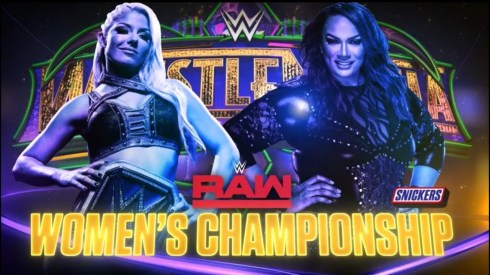 This storyline had one of the shortest build-ups thanks to the uncertainty over who Royal Rumble winner Asuka would challenge at WrestleMania. That was unveiled at Fastlane when she challenged Smackdown Women’s Champion Charlotte Flair leaving Alexa without an opponent for WrestleMania. Truth be told, I always assumed Asuka would be paired with Charlotte leaving Bliss to square-off against either multiple women or Nia Jax. Jax has played the role of protector for Bliss for most of 2017 into 2018. With Bliss being a natural heel, it made sense for her to not appreciate what Jax does for her leading to a fractured alliance. Bliss is also conventionally attractive and that’s worked into her persona as she’s presented as conceited, shallow, and just one of those “mean girls.” Jax, on the other hand, is a pretty large woman making her weight an easy thing for Bliss to poke fun at and that’s been the basis for this feud. Both women are returning to WrestleMania looking to make-up for losses at last year’s event. Bliss dropped the Smackdown Women’s Championship to Naomi in a six-woman match, a classic brief match where WWE just tosses a bunch of women into a chaotic match to get them on the show (it lasted barely over 5 minutes), while Jax failed to come away with the Raw Women’s Championship in a four-woman match won by Bailey. Jax has also never held a title at either WWE or NXT despite being booked like an unstoppable monster at times. She’s essentially a victim of the big wrestler bias where the “monsters” are often kept away from the titles (like Undertaker, Big Show, Andre, etc.). Lucky for her though, every big wrestler usually gets a couple of title reigns here and there and I think she’s in-line for one here. The storyline of Bliss poking fun at Jax’s weight is inherently mean and it makes little sense for WWE to go there and not have the heel get what’s coming to them. Of course, they’ve done stuff like this in the past and gone the other way (perhaps most infamously with Triple H vs Booker T from WrestleMania XIX), but WWE seems to be more concerned with its image now more than ever. Jax has also come close on numerous occasions to winning the belt and it seems like another tease could really harm her progression. For her to not win, it will likely take interference from Bliss ally Mickie James. Neither woman appears primed for a new opponent after WrestleMania, so they could always trade wins at the next PPV too.
Prediction: Nia Jax
WWE United States Championship Fatal Four-Way
Randy Orton (C) vs Bobby Roode vs Jinder Mahal vs Rusev
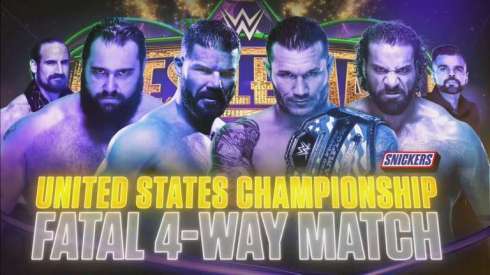 Aside from perhaps the pre-show matches, this match for the US Title is likely the one fans are looking forward to the least. All four participants are decent enough workers in the ring, but at least three aren’t particularly interesting. Orton is overexposed, and 2017 felt like the year where he tumbled from the main event scene, possibly for good, with his series of matches against Mahal being a low point for WWE programming after winning the WWE Championship at WrestleMania 33. And Mahal was equally a low point as WWE Champion as he shockingly won the belt not long after last year’s embarrassing elimination from the battle royal by Gronkowski. Mahal is an effective heel on the mic, but totally uninteresting in the ring. Perhaps for a heel to truly be hated though he should be a crappy wrestler since so many heels end up being crowd pleasers. Roode was promoted from NXT after last year’s WrestleMania and had an okay 2017. He’s terrible with a mic in his hand, and I’m not sure it’s a good thing when your entrance is the best thing anyone can say about your character. He’s also been booked like a babyface, even though his Glorious persona feels more like a heel one. Saving this match from being a total drag is the recently added Rusev. He was scheduled to participate in the battle royal and only recently was added to this match. It was done because his Rusev Day gimmick has gotten way over with fans, even though it probably was meant to just be comedy filler for Smackdown. It’s great to see though because Rusev is a tremendous talent and his fall in the company has been extremely odd. Since he was added in at the last minute, one could theorize that WWE has no real plans for him and they’re just capitalizing on his flavor of the month status. Or, as really the only guy in the match who’s even remotely over, he could be viewed as a lock to win this thing.
Prediction: It’s Rusev Day
WWE Raw Tag Team Championship
The Bar (C) vs Braun Strowman and TBD
 Possibly the weirdest match on the card. Cesaro and Sheamus went from after-thought singles wrestlers to tag team champs over the last two years. Meanwhile, Strowman has been one of the hottest guys in the company, but as a monster wrestler, WWE has struggled to find a place for him. His popularity warrants main event status, but he’s been booked as unstoppable and maybe they worry about how to book him as a champion, or as a failed challenger, even. In reality, it’s a total head-scratcher why Strowman isn’t the one getting setup to destroy Brock Lesnar for the Universal Championship, but chalk that up to WWE’s insistence on making Roman Reigns “The Guy” in the promotion. Rather than demote Strowman to the IC title picture, they went in an odd direction and had him win a tag team battle royal to become the number one contender for the Raw championship, despite not having a partner. Since WWE has decided to withhold who will be competing alongside Strowman until the event, it would seem likely it will either be a returning superstar from either injury or outside the promotion, a celebrity, or an NXT call-up. I haven’t paid attention to the dirt sheets leading up to the event as I’d prefer to not have anything spoiled, but I’m well aware that Rey Mysterio is out there and would elicit a pop from the audience if he indeed teamed with Strowman. On the injury front, both Dean Ambrose and Big Cass could be ready to return as could Somoa Joe. Of the three, Ambrose is the biggest name, but I’d personally be really interested in a Somoa Joe/Strowman team should Strowman remain in the tag division for now. As for NXT, I have no idea, but Johnny Gargano would get a nice reaction if it were him so that’s who I’d like to see most. He being the consummate underdog could even eat the pin, allowing for him to move onto 205 Live and Strowman to resume his singles career. Lost in all of this is The Bar, who actually make a great team. While I would prefer to see a guy like Cesaro flourishing in the singles division, I’ve at least enjoyed their run, so I won’t mind seeing it continue. They will need some fresh meat following WrestleMania, so maybe a feud with The Hardys is to come.
Prediction: The Bar
WWE Championship
AJ Styles (C) vs Shinsuke Nakamura
 Styles had a nice conclusion to 2017. Last year, he was the placeholder heel champ expected to carry the WWE title during the lean months, only to drop it before WrestleMania. As a result, he found himself in the curtain-jerker position last year facing off against Shane McMahon in a match that ended up being way better than it had any right to be. Perhaps as a reward for enduring such ignominy, he’s now the champ heading into WrestleMania where he gets to resume his New Japan feud with Shinsuke Nakamura, who is participating in his first WrestleMania. Because these guys have such great in-ring chemistry with each other and because they’re both world class workers this match is expected to be a show-stealer. I can’t think of another recent non-main event match that had such expectations, maybe the TLC rematch though that’s hardly recent. Smackdown did not have a good second half in 2017, but Stlyes and Nakamura remain over with fans and this is one of the few face vs face matches at this year’s event. It feels like if WWE is ever going to commit to giving Nakamura a run with the belt then it has to do so here. He had some big wins in 2017, but failed to dethrone Mahal when he got a title shot. Styles has sometimes been an after-thought as champ, with most of his feuds serving as vehicles for feuds between other wrestlers (namely, Zayn and Owens vs McMahon) so it’s hard to see where he’s going as a character. In other words, regardless of what happens at WrestleMania, these two seem destined to continue their rivalry.
Prediction: Shinsuke Nakamura
WWE Intercontinental Triple Threat
The Miz (C) vs Seth Rollins vs Finn Balor
 It’s been a bit of an odd year for the participants of this match. Last year, The Miz found himself in a program with part-timer John Cena leading to a mixed tag match that was just a vehicle for Cena to propose to his real-life girlfriend and former WWE Superstar Nikki Bella. When he wasn’t away filming bad WWE films though, The Miz usually was wearing the Intercontinental Championship and doing well for himself as one of the company’s best heels. Rollins, on the other hand, has somewhat floated around for the past year. At WrestleMania 33, he had a big blow-off match with former mentor Triple H in which he had to return from a serious knee injury in short order to even compete. Since then he’s kind of flirted with the main event while remaining the workhorse for Raw. A Shield reunion and tag title run with Dean Ambrose was derailed by an injury to Ambrose. He was then paired with Jason Jordan and the two appeared to be on a collision course until he too suffered a real-life injury. As a result, Rollins has been tossed into the mix here along with fellow participant Finn Balor. Balor, of course, famously won the newly minted WWE Universal Championship (against Rollins, no less), but had to relinquish it the next night on Raw due to injury. He was ready to return at this time last year, but WWE chose to hold him out of WrestleMania saving him for Raw the next night. He had a way too long feud with Bray Wyatt, that he ultimately emerged victorious from, but has since been adrift much like Rollins. Balor has always felt like a main eventer in waiting, and his Universal Title win seems to add credence to that. He still needs some work refining his character a bit, but I could see the IC title being a reset for him. Rollins doesn’t need it, and if former stable-mate Roman Reigns is indeed victorious in his match with Lesnar, it’s possible WWE sees money in a Rollins/Reigns program atop the card. Meanwhile there’s The Miz, who apparently is approaching some sort of title reign record for the IC belt. He’s sort of become attached to the belt and will likely be remembered for his many reigns with it when all is said and done as more and more people forget that he once appeared in, and won, a WrestleMania main event. His retaining here would not be all that surprising perhaps leading to a one on one program with Balor.
Prediction: The Miz
Tag-Team Match
Daniel Bryan and Shane McMahon vs Kevin Owens and Sami Zayn
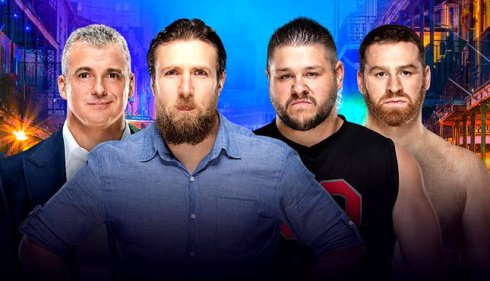 At this time last year, Daniel Bryan was simply an on-air character. Forced into retirement by a series of concussions, it was up in the air whether he would ever wrestle again. Most thought he’d finish his contract with WWE in his current role and then head to either Ring of Honor or New Japan to resume his in-ring career since it was WWE’s doctors that wouldn’t clear him. Instead, he surprisingly was medically cleared just a couple of weeks ago and immediately has been thrust into this match-up. Throughout much of the year, he was seen as an ally to Owens and Zayn and butted heads with his boss, Shane McMahon. After Owens and Zayn kayfabe sent Shane to the hospital following Fastlane, Bryan felt like he was forced to fire the duo resulting in them attacking him and thus leading to this match. Bryan and Shane are out for revenge, while Zayn and Owens need to win if they want to resume their careers on Smackdown. Notice the terminology there? It leaves open the possibility that Owens and Zayn could lose, but be hired by Raw. What shouldn’t be forgotten, is that Bryan and Shane were pretty adversarial throughout the year so their alliance is shaky at best. McMahon has more reason to hate his opponents, but that’s never prevented WWE from executing a swerve before. Now, I love all of the participants in this match (well, not so much Shane) because they’re great characters and even better wrestlers, so I’m actually disappointed to see them here. Owens and Zayn deserve better, but at least they aren’t in the battle royal. At this point last year, Owens was the recently defeated Universal Champion forced to do battle with his former ally Chris Jericho in a match for the US Title. That match was some-what famously not enjoyed by Vince McMahon which apparently put Owens in the doghouse. Zayn was forced into the battle royal, so his match here is definitely an improvement over last year. Ultimately though, this feels like a waste of Bryan’s in-ring return. In a rush to get him onto the WrestleMania card, I feel like WWE missed an opportunity to have his return be the main event at a different event. Here he’s kind of lost in the shuffle of a massive card in a feud that wouldn’t have made sense a month ago. A return match pitting him against Shane would have made way more sense, or better yet, one with The Miz. Alas, here we are though. I think these guys are capable of telling a good story and delivering a good match, but I don’t know if they’ll have the time for either. It seems weird predicting Bryan losing his return bout, but Shane could eat the pin or even turn on him, putting him right back into that underdog role he flourished in before his career came to a premature end.
Prediction: Kevin Owens and Sami Zayn
Smackdown Women’s Championship
Charlotte Flair (C) vs Asuka
 Of the matches on the undercard, the two most likely to steal the show are the two big Smackdown title matches, the previously covered Syles vs Nakamura and the women’s match featuring champion Charlotte Flair vs Asuka. Flair went from a heel contender on Raw at least year’s WrestleMania to a babyface champion on Smackdown. Part of the reason for the switch seems to be the real life near death experience of her father, Ric Flair, which garnered her much sympathy as a result. She’s a much better heel than babyface, so I expect this match to be the start of a turn for her as she faces the mega-hot Asuka. Asuka has ridden an undefeated streak to the top of the Women’s Division that got started in NXT. At this time last year she was successfully defending the NXT Women’s Championship, which was kind of a surprise as most thought she would drop the title and then show-up on Raw or Smackdown following WrestleMania 33. Instead, she kept the belt and would eventually get injured forcing her to relinquish her title without defeat. As a result, we don’t know if the plan was for her to head to the main roster undefeated or not, but that’s what happened when she was cleared to return to action. Since joining Raw, she’s mostly been kept out of any major feuds instead simply winning whenever she’s featured in a match, including tag matches and most famously the inaugural Women’s Royal Rumble match. At NXT, she never crossed paths with Charlotte so a match between the two has been something fans have been dreaming of for the past couple of years. The fact that it’s finally happening at WrestleMania is pretty awesome, though there is some fear that their lack of experience with each other could lead to a disappointing match. Both women are great in the ring, but neither one has yet developed a reputation for having great matches with anyone they’re paired with, though Charlotte is pretty close to that level at this point. What hasn’t been addressed in storyline is if Asuka is now a Smackdown competitor. Since challenging Charlotte, she has appeared on both shows and if she wins it’s assumed she’ll be Smackdown exclusive going forward. If she loses though, does she return to Raw? I don’t know, but it seems like a waste of her streak for it to end at WrestleMania against Charlotte, who doesn’t need the rub. Her streak has reached a point where it will be a major accomplishment for whomever ends it. While WrestleMania is a big enough stage for such a moment, it just feels like it could be a way to anoint an up and comer (even though Asuka is pretty much an up and comer herself). What I sincerely hope does not happen, is for Asuka’s streak to end at the hands of Carmella after she cashes in her Money in the Bank briefcase.
Prediction: Asuka
Mixed Tag-Team Match
Kurt Angle and Ronda Rousey vs Triple H and Stephanie McMahon
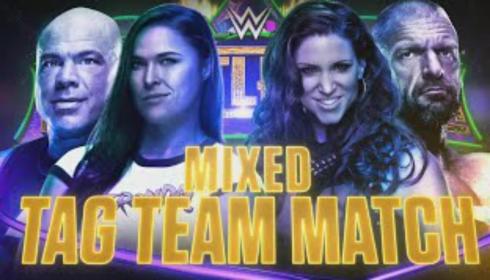 The star power of Ronda Rousey will likely mean this is one of the last matches of the evening, even though few probably expect a good match. Rousey, having never wrestled professionally before, is about as green as it gets. That doesn’t mean she can’t make the leap and do so quickly, but it’s an unfair expectation even for the likes of her. Stephanie McMahon has also never been a full-time performer and to call her part-time is even a stretch. Still, she’s married to a future Hall of Famer and her McMahon lineage likely means she doesn’t want to embarrass herself so I expect competence, at least. Triple H is as good as ever, which is to say he’s a steady worker. He was never flashy, even in his prime, but usually effective. Kurt Angle, on the other hand, is one of the best all-time. Even thinking about his career last year when he was inducted into the WWE Hall of Fame I wondered if he was my favorite wrestler of all-time. He could do anything in the ring, have a great match with anyone, and he was superb on the mic. Sadly, time and injury have left him a shell of his former self. He can’t be expected to carry a match in 2018, so I have no idea how he and Triple H can be expected to cover-up for the women if they’re not up to the task themselves. Even though it’s a four-participant match designed to protect Rousey, a lot does really rest on her shoulders. I expect this to be be brief, and more spectacle than anything. Angle and Triple H will probably get things started with a few minutes of mat-wrestling, but it could quickly turn into a squash. Stephanie’s character does not require any sort of in-ring credibility, and I don’t think Triple H is averse to putting over the biggest signing WWE has had in perhaps ever. This is the Rousey showcase match – hopefully she comes through and proves that she belongs in WWE.
Prediction: Kurt Angle and Ronda Rousey
Unadvertised Singles Match
John Cena vs The Undertaker
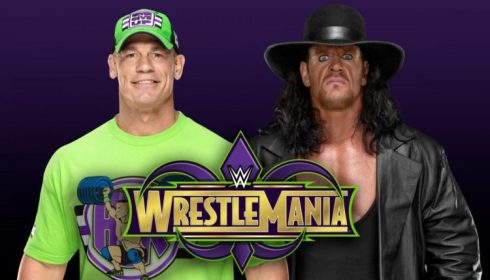 At this time last year, The Undertaker lost in the main event for only his second defeat ever at WrestleMania to Roman Reigns. Following that match, he removed his hat and coat (after briefly putting them back on which was sort of awkward) and laid them down in the ring before walking off into presumed retirement. In the real world, Taker was in need of hip surgery and it showed. His match with Reigns was not good, and it’s actually been awhile since he put on a good match. He looked like a guy who was ready to go, but here we are a year later and John Cena is issuing open challenges to him on WWE programming lobbying for a match at WrestleMania. The two part-timers certainly have the name power to make any match between them an event, even if there’s no real reason for it to happen. Which is probably why Undertaker has failed to answer those challenges. I expect him to finally do so at the event, which is still weird since it means WWE can’t exactly advertise it without giving it away. Now the prevailing theory around the internet seems to be that last year Undertaker retired his dead man gimmick and will return as American Bad Ass Undertaker, or Biker Taker, if you will. The fact that Kid Rock, who lent his song “American Bad Ass” to that gimmick and will be inducted into the Hall of Fame this weekend for his contribution, will be around seems to make that possibility seem likely. I can’t stress enough how much I hated that era of Undertaker so I won’t be popping on my couch when he comes riding out on his chopper, but I expect it at this point so I’m kind of at peace with it. He could come riding out on a chicken and the crowd would go nuts, so I don’t expect any snark. Kid Rock would probably normally be booed if he stepped out onto a WrestleMania stage, but since the crowd will know what his presence means they’ll likely pop for him too. What this match means for the future of The Undertaker is entirely unknown. Is this some encore to last year’s match and a true final match where he gets to go over without harming a young star? Or is it just another year of Undertaker serving as WrestleMania’s final boss with more to come? It’s quite possible it means nothing at all and it’s mostly being done as a favor to Cena, giving him a dream match for his years of loyal service to the company. One thing I do feel certain about is there’s no way Undertaker is returning just to lose to John Cena.
Prediction: The Biker Taker
WWE Universal Championship
Brock Lesnar (C) vs Roman Reigns
 Finally, we’ve arrived at the last match on the card. Though even as i type this I’m frantically looking over the card to make sure I didn’t miss anything because it feels like this damn thing is never ending. It feels kind of crazy, but Lesnar has been Universal Champion for an entire year having won the belt from Goldberg at last year’s event in a brief exchange that never made much sense. Lesnar has had a pretty bland year. WWE has built him up so much that actually defeating him is meaningful (even if Goldberg did it in about 20 seconds), so it’s probably put too much thought into how he should eventually drop the belt. In the real world, Lesnar’s contract with WWE is up following the event. I don’t know if it ends immediately or if there’s an appearance or two left, but all signs point to Brock leaving WWE to pursue a UFC career once again. Lesnar has never been a fan of pro wrestling, so it’s not surprising that he seems to get bored with it. His match quality has steadily gone downhill and a break from the company is probably needed. Hopefully, he takes some pride in in appearing in the main event for WrestleMania and gives a good performance in what could be his final match. Reigns, of course, got to take down The Undertaker last year and temporarily retire the Dead Man. His appearance in this spot has been assumed pretty much ever since despite his failing to become a repeat Royal Rumble winner. Reigns moves a ton of merchandise, which is why he’s booked as a top babyface despite the crowd often being very much against him. For this match, WWE has wisely booked him as the full-time dedicated wrestler railing against a no-show superstar like Brock. They even booked no-shows for Lesnar making fans wonder if his absence was part of the show or if he legitimately didn’t show up for Raw. It’s probably the only way WWE could make Roman the good guy here, but in reality a snarky WrestleMania crowd might just shit all over this one from the start making its placement at the top of the crowd some-what risky. WWE has proven that, if nothing else, it’s all in on Reigns so don’t expect a big surprise. Whether the crowd boos or not, this one is going on last and Reigns is going over. It might not be the best ending for WrestleMania, but after 7 hours, at least it’s an ending.
Prediction: Roman Reigns

 Episode Number: 31


 Episode Number: 30






 Episode Number: 29

 Wave 2 of Boss Fight Studio’s Bucky O’Hare line is now shipping to consumers and comic shops across the US. Wave 1 was extremely well received nabbing a few Toy of the Year awards and earning the approval of yours truly right here at The Nostalgia Spot. Wave 1 was pretty hotly anticipated among Bucky O’Hare fans since it was the inaugural wave in a new line of action figures and because it contained the long-awaited First Mate Jenny action figure – a character we were denied back in the Hasbro days. Wave 2, which consists of Stealth Bucky, Astral Projection Jenny, and Dead-Eye Duck is perhaps just as much anticipated because Dead-Eye has long been a fan-favorite. The four-armed former pirate and current gunner on the Righteous Indignation, was brought to life by Scott McNeil for the cartoon with a ton of moxie and a bad ass attitude – traits always endearing to young boys. Also shipping is the special Holiday Bucky, an Easter variant of the Wave 1 figure presented as a chocolate bunny, though not as literal chocolate.
 Wave 2 still runs approximately $35 per figure, a steep price for a single 4″ figure, and thus why this review is only for Dead-Eye and the holiday variant. I’m not a professional reviewer and my blog is hardly large enough to attract enough attention to the point where I can receive review copies of toys, so I had to take a pass on the Wave 1 variants and just stick to Dead-Eye. When it came to the Holiday Bucky, I was just too charmed by the packaging and concept to resist. For the time being, I’ve opted to keep Easter Bucky in his packaging, even though it’s fairly easy to remove the figures and reassemble the packaging thanks to an ingenious design that just clips the blister to the card stock. As a result, I’m not going to go into much detail for him. He’s the same figure as before, just with a different paint application. I consider the Easter themed packaging to be part of the appeal and I just think he displays better in box.


 Dead-Eye Duck is a welcomed addition to the Bucky O’Hare line and the most appropriate choice for a third figure due to his fun design and popularity with the fanbase. He’s just as good, if not better, than the figures that preceded him. His anatomy makes his facial expressions less imaginative, but he makes up for it with easy to swap face pieces without the troubling stubbornness exhibited by the Wave 1 Bucky. And Holiday Bucky is a silly and fun variant for the line. Really, a chocolate Easter Bucky design? I would have never thought of it. Both Dead-Eye and Holiday Bucky, who is limited to 400 pieces, are available at
  Episode Number: 28
 Episode Number: 27
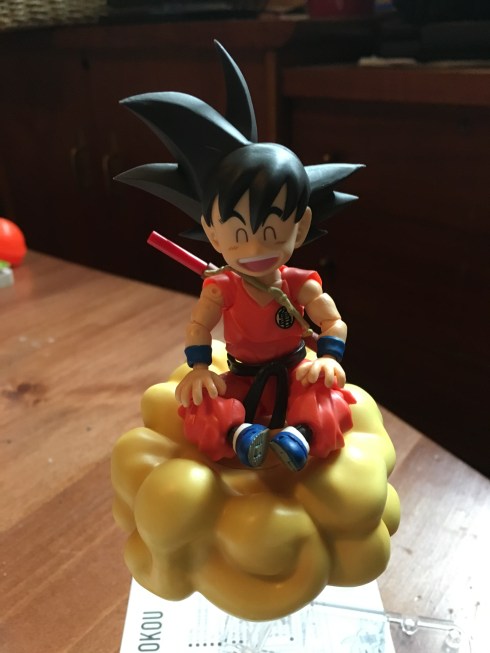 I was so happy with my Super Saiyan Vegeta from SH Figuarts that the very next day I purchased a second figure: Kid Goku. Now I’ve mentioned more than once here that I prefer Dragon Ball to Dragon Ball Z. It’s just a tighter and more fun series with better action sequences. The characters become so overpowered in Dragon Ball Z that the fight scenes became a series of dashing lines as characters move faster than sight and lots and lots of posturing. Dragon Ball has some of that too, but not nearly as much. And shining like a beacon through out it is young Goku. His ignorance of virtually all of society is what drives much of the show’s humor (as well as the perversions of one Master Roshi) and it’s a personality trait that suits the youthful version of our hero better than the adult version. This isn’t to say the adult Goku of DBZ isn’t charming, he’s just less believable.


 Kid Goku is a damn fine piece of plastic. I think I like him more than the Vegeta figure, but that’s mostly due to my fondness for the IP. He looks great, moves great, and has enough accessories to keep you entertained if you’re the sort that likes to re-pose your display constantly. If you’ve been aching for a good Dragon Ball accurate Goku, it’s hard to imagine a better one than this will come along anytime soon (unless there’s a blue gi repaint, then maybe).
 Episode Number: 26


 The Nostalgia Spot