Tag Archives: shonen jump

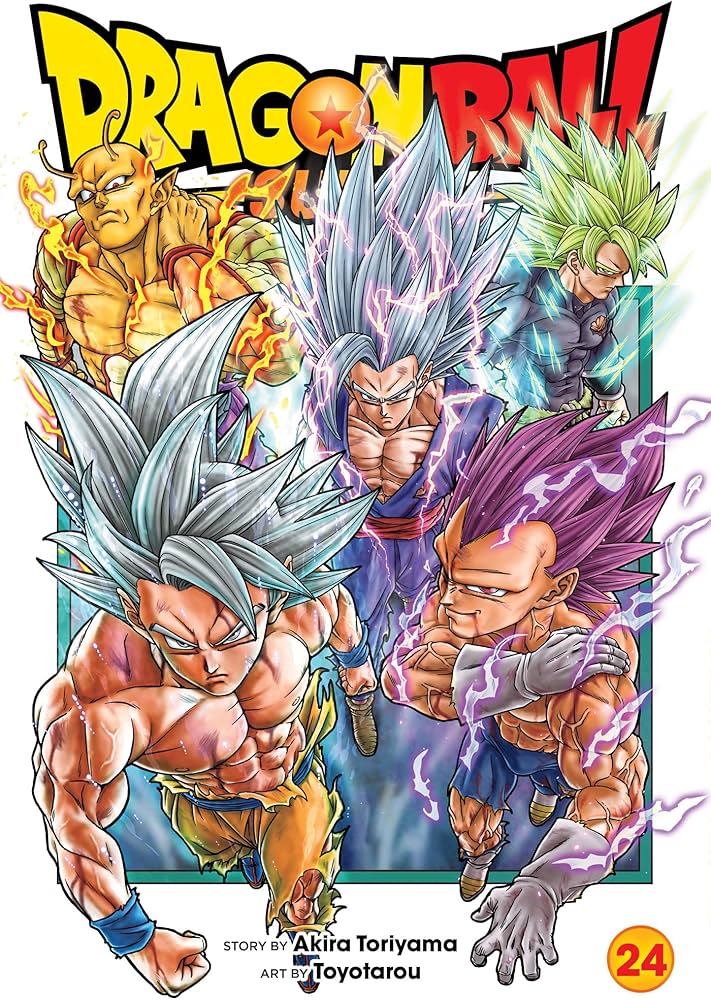
Dragon Ball Super Vol. 24

It’s been over two years since the world lost manga artist and writer Akira Toriyama and it’s been about that long since the unofficial end of Dragon Ball Super. The manga and anime series was the official sequel to the hugely successful and mega popular Dragon Ball Z. The final chapter, 103, was released in March of 2024 in Toriyama’s native Japan while English speaking readers have had to wait two years for the collected final volume to be released elsewhere. Sure, the chapters are all made available much sooner via the Shonen Jump app, but I’m still one of those digital deniers clinging to physical media with just about everything I consume. It was a long two years of waiting, but had this volume arrived shortly after Toriyama’s passing I probably would have been a blubbering mess. Having two years to process such a monumental loss may have been a good thing.

After the anime series ended, I went back and picked up all of the volumes of Dragon Ball Super as well as the ones that followed. Super the manga did not end and continued on with two full arcs of Dragon Ball goodness. The manga did bypass the Broly film, but chose to adapt the Super Hero movie and even fleshed it out more with a short arc featuring Goten and Trunks as super heroes in the same style as The Great Saiyaman. The collected volumes are published by Viz Media in the US and the artwork contained within is in black and white. Since Toriyama’s passing, artist Toyotarou has taken up the mantle of an introduction to the volume usually with some nod to Toriyama. For this particular one, he notes that Toriyama often advised him on how to better be a manga creator (a mangaka) and he expresses a desire to keep those lessons in mind for as long as he’s a mangaka himself. Toyotarou is always deferential to Toriyama when speaking on the subject of Dragon Ball and it will be interesting to see if that changes should the manga continue in some way.

As for the story, it’s a post Super Hero one where we find the remnants of the Red Ribbon Army, lead by Carmine, seeking to exact revenge upon Gohan for thwarting their plans with Cell Max. And to do that they want to recruit the newest super heroes in town: Saiyaman X-1 and Saiyaman X-2. Unfortunately for them, those happen to be the alter egos for Trunks and Goten and they’re not going to help the Red Ribbon Army take down Gohan. Elsewhere, Vegeta, Goku, and Broly are training with Whis on the planet of Lord Beerus. It’s while Vegeta and Broly are dueling that they learn about Gohan’s sudden burst of power and his conquering of Cell Max. It seems they were so engrossed in their training they didn’t notice, but are immediately curious about what the son of Goku is capable of now. Goku decides to pay his son a visit just as Carmine and a soldier are arriving at Gohan’s house with Trunks and Goten along for the ride. Goku can’t be bothered with what’s going on and instead brings everyone to the planet of Lord Beerus. There, Carmine and his lone soldier get to bare witness to what these Saiyans are capable of first with Trunks and Goten taking on Gohan followed by father and son. It’s a simple story and a breezy one as Goku is just out to test the limits of his son with the hope of reaching the conclusion that he doesn’t have to worry about Earth so long as Gohan is there to protect it.
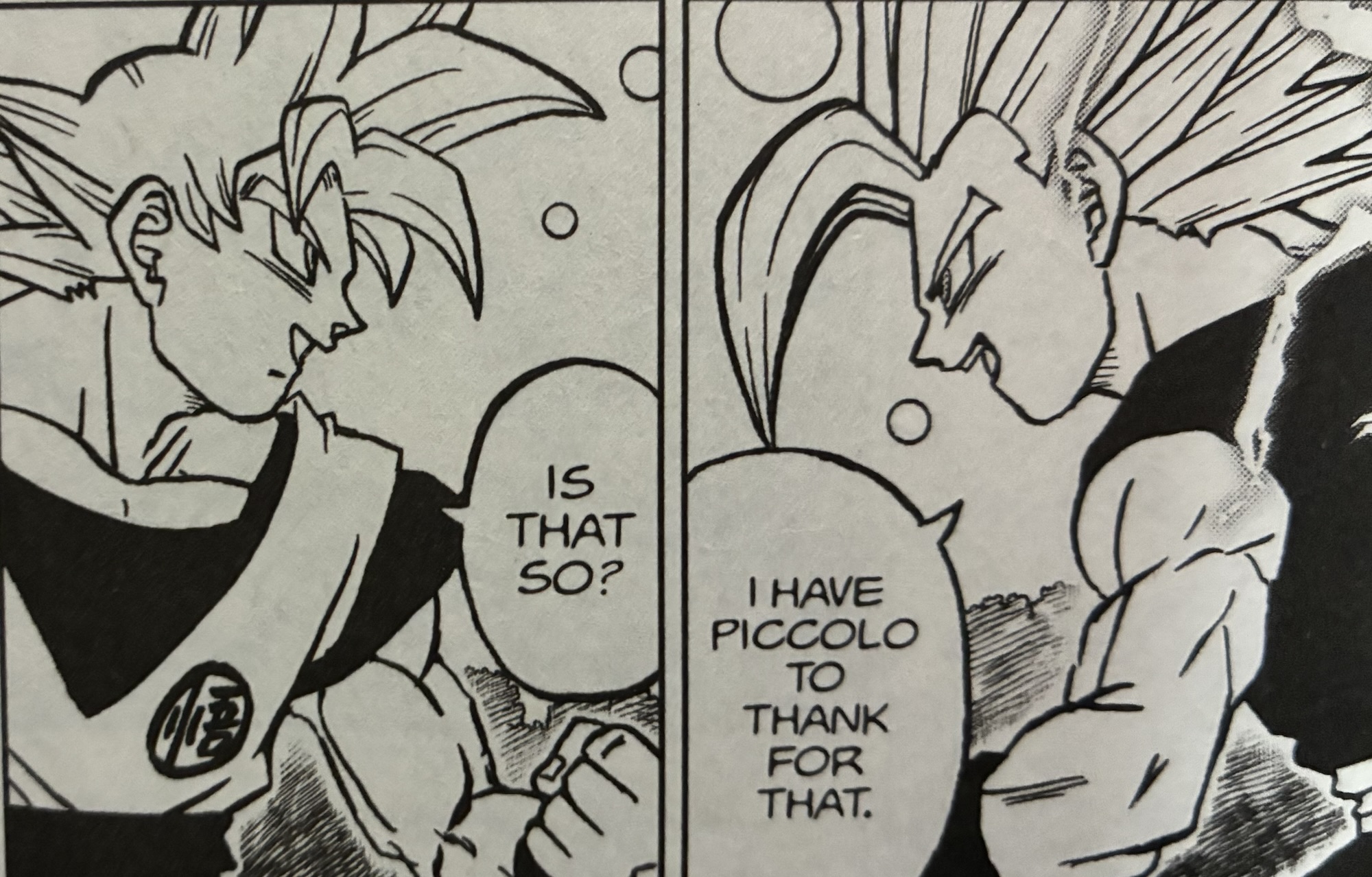
Much of the volume is dedicated to Goku testing out his son’s new abilities.

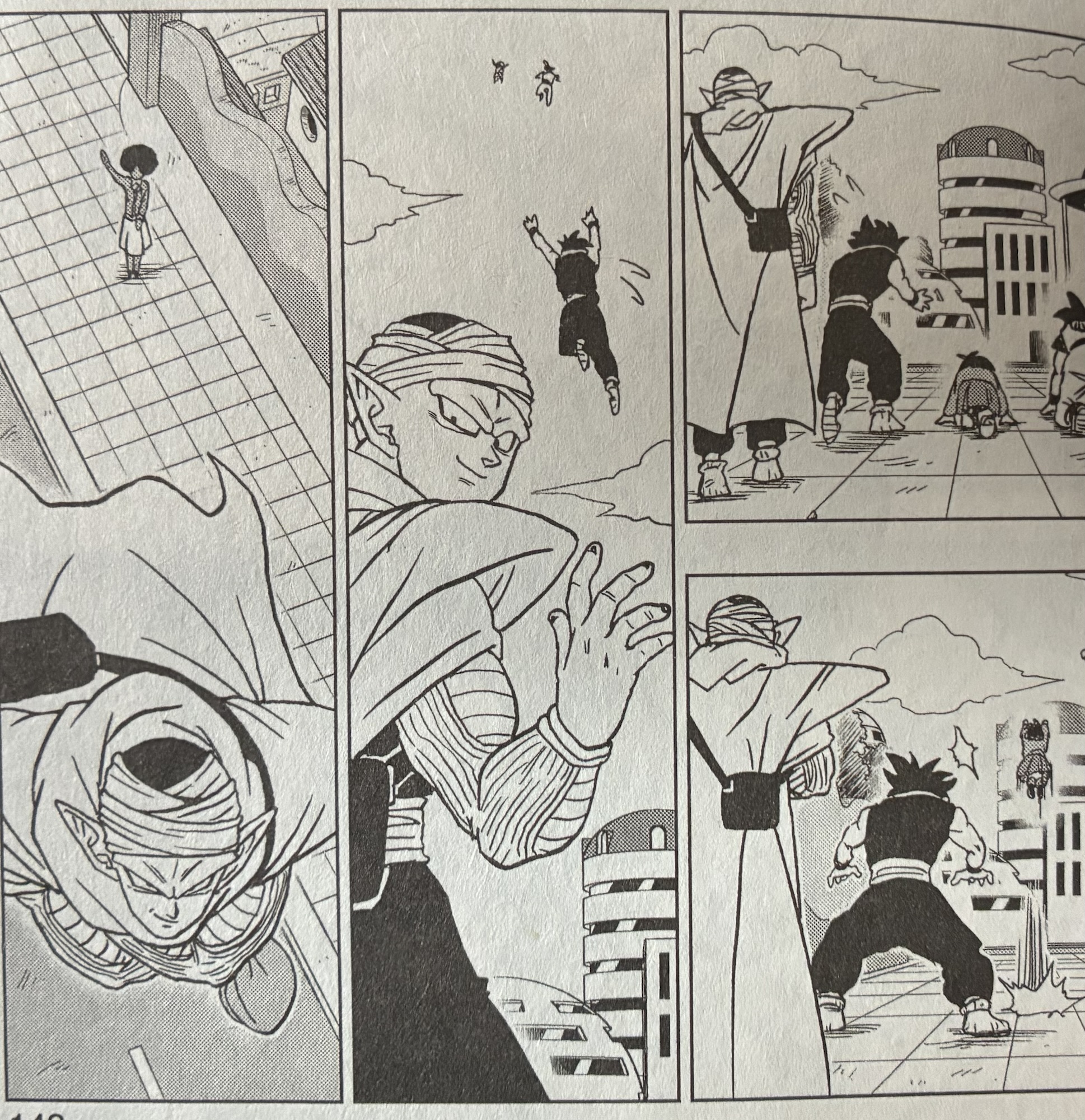
The ending of this story received some additional press because Toriyama apparently requested a change. During the fighting, Goku and company find out about Piccolo’s new power-up as well and naturally Goku wants to see it as well. Vegeta is also curious, but also concedes that he needs to head home or else Bulma might lose interest. When Goku and Gohan return to Earth to find Piccolo he has to decline a sparring session because someone needs to pick Gohan’s daughter, Pan, up from school. Goku tags along at Piccolo’s insistence since he apparently forgot his granddaughter’s name and we get a wordless exchange to close out the story of Pan elated to see her grandpa and Piccolo waving bye to her teacher. The way the scene is illustrated it’s as if Piccolo is waving “bye” to the reader, and since Piccolo was Toriyama’s favorite, it’s been interpreted as his way of saying “good bye.” Right in the feels.

Volume 24 actually doesn’t end there, but with a prequel chapter about how Trunks and Goten decided to become super heroes. Toyotarou explains it was something he wanted to do initially, but just didn’t have the time for it. With the story over (and Shonen probably not minding extra content) he was able to go back and do it and it’s a fun little story, though in this format it’s definitely a tonal shift following the end of chapter 103. I even put my copy down for about a week before I picked it back up to read the prequel chapter.
Farewell.

As the present conclusion to Dragon Ball Super, this is a nice little end. It’s basically a slice of life story just set in the world of Dragon Ball where titanic battles are an everyday thing. The anime is expected to resume in the not too distant future following a remake of the first arc with Beerus. I do wonder, when it finally gets to this final scene, can it possible land with the same impact? Maybe Toriyama can be inserted somehow into it either via a caricature or his little avatar of himself with the mask? Should the manga continue in the hands of Toyotarous, there’s plenty more to explore as Goku still hasn’t seen Piccolo’s new form, Broly is striving to harness his own power, and Frieza is still out there somewhere. If not and it ends here then it’s a sweet ending and one I much prefer to how Dragon Ball Z originally ended with Goku abandoning his family to go train Uub. If you’re a Dragon Ball fan, you have probably read this already so this isn’t exactly a review, per say. This is more of a chance for me to acknowledge the end of the series while it was in the hands of Akira Toriyama and an opportunity to say “Thanks,” and that I’m going to miss that guy.

For more thoughts on Akira Toriyama’s Dragon Ball, check these out:
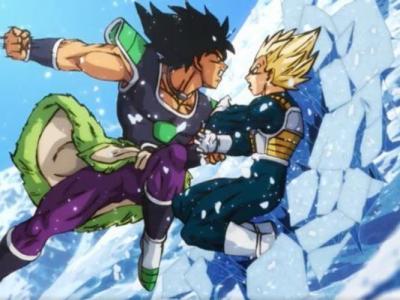
Dragon Ball Super: Broly

The first movie under the Dragon Ball Super umbrella is one that sets out to take what was previously non-canon and adapt it into the main series. The most recent two Dragon Ball Z films; Battle of Gods and Resurrection ‘F’, ended up being the start of Dragon Ball Super which is now well over…

Keep reading
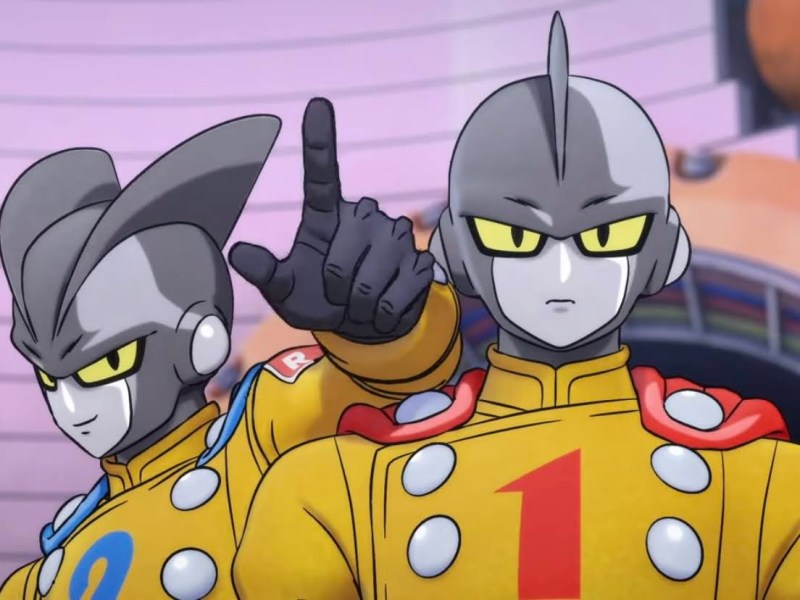
Dragon Ball Super: Super Hero

I’ve said it before, and I’ll say it again, that Dragon Ball Super has been the thing I’ve loved most that I never knew I wanted. I was done, or at least content, with Dragon Ball Z. Dragon Ball GT wasn’t good, but I didn’t need it so it wasn’t something that bothered me. Then…

Keep reading
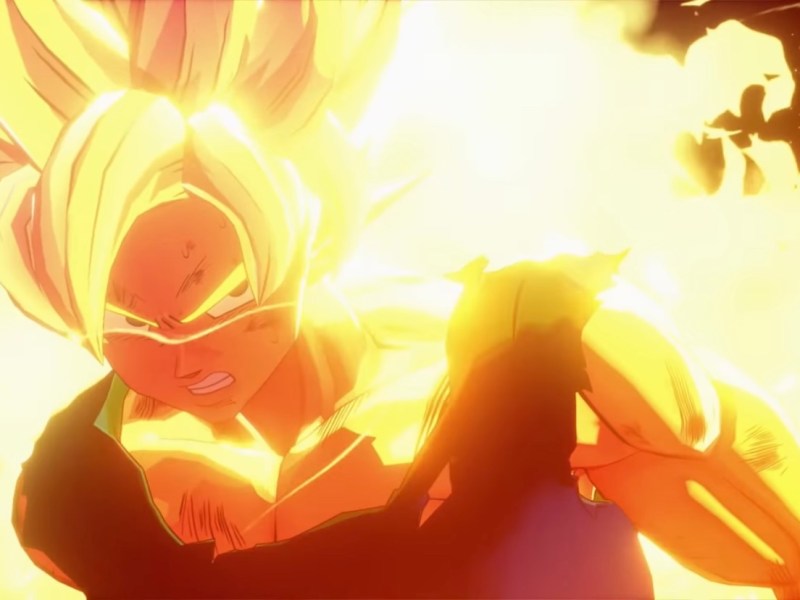
Dragon Ball Z: Kakarot

I need a break from action figure reviews so why not turn to the world of video games? I don’t get to play many these days, but I did splurge on a PlayStation 5 not that long ago and was looking for something to play. And ideally, that something would be budget friendly. The good…

Keep reading

Super Dragon Ball Z

Super_Dragon_Ball_Z_CoverartRecently, Bandai-Namco conducted an open beta for its latest game based on the venerable Dragon Ball franchise:  Dragon Ball FighterZ. The game is a 3 on 3 tag-fighter that exists on a 2D plane but contains three-dimensional characters. The art style is done in such a way that it more closely resembles the 2D anime that’s recognized around the world. It’s a fast and beautiful looking fighter and yours truly did check out the beta. Like most open betas where an upcoming game is essentially free to play briefly, it was a bit of a challenge actually getting logged into the servers and paired up with a match. I mostly spent my time in the training area just checking out how the game handles and plays. It’s very similar to the old Budokai games in some respects, mostly the speed and the fact that all of the characters seem to have the same move-list, only the animations for each move are unique from character to character. For example, a traditional Ryu fireball motion for Goku results in his kamehameha wave while the same for Krillin is the destructo disc maneuver.
FighterZ seems like it will be a pretty entertaining game, but it’s not what I wanted or expected. The developer, Arc System Works, is best known for Blaz Blue so I expected a more traditional 2D fighting experience with some Dragon Ball styling. Instead, FighterZ is apparently courting a more casual crowd that grew up on those old DBZ games and Super Smash Bros. as opposed to Street Fighter. This naturally lead me back to an old favorite of mine:  Super Dragon Ball Z.

Not to be confused with the currently airing anime Dragon Ball Super, Super Dragon Ball Z is a 3D fighter that plays like a 2D fighter. It was developed by Arika, the company headed by Akira Nishitani who is best known as the brain behind Street Fighter 2. The company is known for its work Capcom on the Street Fighter EX series, a 2.5D fighting game that was relatively popular in the late 90s and early 2000s. As you would expect, a DBZ fighting game developed by the father of Street Fighter plays a lot more like a Street Fighter game than the casual arena brawlers that had become the norm for DBZ. It was released to arcades at the tail end of 2005 in Japan and Europe only before arriving on PS2 in 2006 worldwide. Because it’s not what people were used to out of a DBZ game, it went somewhat overlooked. While I would not consider it on par with the best the Street Fighter series has produced, Super Dragon Ball Z is a pretty damn fine game on its own.

hqdefault-29

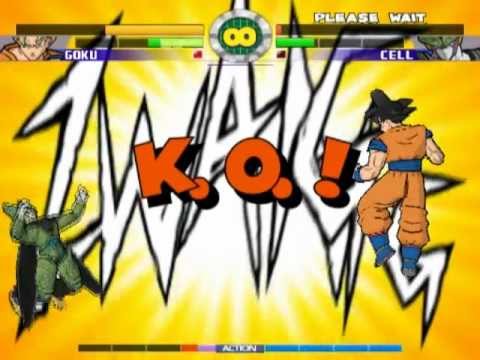
End a battle with a super move and you’ll be treated to some manga-inspired word art.

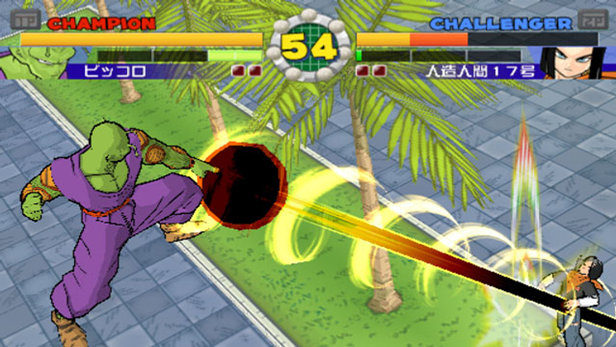
Super Dragon Ball Z has the typical fighting game maneuvers you would expect of a Street Fighter clone. Think hadokens, shoryukens, and so on. Not every character has the same standard set of moves, but they do share some similarities so it’s not as streamlined as simpler games, nor as complex as the most hardcore fighters. The characters are presented in 3D with a cell-shading effect and the default colorization is meant to resemble the original Dragon Ball manga as opposed to the anime. The stages are arena types and characters can move into the foreground and background with relative ease. An action bar at the bottom of the screen controls movement within the foreground and background as well as dashing. Deplete that and you will find your movement severely hindered until it replenishes. It does refill rather quickly, but the gauge prevents characters from endlessly dodging to prolong a match or from spamming dash attacks.

The game’s button layout is a bit unique. The square and triangle buttons are your weak and strong melee attacks while circle is the jump/fly button and X is guard. The shoulder buttons contain both dash attacks and a dedicated throw button. Any fighter that utilizes a dedicated block button takes some getting used to, and the jump/fly dynamic is a bit wonky in execution. It’s mostly used to go after your opponent, as opposed to setting up an attack. The dash buttons are useful for closing the gap quickly with your opponent or just to get you on the same plane as your opponent.

slus-21442-game-ss-2

It may not be the flashiest DBZ game, but your favorite characters will still have their most recognizable moves.

The fighting mechanics are a mix of traditional fighters and DBZ fighters. Projectiles play a large role, but up close combos are also present and a major part of combat. Certain characters function better as ranged attackers versus up close ones and the AI for each character feels rather true to the source material in terms of how they attack the player. There’s a simple health gauge that needs to be depleted to end a round and there’s also an ultimate gauge that gradually fills up during a match. This gauge is expensed when using a character’s best attacks, but unlike other DBZ fighters, there is no charge button to build up ki forcing you to better manage the resources you have. The big moves are also less destructive than in other games. There’s more of an emphasis on dealing out damage gradually as opposed to in big chunks. Being able to dodge properly is the best way of avoiding damage as opposed to blocking and countering and canceling are certainly effective ways to victory.

The game is overall a lot slower and less manic than other DBZ fighters. Characters do not move at crazy speeds and only Frieza can do the popular teleport move in battle. Battles feel a bit more strategic as there’s still an environment to navigate with obstacles to hide behind or toss foes into. Combos are present and they’re more similar to Tekken style combos than Street Fighter ones requiring a series of well-timed button presses. With only two dedicated attack buttons, they’re fairly similar but the timing for each character is a little different and requires some practice. It may be different, and to someone just watching the game it will likely seem less authentic when compared with the anime, but it feels more strategic and ultimately it has its own rewards.

hqdefault-30

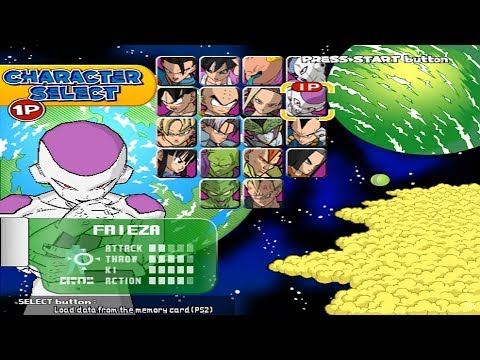
Even after unlocking the hidden characters the roster is still on the small side when compared with its contemporaries.

The character roster is much smaller than what fans are used to. At the onset, the characters available are:  Goku, Gohan, Vegeta, Trunks, Piccolo, Krillen, Chi Chi, Androids 16, 17, and 18, Frieza, and Cell. Additional characters can be unlocked and most are just variants of existing characters. The saiyan characters have the ability to go super in battle, and it’s an ability that rapidly depletes stamina so it’s not meant to be a permanent state. Only Super Saiyan level 1 is available, so there’s no going 2, but it does make those characters a bit more interesting than the non saiyans. Of course, every character has pluses and minuses. Piccolo, by virtue of his stretchy limbs, has incredible range and Krillen’s destructo disc can carve through every move in the game. It’s a roster a bit on the small side, but each character feels relevant and the secret characters are also fun too (and some of my favorites).

The game has a standard set of modes including Arcade and training as well as a survivor mode dubbed Z-Survivor. Arcade is a series of seven battles with five of them being random. Each subsequent opponent gets stronger and their strength is represented by a scouter reading before battle, which is kind of neat. The mode always ends with a battle against Frieza followed by a fight with Cell. There are no custom endings for each character, which is a bit disappointing, nor is there really much of an ending at all, but if you’ve seen the anime and played almost every DBZ fighter released then you’ve seen how the story ends more times than you can count. What is interesting is that after each victory you get one of the titular dragon balls. By collecting all seven, you can summon Shenron and make a wish. This is how you get additional characters, and also how you improve your existing ones.

super-dragon-ball-z-4e2609203a69e

Spend enough time collecting dragon balls and eventually you’ll unlock additional characters like cyborg Frieza.

By far, the most interesting aspect of Super Dragon Ball Z is the custom character process. Other games have dabbled with this, but Super Dragon Ball Z really seems to go for it. As you fight with a custom character, your character naturally gets stronger. Once you fill an experience bar, and completing arcade once is more than enough for the first go around, you can learn a new skill. The skills range from increased health to faster action regeneration time as well as to new and better moves. The most powerful attacks are reserved for custom characters, and some of them have to be wished for. This encourages you to pick a character and stick with it. As a bonus, if you max out a character you can then take another character and inherit moves from the previously maxed out character. For those who really want to craft the ultimate character, doing this is necessary since only some characters have the worthwhile Super Cancel ability.

The only real issue with the character customization is that there is little you can actually do while leveling-up your character. It’s only so amusing to beat the arcade mode over and over so if you don’t have a friend to play it can get a little old. The Z-Survivor mode helps out as this is a mode where you’re given one health bar to vanquish 10 foes in succession. After each conquest, a roulette wheel is spun to get a little power-up for the next fight and it’s not hard to stop the wheel on what you want. However, you can’t just repeatedly select the health restore option as it gets worse each time you land on it. It starts off with a 50% health recovery, but after the next round it will drop to 40% and so on. You have to be strategic with the best rewards if you want to survive to the end. If you do manage to defeat all challengers you’ll be confronted with one more and the fun part about that is you’re allowed to wager basically all of the experience you’ve gained throughout the mode in a bid to double it, if you win, of course. It’s definitely more challenging than Arcade mode and it might end up being the mode you spend the most time in.

Super_Dragon_Ball_Z

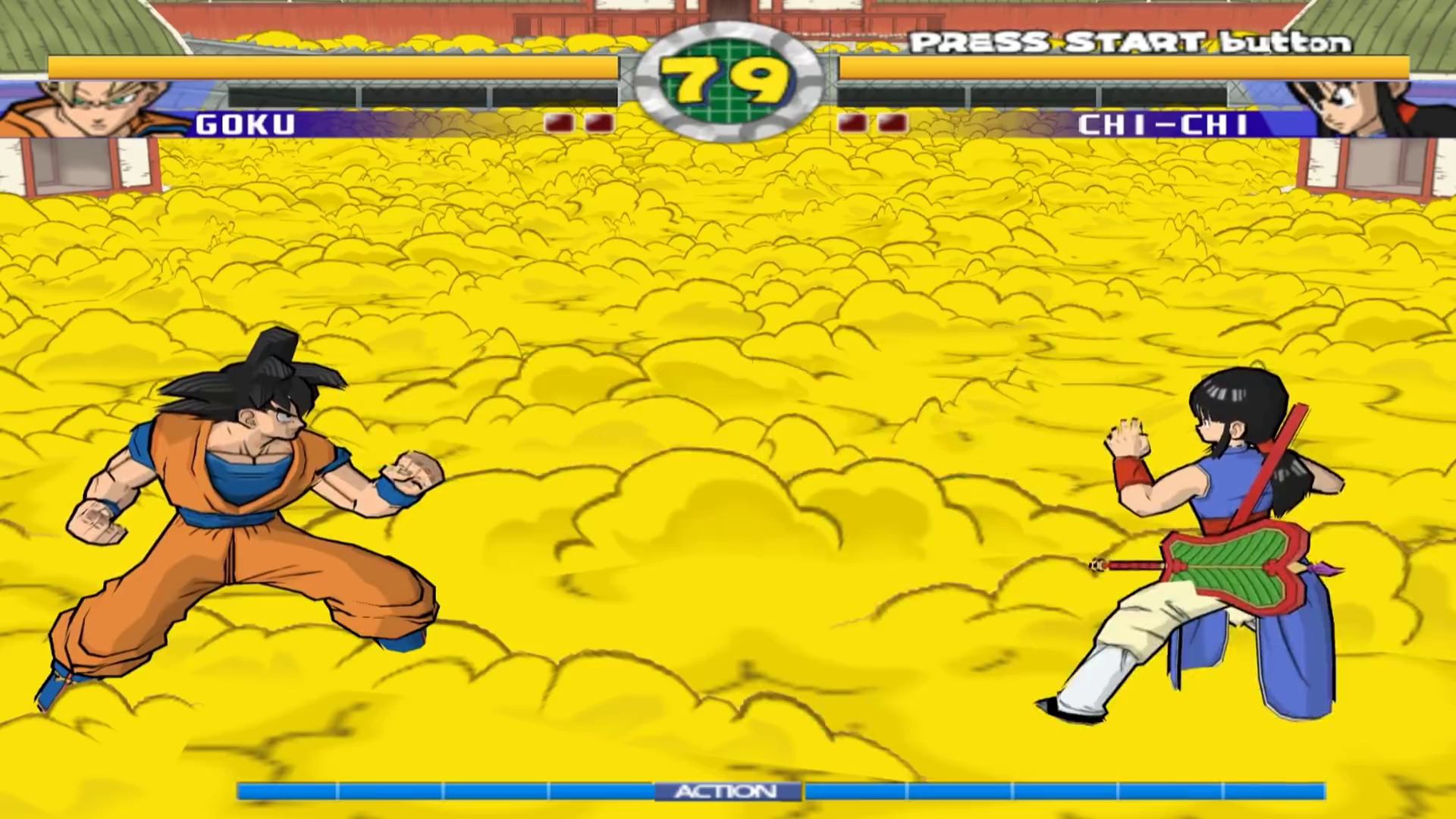
Few DBZ games let you play as Chi-Chi giving fans of that character some added incentive.

Visually the game holds up pretty well. The cel-shading approach helps give it a timeless look, though some characters come off better than others. Goku, for example, has always had a some-what tough time making the jump from flat 2D image to 3D polygon. The stages are, as a whole, more interesting to look at than other DBZ games and the manga approach to its styling helps to add a little extra charm to everything. Sadly for anime purists over here, the soundtrack for the US version is a mix of industrial music that’s designed to resemble the score to the Funimation dub of the show, though it’s an original score and not authentic so even Funimation purists have a reason to be irritated. Other versions utilized some of the actual music from the Japanese anime and I’m sure a lot of US fans would have preferred that. If you hate the manga look though, know that anime colorings do exist in the game so if you want your Future Trunks to sport a royal blue coat instead of teal you can certainly make it happen. Overall, the presentation is solid, though like the gameplay, you won’t get much in the way of flashy big graphical spectacles in the form of massive super moves. At least not on the level of other DBZ fighters.

Since this is a PS2 game, there’s no online mode to easily find other challengers. And even if there were, the servers would undoubtedly be shutdown by now anyway. Having a group of friends who all enjoy the game helps increase the amount of enjoyment you’ll get out of it, but that’s also true of basically every fighting game ever created. It would have been nice if each character had a story and an ending to uncover, but then again, that would work against the drive to just use the same character over and over to make them more powerful. How eager you are to see the secret attacks and unlock the hidden characters will be your primary motivation to revisit this one. If you’ve ever played a DBZ fighting game and wanted it to be more like a traditional fighter, then check out Super Dragon Ball Z. It’s very easy to find a copy for a relative pittance these days so you won’t be risking much by doing so.