Tag Archives: disney

#8 Best in TV Animation: Gargoyles

disney-has-gargoyles-legally-streaming-on-youtube-socialWhen I started this feature I swear I did not intend to list the best cartoons aimed at children, that’s just how it’s worked out so far. I promise the next few are going to trend older. That said, Gargoyles is a pretty terrific show whether you’re 8 or 18. The show borrowed heavily from comics and was obviously influenced by the likes of Batman and X-Men. Like most cartoons geared towards boys, the show featured plenty of action but also contained plenty of drama. It asked a lot of its viewers, opting for a more serialized narrative structure with numerous callbacks to older episodes. Sometimes, plots required multiple episodes to develop and pay-off which is probably one reason why the show aired weekdays as opposed to Saturday mornings (though the final season was moved to Saturdays). Lastly, as a Disney produced and developed cartoon show, the program featured slick animation and stellar production values all around.

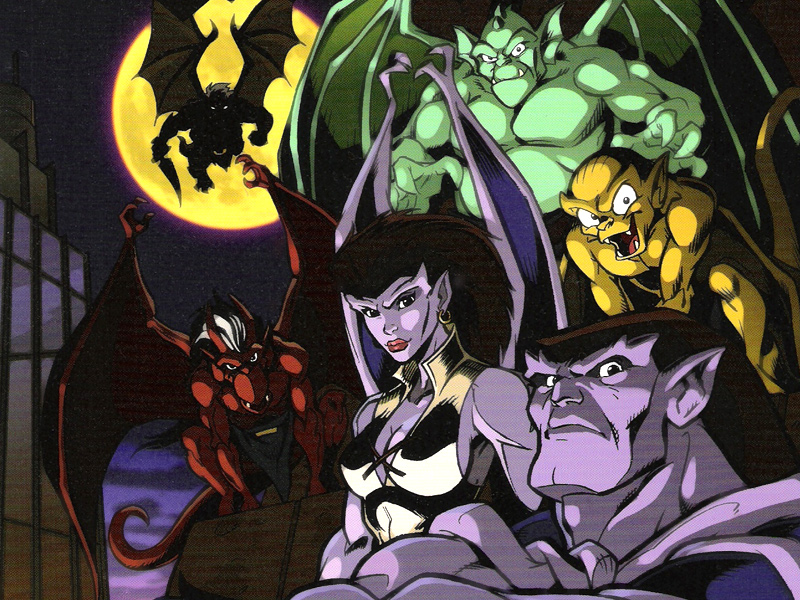
Gargoyles first began airing in 1994 and centered around the character Goliath, the leader of a clan of Gargoyles displaced by time and forced to adapt to life in New York City. The premise for the show was established over the first five episodes and the lore of the world is firmly established here. Gargoyles are beast-like creatures that are active at night, and stone by day. During the middle ages they protected a castle inhabited by humans in Scotland but were betrayed with most of the gargoyles destroyed while they slept. Magic is also a part of this world, and the remaining gargoyles that survived the attack were placed under a spell that would keep them stone until the castle they inhabited rose above the clouds. Of course, this would happen when a man by the name of David Xanatos purchased the castle and placed it atop a skyscraper in New York.
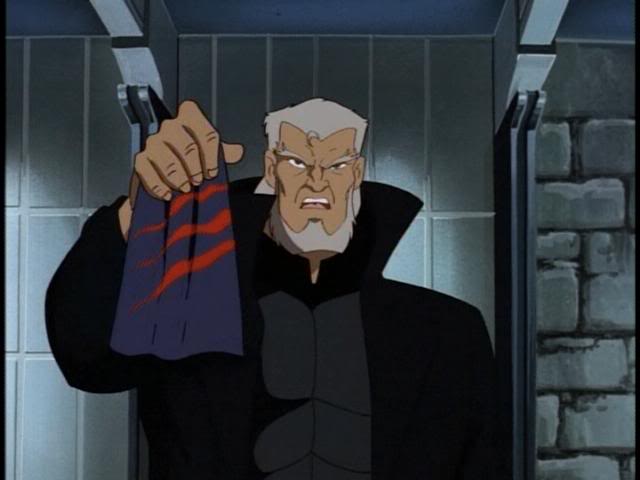
MacBeth is one of the more prominent antagonists in the series.

MacBeth is one of the more prominent antagonists in the series.

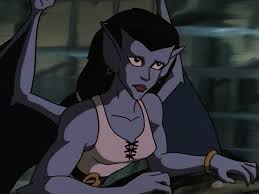
Over the resulting episodes, the gargoyles would come to view Xanatos as an enemy, as well as many others. Surviving outside of the curse is Goliath’s old flame, Demona, a female gargoyle who is like the Magneto to Goliath’s Xavier. She wishes to exterminate humanity while Goliath sees value in forging alliances with people and serving as their protectors. Goliath and his clan, consisting of fellow gargoyles Hudson, Broadway, Lexington, Brooklyn, and Bronx, forge a bond with detective Elisa Maza and basically become protectors of New York. They don’t run around like Batman, but their presence draws out and attracts the attention of various foes, many from the past. Some are more interesting than others. Throughout the series, Demona is a worthy foe for the clan. She’s ruthless and cunning, and even though she often finds herself on the losing side the writers manage to maintain her credibility as a villain. MacBeth is another stand-out foe. He and Demona share a bond as a result of a curse and neither one can die unless the other is killed which makes for an interesting dynamic. MacBeth is no friend to Goliath and company, leading to numerous instances where the gargoyles are caught between MacBeth and Demona, who despise one another.

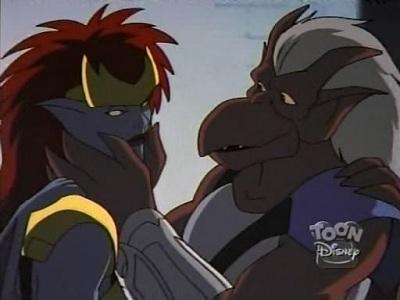
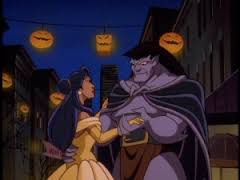
Stylistically, the show is quite dark. This is to be expected since the primary protagonists are only active at night. The gothic influence in the look and music invite comparisons to another well-regarded cartoon; Batman: The Animated Series. So natural was the likeness that Batman producer Bruce Timm was asked about the show more than once and was said to be not a fan of Gargoyles. The tone of the show was certainly quite serious, even melodramatic. The serialized nature of the show and the human/gargoyle dynamic make it seem more comparable to X-Men, particularly the first two seasons. There’s even a beauty and the beast vibe going on (and the allusions were quite literal in one episode) between Elisa and Goliath. Their relationship starts off professional early on and gradually develops into something more. If you’re looking for pay-off though, you’ll have to consult the not safe for work fan-fiction of a few a diehards (you may want to enable safe search between doing a google image search of Elisa and Goliath) scattered across the internet.

Goliath and Elisa share a bond bordering on love that only intensifies as the series goes on.

Goliath and Elisa share a bond bordering on love that only intensifies as the series goes on.

One thing that Gargoyles did that I can appreciate is that it added to its cast. In X-Men, several mutants and other heroes would cameo on various episodes. These characters, like Archangel and Nightcrawler, were members of the team in the comics but would never join the roster on the television show. This used to bug me, though I understand why the show runners would want to try and keep the cast as manageable as possible. Gargoyles expanded its roster during the second season and it was cool to see. Villains were also eliminated or changed while others, like Xanatos, would become grayer as the series progressed.

Where the show opens itself up for criticism is within its tone and scope. Two things that I consider a strength, do sometimes bog it down. The show is so grim at times it feels joyless. There’s moments for comedic relief but not a lot when compared with contemporary programs. The show also became burdened with the lore it created, particularly during the last half of season two, and sometimes the show felt like it was becoming too big for its own good. It’s no surprise that the show kind of fizzled out towards the end and the final third season is rather poor.

Gargoyles earns its place on my list of top animated television shows because it scores very well across the board, even though it doesn’t quite knock-it-out-of-the-park in any one category. Though maybe I should amend that last sentiment because I’ve underplayed how stellar the animation is for a televised program. The first season especially is borderline feature-film worthy, which is something Batman can’t even boast. Gargoyles is a really unique program when compared with the other Disney Afternoon shows and it would be nice to see Disney try to revive the franchise in at least a small way (cough KingdomHeartsThree cough).

If you’re interested in reading more of my thoughts on Gargoyles, you can fine reviews for the three DVD releases here, here, and here as well as read my arguments for why it should be included in a popular gaming franchise here. Enjoy.

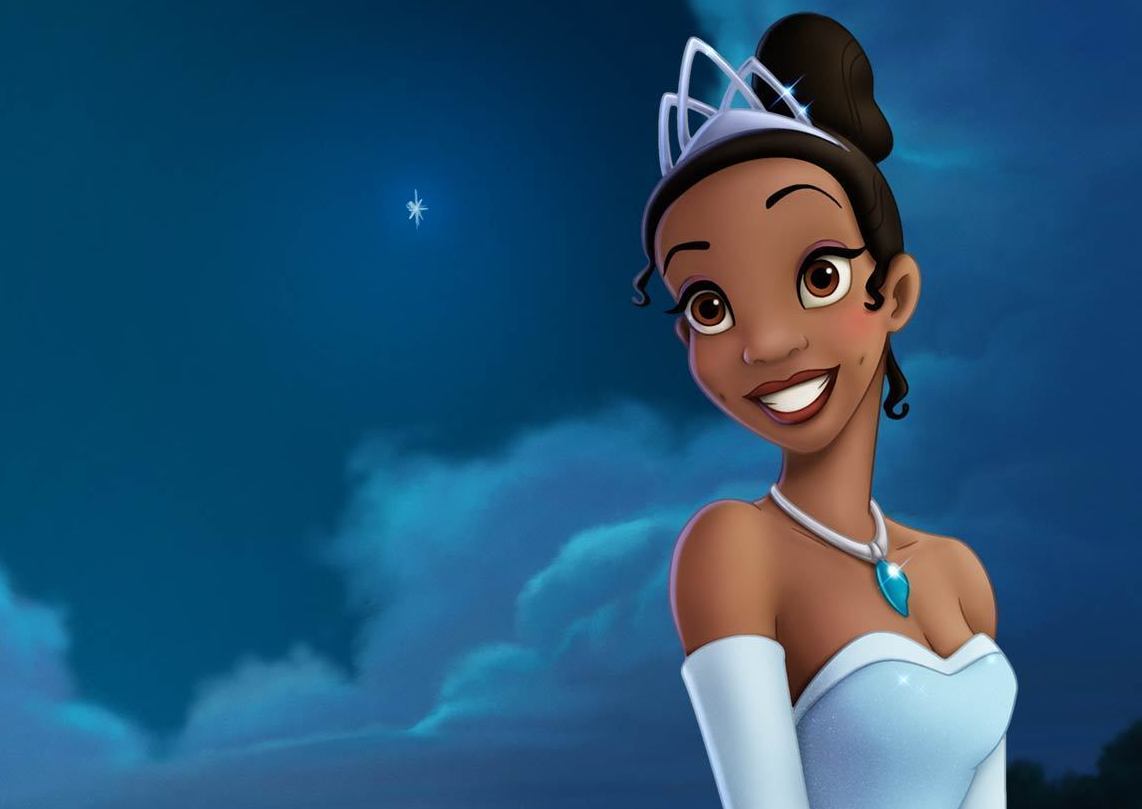
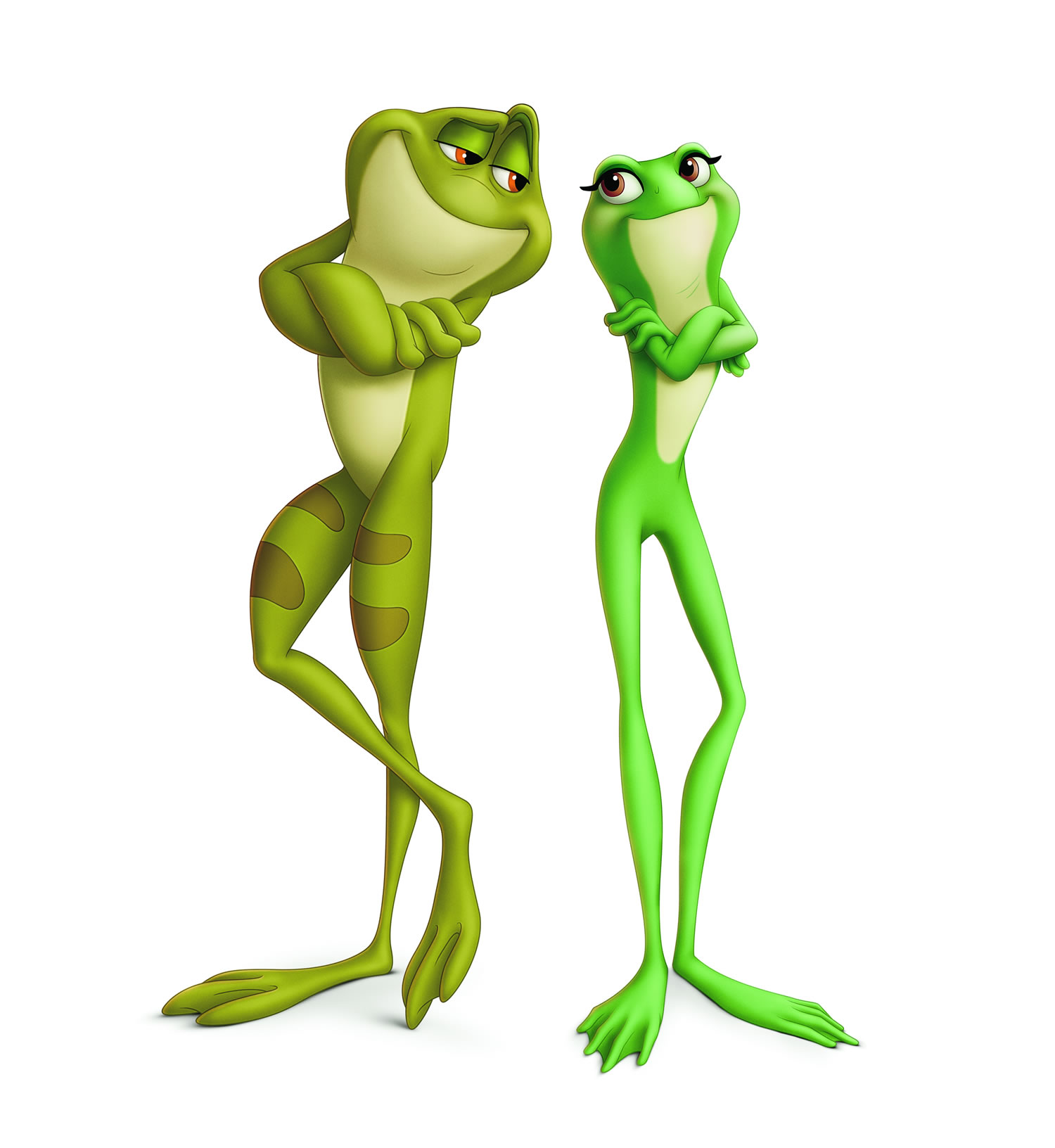
The Princess and the Frog

The Princess and the Frog (2009)

The Princess and the Frog (2009)

When Walt Disney unveiled Snow White and the Seven Dwarfs back in the 1930’s, many critics saw the move as a foolish one. Who wanted to pay to see a feature-length cartoon? Apparently, many folks as Snow White became one of the most successful movies of all time. Ever since, Walt Disney Productions has specialized in feature-length animated films with fifty-three produced and released to theaters, not to mention numerous direct-to-video films and television specials. Ever since 2004’s disappointing Home on the Range, all of the Disney films have undergone a major change. The traditional hand-drawn animation of classics such as Snow White, Pinocchio, and Bambi have been abandoned in favor of computer-generated characters. When CG movies started showing up in the 90’s the medium was met with skepticism, but following the success of Pixar’s Toy Story, it became apparent that CG was the future of animation. Still, few could have predicted CG would reduce hand-drawn animation to near extinction. And with Pixar and Disney partnering up, it seemed like Pixar would be the vehicle for CG animated films while Walt Disney Animation Studios would continue to churn out the more traditional stuff. That was not to be.

When Disney first announced The Frog Princess in 2007 it came as a surprise. Disney had previously declared 2-D animation dead in ’04 and for a new hand-drawn film to show up just three years later was definitely unexpected. The film, which starred an African-American girl from New Orleans named Maddy, was also met with a whole bunch of criticism from various groups. If Disney had thought a non-white female lead would garner it lots of positive press it was unfortunately mistaken. Having a black lead seemed to place a microscope on the film and the early press package was nit-picked to near death. The setting, the main character’s name, occupation, the ethnicity of the film’s prince – all received some criticism. Even the film’s title was somehow offensive to French people. To Disney’s credit, a lot of the criticisms were taken to heart and applied to the film. The new title became The Princess and the Frog. The main character was given the name Tiana and made a waitress and Oprah Winfrey was hired as a consultant. What was not changed was the setting which the directors felt was important to the story. Other criticisms, such as a black man for the villain, were also kept. This didn’t free Disney from further criticism though, but at least it showed the company was sincere.

Tiana's ethnicity was cause for celebration in some circles, but it also opened her up to more scrutiny than usual.

Tiana’s ethnicity was cause for celebration in some circles, but it also opened her up to more scrutiny than usual.

With the hand-drawn animation decision out of the way, directors Ron Clements and John Musker (Aladdin, The Little Mermaid, The Great Mouse Detective) also wanted to bring back more traits of the old Disney films. The Princess and the Frog was based off of a fairy tale, The Frog Prince, and a retelling The Frog Princess, using elements of both. It was also decided the film would be a broadway-style musical like the films of the 90’s. For the film’s look, producer John Lasseter wanted the animation to draw comparisons to Disney’s Lady and the Tramp, which he considered to be the pinnacle of Disney animation. Many veteran animators who had been laid off following the decision to abandon hand-drawn animation were re-hired, and Disney’s outdated CAPS software was replaced by Toon Boom Harmony. The film was cast, and production was underway.

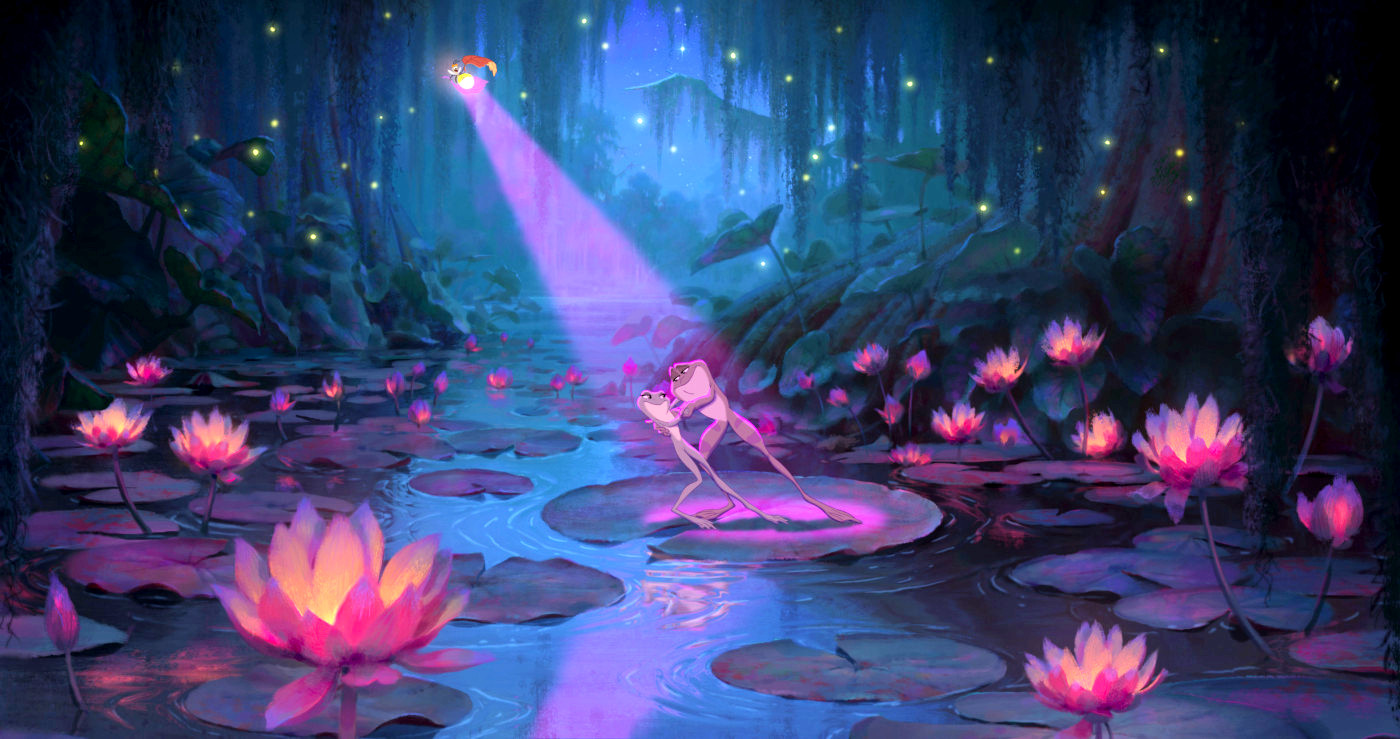
As expected, a modern hand-drawn animated film from Disney looks spectacular. The Princess and the Frog is Disney’s sharpest looking production to date. The animation is warm, fluid, and full of personality. The backgrounds are astonishing and are so much more alive when compared with the animated features that came before it. The film was produced using actual sheets of paper as opposed to having the animators draw on tablets and many of the film’s backgrounds are painted as well. CG effects are applied for smoke, shadows, and other lighting. If the film has one visual drawback, it’s that some of the objects look flat against the expressive backgrounds. This limitation is contained to background characters, but is noticeable at times. Otherwise, the film looks fantastic and is a true love letter to the animated films of old.

For the frog versions of the two leads, Disney wanted their look to draw from the example set by Jiminy Cricket: make the characters pleasing to look at as opposed to realistic.

For the frog versions of the two leads, Disney wanted their look to draw from the example set by Jiminy Cricket: make the characters pleasing to look at as opposed to realistic.

The plot unfortunately is not the equal of the animation. While the performances of the actors involved is quite good, the actual pacing of the film is pretty ho-hum. Aside from the twist of having the film’s “princess” turned into a frog, it’s fairly predictable. The film’s villain, Dr. Facilier, is basically a bad guy for the sake of being a bad guy. There’s not much depth to him. Tiana is a strong female lead who’s a hard-working girl scraping by with the dream of one day opening her own restaurant. She’s juxtaposed by her best friend, Charlotte, the daughter of the wealthiest man in town who has had everything handed to her. Charlotte’s prime goal in life is to marry a prince so she can be a princess. Clearly, Tiana is expected to fulfill the role of a modern woman (despite the film’s 1920’s setting) while Charlotte is meant to represent the outdated princess of old who is defined by her prince. The film is definitely successful at making Tiana a positive role model for young girls (or really, for any child), but it isn’t done in an organic way. Tiana, either through spoken dialogue or song, is determined to let us know over and over how she has had to work hard for everything she has. And while some of that is intended to be a trait of the character, one does get the feeling the film could have used some more subtlety. Future Disney films would better create a compelling female lead, which isn’t to say that Tiana is a disappointment, she just lacks refinement.

Taken on the whole, the film is an enjoyable adventure thru the Louisiana bayou that feels pretty light-hearted. There’s comedy, and of course, music that is entertaining if nothing else. The fact that the film doesn’t have some big, important, message to convey is forgivable, though the lightness of the tale keeps it from being among the best of the best. The film does shine amongst its predecessors when the film’s music is considered. Written primarily by Randy Newman, it does a good job of taking the audience to New Orleans and the opening number, performed by Newman with vocals by Dr. John, is one of my favorites from any Disney film. I normally loathe the musical parts, and for some of the ones in this film that sentiment remains, but I was surprisingly captivated by a few. They’re not overdone, and unlike the more recent Frozen, I never felt like the music was used as a substitute for dialogue. The film also doesn’t shy away from adding a dangerous element to its villain. Too many parent-centered reviewers will remark that Dr. Facilier is too scary for young kids, but he’s supposed to be scary! What’s the point of a villain that doesn’t come across as a threat to the protagonists? There’s even a death in this film, and I was happy to see there wasn’t some lame cop-out to follow, even though I was expecting one.

There's no denying the film is stunning to behold.

There’s no denying the film is stunning to behold.

The Princess and the Frog was met with positive reviews upon its release and was a financial success. It wasn’t the smashing success of some of the older Disney films, and because of that, the hand-drawn animation wing has been shelved indefinitely. The Blu Ray special features contain numerous interviews with the creators of the film who speak glowingly about hand-drawn animation with an eye towards the future. During the run-up to the film’s release, Disney was boasting that a hand-drawn feature could be expected every two years. The film was released in 2009, and today in 2014, there still hasn’t been another hand-drawn feature from Disney. The Snow Queen, retitled as Frozen, was supposed to be the next hand-drawn feature but was converted to CG and went on to become a massive success for Disney. Who knows if the choice of animation would have had any impact on the finished product. I personally do not feel the general movie-going public is averse to hand-drawn animation or even has a preference. The luster of CG has long since worn off as it has now become the standard. The Princess and the Frog likely did not perform up to expectations at the box office for reasons completely unrelated to its animation style. If anything, the animation style likely drew additional patrons since hand-drawn is no longer the norm. I personally believe the film wasn’t a huge hit because the plot seemed too familiar. Most people have already seen numerous animated fairy tales and a film with the word “princess” in the title probably isn’t going to draw the attention of young boys. Disney’s attempt at creating a modern princess for young girls to look up to effectively alienated them from a large portion of their audience:  young boys. The studio is definitely wise to this as more recent films have opted for a more ambiguous title like the previously mentioned Frozen or Tangled.

It is my sincere hope that The Princess and the Frog is not the last feature-length production from Disney to feature hand-drawn animation. The film is proof that the medium still has a lot to offer and I just find it so much more engaging than CG features. While I love and appreciate much of what Pixar has put out I’ll likely always prefer the hand-drawn look. The sad thing is, as fewer and fewer films and cartoons are done in that style, the people who specialize in it are likely retiring or no longer with us. The younger generation is being raised on CG and lacks the skills to create hand-drawn animation. Hopefully, Disney realizes this and elects to take on the responsibility of keeping the art form alive. Perhaps releasing a hand-drawn feature every other year was too ambitious, but every five years seems like a reasonable goal. With no hand-drawn features announced as of this writing, the future of the medium is very much in question and that’s a shame. The only company that seems to care is Japan’s Studio Ghibli which thankfully continues to output hand-drawn features even with its beloved leader’s, Hayao Miyazaki, retirement. To all lovers of hand-drawn animation, I say treasure The Princess and the Frog, because you may not see another Disney film like it.


Essential Halloween Viewing

When it comes to holiday themed television specials and films, Christmas leads the way with its countless amount. Coming in second is likely Halloween. Unlike Christmas, there usually isn’t some serious undercurrent to Halloween specials. It also feels less sinister when it comes to marketing, even though there’s certainly lots of money to be made off of Halloween by costume and candy suppliers. For the most part, Halloween is just fun and it’s emphasis on scares helps to distinguish it from other holidays. Like many people, I enjoy a good Halloween special whenever the season rolls around, but with so many out there it can be hard to make time for them all in what amounts to only a month. There are some modern ones out there, like the entertaining Toy Story of Terror, but for the most part I like to watch the specials I watched as a kid. Without further adieu, here’s The Nostalgia Spot’s Halloween viewing guide.

Mickey Mouse in “Lonesome Ghosts”

220px-Lonesome_GhostsHere’s an oldie from way back in 1937, something that would have entertained my adolescent grandfather. Since I only discovered it a few years back, it’s not exactly something I remember from my childhood but certainly fits the theme of this blog. In this cartoon, professional ghost exterminators Mickey, Donald, and Goofy investigate paranormal activities in an old house. The twist is that the trio were hired by the ghosts themselves because no one ever enters their haunted house anymore and they’re just plain bored. Less creepy than it is humorous, it’s mostly a slapstick affair as the ghosts play tricks on their would-be exterminators. It’s an entertaining short, and one can’t help but wonder if it maybe partly inspired Ghostbuster, or at least the theme song, especially when Goofy declares, “I ain’t afraid of no ghosts!” The short has been shown on television numerous times over the years as part of Halloween specials. It was also re-released to theaters in the 1960’s and has been released on VHS and DVD as well. The easiest way to see it these days is probably youtube.

Donald Duck in “Trick or Treat”

By the late 40’s and into the 1950’s, Donald Duck was basically the only classic Disney character still receiving new short films. There just wasn’t much money in the format anymore and the budget for each short was scaled back considerably. For the 1952 short “Trick or Treat,” Disney decided to increase the budget to give Donald a proper Halloween special. It has its own theme song and the animation is quite nicely done in comparison with other shorts from around that time. In this one, Donald’s nephews Huey, Duey, and Louie are out trick or treating and come upon their uncle’s house. When the boys knock on his door and request their tricks or treats, Donald (not surprisingly) elects trick. A witch, Witch Hazel, passing by happens to see this and decides to help the boys get their treats out of Donald. Apparently, the Halloween spirit does not include the tricks portion of the ages old phrase. Hazel uses her magic on Donald and a lot of physical comedy follows. Like “Lonesome Ghosts,” this one has been released on VHS and DVD over the years either on Halloween compilations or as a bonus feature with certain films. There’s a chance it could pop up on one of the Disney channels this Halloween, but if you want to see it better head to youtube.

The Real Ghostbusters – “When Halloween Was Forever”

Samhain, the spirit of Halloween!

Samhain, the spirit of Halloween!

A cartoon that centers around four guys (and a ghost) who hunt down paranormal creatures naturally lends itself well to Halloween. Pretty much any episode could qualify for such a holiday, but the episode “When Halloween Was Forever” happens to deal with the holiday directly. This episode features the ghost Samhain, the spirit of Halloween, who decides to freeze time on Halloween night so that it lasts forever. Since Halloween is said to be derived from the Pagan holiday Samhain, it’s a nice touch to name the ghost after it. The Real Ghostbusters was a DIC production and if you’re familiar with any of their cartoons from the 80’s then you likely know what to expect out of the audio and animation. It’s standard for the era, with the soundtrack being appropriately spooky. While no episode of this cartoon can come close to matching the film it was based on, it’s actually not a bad show and time has been far kinder to it than it has the more popular Teenage Mutant Ninja Turtles.

Ren & Stimpy – “Haunted House”

The premise for this one is conventional, Ren and Stimpy stumble upon a creepy looking house and, in need of shelter for the night, decide to head inside. Unbeknownst to them, the house is haunted and a malicious ghost lurks inside who can’t wait to scare them. The twist here is that Ren and Stimpy are seemingly in on the joke as they break the fourth wall and end up impervious to the ghost’s efforts. This naturally frustrates the ghost, to the point that he becomes depressed and suicidal (apparently, ghosts can “die” in Ren and Stimpy’s world). Highlights of the episode include a Psycho shower-scene parody and the previously mentioned fourth-wall breaking remarks (“This looks like a good place to kill 12 minutes!”). There’s also the usual random humor found in a Ren and Stimpy short that people either find amusing or stupid. This one is unlikely to show up on television so anyone looking to watch it will either have to pick it up on DVD or turn to the internet. Be warned, the version found on the official Ren & Stimpy Volume 1 is censored with the Bloody Head Fairy bit removed completely. Apparently it was considered too gruesome after the fact.

Beavis and Butt-Head – “Bungholio:  Lord of the Harvest”

Beavis and Butt-Head on a quest for candy.

Beavis and Butt-Head on a quest for candy.

Sometimes referred to as “Buttoween,” this episode features everyone’s favorite dim-witted duo as they go trick or treating in search of free candy. Since they weren’t even aware Halloween was coming until trick or treaters showed up at their house, the two do not have costumes so Butt-Head covers his head in cheese sauce (“I’m nachos.”) while Beavis wears his underwear on his head (“I’m a nad!”). Beavis eventually has too much sugar and his alter-ego, The Great Cornholio, shows itself. The two soon find themselves on a farm ripped right from a slasher film. Most of the humor comes from watching the two try and get some candy in the first part of the episode, while the second part puts the two in an obvious bad situation that they’re apparently oblivious to. The animation is pretty terrible, but anyone who has seen an episode of Beavis and Butt-Head before should already be aware of this. It’s stupid humor, but it is pretty funny. You either like it or you don’t.

South Park – “Pinkeye”

South Park is more known for its numerous Christmas specials, but early seasons often featured other holiday themed episodes. The first season episode, “Pinkeye,” remains the show’s top Halloween special. In this one, a mishap with worcestershire sauce causes a dead Kenny to turned into a zombie. Kenny, as patient zero, spreads a zombie plague all through-out South Park that a clueless doctor mistakes as a severe case of pinkeye. It’s up to Chef and the boys to put a stop to the zombie menace so they can go trick or treating and get some candy. The episode includes some notable gags such as Cartman’s mom on the cover of Crack Whore Magazine and a memorable parody of Michael Jackson’s “Thriller.” It also features Cartman’s attempt to find a non-offensive Halloween costume.

The Simpsons – “Treehouse of Horror V”

Treehouse of Horror V is best-remembered for its parody of Stephen King's "The Shining."

Treehouse of Horror V is best-remembered for its parody of Stephen King’s “The Shining.”

The Simpsons Halloween special, Treehouse of Horror, has become an annual tradition. With 24 to choose from, some may consider it a daunting task to select only one. As is the case with most things “Simpsons,” the earlier episodes are usually considered the better, and for me, it came down to a choice between Treehouse of Horror II and V. V is just slightly stronger and a little more horror-themed than the more sci-fi II. Treehouse of Horror V features parodies of The Shining, The Sound of Thunder, and Soylent Green. In the first segment, “The Shinning,” the Simpsons are basically dropped into the plot of its source material and includes the memorable line “No beer and no TV make Homer go something, something.” The second segment, “Time and Punishment,” puts a time-traveling toaster in Homer’s hands resulting in Homer unintentionally creating a new present time ruled by Flanders. The third segment, “Nightmare Cafeteria,” has Principal Skinner resort to cannibalism of the student body to cope with budget cuts at Springfield Elementary. If a Treehouse of Horror is able to hit on two out of three, it’s generally considered a good iteration of the venerable television special, but Treehouse of Horror V is the rare one where all three are pretty entertaining. With The Simpsons now being featured on the FXX channel, hopefully a Treehouse of Horror marathon is in the near future. The 25th version of the special is set to air tonight.


Walt Disney’s Sleeping Beauty

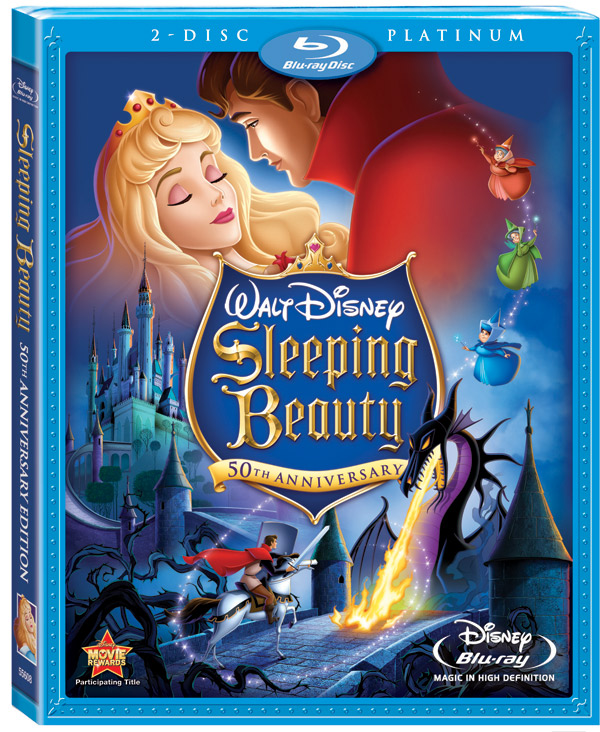
Sleeping Beauty (1959)

Sleeping Beauty (1959)

If you played a word association game with random people and asked them to say the first thing that comes to mind when they hear the word Disney I’d be willing to bet that the top three responses would probably be Mickey Mouse, theme parks, and princesses. It’s that third word I’m keying in on for this post as the princess character has seemingly become synonymous with the Disney brand. This is mostly due to the creation of the Disney Princess line of clothing, toys, and such marketed at young girls as well as attractions like the Bibbidi Bobbidi Boutique at the theme parks. This gives off the impression that the Disney films, particularly the golden age unofficially beginning in 1937 and ending in 1967, are overstuffed with princess stories but that’s really not the case. Of the films spanning those forty years, only two star an actual princess; Snow White and the Seven Dwarfs and Sleeping Beauty, with a third, Cinderella, featuring a woman who would end the film a princess by marriage.

In recent times, the princess as a character has become somewhat controversial as many people feel like these characters are poor role models for young girls. Snow White flees her unhappy life in the castle but assures her audience that someday her prince will come and save her. Cinderella, on the other hand, passively escapes her droll existence through her dreams and is too content to wait around for a fairy and a prince to save her from her wicked stepmother. These are admittedly cynical ways to view what are otherwise considered timeless classics. Parents are free to decide what is and what isn’t appropriate for their children but I don’t think kids necessarily take anything from these, aside from maybe that Cinderella has a pretty dress or Snow White a nice singing voice.

As a result of these portrayals, many movie-goers these days want a stronger female lead. And lately, that’s become true with films such as Frozen and even Beauty and the Beast back in the 90s. Unfortunately, in 1959 this trend was still far away when Walt Disney released Sleeping Beauty. If viewers are uncomfortable with the female leads in Cinderella and Snow White and the Seven Dwarfs, well then they really won’t like Aurora.

Some of the backgrounds are truly stunning, but unfortunately give the film a flat look.

Some of the backgrounds are truly stunning, but unfortunately give the film a flat look.

Aurora is the title character of Sleeping Beauty, an animated film more famous for its villain and the castle that inspired the famous one at the entrance to Disneyland than for its lead. Aurora has the misfortune of being cursed at her royal unveiling by the evil fairy Maleficent and is fated to die on her sixteenth birthday. The three good fairies decide to take her into hiding and raise her as a peasant girl in order to hide her from Maleficent and hopefully prevent her curse from becoming reality. Aurora assumes the identity of Briar Rose and lives there until her sixteenth birthday when she meets the charming Prince Phillip, and after sharing a song in the forest, the two decide they’ve fallen in love. Of course, Aurora ends up being lured to that famous spinning wheel by Maleficent where she pricks her finger and falls into a deathlike sleep and only true love’s kiss can ever hope to wake her.

Aurora appears in less than 18 minutes in the film as a result of her coma, leaving most of the screen time to the three fairies; Flora, Fauna, and Merryweather, as well as Maleficent. Aurora has no real personality and is completely defined by her situation and is quite literally dependent on the Phillip character. Phillip, in turn has little personality of his own save for he is a good and just person willing to do what is necessary to save his princess. Maleficent is the true star of the film, though she is pretty much a by-the-numbers villain with a cool look and an even cooler ability to change into a menacing dragon. The good fairies provide some laughs, as do the royal parents of the two leads, but this is a fairly weak Disney film where plot is concerned.

Maleficent has proven over the years that it is she who is the star of Sleeping Beauty.

Maleficent has proven over the years that it is she who is the star of Sleeping Beauty.

For many, these classic Disney animated features are less about the story and more about the look and score. This version of Sleeping Beauty is adapted from the ballet by Tchaikovsky and is appropriately scored. It’s lone drawback from a musical standpoint is the one song sung by the main character, “Once Upon A Dream,” is too similar to Cinderella’s signature “A Dream is a Wish Your Heart Makes” and not as memorable. The scene in which it’s sung is also too similar to Cinderella’s as Aurora dances in the forest with animals of high intelligence. For the visuals, Disney made use of Super Technirama 70, which allows for more detail and complexity in the backgrounds. Walt Disney also wanted the film to separate itself from the previous fairy tales the studio had done and requested his artists employ a sharper look. Aurora’s face is noticeably more angular than Cinderella and Snow White’s rounded look and the backgrounds resemble still paintings as opposed to fully realized environments. The approach comes at a cost as the film has a very flat look to it. The colors are rich though, and I’m reviewing this as a blu ray feature, which help separate it form its peers. This was the last Disney film to use hand-inked cells as the following ones would utilize xerox. I like the direction the studio took, but I do think it needed further refinement to remove that flat look. The image where Aurora is found unconscious after pricking her finger on the spinning wheel is particularly ugly as her body looks like it’s been run-over by a steamroller.

I can't believe this shot made it into the final film. Aurora looks like a piece of paper.

I can’t believe this shot made it into the final film. Aurora looks like a piece of paper.

The standout scene for Sleeping Beauty is unquestionably Maleficent’s battle with Phillip, in which she takes on the form of a massive, black dragon. Prior to that, Phillip is blocked by a massive wall of thorns that are wonderfully illustrated and appropriately vicious looking.  Maleficent’s menacing transformation is foreboding and her green-tinted flames eerie. It’s a classic sequence and among Disney’s top ten. It doesn’t save the film, but is an accomplishment by itself.

When I was a kid, Sleeping Beauty was probably my favorite of the princess movies. That was entirely due to the fact that it had a cool looking dragon at the end while Cinderella and Snow White were boring by comparison. As an adult, I view the prior two films in a much stronger light and even enjoy the both of them. They aren’t my favorite Disney films, but they do charm me. Sleeping Beauty is able engage me visually, but even there it’s a bit of a mixed bag. While I enjoy the art direction and use of color, I find the earlier films from Disney to be overall better visual experiences. As a story, it’s rather bland with uninteresting main characters and little to get attached to. There are some decent funny-points, but nothing gut-busting by any means. Maleficent is the most engaging character defined as much by her interesting visual style as she is by her voice actress, Eleanor Audley, who should have been everyone’s go to voice for evil women. As such, it’s not at all surprising that Disney has chosen to place the spotlight on her for a feature film starring Angelina Jolie. I have not seen the film, but it won’t have to do much to top Sleeping Beauty.


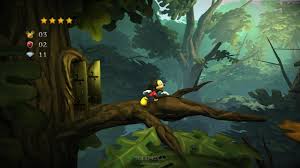
Castle of Illusion Starring Mickey Mouse (2013)

250px-CastleofillusionremakeWhen I was a kid Mickey Mouse was a pretty big video game star. He was always known first and foremost as the official mascot for Disney and its theme parks and for the many cartoons featuring his likeness but he was a frequent star in several video games across multiple consoles. As was often the case back then, Mickey had a different franchise for each of the major consoles. The Sega consoles featured the Illusion series while the Super Nintendo had the Magical Quest games as well as some adventure games for the NES. As the 90’s wound along Mickey started appearing in the same game on both consoles before moving onto the newer machines. Since then his appearances have been cut down, with the Epic Mickey franchise sort of representing a return for Mickey. Even though Mickey was in many games, he never did acquire the reputation of Mario or Sonic (before his reputation was ruined, anyways) and one would be hard-pressed to argue that any of his games were among the best of the era. What they were was usually entertaining and pretty solid.

Mickey was basically a B+ video game star with his hits and misses but his best franchise was probably the Illusion series which appeared on Sega consoles. Developed by Sega, these games were often featured on the Genesis and Game Gear retail boxes as signature games for the consoles. The first was Castle of Illusion and was released for the Mega Drive/Genesis in 1990 with a Game Gear and Master System version to follow in 1991. It starred Mickey as he tried to navigate his way through a castle in order to save his beloved Minnie from the witch, Mizrabel, who was basically the witch/queen from Snow White. A sequel titled Land of Illusion was released for the Game Gear and Master System in 1992 with another sequel to follow on the Genesis titled World of Illusion later that same year. World of Illusion was unique because it starred both Mickey and Donald and featured two-player simultaneous play. Its controls and visuals also represented a noticeable upgrade over the original title and its often viewed as the best of the series.

Castle of Illusion, being an early Genesis title, is somewhat crude by today’s standards. The game’s visuals were never stellar and today they’re almost downright ugly. Mickey has a very jagged, squished look and there isn’t much being animated on him. He’s very sluggish to control and the whole game has kind of a sleepy feel. Still, as an early platformer for the Genesis, it was mostly well received because there wasn’t an obvious Mario clone at the time for the Genesis. Last year Sega released a remake for the Playstation 3 and Xbox 360, and that’s really what this review is about.

The original game was okay looking at the time, but its grainy visuals and squished Mickey haven't aged well.

The original game was okay looking at the time, but its grainy visuals and squished Mickey haven’t aged well.

The 2013 version of Castle of Illusion obviously features greatly enhanced visuals when compared with the original. Mickey looks pretty great and the game is an above average looking title for its respective consoles. It isn’t mind-blowing, but is pleasant. The game mostly follows the same path as the original though it does introduce a castle hub world from which Mickey can access the various levels in the game. It’s a little longer than the original, and the levels are a bit different in spots, but for the most part it’s a pretty faithful remake with better graphics. Sega opted to confine Mickey to a 2D plane when navigating the levels but the boss fights usually occur in a 3D environment, which gives them a different feel when compared to the original game. For the most part, I found the boss fights harder in this game than I did on the original cart while the actual stages might have been a tad easier, with some exceptions.

Unfortunately, Sega did not opt to address what is probably the original game’s biggest short-coming and thats the controls. Mickey is still very floaty and very slow. It took me awhile to get used to Mickey’s timing and early on I had difficulty navigating the easiest jumps as a result. Eventually I got used to it but that doesn’t mean I ever fell in love with it. And these floaty controls get to suck more this time around because Mickey has a third dimension to contend with. Easily the most frustrating point of the game for me was the candy level where Mickey has to jump across floating cookies in a milk river. I felt like I was really fighting with the game to get Mickey onto those cookies and I came close to shutting the game off, but managed to persevere. Some of the collision detection is also confounding, particularly with the game’s second boss the Jack-in-the-Box. I found his boxing glove attack was inconsistent. I basically did the same thing for each attack to avoid it, only sometimes it worked and sometimes it did not. I could never tell what was different as every time it looked like Mickey was basically jumping on top of the glove. The final boss is a little annoying too as she attacks with these ghost things that have a green aura around them making it tough to distinguish between the aura and the ghost (which is also green).

The remake mostly goes for a 2.5D approach and looks well enough for a download only release.

The remake mostly goes for a 2.5D approach and looks nice enough for a download only release.

Castle of Illusion is currently free for Playstation Plus subscribers, which is how I experienced it. My free membership expires this week hence why I didn’t shut it off as I wanted to beat it. I downloaded it mostly because it was free, but also because I had some nice memories of the original and wanted to see what Sega did with it. The original game comes with the download and I can safely say that the remake is probably the better game, though it’s also more frustrating. I can’t really recommend it unless you really loved the original game or have a Playstation Plus membership and can check it out for free. It’s a short game and I managed to beat it in an afternoon. The production values are actually pretty nice and the game’s soundtrack is actually better than I remembered (though I kind of prefer the original game’s old school score). The plot basically exists just because it has to and you’re not going to play this to see what happens to Mickey and Minnie, but I suppose that’s better than nothing. Hopefully Sega and Disney made some money off of this remake and a World of Illusion remake is in the cards. That’s a game I’d pay money to play again.


The Wind Rises

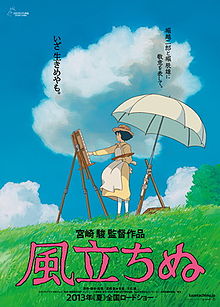
Kaze_Tachinu_poster“The wind is rising!  We must try to live!” – Paul Valéry

The above quote opens the latest release from Studio Ghibli and director Hayao Miyazaki; The Wind Rises.  It’s a quote that is suitable for the film as it implies that change is coming, but we must carry on.  The Wind Rises is to be the last directorial effort from Miyazaki, Japan’s most celebrated director of animated films, and it is an appropriate piece for him to go out on.  The Wind Rises tells the tale of Jiro Horikoshi and his dream to design what he calls beautiful airplanes.  Jiro is based on the airplane designer of the same name who is famous for creating Japan’s Mitsubishi A5M and A6M Zero and the basis for the film was derived from a quote he once gave:  “All I wanted to do was make something beautiful.”  The film has two sides to it with one being a mostly faithful account of Horikoshi’s challenge in developing his first successful airplane and the entirely fictional account of his personal life.  The end result is a tale of hope, triumph, love and life and is perhaps Miyazaki’s finest piece since My Neighbor Totoro.

The film opens with a young Jiro dreaming of flying a plane.  The opening sequence is perhaps the most fun for the animators as Jiro’s dreams are filled with nightmare creatures seemingly stemming from his despondence over his imperfect vision.  The character admits early on to himself that he will never fly because of his eyes, but in a dream meets with Italian airplane designer Giovanni Caprone, who will be a recurring visitor amongst Jiro’s dreams throughout the film offering him guidance on how to be a great engineer.  It’s these dreams that inspire Jiro to be an airplane engineer and the film advances time to show us his journey to become an engineer.

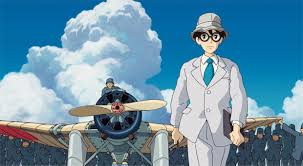
Jiro leading one of his designs to the testing grounds.

Jiro leading one of his designs to the testing grounds.

Jiro is portrayed as a sweet and good-natured man.  He is willing to help those in need, and a chance encounter with a young woman and her maid on a train plays a pivotal role in the film later on.  During the train ride the great earthquake of 1923 strikes and Jiro carries the maid to safety after she breaks a leg.  He seeks nothing in return and doesn’t even share his name with the women before departing.

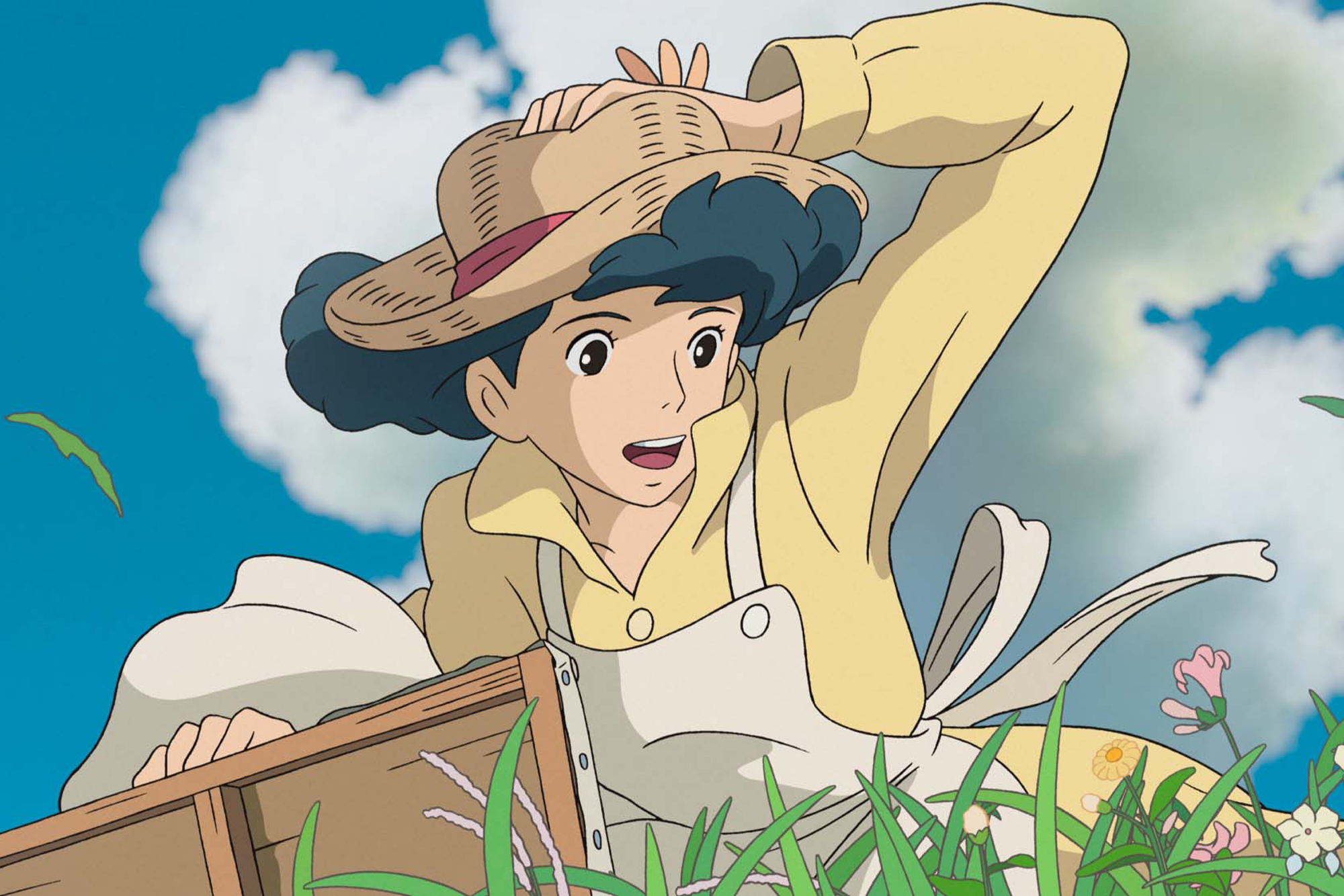
Jiro lands a job out of school and his employment takes him to Germany where he is introduced to pre World War 2 Germany’s policies.  Being Japanese, he is not trusted by the soldiers as he seeks to learn about Germany’s engineering when it comes to aeronautical design.  Despite this, he is able to learn some techniques and apply them to a new aircraft, which unfortunately crashes during the test run.  To clear his head, his company sends him on a retreat for some rest and relaxation which is where he encounters the young woman he met years earlier on the train, Naoko.  The two fall in love, and though it seems predictable, their scenes are handled with such tenderness and care that the audience is left to root for them, even if it seems as if they’re destined to fall for each other.  Jiro learns there is a dark side to his budding romance as Naoko is afflicted with tuberculosis.  This forces them to move quickly with their life together.  Naoko insists on getting better before discussing marriage, but in time relents once Jiro has to leave for work.

Jiro must deal with failure throughout the film.

Jiro must deal with failure throughout the film.

The last act of the movie involves Jiro and his attempt to finally build a worthy aircraft that his company can sell to the Japanese military, while Naoko wages a silent battle at their home with her illness.  I don’t want to get into too much detail about the film’s plot, but suffice to say it’s a bittersweet tale that includes ups and downs with the story refusing to linger on anything for too long.  In that, it mirrors life which is a constant push and pull.  There are many themes the film likes to go back to.  Early on a supporting character mentions the importance of having a family to go home to, crediting it with helping a man work harder at the office, which is shown later in the film once Jiro is married.  In his dreams, Caproni asks Jiro if he prefers to live in a world with pyramids, or with no pyramids, using this as an explanation for why he would design airplanes that will eventually be used for war.  And all throughout the film, the wind acts as a character itself playing a pivotal role in one of the film’s final scenes.

As this is a work from Studio Ghibli, it hardly needs stating but deserves to be anyways, that this film is gorgeous.  The animation is predominantly hand-drawn, but some computer generated imagery is used for some of the film’s effects.  The film has a bright palette though Jiro is often garbed in white, gray, or a very light lavender, which serves to isolate him from his surroundings.  This suits the character as he is often oblivious to his surroundings, so consumed in his work and willing to overlook the fact that his designs are made for war.  The country-side settings are sure to evoke memories of Totoro, and the film’s whimsical feel and care-free pace further serves to draw comparisons to Miyazaki’s old masterpiece.

The wind is a character of its own, its actions often directly influencing the lives of the human characters in the film.

The wind is a character of its own, its actions often directly influencing the lives of the human characters in the film.

The sound design is excellent, with great use of natural sounding effects and an excellent score from Joe Hisaishi.  The english dub was handled by Disney and the film distributed in North America on their Touschstone label.  The dub is the usual high quality that viewers have come to expect from Disney as the company has handled the majority of Studio Ghibli’s dubs.  Serving as Jiro is Joseph Gordon-Levitt with supporting roles from the likes of Emily Blunt, John Krasinski, and Martin Short, the latter serving as the scene-stealing character Kurokawa, Jiro’s boss throughout the film.

The Wind Rises may be an animated movie, but it’s not for children.  The film’s pace is too slow and plot is too mature to entertain most children.  The film is best described as a drama and should appeal to older fans of Miyazaki’s works.  That said, it’s a wonderful piece of film with fantastic visuals, a compelling plot, and terrific performances.  Hayao Miyazaki may never get the recognition he deserves from international audiences, but anyone involved with film appreciates and respects the work he does.  It’s both wonderful and sad that this movie exists, knowing it is to be the last written and directed by Miyazaki, but in that sense it mirrors the film superbly.  What a truly awesome way to cap off a career!


Gargoyles: Season 2 – Volume 2

Gargoyles:  Season 2 - Volume 2 (2013)

Gargoyles: Season 2 – Volume 2 (2013)

It was a long wait for fans of Disney’s Gargoyles in between DVD releases.  Volume 1 of the second season was released back in 2005 in an attractive three-disc set.  Apparently the sales for the set were not up to Disney’s standards and volume 2 of the set was either pushed back or outright cancelled.  Volume 2 was only recently released this past summer, nearly six years following the release of volume 1 and it was done in a quiet fashion.  Now Disney has its own movie club which it uses as a vehicle for delivering to people DVD sets of their less popular shows as movie club exclusives.  These sets are cheaply done but for fans of the obscure it is currently the only avenue for them to get a physical copy of their beloved programs.  Such was the fate of volume 2 for Gargoyles.  The movie club exclusive contains a minimalist jacket with a gaudy yellow border.  The DVD case itself is like that of a standard DVD with a larger central tab where all three discs are stacked one on top of the other.  The only insert is an ad for the movie club and a number to register the DVD with.  The actual DVDs contain no bonus features of any kind, just the episodes and a mostly ugly DVD menu.  It’s about as bare-bones as it gets, but for fans waiting six years for the episodes, I suppose it’s better than nothing.

The set contains the final 26 episodes for season two.  It starts with the episode “Monsters,” which if one were to look at an official episode list for the show, should have been the final episode of volume 1.  Instead, the episode “Kingdom” was moved to volume 1 for pacing issues with “Monsters” getting pushed back.  That’s because these episodes comprise the World Tour section of season 2 where Goliath, Elisa, Angela, and Bronx are being sent to all parts of the world by the island Avalon for unknown reasons.  As a result, much of season 2 does not include the other characters such as Broadway or even Xanatos.  Often times, Goliath and co. will encounter a villain from back home while on their travels but just as often they’re paired with someone new.  They also encounter many new gargoyles as Goliath gradually learns that gargoyles are alive and well all around the globe.

Angela is added as a member of the main cast in the second half of season two and plays an important role in the development of the Goliath character.

Angela is added as a member of the main cast in the second half of season two and plays an important role in the development of the Goliath character.

Because of the World Tour format, the second half of season 2 is even more episodic than the first half, meaning the episodes function mostly as stand-alone stories.  I suppose one could argue there’s an overall plot since it’s Avalon that is sending them to these destinations, but it’s a fairly loose one.  Having the setting change each episode is an easy way to inject variety into the show, but the format grows stale.  The stories often feel like filler, and as a viewer I just wanted the group to get back home or for Avalon to finally unveil it’s true intentions.  Not all of the episodes follow the Would Tour group, as there are a couple that take place back in Manhattan.  In one such episode, “Pendragon,” the legendary King Arthur and the gargoyle Griff, two individuals encountered by Goliath and co. during their travels, wind up in New York and interact with the remaining members of the Manhattan Clan.  The World Tour basically lasts for 17 additional episodes of volume 2, with the two-part “The Gathering” representing its conclusion.  It’s far too long, and getting through those episodes started to feel like a chore for me (hence why it took me so long to get to reviewing this set) which is never a good feeling for television viewing.

Thankfully, the remaining handful of episodes are pretty interesting, as is the two-part “The Gathering,” though it’s not as grand as some of the series’ other multi-part arcs.  In that story, the god Oberon is attempting to steal the newborn son of Fox and Xanatos for he possesses some unusual abilities for a mortal.  It is interesting to see Xanatos and the gargoyles take on a god, though the resolution felt a little too neat and tidy for my tastes, but I can’t deny the alternative would have worked much better.  We learn some interesting tidbits about some of the supporting characters of the show, which is one of its great strengths.  The writers never miss an opportunity to focus on a secondary character and add importance to it.  As a result, just about any character who ever had even a minor role in a prior story returns at some point, including one background character viewers likely never noticed in “Vendettas.”  This type of writing helps make the show feel more rewarding for loyal viewers and it does add depth to what would otherwise be shallow characters.

The production values for volume 2 are largely the same as that for volume 1, though the DVDs this time around are of a lower quality.  The colors aren’t as rich and sometimes the image can be grainy, but that’s expected considering this was done on the cheap.  There are still episodes where the animation is of a noticeable lower quality, while others more resemble the quality of season one.  The A+ animation is largely reserved for the bigger stories, but even a stand-alone episode here and there (like “Future Tense”) is given a more striking look.  The score remains excellent as well and the voice acting is the usual high quality Disney output.

The alternate future depicted in "Future Tense" is one of the more fun stand-alone episodes in volume 2.

The alternate future depicted in “Future Tense” is one of the more fun stand-alone episodes in volume 2.

While from an episode quality standpoint I enjoyed this set less than the previous two, there are still some excellent stand-out episodes.  I mentioned “Future Tense” already as being a stand-out in terms of production values, but it’s also a really fun story that looks at an alternate future for Manhattan.  “Sanctuary” is one of the better World Tour episodes as it includes MacBeth, Demona, and Thailog.  Thailog also makes an appearance in another strong episode back in New York, “The Reckoning,” which contains the long anticipated confrontation between Angela and Demona.  The Goliath, Angela, Demona triangle is an anchor in a few stories, and the tension between Goliath and Angela over her lineage is done well.  I don’t think it’s giving away anything to reveal that Angela is the biological daughter of Goliath and Demona, but the writers do a good job of explaining Goliath’s and the clan’s view on children, which is that all gargoyles are children of the clan.  Angela, having been raised by humans, has a human’s perspective when it comes to parents and longs for Goliath to acknowledge her as his daughter.  She has similar feelings towards Demona, though they’re obviously complicated by the fact that Demona isn’t the most likable person/gargoyle.

The Goliath/Elisa relationship is handled quite tastefully by the writers of the show.

The Goliath/Elisa relationship is handled quite tastefully by the writers of the show.

Another tension of the series is the obvious affection Goliath and Elisa feel for each other that largely goes unstated between the two.  The conclusion to the set, “Hunter’s Moon,” addresses it for the first time in a very satisfying way.  It’s hard to write such a relationship because it takes care to make it believable that an attractive woman like Elisa would have romantic feelings for Goliath.  The writers sell it well though, and while I’m not sure they could have ever pulled off a full-on romance for the two, they did find a way to get the point across.  That conclusion, by the way, is a three-part story that actually brings everything full-circle for the gargoyles.  It would have been a fine way to end the series, but a thirteen episode season 3 was picked up by ABC for their then Saturday morning block.  Series creator Greg Weisman wrote the premier for that season, dubbed The Goliath Chronicles by ABC, but had no involvement in the remaining twelve episodes.  As a result, they are not considered canon by Weisman and the series actually continued in comic book form years later.  I may look into checking out those comics but I need to know more about them first and if they’re worthwhile.  I’m pretty happy with “Hunter’s Moon” as a conclusion, as I don’t expect a season three set, and I may choose to just leave Gargoyles with how season two ended.

As for this set, it is what it is.  For those who just want the episodes, it’s the only option save for bootlegs that are probably even worse quality.  When it was released last summer, it was available for a short time on eBay through Buena Vista’s store but once those copies were gone the movie club and secondary market were the only options.  The movie club is actually worth looking into for those looking to start a Disney collection.  For those (like me) who already own a ton of Disney DVDs and Blu Rays, it doesn’t make financial sense.  Very quietly though the set moves to the traditional Disney Store website and is available there for twenty bucks.  The secondary market has yet to adjust, it would seem, as the copies are still routinely priced in excess of forty dollars.  Even so, this is likely not going to be produced in large numbers so if you’re a fan of the show it’s probably a good idea to get it while it’s relatively cheap.  Bland set or not, it’s still 26 episodes of a pretty strong show for twenty bucks and if you already have the first two it’s basically a must-have.  Gargoyles is among the elite action cartoons of the 90’s, and for me it ranks among Batman and X-Men as the best of the best.


Disney’s The Little Mermaid

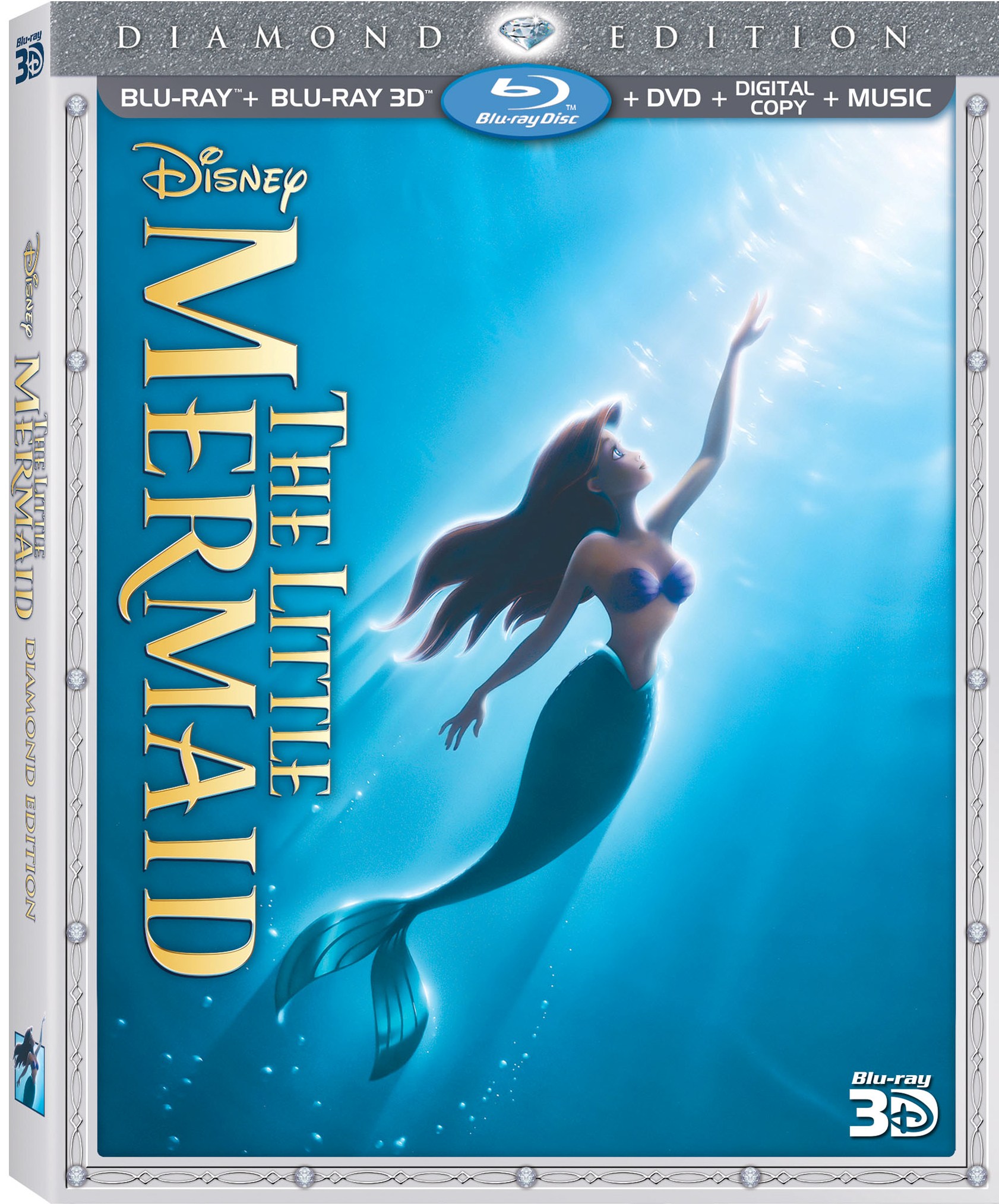
The Little Mermaid (1989)

The Little Mermaid (1989)

Come 1989, Disney was back on top both critically and financially as a movie studio.  Oliver & Company, while not wowing many movie buffs, was a commercial success and one of Disney’s biggest in years while Who Framed Roger Rabbit? was able to secure near universal praise for its combination of animation and live-action.  Even considering the successes enjoyed by those two films, it’s 1989’s The Little Mermaid that is often credited with launching the Disney Renaissance; a new period of creative and commercial success for the venerable studio that utilized a combination of animation and broadway.  After 1989, there was no question who was the king of animation and family entertainment. While it could be argued that Disney was never truly dethroned, it was certainly challenged and the studio struggled to prove that it was still the best at what it did.  There would be challengers in the 90’s, but none that would prove to be worthy adversaries.  Of course, by the close of the decade hand-drawn animation is practically dead and Pixar is a new household name, but the end of the 80’s through to the mid 90’s proved to be traditional animation’s last gasp and one of its finest eras.

The Little Mermaid represents a first for the company, and also a last.  The previously mentioned Oliver & Company, made regular use of music and the broadway element, but it was The Little Mermaid that truly committed to this format.  The music directors for the picture, the late Howard Ashman and Alan Menken, are both veterans of broadway and are credited with steering the The Little Mermaid in this direction.  The film, particularly the first act, is driven by the songs contained within as the film moves from one to another with often little traditional dialogue in between.  This proved so successful that future films adapted this style, but arguably none were as artistically successful as The Little Mermaid in doing so.

The Little Mermaid was the beneficiary of a huge budget, and it shows when compared with the animated films that preceded it.  It was also the first feature-length production to benefit from Disney’s new studio in Lake Buena Vista, FL, then known as Disney MGM Studios (with a theme park to follow, now called Disney’s Hollywood Studios).  It was the last picture to use traditionally drawn animation cells for Disney.  There were numerous amounts of FX added to the picture due to its undersea setting, and some computer effects were used as well here and there.

The Little Mermaid tells the story of Ariel, who finds herself unhappy living under the sea.

The Little Mermaid tells the story of Ariel, who finds herself unhappy living under the sea.

The Little Mermaid, based on the fairy tale by Hans Christian Anderson, tells the story of the young princess, Ariel (voiced by Jodi Benson).  Ariel is the seventh, and youngest, daughter of King Triton (Kenneth Mars), ruler of the seas.  Ariel is a free spirit who is fascinated with the world above which her father forbids her from interacting with.  She is able to sate her curiosity through human artifacts and items found in shipwrecks scattered across the ocean floor until her exploits bring her face to face with a living, breathing human.  Ariel soon finds herself in love with the prince, Eric (Christopher Daniel Barnes), and knowing her father will never allow such a romance to continue, in desperation she turns to the sea witch, Ursula (Pat Carroll), to make her human.  The story is predictable, but satisfying, and Ariel exhibits a lot of the same emotions most sixteen-year-olds are known for which helps make the unbelievable seem believable.  There are several memorable supporting characters to the story.  Flounder (Jason Marin), who does not resemble an actual flounder at all, is Ariel’s companion and the foil to her care-free spirit.  He’s cautious and kind of a worry-wart.  The film makes it seem like he’ll play a large role at first, but he soon fades into the background after the first couple of scenes.  Scuttle (Buddy Hackett), the sea-gull, is Ariel’s guide to the world of humans.  Unknown to Ariel (and Scuttle himself), Scuttle knows practically nothing about humans but she is more than willing to believe anything he says.  Sebastian (Samuel E. Wright), the crab, is the conductor of the royal symphony for King Triton and is also the King’s trusted confident.  Triton charges the Rastafarian crab with keeping an eye on Ariel with the intent being that he’ll get her to forget about the human world.  Sebastian, possessing a big heart, is soon convinced by Ariel’s actions and behavior to aid her in her quest to become human.

The film is home to several excellent supporting characters, with the sea-gull Scuttle likely being a favorite of many.

The film is home to several excellent supporting characters, with the sea-gull Scuttle likely being a favorite of many.

The love story is perhaps the film’s weakest aspect.  The character of Prince Eric is a young man looking for the right girl, though he appears to be in no hurry.  During a thunderstorm at sea, he winds up in the water where Ariel is lurking.  She rescues the prince from drowning and sings to him on a beach while he remains unconscious.  Waking, she flees, and Eric becomes obsessed with finding Ariel.  When Ariel returns as a human, she is without her voice (thanks to a bargain made with Ursula), and the two must fall in love in order for Ariel to remain human.  This being a Disney movie, I don’t think it’s spoiling anything to say that the two do eventually fall in love, though Ariel declares her love for Eric to her father after their first encounter.  It feels rushed, and I suppose it is considering the movie has a run-time of under 90 minutes.  I’ve seen worse when it comes to rushed love stories, but there are many cynics who will roll their eyes at first mention of the word love with this story.

The music, the film’s backbone, is quite good.  I am not a fan of the broadway format, but if a film is going to be overstuffed with songs then they better be good ones.  The Little Mermaid is the beneficiary of three iconic music pieces.  While most other Disney movies seem to only have one or two, The Little Mermaid boasts the trifecta of “Part of Your World”, “Under the Sea”, and “Kiss the Girl.”  “Part of Your World” is Ariel’s big solo number and it’s melody is used during the score as the main theme of the film.  It is returned to many times over, which is good because it’s a simple and very pleasing melody.  “Under the Sea,” the Caribbean sounding up-tempo track, is the film’s most fun moment and song and is likely the favorite of many of the film’s viewers.  “Kiss the Girl” is the slower track and it too boasts an island sound.  Not surprisingly, both are sung by Sebastian.  Ursula gets her own song as well, “Poor Unfortunate Souls,” but I find it to be less lively than the others.  It also drags on for too long.  There are other smaller tracks in the film but they prove to be less memorable, but their bite-sized running time also keeps them from being a distraction.

I probably wouldn’t have much affection for the film if it relied solely on its music.  Thankfully, The Little Mermaid is a fantastic picture to look at (made even better now that it’s available on Blu Ray), and it owes much of that to its setting.  The undersea setting proves to be a visual delight from the first scene.  When the audience isn’t being asked to focus on anything but the visuals, the animators make use of a blur effect to make the film appear as it would if being viewed by the audience if placed underwater.  Once the plot begins, the picture quality is clear and pristine.  Every movement from the characters is accompanied with bubbles and hair is wild and untamed as it floats about.  Most of the locations are depicted with shades of blue giving it a dark, sometimes cold, feeling.  When the picture explodes with color, such as during the “Under the Sea” segment, the juxtaposition with the blues make the picture really come alive and creates a warming effect on the audience.  The above water scenes pale in comparison as the kingdom Eric inhabits is somewhat lacking in personality.  I’m not even sure which part of the world it’s supposed to represent.  The climax of the film is a spectacle to behold with all of its lightning and massive whirlpool.  Ariel and Eric’s confrontation with a colossal Ursula is perhaps rivaled only by Aladdin’s final showdown with the snake Jafar.

The sea witch, Ursula, proves to be another memorable Disney villain.

The sea witch, Ursula, proves to be another memorable Disney villain.

Disney pictures, especially in more recent times, are often criticized for their shallow female leads.  The classic example being Snow White, who confesses in song she’s just waiting for her prince to come and rescue her from her hum-drum life.  Ariel is sometimes criticized in the same way, though perhaps not justifiably.  She’s plucky and strong-willed, and when she wants something she’s willing to make sacrifices in order to achieve her goals.  She is naive, but that comes with being only sixteen.  I do like that it is Ariel, and not Eric, that first takes on the role of rescuer as she saves him from drowning early in the film.  And when it comes time to face Ursula, it’s Eric and Ariel together taking her on.  If there’s room for criticism it’s in Ariel’s perception that she can only be happy if she’s made human and is able to win Eric’s love.  She’s a character with flaws though, which in turn makes her feel more real even if she is part fish. This is in contrast with the Disney princesses of the golden age which were essentially idealized women intended to be presented without flaws. Ariel is even allowed to contort her body into unflattering shapes, something animator Glen Keane was even criticized for doing by the old guard at the company, but something he felt was important to her story.  The film also has some scary moments which may frighten the very young, and Ursula is not some harmless screw-ball villain, but the scare-factor is still pretty minimal.  Parents ultimately know what is best for their kids and the best advice that can be given from an outsider is just watch the film first before exposing your kids to it, if you have concerns.

The Little Mermaid is a crowning achievement for Disney and is justifiably rated highly amongst the studio’s films.  It’s a gorgeous picture with memorable songs and characters that easily stands the test of time.  Despite its lead being a young princess, it’s a film that should have no trouble delighting both boys and girls while keeping the adults who watch it with them suitably entertained.  The Disney Renaissance unofficially began with The Little Mermaid, and I suppose it ended sometime around Mulan or The Emperor’s New Groove.  Amongst the Disney features released in that window, it’s probably second only to Beauty and the Beast.  The Lion King certainly has its admirers, as does Aladdin, but it’s combination of sound and visuals make it number two for me and I wouldn’t argue with anyone who felt it should be number one.


The Black Cauldron

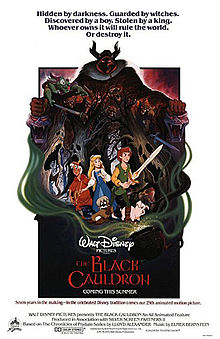
The Black Cauldron (1985)

The Black Cauldron (1985)

The Black Cauldron is one of those movies I wasn’t sure if I had even seen or not.  It’s kind of rare to find a Disney animated movie that I haven’t seen from before 1998, but in the case of The Black Cauldron it would seem I found just such a film.  My only interaction with it had been via the PC game of the same name produced by Sierra around the time the movie came out.  It was a frustrating and terrible game for someone used to Super Mario Bros. and I didn’t like it at all.  Upon doing just some basic research on the film it became obvious why I had never seen it.  The Black Cauldron just may be the most unloved of the Disney animated films to be released.  It was marred by creative differences between those creating the film and Disney Chairman Jeffrey Katzenberg who would have cut the film himself if not for intervention from CEO Michael Eisner.  The film went on to be Disney’s worst performing film at the box office and the film is known less for its merits and more for being Disney’s “rock bottom.”  Because of its failure, it never received a home video release until 1998, more than a decade after its theatrical run.  In spite of all the negativity surrounding the film, I was curious enough to spend a small amount of money on a DVD copy to see it for myself.  I’ve seen plenty of good Disney movies, and I’ve seen some bad ones too, and I was curious to see what made this one possibly the worst of them all.

The Black Cauldron is an adaptation of a Lloyd Alexander book from his Chronicles of Prydain series.  It was directed by Ted Berman and Richard Rich, who together with Art Stevens had previously directed The Fox and the Hound.  I consider The Fox and the Hound to be one of Disney’s weaker offerings, a film with a good heart but a sometimes sloppy execution, so right away I’m not impressed by The Black Cauldron.  The Black Cauldron also makes use of the  xerographic production process that Disney had been using for some time.  It leads to a rough, sometimes sketch-like quality, to the edges of the characters and is a far cry from Disney’s classic look.  For this picture though, which is tonally quite a bit darker than other Disney films, it does add a certain credibility to the look.  Some very early computer-generated effects were utilized as well that surprisingly look pretty fantastic even today.  The effects were used sparingly, mostly for smoke effects, and it really makes the picture pop.  The backgrounds have a very hand-painted look to them that helps add to the mystique of the picture.  The one major drawback I found with the film was with the character animation.  The backgrounds are rich with saturated colors, lots of shadowy holes and dingy dungeons, and the characters look flat against them at times.  There’s often no shading done to the actual characters and it takes away from the overall feeling the scenes are shooting for.  This is a flaw of pretty much all of the Disney animated works from this period, but it’s most obvious here because of the setting where all of the dark areas are lit by torch-fire.  Still, overall I found it to be a very rich experience from a visual point of view, which is certainly a good place to start with any animated movie.

That's Gurgi, whom I kind of hate.

That’s Gurgi, whom I kind of hate.

The score for The Black Cauldron has never really been under fire.  It’s a quality film score and was composed by Elmer Bernstein, which from what I can tell, makes this the only Disney film Bernstein worked on.  The voice acting utilized mostly British talents, and unfortunately, is one of the film’s weak points.  The Horned King, played by John Hurt, sounds appropriately menacing and the creature voices are fairly well done.  The lead, Grant Bardsley as Taran, leaves no lasting impression and I didn’t care for the woman portraying Princess Eilonwy, Susan Sheridan.  I also never really warmed up to the voice of Gurgi, portrayed by John Byner.  It’s not that Byner’s performance was lacking, more that I just didn’t care for the voice they chose to go with for that character (his voice reminded me of Frank Welker’s Slimer from The Real Ghostbusters).

The production values on the whole for The Black Cauldron are pretty good, which is to be expected since it was the most expensive animated film ever produced at the time of its release.  Where the film seems to lack the most is in the plot and pacing of the film.  At a running time of 80 minutes, it’s neither long or short by animation standards.  The general plot revolves around Taran, a teen-aged farm hand who dreams of being a knight, who is tasked with shielding his pig, Hen Wen, from The Horned King.  Hen Wen possesses a special quality that allows her to show her master the future and The Horned King needs her to deduce the location of the black cauldron, an artifact of terrible magic.  Throughout his travels, Taran routinely makes mistakes and overestimates his ability as a warrior landing him in the clutches of The Horned King and his army of goblins and wyverns.  Taran acquires followers along the way, the Princess Eilonwy, the minstrel Ffledwwur Fflam, and the irrepressible Gurgi.  He’ll also encounter witches, pixie like people known as Fairfolk, and, of course, a magic sword.  It’s all rather conventional with The Horned King surrounding himself with an army of incompetent servants who constantly undermine him along the way.  I found Taran to be too cliché to really care about.  The Princess is actually a strong female character, which I could appreciate, while the character of the Minstrel I found completely unnecessary.  Gurgi is intended to be the cute, marketable character who provides some comedic relief.  I already mentioned my dislike for his voice, but I also dislike his look as well.  He looks like a combination of an old man and a shaggy dog which I found off-putting.

Younger audiences may find this one to be a bit too scary.

Younger audiences may find this one to be a bit too scary.

The first half hour, aside from the overuse of fantasy trite, is pretty exciting as Taran finds himself in the clutches of The Horned King, one of Disney’s most horrifying villains and a worthy antagonist.  Upon Taran’s escape, the film lost me as characters seem to be in limbo for the next half hour before the film’s climax.  The climax is actually really well done, with the film’s best animation being saved for these scenes.  There’s even a well-executed “sacrifice” and the film found a way to realistically have the heroes face off with The Horned King that audiences could accept.  Really, if the film could have found a way to make the middle section more interesting it would have gone a long way towards improving the experience as a whole.  There are times for comedic relief along the way, and some of it is contained in the middle parts when the witch characters are introduced.  A lot of film critics seemed to dislike the film for its joylessness when compared with other Disney works, but I actually though the film did a decent enough job of balancing the humor and drama.  It’s certainly a film meant to be more of a thriller than a laugher, but joyless it is not.

The Black Cauldron may or may not be the worst animated film put out by Disney.  I can’t say for sure as I haven’t seen every film the studio produced, but I have a hard time believing it truly is the worst.  The 1970s and 80s for Disney really were dark times for the studio as it struggled to recapture the old Disney magic and The Black Cauldron fits in among those works.  It really is no better or worse than most of Disney’s films from that time period like Robin Hood or The Rescuers.  It has things it does well, and things it does not so well.  Because it is a bit more serious and contains some menacing characters, it’s more similar to some of Disney’s older works than even the modern films.  The Horned King and his minions are characters intended to frighten young children, much like Monstro and Maleficent.  If you’re thinking of buying this for your four-year old, you may want to watch it alone first.  If you’re an older animation fan like myself and you’re curious about this picture, I say give it a look if you have the 10 bucks or so to spend on a DVD.  You’ll likely find a plot that is lacking, but the visual experience makes the minimal investment worthwhile.


Gargoyles: Season 2 Volume 1

Gargoyles_DVD_2The cover of the DVD release of Gargoyles Season 2 dubs it as Volume 1 of the second season.  At first glance, that may seem like a greedy way to release a show to DVD, but that is not the case.  A common practice of children’s animated television was to order 65 episodes as early in the life of the series as possible to make the programming eligible for syndication where more money could be made off of it.  I say “was” because I’m not sure if that is still the case with numerous cable outlets now providing a lot of the entertainment these days.  Gargoyles was not originally broadcast on cable though, which is why season 2 is 52 episodes long, which following the 13 episode first season, gets the series to 65 total episodes.  Sometimes networks are so confident the show will be a hit they go right from the pilot to a 65 episode order.  This was the case for the still popular Batman:  The Animated Series which featured a pretty bankable star in Batman, but Gargoyles was an all new intellectual property so Disney opted to go for a trial run with the first 13 episodes before going all in.

The process of large season orders seems like a win for fans of the show.  After all, a 52 episode season would theoretically allow for a new episode every week for an entire year, though this wasn’t the case for Gargoyles since it was an afternoon program.  It does usually mean shorter wait times between new episodes, but things can get a little erratic since the season will usually begin airing while a lot of episodes are still in production.  There’s also the other downside to a large season such as this which is these episodes need to get produced quickly, and more people are needed for production and story-writing.  The first season of Gargoyles was a tight, neat collection of episodes with high-quality animation for television.  Season 2 sometimes has the feel of “too many cooks in the kitchen” and episodes become more stand-alone in nature.  The animation is still among the best when Gargoyles is compared with its contemporaries, but there are some drop-offs and it’s apparent that the show had multiple teams for animation.  Some episodes feature sharp lines and tight animation while others are more rounded and toon-like with characters often making over-exaggerated gestures (those familiar with X-Men likely have an idea of what I’m talking about).  Which one looks best is a matter of taste though (I prefer the harder look for this program) at least, with the overall animation quality usually pretty strong from episode to episode.

There are some pretty interesting plot twists to find in season two.

There are some pretty interesting plot twists to find in season two.

Inconsistent animation is expected when a show requires a large amount of episodes be produced, but my main concern for Gargoyles was how the writers would respond when tasked with filling so many hours.  The first season largely operated in a serial format with each episode tied to one overall plot.  Some felt more stand-alone than others, but all plots were referenced at one point or another and the overall quality of the story-telling was quite good.  I knew season 2 would have to feature more stand-alone episodes, but thankfully very few feel like throw-away or filler episodes.  Many of these one-shots still contain plot devices that have repercussions on the episodes to follow, such is the case with the conclusion of the episode “The Mirror” when Demona gains a new power.  Many others choose to introduce new villains or allies that will pop up in later episodes, as is the case with the characters Doctor Sevarius and Jeffrey Robbins.  In short, the structure of the show remains rewarding for longtime fans.  This does come at the cost of making the show a little harder to jump into at any point for newcomers, but since it’s no longer on television, this is really no longer a concern.

There are many stand-alone episodes, but there’s also no shortage of multi-part arcs.  The first half of season two contains the four part “City of Stone” and the three part “Avalon.”  Both are heavily reliant on flashbacks as it seems one goal for season 2 was to flesh out the villains even further, specifically Demona and MacBeth.  We learn about their history together and how Demona has survived the centuries and remained largely the same in appearance.  In season one, we the viewers were basically left to assume that gargoyles are extremely long-lived given that Demona was not affected by the Masgus’ spell like the others, but we learn in season 2 that is not the case.  There are lots of other recurring characters in season 2 such as The Pack, Tony Dracon, Derek Maza, Coldstone, and of course Xanatos.  Xanatos is still primarily an adversary of the Manhattan Clan, but he’s also an unlikely ally in several episodes.  One could even suggest that the writers go to this well a bit too often, but such is the case when 52 episodes have to be written in a short amount of time.  Still, I like the role Xanatos plays on this show of the equal opportunist who has his own agenda that isn’t always clear.  By the end of the first half of the season viewers, and even Goliath to some degree, have mostly caught on to Xanatos and the game he plays making me wonder what role he’ll play going forward (as I honestly can’t recall from my days of watching this as a kid).  Xanatos is also paired this time around with Fox, of The Pack, as his love interest which is a rather interesting dynamic.

Now where have I seen that dress before?

Now where have I seen that dress before?

Another part of the plot the writers seemed eager to explore in season 2 was the relationship between Elisa and Goliath.  Elisa was Goliath’s main confident, along with Hudson, by season one’s end and he (as well as the other gargoyles) clearly feel a strong sense of protection with her.  In season 2 it’s becoming more obvious that they have a stronger bond than just friends.  Sometimes the show is pretty obvious about it, but for the most part they let it go unstated and attempt to keep things subtle.  It has a nice progression throughout.  Disney fans will also particularly enjoy a scene from the episode “Eye of the Beholder.”

Gargoyles was never a series afraid to introduce characters, and many new villains are brought into the fold in season 2.  New allies, as well.  A pet peeve of mine with X-Men was always how the writers would tease a new character joining the X-Men but would never go through with it.  Towards the end of season 2, the writers chose to add a new member to the clan.  To better introduce this character, the writers shrink the cast down to just Goliath, Elisa, Bronx, and the new-comer for the unofficially titles World Tour episodes.  These episodes spill over into the second part, and series creator Greg Weisman actually bumps up one episode from the second half, “Kingdom,” to serve as the final episode in this collection.  This final episode takes place in New York and we get to see what the rest of the clan is up to with Goliath missing.  This is probably something Weisman regretted not doing originally, as when these aired we went 10 episodes without seeing the other characters which seems much too long.  The World Tour will continue well into the second half though I do not suspect any other episodes were re-arranged as no one affiliated with the show had any say in the release of volume 2, that I know of.

The relationship between Demona and MacBeth is fully revealed in season two.

The relationship between Demona and MacBeth is fully revealed in season two.

Gargoyles:  Season 2 Volume One largely carries over the quality of the first season and only enhances the show’s reputation as one of the better animated programs from the 1990’s.  Season One is probably superior when judged on quality, but the second DVD release for the series obviously boasts more content.  The release itself is also much nicer and includes some bonus features in comparison with the bare-bones season one release.  Unfortunately, season two did not meet the sales expectations of Disney and volume two was never commercially released until just recently.  Volume two is even more sparse than the first season release, and is currently only available to members of Disney’s Movie Club.  I’m not a member of that club, but did find out Buena Vista has an ebay account that basically specializes in selling these exclusives and was able to get one from there.  I don’t know if they restock or not, but that is definitely the best bet for those who want a copy as the secondary market is a little inflated right now.