Tag Archives: batman

#5 Best in TV Animation: Batman – The Animated Series

Batman_the_Animated_Series_logoChildren of today can probably hardly imagine a world in which super heroes aren’t dominating the pop culture landscape. We’re in an era where even the Fantastic Four have received three chances at making a successful movie and less popular characters like Antman and Dr. Strange have either become mainstream or soon will. That wasn’t the case before 1990. Prior to that, only Batman and Superman had ever made a buck at the box office while The Incredible Hulk had a semi-successful television series for Marvel. When it came to cartoons, there was basically the many variations on the Super Friends and the Marvel Action Hour. The quality for these cartoons was something less than satisfactory.

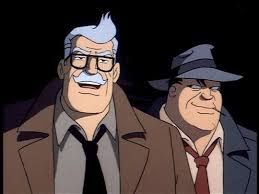
When Tim Burton and Michael Keaton helped to make Batman popular once again, the powers that be at DC and Warner Bros. decided to give television another go with the caped crusader. Instead of another colorful super hero mash-up they opted to adapt the more current iteration of Batman. The resulting “Batman” (often subtitled “The Animated Series)” returned Batman to the night from which he was born. Developed chiefly by Eric Radomski, Bruce Timm and Paul Dini, the show embodied much of the recent films as well as the tone of the current comics. Robin was there, but only in a handful of episodes initially and he no longer dressed like Tinker Bell’s older brother. Villains that were popular on the older 60’s television program returned, but with a more serious take. Joining them were the more grounded villains like Roland Dagget and Rupert Thorne, mobsters who waged war from the comfort of their homes. Adding even more of a sense of realism to the program was the fact that the villains (and cops) carried and fired realistic weaponry as opposed to cartoonish laser guns that are always conveniently set to stun.

The pervasive darkness of the show is like a character by itself.

The pervasive darkness of the show is like a character by itself.

The Batman present in the animated series was not the ever-present optimist from the 60’s with the serious, but often cheerful, demeanor. This Batman, voiced exceptionally well by Kevin Conroy, was a moody, no nonsense, hero who truly embodied the term The Dark Knight. He’s driven by a quiet anger, it’s root cause being the murder of his parents he bore witness to as a child. Batman is fiercely driven and consumed by his urge to avenge his parents by cleaning up the streets of Gotham, a seemingly never ending task. His alter-ego Bruce Wayne exists only as a cover for Batman. This Batman has a lot in common with Frank Miller’s, only the delivery isn’t so heavy-handed and extreme. As usual, Batman has allies around him. By his side is his butler, Alfred Pennyworth, who is more of a sidekick in the series as opposed to a moral arbiter. That role falls to Dr. Leslie Tompkins who often counsels Batman away from his life of crime-fighting. Commissioner Gordon heads the Gotham police department and relies on Batman probably more than he should while Detective Bullock is Gordon’s foil and often mistrusts the Batman. Robin is also around with an equally tragic backstory and Batgirl eventually comes into the fold during the second “season.”

Batman has no shortage of allies but he’d be nothing without his rogue’s gallery. The usual suspects are present such as The Joker (voiced by Mark Hamill) and Penguin. They’re presented well, but the show is best remembered for its fresh approach when adapting the lesser villains. Two-Face is introduced slowly as district attorney Harvey Dent before his eventual transformation. His character is handled with care and his sympathetic nature is sort of a calling card for the series. The villain most often cited as coming out of the show for the better is Mr. Freeze. Once a fairly corny player in the comics, the depiction of Freeze in the animated series is that of a vindictive killer. Juxtaposing his cold demeanor is the origins for his madness over his wife’s apparent murder. His debut episode, “Heart of Ice,” is often mentioned among the show’s best. The show doesn’t always rely on its villain of the week (day, actually, since the program aired week days originally) as illustrated in “Beware the Grey Ghost.” In this episode, the show runners have some fun by pairing Batman with an out of work actor typecast for his work as a super hero in an old television show. His voice actor? None other than Adam West.

The rogue's gallery for the show is a clever mix of classics and unknowns, with the unknowns often shining brightest.

The rogue’s gallery for the show is a clever mix of classics and unknowns, with the unknowns often shining brightest.

The artwork in the show is heavily based off of the set designs of Eric Radomski and the character designs of Bruce Timm. If you are not familiar with Timm’s work, it’s a low-detail approach with lots of angular lines. Lots of pointy-chinned females and square-headed males populate the show. His take on the various villains is often influenced by both classic works and the Burton films. Joker and Penguin are obviously takes on Jack Nicholson’s Joker and Danny DeVito’s more monstrous Penguin. Catwoman too resembles her look from Batman Returns but with the S&M aspect toned down. There’s a minimalist approach to the details with lots of flat, muted colors. Backgrounds were even done on black paper, most noticeably the opening title sequence, with light colors painted over them. This technique is credited to Radomski and often referred to as “Dark-Deco.” The show’s biggest contribution to the world of Batman though is easily the character of Harley Quinn, who first originated on television before making the leap to comics.

Whether you like the look of the show or not is a matter of opinion. It certainly needed to grow on me, but I appreciated the style of the show. Like the Burton films, Gotham is a modern city rooted in the stylings of the 30s and 40s. Batman possesses some pretty advanced technology but for some reason also watches a black and white television half the time. The low detail approach for the show’s look is a benefit to the animation itself. Rather than the somewhat stiff X-Men, Batman animates rather smoothly. The later series, The New Batman Adventures, who further reduce the detail to boost the animation but some would suggest they went too far as certain characters came across as too cartoonish.

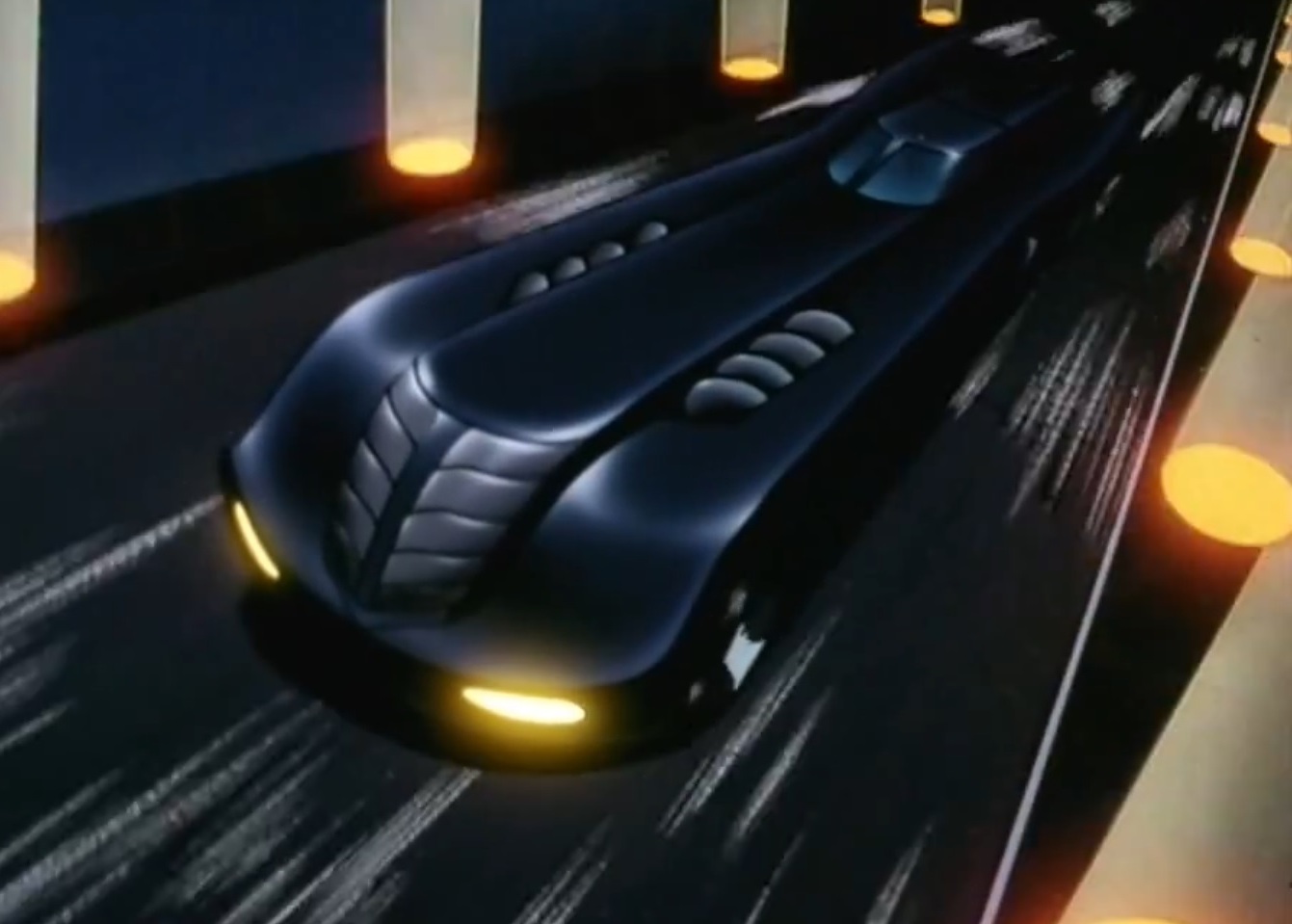
The show maybe fairly serious in tone, but Batman still has plenty of toys at his disposal. Just no shark repellent this time.

The show maybe fairly serious in tone, but Batman still has plenty of toys at his disposal. Just no shark repellent this time.

Batman The Animated Series is truly one of the great achievements in kid’s programming. Its serious approach to the character of Batman and his many villains really enhanced the product above what is typically expected of children’s programming. The only thing holding it back is the show’s consistency. It was originally ordered as one season of 65 episodes which is a pretty daunting task to come up with 65 well-executed episodes. The show is often one of those programs where the good episodes are really special but there’s a lot of filler to work around. The show becomes more watered-down when the short second season is added to the mix as well as The New Adventures which surfaced years later. That run produced maybe 2 or 3 worthy episodes with the rest being kid stuff, sadly.

Even so, the good produced by Batman The Animated Series is worthy enough to place it at fifth on my top ten list for animated television programs. The show also spawned some feature films, though only one was released theatrically, the fantastic Mask of the Phantasm. When the films jumped the shark with Batman Forever and Batman and Robin, it was the animated series that kept Batman relevant. It’s unlikely another super hero show could ever surpass it.


#10 The Best in TV Animation: X-Men

SF.Graz.1.0317––HANDOUT ART OF THE X–MEN CARTOON SERIES.

When I settled on doing a top ten for animation on television there were eight entrants I felt rather strongly about, and a ninth I was pretty content with. The tenth spot was the wildcard and a number of programs were considered, but since this is my list (and it’s not exactly an original topic) I decided I should use this spot to highlight a personal favorite of mine, so I went with X-Men. That’s a pretty flimsy lead-in but it’s not as if X-Men is undeserving of praise. I’ve wrote about the series quite a bit, even going so far as to do a mini review for each of the show’s 76 episodes during this blog’s first year of existence. At the time, I was using the show as a device to keep me posting but I was also reliving what was probably my favorite show as a kid.

X-Men launched on the Fox network in October of 1992, and at the time, was another attempt to re-ignite Marvel’s television properties. Prior to its debut, a pilot had been produced in the late 80’s called “Pryde of the X-Men” which focused on a much different cast of mutants. It was never picked up, and Marvel’s television properties were fading from memory. The same could be said for superhero cartoons in general, as only recently did Batman return to animation shortly before X-Men debuted. X-Men was the best-selling comic at the time, so it made sense for a cartoon to finally break through. Before X-Men (and Batman), cartoons based on comic book heroes tended to be pretty generic and bland. They usually took the form of the hero, or heroes, taking on the villain of the week and toppling whatever hair-brained scheme had been concocted by said villain to take-over the world or just cause general mayhem. Other shows, like Teenage Mutant Ninja Turtles, were just severely watered-down aspects of the source material intended to move action figures, which in the 80’s became frequently attached to various cartoon properties (He-Man being the best example of a cartoon existing solely to sell toys).

Wolverine and Gambit were likely to two most popular characters on the show, but that didn't stop the writers from developing many others.

Wolverine and Gambit were likely to two most popular characters on the show, but that didn’t stop the writers from developing many others.

X-Men was different. This was a show that, while aimed at children, wanted to bring legitimacy to the medium. The show placed its brightly colored heroes against the backdrop of an easy to grasp civil rights movement. Enemies were no longer defined as simply bad guys but were colored with shades of gray and given real motivations for their actions. Magneto was the prime example. Had “Pryde of the X-Men” been picked up, Magneto would have just been another super villain with a motley crew of evil mutants willing to do his bidding and match up against the heroic X-Men. In the Fox show, he was a Holocaust survivor which had convinced him that humanity could not accept the differences within its own kind, and therefore, could never accept anyone outside humanity. In this case, that was mutant-kind, often referred to as homo-superior by Magneto. Mutants often took the form of normal looking people but with special gifts. We the audience took those gifts to be super powers, and in the case of the X-Men, most could be described as such. They did often come with costs that were more obvious for certain individuals. Cyclops could not open his eyes without a special visor or else risk destroying anything in his line of sight. Rogue could not even touch another person skin-to-skin without putting them in a coma. And Beast was simply covered in blue fur. This take, later admitted by creator Stan Lee as a lazy way to explain how the X-Men got their powers, freed the writers from having to come up with yet another experiment gone wrong origin story for every mutant under the sun.

This civil rights narrative is what framed the first two seasons of the show. The opening plot revolved around an organization funded by the government who would pose as friends to mutants but was really secretly creating a database of mutants from which it could target them and, though only hinted at during the show since it was for kids, cull them from society. The X-Men could not simply fight this opponent and beat them into submission, but had to convince the United States government that this was the wrong course of action. As a child, some of this went over my head. When Beast was put on trial in episode three I did not understand why the X-Men did not simply break him out of jail. Such would have likely been the course of action in many of the show’s contemporaries with the plot either being resolved at the episode’s conclusion or just dropped entirely. Instead, Beast spent the bulk of the first season in jail awaiting a formal trial before finally being pardoned after the X-Men were able to win-over at least one prominent political figure.

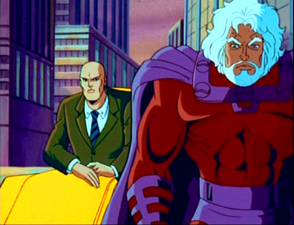
Magneto was easily the show's most successful attempt at blurring the lines between hero and villain.

Magneto was easily the show’s most successful attempt at blurring the lines between hero and villain.

After the first season, it seemed like all was right with the world but the show once more took a more sophisticated approach. With mutants gaining more legal freedoms, bigoted members of society sprung up to do what they felt the government failed to do. Once more, the show mirrored society in that the X-Men couldn’t hope to ever win over everybody to their side. The show would lose touch with this narrative after season two, instead opting to take the show in a more sci-fi direction while focusing on more condensed plots, but in those two seasons X-Men did a lot to legitimize the superhero genre outside of the comic book world. It’s the strength of those two first seasons, merely 26 episodes, that vaults the X-Men into this position, but the show also got a lot else right.

For starters, the voice cast (comprised of Canadian voice actors mostly unknown to American audiences) did an excellent job with the often weighty material. The show could, at times, be joyless and very melodramatic and the scripts would often contain superhero jargon that probably read poorly, but the actors were able to step up and deliver. Some characters, like the perennially wooden Storm, were always lacking but others shined very bright. For me, I will always hear Cal Dodd’s voice in my head whenever I read a line from Wolverine. His raspy, quiet, delivery perfectly suited the sometimes explosive Wolverine. When the show needed him to get loud and angry, Dodd was able to come through time and time again. David Hemblen’s Magneto was another highlight. This show is one of the few that actually depict the Austrian Magneto with an accent, something even the films chose to ignore. George Buza’s Beast was so good that it obviously formed the template for the Kelsey Grammer version of the character that appeared in X-Men 3. The soundtrack was also a standout, mixing orchestral instruments with electronic aspects that suited the show’s somewhat futuristic-like setting. The theme song should be considered a cartoon classic at this point.

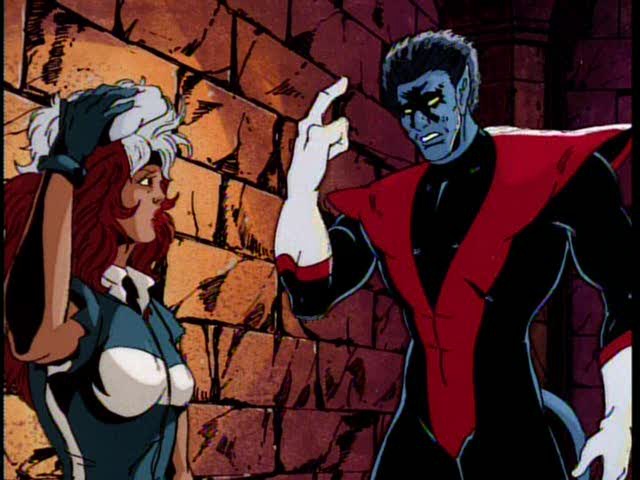
The show never added to its core cast of X-Men, but that didn't stop other fan-favorites from appearing in the show, like Nightcrawler.

The show never added to its core cast of X-Men, but that didn’t stop other fan-favorites from appearing in the show, like Nightcrawler.

Visually, the show adopted the look of Jim Lee’s X-Men quite well with some minor alterations. Most of what makes up the Jim Lee style was still retained though, with the men having bulging physiques and the woman looking like super models. Even the extras in society tend to look idealized. It’s a legitimate criticism of Lee’s work but I’m sure the animators were happy that the vast majority of characters were basically the same shape. There is enough detail in the work that the show looks quite nice in still-shots. The animation, especially in the first season when the budget presumably was at its smallest, could be stiff at times. The animators were obviously under some constraints as well as to what kind of violence could be depicted. After the first season though, the animation improved noticeably. X-Men was not the best looking of its kind, but it certainly was not among the worst. I enjoyed it far more than I would Spider-Man, which came in 1994 and featured some primitive, and mostly ugly, computer-enhanced imagery as well as a softer color palette.

X-Men was able to leave a mark on the world of cartoons. It’s solid production values combined with its mature approach to story-telling is what makes it standout amongst other Saturday morning fare. X-Men is still the gold standard for the super hero ensemble show, and still stands as the best thing Marvel has ever done on television. X-Men took risks in a world where risk-taking is often frowned upon. Most people think kids want a mindless program where the hero always wins and everything is wrapped up in 22 minutes. Children are capable of so much more and the success of X-Men is proof of that.

If you want to read more about the X-Men animated series, there’s plenty to be found on this blog. In addition to numerous posts that summarize and review every episode, I also made an entry on what I considered to be the best episodes the show ever produced.


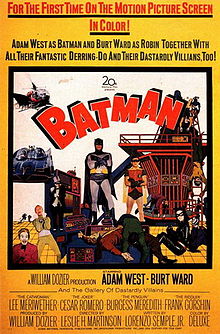
Batman: The Movie

Batman:  The Movie (1966)

Batman: The Movie (1966)

The Batman character certainly has changed a lot over the past 50 years. Sure, under the mask he’s still Bruce Wayne, his parents are still dead, and he can usually be found prowling the streets of Gotham City by night accompanied by a juvenile in a red and yellow costume. Many things have changed though. For one, Bruce Wayne is no longer content to be a millionaire so he’s jumped into the billionaire ranks. The blue and gray spandex Batman used to wear is now often black and gray and even armor-plated, depending on the artist. Robin, thankfully, isn’t parading around in tights either or a bright yellow cape (no wonder why he’s usually the one getting picked off as opposed to Batman) and sometimes he even gets to be an adult. Mostly though, the tone of the work has changed. A lot of writers have received credit for turning Batman into a more serious and mature character during the 70’s and 80’s with most of it going to Frank Miller, but the change was actually rather gradual. In order for a character to survive decades upon decades and remain relevant, he has to change with the times as the general tastes of the public are always evolving.

In 1965, Batman was faced with becoming irrelevant. His comic book sales were down and he hadn’t appeared in a film reel in decades. Television was still pretty new, and pretty limited, but the idea to give the caped crusader a shot at television came up and by 1966 Batman was more than relevant once again; he was a star! Starring Adam West and Burt Ward as the dynamic duo, Batman appeared twice a week (a rarity at the time) on television in a serialized nature, often with the first night’s program continuing into the second’s. The show was a hit with children mostly, but also adults who grew up reading the Batman comics. Color TV was new at the time, and Batman was presented in eye-popping color for those fortunate enough to have a color set. The jazz-infused soundtrack was catchy, and the wild cast of villains gave the show a new flavor each week. Stars were born, of course, with classic comic villains such as The Joker and The Penguin seeing their star burn even brighter while villains mostly abandoned by the books, such as Catwoman and The Riddler, found a new lease on life. The show was basically a farce, with Batman and Robin presented in an ever serious manner oblivious to the ridiculous circumstances they would find themselves in week after week. The supporting cast of Commissioner Gordon (Neil Hamilton) and Chief O’Hara (Stafford Repp) were equally oblivious while the villains came across as the only ones in on the joke. Batman and Robin would find themselves in dire situations often, but would always get out of it either thru ingenuity, sheer coincidence, or via an oddly situation specific “Bat” gadget. This was Batman in the 60’s and it’s what people wanted.

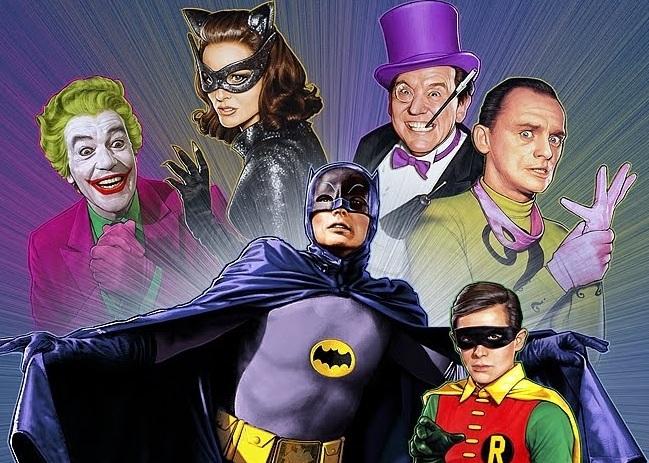
Look out, caped crusaders! The Joker, Catwoman, Penguin, and Riddler have joined forces!

Look out, caped crusaders! The Joker, Catwoman, Penguin, and Riddler have joined forces!

When the show was first conceived, it was decided that a movie would be created to help launch the program. Plans changed, however, when the network involved surprisingly picked up the show with production needing to start immediately to meet a January air date. The movie was back-burnered for awhile in order to focus on the television show, but filming resumed in the early spring to make a summer release possible. This ended up being a boon for the show, and the film as well, as Batman took off and created great anticipation for the film. The increased budget for a feature also meant that new gadgets and vehicles, such as the Batcopter and Batcycle, could be created for the film and then used again for the television show. In order to make the film feel bigger than the show, four villains were present instead of the usual one: Joker, Penguin, Riddler, and Catwoman. The only complication was Julie Newmar, Catwoman on the show, was unavailable so the part had to be recast and went to Lee Meriwether. Cesar Romero, Burgess Meredith, and Frank Gorshin were able to play their roles as Joker, Penguin, and Riddler, respectively, and the rest of the television cast was available for the film as well.

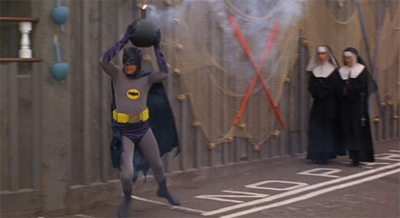
The style of the television show was incorporated into the film. The art direction is distinctly pop for the era. There’s an abundance of bright, primary colors. When the characters are put into a more realistic setting, such as Batman during the infamous bomb segment, they stand-out against the background and appear as out of place as a man in a batsuit should (though the extras in the shots carry on as if this is business as usual). The action sequences are surprisingly kept to a minimum, but when a fight breaks out expect many haymakers and somersaults (the editors saved the famous “pow” animations for the film’s climactic battle). The Batman theme is present but in small doses. The film’s main theme is perhaps relied upon a bit too heavily as it’s used for every long shot of Batman and Robin in their various vehicles used throughout the film.

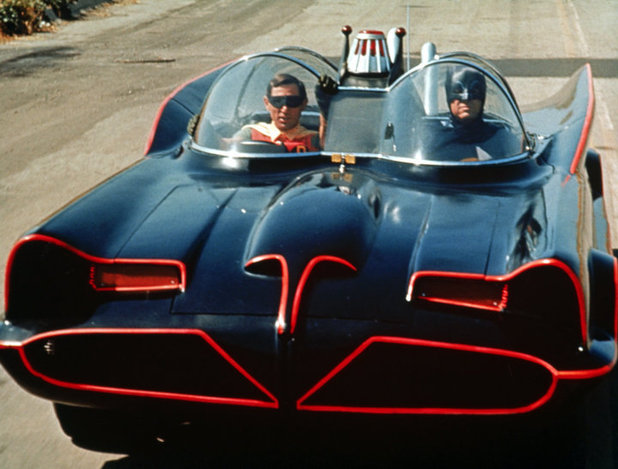
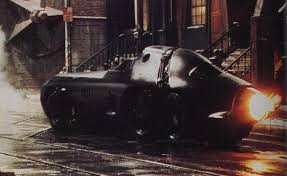
Still the coolest Batmobile ever created.

Still the coolest Batmobile ever created.

The plot from the film is rather rudimentary. The four villains have teamed up to kidnap the world leaders using a bizarre dehydrating ray that reduces any human it touches into a pile of dust to be rehydrated later. The protagonists deduce their foes’ motives thru absurd means presented as deductive reasoning but are either lazy writing or an attempt at humor. Batman is the straight man while Robin is more of a hot-head (and possibly a sociopath who wants to murder alcoholics). The villains are as over-the-top as their TV personalities. Gorshin and Romero present their characters as cackling madmen with The Riddler having the added flaw of feeling compelled to leave Batman and Robin clues in the form of riddles. The film actually draws attention to how similar the two villains became once they hit television, but both actors perform so well in their roles it’s mostly forgiven. Meredith is a delight as The Penguin. He waddles everywhere and gets so much personality out of that long cigarette holder always stuck between his teeth. Meriwether’s Catwoman is basically the same as Newmar’s with her always feeling compelled to use the word “perfect” when describing something she approves of, but drawing it out into a long “purrrrrfect” because she is, after all, a crazy cat-person. Catwoman also gets to have an alter-ego in the form of Miss Kitka, who seduces Bruce Wayne to lure him into a trap so that he may be used as bait for Batman. As a kid, I found it odd how easily Batman is able to see thru a disguise The Penguin uses later in the film, but he’s blind to Catwoman’s. Apparently, even Batman sometimes ends up thinking with the wrong head from time to time.

The special effects in the film will impress no one accustomed to the movies of today. When Batman is attacked by a shark early in the film it’s clearly made of rubber and its teeth leave no imprint on Batman or draw blood. A scene of some ducks in the water are obviously decoys, and every character who throws a punch whiffs by about six inches on their target. And who could forget the climbing scenes? Scene thru the lens of today, these shortcomings just add to the campy charm. The comical bomb Batman is forced to dispose of is cheeky and the ray-gun effects are delightfully cliche.

Some days, you just can't get rid of a bomb (I had to do it!).

Some days, you just can’t get rid of a bomb (I had to do it!).

The film is a farce, an exercise in the absurd, and it is entertaining. I grew up watching the television show in syndication during the 80’s. I suspect my generation may be the last who can say that as I assume most kids today have never seen Adam West as Batman and I wonder if they would appreciate it. Perhaps if this is the fist Batman they’re exposed to they’ll see what the kids of the 60’s saw, or maybe they’ll just see a very ordinary looking man in gray and blue spandex. Batman was fun for me as a kid with all of the different villains and bat-gadgets and as an adult I find it funny and charming. It’s not really clever comedy, but I wouldn’t call it stupid either. The Batman premise is one that’s far-fetched and unrealistic, and the writers approach the character as such. While writers and filmmakers today are more interested in a realistic portrayal of a masked vigilante, it’s kind of fun to see the character portrayed in the only manner he could actually exist. The entire 1960’s television series is finally set for release this holiday season in a massive, and expensive, box set. That might be overload but for anyone seeking out just a taste of the Batman from 1966, the movie represents a good, and cheap, snap-shot. The blu ray from which this review is for, looks great considering the film’s age. The colors pop as they should, the picture is sharp, and there’s quite a bit of extra content. The film doesn’t look as old as it really is, which is often the best compliment one can give to such an old movie. This was my first Batman on television and I would go on to enjoy Tim Burton’s take on the character and fall in love with The Animated Series. I never lost my affection for this Batman though, and even though I view it in a different way than I did as a five year old, I am still charmed by it. Hopefully, I’m not the only one.


Batman Returns

Batman Returns (1992)

Batman Returns (1992)

It’s December 1st, and it’s time to inject a little Christmas into this blog once again.  Last year, I went pretty light on the X-Mas related topics and I intend to do a little more this year.  I’ll start off slow with a pseudo-Christmas movie in the form of Batman Returns.

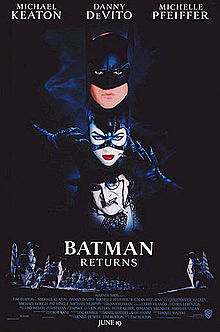
Batman Returns is the 1992 sequel to the mega-successful Batman.  All of the major players return from that film including Tim Burton as director and Michael Keaton as Batman.  The only notable omissions are Billy Dee Williams as Gotham City District Attorney Harvey Dent; Kim Basinger’s reporter/photographer Vicki Vale, and Robert Wuhl as reporter Alexander Knox.  All three characters are absent from the film and were not re-cast.  The Vale character was presumably removed so as not to force Batman/Bruce Wayne to settle down, while the other two must have been cut for time (Williams was reportedly disappointed he never got to play Two Face).

The major additions to the cast are, of course, the villains.  Going with a “more is better” philosophy, Batman Returns includes three major villains compared to Batman’s one.  Created for the film is Max Shreck, played by Christopher Walken.  He’s a real-world villain in that he has no gimmick or special abilities, he’s just a greedy, corporate, jerk who values money more than human life and has ties to both of the other comic book based villains. Michelle Pfeiffer plays Selina Kyle, aka Catwoman.  Catwoman serves the dual role of being a foe for Batman, and a love interest for Bruce Wayne.  Also joining the part is Danny DeVito as Oswald Cobblepot/The Penguin, a monstrous take on the old Batman villain.  The two “super” villains have a sympathetic angle to play, which I’ll get to in a few paragraphs, and in 1992 both felt like logical inclusions for the big sequel.

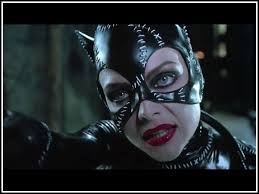
The red of Catwoman's lips really pop in all of her scenes due to the muted palette of the film's sets.

The red of Catwoman’s lips really pop in all of her scenes due to the muted palette of the film’s sets.

The film is virtually identical in look to its predecessor with Gotham taking on aspects of film noir.  The technology is modern, or post modern, but with the stylings of the 1930’s and 40’s dominating the landscape, with a touch of goth too.  The noir angle is played upon even further with a majority of the film’s colors being black and white.  It’s demonstrated in the film’s leads with both Catwoman and The Penguin having a near white complexion to go along with the black and white shades of their respective costumes.  This makes what little color appear really jump out, such as the crimson of Catwoman’s lipstick or the yellow of Batman’s logo.  Batman, and the other good guys, are depicted with warm, natural flesh tones while the villain Shreck is noticeably pale, but not to the same degree as the other villains.  He makes up for that with his bone white hair.  The buildings and structures around Gotham are also mostly confined to shades of black and white, as are all of Batman’s gadgets and vehicles.  Combining this stylistic choice with the setting of a snowy Christmas time and Batman Returns comes across as a very cold movie, even when compared with the already bleak feeling of the first film.

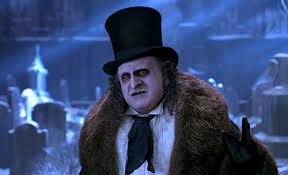
DeVito's Penguin is mostly monstrous but he's able strike a sympathetic tone at times.

DeVito’s Penguin is mostly monstrous but he’s able strike a sympathetic tone at times.

As was the case with the first film, for better or worse, the villains are meant to be the main driving force of the film.  It’s a good thing they’re well-developed as Batman Returns arguably leans even harder on its villains than Batman did with The Joker.  Shreck is meant to be the irredeemable villain and serves as a foil to both Bruce Wayne and The Penguin.  The Penguin is not a nice guy himself, but Shreck proves to be the true monster of the film when he coldly tries to murder his secretary, Selina Kyle.  Shreck is the owner of a department store and he’s seeking the approval of the mayor (and Bruce Wayne as an investor) to build a new power plant.  In a sort of goofy Tim Burton type of plot, Shreck’s new power plant will actually syphon power from Gotham and when Kyle figures this out (while working late in an effort to be a better employee) is when Shreck shoves her out of a window.  Burton’s twist on Catwoman occurs here, as the meek Selina Kyle is seemingly resurrected when a host of cats attend to her corpse.  The scatter-brained screw-up becomes the headstrong and vengeful Catwoman.  Kyle is played fairly straight, while Catwoman is intended to represent her ego gone wild which apparently has an S&M twist.  Catwoman, clothed in skin-tight leather and armed with a whip, also has the benefit of nine lives.  She’s over the top but it works for the picture.  Cobblepot, and his family’s rejection of him, is what opens the film.  He was a hideous and monstrous baby (who apparently has a taste for cats) and his upper class parents wanted nothing to do with him so they tossed his carriage into the sewer where he was apparently raised by penguins underneath an abandoned zoo.  At first his motivations seem are simply to find out his origins while his gang of circus thugs terrorize Gotham.  It’s his encounter with Shreck that changes his outlook and sets his sights on being mayor of Gotham.  Shreck, needing a new mayor to get his plant approved, thinks he can turn Cobblepot into a sympathetic figure who could win election on that alone (never mind his hideous appearance) and soon the two turn to villainy in order to make The Penguin look good in the eyes of Gotham’s voters.

Naturally, their dealings put them in conflict with Batman as everything becomes twisted and murky.  The Penguin, together with Shreck, emerges as a viable candidate for mayor while Catwoman seeks vengeance against Shreck.  She starts by attacking his department stores which puts her in conflict with Batman.  With Batman as a common foe, this pairs up Penguin and Catwoman who then concoct a plan to frame Batman and turn Gotham against him.  It’s a fairly clever pot and Burton should be commended for being able to get this trio of villains to fit together well and the framing angle makes for good drama.  Unfortunately, Burton has never been one for realism.  We don’t mind when that takes the form of a monster baby killing a cat or a man in a bat costume gliding over the entire city, but he leaves lots of loose ends in his plots and asks the audience to simply overlook them.  The framing plot, for example, is never really resolved.  Batman is made to look like he kills the Ice Princess, a mini celebrity of sorts, and by exposing The Penguin as a bad guy (but not as the person truly behind the murder) is apparently good enough for Gotham and it’s police department (to make it even more convoluted, the people don’t even know that it’s Batman that made The Penguin look like a bad guy as he hacks into a PA system while Cobblepot is making a speech, using pre-recorded taunts).

Once The Penguin is exposed, the film’s climax is put into motion where The Penguin, now abandoned by Shreck, decides to murder the first-born sons of Gotham’s wealthy elite, including Shreck’s son Chip.  He has his circus gang abduct the kids from their cribs and personally attempts to abduct Chip, but Max volunteers in his place.  Batman, of course, saves the day which just angers The Penguin even more forcing him to send his penguin army into the city to fire off a bunch of rockets and level a chunk of the city.  Catwoman, having also been betrayed and “killed” by The Penguin, is drawn out after Shreck and all three collide for a fitting resolution.

Batman and Catwoman play off each other quite well in their few scenes together.

Batman and Catwoman play off each other quite well in their few scenes together.

A great deal of the film rests on the Catwoman and Batman conflict.  With the characters in costume, their encounters become a fun bit of violent flirting, with all of the flirting basically on the part of Catwoman.  As Selina and Bruce, the two have a sometimes warms romance that develops a bit quickly with Bruce as the aggressor.  The two have a nice scene together where they both figure out each has a dual identity which is resolved during the final scene pairing Batman and Catwoman.  The film’s end suggests that Catwoman was to play a role in a future film, but perhaps because both Keaton and Pfeiffer were uninterested in continuing in their roles, this Catwoman would never surface again.

Batman Returns shares a lot of similarities with its predecessor, one of which being a rather major flaw in that sometimes each film doesn’t necessarily feel like a Batman film.  Batman Returns is even more guilty of this as the Batman character is really pushed aside in favor of the villains.  Perhaps Burton felt like he had more freedom to do this since the previous movie covered Batman’s origin, but we really learn nothing new about the main character.  In one respect, it does help to add more importance and excitement to the scenes that actually feature a costumed Batman, but it feels like their could have, or should have been, more from our hero.  The plot does mostly work though, even with the bloated cast, but it clearly had to make sacrifices somewhere and it’s debatable those sacrifices were worthwhile.

The Batmobile's ability to down-size into the Bat Missile was one of the big spectacles of Batman Returns.

The Batmobile’s ability to down-size into the Bat Missile was one of the big spectacles of Batman Returns.

The first film set a fairly high-standard for special effects and gadgets that Batman Returns is able to live up to.  The big spot occurs with the Batmobile once again, this time with it transforming into the Bat Missile.  Batman also debuts his ski boat during the closing moments of the film which serves as an interesting take on the more traditional bat boat seen in the comics and television series.  There’s also the previously mentioned gliding scene for Batman as he makes greater use of his cape.  Catwoman has some pretty spectacular death scenes as well and there’s plenty of fire and explosions throughout.  There are a few moments that scream “Tim Burton” that look kind of stupid, notably the penguin army and the final shot of a villain’s corpse at the end.  Some people are unwilling to forgive Burton for the campy penguin army, though I also kind of viewed it as Burton’s nod to the campy origins of the television show, and when viewed in that light, it doesn’t really bother me as much.  As a Christmas movie, there isn’t much here.  The film just happens to take place at Christmas, something Burton is quite fond of doing.  It does give the set designers a chance to play with snow which is kind of cool, and the only real mention of the holiday occurs during the final scene.

All in all, Batman Returns is an entertaining film with quite a number of flaws.  It’s pacing isn’t always ideal and the attention to detail is lacking where the plot is concerned.  The Batman character at times feels ignored, but the film is elevated by the performance of the villains and the way all of the major characters intertwine.  Pfeiffer’s Catwoman is a fun take on the character even if it isn’t that radical a departure from other portrayals.  The sexually aggressive Catwoman plays off of the more stoic, and sometimes naive, Batman rather well with the only drawback to those encounters being that they make Batman look pathetically boring.  DeVito received a Razzie nomination for his take on The Penguin which I never understood.  DeVito’s Penguin isn’t as overly campy as the character had been in the past, he has his moments but he’s mostly well done and I still enjoy this take on the character.  The makeup crew should be commended as it’s sometimes hard to believe it’s DeVito underneath all of the prosthetics.  Walken’s Shreck is perhaps the star, as he’s just so good in this role.  Shreck is hate-inducing, and he’s able to needle the audience in just about every scene he’s in.  The score, provided once again by Danny Elfman, is also adequate as are all of the other sound effects used in the film.  It’s the classic case of a flashy and big-budgeted film trying to compensate for some underlying problems, which are more obvious this time around than they were with the film before.  Batman Returns is far from being among the worst Batman films produced, but it’s also not really one of the best either.


Gargoyles: Season 2 Volume 1

Gargoyles_DVD_2The cover of the DVD release of Gargoyles Season 2 dubs it as Volume 1 of the second season.  At first glance, that may seem like a greedy way to release a show to DVD, but that is not the case.  A common practice of children’s animated television was to order 65 episodes as early in the life of the series as possible to make the programming eligible for syndication where more money could be made off of it.  I say “was” because I’m not sure if that is still the case with numerous cable outlets now providing a lot of the entertainment these days.  Gargoyles was not originally broadcast on cable though, which is why season 2 is 52 episodes long, which following the 13 episode first season, gets the series to 65 total episodes.  Sometimes networks are so confident the show will be a hit they go right from the pilot to a 65 episode order.  This was the case for the still popular Batman:  The Animated Series which featured a pretty bankable star in Batman, but Gargoyles was an all new intellectual property so Disney opted to go for a trial run with the first 13 episodes before going all in.

The process of large season orders seems like a win for fans of the show.  After all, a 52 episode season would theoretically allow for a new episode every week for an entire year, though this wasn’t the case for Gargoyles since it was an afternoon program.  It does usually mean shorter wait times between new episodes, but things can get a little erratic since the season will usually begin airing while a lot of episodes are still in production.  There’s also the other downside to a large season such as this which is these episodes need to get produced quickly, and more people are needed for production and story-writing.  The first season of Gargoyles was a tight, neat collection of episodes with high-quality animation for television.  Season 2 sometimes has the feel of “too many cooks in the kitchen” and episodes become more stand-alone in nature.  The animation is still among the best when Gargoyles is compared with its contemporaries, but there are some drop-offs and it’s apparent that the show had multiple teams for animation.  Some episodes feature sharp lines and tight animation while others are more rounded and toon-like with characters often making over-exaggerated gestures (those familiar with X-Men likely have an idea of what I’m talking about).  Which one looks best is a matter of taste though (I prefer the harder look for this program) at least, with the overall animation quality usually pretty strong from episode to episode.

There are some pretty interesting plot twists to find in season two.

There are some pretty interesting plot twists to find in season two.

Inconsistent animation is expected when a show requires a large amount of episodes be produced, but my main concern for Gargoyles was how the writers would respond when tasked with filling so many hours.  The first season largely operated in a serial format with each episode tied to one overall plot.  Some felt more stand-alone than others, but all plots were referenced at one point or another and the overall quality of the story-telling was quite good.  I knew season 2 would have to feature more stand-alone episodes, but thankfully very few feel like throw-away or filler episodes.  Many of these one-shots still contain plot devices that have repercussions on the episodes to follow, such is the case with the conclusion of the episode “The Mirror” when Demona gains a new power.  Many others choose to introduce new villains or allies that will pop up in later episodes, as is the case with the characters Doctor Sevarius and Jeffrey Robbins.  In short, the structure of the show remains rewarding for longtime fans.  This does come at the cost of making the show a little harder to jump into at any point for newcomers, but since it’s no longer on television, this is really no longer a concern.

There are many stand-alone episodes, but there’s also no shortage of multi-part arcs.  The first half of season two contains the four part “City of Stone” and the three part “Avalon.”  Both are heavily reliant on flashbacks as it seems one goal for season 2 was to flesh out the villains even further, specifically Demona and MacBeth.  We learn about their history together and how Demona has survived the centuries and remained largely the same in appearance.  In season one, we the viewers were basically left to assume that gargoyles are extremely long-lived given that Demona was not affected by the Masgus’ spell like the others, but we learn in season 2 that is not the case.  There are lots of other recurring characters in season 2 such as The Pack, Tony Dracon, Derek Maza, Coldstone, and of course Xanatos.  Xanatos is still primarily an adversary of the Manhattan Clan, but he’s also an unlikely ally in several episodes.  One could even suggest that the writers go to this well a bit too often, but such is the case when 52 episodes have to be written in a short amount of time.  Still, I like the role Xanatos plays on this show of the equal opportunist who has his own agenda that isn’t always clear.  By the end of the first half of the season viewers, and even Goliath to some degree, have mostly caught on to Xanatos and the game he plays making me wonder what role he’ll play going forward (as I honestly can’t recall from my days of watching this as a kid).  Xanatos is also paired this time around with Fox, of The Pack, as his love interest which is a rather interesting dynamic.

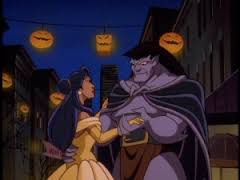
Now where have I seen that dress before?

Now where have I seen that dress before?

Another part of the plot the writers seemed eager to explore in season 2 was the relationship between Elisa and Goliath.  Elisa was Goliath’s main confident, along with Hudson, by season one’s end and he (as well as the other gargoyles) clearly feel a strong sense of protection with her.  In season 2 it’s becoming more obvious that they have a stronger bond than just friends.  Sometimes the show is pretty obvious about it, but for the most part they let it go unstated and attempt to keep things subtle.  It has a nice progression throughout.  Disney fans will also particularly enjoy a scene from the episode “Eye of the Beholder.”

Gargoyles was never a series afraid to introduce characters, and many new villains are brought into the fold in season 2.  New allies, as well.  A pet peeve of mine with X-Men was always how the writers would tease a new character joining the X-Men but would never go through with it.  Towards the end of season 2, the writers chose to add a new member to the clan.  To better introduce this character, the writers shrink the cast down to just Goliath, Elisa, Bronx, and the new-comer for the unofficially titles World Tour episodes.  These episodes spill over into the second part, and series creator Greg Weisman actually bumps up one episode from the second half, “Kingdom,” to serve as the final episode in this collection.  This final episode takes place in New York and we get to see what the rest of the clan is up to with Goliath missing.  This is probably something Weisman regretted not doing originally, as when these aired we went 10 episodes without seeing the other characters which seems much too long.  The World Tour will continue well into the second half though I do not suspect any other episodes were re-arranged as no one affiliated with the show had any say in the release of volume 2, that I know of.

The relationship between Demona and MacBeth is fully revealed in season two.

The relationship between Demona and MacBeth is fully revealed in season two.

Gargoyles:  Season 2 Volume One largely carries over the quality of the first season and only enhances the show’s reputation as one of the better animated programs from the 1990’s.  Season One is probably superior when judged on quality, but the second DVD release for the series obviously boasts more content.  The release itself is also much nicer and includes some bonus features in comparison with the bare-bones season one release.  Unfortunately, season two did not meet the sales expectations of Disney and volume two was never commercially released until just recently.  Volume two is even more sparse than the first season release, and is currently only available to members of Disney’s Movie Club.  I’m not a member of that club, but did find out Buena Vista has an ebay account that basically specializes in selling these exclusives and was able to get one from there.  I don’t know if they restock or not, but that is definitely the best bet for those who want a copy as the secondary market is a little inflated right now.


The Vita Experiment

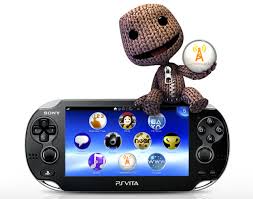
images-115It’s been over a year since I purchased a Playstation Vita.  I have made only two dedicated posts on the subject since which may lead people to believe that I have not enjoyed my purchase.  Far from it actually, as the Vita has been getting a lot of attention from me and has probably been played more than my 3DS over that same time frame.  Not all that long ago I made an entry about the Wii U and how it has been a disappointment for me since it’s launch last November.  The Vita has similarly been a disappointment at retail, though for different reasons.  And while I’ve enjoyed my Vita thus far, I’m not anymore optimistic about its future than I am of the Wii U’s.  If anything, I’m more pessimistic since Nintendo has a lot more riding on the Wii U and is further incentivized to make sure it does not fail.  While Sony similarly has invested a great deal in the Vita, I get the sense that Sony could afford to have it fail and move on (though such an admission would likely end Sony’s attempt at penetrating the portable gaming market via a dedicated gaming device).

Not much has changed regarding my opinion of the Vita as a piece of tech since its launch last year.  The device is quite nice and it functions really well.  I have had no problems with my Vita in the year-plus that I’ve owned it.  No game freezing, no glitching, no nothing.  The screen is large and beautiful, the buttons placed well, and the twin analog sticks much appreciated.  I’m not saying they don’t exist, but I have yet to encounter a game that makes annoying use of the front and rear touch panels as developers have, so far, resisted the urge to shoe-horn touch controls into their games.  Just judging the console on its own merits it’s fantastic and easily the best portable gaming device ever created.

Unfortunately, it takes more than cool tech to make or break a console.  The Vita’s biggest obstacle so far has been price.  The Wi-fi edition retails for $250, which is a lot to ask of consumers for a handheld game console.  And that’s not all, memory cards have been obnoxiously priced from the start and easily push the total cost beyond $300 for any new adopters looking to get just one game with their system.  Sony has put out bundles that help trim some of the costs but it’s still a pretty big investment to get into the Vita.  Especially considering that consumers can get a pretty solid gaming experience on the go via their cell phones.  While true that there’s no cell phone equivalent to Uncharted:  Golden Abyss, many consumers seem content to save the money and just play games like that at home.  Combating mobile gaming is not a problem unique to Sony, but Nintendo has done okay with the 3DS since lowering the price which seems inevitable for Sony if it wants the Vita to have a fighting chance.

Some titles have been promoted as a 2 for 1, in that buying one copy of the game earns the ability to play it on the PS3 and the Vita.

Some titles have been promoted as a 2 for 1, in that buying one copy of the game earns the ability to play it on the PS3 and the Vita.

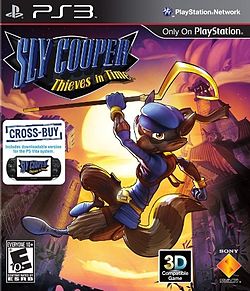
Aside from price, the other make or break aspect of any gaming device is the software.  Namely, the games.  Vita had a respectable launch on that front with several quality portable versions of strong games being made available alongside the aforementioned Uncharted title.  Uncharted has been a successful franchise for Sony on the PS3, though it doesn’t move units like some of the other premier video game franchises and it apparently wasn’t enough to attract a lot of early adopters.  Ever since the launch, the Vita has been spotty on the games front.  Some Vita exclusives like Gravity Rush and Assassin’s Creed:  Liberation have come and gone, and have failed to impress critics.  It feels like every Vita exclusive has scored in that 6.0-7.5 range with reviewers.  They’re good games, but not exactly system sellers.  The rest of the Vita’s catalog has been reduced to ports of console titles.  Some of these ports are done well, like MLB The Show, and work with their PS3 cousins.  One such game, Sly Cooper:  Thieves in Time, even came bundled with the Vita version allowing basically free portable play while others offer discounts when buying both.  Being able to play a console game on the go is certainly neat, but is it worth the added cost of getting a Vita?  Other ports, like last year’s edition of Madden, were done poorly which is inevitable with this sort of thing.  Developers are going to spend the most time on the editions of the game set to make the most money-making the Vita port an after-thought.

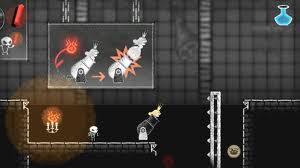
This may lead you to wonder what I’ve been playing that has allowed me to enjoy my Vita as much as I have.  Well, I made entries on my first Vita purchases, Rayman Origins and MLB, and my experience with both was positive.  I have since added the Metal Gear Solid HD Collection, which contains the first two Metal Gear titles along with Metal Gear Solid 2 and 3.  I also have Little Big Planet Vita, which is an all new Little Big Planet title created for the Vita and is just as good as the console games.  I also downloaded a PSN exclusive called Dokuro which is an excellent platform-puzzle game.  Lately, I’ve been player Persona 4 Golden, a port of the PS2 game with some added content.  I think my library of Vita games is a decent representation of the console.  Most of it is composed of ports with only two titles unique to the Vita.  Of them all, it’s tough to say what I’ve enjoyed the most.  Playing the two MGS titles in HD and on-the-go was pretty damn cool and I had not played either in quite some time so it was really enjoyable for me.  Rayman Origins is just as good as the console version, which I don’t own, and is a title that works really well on a portable, well enough that I may get the Vita version alone of Rayman Legends when that comes out later this year.  Dokuro was the nice surprise, and is so far the only Vita game I would tell all Vita owners they should get.  It’s fun and it’s cheap which is always a winning combination in my book.  It also sports a unique look with its chalk drawing graphics and the game is pretty meaty as well.  Persona 4 has definitely been the title that I’ve spent the most time with.  I’m currently at the 80 hour mark and still going.  I never played the original so that helps, but even if I had I’d like to think I still would have bought this.  It’s an excellent game, though it’s dated visuals mean it won’t be the type of game you would buy to show off the Vita’s capabilities.

Dokuro, a download-only title in which you play as a skeleton and try to lead a princess to safety, is perhaps the Vita's best exclusive.  And you get to shoot the princess out of a canon.

Dokuro, a download-only title in which you play as a skeleton and try to lead a princess to safety, is perhaps the Vita’s best exclusive. And you get to shoot the princess out of a canon.

I’m nearly finished with Persona 4 so I’m now looking ahead.  I may switch back to the 3DS for a while as I have some games for it to check out, but in looking ahead to my next Vita purchase I’ve basically settled on Muramasa:  The Demon Blade.  Muramasa is yet another port of a console title, this one being a Wii game from a few years ago.  It’s a side-scrolling action title with beautiful hand-drawn visuals.  I never played the Wii version so it will be a new experience for me.  Aside from that, I’m uncertain what’s in store for the Vita.  It had a fairly poor showing at E3 this year, and the only exclusives I’m aware of are a new Killzone and Batman title (with the Batman title being available on the 3DS too, though one would hope the more powerful Vita would be the lead console).  I’m not a fan of the Killzone franchise, and while I’m interested in Batman, I fear it will turn out like AS:  Liberations and just feel like a lesser version of the console franchise.  These games do not seem like they’ll be big system sellers for the Vita, which has lost the PSP’s biggest franchise (in Japan, anyway), Monster Hunter, to the 3DS.  Sony does have plans for the Vita concerning the PS4.  Right now the aim is to have every PS4 game playable on the Vita via remote streaming.  This is a feature the PS3 supports but never made good use of which makes me skeptical that it will be widely available with PS4 titles.  Even if it is, I can’t see it being something that gets a lot of people to buy a Vita.  It can’t hurt, but will people spend over two-hundred dollars for the ability to play their PS4 games on a small screen?  The Wii U can do that with several games but it’s something I’ve only made use of here and there (though I also only play the Wii U here and there to begin with).

The Vita really needs this game to kick some serious ass.

The Vita really needs this game to kick some serious ass.

All of this leads me to one question:  Can I recommend the Vita to gamers?  I feel as if the answer to that question is “Yes,” but with qualifiers.  If you want a good portable gaming device then yes, the Vita is a good and worthwhile system to have around.  I didn’t touch on it much, but there are quite a few indie developers out there making excellent games for the PSN that figure to be made available on the Vita.  There are some good exclusives, and there are console games out there that are the same, if not better, on the Vita.  And if you’re into playing remakes, the Vita seems to be home to many such titles with more to come.  There’s also a plethora of PSOne and PSP titles available on the PSN for download and play on the Vita.  However, anyone thinking about buying a Vita needs to look at the current crop of games and decide if it’s worth buying just for these games alone.  The future is murky and we may have already seen the bulk of Vita’s exclusive third-party titles.  I do believe Sony will support the system at least thru 2014, but if things don’t pick up third-party developers will just use the Vita as a dumping ground for inferior ports of their console games.  And since the Vita, which currently is at least on par with the PS3, will soon be lagging behind the major home consoles those ports will become more expensive to make and may be bypassed all-together.  Someone recently asked me if they should get a Vita for their kids this coming Christmas.  The question was actually phrased as an either/or between a Vita and PSP.  I told them the PSP is not worth investing in at this point, but also to hold off on the Vita since a price-cut may be imminent.  I also slipped in the fact that by Christmas the PS4 will be out and their kids may want that more than a Vita and the difference in price may make the PS4 less expensive if this individual was thinking of getting a Vita for each kid.  That will likely be my response for anyone who asks me if they should get a Vita.  Wait for a price drop, or get a PS4 instead.  The future is just too uncertain for the Vita to give it a full recommendation.


The Dark Knight Rises

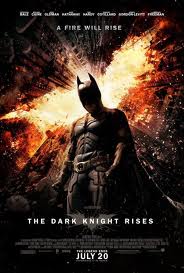
The Dark Knight Rises (2012)

I mentioned in my look at Batman’s best films that I had gone into total lockdown mode for The Dark Knight Rises.  I got off of social media, stayed away from review sites, and just basically blocked the world out where Batman was concerned.  I wanted to walk into this film with an unformed opinion.  I wanted to be outside the hype.  The first two Christopher Nolan directed Batman films are fantastic.  That’s not to say they are instantly in the running for best movies ever, but in the world of entertainment (and comic book adaptations especially) they are certainly worthy of the highest praise.  The hype surrounding The Dark Knight was intense, and the film actually lived up to it.  I assumed the hype could only grow louder for the trilogy’s conclusion.

It’s a poorly kept secret in Hollywood that trilogies often end badly.  I won’t cite examples as I don’t want to distract from the review of this film, but I’m sure most people reading this can think of at least one trilogy that lost a lot of luster in the third and final act.  And I don’t consider this a spoiler since it’s been stated numerous times by both Nolan and Batman himself, Christian Bale, that this is it for the two of them where Batman is concerned.  And since it was reportedly never a sure thing that Nolan would even return for a third film I’m going to take the both of them at their word.  Warner Bros. may back a truckload of money up to both of their doorsteps but I think this is it.  And if you’re a concerned fan fearing that Batman may end up like Spider-Man (there I go, making an example), worry not:  The Dark Knight Rises delivers.

If you’re concerned about spoilers, this is a spoiler-free review.  Basically all of mine are, even for films that are over ten years old.  With that said, I’m going to talk about the plot to some degree and anything in the trailers or that is considered common knowledge (basically anything I knew going in) is on the table.  If you want as pure an experience as possible though, I do recommend doing what I did and avoid all reviews until after you’ve seen it.  If you’re a Batman fan or just a fan of either of the other two films, you should definitely see this.

Easily the most iconic image of Bane from the “Knightfall” arc.

The movie starts out in a similar manner to The Dark Knight; by introducing the main antagonist for the film.  In this case we have Bane, played by Tom Hardy.  For those of you unfamiliar with Bane, you don’t need to know anything about him going in.  For those who do, know that this is a much better incarnation than what was presented in Batman & Robin, though I imagine that goes without saying.  Many writers of comics, television, and even video games have often chosen to focus on the brawn that is Bane.  That’s to be expected as Bane first and foremost exists as a physical threat to Batman.  He is someone Batman can’t simply engage in a one on one fight and expect to beat, unlike most of his rogue’s gallery.  However, Bane has a tactical side to his character which makes him especially deadly.  The film wishes to display Bane in that light, though don’t worry, he still possesses impressive brute strength.  The character was introduced in the “Knightfall” story arc from the 90’s, which makes Bane a rather recent addition to Batman’s rogue’s gallery when compared with others.  Some of that persona is adapted here, and some of the plot from that arc is as well, which kind of surprised me though I suppose it shouldn’t have.

In the comics Bane is a big guy made bigger when he pumps a fictional type of steroid into his noggin called venom.  In this film there is no such serum and the many tubes going into the character’s head are not needed.  He does sport a mask, though it looks more like a gas mask than the luchador style one he wears in the comics.  The mask does serve a purpose, though the film never makes it clear.  I assume he can survive without it since a guy’s got to eat.  There’s no way he can get a physique like that living off a liquid diet.  The mask necessitates his speech to be dubbed.  Early viewings of the initial teaser for the film left several fans complaining about how inaudible Bane’s speech was.  I assume Nolan wanted to go a realistic route with the character, but pressure from the audience did apparently bring about change.  He’s not always clear in the picture, but his voice is quite loud and almost jarringly so.  It reminds me of Shredder’s voice from the first Teenage Mutant Ninja Turtles film.  It may not be realistic, but it beats the alternative.

In the trailers we are shown not just Bane, but Catwoman (Anne Hathaway) as well.  Her lines to Bruce Wayne at a costume ball recall some of the sentiments being thrown about in the Occupy Wall Street movement from last summer.  And yes, that is part of the film’s central plot, to a degree.

Campy? Perhaps, but given the source material I think they did all right.

After Bane is introduced in a most menacing fashion, we are taken back to Gotham where eight years have passed since the death of Harvey Dent.  Bruce Wayne has become a recluse and all of those years playing Batman have taken a toll as well.  The cast from the previous films is returned.  Gary Oldman is back as Commissioner Gordon and Michael Caine as Alfred.  Morgan Freeman is there as well and there’s a couple of new comers in officer Blake (Joseph Gordon-Levitt) and Miranda Tate (Marion Cotillard).  The three veterans of the films are just as good as always, with Caine especially being effective as Alfred.  I feared the Alfred character would get too preachy, and almost too omnipotent much like Rosemary Hariss’ Aunt May in the Spider-Man films, but my fears proved unfounded.  The new-comers serve a nice role with the Blake character mirroring Gordon’s from Batman Begins.

Tate is an ally to Bruce in his corporate life, which we soon learn is not going well.  With Gotham now at peace and organized crime all but exterminated, there’s no need for Batman so Wayne tried devoting all of his resources at Wayne Tech to making the world a better place.  In doing so he has stymied profits but Tate seems to share his outlook.  Selina Kyle, aka Catwoman, makes her presence felt early on as well by swiping some jewelry from Wayne which gets her into the story.

I was on the fence about the Catwoman character being used here and thought the film may become too crowded, but again my fears are mostly unfounded.  While there are a couple of scenes between Batman and Catwoman that border on camp, the film soon remembers what it is and distances itself from any such thing.  In the comics, Catwoman is known for being a tweener in that she isn’t really a villain but isn’t necessarily a hero either.  In TDKR she’s played pretty much the same way.  Her character is definitely adapted in part from Frank Miller’s Year One arc, which was used as a basis for Batman Begins, minus the prostitution angle (which DC has always tried to distance itself from). Her character views herself as a sort of Robin Hood, though her motives are entirely selfish.  She gets herself mixed up with Bane, which is how she stays in the picture.  And her presence doesn’t crowd anything or take away from the film’s hero, Batman.  He’s in this one just the right amount, and his heroic appearances are staged exceptionally well.

Gordon-Levitt’s Blake is a welcomed addition to the cast.

The main plot for the film involves Bane trying to basically pick up where Ras al Ghul left off and bring down Gotham.  He infiltrates the corporate sector, the market, and even the physical infrastructure of Gotham itself (as evidenced in the trailer).  Make no mistake, he’s a real threat to the city in an even bigger way than Ras could have hoped to be and his motives and actions help tie the trilogy together.  A lot of TDKR harkens back to Batman Begins which helps maintain a feeling of continuity and in the end makes for a better pay-off for longtime fans.

That’s the film, in a nutshell, but how does it fare as entertainment and how does it stack up with the other two films in the trilogy?  To put it simply, The Dark Knight Rises is a hard film to watch.  I don’t say that because it’s long (approximately two hours and forty-five minutes) but because it’s pretty bleak.  For most of the film’s running time there’s not a lot of reason for optimism.  The Dark Knight was a pretty dreary movie at times, but even that had little moments of triumph throughout.  The Dark Knight Rises has fewer of those moments which make it one exhausting movie to watch.  I went back for seconds and thirds on The Dark Knight during it’s theatrical run, once is enough for me with this film (though I’ll definitely be a day one buyer when it hits stores).

Oh yeah, expect to see some new “toys.”

Don’t confuse my proclamation that this is a hard film to watch as a criticism.  Some films are truly brilliant but hard to sit thru.  Think Schindler’s List or Grave of the Fireflies, though certainly not on that scale.  There is a real danger to this film.  I think part of it is born from knowing that this is the final film in this trilogy, and possibly this “universe,” which makes it feel like anything is fair game.  I would like to think though, that even without knowing that, I’d still feel the same unease I felt throughout this film.  Bane is a truly monstrous individual on a different level than The Joker.  That doesn’t make him better, just different.  Many were likely worried about how Nolan could possibly move on after The Joker but he found a way.  I found myself hating him and I really was hoping he’d get his due in the end, which is an emotion I never really felt towards The Joker.

The Dark Knight Rises is a very good film and quite exceptional, though it doesn’t top Batman Begins for sheer entertainment value and will probably wind up behind The Dark Knight for most.  There’s no shame in that and I feel quite confident in saying that Christopher Nolan’s Batman trilogy will go down as one of the all-time greats.  There’s certainly no comparison as far as comic book movies go, and I doubt it will ever be as beloved as the original Star Wars trilogy, but from start to finish this is the most consistent.  The films are connected not just by style and the names attached but in theme and narrative.  The Dark Knight Rises is a grueling experience at times, but is the pay-off the fans wanted.  I feel slightly stupid for even having my doubts about this one, but Christopher Nolan once again delivers a fantastic piece of art.  I will never doubt that man again.


Batman’s Top 10 Feature Length Films

No other super hero has taken to the big screen as well as The Dark Knight.

I didn’t do an official count, but I am going to go out on a limb and say that Batman has had more movies made featuring him than any other comic book superhero.  Over the years he’s been featured in both live action and animated films, wide release and direct to home video.  Some of these films have been among the handful of movies I’ve enjoyed above all others, while others have been truly dreadful.  When a character has been around as long as Batman, that’s bound to happen.  He’s not only had great and terrible films made about him, but he’s also had great comic book stories and poor ones, fantastic television moments and truly embarrassing ones.

Recently though, it’s been mostly good films that have found their way to audiences worldwide.  And I’m not just talking about the much praised Christopher Nolan directed projects, but also some of the smaller ones that never made it to theaters.  Today we are on the eve of the release for the third and final film in the Nolan trilogy.  You may have heard of it, it’s called The Dark Knight Rises and it figures to take in money hand over fist for the next several weeks and make the executives at Warner Bros. very happy, and even more wealthy than they already are.  It probably doesn’t even have to be a good movie for it to be a cash cow, just look at the much maligned Spider-Man 3, which made more money than either of its two superior predecessors.  Hype is a powerful thing.

As most are looking forward to The Dark Knight Rises I am looking back.  I started to reflect on the films that came before it to feature Batman and decided it would be fun to make a top 10 list.  For some only familiar with the live-action stuff, it may be surprising to know that there have been more than 10 Batman films made, but that man gets around.  Truth be told, there are even a couple I haven’t seen such as the Batman Vs Dracula one that was taken from the The Batman universe.  I just never got into that show as it was geared towards a younger audience but if someone thinks I’m really missing out on something special feel free to let me know in the comments section.  Otherwise, let’s take a look at number 10…
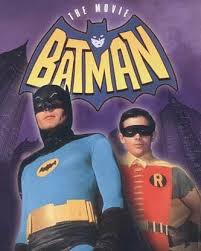
Batman: The Movie (1966)

10.  Batman:  The Movie

It was actually a tough call between this and Batman Forever.  Batman Forever tends to get lumped in with Batman & Robin since they both share the same director.  While Batman & Robin is one of the worst movies I’ve had the misfortune of seeing, Batman Forever is merely average.  It’s quite different in tone from the Burton directed pictures, and whether that’s a good thing or not is a matter of taste.  I’m not really a fan and I don’t think anyone who skips Batman Forever is really missing out, but it does contain an entertaining performance from Jim Carrey as The Riddler, even if he’s just playing the same screwball he was playing in every other movie at the time.

Batman The Movie, on the other hand, is a truly unique entry among the Batman films.  Based on the television series starring Adam West, it’s basically the definition of camp.  It exists purely to entertain movie-goers of all ages and never takes itself all that seriously (with the exception of Burt Ward’s rather intense portrayal of Robin, which is kind of an in-joke in and of itself).  For fans of the show, this was like the ultimate as the best of Batman’s rogue’s galleries team up to take down the caped crusader.  The plot is rather hokey, but the film isn’t short on laughs.  Fans who take their Batman stories very seriously probably find this one off-putting, but this was more or less Batman in the 1960’s.  The comics were geared towards six-year-olds and at least the television show made an attempt to appeal to adults as well which actually helped keep Batman relevant.  This one’s a guilty pleasure and is placed here for nostalgic value, if nothing else.

9. Batman:  Mystery of the Batwoman

Mystery of the Batwoman is the third feature length film based on Batman:  The Animated Series and the second that was direct-to-video.  It was the only one based on the relaunched version of the animated series which featured new character designs and improved animation.  I prefer the style of the first three seasons as opposed to this one, but it’s not too off-putting.  Mystery of the Batwoman is exactly what the title implies; a mystery story.  There’s a new vigilante in town and Batman has to deduce the identity of this female who has borrowed his image.  The film features a few “names” in prominent roles such as Kelly Ripa and Kyra Sedgwick while the usual cast is excellent, as always.  The villains featured in the film include The Penguin and Bane and this mysterious Batwoman apparently has a bone to pick with them, among others.  Not surprisingly, her methods are more ruthless than Batman’s which is what drives Batman to try and figure out her identity and put a stop to her activity.  The film’s mystery proves to be pretty satisfying, and as a whole it’s an entertaining story.  The minimalist production values tend to make it feel more like an extended episode of the show though which is why it doesn’t place higher.
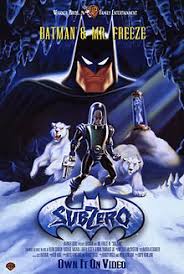
I’m still amazed at how awesome (cool?) Bruce Timm and Co. were able to make Mr. Freeze.

8.  Batman & Mr. Freeze:  SubZero

SubZero is the second film based on The Animated Series and was the first to go direct-to-video.  Unlike Mystery of the Batwoman, it’s production values are more on par with Mask of the Phantasm, the only animated Batman film to receive a true theatrical release.  Mr. Freeze was a surprise star in the television show and it was clear that the writers really enjoyed working with him so it’s no surprise to see him receive the movie treatment.  As was the case in the excellent episode “Heart of Ice,” Freeze is driven to crime in an effort to save his beloved wife, Nora, whom he has cryogenically frozen until he can find a way to cure her of the illness that threatens her life.  Once again, the writing crew prove they’re up to the task of creating a worthwhile Mr. Freeze story but unfortunately the film sort of feels like an extended version of the “Heart of Ice” episode, and an inferior take.  Despite feeling like a retread, it’s still an engaging film and I’d love to see more from Freeze in a future feature film.

7. Batman Returns

Tim Burton’s Batman was a huge success with movie goers when it was released in 1989, so a sequel was pretty much a foregone conclusion.  Burton’s Batman brought the caped crusader back to his roots.  The work of writers such as Neal Adams started to bring some semblance of maturity back to the character in the 70’s, while the work of Frank Miller in the 80’s really drove it home.  This Batman, portrayed by popular comic actor Michael Keaton, was the strong silent type not interested in bantering with his foes.  The first film featured an iconic performance from Jack Nicholson as The Joker, and the feeling going into Returns must have been more is better as the sequel featured three prominent villains.  Fans were used to both The Penguin and Catwoman, but created for the film was Christopher Walken’s Max Shreck who is perhaps the film’s true villain.  In keeping with the style of the first film, both Catwoman and Penguin feature unique designs that represented quite the departure from what fans were used to.  Catwoman comes across as a cat-obsessed dominatrix while The Penguin is a truly hideous creature.

Perhaps Burton felt like the Batman character was explored and developed enough in the first film, because he’s kind of brushed aside here.  The focus of the film is placed squarely on the villains as we learn what brought them to this state.  Burton is also more comfortable here interjecting his brand of humor into the franchise, more so than he did with the first.  Both The Penguin and Catwoman are pretty ridiculous, but the film plays them straight.  It starts to fail though in the final act as even the most forgiving members of the audience will find it hard to accept an army of penguins packing serious heat.  DeVitio (who actually received an undeserved Razzie nomination) and Pfeiffer are both memorable in their roles, but even they can’t carry a Batman movie that’s light on Batman.  A fun, but ultimately flawed experience.
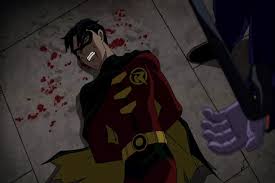
This one’s not for the kids.

6. Batman:  Under the Red Hood

I was pretty surprised to see Warner Bros. was releasing an animated Batman film that did not feature Kevin Conroy in the leading role, or would include The Joker but no Mark Hamill.  To me, so long as neither actor is demanding an absurd wage for their services, Conroy and Hamill should be the voice of Batman and Joker, respectively, until they can no longer do it.  That said, both Bruce Greenwood and John DiMaggio do an acceptable job as Batman and The Joker in Under the Red Hood, an animated film that adapts parts of popular comic plots such as “A Death in the Family,” “Hush,” and “Under the Hood.”

It’s that first story that attracted me to this direct-to-video feature and the one that made it most interesting.  For those not in the know, “A Death in the Family” is the iconic story where Robin is murdered by The Joker.  It was one of those rare stories where comics crossed over into the mainstream as it was a pretty big deal to see Robin go down.  Under the Red Hood starts off like a mystery, but it’s one that is solved almost immediately.  Batman and Nightwing (Neil Patrick Harris) both encounter the new vigilante/villain Red Hood and are unsure of his motives.  He appears to be positioning himself as an adversary for crime boss Black Mask, and doing a good job of it.  As I said, the mystery is revealed fairly early in the film, and the second act deals with Batman confronting this new foe.  The animation is fluid and quite enjoyable to behold, and the opening scene featuring the murder of Robin is appropriately disturbing and graphic.  The film’s signature scene though is not the death of the boy wonder, but the climax which features Batman, Red Hood, and The Joker in a memorable stand-off.  The true motivation for the Red Hood is revealed and it serves as a believable and some-what heartbreaking reveal.  It’s really that climax that pushes this one up to the position of number 6 on this list.

5. Batman Beyond:  The Return of the Joker

I’ve mentioned before how I wasn’t a believer when I first heard about Batman Beyond.  It seemed too gimmicky and totally unnecessary; a cheap way to go after the younger crowd.  Were there really no stories left to tell for Bruce Wayne?  I was proven wrong though and Batman Beyond, while not as good as the series it followed, proved to be a worthwhile entry into the Batman canon.  The Return of the Joker though, ended up being one of the best Batman stories every brought to animation which is something I don’t think anyone could have predicted.

One of Batman Beyond’s major weaknesses as a series was the absence the classic rogue’s gallery.  A few good villains would be created to battle this new Batman, and even Mr. Freeze would make an appearance, but few could hold a candle to some of Batman’s most memorable foes.  One who was missed perhaps the most was The Joker.  How can you have Batman without The Joker?  I think most fans suspected his presence would one day be felt, but as the actual Joker who terrorized Bruce Wayne’s Batman so long ago?  That seemed crazy, but The Return of the Joker proved it could be done.  Sure there was a sci-fi explanation for how The Joker could still be around and the film took some liberties in getting the audience to buy into the explanation, but at the end of the day, we were willing to believe anything if it meant the return of perhaps Batman’s greatest foe.  And this Joker, once again played by Mark Hamill, is an even darker take on the character.  He’s even more sadistic than before and kind of pissed off to boot.  The production values are no better than an episode of the television series, but no one cares when the plot is this well executed.  If I have one complaint with the film it’s that the final encounter between Batman and The Joker isn’t quite as satisfying as it probably should have been, but the film makes up for it by showing us the final confrontation between the original Batman and Joker which was just as excellent as it should have been.
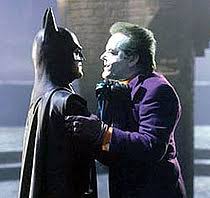
Now there’s a dynamic duo.

4. Batman (1989)

I’ve already done a full review for this one, so I won’t get into too much detail here.  Simply stated, this was the film that proved Batman could be a box office juggernaut and appeal to both kids and adults.  Perhaps more so adults with this dark and gritty take on the caped crusader.  The choice of Michael Keaton as Batman was much maligned at the time, but he easily won crowds over.  The look of the film was particularly striking and would go on to influence The Animated Series in a major way.  Jack Nicholson’s Joker was so good that, as hard as it may be to believe now, many people felt like no one could ever come close to matching it.  This one may not hold up as well today when compared with the Nolan films, but this Batman is still pretty unique and the one most like the Dark Knight featured in Frank Miller’s work.

3. Batman:  Mask of the Phantasm

Last year I dubbed Mask of the Phantasm as the definitive take on the character to make it to film.  I also said that is not to be confused with best film to feature Batman.  Mask of the Phantasm, quite simply, fully captures the essence of the character in a way that not even Christopher Nolan’s works can match.  The film focuses on the early challenges faced by Bruce Wayne as he struggles with keeping to the promise he made to his deceased parents and the graveyard scene is the most memorable scene, for me, from any Batman film.  I love this movie, so much that I made a full entry on it last year shortly after my verdict on the definitive Batman film.  If you like Batman, you absolutely owe it to yourself to track this one down.
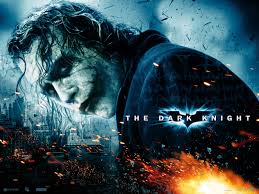
Well done, Mr. Ledger.

2. The Dark Knight

Considering the work done by the other directors and actors featured on this list, it’s pretty high praise to award the top two spots (yeah, that’s right, hope I didn’t ruin the surprise) to the team of Christopher Nolan and Christian Bale.  Of course, The Dark Knight owes a great deal of its success to the late Heath Ledger who’s turn as The Joker is already one of the most memorable performances in a comic book movie to date.  Batman Begins was a successful movie, but it wasn’t the massive hit The Dark Knight turned out to be.  A great deal of that probably is due to the aura the film garnered after Ledger’s demise and word of mouth of the actor’s fantastic performance.  It cannot be understated;  Heath Ledger’s Joker is phenomenol!

That said, The Dark Knight is not a perfect movie.  It’s certainly very good, excellent even, but Batman has seen better.  Part of that is due to the same thing that harmed Batman Returns, which is a de-emphasis of the Batman character.  Nolan explored Batman in great depth in Batman Begins, so he probably felt like that afforded him a lot of freedom with this picture.  Nolan also approached this one as a crime drama and often cited the popular heist film Heat when discussing the picture.  Batman still has a strong presence, as both himself and his alter ego Bruce Wayne, but the scenes with The Joker are just so good, so memorable, that they over-shadow the rest of the film.

I do find Bale’s performance to be noticeably worse in this one than the previous film.  Some of that is some quentionable dialogue in the script, but a big piece of it is the dreaded bat voice.  In Batman Begins, Bale uses a lower and slightly throaty voice when speaking as Batman.  In The Dark Knight, the voice is almost distorted and Batman sounds like he’s auditioning for a death metal band.  It doesn’t work, especially when Batman is asked to have full conversations with characters, and really detracts from many of the film’s most critical scenes.  I also feel like the Two-Face part of the story was rushed and the resolution still leaves a sour taste in my mouth.

Criticisms aside, you can’t be number 2 on this list and be a bad film.  The Dark Knight is an engrossing crime flick and is tremendously entertaining.  Its faults are forgivable, and its biggest fault is that it’s just not as good as the number one film on this list.

There’s just no topping this.

1. Batman Begins

When Christopher Nolan was brought on to reboot the Batman franchise many people had no idea what to expect.  Nolan, at that time, was best known for Memento, a really cool and engaging film but not one that could easily be applied to the Batman franchise.  The often rumored to be in development Batman 5 never got off the ground, and Warner Bros. wisely decided to distance itself from the catastrophe that was Batman & Robin.

A fresh start is really what the doctor ordered, and by doing so it gave Nolan a chance to do what no director had really done before:  tell a complete origin story.  Batman Begins is exactly what Batman needed.  The film goes into meticulous detail to explain to the audience how Batman came to be and what truly motivates him.  His morals and methods are fully defined for the first time and the film is focused fully on Batman with no villain to steal the spotlight.  Nolan’s universe is grounded and absent of most of the characters we’re used to seeing which gives the film it’s own sense of authenticity.  Christian Bale proves to be worthy of dawning the cape and cowl, but some of the supporting cast really steal the show.  Michael Caine is perfectly cast as Alfred, the closest thing to a maternal figure Bruce has, and Gary Oldman is easily my favorite actor to portray Jim Gordon.  Rachel Dawes, an assistant to Gotham’s D.A. and childhood friend to Bruce, is created to help the Bruce Wayne character feel more real.  Played by Katie Holmes, she’s a strong female type that actually works pretty well in that role.  My only major complaint with the film is when they try to force a romantic undertone to Rachel and Bruce’s relationship which just lacks any chemistry and feels unnecessary.

Batman Begins is the best Batman film created thus far.  It just hits all of the right notes and I still get chills when I watch the film’s final scene.  Will it remain the best?  As I sit and type this up we are just over 3 hours away from the release of The Dark Knight Rises.  I have intentionally avoided all press related to the film.  I do not know how it has been received by critics, I do not intend to speak to anyone tomorrow about it as I want to experience it in a pure way to form my own opinions. I’ve never taken a film this serious, and I’m not sure why I am now.  I think it’s because I just haven’t been excited by the few trailers I’ve seen or the concepts I’ve heard that the film is supposed to contain.  I fear I’m already approaching it with too much of an opinion, and I want to distance myself from that.  I have tickets to see it in IMAX this Sunday, and I’ll try to post a review that night for anyone who is interested.  Regardless, I fully expect this trilogy of Batman movies to be among the best trilogies comic book fans, or movie fans in general, have ever received.  I doubt very much it will top Batman Begins as a stand-alone experience, but so long as it’s on par that’s all anyone can ask for.


The Amazing Spider-Man and Reboots

The Amazing Spider-Man (2012)

There are two big superhero movies set to hit theaters this summer.  One, The Dark Knight Rises, figures to close out a trilogy that could go down as the best superhero trilogy ever conceived to this point (and one of the all-time best trilogies in general).  The other, The Amazing Spider-Man, hopes to launch a new franchise that could one day be among the best.  The two films are not very similar, but The Amazing Spider-Man hopes to do for Spider-Man what Batman Begins did for Batman.  That’s a tall order and complicating things is the fact that not a lot of time has elapsed between the original Spider-Man film franchise and this new one Sony is looking to start.

How much time needs to pass between two films based on the same property before a reboot can be introduced?  A reboot refers to a new beginning for a character.  The Amazing Spider-Man will ignore the three previous Spider-Man films directed by Sam Raimi.  When it hits theaters it will have been 5 years since Spider-Man 3 was in theaters.  For Batman Begins, 8 years had elapsed between that film and the most recent Batman film before it, Batman & Robin.  In the case of both, these new films are arriving after the last one was poorly received, though to different degrees.  Batman & Robin was panned by critics and filmgoers alike.  There is almost nothing positive that can be said about it.  It was the sequel to Batman Forever, a film that received a mixed reaction, and was also the fourth film in a line of movies but introduced its third actor to play the starring role.  There was little continuity in that series following Batman Returns and every film seemed to be worse than the one that preceded it.

For Spider-Man, Spider-Man 3 returned the same cast and crew as the previous two.  The first film was received warmly and accomplished what it set out to do, and the second was roundly praised as one of the best comic-to-film adaptations ever.  Spider-Man 3 had a lot to live up to, and though it was not as good as the first two, it actually has a “fresh” rating on rottentomatoes.com, albeit barely so.  It wasn’t a terrible film, but it was a mess of a movie that encountered numerous problems.

What the Hell were they thinking?

I’m not sure if it was the intention from the start, but it felt like going into Spider-Man 3 that this could be the endpoint for the Rami directed movies.  The third one rounds out a trilogy and there seems to be a natural tendency to view films within a franchise in groups of three.  I’m not sure why, but that tends to be the reality of things.  The main actors were originally signed for three films so a potential fourth one was likely to get expensive.  As such, both Raimi and Sony/Marvel tried to cram everything into Spider-Man 3 they ever wanted to address on film.  From the onset, Raimi and star Tobey Maguire had mentioned they liked The Sandman and wanted to get him into a film.  There was also the Green Goblin plot which developed over the course of the first two films that had to be addressed in the third.  And then there was Sony and Marvel (and to a certain extent, the fans) who wanted to see Venom make his big screen debut.  If they had bothered to do any fan research though, I think they would have found most fans would not have wanted Venom in this film and would have preferred to see him introduced slowly across multiple films like he wan in both the comics and television show.

It’s no surprise then that Spider-Man 3 became a bloated mess.  Raimi tried to bring everything full circle for Peter Parker by revealing another piece of the puzzle where Uncle Ben’s murder was concerned.  And not content to let Mary Jane and Peter have a conflict free movie, he put a lot of focus on their relationship and tried to create a love triangle with Harry, the New Goblin (who looked ridiculous).  And then they had to get Gwen Stacey in for some reason, and introduce Eddie Brock and the black costume.  The fact that the movie actually does have a coherent plot is some-what commendable, even if it’s not a good one.

The film made a ton of money riding on the strength of the franchise more so than on the merits of the film itself.  The ending tied up some loose ends for the trilogy, mostly the Green Goblin story, but left things open where MJ and Peter were concerned.  I hated this ending, though the film did such a good job of making both Peter and MJ unlikable that I really didn’t care what became of their relationship once the credits began to roll.  Because it did make so much money, there was some speculation that Raimi and the main cast would return for a fourth film.  Things appeared to be moving in that direction until Sony abruptly cut ties with all involved.  This actually was met with a positive reaction by the fan-base, or seemed to be.  Fans actually seemed on board with a reboot of sorts for Spider-Man, partly because the existing films seemed to lose their way with all the melodrama thrown into the films, and because the Venom character was so thoroughly botched.

The new leads: Emma Stone and Andrew Garfield

A fresh start was definitely in order, but I’m not sure if The Amazing Spider-Man is what fans had in mind.  This new film is copying the Batman Begins formula perhaps too much by re-telling Spider-Man’s origin.  When Begins came out it had been well over a decade since Batman in 1989 and his origin really wasn’t explored in as great of detail as Begins set out to do.  With Spider-Man that’s not the case.  This film does give film-goers a look at Peter’s parents, which was never addressed in the previous trilogy, but it also goes through the whole bitten by a spider thing again.  I don’t speak for everyone, but I have no interest in seeing that re-hashed.  The film’s main villain is going to be The Lizard, who supposedly would have been the villain had Raimi’s franchise continued for a fourth film as well.  He’s another scientist with good intentions who has a horrible accident that leads to him becoming a super-villain.  That type is quite common in the Spider-Man universe, but The Lizard may be one of the most boring.  The film could portray him differently than most mediums, but for the most parts he’s just a mindless rampaging creature that tests Spider-Man physically, not so much intellectually.  He’s been around for a long time so he’s had other portrayals, but that’s the basic one.

If this isn’t the reboot fans were looking for, then what was?  Well, I think fans would have been happy to see a new actor dawn the red and blue tights without an origin story.  The film could have still ignored the Raimi trilogy and laid the groundwork for a new one.  It makes sense to go with a villain that wasn’t captured in the first three films already to provide some added freshness, though I’m not sure The Lizard was the right one.  Ideally, Eddie Brock would be in it to set the stage for Venom in a later film, but a main villain would be needed for the first one.  A grounded, real world type of villain might have worked best just to get away from the whole science gone wrong angle.  He may have shown up in Daredevil already, but The Kingpin could have been utilized again, maybe even the Spider Slayers?  The plot could show how Spider-Man, portrayed as a teen out having a good time stopping muggings and other petty crimes, confronts an enemy far more dangerous than anything he’s confronted before.  Kingpin could even have a lackey to beat the tar out of Spider-Man, someone like Hammerhead, Tombstone, or The Rhino.

The new costume has a Ben Reilly feel to it. That's not a good thing.

Or my concerns could amount to nothing.  It’s not impossible that The Amazing Spider-Man turns into a great movie, though I don’t consider it likely.  Maybe I’m just being pessimistic, but this thing looks dead in the water.  I expect it to do well at the box office, but perhaps not so well critically.  This may just end up being the example of what not to do when rebooting a franchise.  It has a “too soon” feeling already, and if a large chunk of the film’s run time is spent going over things the previous films already covered people may react negatively.  Then again, maybe the casual movie-goer doesn’t care and just wants to be entertained.  Spider-Man bouncing around and wailing on a CGi Lizard may delight audiences, and a lot of people seem to like Emma Stone who plays Gwen Stacy (whom has the misfortune of expectation as comic fans will basically just be waiting for her to die).  The trailer is linked below, so you can form your own early opinion on the film.  Mine seems obvious, but in the interest of spelling things out, I don’t expect this to end well.


Overwhelmed by Games

The last 6 months have been pretty spectacular for gamers.  It’s safe to say, if you have even a passing interest in video games you’ve been pretty busy.  I’m not sure I can recall such a period ever occurring before.  There’s been some excellent falls before where several quality titles were released, but I can’t recall one like this where that epic fall carried over into the new year so strongly.  I’m looking at the upcoming releases and looking at the games I have that I’ve yet to play and wondering how I’m going to get to everything.  I suppose it’s a good problem to have, but some things are going to go missing.  There’s already been one casualty for me, WWE 12, as I just didn’t have the time.  I very nearly bought it anyways as I wanted to do a follow-up on a post I did last year but the reviews I were reading just did not excite me.  I passed on it, better luck next year THQ.

I have begun organizing, in my head, the games I have yet to play.  This is what I’ve come up with:

Games I own But Have Yet to Play

I’ll probably finally finish my adventure in the land of Skyrim this weekend.  I’ve played through every

Soon, my friend, soon.

major quest, save the final one, and even acquired every trophy on the Playstation Network which is something I never do.  When I do finish with that I have a decision to make.  Two other games have been sitting on my coffee table since Christmas unplayed; Batman: Arkham City and The Legend of Zelda:  Skyward Sword.  My plan has been to dust off my much neglected Wii and settle into the land of Hyrule once again but I am wavering a bit.  Skyward Sword may be a very different adventure/RPG type of game than Skyrim but the same sense of grandeur still applies.  I also just finished The Minish Cap on my 3DS, and combine that with several other Zelda games that I played through in 2011, and I’m bordering on Zelda exhaustion.  I don’t want an over-exposure to Zelda to impact my impressions of Skyward Sword any, so a break may be in order.  Plus the alternative is Batman, and Batman kicks ass.  On the other hand, It’s likely to be a long adventure and maybe I should just get it started.  I also bought a new Wii remote and am eager to test out Wii Motion Plus.  I also have Infamous 2 from last summer that I’ve only played once.  Even though I really liked the first one, and the second is pretty much more of the same, I’ve had a really hard time finding the motivation to play it.  I’m not sure if I’ll ever go back to it.

Following my write-up on Final Fantasy Tactics, I found myself really eager to go check out the original Tactics Ogre.  I recently was able to find a used copy of the PSP edition and have that for play during my morning and evening commute.  I’m currently spending that time playing Mario Kart 7, but I just finished unlocking everything in that so I may be ready to make the switch from 3DS to PSP soon.  If not this week, then probably next.  I still have a bunch of those Gameboy Advance downloads as part of Nintendo’s Ambassador Program.  I really want to play through Fire Emblem at some point, but it looks like that will have to wait.

Games Set for Release Soon

This is where things get complicated.  February and March are loaded with new game releases.  It’s almost to the point where I’m rooting against some of these titles and hoping the review scores come in low so I can just skip them with little regard.  That seems unlikely though.

Tight corridors and zombie-like creatures, now THIS is Resident Evil!

First up on February 7th is Resident Evil Revelations on the 3DS.  Revelations represents a return to the more survival horror roots of the franchise as opposed to the run and gun mechanics of Resident Evil 5.  This is a welcome development for me and it’s been a long time since I’ve played through a true RE game.  The first reviews are starting pop up and they’re pretty positive, though not exemplary. Released alongside Revelations will be the Circle Pad Pro, an attachment for the 3DS that adds additional shoulder buttons and a second circle pad.  It’s being sold exclusively through Gamestop.  I hate Gamestop and as a result never shop there, but someone gave me a gift card to there for Christmas so I’ll just use that on the Circle Pad Pro.  That attachment should also enhance the gameplay experience of another February release, Metal Gear Solid 3D: Snake Eater.  This is a port of MGS 3, my favorite of the Solid series, for the 3DS.  It looks every bit as good as the original and is actually a port of the Subsistence version of that title which added a better camera angle amongst other additional content.  I never played that version which just makes me even more interested in this title.  My handheld gaming is looking quite busy!

Not to be undone, the home consoles are fixing for a crowded release schedule as well.  I made an entry on the Kingdoms of Amalur: Reckoning demo last week, and that gets released in February.  I wasn’t blown away by the demo, but the various gaming media outlets seem pretty high on it.  Regardless, it’s looking like I’ll pass it over for now and maybe pick it up at a later date when things have settled down (if they ever do).  Also being released in February is the latest entry in the Twisted Metal series, simply titled Twisted Metal.  This is the first true TM game since 2001’s Twisted Metal Black, one of the best games released for the Playstation 2.  I was an early adopter of the TM franchise, and save for the shoddy 989 releases, have long loved the series.  This one has me a bit concerned though as it sounds like the developers have focused more on the multi-player aspect at the expense of the single player one.  The various stories in TM Black were what made the game for me, and it’s really disappointing to know that only 3 characters are receiving such treatment.  They’ve also, for the first time, allowed the various drivers to be paired with different vehicles, kind of like the latest entries in the Mario Kart franchise.  This should add more customization to the experience, but it just sounds lazy to me.  I should be super excited for this game, but I’m not.  If it wasn’t called Twisted Metal, I wouldn’t be making a post on it.  We shall see.

March and Beyond

I'm not sure how I feel about this development.

There’s potentially two big console releases in February, combined with two 3DS releases and the games I already own but haven’t played.  March is proving to be no kinder.  The 3DS will continue to get new software including a first-party release; Kid Icarus Uprising.  Kid Icarus has long been neglected by Nintendo since his first and only console experience from way back on the original Nintendo Entertainment System.  He showed up on in the last Smash Bros. game but Uprising will be his first solo title in over 20 years.  Early returns show promise, as Uprising combines on-rail shooting with conventional platforming elements.  The controls are what has garnered the most attention as aiming is controlled with the stylus and has received mixed reviews.  It’s possible the game will support the Circle Pad Pro as an alternative intended for left-handed gamers, but that may be preferred by all.  To help combat the cumbersome controls, Nintendo is including some kind of stand for the 3DS that’s supposed to help alleviate cramping.  This kind of detracts from the portable nature of the system, but whatever.  I’ll be checking in on this one to see how it fares in reviews.

Looming large for console gamers is perhaps the early favorite for Game of the Year: Mass Effect 3.  This is a must play title for me.  Anything less than amazing will be a disappointment.  All of my gaming in the interim will be done with the idea of having a clean slate for when this game hits.  There’s no way I can get through Zelda and Batman before then, let alone any games released in February, so I have no idea how I’ll fit this one in.  I like to only have one game going at a time, and it’s possible the games I have are so good that I’ll be okay with putting ME3 on hold for awhile, but that seems unlikely at this point in time.

Less than a month after ME3 is released Xenoblade Chronicles arrives on Wii.  This figures to be my final Wii purchase but if early indications are to be believed, it should be a memorable final outing.  The struggles to get this one released in the US have been well-documented, and for that reason alone I almost feel obligated to purchase it.  Hopefully the game ends up being worth the wait.

Oh Hell yeah!

Those are just the big titles, the ones I expect to be must buys.  I didn’t even mention the others, the ones that may prove worthy of both my time and money.  I’m talking about games such as Soul Caliber V, Resident Evil: Operation Raccoon City, MLB 12, Street Fighter x Tekken, Final Fantasy XIII-2, and more!  Those are all games I’m interested in, but may be forced to bypass.  MLB 12: The Show seems like the most likely to be purchased because I love MLB and haven’t bought a new game since 2009.  I just hope the new game finally makes the changes I’ve long wanted to see from the franchise.  And just to amke things even more crowded and uncertain, Sony is launching the PSP successor at the end of February as well.  Called the Vita, it very much resembles the PSP but with a ton more power.  This thing is practically a portable PS3 and the launch games actually look pretty damn good.  I’ll have a hard time resisting the urge to check it out, though I know I should.  What is absolutely guaranteed is that I’ll have no shortage of games to play.  If I ever find myself sitting on my couch with nothing to do I’ll be sure to scold myself.  Happy gaming everyone!