Tag Archives: anime

Dragon Ball: Season 4

dragon_ball_season_4_600x600_itunes_artwork_by_eddie09-d58sdkjIt sure is taking me a long time to post about the “seasons” of Dragon Ball. I place the word seasons in quotations because these aren’t actual seasons of television, but just how FUNimation chose to label them when releasing the show on DVD. As a result, Season 4 starts during the World Martial Arts Tournament as opposed to before it or at its conclusion, which is a pretty poor way to start a season (though it’s a better start for Season 4 than an ending for Season 3 which was quite abrupt). Thankfully, Season 4 will end at a better spot setting up for the fifth and final volume of Dragon Ball episodes.

Season 4 has a different feel than its predecessor. While Goku has dealt with loss before and even experienced a desire for vengeance, he’ll be pushed towards a darker path even more so in this volume, but first the tournament. When we left off, Goku and his friends were participating in yet another World Martial Arts Tournament with the plot very clearly setting up a showdown between Goku and his latest rival:  Tien Shinhan. Tien is a student of Master Crane, who is also the older brother of Mercenary Tao, who Goku dispatched in Season 3. As a result, Crane wants to see his brother avenged and is relying on his pupil to do so. In order for the two to meet though, they need to win their respective matches to meet in the finals.

pic_1432979102_1

Some unfinished business from Season 3.

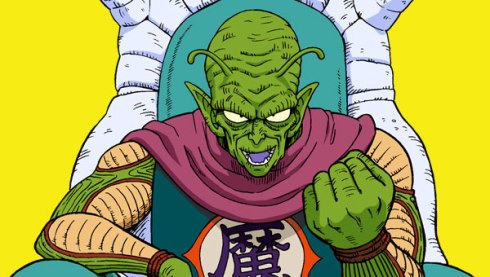
The first 9 episodes deal with the tournament, and throughout it both Goku and Tien will be tested. By its conclusion, they’ll gain a new understanding of each other and Master Roshi will gain some new students, but he’ll also lose one. Setting up what is the main arc of the season is a murder and one that will have a lasting impact on Goku. If you want zero spoilers, then skip ahead, but the murder of Goku’s best friend and one-time rival Krillen is perhaps the darkest moment in Dragon Ball history. Perhaps the only comparable moment is the death of Dende in Dragon Ball Z at the hands of Freeza. Krillen is still basically a child when he’s murdered in Dragon Ball. It happens off-screen, but when Krillen is taking an especially long time in returning to their group’s celebratory dinner Goku runs back to the training ground to retrieve him only to find his lifeless body. It’s an affecting scene to behold as the image is held for an uncomfortably long time. This moment moves Goku to tears, naturally, but it also gives rise to an anger inside of him that is also uncomfortable to see. Up until now, Goku has been our happy-go-lucky protagonist. He’s dealt with loss mostly with sadness and to some degree a lack of comprehension. He’s learned empathy over time, he’s bore witness to how unjust the world can be, and he’s fully equipped now to experience a wide range of emotions at the sight of his best friend’s corpse.
dragon-ball-season-4

He doesn’t look THAT scary.

This sets the stage for the evil King Piccolo to enter our story. Piccolo is an ancient evil that not even Master Roshi could handle. He’s often referred to as a demon, and it took a technique from Roshi’s master Mutaito that cost him his life to seal him away previously:  The Evil Containment Wave. Roshi naturally preaches caution to his young pupil, but Goku is too headstrong and determined to avenge his fallen friend. He will pay for his impatience, as Piccolo isn’t alone. Since he’s rather old and feeble looking, Piccolo has surrounded himself with some powerful adversaries. They’re all named after musical instruments just like their master, and all have a sort of reptilian or demonic appearance:  Piano, Cymbal, Tambourine, and Drum. In order to defeat them, Goku will need to get stronger and he’ll be forced to seek out Master Korin once again.

GokuvsTam-again

King Piccolo likes his minions scaly and green.

Meanwhile, Master Roshi together with Tien and Chiaotzu, decide they’ll need the help of the Dragon Balls in order to essentially wish away the demon king. While they’re doing that, and Goku is off training, Piccolo’s minions are seeking out the strongest fighters in the world with the goal of killing them to pave the way for King Piccolo to take control over the world (he’s a rather conventional villain, in that respect). Roshi’s plan to assemble the Dragon Balls ends up backfiring and he’s unable (or unwilling) to master the Evil Containment Wave. As a result, Piccolo seizes control of the legendary artifacts and is able to restore his youth, and power. In the process he also kills the Eternal Dragon. Suddenly, death has real consequences in this world with no dragon able to restore life to those who have fallen or will fall.

With King Piccolo fully powered-up, all eyes turn to Goku. His training with Korin puts him into confrontation with the bulbous Yajirobe. Yajirobe is essentially a punch-line in DBZ, like a lot of the main characters from Dragon Ball unfortunately, but here he is not such a push-over. Still, he’s no Goku. There’s some humor to be found in Goku’s training with Korin, but it’s largely a bit of a slog as we’re more eager than usual to see Goku face-off with the evils that stand before him. Once his training is complete, he’s forced into conflict with Piccolo’s minions and eventually the demon king himself.
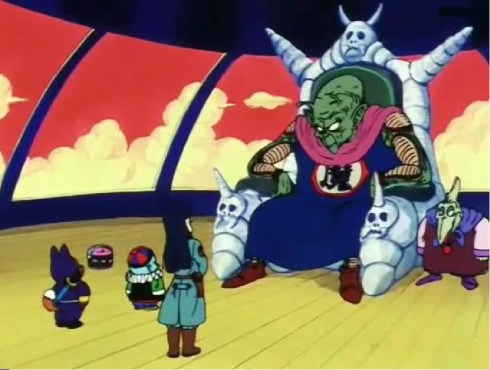
piccolo daimao

If you’re a fan of Pilaf and his crew, don’t worry, they’re still hanging around.

Some drama is created in the meantime. Tien has mastered the Evil Containment Wave, and with Goku still missing in action, he’s resolved to use it as Piccolo has begun destroying the earth city by city. Using the wave against Piccolo would mean Tien’s death, so it becomes pretty important for Goku to hurry up and get there. Goku and King Piccolo are naturally destined to meet in combat, and surprisingly, their confrontation is pretty short spanning just three episodes, but as I mentioned in the lead-in it’s at least all contained on this set without bleeding over into the next. It does mean a some-what abrupt end to the season as the immediate fall-out is left for Season 5.

Dragon Ball Season 4 marks both a new story-telling device for the show, vengeance, as well as a doubling-down on the previous format. That format is essentially Goku encountering a new foe, getting beaten down, training, and then returning to face the enemy in a rematch now powered-up. It’s a formula that Dragon Ball Z will beat into the ground, but at least here it’s not quite so worn out. Still, the training moments between Goku and Korin are slow, and they’re made even more so because the story did give us an effective motivation earlier for Goku to face Piccolo. It’s both refreshing and sad to see Goku motivated by vengeance. It would be nice if Goku could remain unaffected by the evils of the world, but it’s also unrealistic for a show with such an expansive amount of episodes. Sort of forgotten is how the season begins, with Goku turning an adversary in Tien into a new ally. It’s handled well enough, with Tien’s sense of honor ultimately being the aspect of him that is won over by Goku and his friends. Of course, if you’re like me and you experienced Dragon Ball Z before Dragon Ball then you knew Tien was destined to be an ally, but it was still entertaining to watch.

GokuVsPiccolo.Ep.119

A powered-up Goku is ready to take on the king.

At this point, the show has also improved visually. It’s success likely lead to some increased production budgets by TOEI Animation so the special effects and animation are better than they’ve ever been. The aged King Piccolo is well illustrated and he’s actually a lot more interesting to look at than the youthful version. There’s a moment where he forces an egg out of his mouth to create a new minion and it’s both gross and strangely satisfying to watch the scene play out. The original soundtrack is kept, and while it’s certainly dated, it has a whimsical quality that works really well with Dragon Ball. The benefit of FUNimation dubbing the series after DBZ means these actors have had plenty of time to get a feeling for the roles and everyone sounds mostly great. They’re all familiar if you’ve watched the other dubs, and the continuity is nice and appreciated. If you prefer Japanese audio it’s there as well. The original aspect ratio is also preserved.

Season 1 is still my favorite Dragon Ball season, mostly because it’s just a lot of fun and the ignorant Goku of Season 1 is really entertaining. Season 4 might be my second favorite though. It has some filler, but not as much as Season 3, and the stakes feel high which is also an improvement over both Seasons 2 and 3 and helps to give the confrontation more weight. It’s also satisfying when taken as a whole, and though I wouldn’t recommend it, you could conceivably just jump-in at Season 4 and enjoy it without seeing the previous material. I don’t know that I would call it peak Dragon Ball, but there is a downward slide following it with Season 5 basically feeling like an encore for the show as well as a setup for what’s to come. I promise to not take over four years to get to that one.
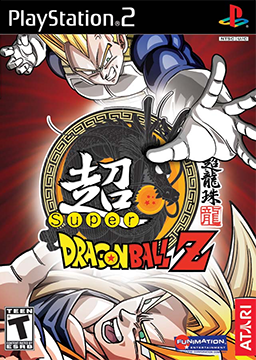

Super Dragon Ball Z

Super_Dragon_Ball_Z_CoverartRecently, Bandai-Namco conducted an open beta for its latest game based on the venerable Dragon Ball franchise:  Dragon Ball FighterZ. The game is a 3 on 3 tag-fighter that exists on a 2D plane but contains three-dimensional characters. The art style is done in such a way that it more closely resembles the 2D anime that’s recognized around the world. It’s a fast and beautiful looking fighter and yours truly did check out the beta. Like most open betas where an upcoming game is essentially free to play briefly, it was a bit of a challenge actually getting logged into the servers and paired up with a match. I mostly spent my time in the training area just checking out how the game handles and plays. It’s very similar to the old Budokai games in some respects, mostly the speed and the fact that all of the characters seem to have the same move-list, only the animations for each move are unique from character to character. For example, a traditional Ryu fireball motion for Goku results in his kamehameha wave while the same for Krillin is the destructo disc maneuver.

FighterZ seems like it will be a pretty entertaining game, but it’s not what I wanted or expected. The developer, Arc System Works, is best known for Blaz Blue so I expected a more traditional 2D fighting experience with some Dragon Ball styling. Instead, FighterZ is apparently courting a more casual crowd that grew up on those old DBZ games and Super Smash Bros. as opposed to Street Fighter. This naturally lead me back to an old favorite of mine:  Super Dragon Ball Z.

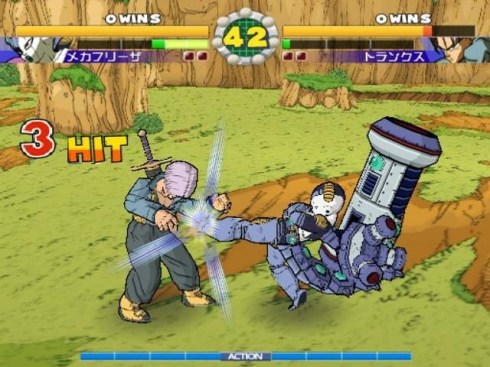
Not to be confused with the currently airing anime Dragon Ball Super, Super Dragon Ball Z is a 3D fighter that plays like a 2D fighter. It was developed by Arika, the company headed by Akira Nishitani who is best known as the brain behind Street Fighter 2. The company is known for its work Capcom on the Street Fighter EX series, a 2.5D fighting game that was relatively popular in the late 90s and early 2000s. As you would expect, a DBZ fighting game developed by the father of Street Fighter plays a lot more like a Street Fighter game than the casual arena brawlers that had become the norm for DBZ. It was released to arcades at the tail end of 2005 in Japan and Europe only before arriving on PS2 in 2006 worldwide. Because it’s not what people were used to out of a DBZ game, it went somewhat overlooked. While I would not consider it on par with the best the Street Fighter series has produced, Super Dragon Ball Z is a pretty damn fine game on its own.

hqdefault-29

End a battle with a super move and you’ll be treated to some manga-inspired word art.

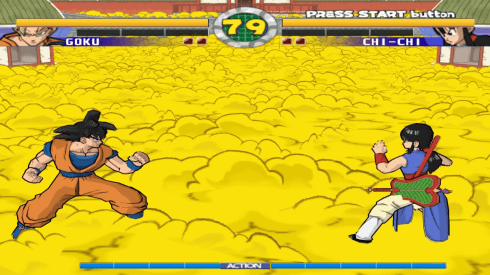
Super Dragon Ball Z has the typical fighting game maneuvers you would expect of a Street Fighter clone. Think hadokens, shoryukens, and so on. Not every character has the same standard set of moves, but they do share some similarities so it’s not as streamlined as simpler games, nor as complex as the most hardcore fighters. The characters are presented in 3D with a cell-shading effect and the default colorization is meant to resemble the original Dragon Ball manga as opposed to the anime. The stages are arena types and characters can move into the foreground and background with relative ease. An action bar at the bottom of the screen controls movement within the foreground and background as well as dashing. Deplete that and you will find your movement severely hindered until it replenishes. It does refill rather quickly, but the gauge prevents characters from endlessly dodging to prolong a match or from spamming dash attacks.

The game’s button layout is a bit unique. The square and triangle buttons are your weak and strong melee attacks while circle is the jump/fly button and X is guard. The shoulder buttons contain both dash attacks and a dedicated throw button. Any fighter that utilizes a dedicated block button takes some getting used to, and the jump/fly dynamic is a bit wonky in execution. It’s mostly used to go after your opponent, as opposed to setting up an attack. The dash buttons are useful for closing the gap quickly with your opponent or just to get you on the same plane as your opponent.

slus-21442-game-ss-2

It may not be the flashiest DBZ game, but your favorite characters will still have their most recognizable moves.

The fighting mechanics are a mix of traditional fighters and DBZ fighters. Projectiles play a large role, but up close combos are also present and a major part of combat. Certain characters function better as ranged attackers versus up close ones and the AI for each character feels rather true to the source material in terms of how they attack the player. There’s a simple health gauge that needs to be depleted to end a round and there’s also an ultimate gauge that gradually fills up during a match. This gauge is expensed when using a character’s best attacks, but unlike other DBZ fighters, there is no charge button to build up ki forcing you to better manage the resources you have. The big moves are also less destructive than in other games. There’s more of an emphasis on dealing out damage gradually as opposed to in big chunks. Being able to dodge properly is the best way of avoiding damage as opposed to blocking and countering and canceling are certainly effective ways to victory.

The game is overall a lot slower and less manic than other DBZ fighters. Characters do not move at crazy speeds and only Frieza can do the popular teleport move in battle. Battles feel a bit more strategic as there’s still an environment to navigate with obstacles to hide behind or toss foes into. Combos are present and they’re more similar to Tekken style combos than Street Fighter ones requiring a series of well-timed button presses. With only two dedicated attack buttons, they’re fairly similar but the timing for each character is a little different and requires some practice. It may be different, and to someone just watching the game it will likely seem less authentic when compared with the anime, but it feels more strategic and ultimately it has its own rewards.

hqdefault-30

Even after unlocking the hidden characters the roster is still on the small side when compared with its contemporaries.

The character roster is much smaller than what fans are used to. At the onset, the characters available are:  Goku, Gohan, Vegeta, Trunks, Piccolo, Krillen, Chi Chi, Androids 16, 17, and 18, Frieza, and Cell. Additional characters can be unlocked and most are just variants of existing characters. The saiyan characters have the ability to go super in battle, and it’s an ability that rapidly depletes stamina so it’s not meant to be a permanent state. Only Super Saiyan level 1 is available, so there’s no going 2, but it does make those characters a bit more interesting than the non saiyans. Of course, every character has pluses and minuses. Piccolo, by virtue of his stretchy limbs, has incredible range and Krillen’s destructo disc can carve through every move in the game. It’s a roster a bit on the small side, but each character feels relevant and the secret characters are also fun too (and some of my favorites).

The game has a standard set of modes including Arcade and training as well as a survivor mode dubbed Z-Survivor. Arcade is a series of seven battles with five of them being random. Each subsequent opponent gets stronger and their strength is represented by a scouter reading before battle, which is kind of neat. The mode always ends with a battle against Frieza followed by a fight with Cell. There are no custom endings for each character, which is a bit disappointing, nor is there really much of an ending at all, but if you’ve seen the anime and played almost every DBZ fighter released then you’ve seen how the story ends more times than you can count. What is interesting is that after each victory you get one of the titular dragon balls. By collecting all seven, you can summon Shenron and make a wish. This is how you get additional characters, and also how you improve your existing ones.

super-dragon-ball-z-4e2609203a69e

Spend enough time collecting dragon balls and eventually you’ll unlock additional characters like cyborg Frieza.

By far, the most interesting aspect of Super Dragon Ball Z is the custom character process. Other games have dabbled with this, but Super Dragon Ball Z really seems to go for it. As you fight with a custom character, your character naturally gets stronger. Once you fill an experience bar, and completing arcade once is more than enough for the first go around, you can learn a new skill. The skills range from increased health to faster action regeneration time as well as to new and better moves. The most powerful attacks are reserved for custom characters, and some of them have to be wished for. This encourages you to pick a character and stick with it. As a bonus, if you max out a character you can then take another character and inherit moves from the previously maxed out character. For those who really want to craft the ultimate character, doing this is necessary since only some characters have the worthwhile Super Cancel ability.

The only real issue with the character customization is that there is little you can actually do while leveling-up your character. It’s only so amusing to beat the arcade mode over and over so if you don’t have a friend to play it can get a little old. The Z-Survivor mode helps out as this is a mode where you’re given one health bar to vanquish 10 foes in succession. After each conquest, a roulette wheel is spun to get a little power-up for the next fight and it’s not hard to stop the wheel on what you want. However, you can’t just repeatedly select the health restore option as it gets worse each time you land on it. It starts off with a 50% health recovery, but after the next round it will drop to 40% and so on. You have to be strategic with the best rewards if you want to survive to the end. If you do manage to defeat all challengers you’ll be confronted with one more and the fun part about that is you’re allowed to wager basically all of the experience you’ve gained throughout the mode in a bid to double it, if you win, of course. It’s definitely more challenging than Arcade mode and it might end up being the mode you spend the most time in.

Super_Dragon_Ball_Z

Few DBZ games let you play as Chi-Chi giving fans of that character some added incentive.

Visually the game holds up pretty well. The cel-shading approach helps give it a timeless look, though some characters come off better than others. Goku, for example, has always had a some-what tough time making the jump from flat 2D image to 3D polygon. The stages are, as a whole, more interesting to look at than other DBZ games and the manga approach to its styling helps to add a little extra charm to everything. Sadly for anime purists over here, the soundtrack for the US version is a mix of industrial music that’s designed to resemble the score to the Funimation dub of the show, though it’s an original score and not authentic so even Funimation purists have a reason to be irritated. Other versions utilized some of the actual music from the Japanese anime and I’m sure a lot of US fans would have preferred that. If you hate the manga look though, know that anime colorings do exist in the game so if you want your Future Trunks to sport a royal blue coat instead of teal you can certainly make it happen. Overall, the presentation is solid, though like the gameplay, you won’t get much in the way of flashy big graphical spectacles in the form of massive super moves. At least not on the level of other DBZ fighters.

Since this is a PS2 game, there’s no online mode to easily find other challengers. And even if there were, the servers would undoubtedly be shutdown by now anyway. Having a group of friends who all enjoy the game helps increase the amount of enjoyment you’ll get out of it, but that’s also true of basically every fighting game ever created. It would have been nice if each character had a story and an ending to uncover, but then again, that would work against the drive to just use the same character over and over to make them more powerful. How eager you are to see the secret attacks and unlock the hidden characters will be your primary motivation to revisit this one. If you’ve ever played a DBZ fighting game and wanted it to be more like a traditional fighter, then check out Super Dragon Ball Z. It’s very easy to find a copy for a relative pittance these days so you won’t be risking much by doing so.


Persona 4: The Animation

P4A_promo

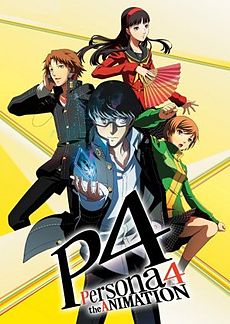
Persona 4 The Animation

Originally conceived as a spin-off of the Megami Tensei series of video games, the Persona series has blossomed into a full-fledged series able to stand on its own. In the minds of many, it has surpassed its sister series to become the tentpole franchise of developer Atlus’ numerous video game properties. And of the four main games released in the series, the most recent, Persona 4, is likely the most popular and most beloved. Which is why this game in particular has received numerous spin-offs of its own. From the fighting game Persona 4 Arena, to the rhythm game Dancing All Night, the Persona series, through Persona 4, has managed to touch multiple genres across several consoles. This is pretty impressive considering that Persona 4 is already eight years old. As a very late entry on the Playstation 2 console, it would not have been surprising for the game to make little or no impact considering many gamers had already moved onto newer consoles, but Persona 4 persevered and three years later found renewed life on the Playstation Vita in the form of Persona 4 Golden.

The game itself is an excellent example of what a modern Japanese Role Playing Game can offer. More importantly for the series, it introduced a wonderful cast of very likable characters that drive the story along. It’s because these characters proved so endearing that Atlus spun the series off into an anime. First released in Japan in 2011, Persona 4 The Animation largely stays true to the source material and tells the game’s story in anime form. It was because I enjoyed the energy of the game so much that I decided to check out the anime, even though the great mystery of the game was already known to me as a result of playing through it multiple times.

p4-group

The gang’s all here.

The Animation is a standard anime series consisting of 26 half hour episodes. The voice cast for the game is largely retained for the anime, and in the case of the english dub, is nearly identical to the cast from the Golden version. The only notable difference is the character Naoto, who is voiced by May Elizabeth McGlynn, who actually brings a deeper tone to Naoto that works better for the character’s secretive nature early on. The role of Kanji Tatsume is at first handled by his video game voice actor, Troy Baker, but he was replaced midway through by veteran voice actor Mathew Mercer. I don’t know what the reason was for the switch, but had I not told you about it you probably wouldn’t notice as the two gentlemen sound very similar. The voice acting of the english dub in the game plays a huge role in making the story fun and engaging and the cast brings the same energy to The Animation. I know in the world of anime fandom there are many purists who won’t watch the english dub, but for this series, I think you would be doing yourself a disservice by ignoring it.

The Animation is an adaptation of the original Persona 4 released on the Playstation 2 and features the same cast of characters as that game. Fans of The Golden version may be a tad disappointed to find out that there’s no Marie or ski trip sequence but what is here is the meat of the original game. Now, anyone who has played the game may be wondering how the anime handles the main character. That’s because in the game the main character is your typical silent protagonist that the player names at the start of play. For the anime, the main character has been given the name Yu Nakamura, and I am sure the name “Yu” is selected for the very obvious reason that it’s pronounced the same way as the word “you” which is how virtually every character refers to him in the video game. Yu is voiced by Johnny Yong Bosch, which fans of the game may recognize as the voice of Tohru Adachi, another character in the game. Bosch voices both for the anime, and in a confusing turn of events, his version of Yu sounds a lot like Adachi from The Golden version of the game with his Adachi for the anime speaking in a much higher register. It took me awhile before I stopped hearing Adachi every time Nakamura spoke, though that’s no slight on Bosch whom I consider a fine voice actor. Nakamura in the game is fairly confident and also sarcastic. This worked for me as I often opted for such a personality for my version of the character in the game whenever I was given dialogue options. For instance, when the boys are all signed-up against their will to compete in a drag contest Nakamura embraces the challenge and seeks to win while his buddy Yosuke is mostly horrified and embarrassed.

persona_4_the_animation-02

Yu discovers he can enter the TV. As far as super powers go it’s not quite on par with Superman, but still better than Aquaman.

The general plot for Persona 4 is that Yu has left the city to stay with his uncle Dojima and his daughter Nanako for a year while his parents are away. Dojima lives in the small town of Inaba where he’s a detective and almost right when Yu shows up in town a weird string of murders starts taking place. Yu makes friends with another transplant student, Yosuke, as well as the meat-obsessed girl Chie and her best friend Yukiko. Yu and his friends think the murders are tied to this weird rumor spreading around school about a secret Midnight Channel. On rainy nights, people appear on the Midnight Channel and then wind up dead a few days later. Yu discovers he actually has the power to enter the television, and upon doing so awakens his “persona” powers. He soon shows his friends who all must face their other self in the TV world before awakening their own personas. The plot unfolds with people appearing on the Midnight Channel before disappearing, at which point our heroes enter the TV World to save them. It’s there they battle shadows and befriend a strange looking bear named Teddie. Their group expands as they save people to include the loner Kanji, a newly retired idol named Rise, and a young detective named Naoto. Their investigation into who is behind these murders often forces them to cross paths with Dojima and his assistant Adachi which creates tension between Yu and his uncle. The story unfolds as a mystery with numerous red herrings placed in the way before the mystery is finally solved.

altnboam6zps5qotenzh

A fan favorite, The King’s Game, made the transition from game to anime quite well.

Through the 26 episodes, just as there were through the video game’s 40+ hours, the characters take time out to be high school students who have regular high school problems. The boys, particularly Yosuke, tend to be motivated by women which leads to many humorous situations. There’s plenty of instances of more sophomoric humor that largely works because the characters come across as so genuine and naive. I imagine it’s quite easy for people to identify with some of the stuff that goes on and it certainly takes me back to my own high school days. The anime also makes an effort to capture all of the various relationships Yu forms in the video game outside of his core group of friends. In perhaps one of the more creative episodes from the show, we follow Nanako around as he spies on Yu to see why he’s so busy during the summer. It’s through her we see familiar faces from the video game such as the old woman who refers to herself as Death, Sayoko from the hospital, and Shu, the boy Yu tutors in the game, among others. The following episode retreads the same ground but from Yu’s perspective. It was a clever way to try and work a lot of material into the anime that occurs in the game.

The hardest aspect for the anime in adapting the source material relies really in its scope. As I mentioned before, the game unfolds over roughly 40 hours, depending on your pace of play. It’s not at all uncommon to log twice that many if you’re really thorough. It’s really too much for one season of television and the anime is forced to pick and choose what it considers most important, and for the most part, it does a good job. What really gets short-changed the most is the TV World where the battling feels rather rushed. I feel if I had not played the game first the TV World would just confuse me as it’s not always clear how the characters fight with their personas. Some of the investigation tedium in between characters disappearing also gets condensed with the series moving at such a brisk pace. There’s not always time to indulge in the mystery and I really didn’t feel a part of the investigative process like I did with the game. More disappointing to me though was a lot of the scenes between Yu and Dojima were either condensed into fewer scenes or omitted from the anime. I felt their relationship wasn’t conveyed as well which is a shame because it was one of the most well constructed parts of the video game.

persona-4-the-animation-6694

Just as he can in the game, Yu wields multiple personas while everyone else is limited to just one.

Likely, your enjoyment of this series will largely come down to how familiar you are with the video game. This series feels like it was meant to supplement the game. It’s 26 episodes of fan service. Visually, the show looks fine though there are many instances where there’s little animation occurring on the screen, likely to save money. Some episodes look better than others, an often trademark of anime where more money is sunk into the most important episodes. It’s largely on par, or better, than the anime sequences in the game and the characters all look how you would expect. The music should also be familiar to those who played the original game, though some new compositions were made for the anime. It’s all quite good and the added songs kept the soundtrack from feeling as repetitive as the game sometimes would get.

Persona 4 The Animation is basically what I expected. It allowed me to spend a bit more time with the characters I loved from the game, even if I was just experiencing a more condensed version of the game’s plot in a more hands-off kind of way. If you’ve never played the game, I really would not recommend you check this anime out as I don’t think you’ll be getting full value. The anime is hard to come by in the US so I had to resort to amazon.com in order to acquire it. The Blu Ray release is split into two volumes, or sold as one large collector’s edition. It’s way overpriced so I opted for the DVD collection which was still a bit pricey compared to how much a season of a typical television show often costs. The visuals are not this anime’s selling point, so I don’t think I’m missing anything by getting it on a lesser medium such as DVD, but having never viewed the DVD I obviously can’t be certain. A 12-episode Golden season was released a few years later to add the sequences from Persona 4 Golden. Right now it’s even more expensive than the normal run and I can’t justify the cost to check it out. It would be nice if they had released a reasonably priced collection that merged the two into one cohesive story, like the game, rather than try to switch back and forth between the two to get the full story in the proper order. Still, it’s kind of cool they even bothered animating the Golden sequences and if it ever comes down in price I probably will check it out. The video game is still the way better experience, but I found Persona 4 The Animation worth the price of admission.


Nausicaä of the Valley of the Wind

220px-Nausicaaposter

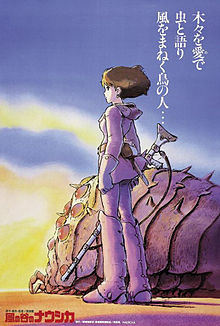
Nausicaä of the Valley of the Wind (1984)

Studio Ghibli is a cultural institution in its native Japan. It’s credited with the anime revival of the 1980’s and for popularizing the form in and outside of Japan. Many of its films have gone on to influence not just anime, but other works of animation as well with its characters even making cameos in Pixar films. Studio Ghibli was officially founded in 1985, but many consider its beginning to be with the film Nausicaä of the Valley of the Wind. Released in 1984, it was directed by Hayao Miyazaki and future Ghibli director Isao Takahata was named producer. The film’s success is essentially what founded Studio Ghibli with most of the crew joining the studio.

Nausicaä is a film that almost didn’t happen. Fresh off his well received directorial debut in Lupin III:  Castle of Cagliostro, Miyazaki was approached to direct another feature length anime picture by Animage. Miyazaki came up with the concept for Nausicaä then, but the studio wasn’t interested and the project was aborted. Miyazaki took Nausicaä to the manga form where he was able to build up a fanbase for the property leading to another opportunity to bring the story to the anime form.

nausicaa-of-the-valley-of-the-wind_592x299

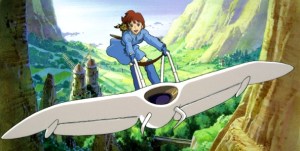
Nausicaä atop her glider.

It’s easy to see why Nausicaä is considered the spiritual beginning for Studio Ghibli. It goes beyond the fact that it’s a feature-length anime production featuring names that would become synonymous with Ghibli. The film, thematically, is very much in line with a great many of Ghibli’s films, most obviously the one’s directed by Miyazaki. The film contains a female protagonist with a Buddhist-like point of view towards nature and the people around her. The film can simply be described as an environmental picture that also strongly endorses pacifism, subject matter that would be covered in other Miyazaki works with the most obvious being Princess Mononoke. The film’s themes are clear and easy for any viewer, even the very young, to pick up on. The film’s themes are so obvious and central to the plot that it’s one of weaknesses as well as Miyazaki would become better skilled at relaying his message in future films with more skill and subtlety. The film’s directness sometimes leads to stilted dialogue and some uninteresting villains.

Nausica-of-the-Valley-of-the-Wind-nausicaa-of-the-valley-of-the-wind-27647622-450-247

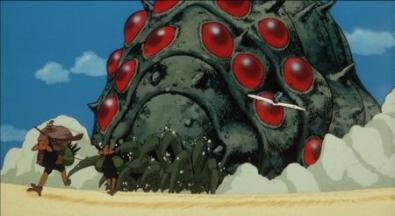
In the path of an enraged Ohm is not someplace you want to be.

Beyond the film’s sometimes amateur story-telling, there aren’t a lot of negatives to be had. The film focuses on the princess Nausicaä, who lives in a small dessert village on the outskirts of the poisoned forest. Mankind is forced to live in a world dominated by insects with the most formidable being the massive, tank-like Ohm, following an apocalyptic event occurring a thousand years before the events of the film. These insects are hated and feared by most of humanity and the toxic forests they inhabit slowly kill the people who live close by. Warring factions of humanity eventually bring harm to Nausicaä’s home with her people becoming casualties of war when a prison ship crashes on the outskirts of the village. Nausicaä is able to rescue one of the passengers who instructs her to destroy the ship’s cargo: the remains of a Giant Warrior which brought about the apocalypse of a thousand years ago. The owners of the ship, the Tolmeki empire, come after the ship and its contents bring their war to Nausicaä’s doorstep. The princess is pressed into battle and even takes human life in the process, but it’s all for naught. The Tolmekians, lead by a princess of their own named Kushana, wish to revive the Giant Warrior to destroy the poisoned forest. The village priest deems this unwise as doing so would only incite the Ohm who’s massive stampedes have brought great destruction to humanity in the past.

The Tolmekians are also embroiled in conflict with the Pejite people. Kushana, taking Nausicaä as hostage to ensure the cooperation of her people, and her airships encounter the Pejite which allows Nausicaä to escape. Circumstance forces her into working with a Pejite pilot and the two discover an amazing secret beneath the toxic forest. Nausicaä’s journey becomes one of self-discovery for herself and her world. With few people even interested in understanding the Ohm and the forests they dwell in, she finds herself as the only one who can prevent a second cataclysmic event that would surely doom her people as well as others. The machinations of the film’s plot are easy to follow and easy to predict. Still, the end result is not particularly harmed by this as the film presents a satisfying climax and conclusion for the story.

1280x720-nWq

Nausicaä of the Valley of the Wind (1984)

As a protagonist, Nausicaä (voices by Alison Lohman in the english dub) is easy to like and understand. Her sense of adventure is contagious and represented most by her mastery of a unique jet-propelled glider she often zips through the sky on. She has a special empathy with nature which is shown early in the film. She’s fearless and possesses a strong conviction for what is right. She kills early in the film out of rage and self-defense and is affected by it. Through her actions we can see she would make an excellent killer if that was her aim, but chooses a different and noble path. Her closest ally is the sword master Lupa (Patrick Stewart), who also seems to embody a form of pacifism as we don’t see him kill in his parts of the film, though we see him demonstrate his incredible talent with a blade in each hand. Asbel (Shia LaBeouf), the Pejite pilot Nausicaä befriends, is our set-in-his-ways character who learns to see the world through a new lens during his trials. He’s the character most affected by Nausicaä and her outlook on life.

The film is set with many suspenseful moments like daring escapes from doomed aircraft and stunning rescues. Much of the film takes place in the air as the most prevalent piece of technology in the film are the massive airships piloted by the Tolmekians and Pejite. Anyone familiar with Miyazaki’s works know he’s a lover of aviation so it’s not surprising to find it here. When the film is not in the air the setting either shifts to vast desserts or the wondrous toxic forests. The forests are portrayed in cool shades of green and blue with mostly imaginative looking flora, some of which looks like it belongs under the sea. The look of the film is a bit dated, which should be expected of a thirty-year old picture. Still, it’s not unpleasant to look at and it still has some wonderful moments. The audio is also a bit dated, mostly in the sound effects department, but the score (Joe Hisaishi) is easily the part of the film that best stands the test of time. The english dub is also handled well by Disney and the Blu Ray release contains the Japanese audio for purists.

Anime fans owe a great deal to Nausicaä of the Valley of the Wind. Not only did its popularity and success in Japan help to pave the way for future anime releases, but its butchered original western release helped to convince Miyazaki and others to oversea the localization of future films. Studio Ghibli’s famed “no cuts” policy is born from Nausicaä and I think all fans of animation can agree that’s something we’re all happy is in place. It’s hard to separate a film, or any work of art, from its legacy, but in doing so Nausicaä still holds up us a nice picture worthy to rest in the library of Miyazaki and the Studio Ghibli films. As a legacy piece, it’s a fascinating look at the beginnings of a great director and a fun piece of nostalgia for animation buffs around the world.


When Marnie Was There (film)

When Marnie Was There (2014)

When Marnie Was There (2014)

In my review of The Tale of the Princess Kaguya I detailed the state of Studio Ghibli and its decision to suspend all production on animated features. It was a sobering bit of news and remains so as the studio certainly seems to possess enough talent following the retirement of Hayao Miyazaki to press on and a film like When Marnie Was There only reinforces that thought.

When Marnie Was There is based on a novel by Joan G. Robinson. I had never heard of it nor read it so my experience with the story is entirely via the Studio Ghibli film. The film is written and directed by Hiromasa Yonebayashi in his second go-around as director for a Studio Ghibli film, the first being the very good The Secret World of Arrietty. Even though this is only his second turn as director, Yonebayashi has been with the company for over a decade working on several other animated films in various roles. Takatsuga Muramatsu handles the music for the film making the film feel like a promotion of the studio’s younger talent. The film is wonderfully animated and visually resembles very strongly another recent work by the studio, The Wind Rises. Like that tale, When Marnie Was There is a mostly grounded film from a visual sense and lacks some of the studio’s more wildly imaginative settings and characters.

The film follows Anna, a young girl of about thirteen who has a hard time fitting in. The film never explicitly states it, but she’s quite obviously depressed at the start of the film and is paralyzed by a social anxiety order that seems to manifest itself in the form of severe asthma. As the film progresses, we learn the root cause of most of her issues is her sense of abandonment as she lost her parents and grandmother at a young age and has been in foster care with the same family for most of her life. She is having a particularly hard time coping with a recent discovery about her foster parents that lessens her sense of self worth. She states that she hates herself, and following another asthma attack early in the film, her foster mother decides it may be good for her health to visit some relatives in the countryside.

The film is visually quite earthy, with many lush and well-detailed backgrounds.

The film is visually quite earthy, with many lush and well-detailed backgrounds.

It’s in the countryside where the film’s plot gets rolling along. Anna stays with the Oiwas, relatives of her foster parents, in a seaside town located somewhere near Kushiro and Nemuro. It’s a small, quiet town located on the coast. Her family tries to get her involved with the local girls her age but Anna struggles to make friends. She soon finds herself drawn to an old, rundown mansion on the coast that she enjoys drawing from the shore. It’s there she encounters Marnie, a lonely young girl about the same age as Anna. Marie tells Anna she dreamed of her and the two form a fast friendship. Marnie is the child of wealthy socialite parents who are rarely home leaving Marnie in the care of an abusive nanny and two maids. Anna and Marnie have an instant connection and the two are free to express their love for one another. It’s a sisterly kind of love, but when Marnie invites Anna to a party her parents are throwing and dances with a young man, Anna is seen as jealous and possessive of her new friend. It becomes obvious to the viewer that Anna has never had a real friend before, and it’s touching to see Marnie wordlessly pick up on this and tenderly sooth her friend.

What the film doesn’t obviously address for a long time is the nature of Marnie’s existence. During the day, the old mansion where she lives is run-down and abandoned, but at night, time seems to rewind around the old house and restore it to its former beauty. As the viewer, we’re left to wonder if Marnie and the people in the mansion are ghosts or if everything is a product of Anna’s imagination. Anna seems to think Marnie is an imaginary friend, as she’s confronted later in the film by a young girl who’s family has purchased Marnie’s mansion and is renovating it. The girl, Sayaka, notices Anna staring up at her room and mistakes her for Marnie. She knows that name because she found an old diary by a girl of that same name when her parents bought the mansion. Anna and Sayaka soon become determined to unravel the mystery of Marnie. I do not wish to spoil anything further, but I’ll say it’s a very satisfying tale and the film answers all of the questions it poses which helps give it a sense of closure. Repeated viewings are also satisfying because knowing the end adds added context to a lot of what happens during the film.

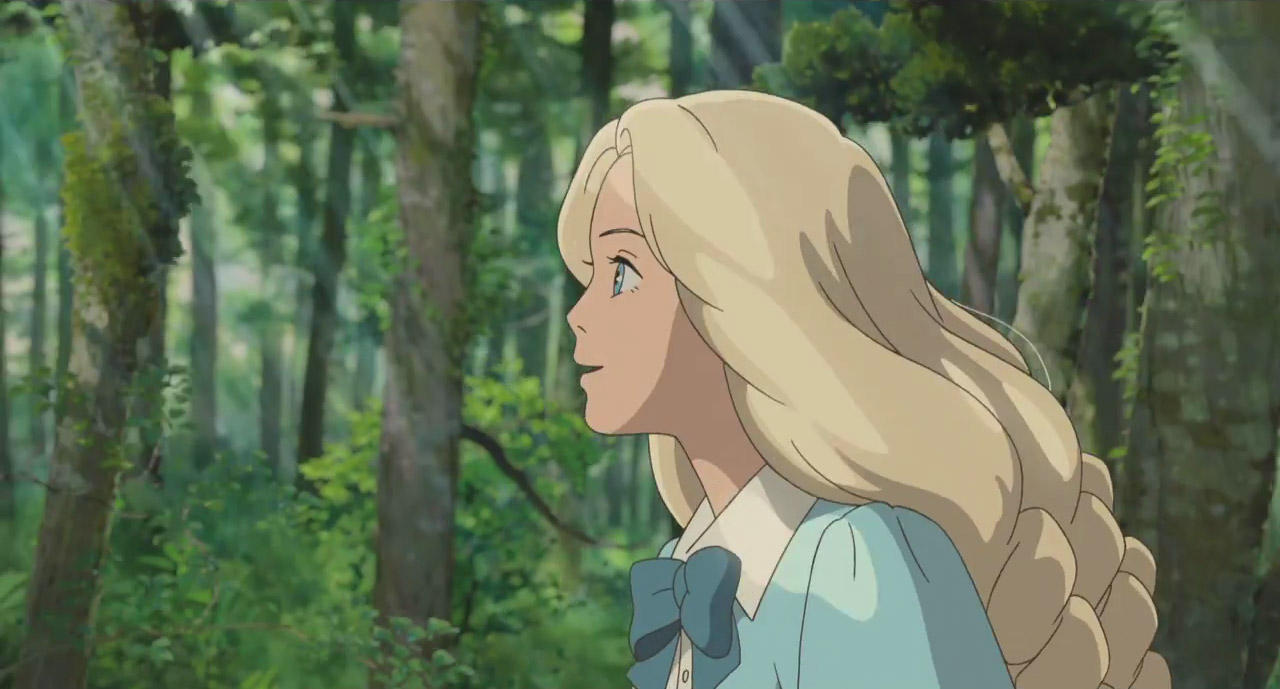
The mansion seems to call out to Anna beckoning her to investigate.

The mansion seems to call out to Anna beckoning her to investigate.

The film may contain a mystery as part of its central plot, but it’s really secondary to the story of friendship between Anna and Marnie. Both characters possess tragedy about them and both are instantly likable even though both also possess obvious flaws. Anna’s inability to communicate with others is a frustrating flaw for the viewer, but also a heartbreaking one. Meanwhile, Marnie is so clearly neglected that it’s sad to see just how happy she is when she’s able to sneak outside at night knowing what awaits her when she eventually returns home. The film’s reluctance to really address how Marnie is able to exist allows it to focus on the growing friendship, and all of the trials and tribulations a new friendship creates. Once Anna becomes so attached to Marnie an anxiety brews. When Marnie disappears for a few days Anna immediately assumes it’s because of something she did to anger her friend. The film makes it easy to think back on one’s own adolescence and recall similar feelings.

The film moves at a comfortable pace and the english dub is well done, even if the film was not picked up by Disney for release outside of Japan. Universal handled it, which also handled the release for The Tale of the Princess Kaguya, and the english cast features some notable names such as Geena Davis, Catherine O’Hare, and John C. Reilly. Hailee Steinfeld and Kiernan Shipka voice Anna and Marnie, respectively, and both do an admiral job giving a voice to these characters. It is especially important that the english dub be of a high quality because it would be a true shame to mar the visual presentation of such a film with subtitles. The look is so vibrant and colorful that I often found myself delighted by even the most simple of shots. This is one of the studio’s finest productions and it’s a joy to see it was not wasted on an inferior story.

There's a lot to distract the viewer from what is at the heart of the movie: two lonely souls desperate to find a kindred spirit.

There’s a lot to distract the viewer from what is at the heart of the movie: two lonely souls desperate to find a kindred spirit.

When Marnie Was There is the kind of film that you either connect with or you don’t. I suppose for those where the film’s characters and plot do not resonate they’ll see it as a perfectly fine little film about friendship. For those able to connect with it on a more personal level will find something truly captivating and beautiful. I do not know why the film made such an impact on me, it’s not as if I could truly relate to any of the characters because of a personal experience, but I think it’s because the film was able to tastefully portray Anna’s struggles without being heavy-handed that it made everything to follow so believable. The score is impressive and there isn’t a scene in the film where the music isn’t perfectly suited. Even the closing track, “Fine on the Outside,” is utilized at just the right moment and feels wonderfully suited to close out the picture. When Marnie Was There possesses the heart and magic that has made Studio Ghibli one of the premiere production houses in the world when it comes to animation. It is my sincere hope that it is not the final feature from the studio, but if it turns out to be, it’s a wonderful way to cap an unprecedented run.


#2 Best in TV Animation: Cowboy Bebop

Cowboy Bebop (1998)

Cowboy Bebop (1998)

Three…Two…One…Let’s jam!

Of all the mainstream arts, television is the one that has seen the biggest advancement in terms of relevance over the past fifteen years. It used to be that TV was nothing more than the idiot box, a thing to rot our brains with. It was the home of the sitcom, a mostly safe way to kill 25 minutes on a weeknight, or daytime soap operas with outlandish and never-ending plotlines. Even the more celebrated dramas often had a “play it safe” mentality designed to entertain for a single episode before putting everything back in place for next week. There wasn’t much going on that seemed worthy of the term “art,” and an actor jumping ship from Hollywood to the small screen was seen as an admission of failure on said actor’s part.

Things are different now and some of the best stories, acting, and directing are occurring on television. Most of this is attributed to premium cable network HBO and their series The Sopranos and The Wire often cited as the two most influential. Basic cable has jumped in on the fun over the past eight years or so with much celebrated hits like The Walking Dead, The Americans, and of course, Breaking Bad. The main networks are still mostly home to popcorn fair but they’re slowly catching on to the changing television landscape.

Before all of these shows were breaking the mold, there was Cowboy Bebop. Cowboy Bebop is an example of strong story-telling with great character development that refused to be a slave to the popular TV tropes. The fact that it was coming out of Japan likely had something to do with it because Cowboy Bebop would never have existed as-is if it were American made. Just imagine a hugely successful show voluntarily ending after just one season of twenty-six episodes (a film would later be released but there’s never been talk of a season two or spin-off that I’m aware of). Cowboy Bebop set out to tell a complete story, and that’s what it did. If there was a temptation to double-back on that and have a second season it was ignored and probably for the better.

From left to right: Ein, Ed, Spike, Jet, and Faye.

From left to right: Ein, Ed, Spike, Jet, and Faye.

Cowboy Bebop is largely credited to director Shinichiro Watanabe, who presided over the twenty-six “sessions” that make up the series. Cowboy Bebop follows the crew of the Bebop, comprised of bounty hunters in the year 2071. In this setting earth has largely been abandoned by humanity due to asteroid activity. A large collection of people now live on Mars, but a lot of the solar system as we know it has been colonized. The Bebop is captained by Jet Black, a former cop with a cybernetic arm. His main running mate is Spike Spiegel who was formerly messed-up with a criminal syndicate but now hunts bad guys for coin. They’re a fairly unsuccessful duo when the series begins but they’re soon joined by Faye Valentine, a woman with no memory of her past and a huge debt to settle, and the sexually ambiguous child Edward, who speaks in the third person and is a computer whiz and hacker extraordinaire. Rounding out the group is a welsh corgi by the name of Ein, a dog with near-human intelligence. They’re mostly a motley crew and often their bounties get away or find a way to devalue themselves preventing the group from really cashing in. Most of their relationships are a bit strained with Spike and Jet often wondering how their duo came to be this group. Faye basically comes and goes at her leisure while Ed just seems to enjoy hanging out with the crew. The various dynamics work out well as they clash often but all seem to reluctantly accept one another’s help when needed.

All of the characters are interesting and well-developed in their own right, but Spike is the show's main character.

All of the characters are interesting and well-developed in their own right, but Spike is the show’s main character.

The animation for Cowboy Bebop is a sophisticated take on the standard anime style. The characters do not possess the exaggerated features of many anime programs but retain enough of the art form’s style to be considered anime. Characters tend to be long of limb. They look like they should animate in a stiff manner but they tend to have a certain flow about their movements. There’s a mixture of handrawn animation and CG with most of the CG reserved for the spaceships. Some episodes are visually dark, others bright. Some settings have an industrialized look to them, others are leafy and green, and some neon and futuristic. There’s a lot going on in the twenty-six sessions and the nomadic nature of the crew adds considerable variety in both story-telling and visuals.

Music is a big point of emphasis by Cowboy Bebop. In fact, each session title is a reference to either a song or style of music. There’s “Sympathy for the Devil,” “Bohemian Rhapsody,” and “Jupiter Jazz,” just to name a few. The music was done by Yoko Kanno and a better anime soundtrack you will not find. The opening title “Tank!” is a jazz-fusion track that has undoubtedly influenced several shows since like The Venture Brothers and Archer. The closing track for each episode, “The Real Folk Blues,” perfectly captures the show’s more melancholy moments. The show’s dub is also particularly impressive. Several of the names attached to it are well-known in the animation community such as Steve Blum (Spike), Wendee Lee (Faye), and Beau Billingslea (Jet).

By far though, the best thing going for Cowboy Bebop is its story-telling. The show slowly peels back the layers of each character throughout the series. At first, Spike comes across as a reckless cowboy who cares only about collecting his bounties. As the series moves along, we see he’s actually a good person at heart and when push comes to shove he usually opts to do the right thing. His story is what I would consider to be the main story. Some of his past, including his rivalry with current syndicate member Vicious, is revealed in the fifth episode “Ballad of Fallen Angels.” More is then revealed in the two-part “Jupiter Jazz” which is essentially the midpoint for the series before wrapping with the two part finale, “The Real Folk Blues.” His story is compelling often alternating between exciting and sad. Faye also has a window to her past opened as the series moves along and hers is just as captivating and arguably more tragic. The episode most centered around her, “Hard Luck Woman,” is one the show’s more satisfying. Jet and Edward are also examined and each has difficult choices to make. We learn a lot about these characters and it’s painful saying goodbye after just twenty-six episodes, but that’s part of the show’s lasting impact.

The Spike/Vicious rivalry is one of the show's main conflicts, but it's never overplayed.

The Spike/Vicious rivalry is one of the show’s main conflicts, but it’s never overplayed.

Interspersed amongst the episodes are one-off palate cleaners, if you would. These episodes take on the form of a “bounty of the week” and we get to see the Bebop crew in action. Some are laden with humor such as the psychedelic “Mushroom Samba” while others are dark and violent, like “Pierrot le Fou.” Even though these episodes are lighter in content, they still offer moments for the characters to deepen our understanding of them or make use of creative story-telling devices, like the Alien inspired “Toys in the Attic.” Truly, there are episodes more likely to be cited as favorites but there is no bad episode among the twenty-six.

Cowboy Bebop nails it at pretty much every level. It’s visually engaging, aurally amazing, and its story-telling was ahead of its time. If the show had a smell or taste attached to it I’m sure they too would have been excellent. It’s rather unique among the other shows on this list, most of which are either comedies or children’s shows. Cowboy Bebop will make you laugh, but it’s definitely not a comedy and its mature subject matter puts it squarely in the adult zone. It’s really one the greatest shows made for television and one of Japan’s finest exports. Thirteen hundred words can not do it justice.


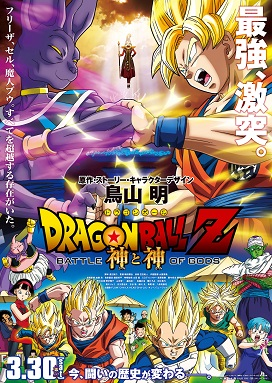
Dragon Ball Z: Battle of Gods

Dragon Ball Z:  Battle of Gods (2013)

Dragon Ball Z: Battle of Gods (2013)

I’ve made no secret of the fact that I find Dragon Ball Z to be a pretty overrated anime. Some of that sentiment stems from the fact that it’s considerably more popular than its predecessor, Dragon Ball, despite being the inferior product. Part of that also stems from the fact that Dragon Ball Z fans seem to regard it as the greatest anime of all time, rather than what it really is; the most popular anime of all time. This is not to say I find the show to be a bad one. For awhile during the 1990’s I found myself quite captivated by the show. I was incredibly disappointed that the dub, for many years, ended right in the middle of the Namek Saga with Goku preparing to take on The Ginyu Force (I was also really disappointed when the series finally returned with an all new and quite terrible dub). Little did I know, that I had basically seen the best of the show up to that point. While the Cell Games and Buu Saga have their moments, for the most part the show became almost a self-parody with extended filler sequences and familiar plot lines.

It’s the formula of Dragon Ball Z that makes it a rather pedestrian television program. The characters are all simply constructed and tend to embody one archetype. Each “season” consists of the gang being forced to take on the latest “Most Powerful Being in the Universe” with the same familiar pattern: dispatch weak enemy, hear latest prophecy of doom, be defeated by said enemy, train endlessly, power-up and defeat enemy. The stakes are always the same, and even though characters are killed off several times, they usually find their way back to the land of the living and there are few lasting repercussions on the show (aside from the novel concept that the characters do age over time). It was basically like watching an animated fighting video game: it just moves from one battle to the next with very little connecting tissue in-between. As such, it’s quite easy to take a cynical view towards the show but it still has its moments where it’s genuinely entertaining and even charming.

Beerus and Whis are the latest antagonists to threaten earth.

Beerus and Whis are the latest antagonists to threaten earth.

If one were to be jaded with the prospects of another extension of the Dragon Ball Universe, they’d likely be less interested in yet another Dragon Ball Z film. The show was so successful that it rather logically spawned feature films. These films were little more than cash-grabs and often contained less plot than the show and an even more obvious formula. Thirteen films in all were released based off of Dragon Ball Z with virtually none fitting into the canon of the show’s storyline. Aside from a select few that contained some genuine entertainment value, most are just mediocre with the only contribution they made being the superior animation when compared with the show. As a result, I was not all that enthused to hear that Toei Animation was returning to the series for a new film:  Battle of Gods. The only cause for optimism was that it was announced series creator Akira Toriyama, who had little involvement with the awful Dragon Ball GT, was handling the screenplay and character designs. Toriyama, unlike some of his fans, seems to understand what makes Dragon Ball special. It’s not some super sophisticated anime meant to challenge the likes of Neon Genesis or Cowboy Bebop, it’s strictly intended to entertain with humor and action.

Battle of Gods opens with some familiar characters pondering the awakening of The God of Destruction. Supreme Kai, along with Elder Kai, fear what this god may do now that he’s awoken early while King Kai gives Goku a quick lesson on who this guy is. It’s not a very promising open for the film as it’s pretty much in line with most of the movies and we know Goku and this god are going to have to have a showdown. We’re then taken to this god’s home world and are introduced to Beerus, The God of Destruction, and his attendant Whis. One of the themes of Dragon Ball is to never a judge a book by its cover, and Beerus embodies that concept quite well. He’s basically an anthropomorphized sphinx cat complete with tall ears and a wrinkly cat muzzle on his face. Not only does he look like a cat, but he also embodies one as well. When we first meet him he’s just waking up from a 39 year slumber much in the same way we’d expect any cat to awaken. He’s lethargic, hungry, and summons for Whis almost immediately. Later we’ll see him acting rather petulantly and impatiently while also toying with his prey, further driving home the point that he doesn’t just simply look like a cat, he is one. Whis gives him a refresher on what transpired during his slumber, and he’s quite pleased to learn that Frieza dealt with those insolent Saiyans by destroying their planet. He’s further surprised to learn that one dubbing himself a Super Saiyan defeated Frieza, which reminds him of a dream he had where he encountered a Super Saiyan God. Remembering this, Beerus decides to journey to earth to meet the one who defeated Frieza and to hopefully find out more of this Super Saiyan God.

Beerus and Goku reenacting the infamous WCW Finger Poke of Doom.

Beerus and Goku reenacting the infamous WCW Finger Poke of Doom.

When Beerus arrives he encounters Goku almost immediately, and in true DBZ movie fashion, they fight and Goku is easily outclassed. Unlike other films, Beerus is essentially neither friend nor foe. He isn’t a good guy, but he’s also not really a bad guy. Sure he’s The God of Destruction, but apparently someone has to be. He decides to seek out Vegeta to see if he knows anything of this Saiyan God, since he learned nothing from Goku, and finds the Saiyan prince at his wife’s birthday party. Beerus loses interest in his pursuit of a Super Saiyan God when it turns out Vegeta knows nothing, and not wanting to turn down an opportunity to feast, invites himself to the party. Some hijinks involving some familiar faces for Dragon Ball fans occur at the party and things seem to be going well until Buu hogs all of the pudding, sending Beerus into a rage. Only Vegeta knows just who Beerus is and what he’s capable of, which is why the other party-goers jump to their friend’s defense further irritating Beerus. This causes him to declare that it’s time he destroy earth, just as Goku shows up. The heroes are able to request Beerus give them five minutes to consult The Eternal Dragon on the matter of a Super Saiyan God, and when Shenron reveals the secret of how to produce one, Beerus gets his wish.

Of course, Goku is the one to step-up and challenge him as the very underwhelming Super Saiyan God. If you were expecting a fantastic new transformation then you’ll be let down to see that “God Mode” is essentially a skinny Goku with a bad dye-job giving his hair a reddish hue. He possesses a fiery aura, which looks kind of cool but is also visually distracting, but that’s about it. Goku and Beerus fight, and I won’t spoil the outcome but you can probably guess at the ultimate end result.

The gang's all here.

The gang’s all here.

The plot for the film is rather familiar, and judged solely on that, the film is a disappointment. However, how it navigates the plot is what helps to elevate it above the normal DBZ fare. For one, Toriyama’s humor is sharp, and while there are some in-jokes to be found for longtime fans, the majority of the humor is fairly natural. It’s also refreshing as Beerus is the source for much of it. He’s definitely one of the better villains Toriyama has conceived of and his ambiguous nature and ambivalence towards mortals makes him almost charming, in a way. He plays off of his attendant Whis fairly well, a character who also embodies a notable Toriyama trait in that he’s a supremely powerful male with obvious feminine features. Toriyama’s affinity for food-related humor shows up in both Whis and Beerus as they’re very interested in the different flavors present on earth. Thankfully, we’re spared the often repeated visual of Goku stuffing his face which stopped being funny somewhere around the character’s first visit to King Kai’s planet.

For fans of DBZ’s unique action sequences, the film may be a disappointment. A lot of the time is spent on Beerus interacting with the earthlings at the expense of the big fight scenes the show is known for. When the film does go there, the action is a bit restrained. Some of that is a plus. As the characters grew in power during the show there was basically no way to visually establish they were stronger and faster than they were 100 episodes prior making many fight scenes look visually lazy as the characters “moved too fast for the naked eye.” In Battle of Gods the action is slowed down and there’s a satisfying weight to the blows landed. There’s still a few instances of old standby DBZ staples, but they’re not overused. Despite that though, the action is underwhelming and some curious uses of CG effects didn’t help things.

Goku's "God" form is a bit underwhelming, but at least it's better than Super Saiyan 4.

Goku’s “God” form is a bit underwhelming, but at least it’s better than Super Saiyan 4.

Visually, DBZ never looked better. The animation is smooth and every scene pops with bright colors. Some may have thought the more muted color palette of the manga would be present since Toriyama was so heavily involved but that is not the case. The only criticism I have of the visuals is the just mentioned CG used in the fight scenes. While the characters fly through a city landscape, it’s rather obvious the backgrounds are being drawn by a computer. This is a fairly common effect going back to the 1980’s but I’ve always found it jarring. Less forgivable are the few instances in which the characters themselves are CG animated making them look like they’ve been ripped right out of the latest DBZ video game. It looks silly and something I would recommend they scrap for future features.

Dragon Ball Z has had an up and down relationship when it comes to the english dub. The original Ocean Group dub was a mixed bag, but was miles ahead of the original Funimation dub that followed. Funimation first starting dubbing DBZ over 15 years ago, and all of that time with the series has actually lead to a pretty wonderful english cast. The voice actors, most of whom have been on the series since the beginning, really know their characters. The writers handling the localization also know these characters and they’ve created a very lively and witty script. The language is probably of a PG nature though there’s very little in the way of graphic violence. If you’re a longtime fan of the series who prefers to watch it subtitled, then by all means, watch it subbed but you won’t be missing anything if you go the dub route.

Dragon Ball Z:  Battle of Gods managed to both meet my expectations and also exceed them. The general plot is typical for a DBZ movie and rather boring, but the presentation is excellent (aside from a few visual hiccups) and the film is genuinely entertaining. It’s probably too long by about fifteen minutes, but not long enough to feel like a drag. The way the film is written makes this feel more like Dragon Ball than Dragon Ball Z. For me, I consider that a good thing but those who enjoy DBZ for the over-the-top action may be disappointed. Lastly, the introduction of Beerus was a success as I’m actually interested to see more from him. Apparently, Toei and Toriyama were banking on that as he’s in the recently released Dragon Ball Z: Resurrection F and is also a recurring character in the new television show, Dragon Ball Super.  I have no idea if more Dragon Ball Z is a good thing or not, but I do know that Battle of Gods was a fun nostalgia trip. Time will tell just how long that trip lasts.


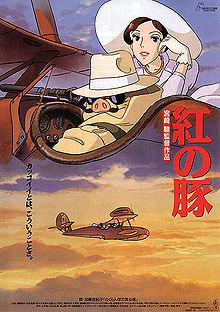
Porco Rosso

Porco Rosso (1992)

Porco Rosso (1992)

It almost seems pointless at this point to sing the praises of Studio Ghibli and its famous director, the great Hayao Miyazaki. The internet is dotted with support for his brilliance and his films are readily available on US soil thanks to an agreement between Studio Ghibli and The Walt Disney Company. Even so, it’s still worthwhile repeating that Miyazaki is a supremely gifted director with an apparent synergy with the animation medium. Many of his works are animated films because that’s just what Miyazaki does. They could have easily been shot in live-action and more obviously marketed towards adults. Some possess such fantastic imagery that it’s clear to see why they are animated, while a film such as The Wind Rises, Miyazaki’s most recent and possibly his last, is essentially a drama well-grounded in reality that just happens to be animated.

Porco Rosso is one of Miyazaki’s older works. Debuting in Japanese cinemas in 1992, it tells the tale of a former Italian flying ace turned bounty hunter cursed to live out the rest of his life with the face of a pig. Like The Wind Rises, it romanticizes the role of the pilot and easily could have been a live-action piece (though the pig-faced Porco may not have played as well as an actual person). And like many of Studio Ghibli’s films, it’s now available via Disney Blu Ray which is how I had the pleasure of experiencing it.

The film opens with Porco battling sky pirates: pirates that choose to attack luxury cruise ships via seaplane. The setting is post World War I and Porco has apparently been hired by the ship owners to keep the pirates away. We immediately get a sense of the film’s tone as the pirates are pretty bad at what they do and Porco is quite nonchalant in his attitude towards them. He combats them via a seaplane of his own, a beat-up old red thing that has trouble getting off the water, and has little trouble foiling their plans and freeing their hostages. There’s an obvious lack of danger throughout the sequence despite the bullets flying through the air but it doesn’t harm the enjoyment of the scene. Following this confrontation, we’re shown a little more of the setting. The pirates, looking to rid themselves of Porco once and for all, have turned to an American named Curtis. Curtis sees this as an opportunity for fame and fortune as he yearns for a career in Hollywood. He also would like to woo Porco’s longtime friend and proprietor of a local establishment frequented by pirates and pilots alike, Gina.

Preparing for take-off.

Preparing for take-off.

Curtis is an interesting character from a westerner’s point of view. Some may call his portrayal unflattering, or even offensive, as he does not possess any obvious virtues. I found it interesting to see how an American is stereotyped outside of the country and found the character pretty amusing. He is a skilled pilot and represents some sense of danger in an otherwise light-hearted film, and is a natural foil for the care-free Porco.

After a confrontation with Curtis that leaves Porco’s plane in need of repairs, Porco is forced to head back to his homeland of Italy where he is wanted for desertion. Porco’s mechanic Piccolo is introduced, along with his family and a large contingent of locals, and proves to be a very entertaining addition to the cast. What could have been a slow and boring part of the film turns into a strength. Some credit should go to the english translators who are able to come up with snappy dialogue to suit the original tone of the scenes as well as fit the mouth-flaps of the animated characters. The film builds towards a confrontation between Porco and Curtis, one Porco seems disinterested in, and plays upon the notion of pilot’s honor. There’s also a bit of a romantic angle thrown in that feels tacked on but isn’t focused on enough to be a distraction.

Porco and Fio are a natural movie pairing. I'd dog the two for being too typical an odd couple if they didn't work so well together onscreen.

Porco and Fio are a natural movie pairing. I’d dog the two for being too typical an odd couple if they didn’t work so well together onscreen.

The star of the film is clearly the Porco character, not just because of his prominence in the title but in his personality as well. He’s a flawed human but an inherently interesting one. He’s funny, boorish, yet charming. The english version features Michael Keaton as the voice of Porco. At first, I wasn’t sure his voice suited the character but I warmed to it quickly. Keaton is almost deadpan in his delivery at times, but he’s able to lend his charisma to the character through the excellent script and his superb delivery. The rest of the cast features some names familiar to those who have watched a lot of anime. Gina is played by Susan Egan, who has done a lot of work in the field of animation and is a consummate pro. Brad Garrett, who also seems to be amassing a lot of voice credits, plays the leader of the seaplane pirates and Kimberly Williams-Paisley portrays Piccolo’s granddaughter Fio with charming exuberance. Joe Hisaishi is once again the composer who utilizes a lot of period pieces to help enhance the film’s setting. The main Porco theme is one of my favorite works he’s composed as its perky nature suits the tone of the film perfectly.

Even the "bad guys" in this film are likable.

Even the “bad guys” in this film are likable.

The animation, as always, is breath-taking. The colors are rich and are only more so on the Blu Ray medium. I particularly love the shade of red used for Porco’s seaplane and the understated blues of the ocean water. Milan is drawn wonderfully and a sequence featuring Porco racing through the city’s canals is probably the most technically impressive of the whole film. The level of detail shown in the plane components was something I found myself appreciating and it’s quite clear that Miyazaki has a love for airplanes.

The film moves at a comfortable pace, wrapping up in just over 90 minutes. It’s tone never wavers as it’s quite high-spirited and inherently fun. I don’t know if I was just turned off by Porco’s look going in, but I wasn’t really excited to watch this film at first but it quickly won me over. It compares quite favorably to My Neighbor Totoro in that it isn’t a deeply serious film with a lot on the line. It’s really just a good old-fashioned adventure full of likable characters, captivating action, and gorgeous visuals.


The Wind Rises

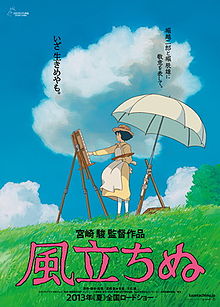
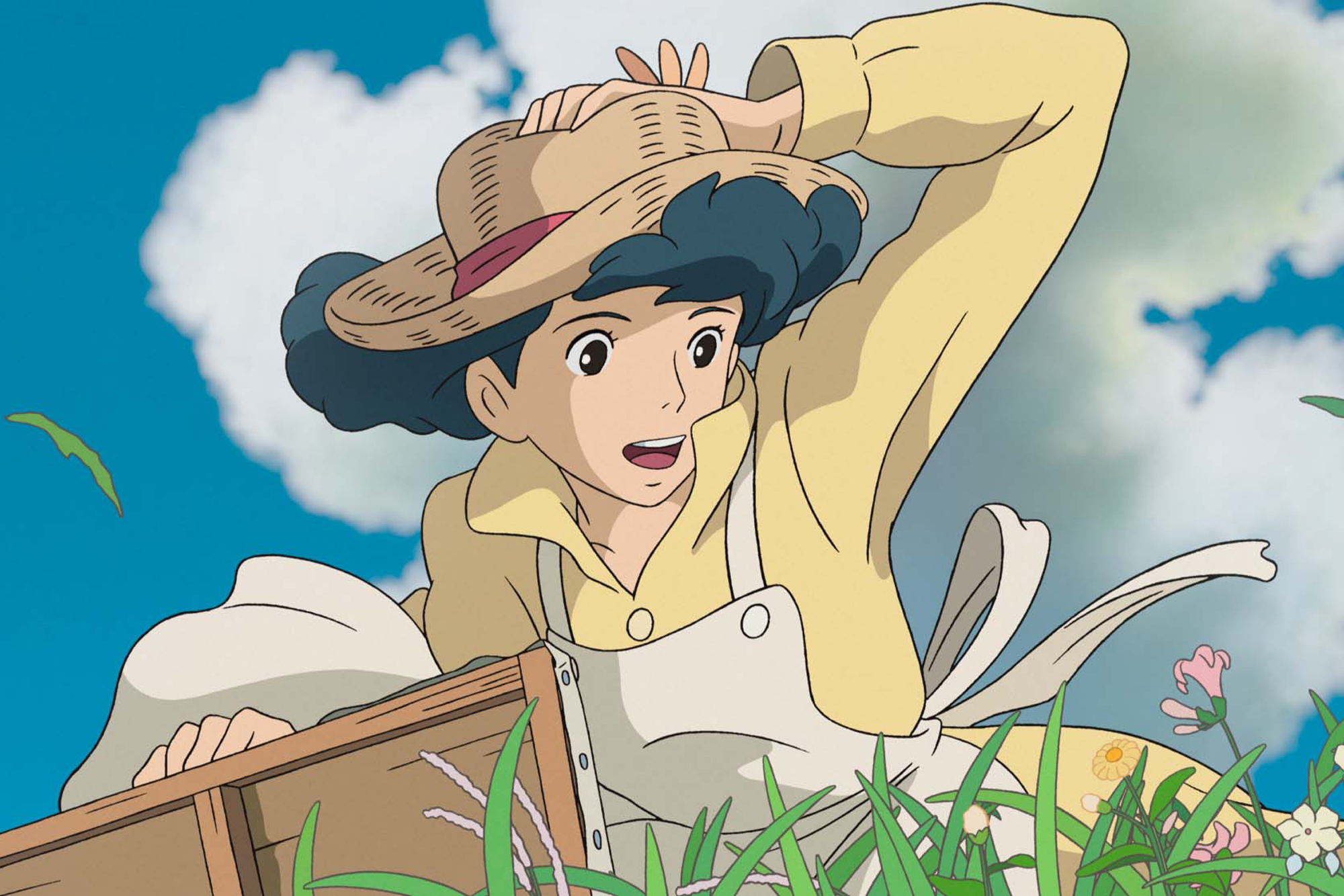
Kaze_Tachinu_poster“The wind is rising!  We must try to live!” – Paul Valéry

The above quote opens the latest release from Studio Ghibli and director Hayao Miyazaki; The Wind Rises.  It’s a quote that is suitable for the film as it implies that change is coming, but we must carry on.  The Wind Rises is to be the last directorial effort from Miyazaki, Japan’s most celebrated director of animated films, and it is an appropriate piece for him to go out on.  The Wind Rises tells the tale of Jiro Horikoshi and his dream to design what he calls beautiful airplanes.  Jiro is based on the airplane designer of the same name who is famous for creating Japan’s Mitsubishi A5M and A6M Zero and the basis for the film was derived from a quote he once gave:  “All I wanted to do was make something beautiful.”  The film has two sides to it with one being a mostly faithful account of Horikoshi’s challenge in developing his first successful airplane and the entirely fictional account of his personal life.  The end result is a tale of hope, triumph, love and life and is perhaps Miyazaki’s finest piece since My Neighbor Totoro.

The film opens with a young Jiro dreaming of flying a plane.  The opening sequence is perhaps the most fun for the animators as Jiro’s dreams are filled with nightmare creatures seemingly stemming from his despondence over his imperfect vision.  The character admits early on to himself that he will never fly because of his eyes, but in a dream meets with Italian airplane designer Giovanni Caprone, who will be a recurring visitor amongst Jiro’s dreams throughout the film offering him guidance on how to be a great engineer.  It’s these dreams that inspire Jiro to be an airplane engineer and the film advances time to show us his journey to become an engineer.

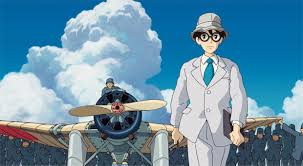
Jiro leading one of his designs to the testing grounds.

Jiro leading one of his designs to the testing grounds.

Jiro is portrayed as a sweet and good-natured man.  He is willing to help those in need, and a chance encounter with a young woman and her maid on a train plays a pivotal role in the film later on.  During the train ride the great earthquake of 1923 strikes and Jiro carries the maid to safety after she breaks a leg.  He seeks nothing in return and doesn’t even share his name with the women before departing.

Jiro lands a job out of school and his employment takes him to Germany where he is introduced to pre World War 2 Germany’s policies.  Being Japanese, he is not trusted by the soldiers as he seeks to learn about Germany’s engineering when it comes to aeronautical design.  Despite this, he is able to learn some techniques and apply them to a new aircraft, which unfortunately crashes during the test run.  To clear his head, his company sends him on a retreat for some rest and relaxation which is where he encounters the young woman he met years earlier on the train, Naoko.  The two fall in love, and though it seems predictable, their scenes are handled with such tenderness and care that the audience is left to root for them, even if it seems as if they’re destined to fall for each other.  Jiro learns there is a dark side to his budding romance as Naoko is afflicted with tuberculosis.  This forces them to move quickly with their life together.  Naoko insists on getting better before discussing marriage, but in time relents once Jiro has to leave for work.

Jiro must deal with failure throughout the film.

Jiro must deal with failure throughout the film.

The last act of the movie involves Jiro and his attempt to finally build a worthy aircraft that his company can sell to the Japanese military, while Naoko wages a silent battle at their home with her illness.  I don’t want to get into too much detail about the film’s plot, but suffice to say it’s a bittersweet tale that includes ups and downs with the story refusing to linger on anything for too long.  In that, it mirrors life which is a constant push and pull.  There are many themes the film likes to go back to.  Early on a supporting character mentions the importance of having a family to go home to, crediting it with helping a man work harder at the office, which is shown later in the film once Jiro is married.  In his dreams, Caproni asks Jiro if he prefers to live in a world with pyramids, or with no pyramids, using this as an explanation for why he would design airplanes that will eventually be used for war.  And all throughout the film, the wind acts as a character itself playing a pivotal role in one of the film’s final scenes.

As this is a work from Studio Ghibli, it hardly needs stating but deserves to be anyways, that this film is gorgeous.  The animation is predominantly hand-drawn, but some computer generated imagery is used for some of the film’s effects.  The film has a bright palette though Jiro is often garbed in white, gray, or a very light lavender, which serves to isolate him from his surroundings.  This suits the character as he is often oblivious to his surroundings, so consumed in his work and willing to overlook the fact that his designs are made for war.  The country-side settings are sure to evoke memories of Totoro, and the film’s whimsical feel and care-free pace further serves to draw comparisons to Miyazaki’s old masterpiece.

The wind is a character of its own, its actions often directly influencing the lives of the human characters in the film.

The wind is a character of its own, its actions often directly influencing the lives of the human characters in the film.

The sound design is excellent, with great use of natural sounding effects and an excellent score from Joe Hisaishi.  The english dub was handled by Disney and the film distributed in North America on their Touschstone label.  The dub is the usual high quality that viewers have come to expect from Disney as the company has handled the majority of Studio Ghibli’s dubs.  Serving as Jiro is Joseph Gordon-Levitt with supporting roles from the likes of Emily Blunt, John Krasinski, and Martin Short, the latter serving as the scene-stealing character Kurokawa, Jiro’s boss throughout the film.

The Wind Rises may be an animated movie, but it’s not for children.  The film’s pace is too slow and plot is too mature to entertain most children.  The film is best described as a drama and should appeal to older fans of Miyazaki’s works.  That said, it’s a wonderful piece of film with fantastic visuals, a compelling plot, and terrific performances.  Hayao Miyazaki may never get the recognition he deserves from international audiences, but anyone involved with film appreciates and respects the work he does.  It’s both wonderful and sad that this movie exists, knowing it is to be the last written and directed by Miyazaki, but in that sense it mirrors the film superbly.  What a truly awesome way to cap off a career!


Space Dandy – Live With the Flow, Baby

Space_Dandy_promotional_imageA new anime series premiered last night on Cartoon Network’s Toonami block:  Space Dandy.  Space Dandy is the latest series from Shinichiro Watanabe (which is how it got my attention, it also didn’t hurt that Toonami used a Misfits song in the TV spots leading up the premier), best known for  being the director of Cowboy Bebop and Samurai Champloo.  I never got into Samurai Champloo (never really tried to, either), but I love Cowboy Bebop and consider it the finest anime series I’ve ever experienced.  Granted, my experiences with anime have decreased in volume over the years.  As a kid and teen I took in quite a bit.  I’m familiar with pretty much all of the big ones from the 80’s and 90’s such as Akira, Neon Genesis Evangelion, Dragonball, Fist of the North Star, and so on.  Like any medium, there are good and bad representatives.  There are also common threads amongst the various programs.  Most anime certainly shares similarities in look and appearance.  There are also certain tricks that have become cliché since, like the screaming hero jumping through the air, still frames with nothing but a mouth moving, mouths going from being really small to really large, etc.  Even so, it’s not fair to generalize and say that anime is either good or bad, or that someone is an anime fan or non fan.  Anyone with an open mind can find anime they like and don’t like, just as they can with live-action movies and television shows.

All of that was a long-winded way of saying that the success Watanabe has had in the past has little baring on Space Dandy.  Cowboy Bebop is among the greats, and holding Space Dandy up to that standard seems unfair, and yet they invite comparisons due to the Watanabe connection.  They also share other similarities.  For one, Space Dandy takes place in space (big shocker there) and the main character, Dandy, is an alien hunter.  That is quite similar to the space bounty hunter profession of the Bebop crew.  And like the Bebop crew, Dandy doesn’t appear to be very good at his job.  He’s alone on his space ship when the episode begins accompanied only by his robot assistant QT.  We soon learn QT is out-dated and becoming obsolete and the spaceship is in need of some repair as well.  Dandy’s occupation as a space hunter is to apprehend unclassified aliens, and then turn them in for profit.  I presume they need to be alive, but I’m not positive.

Expect to see lots of T&A with this program.

Expect to see lots of T&A with this program.

That’s the basic premise.  Where Space Dandy seeks to differentiate itself from prior Watanabe programs is with its look and humor.  Space Dandy is riddled with sophomoric humor.  The first episode opens with Dandy debating the merits of ass-men and boob-men before going to his favorite hang-out, the Hooters parody simply known as BooBies.  The show is accompanied by a narrator, who informs us that Dandy hopes to one day own his very own BooBies.  This narrator is really a third character, and the other characters in the show break the fourth wall more than once to acknowledge him.  The narrator is forgetful and provides updates throughout the show and fills in some of the back story, which in the first episode, almost seems irrelevant.

Dandy himself is rather dim-witted and perverted.  He’s a slow thinker, though he’s not obviously dumb like a Homer Simpson or Peter Griffen.  He’s also really self-absorbed and appears to have an obsession with his own hair.  He’s also a pretty lousy shot and poor judge of situations.  He’s not mean-spirited though, which makes him likable.  QT is similarly incompetent at its job, some of that due to the fact that its obsolete.  QT, despite being a robot, also doesn’t seem to mind being lazy.  Other characters introduced in the first episode include an alien from Betelgeuse with an unpronounceable name (he looks like some kind of space cat, so Dandy dubs him Meow against his will) and a mysterious ape-like scientist named Dr. Gel.  Dr. Gel is an ominous figure in the debut episode who is pursuing Dandy as he is the key to a war raging on.  Gel answers to a strange monarch-like figure with a flaming skull for a head and pilots a spaceship that contains the head of the Statue of Liberty with a ball-gag in its mouth.  Clearly it’s a reference to Planet of the Apes though I do wonder if it will have any relevance beyond that or if it’s just a visual gag (no pun intended).

The main goal of the show appears to be to induce laughter.  The tone is very silly and the neon colors and up-beat electronic music add to the feeling.  The plot of the first episode mostly exists to introduce the characters and then show us just how bad Dandy is in action.  It ends on an apocalyptic note, and I wonder how the second episode will open.  It’s possible there will be an absence of continuity from one episode to another though I personally doubt that.  It’s impossible to judge a series based on one episode, but Space Dandy did not make an overly strong impression on me.  It seems fun enough, but I do wonder if it will have much staying power.  It may prove too silly for my taste, but I am comforted by the fact that it took a few episodes for Cowboy Bebop to hook me so it’s possible Space Dandy will require the same.  To make myself stick with it, I’ve programmed my DVR to record it each week.  Maybe I’ll have reason to revisit this topic in a few months.