
 After a long stretch of posting about Christmas and Batman exclusively, it’s time to get things back on track here at The Nostalgia Spot. Here’s a subject I’ve been sitting on for quite some time. I love The Simpsons, and I also love video games, so it stands to reason I should love Simpsons video games! In a perfect world that would be true, but alas, we do not live in such a world.
The fact that Simpsons video games exist in the first place is kind of funny when you stop and think about it. After all, The Simpsons is essentially a family sitcom like Full House, except it’s actually good. I’ve never heard anyone sincerely bemoan the fact that there are no video games based on Full House, and yet we have around a dozen games based on The Simpsons. The most obvious difference between the two is that Full House is live action and The Simpsons is animated. Is that the criteria needed to enter into the world of video games?

The main stars of the game. Sorry, Maggie.
Not exactly, but we’re getting there. The wonderful folks over at Talking Simpsons, a podcast that is a chronological exploration of the series, spoke with writer and show-runner Bill Oakley about his time on the show and he revealed an interesting tidbit about The Simpsons that I wasn’t aware of: the audience was predominantly children. It’s not a total surprise to hear that, but as someone who watched the show regularly growing up with his entire family it did surprise me some. Because the art form is most frequently used to create children’s content in the US, animation inherently appeals to kids. And Bart Simpson was a character most kids looked up to, rightly or wrongly. So given that, it’s not at all surprising why The Simpsons received so many video games in the early days because, back then, no one really associated video games with any demographic other than children.
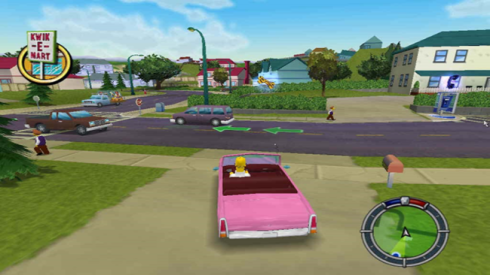
Your first car is the (surprise!) famous Simpsons pink sedan which has inexplicably been turned into a convertible for this game.
Sadly, when the aim of a piece of media is to just appeal to children the end product is often pretty lackluster. The Simpsons were unremarkable in that respect as pretty much every licensed game from the 8-bit era was pretty terrible. The inaugural Bart vs The Space Mutants at least had an interesting They Live! inspired plot, but playing it was about as much fun as a trip to the dentist. The games that followed were the same, but without the quirky plot. Following the NES era the games became mini-game compilations on the GameBoy and SNES and the results were just as bad. The Playstation gave us Simpsons Wrestling, which the less said about that one the better. It wasn’t until we hit the PS2/Gamecube/Xbox generation where we actually received a home console game based on The Simpsons that was any good. Up first, was Road Rage, a Crazy Taxi parody that was decent, followed by Simpsons Skateboarding which was bad. The best though? A Grand Theft Auto parody called The Simpsons: Hit & Run.

Basically every major Springfield landmark is in this game, some of which you can even enter.
Hit & Run took a lot of the assets created for Road Rage and made them more interesting. Road Rage was okay because the taxi setup leaves a lot of room for the characters to just be funny, but the gameplay gets a little old a little fast. Hit & Run slows things down and lets the player exit the vehicle. Even though it’s a GTA clone of sorts, the game plays more like a generic 3D platformer when not in a car. Characters can run, jump, double-jump, attack, and butt stomp just like Ratchet from the Ratchet & Clank series but without the awesome gadgets. Generic characters litter the virtual Springfield driving generic vehicles you’re free to commandeer at your leisure, though the best vehicles are the ones you actually have to purchase.
Hit & Run contains a fairly large version of Springfield that’s broken up into three main stages, so they’re not interconnected unfortunately. There’s a suburban setting that contains Evergreen Terrace as well as the projects and upscale neighborhoods. There’s a downtown setting where you can find Moe’s, the remnants of the monorail, and infamous Matlock Expressway. There’s also a waterfront setting that inexplicably contains The Android’s Dungeon but also features Duff Gardens and the Channel 6 lots home to fine programming such as Krusty the Clown. Just about every major landmark from the show is featured, though the layout of Springfield is definitely not canon. There’s a sense that in creating the three main stages the game designers just wanted to make sure they had some important landmark reserved for each one. It’s not a big deal, but Springfield isn’t as cozy as it could have been. It’s also very limited by the technology of the time since no section is nearly as large as an open world from today (even GTA: San Andreas featured a much bigger setting).

In a surprising move, Apu gets to take center stage for a level.
Springfield is the star of this game, but lets not forget about the playable characters. As you probably guessed, they include the main cast from the show: Homer, Bart, Lisa and Marge. As you probably did not guess, there’s also a level for Apu. Why Apu? No idea, but it’s nice to play as someone who isn’t a member of the main family and Apu is better than Milhouse. Nobody wants to play as Milhouse. Each level stars one playable character and takes place in a different section of Springfield. Levels get recycled eventually, but with a slightly different take such as night vs day. The last level does something different that I don’t want to spoil, but I’ll say it’s pretty cool. At the start of each stage, your character has access to their default car plus any car that’s been acquired along the way. Naturally, the further into the game you go the better the cars get so you probably won’t use most of the earlier ones. Just about every car is taken from the series too so you’ll get to drive famous cars like Homer’s Mr. Plow truck and Martin’s Honor Roller.

Do it, Bart, take his head!
The setup of the game is pretty straight-forward. You’re given a task, and you need to drive over to a certain character to begin the mission. Just about every mission can be distilled into you driving to a checkpoint in a set amount of time. A timer counts down and often another character has hopped into the car with you to make fun of you while you drive. Complicating things is the hit & run meter. As you run over pedestrians and cause mayhem the meter fills. If it fills all the way you attract the attention of Springfield’s finest. Chief Wiggum and company are surprisingly capable of catching you, and unlike GTA they don’t have to yank you out of the car, just stop you. In the early stages you probably won’t have too much trouble, but as the game moves along things get harder and you’ll probably need to make sure you have the best vehicles available to complete the missions.
The plot of the game is unimportant and pretty weird, even for The Simpsons. Buzz Cola is spreading some new cola that turns people into zombies. It’s sort of a New Coke parody and for some reason there’s giant robot wasps. I mostly ignored it, but the plot pushes you along and into contact with basically every major character from the show. Since the game was released in 2003, it includes characters and references up to around season 13 of the show, so all of the best stuff was available and not as much of the not so great stuff. If you only like the old stuff, you shouldn’t feel too lost here. All of the voice actors contributed to the game and the dialogue is really funny. It’s easily the game’s best aspect.

Say it with me now, “I am evil Homer! I am evil Homer!”
If Hit & Run did not possess The Simpsons license, it probably wouldn’t be remembered at all. The game probably runs about 8-10 hours depending on how thorough you are and towards the end the game’s structure does get a bit tiresome. There’s basically no mission variety to speak of, and while the game isn’t really hard some of the end stages will feature a mission or two that will likely get frustrating. I would often find myself getting bored and sloppy and that’s when my play quality would diminish leading to some angry moments. Usually putting the game away for a bit and returning another day remedied this and thankfully the game’s humor and charm were enough to keep me coming back. Once you’ve seen the three main hubs though the game does lose some luster since most of the Easter eggs have been explored by then.
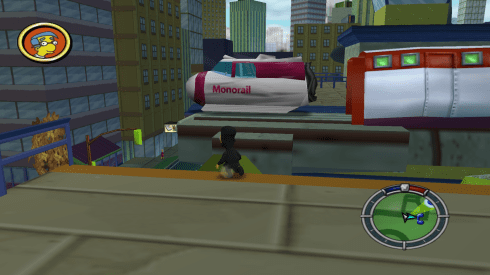
Of course the Monorail makes a cameo.
Hit & Run is at its best when you’re just exploring Springfield. Seeking out the special missions and homages throughout is definitely the most satisfying aspect of the game. The game keeps track of them too so you know if you’ve found them all or if there’s more out there. There’s some optional races too, but they’re sort of just padding. If that last level wasn’t so good I’d say you’ve probably seen enough after just level three. There’s also optional costumes to purchase in the game if you want to dress-up your character as Bartman or Evil Homer. Once you complete a stage too you’re free to jump back into it if you want in case there was something you failed to complete.
It’s debatable if Hit & Run is the best Simpsons game ever made. Virtual Springfield is much beloved by the community for its authenticity, though it isn’t really much of a game. Most people probably pick Konami’s arcade brawler, simply titled The Simpsons, as their favorite. It was available for a time on Xbox Live but I believe that is no longer the case. It is a fun game, though it’s also a traditional arcade game that exists mostly to devour quarters. It also was created during production of season 2 so it only contains references to the show’s first season, which is a bit disappointing. Hit & Run is definitely worth a look if you love The Simpsons. It was released across all three major consoles at the time, so it’s really easy to find a copy at a reasonable price. And if you like podcasts, definitely check out Talking Simpsons as, short of just watching the episodes, that’s the best way to enjoy the classic era of The Simpsons. The main podcast is free and is part of the Laser Time family of podcasts. There’s also a Patreon that has additional content (including the Bill Oakley interview I mentioned) most of which is available for just five bucks a month. I heartily recommend it (and no, I am not affiliated in any way with that show, I just enjoy it). However you go about, treasure The Simpsons since it won’t be around forever, as incredible as that may seem. Maybe we can even get one more game out of it. The Simpsons Game followed Hit & Run, and while the production values on that one blow away the other Simpsons games, the actual gameplay is atrocious and ruins the experience. A game that expands upon the basic formula of Hit & Run would probably work quite well, if enough time was sunk into it. I doubt we’ll receive another major Simpsons game, but it doesn’t hurt to wish.
 Episode Number: 17
 Episode Number: 16

 Episode Number: 15
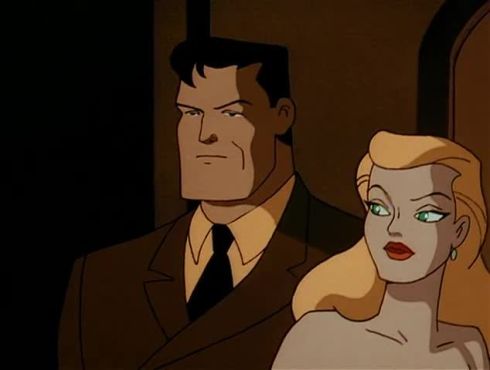
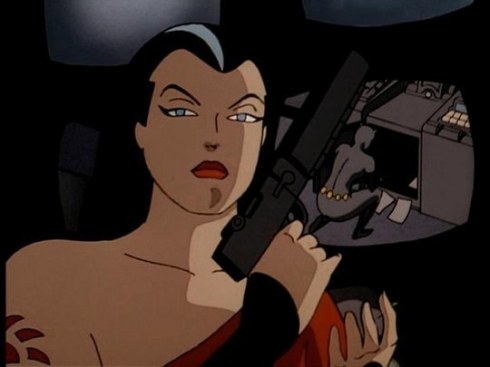
 Unlike The Penguin and Joker, Catwoman was not made an existing villain in this series. This episode marks her debut to both the television audience and to this version of Batman as well. They have never crossed paths before their meeting here, though one gets the impression that Catwoman has been up to this sort of thing for quite some time. She’s quite good at getting around and breaking and entering and even has little cat-shaped caltrops to make use of. Her outfit is very similar to Batman’s and I suppose that’s intentional. She even has a yellow-gold belt. Really, the only difference is she lacks a cape. This version of Catwoman is less an adversary and more another aspect of how Batman could operate. While he may be a vigilante out to do what’s right while largely adhering to the law of the land, Catwoman plays more fast and loose with the law and is willing to break it, going as far as thievery, if the ends are justified by the means. Batman’s ultimate goal is also to help the good people of Gotham by reducing crime, where as Catwoman is basically an animal rights activist who may or not prefer animals (in particular, cats) to people.
 Episode Number: 14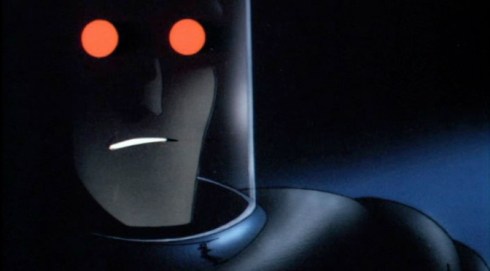
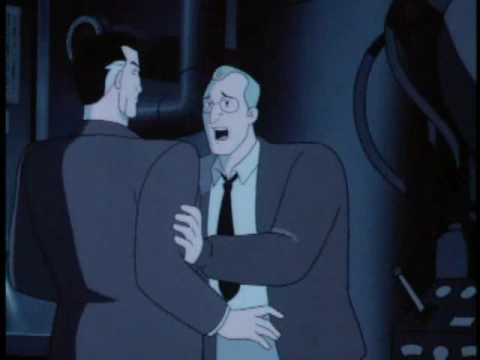
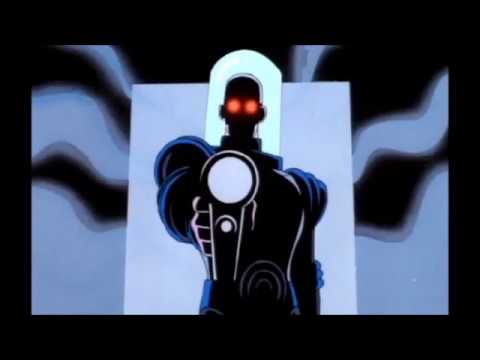

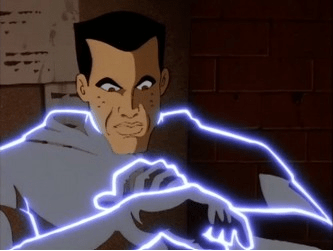
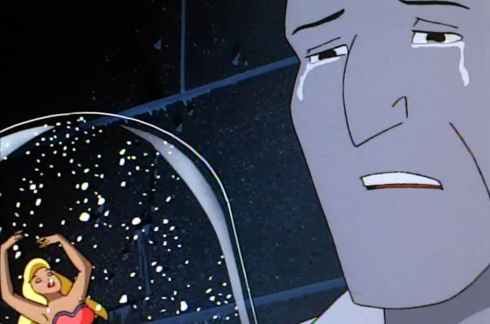 Thankfully, Mr. Freeze avoids the Two-Face treatment which saw that villain return more than once as basically a conventional Batman foil. The show never forgets the true motivation for Freeze and Nora is a part of the few times he does reappear. He never schemes with the Joker or serves as hired muscle for Poison Ivy. And best of all, Mr. Freeze is provided a legacy that still endures today making him one of Batman’s greatest foes, and he owes it all to this episode of a children’s cartoon.
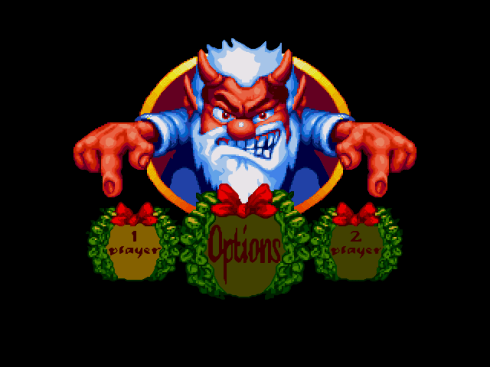
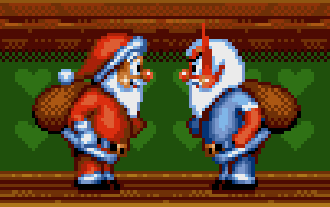
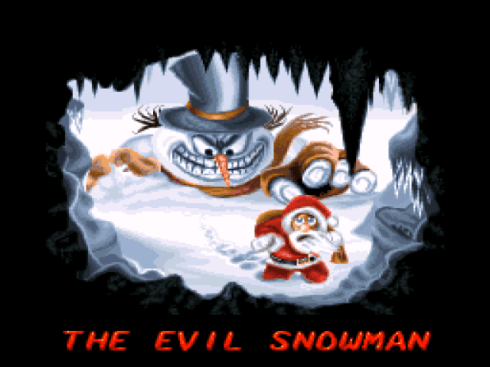
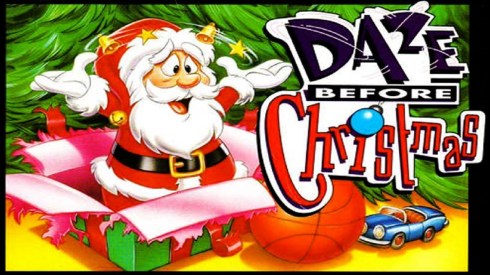 Wait, what is this? We’ve reached the final day of this year’s advent calendar style countdown of Christmas specials and it’s not even a show, movie, or stupid commercial? No friends, for December 25th we’re taking a look at Daze Before Christmas, the Sunsoft produced 16-bit Christmas video game that never saw release in North America. Christmas and other holidays are rarely captured in video games. Sometimes a game might take place at Christmas time (Twisted Metal originally did), but few actually make the holiday a focal point of the game. Daze Before Christmas, developed by Norwegian outfit Funcom, said nuts to that and made a platform game starring St. Nick himself. And you know what? It’s actually not that bad.



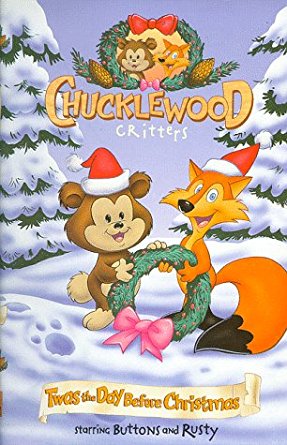 In the 80s, if you had any connection to a successful animation production unit you could probably get a shot at creating your own series. Such was the case for former Hanna-Barbera animators Bill Hutten and Tony Love. They left that famous cartoon factory to create a series of holiday specials that would eventually lead to a cartoon series: Chucklewood Critters. The show centers round a Fox named Rusty and a Bear cub named Buttons. If it sounds sweet that’s because it is. This is a very sincere show that just tries to be a nice little cartoon. In some ways, it’s the type of show that just doesn’t get made anymore. The 90s were all about gross humor and characters so it’s kind of crazy these specials were turned into a series in 1998. The first special was released in 1983, “The Christmass Tree Train,” and the last in 1994. We’re not talking about that inaugural special from ’83 though, because it’s currently December 24th, better known as Christmas Eve, and it’s the day before Christmas so lets talk about “T’was the Day Before Christmas.”




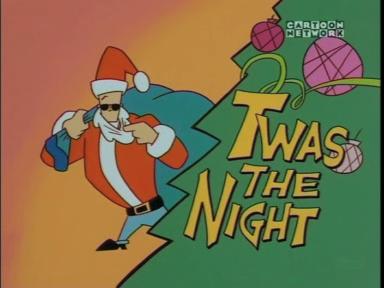 This thing kicked off this year with the What A Cartoon! original George & Junior’s Christmas Spectacular. The comedic bear duo failed to make a lasting impression and faded away from sight. Johnny Bravo, on the other hand, debuted via the same show, but to a much warmer reception earning him his own series. The character was created by Van Partible and some guy named Seth MacFarlane was a writer for the show. Johnny Bravo was essentially a modern guy with the personality of a 50s greaser who talked like Elvis. He wants to help the ladies and be kind of a stereotypical macho man. I guess he’s kind of like Uncle Jesse from Full House, except he thinks he’s as strong as a super hero and probably not as bright as the frontman for the Rippers. It honestly wasn’t a character that resonated with me right off the bat. I guess I just preferred child protagonists or animals in my cartoons, but it was a success and I think it was voted the #2 cartoon of the year by viewers of the What A Cartoon! show, behind only Dexter’s Laboratory which also got its own series.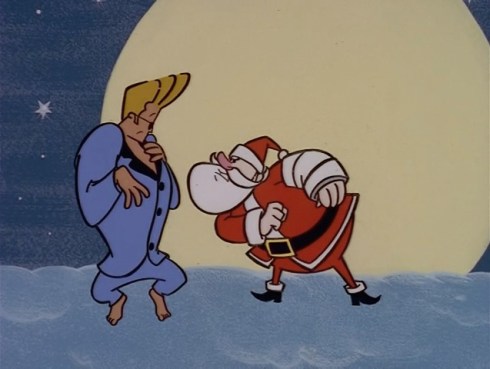
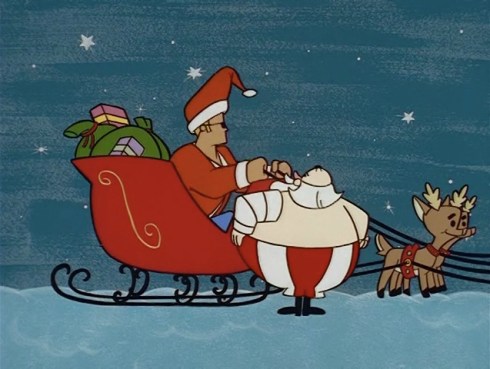
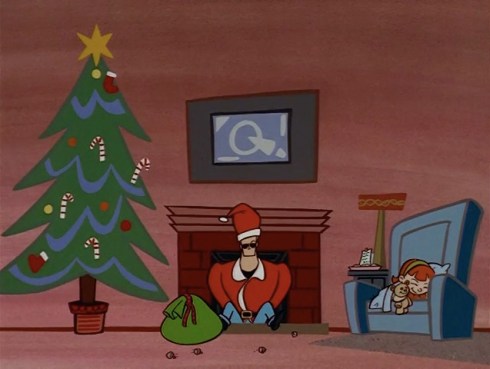
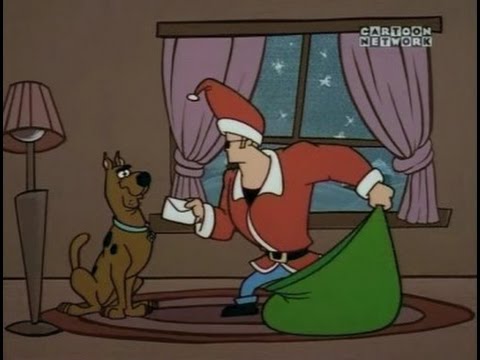
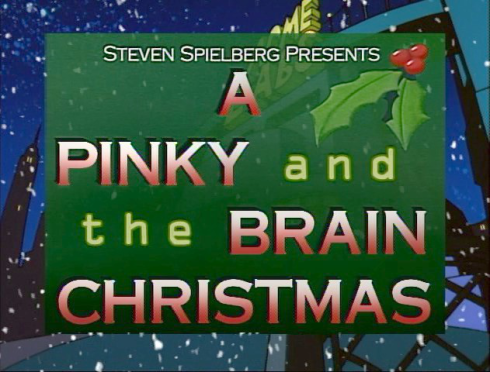
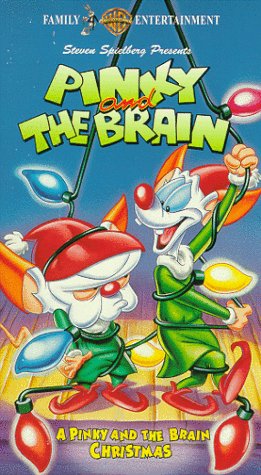
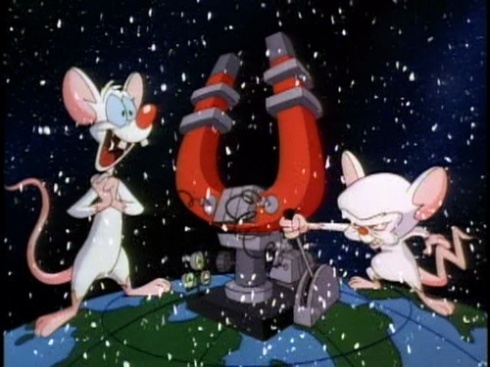
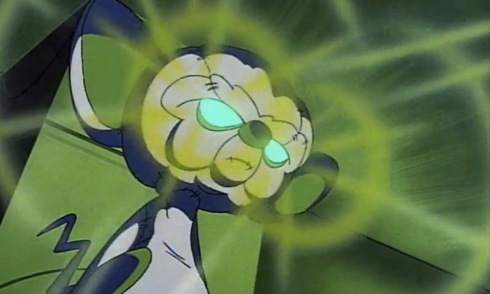
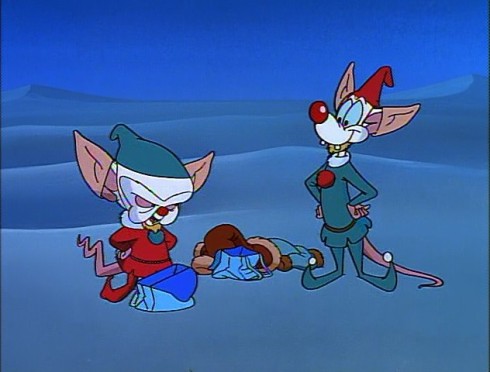
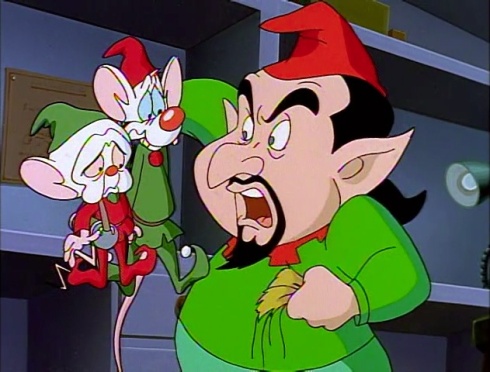
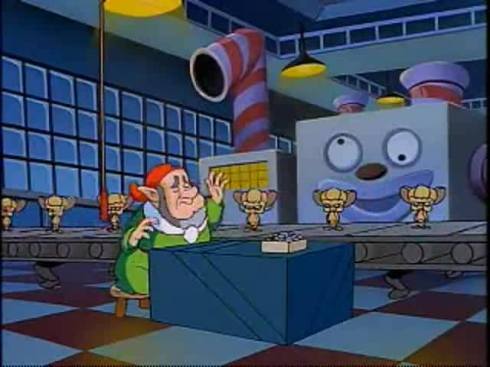
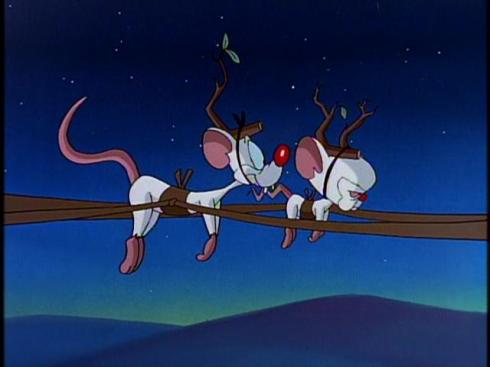
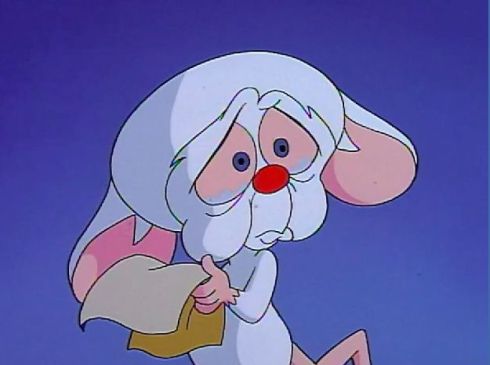
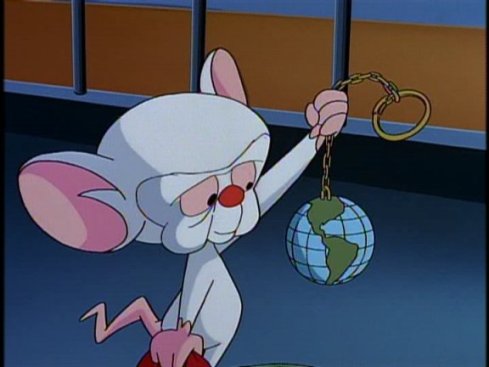
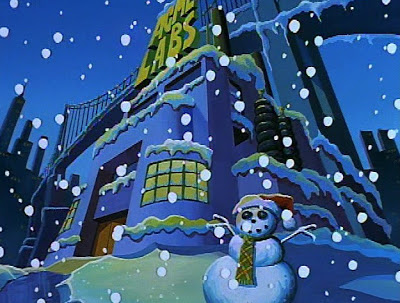 As for watching this special this year, that remains to be seen. Boomerang was showing Pinky and the Brain, but I don’t know that it still does. The show was released on DVD in its entirety and this special even had its own VHS release back in 1996, if you really want to dust off your VCR. Perhaps more than any other special I’ve covered this year, this one feels worth digging up because it’s pretty unique, and for me it’s still pretty fresh as I’ve rarely seen it on television. I always enjoy cartoons the focus on diminutive main characters as seeing the world from their perspective is a great deal of fun for me. Check it out, if you can.
 The Nostalgia Spot