The Mini Console Wars are Upon Us

ps classicPlug and Play games have been around for several years now. They’re those cheap little Atari-styled joysticks you see at electronics stores that when plugged into a television allow one to play games like Pac-Man and Asteroid. They’re novelty machines and an inexpensive way to say to someone “Remember this?” I don’t know how successful they’ve ultimately been, but they’ve persisted and may be responsible for bigger publishers to look at and say there’s more here than meets the eye.

Companies love money, and they love finding ways to make money off of things that require little or no capital. When Nintendo launched its Virtual Console service with the Wii it was a simple and inexpensive way for the company to monetize outdated games. Previously, Nintendo’s path to doing so was via its portable line which was always a generation behind the main consoles in terms of power. Porting a SNES game to Gameboy Advance was cheap, and gamers liked playing games they enjoyed roughly five years past on-the-go. It was a novelty, but a good game is a good game. When consoles finally reached the point where DVD and Blu Ray mediums meant storage was no longer an issue, retro compilations came into fashion. Few sold big numbers, but they didn’t have to since the cost to emulate the software was fairly cheap.

pacman

The start of the retro craze?

All of that changed when Nintendo unveiled its NES Classic Edition System in 2016. The tiny device was immediately attractive to older gamers because it was so cute and tastefully done. Pre-packaged with 30 “classic” games at an attractive low MSRP of $60 helped to make it the hottest item of the 2016 holiday season. Nintendo famously could not meet demand, and it’s taken the company nearly two years to finally make the system readily available. Since then it’s also released the SNES Classic Edition. That came with a second controller and 21 games for the higher MSRP of $80, roughly approximating the price Nintendo has always placed on its NES games relative to its SNES games via the now dead Virtual Console service.

Since Nintendo had such unbelievable success with its products, it’s no surprise then that other companies have followed suit. Sega has licensed its Genesis hardware for similar mini consoles with the added feature that most have contained an actual cartridge slot to play physical Genesis software. The results have been less well received though as the Genesis knock-offs have been rather clunky. Prior to that, Sega was arguably ahead of the curve by licensing its product for portable systems. They too were pretty clunky though and I’ve never had someone actually recommend one to me.

neo geo x

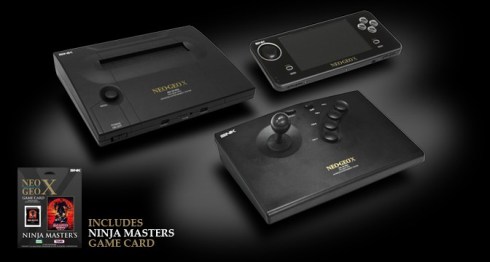
SNK and Tommo tried to make the Neo Geo affordable and practical, but it didn’t work out.

The newest entrant to hit retail is actually an older one as well. SNK too was ahead of the curve with its Neo Geo X released in 2012. The NGX was basically the precursor to the Nintendo Switch. It was a handheld console with 20 pre-loaded Neo Geo games and room for expansion via game cards. It came with a dock that resembled the Neo Geo AES console and once placed inside that dock the games could be played on a television with the included AES style joystick. It was an ambitious, and expensive (but what Neo Geo item isn’t?), toy manufactured by Tommo as opposed to being a true SNK console. The hardcore fanbase didn’t have pleasant things to say. From stretched visuals to input lag, the NGX was more of a novelty than a true way to experience the Neo Geo. After all, most of the system’s best games are available across many consoles now and emulated quite well. SNK was so dissatisfied with the machine that it eventually ordered Tommo to cease and desist production less than a year after release.

The NGX may have been a failure, but it didn’t discourage SNK from trying something similar again. Likely influenced by Nintendo, the Neo Geo Mini is now a thing set for release next month. Unlike the Nintendo machines, the SNK Mini is both a portable and a dedicated home console machine. It resembles a little arcade cabinet and comes with 40 games pre-installed. It looks like it will be rather clunky and cramped when enjoyed as a portable, but it supports standard Neo Geo controller pads so it likely will get the job done when plugged into a television. Like all things Neo Geo, it’s pricier than the competition and will set you back 90-110 dollars, but SNK has an extremely loyal fanbase that will likely guarantee this thing is a sell-out.

neo geo mini

The Neo Geo Mini certainly scores points for cuteness, but how functional it is seems suspect when not plugged into a television.

And of course, the impetus for this post, is the just announced PlayStation Classic. Unlike the Neo Geo Mini, the PlayStation Classic looks to be a straight-up knock-off of Nintendo’s products. A mini PlayStation with 20 pre-loaded games and a single controller for $100, it’s a fairly no-frills duplicate. Sony has only announced 5 of the 20 games, and they’re a pretty representative snapshot of what the original PSX offered:  Final Fantasy VII, Jumping Flash, Wild Arms, Tekken 3, and Ridge Racer Type 4. Sony made the decision to package the system with one standard PlayStation controller, which means no analog. The choice to do so is being spun as a way to celebrate the original release of the console nearly 25 years ago, but I’m guessing it was really done for cost reasons. The machine also resembles the original launch model right down to the additional port on the system’s rear (it’s guarded by a removable plastic tab and I don’t know if its present for aesthetic reasons on the PS Mini or if it’s hiding an additional function).

genesis classic

Sega has made half-hearted attempts to duplicate Nintendo’s success, but the results have been subpar at best.

The PlayStation was the highest selling console of the 1990s so there’s likely a lot of gamers who hold the system in high regard. Even so, there are factors working against Sony with the PlayStation Classic. For one, Sony has actually been very good at making its classic games easily available. The PlayStation 4 may have been left in the dust in some respects, but both the Vita and PS3 can download and emulate almost all of the biggest games released for the original PSX. They’re not free, but they’re also not prohibitively expensive and the cost varies from publisher to publisher. Likely Sony’s biggest ally in those days was Squaresoft, now Square-Enix, which has made almost all of its PSX games available in Sony’s Eshop. And if you’re one of the few who (like me) purchased a PlayStation TV then you have yet another avenue for experiencing these games. Even games like the ultra rare Suikoden II can be played rather effortlessly these days.

ps classic close

The PlaySation Classic is about what you would expect.

The other issue Sony is going to run into is its price point and lack of analog support. Some classic PSX games made full use of the Dual Shock controller including Metal Gear Solid and Ape Escape. Other games were retro-fitted to utilize the new controller and made better, like Resident Evil 2. Since the console does utilize USB for its controller input it’s possible it will support the Dual Shock 3 and 4 as an input method, but it stinks to not just include that out of the box. And of course, the $100 price point is another tough sell. It follows the path Nintendo laid out with its retro machines of adding another 20 dollars for each successive console generation, but it does feel like there is a limit for what people are willing to spend. Gaming enthusiasts will still have interest, but will Sony be able to successfully attract that casual crowd that really drove sales for the Nintendo units? Considering the Sony brand isn’t as famous as Nintendo’s, despite the obvious success of the PlayStation consoles, it would appear that this unit is destined to be less popular. And on the business side of things, Sony just doesn’t have as many firs-party titles as Nintendo making the licensing more expensive. That’s likely reflected in the price-point, but it’s also possible that Sony also just isn’t going to pull in the same profit per unit that Nintendo can manage.

Revealing only 5 of the included 20 games from the start feels like a gamble on Sony’s part. Does the company think that the excitement of the initial announcement will be enough to drive pre-orders into near sell-out numbers? It’s possible, but it also feels like there’s a lack of confidence in the software. A lot of Sony’s biggest games come with obvious licensing hurdles. Gran Turismo boasted hundreds of actual vehicles. Tony Hark’s Pro Skater contains the likeness of dozens of unaffiliated skaters as well as sponsorships as well. Even Jet Moto and Wipeout featured in-game sponsorships or licensed music. It’s unlikely these licensing agreements factored in new retail releases down the road and license holders need to be re-engaged in some cases in order to include them. All of these things cost Sony money and might discourage the company from including some of the system’s most memorable games.

psc ad

The choice of controller may be a hindrance, but we’ll see.

Just like the remaining 15 games, it also remains to be seen how Sony views its newly launched Mini Console business. Does the world really need a PS2 Mini at this point? I’d argue no, but I also would not be surprised to see Sony try. They may wait to see if Sega or Nintendo jumps into that generation first though before dipping their toe into those waters. It’s also possible Sony sees this as the first of multiple mini PlayStation devices. Perhaps a second could mimic the redesign of the PSOne and include analog support. Maybe this one due out in December is to be expandable or new versions could arrive that include a different variety of games. We don’t yet know if there will be regional differences with these consoles as there were with the Nintendo ones too. And lastly, we don’t know how well this system will be at emulating these games. While many hold up from a fun-factor perspective, visually they have not aged well and may look troublesome on modern televisions. Sony at least has experience with the PlayStation TV (I bet Sony really kicks themselves now for not designing the PS TV to resemble a mini PlayStation) so we know they can make a quality plug and play device at a modest price point, but we also don’t know if we can expect the same level of quality from this device. All of these questions, and the fact that I still own most of my favorite PSX era games in a physical form, has me less than enthused about the PlayStation Classic. I’m not pre-ordering it, but I’m also not ruling out a purchase somewhere down the road. It is fun to think about though, and it certainly reaffirms the notion that we’re not through yet with mini consoles.


Dragon Ball Z: Wrath of the Dragon

wrath of the dragonJapanese Title:  Dragon Fist Explosion!! If Goku Can’t Do It, Who Will?

Original Release Date:  July 15, 1995

English Release:  September 12, 2006

Directed by:  Mitsuo Hashimoto

Screenplay by:  Takao Koyama

Running Time:  52 minutes


We’ve finally reached the thirteenth and final film in the main Dragon Ball Z film-verse:  Wrath of the Dragon. Like our last film, Fusion Reborn, we get a title that’s at least slightly ambiguous and not just the name of the film’s villain. And unlike most of the movies, this one could actually take place during the timeline of the anime since it takes place after the events of the Buu Saga (though don’t confuse that statement for canon, since Dragon Ball Super ignores the events of this movie as it does basically all of the others). As a last hurrah, Toei produced a movie that’s very different in tone from the other 12 features. Even though the running time makes it pretty typical of the other films, it moves a lot slower with the emphasis of the film’s plot resting squarely on something seldom seen in DBZ movies:  character development. Rather than simply have some super-powered villain show up and challenge Goku, the film focuses on a new character, Tapion, and the fascination an existing character, Trunks, has with him.

The film opens with a young boy (Aaron Dismuke) in a frantic state. He’s on a darkened planet and armed with a sword. He has pointed years and a mohawk-like hairstyle and probably is not of Earth. He appears to be searching for an unseen danger, when from behind a giant foot emerges and apparently squashes the poor boy. An unsettling laugh is then heard.

Saiyamen

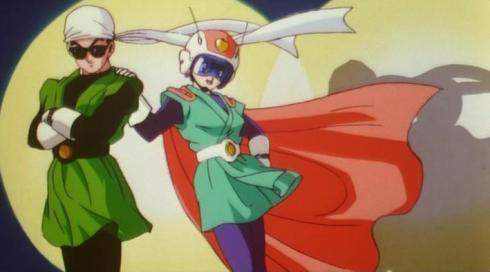
The heroes we need.

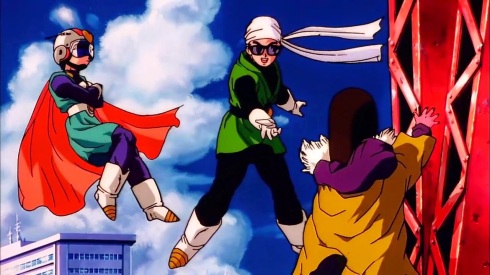
On Earth, the Great Saiyaman is out keeping the residents of one of Earth’s many cities safe. And he’s no longer a solo act. Great Saiyaman II, or Great Saiyawoman, is by his side in a similar costume to Saiyaman’s original look (as opposed to the bandana and sunglasses disguise) and they’re fouling a robbery. There’s some fun, atypical action in this piece as Gohan (Kyle Hebert) and Videl (Kara Edwards) play super hero, but a shadowy figure is watching and it’s pretty clear he’s going to play some sort of role in this story – and soon. At school, Gohan and Videl are a bit tired from their exploits, and also late for class. After just arriving in his class, Gohan is again summoned by city officials to prevent an old man from committing suicide. He has to excuse himself, much to the shock of his professor, once more to go deal with the situation.

saiyaman saves hoi

Not everything they do is battle tough space villains.

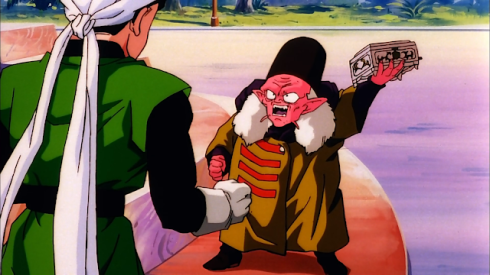
Gohan and Videl arrive in costume to see the old man dangling from a ledge. Gohan springs into action and rescues the little old man, who introduces himself as Hoi (Troy Baker). The cloaked, possibly alien, character is the same who had been spying on the two earlier. He tells the two about a legendary hero named Tapion (Jason Liebrecht) who has been sealed away in a music box that Hoi just so happens to have in his possession. He warns Gohan that the Earth will soon have need of this Tapion, and that they need to free him from the music box in order to secure his aid. Videl seems suspicious of the old man, who really looks the part of a villain, but Gohan falls for it – he is his father’s son, after all. Unfortunately, even Gohan’s mighty strength can’t turn the crank on the music box and they’re forced to go elsewhere for help.

hoi

That is a face that can be trusted.

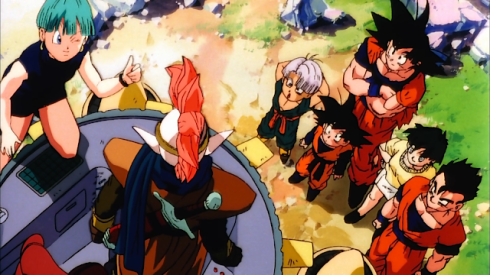
Hoi encourages them to utilize the power of the Dragon Balls to free Tapion, so Gohan takes the box to Bulma’s (Tiffany Volmer). Goku (Sean Schemmel), Goten (Edwards), and Trunks (Laura Bailey) are there as well and even Goku can’t get the music box handle to budge. He’s game though for a Dragon Ball hunt, and the group does just that summoning Shenron (Christopher Sabat) in short order. He’s more than capable of freeing Tapion from the music box, but once released they soon find out that Tapion did not wish to be free.

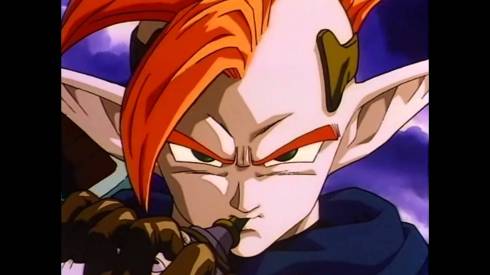
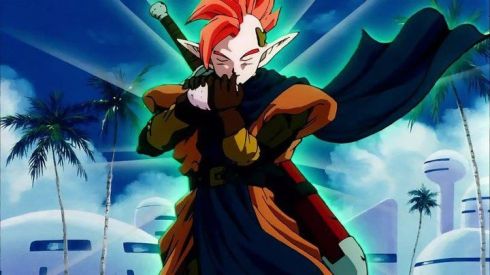
tapion

The Legendary Hero Tapion.

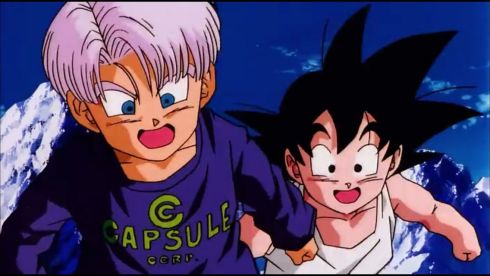
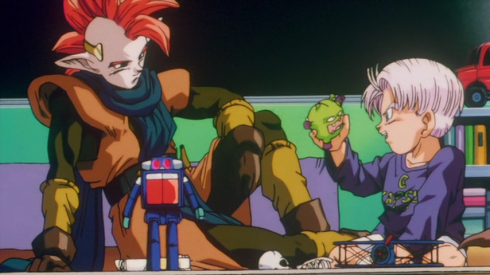
Tapion, a warrior who looks much like the child from the beginning of the film only an adult, is angered to see Hoi and dismayed to see the music box shattered as a result of Shenron freeing him. Hoi flees, and Tapion is left with the others. Trunks takes an almost immediate interest in the strange, sword-wielding warrior from another world, only Tapion is not interested in idle chit-chat. He too retreats to a remote area near Capsule Corp in what looks to be an abandoned hangar of some kind. Trunks and Goten try and visit him, often with food, but Tapion refuses to engage the children at all.

trunks and goten

Even though he’s kind of a jerk, Trunks and Goten think Tapion is pretty cool.

It’s clear at this point that Tapion was sealed away for a reason, and that becomes even more clear when a strange Kaiju-like monster appears in nearby West City. Gohan and Videl confront the being, and are shocked to see it’s basically just a pair of massive, bug-like legs with no torso or upper body to speak of. They’re unable to do much of anything to the creature, but Tapion appears. Armed with an ocarina, he plays a haunting melody on the instrument which causes the monster to vanish. Gohan and Videl are both astonished and more than a little confused to see Tapion is connected to this monster in some form.

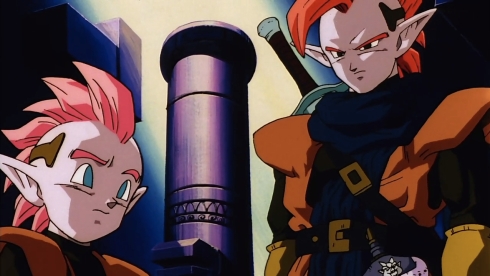
Tapion_and_minotia

Tapion and his little brother say good bye.

Back at Tapion’s hideout, Trunks once again attempts to bond with the sullen warrior and is again rebuffed. Hoi shows up though and attempts to steal Tapion’s ocarina when he briefly slips into sleep. Trunks is able to get the ocarina from him, and when Hoi attempts to coerce Trunks into giving it back to him, he instead returns it to Tapion. Hoi flees, but after the gesture Tapion is suddenly interested in conversing with the young Saiyan. It’s clear that Trunks is simply seeking out an older brother figure, likely a little jealous of what his good friend Goten has with Gohan, and he’s overjoyed that Tapion is finally speaking with him. He’s able to convince Tapion to join him at his home, and the warrior finally relents.

Tapion_and_bulma

Bulma just making sure this guy who has taken a liking to her kid checks out.

At Capsule Corp, Tapion visits with Trunks and puts him to bed. Following that, he encounters Bulma in the hallway and she invites him to sit down for a talk, since she knows her son has taken quite a liking to the hero. It’s at the dinner table that Tapion tells his story to Bulma. The monster Gohan confronted is named Hirudegarn (Robert McCollum). Long ago on Tapion’s homeworld, he and his people were able to defeat Hirudegarn following his creaton by a group of evil black magicians. Hirudegarn could not be destroyed though, so following his defeat his essence was split in two by a powerful sword with one half being sealed away inside Tapion and the other in his younger brother, Minotia. To prevent the monster from re-appearing, Tapion and Minotia were locked away inside the magic music boxes never to be awakened and jettisoned to opposite ends of the galaxy. The lower half of the monster was sealed inside Minotia, and with that appearing in West City Tapion fears his brother is no more. The upper half of the being is inside Tapion, and he can’t afford to fall asleep or lose his magical ocarina and sword or else the upper half of the beast could escape. After hearing all of this, Bulma decides to create a special room based on the design of Tapion’s music box in hopes that it can accomplish the same goal and allow the poor guy to finally get some sleep.

Hirudegarn_better

Look who got put back together.

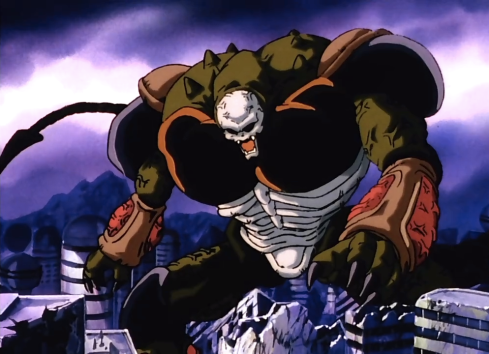
As Hirudegarn’s lower half reappears, Tapion attempts to sleep inside the chamber Bulma was able to create (very quickly). Nightmares overwhelm him though which result in him accidentally destroyed the chamber. Goku and the others arrive the next morning and are checking out the damage, when Tapion reappears with a request. He wants them to kill him, hoping that by doing so the half of Hirudegarn inside of him will die too. The others are understandably reluctant to do so, but before Tapion can convince him Hirudegarn and Hoi show up. Tapion is unable to play the melody that controls Hirudegarn in time and the presence of the monster’s lower half causes the release of the upper half from Tapion’s body. Now fully formed, Hirudegarn is a true monstrosity.

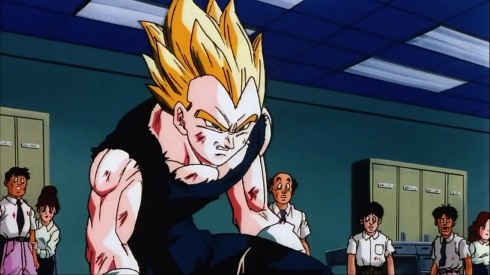
vegeta vs hiru

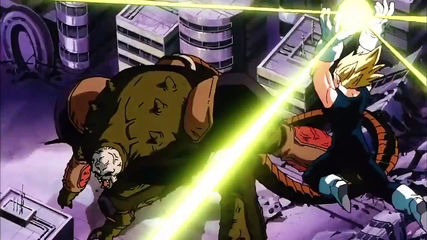
Vegeta gettin in his one shot.

Even though he’s massive and not particularly fast, Goku, Goten, and Gohan are unable to land any substantial blows on Hirudegarn due to his ability to teleport. The battle all but ruins Bulma’s home as the battle spills into the city. When it looks like the monster is about to squeeze the life out of Gohan, Vegeta finally makes his first appearance of the film to save the day. He’s a little irritated at losing his house to the monster and lets him know, but he’s unable to really do anything about it. Hirudegarn knocks him into an office building and unleashes a massive blast in Vegeta’s direction. Vegeta is forced to expend all of his energy corralling the blast with a barrier to spare the inhabitants of the building. Exhausted, he collapses, and as quickly as he entered the picture he has now departed.

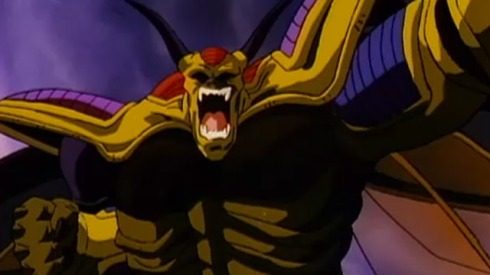
bug hirudegarn

Meet the new Hirudegarn, better than the old?

Seeing the others having no success against Hirudegarn, Trunks and Goten decide to fuse and unleash Super Saiyan 3 Gotenks. The cocky fused persona of the two Saiyan children has some nifty attacks, and for a moment it looks like Hirudegarn has been defeated. Since this is a Dragon Ball Z movie though, we know the villain most likely still has a trump card to play. His body hardens and cracks and soon the outer carapace shatters. Like a butterfly emerging from a cocoon, a new version of Hirudegarn emerges. Only unlike a butterfly, this thing is quite ugly and terrifying to look at (though arguably not as scary as the first form with its skull-like head). He thrashes Gotenks, causing the being to split back into Trunks and Goten. Gohan and Videl are soon taken out, and it comes down to Goku.

DBZ Wrath of the Dragon Tapion

Don’t ask a kid to kill you, man, just do it yourself.

As even Goku finds it hard to keep up with Hirudegarn, Tapion emerges. He plays his ocarina and the melody causes Hirudegarn to once more become sealed inside of him. With the beast now gone, Tapion turns to Trunks and begs him to use his magic sword to kill him. Trunks is taken aback by the request and struggles to come to terms with it. Tapion pleads with him, and when it starts to look like Trunks just might do it, Hirudegarn breaks free. Worse, the ocarina is destroyed in the process and Hoi emerges once again. He taunts Tapion for his failure to contain the beast, but his victory is short-lived as Hirudegarn crushes him thus at least destroying the last of the evil wizards who helped create him.

dragon fist

That’s one way to kill a giant bug.

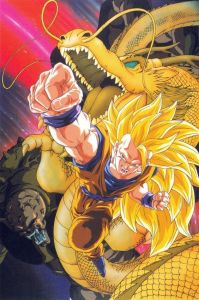
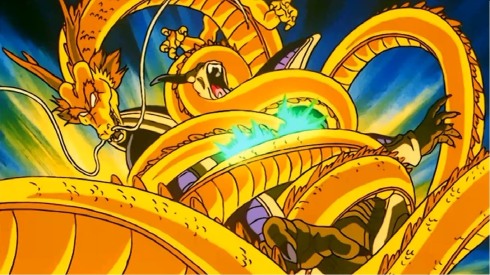
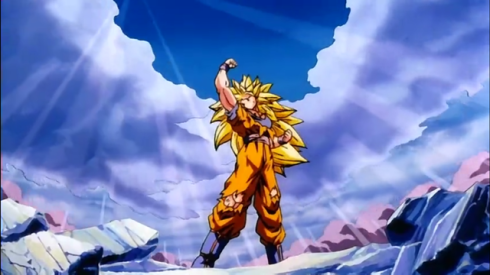
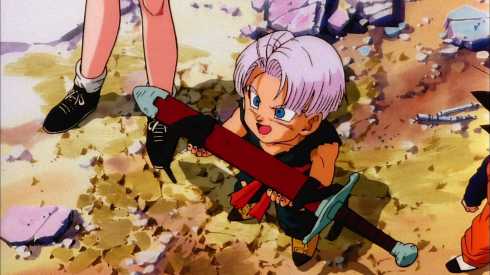
With the ocarina now gone, the only thing left is to confront Hirudegarn with raw power. Goku powers up to his Super Saiyan 3 form and begins to battle it out with the monster. Trunks, not content to sit on the sidelines, charges in with Tapion’s blade and manages to slice off the tail of Hirudegarn. Goku orders Trunks to stand down as he prepares to unleash his latest technique. With an uppercut pose and a mighty yell, Goku unleashes his Super Dragon Fist which causes a golden Shenron to form around him. The dragon unloads on Hirudegarn wrapping around him, constricting him and ultimately exploding as Goku is left in a dramatic “shoryuken” pose.

goku pose

Nothing like a good victory pose.

With the monster finally defeated, all that’s left is for Tapion to go home. An unspecified amount of time passes, and Tapion is set to leave in Bulma’s time machine. It looks identical to the one Future Trunks used in the main series, and it’s assumed I suppose that Tapion is going to search for his little brother. Before he can leave though, he has to say goodbye to his surrogate little brother, Trunks. The young Saiyan is sad to see the hero leave, but he’s given Tapion’s sword as a parting gift. As the credits role, clips and images of Trunks, including Future Trunks armed with a similar sword, are shown with the obvious implication being this is how Trunks came to be a swordsman.

tapion goodbye

Time to say good bye. What’s that wink imply, Bulma?

Wrath of the Dragon Fist is an interesting Dragon Ball Z movie by itself, but also kind of an odd way to say good-bye to the series. With it being the last, it’s somewhat surprising that there isn’t more emphasis on getting the whole gang together, but aside from a cook-out scene early in the film, most of the regulars are no-shows. The defeat of Hirudegarn is a neat visual spectacle, but also really weird since we’ve never seen Goku do anything even remotely like that before. It’s kind of equally weird that it’s Goku at all who takes down the monster since he plays such a minor role in the film. It would have been better to just go all-in on the Trunks theme and have him take out Hirudegarn, but at least he got to cut off the beast’s tail. I guess they just wanted to give Goku a win in his Super Saiyan 3 form since that power-up has so few of them.

trunks with sword

Trunks gets a pretty swell parting gift. That thing is as big as him.

Rather than focus on a big ensemble story or another Goku piece, Toei and screen-writer Takao Koyama (who authored every one of these movies) decided to do a deep dive into Trunks and try and unite this version of the character with the Future Trunks we had seen earlier in the Androids Saga. It’s a solid premise for a movie and it’s nice to see a film choose to focus on exploring a character as opposed to just creating some big, bad, villain of the week. Trunks and his desire to form a bond with someone is easy to understand. He’s an only child and probably home-schooled. He’s had an absentee father for most of his childhood, and his only friend is a country boy named Goten who comes from a family in which he’s the little brother to Gohan. Trunks just wants a brother of his own, and maybe since Vegeta was such a crummy dad, he also seeks a role model too. His scenes with Tapion are cute, and it’s heart-breaking to see Trunks’ reaction to Tapion requesting he kill him. Thankfully, he didn’t have to go through with it as that would have been one Hell of a damaging episode for the poor kid.

tapion flute

Tapion proves to be a rather fine addition to the ensemble.

As far as our newcomer is concerned, Tapion is handled quite well. He has a simple, easy to understand back story that makes him a sympathetic figure. He projects a mysterious aura and also possesses a unique look for the series. Some probably look at an elf-like, sword wielding, ocarina playing, hero and think Link from The Legend of Zelda, but this movie predates Ocarina of Time and Tapion doesn’t look that close to the Link that existed prior to that. Since they do look so similar it’s possible they share a common source of inspiration, but what that may be I’m not certain. Hoi and his evil wizards (who are all dead) is kind of lame. He’s a blatantly obvious villain so it’s kind of frustrating to see him scheme his way to releasing Tapion, but the movie would be rather boring if he wasn’t successful. The only motivation he’s given is that he and the other wizards are genocidal monsters that want to destroy anything that isn’t them. Hirudegarn himself is just a mindless monster. Even though he’s as one-dimensional as it gets, he still manages to be interesting since we haven’t seen Goku and company take on such a massive enemy in a long time. It’s kind of like “What if Goku took on Godzilla?”

vegeta wrath of dragon

There apparently wasn’t enough room for Vegeta in this one.

My one major piece of lingering criticism of Wrath of the Dragon rests with its use of Vegeta. Perhaps because Fusion Reborn spent so much time with he and Goku exploring their relationship and rivalry, Koyama decided to avoid the Saiyan Prince here. I would have liked to see more of him though since so much of the movie takes place at his house. It’s just weird for him to not be seen until he makes his dramatic entrance. This was also the first chance to pair up Trunks and Vegeta in a movie, and since this follows Vegeta’s change of heart following the events of the Buu Saga, it would have been interesting to see how their relationship has changed. Come Dragon Ball Super, Vegeta is basically back to his prickly self, but it would have been interesting to juxtapose he and Tapion. Would it have made the film better if we saw a jealous Vegeta who feels threatened by Tapion’s presence? Perhaps, and perhaps not. It just feels like the movie had room to do something with Vegeta, and instead it reduced him to a cameo.

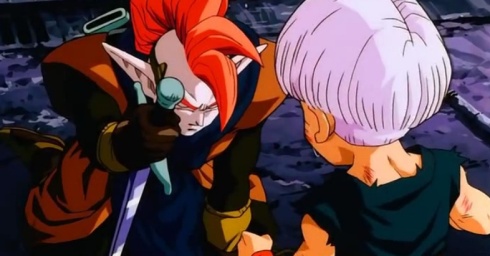
kid trunks and tapion

There’s a sweetness to be found in this one seldom seen in DBZ movies.

Aside from that piece of criticism, I really have nothing else to say about the movie that would be considered bad. Wrath of the Dragon is very different for a Dragon Ball Z movie. It’s a little light on action and humor and instead more procedural. It relishes in the quiet moments shared mostly between Trunks and Tapion, but also some other small scenes as well. Its emphasis on story and character make it a more rewarding and less disposable experience. We all like our flash and pizazz when it comes to Dragon Ball Z, but it’s nice to see one of the movies treat these characters more as actual characters as opposed to characters from a fighting video game. It’s because of that I feel Wrath of the Dragon is one of the best movies to come from Dragon Ball Z. It can still impress you with its excellent visuals and make you laugh at a few moments, and it may even make you tear-up a little. It’s so interesting from a narrative standpoint that I didn’t even expound on how wonderful the film looks. This is one of the best looking things the series has ever produced. Dragon Ball Z picked a great way to bow out, and it’s nice to know over 20 years later that it wouldn’t be the end for these characters as we knew them.


Batman: The Animated Series – “The Man Who Killed Batman”

man who killed batmanEpisode Number:  51

Original Air Date:  February 1, 1993

Directed by:  Bruce Timm

Written by:  Paul Dini

First Appearance(s):  Sid The Squid


It’s always rare to see any form of the word “death” appear in children’s programming. Kill, die, murder, are all words characters will often dance around. Director Bruce Timm and writer for this episode Paul Dini are obviously well aware of that, which is probably why the word “killed” in this episode’s title card appears in bold. Batman is a show that has to appease the executives at Fox, but it’s also a show that will push the envelope in some areas. Normally we equate that notion with violence, though Batman isn’t any more violent than most action cartoons. It usually tried to push things just by taking a more serious, sometimes melodrama, approach to its story-telling. The series has used the word “god” in phrases like “My God,” which is something hardly any cartoons got away with. As such, it’s not surprising the show would try an episode like this one. An episode that hinges on the premise that the show’s hero and main character has been killed. It’s an episode of Batman without much Batman, but it works and it’s one of the more rewarding episodes in the show’s run.

The episode opens with a shadowy, but unimposing, figure running through a rainy night in Gotham. He’s clad in an oversized trench coat and hat, a fairly typical looking gangster aside from the fact that he’s clearly on the short side. He arrives at his destination in a panic and asks to see Rupert Thorne (John Vernon). He’s led into Throne’s private chambers where the rotund crime boss is pouring himself a hot beverage (no booze in a kid’s show) and gestures to his guest to have a seat. We now see the man in full light, and he’s even less impressive than before. Sidney Debris (Matt Frewer) is a short, balding, man with glasses who’s clearly intimidated by being in Thorne’s presence, but he’s also really unnerved and likely needs to be where he’s at. Thorne reveals through talking with Sidney that Sidney is the man who killed Batman and he’s very interested in hearing how it all went down. Sidney settles in to relay his story.

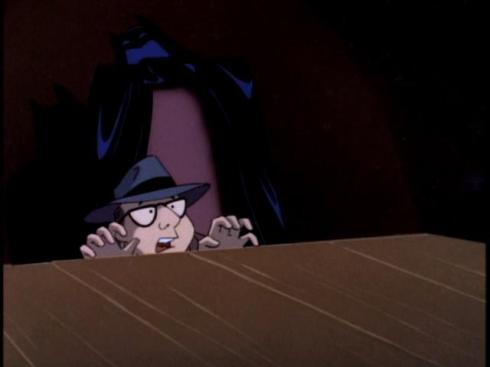
MWKB_22_-_Scared_Sidney

Sidney is not exactly what you would expect from the man who killed Batman.

Sidney is a would-be criminal. A little man who wants to be something big. He’s been trying to break into the big time, but has had his struggles. He hears word on the street about a big drug run about to go down and is able to get in on the action. We see in the flashback that the other criminals on the run don’t see much use in having Sidney around, but the boss Eddie G. (Robert Picardo) says he’ll make for good “bat bait.” Sidney is given a nickname, Sid The Squid, and made the lookout where he childishly fantasizes about being a tough guy, until the Batman shows up that is. Batman, recognizing a squealer when he sees one, sets right into interrogating Sidney. A humorous exchange occurs where a bumbling and clumsy Sidney causes injury to Batman before falling off the building. Batman tries to save him, but Sidney squirms and panics. It’s a great exchange because Kevin Conroy does an excellent job of showing how irritated Batman is to be dealing with such a loser like Sidney. In the struggle, Sidney pulls on Batman’s cape causing him to tumble over. A brick had dislodged earlier and fallen onto a propane tank at ground level causing a leak. When Batman goes over, the tank goes “ka-boom!”

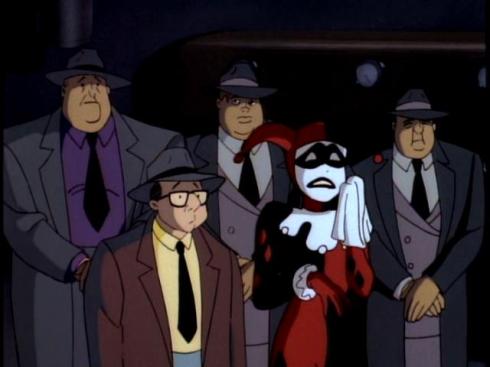
The other gangsters saw the commotion from the ground where it looked like Sid was going toe to toe with the Batman. When the tank explodes they come running over to see what happened. A distraught Sidney climbs down from the rooftop holding the Batman’s cape and cowl. He keeps apologizing to no one in particular while the other crooks look on in disbelief. It’s Eddie who is the first to point out that Sid The Squid took out Batman, though he hardly can believe it himself even though he was there to see it.

joker throne

You just know that Joker needs to get in on this, and he brought a new chair!

They head to a nearby bar to celebrate the ultimate demise of the biggest thorn in their collective side. Sidney has what he wants; recognition, respect, and even a little fear. He’s feeling pretty good about himself, but when other patrons hear that the man who took down Batman is in their midst some try to challenge Sid to prove that they’re tougher than the guy who killed Batman. Sidney, being a meek individual, is happy to cede the role of Gotham’s toughest to the much bigger men there that night, but he’s apparently inspired a few loyalists who come to his aid and a fight breaks out. There’s a great shot during the fight of a bored bartender eating peanuts while looking on indicating this is a fairly routine occurrence in this establishment. Eventually the cops arrive to break things up and everyone is taken downtown and put in a holding cell.

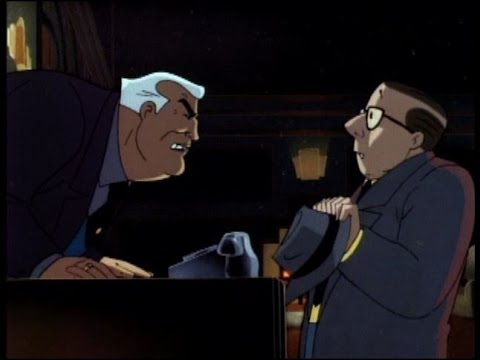
While sitting there waiting out the night, Officer Montoya (Ingrid Oliu) is approached by Detective Bullock (Robert Costanzo) with some bad news. It would seem the underworld is alive with rumors of Batman’s demise, and a pretty dejected looking Bullock informs Montoya that Batman is dead. He also relays that Gordon is taking the news hard, and asks Montoya to go see him. When she’s gone he reverts into his more traditional tough guy persona as he starts demanding answers of the rabble he’s got locked up. Before anyone has a chance to even consider speaking up about Sid The Squid being there with them, a Ms. Harleen Quinzel walks in demanding the release of Mr. Debris. Clad in a red suit with blond hair, Bullock asks her if he’s seen her somewhere before. She indicates she served him a subpoena before, a small subpoena. Did we just get a dick joke in Batman?

harley crying

Joker isn’t the only one upset about Batman’s apparent demise.

Ms. Quinzel and Sid leave the jail and hop into a limo where the lawyer’s “real” persona is revealed – Harley Quinn (Arleen Sorkin). It would seem the exploits of Sid The Squid have aroused the curiosity of The Joker who would very much like to meet the man who killed Batman. She takes him to a theater that is currently serving as The Joker’s hideout and the two come face to face. The Joker vacillates from being delighted at meeting the man who took down Batman and from seeming rather angry with Sid. Since no one has found Batman’s body, Joker decides they need to run a little test to see if he really is dead. Joker decides to pull a heist, and when one henchman (Maurice LaMarche) questions him he turns his hyenas loose on the fool. Offscreen, the dogs lay into him while Harley mentions she’ll get the mop. It’s an exchange that’s both amusing and horrifying, while the henchman, Murph, does pop his head onto the screen briefly to give it a slightly more slapstick tone.

Joker and his gang head to a jewelry store. Almost right away we see the goon Joker had mauled earlier is in fact still alive, though not without a few blemishes. Joker sets Harley loose on the goods which only succeeds in drawing the attention of Gotham’s finest. Despondent over the lack of Batman, Joker seems to be entering into a violent form of depression. He strikes Harley when she questions him after he told her to return the jewelry and monologues his existence without Batman. Crime has lost its punchline.

joker tribute

A fitting tribute.

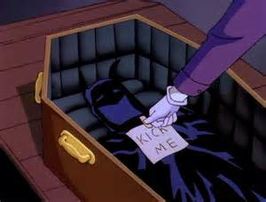
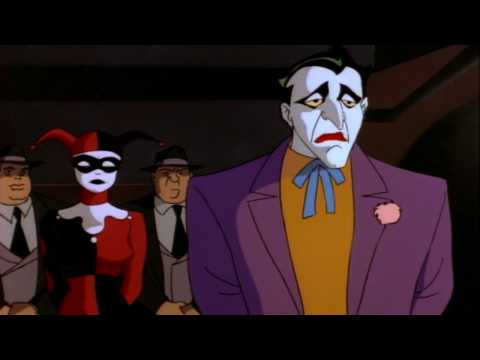
Joker decides they need to have a funeral for Batman, and what better place than the Ace Chemical Plant? This Joker is, after all, canonically related to The Joker from Batman 1989 so this is his recognized birthplace as The Joker. They place a pine box on a conveyor belt with Batman’s cape and cowl inside. At the end of the belt is a vat of acid which will consume the coffin. Joker decides to say a few words, and in eulogizing Batman he makes his utter contempt for Sidney crystal clear. He hates him for killing Batman, recognizing he’s just some schmuck who got lucky. He orders his men to stuff Sidney in the coffin with Batman’s belongings and seals it shut. As the coffin is carried along on the conveyor belt, Harley plays “Amazing Grace” on a kazoo while Sidney begs, and pleads for forgiveness and mercy from inside the coffin. Joker sheds a few tears, but as the coffin vanishes into the acid and Harley finishes her song, he snaps out of it, “Well, that was fun! Who’s for Chinese?”

dejected joker

A solemn Joker.

Inside the coffin, the acid is eating through and Sidney is in a real panic. There’s literally nothing he can do though. He pounds on the lid, but even if he broke through the acid would just come rushing in though that might be the better way to go than to have it slowly seep in. As he loses hope a funny thing happens. The coffin comes to a rest and the lid is practically blown off. He’s outside the plant at the edge of a river. Sidney deduces the coffin must have been sucked into a drain that lead out here before the acid could destroy the coffin. It’s from there that Sidney decided he needed to get out of Gotham and only Thorne could help him do that.

We’re back in the present, and Thorne has had a rather drastic change in demeanor. Previously he seemed to be humoring Sidney, genuinely interested in his story. Now he thinks Sidney is trying to pull a fast one on him and take over his drug operation. Theorizing that no one could possibly be as stupid or as lucky as Sid claims to be, he convinces himself that Sidney is here for him and pulls a gun on old Sid. Before he can shoot, gunfire is heard from outside the office. The tell-tale sounds of villains getting beat up by a familiar foe waft into the room before the door is kicked down. Batman is alive, and he takes rare delight is knocking Thorne around. The camera is careful to never let us see Batman actually punch Thorne, but each shot implies it and then we get to see the aftermath – a punch drunk Thorne.

MWKB_67_-_Sid_and_Thorne

It seems no one is ever happy with Sid for long, despite his reputation.

With Thorne unconscious, Sidney is finally able to apologize to Batman for what happened and also thank him for getting him out of this mess. Not only did Batman take out Thorne for him, but he’s also the one who sprung him from Joker’s death trap earlier. Turns out, being the man who killed Batman just isn’t for Sid, and he’s happy to go back to his old life. Of course, Batman can’t let him do that. He was an accessory to a drug ring and he owes a debt to society as a result, but Batman seems to think Sidney won’t mind where he’s going. The episode ends with Sidney being led through prison by a guard. Other prisoners cheer him on from their cells for to them he is the man who almost killed Batman. Finally, Sidney is allowed to feel like a big shot.

“The Man Who Killed Batman” is a playfully dark episode of Batman:  The Animated Series. It starts off as a tale about a guy named Sid The Squid, but it becomes a tale about the relationship of Batman and The Joker and how The Joker views his relationship with the caped crusader. Those areas are the episode’s true strengths as Paul Dini is a great Joker writer. Some of Joker’s best lines come from this episode and I love how psychotic and ruthless he’s allowed to be. He’s very violent towards his lackeys, in particular Murph and Harley. There’s a sequence where he grabs Harley by the front of her uniform and she makes a choking sound. It makes me wonder if originally he was supposed to grab her neck but they had to tone it down a bit. Either way, he comes across like a dangerous lunatic which is how The Joker should be written. His eulogy for Batman is delightfully insane and I also appreciate how he snaps back into place when the deed is seemingly done implying that, had Batman truly been dead, Joker likely would have just found someone new to terrorize.

big shot sid

A big shot at last!

The framing device of having Sidney relay the events of the night also adds a little mystery and intrigue to the episode. I doubt very much anyone watching this truly thought Batman was dead, but telling the tale in this way does inject a touch of suspense into the whole thing. This is the only episode that will feature Sid The Squid. While it might have been interesting to see what became of him, he basically served his purpose.

Sunrise worked on the production of this episode. Sunrise is an incredibly popular producer of anime in Japan, and this episode is their last contribution to Batman. Their episodes have been visually striking, and this one is no exception. The only negative I can give them is some of the actual animation comes off rather stiff. In particular, Joker has some odd movements and they had some trouble with his mouth flaps which is understandable since his grinning yellow teeth are always exposed. Because of their notoriety, they likely weren’t cheap which is probably why they didn’t have more contributions to the series and not because of a lack of quality.

“The Man Who Killed Batman” is a great episode for the series as we head into the home stretch for the first season. It has more laughs than the typical episode, but also balances them out with a sinister version of The Joker. Through Sid The Squid, we get a nice glimpse of the relationship of Batman and The Joker and we even get a little more insight into Joker’s relationship with Harley Quinn. Up until now, she’s strictly been a sidekick and hasn’t been portrayed as a romantic partner, but we’re getting there. We even got to see Bullock get a little teary over Batman adding a nice layer to their relationship as well. And considering who wrote and directed this one, I suppose none of this should be a surprise. Whenevr Dini and Timm team-up on an episode, the results are usually something special.


Danzig – Lyrics of the Left Hand Vol. II

danziglyricsv2Consider this a book-end to the coverage of Danzig’s 30th anniversary from a couple of weeks back. During my write-up for that, a celebration of all of Danzig’s original songs, I made a comment about one entry in particular (“Halo Goddess Bone”) where I mentioned how it would be neat to know just what Glenn is saying. I openly hoped it would be included on the then upcoming Hidden Lyrics of the Left Hand Volume II, which was slated for release in August. Well, that volume is now available and wouldn’t you know, “Halo Goddess Bone” was indeed included.

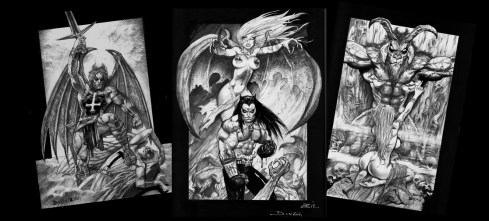
Lyrics of the Left Hand Vol. II is the follow-up to Hidden Lyrics of the Left Hand, which arrived almost 10 years ago. It’s a Verotik issue, Glenn Danzig’s publishing company that typically specializes in erotic-horror type comics, and both are illustrated by Simon Bisley, who has been an artist in the comic’s industry for decades and has also made numerous contributions to Danzig releases over the years, most famously the cover for Thrall: Demonsweatlive. The impetus for the original release was simply to get a bunch of lyrics into the hands of the fans. During Danzig’s career with The Misfits, his releases seldom contained lyrics and the actual content of those songs has been debated amongst fans for years. Samhain only produced lyrics for its first and third releases, and even the band Danzig omitted lyrics from later releases as well as anything that was limited to an EP or single. 2007’s The Lost Tracks of Danzig only added to the amount of songs without lyrics, so there was plenty of material to fill a comic, if so desired. Danzig’s approach ended up being a bit less ambitious. He handpicked songs from all three bands and then had Bisley do a black and white illustration for each song. Basically, you open the soft-bound book and you have an image on the left and the words on the right.

Hidden Lyrics of the Left Hand may have been smaller in scope than fans wanted, but it was still appreciated. It wasn’t printed in huge numbers, nor was it so limited that fans had a hard time getting it and Verotik still prints small batches for release at concerts and to sell through its eBay store. The presiding feeling on that initial release was a thirst for more. Fans tend to want to know everything, and so long as there are no official lyrics for even a single song they’ll keep asking for it. A second volume seemed like a no-brainer, but it still took several years to happen, and it underwent a pretty significant change as well.

SimonBisley

Artist Simon Bisley has been a frequent collaborator with Danzig for decades.

I think I pre-ordered the new book back in April or May. At the time, it was titled Hidden Lyrics of the Left Hand Vol. II. I purchased it through an online comic book store that ended up pre-selling out and hasn’t bothered to restock the item or take further orders. By the time it was released, the title had changed to simply Lyrics of the Left Hand Vol. II, and that’s because this time out the book contains the lyrics for songs that were previously unavailable but also some that were. It’s a bit disappointing, as I don’t need another source for the lyrics to “Killer Wolf,” especially when there are so many songs still outstanding. The counter-argument to that is you’re getting a piece of art to go with those lyrics, but no disrespect to the work of Simon Bisley, I’m primarily interested in this for the lyrics. The full list of songs included is below:

  • Last Ride
  • Black Laden Crown
  • Devil on Hwy 9
  • But a Nightmare
  • Skull Forrest
  • 1,000 Devils Reign
  • i Luciferi
  • Black Mass
  • Halo Goddess Bone
  • Killer Wolf
  • Her Black Wings
  • Am I Demon
  • November’s Fire
  • I Am Misery
  • Archangel
  • Devilock
  • Bloodfeast
  • Braineaters
  • Halloween
  • London Dungeon
  • Who Killed Marilyn?
  • Come Back

The book begins with a little foreword by Glenn Danzig that summarizes how the book came to be. The text is gray on black and kind of fuzzy, but the font size is large enough that it’s not too hard to read. For the actual lyrics, the font is in white which is a much better choice. As for the lyrics themselves, it’s not surprising to see a lot of later day Danzig material since those booklets either skipped some songs or excluded them entirely (in the case of the most recent album). I noticed only a typo or two. The cover is cardstock and glossy and the black pages do have that tendency to acquire fingerprints, but all in all, it looks quite nice.

verotik samples

Verotik released a few promotional images ahead of the book’s release.

As for the actual illustrations, your enjoyment of them will likely vary from song to song. A lot are a duplicative of each other as several contain one, or all, of the following: breasts, demons, a Danzig caricature, skulls. The illustration for “Last Ride” is just the cover art for the single, and “November’s Fire” is basically a reinterpretation of the cover art to Samhain III. My least favorite might be “i Luciferi” which is just a Glenn caricature with a flaming hand – it’s a bit dull. “Halo Goddess Bone” is also just a feminine skeleton that also happens to have huge breasts, despite having no flesh anywhere else, which looks more silly than sexy. All of the illustrations are done in black and white, and some have more of a sketch quality than others. I personally like that look, but if you’re into full-color illustrations then you might be let down.

On the other end of the spectrum, there are some that are pretty neat and it’s a shame they couldn’t be leveraged for a single release or something. “Devil on Hwy 9” is kind of funny in that it’s a demonic character just giving the finger to a cop. There’s a subtle, really nice, horizon in background of the image that almost gets lost. It’s the rare humorous image. The picture for “Halloween” is almost wickedly cute. It features a Bisley version of the Jack-o-lantern from the single cover with a burning, hanging, body in the foreground. Three little trick-or-treaters are looking on and one is a Misfits ghost, a Samhain ghost, and a little Danzig demon. “I Am Misery” doesn’t really fit with my interpretation of the lyrics at all, but the image is still pretty cool. It’s a girl (Death? Misery?) spreading open a cloak and inside are the faces of various killers and tyrants from history. “Who Killed Marilyn?” includes a depiction of the famous crime scene with the Kennedy brothers looking on. I don’t want to run through too many of them since the surprise is part of the enjoyment, but those ones stuck out the most. “1,000 Devils Reign” was also pretty damn cool and is probably the busiest of the Bisley illustrations.

With a release like this, you probably know if you’re going to get it or not at the moment you find out it exists. For hardcore fans of Glenn Danzig’s music, it’s practically essential. The MSRP is $24.95, though I found it for sale for $19.99. Getting it is a bit of challenge as I don’t know of many places selling it outside of Verotik’s eBay store. Their copies seem to go up for sale every other day and usually sell out. They’ve mostly been selling signed copies as well, which is cool if you want Danzig’s signature on your book, but less cool if you don’t want to pay an extra $15 for such a thing. I’m not sure if they put up unsigned copies for MSRP. Some of their proceeds do go to charity, so that’s pretty cool. Comparing this release with the first, which I never did a write-up on, I would say it’s of the same quality. I’m not sure which has the better illustrations, but they’re comparable. This one is less exciting since several of the songs have had their lyrics released in the past, but at least there are a few here that I personally have wanted lyrics to (in particular; “Halo…”, “Devilock,” and “I Am Misery”). If you’re a fan and want these lyrics, get it. If you never cared about the lyrics to the songs anyway, then I’m surprised you read this far.


Dragon Ball Z: Fusion Reborn

7e1c12908c1fd2ee3b2f5b99932706c8Japanese Title:  Fusion Reborn!! Goku and Vegeta

Original Release Date:  March 14, 1995

English Release Date:  March 17, 2006

Directed by:  Shigeyasu Yamauchi

Screenplay by:  Takao Koyama

Running Time:  51 minutes

The penultimate film in the original run of Dragon Ball Z movies is thus far the one with the closest translated title with the actual English title. Fusion Reborn is a pretty wild one that happily embraces the silliness of the Majin Buu Saga of DBZ. Almost the entire film is set in Hell as a being of supreme evil has cast a spell over Other World causing the barrier between the living world and the dead to cease to be. It’s timing in the DBZ universe is even muddier than usual, with both Goku and Vegeta being dead, but with Gohan yet to achieve his “mystic” form. It’s also the first film since Bojack Unbound to feature Vegeta and it’s the first to not feature Krillin. It’s also the only one of the 13 films to not receive a completely uncut edition in the US, but we’ll explain why later on.

oTu1KUa

This dude is about to have an unfortunate accident.

The film starts in Other World with Goku (Sean Schemmel) and Pikkon (Kyle Hebert, utilizing a voice basically identical to that of his narrator role, which is distracting) battling in the latest edition of the Other World Tournament. The Kais are all looking on and rooting for their respective fighters with seemingly everyone rooting against King Kai and his fighter, Goku. At the Earth’s check-in station, something major is about to go down. Saike Demon (Jim Frond, with the character credited as simply Young Rocker in the Funimation dub) is in charge of making sure all of the souls inbound for Hell are purged of their negative energy, but he’s too busy rocking out with his head stuck between some headphones. He’s admonished by another worker after King Yemma (Chris Rager) complains about being able to hear the music from his desk. He’s allowed to continue to listen to his music after his superior seems to take pity on the lad, but he forgets to swap out the tank that stores the evil energy and it overflows. All of Other World begins to tremble, and the purple goo takes over the kid transforming him into Janemba.

Goku_et_Paikuhan

Goku is way too excited about meeting Janemba.

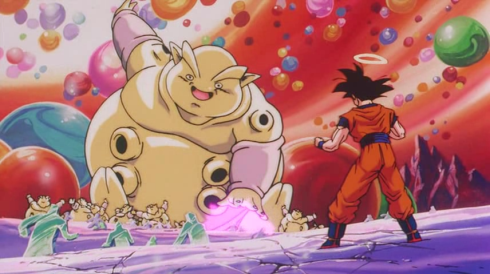
Janemba (Foronda) is a colossal monster that looks like a cross between Majin Buu and the baby from Dinosaurs. He’s infant-like, apparently only capable of saying his own name, and his presence causes the entire check-in station to be encased in an amber like substance. Weird, gigantic, jelly beans float all around him and dot the background. With the check-in station frozen, King Yemma informs us that the barrier between the living world and Other World is down and spirits can freely move between the two. The dead who were sent to Hell and denied their bodies, are now fully restored and able to reek havoc once again.

dbzm12-028

Goku battles Fat Janemba in Hell amidst a backdrop of candy and jelly beans.

The Grand Kai (Evan Jones) stops the match between Goku and Pikkon and sends the two to see what’s going on at the Earth check-in station. The two happily head there and encounter Janemba. Goku is extremely eager to take on the baby-like monster and is able to convince Pikkon to stay behind and try to break through the barrier holding King Yemma and the check-in station. Pikkon, reluctantly agrees while Goku leads Janemba down to Hell where they can fight freely.

Fusionreborn14

Look who’s back.

On Earth, Videl (Kara Edwards) is dining with Gohan (Kyle Hebert) and his family at their house when she receives a call about some weird occurrences back in the city. The dead have risen and zombies are now roaming the streets of Satan City. Gohan puts on his Great Saiyaman costume and the two head out to see what’s going on. There they’re confronted by hordes of zombies and a dictator baring a strong resemblance to a real world villain is roaming the streets with an army of Panzers. Of more concern to Gohan is the presence of Frieza (Linda Young) who would love to get revenge on Goku by killing his son. Gohan is more than happy to dispatch the former tyrant with a single blow, heightening in a comical fashion how much has changed since we last saw Frieza. Legions of other fallen enemies fill the sky though, and it’s a lot of fun to pause these scenes to see who you can spot.

main-qimg-fc376216411fdd768016395490544e9e

Admit it, you’ve always wanted to see a Super Saiyan kick the crap out of Hitler.

In Hell, Janemba is proving to be a tricky foe capable of even reflecting Goku’s attacks back at him. He has no choice but to debut his Super Saiyan 3 transformation in the film-verse, complete with extended transformation scene accentuated with some mid-90s CG effects. In this state, Goku is more than powerful enough to pulverize Janemba, but just when he thinks he has the monster defeated, he does what most enemies do – he transforms! Gone is Janemba’s (now voiced by Kent Williams) bulbous exterior and in its place is a sleek, demonic form capable of so much more. He can still reflect some attacks, while also demonstrating an ability to break-apart like a game of Tetris and re-form in an instant. Goku does a good job of hanging with him, but his strange fighting style packs enough surprises to knock him off his guard. He then forms a vicious looking sword out of a mallet just hanging around Hell, and utilizes that to great effect knocking Goku into a strange conical pond of blood and out of his Super Saiyan 3 form.

Dragon-Ball-Z-Fusion-Reborn

Super Saiyan 3 Goku gets to work.

On Earth, Goten (Kara Edwards) and Trunks (Laura Bailey) are having a pretty good time taking out the dead while even Mr. Satan (Chris Rager) is proving useful in dispatching the many zombies roaming about. Goten and Trunks soon find themselves in the crosshairs of The Dictator (Christopher Bevins), who even with an army of tanks, poses no real danger to them. They go super anyways just for the fun of it, and The Dictator remarks how he should be impressed with the blonde haired, blue-eyed (even though they’re green), super warriors.

SS Trunks and Goten

“Toon” Trunks and Goten power-up to take on The Dictator!

As Goku is getting beat down, an old friend shows up to give him a hand. Vegeta (Christopher Sabat), having regained his body thanks to the weird goings-on, is eager to engage Janemba since his existence since death pretty much sucks (his words, not mine). Goku warns him that Janemba is too strong, but Vegeta doesn’t care. He gets taken care of pretty quickly, and Janemba tosses him into this vicious looking mountain made up entirely of giant spiked balls. Goku is able to prevent Vegeta from getting impaled, and the two share a quiet moment amidst their surroundings. Vegeta expresses frustration at how strong Goku has become, while he has remained the same. Goku kind of tries to downplay everything, but Vegeta sees right through him. Goku then proposes that the only shot they have at defeating their enemy is to fuse. Vegeta is staunchly opposed to the idea and remarks he’d rather be dead than fuse with Goku, which just prompts Goku to point out that he is in fact dead already.

dragon_ball_z_movie_collection6_fusion_reborn_screenshot1

The transformed Janemba is a lot scarier than that pudgy thing.

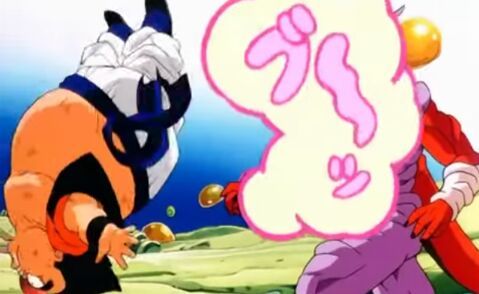
Vegeta is eventually forced to concede that it’s their only option after a lot of back and forth. His admission reads like defeat, and the two perform the fusion dance only for the results to be not desirable. Veku is the result of their fusion, a monstrously bulbous individual whose only strength appears to reside in his powerful flatulence. Veku is forced to dance around Janemba and hope to survive the 30 minute duration of fusion without getting killed. He never dubs himself Veku, that’s the Kais watching via a television set as they provide some commentary on our fight. Eventually the transformation wares off, and Vegeta and Goku are free to attempt the technique again. Only they would be if not for the fact that Janemba has caught on and is not exactly feeling generous. Pikkon shows up though, after having discovered the barrier Janemba created is weak to insults (really), and is able to utilize the same method on Janemba giving the Saiyans time to perform the fusion dance one more time.

f6fe86afb2ad828ae6c507f12e130c1faf5b5191_hq

Veku’s only offense is his potent flatulence. He also has a Rabbit Feet technique, which is just what he calls it when he runs away.

The resulting fusion is Gogeta, a supremely powerful being most likely rivaled only by Vegito from the main series. Sensing the transformation of their fathers prompts Goten and Trunks to do the same. Again, they didn’t have to, but Gotenks wasn’t going to miss out on being featured on the big screen. He unleashes his Kamikaze Ghost Attack on the imposter Hitler and the results are what you would expect.

MV5BNDUyY2FkNTktYWYyMS00YjQ3LWFiZjQtMTYxNTNmNjFiM2RkXkEyXkFqcGdeQXVyMzYzMTAxOTc@._V1_

Gogeta!

In Hell, Janemba is no match for Gogeta and their confrontation is surprisingly brief. Rather than utilize some mash-up of Goku and Vegeta’s attacks (as he will in Dragon Ball GT), Gogeta does this weird attack that creates an energy ball that kind of looks like television static mixed with a rainbow. It’s not at all impressive, but it is effective. With Janemba gone things can return to normal. The fusion wares off and Goku and Vegeta share a surprisingly tender moment before Vegeta’s body fades away. The films ends with the living congratulating themselves on a job well done. Goten and Trunks are able to rib Gohan and Videl so we can get our usual comedic ending.

Gotenks_in_Fusion_Reborn

Not wanting to be outdone, Gotenks decides to show himself.

Fusion Reborn is one of the better received Dragon Ball Z films, and for a lot of fans it’s the best. It’s easy to see how that can be since the film is able to deftly toe the line between being a comedy and taking its stakes seriously. The setup is admittedly bonkers even by Dragon Ball Z standards, but for the movies it’s also a welcomed change from the usual settings. The movie gets a lot of attention for the comedy bits involving the dead returning to life, but its real strength is in exploring the relationship of Goku and Vegeta. The proud Saiyan Prince still gets in his stale line of wanting to be the one to finish off Kakarot, but outside of that we’re mostly shown a vulnerable Vegeta. We saw a glimpse of this character in Bojack Unbound, but that was without Goku to interact with. I enjoyed how Goku went from being kind of a ridiculous caricature of himself to a very serious one once confronted by Vegeta. Their farewell is sweet, and it’s the type of thing I think Akira Toriyama deliberately avoids with Vegeta, not wanting to make him get too soft and show too much emotion, but the folks at Toei may not possess such hang-ups.

tumblr_n2lty0oQSP1s0soqwo1_500

The movie leans heavy into the Goku/Vegeta dynamic.

It’s not all a sappy love-fest though as much of the movie leans heavy into comedy. It’s kind of exciting to see someone like Frieza show up, and also funny to see him dispatched of so quickly. While I could have used more of him, I do see the value in the joke being made. It’s actually surprising that the film doesn’t delve more into the fan-service territory by having Gohan face off with more dead enemies from the past, but at 52 minutes this is already one of the longer DBZ movies. The stuff with The Dictator is also amusing from both a narrative and a visual style. When he’s onscreen, perhaps to lessen the real-life image of Hitler, the whole scene takes on a more toon-like vibe. The backgrounds are more colorful and the characters appear flatter, due mostly to the presence of thick, black, outlines. The inclusion of the failed fusion, Veku, is also handled well. He resembles Fat Gotenks from the main series, and for his voice Schemmel used something closer to his King Kai voice as opposed to his Goku one, while Sabbat does his interpretation of a fat Vegeta. It’s a nice touch and it adds to the comedy.

GgquVJB

It only took 12 movies, but King Yemma finally gets a turn on the big screen.

The Other World, and Hell especially, proves to be a pretty neat place to set a DBZ film. Hell is somewhat barren, but with some imaginative areas to spruce things up. The weird, cone-shaped pond of blood that Goku winds up in is pretty surreal, as is the mountain of spiked balls. The jelly bean background dominant before Janemba transforms is also wild, but it suits the personality of the villain. Janmeba, like Buu, is innocence run amok combined with absolute power and it’s a fun basis for a villain. Unlike Majin Buu, the short duration of a movie means Janemba doesn’t get to overstay his welcome.

tumblr_inline_mvzfvegpEc1qzj8pu

A side of Vegeta seldom seen.

As I mentioned in the first paragraph, this movie does feature some mild edits in the English version and you’re probably not surprised to read that they concern The Dictator character. His swastika has been replaced with an X on his hat and any mention of The Third Reich has been removed from the tanks and such. It’s a superficial edit. I’d probably be bothered by it if I were younger with a more absolutist take on cuts, but I don’t really care as an adult. I know why Funimation did it and it doesn’t do anything to harm the film. I don’t think they would have received any flak had they left those symbols in, but it’s understandable if it made them uncomfortable. Also, for some reason, the opening theme for the dub goes back to the Funimation English dub main theme. I’m not a fan of “We Gotta Power,” but it’s better than the instrumental theme Funimation crafted.

Dragon Ball Z:  Fusion Reborn lives up to the billing as one of the better Dragon Ball Z movies and I won’t fight you if you think it is the best of the bunch. I’m not sure I would put it that high, but after a couple lesser films, it was nice to sit down and watch this one. It has a good blend of action and humor and it doesn’t run on too long. Only one movie is left in our feature, so check back next week for the final Dragon Ball Z movie of the 90s, Wrath of the Dragon.


Batman: The Animated Series – “Off Balance”

Off_Balance-Title_CardEpisode Number:  50

Original Air Date:  November 23, 1992

Directed by:  Kevin Altieri

Written by:  Len Wein

First Appearance(s):  Talia, Vertigo, Ra’s al Ghul (unnamed)


With “Off Balance” we have reached what feels like a fairly significant milestone. We’re now 50 episodes deep and we’ve also passed the one year mark for this little feature at this blog. You may be wondering why we’re not at 52 or 53 episodes if a year has passed, but that’s due to this feature pausing for the big Christmas advent calendar that goes on around here in December (expect more of the same this year). We’re also at some pretty notable and important debuts. Ra’s al Ghul, who feels like possibly the biggest break-out villain from this series, makes a brief appearance at the end of this episode. He’ll play a pivotal role in episodes to come, though it surprised me that when I looked back on it he only actually appears in five episodes, one of which is a two-parter and his true debut, “The Demon’s Quest.” He did cross-over into Superman and also shows up in Batman Beyond. Also debuting is his daughter, Talia, who is almost immediately cast as a potential love interest for our protagonist. Surprisingly, the least important debut is that of the actual villain of the episode, Vertigo, who appears to be based off of an old Green Arrow villain. This episode is actually his only appearance in the show and he never made the leap to other DC Animated Universe shows, to my knowledge. This episode is also a mostly direct adaptation of a story from the comics, in this case “Into the Den of the Death-Dealers” by Dennis O’Neil from Detective Comics #411.

Thugs_Suicide

It’s so creepy until you learn they’re not actually killing themselves.

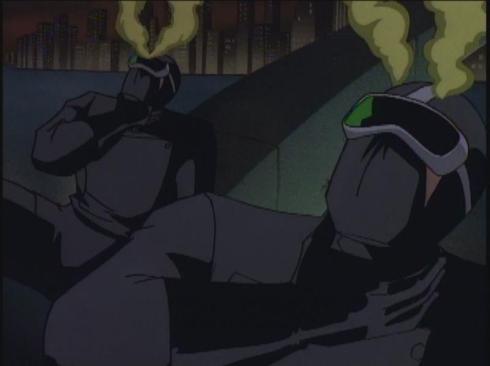
The episode opens with Batman meeting an informant who goes by the name of Twitch (Chick Vennera) on what is apparently the Gotham version of The Statue of Liberty. Batman is seeking information on the Society of Shadows, and the appropriately named Twitch seems pretty jumpy when speaking about them. He can only offer Batman a little information, but is at least able to tell them they follow a guy by the name of Vertigo. Before Batman can get anymore info out of him, a ninja emerges from behind to strike. His attack is apparently just a feint, as a second ninja pops up behind Twitch and tosses him off the structure to the waters below. Batman, seemingly thinking Twitch is likely dead, is enraged and goes after the two ninjas. They manage to repel down from the statue’s torch to the crown where Batman catches up with them. Seeing no way to escape, they praise the Society of Shadows before activating what appears to be suicide gas in their masks. Batman removes the mask from one to see a face frozen in death while a dark-clad woman looks on from the shore.

Or that’s how it appeared. Batman soon drops in on Commissioner Gordon who is alone at the Gotham PD’s firing range. Gordon remarks that Twitch got away, seeming to suggest he either survived that fall or the police just haven’t turned up anything on him (he probably should be dead, this is clearly to please the censors). Batman also reveals that the gas activated by those ninjas wasn’t a suicide, but a special gas that erases one’s memory. Again, this was likely something they had to add in to please Standards and Practices, which stinks because this story really started off with a very high-stakes feel to it. Batman did learn from Twitch that the Society is planning on swiping some new high-tech weapon, and Batman is aware of such a weapon arriving by train that night to Wayne Enterprises.

vertigo

Say hello to Vertigo, just don’t get too attached.

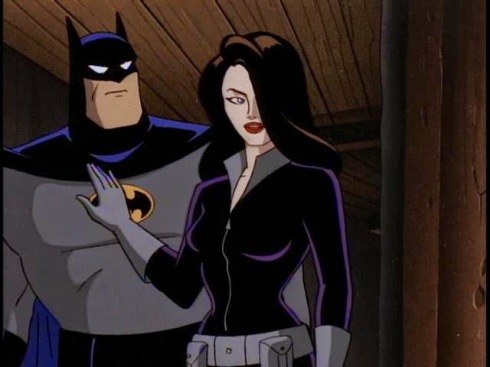
The weapon in question is an ultrasonic drill. Because it’s associated with Wayne, we’re to believe this thing is only supposed to be used for benign purposes, hence why it’s called a drill and not a gun, but it’s capable of so much more. When the weapon arrives there are many on hand to oversee it including Detective Bullock and Wayne Enterprises own Lucius Fox. Vertigo (Michael York) soon appears though and demonstrates how he got that name. He wears a funky eyepatch with a swirling design on it, from which he can emit waves of radiation that cause those it touches to experience extreme vertigo thus disabling them. Batman shows up to see this for himself and also experience it. Batman is unable to do anything about it as the same mysterious woman appears again, only it would seem she’s there to fire at Vertigo. He and his men escape, forcing Batman to retreat to the Batcave and determine his next move.

At the Batcave, Alfred is polishing the enormous penny seen in “Almost Got ‘Im” while Batman busies himself at his computer recounting the events of the night to his trusty butler. We get another stupid Batman “eureka!” moment that is pretty much a carbon copy of a previous one involving Alfred (“Alfred, you’re brilliant!”) as Batman relies on a throw-away line from Vertigo about the tolling of the hour and realizes he fled to a place with a giant bell tower. He pulls up potential locations in his super computer, and settles on the one that looks like the type of place you would expect to find a super villain’s hideout. Especially a Batman super villain.

Batman wastes no time in heading out to this place and arrives to see the shadowy woman get attacked by some ninjas. Batman joins the fun and demonstrates he’s an amateur at playful banter (“Looks like you could use a hand,”) while the woman seems to welcome the help. One ninja successfully cuts off Batman’s prized utility belt without Batman noticing, while two more emerge on a plateau armed with the sonic drill. They fire not at Batman and the woman, but at the ground beneath them causing a huge chasm to open that both fall into.

Talia_unmasks

“No! My face! Not like this!”

Batman awakens some time later to find the woman washing the purple welts on his face. On his face! She’s removed his mask! He panics while she soothes him and urges him to be quiet before he can say his real name out loud. Batman gathers himself and puts his mask back on, only to then realize he’s without his belt. The two are in a locked room, seemingly dumped there by the bad guys. The woman, who reveals her name as Talia (Helen Slater), produces a hairpin as all women seem to carry and unlocks the door. From there the two escape and she takes lead, obviously knowing her way around the place as she mentions they need to get to the lab up ahead. Batman quizzes her on what her connection to the Society of Shadows is. She only offers up that she was sent here by her father to prevent Vertigo from stealing the sonic drill. Vertigo once worked for her old man, but once he saw the blackness in his soul, he cast him aside. When Batman asks why her father would care if Vertigo were successful she responds that he cares for all humanity.

offbalance

We have ourselves a team-up.

The two arrive at the lab and find it unlocked, indicating a trap is ahead which Talia points out. When they enter they’re confronted by Vertigo himself who reveals the whole room is rigged with his special vertigo effect. He flees with the drill, leaving the two helpless in a booby-trapped room. Batman urges Talia to take his hand and trust him to lead her through the room. She does and the two have a really corny face to face exchange before getting to the task at hand. Batman walks her slowly through the room, seemingly anticipating every trap that is sprung. When they finally emerge outside of the room Batman reveals he simply closed his eyes to prevent the vertigo effect from disabling him. He simply had to rely on his other senses to avoid the traps. Oh yes, Batman, very simple indeed to blindly avoid flying knives and spikes that shoot up from the floor.

As Vertigo is about to escape in a very odd-looking airplane with a helicopter propeller on top of it, Batman shouts at him from below. They’re running up the bell tower, and I guess Batman feared Vertigo would escape if he hadn’t shouted because otherwise it was a foolish move. Vertigo simply activates his eyepatch and then takes fire with the sonic drill from above them. He takes out the stairs ahead of Batman and Talia as well as behind, stranding them in place. Seeing no other way out, Talia jumps and grabs onto the ropes that run up to the many bells above. As they start clanging away, Vertigo loses his own balance and drops the drill which Batman jumps off the stairs to catch. It would seem letting it fall and break apart would have solved his problem, but it wouldn’t have looked as cool. It also would have screwed up the episode’s ending, which we’ll get to.

talia betrayal

Just when you started to like her…

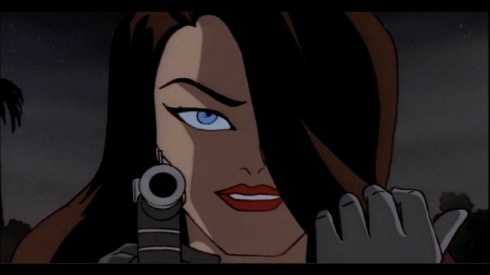
Vertigo didn’t just lose his grip on the drill, he also lost his own footing and falls from the tower. The shot of him falling feels like an obvious homage to the film that bares his name, Vertigo. There’s water below, because there has to be in a cartoon, but Vertigo will not be heard from again so it’s safe to say this fall was fatal. Back at ground level, Batman and Talia are shown walking from the monastery lair with Batman having regained his utility belt and carrying the sonic drill. As the two bid farewell, Talia pulls a total dick move and draws a gun on Batman. It turns out she’s in league with the Society of Shadows and her father wants the drill. Batman is forced to angrily hand it over, but before he does he pulls some tiny, very specific looking device from his belt and inserts it into the tip of the drill. He warns Talia that this is not over, as the same weird-looking airplane returns to pick her up. Once high above Batman, she speaks over a video monitor to her father who is in a lair of his own somewhere. He congratulates her on a successful mission and then orders her to test the weapon. When she goes to fire it she realizes it’s been compromised by Batman, and drops it in a fit of rage. Her father closes the video link and turns to the camera repeating Batman’s own words toward it that this is not over.

Talia-with-Mustache

This image is important because it reveals that Talia does, in fact, possess a left eye.

“Off Balance” is definitely a setup episode, but that doesn’t mean it needs to be bad. Penned by legendary comic book writer Len Wein, it tries to be a little bit noir thriller and a little bit spy story. A ninja-like group of villains sounds like something that should be really cheesy, but the serious approach at the episode’s opening with the suicide gas and the taking out of informants works to make this one feel convincing. The mild undermining of the opening events in the next scene hurt, but don’t completely erase the feelings of that opening. Unfortunately what follows feels more like typical cartoon corn. It’s not always convincing to see Batman coolly figure out a villain’s motives and where their base of operations is, but the eureka moments are arguably worse. The episode also tries really hard to play up some sexual tension between Batman and Talia but the chemistry isn’t there. It feels really forced and amateurish, and Batman’s supernatural ability to avoid the many traps in Vertigo’s lab also didn’t sit well with me.

1512481-02

He’s coming.

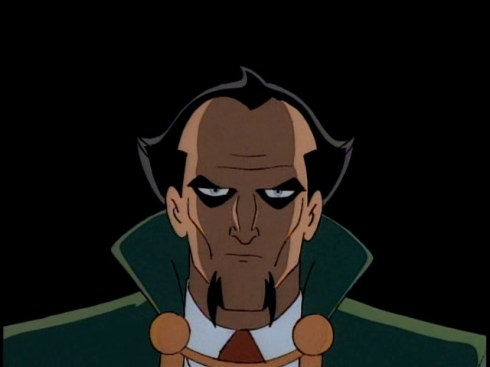
What the episode does get right though is its introduction of Ra’s al Ghul. If you were watching this for the first time and with no knowledge of who he is you would be left wondering quite a lot, as was the case for me when I saw it back in 92. He’s not named, but his apparent status as the leader of the Society of Shadows makes him very intriguing. His look is a bit goofy – a balding, older man, with a giant green cape, but he’s able to pull it off. A lot of that is due to the work of voice actor David Warner whose voice could make anything sound sinister and lethal without even trying. I’m a little less receptive to the Talia character, but that’s almost entirely due to the poorly constructed banter between she and Batman. Ignoring that, she’s portrayed as a capable spy herself and it seems like she didn’t need Batman’s help at all. How much of what transpired is staged and what isn’t is unknown since she too is a member of the Society. Vertigo’s betrayal was real and he likely had some loyal followers, but were the many ninjas encountered working for him or working for Talia and her father? I also really enjoy the voice work of Helen Slater as Talia. One odd thing though about her voice is that she has an accent (Austrian? I’m not good with accents) while her father doesn’t seem to have one. That might be explained in a later episode though. Vertigo himself, though he’s not really in much of the episode, is fun and I enjoyed his portrayal. I suppose Batman figuring out how to counter-act his device means he wouldn’t have been an interesting return villain so I’m fine with his apparent death.

As a setup episode, “Off Balance” does succeed in making me want to see what’s next. When Ra’s sees his scheme thwarted by Batman he doesn’t react with anger, but with a quiet admiration. There’s obvious unfinished business and this show isn’t really known for such teasing preferring to let the majority of episodes exist on their own. Removing that component, which granted is impossible, reduces this to an average or below average episode. It’s disappointing given the strong opening, but I guess they can’t all be winners.


Previously on X-Men: The Making of an Animated Series

previously

by Eric Lewald, published by Jacobs Brown Media Group LLC

A lot of cartoons made an impact on me as a child. My first love was The Real Ghostbusters. Its goofy cast of characters and excitement were plenty of fun and there were interesting toys to supplement the series with, which was pretty much the goal of all cartoons in the 80s. The Teenage Mutant Ninja Turtles would come along and supplant Ghostbusters for me. For several years I was all about the Turtles, with a flirtation with Bucky O’Hare mixed in, though sadly the funky fresh rabbit never made it past 13 episodes.

In 1992 things changed, in more ways than one. My family had just been uprooted moving from the cozy confines of New Hampshire to what felt like a different world down in Virginia. For the first time ever, I was a fish out of water. As I was gearing up to start 3rd grade in a new state, a new town, a new school, I would be tasked with forming all new friendships either at school or in my new neighborhood. It’s not a task I’ve ever been particularly good at. Shy and a tad awkward, I wasn’t outgoing, nor was I particularly talented in anything so I had few ways of attracting people. As a result, my television was sort of my best friend for a time and thankfully I had a new friend in Batman who had just debuted on week day afternoons on Fox Kids, a network I really only knew of thanks to The Simpsons. Batman was all fine and good, and I consumed every episode as it aired (and have since gone on to write about, if you hadn’t noticed), but it never hooked me like Teenage Mutant Ninja Turtles, even though that was a program I found myself outgrowing. What did resonate with me almost immediately though was the cartoon that premiered not long after Batman, I’m talking about X-Men.

The X-Men were known to me in basic terms before the animated series premiered on Fox. About a year prior to the show debuting Marvel had launched a toyline complete with TV spots, even though there was no companion television series to pair it with. I suppose the toys could have been developed in conjunction with the Pryde of the X-Men pilot that had premiered and failed in 1989. The roster was pretty similar, though then relative newcomer Archangel replaced Dazzler in that initial run of toys. Aside from that though, I don’t think I had ever picked up an X-Men comic book and I may or may not have played the side-scrolling beat-’em-up arcade game that was also based on Pryde of the X-Men. And I didn’t even actually catch the sneak peek preview, which aired on Halloween of 1992. I had seen all of the television spots leading up to it and was very interested in the show, but I had tricks or treats to get and wasn’t good at working a VCR.

X-men_pryde_of_the_x-men_cover

The first attempt at bringing the X-Men to television did not go very well.

At school, I would hear about it though. They had cool powers, but people hated them. Why? It seemed like such a foreign concept. One character got arrested and another died! Wow! Perhaps morbidly, I really wanted to see that character death, whom I’d come to know as Morph. Frustratingly, it would be awhile before I finally saw it. Somehow, whenever “Night of the Sentinels:  Part 2” was aired on television I would miss it. I wasn’t allowed to stay home alone, since I was only 8, so if my family had plans on Saturday morning I had little say. My mom even enrolled me in CCD, or church school, which convened at 11 on Saturdays, much to my horror. I think I only went to two of those classes before my mom got sick of the revolt each Saturday, finally freeing me to enjoy my new favorite program in relative peace.

In no time I was obsessed, and X-Men was my favorite show for basically as long as it aired. I still have the many toys I amassed during that period in my life, and though I no longer read the comics, I still enjoy revisiting this cartoon. It’s why when I heard that showrunner Eric Lewald was releasing a book all about his experience in making the show and bringing it to television that I had to get a copy. I received a copy last November, and I’m a bit disappointed in myself since it took me this long to finally finish it and get to writing this post, but life is hectic.

Previously on X-Men is an account of how this unlikely hit came to be. When Fox premiered X-Men and Batman it was still a fledgling network. The Tracey Ullman Show and Married… With Children got the network its initial audience, and The Simpsons would then establish it as a viable alternative to the big 3:  ABC, CBS, and NBC. It was still struggling during the other parts of the day with programming often ending before 11 PM. Recognizing that there was a place for children’s programming, Fox brought together a web of studios and producers in a mostly haphazard manner that somehow led to network dominance. Shows like Bobby’s World and Attack of the Killer Tomatoes were filling out the kids portion of the programming early on, and while it sounds like they did okay numbers, they weren’t going to raise the network’s profile much. It would fall to the superheroes to do that.

lewaldscelebrating_orig

Julia and Eric Lewald

Lewald’s book does a great job in capturing those early days while also contrasting X-Men with its daily counterpart Batman. Batman was a show with tremendous financial muscle behind it in the form of Warner Bros. and DC. It was coming off two successful Tim Burton movies and featured a character recognized around the globe. As a result, it was largely an internal production at Warner and Fox got to enjoy the benefits. And then there was X-Men, the troubled property that seemingly no one believed in. Thanks to so many television failures by Marvel in the past, there was almost zero enthusiasm for a show based on the property. Margaret Loesch, who formerly headed-up television at Marvel and was hired away to run Fox Kids, was one of the few who believed in it. Having failed to get the show going while at Marvel, she knew a producer who she had hired and fired on more than one occasion that could handle the task. That man was Sidney Iwanter, and he produced the show along with many others for Fox Kids. Citing a belief that kids were smarter than network executives gave them credit for, he demanded excellence from the writing staff of X-Men, who were overseen by Lewald. These three probably deserve the most credit in getting X-Men to television and for it being the number one kid’s show when it finally did get there.

haim-saban

Haim Saban, who is both a hero and a villain in this story.

The first 200 pages of the 400 page book are devoted to the development process and it’s a fascinating read. Lewald, who had no experience with the X-Men before getting hired to run the show, was entrusted with those initial 13 episodes. He had people at Marvel he could go to with questions, but in a pre-internet world that meant a phone call, fax, or worse. It wasn’t like there was a Google equivalent in 1992. Artist Larry Houston is credited with the look of the series, as he was one of the few onboard who was a fan of the comic. Also the Edens brothers, Michael and Mark, were Lewald’s main contributors in the writing department. Lewald’s wife Julia was also a part in the initial season and contributed to the book as well. It’s very interesting to read as Lewald takes the reader through that initial writing process, and it’s easily the most captivating section of the book. Their approach to character showed in the episodes, so a lot of what is said here was previously assumed. Such as the belief that killing off poor Morph in the second episode would create stakes and pull the viewer in.

fox kids

The early days of Fox Kids.

If there is an MVP character for the book though it just might be Haim Saban. Saban was a newcomer to television when Fox Kids partnered with him to bring the X-Men to air. Saban collected a fee for those first 13 episodes, but then it was on him to pay the writers and editors. Graz handled the art, while AKOM was contracted to do the animation. Saban is a notoriously cheap man, and reading about all of the accounts of his cheapness is both hilarious and frustrating. It’s well known now, but bares repeating to emphasize how cheap he was that Saban docked the pay for all of the returning writers for season 2. His reasoning? The show was a success, so now more people would want to write for it and therefore he could pay them less. The man is now a billionaire, so obviously he’s pretty good at making money, though he’s also a reminder of a lot of what’s wrong with modern capitalism. The second half of the book is comprised of interviews with the cast, writers, producers, and other executives and almost all of them have a comment about how cheap Saban was, and likely still is.

Many battles took place to bring X-Men to Saturday morning. Some I knew about before reading this book, and others I did not. It’s probably common knowledge that the first episode from AKOM was utter garbage in terms of animation quality. It’s a big reason why the show had to premiere as a sneak preview because the studio couldn’t get the episodes ready to premiere in the normal Fall window due to all of the animation fixes that needed to take place. A lot of money was spent getting it right, and it almost blew everything up. The original voice cast also had to re-do the initial episodes because the first takes were so bad. Saban, in order to save money, hired Canadian actors to voice the show because they were famously non-union, so casting, supervising, and ultimately editing the audio for the show was cumbersome. Having to send individuals up to Canada in order to re-dub the initial episodes was obviously time consuming as well.

X-Men (FOX) [1992-1997]Shown from left: Wolverine, Morph, Beast

Oh Morph, I still mourn for thee.

And then there was Stan Lee. Stan Lee is a pretty famous guy. I’m not sure if he’s today more known for all of the comic characters he had a hand in creating or if he’s more famous for being that old guy who cameos in every Marvel film. Stan Lee created the X–Men alongside Jack Kirby in the 60s, but after that initial unsuccessful run, he turned it over to other writers and artists so he could focus on other things. As a result, come 1992 he basically knew nothing about the modern X-Men and yet he insisted he knew what was right for the show. Lewald and Iwanter had to fight with Stan on everything in those developmental days. He insisted on narrating the episodes, as he had done with previous Marvel television shows, and his approach was entirely wrong for the show they were trying to create. Supposedly, he even proposed the premise of the show should be a few members of the team driving around and solving mysteries. Imagine Wolverine in the role of Scooby Doo? Who would Shaggy be – Gambit?! They somehow managed to placate him, without really giving him a voice in the show, and eventually he went away as the show moved along through its first season and became a smash hit. The frustration in having to deal with Lee, and the many other challenges, is felt in reading this and I ached for Lewald even though he’s more than 25 years removed from this aggravation.

spiderman 94

The success of X-Men helped pave the way for more Marvel cartoons like Spider-Man.

That first season was only 13 episodes, a far cry from the 65 episode order Batman received. Fox was so unsure about the property that it wouldn’t commit beyond that, forcing basically everyone involved to move onto other shows. Lewald went on to helm Exosquad with the Edens, and thankfully that too only received a 13 episode order so he was available to return to X-Men when it finally received the full episode order. Others did not, because that’s how television works. If a show isn’t in production, you’re not getting paid. That first season’s decision to present itself in a serialized fashion also presented problems for the network, as production delays on one episode messed up the order of everything. As a result, the network demanded that season 2 be more episodic, but Lewald and his talented team of writers still managed to give it a serialized feel with The Savage Land segments and reoccurring villains like Mr. Sinister and The Friends of Humanity. A wise move, since the serialized nature of that first season is a big reason why it’s so special.

Nightcrawler (1)

“Nightcrawler” is frequently cited as a favorite episode of many of the creators involved with the show. The book also contains a deep dive into its creation.

Like the show itself, which I think produced its best work in those first two seasons, the book somewhat suffers from a strong first half that isn’t matched by the second. The many interviews that span roughly 200 pages are informative, but some more than others. The voice cast mostly repeats itself with remarks about how it was fun to work on something that felt different and how they came to understand their roles. The actual writers and producers offer the more interesting nuggets. There’s a lot of praise thrown around which might get tiresome for readers, though they all have reason to praise each other since it’s easy to forget how successful this show was. Especially when taken alongside the production and development hurdles. Of the interviews, I think I actually enjoyed the executive ones the most. Loesch and Iwanter were candid and did a great job of transporting me back to the early 90s and the hurdles they faced in backing this show. It’s fun to read about how close these people were with these characters that meant so much to me as a child. They cared about them, which is ultimately why the show ended up being as successful as it was.

X-Men-92

Marvel has resurrected the 92 X-Men for its comics line, but the results weren’t enjoyed by this blogger.

It should come as no surprise that, as a longtime fan of the show, I fully recommend Previously on X-Men to other fans of the show. Even if you were only a casual fan, but tuned into the animated scene at the time, you might enjoy reading this one. It’s fun to read the comparisons of how this show came to be with the experiences these people had with other shows. X-Men was a production mess, a wonderful, beautiful, mess. It was still garnering good numbers when it was cancelled, and one has to assume it was due to costs. By then, Saban had Power Rangers and was able to bring more stuff in house. X-Men had all kinds of hands on it so a lot of people had to get paid, and as we already covered, Saban wasn’t a fan of paying people. Even so, it’s hard to argue that the show was cut-down in its prime or anything, but reading this book and revisiting the show really made me realize how much I’d love to come back to this world. Marvel did launch an X-Men ’92 comic, but it did not satisfy me nor did it read like an episode of the beloved cartoon, rather it felt more like a parody. Marvel is now under the gigantic Disney umbrella and its films basically print money. With the Fox acquisition though, suddenly the X-Men are back in play. Marvel hasn’t bothered with animated films in awhile, though it’s sort of bringing that back with Into the Spider-Verse. Maybe a direct to video follow-up for the 92 X-Men could one day be in play. Pretty please? At the very least, how about a Blu Ray collection with episode commentaries, Disney? The people who created this wonderful show obviously wish to talk about it and they still have a lot to say.


The Ultimate Danzig Song Ranking – Conclusion

A-217411-1160871896.jpegWe have made it to the final 13, the best of the best that Danzig has written and recorded. This feature has totaled nearly 15,000 words as we’ve had to sort through 116 songs just to make it this far. Now considering we’re only covering 13 in this last post, I don’t think this one will run quite as long, but who knows? For these last batch of songs, it likely comes as no surprise that most of them come from Danzig’s first four albums. Those are often considered the best the band put out. That’s not to say what has followed has not been worthwhile, far from it, but it is what it is. And of these 13, we still actually have a cut from Danzig 7 to discuss and a few from The Lost Tracks of Danzig compilation, which really is a fantastic release for fans of old and newer Danzig. These songs, as well as the preceding dozens, were hard to rank. Even as I look over my final rankings, there’s an urge to tinker with it and move things around, but I suspect no amount of adjusting would ever truly satisfy me. Even my number 1 is a bit tenuous. Since it’s my ranking, I just went with my favorite song, so anyone else’s rankings could easily feature something else in its place. That’s what makes the whole exercise worth while though. Let’s get to it!

13. Black Mass (I Luciferi) – Danzig’s seventh studio album kicks off with the instrumental “Unendlich,” an eerie piece of music that wouldn’t sound out of place in a Castlevania game. It takes us into the first real song of the album, “Black Mass,” a throwback to Danzig’s Black Sabbath roots and proof positive the man could still croon after decades in the music business. This song made quite a statement, as previous albums seemed to try and hide Danzig’s vocals at times and were often reluctant to make them the showcase. For Blackacidevil, that decision was a stylistic choice, but fans worried when Satan’s Child featured a hoarse sounding Danzig underneath some digital layering and wondered what the future held for the former velvet-voiced crooner. I’d like to think that “Black Mass” slayed those fears as an almost gentle sounding Glenn brings us into the song following the heavy riffing of guitarist Todd Youth. There’s an edge to his voice though, a mature sound, and even though we’re back into the comic book imagery of skulls and sacrifices, the band seems deadly serious. The song never rises too high in terms of volume, but it doesn’t have to. After dabbling with industrial elements, this is a song that would have been right at home on Danzig III or Danzig IV, and it’s the best song from the underrated Danzig 7:77 I Luciferi.

maxresdefault-38

The video for “Killer Wolf” is mostly Glenn posturing in front of things while the band and some random women just hang around an old shack. It ranks fairly high on the unintentional comedy scale.

12. Killer Wolf (Lucifuge) – Another blues song with some swagger, “Killer Wolf” is the post “Mother” song of caution for you parents out there. There’s a dirty vagabond feel to the lyrics, a wandering prowler on the hunt for sin – an image Danzig is more than capable of wielding with some degree of authenticity. Danzig’s vocals shine as they howl out the chorus, the little vocal “twang” on the word “wolf” creates that southern atmosphere the album was looking for. It’s a mid-tempo song and the band provides the backing to Glenn’s vocals with precision. The song has a rolling feel to it that explodes in the end with a powerful closing minute. An early album stunner for the excellent second album.


11. Bound by Blood (Lost Tracks of Danzig) – The song Glenn Danzig couldn’t bring himself to include on Danzig 7. He expressed frustration in at least one interview pre-release for that album that he was going to have to leave this one out because it either didn’t quite fit with the rest of the songs on the album or because he wanted to keep the running time down. There was talk of doing a single release, or an EP, and this may have also been around the time he started floating the idea of a boxed set of unreleased songs. We may have the song now, but if I may say, Glenn – you should have included it on the album in the first place. “Bound by Blood” is surprisingly not a song about bondage, but by the literal bindings of blood that exist between family. The lyrics are heartfelt and sweet, and while the song begins like a ballad, it erupts with that famous Danzig bottom-end before long while Todd Youth does his best work for any Danzig song he’s been a part of. The song crashes along with Glenn’s howls, and if it has a weakness, it could in that it perhaps lasts a bit too long. Because the early portion of the song is so lovely sounding, it makes me wonder what an acoustic version would sound like. I don’t necessarily think it would be better, but I do think it could exist on its own. It’s great that we have The Lost Tracks of Danzig to enjoy this and other songs from it, but there is a part of me that listens to the Danzig 7 era tracks and wonder how much better that album could have been. It’s a personal favorite of mine, and it’s a toss-up between that and Deth Red Sabaoth for best post original lineup album, but it could have been even better.

10. Let it be Captured (Danzig IV) – This one is perhaps the greatest showcase for Glenn Danzig’s vocal prowess, and lucky for him, it was recorded during the time when he was probably at his best. “Let it be Captured” is another ballad and it’s similar in subject matter to “Sistinas” off Danzig III. The voice of the song is offering an invitation to the song’s target. It’s sweet, and there’s no apparent sinister urges in this one and it meanders artfully through the early parts of the song before the rush of the outro strikes. It’s that outro where Danzig goes off relentlessly wailing the song’s title with a few additional lyrics thrown in here and there for variety. It’s awesome, the perfect song to listen to in the car alone when you want to sing at the top of your lungs. It’s the song I would put on for someone who doesn’t think Danzig can sign or lacks powerful pipes (admittedly, I’ve never really encountered anyone who thinks either). It’s perhaps self-indulgent, but that’s why songs like this only come along so often.

hqdefault-46

Despite consisting of mostly stock live footage, the videos for “Twist of Cain” and “Am I Demon” still found it hard to receive airplay on MTV.

9. Twist of Cain (Danzig) – Thirty years ago legions of soon-to-be Danzig fans were introduced to the band via the opening notes of “Twist of Cain.” One of the band’s most popular tunes with its fans, “Twist of Cain” ushered in the new sound of the band following the disbanding of Samhain. It was almost entirely different when compared with what Glenn Danzig had output previously. The speed and lo-fi aspects of The Misfits were a thing of the past while the atmospheric elements of Samhain were replaced with a total tear-down of blues-based hard rock. Danzig’s vocals are commanding and strong, aggressive and fierce. A song of rebellion, a common theme of early Danzig, it snakes its way through various riffs and changes covering a lot of ground in its modest run time. It’s hard to imagine the first Danzig record starting any other way.

8. Pain is Like an Animal (Lost Tracks of Danzig) – Of course, the first album could have started with this one. Not that I necessarily think it should have, but this track (supposedly left off from the first album, though the recording on the compilation sounds like a Danzig II or III era track) is one the best hard rock numbers the band ever recorded. It features some great guitar work by John Christ and some excellent percussion by Chuck Biscuits. Like a lot of early Danzig songs, those instruments are front and center with little semblance of Eerie Von’s bass. The vocals sound slightly lo-fi, perhaps because the song was never properly dressed-up for release, but they work with the primal nature of the song’s subject matter. It’s perhaps too up-tempo for the first Danzig album, maybe a song producer Rick Rubin wasn’t a fan of, but it’s hard to argue it couldn’t have made that album even better. Knock off the totally fine, but also just a cover, “The Hunter” for this one and I don’t think you lose anything. The only knock against that first album is it’s sometimes frustratingly restrained, which is made evident when those songs are played live, and this song would have given it another kick in the balls.

7. Cold Cold Rain (Lost Tracks of Danzig) – The crowned jewel of The Lost Tracks of Danzig is “Cold Cold Rain.” It debuted in the late 90s on Eerie Von’s telephone hotline as a little treat for Danzig fans. That low quality recording circulated online for years with fans wanting more, until finally The Lost Tracks of Danzig debuted in 2007. This one was culled from the Lucifuge sessions and it’s another very 50s sounding ballad with an excellent vocal performance by Glenn Danzig. It may have the 50s sound “Blood & Tears” went for, but it’s thicker and louder. Glenn claims in the liner notes that Rubin wasn’t a fan which is why it didn’t make the cut. I’m guessing it basically came down to this song vs “Blood & Tears” and they opted for the slightly more Danzig sounding track. The dry production of that song better fits the album, but it’s still amazing to think that this song could have been on what is an otherwise phenomenal album. It’s because that album is so good that I’m more just happy we now have this one, where as with Danzig 7 I mourn what could have been. Some think this song has been slowed down for release when compared with the old hotline recording. A slightly faster fan mix is on YouTube, and I’m honestly not sure which I prefer. I think it’s silly to try and infer too much from audio that was recorded off of a telephone in the 90s with an actual CD release from 2007, but it’s possible Glenn thought it sounded better a little slower when he revisited it. However you choose to listen to it, it’s one of the band’s best ballads and maybe the best one of them all.

957a59f0-f0fd-42a3-a782-50931a4a7965_screenshot

If you wanted to see the uncut video for “Mother” in a pre YouTube world you basically had to pick up the band’s home video. MTV didn’t like the whole chicken sacrifice thing.

6. Mother (Danzig) – It had to make the top 10. There are some diehards who will turn their nose up at this one because it’s the only song Danzig is really known for within the mainstream. Many bands are regarded as one-hit wonders with that one hit sometimes representing the best of the band, and sometimes not. With Danzig, it’s at least close and if the band was going to be known primarily for one song then “Mother” isn’t a bad one to be known for. It was a big crowd pleaser ever since it was introduced into the setlist, and obviously became the logical closing track after it became a hit upon re-release in 1993. It’s a simple number, with a three-chord progression that could have been lifted from Michael Jackson of all places, with an equally simple structure. The song’s rebellious lyrics impart a sense of danger and mystique and the chorus is the perfect payoff to the verse. John Christ has a suitable solo mid song, before a blistering one during the closing seconds. It’s another restrained Danzig 1 track, because live it’s played just a bit faster and Glenn’s lyrics are delivered with a bit more intensity. It’s understandable that longtime fans can be sick of it at this juncture, but it would be foolish to deny it’s not one of the best Danzig songs.

dc067873ee2c05adf4fe91ef9ca7e4d0--danzig-misfits-glenn-danzig

The better single from Danzig IV.

5. I Don’t Mind the Pain (Danzig IV) – The better single from Danzig’s fourth album. It could have possibly rode some of that “Mother” momentum that “Cantspeak” otherwise squandered, but it’s also hard to argue this song fit fully into the mainstream rock sound of 94. “I Don’t Mind the Pain” comes in with a plucky, playful tempo with a vocal delivery from Danzig with a touch of softness. It rips into some drum-blasts and more machine-gun guitar ushering in some more malevolent sounding vocals. It all gives way to a pleasant chorus that’s almost poppy. It’s the changes and the approach that make this a challenging single, but with the album having more experimentation on it than any previous Danzig release it likely was never intended to be a bonafide commercial hit. The song’s combination of heaviness and catchiness are what make it the best of Danzig IV. A perfectly splendid vocal performance is the cherry on top, and you can even hear some of that thumping bass on this one too.

4. Tired of Being Alive (Lucifuge) – The title implies a suicidal voice for the song, but the approach is more angry and defiant. A little grumpy, it’s a very up-tempo track that feels quite fresh considering the mid-range of the first album and following the similarly paced “Snakes of Christ” and “Killer Wolf.” I was so excited when this one was brought back into the live show a few years back (now nearly ten years, actually) and it seems the rest of the crowd shared in my enthusiasm. It’s an easy song to bang your head to, and maybe if the title wasn’t so dangerous it could have been a choice for lead single. The song’s approach is rather clean, and there’s some great little flourishes from guitarist John Christ on the chorus. The vocals are layered upon during parts, which also adds some unique color considering the mostly bare bones production approach of Rick Rubin. There’s enough sizzle on top of what is otherwise a really catchy melody to elevate this song almost effortlessly into the spot it’s at on our countdown.

3. Evil Thing (Danzig) – We’re kicking off the top 3 with our last track from the debut album. “Evil Thing” closed that one out and it’s perhaps the most aggressive track on the whole album. It takes the premise of the song and runs with it demonstrating that this is a band you should be afraid of your kids listening to. In the early days of the PTC, this was an easy song to get behind. Glenn’s rapid-fire delivery on the verse feature some of the best lyrics he crafted on the album. The guitar is playful, yet evil, and the drumming is perfectly timed. The vocals are front and center erasing any doubt as to who this band belongs to. This song is what Danzig is all about:  aggression, rebellion, unfiltered. This might be the most “Danzig” song of them all and it’s kind of incredible to me that it ever was removed from the touring set list.

59AEAF7F-danzig-premiers-last-ride-music-video-image

This girl gets it.

2. Long Way Back From Hell (Lucifuge) – The song that ushered in the more bluesy second album, it’s hard to imagine a more appropriate way to begin what many feel is the band’s best album. “Long Way Back From Hell” features a steady build-up leading to a dive-bomb guitar to kick things off. Danzig’s vocals bring everyone in, spinning a tale wrought from the bayou of warning – be sure you’re willing to come along for the ride with this band, because surely Hell awaits. It’s a tremendous statement following the slower debut album as “Long Way…” brings a speed and intensity that album was lacking in. It’s a song that’s easy to be spellbound by as it forces you to bang your head and thrust your fist along with it. It’s expertly paced, giving listeners a brief break midway before crashing back into the fray with an abrupt, but satisfying, conclusion. Before the final notes have finished reverberating, the riff for the next song comes into being and we’re off and running.

And now, the pick for the Ultimate Danzig song goes to…

Danzig - Devil's Plaything.avi_000048448

Glenn posing with a blond – it basically could be from any Danzig video, but it is from “Devil’s Plaything.”

Devil’s Plaything (Lucifuge) – The midway point of the now classic second album, “Devil’s Plaything” has all of the ingredients of a classic Danzig tune. It starts off quietly with some light guitar playing and Glenn’s majestic voice. Following a couple bars of that, it blasts into a big guitar riff with melodic, yet relentless, drum-work from Biscuits. The sonic wall backs off slightly to bring in Danzig’s commanding and demonstrative vocals. Another song of danger, the verse gives way to a shouting, no-frills, chorus that rolls along with the percussion. There’s a bridge that re-introduces the lighter guitar work on the song’s intro, before jumping back into the verse/chorus/outro mold to wind things down. If the song is missing anything, it’s a guitar solo during that bridge portion. It does feature the “Whoa-ohs” we know and love, something that’s more of a staple of The Misfits than Danzig, but also something that shows up plenty in this band. It’s authentic approach and structure, combined with the subject matter and vocal delivery, are what makes it the perfect Danzig song. It’s been my favorite for decades now, so I see little reason for a change at this point.


Well there you have it, 129 Danzig songs ranked in order of worst to best in celebration of the band’s 30th anniversary. Time will tell if the band will add to this list in any meaningful way. At the time of this writing, we know that a collection of Elvis covers has been recorded and mixed and is just sitting on a shelf somewhere waiting for release. I suspect Glenn is trying to figure out if it makes sense to do a physical release or a digital one to get those songs out there. Whether or not he ever does a proper Danzig album is up in the air. The man will probably keep writing and recording until the day he dies, but it wouldn’t be a shock if he gets so sick of the industry that he loses interest in doing full albums. I’ll be here ready and willing to update this ranking should he put out some new material. And since I’ve also tackled The Misfits and their library of songs, I suppose it would only make sense to do the same for Samhain some where down the road. Thanks for reading and listen to more Danzig!


Dragon Ball Z: Bio-Broly

DBZ_THE_MOVIE_NO._11Japanese Title:  Super Warrior Defeat!! I’ll Be The Winner

Original Release Date:  July 9, 1994

English Release Date:  September 13, 2005

Directed by:  Yoshihiro Ueda

Screenplay by:  Takao Koyama

Running Time:  46 minutes

Well, I hope you wanted more Broly following the last movie, because he’s back again. Breaking a tie with Cooler, this movie marks Broly’s third appearance in a Dragon Ball Z feature and it also means 3 out the last 4 movies all featured him as the main antagonist. When we last saw Broly (Vic Mignogna), he was getting blown up by the combined might of Goku, Gohan, and Goten. How could he have survived a triple Kamehameha? Well, he didn’t, and another person from that film is responsible for Broly’s return here.

DragonballZ-Movie-11-Bio-Broly5BBD5D5B1080p5D5BAAC5D.mp4_snapshot_00.55_5B2016.04.16_16.52.295D

Dr. Collie and Mr. Jaguar, our enemies for today.

The movie opens at a lab where a cackling, obviously evil guy, named Mr. Jaguar (Bill Townsley) is enjoying the specimens his team of scientists, led by Dr. Collie (Christopher Sabat), has produced for him. He plans to use them to take over the world or something, but also mentions how he wants to go after Earth’s hero. The camera lingers on one large tank containing a humanoid creation, and a tail flickers into the picture to let us in on a not so subtle secret about who inhabits this particular environment.

bio-men

The bio-men won’t be winning any beauty pageants.

After the intro song, we’re taken to Satan City where Android 18 (Meredith McCoy) is attempting to collect payment from Mr. Satan (Chris Rager) for the events that transpired during the World Martial Arts tournament in the main series. In case you forgot, 18 was pitted against Satan in the finals and he convinced her to take a dive in exchange for riches. Before she can get the money out of him though, an odd fellow in a blue suede suit shows up, falls in the pool, and manages to get inside Satan’s mansion to issue him a challenge. Apparently Mr. Jaguar and Mr. Satan attended summer camp years back and he knows Satan’s dirty little secret – he once wet his pants! In order to keep this from reaching the press, Mr. Satan needs to accompany this guy, Men-Men (Jim Foronda) back to an island to face Mr. Jaguar, and since he failed to pay 18, she is going too. Goten (Kara Edwards) and Trunks (Laura Bailey), having been promised a big lunch from Krillin(Sonny Strait) once 18 gets paid, stow away in Men-Men’s flying car and head off to the remote island where Mr. Jaguar awaits.

Once they arrive at the island, Mr. Satan finds out he’s not to be squaring off against the diminutive little Jaguar, but against his Bio Men. These slimy, green and pink creations give him the creeps, and they’re also well beyond his fighting ability. Having no other recourse, he offers 18 more money to take care of them for him, and she’s happy to oblige.

Dragon-Ball-Z-Bio-Broly

18 is more than happy to step in for Mr. Satan, provided he pays her.

Goten and Trunks, after having helped 18,  go exploring in the lab and find all of the Bio Men still growing in their oversized test tubes. Trunks, having a genius scientist for a mom, is happy to share that information with anyone who will listen and does seem genuinely interested in what’s going on. Goten notices one of the specimens has a tail, and the two check it out and are startled to discover that it’s Broly! He soon awakens, and Goten and Trunks flee in terror. They go to talk some sense into the scientists about Broly, and find the shaman Maloja (Robert McCollum) whom they exposed as a fraud to his village in the previous movie. It was he who scraped up some of Broly’s blood after his defeat and sold it to Jaguar. His scientists utilized that to recreate Broly as one of Dr. Collie’s bio-monsters. Goten and Trunks are horrified, and decide the only thing they can do is destroy Broly themselves.

1521204318610

Broly was a bit fragile of mind to begin with, this can’t be good for his self-esteem.

It’s a good thought, but the duo’s combined attack on the tube only succeeds in freeing Broly. Enraged at the sight of the two young Saiyans partly responsible for his death, Broly goes on an unstoppable rampage. At first, he looks like his old self, but his body soon begins to deteriorate into a grotesque pile of slime with red eyes. He kind of looks like a combination of Mukman from the Mighty Mutanimals, complete with his yellow hair poking out of the goo resembling spent banana peels, and also kind of like the Tyrant from Resident Evil since both feature a glowing, red, heart. Broly immediately attracts the attention of 18, who gets flattened almost right away, and it falls on Trunks and Goten to take him out.

banner_85

The two Saiyans show promise when fighting as a pair.

Broly is apparently not as powerful in his bio state as he was in life since Trunks and Goten are able to go toe-to-toe with him, provided they attack in unison. The problem is, Broly has wrecked the lab all around him, and the weird purple goo that created him is seeping out. It’s acidic to all lifeforms, and Goten keeps getting pulled away from the fight to save people from certain death. Broly’s goo body also makes him seem invulnerable to real physical pain, and the boys are at a loss as to how they can destroy him. Trunks will figure out a plan though, and it involves utilizing his own buttocks in an antagonizing manner, but they need to also content with the the purple goo that threatens all of the island’s inhabitants, not just those in the lab.

Broly punch

Even in this weakened state, Broly still packs a punch.

I am happy to say, there will be no Goku (Sean Schemmel) saving the day. Even Piccolo and Vegeta decline to make an appearance to bail someone out, though Krillin will show up to fight at some point. Instead this one rests entirely on the young shoulders of Goten and Trunks. After seeing them upstaged by Gohan in the last film, it’s kind of nice to see them get to shine on their own. Trunks will even utilize a Kamehameha attack along with Goten, and also what looks to be his dad’s Final Flash. Goku does make a very brief cameo right before the end credits, but it has no baring on the story, because apparently we can’t have a Dragon Ball Z movie without at least one appearance from Goku (Gohan, on the other hand, is completely skipped for the first and only time).

BioBroly_1307

Step aside Krillin, the kids got this one.

Bio-Broly is often cited as the worst movie in the Dragon Ball Z film-verse and I’m actually happy to report that it wasn’t as bad as I expected. It doesn’t look particularly great, having a quality more in-line with the show as opposed to the other movies. There’s some jokes that kind of miss, especially early, and the Mr. Satan stuff does feel a bit redundant at this point. I like that character, for the most part, so it doesn’t bother me that much and I like that it attempts to resolve a plot point from the show. Broly has definitely overstayed his welcome at this point, but at least he’s largely mute in this one and we don’t get any silly “Kakarot!” yells out of him. His bio form is rather lame looking, and you could argue the movie didn’t need him and the bio monster could have been anyone.

In the end, this isn’t my least favorite of the Dragon Ball Z movies. I like that it allows other characters to shine, not just Goten and Trunks, but 18 as well. It’s quick and tidy, but if I had one lingering piece of criticism is why did they have to title it Bio-Broly? If we didn’t know that Broly was incoming it would have actually given that moment a little more weight. It’s setup like a Hollywood thriller, and even the fight is resolved in a similar manner as seen in The Terminator, and spoiling the reveal like that just feels like a waste. Dragon Ball Z rarely gets to surprise, so that’s a missed opportunity. It’s not that big a deal though, and I look forward to reexamining this film in a broader light when I eventually set out to ranking all of this movies when this feature is concluded.


The Ultimate Danzig Song Ranking – Part III

danzigWe’ve covered 80 songs by the band Danzig, but still have 49 to go! We’re well past the poor and mediocre and now well into the best songs the band ever recorded. The rankings already have become quite a chore as some of these songs are hard to separate from others, but it must be done!

49. I’m The One (Lucifuge) – Danzig’s ode to classic blues, “I’m The One” is basically just Glenn Danzig singing and John Christ playing an acoustic guitar while Glenn rattles off lyrics about being evil. It’s pure cheese, but the band takes it seriously and is able to pull it off (as long as you’re not watching the video to it in which Glenn wrestles what looks to be a heavily sedated alligator). It’s very different to the rest of the band’s catalogue so it might be a little polarizing, though I think the majority of fans enjoy it.

48. Warlok (Lost Tracks of Danzig) – Another holdover from Blackacidevil that’s a lot better than most of the material on the album. It’s possible it was left off because the main riff is basically a fuzzy version of the “Mother” riff, though Glenn says the engineer he was working with at the time just couldn’t get the song to where he needed it. It’s pretty simple, but catchy and I enjoy the cadence Danzig utilizes for the verse. It’s not similar to his other songs in that respect.

1-danzig-456ak090210

On a wicked night everything is red.

47. On A Wicked Night (Deth Red Sabaoth) – The lead single from 2010’s Deth Red Sabaoth, “On A Wicked Night” was frequently dedicated to former Type O Negative vocalist Peter Steele at live shows (Danzig’s drummer, Johnny Kelly, was the drummer for that band) who passed away shortly before the album came out. It’s a slow one that picks up in intensity and has a big, loud, outro. It’s a frequently used formula, but one that seems to always work. The only negative about this track is the inconsistent production. The vocals sound great on the quiet parts, but when the song gets loud they get drowned out some. The song also almost overstays its welcome, since it doesn’t really have much of a chorus outside of the song’s title, but it knows when to call it quits.

46. Angel of the 7th Dawn (Lost Tracks of Danzig) – Lucifuge is often cited as Danzig’s best album, so suggesting a change to that song’s tracklist feels like sacrilege, but “Angel of the 7th Dawn” has a good case. Even though I’m ranking it ahead of “I’m The One,” I wouldn’t bump that song for it since that track is pretty unique and has its own flavor. This one also isn’t a natural closing track, so I don’t know that I’d knock “Pain in the World” off for it either, but I’d happily give “777” the boot. This one is another rock track with a blues undercurrent, like much of the material from that album. It has a fun little story to it with enough, subtle, hooks. It’s somewhat similar structurally to “Killer Wolf,” so maybe that’s why it was left off. Even though it didn’t make the final album, the title of the song did get to live on as the name of the official fan club for the band, so at least it has that.

45. Last Ride (Black Laden Crown) – The last track we’re going to cover from Black Laden Crown is “Last Ride.” The most recent, and possibly last, album from Danzig managed to sneak a track into the top 50 which is pretty good. If Danzig wants to continue making more original music (there is another covers album of all Elvis songs ready to go) then I think “Last Ride” offers a pretty interesting path for the band. It’s a slow, atmospheric track that feels like it could have been a Johnny Cash song. It’s a voice that fits the current mood of the band which is fronted by a now 60 year old Glenn Danzig. Danzig stays in his range vocally while the band provides a nice backing to his more mature sounding vocals. There’s still metal elements present, so we’re not talking another twangy blues track here, and the ever present Danzig bottom-end is mostly intact as well. As an aside, every time I hear this one I can’t help but think it would make for a cool video package based around WWE’s The Undertaker character.

44. Heart of the Devil (How the Gods Kill) – Unapologetically corny, this song makes its outlandish lyrics work. Danzig wails out some impressive vocals that only touch upon that Cookie Monster voice I’ve been a little tough on. Glenn sings about being evil and he sounds more convincing than ever before. The sound is nice and thick, a testament to old analog recording, and it cracks and sizzle with every beat. There’s a violent, sexy undercurrent that the band has often tried to strive for, but doesn’t always hit the mark. Here it does.

43. See All You Were (Blackacidevil) – This one might have been the hardest track to rank for me. It contains a lot of the elements from Danzig 5 that a majority of fans hated:  the vocals are heavily distorted, the instrumentation is mostly electronic, and it’s pretty noisy. It also possesses melody, which a lot of the album decided was no longer cool, and even though it’s hard to hear there’s a great vocal performance here from Glenn. If only a master track was preserved that contained the vocals pre-distortion. I really think with a different direction this one could have potentially made the top 25, but it will have to settle for where it’s at. Probably a polarizing one, as I rarely see it ranked among Danzig 5‘s best, but it’s one I’ve always appreciated.

42. Son of the Morning Star (Danzig IV) – This is another one that goes with a quiet, slow lead-in that eventually explodes. It’s buoyed by an awesome riff on the chorus that’s one of the band’s better mosh pit songs. Or it would be if the band played this one live often, but it’s been relegated more to the filler ranks on Danzig IV. It’s another strong vocal performance from Glenn, which the album is full of.

db001d16655399.562b7b28cce96

I said the music video was decent, but it’s still plenty outlandish.  

41. Ju Ju Bone (Deth Red Sabaoth) – It’s another song from Deth Red Sabaoth that features a silly sounding name, but like “Black Candy” it also rocks. It even has a decent music video, which is rather rare for a late era Danzig song. It features a throwback riff that could have worked on Lucifuge if the production and tone matched that album. It finds a groove and rides the wave through the song without straying too far from that. Danzig’s vocals rise in intensity to give it some variety and finish. It’s one of my favorites from that album.

40. Am I Demon (Danzig) – One of the band’s earliest headbangers, “Am I Demon” has been a concert staple for 30 years and likely will continue to be. It’s an easy song to get into, and especially live, it packs a punch. In sort of a throw-back to old Misfits songs, the lyrics sound like they’re ripped right from a horror comic as they paint a cartoonishly evil picture of the main character’s visions. If it has a weakness, it’s that it probably goes on a bit too long, but at least it’s able to maintain its intensity throughout.

39. Little Whip (Danzig IV) – Danzig’s ode to BDSM, “Little Whip” takes the start slow and get loud formula and puts it to good use. The song becomes downright relentless towards the end with blast beats and heavy riffs accompanied by Danzig’s howls. The song doesn’t really have a chorus, it’s just the bits I described, but it works because it sounds so ferocious. The band takes itself seriously and avoids straying into cartoonish territory with the lyrics. It’s a great track, though I feel like it gets overlooked on the album sometimes.

38. Anything (How the Gods Kill) – This is one of the odder Danzig tracks because it doesn’t follow the usual lyrical formula. We have no evil boastings, no mention of demons, or any violent imagery of any kind. It’s basically a sweet little love song, though with a hint of desperation. It’s wrapped up in a poppy sounding blanket of sound. There’s a slight rawness to the vocal production on the louder parts and a very clean guitar tone on the solo. It’s atypical Danzig, but it’s catchy. It’s not the type of song most would probably want the band to revisit again and again, but as something of a one-time deal it works.

37. Halo Goddess Bone (I Luciferi) – Some 16 years after the album’s release, I’m still not certain of what the lyrics are to this song. If it was featured in the lyrics book from a few years ago, I’ve forgotten, and if it wasn’t well then maybe it will be in volume 2 (which by the time this entry goes up it may have already been released). Regardless, this is a catchy number from Danzig 7. I don’t know what it’s about, I have no idea what the title refers to, but I do know it’s got some good hooks.

36. Left Hand Rise Above (Deth Red Sabaoth) – The closer to Deth Red Sabaoth, “Left Hand Rise Above” is very similar the closer off of Danzig 7, “Without Light, I Am.” Since it’s not from that album though, it has a simpler sound to the production and mix. The vocal production is dry, which adds a rawness to the song that gives it more gravitas. It’s a bit more believable, though perhaps less impressive overall (hence the ranking where it is), but it’s still a stellar way to close out an album.

35. 1,000 Devils Reign (Circle of Snakes) – It feels like it’s been awhile since we talked about a song off of Circle of Snakes. That album is fairly top-heavy, which actually makes it similar to Blackacidevil in some respects, even though I think it’s overall the superior album. “1,000 Devils Reign” was the lead single, though it didn’t receive an actual physical release nor did it receive a music video. It was a showcase track for all of those worrying that Glenn Danzig’s voice had deteriorated, and the very clean and simple verse was here to announce that Danzig’s trademarked croon was still very much alive. This one mostly maintains a mid-tempo approach. There’s a softness to Danzig’s croon that injects more melody into the track than is really there, and the wailing chorus is just enough to dress it up. It feels very understated, but it works so well. I wish more tracks from this album featured such an approach.

JerryCantrell

Jerry Cantrell lent his talents to a few tracks on Danzig V, most prominently on “Come to Silver.”

34. Come to Silver (Blackacidevil) – When Danzig 5 dropped, most fans were turned off. The one consistent though was the near universal praise fans heaped on this track, “Come to Silver.” Originally written for Johnny Cash, it was either rejected by Cash or just didn’t get recorded for one reason or another. Possibly complicating things was Danzig’s departure from Cash’s label. Either way, it’s presented here by Danzig and features some impressive lead guitar work by Alice in Chains axeman Jerry Cantrell. It’s similar in approach to the previously covered “Thirteen,” but the subject matter is more grounded. And since this is Danzig 5, there’s also plenty of industrial elements at play. The vocals are only mildly distorted, which actually gives the song a sort of “cold” feel to it. The drum pattern sounds electronic and it’s coated in fuzz, but the guitar work helps to elevate this one. The industrial elements mostly work to add a barren mood to the song, and I actually prefer it to the stripped-down acoustic version present on The Lost Tracks of Danzig.

33. Brand New God (Danzig IV) – Probably the best song Danzig could open a show with. This one is near relentless speed metal, an uncompromising track that’s fairly unique for the band. Sure, the band would play fast and heavy at times, but not usually to this degree. “7th House” kind of tried to mimic this one, but it sacrificed all semblance of melody in the process and mostly missed the mark. “Brand New God” knows when to pause and give the listener a break, bringing in a melodic bridge before going right back into the heaviness. It’s a total red herring though as an album intro since the rest of Danzig IV is mostly slow and brooding, but what a way to start.

32. Blood & Tears (Lucifuge) – For as heavy and evil sounding as Danzig can be, the band is quite proficient when it comes to ballads. This is the band’s first, and in Glenn Danzig’s career before this really nothing sounded like it. The closest may have been “To Walk the Night,” while another track “In the Doorway” still had yet to be released. “Blood & Tears” has a real 50’s vibe to it, a little bit of Elvis with a little bit of The Everly Brothers. It was a real surprise the first time I heard it, and even though I was a hardcore metal kid, I loved it from the start. The main guitar lick is playful yet somber, and Glenn’s vocals give the song a morose feel and he’s able to resist the urge to take the song some place it’s not meant to go. There’s just enough power in his voice making this one of the band’s best attempts at a ballad.

31. Black Angel/White Angel (Circle of Snakes) – Our last song to rank from “Circle of Snakes” is also the album’s final track. “Black Angel/White Angel” is a fairly quick and dirty number, not the usual type of song for the band to go out on, but also not unprecedented. The lyrics are a warning, and the way the song builds underneath them help achieve a crescendo effect when the chorus comes blazing in. The guitar tone and bass are much lighter in tone on this one when compared with the rest of the album making it sound like it’s almost from another session. It’s some-what surprising it made the album over “Lady Lucifera” for that reason, though given where I ranked that one I’m obviously happy that wasn’t the case.

c4926c2641b0a0dca868e1f40c0d716a

John Christ and Eerie Von are the same person.

30. Her Black Wings (Lucifuge) – Another concert staple is “Her Black Wings.” The video is relatively tame so it featured some mild airplay on MTV, though this was well before the band’s popularity peaked. Everyone who knows Danzig knows the main riff of this one as it signals the oncoming arrival of this demonic woman who apparently has a pair of impressive wings. This song knows its strengths, and sticks with it, as that driving melody is what sustains the song. It’s what brings it in, and what takes it out. Danzig’s vocals sound great, and while the chorus may be a tad on the dull side, the whole thing still feels good when it all comes together.

29. Deth Red Moon (Deth Red Sabaoth) – Another track that perhaps borrows a little from “Mother,” this melodic little number serving as the mid-point of Deth Red Sabaoth is one of the standout tracks from that album. The vocals are soft and understated, similar to “1,000 Devils Reign,” with even the chorus being somewhat reminiscent of that song as well. A catchy verse with a Danzig wailing chorus is a pretty solid formula for a song. It’s almost too easy, which is perhaps why there’s usually only one or two songs per album that go with that formula.

28. Dying Seraph (Lost Tracks of Danzig) – What an omission this was from I Luciferi! This is a very quiet song with a big chorus. Apparently about a dying angel, there’s a mild jazz undercurrent to the verse that’s really different for a Danzig song. I can only assume it was left off of the album because Danzig felt it just didn’t fit with the rest of the material, but it would have been a real highlight on the album. There’s still another song from these sessions we have yet to get to that also should have been included. Other than maybe Lucifuge, I Luciferi was the album that probably had the best songs removed from it. Thank Satan we have The Lost Tracks of Danzig!

27. Left Hand Black (How the Gods Kill) – This is a rebellious hard rock track that probably should be a concert mainstay, but for some reason is not. It’s all about challenging the gods with a hand clad in black. Because of that imagery it naturally lends itself to comparisons with the Samhain track “Lords of the Left Hand,” but this one is so much better and sounds entirely different. It’s one of the faster and heavier tracks on How the Gods Kill (at least with the chorus) and it’s in a great position on the album. It would have also been a good lead track if it didn’t already have an excellent lead track in “Godless.”

26. Dominion (Danzig IV) – I think this one is intended as filler for Danzig IV, but it’s one of my favorites from that album and maybe the most overlooked gem of the entire Danzig catalogue. It’s fairly somber, but the chorus is damn effective and catchy. It has a similar mood to a lot of the first half of the album as the song’s voice is depressing and defeated, but there’s also a hidden power there as well. There’s also some nice guitar work by John Christ who was possibly taken out of his comfort zone on this album, but still manages to shine brightly (or darkly).

25. Without Light, I Am (I Luciferi) – Another big closer, I consider this the unofficial middle song of a three song trilogy beginning with “Let it be Captured” and ending with “Left Hand Rise Above.” This one has more bombast while still being an evil ballad of sorts. A nice riff brings in the chorus, which is a fairly straightforward shouting chorus that belies where the song is heading. This one is all about the outro, where Danzig wails the song’s title with ever increasing intensity My only complaint is that it just fades out and I wish there was more finality to the song.

24. Ashes (Blackacidevil) – The closing number to the original Danzig 5, this one is unlike most Danzig closers because it starts quiet and it stays quiet. The song only slightly teases that it might go somewhere else with Glenn’s voice rising ever so slightly at times. He also utilizes something closer to falsetto, and this is probably the highest we’ve ever heard Glenn go. It’s a real downer track, so how much you enjoy that mood will likely influence your enjoyment of it. There’s no vocal distortion at all, and the music is basically some electronic wind sounds, a very subtle electronic bass, and some piano. I think it’s unquestionably the best song on Blackacidevil and also its most interesting, even though the rest of the album sounds nothing like it.

23. Hammer of the Gods (Deth Red Sabaoth) – The polar opposite of our last entry, “Hammer of the Gods” is a heavy intro song that has no interest in compromise or “let-up” in it. As the title implies, it dabbles in Norse mythology which is not well-trod territory for Danzig and it’s a nice change of pace. This song really should have taken over as the concert opener, and yet it still plays second fiddle to “Skin Carver.” The world is unjust.

249145580942-danzig-how-the-gods-kill_music_video_ov

A lot of blue in this one.

22. How the Gods Kill (How the Gods Kill) – Is this one not high enough? I’m not sure, but it’s the one I feel the most iffy about. It’s one of the band’s biggest crowd pleasers off of one of its most recognizable albums. I think I’ve listened to it so much that maybe I’m a little biased against it, but it basically takes the Danzig “big song” formula of slow, quiet intro, into big explosive middle section that goes back to the cool sounding opener to close things out. Also in the middle is a screeching section of pinch harmonics, which it seems some fans are a little down on in the modern Danzig releases, but don’t seem to hold against this track. It’s a truly classic Danzig cut and if you want to move it up on this list I won’t really fight you on it.

21. Bringer of Death (Danzig IV) – Sometimes it’s all about placement. I am an album guy, I don’t really listen to compilations, greatest hits, shuffle mode, or custom playlists. This track arrives after a series of slow to mid tempo songs with a depressing tone and brings back the Danzig swagger with an explosive sound. Machine gun fire leads into a similar machine-gun-like riff in which Danzig equates God with the Devil. The song pauses briefly for a bridge, before howling back into the speed metal of the first part. It’s a similar structure to “Brand New God,” and I personally love how the second half of the album starts off similar to the first. It’s a great listening experience for you album enthusiasts out there and a reason why Danzig IV is my overall favorite release from the band.

20. Soul on Fire (Danzig) – One of the best songs off of the debut album, “Soul on Fire” has a bit of a sexy swagger to it despite not overtly going for that with its lyrics. It has a deliberate pace and structure, but the play of the verse with the guitar solos and chorus compliment one another perfectly. There’s also an understated saxophone on the chorus which should feel out of place, but it’s timed just right. It’s also arguably the best vocal performance from Glenn on the first album, and the more I think about this one the more I am doubting myself for ranking it here and not higher. I have a feeling I’ll be rethinking all of the top 20 as we move along because these songs are just so hard to separate.

5e952212dc8d25a78a250f17450c3a77

Danzig getting political.

19. Cantspeak (Danzig IV) – The lead single for Danzig IV, this song had a lot riding on it since it was the follow-up to “Mother ’93” which had been a surprise hit for the band. The label sunk a ton of money into the music video which featured stop-motion effects and some primitive CG. The song itself though was an odd choice. It’s a slow, depressing number in which the song’s voice is essentially suicidal and is left practically comatose thanks to the state of current events. This was the 90s so depressing was certainly in, but this was depressing without a pop chorus. It felt more like the deep cut fans were supposed to gush about as a reason for buying the album instead of just consuming the singles. Perhaps “Dominion” would have made for a better single as that has more of a pop flourish to pair with its dark tone, but that wasn’t the case here. The song itself is really interesting though as the guitar is just the guitar recording for the song “Let it be Captured” played backwards. There’s also some vocal distortion on the chorus, and the song always feels like it’s building towards a crescendo that never truly comes.

18. Sistinas (How the Gods Kill) – The ballad of Danzig III, “Sistinas” is basically a love song, but it does have a slight darkness to it. It’s Danzig’s most Elvis sounding song and I’ve even had more than one person walk in on me listening to it and ask if it was an Elvis track. It’s simple, but pleasant, with a nice vocal performance. My favorite thing about this song though is that it was the favorite Danzig song of a friend of mine back in high school. This was a heavy-set kid with a limp, green mohawk more known for listening to crust punk, but he loved Danzig. He would sometimes sing this song aloud, off key, much to my amusement.

17. The Coldest Sun (I Luciferi) – One of the oddest, and best, songs from Danzig 7. It has a very heavy riff that brings the song in before turning into an odd industrial track with some weird vocal distortion. It then brings in a crunchy, heavy section, that gives way to a soaring, epic, chorus that showcases Danzig’s vocals. It is perhaps the best chorus he’s ever recorded. Without it, the song is probably mediocre, but instead it’s one of the best. It’s a chorus that I can’t get enough of, and the song wisely only gives you a taste of it so it doesn’t become diminished. I love it so much that it’s been my ringtone for the last 10 years.

16. Snakes of Christ (Lucifuge) – One of the band’s early “Jesus is just as bad as Satan” songs, “Snakes of Christ” owes a lot to Black Sabbath as it’s kind of groovy in its evil. A fist-thrusting, head banging tune, “Snakes of Christ” has long been a fan-favorite and concert mainstay for the band ever since its release. Years after its release Glenn Danzig would allege that Stone Temple Pilots ripped off this song with “Sex Type Thing,” which adds some additional notoriety to it.
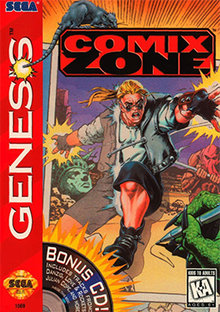
220px-Comix_Zone_Coverart

If you look closely, you can see Danzig advertised on the cover of Comix Zone.

15. Going Down to Die (Danzig IV) – A showcase for Glenn Danzig’s vocals, this song’s title also tells you all you need to know about the subject of the song. There’s some imagery of the River Styx and a feeling of fatigue as the voice of the song makes its way into the afterlife. I love how the song paces itself, with some drum crashes mid-verse and a big chorus. This song also features one of John Christ’s best guitar solos he contributed to the band as it’s sweeping and melodic while containing plenty of technical proficiency. If you happened to be a Sega Genesis gamer back in the mid-90s and purchased the game Comix Zone you received a sample CD with this song as the lead-off track. Aside from this song though, the rest of that disc was pretty bad.

14. Godless (How the Gods Kill) – Maybe the best album opener Danzig has recorded, though there are a lot of them and some still to come on this ranking. “Godless” packs a punch right from the start, but it slows things down as the vocals come in. The faster section returns and the song really cooks, to borrow a phrase from the 50s, before ending with a weird prayer of sorts. I love John Christ’s guitar work on this one and Chuck Biscuit’s drumming is what brings the whole thing together. Danzig’s vocals are also great, though a little low in the mix at times. It’s a great song though, and the rebellious subject matter made it one of my favorite songs when I was a teen, and some 20 years later, it still does it for me.

Since this is a Danzig list, it feels appropriate to cut this part off here and do a top 13 instead of a top 10. Plus we’re over 4,500 words as even though I try to be brief with my description of each track, I apparently still say too much. Check back on Tuesday, as we pause for Dragon Ball Z Movie Monday, when we’ll be wrapping this feature up with the best songs of Danzig!