The Sega CD was quite possibly Sega’s first real misstep when it came to hardware and add-on peripherals for its products. It’s hard to say if it truly was though, as I don’t know if the Sega CD returned a profit for Sega. The mere fact that the company released three versions of the add-on suggests it at least viewed it as important to the company, but even if it did financially benefit Sega it’s hard to imagine it really helped the company’s image. And that’s because the Sega CD was pretty expensive and also pretty terrible. Sure, there are fans out there for the Sega CD and its library of games, just as there are for the Virtual Boy, but for the most part the software for the Sega CD was mediocre or downright terrible. Fans likely remembered that when Sega tried to introduce another add-on to extend the life of the Genesis/Mega Drive in the form of the 32X, which basically all acknowledge as a true flop. Sega’s hardware sales following this era of game consoles was poor enough to see the company exit the hardware space in 2000 and pivot to a software only company.
When I made a post about the Sega CD in 2011, my intention at the time was to do more. That inaugural post concerned a recent purchase of mine: the Sega CDX. The CDX was the third iteration of the device following the first two versions released by Sega for the Model 1 and Model 2 Genesis. The CDX was the company’s first, and only, attempt at releasing what is essentially a stand-alone Sega CD as it also functioned as a Genesis. It was expensive, like all things seemingly related to the Sega CD, and retailed for an eye-opening $399 at release. Which is actually a bargain compared with some of the other non-Sega versions of the product. Pioneer actually released the LaserActive which could support Sega CD games, among other things, but the total would run a consumer $1,600! Premium game consoles were obnoxiously priced in the 90s and it’s no wonder they basically all failed.

If you’re going to play a Sega CD game might as well do it on a CRT television.
I only purchased the CDX because I had forgotten it even existed until stumbling upon some eBay listings at the time and because I was a bachelor with disposable income. I never had a Sega CD growing up, but loved my Genesis, and I had always wanted one. The CDX was quirky and cute and it was much smaller than most consoles and was actually marketed as a portable CD player as well (a task it can do, but not very well) because of its diminutive size. It was pretty cool, and I ended up finding one in great shape that was only missing the original box. I cared little about that though and set myself to playing Sonic CD pretty much right away. The problems came when Sonic CD was finished.
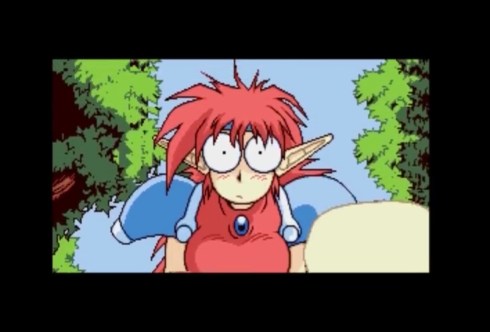
Popful Mail stars a bounty hunter by the same name who is quite terrible at being a bounty hunter.
I wanted to play more Sega CD games, and had a few others as the CDX came bundled with additional software, but there really wasn’t a lot out there worth playing. Basically all of the truly great Sega CD titles saw release on other consoles. And I’m mostly referring to the Lunar series when I say great. After Lunar, there was a smattering of worthwhile software, the problem though was that most of that software consisted of Genesis ports with enhanced audio and slightly upgraded visuals. After that though is the unique, Sega CD exclusive, software of which most is poor. You have likely heard about Nightrap which became infamous because some felt it was a weird fetish game about peeping on young girls and watching them get murdered. The actual title is far less interesting and it’s terrible. So many Sega CD titles went this route though where it was essentially video with occasional button prompts. And if you have watched video lifted from a CD before then you know it’s rather ugly.
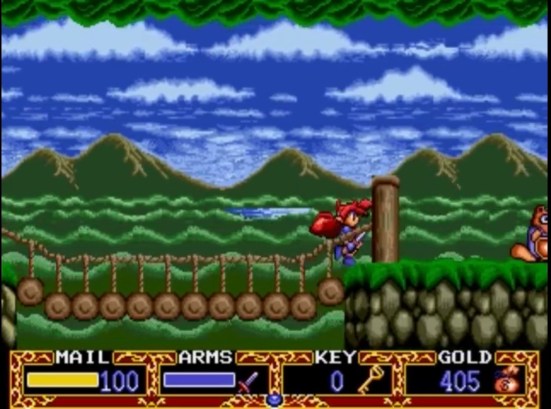
The game is reasonably nice to look at and it runs smooth with few interruptions for loading.
There was one game though that I wanted to play and I actually secured a copy relatively close to the time I purchased my CDX and that game is Popful Mail: Magical Fantasy Adventure. I don’t know why it’s taken me this long to get to it, but Popful Mail is a game that caught my eye because it’s a hybrid game. The game is a Platformer/RPG and I arrange the classifications in that order for a reason. It’s definitely more in-line with a traditional platformer, but it does indeed toss in some RPG mechanics. In the game, you play as Mail, a spritely young anime babe with a small outfit and a big personality. You run through the various levels which are all interconnected smiting bad guys and collecting gold. Along the way you’ll be able to spend some of that gold upgrading Mail’s equipment while also meeting non-player characters, some of which will ask for Mail’s help in tracking down an item or defeating an enemy. It’s a bit similar to Link on the NES, though without a robust leveling system. It’s a Falcom game published by Working Designs, so the production values are there and the gameplay is solid making it a relatively safe bet for purchase.

The golem will likely be the first boss many encounter some difficulty with. Trial and error is the name of the game here.
The game opens with our protagonist, Popful Mail, out attempting to secure a bounty. Mail is an elven bounty hunter who, according to the game’s manual, sucks at her job. When the bounty goes bust, she turns her attention to a new target: Muttonhead. This absurdly named character is a wizard with a 2 million gold bounty on his head so naturally Mail is pretty interested. The intro is done in anime and for a Sega CD title it looks pretty nice and the voice acting is lively. When the game drops you into play you’ll find yourself in control of Mail. She moves rather fast and has a heavy feel to her when she jumps. It takes some time to get adjusted, but it lends itself well to a speedy style of play. Or it would, if enemies didn’t sometimes take repeated jabs from Mail’s sword to fall. Each enemy encountered will have a health bar displayed in the game’s HUD at the bottom of the screen. Mail’s info is there as well and while she has 100 health she’s not particularly durable. If you just try to barrel ahead you may find yourself dead in short order.

As you make your way through the game more characters join in Mail’s quest to take down Muttonhead.
In order to navigate this dangerous world, Mail will need to make use of all of her skills, of which there aren’t many. Her sword is her main method of attack and she can attack while standing, crouching, or jumping. When crouching, Mail can pull up her shield which will completely protect her from projectile attacks. It’s important to get used to this as Mail will often be tasked with dispatching one enemy while an enemy behind it shoots at her. One of the barriers for newcomers is learning the quirks of the game. Popful Mail basically requires you to abuse the fact that when enemies are blinking after a hit the player won’t take damage from them. It’s a key to beating the first really tricky boss, the golem, as he slides across the screen and can’t be cleared with a leap. Mail instead needs to just whack him and let him pass by her unscathed. If your timing is off though, the duration of this blinking state won’t be long enough and Mail will take a beating. The biggest hindrance to Mail’s existence is her natural desire to go fast. The game positions Mail approximately two-thirds of the way across the screen so if the player is zooming along there isn’t much chance to react to a new enemy. When enemies are defeated most will drop a small sum of gold while healing items (like various fruits and herbs) are hard to come by. The player is at least free to save their game whenever they wish so the penalty for death isn’t too terrible if the player saves often. When loading a game, the player will typically spawn wherever they entered the screen they were on at death.
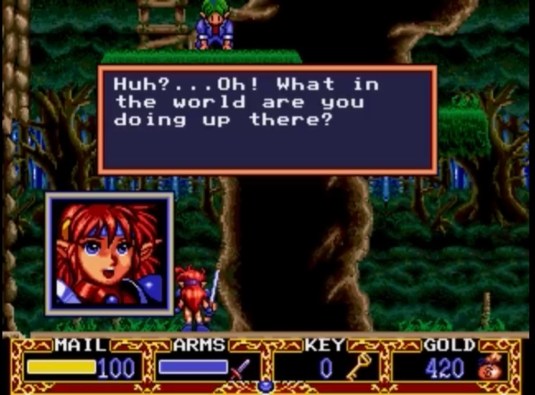
While out and about, the player will also encounter other characters in need of some help.
The game takes place mostly in levels that are long and connected. There is also a brief overheard map to traverse at times that more resembles Super Mario World than Link. Mail will be tasked with exploring the many stages both horizontally and vertically. There are different paths to take some of which lead to treasure and some of which advance the plot. Mail will often encounter NPC’s that need help before the plot can advance, like freeing someone from captivity who will then open a way to continue onward. Sometimes Mail will find little towns where she can spend her gold on upgrades. Mail can upgrade her weapons and armor which in turn improve her underlying stats, though she can’t level-up. These upgrades seem to do little though. If you’re struggling with an area and think the solution is to backtrack and buy better equipment then you’ll probably be disappointed. The solution is often to simply “get good” and take advantage of those saves.
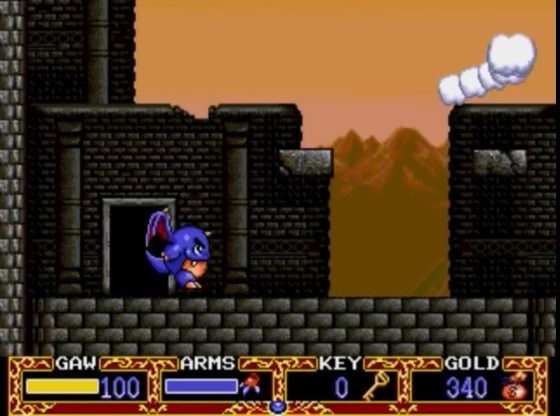
Gaw is the last to join the fun, but he’s certainly the most unique.
During Mail’s journey, she will eventually find some allies in her quest to stop Muttonhead. Tatto is the first ally Mail will add. He’s a wizard with a score to settle with our antagonist and he becomes available roughly an hour or so into the game. Eventually, Gaw will join the group as well. He’s a monstrous little bat creature that can’t fly, but he can jump higher than anyone else. The characters are largely distinguished in how they move. Mail is the fastest, but her jump is the worst. Gaw is the slowest, but he can jump the highest with Tatto settling somewhere in between. The other characters can also attack from a distance. Mail can as well if you supply her with daggers, but they’re costly. You’ll be able to augment Tatto’s abilities by buying new staves while Gaw can also improve his attacks by buying…a new tail? It’s odd, but it works well enough. Changing characters is done by accessing the menu and switching there. It would have been nice if selecting a character could have just been mapped to a button to cycle through, but it’s possible the game needs a little time to load the new sprite since this is a CD system. Each character also has his or her own health bar so unlocking a new character effectively doubles the available hit points. If one character falls though it’s game over, so you have to remember to switch them or heal if near death.
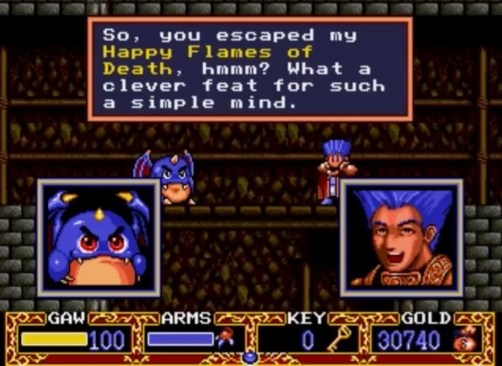
If you’ve played a Working Designs game before then you should be familiar with the company’s brand of humor.
The game is not super long. The goal to unlock the best post credits content (basically just voice outtakes) is five hours. Most players will probably need six or seven on their first playthrough not accounting for deaths and reloads. The game is challenging, and it’s also arguably one of those games that starts harder before getting progressively easier as new characters and abilities are unlocked. It’s a mostly fun play, though it’s not going to “wow” most who play it. There’s not a ton of nuance in how to attack and Working Designs’ decision to make the enemies more resilient when localizing this wasn’t a great choice as things can get a bit tedious. Some enemy placements feel a bit cheap too as this is a game less about finesse and more fixated on trial and error. There’s a reason Falcom has continued with the Ys franchise and not the Popful Mail franchise all these years.

Almost all of the dialogue in this game is voiced and there’s plenty of anime to help push the plot forward.
Being a CD game and one localized by Working Designs, it shouldn’t surprise many to know that what stands out most are the production values. The game is nice to look at, though visually it’s not really any more impressive than most Genesis titles. Character designs are kept simple and some of the boss characters are considerably larger than the player and are fun to take in. The voice acting is about as good as one could hope for in the early 90s as anime and video games didn’t exactly attract the best talent. Melissa Gulden, who voiced Mail, stands out as a bright spot for the game while some other performances can be a bit wooden. According to the manual, roughly 3 hours of voice work had to be compressed to fit onto the CD and it’s certainly noticeable when you hear it. That’s the reality of game development though back before DVD and high capacity media. The anime cut scenes are also compressed significantly, but it still looks all right.
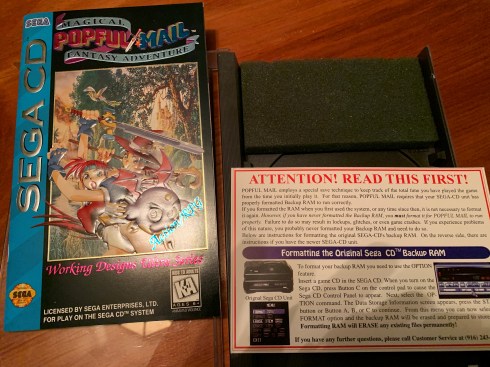
My own personal copy. I was fortunate to find one in terrific shape that even has this supplemental card and the foam insert.
I would say if you happen to be the owner of a Sega CD then Popful Mail is a worthwhile addition to your collection for the simple fact that it’s actually worth playing. The game was also released on the Super Famicom where it stands out less as that console is practically bursting with quality content. By far though, the biggest hindrance to playing Popful Mail in 2020 is cost. When I purchased this game in 2011 it wasn’t exactly cheap, but it wasn’t where it’s at today either. The Sega CD version for just the game is now routinely listed for hundreds of dollar. There are some sellers trying to get more than $500 for complete versions. Perhaps that makes me foolish for still clinging to my complete version. My copy is missing the mail-in survey card on the back of the manual, but I do have the “Attention!” card the game came with which tells owners how to properly format their console’s system memory for saving. Easily, the most economical way to play the game is to go after the alternate versions. They’re still not exactly cheap, but the Super Famicom version is far less expensive as is the PC Engine version. Even the Mega CD version is a lot cheaper, though it lacks that Working Designs polish (it’s also supposedly easier).
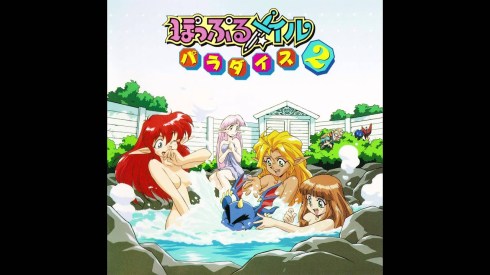
Considering the game stars a buxom, anime, woman with no pants it probably comes as no surprise to learn there’s plenty of pervy art out there.
If Popful Mail were available to anyone who had a Sega CD and wanted the game then I’d say go for it. Since that isn’t the case though I can’t exactly recommend it. The price point has put this game into the territory of “For serious collectors only.” The Sega CD library is actually trending towards that. When I first purchased my CDX, the Sega CD wasn’t as sought after as it is today. It seems as people get older and get more interested in collecting retro games, everything has gradually gone up. It started with Nintendo games before spanning to the 16-bit games. As the actual good software disappears, collectors turn to other untapped libraries. And the Sega CD is desirable to collectors partly because the library isn’t massive compared with the Genesis or NES. It’s also more harrowing though as Sega CD hardware isn’t as reliable as cartridge-based hardware as those lasers are just ticking time bombs. If the Sega CD version of Popful Mail were to become available overnight on an E-shop it would be worth a look just to see what all the fuss is about. It’s a genre that’s been done much better, but the game is not without its charm.












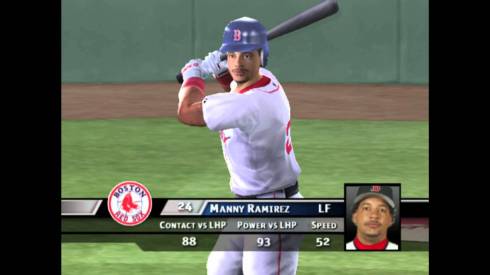
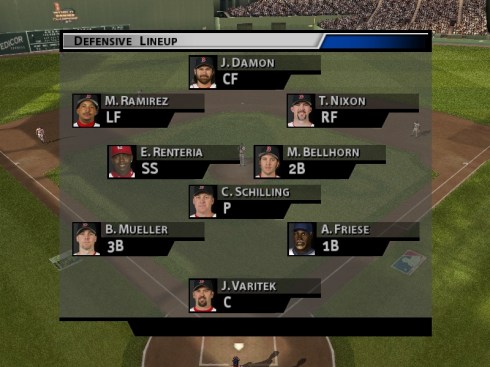
 We’ve had a warm winter up here in New England. That’s been especially true of late as Spring has really been in the air, even though it’s technically still weeks away. Whenever the weather starts to warm and the air has that damp taste to it, I start to think of baseball. Open windows, lemonade, Wiffle Ball out in the yard, and Spring Training on TV. Or rather, that would be true if not for the fact that we’re all basically self-quarantining this year thanks to the COVID19 virus, but I digress. This time of year makes me especially nostalgic for my college years when I had time to consume baseball in ridiculous quantities. I’d watch Baseball Tonight on ESPN religiously and look forward to the annual publication of the Baseball Prospectus handbook. As a fan of the Boston Red Sox, it was an especially good time to be a baseball junkie as the team finally captured World Series glory during that period. I had grown up a fan of the team watching the likes of Roger Clemens, John Valentin, and Mo Vaughn, among others always wondering what it would be like to see the team actually win something, but never really expecting it to happen.



 It was announced earlier this week that a Teenage Mutant Ninja Turtles branded Loot Crate was incoming later this year. NECA, or NECA’s parent company to be more exact, rescued Loot Crate from bankruptcy last year and has been aiming to revamp the subscription service by incorporating NECA product into the boxes. If you’re not familiar with the scheme (some would argue scam), Loot Crate is basically a blind box service. Each box usually retails for about $50 and the only thing the buyer knows is what the general theme of the box will be. They’re almost always advertised as being a greater value than what they’re charging, which is a ludicrous statement, and instead they’re full of junk that would be a hard sell on its own. That’s likely why the service went bankrupt, but NECA appears at least committed to making this thing worthwhile.


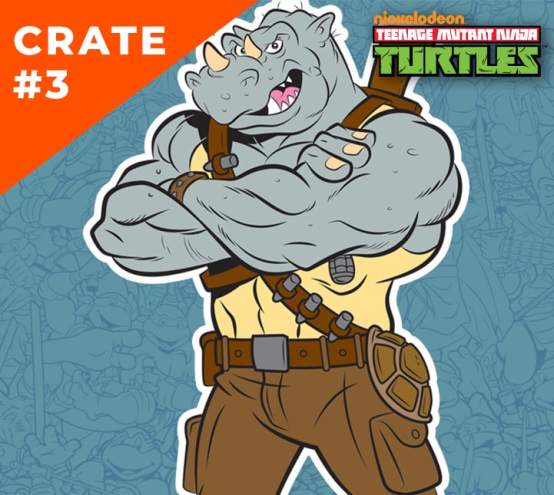


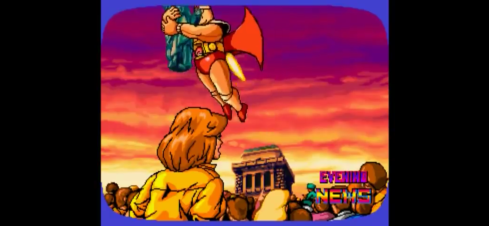
 Rhino-Man – I talked about wanting this figure in my list of most wanted NECA figures, so naturally I’d put him here. This was Rocksteady in a super hero costume. He could easily be repainted to accomplish the look well enough, and once again it would setup for a future release of Bebop in his super hero attire. Since fans would expect such a move, that version of Bebop could once again occupy the bonus figure slot or something.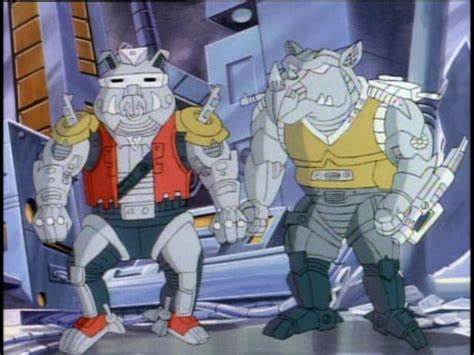
 Ever since NECA forced the hand of Nickelodeon to grant them an expanded license for Teenage Mutant Ninja Turtles the toy company has been killing it with its releases. We don’t know if Nickelodeon found a loophole to exploit with the master license that has been held by Playmates since the mid 80s or if the company had to sign off on it. Either way, I like to think this is all a result of NECA just making a product that could not be ignored. And if everyone is making money, then everyone is probably happy.


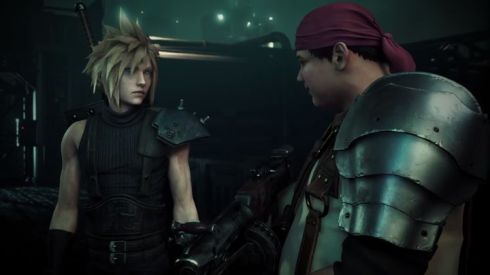
 It’s been a long time since I discussed the possibility of a Final Fantasy VII remake. After mentioning it here and there in other posts, I made a



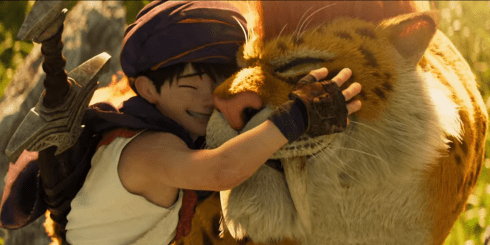
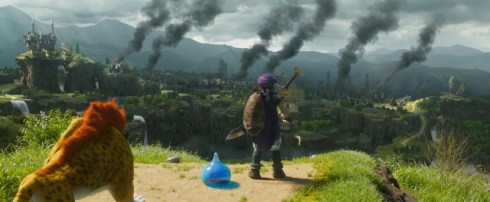
 In the 1980s, game designer Yuji Horii set out to create a role-playing experience similar to a pen and paper RPG for a video game console. The goal was to blend elements of those experiences with statistical and complex Western PC games like Wizardry and Ultima as the back bone. In order to make it appeal to a Japanese audience, he wanted to infuse it with what he had learned working with manga and add character and story to the equation. The end result of that was Dragon Quest, known for a time as Dragon Warrior in the West. In creating Dragon Quest, Horii gave birth to the genre we know and love as the Japanese Role-Playing Game, or JRPG for short.


 It was an interesting journey for the world’s most famous hedgehog to go from the small screen to the big screen, but the journey was finally completed Valentine’s Day 2020. Originally set to debut last Thanksgiving, Sonic the Hedgehog famously was delayed when fans reacted unfavorably to the title character’s design. Like Detective Pikachu before it, Sonic the Hedgehog was attempting to bring a CG version of the titular character into a real world setting. Fans were justified in their reaction to the debut of the character as he was only vaguely a representation of a character that’s been around for 30 years. The extra time, money, and effort to redesign Sonic has apparently paid off as the film raced out to an impressive debut weekend topping the weekend box office.