Category Archives: Television

#23 – Robot Chicken’s Half-Assed Christmas Special

MV5BMTQ4NDMzMDg5MV5BMl5BanBnXkFtZTcwODcyNTUzMQ@@._V1._CR31,27,314,421_SY317_CR11,0,214,317_AL_Robot Chicken is the brainchild of veteran actor Seth Green and Mathew Senreich. It’s hard to believe the show has been running for ten years now, but that’s the reality of the world and in that time the show has produced three Christmas specials.

The show is basically an animated version of ToyFare magazine’s Twisted ToyFare Theater that sees popular toys dropped into humorous sketches. The focus is mostly put on turning old action figures, like Mattel’s popular Masters of the Universe line, into puppets to create stop-motion sketches. The integrity of the old toy is retained but it’s often modified to include more points of articulation to create better animation. Other times the show creates its own puppets or finds random toys to repurpose into new ones. Sketches vary in length, but it’s not uncommon for one to last merely a few seconds. In that sense they’re often like micr0-sketches when compared to a traditional sketch comedy program. Usually there’s at least one longer sketch that may last a few minutes that serves as sort of the feature sketch of the episode with each episode only lasting around twelve minutes.

The show is pretty funny, and I suppose it would have to be to have lasted ten years, and the fact that each episode is so short has helped to prevent the show from becoming stale. While it’s rare for all sketches in a single episode to be laugh out loud funny, there’s usually enough there for the show to be entertaining for its short duration.

As a result, it’s hard to really review a single episode like the Half-Assed Christmas Special. And in truth, both of the other two Christmas specials (DP Christmas Special and ATM Christmas Special) are basically just as good. And since these are actually the few shows I do not have a copy of, it’s hard to recall which sketch came from which special, so I’m just going to mention some I remember.

A_Very_Dragonball_Z_Christmas

You better watch out when Composite Santa is on the loose!

Since the show is stop-motion it’s naturally suited to parody Rankin/Bass productions. There’s a sketch that tries to discover who murdered Santa Claus where everything is basically done up at the North Pole Rudolph style, though a cocaine-addicted Frosty is present as well. The anime Christmas sketch features Santa enlisting the help of Goku and his son to save Christmas from Composite Santa, who’s half-Santa half-Frosty, and eventually a showdown with an Akira-esque Mrs. Claus occurs. The origin of Composite Santa is also detailed in his own sketch when a mad scientist tries to create an irresistible holiday character but he turns out to be genocidal.

Hermey from Rudolf shows up in “Hermey’s Dentistry,” where we see Hermey actually knows nothing about being a dentist and fails miserably at that and other professions. He returns to Santa to beg for his old job back and then the sketch turns into a Godfather Part II parody. “Co-opting Santa” sees Kris Kringle voice his displeasure with the Coca-Cola Company for co-opting his image for over 70 years in a very violent manner. A simple, but effective sketch, also features Santa getting mistakenly murdered after he had a sudden urge to drop a deuce while on the job. This simple, but crude, setup and execution pretty much sums up Robot Chicken in two minutes.

Unfortunately, Robot Chicken’s Christmas themed sketches aren’t available in one volume, to my knowledge, so if you want them you have to buy each individual season. Thankfully, Adult Swim is pretty good about broadcasting the specials every year a couple of times around Christmas and I would assume the same will be true for 2015. We may even get a fourth Christmas special if we’re lucky. Individual sketches are also available on Youtube. The Robot Chicken specials are too short to really feature any actual Christmas cheer, it’s basically just a funny use of Christmas imagery. It’s certainly not going to bring about those warm fuzzies other specials will, but they’re pretty good at getting laughs which makes them a unique entry in this top 25.


#24 – Winnie the Pooh and Christmas Too

winnie-the-pooh-and-christmas-too-winnie-the-pooh-and-piglet-as-santa-claus-and-reindeer

Winnie the Pooh and Christmas Too (1991)

Call this one a total 180 from #25, Winnie the Pooh is as safe as it gets. The gluttonous stuffed bear has been delighting children for decades along with his buddies in the Hundred Acre Woods (where Christopher Robin plays…) in the most tamest of ways. Winnie the Pooh just manages to be charming enough to not be boring, though if your kid likes to marathon Winnie the Pooh cartoons you may beg to differ.

Winnie the Pooh originated in book form by A.A. Milne (actually, Winnie originated in Canada as a real bear) but American audiences are likely more familiar with the Walt Disney version of the character. That Winnie the Pooh was brought to life on the big screen as a sort-of collection of shorts eventually packaged into one main feature referred to as The Many Adventures of Winnie the Pooh. In 1988, Pooh was brought to television in The New Adventures of Winnie the Pooh, a mostly forgettable 80’s cartoon series that, like many cartoons of that era, is probably most fondly recalled for its catchy opening theme.

pooh-year-2

Not surprisingly, things tend to work out in the end.

The New Adventures did reintroduce the character to a new audience, and the same cast was utilized on several direct to video films and specials, such as Winnie the Pooh and Christmas Too. In this special, Christopher Robin writes a letter to Santa for everyone, but Pooh forgets to ask something for himself. When he and Piglet retrieve the letter, he and his friends re-write it to include more stuff as the gang all experience some momentary greed. When Pooh and Piglet attempt to resend in the letter (in a very low tech kind of way) it gets lost. Not wanting their friends to have a crummy Christmas, Pooh dresses up as Santa and attempts to deliver presents to all of his friends himself.

If you go back and watch the old Pooh cartoons from the 70’s, you may pick up on the fact that Pooh is a glutton, through and through. To the point where it’s almost not cute as he really cares about his stomach above all else. The modern Pooh isn’t quite so bad, which is why this special ends in the way it does with Pooh not too concerned about getting anything for Christmas when he has his friends already and everybody learning a lesson (but also getting presents too, so it’s not like they were made to suffer). It’s cute and it’s safe, but not offensively so. If you’re looking to check it out for yourself, Winnie the Pooh and Christmas Too is sold in both DVD and Blu Ray form as A Very Merry Pooh Year and includes a New Year’s special as well. And if you’re not picky, you can probably find it for pretty cheap on the second-hand market. Otherwise, I’m not sure if it will air on television this holiday season, but you can always check this site to see if it pops up.


#25 – Moral Orel: The Best Christmas Ever

maxresdefault-2As we kick-off the best Christmas specials feature I say we start with something dark and cynical. It’s no secret that most Christmas movies and TV specials are sweet, warm, and offer a heartfelt message about the holidays (usually something about love, sharing, compassion, selflessness, and so on). That stuff is fine in small doses, but after many Christmases it can also become trite.

Moral Orel’s “The Best Christmas Ever” is hardly the typical Christmas special. If you are not familiar with the Moral Orel series, it’s a stop-motion short-form series that aired on Adult Swim from 2005-2008 and sporadically after. It focused on the title character, Orel, a goody goody two-shoes that just wanted to praise God and live by His word. Each episode usually centered around Orel taking something too literally from a  church sermon and doing something sacrilegious by mistake only to have his father set him straight in the end with a good lecture and a good beating. The adults surrounding Orel were mostly a bunch of miserable, sinful, hypocrites that rarely practiced what they preached, but Orel remains oblivious to his surroundings.

moxmas1

Orel’s blind faith in God and ignorance leads to him concluding this was the best Christmas ever in the end.

For “The Most Wonderful Christmas Ever,” Orel hears about the second coming of Jesus during church and that he won’t be happy when he returns, ushering in the Apocalypse. When Orel overhears his parents arguing about his malcontent younger brother, with his dad proclaiming his doubts the kid is even his, Orel mistakenly reaches the conclusion that his little brother is Jesus reborn. Orel’s attempts to welcome the baby Jesus are pretty humorous, but the side story of his father’s depression over his crumbling marriage is some pretty dark stuff.

Moral Orel is basically a satirical black comedy and its Christmas special captures that perfectly. In a world full of terrible Lifetime and Hallmark Channel Christmas movies, Moral Orel is a nice piece of Christmas bleakness that is funny because it’s not like anything else. Even Bad Santa has more Christmas cheer than this one.


The 25 Greatest Christmas Specials

christmas-tvNo holiday spawns more television specials than Christmas. Really, no holiday spawns more of anything than Christmas (Halloween probably creates the most cavities in children). Christmas is a pervasive presence in our society. It’s everywhere, which makes the imaginary “War on Christmas” all the more ludicrous. Christmas is so inescapable this time of year that it’s hard to not feel cynical over the whole thing. Somehow I’ve managed to retain a fondness for the holiday despite having no religious givings in my bones. I enjoy the splendor, for the most part (Christmas songs are mostly terrible and annoying), and the warm fuzzies the holiday stirs inside me. Mostly though, I just like how I’m able to recall how excited I was as a child knowing Christmas was coming. It’s my ability to tap into that part of me that likely keeps the fire alive.

Each year since I started this blog I’ve taken the time to make Christmas-centered posts every December. This year I’m taking it one step forward and posting what I consider to be the 25 best Christmas specials created for television advent calendar style. What do I mean by that? Well I plan to post a short blog entry on each special on each day of December leading up to the holiday. You may be thinking this sounds like a rip-off of Chris Antista’s A Cartoon Christmas blog and you would be right. In defense of my own ranking I’ll say I’m not limiting myself to just cartoons (though expect the list to be dominated by them) and A Cartoon Christmas never attempted to rank the specials in such a fashion. Also, that site hasn’t been updated since 2013 and the last time the advent calendar format was utilized was 2012 so I think enough time has passed that someone else can do something similar.

My only criteria for selecting the best Christmas specials is that the special must have been featured on television at some point. This excludes Christmas movies, because they’re just a different animal, but not cartoon shorts that originally debuted on the big screen but have since become television staples around the holidays. This also means I’ll be doubling up on some specials that I’ve written about in the past. Many I covered in the first year of this blog as part of my Essential Christmas Viewing posts, but there they were covered in brief. A few have had full write-ups, and where that has occurred I’ll link to the original post but also offer up some fresh takes.

Now, my typical blog posts tend to stretch on for thousands of words, which is why I only end up making 2 or 3 a month. As a result, expect these blog entries to be much shorter than my typical ones. Hopefully by doing so I’ll be able to keep myself from falling behind. Obviously I’ll be writing and working on this list in advance of any being posted so expect this feature to pretty much dominate The Nostalgia Spot for the remainder of 2015, though I may find time to slip in a post or two on other subjects.

#25. Moral Orel – The Best Christmas Ever

#24. Winnie the Pooh and Christmas Too

#23 . Robot Chicken’s Half-Assed Christmas Special

#22. Invader Zim:  Most Horrible X-Mas Ever

#21. Married…With Children – You Better Watch Out

#20. The Snowman

#19. It’s a SpongeBob Christmas

#18. Beavis and Butt-Head Do Christmas

#17. A Muppet Family Christmas

#16. Yes, Virginia

#15. Frosty the Snowman

#14. A Very Special Family Guy Freakin’ Christmas

#13. Rudolph the Red-Nosed Reindeer

#12. Futurama – Xmas Story

#11. Prep & Landing

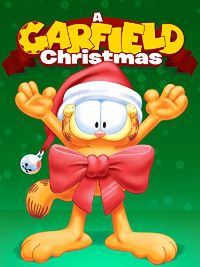
#10. A Garfield Christmas

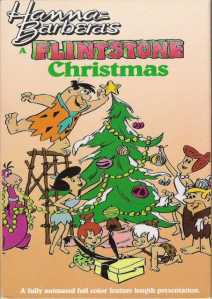
#9. A Flintstone Christmas

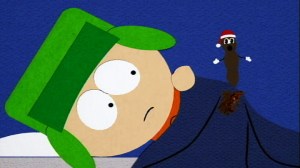
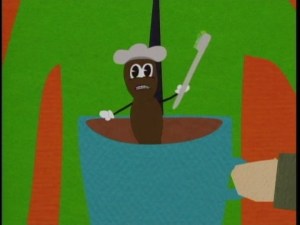
#8. Mr. Hanky, The Christmas Poo

#7. Toy Tinkers

#6. Simpsons Roasting on an Open Fire

#5. Pluto’s Christmas Tree

#4. A Charlie Brown Christmas

#3. A Chipmunk Christmas

#2. Mickey’s Christmas Carol

#1. Dr. Seuss’ How the Grinch Stole Christmas!


#1 Best in TV Animation: The Simpsons

The_Simpsons_LogoCould it really be another? There have been funnier shows, better looking ones, and shows with better stories to tell, but it’s hard to argue against the show that made prime time animation a thing and has lasted over 25 years. The Simpsons are an American institution at this point. There are people in their twenties who have never had a year of their life pass by without a new season of The Simpsons. That’s pretty incredible. And say what you will about the quality of the show in recent times, there’s still a large body of work that’s among television’s best.

Let me actually start with the argument against The Simpsons being number one. Really, that argument boils down to the show not being very good for the last ten or fifteen years. You’ll be hard-pressed to find a fan of the show willing to argue that the best is happening right now. The general consensus seems to be that the show’s peak was probably seasons two through seven. Seasons eight through twelve have their moments, and from there the show has been in a downward spiral of re-used plot devices and poor gags. After all, how many times have Homer and Marge split-up during an episode only to patch things up in the end? Or how often has Bart pulled some elaborate prank only to feel remorseful after the fact? For me, the best era of The Simpsons probably ended with the season nine premiere, “The City of New York vs Homer Simpson.” It was a promising start to what ended up being a mostly mediocre season. I’d argue though that The Simpsons ever since has mostly remained mediocre and has never produced a truly awful season. Though I concede one should feel fortunate if there’s at least one memorable episode per year that isn’t a Treehouse of Horror installment.

The first family of animation: Maggie, Marge, Lisa, Homer, and Bart.

The first family of animation: Maggie, Marge, Lisa, Homer, and Bart.

Even if I were to go so far as to say that The Simpsons has been bad since season nine, that’s still nearly two-hundred episodes of quality prior to that. Such an episode total dwarfs almost every other series on this list with the only comparable being South Park (which has had its own peaks and valleys over the years). When The Simpsons was operating at its best it was sharp, funny, satirical, but with enough heart to make viewers care about the characters. It operated as a pretty typical sitcom, but one willing to take advantage of the animation medium. Characters never had to age and the town of Springfield could be filled with hundreds of characters without the need to expand the cast.

What made The Simpsons a hit was its edgier brand of humor when compared with other sitcoms. The Simpson family was dysfunctional. Bart and Homer were always at odds with Homer being a rather poor example for the kids. They weren’t as hopeless as Fox’s other family, The Bundys, but they certainly weren’t The Waltons (much to the dismay of then President George H.W. Bush). Bart dominated the early episodes, often getting into trouble and just being a general delinquent. Overtime, Homer moved more and more into the spotlight as his I.Q. seemingly deteriorated more and more each season. Lisa and Marge have mostly served in a supporting role with each representing a foil for the male members of the family. Often once or twice per season one of the ladies would assume a starring role. The supporting cast became robust and episodes would even follow someone from Springfield with The Simpsons serving in a supporting role. It’s hard to pick a best character from outside the family because there are just too many to choose from. The miserly Mr. Burns is so good as the boss character/villain of the series (boss as in Homer’s boss, not video game boss, though he did serve in that role too). Krusty is well known as Springfield’s resident celebrity as is the cartoon duo Itchy and Scratchy. Moe, Barney, Troy McClure (voiced by the late, great, Phil Hartman), Ned Flanders, Principal Skinner, and on and on it goes. I doubt there’s ever been a larger cast in the history of television.

The cast is positively ginormous.

The cast is positively ginormous.

Every cartoon needs its own look, and visually, the series has always been distinct with its yellow skin-toned characters and circular eyes. Everyone sports three fingers and a thumb and wears the same clothes every day. The quality of the animation was a bit crude in the early going with some of the colors in the first season looking washed-out. As the series became a success, more and more money was tossed its way and the quality of the animation has steadily risen each year. In fact, that’s one thing the current episodes can boast over the classics: better animation. The show is often bright, but not distractingly so, with a lot of Springfield often appearing kind of run down. The main theme of the show was composed by Danny Elfman and is about as well-known as any other television theme. Shockingly, Fox has been able to keep the same vocal talent onboard over the years, though it hasn’t always been easy. There was a time when it appeared as if the rising costs of production due to raises for the cast would eventually kill the series, but now that seems unlikely. Everyone is past their career prime at this point and there’s less of a call for them to leave the show to pursue something else. They’re also all nearing or beyond retirement age and I imagine The Simpsons is a nice source of income they can rely on now. They’re also not stupid and know the show has gone past its peak so they’re unlikely to demand significant raises going forward, unless they collectively all decide they don’t really want to continue working on the show and demand Fox make them an offer they can’t refuse. It must be noted though that The Simpsons hasn’t avoided some tragedy over the years (it would be almost impossible for it to considering how long it’s been on) losing two popular talents. Phil Hartmen, who voiced many supporting roles, was murdered in 1998 while Marcia Wallace, voice of Bart’s hard-luck teacher Mrs. Krabappel, passed away in 2013. Both actors had their respective characters retired upon their death.

A neat graphic of the principal voice talent and the recurring characters they voice.

A neat graphic of the principal voice talent and the recurring characters they voice.

Just as it’s hard to pick a favorite character, it’s hard to pick a favorite episode or even season. The show was so good and so consistent in the early 90’s that it seemed to turn out a classic every week. “The Telltale Head” from season one is arguably the show’s first classic, along with the very first episode “Simpsons Roasting on an Open-Fire,” which is still the show’s best Christmas episode. “Bart the Daredevil” is another classic with an iconic moment even referenced in The Simpsons Movie. “Homer vs Lisa and the 8th Commandment,” “Bart the Murderer,” “Flaming Moe’s,” “Homer at the Bat,” “Marge vs The Monorail,” “I Love Lisa,” “The Last Temptation of Homer” and so many more. It truly is a daunting task to list the best of the best. Just coming up with a list of the best Halloween specials is hard (which The Simpsons must have a record for most Halloween episodes, easily)!

The Simpsons has been on television for so long that its legacy is likely going to be forever linked to its longevity. It has almost surpassed the show’s reputation for just being a damn good TV show. And how long will it go on? Who knows? The natural assumption would be 600 episodes, or maybe a 30th season, but it’s possible the show just goes on and on until someone too important decides to leave. It likely won’t go quietly as I imagine Fox would not allow the show to just end without making a big deal out of it, and they should. The show deserves as much. If it weren’t for The Simpsons it’s unclear what the landscape for adult cartoons would be. Sure, The Flintstones came first, but The Flintstones were not as nearly as impactful. While The Simpsons embraced the animated form, The Flintstones tried to be a typical sitcom that just happened to be animated. I may not watch The Simpsons on a weekly basis anymore, and really have not since the nineties ended. I still do not look forward to the day when The Simpsons has ended. It may no longer be the best show on television, but I still think the world is a better place with The Simpsons on at 8 PM every Sunday.


#2 Best in TV Animation: Cowboy Bebop

Cowboy Bebop (1998)

Cowboy Bebop (1998)

Three…Two…One…Let’s jam!

Of all the mainstream arts, television is the one that has seen the biggest advancement in terms of relevance over the past fifteen years. It used to be that TV was nothing more than the idiot box, a thing to rot our brains with. It was the home of the sitcom, a mostly safe way to kill 25 minutes on a weeknight, or daytime soap operas with outlandish and never-ending plotlines. Even the more celebrated dramas often had a “play it safe” mentality designed to entertain for a single episode before putting everything back in place for next week. There wasn’t much going on that seemed worthy of the term “art,” and an actor jumping ship from Hollywood to the small screen was seen as an admission of failure on said actor’s part.

Things are different now and some of the best stories, acting, and directing are occurring on television. Most of this is attributed to premium cable network HBO and their series The Sopranos and The Wire often cited as the two most influential. Basic cable has jumped in on the fun over the past eight years or so with much celebrated hits like The Walking Dead, The Americans, and of course, Breaking Bad. The main networks are still mostly home to popcorn fair but they’re slowly catching on to the changing television landscape.

Before all of these shows were breaking the mold, there was Cowboy Bebop. Cowboy Bebop is an example of strong story-telling with great character development that refused to be a slave to the popular TV tropes. The fact that it was coming out of Japan likely had something to do with it because Cowboy Bebop would never have existed as-is if it were American made. Just imagine a hugely successful show voluntarily ending after just one season of twenty-six episodes (a film would later be released but there’s never been talk of a season two or spin-off that I’m aware of). Cowboy Bebop set out to tell a complete story, and that’s what it did. If there was a temptation to double-back on that and have a second season it was ignored and probably for the better.

From left to right: Ein, Ed, Spike, Jet, and Faye.

From left to right: Ein, Ed, Spike, Jet, and Faye.

Cowboy Bebop is largely credited to director Shinichiro Watanabe, who presided over the twenty-six “sessions” that make up the series. Cowboy Bebop follows the crew of the Bebop, comprised of bounty hunters in the year 2071. In this setting earth has largely been abandoned by humanity due to asteroid activity. A large collection of people now live on Mars, but a lot of the solar system as we know it has been colonized. The Bebop is captained by Jet Black, a former cop with a cybernetic arm. His main running mate is Spike Spiegel who was formerly messed-up with a criminal syndicate but now hunts bad guys for coin. They’re a fairly unsuccessful duo when the series begins but they’re soon joined by Faye Valentine, a woman with no memory of her past and a huge debt to settle, and the sexually ambiguous child Edward, who speaks in the third person and is a computer whiz and hacker extraordinaire. Rounding out the group is a welsh corgi by the name of Ein, a dog with near-human intelligence. They’re mostly a motley crew and often their bounties get away or find a way to devalue themselves preventing the group from really cashing in. Most of their relationships are a bit strained with Spike and Jet often wondering how their duo came to be this group. Faye basically comes and goes at her leisure while Ed just seems to enjoy hanging out with the crew. The various dynamics work out well as they clash often but all seem to reluctantly accept one another’s help when needed.

All of the characters are interesting and well-developed in their own right, but Spike is the show's main character.

All of the characters are interesting and well-developed in their own right, but Spike is the show’s main character.

The animation for Cowboy Bebop is a sophisticated take on the standard anime style. The characters do not possess the exaggerated features of many anime programs but retain enough of the art form’s style to be considered anime. Characters tend to be long of limb. They look like they should animate in a stiff manner but they tend to have a certain flow about their movements. There’s a mixture of handrawn animation and CG with most of the CG reserved for the spaceships. Some episodes are visually dark, others bright. Some settings have an industrialized look to them, others are leafy and green, and some neon and futuristic. There’s a lot going on in the twenty-six sessions and the nomadic nature of the crew adds considerable variety in both story-telling and visuals.

Music is a big point of emphasis by Cowboy Bebop. In fact, each session title is a reference to either a song or style of music. There’s “Sympathy for the Devil,” “Bohemian Rhapsody,” and “Jupiter Jazz,” just to name a few. The music was done by Yoko Kanno and a better anime soundtrack you will not find. The opening title “Tank!” is a jazz-fusion track that has undoubtedly influenced several shows since like The Venture Brothers and Archer. The closing track for each episode, “The Real Folk Blues,” perfectly captures the show’s more melancholy moments. The show’s dub is also particularly impressive. Several of the names attached to it are well-known in the animation community such as Steve Blum (Spike), Wendee Lee (Faye), and Beau Billingslea (Jet).

By far though, the best thing going for Cowboy Bebop is its story-telling. The show slowly peels back the layers of each character throughout the series. At first, Spike comes across as a reckless cowboy who cares only about collecting his bounties. As the series moves along, we see he’s actually a good person at heart and when push comes to shove he usually opts to do the right thing. His story is what I would consider to be the main story. Some of his past, including his rivalry with current syndicate member Vicious, is revealed in the fifth episode “Ballad of Fallen Angels.” More is then revealed in the two-part “Jupiter Jazz” which is essentially the midpoint for the series before wrapping with the two part finale, “The Real Folk Blues.” His story is compelling often alternating between exciting and sad. Faye also has a window to her past opened as the series moves along and hers is just as captivating and arguably more tragic. The episode most centered around her, “Hard Luck Woman,” is one the show’s more satisfying. Jet and Edward are also examined and each has difficult choices to make. We learn a lot about these characters and it’s painful saying goodbye after just twenty-six episodes, but that’s part of the show’s lasting impact.

The Spike/Vicious rivalry is one of the show's main conflicts, but it's never overplayed.

The Spike/Vicious rivalry is one of the show’s main conflicts, but it’s never overplayed.

Interspersed amongst the episodes are one-off palate cleaners, if you would. These episodes take on the form of a “bounty of the week” and we get to see the Bebop crew in action. Some are laden with humor such as the psychedelic “Mushroom Samba” while others are dark and violent, like “Pierrot le Fou.” Even though these episodes are lighter in content, they still offer moments for the characters to deepen our understanding of them or make use of creative story-telling devices, like the Alien inspired “Toys in the Attic.” Truly, there are episodes more likely to be cited as favorites but there is no bad episode among the twenty-six.

Cowboy Bebop nails it at pretty much every level. It’s visually engaging, aurally amazing, and its story-telling was ahead of its time. If the show had a smell or taste attached to it I’m sure they too would have been excellent. It’s rather unique among the other shows on this list, most of which are either comedies or children’s shows. Cowboy Bebop will make you laugh, but it’s definitely not a comedy and its mature subject matter puts it squarely in the adult zone. It’s really one the greatest shows made for television and one of Japan’s finest exports. Thirteen hundred words can not do it justice.


#3 Best in TV Animation: Futurama

FuturamaWhen Futurama was first announced I didn’t think much of it. It felt like an unofficial spin-off of The Simpsons with a stupid title. The premise, a 20th century slacker getting cryogenically frozen to awake in the 30th century, probably should have interested me more than it did. As a result, I, along with most of America, mostly ignored the show during its initial run. Only when re-runs started surfacing on Cartoon Network’s Adult Swim block of programming did I truly give the show a chance. And what do you know? – I loved it!

Futurama follows the exploits of Fry, Bender, Leela, and the rest of the Planet Express package delivery crew as they parade around the universe getting into more trouble than a normal package delivery company would expect to. Like The Simpsons, Futurama relies on satire and a diverse cast of characters for its humor, and setting the series a thousand years in the future actually makes the satire come rather easy. It’s almost as if show runners Matt Groening and David X. Cohen watched Back to the Future Part II and decided a show that centers entirely on the future portion of that film would be a great idea. The future is a lot like our present, only America essentially rules the entire globe with President Nixon, now a head preserved in a jar, coming into power early in the show’s life. There’s also the Democratic Order Of Planets, or DOOP, which attempts to police the entire known universe with the incompetent Zapp Brannigan as its leading general. Robots handle a lot of the menial labor on earth with relations between humans and robots tenuous at best.

This picture essentially tells you all you need to know about Bender.

This picture essentially tells you all you need to know about Bender.

The principal cast revolves around the Planet Express crew itself. Fry (Billy West) is the main protagonist who is time-displaced due to a mishap in 1999 and doesn’t seem to mind it all that match. He’s a well-meaning but plainly stupid sort of character. His best friend is the robot Bender (John DiMaggio), who would rather chain smoke and steal than actually do any work around the office. Leela (Katie Sagal) is the pilot of the Planet Express ship and nominal love interest of Fry, a subplot that actually takes quite a while to fully develop. She also happens to be a one-eyed mutant. Professor Farnsworth (also voiced by West) runs the company (mostly incompetently) with the help of Hermes Conrad (Phil LaMarr), Amy Wong (Tress MacNeil)e, and Dr. Zoidberg (West). As you may have noticed, the voice cast is pretty well stocked with talented individuals, some who made a name for themselves with Groening’s Simpsons. West is the obvious star and one of the very best at his craft, but everyone is pretty top-notch making Futurama arguably the most well-voiced program in the history of animation.

Visually, the show is excellent and for most of its run was superior to its predecessor, The Simpsons. Fox clearly was pretty generous with the budget for the show’s first four seasons as traditional hand-drawn animation was blended well with computer-aided visuals where appropriate. The show is bright and vibrant and the setting helps to give it a unique look. As expected, there are some pretty standard tropes of the future setting like transportation tubes and laser weapons to go along the obvious hover cars. The show doesn’t make too many attempts at actually predicting the future, and given the setting is a thousand years away there’s little need to. The various aliens and robots are usually pretty fun to take-in and is where most of the show’s visual creativity ends up being on display.

Billy West lends his voice to many characters on the show.

Billy West lends his voice to many characters on the show.

Most importantly, the show is just plain funny. The characters tend to work well with each other. Fry and Bender are often the ones getting into mischief, and early in the show’s run, Leela was often left to play the straight man (woman). Bender is the unofficial star of the show as his general selfishness and law-breaking ways make him both hilarious and popular in the same way Bart Simpson did ten years prior, only with the debauchery and lewdness magnified considerably. Dr. Zoidberg, likely the universe’s worst doctor, is often a source of humor at the character’s expense considering he is both poor and foul-smelling. Professor Farnsworth is probably my pick for the most unsung hero of the cast. Whenever the show turns to him for a one-liner or a visual gag he seems to always deliver. The simple delivery of his “Tell them I hate them,” from “Fry and The Slurm Factory” gets me every time.

Where the show really found a way to separate itself from others is with its heart. It sounds sappy, but the show is surprisingly effective when it wants to make the viewer experience something other than laughter. The first episode where the show really successfully delivered on such was the Fry-centric “The Luck of the Fryish.” In that episode, Fry finds out his brother essentially stole his identity after he was frozen and basically lived out all of Fry’s dreams while becoming a national treasure. He owed it all to Fry’s lucky seven-leaf clover. Fry, in anger, wants his clover back and will go to great lengths to get it back, even if it means digging up his brother’s corpse. There’s a twist in the end and good luck keeping your eyes dry when it comes about. Of course, the show’s most infamous episode in this style is “Jurassic Bark,” in which we find out what happened to Fry’s dog, Seymour, after he was frozen and left him behind. I still remember the first time I caught the episode on television and the ending really snuck up on me and obviously made an impact. In general, the show does a really strong job of finding the humor in almost any situation. And even when the characters have to do something mean for laughs, the show is able to keep them from straying too far from a moral baseline so that the audience never turns against them. Even Bender has his moments where he does something nice.

Like The Simpsons, Futurama's cast became exceptionally large.

Like The Simpsons, Futurama’s cast became exceptionally large.

Futurama was originally unsuccessful during its initial run on Fox, though it did manage to last for the better part of four seasons. After the reruns performed well for Cartoon Network and DVD sales excelled, the show went the direct-to-video route with four feature-length films. They would eventually be chopped up into episodes that aired on Comedy Central, who picked up the show for an additional three seasons. Having the show come back from the dead was pretty awesome, but you would have a hard time finding a Futurama fan that felt the post-cancellation episodes were up to the same standards of quality as the first four seasons. Still, there were episodes here and there that stood out and subpar Futurama is better than most shows. The show ended with its 140th episode, a healthy run by any standard. In those 140 episodes the show made a bigger impact than all but two others, according to this list, and really stand among all television shows, animated or otherwise, as being among the very best.


#4 Best in TV Animation: South Park

imageViewers have been going down to South Park for nearly 20 years. That’s pretty incredible considering its humble origins, and if it weren’t for The Simpsons, we would likely all be marveling even more at the show’s longevity. More so than any other series featured on this list, South Park has demonstrated a willingness to change with the times in natural, almost seamless, ways. Originally the show focused on its four main characters:  Stan, Kyle, Kenny, and Cartman. These four eight-year-olds got into trouble, cursed like sailors, and often found themselves being confused about the world around them. Even though it’s a comedy, it sometimes felt like a more authentic coming-of-age series than most programs that aim to be just that. Being constantly puzzled by the actions of the adults around them while more or less trying to act like them often reminds me of how I was at that age, when profanity was a new and exciting tool to make use of. Over the years, South Park has taken on a more satirical tone often poking fun at current events, politics, and celebrity culture. Throughout all of this, it’s remained one of the funniest programs on television.

By now most people are aware of the origins of the show. College students Trey Parker and Matt Stone experimented with a crude form of stop-motion animation that utilized paper characters as opposed to puppets or clay and created a short work depicting a fight between Frosty the Snowman and Santa Claus. This short would be remade with Jesus taking the place of Frosty and would eventually lead to Comedy Central making them an offer to produce their own series. Ditching the pain-staking stop-motion process for computer animation that mimicked it helped to create the show’s signature look. The look of the program back in 1997 when it debuted could probably be classified as crude, but has improved by leaps since though the show has never abandoned its signature style. Improvements in technology mean Parker and Stone can now create great looking content in as little time as a few days. This quick turn-around makes South Park unique in the world of animation, and in non-live television in general, in that fairly recent events can be satirized rather quickly.

The show often looks to pop culture for its humor.

The show often looks to pop culture for its humor.

Part of the charm of South Park is that not only has the style changed with the times but characters have grown and changed throughout the years as well. Cartman is the most obvious as he’s gone from an annoying little twerp to a true sociopath with some homicidal tendencies. Randy Marsh has gone form a well-meaning father to become more of a narcissist with some (admittedly cliche by animation standards) moronic tendencies. Mr. Garrison has gone from a closeted homosexual, to transgender woman, and back again (I think?). Characters that initially existed for shock value, such as Big Gay Al when it was still rare to see homosexuals on television, have been discarded before they ceased to be funny any longer.

Perhaps most remarkable is how South Park has primarily remained a two-man show. Sure, Parker and Stone now oversee their own studio with a full staff but the two of them still write virtually all of the material for the show and do 90% of the voice work. It’s somewhat surprising they’ve been able to resist the urge to simply hand the show off to some underlings while sitting back to collect checks. Most shows that last this long see full turnover in their writing staff. Larry David didn’t last half as long with Seinfeld, for comparison.

While the show has become more intelligent, there's still plenty of gross humor to be found.

While the show has become more intelligent, there’s still plenty of gross humor to be found.

This isn’t all to say that South Park is a perfect show. There have been plenty of moments where the show seemed to be running low on creative ideas. In its lowest moments, some may have considered what the show would look like with new voices contributing content but Parker and Stone have shown an ability to bounce back. The show has yet to truly hit rock bottom, but it’s probably safe to say its best years have past. So much of the program relies on shock value and after so many years there’s little the show can do to shock its viewers. When Cartman first sought revenge against Scott Tenorman by tricking the boy into eating his own parents I had to pick my jaw up off the floor. Now seeing the character casually murder someone brings a much smaller reaction. Characters have been vomiting and defecating on each other for so long that the gags are neither truly funny or gross at this point. And of course the show’s longest running gag of Kenny dying each episode has long since been abandoned when that ceased to be funny.

When the show is firing on all cylinders though, it still proves to be very funny. Last year’s season premiere which lampooned the NFL and crowd-funding sites was poignant with its observational humor and seems almost funnier now in light of recent events with the NFL and Roger Goodell, in particular. The show has been so good for so long that viewers just have great expectations. When South Park sets out to poke fun at the latest celebrity scandal it almost needs to go for the less obvious joke. To liven up the last two seasons the show has opted to adopt a more serialized format with plot lines lasting multiple episodes and callbacks being inserted. It’s a change I don’t think many saw coming, but it’s one that has worked to make even the lesser episodes feel more important.

By far, the show's greatest source of humor rests in its celebrity "guest" stars.

By far, the show’s greatest source of humor rests in its celebrity “guest” stars.

It remains to be seen how long the show will run for. Recently the season orders have been cut in half as Parker and Stone find it too daunting to create a full season’s worth of programs. Prior to that, the show had operated with two-part seasons occurring in the spring and fall so that Parker and Stone could have more material to work with. Clearly, it’s become more of a challenge for them to keep the show fresh but both insist that South Park is a part of them and the end is not yet in sight. This can only be considered a good thing for those enjoying satirical humor with their animation. The show has progressed from being about some potty-mouthed kids with an accident prone friend to something that’s actually pretty intelligent and cleverly produced (though the show is not above the occasional dumb or crude joke). And unlike most shows on this list, there’s still room for it to grow. Maybe in ten years we’ll be talking about South Park as the greatest animated comedy of all-time. Who could have predicted that back in 1997?


Halloween is Grinch Night

Halloween is Grinch Night (1977)

Halloween is Grinch Night (1977)

In 1966, a Chuck Jones produced TV special by name of Dr. Seuss’ How the Grinch Stole Christmas arrived. Ever since it’s been a staple of the Christmas television schedule each year and with it nearing its 50th anniversary expect it to only become even more celebrated in the near future. What’s not as celebrated is the spiritual sequel produced eleven years later, Halloween is Grinch Night, despite the fact that it won an Emmy. Like its predecessor, it too was produced by a legend of the animated short:  Friz Freleng. It’s become so obscure that most people have never even heard of it. It has yet to receive its own stand-alone DVD or Blu Ray release and finding it on television at Halloween time is often an exercise in futility.

Halloween is Grinch Night is sometimes cited as being a prequel to the more popular How the Grinch Stole Christmas. If it is, it creates a plot hole or two, but how it relates to the prior special is of little importance. The character of the Grinch seems like a natural fit for Halloween. He’s mean looking and kind of scary and would most likely enjoy a holiday such as Halloween over one like Christmas. Because the first special was so successful, it’s not surprising that the Halloween special would try to use a similar format. There’s a narrator present, Hans Conried, who also happens to voice the titular character just as Boris Karloff did before him. There’s music and the people of Whoville, as well as the Grinch’s dog Max, are here to play foil. Thurl Ravenscroft even shows up again in a singing role.

The Grinch once again is accompanied (reluctantly) by his dog Max.

The Grinch once again is accompanied (reluctantly) by his dog Max.

What isn’t the same is the animation and general look of the special. How the Grinch Stole Christmas is a very clean production. It’s brightly colored with simple backdrops and is quite stylized looking. It’s a perfect mash-up of Chuck Jones’ work and that of Dr. Seuss. Halloween is Grinch Night is less sophisticated to behold. The Seuss designs almost seem downplayed to a point and the Grinch himself has a more cat-like appearance. The backgrounds are exceedingly busy and the characters sometimes appear lost on the screen. When the story takes the visuals to a more surreal place, this style starts to prove its worth, if only for a brief moment. I do appreciate how most of the colors utilized are shades of brown, red, and orange which does enhance the feeling of autumn. This basically looks like a late 70s production, an era when animation was less celebrated, which is partly why it looks the way that it does.

The story of the picture involves the people of Whoville noticing a sour-sweet wind blowing, a harbinger for the Grinch that sends most scurrying into their homes. A young Who by the name of Euchariah steps out to hit the outhouse (referred to as a euphemism by the story) and gets caught up by the breeze and eventually encounters the Grinch. Once encountered, the Grinch makes it a point to try and scare Euchariah, who is either brave or simply feels emboldened when faced with the Grinch’s ghostly apparitions because his poor eyesight renders them less scary. His confrontation with the Grinch is the meat of the story and his ability to face him is what ultimately brings about the story’s resolution.

The plot is certainly less straight-forward than the Christmas special. It’s also less satisfying. The story spends too much time away from the only interesting characters in the special; the Grinch and his abused little dog Max. It would seem the approach this time was to build the Grinch up as a character to be feared, not understood, and to do that a little mystery needed to be created by having much of the story follow Euchariah. If that is indeed what Freleng and Seuss were going for then they should have committed to it fully and further reduced the Grinch’s screen time. At no point does the viewer truly feel like the Grinch is someone to be feared because there’s just nothing very fearsome about him. If anything, we’re just trained to not like him because he’s a terrible dog owner. Perhaps had this story originated in the pages of a Dr. Seuss book it would have come out better and with a tighter narrative.

There seems to always be a lot present in the background of each image with little shading to create depth. It looks much more congested when animated.

There seems to always be a lot present in the background of each image with little shading to create depth. It looks much more congested when animated.

The cast for the picture and the production in general is also less than impressive. Conried does all right as the Grinch, once you get over the fact that he and Captain Hook (from the Disney version of Peter Pan) have the same voice. His singing is probably something I could have done without, and the songs in general just aren’t very memorable. The only time they really caught my ear was when one included an inner monologue from Max. This felt cheap to me as the beauty of the Max character from How the Grinch Stole Christmas was the way in which we were able to understand him without the need to personify him.

Halloween is Grinch Night can be found on a few compilation DVDs as well as some old VHS tapes. It’s included in at least one version of How the Grinch Stole Christmas and also on the Dr. Seuss: On the Loose compilation. I found a copy of the latter for fifty cents, so it’s a pretty easy special to acquire for the curious. It’s never received a proper release though because it’s just not that good. It’s visually inferior to its more popular cousin and the plot, while promising in concept, is poorly executed and utterly forgettable. There’s room for the Grinch at Halloween time, but just not like this.


#5 Best in TV Animation: Batman – The Animated Series

Batman_the_Animated_Series_logoChildren of today can probably hardly imagine a world in which super heroes aren’t dominating the pop culture landscape. We’re in an era where even the Fantastic Four have received three chances at making a successful movie and less popular characters like Antman and Dr. Strange have either become mainstream or soon will. That wasn’t the case before 1990. Prior to that, only Batman and Superman had ever made a buck at the box office while The Incredible Hulk had a semi-successful television series for Marvel. When it came to cartoons, there was basically the many variations on the Super Friends and the Marvel Action Hour. The quality for these cartoons was something less than satisfactory.

When Tim Burton and Michael Keaton helped to make Batman popular once again, the powers that be at DC and Warner Bros. decided to give television another go with the caped crusader. Instead of another colorful super hero mash-up they opted to adapt the more current iteration of Batman. The resulting “Batman” (often subtitled “The Animated Series)” returned Batman to the night from which he was born. Developed chiefly by Eric Radomski, Bruce Timm and Paul Dini, the show embodied much of the recent films as well as the tone of the current comics. Robin was there, but only in a handful of episodes initially and he no longer dressed like Tinker Bell’s older brother. Villains that were popular on the older 60’s television program returned, but with a more serious take. Joining them were the more grounded villains like Roland Dagget and Rupert Thorne, mobsters who waged war from the comfort of their homes. Adding even more of a sense of realism to the program was the fact that the villains (and cops) carried and fired realistic weaponry as opposed to cartoonish laser guns that are always conveniently set to stun.

The pervasive darkness of the show is like a character by itself.

The pervasive darkness of the show is like a character by itself.

The Batman present in the animated series was not the ever-present optimist from the 60’s with the serious, but often cheerful, demeanor. This Batman, voiced exceptionally well by Kevin Conroy, was a moody, no nonsense, hero who truly embodied the term The Dark Knight. He’s driven by a quiet anger, it’s root cause being the murder of his parents he bore witness to as a child. Batman is fiercely driven and consumed by his urge to avenge his parents by cleaning up the streets of Gotham, a seemingly never ending task. His alter-ego Bruce Wayne exists only as a cover for Batman. This Batman has a lot in common with Frank Miller’s, only the delivery isn’t so heavy-handed and extreme. As usual, Batman has allies around him. By his side is his butler, Alfred Pennyworth, who is more of a sidekick in the series as opposed to a moral arbiter. That role falls to Dr. Leslie Tompkins who often counsels Batman away from his life of crime-fighting. Commissioner Gordon heads the Gotham police department and relies on Batman probably more than he should while Detective Bullock is Gordon’s foil and often mistrusts the Batman. Robin is also around with an equally tragic backstory and Batgirl eventually comes into the fold during the second “season.”

Batman has no shortage of allies but he’d be nothing without his rogue’s gallery. The usual suspects are present such as The Joker (voiced by Mark Hamill) and Penguin. They’re presented well, but the show is best remembered for its fresh approach when adapting the lesser villains. Two-Face is introduced slowly as district attorney Harvey Dent before his eventual transformation. His character is handled with care and his sympathetic nature is sort of a calling card for the series. The villain most often cited as coming out of the show for the better is Mr. Freeze. Once a fairly corny player in the comics, the depiction of Freeze in the animated series is that of a vindictive killer. Juxtaposing his cold demeanor is the origins for his madness over his wife’s apparent murder. His debut episode, “Heart of Ice,” is often mentioned among the show’s best. The show doesn’t always rely on its villain of the week (day, actually, since the program aired week days originally) as illustrated in “Beware the Grey Ghost.” In this episode, the show runners have some fun by pairing Batman with an out of work actor typecast for his work as a super hero in an old television show. His voice actor? None other than Adam West.

The rogue's gallery for the show is a clever mix of classics and unknowns, with the unknowns often shining brightest.

The rogue’s gallery for the show is a clever mix of classics and unknowns, with the unknowns often shining brightest.

The artwork in the show is heavily based off of the set designs of Eric Radomski and the character designs of Bruce Timm. If you are not familiar with Timm’s work, it’s a low-detail approach with lots of angular lines. Lots of pointy-chinned females and square-headed males populate the show. His take on the various villains is often influenced by both classic works and the Burton films. Joker and Penguin are obviously takes on Jack Nicholson’s Joker and Danny DeVito’s more monstrous Penguin. Catwoman too resembles her look from Batman Returns but with the S&M aspect toned down. There’s a minimalist approach to the details with lots of flat, muted colors. Backgrounds were even done on black paper, most noticeably the opening title sequence, with light colors painted over them. This technique is credited to Radomski and often referred to as “Dark-Deco.” The show’s biggest contribution to the world of Batman though is easily the character of Harley Quinn, who first originated on television before making the leap to comics.

Whether you like the look of the show or not is a matter of opinion. It certainly needed to grow on me, but I appreciated the style of the show. Like the Burton films, Gotham is a modern city rooted in the stylings of the 30s and 40s. Batman possesses some pretty advanced technology but for some reason also watches a black and white television half the time. The low detail approach for the show’s look is a benefit to the animation itself. Rather than the somewhat stiff X-Men, Batman animates rather smoothly. The later series, The New Batman Adventures, who further reduce the detail to boost the animation but some would suggest they went too far as certain characters came across as too cartoonish.

The show maybe fairly serious in tone, but Batman still has plenty of toys at his disposal. Just no shark repellent this time.

The show maybe fairly serious in tone, but Batman still has plenty of toys at his disposal. Just no shark repellent this time.

Batman The Animated Series is truly one of the great achievements in kid’s programming. Its serious approach to the character of Batman and his many villains really enhanced the product above what is typically expected of children’s programming. The only thing holding it back is the show’s consistency. It was originally ordered as one season of 65 episodes which is a pretty daunting task to come up with 65 well-executed episodes. The show is often one of those programs where the good episodes are really special but there’s a lot of filler to work around. The show becomes more watered-down when the short second season is added to the mix as well as The New Adventures which surfaced years later. That run produced maybe 2 or 3 worthy episodes with the rest being kid stuff, sadly.

Even so, the good produced by Batman The Animated Series is worthy enough to place it at fifth on my top ten list for animated television programs. The show also spawned some feature films, though only one was released theatrically, the fantastic Mask of the Phantasm. When the films jumped the shark with Batman Forever and Batman and Robin, it was the animated series that kept Batman relevant. It’s unlikely another super hero show could ever surpass it.