Category Archives: Film

Disney gets the Lego Treatment

maxresdefault-3Lego is one of the most popular toy manufacturers on the planet. They’ve become known for their building block style toys that come in various shapes, sizes, and colors and can be combined to form castles, pirate ships, space crafts, and other fantastic designs. They also have struck gold with their mini figures, simplistic action figures that embody the Lego design and make great pilots, captains, and heroes to pair with the various sets. It used to be you had to buy a construction set to get a figure or two, but for several years now Lego has capitalized on the appeal of its mini figures by releasing them individually in blind bag assortments. Even more recently, Lego has decided to apply a popular license for these blind bag releases. For the past two years, that license was The Simpsons. I was rather fond of this decision and really it got me back into Lego after not buying a set since I was a kid. The Simpsons I feel still had legs and a series three would have been welcomed by me, but Lego has apparently killed that line and decided to go with a new license:  Disney.

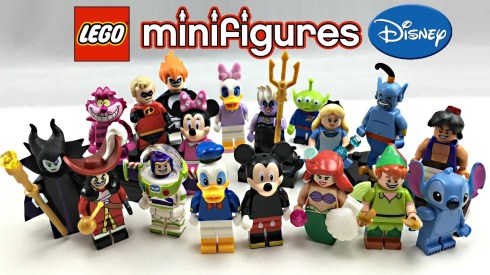
Theming a line of figures on the Disney license is almost as broad as creating a line of “People” figures. The Walt Disney Company has been putting out animated and live action films for nearly a century. The company has its own television station full of original programming, plus it owns Pixar, Marvel, Star Wars, and ABC to name a few. And since Lego already makes Star Wars and Marvel sets, it stands to reason that their Disney themed wave of mini figures could include those franchises if it wanted to. What it really means for Lego is that its first wave of Disney mini figures is an amalgamation of a few popular Disney properties. The first set of 18 Disney figures contains popular Disney creations like Mickey Mouse and Donald, characters from classic animated films like Aladdin and Peter Pan, and also a few Pixar figures to round things out. There are likely fans out there who would have preferred it if Lego stuck to the classic animated films, or maybe even just the Mickey and friends line, but Lego opted to try to please a wide consumer base.

IMG_0256

A motley crew of Disney plastic.

As someone who likes Disney and is married to a woman who LOVES Disney, it meant i had to collect this line with the same vigor as I did with The Simpsons. The wave hit retail on May 1st, though a few lucky individuals probably found them earlier. Like other mini figure waves, this series is released in blind bags so the consumer doesn’t know what they’re buying, unless they’re willing to sit and prod at each bag to feel the figure out. As Lego did with The Simpsons, they’ve chosen to make custom head sculpts for a lot of the Disney characters, basically all of the non-humanoid ones. That means finding Mickey and Minnie when groping a plastic bag is actually pretty easy, same for Sticth as well as the ducks, Donald and Daisy. I actually found the entire wave pretty easy to feel out and went a perfect 18 for 18 with my purchases. Now, if only I had better luck at finding the figures at big box retailers. Stores like Target and Toys R Us sell each figure for 3.99 a piece, but I got stuck hitting up specialty shops that charged 6.99. The things I do for love.


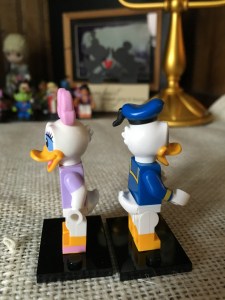
Unlike The Simpsons, these Disney figures are not released alongside any standard Lego sets, which is a bummer. Lego does have a line of Disney centric Lego Friends sets which focus on the various princess characters. The Friends line is Lego’s girl line, because apparently girls can’t handle traditional mini figures and bricks, and it’s clear Lego avoided duplicating characters it had already released as part of that line. The set of 18 is mostly free of the princess characters, with the exception of a mermaid Ariel. Alice from Alice in Wonderland is also included, but I don’t think she’s ever been considered a “princess.” From the Mickey and Friends collection, we have Mickey, Minnie, Donald and Daisy. Any Disney fan immediately sees that list and says “Where’s Goofy?!” He’s missing in action here. The four who are included look pretty good though. Donald and Daisy even have a little duck “butt” piece which is pretty funny but also pragmatic. Mickey is kind of dull though as he comes with no unique pieces or accessories. He doesn’t even have a tail! That’s a problem I’ll address later as it’s a recurring problem. Not the tail, but the lack of accessories to go along with these figures.
IMG_0257

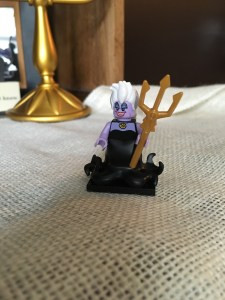
Ursula’s got it going on.

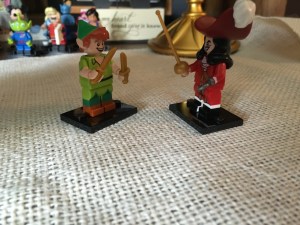
From the Disney animated classics group of films, there’s the following:  Alice, Cheshire Cat, Maleficent, Peter Pan, Captain Hook, Stitch, Ursula, Ariel, Aladdin, and the Genie. All are done fairly well, though characters like Aladdin and Pan suffer from being a bit too conventional and kind of boring in appearance. Genie suffers a little in that he’s fairly unique, but the efforts made to convey that don’t work so well. Instead of getting a more unique sculpt, he’s actually a standard mini figure with add-on pieces to round out his look. He does have a “ghost” lower body which is kind of neat, but he still doesn’t really look all that much like the Genie from Aladdin. Plus Lego got really cheap with his gold cuffs and only painted half of his wrist. Maleficent is unique in that she doesn’t have legs, but a triangular block for a base to simulate her robes. It works pretty well as a visual, though it’s probably not fun for kids to play with. Ursula is definitely the cream of the crop as she gets a uniquely sculpted lower body that looks great. Ariel does as well, but her tail is rather blocky and unappealing to look at. I get that Lego is supposed to be blocky, but there’s just something off with Ariel’s look.
 

IMG_0258

The piece Lego fanatics have been waiting years for:  duck butt.

Pixar is also featured, albeit in a minor way. There aren’t many Pixar characters that would work as Lego mini figures, but Lego did pick some suitable ones. From Toy Story, there’s Buzz Lightyear and the Alien, and from The Incredibles we have Mr. Incredible and his foe Syndrome. Buzz is the star of the four. While he doesn’t quite look like the Buzz we know and love, the unique pieces included give him a lot of personality. The Alien gets a unique head sculpt and looks fine, while Mr. Incredible and Syndrome look about as good as they can, though they’re a little boring. I don’t dislike any of the four, and actually really like Buzz, but I am left wishing Lego had stuck with more conventional Disney properties and gave Pixar its own wave.


With any release like this, it’s easy to zero in on what’s missing. Properties like Pinnochio, Snow White, and The Lion King are synonymous with Disney but not represented here. There’s also a lack of quality accessories that’s kind of disappointing. Mickey comes with none, when he should come with Pluto. He could have come with some clothing type accessories like his sorcerer’s hat, something which is better than nothing. Ursula comes with King Triton’s trident but not his crown, and Ariel comes with an oyster shell with a pink jewel in it. Maybe I need to watch The Little Mermaid again because I don’t remember that amongst her many treasures. I’d rather she come with a fork, I mean, dinglehopper, though a Flounder would have been better. Stitch, Cheshire Cat, and the Alien all come with no accessories, and Aladdin and the Genie both come with the same lamp. Couldn’t Aladdin at least have come with a black Jafar’s lamp? These figures aren’t really all that cheap, the least Lego could do is make sure each character has at least one appropriate accessory to round them out.
IMG_0259

Pan looks kind of bloodthirsty, not that Hook looks like any less of a maniac.

Criticisms aside, I do think this is a pretty solid wave of mini figures and a nice start for the Disney line. I assume there will at least be a wave two and I’m hopeful Lego will explore some Disney sets, especially if they’re based on Disney World or Disneyland. As far as a potential wave 2 is concerned, I would assume some characters are no-brainers. Goofy, Woody, and Jessie seem like locks. Near locks would include Mrs. Incredible, Frozone, and Jafar. If Lego really wants to stick with the films its already touched upon, then characters like King Triton and the Queen of Hearts certainly have a shot as well. I’m hopeful that Pinnochio and Jiminy Cricket get a look, and a Beast and Gaston would be pretty awesome. It’ll probably be nearly a year before we know what’s to come, but until then it will be fun to speculate.

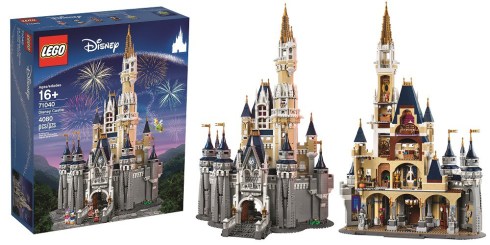
UPDATE:  Well it took Lego a few months to unveil it, they did indeed confirm a Lego version of Disney World’s iconic Cinderella Castle is coming this September. It will retail for $350 (ouch!) and total over 4,000 pieces and come bundled with 5 mini figures. Making her traditional Lego debut will be Tinker Belle and she’s joined by a tuxedo-clad Mickey, a red polka-dot version of Minnie, a pink version of Daisy, and Donald, who appears to be identical to his previously released figure. It looks pretty slick, and it’s hard to argue with the character choices. The castle interior looks like it will be full of easter eggs, and possibly hints for future mini figures, and the only initial piece of criticism I could offer is the depth of the castle looks shallow. It likely would have benefitted from a hinged design to make the base at least appear bigger. Aside from that, it’s a nice piece of eye candy and something I’m going to have to buy for my Disney-obsessed wife.LEGO_71040_fi


The Sword in the Stone

SwordintheStonePoster

The Sword in the Stone (1963)

Walt Disney’s The Sword in the Stone has the distinction of being the final animated film released during Walt Disney’s lifetime. It was also just the second feature completed using the Xerox process introduced with the previous film One-Hundred and One Dalmatians. Given that it was the final animated feature Walt laid eyes on, it’s a bit surprising that the film isn’t more well-known. It’s not considered one of the studio’s classics, being relegated to that second tier of features that isn’t considered worthy of a “Diamond” release on home video. Based on the novel by T.H. White, The Sword in the Stone tells the tale of a young King Arthur and his tutoring by the wizard Merlin to prepare him for when he sits on the throne. There are numerous elements of fantasy and it’s a tale familiar to Disney fans in design as it follows a young misfit’s rise to importance through self-discovery. In a way, it’s like the male-equivalent of a Cinderella.

The story opens with a montage focusing on the death of Uther Pendragon and the tale of his sword which was magically sealed in an anvil and only the true ruler of England can remove it. We’re then soon introduced to our unlikely hero, Arthur, who goes by the name of Wart. Wart is an orphan taken in by Sir Ector and his ambition is to one day squire for his foster brother, Kay. Similar to Cinderella, Wart is treated like a servant by his foster family often forced to clean the kitchen and do household chores while Kay is being steered towards knighthood by his father. Sir Ector dangles the potential of being Kay’s squire as a carrot for Wart, but it would seem the old knight has no real intention of letting the boy actually serve in that capacity, preferring someone of noble birth for his true born son.

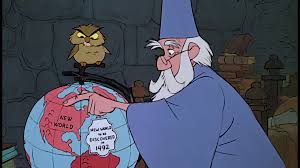
images-218

Archimedes, Merlin’s crotchety owl, steals many of the scenes he is in.

Fortunately for young Wart, he has Merlin looking out for him. The old wizard has been to the future and back numerous times and has foreseen the coming of Arthur, right down to where Wart will fall through his roof for their first “chance” encounter. Merlin is not quite a bumbling old wizard, but he is a bit forgetful which at times gets the duo in trouble when he needs to recall the words to an important spell. He is accompanied by his owl, Archimedes, who in true Disney fashion is fully capable of speech. Archimedes is a grumpy sort but incredibly intelligent, often foreseeing the trouble Merlin is about to get himself into. Despite his prickly nature, he is a loyal pet and does look out for Merlin, and eventually, Wart as well.

Merlin is forced to endear himself to Sir Ector in order to serve as Wart’s tutor. He’s permitted to inhabit the old tower outside the keep, which is badly in need of repairs. The bulk of the film consists of Merlin trying to teach Wart lessons that will serve him well as king in the future, often by way of changing Wart into another creature to experience nature from another perspective. This is how the film sources its various gags as Wart becoming a small fish inevitably leads to him being viewed as food by a hungry predator. The best gags probably occur when Merlin changes the two into squirrels and an eager female takes a liking to Wart. These scenes are fairly light and innocuous and Disney tries to incorporate some danger into them, though the characters rarely feel like they’re in true peril. The film also doesn’t take many risks with its humor, often resorting to the simplest of jokes which contributes to the film’s safe tone. The climax of the film actually arrives rather quickly with little fanfare or much teasing of the outcome giving the film a rather abrupt ending. It’s not all together unsatisfying, but the film could have perhaps lingered a little longer with the fallout of Arthur pulling the sword. Once again, this invites a comparison to Cinderella in how that film is essentially over once she puts on the glass slipper and we don’t really see the fallout with her step family.

images-219

The film sources a lot of its humor from the repeating gag of Merlin having some object or knowledge of the future.

Narratively speaking, The Sword in the Stone is a simple tale that’s not likely to offend, but also not likely to delight in the ways some other Disney films do. When the narrative is a bit lacking, these films turn to two important components: their looks and their songs. The Sherman Brothers contributed to the film and it’s not one of their best efforts. Merlin’s song, “Higitus Figitus” sounds like a “Bibbidi, Bobbidi, Boo” knock-off that’s not nearly as charming. The best sequence is probably the villainous Mim’s number “Mad Madam Mim” but it’s not exactly memorable when compared with other Disney tracks. Being that the film was done with Xerox, it’s also not as attractive as Disney’s best, but it is a step-up from Dalmatians. The backgrounds have a bit more personality, though there are scenes of flat, monochrome, backdrops that feel lazy. These are mostly reserved for some of the interior shots as the exterior ones look quite good. They’re not on the same level as Bambi, and The Jungle Book would do better, but they’re perfectly fine to look at. The characters have a sketch quality to them, a hallmark of the Xerox process, but it seems to suit the subject matter of the film better here than others. The film had the opportunity to add some nice visual effects for all of the transforming scenes, but chose the easy way out and just had the characters vanish in a puff of smoke only to reappear as a fish, squirrel, etc.

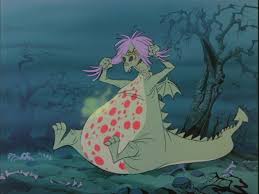
images-220

Because every film with swords and wizards needs a dragon.

If you head over to Amazon.com and check out reviews of the Blu Ray release, you will see a lot of negative ones regarding the film’s transfer. I view all of the my movies that I review on Blu Ray on a 55″ LED television and I use a Playstation 4 to watch them. I found my viewing experience to be fine so maybe I’m not as big of an animation snob as I thought. I also do not own the film’s older DVD release so I can’t compare the two. It’s possible people are just sensitive to the scratchy Xerox look now that it’s being presented in high-definition, and being one of the older films, The Sword in the Stone has minimal clean-up in that regard. This film also did not get a Diamond release, so I don’t expect it to look as good as something like The Jungle Book, so maybe expectations should be held in check. Simply put, if you decide to purchase this film and find it’s not up to your standards you can always return it.

The Sword in the Stone is a rather basic entry in the Disney catalogue. It can entertain kids and adults but only so much. It’s probably rare to find the fan that says this is their favorite Disney film, but it’s also probably just as hard to find someone who detests it.


Nausicaä of the Valley of the Wind

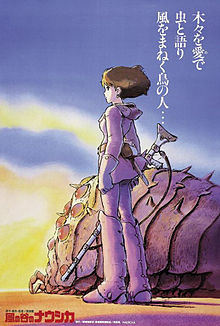
220px-Nausicaaposter

Nausicaä of the Valley of the Wind (1984)

Studio Ghibli is a cultural institution in its native Japan. It’s credited with the anime revival of the 1980’s and for popularizing the form in and outside of Japan. Many of its films have gone on to influence not just anime, but other works of animation as well with its characters even making cameos in Pixar films. Studio Ghibli was officially founded in 1985, but many consider its beginning to be with the film Nausicaä of the Valley of the Wind. Released in 1984, it was directed by Hayao Miyazaki and future Ghibli director Isao Takahata was named producer. The film’s success is essentially what founded Studio Ghibli with most of the crew joining the studio.

Nausicaä is a film that almost didn’t happen. Fresh off his well received directorial debut in Lupin III:  Castle of Cagliostro, Miyazaki was approached to direct another feature length anime picture by Animage. Miyazaki came up with the concept for Nausicaä then, but the studio wasn’t interested and the project was aborted. Miyazaki took Nausicaä to the manga form where he was able to build up a fanbase for the property leading to another opportunity to bring the story to the anime form.

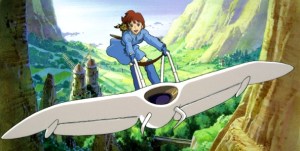
nausicaa-of-the-valley-of-the-wind_592x299

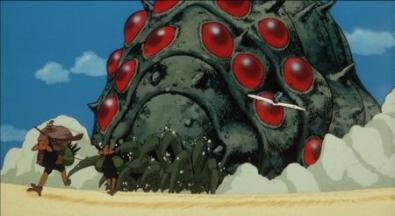
Nausicaä atop her glider.

It’s easy to see why Nausicaä is considered the spiritual beginning for Studio Ghibli. It goes beyond the fact that it’s a feature-length anime production featuring names that would become synonymous with Ghibli. The film, thematically, is very much in line with a great many of Ghibli’s films, most obviously the one’s directed by Miyazaki. The film contains a female protagonist with a Buddhist-like point of view towards nature and the people around her. The film can simply be described as an environmental picture that also strongly endorses pacifism, subject matter that would be covered in other Miyazaki works with the most obvious being Princess Mononoke. The film’s themes are clear and easy for any viewer, even the very young, to pick up on. The film’s themes are so obvious and central to the plot that it’s one of weaknesses as well as Miyazaki would become better skilled at relaying his message in future films with more skill and subtlety. The film’s directness sometimes leads to stilted dialogue and some uninteresting villains.

Nausica-of-the-Valley-of-the-Wind-nausicaa-of-the-valley-of-the-wind-27647622-450-247

In the path of an enraged Ohm is not someplace you want to be.

Beyond the film’s sometimes amateur story-telling, there aren’t a lot of negatives to be had. The film focuses on the princess Nausicaä, who lives in a small dessert village on the outskirts of the poisoned forest. Mankind is forced to live in a world dominated by insects with the most formidable being the massive, tank-like Ohm, following an apocalyptic event occurring a thousand years before the events of the film. These insects are hated and feared by most of humanity and the toxic forests they inhabit slowly kill the people who live close by. Warring factions of humanity eventually bring harm to Nausicaä’s home with her people becoming casualties of war when a prison ship crashes on the outskirts of the village. Nausicaä is able to rescue one of the passengers who instructs her to destroy the ship’s cargo: the remains of a Giant Warrior which brought about the apocalypse of a thousand years ago. The owners of the ship, the Tolmeki empire, come after the ship and its contents bring their war to Nausicaä’s doorstep. The princess is pressed into battle and even takes human life in the process, but it’s all for naught. The Tolmekians, lead by a princess of their own named Kushana, wish to revive the Giant Warrior to destroy the poisoned forest. The village priest deems this unwise as doing so would only incite the Ohm who’s massive stampedes have brought great destruction to humanity in the past.

The Tolmekians are also embroiled in conflict with the Pejite people. Kushana, taking Nausicaä as hostage to ensure the cooperation of her people, and her airships encounter the Pejite which allows Nausicaä to escape. Circumstance forces her into working with a Pejite pilot and the two discover an amazing secret beneath the toxic forest. Nausicaä’s journey becomes one of self-discovery for herself and her world. With few people even interested in understanding the Ohm and the forests they dwell in, she finds herself as the only one who can prevent a second cataclysmic event that would surely doom her people as well as others. The machinations of the film’s plot are easy to follow and easy to predict. Still, the end result is not particularly harmed by this as the film presents a satisfying climax and conclusion for the story.

1280x720-nWq

Nausicaä of the Valley of the Wind (1984)

As a protagonist, Nausicaä (voices by Alison Lohman in the english dub) is easy to like and understand. Her sense of adventure is contagious and represented most by her mastery of a unique jet-propelled glider she often zips through the sky on. She has a special empathy with nature which is shown early in the film. She’s fearless and possesses a strong conviction for what is right. She kills early in the film out of rage and self-defense and is affected by it. Through her actions we can see she would make an excellent killer if that was her aim, but chooses a different and noble path. Her closest ally is the sword master Lupa (Patrick Stewart), who also seems to embody a form of pacifism as we don’t see him kill in his parts of the film, though we see him demonstrate his incredible talent with a blade in each hand. Asbel (Shia LaBeouf), the Pejite pilot Nausicaä befriends, is our set-in-his-ways character who learns to see the world through a new lens during his trials. He’s the character most affected by Nausicaä and her outlook on life.

The film is set with many suspenseful moments like daring escapes from doomed aircraft and stunning rescues. Much of the film takes place in the air as the most prevalent piece of technology in the film are the massive airships piloted by the Tolmekians and Pejite. Anyone familiar with Miyazaki’s works know he’s a lover of aviation so it’s not surprising to find it here. When the film is not in the air the setting either shifts to vast desserts or the wondrous toxic forests. The forests are portrayed in cool shades of green and blue with mostly imaginative looking flora, some of which looks like it belongs under the sea. The look of the film is a bit dated, which should be expected of a thirty-year old picture. Still, it’s not unpleasant to look at and it still has some wonderful moments. The audio is also a bit dated, mostly in the sound effects department, but the score (Joe Hisaishi) is easily the part of the film that best stands the test of time. The english dub is also handled well by Disney and the Blu Ray release contains the Japanese audio for purists.

Anime fans owe a great deal to Nausicaä of the Valley of the Wind. Not only did its popularity and success in Japan help to pave the way for future anime releases, but its butchered original western release helped to convince Miyazaki and others to oversea the localization of future films. Studio Ghibli’s famed “no cuts” policy is born from Nausicaä and I think all fans of animation can agree that’s something we’re all happy is in place. It’s hard to separate a film, or any work of art, from its legacy, but in doing so Nausicaä still holds up us a nice picture worthy to rest in the library of Miyazaki and the Studio Ghibli films. As a legacy piece, it’s a fascinating look at the beginnings of a great director and a fun piece of nostalgia for animation buffs around the world.


Lego Ghostbuster Firehouse

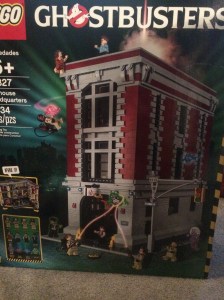
IMG_1125It’s been nearly two years since Lego unleashed its version of the famed Ecto-1 from the movie Ghostbusters. It’s been even longer since a concept for that vehicle,, as well as the firehouse appeared online. When Lego opted to only do the Ecto-1 set I thought that was it for the firehouse and Ghostbusters fans would have to make due with one very fine set. Imagine my surprise when an email showed up on my account from Lego advertising the new Ghostbuster Firehouse set. I don’t usually keep up to date with toy news so this came as a shock to me. I was quite delighted with what I saw, but a case of sticker shock tempered my enthusiasm some. I got past that though, and would end up making the most expensive toy purchase of my life.
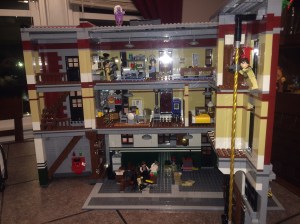
How much is too much for a set of plastic building blocks? Especially when the purchaser is an adult. I don’t know, but it can’t be much more than the $349.99 MSRP for the Ghostbuster Firehouse. Set number 75827 is indeed a pricey one but it’s also an impressive one. Totaling over 4600 pieces, the iconic firehouse is a mighty 2 feet in height and just as long. Multiple hinges make it very accessible on the interior and the three-floor layout provides optimal space for the nine mini figures and three ghosts it comes with. The interior is surprisingly movie accurate, in particular the first floor with the placement of Janine and Venkman’s desks. Pretty much everything important from the films is present including the fire pole, “dancing” toaster, and containment unit. When compared with the layout of The Simpson house, it blows it away in terms of screen to brick accuracy, which is what many adult collectors care about most.

IMG_1165

A cut-away look at the completed house.

With such a large assortment of pieces, the build process is a slow one. Not being one who has extensive experience with Lego sets, it took me a solid week to complete the set basically spending a couple hours per night. I didn’t try to go too fast and wanted to savor the build as it’s what is most fun about these things. Lego sets are like puzzles but with way better results. Because the building is so large, some parts do get a bit tedious. In particular, the actual exterior of the building. Lego tries to break that process up as much as possible but it’s an unavoidable reality of such a set. Other limitations of the set include the lack of a basement, but Lego made the wise choice to tuck the containment unit in under the stairs. Ecto-1 fits inside, but not all the way without removing Janine’s desk, which is unfortunate, but understandable since the set is already pretty damn big. The bedroom layout is not exact to the film either, but sacrifices have to be made somewhere. Lego still managed to fit all three beds into the room without making it look ridiculous.

IMG_1166

Slimed Peter and possessed Dana.

The set includes nine mini figures and three ghosts, one of which is Slimer. Expectedly another set of Ghostbusters are included. For the most part, they’re the same as the four included with Ecto-1 but with a couple of differences. For one, each character now has the no ghosts logo on their sleeve which looks nice. Winston has a different, and better, hair piece so he looks less like Billy Dee Williams. Venkman is the only true variant though as he comes slimed from his first encounter with Slimer (he too sports a superior hair piece to the one that came with the Ecto-1 set). He looks great and I am particularly fond of his angry face. Janine is also included, as are possessed versions of Dana and Louis. Louis even comes with a second head that includes a chin-strap so he can wear a colander on his head to recreate the scene where Egon checks him out. The library ghost is featured and she has a second hair piece to go from calm book reader to screaming ghoul. The ghost from the taxi cab is also included. He looks good, but is kind of an odd choice since he doesn’t have his car and the set really misses Walter Peck. I suppose Peck is generic enough looking that one could find a decent substitute somewhere. Slimer looks great and has movable arms. The other two ghosts are suitable and kind of remind me of the generic ghosts that came with the old action figures. Three transparent stick-like pieces are included for each ghost to simulate flight. All in all, the set includes a nice assortment of mini figures.
IMG_1127

R.I.P. H.R.

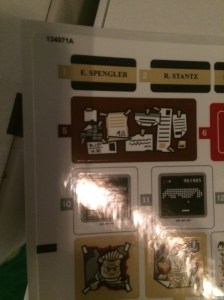
The Ghostbusters come armed with proton packs that have to be assembled. They’re the same as the packs from the Ecto-1 set. They also have traps (which look better than the one that came with the Ecto-1 set) and walkie talkies and Egon has a PK Meter. Clutter abounds in the firehouse in the form of magazines, news papers, and cardboard boxes. They seem simple, but add a nice touch of authenticity. The best little nugget of the set though goes to the sticker on Venkman’s backboard which has a note on it that says “R.I.P. H.R.” for Harold Ramis. Way to make it dusty in here, Lego.

If you love the Ghostbusters and have the extra coin laying around, this is one hell of a set and a fun way to spend some free time. The end result makes for an impressive display and if you have kids that you trust, it’s probably pretty fun to play with too. It blows away that old firehouse toy I had when I was a kid (I love how the fire pole accessory here is basically the same concept as it feels like a callback to my old, beloved, toy) and it’s easily the finest Lego set I’ve ever purchased. I can’t think of another set that would make sense for Lego to produce based on the Ghostbusters. I suppose they could do a rooftop scene from the climax of the first film but I don’t think I’d be interested. A big Lego figure of Stay-Puft would be awesome though! I don’t know if this set is worth $350, but I did have fun with it and I don’t regret my purchase. A job well done, Lego!


When Marnie Was There (film)

When Marnie Was There (2014)

When Marnie Was There (2014)

In my review of The Tale of the Princess Kaguya I detailed the state of Studio Ghibli and its decision to suspend all production on animated features. It was a sobering bit of news and remains so as the studio certainly seems to possess enough talent following the retirement of Hayao Miyazaki to press on and a film like When Marnie Was There only reinforces that thought.

When Marnie Was There is based on a novel by Joan G. Robinson. I had never heard of it nor read it so my experience with the story is entirely via the Studio Ghibli film. The film is written and directed by Hiromasa Yonebayashi in his second go-around as director for a Studio Ghibli film, the first being the very good The Secret World of Arrietty. Even though this is only his second turn as director, Yonebayashi has been with the company for over a decade working on several other animated films in various roles. Takatsuga Muramatsu handles the music for the film making the film feel like a promotion of the studio’s younger talent. The film is wonderfully animated and visually resembles very strongly another recent work by the studio, The Wind Rises. Like that tale, When Marnie Was There is a mostly grounded film from a visual sense and lacks some of the studio’s more wildly imaginative settings and characters.

The film follows Anna, a young girl of about thirteen who has a hard time fitting in. The film never explicitly states it, but she’s quite obviously depressed at the start of the film and is paralyzed by a social anxiety order that seems to manifest itself in the form of severe asthma. As the film progresses, we learn the root cause of most of her issues is her sense of abandonment as she lost her parents and grandmother at a young age and has been in foster care with the same family for most of her life. She is having a particularly hard time coping with a recent discovery about her foster parents that lessens her sense of self worth. She states that she hates herself, and following another asthma attack early in the film, her foster mother decides it may be good for her health to visit some relatives in the countryside.

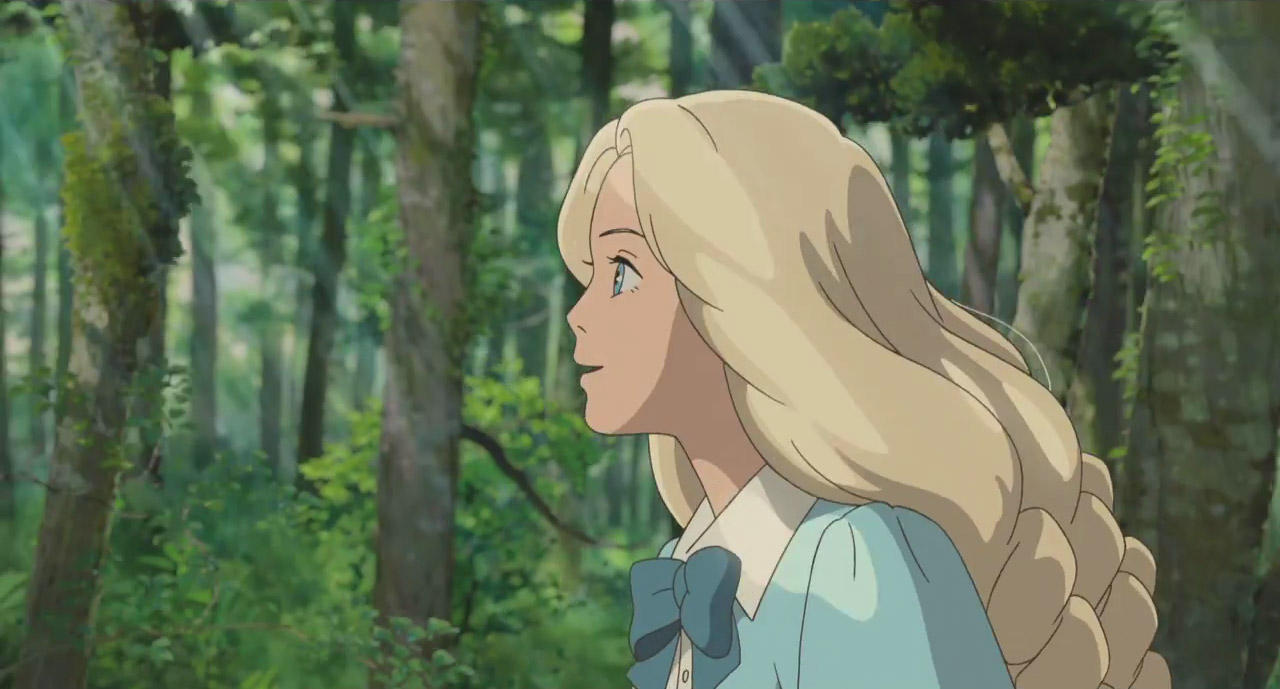
The film is visually quite earthy, with many lush and well-detailed backgrounds.

The film is visually quite earthy, with many lush and well-detailed backgrounds.

It’s in the countryside where the film’s plot gets rolling along. Anna stays with the Oiwas, relatives of her foster parents, in a seaside town located somewhere near Kushiro and Nemuro. It’s a small, quiet town located on the coast. Her family tries to get her involved with the local girls her age but Anna struggles to make friends. She soon finds herself drawn to an old, rundown mansion on the coast that she enjoys drawing from the shore. It’s there she encounters Marnie, a lonely young girl about the same age as Anna. Marie tells Anna she dreamed of her and the two form a fast friendship. Marnie is the child of wealthy socialite parents who are rarely home leaving Marnie in the care of an abusive nanny and two maids. Anna and Marnie have an instant connection and the two are free to express their love for one another. It’s a sisterly kind of love, but when Marnie invites Anna to a party her parents are throwing and dances with a young man, Anna is seen as jealous and possessive of her new friend. It becomes obvious to the viewer that Anna has never had a real friend before, and it’s touching to see Marnie wordlessly pick up on this and tenderly sooth her friend.

What the film doesn’t obviously address for a long time is the nature of Marnie’s existence. During the day, the old mansion where she lives is run-down and abandoned, but at night, time seems to rewind around the old house and restore it to its former beauty. As the viewer, we’re left to wonder if Marnie and the people in the mansion are ghosts or if everything is a product of Anna’s imagination. Anna seems to think Marnie is an imaginary friend, as she’s confronted later in the film by a young girl who’s family has purchased Marnie’s mansion and is renovating it. The girl, Sayaka, notices Anna staring up at her room and mistakes her for Marnie. She knows that name because she found an old diary by a girl of that same name when her parents bought the mansion. Anna and Sayaka soon become determined to unravel the mystery of Marnie. I do not wish to spoil anything further, but I’ll say it’s a very satisfying tale and the film answers all of the questions it poses which helps give it a sense of closure. Repeated viewings are also satisfying because knowing the end adds added context to a lot of what happens during the film.

The mansion seems to call out to Anna beckoning her to investigate.

The mansion seems to call out to Anna beckoning her to investigate.

The film may contain a mystery as part of its central plot, but it’s really secondary to the story of friendship between Anna and Marnie. Both characters possess tragedy about them and both are instantly likable even though both also possess obvious flaws. Anna’s inability to communicate with others is a frustrating flaw for the viewer, but also a heartbreaking one. Meanwhile, Marnie is so clearly neglected that it’s sad to see just how happy she is when she’s able to sneak outside at night knowing what awaits her when she eventually returns home. The film’s reluctance to really address how Marnie is able to exist allows it to focus on the growing friendship, and all of the trials and tribulations a new friendship creates. Once Anna becomes so attached to Marnie an anxiety brews. When Marnie disappears for a few days Anna immediately assumes it’s because of something she did to anger her friend. The film makes it easy to think back on one’s own adolescence and recall similar feelings.

The film moves at a comfortable pace and the english dub is well done, even if the film was not picked up by Disney for release outside of Japan. Universal handled it, which also handled the release for The Tale of the Princess Kaguya, and the english cast features some notable names such as Geena Davis, Catherine O’Hare, and John C. Reilly. Hailee Steinfeld and Kiernan Shipka voice Anna and Marnie, respectively, and both do an admiral job giving a voice to these characters. It is especially important that the english dub be of a high quality because it would be a true shame to mar the visual presentation of such a film with subtitles. The look is so vibrant and colorful that I often found myself delighted by even the most simple of shots. This is one of the studio’s finest productions and it’s a joy to see it was not wasted on an inferior story.

There's a lot to distract the viewer from what is at the heart of the movie: two lonely souls desperate to find a kindred spirit.

There’s a lot to distract the viewer from what is at the heart of the movie: two lonely souls desperate to find a kindred spirit.

When Marnie Was There is the kind of film that you either connect with or you don’t. I suppose for those where the film’s characters and plot do not resonate they’ll see it as a perfectly fine little film about friendship. For those able to connect with it on a more personal level will find something truly captivating and beautiful. I do not know why the film made such an impact on me, it’s not as if I could truly relate to any of the characters because of a personal experience, but I think it’s because the film was able to tastefully portray Anna’s struggles without being heavy-handed that it made everything to follow so believable. The score is impressive and there isn’t a scene in the film where the music isn’t perfectly suited. Even the closing track, “Fine on the Outside,” is utilized at just the right moment and feels wonderfully suited to close out the picture. When Marnie Was There possesses the heart and magic that has made Studio Ghibli one of the premiere production houses in the world when it comes to animation. It is my sincere hope that it is not the final feature from the studio, but if it turns out to be, it’s a wonderful way to cap an unprecedented run.


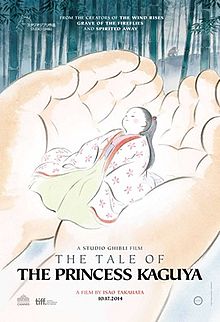
The Tale of the Princess Kaguya

The Tale of the Princess Kaguya (2013)

The Tale of the Princess Kaguya (2013)

Hayao Miyazaki is the most celebrated director of Studio Ghibli, and one of the most celebrated directors of animation in the entire world. Lurking just behind him, however, is the immensely talented Isao Takahata. Takahata is the director of the delightful and underrated Pom Poko, as well as the heartbreaking and immensely affecting Grave of the Fireflies, one of the very best animated films of all time. When Miyazaki announced his retirement before the release of his final film, The Wind Rises, it reasoned to assume that Studio Ghibli would turn to Takahata to lead the company from the director’s chair. Apparently that is not to be, as the studio would end up announcing it was suspending development on all projects to revaluate its business strategy. Before that though, the company announced Takahata would be directing The Tale of the Princess Kaguya, giving the world at least one last Studio Ghibli film directed by the immensely talented director.

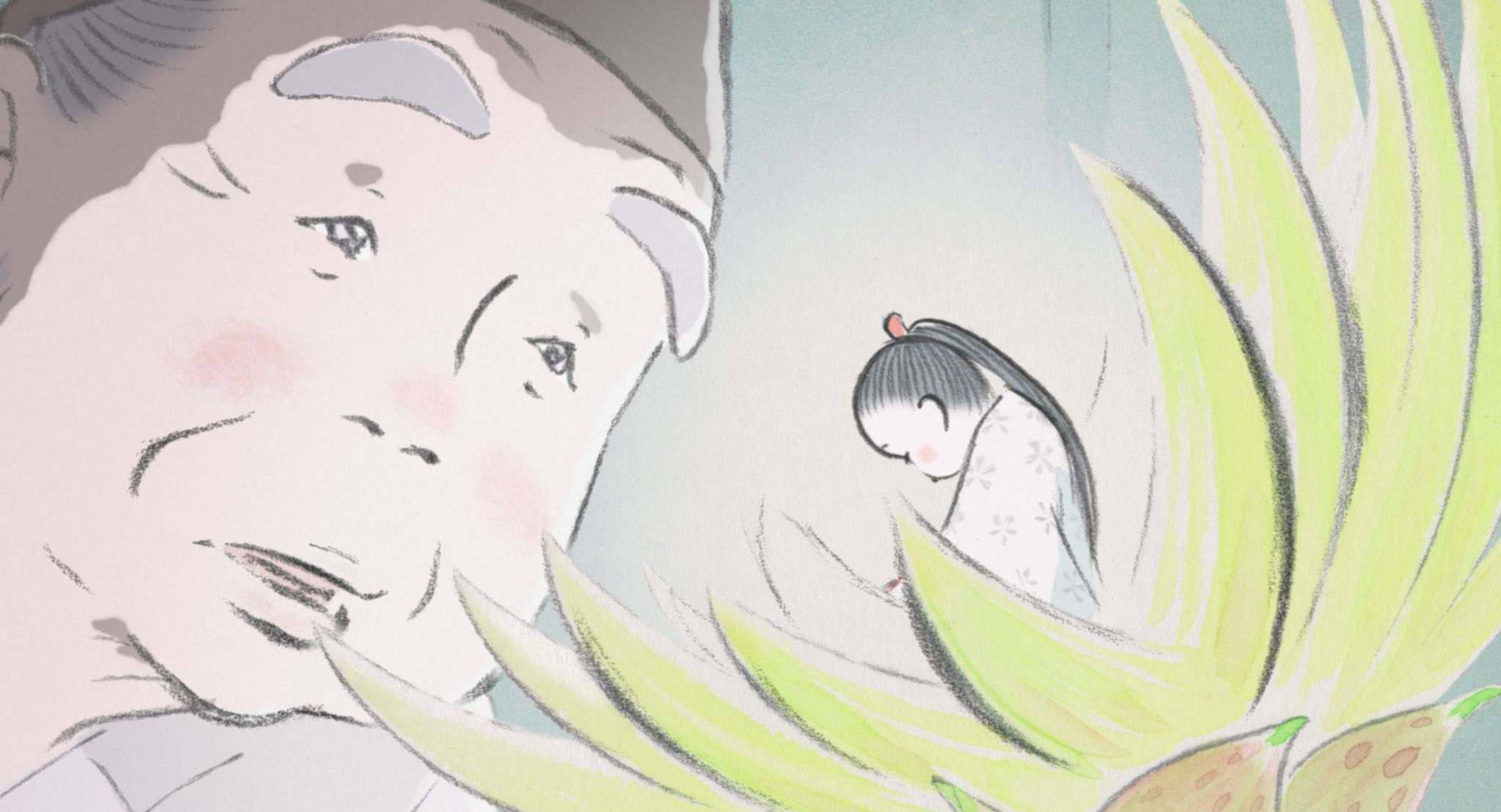
The Tale of the Princess Kaguya is an adaptation of an old Japanese folktale known as “The Tale of the Bamboo Cutter.” The general premise of the tale is that an old bamboo cutter finds a tiny girl inside a bamboo shoot who grows into a princess. In the film, the bamboo cutter is voiced by James Caan for the english adaptation, who finds the tiny woman in the bamboo shoot. Upon removing her she immediately becomes a baby and grows in size. He takes her home to his wife (voiced by Mary Steenburgen, making this the second time Caan and Steenburgen have portrayed a married couple, with Elf being the first) and they simply refer to the baby as Princess (Chloe-Grace Moretz). She soon starts growing rapidly and reaches her teenage years much faster than she had any right to. Her father decides she must be an actual princess, and upon returning to the forest where he found her to discover gold in the bamboo shoots, has the funds to make it happen. Princess, often referred to as Little Bamboo by her friends in the forest, would much rather live a peasant’s life among the trees but is reluctant to disobey her father. They move to the city where the princess is dubbed Kaguya and counseled in the ways of nobility. The meekness she is expected to take on does not suit her and she is best described as a fish out of water amongst the other noble folk. Her father is blind to this and pushes her to choose a suitor and marry a prince, but as the film progresses it becomes clear to the viewer that this is the path that will bring about the most unhappiness for the main character.

An ordinary bamboo cutter makes an unbelievable discovery in the forest.

An ordinary bamboo cutter makes an unbelievable discovery in the forest.

The film does a good job of portraying the father as a well-meaning individual. It would be easy for the audience to turn on him completely given how miserable his actions make his daughter feel, but we can tell he truly believes he’s doing the right thing by forcing the noble lifestyle upon her. He views his daughter, as many fathers do, in a perfect light and wants only the best for her. He’s not acting out of any sense of selfishness. He’s not a gold-digging individual or in search of fame for his own name. Unfortunately, he is just completely blind to how he’s making his daughter feel and doesn’t realize he’s deprived her of the only thing she really wants. In this, the film is sort of an anti-princess movie in comparison to the old fairy tales popularized by Disney. For many of those, the lady in waiting yearns to be a princess and is forced to wait around for her prince to come save her and remove her from a life of poverty. Today’s movie-going audience values strength of character, especially from its female leads after years of weak ones, and in this Kaguya succeeds at crafting a modern princess tale.

The running scene, my pick for best visual sequence in the film.

The running scene, my pick for best visual sequence in the film.

Unfortunately, it isn’t successful in telling a truly compelling story. The character of the princess is the best thing going for it. She is easy to root for and also easy to empathize with. Aside from her, there are few other memorable characters. Her plight is so obvious and easy to grasp onto that the many scenes of the film that illustrate just how depressed she’s become are almost unneeded. The film is dreadfully slow and plodding (a bloated 137 minutes), so much so that I would be surprised if children would generally find it immersive. Often the time-consuming nature of animation production forces shorter runtimes upon directors. This can be frustrating for the truly captivating animated films out there, but at the same time, these limitations can also have a positive impact by forcing the director to focus on the story and the most important aspects of it. Such constraints apparently were not place on Takahata, but a persuasive voice in his ear would have benefitted this film tremendously.

Perhaps the reason for the film’s extended run time is the minimalist approach to animation it takes. The film adopts a sketchbook look thats low on color and detail. Sometimes backgrounds are dominated by emptiness with maybe a few shrubs or tall grass for the woodland scenes or simple textures in the village scenes. Whether you like it or not is a matter of taste, but I personally did not find it enjoyable to view. The only time I found the sketchbook visuals gave it a compelling look was during a scene where the princess is running through the countryside. There the undefined nature of the pencils imparts a sense of speed to the scene. Mostly though, the film looks messy or even bland. With the plot dragging and not every scene feeling important, the film has a hard time relying on the visuals to set the mood or carry a particular segment of the film.

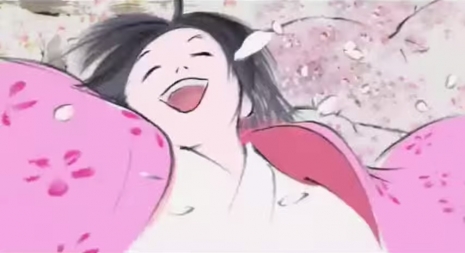
The princess, in one of her few moments of happiness in the film.

The princess, in one of her few moments of happiness in the film.

All of these short-comings lead me to the conclusion that The Tale of the Princess Kaguya would have made a better short film than a feature. The visuals, if only on screen for a short time, would not be allowed to overstay their welcome and the plot could be resolved in a more expedient fashion. I’m the type of person who often enjoys a long composition, be it book, film, or song, but I just felt this film was hard to sit through. It was not a joyful experience for me, and though I found the ultimate resolution of the film to be interesting and appropriate, by the time I happened upon it the characters had lost all of their goodwill with me. I just wasn’t entertained, which was really frustrating to me because of the track record of Takahata and Studio Ghibli. Thankfully, The Tale of the Princess Kaguya is just the penultimate film (for now) for Studio Ghibli, because it would be really unfortunate for it to go out on such a low note.


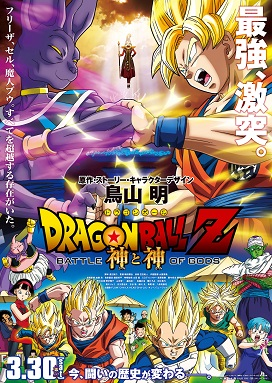
Dragon Ball Z: Battle of Gods

Dragon Ball Z:  Battle of Gods (2013)

Dragon Ball Z: Battle of Gods (2013)

I’ve made no secret of the fact that I find Dragon Ball Z to be a pretty overrated anime. Some of that sentiment stems from the fact that it’s considerably more popular than its predecessor, Dragon Ball, despite being the inferior product. Part of that also stems from the fact that Dragon Ball Z fans seem to regard it as the greatest anime of all time, rather than what it really is; the most popular anime of all time. This is not to say I find the show to be a bad one. For awhile during the 1990’s I found myself quite captivated by the show. I was incredibly disappointed that the dub, for many years, ended right in the middle of the Namek Saga with Goku preparing to take on The Ginyu Force (I was also really disappointed when the series finally returned with an all new and quite terrible dub). Little did I know, that I had basically seen the best of the show up to that point. While the Cell Games and Buu Saga have their moments, for the most part the show became almost a self-parody with extended filler sequences and familiar plot lines.

It’s the formula of Dragon Ball Z that makes it a rather pedestrian television program. The characters are all simply constructed and tend to embody one archetype. Each “season” consists of the gang being forced to take on the latest “Most Powerful Being in the Universe” with the same familiar pattern: dispatch weak enemy, hear latest prophecy of doom, be defeated by said enemy, train endlessly, power-up and defeat enemy. The stakes are always the same, and even though characters are killed off several times, they usually find their way back to the land of the living and there are few lasting repercussions on the show (aside from the novel concept that the characters do age over time). It was basically like watching an animated fighting video game: it just moves from one battle to the next with very little connecting tissue in-between. As such, it’s quite easy to take a cynical view towards the show but it still has its moments where it’s genuinely entertaining and even charming.

Beerus and Whis are the latest antagonists to threaten earth.

Beerus and Whis are the latest antagonists to threaten earth.

If one were to be jaded with the prospects of another extension of the Dragon Ball Universe, they’d likely be less interested in yet another Dragon Ball Z film. The show was so successful that it rather logically spawned feature films. These films were little more than cash-grabs and often contained less plot than the show and an even more obvious formula. Thirteen films in all were released based off of Dragon Ball Z with virtually none fitting into the canon of the show’s storyline. Aside from a select few that contained some genuine entertainment value, most are just mediocre with the only contribution they made being the superior animation when compared with the show. As a result, I was not all that enthused to hear that Toei Animation was returning to the series for a new film:  Battle of Gods. The only cause for optimism was that it was announced series creator Akira Toriyama, who had little involvement with the awful Dragon Ball GT, was handling the screenplay and character designs. Toriyama, unlike some of his fans, seems to understand what makes Dragon Ball special. It’s not some super sophisticated anime meant to challenge the likes of Neon Genesis or Cowboy Bebop, it’s strictly intended to entertain with humor and action.

Battle of Gods opens with some familiar characters pondering the awakening of The God of Destruction. Supreme Kai, along with Elder Kai, fear what this god may do now that he’s awoken early while King Kai gives Goku a quick lesson on who this guy is. It’s not a very promising open for the film as it’s pretty much in line with most of the movies and we know Goku and this god are going to have to have a showdown. We’re then taken to this god’s home world and are introduced to Beerus, The God of Destruction, and his attendant Whis. One of the themes of Dragon Ball is to never a judge a book by its cover, and Beerus embodies that concept quite well. He’s basically an anthropomorphized sphinx cat complete with tall ears and a wrinkly cat muzzle on his face. Not only does he look like a cat, but he also embodies one as well. When we first meet him he’s just waking up from a 39 year slumber much in the same way we’d expect any cat to awaken. He’s lethargic, hungry, and summons for Whis almost immediately. Later we’ll see him acting rather petulantly and impatiently while also toying with his prey, further driving home the point that he doesn’t just simply look like a cat, he is one. Whis gives him a refresher on what transpired during his slumber, and he’s quite pleased to learn that Frieza dealt with those insolent Saiyans by destroying their planet. He’s further surprised to learn that one dubbing himself a Super Saiyan defeated Frieza, which reminds him of a dream he had where he encountered a Super Saiyan God. Remembering this, Beerus decides to journey to earth to meet the one who defeated Frieza and to hopefully find out more of this Super Saiyan God.

Beerus and Goku reenacting the infamous WCW Finger Poke of Doom.

Beerus and Goku reenacting the infamous WCW Finger Poke of Doom.

When Beerus arrives he encounters Goku almost immediately, and in true DBZ movie fashion, they fight and Goku is easily outclassed. Unlike other films, Beerus is essentially neither friend nor foe. He isn’t a good guy, but he’s also not really a bad guy. Sure he’s The God of Destruction, but apparently someone has to be. He decides to seek out Vegeta to see if he knows anything of this Saiyan God, since he learned nothing from Goku, and finds the Saiyan prince at his wife’s birthday party. Beerus loses interest in his pursuit of a Super Saiyan God when it turns out Vegeta knows nothing, and not wanting to turn down an opportunity to feast, invites himself to the party. Some hijinks involving some familiar faces for Dragon Ball fans occur at the party and things seem to be going well until Buu hogs all of the pudding, sending Beerus into a rage. Only Vegeta knows just who Beerus is and what he’s capable of, which is why the other party-goers jump to their friend’s defense further irritating Beerus. This causes him to declare that it’s time he destroy earth, just as Goku shows up. The heroes are able to request Beerus give them five minutes to consult The Eternal Dragon on the matter of a Super Saiyan God, and when Shenron reveals the secret of how to produce one, Beerus gets his wish.

Of course, Goku is the one to step-up and challenge him as the very underwhelming Super Saiyan God. If you were expecting a fantastic new transformation then you’ll be let down to see that “God Mode” is essentially a skinny Goku with a bad dye-job giving his hair a reddish hue. He possesses a fiery aura, which looks kind of cool but is also visually distracting, but that’s about it. Goku and Beerus fight, and I won’t spoil the outcome but you can probably guess at the ultimate end result.

The gang's all here.

The gang’s all here.

The plot for the film is rather familiar, and judged solely on that, the film is a disappointment. However, how it navigates the plot is what helps to elevate it above the normal DBZ fare. For one, Toriyama’s humor is sharp, and while there are some in-jokes to be found for longtime fans, the majority of the humor is fairly natural. It’s also refreshing as Beerus is the source for much of it. He’s definitely one of the better villains Toriyama has conceived of and his ambiguous nature and ambivalence towards mortals makes him almost charming, in a way. He plays off of his attendant Whis fairly well, a character who also embodies a notable Toriyama trait in that he’s a supremely powerful male with obvious feminine features. Toriyama’s affinity for food-related humor shows up in both Whis and Beerus as they’re very interested in the different flavors present on earth. Thankfully, we’re spared the often repeated visual of Goku stuffing his face which stopped being funny somewhere around the character’s first visit to King Kai’s planet.

For fans of DBZ’s unique action sequences, the film may be a disappointment. A lot of the time is spent on Beerus interacting with the earthlings at the expense of the big fight scenes the show is known for. When the film does go there, the action is a bit restrained. Some of that is a plus. As the characters grew in power during the show there was basically no way to visually establish they were stronger and faster than they were 100 episodes prior making many fight scenes look visually lazy as the characters “moved too fast for the naked eye.” In Battle of Gods the action is slowed down and there’s a satisfying weight to the blows landed. There’s still a few instances of old standby DBZ staples, but they’re not overused. Despite that though, the action is underwhelming and some curious uses of CG effects didn’t help things.

Goku's "God" form is a bit underwhelming, but at least it's better than Super Saiyan 4.

Goku’s “God” form is a bit underwhelming, but at least it’s better than Super Saiyan 4.

Visually, DBZ never looked better. The animation is smooth and every scene pops with bright colors. Some may have thought the more muted color palette of the manga would be present since Toriyama was so heavily involved but that is not the case. The only criticism I have of the visuals is the just mentioned CG used in the fight scenes. While the characters fly through a city landscape, it’s rather obvious the backgrounds are being drawn by a computer. This is a fairly common effect going back to the 1980’s but I’ve always found it jarring. Less forgivable are the few instances in which the characters themselves are CG animated making them look like they’ve been ripped right out of the latest DBZ video game. It looks silly and something I would recommend they scrap for future features.

Dragon Ball Z has had an up and down relationship when it comes to the english dub. The original Ocean Group dub was a mixed bag, but was miles ahead of the original Funimation dub that followed. Funimation first starting dubbing DBZ over 15 years ago, and all of that time with the series has actually lead to a pretty wonderful english cast. The voice actors, most of whom have been on the series since the beginning, really know their characters. The writers handling the localization also know these characters and they’ve created a very lively and witty script. The language is probably of a PG nature though there’s very little in the way of graphic violence. If you’re a longtime fan of the series who prefers to watch it subtitled, then by all means, watch it subbed but you won’t be missing anything if you go the dub route.

Dragon Ball Z:  Battle of Gods managed to both meet my expectations and also exceed them. The general plot is typical for a DBZ movie and rather boring, but the presentation is excellent (aside from a few visual hiccups) and the film is genuinely entertaining. It’s probably too long by about fifteen minutes, but not long enough to feel like a drag. The way the film is written makes this feel more like Dragon Ball than Dragon Ball Z. For me, I consider that a good thing but those who enjoy DBZ for the over-the-top action may be disappointed. Lastly, the introduction of Beerus was a success as I’m actually interested to see more from him. Apparently, Toei and Toriyama were banking on that as he’s in the recently released Dragon Ball Z: Resurrection F and is also a recurring character in the new television show, Dragon Ball Super.  I have no idea if more Dragon Ball Z is a good thing or not, but I do know that Battle of Gods was a fun nostalgia trip. Time will tell just how long that trip lasts.


Walt Disney’s The Jungle Book

The Jungle Book (1967)

The Jungle Book (1967)

Walt Disney and his talented team of animators had become synonymous with feature-length animation come the 1960’s. The studio had faced numerous challenges along the way and at many times was nearly forced from the medium. The studio’s biggest challenge though came towards the end of production for The Jungle Book. Sudden to everyone except his closest family members, was Walt Disney’s passing in December of 1966 at the age of 65 from lung cancer. Disney had never planned for his own demise and the studio would be forced to pick itself up from the ashes, and it would (obviously). As a result, when The Jungle Book was released in the summer of 1967 it was like a curtain call of sorts for Walt Disney. Based on that fact alone, the film likely would have been a commercial success but it certainly helped that it was an entertaining and superbly animated film.

Like many of the Walt Disney animated features, The Jungle Book is an outside story.  Based on the works of Rudyard Kipling, it is a loosely adapted feature taking most of the characters and major plot points and adapting them into a mostly unique story to fit the Disney form. The film focuses on the young boy, or man-cub, Mowgli (Bruce Reitherman, who also voiced Christopher Robin in the Disney produced Winnie the Pooh shorts) and the members of his jungle family who are trying to secure his safety. Mowgli was found in the jungle by the panther, Bagheera (Sebastian Cabot), as a baby and brought to a family of wolves who had just recently had a den of pups. The wolves raised Mowgli to boyhood, but when the man-hating tiger Shere Khan (George Sanders) returns to the jungle the pack leader determines Mowgli cannot remain with the wolves for his own safety. Bagheera offers to take Mowgli to the man village where he belongs, but Mowgli is not exactly pleased with the arrangement. When the pair encounter the free-spirited bear, Baloo (Phil Harris), Mowgli feels he’s found a kindred spirit and Baloo agrees to watch over the boy in the jungle. Baloo’s slothfulness essentially gets Mowgli into a bunch of trouble, particularly with the monkeys and their leader King Louie (Louis Prima) and eventually he’s forced to face Khan in the film’s climax.

The story is probably mostly familiar to those reading this as the film has been re-released several times over the last 40+ years. It’s an easy story to relate to as Mowgli is being driven out of the only home he knows. The characters are likable, in particular Baloo who feels like the real star of the picture though viewers are able to identify with Bagheera, who really only wants what’s best for Mowgli, easily even if they side with Baloo. It’s a simple story though with a logical resolution that some actually deem slightly controversial, but only because they fell in love with the pairing of Mowgli and Baloo. I know as a kid it kind of disappointed me, but as an adult I appreciate it more. It’s a bit melancholy, but I kind of like those endings. Otherwise it’s easy for youngsters to follow along with the plot of the film and handled with enough maturity that adult viewers likely won’t mind. At 78 minutes, it’s fairly short but the breezy plot probably didn’t even need that much time.

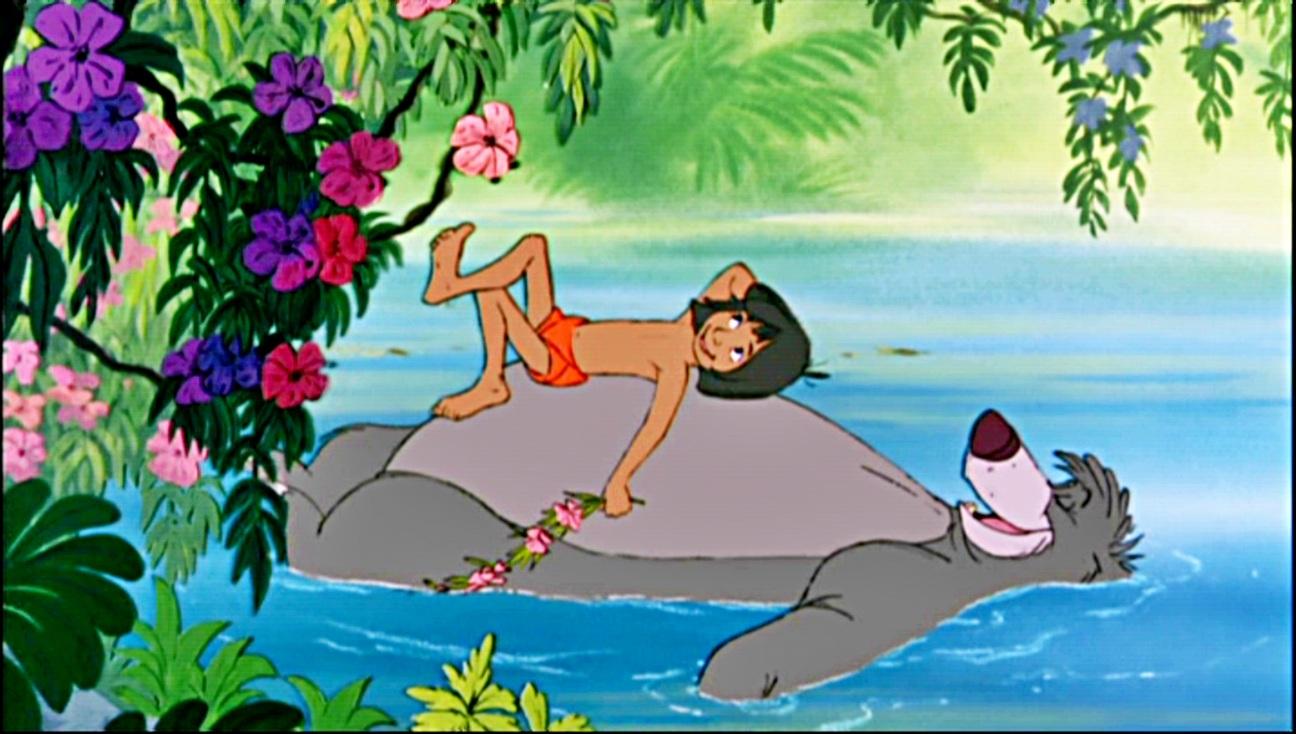
In some ways, the film is a buddy flick featuring Mowgli and Baloo.

In some ways, the film is a buddy flick featuring Mowgli and Baloo.

The Jungle Book is one of the first Disney animated features to really pack-in the musical numbers, which are the major contributor to the film’s running time. If not for the songs, the film could have been wrapped-up in half the time. As such, the film feels almost like a spiritual precursor to the films of the late 80’s and 90’s that took-on a more Broadway-like structure. The Jungle Book is not quite in the same style though, as there is an effort to incorporate the songs into the dialogue and plot as opposed to just having a musical number break-out. The characters also sing and dance in the actual setting of the film, as opposed to having the backgrounds change like a music video to fit the song (contrast that with something like The Lion King’s “I Just Can’t Wait to be King” where the visual style of everything around the characters changes). Composing most of the music are the Sherman brothers, Richard and Robert, who prior to this had done songs for The Sword in the Stone and several live-action Disney films. The lone song not done by the Sherman brothers is actually the most memorable from the film, “The Bare Necessities” which was done by Terry Gilkyson. Gilkyson had originally been tasked with writing the songs for the whole picture, but when they weren’t meeting the standards of Walt Disney, he had to lobby to keep just one song in. He apparently chose well. The most memorable tune by the Shermans is easily King Louie’s “I Wan’na Be Like You” with its up-tempo, swinging vibe. As I’ve stated numerous times in past reviews, I’m not a fan of musicals and I mostly tolerate the musical numbers in Disney films. The two previously mentioned tunes are the only ones I really enjoyed in The Jungle Book. Some of the others felt too interruptive (such as the python Kaa’s number) or just tacked on (the barbershop quartet of buzzards towards the end).

"I Wan'na Be Like You" is perhaps the most memorable sequence from the film.

“I Wan’na Be Like You” is perhaps the most memorable sequence from the film.

What brings me back to these films time after time if I don’t particularly care for the music? The production, of course, which also includes the film’s score. In contrast to the brighter songs, the score (composed by George Bruns) is more foreboding and slightly sinister at times. It’s mysterious with lots of slow percussion that suits the jungle theme (apparently, had Gilkyson been allowed to contribute all of the songs they would have more closely matched the tone of the film’s score). The cast of voice actors is full of veteran Disney actors that have all either done prior work for the studio or would go on to voice other characters in later films. Phil Harris, who voiced Baloo and would go on to voice Little John in Robin Hood (also, interestingly enough, a bear), was considered a celebrity voice and something Disney strived to avoid. Apparently, he had a personal relationship with Walt which was why Disney chose him for the picture. The most fun voice for me is Kaa, the python, who was voiced by Sterling Holloway, only because Kaa is a villain of sorts while Holloway is probably best known as the original voice for Winnie the Pooh. Imagining Kaa’s lines coming out of the tubby old bear amuses me more than it should.

The true star of the picture is the animation. After getting two films done using the Xerox method (One-Hundred and One Dalmatians and The Sword in the Stone) with adequate success, the guys at Disney pretty much had the thing figured out and produced a wonderful looking picture. Where Dalmatians opted for simple, monochrome, backgrounds The Jungle Book utilizes lush, full-figured scenery that beautifully captures the jungle setting. And unlike Dalmatians, the character models are not loaded with extraneous lines or rough edges. There’s still some evidence of the process, but it’s not drastic. The characters are also sharper and more angular when compared with the films of the 40’s and that look would mostly continue into the 80’s. The character designs are simple, but effective, and they still pop against the complex backgrounds. The only character design I did not enjoy that much was Shere Khan’s, who I felt was too scrawny and could have looked more intimidating. Bagheera looked like he could have stood a chance against the tiger, and certainly an entire pack of wolves could have probably over-powered him.

The two most devious characters of the film, Shere Khan and Kaa, share an uncomfortable (for Kaa) scene together.

The two most devious characters of the film, Shere Khan and Kaa, share an uncomfortable (for Kaa) scene together.

Khan’s character is both a strength and a weakness of the picture. His looks may not have been as intimidating as it could have been, but the work of voice actor George Sanders adds a lethal quality to the character. He comes across as more menacing than some of the more one-note villains from films past. His scenes are uncomfortable for both the viewer and the characters he shares the screen with. He’s cunning, the sort of villain that lulls the character into a false sense of security before slipping a dagger in their belly. Of course, being a tiger Khan has claws and no thumbs, so he can’t really wield a dagger. Those claws represent one the more jarring pieces of the film, as when Khan pops them out during some banter with another character they make this tacky spring sound. If you’ve seen any of the Donald Duck shorts featuring the cougar character you’re probably familiar with the sound and effect. In those shorts the aim is for humor but in The Jungle Book Khan is meant to be frightening and it breaks the mood of the scene. Perhaps that was part of the aim, to inject an element into the picture to lessen the scene’s weight, but it doesn’t work for me.

All in all though, The Jungle Book is an entertaining and enjoyable picture, a worthy film for Walt to go out on. It’s not the best work from Disney, and is probably more successful at entertaining children than adults, but it’s still suitable for all audiences. The picture best succeeds as both a musical and with its animation, which helps make it more of a stand-out film in the Walt Disney lineage than it normally would be. This review is based on the Blu Ray, and the film is practically meant for that format. If you have your own collection of animation at home and it’s missing The Jungle Book, I encourage you to reconsider.


Porco Rosso

Porco Rosso (1992)

Porco Rosso (1992)

It almost seems pointless at this point to sing the praises of Studio Ghibli and its famous director, the great Hayao Miyazaki. The internet is dotted with support for his brilliance and his films are readily available on US soil thanks to an agreement between Studio Ghibli and The Walt Disney Company. Even so, it’s still worthwhile repeating that Miyazaki is a supremely gifted director with an apparent synergy with the animation medium. Many of his works are animated films because that’s just what Miyazaki does. They could have easily been shot in live-action and more obviously marketed towards adults. Some possess such fantastic imagery that it’s clear to see why they are animated, while a film such as The Wind Rises, Miyazaki’s most recent and possibly his last, is essentially a drama well-grounded in reality that just happens to be animated.

Porco Rosso is one of Miyazaki’s older works. Debuting in Japanese cinemas in 1992, it tells the tale of a former Italian flying ace turned bounty hunter cursed to live out the rest of his life with the face of a pig. Like The Wind Rises, it romanticizes the role of the pilot and easily could have been a live-action piece (though the pig-faced Porco may not have played as well as an actual person). And like many of Studio Ghibli’s films, it’s now available via Disney Blu Ray which is how I had the pleasure of experiencing it.

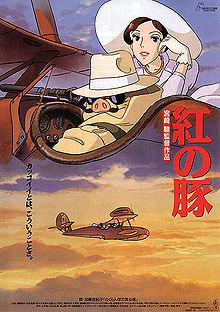
The film opens with Porco battling sky pirates: pirates that choose to attack luxury cruise ships via seaplane. The setting is post World War I and Porco has apparently been hired by the ship owners to keep the pirates away. We immediately get a sense of the film’s tone as the pirates are pretty bad at what they do and Porco is quite nonchalant in his attitude towards them. He combats them via a seaplane of his own, a beat-up old red thing that has trouble getting off the water, and has little trouble foiling their plans and freeing their hostages. There’s an obvious lack of danger throughout the sequence despite the bullets flying through the air but it doesn’t harm the enjoyment of the scene. Following this confrontation, we’re shown a little more of the setting. The pirates, looking to rid themselves of Porco once and for all, have turned to an American named Curtis. Curtis sees this as an opportunity for fame and fortune as he yearns for a career in Hollywood. He also would like to woo Porco’s longtime friend and proprietor of a local establishment frequented by pirates and pilots alike, Gina.

Preparing for take-off.

Preparing for take-off.

Curtis is an interesting character from a westerner’s point of view. Some may call his portrayal unflattering, or even offensive, as he does not possess any obvious virtues. I found it interesting to see how an American is stereotyped outside of the country and found the character pretty amusing. He is a skilled pilot and represents some sense of danger in an otherwise light-hearted film, and is a natural foil for the care-free Porco.

After a confrontation with Curtis that leaves Porco’s plane in need of repairs, Porco is forced to head back to his homeland of Italy where he is wanted for desertion. Porco’s mechanic Piccolo is introduced, along with his family and a large contingent of locals, and proves to be a very entertaining addition to the cast. What could have been a slow and boring part of the film turns into a strength. Some credit should go to the english translators who are able to come up with snappy dialogue to suit the original tone of the scenes as well as fit the mouth-flaps of the animated characters. The film builds towards a confrontation between Porco and Curtis, one Porco seems disinterested in, and plays upon the notion of pilot’s honor. There’s also a bit of a romantic angle thrown in that feels tacked on but isn’t focused on enough to be a distraction.

Porco and Fio are a natural movie pairing. I'd dog the two for being too typical an odd couple if they didn't work so well together onscreen.

Porco and Fio are a natural movie pairing. I’d dog the two for being too typical an odd couple if they didn’t work so well together onscreen.

The star of the film is clearly the Porco character, not just because of his prominence in the title but in his personality as well. He’s a flawed human but an inherently interesting one. He’s funny, boorish, yet charming. The english version features Michael Keaton as the voice of Porco. At first, I wasn’t sure his voice suited the character but I warmed to it quickly. Keaton is almost deadpan in his delivery at times, but he’s able to lend his charisma to the character through the excellent script and his superb delivery. The rest of the cast features some names familiar to those who have watched a lot of anime. Gina is played by Susan Egan, who has done a lot of work in the field of animation and is a consummate pro. Brad Garrett, who also seems to be amassing a lot of voice credits, plays the leader of the seaplane pirates and Kimberly Williams-Paisley portrays Piccolo’s granddaughter Fio with charming exuberance. Joe Hisaishi is once again the composer who utilizes a lot of period pieces to help enhance the film’s setting. The main Porco theme is one of my favorite works he’s composed as its perky nature suits the tone of the film perfectly.

Even the "bad guys" in this film are likable.

Even the “bad guys” in this film are likable.

The animation, as always, is breath-taking. The colors are rich and are only more so on the Blu Ray medium. I particularly love the shade of red used for Porco’s seaplane and the understated blues of the ocean water. Milan is drawn wonderfully and a sequence featuring Porco racing through the city’s canals is probably the most technically impressive of the whole film. The level of detail shown in the plane components was something I found myself appreciating and it’s quite clear that Miyazaki has a love for airplanes.

The film moves at a comfortable pace, wrapping up in just over 90 minutes. It’s tone never wavers as it’s quite high-spirited and inherently fun. I don’t know if I was just turned off by Porco’s look going in, but I wasn’t really excited to watch this film at first but it quickly won me over. It compares quite favorably to My Neighbor Totoro in that it isn’t a deeply serious film with a lot on the line. It’s really just a good old-fashioned adventure full of likable characters, captivating action, and gorgeous visuals.


Walt Disney’s One Hundred and One Dalmatians

One Hundred and One Dalmatians (1961)

One Hundred and One Dalmatians (1961)

If one were to research, even briefly, the history of Walt Disney Animation Studios one would find many successes as well as many failures, some of which by films considered classics today. Snow White and the Seven Dwarfs was the big break-through for the studio and it set a precedent for feature-length animation. Following that picture though, war broke out in Europe and suddenly Disney’s audience was much harder to reach. Perhaps the charm of a feature-length animated picture had worn off following Snow White’s success as well, for the the next several films put out by Disney failed to meet expectations. Following a series of “package films” in the 1940’s, Disney returned to prominence, and profitability, with Cinderella in 1950. The follow-up, Alice in Wonderland, performed poorly at the box office, but the next several films fared much better all the way up to Sleeping Beauty, that is. Sleeping Beauty bombed, despite being the most expensive film the studio ever put out. It was such a disaster that many around Walt Disney were suggesting the company get out of animation, which was something Disney refused to entertain. He was able to acknowledge that their current process needed change. While films like Peter Pan and Lady and the Tramp had been profitable, the profit margin on those films wasn’t what the studio needed to keep going. Success was also being found on television and with live-action films as well as the recently opened Disneyland theme park. Disney probably did not need animation, but it’s what the studio had been founded on.

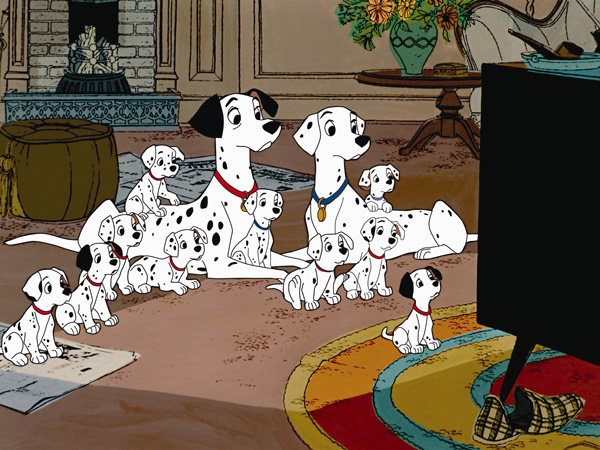
The Pongos, most of them anyways.

The Pongos, most of them anyways.

One Hundred and One Dalmatians was a big film for Disney. While it can’t be said with certainty that had the film failed Disney would have abandoned animation, it’s probable to assume things would have turned out much differently. It’s a good thing then that the film not only was a hit with movie-goers and critics but also a hit when it came to the bottomline. Utilizing Xerox, the film ended up being much cheaper to produce than its predecessors leading to a very healthy profit margin. Instead of being one of the last animated features from the company, it ended up being the first of many achieved through the Xerox process.

It’s well-known that Walt Disney was fond of recalling that the success of his company all started with a mouse, but despite that Walt’s most favorite animal was clearly the dog. One Hundred and One Dalmatians was the studio’s second feature to utilize canines as the lead protagonists, and much like Lady and the Tramp, the film serves as a window to the unseen world of dogs that we humans are oblivious to. Adapted from the book A Hundred and One Dalmatians by Dodie Smith, the film tells the tale of a dalmatian named Pongo, his “pet” human Roger, and how they came to be romantically linked with Perdita and Anita and proud parents of fifteen puppies. Everything would have been quite lovely had it not been for Cruella De Vil, Anita’s old classmate with an appetite for fur that can only be sated by dalmatian coats. The story is one of suspense, with some elements of mystery and plenty of humor added in. It works well with its modest 79 minute running time which foregoes the usual Disney musical style.

Several scenes in the film feature simple, almost one color backgrounds.

Several scenes in the film feature simple, almost one color backgrounds.

Stylistically the film is rather serious in tone, but from the point of view of dogs. It opens with Pongo deducing he and Roger’s lives as bachelors needs to end and he is outwardly searching for a mate for his pet (while also taking care to make sure his own needs are met). Unlike the dogs in Lady and the Tramp who seem to define their lives based on their loyalty to their masters, Pongo clearly views himself as the master in this relationship. He respects the needs of Roger, to a point, but when his puppies go missing later in the film he clearly implies that humans can’t solve their problems. Lady and the Tramp chose to emphasize that its story was from the point of view of dogs by keeping the camera at dog level, rarely straying far enough from the ground to even glimpse the visages of the humans Jim Dear and Darling. One Hundred and One Dalmatians is more straight-forward and positions its shots in a more traditional manner. The backgrounds are minimalist, a drastic change from the prior films from Disney, and it opts to use more flat colors with little to no shading. The film is also the most contemporary of any Disney film prior as its modern setting is quite different from the fantasy worlds many of the Disney films exist in. This even allows the story-tellers to utilize satire when depicting television and how the characters interact with it.

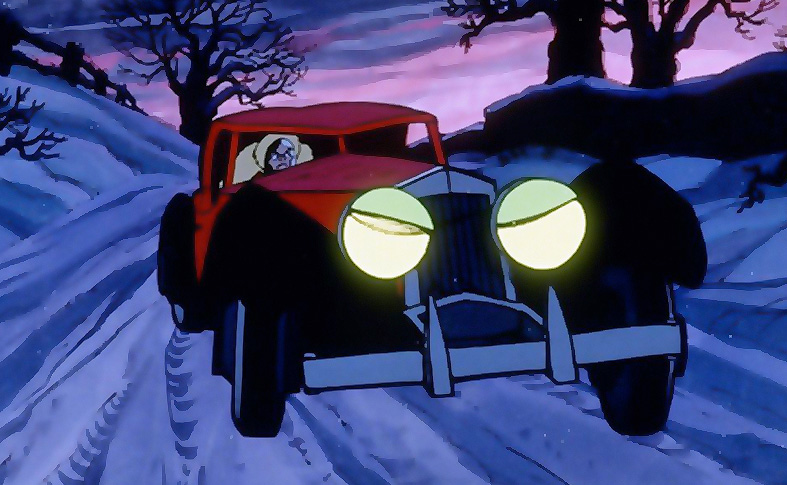
They don't come meaner than Cruella.

They don’t come meaner than Cruella.

Cruella De Vil, and her lackeys Horace and Jasper, is one of Disney’s finest villains. Her motivations are clear, rational considering her character, and easy to despise. Even those who do not consider themselves dog-lovers likely would not support someone in their quest to slaughter puppies for their fur. She is strikingly wicked looking, with sharp angles and manic eyes. Her face appears to be stretched to its limit to cover her skull, and her two-toned hair has become a hallmark of the character. She barges into the home of Anita and Roger, her fur coat slipping from her bony shoulders and the smoke-trail from her cigarette permeates the air and appears to be a character all its own. She drives an enormous vehicle like the biggest asshole you’ll ever encounter on the road and is prone to violent outbursts. Her voice actress, Betty Lou Gerson, is absolutely perfect with her performance and it is hard to imagine anyone else doing a better job with the role. Horace and Jasper are her henchman. They handle the puppy-napping and were to also handle the slaughter but they’re typical, stupid, lazy, cohorts and are easily out-maneuvered by the film’s protagonists. They’re also mindless servants to television with their eyes constantly glued to the box and whatever rubbish is presented on it.

The pencil lines left behind by Xerox are easy to see in Roger's sleeves.

The pencil lines left behind by Xerox are easy to see in Roger’s sleeves.

The film is a success where profit and entertainment is concerned, but it must be said that this all came with a cost. The Xerox process, conceived of by Ub Iwerks, had its drawbacks when compared with the old process of drawing, inking, and painting each animation cell by hand. Naturally, the advantage was in cost as now the drawings by the animators were simply copied to cel by Xerox, eliminating the need for inking. Then they could go right to paint, and time was also saved by simply copying one image of a puppy several times over for the scenes involving the whole lot. The most obvious drawback to this process was the inability of Xerox to smooth out a pencil line during the copying, giving each character a rough, scratchy, look. Prior films were recognizable by the softness of the lines but also the rich, colored, outline each character possessed. Lady and the Tramp is my pick as the best looking of the Disney pictures. The characters pop even when placed on busy and highly-detailed backgrounds. Of course, the other drawback was that the entire inking staff was laid off, which meant hundreds of women lost their jobs in an era where work was hard to come by for women. Walt Disney Studios famously employed women almost exclusively for inking and painting, mostly due to prejudices of the time. They let men handle the drawing and decision-making when it came to creating the pictures. It obviously takes talent to ink and paint animation, but it was also thought-of as being a lesser position to artist. Still, the only other positions for women at the time were with the telephone company and service industries so it must have hurt when Disney shut-down inking. Walt Disney himself was not a fan of Xerox and disliked the look of the picture. Over the years, the process was improved upon but it would be decades before the pictures started to resemble the old films, which all came long after Disney’s passing. Art Director for Dalmatians, Ken Anderson, was said to be saddened by Walt’s opinion of the film’s look, though according to him Walt unofficially gave the art of the film his blessing shortly before he passed away.

Evil women drive evil cars.

Evil women drive evil cars.

One Hundred and One Dalmatians is a significant film for several reasons for Walt Disney Animation Studios. It’s the film that saved animation but also the film that changed it forever. Having recently viewed the Blu Ray release, I can say the film is actually more enjoyable than I remembered it from my childhood. The characters, despite mostly being dogs, are believable and their world is fun and fascinating. Visually, the film does suffer when compared with what came before it, but it also includes a wonderful car chase sequence that creatively utilized actual three-dimensional models to achieve its look. Even though the art is not as wonderful as it could have been, the film is animated superbly. The dogs walk like dogs, the humans display great personality with their mannerisms, and the action scenes are engrossing on their own. What little use the film makes of musical numbers is done quite well, with Cruella’s theme being one of the most memorable of all the Disney villain themes. One Hundred and One Dalmatians was the last great picture released by Walt Disney during his lifetime and it’s one fans will continue to treasure for years to come.