Author Archives: Joe

X-Men in Film – Epilogue

I ran through the three core X-Men films earlier this year.  To summarize, I found the first was okay, the second good, and the third poor.  And even though I more or less enjoyed the first two, I was never comfortable with the setting or the approach taken by director Bryan Singer.  In my lead-in, I mentioned I wanted to post my own thoughts on how I feel the studio should have gone about in bringing the franchise to the big screen.  Considering this weekend is the opening weekend for the Matthew Vaughn directed X-Men: First Class, it seems like now is a good time to do this entry.

First off, I did not make an entry for the X-Men spin-off X-Men Origins: Wolverine and that’s because I never saw it.  Not only did it look poor, but the plot also sounded bland.  It was not well-received by critics or by friends of mine whose opinions I trust so I saw no reason to see it.  And the suggestions to follow in regards to how I would have approached the series do not mean I think I could do better.  Far from it, I am no director and I’ve never had anything published.  I’m just a jaded fan.  And for the most part, I think die hard fans are bad for this sort of exercise.  They tend to be more rigid and regimented and incapable of distinguishing what’s important from what isn’t where a plot or character is concerned.  A neutral party is better able to look at the source material and identify the key components that makes the franchise important and bring those components out within the new medium.  Unfortunately, I think those who handled the X-Men did a poor job of that and even though I’m a fan I’m going to try to be objective.  Below are the components I believe would make for a good X-Men film:

Civil Rights – At it’s core the X-Men represent a civil rights story, and Bryan Singer and Fox acknowledge this.  One of the core conflicts is Professor X as a Martin Luther King Jr. figure to Magneto’s Malcolm X.  Both have the same goal but aspire to reach that goal through very different means.  The other conflict is human society vs mutants, what the canon refers to as homo sapiens and homo superior (a term coined by Magneto).  In the first film, the conflict outside of the good guys vs the bad guys is the Mutant Registration Act, a bill introduced by Senator Robert Kelly.  Kelly mistrusts mutants and wants to see each one register with the federal government so that the government knows what each mutant is capable of and where they are at all times, similar with sex offenders and common criminals.  Law abiding mutants of course bristle at this as it forces them out of the closet, so to speak, when some would rather live quiet lives and keep their mutant abilities private.

Graydon Creed worked so well for the animated series, it's hard to imagine him not working for a film franchise.

This a solid starting point for the franchise, but the initial plot gets lost in Magneto’s hijinks.  Kelly is removed from the picture early on negating his influence on the bill and it doesn’t pass, though that is irrelevant.  What Singer and company failed to do was create a hostile environment for mutants.  At no point do we get a sense of the contempt and fear humans have towards them.  We get a taste of it in X2 when Bobby Drake “comes out” to his family, but little else.  I wanted to see more fear from the general populace and from the government as well.  That’s why I think the films should have looked closer at the 1990’s animated series for inspiration.  Henry Guyrich and Bolivar Trask would have made for good secondary characters.  Perhaps the sentinel project could have been referenced in the first and carried over into the second film.  The sentinels from the comics likely wouldn’t have worked on film, but a military styled task force charged with controlling mutants could have stood in.  The Friends of Humanity could have also been used to give us the extreme end of the spectrum from the societal perspective.  Graydon Creed is a great character and one that’s easy to hate for audiences.  The villain of X2, William Stryker, could have been incorporated into the FoH as well in his priest persona as opposed to a military one.  Ultimately this would have better portrayed the X-Men as selfless heroes protecting a society that hates and fears them, as the main antagonist would still have been Magneto and his Brotherhood.

Small Squad – Another aspect the existing films recognized was the need to keep the X-Men small.  In the 90’s, the team became bloated and trying to carry that over to the films would have proved impossible.  The films reduced the X-Men to four actual team members; Cyclops, Jean, Storm, and Wolverine with Xavier and Rogue also in roles requiring extensive character development.  And while I think this is a solid foundation, the ball was still dropped in terms of developing these characters.  Wolverine was the obvious focus for character development as he’s been the most popular character for a long time now.  Jean exists as the strong female lead and to get between Cyclops and Wolverine.  The Wolverine character was handled mostly well (though I feel strongly a short actor should have played him) but Cyclops was butchered.  He comes across as the jealous, petty boyfriend rather than the victim.  Cyclops should be strong and honor bound where his duty is concerned, the obvious good guy where as Wolverine is a villain who happens to be fighting for the good guys.  Perhaps I’m in the minority, but I got the sense that the films wanted us to root for Wolverine to win the girl and to dislike, and even distrust, Cyclops.  Storm wasn’t developed hardly at all, and only once Halle Berry won an Academy Award did the writers see fit to give her more screen time.  Storm has an interesting back story in that she was perceived by her people as a goddess and perhaps would have worked better as a character recruited by Xavier, rather than just a secondary female member of the team.

I love you Beast but you just don't work on screen.

I have always felt Beast should have been included.  He is a good example of a mutant who can’t hide amongst people like most of the X-Men can.  The problem with the Beast character is that his look does not translate well to live action.  Would fans accept a non-blue Beast?  Probably not.  Iceman perhaps could have been a better choice as a fourth member given his character doesn’t need too much development as he’s the practical joker and a kid at heart.  The Iceman character as he exists in the current franchise is a throw-away, anyone could have been used in that role.  Nightcrawler is another great character that needed to get onto film, but I think Singer had it right in waiting for film #2 to introduce him, though I think the character needed more development.

One think I would not change is how the films utilized Rogue.  I’m a fan of introducing the X-Men as an already existing product and bring the audience along by having it introduced to the X-Men through the eyes of a new recruit, such as Rogue.  Rogue provides a good example of how super powers aren’t all they’re cracked up to be, something at the core of the X-Men mythos.  This aspect of her character makes her more interesting than the classic juvenile characters Kitty Pryde and Jubilee.

Wolverine – I said a lot about Wolverine in my initial post on the subject, so I’ll try to be brief.  In short, I feel Wolverine is best served as a secondary character.  He’s the prickly member of the team who doesn’t always feel like a member of the team because of his lone wolf nature.  Ideally, he wouldn’t be in the first film as his introduction to the team could have been handled in a second film.  One thing I really liked about Marvel’s Ultimate X-Men was how it introduced Wolverine as a mercenary hired by Magneto to infiltrate the X-Men, but he eventually is won over by Xavier (and Jean) and betrays Magneto.  That could have been used for the films but Fox would have never allowed an X-Men movie to be shot without Wolverine, he’s too important from a marketing perspective.  Therefore, keeping him off to the side and antagonistic would have worked best.  Ultimately, I want a character with a giant chip on his shoulder that Xavier and Cyclops constantly have to fight with to get him to stay the course.  When Magneto and his goons are raising Hell, Wolverine should be the one abandoning ranks to go after Sabretooth as opposed to working within the system.  As an audience, we should love his ferocity and his bad ass nature but feel frustrated with his obvious character flaws.

The Villains – Magneto is the obvious choice as the main arch rival for the X-Men, there’s really no other choice.  And I do like that the current films didn’t make the mistake the original Batman did and kill off the hero’s main adversary in the first film.  As long as Xavier is around, Magneto needs to be as well.  His Brotherhood was fine as well though it needs to be as big as the X-Men.  If the X-Men are 4 then the Brotherhood should be 4, not including Magneto himself.  Sabretooth and Mystique are good choices as well, but Toad kind of sucks.  If the films needed a slapstick villain he could have been used there, but otherwise I’d prefer Avalanche or Pyro.  Juggernaut is an interesting possibility as well and one that would have been worth exploring.  He presents obvious visual problems in bringing him to live-action (the look he sported in The Last Stand would not do) and balance issues as he’s a load to take down.  I like the step brother parallel though with Xavier, but he can’t be a mutant which also is an issue.  The magical nature of his powers wouldn’t fit the setting I imagine for an X-Men film franchise so his abilities would have to come from a suit.  Perhaps he could wear some sort of mammoth battle suit serving as a pre-cursor to the government’s own sentinel program.  Or he could be some sort of metal monstrocity created by Magneto.

The reality warping mutant Proteus represents a case of risk vs reward. In the hands of the right director, he'd end up an extremely memorable villain.

As the franchise would likely form a trilogy, new villains would be introduced.  I like the idea of keeping Magneto involved in all, but keeping him on sidelines at times would give the films some variety.  I already mentioned the sentinels and Friends of Humanity as potential villains.  Could they carry a film?  Possibly.  Other villains that could work include The Hellfire Club, who are also featured in the latest film.  They could be another Magneto, a villain seeking mutant supremacy but through different means.  While Magneto is confrontational, The Hellfire Club works behind the scenes and infiltrates the economy.  High-born and intelligent, they would pose a different kind of threat.  A really bold director could also turn to Proteus, the reality warping mutant.  His powers could be explained as being mental, an extreme take on Xavier’s, and his general origin could be kept intact (imprisoned bastard yearning for acceptance from his father).  His powers would be a visual delight, and his plight easy to grasp.  He’d function as a sympathetic villain, and also plant the seed in the audience’s mind that perhaps mutant control is necessary.

If a film must have a Wolverine-centric villain and plot, then I think Omega Red could be fun.  The Weapon X project would be introduced, and the Omega Project could be the Soviet equivalent.  After tangling with him in the past, Wolverine is angered to learn he’s been revived by the Soviets and takes off to stop him.  It would give the audience more insight into the mind of Wolverine after seeing him mostly as an ass in the first film, and the X-Men would come to his aid for a feel good moment.  Red is a visually interesting villain, and his death syphon makes him more than formidable.

The Plots –  The plots of the existing films can be simplified as:  Mutant Registration Act, “God Loves, Man Kills”, and The Cure.  The second was of course augmented to basically remove the God component from the original story, but all the same.  The Phoenix Saga was also worked into the third film.  I mentioned earlier that I feel the Stryker character as a priest could be worked into the cast of reoccurring characters.  The Cure plot is an interesting one and one I like because of its obvious societal parallels.  Phoenix I can do without.  I know it’s an iconic story but it’s overplayed.  One thing the films didn’t tackle was the The Legacy Virus which could be worked into all of the films as a pervasive thing and another reason humans fear mutants.

To summarize, the basic approach I’d take for a three film trilogy would probably go something like this:

1 – Mutant Registration Act, Government exploring ways to control mutants, Magneto as a mutant terrorist attacking government agencies (Cyclops, Jean, Wolverine, Iceman, Rogue as X-Men.  Sabretooth, Mystique, Juggernaut, Avalanche and Pyro as Magneto’s Brotherhood)

2 – Sentinel Initative unveiled to control mutants, Moira’s son Proteus escapes, Magneto is courted by The Hellfire Club (Nightcrawler is introduced after the X-Men save him from the FoH early on)

3 – Wolverine leaves the X-Men to confront Omega Red, X-Men are forced into a confrontation with The Hellfire Club, Rescue Wolverine, Magneto watches from the sidelines (Colossus introduced as part of the Wolverine side plot, some of Wolverine’s Weapon X buddies could be brought in as well such as Maverick and Silver Fox).

I’m not married to that, but it’s a start.  I’d aim to end the trilogy with Magneto posing as an immediate threat, perhaps him forming a film equivalent of his mutant haven Avalon.  What’s not developed is how The Hellfire Club would pose a threat.  Perhaps they would be behind the introduction of the Legacy Virus as a means of planting fear into the hearts of humanity.  I would also consider having their political connections leading to an abolishment against the Mutant Registration Act which would portray them as being a group with some positive benefit, but with ill methods.  Magneto would also reject their assistance as he wouldn’t care for their methods, preferring something more direct.  I’d also look for a way to introduce Storm, though at this moment I’m not sure how it would be done properly.  Either way, my head is swarming with other ideas such as building up the FoH.  Nightcrawler could be held hostage because of his connection to Creed and demonic appearance, which makes him an easy target for Stryker.  That could easily be turned into a much bigger plot.

As of right now, X-Men: First Class has an 87% rating on RottenTomatoes.com and has been fairly well received.  The general consensus seems to be that while it’s nothing special, it’s an entertaining enough summer film.  Unfortunately, that’s been the story of the X-Men on film; good but not great.  I’m waiting for the Batman Begins of X-Men to be created.  Because of the social commentary contained within the franchise, there’s no reason why the X-Men can’t be something bigger than just a comic book movie.  The franchise is currently broken, and even though it’s kind of the lazy way out, it needs to be blown up and redone.  First Class can’t cure its ills and a truly great X-Men film is still nothing more than a fantasy.


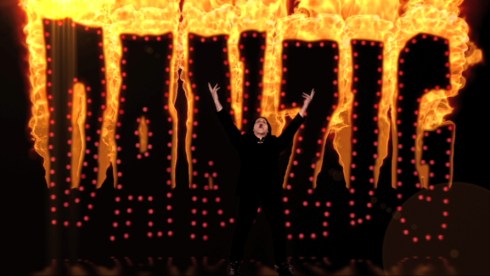
Danzig – The Soundtracks

Considering The Hangover Part II just opened this past weekend, which contained a new studio track from Danzig, it makes this post a bit more topical than most.  Glenn Danzig has had few brushes with motion picture soundtracks over the years.  Some, like the first of “The Hangover” films, contained a track already included on a Danzig release.  In that case the song “Thirteen” from Danzig 6.  Danzig has also seen the song “Mother” included on the Grand Theft Auto soundtrack and it has also shown up in other places, though I believe that particular one was the only released soundtrack to include it.  And then there are other films that included originals.  Again, these are few but in an effort to be all encompassing where Danzig is concerned I’ve decided to make a short entry on these rare gems.

Glenn Danzig and the Power and Fury Orchestra – “You and Me (Less Than Zero)” – 1987

The Less Than Zero soundtrack cover

This song was actually among the first Glenn Danzig wrote after joining the Def American label.  The label was handling the soundtrack for the film, Less Than Zero, and Rick Rubin asked Danzig to contribute.  Glenn wrote the song and modeled it after Lulu’s 1967 hit song “To Sir, With Love,” though it was not considered a cover.  The song was written by Glenn with the idea that someone else would record it.  Thus, it’s not a typical Glenn Danzig song by any stretch of the imagination.  The lyrics focus on a dying friendship, making it topical with the film, and features a small orchestra and choir.  Apparently, whoever was supposed to record the song was unable to do so or didn’t want to, so Rubin asked Danzig to step in.  Eerie Von either didn’t like the bass line or Rubin didn’t like how he played it, so studio musician George Drakoulias filled in, which is why the name of the band on the credits wasn’t Danzig (and also, since the song was not indicative of the Danzig sound one can see why the band was called something else).  Nonetheless, fans should be happy with how things worked out because this is a rare little gem of a track.  The borrowed melody is poppy and infectious and Glenn really cuts loose on vocals in a way he had never done before.  The southern choir adds a neat dimension to the song and is something that never appeared on a Glenn Danzig recording before or after this track was released.  Sadly, the song wasn’t used at any point in the film, though the other song Danzig contributed to the soundtrack was.  Performed by the legendary Roy Orbison, the Danzig-penned “Life Fades Away” dress-up the closing credits to the movie.  If you haven’t heard either and consider yourself a Danzig fan, you would do well to scour the nearest used record store for a copy of this soundtrack (and checkout the youtube link at the bottom to hear “You and Me (Less Than Zero)”)

Danzig – “Deep” – 1996

Songs in the Key of X

The title to this soundtrack is Songs in the Key of X:  Music From and Inspired by The X-Files.  It’s a soundtrack for the Fox television series the X-Files and it’s not.  It had nothing to do with the feature length film released a few years later and was intended as a complimentary piece for television fans.  Most of the songs were never featured in the show and actor David Duchovny was reportedly the one responsible for getting Danzig onto the soundtrack.  This was also during Danzig’s flirtation with industrial music, and the song he contributed was similar in sound to what he would put out on Danzig 5.  “Deep” starts off like a slow brooder that shares some lyrical similarities with the track “Sadistikal” off of Danzig 4.  It has an odd inorganic drum pattern under the verse and some industrial noise.  Danzig’s vocals are clean and the song breaks into a big chorus where the guitars come in.  A re-mix titled “Deeper” would later appear on the 2000 reissue of Danzig 5, and several more remixes would appear on the reissued Sacrifice EP.  Some fans seem to really dig this track and prefer it to most of the songs on Danzig 5, but I find it kind of drab.  The remix “Deeper” is a little better, but this song as it appears here is merely okay (though I do agree that it sounds better when compared with some of the stuff on Danzig 5).  For those looking to score a copy of this song on CD, good news, because you don’t have to purchase this soundtrack if you’re not interested in the other bands.  This track was also included on 2007’s The Lost Tracks of Danzig and if you’re a Danzig fan and you don’t have that already, what are you waiting for?!

Danzig – “Black Hell” – 2011

DanzigLegacyFireLetters

“Black Hell” would receive a video clip years later as part of The Legacy TV Taping.

From the soundtrack to The Hangover Part II, “Black Hell” could have the distinction of being the last properly released Danzig track.  It’s no secret that Glenn Danzig is getting older and has become disenchanted with the music business which allows for the possibility that 2010’s Deth Red Sabaoth is it for him.  There’s likely a covers record coming and at least one additional original Danzig song is known to have been recorded and left off the last album, titled “Long Dark Road.”  Either way, there’s not much left in the pipeline.  Things could change, since about 4 years ago Danzig said he was done touring and as we speak, the band is preparing to head for Europe, so if you wish to hold out hope go for it.  “Black Hell” is similar in style to “Thirteen,” which as I mentioned earlier, was included on the soundtrack and film The Hangover.  Apparently director Todd Phillips is a big Danzig fan, which is how this relationship was born.  “Black Hell” opens with a slow kick drum beat and a simple guitar strum and Danzig singing over it in a deep, ominous voice.  The lyrics are fairly standard for Danzig and after the first verse a haunting electric guitar riff comes in.  Eventually the song builds to a big chorus, and carries this sound through to its conclusion.  It’s a fairly simple track but effectively moody.  I especially like the use of the electric guitar which stays in the background (I should note, the strum riff is also played on an electric).  The vocals have a layered effect on the chorus with one really high one that adds to the song’s apocalyptic feel.  Unfortunately, the songs aren’t sold separately on digital music stores and if you want it you have to buy the whole soundtrack, which is mostly terrible.

That’s it though, just three original songs included on soundtracks.  I would say one is great, one is average, and one is kind of a throw-away.  It’s hard to say if Danzig will have any future contributions to soundtracks, though I’d consider it unlikely.  I did not mention the song “Underbelly of the Beast” from The Crow: Salvation soundtrack because it’s just a remix of “Belly of the Beast.”  It, like “Deep,” is also included on The Lost Tracks of Danzig.


Danzig (1988)

danzig-180417e0-c57b-438b-b499-e0062a80bee4If I’m going to make an entry for every Danzig release it makes sense to start with the debut self-titled album from 1988.  I’ve already written about the series of events that led to the formation of Danzig in the late 80’s and how the band ended up on the Def American label.   To re-hash quickly:  Rick Rubin wanted to sign metal bands, liked Samhain, gave Glenn Danzig a four album deal.  Simple enough.

The first record was recorded in 1987 and released in 1988.  The demon skull that had been the logo for Samhain was carried over as the logo for Danzig.  The cover of the record, and the approach, is simple and straight-forward; all black with the skull featured prominently across the front and back cover.

This is the album Rick Rubin allegedly had the most influence over.  This makes sense considering the band was a new property for the label and getting off to a good start would go a long way towards securing future success.  Rubin is famous for his stripped-down, no frills approach when taking on rock and metal acts.  He is reportedly a big fan of AC/DC and that was what he wanted to do with Danzig.  He wanted the guitars to be a feature point and the drums to contain minimal fills.  The vocals would be up front and feature little studio polish.  The bass was kind of left behind, either because Rubin didn’t feel it was essential or didn’t care for bassist Eerie Von’s playing.

John Christ was called upon a lot to set the stage for most of the tracks.  His guitar playing is at times stiff but the edge with which he plays compliments the tracks here.  His play is often aggressive and the solos are varied.  This is really his debut record as a guitar player and he makes a good impression.  Chuck Biscuits is kind of held back a little and would offer some stand-out performances on future releases, but what’s here is solid.  He does have a few standout moments, particularly on “Am I Demon,” and overall accomplishes what Rubin intended.  Danzig’s vocals are clear, though a bit under-stated for him.  He only has a few opportunities to really belt out a chorus and the vocals aren’t as high in the mix as one would expect given he is the focal point of the act.  Kind of like with Biscuits, Glenn would have better performances in the future but what is here is good, but not mind-blowing.

That good but not great line is an easy way to summarize the album as a whole.  The album includes some now classic tracks but there’s an air of restraint about the whole thing, which is odd considering how intense previous Glenn Danzig albums had been.  “Twist of Cain” is the opener, and is now a long-time crowd pleaser.  It’s a meandering hard rock number with a lot of metal cliches in the lyrics.  It’s mid-tempo, like most of the tracks on this album, and while I love the song I’ve always felt the drums lacked punch.  Particularly the opening.  The riff would become the standard Danzig riff.  Variations on it will appear all through-out future albums, but none ever top the original.  Songs like “Not of This World” and “Am I Demon” bring a little more speed to the table and when played live would often be sped-up even further.  Again, there’s an energy in these tracks but it feels like the band is holding back.

The Danzig logo was allegedly lifted from the cover of an obscure comic by Marvel called Crystar: Crystal Warrior, though Glenn insists to this day that he designed the logo. Here’s the cover, you decide.

The songs that were never intended to be fast numbers work the best under this approach.  “Soul on Fire” is probably the most complex song on the album, and quite possibly the best.  It settles into a nice groove and Glenn gets his croon going for the verse.  The chorus has a nice drum pattern, and if you listen closely you’ll notice a saxophone (or something sounding like a sax) buried under the mix which is pretty unique for a Danzig record.  The outro throws in some faster riffing and adds nice variety to the song.  “She Rides” is a slow brooder.  Really cheesy, but really effective.  I hear it used to be popular at strip clubs, which isn’t surprising.  The album’s closer “Evil Thing” is one of the few tracks that doesn’t feel like it’s being held back by anything.  Danzig’s wails sometime degenerate into snarls and the drums bring a great ferocity to the tempo.  It’s a track with more personality than most.  The future hit “Mother” also appears on this album, but one can see why it wasn’t a hit initially since it kind of just exists on this record as almost filler.  I should note for any Metallica fans out there, that James Hetfield has an uncredited role on back-up vocals on “Twist of Cain” and “Possession.”

The first Danzig album is a solid but under-stated debut for the new band.  So much so that one questions why producer Rick Rubin would opt for such an approach when something bolder might have worked better.  This album did come out during MTV’s highly influential peak and the band wasn’t able to produce a video that fit their criteria, which likely harmed sales.  Had the video for “Mother” been in-line with their standards perhaps it takes off in 1988 as opposed to 1993.  That’s not a criticism of the band though, as the band should conduct itself however it wishes and caving to corporate pressure isn’t very “metal.”  Missteps aside, this is a good album and an essential piece for any Danzig fan, there’s just better stuff ahead.

Top Tracks:

  • Twist of Cain
  • Soul on Fire
  • Evil Thing

Danzig

By now, it should be obvious that a post on this blog  titled “Danzig” is not going to be about the former port city in Poland.  Danzig is my favorite band and I make no attempt to hide that simple fact.  I could try to explain why I love Danzig so much but I’m sure I would find it difficult to adequately convey what it is I so admire about the man/band.  I’ll keep it simple and say I’m drawn to the rebellious nature of the music and Glenn Danzig’s infectious croons.  It doesn’t bother me that Danzig isn’t more beloved by music fans, though I steadfastly believe there’s a Danzig song out there for everyone.  I take pride in my extensive knowledge of all things Danzig so I thought it would be fitting to add to this blog a one-stop Danzig information center.  And by that I don’t mean stats on Glenn Danzig’s height or witty posts about piles of bricks in front of his house, I’m strictly talking about the music.  What are the albums worth checking out?  The best songs, lineups, and so forth?  Those are the questions I want to answer.

I will throw in some background information since this is the lead-in post.  Danzig is a band, but it’s Glenn Danzig’s band.  He writes all of the music and calls the shots.  Glenn grew up in Lodi, New Jersey and first began making a name for himself with the horror punk group The Misfits which got its start in the late 1970’s.  The Misfits were first conceived as a pretty straight-forward American punk band, but would later adopt the horror gimmick which gave the band a marketable identity.  The Misfits weren’t around for very long but made a lasting impression.  Unfortunately for those in the band, a lot of the success came well after the band’s demise in 1983 but the band’s influence can be felt all over the punk and metal genre.

Glenn’s next band was Samhain.  I already made an entry on Samhain so I won’t say too much about that band here.  Simply put, Samhain was a darker take on The Misfits with more influences from goth and metal.  Glenn wanted to do something a bit more serious while still keeping some of that horror camp The Misfits were known for.  Samhain was also short lived, for it was as Samhain that Glenn and the boys garnered the attention of record producer Rick Rubin who would sign the band in 1987 to his newly created Def American label.  It was at that time the band would be re-titled Danzig.

The man himself, circa 1992.

The Misfits and Samhain were both plagued by lineup changes throughout their existance.  Initially, Danzig was conceived as a super group with Glenn as the focal point.  The label would bring in difference musicians to play with Glenn to keep things fresh.  The initial lineup wasn’t full of names, but it had talent.  Eerie Von was the lone holdover from Samhain on bass, largely because he and Glenn were good friends.  Von wasn’t a gifted bass player, but bass was never a part of the production Rubin focused on so he put up little fight in letting Glenn retain Eerie.  Rubin brought in veteran drummer Chuck Biscuits to play on the first record.  Biscuits is a goofy guy with an even goofier name but one Hell of a drummer.  He was good enough that both Glenn and Rick saw no reason to make any changes for the following records, there was no point.  The ever persistent John Christ was hired to play guitar after auditioning numerous times to be in Samhain and Danzig.  I’m not sure what won him the job, perhaps it was a lack of options, but Christ’s style would fit the band’s early sound quite well.  What probably was supposed to be a one record deal ended up lasting for the duration of the band’s contract with American Recordings.

The first Danzig record was released in 1988.  Produced by Rubin, it featured a stripped-down sound with Rubin emphasizing on capturing the band’s live sound in studio.  He would force the band to get their parts recorded in one take and there was very little post-production and mastering.  The album was not a hit, and even though it would contain the track “Mother” the song wouldn’t garner much airplay initially.  Part of that was due to the Satanic imagery of the song’s video, making MTV wary of playing it without some censorship put in place.  It was this image that would also lead to the parent label, Geffen Records, from ever having it’s name or logo featured on a Danzig record despite being the distributor.  All of this mystique seemed to amuse Glenn and probably ended up helping create a dangerous image that attracted a younger audience.

Because the band was not an overnight success, Rubin would lose some interest and devote less time to producing the follow-up records.  The band’s second album, Lucifuge, would follow in 1990 and Danzig III: How the Gods Kill in ’92.  By now the band had gained a strong underground following, culminating in a sold-out Halloween show at Irvine Meadows during the How the Gods Kill tour.  Four tracks from that show, plus three new studio tracks including an Elvis cover, would comprise the 1993 Thrall: Demonsweatlive EP which was released alongside a slightly remixed version of “Mother” with a new video.  This video would receive airplay on MTV and it soon became a modest hit, propelling the band’s debut record and EP to gold status.

The band would follow-up the success of “Mother” with Danzig 4p in 1994.  4p would do well but not as well as the label was hoping for.  The single “Cantspeak” cracked the Top 100, making Danzig technically a 2-hit wonder, and the tour was fairly successful.  The band would also be asked to play on the main stage of the inaugural Ozzfest and did a support tour with Metallica as well, during which Glenn would join the guys on stage in some cities to do some classic Misfits tracks.

Danzig would prove disastrous for Disney’s image.

It was also around this time that the band began to fall apart.  Chuck Biscuits’ drug problems became too much to contend with and he would be replaced by new comer Joey Castillo for the 4p tour.  Glenn had long wanted to replace John Christ on guitar and by ’94 the feeling had become mutual and the two agreed to part ways following the tour.  It was at this time that Eerie Von also chose to leave, citing burn-out and being genuinely disappointed that the other guys were leaving.  The label, now known as American Recordings, was also showing little or no interest in re-upping on a new deal so Glenn shopped his talents around and was able to land a seven figure deal from start-up Hollywood Records.  This marriage would last only one album, the much maligned Blackacidevil, as the band’s parent company Disney wanted nothing to do with a band that was often associated with Satanism.  The deal would be terminated, and what would follow would be several years of legal battles between Glenn and Disney.

It wouldn’t be until 1999 when Danzig would resurface.  Now on Emagine Records, the band still consisted of Glenn and Joey Castillo on drums, but also had Josh Lazie on bass and Jeff Chambers on guitar.  This lineup would record Danzig 6:66 Satan’s Child, an album built up as a return to form for Danzig but ultimately would not meet those expectations.  Following the album’s completion, Chambers was replaced by Todd Youth (allegedly because he didn’t fit the band’s image) and Lazie would leave of his own accord and be replaced by Howie Pyro.  The first leg of the Satan’s Child tour featured a mini Samhain reunion and would prove to be the highlight of the tour.

With the collapse of the Emagine label, Danzig would self produce everything and seek out distribution deals.  He inked one such deal with Spitfire for the 2002 follow-up to Satan’s Child, Danzig 777 I Luciferi.  The same lineup as the previous tour recorded this one, but all would be replaced afterwards.  Circle of Snakes would follow in 2004, the tour for which featured a guest appearance by former Misfits guitarist Doyle.  Together he and the band would play a short set of Misfits songs during the Danzig set.

Now in his mid 50’s, Danzig proved with “Deth Red Sabaoth” that he’s not done yet.

Circle of Snakes would be the last album for Danzig for quite some time.  During his hiatus he would put out a classical album, Black Aria II, the follow-up to his original collection of classical music put out in 1992.  2007 saw the release of the long-awaited and much anticipated Lost Tracks of Danzig, a two-disc set spanning the band’s entire existence containing mostly unheard tracks.  It wasn’t until 2010 when a new Danzig record would be released, the well-received Deth Red Sabaoth, which may end up being the final proper Danzig album.  Only time will tell.  It so far has lead to a mini resurgence for the band.  Not only did it sell well, but Danzig even found himself on the soundtrack to the blockbuster hit The Hangover, introducing his song “Thirteen” to a whole new audience.  The band also has a new song featured on the sequel’s soundtrack set for release on May 24th, titled “Black Hell.”

It’s my intention to post a review for each Danzig record, the major releases and the smaller ones including both Black Aria records.  I’ve already posted reviews for Danzig II and Danzig 4, so check back for a review of the 1988 self-titled record in the near future.  I haven’t decided if I’ll just review them all chronologically or not, but eventually they’ll all be posted and hopefully readers find them both interesting and useful.

Listen to Danzig!


Heavy Rain

Heavy Rain (2010)

I had been meaning to play the 2010 game Heavy Rain for quite some time, but had yet to get around to it.  Part of me was hesitant about doing so because it had been compared loosely with those old point and click adventure games from the 80’s and those never appealed to me.  As a result, I put it off and never got around to purchasing it until recently when I saw it for 20 bucks at a local store.  Having just finished my first play-through the other night, my initial reaction is that this is one of the most unique experiences I’ve ever had with a video game.

For those unaware, Heavy Rain is probably best described as either an adventure game or a crime noir.  It was released for the Playstation 3 in February of 2010 to very favorable reviews earning an aggregate score of 89.3% on Gamerankings.com.  It does share some things in common with point and click adventures but not as much as I had been lead to believe.  For the most part, the player still controls an on-screen character through mostly conventional means.  The left analog stick changes the direction the character is facing and squeezing the R2 trigger makes the character walk similar to how the old Resident Evil games used to control.  The character can approach objects in the environment and some can be interacted with by pressing a button indicated by an on-screen icon.  Often instead of the button input being the typical “X” or “Square” it’s a direction on the right analog stick.

Visually the game is a mixture of average and exceptional. The exceptional part refers to the characters and the life-like way they're able to emote.

After that though the game gets less typical.  At any point in time, squeezing the L2 button will make a bunch of text pop up on the screen with one of the face buttons beside it indicating a thought.  Pressing the associated button will let the player listen in on the character’s internal thoughts.  This is sometimes used to help cue the player on what to do next but most of the time it’s just to add color to the context of the situation and enhance the experience.  Actions will play out on-screen and button commands will pop up that the player has to follow in order to progress, or not.  Often times inaction is also acceptable and even desirable as all responses will advance the story.  These scenes range from simple conversations to intense physical confrontations between characters.  For the conversations, missing a cue can lead to failing to pick up a piece of valuable information, while in a fight missing the cue or hitting the wrong button can lead to failure, including death.

That’s the basic gameplay and most of the scenarios occur in pretty small areas.  There’s very little running around and trying to figure out what to do next, the game just unfolds in scenes.  There are a couple scenarios where you’re asked to drive or shoot a gun but they handle like the other scenes, just with less reaction time.  I went with the hard setting which affects the type of inputs required.  I think the easiest setting mostly limits the commands to simple one button presses.  I was asked to do motions with the right analog stick, half-circle motions and funny “hook” motions.  Sometimes the game asks you to tilt the controller (like when driving) or jerk it in a certain direction quickly.  For the triggers and face buttons, some are simple presses, others require pressing and holding the buttons in a certain sequence or tapping rapidly.  Usually the required input corresponds with what the character is being asked to do on-screen and adds a surprising amount of depth and immersion for the player.  I was expecting the controls for this game to be a necessary evil to move the plot forward but they really add a lot to the experience.

Ethan Mars will be asked to do some very bad things if he ever wants to see his son again.

If the plot wasn’t any good though the controls would probably get old, but thankfully Heavy Rain plays out like a true crime drama.  The main protagonist and first character you’ll control is Ethan Mars.  After losing a son in an unfortunate accident Ethan finds himself in a state of severe depression and estranged from his wife.  When his son Shaun goes missing he finds himself at the end of his rope.  It’s soon learned that his son was abducted by the Origami Killer and Ethan must go through several trials sent to him by the killer in order to get him back.  Meanwhile, the local police have enlisted an FBI agent, Norman Jayden, to help track down the killer.  As Jayden, the player will use sophisticated equipment to play detective and try to find the killer while navigating through a series of red herrings and Jayden’s own substance abuse.  Local private investigator Scott Shelby is also working hard on the case and is the third character the player will control.  Shelby is a former cop working on his own leads to find Shaun.  Madison Paige is the fourth and final character the player gets to control.  She’s a journalist suffering from insomnia who kind of stumbles into Ethan’s life.  She’ll end up working with Ethan to try and find Shaun.  The Origami Killer slowly drowns his victims over a period of time, and depending on the amount of rain that falls, Shaun will die.  This adds a sense of urgency to the plot as the game bounces from scene to scene, character to character.

Some of the tasks the player will be asked to do can be described as atypical.

The truly unique part of Heavy Rain is that there is no right way to get to the game’s conclusion, and no game over along the way.  Any or all of the characters could die over the course of the game, including Ethan’s son Shaun, and no two games will be the same.  The trials Ethan goes through are both trials of skill and morals.  Each completed one gets Ethan a clue to Shaun’s location.  Some are brutal and for me conjured memories of the movie Se7en.  The more that are completed the easier it is to find Shaun but some players may find certain ones abhorrent and refuse to complete them.  That’s understandable and know that it’s still possible to save Shaun without completing all of them.  Ethan may end up with enough information to figure it out or one of the other characters will come to Shaun’s rescue.  It’s also possible for all of them to figure it out, which is what occurred in my game.  I suppose that is the most desirable outcome.

I played this game straight-up, meaning no help or re-do’s.  There were a couple of scenarios that didn’t go the way I wanted them to but I resisted the urge to reset and go again.  I think this game is best played as if it were life or death, and in the game of life there are no extra lives.  There were a few moments I thought I really screwed up and was going to get someone killed but I was always able to wiggle out of it.  These moments of high anxiety are where the game shines brightest as I found myself really invested in what happened to the characters.

It’s not a real long game, maybe 8-10 hours each time through, but the pacing is spot-on.  The game started a little slow as the characters were worked into the plot but once it got going I didn’t want to put the controller down.  When I had to though, I found it hard to jump right back in knowing how emotionally taxing the experience was going to be.  This is a game I recommend players beat in 2 to 3 sittings, though if you can do it in one then more power to you.  The game does have a “twist” in the plot that some apparently did not care for.  I was neither shocked nor put off.  For a game that really tries to not be a game, the twist did feel a little cheap as the game did kind of cheat in order to make it happen.  I’d explain more but I don’t want to spoil anything.

Heavy Rain is the only video game I’ve ever played that transcends the genre.  That doesn’t mean it’s my favorite or the greatest game ever, but it does make it one of the most significant.  The argument of whether video games can be art is a fashionable one currently and for those on the affirmative side of that question Heavy Rain is probably the best thing going for them.  I do think it’s a title any serious gamer should play, and if you do choose to pick it up make sure you see it through to the end.


X-Men Season 2 (Part 1)

Season one of the animated series X-Men was a great success for both Marvel and Fox Kids.  It was the highest rated program on Saturday Morning in its target demographic and thus was renewed for a second season.  Its reign as a rating’s top dog would be short-lived, thanks to a new kid’s show called Power Rangers, but its new-found status of second place had nothing to do with a dip in quality.  Far from it, actually, as season 2 would prove to be every bit as good as season 1, if not better.

Season 1 had a narrative structure that involved linking all of the episodes together, rather than having them all be stand-alone in nature.  This may have made it a little challenging for viewers to jump right in mid-season, but was rewarding for those who latched on from episode one.  Season 2 kept this format, but augmented it slightly.  Season 1 chose to introduce villains every few episodes, where as season 2 opts to focus more on the X-Men individually.  Most of the characters get their own episode that details their back story.  In Rogue’s episode we learn how she joined the X-Men, with Gambit we learn about his involvement with the thieves’ guild, and so on.  Cyclops and Jean are the only two who do not get this treatment.  Jean ends up being a big player in subsequent seasons while Cyclops will have a few episodes dedicated to him down the road.

The one narrative piece linking all of the episodes together involves Xavier and Magneto’s trials in the Savage Land, a place time forgot located in Antarctica.  They would receive a few minutes either at the end or beginning of an episode as they tangle with dinosaurs and try to avoid the Savage Land’s mutates, all while trying to uncover who the mysterious Leader is.  The villain Mr. Sinister would also play a large role in season 2 as he shows up in several episodes.  Sinister was still a some-what new villain for the comics and his inclusion would really benefit the character.  The other major villain would be the Friends of Humanity.  With Senator Kelly now president, the mutants needed a new human villain.  This organization would prove to be the KKK of mutant hating.  Lead by the merciless Graydon Creed, the FoH made life miserable for the X-Men in season 2 and were a big part of several episodes.  Their inclusion helped keep the civil rights aspect of the show in the forefront.

Till Death Do Us Part (Parts 1 and 2)

Evil Morph

For weeks before season 2 began airing, Fox teased fans with commercials featuring the big return of Morph, and this two-part story did not disappoint.  Morph was back and revealed right away to the viewing audience, but not to the X-Men.  The once cheerful mutant was now bitter.  It was soon revealed that Morph had developed two personalities; the happy-go-lucky persona we saw in “Night of the Sentinels” and a new, evil one.  This new one was depicted as having yellowish skin and black circles around his eyes.  He looked a little more gaunt as well, making him a sort-of zombie Morph.  He’s angry with the X-Men for leaving him to die at the Mutant Registration Compound, and he’s going to use his shape-shifting powers to get back at each member of the X-Men.  He first tricks Cyclops and Jean into thinking they’ve been married by a legitimate priest before sending them off on a honeymoon.  He sends Xavier to Antarctica by posing as a dying Magneto.  Jubilee is sent off to the Friends of Humanity headquarters (“That’s for thinking you could replace me!”), Gambit is duped into kissing Rogue (and being knocked unconscious by her energy draining powers), Storm ends up getting shot by police, and Rogue is pissed at Beast (they got off easy) for thinking he was going to back Storm up.

All the while the Friends of Humanity try to make life bad for mutants.  Creed hires someone to pose as a mutant and wreck up the place where President Kelly is giving a speech.  They’re able to provoke Wolverine, Gambit, and Beast into a fight and capture some unflattering images of the recently pardoned Beast for inclusion on the evening news.  This results in Wolverine storming off to take care of them on his own, which leads him to the FoH headquarters where Jubilee is being held and the two bust out.

The main baddie of season 2, Mr. Sinister.

Morph, of course, is eventually outed as the perpetrator of all of this mischief when Wolverine’s nose picks up his scent while he’s masquerading as Xavier.  He escapes the mansion and the X-Men follow him to a secluded island, a base for Mr. Sinister, and we see just what happened the night Morph died.  Cyclops and Jean are being held prisoner, and the X-Men show up to tangle with Sinister’s Nasty Boys.  We get some good action here, as the Nasty Boys possess some unique powers (and some not unique) that give the X-Men some trouble.  Of course, Morph comes to his senses and ends up saving the day by (inadvertently) freeing Cyclops from his restraints, who takes care of the rest.

The episode ends with the bad guys getting away and Morph taking off as well, much to Wolverine’s disappointment.  The episode does a good job of introducing Sinister as a puppet master who is both formidable in combat and behind the scenes.  The inclusion of Morph is pulled off in a respectable way as well.  Most of the time I despise it when writers bring characters back from the dead, but this one works, especially when one considers it was always kind of odd that a Sentinel blast could kill an X-Man.  The episode also concludes with Xavier and Magneto’s reunion and the two, thinking each had been invited by the other, are soon caught in an avalanche.  Xavier’s premonition of “I sense something sinister,” kind of ruins the whole mystery of who’s behind the Savage Land mutates that the writers try to perpetuate throughout the season, but it’s easily forgiven.  As a kid, I was disappointed Morph did not rejoin the X-Men at the episode’s conclusion.  As an adult,  I’m disappointed he was, more or less, freed from Sinister’s control as evil Morph was a very entertaining villain throughout the two episodes.

Whatever It Takes

The Shadow King, quite possibly the worse X-Men villain to appear in the animated series.

The first character to get their own special episode is Storm.  We learn that Storm has a foster son in Africa, and a disturbance in the astral plane discovered by Cerebro sends Storm and Rogue off to investigate.  The episode also introduces the Savage Land, a tropical oasis in Antarctica where many prehistoric creatures still roam.  Magneto and Xavier find themselves trapped here and strangely their mutant powers have vanished.  Along with that, Xavier is also able to walk again.  Magneto informs Xavier he is familiar with this land, but it never had such properties before.  They tangle with some dinosaurs and basically set the stage for what will end up being a season’s long adventure.

Wolverine has a side-story where he’s chasing after Morph through the jungles of South America.  He finds Morph, who has used his shape-shifting powers to assimilate himself with the locals, and the two tangle in a mine shaft.  Morph delights the audience with a couple of cameo transformations including Maverick and Deadpool as he attempts to harm Wolverine psychologically.  Eventually, Morph backs off and slips into his “good Morph” persona pleading with Wolverine to let him get through this by himself.  Wolverine, begrudgingly, acquiesces  to his friend’s wishes.

Sadly, the minor side story is the most compelling, as Storm and Rogue’s exploits in Africa are not.  The Shadow King is the one behind the rip in the astral plane, and he has targeted Storm’s surrogate son Mjnari in order to lure her back to Africa.  It is revealed that Storm once served the Shadow King in her youth as a pick pocket.  Xavier sealed the Shadow King away in the astral plane, a realm the most powerful psychics are able to access, destroying his physical body.  He possesses Mjnari, and then eventually Storm as she offers herself to him in order to spare her son.  Rogue is kind of just along for the ride as her brawn is not able to touch the Shadow King’s corporeal form.  Mjanri ends up finding a way to lure the Shadow King back into the astral plane, and the portal between the two worlds closes, sealing him away once more.  The whole thing is kind of silly and predictable, the end result being season 2’s worst episode.  At least they got it out of the way early.

Red Dawn

A new villain for the '90's: Omega Red

Season 2’s fourth episode is one of the few not to feature significant back-story or character details about one of the X-Men, and that’s because it chooses to introduce a new villain:  Omega Red.  Omega Red was a very new villain to the comics and one that caught on with audiences pretty quickly, mostly because of his look and because he was a new villain for Wolverine.  Red was born from the Soviet equivalent of the Weapon X project.  His back-story isn’t explained in great detail, just that he was the Soviet’s ultimate weapon and Wolverine lead a team that helped, in his words, put Omega Red back on ice.  Armed with retractable carbonadium coils (an indestructible metal similar to adamantium) that drain the life from his victims, Red is unfrozen by a corrupt Soviet regime looking to take back the country.

Naturally, this presents an opportunity to bring Colossus back into the fold.  Colossus helps Jubilee deal with some Friends of Humanity goons who are harassing a convenience store owner.  He tells Jubilee he has come seeking the X-Men’s help in dealing with Omega Red.  The X-Men aren’t home, so Jubilee leaves a note and the two head off to Russia to combat Omega Red.  Wolverine arrives home soon after from his exploits in South America, and promptly crushes the note while growling “Omega Red” and bad ass music plays as he stalks off to the hangar.

Back in Russia, Colossus and Omega Red face-off, with Wolverine soon joining the party.  We learn about their back-story, while Omega Red handles the threat effortlessly.  The battle is broken up, and the rest of the X-Men soon arrive.  Together, they battle Red and Storm’s mastery of the cold freezes Omega Red once more.  The character Dark Star, once an ally of the old regime, assists in taking down Red and she also apprehends those responsible for bringing him back.  Colossus once again is offered a place with the team, but he declines saying his place is with his family.  Unfortunately, this episode is the last to feature the brawny metal mutant.  A good almost one-shot for Omega Red (I say almost because he does get a return episode) and a way to keep the series topical with the comic books.


Kamelot Abandoned

It was announced officially on April 21st that vocalist Roy Khan was leaving the

Former Kamelot vocalist Roy Khan.

band he had fronted for the last 13+ years, Kamelot.  This did not come as a surprise for fans.  Khan had bowed out of touring just a week before Kamelot was to kick off the first leg of its tour in support of its new album, Poetry for the Poisoned, due to what he called exhaustion.  No reason was given beyond that and the band was forced to scramble to find a replacement for the tour.  After initially announcing the tour would go on with Michael Eriksen of Circus Maxima, the band decided to cancel it out-right and resume touring in the spring.  Khan would release another message a few months later to update the fans on his health.  Included in that message was a snippet where Khan stated he was evaluating his future in the music industry.  Rumors began to circulate that Khan was done, had embraced a new religion, and no longer wished to be associated with Kamelot.

Those fears were unfortunately met.  No one knows the real reason for his departure, it could be religiously motivated, he could just wish to spend more time with his family, or it could be something else entirely.  In the end, it doesn’t matter much to the remaining members of Kamelot and its fan-base.  Kamelot was steadily gaining fans and growing into a medium-sized act that could attract a healthy crowd outside of the US, and a modest one within the US (which is about as much as any metal band can hope for in the States).  This undoubtedly is a set-back.

Replacing a lead vocalist is the hardest thing to do for an established act.  Even in a situation like Kamelot’s where another member of the band is the unquestioned leader, it still proves trying because most listeners identify with the frontman.  He’s the person always, appropriately enough, placed in front for pictures and press materials.  He is the one who engages the audience through a microphone, and it’s often the vocals and lyrics most listeners notice first.

A departing vocalist can sometimes derail a band, and sometimes it can help.  Iron Maiden is a good example of both.  Like Kamelot, the leader of the band is not the vocalist but bassist Steve Harris.  The first two Iron Maiden records featured Paul Di’Anno on vocals.  Di’Anno was not a good vocalist by traditional standards, but he had a certain attitude and high range to suit the band’s early sound.  Di’Anno was dismissed after touring was completed for the album Killers, and he was soon replaced with former Samson vocalist Bruce Dickinson.  The rest is history.

Replacing Bruce Dickinson proved to be an impossible task for Iron Maiden.

Iron Maiden would experience tremendous success with Dickinson, but by the time the 90’s rolled around Dickinson was experiencing exhaustion (sound familiar?) and wanted to stretch his creative wings so he departed following 1992’s Fear of the Dark LP and tour.  Iron Maiden would attempt to replace him with Wolfsbane frontman Blaze Bayley, but the move wasn’t a popular one.  There was no replacing Dickinson in the minds of Maiden fans, and the band’s popularity was reduced to next to nothing in the 90’s.  Fortunately for the band’s health and the fans, Dickinson returned in 1999 and Iron Maiden is currently enjoying a second golden age for itself.

Other bands have found mixed results.  Van Halen famously replaced David Lee Roth with Sammy Hagar in 1985 and found success early on, but it soon tapered as the 80’s ran into the 90’s.  Nightwish more recently replaced its front-woman, Tarja Turunen with Swedish vocalist Anette Olzon.  One album has been released with Anette and it has sold well, the next album will be an important one to see if Olzon’s success is sustainable.

It remains to be seen what will become of Kamelot.  The band announced it has begun searching for a new permanent vocalist.  Currently the band is on tour with Rhapsody of Fire frontman Fabio Lione as a stand-in so it is unlikely the band will begin auditioning new members until the tour’s completion.  Guitarist and founder Thomas Youngblood hinted that he was interested in finding a vocalist that could sing in a higher register than Khan.

A new vocalist is actually not a new thing for Kamelot.  The Iron Maiden parallels are strong with this band, as the first two Kamelot albums featured a different vocalist, Mark Vanderbilt.  Khan was brought in to replace him for the band’s third release, Siege Perilous, and the band began to garner more and more attention with each successive album.

Early on, Khan was able to hit higher notes, but beginning with the album Epica he noticeably sang in a lower tone.  This was not necessarily a bad thing.  Roy Khan delivers his vocals with extreme, measured precision.  His voice is filled drama and his theatric flair compliment the band’s approach extremely well.  He also composes most of the band’s lyrics, and for the last decade has established himself as one with the band’s identity.  Replacing such a unique presence will not be easy, but I wish the rest of the band much luck in doing so.

Kamelot – “Abandoned”:


Finish Him!

I posted a few weeks ago about the Mortal Kombat demo and came away mostly impressed.  Well the game was released on the 19th of April and I became a first day buyer.  Since then I’ve logged many hours with the release and have come away with these impressions.

First off, this is Mortal Kombat the way it should be.  It’s modernized for today’s audience but retains a lot of what made the franchise unique when it debuted nearly 20 years ago.  That is to say, there was an obvious style present in both how the game looks and how it plays.  Mortal Kombat has always differed from other games of its genre by including over-the-top characters with over-the-top powers.  Whether it’s Sub-Zero’s freezing powers or Liu Kang’s dragon abilities, there’s nothing realistic at all about the game.  And with today’s hardware this is magnified even more so.  The male fighters are hulking monsters and the women buxom and scantily clad and as the fights progress you’ll see clothing shred and chunks of flesh go missing.

Gameplay wise, all of the old moves are here along with some new ones.  The developers abandoned the multi-stance styles embraced by the more recent games which helps keep things loose and simple.  Some characters still have weapons, like Scorpion, but they’re integrated into his standard moves.  The X-Ray meter at the bottom of the screen functions a lot like Street Fighter’s super combo meter.  As it fills, the player can use it to enhance basic moves to give them added punch.  Or, the player can let the meter fill further opening up combo breakers at level 2, and finally X-Ray attacks at level 3.  I talked about these destructive X-Ray moves in my demo impressions, and the same criticism is still present though some of my fears were alleviated.  The moves are still ultra powerful, and most of them are fairly easy to land, but the AI is not afraid to use them which helps equalize things.  Really, my only major complaint is the unbalanced nature of some of them.  The characters that incorporate a teleport move of some kind into their X-Ray attack are at a far greater advantage than some of the others.

The basic gameplay still centers around super moves and combos.  The pace of the fights are akin to something mid tempo, and the best fighters are able to string together super moves with combos.  There’s also a grab button, and the franchise’s trademark block button as well.  Blocking is something that is beneficial to master given the abundance of characters with quick hitting teleport moves.  Also, most X-Ray attacks can be blocked as well, which is something that always seems to turn the tide of battle.

X-Ray attacks are quite brutal.

There are multiple game modes available to spend some time on.  There’s the standard ladder tournament that pits the player against seven fighters and three boss battles consisting of Shang Tsung, Goro/Kintaro, and Shao Kahn.  Shang Tsung is a regular playable character, so perhaps it’s a stretch to call him a boss, but he’s present in every ladder tournament so I guess that makes him a boss.  The second boss is random and is either Kintaro or Goro and both guys are as most remember them; cheap.  Neither is as bad as Kahn though, who’s quick dash attacks and ability to no-sell the moves directed at him make him extremely annoying.  He also has an attack where he throws his maul across the screen.  If it hits, the player becomes staggered and is left open to attack.  When Kahn is feeling especially mean, he’ll double or triple up on the attack and leave the player character helpless to do anything about it.  To beat him one typically has to resort to the old cheap tactic of launching projectile attacks.  Kahn will often pause to taunt randomly which helps.  After he’s defeated, the player is rewarded with an ending cinematic for the chosen character that’s narrated over.  These cinematics are done with still images which is kind of disappointing, and they’re quite brief and few are memorable.

If one wants to really experience the Mortal Kombat story, then the appropriately titled story mode is where to be.  Story mode is long, and takes the player through the whole Mortal Kombat mythos but with a new twist.  As the player, you’ll switch characters depending on the plot and have to take on 1 on 2 matches at times.  The story is campy, and some of the voice acting and writing is terrible, but it’s mostly a good time.  Some of the matches are absurd, but it’s beatable and you’ll unlock a couple of new characters along the way.

The other modes include a new tag match and the challenge matches.  The challenge matches are difficult and often contain gimmicks to make them even harder.  The tag match is a welcome addition, though it isn’t very flashy like a Marvel vs Capcom title.  As you play these modes you’ll earn “koins” that can be spent in the game’s bonus section, The Krypt.  There’s hundred of items to unlock here, but most of it is junk like concept art.  There’s hidden fatalities and extra costumes as well, but they’re harder to find.

By the end of most matches both characters will find themselves a bloody mess.

And fatalities are the name of the game when it comes to Mortal Kombat.  Yes, they’re a gimmick but they’re so much fun.  They’ve never been better too, and some of them are insane.  My vote for best belongs to Noob Saibot, but everyone will have their own favorite.  Each character has two, plus a stage fatality, and some of a third “klassic” fatality depending on where the game is purchased.  I bought the game at Best Buy and received Sub-Zero’s classic costume and fatality, the old head rip.  Babalities are also back and this time around they’re a lot funnier than the old ones as each baby will perform an action that usually results in crying.  It’s a humorous and non-violent way to end a match.

All in all, Mortal Kombat is pretty much exactly what I expected, and exactly what I wanted.  While Street Fighter will likely always be the king of the fighting genre, Mortal Kombat has its own niche and there’s no reason why people can’t be fans of both.  I plan to log many more hours with this one and maybe if PSN ever gets back online I’ll test my abilities against the rest of the world.  It’s not a flawless victory for Warner Bros., but it’s pretty damn good.


Final Fantasy Grudge Match

I woke up this morning and did my usual Saturday routine of grabbing some breakfast, a warm beverage, and sat down with my laptop to see what’s going on in the world.  I ended up at ign.com and checked out their review for the new Final Fantasy IV re-make on Sony’s PSP.  The game is yet another re-release of the Super Nintendo classic only this time with enhanced visuals and added content in the form of the episodic sequel released on the Wii from a year ago.  This isn’t about that particular game though, more about the comments made by reviewer Colin Moriarty regarding the quality of today’s Final Fantasy titles.  I both agree and disagree with some of the comments he made (which, to summarize, was that early Final Fantasy titles are the best and the present day titles subpar) but it got me thinking; what is the best game in the Final Fantasy series?

I have played most of the Final Fantasy games.  I haven’t played them all, and I can cite the ones I have never played as the original game, II, and the most recent Final Fantasy XIII.  I do not consider the on-line only games as being part of the same canon, but for what it’s worth, I have not played them either.  Of the ones I have played, the only one I never beat was the Final Fantasy III re-make on the DS (I still plan on doing so, one of these days), though I’ve never encountered anyone willing to argue that title is the best in the series.  I’ve also played many of the spin-off games, including the excellent Final Fantasy Tactics and the less than excellent Final Fantasy X-2.  Needless to say, I’m only going to look at the ones I have played and beaten and I’m not going to include the spin-offs, for as good as Tactics is, it’s just Ogre Battle with a Final Fantasy theme.

For my money, this becomes a contest between four games:  IV, VI, VII, and X.  Final Fantasy V is a lot of fun because of its job system, which was introduced in III and refined for V.  I had a lot of fun with that one on emulation before it was released in the US, and then again when it received a release for the Playstation alongside VI.  As fun as it was though, I couldn’t help but feel like the game’s plot was really chiche and the villain was not a viable threat, or even interesting.  Final Fantasy IX holds a special place in the hearts of many fans for its throwback approach.  Following three titles that blurred the line between fantasy and sci-fi, IX fully embraced that old fantasy feel of the first five titles.  One of the Playstation’s last hurrahs, it was a visual delight and the cast charming, but for me it doesn’t have the same scope as the premier titles in the franchise.  The item system also didn’t feel as if much time was spent on it by the developers to create a truly deep experience.

That said, the four titles I mentioned previously are the cream of the crop.  The fans of the other titles number far fewer than the ones for these four.  It’s time to take a look at each one…

Final Fantasy IV was released for the Super Nintendo in 1991.  It is not only note-worthy for being one of the best in the franchise, but also for the great confusion it caused gamers in the US when it was released as Final Fantasy II.  The true NES sequels of the original Final Fantasy were never released in the US, so Squaresoft decided to call IV Final Fantasy II in the states.  At the time it wasn’t confusing, but when Square decided to call Final Fantasy VII the seventh title in the franchise in all territories, American fans were left wondering how they missed IV, V, and VI.

Final Fantasy IV is the rare game where the player starts off playing as the villain.  The main protagonist, Cecil, is a dark knight who has committed unspeakable atrocities.  As someone who likes anti-hero characters, this gave the game instant appeal for me.  Of course, Square doesn’t keep the player in the role of the villain all game and Cecil eventually has a re-awakening.  From that point on, he has big purple hair and refers to himself as a paladin.  Lame.

The game was the first to introduce the Active Time Battle system, which made the game feel less turn-based.  It was also the last title to let the player control a party of five.  The gameplay is pretty much classic Final Fantasy.  There are summons, white magic, black magic, ninjutsu, and other familiar attack types.  Characters adhere to one strict class and become more powerful as they gain levels.  The game is very linear, and features a traditional good vs evil plot.  Atypically, the game feature space travel and the final dungeon is housed on the moon.  There’s very little in the way of customization, which must have seemed like a radical departure for Japanese fans going from III’s job system to this one.  Pre-programmed plot events dictate who will be available as a party member and who won’t where as future titles would often give the player a choice of who to send out into the fray.

Despite it’s limitations, the story is a memorable one.  It’s engaging watching Cecil sort out his emotions.  The plot events, while linear, allow the game developers to script some memorable action scenes.  The script is also surprisingly whitty, though some of that is due to the game’s original poor translation making the phrase “spoony bard” a popular one amongst gamers.  In typical Final Fantasy fare, the true enemy is revealed late in the game and takes away some of the excitement of the closing moments.  Nonetheless, the re-released PSX version contains a challenging and rewarding end boss fight (the US SNES one was dumbed-down) and the experience is overall a memorable one.

Final Fantasy VI also received a numeral change when it was originally released on the SNES in the US as Final Fantasy III.  Final Fantasy VI has also been re-released several times by Squaresoft over the years but has never received a sequel or a remake, despite being often cited as the best of the series.  Released in 1994, it represented an obvious visual upgrade over the two previous titles.  It also opted for a steam punk type of setting over the traditional fantasy one and is really the only title in the series to not feature a true leading role.  This is quite appropriate considering VI has the largest cast of available characters in the series totaling 14.

Outside of those differences, the core gameplay sticks to what Final Fantasy IV popularized.  Each character has their own specialized class that draws from popular character classes of the previous games.  There are some notable departures such as Edgar’s tech abilities and Relm’s drawing ones, but for the most part every character fits into the traditional mage, monk, warrior mold.  The plot is pretty interesting, and features the player as part of a resistance movement to take down an evil empire and introduces one of the most memorable villains of the series, Kefka, who’s one sadistic bastard.

The game is fairly linear, though once the player reaches the world of ruin it becomes more open-ended.  At that point the player can choose to track down more party members and scour some dungeons or go right after Kefka.  There’s also a moment where the player can lose a party member permanently, which is kind of cool even if it’s easily avoided.

Spells in this game could be learned by anyone, though certain characters were more well-suited for magic than others.  Magic was learned by attaching an esper to a character and as battles were won AP was earned which went towards learning spells.  The better spells naturally took longer to learn.  The espers also served as the game’s summons and could be called upon once per battle to unleash havoc on the opposition or bestow beneficial effects on the party.  Their use in that regard was nonessential, but the customization abilities were quite enjoyable.  This customization allowed the player to assemble his or her favorite party any way they wanted to.  The game did expect the player to use everyone at least a little bit though as certain dungeons would require up to 3 parties of 4 complete.

Final Fantasy VII was the first title in the series to be released in the US with its proper name.  It was also the first Final Fantasy game to not be released on a Nintendo console with Square electing to go with Sony’s Playstation due to its use of CD’s rather than a cartridge medium.  This allowed Square to include FMV sequences and true orchestral quality audio.

Final Fantasy VII is without question the biggest release in the franchise’s history.  Met with unfathomable hype, it was finally released in 1997 and met with much praise.  It was also big, encompassing three discs and taking most gamers over 40 hours to complete.  It’s 3D visuals were somewhat blocky at the time, and have not aged too well.  The battle graphics were much better and the CG sequences, at the time, jaw-dropping.  The dialogue was also more mature, especially whenever Barrett spoke, and the mood of the game was a bit darker than previous titles.

You can't have a blog post about Final Fantasy VII without including a shot of the most famous death in video game history.

The setting was again more of a tech heavy one as opposed to a traditional fantasy one, and this time around there was definitely more of a sci-fi element.  The esper system was gone and replaced with the materia one.  I’m still not exactly sure what materia is, but it was equipable like the espers and granted the character the ability to cast spells.  Each piece of materia has five levels and AP was earned to increase those levels.  These levels were denoted by stars on the menu, and the level determined how many times a spell or summon could be used in battle.  When a piece of materia maxed out at level five, it could be used an unlimited amount of times in battle and would spawn a level 1 duplicate.  This made leveling up unique pieces of materia (such as most summons) vital to create a super party of characters.

Each character now could only be equiped with one piece of armor and one weapon, and these determined how much materia a character could hold.  Some weapons and armor contained materia slots that were linked together, which could be exploited to great effect in battle.  Some of it was simple, linking the fire materia with the “all” materia turned the fire spell into an attack all spell.  Or you could join elemental materia with attack materia to grant that attacks elemental properties to an ability like mug.  Magic based materia often lowered base attack power when equiped, this discouraged players from turning their brutes into a jack of all trades.  And like with VI, certain characters were just obviously more well-suited to using magic than others resulting in greater damage from spells and summons.

The summons were a true spectacle of the time as using one initiated an FMV sequence where the summoned monster would unleash an awesome attack.  These did grow tiresome though after awhile, particularly the ultimate summon Knights of the Round, which was the best way to attack the game’s hidden bosses but lasted several minutes.  Future games would wisely introduce a way to skip some of these more over-the-top animations.

The plot of the game involved a struggle between the game’s main protagonist Cloud, against his former idol Sephiroth.  Cloud begins the game as a moody brat but becomes more likable as the game progresses.  The player is able to watch him grow into a leader.  There are also several flashback sequences, and one very notable death, along the way.  The look of the characters would prove quite popular, and the success of the game would eventually lead to several spin-offs and pseudo-sequels though it has yet to receive a true re-release or remake.  Due to its great success there’s been a bit of a backlash movement against the title by some fans since this was the jumping on point for many.  The success of VII proved to Japanese developers that RPG’s were viable in the States and the release of following titles became events as opposed to just another release.  To this day it is still one of the more dynamic released in the franchise as the materia system granted a great amount of freedom and flexibility to the user second only to the job system of earlier games.

Final Fantasy X marked more firsts for the franchise, most notably the first title for the Playstation 2 and the first to feature fully voiced characters.  These two things resulted in a gorgeous looking game with a more engaging set of characters.  The main hero, Tidus, winds up in a foreign land through supernatural means and ends up joining up with a band of heroes on a sort-of pilgrimage.  The voice acting is pretty solid, though some people find certain characters off-putting.
There were other firsts though, and one was a big departure for the series; the removal of the overworld map.  In past games whenever the player left a town or dungeon they would end up on a big map screen.  From here certain vehicles could be used liked the airship or a chocobo.  Now everything was linked together removing this map screen.  I remember at the time such a concept was hard to fathom, though I suppose for new-comers to the series it was completely logical.  The end result was uncomfortable for the purists, but ultimately created a better visual experience for the player and the world felt more intimate.  There was still an airship, but now the player didn’t pilot it freely and instead just used it as a means of quick travel.

The summons in this game played a bigger role.  Only one character, Yuna, could actually summon them now and when doing so the summoned beast was a playable character.  The other party members would be removed from battle temporarily as the summoned monster took over for a couple of rounds often culminating in the use of one awesome attack.  Characters leveled up via the sphere grid, where abilities and magic were learned.  As characters gained sphere points they could move along the grid and unlock abilities.  This allowed for a lot of customization, but like in previous games certain characters were naturally pushed in a specific direction.

The battle system received it’s first major overhaul since Final Fantasy IV.  Now the order of attack was displayed in a corner and this could be affected by certain spells and actions.  It added a more strategic element to the approach for the player though it admittedly made things easier knowing when the enemy was going to attack.  Party members could also be switched in and out of battle at any moment which was pretty neat, but also made it so that the player could go through the game barely touching certain characters.

The plot was definitely more melodramatic this time around with an obvious focus on the relationship between Tidus and Yuna.  There’s a bit of a tragic element thrown in, and I enjoyed the ambiguous ending.  The high production values enhanced the quality of the story, and Blitz Ball may be the best mini game in any Final Fantasy title.

Those are the contenders for best Final Fantasy.  My run downs, despite totaling 2600 words, are actually pretty brief and do not come close to touching upon everything these games do well and not so well.  It’s actually a pretty hard choice, and I began writing this with one title in mind but am finding myself changing my mind.  Regardless, for me this is actually a battle of two and not four.

Final Fantasy IV is a landmark title for the franchise due to its inclusion of the ATB system and impressive narrative.  The following titles really were just taking what IV did and adding to it right up through Final Fantasy IX.  As compelling a narrative it possesses, I did note that it’s a bit restricted which brings it down a bit.  Perhaps some of that is due to hardware limitations but so be it.  It’s also strictly a linear experience and represents the least customization for the player.  For these reasons, it is clearly not the best of the best.

Final Fantasy X is sort of a re-defining for the franchise.  It took that old ATB system and thew it out and gave the player a truly epic experience.  The sphere grid gave the player a lot to tinker with but did away with some of the more fun aspects of older games of finding new spells and abilities about the world.  Like IV, it too is quite linear and the path for most of the game is pretty clear.  It possesses another one of those villain-swaps at the end that derail some the game’s momentum, and though a great game, it ultimately falls short of the immortality other games in the series have achieved.  Though I will say, it does not deserve to be lumped in with the less than stellar Final Fantasy XII and XIII.

Which leaves two, Final Fantasy VI and VII.  On one hand, there’s VI with its engrossing story and great cast of characters and truly memorable villain.  On the other, there’s VII with it’s massive scope, excellent materia system, and stellar production values (for their time).  For me, it really is an either or type of argument.  I enjoy both immensely.  VI is easy to get into as the first part of the game keeps throwing things at the player and moves at a rapid pace.  The story is easy to follow and the gameplay is tried and true Final Fantasy.  It does perhaps prove a bit too easy, and as great as Kefka is, he goes down with a whimper in the end.  VII has a more convoluted narrative that gets murky at times but for those willing to dig deep it proves quite satisfying in the end.  The characters all have distinct personalities, despite numbering fewer than the 14 present in VI.  For my money, the materia system is still my favorite in any Final Fantasy, just narrowly beating out the job system from V.  It keeps the customization without making every character feel the same.  And while it does not take a great deal of skill to finish the game, beating the hidden bosses requires a great deal of savvy and a huge investment of time.

In the end, I don’t know that I truly prefer one over the other.  Both are great, near flawless experiences.  The strengths of VI are unique to VI, as are its faults, and the same can be said of VII.  Despite both being Final Fantasy titles, it really does feel like comparing apples and oranges.  I can conceivable pick one today, and tomorrow feel like my opinion has changed and writing this has made me want to play through the both of them all over again.  I set out to pick the best one though, and I’m not going to wimp out after over 3200 words.  So with that said, gun to my head, the best title in the Final Fantasy franchise is…

Final Fantasy VII.

And the winner is...


Avantasia – The Flying Opera DVD+CD Review

Avantasia - The Flying Opera: Around the World in 20 Days (2011)

When it was announced in 2008 that Avantasia was going to hit the road and bring its majestic metal brilliance to the masses I was overcome with joy.  Initially.  Then I remembered that I live in the US and was overcome with despondence.  Then I brightened up again for surely Tobi would arrange to have these massive shows filmed!  Then I despaired when I found out the release would be on indefinite hold while Tobi took care of his duties to Edguy and worked on new Avantasia material.

This vicious cycle finally came to a close this week when Avantasia – The Flying Opera: Around the World in 20 Days arrived at my door!  For those not wise to European Power Metal, Avantasia is the brainchild of Edguy frontman Tobias Sammet and features a huge ensemble cast of characters that deliver the most bombastic cuts of music you will ever hear.  I previously wrote about Avantasia’s third album, The Scarecrow, in my top 10 feature.  These shows were done the summer following the release of that album and feature most of the musicians that appeared on that record.

Avantasia is such a big production that it seemed impossible to take it on the road, and that was the feeling Tobias had as well.  Too many pieces, too many schedules to accommodate.  But as he elaborates on the included documentary, the promoters behind Germany’s massive Wacken Open Air festival called to make an offer for Avantasia to headline (when Tobi declined, they went to Iron Maiden, Iron Maiden was their second choice!) the festival, and that’s what got the ball rolling.  Yes he initially declined, but after talking it over with Avantasia guitarist and super producer Sascha Paeth, Tobi was convinced it could happen and made arrangements to headline the festival’s second night.

Avantasia would end up playing a handful of festivals and some other one-off shows in pretty much all parts of the world except North America.  I am not angry by that at all, America doesn’t support metal.  It comes with the turf.  Our music scene is shit and our culture worships disposable beats and giant egos.

And inside look at both digi-books. CD top, DVD bottom.

The shows at Wacken and Masters of Rock in the Czech Republic were filmed for a DVD release and this is it.  It took forever to get the thing out, nearly three years, but I am happy to report it was worth the wait.  It has only been released in Europe thus far, so if you want it you’ll have to go through an import shop (like I did) or through Nuclear Blast’s webstore, but they’ll kill you on shipping.  I was able to score a copy of the deluxe edition for 40 bucks.  That’s two DVD’s and two CD’s in a fabulous (yes, I said fabulous in a metal DVD review) digi-book style packaging.  The digi-books contain numerous photos of the band’s trek around the globe for the tour.  It also contains an exhaustive credits section for each performance.  Sadly, there are no liner notes from Tobi like the ones included in the gold version of The Metal Opera and special edition of The Wicked Symphony/Angel of Babylon set.  Tobi is often a fun read as he’s quite candid and has a good sense of humor so that omission is not only disappointing, it’s actually rather surprising.

A look at the photography.

The meat of the set is of course the concert footage.  The footage features performances from both Wacken and Masters of Rock.  Presumably, the editors took the best from each show to put the package together.  I also believe Kai Hansen was not on hand for the Wacken performance so that’s another reason to include footage from Masters.  The footage from Wacken is noticeably better.  The stage is bigger and lighting is much brighter than the comparably dank Masters of Rock stage.  It almost looks like there’s a slight fuzz to the picture from the Masters of Rock footage when compared to Wacken.  It probably wouldn’t be as noticeable if the show didn’t switch from one to the next on the fly.  Thus said, it isn’t horrible but definitely noticeable.

The audio for both is quite excellent, and I suppose that’s the important part.  The guitars and bass sections are at the appropriate level and all of the vocalists give excellent performances.  It’s hard to say who shines the brightest as there are so many great moments.  The ageless Bob Catley is used somewhat sparingly, but he really steals the spotlight for “The Story Ain’t Over.”  Jorn Lande is predictably powerful, though he does struggle slightly during the faster parts of “The Scarecrow.”  Olli Hartmann is excellent on backing vocals and really nails his leads on “I Don’t Believe in Your Love.”  Andre Matos sings his own parts on the songs from The Metal Opera, and also handles all of Michael Kiske’s parts.  The exclusion of Kiske is a disappointment, but also expected as that guy never tours (until 2010 when he did do a few shows with Avantasia that I really wish could have been added to this set at the last minute).  Kai Hansen puts down the axe to take over Alice Cooper’s role on “The Toy Master” and absolutely nails it.  Tobi is his usual self as sort of the ring leader of the whole thing.  He’s out there for every song and does a nice job.  He does struggle noticeably on “Another Angel Down” but that’s a really difficult song to sing and he doesn’t let it drag him down.  I should point out, there is at least one instance where it is obvious Tobi over-dubbed his vocals, and that’s on the high parts during “Farewell” as the audio isn’t perfectly synced with the video.  I’m always a little disappointed when a musician feels the need to cover-up the live aspect.  The original audio is available on youtube should anyone choose to try and find it, and it wasn’t that bad, his voice gives out on one of the highs not unlike what he experienced during “Another Angel Down.”

For the band, it’s Paeth and Hartmann that shine the most as the lead axe-men.  Paeth is an excellent guitar player and anybody that’s listened to the Avantasia albums he’s played on is well aware of that fact.  Hartmann, on the other hand, is a nice surprise on lead as before this (as Tobi points out) most of us only knew of him as a vocalist.  He rips it up here and both guys add some nice touches to dress-up the old songs with out seeming showy.

Side by side, the special editions of "Wicked Symphony/Angel of Babylon," "The Flying Opera," and "The Metal Opera."

The set-list is quite good though likely the thing fans will most obsess over.  It’s definitely Scarecrow heavy but most of the old classics are included.  Considering, aside from a couple one-offs, that none of these had been played live before nothing actually feels old.  Some will likely lament the fact that The Metal Opera Part II is under represented in the set-list, and they’ll be right.  Only one song is played in full, “No Return,” while the chorus to “The Seven Angels” is sung medley style to close out the show.  It’s hard to figure where another track from that album would fit though.  I suppose “Chalice of Agony” could have been included at the expense of another fast song.  “Anywhere” is a great power ballad, but would seem redundant after the inclusion of “Farewell” and “Inside.”  For the 2010 tour Tobi did dust-off “In Quest For,” but at the expense of the superior “The Story Ain’t Over” so maybe he did the right thing this time out.

As far as the best performance goes, it’s really hard to pick.  “Promised Land” is excellent and “The Scarecrow” has that big, epic feel it kind of lacked in the studio.  I already mentioned Mr. Catley’s fantastic performance on “The Story Ain’t Over,” and I really enjoy “Farewell.”  The closer is great too, a medley of “Sign of the Cross” with everyone on stage that goes into “The Seven Angels.”  Bottom-line, there is no bad performance.  I think fans will be very pleased in that regard.

Digi-book 1 (Auris), slip case, digi-book 2 (Oculus).

Disc 2 contains a documentary of the tour.  It runs around an hour and it’s mostly Tobi talking about the experience and serves as a brief history of the whole Avantasia project.  It’s informative, but a bit underwhelming.  There’s no interviews with the other people involved and doesn’t really do a good job of making the viewer understand what it was like to be on tour with the band.  It’s one of those things most will watch once and then put it aside.  The special features just include the three Avantasia music videos:  “Lost in Space,” “Carry Me Over,” and “Dying for an Angel.”  As I mentioned before, some clips from last year’s tour would have made for great special features, or the footage that wasn’t used for disc 1 so that fans would have the entire Wacken and Masters of Rock footage.

The second digi-book contains another photo-booklet and two CD’s of the performance.  It’s just the audio from the DVD’s but it’s still pretty fantastic.  It’s crystal clear, just like the DVD, and makes for a nice companion piece.  I’ve been listening to it non-stop all week and I’m the type of person who gets bored with live albums real fast.  I believe there’s a standard edition of the The Flying Opera that is just the DVD, but if you’re interested in this do yourself a favor and just get the combo pack.  You get the snazzy packaging and two CD’s.  Of course, I’m an Avantasia fanatic so take that for what it’s worth.

Ultimately, if you’re an Avantasia fan you should definitely get your hands on this collection.  Especially if you’re like me and had no shot of seeing the actual show as this is likely as close as you’ll get.  Yes it is disappointing that it took so long to get the thing released, and once done, a tour featuring Kiske had passed us by and they skimped on the extras.  As they say, beggars can’t be choosers.  This has just vaulted to the top of my favorite concert DVD’s list over the likes of Maiden, Opeth, Kamelot, and assorted others, where it likely will remain for a long time to come.

The full setlist:

  • Twisted Mind
  • The Scarecrow
  • Another Angel Down
  • Prelude/Reach Out for the Light
  • Inside
  • No Return
  • The Story Ain’t Over
  • Shelter From the Rain
  • Lost in Space
  • I Don’t Believe In Your Love
  • Avantasia
  • Serpents in Paradise
  • Promised Land
  • The Toy Master
  • Farewell
  • The Sign of the Cross/The Seven Angels (Medley)