Greatest Games: Seiken Densetsu 3 (Secret of Mana 2)

Seiken Densetsu 3 (1995)

Back in the early 90’s the RPG genre was just starting to take off in America.  The king of the RPG was undoubtedly Squaresoft, often referred to as just Square (and now Square-Enix).  Square’s flagship title was and is the Final Fantasy series and I’ve already made a few posts on that one.  And while I selected Final Fantasy VII as my pick for best of the series, it won’t be appearing in my Greatest Games feature.  Why?  For the same reason you won’t see Ocarina of Time, it’s just been talked about too much.

Now I’m purposely going for obscurity with my picks because that would be dishonest.  I’m going with my favorites of all time and just avoiding a couple of the token titles.  It just so happens that Seiken Densetsu 3 happens to fit the obscure mold.

While Square was carving out a niche with Final Fantasy, Nintendo was smoking the competition with Zelda.  Square’s games usually stuck to the mold of what we now call the Japanese RPG.  Which is to say the gameplay was turn-based, the player attacks and then the CPU attacks.  There were hit points, experience points, magic points, and probably other types of points.  If you’ve ever played a Final Fantasy, Draqon Quest, or even Pokémon game then you know what I’m talking about.  And even though this was Square’s bread and butter it wasn’t the only thing they could pull off.

I don’t know if the original Seiken Densetsu was meant to mimic the original Zelda, but that’s how it felt.  It was released for the Game Boy as a Final Fantasy spin-off because Square felt it’s only chance to succeed was to brand it as a Final Fantasy title.  It wasn’t released in the US until 1998 (as Final Fantasy Adventure) though so by the time American audiences were playing it they didn’t know they had already played its sequel.

Secret of Mana (1993)

It’s sequel, was of course, Seiken Densetsu 2 but American audiences know that one better as Secret of Mana.  Secret of Mana was released in 1993 for the Super Nintendo to pretty positive reviews.  It’s a game that still has a loyal following to this day.  I remember Square put some muscle behind this one too with a lot of TV spots advertising it.  It sold fairly well, though it didn’t do huge numbers.  Like its predecessor, it’s an action RPG similar to Zelda.  The player controls one of three heroes at any given time as they traverse the world fighting typical fantasy type enemies.  There was magic, dragons, and an epic tale that was probably hard to follow (I really don’t remember the plot, it’s been awhile) and overall it was a fun package.  As I mentioned, you controlled one of three characters at any given time while the AI controlled the other two.  A friend could even plug in a second controller and take command of one of the unused characters at any time, something Zelda didn’t do.

Secret of Mana is a great game, but I happen to prefer the sequel.  Most people refer to it as Secret of Mana 2, but since it never received a release outside of Japan it was never officially given that title.  I’m not sure why it never saw release in the US.  Certainly the first game did well enough to warrant a sequel, and the new game was received quite well by critics and press alike in the Land of the Rising Sun.  Rumor has it the game had some bugs that Square was concerned about getting past Nintendo of America’s testing.  I’ve never seen reports of the Japanese version having bugs, and never encountered any myself, so that sounds a bit fishy.  I’m thinking it was a cost/benefit issue.  The game was released in September of 1995 and was a pretty big game with an expensive cartridge.  It’s safe to say, that if a full localization was done on the title it wouldn’t have been made available until spring of 1996 which was pretty late in the SNES life cycle.  Square also had a number of other titles in the pipeline and they likely just felt that it didn’t make sense to slip this one in.  It’s tough to say if they made the right decision or not from a commercial standpoint, I certainly could see the game getting a lukewarm reception in the market place.  Creatively though, it’s a shame because American gamers missed out.

My preferred team: Angela, Kevin, Hawk.

Suffice to say, if you live outside of Japan and want to play this bad boy you have few options.  One is to import it.  You’ll either need a Japanese Super Famicom to play it or you’ll have to rig a Super Nintendo to accept Japanese carts.  There’s also the illegal route which is emulation.  Some devoted fans took the time to translate the game to ROM and released it several years ago.  Don’t ask me where to download it because I have no idea nor do I know if it’s even still widely available.  Needless to say, if you want to play it you’re on your own.

That said, if you do take the time to track down a copy you will be well rewarded.  Secret of Mana 2 plays a lot like the first Secret of Mana.  You still have control of up to 3 characters, you still travel the world in the same manner killing stuff and the magic system is basically the same.  Everything is just bigger.  The first game had 3 playable characters, but the sequel has 6.  You pick which 3 you want right from the start and they’re all worked into the plot of the game.  You start with one main character and then the other two will get introduced.  This means the game’s plot changes a little depending on who you select which adds some replay value.  All of the character’s have their strengths and weaknesses.  Some are melee heavy while others are magic heavy.  In general, the game goes for a 2/2/2 system.  There are two warrior types, Kevin and Duran; two rogue characters, Riesz (Lise in the fan translation) and Hawkeye (Hawk); and two magic users, Charlotte (Carlie) and Angela.  I’ve played through the game with every character, and I prefer the team of Kevin, Hawk, and Angela.  Kevin is a beast-man and has the cool ability to transform into a werewolf at night which earns him lots of style points.  Everyone has their uses though.

The game also added a neat level up system.  At certain levels your character could evolve, kind of like what Pokémon would end up doing, in a chosen way.  The first one let you go in a Light or Dark selection, and then again a second time.  This not only affected how the character looked but also what abilities they learned.  You had four possible outcomes for each one, again adding a lot of replay value, and they were pretty balanced.

Mechanically, one of the big changes was in the combat system.  In Secret of Mana, your character could charge their attack to unleash better moves.  In this one as your character attacked a meter would fill up.  Once full, a special attack could be unleashed.  These attacks were much flashier than the ones in Secret of Mana though the overall mechanic was slightly less strategic.  Battles do get repetitive at times, especially because enemies re-spawn after you leave and return to a screen, though the night and day cycle livens things up a bit.

Visually the game is quite nice to look at.  It’s a step up from the first and I’ve always loved the SNES sprites.  There’s a nice color palette as well and the magic effects provide some flair.  Even today, this one still is pretty nice to look at (if you grew up on these kind of games, not sure what the younger crowd thinks).  The boss battles are numerous and lively and present a nice challenge.  I honestly don’t remember much of the game’s plot, but I don’t recall it being bad so I guess that’s a plus.

This one is still nice to look at 16 years after its release.

Ever since Secret of Mana arrived on US shores the franchise has been supported by Square.  The original Seiken Densetsu was re-made for the Game Boy Advance as Sword of Mana in 2003 and Secret of Mana has seen release on the Wii’s Virtual Console.  Other Mana games have been released for both home consoles and handhelds to varying degrees of success.  For me, none of the newer games have come close to matching Secret of Mana or Secret of Mana 2.  Considering how easy it is to get a game to market these days, either via material or digital means, it’s surprising to me that Square-Enix has never taken the time to localise Seiken Densestsu 3 for a global release.  With how fond of remakes the developer is, it would make sense to dress it up a bit for a release on a handheld at least.  It seems like every Final Fantasy game has been released 2 or 3 times at this point, how about showing some love for Secret of Mana 2?

I’m glad I got to play through it, multiple times at that, as I’ve stopped holding my breath for a true release.  As far as 16-bit action/adventure titles go, this one is right up there with A Link to the Past.  If you get the chance, check it out.


Ambassadors Get Advanced

Nintendo makes good on its promise with 10 free GBA games!

It was a few months ago when Nintendo decided to cut the price of their new 3DS system by nearly 100 bucks less than 6 months after the system’s debut.  To combat the anger they were sure to receive from early adopters, they offered 20 free games to current owners of the 3DS whom they dubbed “Ambassadors.”  The first 10 of those games were released in September and all were downloadable versions of old NES games.  I went over them here.  These 10 NES games are set for a release to the general public sometime in 2012 for a small fee but will include all of the usual Virtual Console features other old releases benefit from (right now, they’re pretty bare-boned).

It wasn't a big hit, but I still have my GBA Micro and consider it a neat little device.

This past Thursday, Nintendo delivered the rest of the games it promised.  These 10 games are all from the Gameboy Advance platform (well, one is a port of a Super Nintendo game) and as of right now, there are no plans to make any available to non-Ambassadors.  I’m not sure if that’s supposed to give me and other Ambassadors a sense of pride, but it seems stupid to spend the time to emulate these titles and then not release them.  Anyways, this latest round of releases is much better than the NES games.  The NES games were of varying quality and a few were obscure releases given a new chance to shine.  They’re okay time wasters, but few kept me coming back either because they were too simple for my taste or because I already played the Hell out of them decades ago.  About half of these Gameboy Advance games I had never played and thus my impressions are some-what incomplete as a result.  I was a day one purchaser of the Gameboy Advance and have actually owned all three styles (the original non-backlit device, the SP, and the Micro) but didn’t really take advantage of the console.  It came at an awkward time.  It was basically a powered-up Super Nintendo but developers were mostly still focusing on simple, Gameboy type games, or were making ports (even Nintendo was guilty of this as many of their initial releases were ports, sound familiar?) and had a hard time pulling me away from my Playstation 2.  Now that I’m a working man in a commuter’s world, I think I’ll get more out of these titles.  Enough with the overview, what are the titles you say?  They are:

F-Zero:  Maximum Velocity – A solid addition to Nintendo’s flagship racer.  Well, I suppose Mario Kart is the new flagship racer, but F-Zero is a more straight-forward game.  Known for high velocity and punishing difficulty, this one isn’t too bad.  It’s kind of like a portable version of the original SNES game in terms of tech  The 2D and small screen add a bit of extra challenge to an already difficult game.  I’m not a big race fan, or even a fan of this franchise, so I probably won’t dabble in it much.  Those that did like the original though will find few faults here.

Yoshi’s Island: Super Mario Advance 3 – This one is a direct port of the SNES game Yoshi’s Island: Super Mario World 2.  In it, you play as Yoshi with the task of guiding baby Mario through the Mushroom Kingdom to safety.  Baby Mario is awful, this game will make you want to kill babies as any contact with an enemy causes Mario to wail and scream as he floats around in a bubble until Yoshi catches him or an enemy snatches him (causing you to lose).  Good news though, baby Mario is the game’s lone negative as the gameplay is a blast.  It’s a clever platform title and Yoshi’s new morphing abilities add some spice and variety to many levels.  The visual style is interesting (though it’s not as crisp as it was on the SNES) and suits the tone of the game well.  Unfortunately, the 2-player is useless for this port so a part of the game is missing to those experiencing it on their 3DS.  Still, if you missed this one on either the GBA or SNES now is a good time to experience it.

Kirby and the Amazing Mirror– Kirby, Nintendo’s small-screen star, arrived late

You may have missed this one when it came out in 2004, but it's a solid little title starring everyone's favorite pink puff thing.

on the GBA so this is a fitting port considering many gamers probably missed out.  Kirby is kind of Nintendo’s B mascot.  His games are usually pretty fun, and he adds different play mechanics than Mario, but rarely is one of his games heralded as anything special. Amazing Mirror kind of fits that bill as well.  It’s tried and true Kirby: he floats around, sucks up enemies, and copies their powers.  This time he has a bunch of clones that can be called upon to aid Kirby in his adventure, but they’re mostly a gimmick.  I will say, this one feels a little more challenging than typical Kirby games which is welcomed, and it’s good enough that I’ll play through it and finish it.

Mario VS Donkey Kong – This one’s title implies a far greater game than it really is (though I guess any of the old DK games could have bore that title) as this one is a puzzler.  Mario is once again the protagonist, and he has to get some mini Mario’s through each level to advance.  Apparently this has worked well for Nintendo as this game has spawned many sequels, all on their handheld systems.  I don’t see the appeal, but I’m not a big fan of puzzle games so this one isn’t for me.

WarioWare Inc: Mega Microgame$ – The original manic title that has spawned many similar sequels, WarioWare is an odd title that doesn’t sound very interesting on the surface but ends up being perfect for pick up and play gaming.  The game is a collection of mini, or micro, games that individually last less than 10 seconds each.  They’re usually really quirky like picking a nose and only involve a button press, but somehow it works.  They’re delivered in a rapid succession and after a dozen or so a “boss battle” commences that’s usually only slightly more advanced than what you were already playing.  This is a great title to have on the go, and the original is still the best (well, the Wii one was pretty good too so maybe it’s tied at worst).  Nintendo would be foolish to not release this one on the Virtual Console down the road, though I’m sure there’s a new one in development.

Wario Land 4– Wario, until very recently, basically took over the Super Mario Land

Visually, it gets the job done, but makes up for it with gameplay.

franchise in the mid to late 90’s with a sequence of games.  All were pretty good and received quite a bit of praise with Wario Land 3 perhaps representing the peak for the franchise.  Wario Land 4 is still pretty damn good.  Visually, it kind of lags behind some of the other games released here but it’s fun and differentiates itself enough from the other platformers put out by Nintendo.  Wario has moves unique to him that Mario or Yoshi do not possess like his shoulder tackle and ability to throw enemies like a baseball.  He also has a different feel as there’s no run button, making the transition from Mario to Wario feel kind of odd.  It has its own charms though, and this is another quality release.

Mario Kart Super Circuit – The handheld debut for Nintendo’s cash cow, Mario Kart Super Circuit was a welcomed release when it first debuted in 2001 though it has aged noticeably.  When it came out though, it was my favorite Mario Kart yet.  It’s kind of funny how time has chosen to view Mario Kart 64 with rose-tinted glasses, because at the time of its release it was kind of a disappointment.  Super Circuit better captured that manic feel of the original Super Mario Kart and returned all of the classic racers.  The only downside was the reduced tech which does affect how the karts handle.  This game also wasn’t as balanced as future installments, as the lighter vehicles have a distinct advantage over the heavy ones which is why seemingly everyone would use Toad or Yoshi and stay the Hell away from Bowser.  As an added bonus, the original tracks from Super Mario Kart are unlockable giving the player a lot of incentive to play through the single player mode, which is essential since this release won’t benefit from any 2-player mode.  Maybe that’s why Nintendo didn’t mind releasing this against the recently released Mario Kart 7, as Mario Kart without 2-player feels like only half a game.

Fire Emblem: The Sacred Stones – For a long while, Fire Emblem was a franchise only enjoyed by Japanese gamers as Nintendo didn’t think it could be commercially viable in the States.  Thankfully, they had a change of heart when the GBA was released and The Sacred Stones was actually the second Fire Emblem release for the GBA.  Fire Emblem is a fantasy themed, strategy RPG that should be familiar to those who have played Advance Wars.  I prefer Fire Emblem to the Advance Wars franchise and this is a welcomed release as a VC title.  The gameplay is dense, and while it isn’t the best in its genre, it still proves quite rewarding.  Visually, it’s nothing special but since I never played this one I’m looking forward to spending time with it.  This should provide several hours of entertainment for me and other Ambassadors.

Metroid Fusion – Since release, this one has been retro-actively titled as Metroid 4 making it the most recent entry in the series from a story-line perspective.  Metroid Fusion takes the formula established by the original and refined for Super Metroid and points it in your hands.  For most fans of the Metroid series, the debate over which game is the best includes this one, Super Metroid, and the Metroid re-make also released on the GBA, Metroid: Zero Mission.  I’m partial to Super Metroid, but the fact that this one is even in the discussion is a good thing.  This is a great and challenging run n’ gun game with memorable boss battles and timely power-ups.  I still have this game on GBA so I almost didn’t download it but I figured, why not?  It’s a great game and if you missed this one years ago it may end up being your favorite of the 10 games released last week.

The Legend of Zelda: The Minish Cap– This one was a nice surprise.  I figured

Bright and colorful, this one is still a treat for the eyes.

since Nintendo has been selling us all on Zelda’s 25th anniversary that another Zelda title would get released, but I expected it would be the GBA remake of A Link to the Past.  The Minish Cap is a forgotten and overlooked entry in the Zelda franchise.  Stylistically, it resembles Wind Waker but plays like the classic top-down games.  Link has always had great success with Nintendo’s handhelds, and this title may be his best for any of them.  It’s not as gimmicky as the DS games, but more advanced than the Gameboy ones.  I would have easily paid 5 bucks to download this one, maybe more, and had been considering buying this for my GBA as recently as this summer (when the 3DS games kind of sucked).  I missed this one on the GBA, but it’s nice to know I won’t miss it this time around.

I consider it a great thing that Nintendo chose to reward the early 3DS adopters with free content.  I would have been disappointed initially at the price drop, knowing I could have just waited and not really missed out on anything, but that’s the price one accepts when buying new tech.  Often times, that tech is improved upon and made better, cheaper, or both not too far down the road.  In fact, I fully expect a new model 3DS will show up probably within the year that will have better battery life and a second circle pad.  If Nintendo had stopped with the 10 NES games it already released free, I would have been thankful for the gesture, but that’s all.  In truth, I’ve played very little of those games and they fall into the “nice to have” category.  These 10 GBA games though are games that I’m truly excited to have.  While I’ve already beaten or even owned some of them, there are others like Fire Emblem and The Minish Cap that I’m experiencing for the first time and am sure to spend dozens of hours on.  Nintendo, in my eyes, has more than made up for the difference in price between what I payed for my console and what current consumers are paying.  Not only am I getting some kick ass, free games, but I got to enjoy Ocarina of Time 3D during the summer and other freebies.  I’ve never been a Nintendo fanboy, but this is the kind of promotion that does create some brand loyalty.  Well done, Big N!


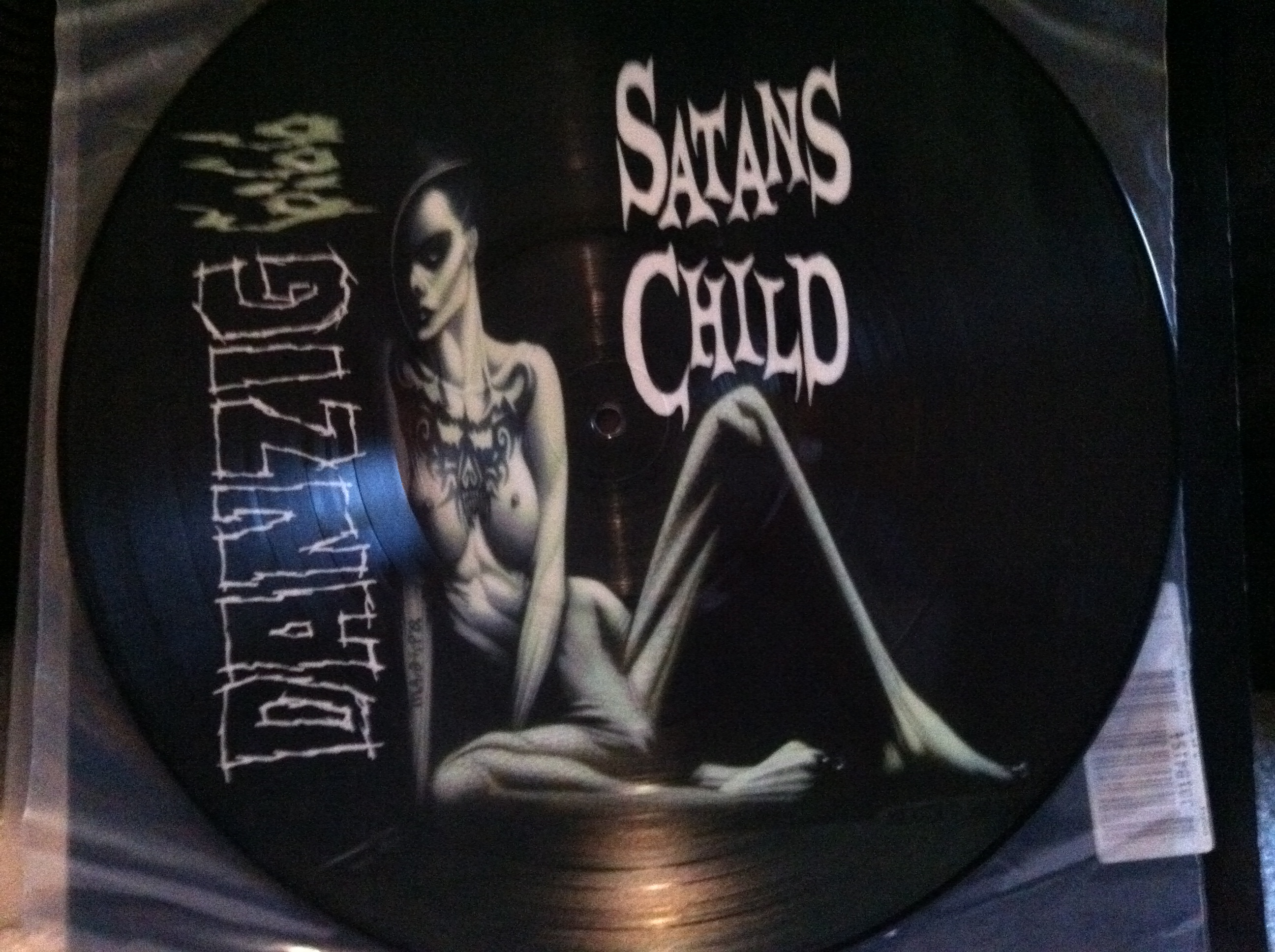
Danzig 6:66 Satan’s Child

Danzig 6:66 Satan’s Child (1999)

Following the critical and commercial failure of Danzig 5: Blackacidevil, Danzig was returned to the underground.  The 9 figure record deals were no longer out there, few promising bands were looking to open for the group, and the band members became as unstable as ever.  There was a tour for Blackacidevil that even included a spot on the main stage at Ozzfest but after that Glenn Danzig was seldom heard from.  He focused more time on his independent comic book company, Verotik, and found himself in court battling with the executives at American Recordings for the rights to the unreleased material from his days at that label.  Eventually, Glenn would set his sights on recording the next Danzig record, the one that would become Danzig 6:66 Satan’s Child and would be the first of many to be heralded as a “return to form” for the band.

When an album bombs as bad as Blackacidevil did, it makes sense for the artist to reexamine the approach taken on previous efforts compared with that one.  For Danzig, this was simple enough.  The early records were rooted in the blues and could best be described as hard rock or heavy metal.  Yes, there were things about each album that separated them from one another but the core was mostly the same.  For Danzig 5, that core was loosely interpreted.  And while it could be argued the foundation was mostly the same, the layers on top certainly were not which helps define Blackacidevil as an industrial record with some techno and metal elements thrown in.  A confident producer would explain that to Glenn and would push him away from that approach as it clearly just didn’t work.  It would be one thing if the album was conceptually brilliant, but commercially misunderstood, but that really wasn’t the case.  The problem is, Glenn was no longer working with a big producer, and is a very prideful man.  For awhile, he insisted that Blackacidevil was his favorite record and spent more time defending it than he has anything else he has done.  Regardless, even he had to admit the best way to promote a new record was as a back to basics kind of thing.  The problem was, that wouldn’t really describe Satan’s Child too well.

More than three years elapsed between Danzig 5 and Danzig 6, so when Satan’s Child arrived in the fall of 1999 the core fan base that had stuck with Danzig was eager to get a listen.  This was before mp3 had really exploded so most fans, myself included, were mostly left in the dark until the album was released.  Before release, Danzig’s new label E-Magine, a young label hoping to better utilize the internet as a legitimate means of distribution, released the album’s first single online, “Five Finger Crawl,” as well as a snippet of “Unspeakable.”  It’s actually a bit confusing which one truly was the first single.  “Five Finger Crawl” was made into a video and some metal-oriented radio stations were playing it while others received CD singles of “Unspeakable.”  Either way, “Five Finger Crawl” was my introduction to Danzig 6 and I mostly enjoyed it.  This was the era where nu-metal was dominating the heavy music scene.  Drop D tuning was in fashion to add a pervasive heavy-ness to most records.  Danzig opted to tune even lower, to C, for this record.  And while Danzig 6 is not an industrial record, it does contain more effects than the previous 4 albums.  There’s an eeriness to “Five Finger Crawl,” accentuated by Glenn’s whispering vocal delivery, particularly the line “You leave me cold.”

The limited edition picture disc release, featuring the internet only cover of the CD version by Martin Emond.

The mood of the track is still decidedly Danzig, in the end.  The thing that had fans talking though were the vocals.  Glenn whispers throughout much of “Five Finger Crawl” before hitting a shouting chorus.  On that chorus, his vocals sound deep and slightly hoarse.  This had fans worried about what kind of shape Glenn’s vocal chords were in.  The song alleviates some of those fears to a degree with the close, where an unfiltered Danzig wails the “You leave me cold,” line, but there’s still a hint of hoarseness on there as well.  We would find out during the press tour of the album, that Glenn opted to record his vocals digitally this time, and offered up the excuse that he augmented his vocals to sound the way he hears them when he sings to himself.  The result is a deeper Glenn on this record, but he also uses a whisper track on many songs which create a hoarse quality.  The whisper track is cool when used a bit conservatively, but it probably is overused on this record.  With most things Danzig though, the truth often lies somewhere in the middle.  He may have chosen to record his vocals in a certain way, but perhaps he also did that to help mask the fact that they just weren’t what they used to be.  The tour would confirm as much.  The good news is that later records would show improvement, but unfortunately Danzig 6 marks a low point for vocals on a Danzig record.

That is not to say the vocals do not have any shining moments here.  On the contrary, I already mentioned the close of “Five Finger Crawl” as being exceptional, but songs like “Lilin” and “Cold Eternal” showcase Glenn’s vocals just as well.  There are low moments though, such as the thunderous “Apokalips,” a decent enough song, but one where Glenn’s vocals border on annoying as he has a shrill quality to his shouts.  Overall, the vocals are not a make or break thing for the record, and perhaps actually end up being the album’s best feature, because unfortunately it ends up lacking in several others.

For one, the structure of the songs are perhaps too basic.  There are really no memorable guitar riffs and very few guitar solos to liven things up.  Josh Lazie’s bass is audible, but not spectacular.  Joey Castillo’s drumming is solid, if not a bit restrained.  He’s capable of so much more.  I assume Glenn thought little of session guitarist Jeff Chambers, which helps explain why the guitars come across as an afterthought at times.  Or perhaps creatively he was just in a funk.  The band recorded over 20 tracks for this album which tells me that Glenn was really indecisive with this one and was probably at some-what of a crossroads with his band.  I should take the time to point out that the slide guitar on “Cold Eternal” is a nice touch and does add some nice texture to that track.

If the approach musically was a bit boring, then it makes sense that the finished songs are as well.  There are some nice tracks here that I have already mentioned.  One I didn’t was the closer “Thirteen,” the song Glenn penned for Johnny Cash in the early 90’s and finally recorded himself.  It would later show up in the hit film “The Hangover.”  It’s a simple but cool little track and it’s lyrics suit the public persona of Glenn Danzig.  Sadly, the lyrics on that one represent the album’s peak in that department, for in some instances they’re just bad.  “Cult W/Out a Name” is a decent enough rocker, but the lyrics there are just embarrassing.  Some, such as “I am teeth of fire/taste a thousand shames” annoy because they don’t make sense, but others annoy me because they’re just stupid “I am street designed.”  “Belly of the Beast” is one where the ending of each line rhymes with the next, just for the sake of doing so.  Again, if the music accompanying these lyrics was more interesting they could be overlooked, but here they’re hard to ignore.

The back of the picture disc, also the back cover of the CD version. Apparently Glenn was really into black and pink around this time. They had to kick Jeff Chambers out of the band to include more devil chicks.

Thankfully, most of the tracks are absent the industrial fuzz that permeated Blackacidevil, but not all.  “East Indian Devil (Kali’s Song)” is a track that could have fit on Blackacidevil, which isn’t a good thing.  The vocals are heavily distorted, and there’s little melody to the song structure.  It’s one I am happy with skipping over.

In the end, was Danzig 6:66 Satan’s Child a return to form for the band?  Only in the sense that it left behind most of the industrial elements of Danzig 5.  This is still a rather weak output when compared with the rest of the Danzig catalogue.  It’s an okay listen, but there’s just few standout tracks.  It’s no surprise that this album is hardly ever featured in the live set these days, and future releases would improve upon it.

Top Tracks

  • Five Finger Crawl
  • Cold Eternal
  • Thirteen

Dragon Ball – Season One

Dragon Ball - Season One

This past summer amazon.com had a big anime DVD sale that proved quite tempting.  I’ve never been big into anime, but there’s been some I’ve enjoyed over the years.  Namely, Cowboy Bebop, which I count among my favorite television series of all time.  That wasn’t my first love though, no, that belonged to Dragon Ball Z.

Dragon Ball Z had a funny romance with American audiences.  It was first brought over in the 90’s, and in my area, aired on weekday mornings.  I never payed much attention and apparently I wasn’t the only one as the show died a quick death.  Cartoon Network would later acquire the broadcast rights for its weekday afternoon blocks.  These programming blocks were aimed at a more teenage audience and usually included action cartoons.  Eventually, this block would be re-named “Toonami” and DBZ would become the centerpiece for several years.

I consumed quite a bit when it came to DBZ.  Because dubbing the program proved to be time-consuming, my friends and I often couldn’t wait for the new episodes to hit television and we would instead purchase the VHS tapes as they came out.  I think each tape cost around 20 bucks and contained just 3 episodes a piece.  This was not a cost-conscious way to view the show, but it was all we knew.  Despite this annoyance, I stuck with it through to the end.  I still have a ton of VHS tapes of this show hanging around my basement, probably never to be watched again.

Goku just found out Chi Chi is a girl...

Eventually I grew out of DBZ.  While at first viewing it proved exciting, it would eventually ware off.  The action pieces were cool and flashy, the Z warriors possessed some very imaginative abilities that separated them from standard American super heroes.  The plot lines proved extremely shallow though, and despite the flashy moves the show moved at a snail’s pace.  The heroes love to stand around and all comment individually on how a fight is progressing.  They constantly turn to the same tricks over and over and over again (villain gets hit with a giant blast that fills the area with smoke, everyone thinks the villain is dead, then the smoke clears, mouths hang open) to create suspense but after awhile it proves extremely tiresome.  That’s not to say I don’t still have a soft spot for DBZ, but it’s nothing I consider brilliant.

Dragon Ball, on the other hand, that I can get into.  Dragon Ball is what came before Dragon Ball Z.  It never caught on in America, and only after the success of DBZ did the production company Funimation decide to dub the entire series.  These cartoons would make it onto Cartoon Network as well and I saw most of what would be considered the first season, but real life interfered for me and I never kept up with it.  Plus on television the show had to be heavily edited.  Where DBZ went for over the top action, DB opted for humor and mostly of the perverted sort.  A reoccurring gag of the first season involves our ignorant child hero Goku, the main protagonist for both DB and DBZ,  patting every new person he meets on the crotch to figure out who’s male and who’s female.

Dragon Ball is also less concerned with the next great challenge for Goku and more interested in adventure.  Goku’s abilities are very super-human but not to the degree they will become when he’s an adult in DBZ.  In DB he’s a happy-go-lucky kid who’s been sheltered his whole life.  He’s out of place in the world, but he’s not all that concerned about it.  He’d rather focus on getting stronger and finding his next meal.  That would make for a pretty lousy tale if he wasn’t constantly running into people who needed his help.

Goku with his "grandpa."

The series starts off with Goku meeting Bulma, a teenaged girl out searching for the mystical dragon balls.  Once all 7 are collected, the eternal dragon will show himself and grant a wish to whoever summoned him.  Bulma wants a boyfriend, apparently she’s had no luck finding one herself, but standing in the way is Goku who happens to possess the 4-star dragon ball.  Goku is a young boy who lives out in the woods by himself.  He refers to the dragon ball as his grandpa, and we later learn that Goku used to live with his grandpa until a giant monster stepped on him.  The way Bulma and Goku meet is rather unorthodox, she hits him with her car.  The fact that Goku is still standing intrigues her and she decides to bring him along on her adventure.  He proves nearly indestructible and has a monster appetite.  If that wasn’t unusual enough, he also has a tail.

From here the two travel together in search of the dragon balls via Bulma’s Dragon Radar.  This takes them to various interesting locales where Goku rights wrongs and Bulma finds dragon balls.  We meet the shape-shifting pig Oolong, the desert bandit Yamcha, and the martial arts expert Master Roshi.  Roshi proves to be the character who consistently steals every scene he’s in thanks to his wildly perverted nature.  He just never stops and when our heroes first meet him he agrees to help them only if Bulma will show him her panties.

Bulma isn’t the only one looking for the dragon balls though, the feisty Emperor Pilaf and his goons are as well.  We never really learn just what Pilaf is an emperor of, perhaps he is only in his mind, but he seeks world domination and views the dragon balls as a means to an end.  Pilaf and his cronies are typical incompetent villains.  Goku and his friends are constantly thwarting him.  He’s so inept that Goku often overlooks him and completely forgets about him in later seasons when their paths cross again.

Krillin and Goku get a taste of Master Roshi's unorthodox training methods.

That’s how the first part of season one goes, the second part focuses on Goku training under Master Roshi along with another pupil, the monk Krillin.  Krillin, like Goku, is a young boy with exceptional talent.  He’s not quite as strong as Goku, but makes up for his physical short-comings with brains, something Goku has in short supply.  He takes advantage of the naive Goku to keep up with him during their training under Roshi.  What could have been excrutiatingly boring turns out to be pretty fun as we watch the two compete and train with one another leading up to the World Martial Arts Tournament.

The World Martial Arts Tournament is the climax for season one, where both Goku and Krillin test their skills against the best fighters in the world.  Master Roshi, not wanting his students to win to teach them humility, enters the tournament poorly disguised as Jackie Chun but it seems to fool the kids.  The fights at the tournament feature a nice balance of slapstick and action.  It is perhaps not as fun as the more adventure themed episodes, but they prove rewarding in the end.  Ultimately, season one of Dragon Ball captures everything I love about the series.  There’s tons of genuine laughs, plenty of adventure, and a healthy dose of action.  The plot isn’t entirely immersive, but what it lacks in depth it makes up for in charm.  This is just a really charming show and it’s easy to fall in love with most of the characters.  Dragon Ball Z did some of these things as well, but not on this level.  It’s a bit unfortunate that the sequel overshadows the original, because Dragon Ball is miles ahead of its Z counterpart.

This entry started me mentioning amazon.com had a big anime sale.  Well, that sale proved to be the catalyst to finally get me to see the entire Dragon Ball series.  I bought all five seasons and over the last few months I’ve watched every episode.  I plan on reviewing each entry so if you want to read more about Dragon Ball make sure to check back.


Super Mario 3D Land

Super Mario 3D Land (2011)

The Nintendo 3DS had a sluggish launch and one I think I’ve chronicled fairly well here.  Early on it was really a lack of quality software that kept sales slow (and a rather large sticker price) until the arrival of Ocarina of Time 3D.  Not long after that title arrived, Star Fox 64 3D hit stores and represented another quality title.  Throughout that, Nintendo was able to supplement the true 3DS titles with some quality Virtual Console titles.  The problem was, we had already played these games before.  Sure, both Zelda and Star Fox received a nice visual boost but that merely hid the fact that both titles were nearly 15 years old.

Finally, the first Triple A, original, game has arrived and who else could it be in the starring role?  It’s Mario, and he’s back in his first original handheld game since 2006’s New Super Mario Bros. and his first ever original portable title in the third dimension.  And by third dimension, I mean both the game engine and that feature that is supposed to be the main selling point of Nintendo’s latest handheld, the stereoscopic 3D.

Super Mario 3D Land is a title that is right up my alley.  It’s an all new Mario adventure, but it features several nods to the old-school games, primarily Super Mario Bros. 3.  If Nintendo is going to focus on one game to emulate, why not SMB 3 which is in the running for greatest game of all time.  The homages to that title are numerous, the most obvious one being the inclusion of the tanooki suit.  Whenever Mario finds the brown leaf power-up he is given a cute, cuddly, tanooki suit that grants him a tail attack and a hover ability.  The suit is absurd looking, even more so today than it was on the NES, but it’s just as useful as it used to be.  Well, it does lack a true flying ability and initially lacks the stone-form ability as well.  The tail attack is certainly nice to have for those of you used to playing Super Mario Galaxy where Mario has a similar spin attack by default.  The hover ability is also a great safety net for those tough platforming sections and is needed to get some of the games numerous star coins.

Mario showing off his new boomerang suit.

If Mario only had the one power-up though, that would be pretty disappointing.  New to the Mario-verse this time around is the boomerang suit.  Like SMB 3’s hammer bros. suit, the boomerang suit outfits Mario as a boomerang brother.  He’s able to throw one boomerang at a time, that will always come back to him which can be useful for setting up return strikes on enemies.  It also can be used to grab items like other power-ups and star coins.  Also returning is Mario’s trusted fire flower.  You would think the boomerang suit would render the fire flower obsolete but it does hold some advantages, namely that Mario can shoot up to two fireballs in succession and their range is much farther than the boomerang.  There are also some Zelda-like puzzles in the game where Mario can use his fire power to light some beacons.  Unfortunately, Nintendo didn’t take the opportunity to throw in another SMB 3 homage and have the fire flower give Mario an orange suit, instead it’s the traditional white and red.

As for the gameplay, this is pretty much a mix of old and new.  The game certainly has a Galaxy feel to it, minus the funky the gravity.  I would say it plays most like a cross between the New Super Mario Bros. games and the Galaxy ones.  Each level has three hidden star coins to find and a certain quota is needed to advance in the game and to unlock bonus levels.  There are 8 worlds with 5 to 6 levels within each one.  Each world ends with either a trek through Bowser’s castle or an air ship battle with a returning Boom Boom from SMB 3 or Pom Pom, which I assume is his sister.  For some reason, Nintendo chose to go this route for this game rather than to resurrect the Koopa kids from SMB 3.  The boss battles are fairly painless, with the exception of the final Bowser confrontation which caused me to continue numerous times.

Outside of that though, the game is pretty easy.  Most gamers will max out Mario’s extra lives before arriving at World 8 .  Most of my deaths were the result of poorly timed jumps on my part or intentional because I missed a star coin.  The difficulty would have been the number one source of criticism for me if not for the Special Worlds.  The Special Worlds open up once the game is finished and represent a second game.  Opening up the Special Worlds also unlocks the tanooki suit’s stone-form ability and even lets you play as Luigi.  Some of the Special Worlds, like the castles, are just harder versions of the normal level but many are new levels entirely.  Some also include a shadow Mario to pester you and force you to move quickly.  The game will keep track of your speed runs for Street Pass purposes, meaning when you walk past someone who also has this game the system will exchange your best times and give you something to try to beat.

Practice your jumping because this game is loaded with sections like this.

The other criticism I have to levy at this game is the use of 3D.  Many media outlets are praising this game for its use of 3D, but I reckon most are just drinking the Nintendo kool-aid.  Yes, in this game 3D is practically required in some parts which makes this the first game to accomplish such a feat.  How ever, it still fails to elevate the 3D effect beyond a gimmick.  Most of the places where 3D is necessary are self-contained rooms and make for awkward optical illusions for target jumping.  Otherwise, I found it just made negotiating jumps even more difficult.  I did force myself to play with it on at all times, unless I found a section where it was really just pissing me off (like the final battle with Bowser) and shut it off out of frustration.  3D just isn’t a natural thing for the human eye and it just makes Mario feel hard to control.

And hard to control is what has always been in the background for the 3D Mario adventures.  Mario controls well-enough, but he’ll never control as tightly on a 3D plane as he does on a 2D one.  This game made me appreciate the approach the Galaxy franchise took as the use of gravity in those games cut down on death by falling.  Very few of my deaths are actually caused by enemies and mostly are caused by missing platforms.  Nintendo also took away Mario’s ability to double and triple jump for this game, but I found that to be a good thing as it allowed for section with lots of repeated jumping.  Mario can still do a long jump, but for some reason my ability to pull it off consistently seemed spotty.  I never got a great hang of it, but also never encountered a spot where I absolutely had to use it.  Mario can also do a quick side-flip, but I often found myself pulling that off by accident which would only lead to trouble.  He also has a power-up backflip that has its uses.

Annoyances aside, this is a great game.  Yes Mario could control better and 3D is still mostly a stupid gimmick, but he controls well-enough and you can always shut the 3D off if you please.  The main game is pretty easy to get through, but the Special Worlds will test the skills of most gamers.  And this isn’t a game where you should be settled with just beating it.  No, any gamer who picks this one up should aim to collect all of the star coins as that’s where the true challenge lies.  The game is just fun to play and takes me back to the days when I played games for the simple pleasure of it, not to advance a narrative.  Hopefully Super Mario 3D Land is just the beginning in a long line of quality original games to hit the 3DS.  It’s been a long wait.


Essential Christmas Viewing (Part 2)

Yesterday I went over some of my favorite Christmas movie and TV specials.  I covered most of the basics, the specials pretty much everyone agrees are required viewing around the holidays.  Today I’m going to go into the more non-traditional ones and focus more on Christmas themed episodes of some of my favorite shows.  Let’s start off with one that should seem pretty obvious to anyone who has read my blog in the past.

It just wouldn’t be Christmas without a little Danzig.

Aqua Teen Hunger Force: “Cybernetic Ghost of Christmas Past From the Future” – Cartoon Network has made a lot of money off of their adult swim programs simply by creating funny shorts for practically no cost by traditional standards.  Aqua Teen Hunger Force is one such program where the animation is crude but the laughs often come in bunches.  The first Christmas special for the show was a memorable one, though it had very little to do with Christmas.  The neighbor of the Aqua Teens (Master Shake, Frylock, and Meatwad) Carl, wakes up one morning to find his swimming pool full of blood and an annoying robot soon shows up with a long, drawn out tale about the origins of Santa.  It’s ridiculous, to put it mildly, and Carl finds out that if he wants to get rid of the blood and the robot he has to give of himself to a great, red, ape…sexually.  Refusing to do so, Carl puts his house on the market which attracts one very interested buyer:  Glenn Danzig.  Danzig voices himself as he becomes the neighbor from Hell and even lets the writers poke fun at him a little.  Light on holiday cheer, but big on laughs, this one is a staple in my X-Mas rotation.

Family Guy:  “A Very Special Family Guy Freakin’ Christmas” – When Family Guy first premiered on Fox following Super Bowl XXXV it did so with a ratings thud.  It managed to hang around for 3 seasons (more like 2.5) before getting cancelled, and then famously re-emerged several years later.  I loved Family Guy when it first arrived, but over the years I grew tired of it.  The newer episodes rarely entertain me, but many of the old ones can still make me laugh.  Family Guy’s first Christmas special is one such episode.  It’s an appropriate tale for the Griffen family as everything that could go wrong does and we’re treated to an amusing scene where Lois goes bat-shit insane.  Stewie also has a pretty memorable turn as baby Jesus and we get to learn what Peter thinks Christmas is all about.

“Santa Claus is gunning you down!”

Futurama:  “X-Mas Story” and “A Tale of Two Santas” – For me, Futurama and Family Guy will always be linked, just because both premiered on Fox and both met with unfortunate ends before rising from the ashes once more.  While I outgrew Family Guy’s antics, I still love Futurama.  Sure the new episodes haven’t been as good as the first 4 seasons but it’s still a sharp and enjoyable comedy series.  And for the Christmas season, I can’t separate the two specials that came before the cancellation.  “X-Mas Story” serves as Fry’s introduction to what Christmas is like in the year 3000.  It’s literally called X-Mas and is horrifying.  A homicidal robot Santa (voice of John Goodman) patrols the skies on X-Mas Eve and slays anyone he finds (except Zoidberg) and instead of families coming together to spread good cheer, they come together to cling to one another in fear.  “A Tale of Two Santas” followed it where Bender had to take up the mantle of Santa and try to reclaim X-Mas.  It doesn’t go too well and Bender finds himself on death row.  There are lots of witty jokes throughout both and I love Professor Farnsworth’s opinions on 20th century modesty.

Batman The Animated Series: “Christmas With The Joker” – Batman’s second episode marked the debut of Mark Hamill as The Joker.  Hamill’s debut was a flawless one, as The Joker is first shown singing a familiar Batman themed “Jingle Bells” parody as he blasts out of Arkham Asylum and takes over the Gotham television air waves.  Meanwhile, Dick Grayson is trying to get Bruce to sit down and watch It’s a Wonderful Life as he’s never seen it.  When Dick asks why, he coyly replies “I never could get past the title.”  Joker kidnapping some of Gotham’s elite throws a wrench into those plans and we get to watch Batman and Robin try to track him down before a final, satisfying confrontation to close out the episode.

X-Men: “Have Yourself a Morlock Little X-Mas” – I already talked about this one, and every other episode of X-Men, months ago so I won’t say much here.  I’ll just add that, as corny as it is, it always gets me at the end.  Light on action, heavy on sentimentality, it’s a standard holiday special but with the X-Men.

South Park:  “Mr. Hankey The Christmas Poo”South Park has many memorable Christmas episodes, so many it’s hard to choose just gone.  There’s Christmas in Iraq, satanic woodland animals, and even Charlie Manson gets in on the fun in one episode.  My personal favorite though will likely always be the original, the episode that introduced us all to Mr. Hankey, The Christmas Poo.  The premise of a talking piece of poop is outrageous, and the visual gags are a riot, especially the one where Mr. Hankey is seen bathing in Mr. Mackey’s coffee.  The plot of the episode is actually pretty solid as it focuses on how Kyle feels lonely at Christmas because of his Jewish heritage.  This also was the first episode where Kenny didn’t die, which was kind of a big deal in 1997.

Beware the Krampus!

The Venture Bros.:  “A Very Venture Christmas” – This might be the first time I’ve mentioned The Venture Bros. on this blog, which should be considered a crime.  The Venture Bros. is the best show on television.  I can’t get enough of it and have probably seen every episode ten times, if not more.  The lone Christmas special for the brothers Venture is actually the show’s lone half episode as it clocks in at under 15 minutes.  Despite the brief running time, there’s a lot of great gags, most notably the appearance of the Christmas Krampus and the debut of Tiny Joseph.  At some point I’m going to have to start talking about The Venture Bros. more, but this is an okay start.

The Flintstones: “A Flintstone Christmas” – This one’s going back a few years.  The Flintstones had a few memorable Christmas specials, but this one is the only one I’ll go out of my way to view.  It’s sort of a re-make of the first Christmas special where Fred had to fill in for Santa.  In this one, Fred once again has to fill in for an out of commission Santa as he’s laid up at the Flintstone’s residence with a cold.  Unlike the first one though, this time Barney tags along as Fred’s elf and the running time is extended to a full hour.  While Fred and Barney fly around the world delivering presents, Mr. Slate and the wives await Fred’s arrival at a Christmas party where he’s supposed to play Santa.  Just when it looks like Fred’s about to get into a host of trouble, he comes through and the process gets repeated.  Fred ends up getting bailed out by Santa in the end, so they’re even when all is said and done.  It’s too bad Hannah Barbara hasn’t done a better job of getting its Christmas specials out on DVD.  A collection including this one and The Jetsons, Smurfs, and other holiday classics would probably sell pretty well.

Heh heh uhh heh heh

Beavis & Butt-Head Do Christmas – Everyone’s favorite dim-witted duo had a couple holiday specials including this one.  In it the pair take on two holiday classics, A Christmas Carol and It’s a Wonderful Life.  In the first, Beavis envisions himself as the manager at Burger World and finds himself as this tale’s Scrooge.  Only Beavis is unmoved by the visions he sees, he just wants to watch some porn and couldn’t care less that his employees are suffering.  In the second, Butt-Head is shown what life would be like if he were never born, and predictably, everyone is better off for it.  In fact, this story’s version of the Clarence character is here to kill both Beavis and Butt-Head in order to make the world a better place.  He doesn’t succeed, and we’re thankful for it.  During the festivities, we’re also shown segments featuring Santa Butt-Head with Beavis serving as a reindeer.  Butt-Head reads viewer mail and whips Beavis.  When the chicks writing the letters start to fawn over Beavis, he just whips him more and more.  Not only is this a humorous holiday themed episode, it’s also one of the best episodes of the original series.  Here’s hoping for a new Christmas special from these two arrives this month.

Bad Santa– Last but not least, my new favorite Christmas movie.  And by new, I mean

Everyone’s favorite Santa! Well, maybe not…

within the last five years, which makes Bad Santa far more recent than most of the specials I’ve cited across both entries.  Bad Santa is an atypical Christmas movie in that there’s very little Christmas cheer to be had.  Christmas is just a useful time of year for the film’s protagonists, Willie and Marcus, to case a department store while masquerading as Santa and his little elf buddy.  Billy Bob Thornton is outrageous in his turn as Willie, a character with almost no redeeming qualities.  In fact, so unredeeming was Thornton’s character that director Terry Zwigoff was forced to shoot some additional scenes just to make Willie look some-what decent.  It actually was a good move by the studio as some of these added scenes, like the one where Willie tries to teach The Kid how to box, are among the funniest.  This is a dark comedy, and one of the best I’ve seen, Christmas or no Christmas.  The supporting cast is great too and includes the final film role for the late John Ritter.  That said, this isn’t a film for everyone but it’s definitely one for me!

Thus concludes my list of Essential Christmas Viewing.  I definitely enjoy the funny side of the holiday but there’s some sentimentality in there as well.  I will watch all of these specials and more this December.  Hopefully you have a list of your own that you can enjoy, and if I was able to convince someone to check out a special they never saw before then all the better.


Essential Christmas Viewing (Part 1)

We’re past Thanksgiving and the calendar reads December 1st which can only mean one thing:  we are officially in the Christmas season.  Sure retailers try to start the season earlier and earlier each year in an attempt to stimulate consumerism but once December is here even the Scrooges of the world are forced to accept it.

For someone with no religious beliefs what-so-ever, I sure do love this time of year.  Like most people, I find it annoying when Santa and Frosty show up in stores before Halloween.  And by the time New Year’s rolls around I’m pretty sick of the Christmas music at the mall, grocery store, and in every commercial.  Something I seem to never lose an appetite for though are Christmas television specials.  Be they original stories or just Christmas themed episodes of my favorite shows, I tend to love them all.  Well, not all of them.  There are some pretty terrible Christmas specials that surface every season, often multiple times.  And as I have gotten older, I have lost interest in a lot of the Rankin/Bass productions like Frosty the Snowman and Santa Claus Is Coming to Town.  And as someone who isn’t particularly interested in the religious origins of the holiday, I don’t get much enjoyment out of The Little Drummer Boy or Small One.

Every year, right around Thanksgiving, I begin to get the itch.  The itch to dig out my old Christmas specials recorded onto VHS decades ago (now conveniently transferred to DVD) complete with vintage commercials that give me a laugh.  I also dig out the movies and DVD’s of the same material and seek out other specials on cable and make a note of when to tune in.  I’ll watch a lot of specials this holiday season, some that I don’t even particularly care for, but the ones I am about to post on are the ones I have to see every year, sometimes twice!

Mickey’s Christmas Carol – The Dickens classic, only with mice and ducks, Mickey’s

Goofy as Jacob Marley might be my favorite character in this special.

Christmas Carol first showed up in theaters in 1983 alongside the feature film The Rescuers and was once a staple of broadcast TV around this time of year.  There are many adaptations of A Christmas Carol and any television series that lasted more than a few seasons probably has one.  Many I find too derivative and pointless, but this one has always resonated with me.  This is, of course, where we were first introduced to the animated version of Scrooge McDuck, who would go on to star in Disney’s Ducktales.  This Scrooge is wonderfully done, and while he isn’t truly mean, he’s just so self-centered that he can’t be bothered with anything that isn’t making him money.  Mickey plays the role of Bob Cratchit with Goofy serving as Jacob Marley.  The animation is superb, as is often the case with Disney.  The hand-drawn animation even still looks wonderful on my nearly 25 year old VHS copy.  To truly experience this holiday classic though, you need the broadcast version that used to air in the 80’s and

90’s.  This version was shown with three classic Disney short films:  Donald’s Snow Fight, Pluto’s Christmas Tree, and The Art of Skiing starring Goofy.  These shorts can be found on the Disney Trasures collections today, and I’ve seen Pluto’s Christmas Tree included on DVD’s containing Mickey’s Christmas Carol as well.  Pluto’s story, where he and Mickey cut down a tree that just happens to be home to Chip and Dale, is probably my favorite with Donald battling his nephews in an outrageous snow ball fight a close second.  This is classic Disney that kids today have no concept of and this is almost always the first Christmas special I watch each season.

Dr. Seuss’ How The Grinch Stole Christmas – This one goes without saying, it’s a classic!  If you’ve never seen it then surely you are not from earth, and I welcome you to our humble planet.  I love the Grinch, always have and always will.  And I hope anyone reading this knows that I am speaking of the original TV special from 1966 and not that horrid film that I would prefer to pretend does not exist.  This one has it all, colorful rhymes, unique visuals, and even pleasant songs.  I detest musicals for the most part, and with Disney films I tend to just tolerate them.  With the Grinch, I actually enjoy them which is something even Walt has never been able to get me to do, so bravo to you Dr. Seuss and the folks at MGM.  I’ll probably watch this one at least a half dozen times before New Year’s.

Rudolf the Red-Nosed Reindeer – I mentioned in the lead in that I don’t particularly enjoy the Rankin/Bass productions any longer, but each year I make an exception for Rudolf.  While at one point in time I may have called this one my favorite (or runner-up to the Grinch), I definitely don’t enjoy it as much today.  The songs stink and I hate The Island of Misfit Toys, but everything else is pretty swell.  Sure that claymation stuff doesn’t really hold up well but it’s at least charming.  I still get a little lump in my throat when Santa asks Rudolf to lead his sleigh.  Nostalgia kicks every now and again.  Stay far away from the sequels though, if you know what’s good for you.

Big Bird, meet the Swedish Chef. He's got plans for you that involve a turkey baster and some stuffing.

A Muppet Family Christmas – Here’s a topical one, what with The Muppets being all the rage again with a new film in theaters.  This was a television special that first aired in 1987 and was seldom seen afterword.  It was notable at the time for combining all of the Muppet properties, namely The Muppets, Sesame Street, and Fraggle Rock, which is probably why the word “family” appears in the title.  The set up is that Fozzy’s mother is getting ready to head off to Malibu for a Christmas get-away and has rented out her farm house to Doc and Sprocket, who viewers at the time knew from Fraggle Rock.  Doc just wants a nice, quiet Christmas away from the city but the Muppets are about to mess everything up on him.  Fozzy, being the good-hearted son that he is, thought it would be nice to surprise his lonely mother by bringing the whole gang out to her house and they show up just before she’s about to head out the door.  Calamity ensues as the house is overriden with the odd-ball Muppet clan, and soon the gang from Sesame Street arrives! You may be wondering what they could possibly add but the writers do a good job of having the Sesame Street characters poke fun at themselves (there’s a delightful exchange between Doc, Bert, and Ernie where they explain what passes for small talk where they’re from) and I’ll always welcome an Oscar the Grouch appearance.  There’s a lot of good one-liners and subplots within the hour long special and even the first appearance of the Muppet Babies.  It closes out with a nice Jim Henson cameo as well.  My only gripe with the special is too much singing, especially towards the end.  I have the original 1987 broadcast which contains even more songs that weren’t released on the VHS/DVD copies to come later.  If you’ve never seen this one, dig it up as it’s pretty entertaining.

A Charlie Brown Christmas – Here’s another one you’re likely to find on every list of this type.  One of the oldest annuals, the classic tale of can’t win Chuck and his seasonal depression have charmed viewers for decades.  It’s hard to pin point what makes this one work so well.  Is it the way the children act like adults?  The catchy theme?  The focus on the commercialization of Christmas we all can identify with?  Or is it the way our protagonist is redeemed during the show’s closing moments?  Probably all of the above, and then some.  The Peanuts gang is in top form for this one, and out of all their holiday specials, this one has always been my favorite.  I still have yet to encounter a solid aluminum Christmas tree though.  I do find it somewhat ironic that this special has spawned it’s own line of commercial items.  People can buy replica Charlie Brown trees and action figures and all kinds of other crap.  It’s probably not what Charles Shultz envisioned when he penned this one so long ago.

This is probably the first image that pops into the minds of 99% of Americans when they hear the name Macaulay Culkin.

Home Alone – The family comedy without the family, as the tag-line refers to it on the VHS release.  Home Alone was a box office juggernaut in 1990 and 19991 and made Macaulay Culkin a fixture at Christmas time.  This is one of those movies parents hated, since it contained lots of stupid scenarious, over-the-top cartoon violence, and screaming.  Kids loved it though, and for some reason it seems like many parents eventually came around to it as well (at least mine did).  Eight year old Kevin McCallister gets left behind when his entire family takes off on a vacation to Paris.  Most people endure the film’s early parts just to get to the memorable robbery scene where the film’s villains, played by Joe Pesci and Daniel Stern, get way more than they bargained for from Kevin as they try to loot his house.  The visuals make for a good laugh, but I really enjoy the film’s earlier scenes, notably anything featuring the made-up movie Angels With Filthy Souls.  As was the case with Rudolf, avoid the sequels.  Home Alone 2 is okay, but a carbon copy of the original, while everything after that is utter crap.

A Christmas Story– Another film turned television regular, Ralphie Parker’s

Don't be so glum, I'll see you on 12/25, Ralphie.

obsession with getting a Red Ryder BB Gun for Christmas is a tale we all can relate to.  At least, I hope everyone can.  I know I can.  In 1993 all I wanted was a Super Nintendo, and in true Ralphie fashion I thought I had been let down again, only to have my dad point out to me that there was something behind the dining room set I missed after ravaging the area underneath our Christmas tree.  Ralphie’s exploits through adolescence and his quirky family dynamics are what make this tale relatable and endearing nearly 30 years after it first came out.  We rise and fall with young Ralphie through each scene and share in his triumph when his Christmas wish comes true.  The fact that the film avoids any real melodrama is a true testament to its writers and crew.  TBS has made this one into a tradition for my family as after we exchange gifts we sit down with some tea and breakfast and watch it on Christmas morning.

That concludes part one of my Essential Christmas Viewing List.  As you probably noticed, this post covered mostly the classics, the ones everyone enjoys with perhaps only a slight twist or two.  My next entry will be more centered on me and the specials I often have to seek out each year that others perhaps do not, so come back and check it out.


Skyrim Impressions

The Elder Scrolls V: Skyrim (2011)

It’s been just over two weeks since my life was hi-jacked by a little (big) game called Skyrim.  It’s not just been my life either as apparently millions of gamers across the country are watching their free time dwindle away into nothing.  I figured I might as well post my impressions, since a full-fledged review is out of the question for such a massive title (by the time I finish this thing it will be considered out-dated), but first some background.

The full title for Skyrim is actually The Elder Scrolls 5: Skyrim.  Developed by Bethesda, The Elder Scrolls franchise began on the PC in 1994.  It was never on my radar and I’m not certain if I was ever aware of its existence before 2002 when the third numbered game in the franchise was released on the Xbox.  The Elder Scrolls III: Morrowind also never captured my imagination.  While I longed to play a fantasy epic that could match the freedom of pen and paper RPG’s (without the geeky-ness) I found myself put off by Morrowind’s first-person perspective.  I also was able to get my high fantasy fix from Bioware’s Neverwinter Nights series, and while I found that game a bit clunky, I really hadn’t played anything better.  It wasn’t until when the fourth game in the series, Oblivion, arrived on PS3 in 2007 that I actually decided to give the franchise a shot.

Oblivion arrived at a perfect time for me.  I had only owned a Playstation 3 for a few months and nothing compelling had been released for it.  I probably was spending more time with the Wii at that point.  I was also in the midst of an RPG drought and needed a fix.  In the summer of 2006 I even resorted to going way back and getting a new copy of Baldur’s Gate II to try and slake my thirst but found the game so massive that I lost focus.  When I initially purchased Oblivion I wasn’t certain I was going to like it.  I’ve never enjoyed the first-person perspective in video games and tried to play the game in third-person but it was so clunky that I succumbed to the first-person.  While I still do not particularly care for it, I was able to deal with it and even grow used to it.  I played as an assassin and ended up spending over 100 hours with Oblivion, finishing every quest.  While the game had warts, it was certainly a compelling and entertaining 100+ hours that I did not regret.  When Skyrim was announced last December, it immediately vaulted to the top of my most wanted games list.

Like its predecessor, Skyrim also comes at a good time.  Not because of a lack of quality software, far from it, this fall is turning into one of the best fall’s in video game history, but because it’s been 5 years since the original release of Oblivion.  I’m ready for a new fantasy epic and nothing in between has really satisfied me.  Dragon Age tried, but couldn’t live up to its lofty expectations.  And even though my journey through the world of Skyrim was delayed almost immediately by a 10 day vacation I had planned starting on the 12th of November, I’ve still managed to log 40 hours with the game already.  I was purposely holding off until I reached my favorite quests from Oblivion, the Dark Brotherhood, before posting impressions.  Well, I found the Skyrim version of the Dark Brotherhood on Wednesday night and it’s only been my reluctance to put the game down (and the Thanksgiving holiday) that has kept me from making this entry.

Skyrim has, so far, managed to meet my expectations though not eclipse them.  Fundamentally it’s the same game as Oblivion but with a few new twists and upgraded graphics.  What’s new?  Well for one, the skill system has been refined.  You still improve your various skills (one-handed combat, archery, pick pocket, etc.) by performing actions related to that skill, but now increasing skills leads to building levels.  Once your level increases, you’re able to select a perk related to one of the many skills or schools of magic in the game.  In order to select a perk from, for example, the archery skill tree your skill level in archery must meet or exceed the perk’s requirements.  If your skill isn’t at the necessary level for a perk you want you can wait and save that skill point for when you can get the perk you want.  It’s not a giant change but it works for the better.  There are still ways to exploit the system if you so choose, but the skill point system helps to keep you check to some degree so even though you might manage to get your sneak skill to 100, you still need to level up several times to get the best sneak perks.

Combat has also received a few changes, though nothing major.  Supposedly the melee combat has been improved upon but it still feels floaty and unsatisfying to me.  As a result, I stick to bows and magic and only pull out a dagger when in close for a backstab attempt.  Magic seems much more interesting to me this time around in both a superficial and tactical way.  I’ve stuck with the destruction school of magic (fireballs and the like) and that’s my go-to method of combat when not sneaking around and picking off bandits with the bow.  In Oblivion I managed to rise to the rank of Arch Mage with the Mage’s Guild despite hardly ever using any magic but this time around I plan on investing some time with it.  At some point I’ll branch out to a second and third school but so far destruction has served me well.

While there are no character classes to choose from, I’ve basically stuck with what would be considered the assassin from Oblivion.  That is, I spend most of my skill points on sneaking skills while also investing quite a bit in archery.  I’ve thrown a couple points into light armor and lock-picking but have thus far neglected the pick pocket tree. My main approach to combat is to not be seen.  I get a triple damage modifier with the bow, and a 15 times damage modifier with a dagger, so I stick to the shadows.  When drawn into actual combat, I often switch to magic or run.  I also still end up doing a lot of the run backwards and shoot technique, even if it’s clumsy.  Despite that 15x multiplier on daggers, I still usually stick with bows.  Daggers usually only deal around 10 base damage, while a good bow and arrow for me totals over 40, so that 15x is quite deceiving.  I have yet to figure out if added enchantments are also multiplied or are just tacked on at the end.  As in, I have a bow that adds 10 frost damage to an attack, but I don’t know if that 10 frost damage is multiplied as well.

I don't think it's friendly...

There’s another major addition to the game that most people are probably already aware of as it’s one of the selling points:  Dragons.  Dragons roam the skies of Skyrim and can attack at a moment’s notice once certain quest obligations have been fulfilled.  When they do, they take precedence.  It’s interesting to watch any and all NPC’s immediately shift their attention to dealing with a dragon threat when the winged beast makes its presence known.  I’ve so far only encountered the standard dragons and the blood dragons, but there are more powerful ones lurking.  I’ve found that taking them down is easiest when there’s something to distract it.  Anything that keeps the dragon’s focus away from me is welcome, and if that means my trusty mount has to take one for the team, so be it.  I think I’ve killed five or six at this point, so it’s not like they attack all the time.  I’ve even had one circle a few times and then move along apparently not even interested in starting a fight with me.  The battles are fun though, and the inclusion of dragons is both welcomed and awesome.

As I mentioned, in order to see a dragon certain quest obligations must be met, but fear not as they don’t take a whole lot of time.  To say I’ve scratched the surface of the game’s main story-line would be an overstatement.  When the game first starts your character finds him or herself a prisoner headed for the block.  This is a spoiler free blog entry, but I don’t think it’s spoiling much to say your character avoids that fate and is able to escape.  That escape represents your first quest, and the next (for me, I’m not sure if it’s the same for everyone as there is a branching point to the first quest) was to speak to a local person and then head to Whiterun as a sort of ambassador.  It’s at Whiterun that you inform the Jarl there of the returned dragon threat and the Jarl organizes a little dragon hunt.  Completing that quest is what triggers the random dragon encounters, and also earns your character its first shout power.  Shouts are like magic, but have different restraints put on them in terms of how often they can be used.  Some recharge faster than others.  These shout techniques are found all through-out Skyrim, I so far have found 5, though the first one is given to you.  Killing a dragon causes your character to absorb the dragon’s soul which unlocks shout abilities.  So you can locate one of these shouts at any given time, but if you don’t have a stored dragon soul you won’t be able to unlock it.  To be honest, I haven’t found the shouts all that useful up to this point and often forget to use them.  Perhaps that’s because few suit my chosen battle technique but I still find their inclusion to be a positive thing.

That's a giant, one strike from that club sent my character soaring through the air like a baseball. He did not get up.

Aside from the main quest, there are dozens of other quests and tasks to soak up your time.  I probably have over 20 active quests right now, but thankfully none have a time constraint placed upon them.  I’ve done several for the Dark Brotherhood and so far have not been let down.  The Dark Brotherhood seems to always have very entertaining missions and their approach complements my play style perfectly.  As a result, I’ve neglected the other two factions that I’ve so far uncovered, that being Skyrim’s version of the Mages Guild and Thieves Guild.  In Skyrim, the wizard college appears to have taken the place of a proper guild.  I’ve done a couple tasks for them and have only just opened up the thieves ones.  Once I have finished with the Dark Brotherhood, I’ll probably focus on the mage ones and continue to build up my magic prowess while also investing some skill points in the more thief oriented skill trees before I dive into those quests.  I’ve also encountered several dungeons and old keeps to raid and clear along the way.  Some contain treasure, some almost nothing, but it’s the journey that is most rewarding.  I’ve also encountered all kinds of wildlife from lowly wolves to deadly sabre cats and giants.  Death is all around you at all times in Skyrim and it helps to be alert to anything.

And while there’s been an awful lot of enjoyment on my end so far, there’s also been some frustrations as well.  With any game of this size, there’s always the concern for glitches.  I’ve heard of many reports of glitches cropping up but so far my experience has been glitch free.  It has not been without technical problems though.  The framerate has become an increasing issue the longer I play.  I’m not sure if it’s because of the marathon sessions I’ve been having with the game or because my save file has become massive (which is rumored to cause problems for the PS3), but there have been many instances of clipping and severe slowdown at times.  I’ve also had the game freeze up on me a few times, one of which was quite an inconvenience as I had just felled a particularly nasty adversary, so I make it a point to save often.  Bethesda is set to release a patch in the near future that will hopefully help to combat these issues.  My last play session ended when the slowdown became too much to bare.  I had been playing for over 4 hours and I’m hopeful that’s the main reason why the performance had begun to lag.  If that isn’t the case and it’s because my save file has become too large I fear it could be a game breaker.  We’ll see.

One area where "Skyrim's" visuals outshine a lot of the competition: horses.

Outside of technical problems, the other areas where Skyrim comes up a bit short are common with that of Oblivion and reside in the AI department.  Sometimes the non player characters are just stupid and it’s especially noticeable for a sneaky character.  Example, I’m in the bowels of a ship and there are two corsairs in a room adjacent to the one I occupy.  I fire an arrow into the room killing one of the two outlaws.  This alerts the second one that danger is near by and she immediately starts looking around the room, but since she doesn’t find anyone, she says to herself, “Oh, must have been my imagination.”  Yes, darling, it was your imagination that killed your buddy who was sitting across from you at the table, and it’s your imagination that is about to end your virtual life as well.  Visually, Skyrim is mostly a pleasure to look at but character animations still leave something to be desired.  It’s very noticeable if you play in third-person as your character moves quite stiffly.  He also doesn’t really conform to the terrain and always has a floating quality to his walking and running.  Other characters seems to animate a bit better, but facial animations are almost non existent.  Everyone looks like a hand puppet with really only their mouth and chin properly animated.  Overall, the people of Skyrim are better to look at than those of Oblivion, but still retain those robotic traits.  Animals animate much better, though are some-what of a mixed bag.  Rabbits and fox tend to suffer from that same floaty thing people do, and some bears just don’t look much like bears, but the horses, dragons, and walrus-like creatures are quite convincing.

Flaws aside, this game has been quite a blast to experience.  It doesn’t reinvent the wheel but it has improved upon Oblivion enough for me to say that Skyrim is the better game, and I have yet to even finish it.  There’s still so much more for me to do and I can’t wait to experience everything this game has to offer.  The one issue lurking in the shadows does revolve around the frame-rate.  Certainly if that does develop into a game breaker I’ll be sure to update this entry, but for now Skyrim comes fully recommended.  Don’t sleep on this one!


Greatest Games: Resident Evil 2

Resident Evil 2 (1998)

Recently I was having a conversation with someone about all things Resident Evil.  I recalled fondly the survival horror component of the original titles, the horrid controls, and lackluster voice acting.  We recalled the cheap scares, scarce ammo, and the at times punishing difficulty.  We remembered it all, the good and the bad.

Resident Evil arrived when developers were still trying to get a hang on this whole 3D thing.  In the original, you could play as Chris or Jill, agents for an elite combat force known as S.T.A.R.S. and were tasked with navigating your way through a treacherous old mansion.  Both characters handled like tanks.  Left and right on the Playstation’s d-pad would pivot the character while up or down would move the character.  Holding down a button would make the character run and while running it was possible to turn slightly, though to make a hard 90 degree turn you had to bring the character to a complete stop.  One of the shoulder buttons would ready the character’s weapon and the action button would make them fire.  There was no lock on technology of any kind, you pointed and shot in all directions.  Running and gunning Contra style was out, your agent had to stop if he/she wanted to fire off a few rounds at a zombie or two.

The controls were a gigantic obstacle for players.  Most of the game’s difficulty stemmed from trying to maneuver amongst the many enemies that filled the rooms.  Other than the zombies, most of the enemies were far quicker and agile than either Chris or Jill.  It would have been easy to just pull out the biggest guns and have at it, but ammo was so scarce the game practically encouraged you to run away from most encounters.  That’s where the survival component came into play.  Only when backed into a corner was it wise to pull out a bazooka or flame thrower.  And using anything other than a pistol on a zombie was a rookie mistake.  Health was scarcer than ammo and often you were forced to gamble when in a caution state and hope for the best rather than use a precious can of first aid spray.

Resident Evil had many warts, but it managed to be so compelling in spite of them.  Likely because the only game to come close to matching its atmosphere was the under the radar Alone in the Dark for the PC.  The first RE wasn’t really a critical darling, but managed to sell well and hype for an eventual sequel was running high.

The new protagonists for Resident Evil 2, Leon Kennedy and Claire Redfield.

Enter Resident Evil 2.  Released in 1998 for the Playstation, Resident Evil 2 kept what worked in the first game and also kept a lot of what didn’t.  Namely, the controls were just as cumbersome as always and the voice acting wasn’t much better (though it at least wasn’t laughably abysmal).  Maybe because gamers and reviewers had grown accustomed to the game’s controls, the sequel was able to garner better reviews.  The visuals were improved and Raccoon City was a more varied setting for new comers Leon and Claire.  The main game was shorter, but a new mechanic was added that encouraged replaying the game multiple times.  Each character had an A and B game, depending on which character was used first.  For example, if Leon was chosen from the onset, completing his game would open up Claire’s B game.  Some items crossed-over, meaning if you didn’t pick them up in Leon’s game Claire could get them.  There was also one room that could only be accessed in the B game if certain conditions were satisfied in the A game.  The B game was also a great deal harder.  Beating both A and B games with an “A” ranking on one would open up a third scenario where you played as an Umbrella trooper named Hunk in a more action-oriented environment.  Beating the game 6 times opened up a fourth scenario where you played as a piece of tofu who could only wield the knife (more of an achievement than a viable gameplay mode).

The game looked better than the original, and holds up quite well today for a Playstation title.  The presentation was more “Hollywood” than the previous game with FMV sequences and other scripted events that heightened the drama of the game’s rather B-movie quality plot.  There were big boss encounters and moments that really made you jump in your seat.

Vicious enemies, close quarters, crappy pistol. Good luck!

While it wasn’t all that much different from the original game, I found RE2 far more enjoyable.  I’m not really sure what it is, maybe it just had to do with me spending more time with the sequel.  With the first game, I only ever rented it with friends.  As such, I never quite got a good grasp of the controls and found the game frustrating.  With RE2, I fell for the hype and picked it up when it was released.  I played through the A game easily enough though it would take me awhile compared to later play-throughs (probably close to 5 hours).  The B game though, that was a challenge!  That’s the one that had the big trench coat guy who would pop up from time to time to scare the crap out of you (and dish out some pain as well).  My first attempt at it was also with Claire who I found more difficult to play as given her unique weapons compared with Leon’s (her bow gun had only one use, pinning crows to the walls).  The boss fight with RE2’s version of the Tyrant character from the first game was especially difficult.

I stuck with RE2 though, and eventually I was blazing through the game in about 2 hours.  It was always rewarding to see my play improve.  When I first started playing the game I’d try to shoot my way through, but repeated attempts had me weaving in between zombies and other enemies and using as little ammo as possible.  Tyrant?  No problem.  I memorized the location of every key or other special item and unlocked the bonus games.  I beat RE2 almost as thoroughly as one could, outside of beating the Tofu game (that one is beyond my skill, though I admittedly never gave it much of a try).

The enjoyable part about it is that I didn’t really play the game to unlock those additional game modes.  I didn’t keep playing for some silly achievement or virtual trophy, I played it just because it was fun.  It’s the amount of enjoyment I received from playing this game that has earned it a place in my top 10.  Future games in the series have far surpassed it from a technical standpoint.  Controls have been improved and the plot has taken the protagonists all over the world.  Truthfully, the best game in the franchise is probably Resident Evil 4, but the game I’ve enjoyed the most has definitely been Resident Evil 2.


Batman: Mask of the Phantasm

Batman: Mask of the Phantasm (1993)

In case you missed it, a couple of weeks ago I made a post on what I considered to be the definitive Batman film.  I ran thru just about all of the movies, be they theatrically released, direct to video, live-action, animated, whatever.  There was no real criteria, just that it had to be feature-length (admittedly arbitrary, since most of the animated flicks run just over an hour) and they had to be about Batman.  Surprising (to me), it was only my second post on Batman films in general, my first being a review of the first Burton film.  That just seemed funny to me, as in general I think Batman is the super hero who has made the best transition from comic to film.  Since Batman is about to become a very big topic with a new video game just released and a new movie on the way, it’s probably a safe bet he’s about to receive more love from me in the coming months.

If you didn’t read my post on the definitive Batman film, then spoiler-alert, I decided on 1993’s Mask of the Phantasm and it seems only appropriate that I dedicate a full post to its greatness.  It seems like a kind of contrarian take these days, but it wasn’t that long ago when most die-hard fans considered MOTP the best Batman film.  Nolan’s Batman Begins and its sequel, The Dark Knight, have kind of tempered the adoration once directed at MOTP, but why is that?  Obviously, it’s because as a culture we tend to value live-action over animation.  And while I love animation there is a very good reason for this.  Animated features tend to run around 85 minutes or so, as the process is both time-consuming and expensive and probably harder to direct.  A more fully realized plot is accommodated by live-action where a feature can run over 2 hours.  MOTP is no exception as its run time is a tidy 76 minutes.  It was also done with a very modest budget.  The animation really isn’t much of an improvement over the television show it’s based on.  There was a choir added to the main Batman theme, and some brief CG effects, but that’s it.  It does appear that the animation is better, but it could be my eyes deceiving me.

The film’s main villain, who’s mask kind of reminds me of the Punisher’s famous skull logo.

That said, those are among the few complaints I can levy against MOTP.  The animation may not be on par with the Disney features from the same period, but it still has style and is unquestionably “Batman” in its approach.  The animators were fond of using black paper for backgrounds which adds to the film’s overall dark visual tone.  Since almost all of the scenes take place at night, this makes a lot of sense.  The only really new character is the one the title alludes to, the Phantasm.  Though the character is actually never referred to by that name during the film, we can assume that’s its name.  The character resembles the grim reaper, though I prefer the Joker’s observation comparing it to the Ghost of Christmas Future.  The character generates a cloud of smoke and sports a cape and cowl, causing it to be confused with Batman which serves as the basis for the plot.

The plot being, some mob guys are being targeted and killed by a new vigilante.  We, the viewing audience, are cued into the fact that it’s a new vigilante in town that is responsible but the general public of Gotham are lead to believe that Batman is behind this.  No one is mourning the loss of these guys, but councilman Arthur Reeves (Hart Bochner) pleads to Commissioner Gordon that they can’t allow Batman to operate in this fashion.  Gordon, of course, sides with Batman and knows he can’t be behind this.  Meanwhile, Batman is left to deduce who this new vigilante is and what is the motivation for this latest attack.

This is around the time Bruce realizes he has a choice to make, Batman or her.

Along the way we get to see more executions, my particular favorite occurs in a cemetery, and an old flame of Bruce Wayne’s resurfaces in Gotham.  Andrea Beaumont (Dana Delany) has come to Gotham to settler some financial matters with Reeves and has a chance encounter with Batman at the cemetery where her mother (and Bruce’s parents) are buried.  As the plot of the film advances we’re treated to flashbacks of a young Bruce before he became Batman and how Andrea came into his life.  The two met at that same cemetery, and though Andrea had to play the role of aggressor, the two end up falling in love.  This caused the young Bruce much inner turmoil as after Andrea witnesses him take on some thugs and put his life on the line he realizes he can’t have it both ways.  He has to choose, be the vigilante anti-hero he thinks he needs to be to avenge his parents, or be Andrea’s beloved.

This leads to the film’s best scene.  A desperate Bruce on his knees before the headstone of his parents in the rain begging them for a sign.  He tells them he doesn’t know what to do, that their death no longer hurts as much as it used to, and that he never could have expected to be happy again.  It’s a rather poignant and heart-felt moment that gives great insight to the Bruce Wayne character.  Kevin Conroy, the voice actor of Bruce Wayne/Batman, gives a convincing performance and cements himself as the definitive voice of Batman that all future actors will be weighed against.  We, as the audience, also get a glimpse of just how misguided Bruce is.  He wants to avenge the deaths of his parents by cleaning up Gotham, but as human beings we know there’s no way a parent would wish that kind of life for their child.  A promise is a promise though, and Bruce is loathe to break his until Andrea strolls up behind him.  He takes that as his sign, and we’re left to wonder how this could have come to an end.

Those questions are answered when we’re introduced to Andrea’s father, Carl (Stacy Keach), a money manager of some regard who has become involved with Salvatore Valestra (Abe Vigoda).  Things seem fine, though we know Valestra to be a crime boss, until Beaumont becomes indebted to the thug.  Things get ugly, and the Beaumonts are forced to flee Gotham leaving Bruce behind with lots of questions and more heart ache.

Now the Phantasm is after an old and sickly Valestra and the crime boss is forced to make a proverbial deal with the devil; enter the Joker.  The Joker’s (Mark Hamill) portrayal is consistent with that of the animated series only with a touch more malice to suit the feature film’s tone.  He has some connections with the Valestra crew from his past, and loves to put his nose in Batman’s plans anyways.  What could have felt like the writers just tossing in the Joker for star power, turns out to work exceedingly well.

This one’s not afraid to get a little bloody.

I’ll spare you the rest of the plot details, and say that they include Batman’s detective work to find out who is under the mask of the Phantasm and a reunion with Andrea.  The film culminates in a showdown between the major players of the film in a most satisfying way.  There’s also an electric chase sequence between Batman and the Gotham PD that’s a joy to behold.  The mature tone and emphasis on plot makes this film incredibly engrossing, so much so that kids are not likely to enjoy it as much as adults.  And even though it received a PG rating, it’s actually fairly graphic as we see liberal amounts of blood and even a tooth sent flying after a well-placed Batman punch.  The film is not afraid to kill off characters, like the animated series probably would be, and Batman is even allowed to ditch that dorky helmet he had to wear for television when riding his bat-cycle.

All in all, Mask of the Phantasm is an excellent character study for our favorite caped crusader.  We’re not bogged down with the nitty gritty of his well-told origin and instead are shown a portion of Bruce’s life that is sometimes glossed over.  It’s really introspective to see just what Bruce was giving up when he fully committed himself to the Batman character.  And even though we feel bad for him, it’s riveting to see tragedy dumped on him.  And while the mystery isn’t too difficult to figure out, it’s still rewarding and comes across as logical.  This is just a really well made movie with more depth than a lot of the other Batman films put together.  If you never saw it, do yourself a favor and check it out.