Category Archives: Video Games

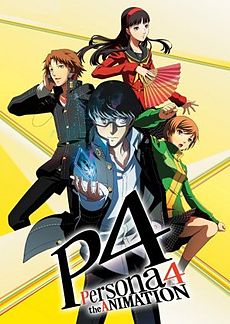
Persona 4: The Animation

P4A_promo

Persona 4 The Animation

Originally conceived as a spin-off of the Megami Tensei series of video games, the Persona series has blossomed into a full-fledged series able to stand on its own. In the minds of many, it has surpassed its sister series to become the tentpole franchise of developer Atlus’ numerous video game properties. And of the four main games released in the series, the most recent, Persona 4, is likely the most popular and most beloved. Which is why this game in particular has received numerous spin-offs of its own. From the fighting game Persona 4 Arena, to the rhythm game Dancing All Night, the Persona series, through Persona 4, has managed to touch multiple genres across several consoles. This is pretty impressive considering that Persona 4 is already eight years old. As a very late entry on the Playstation 2 console, it would not have been surprising for the game to make little or no impact considering many gamers had already moved onto newer consoles, but Persona 4 persevered and three years later found renewed life on the Playstation Vita in the form of Persona 4 Golden.

The game itself is an excellent example of what a modern Japanese Role Playing Game can offer. More importantly for the series, it introduced a wonderful cast of very likable characters that drive the story along. It’s because these characters proved so endearing that Atlus spun the series off into an anime. First released in Japan in 2011, Persona 4 The Animation largely stays true to the source material and tells the game’s story in anime form. It was because I enjoyed the energy of the game so much that I decided to check out the anime, even though the great mystery of the game was already known to me as a result of playing through it multiple times.

p4-group

The gang’s all here.

The Animation is a standard anime series consisting of 26 half hour episodes. The voice cast for the game is largely retained for the anime, and in the case of the english dub, is nearly identical to the cast from the Golden version. The only notable difference is the character Naoto, who is voiced by May Elizabeth McGlynn, who actually brings a deeper tone to Naoto that works better for the character’s secretive nature early on. The role of Kanji Tatsume is at first handled by his video game voice actor, Troy Baker, but he was replaced midway through by veteran voice actor Mathew Mercer. I don’t know what the reason was for the switch, but had I not told you about it you probably wouldn’t notice as the two gentlemen sound very similar. The voice acting of the english dub in the game plays a huge role in making the story fun and engaging and the cast brings the same energy to The Animation. I know in the world of anime fandom there are many purists who won’t watch the english dub, but for this series, I think you would be doing yourself a disservice by ignoring it.

The Animation is an adaptation of the original Persona 4 released on the Playstation 2 and features the same cast of characters as that game. Fans of The Golden version may be a tad disappointed to find out that there’s no Marie or ski trip sequence but what is here is the meat of the original game. Now, anyone who has played the game may be wondering how the anime handles the main character. That’s because in the game the main character is your typical silent protagonist that the player names at the start of play. For the anime, the main character has been given the name Yu Nakamura, and I am sure the name “Yu” is selected for the very obvious reason that it’s pronounced the same way as the word “you” which is how virtually every character refers to him in the video game. Yu is voiced by Johnny Yong Bosch, which fans of the game may recognize as the voice of Tohru Adachi, another character in the game. Bosch voices both for the anime, and in a confusing turn of events, his version of Yu sounds a lot like Adachi from The Golden version of the game with his Adachi for the anime speaking in a much higher register. It took me awhile before I stopped hearing Adachi every time Nakamura spoke, though that’s no slight on Bosch whom I consider a fine voice actor. Nakamura in the game is fairly confident and also sarcastic. This worked for me as I often opted for such a personality for my version of the character in the game whenever I was given dialogue options. For instance, when the boys are all signed-up against their will to compete in a drag contest Nakamura embraces the challenge and seeks to win while his buddy Yosuke is mostly horrified and embarrassed.

persona_4_the_animation-02

Yu discovers he can enter the TV. As far as super powers go it’s not quite on par with Superman, but still better than Aquaman.

The general plot for Persona 4 is that Yu has left the city to stay with his uncle Dojima and his daughter Nanako for a year while his parents are away. Dojima lives in the small town of Inaba where he’s a detective and almost right when Yu shows up in town a weird string of murders starts taking place. Yu makes friends with another transplant student, Yosuke, as well as the meat-obsessed girl Chie and her best friend Yukiko. Yu and his friends think the murders are tied to this weird rumor spreading around school about a secret Midnight Channel. On rainy nights, people appear on the Midnight Channel and then wind up dead a few days later. Yu discovers he actually has the power to enter the television, and upon doing so awakens his “persona” powers. He soon shows his friends who all must face their other self in the TV world before awakening their own personas. The plot unfolds with people appearing on the Midnight Channel before disappearing, at which point our heroes enter the TV World to save them. It’s there they battle shadows and befriend a strange looking bear named Teddie. Their group expands as they save people to include the loner Kanji, a newly retired idol named Rise, and a young detective named Naoto. Their investigation into who is behind these murders often forces them to cross paths with Dojima and his assistant Adachi which creates tension between Yu and his uncle. The story unfolds as a mystery with numerous red herrings placed in the way before the mystery is finally solved.

altnboam6zps5qotenzh

A fan favorite, The King’s Game, made the transition from game to anime quite well.

Through the 26 episodes, just as there were through the video game’s 40+ hours, the characters take time out to be high school students who have regular high school problems. The boys, particularly Yosuke, tend to be motivated by women which leads to many humorous situations. There’s plenty of instances of more sophomoric humor that largely works because the characters come across as so genuine and naive. I imagine it’s quite easy for people to identify with some of the stuff that goes on and it certainly takes me back to my own high school days. The anime also makes an effort to capture all of the various relationships Yu forms in the video game outside of his core group of friends. In perhaps one of the more creative episodes from the show, we follow Nanako around as he spies on Yu to see why he’s so busy during the summer. It’s through her we see familiar faces from the video game such as the old woman who refers to herself as Death, Sayoko from the hospital, and Shu, the boy Yu tutors in the game, among others. The following episode retreads the same ground but from Yu’s perspective. It was a clever way to try and work a lot of material into the anime that occurs in the game.

The hardest aspect for the anime in adapting the source material relies really in its scope. As I mentioned before, the game unfolds over roughly 40 hours, depending on your pace of play. It’s not at all uncommon to log twice that many if you’re really thorough. It’s really too much for one season of television and the anime is forced to pick and choose what it considers most important, and for the most part, it does a good job. What really gets short-changed the most is the TV World where the battling feels rather rushed. I feel if I had not played the game first the TV World would just confuse me as it’s not always clear how the characters fight with their personas. Some of the investigation tedium in between characters disappearing also gets condensed with the series moving at such a brisk pace. There’s not always time to indulge in the mystery and I really didn’t feel a part of the investigative process like I did with the game. More disappointing to me though was a lot of the scenes between Yu and Dojima were either condensed into fewer scenes or omitted from the anime. I felt their relationship wasn’t conveyed as well which is a shame because it was one of the most well constructed parts of the video game.

persona-4-the-animation-6694

Just as he can in the game, Yu wields multiple personas while everyone else is limited to just one.

Likely, your enjoyment of this series will largely come down to how familiar you are with the video game. This series feels like it was meant to supplement the game. It’s 26 episodes of fan service. Visually, the show looks fine though there are many instances where there’s little animation occurring on the screen, likely to save money. Some episodes look better than others, an often trademark of anime where more money is sunk into the most important episodes. It’s largely on par, or better, than the anime sequences in the game and the characters all look how you would expect. The music should also be familiar to those who played the original game, though some new compositions were made for the anime. It’s all quite good and the added songs kept the soundtrack from feeling as repetitive as the game sometimes would get.

Persona 4 The Animation is basically what I expected. It allowed me to spend a bit more time with the characters I loved from the game, even if I was just experiencing a more condensed version of the game’s plot in a more hands-off kind of way. If you’ve never played the game, I really would not recommend you check this anime out as I don’t think you’ll be getting full value. The anime is hard to come by in the US so I had to resort to amazon.com in order to acquire it. The Blu Ray release is split into two volumes, or sold as one large collector’s edition. It’s way overpriced so I opted for the DVD collection which was still a bit pricey compared to how much a season of a typical television show often costs. The visuals are not this anime’s selling point, so I don’t think I’m missing anything by getting it on a lesser medium such as DVD, but having never viewed the DVD I obviously can’t be certain. A 12-episode Golden season was released a few years later to add the sequences from Persona 4 Golden. Right now it’s even more expensive than the normal run and I can’t justify the cost to check it out. It would be nice if they had released a reasonably priced collection that merged the two into one cohesive story, like the game, rather than try to switch back and forth between the two to get the full story in the proper order. Still, it’s kind of cool they even bothered animating the Golden sequences and if it ever comes down in price I probably will check it out. The video game is still the way better experience, but I found Persona 4 The Animation worth the price of admission.


Final Fantasy XV – Platinum Demo Impressions

FFXV-Platinum-Demo-Xbox-One-Screenshot-2016-03-31-07-56-02

Final Fantasy XV – Platinum Demo

This is going to be a rare quick one from me. Square-Enix on Wednesday night released a ton of information about its upcoming game, Final Fantasy XV, including a release date, collector’s edition stuff, and so on. Along with that was a demo release dubbed the Platinum Demo. You may be aware, but last year a more traditional demo was released for FFXV as a pre-order bonus for PS4 versions of Final Fantasy Type-0, an upscaled PSP game previously unreleased outside of Japan. I did not play that demo as I really didn’t have much interest in a PS4 version of a PSP game, but I did download this new one.

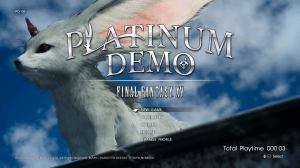
The Platinum Demo is a non-traditional demo, unlike the first demo released. Instead of being dropped into a sequence from the upcoming game, the demo has you play through a  dream sequence starring a child version of the game’s main character, Noctis. This dream sequence is not going to be included with the full-version of the game, which gives it a unique experience, but it’s also fairly traditional in the sense that it gives the player an understanding of how the game will play.

Tetsuya Nomura was the original director of Final Fantasy Versus XIII, which has since become Final Fantasy XV. Nomura is best known as the mind behind Square’s Kingdom Hearts series. As such, it should come as no surprise that elements from that series have found their way into FFXV, and yet it still does come as a shock to find that FFXV essentially is a Kingdom Hearts game. What I mean by that is that the game is a true action RPG and the feeling of just about everything gameplay-wise is Kingdom Hearts. Be it the combat, the camera, the way Noctis even jumps, it all feels like Kingdom Hearts. This is not really a good thing, in the opinion of this writer. The strength of Kingdom Hearts has always been less on the gameplay and more on the fan-service combing Disney and Square products. I’ve always found the gameplay to be adequate, and it’s improved, but it’s also always been flawed. Sora felt stiff, floaty, and the camera is just a constant battle. The series has improved since the original, but the criticism still remains. The FFXV demo has all of that, just no Mickey Mouse.

screenshot_3.0.0

The Platinum Demo places the player in the role of a child version of Noctis and explores some fantastic settings.

The demo itself guides you through it in a pretty tame way. Death is apparently impossible and the enemies, aside from the boss at the end, are pretty inept. A familiar friend serves as the guide for Noctis, Carbuncle, who’s appeared as a summon in multiple Final Fantasy games. He’s been redesigned only slightly, appearing as a fox/kitten hybrid that would feel right at home in a Pokemon game. I cannot deny, he’s pretty cute, and he also looks pretty believable. Easily the demo’s strongest point is the presentation, as the game looks great. There are a few moments of self-indulgence that serve it well, though also a couple of hiccup moments where the frame-rate seems to chug. We’ll have to wait and see how the main game holds up. Supposedly completing the game will allow Carbuncle to be used in the main game so there’s incentive to not only finish the demo, but keep it installed on your PS4/Xbox One.

final-fantasy-xv-isnt-just-a-video-game-its-a-whole-new-universe-358-body-image-1459408025-size_1000

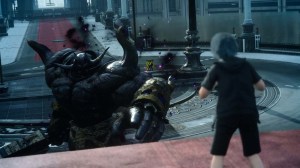
A familiar foe is waiting at the end.

The demo is fairly linear, though it does give the player some time to just mess around. It offers a few locations, one of which sees Noctis miniaturized in a home which is quite a bit of fun to explore. There’s also some “plates” on the floor that serve as triggers. Most of these speed up time to show-off the day/night cycle and some give Noctis a new weapon to try out. A select few transform Noctis into either a car, crocodile-like monster, or a deer-like monster. They’re kind of neat, and I have no idea (aside from the car) if these transformations are indicative of anything in the main game, but they’re a fun diversion here. The final boss encounter of the demo seems to be the only moment where the combat is opened up a bit and we get a better idea of how the game will eventually play out. Like Kingdom Hearts 3D, Noctis is able to warp around the battlefield and utilize attacks from advantageous positions. These attacks consume MP, which is constantly regenerating, and seem like they’ll be necessary components of future battles in the game. The game presents button prompts for counters and attacks, which I assume is part of the learning process. I didn’t feel like I got a good grasp of what was going on, and there’s definitely going to be a learning curve to combat even though it’s fairly simple at its base.

The Platinum Demo for Final Fantasy XV left me unconvinced. Immediately when it ends the demo asks if you would like to pre-order the full game and I did not have to think long about how to answer that. I’m still holding out hope that the full game will turn out well, but I’m struggling to understand the creative direction of this title. I know it started off as a spin-off, and the decision to make it the next proper title in the series was probably more of a financial decision than anything, but the game just feels unnecessary. It’s way too similar to Kingdom Hearts right now. Fans of that series who have thought to themselves “I really want Final Fantasy to play more like this” should be happy. Others will probably just wonder what happened to one of gaming’s most iconic franchises. Final Fantasy has a real identity crisis on its hands. I don’t know where the series needs to go, but I feel like this isn’t the best destination for it.


Suikoden II

Suikoden II (1998) Suikoden II (1998)

In the early part of the 1990’s, there were basically two companies known for producing Japanese Role-Playing Games: Squaresoft and Enix. Square, as the legend goes, was rescued by the success of a last ditch effort for relevancy in the form of Final Fantasy for the Famicom/Nintendo Entertainment System. Prior to that, Enix had already staked its claim to RPG supremacy with its hit Dragon Quest (known as Dragon Warrior in the US). During the 16 bit era, Square would come to surpass Enix as the premier publisher for the genre, as not only were Final Fantasy’s many sequels hits, but so was seemingly everything else Square etched its name on. These two companies were not the only ones exploring the JRPG genre. When someone strikes gold with an idea a legion of copycats arise. Capcom would enlist Square’s help with localizing its own take on the genre with Breath of Fire. Capcom has since dabbled with the genre here and there without ever becoming a true power. One of the other main Japanese game developers was Konami. Back on the NES, Capcom and Konami were arguably the two most popular so it made sense for Konami to toss its hat into the JRPG ring and it did so with the Suikoden series.

Suikoden debuted on the Playstation in 1995, but the series truly arrived with its sequel in 1998 simply titled Suikoden II. Suikoden did not break the mold in terms of what it brought to the genre. Rather than trying to be something entirely different from the established franchises at the time, it opted to be a jack of all trades. Turn-based battles entered into via random map encounters paired with large, map-based tactical confrontations more commonly found in a series like Fire Emblem. Suikoden’s approach to variety is part of what made it a success, but also contributing to that success was its massive stable of characters and high stakes.

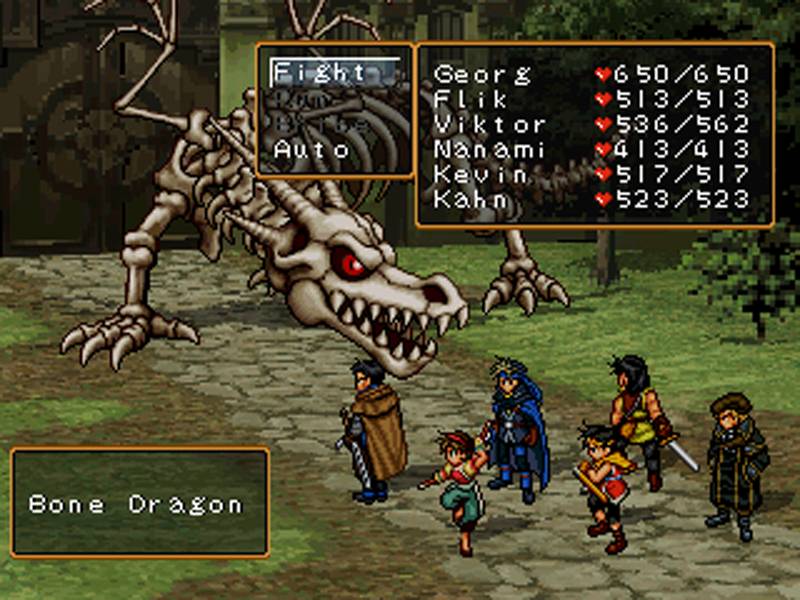
Suikoden II reserves its best character models for its boss encounters. Suikoden II reserves its best character models for its boss encounters.

When the Playstation was in vogue, I was an early adopter. I wore out my Playstation which conveniently ceased to function just a month before the launch of the Playstation 2. During my time spent with the Playstation I played a ton of RPGs, but none of the Suikoden games. For years, I’ve often heard from friends and relatives that I should seek out and play Suikoden II, if nothing else, but the game fetches obscenely high prices on resale markets and I was just never willing to pull the trigger (or borrow such an important game from a friend). Finally, Sony and Konami were able to make the game available this past June on the Playstation Network, and I’ve been playing it on my Vita ever since. It is kind of a shame that I did miss out on this one back in 1999 (when the US version was released) because I would have really enjoyed it then. However, that didn’t prevent me from enjoying it now.

Suikoden II is not unlike many games in the genre in terms of pacing and structure. As the player, you control a nameless, voiceless, shell of a character who seems unimportant at the game’s start but soon is arguably the most important person in the world. The main character and his best friend, Jowy, are soldiers in a youth brigade that soon is attacked from outside, and within, and disbanded. War has broken out across the land as the most powerful, ruling family is not just seeking to bring everyone else to knee but seeks total chaos and destruction of the world. The main antagonist, Luca Blight, is a villain so evil he’s boring, but like many games in the genre, he’s only the main villain for so long as another emerges from the shadows and the stakes get higher. Throughout the hero’s adventure he’ll encounter over 100 recruitable allies. Each character has his or her own reasons for joining the resistance against Blight’s tyranny and the player is free to mix and match parties of six almost at will throughout the entirety of the game. Travel takes place on a world map and the player can enter and exit towns and dungeons as they are found. If you’ve played any other JRPG from this era then it should feel pretty familiar.

At times, the player will be tasked with completing more tactical battles. At times, the player will be tasked with completing more tactical battles.

Battles are also pretty straight-forward. Enemies, aside from boss fights, are encountered randomly when on the world map and in dungeons. Battles are turn-based with the heroes and enemies having their order of attack determined by an individual speed score. There’s no active component to the fights as the player simply tells each character what to do and watches the round unfold. If both sides survive, then another round commences. Where Suikoden separates itself is by having battles be, up to, two groups of six. When assembling a party, the player is expected to pay attention to each character’s range:  short, medium, or long. Short range characters have to be placed in the first row and can only attack the opponent’s first row. Medium range characters can attack from either row, but can only attack the opponent’s first row. Long range characters can attack any enemy from the back row. By forcing the player to go with a 2×3 formation, the player is forced to mix-in medium and long range characters which is important because the short range ones usually pack the most punch when it comes to attack power. In addition to standard attacks, characters can also make use of runes, which once equipped to a character or weapon, grant the character magical abilities. Some of these, such as the ability to heal between rounds, are passive while others are actual attacks or defensive spells. Rather than have a collection of mana or magic points, characters simply can only cast a certain amount of spells in between rest stops (such as sleeping at an inn). Early in the game, a character may have access to three level one spells and a single level two spells, but by the end of the game that same character will likely have access to level five spells as well. Characters more proficient with magic can equip more runes with the best able to equip one on each hand plus one on their head and weapon. And not all runes are equipable on all characters. This helps make each character feel unique not just among the other 107, but even from one play-through to the next. Lastly, borrowing a page from Chrono Trigger, certain characters can be paired with other characters for Unite attacks. These are kind of a secret in the game, but they’re also logical in terms of the pairings. Experimentation is encouraged.

Suikoden II's most memorable attribute is undoubtedly its large roster of characters. Suikoden II’s most memorable attribute is undoubtedly its large roster of characters.

Occurring at set points during the games are the tactical battles. As mentioned before, these battles very much imitate Nintendo’s Fire Emblem as characters are moved around on a grid and engage in combat that has a bit more of a random feel to it but is also more strategic. Very rarely is the player able to simply overwhelm the opponent necessitating a more thoughtful approach. Death in this scenario also has the possibility of being permanent making the stakes much higher. Even so, most of these encounters are fairly easy and few actually require the player to completely vanquish the opposition. Ranged attackers can often be leveraged to dish out most of the damage against non-ranged enemies with the short-range attackers being called upon to clean up the mess. As a result, Suikoden II’s approach to these tactical battles feels kind of half-assed but they are still a nice change of pace when they occur.

Graphically, Suikoden II comes up short when compared with most of its peers. The game makes use of sprites as opposed to 3D models with very limited use of CG effects. Some of the larger enemies are attractive, but they also seem to tax the system and slowdown is a frequent problem. The original game is said to be buggy at times as well, though I never encountered any playing on the Vita. The simple visuals have kept the game from aging horribly, as some titles from that era have, but it is kind of disappointing that a late era Playstation title wasn’t given a bit more love from its developers. The soundtrack is quite good though, with the game often reserving its best pieces for its biggest moments. This comes at the expense of the more mundane moments and I did find myself getting sick of the world map theme after 40 hours or so.

Where Suikoden II really separates itself from its peers is with its tone. The story is handled in a very serious manner. As I mentioned earlier, Luca Blight is kind of a silly villain but once he’s out of the way the main confrontation becomes far more interesting. The game does suffer a bit from its rigid approach to story-telling, but that was pretty common for the era with more open-ended plots a recent phenomena. I found myself often disagreeing with the choices the game had my character making but it didn’t prevent me from enjoying the storyline for what it was. I also enjoyed watching the hero’s castle, acquired maybe a quarter of the way into the game, improve as the game went along. I also really appreciated the fact that there were not many missable characters or items, as if you want to see the game’s best ending, you need to recruit all 107 characters. I also appreciate that the game made some attempt at giving each character a backstory, and it’s also pretty easy to bring an under-leveled character into the main party and get them up to speed quickly. This is something a game like Chrono Cross should have tried to emulate.

In short, gameplay-wise, Suikoden II is not terribly unique when compared with other games from the Playstation era, but that’s not a bad thing. What’s there works and it’s a fun game to play. Sure, random encounters can get annoying (and they’re really bad during the final dungeon) but anyone who grew up with these games should be able to deal with it. The variety of the characters helps keep the game fresh even on multiple play-throughs. I may have missed out back in 1999 when this game first arrived on US soil, but I’m glad to have experienced it now in 2015. And if you’re in the same boat as me, playing it on the Vita is a nice way to experience the game on the go. If only Suikoden III was playable on Vita then I’d have something to play tomorrow when I’m riding the train to work.


Mario Superstar Baseball

Mario Superstar Baseball (2005)

Mario Superstar Baseball (2005)

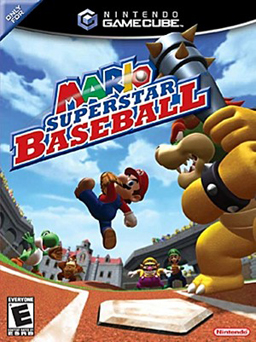
Super Mario first made his mark in the sports world through the game of golf. Golf has been a game video game publishers have often tried to emulate and Nintendo likely thought their brand would sell better with Mario in a starring (though understated) role as opposed to some new character. Mario has since appeared in numerous golf games for Nintendo and would add tennis to his resume on the Virtual Boy and Nintendo 64. It was also on the Nintendo 64 that the Mario Party games debuted where Mario and his buddies got to show off a bunch of skills no one knew they possessed. Come the era of the Gamecube though, and Mario’s sporting exploits exploded. One such resulting title is Mario Superstar Baseball.

During the mid-2000’s the sports landscape changed. EA Sports, having felt undermined by 2k Sports and their $20 game NFL 2k5, made a deal with the NFL to secure exclusive rights to the NFL brand. 2k would follow suit by doing almost the same thing with Major League Baseball. The only difference was that 2k’s deal with MLB made them the sole third-party publisher of MLB games allowing the first-party developers the ability to utilize the MLB license for their own games (hence why MLB The Show has appeared on Playstation consoles ever since). Nintendo first attempted a baseball game with Red Sox designated hitter David Ortiz as its cover athlete, but for whatever reason, the game was cancelled. Rather than start development on another MLB title, Nintendo instead chose the cheaper route and once more tabbed their mascot for a baseball game.

Mario Superstar Baseball is, naturally, an off-beat take on the sport of baseball. It’s not the first title to do so. There was SNK’s Super Baseball 2020 in the early 90’s, and Midway (having found success with NFL Blitz) released their own exaggerated take on the sport: MLB Slugfest. Mario though could bring something different to the sport in the form of its unique world full of warp pipes and piranha plants. In some ways, the foundation had been laid by Mario Golf: Toadstool Tour, also for the Gamecube, and Superstar Baseball just needed to adapt those features to the game of baseball.

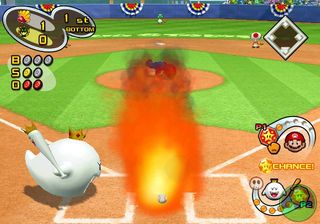
Characters from the Mario franchise play ball in some familiar locales.

Characters from the Mario franchise play ball in some familiar locales.

Probably due to the existence of miniature golf, it’s easy to envision how one could make golf gimmicky but fun for a video game. With baseball, it’s not quite as obvious how such features could be added without feeling forced. Namco, the developer of Mario Superstar Baseball, focused on a small core of characters to focus on while supplementing the team rosters with lesser characters. These main characters consist of the team captains and one co-captain, and they usually have the more impressive special abilities unique to the game. Mario, and brother Luigi, can both use their fire power to enhance their pitching and their hitting. As a pitch, the fireball is blazing fast and tough to square-up. When used as a hitter, if Mario or Luigi successfully put the ball in play it will retain its flaming properties and make it hard to handle for the fielders. Peach and Daisy can both make their ball disappear in a puff of flower petals, Donkey Kong and Diddy Kong wield a boomerang like banana, Yoshi and Birdo an unpredictable bouncing egg, and Bowser and Bowser Jr. call upon their pal Bullet Bill to take the place of the baseball. Wario and Waluigi have this weird, gassy, multiplying pitch that is best scene than explained. The support characters include the likes of hammer bros. and toads, all of which can use special moves but they just slightly enhance their fastballs/hitting as opposed to doing something unique.

The other main way for Namco to apply a Mario coat of paint is with the stadiums. Mario’s home turf plays like a generic ballpark, but Bowser’s is ringed by lava with fireballs shooting across the outfield. Donkey Kong’s is a jungle setting with a croc-infested creek running through it and Peach’s castle stadium has music boxes floating in the air. The unique features of the stadium probably only come into play once or twice a game (which range from 3, 5, or 7 innings) but can bring about fortune but often misfortune for the player. The game is not as wild as other Mario sports titles, but given the actual game it’s adapting, Namco did a solid-enough job in this area.

Special abilities, like Mario's fireball pitch, work better against human opponents than CPU ones.

Special abilities, like Mario’s fireball pitch, work better against human opponents than CPU ones.

The mechanics of the game are largely reminiscent of old school baseball games from the Nintendo and Super Nintendo era. Batters can be moved in the batter’s box at any point during the pitch and the break of each pitch is determined by just pressing any direction on the controller. Pitches can be charged for added velocity, and also for less velocity to disguise a change-up, and varying speeds and break is vital to having success (just like in real baseball). Each team can possess up to five “stars” which allow for the use of special abilities like Mario’s fireball pitch. Stars can be replenished at random times during a game when the player is presented with a “Star Chance” during an at-bat or by striking a star panel on the playing field with a batted ball. Fielding and base-running are also rather old school in their controls, with throwing to a base requiring a direction be pressed on the analog stick. Modern games just map the bases to a specific button, and unfortunately Mario’s game can at times lead to throws to the wrong base. Players can also dash in the outfield, or on the bases, and attempt diving or leaping catches. Most characters have a floaty feel to them making leaping catches a little easier than they would be in an MLB game. Also, characters have special abilities unique to them that often show up when they’re in the field. The powerful guys, like Donkey Kong and Bowser, have powerful throwing arms while Yoshi can catch balls with his tongue. This dynamic helps make each player feel different with some naturally being more suited for one position over another.

The game has various modes such as exhibition, home-run derby, and other mini games based around pitching, hitting, and base-running. The meat of the game though is found in its single-player mode where the player selects a team and barnstorms around a map taking on the other teams before eventually facing Bowser’s team. During the games though, opportunities will be presented to the player such as “get a hit” or “steal a base.” If successful, the player will earn a star allotted towards an opposing player. Get enough of these for a player and you successfully recruit him or her to your team. Recruiting the team’s captain will prevent you from being able to play that team again, so the idea is always to try and recruit all of the other players first before getting the captain. If the player manages to win via the mercy rule, then all recruitable players are recruited at once. On the map, Bowser Jr. roams and his team will contain a collection of any players the player failed to recruit giving another option for recruitment. There’s also a store where items can be purchased that temporarily make the game easier. The mini games are also playable a set number of times which is primarily where the player earns money.

There are lots of players to recruit and improve your team with in the game's single-player mode.

There are lots of players to recruit and improve your team with in the game’s single-player mode.

By recruiting new players one can better optimize their roster. To prevent players from simply loading up on the best, an affinity feature was added to the game that makes certain players work better as teammates of others, or not work well at all. Mario, for example, is more likely to make an errant throw to first base if Bowser is the first baseman. If it’s Luigi instead then he’s less likely to make an error and will also throw quicker. This incentivizes the player to pair up certain characters at key positions, such as double-play partners or outfielders with the catcher for those throws home. Each character, captains and all, also have goals and achievements associated with them. The minor characters may only have 3 or so of these while major ones as many as ten. Some are easy, like score a run, and others quite difficult and dependent on chance. Donkey Kong, for example, needs to hit a home run with both Diddy and Dixie Kong on base for one of his and Mario needs to pitch a perfect game (no hitter allowed to reach base) for one of his. Achieving all of these goals for a character unlocks their star form, which is just a better version of the character. It adds a compelling layer to the game and incentivizes the player to use every character, though the quirkier ones can become aggravating. Building and customizing a team becomes a lot of fun, especially for those who like to tinker, so much so that I wish there was even more depth to it. The goal of the game is to be accessible and fun, but a more robust single-player mode might be even better.

The single player game is surprisingly deep, and the play is quite fun, but the game does have some short-comings. The controls, touched upon earlier, are an issue. Hitting and pitching is simple and intuitive enough, but the base-running is overly complex leading to numerous base-running errors and frequent instances of a runner being doubled-off. Some of that is also due to the field of play being rather small compared to other baseball games and the propensity for line drives being caught by infielders. For a game that’s supposed to be kind of a “wacky” take on baseball, there’s a lack of home runs as well with only the most powerful characters being reliable sources of round-trippers. The game seems to want the player to make use of the item store for super powerful bats if they want to see the ball leave the yard. The special abilities of the captains are also pretty hit or miss, with most of them being a miss. Mario’s fireball pitch seems to work okay on easier difficulties, but on hard the AI never seems to miss. Peach’s disappearing change-up pitch seems to be the only reliable and useful one with Bowser and Donkey Kong’s pitches being so bad they’re not worth using. I don’t think I’ve ever managed to strike out the AI with Donkey Kong’s banana pitch. Wario and Waluigi’s pitch is pretty much just as bad. When used at the plate, all of them are a bit more reliable. The AI will still sometimes feel like it’s cheating with how easy it finds Peach and Daisy’s invisible ball when put in the air, and Donkey Kong’s banana ball is still awful. Wario’s is one of the most effective in terms of introducing an element of chaos to the game as it splits into two balls, with one being the actual ball and one being a fake, and if it’s a fly ball the AI (or another human player) is forced to commit to one or the other. This can make decisions such as whether or not to tag-up or send runners an exciting one.

Not all characters can be expected to use standard equipment.

Not all characters can be expected to use standard equipment.

I love baseball, and I love baseball video games, and Mario Superstar Baseball is probably my favorite when it comes to off-beat baseball games. It’s also one of my favorite Mario sports titles, and even though it has its share of problems, it’s a very enjoyable game. It’s single-player mode is surprisingly addicting, though like most Mario titles, the actual gameplay experience is better when played against other human opponents. Unfortunately, its sequel, Mario Super Sluggers for the Wii, failed to address the faults the game had. In many ways, it was a step back. The single-player game was simplified and less interesting and the power-ups weren’t improved at all. There was also the inclusion of “waggle” controls which felt unintuitive and tacked-on. Rather than swing the wii-mote like it was Wii Sports, the game wanted the player to just move the controller back and then forward emphasizing rhythm. It was unfortunate the game came out so poorly, and if you’re someone interested in a Mario baseball title the Gamecube original is the way to go. I’ve never heard any rumblings of a new entry in the series, but it sure would be nice if Nintendo gave the go-ahead for a 3DS sequel as it did with the golf franchise. For now, Mario Superstar Baseball is sort of an annual tradition for me, where I dust off my Gamecube and settle in for a fun time either by myself or with a buddy whenever the baseball season comes around.


Final Fantasy X-2 HD Remaster

Final Fantasy X-2 HD Remaster (2014)

Final Fantasy X-2 HD Remaster (2014)

It was way back in July that I posted about the remastered Final Fantasy X which was released in March on both the Playstation 3 and Playstation Vita. It is now the end of January and I’m just getting around to talking about the companion game with that release:  Final Fantasy X-2. It’s not because I’m lazy, though I have neglected this blog some during that timeframe, but because I actually just recently finished Final Fantasy X-2 even though it was the only game I played on my Vita in that span of time. I didn’t split time between my Vita and 3DS, I actually haven’t touched that system in nearly a year, it’s that I just had enough content to keep myself busy. Now, my handheld gaming is basically confined to my work commute, which became a 3 day commute over the summer thanks to the wonders of telecommuting. Those three days total about 4 hours of gaming per week so maybe it’s not that crazy a game could last me nearly six months but it is pretty cool that between March 2014 and January 2015 I only played one release on my Vita and was perfectly satisfied. That’s getting the most out of forty dollars.

Final Fantasy X-2 has the distinction of being the first true sequel for the Final Fantasy franchise. That seems crazy considering this is an ongoing series stretching back to the late 1980’s, but every longtime fan knows that all of the Final Fantasy games were self-contained games with only thematic and gameplay similarities making them all one franchise. The characters, settings, plots were all different. While some were certainly similar in setting, especially the first five games, they all differentiated themselves quite distinctly. There have been some mega-popular games in the series and ones that fans probably wanted a sequel to more than Final Fantasy X, but be it for creative reasons or economic ones, it was Final Fantasy X that received the first sequel. Final Fantasy X ended on a pretty final note. There certainly were questions about what the characters would do following the events of that game, but not really more than any other title. It wasn’t exactly an “everyone lived happily ever after” ending, but it was far from being a cliffhanger. The direction of the sequel wasn’t obvious, but Square-Enix rightly chose which character to center the sequel around.

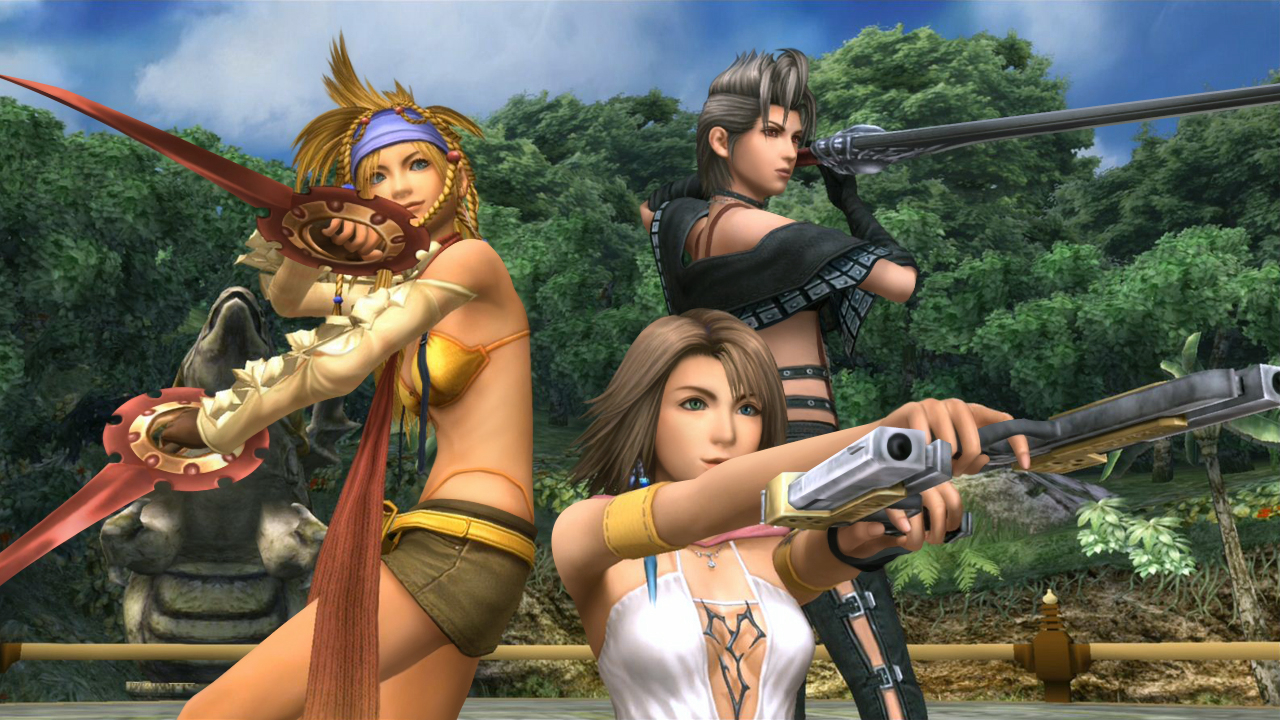
The main cast (left to right): Rikku, Yuna, Paine.

The main cast (left to right): Rikku, Yuna, Paine.

Yuna was the pseudo-protagonist of Final Fantasy X. While the main character, Tidus, often reminded the player that this was his story, it would be more appropriate to say it was their story when referencing both Tidus and Yuna. For much of the game, Yuna was Sherlock Holmes to Tidus’ Watson and we were experiencing her journey as a summoner through the eyes of a different character. In Final Fantasy X, Yuna was reserved, somewhat shy, and lacking in confidence. She grew throughout her journey, but the events at the end would lead one to wonder just how she would adjust to her new life. Final Fantasy X-2 picks up two years after the first game’s conclusion and we find a Yuna bursting with energy and a sense of adventure. Together with Final Fantasy X hold-over (and her cousin) Rikku, plus new-comer Paine, she travels Spira in search of lost spheres which are essentially records of Spira’s past. There’s a market for such spheres as Spira comes to grips with the loss of its center, the Yevon religion, which was exposed as fraudulent during the events of Final Fantasy X.

When Final Fantasy X-2 was originally unveiled, the thing most gamers and press seemed to key in on were the three main characters:  Yuna, Rikku, and Paine. It might not be obvious based on their names, but all three characters are female. And all three were the only playable characters (sort of, more on that later) in the game. This was pretty significant for the time as Final Fantasy had never really had a female lead, let alone an all female party. It was a pretty bold move, especially in the West where the video game fanbase is almost exclusively male. Not surprisingly, there was some backlash and amongst my friends I came upon those who had no interest in playing a “girl” or “gay” game (we were in high school and certainly still growing up). It didn’t help things that the game essentially opens up with the characters attending a J-Pop concert where Yuna is the apparent performer. The game makes the declaration that it isn’t going to shy away from the fact that the main characters are women. They could have portrayed them in a masculine or more subtle way but chose not to. The only thing I would criticize the game designers for is the overly sexualized nature of the characters. Some of the battle attire the girls where is just not at all practical and pretty ridiculous.

If you're going into battle against knives, guns, and who knows what else, this doesn't seem like the best choice of attire.

If you’re going into battle against knives, guns, and who knows what else, this doesn’t seem like the best choice of attire.

Because of some of the design choices, the game alienated people from the start and it has often felt like an overlooked title in the Final Fantasy series. I played the Playstation 2 version and enjoyed some aspects of it while I didn’t others. At the time, I think I was suffering from some RPG fatigue because I remember the game being a slog for me. I finished it, but it was sort of a joyless experience. I wasn’t thrilled to play the HD version as a result, but fortunately for me I enjoyed the game a lot more the second time around.

The foundation of the game is fundamentally solid. It’s essentially Final Fantasy V complete with the return of the Active-Time Battle System and the job class system, with some tweaks. The job system is now known as the dress sphere system, but it works the same. Characters are free to choose between any dress sphere which includes staples such as the warrior, white mage, black mage, thief, and so on along with a few unique to the game. The major twist for X-2 is that characters can switch between dress spheres during battle, providing they equipped them to their character’s Garment Grid. The Garment Grid is like a mini Sphere Grid from Final Fantasy X that features open nodes that can be equipped with any dress sphere. The character can move from one node to another during one turn in battle, but must move to adjacent nodes. The grids also bestow other special abilities like certain spells or stat buffs. It’s pretty customizable and a lot of fun to mix and match dress spheres among the three characters. Each girl is obviously better suited for certain spheres, Rikku is the speed character while Paine is the strongest attacker, but all three girls can make any dress sphere work. The lone weakness of the system is that some dress spheres are far superior to others, which lessens the enjoyment of mixing things up, but I found it pretty addicting to keep mastering different dress spheres by unlocking all of their abilities.

The rest of the game functions a little different from traditional Final Fantasy titles as well by going with a mission based approach. The game is separated into five chapters with each one containing a few story-line based missions that must be completed. The rest are ancillary but strongly encouraged. Just plowing through the game, I suspect someone could beat it in around twenty hours but it wouldn’t be as much fun. There are plenty of dull missions but most add something either in the form of humor or challenge. Particularly at the end of the game, there are several challenging missions that will definitely consume a lot of time. Completing tasks contribute to the completion percentage of the game, with the obvious goal being to achieve 100% and getting the “best” ending. It’s possible to do so on the first play-through, but there’s a lot of junk you would never hit on without a guide. Silly things like talking to certain characters in a specific order can ruin your shot at 100%. It can be frustrating to be forty hours into the game and find out you have no shot at 100% on one play through, but that’s what Square-Enix was going for as they wanted gamers to play the game a second time as your completion percentage will carry over.

The J-Pop stuff is pretty silly, but it is by no means a game-breaker if it's not your cup of tea.

The J-Pop stuff is pretty silly, but it is by no means a game-breaker if it’s not your cup of tea.

Thematically, Final Fantasy X-2 is a much lighter experience compared with its predecessor. Final Fantasy X wasn’t exactly a melodrama, but it had some weightier tones. X-2 somewhat embodies that J-Pop intro in that it’s mostly a game featuring three women having the time of their lives. There is some tragedy to the story, especially in the wake of the events of Final Fantasy X, but it’s mostly a fun experience. The music, even with a couple of J-Pop tracks I could do without, is quite good and on par with the rest of the franchise. Changes made going from the PS2 original and the HD version are minimal from a visual standpoint, but the game received additional content not previously available to western audiences. There are two new dress spheres, one of which is actually very useful, and a new monster capturing mechanic that actually expands the playable battle party. It wasn’t something I took advantage of, but it’s cool for those who want it.

The major addition to the game is the inclusion of The Last Mission scenario. The Last Mission takes place after the events of the main game and sees Yuna, Rikku, and Paine reunite for one final mission. It’s almost a completely different game as it’s basically a rogue-like, dungeon-crawler instead of a typical JRPG like the main game. I personally found it to be a real drag, and getting through it for the additional storyline content was not an enjoyable experience for me. The storyline was also pretty trivial and the lesson in it felt forced like it was coming from a completely different voice than from those behind X-2’s plot. I would suggest that if you do not enjoy the gameplay, as I did, then save yourself the time and just watch the cut scenes from it on youtube. They’re everywhere.

The Last Mission is a very different experience and one I didn't care for, but maybe I'm in the minority.

The Last Mission is a very different experience and one I didn’t care for, but maybe I’m in the minority.

The last piece of new content is the Bonus Audio which is being referred to as an audio drama on the internet. It’s basically a story that takes place after X-2 and centers on a new character (if you do not want spoilers, then skip ahead to the next paragraph). The new character is actually the daughter of Auron, and she wants to meet up with those who knew her father. To make a long-story short, the end result is that Yuna is once more a summoner for a Yevon-like organization, Sin returns, and she and Tidus break-up over some really silly stuff. I know some people did not like that Tidus died, or ceased to exist, at the conclusion of Final Fantasy X and the perfect ending of X-2 basically remedies this. I was fine and happy with how FFX concluded, not because I hated Tidus, but because I respected the story it told. I actually wish they never brought him back since I prefer death be treated as permanent in pretty much any story I experience. To bring him back though and then have Yuna break-up with him over some silly insecurities such as the ones presented in the audio drama just seemed like bad story-telling. I do not know if this audio was meant to be a spring-board for a Final Fantasy X-3, I doubt Square-Enix has any interest in going back to Spira, but if it was I hope they soundly rejected it. Listen to it only if you’re absolutely curious because the story sucks, to put it bluntly.

Final Fantasy X-2 is a perfectly acceptable Final Fantasy title, and a damn good game. I do not think it is better than Final Fantasy X and it’s not in my top five Final Fantasy titles, but it’s probably right in the middle somewhere. If you’re like me and either felt you short-changed it back when it was originally released or ignored it all together, I would suggest giving it another go. If you didn’t like Final Fantasy X then don’t bother, but if you loved Final Fantasy III and V because of the job system then maybe you should take a look regardless of your thoughts on Final Fantasy X. It’s a fun game and it stands out among other Final Fantasy titles, and given how many there are, that’s an accomplishment worth celebrating.


Angry Video Game Nerd: The Movie

Angry Video Game Nerd:  The Movie (2014)

Angry Video Game Nerd: The Movie (2014)

For over ten years, James Rolfe’s Angry Video Game Nerd character has been entertaining viewers with humor-laden rants on “classic” video games and movies via that amazing thing known as the internet. The videos first appeared on his own website before migrating to Youtube where they gained a following that seems to still be growing. Today, the videos are contained and published on Rolfe’s own website, cinemassacre.com, along with his other films and humor shorts. Over the years Rolfe has added other characters to his stable including Board James and the Bullshit Man, but it’s the Nerd who is easily the most popular of them all.

The Nerd videos successfully tap into nostalgia by invoking memories of frustrating evenings spent with a terrible game just rented from the local video store. Everyone who grew up in the 80’s and 90’s who played video games can probably recall a few bad decisions that lead to tossed controllers or broken toys. For most kids of that era, picking a game at the rental store was like tossing darts. You could judge them only on so little. Some games would print screenshots on the back of the box while some would force you to go off of the cover art alone, which was often purposely misleading. I know I personally encountered many duds, usually selecting a game based on a license I was familiar with through television or film. That’s how I ended up getting stuck with Road Runner on the NES for a weekend. If you’ve never played Road Runner on the NES consider yourself lucky. Watching someone else slog through these games has proven to be entertaining, and Rolfe is able to blend in other elements to keep things fresh and entertaining. What once were simply clips of gameplay with cuts to the Nerd’s reactions have grown into elaborate skits and battles to the death with the likes of Bugs Bunny and R.O.B.

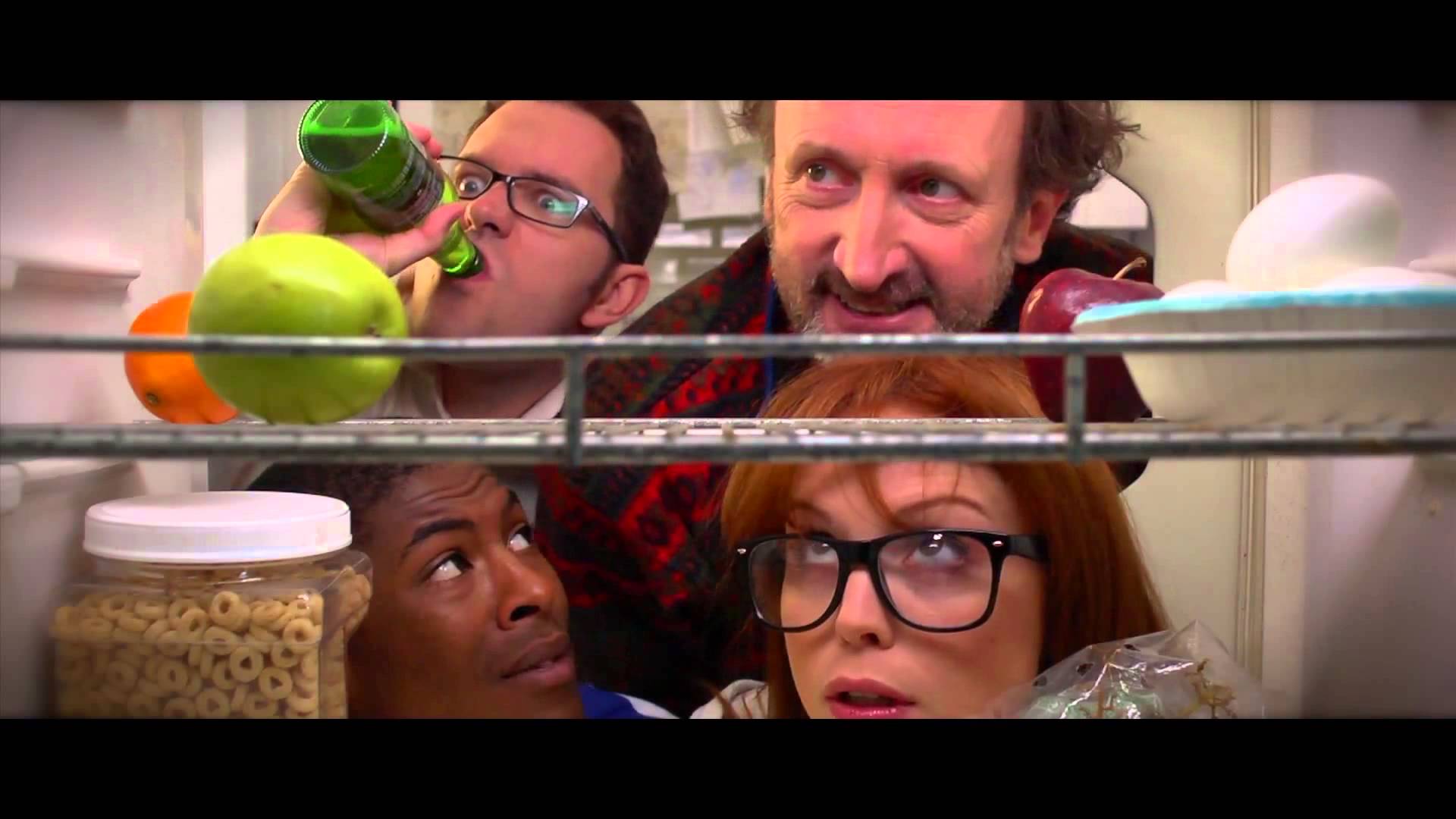
James Rolfe is the Angry Video Game Nerd; a beer-swilling, profanity-spewing, victim of bad games.

James Rolfe is the Angry Video Game Nerd; a beer-swilling, profanity-spewing, victim of bad games.

As the years have gone one, it has become harder to find games worthy of the Nerd’s time. One game though has been saved, the infamous E.T. for the Atari 2600, which is the so-called worst game ever. This was a game Rolfe and his friend and collaborator Kevin Finn decided could not be confined to the usual ten minute internet video and instead announced that they were pursuing a feature-length film for the Nerd. They attempted to get backing from actual production studios based in Hollywood, but when that didn’t work, they turned to crowd-funding and were able to come away with enough cash to make the film a reality. It took a long time for the movie to be filmed, edited, and eventually released, but hopefully the wait was worth it for those involved and those who were eager to see it.

When it was announced this summer that Angry Video Game Nerd: The Movie would receive a limited theatrical release, I was on my honeymoon, and as a result, missed out on the ticket pre-sale. The film was released digitally in the fall, but I opted to just wait for the Blu Ray which arrived the week before Christmas at my residence. As a fan of the web series, I was intrigued at how Rolfe and company would turn a ten minute video into a feature-length film. Would the Nerd prove interesting enough a character to command my attention for nearly two hours? And how would the production come across given the budget?

Well, I would say that, for the most part, the film works. The premise of the film is that everyone and their grandmother wants the Nerd to review E.T. (known as Eee Tee in the movie for obvious reasons), but because he has such bad memories of the game from his childhood, the Nerd refuses. A video game company, Cockburn Industries, takes note of the Nerd’s popularity and how his videos have actually lead to a demand for the bad games he reviews. They decide to green-light a sequel to Eee Tee and get the Nerd to review it, at which point he’ll condemn it and people will buy it. Cockburn sends one of their executives, Mandi (played by Sarah GlennDanzig, I mean, Sarah Glendening) to befriend the Nerd and his associate, Cooper (Jeremy Suarez), and get the Nerd to agree to a review. She poses as a nerd herself, and by getting Cooper and the Nerd to make a friendly wager over whether or not the Atari landfill story is true or not, finds a way to get the Nerd to agree to a review. She organizes a search team to scope out the landfill area in New Mexico, while those involved soon find themselves attracting the attention of a military group charged with protecting the secret of Area 51, which is located nearby. It’s all pretty crazy, but essentially the Nerd and his friends spend time illuding these military types and getting caught in a massive conspiracy theory surrounding the game and its ties to the existence extraterrestrial life. There are aliens, a massive god-like monster being, and even Howard Scott Warshaw himself (the creator of the actual E.T. 2600 game), along with a whole bunch of other stuff I’d rather not spoil.

Some of the actors joining Rolfe include (clockwise from top right) Time Winters, Sarah Glendening, and Jeremy Suarez.

Some of the actors joining Rolfe include (clockwise from top right) Time Winters, Sarah Glendening, and Jeremy Suarez.

The plot of the film is supposed to be “out there” with purposely telegraphed twists and over-the-top characters. The villainous General Dark Onward (Stephen Mendel) is especially creative as he’s a paraplegic with a tank for a lower body who has a penchant for losing limbs. Time Winters is entertaining playing the required illusive genius who clues the group in on the secret of Eee Tee while Helena Barrett plays a capable right-hand woman to Dark Onwardby the name of McButters. The actors are mostly veterans of small productions like soap operas and commercials who mostly handle themselves well. The script they’re given is full of silly, corny, lines that they sell well. One of my concerns going into the film was how Rolfe would stand-up amongst professional actors. Any concerns I had were remedied early on as Rolfe clearly knows how to both write for his venerable character and how to portray him. If there’s a weakness in the script, it’s with the Mandi character and McButter. Perhaps not accustomed to writing dialogue for women, Rolfe and Finn’s script for the two aims for cheese but often misses the mark. Their cat-fight scene meant to induce laughter instead brings about groans.

General Dark Onward is probably the most ambitious character in the film.

General Dark Onward is probably the most ambitious character in the film.

The production is noticeably done on the cheap, but it doesn’t limit the film’s scope or imagination which is all that matters. There are lots of easter eggs buried in both the plot devices and the way certain effects are handled (including an obvious homage to one of the worst films of the 1990’s, Teenage Mutant Ninja Turtles III). Rolfe opted primarily for practical effects in lieu of computer generated ones. The films makes frequent use of miniatures, which aren’t really designed to trick the viewer, but are instead meant to amuse. Some of them are quite spectacular and I found it enjoyable watching these scenes and trying to imagine what the crew went through bringing them to life. There are some computer effects, like a Mario inspired lava sequence, and they impressed me in their scope. The soundtrack was handled by Bear McCreary, whom fans of The Walking Dead should recognize. His score makes liberal use of video game sound effects from that era as well as the Angry Video Game Nerd theme song by Kyle Justin. It’s the film’s strongest point, and while not the type of soundtrack I’d seek out, it perfectly suits the film and enhances the viewing experience.

Angry Video Game Nerd: The Movie should satisfy fans of the Nerd and gaming culture alike. It’s also clearly a love-letter to classic sci-fi and adventure pictures and the influences of films like Raiders of the Lost Arc and Godzilla are easy to spot. The plot is large and as captivating as a film based on the Angry Video Game Nerd could possibly be. If I had one last nitpick with the movie it’s that the Nerd doesn’t get enough of an opportunity to really get angry, but I suppose it was necessary to present a slightly more humanized version of the character in order to get it to work on film. I enjoyed the movie, and the loads of bonus content contained on the Blu Ray gave me something fun and interesting to check out after the film was over. Watching an independent film come to life is a rewarding experience. The film obviously means a great deal to those involved with it and their enthusiasm is contagious. This is a film that would be hard to hate, so it’s a good thing it turned out as well as it did.


Demon’s Crest

Demon's Crest (1994)

Demon’s Crest (1994)

There is something about the 16bit era of gaming that I just find inherently charming. This is the era where games started to grow up, tell complex stories, but without losing site of what makes games fun. The visuals, music, sound effects, pacing – it was like gaming nirvana. That’s not to say it’s been all downhill since; far from it, actually, but I always enjoy going back to these games. And when I can find a good, quality game from that era that I’ve never played? Well, that’s just divine.

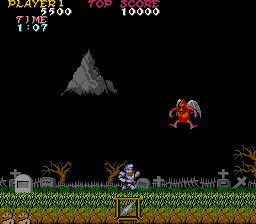
Demon’s Crest is one such game. Released by Capcom late in the Super Nintendo’s life-cycle, Demon’s Crest has garnered a reputation as a cult classic. Because of its late arrival, few people actually picked up a copy and experienced it in 1994. The Gargoyle franchise also has never been one of great importance for Capcom. For those unaware, Demon’s Crest is the third game in the Gargoyle trilogy which started on the GameBoy. The main character of these games, Firebrand, is that annoying red, flying enemy from the Ghosts ‘N Goblins games thrust into a starring role. The storyline for these games isn’t all that interesting or important, but credit Capcom for spinning off a seemingly random enemy into its own franchise. Since the end of the 16bit era and the dawn of the retro era, Demon’s Crest has become one of those handful of SNES carts that fetches over 100 bucks routinely on the secondary market. Thankfully, the Virtual Console exists so these games can be experienced by anyone with a Wii/Wii U console and a game like Demon’s Crest can get the recognition it deserves.

Cap com apparently saw something in this little, red, demon to warrant giving him his own game.

Cap com apparently saw something in this little, red, demon to warrant giving him his own game.

Demon’s Crest is essentially a side-scrolling platform game, but it’s a hybrid title in that it incorporates elements from the run and gun genre and the RPG. As Firebrand, the player explores various stages from the ground, in the air, and underwater. At the start, Firebrand can shoot a fireball as his lone attack, cling to walls, and fly through the air. The flying mechanic is neat and doesn’t feel cheap, as it often does in many games like Super Mario Bros. 3. By pressing the jump button while in air, Firebrand deploys his wings and can hover indefinitely. He can move side-to-side but cannot gain altitude (a power-up later in the game allows him to ascend in the air from a flying position). He can still attack, and pressing the jump button again causes him to drop and re-pressing the button at anytime while falling will initiate the process all over again.

After the first level is completed, the player gains access to a world map not unlike what is seen in the Final Fantasy titles from that era. Firebrand can fly to any stage from here and the game can essentially be completed at any point, though playing thru every stage multiple times is encouraged to collect power-ups and explore every nook and cranny. Firebrand is on a quest to recover various crests, each one grants him a new power. The earth crest, the only one that basically can’t be missed, removes Firebrands wings but gives him access to a dash move and a ground-hugging projectile. The water crest lets Firebrand breath underwater, the air crest lets him fly freely, and the best crests are basically a jack-of-all trades kind of power. Additional projectile attacks for Firebrand’s normal form can also be found, along with other power-ups, bottles for storing potions, and vellum for spells. The goal is to conquer the enemy Phalanx, but the secondary goal is to collect everything and get the best ending plus additional content in the form of power-ups and additional boss battles.

Some of the game's bosses dominate the screen.

Some of the game’s bosses dominate the screen.

At first, the game seems like it’s going to be massive, but it can be completed in an afternoon, especially if you’re not after the best, ultimate, ending. There’s an element of trial and error at play, as the game intends for the player to acquire new powers to advance past certain spots. The game is forgiving in this regard as it grants unlimited continues and you can always quit to the map if a scenario seems too difficult. The levels are not simply “go right” kind of levels. They encourage exploration in all directions, and additional gargoyle powers will open up new sections so re-playing levels is practically essential to completing the game. Uncovering new powers is addicting and fulfilling and I was always eager to try out each new one I found.

Acquiring these new special abilities make the game easier, which is welcomed since the game is fairly challenging. No, Demon’s Crest is not among the most difficult of games to grace the SNES (like the title it’s spun-off from) but it isn’t a breeze. Most of the early challenge involves getting used to Firebrand’s controls. He handles easy enough, but the mind needs to be trained in order to best utilize the hover/flying ability. There are usually numerous enemies at ground level and in the air to contend with, and learning to dodge is the best way to succeed. The game is also fairly cryptic in that it doesn’t explicitly tell you what your new powers are capable of. As a result, the player has to experiment a little which may lead to some deaths here and there, but it’s not too bad. The game is fairly generous with restorative items and the in-game currency allows the player to stockpile health potions and the like. There are also some mini games to spend time on, though nothing exciting. The boss fights are usually a test to figure out what the best approach/power to use is. Some boss fights will seem impossible without the right ability, but once found, they’re a piece of cake. The hardest bosses are a challenge no matter what. They’re not controller-tossing hard, but will offer a nice test for the player.

Acquiring new crests opens up new forms and powers for Firebrand.

Acquiring new crests opens up new forms and powers for Firebrand.

The music in the game is heavily reminiscent of other gothic-inspired titles, most notably Castlevania. It’s tempo is slower and Demon’s Crest finds it’s own sound. It’s not on Castlevania’s level, but it’s very enjoyable. As a later era SNES title, the game is pretty nice to look at. Firebrand is nice and big without dominating the screen. Many of the boss characters have a lot of personality or take up the entire height of the screen. The regular enemies, the canon fodder, are a little boring though and the game gets bogged down at times when a lot is going on. Sometimes the slowdown is actually helpful, but it is a weak point of the game. The controls are quite good, but there’s some missed opportunities to be found here. The shoulder buttons are not utilized when they could have at least been devoted to cycling thru Firebrand’s gargoyle forms. It gets tiresome having to constantly pause the game to switch relics, and many boss encounters require this very thing. The spells available to Firebrand are also fairly useless, and the only potion worth spending money on is the best one which restores all of Firebrand’s health.

When it comes to old games, I always prefer to experience them as they were intended: on their original console. When that is not possible (or in this case, too expensive), the Virtual Console is more than adequate. I played the game exclusively on the Wii U Gamepad utilizing the Gamepad’s screen instead of a television. The game plays just fine, and the ability to save is definitely welcomed. The original cart only provides a password save functionality, and while the game isn’t terribly long, it’s one I chose to experience in one or two hour at most sessions. It probably took me around six hours to finish the game, with some additional time spent after the fact going back and finding the items I missed to tackle the secret boss. This strikes me as being a pretty average game for the era in terms of length making it comparable to Super Metroid and Super Mario World.

Demon’s Crest is an excellent example of a forgotten classic. It’s probably not a top 10 game on the SNES, but that’s only because the SNES has arguably the greatest library of games of any console. Demon’s Crest is a unique blend of several genres, and its setting and style help set it apart from many of its contemporaries. If it sounds like something you would enjoy, I can’t recommend it enough as it’s worth the 8 bucks Nintendo is charging. And if you’re on the fence, I still say give it a shot because it’s a game that’s just inherently fun. Hopefully, this re-release on the Virtual Console makes Capcom some money and inspires them to revisit the Gargoyle series. A modern take on the franchise would be a most welcomed thing, indeed.


Teenage Mutant Ninja Turtles – NES

Teenage Mutant Ninja Turtles (1989)

Teenage Mutant Ninja Turtles (1989)

One of the most successful games of all time, and one of the most divisive, Teenage Mutant Ninja Turtles, arrived in 1989 for the Nintendo Entertainment System and flew off the shelves or retailers and rental stores across the United States. Turtle-mania had a strong grip on the nation’s adolescent and it would have been a huge embarrassment if the game actually failed. And while it was named as 1989’s Game of the Year by Nintendo Power, the first ever NES TMNT game is often regarded as a disappointment. Calling it divisive in the opening line may have been misleading, for the game is almost universally loathed for numerous reasons: too hard, not enough recognizable characters from the cartoon, no multi-player, and not the game fans wanted. In 1989, another game based on the TMNT was released, the equally successful arcade game. Based on the animated series, the arcade game boasted 2 to 4 player play allowing each kid to select his or her favorite turtle and wail away on an almost endless supply of Foot Soldiers, Bebop, Rocksteady, and of course, Shredder. When it was announced the Turtles were coming to the NES, many fans expected a port of the arcade game, but instead they got a solo side-scrolling adventure with few recognizable elements from the cartoon making an appearance.

The original Teenage Mutant Ninja Turtles game is best called infamous than famous. It was notably the subject of one of the earliest Angry Video Game Nerd videos in which The Nerd (James Rolfe) reminded many of us of the same frustrations we experienced as children playing this maddeningly frustrating game. As a kid, I never was able to beat the game without the near essential Game Genie peripheral, usually failing to make it beyond the battle with Slash/Mecha-Turtle/whatever the Hell that thing is at the end of act three. And like many, I preferred pretty much every other TMNT based game that followed over this one, which all took the form of arcade style beat-em-ups. I’ve since relived this game many times as a teen and adult but recently felt compelled to revisit it and see if the reputation this game had acquired was entirely justified. Just what is that reputation? Many Google searches will return this game on the list of hardest NES titles as well as worst or most disappointing NES games. The only way to answer my questions was to dust off the old NES and sit down in front of the TV.

Definitely not the arcade game...

Definitely not the arcade game…

For starters, the game was developed by Konami’s Ultra division, a secondary label created to circumvent Nintendo’s then policy of limiting publishers to how many games they could release in a year. Konami probably paid a boatload of cash for the TMNT franchise, and considering Konami was known to gamers for its Contra and Castlevania franchises, it seemed like the TMNT license was in good hands. Right from the start though, some things seem out of place. For one, the cover art depicts the four turtles all sporting red bandanas. For kids accustomed to the television show, this looked wrong while comic book readers would have recognized the cover to issue number 4. When the game boosts up, an unfamiliar tune plays as the four turtles are introduced. No player select screen is displayed once start is pressed, instead the game drops the player right onto a map-like screen with a tiny Leonardo in the center and some steam-roller like vehicle driving around. To summarize, there’s no licensed music, no option for 2-player, and no option to select which turtle to play as.

As the game unfolds, things start to become clearer. This overhead, Zelda-like perspective, leads into more traditional side-scrolling levels whenever the player enters an open manhole or building. A quick look at the pause screen is enough to clue the player in on the objective (rescue April, big surprise) and the ability to switch between turtles. The player is free to change-out a turtle on the fly. Each one has his own health bar, and since the game has no 1-up pickups, they function as extra lives. If a turtle loses all of his health, he’s out of action until the final level where a turtle can be rescued. Each turtle uses his own unique weapon and it will soon become obvious which turtle to use. Donatello, with his boring but long-reaching bo-staff, is easily the superior turtle in this game. When walking or standing still, Don thrusts his bo-staff out in front a great distance and even slightly behind him as well. He can thrust up and down as well with a press of the D-pad and take out multiple foes at once as a result. Because the animation for his attack lingers so long, he even seems to benefit from a double-hit, and as a result, does more damage per strike than the other turtles. If you lose Don, you’re in big trouble because the drop-off is huge to the next most useful turtle, which should be obvious for those familiar with the four heroes in a half-shell, Leonardo. Leo swings a lone katana in a downward arc when attacking and it’s useful for enemies at eye-level, but his reduced range and damage when compared with Donatello makes him far less suitable for the environments ahead. After Leo, Michelangelo is probably the next-best option as his nunchaku has slightly better reach than Raphael’s sai, which is pathetically useless. Raph and Mike are best treated like canon fodder and used only when attacking is not an option, such as when driving the turtle van or during the infamous swimming level. Each turtle can hold one secondary weapon, most of which appear as pickups randomly and range from throwing stars to boomerangs, to a weird energy wave that kicks a whole ton of ass (shell).

What the hell are these things attack Don, and is that a Foot Balloon?!

What the Hell are these things attacking Don, and is that a Foot Balloon?!

Gameplay wise, Teenage Mutant Ninja Turtles is fairly straight-forward. The turtles can attack and jump as they move left to right, right to left, and across gaps and platforms. The pace is fairly slow and reminiscent of Castlevania, including the ever annoying jump-backwards animation after being struck. If you’re not familiar with Castlevania, when the character takes damage they always jump backwards. This is ever annoying when trying to negotiate a series of platforms as enemies frequently appear in mid-jump leaving the player helpless to defend. The turtles handle kind of like trucks as they’re heavy and clunky. Pressing fully on the jump button will cause them to go into a ninja flip of sorts that has a floaty affect on the character, which sometimes helps to re-align a jump but mostly just seems to cause panic in the player leading them to miss a platform. Enemies are numerous, and for the most part, unrecognizable from the show. There’s foot soldiers and mousers here and there, as well as boss encounters with Bebop and Rocksteady early on, but aside from that there’s a lot of just weird enemies. There’s some chainsaw-wielding maniac, a guy composed entirely of fire, and weird butterfly enemies that dive-bomb the turtles, among others. The obstacles are pretty standard for the era and take on the form of conveyor belts, water, and spiked floors/walls. The game gets bogged down frequently when too many enemies are on screen and slowdown is a frequent annoyance. Enemies on the map scenarios tend to flicker in and out which harms the presentation elements of an otherwise underwhelming looking game.

So what makes Teenage Mutant Ninja Turtles so difficult? Well, for one, three out of the four turtles are borderline useless. As I mentioned earlier, Donatello is by far the best suited to overcome the various obstacles placed in the turtles’ path. The other three are so bad that you might as well quit if Don falls in battle. Enemies who can be felled in one strike are manageable, but the ones that require multiple hits pose a challenge as they do not react to taking damage. The game also loves having the player enter a new screen with an enemy literally right on top of you, forcing the player to take at least some damage. The pizza power-ups, which restore health, become scarce the deeper into the game you go and are sometimes intentionally placed in impossible to reach locations. Platforms are often placed above turtles, making some jumps particularly challenging as if the turtle hits his head on a platform above, his forward progress is stunted and the jump falls short. There’s one really annoying jump in a sewer scenario that’s actually impossible in the PC port. There’s also no password feature, but unlimited continues, so this is one that has to be completed in one sitting which adds to the challenge. And if the game wasn’t annoying enough, Ultra did include a beeping alarm for when the selected turtle is low on health.

Even though this level isn't as bad as people make it out to be, Leo is totally about to end up dead.

Even though this level isn’t as bad as people make it out to be, Leo is definitely about to end up dead.

All of that said, this game does do some things well and some of the things it has become known for (negatively speaking) aren’t as bad as they’ve been made out. For one, the ability to swap the turtles into and out of battle is pretty cool. Yeah, it sucks that there’s no two-player and it really sucks that three of the four turtles are horrible to play as, but the thought was a good one and one I’d like to see revisited in a new game. The under water level that has become so reviled and is the part of the game often cited as being hard, unfair, and noteworthy, isn’t as bad as its reputation. If you get to it with little health on each turtle, then it’s pretty damn hard. As a kid, I failed many times. As an adult, I just save Raph for it and have no problem making it out with minimal damage taken. It, like just about every swimming level in recorded existence, is not a fun stage by any means, but it’s far from being among the hardest sequences in gaming history (and is among the easier parts of this game). And aside from the turtles not really handling like ninjas, the control is satisfactory and the ability to drive the turtle van is pretty cool (though why it doesn’t have its own health bar is a mystery still to this day). The soundtrack is actually enjoyable, even if it doesn’t contain any music from the TV show, and isn’t something I’d change about the game.

In conclusion, Teenage Mutant Ninja Turtles was destined for commercial success just because of the license alone, but doomed to disappoint gamers for not being the game they truly wanted. Unfortunately, the game was not able to make-up for not being the arcade game by offering a lesser experience. The good news is that gamers didn’t have to wait long as a port of the arcade game arrived on NES consoles in 1990 as Teenage Mutant Ninja Turtles II: The Arcade Game. Yes, it wasn’t a perfect port due to the system limitations of the NES, but it was suitably fun and is often remembered fondly by gamers from that era. The one that arrived first though is not, and it’s hard to defend the title even today. While it’s far from being the worst NES game, and certainly not the most difficult, it’s definitely not good and just another example of a licensed game gone wrong, but at least it’s not as bad as E.T.


Final Fantasy X HD Remaster

Final-Fantasy-X-X-2-HD-Remaster-1Over the years I’ve talked a lot about Final Fantasy but I’ve never posted a game review for any of the numeric titles in the long-running series. Well that ends today as I post my thoughts on the somewhat recently released Final Fantasy X HD Remaster.

One opinion I have stated on more than one occasion here is my affinity for Final Fantasy X, the Playstation 2 RPG released back in 2001. I consider X the last great Final Fantasy game to be released while some want to lump it in with the lesser received post Final Fantasy VII games. Some of these games have been a bit underwhelming while some of the criticism is likely born from the series’ rise in popularity. Prior to VII, Final Fantasy was a niche title with a small but devoted following. Once a bandwagon becomes crowded, the older fans tend to shun the new ones. It happens all of the time within the music industry and video games are no stranger to it as well. Final Fantasy X though took what made the series so great and made some noteworthy improvements to the tried-and-true formula. It took chances too, by eliminating the world map and adding spoken dialogue for the first time in the series. The game was a commercial and critical success even if it’s not often cited as one of the best Final Fantasy games in the series. And since it’s a PS2 game, upgrading the visuals to high definition and re-releasing it makes sense and the world is better for it!

A composite shot featuring the original game merged with the HD version.

A composite shot featuring the original game merged with the HD version.

For those who missed out when the game debuted over ten years ago, Final Fantasy X is a pretty familiar experience for those who played any of the nine previous titles in the series. Players maneuver a character amongst towns, dungeons, and open areas to get from one place to another. Players can interact and speak with other characters while non-interactive moments move the story along. In battle, characters take turns attacking, stealing, casting spells, or defending in an effort to win the fight. A menu screen is used to outfit characters with weapons and armor to boost their stats and make them more formidable foes or to tailor their character for a certain approach. Where X departed from past games was with just about everything else. Some changes, like the new Conditional Turn-Based Battle, are subtle but different enough to leave an impression. In many of the previous games, each character had a meter that would fill gradually during battle before an action could be taken. This was dubbed the Active Time Battle System by developer Squaresoft. The Conditional Turn-Based Battle creates a list of both enemies and player characters determining the order of battle. The list can be altered by certain spells, actions, and effects but overall it creates a more tactical experience, which is enhanced further with the ability to swap characters in and out of battle on the fly. The removal of the world map was a change that felt big at the time but played much smaller. Removing the world map just meant that each area of the game world was integrated seamlessly with one another. The world map had really only existed in prior games as a technological limitation or as a trick to make the game feel bigger than it is. When it was first announced that Final Fantasy X would not include a world map scenario it seemed scary, almost unthinkable, but it ended up being a change for the better.

The main cast.

The main cast.

A much bigger change for Final Fantasy X’s gameplay is the Sphere Grid. Just about every Final Fantasy game has its own unique way of evolving the characters throughout the game to make them better suited for combat. In the original game it was all based on experience points and each character had its own special class be it warrior or black mage. Final Fantasy III and V both made use of what was termed the Job System where the player was free to assign a character’s class making it possible to have a party of all black mages if one so desired. Other additions over the years were the Espers in Final Fantasy VI which allowed characters to learn spells and abilities while being paired with a unique creature, VII had the materia system which was dependent on amassing a bunch of materia and weapons with ample space to use it, and so on. Final Fantasy X’s Sphere Grid was perhaps the most radical departure from the other games. Characters no longer earned experience points, something that was common to all prior Final Fantasy games, and instead earn sphere points. Once a character gains enough sphere points, he gains a sphere level. One sphere level can then be spent to move the character one space on the Sphere Grid. The grid itself is outfitted with several nodes that can be activated with special spheres collected during battle. These nodes can have anything from a point of strength to a spell like Flare. All character evolution takes place on the Sphere Grid. It’s the only way to improve a character’s base stats, like strength, defense, magic, and so on, as well as hit points and abilities. No spells or special moves need to be acquired by beating a special boss or finding it as a prize in some mini game, it’s all right there on the Sphere Grid for you to see from the start. Of course, acquiring a spell like Ultima is going to take lots of time and many sphere levels to get there, but you’re free to plot your own course. The Sphere Grid in the original game starts each character in their own section, and while you’re free to do with them as you please, the game clearly intends for Lulu to be a black mage, Rikku a thief, and so on.

It may not be PS3 quality, but the game is far from an eyesore.

It may not be PS3 quality, but the game is far from an eyesore.

For the international edition of Final Fantasy X, some additional content was added and this HD remaster includes all of it. The Sphere Grid from the original game is present, but if you wish, you can opt to use the expert grid. This grid starts every character right in the center freeing them up to pursue whatever abilities they wish. In general, a balanced attack is preferred and most anybody who plays this game is going to take a character like Lulu down the black mage path, but I found there was more opportunity to diversify with this version of the grid than before. I was able to have Yuna, the summoner/white mage of the group, bounce between the white and black mage paths giving her some punch in battle she didn’t have when I played the game for the first time. Khimari, the blue mage of the original game, was basically my version of the red mage from III and V as I was able to grant him white and black magic while keeping his base stats high enough to make him a suitable physical attacker early on. Like the red mage of prior games, he would eventually outgrow his usefulness but for the early part of the game he was a frequent contributor.

Another big change for X was with the summons. Squaresoft seemed to always be searching for a way to make the summon magic more interactive. Once VII arrived with the Playstation it meant the summons could be more of a spectacle as full-motion video sequences captured the awesome power of Bahamut and did so with gusto. For X, Square opted to let the players control the summoned beasts, dubbed aeons, directly. They’re fully integrated into the plot of the game and only Yuna can summon one at a time. When she does, the rest of the party vacates the battlefield and the aeon takes over. Their overdrive meter fills rapidly (X’s version of the limit break) and once full they can unleash the mega attacks we’re used to seeing. Outside of battle, a special item allows the player to improve the base stats of the aeons or even teach them new spells and abilities. They’re limited in their usefulness, but at the very least they make good cannon fodder against enemies that have devastating special attacks as once an aeon dies in battle they’re just replaced by the battle party.

My journey through Spira was much as I remembered it. The HD upscaling is welcome though it does not disguise the fact that this is a PS2 game. SquareEnix apparently re-did the faces of Tidus and Yuna to make them more expressive but they’re still a little wooden by today’s standards. The game is only noticeably better looking when compared directly with the PS2 game. Otherwise, it’s bright and colorful setting is still mostly pleasing to the eye. The game really only shows its age with the limited animations. There’s a sequence where the characters ride snow mobiles and it’s painfully obvious that the game could not handle animated hair, aside from a ponytail or something, so Tidus’ hairstyle remains frozen in place while he zips along. You’ll also see the same character models used over and over among non-player characters and enemies. The audio is quite nice though and the game’s musical score is fitting for a Final Fantasy title. The voice acting was somewhat maligned the first time around, but I found no obvious faults with it then or now. The poor lip-syncing is still an issue and can be distracting, though I found it never took me out of a scene completely.

The game's stoyline has room for cheer and also for more emotionally weighty moments.

The game’s stoyline has room for cheer and also for more emotionally weighty moments.

Final Fantasy X HD was released for the PS3 and the Vita with the two platforms supporting cross-save functionality but not cross-buy. As such, I only purchased the game for the Vita, and it’s been a great experience taking Final Fantasy X on the go. The load times have been the only detraction. I do not know what the situation is like on the PS3, but on the Vita there’s a delay of a couple seconds going from the field to the menu as well as when going from one screen to another. It took some getting used to and I still don’t understand why the Vita’s load times aren’t better considering the medium is flash-based. I got used to the load times, but it’s still annoying. There’s also no soft reset function that I could find which stinks because there are multiple screens to navigate just to get to the game. One area of the game that wasn’t as good as I remembered was Blitz Ball, the underwater sport that’s a popular mini game. It’s still fun, but it’s so painfully easy and you have to play hours of it to acquire some special items for Wakka. They’re totally optional, but who is going to pass on getting Wakka’s best weapon?

Other than the new Sphere Grid, the other additions of the international version of the game are less impactful but still welcome. The most obvious is the addition of the Dark Aeons, optional boss battles that spring up very late in the game. These represent a new challenge for veteran players. Defeating them is purely for pride as there’s nothing of importance gained from toppling them. Beating all of them will likely mean maxing out the base stats of most of the characters in your party, which means lots and lots of level grinding. I had every intention of beating them, which is one reason why this post took nearly three months for me to get to, but eventually I just got too bored. I beat some of the easiest ones, one of which I had to beat to regain access to one of the game’s towns, but never attempted the toughest. There’s really not that much strategy to beating them, it’s more an investment of time crafting armor and weapons that best suit the confrontation, but it’s cool that it’s there. Another addition is the Eternal Calm, which is basically an epilogue. It’s a fifteen minute movie meant to serve as the bridge between this game and its direct sequel, but it’s pretty unnecessary. I watched it once, and I’ll probably never watch it again, as the early parts of Final Fantasy X-2 do a good enough job of bridging the two games.

Plot-wise, I enjoyed Final Fantasy X just as much this time around as I did in 2001. It’s likable cast of characters are charming and portrayed well. The game actually feels pretty quick even though it will take most players 40 hours to beat the main plot (defeating all of the optional bosses will likely take over 100) and I attribute that to the game’s exceptional pacing. I very much enjoy the fact that the game has its own distinct look. It’s not a medieval or steam punk setting but more of an asian one with a lot of subtropical climates as well. I find it kind of funny that this was the first Final Fantasy game to have asian-looking characters considering they were all made in Japan, as opposed to a european look. Mostly, this is just a really well-executed Final Fantasy title and I had a great time with it. And since it comes bundled with a copy of Final Fantasy X-2, my adventure in Spira is not over yet. Look for a post on that game in another two to three months.


Mario Kart 8

Mario Kart 8 (2014)

Mario Kart 8 (2014)

Over the years, Nintendo has acquired the reputation of pushing innovation over technical marvel when it comes to video game development. As has been the case with the past two generations of hardware, Nintendo’s machine has lagged behind its competitors in the raw power department in favor of pushing a new method of gameplay. When taking a glance at the comments section of any gaming website, it’s hard to determine which party is more responsible for pushing this image: Nintendo or its fan base. And in 2014, is the reputation earned?

The notion that Nintendo is advancing gaming through innovation is as much a business strategy as it is a marketing one. When your console can’t do what the competition can, it becomes necessary to sell it on different terms. I do believe the brains behind Nintendo’s games buy into this direction, but it would be naive of me to suggest those sitting in the board room are removed from the process. Nintendo, even after some lackluster years recently, sits on piles of money thanks in large part to a strategy that is rather risk-averse. Unlike most companies who are content to sell hardware at a loss and profit off of software, Nintendo chooses to keep costs down so that it can make money on everything it sells. Nintendo did buck tradition with the Wii U and sold the console at a small loss, but the company also expected to erase such pretty quickly, though reportedly it has yet to.

Things have not gone well for Nintendo when it comes to the Wii U. Nintendo was hugely successful in convincing consumers that the Wii was something new and exciting and soared to new heights behind the console. With the Wii U, Nintendo has failed to do so and the responsibility lies with Nintendo. The company has failed to demonstrate to consumers that the new GamePad is the innovation people have been unknowingly looking for. With Nintendo’s poor leadership creatively, third party developers have been unable to see the worth in developing titles for the GamePad and third party support has been ghostly for the Wii U. Head on over to those comments sections though, and you can expect to find Nintendo fans content to trumpet the company motto of innovation vs shiny visuals and point to the future releases of Super Smash Bros. U and Mario Kart 8.

Well, here we are on June 1st and Mario Kart 8 has arrived in stores across America ready to be gobbled up by hungry gamers seeking validation for their Wii U hardware. In Mario Kart 8, Nintendo has delivered a fun and clever slice of kart racing that rivals the best the series has done. Those captivated by nostalgia may still cite Mario Kart 64 as their favorite, while the popular pick in recent years often falls to the Gamecube’s Double Dash installment, but Mario Kart 8 does nothing to tarnish the legacy of the franchise and should give fans of the series something to chew on.

Expect to find yourself in odd places thanks to the anti-gravity portions.

Expect to find yourself in odd places thanks to the anti-gravity portions.

One aspect of Mario Kart 8 that no one can deny improves upon all of its predecessors resides in the game’s visuals. For the first time ever, Mario Kart is running in high definition and the tracks have never before held as much personality as they do now. The game is very sharp looking even when the action is cruising at a neat 60 frames-per-second and this level of detail is even more apparent when accessing the slow-motion replays. Each tire has individual treads, spectators jump and wave flags, and characters proudly display that red turtle shell high above their head before chucking it at an unsuspecting foe. Not only is Mario Kart 8 the best looking Mario Kart game, it may be the best looking Wii U game thus far. It does push the Wii U with its visuals, though I have yet to encounter any slowdown, but have noticed some pop-in with objects in the distance. When playing with other gamers in your living room via split-screen, the game does drop to 30 fps but with the action confined to a smaller area for each person it’s not very noticeable. The only other critique I can levy at the game’s visuals are with the character faces. They all look fine and how one would expect Bowser or Daisy to look at this point, but their expressions don’t change much at all while driving. There’s no teeth-gritting when entering into a tight turn or other subtle changes, but I admit that’s nit-picking. I also would have liked to see a little more personality in the actual kart designs as most of them are pretty much carbon copies of what has come in a previous game.

Mario Kart 8 may look great but the game lives and dies with its unique brand of kart racing, which has been often imitated but never surpassed by other franchises. Mario Kart 8 should feel familiar to those who have been playing since Mario Kart Wii. The controls are basically the same and drifting remains a timing-based game instead of the left-right-left-right method of Mario Kart games preceding the Wii edition (this change was allegedly made to remove the “snaking” technique from older titles). Most of the items from Mario Kart 7 return, and as usual, there are a couple of new ones. The boomerang flower gives racers a weapon to toss at foes that comes back, just as it does in the Super Mario series. The super horn is the long-awaited answer to the spiny blue shell that is universally despised by all Mario Kart gamers. The blue shell is easily the worst item Nintendo introduced to the series. First used in Mario Kart 64, the blue shell heads straight for the lead racer and is an unavoidable obstacle. I’m not against an item that can help someone lagging in the rear make a move in the final lap, but the blue shell does not do this. All it does is grant a racer from the back of the pack some influence over the outcome, which is unjust and ridiculous. If it took out most of the racers in its path it would make more sense. Anyways, the super horn can deflect any weapon, including the spiny blue shell, but it’s pretty rare to come across one when leading a race.

Mount Wario is my pick for best new track.

Mount Wario is my pick for best new track.

The new courses present in Mario Kart 8 should be met with open arms by most Mario Kart vets. The new emphasis this time around is anti-gravity racing. This allows tracks to have impossible slopes and the game really seems to enjoy bending the course that will make many crane their neck to follow the action. Anti-gravity racing is more than just a visual trick, as when racers are on this portion of a track colliding with one another creates exaggerated bumps that can be used as a speed burst. Certain obstacles on the track can do the same and while anti-gravity portions have been added into some of the old tracks, the new ones designed for Mario Kart 8 make the best use of it. Of the new tracks, I particularly enjoyed Sunshine Airport and Mount Wario, both of which reside in the Star Cup. Sunshine Airport is just a really visually entertaining course with a lot that can distract one from the race while Mount Wario takes on the form of a downhill ski race that starts off in the belly of a massive airplane. It’s a great high-speed run with plenty of challenge and few “cheap” moments. Just about every new course contains some kind of shortcut that can be exploited. Usually they require a mushroom item or star item to pull off so lead cars are often unable to use these to extend their lead leaving those hanging around in the middle the ones best equipped to make use of them.
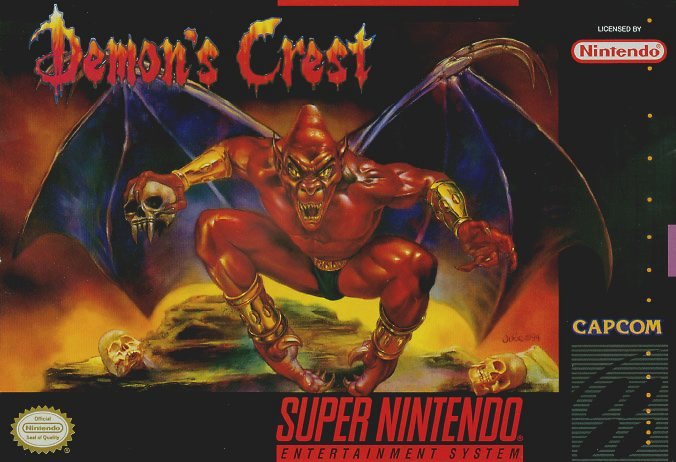
I love the addition of the Koopa Kids, but could do without the baby characters.

I love the addition of the Koopa Kids, but could do without the baby characters.

As with every Mario Kart game, the love it or hate it rubber-band AI exists. What this means is expect to receive little more than coins and banana peels when leading the race while those cars further back get all of the fun and chaotic items. The Mario Kart games practically discourage getting to the front of the race early on but I’ve yet to meet a person with the discipline to play these games any other way. On the slowest setting, 50cc, expect to dominate the AI if you’re at all familiar with the franchise while the fastest setting, 150cc, should make for some pretty hectic finishes to your races. The game contains quite a few unlock able items and characters. Completing a grand prix event on any difficulty setting unlocks new characters (random order, it would seem) and courses while collecting coins during races unlocks new kart parts. There are some special gold parts that can be unlocked as well through special means but if you want info on all of that stuff it’s readily available on the internet. Even semi-dedicated gamers who picked the game up on Friday will have just about everything unlocked by the time Game of Thrones starts Sunday.

This setup is beyond stupid.

This setup is beyond stupid.

Mario Kart 8 is a fun experience and is likely what Nintendo fans have been waiting for. For its bluster about being an innovative developer of games, Nintendo continues to disappoint with the Wii U and Mario Kart 8 is no stranger. It may be fun, but it’s hardly unique and that’s no more apparent than with its use of the GamePad. The GamePad is practically an after-thought with this game. In some ways its a hindrance, as normally a course map and leaderboard is part of the onscreen HUD but has been relegated to the GamePad’s screen. You can opt to use the GamePad in lieu of a television display, but it’s strangely missing-in-action when it comes to two-player. When playing with one other person locally, the game opts for a vertical split-screen which gets the job done but is hardly ideal. What I don’t understand is why Nintendo did not include an option to have one player’s screen be the GamePad and the other the television. Instead, the GamePad just mirrors the TV, split-screen and all, or can function as a giant horn button (I’m sure that’s exactly what gamers had in mind for the GamePad when it was announced). Sonic All-Star Racing got this right, which is just embarrassing for Nintendo that it couldn’t. Nintendo has also chosen to follow the path set by other publishers of not including an instruction booklet and would rather have a digital one. The digital one is clunky, and I had to just hit buttons until I found the right one that displayed the stats of the karts on the character select screen. Battle Mode has also been redone. Before Battle Mode had its own arenas to select from based off of tracks in the game, now it just uses the actual tracks leading to many moments of just driving around with no one to shoot at. It’s not even worth playing.

This is all to say the Mario Kart 8 is more of the same, like New Super Mario Bros. U and Pikmin 3. If you’re looking for a new Mario Kart title to play on your Wii U, it certainly gets the job done as it has been over six years since the release of the Wii edition. Which means expect the same, fun, frenetic gameplay the series is known for along with the not-so-good things the series is known for such as a clunky online interface and annoying rubber-band logic. I suspect Mario Kart 8 will quickly become the best selling title for the Wii U making the game a success, but the elephant in the room is still that Nintendo has yet to do much of anything worthwhile with its now not-so-new controller. I doubt very much that the next big title, Super Smash Bros. U, will do anything to change that.