Tag Archives: touchstone

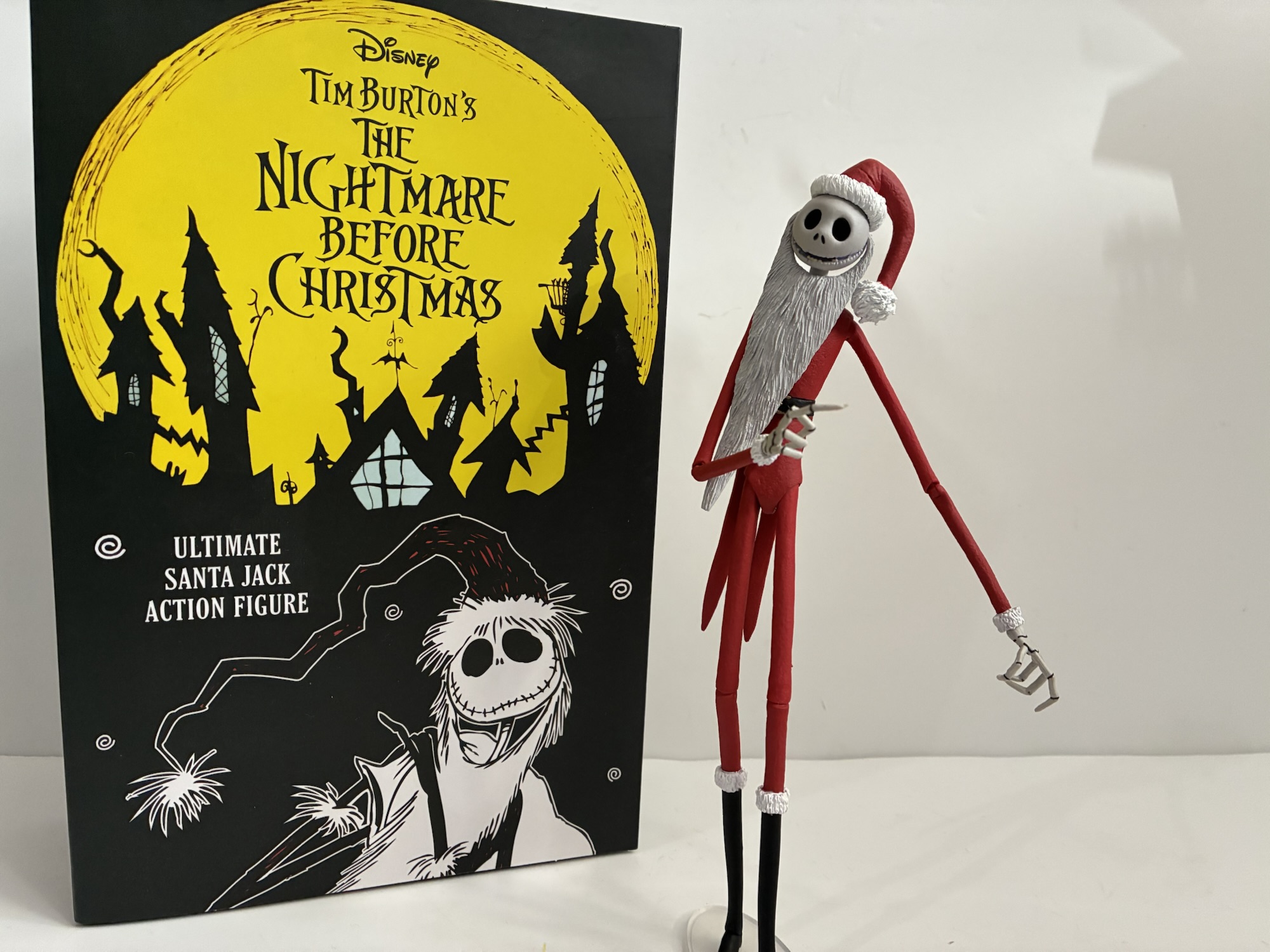
NECA The Nightmare Before Christmas Ultimate Santa Jack

What’s this?! A skeleton Santa?

Today’s review has been a long time coming. It was on December 26th, 2024 that I received in the mail a NECA Ultimate Santa Jack action figure based on The Nightmare Before Christmas. Christmas had come and gone so it didn’t make much sense to post a review, so I waited. Nearly a year, in fact, but I’m finally going to take a look at this figure. When NECA returned to The Nightmare Before Christmas in 2024 it went the predictable route by doing two Jack figures and pairing him with Sally. They also did the Mayor, so I guess that part wasn’t typical, and based on how many of those figures I see hanging around store shelves I would assume most were content to just get Jack and Sally. For toy companies, doing two versions of Jack makes a lot of sense. He spends considerable time in the movie with both looks, but also they can conceivably use a lot of the same tools to create both figures. Only, NECA actually opted not to do that from what I can tell.

Santa Jack is actually a little bigger than standard Jack.

The sculpt for this one is credited to the trio of Kyle Windrix, Marty Henley, and Andrew Lawson which is the same trio that brought us the standard Jack. This one comes in the same style of packaging that’s just credited to Chris Longo. Usually NECA credits the artist who made the actual drawings that factor into the packaging, but since one isn’t present that either means Longo did it all or Disney supplied the artwork and declined to include the artist’s name. Regardless, it fits thematically with the other figures we already looked at and will make for a fine coffin for the figure eleven months out of the year.
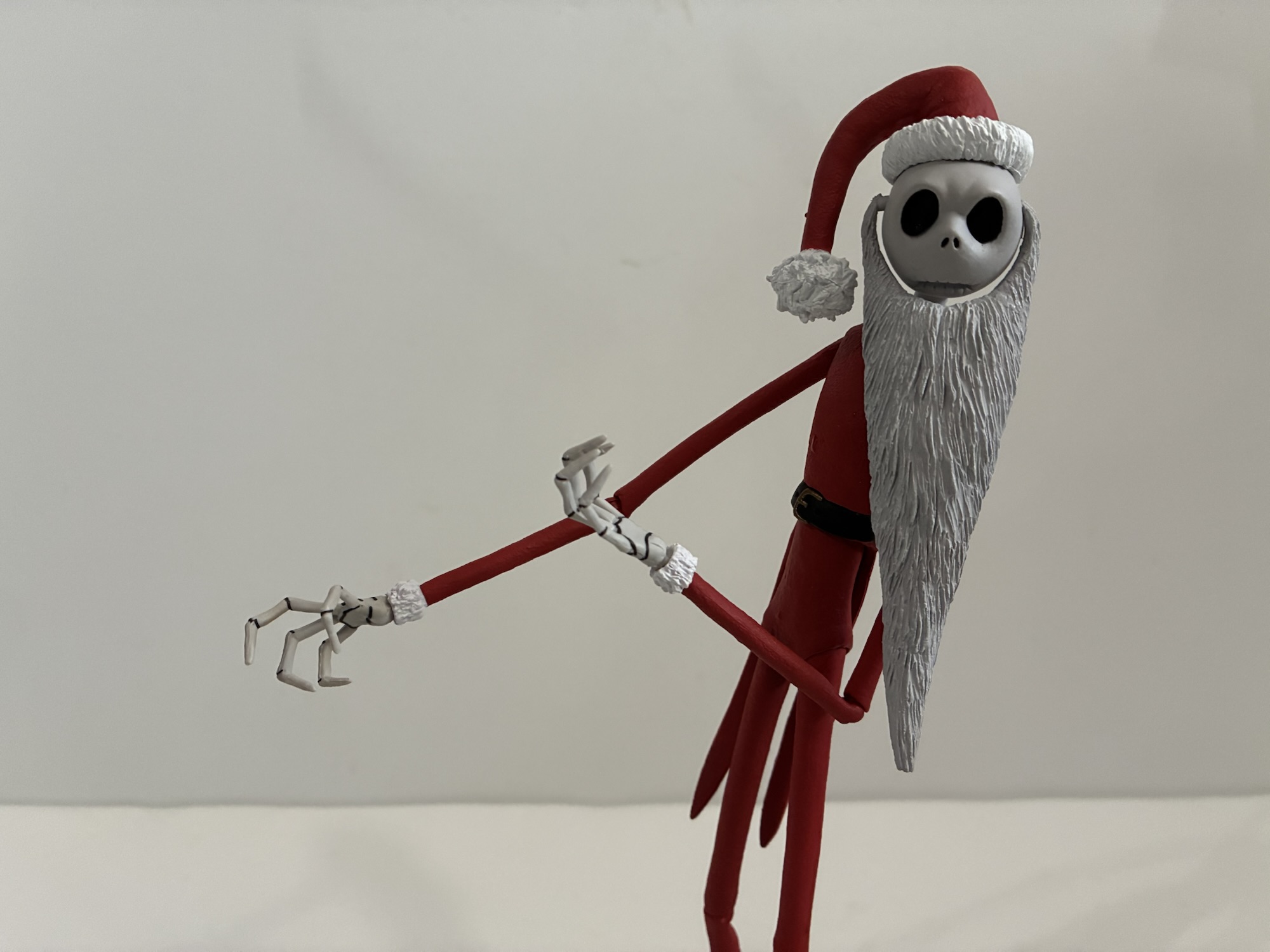
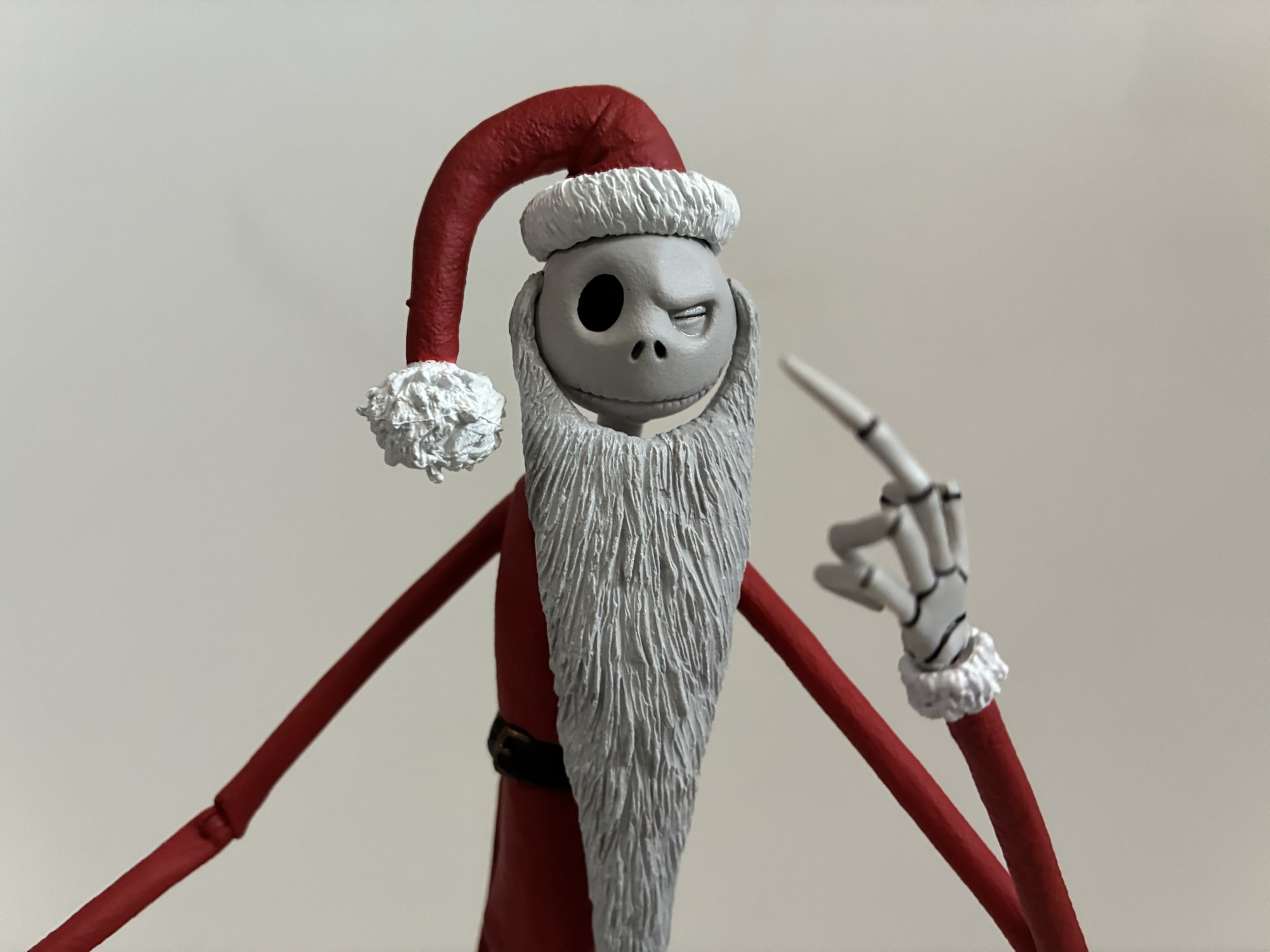
Santa Jack stands approximately 8 3/8″ to the top of his head which is actually a little taller than the standard Jack. Why is this? I’m not sure, but it would appear that most of this figure is new tooling. I was expecting a new upper torso that conforms to the Santa suit and maybe new forearms and shins, but I also thought NECA might add the trimmings of the suit in another fashion. The texture of the red, which is a nice, vibrant, shade, is a little bumpy and almost chalky. I wasn’t sure if this was achieved via paint or by sculpt, but considering the different size I’d guess it’s just all new. The only parts this figure appears to share with the regular Jack are the hands as even the included expressions are different. This one necessitates holes in the sides of each portrait for the beard as well as a port for the hat, but I thought they might be able to reuse the prior heads and just insert something into the mold to create the needed ports. What we end up with though is a very nice presentation of the character from the film in his Santa guise. The paint is clean and the red has a nice matte appearance while the black boots are appropriately shiny. The skull head is a touch off-white and has that cold appearance it has in the film. There are no soft goods present and I suppose some might have preferred actual faux fur trim or a soft goods beard, but I’m content with the all plastic approach.

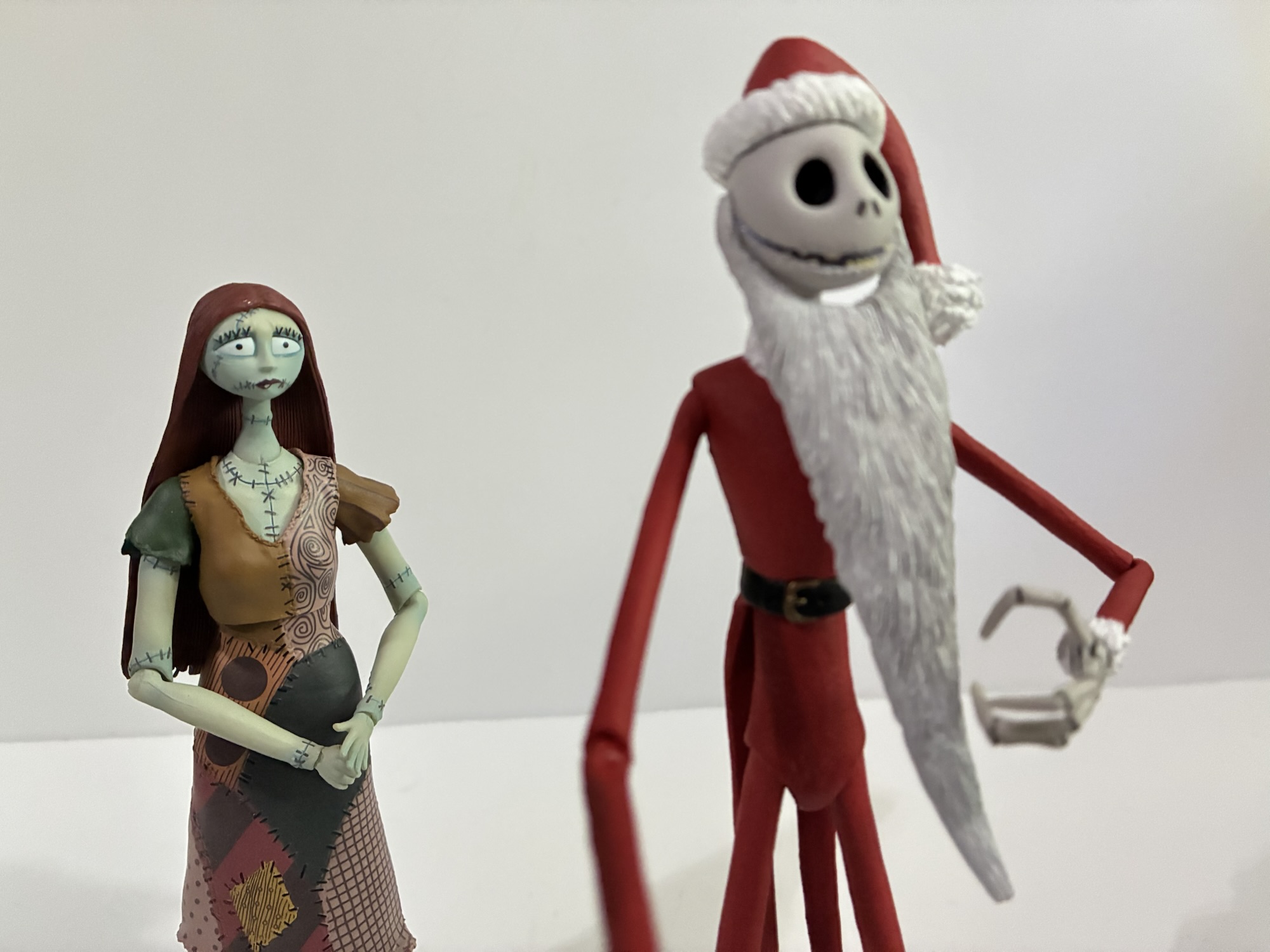
Perhaps because of all that new tooling we don’t get quite as much in the box this time around. That Ultimate Jack is perhaps the figure I own that best lives up to the billing as he came with a ton of different expressions. This Jack comes with just three: smile, wink, and a surprised look. The smile and surprised look are both slightly different from the same expressions found with the standard Jack. You can use the heads from that release with this one, but you won’t be able to make use of the hat or beard as both peg into the heads. The beard is on a double ball peg while the beard has a peg on each side. It’s a little bendy and forgiving, but also mushy. I could not get it into the alternate heads without first dunking them in a cup of hot water. Santa Jack also has an array of hands including sets of relaxed, clutching, pointing, and flat hands which are all repeated from the previous release. To complete the look, he has a plastic sack and three different, wrapped, presents to go along with a candy cane and his clipboard with a picture of himself in this Santa suit. The accessories are all quite fine and will help to build out a little scene on your shelf. He also has the same stand that came with the other figures and you will need it. In fact, I recommend borrowing a second one from another release if you have one. I put regular Jack and Sally away so I had another to make use of and it helps to keep him upright.

The articulation for Santa Jack is exactly the same as it was for the standard Jack (linked at the end of this post). The only difference is we now have the hat and beard. The beard, since it just pegs into each side of the face, can swivel forward and back which helps a little with adjustment posing. The hat is a double ball peg so it can rotate, but also slide around a bit to be posed at slightly different angles. It’s a nice touch and obviously the only downside here is it means the hat isn’t usable with the standard Jack heads. I do wish NECA had found a solution there. A magnet makes the most sense, but maybe they couldn’t get one into the heads without putting an ugly seam on the top. It also wouldn’t solve the beard issue. If the beard could have just pressure fit to the heads somehow that would have been great, but probably tough to get right. Even something like sunglasses on a figure or the faceguard on the movie Shredder still has tabs to click onto and there’s just no way to do such here without making them visible. Or we could have just got more heads like we did with the regular Jack. I’d have loved more expressions, but it wasn’t in the cards here.

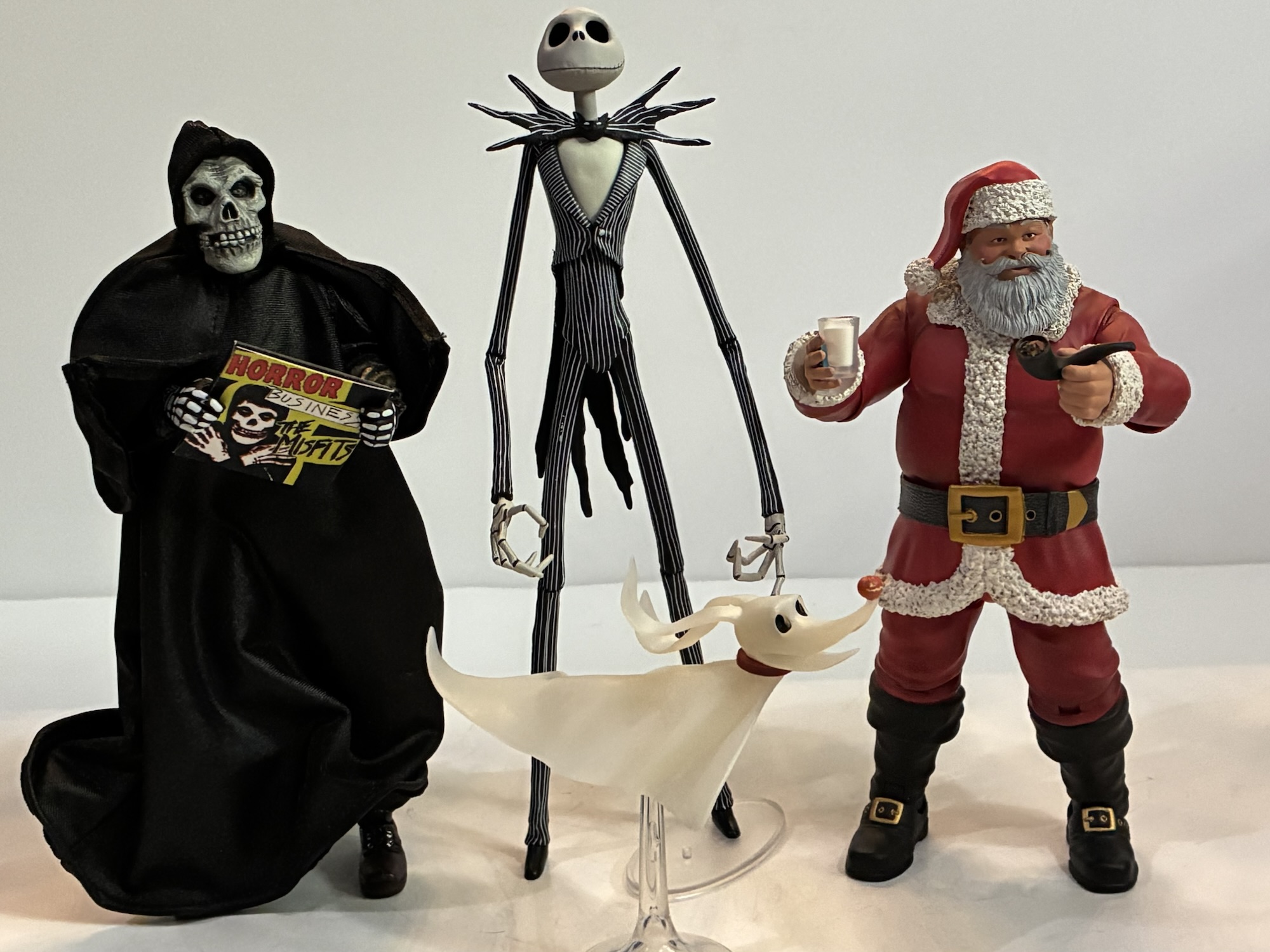
Sally may have been returned to her box, but not Zero. He gets to stay.

Santa Jack is perhaps a little less “ultimate” compared with the standard Jack Skellington, but it’s still a nice figure. The likeness is terrific and the articulation is just enough to make him rather expressive, provided you can keep him standing. That’s my one lingering critique of this line as the disc stand we get just isn’t quite enough in this case. It’s a nice holiday decoration though and if you like the film and this version of Jack it’s an easy recommend. To my surprise, I have not seen a single copy of this figure at stores this year. I’m guessing NECA has been shipping them, but apparently not in tremendous numbers. He can be found online though with hopefully enough time to arrive before Christmas.

If you like The Nightmare Before Christmas or just Christmas toys in general then take a look at these other reviews:

NECA The Nightmare Before Christmas Ultimate Jack Skellington

When Tim Burton created The Nightmare Before Christmas while working for Disney I don’t think the powers that be had any idea what kind of a gift he had just given them. Obviously they didn’t since they didn’t even believe enough in the film to release it as a Disney film instead opting to put…

Keep reading
NECA The Nightmare Before Christmas Ultimate Sally

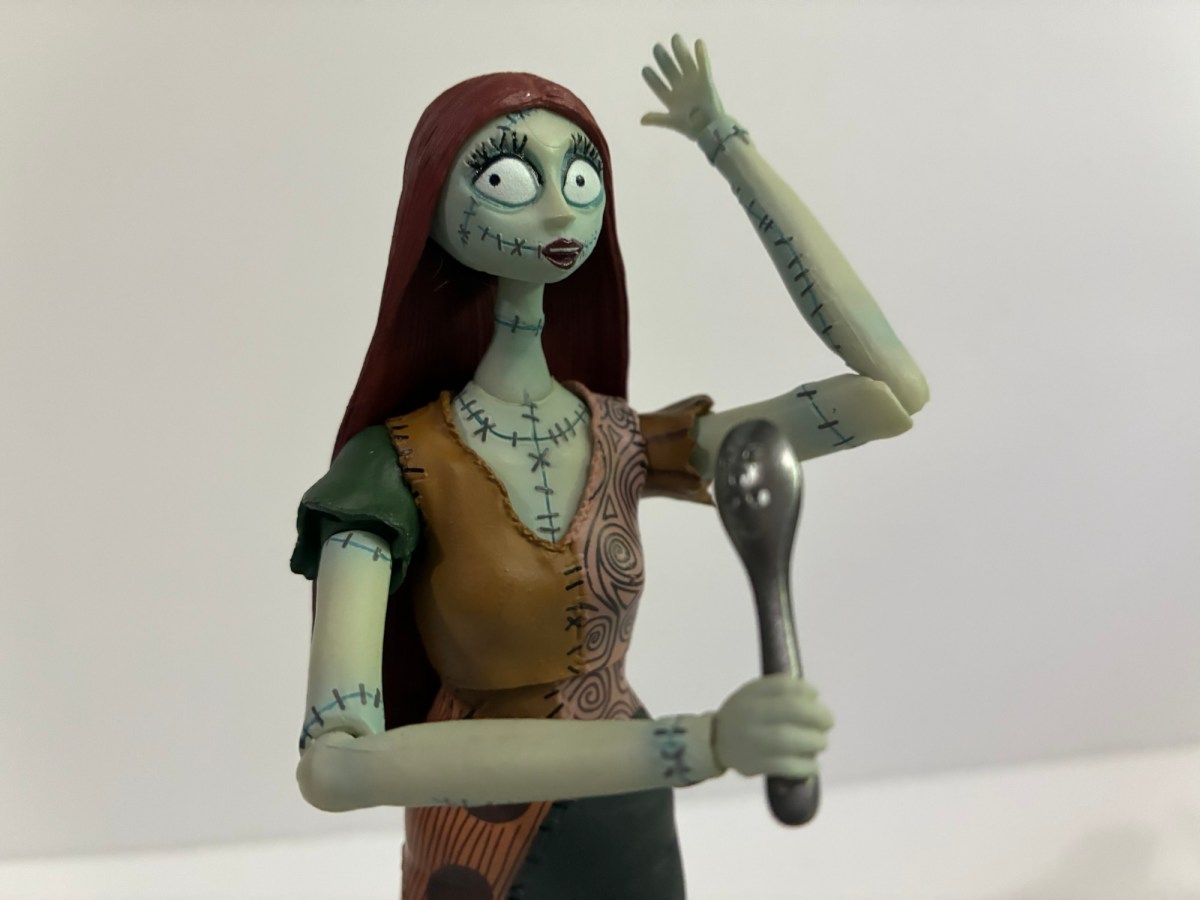
If you buy a Jack Skellington action figure, then you almost have to get him a Sally. That’s exactly what I did, though it proved mildly difficult to track down. I have seen NECA’s Ultimate Jack Skellington around throughout the year as I head into stores that carry NECA products, but Sally had proved elusive.…

Keep reading
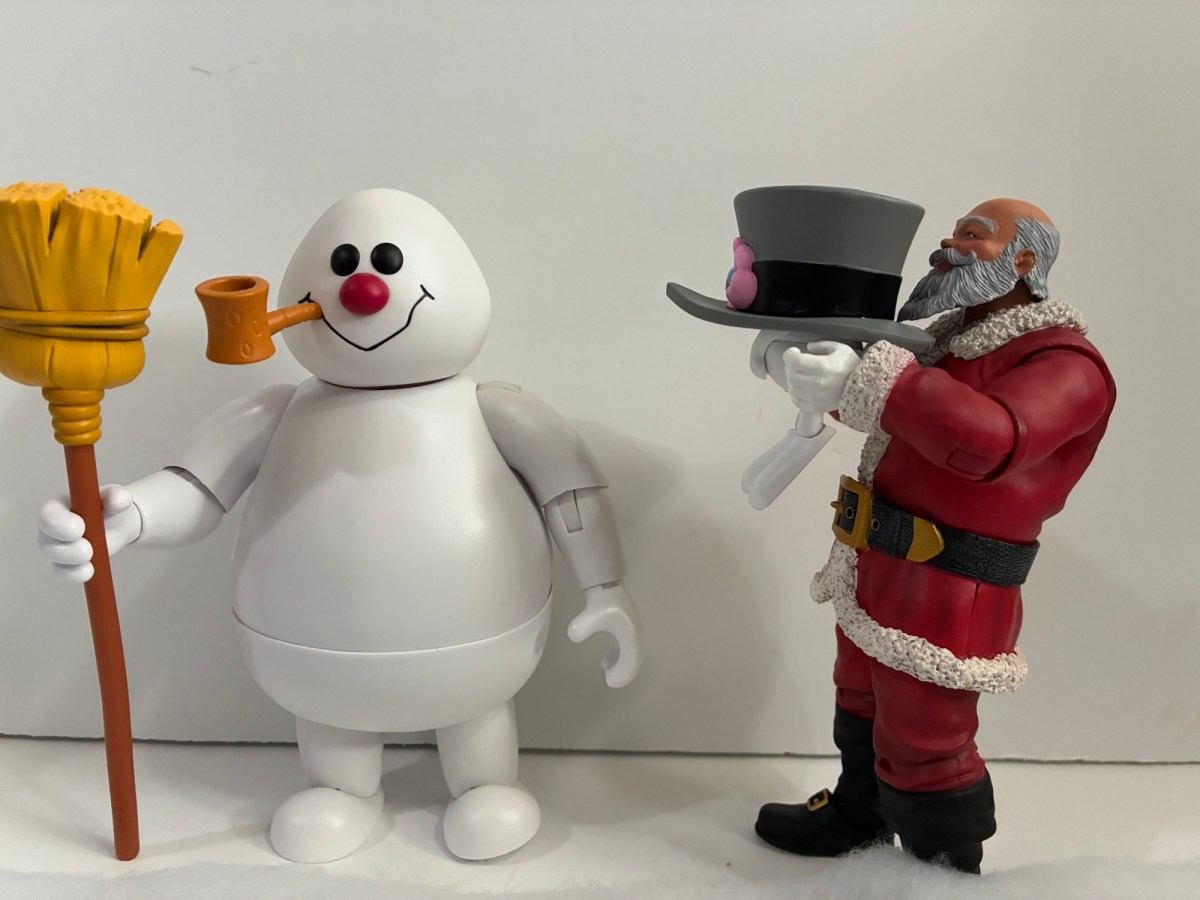
Jada Toys Frosty the Snowman

There are a number of Christmas specials out there that are basically known by all and I’ve written about most of them here. Some have been annual traditions especially when we had more of a monoculture in the US, but the slow death of cable television has made those annual traditions fade away. One holiday…

Keep reading

NECA The Nightmare Before Christmas Ultimate Sally

What’s a Jack without a Sally?

If you buy a Jack Skellington action figure, then you almost have to get him a Sally. That’s exactly what I did, though it proved mildly difficult to track down. I have seen NECA’s Ultimate Jack Skellington around throughout the year as I head into stores that carry NECA products, but Sally had proved elusive. I’m sure I could have ordered her at some point from somewhere, but I wanted to find it in store. And if I didn’t, then it wasn’t made to be. Coming in midway through the Halloween season is that NECA Ultimate Sally which I finally encountered at retail. I wasted little time in selecting my figure as they all looked pretty good and now she’s on my shelf with my Jack enjoying the fall decorations.

Sally comes in the same style of packaging as Jack. It’s an all black box with some artwork done in white. Chris Longo is credited with packaging, but I don’t know if he’s responsible for the illustration or not. Sculpt is credited to Kyle Windrix, Marty Henley, and Andrew Lawson with fabrication credited to Marty Henley. Jon Wardell and Geoff Trapp handled the paint duties.

They look good together.

Sally stands right at the 7″ mark making her noticeably shorter than Jack. The size disparity between the two looks appropriate to me. She only had one look in the film and that’s what she has here. Proportions look really nice as she has a long, slender, physique with tiny hands and feet. Her dress features sculpted stitchwork as does her flesh and a muted color palette. Her skin tone has a blueish tint to it that might be a touch too saturated for my taste. I always had the impression the lighting in the film was more responsible for the blue hue than her actual composition. Or perhaps I have it backwards and it’s the lighting that make her appear more pale in the film. Either way, it looks nice enough. The paint is clean and better than my Jack in that regard. The only thing about the appearance of the figure that is unfortunate is the tie in the packaging left behind a slight crease in her dress. I hate those god damn ties NECA uses and I would outlaw that practice if I could.

Sally is not as expressive as Jack, but still pretty damn expressive.

Sally’s articulation is pretty basic as well as pretty restricted given the character design. She’s composed entirely of plastic, no soft goods, so the dress is going to prevent her hips from doing anything. She does have a ball joint at the head and at the base of her neck so she gets decent range there. Her hair is a long sheet of plastic so it gets in the way a bit, but not enough to stop her from being able to look her beau in the eye…sockets. Shoulders feature ball-hinges, elbows are single hinged with a swivel, wrists rotate and hinge. There’s a diaphragm joint that offers a little tilt, but it mostly works for rotation. Knees are single-hinges and the ankles are hinged and do feature an ankle rocker, but her feet are so tiny it can be hard to use. Articulating her feet feels like wiggling a loose tooth.

Sally isn’t going to do much aside from stand there, but she doesn’t do much in the film nor does she come with a ton of accessories that require her to do anything. For portraits, she comes with five: neutral/smile, open mouth smile looking to the side, concerned looking ahead, concerned side eye, and an angry expression with her eyes narrowed. I like them all, though I wish she had an open-mouth smile without the side eye as well. Her expressions swap via face plates and it’s easy to utilize. She also has two sets of hands which are easy to swap: open palms and gripping. It’s a light assortment of hands, but I can’t think of any gesture she needs to be able to perform not covered by the options included.

NECA is doing a good job of making these NBX figures earn that “ultimate” label.

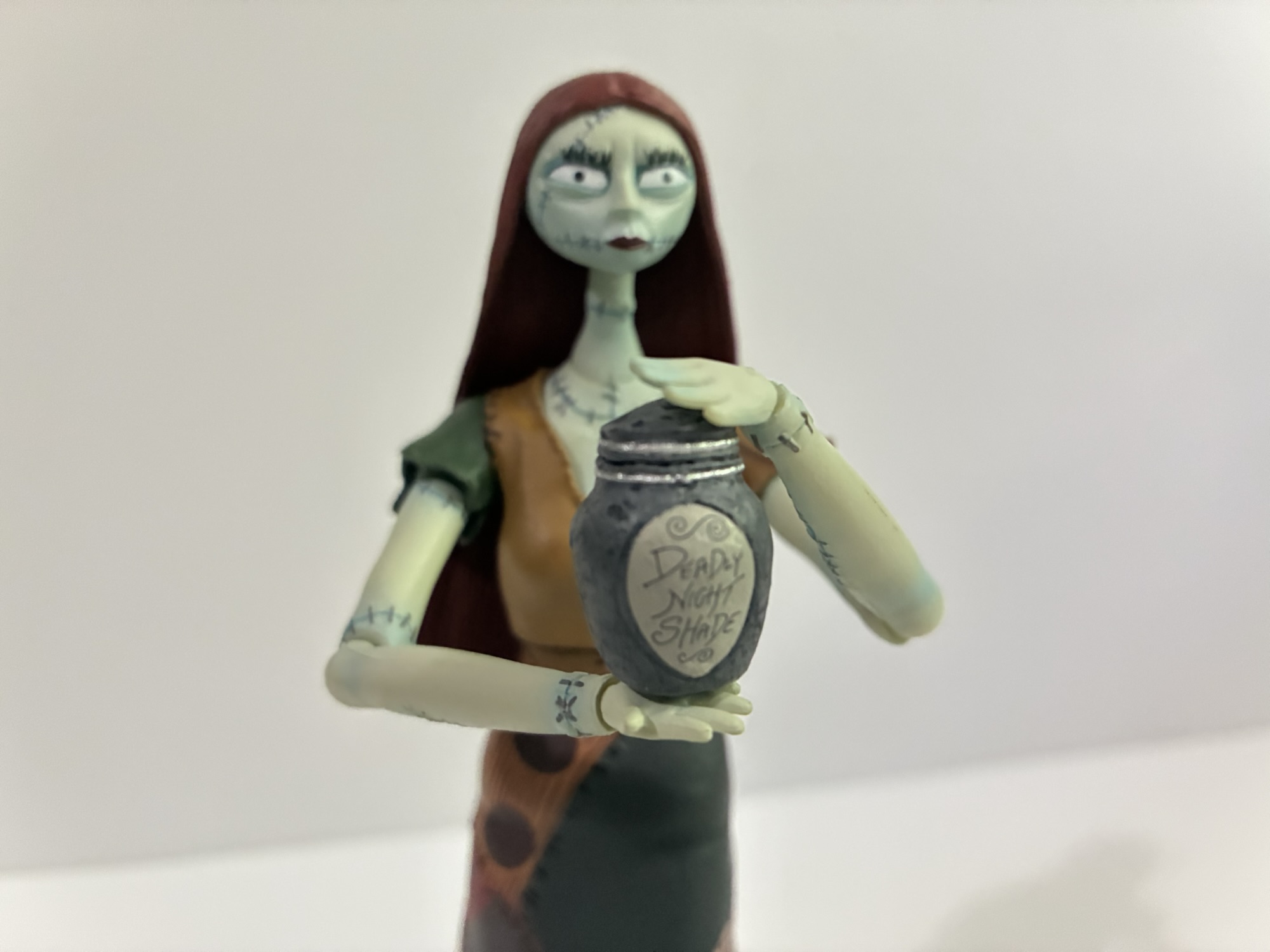
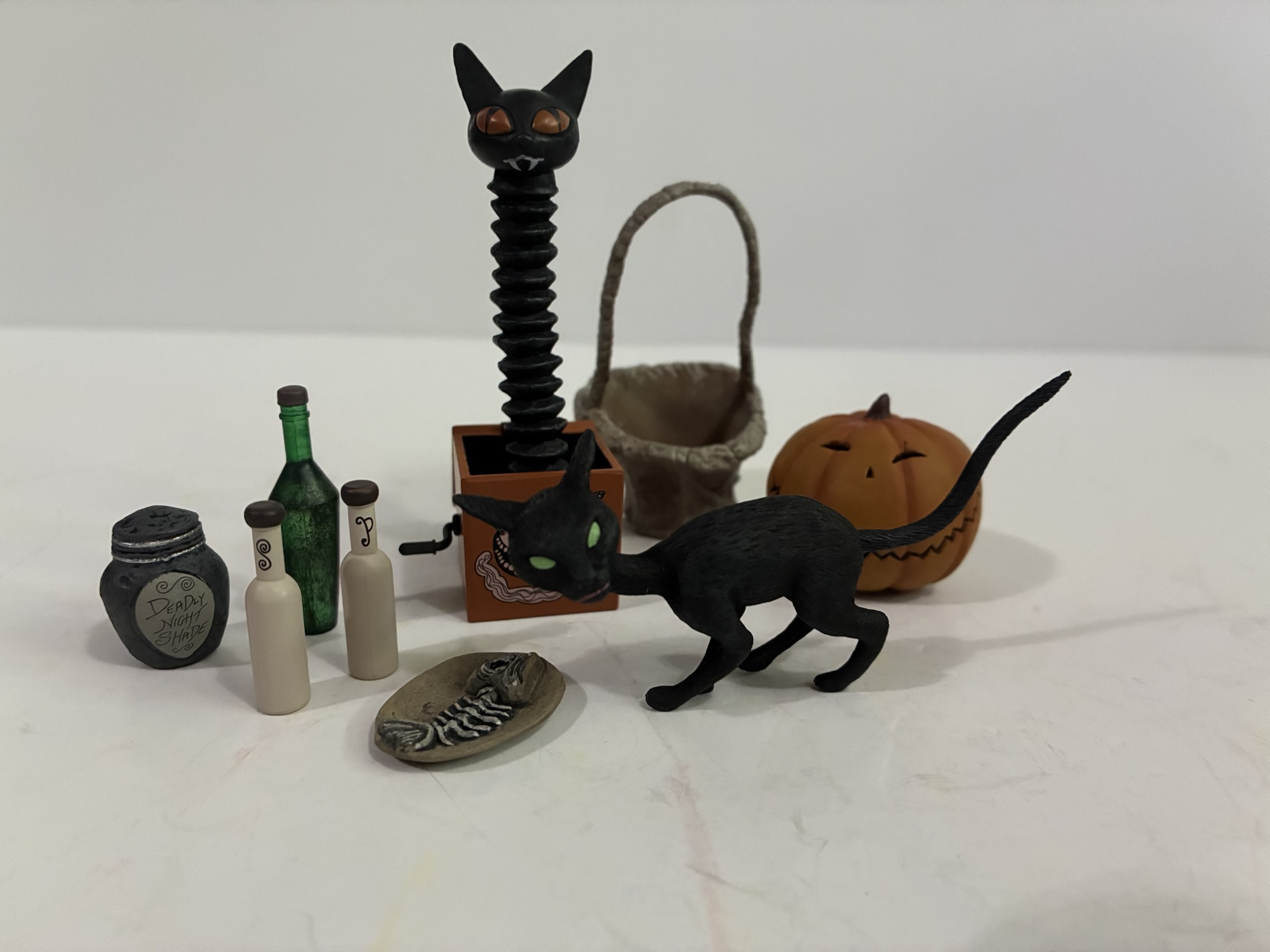
Sally’s other accessories are mostly tailored to her time in her tower and some other odds and ends. She comes with the basket she brought to Jack when she worried he wasn’t taking care of himself (does a skeleton really need to?). For contents, there are two white bottles one marked with an S and the other P which makes me think salt and pepper, but it would be odd to have those in bottles, no? There’s also a translucent green bottle which is from the movie. Sally also comes with her slotted spoon and the jar of deadly night shade. The jar has some really nice texture and paint work on it to the point where I expect it to feel like a true ceramic every time I pick it up. The black cat is also along for the ride and he has a little plate with fish bones on it. The cat is articulated at the head and no where else. Sally also has a jack-in-the-box with a black cat theme to it as well as a smiling jack-o-lantern. Lastly, she has a stand just like Jack’s which you will need since her feet are so tiny. She stands okay with it, but I did have her take a shelf dive the first night so do be careful.

Sally is a fine addition to NECA’s Nightmare Before Christmas collection. I don’t think she looks quite as good as Jack, but that’s not a slight against this figure as I think that Jack looks pretty damn amazing. This collection should be the final say on this film in plastic form. I can’t imagine ever needing to upgrade on either Jack or Sally. Some might prefer soft goods to the all-plastic approach NECA took, but I am not one of those people. I think this looks great, I don’t need her to come with anything else, and I don’t need her to articulate any better than she does here. I guess she can’t really kneel on the ground as she did in her omen scene, but maybe that’s also why NECA didn’t include a little Christmas tree or burned one. She’s on my shelf with Jack where I suspect she’ll be for many Halloweens to come and I may even let her hang around for Christmas. If you’re a fan of the film I think you’ll be pleased.

Simply meant to be.

If you like this Sally figure, then you may be interested in these ones as well:

Dec. 19 – The Nostalgia Spot Christmas Special Countdown #53 – 44

Today our countdown enters the top 50 when it comes to Christmas specials. If it wasn’t apparent before, it should be now, that we’re well into the cream of the crop. The best of the best. And this collection of specials comes almost entirely from the world of kids or general audience television shows. There’s…

Dec. 18 – The Nostalgia Spot Christmas Special Countdown #63 – 54

December 18th brings with it the realization that we are now one week away from Christmas – start panicking! Why panic? Well, if you’ve been putting off your Christmas shopping you’re now in danger of missing out all together. This is the point where it’s risky to order anything online expecting it in time for…


NECA The Nightmare Before Christmas Ultimate Jack Skellington

All hail the Pumpkin King!

When Tim Burton created The Nightmare Before Christmas while working for Disney I don’t think the powers that be had any idea what kind of a gift he had just given them. Obviously they didn’t since they didn’t even believe enough in the film to release it as a Disney film instead opting to put it on the company’s Touchstone brand. In creating what is now a beloved film, Burton gifted Disney something it values more than art itself: merchandizing. In particular, a product that could be sold and tied into the two most commercialized holidays on the planet: Halloween and Christmas. It’s a film that stars Halloween characters creating their own Christmas special. Or, to perhaps put it simpler, it’s a Christmas movie with a Halloween aesthetic.

With the Halloween season upon us it felt like a good time to take a look at a figure that I’ve had in my possession for a little while now: NECA’s Ultimate Jack Skellington. NECA released action figures based on The Nightmare Before Christmas many years back, but in 2024 the company decided to return to the franchise with some all new sculpts. There isn’t much shortage for merch based on the film these days, but NECA felt like it had something to say where the characters are concerned. Those old toys were okay for their time, but could use an update. Super7, Diamond Select, Beast Kingdom, and more have all tried to put their stamp on the franchise as well in recent years to varying degrees of success and failure. NECA, always being more of a horror brand when not making Teenage Mutant Ninja Turtles, must have felt like it could top them all and they may have done just that.

I feel like it only makes sense to compare him to a Halloween-type figure and a Christmas one.

Jack Skellington was one of four figures released by NECA at the end of 2024. Missing Halloween, but arriving in time for Christmas was Jack, Sally, the mayor, and a Santa variant of Jack. I had planned on reviewing at least some of those figures for Christmas last year, but I never had an opportunity to buy this particular figure during that window. And that’s fine, because as a standard Jack this is firmly in the Halloween part of the film and a better figure for this very moment.

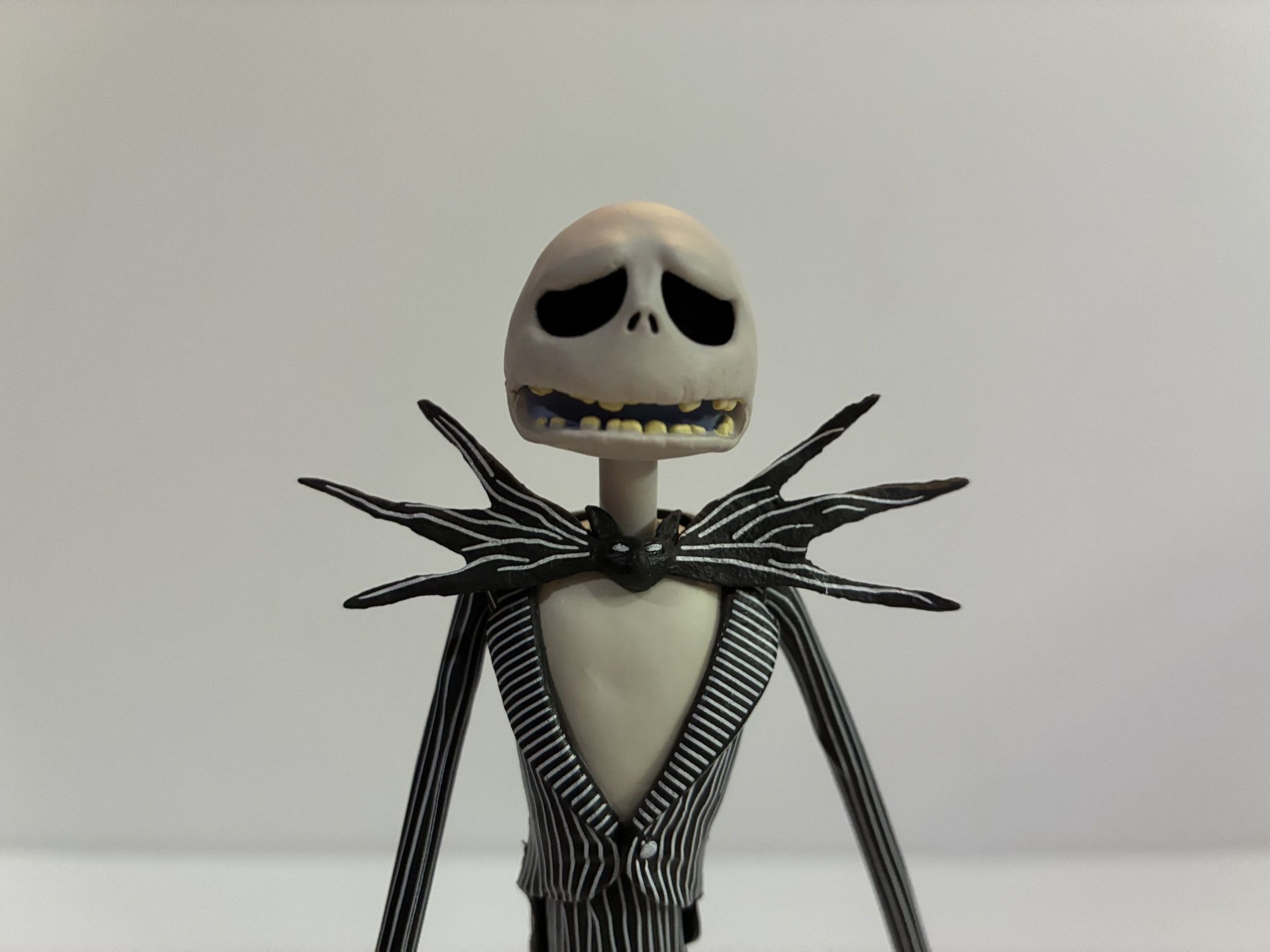
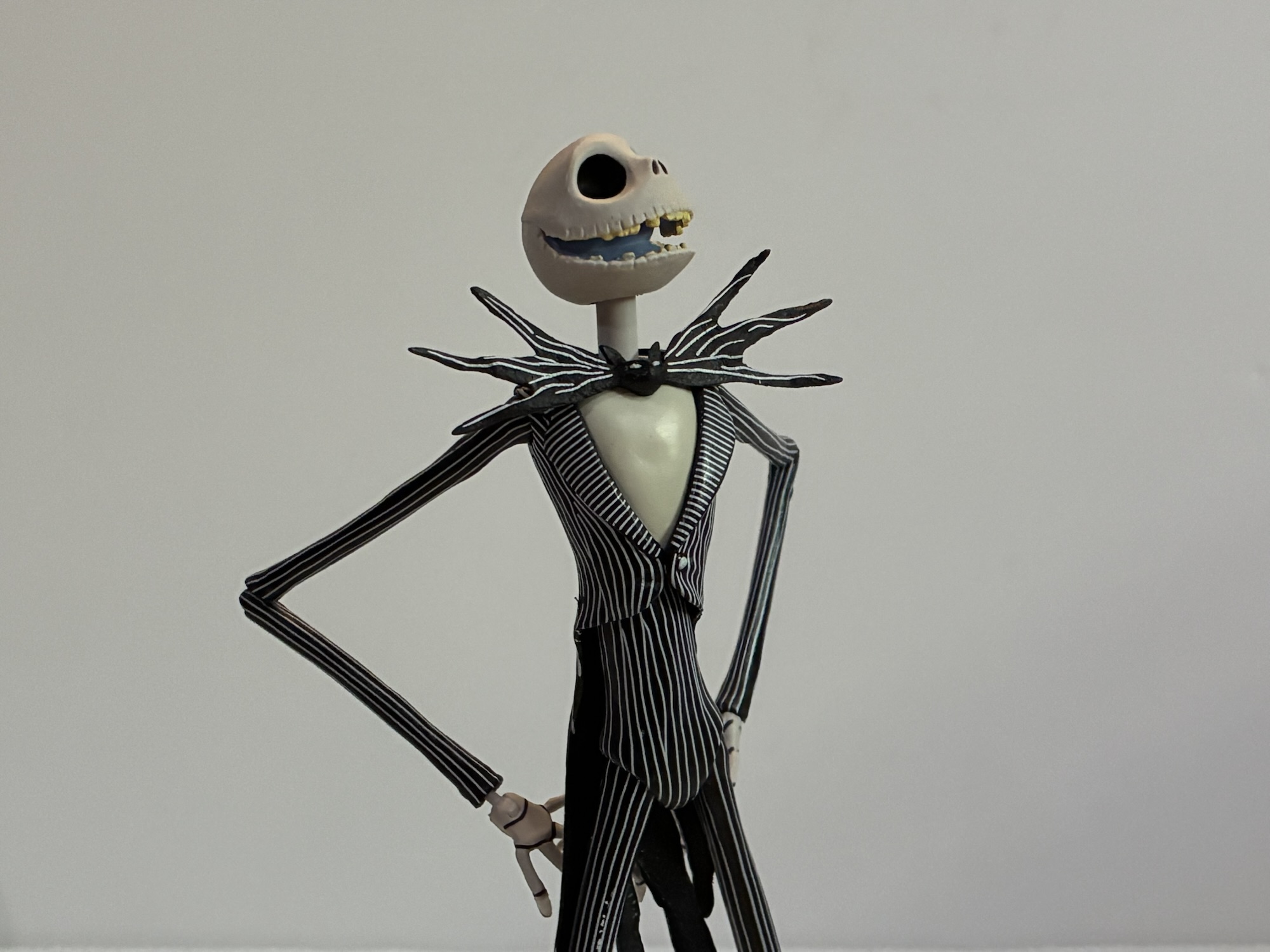
Jack comes in the standard Ultimates style box with artwork on the front and photography on the sides and back. There’s no credit for the artwork so I assume it’s from Disney. It certainly looks nice if you’re an in-box collector, but I am not. Once Jack is removed from the box he’ll stand around 8.25″ to the top of his head. He’s composed entirely of plastic with no soft goods at all. The plastic is also fairly rigid including the tails on his coat and his bow tie. The proportions look spot-on to the source material with incredibly thin, long, limbs. The body looks like it’s all black plastic with white lines painted onto it for his tuxedo. There’s an intentional wiggle to those lines reflecting the look in the film and I almost wish I had two figures to compare each other to see if there’s a random element to the shape of the lines or if this is taken from the film. The application isn’t perfect. There’s some messy paint on the right thigh of my figure that I lament not noticing at the store when I picked this guy up as I had a few to choose from. The backside of the coat tails also aren’t painted, or if they are it’s a touch glossy and I wish it were matte. The white of the hands and the chest are clean as is the head.

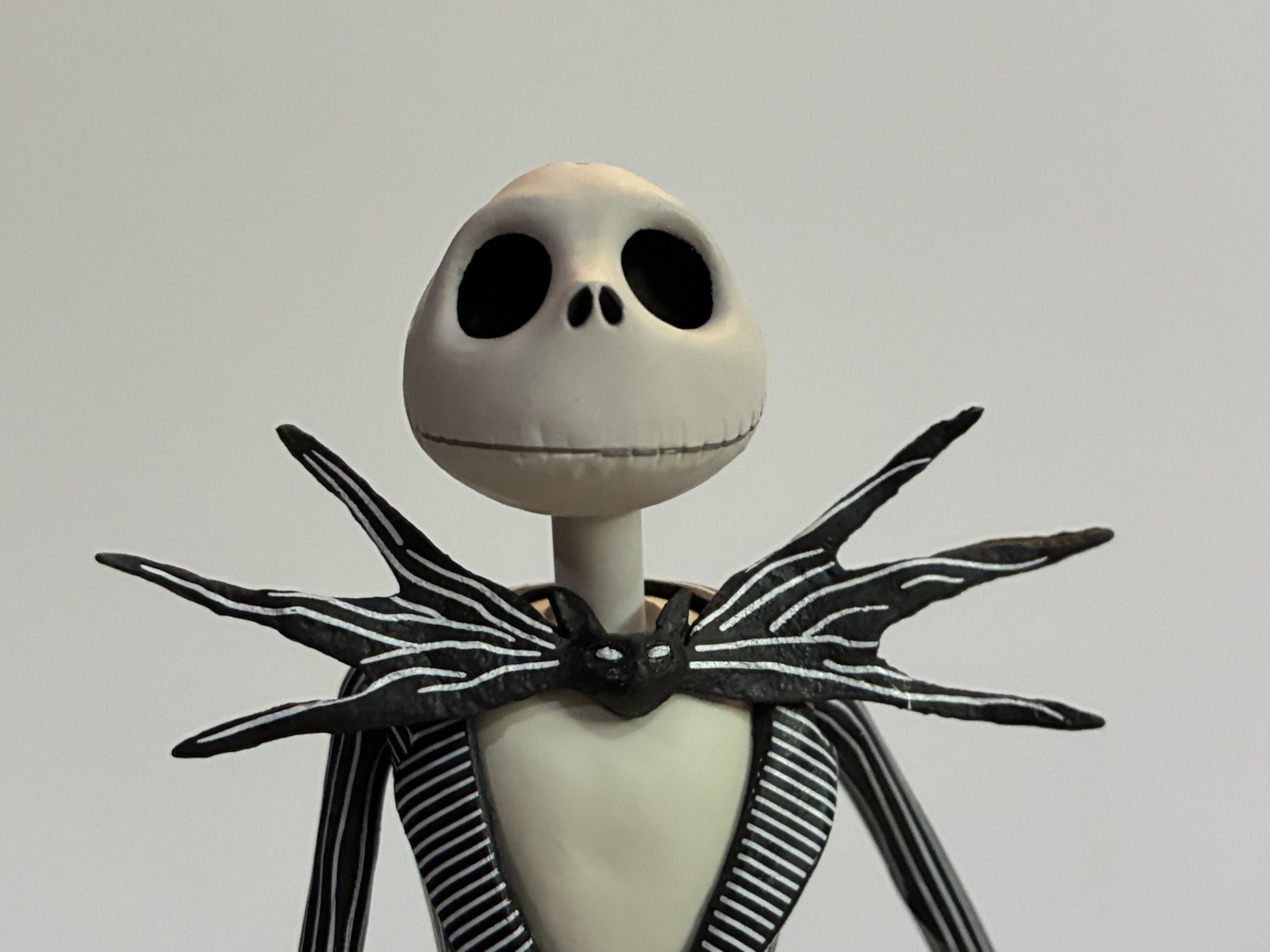
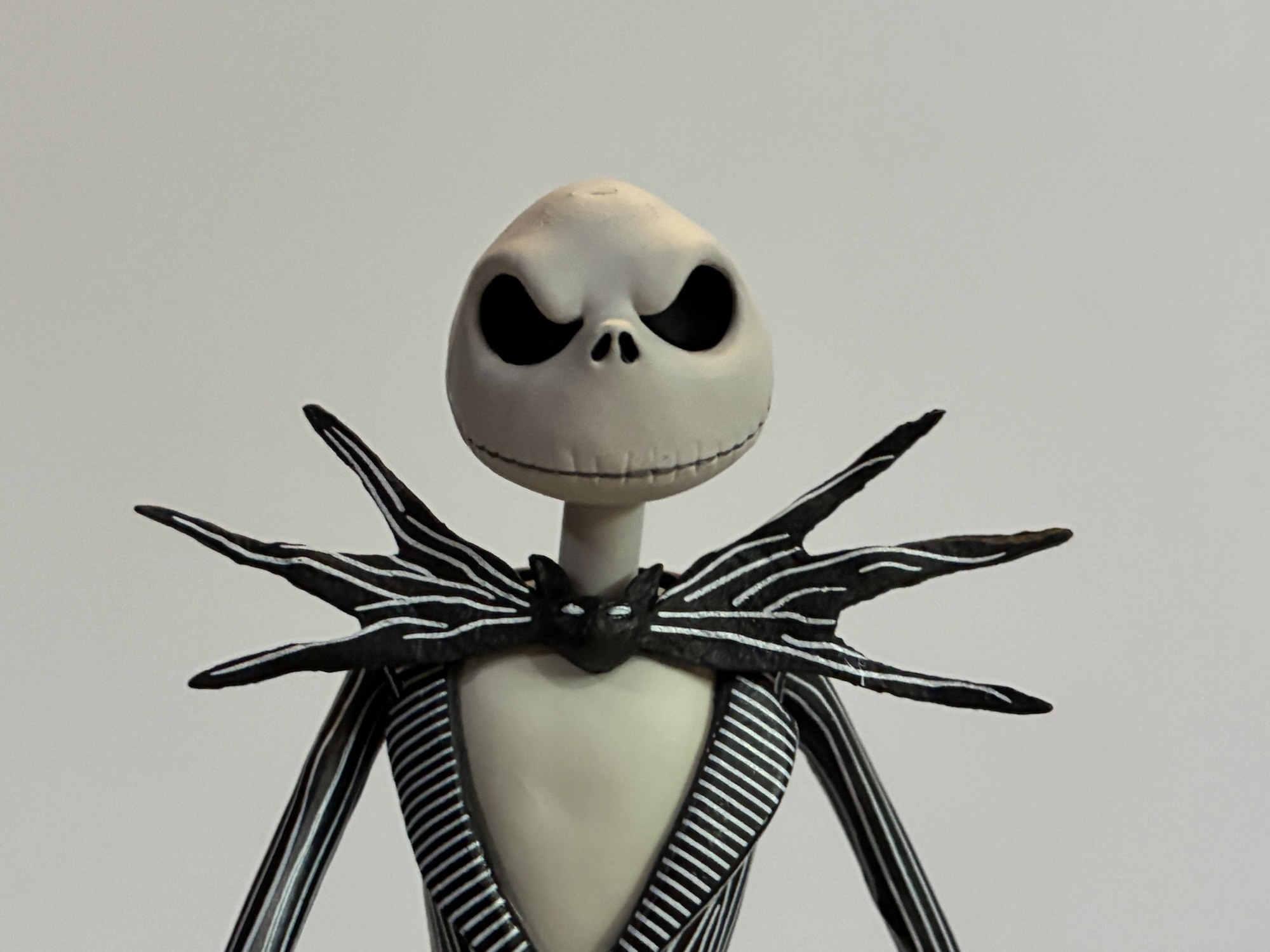
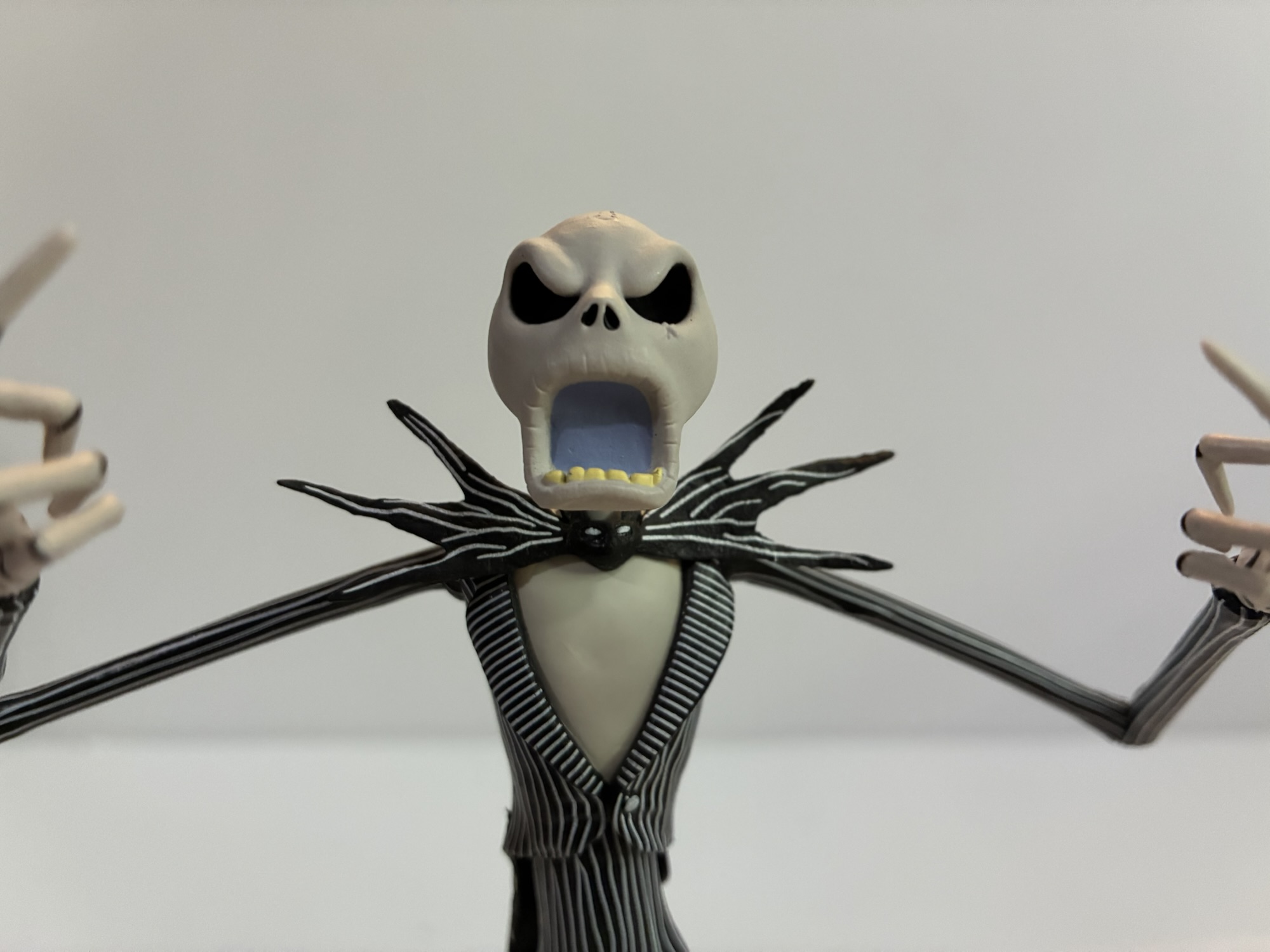
And speaking of, that head is magnificent. They all are, actually. NECA really captured the look of Jack with each and every portrait in this box and it’s what sells the figure. By default, we have a smiling Jack portrait but there’s also a mischievous grin, an open mouthed smile, angry smile, a look of wonderment, an “Ooo” mouth, a scared portrait, and a howling one. That’s eight total portraits, if you weren’t counting, and you practically have enough to do your own stop-motion with this figure. There’s also four sets of hands to add to the expressive nature of the figure and they are relaxed, pointing, gripping, and I guess what I’d consider clawing. He doesn’t have a tight gripping hand, but aside from that I can’t think of anything that’s really missing. Some of the heads are better than others when it comes to paint, but mostly to how the head was extracted from the mold. My howling head has a blemish by the left eye and a couple of them have little divots in the top of the skull. They should hopefully be visible in the pictures.

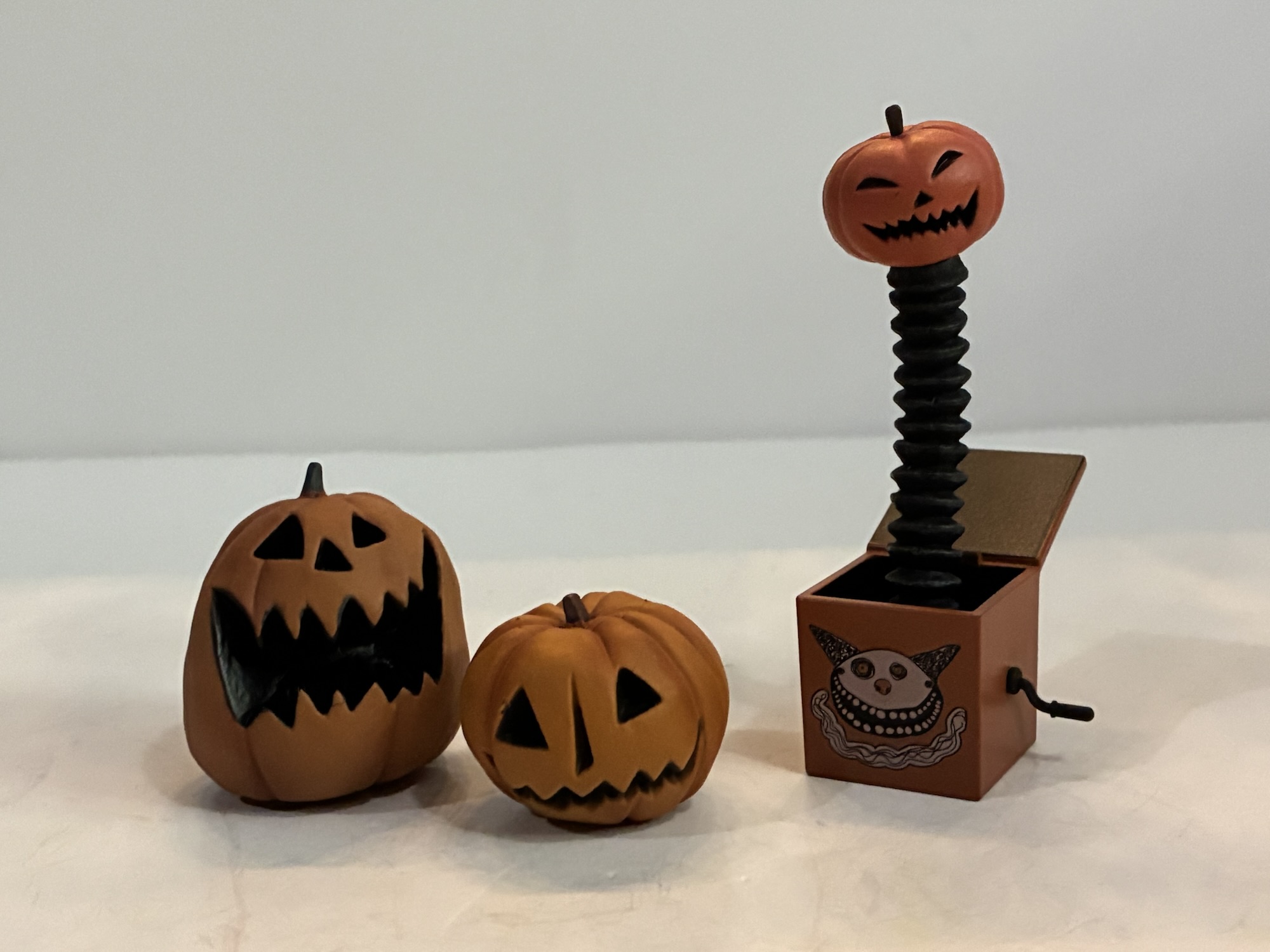
We have a few other accessories to talk about including the best, little, ghost dog around: Zero. He’s sculpted in this milky, translucent, plastic with a nicely painted jack-o-lantern nose. His head rotates, but that’s all for articulation. He does come with a transparent ball-socket stand that gets the top of his head about 3.5″ off the surface if you’re keeping him parallel with the ground. You can tilt and move him about on the stand and it’s a solid way to pull off Zero. I wish the plastic had more of a blueish hue to it instead of a yellowish one, but I’m happy we got a Zero with Jack. The other accessories include a pair of jack-o-lanterns, the jack-o-lantern jack-in-the-box (that’s a lot of hyphens), and the framed picture of Jack holding yet another jack-o-lantern (he is the Pumpkin King, after all). Lastly, there’s a clear, oval, stand for Jack that works only so well. It has two pegs on it, but I’ve found if I actually use both pegs that Jack will fall over eventually. The jack-o-lanterns help here because they have some weight to them so you can plop on the stand to help stabilize things. I think it works best to only use one foot peg on the stand and turn it so it’s pointing out from Jack for a little more coverage that way, though given the proportions and tiny feet in play here, this is a figure that’s never going to be 100% secure on your shelf. He really needs more of a doll stand to grab him at the waist. Just be mindful with where you leave this guy on a shelf.

Articulation for Jack is basic, but also pretty substantial given what’s here. He has a simple ball joint at the head and another at the base of the neck. Since there’s really nothing to get in the way, Jack can look up and down pretty well even with the neck joint having minimal range. From there, we get ball-hinge shoulders, hinged elbows, hinged wrists that swivel, ball-jointed diaphragm, ball-socket hips, hinged knees, hinged ankles, and ankle rockers. Even though the knees and elbows are single hinges, they bend well past 90 degrees because there’s just nothing to impede them. You can swivel at both points as well, but the pins are tiny and I can’t say I like the feel there. The diaphragm joint rotates pretty well, but doesn’t move forward and back much. The hips will let Jack do splits while the angle of the pelvis won’t let him kick out straight, but the leg will go off to the side and pretty high. He’ll pretty much do what you need him to do, but there’s no getting around that his limbs are all very thin and slender. There’s a fear element to working some of these joints out of the box. Bending the knees the first time was one of those moments where I just had to take a deep breath and see how it goes. Everything has been fine so I’m not saying there’s any issues with the durability or quality control, but the design of the character is going to lead to at least the perception that this is a fragile figure. And I don’t think there’s any getting around that, but from what I’ve experienced the figure is structurally sound.

This is a really satisfying figure to own.

If you have ever wanted an action figure of Jack Skellington then I think you’ll be very happy with this NECA figure. NECA captured the look and personality of the character to near perfection. If it can be helped, I just recommend finding him in store where you can cherry pick the best paint job available and mind those lines. I was caught up in making sure the heads looked as pristine as possible and didn’t even look at the legs, not that I should have to, but I wish I had. Otherwise, I love the look of this one and he looks like a puppet from the film. You could probably substitute this figure into a shot of the movie without anyone noticing. Getting Zero included is a great perk while the other accessories help for a festive, Halloween, display. And if you want to leave him up all the way through Christmas then you’re more than welcome to, though NECA also has a solution there as well.

If you liked reading about this Jack Skellington then here’s some more seasonal fare that may interest you:

12 Films of Christmas #8: The Nightmare Before Christmas

Is it a Christmas movie? Is it a Halloween movie? Can a film be both? That seems to be the big question surrounding Tim Burton’s multi-holiday classic The Nightmare Before Christmas. Released on Disney’s Touchstone label (because the company was too scared to be directly associated with the film at first) around Halloween 1993, The…

Keep reading
Funko Pop! Halloween Huey, Dewey, and Louie

There’s a scourge taking over our local record stores, clothing outlets, and gaming boutiques. It comes in mass quantities dominating its chosen territory at the expense of other merch. It swears no allegiance to anyone and will even place mortal enemies side by side as it amasses an army of licensed property of yesterday and…

Keep reading

Dec. 12 – Teen Titans Go! – “Halloween vs. Christmas”

  It’s a battle for the hearts of children around the world! What is the superior holiday:  Halloween or Christmas? Today’s entrant is founded on the premise that Halloween is the only holiday to rival Christmas as far as what children look forward to most. This feels more or less on point as a kid…

Keep reading


Who Framed Roger Rabbit (1988)

220px-Movie_poster_who_framed_roger_rabbitNormally, I don’t like doubling-up on posts in a single day on this blog, and ever since last fall Friday has belonged to Batman. Well, I’m breaking my own self-imposed rule today, but it’s for a very good reason. Today is the 30th anniversary of the film Who Framed Roger Rabbit. On this day in 1988, the then most expensive movie in film history was released to the general public with a lot of buzz and a lot of trepidation. It was a collaborative effort between some of Hollywood’s hottest names; Steven Spielberg, Robert Zemeckis, and Walt Disney Studios. Adapted from the Gary Wolf novel Who Censored Roger Rabbit?, there was a lot of fear that the movie would be too “out there” for a general audience. So uncertain about how the film was to be received, actress Kathleen Turner, who voiced Jessica Rabbit, declined to be credited for her role in the film. There was some fear this thing would be received about as well as Howard the Duck, a notorious flop at the time, but it ended up being so much more.

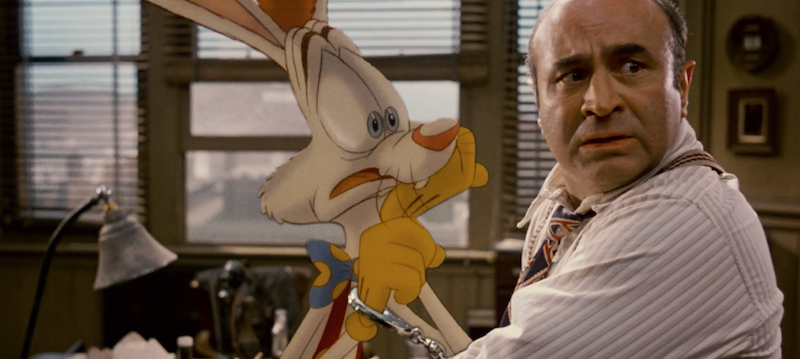
Who Framed Roger Rabbit is the story of a rabbit named Roger (voiced by Charlie Fleischer) who is framed for a murder he did not commit. Aside from the fact that he’s a rabbit, the plot sounds rather pedestrian at face value. What sets the film apart is its world and the world it shares with the “real world.” Roger Rabbit is a toon. He is a literal cartoon character. In the world created by this work of fiction, cartoons are just as real as you and me. They go to work, make cartoons, and go home. The toons behave like golden era cartoons – they’re wacky, prone to accidents, and always on the lookout for a laugh. At one point in the film, Roger is handcuffed and needs to get himself out. He ends up simply removing his hand from the cuff at one point, then putting it back. When his partner, Eddie, notices and gets furious with him for not just doing that to begin with, Roger explains he could only remove his hand when it was funny.

whoframedrogerrabbit

Bob Hoskins stars alongside Robert as private eye Eddie Valiant.

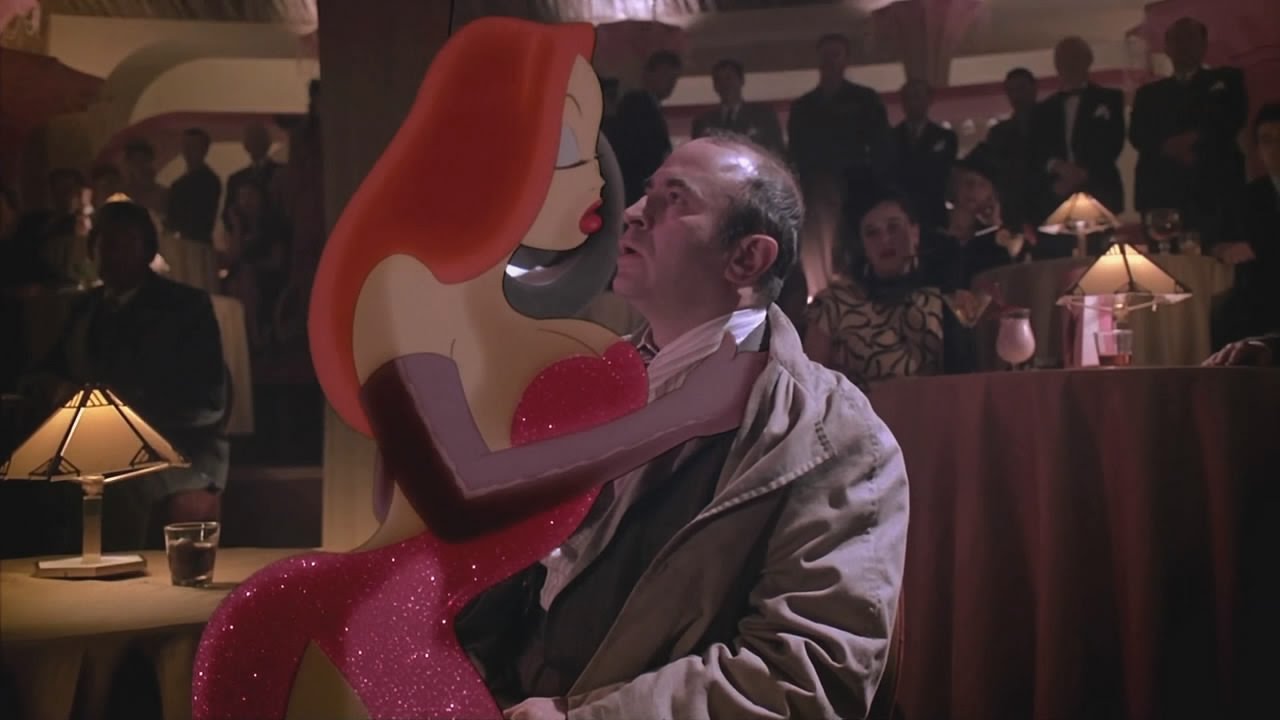
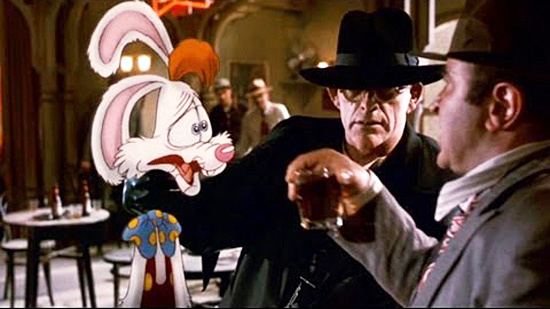
Roger works for R.K. Maroon (Alan Tilvern) and is a star of Maroon Cartoons. Set in 1947, the film basically takes place during the waning days of the animated cartoon short. He is married to the impossibly attractive Jessica Rabbit, a buxom, hourglass figured toon who more or less resembles a human. The film starts out with Roger stressed out because there are rumors that Jessica has been up to no good with another man. Maroon wants private investigator Eddie Valiant (Bob Hoskins) to do some digging to help his star out. The problem is, Eddie hates toons, but he loves money more. Eddie takes the job, and finds out that Jessica has actually been playing pat-a-cake with Marvin Acme (Stubby Kaye), the owner of Toon Town. When shown the images of his wife playing such a lurid game with another man, Roger goes off the deep end and is plunged into a depression (pat-a-cake is serious business to a toon, apparently). Then things take a dark turn when Marvin Acme turns up dead, and Roger is suspect number 1. Roger proclaims his innocence to Eddie, and Eddie is forced to decide if he wants to help out the incredibly annoying, but likely innocent, Roger or just walk away from the whole thing.

brig

Even humans are drawn to Jessica Rabbit.

The story unfolds like a classic mystery. You have the gruff detective, the innocent victim, and the femme fatale. Of course, nothing is ever truly what it seems. Shadowing the protagonists is the villainous Judge Doom (Christopher Lloyd) who too seems to have a hatred for toons. Eddie and Roger are going to have to do some sleuthing, and even take a trip to Toon Town where all of the toons reside, in order to solve this case.

2728670.jpg-r_1280_720-f_jpg-q_x-xxyxx

Roger’s co-star, Baby Herman, is used sparingly, but he’s a scene-stealer.

The story is admittedly fairly simple. The character of Jessica Rabbit is the most intriguing, and not because of her figure, but because she is a femme fatale done well. She possesses an air of mystery and uncertainty, the fact that she is apparently the most attractive toon and is attached to the rather goofy Roger helps to play this up. What truly sets Who Framed Roger Rabbit apart is the presentation. Live actors mix with cartoon ones in truly spectacular ways. We’ve seen this before from Walt Disney with the likes of Mary Poppins and Bedknobs and Broomsticks, but not on this level. Those films merely feature a few sequences of cartoons and actors co-mingling, where as Who Framed Roger Rabbit is built around that dynamic, and it looks spectacular! When Eddie rides along in the toon cab, Benny, he looks like he’s really riding in it. When he wields a toon gun, it’s convincing. And the world of Toon Town is especially marvelous to look at with its impossible architecture and lavish color scheme. The movie is so visually stimulating that you could watch it in mute and still enjoy it.

who-framed-roger-rabbit

Christopher Lloyd is appropriately sinister as Judge Doom.

Even with the flashy presentation, the film still needed true chemistry between its real-life lead Eddie, and it’s toon co-lead Roger. Hoskins is fantastic at playing the straight-man Eddie. He takes everything seriously and has explosive reactions to all of the nonsense around him, but not in such a manner that would break the film. Helping to make sure he was able to form good chemistry with Roger, voice actor Charlie Fleischer dressed up as the character and would voice it off-camera. Seth McFarlane utilized a similar method when filming the more recent Ted to similar effect. I suppose it’s impossible to say if this truly worked or did not, but the results speak for themselves.

who-framed-roger-rabbit-bob-hoskins-roger-rabbit-cab

Eddie and Roger go for a ride in Benny the Cab.

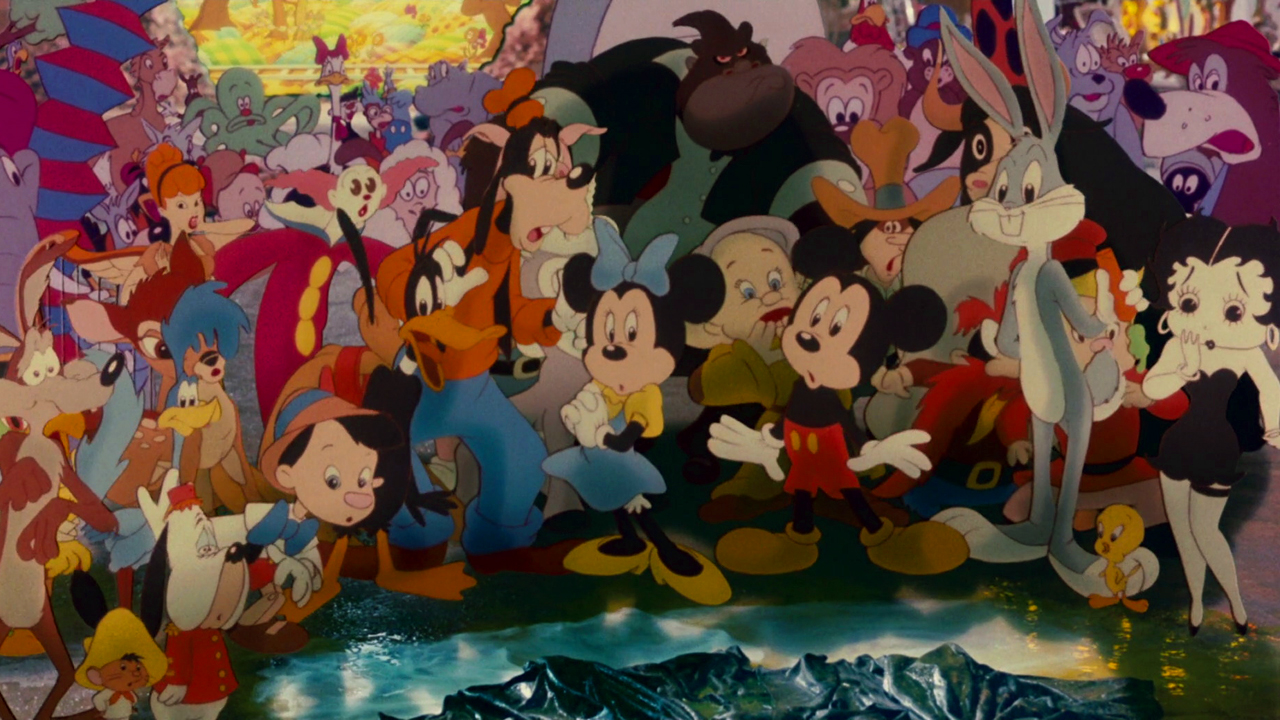
Who Framed Roger Rabbit was a unique looking film that was impossible to ignore when it was released, but it was still relying on a lead that had never been seen before in Roger. That’s why to help spruce up the film, Spielberg and Zemeckis wanted to make sure that Roger’s world was inhabited by recognizable cartoon characters. That ended up being the film’s strongest selling point as it promised, for the first time ever, that characters from both Disney and Warner Bros. would share scenes together. This leads to the wild team-up between Donald Duck (Tony Anselmo, with some archivable Clarence Nash) and Daffy Duck (Mel Blanc, in one of his last performances) who have a dueling pianos scene where the more outlandish Daffy seems to get on Donald’s nerves more and more as the scene goes on. Mickey Mouse (Wayne Allwine) and Bugs Bunny (Blanc) also get to share a brief scene, which contains an easter egg of Bugs flipping Mickey the bird (apparently, Disney was a bit of a pain to work with concerning how the characters could be portrayed and this was one way for the animators to have a little fun at their expense). Those represent the biggest cameos, but there are many, many more throughout the film from both companies, both major and minor. Part of the fun of watching the film is looking out for them and there’s always a chance that on re-watch you’ll see another you may have missed.

framed201

Toon Town is a rather chaotic place.

There are so many things to pick out of Who Framed Roger Rabbit that it’s way too much for me to cover here. Suffice to say, if you’ve never seen this baby then you owe it to yourself to check it out. Much of the effects still stand up today, and much of the credit is owed to animation director Richard Williams. The toons are two-dimensional, but a lot of effort is made to make sure they look like they’re really inhabiting this world in the manner in which lighting is utilized and how often the camera moves. Working on this film must have been exhausting, but oh so rewarding in the end. Due to the nature of the license rights, the complexity of it shots, and incredible of expense of animating over live-action, a sequel has never truly got off the ground. Author Gary West has returned to the character for his novels, and Disney and Spielberg would probably both love to cash-in on the brand, but there are just too many hurdles to clear. Zemeckis has campaigned for a sequel on multiple occasions, but he’s been less vocal about it in recent years. Additional Maroon Cartoon shorts of Roger Rabbit were produced after the film, but even that was a touchy subject as Spielberg wanted to run them alongside his films while Disney wanted them for theirs. And supposedly Disney wanted to create a television show starring Roger Rabbit for their Disney Afternoon block, but Spielberg who was working on televised cartoons of his own (Tiny Toon Adventures, Animaniacs, etc) wouldn’t allow Roger to be utilized forcing Disney to create the character Bonkers the Bobcat. Roger has at least been allowed to live on in Disneyland’s Toon Town where he still has a dark ride to this day. Given that Disney has been replacing a lot of older dark rides to make way for more current franchises, one has to wonder if Roger’s days there could be numbered.

RR_tf

One of the more character-packed shots in the whole film.

Who Framed Roger Rabbit is likely one of the most popular and successful films to never get a sequel. It took in around $330M in 1988 dollars, a pretty substantial haul, which more than covered its estimated $50M cost. Its story and presentation are both timeless and also proof that Tex Avery styled humor and gags may never truly go out of style. The rather manic Roger Rabbit can appear off-putting to some, especially younger folks who may not have grown up on Looney Tunes, but apprehensions tend to fade away once the movie really gets going. I’ve introduced this film to a few people that weren’t enthusiastic about giving it a shot, only to see them won over in short order. It’s really one of the best things the Walt Disney Company has ever produced, even if it was released on their Touchstone label. I know it’s a Friday, but if you don’t have plans tonight, you could do a lot worse than settling in on the couch with your favorite snack and beverage for a showing of Who Framed Roger Rabbit.


12 Films of Christmas #8: The Nightmare Before Christmas

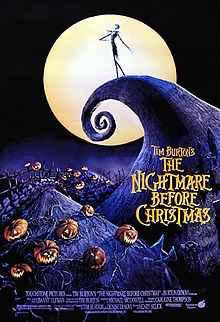
220px-the_nightmare_before_christmas_poster-2

The Nightmare Before Christmas (1993)

Is it a Christmas movie? Is it a Halloween movie? Can a film be both? That seems to be the big question surrounding Tim Burton’s multi-holiday classic The Nightmare Before Christmas. Released on Disney’s Touchstone label (because the company was too scared to be directly associated with the film at first) around Halloween 1993, The Nightmare Before Christmas has been content to be accepted by both holidays, but lets not kid ourselves, it’s a Christmas movie.

It’s right there in the title! The Nightmare Before Christmas! The tale about how the fictional residents of Halloweentown usurped the Christmas holiday from Santa Claus for their very own. It’s a Christmas movie that looks like a halloween one, and it’s been charming audiences for decades now through its unique visual style and stop-motion animation. And that animation, even that screams “Christmas” thanks to holiday classics synonymous with the genre like Rudolf the Red-Nosed Reindeer. The Henry Selick directed picture (which can’t be said enough since so many still mistakenly attribute the film’s direction to Tim Burton) leans heavy on its visual and theatrical elements so much that I can’t help but wonder if it was traditionally animated if it would have the same impact.

a49047d73e5644961b123aa48790d5c8

The one and only, Jack the Pumpkin King!

The stop-motion style proves ideal in crafting a character such as Jack Skellington, the spindly skeleton suffering a severe case of seasonal depression, or midlife crisis if that’s possible for someone undead. His movements aren’t always fluid, but still seem appropriate given how we can practically see his various joints. Some creative liberties were taken with his head-sculpt which is soft, and round as opposed to resembling an actual skull. Some of the denizens of Halloweentown are rather unremarkable to behold, but all fit into the film’s visual style.

The film is a unique and visual treat, and the very Burton voice cast (featuring frequent collaborators like Paul Reubens, Catherine O’Hara, and Danny Elfman) is more than up for the challenge of bringing these characters to like. The film’s score, provided by Elfman, is fantastic and manages to capture the feeling of both Halloween and Christmas all in one. The broadway styled bits are where the film falters slightly, and what holds it back from being ranked alongside some of the Disney films from the same decade. Still, The Nightmare Before Christmas has its share of memorable tunes and can easily be sung along to.

open-uri20150608-27674-2cm6zr_5f33d4dc

Everyone’s favorite trick or treaters. Or least favorite since they are little punks.

I did a full review of this film a few years ago, which is why this entry has chosen to focus on what makes the film unique among other Christmas films. Don’t fret too much over which holiday the film best aligns itself with, just use that as an excuse to watch the film around both holidays. It’s always worked in my household.


The Wind Rises

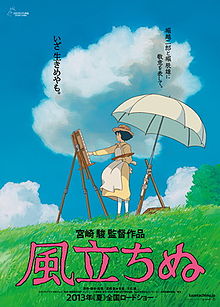
Kaze_Tachinu_poster“The wind is rising!  We must try to live!” – Paul Valéry

The above quote opens the latest release from Studio Ghibli and director Hayao Miyazaki; The Wind Rises.  It’s a quote that is suitable for the film as it implies that change is coming, but we must carry on.  The Wind Rises is to be the last directorial effort from Miyazaki, Japan’s most celebrated director of animated films, and it is an appropriate piece for him to go out on.  The Wind Rises tells the tale of Jiro Horikoshi and his dream to design what he calls beautiful airplanes.  Jiro is based on the airplane designer of the same name who is famous for creating Japan’s Mitsubishi A5M and A6M Zero and the basis for the film was derived from a quote he once gave:  “All I wanted to do was make something beautiful.”  The film has two sides to it with one being a mostly faithful account of Horikoshi’s challenge in developing his first successful airplane and the entirely fictional account of his personal life.  The end result is a tale of hope, triumph, love and life and is perhaps Miyazaki’s finest piece since My Neighbor Totoro.

The film opens with a young Jiro dreaming of flying a plane.  The opening sequence is perhaps the most fun for the animators as Jiro’s dreams are filled with nightmare creatures seemingly stemming from his despondence over his imperfect vision.  The character admits early on to himself that he will never fly because of his eyes, but in a dream meets with Italian airplane designer Giovanni Caprone, who will be a recurring visitor amongst Jiro’s dreams throughout the film offering him guidance on how to be a great engineer.  It’s these dreams that inspire Jiro to be an airplane engineer and the film advances time to show us his journey to become an engineer.

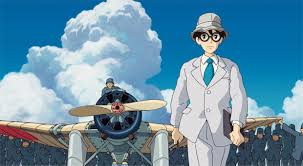
Jiro leading one of his designs to the testing grounds.

Jiro leading one of his designs to the testing grounds.

Jiro is portrayed as a sweet and good-natured man.  He is willing to help those in need, and a chance encounter with a young woman and her maid on a train plays a pivotal role in the film later on.  During the train ride the great earthquake of 1923 strikes and Jiro carries the maid to safety after she breaks a leg.  He seeks nothing in return and doesn’t even share his name with the women before departing.

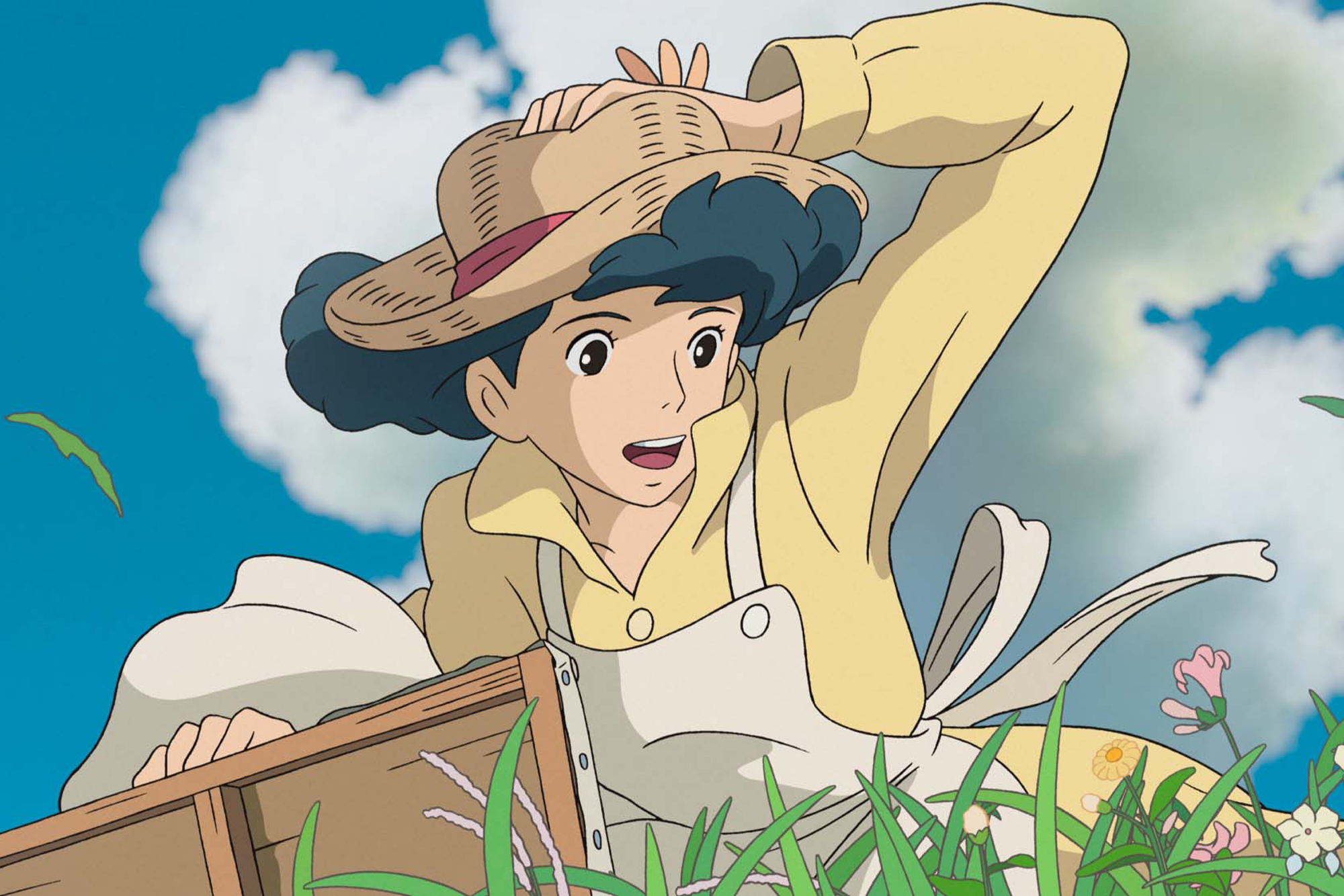
Jiro lands a job out of school and his employment takes him to Germany where he is introduced to pre World War 2 Germany’s policies.  Being Japanese, he is not trusted by the soldiers as he seeks to learn about Germany’s engineering when it comes to aeronautical design.  Despite this, he is able to learn some techniques and apply them to a new aircraft, which unfortunately crashes during the test run.  To clear his head, his company sends him on a retreat for some rest and relaxation which is where he encounters the young woman he met years earlier on the train, Naoko.  The two fall in love, and though it seems predictable, their scenes are handled with such tenderness and care that the audience is left to root for them, even if it seems as if they’re destined to fall for each other.  Jiro learns there is a dark side to his budding romance as Naoko is afflicted with tuberculosis.  This forces them to move quickly with their life together.  Naoko insists on getting better before discussing marriage, but in time relents once Jiro has to leave for work.

Jiro must deal with failure throughout the film.

Jiro must deal with failure throughout the film.

The last act of the movie involves Jiro and his attempt to finally build a worthy aircraft that his company can sell to the Japanese military, while Naoko wages a silent battle at their home with her illness.  I don’t want to get into too much detail about the film’s plot, but suffice to say it’s a bittersweet tale that includes ups and downs with the story refusing to linger on anything for too long.  In that, it mirrors life which is a constant push and pull.  There are many themes the film likes to go back to.  Early on a supporting character mentions the importance of having a family to go home to, crediting it with helping a man work harder at the office, which is shown later in the film once Jiro is married.  In his dreams, Caproni asks Jiro if he prefers to live in a world with pyramids, or with no pyramids, using this as an explanation for why he would design airplanes that will eventually be used for war.  And all throughout the film, the wind acts as a character itself playing a pivotal role in one of the film’s final scenes.

As this is a work from Studio Ghibli, it hardly needs stating but deserves to be anyways, that this film is gorgeous.  The animation is predominantly hand-drawn, but some computer generated imagery is used for some of the film’s effects.  The film has a bright palette though Jiro is often garbed in white, gray, or a very light lavender, which serves to isolate him from his surroundings.  This suits the character as he is often oblivious to his surroundings, so consumed in his work and willing to overlook the fact that his designs are made for war.  The country-side settings are sure to evoke memories of Totoro, and the film’s whimsical feel and care-free pace further serves to draw comparisons to Miyazaki’s old masterpiece.

The wind is a character of its own, its actions often directly influencing the lives of the human characters in the film.

The wind is a character of its own, its actions often directly influencing the lives of the human characters in the film.

The sound design is excellent, with great use of natural sounding effects and an excellent score from Joe Hisaishi.  The english dub was handled by Disney and the film distributed in North America on their Touschstone label.  The dub is the usual high quality that viewers have come to expect from Disney as the company has handled the majority of Studio Ghibli’s dubs.  Serving as Jiro is Joseph Gordon-Levitt with supporting roles from the likes of Emily Blunt, John Krasinski, and Martin Short, the latter serving as the scene-stealing character Kurokawa, Jiro’s boss throughout the film.

The Wind Rises may be an animated movie, but it’s not for children.  The film’s pace is too slow and plot is too mature to entertain most children.  The film is best described as a drama and should appeal to older fans of Miyazaki’s works.  That said, it’s a wonderful piece of film with fantastic visuals, a compelling plot, and terrific performances.  Hayao Miyazaki may never get the recognition he deserves from international audiences, but anyone involved with film appreciates and respects the work he does.  It’s both wonderful and sad that this movie exists, knowing it is to be the last written and directed by Miyazaki, but in that sense it mirrors the film superbly.  What a truly awesome way to cap off a career!