Tag Archives: nintendo

Do We Really Want a Nintendo 64 Classic?

N64-20th-anniversary-625x352You’ve probably heard by now about the SNES Classic coming later this month. If you’re even remotely interested in owning one, you’re also either happy you have a pre-order, concerned your pre-order could be cancelled at any moment, or absolutely furious that you couldn’t secure a pre-order. The NES Classic released in 2016 was notoriously difficult to obtain before being abruptly cancelled all together after just a few months of shipments. As a result, demand for the SNES Classic is at an absurd level as fans who want one are worried about having to pay the ridiculous scalper rates on eBay or else risk never getting one.

Wal-Mart was the first to release pre-orders for the SNES Classic in late July, only for the company to pull an “oops” and say they didn’t mean to release them when they did. All of those happy gamers who secured one that evening (they went live online at around 11 PM EST) were crushed when the company cancelled all of the orders. Things were quiet until the wee morning hours on August 22nd when Best Buy released pre-orders on their website. Amazon followed, but rather than post them on the placeholder page for the product, the company created a new listing and anyone that had signed up for alerts through Amazon or third party sites weren’t notified. That didn’t stop them from selling out in mere minutes. Later that morning, the other retailers went live and they too sold out in minutes. GameStop opened up pre-orders for instore customers only setting off a mad dash to all of the retail outlets. Many secured their orders, and many more were turned away. Eventually GameStop, as well as its sister site Think Geek, offered up expensive bundles for pre-order. Even though they were loaded with crap no one likely wanted and were thus much more expensive, those too sold out. Lastly, Wal-Mart released a few more pre-orders in the evening hours of the 25th, since then it’s been dry with pre-orders likely done.

If you did not get a pre-order then you’re likely holding out hope for release date, but getting one then will likely require hours camped outside a store hoping there will be enough for everyone in line. Toys R Us elected not to do pre-orders of any kind so they’ll likely have the most supply on September 29th. The other big box retailers are expected to have some as well, but no one is releasing numbers at this time and likely won’t until the 28th, if at all. Wal-Mart recently cancelled several pre-orders made by people attempting to order more than one device, so there’s perhaps a sliver of hope they’ll release a few more pre-orders, or perhaps they’ll just include those items previously spoken for in the launch day release. Amazon will likely do what it did with the NES Classic and reserve the bulk of its units for its Prime Now delivery service. It’s few brick and mortar locations may have some as well. And if you’re in New York City, the Nintendo Store will have probably the most SNES Classics in one place. Like Toys R Us, the Nintendo Store did not do any pre-orders.

n64_ctl_gray_p_sq6u26

This goofy three-handled controller is possibly the determining factor on if we get a N64 Classic.

And all of this madness is to secure a plug and play gaming device that has 21 games built into it, 20 of which have been available in various forms for 20 years. It’s easy to be dismissive of the device as a gimmick, but if you’re a gamer it’s hard to argue that the SNES Classic isn’t going to be a pretty great way to experience some of the best video games ever made, which makes it all the more frustrating that it’s a limited release. Simply put, this is Nintendo’s fault. They’re making a device that people want and there’s great demand for, but they’re creating this scarcity by intentionally only offering it for a limited time. They’re emboldening scalpers and retailers like GameStop that will jack up the price for their fans, and it’s not as if Nintendo profits off of any of that. Nintendo could likely manufacture twice the amount of SNES Classics it plans to release and still guarantee itself a sell-through. There’s no reason to have even stopped production on the NES Classic! People want it, so why won’t Nintendo make it?

Naturally, as consumers prepare for the launch of the SNES Classic many are wondering what will follow it. Does Nintendo continue along with these mini retro machines? One would assume a mini Nintendo 64 would be next. The technology in the NES Classic is rumored to be powerful enough to handle Gamecube titles, so it’s not a question of if it can be done, it’s will it? And more importantly, as consumers do we want it?

Nintendo could continue making retro machines that aren’t the N64. A retro GameBoy that is both portable but can plug into a television is possible. Perhaps the screen would be too expensive to keep the current price point, though if the screen were the equal of the original GameBoy I can’t imagine it would be that expensive. Nintendo could release a Super GameBoy edition of the SNES Mini to get around that. Still, the most likely is a mini N64, but it too presents challenges. The NES and SNES controller is pretty simple and cheap to produce, but the N64 controller is more complex and likely more expensive to manufacture, especially if one wants to include rumble. And the software is a bit murkier as well. Game development windows were growing wider come the era of the N64 and fewer first party titles were available. After all, there was only one Mario game made for the N64. Rare, at the time a second-party developer for Nintendo, made a lot of the most popular titles for the N64 and the royalties may be a bit complicated concerning sales of the N64 Mini. Still, I suppose we should speculate on what would be included before getting dismissive. The SNES Mini has 21 games, 20 of which were previously released. The N64 Classic would likely have fewer, so for the sake of simplicity let’s speculate on 15.

Super-Mario-64-Star

  1. Super Mario 64 – obviously. A launch title and the one everyone was talking about in 1996.
  2. The Legend of Zelda:  Ocarina of Time – one of the most beloved games of all time.
  3. The Legend of Zelda:  Majora’s Mask – the NES Classic included both Zelda and Zelda II, so it’s likely the N64 Classic would include its two Zelda titles as well.
  4. Mario Kart 64 – another no-brainer. Many people still consider this the best in the series. They’re crazy, but it’s certainly a beloved classic.
  5. Paper Mario – the unofficial sequel to Super Mario RPG, an underrated classic, by Mario standards.
  6. Mario Party – I don’t think much of this series, but it’s been a big seller for Nintendo and it all started on the N64.
  7. Donkey Kong 64 – a Rare developed titled, but it’s Donkey Kong so they kind of have to include it.
  8. Super Smash Bros. – the one that started it all
  9. Wave Race 64 – a Nintendo developed racing title. It’s fine, but it was pretty popular at the time so it likely gets included.
  10. Kirby 64 – it’s not a great game, like most Kirby titles, but it’s also not a bad one. Nintendo likes to push Kirby (the SNES Classic has two Kirby games!) so it probably gets included.
  11. Pokemon Snap – in case you haven’t heard, these pocket monsters are pretty popular. Snap is a better game than it has any right to be, though few would miss it if Nintendo left it off.
  12. 1080 Snowboarding – it’s a Nintendo produced title so that gives it a leg-up on other titles. It’s a fine snowboarding game, if you like snowboarding games.
  13. Excitebike 64 –  a call-back to an original NES game? Seems like it would be included for that reason alone.
  14. Star Fox 64 – another obvious one to include. Probably the best game in the series (unless Star Fox 2 is a lot better than the leaks make it out to be).
  15. F-Zero X – it’s not a particularly good game, in my opinion, but since F-Zero is included on the SNES Classic I would guess it would be included here.
n64_conkers_bad_fur_day_p_y8nou1

It’s worth mentioning, despite how unlikely it is to be included.

Other titles worthy of consideration:

Yoshi’s Story – it’s not a good game, but it stars a prominent Nintendo character.

Dr. Mario 64 – Dr. Mario was included on the NES Classic, that’s pretty much the only reason to include it here though.

Banjo-Kazooie – the Banjo games were really popular on the N64, so they feel like they should be included, but Rare owns the characters and DK 64 is essentially the same game.

Pokemon Puzzle League – it’s Tetris Attack but with Pokemon. It’s an excellent puzzle game, but Nintendo left Tetris Attack off of the SNES Classic so they may do it again here. The Super Famicom Classic will have Tetris Attack, so maybe Japanese gamers would get it. I’d personally take this over Pokemon Snap any day of the week, but it’s just my gut telling me that Snap is more likely.

Blast Corps –  a pretty fun Nintendo/Rare game that probably should be included, but probably won’t be.

Conker’s Bad Fur Day – I probably don’t need to explain why this won’t be included, but it’s the best thing Rare ever did with the 3D platformer genre.

GoldenEye – it’s a beloved game for the N64, and it recently turned 20, but licensing issues will keep it, and it’s spiritual sequel Perfect Dark, off of any N64 Classic (though if an exception were made this is the game Nintendo would make one for).

Pilotwings 64 – certainly worthy of inclusion, but Nintendo didn’t see fit to include the original on the SNES Classic so it doesn’t bode well for the sequel.

Mario Golf/Mario Tennis – these are solid games, and would stand a chance at inclusion if Nintendo felt it needed a sports title to round out the mix.

WWF No Mercy – I just felt it merited discussion since it and the other THQ wrestling games were so popular, but licensing issues would keep it out

n64_paper_mario_p_kbu98s

A N64 Classic would be a great excuse to revisit this little gem.

After running through the games, I’m actually slightly more optimistic at the prospect of it. Nintendo published a lot of worthwhile software, more than I remembered, to easily ignore the holes left by third parties on the N64. While it’s crazy to exclude Capcom and Konami after both had such a large presence on the NES and SNES Classic, neither company really did much on the N64 that warrants inclusion. If Nintendo wants to completely ignore the contributions of Rare it probably could, though it would feel a bit dishonest since Rare came up huge for the N64.
20-years-of-the-nintendo-64-the-console-s-10-best-games

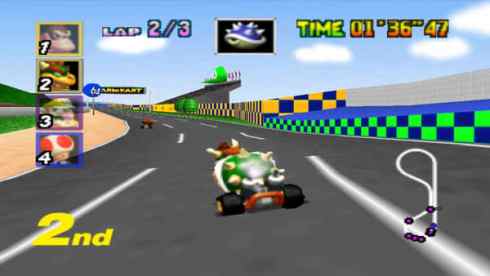
You kind of need to be able to have 4-player play, right?

Still, it begs the question, do I want nintendo to put out a Nintendo 64 Classic Edition? It’s not just about the games, wanting one also means dealing with intentional scarcity likely to follow. It also probably means paying a higher price. The NES Classic was $60, and the SNES Classic is $80, the N64 Classic could command $100. And unlike the other two, the N64 Classic practically requires four controllers to truly replicate the experience and spare controllers for the NES Classic were the only things harder to find than the NES Classic itself! Could Nintendo package it with four controllers to help soften the $100 price point? Maybe, but if those controllers are expensive to produce then it may not be possible. And do we really want to spend $100 or more on a mini N64? An actual one with multiple controllers would run you about the same and those cartridges aren’t super scarce and quite durable. It’s certainly not the nostalgia boner the NES and SNES induce. So really – I don’t know. I look at that list of games, factor in the cost and aggravation, and I really don’t get the same sense of want that the SNES Classic gives me. Part of that is just that the games from the N64 era haven’t aged particularly well, so my desire to revisit them isn’t particularly strong. On the other hand, I know me and I tend to want what’s new and what’s popular where games are concerned so there’s a good chance I’d try to get one. Unlike with the SNES Classic though, I don’t think I’d go above and beyond to secure one. I need the SNES Classic (obviously I don’t, but the level of want I’m experiencing feels like need) and will get one no matter what, but I could probably go without a Nintendo 64 Classic and not feel too bad about it.
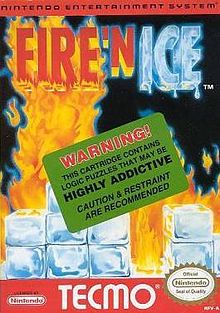
Fire ‘N Ice (Solomon’s Key 2)

220px-Fire_'n_Ice_Cover

North American box art

At this blog, I do not get the luxury of many short posts. I tend to say a lot about the subjects I cover, but on this occasion I think I can keep my words to a relative minimum. I say this to myself, of course, as I begin writing this entry so who knows if that will hold true or not. The reason for my optimism is because I’m here to talk about a little puzzle game for the NES called Fire ‘N Ice. Being a puzzle game, there’s not a ton to talk about, but don’t confuse that as me saying this isn’t a post worth reading or a game worth playing.

Fire ‘N Ice is a game produced and developed by Tecmo and was released in Japan in 1992 and other parts of the world in 1993. If you’re at all familiar with the history of video games then those dates probably mean something to you. This was of course after the release of the Super Nintendo, and if you collect older games then that’s something that can be discouraging all by itself. Being an 8-bit game in a 16-bit world means Fire ‘N Ice was pretty much ignored upon release. Being a puzzle game, and prequel to the under appreciated Solomon’s Key, meant Fire ‘N Ice was always going to have a limited audience, but it’s timing made it so much worse. As a result, the game was produced in low quantities and tracking down a cartridge today is going to set you back a few hundred bucks, which is a shame because this is a title worth playing.

When I sat down to play Fire ‘N Ice for the first time I had no idea how rare and valuable a game it was. I was just in the mood to play a puzzler that’s not just another Tetris clone. I was familiar with Solomon’s Key, but it wasn’t a title I had any particular affection for. This game just seemed appealing because of its bright colors and simple design. In Fire ‘N Ice, you play as the apprentice wizard Dana who has been bestowed with a magic ice wand by a fairy to save the land from an evil wizard named Druidle. The story isn’t important and can be ignored, but if you’re into continuity Dana is the same Dana from Solomon’s Key and this is essentially how he got his start.

81563-FireNIce

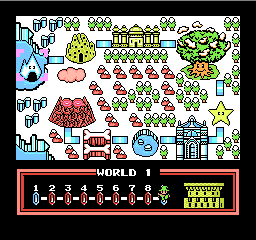
The stage select screen.

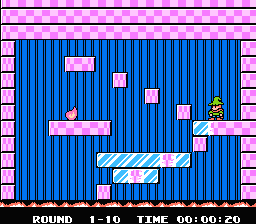
The game is comprised of ten worlds with ten individual levels within each world. Dana moves along a map to each world and they can actually be tackled in any order, except world 10 which becomes available after completing the other nine. The stages themselves are single screen levels in which you are tasked with extinguishing the little fire enemies onscreen, which will vary in number. Extinguishing them requires Dana to either drop a block of ice on them or kick a block of ice into them. Dana’s wand enables him to create these ice blocks, but he can only make them appear diagonally in front and below him, as opposed to directly in front of him or directly beneath his feet. He can also make the ice blocks disappear in the same fashion. Dana cannot jump, but he can climb onto a block that’s directly in front of him. If a block is in front of him with no wall or other block behind it, then Dana can kick it and it will slide until it meets an obstacle. Contacting an enemy or fire results in death. The gameplay is quite simple, but like any good puzzle game this simplicity is built upon to create some brain-teasing levels and maximize its usefulness as a gameplay mechanic.

fire-n-ice_4

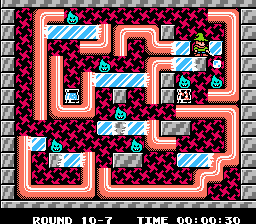
An early, fairly simple, level. The object is to either drop an ice block or kick an ice block into the flame to extinguish it.

As the game progresses new elements are introduced. There are blocks that are permanent and can be pushed around one “tile” at a time. There are jars that Dana can climb onto or walk across that become burning jars if contacted by one the flame enemies and cannot be extinguished. Dana is also unable to create blocks of ice on top of these flaming jars making it a dicey proposition to consider when dropping an enemy onto one. Pipes are also introduced that Dana can move through which add a new dimension to some of the stages and it’s one used some-what sparingly so as not to become over-exposed. Each world ends with a boss stage that often introduces a new gameplay element. Some of these stages include enemies that move around the stage and will kill Dana by touching him. Others are scrolling levels where lava is slowly rising and Dana has to dispatch of the enemies without being consumed by the lava. The only true boss fight is saved for the game’s final level, but it’s still approached with the same spirit as the other levels. It’s actually one of the easier stages in the whole game, to be honest.

95692-fire-n-ice-nes-front-cover

The much more interesting non North American box art.

The game is appropriately challenging while also being forgiving. Perhaps disappointing to some is that most levels only have one true way to complete it without room for much deviation. One wrong move or lack of foresight can sometimes doom you to repeat it. At any point, the game can be paused and the level restarted which is definitely a welcomed inclusion. Since the regular flame enemies are also stationary, there’s typically no harm in just letting the screen idle while trying to plan your next move. I found that I would mostly start slow and then get into a rhythm after a few stages and breeze along until something came along and stumped me. The game requires you to think in a certain way to figure out most of its puzzles and often times when I got stuck I’d eventually have a “eureka!” moment and admonish myself for not thinking of it sooner. The game also possesses a password system so you can come and go as you please. The passwords aren’t terribly long and complex, which is always welcomed. There’s also an in-game timer for each level that exists purely for your own amusement. Beating the game’s ten worlds also opens up a bonus section of worlds consisting of an additional 50 levels, which is quite a nice reward. Also included is a level editor in case you want to create your own puzzles, but unless you have a Famicom copy, you can’t save your own creations which kind of defeats the purpose.

2160M

A later, far more complicated, level. Dana can travel through the red pipes and will immediately pop out the opposite end.

Fire ‘N Ice may have a pretty ho-hum name in North America (in other territories it was simply called Solomon’s Key 2), but it’s a pretty entertaining puzzle game. If you have access to it, I heartily recommend it. Unfortunately, having access to it via legal means is rather challenging. Tecmo has never released the game digitally through Nintendo’s Virtual Console service (though it did for Solomon’s Key) nor has it even included it on any compilations which is disappointing since this would be a great portable game. As I mentioned earlier in this post, an after-market copy is prohibitively expensive and as much as I enjoyed the game I can’t recommend it if the cost is as high as I tend to see it. There are sellers on eBay offering clone carts, which while not entirely legal is probably your best bet if you want to experience the game on an actual console. And of course, there’s also emulation and ROMs floating around the internet. I’m not an advocate for piracy, but in the case of a game like this that the original publisher doesn’t make available to consumers (and hasn’t for 25 years) I can’t exactly find much harm in just downloading the game. It’s a game worth playing, and it’s a shame to see such a title become lost to time and old hardware.

I can’t believe I just spent over 1300 words on this one. Better luck next time!


Ranking the Games of the SNES Classic

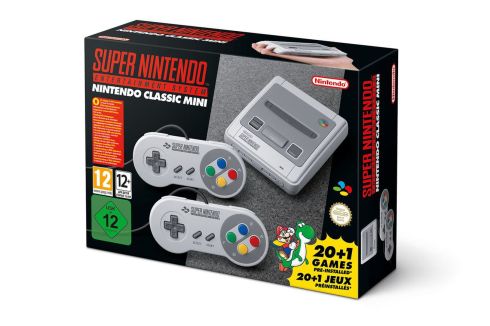
snes-classic

It’s coming…

Nintendo dispatched with what little suspense there was relating to the SNES Classic this week by unveiling the plug and play device as well as just about everything we needed to know about it. Ever since the company shockingly pulled the plug on the NES Classic, the plug and play mini Nintendo Entertainment System that proved nearly impossible to find during the holiday season, the gaming community has been wondering when the company would show off its successor. It was basically a foregone conclusion that a SNES Classic Edition would be made, the only real questions concerning it would be when is it coming and did Nintendo learn anything following the NES Classic fiasco?

Well, yes and no to that last question. The biggest complaints, aside from availability, surrounding the NES Classic were in regards to the controller cord length and the selection of games. While most of the very best non-licensed games from that era were represented, there was also a lot of padding with games such as Balloon Fight and Ice Climber that most people were not eager to revisit, The controllers were wired, which in the age of wireless feels odd enough, but to make matters worse the cord length was only two and a a half feet. The SNES Classic seeks to improve on both by legitimately featuring a wealth of quality, classic games and by featuring longer cords. Unfortunately, the length was only extended to five feet which is shorter than what is featured with the original SNES controllers. There’s no word from Nintendo though on just how many units will be produced, only offering up that it will be significantly more than the NES Classic. Helping matters some is that each unit will come bundled with two controllers, as the only thing harder to find than the NES Classic last Christmas was a second controller to go with it. The SNES Classic will come in at $80, which is $20 more than the NES Classic, and will feature 21 games as opposed to 30.

snes-classic-mini-uk-box-art

The UK edition which is identical to the Japanese Super Famicom. The actual Japanese version will include different titles.

I’ll review the device in time, when it’s actually available, but like I did with the NES Classic, I wanted to rank the games that are coming with it. Last fall, I speculated on what would be included on the device assuming it would include 30 games, so naturally I picked more than what was featured. I actually only missed on three games:  Kirby’s Dream Course, Super Ghouls ‘n Ghosts, and Star Fox 2. The latter of which I mentioned as thinking it would be asking too much since Star Fox 2 has never been officially released. It’s definitely the biggest surprise that came out of Nintendo on Monday, and I’m sure millions of Nintendo fans across the globe are eager for an official release. Kirby’s Dream Course, I just plain didn’t consider while I omitted Super Ghouls ‘n Ghosts from my list mostly as wishful thinking. Given that its predecessor was featured on the NES Classic, I had a hunch it would be included, even though I don’t know anyone who wants it. The only game I’m surprised isn’t being included is Pilotwings, as being a first party title and SNES launch game, I had just assumed Nintendo would include it. Capcom naturally is including Street Fighter 2, and the only question around that game was what version would we get? The US is getting Street Fighter 2 Turbo: Hyper Fighting, while curiously the Japanese market is getting Super Street Fighter 2. What did we do, Capcom, to deserve this slight?

I could go on and on about this product, but I’m going to cut myself off here and get to the meat of this post:  the games. The 21 US/UK games are below in order of how awesome I think they are starting with the worst of the bunch. This set, as a whole, is rather excellent with only a few titles I’m not too high on. And even though I’m starting with the lesser titles, the first one comes with an asterisk:

Star_Fox_2_2017#21 – Star Fox 2* (2017)

Star Fox 2 is obviously the most mysterious title of the bunch, but given that it has “leaked” to the internet it’s not as mysterious as it once was. And even though I think the finished game included on the SNES Classic is likely not much different from the ROM that’s been available for years, I don’t feel comfortable ranking it just yet without playing the completed game. So while I’m ranking this as #21, it’s basically unranked, and I don’t think it will be the worst game on the set. What it probably will be is the first game most people play after the plug this baby in.


250px-GhoulsSNES_boxart#20 – Super Ghouls ‘n Ghosts (1991)

Ghouls ‘n Ghosts is a hard game, which is probably its defining feature. The SNES game is the sequel to the original, though it’s not much different. It certainly looks better, but as an early SNES title it’s not likely to impress in that respect. For those who really want to be challenged, this is probably a satisfying game. For me, I just don’t find it particularly enjoyable to play. It’s not cheap or anything, it just isn’t fun to control Arthur or particularly rewarding to complete his quest. I wish Capcom had opted to include the spin-off Demon’s Crest instead, but I did not expect that to happen.

snes_f-zero_boxart#19 – F-Zero (1990)

F-Zero is another early SNES title and when it first came out it was pretty impressive to behold. Playing it though? Eh. It’s basically a glorified tech demo for the SNES Mode 7 graphics which did a lot for the racing genre as you no longer needed to rely on onscreen prompts to know when to turn, you could just see the turns coming up ahead. It’s a hard game that strangely is strictly single player. Since it was a launch title, some fans might have a fondness for the game as it was one of the titles to turn to after finishing Super Mario World, but a lot of people would probably rather play another popular racing game from this collection.

dkc_snes_boxart#18 – Donkey Kong Country (1994)

I’m guessing most people will rank Rare’s resurrection of the Donkey Kong franchise higher than I am, but I was just never that into the game. Kind of like F-Zero, the game is a bit of tech demo sorts for the pre-rendered three-dimensional graphics that the game makes use of. With everything being pre-rendered, there’s a disconnect between the Kongs and the environment surrounding them. I, of course, didn’t know this when playing as a kid but I did feel the disconnect. It was impressive to look at, but not a lot of fun to play.

superpunchoutbox#17 – Super Punch-Out!! (1994)

The less popular sequel to one of the NES’s most popular games, Super Punch-Out!! is probably a more arcade perfect version of the original Punch-Out!!, though the NES version was so popular it became the definitive one. As a result, this game lacks its predecessor’s charm. Little Mac isn’t so little given the behind the back view of the game which really changes the feel of the game and undermines the underdog factor the game is supposed to possess. It is a game I haven’t played in years and I’m interested in resisting it to see if my opinion has changed.

contra_iii_game_cover#16 – Contra III: The Alien Wars (1993)

It’s Contra, I probably don’t need to go into any additional detail. You know what you’re getting here. It fills a nice void on this collection for its co-op play, and Contra is probably the premiere run and gun franchise. It serves a nice callback to Super C from the NES Classic, so it was a foregone conclusion it would be here. A lot of Contra fans consider either this or Hard Corps, which was released for the Genesis, as the best in the series so Contra fans should be happy this one is here.

250px-star_fox_snes#15 – Star Fox (1993)

I know we’re all really excited to be getting Star Fox 2 on this set, but I feel like it must be said that Star Fox is possibly Nintendo’s most overrated franchise. The original game is, and I’m sounding like a broken record already, a tech demo of sorts for the Super FX chip. And if you didn’t know, the Super FX chip was the SNES’s primitive way of introducing polygons to gamers. It looked dated from the moment it first showed up, but there was some charm to the game’s visuals. Those have been lost to time as the game is borderline ugly at this point, but it’s a solid behind the vehicle flight simulator. Star Fox 64 was much improved and the 3DS version of that game is probably the best game in the franchise. And pretty much all of the other games are either decent or bad, but at least the first one is still solid!

smk#14 – Super Mario Kart (1992)

The launching of a franchise juggernaut, Super Mario Kart was an instant crowd favorite due to the combat elements of the game. Battle Mode is still pretty fun, though the Mode 7 graphics do show their age at this point. It almost seems like Mario Kart 64 has taken over as the game most people feel the most nostalgic for, but I do feel the original game was actually better than that one. It probably wasn’t until Double Dash for the Gamecube that the original was finally surpassed and it has since been lapped a few times. It is dated, but still fun and challenging.

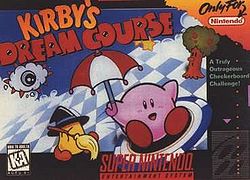
250px-Kirbydreamcourse#13 – Kirby’s Dream Course (1994)

This is probably the weirdest game included on this collection, and aside from Star Fox 2, the most unexpected. Kirby gets a lot of the spin-off, gimmick, treatment and most of those games are mediocre or worse with a few gems here and there. Dream Course is one such gem even though it probably sounds pretty stupid. The game is basically a cross of mini golf and billiards with Kirby serving as the ball. You shoot him into enemies with the last enemy on the screen serving as the goal of the stage. The objective of the game is to get Kirby into the goal in as few “strokes” as possible. He can still copy powers which introduces strategy into which enemy you take out first. The billiards element exists in your ability to apply spin to Kirby popping him up in the air or causing him take off in a given direction. It’s a fun game though it does depend a lot on trial and error, so once you figure out each hole, you’ll probably not come back.

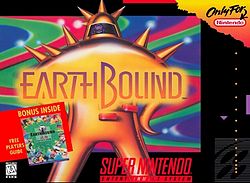
earthbound_box#12 – EarthBound (1994)

The JRPG was really starting to take-off at this point in time so it’s no surprise that Nintendo sent its lone game in that genre west for the first time. EarthBound is a game fondly remembered for its setting and humor, being for the long time one of the only JRPGs to be set in a non-fantasy setting. This is another game that many people will probably rank higher than I am (I think IGN recently placed it in the top 10 RPGs of all time or something), but believe me when I say the game is very dated by today’s standards. About the only thing progressive EarthBound did at the time from a gameplay perspective was remove the random battles, but enemies are much faster than you which minimizes that advantage. The inventory management is easily the game’s biggest drag and everything moves at a glacial pace. As someone who loves JRPGs, I can find enjoyment in the game, but I don’t think it’s on the same level as the other SNES greats like Final Fantasy III and Chrono Trigger, but that’s just my opinion.

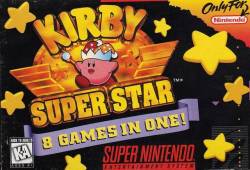
kss_boxart#11 – Kirby Super Star (1996)

Kirby Super Star is your dose of traditional Kirby on this set, and Super Star is probably his best outing still to this day. It’s not particularly challenging, like his NES outing, but the copy powers of Kirby make the game a lot of fun and give you the ability to change things up with each play-through. You can also have a second player control an enemy character for 2-player co-op which is also a lot of fun. It’s quite possibly the best co-op platformer I’ve ever played as even Mario and Sonic have struggled in that area. And as a late entry to the SNES, a lot of people may not have be as familiar with this game which may make it feel new to a lot of people picking up this collection.

35497-Street_Fighter_II_Turbo_-_Hyper_Fighting_(USA)-1453510943#10 – Street Fighter II Turbo: Hyper Fighting (1993)
Now we’re getting into the top 10, and the games that helped define the SNES as one of the greatest gaming devices of all time. Street Fighter II was a huge game and instrumental in the fighting-game craze of the early 90s. Without it, who knows where the fighting genre would be? It was also one of the first arcade ports to a console that felt almost perfect making Street Fighter II a game that both simultaneously prolonged the life of the arcade and helped to hasten its demise. The game is a classic and still holds up quite well, to the point that Capcom recently re-released a version of Super Street Fighter II on the Switch with updated visuals. Because of that game, it’s possible SNES Classic owners are getting short-changed with the Turbo edition of the game with Capcom hoping to not impact sales of their Switch title. At least, that was my assumption until I saw that Japanese gamers were getting Super Street Fighter II on their Super Famicom Classic Edition, so who knows why we’re getting Turbo? It’s still a great game, just not as good as Super.

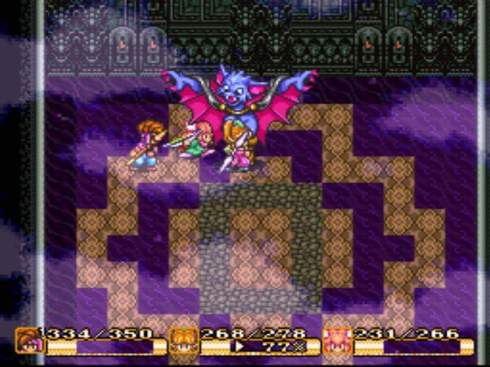
250px-secret_of_mana_box#9 – Secret of Mana (1993)

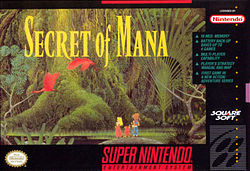
Often considered Square’s answer to Zelda, Secret of Mana is very much its own thing and even does something it would take Zelda many years to introduce:  co-op play. Secret of Mana can be enjoyed by up to three gamers at a time, but I have no idea if the SNES Classic will be able to accommodate more than two players at any one time. It’s possible, but doesn’t feel likely. Even without that, Secret of Mana is a great game with a great soundtrack, look, and gameplay. I’ve actually been playing its sequel recently, so I’m eager to go back to the first SNES game (which is technically a sequel to Final Fantasy Adventure for the GameBoy) for comparison purposes as I’m undecided on which is my favorite. This one should be a nice, meaty, adventure for SNES Classic owners and its a nice alternative to both Zelda and Final Fantasy.

super_castlevania_iv_north_american_snes_box_art#8 – Super Castlevania IV (1991)

This a favorite of many in the Castlevania fanbase. In some ways, it’s the last classically designed game and is essentially the first three games perfected. It’s classic Castlevania with enhanced visuals and music and still looks great to this day. It might play a little slow for some, but the controls are tight and the difficulty is fair. There’s not much more to say about this one, if you’ve played any of the first three Castlevania titles you’re getting more of the same, just a better version.

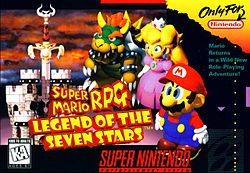
supermariorpgsnescoverartus#7 – Super Mario RPG (1996)

The SNES Classic features three traditional JRPGs that all play about as different from one another as a JRPG could. Super Mario RPG was a Nintendo-Squaresoft collaboration with Square doing most of the heavy lifting. Kind of like Capcom’s collaboration with Square on Breath of Fire, Nintendo would take over the Mario RPG franchise going forward and it’s still debatable which title in the now long-running series is the best. The original is still a lot of fun with a lot of humor and charm throughout. The timed button commands in the battle system introduced a layer of interactivity not present in a lot of JRPGs at the time and the pseudo 3D visuals were pretty impressive at the time. They’ve aged a little better than the Super FX games though the title still looks a little dated by today’s standards and maybe a traditional sprite-based game would have aged better. That said, it’s a lot of fun with a solid amount of challenge and its running time will help give your SNES Classic a long shelf life.

yoshis_island_super_mario_world_2_box_art#6 – Super Mario World 2: Yoshi’s Island (1995) 

Yoshi was the Super Nintendo’s break-out star, so it wasn’t surprising to see him assume a starring role in the Super Mario World sequel. What was a surprise, was to see baby Mario playing a supporting role, or maybe that should be an antagonist role? Baby Mario sucks and a lot has been said on that subject over the years, but beyond that Yoshi’s Island is a meaty platformer with a lot to see and do. The levels feel massive compared to its predecessor and Yoshi in some levels introduces a surprise element on a first play-through. How those vehicles handle is a bit of a mixed bag, but everyone agrees the game looks fantastic and it was the best application of the Super FX chip I ever saw (technically Super FX2 chip). Because of that though, the game has been hard to emulate properly so it has never been available on Nintendo’s Virtual Console. Hopefully it’s faithfully recreated on the SNES Classic as I found the GBA version available to 3DS Ambassadors underwhelming.

mega_man_x_coverart#5 – Mega Man X (1993)

Mega Man was probably the biggest third-party star on the NES, so it was expected he would make the jump to the SNES. What wasn’t certain was how he would do that. Mega Man 5 and 6 both released very late on the NES making it seem like that series would remain an 8-bit fixture while the SNES received Mega Man X. At first confusing the X for a roman numeral, I was perplexed how the franchise made it that far without my knowing, but once I played it I didn’t care because Mega Man X was the perfect evolution for the Mega Man franchise. Now referred to simply as X, Mega Man could dash and wall jump in addition to his other maneuvers. He had a cool sidekick in Zero, who would later become playable in the sequels, and a new enemy in Sigma. The game was a blast and it’s justifiably included here as one of the premier run and gun platformers. Eventually traditional Mega Man would come to the SNES in the form of Mega Man 7, a game not remembered fondly so Capcom was wise to lend X to the SNES Classic.

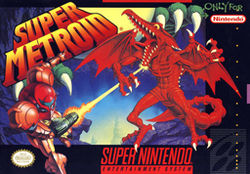
250px-smetroidbox#4 – Super Metroid (1994)

For a time, it seemed like Samus would miss the SNES as it took her a long time to arrive. Thankfully, her arrival on the console was definitely worth the wait as Super Metroid is still the best game in the series and a true 16-bit classic. The game isn’t that much different from its NES predecessor, but it’s a lot bigger and more impressive to behold. Samus handles better than ever and feels like a being truly equipped for the mission at hand capable of wall jumping, morph balling, dashing, directional shooting, and all that other jazz. The game opens up little by little with Samus finding new and better equipment that allow her to reach previously inaccessible areas. In that, Samus is very similar to Link though you would never confuse Zelda with Metroid. This is Nintendo’s best action franchise, so it’s a shame the company promotes it so little, but at least we’re getting a remake of Metroid II for the 3DS this fall. Enjoy this one though as it’s one of Nintendo’s best games.

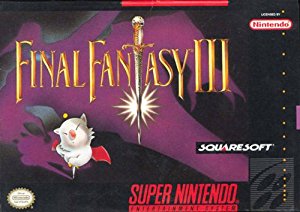
510ahyhdidl-_sx300_#3 – Final Fantasy III (1994)

Possibly the greatest game in the long-running Final Fantasy series, Final Fantasy III was the title that really put the JRPG on the map in the west. Of course, we all know it now by its real title, Final Fantasy VI, but for a long time American gamers thought it was the third game in the series. It features a huge cast of characters and one of gaming’s most memorable villains. Each of the playable characters does something no one else does which makes party construction a lot of fun. There’s also the “final” battle fake-out which leads to the World of Ruin, and I loved that there was an instance of permanent death for a certain character if you messed up. You may have passed on playing Final Fantasy on the NES Classic, but definitely don’t ignore this one.

250px-super_mario_world_coverart#2 – Super Mario World (1990)

Still the best Mario game! I love Super Mario World and you probably do too because it’s a game that’s hard not to like. It’s also a game most have played to death because it was the pack-in game with every SNES sold. Some are probably disappointed Nintendo is including this game and not Super Mario All-Stars & Super Mario World, as that would have essentially given us four additional games, but I wasn’t expecting Nintendo to be that generous so I’m not surprised, but I can’t disagree that it would have been awesome had they done so. Even though I’ve beaten this game many times, finding all of the gates in each stage, I’ll probably play through it again on the SNES Classic because the game is so fun and it will be a nice measuring stick to see how well the emulation is done.

attp#1 – The Legend of Zelda:  A Link to the Past (1991)

It may be boring, but could any other game be #1 on this list? A Link to the Past isn’t just arguably the best Zelda title, it’s arguably the greatest game of all time. It looks great, handles well, sounds awesome, and the adventure is long and satisfying. This one introduced a lot of items and gear that would become staples of the franchise going forward, and the only reason to not play this game on the SNES Classic when it comes out is because you’ve already played it a million times. And even then, that’s still not a great excuse.


Right Place, Wrong Time – Games Worthy of a Remake

Kotaku has an article up this week about one of my favorite games:  Xenogears. In it, the journalist, Jason Schreir, was able to ask director Tetsuya Takahashi about that infamous second disc and why the game went to a narrator instead of letting the player experience the moments the narrator discussed. Fans have mostly assumed that they ran out of money, and that’s still mostly true. Naturally, Squaresoft being a big company could have easily injected more cash into the project, but they were holding the development team to a 2 year development cycle. When the team, and Takahashi attributes it to being a young team, couldn’t make the deadline they were either going to have to release the game in an abridged format, or do something drastic like cut content from the second disc, which is the way they went. Back in 1998, there was no releasing a bare-bones version of a game and adding to it down the road via downloadable content.

Given the two options, Takahashi probably picked the lesser of two evils, but it doesn’t change the fact that he basically didn’t get to make the game he wanted to. For that reason, I’ve always felt that Xenogears is a game worthy of a remake. It likely never will be remade since Takahashi and Square-Enix are no longer affiliated so Square-Enix would have to do it without him. And I don’t know how much you pay attention to the current goings on at Square-Enix, but they’re pretty tied up with another big re-make in Final Fantasy VII with no end in sight on development there, so remaking a lesser title (in terms of sales potential) is out of the question. Nintendo, after doing remakes for its two N64 Zelda titles, just announced at E3 that a remake of Metroid II is coming this September to 3DS. Sony also announced a remake to Shadow of the Colossus for PS4. So yes, remakes are very much “a thing” and there are many games that are deserving of them. Since Xenogears is on record as being one of my favorite games of all time, I want to start there:

oh-my-gobrino-xenogears-1280x720

Some improved visuals would be welcomed as well.


Xenogears

Orignal Release: Playstation 1998

As I said in the intro to this post, the second disc of Xenogears was essentially a half-measure. An excuse for a remake is right there – just “make” the second disc. In addition to that though, the game’s visuals have aged rather poorly, and the abundance of text begs for some voice overs. I enjoy the modern 2D sprite look embodied by DuckTales Remasterd or the recently announced Dragon Ball Fighter Z. Keeping the sprites would be fine by me. Refining the combat would be welcomed as well and making the “magic” attacks more integral would add some strategy to the non-mech combat. In addition to that, adding more complexity to the mech combat would also be fun as I always felt piloting those mechs should have felt like a blast. Instead, the combat is simplified to a degree with an added resource management tacked on in terms of fuel. Other obvious enhancements would be eliminating random battles and streamlining the interface, though the current one is actually fine. Xenogears is already a good game, so it doesn’t require a lot of refinement, it just needs to be officially “finished.”

Yoshi_Species_-_Group_Artwork_-_Yoshi's_Island_DS

Just Yoshi, no babies. Thank you.


Yoshi’s Island

Original Release:  Super Nintendo 1995

There’s some unknown aspect to Super Mariod World 2:  Yoshi’s Island that prevents it from being re-released. Sure, it was ported to the Gamboy Advance but some effects were lost in translation, and yet that’s the version that has appeared on the Virtual Console. The original SNES version has never been made available again, and I have to believe it’s due to some technological limitation since it’s clearly not a licensing issue for Nintendo. Nonetheless, a re-release would be appreciated, but a remake would be better. Aesthetically, the game still looks nice because of its art direction. It’s not as syrupy as more recent Yoshi titles and balances the cute aspects of the franchise well against the typical Mario backdrop. So visually, a remake isn’t really needed, but anyone who has ever played the game would welcome a remake that does one thing differently from the original:  get rid of the crying baby! I’ve read some studies that say an infant’s cry is designed to unnerve its father and I totally buy that. When one of my kids cries it creates a certain anxiety that’s different from what I’m used to experiencing. Mario’s screams bother me in a similar way and I really can’t stand that game sometimes as a result. So Nintendo, how about a remake that just removed Mario? I don’t care if you even adjust the story to explain it, just get rid of him. For whatever reason, all of the Yoshi games that have followed this one have been significantly worse than the original, to the point where I honestly can’t recommend a single one, so a remake of the first one would be more than welcomed now.

35228-Secret_of_Mana_(Germany)-1459171091

The original Seiken Densetsu has been remade more than once, but the much better sequel has not.


 Secret of Mana

Original Release:  Super Nintendo 1993

Like Yoshi’s Island, Secret of Mana is still quite playable in its current form. Also like Yoshi’s Island, the sequels to it that have made it west have not been nearly as good as the original, making a remake feel more desirable from that point alone. Mostly though, a remake for this title would be welcomed because, like Xenogears, it was kind of released in an incomplete state. Secret of Mana was being developed to take advantage of the Super Nintendo CD, when that deal fell through, Squaresoft had to scrap some content and change development so that it would play without the peripheral. As a result, there’s some buggy portions in the game and the audio is most likely not realized as it was intended. A remake, with a more modern combat approach, would probably be a lot of fun. Just don’t make it a Kingdom Hearts clone.

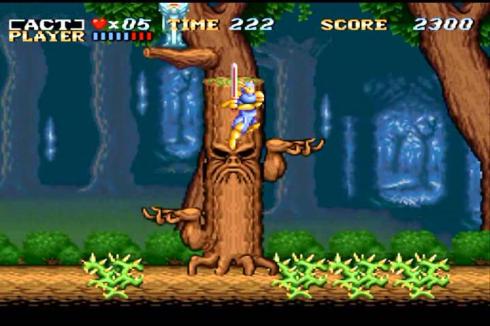
Actraiser-pic-06

One of the first SNES titles, ActRaiser tried to be many things and was good at them all, but great at none.


ActRaiser

Original Release:  Super Nintendo 1990

ActRaiser was an ambitious title. It attempted to combine the godlike properties of a Sim City styled game with an action-platformer that also had some RPG elements. Naturally, being really the first of its kind, it came up short in some respects though it was still a really cool game in its own right. The platform sections could stand to be refined with more combat maneuvers for our avatar, meanwhile, the god mode portions could really use an injection of excitement as they’re definitely a bit tedious as-is. The foundation is in place, but decades of new concepts and ideas being integrated could create an incredible gaming experience.

37152-Megaman_Legends-2

We just weren’t ready for this in 1997.


Mega Man Legends

Original Release:  Playstation 1997

For some reason, I was really excited by the concept of Mega Man Legends, an action RPG starring everyone’s favorite 2D action star. The problem was, no one really knew how to make that game in 1997 and no one really would until 2001’s Devil May Cry, interestingly enough, also a game created by Capcom. Even so, DMC is not a great comparison since it’s more focused on melee combat while Mega Man is a shooter. The original Legends is a visually ugly game with poor controls. Capcom really struggled with 3D controls (see Resident Evil) on the Playstation and it took awhile for them to figure it out. More modern titles like Resident Evil 4 (which even that is over ten years old now) refined that over-the-shoulder camera which would work really well for a modern Mega Man Legends. There would still be a challenge to introducing Mega Man styled platforming, but that’s where the DMC experience would pay-off. In short, Capcom wanted to make this game in 1997, but it didn’t know how. In 2017, I think that’s changed and a truly great game in this franchise could finally be realized, and why not just start over rather than try to make Legends 3 (again)?


There are obviously plenty of other games that could stand to be remade, and most of them would come from the 16 bit to 64 bit era. I’ll stop here with this post, but feel free to share some of your own. Other games I considered were X-Men (the arcade game), Rocket Knight Adventures, Baldur’s Gate, Bushido Blade, Castlevania: Symphony of the Night, and Final Fantasy VI.


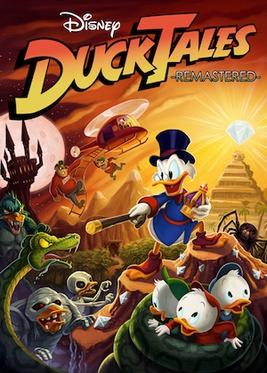
DuckTales: Remastered

DuckTales_Remastered

DuckTales: Remastered (2013)

If you read yesterday’s post about DuckTales for the NES, you may have thought, “Wow, I’m surprised he didn’t mention anything about the re-make that came out in 2013.” Well, that’s because I was saving it for its own post! DuckTales: Remastered is a complete remake of the original NES game for Playstation 3, Xbox 360, and Nintendo Wii U. Initially a digital only release, DuckTales: Remastered would receive a tangible release as well, and for a game the started as a budget-friendly digital title, I can think of few others that received as much attention and fanfare as DuckTales: Remastered.

Capcom debuted the game at E3 with a memorable video hyping it up before indulging the audience in a sing-along of the memorable theme song from the show. The release of the game coincided with the 25th anniversary of the NES original, and it was a worthy title to revisit based on the fact that the original is still a ton of fun to play. Naturally, remaking a game many consider to be a classic is a tall task, but with such simple play mechanics, how could Capcom go wrong?

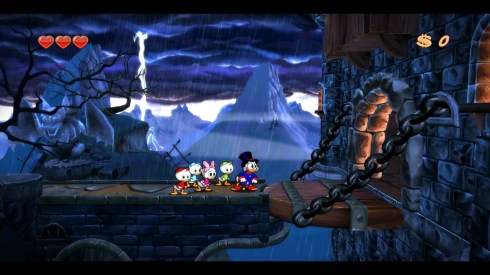
cd86dd950cf61320f768d1708052b37beaf5f292-498501

Transylvania got a lot scarier over the last 25 years.

DuckTales the game is largely unchanged at its core. The player still controls Scrooge who jumps and pogos his way through various levels (now six) in an effort to accumulate more wealth for himself and eventually to recover his lucky dime. What is changed are the production values. Modern game consoles can obviously handle quite a bit more, and this being tied to a Disney property, means a remake needs to meet the expectations and standards of The Walt Disney Company.

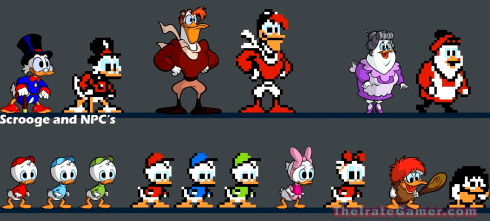
ducktales-remastered-npc-character-roster-wubba-duck1

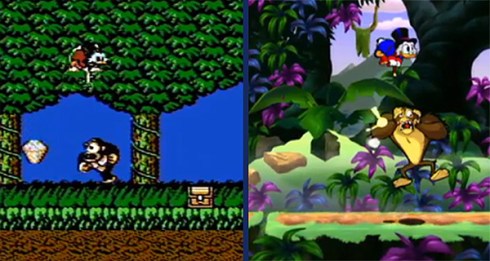
A comparison of the sprites from the NES original and the Remastered version.

For the first time ever, a Disney Afternoon property can now basically look just like it does in game form as it did on television. The game is still a 2D side-scroller, but now the sprites for the characters are lovingly hand-drawn in great detail in bright, expressive colors. Scrooge will mostly sport a happy expression, but when he encounters the Beagle Boys or Magicka DeSpell he’ll scrunch his face up into a frown. The enemies too feature changing facial expressions, and not just the boss characters, but even lowly spiders and the like. The levels really come to life as the difference in climate is really accentuated by the enhanced presentation. All in all, DuckTales: Remastered is a beautiful game to behold and one of my very favorites from a visual point of view.

DuckTalesSideBySide

Another comparison shot to the original.

The enhanced fidelity of the game’s graphics are not the only aspect of the presentation to be enhanced with better technology. The audio is also greatly expanded upon featuring full-voiced characters with actors from the show as well as remastered music. Alan Young, in what is basically his swan-song as Scrooge, does a great job of voicing the greedy old duck and shows that time hasn’t taken much away from his vocal chords. Russi Taylor is on-hand to reprise her role as the nephews, Huey, Duey, and Louie, while  Terry McGovern returns as Launchpad. The wonderful June Foray was even brought back to voice Magicka DeSpell, making this a reunion of sorts for the cast. This seems all the more special since the new version of the cartoon set to launch this summer will feature an all new cast for these characters.

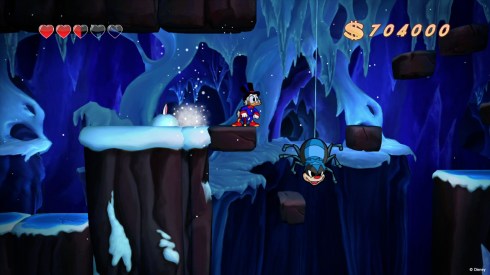
577660

I love how cold this cavern looks.

The downside to all of these resources is the need to make liberal use of them. DuckTales for the NES was a quick and fun to play title that would have worked even without the DuckTales license. For Remastered, a lot of cut scenes and cinematics were tacked onto the experience, not just in between levels, but even during them. They can be skipped, but even so they really break up the experience of playing the game and not in a welcomed way. Worse, I feel kind of guilty skipping over any line from Young and the other cast-mates, but it can get old hearing the same lines over and over if you’re forced to retry a stage. The game has also been lengthened quite a bit, not just with these scenes, but with a new level and longer boss encounters. Some of the boss fights are fine in their new form, while others do drag. I particularly hated the very final encounter with Magicka and Glomgold. What was a pretty simple race to the top of a rope in the first game, is now a death-defying escape from an active volcano with questionable hit detection. I had to replay the final, added level (which aside from the ending was quite good) repeatedly because I kept dying on this final part. Once I finally beat it I was too aggravated to enjoy it.

DuckTales CapCom Gold

And you thought only Zelda came in gold carts.

The game also adds additional collectibles that can be unlocked as you play, giving you something to do with all of the money Scrooge accumulates throughout the game. It’s mostly limited to concept art and background stills from the game but it’s still fun to look at, though not really enticing enough to encourage repeated play-throughs. I wish Capcom had gone the extra mile and included an unlockable version of the original game or its much rarer sequel. There was a press kit sent out to select individuals that included an actual copy of the original NES game, painted gold, and with the Remastered artwork on the cart. Acquiring one of those on the after-market will set you back a few grand, though it is a pretty neat collectible (and one that probably really irritated those select few that had a complete library of NES games in 2013).

Ultimately, DuckTales: Remastered is a fine enough love letter to the original game. It looks and sounds great, though it’s not quite as much fun to play as the original (though Scrooge’s pogo is still just as satisfying as it was back then) due to the pacing issues. It’s an odd duck (pun intended) in that regard, as most objective onlookers would take one look at both and immediately decide they’d rather play the remake. If you enjoyed the original, Remastered is still worth your time as it’s pretty cheap to acquire and includes enough fan-service to make you smile. And at the end of the day, it’s still DuckTales and still inherently fun, even if it could have been more.


DuckTales (1989)

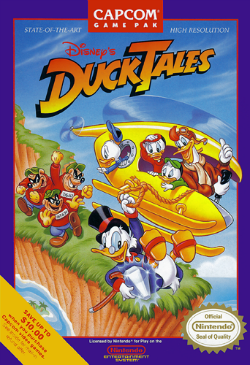
DuckTales_NES_Cover

DuckTales (1989)

Licensed games are trash, or at least, that was the lesson the video rental store taught me as a child. Renting a video game on a Friday night was a special occasion in my house. Maybe a friend was sleeping over, or my parents wanted to rent a movie they didn’t really want me watching, so they got a video game to keep me occupied. The only thing that could ruin the evening, or rather the weekend, was renting a bad game so early on I learned what games to avoid. Usually, those games featured a licensed tie-in:  Roadrunner, Roger Rabbit, Dick Tracy, X-Men – all terrible games with attractive box art.

One consistent exception to that rule were the Disney games, especially the ones centered around the Disney Afternoon programming block. Recently released in a bundle for modern consoles (though sadly no portable devices), The Disney Afternoon Collection is a reminder of just how much better these games were than the usual licensed junk. Developed by Capcom, these were real games meant to entertain with their play mechanics. The games didn’t need the license, the license needed the games. And the cream of the crop was DuckTales, released on the Nintendo Entertainment System in 1989.

DuckTales was not the first of the Disney Afternoon cartoons, but it soon became the flagship series for the block. Featuring a great cast, stories adapted from the renowned works of Carl Barks, and the best animation on television by a mile, DuckTales was an easy hit and it’s a cartoon that holds up remarkably well today. It’s adventure themes are easily adaptable for a video game, so in some ways it should come as no surprise that the game matches, even exceeds, the quality of the program.

dt1

In DuckTales, Scrooge’s adventures take him beyond Earth.

DuckTales is a pretty traditional game for its era. The player controls Scrooge, notably decked-out in his comic attire red coat instead of the blue from the show, who can run and jump his way through five stages collecting treasure as he attempts to recapture his lucky dime from the villainous Magica DeSpell and Flintheart Glomgold. Scrooge handles like a standard character from the era, with the notable distinction that he can’t simply stomp on the heads of his foes to defeat them. Instead he must utilize his cane. When standing next to certain objects, he can swing it like a golf club to knock objects into enemies or objects. Mostly though, he needs his cane to function like a pogo stick. Bouncing off the head of an enemy utilizing his cane in such a fashion is Scrooge’s primary method of dealing damage. It also helps to give his jump an extra boost allowing him to clear wide chasms or reach higher platforms.

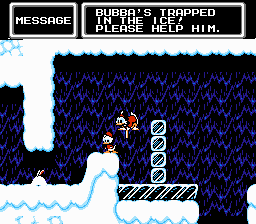
DuckTales1-24

I think every side-scroller was required to have an ice stage.

It’s the pogo quality of Scrooge’s cane that lies at the heart of what makes DuckTales so much fun, even today. Also playing a role are the large, open, levels. There may only be five of them, but they’re much larger than your garden-variety Mario or Mega Man stage. Scrooge can roam around them in basically any direction, and all are loaded with secret chests and treasures for Scrooge to find. Amassing a fortune is part of the game, and the amount of cash a player finishes the game with affects the ending cinematic, a rarity for 1989. Scattered through-out the levels are also other characters from the show, including Scrooge’s nephews and Launchpad, who are able to help out in small ways.

The visuals and sound of DuckTales are also areas where the game performs well. Naturally, the game makes liberal use of a digitized sample of the DuckTales theme, though I never found myself tiring of it. The sound effects are pretty standard for Capcom games of the era and are probably more enjoyable today with the aid of nostalgia. The graphics, while good for the time, are probably just a little above average for the NES. Some of the enemy sprites and character models are quite fun and expressive, though the bosses sometimes leave something to be desired.

DuckTales_NES_Scrooge_with_Launchpad

Launchpad isn’t totally useless, but he also could be more helpful here.

Games for the NES are sometimes considered quite difficult by today’s standards, but DuckTales is a fairly forgiving title in this regard. While it lacks a password or continue system, the adjustable difficulty makes it pretty easy to taylor the game to one’s skill level without making it embarrassingly easy. Changing the difficulty largely affects how much damage Scrooge receives from enemies, which is a simple and fair way to measure difficulty. The game doesn’t throw anything odd at the player, or introduce a foreign play mechanic at any point (unlike say Battletoads which just throws a racing level at the player out of no where), and anyone who has played a decent amount of 8-bit platformers can probably find a way to finish the game. It’s not a long game, though the desire to find all of the hidden treasures and achieve the best ending help provide incentive to play the game again and again.

Mostly, DuckTales is a really fun action-adventure game for the NES. It’s the type of game I can play today and hope that younger generations are able to see what made the game so much fun in 1989. As I mentioned early in the post, DuckTales was recently re-released as part of a bundle of Disney Afternoon titles so you don’t need to have a working NES on-hand to play it, though that’s currently how I enjoy it. And this is a game still worth playing, even after all these years.


The Final Word on the NES Classic

nes_classic_retro_blast_splashIf you read this blog even semi-regularly, you’ve probably seen me talk about the NES Classic already. When it came out I ranked the 30 games bundled with the device and also speculated on what could be included on a likely SNES Classic. What I didn’t do was actually come out and review the device. I figured I had nothing left to add to the general opinions that already existed across the internet. Which is to say, the NES Classic Edition is a fun little device, but it’s hampered by short controller cables and not every one of those games is really worth owning in 2016. Since then, the NES Classic became the hot holiday item and was also probably the hardest to come by. Nintendo evidently didn’t anticipate how popular it would be, as it couldn’t meet demand though it assured consumers more were on the way. Now we’re in April 2017, and the NES Classic has been discontinued.

If you were one of those individuals who got a NES Classic then you’re probably feeling pretty fortunate right now. It was never in stock to the point where you could walk into a store and take one-off the shelf. I suspect those who didn’t get one during the holiday rush probably expected them to eventually be in stock in reasonable numbers, just like Nintendo devices from years past. And while the fervor died down a bit following Christmas, consumers still needed to be vigilant in order to get one.

If you’re still pondering getting a NES Classic you’re probably down to third-party sellers as your only option. As of April 27th, the Nintendo store in NYC has stopped selling them and most big box retailers have either unloaded all of their stock or will do so this weekend. Online, no one has had stock since early April except Amazon’s Prime Now delivery service which has had flash sales sporadically and appears to be done as of this writing. And people selling Classics on Amazon or eBay know full well that the item is still highly sought after and essentially unavailable at retail and the prices reflect that. If you were lucky enough to encounter a Classic in the wild, you were likely charged 60 bucks to purchase the console which came bundled with one controller, a micro USB cable, wall adapter, and HDMI cable. A few places up-charged, and Gamestop offered mostly bundles full of other stuff no one wanted, but for the most part retailers stayed at the MSRP. During the lead-up to Christmas, prices climbed high enough to more than quadruple the MSRP with some even fetching around $300. After the holidays, the prices came down to the $120-$150 range, which was still a lot considering the MSRP, but perhaps not prohibitive. Now they’re back up to $300 and higher and who knows where they’ll settle at as they become more and more scarce.

nes_classic_sigh_01

The NES Classic! Available at all of these places! Maybe!

At $60, purchasing the NES Classic wasn’t much of a dilemma. At that price point it could be considered a novelty. Had it actually managed to be well stocked it probably would have been a popular impulse buy. At the prices they’re going for now though, it becomes a much tougher proposition. I was fortunate enough to purchase two NES Classics. When the item was first announced, I got it in my head that it would make a great Christmas gift for my best friend, so I went to great lengths to acquire one eventually scoring one on Prime Now in a city that wasn’t my own. I had to pay extra to have the item shipped by UPS after having it delivered to one of its stores, but it was a small price to pay to secure a cool gift for my buddy. After Christmas, I happened to be at my computer at the right moment when Best Buy’s website put some up for sale and was able to get one for myself. I’ve had the NES Classic for months, so I feel well equipped to tell you what it’s worth.

To properly judge the NES Classic, you have to consider what it does well and what it doesn’t and why you want it. It contains 30 Nintendo games, about half of which are classics. Some of that lesser half is still playable, and some of it are titles you’ll likely play once and then never again. For sixty bucks, you’re getting each game for essentially $2, so it’s hard to get upset about Ice Climber when you also have Super Mario Bros. 3. None of these games are particularly rare, but you’d be hard pressed to find many for less than $2 if you were trying to get actual NES carts. This makes getting a lot of the best Nintendo games pretty convenient and pretty affordable. Of course, this ignores emulation piracy which I know a lot of people engage in. You don’t need me to tell you that you could probably download all of these games at no expense to you with probably minimal risk of actually running afoul of the law. Don’t confuse that statement as an advocation for illegal ROM downloading, it’s just an acknowledgement of reality. In other words, these games are all easy to come by and probably for really cheap. And if you were an early adopter of Nintendo’s 3DS handheld, you even received a bunch of these games for free from Nintendo itself.

What it all comes down to, you only have a few reasons to actually buy an NES Classic:

  1. The emulation is great and probably the best way to play these games. There’s no latency even when played on a modern television. You can play these games in crisp, bright, HD or opt for a filter that mimics a CRT television (my preferred mode). Nothing else I’m aware of does a better job, including Nintendo’s own Virtual Console service. Simply put, while these games are of limited value visually speaking, they’ve also never looked better and likely never will.
  2. The novelty of it all. And really, this is probably the big reason why people want this thing. It’s cute. It’s a tiny Nintendo Entertainment System that fits in your hand. It’s exactly the type of thing people get nostalgic over and want. Even people that know they won’t actually use this thing much still want it because it looks cool.
Extend_Link_1024x1024

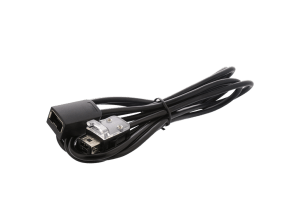
If you actually get one, you probably should also get some controller extension cables. They’re practically mandatory.

There’s also a third reason, though it ties into number 2, and that’s this thing has no protection built-in really what-so-ever. It’s a popular item for modders to hack, and its storage capacity is vast enough that some claim it could store the entirety of the N64 library on it. For those who are really into emulation, it’s kind of the ultimate device because it’s an official Nintendo product capable of playing every single NES game in glorious HD with save states to boot. Considering most that are into emulation do so because they just want to play the games cheaply and easily, they’re probably no longer willing to pay hundreds of dollars to get a novelty box for their illegal games. Especially when you consider that if you mess up the ROM dump you can brick your tiny NES and that just doesn’t seem like a risk worth taking considering what they’re worth.

The decision to purchase or not purchase the NES Classic isn’t that complicated: you either really value silly little niche products or you don’t. If you have a ton of money at your disposal, then have at it, but if you just thought it would be fun to play these games again on a novelty device then passing on it at quadruple the retail price should be pretty easy. That said, if prices come down over the coming months then I could foresee a price range that would have made me comfortable that exceeded retail. At $100 to $120, I could probably talk myself into buying this thing all over again (if I for some reason wanted two of them), but I’d probably stop at around $150. If you really want to play a game or games that are included with the NES Classic, it’s just too easy to go elsewhere for a similar experience.

61YnQdeQnHL

What’s harder to get than the NES Classic? The extra controllers. If you have some old NES controllers hanging around, these work great, plus you can take advanage of the original’s  longer cord!

This whole post also assumes that the NES Classic has truly been discontinued. It makes little sense for Nintendo to cancel the thing. It costs them very little to produce, it likely has little or no impact on Switch production, and Nintendo probably isn’t selling tons of copies of these games via its Virtual Console platform. It’s possible Nintendo just wanted to make a quick buck, but was afraid of cannibalizing its virtual shop. It’s also possible the NES Classic was a bare-bones test run of a dedicated Virtual Console set-top box. Perhaps Nintendo will just release a new version later this year that is capable of adding software and likely would be harder for modders to crack, as it would seem the ease of doing so with the current NES Classic was a big factor in its cancellation. At least, that’s the only thing that makes sense. A rumored SNES Classic is on the way, so hopefully the scarcity of the NES Classic wasn’t intentional and the SNES Classic arrives in far greater numbers. If I can’t pre-order it I’ll probably lose my mind, or I’ll likely just end up outside a gaming store hours before it opens to get what I want silently cursing Nintendo the whole time.


Switch Thoughts Part II (and more Zelda)

Nintendo-20161123-ZeldaWhen I first posted my reactions to the Nintendo Switch I had only owned the console/portable hybrid for a few hours, many of which were spent asleep. It’s now been more than a week since then and I’ve been able to spend a considerable amount of time with the latest from Nintendo and I wanted to post some additional thoughts.
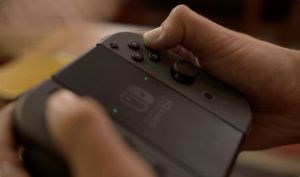
The Switch is both an under-powered console and an over-powered (if there is such a thing) handheld. The point is driven home each time I use my Switch. As a handheld, the battery life when playing Zelda: Breath of the Wild is around the two and a half hours Nintendo cited in the build-up to the Switch’s release. We don’t know if that will hold true for all titles, but I do wonder if that performance will represent the best Switch can do. After all, Zelda is a Wii U title ported to Switch and it’s reasonable to conclude it’s not fully utilizing the power of the console. Perhaps more demanding titles will drain the battery faster, or the opposite could be true if the games are better optimized for the Switch. Needless to say, the battery life isn’t very good and I’ll be curious to see how Super Mario Odyssey runs when it’s released later this year. The portable also runs pretty warm, and I guess that’s to be expected considering the tech underneath. The Switch is very thin, but it’s pretty well ventilated so I’m not worried about over-heating. The button layout is definitely not perfect. It’s so thin that the triggers aren’t particularly satisfying and they’re very close to the front shoulder buttons as well. The right analog stick is in an awkward position, as is the phony d-pad on the left. The small face buttons don’t really bother me at all though, perhaps because I’ve spent many hours with my 3DS, though the small plus and minus buttons can be tricky to find.

As a console, the Switch definitely struggles some with Zelda. I had read about framerate drops and can say they’re very real, and very noticeable. Sometimes the game gets really jittery, and it’s definitely not a good way to showcase the console. The transition from portable to television mode is indeed seamless, so at least that much works. I’ve played the game, and it’s still my only game, with both the joy con shell and a pro controller. I have never had the left joy con completely de-sync, as others have reported, but it still wasn’t seamless. Sometimes Link would keep running after I had stopped pushing a direction on the analog stick, and it did cause me to die at least once. Nintendo’s suggestions for people having the sync issue are pretty much a load of bullshit, wanting you to reduce interference from other wireless devices and so on. Most people probably have a bunch of connected devices at one time, be it game consoles, smart TVs, computers, tablets, etc and just reducing that type of noise is no longer realistic in 2017. The Switch also seems to struggle with its wireless connection to the internet at times, while other devices in my home experience no such issues. It would have been nice if Nintendo had included an ethernet port on the dock for a dedicated wired connection, but I assume they felt that would mess up with the quick turn-around from TV mode to portable mode. They still could have allowed the user to make that call themselves though if a wired connection was their preference.

Nintendo-Switch-games-price-Zelda-Mass-Effect-749578

Somewhat to my surprise, the joy con shell makes for an adequate, albeit small, controller.

Aside from the input lag I experienced with the joy con shell, I was mostly content with how the “controller” felt in my hands. I was some-what skeptical going in, but if it’s performance was perfect it’s possible I would have had some minor buyer’s remorse about the pro controller I picked up. Since I did experience such lag though, I’m naturally happy with my purchase of the pro controller. It’s still too expensive, but it at least works well. The layout is definitely far better than what’s present with the joy con setup, and it’s more or less an Xbox controller. I do wish the D-pad was more comfortable to use, as I suspect fighting games will feel awkward with it. It still takes some getting used to, being a new console and all, and I found myself having to look down at it to find the plus and minus buttons since they’re grouped in the middle with the capture and home buttons as well. And since the controller is all black, the buttons could be hard to find in low-light settings. I was accidentally snapping pictures instead of bringing up the map screen in Zelda on my first go-around with the pro. Since then I’ve grown used to it, though because of the framerate issues (and also partly because the 2 and a half hour battery life helps to remind me to stop playing and go to bed) playing the Switch in portable mode has been my preferred method. If the performance on television was better I’d likely prefer TV mode with the pro controller.

The Switch is fairly large, though thin, making it a cumbersome handheld for actual on the go play. I still haven’t taken it out for my usual commute, as Gamestop has yet to produce the case I pre-ordered in January (apparently I arbitrarily selected the case that would appear in the lowest numbers, or they all got ear-marked for bundles. Some retailers list it as being in stock next week so I’m hopeful for the same), but it’s clear this will be the hardest portable to lug around, though not impossible. I carry a messenger bag and I’m sure I’ll be able to make room for it. I can already do so with a Vita in a case, and it only becomes challenging if I’m carrying a laptop and a tupperware or pyrex dish with my lunch in it. It gets a little cozy in there, but I find a way. I find myself comparing the Switch to the Vita often as I play either one. There’s no comparison with the 3DS. While the older Nintendo handheld is definitely the most portable of the three devices, it’s also the least impressive with its low-res screen. I have an original launch Vita, and its OLED screen is still the best I’ve seen on any handheld, but the Switch’s compares quite well. And like the Vita, the Switch feels like a high quality device where as most Nintendo handhelds feel more like a toy. If the Switch can attract JRPGs like the Vita has then it will definitely become my go-to portable even with the poor battery life (the Vita at 3 to 3 1/2 hours isn’t much better).

Zelda: Breath of the Wild has been a fun experience thus far. I’m not sure how many hours I’ve been able to sink into it, but it’s been a lot and yet I don’t feel I’m at all close to being done with the game. I’ve probably found around 30 shrines so far, but I’ve only completed one out of the four mythical beast dungeons and uncovered maybe half of the game’s gigantic map. That’s definitely been the one aspect of the game that was not oversold:  it’s massive and it’s time consumingly so.

screen shot 2016-06-14 at 12.17.30 pm

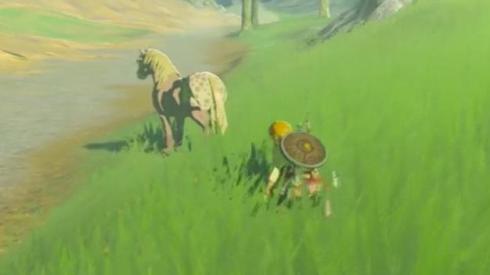
The vastness of Zelda’s world is imposing and its best feature. I just wish the Switch could keep up with it and reduce all of the pop-in present.

Otherwise, I find it interesting how Zelda is both held to high standards by gaming critics, but also graded on a  curve at the same time. As the first open-world, or sandbox game, in the series it does a lot of interesting things, but also could do others better. There’s a day-night cycle, which isn’t new for Zelda, that also includes weather effects. Much of the game requires Link to scale mountains and sheer surfaces, but climbing in the rain is pretty much a no go. It makes sense, but as a gameplay device can be really frustrating when you’re in the middle of scaling a large mountain but you have to stop when rain strikes. There’s also a moon cycle, that so far feels random, but it’s possible that it’s not, where a blood moon will rise in the sky and resurrect all of the enemies Link has defeated. It probably exists as a device to keep the game populated with enemies to kill and providing an explanation for why a fort you may have cleared hours ago is suddenly overrun by enemies once again. I’m fine with that part of it, but every time this blood moon rises the game pauses and shows a cinematic. It can be skipped, but the loading time it creates is brutal. I’m not sure why the load time even exists given this isn’t a disc-based game, but maybe it has something to do with the game being a port. I had three “days” in a row while playing last night that ended with a blood moon and it drove me nuts. The cinematic was fine for the first instance, but I don’t know why the game plays it every damn time.

Weapon durability is new to Zelda, well, mostly new as there was a sword in Ocarina of Time that Link could break. Now though that durability applies to every weapon in the game, and they break pretty damn fast. It’s one of those gameplay mechanics that definitely adds something to the game, but I’m left feeling that Nintendo took it too far. There are numerous enemies I just bypass because I don’t want to “waste” my weapons on them, and that’s not really a fun way to play a Zelda game. Otherwise, I very much enjoy the weapon variety as well as the armor variety in the game. Since armor doesn’t deteriorate like weapons (except for shields), the new pieces you find kind of feel like the dungeon rewards from the past games. Some armor simply ups Link’s defense, but most will have some other benefit like heat resistance or stealth.

legend-of-zelda-breath-of-the-wild

While some have claimed to have made it through the game without cooking, it’s still pretty essential and pretty cumbersome in execution.

Cooking is another hyped gameplay element from Breath of the Wild that is present with mixed results. I like it on principle, and Link is able to craft health restoring items as well as status-altering elixirs from fruit, nuts, meat, and monster parts. The interface is poor though, requiring you to fumble through your inventory that’s not organized in any logical fashion and have Link hold the items he intends to cook. You then jump out of the menu to view Link holding everything and you have to drop it into a cooking pot, which can be found all over the place in the game. You will probably screw it up from time to time and Link will just drop everything on the ground, forcing you to pick it all up, go back into the menu, and re-find the ingredients once again. Once you cook something, it will be available in your inventory along with the recipe you used to craft it, but if you consume it that recipe is lost to you. I’m not sure why Nintendo didn’t just include a virtual recipe book along with the Adventure Log. While you’re limited to how many melee weapons, shields, and bows you can carry around, Link has unlimited space for ingredients which is both good and bad. Good because you’re free to pick up all of the spoils, bad because it makes finding what you want that much harder when sifting through your inventory.

A lot of what I just wrote about is what I don’t enjoy about the game, and part of that is a reaction to all of the perfect scores I’m seeing being handed out. And while I don’t view this game as perfect, I can say I am enjoying it quite a bit in spite of those above complaints. One thing I really like is how the elements play a role, specifically with heat and cold. If Link goes to the top of a snow-covered mountain in standard equipment, he will literally freeze to death. You have a variety of ways to get Link through these areas, and that’s something that adds realism to the game without detracting from the fun-factor (unlike the rain). Lightning is also one of your most formidable foes and it’s best to avoid trees and metal when a storm is raging, though you may also find it possible to use it to your advantage too. That’s the aspect of the game I like best, so far. There’s just a lot of things for Link to do, and multiple ways to solve a problem, and the game just lets you figure that out yourself. I saw a video online of a player tossing a chicken at a moblin while the moblin was attacking. It struck the chicken, which summoned a bunch of other chickens to attack just like what happens when Link gets abusive towards the farm animal. Link can also ride on shields, which the game doesn’t explicitly tell you about, and jump on the backs of large animals and ride them around.

zelda-horse-taming-1484333222326_large

Link can sneak up on an unsuspecting horse, mount it, and tame it. Don’t be shy about trying the same on similar animals. You may be surprised to find out what can happen, or not, since I basically just gave it away.

Mostly, I like that Breath of the Wild is trying something new, and it’s a throwback to the original Legend of Zelda. In that game, you’re basically dropped onto the map and given a sword. After that, it’s figure it out on your own. Breath of the Wild is basically the same thing, though the first hour or so of the game is a tutorial of sorts, but it’s done in a way that’s less boring than usual. This game doesn’t hold your hand and it will kill you a lot. Thankfully, it’s generous auto-save feature means death isn’t as big of a deal as it could be. I’ll hopefully eventually do a proper review of the game when I’m done, but I have no idea how long that will take. I’m pretty confident it will at least crack my top five as far as Zelda games go. While it’s refreshing, and I want to see Nintendo do more with this format going forward, I do miss the dungeons and the many shrines in the game aren’t really up to par as replacements. The shrines are mostly just quick little puzzles. They’re usually not hard to figure out, but execution can be tricky. Which is kind of funny, because they feel like a gameplay component that would be right at home on a portable adventure, which Breath of the Wild became when it was ported to Switch.

All in all, I’m pretty happy with my Switch purchase, though it’s also a bit of a luxury item for me as well. I could have just as easily picked up Zelda on the Wii U, where it’s performance is probably a little better than it is on the Switch. The only thing the Switch has going for it over the Wii U where Zelda is concerned is that it is a true portable. Aside from Zelda, the software is quite lackluster and is likely to remain so even through summer. I currently have no idea what my second Switch game will even be. There’s no Virtual Console service at the moment, so I can’t even turn there for additional games. The two games I’m most interested in right now are Super Mario Odyssey and Skyrim, and both of them are set to arrive in Q4 of this year. In other words, I could have very easily held off on buying a Switch until the fall and probably would have been just as happy. It’s also possible that by the holidays Nintendo will have better addressed some of the hardware issues and maybe will even smarten up and make a game like 1-2 Switch a bundled game. I personally have no interest in buying that game, especially at full retail price, but I’d welcome it as a pack-in. By the end of the year, we will also likely have a clearer picture of who’s supporting the Switch and what’s Nintendo doing with the online and Virtual Console. We may also know if the Switch is unofficially replacing the 3DS. Right now, there are still 3DS exclusive games coming our way, but maybe by the holidays we’ll know if Switch versions are coming or if future games will be available for both. That’s all just a long-winded way of saying that while the Switch is nice to have, you shouldn’t be kicking yourself if you didn’t get one at launch and are struggling to find any in stock. Don’t give Gamestop a stupid amount of money for one of their bundles they’re currently selling either, unless you really want everything in the bundle. I would guess the Switch will start becoming readily available during the summer and into the fall, where it could very well become scarce again around the holidays if its performing well. And even come then, it’s possible the only other great game available is Mario. At worst, by then most people will know if the Switch is something they have to have.


A Few Hours with Nintendo Switch

img_1005It’s Friday, March 3rd, the launch day for Nintendo Switch, and I’ve had mine since the clock changed over to mark the day. By now, you’ve probably seen the system, read numerous reviews of it and the software, and maybe even have your very own. There’s a lot of information out there, and I’m not going to try and match the coverage of the Switch by professional gaming outlets who’ve had access to the system all week. The early returns on the system seem to be mostly positive, though not glowing with praise. The early returns on Zelda:  Breath of the Wild however, have been almost universally warm with many perfect scores getting tossed around.

My Switch experience so far can be summed up simply as painless. I pre-ordered the console, a carrying case, and Zelda the day pre-orders went up at the local Gamestop near me. The only hitch thus far has been the carrying case, which is MIA. On the day pre-orders went up, I went to Gamestop and placed my pre-order without the need to wait outside for hours for the store to open. The store is within a mile of my house so I was there and back in about 15 minutes. Last night after work, I went down to get my number for the midnight release. Basically, they just confirmed my pre-order and bagged it up for me so it was ready to go. Those who pre-ordered were also given access to games and accessories. I was the 10th person with a pre-order to go in. The manager told me Nintendo didn’t send everything they expected which is why my case is still missing. I don’t know if that’s entirely true, or if the 9 people who went there before me bought them up. Regardless, I’m not sweating it and he told me if I don’t hear from them by Wednesday to give them a call, as they expect more to arrive. At the time I went in, I also added a Pro Controller to my bundle as early reviews have indicated there may be some syncing issues with the Joycons when not connected to the Switch, and I figured I’d get a Pro Controller eventually anyways (as much as I hate that I just spent 70 bucks plus tax on a controller). At midnight, I hopped in my car and got to the store as number 9 was called to the counter, so I was back home with my Switch by 12:15. Pretty cool.

Unboxing the Switch and holding it for the first time really drives home the fact that this is a console/portable hybrid. The box is easily the smallest box a new console has come in that I’ve purchased, but the largest any portable has as well. The same can be said for the hardware. It’s light, but not cheap feeling, and the whole boot process and day-one update (for both the hardware and Zelda) took maybe 15 minutes tops, and that also includes setting up the dock and attempting to use the Pro Controller as well as syncing the console with my Nintendo Network ID. That’s a far cry from the hours it took to get the Wii U up and running.

The dock for the Switch is kind of interesting. It’s very light and the only part of the console that feels cheap. It has a hinged door on the back that grants access to the various ports on the dock, which is nice as it forces all of the cords through one opening, keeping things tidy. I’m concerned there isn’t enough weight in the bottom of the dock preventing the Switch from sliding out as easy as it could. It also has one of those giant plugs on the AC wall plug, which feels like a blast from the past, in a bad way. In defense of it, I was able to fit it in-between two other plugs on a surge protector so it’s not too cumbersome, it’s just a pet peeve of mine.

img_0996

Fuck this thing.

The Zelda packaging is essentially the same as Vita packaging, right down to having little clips inside for an instruction manual that doesn’t exist. The game card is roughly the same size as well, just a touch bigger, and the door on the Switch for game card access is also very reminiscent of the Vita. It has a clipped-in door that should never pop open by accident.

My Switch arrived roughly 50% charged, so I got some gaming in last night before I went to bed before recommencing today. The Pro Controller had no charge, so I was forced to plug that in and leave it initially. I wasn’t certain what the charge level of the two Joycons was at, so I elected to just test drive the Switch as a portable, only testing the dock to see how quickly the image was transferred to the television (answer: fast). Handling the Switch felt like a new experience, more so than any other new console, save for the Wii. The button layout is different enough to not feel as familiar as most controllers, and I found myself feeling not as confident playing Zelda as I probably normally would on a first try. The small face buttons didn’t bother me as I’m so used to playing my Vita and 3DS, but the placement of the pseudo-D-pad on the left side as well as the analog on the right feels weird. In Zelda, the D-pad (D-buttons is probably more appropriate) is used to swap weapons and I was reluctant to do so in combat initially, not knowing what would happen. Hitting one of the buttons brings up Link’s weapons and pauses the action, which I was very happy for. Then you have to use the right analog to select the actual weapon you want. Having that analog so far below the left one is what kind of trips me up. It’s not that different from an Xbox controller or even the Gamecube, but perhaps it’s not quite as natural as either one. I’m not sure why Nintendo didn’t just keep the same layout as the Wii U. Actually, I do know why and it’s so each Joycon can function as a stand-alone controller. I’m pretty confident that I’ll get used to it, but it still feels odd on the first few play-throughs. Another aspect of the Switch’s input that feels a little odd are the shoulder buttons. The triggers are in a fine spot, but the front buttons are so small and thin that they’re a bit awkward. Perhaps this is why Sony didn’t try to squeeze more shoulder buttons/triggers onto the Vita, though again, I think it’s something I’ll get used to.

Since I only have Zelda, I can’t really test out the Joycon controllers. My reaction to them is that they’re probably okay in a pinch as individual controllers, but I wouldn’t want to use them in such a fashion unless it was a very simple game. I think they work with the upcoming Mario Kart 8 Deluxe, but that strikes me as a pretty bad way to play that game, which is why I bit the bullet on a Pro for eventual 2-player games. I passed on 1-2 Switch as I just can’t view that as a full-priced game. If the game falls into the discount bin then I may take the plunge. In all likelihood, the next iteration of the Switch hardware will probably include it as a pack-in game.

img_1008

The Switch with the Wii U tablet behind it.

Zelda:  Breath of the Wild is so far pretty interesting. I’m way too early into the game to say anything definitive on it, but it’s definitely nice to have a more familiar Zelda experience than Skyward Sword and its forced motion controls. Visually, the game looks a lot like a combination of Twilight Princess and Skyward Sword. It has that softness to it Skyward Sword had, which is apparently Nintendo’s go-to technique to cover-up for subpar graphical power. It does have a technological component to the visuals, which you may have seen, which I think will help differentiate it from other games in the series. The depiction of which kind of reminds me of Twilight Princess’s Twilight Realm, though without the pervasive darkness.

img_1009

Now with the Vita in front of the Switch.

I must say, it’s awesome to finally have voice acting in a Zelda title. Link may not audibly speak, but you are able to respond in text to NPCs so he basically talks, he just doesn’t have a voice actor or say anything you don’t tell him to say. It’s also great to not have a stand-in for Navi as I think that type of character is often everyone’s least favorite part of modern Zelda games. I’m not sure how I feel about the destructible weapons, as weapon durability is often not something that’s fun in other games, but I’m withholding judgement for the time being. I do wish Nintendo didn’t take these half-measures with the hunting and combat. It’s kind of stupid to see Link shoot some fauna and have it evaporate into a puff of smoke, leaving behind an item for Link to consume. Something more visceral would have really helped with the setting and immersion. I know Nintendo doesn’t want to risk alienating younger players with violence, but I think they could have done a better job and it wouldn’t have required gratuitous blood and gore.

img_1010

With the Vita.

I look forward to spending more time with Zelda and the Switch. Thus far I’ve really only experienced the console as a portable and plan on getting some TV time in with it this weekend. I’ll make it a point to try both the Joycon controller grip and the Pro Controller. I expect both to work just fine, and if I have anything substantial to add to that I’ll add an update to this entry (especially if I experience sync issues with the Joycon). I’ll also have more to say on Zelda at a later date and how it fits in with the other games in the series. Until I get my carrying case, the Switch will reside in my home as I don’t want to risk getting any scratches on the screen. For now, my Vita need not worry about being replaced as my main portable, but I suspect the quality of Zelda will force my hand eventually. New consoles are always a fun time to be interested in gaming, and the Switch has done a good job of keeping my enthusiasm high. Hopefully, Zelda is good enough to keep myself and other early adopters happy until the next batch of software arrives. I’m confident that the hardware is good enough, the games will determine how successful the Switch is from here on out.


Ranking the Nintendo Hardware

nintendointerAs I sit down to write this entry, it is March 1st and we are less than 48 hours away from the launch of the latest piece of Nintendo hardware:  Nintendo Switch. It’s an important release for Nintendo as the last console, the Wii U, was a commercial failure. That being so, the Wii U is a bit of an anomaly as Nintendo has been a respected manufacturer of video game hardware for decades. Nintendo’s journey has been a memorable one, starting with playing cards and low-tech plug and play devices to the Game and Watch series, which set the stage for Nintendo as both a game developer and eventually console juggernaut. As such, Nintendo is synonymous with video games (at one point, the word Nintendo was often used by parents as a catch-all term for gaming system) and it’s hard to imagine they’ll ever leave the industry, but if the Switch is a flop then that could be a real possibility.
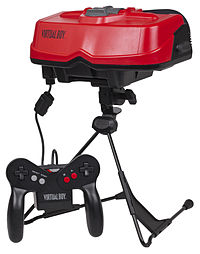
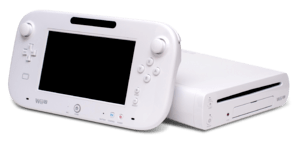
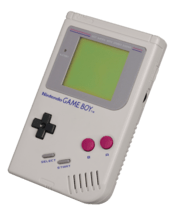
Before we take in the new, lets look to the past and try and rank all of the Nintendo hardware to be released to a global audience, starting first with the Nintendo Entertainment System and concluding with the Wii U. Maybe a year from now we’ll have an idea of where the Switch will end up among its peers, hopefully towards the front of the list as opposed to the back, but for now we’ll have to settle for what we have. So let’s get started with the consensus worst piece of hardware ever released by Nintendo…

200px-virtual-boy-set

It’s like ROB the Robot for your face.

The Virtual Boy

In 1995, Nintendo apparently felt there was a market for a table-top console you stick your face in. The “Boy” tacked onto the end of Virtual Boy’s name makes it seem like it’s a part of the portable Game Boy family, but it’s about as portable as a desktop PC, and about as fun to play as Claris Works. The Virtual Boy was a piece of crap from day one. It attempted to give gamers a Tron-like experience (I guess?) with vector graphics that only displayed in red and black. The console could supposedly inflict permanent damage on one’s vision. The controller was trying to be forward thinking with twin directional inputs, but we soon learned that we did not need two d-pads on a controller and the practice was never duplicated in a memorable way. To top it all off, the machine launched with an MSRP of $180 which is just insane for 1995. Even disasters like the Sega CD have a certain curiosity factor, so much so that I’ve bought one as an adult just for shits and giggles. The Virtual Boy possesses no such charm, and it’s the only Nintendo system I have never owned.

Notable Franchise debuts: Mario Tennis

wii_u_console_and_gamepad

At least the white doesn’t show dust.

Wii U

Nintendo’s latest failure, the Wii U, had some promise, but it never delivered on it. Piggy-backing off of the Wii brand’s more recent success, the Wii U was another under-powered Nintendo console with a tablet for a controller. Off TV play is its defining contribution to video games, but with subpar range for the Gamepad it’s still pretty much tethered to your living room. More so than really any Nintendo console (save for the Virtual Boy, which is a huge outlier in every way to the point that I don’t plan on repeating it throughout this post beyond this very sentence), the Wii U failed to deliver the first-party games Nintendo is known for. There were a couple of okay Mario  releases, but no exclusive Zelda or Metroid games (the abomination Freedom Force doesn’t count) or really anything else that was memorable. While it’s true that Zelda:  Breath of the Wild is being released on the Wii U, I would guess more people will experience that game via the Switch. Some of its other more notable releases, like Mario Kart 8 and Splatoon, are essentially being repackaged for the Switch as well. Basically, unless you refuse to repurchase some of your Wii U library, the only reason to hang onto it is for the Virtual Console games. At least it was backwards compatible with the original Wii, in a convoluted fashion, though that obviously isn’t enough to help it avoid this dubious ranking.

Notable Franchise debuts:  Splatoon

game-boy-fl

The original Game Boy was hardly form-fitting, but it got the job done.

Game Boy

The Game Boy has the distinction of being one of the best selling pieces of video game hardware of all time. That isn’t really a testament to its quality, but more to its incredible longevity. Released in 1989, the Game Boy was essentially on the market without a true successor until 2001. In that time, the Game Boy destroyed all challengers mostly by virtue of the fact that it did nothing well, but had no flaw that was considered fatal. Sure, it’s monochrome display and absence of backlighting irritated anyone who ever played it, it still managed to find and hang onto an audience because it was often priced well, had good battery life, and was released when the Nintendo brand was at its apex. I know many moms who bought their kid a Game Boy because they viewed it as a cheaper alternative to an NES or SNES, and there was always enough quality software to keep the system afloat. Meanwhile, more superior handhelds were released (Game Gear, Lynx, Wonder Swan, Turbo Express), but they either couldn’t match the Game Boy’s price or software and subsequently died, while the Game Boy lived on. Now, the Game Boy was also chock full of shovel ware, often the worst of the worst in licensed games appeared on the Game Boy and many a kid received some awful games from well-meaning aunts and grandparents for birthdays, but at least there was Zelda, Metroid, and Pokemon to soften the blow. The Game Boy received a slimmed-down redesign in 1996, the Game Boy Pocket. Other than being slimmer and cheaper to power, it also featured a black and white display instead of that hideous yellow/green and black display of the original. Other than that, it was essentially the same and the Game Boy didn’t receive a true redesign until 1998…

Notable Franchise debuts: Pokemon, Wario Land, Kirby, Gargoyle’s Quest

Game Boy Color

Nintendo lumps in the Game Boy and Game Boy Color into the same bucket in terms of reporting sales figures and so on. The Color was modestly more powerful, and obviously possessed a color display, though it was still pretty much a Game Boy. I list it separately only because Game Boy Color games could only be played on a Game Boy Color and not on one of the earlier models of the Game Boy. And since it possessed color, and could play every game in the Game Boy library, it naturally ranks ahead of the original.

Notable Franchise debuts:  Shantae

game-boy-advance-gba-sp-and-gb-micro-size-comparisontransparent-background

The GBA had a lot of revisions in its relatively short life.

Game Boy Advance

The first real successor to the original Game Boy, the Game Boy Advance felt long overdue. And like the Game Boy, it received a few redesigns during its lifecycle. Compared to the Game Boy, the GBA did not have nearly as long a shelf-life. Even though Nintendo claimed the Nintendo DS wasn’t meant to be a successor to the Game Boy line, it essentially was and by 2006 the Game Boy brand was basically dead. Still, for as short a life as it had, the GBA was a pretty great portable, but its held back by some odd design choices and a lack of truly exclusive software. For starters, the GBA featured just four action buttons:  A, B, L, and R. Considering we were a decade removed from the SNES creating the new standard of six buttons, this was a curious omission. It seemed even more odd when the GBA quickly established itself as a dumping ground for SNES ports. The other design miss-step was the lack of a backlight. This would be addressed with the Game Boy Advance SP in 2003, a front-lit clamshell redesign that also resembled a Game Boy Pocket, just with a hinge in the middle. While I preferred the horizontal layout of the original GBA, the lack of a light source really sucked the fun out of it. The SP also had a rechargeable battery, which would become standard for future handhelds. In 2005, two additional redesigns were released, the SPII, which featured a backlit screen with improved brightness over the SP, and the Micro, which was tiny and featured a horizontal layout and no backwards compatibility with older Game Boy games.

Other than the hardware shortcomings, the GBA is also lacking in exclusive software designed specifically for the hardware. There were tons of SNES and NES ports, some of which (like Super Mario Advance) were significantly updated, but they didn’t make up for a lack or original software. There was an original Zelda title, The Minish Cap, which was a solid game but not as good as Link’s Awakening. There was also an exclusive Metroid, Metroid Fusion, which was excellent and lead to the release of a remake of the original game, released as Metroid:  Zero Mission. Mario &Luigi was also great, as was Advance Wars. I have a fondness for the GBA, mostly because of all of the great ports, so I don’t consider it a bad system by any means, but when compared with other Nintendo hardware, it does come up a bit short.

Notable Franchise debuts: Advance Wars, Fire Emblem (for US audiences), Phoenix Wright, Mario & Luigi, Wario Ware

876432nintendods

The original, “chunky,” DS. Like the GBA, the DS would receive a few redesigns including the Lite, DSi, and DSi XL.

Nintendo DS

All right, it feels like I’m picking on the portables, but there’s a reason for that. Portables are often homes to ports and the exclusive software is sometimes hard to find. And Nintendo has also often made its portables backwards compatible, so it would be hard to justify ranking older portables ahead of modern ones. Anyways, most of the criticisms I had for the GBA kind of apply to the DS as well. The DS is sort of the last of the old handhelds, as future ones (and even the final iteration of the DS, the DSi, started the evolution) would be online-equipped opening up the handheld to a host of older, downloadable games. The DS set itself apart from the GBA, and its competitor the Sony PSP, by having two screens. The second screen was hardly an innovation. Design-wise, the DS resembled Nintendo’s old Game & Watch handhelds and the second screen soon became a dumping ground for near useless features like map screens and inventory management. Some games tried, and tried hard, to make use of the touch screen functionality, but often to the game’s detriment (see the Zelda games released for it). Really, the only reason why I rank it ahead of the GBA is because it’s backwards compatible with the GBA software (but not original Game Boy software) and had a better design (finally, six buttons!). It too lacked somewhat in defining software, but the uptick in processing power made new games like Super Mario Kart DS way more playable than the GBA predecessor. The system may have launched with a port of Super Mario 64, but it never became the dumping ground for N64 ports some may have been expecting, probably due to the lack of a a true analog input device, something its successor would rectify.

Notable Franchise debuts:  New Super Mario Bros., Sonic Rush, Trauma Center

41xm4a0dd6l-_sx425_

The Wii felt new and exciting when it first debuted, but would not be able to maintain its early momentum.

Nintendo Wii

We’re now arriving at the point in our list where it’s getting hard to separate the consoles from each other. We’ve already blown past the only true Nintendo failures (Virtual Boy and Wii U) and we’re now mostly into the realm of nit-picking, though I feel rather strongly about what is the best Nintendo console of all time, I just feel less so about whats fifth best vs what’s fourth best, and so on. The Wii  is easy to dump on in 2016. It featured waggle controls and tons of horrible “party” games and licensed junk. It was cheap to develop for, and it’s consumer success meant there were tons of Wii’s in the wild so producers had incentive to release games for it, and with minimal effort. As much as I, along with many others, came to resent the waggle controls, I can’t deny what playing the Wii was like in 2006. The Wii is the last console that brought me and my friends together to just play games all night and have a blast doing so. At that point, I was out of college and working a full-time job, so getting together with a group of friends just to play video games didn’t happen much, and hasn’t since. And looking back on it, the launch lineup was pretty barren and yet we still had a blast with it. That was largely because of how much fun Wii Sports was, though I did have fun with Madden and Dragon Ball Z as well. And of course, The Legend of Zelda: Twilight Princess, even though the Gamecube version released a few months later was actually better (aside from, maybe, the fishing mini game).

The Wii may have received a ton of horrible games, but it did also receive two of the greatest Mario games ever released:  the Galaxy series. Some people loved Skyward Sword as well, even though I detested it. The Metroid Prime series was also one of the few improved by the Wii’s input device, and the debut of the Virtual Console was a pretty big deal at the time, even if it perhaps never reached the lofty expectations some of us may have had for it.

Notable Franchise debuts:  Super Mario Galaxy, Wii Sports, Xenoblade

n54_orig

The N64 looks rather regal compared to some of its siblings, though that reputation did not translate to the software.

Nintendo 64

Where do you rank the N64? I would guess this is the console most affected by what age you experienced the N64 at. If this was your first console, then you probably have some extremely fond memories of the N64, so much so that it may even be your favorite. I do not, and for me, the N64 is perhaps the piece of Nintendo hardware that has aged the worst. Visually speaking, most N64 games are ugly by today’s standards. Muddy textures, endless fog, and subpar sound output make for a poor sensory experience. That’s obviously not true of every N64 game. Rare’s Conker’s Bad Fur Day seems to amaze me more and more every time I play it because of how good it turned out from a presentation perspective. The N64 was also the console where third parties started to turn on Nintendo. Most were not happy with the cartridge format, from a technological point of view and financially (you had to pay Nintendo for the actual cartridges), when the industry was moving to CD. The N64 also possessed one of the worst, and most fragile, Nintendo controllers ever done. It’s saved by the analog input and Z-trigger, two additions that are here to stay across all gaming consoles, and it was awesome finally having four controller ports on a console as a standard feature.

After ripping on the N64, I do have to say it gave us one of gaming’s biggest cultural moments in Super Mario 64, which is perhaps the last game that truly felt like a must play when it came out. Ocarina of Time was obviously a huge hit, but it’s success has been dampened some by the superior remake for the 3DS. The same can also be said for Majora’s Mask. Super Mario Kart 64 is also remembered quite fondly, even though it too has been eclipsed by better games in that franchise. The wrestling games are also well-regarded and if you’re a big wrestling fan you’ve probably held onto your N64 for that reason.

Notable Franchise debuts:  Paper Mario, Super Smash Bros., Banjo-Kazooie, Animal Crossing (Japan only)

t2ec16zhjhge9n0ygtbry0lcp3g_35

A launch 3DS. An XL version has since been released, along with the New 3DS which possesses a little more power under the hood.

Nintendo 3DS

The successor to the DS, the 3DS essentially fixed everything that was wrong with the DS while boosting the power of the handheld as well. The defining feature, stereoscopic 3D without the need for glasses, is a stupid gimmick. I never play my 3DS with it turned on and if the 2DS didn’t for some reason ditch the clamshell design I’d recommend everyone just get that and save a few bucks. That aside, the 3DS is buoyed by just enough original content and remakes to make it a viable system. It’s kind of like a Greatest Hits system, and the Virtual Console support means gamers have access to all of the old classics released by Nintendo, with only a few exceptions.

If you want to argue that the 3DS lacks truly exclusive 3DS games, then I won’t fight you too much. Super Mario 3D Land is pretty darn good, but I’m not sure it’s a system seller. A Link Between Worlds is loads of fun, but is it even better than Link’s Awakening? New Super Mario Bros 2 and Paper Mario Sticker Star were missteps by Nintendo, but they did right by Fire Emblem and Pokemon. It can’t be ignored though how awesome the Zelda remakes are for the 3DS. Both the Ocarina of Time remake and Majora’s Mask remake are so much better than the originals released on the N64, that it will be a crime if they only exist on portable hardware. Both should at least be made available for the Switch with TV play, even if the assets need further enhancement to make them suitable for larger displays. It’s worth it! And while I definitely play my Vita more than my 3DS, it doesn’t mean I dislike the system, the Vita just happens to know my weakness (JRPGs). I do wish Nintendo had put a higher quality screen on the 3DS, and it’s battery life is weak, but it’s still better than most of the hardware put out by Nintendo which is pretty remarkable for a portable device.

Notable Franchise debuts: Bravely Default

gamecube-console

While the N64 had a more grown-up appearance, the Gamecube went back to resembling a toy.

Gamecube

The Gamecube can be retroactively looked upon as an end of an era, the era of when Nintendo tried to compete on the same terms as its competitors. The Gamecube was basically every bit the equal of the Playstation 2 and Xbox in terms of power, and third parties didn’t need to concern themselves much in adapting games for all three machines. Still, after the N64 damaged Nintendo’s relationship with said publishers, it was hard to win them all back with the Gamecube. The N64 firmly established the still held belief that people buy Nintendo consoles for Nintendo games, and not so much third party games. As a result, Nintendo would have to really work hard to win them back.

One developer who came back with arms wide open was Capcom. Capcom, in truth, never left the Nintendo family as they had a presence on the N64 and a big presence on Game Boy. For Gamecube though, they made the Resident Evil Remake an exclusive game, and Resident Evil 4 was exclusive for about ten months. Both games were awesome then, and are awesome now, and were big titles for the Gamecube. Konami also helped out a little by remaking Metal Gear Solid for the Gamecube which also turned out better than the original. None of it was enough, however, to make the Gamecube a retail giant which is why Nintendo changed strategies with the Wii. Still, there’s little issue to take with the Gamecube hardware as the games have aged well and there wasn’t anything holding it back. The controller isn’t my favorite, but it wasn’t a bad one. The Wave Bird would be released later, basically making wireless the new preferred input method for all consoles. And even though the best Japanese franchises didn’t find a home on the Gamecube, there sill was an assortment of quality games. The Gamecube received two Zelda titles, Wind Waker and Twilight Princess, the latter being better than the Wii game. Super Mario Sunshine may not have sparkled as well as most Mario games, but was still a solid experience. Paper Mario 2 is in the running as one of the greatest sequels ever made, and is really the last good entry in that series. If the system had more JRPGs, I’d probably love it more. Hopefully with the Switch, Gamecube games start becoming a possibility on the Virtual Console because there are some games I’d love to take on the go.

Notable Franchise debuts:  Luigi’s Mansion, Animal Crossing (US), Pikmin, Metroid Prime

console-nes-system

The old NES Control Deck. Nintendo apparently felt it needed to resemble a VCR in order to attract American buyers.

The Nintendo Entertainment System/Famicom

My approach to this ranking is pretty simple:  If I had to pick one Nintendo console and had access to all software playable on it, which would I pick? I think some bonus points in the event of a “tie” are merited for impact when the system was released and so on, but for the most part I’m making this an apples to apples comparison through 2016 eyes. And yes, I would pick an NES and its library over a Nintendo 64 or Gamecube, or whatever. It’s not out of deference to the era in which the system operated, it’s just an awesome system with an excellent library of games.

At this point, you do not need me to tell you about the big titles, you should be more than familiar with them. And since the console is a tank and most still work to this day, I don’t think durability would be a concern in a desert island scenario. While the presentation of the games from the 8-bit era are a bit rough around the edges, the simpler technology forced a simple style of gameplay on the consumer and as a result, the games just plain hold up better than some of the games that have followed. Super Mario Bros. 3 is as fun today as it was in 1990, Metroid just as lonely, and Glass Joe’s face just as rubbery. Even the sports games hold up very well, despite modern titles presenting more accurate simulations. In recent years, the console has experienced quite the revival with retro gaming sites and podcasts becoming a thing. The NES Classic was perhaps the hottest item this past Christmas, and people are still begging for Nintendo to flood the market with more. For those who worry about the Switch killing Nintendo should it fail, at least they can rest easy knowing Nintendo just has to look to the past for a quick buck to get back on its feet should that happen.

Notable Franchise debuts: Super Mario Bros., The Legend of Zelda, Metroid, Castlevania, Mega Man – need I go on?

super_nintendo_entertainment_system-usa

While Nintendo had a reason making the American version of the NES look different, I never heard of an explanation why the SNES and Super Famicom needed to look different. I wish we had received the Super Famicom design, personally.

Super Nintendo/Super Famicom

If consoles can be considered sequels, then the Super Nintendo may be the greatest sequel of all time. Better than Empire, better than Street Figher 2, just the best. Visually speaking, I remember being unimpressed at first glance. A gray, boxy thing with purple accents hardly felt super to me, but then I played it. Super Mario World felt massive. It was bright and colorful and a joy to play. A Link to the Past took everything I loved about the original Zelda title and made it better. A lot better. While many older franchises struggled to move from 2D to 3D during the next console life cycle, virtually every franchise benefitted from the move from 8-bits to 16. Mega Man X, Street Fighter 2, Super Metroid – all games that proved it was only the imagination of game developers that could hold them back. Then Nintendo of America opened the flood gates and we started receiving games like Final Fantasy in greater abundance as new-found confidence allowed for them to finally get released outside of Japan. The SNES is still one of the best consoles for people who love JRPGs, with only Sony’s consoles rivaling it. The few missteps Nintendo had, like forcing Midway to remove blood from Mortal Kombat, were swiftly rectified.

There is no doubt in my mind that the SNES is Nintendo’s greatest achievement in gaming. It’s not as if other machines haven’t come close in the almost 30 years since the console debuted, so Nintendo shouldn’t hang its head in shame that its still trying to top it. The formula is there, Nintendo just needs to put it all together. The SNES is a beautiful example that a console does not need some wacky gimmick or ridiculous horse power to be worthwhile, it just needs to function comfortably, and above all else, have worthwhile software. It seems like each console to follow has alienated a certain subset of gamers and developers where as the SNES appealed to every one. If the Switch can recapture some of that, it will stand a chance.

Notable Franchise debuts:  Yoshi’s Island, Mega Man X, Chrono Trigger, Super Mario RPG