Tag Archives: detective comics

DC Direct Hush Batman

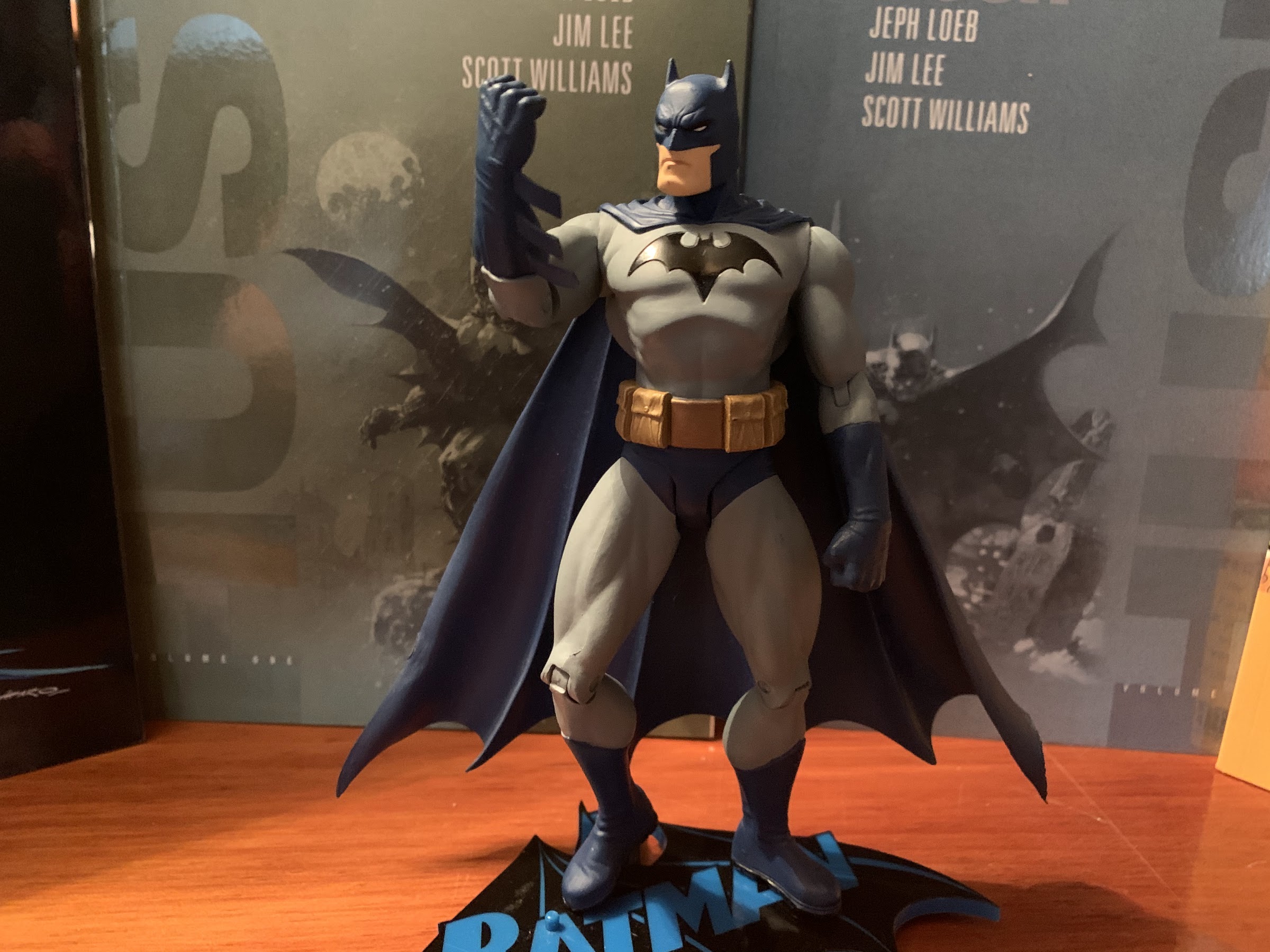
Probably the best pose in this entry, it’s all downhill from here!

In the mid 90s the action figure underwent a rather substantial change. The gross, detailed, sculpted works of 80s and early 90s toy lines had started to fade away. In their place was the super hero from the likes of Toy Biz and Mattel which opted for simple sculpts, subtle paint, and a fairly standard roll out of articulation. Sure, there were some intentionally done “super articulated” editions of characters like Spider-Man, but largely the action figure had been distilled to the following joints: head, shoulder, elbow, leg, knee. All either swivel or hinges. Some might have a waist twist, or a wrist swivel, but most followed that general format.

Then came McFarlane. Founded in 1994 by comic book artist and writer Todd McFarlane, the new approach was a return to sculpting. McFarlane reasoned that the only thing holding figures back from being highly detailed was just a little bit of effort. A mold costs the same whether it’s intricate or plain, and mold creation is the biggest cost in producing action figures. Of course, it’s a little more nuanced than that since better molds require better artists spending more time than before and we all know time is money, but his point was made. McFarlane’s line of action figures, largely consisting of his Spawn character, blew away the competition when it came to sculpts. What they did for sculpting was felt in the toy world, especially by Toy Biz who was making action figures based on the various characters of Marvel Comics. Toy Biz started to produce collector grade figures as well, but this came at the downside of a reduction in articulation and a heightening of the scale. Kids and collectors who had been dying for a Jim Lee era Jean Grey finally got one in the Onslaught wave of figures marketed to specialty shops, but she was way out of scale with what had come before and awkwardly pre-posed.
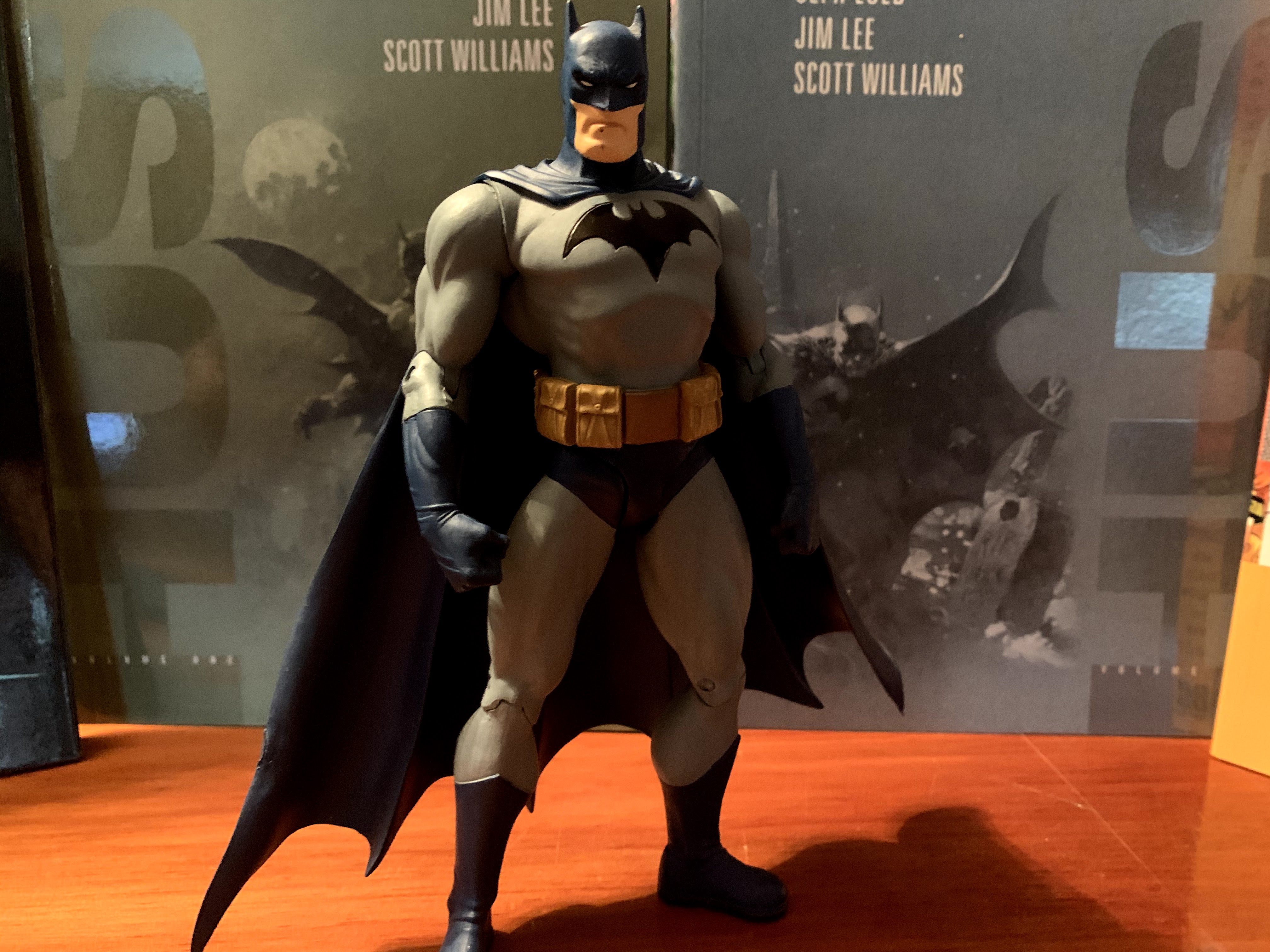
He strikes an impressive pose. Too bad it’s his only pose.

While McFarlane continued to refine its sculpts, it did so at the cost of articulation. Many of the McFarlane figures of the late 90s and early 2000s were little more than mini statues. Some had basic articulation, but a lot of it wasn’t particularly functional as the figures were meant to assume one, specific, pose and that was it. Toy Biz was not content with that sort of approach as it released a new line of Spider-Man Classics. These were carried by major toy retailers making them easier to get ahold of than the previous Onslaught series, and best of all the figures were highly articulated while still retaining an impressive approach to sculpting. The Venom figure in particular was quite ambitious as it referenced a classic piece of artwork in which the alien costume is extending from the face of Eddie Brock. From the front, the figure looks like a Venom one, but with an elongated maw. From the side though, one can see the smiling visage of Brock underneath. It was a sculpt that rivaled what McFarlane was producing, to a degree, but the figure also retained an impressive array of articulation.
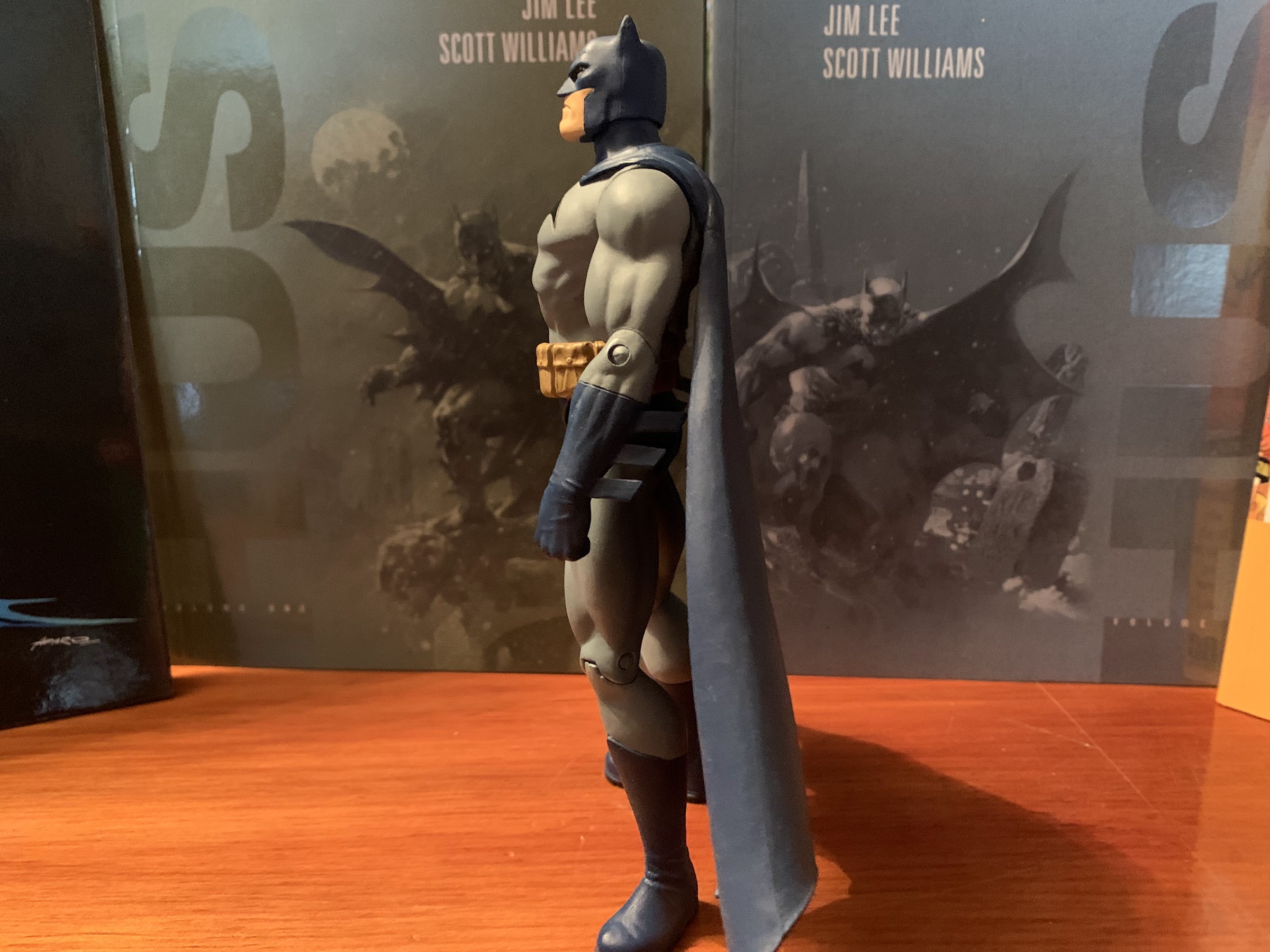
His proportions are arguably better from the side. Except the ears.

That line was the precursor to the now long-running Marvel Legends. Toy Biz would embark on a journey through the Marvel Universe that included impressive sculpt-work for its era combined with a great degree of articulation. Hasbro now has control of the line and has continued to release affordable action figures of popular characters at retail that combine quality sculpts with functional articulation. Some would probably argue that the line has become the greatest line of action figures of all time considering its longevity and overall quality. I don’t collect it any longer, but it is a remarkably consistent product.
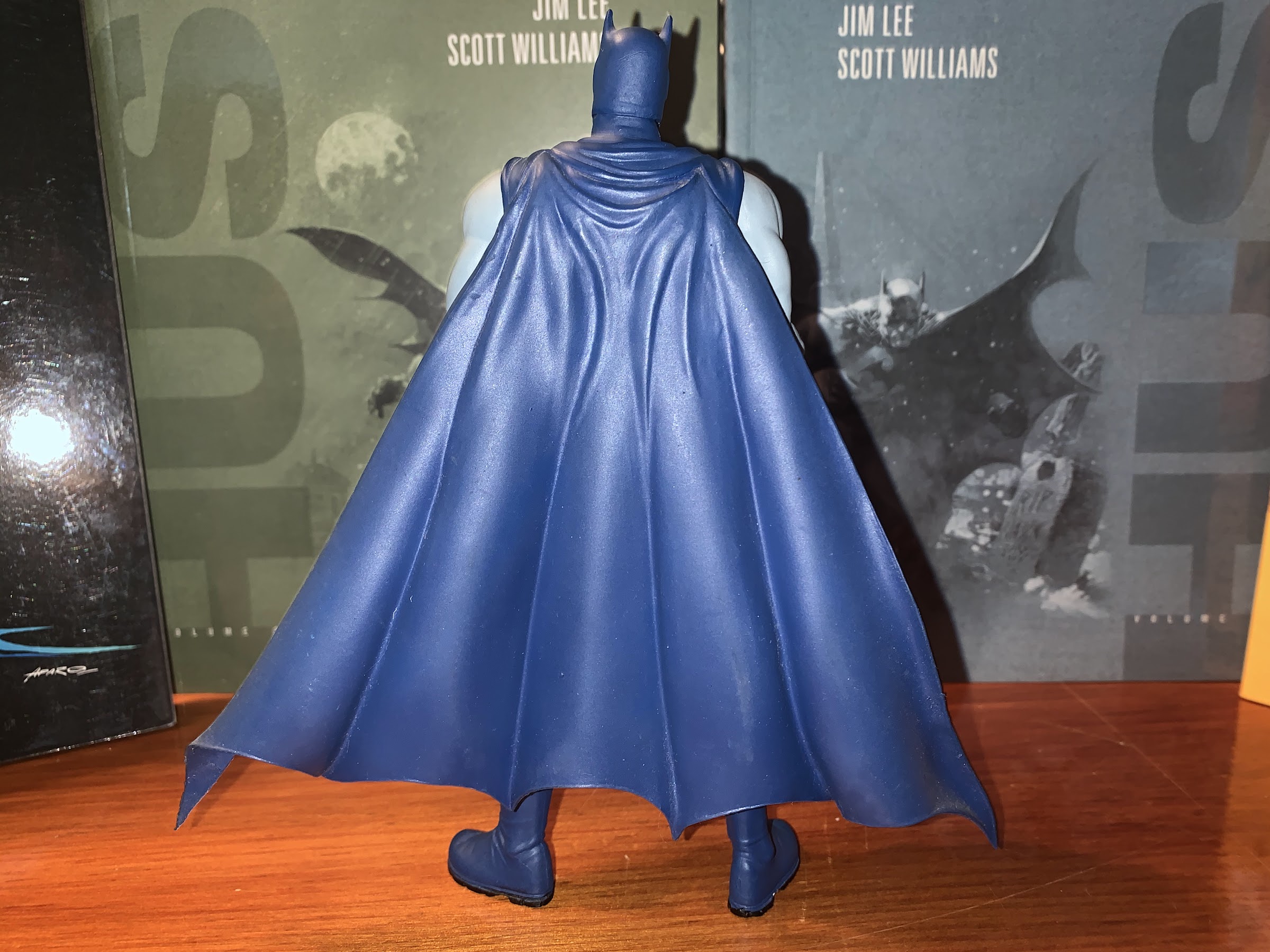
Lets turn on the flash to bring out those cape folds. It’s a pretty fine cape, all things considered.

Naturally, Toy Biz’s success lead to rival DC trying its own hand at collector-grade action figures of its classic characters. The company launched DC Direct to differentiate its products from the more mass market stuff that was being handled by Mattel. Unfortunately, DC Direct was seemingly always behind the curve when it came to its toys, and its 2003 line of action figures based on the Batman story Hush by writer Jeph Loeb and renowned artist Jim Lee is a great example.
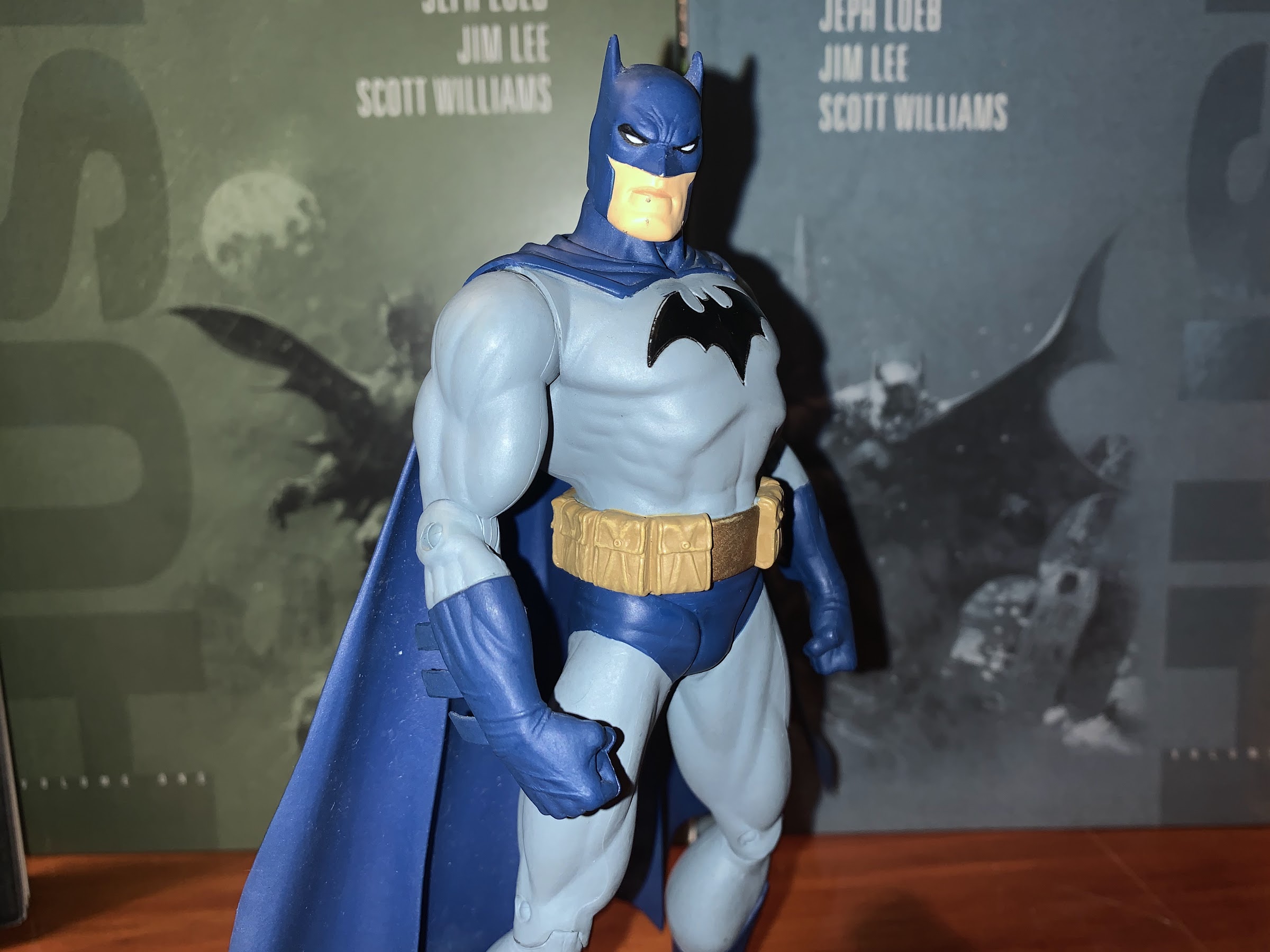
For those who prefer their Batman bathed in light.

Jim Lee became famous largely for his work on X-Men in the early 90s. By the middle part of the decade he had gone freelance and worked on other properties while creating his own super hero team in WildCats. He ended up being a pretty big get for DC when they brought him onboard to work on Batman. The Hush story was basically DC’s way of getting Lee to draw Batman and basically every character of importance in his sphere. It could have been a mess, but it was actually a pretty entertaining read. Lee’s Batman was also a pretty big hit which paved the way for the action figure line. At the time, I was a casual at best fan of Batman. I had enjoyed the films and the animated series, but I dabbled infrequently in the comics. I found myself quite taken by Lee’s interpretation of the caped crusader, which made the action figure very appealing.
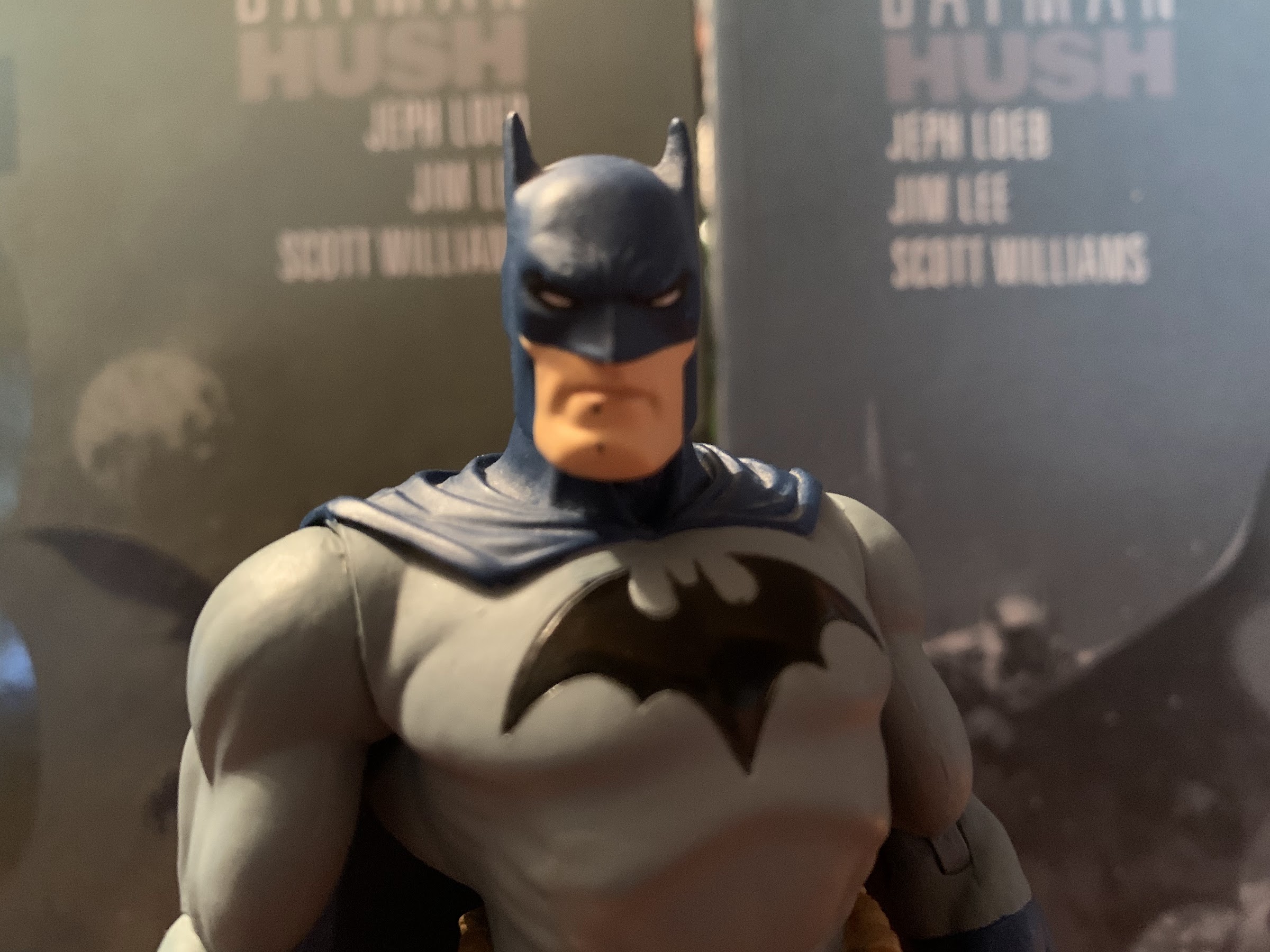
The worst place for paint defects.

Lee’s Batman is a muscle-bound, brooding, guy in a cape. He’s marked by a square jaw and short ears on his costume. He reminds me a bit of a cross between the Bruce Timm Batman and, oddly enough, the Adam West Batman. It’s the squareness of the head combined with those short ears that evokes both of those styles for me, but it’s Lee’s unique talents that bring it together. He has a gray and blue color scheme with a black emblem on his chest. The blue is a pale blue, and something about the choice of saturation really works for the character. I’ve always felt it made more sense for Batman to dress in black, or at least a really dark blue, but illogical as this outfit may seem, it looks terrific. It quickly became my favorite interpretation of the character and remains so to this day.
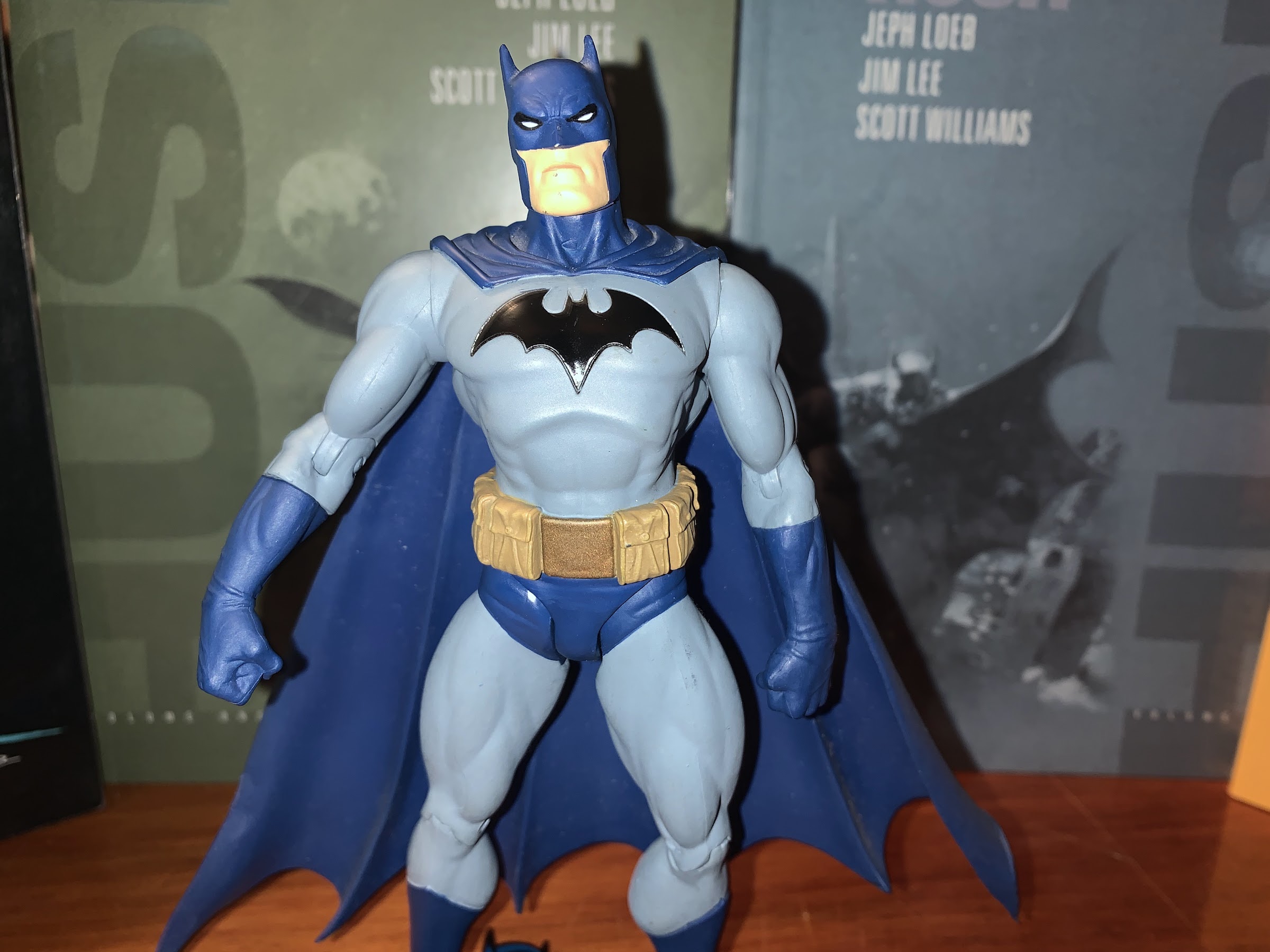
The extent to which his right arm can be raised.

Because I liked the design so much, I felt drawn to the figure released in 2003 by DC Direct. Unfortunately, it wasn’t particularly cheap and the articulation was a real turn-off. I would see this figure on my many trips to GameStop or comic shops and I’d debate with myself if it was worth picking up. By today’s standards, I don’t think it was expensive, but I honestly can’t remember. I want to say it was over 10 bucks, but not as high as 20, and in a world where Marvel Legends were often 6-8 bucks that felt like a lot. I was also in college and money wasn’t abundant and my addiction to Legends meant I had only a little cash to consider spending on other lines. Eventually, I caved, probably sometime in 2004 and this edition of Batman has remained the last 6″ scale Batman I’ve purchased over the ensuing years. And he’s basically always occupied a prominent spot in my home, usually on a nightstand or dresser, so I guess money well spent.
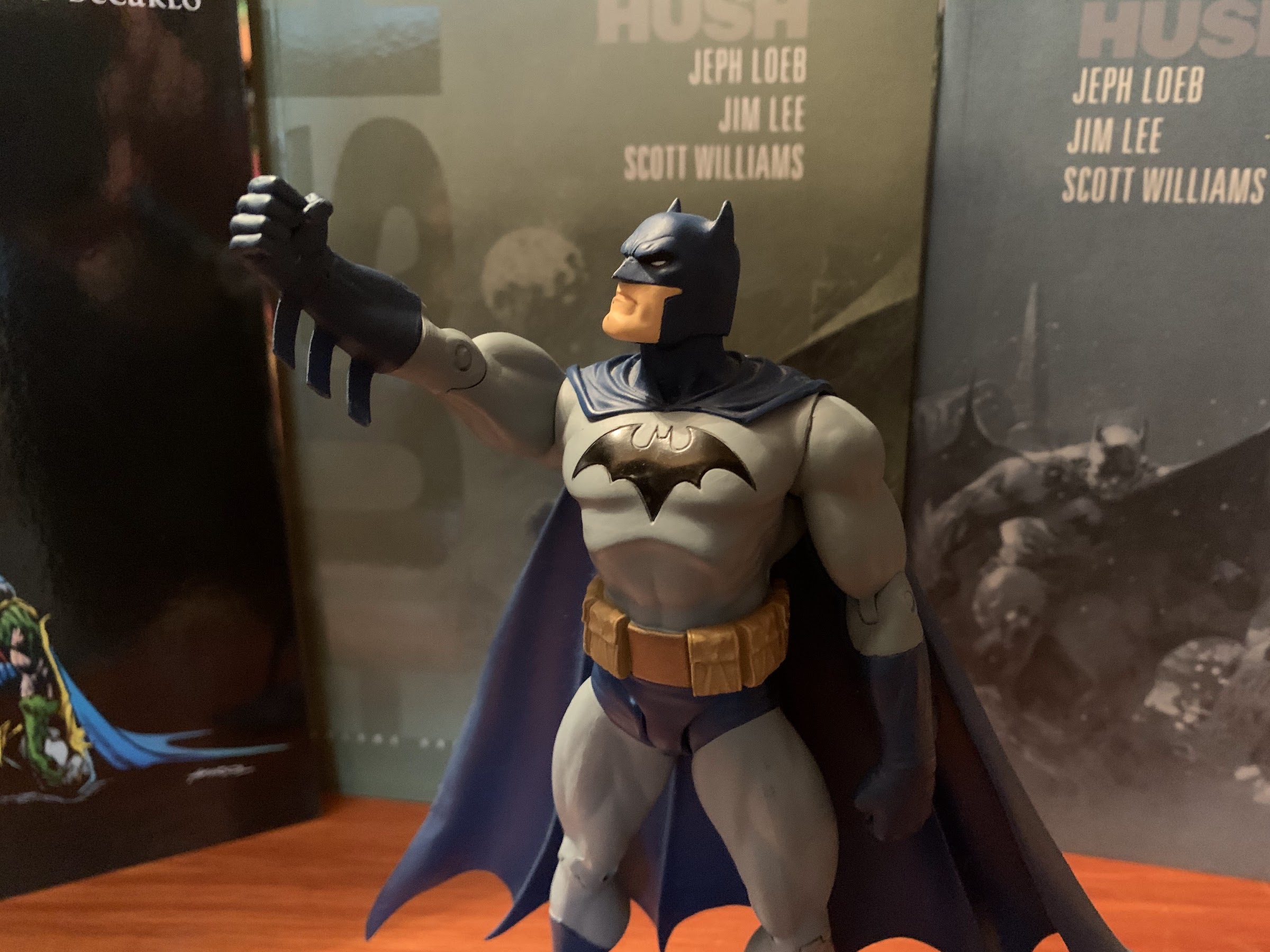
You’ll have to pretend he’s holding a grapple gun, because I can’t get that hand off.

Once upon a time, this figure came in a window box with the Hush era logo emblazoned upon it, but I’ve long since disposed of that box. Once removed, Batman stands six and a half inches to the top of his “ears” and strikes quite the intimidating posture on a shelf. His square-jawed head is set in a bit of a scowl with a lot of linework around the all-white eyes that have been tightened into narrow slits. The area around his neck has been sculpted for his cape with is almost seamlessly glued into the sculpted folds. It’s a rubbery material that hangs off of the figure and fans out ending at about the ankles. It’s smaller than what is depicted in the comic, but definitely more wieldy. Batman’s chest is puffed out with impressive mass and the logo is sculpted into his chest and painted a glossy black which contrasts well with the otherwise matte approach of the other colors. It’s hard to tell if the body is molded in gray or painted gray, but there’s definitely a paint application to bring out the muscles in his torso and biceps. The gloves have some nice detailing on them and the “fins” that stick off are slightly bendy so there’s less of a chance of any snapping. The belt is painted and features a tremendous amount of pouches, which was the style at the time. A black or gray wash has been applied to give it a worn, grimy, appearance which is suitable for the source material. There’s a liberal amount of gray paint on the legs and the blue-painted boots are fairly clean. A wash has been applied to them to bring out the folds around the ankle and the soles of the boots are painted black. The paint is sufficiently clean everywhere on my figure except the face, which unfortunately has a trio of blue dots around the mouth and chin. It also looks like some of the flesh-colored paint wound up on the very tip of his nose. I’ve never been able to get that speck off, even though I’m pretty sure the head is sculpted in blue plastic.
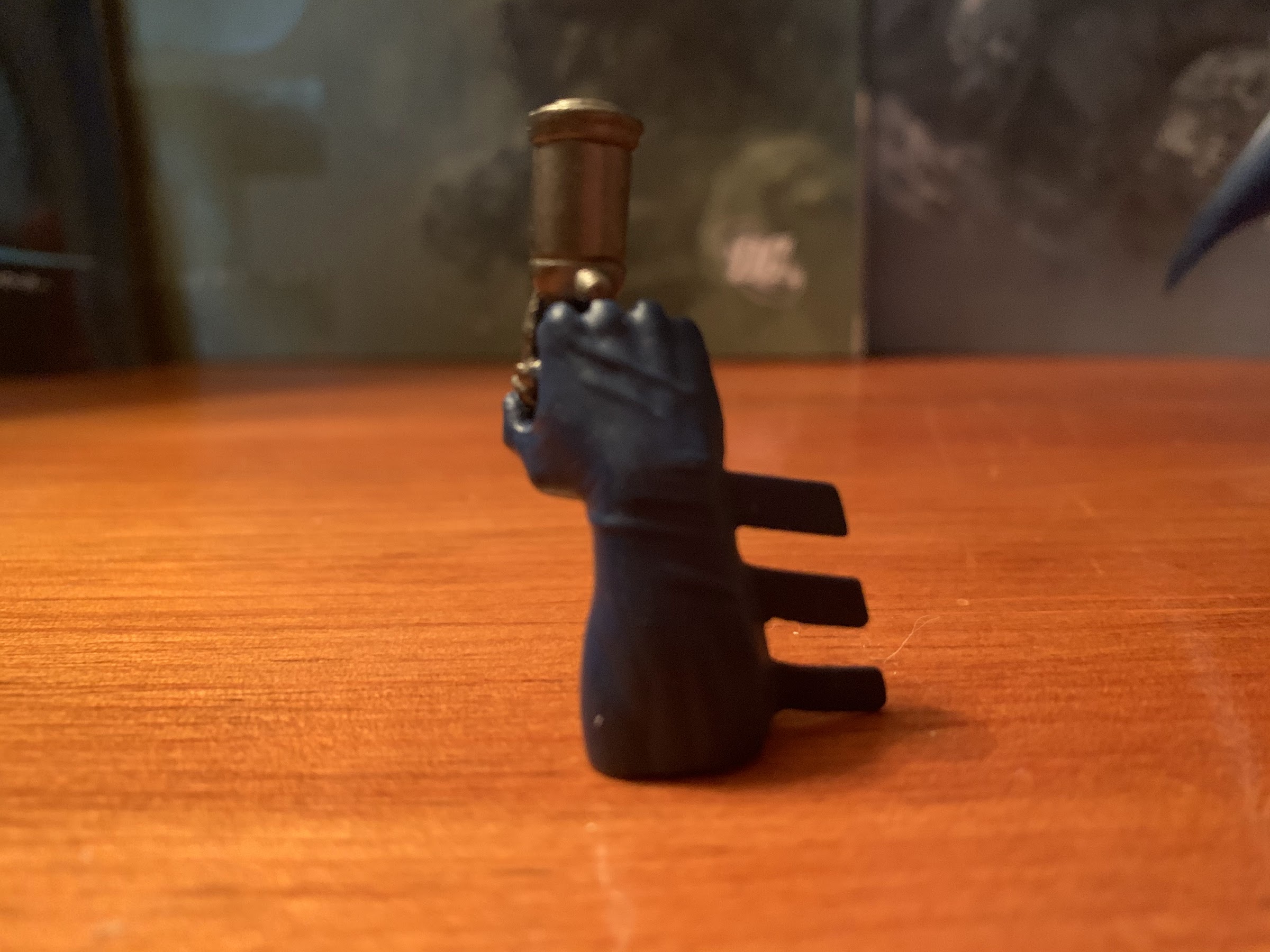
The grapple gun hand. It’s fine.

Even more than 15 years later, the figure largely looks the part. This is a very muscled Batman, but not overly so. The only aspect of the sculpt I’ve ever been not completely sold on are the rather massive thighs this guy has. It just seems like either they should be a little smaller, or the shoulders a little wider to compensate. The head might also be just a wee bit too small, but it’s pretty negligible. This looks good and I doubt anyone was really complaining about the figure’s aesthetics when it came out in 2003.
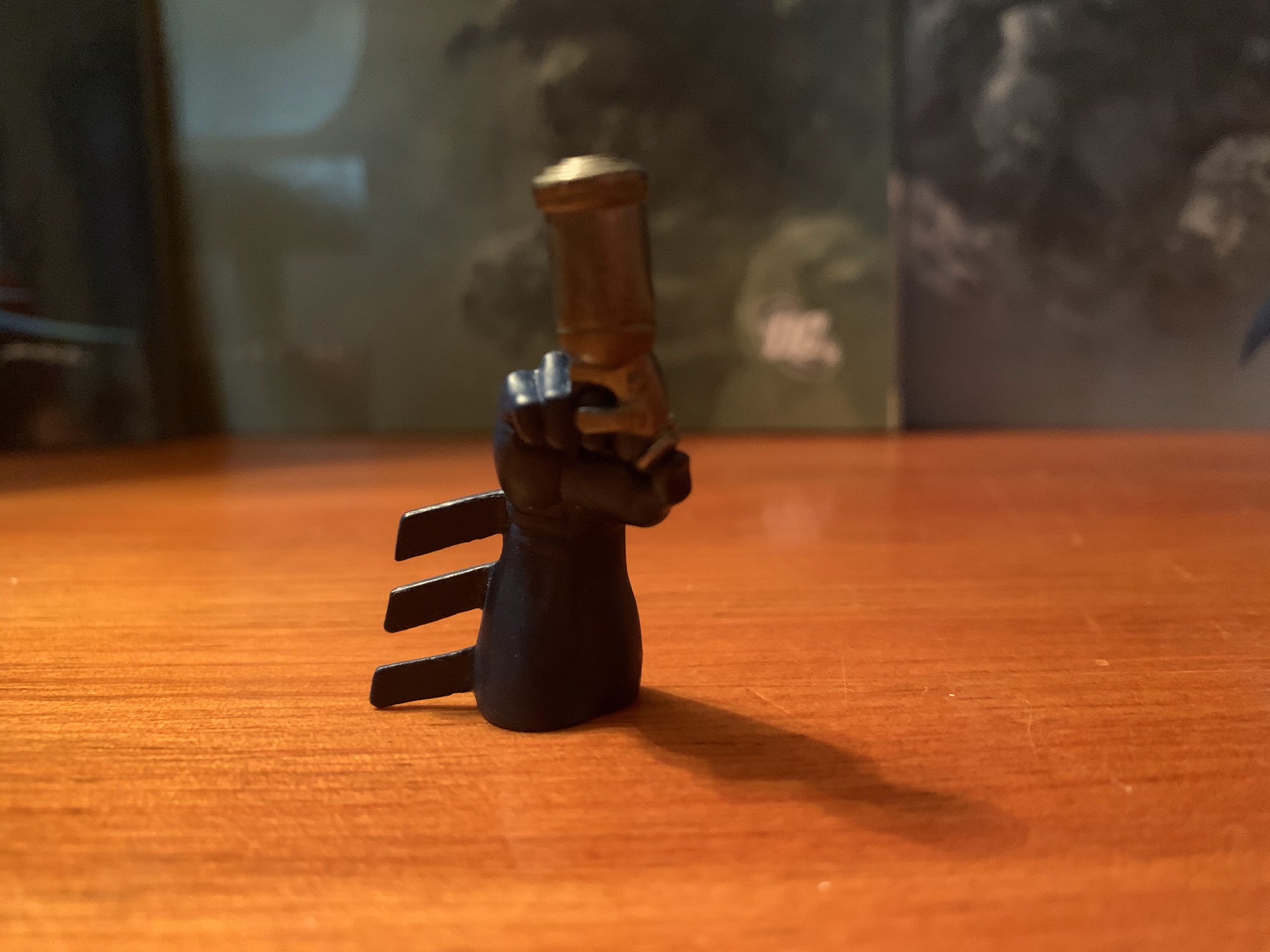
I think I would have preferred a second head since his posing sucks anyway. And maybe that one would have had a better paint job.

What they were critiquing though is the articulation, or lack thereof. With this figure, what you see is what you get. He’s not exactly pre-posed, but how he stands when removed from the box is basically all he can do. The head is on a ball-peg and it’s easily the best part about the figure, articulation-wise. Batman can rotate all the way around as well as look up pretty far, and even look down. There’s also a little tilt for good measure and no gapping is present when positioning his head. It’s great. After that though, everything gets bad. His shoulders are on some kind of a ball-peg system. They can rotate all the way around, but there’s no hinge and very little outward movement. The right arm can come out maybe 30 degrees while the left barely moves. This is for a reason, I suspect, we’ll get to when we talk about the accessories. And for the same reason, only the right wrist swivels at the glove while both arms have a single, elbow, hinge. There is no torso or waist articulation of any kind, which is a real bummer as a waist twist would help this guy out. At the leg, the thighs peg into the crotch so they can only go forward and back. He can extend pretty far in both directions, but the crotch starts to get ugly and weird looking as you do it. Plus, there’s a lot of rubbing and I would worry that extensive movement would harm the paint. You may be thinking to yourself, “Well, this is an older figure and there’s no rubbing yet,” but I also basically set this guy and left him as-is for 18 years. Batman does have knee hinges, but no boot cut.
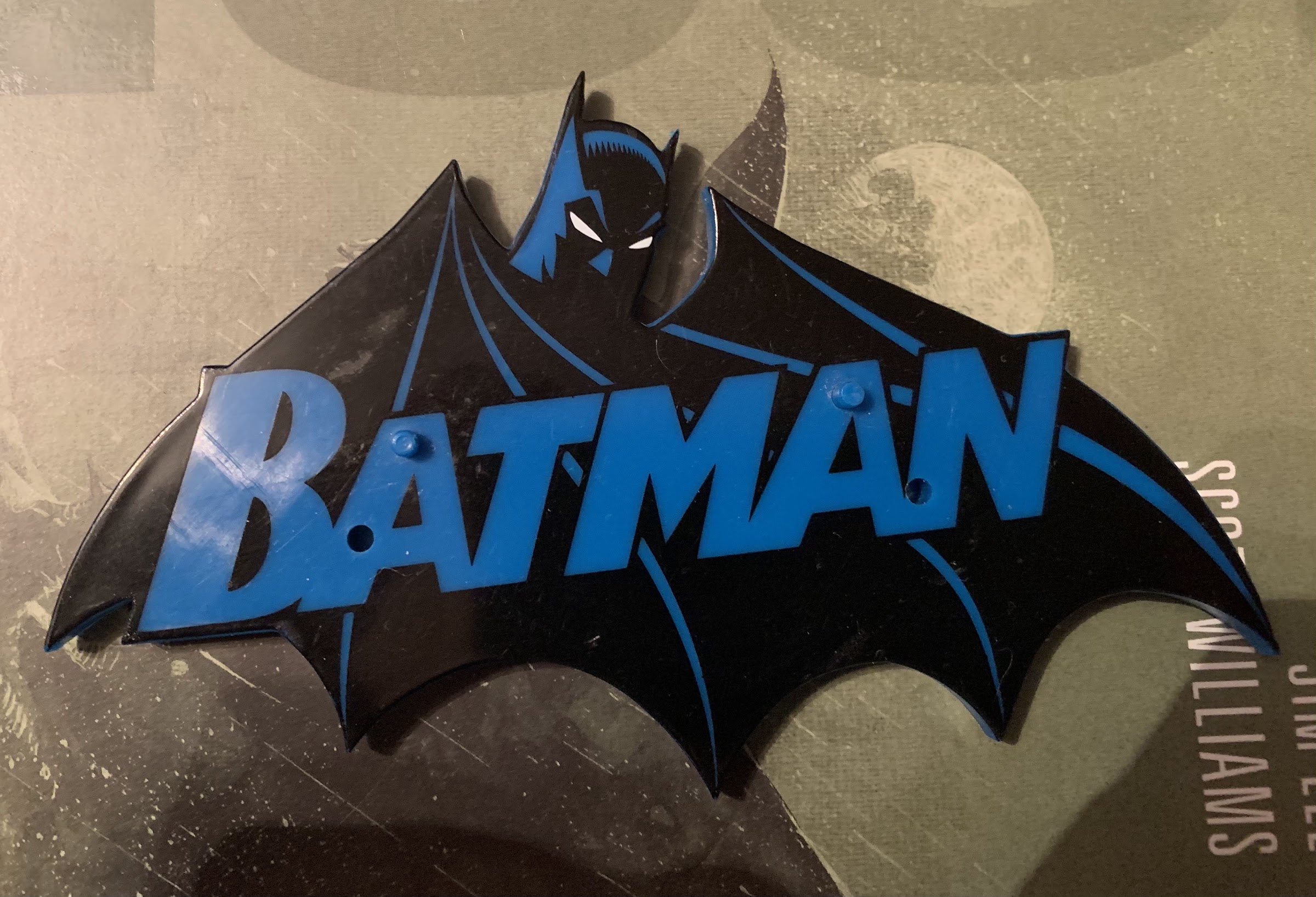
The stand is pretty cool, at least.

Because of the limited articulation, Batman is little more than a statue. You can pose him looking down from a high perch, looking straight-ahead, or looking up at a target, but that’s kind of it. The range on those elbow and knee hinges is terrible and his left hand is pre-posed at an awkward angle so he can’t even fake throwing a punch. His legs also come off of his body in such a wide stance that you basically can’t bend his knees at all and expect him to stand. A boot cut would have been nice as you could then move his feet and get him into a slight perch. One of the more iconic images from the Hush books is Batman on a ledge with one foot raised and placed on a gargoyle statue, a simple pose that this figure cannot hope to imitate. About the only thing he can do is aim his grapple gun because one of his two accessories is a swappable right hand with the grapple gun molded into it. I believe that is why his right arm has more range than the left so he can aim it in a semi-natural way, but it’s not that convincing. I also can’t get his hand to come off anymore to actually use it, but it’s not something most people likely chose to utilize in their display as it’s painted rather poorly and isn’t page accurate. The only other accessory is a display stand which is fine. It’s in the shape of the Batman logo of the era and it’s screen-printed rather well. There are two pegs on it, but curiously only one foot has a peg hole. The other has an indentation like one is supposed to be there, but nope. He stands fine without it, but the added stability is nice to have. Plus, the stand adds a little flair to the display which is welcomed considering this figure just can’t do much of anything.
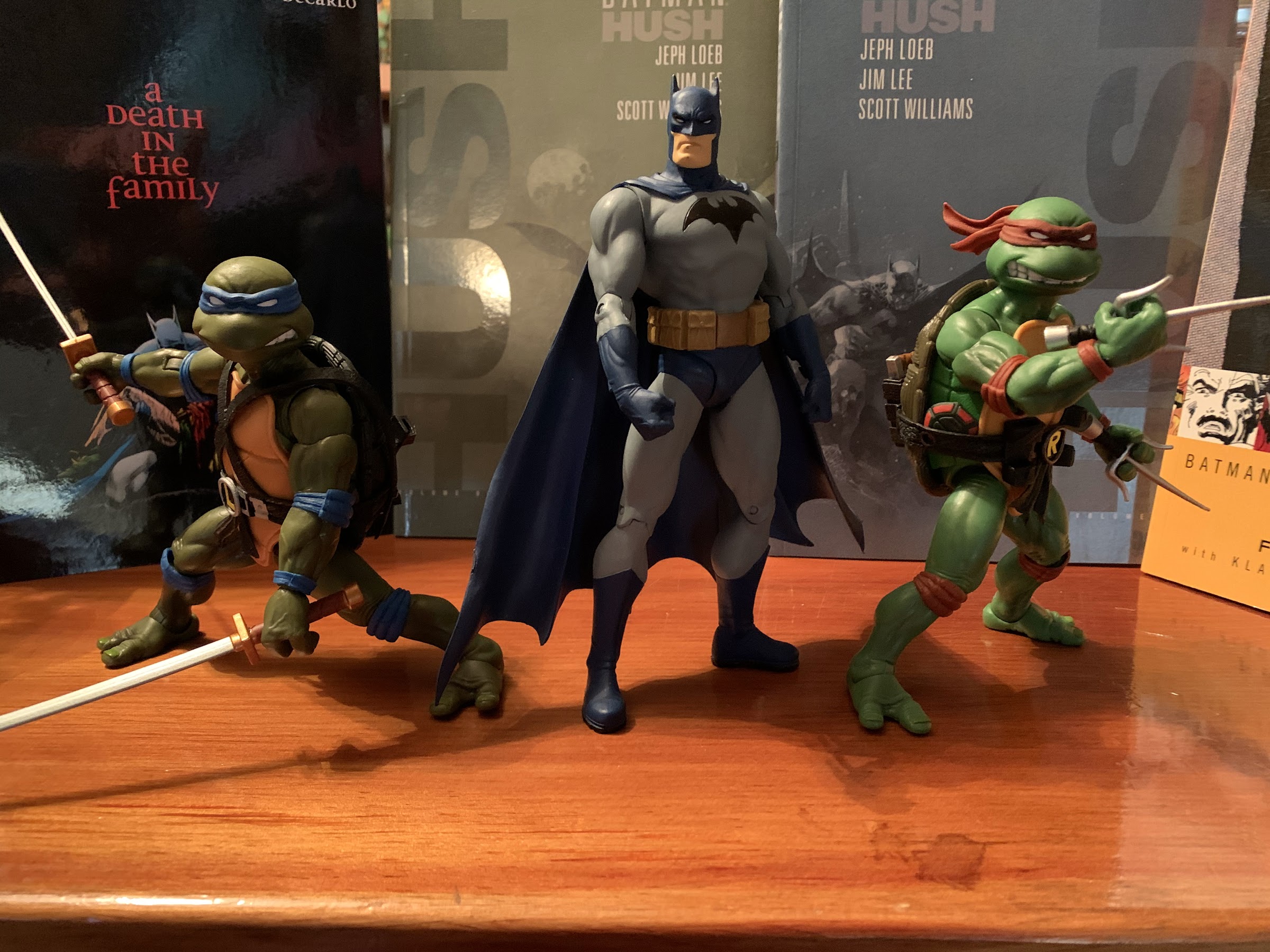
So did you like that crossover with TMNT?
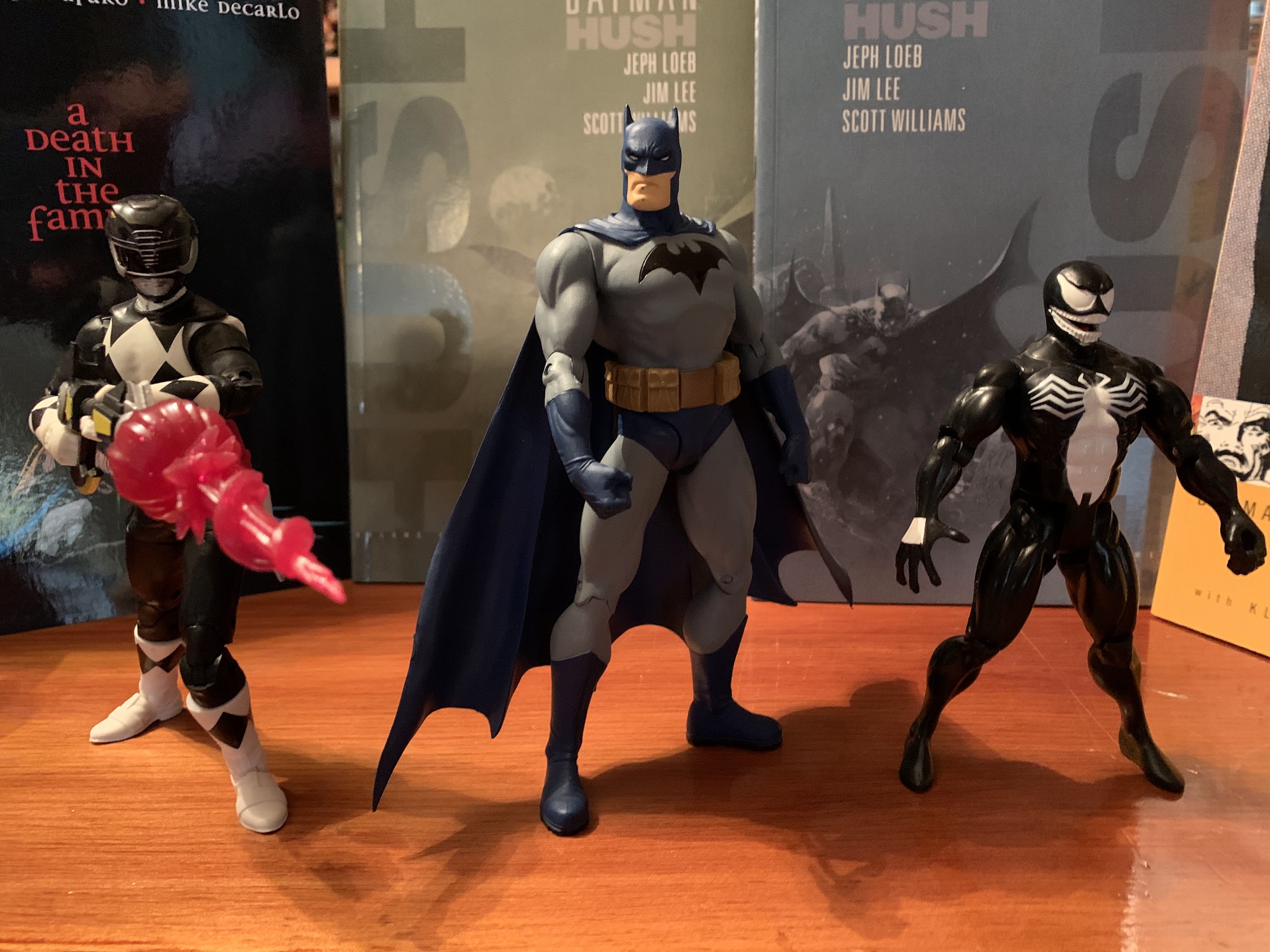
I didn’t have a Marvel Legends handy, so here’s a Hasbro Black Ranger and an old school Toy Biz Venom.

This is the type of figure that we had to deal with back in the early 2000s. Not everything was super-articulated, or even functionally articulated, and this Batman qualified. Now, obviously I’ve had this guy on display in my home as the lone Batman figure for years despite its shortcomings so clearly it got something right. It’s partly the result of a better figure just not coming along and capturing my attention, and the fact that I’m not a dedicated Batman collector has certainly helped to keep this guy around. This is a figure that is no longer available at retail, but the secondary market is plentiful enough for a figure almost 20 years old. And it’s a figure that really has not appreciated one bit. It’ll set you back only around 20 bucks if it’s something you want, and that’s for a figure in-box. If you’re shopping loose you might find a better deal. The sculpt is there, and the paint is solid, but the articulation is severely lacking so this is likely no one’s favorite depiction of Batman from this era. You can do better, though probably not cheaper if it’s a Hush Batman you’re after. I do like it, but it’s hard not to see a missed opportunity whenever I look at it.
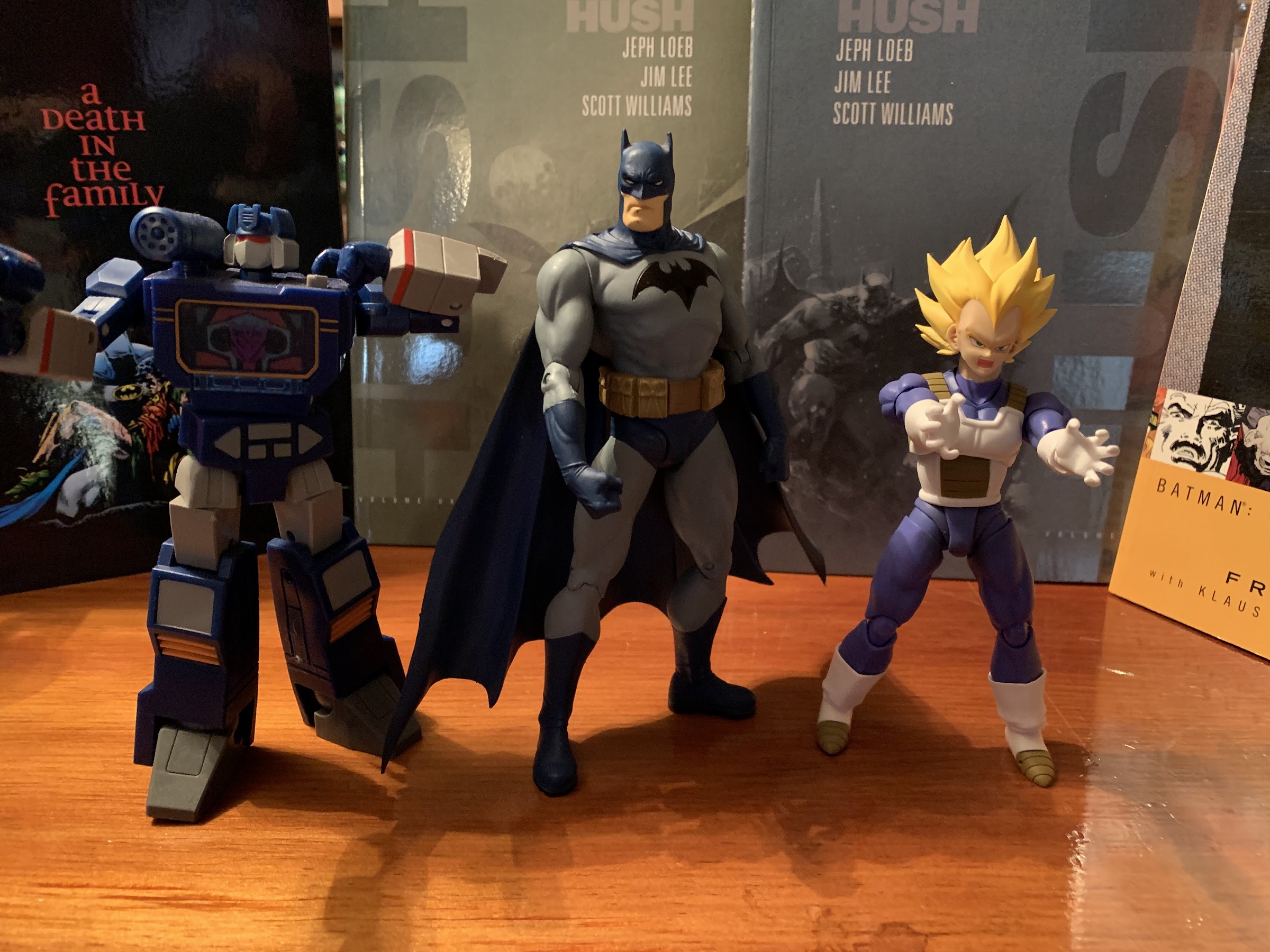
We’ll end on a comparison with the RED Soundwave and the SHF Vegeta.

Superman (1978)

It might be hard to convince younger people today that superhero movies were once huge financial risks for production companies. It might further surprise them to learn that only one comic book company seemed to figure the whole thing out, and it wasn’t Marvel. While Marvel struggled to get Hollywood interested in its characters, Detective Comics did not. That’s because DC held what were easily the two most identifiable superheroes in existence: Superman and Batman. Both had successful runs in theaters as serials or theatrical animation. Both also made the jump to television and in the 1970s the most recent to find success on both the small and big screen was Batman by way of the Adam West starring show and film. That Batman, created in the 60s, was the definition of camp. It was pretty delightful, but come the 70s audiences seemed to want something else. The comics pivoted back more towards a serious tone, though it would take Hollywood awhile to do the same. In the 70s though, one hero was available to take comics to new heights on the big screen and his name was Superman.

I don’t think it’s a great stretch to say Superman is the most recognizable superhero in the world. He’s the first thing that comes to mind for me when I hear the term “superhero” and he can do all of the things I think of when I hear the term “super.” He can fly, he’s incredibly strong, invulnerable, absurdly fast, and to top it all off he can do other things like shoot lasers from his eyes and has super…blowing…power. There’s no way to phrase that without sounding awkward. Throughout the years, Superman also has been known to possess what is basically a super constitution as he fights for truth, justice, and the American way all without ever telling a lie (except for those that protect his secret identity). He’s so pure a character, that it’s hard not to take a cynical approach sometimes when interacting with him. And depending on the current temperature of society, it can make the timing difficult. Maybe that’s why Superman has mostly spun his tires in the world of modern cinema, but apparently 1978 was the perfect moment for him to hit the big screen because the film, Superman, was a massive hit.

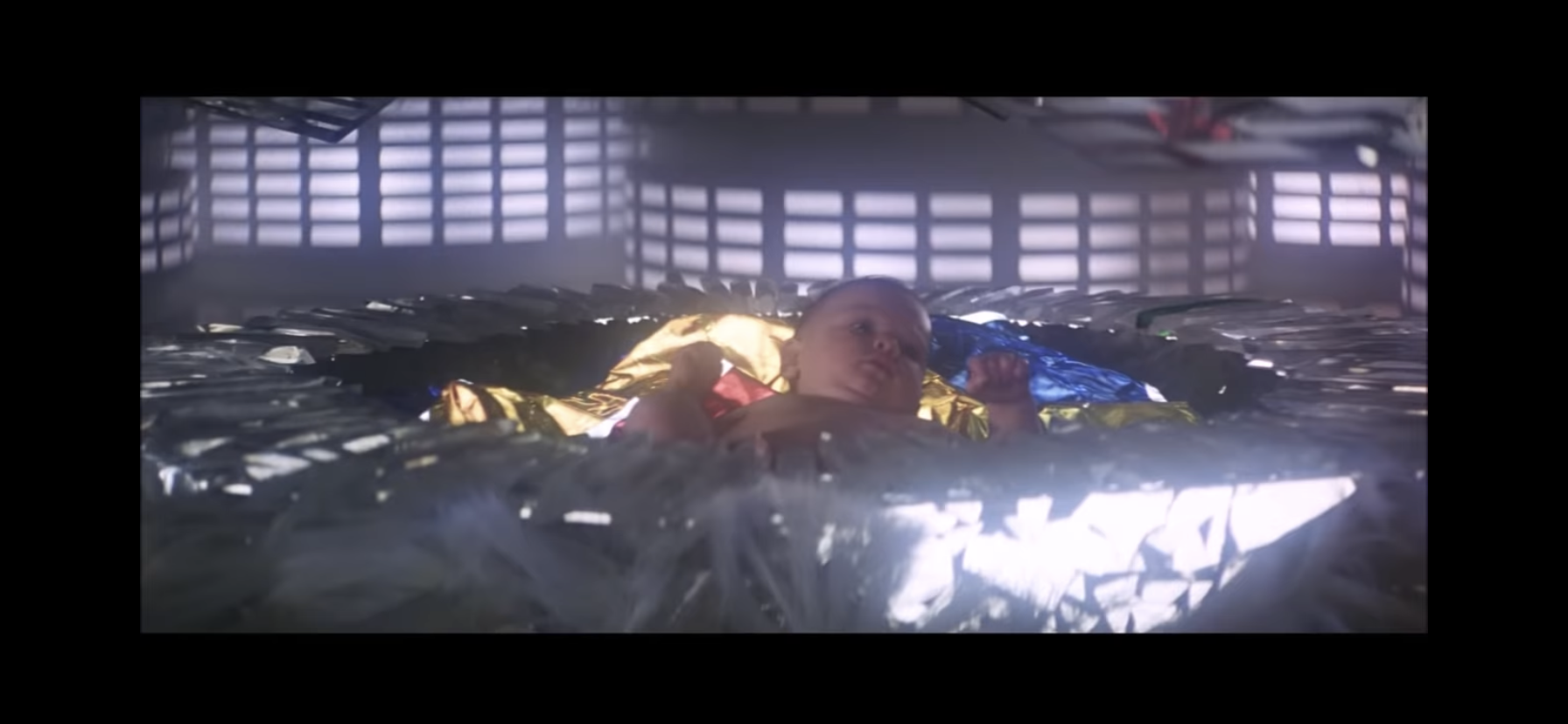
This is a long movie, partly because we apparently need to see every decision made before this baby was sent rocketing through space.

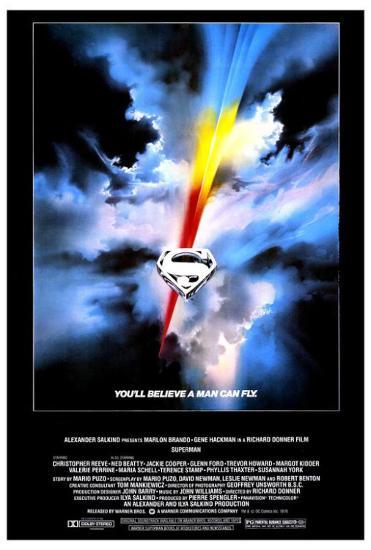
Directed by Richard Donner, Superman is a film that had a long development cycle. There were numerous script rewrites and it took a long time to develop the proper techniques to convince an audience that what they’re seeing was plausible. Making a man fly is almost ho-hum in this modern world full of computer-generated imagery, but in the 70s it had yet to be perfected. On a technical level, Superman was extremely ambitious, but apparently that wasn’t enough. The visionaries behind it, Alexander and Ilya Salkind, together with producer Pierre Spengler, decided it wasn’t enough to make one movie and settled on filming two at the same time. It was a laborious process that was always behind schedule and over budget leading to constant conflict between Donner and the Salkinds eventually leading to the director’s firing before the sequel could be completed.

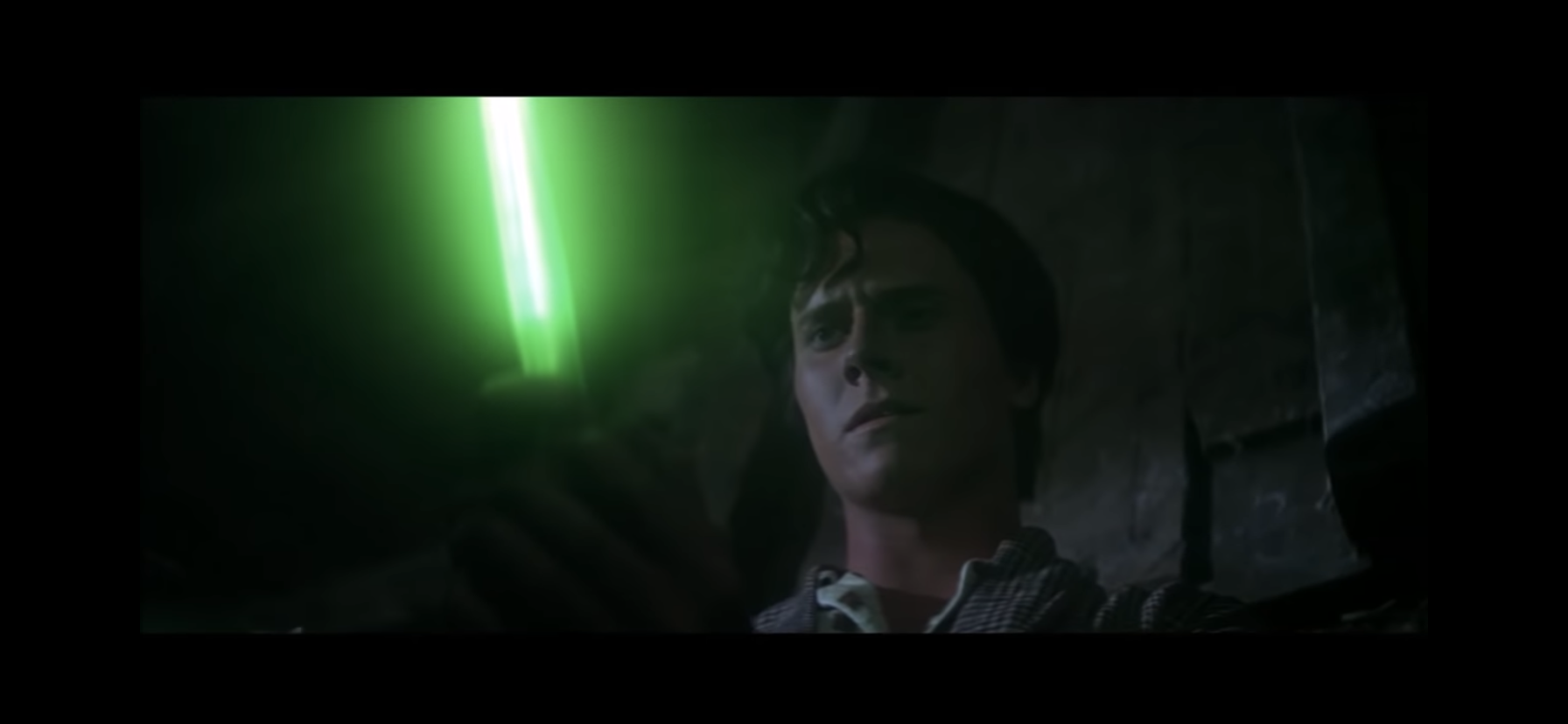
Jeff East plays young Clark and they try to make him look like Reeve, but it’s not very convincing.

The film also assembled a pretty large cast of actors, some of which were heavy hitters and others were virtual unknowns. Christopher Reeve was cast in the lead role of adult Clark Kent and Superman after a lengthy search. Looking over the list of actors offered or asked to audition is pretty entertaining as Donner and the producers tried to find someone who could both act and look good in spandex. To give the film star power, the Salkinds brought in Marlon Brando to play Superman’s father, Jor-El, and paid him a princely sum to do so. Fellow Oscar winner Gene Hackman was cast as antagonist Lex Luthor while Margot Kidder played Lois Lane.

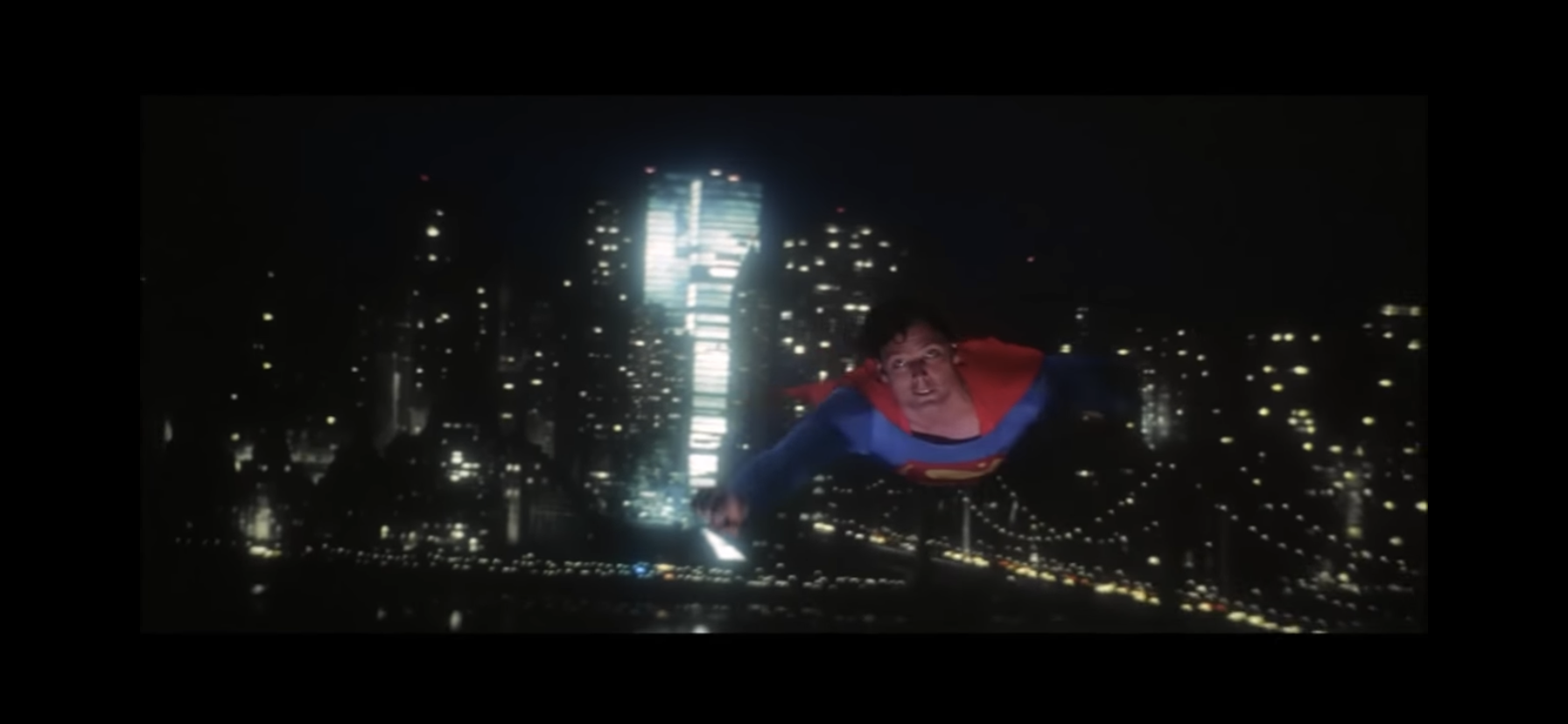
The film makes no attempt to hide the fact that Metropolis is just New York City.

Superman as a film is designed to introduce the audience to the character as if it were the first time. This necessitates a rather laborious beginning where we see the events that lead to planet Krypton’s demise while Brando chews up screen time looking rather disinterested the whole time. Following that, the setting shifts to Earth where we need to see John and Martha Kent (Glenn Ford and Phyllis Thaxter) happen upon the young boy who spent years traveling to their planet in an odd-shaped pod. The film is forced to fast-forward to Clark’s teenaged years (where he’s awkwardly played by Jeff East with Reeve dubbed over) before we can finally get to Clark’s adult years when he officially dawns the cape and blue tights. It’s a long process to get to our hero, and it’s awkwardly paced. Donner clearly had some bullet points he wanted to hit, but the speed at which he hits them reduces their impact. When Clark’s adoptive father suffers a heart attack at the farm, we’ve only just met him and it’s hard for the actors to get the audience to feel the dread and fear of the moment the way their characters do.

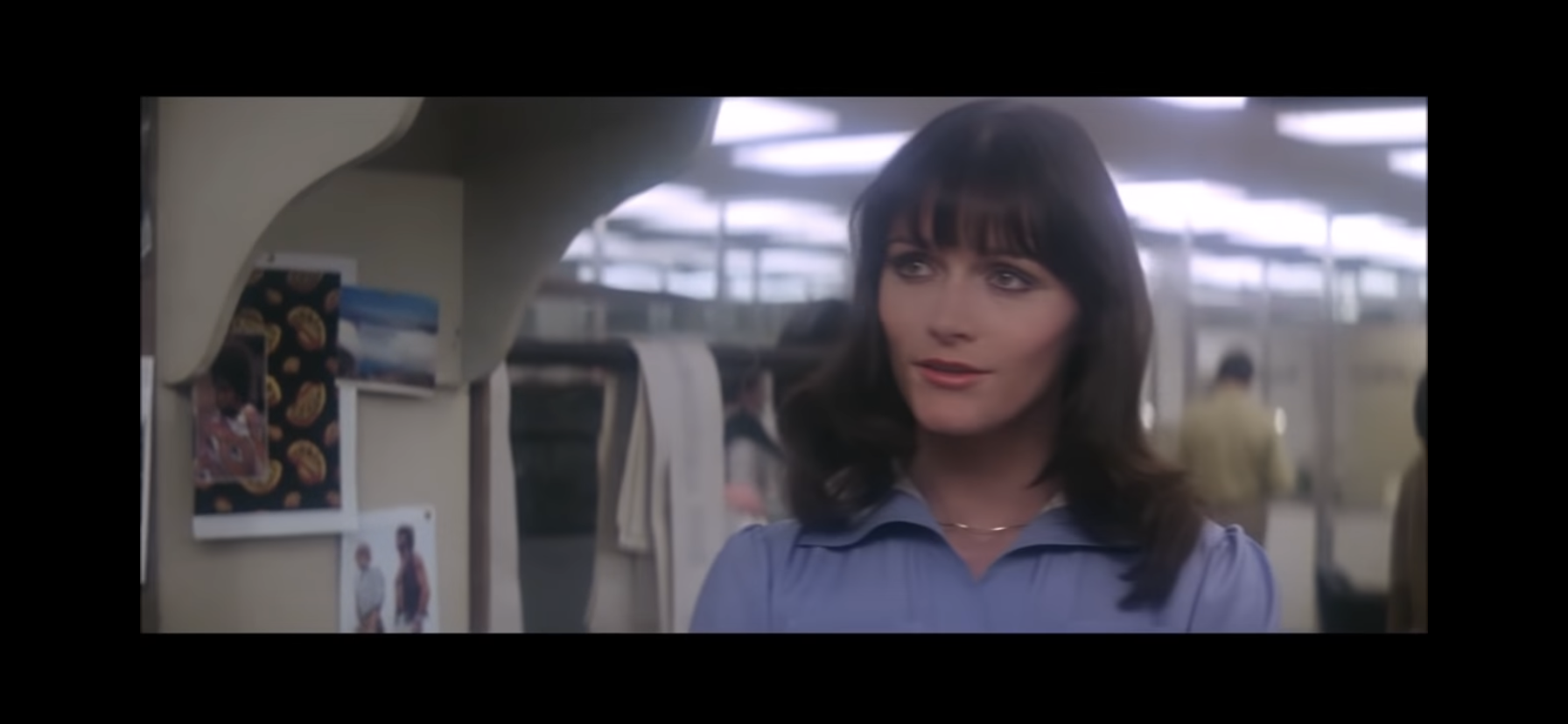
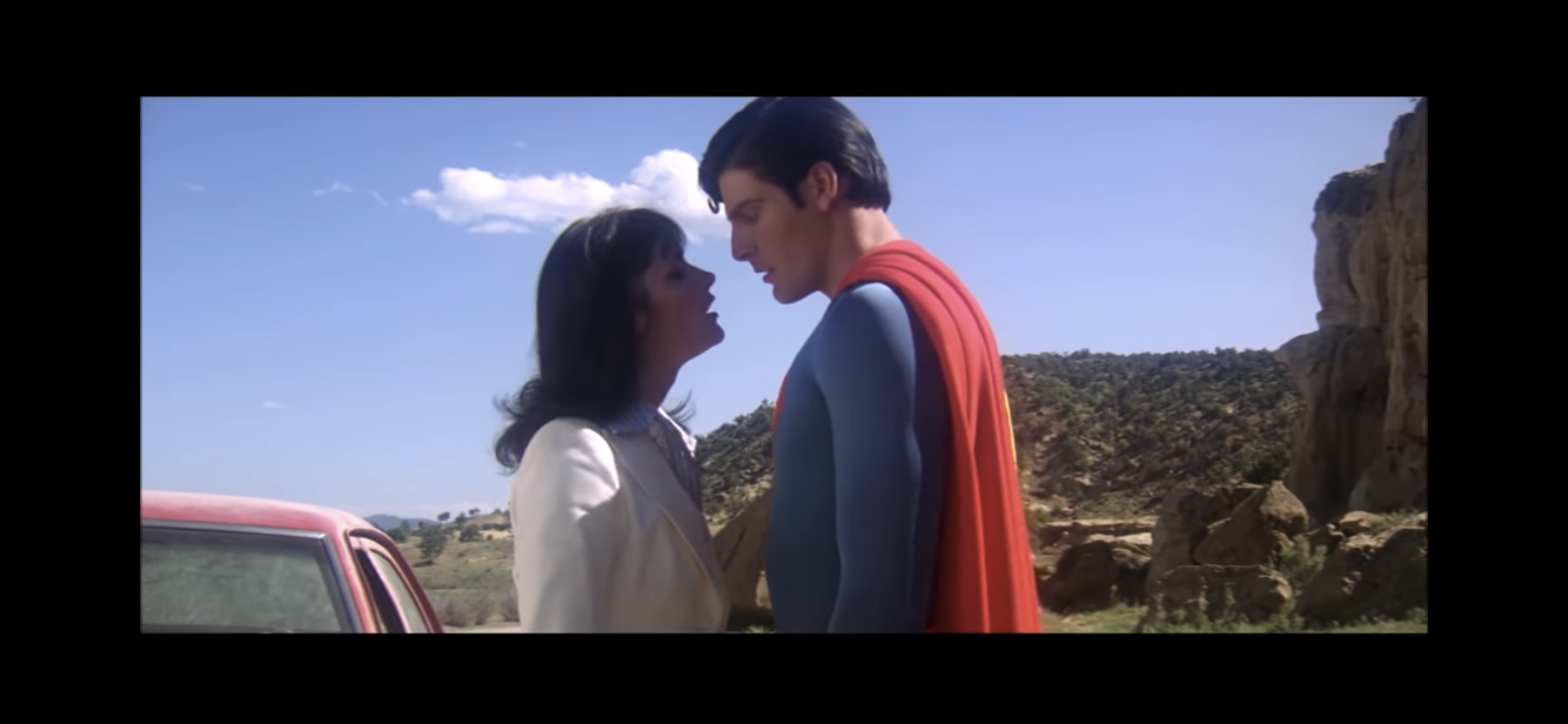
Kidder is a lot of fun as Lois Lane, especially when paired with Clark Kent, even though that pairing feels nonsensical at times.

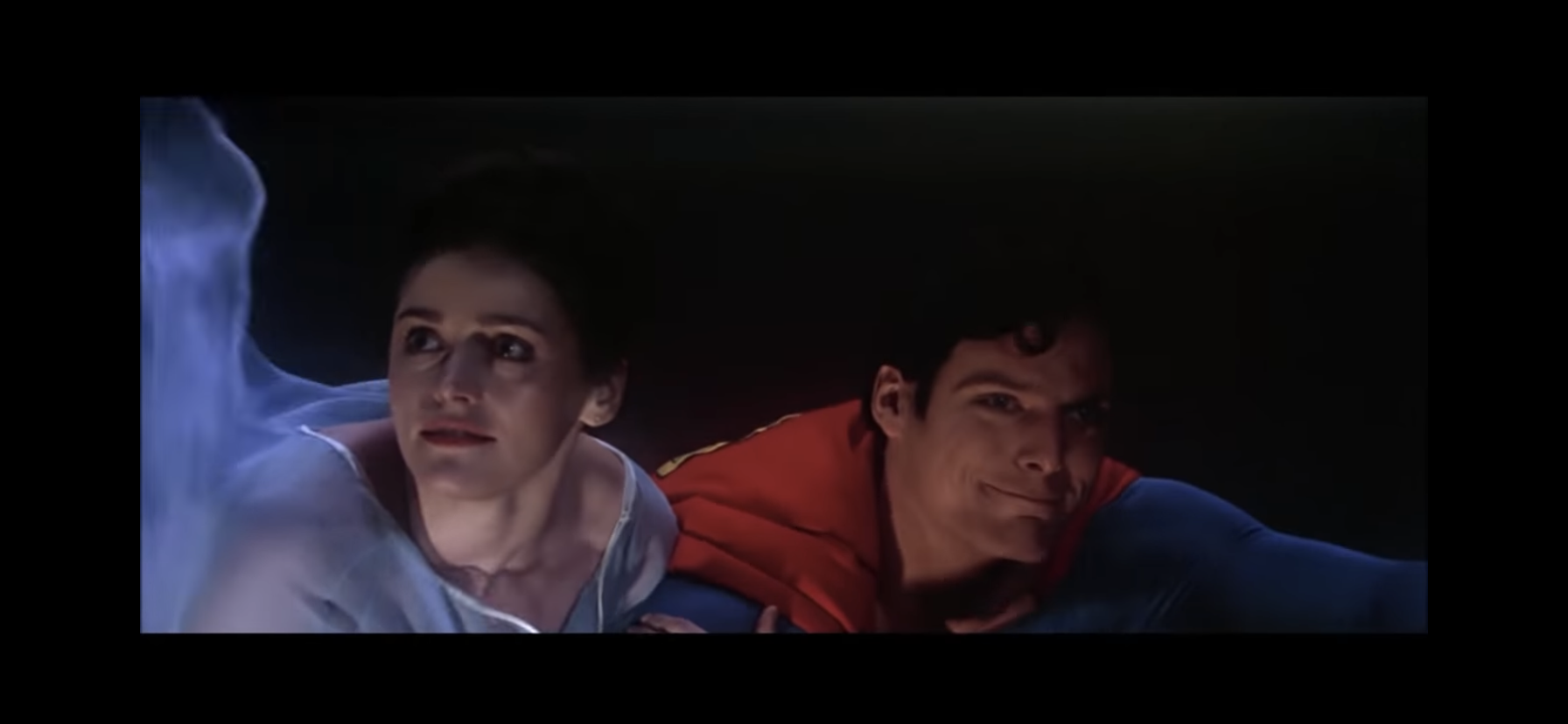
At least when we finally get to Metropolis and the main meat of the film, it starts to soar. Kidder’s Lois Lane, who embodies a manic, hyper, persona as a go-go-reporter livens the film up and she plays off of Reeve’s bumbling Kent very well. Their first scenes together are movie magic and I wish we could spend more time with them, but the film is well over an hour at this point and needs to bring in its hero. Superman and Lane’s scenes together are far less interesting. There’s a romantic angle imbued into them that’s forced, and made painfully obvious during the infamous flying sequence where Lane recites a poem in her mind via voice over directed at her new super beau.

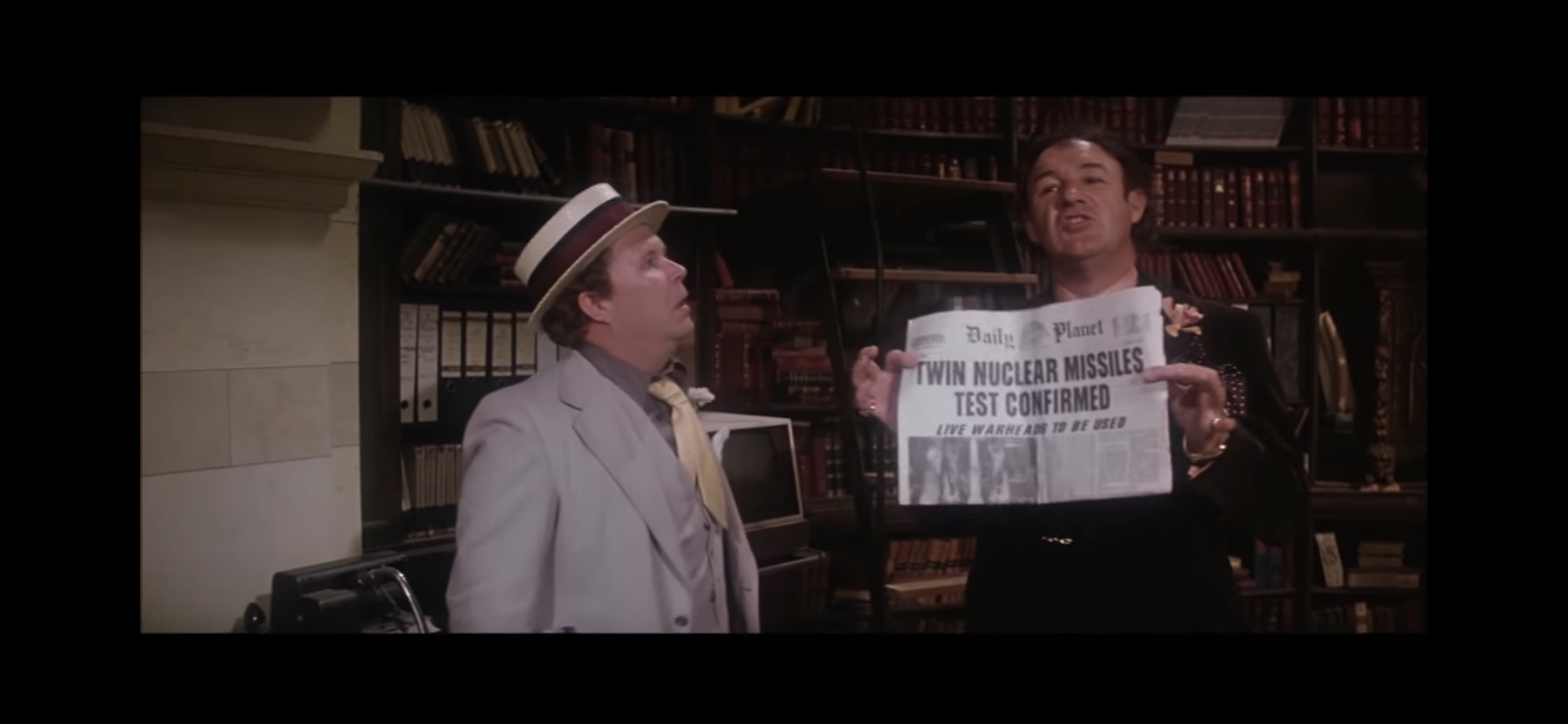
The Daily Planet just making it easy for Lex.

It’s also at this point the film’s main antagonist, Lex Luthor, is introduced. Hackman is charismatic in the role and he plays off of his bumbling sidekick Otis (Ned Beatty) and the dashing Eve Teschmacher (Valerie Perrine) in an entertaining fashion, but he doesn’t get enough time to convince us of his evil genius. The film just basically gives him kryptonite, and his scheme to create some expensive real estate for himself comes together quite rapidly. He’s at least wise enough, and I give the film credit for this, to know that Superman will be his enemy and that he needs to have a plan in place to deal with him before Superman is even aware of his existence. And his plan, at least as it pertains to Superman, is a good one. His overall plan though comes across as a bit camp, which is something this movie sort of struggles with. For much of the picture it plays things pretty straight, only slipping in a corny little line from the comics here and there, but Luthor’s plan feels like full camp to me. Some of Superman’s scenes are similar and it’s hard to know how the movie wants them to be interpreted. I think in most cases they’re playing it straight, but years of Superman parodies have left me damaged.

Kryptonite is not his only weakness.

I don’t want to spoil the ending of the film, even though it’s over 40 years old at this point, but it is a problem with the film. The only aspect of the ending that I like is it asks Superman to make a decision that is essentially the character choosing to take the advice of his adoptive father over that of his biological one. Brando’s Jor-El hangs over the film as he’s able to pass on knowledge to his son via some crystals he packed in his space pod. The two even appear to have actual conversations which is rather confusing and feels like an unnecessary cheat. It’s hard not to make a biblical connection here as well as Jor-El gifts his only son to humanity for he sees potential in mankind and that child is Superman. The only thing missing is a resurrection angle. At any rate, the ending is setup early via a quote from Jor-El to his son, but it still feels kind of cheap and like a deus ex machina.

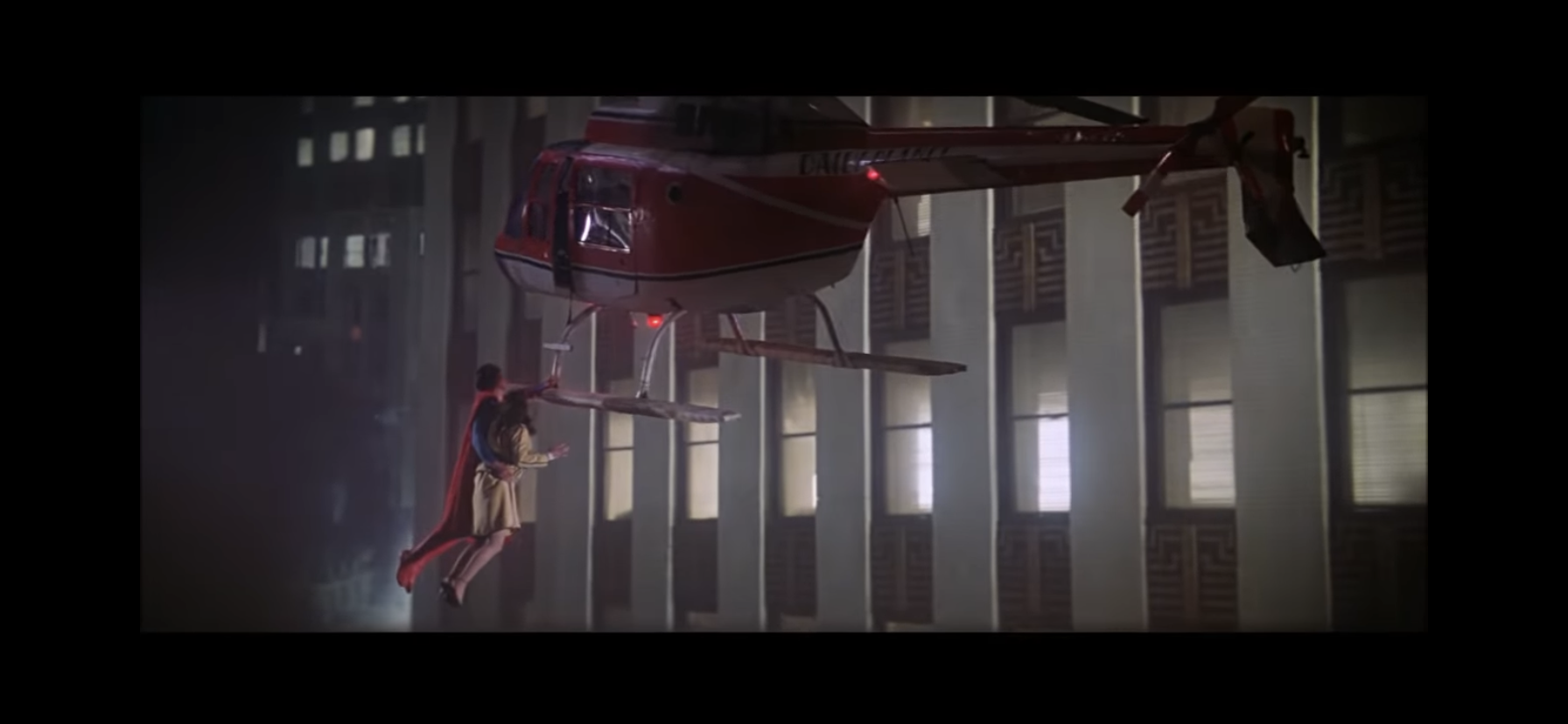
Show off.

When Superman soars though, it’s pretty damn fun. The special effects have obviously aged quite a bit since 1978. You know you’re looking at an old movie when you watch it, but it’s not so aged that it takes the viewer out of the fantasy. The flying stuff looks fine, the only aspects of the effects that really stand out are the miniatures used for much of the climax. In fairness to them, no one ever envisioned these scenes being viewed in HD when they were shot and I suspect that’s a major part of the problem. Possibly the best part of the film occurs when Superman outs himself and is just soaring around Metropolis knocking off conventional crooks. There’s also a more extravagant scene where he saves Air Force One from a crash landing. It probably didn’t need the added drama of having the airplane be Air Force One, but it’s a great scene. It was so good that nearly 30 years later Superman Returns went back to that well to reintroduce the audience to Superman. The only issue with the film is it takes so long to get to that point, and it’s a relatively small portion of the film, but the moments are at least captivating enough to enrapture even the youngest viewer.

The score for this film is fantastic, except for maybe this scene. Though there it’s not really the score’s fault.

A part of the film that has not aged at all is the score. Composed by the renowned John Williams, Superman has what I consider a perfect score. There has never been a character or franchise more perfectly suited for its theme than Superman and the Williams composition. It’s triumphant, wonderous, and jubilant. Is it controversial to say this is the best main theme John Williams has come up with? I love the main theme from Star Wars, and Jaws is an all-timer, but Superman takes it to another level. I have to assume Williams had the old Superman theme, from the Fleischer cartoons, in the back of his head so a hat tip to those classics should be granted.

The film probably makes you wait too long to get to these moments, but at least when it does it pays off.

I had not seen Superman since I was a kid before re-watching it for this film. It was my choice for family movie night, and in that role is probably miscast. It was tough sledding for a five and a four-year-old to sit through for two and a half hours, even with an intermission. Thankfully, I didn’t go with the three hour cut. Yes, this film has multiple cuts at this point, but the original theatrical cut is probably still the best. The scenes Donner added back in years ago aren’t memorable and just increase the film’s already generous running time. The film also suffers for being shot with its sequel. There’s a sense one gets when viewing this that a lot is being intentionally held back to introduce in the sequel. It just feels like a setup for Superman II, a far more confident and direct film that many prefer to the original. It’s also a film I have not seen in decades so I’m not certain it’s the superior film, but I’m fairly certain it is.

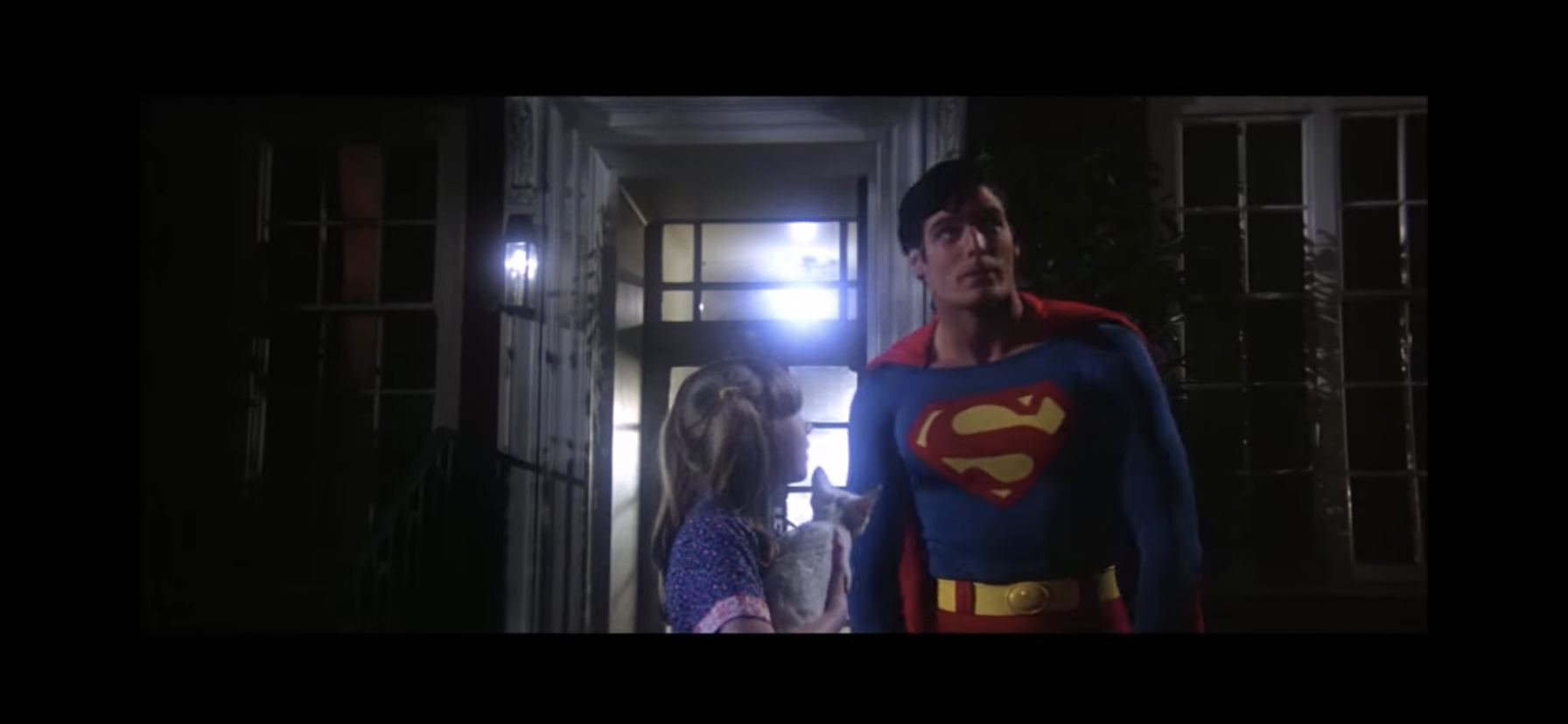
Superman is the type of hero who can save the world from a super villain like Lex Luthor, but also finds time to help a little girl get her cat out of a tree.

Superman is still a worthwhile watch in 2021 and it’s better than any of the films starring the hero to come since the year 2000. Superman is a pretty simple character with a simple premise, but modern filmmakers struggle with him when they become fearful of how powerful he is or fail to see the character’s appeal. To make a moody, timid, Superman is to totally miss what’s appealing about him. He’s the ultimate hero who is nearly infallible. He doesn’t have to be perfect, but he’s a character that is always striving to be perfect. And even though I was probably more let down by this re-watch than I was rewarded, whenever that familiar John Williams score kicked up and the character came into view, I was a kid again and I was completely enthralled in what was playing before my eyes.


Batman Beyond – The Complete Series (Blu Ray)

Last year, when Warner Home Media announced a new Blu Ray set for the series Batman Beyond, I decided to wait. I had been an early consumer for the similar Batman: The Animated Series set the prior year and had some misgivings. The price on that set fell and a slimmed down version was even introduced at retail that really only omitted the outer box and Funko items. Plus, I had ordered that set from Amazon and had to go through multiples because the company packaged it so poorly. I also wasn’t in any hurry to order Batman Beyond since I had the DVD sets and had never really found them lacking in a visual sense.

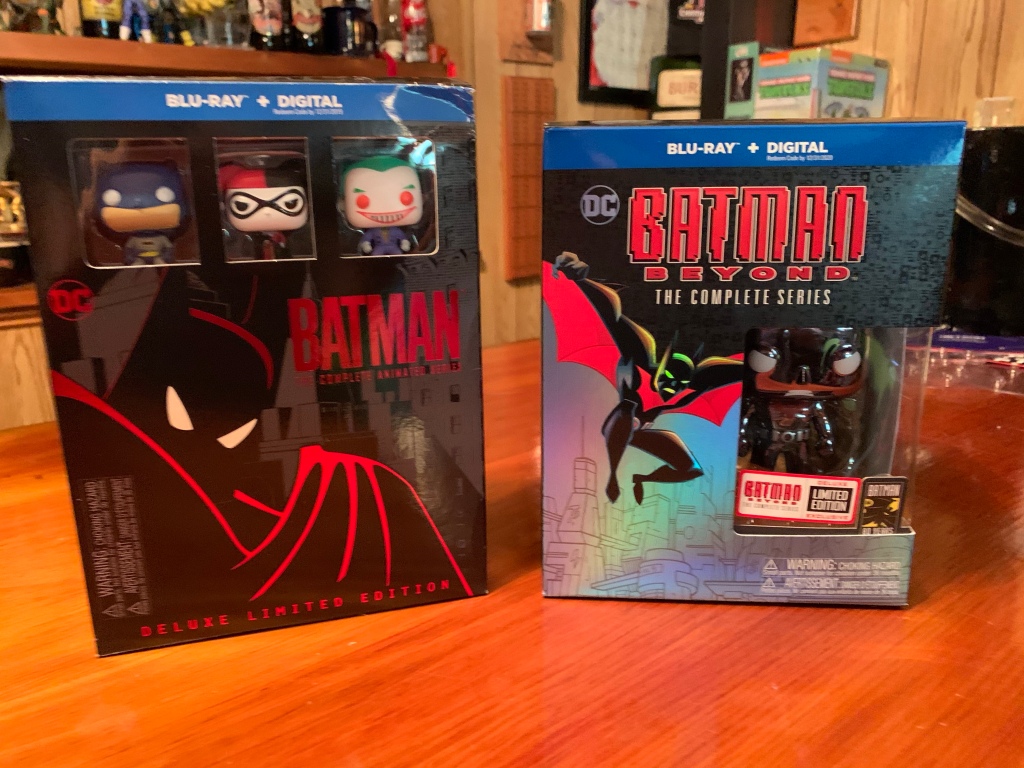
My patience was rewarded as a recent Amazon Lightning Deal came up for the complete Batman Beyond Blu Ray package. Like Batman, Batman Beyond received both a deluxe release and a retail release, only this deal on Amazon ended up being the deluxe version marked down even lower than the retail version. I decided to pounce since it’s been awhile since I engaged with the property, and if I was going to do a re-watch, might as well make it a high-definition one.

Batman Beyond tells the story of Bruce (reluctantly) passing the mantle of Batman to Terry

If you’re unfamiliar with the series, Batman Beyond was the sequel series to Batman: The Animated Series. In actuality, it was the replacement. Series creators Bruce Timm and Paul Dini had operated under the assumption that The New Batman Adventures would continue beyond the one season order the WB network had given it. Instead, the network decided that Batman needed a refresh. Were they right? Probably not, as Batman has proven to be a timeless character. The New Batman Adventures wasn’t quite on par with the Fox seasons, but it was still pretty good and had legs. It would have been nice if the network had given it one more season, or even a half season, while also informing the crew that would be it. Then we could have received a proper finale, but instead we got Batman Beyond and a series of Justice League shows followed.

Given that, it would be easy to approach Batman Beyond with significant baggage. After all, the premise is essentially “Let’s make Batman younger by essentially making him Spider-Man.” If you told that to me before ever letting me watch the show I would instantly have a bad impression. It sounds like the foolish decision of a network executive and not a creative decision by an actual story-teller. Against all odds though, the show somehow worked. It made people care about a new, teen-aged, Batman and it also managed to serve as a bookend to the animated series by largely continuing that show’s continuity. Sure, there was a pretty big gap in time between the two properties and a great many loose strings are never addressed, but just by having Bruce Wayne (still voiced by the incomparable Kevin Conroy) onboard added an instant credibility to the program.

Batman Beyond is set in the year 2039. Gotham has apparently run out of room for expansion and has grown up instead of out. Colossal skyscrapers cover the landscape with roads upon roads on top of one another. The main character is Terry McGinnis (Will Friedle), a teenager who loses his father to a murder making him the ideal candidate to replace Bruce Wayne as Batman. As Batman, Terry is empowered with a futuristic suit that allows him to fly, turn invisible, fire a seemingly endless amount of batarangs, and even stick to surfaces like a certain wall-crawler I already referenced. He’s a bit more jokey than his predecessor, and several episodes act as a teaching moment for him as well. This is a Batman in training, though by the end of the show he is pretty much the real deal. It’s a bit amusing to see how future Gotham looks considering modern Gotham looked like it was frozen in the 1940s. It’s about what you would expect, though most automobiles appear to still possess wheels.

The setting is not really what’s important here. What is most interesting about Batman Beyond is watching an elderly Bruce Wayne manage a kid who has taken up his mantle. It arises in an unnatural way with McGinnis initially stealing the suit to investigate his father’s murder. Wayne is shown giving up his alter-ego in the first five minutes of the show, but also given a motivation to want to see Batman return to Gotham. And that’s Derek Powers (Sherman Howard), who has basically taken Wayne’s company from him turning Wayne Enterprises into Wayne-Powers. He’s setup early on to be the primary foil to Batman and Wayne, though the rogue’s gallery will be filled out quite a bit over the ensuing 52 episodes. It’s a lot of fun though to watch Terry and Bruce bust heads with each other as they seldom agree. They find a working relationship though, and it helps that we have the relationships between Bruce and his prior wards to fall back-on. It’s easy to see that this Bruce is trying his hardest not to repeat the same mistakes as he did once before, and the fact that he’s physically compromised in his old age actually helps him to be more patient with Terry than he was with both Dick and Tim.

To sum it up, Batman Beyond is indeed worth your time as a series, even if you have reservations about the whole thing. It does the impossible in being a worthy follow-up to Batman: The Animated Series. Chances are, if you’re reading this you already know that. What’s more pressing is did Warner do right by the series with this set? Considering it is now being sold for almost half of what it was initially, I would say yes.

Being a late 90s/early 2000s show means this one really isn’t all that old, relatively speaking. The masters were all preserved and when the show received a transfer to DVD it came out great. In high-definition, it looks every bit as a good and obviously a little better. Blacks are deep and the brighter colors pop as expected. There’s no grain to speak of with this series, and everything has a very clean presentation. This was one of the last shows to be animated largely in a traditional manner for DC as they still used ink and paint on celluloid for the main animation. And unlike say Spider-Man 94, there’s no glaringly awful CG effects in use. Nothing is really working against the show in its transfer to HD, and that’s a good thing. Warner Home Video also wisely resisted any temptation to crop the image which seems like a given, but you never know when such will pop up.

The new extra features are all relegated to a bonus disc. There’s a round-table retrospective with the creators and actors of the series, though notably absent is Paul Dini. It’s mostly just 45 minutes or so of the people involved congratulating themselves for making a good show. There’s some interesting moments, like Bruce Timm acknowledging some of the controversial moves for the series following its completion that the others at the table get to weigh in on, but it’s not as juicy as it could have been. If you’re at all versed on this show, you probably won’t learn much from this discussion. There’s also a retrospect on Batman called Knight Immortal which consists of still images and some clips and surprisingly no talking heads. A lot of the main players involved with the character are heard from and it’s a decent look at Batman. Lastly, there’s a history of Detective Comics present. It’s a bit dry, but if you love DC then you’ll probably enjoy sitting through it. All of the DVD special features are also present.

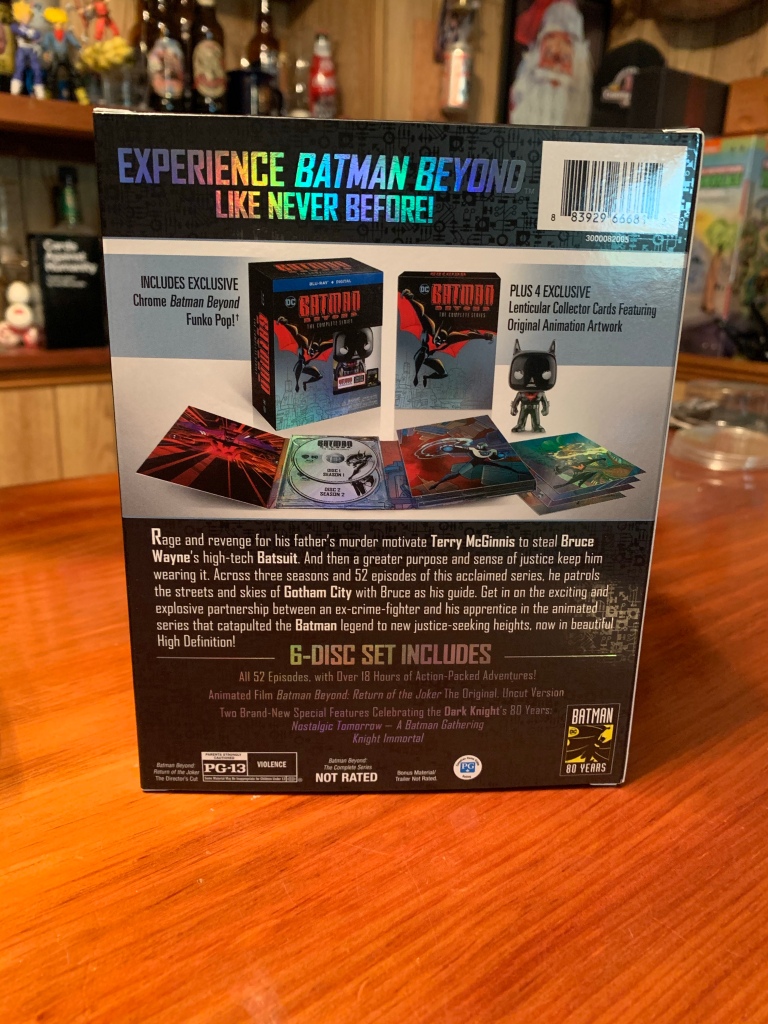
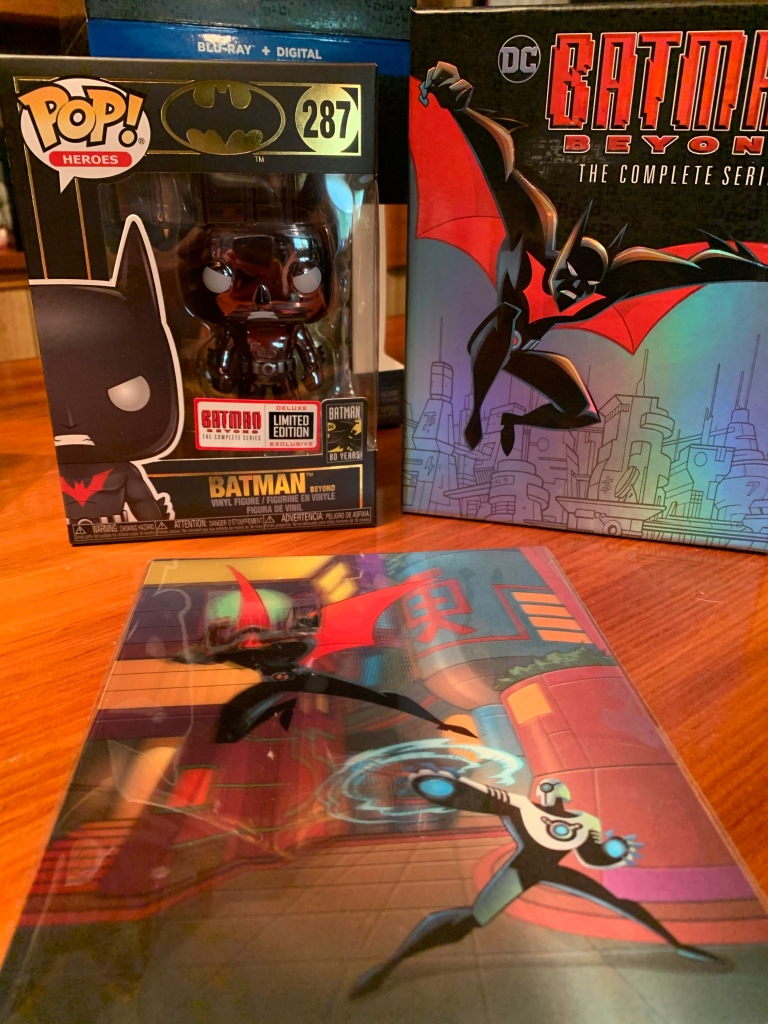
The reverse side of the lenticulars.

Like the set for BTAS, this one doesn’t have any commentaries or anything like that added, just what was already available on DVD. Also like that set, it includes the feature associated with the series, in this case the excellent Return of the Joker. If it weren’t for Mask of the Phantasm, Return of the Joker would be my favorite Batman animated film and it’s still one of my favorite Batman films in general, possibly in my top 5. It’s the uncut version too, as expected. There’s also an optional digital version of the collection that can be downloaded. I haven’t redeemed my code though so I can’t speak to the quality (the BTAS set came with a standard definition digital copy) and I’m also note sure if it includes Return of the Joker.

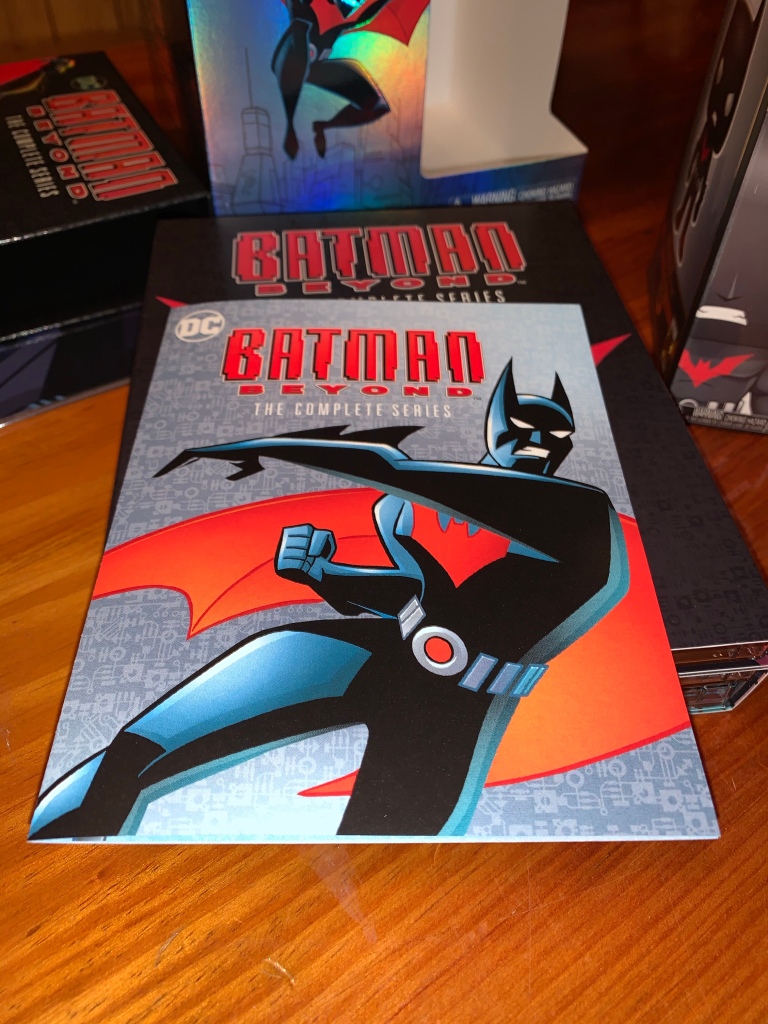
This little booklet is just a glorified table of contents. No creator notes or anything.

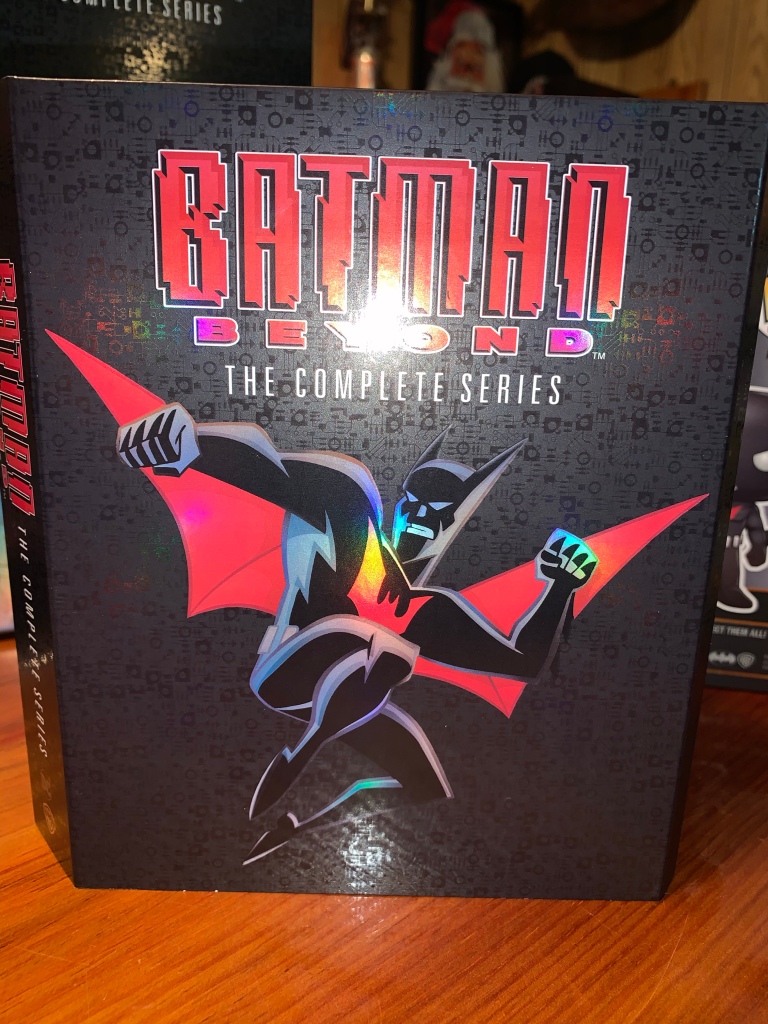
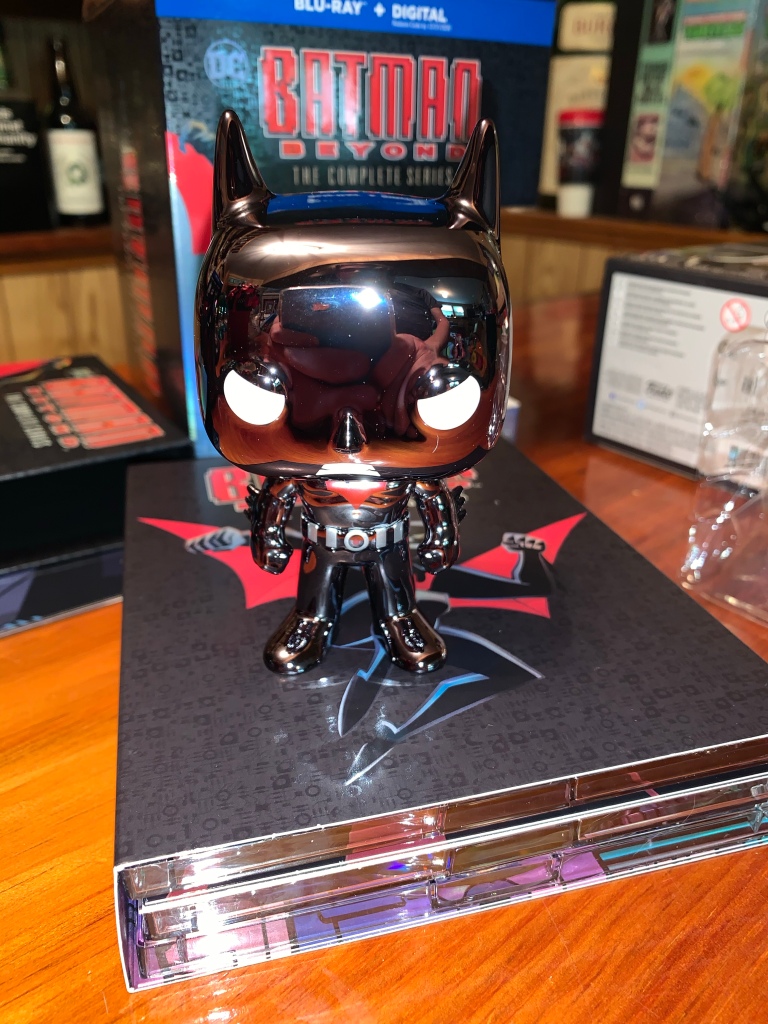
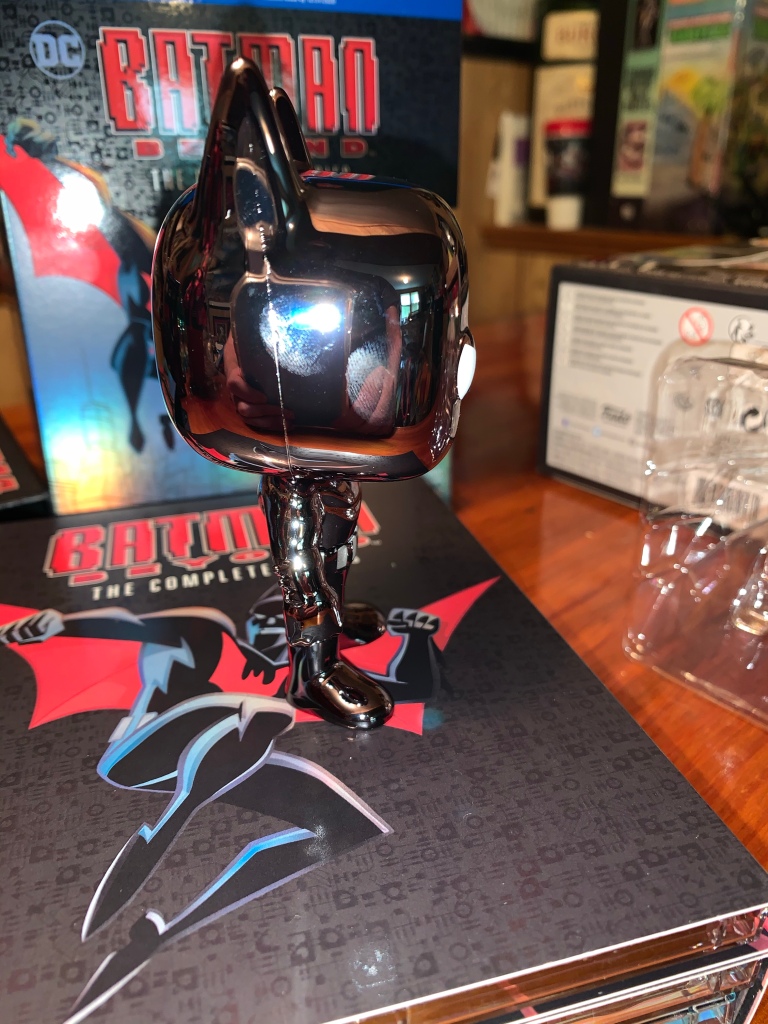
Where this set differs from the BTAS one is in the presentation. It comes in a cardboard box with a window display for a chrome Batman Beyond Funko Pop! rather than mini ones. It’s a normal-sized Pop! so you probably know if you like it or not. Inside the box is a pretty standard Blu Ray set. It’s a hard cardboard slip case with folding digi-book styled case that houses the discs. It’s nothing extravagant, but it’s at least functional. While I loved the presentation of the leather-bound book for the BTAS set, getting the discs in and out was painful. There’s also some lenticular images and a little booklet that serves as a table of contents. It’s fine, just not particularly flashy. I imagine the standard retail release just omits the outer box and Funko figure.

If you want this show on physical media and in HD, then this is something you should seek out.

Batman Beyond – The Complete Series is essentially as advertised. If you had been waiting for a complete collection on Blu Ray, then you should be satisfied with this. Especially if you were able to get it on sale. If you like the show, and you’re still into physical media like I am, then you should probably grab it. Is it essential if you already have the DVDs? Probably not. The bonus features are something you’re likely to watch once and then never again. It would have been great if Warner had made an attempt to make this the full Batman Beyond experience by including the character’s appearances from other shows on here. That would have been especially useful for someone like me who has no interest in buying any of those other shows. And if this is something you want, I’d suggest grabbing whatever version is cheaper unless you really want that exclusive Pop! figure. Lastly, if you like Batman: The Animated Series but never gave Batman Beyond a chance, it’s worth the price of admission. You’ll probably be pleasantly surprised.


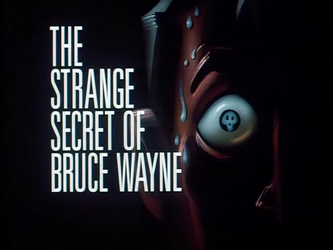
Batman: The Animated Series – “The Strange Secret of Bruce Wayne”

The_Strange_Secret_of_Bruce_Wayne-Title_CardEpisode Number:  37

Original Air Date:  October 29, 1992

Directed by:  Frank Paur

Written by:  David Wise, Judith and Garfield Reeves-Stevens

First Appearance(s):  Hugo Strange

“The Strange Secret of Bruce Wayne” is another episode of Batman:  The Animated Series that can trace its roots back to a story from Detective Comics, in this case issues #471 and #472 “The Dead Yet Live” and “I Am the Batman!” by Steve Englehart. It introduces Hugo Strange to the Bat-verse, a scientist with a penchant for extortion. Strange uses a machine that can read the minds of individuals. Under the guise of therapy, Strange seduces wealthy individuals into agreeing to his services and when he unearths something nefarious from their subconscious he’s able to blackmail them in exchange for keeping their secrets. If that sounds familiar, then you’ve probably seen Batman Forever, where The Riddler used a similar scheme. We’re only 37 episodes deep, but we’ve already seen a few instances of where this animated series influenced a movie to come. Batman Forever borrowed some of the Two-Face bits from the episode of the same name, and Batman Begins basically adapted The Scarecrow’s scheme from “Dreams in Darkness.” It’s just another example of how far reaching this show was. This episode also marks the first time we’ll see a team-up of sorts out of Batman’s rogues gallery when Joker, The Penguin, and Two-Face show up in the episode’s second act.

StrangeSecret2

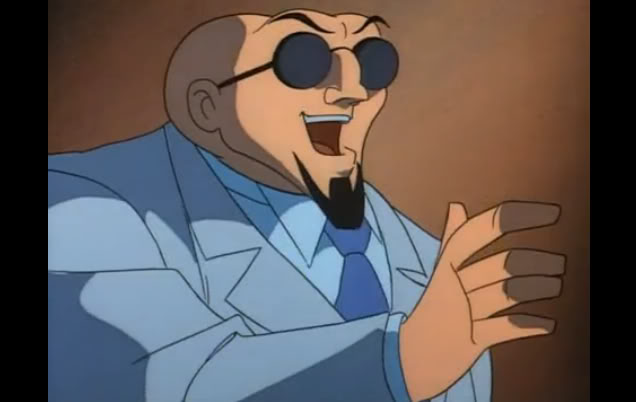
Hugo Strange is today’s villain, and while there were tentative plans to bring him back, this ends up being his only appearance in the series.

The episode opens with a woman (who looks a lot like the woman being victimized by Poison Ivy in “Eternal Youth”) being approached on a bridge by some routine looking gangsters. The woman is revealed to be a judge in Gotham by the name of Maria Vargas (Carmen Zapata) and the gangsters want her to pay up in order to protect some information they have on her. Batman, apparently was tipped off or just happens to be in the right place at the right time, is watching from above as the judge hands over a briefcase full of money only to be told the price just went up. When she pleads with them that she can’t possibly pay more the crooks prepare to leave and Batman enters the fray. Vargas tries to take off and gets herself in some danger on the bridge, accidentally knocking herself out. Batman is forced to abandon his pursuit of the crooks in order to save her.

After the commotion is over and the police are on the scene, Commissioner Gordon explains he knows Vargas and can’t imagine her having a secret she doesn’t want out. He reveals he just dined with her recently and that she had just returned from vacation. He gets a call on his gigantic cell phone about the license plate on the limo the gangsters were driving and finds out it’s registered to the same resort Vargas just vacationed at. Batman then takes off via the Batwing, being piloted by Robin, and he playfully asks Robin if he seems stressed while remarking it may be time for a vacation.

MV5BMGQyYzNjMzMtMDVjZi00OGU0LTlkMTEtY2U2NjIzNDM5NTNlXkEyXkFqcGdeQXVyNjI4OTE1MTA@._V1_

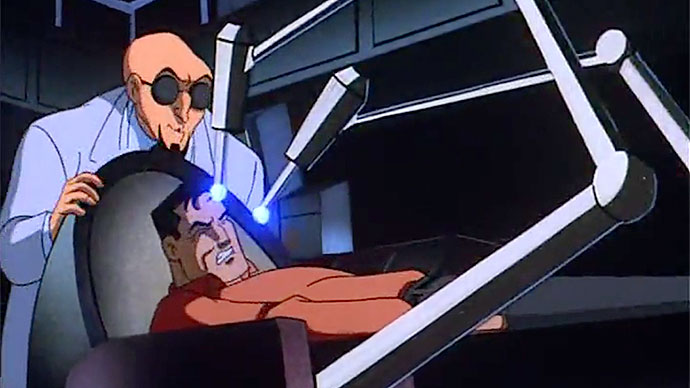
Strange’s memory extracting machine is a bad place for someone with an alter-ego to find themselves in.

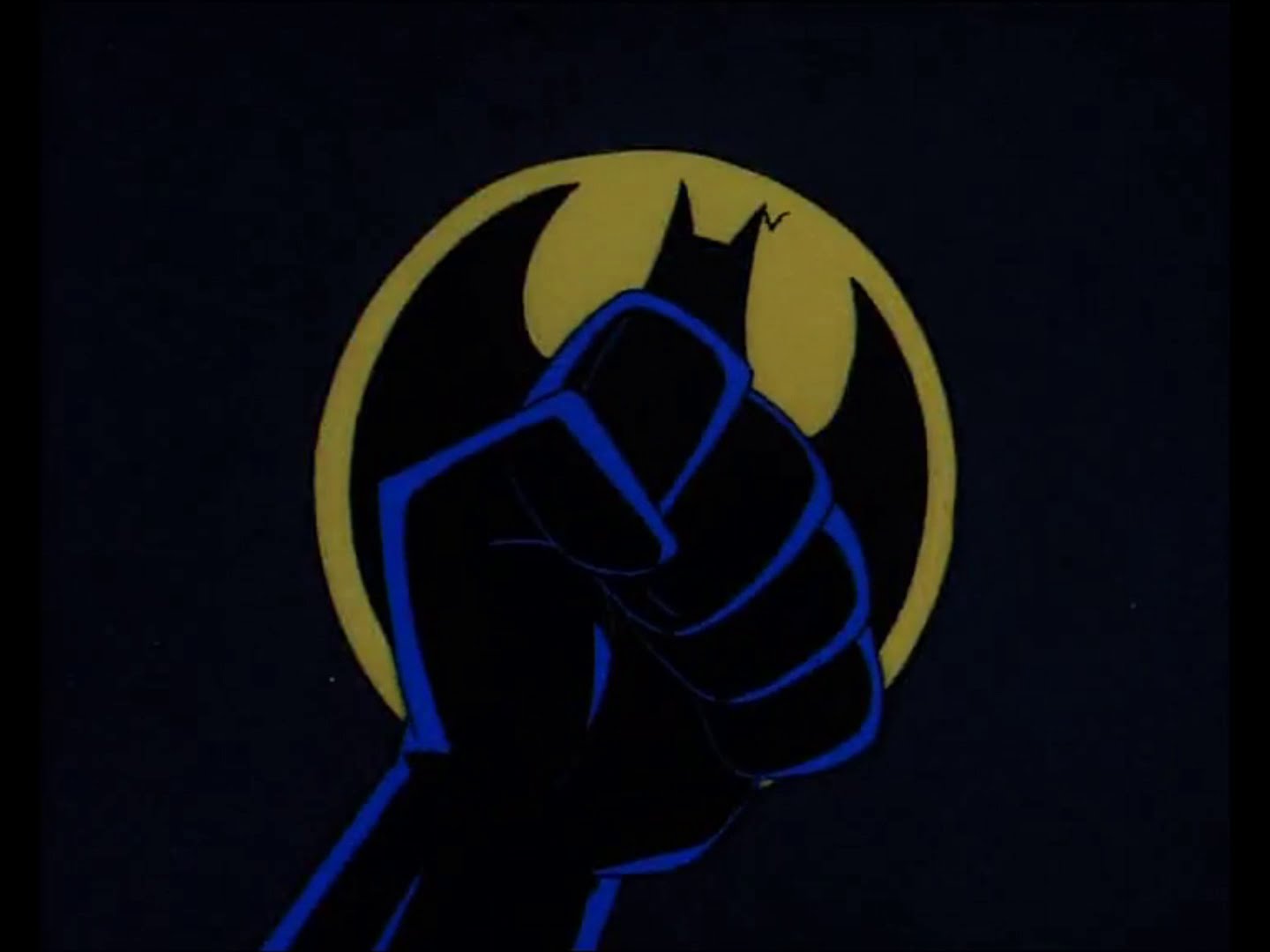
Bruce Wayne and Alfred immediately depart for Yucca Springs, a resort that just so happens to be owned by Roland Dagget (a piece of info that’s never elaborated on) and is home to Dr. Hugo Strange (Ray Buktenica). Wayne signs up for a therapy session and finds himself in the doctor’s machine. He’s told the machine will help ease his stress by forcing him to confront his past. It seems a little risky for Bruce to enter such a device, but he goes along with it. Strange pries at Wayne to reveal information on his past, specifically the death of his parents. Bruce’s thoughts are transmitted to a screen for Strange to monitor, and when he pries further bats appear along with a gloved fist and an unmistakable logo. Bruce hops out of the machine and remarks it doesn’t seem to be an effective stress reliever for him. Strange tells him the first session is often hard, but they’ll do better tomorrow. As Bruce leaves he removes a tape from his machine and refers to him as Batman. Dun dun duuuuun!

maxresdefault-29

Bruce Wayne’s secret revealed!

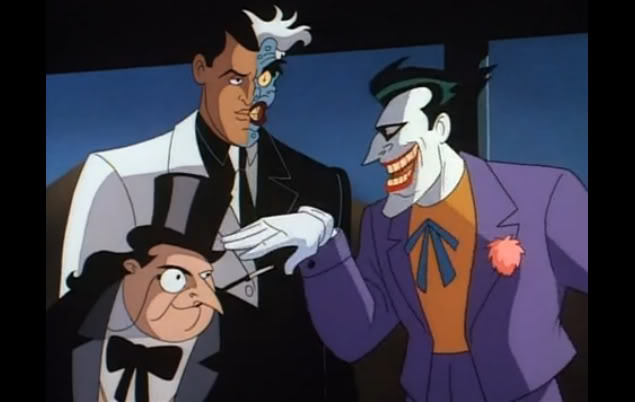
Strange immediately starts calling around, and we’re treated to a pretty dark, but hilarious, answering machine greeting from The Joker. Strange is going to auction off his perhaps priceless information and in addition to Joker he also calls The Penguin and Two-Face. For Joker, this is the first time we’re seeing him since his apparent death in “The Laughing Fish” and no explanation for his survival is presented. It’s also a rare Joker appearance that occurs without Harley Quinn. For Two-Face, this is the first time we’ve seen him in anything more than a cameo since his debut. Apparently Arkham was unable to rehabilitate him. As for The Penguin, this is only his second appearance in the show after kind of a comedic debut in “I Have Batman in my Basement,” one of the more divisive episodes the show output.

StrangeSecret1

Three fellas who would likely be interested in knowing who Batman is under the mask.

While Strange is busy peddling his tape, Wayne sneaks into his laboratory to get a closer look at the machine. He finds the tape on Judge Vargas (as well as many other, most of which are Easter Eggs) and sees what she’s been hiding in her past. When she was a little girl, she was playing with matches which lead to a fire at the Gotham Docks, apparently a pretty big story back in its day, as well as a destructive blaze. Bruce realizes his tape is missing and Alfred, sneaking around outside, radios him to let him know who Strange just welcomed to the resort. Bruce then begins erasing all of the tapes before finally destroying the machine. Strange and his muscle come in just as Bruce really gets going. He’s disappointed at the loss of his device, but he still has the tape of Bruce’s alter-ego so he’s in a pretty good mood. Bruce is tied up and tossed somewhere with Alfred. Alfred apologizes for failing him, but Bruce is taking things in stride claiming everything is going according to plan as he produces a lock pick and gets to work.

MV5BMjA0ODU2MjA2N15BMl5BanBnXkFtZTgwOTg3MTg3MjE@._V1_

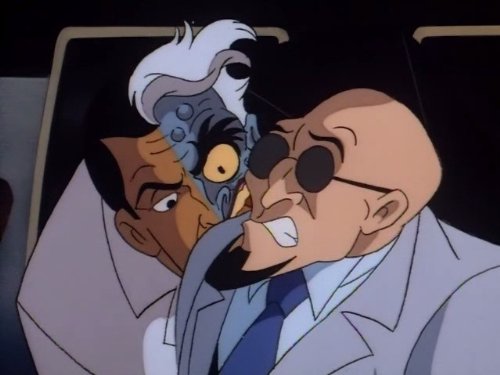
Making deals with the likes of Joker and Two-Face carries certain risks.

Meanwhile, Strange is presenting his finding to the villains. Surprisingly, they go along with the bidding and decide to pool their money together so they all can see what’s on the tape know it supposedly contains the true identity of Batman. I’m a bit puzzled why someone like The Joker wouldn’t just kill Strange and take the tape, but I’ll go along with it. Strange is very happy for his payment of approximately 50 million dollars, and gets ready to play the tape for them. Unknown to him, Batman is lurking in the rafters and he switches out the input on the projector to a different tape player. What plays is a video of Strange speaking with his cohorts about his plan to produce a phony tape about Batman in order to extort a bunch of villains out of their not so hard-earned money. This naturally enrages the attendants and Strange is forced to flee.

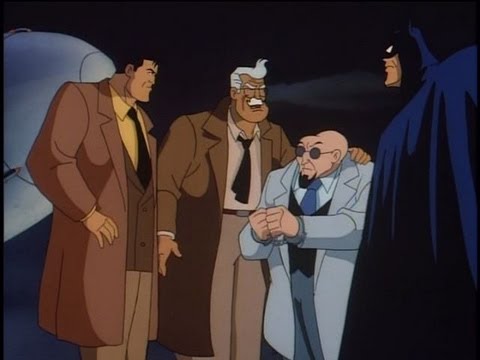
Joker, Two-Face, and Penguin eventually capture Strange and take him to the airport. Alfred, in their limo, picks up Batman and the two give chase while Alfred remarks he’s contacted Master Dick. The villains drag Strange onto an airplane and take to the sky. They plan to chuck him out and Strange starts begging for his life. He tells them Batman is Bruce Wayne, but no one believes him. Batman, able to stow-away on the plane, cuts the fuel line and the whole thing begins going down. It crashes, and somehow everyone on the plane is able to walk away fine just as the Gotham Police show up. As Strange is being lead away, he taunts Batman. He knows he used the machine to create a false tape of him to fool Joker, Penguin, and Two-Face. As he goes on and on, Bruce Wayne shows up, much to the shock of Strange. Batman says the two worked together to bring him down under the guise that Wayne and Judge Vargas are close friends and he wanted to get back at him. Once Gordon and Strange are out of earshot, Wayne is revealed to be Dick in disguise and everyone is ready to head home.

hqdefault-38

Bruce Wayne?! Batman?! How could this be?!?

“The Strange Secret of Bruce Wayne” is a fun story – what would someone do with Batman’s secret identity? Strange’s actions are entirely logical for an extortionist, even if it’s a bit unrealistic to think he could get in touch with the likes of Joker and company so easily. The episode does jump through some hoops to preserve Batman’s secret in the end. I don’t like how the writers are afraid to show Batman as being fooled, and he instead needs to be one step ahead of Strange the whole time. The Bruce Wayne impersonation is also pretty unrealistic since Dick not only is able to look exactly like Wayne, but also sound like him as well. It’s the kind of thing a cartoon can get away with that live action would not. I guess they’re just taking advantage of the medium, but it does feel cheap. A lot happens in this episode so it moves really fast, which is fine. I suppose you could argue that the plot could have been dragged out across two episodes, but I’m fine with it as is. I did find it odd that Two-Face’s coin never came into play, he was ready to toss Strange out of the airplane, but I do like how he mentions that he knows Bruce Wayne and it’s why he can’t possibly believe that he would be Batman. Still, it’s kind of surprising that it was never revisited in a later episode with one of the three villains at least entertaining the notion. I feel like the plot of this episode is memorable, making this one of the most popular episodes of the show. I don’t know if it’s a top 10 episode, but it’s probably at least in the top 25. Just a good, some-what flawed, but entertaining episode.


Batman: The Animated Series – “The Laughing Fish”

The_Laughing_Fish-Title_CardEpisode Number:  34

Original Air Date:  January 10, 1993

Directed by:  Bruce Timm

Written by:  Paul Dini

First Appearance(s):  None

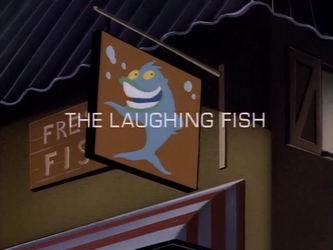
“The Laughing Fish” is our second episode of Batman:  The Animated Series to be directed by Bruce Timm and written by Paul Dini* (asterisk on the written by credit which I’ll get to). You may remember the first as being pretty damn good: “Heart of Ice.” Interestingly, both that episode and this one are the only two so far to not feature a true title card as each opts for a focused shot on a subject that’s simply part of the first scene (in this case, a swinging sign on a pier for a company that could share a name with the episode title). This episode, unlike “Heart of Ice,” is not an original story by Timm and Dini and instead is an amalgamation of three different stories from the comics. Those stories being “The Joker’s Five-Way Revenge (1973)” by Denny O’Neil and “The Laughing Fish” and “Sign of the Joker! (1978)” both by Steve Englehart. If you hadn’t guessed from the title of the episode, then surely you know by now based on those titles from the comics that we’re dealing with The Joker this week as he seeks to utilize his Joker toxin in a fairly unique manner in order to win money and score laughs.

Laughing_Fish_Smiles

I don’t care what Batman says, there’s no way I’m eating one of those.

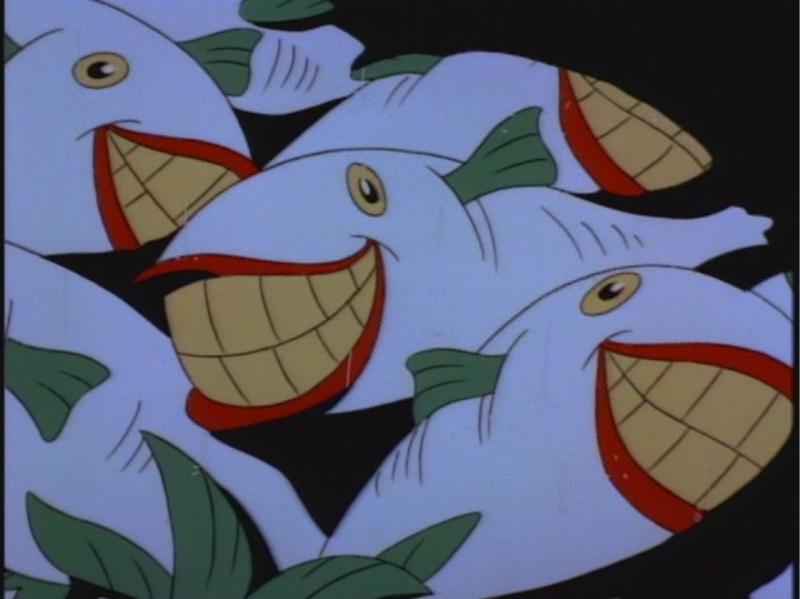
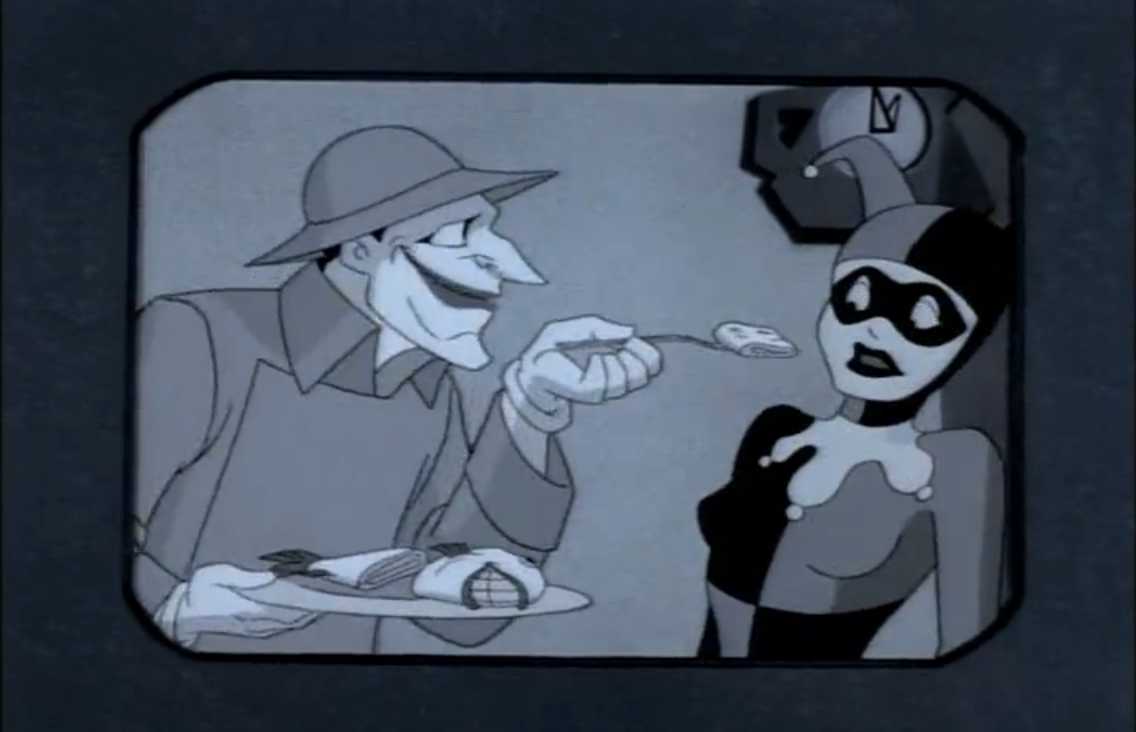
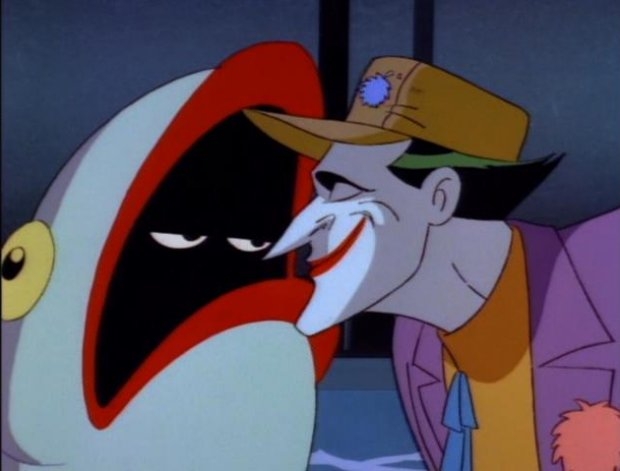
This episode is quite stylized from the get-go and will remain so. It features some brief narration by our hero, Batman, which I believe is a first for the series. The fish being harvested in the waters of Gotham are all sporting a tell-tale Joker grin. Batman suspects the worst, but when he dissects a fish he finds there’s no danger to humans when consumed, which just makes him more curious. This is a good thing because the ghastly visage of these fish apparently isn’t stopping the local fisherman from harvesting and selling the things as we soon see Joker himself pay a visit to a local paper-pusher at a patent office about licensing rights. That poor sap, G. Carl Francis (George Dzundza), finds himself in the crosshairs of The Joker when he can’t help him file a trademark on the fish. It would seem The Joker thought he’d be able to earn money on every fish sold since they bare his likeness, but he’s frustrated to find out that isn’t the case. His lovely associate, Harley (Arleen Sorkin), sprays poor Francis with some icky perfume while remarking that she has a strong dislike of fish which the perfume should eliminate. Joker informs Francis he has until midnight to reconsider his patent claim. Joker then goes to his old standby – television, to essentially broadcast his threat against Francis so his old chum Batman can be aware of his plans.

Laughing_fish

Poor Harley is going to have a rough time with all of the fish in this one.

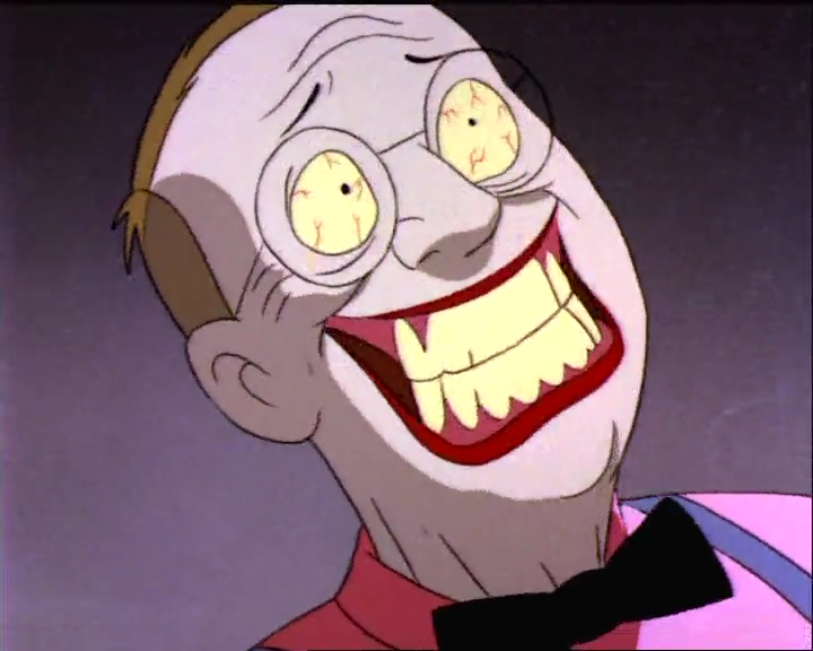
When Joker leaves the office angry, Francis does the right thing and enlists the aid of the Gotham Police Department for protection. They setup a watch for Joker that Batman soon crashes, much to the ire of Detective Bullock. They all patiently wait around for The Joker to make his presence felt, but noting comes. When Francis starts rubbing at his hands and makes the offhand remark that he never got to wash off the stuff Harley sprayed him with, Batman basically freaks out and starts demanding medical attention for Francis. He’s too late though as a speeding truck launches a swordfish through the window that stabs into the wall. It releases a gas and Francis begins to laugh uncontrollably, his face turns an ashen color and his mouth stretches into a hideous smile. Batman injects him with his anti-Joker compound and Francis begins to settle down. Batman deduces that whatever Harley sprayed on him mixed with the toxin in the swordfish to infect him. Joker soon appears on television to taunt Batman and also name his next victim:  copyright office bureaucrat Thomas Jackson.

tumblr_nrrp4yKE3S1ub7n3do1_1280

These transformation scenes felt genuinely disturbing to me as a kid, which is perhaps why this episode actually debuted in prime time as opposed to during normal children’s hours.

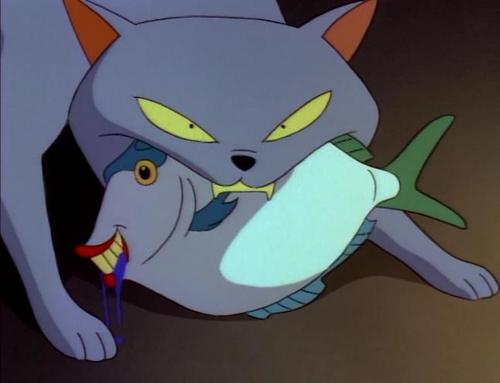
Having failed to stop Joker once, the police and Batman give it another shot with Jackson. They set up a security ring around him as well with Gordon and Bullock arguing over their approach. Apparently they’re doing this one Batman’s way and Bullock is less than thrilled. When Jackson’s cat comes waltzing into the room everyone soon notices it’s carrying a Joker fish in its mouth. The cat lunges at Batman and is able to bite him breaking the skin. Batman soon breaks out into laughter as his face becomes round and unrecognizable. Jackson jumps in to administer the anti-toxin, and it’s revealed that Jackson and Batman had actually switched places to try and fool Joker, unfortunately they couldn’t fool the cat.

Joker-Fish-batman-6896069-500-383

Here kitty…on second thought, maybe not.

Batman makes the obvious observation that the fish the cat dragged in is a tropical fish not native to Gotham’s waters. This means Joker must be at the local aquarium. Batman, however, is the second person to figure this out as Bullock has already fled Jackson’s residence to head there himself (“I didn’t need no Batcomputer to tell me that weird-looking minnow came from the aquarium,”) and confront The Joker. It doesn’t go well for him and he soon finds himself strung up by a crane like a worm at the end of a fishing line for Joker’s pet shark. Joker is having a good time until he realizes that if Bullock was smart enough to figure out his location then surely Batman will too. He decides to use Bullock as Bat-bait instead and, what do you know, it works.

22-3

This sequence is pretty stupid.

Batman comes charging in and Joker’s two goons are no match for him. Joker has his ace though in Bullock and Batman is forced to hand himself over to secure Bullock’s freedom. Joker is happy to make the switch and Batman is tossed into the shark tank. As Bullock looks on, Joker decides he should go for a swim too and shoves him in (Batman couldn’t have possibly expected Joke to not do something like this) and then covers the tank depriving the two of precious oxygen. No matter, as Batman demonstrates his shark battling abilities. It’s a bit ridiculous, though I suppose it’s less ridiculous than the time Batman successfully fought off several crocodiles. He’s able to break the tank and free himself and Bullock as Joker takes off.

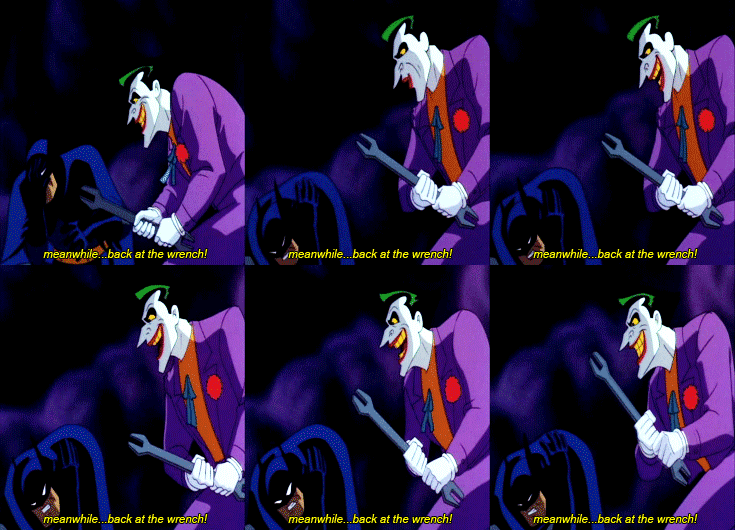
B4rpth8Batman and Joker square-off outside the aquarium on a large dock. It’s the most physical we’ve seen these two get as Joker gets ahold of a large wrench and gives Batman a good strike with it (in a bit of censorship, the screen flashes as Joker connects reminding me of the old Pow! Bam! effects from the 60s Batman show). Joker, not to be confused as Batman’s equal in fisticuffs, is soon subdued and cornered. His last resort is to simply leap off the tall structure revealing a get-away float around his waist. He laughs and taunts Batman from the waters below, until his shark-buddy shows up and drags him under. The episode closes teasing Joker’s demise as a tearful Harley says her goodbyes. Batman, apparently aware that this is only episode 34 of an 85 episode run, tells Commissioner Gordon he doubts The Joker is truly gone. Truer words were never spoken.
fish6-e1410171736816

The Batman fake-out definitely fooled me as a kid, as well as frightened.

“The Laughing Fish” is a very stylized episode of Batman: The Animated Series. It’s sound production and setup are very film noir and evocative of old crime dramas, with obviously a super hero twist. It’s an amusing plot with Joker just out for money and Batman gets a chance to demonstrate just how well he understands his foil. It’s a fun episode to re-watch as well especially for the scene in Jackson’s home. They don’t cheat, like they often do, the reveal of Batman and Jackson switching places by having Batman speak in Jackson’s voice and vice versa. Rather you never see either man speak until after the reveal. Joker is also at his best as he’s pretty cruel throughout the episode. He obviously can’t actually murder anyone, but it feels clear his intention is to do just that. It’s also interesting to see his relationship with Harley evolving. Here it’s very business-like with her referring to him mostly as “boss,” but it’s obvious she’s higher on the pecking order than the other goons since Joker bothers to remember her name. It’s also fun to see her broken up over Joker’s apparent demise, making it obvious she has an unhealthy devotion to the man.

MV5BNzYxNzMyODctZjUyMS00NmEzLWExOGItMzk2MGMxYTFlNzI5XkEyXkFqcGdeQXVyNjI4OTE1MTA@._V1_

Joker and Harley get to demonstrate a taste of their chemistry in this one. Here Joker makes her his mermaid.

Where the episode does sort of cheat the viewer is in its resolution. Joker obviously is not dead and will return for many more episodes. The episode doesn’t offer a plausible explanation for how Joker survived a shark attack, and it won’t bother trying to explain it the next time he shows his face in this show. He’ll just reappear and this won’t be the last time he cheats death in such a way.

30-4

Farewell, sweet clown prince. For now, anyway.