Category Archives: Comics

Teenage Mutant Ninja Turtles: The Ultimate Collection – Volume 1

Teenage Mutant Ninja Turtles: The Ultimate Collection Vol. 1 (IDW Publishing, 2011)

When I was a wee-lad growing up in the 1980’s I loved the Teenage Mutant Ninja Turtles.  And I don’t mean I just liked watching them on television or playing with their toys, I was obsessed.  And I was the norm.  It seemed like every boy my age loved the Turtles, and what was there not to love?  They were ninjas, they were young, they kicked ass, ate pizza, and even cracked a few jokes along the way.  Plus, their theme song was totally tubular, dude.

As was the case for most, my interactions with this new era fab four was mostly contained to television, until the movies started coming out.  Sure I knew the Turtles existed in the print form as well, I saw them fairly frequently in the check-out aisle at the grocery store, but always thought the TV show came first.  Those were the turtles I knew best.  Then the first film came along and changed things up a bit, most notably the Raphael character.  He was a hot-head on film and kind of hard to predict.  On TV though he was the wise guy known for breaking the fourth wall.  Even though the television show never adapted the stronger personality of movie Raph, that was the persona that took over the character for me.

Little did I know that was how Raphael was always intended to be.  For as many are now aware the Teenage Mutant Ninja Turtles actually first found success in the print form through Mirage Studios.  Created by Kevin Eastman and Peter Laird, the original story set the stage for all future endeavors and introduced readers to the four turtles we know best:  Leonardo, Michaelangelo, Donatello, Raphael, and their sensei Splinter.  It’s intended as a bit of a parody of early 80’s comics, especially Frank Miller’s Daredevil.  The concept of four anthropomorphic turtles roaming the sewers of New York City is about as far-fetched as it gets.  And Eastman and Laird didn’t stop there, for like the television show with its forays into sci-fi, Eastman and Laird take the Turtles across the galaxy and back.

As a kid, this was all I knew of the Teenage Mutant Ninja Turtles.

Yes, I’ve been well-aware of these Ninja Turtles for quite some time, and have even seen some of the comics long since my obsession faded away.  Never before though have I actually taken the time to read through these early works.  It hit me out of no where sometime last summer, a need to see how my beloved childhood heroes were supposed to be portrayed.  It probably started a little earlier with the 4 Kids Entertainment television movie Turtles Forever, a feature that tried to blend the cartoon from the 80’s with the cartoon from 2003.  It also included the original Mirage Comics turtles and was a really fun production, though nothing stellar.  I found that the old trade paperbacks printed off during the 90’s collecting the old works were quite hard to come by at this point.  I was pretty frustrated with the prices I was seeing on eBay and trips to my own local comic book store proved fruitless as well.  My spirits were elevated though when I came across a new TPB on amazon.com set for release in the coming months.  I pre-ordered it right away and then began to wait, and wait, and wait…

I had pretty much forgotten about that pre-order when I finally received a notification in December that my copy of Teenage Mutant Ninja Turtles:  The Ultimate Collection – Volume 1 had shipped, more than three months after it was supposed to ship and six months after I had ordered it.  I wasn’t mad about the delay or anything, I just had simply forgotten about the thing and actually thought it might have been cancelled.  I’m glad it wasn’t, as I quite enjoyed my foray into Classic Turtles and I’m going to tell you all about.

First of all, this collection is very well put together.  It’s hard cover and oversized when compared with a normal comic book.  The artwork inside has been enlarged over the originals to accommodate this format and is presented in its original black and white.  The cover features new artwork from Turtles co-creator Kevin Eastman and both he and Laird have a brief write-up following the first comic.  Eastman breaks down each issue page by page and offers some nice insight and really does a good job of putting the reader in a frame of mind to look at the Ninja Turtles from his perspective back when this thing all got started.

The company is IDW Publishing who acquired the rights to the printed turtles in early 2011 and wasted no time in getting this out.  Mirage, now controlled by Laird, is actually not involved with this at all.  Laird’s sparse commentaries apparently were taken from his blog (with his permission) and it doesn’t look like he contributed really at all to this release.  Eastman, more or less, abandoned the TMNT in the 90’s so it’s a bit surprising to see him team-up with IDW to put out new TMNT comics.  In addition to working on this collection, he is overseeing a new line of comics that began hitting shelves sometime late last summer.  Perhaps his funds are running low and he needs to turn back to old reliable once again.

Cover for TMNT #4, though most probably know this as the cover for the NES game.

If Eastman was burnt out on the Turtles in the 90’s he no longer is, or hides it well.  As I said, he does a great job of taking the reader back to the infancy of the Turtles and shows great exuberance.  He comes across as someone who loves to talk about the Turtles and is truly excited about this project.  If I have one minor quibble with his commentary it’s that he may be a little too reverential about his own work.  He seems to love everything he and Laird did, and maybe that’s true, but I feel like most artists when looking back on their old works would notice some areas for criticism.  Maybe he just wanted to keep things positive.  Despite that he doesn’t really come across as stuck-up or anything, he just sounds like a super fan.

The actual stories should be familiar to anyone well-versed in Ninja Turtles lore.  Both the animated show and the film borrow heavily from the comics when discussing the origin of the Turtles though neither adapted it completely.  In both the cartoon and film, Hamato Yoshi’s chief rival is Oroku Saki but in the comic book it was Oroku Nagi.  Yoshi kills Nagi while defending his love and it’s Nagi’s younger brother, Saki, who seeks revenge.  From there, it’s basically the same as the film with Yoshi fleeing to New York and Saki eventually following with his own faction of the Foot Clan.  Saki kills Yoshi, but during the scrum Yoshi’s pet ret is able to escape who would go on to become Splinter.

The first comic is both an introduction to the Ninja Turtles and a revenge piece.  After their first taste of live combat, the triumphant Turtles return to their master who finally shares the tale of how they came to be.  This sets the wheels in motion for a showdown with Oroku Saki, now called The Shredder, and Splinter dispatches Raphael to send a message to Shredder to meet the Turtles for a fight to the death.  True to their word, the Turtles do battle Shredder to the death, which closes out the first issue.

The artwork is quite rough.  The style suits the Turtles but the human characters look oddly proportioned.  The scenery is sometimes too busy as well, as the background clouds the action scenes at times.  The writing is also fairly amateurish.  The ideas are there but Eastman and Laird struggle to bring them out from a literary perspective.  I do like the approach of the opening though, with Leonardo serving as narrator, and the layout and pacing of the book is anything but amateurish and easily the book’s strength.  The violence that everyone speaks of when referencing the original books is a bit exaggerated.  Yes there’s more violence here than what was present on TV, but I feel it compares to what was presented in the first film, only with blood and actual death.  There’s no gore really, and while the Turtles aren’t a bunch of wise-cracking butt kickers I wouldn’t call the mood of the book “dark.”  Gritty yes, but not dark.

Short-comings aside, the first issue is actually quite enjoyable.  The action sequences and sheer uniqueness of the characters is what sells it.  Issue 2 brings in April O’Neil and Baxter Stockman.  O’Neil is a lab assistant for Stockman, not a news reporter, and Stockman is busy perfecting his mousers.  The Turtles end up encountering O’Neil in a similar manner to how they have in every other medium and do battle with Stockman and his creations, who hold a more sinister agenda than simple rat extermination.  Stockman is fairly clever and devious, a far cry from the bumble-head shown on television, and proves a formidable foe though he too is ultimately dispatched.  Not before, however, apparently claiming the life of Master Splinter leaving the Turtles devastated and without a home.

The rest of the comics carry forward the narrative as the Turtles search for answers regarding Splinter’s disappearance.  Their story takes them into space, of all places, where they meet the benevolent Fugitoid and the nefarious Triceratons.  The more sci-fi stories are less interesting for me, but it’s enjoyable to watch Eastman and Laird’s abilities improve for each issue.  The artwork improves, and though it never rivals a Frank Miller or Allen Moore, the writing does improve as well.  Their imaginations should certainly be commended, if nothing else.

The Raphael solo issue.

The collection includes the first 7 issues of Teenage Mutant Ninja Turtles and also includes the Raphael one-shot “micro” issue.  Each turtle received his own issue at one point and this collection includes Raph’s which introduces the character Casey Jones.  Jones is designed to hold up a mirror to Raphael and show him what he’d become if he gave into his rage wholly.  Jones shows no mercy when dealing with common street punks and Raph basically has to save the criminals from him.  They duke it out in a pretty brutal contest before eventually becoming pals.  Their relationship in the first film was pretty faithful to how it’s presented here.

If these issues have one major short-coming for me it’s with the actual characters of Leonardo, Michaelangelo, Donatello, and Raphael.  Leonardo is given the most attention and he’s clearly the most mature and the one that takes after Splinter the most.  He’s not given the title of leader, he takes it.  Raphael is shown as a bit of a loose cannon, but not to the degree he was in the film.  He really isn’t shown to have much of a rivalry with Leo, which is something that surprised me.  Donatello is shown to be more studious than the others and does get a few chances to show off his tech-savy abilities, but nothing to the degree that the television show would adopt.  Michaelangelo ends up being the least developed character and has no real personality to call his own.  He’s shown to be a pretty talented fighter in a sparring match with Raph, and some of his care free persona shows through but only slightly.  And if anyone who’s never seen the stories is curious, no, there’s no pizza or surfer talk.  In one panel Raph actually asks April to fetch him a beer.

All in all, this compendium did meet my expectations.  I always assumed the self-professed hardcore TMNT fans oversold the original works in terms of its violence and tone and found that to be mostly the case.  While I was surprised by some developments, this was mostly how I envisioned the Turtles came across in print.  IDW exceeded my expectations with the quality of this release, and I suppose they should have since the MSRP is $50!  Amazon sells it for much cheaper for those interested and I’d say any TMNT fans looking for a collection should check this one out.  I don’t know how many of these Eastman and IDW are preparing but I have Volume 2 already pre-ordered which is currently slated for release at the end of March.  It will include the next 4 issues plus the rest of the micro books which I hope will add more depth to the individual turtle personalities.  I look forward to getting my hands on it in the coming months.


Where, oh Where, is Yorick Brown?

Y: The Last Man (Issue 23, Vertigo)

With a new film in the Ghost Rider series set for release in the upcoming weeks, it got me to thinking about the comic book medium and how it has translated to the big screen.  Hollywood has always been interested in comics.  This interest for a long time was reserved really for the super elite characters of Superman and Batman.  Over the last two decades though, that has changed tremendously.

I suppose it started in the 80’s to some degree.  During that decade we were treated to such cinematic gold as The Punisher and Howard the Duck.  They were, of course, something far less than gold and today are only viewed by those looking for a laugh.  I can sort of see why a production company would think the Punisher character would work for a movie.  Especially considering that this was the time when the action hero picture was making big bucks.  I have no idea how Howard the Duck ever received the green light.  It was a terrible idea, and the results were pretty terrible as well.

I suppose we have Fox’s X-Men, and to a lesser extent Blade, to thank for this wave of comic book films.  X-Men seemed to do just enough to satisfy critics and fans of the comic, and in turn, it made quite a bit of money.  This made Marvel Comics, which had struggled financially during a lot of the 90’s, all kinds of happy as it quickly began licensing all of its franchises for films.  At the time I think a lot of people expected little to come from these agreements, but it seems like the opposite occurred.  Not only did the X-Men make it to film, but Spider-Man, The Fantastic Four, The Punisher (again), Daredevil, and more.  Some of these sucked, but it seems like most actually made money so the studios keep going back again and again.  Not to be out done by its chief rival, DC also got into the game with not just Batman and Superman films, but Catwoman, Watchmen and Green Lantern.  We’ve even seen the less popular titles make it to film as well such as Hell Boy, Road to Perdition, and V for Vendetta.

If you’re reading this then it’s probably safe to assume you like both comic books and film, so I’m going to assume most are aware of the relative quality of the above pictures.  There’s some good ones in there and some even bring about good debates, but there’s also a lot of garbage.  You’re probably also aware that even Marvel’s Man-Thing character managed to get a movie during this period, it just didn’t play in theaters.  That’s a pretty obscure character and when you combine that with Ghost Rider and Thor it almost seems crazy that there are people who think these characters can make a good movie.  I know Thor is kind of a classic character in the Marvel Universe.  I’ve never been a fan so maybe I’m biased but I look at a character like Thor and I just don’t see a good film.  I don’t even really see an interesting character.  Thor works best when he’s paired with other characters, not when he’s the star.  As for Ghost Rider, well, at least he looks cool (when not played by Nicholas Cage).  Which leaves me with one big question:  Where is Yorick Brown?

Has any comic series come along in the last 20 years that is better equipped to make the leap to the big screen than Brian K. Vaughan’s Y: The Last Man?  I would argue no and for several reasons:

One, the main character is not a super hero.  Yorick is just a college-age kid who happens to be the last man alive.  He’s an amateur escape artists so that gives him a unique set of skills to be worked into the main plot, but there’s nothing flashy about him.  This means no awkward looking costumes and no big, expensive special effects.  In other words, he’s cheap!

Two, the main character fits right into the target demographic.  He’s young and he’s male, isn’t that who the studios are trying to attract?  Make him played by a cute actor and now suddenly the women want to see the movie.  This is easy!  He’s also a pretty charming character with a quick wit not, unlike Peter Parker, but also has some pretty common insecurities when it comes to women.  If anything, he’s too perfect for film.

Three, the story is unique and interesting.  All of the men on the planet suddenly drop dead except one.  There are so many questions that initial premise creates, enough to last a full trilogy.  It also avoids the whole over-played super villain character.  We don’t have to deal with some misguided scientist who accidentally gave himself super powers but warped his own mind in the process.  No one is out for world domination, and the antagonists are relatively unknown.  There’s an ultra feminist cult that shows up from time to time, but they’re not the main villain.

Four, it’s a pretty small cast.  There’s Yorick and his two female companions Agent 355 and Dr. Allison Mann.  They meet quite a few people on their trek across the globe, but there aren’t many re-occurring characters.  This means no awkward, giant cast like with X-Men or the upcoming Avengers flick.

Ampersand, a star just waiting to be born!

Five, there’s a monkey!  Americans love monkeys, and Yorick’s other companion is Ampersand, a male capuchin monkey who happens to be the only other living, male mammal on the planet.  He also throws poop.

Yorick’s search for answers plays out across 60 issues like a good adventure story.  I suppose that’s another plus for Hollywood, this story has a beginning and an end.  It’s not an on-going book like most comics and it’s been over for quite a while.  60 issues sounds a like a lot to fit into a trilogy, but they’re pretty action and scenery driven books easily classified as light reading.  I think I breezed through most of the story in about a weekend.  And given that it’s 60 issues it allows the director and screenplay writers to break it up into thirds.  It was released in 10 graphic novels after the main run, which is how I experienced it, and if I was to write a screenplay for the first movie I’d focus on the first three books.  Some stuff would obviously be trimmed out, book 4 seems like an obvious one to see some cutting down, but I think it would be fairly easy to adapt the entire run over three films.

Which is actually the answer to my question.  As much as I’d like to think I am, I’m not smarter than the studio heads of the major production companies.  Anyone who even looked at a summary for Y: The Last Man knows it could be adapted for film and that it would have a chance to do well.  That’s why the rights to the film property have already been secured by New Line Cinema, which is a sister company of Vertigo, the comic book company that ran Yorick’s story.  Unfortunately, New Line isn’t one of the biggest in the game and it’s their bottom-line that’s preventing the biggest obstacle.  Vaughan has done a screenplay for a potential film, and D.J. Caruso was attached to direct, but one major obstacle has reared its rather ugly head.  New Line is hell-bent on doing Y: The Last Man as a stand-alone movie, while Caruso and Vaughan see it as a trilogy.  It would seem like the compromise would be to do the film the way Vaughan and Caruso wish to, and if it makes money, to go ahead with two more, but I guess things aren’t that simple.

I know exactly what you're thinking, "You mean to tell me there's ninjas too?! Why hasn't this happened?!"

As of right now, that’s where we stand.  Things were moving pretty quickly for Yorick for awhile, but not much has been said since 2008.  Caruso has since walked away and no replacement has been announced.  There was talk of potentially turning the comic into a television series, but I don’t think such talk was ever serious.  I could see it working for TV in a one hour format, but would fear that it would never reach the end.  If the show was a success, there would be a temptation to just run with it until people got sick of it, meaning new story-lines would be created on the fly.  And if it failed, we’d just end up with a season or two and not the complete tale.  I still think a trilogy is the best way to go about it, and I’m puzzled that New Line thinks it won’t make money on a trilogy.  There’s just no way to condense a 60 issue comic into a two hour film and do it right.  I also don’t think a studio could get away with the Watchmen approach of one giant movie.

It’s really too bad, as I think Yorick Brown could be a minor star on film.  Because the book was put out by Vertigo, it hasn’t reached the audience it would have if done by Marvel or DC.  And if it had been done by Marvel, it would undoubtedly have been made into a film by now.  It’s plot line is thought-provoking and quite interesting.  Mostly, the story is just fun and that translates to any medium.  Maybe the studio will budge on its demands in time and let a film-maker do it the way he or she wants to.  Kick-Ass and other off-beat comic films have done well and made their studios money, so it seems like eventually Yorick will have his story told as well.  The wait is killer though, and the longer it goes the possibility that The Last Man will be forgotten starts to seem more and more likely.


Batman: Mask of the Phantasm

Batman: Mask of the Phantasm (1993)

In case you missed it, a couple of weeks ago I made a post on what I considered to be the definitive Batman film.  I ran thru just about all of the movies, be they theatrically released, direct to video, live-action, animated, whatever.  There was no real criteria, just that it had to be feature-length (admittedly arbitrary, since most of the animated flicks run just over an hour) and they had to be about Batman.  Surprising (to me), it was only my second post on Batman films in general, my first being a review of the first Burton film.  That just seemed funny to me, as in general I think Batman is the super hero who has made the best transition from comic to film.  Since Batman is about to become a very big topic with a new video game just released and a new movie on the way, it’s probably a safe bet he’s about to receive more love from me in the coming months.

If you didn’t read my post on the definitive Batman film, then spoiler-alert, I decided on 1993’s Mask of the Phantasm and it seems only appropriate that I dedicate a full post to its greatness.  It seems like a kind of contrarian take these days, but it wasn’t that long ago when most die-hard fans considered MOTP the best Batman film.  Nolan’s Batman Begins and its sequel, The Dark Knight, have kind of tempered the adoration once directed at MOTP, but why is that?  Obviously, it’s because as a culture we tend to value live-action over animation.  And while I love animation there is a very good reason for this.  Animated features tend to run around 85 minutes or so, as the process is both time-consuming and expensive and probably harder to direct.  A more fully realized plot is accommodated by live-action where a feature can run over 2 hours.  MOTP is no exception as its run time is a tidy 76 minutes.  It was also done with a very modest budget.  The animation really isn’t much of an improvement over the television show it’s based on.  There was a choir added to the main Batman theme, and some brief CG effects, but that’s it.  It does appear that the animation is better, but it could be my eyes deceiving me.

The film’s main villain, who’s mask kind of reminds me of the Punisher’s famous skull logo.

That said, those are among the few complaints I can levy against MOTP.  The animation may not be on par with the Disney features from the same period, but it still has style and is unquestionably “Batman” in its approach.  The animators were fond of using black paper for backgrounds which adds to the film’s overall dark visual tone.  Since almost all of the scenes take place at night, this makes a lot of sense.  The only really new character is the one the title alludes to, the Phantasm.  Though the character is actually never referred to by that name during the film, we can assume that’s its name.  The character resembles the grim reaper, though I prefer the Joker’s observation comparing it to the Ghost of Christmas Future.  The character generates a cloud of smoke and sports a cape and cowl, causing it to be confused with Batman which serves as the basis for the plot.

The plot being, some mob guys are being targeted and killed by a new vigilante.  We, the viewing audience, are cued into the fact that it’s a new vigilante in town that is responsible but the general public of Gotham are lead to believe that Batman is behind this.  No one is mourning the loss of these guys, but councilman Arthur Reeves (Hart Bochner) pleads to Commissioner Gordon that they can’t allow Batman to operate in this fashion.  Gordon, of course, sides with Batman and knows he can’t be behind this.  Meanwhile, Batman is left to deduce who this new vigilante is and what is the motivation for this latest attack.

This is around the time Bruce realizes he has a choice to make, Batman or her.

Along the way we get to see more executions, my particular favorite occurs in a cemetery, and an old flame of Bruce Wayne’s resurfaces in Gotham.  Andrea Beaumont (Dana Delany) has come to Gotham to settler some financial matters with Reeves and has a chance encounter with Batman at the cemetery where her mother (and Bruce’s parents) are buried.  As the plot of the film advances we’re treated to flashbacks of a young Bruce before he became Batman and how Andrea came into his life.  The two met at that same cemetery, and though Andrea had to play the role of aggressor, the two end up falling in love.  This caused the young Bruce much inner turmoil as after Andrea witnesses him take on some thugs and put his life on the line he realizes he can’t have it both ways.  He has to choose, be the vigilante anti-hero he thinks he needs to be to avenge his parents, or be Andrea’s beloved.

This leads to the film’s best scene.  A desperate Bruce on his knees before the headstone of his parents in the rain begging them for a sign.  He tells them he doesn’t know what to do, that their death no longer hurts as much as it used to, and that he never could have expected to be happy again.  It’s a rather poignant and heart-felt moment that gives great insight to the Bruce Wayne character.  Kevin Conroy, the voice actor of Bruce Wayne/Batman, gives a convincing performance and cements himself as the definitive voice of Batman that all future actors will be weighed against.  We, as the audience, also get a glimpse of just how misguided Bruce is.  He wants to avenge the deaths of his parents by cleaning up Gotham, but as human beings we know there’s no way a parent would wish that kind of life for their child.  A promise is a promise though, and Bruce is loathe to break his until Andrea strolls up behind him.  He takes that as his sign, and we’re left to wonder how this could have come to an end.

Those questions are answered when we’re introduced to Andrea’s father, Carl (Stacy Keach), a money manager of some regard who has become involved with Salvatore Valestra (Abe Vigoda).  Things seem fine, though we know Valestra to be a crime boss, until Beaumont becomes indebted to the thug.  Things get ugly, and the Beaumonts are forced to flee Gotham leaving Bruce behind with lots of questions and more heart ache.

Now the Phantasm is after an old and sickly Valestra and the crime boss is forced to make a proverbial deal with the devil; enter the Joker.  The Joker’s (Mark Hamill) portrayal is consistent with that of the animated series only with a touch more malice to suit the feature film’s tone.  He has some connections with the Valestra crew from his past, and loves to put his nose in Batman’s plans anyways.  What could have felt like the writers just tossing in the Joker for star power, turns out to work exceedingly well.

This one’s not afraid to get a little bloody.

I’ll spare you the rest of the plot details, and say that they include Batman’s detective work to find out who is under the mask of the Phantasm and a reunion with Andrea.  The film culminates in a showdown between the major players of the film in a most satisfying way.  There’s also an electric chase sequence between Batman and the Gotham PD that’s a joy to behold.  The mature tone and emphasis on plot makes this film incredibly engrossing, so much so that kids are not likely to enjoy it as much as adults.  And even though it received a PG rating, it’s actually fairly graphic as we see liberal amounts of blood and even a tooth sent flying after a well-placed Batman punch.  The film is not afraid to kill off characters, like the animated series probably would be, and Batman is even allowed to ditch that dorky helmet he had to wear for television when riding his bat-cycle.

All in all, Mask of the Phantasm is an excellent character study for our favorite caped crusader.  We’re not bogged down with the nitty gritty of his well-told origin and instead are shown a portion of Bruce’s life that is sometimes glossed over.  It’s really introspective to see just what Bruce was giving up when he fully committed himself to the Batman character.  And even though we feel bad for him, it’s riveting to see tragedy dumped on him.  And while the mystery isn’t too difficult to figure out, it’s still rewarding and comes across as logical.  This is just a really well made movie with more depth than a lot of the other Batman films put together.  If you never saw it, do yourself a favor and check it out.


The Definitive Batman Film

It's taken awhile, but on October 18th the greatest Batman story ever told makes its way to animation.

On the eve of the latest Batman film release (and video game), I thought it would be fun to look back at the films that have already been released.  After all, it wouldn’t be much fun to try and determine what the best Batman video game is considering most have been subpar.  It would be Arkham Asylum with a runner up of….?  I guess there were some okay 16 bit games, but nothing mind blowing.  It sounds like the soon to be released Arkham City is just as good so at least Asylum will have some company on the rather short good Batman video game list.

Arkham City will be the Batman related item that moves the most units tomorrow, but not to be forgotten is the direct to DVD feature film Batman: Year One.  Year One is of course an adaptation of the popular comic seres by Frank Miller that ran in the late 80’s.  Year One is perhaps the most celebrated Batman mini series, and certainly is the definitive take on the caped crusader’s origin.  Many elements from the plot of the book was incorporated into Batman Begins and, to a lesser extent, the animated series.  I’m curious how well it will hold up considering Batman’s origin has become a well told tale over the years.  As great as the book was, do we really need another origin story?  That fact alone will likely make it problematic to review as it will be hard to judge the film on its own merits.

Regardless, Batman has had his origin told many times to varying degrees of success over the years.  Plenty of other stories have also made it to film in either a live action medium or an animated one.  There’s been some great Batman movies, and there’s also been some stinkers, but which one is the definitive Batman movie?  There are quite a few contenders, so lets start whittling them down.

Let’s start with the first, often referred to as Batman: The Movie based on the television series staring Adam West in the titular role.  As entertaining as the movie can be, lets throw it out right away as the definitive Batman flick because it is not at all representative of the character.  Charming, but no Batman.

Yeah it's not Bruce Wayne in the costume, but this movie is not one to be missed.

Animation should not be discounted just because it’s not live action, which seems to command more respect in the US, and Batman has had some great animated portrayals.  One of those excellent features is Batman Beyond: The Return of the Joker.  What could have easily been written off as a marketing gimmick turned out to be a nice series and the direct to video film was the high point for the Batman Beyond franchise.  As good as it is, it’s not a true portrayal of the Bruce Wayne character, so it’s out of the running.  If you haven’t seen it though, check it out.  It can likely be had for a few bucks on the second-hand market.

Two other animated features that skipped theaters include SubZero and Mystery of the Batwoman.  SubZero focuses on the villain Mr. Freeze, a villain failed by the comic books until Bruce Timm and Paul Dini got a hold of him and made him a truly tragic villain.  The film is a good one, but is over-shadowed by the stand-alone episode from the animated series “Heart of Ice.”  Mystery of the Batwoman puts Batman into the role of detective, something the films have a tendency to gloss over at times.  It’s a fun little title, but not really noteworthy.  It’s out.

Lastly, two other films can be written off right away, and I’m talking about the two Joel Schumacher directed features Batman Forever and Batman and Robin.  Batman and Robin was a mess with a bloated cast and oppressive visual style.  It’s a wretched abortion of a film and one of the worst pieces of crap I’ve ever had the misfortune of watching.  Batman Forever is merely subpar.  By comparison with its sequel, it’s positively exquisite.  It did have some fans, notably Roger Ebert who didn’t enjoy any of the other Tim Burton produced/directed films, but I hesitate to say it’s good.  It certainly isn’t memorable, and was another Burton helmed project that put most of the focus on the villains and not on the Batman character.

If you’re keeping count, that leaves us with six feature films to choose from:  Batman, Batman Returns, Mask of the Phantasm, Batman Begins, The Dark Knight, and Under the Red Hood.  This is where things get tricky.

Michael Keaton - still my favorite Batman.

First of all, to be the definitive Batman film it has to focus a lot of its attention on the Batman character.  Three of the above mentioned films are origin stories, so Batman, Batman Begins, and Mask of the Phantasm are all up for consideration.  The Dark Knight spends a lot of time on the Joker, but unlike Burton’s Batman, the character doesn’t dominate the screen.  He’s actually not on screen as much as you probably remember, but his presence is felt all throughout the film.  While it’s not an origin tale, TDK does deal with an important part of the Batman character, namely the issue of escalation and how to deal with it.  Under the Red Hood is similar in that it focuses on an important aspect of Batman, how he deals with his greatest failure, the death of Robin.  The film that doesn’t really tell us much about Batman is the second Burton directed picture, Batman Returns.  In that, the villains dominate the landscape and while we learn Bruce is a bit lonely, there’s not a whole lot there.  The lack of acting for the character is what drove Michael Keaton away from the role.  The film is still entertaining, but the definitive Batman?  No way.

The next one to fall out of contention is Under the Red Hood.  While it does a good job of combining aspects of classic tales like A Death in the Family and The Killing Joke, it doesn’t quite hit it out of the park.  The mystery of the film is solved pretty quickly by anyone with half a brain, but the climax of the film is pretty spectacular, it’s the getting to that point that is less so.  The film kind of meanders a bit and stalls out before recovering.  I also felt that there could have been even more exposition on the part of Batman and insight into how he coped with Robin’s death.  It’s a good film, and wonderfully animated, and it was also nice to see some new voice actors take on Batman and the Joker.  It is not, however, the definitive Batman movie.

And then there were four…

I did a rather exhaustive review on Batman several months ago.  To summarize, I found it to be a good film that had an interesting take on the character.  This Batman was more vengeful and less honorable than other portrayals.  And while the Joker may have dominated a large chunk of the movie, Batman’s origin story was presented well, though with the odd twist that the Joker was the man responsible for the murders of Thomas and Martha Wayne.  The film is also noteworthy for setting a few trends for later movies, namely the black armored costume worn by Batman.  The more realistic take would be used in every live-action film to follow, as would Batman’s arsenal of “wonderful toys.”

The only Batman film to receive two thumbs up by At the Movies with Siskel and Ebert. Surprised?

Mask of the Phantasm may be the most criminally under-appreciated Batman movie of all time.  For a long time, the hardcore crowd would cite this as their favorite Batman movie and it also received a two thumbs up approval from critics Siskel and Ebert.  It was released on the big screen, and had modest success.  It told another version of Batman’s origin, and even showed us how close Bruce came to giving up the cape and cowl in a truly great scene where he falls to his knees at his parents’ grave begging for forgiveness.  His motivation is for love, as he tells his parents he never expected to be happy again when he made the promise to avenge their deaths.  Unfortunately for Bruce, as is often the case, things don’t work out with his love interest.  All of these details are presented through flashbacks as Batman tries to figure out the identity of a new villain, the mysterious Phantasm.  I have some complaints with the film, but they’re mostly superficial.  One is the Phantasm doesn’t have a very strong presence in the film, but that’s mostly due to time constraints.  Another is that the animators take a lot of liberties in how the Phantasm is portrayed in order to protect the character’s identity.  The reveal scene comes across a little funny as a result.  Mostly though, the film just plain works and Kevin Conroy and Mark Hamill are forever etched into my brain as the voice of Batman and Joker.  There’s also a different take on the Joker’s origin shown which is kind of cool.  Or at least, it shows the Joker before he became the Joker.

Batman Begins is the much celebrated beginning of the Christopher Nolan trilogy set to conclude with The Dark Knight Rises next summer.  If Burton’s Batman could be criticized for focusing too much on the Joker, Nolan’s could be criticized for not establishing a truly compelling villain for Batman to battle.  The origin presented is exhaustive and focuses on all of the aspects the other films ignored.  This mostly included Bruce’s training in the far east under Ra’s al Ghul and his early exploits in the Batman costume.  We get to see everything that lead to Batman’s creation with an incredible attention to detail.  Nolan covers everything, and Christian Bale helps erase the stain of George Clooney (though I still prefer Keaton).  As I mentioned though, the villains come up a bit short and I’ve never really been sold on the Tumbler as the new Batmobile.  As an origin tale though, it is perhaps unrivaled.

"Bat voice" aside, Bale has proven himself a capable Dark Knight.

The Dark Knight is without question Batman’s greatest box office triumph.  Most of the films based on Batman have done well, but nothing like The Dark Knight.  A lot of that success is due to Heath Ledger’s Joker, a truly charismatic and effective portrayal of the clown prince of crime that delighted seemingly everyone.  It’s hard to imagine that people were wondering if he could top Nicholson’s Joker, but Ledger practically erased that character from existence.  The movie is big, and the plot remains interesting through to the end.  There are some minor quibbles to be had though.  One, Bale’s “bat voice” seems worse this time around compared with Begins.  It’s distracting and should be axed for the new movie.  Another is the rush-job placed on Two Face.  Such a great villain really deserved his own film.  The portrayal wasn’t bad, but felt wasted.  As a Batman character study, we see just how far the character will go and what ends justify the means.  It raises good questions about just how intimidating Batman can be when he’s not willing to really bust up the bad guys.

Another worthy debate, best Joker: Nicholson, Ledger, or Hamill?

Four great films, and not just great Batman films at that.  How do I narrow it down from here?  It won’t be easy as an argument can really be made for each, but one to me clearly has the weakest argument of the four.  Three of these films deal with Batman’s origin story, and the one that comes up short is the inaugural Batman from 1989.  This origin story was unique, for sure, but the changes made don’t really suit the character.  I’m talking mostly about the whole Joker as the killer angle.  It helped add more emotion to the main conflict of the film, but forced the film into killing off Batman’s greatest villain!  A true shame as the sequels could have used him, though Warner Brothers likely had zero interest in paying Nicholson for a sequel.  It was a good movie for the time and integral in moving Batman away from his more kid-friendly persona established by the television series, but it’s been topped.

As great as The Dark Knight is, I’m afraid it too has to go.  If we’re looking to establish what is the definitive Batman film, I feel an origin story is always going to have a leg-up on anything else.  Something emotionally heavy like the death of Robin could perhaps have trumped it, but not the death of Rachel Dawes.  A fantastic film and one of my all-time favorites, but it’s not the definitive Batman film.

So that leaves two.  The animated and surprisingly emotive Mask of the Phantasm and the fantastic rebirth of the character in Batman Begins.  Mask of the Phantasm has the whole animation stigma working against it.  I personally view both mediums with equal weight, but it can’t be ignored that the animation isn’t particularly jaw-dropping.  What works for TV is a little less impressive on the big screen.  Still, the animators do a great job of portraying emotion and the quality of the voice acting is phenomenal.  Begins has a strong cast, and features great direction.  The origin of Batman is extremely well told, as is the origin for soon to be Commissioner Gordon.  It’s unfortunate how The Dark Knight kind of overshadows it now, as I’ve rarely had a better movie going experience than when I watched this one for the first time.

I suppose the easy way out would be to say there are two definitive Batman movies, one live action and one animated.  There’s no conclusion in that though, and I hate cop-outs.  Maybe it’s the contrarian in me, but I feel the definitive Batman film is…

Mask of the Phantasm.

The origin story is perfectly told, not in terms of specificity but in how it shapes the Batman character.  It is the only Batman movie to effectively use a romantic interest for Bruce that enhances the picture, and doesn’t feel like something that was included because a director felt Batman needed a love interest.  And as much as I like Begins, I’m not sure I ever truly buy into the fact that I’m watching Batman.  When I watch Mask of the Phantasm though, I know I’m watching Batman.  Animated or not, this is Batman how he’s supposed to be and if you’ve ignored this movie or forgotten about it, you’re missing out.


X-Men Animated Series Wrap-Up

Over the course of five months I blogged about my favorite cartoon as a kid:  X-Men.  I gave an episode synopsis/review for every episode (well, I cheated a bit by looking at them by plot, so 4-parters weren’t split out by episode as I went through it all) which was a lot of fun for me.  For some, it necessitated a re-watching of the episode which would lead to me watching episodes I didn’t necessarily need to see again, but wanted to.  And with every episode available on DVD, it was really easy.

These DVD covers are pretty awesome.

I was a first day purchaser for each DVD as they were released by Buena Vista.  The DVD’s had some nice, original, box art but the actual content was bare bones.  That is to say, there really wasn’t anything other than the episodes themselves (in broadcast order).  It was disappointing, as even some of the VHS tapes from the ’90’s at least had some roundtable discussions with the creators of the characters and show, but in the end a minor flaw.  I was so happy to finally have the show I adored as a kid on DVD and at the ready whenever I wished to see it that any short-comings could be overlooked.  And much to my satisfaction, the program has aged well.  Sure it may not look and animate as well as modern cartoons but the content and characters are watchable even at an adult age.  That’s something not every cartoon from my youth can claim (I’m looking at you, Mario).

So as a way to put a nice bow on everything, I figured I would list my favorite episodes.  As with my individual reviews, I’ll go by plot so, for example, “Out of the Past” would be considered as one episode, even though it’s two parts.  I’ll draw a line at the four and five part story arches, of which there were 3.  And while those are entertaining, none of them would crack my list anyways as their wide scope is some-what of a hindrance.  Though I suppose if I liked an individual episode enough I would have included it, but I really didn’t.

I figured a top 10 would be too easy, so I settled on doing a top five which proved really difficult.  Ultimately, my criteria was equal parts enjoyment and importance to the series as a whole.  As a result, through no conscious effort on my part, all five episodes ended up coming from the first two seasons.  I’m slightly uncomfortable with that because it makes it seem like the final three seasons aren’t that good, but they are!  There were some tough final omissions and I would be remiss if I didn’t list these honorable mentions:

  • “Cold Comfort” – a personal favorite of mine due to Iceman’s inclusion, it also gave us a nice look at the original X-Men.  My toughest omission.
  • “Days of Future Past” – a fun time travel story that smartly adapted the classic story for the television show.  Some nice intrigue with the Gambit character.
  • “Courage” – I love Morph, so this another personal favorite.  It didn’t have the impact it probably should have had though, making it actually an easier omission than expected.
  • “Bloodlines” – Nightcrawler, the Friends of Humanity, and some soap opera family drama.  Great episode.
  • “Graduation Day” – this one goes without saying, it’s the final episode so it carries much importance.  However, it felt hastily thrown together and could have been a lot better.
So what episodes made my Top 5?  Read on:

Remember when you could only get "X-Men" on VHS one episode at a time?

Till Death Do Us Part – A very important episode that sets up the events for all of season 2.  Morph is reintroduced and when it happened it had impact.  Even though he had only been “dead” for a season it felt like a shock to see him back and as a bad guy.  Mr. Sinister also made his true debut for the series and lived up to his name.  Most importantly though, the Friends of Humanity were introduced serving as a real world enemy for the X-Men and one they couldn’t simply face head-on.  The FOH bring the civil rights aspect of the show into the forefront, and when the writers are working with that mind-set, the show is at its best!

The Final Decision – Season one’s finale and the first time the X-Men team-up with arch enemy Magneto.  Such a partnership would become the norm in later seasons to the point where Magneto didn’t even feel like a villain, but here it had purpose and weight.  The episode’s melodrama where the X-Men are seen walking off into certain doom was chilling, and still is for me today.

A Rogue’s Tale – Perhaps unexpected if you didn’t read my original synopsis, but a great origin story for Rogue and another episode with emotional weight.  Sometimes it feels like the girls of the team get overlooked, but getting a glimpse of the tragic parts of Rogue’s past were revealing and extremely well done.  As a viewer, we empathize with the Ms. Marvel character but at the same time with Rogue as well, blurring the line between hero and villain.  The fact that the episode doesn’t really have a nice, happy ending, just adds to the experience.

I wonder what he would look like if he shaved?

Beauty and the Beast – I considered making this number 1, but couldn’t for what will soon be obvious reasons when I get to number 1.  This episode though represents everything that is great about the X-Men.  Here we have Beast, a mutant who has some neat abilities and can do things normal men cannot, but it comes at the cost of his physical appearance.  Before this episode, we didn’t know Beast that well but from what we did know it seemed like he didn’t let his appearance get him down.  Here we see him vulnerable as his mutant heritage threatens the safety of the woman he loves.  We see the ugliness of humanity both through the FOH and Carly’s father, who can’t even acknowledge Beast as a person even though he gifted his daughter with sight.  The drama is handled exceptionally well for a kid’s show, and the ending always affects me.  If I had to pick just one episode to show someone new to the X-Men what the show is all about, I’d probably go with this one.

Night of the Sentinels – How could it be any other?  This is the episode that started it all and hooked me and millions of others right from the start.  It effortlessly introduces us to the X-Men through Jubilee and the hostile world they inhabit.  The Sentinels prove to be a truly threatening and deceitful menace that earn their distinction by killing the lovable Morph in the second act.  We get classic interactions between Wolverine and Gambit, Wolverine and Cyclops, and Cyclops and Xavier.  We see not only the conflicts that exist in the world, but the ones that exist amongst team members.  The animosity between Wolverine and Cyclops especially is quite riveting and Wolverine drilling Cyke in the gut put everyone on notice, and sent kids flying to toy stores looking for Wolverine action figures.  I can’t think of a better first episode(s) for any series than this one.  It accomplishes everything it needs to and then some.  Today, I still love watching it.  I laugh when Jubilee blasts Wolverine, I ache when Jean relays the news on Morph, and triumph when Wolverine sinks his claws into the neck of a Sentinel.  I love this show!

So that’s my top 5.  Feel free to agree or disagree, I won’t argue as there are many worthy episodes.  I didn’t even list one of the enjoyable Wolverine-centered episodes or any of the clever time traveling ones.  This is such a fun show, if I ever have kids I hope they take to it else I’ll be really bummed.

Though I’ve exhausted the topic of X-Men, there are more shows to revisit.  Perhaps I’ll never do as exhaustive a look at any other show, but I plan to do some DVD reviews at least and I already know what my next subject will cover.  I also intend to get to looking at older video games and talking about my all-time favorites.  I have the CDX to continue fiddling with, and some SNK hardware to talk about.  In short, I’m not lacking for nostalgia.

And lastly, if you haven’t heard Powerglove’s cover of the X-Men theme, where have you been the last year?!


X-Men Season 5 (Part 2)

September of 1997 brought with it the final episode of X-Men, the animated series that first began airing on Fox Saturday mornings on Halloween of 1992.  Shows aimed primarily at kids often last only a season or two, but X-Men made it for 5 years and 76 episodes and to this day is still the longest running television show based off a Marvel Comics property.  While the show wasn’t able to maintain the momentum it generated in the first two seasons, it was largely a quality program for its entire run.  Here, in September of 2011, my series overview will come to an end with the final 4 episodes.  It was a lot of fun reliving my favorite show as a kid and if you wish to do so as well all of the episodes are available on DVD.  The DVD’s themselves are fairly unspectacular but all of the episodes are there and that’s what matters most.  I’ll probably make one more post on this subject to serve as a wrap-up, but this ends the individual episode examinations.

Old Soldiers

Uncanny X-Men #268 probably served as inspiration for this episode.

Now here’s an interesting idea for an episode of X-Men that also gives us a cameo from a classic Marvel character and further adds to the Wolverine mythos.  “Old Soldiers” is a flashback episode triggered when Wolverine visits the grave of someone who must have been important to him at some point in his life, but we’re kept in the dark for now.  The flashback details an outing Wolverine had during World War II where he was joined by none other than Captain America.  Wolverine and Cap are sent to rescue a scientist from the dreaded Red Skull.  We get to see the two break into the compound, confront the Skull and his goons, and escape in a thrilling fashion.

Captain America is depicted well and the writers give him some personality so he’s not some stale Superman clone.  They even go so far as to have Wolverine make fun of him for wearing his ridiculous costume but Cap has a good response illustrating that he’s more than a soldier, he’s a symbol.  The Nazi stuff is predictably toned down but not hidden entirely, which is nice.  Wolverine doesn’t yet have his claws, but the writers give him some slide-on ones that were supposed to help him and Cap scale a wall.  It’s kind of a cop-out and I wish they hadn’t bothered, plus they don’t look like they’d be very helpful for wall climbing.

Cap and Red Skull; it wouldn't have bothered me to see more of them.

There’s a nice little twist ending as well, that I won’t spoil here.  This episode was probably inspired by Uncanny X-Men #268, though sadly, they weren’t able to work Black Widow into the story.  The animation works pretty well, though I do dislike how wild Wolverine’s hair looks in the present time portion of the episode.  All in all, a cool one-shot and sadly the last of the Wolverine episodes.  As overexposed as Wolverine is, his solo episodes are very good and rarely disappoint.

Hidden Agendas

This episode contains another first-time cameo, this time it’s the mutant Cannonball from both the New Mutants and X-Force.  Unfortunately, it’s one of the least memorable.

Rogue and Gambit's new look.

Rogue travels to the south to meet a young coal miner who was recently exposed as a mutant to his small town.  Rogue presents herself as a teacher (borrowing Gambit’s last name) in an attempt to reach out to the young Sam Guthrie.  Surprisingly, Sam does not encounter much hostility from the locals but soon some government agents show up and start meddling around.  The resulting scenes are so predictable they’re dull, and in the end Sam ends up staying right where he is.

The episode is notable for the debut of Gambit’s new voice actor, whom I don’t particularly care for too much.  I also don’t like how Rogue looks with this new animation style as she seems to have more of a toon quality than most.  It proves distracting and undermines the episode’s serious plot.

Descent

Here’s an interesting episode I never thought we’d see, and perhaps the best of season 5.  “Descent” is another flashback episode though we’re not really certain who’s flashback it is until its close.  It takes place in old London and focuses on two characters, Dr. James Xavier and Dr. Nathaniel Essex.

Dr. Essex is brewing something sinister.

Obviously, Xavier is a descendent of the Charles Xavier we know.  Comic book readers will know who Essex is through name, but most television only viewers will easily figure out that he’s in some way related to the villain Mr. Sinister.  Xavier and Essex are rivals who both approach the work of Charles Darwin differently.  Xavier believes genetic mutation is random while Essex believes it can be influenced by science.  Essex takes the same view that Magneto will, which is that mutated humans are the next step in human evolution and thus destined to be superior.

The episode appropriately illustrates the descent of Nathaniel Essex from public ridicule to outright scorn.  Essex is soon discovered to be experimenting on his own wife and a mob is organized to confront him and chase him out of town.  This basically forces Essex to begin experimenting on himself which ultimately leads to the birth of Sinister.

This is just a bad ass picture of a Victorian Sinister, one that needed inclusion in this post.

This episode is just a great character study and gives the audience insight into how Sinister’s philosophies were born.  Seeing Sinister get rejected by Darwin is also a fun visual and giving a more personal rivalry to the Sinister/Xavier conflict is also welcome, as before this episode the two characters really didn’t encounter one another much.  I suspect for kid viewers this one may have been a little dull but I consider it one of the most underrated episodes for the series.  A true hidden gem.

Graduation Day

And here we are, the final episode.  Unlike most shows, X-Men gets a proper series finale and does provide some sense of closure.

The basic plot of the episode reintroduces the conflict that got it all started; mutants and humans, Magneto and Xavier.  Old pal Henry Gyrich returns at the beginning (minus his trademark glasses and with a new hair color) as a speaker at a hearing on mutant rights and he springs an attack on an ill Charles Xavier that outs Xavier as a mutant (I never knew the public was kept in the dark this whole time, I suspect I’m not the only one).  The resulting attack combined with Xavier’s health lands Charles on his death bed.  The general mutant population is outraged, and war seems inevitable.

Jean finally gets to rock the yellow and blue.

The X-Men are left to deal with the resulting upswing in conflict, while Magneto lurks on the periphery.  Morph gets to make a return and poses as Xavier on television (the animation for his morphing power is terrible, by the way) in an attempt to quiet the masses.  Meanwhile, Cyclops, Jean, and Wolverine head off to find Magneto and hope to quiet his rebellion.  Mutants have amassed around some cave Magneto is apparently living in, lead by Sunfire.  They are patiently awaiting direction from their leader who has yet to show himself.  The X-Men sneak in a rear entrance they uncover and confront Magneto after he destroys the blackbird.  Magneto, foolishly believing the X-Men were that easy to take out, is taken unawares but soon gains the upper hand.  When Jean springs the news on him that Xavier is dying he is stunned, and thus begins his monologue.  Magneto is understandably torn.  He loves Xavier as a brother despite their rivalry, and yet now is his chance to realize his own dream.  Suddenly, Jean realizes Magneto could help save Charles, and Magneto reluctantly agrees to accompany them back to the mansion.

Magneto’s powers somehow are able to amplify Xavier’s and he is able to awaken momentarily.  This grants us a final scene where Charles is able to go around the room and individually acknowledge and say goodbye to each member of the X-Men from his bed, including Morph and Magneto.  Some of it is genuinely touching, particularly his good bye to Cyclops, but once complete it looks like Xavier’s time is up.  Then out of no where, Lilandra teleports in and slaps some device on Xavier’s forehead.  She lets the X-Men know that the technology of the Shi’Ar can save their beloved professor, but in order to do so she must take him away and is unsure if he’ll ever be able to return.  Thus the episode comes to a close with Xavier imparting words of encouragement telepathically.  As the screen fades we’re left with a final group shot and many questions.  Is Morph finally back on the team?  Is this what is needed to get Magneto to finally marry himself to Xavier’s cause?

Obviously, these questions are never to be answered as the show is brought to a nice conclusion.  If I have one complaint about this episode it’s that the pacing is off.  Everything moves far too quickly due to time constraints.  I would propose that this episode should have at least been a two-parter, if not more, with Magneto’s army being bigger and more impressive.  It also could have served to get more cameos into the mix as mutants are forced to choose sides.  The lesser episodes of season 5 could have been scrapped to accommodate this, but sadly the writers didn’t have the foresight to do this.

Nonetheless, “Graduation Day” is a fitting farewell to our mutant heroes and one that is all too bittersweet.  Some of the more narrative heavy episodes of season 5 and the renewed human-mutant conflict of the final episode illustrate that this show still had legs, if placed in the proper hands.  Still, it was a good run and a faithful portrayal of the X-Men that has been equaled by no other movie or television series since.

So long X-Men, and thanks for the memories.


X-Men Season 5 (Part 1)

The X-Men are gone...oh wait! You mean they're not?!

Season 5 was never meant to be.  The creative staff for X-Men felt the writing was on the wall and the series would not be renewed after season 4’s completion, so the four-part “Beyond Good and Evil” was meant to give the series a truly memorable farewell.  Unexpectedly, Fox decided to order more episodes, and while I’m sure the people who worked on the show were delighted, this did pose some problems.  AKOM, the studio that handled the animation for almost all of the episodes, would not be able to fulfill the order placed by Fox, and thus episode 70 (“Storm Front Part 2”) would be their last episode for the series.  Philippine Animation would handle the final six remaining episodes and do so with a distinctly different style.  The animation is probably an improvement over much of AKOM’s work as it’s more fluid, but the style is more of a toon quality.  In some ways, it resembles the artwork being put out by Marvel during the Onslaught Saga but with far less detail.  I personally am not too fond of the look, but one bonus was getting Jean depicted in her actual comic book attire yellow and blue.

The lack of planning for a fifth season also shows in the writing quality.  Outside of the first two story arches, most of the episodes are stand-alone but do tie into some older plot threads.  The season does have a feel to it of the writers taking chances or just exploring aspects of the series that interested them such as the Sinister origin story and the Wolverine/Captain America team-up.  As such, some of the episodes are interesting and some miss the mark.  There’s probably more of a “love it hate it” opinion for the following episodes more than ones prior, but there are a couple of hidden gems.

The Phalanx Covenant (Parts 1 and 2)

"The Phalanx Covenant" was a major story-line in the comics that spanned all of the 'X' books.

Probably the only tie-in episodes of season 5 that tied in with the current comic book plot-line, though in a much truncated form.  “The Phalanx Covenant” introduces the Phalanx organism to the animated universe.  It begins innocently enough with the X-Men capturing a rampaging Sabretooth (old animation was mined from the very first episode of X-Men for parts of this, perhaps illustrating the time constraints this season was placed under) and bringing him back to the mansion.  In a piece of deja vu, Wolverine can’t help himself and seals himself away in Sabretooth’s cell for some fun, and because he senses something different about his old foe.

Wolverine and the rest of the X-Men soon learn that Sabretooth is possessed by some sort of techno-organic life-form that soon corrupts the entire mansion.  Only Beast is able to escape as he makes buddies with a piece of this alien known as Warlock.  Warlock explains to Beast that he is part of the Phalanx, a life-form that exists as part organic and part computer.  A virus has infiltrated the global conscience that links all of the Phalanx together and has corrupted it.  Warlock has separated himself but he is the only one, and his life-mate was not so lucky.

Warlock and Beast make for an interesting duo.

Warlock, as some of you are probably aware, is an old comic book character from the New Mutants books where he was an ally of the X-Men’s youngest division.  His portrayal here is pretty faithful, as he and Beast find themselves on the run and in search of any aid they can find.  This two-parter ends up playing out as a fun little team-up and cameo-fest.  X-Factor makes a brief appearance as Beast seeks out the aid of Forge while a distress call from Mr. Sinister brings our heroes an unlikely ally.  The final piece of the puzzle is the master of magnetism himself, Magneto (with original voice actor and a cool beard!), who reluctantly leaves his Antarctic fortress where he apparently has been brooding since his most recent failure.  Magneto would love to watch the fall of humanity, but since his son Quicksilver needs saving he gets off his high-horse and helps out.

They find Magneto’s force field very effective, and assault the citadel created by the Phalanx to serve as their nexus.  There they find the leader of this attack, Cameron Hodge (remember him?!), and the captured members of X-Men and X-Factor.  With their combined effort, the Phalanx and is thwarted and Warlock is reunited with his life-mate.  A fairly fun plot is concluded, one that placed the after-thought Beast in a leading role for a change, and included some unlikely allies.  Sadly, this is the last good multi-episode plot for the series.

Storm Front (Parts 1 and 2)

Arkon, and his stupid hat.

This would be last two-part storyline for the show, and it’s a dud.  As I mentioned in the lead in, I suspect the writers wanted to take the opportunity afforded by a fifth season to look at some forgotten or untouched upon aspects of the show.  Storm would represent just that.  Pretty much ever since the conclusion of season 2, Storm has been a minor character.  If I took the time to tally her appearances it wouldn’t shock me if I found her to be the most under-represented member of the X-Men for seasons 3 and 4.  Unfortunately for her, I suspect that might be because her episodes were among the least interesting.  Outside of “One Man’s Worth,” the episodes featuring her as a major player include “Whatever It Takes” and the two-part “Savage Land, Savage/Strange Heart.”

“Storm Front” does nothing to change that.  In this two-parter, Storm encounters a strange visitor from another world who claims he came seeking Storm’s help.  His name is Arkon and his world is plagued by a relentless storm and he needs the help of someone like Storm to put a stop to it.  Storm agrees and leaves a token behind for the X-Men to find.  Soon Wolverine, Cyclops, Beast, and Jubilee are in pursuit and find themselves on Arkon’s strange world.  Storm is successful in quieting the skies, and in a moment of revelry Arkon asks her to rule this world at by his side.  Storm agrees, much to the shock of the other X-Men.

Before long they realize that Arkon is a ruthless dictator.  His country still uses slaves and it’s up to the members of the X-Men on his world to clue Storm in.  Of course, she refuses to believe it at first but eventually comes around.  There’s a big confrontation, Arkon gets emasculated, and the X-Men return home after seemingly freeing the slaves on Arkon’s world.  Storm goes into hiding until the final episode of the series (not literally, of course) and thus, AKOM’s work is finished.

The Fifth Horseman 

Our introduction to what the series will look like for the remainder of its days comes to us in the form of “The Fifth Horseman.”  This episode stars Beast and Jubilee on a field trip of sorts to South America.  Already the new visual style is pretty striking as beast is less furry looking and Jubilee finally looks Chinese, how about that?

I neglected to mention in the write-up that Beast gets transformed in this episode and looks pretty crazy.

The episode is a bit bland, but it does tie into some older ones.  Jubilee soon finds herself the target of a group of mutants who want to kidnap her for some purpose.  One of the mutants is a mutated Caliban, a former morlock.  Jubilee acts like she knows him, even though I’m fairly certain Caliban was never shown in any previous episodes but the writers try to trick the audience into thinking we know who this guys is.  It is soon revealed that Caliban and his cronies are working for some crazed cult leader trying to resurrect a god.  That cult leader turns out to be Fabian Cortez, last seen floating through space on a ship piloted by Apocalypse.  That god he wants to resurrect?  You guessed it, Apocalypse!

Apocalypse was last seen being banished by the world’s telepaths to the Astral Plane, where he supposedly would remain for all eternity.  Apparently they lied, as there is a way for Apocalypse to escape, he just needs a host body and hence why Cortez wants Jubilee.  Like most villains, he underestimates his foes (and allies) as Beast is able to crash the party and even lure Caliban back over to the side of good (though in doing so he loses his cool new powers).  At the episode’s conclusion, Apocalypse frees himself from the Astral Plane by taking over the body of Cortez.  Like Jean, Apocalypse finally gets depicted in his comic accurate colors of black and blue (instead of that hideous pink and blue scheme AKOM had went with).  Unfortunately, the writers never get to explore Apocalypse further and this remains as his final appearance.  It at least ties in with that discussion Cable and Apocalypse (and later Beast) had regarding good vs evil, as evil can never truly be destroyed.

Jubilee’s Fairytale Theater

What’s worse than a Storm episode?  A Jubilee one.  Well, perhaps that isn’t entirely true as “Night of the Sentinels” could be considered a Jubilee episode and that two-parter is among the best for the series.  This one though is among the worst.  I’ve thrown out candidates along the way for worst episode of the series, and this one just might be it.  It’s definitely top 3, at the very least.

For those curious about what Wolverine would look like as a troll, you get your wish.

The plot for this episode is borrowed from a comic book story, only replace Jubilee with Kitty Pryde and change out some of the X-Men.  Jubilee is leading a group of students on a tour of the caverns under the mansion when a cave in occurs.  In order to keep the students occupied and their minds unaware of the danger they’re in, Jubilee spins a tale of medieval fantasy that places her in the starring role.  Several X-Men make cameos in her story including Wolverine as a troll and Magneto as the ultimate villain.  I suppose some might find it cute or think it’s unique approach to story-telling is refreshing, but I find it boring and stupid.  The portrayals of the X-Men in fantasy attire is only amusing for so long and just can’t sustain an entire episode.  That and since Jubilee is supposed to be making the story up as she goes, the plot is forced to be rather simple and relies on fantasy clichés.  One note worth mentioning, this episode marks the debut for Gambit’s new voice actor, Tony Daniels.  While he certainly sounds the part of a scoundrel, it’s no comparison with the original VA, Chris Potter, and a clear down-grade.


X-Men Season 4 (Part 2)

This installment of my X-Men animated series over view is both part 2 of season 4 and the last entry for season 4.  All of my other season entries have been in groups of 3 but season 4 was much shorter.  Season 5 is even shorter as the X-Men series heads toward the end.  Again, episodes are listed in production order, not broadcast order.

Bloodlines

The events of this episode borrow heavily from X-Men Unlimited Volume 4 from 1993.

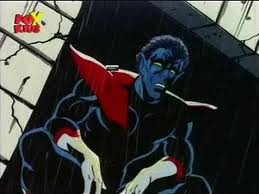
Nightcrawler makes his second and final appearance on the show with this episode.  This episode explores Nightcrawler’s mysterious past and how it correlates with other X-Men notables.  The events of the episode take place on Halloween, though to call it a Halloween episode would probably be inaccurate.  The holiday just serves as a fun visual gag to bring Nightcrawler back into the fold.

Not only does this episode mark the return of Nightcrawler, but it also brings back the Friends of Humanity, and more specifically, that mutant-hating bigot Graydon Creed.  The last time we saw Creed he was busy getting humiliated by Wolverine and the X-Men when they exposed his dirty little secret to his FoH buddies.  That secret being that Creed’s father is none other than Victor Creed (listed as Graydon Creed Senior in the tv show), also known as the mutant Sabretooth!  The high council of the FoH question whether or not Creed is fit to resume his duties with the organization in light of his origin so they give him a task: purge the Creed family name of all trace of mutant blood.

If nothing else, they make for an interesting family portrait.

This apparently will prove even trickier than taking out Sabretooth.  Nightcrawler comes seeking the X-Men’s aid when he receives a chilling letter that the Friends of Humanity are holding his birth mother captive.  We get the usual “Why do you care since she abandoned you?” questions so that Nightcrawler can remind us that he always takes the high road and preaches forgiveness.  When Rogue, Wolverine, and Jubilee run off to find the blue devil’s mother they find none other than Mystique.  This of course leads Nightcrawler and Rogue to the revelation that they’re kind of like siblings given that Mystique once adopted Rogue.  Apparently, Mystique and Sabretooth did the horizontal monster mash (thanks Fry!) back in the day which gave the world Graydon Creed.  It’s not revealed who exactly Nightcrawler’s father is though we get a flashback from Mystique explaining how Nightcrawler came to be that shows him.  Apparently he was just some ugly rich guy.

Creed is basically a maniac who, despite Nightcrawler’s best efforts, cannot be reasoned with.  Mystique is depicted as a cold, and ruthless person as well, but she gets a moment of redemption after a touching scene with her blue baby boy.  The episode ends with Nightcrawler in a bit of a melancholy place, while the FoH, following Creed’s failure to eradicate his mutant lineage, dump him off on daddy’s door step.  Nightcrawler ends up going 2 for 2 as far as quality episodes go.  This one also ended up getting pushed to season 5 for the initial broadcast.  I believe it was done just to break up the Nightcrawler episodes further.

Weapon X, Lies, & Videotape

Wolverine in his cool spy gear squares off against Omega Red in a flashback.

Another Wolverine episode, but the first one in awhile.  This episode was originally aired in prime time as part of season 3.  During the 90’s Wolverine’s origins were ever evolving in the comic books and a frequent topic for plot lines and fan conversations.  This one deals with the concept of false memories.  For awhile we had seen glimpses of Wolverine’s past, in both television and the comics, particularly of when he received his adamantium skeleton and claws.  This episode deals with the possibility of those memories, and more, being implants as part of the Weapon X project.

The episode begins with Wolverine being taunted by memories from his past.  We finally get a reason for his hatred towards Sabretooth as well.  Apparently Wolverine was in love with a Native American named Silver Fox, and apparently just to tick Wolverine off, Sabretooth “killed” her.  I put “killed” in quotations because the episode never actually states that (for obvious reasons) but it seems implied.  Wolverine takes off to go uncover the mysteries of these nightmares and Beast takes off after him.

Maverick makes his second appearance (first speaking one) while Silver Fox her first.

Wolverine’s visions take him to the Weapon X facility located somewhere in Canada where he finds Sabretooth waiting for him amongst the ruins of the lab.  The two immediately start to go at it, before Beast steps in as mediator.  They soon realize they were both lead there by their own visions and a mysterious letter.  They’re soon encountered by Silver Fox and Maverick, with Wolverine looking pretty shocked to see Silver Fox alive and well.  We’re treated to numerous flashbacks such as the four of them working together to take down Omega Red.  The lab contains set pieces which correspond with the false memories the four share and a video recording of Dr. Cornelius confirms the existence of false memories.

We get to see the four, and Beast, work together to take out some robot guards that were supposedly created to retrieve the “samples” from the Weapon X project.  In the end, little is settled as Wolverine remains convinced his love affair with Fox was real, while she remains unsure.  They all go their separate ways and Wolverine is left with some measure of peace.  This episode proves to be a fun collection of mystery and conspiracy theories with some convincing action tossed in as well.  There is one piece of animation I always found confusing where Sabretooth removes his glove to work a palm scanning device, showing the flesh tone of his hand is the same as his arm, making me wonder where Sabretooth’s skin ends and his costume begins.  I regret that I couldn’t find a screen capture of what I’m talking about.

Lotus and the Steel

The Silver Samurai makes his lone appearance of the series in this episode.

It’s probably a good thing that “Weapon X…” was moved up to season 3 because if these two episodes had aired back-to-back it might have been Wolverine overkill.  This episode indirectly deals with the fall out of the Proteus episodes, specifically with how Wolverine was getting along following his shake-up at the hands of the out of control mutant.  The episode begins with Wolverine and Xavier having a sort-of therapy session where Wolverine expresses that he feels empty inside.  This leads to Wolverine leaving the X-Men and heading for Japan to seek his purpose.  Jubilee, unable to accept this decision, takes off after him.  The set-up, in a way, is reminiscient of Wolverine #75 which dealt with the fall out of Wolverine losing his adamantium skeleton and also leaving the X-Men.

As usual, trouble seems to find Wolverine and in Japan he finds anything but peace.  He arrives at his old hang out (some rural village, apparently not Madripoor) and finds out the locals are being bullied by a local Japanese mafia lead by the Silver Samurai.  The Samurai’s gang is extorting the locals for protection money, when they don’t pay his followers ransack the place.  Wolverine initially doesn’t want to get involved but of course he has to.  This leads to a showdown between Wolverine and the Samurai where Wolverine uncharacteristically outsmarts him to take him out.  The villagers thank him, and he and Jubilee head home.

The episode is very similar to the first season episode “Cold Vengeance,” just change the setting and switch out the villain.  For that reason, it lacks any real impact as it’s nothing we haven’t seen before.  Not a bad episode, just not memorable.

Have Yourself A Morlock Little X-Mas

For years the writers resisted the urge to do a holiday tie-in episode, but here in season 4 we get our first and only one.  Perhaps the writers felt emboldened after doing the Nightcrawler episodes with their religious tie-ins that a Christmas episode felt appropriate.

In this episode, Jubilee's quest for the perfect X-Mas!

The basic plot is kind of traditional holiday special crap.  Jubilee wants to have the perfect Christmas as this is her first with the X-Men (nevermind that the show has been on for years at this point, but whatever) so she’s making a big deal out of everything.  Jean is charged with preparing Christmas dinner, but has to deal with a meddling Gambit who’s cajun roots demand the food contain a certain amount of spice leading to a series of slapstick routines.  Wolverine, of course, is in full-on Scrooge mode and somehow gets suckered into shopping with Jubilee and Storm on Christmas Eve.

At the mall, their seemingly perfect day is interrupted by the Morlocks when they spot them hi-jacking an ambulance.  Wolverine gives chase into the Morlock tunnels where they find a very sick Leech.  When someone mentions the possibility that Leech may die, Jubilee utters the ever predictable “Not on Christmas Eve!” line that must appear in every holiday special (it’s mandated by the FCC, I swear).

Beast arrives on the scene to care for Leech, but nothing he has can cure him, so they turn to Wolverine.  They theorize that a blood transfusion from Wolverine could bestow special healing properties on Leech and possibly cure him of whatever it is that ails him.  Wolverine is reluctant, apparently he tried this before and it didn’t work, but relents in the end.  The transfusion works, and everyone is happy and crying.  Jubilee also abandons her hope for a perfect Christmas with her new family by sharing all of her presents that she purchased with the less fortunate Morlocks and in doing so learns the necessary valuable lesson (also mandated by the FCC).

The episode is really the same old holiday trappings found in a hundred other like episodes, just with an X-Men lens to see it through.  It’s kind of crappy, but admittedly is a guilty pleasure for me.  I can’t watch it without getting a little lump in my throat and I suppose that’s all these episodes ever set out to accomplish.

Beyond Good and Evil (Parts 1 through 4)

“Beyond Good and Evil” was meant to be the big arch to send the X-Men out on.  Nearly every significant villain and hero makes an appearance during this four part story and we even get the requisite Magneto redemption angle once more.  And to top it off it’s another time travel story and the writers seem to always nail these kind of stories.

Jean apparently not as happy to see Sinister as he is to see her.

The basic plot revolves around the god-like mutant Apocalypse.  In the year 3999, Cable and his followers attempt to destroy Apocalypse once and for all.  When Cable and Apocalypse find themselves isolated, Cable hurls the “e” word in Apocalypse’s direction, claiming because he’s evil he can never win, to which he responds rather poetically with “I am not evil, I simple am!”  Despite the confidence of that statement, Apocalypse begins to ponder his existence and even shows sadness to view himself as part of some scale where one side can never truly triumph over the other, “What a cruel joke,” he remarks.  I didn’t do the scene justice, but it’s pretty cool to watch Apocalypse and Cable face-off in a philosophical way as opposed to a physical way.  The scene ends with Apocalypse stealing Cable’s time-traveling computer crystal-thing and vanishes.  At the same time, well not really, Bishop and Shard are shown trying to return to their future world but Bishop gets hung up in the portal and soon finds himself in a strange universe populated by light bridges that all lead to some central hub.  An annoying, yet seemingly omniscient, custodian shows up to let him know he’s outside of time and the two get set to watching the events unfolding in the present.

In the present, Cyclops and Jean are giving this whole wedding thing another go.  As you may recall, the first time they wed it was Morph who administered the vows and not an ordained priest which wasn’t good enough.  This one appears to go smoothly but just as the happy couple is leaving for their honeymoon the Nasty Boys show up.  The X-Men give chase and are able to recover Cyclops but when Wolverine can’t smell any trace of their assailants they realize something’s up.  Back at the mansion, Sinister attacks and is preparing to abduct Xavier.  The X-Men are able to arrive just in time to interrupt his taunting about Jean floating through time and prevent the kidnapping.

The X-Men are able to uncover bits of Sinister’s plan when Shard suddenly arrives on the scene, unaware that it’s actually Apocalypse’s, as psychic mutants begin disappearing.  They set their sights on the mutant Psylocke, who’s busy robbing the wealthy Warren Worthington III, and encounter Mystique and Sabretooth.  With Archangel’s help, the X-Men seemingly have things in control until Magneto shows up.  Not all is lost, as they’re able to take Sabretooth back to the mansion where Wolverine locks himself in a cell with Sabretooth and beats the information out of him.  Around that time, Cable shows up after commandeering a government time machine and shares his plan to take out Apocalypse at the source by destroying the chamber that grants him eternal life.

The X-Men and Cable head off to ancient Egypt but find themselves lured into a trap.  They tangle with some machinations of Apocalypse’s four horsemen before finding an ancient Apocalypse asleep in his chamber.  The Apocalypse they find turns out to be Mystique in disguise, and Apocalypse arrives on the scene to capture the king, as he puts it, with the king being Charles Xavier.

Even when captured, Wolverine likes to run his mouth.

As Apocalypse makes off with Xavier, Wolverine slips in behind him to find himself at the Axis of Time.  By now, Apocalypse, in true villain fashion, has let everyone in on his plans to destroy time by assembling the most powerful psychics in the universe.  It’s not explained particularly well but whatever, it’s more fun to buy into the threat.  On the Axis, Magneto realizes his dream to have his wife restored to life will not be realized by Apocalypse and rebels, with Mystique’s help.  Wolverine is freed by Magneto and soon Cable and Bishop arrive.  The psychics find themselves free of Apocalypse’s control, and using their combined might, banish him to the astral plane seemingly ending his threat to existence.

The arc ends with everyone going their separate ways, though Archangel’s ultimate fate is sort of left unresolved.  When he came onto the scene, Shard referred to him as “destined to join the X-Men” and it almost seemed like maybe the writers intended for him to be a full-fledged member by episode’s end.  Considering they intended for this to be the series finale, it meant they really didn’t have to wrap that up.  Sadly, future episodes seemed to disprove this notion despite the cool group shot towards the end that showed Archangel among the X-Men.

Had this been the finale it would have been a pretty cool way for the series to go out.  While the plan hatched by Apocalypse seems to only make sense in the minds of the show’s writing staff, it was still cool to see all of the major villains make cameos.  There’s even a little snippet of a scene with Lilandra and Gladiator having to face the menace of Apocalypse and they at least did a good job of making him look like a universal threat.  Magneto’s original voice actor, sadly, was unable to voice the character here but his replacement proved competent.  While not the best of the multi-part story-lines served up by this show, it’s definitely one of the more fun ones and a high point for season 4.


X-Men Season 4 (Part 1)

Season 3 of X-Men was the biggest so far.  Quality does not always equal quantity though and while it was still pretty solid it was not up to par with the first two seasons.  Season 4 is much closer in length to the first two seasons, but probably not as good as even season 3.  A lot of the big stories were exhausted in season 3 and some of the holdovers feel lesser in scope.  There were some nice cameos though, most popular of which was the first appearance of Nightcrawler, and the mostly original tale “Beyond Good and Evil” was probably more fun than the Phoenix saga.

Like season 3, there were production delays for some of the episodes in season 4 that forced them to season 5 for the broadcast.  Also, some of these episodes were actually broadcast as part of season 3, such as the first episode we’re going to look at “The Juggernaut Returns.”  As with season 3, I’ll be looking at the episodes here in production order.

The Juggernaut Returns

Ever since Gladiator sent the Juggernaut hurtling across the Atlantic we haven’t seen or heard from the big guy.  Turns out, the only side affect for crushing Juggernaut’s pride like that was to just make him even angrier with his step brother Xavier so he sets his sights on Xavier’s school once again.

Nerd Juggernaut, never to be seen again.

We’re treated to a humorous visual of Juggernaut swiping a taxi cab to serve as his mode of transportation.  As the X-Men prepare to mount a defense, a curious thing happens and the Juggernaut suddenly finds himself de-powered and scared.  That’s because a side story is occurring at the same time that shows a dorky looking guy uncovering the ancient Ruby of Cytorrak, the source of Juggernaut’s powers.  This nerdy looking individual becomes the new Juggernaut and sets off to do what every nerd turned jock would do – pick up chicks.

Xavier makes the call that to save the life of his step brother, the X-Men must restore his powers.  While Wolverine and Cyclops run off to track down this new Juggernaut, Xavier relives the parts of his life he and Cain shared.  We learn that Cain is a pretty cruddy person, but his father was even worse who married Xavier’s mother just for her money.  Since Cain couldn’t help himself and had to bully young Charles, his father sent him away to a boarding school which only served to further fuel Cain’s dislike of Charles.

Wolverine and Cyclops end up tracking down the new Juggernaut, and the resulting confrontation is more comedy than anything.  They retrieve the ruby and return it to Cain who once again transforms into the Juggernaut.  Perhaps as a showing of thanks, he chooses to leave the mansion without further incident.

Nightcrawler

It's not easy being green, but blue isn't much better.

Apparently needing a break, Rogue, Gambit, and Wolverine head off on a ski trip to Germany.  Why they chose to go to Germany when they have Colorado to choose from I do not know.  As usual, nothing goes right and a mishap on the slopes lands them at a monastery located in a small town time forgot that fears some demon.  The monks there seem friendly enough, but something clearly is amiss.  Wolverine hears about this demon and decides to go “hunting” while Rogue mistrusts one of the brothers.

Someone tries to harm a sleeping Gambit, who was injured on the slopes, and Rogue goes after him.  A fire breaks out and Nightcrawler reveals himself.  The “demon” proves to be a rather gentle soul despite his outward appearance, and the trio of X-Men set off the uncover who was trying to make him look bad.

Nightcrawler brings an element to Saturday morning television few would dare include, which is God.  As someone who isn’t even remotely religious, I find his portrayal not at all offensive and I don’t think anyone was trying to convince kids to go to church or anything.  He does have a discussion with a terse Wolverine who apparently shuns God for various reasons.  After all, the guy has had a pretty rough life.

The person behind the attack on Gambit and the burning of the monastery is uncovered, and Nightcrawler is revealed to the town’s people in the process.  They soon accept him, and the X-Men depart for Paris to continue their vacation.  The token invite to join the team is also offered, but Nightcrawler declines, as so many have before him.  In Paris, Gambit shares his own religious philosophies with Rogue (predictably, Gambit only seems to worship one man – Gambit) which causes her to storm off.  As she finds herself questioning her own beliefs she stumbles into a church to find a humbled Wolverine, kneeling before the altar.  Wisely, she says nothing and departs before he can see her.  Another example of Wolverine striving to find that inner peace he seems to always be longing for.

One Man’s Worth (Parts 1 and 2)

One of the big stories around this time in the comic book was titled “The Age of Apocalypse.”  The AoA was an alternate timeline story created when Xavier’s future son Legion traveled back in time to assassinate Magneto, thinking this would save his future.  By accident, he ends up killing his father which alters time in a frightening way, leading to a future where Magneto leads the X-Men against a tyrannical Apocalypse.  It’s a pretty cool story, and while I would have loved a true AoA for the animated series this is a very satisfying two parter.  I do so love when the writers start working with time travel!

This two-parter borrows heavily from that arc in both premise and style.  Where it differs though is that it does not include Apocalypse or Legion, and it’s never stated that Magneto leads the X-Men in the alternate timeline shown, just that he leads the mutants against the humans (keeping in theme with the future we see in “Days of Future Past”).  Substituting for Legion is the time traveling mutant Fitzroy and his comedic lackey Bantam as they’re sent back in time by Master Mold to assassinate a young Xavier.

The happy couple, and an AoA Sabretooth!

Fitzroy’s plan is discovered by Forge who once again turns to Bishop to thwart him.  Bishop is sent back in time, but this time he’s not alone as his sister Shard joins him.  Their timing is poor, as by the time they travel back to the present to enlist the help of the X-Men, Fitzroy has already succeeded.  There Bishop and Shard encounter Wolverine and Storm (sporting her 80’s look complete with a tall white mohawk), who are married in this universe.  We get to see the mutants battle the human forces and several AoA themed cameos are present including Holocaust and Nightcrawler.  It takes some convincing, but Wolverine and Storm agree to help Bishop and Shard stop Fitzroy, knowing that doing so will cause them to cease to exist.

In a rare turn of events for the show, the heroes fail.  They travel back to the 60’s and get derailed by a bit of period specific racism towards the interracial couple of Wolverine and Storm, which sets Wolverine off.  This delays them enough to allow Fitzroy to kill Xavier, and ends part one.

Part two has the heroes regrouping by traveling back to the future in order to try again.  I don’t quite understand why they had to do so, but it lets us see the new future.  Apparently, the sentinels won and Forge still exists but her serves them.  He’s also nearly entirely robotic at this point and extremely fearful of crossing the sentinels.  The heroes are able to get out of there, but Shard gets left behind with the understanding being that if they succeed in their mission, she’ll be fine.

Round 2 goes better, and the heroes win out this time by letting Fitzroy know just what the future he creates will look like.  Storm and Wolverine share a tearful farewell and the story returns us to the present where the Wolverine and Storm we know and love are enjoying a picnic with Xavier, who smiles to let us know he remembers the first time he met the two.

Proteus (Parts 1 and 2)

Another old story brought to the animated universe.  Proteus was one of the first missions for the new X-Men following the introductions of Colossus, Wolverine, and the like.  Proteus is a pretty crazy mutant with seemingly limitless psychic powers allowing him to distort and warp reality.  In the comics, his powers were so great they’d cause his body to erode and burn up, forcing Proteus to jump from host to host, killing the person he inhabited in the process.  Obviously, this would not suit for the animated series, nor would the same conclusion be used which ended in Proteus’ death at the hands of Colossus.

Proteus in his energy form.

Proteus also necessitated a new origin.  In the comics, and show, he is the son of Moira and Joe MacTaggert.  Even though they were husband and wife, Proteus was conceived as the result of rape at the hands of Joe which resulted in Moira leaving him, but not telling him she was with child.  Proteus’ powers were so great Moira had to force him into imprisonment.  She never told anyone he was her son, instead choosing to call him Mutant X.  In the show, his origins are the same, minus the rape.  Joe is a prominent politician unaware of Proteus’ existance, though in the show he apparently knows about him but has never met him.  In order to protect his campaign, he does not want the public to know he fathered a mutant.

Proteus (Kevin) breaks out, causing Moira to enlist the help of the X-Men ( it should be noted, that the writers missed a great opportunity to bring back Morph again) to recapture Proteus and return him to his cell.  Proteus meanwhile heads for Scotland and begins inhabiting people and experiencing their emotions.  He soon yearns to find his father after experiencing a father-son bond prompting Moira to warn Joe, but still keeping the secret that Kevin is her son from Xavier.

The X-Men confront Proteus, and when Wolverine starts talking about taking the kid out, Moira snaps and reveals her long kept secret.  Xavier is disappointed she chose to hide her mutant son from him, and the X-Men are forced into battle with Proteus.  Proteus wipes the floor with them, and even “rips” Wolverine into pieces (this is of course, an illusion) that completely unsettles the feral mutant and reduces him to a sobbing, retching, mess.

Knowing they can’t hope to defeat Proteus in open combat, the X-Men determine they’ll need the help of the boy’s father to calm him down.  They attend one of Joe’s campaign rallies knowing Proteus is likely to show up.  When he does, the X-Men pounce, all except Wolverine who runs off scared.  He doesn’t respond well when Rogue accuses him of cowardice, and responds even more poorly when Beast excuses it.  When all hope seems lost, Xavier is able to calm Kevin down and reunite him with his father, who surprisingly does the right thing by his son.  A much happier ending than the comic book which featured the death of both Joe MacTaggert and son.  It’s a different sort of episode, but an enjoyable one.  While the original is better, the writers did the best they could to adapt it for a children’s audience.  The image of a broken down Wolverine would prove long lasting, and would even be referenced in a later episode.

Family Ties

Would you be surprised if I told you that a random episode of the sitcom “Family Ties” is probably more entertaining than this episode?  Perhaps that is coming across a little strong, but this is a bad episode.  The only interesting aspect about it is that the show acknowledges that Magneto has two kids for the first time, Quicksilver and Scarlet Witch.  The trio find themselves lured into a trap by the High Evolutionary, and Wolverine and Beast tag along.  Wolverine gets turned into a Werewolf, and somehow every wrong is righted.  We get to see some sort of an origin tale for Magneto, which serves as the only redeeming quality of the show.  Apparently, the guy isn’t all bad and probably didn’t kill his wife.  Regardless, Scarlet Witch and Quicksilver aren’t exactly thrilled to learn who their father is but come around by episode’s end.  The execution is just kind of lame, and the mutates that occupy the town where this takes place make for an even lamer visual.  I don’t include this in the running for worst episode of the series, but it’s also not far removed.


X-Men Season 3 (Part 3)

Time to take a look at the last part of season 3 of X-Men.  Season 3 goes out on an uneven note, though at the time  no one really knew the season was over.  Really, no one knew when it began as new episodes were aired some-what randomly.

Sanctuary (Parts 1 and 2)

“Sanctuary” marks the return of one of comics’ greatest villains; Magneto.  In true Magneto fashion, his motives aren’t particularly villainous as he seeks to create a haven for mutants where they will be free from human persecution.  Feeling no place on earth would suit his needs, he creates his haven on an orbiting asteroid he dubs Asteroid M.  This attracts the attention of all the world’s nations as Magneto had to abduct a Soviet shuttle crew to aid in the construction.  There’s also the small matter of the nuclear weapons he possesses as well.  Magneto crashes a UN meeting and interrupts a discussion surround him.  There’s a piece of dialogue where the Genoshan rep rejects the term slavery as it applies to Genosha and refers to mutant powers as natural resources.  An interesting take.

You will hate this man by episode's end.

The plot is a condensed version of the one from the comics that began in X-Men 1 and concluded in the Fatal Attractions mini-series.  Though what took place over years takes place over two episodes here.  Magneto finds himself placing much trust in his new acolytes and a young mutant named Fabian Cortez in particular.  Cortez betrays him and attempts to kill Magneto by ejecting his quarters from the asteroid and in doing so frames the X-Men.  In their escape, Gambit gets left behind and Wolverine, Beast, Rogue, and Xavier (in Shi’Ar battle-suit, though he doesn’t use it to walk for some reason) go after him.  From there it’s a fairly predictable plot as Magneto returns and rights what is wrong, only to see Asteroid M get destroyed in the end, but the ride is a fun one.

A side plot between Xavier and Acolyte Amelia Voght sheds some light on Xavier’s past and how he became paralyzed.  The two were lovers whose differing views on how mutants fit into society eventually drove them apart, and Voght to Magneto.  She’s not a love interest or anything for Magneto (he’s not interested in Chuck’s sloppy seconds) but serves him loyally as one of his Acolytes.  She plays a role in uncovering Cortez’s treason and ends up helping the X-Men.

The end of the episode contains a teaser (apparently for the “Beyond Good and Evil” mini series to come) where Apocalypse finds Cortez drifting through space.  Deathbird is also pictured with him.

Xavier Remembers

“Sanctuary” contained some interesting back story on Charles Xavier and an episode implying an origin story for him was a welcome development.  Unfortunately, that’s not what this episode contains.  Instead we’re “treated” to the return of the Shadow King, the worst villain the show would know.

If you have been keeping with up this feature, you will know that the season 2 episode “Whatever It Takes” is one of my least favorite episodes.  In fact, it’s in the running for first episode of X-Men.  “Xavier Remember” might be even worse, though it’s so close it matters little.  This one serves as the origin for the Shadow King and how he came to be imprisoned in the Astral Plain.  Xavier defeated him there when encountering him in Cairo, and he’s used a piece of his own mental capacity to keep him there for decades.  A concussion causes Xavier to lose his hold and it’s up to Jean to enter the Astral Plain, find Xavier, and secure the Shadow King.

The Astral Plain is incredibly boring, both visually and thematically.  It’s also just too “out there” for me to take seriously.  The only plus I can give this episode is that it’s the last we see of the Shadow King.  Stay away Shadow King, forever.

Courage

Morph sporting his new dye job.

What’s a good way to rebound from one the series’ worst episodes?  Bring back a fan-favorite who’s been missing from television for over a year and half!  I don’t know why Morph became such a popular character.  Maybe it’s because we all collectively just felt bad for him because he died so quickly into the series.  I do know that I love him, and his episodes were among the best.

“Courage” is the much teased and long-awaited comeback for Morph (now sporting brown hair for some reason) as he finally rejoins the X-Men.  Morph can’t catch a break though, for his return to the X-Men just happens to coincide with the return of the Sentinels, the mutant hunting robots responsible for his “death.”  Morph reacts predictably when confronted by his killers, which is to cower in fear and cry.  That’s okay though, he’s Morph so we forgive him and the X-Men don’t seem that upset his cowardice caused them to lose Xavier.

Turns out, Master Mold survived Xavier’s kamikaze attack in “The Final Decision.”  Sure he’s just a head now, but he’s also crazy and wants revenge.  After his Sentinels capture Xavier, the X-Men track him down but leave Morph behind.  Morph though won’t stay put and arrives in time to save the day doing awesome Morph things.

The only negative about this episode is that, in the end, it turns out to be one big tease as Morph decides he’s just not quite ready to return full-time.  Wolverine is understandably upset, as we all are, and Morph goes back into hiding until the final episode of the series.

Secrets, Not Long Buried

“Whatever It Takes” and “Xavier Remembers” are both bad episodes, but “Secrets, Not Long Buried” gets my vote as worst of the worst.  This episode is just boring.  Cyclops goes off to some mutant town in the middle of no where to give a present to his former headmaster and finds him missing.  Cyclops is the dullest member of the X-Men, and his solo adventures just don’t work very well.  I actually hate this episode, I hate everything about it.  I can’t even think of one good thing to say about it.  It sucks, don’t watch it.  Just pretend season 3 ends with “Courage.”