Category Archives: Comics

Previously on X-Men: The Making of an Animated Series

previously

by Eric Lewald, published by Jacobs Brown Media Group LLC

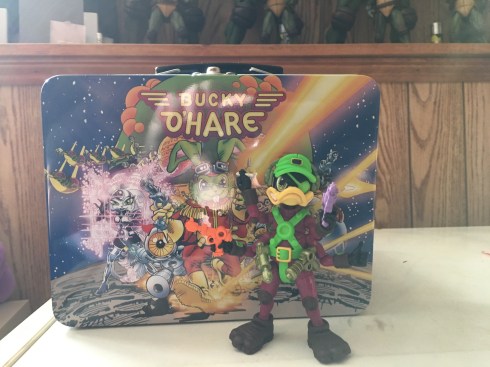
A lot of cartoons made an impact on me as a child. My first love was The Real Ghostbusters. Its goofy cast of characters and excitement were plenty of fun and there were interesting toys to supplement the series with, which was pretty much the goal of all cartoons in the 80s. The Teenage Mutant Ninja Turtles would come along and supplant Ghostbusters for me. For several years I was all about the Turtles, with a flirtation with Bucky O’Hare mixed in, though sadly the funky fresh rabbit never made it past 13 episodes.

In 1992 things changed, in more ways than one. My family had just been uprooted moving from the cozy confines of New Hampshire to what felt like a different world down in Virginia. For the first time ever, I was a fish out of water. As I was gearing up to start 3rd grade in a new state, a new town, a new school, I would be tasked with forming all new friendships either at school or in my new neighborhood. It’s not a task I’ve ever been particularly good at. Shy and a tad awkward, I wasn’t outgoing, nor was I particularly talented in anything so I had few ways of attracting people. As a result, my television was sort of my best friend for a time and thankfully I had a new friend in Batman who had just debuted on week day afternoons on Fox Kids, a network I really only knew of thanks to The Simpsons. Batman was all fine and good, and I consumed every episode as it aired (and have since gone on to write about, if you hadn’t noticed), but it never hooked me like Teenage Mutant Ninja Turtles, even though that was a program I found myself outgrowing. What did resonate with me almost immediately though was the cartoon that premiered not long after Batman, I’m talking about X-Men.

The X-Men were known to me in basic terms before the animated series premiered on Fox. About a year prior to the show debuting Marvel had launched a toyline complete with TV spots, even though there was no companion television series to pair it with. I suppose the toys could have been developed in conjunction with the Pryde of the X-Men pilot that had premiered and failed in 1989. The roster was pretty similar, though then relative newcomer Archangel replaced Dazzler in that initial run of toys. Aside from that though, I don’t think I had ever picked up an X-Men comic book and I may or may not have played the side-scrolling beat-’em-up arcade game that was also based on Pryde of the X-Men. And I didn’t even actually catch the sneak peek preview, which aired on Halloween of 1992. I had seen all of the television spots leading up to it and was very interested in the show, but I had tricks or treats to get and wasn’t good at working a VCR.

X-men_pryde_of_the_x-men_cover

The first attempt at bringing the X-Men to television did not go very well.

At school, I would hear about it though. They had cool powers, but people hated them. Why? It seemed like such a foreign concept. One character got arrested and another died! Wow! Perhaps morbidly, I really wanted to see that character death, whom I’d come to know as Morph. Frustratingly, it would be awhile before I finally saw it. Somehow, whenever “Night of the Sentinels:  Part 2” was aired on television I would miss it. I wasn’t allowed to stay home alone, since I was only 8, so if my family had plans on Saturday morning I had little say. My mom even enrolled me in CCD, or church school, which convened at 11 on Saturdays, much to my horror. I think I only went to two of those classes before my mom got sick of the revolt each Saturday, finally freeing me to enjoy my new favorite program in relative peace.

In no time I was obsessed, and X-Men was my favorite show for basically as long as it aired. I still have the many toys I amassed during that period in my life, and though I no longer read the comics, I still enjoy revisiting this cartoon. It’s why when I heard that showrunner Eric Lewald was releasing a book all about his experience in making the show and bringing it to television that I had to get a copy. I received a copy last November, and I’m a bit disappointed in myself since it took me this long to finally finish it and get to writing this post, but life is hectic.

Previously on X-Men is an account of how this unlikely hit came to be. When Fox premiered X-Men and Batman it was still a fledgling network. The Tracey Ullman Show and Married… With Children got the network its initial audience, and The Simpsons would then establish it as a viable alternative to the big 3:  ABC, CBS, and NBC. It was still struggling during the other parts of the day with programming often ending before 11 PM. Recognizing that there was a place for children’s programming, Fox brought together a web of studios and producers in a mostly haphazard manner that somehow led to network dominance. Shows like Bobby’s World and Attack of the Killer Tomatoes were filling out the kids portion of the programming early on, and while it sounds like they did okay numbers, they weren’t going to raise the network’s profile much. It would fall to the superheroes to do that.

lewaldscelebrating_orig

Julia and Eric Lewald

Lewald’s book does a great job in capturing those early days while also contrasting X-Men with its daily counterpart Batman. Batman was a show with tremendous financial muscle behind it in the form of Warner Bros. and DC. It was coming off two successful Tim Burton movies and featured a character recognized around the globe. As a result, it was largely an internal production at Warner and Fox got to enjoy the benefits. And then there was X-Men, the troubled property that seemingly no one believed in. Thanks to so many television failures by Marvel in the past, there was almost zero enthusiasm for a show based on the property. Margaret Loesch, who formerly headed-up television at Marvel and was hired away to run Fox Kids, was one of the few who believed in it. Having failed to get the show going while at Marvel, she knew a producer who she had hired and fired on more than one occasion that could handle the task. That man was Sidney Iwanter, and he produced the show along with many others for Fox Kids. Citing a belief that kids were smarter than network executives gave them credit for, he demanded excellence from the writing staff of X-Men, who were overseen by Lewald. These three probably deserve the most credit in getting X-Men to television and for it being the number one kid’s show when it finally did get there.

haim-saban

Haim Saban, who is both a hero and a villain in this story.

The first 200 pages of the 400 page book are devoted to the development process and it’s a fascinating read. Lewald, who had no experience with the X-Men before getting hired to run the show, was entrusted with those initial 13 episodes. He had people at Marvel he could go to with questions, but in a pre-internet world that meant a phone call, fax, or worse. It wasn’t like there was a Google equivalent in 1992. Artist Larry Houston is credited with the look of the series, as he was one of the few onboard who was a fan of the comic. Also the Edens brothers, Michael and Mark, were Lewald’s main contributors in the writing department. Lewald’s wife Julia was also a part in the initial season and contributed to the book as well. It’s very interesting to read as Lewald takes the reader through that initial writing process, and it’s easily the most captivating section of the book. Their approach to character showed in the episodes, so a lot of what is said here was previously assumed. Such as the belief that killing off poor Morph in the second episode would create stakes and pull the viewer in.

fox kids

The early days of Fox Kids.

If there is an MVP character for the book though it just might be Haim Saban. Saban was a newcomer to television when Fox Kids partnered with him to bring the X-Men to air. Saban collected a fee for those first 13 episodes, but then it was on him to pay the writers and editors. Graz handled the art, while AKOM was contracted to do the animation. Saban is a notoriously cheap man, and reading about all of the accounts of his cheapness is both hilarious and frustrating. It’s well known now, but bares repeating to emphasize how cheap he was that Saban docked the pay for all of the returning writers for season 2. His reasoning? The show was a success, so now more people would want to write for it and therefore he could pay them less. The man is now a billionaire, so obviously he’s pretty good at making money, though he’s also a reminder of a lot of what’s wrong with modern capitalism. The second half of the book is comprised of interviews with the cast, writers, producers, and other executives and almost all of them have a comment about how cheap Saban was, and likely still is.

Many battles took place to bring X-Men to Saturday morning. Some I knew about before reading this book, and others I did not. It’s probably common knowledge that the first episode from AKOM was utter garbage in terms of animation quality. It’s a big reason why the show had to premiere as a sneak preview because the studio couldn’t get the episodes ready to premiere in the normal Fall window due to all of the animation fixes that needed to take place. A lot of money was spent getting it right, and it almost blew everything up. The original voice cast also had to re-do the initial episodes because the first takes were so bad. Saban, in order to save money, hired Canadian actors to voice the show because they were famously non-union, so casting, supervising, and ultimately editing the audio for the show was cumbersome. Having to send individuals up to Canada in order to re-dub the initial episodes was obviously time consuming as well.

X-Men (FOX) [1992-1997]Shown from left: Wolverine, Morph, Beast

Oh Morph, I still mourn for thee.

And then there was Stan Lee. Stan Lee is a pretty famous guy. I’m not sure if he’s today more known for all of the comic characters he had a hand in creating or if he’s more famous for being that old guy who cameos in every Marvel film. Stan Lee created the X–Men alongside Jack Kirby in the 60s, but after that initial unsuccessful run, he turned it over to other writers and artists so he could focus on other things. As a result, come 1992 he basically knew nothing about the modern X-Men and yet he insisted he knew what was right for the show. Lewald and Iwanter had to fight with Stan on everything in those developmental days. He insisted on narrating the episodes, as he had done with previous Marvel television shows, and his approach was entirely wrong for the show they were trying to create. Supposedly, he even proposed the premise of the show should be a few members of the team driving around and solving mysteries. Imagine Wolverine in the role of Scooby Doo? Who would Shaggy be – Gambit?! They somehow managed to placate him, without really giving him a voice in the show, and eventually he went away as the show moved along through its first season and became a smash hit. The frustration in having to deal with Lee, and the many other challenges, is felt in reading this and I ached for Lewald even though he’s more than 25 years removed from this aggravation.

spiderman 94

The success of X-Men helped pave the way for more Marvel cartoons like Spider-Man.

That first season was only 13 episodes, a far cry from the 65 episode order Batman received. Fox was so unsure about the property that it wouldn’t commit beyond that, forcing basically everyone involved to move onto other shows. Lewald went on to helm Exosquad with the Edens, and thankfully that too only received a 13 episode order so he was available to return to X-Men when it finally received the full episode order. Others did not, because that’s how television works. If a show isn’t in production, you’re not getting paid. That first season’s decision to present itself in a serialized fashion also presented problems for the network, as production delays on one episode messed up the order of everything. As a result, the network demanded that season 2 be more episodic, but Lewald and his talented team of writers still managed to give it a serialized feel with The Savage Land segments and reoccurring villains like Mr. Sinister and The Friends of Humanity. A wise move, since the serialized nature of that first season is a big reason why it’s so special.

Nightcrawler (1)

“Nightcrawler” is frequently cited as a favorite episode of many of the creators involved with the show. The book also contains a deep dive into its creation.

Like the show itself, which I think produced its best work in those first two seasons, the book somewhat suffers from a strong first half that isn’t matched by the second. The many interviews that span roughly 200 pages are informative, but some more than others. The voice cast mostly repeats itself with remarks about how it was fun to work on something that felt different and how they came to understand their roles. The actual writers and producers offer the more interesting nuggets. There’s a lot of praise thrown around which might get tiresome for readers, though they all have reason to praise each other since it’s easy to forget how successful this show was. Especially when taken alongside the production and development hurdles. Of the interviews, I think I actually enjoyed the executive ones the most. Loesch and Iwanter were candid and did a great job of transporting me back to the early 90s and the hurdles they faced in backing this show. It’s fun to read about how close these people were with these characters that meant so much to me as a child. They cared about them, which is ultimately why the show ended up being as successful as it was.

X-Men-92

Marvel has resurrected the 92 X-Men for its comics line, but the results weren’t enjoyed by this blogger.

It should come as no surprise that, as a longtime fan of the show, I fully recommend Previously on X-Men to other fans of the show. Even if you were only a casual fan, but tuned into the animated scene at the time, you might enjoy reading this one. It’s fun to read the comparisons of how this show came to be with the experiences these people had with other shows. X-Men was a production mess, a wonderful, beautiful, mess. It was still garnering good numbers when it was cancelled, and one has to assume it was due to costs. By then, Saban had Power Rangers and was able to bring more stuff in house. X-Men had all kinds of hands on it so a lot of people had to get paid, and as we already covered, Saban wasn’t a fan of paying people. Even so, it’s hard to argue that the show was cut-down in its prime or anything, but reading this book and revisiting the show really made me realize how much I’d love to come back to this world. Marvel did launch an X-Men ’92 comic, but it did not satisfy me nor did it read like an episode of the beloved cartoon, rather it felt more like a parody. Marvel is now under the gigantic Disney umbrella and its films basically print money. With the Fox acquisition though, suddenly the X-Men are back in play. Marvel hasn’t bothered with animated films in awhile, though it’s sort of bringing that back with Into the Spider-Verse. Maybe a direct to video follow-up for the 92 X-Men could one day be in play. Pretty please? At the very least, how about a Blu Ray collection with episode commentaries, Disney? The people who created this wonderful show obviously wish to talk about it and they still have a lot to say.


Batman: The Animated Series – “I Am The Night”

I_Am_the_Night-Title_CardEpisode Number:  49

Original Air Date:  November 9, 1992

Directed by:  Boyd Kirkland

Written by:  Michael Reaves

First Appearance(s):  The Jazzman

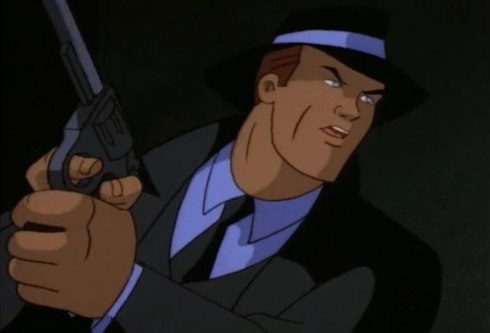
“I Am The Night” is perhaps our most introspective episode thus far. It borrows its title from the “catch phrase” Batman used to psyche himself up and overcome The Scarecrow’s fear toxin way back in episode 3. It’s a very melodramatic episode where Batman, facing a crisis, ponders his own worth. Should he let the past murder of his parents dictate his life? Is he really making a difference in Gotham by being Batman? Because it’s so heavily focused on the Batman character, this is an episode that doesn’t need a big name villain, so we get The Jazzman (Brian George) instead. He’s pretty much a run-of-the-mill Gotham City gangster type. He doesn’t have an outlandish gimmick, though he is fond of music puns. The episode also returns both Leslie Thompkins (Diana Muldaur) and Barbara Gordon (Melissa Gilbert), with the latter showing further signs of the woman she will become.

stonechair

A tired Batman.

The episode opens in the Batcave. A weary Batman is seated staring down at his feet as Alfred enters the picture with a newspaper and what looks to be coffee. Batman remarks he’s tired, and not just physically as Alfred comments on how little he’s slept in recent days. The newspaper brings more depressing news. The Penguin, presumably caught doing something illegal by Batman, has had his conviction overturned and will be set free. Batman angrily tosses the paper aside while questioning if he’s making a difference. Alfred is reassuring, but apparently not convincing. He hands over “it” which Batman had requested – a long yellow box.

Jazzman

Our villain of the day is the Jazzman. You don’t need to know anything about him.

Our attention shifts to some kid working a street corner. His street name is Wizard (voiced by a teenaged Seth Green) and he’s conning folks for spare change under the guise of needing bus faire to get home. The camera pans on a gift shop selling Batman merchandise that Wizard scoffs at. We’re also shown that Commissioner Gordon and Detective Bullock are positioned outside a building with a bunch of armed cops. The Jazzman is inside apparently conducting a big time drug deal and they’re just waiting on Batman, but he’s occupied. It’s the anniversary of the murder of the Waynes, and Dr. Thompkins is at the scene waiting for Batman. When he arrives he confesses he wonders each year if he should be doing this, if this year should be the last. It’s a similar conversation to the one he had with Alfred. And like Alfred, Thompkins is reassuring, though I’m a little surprised that as a friend to Bruce’s parents she doesn’t try to persuade him to hang up the tights.

As Batman finishes up his ritual of laying a pair of roses at the spot of the crime, a commotion gets his attention. Wizard is being accosted by a couple of thugs. Apparently, they allow him to work that little corner for money, but he’s supposed to pay up. Things are about to get out of hand when Batman steps in and puts a stop to it. Wizard is not impressed, but Batman grabs him by the collar and asks Leslie if there’s room for one more at the house she works at.

gordon shot better

This is hardly the time for a nap, Jim.

Meanwhile, the bust has taken a turn. Jazzman was setting up the police as he’s got a vendetta against Gordon for a prior arrest. He and his associates open fire on police, and things are getting out of hand. Batman finally shows up, striking a rather impressive pose atop the building the Jazzman is occupying. Using one of his many ropes, he runs alongside the building tossing tear gas into the windows. This flushes out the bad guys and Bullock and the police are able to apprehend the Jazzman. When he turns to celebrate with Gordon, we get our second “Oh, my God,” of the series as Bullock sees Gordon lying face down on the ground. Batman sees it too, and the look of shock on his face is surprisingly emotive for a man in a mask.

iamthenight8

Paying a visit to a fallen friend.

Gordon is rushed to a nearby hospital and stabilized. A news report is played to relay just what happened. They never actually say Gordon was shot, but they mention removing a bullet from him that was matched to the weapon the Jazzman was using. Gordon is placed in the ICU, and Batman soon pays a visit. It’s surprisingly easy for Batman to enter through the window even though an armed guard has been placed outside Gordon’s door. He apologizes to the unconscious Gordon and blames himself. Barbara Gordon emerges from the shadows to console Batman and assure him it isn’t his fault. Bullock bursts in with the opposite opinion. He berates Batman, blaming him for not sniffing out the setup to begin with and for being late to the action. He screams at him, and Batman offers only a small amount of resistance before leaving out the window he came in while Bullock hollers challenges at him.

Batman returns to the Batcave and does what every protagonist in a melodrama would do – he smashes stuff. Alfred apparently knew to stay away as he never interrupts. The Jazzman is then shown being ordered held without bail, but at a prison outside of Gotham due to overcrowding. He quickly puts a plan into motion that allows him to escape. Apparently jails around Gotham suffer from the same problems as the ones in Gotham. He’s not satisfied with wounding Gordon and wants to “send him to Harpland,” so he’s hellbent on returning to Gotham to finish the job.

17

Man wasn’t supposed to live in darkness, Bruce.

Dick enters the Batcave at Alfred’s insistence in hopes of cheering up Bruce. He’s been down in the cave for days. Dick finds him, still in costume, and the two rehash what happened. Like the others, Dick tries to assure Bruce of his worth, but he won’t hear it. He sneaks in the tidbit that Gordon is the same age as his father, adding a little gravitas to the situation and hinting that Bruce looks to Jim as a father figure. Dick is about as successful as the others, or perhaps even less so as the scene ends with Bruce denouncing Batman and tossing his mask down a chasm seemingly giving it all up.

Dick is then shown paying a visit to Gordon. For the first time, Dick and Barbara share a scene together. It’s not explained why the two would be friendly, but I think it’s mentioned in another episode that they attend the same university and know each other through that. Barbara bemoans that she can’t do more (foreshadowing!). They know the Jazzman has escaped from prison, and she’s certain he’ll be returning to finish what he started. Dick then returns to Wayne Manor to try and convince Bruce to put the tights back on and get out there. Bruce just sits quietly at a desk in his pajamas as Dick declares that if Bruce won’t stop the Jazzman, then he will. The scene cuts to the Batcave with Robin heading for one of the Batcycles when a gloved hand clamps down on his shoulder. Batman declares this is his hunt, and we’re off!

I_am_the_night_friends

Crisis averted.

True to his word, the Jazzman is found at the hospital. He takes out a window washer and begins using his equipment to scale the side of the building to get to Gordon’s room. How he knew which room Gordon was in is not explained, nor is it explained how Gotham PD could be so foolish as to allow window washing in the area. Jazzman raises the scaffolding up to Gordon’s room and produces a handgun. He takes aim intending to shoot through the window when Batman swoops in at the last second to redirect the shot. The commotion gets the attention of Bullock, who was at ground level, and he races back inside. Batman is left hanging from the scaffolding as the Jazzman tries to knock him off, but he ends up going through the window. A guard bursts in, but Jazzman slams the door on him causing him to drop his weapon. Jazzman is able to gain possession of the weapon and take aim at Gordon as Barbara screams and throws herself onto her father. Batman recovers outside the window and lets loose a shuriken as Jazzman fires. The projectile flies true and sticks into the end of the barrel of the gun, causing it to backfire. Bullock bursts in and Jazzman is apprehended once again.

As the commotion dies down, Gordon wakes up to see Batman and Barbara at his bed side. He offers words of encouragement, first making sure the bust was a success. He then expresses his admiration for Batman, who in turn encourages him to get some rest. As Batman swings away, he settles in on a rooftop and notices the kid from earlier, Wizard, picking up an unattended suitcase by a bus stop. He swoops in, questioning who’s briefcase he stole, only to find out he misread the situation. Wizard tells him it’s his, then says he was hoping he’d run into Batman. He explains he’s been to many halfway houses before and heard the same schtick about getting on the right track and how it never worked. This time though, it did. He offers Batman the two words he needs most right now, “Thank you.” Wizard then hops on the bus intending to head home. Batman looks a bit stunned at first, then smiles as he heads back for the rooftops. The camera lingers on his face as the episode closes – still smiling.

wizard

The kid with the stupid name telling Batman exactly what he needs to hear.

“I Am The Night” is a pretty weighty episode. There’s a lot to unpack with this one. It tiptoes around the theme of escalation a bit and how Batman could potentially be doing more harm than good, though it doesn’t really go too far down that road. Really, it focuses its attention on Batman himself and how easy it would be for a guy in his situation to feel depressed. As viewers, we look to Batman as a hero and this series presents him in that light in an unquestioning manner without ever really stopping to show us how Batman might view himself. Many episodes are even light on Batman as the villains absorb a tremendous amount of the spotlight. As such, it’s nice to see an episode focus almost entirely on Batman for a change. This episode also deals with consequences in a manner many children’s shows of its ilk ignore. For once, someone actually got caught in a hail of gunfire and we’re reminded of the stakes. While I don’t think anyone really felt that Commissioner Gordon would die, the image of him lying there in the street and the genuine look of fear on both Batman and Bullock is affecting.

The joyless portrayal of Batman in this episode comes across as more authentic than many of the others. Batman isn’t effortlessly fighting off bad guys or solving riddles. He’s tangling with something more human that probably anyone can relate to. Because of this, “I Am The Night” probably isn’t a favored episode for many children especially since it doesn’t feature a noteworthy criminal. For adult viewers though, it’s hard to deny that this one isn’t one of the better episodes. It toes the line of melodrama and corn, but I don’t think it ever goes over it. If you want to nitpick the episode you could certainly mock it for how easy it is for Jazzman to escape prison or how quickly Bruce goes from his pajamas to Batman. I definitely can suggest that naming a street kid Wizard was an odd move. This is a pretty intense episode though and one I enjoy. It also helps that it looks pretty great with several shots of Batman really standing out. His dejected mood at the episode’s beginning, his heroic pose from the top of the building the Jazzman was hiding in, the way he runs across the wall, it’s all very dynamic. Sunrise handled this one and they did a good job. About the only thing I don’t like is the slow-mo when Jazzman is about to shoot Gordon and that Batman can toss a throwing star into the barrel of a handgun. Even for a cartoon, that seems implausible. This is a good one though even with the nitpicks. I take him for granted, but lastly I should say this is Kevin Conroy’s best performance to date in the role of Batman. It’s hard to imagine anyone else being able to capture the humanity of the character the way he did in this episode.


Batman: The Animated Series – “What Is Reality?”

What_is_RealityEpisode Number:  48

Original Air Date:  November 24, 1992

Directed by:  Dick Sebast

Written by:  Marty Isenberg, Robert N. Skir

First Appearance(s):  None

After having escaped both Batman and the Gotham PD, The Riddler (John Glover) is back to erase his criminal history and likely get some measure of revenge against Batman and Robin for ruining his prior plans. It’s a rare example of the show having a direct follow-up to a prior episode as villains are often captured and released from Arkham or jail offscreen. It’s not often we have a villain escape and then make reference to their fugitive state, but that’s what we have here in what is only the second appearance of the quite popular Riddler character.

The episode opens with a jogger running through the Gotham night. He decides to withdraw some money from an ATM only to find it’s spitting out riddles instead of cash. Not only that, it shows his balance as zero which enrages the man. The scene jumps to Gotham’s version of Wall Street where investors are being taunted by the scroll not by failing prices, but by riddles. We then see the Gotham Department of Motor Vehicles suffer a similar fate as Dick and Alfred wait in line to dispute a ticket of some sort. All of this brings us to Gotham PD where Batman and Gordon are discussing the obvious – this is the work of Edward Nygma, aka The Riddler. He’s been on the run ever since the events of “If You’re So Smart Why Aren’t You Rich?” and has so far managed to illude capture. Gordon then notices that all online records of Nygma’s very existence are being deleted at an alarming pace to make it appear like he does not, and has never, exist. Before Batman can ask about the hard copies of his records, they’re informed that a package has arrived at headquarters and it’s ticking.

riddlers console

The shipping on that must have cost a fortune.

Gordon is apparently comfortable with letting Batman and Robin handle this potential explosive device as the two are seen examining the rather large package. Robin notes that the blocky structure is a puzzle and boasts that he was able to complete a Baxter’s Box puzzle in record time, so this should be no problem. A Baxter’s Box, as best as I can tell, is this world’s version of a Rubik’s Cube. I guess even referencing that famous toy could fall into a copyright area? Robin is able to get the box to open and inside they find a large console complete with a monitor, two seats, a massive keyboard, and a pair of headsets. Not knowing what to immediately make of it, Batman leaves Robin to check it out. Meanwhile, some cops have stolen the hard copies of Nygma’s records and are shown delivering them to Nygma himself who is watching all of this via a monitor in an undisclosed location.

Batman looks to the various riddles that Nygma left behind via the ATM, stock market, and DMV. They’re simple riddles, so Alfred and he deduce they should focus on the numbers contained in the riddles, which when translated to roman numerals, leads Batman to the DMV. There he finds some goons accessing the hard copy records there, likely searching for Nygma’s files. Batman engages them which leads to the action spilling outside where a Riddler Van tries to run down the caped crusader. When Batman winds up on the hood of the vehicle, he finds it’s being driven by a robot with a camera for a head. Nygma is able to taunt him as well, and points out the vast amounts of explosives in the back of the van. Batman is able to avoid a rather explosive demise, but not without detonating the van making quite the mess. Riddler is able to leave him another clue though, because that’s what he does, about where to turn his attention to next.

batman chess

Riddler’s virtual world.

At Gotham PD, Robin has discovered that the console delivered there is actually a virtual reality machine. He demonstrates how it works to Gordon before taking off for a snack leaving Gordon plugged into the machine. Once gone, Riddler appears in the virtual world and is able to trap Gordon. When Robin returns, he receives an electrical shock from Gordon’s headset when he tries to remove it. Batman soon arrives as Riddler’s most recent riddle directed him to Gotham PD headquarters. Robin gives him the rundown and Batman is left with no alternative but to enter the VR machine and rescue Gordon. Riddler has placed Gordon in a high velocity device within the world similar to what astronauts use to train for the force of space travel. Riddler claims Gordon’s heart can’t last in the machine indefinitely injecting a time component into the situation. Robin warns Batman that he’s basically entering a world controlled entirely by The Riddler which prompts Batman to insert an ear piece into one ear so he can maintain a link with Robin while inside the game. Robin is also able to watch what is going on via the rather large monitor Riddler included.

batman dark knight

If you’re going to call yourself the Dark Knight then you should look the part.

Once in the world, the episode’s perspective shifts to that. It’s mostly a world depicted in shades of red not unlike a Virtual Boy, but with some black and white as well. Riddler pushes Batman along via clues which leads him to a chessboard. Batman is forced to literally adopt his Dark Knight persona to sneak past which just leads to a constellation based puzzle for him to solve, with Robin’s help (he’s big on astronomy apparently). Eventually, Batman finds himself face to face with The Riddler and a giant version of a Baxter’s Cube. Not wanting to waste more time in figuring out the puzzle, Batman realizes he has some control over himself in this virtual world and imagines he has mallets instead of hands. He bashes the cube, which just prompts the Riddler to attack. He splits himself into multiple Riddlers, and Batman responds by doing the same. As they engage in a competition of who can create more versions of themself, Batman points out how hard it must be for Riddler to maintain control over his virtual world when splitting his focus amongst the many duplicates he’s made. Just pointing this out causes the world to collapse, and the Baxter’s Cube breaks away revealing Gordon.

many riddlers

Well this presents a problem.

Batman and Gordon are able to escape the virtual world. Once outside, The Riddler returns to the monitor to taunt them and leave them one final clue about where he could be. Just after doing so, he lets out a horrible scream indicating he’s in some trouble. His clue was enough for Batman to figure out his location, and when Batman, Robin, and Gordon find the Riddler he’s still connected to his game unable to remove himself much in the same manner as Gordon previously. Batman remarks getting him out of there may be a riddle no one can solve (spoiler: this isn’t the last we’ll see of The Riddler!) as the credits roll.

“What is Reality?” is a decent follow-up the The Riddler’s debut. It doubles-down on Riddler’s fascination with video games and virtual worlds, which is an interesting take on the character, and one that feels very of the times. I mentioned previously how I liked that this episode directly deals with the fallout of the previous one, even though it isn’t a two-parter. The writers seemed to not want to really bother with riddles this time around though, opting to deliberately have The Riddler use simple riddles but with a bit of a convoluted message hidden in each one. I’m not particularly good at riddles so I feel a little uncomfortable for criticizing the episode for going easy on them, but maybe they should have hired somebody who could craft a good riddle? As a result, The Riddler seems rather stupid as his efforts are not even remotely challenging for Batman to figure out. Batman also easily bringing an end to the VR world is rather underwhelming, but maybe they wrote themselves into a corner since they gave Riddler complete control over the world. The ending is kind of chilling though. After almost rooting for The Riddler in his debut he’s a bit more of a conventional villain here, but his actions never make us desire a fate like that for him.

riddler trapped

Riddler’s in a rather sorry state at the episode’s conclusion, but he’ll bounce back.

This episode marks the final contribution from Akom Productions. They were let go after the some-what disastrous “Joker’s Wild” episode. Perhaps because of this they did an especially careful job with this episode. It looks fine and I have no complaints about the animation. There are some very minor errors, but most episodes contain one or two. It’s not a hugely ambitious episode, though some fun things were done with the virtual world. I’m glad only a few minutes are spent there though as that red palette gets kind of irritating to look at.

This isn’t the last we’ll see of The Riddler, which I can’t imagine comes as a surprise to anyone. It is the last we’ll see of him for a while though and his last appearance of season one. Unfortunately, his next appearance doesn’t mirror this one by dealing with the fallout. He’ll just be his normal self leaving us to wonder how he extricated himself from the VR world. I guess for them not to tell us means it wasn’t a very interesting story. I bet they just unplugged the thing, that seems to be the solution for most electronic mishaps.


Batman: The Animated Series – “Birds of a Feather”

Birds_of_a_FeatherEpisode Number:  47

Original Air Date:  February 8, 1993

Directed by:  Frank Paur

Written by:  Chuck Menville, Brynne Stephens

First Appearance(s):  Veronica Vreeland, The Duck Boat


It would seem the writers of Batman:  The Animated Series had the hardest time with the two primary antagonists from the then recently released Batman Returns:  Catwoman and The Penguin. We’ve seen Catwoman portrayed as a cat burglar with a heart of gold, but following her debut she’s been in flux relegated to damsel in distress and sometimes vigilante. With The Penguin, he debuted in the divisive “I’ve Got Batman in my Basement” in which he’s outwitted by a bunch of kids. Because it was so obviously pandering to its young audience, that episode is often cited as one of the worst in the series, but since it was effective at that pandering, there seem to be an equal amount of folks who really enjoyed it. Since that episode though, The Penguin has been more of a side character as he was in “The Strange Secret of Bruce Wayne” and “Almost Got ‘Im.” We haven’t seen The Penguin in another solo outing, until now that is. And even here, we have an atypical episode as it’s not focused on Penguin’s next scheme, but on his reform. In that, it is somewhat similar to Batman Returns because we’re going to see Penguin engage with high society and try to find social acceptance among the elite, only to be humiliated and lash out in only a way a super villain can.

veronica

Prepare to meet Veronica Vreeland.

The episode opens with Penguin (Paul Williams) robbing a museum. In a bid to remain classy, he probably dilly-dallies too long trying to impress the guards giving Batman time to show up and put a stop to the robbery. Penguin is sent off to prison, since he’s not considered insane and thus not bound for Arkham Asylum, and it’s there he serves out his sentence to the end. At which point he declares himself reformed, and whether or not he’s sincere is unknown. He expects his old entourage to arrive with a limo to pick him up, but when no one shows he’s forced to ride the bus in disgrace. He has the bus drop him off at his penthouse where he walks in expecting to find a party celebrating his release. He even indicates he expects the other various rogues to be present like Joker and Two-Face, but instead he finds an empty home with sheets draped over the furniture. Penguin isn’t alone though as Batman is there to remind him that he’ll be keeping an eye on him. Penguin asserts that he’s reformed, but Batman doesn’t seem convinced, though he leaves him be.

Pan03-3

Not the entourage Penguin was expecting.

Elsewhere, socialite Veronica Vreeland (Marilu Henner) is bemoaning her plummeting social status to her associate Pierce (Sam McMurray) who suggests she throw a party to improve her reputation. She seems skeptical, but when he reminds her how another individual saw their reputation skyrocket following The Joker crashing her party, she starts to warm to the idea of a party. Pierce waves the front page of the local newspaper to her declaring The Penguin has been released, and we have our plot.

penguin laugh

Veronica, obviously charmed.

The Penguin is more than enthusiastic about dinner with Vreeland, who takes him to a fancy restaurant where he dines on sardines or whole fish of some kind. His presence is found to be a major turn-off for the other patrons, partly because of his grotesque eating habits and probably also because he’s a known criminal. Penguin is enjoying the dinner regardless, but he’s suspicious of Vreeland who insists she just wants to get to know him. Satisfied, he requests the check but the waiter tells him the meal is free if he leaves now. Thinking this is an acknowledgement of his high society status, Penguin happily leaves with Vreeland on his arm. Outside the restaurant, the two are accosted by a trio of muggers. Penguin looks the part of hero as he fights them off, but Batman shows up to clean up the mess. He grabs Penguin and assumes he was robbing Vreeland, but she steps in to correct him giving Penguin a moment to admonish Batman which he seems to enjoy. Just before the mugging, Penguin was invited to the party Vreeland is planning and he accepted, making this quite the night for the portly little fellow.

penguin reformed

Penguin showing off his heroic side. Never mug a man with an umbrella.

Veronica and Pierce are then shown discussing the events of the evening. Pierce finds The Penguin laughable and seems to think this party will be a huge hit at Penguin’s expense. Veronica though demonstrates that she may be warming to the former criminal as she found his behaviour with the thugs charming and sweet. Bruce Wayne interrupts their conversation and asks whom they’re discussing. Pierce spills the beans that Veronica is dating The Penguin as a publicity stunt, which concerns Bruce, naturally. He leaves them with a warning about The Penguin, but it doesn’t seem likely that they’ll actually take it to heart. That night, she and Penguin attend an opera and she’s obviously not taken by his horrid singing. She still doesn’t let her revulsion seem obvious when he turns to her and even permits him to lay a smooch on her hand. Bruce is there as well, being kind of a creeper, but he seems to notice that Penguin is genuinely showing affection for Veronica which only worries him more.

scheme revealed

Penguin looking dejected as he finds out he’s been played a fool.

Presumably the next night, Veronica’s party is underway. The Penguin feels he’s in his own element schmoozing with Gotham’s wealthy socialites, cracking witty jokes and attempting charming behaviour. He’s oblivious to the fact that everyone else is seemingly appalled by his appearance and is making jokes at his expense whenever he moves onto another conversation. Pierce is especially enjoying this, while Veronica is clearly feeling guilty. When Penguin steps out onto a balcony for a few quiet moments, he’s joined by Bruce Wayne. Penguin shows him a special brooch he plans to gift Veronica, and Bruce looks nearly distraught as he knows what’s going on. When Penguin heads back inside, he overhears Pierce and Veronica talking about what’s going on. Realizing he’s been played a fool, he lashes out blasting them in the face with knock-out gas from his umbrella (apparently he wasn’t reformed enough to cease carrying armed umbrellas). Bruce tries to intervene, but he’s unable to stop Penguin from kidnapping Vreeland.

BF_23_-_Duck_Boat

It’s the duck boat!

Pierce is forced to head to the police where our always right Commissioner Gordon is correct in placing much of the blame for the current circumstances on he and Vreeland. Even so, it doesn’t excuse the fact that The Penguin has unlawfully abducted a woman ending his short-lived reform. Pierce is also a total jerk to Gordon, which is what prompted Gordon’s dressing him down. They soon receive a ransome note from The Penguin, and it demands that Pierce has to deliver the ransom of one million dollars personally. When the police bring Pierce to the drop-off location they find a pay phone and Penguin promptly calls him on it instructing him to head to a new spot without company. The new spot is a trap, of course, and Pierce finds himself dumped into the sewers where he lands on a big, yellow, duck boat! Yes, the very same one from Batman Returns, though this one looks a bit angrier.

BF_23.2_-_Trap

Not a place you want to find yourself.

The boat takes Pierce to a new location, and upon ascending some stairs, he finds himself in an opera house. There he finds Veronica chained to a chandelier. She pleads with Penguin to free her, and even confesses she was growing fond of him, but he doesn’t believe her. He’s too far gone now. Pierce is chained to a platform below the chandelier, and Penguin rummages threw the money and discovers a Bat-tracer (really, Batman, be more discrete). Enraged, Penguin goes to cut the rope on the chandelier which will surely kill both Vreeland and Pierce. She tries to talk him out of it, once more claiming to have grown fond of him, but it’s no good. Batman shows up to prevent the double homicide. Since Penguin can’t go one on one with Batman, he hops on a dragon prop that also apparently breathes fire. In what is possibly the most ludicrous visual we’ve seen on this show, Penguin flies around on this dragon with a viking helmet and sword. Batman has seen worse, and he takes the bird-boy down and frees the two wealthy jerks.

BF_25_-_Viking_Penguin

Now here’s something you don’t see every day.

As the cops lead Penguin away, Veronica once again approaches him and tells him that she was really growing fond of him. Penguin, with perhaps a touch of sadness, rebuffs her once more, “I suppose it’s true what they say; society is to blame. High society.” Batman also looks on with no indication of satisfaction over what he’s seen. This one has no happy ending for anyone.

Birds_of_a_Feather_Over

Normally a triumphant scene, but here there’s a somber air over Penguin being lead away in handcuffs.

“Birds of a Feather” is a pretty weird episode for what is ostensibly a kid’s show. A reformed criminal trying to ingratiate himself into a wealthy circle, only to find he can never hope to fit in where he feels he belongs most. Thus, he turns back to crime and is reformed no more. It’s a very mature storyline, which I suppose he was owed after his debut. Kids are capable of empathy though, and I think this episode successfully makes Penguin out to be a sympathetic figure similar to what happened with The Riddler. Only in this case, The Penguin doesn’t get to escape in the end. He’s returned to jail, and the next time we see him he’s back to his old ways as he’s apparently abandoned all notions of reform. Vreeland will return as well as mostly the same character we see here, so she has apparently learned nothing in the end.

PierceChapman

We’ll see more of Vreeland, but Pierce and his smug, stupid, face are confined to just this episode.

This episode is one of the few that seems to successfully merge the classic portrayal of The Penguin, as an odd-looking but refined criminal, with the grotesque one from Batman Returns. He’s always been deformed in this show, but it’s never been a focal point as he mostly embodies the characteristics of the comic book character. In the restaurant scene we get a glimpse at the more monstrous side and Veronica is obviously grossed out by his appearance. The other wealthy characters poke fun at his appearance as well behind his back. There is humor though in seeing him try to fit in, especially when he, at the party, advises the manager of a bank he knocked off in the past to bolster security. His speech patterns and mannerisms embody the role he’s trying to play, but the subject matter is obviously inappropriate for the setting. Those little bits of humor play well and are needed since most of the episode is uncomfrotable to watch. We know The Penguin is being played, and he seems genuine in his attempt at reforming, but he’s also bound to find out he’s being made fun of and won’t respond well. The duck boat is a nice callback to the movie as well, and I can’t remember if it makes another appearance or not.

“Birds of a Feather” is an overlooked episode, but it’s also probably the best Penguin episode. I never count it among the show’s best, but whenever I sit down to watch it I’m entertained and pulled in by the story. It’s light on action, but the character development and setup is well done. It helps that it doesn’t need a lot of screentime to develop a character like Vreeland or Pierce,  and they’re not short-shrifted at all. It’s a dense episode and it makes good use of what time it has. There’s not a lot of Batman, but the episode doesn’t need it and his presence is still felt throughout. I really like how the episode is able to get the audience to turn on Batman in some respects, as I recall watching this as a kid and being irritated with Batman for going after Penguin when he had done nothing wrong. Then I ultimately felt conflicts when Penguin did do something wrong, but still felt like he was justified in his actions. The episode needed to have him basically attempt murder in order to make it acceptable to see him sent off to jail in the end. If this is an episode you’ve either slept on or forgotten about, give it a look. And if it’s one you may not have liked much as a kid, you may find it more enjoyable as an adult. This isn’t the last we’ll see of The Penguin bringing Batman Returns to the small screen, but it was the most well done.


NECA 1990 TMNT Movie SDCC Set

neca TMNTFor the past several years, the folks over at NECA have been making San Diego Comic Con an annual event for fans of the Teenage Mutant Ninja Turtles. I mean, it’s always an event, but it’s been especially fun for TMNT fans because NECA has been able to release limited action figure sets based on the property. These sets have been wildly popular and thus a bit hard to get ahold of for fans not attending the event. They often sell-out and command big mark-ups on the secondary market. As a result, while enthusiasm remains high, there can be some backlash for those who are unable to secure a copy at MSRP.

The reason for all of this is essentially Playmates. Playmates was a partner with Mirage Studios and Fred Wolf Productions in bringing the TMNT from print to the small-screen. In the 1980s, getting a show to air for boys often necessitated a pairing of show with toys in a symbiotic relationship. The franchise was viewed as risky, and creators Kevin Eastman and Peter Laird had a hard time finding a toy company to make their dream happen. Playmates eventually jumped-in, but got a pretty nice deal out of the whole thing thanks to the desperation of those trying to make money off of this thing. As a result, they still hold the master toy license for the franchise and can dictate who can and can’t make toys based on the franchise here in the United States.

About 10 years ago, NECA was able to release a set of TMNT based on their original Mirage look. They were specialty shop toys and were very well received. NECA would also release an April O’Neil and show-off a Shredder, but it never made it to retail. At this time, Playmates was still consumed with making toys based on the Fast Forward cartoon produced by 4Kids and likely didn’t feel threatened by another company releasing collector toys based on the comics. Eventually, maybe after seeing the success NECA was having or due to diminished interest in the cartoon, Playmates would engage the collector crowd with their own Mirage Turtles which may be why NECA’s line ended with April.

Ever since then, NECA has had to find a way to create product based on the franchise (a favorite of NECA Director of Product Development Randy Falk) that works for them as well as Playmates and Nickelodeon (the current owner of TMNT). As a sort-of compromise, NECA has been allowed to produce 6″ scale figures as convention exclusives only. In addition to being allowed to sell them at conventions, they’re also permitted to sell them online as a pre-sale in advance of the event, but not after or in perpetuity. The only exception has been the quarter-scale line which NECA has been allowed to produce and release to retail, presumably because Playmates has no interest in figures at that scale.

Via these convention exclusives, NECA has been able to finish off their old Mirage line by releasing a set containing Shredder and some Foot soldiers. They also did figures based on the original TMNT arcade game and just last year released a massive set of 8 figures based on the first season of the 1987 cartoon. For 2018, NECA may have felt pressure to out-do that 2017 set and once again turned to the 1990 film – which is perhaps the greatest version of these classic characters. For the past two years, NECA has been releasing these figures in its quarter-scale line, a line I loved and own each figure from. A lot of fans have been begging for a release of these same figures in a 6″ scale and now they finally have their wish.

I was one of the lucky few to score a set during the pre-sale on NECA’s website. Two versions were offered:  the set of four turtles and a set of four turtles with a diorama. The set ran for $125, and the diorama set was $250. The diorama is going to be released to retail in a slightly more generic format, but it captures the grit of NYC from the 1990 movie. It’s also huge, which is why I passed on it as I don’t really have room for it. I was content to just settle for the set of action figures, and I am quite pleased with the product delivered to me roughly two weeks after San Diego Comic Con commenced.

The four brothers come housed in packaging designed to mimic the original VHS release of the 1990 film. It’s obviously over-sized to properly house the figures and all of the images of the characters have been replaced with photos of the actual action figures and it’s pretty damn remarkable how close to the actual thing these look. If it weren’t for the fact that Donatello is smiling on the original release, you probably would be fooled by the cover. The reverse side has the film critic quotes replaced with quotes from folks in the toy (and wrestling) world praising the set. It’s not as durable or as resplendent as the case released with last year’s set, but my fondness for this movie means I probably prefer this one to last year’s Archie inspired case.

The outer case is a sleeve that slides right off once you get past some tape. Behind it are the figures in a window box setup. They’re not as easy to remove from the packaging as last year’s action figure case inspired design as the feet are actually through some holes, but you’re unlikely to destroy the packaging when removing these treasures. In addition to the four turtles and their weapons, NECA also included a second set of bandana tassels, four sets of interchangeable hands, an ooze canister with removable top, and an entire pizza broken out into individual slices housed in a paper box. The sets of hands should be familiar to those with the quarter-scale versions as they’re all from there: a set of slightly open hands, a set of completely open “high-five” hands, a set of thumb’s up hands, and a set of pointing hands. It’s slightly disappointing that we don’t have four open palm hands to recreate a cowabunga pose, but otherwise it’s more than adequate. The turtles themselves have tighter fist hands by default for holding their weapons.

The hands and bandana tassels are all easily swapped in and out. Action figures that take advantage of swappable parts are often tight and even a little scary, but these figures are pretty effortless. If anything, the pegs on the other hands are moved too freely as that’s the only challenge in pushing them in as they want to move around on you a bit, but it’s no big deal. The wrist bands on each turtles are now molded to the figure which also makes swapping the hands easier. The bandanas are just as easy. The quarter-scale version had fabric tassels, but these versions opted for plastic which is why there’s some options presented. You basically can just decide if you want your turtle’s tassel to flow left or right. It’s not as good as the quarter-scale ones, but it’s fine.

The real star of the accessories though has to be that pizza. It may sound ridiculous, but it might be my favorite part of the set. NECA earlier this year released a set of baby turtles for their quarter-scale line that contained a box for the pizza released with the main figures as well as the rest of the pizza. This is basically a down-scaled version of the same. The box is designed to resemble a Domino’s box as seen in the film only it’s from Tile Game Pizza instead due to obvious licensing issues. It looks remarkable and there’s tons of little detail including a coupon taped to the top and little grease smears. It’s so lovingly detailed that it borders on absurd and it makes me want to order some pizza every time I look at it.

IMG_2609

It slices, it dices…

The figures themselves, the real stars of the set, are down-scaled versions of their quarter-scale cousins. This means they possess basically all of the pros and cons of those figures, and in case you’re wondering, there were very few cons. Let’s get to the few differences first, shall we? I already mentioned the bandana and wrist band difference, but the only other main difference is the loss of Donatello’s straps for his bo staff. You can basically just jam his bo under his belt to achieve the same thing though. This also may be unique to my set, but my Raph is also a bit cross-eyed in comparison with the quarter-scale version with his right eye looking down instead of straight-ahead. He has really narrow eyes so it’s not that noticeable unless you’re holding the figure right in front of your face. A difference in a positive area though is these guys have slightly more articulation than the larger toys. And since they’re lighter, their joints don’t have to be as tight and they can be posed a lot easier as a result.

IMG_2625

Do you like penicillin on your pizza?

The figures are a nice, soft, plastic that reminds me of the old Playmates Movie Star Turtles I adored as a kid (and still have). The texture on the flesh is exquisite and perfectly captures the look of the film. Each figures uses the same base body with a different belt, head, and shell. The shell itself is actually the same, but each turtle has unique blemishes and such with Raph’s being significantly more battle-damaged. The only drawback to the figures using the same base is that they’re all the same height. It’s an issue the quarter-scale ones possess as well. They were all different heights in the film, though the only one that stood out is Mikey who was shorter than his brothers. He looks a little off as a result, but it’s obviously not a deal breaker.

If you were lucky enough to get ahold of this set then you will likely have a ton of fun trying to recreate poses from the film. Especially if you grabbed that diorama or have some fun custom ones of your own. These guys really look stripped from the film and it’s so rewarding to pair them up with the quarter-scale versions. NECA is prepping an already gave a peek at their quarter-scale Foot Soldier and a Shredder is expected as well. Naturally, this has fans hoping for 6″ versions of the same to pair with these to really complete the set.

If you were unable to score one of these sets then I have some good news for you. NECA recently reached a deal that will allow them release TMNT product at retail in a 6″ scale. Randy did say the movie figures will remain convention exclusives, but maybe that only refers to this specific set. Could single-packed figures make it to retail? Who knows? I don’t want to get anyone’s hopes up, but maybe hold off on paying eBay prices for now and take a wait and see approach. These figures are so damn good that it’s kind of a shame if they remain exclusive to this one set, but at least we have them as-is and I can’t wait to see what NECA does next with the franchise. They have yet to disappoint.


Batman: The Animated Series – “Almost Got ‘Im”

200px-AlmostgotimEpisode Number:  46

Original Air Date:  November 10, 1992

Directed by:  Eric Radomski

Written by:  Paul Dini

First Appearance(s):  None

It’s quite silly how excited I get when we’re coming up on a favorite episode of mine from this series. Nothing is stopping me from watching episodes like “Almost Got ‘Im” basically whenever I want, but for some reason this feature makes me feel like I’m being given permission to go watch these all over again. “Almost Got ‘Im” is a Paul Dini episode, and his tend to be pretty good. It’s a great concept for an episode that may or may not have been influenced by a series of comics in 1977 entitled “Where Were You on the Night Batman Was Killed?” Basically, we have a group of villains all hanging out and sharing a personal story about a time when they almost killed Batman and rid Gotham of him once and for all. We’re treated to numerous flashbacks recalling these moments (though this isn’t a clip show, these stories are all new) before everything comes together in the end to further a story in the present. Even though it’s an episode light on Batman, since we’re almost always looking at him from a villain’s perspective, I loved this one even as a kid and I still do today.

bar scene

When the girl walks in…

The episode opens over a game of poker. All we see are the hands of some recognizable villains from the show as they shoot the breeze and make plays. The players are Joker (Mark Hamill), Two-Face (Richard Moll), Penguin (Paul Williams), and Killer Croc (Aron Kincaid). The camera lingers on their hands, from the point of view of the person those hands belong to, and there’s some nice little touches adhering to the personalities of each guy. Joker, for instance, is shown pulling cards out of his sleeve while Two-Face discards two low number cards, but elects to hang onto a deuce (I love this). They’re ribbing each other for the most part, in particular Joker is pretty much all over Two-Face with several puns on his name. They appear to be in some kind of bar, but everything around them is covered in shadows. Soon Poison Ivy (Diane Pershing) comes strolling in and takes a seat at the table and that’s when the conversation turns to Batman.

ivy pumpkin

Joker mocker Ivy for her exploding pumpkins, and yet voice actor Mark Hamill would go on to voice the Hobgoblin who, wouldn’t you know, wields exploding pumpkins.

Poison Ivy is the first to tell her little tale about the time she almost got Batman. Of all of the tales, hers is probably the least interesting as it’s basically just her gassing Batman with a jack-o-lantern. It’s most interesting contribution is a self-driving Batmobile segment and I’ve been a sucker for those ever since Batman ’89. Two-Face is up next, and his tale is a partial adaptation of a story from the comics in which Batman and Robin were tied to a giant penny. It’s a rather fun segment, but since we’ve got a bunch to get through, none are long so we’re mostly going for visual flair. Perhaps best of all, the giant penny in this flashback is going to remain a fixture in the Batcave in later shots as Batman was allowed to keep it for some reason.

Killer Croc is up next and his story is brief and makes me laugh every time. I don’t want to spoil it so I’ll say nothing further on the subject. Penguin goes after him after all the villains seem to agree to ignore Croc from here on out. Penguin’s story takes place in an aviary and involves attack hummingbirds. It’s preposterous, but what isn’t where this show is concerned? Penguin actually escapes at the conclusion of this tale, indicating he hasn’t faced any consequences.

Almost_Got_Im_Joker

Not a good predicament for our hero.

Saving the best for last is Joker. He actually insisted on going last and he does have a good reason for that. His story is typical Joker – he’s taken the Gotham airwaves hostage and setup Batman in a game show. The game in this case is to make the audience laugh which will cause Batman to be electrocuted. Did I mention Batman was strapped into an electric chair? The story of how he ended up in such a predicament is probably a good one, but apparently not deemed worth retelling by The Joker. Joker first tries to get the audience to laugh via threats, but it doesn’t produce great laughter. His next idea then is to simply fill the studio with laughing gas while Harley (Arleen Sorkin) reads the phone book. It proves effective, but before Batman can be fried to a crisp Catwoman (Adrienne Barbeau) barges in and saves him. Unfortunately for her though, while chasing Joker she’s attacked from behind by Harley and incapacitated. We then jump back to the card game where Joker reveals this all happened last night. He may not have got Batman, but he still has Catwoman and she’s currently about to be made into cat food and served to the cats of Gotham – ha ha ha!

Almost_Got_'Im

This is actually a good time to be committing petty crimes in Gotham since both Batman and the entire Gotham PD are apparently in this one bar.

It’s at this point one of our villains is revealed to be none other than Batman in disguise. He infiltrated this little game to presumably to find out what Joker had done with Catwoman. And he didn’t come alone as all of the patrons in the bar turn out to be undercover cops. With the villains all taken care of, Batman is free to go after Catwoman. Lucky for her, Harley has been waiting for Mr. J’s arrival before turning on the conveyor belt that will carry Catwoman into a vicious looking grinder. When Batman shows up instead, she does the old ploy of turning on the machine and taking off forcing Batman to choose between saving Catwoman or apprehending her. Batman, it turns out, can do both and it’s actually kind of funny. With that out of the way, Batman and Catwoman share a moment on the rooftop of the factory. When Catwoman tries to go in for a kiss, she’s distracted momentarily by the goings-on at ground level giving Batman an opening to take off on her. As he swings away Catwoman looks on with a wry smile and gives us the line of the show, “Almost got ‘im.”

Catwoman_in_danger

This seems like a real messy way to make cat food.

This episode is just fun. There’s tons of little details, mostly in the beginning of the episode, that add personality to our rogues gallery. I also really like that there’s an acknowledgement of Two-Face and Ivy’s previous relationship and their shared lines are some-what tense. It’s just a great framing device for an episode to have a bunch of interesting characters just hanging out and shooting the breeze. There are also loads of fantastic one-liners or little dialogue bits in this one.

btas-almost-got-im-catwoman

Not really sure why you’re running from this one, Batman. Maybe those trunks he wears doesn’t hide much?

Where the episode does come up short is mostly nitpicking. Once more we have Catwoman just in a weird spot. What is she? A villain or is she now a vigilante? I think clearly she was used in place of Robin to setup that little bit on the rooftop at the end, but it does feel off. She also should have been able to escape from Harley since she was just tied up and placed on a conveyor belt. Nothing that I can see was stopping her from just rolling off. I also wish the episode played with the concept of the unreliable narrator more. All of these stories are being told from the point of view of the villains and some embellishment on their part would have been fun. Especially since the format of the episode forces those flashbacks to be quite brief. And lastly, this is another episode where a character is probably way too good at being disguised, but that’s nothing new.

batman_ag_cg_productshot

This episode is popular enough to have spawned its own card game.

My issues with the episode are rather minor. This is one of my favorites, though I’ve never given it much thought beyond that. Is it in my personal top 25? Top 10? Top 3?! I’m not sure, but I’m at least leaning towards Top 10 and I’d have to do some more work to determine if I’d go further than that. Maybe that’s a feature for when this is all said and done, but we have a long way to go before we’re out of episodes.


Ranking the Many Versions of The Teenage Mutant Ninja Turtles

Turtles in TimeWith Rise of the Teenage Mutant Ninja Turtles hitting the airwaves, it felt like a good time to sit down and take a look at the various incarnations of the Teenage Mutant Ninja Turtles. As you are likely aware, the TMNT got started back in 1984 when writer/artists Peter Laird and Kevin Eastman created their debut comic. Since then the four have become international superstars and seen their likeness adapted for television, film, a stage tour, and other comics over the years. Across these many mediums we’ve seen the four brothers sport many different looks, display different personality traits, while mostly adhering to the core of being mutated turtles that practice ninjitsu taught to them by their surrogate father – a rat named Splinter.

Whenever a new show based on an old property is unveiled, there’s almost always an immediate backlash by a certain portion of the fan base. It doesn’t even matter if the fanbase is inconsequential or even non-existent, as was seen recently with the She-Ra images unveiled, there will always be those who hate the new and prefer the old. And who am I to say they’re wrong? Hate it all you want, but you’ll always have what came before. I draw the line when folks say “they’re ruining my childhood” because that’s preposterous. Your childhood came and went, it’s history, there’s nothing to ruin. I’d encourage everyone to be open-minded and don’t be a slave to nostalgia because you’ll ultimately find more things in life to enjoy with such a mindset, but to each their own.

For this ranking, I am weighing the general design heavily above all others. This ranking is subjective and largely about how appealing I find the design of the four turtles to be. I am also giving a little added weight to the quality of the medium as well – does it hold up? Is it entertaining for children? All ages? And so on. I’m also just sticking to the comics, television, film, and stage show and not video games or toys. Most of the video games were based on one of those other things or strongly resemble another and the same is true for the toys. I don’t want things to get too unmanageable, so some of this may feel a little condensed, but you’ll see what I mean when we get to each one as I’ll note if there are any deviations. With that said, most of these all have some aesthetic charm to them, with only the very back-end of this ranking being particularly poor. Let’s get to it then, shall we?

TMNT_rock_band

What have we unleashed upon the world?

13. Coming Out of Their Shells Turtles

I ended up with 13 distinct flavors of Teenage Mutant Ninja Turtles, and by far the most dreadful would be the stage show Turtles from the Coming Out of Their Shells Tour. If you weren’t alive in 1990, basically the brand was on fire. No one could really explain it, and still can’t since the premise is so preposterous, but everyone was pretty sure it wouldn’t last much longer. Anyone with a financial interest in the TMNT was rushing product to shelves to capitalize as quickly as possible and someone thought a live show was a worthwhile endeavor. Utilizing two sets of costumes, the Turtles would appear on stage in some radical threads and would sing, dance, and mime fights with the bad guys from the cartoon. There were also backstage segments that were pre-taped featuring more conventional play style sequences for plot points. These costumes weren’t really meant to be seen up close since they were for the stage, and it shows. There’s no nuance to their mechanical mouths which just flap around. They have these crazy wide-eyed expressions and the added clothing items just look dorky, to put it simply. What was crazy though, is that these costumes weren’t confined to a live show. They had them appear on Oprah and in home videos so you could see just how terrible they looked. The home video and Christmas Special probably came out after the money had been made on the actual tour, but the Oprah thing still blows my mind.

Bay TMNT

These guys smell.

12. The Michael Bay Turtles (2014 Film)

I know I look like some old curmudgeon for sticking one of the most recent incarnations in the 12th spot, but I can’t help it – I really hate these guys. It wasn’t a surprise to see the newest films opt for CG over costumes, even if it was still disappointing, nor was it a surprise to see a new look for the gang green. However, could they have made these guys look any uglier? They’re a monstrous mess, just a pile of weapons, belts, and clothing. They embody the same personalities we’ve known for years and yet feel so lifeless. Even only four years after the first film, and a mere two after its sequel, these guys already feel forgotten and that doesn’t bother me one bit. I really have nothing nice to say about them. I guess Bebop and Rocksteady were cool?

tmnt03e

Talk about a downgrade.

11. All Effects Turtles (Teenage Mutant Ninja Turtles III)

The third film in four years for TMNT was the abysmal Teenage Mutant Ninja Turtles III. I liked it well enough as a kid I suppose, though it definitely was my least favorite of the trilogy. As an adult I find it mostly unwatchable. I suppose it can be laughed at in a manner befitting only bad movies, but my word do those costumes look awful. The first two films featured costumes designed by the Jim Henson Company and were remarkable for the time. For the third film, Golden Harvest and New Line Cinema contracted All Effects and the results were less than spectacular. The main bodies of each turtle looks fairly similar, but with less texture. They clearly looked like rubber suits. The heads though were awful. The dynamic expressions of the earlier costumes were gone replaced with something more static and soulless. I am not certain, but my guess is All Effects just went with one head design for its costumes as opposed to Henson’s multi-head approach. These ones are a bit more frog-like and just off-putting. Making these worse, the personalities of the Turtles were also less defined. Corey Feldman reprised his role as Donatello from the first film and apparently was considered the star as his character had way more lines. Everyone was kind of jokey and just along for the ride with only Mikey displaying much range. A very unsatisfying end to the trilogy. The feudal costumes at least looked kind of neat.

next mutation

They kind of look like they’re melting.

10. The Saban Turtles (The Next Mutation)

It feels like I’m picking on the live-action costumes in the early going, but I guess it’s to be expected with such outlandish characters that originated in print. And it also has to do with money. The third Turtles film was produced on the cheap, and the stage show certainly was as well relative to a film budget, and if you know much about TV cartoon development in the 90s then you know Saban is notorious for being cheap. Saban is most famous for bringing us Mighty Morphin Power Rangers which took film from the Japanese show Super Sentai and dubbed it for American audiences as something different. That’s about as cheap as it gets for show creation. It’s actually a surprise that the company even wanted to do a live-action series of TMNT in 1997 well after the franchise’s peak years. Titled Ninja Turtles:  The Next Mutation, it required all new costumes and sets and must have been rather expensive relative to other Saban entertainment. Even so, there was no way it was going to match the costumes from the film series, and while you could argue these are worse than what All Effects gave us, at least they tried to change things up. This show also famously added a fifth turtle, Venus de Milo, and it sort of followed the continuity of the other live-action heroes. It was pretty hokey and more than a bit cheesy, but I suppose it has its fans.

TMNT 2007

Passable, but also forgettable.

9. Imagi Turtles (TMNT 2007 film)

In what was a bit of a surprise, Warner Bros. tried bringing back the Turtles with a CG sequel to Teenage Mutant Ninja Turtles III 14 years after that film had been released. In truth, audiences didn’t need to know much about those previous movies to see this, just a general knowledge of who the Turtles were since a lot of time had passed in universe as well. The movie was okay, not bad but not exactly good either, and the CG was befitting that of a major studio. The characters mostly embodied the archetypes established in the first film, but the visual style was very different. The Turtles were more rounded with squished faces. Their skin was smooth and mostly free of any texture. They looked slippery and ever more frog-like than what we saw in the third film. It animated well, but the stills are some-what lackluster. It’s not the design I would have picked, but it was fine and not really noteworthy as this film is easily the most forgettable of the first four.

Rise TMNT

I don’t hate this.

8. The Flying Bark Turtles (Rise of the Teenage Mutant Ninja Turtles)

It seems premature to even include the newest version in these rankings, but here we are. I said a lot about them in my write-up for the first episode, but as designs go I don’t hate these. I appreciate the willingness of the producers and the animators at Flying Bark to try something pretty new. There are elements of the older designs in the new ones, but with this show the brothers are, for the first time, different subspecies of turtles. Even though I didn’t much care for the show, I can at least appreciate what it’s trying to do. And if we’re just going by looks, it’s definitely got more personality than what was ranked behind it.

4Kids TMNT

A lot more menacing than that old cartoon.

7. The 4Kids Turtles (2003 Cartoon)

We have arrived at what is perhaps our first controversial ranking. The 2003 series produced by 4Kids Entertainment is well-regarded. It came at a time when the kids who had grown up on the TMNT were willing to embrace something that had grown up with them while a new generation was also willing to dive into a show about mutated ninja turtles. The show was a back to basics, taking a lot of the material from the original Mirage Comics run and adapting it for television in a kid-friendly manner without pandering. The old chunky designs were replaced with sleek, muscular, frames and the skin tones of the old Playmates toy line was essentially made canon as each turtle was a slightly different shade of green. The personalities were a bit of an amalgamation of the old cartoon and comic, with Raph, Leo, and Donatello being pretty close to the source while Mikey was a bit more like the old cartoon character. Where this one sort of stumbles for me is with the decision to go with the blank eyed look from the comics and toys. It makes the characters look pretty cool in a still frame, but when they had to emote it looks awkward. A future series would integrate this better. Don’t mistake this ranking as an endorsement of the 87 cartoon over this one as I’d much prefer to watch this series over that one any day.

TMNT 1987

Regardless of your feelings on this show, you can’t deny this is still what most folks picture when you say Teenage Mutant Ninja Turtles.

6. The Fred Wolf Turtles (1987 Cartoon Series)

Here is where we get to the big one, the most recognizable brand of the Teenage Mutant Ninja Turtles and the one most responsible for the popularity of the franchise. These turtles actually had four some-what distinct looks, but we’ll get to that. In general though, the makers of the cartoon took the designs from Mirage and mostly added color and personality. The Mirage TMNT looked cool, but aside from Raph they didn’t offer much personality. They also looked the same and had those blank eyes which wouldn’t play well on television. To make up for that, the cartoon introduced the colored bandanas and pads unique to each turtle while also giving them actual eyes. Raph was toned down from a hot-tempered malcontent to a sarcastic prankster while Leo mostly retained his super serious persona. Donatello was made a genius, and Mikey a surfer dude. Oh, and they all loved pizza. Like, really loved pizza. It’s stuff you know all about now, and even though the cartoon basically existed to sell toys it at least looked pretty good. The first season, at least. In that one, the Turtles were a more muted shade of green with more musculature and a hint of a beak. Come the second season they were a bit brighter and more rounded. Weapons were de-emphasized and animators saw little need in actually showing their weapons holstered and so forth. By the final season though, they received a fairly radical redesign that introduced more blacks and a more angular shape. It was trying too hard to make the Turtles seem “dark” and “cool” and didn’t really play well. In Japan, a pair of OVAs were released that mostly featured the standard look of this serious, but gave the Turtles crazy transformation powers. You may remember seeing the toys for these on store shelves and wondered where they came from, well there’s your answer. I didn’t think either was really worth devoting a separate ranking to, but felt they were worth mentioning.

TMNT Archie

The storylines in the pages of Archie’s TMNT weren’t much better than the cartoon, but the artwork was a ton of fun.

5. The Archie Turtles (Archie Comics)

Alongside the original cartoon series was the Archie Comics series. This series basically captured the look and feel of the cartoon, but did at least experiment with making things a little more mature. I basically only decided to give the Archie Turtles their own entry because of what they did with Raph. Still keeping him mostly in-line with his cartoon counterpart, he was also made the loner or black sheep of the family and he wore all black for a while. It was confusing for me as a kid and I probably didn’t care for it, but now I look back and give Archie credit for not just adapting episodes of the cartoon into printed form.

Mirage TMNT

I’m guessing you’ve seen this image before, and probably not on the cover of a comic book.

4. Mirage Comics

All style, no substance. That’s pretty much the Mirage Turtles in a nut-shell, or should I say half-shell? While they did get better, initially the four characters were interchangeable. Chunky, but muscular, they were depicted in black and white and were only distinguishable by their weapons. Eventually, the personality of Raphael would be added and he was given a foil in Leonardo and a kindred spirit in Casey Jones. Leonardo would be made the stoic leader, while Donatello the introverted tech-nerd. Mikey never really morphed into the character we’ve seen elsewhere and he’s kind of hard to get a read on. Eastman and Laird’s artwork also improved along the way and their version of the Turtles from say issue 4 on is pretty damn good. Eventually, other artists were brought in to work on the books and you could do a separate listing on the various different takes they had on the characters, but for the purpose of this ranking I’m basically just going with the Eastman/Laird take. The peak of their art is probably best reflected, and most can recall it from the cover art to the first NES game. It confused the Hell out of me to see all four of the Turtles wearing red, but I sure thought it looked pretty bad ass.

Nick TMNT

The show that made April and Casey adolescents and made it work.

3. The Nick Turtles (2012 TV series)

It took some time, but the 2012 version of the characters seen in Teenage Mutant Ninja Turtles did eventually grow on me. As far as personality and so forth was concerned, I was pretty much hooked from the start. The same archetypes were followed that we’re used to, but they felt more malleable and sincere. Leonardo wasn’t just some goody-two-shoes, he often struggled with being a surrogate Splinter when out on the town. Raph was a bit of a hot-head, but he didn’t strike me as being confrontational just for the sake of it. Donatello was a brain, but an insecure one. Mikey was still juvenile and mostly care free, but without being too over-exposed. This show pretty much nailed it as far as that goes. From a looks perspective, they basically went with the first movie, but with colored masks. The Turtles also featured three toes for the first time, an odd choice, but largely inconsequential. They wore wraps on their feet too which was different, but it made sense (those other turtles must have had some serious blisters) and added a little personality. About the only thing I didn’t like was the sometimes boxy-looking anatomy. Their shoulder muscles looked practically square, but it became less noticeable the more I was exposed to it. I loved that each turtle had his own body type and you could tell them apart by that alone. I also liked the little touch of making their eyes go blank when in combat. Definitely a move that’s all style and has no practical explanation in-universe, but it’s a cartoon so who cares? Have fun with it! This television series should be the new measuring stick for any future incarnation of the TMNT. That doesn’t mean they all should take the same approach, but strive for the same level of quality.

IDW TMNT

Maybe the coolest looking version of the TMNT yet.

2. The IDW Turtles (IDW Comics)

Alongside the 2012 reboot came a reboot in printed form. Kevin Eastman returned to the franchise alongside IDW Comics and presented a new version of the TMNT. It basically takes the tone of the original Mirage Comics, while also adding in the more developed personalities that would follow. The artwork is largely great, and the Turtles are back to wearing all red (they would eventually gain some color). If you’re an adult fan still mad about the new cartoon, well just head to a comic shop and read this series. This is the version of the TMNT made for those who out-grew the franchise, and from that perspective it’s pretty good. The Turtles will never be high art, and there’s tons of fan-service plots in this series, but in general it’s what most TMNT fans over 30 probably want.

Henson TMNT

I love these guys.

1.The Henson Turtles (Teenage Mutant Ninja Turtles/Teenage Mutant Ninja Turtles II:  The Secret of the Ooze)

Could there be anything else? The 1990 movie is still the best adaption of any kind of the Teenage Mutant Ninja Turtles. Taking the Mirage look, adding in the colored masks from the cartoon, and also its own creative liberties resulted in a near perfect take on this green team. The four brothers all look different, all act different, and all go through their own ups and downs along the way. They have distinct personalities and challenges to face, and most of all the costumes created for these two movies are fantastic. I prefer the more realistic approach of the first film. That one was less intimidated by showing these characters for what they are, while the second one brightened things up and made them a little more appealing to look at from a practical sense. In other words, the Turtles of the first film looked like they lived in a sewer, while the ones in the second looked like they lived in an upscale apartment in Manhattan (which they did for a time). The first film is also very different in terms of style and tone, but the Jim Henson Company worked on both. The costumes received mostly minor tweaks between films, though Donatello looks almost completely different (he also had the biggest personality change as well, I guess because Feldman left the franchise). Both films entertained me a lot as a kid, but of the two, only the first one actually holds up. The second is basically a live-action version of the cartoon, though Raph still gets to inject a bit of conflict into the group dynamics. That first film is the best though. It hits the sweet spot between the gritty violence of the Mirage source material and the playful banter of the cartoon. It’s unlikely we’ll ever receive a better version of these characters, but maybe someone out there is just waiting to prove me wrong. I hope they’re successful.


Batman: The Animated Series – “Terror in the Sky”

terror in the skyEpisode Number:  45

Original Air Date:  November 12, 1992

Directed by:  Boyd Kirkland

Written by:  Steve Perry, Mark Saraceni

First Appearance(s):  None

We’re checking in on a bunch of faces from the debut episode this week. Once again, the Man-Bat is terrorizing Gotham and it’s up to Batman to uncover the identity of this creature and put a stop to it. It’s yet another tale of a human being mutated into an animal hybrid and mercifully the last for awhile. It’s weird that 3 out of 4 episodes ended up with a similar plot device, but production order doesn’t dictate air date order. And yet, these actually did all air pretty close together so I guess Fox Kids didn’t really care one way or another.

batcycle snow

I’m a sucker for these wintery settings.

The episode opens on a wintery evening at a loading dock when our old friend the Man-Bat attacks. It wrecks up the place and gives the workers there a good fright before fleeing. The episode cuts to Dr. Kirk Langstrom (Marc Singer) waking up in a cold sweat. His wife Francine (Meredith McRae) wakes up and encourages him to go back to sleep, but he’s obviously shaken up about something. Was what we just saw a dream of some kind?

she-bat

The Man-Bat has returned with some new threads.

We soon learn it was not, as the Gotham PD are on the scene. Batman is lurking in the shadows and hears enough to know he needs to go straight to Langstrom. He arrives, irate, to find a disheveled Langstrom in his lab. Batman accuses him of taking the serum once again to turn into the bat, but Langstrom insists he has done no such thing and it’s Batman’s antidote that is responsible for the creature’s return. Francine overhears everything and becomes angered herself. She takes Batman at his word, and storms off, while Batman is at least open to the possibility of his antidote being a failure. He takes a DNA sample from Langstrom to go analyze back at the Bat Cave and leaves Langstrom to repair his marriage.

Outside, Batman is ambushed by the Man-Bat as he’s mounting his motorcycle. The Man-Bat is a little different this time sporting torn up pink trousers with the remnants of a white blouse hanging around its neck. Batman tangles with the creature and is then forced to chase after it atop his motorcycle. The only thing Batman gets out of that is a busted bike when he runs afoul of a train and the Man-Bat escapes.

x1080-hHO

Batman gets knocked around pretty well in this one.

Back at his home, Dr. Langstrom is trying desperately to track down his wife who has run off. He’s able to discover she’s currently at the airport ready to flee the city to get away from him. Batman drops in to let Langstrom know he’s run some tests and he found no trace of the bat DNA in his system. Someone else is the Man-Bat this time. An overjoyed Kirk takes off to go chase down his wife, while Batman turns his attention to another.

Batman drops in on Dr. March (Rene Auberjonois), Francine’s father and the one who originally created the serum. He’s working late and not at all happy to see Batman drop-in. Seeing him sifting through his files, March pulls a gun on Batman though he mentions it’s full of tranquilizers for some reason. Batman, hardly intimidated, disarms the doctor and demands answers. It turns out, March has remained obsessed with bats even after what transpired back in episode one. He’s continued his research in secret, though he insists he would never experiment on himself. He then recalls an incident a few days prior where Francine interrupted his work. Startled, he dropped a beaker containing his new formula on the floor causing it to shatter and create quite the mess. Francine helped him clean it up and cut her finger in the process and we have our Man-Bat. Or should I say She-Bat?

Francine_transforms

Mid-transformation shots are always a personal favorite.

Francine has successfully boarded an airplane and is suddenly not feeling so well. As the flight attendant heads off to retrieve some aspirin, Kirk makes his move. He apparently got there in time to board the plane and he tells Francine what Batman told him – he’s cured. Francine and he share a happy moment, before Francine heads off to the latrine to gather herself. It’s there the bat inside of her is unleashed, and after scaring the crap out of the passengers on the plane, she bursts through the hull.

Batman arrives piloting his trusty Batwing, and after saving the flight attendant in a rather ridiculous manner, he turns his sights on the She-Bat. Langstrom had been sucked out of the plane as well, but the She-Bat was able to snatch him out of the air. She takes off for Gotham and sets down on-top of the Gotham bridge. Batman catches up with the pair and hops out of the Batwing armed with the antidote. The only problem is getting it into Francine. The two fight and Batman is able to hit her not once, but twice with the antidote eventually bringing her back to her normal self. Miraculously, the tattered remnants of her shirt reform so she’s properly attired, and after a brief scare, her husband snatches her from the ledge to prevent her from falling. The two embrace and Batman leaves them. Stranded on top of a giant bridge.

Langstroms_reunited

It all ends with a hug.

“Terror in the Sky” is basically “On Leather Wings Part Two.” The story moves at a similar pace just with the players in the game re-arranged slightly. It’s a bit fun shifting the bat persona to Francine, though the attire of the She-Bat gives it away pretty quickly. There’s some nice sound effects on the She-Bat and some neat point-of-view shots as well. The animation holds up rather well throughout most of the episode, with only few instances of ugly frames. In particular, Batman is knocked aside by the She-Bat on the bridge and he takes on a rather peculiar shape. I kind of hate that Dr. Langstrom has to save his wife at the very end from falling off of the bridge – why did we need to make this guy the hero? It just rubbed me the wrong way.

Ultimately, this is a fine episode of Batman much like its predecessor. I don’t think anyone needed another Man-Bat story, but it’s nice when a new episode contains a clear call-back to another since so much of the show’s episodes are independent of one another. Likewise, I don’t think anyone needs a part 3 either, and we won’t be getting one. Maybe there could have been another story here, especially since Dr. March is probably owed some comeuppance. I like to think his daughter disowned him and he went off somewhere to die. Oh well, we’re finally past all of these mutant episodes and next week is one of my favorites so don’t miss it!


Batman: The Animated Series – “Day of the Samurai”

Day_of_the_Samurai-Title_CardEpisode Number:  44

Original Air Date:  February 23, 1993

Directed by:  Bruce W. Timm

Written by:  Steve Perry

First Appearance(s):  Kairi Tanaga, Master Yoru


“Day of the Samurai” is basically the follow-up to “Night of the Ninja.” The plots for the two aren’t necessarily connected, which is why it didn’t necessitate a two-parter designation, but both feature the ninja character Kyodai Ken and hinge on his rivalry with Bruce Wayne. Ken (Robert Ito) has returned to Japan following his defeat at the hands of Bruce Wayne and is seeking an ancient scroll in order to strengthen himself presumably to exact his revenge on those who have wronged him. It will have direct call-backs to the prior episode while also bringing in Wayne and Ken’s sensei, Master Yoru (Goh Misawa), in a proper fashion (he was previously only featured in a flashback sequence). It also loosely introduces Yoru’s new star pupil Kairi Tanaga (Julia Kato), who will go on to make a follow-up appearance in the sequel series Batman Beyond as a much older woman.

Day_of_the_Samurai_Fight

Get ready for an episode of weird looking art, by Batman standards.

The episode opens on a dojo in Japan. Kairi is alone at night practicing her martial arts when she’s visited by the ninja Kyodai Ken. Ken is not there on a social visit, and the two square-off for battle. In a nice touch, they both speak in Japanese and the image is subtitled, even though they’re just exchanging typical pre-fight banter. Ken is no match for Kairi, and he takes her out rather quickly and efficiently with a roundhouse kick to the head. The camera is cleverly positioned so that we can see that Ken is administering a kick, but we don’t actually see it strike the young woman in what I hope is for obvious reasons. Ken scoops up the unconscious Kairi and leaves a piece of rolled parchment affixed to the wall via shuriken. The following morning, Sensei Yoru is shown finding the document.

The setting shifts to the Batcave and Alfred is shown bringing the phone to Batman. He tells him it’s his sensei and Batman answers in his Bruce voice. We quickly leave those two behind to jump back to Japan where Ken is explaining his intentions to Kairi. He intends to ransom her, for what we don’t know. Bruce and Alfred are then shown arriving in Japan and Bruce meets with his old sensei. Yoru lets him know that he’s aware that Ken returned from Gotham in shame having been defeated. Bruce insists it was Batman’s doing and Yoru goes along with it, but I suspect we’re supposed to understand that Yoru has deduced the identity of this Batman. Either way, Yoru needs the help of the Batman in saving Kairi and hopefully keeping his family’s secrets away from Ken.

Yoru

Master Yoru seeks the help of Batman is recovering his star pupil.

It’s those secrets that Ken is after in return for the safety of Kairi. Yoru’s great-great grandfather uncovered the secret to a fighting style called Kiba no Hoko, which translates to The Way of the Fang. Part of that discipline includes the o-nemuri technique, otherwise known as  The Fatal Touch, or if you’re Bart Simpson, The Touch of Death. Yoru’s ancestor determined the discipline was too dangerous and refused to teach it to anyone. Instead, he wrote down the art’s secrets on a single scroll and hid it in a cave. He told only his family and they’ve kept it a secret these past few generations. Yoru has no sons though, so when he dies the secret dies with him, forcing Ken to act now if he wants to find the scroll (why the ancient master didn’t just let the discipline’s secrets die with him is a mystery).

Bart Touch of Death

Beware! The Touch of Death!!

Yoru, citing his strict adherence to the code of Bushido, refuses to lie or deceive Ken and gives up the location of the scroll by giving Bruce a map to exchange with Ken for Kairi’s safe return. Bruce is, of course, supposed to then give the map to Batman who is to confront Ken, which he does. Ken is quite happy to see Batman once again, and their brief banter allows Kairi a chance to get the upper hand on Ken and attempt an escape. It’s a good try, but Ken is able to give chase and knock her from the rooftop their meeting is taking place on. Batman is forced to drop the map and dive off the roof after Kairi. He saves her, and in doing so does a neat trick with his grapple gun in which the cable disengages from the firing mechanism so that they don’t swing into the side of a building. Batman then goes back for Ken, but the slippery ninja is able to escape.

Day_of_the_Samurai_Find

The scroll, just before it crumbles in Ken’s hands.

Ken is able to follow the map to a volcanic region. Unfortunately for him, Father Time has seen to it that the scroll is barely legible and crumbles at first touch. Ken is angered at first, but then smiles as he picks up a larger piece of the scroll that didn’t completely fall apart. Following Ken’s departure, Batman finds the cave himself and the crumbled scroll. He brings it back to the dojo where Bruce and Yoru are shown examining it. Bruce thinks they’re in the clear, but Yoru notices a large piece of the tattered document is missing and he apparently knows it’s the portion that contains the information for The Fatal Touch.

Bruce is then left to decide if he can risk pursuing Ken. Kairi pops in to basically pass on her admiration for Batman (she doesn’t seem to be in on the double-identity thing) while Alfred is sort of surprised they can’t head home just yet. Alfred is then shown the next day in the local market shopping for goods, when a suspicious character pursues him. Batman is also able to find Ken’s hideout. He’s looking for information that could help him understand The Fatal Touch, since no one knows where the touch has to be administered (Yoru never allowed himself to view the scroll). He comes across Ken’s practice dummy, which he lingers on, until a phone call interrupts him. It’s Ken, and he’s calling to let Batman know that he’s taken Alfred hostage and desires a final battle. Batman is able to trace the call (which shows an American number, even though they’re in Japan), and our final showdown is all set and ready to go.

Ken Death Touch

We call that a bad touch.

Ken has chosen a volcano, one apparently near eruption, as the setting for their showdown. When Batman arrives, he expresses a desire to fight as men and the two remove their masks. Batman also removes his cape, and Ken his shirt since he has that large demon tattoo on his back to show off. The two fight, and Bruce tries to keep his distance. Ken notices and taunts him, asking if he fears his touch. Ken is able to gain the upper hand, his fingers thrust forward hunting for Bruce’s chest. Turns out, the special spot for The Fatal Touch is basically right where you would expect, and when Ken plants his two fingers on the Batman logo on Bruce’s chest, Bruce lets out a howl. His eyes roll back into his head, and his limp body hits the ground. Ken, satisfied with himself, begins to walk away, until a gloved hand clamps down on his shoulder. It’s Bruce! He’s not dead after all, and he soon dominates Ken in hand-to-hand combat. Ken is aghast that his touch didn’t work, and forced to regroup, he begins to retreat. The erupting volcano splits the terrain in two, and the combatants find themselves separated by the river of lava. Bruce tosses a rope to Ken, imploring him to take it and jump across. Ken kicks it into the lava, takes a bow, and becomes engulfed in an explosion. Bruce then frees Alfred, and explains how he survived Ken’s touch. By examining the practice dummy, he was able to figure out the spot Ken struck repeatedly and assumed that was where The Fatal Touch had to be administered. He placed some sort of padding over his chest, under his shirt, to protect him from the attack.

Back at the dojo, Yoru expresses his admiration for Batman to Bruce. When Bruce questions why since Batman is more ninja-like than samurai, Yoru explains his reasoning and it’s pretty obvious he’s speaking to Bruce with the knowledge that Bruce is Batman, in case anyone was still wondering. It’s a nice little pick-me-up for Bruce as he’s basically gained the endorsement of his old sensei on top of his recent victory.

Kyodai_Bows_to_Bruce

Kyodai Ken takes a bow before departing the series for good, though no one really requested one.

“Day of the Samurai” marks the last appearance of Kyodai Ken. He was created just for this show, and he’s basically just remained confined to these two episodes. As an old rival from Bruce’s formative years, he’s fine. What I don’t like about him and the episode is the approach to Japanese culture and placing this hokey, fantasy, martial arts story onto it. The idea of a touch of death just feels like a western viewpoint of Japan, and it was mocked by The Simpsons, which feels like the proper approach as opposed to this sincere one. It also felt kind of dumb to play the angle that no one knew where the touch had to be administered, and yet it ends up being the center of the chest. Isn’t that basically where one would assume? Maybe a little off to the side and over the heart, but pretty much that general area. As we went over in the “Night of the Ninja” entry, ninjas were rather popular at the time so it was hardly a surprise to see one show up in Batman. I guess in short, no one likely missed Kyodai Ken following this episode and his apparent death.

This episode was also the second, and last, episode animated by Blue Pencil, S.I. Previously, that company had worked on the Riddler episode “If You’re So Smart, Why Aren’t You Rich?” and I wasn’t a huge fan of the visual style present there. It’s much the same here, with the whole thing having more of a “toon” vibe. Here it’s more apparent as we’re dealing with a pretty mature plot and the cartoonish visual flair works against the episode’s aura. Bruce Wayne even looks off model at times, and not really for the better. Batman himself looks all right though, as his cape has a little more personality and flair. The movements are kind of floaty, but they are frequent, so in some respects this style was ambitious. Everyone just kind of looks like they’re made of water though, so it’s a give and take. There’s a few animation gaffes as well such as attire changing color from one shot to the next and a few instances where a character’s mouth isn’t moving even though they’re speaking. I did like that they didn’t shy away too much from the physical style of Ken, and allowing him to assault a woman is a rather bold move. The sequences were story-boarded and executed well to please the censors while still retaining their impact. Lastly, the final fight between Batman and Ken gets a little slapstick following Bruce’s bounce-back from apparent death, which just didn’t work as comedy or within the context of the fight and I have no idea why they went that route. Maybe someone got cold feet and felt they needed to dial back on the tension of the scene.

Kairi_Old

This may be the end for Kyodai Ken, but Kairi gets to show up in Batman Beyond.

As a send-off for Kyodai Ken, I guess this one is fine. Since no one was really looking for one anyway. I’m not sad to see Blue Pencil go either, though I couldn’t dig up anything online about them regarding why they were never asked to animate another episode. Bruce Timm, who directed this episode, expressed a displeasure with the animation when it gets too “anime,” so it wouldn’t surprise me if he wasn’t a fan of their work here as well. This episode also gave us a break from weird mutated monster enemies, but apparently we’re in for another one of those next week so I will see you then for “Terror in the Sky.”


Rise of the Teenage Mutant Ninja Turtles – “Mystic Mayhem”

rise_of_the_tmntOn July 20th, Nickelodeon offered up a preview of its newest take on the Teenage Mutant Ninja Turtles. Dubbed Rise of the Teenage Mutant Ninja Turtles, the new show is the heir-apparent to the one Nick ran from 2012-2017. Simply titled Teenage Mutant Ninja Turtles, that show was a modern re-telling of the story we’re all familiar with. It was presented in CG and featured the main characters from the comics and older television shows while mostly adhering to the personalities that had been long established throughout the various media. It was the fourth attempt at bringing the Turtles to television, and by all accounts it was pretty successful. Likely no future version of gang green will ever be as impactful as the 1987 series, but that doesn’t mean it can’t still be a success.

The show was well-received and it was one that even I, a 30-something, mostly kept up with. It likely ended for business reasons, though possibly artistic ones as the show-runners may have felt they had told all of the stories they wished to tell. I think it’s more likely the network felt the toy franchise was mostly tapped out and there were probably new contracts that needed to be negotiated. Television shows for older kids are also transitioning away from CG and back to 2D as technological advances have made that medium a lot cheaper, and easier, to work with. Which is likely one of the many reasons we are here today talking about a new version of the Teenage Mutant Ninja Turtles arriving just a year after the previous one ended.

riseofthetmnt-skylight-turtles-700x318Rise of the Teenage Mutant Ninja Turtles is an entirely new show with a new cast of characters. In some ways, this is the most ambitious reboot we have ever seen for the franchise. The 1987 series took the most recognizable characters from the Mirage comics and adapted them for television while also stripping out the violence. Each turtle was given his own personality, something they kind of lacked in the comics, and Shredder was made the main villain and given an accomplice in Krang. Ever since that series found success, it would seem each successive iteration tried to incorporate more of the original comic. Starting with the 1990 movie, Raphael would see his prickly and combative nature made his default personality, the tone would be a touch more serious, and Shredder more deadly. The 2003 4Kids series practically adapted the early books, and even Michael Bay’s turtles tried to keep some of that spirit, while also bringing the turtles closer to their cartoon counterparts.

The 2012 series did the same while also making sure to make everything appear modern. It’s biggest change was making April O’Neil and Casey Jones adolescents, but it mostly took the comic and cartoons that arrived before it and melded them together. It was a show that really wanted to appeal to adults who grew up with the Teenage Mutant Ninja Turtles and likely hoped these adults would get their kids hooked. Rise of the Teenage Mutant Ninja Turtles is attempting to no such thing. For the first time since that 87 series debuted, this is a version of the Turtles made to appeal to kids first and foremost. It doesn’t care if you’re familiar with the property. It doesn’t even need to be a TMNT show, but the brand recognition is certainly easier to sell than a new IP.

april and splinter

April and Splinter are two of the more radical redesigns, but also two of the most effective.

Of course, some things will naturally never change. The Turtles are still Leonardo, Raphael, Michelangelo, and Donatello. They live in the sewer with their sensei Splinter, a mutated rat, and reside in New York City. Their only human friend is a girl named April. What’s different is both radical and superficial. For the first time, each turtle is actually a different sub-species of turtle. Most notably is the large and spiky Raphael who is a snapping turtle and kind of looks like the old Slash. Donatello is a soft-shell turtle, and as a result, he creates backpack-like shells to wear to protect himself. Leonardo is now a wise-cracking turtle and Raph is an ineffective leader, as the two have sort-of swapped personalities from the 87 show. When the episode opens they all have their signature weapons, but that will change by episode’s end. Splinter is not the stoic Ninja Master we’re used to, and instead is a chubby little rat who likes to fall asleep in front of the television. April is once again a kid, though just how young is hard to gauge. She’s also African American and sports a pair of oversized glasses. In some respects, she reminds me of Irma from the old cartoon.

The episode opens with some light crime taking place in New York and the Turtles on the prowl. We’re supposed to think they’re patrolling the city as usual, but they’re actually just looking to discreetly take a dip in a rooftop swimming pool. It will become clear soon enough that these turtles are not proper ninjas. They don’t really know what they’re doing or appear to have any designs on fighting crime or anything. April is kind of just there and we’re not sure what the relationship is, but at least they appear to be having fun. The palette of the show is incredibly bright and vibrant, but the animation is not smooth in the least bit. Everything feels loud as characters move suddenly and quickly as if frames of animation are skipped. I don’t think this is a cost-cutting decision, but an artistic one to make the show feel heightened and manic and strikes me as an example of the show going for kids.

john-cena-tmnt-villain

On the right, new villain Baron Draxum, and on the left a big, white, blank, space.

The Turtles will encounter a weird teleporting dog/cat creature that takes an instant shine to April. It’s being pursued by some sketchy looking individuals and the Turtles feel compelled to help. This will result in them taking a trip through an inter-dimensional portal where they’ll meet the big baddie of the series, Baron Draxum, and also acquire new weapons. All except Donatello that is, who prefers to stick with his techy-looking bo staff. From here on out, Raph will wield twin tonfa in battle while Leo downgrades to one sword. Michelangelo will wield a kusari-fundo and all of their weapons have some mystical property that they’ll likely need to learn more about as the series moves along. Baron Draxum is a large, some-what Shredder-like figure, who is apparently behind the mutation of the Turtles. He has scores of underlings presumably, and some odd mosquito things that carry mutagen. The episode is an establishing one, and it’s likely the Ninja Turtles will need to get a touch more serious following this episode if they want to challenge Draxum in the future, since their fighting prowess is severely lacking.

It bares repeating that Rise of the Teenage Mutant Ninja Turtles is a show very much aimed at today’s children. It’s not a show made for me, and that’s fine as the children of 2018 deserve their own TMNT. As a show, it feels very similar to Cartoon Networks Teen Titans Go! It shares a similar look and the show wants to make kids laugh and is less concerned with wowing them via action sequences. The characters take nothing seriously, and I suspect they’ll have some failures along the way. The structure of the show is also to be two 11 minute cartoons for each episode, so the scale of each plot is obviously small.

raph and mikey

I couldn’t get much of a read on Michelangelo in this debut episode, but he definitely doesn’t seem as goofy as other iterations.

The voice cast struck me as fine. Ben Schwartz is Leonardo and he’s essentially just playing Dewey Duck from DuckTales. I thought it would be odd seeing Leonardo act in such a manner, but it was fine. Omar Benson Miller is Raph and he’s obviously being tasked to play a very different Raphael. He’s a leader, which just feels off, and he’s a bad one too, but not because of the usual Raph traits. He’s more indecisive and uncertain as opposed to abrasive and headstrong. Donatello is played by Josh Brener and he’s more or less the same Donatello we’re used to, with maybe a touch of dryness. Michelangelo is played by Brandon Mychal Smith and is the character I felt the least impressed by. I just didn’t get much of a sense for his personality, though he did refer to himself as an artist. The press material labels him a prankster, but we didn’t really see that side of him in this episode. This episode was probably too concerned with establishing Leonardo as the new Mikey type at the expense of the other turtles.

albearto

Looks like there will be no shortage of interesting villain designs.

Splinter is voiced by Eric Bauza, who had previously voiced Tiger Claw for the last TMNT series, doing a stereotypical Japanese master voice. It almost feels out of place with so much of the other personalities mixed-up, though his personality is obviously different as well. He’s rather funny looking, and I presume he will have to actually train his sons eventually. We didn’t see much of the lair, but it appears to follow in the same mold as the other cartoons in that it’s lavishly outfitted with Donnie’s tech. April is voiced by Kat Graham, and she’s another character I didn’t get much of a read on. She seems more heroic than the actual turtles, and obviously felt an instant connection with the little dog/cat creature she acquires in the episode. WWE’s John Cena is Baron Draxum and I forgot he had been cast in this series. Draxum looks like a high resolution Xavier Renegade Angel, which isn’t a compliment, but his personality seems interesting. He doesn’t want to be a foe to the Turtles, though he obviously will be, and he came across as less cartoonish than the villains from the 87 show, which surprised me. He may prove to be a worthy foe after all.

rise toys

And don’t forget the toy-line! Meat Sweats is also an awesome name for a mutant pig.

I can see what Nickelodeon and executive producers Andy Suarino and Ant Ward are going for with this show. I also know that very little of it appeals to me. I welcome the change back to 2D, but I’m not crazy about the design of the characters. They’re a bit too similar to the Bay Turtles, which I found gross, but I concede they have a marketable look. I just feel it’s a bit too similar to other shows out there and it doesn’t strike me as unique. I did not enjoy the janky animation techniques and I hope they tone that down. The pivot to humor is fine, and it does feel like Teen Titains Go!, but it’s not naturally funny like that show. I didn’t watch it with any children present, so maybe they’ll disagree with me, which is what matters most. This isn’t a show I’ll seek out and watch as I did the 2012 show, but as a parent it won’t bother me if my kids start watching it. I like seeing the TMNT brand relevant, so for that reason I hope it’s a success.

“Mystic Mayhem” is just the debut for the show. Additional episodes are available right now online via Nickelodeon’s website and app. The actual series premier is scheduled for September 17, and the ever important toy line is expected to launch in October. Each episode will consist of two segments, but this first episode was one long segment. If you’re an adult fan of the brand I would still say give this one a peek just to check it out. Maybe you’ll like it, most likely you won’t. In a world where a lot of cartoons are hitting wider audiences (OK K.O.!, Gravity Falls, Craig of the Creek, etc.) it’s a little disappointing that this one does not, but not everything has to. Sometimes it’s fun for kids to have something that’s just for them.