
Today’s entry is another full write-up on a classic Christmas special. If you look over the entire body of work here at The Nostalgia Spot when it comes to Christmas, there may be those who are disappointed by the lack of secular representation. And I get it, Christmas is a religious holiday and it’s supposed to be about the birth of Jesus in the Christian religion and all its denominations. It’s just been hijacked by the likes of Santa and Frosty. Not to mention Mickey, Homer, Dr. Seuss, Garfield, and pretty much every popular and not so popular character under the sun. I’m going to try and make some amends for that. I am not a religious person, so the more religious specials don’t connect with me like some of the other ones, but there are some decent ones out there. There also tends to be a lot of bad, cheaply produced, specials which is unfortunate for those who want to keep the Christ in Christmas. And if I’m going to do a more religious special then there really was only one choice for me.
The Little Drummer Boy is a 1968 stop-motion special from Rankin/Bass. It’s based on the song of the same name by Katherine Kennicott Davis which was said to be inspired by the French song “Patapan.” I point that out only because some people still think this is a story that originated in the Bible. Sorry to those who thought that, but it’s not. A lot of manger scenes do contain a drummer boy, but I assume that’s a result of the song’s popularity though I’m sure some artists illustrated the scene before it with a drummer child. The song received a new arrangement by Jack Halloran in 1957, but the public didn’t hear it until it was released by Harry Simeone in 1958. That’s the arrangement most people know and identify with and it’s what the Rankin/Bass special was based upon.

As a kid, The Little Drummer Boy was a favorite in my house. I think we saw it on television, but I’m also fairly certain it was one we borrowed from the library. When I was really little, the Christmas Tape my mom made was pretty much all I cared about at Christmas, but The Little Drummer Boy did kind of work its way into the rotation. We never bought it or attempted to add it to The Christmas Tape. I’m not sure, realistically, how much space was left on that tape even if we wanted to add it. I liked the special, though my sister was the one who really loved it. I can also recall when we found out there was a sequel just by happening upon it in a store and we begged my mom to buy it. She did, and it was terrible. You need not waste your time with that one.
However, the original? I’m happy to say it’s still pretty good. We’re basically smack-dab, right in the middle of this countdown and that’s not a bad place to be. I had not watched this before today in quite awhile and it was nice going back to it. It has some problems, but it’s overall a nice story and I think it’s relatable for those who are religious and those who are not. It’s also a Rankin/Bass production so it has a similar flow and a pretty standard approach, though at a shorter runtime than a lot of their other specials which I appreciate.

This one begins with a shot of a caravan of people crossing the desert with the sun in the background. It casts everyone in shadows and it’s both beautiful, but perhaps ominous as well. Our narrator (Greer Garson) comes in to tell us this is a story that begins with the most Christmas themed story device every written – taxes! Oh yes, real exciting stuff. Thankfully, as a kid I had seen Disney’s Robin Hood so I knew all that I needed to know about taxes which is that they mostly penalize the poor. The taxes thing is just window-dressing to tell us that the people are anxious about money and it’s causing distress. It leads to new business models, I suppose, which is how we’re introduced to Ben Haramad (Jose Ferrer).

Haramad is a showman, or would be showman. He’s a large, portly, man with nice clothes and doesn’t appear to be the sort suffering from economic distress at this time. Alongside him is his lackey, Ali (Paul Frees), a diminutive, comical, looking character of limited intelligence and utility. I should point out now that if you are looking for an ethnically accurate cast of voice actors you’re not going to find it here. Some companies have always prioritized that sort of thing, but for the majority it’s a pretty modern thing even though it seems like it should have always made sense. Paul Frees is basically the entire cast of this thing.
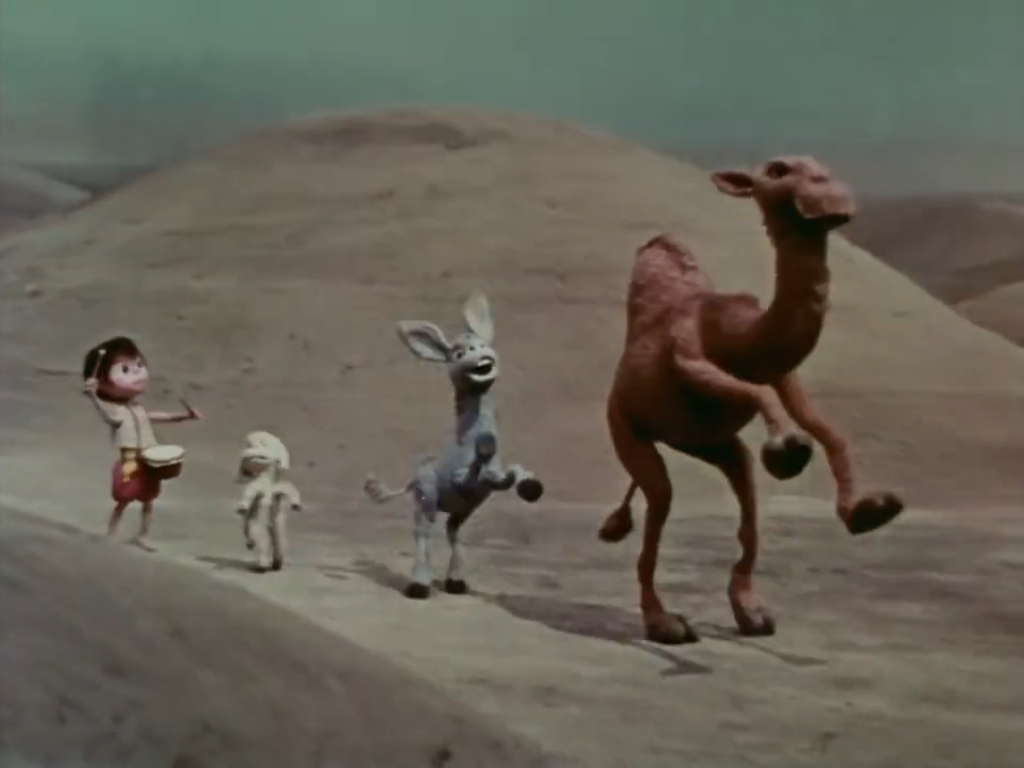
These guys are basically stalking the desert because they want the famed drummer boy, Aaron (Teddy Eccles). He’s something of a local celebrity, it would seem, for whenever he plays his drum the animals dance to the beat. In his entourage is a camel, Joshua, a lamb, Baba, and a donkey named Samson. Frees is listed as providing sound effects for all of them. They’re depicted in a semi-realistic style. There’s a touch of cartoon quality to their profiles, but just enough to give them personality. I particularly like the texture of the camel puppet which reminds me of my cat’s scratching post. As Aaron thumps his drum he calls out critiques to his steeds while the two prowlers look on. Haramad wants to add Aaron and his dancing troupe to his act, but Ali reminds him that Aaron will never go along with it because he is known to hate all people. Haramad is not dismayed by this for he has in his possession a rope. Yes, the pair intend to abduct Aaron and his animal friends and force him to perform for money. In other words, these dicks are would-be slavers.

The pair spring forth from behind a dune after crawling around on their bellies like the cowards they are. Haramad seizes Aaron while entrusting Ali with the animals, who all spring into action. He gets kicked by Samson for his troubles, but he is able to get his mitts on both the camel and the donkey eventually while Baba locks onto his shin with his jaws. Haramad orders Ali to get the animals subdued, but lacking a third hand, he elects to sit on the tiny lamb which looks painful. This leads us into the opening title and a rendition of the song by The Vienna Boys’ Choir. It’s a pleasing version of the song and I’m sure you’ve all heard it if you even listen to a small amount of Christmas music around the holidays. When it ends we move into the bargaining phase of this budding relationship. Haramad wants Aaron to play and in return he’ll split the money he earns with him. Aaron is reluctant on account of the fact that he hates and distrusts people, but reluctantly agrees to the proposal. If he were to make enough money doing this he’d never have to deal with other folks again. Plus, he was literally just wandering the desert with some animals. That can’t be a lifestyle conducive to living a long and healthy life.

Haramad get his own song here. Some metaphor about a goose – it’s a bit of a nothing song. All you need to know is this guy is consumed by money and greed, but also doesn’t want to work a day in his life. When it’s over, we get to finally find out why this little drummer boy is so angry (a drum is a fitting instrument for one with a lot of pent up aggression). Wouldn’t you know, little Aaron was once a thriving, happy child. His parents were shepherds and we’re treated to a flashback where he runs up to his mom (June Foray) and dad (Frees) addressing them as mother and father with an outpouring of affection that seems to surprise his parents. This is when he’s gifted his drum as a birthday present and from the moment he starts playing it the animals on the farm react as we already saw. The narrator then informs us that life did not remain so happy for Aaron. Robbers attack in the night to steal their sheep and when Aaron’s dad goes outside shouting “What’s going on?” like a fool, he gets a sword thrown at him in response. Aaron’s mom helps him escape out a window and we see her look back in sadness as flames engulf the farm.
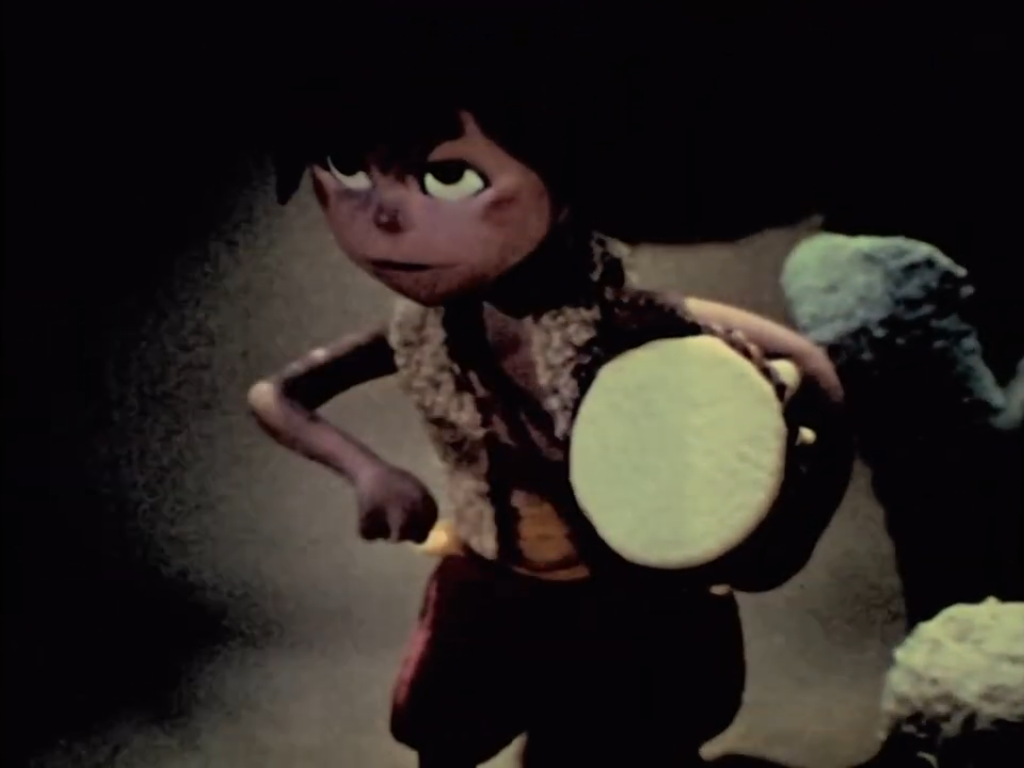
Alone, Aaron wanders the desert and his anger hardens and calcifies forming a hatred for all humans. This is the anger he will need to overcome in order to perform. Haramad will see that for himself soon as the troupe enters Jerusalem. There they setup shop in the middle of a street and we see some of Haramad’s other acts that I guess travel separately. He has some tumblers in his employ, but the crowd doesn’t seem too impressed with their routine. Ali is next up and he’s apparently a juggler, but in name only. He attempts to juggle some vases, but he is successful at juggling none as they fall to the ground or smash across his head. It would seem his act should just be turned into a comedic one, but perhaps vases are far too expensive back then to intentionally break a dozen every performance?

The crowd is starting to disperse when Haramad summons Aaron. He’s the only one who can save them now, but there’s just one problem: Aaron refuses to smile. No matter, Haramad paints a smile and some dimples onto the kid’s face and sets him loose. Aside from the whole smile thing, the kid is apparently ready for stardom as he has a whole routine planned around a song called “Why Can’t the Animals Smile?” It’s cute, and I especially like how the animals he has (Joshua, Baba, and Samson) act out the animals called out in the song. Especially good is Joshua’s impression of an alligator. As for the song, it’s a catchy little tune that I don’t dislike, but one thing about it bothers me and that’s the complete lack of percussion. This kid is supposed to be playing a drum and a drum alone and there isn’t event one drum in the song?

The crowd eats it up regardless and Haramad is getting ready to pass the hat and collect his reward, but then Aaron goes and screws it all up. As he looks at the faces in the crowd, his rage consumes him. The film juxtaposes one smiling guy with the smile of the bandit that murdered his parents (they’re probably the same puppet, though I don’t think we’re supposed to assume they’re literally the same characters) and you can understand why this might set the kid off. He lashes out, calling them thieves and knaves and the crowd predictably turns on them. They’re forced to make a run for it back out into the desert.

Haramad is understandably pretty irritated with the kid as they make camp. It’s basically Ali and Aaron setting up a tent while Haramad skulks. It’s then they notice a nearby caravan. It’s a pretty big one that’s obviously intended for a very important kind of person. From a tent emerges what Haramad determines is a king! Then, suddenly, from the tent beside him emerges yet another king! And then what do you think emerges from the third tent? If you guessed king then you’d be correct! Three kings! Haramad is incredibly eager to run down and perform for them feeling that a strong performance is sure to be rewarded with the biggest payday of his life!
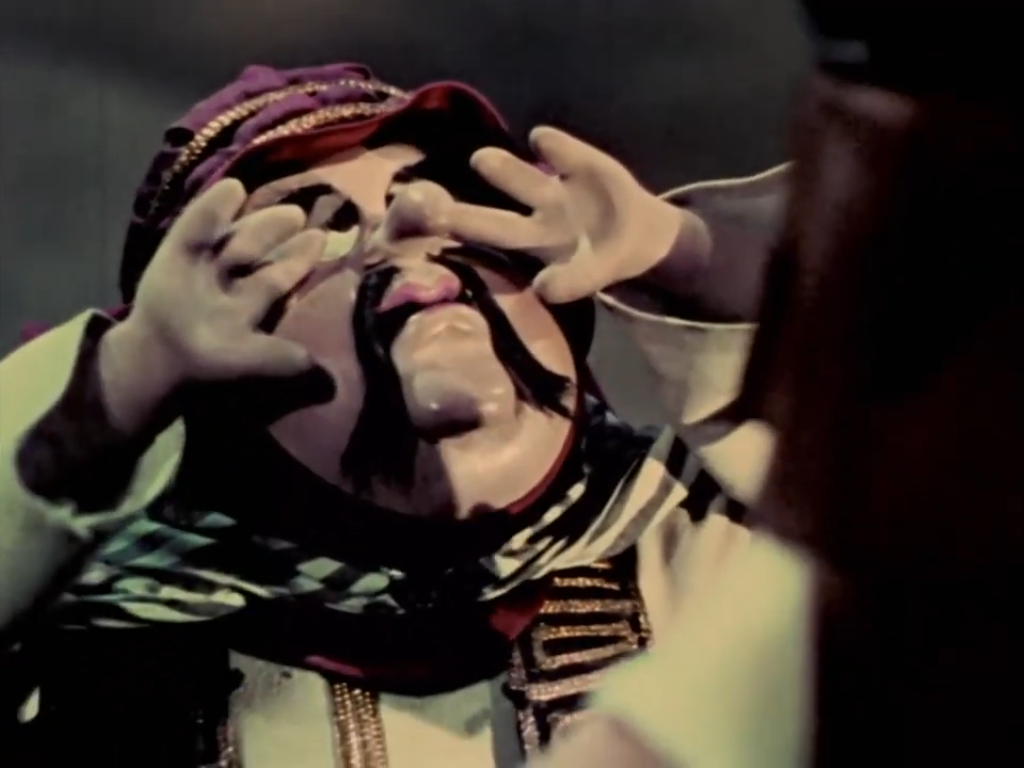
Unfortunately for Haramad, these kings are in no mood to hang around. They immediately start to break camp as Haramad comes charging in urging them to stay. He’s met with spear tips as a soldier commands he stand down and refers to him as a knave, which seems to break his spirit. If you’re unaware, a knave is a deceitful person or servant. It’s apparently the strongest insult they could get away with. One of the kings approaches, Casper (Frees), and orders the men to stand down. Haramad then pleads his case, but finds out the kings are not sticking around. They’re following a brilliant star that has appeared in the sky and they must make haste. What’s Haramad to do? Nothing but sulk. As he sits and watches the camp get rounded up, Ali helpfully points out all of the valuables they’re hauling including glowing sacks of gold. Haramad sounds like he’s about to cry.
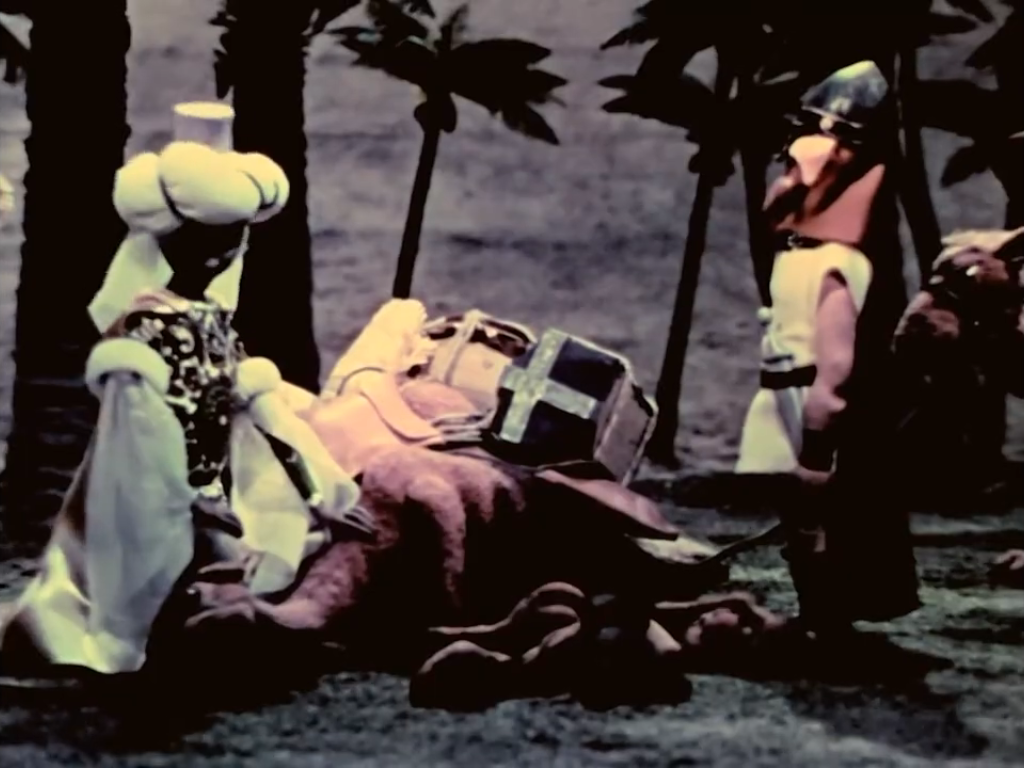
The valuables prove to be perhaps too much. One of the camels being loaded with the gold and other assorted gear collapses under the weight of it all. Casper is shown having some sympathy for the beast, but he doesn’t appear to possess any regret over literally working the animal to death. The other animals are already overloaded too so they have no where to put the remaining gear. That’s when one of the other kings, Melchior (Frees), suggests they try and purchase the camel they saw with Haramad’s troupe. Aaron hears this and obviously objects, but Haramad is more than willing to talk business. We get a time cut to Haramad with a mighty sack of coin and Casper remarking that he drives a hard bargain. It would appear Haramad raked them over the coals, but hey, they’re kings so they can probably afford it.

The caravan leaves with Joshua and Aaron confronts Haramad over it. Haramad doesn’t even notice him at first being too absorbed by his coins. He then sees the boy’s angry glare and offers up just one of the coins as his share. Aaron smacks it out of his hand and declares he’s leaving. Haramad doesn’t give a damn since he’s made enough money off the kid by stealing his camel. Aaron, Samson, and Baba leave not knowing where to go. That’s when Aaron is reminded that the kings were following the star. If they simply do the same then maybe they can catch up with them and reclaim Joshua. It’s a plan, all right, though maybe not the best of plans. I guess Aaron thinks the kings will just return Joshua to him out of the goodness of their hearts even though they just spent what was probably a ludicrous sum of money on the beast.
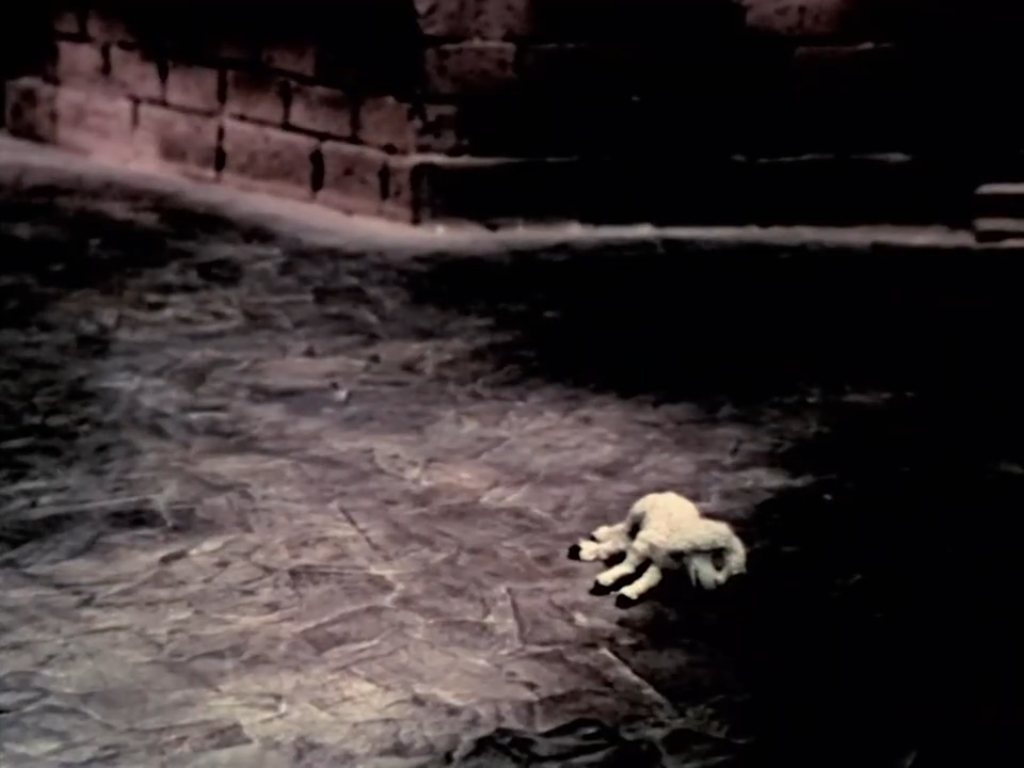
As Aaron and the animals race through the night, we see a whole convoy of people marching towards the little town of Bethlehem. They’re all following the star as if it we’re summoning them to the town. Aaron heads inside the city gate and almost immediately spies Joshua. He cries out with glee and he and the others race for the camel completely ignoring everything around them. This proves costly for little Baba as a chariot races through the streets and runs the little lamb over. The happy reunion is now tinged with tragedy as Aaron runs over and scoops the little lamb up in his arms. Not knowing what else to do, he brings the lamb to Casper who is nearby. Referring to kings as wise, Aaron puts his faith in the man that he may know of a way to help his friend. Unfortunately, all Casper can do is confirm that the lamb is near death. A mortal king such as he can do nothing to help the creature, but there is another king who can.
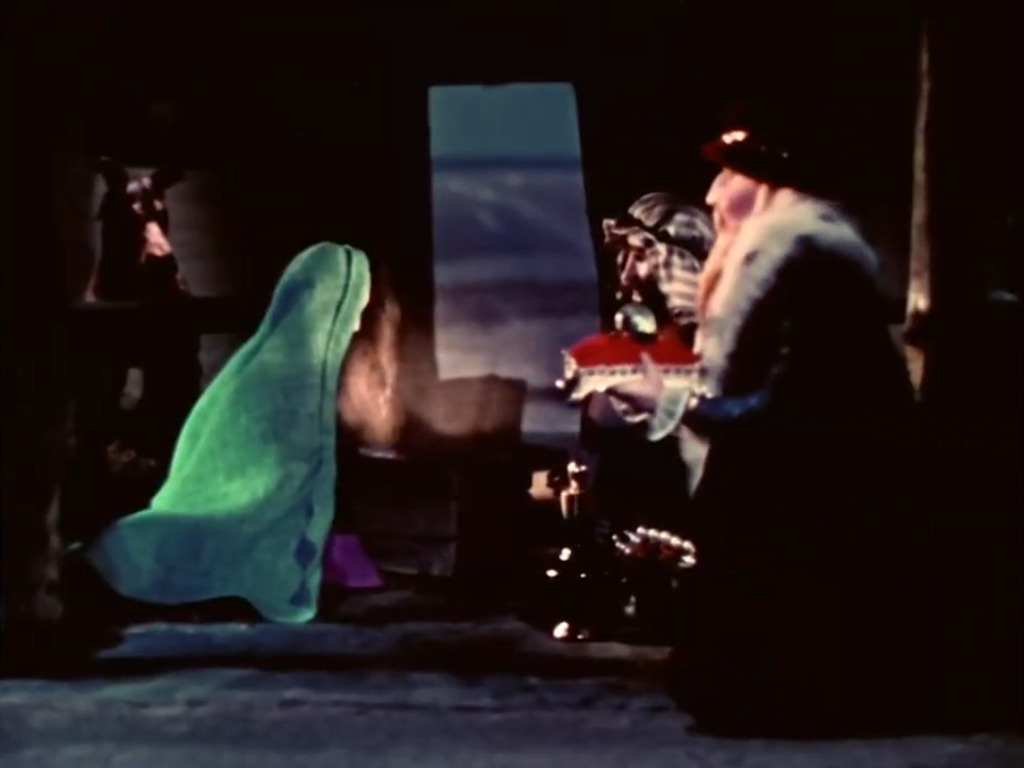
Casper gestures to what has drawn everyone to this little town. A woman and a man sit in a manger as the inn was all full. She has just given birth to a baby who rests between them and a heavenly glow radiates from the babe. Aaron is confused, but Casper insists he go to the child and seek its help. Aaron then says the line that is sure to stick with those who watch this, “But I have no gift to bring.”

Aaron sets the lamb aside and cautiously approaches the baby. The puppet wears an expression of fear, awe, and uncertainty which is a testament to the craftsmen who made it. This is also when the title song comes in, and unlike the song from before, this one does have a gentle drum pattern to it. Aaron, having no gift of conventional style, plays his drum for the child as the song instructs. He plays it along to the drum pattern in the recording which is a nice touch, though one does wonder how plain that would sound without all of the accoutrements we’re treated to as viewers. The screen does a good job of displaying what we’re hearing described by the song’s lyrics. There’s a flourish just before the end before it resumes it’s normal rhythm and by the time the boys’ choir says “Me and my drum,” there’s a solid knot in my throat.
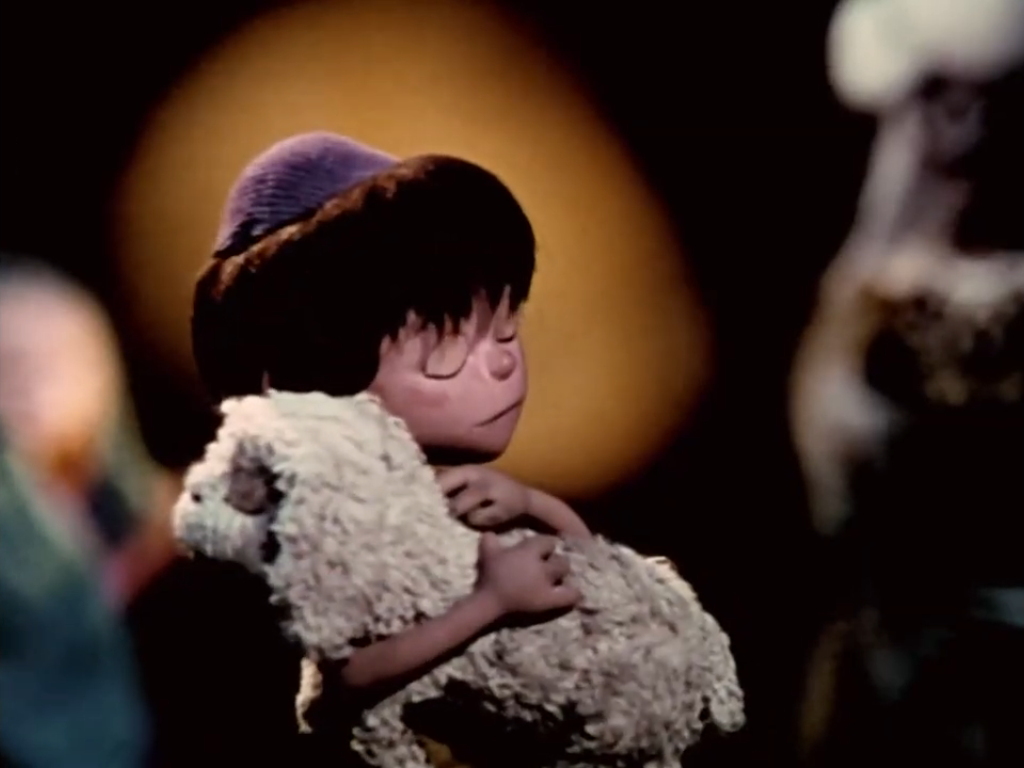
Aaron’s gift of song pleased the child and when he turns around he finds Baba alive and well. He embraces the little lamb as Casper explains that his gift, born of desperation, is the greatest gift of all. That sounds kind of weird, but we’ll go with it. Aaron sheds some happy tears and our narrator tells us that this act allowed him to let go of his hate and we’re left to assume that Aaron was a much happier child from then on. And assume we must because it’s over. The camera pans up to the star in the sky and that’s the shot it goes out on.
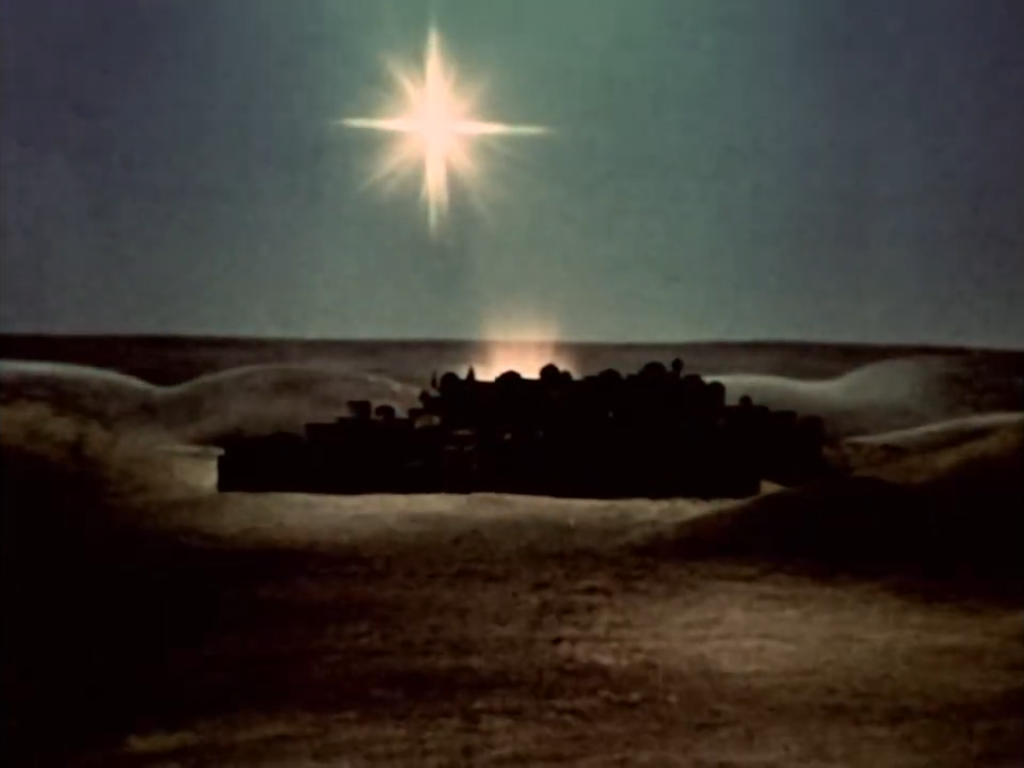
The Little Drummer Boy is what I’d consider a mostly feel good story. Our protagonist has to endure some terrible hardships to reach that ending, but one can walk away from this one feeling uplifted. Of course, me being me, I can’t help but wonder about the kid’s future. He’s still a poor child alone in this world with just his animal companions. Could he possibly hook on with one of the kings? He and Melchior seem to have something going on, but kings aren’t exactly known for being generous when it comes to the poor. It feels like the most likely outcome is the typical holiday season outcome. Everyone in the moment is feeling comradery and a sense of selflessness, but come the next day when it’s time to move on and go back to their lives they may feel differently. Those kings may not even so much as glance in the direction of a peasant like Aaron. We do know that isn’t exactly how it goes since there is a sequel, but the sequel doesn’t really tell us anything about how Aaron is able to survive in this world. He just does. Maybe he’s blessed?

It’s certainly possible that Aaron is now somehow imbued with a spark of the divine following his interaction with the baby, who by the way is never named in this special. It’s an interesting choice to leave his name unsaid, but it does allow for the song itself to tell the story in the final act and I think that was the right call. And giving Aaron a desperate reason to play for the child adds an emotional element, though it does complicate the messaging here. It introduces an element of reciprocity to the religion: Aaron provides a gift for the new king, and in return his lamb is healed. It’s not the best, but I don’t disagree that it adds more drama to the scene. He could have just played out of a sense of compulsion and it probably still would have worked. The story then could have just pivoted to having Joshua returned to him as the kings were able to see the error of their ways since they took the camel from this kid. They may have paid for him, but it was sort of like buying stolen goods.

In the end, I guess that element of the special is something for the theologians to sort out. For me, the person just looking to be entertained and feel a little something in the process, this one works. Aaron is sympathetic and little Baba is adorable. I hate seeing him get run over. The animation and some of the things they do with the animals is some of the best stuff I’ve seen out of Rankin/Bass. Ordinarily, I don’t really like their brand of stop-motion, I’m just used to it. Here, it adds something and I’m not left wondering if this would be improved with more traditional, hand-drawn, animation. Even though there’s no Santa or reindeer to be found, I still get some Christmas vibes from this one. Sure, part of that is due to it being something I watched frequently enough as a child and certainly the song has been associated with the season all my life. My own father still gets excited when he hears the Bing Crosby/David Bowie duet come on the radio.
If you’re looking to get some of that Christmas feeling and are not so interested in the guy with the red suit, then this might be your best option. And it’s extremely easy to come by as it’s one of the less protected Rankin/Bass specials which might have something to do with it being more religious in nature. It definitely wasn’t promoted as much on cable, and some of the original elements have been lost to time preventing a proper remaster. As a result, it’s available to stream for free in various places and still available on physical media.
Can’t wait until tomorrow for more Christmas? Check out what we had to say on this day last year and beyond:
Dec. 13 – Bob’s Burgers – “Bob Rest Ye Merry Gentle-Mannequins
We’re going to keep sticking with the animated sitcom Christmas special for another day and this time we turn to Bob. Bob’s Burgers has been a reliable staple for holiday viewing ever since getting a more robust endorsement from the Fox network for its third season. That was the first full season, by television standards,…
Keep reading
Dec. 13 – Smiling Friends – “Charlie Dies and Doesn’t Come Back”
Yesterday, we took a look at a Cartoon Network original aimed at a pretty broad audience. Today, it’s an Adult Swim original very much aimed at an adult audience. Or at least one older than eight. Smiling Friends is the creation of Michael Cusack and Zach Hadel and it’s an animated sitcom about a couple…
Keep reading
Dec. 13 – The Ren & Stimpy Show – “Son of Stimpy/Stimpy’s First Fart”
The Ren & Stimpy Show burst onto the scene as part of the original trio of Nicktoons in 1991. The other two, Doug and Rugrats, were fairly gentle cartoons. Rugrats could sometimes get a little blue since the main characters were all babies, but the occasional poop joke was hardly something to get offended by.…
Keep reading















 The Nostalgia Spot