
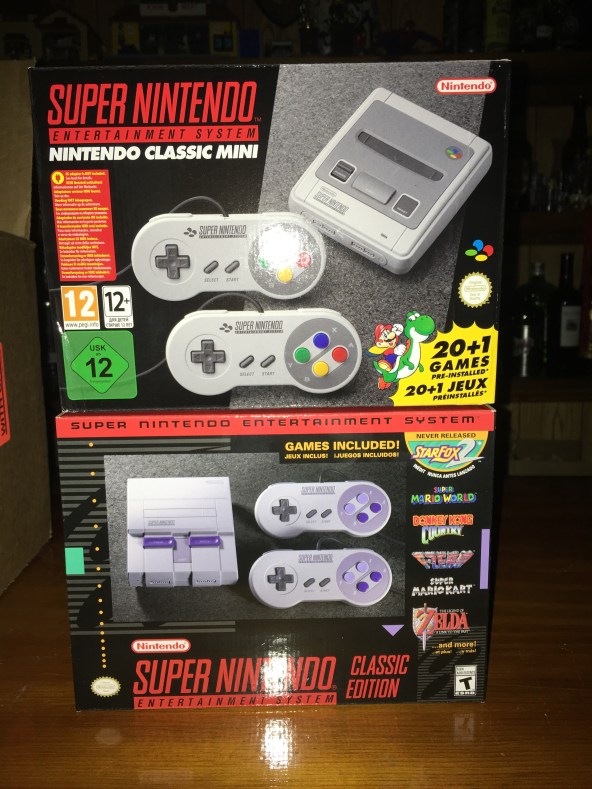
The UK box had a bit of a rough ride across the Atlantic, it would seem.
So the SNES Classic is out and has been for a week. As expected, it’s been rather difficult to get one if you weren’t fortunate enough to land a pre-order (which was also rather difficult to obtain). Scalpers are out in full force, and based on the few bits of feedback I’ve received from some of those who waited in line on launch day, it’s the scalpers who are making up the largest portion of the buyers. That’s too bad, because this is a rather awesome gaming device. Niche it may be, it still contains some of the greatest games ever developed. I was fortunate enough to land two pre-orders: one for the SNES Classic and one for the UK SNES Classic. It took my UK version an extra week to make it to my door, but I’m now ready to offer up some thoughts.


If you’re unfamiliar with the UK version of the Super Nintendo, it’s basically the same as the Japanese Super Famicom. Nintendo of America felt it needed to market the original NES as more of a secondary entertainment platform as opposed to a toy, and thus they redesigned the look of the machine for release in the US. For the Super Nintendo, they too also went with their own case design, though this one was far more in-line with the Japanese version as the carts were basically the same. I don’t know why they did this, and some speculate it was an ego thing, but I’ve always been partial to the Super Famicom design. When I first saw the Super Nintendo, I was underwhelmed as a child as I didn’t think it looked too “super.” Boxy with purple accents, it was kind of ugly. I got over it, of course, when I played Super Mario World, but I always wondered why some of those early games have a diamond shaped logo featuring three circular colors: blue, red, green, and yellow. Years later I’d come to know that was the logo for the Super Famicom and it referred to the colored face buttons on the controller. I’ve never gone the extra mile and acquired a Super Famicom, but when I saw the UK SNES Classic, which is identical to the US one aside from the case and controllers, I knew that was the version for me.
 Both editions of the SNES Classic are, naturally, pretty cute. Like the NES Classic they’re tiny and are closer in size to a game cartridge for the original system than the old system itself. They’re light, and pretty simple devices. Both feature working power and reset buttons that function the same as the ones on the original consoles. The eject buttons and cartridge door are non-functioning, and the there’s a little snap-off piece where the controller “ports” are that pop off to reveal the actual controller ports for the Classic edition. In the box, both units come with two controllers, an HDMI cable, and a micro USB cable. The US version has a USB to wall adapter that the UK one lacks, but any such adapter will work. The US version also comes with a poster with instructions on the reverse side while the UK version comes with an instruction manual designed to mimic the original. The UK version also comes with My Nintendo reward points, I’m not sure why the US version does not.
The software for both systems is the same. If you go out and import a Japanese unit you’ll get a few different games, but the UK and US get the same ones. The dashboard is slightly different as each one is mean to resemble the visual style of the actual unit, so the US dashboard has purple accents and the UK one has a power light in the bottom right hand corner. The little graphic of a controller beside a game is also updated to reflect the proper controller for each unit, so purple buttons for the US and multi-colored ones for the UK. Other features, like CRT mode, widescreen, and so on are all the same.


I’ve only had time to play a little, but the first game I fired up was Super Mario World. I wanted to test the game out and see if it felt like how I felt it should. Testing for things like input lag and any graphical stretching, I found the game to be picture-perfect. The emulation Nintendo has pulled off with both the SNES Classic and the NES Classic is fantastic and miles ahead of what the company did on the Virtual Console. It’s why whenever someone poo-poos these things and suggests just getting a Raspberry Pi I laugh at them. I think the Raspberry Pi is great, but games on that do not look and play as well as they do on these devices. There’s also something to be said for having an actual Nintendo controller in hand to play these things, which just feels right.
Following Super Mario World I made sure to play and beat the first level of Star Fox. I may want to redo my rankings and kick Star Fox to the end of the line because that game is a tad rough to play these days. I played it though because you have to beat the first level in order to unlock Star Fox 2. Truth be told, I don’t look really look forward to playing Star Fox 2 for any reason other than sheer curiosity. I suspect it has aged just as poorly, if not worse since it attempts to do more than just be a flight sim, and probably isn’t nearly as enjoyable an experience as most of the other titles on this collection. If I see fit to do so, I’ll post a review of it. Some day.
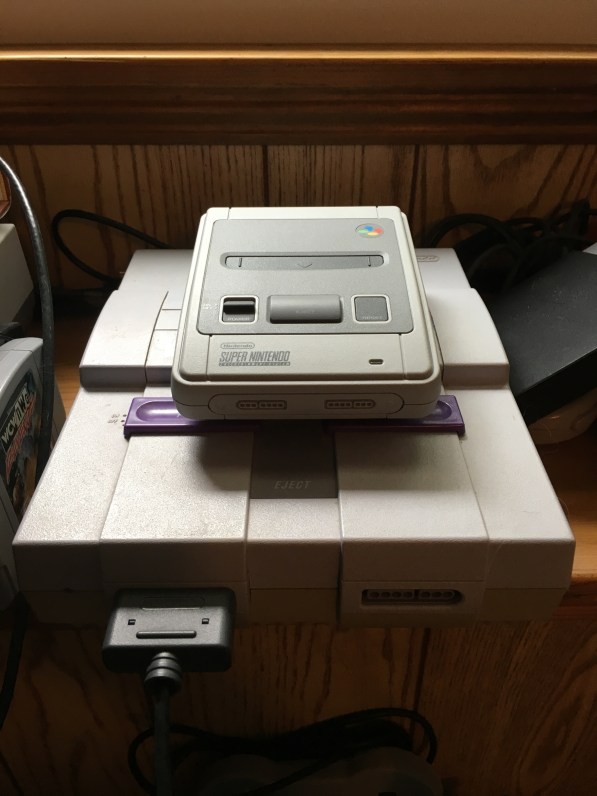 If you’re still unsure I can safely say the SNES Classic is worth the 80 dollar price tag Nintendo has placed on it. It’s a great little machine full of some truly excellent games, some of which would cost you hundreds to purchase on the secondary market. Like the NES Classic, it’s also not something you need to drop hundreds of dollars on to own so if you’re still looking for one I encourage you to be patient and not feed the scalpers. For now, Nintendo is claiming these will be shipped in abundance so hopefully they’re sincere and these are attainable for everyone who wants one. They’ll probably remain hard to get through the holidays, but if Nintendo keeps supplying them past 2017 they should get a bit easier to track down. If you live in an area with Amazon Prime Now, keep an eye on their social media accounts as it seems like they’ll be selling these exclusively through that service as well through their few retail locations and that truck thing they do. Supposedly, people who were able to pre-order through the US Amazon site are still waiting for them to be fulfilled. Meanwhile, Amazon’s European web stores seem to be getting stock regularly for their versions and most ship to the US. Sometimes they claim not to (when I pre-ordered my UK edition it said UK only, but it still went through), but will ship anyways. Just make sure to select the global shipping option, if offered. You’ll pay a few more bucks, but it might be worth your while, especially if you’re like me and prefer the UK look of the console.
As for my two units, I only wanted one. I plan to keep the UK version and gift the US one to my best friend who was not as fortunate as I. If you were concerned I’d betray my fellow retro-gaming enthusiasts and flip it on eBay, rest assured I have no plans to do so. I also do not need to collect mini systems and have a version of each. Hopefully who ever wants one will be able to get one because this thing is pretty cool. Don’t screw over your fans, Nintendo, and discontinue it while demand remains high.
 You’ve probably heard by now about the SNES Classic coming later this month. If you’re even remotely interested in owning one, you’re also either happy you have a pre-order, concerned your pre-order could be cancelled at any moment, or absolutely furious that you couldn’t secure a pre-order. The NES Classic released in 2016 was notoriously difficult to obtain before being abruptly cancelled all together after just a few months of shipments. As a result, demand for the SNES Classic is at an absurd level as fans who want one are worried about having to pay the ridiculous scalper rates on eBay or else risk never getting one.


 We’re now past Thanksgiving here in the US which means the holiday shopping season is already well underway. The recently released NES Classic continues to be a hot seller, perhaps the hottest of the season, though that seems to have more to do with product scarcity than true demand (after all, children by and large are not interested in a gaming device with 30 year old games on it). That said, no one would deny that even in limited quantities the NES Classic has been a commercial success for Nintendo, something that’s been hard to come by for the venerable game developer of late. Most analysts peg the NES Classic as being pretty cheap to manufacture, and the power under the hood is likely sufficient to support a comparable quantity of N64 games, so speculating on a potential SNES Classic seems like a waste of time: it’s going to happen. And if we’re going to get an SNES Classic then immediately the mind next moves onto what games will Nintendo include on that collection?
 Super Mario World (Nintendo 1991) – The original pack-in title for the SNES and best Mario game to date, it’s a no-brainer. The more interesting thing to ponder is how will Nintendo pack the SNES Classic with Nintendo branded games as easily as they could the NES Classic since Mario, Link, and others had fewer outings on the SNES.
 Super Mario World 2: Yoshi’s Island (Nintendo 1995) – I loved this game when it first came out, and for awhile after. More recently, I’ve found it hard to get into as a lot of the gameplay frustrates me. Not to mention the audio. Still, it will be included and it remains Yoshi’s best solo adventure.
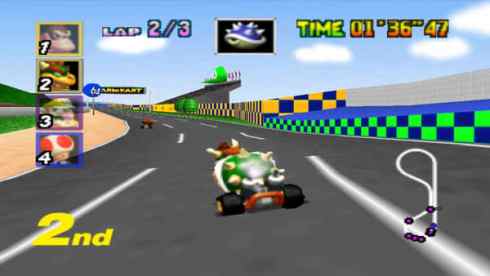
 Super Mario Kart (Nintendo 1992) – Arguably Nintendo’s most reliable franchise today, it seems every Nintendo console since has had at least one Mario Kart game. The only one that did not was the ill-fated Virtual Boy. For awhile, the original game was my favorite of the series. Those who grew up with its sequel on the N64 as their gateway of the series are probably surprised to hear that most people felt it was inferior to the SNES game when it first came out. It’s no longer the best, but it’s still playable and the battle mode is still a lot of fun.
 The Legend of Zelda: A Link to the Past (Nintendo 1992) – The best game of the series, and perhaps the best game ever? I suppose I could have said the same of Super Mario World, and I could say that about more SNES titles which further illustrates how awesome the system was. This game will be included, and it will be enjoyed by any who purchase it.
 Star Fox (Nintendo 1993) – Nintendo’s flashy on-rails shooter, the Super FX powered Star Fox was a pretty big deal at the time, even if it’s one of Nintendo’s lesser franchises these days. The game was so good that Nintendo has essentially remade and released it several times with minor alterations. It’s probably too much to ask for Nintendo to include the never released Star Fox 2 on this set.
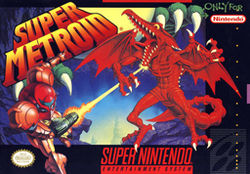 Super Metroid (Nintendo 1994) – If any of the games on the NES Classic had a “Super” version on the SNES, then it’s probably fair to assume they’ll make it to the SNES Classic. Not that Super Metroid needs to be included for that reason, it needs to be included because it too has a claim to greatest game ever made. It was very influential, especially for the Castlevania series, and the only downside to including it is that it might make people a little depressed when they think about how the franchise is treated by Nintendo today.
 Kirby Super Star (Nintendo 1996) – Another late arrival for the SNES, Kirby Super Star takes what was good about the NES game and multiplies it tenfold. Easily Kirby’s best game, Super Star is a bit of a forgotten gem on the SNES and holds up quite well. It also features some fun 2-player action so be prepared to have to hunt down an additional controller.
 F-Zero (Nintendo 1991) – Nintendo kind of ignored the racing genre with the NES, so it’s not surprising they rectified that with the SNES. Racing games were one of those genres that really benefitted with the move to the SNES as the hardware could finally keep up with the speed needed to make these type of games as fun as they could be. F-Zero was a flashy title with its futuristic visuals and also plenty difficult. Not one of my favorites, but I’d be shocked if it was left out.
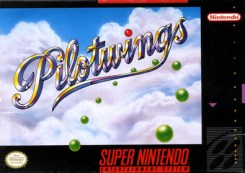 Pilotwings (Nintendo 1991) – Pilotwings was kind of the debut of the Nintendo developed tech demo released with all of their future console launches to show off the new console’s capabilities. It was to the SNES what Wii Sports was to the Wii. It’s basically a collection of mini games, and personally I remember all of my friends looking down on this title. I haven’t played it in years so I can’t say if I’d enjoy it more now, but since Nintendo developed it they’ll likely include it on the SNES Classic.
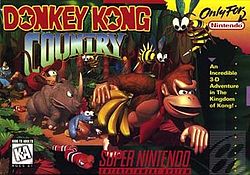 Donkey Kong Country (Nintendo 1994) – The title that reinvented and brought modern relevance to the Donkey Kong character, Donkey Kong Country was a visual wonder when it was first released and an instant hit. Some people love this franchise more than the 2D Mario one. I’m not one of them, but there’s no way Nintendo doesn’t include this one.
 Donkey Kong Country 2 (Nintendo 1995) – Nintendo had three main series Mario games to help pad the NES Classic, chances are they’ll look to DK to help do the same for the SNES Classic. Some think this one is the best of the SNES trilogy of DKC games, I have no real opinion on the matter as I don’t remember even playing this one.
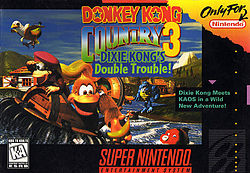 Donkey Kong Country 3 (Nintendo 1996) – This game arrived really late for the SNES, though if memory serves it still sold all right. This one might not make the SNES Classic, it’s certainly the least likely of the three, but since Nintendo wants to put as many of their games on the system as possible it feels like a safe assumption to include it here.
 Super Punch-Out!! (Nintendo 1994) – Punch-Out!! was immensely popular for the NES, Super Punch-Out!! was less so for the SNES. It wasn’t bad by any means, and it felt more like the arcade version of the original, but aside from a visual upgrade it didn’t really feel much improved. I think part of that was the new perspective of being behind Little Mac made him feel like more of an equal to his opponents as opposed to being a diminutive underdog.
 Final Fantasy II (Square 1991) – Now we’re into the non-Nintendo games, and this is actually where the list really begins for me as far as ordering by most likely. The first 13 could be ordered however you want, aside from maybe DKC3, they’re all going to be included for sure. The SNES was the console where the JRPG really took off, and it’s kind of where Final Fantasy was truly born (at least in the West). Final Fantasy III is the better game, but for some reason I suspect that II is more likely to be included if only one is.
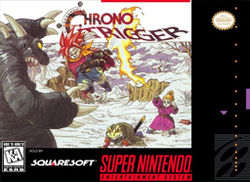 Chrono Trigger (Square 1995) – Another one of those “best ever” contenders, Chrono Trigger is as beloved as any game in the Final Fantasy series, even if it never took off as a franchise on its own. The only thing that would keep it from being included is if Square-Enix wants to be protective of how often they re-release the game. Or if they want too much money in the form of royalties, which could be a problem since they made a lot of awesome SNES games…
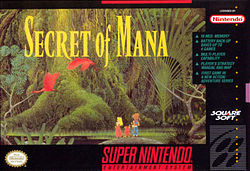 Secret of Mana (Square 1993) – …like Secret of Mana! Lazily referred to as a Zelda clone, Secret of Mana is a delightful action RPG and the type of game Square-Enix has seemingly forgotten how to make. The sequel was also excellent, but never released outside of Japan. Following that though, virtually every other game in the series has been a shallow hack n’ slash and a major disappointment. Thankfully, this one holds up so well we really don’t need another (though Square-Enix really should just finally localize the damn sequel for some kind of release).
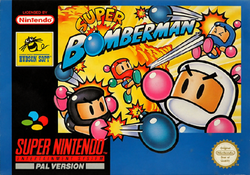 Super Bomberman (Hudson Soft 1993) – The ultimate party game for the SNES, Super Bomberman was probably my most rented title for sleepovers and such as the four-player mode rocked. If Nintendo does include this title, and it should, it needs to make sure the SNES Classic can handle four-players, even if it means messing with the aesthetics of the system by including four controller ports on the front.
 Street Fighter II (Capcom 1992)- Capcom’s fighting game is almost certain to make an appearance, it’s just a question of what version. They should probably just go with Super Street Fighter II, but maybe they think the importance of the original makes it the more worthy title.
 Mega Man X (Capcom 1993) – Mega Man was huge for the NES, so he’ll be included on the SNES Classic even if he played a lesser role for the console. His one main entry, Mega Man 7, is regarded as one of the worst in the series so Capcom will probably push for Mega Man X, and it should. Mega Man X was what the character needed to remain relevant and remains an excellent Mega Man game to this day.
 Super Castlevania IV (Konami 1991) – another NES tentpole franchise, Castlevania would see its stock plummet in the 16 bit era, even though Super Castlevania was an excellent game. It’s one of the last traditional Castlevania titles as Symphony of the Night would soon follow with its Metroidvania gameplay becoming the preferred style of future titles in the series.
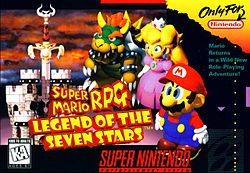 Super Mario RPG (Nintendo/Square 1996) – could Mario do RPGs as well as he could platformers? If Square is handling most of the game design, then yeah of course he can! Super Mario RPG was a surprise hit and remains a fun game to this day. In a way, it might be more likely to appear on this collection than the Final Fantasy games as at least Nintendo shares publishing rights with Square-Enix on this one.
 Contra III (Konami 1992) – Probably the last relevant title in the Contra series, Contra III was more of the same which is what people were happy to have at the time. Being a sequel to an NES Classic game is what guarantees it a spot here.
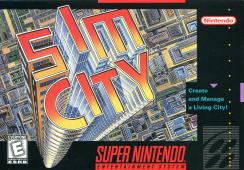 Sim City (Nintendo 1991) – Another Nintendo published title but with the royalties a little messy compared to a Mario or Zelda game. Sim City was another surprise hit in that there was skepticism the city builder simulation would find an audience on a home console. It did and it did well with its success leading to other sim games being released for the SNES, including “classics” like Sim Ant…
 Killer Instinct (Midway/Rareware/Nintendo 1995) – Nintendo, and Rare’s, answer to Mortal Kombat, Killer Instinct was a perfectly acceptable fighter for the era. Rare, and now Microsoft, hold the publishing rights for the franchise and I don’t know how that affects the original game’s inclusion. If Nintendo needs to only split royalties with Microsoft/Rare then I think it will be included. Anything more and it probably won’t be.
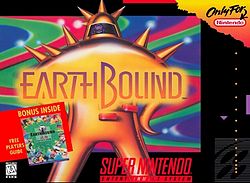 Earthbound (Nintendo 1995) – Nintendo’s answer to Dragon Quest, Earthbound (known as Mother 2 outside the US) has never been real popular with Nintendo. It’s the only title in the series to be released outside Japan even though Nintendo fans seem to adore it for its quirky humor and real world setting. It’s a game that has amassed a cult following over the years, though personally I don’t think it’s one that really lives up to the reputation. It’s a Nintendo game though, so it will most likely find a way onto the SNES Classic.
 Final Fantasy III (Square 1994) – You know it, I know it, and I bet even Nintendo knows that this game should definitely be included among the top SNES games released. Will it make it to the SNES Classic though is a harder question. If Final Fantasy II does, then it may not, even though it seems ludicrous to split those two games up.
 Tetris Attack (Nintendo 1996) – Many have tried to improve upon the formula of Tetris, and few have succeeded. Tetris Attack found a way with a competitive two-player mode that’s a blast to play. It’s been ripped off for other puzzle games like Puzzle Fighter and Pokemon Puzzle League. And thankfully there’s no Super Dr. Mario to bump this one from the collection.
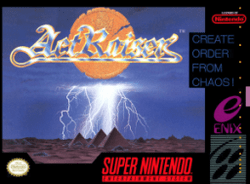 Actraiser (Enix 1991) – A legitimately unique game that combines the sim elements of a world builder with the action RPG gaming of Castlevania, Demon’s Crest, and so forth. Few games have tried to do what Actraiser did (Dark Cloud being the only one I can recall off the top of my head) and even though it wasn’t an immensely popular title, it feels like one that received its due in the years since so if Nintendo leaves it out I’d actually be pretty surprised.
 Zombies Ate My Neighbors (Konami 1993) – This game was so thematically outrageous at the time that it couldn’t be ignored. People remember it, even though it never turned into a bankable franchise or anything (though zombies in general certainly have). It’s extremely memorable as a Super Nintendo game, so much so that it seems like Nintendo won’t be able to ignore it.
 The Legend of the Mystical Ninja (Konami 1992) – Our last title is from a franchise that was far more popular in Japan than the US, but worth including. The co-op play was some of the best on the system. I never owned the game, but I remember renting it multiple times as it was a lot of fun to have around when friends were over for the night.
 The Nostalgia Spot