Tag Archives: disney

12 Films of Christmas #8: The Nightmare Before Christmas

220px-the_nightmare_before_christmas_poster-2

The Nightmare Before Christmas (1993)

Is it a Christmas movie? Is it a Halloween movie? Can a film be both? That seems to be the big question surrounding Tim Burton’s multi-holiday classic The Nightmare Before Christmas. Released on Disney’s Touchstone label (because the company was too scared to be directly associated with the film at first) around Halloween 1993, The Nightmare Before Christmas has been content to be accepted by both holidays, but lets not kid ourselves, it’s a Christmas movie.

It’s right there in the title! The Nightmare Before Christmas! The tale about how the fictional residents of Halloweentown usurped the Christmas holiday from Santa Claus for their very own. It’s a Christmas movie that looks like a halloween one, and it’s been charming audiences for decades now through its unique visual style and stop-motion animation. And that animation, even that screams “Christmas” thanks to holiday classics synonymous with the genre like Rudolf the Red-Nosed Reindeer. The Henry Selick directed picture (which can’t be said enough since so many still mistakenly attribute the film’s direction to Tim Burton) leans heavy on its visual and theatrical elements so much that I can’t help but wonder if it was traditionally animated if it would have the same impact.

a49047d73e5644961b123aa48790d5c8

The one and only, Jack the Pumpkin King!

The stop-motion style proves ideal in crafting a character such as Jack Skellington, the spindly skeleton suffering a severe case of seasonal depression, or midlife crisis if that’s possible for someone undead. His movements aren’t always fluid, but still seem appropriate given how we can practically see his various joints. Some creative liberties were taken with his head-sculpt which is soft, and round as opposed to resembling an actual skull. Some of the denizens of Halloweentown are rather unremarkable to behold, but all fit into the film’s visual style.

The film is a unique and visual treat, and the very Burton voice cast (featuring frequent collaborators like Paul Reubens, Catherine O’Hara, and Danny Elfman) is more than up for the challenge of bringing these characters to like. The film’s score, provided by Elfman, is fantastic and manages to capture the feeling of both Halloween and Christmas all in one. The broadway styled bits are where the film falters slightly, and what holds it back from being ranked alongside some of the Disney films from the same decade. Still, The Nightmare Before Christmas has its share of memorable tunes and can easily be sung along to.

open-uri20150608-27674-2cm6zr_5f33d4dc

Everyone’s favorite trick or treaters. Or least favorite since they are little punks.

I did a full review of this film a few years ago, which is why this entry has chosen to focus on what makes the film unique among other Christmas films. Don’t fret too much over which holiday the film best aligns itself with, just use that as an excuse to watch the film around both holidays. It’s always worked in my household.


12 Films of Christmas #11: The Santa Clause

220px-the_santa_clause

The Santa Clause (1994)

A successful formula for any would-be Christmas film to adopt is that of shining a new light on the character of Santa Claus. Anytime a film can make Santa more believable to the viewer is usually something worthy of exploration. A lot of films, books, and other media have attempted to add to the Santa mythos which mostly originated in the classic poem Twas the Night Before Christmas, and the ones that have done it the best are the most memorable.

The Santa Clause is just such a picture which set out to answer many of the questions children have about the character. For the life of many a youngster, Santa is someone believed in without question at first. After all, who wants to have doubts about a nice guy who leaves you presents for just being a good boy or girl (with the “good” part being highly subjective and a very low bar to clear)? As adolescents get older, they naturally become more inquisitive and thats when the questions about Santa Claus start to show up. How do reindeer fly? How can one man visit every kid on earth in a single night? How does he fit all of those toys in his sleigh?

The Santa Clause actually has one answer for just about every question a kid could have about Santa:  magic. It’s a rather easy explanation, but given the unbelievable nature of the character it’s often the best we have. The Santa Clause, in typical 90’s fashion, relies upon visual effects to make these answers entertaining beyond the whole “it’s magic, stupid!” Like many films from that era, the effects have not aged as well as maybe was expected.

15994bb3-cb03-4f6d-a97b-3e502ce95f67

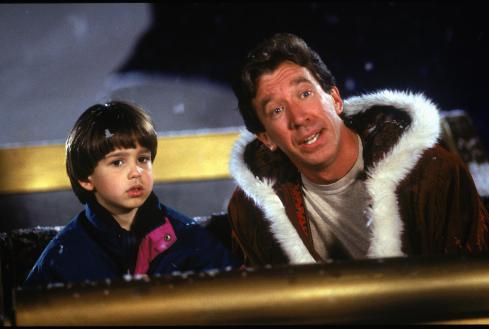
Charlie and Scott take Santa’s sleigh for a spin after accidentally killing him. Not many Christmas movies begin by killing Santa.

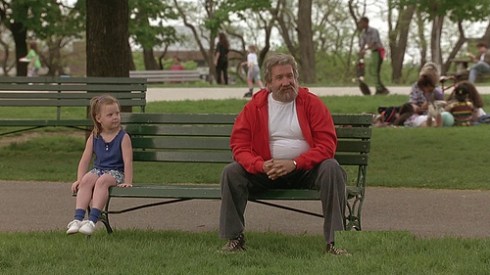
Tim Allen stars as Scott Calvin, a toy developer with a son who doesn’t believe in Santa Claus. Charlie, played by Eric Lloyd, has been lead to believe by his mother Laura (Wendy Crewson) and step-father Neil (Judge Reinhold) that Santa is not real, which naturally irritates Scott. Scott is a bit of an absentee father, partly because of the divorce, and because he works a lot. Charlie doesn’t have much faith in his father, and he clearly dreads spending Christmas Eve with his old man. Not much goes right, but Scott does succeed in restoring his son’s faith in Santa, and himself, when the real Santa falls off his roof to his own demise and Scott, unwittingly, picks up the mantle for himself.

the-santa-clause-6

Scott unwillingly morphing into Santa. I’d probably freak out if my kid tried to sit on that guy’s lap.

Scott’s first adventure as Santa is when we get to see the magic at work. Scott and the audience share in the experience as neither knows how any of this stuff is supposed to work – Santa can’t really be real, can he? When Scott picks up an empty sack, presents appear inside. It hovers and directs him to a chimney to slide down. When no chimney exists, a septic exhaust is used and a fireplace magically appears inside the house. I remember these effects delighting my family and I when the film first came out, but viewed at now they do leave something to be desired. The illusion isn’t destroyed, but parents showing this one to their modern kids may be disappointed in their reaction.

The rest of the film mostly takes place after Christmas as we lead-up to the next one. No one believes Charlie’s account of what happened, which causes his mother and step-father to think Scott is brainwashing the kid and to seek sole custody. Meanwhile, Scott is physically transforming into Santa whether he likes it or not (he read the Santa Clause after the first one died, and apparently he would need a really good attorney to get out of it) which only strengthens his ex-wife’s argument for sole custody. This makes Laura (Charlie’s mom) and Neil the villains of the film, even if they’re only looking out for Charlie. It’s a Christmas movie, so everything comes together at the end, but this is one of those plots where the viewer knows what really happened and has to be frustrated by the actions of those who aren’t in the know.

Tim Allen is essentially allowed to be himself in his role as Scott Calvin/Santa Claus. He’s basically no different than Tim Taylor from Home Improvement, and even does his trademarked grunt at one point in the film. How much you like the film will probably hinge on your affection for Allen. I think I mostly liked him when I was younger, but the years haven’t been kind to Allen’s style of humor. I find him irritating in many scenes now, and his punchlines are often punch-less. As an adult, I find myself identifying more with the stiffs around him than the Scott character. He’s not all bad, but I hesitate to call his performance a strength.

sleigh

By the film’s conclusion Scott is all-in on this Santa thing.

The other aspect of this film that annoys me is the end, and to some degree, the Charlie character. The end of the film just goes on way too long and we’re kind of done with the Christmas cheer before Charlie starts shaking his snow globe. The Charlie character also can’t help but be annoying throughout the picture. Some of his actions are defensible, because he’s a kid, others are not and seem to betray the intelligence we see out of Charlie in other parts. By and large, Lloyd is a pretty good actor, but the director asks him to get sad and cry at one point which he clearly wasn’t up to the task for.

The Santa Clause is still recent enough to be considered modern, and it can probably be described as a modern classic. It brings enough to the table as far as a Santa story goes (even if parts of the plot mirror the Flintstone’s Christmas Special) to be memorable. If you’re easier on the effects and overall 90’s look and style of the picture (I for one, find the techno-junk look of Santa’s sleigh off-putting) then you probably like this film a lot more than I do. And if you’re a fan of Tim Allen, then it might even be your favorite Christmas movie.


The 12 Films of Christmas #12: The Muppet Christmas Carol

muppet_christmas_carol

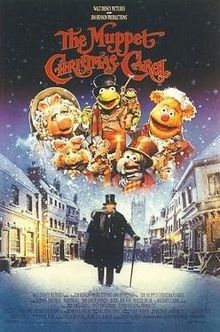
The Muppet Christmas Carol (1992)

The bare minimum a Christmas television special or film can do to inject some Christmas cheer is to do an adaptation, or parody, of a popular public domain Christmas treasure like Dickens’ A Christmas Carol. In general, these are lazy and trite and form the foundation of the worst holiday dreck imaginable. Just tune into the Hallmark Channel at this time of year to find several variations on familiar stories, all of which bring nothing to the table other than sentimentality. So it is with some trepidation that I include one such work in this 12 Films of Christmas featurette, but hear me out.

The Muppet Christmas Carol starring Michael Caine and those wonderful puppets manages to be a worthwhile endeavor not because it does anything to shake up a familiar story, but because it tells that story with the charm and wit of The Muppets. When it comes to these types of Christmas stories, we likely all have our preferred vehicle of delivery. For me personally, it’s Mickey’s Christmas Carol which is one of my favorite holiday shorts. If I’m going to go feature-length though, I’m likely to turn to The Muppets if I want to hear about old Scrooge.

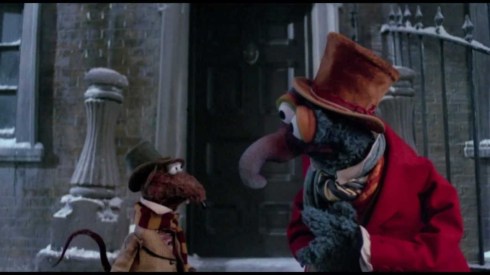
Caine stars as main character, Ebenezer Scrooge, and his supporting cast is made up of mostly Muppets. Kermit is his foil as the poor, but kind-hearted, Bob Cratchit and Robin stands in for Tiny Tim. That makes Miss Piggy Emily Cratchit, naturally. Stadler and Waldorf play the Marley brothers and are predictably hilarious in their role. Gonzo and Rizzo the rat are used as narrators and exist outside the story, despite occupying a physical presence on screen. They’re the main source of the physical comedy and the film made a star out of Rizzo, a mostly bit part in Muppet films and television specials prior to this. Fozzy, Animal, Beaker, and all of the other familiar gang show-up for spot roles throughout. The Muppets are all playing the role of someone from the original work, but still possess their own personality and character traits. In other words, Fozzy is still Fozzy even if his character is referred to by another name.


4be19790ab8dd48e069752acfac873d4-jpg

Michael Caine is a natural at playing alongside the Muppets.

Caine is relied upon to carry the picture and act convincingly beside his non-human cast mates. For roles that correlate directly to Scrooge, a human actor is cast so it’s not as unbelievable as it could have been. For instance, Isabelle is played by Meredith Braun and Scrooge’s nephew Fred by Steven Mackintosh. Only Caine is really asked to do any heavy lifting and he’s surprisingly emotive and effective as a Scrooge. There may have been some expectations that a Muppet version of A Christmas Carol would just be a straight comedy, but the film doesn’t shy away from the dramatic moments. In fact, it probably does so to its detriment as the film sometimes spreads the laughs out too far apart. Some plodding occurs during Scrooge’s journey that likely will turn off younger viewers, and even some older ones. The redemptive portion of the film also feels rushed and the audience is denied in savoring Scrooge’s turn at the end. Perhaps this was done to keep the film under a 90 minute runtime, but if that was the goal, then other parts of the film should have been trimmed instead to allow more time for the fun at the end.

maxresdefault-5

Rizzo and Gonzo are the true show-stealers in this picture as the duo is easily responsible for the most laughs.

From a production standpoint, the film is a true star as the sets, puppets, and costumes all look fantastic. It’s obviously no surprise that a Muppets work would come out looking so well. The production department did a great job in giving the film a true big screen feel when compared with the various TV properties of the Muppets and their made for TV films. The film is in part a musical, like most Muppet productions, and the songs are actually on the light side. I personally consider that a positive, but others may not feel the same way.

In the end, The Muppet Christmas Carol succeeds because it brings its own heart and spunk to a dated work. Other films, like Disney’s A Christmas Carol, just try to retell the same story and possess no charm, and ultimately have no real reason to exist. At least with The Muppets you’re getting that Muppet brand of humor to add a dash of color to A Christmas Carol, ultimately making it worth your time each holiday season.


Lego: Disney’s Cinderella Castle

disney-lego-castle-5This past spring Lego released its third line of mini figures to be based on an official license. Following two straight years of The Simpsons, Lego turned to Disney and its cast of classic characters. Going with a mix of old school, Pixar, and movie characters not touched by the existing Lego Disney Princess line, the line appeared to sell really well for Lego and the likelihood of future releases for the license seemed almost certain. I reviewed those figures back when they came out, and in that review I mentioned my desire to see Lego tackle some famous Disney World and Disneyland attractions, specifically Cinderella’s Castle from Walt Disney World. Ask and you shall receive, as it wasn’t too long after the fact that Lego did indeed announce such a set was coming late in the summer.

Now, my wife is a Disney fanatic. She loves Disney and going to the park, so much so that I made sure I proposed to her in front of the imposing castle. Considering I purchased myself a pair of Simpsons sets and a Ghostbusters Firehouse, I kind of owed it to her to get this set as well. It arrived at the end of August, but since we were in the middle of moving to a new house, construction did not commence until the first week of September. After a fairly leisurely build schedule, we completed this masterpiece over the weekend and both my wife and I are quite pleased with the results.

First and foremost, this set is large and expensive. It retails for $350, which seems to be the going rate for 4,000+ piece sets based on a licensed brand. It’s the same price as the Ghostbusters set, and comparable to some Star Wars sets as well (though cheaper than the upcoming Death Star re-release). Disney is likely not a cheap license to acquire, so there was little sticker shock for me, as much as I hate to spend that kind of money on what ends up being a big plastic, sculpture of sorts. Compared to the firehouse, it’s probably a lesser value. The piece count is comparable, but many of the pieces to the castle are of the smaller variety. It’s been many years since I last built a Lego castle of any kind, but I’m left to believe there are a fair amount of unique pieces to this set, which is obviously a factor in cost. There is minimal use of stickers, which is something any expensive set should be trying to achieve. All of the stickers felt reasonable to me as they’re basically confined to the outer brick detail for the wall (which are simple to place), three shields that adorn the main hall, and a single mirrored sticker for, naturally, a mirror. There are some printed pieces that, in a lesser set, could have opted for stickers instead.

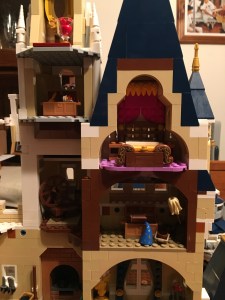
img_0523

A look at The Royal Suite. Below it is where Mickey hides his sorcerer garb and above it is the domain of the Evil Queen.

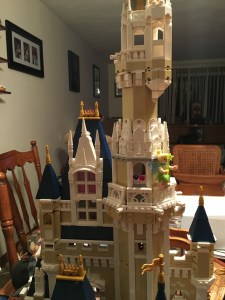
The mini figure count is where this set may come up short for some. The Ghostbusters set came with 9, and even the Kwik-E-Mart came with 6. Cinderella’s Castle comes with 5, four of which are re-releases with one being unique to the set. Of the four, Donald Duck is the only one who is identical to the mini figure released a few months back. It always disappoints me when a toy line repeats a figure within a set. It would have been easy enough to re-color Donald as he sometimes sports a white cap instead of a blue one. Or even just lighten the color of his shirt, or gone with a full reprint of his body to match one of his many Disney World attires. Both Daisy and Minnie are re-colored versions of their previous release. Daisy has a pink color scheme while Minnie is in her more traditional red and white polka-dot attire. Mickey is the only one getting a whole new outfit as he’s in his park-appropriate tuxedo. Tinker Belle is the new addition, and she fits in with the previously released Peter Pan and Captain Hook and also makes sense as she’s pretty central to the various Disney World ceremonies centered around the castle. Disappointingly, she does not come with a flight “peg” like the ghosts did with the firehouse making it hard to find a fun place to pose her on the castle. As a figure, her likeness is well-done and includes two wands, wings, a hair piece, and a fabric skirt. In addition to those five figures, there’s also two sets of display armor for the interior of the castle that are essentially mini figures with all black heads.

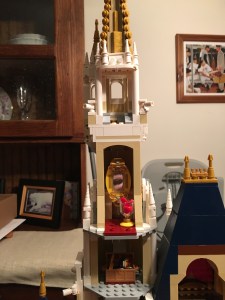
img_0522

A closer look at the infamous mirror. Below is a chest containing her spell components with the fireworks shooter behind.

Building the castle is a pretty painless experience. There’s some very large pieces composing the outer wall area which makes that fairly simple. As you start to move up the castle and towards the towers, more small pieces are introduced and there are some tedious spots. The numerous little white accents you see along the top of the walls and around the towers can drive you mad if you’re insistent about making sure everything is perfectly square. Some of those pieces are anchored by solid bricks behind them, while others are on blue pegs. Those ones have a tendency to swing and I found them irritating. Other places, like around the front clock above the main door, are resting as opposed to being snapped in tight which is something I do not care for. I want everything on a Lego set to be as solid as possible, and the only resting items should be the kind that need to be easily removed like the roof on a house. The set builds basically in three parts:  the outer wall and main hall, the base of the tower, and the tallest main tower itself. The last step in the process is putting all three together and they go together very simply. In total, there are 14 steps in the instruction booklet and there are quite a few leftover pieces when complete. Mostly, they’re small pieces that could be easily lost or overlooked while there are a couple of spare accessories, like a second pair of shears and a sword. I did notice at least one printing error in the booklet where some of the necessary parts for one step are not included in the parts summary at the top of the page. They’re mistakenly included in the following step, even though the graphic for placing them is on the previous step. It’s an easily catchable error as the parts are a couple of traditional bricks, but just be on the lookout (I think it was part of step 11 or 12).

For Disney fans, building the castle offers other rewards beyond the simple satisfaction of construction as the set is loaded with numerous easter eggs. One of the earliest in the build process is the magic carpet from Aladdin being draped on a wall with the Genie’s lamp included as well. The enchanted rose from Beauty and the Beast receives its own room with a familiar looking candelabra looking on. The menacing spinning wheel from Sleeping Beauty is present, as well as the apple for the Evil Queen from Snow White and the Seven Dwarfs. One of my favorites, is a stash of objects from Cinderella hidden under a steeple at the base of the tower which includes her famous glass slipper. There’s also a main suite, which I assume is to represent the actual Royal Suite from the actual castle in Disney World, as there’s nothing obvious within the room to tie it to a film. There’s also a kitchen which could be a stand-in for numerous films (the cleaver on the wall makes me think of Louie from The Little Mermaid) while there’s also an archery set atop the main wall in front of the tower. The included booklet connects that Merida from Pixar’s Brave, but I prefer to think of it as a an homage to Robin Hood, since everything else appears connected to a classic Disney film. There’s a fireworks shooter towards the top of the tower which is another connection to the actual tower in Disney World. By far though, my favorite is the room towards the middle of the set which features Mickey’s hat from The Sorcerer’s Apprentice as well as a couple of buckets and mops and a spell book for good measure. Sadly, the hat does not fit on the Mickey mini figure.

img_0520

High above where Tinker Belle dwells. I wish it came with a piece to simulate her flying around the tower.

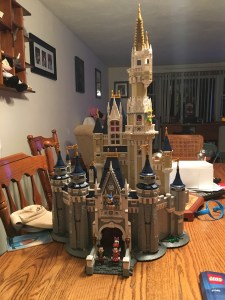
When all is said and done, you’re left with a pretty imposing looking structure. It’s easily the tallest Lego structure I own and I assume it ranks among the tallest the company has ever produced. The likeness to the actual building is pretty impressive, though it’s certainly possible to nit-pick the Hell out of it. The open design on the back means it really only displays from the front. I don’t know if a clamshell design was considered, but it definitely would have added a considerable amount of pieces and complexity to the set. I’m guessing Lego chose to prioritize the front and making sure the size of the set felt appropriate for such an iconic landmark. I would also assume that, even though the box suggests this is for teens and adults, this castle has a lot of playability for a child given all the rooms and accessories. I wish the previously released mini figures supplemented it a little better, but the Disney Princess line obviously would fit in well and it’s a significant upgrade over that line’s Cinderella’s Castle.

img_0519

The finished product. It’s hard to get the whole thing in frame.

Where will Lego take Disney next? Given that The Simpsons received two waves of mini figures, I’ve been assuming Disney would too. There’s a more obvious fit between Disney and Lego than there was with The Simpsons so maybe this could continue for awhile. Even if Lego chooses not to devote entire lines of mini figures to the brand, there’s still a wealth of potential sets from the parks themselves. Sleeping Beauty Castle from Disneyland seems like an obvious potential candidate, while Main Street USA would fit in with this set. If they wanted to do something different but also tie it to a park, Mickey’s Fun Wheel from California Adventure would be another attractive piece for Disney enthisiasts to display. It’s fun to speculate but even more fun to build, so I hope the line continues beyond this set, even if my wallet does not.


Disney gets the Lego Treatment

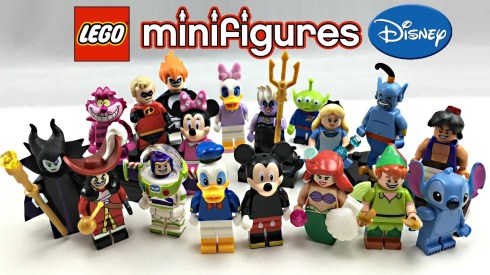
maxresdefault-3Lego is one of the most popular toy manufacturers on the planet. They’ve become known for their building block style toys that come in various shapes, sizes, and colors and can be combined to form castles, pirate ships, space crafts, and other fantastic designs. They also have struck gold with their mini figures, simplistic action figures that embody the Lego design and make great pilots, captains, and heroes to pair with the various sets. It used to be you had to buy a construction set to get a figure or two, but for several years now Lego has capitalized on the appeal of its mini figures by releasing them individually in blind bag assortments. Even more recently, Lego has decided to apply a popular license for these blind bag releases. For the past two years, that license was The Simpsons. I was rather fond of this decision and really it got me back into Lego after not buying a set since I was a kid. The Simpsons I feel still had legs and a series three would have been welcomed by me, but Lego has apparently killed that line and decided to go with a new license:  Disney.

Theming a line of figures on the Disney license is almost as broad as creating a line of “People” figures. The Walt Disney Company has been putting out animated and live action films for nearly a century. The company has its own television station full of original programming, plus it owns Pixar, Marvel, Star Wars, and ABC to name a few. And since Lego already makes Star Wars and Marvel sets, it stands to reason that their Disney themed wave of mini figures could include those franchises if it wanted to. What it really means for Lego is that its first wave of Disney mini figures is an amalgamation of a few popular Disney properties. The first set of 18 Disney figures contains popular Disney creations like Mickey Mouse and Donald, characters from classic animated films like Aladdin and Peter Pan, and also a few Pixar figures to round things out. There are likely fans out there who would have preferred it if Lego stuck to the classic animated films, or maybe even just the Mickey and friends line, but Lego opted to try to please a wide consumer base.

IMG_0256

A motley crew of Disney plastic.

As someone who likes Disney and is married to a woman who LOVES Disney, it meant i had to collect this line with the same vigor as I did with The Simpsons. The wave hit retail on May 1st, though a few lucky individuals probably found them earlier. Like other mini figure waves, this series is released in blind bags so the consumer doesn’t know what they’re buying, unless they’re willing to sit and prod at each bag to feel the figure out. As Lego did with The Simpsons, they’ve chosen to make custom head sculpts for a lot of the Disney characters, basically all of the non-humanoid ones. That means finding Mickey and Minnie when groping a plastic bag is actually pretty easy, same for Sticth as well as the ducks, Donald and Daisy. I actually found the entire wave pretty easy to feel out and went a perfect 18 for 18 with my purchases. Now, if only I had better luck at finding the figures at big box retailers. Stores like Target and Toys R Us sell each figure for 3.99 a piece, but I got stuck hitting up specialty shops that charged 6.99. The things I do for love.


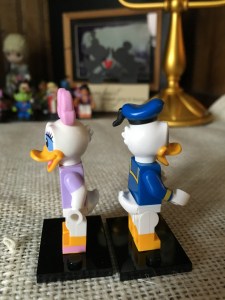
Unlike The Simpsons, these Disney figures are not released alongside any standard Lego sets, which is a bummer. Lego does have a line of Disney centric Lego Friends sets which focus on the various princess characters. The Friends line is Lego’s girl line, because apparently girls can’t handle traditional mini figures and bricks, and it’s clear Lego avoided duplicating characters it had already released as part of that line. The set of 18 is mostly free of the princess characters, with the exception of a mermaid Ariel. Alice from Alice in Wonderland is also included, but I don’t think she’s ever been considered a “princess.” From the Mickey and Friends collection, we have Mickey, Minnie, Donald and Daisy. Any Disney fan immediately sees that list and says “Where’s Goofy?!” He’s missing in action here. The four who are included look pretty good though. Donald and Daisy even have a little duck “butt” piece which is pretty funny but also pragmatic. Mickey is kind of dull though as he comes with no unique pieces or accessories. He doesn’t even have a tail! That’s a problem I’ll address later as it’s a recurring problem. Not the tail, but the lack of accessories to go along with these figures.
IMG_0257

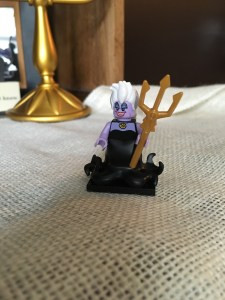
Ursula’s got it going on.

From the Disney animated classics group of films, there’s the following:  Alice, Cheshire Cat, Maleficent, Peter Pan, Captain Hook, Stitch, Ursula, Ariel, Aladdin, and the Genie. All are done fairly well, though characters like Aladdin and Pan suffer from being a bit too conventional and kind of boring in appearance. Genie suffers a little in that he’s fairly unique, but the efforts made to convey that don’t work so well. Instead of getting a more unique sculpt, he’s actually a standard mini figure with add-on pieces to round out his look. He does have a “ghost” lower body which is kind of neat, but he still doesn’t really look all that much like the Genie from Aladdin. Plus Lego got really cheap with his gold cuffs and only painted half of his wrist. Maleficent is unique in that she doesn’t have legs, but a triangular block for a base to simulate her robes. It works pretty well as a visual, though it’s probably not fun for kids to play with. Ursula is definitely the cream of the crop as she gets a uniquely sculpted lower body that looks great. Ariel does as well, but her tail is rather blocky and unappealing to look at. I get that Lego is supposed to be blocky, but there’s just something off with Ariel’s look.
 

IMG_0258

The piece Lego fanatics have been waiting years for:  duck butt.

Pixar is also featured, albeit in a minor way. There aren’t many Pixar characters that would work as Lego mini figures, but Lego did pick some suitable ones. From Toy Story, there’s Buzz Lightyear and the Alien, and from The Incredibles we have Mr. Incredible and his foe Syndrome. Buzz is the star of the four. While he doesn’t quite look like the Buzz we know and love, the unique pieces included give him a lot of personality. The Alien gets a unique head sculpt and looks fine, while Mr. Incredible and Syndrome look about as good as they can, though they’re a little boring. I don’t dislike any of the four, and actually really like Buzz, but I am left wishing Lego had stuck with more conventional Disney properties and gave Pixar its own wave.


With any release like this, it’s easy to zero in on what’s missing. Properties like Pinnochio, Snow White, and The Lion King are synonymous with Disney but not represented here. There’s also a lack of quality accessories that’s kind of disappointing. Mickey comes with none, when he should come with Pluto. He could have come with some clothing type accessories like his sorcerer’s hat, something which is better than nothing. Ursula comes with King Triton’s trident but not his crown, and Ariel comes with an oyster shell with a pink jewel in it. Maybe I need to watch The Little Mermaid again because I don’t remember that amongst her many treasures. I’d rather she come with a fork, I mean, dinglehopper, though a Flounder would have been better. Stitch, Cheshire Cat, and the Alien all come with no accessories, and Aladdin and the Genie both come with the same lamp. Couldn’t Aladdin at least have come with a black Jafar’s lamp? These figures aren’t really all that cheap, the least Lego could do is make sure each character has at least one appropriate accessory to round them out.
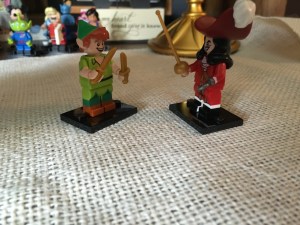
IMG_0259

Pan looks kind of bloodthirsty, not that Hook looks like any less of a maniac.

Criticisms aside, I do think this is a pretty solid wave of mini figures and a nice start for the Disney line. I assume there will at least be a wave two and I’m hopeful Lego will explore some Disney sets, especially if they’re based on Disney World or Disneyland. As far as a potential wave 2 is concerned, I would assume some characters are no-brainers. Goofy, Woody, and Jessie seem like locks. Near locks would include Mrs. Incredible, Frozone, and Jafar. If Lego really wants to stick with the films its already touched upon, then characters like King Triton and the Queen of Hearts certainly have a shot as well. I’m hopeful that Pinnochio and Jiminy Cricket get a look, and a Beast and Gaston would be pretty awesome. It’ll probably be nearly a year before we know what’s to come, but until then it will be fun to speculate.

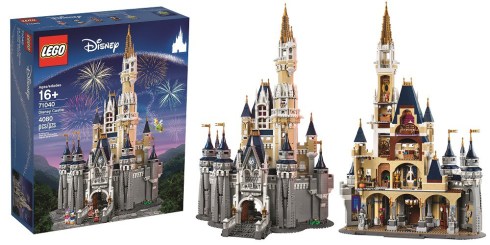
UPDATE:  Well it took Lego a few months to unveil it, they did indeed confirm a Lego version of Disney World’s iconic Cinderella Castle is coming this September. It will retail for $350 (ouch!) and total over 4,000 pieces and come bundled with 5 mini figures. Making her traditional Lego debut will be Tinker Belle and she’s joined by a tuxedo-clad Mickey, a red polka-dot version of Minnie, a pink version of Daisy, and Donald, who appears to be identical to his previously released figure. It looks pretty slick, and it’s hard to argue with the character choices. The castle interior looks like it will be full of easter eggs, and possibly hints for future mini figures, and the only initial piece of criticism I could offer is the depth of the castle looks shallow. It likely would have benefitted from a hinged design to make the base at least appear bigger. Aside from that, it’s a nice piece of eye candy and something I’m going to have to buy for my Disney-obsessed wife.LEGO_71040_fi


The Sword in the Stone

SwordintheStonePoster

The Sword in the Stone (1963)

Walt Disney’s The Sword in the Stone has the distinction of being the final animated film released during Walt Disney’s lifetime. It was also just the second feature completed using the Xerox process introduced with the previous film One-Hundred and One Dalmatians. Given that it was the final animated feature Walt laid eyes on, it’s a bit surprising that the film isn’t more well-known. It’s not considered one of the studio’s classics, being relegated to that second tier of features that isn’t considered worthy of a “Diamond” release on home video. Based on the novel by T.H. White, The Sword in the Stone tells the tale of a young King Arthur and his tutoring by the wizard Merlin to prepare him for when he sits on the throne. There are numerous elements of fantasy and it’s a tale familiar to Disney fans in design as it follows a young misfit’s rise to importance through self-discovery. In a way, it’s like the male-equivalent of a Cinderella.

The story opens with a montage focusing on the death of Uther Pendragon and the tale of his sword which was magically sealed in an anvil and only the true ruler of England can remove it. We’re then soon introduced to our unlikely hero, Arthur, who goes by the name of Wart. Wart is an orphan taken in by Sir Ector and his ambition is to one day squire for his foster brother, Kay. Similar to Cinderella, Wart is treated like a servant by his foster family often forced to clean the kitchen and do household chores while Kay is being steered towards knighthood by his father. Sir Ector dangles the potential of being Kay’s squire as a carrot for Wart, but it would seem the old knight has no real intention of letting the boy actually serve in that capacity, preferring someone of noble birth for his true born son.

images-218

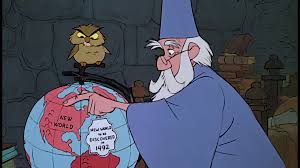
Archimedes, Merlin’s crotchety owl, steals many of the scenes he is in.

Fortunately for young Wart, he has Merlin looking out for him. The old wizard has been to the future and back numerous times and has foreseen the coming of Arthur, right down to where Wart will fall through his roof for their first “chance” encounter. Merlin is not quite a bumbling old wizard, but he is a bit forgetful which at times gets the duo in trouble when he needs to recall the words to an important spell. He is accompanied by his owl, Archimedes, who in true Disney fashion is fully capable of speech. Archimedes is a grumpy sort but incredibly intelligent, often foreseeing the trouble Merlin is about to get himself into. Despite his prickly nature, he is a loyal pet and does look out for Merlin, and eventually, Wart as well.

Merlin is forced to endear himself to Sir Ector in order to serve as Wart’s tutor. He’s permitted to inhabit the old tower outside the keep, which is badly in need of repairs. The bulk of the film consists of Merlin trying to teach Wart lessons that will serve him well as king in the future, often by way of changing Wart into another creature to experience nature from another perspective. This is how the film sources its various gags as Wart becoming a small fish inevitably leads to him being viewed as food by a hungry predator. The best gags probably occur when Merlin changes the two into squirrels and an eager female takes a liking to Wart. These scenes are fairly light and innocuous and Disney tries to incorporate some danger into them, though the characters rarely feel like they’re in true peril. The film also doesn’t take many risks with its humor, often resorting to the simplest of jokes which contributes to the film’s safe tone. The climax of the film actually arrives rather quickly with little fanfare or much teasing of the outcome giving the film a rather abrupt ending. It’s not all together unsatisfying, but the film could have perhaps lingered a little longer with the fallout of Arthur pulling the sword. Once again, this invites a comparison to Cinderella in how that film is essentially over once she puts on the glass slipper and we don’t really see the fallout with her step family.

images-219

The film sources a lot of its humor from the repeating gag of Merlin having some object or knowledge of the future.

Narratively speaking, The Sword in the Stone is a simple tale that’s not likely to offend, but also not likely to delight in the ways some other Disney films do. When the narrative is a bit lacking, these films turn to two important components: their looks and their songs. The Sherman Brothers contributed to the film and it’s not one of their best efforts. Merlin’s song, “Higitus Figitus” sounds like a “Bibbidi, Bobbidi, Boo” knock-off that’s not nearly as charming. The best sequence is probably the villainous Mim’s number “Mad Madam Mim” but it’s not exactly memorable when compared with other Disney tracks. Being that the film was done with Xerox, it’s also not as attractive as Disney’s best, but it is a step-up from Dalmatians. The backgrounds have a bit more personality, though there are scenes of flat, monochrome, backdrops that feel lazy. These are mostly reserved for some of the interior shots as the exterior ones look quite good. They’re not on the same level as Bambi, and The Jungle Book would do better, but they’re perfectly fine to look at. The characters have a sketch quality to them, a hallmark of the Xerox process, but it seems to suit the subject matter of the film better here than others. The film had the opportunity to add some nice visual effects for all of the transforming scenes, but chose the easy way out and just had the characters vanish in a puff of smoke only to reappear as a fish, squirrel, etc.

images-220

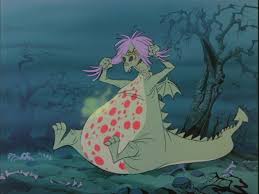
Because every film with swords and wizards needs a dragon.

If you head over to Amazon.com and check out reviews of the Blu Ray release, you will see a lot of negative ones regarding the film’s transfer. I view all of the my movies that I review on Blu Ray on a 55″ LED television and I use a Playstation 4 to watch them. I found my viewing experience to be fine so maybe I’m not as big of an animation snob as I thought. I also do not own the film’s older DVD release so I can’t compare the two. It’s possible people are just sensitive to the scratchy Xerox look now that it’s being presented in high-definition, and being one of the older films, The Sword in the Stone has minimal clean-up in that regard. This film also did not get a Diamond release, so I don’t expect it to look as good as something like The Jungle Book, so maybe expectations should be held in check. Simply put, if you decide to purchase this film and find it’s not up to your standards you can always return it.

The Sword in the Stone is a rather basic entry in the Disney catalogue. It can entertain kids and adults but only so much. It’s probably rare to find the fan that says this is their favorite Disney film, but it’s also probably just as hard to find someone who detests it.


Nausicaä of the Valley of the Wind

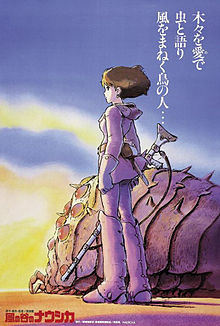
220px-Nausicaaposter

Nausicaä of the Valley of the Wind (1984)

Studio Ghibli is a cultural institution in its native Japan. It’s credited with the anime revival of the 1980’s and for popularizing the form in and outside of Japan. Many of its films have gone on to influence not just anime, but other works of animation as well with its characters even making cameos in Pixar films. Studio Ghibli was officially founded in 1985, but many consider its beginning to be with the film Nausicaä of the Valley of the Wind. Released in 1984, it was directed by Hayao Miyazaki and future Ghibli director Isao Takahata was named producer. The film’s success is essentially what founded Studio Ghibli with most of the crew joining the studio.

Nausicaä is a film that almost didn’t happen. Fresh off his well received directorial debut in Lupin III:  Castle of Cagliostro, Miyazaki was approached to direct another feature length anime picture by Animage. Miyazaki came up with the concept for Nausicaä then, but the studio wasn’t interested and the project was aborted. Miyazaki took Nausicaä to the manga form where he was able to build up a fanbase for the property leading to another opportunity to bring the story to the anime form.

nausicaa-of-the-valley-of-the-wind_592x299

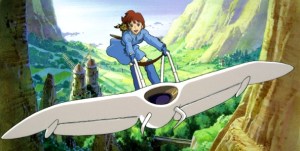
Nausicaä atop her glider.

It’s easy to see why Nausicaä is considered the spiritual beginning for Studio Ghibli. It goes beyond the fact that it’s a feature-length anime production featuring names that would become synonymous with Ghibli. The film, thematically, is very much in line with a great many of Ghibli’s films, most obviously the one’s directed by Miyazaki. The film contains a female protagonist with a Buddhist-like point of view towards nature and the people around her. The film can simply be described as an environmental picture that also strongly endorses pacifism, subject matter that would be covered in other Miyazaki works with the most obvious being Princess Mononoke. The film’s themes are clear and easy for any viewer, even the very young, to pick up on. The film’s themes are so obvious and central to the plot that it’s one of weaknesses as well as Miyazaki would become better skilled at relaying his message in future films with more skill and subtlety. The film’s directness sometimes leads to stilted dialogue and some uninteresting villains.

Nausica-of-the-Valley-of-the-Wind-nausicaa-of-the-valley-of-the-wind-27647622-450-247

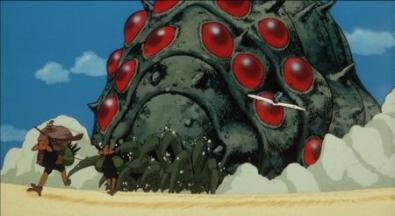
In the path of an enraged Ohm is not someplace you want to be.

Beyond the film’s sometimes amateur story-telling, there aren’t a lot of negatives to be had. The film focuses on the princess Nausicaä, who lives in a small dessert village on the outskirts of the poisoned forest. Mankind is forced to live in a world dominated by insects with the most formidable being the massive, tank-like Ohm, following an apocalyptic event occurring a thousand years before the events of the film. These insects are hated and feared by most of humanity and the toxic forests they inhabit slowly kill the people who live close by. Warring factions of humanity eventually bring harm to Nausicaä’s home with her people becoming casualties of war when a prison ship crashes on the outskirts of the village. Nausicaä is able to rescue one of the passengers who instructs her to destroy the ship’s cargo: the remains of a Giant Warrior which brought about the apocalypse of a thousand years ago. The owners of the ship, the Tolmeki empire, come after the ship and its contents bring their war to Nausicaä’s doorstep. The princess is pressed into battle and even takes human life in the process, but it’s all for naught. The Tolmekians, lead by a princess of their own named Kushana, wish to revive the Giant Warrior to destroy the poisoned forest. The village priest deems this unwise as doing so would only incite the Ohm who’s massive stampedes have brought great destruction to humanity in the past.

The Tolmekians are also embroiled in conflict with the Pejite people. Kushana, taking Nausicaä as hostage to ensure the cooperation of her people, and her airships encounter the Pejite which allows Nausicaä to escape. Circumstance forces her into working with a Pejite pilot and the two discover an amazing secret beneath the toxic forest. Nausicaä’s journey becomes one of self-discovery for herself and her world. With few people even interested in understanding the Ohm and the forests they dwell in, she finds herself as the only one who can prevent a second cataclysmic event that would surely doom her people as well as others. The machinations of the film’s plot are easy to follow and easy to predict. Still, the end result is not particularly harmed by this as the film presents a satisfying climax and conclusion for the story.

1280x720-nWq

Nausicaä of the Valley of the Wind (1984)

As a protagonist, Nausicaä (voices by Alison Lohman in the english dub) is easy to like and understand. Her sense of adventure is contagious and represented most by her mastery of a unique jet-propelled glider she often zips through the sky on. She has a special empathy with nature which is shown early in the film. She’s fearless and possesses a strong conviction for what is right. She kills early in the film out of rage and self-defense and is affected by it. Through her actions we can see she would make an excellent killer if that was her aim, but chooses a different and noble path. Her closest ally is the sword master Lupa (Patrick Stewart), who also seems to embody a form of pacifism as we don’t see him kill in his parts of the film, though we see him demonstrate his incredible talent with a blade in each hand. Asbel (Shia LaBeouf), the Pejite pilot Nausicaä befriends, is our set-in-his-ways character who learns to see the world through a new lens during his trials. He’s the character most affected by Nausicaä and her outlook on life.

The film is set with many suspenseful moments like daring escapes from doomed aircraft and stunning rescues. Much of the film takes place in the air as the most prevalent piece of technology in the film are the massive airships piloted by the Tolmekians and Pejite. Anyone familiar with Miyazaki’s works know he’s a lover of aviation so it’s not surprising to find it here. When the film is not in the air the setting either shifts to vast desserts or the wondrous toxic forests. The forests are portrayed in cool shades of green and blue with mostly imaginative looking flora, some of which looks like it belongs under the sea. The look of the film is a bit dated, which should be expected of a thirty-year old picture. Still, it’s not unpleasant to look at and it still has some wonderful moments. The audio is also a bit dated, mostly in the sound effects department, but the score (Joe Hisaishi) is easily the part of the film that best stands the test of time. The english dub is also handled well by Disney and the Blu Ray release contains the Japanese audio for purists.

Anime fans owe a great deal to Nausicaä of the Valley of the Wind. Not only did its popularity and success in Japan help to pave the way for future anime releases, but its butchered original western release helped to convince Miyazaki and others to oversea the localization of future films. Studio Ghibli’s famed “no cuts” policy is born from Nausicaä and I think all fans of animation can agree that’s something we’re all happy is in place. It’s hard to separate a film, or any work of art, from its legacy, but in doing so Nausicaä still holds up us a nice picture worthy to rest in the library of Miyazaki and the Studio Ghibli films. As a legacy piece, it’s a fascinating look at the beginnings of a great director and a fun piece of nostalgia for animation buffs around the world.


#2 – Mickey’s Christmas Carol

mickeys-christmas-carol-1983

Mickey’s Christmas Carol (1983)

Mickey’s Christmas Carol marked the return of the most famous cartoon mouse to the big screen for the first time in 30 years. Once a staple of the cinematic experience, Mickey had been pushed aside for other characters (namely Donald Duck) and live-action features. It had been even longer since Mickey, Donald, and Goofy had all appeared in the same short.

Mickey’s Christmas Carol was released in 1983 along with the The Rescuers. As shorts go, it’s actually pretty long, which has helped it over the years in being shown on television because it fits easily into a standard half-hour time-slot. Mickey’s Christmas Carol also goes against one of my personal tenants of Christmas specials which is to avoid adaptations of A Christmas Carol and It’s A Wonderful Life. That’s often the path of the lazy, but Mickey’s Christmas Carol benefits as being one of the earlier adaptations, and for some reason, it just works.

The story is obviously familiar to most people. It’s a pretty straight-forward retelling of the Dickens classic just with Disney characters acting out the parts (only the animal characters though, no humans allowed). The cast features the old popular ones of Mickey, Donald, Goofy, and Minnie while also mixing in cameos from The Winds in the Willow, Silly Symphonies, and Robin Hood, among others. This is also the first short to feature Scrooge McDuck as the character he was born to play. He’s voiced by Alan Young, known to audiences as Wilbur from Mister Ed, who has continued to voice the character even into his 90’s. Another debut is Wayne Allwine as Mickey Mouse, just the third voice actor to portray the character. Clarence “Ducky” Nash also gets a final opportunity to voice Donald Duck, before the character would be passed onto Tony Anselmo. As a result, Mickey’s Christmas Carol feels like a really important short in the company’s history as there’s a lot of historical significance that can be attached to it.

Mickeys_christmas_carol_9large

Gets me every time.

All of that stuff is great, but it wouldn’t matter if the story sucked. Instead, the story is told in a brisk, but not rushed, manner. The shots that need to linger, linger, and the ones that can be hurried along are. The animation is vintage Disney, with Scrooge walking home in the snow from his counting house probably my favorite shot. All of the right emotions hit, and Scrooge’s transformation from miserable miser to benevolent boss is done in a believable way. Just try to suppress the lump in your throat when Mickey is seen crying at the grave of Tiny Tim in the flash-forward. That sight would transform any man!

Mickey’s Christmas Carol has a special place in my heart. It was the lead-off special on a homemade VHS tape my mom made for my sister and I when we were really little. As a result, it’s also probably the Christmas special I’ve seen more than any other. Since Disney is omnipresent on television, Mickey’s Christmas Carol is shown quite frequently around the holidays, so hopefully you didn’t miss it this year. It’s also been released multiple times on DVD and Blu Ray, most recently just two years ago. Though if you really want to own a copy of it, I suggest you pony up the extra dollars for Mickey Mouse: In Living Color Volume 2 so you can also enjoy a bunch of Mickey’s other classic shorts.


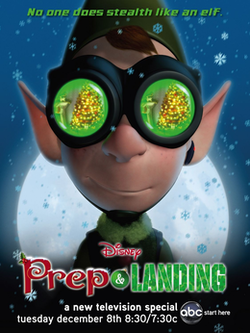
#11 – Prep & Landing

Prep_&_Landing_poster

Disney’s Prep & Landing (2009)

It seems like every year a prominent new Christmas special shows up on television and routinely disappoints. Even Pixar found the going tough when last year they unveiled Toy Story That Time Forgot which I found pretty lackluster. Six years ago though Disney had much better luck with an all knew intellectual property:  Prep & Landing.

It seems like a new Christmas special or film needs to do something different in order to make a mark. The Santa Clause has always been my go-to example as that has become a modern classic by taking a different look at the Santa character. Prep & Landing is similar because it chooses to focus on the elves responsible for prepping a house for Santa on Christmas Eve. It’s a novel concept as no child ever actually sees Santa at work and this special gives them a reason why.

The story follows Wayne (Dave Foley) who has been on the prep and landing team for over 200 years and has just seen his subordinate get promoted. Wayne is one of those quiet professionals who has most likely been most passed over for reassignment because he does such a good job where he is and hasn’t made enough noise about wanting a change. He ends up getting paired with a new, enthusiastic, assistant named Lanny (Derek Richardson) and Wayne basically slacks off and lets Lanny run the show. This causes their assignment to be blown and a storm re-routes Santa away from the house they were supposed to prep. Wayne feels awful since the kid is on the nice list, and resolves to get the house prepped and convince Santa to make the trip.

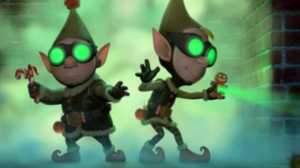
2047586-prep___landing_image__1_

Wayne and Lanny on the job.

Prep & Landing is a CG Christmas cartoon and it looks fantastic. It was basically made in conjunction with the feature film Bolt which is when Disney’s CG really took a leap forward and started to rival Pixar’s. The voice acting is also really good, and there’s lots of little Easter eggs hidden in the background. Prep & Landing was so successful that it’s spawned another half-hour special and two shorts. They’re actually all pretty good, but the first half-hour special is still the best. It’s the creativity that makes it special and the production values are the cherry on top. Since Prep & Landing is still fairly new it’s shown multiple times each Christmas season (and will air on the 17th this year on ABC) and is often paired with the sequel “Naughty vs. Nice.” If you don’t want to wait for it to come on television, or you missed it, there’s also a DVD and a Blu Ray set that contains both specials and the shorts available for purchase.


#17 – A Muppet Family Christmas

Title.mfc

A Muppet Family Christmas (1987)

A Muppet Family Christmas has become an almost mythological Christmas special due to its limited availability. First debuting in 1987, it got tangled up in licensing issues shortly there-after and has been infrequently rebroadcast. It also has been released in very limited fashion with a lot of what first appeared in the special being left behind. And now that Disney has acquired The Muppets, a re-release on DVD or even Blu Ray seems unlikely so long as Disney does not own the rights to the other properties featured in the special.

A Muppet Family Christmas was an ambitious special as it sought to combine multiple Jim Henson properties into one special:  The Muppets, Fraggle Rock, and Sesame Street. It starts out rather simply with Fozzie leading the Muppets to his mother’s farm house to surprise her for Christmas. Unknown to him, his mother was planning on heading to Malibu for some fun in the sun for Christmas and has rented her home out to Doc and his dog Sprocket for the holidays. Doc is seeking a nice, quiet, Christmas and he gets anything but that when The Muppets arrive. It turns out, Fozzie also invited the Sesame Street gang which just adds to the overcrowded house, and Kermit and Robin discover that the Fraggles live downstairs. An impromptu concert breaks out with Electric Mayhem and Sesame Street also stages a play. A horrible blizzard descends on the house trapping everyone in there, but when Miss Piggy fails to show up it’s up to Doc to go out and find her.

tumblr_ng7y9ctkzg1qzkq0co4_1280

That’s one packed house.

Aside from the mash-up of properties, the special is most known for its inclusion of several musical numbers. The special is basically over-stuffed with them, especially at the end, and it almost feels like one of those old sing-a-long VHS tapes. The combination of The Muppets and Sesame Street actually works pretty well and lends itself well to some jokes. Henson and his writers weren’t shy about poking fun at their educational property, probably knowing that if they just played it straight the results would be kind of dull. There’s nothing vulgar by any means, or even mildly offensive, so the property isn’t hurt at all by it. The Fraggles are kind of tacked-on, and since they only interact with Kermit and Robin, their segment is a bit dull. As usual, the funnier members of The Muppet clan do the heavy lifting here and mostly succeed at drawing laughs.

At this point in time, A Muppet Family Christmas’s reputation likely exceeds its true value, but it’s still a unique and entertaining Christmas special. At least until you get to the end and the nonstop caroling becomes tiresome. Kids might like that though.

As I mentioned in the lead-in, this one is pretty tough to track down these days and is no longer broadcast on television. An edited DVD was released over ten years ago, but if you want to see it as originally constituted, you may need to turn to Youtube where people (like me) who were fortunate enough to have recorded the original special in ’87 have uploaded it for all to enjoy.