Category Archives: Video Games

THQ Wrestling Games: End of an Era

200px-THQ_logo_2011.svgJust last week an auction took place in which all of the assets held by video game publisher/developer THQ were sold off as part of a bankruptcy filing.  Several games the company was known for will either cease to be or exist in a new form and smaller developers now find themselves being assimilated into much larger publishers.  Not to be forgotten are all the jobs that will be lost either by THQ no longer existing or by layoffs from the purchasing parties.  As someone who has been part of an acquisition I can say it’s not a fun experience and there’s lots of uncertainty for those involved.

What’s is certain is that THQ will no longer be in business, and as such, it’s partnership with World Wrestling Entertainment has come to an end.  THQ’s involvement with wrestling games predates the WWE license acquisition and fans have been enjoying THQ branded wrestling games for well over a decade at this point.  For the WWE, its license is now in the hands of Take-Two and 2K Sports who will only be the third publisher to hold the much coveted property.  What remains uncertain, is if developer Yukes will have any involvement with future games.  It’s entirely possible that Take-Two won’t want to ruin a profitable arrangement and hire Yukes to develop the successor to WWE ’13.

Such questions will be answered eventually, most likely at E3 if not sooner, but now is a time for reflection.  THQ’s wrestling games provided hours upon hours of enjoyment for myself and other gamers out there, but which games will THQ be remembered most for?  And also, which were the best and most ground-breaking titles?  The following is one man’s opinion on the five best wrestling games released by THQ:
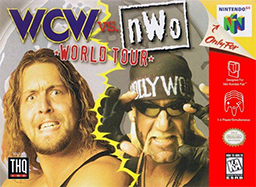
WCW_vs._nWo_-_World_Tour_Coverart5. WCW vs nWo: World Tour (1997)

For most gamers, myself included, this was the first wrestling game any of us experienced that made us feel like we were part of the action.  Developed by Asmik Ace Entertainment and AKI, World Tour introduced to American audiences a whole new way to experience a wrestling game.  Prior games were little more than brawlers with a few noticeable moves and contemporary games like WCW Nitro and WWF Warzone were overly complicated and seemed inauthentic.  World Tour sacrificed some realism for entertaining gameplay and made use of a grapple system that allowed players to access various moves.  The whole system was rather simple and each wrestler essentially controlled the same, but the experience was truly captivating and horribly addicting.  I never owned this game for I didn’t own a Nintendo 64 at the time, but I rented it several times and always had a blast with it.  The sequel, WCW vs nWo:  Revenge is basically the same game just with a fresher coat of paint, so World Tour gets the nod on this list for being the originator.  This was the start of a very profitable relationship for AKI and THQ.

4. WWF Smackdown:  Here Comes the Pain (2003)

The console wars of the 32 bit era never approached the fever pitch that was the 16 bit era, but Playstation vs N64 was still a pretty solid rivalry.  Playstation tended to have the more mature games while the N64 had the classic Nintendo franchises to keep people happy.  One thing N64 gamers had over PSX gamers was wrestling games as the ones put out by THQ easily trumped the best Acclaim had to offer.  This rivalry extended into the wrestling word as it pitted WCW vs WWF who were in a dogfight to establish supremacy over television thru the now famous Monday Night Wars.  Eventually, WWF would overtake WCW and soon THQ would jump ship and partner with WWF to bring the WWF experience to console gamers.  THQ handed the license over to AKI and basically told them to turn Revenge into a WWF game, while Playstation gamers were asked to trust in a mostly unknown developer called Yukes.  Yukes was popular in Japan for its wrestling games over there, and soon their fast-paced brand of wrestling action was available state-side as WWF Smackdown.  Smackdown was an instant success and offered an almost completely different experience from the slower-paced AKI games.  The first game was rather bare bones while the second introduced a robust single player game and create-a-wrestler.  The series really cemented itself though with the Playstation 2 title Here Comes the Pain.

Previous Smackdown titles eschewed the grapple mechanics of the AKI games and opted to allow players to skip the grapple and initiate moves from a standing position.  Here Comes the Pain slowed things down just a touch and brought in a linking grapple system that helped lend a new level of authenticity to the matches and open up the move-sets.  This major addition to the gameplay combined with a wide selection of match type makes Here Comes the Pain the best of the original Smackdown series.

In Day of Reckoning 2, submission holds did more than just inflict pain.

In Day of Reckoning 2, submission holds did more than just inflict pain.

3.  WWE Day of Reckoning 2 (2005)

Into the era of the Playstation 2, Xbox, and Gamecube, THQ continued to opt for a different WWE themed franchise for each console.  While the Playstation brand held onto the Smackdown series, new ones were created for Xbox and Gamecube.  Xbox was given the lackluster Raw games while Gamecube got a new Wrestlemania themed one.  It wasn’t much better, but eventually it would be scrapped and Yukes would be called upon to create a new themed franchise which was dubbed Day of Reckoning.  Day of Reckoning was sort of the spiritual successor to the popular AKI games from the N64 days.  DoR put the emphasis on grapples and introduced a new system where submission moves took on new meaning.  This was the result of the inclusion of a stamina meter and limb-targeting.  The single player was also the most involved of any to date and even carried over (in a narrative sense) from the first game.  The game also looked excellent and sported an excellent create-a-wrestler mode.  If it was lacking in anything it was a defining match type.  Still, this one is a dark horse candidate for best of all time.

2.  WWF No Mercy (2001)

Some fans, to this day, still proclaim WWF No Mercy the best wrestling game ever created.  That’s high praise, especially if one steps outside the WWF/WWE/WCW games and includes the excellent Fire Pro series.  Undeniably, a huge reason for such claims is nostalgia and the good memories many have of the game.  No Mercy was the sequel to the first WWF/THQ game Wrestlemania 2000, which was basically WCW vs nWo: Revenge with a palette swap.  No Mercy brought a more robust single player game, new match types, and still retained the same tried and true gameplay that just wouldn’t get old.  There was also a nice rivalry between this game and Smackdown 2.  Fans of Smackdown pointed out how their game had Hell in a Cell and TLC match types while No Mercy fans held fast to the simulation cred the AKI games had garnered.  Whatever side you were on, you had a great game and No Mercy is still a fun experience today.  If you want more thoughts from me on No Mercy, check out this entry I made last year on the subject.

1.  WWE Smackdown vs Raw 2006 (2005)

The Buried Alive match was something fans had been asking for for a long time.

The Buried Alive match was something fans had been asking for for a long time.

The Smackdown vs Raw games were part of a new directive from THQ.  Someone wisely figured out that THQ was only competing against itself by putting out multiple WWE games a year.  While hardcore fans loved it and may have bought multiple games, most picked a series and stuck with it and the development costs just didn’t make it worthwhile.  So it was a sad day when franchises like Day of Reckoning came to an end with the Smackdown vs Raw series taking over.  It was basically a continuation of the standard Smackdown series, but overtime that game became more sophisticated, more varied, to the point where it resembled the original titles in the series in name only.  The gameplay was still quicker than the sluggish AKI games, but not cartoonishly so.  Each wrestler had various different grapples they could initiate which was just the starting point for unleashing pain upon the opposition.  Now games truly started to emulate the television product.  Yukes found a way to make a realistic wrestling sim while also keeping it fun to play.  A bunch of new takes on old matches, and new additions like the Buried Alive match, also enhanced the fun factor.  The GM Mode, while never truly realized, was also a fun diversion and the create-a-belt feature is superior to the current one in WWE ’13.

So have all of the games to follow these been inferior?  Not necessarily.  If I lined them all up and played them for an hour each I’m not sure which game I’d enjoy the most, it’s just that the current games have done little to advance the genre.  In that respect, maybe it’s a good thing for gamers that the WWE license is changing hands.  It might be nice to see what a developer new to the franchise could come up with.  If Take-Two intends on releasing a WWE themed game this year, it may opt to reach an agreement with Yukes for at least one more game since development on WWE ’14 was likely already underway.  And in turn, Take-Two could hand the license off to one of its development teams to get cracking on a game for 2014.  Time will tell, but Take-Two has its hands full if it wants to make fans forget about the glory days of THQ.
Greatest Games: Xenogears

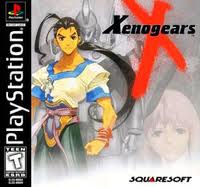
Xenogears (1998)

Xenogears (1998)

For me, all of my entries in my “Greatest Games” subcategory have been building towards this one.  My intention with the series was to present some of the games I felt were among the best I had ever played while shying away from the obvious choices.  After all, plenty has been said about A Link to the Past or Super Metroid.  While I made entries about Chrono Cross and Twisted Metal Black I was constantly looking ahead to that one game I preferred above all others.

Xenogears arrived during the RPG boom of the late 1990’s.  Developed by Squaresoft under direction from Tetsuya Takahashi, the game was originally supposed to be Final Fantasy VII but it became too dark and too sci-fi in nature to continue as such.  Takahashi was allowed to continue with the project as opposed to seeing it outright canceled but at a much reduced budget (more on that later).  Many Final Fantasy collaborators contributed to the project including executive producer Hironobu Sakaguchi.  When the game was complete, most of the staff would go on to develop Chrono Cross before eventually departing Square with Takahashi to form Monolith Software.

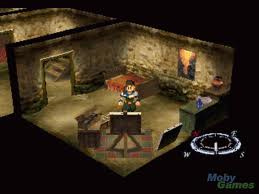
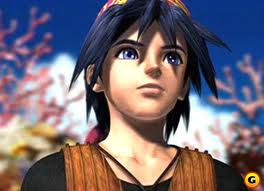
The game begins with our hero Fei in a rather innocent setting.

The game begins with our hero Fei in a rather innocent setting.

Takahashi was nothing if ambitious when creating Xenogears.  It was conceived as being just a part of a much larger narrative and is in fact titled as Episode V in the game’s credits.  The narrative focus of the game is epic in scope with a lot of talking points and several cut scenes, some of which are done with CG and others in full animation.  It’s a long game, one that will take most players around fifty hours to complete on the first play-through.  It’s story focuses on the young Fei Fong Wong, a typical RPG lead in that he has no family and knows very little about his past.  The plot will see Fei discover his true purpose, which is of course a significant one, as he journeys across the globe with a cast of characters out to save the world.  The story is nothing new in setup, but how Xenogears approaches it helps to differentiate it from the flock.  There are many religious undertones to the game’s narrative, some of which nearly scared Square out of an international release.  The game takes itself very seriously and though there are moments where comedy is utilized they’re not frequent.  The game has been criticized for being too pretentious, but it is a fairly enjoyable experience even if it can be hard to understand.

Part of the reason many consider Xenogears to be so pretentious is due to the fact that it tries to be too many things.  There are elements and themes taken from classic philosophy as well as modern sci-fi conventions found in the likes of Blade Runner.  The plot of the game seems to bounce around in focus with lots of twists and turns.  It’s fairly common for games in this genre to start off with one goal and finish with something completely unrelated, but Xenogears takes it to a new level.  The game does a good job of remaining interesting the whole way through but perhaps it would have benefited from a tighter structure.

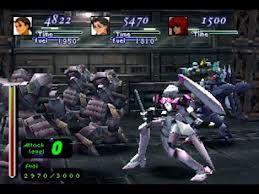
Giant robots called gears play an important role in Xenogears.

Giant robots called gears play an important role in Xenogears.

The gameplay for Xenogears incorporates a lot of genre staples but also introduces some new concepts.  Players travel from town to town either on foot or via transportation and can talk and engage with non-player characters along the way which is often necessary to advance the plot.  Battles are initiated via random encounters on the overworld map or in dungeons.  Once a battle is commenced, the player takes control of a party of up to three individuals chosen beforehand or dictated by the game.  From there it’s a variation of the Final Fantasy Active Time Battle system where a speed score dictates the order and frequency of each character’s attacks.  When it’s the player’s turn, the options are also fairly straight-forward and include attack, defend, run, item, or magic.  The magic command is usually called ether or spirit but functions in the same way as a typical magic attack in most RPGs would.  When the player selects a standard attack is where things change.

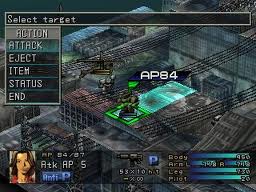
In Xenogears, each character has a certain amount of attack points that can be used per turn.  At the beginning of the game there are six per character, but it increases over time.  Each face button on the Playstation controller corresponds with an attack command and has a point value:  triangle is one, square is two, X is three, and circle cancels or ends the attack.  A player can combine the buttons in any way up to the maximum available or use as few as one.  Certain attack combinations will trigger deathblow animations where the character will execute a more powerful move.  Performing the necessary sequence over and over is the only way to learn them but the game keeps track for you in the menu so you don’t have to guess.  The buttons do not have to be entered with any sort of speed so it’s not like a rhythm game or a fighter.  If the player chooses to use fewer than the available attack point total then the remainder goes into a bank for the rest of the confrontation.  As the player accumulates additional attack points, combos become available.  Combos basically allow the player to chain deathblow attacks in one turn allowing for a massive amount of damage to be unleashed.  As a result, most encounters (particularly boss encounters) end up being a balancing act where the player has to decide if it’s better to go all out from the start or build a character (or characters) up to unleash a giant combo.

Cut scenes like this nearly kept the game from getting a release outside of Japan.

Cut scenes like this nearly kept the game from getting a release outside of Japan.

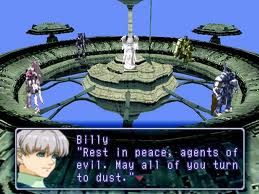
That’s just one half of combat as Xenogears’ main feature is that of gear combat.  Gears are giant robots piloted by the game’s protagonists and allow the player to take on much larger foes.  Each character has access or will gain access to a gear during the course of play.  The gears basically mirror the character they’re paired with so the ones effective at dealing out the most damage on foot will be the same in their gear.  Even certain magic attacks are unusable by the gears while some are only usable on foot.  One of the more unique characters in the game, Billy utilizes guns and so his gear does as well.  On foot, each attack button corresponds to a different gun and the same is true in his gear, though it uses different ammunition.  Gear battle is very similar to character battle but has some notable differences.  For one, the player can only use two combinations of attack buttons but instead of having attack points each gear has a supply of fuel.  Each attack consumes fuel with triangle attacks consuming the least and X attacks consuming the most.  As a gear attacks, its attack level goes up.  At level one, triangle deathblows can be used.  At level 2, square deathblows become available, and so on.  There are four levels a gear can reach:  1, 2, 3, and Infinity.  Infinity is the most powerful and only becomes available late in the game.  It’s also not attainable simply by performing four non deathblow attacks in succession.  Instead, there is just a chance a gear can reach infinity when in level 3 and certain gears have a better chance of doing so than others.  Infinity opens up the best deathblows and lasts for three turns so when a gear is able to reach it it usually swings the tide of battle.

The character Elly is a central figure of the Xenogears plot.

The character Elly is a central figure of the Xenogears plot.

Gears also present some challenges not felt when fighting with the human characters.  I mentioned the fuel already which can run out.  If a gear runs out of fuel then it can’t attack, which presents a problem.  Each gear can use a turn to charge which replenish fuel but not a significant amount (unless the player equips a gear with charge-boosting items) and is not something one wants to rely on.  Gears also cannot replenish their hit points easily in battle.  Gears can be equipped with restorative items but they consume a lot of fuel.  Often times, this will cause the player to wait as long as possible to use such an item but then they find themselves in a situation where the gear is now low on fuel exchanging one problem for another.  Basically, the game forces the player to think a little differently when engaged in gear combat and that helps keep the game fresh.  The game is pretty much divided into equal parts gear combat and non-gear combat which does help to keep things interesting.

Outside of combat, character customization is pretty standard.  Each character can be equipped with stat-boosting items and armor with the best items becoming available towards the game’s conclusion.  Only some characters utilize weapons in combat just as only some have magic attacks.  Most will fit into the attack role or the support role with a few select characters performing adequately in both roles.  The game does do a good job of making the characters feel different.  I mentioned Billy earlier as one such character due to his use of firearms.  Another, Maria, always attacks with her gear even while on foot and another character has no gear at all, she can just grow to tremendous heights instead.  As character participate in battle they earn experience points and level up, in turn becoming stronger.  Gears do not receive any benefits from their pilot leveling up.  Instead, they can be upgraded through-out the game with better equipment including engines and frames which increase the gear’s stats as well as its hit points.

A lot of the combat takes place in gears.

A lot of the combat takes place in gears.

There are other things to keep players interested in the game.  Outside of battle players can search the world for players of the game Speed.  Speed is a real-world card game (when I was a kid we called it Spit) where the determining factor of who wins is who plays the fastest.  Defeating these players will often net a useful item and certain secret items can only be obtained via this mini game.  Another mini game is a gladiator type of coliseum where the battles take place in real-time.  The player can select from basically every gear in the game and compete in a fast-paced one on one battle.  It kind of reminds me of the Dragon Ball Z fighting games in that the characters zip around pretty fast and alternate between melee attacks and long-range energy projectiles.  At any rate, both mini games offer decent distractions and are entertaining in their own right.

Visually the game is a fairly solid performer given its era.  The designers opted to use sprites for the characters instead of polygons and while they animate nicely they are quite pixellated.  Backgrounds tend to be on the sparse side and the texture mapping is average.  Backgrounds are a hybrid of 2D and 3D and most areas can be rotated via the shoulder buttons on the controller.  It’s a bit odd watching the game try to rotate around a 2-dimensional character but it does help for timing jumps (something else that helps differentiate the title from a typical RPG, albeit in a minor way).  When the game transitions to gear battle everything becomes rendered in 3D.  The gears are fairly solid-looking and each has its own visual personality.  Attack animations are pretty understated when compared with other games from the genre.  There’s very little in the way of “wow” moments but nothing is really off-putting either.  If anything, the sprite-based approach helps in the long run as many games that opted to use polygons look woefully dated by today’s standards.  The score is quite good and on-par with Final Fantasy’s best, though some of the sound effects are a bit lackluster.  The FMV and anime sequences are not numerous but that helps give them added impact when they do show up.

Xenogears tends to take itself quite seriously.

Xenogears tends to take itself quite seriously.

There is one other thing I have yet to mention about this game that many view as a glaring negative. I mentioned how the project was an ambitious one but I have yet to mention that it was so ambitious it went over budget.  If a Final Fantasy game runs over budget at Square it’s probably not that big of a deal but when an unestablished title does it presents a problem.  Since there was no money left a large section of the game had to be cut, but since the title is so narrative heavy, it could not just be annexed from the game.  Instead, when the player reaches the point in the game where the cuts took place (early in disc 2) they’re treated to a mostly black screen with the exception of Fei seated in a chair.  Here a seemingly endless amount of text is displayed as Fei takes on the role of narrator and explains to the gamer what took place next.  Other characters speak as well, but the presentation remains the same with the exception of a couple of gameplay rendered shots.  The scenarios being described were supposed to be playable but unfortunately are not.  And this section goes on for a good 45 minutes or so.  I remember the first time I reached this point of the game (I’ve played through it multiple times) it was really late at night and I just wanted to go to sleep but had to keep going and going to get through it.  The game does give you the option to save a couple of times so at least there’s that.

Xenogears may not be visually impressive by today's standards, but it still has its moments.

Xenogears may not be visually impressive by today’s standards, but it still has its moments.

As a result, the game feels like it never got what it deserves, which is what every game deserves:  to be completed.  Xenogears sold modestly well but with the creators behind it all leaving to form Monolith it basically ended the possibility of there ever being a true sequel.  Xenosaga was initially conceived as being a part of the Xenogears lineage, but either legal decisions forced that to change or an artistic change was made.  Xenogears presents a pretty open and shut story with little room for a natural sequel, but I would love to see Square return to it as a remake.  The game could be left as is or it could be cleaned up completely with an all new engine.  Some pacing issues could be addressed, but most importantly, the portions of the game cut could finally be restored either thru a new gameplay section or via fully animated cut scenes.  Since Takahashi no longer works for Square, it would have to be done without him but considering the ground work has been laid already it wouldn’t be that difficult.  Xenogears deserves to be experienced the way it was initially conceived and I would personally prefer to see it remade over Final Fantasy VII, a remake many people have been hoping for.  Maybe it will happen one day (though probably not), but even if it never does Xenogears remains my favorite game of all-time.  I know it’s not the greatest game ever made, but it doesn’t have to be in order to win me over.

For those who have never played it, second-hand copies of Xenogears can still be found fairly regularly on auction sites like eBay.  Square-Enix also released the game onto the Playstation Store so Playstation 3 owners can experience the game that way.


WWE ’13 – The Attitude Era

WWE '13 (2012)

WWE ’13 (2012)

Let it be known, nostalgia sells!  Too many of us overgrown children have disposable income to throw at DVD collections and old toys and publishers are well aware of this.  Just look no further than this year’s entry in the WWE video game catalog:  WWE ’13.  Now, there’s nothing nostalgic about the title but the focus of the game’s single player mode is the now much celebrated Attitude Era of the WWE.  I’ve spoken fondly of it in the past, but that’s definitely my favorite era for the then WWF, even surpassing Hulkamania for me in terms of pure enjoyment.  Vince McMahon’s promotion was arguably never more popular or culturally significant at any other point in time, including today.  It made a lot of sense to revisit it (even if it seems strange to almost ignore the current product by doing so) and without it I’m not certain I would have purchased the game.

This review is going to mostly focus on the Attitude Era mode, but before diving into it I will provide an overview of the rest of the game.  This is the second game since THQ/Yukes dropped the Smackdown vs Raw title and refined the gameplay.  I didn’t play last year’s game, but the differences from the last Smackdown vs Raw and this one are minor.  They brought back the limb targeting system and modified the chain grapple slightly.  The changes are mostly superficial, but not to the detriment of the gameplay.  The havok engine the game makes use of was overhauled to a point as well.  The ring now reacts better to what’s going on, as do objects in the field of play.  Though overall, the visual quality looks to have taken a slight step back.  The audio is kind of all over the place in terms of levels, and the new dynamic camera system is wretched (but thankfully something you can turn off).  The create modes are unchanged.  Some moves have been returned to the game and some have disappeared.  It’s pretty disappointing that the create-a-finisher mode is still as limited as it was when it first debuted several years ago now.  There’s also a create-an-arena that is new but not very exciting.  I haven’t checked out the create-a-scenario but I suspect it hasn’t been improved upon much, if at all.  WWE Universe mode is also back for the third year in a row.  Expect more of the same.

Fans get to relive some of the biggest feuds from the Attitude Era, including Hart vs Michaels.

Fans get to relive some of the biggest feuds from the Attitude Era, including Hart vs Michaels.

The gameplay is solid enough, and it’s probably one of the better grapplers put out by Yukes, but I’m only interested in the Attitude Era.  The Attitude Era mode basically replaces the single player storylines from past games.  It’s divided into multiple parts that put the focus on a different wrestler from the era.  The scenarios are:  DX, Stone Cold, The Brothers of Destruction, The Rock, Mankind, and Wrestlemania XV.  The first scenario starts off in the summer of 1997 and the scenario ends after Wrestlemania XV.  Once complete though, some bonus challenges open up featuring wrestlers such as Edge, The Godfather, and Lita.  I was rather impressed with how many old wrestlers were included in this mode considering some of them are no longer with the company.  Expect to take on the British Bulldog, the Road Warriors, and even Vader as you progress through the scenario.  During each match, the game will also assign special objectives that unlock additional content along the way.  Most of these objectives refer back to the real match and encourage you to recreate it as best as possible.  None stand out to me as being particularly challenging so expect to unlock them all with little trouble.

Since the Attitude Era has, until now really, been something only fans recognize it makes it difficult to get a consensus on when it started and ended.  Some think it started as far back as “Austin 3:16,” while others maintain it was the infamous Montreal Screwjob.  THQ decided to go with the formation of Degeneration X when Shawn Michaels and Triple H turned their backstage “Kliq” into an actual onscreen stable.  The game also constantly references the Monday Night Wars, the ratings battle between WWF’s Raw and WCW’s Nitro, as an ongoing storyline throughout the Attitude Era.  DX ends up being pretty well represented in the game, with the only notable exclusion being Chyna (probably due to her being an adult film actress now).  Even Mike Tyson is present for Wrestlemania XIV, which makes sense given that he was inducted into the WWE’s Hall of Fame earlier this year.

The roster includes expected stars such as The Rock, as well as some of the era's lesser stars like Ken Shamrock.

The roster includes expected stars such as The Rock, as well as some of the era’s lesser stars like Ken Shamrock.

The characters THQ chose to focus on for the era were logical.  They were certainly the most recognizable  from the era.  A lot of the big matches are covered including Michaels vs Hart at Survivor Series ’97, the inaugural Hell in a Cell match, the more famous Undertaker vs Mankind Hell in a Cell match, and the mode culminates in Austin vs Rock.  The only matches I missed that weren’t included was the Monday night match between Mick Foley and Terry Funk (who’s not included in the game unless you want to pay for him as Chainsaw Charlie) which took place in between the Austin vs Dude Love Pay-Per-View bouts; and the Austin vs Undertaker Buried Alive match at Rock Bottom ’98.  In the case of the second one, Yukes probably didn’t feel like coming up with a Buried Alive match again (they did at least bring back the I Quit match for the Rock vs Mankind feud) or the WWE felt like it wasn’t appropriate for their audience.  That last excuse seems unlikely as the game doesn’t shy away much from the content of the era.  There are some annoying inconsistencies though with the liberties taken by THQ.  For instance, Billy Gun is able to use his Bad Ass gimmick but Road Dogg can’t say the word “ass” as part of his intro.  The raunch is mostly absent though beyond a few utterances of the phrase “suck it.”  Austin’s middle finder is annoyingly censored, and the audio is as well whenever a character says “WWF” (it sounds like a lot of the audio was lifted directly from broadcast tapes excepting Jim Ross and Jerry Lawler’s commentary) which is distracting, but not as distracting as if they were saying WWE instead.
Current stars, like Triple H, are also depicted as their Attitude Era selves.

Current stars, like Triple H, are also depicted as their Attitude Era selves.

The game mode makes frequent references to WCW and its Nitro program but focuses solely on Raw.  It would have been cool to bounce back and forth considering WWE owns all of the WCW stuff at this point, plus a lot of WCW’s wrestlers from that era eventually ended up in WWE.  Perhaps THQ will one day give fans a WWE vs WCW game.  It’s also a little disappointing that the scenario ends before the end of the Attitude Era.  Like the start date, the end is hard to define but most everyone would agree that Wrestlemani XV is not the endpoint.  It’s more logical end would either be the start of the Invasion storyline, the introduction of the nWo into WWE programming, or Wrestlemania XIX where Stone Cold wrestled his final match.  Perhaps THQ is saving that for future downloadable content, a sequel, or maybe it was just too burdensome to pull off.  In order to accurately depict that era wrestlers such as the Dudley Boys, Hardys, and Kurt Angle would have to be included and all are currently with TNA Impact Wrestling.  TNA has in the past allowed its wrestlers to appear on WWE programs, usually limited to Hall of Fame related stuff, so maybe those guys could appear in a WWE game, but maybe at an unattractive price for THQ.

Regardless of the mode’s shortcomings, it was by and large a fun experience for me to take a trip down memory lane with some of my favorite characters from yesterday.  The mode got a lot right, and I appreciated the subtle details such as making all of Foley’s alter-egos their own selectable character, same for making the Hunter Hearst Helmsley character different from Triple H.  There is quite a bit of content in the scenario, though probably not enough to make purchasing the game solely for the Attitude Era mode a wise one.  I think I’ll get enough mileage out of the rest of the game to make it worthwhile, but I still have yet to fully dive into the other modes.  I’m glad to see the WWE and THQ recognizing that there’s a large market for the Attitude Era and hopefully this isn’t the last we see of it.


The Wii U and Gaming in the HD Era

Last Sunday, Nintendo unleashed upon the world its latest console:  the Wii U.  For some, the Wii U is the beginning of the latest era of gaming while others simply view it as Nintendo’s entry into the current HD generation of consoles.  Regardless of your opinion, this is a new console and new consoles are something to get excited about.

I had made the decision to reserve a Wii U for myself awhile back so picking up the deluxe bundle on launch day was no problem.  I also picked up a new Pro controller and a copy of New Super Mario Bros. U.  As far as console launches go, the Wii U appears to have had a mostly successful one.  When I picked up mine it was around 1 o’clock and the Best Buy I went to was already sold out of the deluxe bundle.  The sales receptionist I spoke with wasn’t certain, but did think they still had a couple of the standard bundles in stock.  For those unaware, the deluxe version comes with more internal memory (32 GB vs 8), a copy of Nintendo Land, a charging dock for the GamePad, and comes in black as opposed to white.  For the extra fifty bucks, it seemed like a smart choice to me though for those stuck with the smaller unit know that the Wii U works with most external HDD so expanding upon that 8 GB of memory shouldn’t be too difficult.

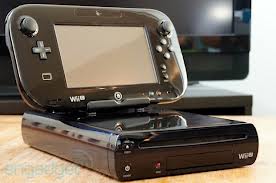
If I had to use one word to sum-up the GamePad, it would be: Big.

The Wii U is quite similar to its predecessor in terms of looks.  It’s fairly small and plain looking.  It still makes use of a sensor bar and Wii remotes and the main home screen remains mostly unchanged.  The big change obviously comes in the Wii U’s GamePad, a combination of a tablet and a standard controller.  It has four face buttons, twin analog sticks, and four shoulder buttons including two triggers.  It has a slot for a stylus as well as home, power, and TV buttons.  The TV button allows you to pair your GamePad with your television and use it as a second remote.  It’s functional and kind of neat for when you have your GamePad on your lap.  The controller is fairly large, but light.  It’s nearly the same size as the console itself.  It’s light feel is welcomed, but it does make the controller feel a bit cheap.  Shaking it causes the buttons to rattle, and the shoulder triggers are not analog meaning there’s no sensitivity to them (pushing it all the way in or slightly has the same in-game effect) which is a bit of a letdown.  The touchscreen though is large and quite nice with very good picture quality.  It doesn’t seem to be quite as good as the Playstation Vita’s OLED screen, but gets the job done.  It communicates with the Wii via wireless and infrared and there’s no noticeable lag.

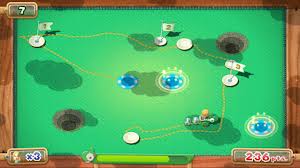
The Yoshi’s Fruit Cart game is one of the more interesting ones on Nintendo Land.

How the GamePad functions with the Wii U is obviously what will make or break the system.  Nintendo Land is the game that’s supposed to put the GamePad’s features front and center which makes it almost a required purchase for early adopters.  Nintendo Land is basically a collection of mini games each one based on a different Nintendo property.  Some of these IPs are pretty well known, like Zelda, while others not so much, such as Balloon Fight.  I’m not a big fan of mini game collections so I haven’t really got into Nintendo Land.  There is some cool stuff in there though.  The Ninja Battle game has you aiming your GamePad at the TV and sliding your finger towards the screen to toss ninja stars.  The Yoshi Cart game has you draw a line on the GamePad for your cart to follow to pick up fruit on the way while avoiding obstacles.  The catch is that the fruit and obstacles only appear on the TV screen while the GamePad is blank.  Games like the Zelda adventure are mostly straight forward.  The GamePad can be used to view the scenery by physically moving it, or the player can just look at the screen.  Nintendo Land seems to just scratch the surface without really showing anything revolutionary.  It will be interesting to see how Nintendo makes use of the GamePad in their classic franchises.

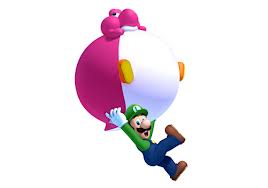
Baby Yoshi returns in NSMBU.

There’s no wondering when it comes to Mario though, since he has a new game at launch.  New Super Mario Bros. U is pretty similar to the previous entries in the series, GamePad or no GamePad.  I’m only a few levels deep, so I can’t say if it’s better or worse than the other entries in the series yet.  I can say that I like the Super Mario World inspired layout, and I like the inclusion of Yoshi even if he’s added as he was in the Wii game where he can only be used in certain levels.  I haven’t tried any multiplayer with it, so I can’t even comment really on the GamePad’s use there but in the single player game it’s really only used as a second screen.  Such a feature does have its uses as you don’t even need the television on to play the game, but it is disappointing that Nintendo couldn’t find a way to make use of its new toy with its flagship series.

It’s pretty nice that Nintendo has finally entered the HD era, but what isn’t nice is that they’ve also adopted a lot of what makes this era of gaming so frustrating.  The Wii U is the victim of the dreaded day one update, which means the second you plug in that new console it’s going to prompt you to update the operating system.  Ditto for both Nintendo Land and NSMBU.  The OS update took me well over an hour to update and install, while the Nintendo Land update took around a half an hour and NSMBU around 15 minutes.  That’s pretty damn annoying and one of the things that makes me long for the days of old.  Also complicating things, is the Wii U is the victim of severe loading times.  Changing screens takes around 15 seconds on the unit and booting up a game is far from seamless.  I don’t know if this is something that can be improved upon with future updates or if we’re just going to have to deal with it.

The Wii U has some things going for it, but it’s definitely not the revolution that the Wii was.  Playing the Wii for the first time felt incredibly fresh and new, while I didn’t get the same feeling when playing the Wii U.  It’s certainly fun, and there’s probably better software out there (like Scribblenauts Unlimited) for showing off the GamePad, but right now the console is far from a must buy.  Get it if you love Nintendo or want to have the latest thing, otherwise most will be fine waiting for the first big Nintendo game on it or price drop.


Wreck-It Ralph

Disney hasn’t made many movies recently that interested me in the least.  They tend to focus on obvious children’s movies now-a-days and leave the family genre to Pixar.  Which for the company is viable strategy since it owns Pixar and allows it to hit multiple demographics.  This makes Wreck-It Ralph an exception.  Wreck-It Ralph is the video game/non video game film from Disney Studios that is sure to appeal to adults who grew up in the 80’s and 90’s with its many references to classic games.  The film was unveiled in great detail at this year’s E3 and was one of the highlights of the show.  And even though I loved the film’s premise, I was concerned it would be a mostly shallow experience where most of the enjoyment for older viewers would come from cheap cameos of popular video game characters.  I’m happy to report that after seeing the film I was pleasantly surprised.

Perhaps I should have had more faith.  After all, John Lasseter is the one spear-heading Disney Studios these days and his track record from Pixar is stellar.  Directing the film is Rich Moore who is mostly known for his work with the Futurama franchise, a show that I adore (at least the first four seasons).  And the voice cast for Wreck-It Ralph is pretty good too with John C. Reilly as the voice of Ralph, Jane Lynch as Calhoun, and Jack McBrayer as Fix-It Felix Jr.  Other notable cast members include Sarah Silverman as Vanellope von Schweetz and Ed O’Neill as Mr. Litwak, the arcade owner.  I guess the only reason I was down on the film is because the trailers were pretty poor.  Outside of the group therapy session that everyone has probably seen by now, it looked like any old kid’s movie.  Instead though I found the writing to be clever, the video game references well placed, and a lot of the humor was derived from situations and expressions as opposed to simple jokes.  There are some corny jokes, such as the many that are derived from the name for one of the games, Hero’s Duty, but they’re seldom annoying.

An “in game” shot of Ralph and Felix from “Fix-It Felix Jr.”

The film opens with narration from the protagonist (antagonist?) of the film, Ralph himself.  We’re given the backstory to his game about how he’s the bad guy who smashes a building in a Donkey Kong fashion and it’s Fix-It Felix who, as the player, has to set everything right.  When he does, the tenants of the building Ralph was smashing bestow him with a medal and toss Ralph off the building into a pile of mud.  When the day is done and the arcade is closed, Ralph is left alone to live in the dump while Felix and the rest stay in the building and the other characters shower him with praise and pie.  Ralph isn’t just narrating this sequence, as it’s soon revealed he’s at a group meeting for video game bad guys.  Here is where we get our first round of cameos with notable characters being Zangief, Clyde, Bowser, and Kano, among others.  Ralph is tired of being a bad guy, while the group is designed to make bad guys feel good about being bad guys.  Ralph gets little out of confessing his desires to be the good guy and as everyone exits the meeting it’s revealed it was taking place in the center of a map from Pac-Man and everyone is animated with pixels, Pac-Man style.

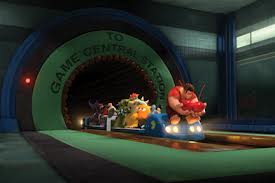
A look at the video game transportation system.

After the meeting, we’re shown how this whole video game world works.  The characters inhabit their own arcade cabinets and while people are playing them they’re expected to perform.  When the arcade is closed they’re free to come and go as they please.  They leave their games by traveling through the power chord into the surge protector, which is kind of like a giant train station.  It’s in these scenes where more on-screen cameos take place.  I don’t want to spoil anything so look for yourself and see who you can spot.  Sonic the Hedgehog makes an appearance as a public service announcement and it’s him that lets us know that if characters die while outside of their game they won’t re-spawn.  After the meeting, Ralph passes through the surge protector and back to his game, depressed.  The inhabitants of the apartment building are throwing a party celebrating the 30th anniversary of Fix-It Felix Jr. and Ralph, awkwardly, gets himself invited where everything goes wrong.  An exchange takes place between Ralph and Gene, one of the other characters, that results in Ralph decrying that he’ll prove he’s a good guy by winning a medal somehow.  If he does, Gene promises to let him move out of the dump and into the penthouse .

Ralph and Vanellope, who needs Ralph’s help to win a race so she can be added to the roster of selectable characters for her game.

The rest of the film involves Ralph going off in search of a medal.  He ends up in a shooter game where Lynch’s Calhoun comes from and then gets dumped into a candy-themed kart-racer where he meets Silverman’s Vanellope.  The movie turns into a tale of friendship, redemption, and corruption as everything is not what it seems in this candy land.  Vanellope ends up being a fun addition to the cast and Silverman seems to really enjoy voicing her.  She’s likely to be the favorite of many movie-goers.  Felix has to go out looking for Ralph when he doesn’t show for his game, which threatens to get it unplugged for good, and Calhoun has to follow him to the racer in chase of an alien bug that followed Ralph and threatens to ruin the game.  Other video game lyngo is introduced that should be fun for fans and there’s lots visual delights involving licensed candy and treats.

The film is likely to entertain mostly in its visuals.  It looks great and the video game centric stuff is a lot of fun.  The older games tend to have a pixellated quality to the animation while the modern games are super slick.  A lot of the characters from the older games animate in a jerky fashion too which helps set the older games apart from the newer ones.  Ralph and Felix are immune to this for some reason, though I suppose it has more to do with the designers thinking viewers would get sick of the quirk if the title character was animated in such a fashion.  There’s plenty of in jokes for gamers too, ranging from ones that almost everyone will get to more nuanced ones (a very famous “code” makes an appearance) that will alienate some, but not to their detriment.  I was really impressed with the lore crafted by the writers in setting the rules for this video game universe.  It’s so much fun that I would love to see more films set in it, but I’m not sure if this one would benefit from a direct sequel.

The film is fairly long for an animated one, coming up roughly 15 minutes shy of two hours , but it’s well-paced.  The plot stays interesting and the animation is top notch.  Above all, the writing is solid and it should keep kids and adults alike entertained.  Wreck-It Ralph is a winner and it’s easily the best video game movie ever made, even if it’s not based on an actual game.


Hype and the Wii U

Coming to a living room near you (11/18/12).

A lot of money goes into video game marketing each year.  The amount of money becomes seemingly astronomical when combined with how much is spent on video game coverage.  I suppose it’s not as prevalent as sports coverage, but there’s a lot of websites and magazine dedicated to video games out there and all of them are trying to keep us, the consumer, interested in the product.

In general, they’re pretty good at it.  There have been lots of much hyped titles in my lifetime as a gamer.   These are the kinds of games that get everybody is talking about before they even come out.  I remember being excited about the prospect of a sidekick for Sonic the Hedgehog when first learning about the existence of Miles “Tails” Prower in Sonic 2.  Anytime there was a big commercial property making the jump to games people would get excited, such as with the Teenage Mutant Ninja Turtles, even if these games usually turned out poor.

When I think back on these titles there are three that immediately come to mind as the biggest titles, the most hyped of the hyped:  Super Mario Bros 3, Final Fantasy VII, and Metal Gear Solid 2.

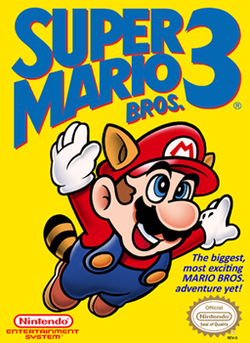
I can still remember the day I bought this game and how excited I was to finally have it!

Super Mario Bros. 3 is probably the most highly anticipated game of all-time.  It was insane.  Everyone couldn’t wait to see it.  And since this was before such video game coverage was as big as it is today, a lot of people didn’t see anything from the game until they actually played it.  Unless, that is, if you saw The Wizard which had a climax that was basically a commercial for the game.  On the school playground, my friends and I would talk about all the rumors we heard about the game, the biggest being that Mario would fly!  I don’t think any of us could have guessed it would be via a raccoon tail but when we found out we didn’t care to be bothered by confusion, we were just psyched to play it.

Final Fantasy VII was hyped for a different reason.  Even though the Playstation had been on the market for over a year, a lot of people still felt like we weren’t really experiencing all the Playstation could do until Final Fantasy VII came out.  Television ads bombarded us with commercials featuring mostly FMV sequences from the game that were like nothing we had ever seen from a video game.  It was also the follow-up to Final Fantasy VI (III in the US) which was a much beloved game by all who enjoyed it.  There was some controversy too since the franchise was moving from Nintendo to Sony which just made it seem more exciting.  When it was announced the a demo of the game would be release with Tobal No. 1 it basically guaranteed that title would move half a million units, at the very least.

Metal Gear Solid kind of snuck up on gamers in 1998.  The Metal Gear series was enjoyed by most of those who experienced it, but it wasn’t very popular.  When MGS came out it really blew people away with its presentation and innovative use of the Playstation console’s features.  Solid Snake was a man’s man that appealed to most gamers, and the experience is one of the most memorable of its era.  The sequel promised to deliver the same experience, but with more realism.  I remember speculating with friends upon reading about the sequel and how Snake could hide the bodies of his foes and such and wondering how far Konami would take it.  Would we have to mop up the blood?  Make sure they didn’t start to smell?  Like Final Fantasy VII, a demo was packaged with a lesser title before release (Zone of the Enders) which would help drive sales of the unknown game.  It was the unveil trailer at E3 though that really cemented this one as a must have when Hideo Kojima showed off a Hollywood style trailer featuring Snake jumping off the George Washington bridge.

I still get chills when I watch the opening to this game.

All three of these games were eagerly anticipated by the masses, and all three did something a lot of hyped titles fail to do:  they delivered.  Some may quibble with how well they did.  MGS2 is famous for its inclusion of the much maligned Raiden character, and while he was unloved by most, I’ve never heard anyone call it a bad game because of that.  Final Fantasy VII‘s toughest critics are from those who like Final Fantasy VI more, there’s no shame in being a runner-up to that title though.  Super Mario Bros. 3, on the other hand, is nothing but loved.  It’s one of the all-time greats and a seemingly flawless experience.

Nintendo will now try to stir up hype for its new system, the Wii U.  The hype machine started over a year ago when the console was first unveiled.  It’s basically a powered-up Wii with a tablet controller.  The system won’t be more powerful, or perhaps not even quite as powerful, as the current Xbox 360 or Playstation 3, but that will make it significantly stronger than the Wii.  The tablet controller is a curiosity, one that Nintendo is likely going to have to lead the way on in order to encourage other developers to do something unique with it.

The Wii was quite the hit when it first arrived in 2006.  People were really intrigued by the motion-based controls and were willing to overlook the lackluster horsepower (partly because the system was significantly cheaper than the others out there) and poor online features.  There was quite a bit of hype for it and so far I’m not getting the sense that people are nearly as excited about the Wii U.  The gaming crowd will support it, for the most part, but I don’t think it’s going to be the focus of a South Park episode.  I think it’s partly due to the tablet controller, the main selling point, and consumer confusion regarding it.  Just how much can we expect it to add to the gameplay experience? We’re all already playing touch based games on our phones and do we really need a touch screen embedded in a controller?  Is there anything this system is going to do that a PS3 and Vita can’t?

Must have device? Only time will tell.

In response to that last question, probably not.  However, a PS3 plus a Vita is a pretty heavy investment so few, if any, developers are actually going to develop software that really makes use of both in tandem(especially when considering how poorly the Vita has sold).  Wii U developers get the benefit of knowing their audience has this intriguing controller and will have to incorporate it into their games.  It’s just a matter of how creative they get.  So far, it sounds like many third-party developers are just reserving the tablet screen for menu interactions or maps, which is pretty lame.  The tablet is only good for a few hours, and because Nintendo is expecting a shortage of them, they won’t be sold individually for awhile which means only one tablet per household.  It’s likely most games won’t be designed to incorporate two for the time-being as a result.

Software wise, the system is lacking a killer app at launch.  Or at least, that’s how it appears.  Perhaps as the early reviews start coming in we’ll find there is a must have game in there, but for now there’s Mario.  New Super Mario Bros. Wii U is the big first-party title arriving at launch.  Expect more of the same from this familiar franchise.  The only tablet integration is in multi-player where the tablet player can manipulate the levels and cause trouble for those playing.  Interesting, but nothing that begs to be tried.  There is a new Pikmin on the way, which may be the kind of game that lets Nintendo show off, and there’s bound to be a Zelda and Metroid title somewhere down the road.

When it comes to the Wii U I am intrigued, but not hyped in the same way I was for the original Wii. Despite that, I still have a console reserved for launch.  I can’t not play; it’s a compulsion.  It’s Nintendo, and its track record is too strong to ignore.  Even though I’m not that excited, I’m assured of having a good time.  That said, it wouldn’t bother me if Nintendo did get me hyped for this thing.  Make the next month go by slowly!


Reactions to IGN’s Top 100 RPGs of All Time

All time lists are tough to compile and ever tougher to get everyone to agree on.  It’s impossible.  Sometimes there is a consensus number 1, but getting there is often the tricky part.  What make the item listed at #48 better than #49?  Is there even a difference?

I like to make top 10 lists of various things I like.  It’s fun to do, but they’re never static.  Last year I listed my top 10 favorite albums and if I were to do it again this year it would look different.  Some albums will always be there for me, possibly until my end of days, but most of them are interchangeable.  It depends on what I’m most interested in at the time, be it a specific band or genre.  I find it’s more appropriate to just make a group of 10 or so favorites, like I’ve done with my greatest games feature.  It eliminates the subjectivity of assigning a numerical rank because a lot of the titles in the feature are hard to compare to one another.

And even though I have sympathy for anyone trying to compile a list of the greatest anything of all time, it’s not going to stop me from criticizing IGN for it’s recently completed Top 100 RPGs of All Time.  I’ve a pretty big fan of the RPG genre of video games, be they from the Far East or Western, PC or console, real-time or turn-based, it’s a very versatile and often rewarding genre of games.  IGNs list contains most of the classics and many modern titles as well.  They did stay away from Zelda, feeling that’s more of an adventure title, though they did include Secret of Mana.  It’s a fine line at times.  I’m not going to go thru all 100, just high-light the ones that jumped out at me for either positive or negative reasons.

#99 Lunar:  Eternal Blue – It’s hard to quibble with the 99th ranked title, but I’m going to.  Eternal Blue is the sequel to Silver Star Story and both were released on the Sega CD and then re-released on the Playstation.  SSS is ranked #42, and it’s definitely the superior title in the franchise, though even that might be too high.  Lunar games are turn-based that rely on charm and production design.  They work, for the most part, and SSS deserves to be on this list for setting a new standard in production values alone with its full motion video and voice acting.  Eternal Blue though was mostly retread and the charm didn’t work as well.  Not a bad game, but when you consider that Final Fantasy V, Secret of Evermore, or the original Breath of Fire didn’t even make this list, well that just doesn’t work for me.

#89 Fallout:  New Vegas – Really?  Ehh, I didn’t think much of this title.  It was buggy and felt more like an expansion to Fallout 3 than its own game.  It’s #89 though, so it’s kind of hard to get too bent out of shape over it.

#88 Final Fantasy IX – Did you know that FFIX is the 5th highest ranked game for the Playstation on gamerankings.com?  It’s a great throw-back title for the venerable series, and while it doesn’t reinvent the wheel, it’s a lot of fun to experience.  It deserves better than #88!

If you’ve got 100 hours to kill and a love for tactical RPGs, then Front Mission 3 is for you!

#75 Front Mission 3 – I have no problem with this one being here.  I’ve actually never played it outside of a demo that came with another Square title during the PSX era.  I’ve always wanted to play it, but the 100 hour commitment supposedly required to finish it always scared me away.  It’s basically an RTS with mechs.  Sounds sweet!

#67 Final Fantasy Tactics Advance – I love the original Final Fantasy Tactics, but this one?  Eww.  Square felt for some reason it had to dumb down the game since it was on a Nintendo handheld and the end result was a game I couldn’t finish.  Tactics A2 for the DS was a better game, though I’m not sure it’s deserving of being on this list but they could have probably made room.

#66 Mario & Luigi: Partners in Time – I like the Mario & Luigi series.  It’s pretty fun and a nice off-beat kind of RPG, but Partners in Time is my least favorite.  I found it annoying switching between the babies and the regular Mario Bros. and the humor wasn’t as fun as the original.  It’s the lone rep from this series, and if IGN was only going to pick one I think they should have went with the first title for the Gameboy Advance.

#61 Chrono Cross – Poor Chrono Cross continues to get overlooked.

#58 Freedom Force – I was kind of surprised to see this one included.  It’s an action heavy RPG for the PC that is kind of like Diablo, without loot and with superheroes.  It’s a cool game, but one I found forgettable.  I never really thought of it as an RPG either; Warcraft III is arguable more of an RPG than this title.  If IGN wants to include it, I’m okay with it, but not this high.

#47 Xenogears – I love this game.  I think it should be higher, though I concede I love it more than most people do.  Even taking that into account, it should still be in the Top 30.

#41 Xenoblade Chronicles – I have this game, played it once, and have no opinion on it.  I’m just surprised it’s higher than Xenogears.  I guess I need to get back to playing it.

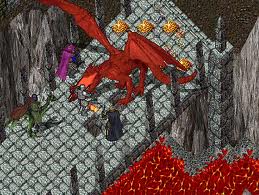
MMORPGs haven’t changed a whole lot since Ultima Online, but they definitely look better.

#33 Ultima Online – This is where IGN and I are going to have to agree or disagree.  The Ultima series is worthy of inclusion as it’s one of the more influential franchises in the genre, especially on the PC.  Online RPGs though, now more commonly known as MMORPGs, are just not my thing.  I consider that a separate genre.  There’s just little depth.  Developers took the whole looting aspect of RPGs and made an entire game out of it.  I just find them boring.  I like some narrative structure in my games, and it doesn’t help that most are just hack and slash games.  So year, I wouldn’t include many on this list, and if I did, they’d be on the other side of 50.

#21 Super Mario RPG: Legend of the Seven Stars – I have no problems with this ranking.  It’s actually perfect, just outside the top 20.  Good job, IGN!

#20 EverQuest – See Ultima Online.  I suppose this title deserves inclusion for being the pioneer of the MMORP as we know it, and World of Warcraft should get a mention, but not in the top 20.  That’s an insult.

#16 Diablo – Really?  Number 16?!  Better than Ogre Battle, Xenogears, Skies of Arcadia, Vagrant Story, Chrono Cross, Baldur’s Gate etc?!  Diablo was a lot of fun when it came out, but it was so derivative.  Just go around hacking-up skeletons and collecting gold.  Rinse and repeat.  Diablo II should be on this list, and that should be the lone rep for this franchise…

#6 Diablo II …and it should not be this high!  It’s Diablo, but bigger and with additional character classes.  On no planet is this the sixth best RPG of all-time.

#14 Final Fantasy Tactics – Since it’s essentially Ogre Battle with a Final Fantasy coat of paint, one could argue it should not be ranked higher than the best Ogre Battle titles, but I don’t mind.  Great game and a solid ranking.

Over the years I’ve never heard anyone say a bad thing about Planescape: Torment, but I’ve yet to play it.

#13 Planescape:  Torment – I’ve never played this game, but always heard good things.  I really should track down a copy one day while I still have a computer with an OS that can play it.

#11 Final Fantasy VII – This has become one of the more controversial titles when any outlet compiles one of these lists.  I consider it my favorite Final Fantasy title, but the gap between this one and VI is almost non-existent.  It’s splitting hairs for me.  A lot of people have a hatred for this title because it was the point where a lot of people jumped on the RPG bandwagon.  I’m okay with IGN putting VI ahead of it, but this one should have still found its way into the top 10.

#7 The Elder Scrolls V:  Skyrim – Even though Skyrim is still a relatively young title I feel pretty comfortable saying it’s the best of its niche.  Bethesda’s titles have come to represent the western RPG in this modern time taking over the point and click style of the Bioware titles.  Even though my experience with Skyrim was fraught with horrible glitches and bugs (really, the game should not have been released for PS3 in the state it was in meaning I’ll never buy a Bethesda title at launch again until I know it’s safe to do so) the game itself was a true joy to experience.  I just envy those who had it on a suped-up PC or bought it long after the various patches fixed everything.

#4 Pokemon Red/Blue – I struggle with where to rank Pokemon on this list.  On hand, it’s insanely addicting and a clever concept.  On the other, it’s really simple and doesn’t require a great deal of skill to master.  I think it should be on this list and definitely top 50 and maybe top 25, but #4 is just too high.

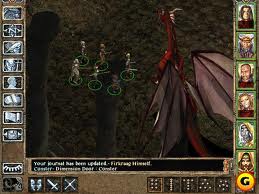
I feel like some people are starting to forget just how awesome the Baldur’s Gate series was. It certainly wipes with the floor with Dragon Age.

#3 Baldur’s Gate II:  Shadows of Amn – An almost forgotten title, or so it feels like at times.  I think it’s because Bioware has become known more for Knights of the Old Republic and Mass Effect in recent years, but this is still their best game.  It’s a great tactical RPG that makes excellent use of the D&D license.  The only criticism I have of it is that it’s perhaps too faithful to the D&D license so there’s some tedium involved (time to rest so I can re-charge my spells!).  And with the game being as massive as it is, that tedium can become real time-consuming.

#2 Chrono Trigger – I knew what the top 2 would be, I just wasn’t certain of the order.  I think IGN mostly gets it right though.  Chrono Trigger was a breath of fresh air when it came out late in the life of the SNES, and it holds up really well today.  I’m on record as saying I actually prefer the sequel, Chrono Cross, but that’s splitting hairs.

#1 Final Fantasy VI – A pretty obvious and easy selection.  I think it’s debatable which game in the Final Fantasy main series is the best, but once you factor in all of the new concepts (mostly thematic in nature) introduced by Vi that became hallmarks of the genre for many games to come it becomes a much easier selection.  Final Fantasy VI gave gamers a grown-up story with a huge cast of characters and one of the most memorable villains in gaming history.  Because of that it’s become the definitive Japanese RPG and is not likely to ever be dethroned.

IGN ended up doing a pretty decent job with this list.  Yeah, the MMORPGs kind of irk me and are too well represented and the Diablo stuff makes my head hurt (I might come across as a Diablo hater, but really I’m not.  They’re good titles for what they are, but they’re far too simplistic in nature to rank amongst the genre’s elite) but for the most part the best titles are represented.  It’s impossible to get this kind of thing right but I had fun killing time going thru the list and I suppose that’s all it really intends to do.


New Super Mario Bros. 2

New Super Mario Bros. 2 (2012)

For awhile it seemed like Nintendo had adopted a one Mario title per console policy.  Back on the original Nintendo when Mario was first making a name for himself we were treated to several wonderful titles that lead into the launch of the Super Nintendo which gave us Super Mario World.  After that though, Mario stopped showing up as frequently in his own adventures.  Sure he’d pop up here and there to play some sports and race some go-karts, but he was held to one lone outing on the Super Nintendo, Nintendo 64, and the Gamecube.  And it wasn’t like he was taking his talents to the handhelds, after Super Mario Land 2 he pretty much stopped showing up there as well.  The Gameboy Color and the Gameboy Advance didn’t even have a Super Mario Bros. game of their own, just ports of the old ones.

The Nintendo DS looked to be heading in the same direction when it launched alongside a port of Super Mario 64.  It was around that time that Nintendo had really fallen back in terms of market share, losing considerable ground to Sony in its native Japan and lagging behind both Sony and Microsoft in other parts of the world.  Nintendo needed a boost, so they turned to their old reliable mascot.  They decided to appeal to their older gamers through nostalgia and crafted a game that was as much about entertaining the gamer as it was about being a tribute to the original Super Mario Bros.  That game ended up being New Super Mario Bros. and when it arrived on the scene in 2006 for the DS gamers and critics alike were taken back to the good old days where Mario hopped and bopped his way through a level and found a flag pole at the end.  New Super Mario Bros. quickly became the best-selling title on the DS as the handheld took off.  The Nintendo Wii arrived later that year and really helped boost Nintendo’s popularity.  For that console, three traditional Mario games have been released to date which is quite a change in direction.  The Wii was given the Galaxy series as well as its own entry in the New Super Mario Bros. franchise.  The successor to the Wii, the Wii U, is expected to launch this fall with its own New Super Mario Bros. game and the Nintendo 3DS just received New Super Mario Bros. 2 this past Sunday.

For the Nintendo 3DS, New Super Mario Bros. 2 is the second dedicated Mario title following last fall’s Super Mario 3D Land.  3D Land was tasked with bringing Mario into stereoscopic 3D.  It retained a lot of the 2D Mario gameplay mechanics, but instead of Mario only being able to fall off 2 sides of a platform, he can fall off all 4!  Keeping the basic gameplay to something akin to the 2D titles kept gamer’s in their comfort zone while positioning the camera to acknowledge that this was indeed a fully realized world that Mario inhabited allowed for Nintendo to make better use of the 3D effect.  It worked quite well and 3D Land ended up being well-received.  It’s probably already the best game on the 3DS and it hasn’t been challenged all that seriously since its release.

Mario’s new power-up: Pimp Mario.

New Super Mario Bros. 2 has no such gimmicks to sell.  It exists as simply the next game in the franchise.  It doesn’t seem to care about the system’s 3D capabilities and the game actually looks awful with 3D enabled.  And if we needed a reminder that this game represented a piece of the Nintendo cash-cow there’s a new emphasis on coin-collecting this time around with the ultimate goal, or rather the challenge put forth by Nintendo, being to collect one million coins.  In previous titles, the act of coin-collecting was just an impulse and a way to “buy” additional lives for Mario.  It’s no secret that recent games have sort of made a mockery of this.  Even without making every effort to obtain every coin on-screen most gamers have had no trouble racking up hundreds of extra lives for Mario as the games have become progressively easier.

To better emphasize this approach Nintendo has given Mario a new power-up:  the gold flower.  This power-up functions like the regular fire flower power up only now Mario is gold and his fireballs turn enemies and brick blocks into coins.  The fireballs have more density to them as well and pass right through enemies to take out whatever is in their path.  It’s the lone new power-up and it doesn’t show up a whole lot in the regular game unless one seeks it out via the various Toad Houses.  It is featured prominently in the new Coin Rush mode that gives the player a randomized trio of levels to rush through and collect as many coins as possible.  This mode is the one that works in conjunction with Nintendo’s street pass feature and gamers can challenge one another to beat their high score just by walking passed each other with a street pass enabled 3DS in pocket.  The mode is okay, and one million coins is quite a challenge (most will have roughly 40,000 after beating the game, so you have your work cut out for you should you attempt the million mark), but it adds nothing to the gameplay.

The original NSMB was not a very ambitious title.  In fact, it seemed intentionally basic as it tried to harken back to the original SMB.  The levels were straight-forward and Mario’s only plentiful power-ups were the fire flower and star.  There were a couple of new ones, but they appeared sparingly and almost seemed like they were included just for fun.  As a kid, I can remember discussing with other kids how cool it be if Mario could get even bigger by consuming more mushrooms.  Nintendo must have heard those conversations as it introduced the mega mushroom which made Mario the size of the screen and blessed him with destructive powers on par with Godzilla.  To pair with this, Nintendo introduced the mini mushroom which shrunk Mario down to miniscule size and allowed him to walk on water and enter pipes too small for normal Mario.  There was also a turtle shell power-up that appeared in some stages though it was mostly a dud.  It gave Mario some protection in a ducking position and allowed him to slide into enemies.  It certainly wasn’t as imaginative as the super leaf.  The mini mushroom ended up being the best of the three as it opened up new gameplay possibilities the others really didn’t.  Some critics seemed to really love NSMB, and while I definitely had a ton of fun with it, I never once thought of it as being superior to Mario’s best.  I actually thought it might end up being a one and done kind of thing, but it made so much money for Nintendo that proved impossible.

I was hoping the sequels would be more ambitious, but the first sequel really didn’t add much.  NSMBWii added co-op play and a couple of new power-ups like the unwieldy penguin suit and the propeller suit.  It was a big game, and a fun one, but it seems Nintendo is only really interested in imitating the old games and not really pushing things.  Which brings me back to New Super Mario Bros. 2.

The Koopalings, or Koopa Kids, are back and they’ve even brought with them an old toy!

NSMB2 borrows a page from Super Mario 3D Land and resurrects an old favorite, this time the super leaf.  The leaf was present in 3D Land but in that game it bestowed Mario with a tanooki suit.  This time it’s returned to its old function which is to give Mario raccoon ears and a tail and allows him to fly, just as it did in Super Mario Bros. 3.  The mega mushroom and mini mushroom are here as well, but their presence is more like a cameo than anything as they show up quite sparingly.  Gameplay wise, it’s the same old thing as Mario goes from world to world, level to level, combating Bowser and trying to save the princess.  The Koopalings return and Mario will have to topple one at the end of each of the game’s five levels before taking on Bowser at the end of world six.  That’s not a typo.  There are only six worlds this time around when traditionally there’s always been eight.  There are secret worlds but having only six main ones is kind of a letdown.  The secret worlds are the Mushroom, Flower, and Star worlds.  The Mushroom and Flower worlds can be accessed by finding secret exits in one of the levels which lead to warp canons.  Instead of the canons firing Mario (or Luigi, don’t want to forget about him!) to the world it fires him through a special stage.  These stages are brief but remind me of Sonic the Hedgehog as Mario is forced to run full speed.  Mario has to time his jumps perfectly and bounce off of enemies to clear gaps.  Or he can use a super leaf and mostly fly over the whole thing.

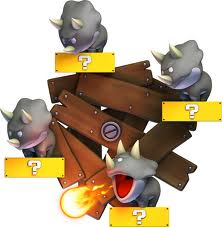
These canon levels end up being some of the game’s most challenging, because the rest is a cake-walk.  Super Mario 3D Land was pretty easy and I had over a hundred extra lives when I beat it, but in this one I had over 400.  It’s just not a hard game.  At all.  The boss encounters are particularly pathetic.  There’s a castle and a fortress in each world.  In the fortress, Super Mario World’s Reznor returns as the boss there.  If you forgot, Reznor is actually a group of fire-breathing dinosaurs on a big wheel contraption.  In SMW, Mario would have to bop all four off their place on the wheel while the ground he stood on was destroyed.  Reznor gets a bit more inventive in this one as some fortresses feature dual wheels, but the floor is much slower to deteriorate making the encounters even easier than they were in SMW.  The boss fights with the Koopalings are at least more imaginative than they were in SMW, but again, they’re probably easier too.  None of them are particularly memorable and I certainly never died while taking them on.  The final encounter with Bowser can be counted on to up the difficulty though, right?  Ehh, not really.  It’s two parts, and the first part is just a new take on the original Bowser boss fight and exists merely as a nod to SMB.  The second part is where it’s supposed to get hard, but without spoiling anything, it’s not.  After beating the six words plus two secret ones, the Star World is opened.  I thought maybe the Star World would be like the Special World from SMB and feature the game’s biggest challenges but it really doesn’t.  The levels are shockingly basic though the final castle is noticeably more challenging than any other level.  At the end of that castle gamers will encounter Dry Bowser, a skeletal version of the terrible turtle, but the mechanics of the fight are exactly the same as they were before.

Remember these guys? They’re back too.

It’s been established that the game is exceptionally easy and not particularly long, but that doesn’t mean it isn’t any fun.  I’ve had a pretty good time steering Mario along his course to rescue the princess.  One thing the NSMB series may have over the likes of SMB3 is in its controls.  Mario handles like a dream which may be one reason why these games seem so much easier than the old ones.  It’s much easier to stop Mario from sliding off a platform or to time his jumps precisely.  He has the perfect amount of weight and very rarely did I die and found myself blaming the controls.  The star coins scattered through-out the levels present a fun challenge.  They’re often not cleverly hidden but they’re also not always in plain sight.  They’re definitely easier to obtain in this game than some of the past ones.  In other games there’s usually a handful that would kill me over and over as I tried to snag it but there wasn’t a single one in this game that I had trouble with.

At the end of the day, I’m left to ponder the question at what point do I expect something more?  I’ve always had fun playing these games in the New Super Mario Bros. franchise but I don’t get the sense that Nintendo takes them entirely serious.  It’s been six years and three titles, but at no point have any of these games approached the heights of Super Mario Bros. 3 or Super Mario World.  And it’s not that I expect them to, as those are two of the greatest games ever made, but it’s just I don’t feel like Nintendo is even trying to top them.  I bought NSMB2 last Sunday and have since invested 12 hours into it and have accomplished everything.  I beat every level and acquired every star coin.  I could just play it over and over until I get a million coins, but I think I’ll hate the game if I play it that much.  There’s supposedly going to be some downloadable content in the future, but I don’t know how I feel about that.  I feel Nintendo already short-changed us on the levels in the game, so paying for more doesn’t sit well with me.  I’ll reserve judgement though for a later date.  Ultimately, anyone who buys this game knows what they’re buying.  This franchise is if anything consistent and it will entertain you, just don’t expect it to do so for very long or to offer much challenge.


Greatest Games: Chrono Cross

Chrono Cross (1999)

I have been intentionally avoiding the topic of video games of late.  I felt like this blog was getting too video game oriented when it’s meant to capture more.  I think the break has been long enough and so I return to my Greatest Games feature with the latest addition, Squaresoft’s Playstation masterpiece:  Chrono Cross.

Chrono Cross was burdened by hype from the get-go.  One of the most fondly remembered games from the 16 bit era is Square’s Chrono Trigger, the time-traveling RPG that won over many gamers in 1995.  It came late in the Super Nintendo lifecycle and at a time when the RPG was starting to get a bit stale.  It changed things up though thru it’s then innovative battle system and time traveling dynamic which made the game feel extremely fresh.  Those who played it loved it, and those who found out about it much later felt like they really missed out driving the after-market prices of SNES game carts to unexpected heights.  Squaresoft would wisely capitalize on this by re-releasing Chrono Trigger for the Playstation with Final Fantasy IV as part of the Final Fantasy Chronicles compilation.  They would also develop and release a sequel in 1999 called Chrono Cross.

By the time Chrono Cross arrived the fans who had missed out on Chrono Trigger had caught on and expectations were high.  The game was well met by critics when first released, becoming one of only seven titles reviewed by Gamespot to receive a perfect score.  Other outlets were eager to praise the title and it was one of the best reviewed games of 1999 and is still the 8th best reviewed title for the Playstation behind games such as Metal Gear Solid and Gran Turismo 2 and ahead of genre-mate Final Fantasy VII.  Even with all of that praise though, it still feels like Chrono Cross gets overshadowed by the game it followed.  Chrono Trigger has been re-released numerous times for both home consoles and portables.  Chrono Cross, on the other hand, has never been re-released in the US and only recently was made available on the Playstation Network in Japan.  The game sold pretty well, but it didn’t move a real noteworthy amount of units (though most RPG’s don’t).  It feels like the game is still fighting for recognition, even when few are there to put it down.

Serge, the game’s primary protagonist.

Chrono Cross is my preferred game of the Chrono series.  That’s not a knock against Chrono Trigger, a truly wonderful and memorable game, but Cross is just a tiny bit better.  The scope of the game is enormous.  There are over 45 characters for the player to recruit and use and a select few have hidden special moves that can be used in conjunction with other characters.  The game encourages repeat playings as it’s impossible to recruit all of the game’s characters in one play-through.  The game’s plot does not take the player across millions of years but it does include parallel worlds.  In an interesting twist, the game’s main character is alive in one world but died as a small child in the other.  In sort of typical Japanese RPG plot-lines, nothing is what it seems and things do get a bit convoluted by the game’s end but it’s an engrossing and worthwhile story to experience.

The gameplay is similar to Chrono Trigger and other Japanese RPG’s, but it is different in several key areas.  Chrono Cross felt remarkably progressive when it first came out as the game did away with genre staples such as experience points and random encounters.  Instead of experience points, characters get progressively better after performing actions in battle up to a certain point.  There’s a cap placed on the player that can only be extended by defeating a boss character and gaining a “star.”  There’s also no magic points, or mana, and these stars serve as a fuel of sorts to summon creatures to aid in battle.  Magic and special abilities are all labeled as elements, and they are one-time use in battle.  If you want your character to cast Aqua Ball twice you simply equip the spell twice.  Each character has an element grid that grows with the character.  Characters have their own unique abilities at certain levels and are free to equip anything else.

A look at the game’s battle scenario. Not bad for a game that’s over 10 years old!

To go along with this element system is a color coded element field.  The field exists on every battle and is comprised of three parts.  There are six element colors that can affect the field and using any of the six adds it to the field and bumps one off.  For example, if three consecutive red elements are used between the player and enemy, then the whole field is red.  Each character has an innate elemental color associated with him or her which makes them more proficient with that color and weak to its opposite.  When the field is in that character’s favor, that character gets a boost in stats and all elements of that color are more potent.

Standard attacks use attack points.  At the onset of a turn, a character has seven stamina points to use.  Using any kind of element uses up seven while physical attacks are tiered and consume 1, 2, or 3 points.  The player can use all seven up on physical attacks or elements.  Elements can be used at any time, but if the player only has two stamina points remaining then he’ll end that turn with negative 5 stamina points which will likely impact the character’s next turn.  It becomes a management tool and sometimes the player will be tempted to go all out and exhaust his or her characters in an effort to deal a killing blow.  And since the element field is affected by everyone who uses elements it affects how the player uses all of the characters in the party (three total).

The battle system encourages tactical thinking, more so than most Final Fantasy games.  And because the roster of available characters is so large it gives the player lots of freedom to swap characters in and out of the main party.  Usually who’s in it will be determined by the environment as it’s good to have an opposite aligned character to deal out major damage, though going too heavy on the opposite element means your characters are more susceptible to the enemies as well.  These kinds of trade-offs are not foreign to gamers, but it works to great effect in Chrono Cross and keeps even the more mundane enemy encounters amusing.

If you’re a fan of the genre and never played this one then you’re really missing out.

As I mentioned earlier, the plot can get a bit murky but overall it’s pretty fun and will keep most gamers entertained.  The game pulls the old switcheroo midway through by having the main character change rather drastically which gives the game a new feel.  The art direction and visuals were quite stunning in 1999 and hold up surprisingly well today.  A lot of games from the Playstation era cannot say the same.  There’s many lush environments, especially early in the game, and there’s liberal use of FMV for the more spectacular moments.  The audio is also fantastic.  Sure the characters don’t talk and it’s a pretty text-heavy title, but the soundtrack is exceptional and one of the best of all time.  Above all, it’s just a fun game.  This is the Japanese RPG perfected and the genre’s popularity maybe well behind us at this point but it’s still fun to go back and relive the classics.  New games are great and all, but there’s nothing like firing up an old classic and if you’re going to play an older RPG, Chrono Cross is the one to reach for.


The 3DS XL: Nintendo’s Imperfect Update

Nintendo has an odd relationship when it comes to portable gaming devices.  The company has experienced immense success and great failure at the same time.  And even though the company rarely is ahead of the technological curve when it comes to its hardware, it still manages to dominate in sales.  The portable section of Nintendo’s portfolio is one the company can rely on to almost always turn a profit.  The only true failure was the Virtual Boy, a complete and total misfire.  The 3DS had a failed launch, but since a dramatic price cut and better software releases, the handheld has surged.  It may not have been profitable in 2011, but it almost certainly will be in 2012.

Nintendo’s approach to its main handheld units has been fairly consistent.  The original Game Boy was launched in 1989 and was Nintendo’s first true portable console.  The company had already made a name for itself in portable stand-alone games under the Game & Watch label, but the Game Boy operated like a home console and could switch out the software whenever the user wished.  The unit was fairly powerful for the time, though not on par with home console devices.  It had the same button layout as Nintendo’s home console, which made adapting games easy once accounting for the reduced tech.  Many companies tried to usurp the Game Boy as the market leader in portable gaming devices and all took the approach of releasing more powerful, color based systems.  Nintendo’s strategy of sacrificing power for better battery consumption proved correct as the Game Boy lasted for the entire duration of the 90’s while more powerful handhelds like the Game Gear and Lynx faded away (though the Game Gear was moderately successful in its own right, but sales for it amounted to about 1/10 of Game Boy’s).

In 1996 Nintendo introduced a new Game Boy to market, the Game Boy Pocket.  It was the same hardware, just shrunk down to a more portable style that required fewer batteries to operate.  This was the first major revision for the Game Boy, and the second would come in 1998 with the introduction of the long-awaited Game Boy Color.  The Game Boy Color did have the distinction of being slightly more powerful than the old hardware, but not by leaps and bounds.  Some games designed for it would not work on older Game Boys, making it arguably its own distinct handheld and not an actual revision.

The first revision to the Game Boy, the Game Boy Pocket, made the device more portable and more economical.

The Game Boy’s first true successor was the Game Boy Advance which was released in 2001.  While all previous Game Boys had a vertical format, the GBA had a horizontal one similar to the Game Gear.  It had a 32-bit processor but a lack of any 3D capabilities made it more comparable to a Super Nintendo than say a Playstation.  Aside from the enhanced tech capabilities, the only other major addition was the inclusion of two shoulder buttons.  Many fans were disappointed that Nintendo didn’t add two additional face buttons which would have made SNES to GBA ports near perfect.  Like the original Game Boy, the GBA would receive multiple revisions.  The first was the GBA SP, which made the GBA resemble an old Game Boy Pocket but with a hinge in the middle so it could be folded and stored away to protect the screen (and make it more portable).  The major addition to the SP though was the inclusion of a front-light, something gamers had been demanding for over a decade.  No additional buttons were added though, and the new design was less comfortable than the original but the inclusion of the light, rechargeable battery, and screen protection made it superior.  A third revision would follow in 2005, the GBA Micro.  The Micro removed the backwards compatibility of the SP with original Game Boy cartridges, but shrunk the whole thing into a tiny size that resembled a Famicom/NES controller.  The unit was also back-lit and provided a slightly better picture, though at a reduced size.   At the same time, a new GBA SP was released that had a back-lit screen instead of a front-lit, which was much more effective.  This was more of a running change than a true revision, but worth noting.

The Nintendo DS followed the GBA in 2005 and has been no stranger to revisions.  The original was bulky and unattractive, and a new model was released in 2006.  Dubbed the DS Lite, it was a more streamlined take on the console.  The DSi would follow the Lite and add better networking capabilities, an SD card slot, camera, and slightly larger screen.  The final revision to the DS came in the form of the DSi XL, just an over-sized DSi.

Which brings me to the 3DS.  When the 3DS was launched last year most gamers assumed a revision was inevitable.  I was a day one purchaser of the unit, and while I’ve enjoyed it quite a bit, there’s no denying there are some obvious short-comings that could be addressed with a future update.  The system is designed just like a DS, but Nintendo made some odd choices with the unit that do cause minor problems.  For one, the bottom screen is smaller than the top.  This isn’t necessarily an issue in and of itself, but there’s a raised border around the bottom screen that causes lines to form on the top screen when the unit is closed.  Mine hasn’t caused any permanent damage, but it is annoying to have to clean the top screen every time I use it.  The circle pad causes a similar issue on the top piece, but not on the screen thankfully.  And ever since the unit’s reveal, gamers have yearned for a second circle pad, which was addressed by Nintendo with the Circle Pad Pro attachment.  The attachment not only adds the desired second circle pad, but also adds two additional shoulder buttons to the unit putting it on par with home console controllers.  The attachment works, but is bulky as Hell and using the face buttons with it is some-what cumbersome.  The overall power of the unit, particularly the screen resolution, is not very impressive either.  Especially when compared with the more recently released Playstation Vita.

Most expected Nintendo to unveil a new 3DS at E3 this year.  Early reports out of China before the show seemed to confirm this, but come show-time nothing was seen.  In a questionable move, Nintendo chose to reveal the 3DS XL after E3 in an online developer conference.  The 3DS XL is the expected update to the 3DS, but is it the update gamers had been looking forward to?  In short:  No.

The 3DS XL is exactly what the name implies.  It’s an over-sized 3DS.  This isn’t a bad thing on its own.  While a larger 3DS is less portable, the original is pretty cramped and a larger one would work better for those who tend to play their 3DS in longer play sessions as opposed to quick bursts.  And even though it presumably requires more power to function when compared with the current model, the XL will reportedly have slightly better battery life (5-8 hours for 3DS games).

Congrats Nintendo! It only took you a few short months to render this attachment useless!

If the biggest issue gamers had with the 3DS were its size and battery life (a legitimate complaint), the XL would be well received.  And when it hits stores it very well may be.  For me, this update is fairly pointless.  The screen size has been enhanced, but the resolution remains the same.  The resolution on the current 3DS is underwhelming at best.  Games that look good on the unit do so in spite of the unit’s resolution.  A game like Resident Evil: Revelations is fairly impressive from a visual standpoint, but the low-res picture washes out the image and adds a blurry texture to everything.  Especially in the darker environments, I felt like I needed to wipe off the screen constantly even though there was nothing on it.  I played the game with the Circle Pad Pro, which as I mentioned, is a cumbersome add-on.  It does improve the gameplay though, but for some reason Nintendo did not incorporate it into the design of the XL.  The unit is bigger, one would think this would allow Nintendo to add the additional shoulder buttons, or at the very least, a second circle pad!  Nintendo chose not to, which not only seems foolish, but renders the Circle Pad Pro unusable with the XL.  A game like RE: Revelations will most likely play worse on the XL because of the controller configuration, and look worse because the low-res image is being blown-up beyond its intended size.  And perhaps just to add one last bit of insult to injury, the bottom screen is still smaller than the top and the raised border still exists so it’s likely the same screen line problem of the current 3DS will be prevalent here.

Obviously, I can’t pass judgement on a piece of hardware that isn’t even available yet.  It’s entirely possible that the 3DS XL is superior to the current 3DS based on the increased size and superior battery life enough to justify a purchase, or even an upgrade.  I’ll be surprised if that’s my opinion come August when the unit hits stores alongside New Super Mario Bros. 2 as it fails to address the real problems I personally have with the 3DS.  Plus if I were to upgrade it would render my Circle Pad Pro useless which is not something I am eager to do (but would have been willing to do if the new 3DS made it obsolete by incorporating its features into the design).  This just seems like a completely unnecessary update to the current hardware.