Category Archives: Video Games

Ranking the Mario Games – Part 1

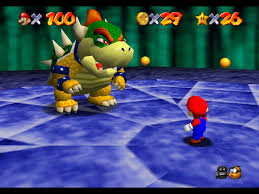
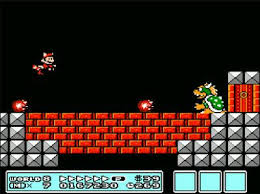
images-142Super Mario, the portly plumber with the black moustache, is not just the mascot for Nintendo but the ambassador for all video games.  Gamers are intimately familiar with Mario, his history, forays into pop culture, and of course his games.  He was the nameless Jump Man before he was Mario and though early titles like Mario Bros., which introduced brother Luigi, kept true to the plumber occupation it was Super Mario Bros. that helped launch the Nintendo Entertainment System into video game legendary status.  Since then, Mario, usually alongside Luigi, has appeared in a great many games in either a starring or supporting role.  He’s dabbled in just about every genre save first-person shooter (don’t take that as a suggestion, Nintendo) and has done so successfully, for the most part.  He’s been challenged along the way by other would-be mascots and felled them all.

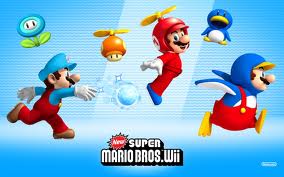
Mario’s games are typically of a high quality, and while some are better than others, there really are no true lemons.  These next few posts are going to attempt to distinguish the best from the not best, but in truth, all of the games to follow are still a good time, even today.  This list only concerns itself with Mario’s starring platform adventures which began with Super Mario Bros. in 1985 and will continue this fall with Super Mario 3D World.  Excluded are two titles which borrowed the Mario name for marketing purposes, namely Super Mario Land 3:  Wario Land and Super Mario World 2:  Yoshi’s Island.  I think most would agree those two games are actually the first in new franchises for Wario and Yoshi, respectively.  This also excludes those educational Mario titles that popped up on the Super Nintendo, and the few games starring Luigi.  I considered excluding Mario’s 3D adventures and relegating them to a separate ranking but decided against it.  They’re still Mario titles, and whether the game is a side-scroller or in 3D, they actually manage to play very similarly.  Maybe it would just be easier to list the games about to be ranked, so here they are in chronological order of release:  Super Mario Bros., Super Mario Bros. 2/The Lost Levels, Super Mario Bros. 2/Super Mario USA, Super Mario Bros. 3, Super Mario Land, Super Mario World, Super Mario Land 2, Super Mario 64, Super Mario Sunshine, New Super Mario Bros., Super Mario Galaxy, New Super Mario Bros. Wii, Super Mario Galaxy 2, Super Mario 3D Land, New Super Mario Bros. 2, New Super Mario Bros. U.  That’s 16 Mario titles in total, and if this thing drags on long enough, maybe I’ll do a 17th as a postscript for Super Mario 3D World, though the pile of dust that has collected on my Wii U suggests that won’t be happening.  On to the rankings!

16.  Super Mario Land (1989, Gameboy)

Different, but similar, Super Mario Land was a worthy first attempt at bringing Mario to the smallest of screens.

Different, but similar, Super Mario Land was a worthy first attempt at bringing Mario to the smallest of screens.

Perhaps it’s a bit unfair to immediately pick on the Mario title with the least amount of technological backing, but I’ll reiterate what I said in the intro which is that all of these games are worth playing and remain so.  That said, Super Mario Land is basically a scaled-down version of the original Super Mario Bros. for the then recently released Nintendo Gameboy.  Nintendo should be commended for actually not just porting Super Mario Bros. and actually giving Super Mario Land its own distinguishing characteristics.  Set in Sarasaland, the game puts Mario in an Egyptian inspired setting with tried and true Mario gameplay.  There are some noted differences from the console games, in that Mario’s fireballs shoot at an angle and bounce off walls and hearts are used for extra lives while coins function as a currency.  There are also some scrolling levels where Mario pilots a spaceship or submarine which help break up the routine.  Otherwise, it was a pretty basic platforming-side-scroller.  The Gameboy’s display made it a little tough on the eyes, and Mario felt a little loose as a result.  Gamers who had this title in 1989 mostly seemed to enjoy it, even though they knew they were getting a somewhat lesser experience than what they had on their home consoles, but considering the Gameboy’s main competition was Tiger handheld games, they were pretty content to have Super Mario Land.

15.  Super Mario Bros. 2/The Lost Levels (Nintendo Entertainment System, 1986)

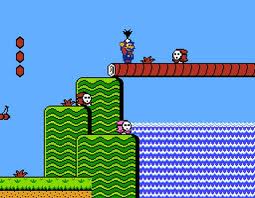
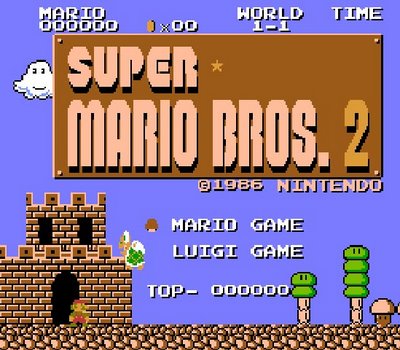
One of the defining characteristics of Super Mario Bros. 2 was the emphasis on making the Luigi experience different from the Mario one.

One of the defining characteristics of Super Mario Bros. 2 was the emphasis on making the Luigi experience different from the Mario one.

By now, anyone with an interest in video games is well aware of the story of the “original” Super Mario Bros. 2.  It was a Japan only release for a couple of reasons.  The main reason was the difficulty which Nintendo of America thought would prove too frustrating for US gamers.  Also, Nintendo of America wasn’t very impressed with the title simply because it was too similar to the original Super Mario Bros.  For that, we should be thankful as NOA was absolutely right with that stance.  Super Mario Bros. 2 would eventually be released as The Lost Levels in the US alongside the other NES Mario titles in the Super Mario All-Stars compilation released on the Super Nintendo.  The game basically plays like a set of add-on levels for the original title.  The original was such a massive success, that Nintendo of Japan felt it had to strike quick with a sequel.  When early attempts at a sequel proved too ambitious (more on that to follow), this game was created in its stead.  It’s basically just a harder version of the original, with the addition of poison mushrooms and Luigi being given his own characteristics (higher jumps but slippery feet) to make him play different from Mario for the first time.  Needless to say, when the game was eventually released in the US, few American gamers felt like they had really been missing out on anything.

14.  Super Mario Bros. (NES, 1985)

Where it all began.

Where it all began.

The original, but not still the best, Super Mario Bros. set the standard for all Mario games to follow.  These types of lists are always a little tricky because one is forced to weigh present value against past value.  My take is always to just judge the games as they are.  Perhaps that gives the modern titles a huge advantage but a good game is a good game, regardless of era or graphical horse power.  Plus, games should be better today than they were 20 years ago as I’d like to think we’re always moving forward.  With that out of the way, it should be said that Super Mario Bros. still holds up today as a fun and challenging game, just one notably simplified.  It’s the classic “go right” game and the player is expected to run and bounce along to each stage’s flag pole in an attempt to rescue the princess.  The clock actually plays a role in this game, as opposed to the more recent games, and later levels force the player to hold the run button throughout.  The game’s challenge is mostly found in negotiating jumps and platforms that become smaller as the game goes along while dodging classic Mario enemies like koopa troopas and Lakitu.  It’s true that it may be hard to impress a young gamer today with the original Super Mario Bros., but it is a textbook take on the genre it launched even if its sequels have improved upon it immensely.

13.  Super Mario Land 2:  6 Golden Coins (Gameboy, 1992)

New bunny ears and a new villain are the defining characteristics of Super Mario Land 2.

New bunny ears and a new villain are the defining characteristics of Super Mario Land 2.

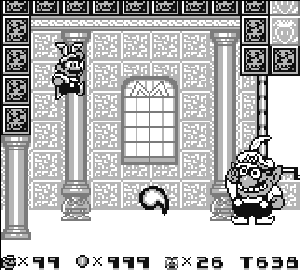
Super Mario Land 2 was a huge improvement over its predecessor.  It borrowed heavily from the the current console games in terms of defining Mario’s look and power-ups and pushed the Gameboy to produce one if its best looking and best playing titles.  This game also introduced Wario, who served as the primary antagonist for Mario for basically the only time before becoming a playable character in his own line of games.  Super Mario Land 2 held onto the first game’s quirks while giving Mario some new power-ups, most notably the bunny ears.  Mario being able to fly had been a big deal since Super Mario Bros. 3 so it’s no surprise he was able to do the same in this game.  Keeping things weird, as they were with a raccoon tail bestowing flying powers in SMB 3, the bunny ears let Mario fly by rapidly pressing the jump button.  Mario didn’t gradually descend, like he did with the cape and tail, so it gave Land 2 a unique feature.  The fireballs had their angled shot replaced with traditional fire power, and the game had a map layout like Super Mario World.  The worlds the map is segregated into can be played in any order, giving this game a less linear feel, and secrets abound which help the replay factor.  Which is a good thing, because the 32 levels will be breezed through by Mario veterans making Super Mario Land 2’s biggest weakness its short duration.  This is a fun game though, and it was the first Gameboy experience that came close to matching the console one where Mario titles are concerned.

12.  New Super Mario Bros. 2 (Nintendo 3DS, 2012)

I did a big write-up on this one around the time it was released, so I won’t go into too much detail here.  Suffice to say, if anything my opinion of the game has lessened since.  It’s a fun experience, but in general it did little to nothing as far as advancing the series goes.  The focus on coin collection was a mistake as it didn’t add to the experience.  The much publicized street pass functionality and downloadable content was basically a dud, and the game’s difficulty was basically non-existant.  This is a by-the-numbers Mario game, and its sister-title New Super Mario Bros. U is the far superior game, and not just because it’s on the more powerful console and in HD.  I did enjoy the return of the super leaf power-up as well as the inclusion of the Koopa Kids and the game does not have a shortage of levels.

11.  New Super Mario Bros. (Nintendo DS, 2006)

New Super Mario Bros. was a welcome return to the side-scrolling genre for Mario and Luigi.

New Super Mario Bros. was a welcome return to the side-scrolling genre for Mario and Luigi.

New Super Mario Bros. was a supremely refreshing title when it was first released in 2006.  A new side-scrolling Mario game had not been released since 1992’s Super Mario Land 2, unless you count the Wario and Yoshi games in between.  New Super Mario Bros. was a like a kid’s dream of what the original Super Mario Bros. could have been with mega mushroom power-ups and the mini mushroom, letting Mario shrink to a microscopic size.  Of the two, the mini mushroom was actually the better as controlling a lightning quick Mario was a lot of fun.  Not that it wasn’t fun to control the Godzilla-like Mega Mario, but it got old after a few experiences.  Mario also retained some of his 3D controls like the ability to double and triple jump.  Not very useful, but a lot of fun.  The game is also massive with 80 levels to explore, some of them only unlocked after finding the various star coins hidden in each stage.  Like its sequel, the game’s biggest drawback was its lack of challenge.  Notably trickier than the follow-up, but still lacking compared with the well-balanced Super Mario Bros. 3 or Super Mario 64.  This is a good game though, and as you can probably guess from these rankings, I actually recommend it over New Super Mario Bros. 2 for its tighter gameplay and better level design, though the level design is actually a weakness for the game when compared to other Mario titles.  This one was a nice nostalgia trip in 2006, and even though the New Super Mario Bros. franchise has had a hard time living up to the classics, I still think we’re better off for having it.


Bucky O’Hare – The Video Game

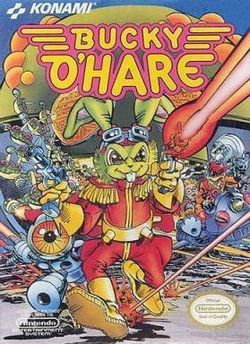
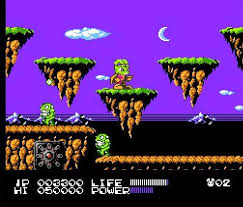
Bucky O'Hare - Nintendo Entertainment System (1992)

Bucky O’Hare – Nintendo Entertainment System (1992)

I’ve been away for awhile, a combination of life events and vacation, but I’m back and ready to talk about some old things.  Here is one such old thing and a topic I’ve discussed before:  Bucky O’Hare.  Bucky O’Hare was a part of that glut from the late 1980s into the 1990s of anthropomorphic cartoon characters riding on the coat tails of the Teenage Mutant Ninja Turtles.  Very few of these properties (Street Sharks, Biker Mice From Mars, Battle Toads) had any staying power and Bucky proved to be no exception.  His show lasted one season, and it was a half season at that, before getting cancelled.  There are a number of theories why from poor marketing decisions, bad distribution of the toys, too serious, though I personally think a lot of boys just didn’t buy into the idea of a green space bunny saving the galaxy.  Despite Bucky’s outward appearance, I liked him and the show quite a bit as did a number of my friends.  Bucky probably dominated a good six months of my young life and during that time period he was even able to overtake the TMNT for a brief spell.

Even though Bucky didn’t last long as a cartoon hero (he didn’t last long as a comic book hero either), he was still around long enough to have his likeness inserted onto just about every product imaginable.  From the obvious items like toys and clothing to the less obvious such as dishes and light-switch covers.  Not surprisingly, another item that took advantage of the Bucky O’Hare license was a video game, simply titled Bucky O’Hare.   The game was developed by Konami and released in 1992 a short while after the cartoon had finished its run.  Right away, it should be noted that Bucky dodged a major bullet in that his game was developed by Konami, and not LJN, whom Konami had a tendency to hand all of its licensed products to.  LJN is known as one of the worst game developers from that era; it possessed the opposite of the Midas Touch when it came to game development.  The fact that Bucky managed to avoid such a fate is really quite surprising, in hindsight.  Even more popular properties like the X-Men were unable to avoid LJN but somehow Bucky snuck through.

DownloadedFile-33Bucky O’Hare on the NES is an action platformer starring Bucky O’Hare himself.  Players control the funky fresh rabbit and navigate him through various levels, mostly going left to right but not always, as they run, jump, and gun down the evil toads to save Bucky’s crew.  The game starts off giving the player a choice of 4 different stages, represented by different planets, that Bucky can choose from.  On each planet, one of Bucky’s crew-mates is being held captive:  Blinky is on the green planet, Jenny is on the blue planet, Dead Eye the red, and Willy DuWitt is on the yellow planet.  Bucky can choose to rescue his mates in any order, though at least one planet requires the aid of one of Bucky’s comrades, for when Bucky rescues a character that character becomes playable.  The player can switch on the fly with a press of the select button.  All characters share the same health bar but have their own power bar.

The power bar is where the characters distinguish themselves.  Each character had a unique attack and unique ability.  Attacks are simply done by pressing the B button.  Bucky can shoot horizontally and vertically and his special ability is a super jump.  By pressing and holding the B button, Bucky crouches down and charges up a jump.  The power meter determines how high he can go and it can be increased in size by collecting certain power-ups.  Blinky has a jetpack that allows him to fly for a short duration.  His attack is a canon-ball like  weapon that fires in an arc.  It can also break certain blocks found in the environment.  It’s more powerful than Bucky’s attack, but has limited range.  Jenny fires a laser that may or may not inflict more damage than Bucky’s gun, though it’s rate of fire doesn’t seem to be as good.  Her special ability is some kind of telekinetic ball that the player can control with the d-pad once it’s been fired.  It’s useful in certain spots where the player can sit out of danger and attack from cover.  Dead Eye has a scatter-shot for his main weapon.  Think the spread gun from Konami’s much more popular Contra series. His special ability lets him crawl on walls for a short duration.  Not particularly useful.  Willy has a fairly normal attack with his special being a charged shot.  Unlike, say Mega Man, Willy is stationary when charging making his special ability the least useful.

Mega Man fans, does this look familiar?

Mega Man fans, does this look familiar?

Willy’s special ability isn’t the only comparison to Mega Man one will find when playing Bucky O’Hare.  In many ways, the game is like a Mega Man clone.  The non-linear setup at the start is certainly reminiscient of the blue bomber’s games and the general run, jump, shoot mechanics seem to be clearly inspired by Mega Man as well.  There’s also some levels, or parts of levels, that are inspired by some of Mega Man’s more famous levels such as the red planet’s nod to Quick Man and the vanishing blocks from the Toad Mother Ship.  A quick google search will reveal that, in some circles, this game is known as the Konami Mega Man.  I’ve never heard anyone actually refer to the game as such, but the internet never lies.  Bucky owes a lot to Mega Man, but it’s different enough to maintain integrity and similar enough that it’s safe to say most fans of the blue bomber will enjoy the green rabbit.

Bucky O’Hare may not be among the most popular NES games, but most people who are into NES games seem to know about it and associate it with one word:  hard.  Many games from this era are hard, but Bucky O’Hare is often placed in that upper tier of really difficult games.  I’ve never heard anyone outright call it the hardest NES game ever made, but I’ve seen it included in several lists or youtube videos amongst the elite.  This is mostly a good thing, as Bucky O’Hare is able to achieve it’s difficulty without being too cheap.  There are some areas, when playing for the first time, that will piss a gamer off.  The most obvious to me occurs on the yellow planet where the player has to hop on these futuristic mine carts that zip along a track.  Jumping from one to another is not difficult, as they slow down long enough to make the timing easy, but before long a wall of spikes will pop up that result in a one-hit death if the player doesn’t react fast enough.  These one-hit deaths comprise the majority of player fatalities in Bucky O’Hare.  Very rarely can I recall actually having my life depleted slowly during a non-boss encounter.  And even the boss fights, as one might imagine, include a number of instant death attacks that can put an end to the fight rather quickly.  What keeps Bucky O’Hare from being among the hardest of the hard is its generous continue system.  Each level is broken up into several acts which, by themselves, are pretty short.  If a player loses all of his or her lives the continue screen is displayed and electing to go on will bring the player to the start of the most recently completed act with a new set of lives.  Continues are unlimited, and completing a full level gives the player a password which isn’t overly complex or long.  This means anyone of moderate skill can probably complete Bucky O’Hare so long as they’re persistent.  And given that much of the game’s difficulty comes from being surprised, practice does indeed make perfect.

Right around the time it seems like the game has thrown everything it can at you, it introduces the flying stages.  Prepare to die.

Right around the time it seems like the game has thrown everything it can at you, it introduces the flying stages. Prepare to die.

Bucky O’Hare is deceptively long and offers a good amount of gameplay.  After completing the first four stages the player is abducted by the toads and (annoyingly) must also re-rescue the trio of Jenny, Dead Eye, and Willy.  The setup, beyond the run and gun nature of the game, is pretty straight-forward but there are areas later in the game that are non-linear as Bucky explores the Toad Mother Ship.  After the conclusion of each level, a boss encounter occurs.  They’re usually fairly challenging, but there are some easy ones, and part of the challenge is knowing which character works best.  For the most part, Bucky on his own is enough to take down a boss but I did find some uses for Jenny’s special attack (namely the yellow planet boss) and Blinky has his moments too.  Only Willy comes across as feeling useless as I was able to make regular use of the other four characters.  Bucky never had another console video game release, but he did have an arcade game released after this one though it wasn’t very popular.  This game, along with the cartoon’s catchy theme song, is probably the way most remember Bucky O’Hare.  Considering most of those other shows, TMNT included, received mediocre to terrible games, I’d say Bucky came out ahead in one respect.  If you like NES games and have never played this one, I whole-heartedly recommend it.


The Legend of Zelda: Oracle of Ages and Oracle of Seasons

The Legend of Zelda:  Oracle of Seasons (2001)

The Legend of Zelda: Oracle of Seasons (2001)

The Legend of Zelda series tends to be late to the party when it comes to Nintendo’s newest technology.  The only exceptions I can recall would be A Link to the Past and Twilight Princess.  Twilight Princess should come with an asterisk though considering it was in development as a Gamecube game (and even released on that platform too) before being ported to the Wii to make that system’s launch.  Typically gamers have to wait a couple of years for Link to grace their latest console or handheld.  That was especially the case when it came to the Gameboy Color.  Nintendo, partnered with Capcom, focused on making a set of three games that would take place in the world of Zelda and interact with one another to form one grand adventure.  This would take time, and to placate eager gamers to have a Zelda adventure on the go and in color Nintendo re-released Link’s Awakening with some minor color enhancements and a new dungeon (which took full advantage of the new color palette).   Development was delayed on the series with Capcom, and eventually the three titles became two.  Worse still, they didn’t arrive to market until after the Gameboy Color’s successor hit retail; the Gameboy Advance.  Did this stop people from picking up the old tech?  Of course not, this is Zelda after all, Nintendo’s most consistent franchise.  And for those who upgraded to the Gameboy Advance, the system was backwards compatible so as long as gamers could get passed the fact that they were playing a fairly low tech set of games it was a pretty easy thing to convince them to go out and pick up the latest Zelda titles.

The Legend of Zelda:  Oracle of Ages (2001)

The Legend of Zelda: Oracle of Ages (2001)

There are exceptions though, and for whatever reason I became one of them.  I was a day one purchaser of a Gameboy Advance and I was eager to upgrade my portable gaming.  I had a Gameboy Color and primarily only used it for Pokemon (I had a copy of Shantae and never got into it, and I ended up trading it in at Gamestop which proved to be a mistake).  After over a decade of playing sub-NES quality games on a Gameboy I, and many others, were more than ready for the GBA.  Plus I knew the eventual A Link to the Past Advance was on the way and figured I’d get my Zelda fix then, so I completely overlooked the two GBC games, Oracle of Ages and Oracle of Seasons.  It took a long while, but finally Nintendo has released both titles on its e-shop and both are playable on the Nintendo 3DS.  A good portion of my summer has been spent on these two titles, and in short, they’re quality Zelda experiences.  You don’t want short though, so feel free to read on for more!

If you’re an owner of a 3DS and are thinking of playing these games I would recommend that you play Link’s Awakening DX first, if you have not done so already.  While the games are not connected in a narrative sense, the three play pretty much identically to one another with the Oracle games feeling like sequels.  I imagine the fact that the groundwork was laid with Link’s Awakening is what allowed Nintendo to feel comfortable about handing the series over to Capcom.  These portable Zelda games all feature diminished visuals when compared to most of the series, with the only exception being the original Legend of Zelda.  Link can have two items equipped at any one time via the A and B buttons, and they can be any two items the player wants making it theoretically possible for Link to go thru the bulk of the game without a sword.  These games also are unique in that they allow Link to jump once a certain item is obtained.  Link could jump in the side-scrolling Adventure of Link, but not in his other top-down adventures.  The portable games also bring back the side-scrolling screens present in the first game often as a basement of sorts throughout the various dungeons.  There are some sequences where Link has to swim and some familiar faces from the mushroom kingdom make appearances.  I actually prefer Link’s Awakening to the Oracle games in large part because of all of the Mario references which just give the game this offbeat feel.  There’s even a sequence where Link needs to take a chain-chomp for a walk.

Both games feature animal companions for Link to make use of.  Here he is just hanging out in a kangaroo pouch.

Both games feature animal companions for Link to make use of. Here he is just hanging out in a kangaroo pouch.

Oracle of Ages and Oracle of Seasons distinguish themselves from the prior games with their special items, the harp of ages of rod of seasons, respectively.  In Oracle of Ages, Link is able to use his harp to move thru time.  Early versions of the harp only allow him to do so at certain patches of soil but later versions allow him to move thru time at will.  Since there are only two versions of Labrynna, where the game takes place, it’s bound to evoke a similar feel to the light and dark worlds from A Link to the Past.  As expected, changing things in the past affect the present, which is sort of the nature of the game.  It’s not real specific though, and sometimes the past or present is different from each other seemingly just for sake of it (sometimes a wall is bomb-able in the past, but not the present, which doesn’t seem to make a whole lot of sense).  As such, I was actually kind of disappointed with the whole time-traveling aspect of the game and it started to feel like a hassle.  In Oracle of Seasons, Link is able to manipulate the seasons with the rod of seasons.  This has obvious applications such as lakes becoming frozen in winter or dried up in summer.  A weird type of mushroom is only harvestable in the fall, and certain special flowers only bloom in the spring.  Having to cycle thru each season one at a time is a bit of a chore, but overall I felt the application of the seasons worked better than the time-travel in Ages and it also offered a fun visual change as well.  The only thing I didn’t like about it was that sections of the overworld map are arbitrarily broken out and are assigned a default season.  This results in the player changing the season on one screen, and then having it switch to another season by going as few as one screen over.  The designers obviously did this to make it easier on them to block off certain sections of the map until Link obtained a certain item, but it feels lazy.

In addition to their gimmick, Oracle of Ages and Oracle of Seasons are often distinguished by type of gameplay present.  Ages is often described as being the more puzzle-centered game with Seasons being more action-oriented. I found this to mostly be the case, but make no mistake, both are tried and true Zelda experiences.  There are still plenty of enemies to take down in Ages, and there’s also plenty of dungeon puzzles to solve in Seasons.  I expected to enjoy Ages more as I usually like the Zelda puzzles, but I actually ended up preferring Seasons.  The problem I have with Ages is just that a lot of the puzzles felt really drawn out and the constant switching between items (since there are only two action buttons on a GBC, everytime you need to re-assign something you have to go into the menu and do it) could get tiresome.   There are also plenty of “Zelda Puzzles,” which to me mean puzzles with no logical solution that forces the player into trial and error mode.  These types of situations seem to crop in every Zelda title and are often the result of the game just not being consistent.  There was one dungeon where I got stuck for a while because I couldn’t figure out how to get a pot onto a floor switch that needed to be pressed in order to open a door.  I tried all kinds of different things and just couldn’t get it.  Then I just stepped on it with Link and walked off and the door stayed open.  Every other switch in the game necessitates an object being placed on it to keep the door open.  I was so annoyed.   That’s a Zelda puzzle.  There were some of these in Seasons too, but they just felt more prevalent in Ages.

One of the optional bosses from a linked game:  Twinrova.

One of the optional bosses from a linked game: Twinrova.

Oracle of Ages and Oracle of Seasons share many of the same dungeon items.  Both also have a trading game which leads to an improved sword for Link and both feature seeds.  All around the map are soft patches of soil where Link can plant a seed.  After a certain amount of enemies are slain a tree with a nut will sprout and inside the nut will be an item.  Usually this item is a ring, which is the only equip-able accessory for Link in both games.  They usually add some function or improve another such as Link’s throwing distance or damage output.  They’re not all that essential to the experience, and both games seem to have the same rings.  There’s also a password system that allows players to transport items back and forth between games.  This is the only way to get some traditional Zelda items like the mirror shield and master sword.  These items just make the game easier, and to be honest, they’re easy enough as is, so I never did much with them.  I did take advantage of the game-link where beating one game provides a password for the other game which alters the story.  The story in both games is basically crap, but if you want to face the ultimate boss you have to link the games and it does add a little more fun to the experience.

I’ve been a bit nit-picky with these games, but both are enjoyable and worthwhile entries in the Legend of Zelda series.  If you were to play only one, I would recommend Oracle of Seasons as I found it to be the better overall experience.  One thing I liked about Seasons over Ages is how it’s a total nostalgia trip for gamers who played the original Legend of Zelda.  Oracle of Ages is basically just as good though, and if you can, you really should just play both.  These two games, together with Link’s Awakening, are among the best portable games ever created and are still the best portable Zelda games ahead of The Minish Cap, Phantom Hourglass and Spirit Tracks.  Hopefully, the upcoming A Link Between Worlds is able to give them a run for their money as these games have reigned supreme for long enough.


Dreaming of Kingdom Hearts 3

images-125

UPDATE 3/8/2014: Square-Enix has posted a survey for Kingdom Hearts, and if there is something you want to see in Kingdom Hearts 3 (Gargoyles!), this is the best way to make your voice heard!

Watching Gargoyles these past few weeks has got me thinking about the upcoming PS4/Xbox One game Kingdom Hearts 3.  So far, little information, aside from confirmation the title has been in development, has been released regarding the next entry in the Kingdom Hearts series.  For those unaware, the Kingdom Hearts games were initially conceived as a marriage between Disney and Square’s Final Fantasy.  Several games have been released in the series and, for the most part, they all follow a pattern of having the main character visit various different worlds based on classic and current Disney films.  Gargoyles has got me thinking about how cool it would be to see that world brought to the series as it would seemingly lend itself well to the video game form.  There was a game based on the series created for the Sega Genesis.  It was a late arrival on the Genesis and while it boasted some rather slick animation it was bogged down by poor gameplay mechanics and a repetitive design.  It is my understanding that the only rules for selecting worlds for Kingdom Hearts are that they be from Disney films, but not Disney owned films.  This would eliminate the various Marvel films produced by Disney as well as any future Star Wars ones.  It also appears to apply to Pixar films as well as so far no worlds from a Pixar film have shown up.  It also excludes any worlds from Disney television, but in the case of Gargoyles, this rule could be circumvented by the existence of Gargoyles The Movie:  The Heroes Awaken.  It’s kind of cheating as the direct-to-video movie is just the first five episodes edited into a 90 minute film but lets not get too technical.

Using my own memory, and with help from Wikipedia, I’ve come up with the below list of Disney films to appear as worlds in the Kingdom Hearts series:

  • Sleeping Beauty
  • The Little Mermaid
  • Aladdin
  • The Nightmare Before Christmas
  • Winnie the Pooh
  • Peter Pan
  • Hercules
  • Tarzan
  • Pinocchio
  • The Lion King
  • Steamboat Willie
  • Pirates of the Caribbean
  • Alice in Wonderland
  • Cinderella
  • Snow White
  • Beauty and the Beast
  • Mulan
  • Tron
  • Lilo & Stitch
  • The Hunchback of Notre Dame
  • The Three Musketeers
  • Fantasia

This list may not be exhaustive, and does contain some unusual selections.  “Steamboat Willie” stands out as it’s not a feature-length film, but as Mickey’s most recognizable short, it’s not surprising to see it included.  It also, like pretty much all of Disney’s classic shorts, was originally released to theaters.  The Three Musketeers also stands out as it was a direct-to-video release so it appears their self-inflicted rule does not mean the film needed to be theatrically released.  Square has done a good job of hitting most of Disney’s biggest properties.  There is also a good balance of old and new, but there’s still plenty of room for more.  Below are some thoughts of mine regarding where the franchise could go for its next outing:

Bambi – Bambi the character has already appeared as a summon in the KH series but he’s never had his own world.  As one of the few classic pictures to not have a world, it makes sense for Bambi to step into a larger role.  His world is not particularly unique considering it’s just a forest, but a world created around the forest fire scene from the film’s climax could have some interesting gameplay mechanics.  For one, it would make the world visually interesting and the fire could be the result of one of the film’s antagonists.  Bambi could be an assist character and, together with Sora, they would be tasked with extinguishing the blaze.  The world could either be full of peril due to the fire, or there could be a time limit in place.  Considering Bambi is one of Walt’s greatest achievements, it just makes too much sense to include it eventually.

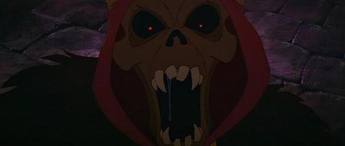
And to think, some at Disney felt The Horned King would be too scary for kids...

And to think, some at Disney felt The Horned King would be too scary for kids…

The Black Cauldron –   The Black Cauldron is, unofficially of course, Disney’s black sheep.  It differs quite a bit in tone from the works that preceded it in that there’s a distinct absence of humor throughout.  A lot of critics disliked the film, and while it appears to have spawned a cult following, it’s still one of the lesser films put out by Disney.  It’s inclusion here is not a defense of the film, I haven’t it seen it in so long that I really can’t offer much of an opinion on it, but it’s world would actually appear to fit in quite well with the KH universe.  The Horned King would make a natural complement for Maleficent and the Fairfolk could be incorporated as well.  The film almost makes too much sense for inclusion, leading me to believe the only reason it has not been is because the film is so obscure.  It’s also possible that Disney doesn’t own any of the characters outright and legal issues may not make it worthwhile to include.

Toy Tinkers – I am an unabashed Donald Duck fan so I wanted to include one of his shorts on this list.  I initially thought “Trick or Treat” would work well because of the Witch Hazel and her special potion that brings inanimate objects to life, but such a world would have a lot in common with Fantasia and Halloweentown.  I settled on “Toy Tinkers” because it would allow the inclusion of a Christmas themed world and a unique gameplay opportunity.  I conceive it as a world in which Sora has been shrunk somehow and is caught in between the fire-fight between Donald and Chip and Dale.  There would be debris raining down and perhaps Sora would help Chip and Dale thwart Donald somehow.  It would be a bit of comedic relief and a fun bit of level design.

This would seem to be a natural conflict for a video game.

This would seem to be a natural conflict for a video game.

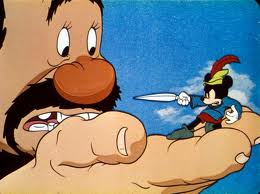
The Brave Little Tailor – My thought process for this level is similar to the above for “Toy Tinkers,” so I consider this an either/or arrangement.  In the short, “The Brave Little Tailor,” Mickey is tasked with defeating a giant.  For KH, the scenario seems obvious and Sora would either replace Mickey or assist him in taking down a giant.  It would feel similar to my “Toy Tinkers” scenario because Sora would be taking on a foe much larger than he, so the two would perhaps feel too alike if they both appeared in the same game.  Nonetheless, it would be fun to challenge the giant and a tailor themed Mickey could be an interesting assist character.  This could also easily be swapped out in favor of a Mickey and the Beanstalk themed level.

Duck TalesDuck Tales would appear to not be eligible due to the fact that it was a television property, but it sneaks in because it did have a feature-length release, Treasure of the Lost Lamp.  If the level had to be based on that film, then no matter, it could be a pseudo Indiana Jones type of deal with cave exploring with Uncle Scrooge, the nephews, and maybe even Launch Pad.  Classic Duck Tales villains could still be included as well.  Ultimately, I just want to see Scrooge’s giant vault of gold coins included complete with diving board.

Toy Story – Yes, I know and covered it already, it would appear that Pixar films are a no-go when it comes to KH.  However, Pixar’s films have become as much a part of the Disney brand as Mickey and Snow White and their presence is felt throughout Walt Disney World and Disney Land.  And if there is to be one exception made for Pixar, why it has to be Toy Story, no?  It makes too much sense for inclusion as Sora could be transformed into a toy of some kind and have to team-up with Woody and the gang to foil Sid.  The level basically designs itself and there are so many action sequences from the three films that the designers could look to for inspiration.  Come on Square/Disney, it’s time to invite Pixar to the party.  Do it!

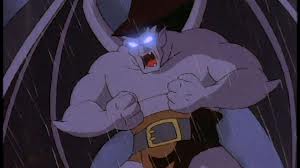
I'd be delighted to see any of the films/shorts from this list incorporated into KH3, but mostly I just want to kick some ass with Goliath by my side.

I’d be delighted to see any of the films/shorts from this list incorporated into KH3, but mostly I just want to kick some ass with Goliath by my side.

Gargoyles – We’ll end this with what started it in the first place, Gargoyles!  Gargoyles, as primarily an action-adventure cartoon, makes a lot of sense for a video game.  Goliath would be a pretty bad-ass support character and Demona seems like a perfect villain for KH (though MacBeth and Xanatos would work as well).  There would be some fun music to source, and most of the voice cast has maintained a relationship with Disney to this day including Keith David (voice of Goliath) who recently voiced the villain for Disney’s The Princess and the Frog.  Gargoyles would also allow Square to set a level in New York, specifically the skies above New York.  The castle would make for both a great visual and fun setting for an all out battle with Demona or the Steel Clan.  Someone send the developers of Kingdom Hearts 3 a copy of the first season (or the movie, but they would need a VCR on hand to watch it) and then try to stop them from making use of it!

There’s actually plenty of other films Square could source for Kingdom Hearts 3 that I didn’t even bring up.  The Sword in the Stone or Robin Hood seem like natural fits, or perhaps because they’re too conventional they’ve been ignored.  101 Dalmatians also seems like an easy film to incorporate and Cruella De Vil would be a natural as a villain for the series.  And considering it drew inspiration from video games, I feel like I have to mention Wreck-It Ralph.  I actually fully expect a Wreck-It Ralph scenario of some kind to appear in KH3, either as the game world Fix-It Felix Jr. or maybe a Sugar Rush style mini game.  I consider all of my selections as long shots and I’d be surprised to see most of them.  It actually wouldn’t shock me if Disney lifted the embargo on Pixar films and allowed a Toy Story level, just because the property is so popular, and the giant sequence I described (most likely to occur in the form of Mickey and the Beanstalk) also strikes me as a legit possibility for a KH world.  The others are merely dreams or wishes, and as much as it would delight me to see Goliath and crew in Kingdom Hearts 3, I also acknowledge it’s mostly a pipe dream.  Perhaps if I wish upon a star…


The Vita Experiment

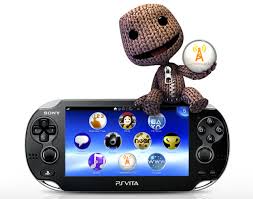
images-115It’s been over a year since I purchased a Playstation Vita.  I have made only two dedicated posts on the subject since which may lead people to believe that I have not enjoyed my purchase.  Far from it actually, as the Vita has been getting a lot of attention from me and has probably been played more than my 3DS over that same time frame.  Not all that long ago I made an entry about the Wii U and how it has been a disappointment for me since it’s launch last November.  The Vita has similarly been a disappointment at retail, though for different reasons.  And while I’ve enjoyed my Vita thus far, I’m not anymore optimistic about its future than I am of the Wii U’s.  If anything, I’m more pessimistic since Nintendo has a lot more riding on the Wii U and is further incentivized to make sure it does not fail.  While Sony similarly has invested a great deal in the Vita, I get the sense that Sony could afford to have it fail and move on (though such an admission would likely end Sony’s attempt at penetrating the portable gaming market via a dedicated gaming device).

Not much has changed regarding my opinion of the Vita as a piece of tech since its launch last year.  The device is quite nice and it functions really well.  I have had no problems with my Vita in the year-plus that I’ve owned it.  No game freezing, no glitching, no nothing.  The screen is large and beautiful, the buttons placed well, and the twin analog sticks much appreciated.  I’m not saying they don’t exist, but I have yet to encounter a game that makes annoying use of the front and rear touch panels as developers have, so far, resisted the urge to shoe-horn touch controls into their games.  Just judging the console on its own merits it’s fantastic and easily the best portable gaming device ever created.

Unfortunately, it takes more than cool tech to make or break a console.  The Vita’s biggest obstacle so far has been price.  The Wi-fi edition retails for $250, which is a lot to ask of consumers for a handheld game console.  And that’s not all, memory cards have been obnoxiously priced from the start and easily push the total cost beyond $300 for any new adopters looking to get just one game with their system.  Sony has put out bundles that help trim some of the costs but it’s still a pretty big investment to get into the Vita.  Especially considering that consumers can get a pretty solid gaming experience on the go via their cell phones.  While true that there’s no cell phone equivalent to Uncharted:  Golden Abyss, many consumers seem content to save the money and just play games like that at home.  Combating mobile gaming is not a problem unique to Sony, but Nintendo has done okay with the 3DS since lowering the price which seems inevitable for Sony if it wants the Vita to have a fighting chance.

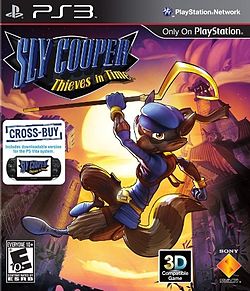
Some titles have been promoted as a 2 for 1, in that buying one copy of the game earns the ability to play it on the PS3 and the Vita.

Some titles have been promoted as a 2 for 1, in that buying one copy of the game earns the ability to play it on the PS3 and the Vita.

Aside from price, the other make or break aspect of any gaming device is the software.  Namely, the games.  Vita had a respectable launch on that front with several quality portable versions of strong games being made available alongside the aforementioned Uncharted title.  Uncharted has been a successful franchise for Sony on the PS3, though it doesn’t move units like some of the other premier video game franchises and it apparently wasn’t enough to attract a lot of early adopters.  Ever since the launch, the Vita has been spotty on the games front.  Some Vita exclusives like Gravity Rush and Assassin’s Creed:  Liberation have come and gone, and have failed to impress critics.  It feels like every Vita exclusive has scored in that 6.0-7.5 range with reviewers.  They’re good games, but not exactly system sellers.  The rest of the Vita’s catalog has been reduced to ports of console titles.  Some of these ports are done well, like MLB The Show, and work with their PS3 cousins.  One such game, Sly Cooper:  Thieves in Time, even came bundled with the Vita version allowing basically free portable play while others offer discounts when buying both.  Being able to play a console game on the go is certainly neat, but is it worth the added cost of getting a Vita?  Other ports, like last year’s edition of Madden, were done poorly which is inevitable with this sort of thing.  Developers are going to spend the most time on the editions of the game set to make the most money-making the Vita port an after-thought.

This may lead you to wonder what I’ve been playing that has allowed me to enjoy my Vita as much as I have.  Well, I made entries on my first Vita purchases, Rayman Origins and MLB, and my experience with both was positive.  I have since added the Metal Gear Solid HD Collection, which contains the first two Metal Gear titles along with Metal Gear Solid 2 and 3.  I also have Little Big Planet Vita, which is an all new Little Big Planet title created for the Vita and is just as good as the console games.  I also downloaded a PSN exclusive called Dokuro which is an excellent platform-puzzle game.  Lately, I’ve been player Persona 4 Golden, a port of the PS2 game with some added content.  I think my library of Vita games is a decent representation of the console.  Most of it is composed of ports with only two titles unique to the Vita.  Of them all, it’s tough to say what I’ve enjoyed the most.  Playing the two MGS titles in HD and on-the-go was pretty damn cool and I had not played either in quite some time so it was really enjoyable for me.  Rayman Origins is just as good as the console version, which I don’t own, and is a title that works really well on a portable, well enough that I may get the Vita version alone of Rayman Legends when that comes out later this year.  Dokuro was the nice surprise, and is so far the only Vita game I would tell all Vita owners they should get.  It’s fun and it’s cheap which is always a winning combination in my book.  It also sports a unique look with its chalk drawing graphics and the game is pretty meaty as well.  Persona 4 has definitely been the title that I’ve spent the most time with.  I’m currently at the 80 hour mark and still going.  I never played the original so that helps, but even if I had I’d like to think I still would have bought this.  It’s an excellent game, though it’s dated visuals mean it won’t be the type of game you would buy to show off the Vita’s capabilities.

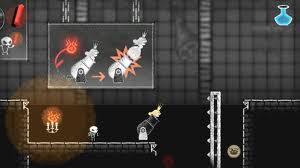
Dokuro, a download-only title in which you play as a skeleton and try to lead a princess to safety, is perhaps the Vita's best exclusive.  And you get to shoot the princess out of a canon.

Dokuro, a download-only title in which you play as a skeleton and try to lead a princess to safety, is perhaps the Vita’s best exclusive. And you get to shoot the princess out of a canon.

I’m nearly finished with Persona 4 so I’m now looking ahead.  I may switch back to the 3DS for a while as I have some games for it to check out, but in looking ahead to my next Vita purchase I’ve basically settled on Muramasa:  The Demon Blade.  Muramasa is yet another port of a console title, this one being a Wii game from a few years ago.  It’s a side-scrolling action title with beautiful hand-drawn visuals.  I never played the Wii version so it will be a new experience for me.  Aside from that, I’m uncertain what’s in store for the Vita.  It had a fairly poor showing at E3 this year, and the only exclusives I’m aware of are a new Killzone and Batman title (with the Batman title being available on the 3DS too, though one would hope the more powerful Vita would be the lead console).  I’m not a fan of the Killzone franchise, and while I’m interested in Batman, I fear it will turn out like AS:  Liberations and just feel like a lesser version of the console franchise.  These games do not seem like they’ll be big system sellers for the Vita, which has lost the PSP’s biggest franchise (in Japan, anyway), Monster Hunter, to the 3DS.  Sony does have plans for the Vita concerning the PS4.  Right now the aim is to have every PS4 game playable on the Vita via remote streaming.  This is a feature the PS3 supports but never made good use of which makes me skeptical that it will be widely available with PS4 titles.  Even if it is, I can’t see it being something that gets a lot of people to buy a Vita.  It can’t hurt, but will people spend over two-hundred dollars for the ability to play their PS4 games on a small screen?  The Wii U can do that with several games but it’s something I’ve only made use of here and there (though I also only play the Wii U here and there to begin with).
The Vita really needs this game to kick some serious ass.

The Vita really needs this game to kick some serious ass.

All of this leads me to one question:  Can I recommend the Vita to gamers?  I feel as if the answer to that question is “Yes,” but with qualifiers.  If you want a good portable gaming device then yes, the Vita is a good and worthwhile system to have around.  I didn’t touch on it much, but there are quite a few indie developers out there making excellent games for the PSN that figure to be made available on the Vita.  There are some good exclusives, and there are console games out there that are the same, if not better, on the Vita.  And if you’re into playing remakes, the Vita seems to be home to many such titles with more to come.  There’s also a plethora of PSOne and PSP titles available on the PSN for download and play on the Vita.  However, anyone thinking about buying a Vita needs to look at the current crop of games and decide if it’s worth buying just for these games alone.  The future is murky and we may have already seen the bulk of Vita’s exclusive third-party titles.  I do believe Sony will support the system at least thru 2014, but if things don’t pick up third-party developers will just use the Vita as a dumping ground for inferior ports of their console games.  And since the Vita, which currently is at least on par with the PS3, will soon be lagging behind the major home consoles those ports will become more expensive to make and may be bypassed all-together.  Someone recently asked me if they should get a Vita for their kids this coming Christmas.  The question was actually phrased as an either/or between a Vita and PSP.  I told them the PSP is not worth investing in at this point, but also to hold off on the Vita since a price-cut may be imminent.  I also slipped in the fact that by Christmas the PS4 will be out and their kids may want that more than a Vita and the difference in price may make the PS4 less expensive if this individual was thinking of getting a Vita for each kid.  That will likely be my response for anyone who asks me if they should get a Vita.  Wait for a price drop, or get a PS4 instead.  The future is just too uncertain for the Vita to give it a full recommendation.


The E3 Fallout: The Next Generation Gets Less Scary

DownloadedFile-21Prior to E3 2013, I made an entry on how the future of console gaming was looking.  To summarize, it was starting to look pretty bleak.  Even though it was only a couple of week ago, a lot was different.  We had the Wii U already on the market and failing commercially and creatively, the Xbox One was set on controlling all games distributed for it, and the PS4 was still a shadowy figure with unclear motives.  E3 2013 was shaping up to be a heavyweight bout between Microsoft and Sony as both looked to generate positive hype for their debuting machines in the fall.  Microsoft had a lot to answer for following the announcements regarding the policies surrounding the Xbox One and many wondered if Sony was willing to maintain the status quo or go along with Microsoft.  If both companies decided to severely restrict used games then gamers would be forced to accept this new model or give up on console gaming, something that seemed unlikely.  It was a strange feeling heading into E3 which is usually all about debuting new titles and consoles but the focus was squarely on one aspect of the PS4 and Xbox One.

Kind of lost in the shuffle was Nintendo, and with good reason.  The Wii U has done little to captivate the hardcore crowd and heading into E3 Nintendo chose to announce that it wouldn’t be holding a standard E3 press conference.  Nintendo still had a presence, and the company’s diehards were probably content to get a peak at the new Smash Bros. game and a new Mario title for the Wii U.  The recently announced A Link to the Past sequel for the 3DS, A Link Between Worlds, was playable and looks good, but there wasn’t much excitement coming from Nintendo.  The unique features of the Wii U have been all but ignored by Nintendo itself and third party publishers seem indifferent to the console.  I had no idea what Nintendo’s strategy for the Wii U was heading into E3, and yet, I feel like I know even less coming out of it.

Despite being announced by Sony back in February, E3 was actually the fist time the PS4 console was shown.

Despite being announced by Sony back in February, E3 was actually the fist time the PS4 console was shown.

Microsoft came out and confirmed what gamers did not want to hear, that sharing and reselling games on the Xbox One was going to be difficult and the console required a dedicated internet connection to play offline games.  It really didn’t matter what Microsoft showed for games after that, because people were just plain pissed.  The pricing for the console was revealed ($499) and Microsoft showed some games, but the damage was done.  Sony’s conference was basically a confirmation that the freedoms gamers have today will be maintained with the PS4.  Publishers can still place DRM on their games, but any restrictions beyond that are out.  They too showed off some games and even brought a bunch of indie developers out, but it didn’t matter.  The biggest cheers were reserved for simple announcement regarding game sharing.  It was kind of surreal.  The PS4 price was also revealed to be $399, and the console itself was shown for the first time as well (surprise, it’s black!), but gamers were too giddy over the used game policies to notice.

The fallout has been swift and to the point.  Microsoft had egg all over its face and videos from Sony mocking the Xbox One’s policies further drove the point home.  Microsoft made it incredibly easy for Sony to win gamers over, and the company was forced to suck it up and change its approach to give the Xbox One a fighting chance.  Last week Microsoft began to repair the damage that’s been done by basically pushing the reset button on the Xbox One.  There will now be no required internet connect, no stupid one-time sharing rules for games, and no used game fees.  They’re putting the console back on the same level as Sony’s.  Since so much of the emphasis of the Xbox One was placed on the cloud storage feature, it makes me wonder if most games will still require an internet connection, but at least if gamers are getting some benefit out of the feature it may make it more acceptable.

The game formerly known as Final Fantasy Versus XIII is now simply Final Fantasy XV and will be released on PS4 and Xbox One.

The game formerly known as Final Fantasy Versus XIII is now simply Final Fantasy XV and will be released on PS4 and Xbox One.

In a way, we’re right back where we started.  So much of E3 was dominated by the pricing structure of these new consoles that the games were kind of glossed over.  In looking back, there really wasn’t a whole lot to be excited about.  I’ll probably get a PS4 at some point, but I’m looking at the games shown by Sony and I’m kind of at a loss as to what it is I really want to play.  It was cool to learn that Final Fantasy XV is on the way, as well as Kingdom Hearts 3, but not enough was shown of either to get me excited.  I just didn’t see anything, for any of the major consoles, that made me jump up and say “I want to play that!”  As the launch dates for the Xbox One and PS4 approach perhaps I’ll find some games to get excited over.  At least now I know that if I find some of the launch games to be lacking I can always resell them.


Console Gaming in 2013 and Beyond: The End?

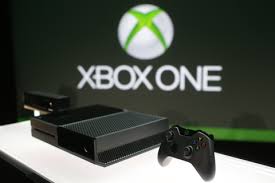
Xbox One:  the next best thing or bringer of doom?

Xbox One: the next best thing or bringer of doom?

Video game technology has come a long way since I first picked up a Nintendo controller.  In a way, it kind of blows my mind that kids today get to experience Skyrim or Red Dead Redemption as their introduction to gaming.  I often wonder if these kids can even go back and play Super Mario Bros. 3 or Duck Tales and find any enjoyment there.  And really, the leaps in technology have come quickly.  When measured strictly in terms of visual quality, it expanded slow in the 80’s before exploding in the 90’s as we experienced the move from the 16 bit era to the 32/64 bit era.  That was probably the biggest jump in terms of visual quality though going from the Playstation to the Playstation 2 was also a pretty big deal.  It would seem such advances are now behind us.  While it is undoubted that the current, and soon to be expiring, consoles look better than what came before, it’s a little more subtle.  What has been shown so far for the upcoming Playstation 4 and Xbox One has certainly looked good, but I can’t imagine there are several gamers plugged into these big reveal conferences wetting themselves over what the next generation of console games will look like.

As time moves on, console developers have needed to separate the past from the future with something other than graphics.  These developers have sought to advance gaming in other ways, such as through new controller configurations or a better online experience.  Other advances have sought to integrate the console into the living room better with Blu Ray drives and television viewing features.  This is all well and good as, for the most part, if gamers wanted to ignore these tack-on features they could, but all that may be changing.

I refuse to believe there are people out there who don't enjoy controlling a bouncy Scrooge McDuck.

I refuse to believe there are people out there who don’t enjoy controlling a bouncy Scrooge McDuck.

Microsoft has seemingly never been afraid to push something onto consumers even if they don’t want it.  They first stirred the pot by including a hard drive on the first Xbox paving the way for mandatory game installs.  No longer could playing a game be as simple as inserting the disc into the system and picking up a controller.  There was also the broadband only requirement for Xbox Live, and the charge for a Live account, that got many gamers all upset, but not upset enough to boycott the console.  The Xbox 360 has been a best-seller outside of Japan, so if Microsoft temporarily irked its audience it apparently wasn’t enough to turn them away.  This is marketing in the internet age.  Just about every news outlet allows its readers to sound off in comments at the conclusion of an article and it seems like 90% of these comments are always negative, but rarely do they seem to carry any weight.

Microsoft (and possibly Sony) appear ready to test the gaming community once more with the recently announced Xbox One, which is set to go on sale later this year.  After a confusing debut, Microsoft has recently clarified a few things about its console that currently has the internet up in arms.  Gaming is about to get more complicated and Microsoft has positioned itself, for now, as the villain in this regard.  While the Xbox One will certainly include things that will no doubt advance the quality of gaming, it’s presently overshadowed by all of the things that figure to drag the gaming experience down.

Lets first start with the always online thing.  Always online games, which require a dedicated internet connection in order to play, are fast becoming one of the more hated games of this era.  The always online thing used to apply only to online-only games like EverQuest and World of Warcraft, but has recently snuck into single-player games as well.  Blizzard included this feature in Diablo III, and EA recently did the same for the latest edition of Sim City.  Disaster ensued when the servers couldn’t handle the volume of gamers rendering these games unplayable at times.  Sim City was a particular disaster and if we’re lucky it has soured publishers from forcing this upon the gaming community for the time being.  I don’t think it’s gone though, and the Xbox One promises to make it possible for future games to include this by requiring the console to go online once every 24 hours.  What happens if your Xbox One is unable to connect to the internet after 24 hours?  Simply put, it ceases to function as a game console even though that’s its primary function!  This figures to have the greatest impact on soldiers serving overseas and on the younger crowd.  I know as a kid I’d make trips to Grandma’s with my trusty console in tow.  If I was subjected to that now I’d be shit outta luck if Grandma didn’t have a broadband connection.  Microsoft says its console needs to go online once a day because a big part of how the console functions requires access to a cloud network.  That may be true, but it’s more likely they just want to better manage what is being played on the console, which brings us to the next subject that’s really ticking people off.

Used games, or sharing games, figures to be a thing of the past.  Or at least, a less convenient way to play games.  The new cloud function will allow gamers to install games on their Xbox and then play them from any other Xbox One in the world provided they are able to log into the network.  That’s pretty cool, but it’s also a security feature and an attack on consumer rights.  This feature will also prevent games from being installed on more than one Xbox One at a time.  Since apparently the actual disc won’t be required to play the game, it does make sense that a security feature needed to be added to prevent people from buying one copy and then installing it on several machines.  The easiest way to combat that though, and one PC Gaming has been making use of since CDs became the accepted form of game distribution, was to require the CD also be inserted into the device to play the game.  No one was asking for this to change, but Microsoft decided to do it for probably a multitude of reasons.  By slowly fading out the disc-based gaming experience, it could help push the industry to a digital only distribution model which would be a cost-saver for publishers.  It also all but ends the used gaming market.

Remember FuncoLand?  Not the place to go for a good deal.  Just like GameStop!

Remember FuncoLand? Not the place to go for a good deal. Just like GameStop!

The war on used games is something unique to the video game industry.  Second-hand items have always been readily available ranging from small items like CDs or books to big-ticket items like cars and even homes.  It has been established since the birth of our economy that once a consumer buys something they own it and are free to give it away, loan it, or sell it.  If I sell my car today to my neighbor, the manufacturer of that car gets nothing.  If I sell my home the builder who originally built it gets no cut of the sale proceeds.  It’s a model that’s been around forever and few industries complain about it, except game publishers.  It’s a relatively new complaint as well, as games have been getting passed around and re-sold for as long as they’ve been around.  Commercially, it was limited to pawn shops and small electronics dealers before becoming an accepted business model for larger retailers.  I remember Toys R’ Us launching a buy-back program in the 90’s followed by the expansion of FuncoLand which sold only used merchandise.  That store was eventually purchased by GameStop, along with Electronics Boutique, and the used game market was suddenly huge.  Now publishers are getting a real look at how much money is in the used games market, and not in their pockets.  The creation of online achievements for these games also gives them a quick snapshot of how many unique individuals have played their games allowing them to cross-check that number with the number of new copies sold.  Add in auction sites like eBay and now gamers have potential buyers readily available around the globe.

The fallacy in all of this though is that game publishers and developers choose to look at used game sales as lost revenue, when in actuality it was revenue that was probably never available to them in the first place.  A used game at GameStop is often times only a few bucks cheaper than a new copy.  While I’m sure there are people who will choose to save an extra dollar in any given situation, the vast majority will just get a new copy.  Most used game purchases, mine included, are of older titles no longer available in new condition or of games that the consumer would have never purchased anyways for one reason or another.  I do not buy many used games, but the last one I did purchase was Heavy Rain.  I only purchased it because it was cheap and I was really on the fence about whether or not I would like it.  I wasn’t willing to risk 60 dollars when it came out to find out, but at 20 I was.  I ended up enjoying the game a lot and the creators will actually benefit from that when I purchase their next game.  I wouldn’t have done so had I never experienced Heavy Rain though.

Instead of choosing to combat the used games market in a proactive way, it would seem Microsoft is just looking to restrict it as much as possible.  There are still terms to be worked out, but according to Microsoft’s Phil Harrison, simply borrowing a game from a friend and inserting it into your Xbox One will cost you the full MSRP to play it.  They’ve backed off on that slightly by suggesting you’ll be able to loan a game once, but that’s still absurd.  Microsoft has also decided to put the possibility of a used games charge onto the publishers as they try to wash their hands clean of the whole mess.  My expectation is that publishers will negotiate with GameStop, and possibly other big retailers like Amazon, a kick-back for all of their used games sales.  How much is anyone’s guess and what this does to the private market is also up in the air.  The always online thing also raises the question of how many of these games will even be playable in 10-15 years.  I have almost all of my old consoles still hooked up in my house and enjoy going back to them from time to time.  That may not be possible for nostalgic Xbox One owners in the future.

It's all about the money, baby!

It’s all about the money, baby!

What irritates me most about this new attack on used games is just how lazy it is.  It used to be that games came in a cardboard box with a fully-illustrated, full-color manual along with some posters and stuff.  Now they often come with no inserts, unless it’s an ad for a new game, in a generic case.  Back in the 90’s, when buying a used game often times it was just the game which affected the decision of whether or not to go used or go new.  Cost-cutting measures have made used games practically identical to new ones.  Publishers should be focused on enhancing the experience of buying a game new, not trying to restrict people from buying it used.  EA got a lot of backlash for it, but I have never had a problem with giving consumers who chose to buy a game new additional content, as long as the used version was still playable.  This meant EA would charge a fee for enabling the online component of some of their games for those who bought them new.  As long as the online portion wasn’t necessary for completing the game, I was fine with this.  They’ve actually done away with the practice siting consumer response, but now I’m wondering if they stopped because they were aware of how used games would function on consoles going forward.

I should point out, this post has focused on Microsoft’s new machine and made them out to be the bad guy, but it’s entirely possible (if not likely) that Sony’s Playstation 4 will be the same.  While the whole cloud integration thing, or lack there of, may give Sony’s machine more freedom I fully expect publishers to more or less force Sony to adopt Microsoft’s business model for used games.  As someone who rarely buys or sells used games, I shouldn’t really be concerned.  As a consumer though, I’m outraged and I wonder if this is where I jump off the video game bandwagon.  Both consoles figure to include features I could not care less about such as gesture and voice commands, but if my game-playing experience is compromised in any way then that’s a big concern.  It remains to be seen how second-hand gaming changes, but one thing is for sure, and that’s the future of gaming is more uncertain now than it has been since the crash of the 1980’s.  As consumers, as gamers, we’ll be forced to make a difficult decision on how far we go to support our hobby and an industry we’ve all benefited from.  It won’t be easy, but if these terms being dished out for the upcoming consoles are something you’re not comfortable with then the only way to fight back is with your wallet.  I’m already ruling out a purchase of an Xbox One, an admittedly easy decision for me as I never even owned a 360.  The ball is now in Sony’s court, and next week’s E3 figures to be a real game-changer.  Will Sony step up and do the right thing and maintain the status quo as it concerns consumer rights, or take the easy way out and follow the Microsoft model?


Spider-Man and the X-Men in Arcade’s Revenge

Spider-Man and the X-Men in Arcade's Revenge (1992)

Spider-Man and the X-Men in Arcade’s Revenge (1992)

Expectations influence just about everything we come in contact with.  Expectations can help lead to a more fulfilling experience when those expectations are met.  Other times, they can help make the bad seem worse when something fails to meet those expectations.  When I was a kid and I heard there was going to be a video game featuring a team-up between Spider-Man, possibly the most popular character ever created by Marvel Comics, and the X-Men, easily the hottest comic at the time, I was giddy with anticipation.  This seemed like a no lose situation and Spider-Man and the X-Men in Arcade’s Revenge vaulted to the top of my list of must own Super Nintendo games along with Teenage Mutant Ninja Turtles IV:  Turtles in Time.  One of those games would turn out well and provide me with hours of entertainment, the other game was Spider-Man and the X-Men.

What went wrong?  Well, let’s backtrack a bit first and see how this all came together and if my expectations were even justified.  At the time of the game’s release, Spider-Man had already been enjoying a run on the Sega Genesis and Game Boy as a platform star.  Perhaps star is a bit strong as his games weren’t really great, but they also weren’t particularly awful.  The best was definitely The Amazing Spider-Man vs The Kingpin for the Genesis.  The game was pretty difficult, at times frustratingly so, but it did a great job of making use of the Spider-Man license.  It was also quite popular and one of the best-selling titles at the time.  The X-Men, on the other hand, really only had the one NES game titled The Uncanny X-Men.  It was horrible and it tricked many uninformed gamers into renting or buying it with it’s X-Men branding.  Arguably, the best games for both franchises were the arcade beat-em-ups Spider-Man:  The Video Game and X-Men.  The Spider-Man game came first in 1991 and for some reason it isn’t as well loved and remembered as the X-Men game that followed in ’92.  It was a typical brawler allowing up to four players to join in and included playable characters Spider-Man, Black Cat, Hawkeye, and Sub-Mariner.  It’s selling feature was a more platform inspired design where the camera would zoom out allowing the players to take on gigantic enemies including a super-sized Venom at the end of the first stage.  The X-Men game was similar, but it’s defining characteristic (aside from the comical mistranslations) was the double-monitor cabinet allowing up to six players at once.  Both games were hard as they were designed to suck quarters out of its audience but they were a lot of fun, especially with a group of friends.

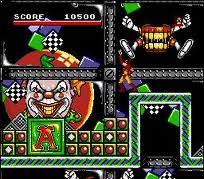
I hate these stupid clowns and their stupid stage.

I hate these stupid clowns and their stupid stage.

It would seem to me that a track record was in place that at least suggested a console game featuring these two franchises could be great.  If I had been a little wiser as a kid and more aware I would have taken note of the LJN logo on the box and realized right away the game was going to be a giant turd, but sadly I just wasn’t.  Before I get into what the game did wrong I suppose I should point out what it did right.  First of, Spider-Man is represented fairly well given that he is able to stick to walls, shoot webs, and even make use of his spider-sense in the game.  The roster for the X-Men side is pretty solid as well as it features the obvious choice of Wolverine along with Cyclops, Storm, and Gambit.  Wolverine has an interesting dynamic to him as he retains his mutant healing power but it only works when his claws are retracted.  The game is packed with villains too like Apocalypse, Shocker, Juggernaut, and Carnage.  Arcade is kind of a weird choice for the main villain, but at least his Murderworld offers a lot of possibilities for level-design.

That’s basically it as far as what Spider-Man and the X-Men gets right, and unfortunately it’s a pretty small list.  So what makes this game suck so hard?  Well, lets first start with the presentation.  I’m usually not one to have much of an opinion on the audio within a game.  I expect it to do its job and often times I have to make it a point to touch upon it when doing these reviews because I tend to overlook it.  Here it’s easy to not overlook because the sound is so bad.  The score is okay at times, though certain levels (Wolverine’s) feature an annoying soundtrack.  It’s the FX that really bug me though as they just sound like, for lack of a better word, shit.  A lot of the characters, good and bad, let out a scream when they die that sounds fuzzy and distorted.  The machine sounds are just as bad and Spidey’s web blasts sound like they could be grenades.  The graphics are also piss-poor.  The characters are really small, except Storm but I’ll get to her later, and lacking in any sort of detail.  Wolverine even looks like he only has two claws on each hand while Gambit doesn’t have a face.  Some of the villains are almost unrecognizable, especially Apocalypse who looks like a blue bug or something.

Hey Gambit, where's your face?

Hey Gambit, where’s your face?

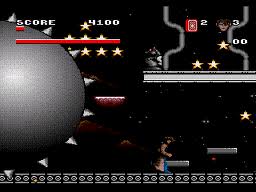
Perhaps what bugged me more than anything as a kid was just how un-super these super heroes felt.  Spider-Man and the X-Men is a pretty hard game made so mostly because these characters can’t seem to take a punch.  They die so easily and it’s a frustrating experience.  I get that it’s hard to make a super hero game because on one hand the super heroes need to be super powerful, but the game also needs some challenge.  That’s why we have super villains though, and Wolverine shouldn’t be getting annihilated by a jack-in-the-box with a tommy gun.  The X-Men games that would follow on the Genesis were hard, but at least those X-Men felt like powerful super heroes (well, for the most part), these ones are push-overs.  The level designs are also fairly lacking.  Spider-Man’s are just weird looking and kind of confusing as they’re intended to be maze-like.  The player is supposed to use his spider-sense to navigate but it just gets tiresome.  Cyclops’ stages feature an annoying mine cart premise where touching the tracks means death.  Gambit has to outrun a giant deathball and might be the best levels, which isn’t saying much.  Wolverine is in a circus and there’s nothing noteworthy about the first stage while the second stage he has to outrun the Juggernaut.  It’s basically the same concept as the Gambit stages, though at least LJN incorporated something from the comics to make it feel relevant.  Storm’s stages are quite different and probably everyone’s most hated as she has to navigate a flooded laboratory.  They’re swimming levels, but unfortunately Storm’s mutant powers over the weather don’t let her breath underwater.  Just about everyone hates the underwater Sonic the Hedgehog levels for the same reason, this is worse times ten.

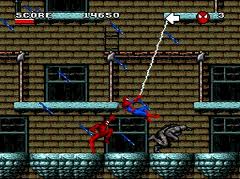
The red guy is Carnage. That gray blob?  He's Rhino.  I think.

The red guy is Carnage. That gray blob? He’s Rhino. I think.

If the player manages to actually beat all of the levels then they get to take on Arcade as Spider-Man.  You kind of have to be a glutton for punishment to even make it that far as the game is both really hard and really bad.  That’s the worst combination.  As a kid, I never had much success and never made it past any character’s second stage so making it all the way to Arcade wasn’t in the cards.  Playing this game was a depressing endeavor as a game featuring a team-up between these two should have been awesome.  I remember a few years after I got it Toys R Us started their first trade-in program where people could trade in games they no longer wanted for store credit.  I grabbed my copy of Spider-Man and the X-Men and, thinking I’d get maybe 15 or 20 bucks, was offered only four.  I elected not to trade it in but in hindsight I should have taken the four Jeffry Dollars.  I could have used it for some Fruit Stripe gum or something.


Crisis of the Wii U

images-104It seemed like it happened overnight, the toppling of the Nintendo era of dominance.  I don’t even know when it happened.  The NES obviously dominated the 80’s and the SNES basically dominated everywhere except the US where it was neck and neck with Sega’s Genesis.  Actually, the turning point may have come during that era when a little game called Mortal Kombat was released to home consoles in 1993.  Mortal Kombat, as most are likely aware, was a fantastically bloody affair and something Nintendo didn’t want on its machine.  Sega, on the other hand, was willing to accept the title and all its gore so long as it was blocked by a password (the incredibly easy to administer A, B, A, C, A, B, B).  I know, for me, it was that game that made we want a Genesis, and after I got one, I never bought another SNES game.

It seems like ever since Nintendo has been up and down.  While Sega would vanish from the console business, new competitors Sony and Microsoft were next to challenge the Nintendo empire and have been very successful at doing so.  Nintendo’s next two consoles failed to lead the market, but with the release of the Wii the company came storming back.  Underpowered but also underpriced when compared to its competitors, the Wii was able to gain a large market share with it’s unique motion-based controls.  The party nature of the console helped it surge to a huge lead and the head of the market.  Because of the hardware within, it didn’t take long for the limitations of the console to show itself and it became clear that Nintendo would have to be aggressive in releasing its next console if it wanted to maintain its share of the market.  Enter the Wii U, the similarly named successor boasting a new gamepad.  With a modest price point and familiar interface, it seemed Nintendo was poised to hold onto its Wii consumer base for a while longer.  Not so fast.

No decapitations for you, Nintendo fans.

No decapitations for you, Nintendo fans.

The first stumbling block for the Wii U relied in the marketing.  Which is to say, there wasn’t a whole lot.  The labeling of the console, and perhaps even the look, have lead to consumer confusion as some people weren’t clear on if the Wii U was a new console or just an add-on for the outdated Wii.  When a big portion of a console’s consumer base is described as casual, this is the kind of thing that happens.  The next obstacle is what’s under the hood.  The Wii U is a boost over the Wii but it’s not clear if the machine is more powerful than existing consoles from Microsoft and Sony.  This has lead to a feeling that the Wii U isn’t really a “next generation” machine and the hardcore gaming crowd hasn’t been convinced that this is a must own console.

Perhaps the biggest contributor to the Wii U’s lukewarm reception has been the inability of Nintendo to convey how innovative the gamepad is.  The jury is largely still out on if it’s a worthwhile addition to home gaming.  The Wii U launch lineup was actually pretty solid, especially when compared to the lackluster launches of other recent consoles.  The Wii U even had a Mario title at launch, the first Nintendo console to have such since the N64.  The problem with it though is that it treats the gamepad as an afterthought.  If Nintendo wanted to set the world on fire it needed to launch the system alongside a game that truly made good use of the gamepad.  Nintendoland just wasn’t enough.  And even though the Wii wasn’t blessed with an abundance of third party support, at least there were a few out there that seemed excited by the movement based controls.  With the Wii U, a big company like EA already looks to have abandoned it and that, regardless of how you feel about EA and its games, is not a good sign.

Another, perhaps unforeseen, hurdle is the proliferation of casual gaming on tablets and cell phones.  Nintendo was able to tap into this growing audience with the original Wii, but is it possible this group has already moved on to other things?  The gamepad is quite similar to a tablet, or it is at least easy to perceive why someone would have that impression, and these gamers may wonder why they would ever need a Nintendo tablet.  And with no major showings of games on the horizon, the more hardcore gaming community has been given little incentive to get a Wii U beyond some empty promises and HD remakes of old games.

If you’re a regular reader here, then you may know that I have been an early adopter of the Wii U.  Since buying the deluxe version on launch day I’ve added one game to my collection, Scribblenauts Unlimited, a solid title but one that is also available on the 3DS.  I currently have no idea what my next Wii U game will be because nothing has been announced or shown that is even remotely interesting.  And with Nintendo announcing that they will not be holding a press event at E3 this year it makes me nervous that there’s very little to show.  I worry that Nintendo really needed to make a splash with the Wii U, and by failing to do so, have doomed the console already.

It's coming...

It’s coming…

I have been an early adopter for three recent consoles with the 3DS and Playstation Vita being the others.  The 3DS struggled early before rebounding while the Vita is still a source of concern for Sony.  Even so, I never regretted my 3DS purchase and I have yet to regret my Vita one but I pretty much already am regretting my Wii U purchase.  I know that eventually Nintendo will get some first party software onto the Wii U that will be worthwhile, but how many such games can Nintendo reasonably release?  And will any third party developers step up and release anything of note for the Wii U?  Right now, those developers can still release current-gen ports to the Wii U, but once the more powerful PS4 and next Xbox arrive that may be out of the question.  The console is unique enough that developers basically need to cater to it, but if sales are lagging as bad as they currently are then no developer will be willing to take that risk.  Will the Wii U be the console that takes Nintendo out of the hardware business?  My heart says no, but my brain is at least willing to entertain the notion.


Roger Ebert and the Great Debate: Video Games as Art

super-mario-mushroom-artNearly three years ago a blog entry popped up on famed film critic Roger Ebert’s site that ignited a response from the gaming community in a way usually only reserved for the likes of pro-censorship groups and individuals.  The title of this blog, Video Games Can Never Be Art, was a bold statement that seemed to cut to the core of many gamers and industry types.  It has attracted nearly 5,000 responses and spawned numerous rebuttals of various kinds.  Ebert, who passed away recently, never showed much desire to revisit the topic over the years preferring to let those words just hang in the air.

I do wish Ebert had chosen another title for his post as the absolute tone it takes seems foolhardy to me for someone so well learned.  The title is actually a quote and one he had given earlier intended as more of a throw-away line in a much larger discussion.  Ebert chose to return to it because it received more attention than he anticipated and elected not to change it, but did acknowledge its weakness.  Her clarified his opinion to something more along on the lines of that video games are not art presently, and no one currently alive will live to see them regarded as such.  That is definitely a much better argument as it’s impossible to predict where tastes are heading.

However the argument is to be phrased, gamers around the globe seemed to take it personally that their chosen recreation could be perceived as something other than art.  Most of this stems from the fact that many who elected to respond to the piece apparently did not get past the title.  Again, Ebert is partially blamed for that but it is important to understand where he is coming from before forming a proper rebuttal.  Ebert’s opinion resides on the game itself.  Components of a game are considered forms of art.  Still images, music, animation – these are all considered artwork.  I don’t know if it was asked of him, but Ebert would probably consider the directors of some games as artists of some kind.  He also expressed a sense of surprise in how his statement was received, noting that the likes of Michael Jordan and Bobby Fischer never seemed to take it personally that their games are not considered art.

DownloadedFile-15

It’s this lack of understanding of where Ebert is coming from that makes a great many of the responses to his opinion ill-conceived.  So many want to focus on the parts of a game that Ebert would consider a form of art and fail to understand that it’s the game that Ebert is declaring as non-art.   Another thing hampering Ebert’s argument is the fact that he openly declares he does not play modern games and had no desire to do such, thus we’re left to assume what first comes to mind for Ebert when the topic is brought up is Pong as opposed to Bioshock.  That’s not entirely relevant though, as is playing a game of virtual tennis any more or less artistic than shooting bad guys in high definition?  Neither is art, but modern gamers would immediately point to the story contained in a title like Bioshock, to which Ebert would point out that it ceases to be a game and is a representation of another form of art.  In other words, if your argument for games as art is that it’s an interactive story then Ebert considers it a representation of a novel or film and not really a game.  He does not, however, go on to say such games are forms of artwork so if there was hope for a compromise between the two camps it seems that door was shut.

On that level, I tend to side with Ebert on this one.  I love video games.  There have been times in my life where games have been my primary source for entertainment and it’s possible I’ll enter another phase later on where they will be again.  Video games will probably be a part of my life for its duration which certainly separates me from Ebert and is perhaps something he forgot.  When Ebert was born television was still fairly new and the only way to see a film was to go to a theater.  Video games were never a part of his life save for maybe on the periphery at times.  And even tough they have been a large part of my life, there still is no singular game that can stack up as art when compared with works from other accepted classes of art such as music, film, and poetry.

In order for a game to transcend into art it needs to incorporate the game itself into its argument.  Okami is a delightful game to look at, but physically playing it is not a remarkable experience when ignoring the visual style and plot.  Heavy Rain is an example of film-quality story-telling and a game I enjoyed very much, but it too falls into that representation of a film category Ebert mentioned.  In that game, the actual game components are fairly minimal and oftentimes are the biggest hindrance to enjoying the game as simply controlling the characters is awkward and, at times, a chore.  Many of the other games often cited by gamers in the comments section are too preoccupied with the game’s narrative and their emotional response to it.  Separate that narrative though and could it exist on its own and still instill such a response?  Or strip away the player control and just watch the “game,” how much does the emotional response change?  While I’m sure it would be affected in some way, probably not as much as some people would like to think.

Ico (2001)

Ico (2001)

In searching my brain I could only come up with one game I’m even tempted to make an argument for as one that toes the line between game and art:  Ico.  Ico, at its core, is not remarkable in a sense that it should be considered art.  It’s a fairly basic three-dimensional platform game.  The player controls the main character and has to negotiate jumps, push blocks, and fight enemies with a stick or sword all while attempting to defeat an ultimate bad guy and escape the castle.  Where it hits on a different level is through the non-player character Yorda.  Yorda is a helpless girl that needs to be lead through the castle and protected by Ico.  It’s the interactions with her that make this game different.  In order to progress, the player must take Yorda’s hand and guide her through certain scenarios.  This simple gameplay convention is remarkable in that it adds a semi-tangible element to a non-tangible experience.  When interacting with a game, we as gamers can only interact by ingesting the story being fed to us and with a controller in our hands.  This act of reaching out and grasping Yorda by the hand is an extension of that controller and it’s a simple mechanic that imparts so much.  We’re now a caretaker and this girl is entrusting us with her life.  She speaks a different language so there is no other way to communicate with her.  The game’s setup of giving us control of a character marked for death, has already made this an us against the world type of game, but in Yorda we have another purpose.  She isn’t so much an ally as a goal.  As a player, how much do we actually care for the main character?  And yet, I know when the evil shadow monsters are dragging Yorda down to a dark demise because I failed to protect her it’s not the same as when Ico misses a jump and falls to his death.

Ultimately, I do not know if I would go so far as to proclaim Ico a work of art, but I do know it’s one game (perhaps the only) where the act of playing it caused me to experience something I may not have while engaging other forms of art.  It is a remarkable experience and one I recommend others try.  I’ve played other games that borrow heavily from Ico, most recently Dokuro on the Playstation Vita, but none are able to resonate the way Ico does (not to say that Dokuro is a bad game, it’s quite the opposite, if you have a Vita you should absolutely have a copy).  In the end, I guess I side with Ebert on this one.  I recognize that many aspects of a game are forms of art, or collaborative art.  I think someone like Hideo Kojima is an artist of some renown even if his chosen work is not on par with other forms of art.  Where I differ with Ebert is that I do entertain the notion that in my lifetime games may take on a higher purpose.  They’ll never be as highly regarded as film or sculpture, but there is a movement towards games as art that probably can’t be stopped.  As long as they continue to become a larger part of society appreciation for them will continue to grow.  In the meantime, whether a video game is considered an important work of art or not is irrelevant to me.  If it’s a good game, taking into account there are many ways for a game to be good, I’ll enjoy it no matter what it’s place in the great debate may be.

As a postscript to this entry, I did want to offer my thoughts on Roger Ebert’s recent passing.  Ebert was a part of my youth through his television show with fellow critic Gene Siskel.  As a kid, I gravitated more towards Siskel when it came to criticism but as I got older I sided with Ebert more and more.  His website was a weekly ritual for me as I checked out his thoughts each Thursday on the latest releases.  He was always eager to champion the cause of animation, notably the works of Studio Ghibli, and it’s something about him I really appreciated.  Even though I didn’t agree with all of his reviews, I like to think we had similar tastes when it came to film and regardless of how he scored the film I could often tell if I would like it or not simply by reading his review.  There were even times where I felt like he was speaking for me instead of to me.  His review of Batman Begins so well captured my response to the movie and phrased it in a way I could never hope to.  He was a brilliant writer, and his blog was oftentimes more entertaining than his film criticism.  Since he lost the ability to speak, that blog became his outlet and he was not shy about putting his innermost thoughts on the internet for all to consume.  As a result, myself and many readers felt connected to Ebert in a way different from other mainstream writers, be they reporters or other critics.  I felt like I knew him without ever meeting him and was extremely sad to hear about his passing.  I will miss him.

DownloadedFile-14