Tag Archives: playstation

Final Fantasy VII Rebirth

My video game reviews are rarely timely. I just don’t have the available free time to plow through a video game like I once did, especially not a lengthy role-playing game. Nonetheless, the subject of a Final Fantasy VII remake has been a big one to me and I would be remiss if I didn’t collect my thoughts on the subject here in this space. It was nearly a year ago that I did just that with part one of a projected three-part project that is the Final Fantasy VII remake. That first part basically covered the Midgar portion of the story from the original game taking what was probably an eight hour experience and turning it into a 60 hour one. The second part of that journey arrived the same day as my review of the first and I think most had an idea of where it would leave off relative to the main story, and most were right. It has taken me the better part of eight months to work my way through this second chapter, titled Final Fantasy VII Rebirth, and I have some thoughts to share.

As is probably the case with every article, blog, etc. on the subject, spoilers are ahead for those who did not experience the original Final Fantasy VII or Final Fantasy VII Remake. I’ll not spoil this game outright, at least not without warning, so if you’re looking for a delayed opinion on a game you’re considering for yourself then you’re safe for now. The game picks up right where Remake left off and our heroes are fleeing Midgar and planning their next move following the destruction that took place and their encounter with the big baddie of the game: Sephiroth. Remake ended on a controversial note. Basically, it was revealed that what we’re playing is a remake in a meta sense, but only Sephiroth is aware. Final Fantasy VII happened. Sephiroth lost and the planet was spared. Now, he gets to try again by toying with the whispers of fate, as it were. In a way, it’s not important to the player if this is a redo or all happening for the first time, except for the fact that it was revealed at the end of Remake that Zack (Caleb Pierce) is alive. If you’ve played the original, or the prequel game Crisis Core, then you know Zack should be very much dead. He died saving Cloud and that inspired Cloud to basically become Zack, in a sense. With him alive it’s confirmation that Sephiroth (Tyler Hoechlin) has indeed altered history and anything can happen from here.

This guy showing up at the end of Remake certainly raised a few eyebrows.

That little detail may have caused a few fans to raise their pitchforks at the game’s conclusion, but if you thought this meant that the experience going forward would be vastly different then put those pitchforks away. Oh, there are indeed some changes, but the events of Rebirth largely follow in the footsteps of the original game. With just a whole lot more. How does one take a 40 hour experience and stretch it across three modern games? Why, with padding of course! Final Fantasy VII Rebirth is a long game and it took me just shy of 130 hours to roll credits on it. I did not do everything in this game either. I started off trying to keep up with every nook and cranny offered up by the experience, but at some point I decided if I ever wanted to beat this thing that I needed to play in a more focused manner. You see, this game has a mini game for seemingly everything. They add considerable padding to the experience especially if you want to get the top score and receive the best reward. The game is also structured in that there are a series of areas you visit which are fairly vast on their own. Each one comes with a bunch of tedium to extend them: encounter every enemy, find a bunch of special areas, tame a chocobo, beat a unique boss, etc. There is a flow to it, so it’s not a truly tedious experience, but there will be times when the game just plain doesn’t respect your time.
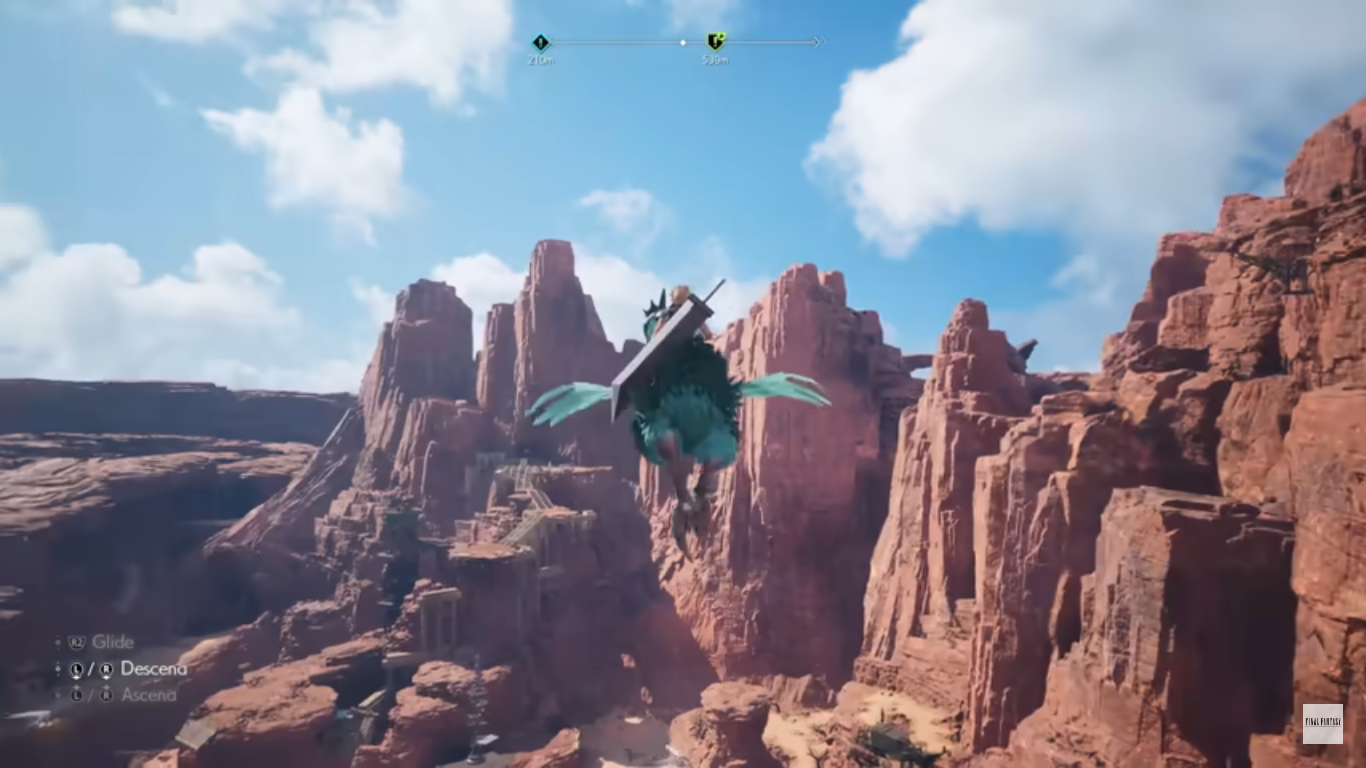
If you felt Remake needed more chocobos then you’ll be happy with Rebirth.

A game that is going to require such an investment of time better be fun to play. If you enjoyed the combat system in Remake, then you’ll be happy with Rebirth. Your characters all basically start over though. Same with your materia, the equip-able orbs that allow your characters to access spells and special abilities. Nothing is carried over from the prior game even though these are supposed to be all combined. The combat is still an action game. You can pause (technically, slow down time to a near pause) combat to issue commands to your characters, but there’s no turn-based option available. Combat is basically still mostly mashing the attack button, accumulating ATB bars, and then using them to unleash special moves and spells. Your party will grow quite a bit larger this time around with the additions of Red XIII (Max Mittelman), Yuffie (Suzie Yeung), and Cait Sith (Paul Tinto), but you can only take three into battle at any given time. There’s no swapping in reserves, though there is a reserve action available when things gets dire.

There are new faces in Rebirth, but like Red XIII in Remake, some are more like teases of things to come.

Every character plays a little different to make them unique. Our returning fighters in Cloud (Cody Christian), Aerith (Briana White), Tifa (Britt Baron), and Barret (John Eric Bentley) still control the same. Yuffie, who was part of the Intergrade DLC for Remake, is a hybrid melee/ranged attacker who relies on speed and is largely unchanged from that game. Red XIII was introduced in Remake, but not playable. In this one, he’s an attack/support character and his special ability is tied to his Vengeance gauge. It builds up during combat and at any point Red XIII can go into a Vengeance mode which makes him stronger, faster, and opens up new moves. Cait Sith is more of a wild card character with moves tied to chance. Cait is the small, anthropomorphic, cat and he rides an oversized moogle. The moogle can be called upon and used to dish out damage and most of Cait Sith’s abilities are tied into it.

The weapon system this time around has been altered. Rather than each weapon needing to level up via a grid type system, each character just has their own progression board of sorts to unlock abilities through. The weapons now just have a special ability and equipping the weapon and using that ability a set amount of times allows the character to learn it permanently. Weapons also have their own materia slots and their own pool of equip-able abilities. This does mean that the evergreen nature of the weapons in the last game is sort of lost. You’re far more likely to just run with the latest and greatest weapon acquired unless said weapon specializes in magic when you want the character to focus on melee attacks. The board each character has will modify base stats and also allow for the learning of magic abilities that do not require MP. It’s a unique grid for each character, so it’s not like Final Fantasy X‘s sphere grid where everyone is on the same thing, but a different starting area.
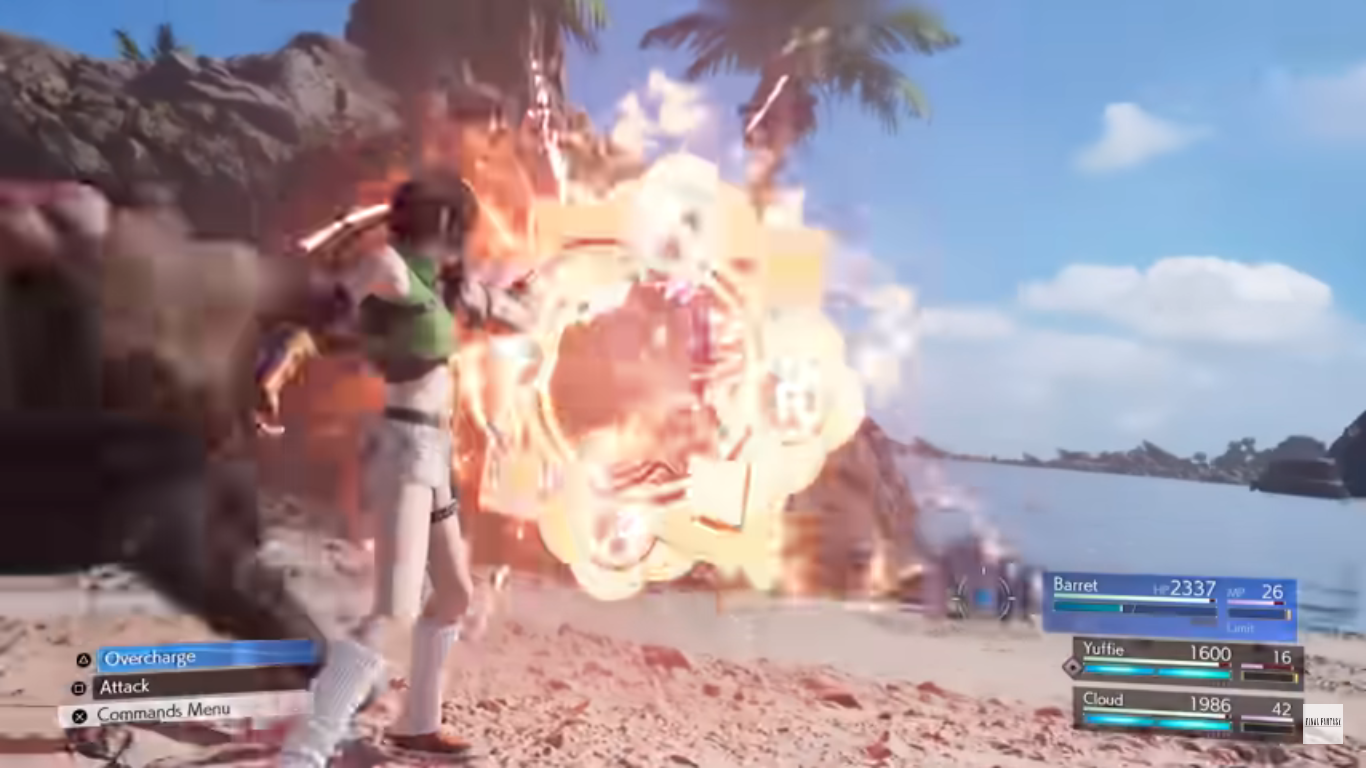
Synergy skills allow characters to team-up to unleash potent attacks in battle.

A key component of these new grids (which the game refers to as folios) is the ability to unlock Synergy skills. Synergy skills are basically team-up moves and they have to be unlocked. When a character uses an ability in battle, they fill a separate ATB bar. Once two characters have filled the required amount of ATB bars for their move, they can then use it. These moves often do a tremendous amount of damage, but also have other special functions. Many are focused on dealing extra damage to foes that have already been staggered. The Refocus ability, which grants an extra ATB gauge in battle, is also now tied to Synergy skills. Others speed up the limit gauge or leave the characters in a state where they have unlimited MP for a short while. They’re pretty useful and when it comes to harder boss fights they can be the key to turning the tide in one’s favor so it pays to make sure your favorite characters to play as have learned a Synergy skill or two.
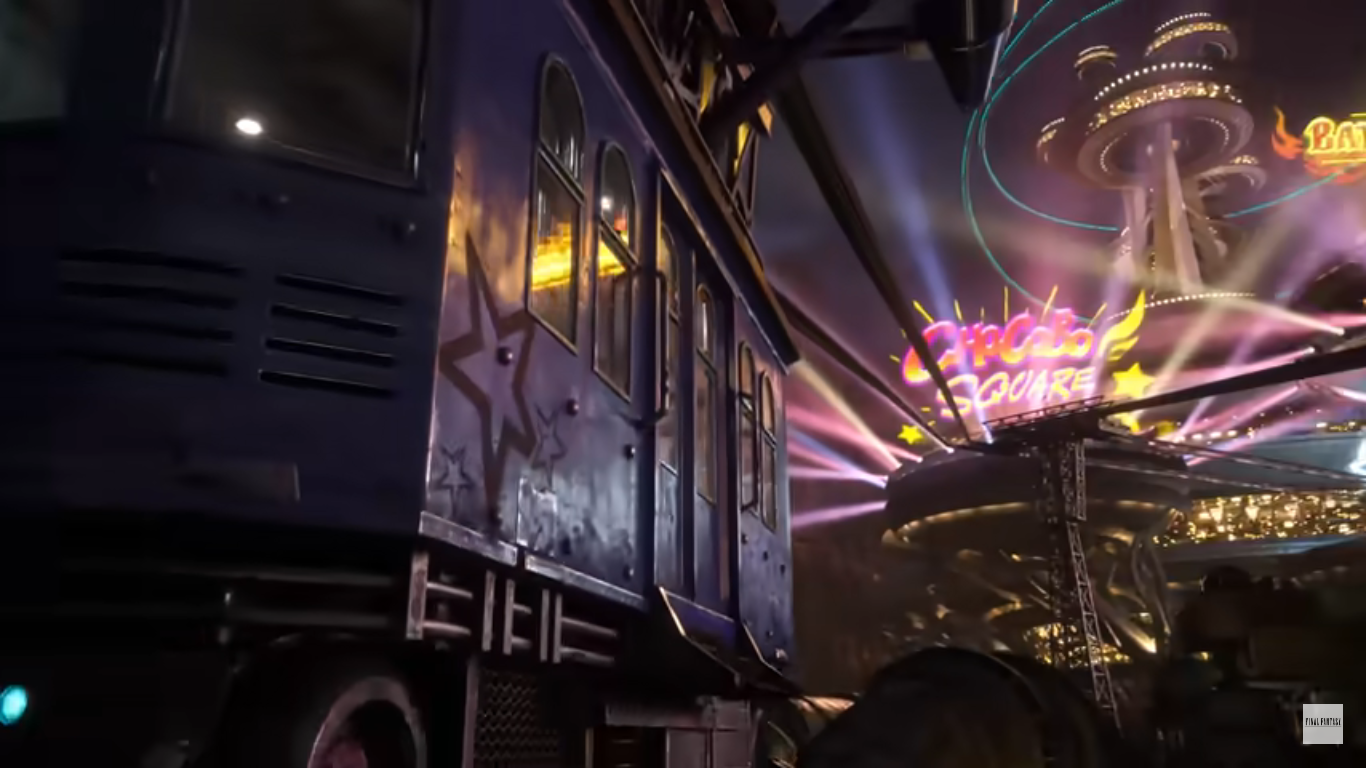
The Gold Saucer now feels more like the experience it was supposed to be in the original game.

The presentation for Rebirth is, as you would have probably expected, quite lovely. There’s a variety of environments on display and characters animate and emote exceptionally well. The soundtrack is as good as ever making liberal use of the original game with some new twists thrown in. Voice acting is also very good and at no point will you feel like Square Enix cheaped out anywhere. About the only thing that can feel limiting is when reaching the edge of a map and encountering the ever annoying message that you cannot pass further. The locations though are technically connected so you could basically walk the entire map which I would not recommend. At some point water travel will become a possibility making it even more obvious that this is all one big area.

As most probably imagined, there are more summons to go around in this one.

There is a lot to do and a lot to see in Rebirth. I have no idea how fast this game could be completed if one ignored a lot of that extra stuff, or how much harder it would be. I played on normal and encountered plenty of challenging fights. Some of the hardest will be the summons. In order to acquire a summoned creature, you have to first beat them. You do so via Chadley, who returns from the first game, and his combat simulator. There are special shrines scattered about a region that if encountered can weaken the summoned creature, but most will still put up a good fight. Once acquired, they can only be used when the summon gauge pops up in battle, which does seem to happen far more often this time around than in Remake. Once summoned, they hang around, deal some damage, and have their own abilities that anyone in the party can tap into. Once their time is up, or the summoner is defeated, they unleash their ultimate attack and vanish. There isn’t a whole lot of strategic value to them, they almost feel like window dressing and something the game has to have since it was a part of the original. It’s still fun seeing them for the first time, at least.

The other distractions all vary in quality. Some I enjoyed, some I couldn’t wait to be done with. Chocobo racing is back only now it’s more like Mario Kart. It’s also not entirely optional, but also not super difficult. There were times I was pretty annoyed though, but those instances may have been in the optional races. There’s also a card game that Cloud can partake in called Queen’s Blood. It takes a little getting used to, but the game does a solid job of bringing the player along as more complicated cards are introduced. I did manage to complete that entire side quest without too much trouble. It’s probably the best of the many mini games which largely do not impress, but also don’t really annoy. The only one I truly detested was the piano playing mini game. I just can’t get accustomed to it and never even managed a B playing a part. I got the impression even back in the demo that it was going to be way too time consuming to get good at so I didn’t bother. Thankfully, there are no moments in the game where you’re required to play piano and actually play it well. There are some moments where you do have to play and it’s a bit awkward, but we can’t all be winners.
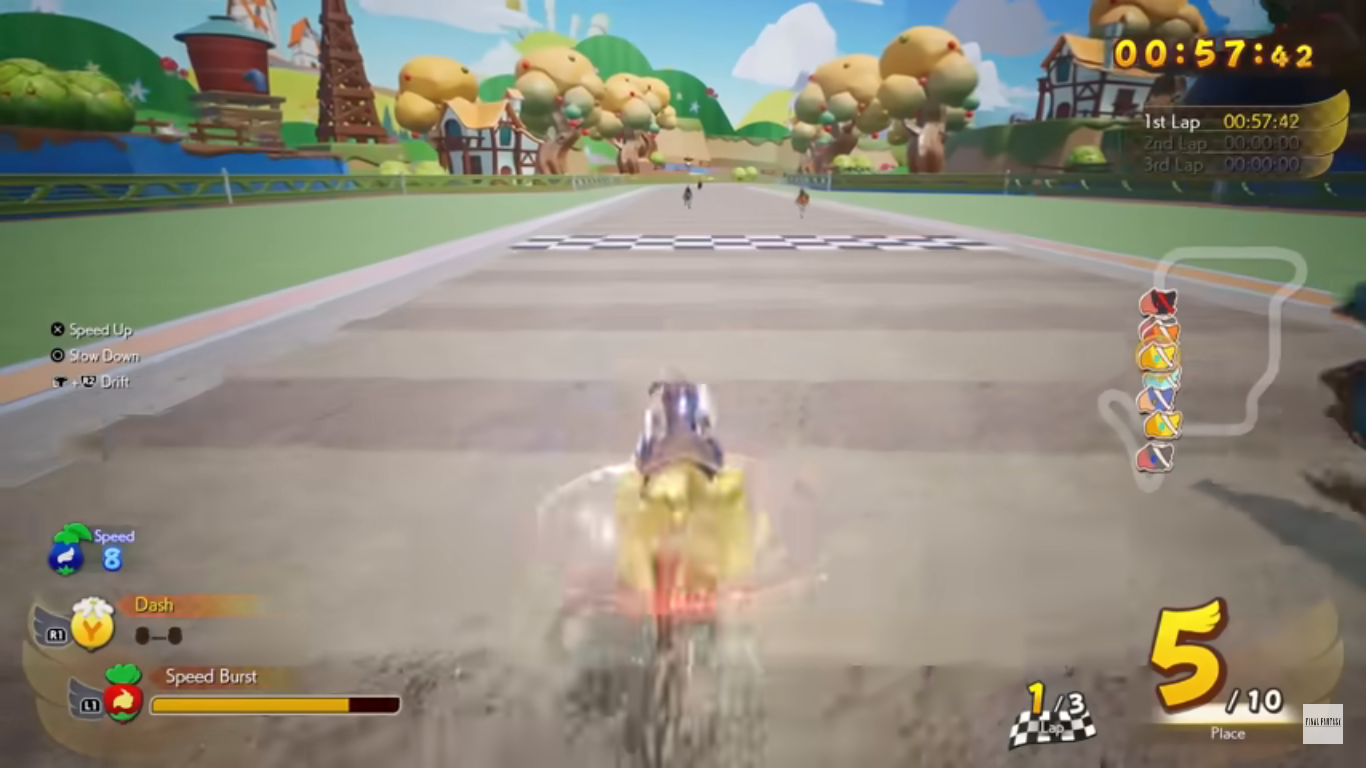
It’s back!

Final Fantasy VII Rebirth is basically more of the same when compared with Remake, just a whole lot more. It’s probably way longer than it should be and I can think of plenty of ways it could have been cut down. Anytime I was forced to watch Cloud crawl through something or walk slower I couldn’t help but think this could be going a lot faster. Why do I need to control an airplane that isn’t even being piloted by one of my characters to get to a new area when it could just be captured with a quick cut scene? A lot of side quests are fetch quests that don’t add anything to the narrative, and I really hated that a series of items you collect all throughout the game just leads to an optional, high level, area I have no desire to see through. There’s a crafting element included, but it adds very little to the experience other than an excuse to just put a bunch of collectible crap on every map. The game is, for me, undoubtedly a more complete experience than Remake, but at almost every step of the way there’s this feeling that the designers are just trying to stretch this experience out to the game’s detriment.

The game is so similar to Remake that any issues one had with that game will carryover to this one. I still don’t love the combat system. I don’t hate it, but I still feel like this game is stuck between a subpar action game and a JRPG. It’s not going to satisfy action game fans or JRPG fans entirely, instead it tries to meet them all halfway. It would have been so easy to make it an optional turn-based game, but Square Enix refused. And yeah, you can pause and issue commands or switch to another character on the fly, but the game is still bad at letting you truly dictate to your party members what you want them to do. There was one optional fight where I had to take out a certain enemy first. The problem was, the other enemies in the fight were all weaker. The challenge is basically you have to fight against the game because you can’t reliably get your party members to focus on the target and the target alone. I had to redo it several times because someone would end up taking out one of those lesser enemies first resulting in a failure. Even doing the fight solo was a pain as it’s very easy to accidentally switch targets and the auto-targeting sucks.

And now we do have to talk about it. The big thing. Spoilers ahead!

Do you feel that pit in your stomach upon seeing this? If you do, it’s a totally normal reaction.

As all likely guessed, this game ends with the City of the Ancients and Sephiroth’s attack. The death of Aerith is quite possibly the most famous death in the history of video games. I am struggling to even come up with anything close to it. This game totally blows it by doing what it spends too much of the game doing: it drags it out. The impact of the moment is completely lost because of how drawn out the process is. It also intentionally muddles things too by turning to something I think many are sick of: the Multiverse.

Yes, we’re going full multiverse in this one. It’s basically hinted at throughout the game as there are short sequences where we’ll check in on Zack who is watching over both Aerith and Cloud. Aerith is in some sort of coma, while Cloud has apparently succumbed to mako poisoning. Biggs is also alive, and the game waits until the end to reveal what’s going on which is essentially that Sephiroth is trying to unite a whole bunch of multiverses. I suppose it’s not the game’s fault that Marvel has gone headlong into this type of story-telling over the past few years, but it’s a trope that I’m personally so sick of. It’s not adding to the experience of Final Fantasy VII and just feels like change for the sake of change. I still expect the events of the final game to play out largely as expected, only instead there will probably be some additional final encounter with Sephiroth. Maybe it will bring in other Final Fantasy universes and Sephiroth will team-up with Kefka while Cloud and Squall race to find Tidus for one massive, shark-jumping, finale! I doubt that, and I hope we’re not heading for something that ridiculous, but I’ve gone from slightly intrigued by the possibilities presented at the end of Remake to downright soured.

There will be more battles with Sephiroth to come, but what shape will they take?

The remake of Final Fantasy VII was never going to be easy. Redoing the game with prettier graphics might have satisfied many, but also would have felt pointless. The game does at least benefit from having the player spend more time with these characters. They’re far more fleshed out, their personalities more apparent, and I genuinely enjoy spending time with them. I am invested in their journey, even if aspects of it frustrate me. Aerith was done dirty. Not because she was killed off, but because it wasn’t allowed to resonate like it should have. Perhaps the fallout in whatever comes next (I’m guessing it will be called Reunion) will find a way to rectify that. And at least they didn’t chicken out, which I was a little afraid would happen and this new timeline would lead to one where Aerith doesn’t die. Not because I want her dead or anything, far from it as she’s a delightful character, but because her death should hurt and it shouldn’t be something we can ignore.

All this is to say that I have complicated feelings on this game. I did with Remake, and I still do with Rebirth. Chances are, I’ll feel the same way when all is said and done. Can I recommend it? Yeah, sure, if you have 100 hours to spend on a game. If you don’t then I totally understand. I find the task a daunting one and I’m nearing a point in my life where I don’t really want a game to last that long. As a fan of the original Final Fantasy VII, it is nice to see these characters from a different angle and experience them in a new way. I can’t compare the two games because they’re such different experiences, but the best thing I can say about Rebirth is that I don’t regret the 130 hours I’ve spent with it. I just don’t really want to spend any more time with it.

Check out some of my other Final Fantasy thoughts below:
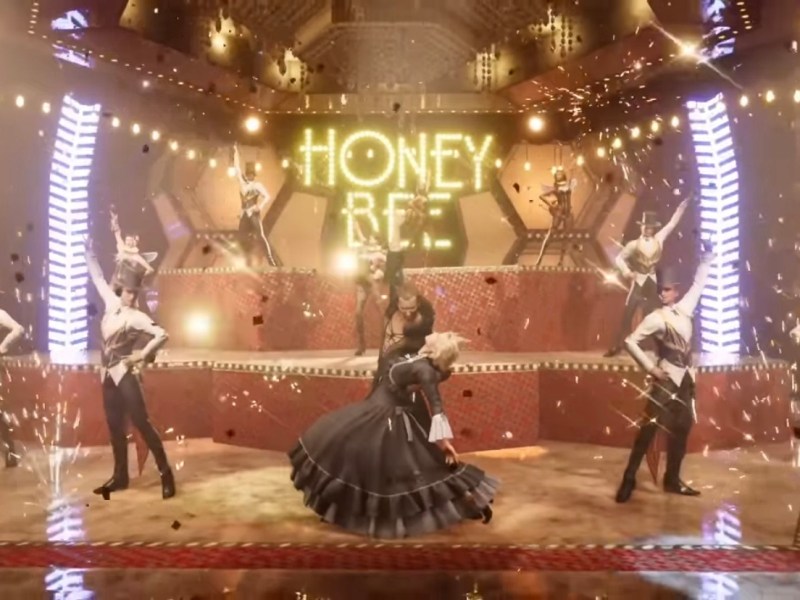
Final Fantasy VII Remake – Intergrade

It took a long time for it to be realized, and a long time for me to play it. It’s debatable which Final Fantasy title is best and nostalgia will always play a big role. For many, Final Fantasy VII was the first Final Fantasy game they played. Previously, only three titles had made it…

Keep reading

Final Fantasy X HD Remaster

Over the years I’ve talked a lot about Final Fantasy but I’ve never posted a game review for any of the numeric titles in the long-running series. Well that ends today as I post my thoughts on the somewhat recently released Final Fantasy X HD Remaster. One opinion I have stated on more than one…

Keep reading

Final Fantasy VII – To Remake, or Not to Remake?

In the gaming community, a popular topic of conversation seems to always stem around remakes.  They’re fairly popular and have become more so due in large part to the rising price of game development and the profitable business known as nostalgia.  Games cost a ton of money these days to develop, and with little change…

Keep reading

Final Fantasy VII Remake – Intergrade

It took a long time for it to be realized, and a long time for me to play it. It’s debatable which Final Fantasy title is best and nostalgia will always play a big role. For many, Final Fantasy VII was the first Final Fantasy game they played. Previously, only three titles had made it to US shores, but it seemed like each new game was more popular than the last. I know for me personally, I had quite a few friends who were into what we then knew as Final Fantasy III so whatever was next in the franchise would be on my radar and the radar of many I knew. When the company then known as Squaresoft pivoted from Nintendo to Sony, it felt like one of the first major “gets” for the new PlayStation console. And when images started circulating in gaming magazines of those initial summons it basically blew everyone away. I’m guessing a lot of people just saw the media and bought into the hype based on that and were pretty damn confused when they actually sat down to play it. No matter, the hype was real as Final Fantasy VII was a big seller for Square and Sony catapulting both the company and franchise into new heights.

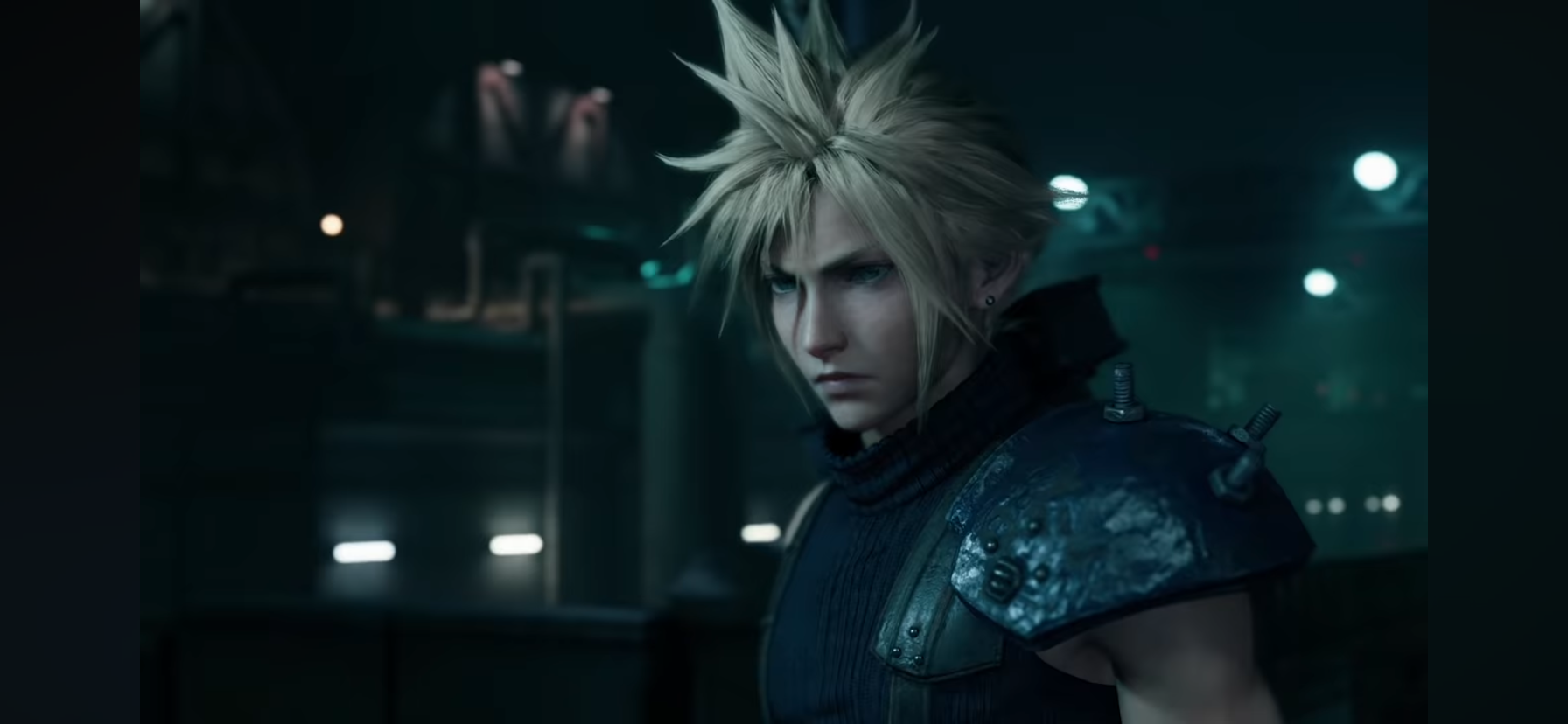
Cloud is back, which means so is Sephiroth.

Back in 2005, Squaresoft created a demo for the PlayStation 3 and opted to use familiar characters in order to demonstrate the power of the new console. Bad move. Did they learn nothing from Nintendo and their Gamecube demo? When fans saw Cloud and Sephiroth battling like never before it just created more hunger for a remake. Fans clamored for one for years, but Square Enix was mum on the topic or would flat-out say there are no plans. The call for a remake eventually became too impossible to ignore and it was finally announced that one was on the way in 2015. It would still be another 5 years before the game was released, and it turned out, only one third of the game was made and released. Sort of like how the original had 3 discs, the remake will be 3 separate games. It’s disappointing, more because we are now on the eve of the second game being released and it’s been four years, but that’s the reality of modern game design. It’s expensive and time-consuming and Square Enix knows it has a hit on its hands so it’s going to extract every dollar it can. I guess the story will finally be concluded in 2028 when we’re all wondering when the PlayStation 6 will be released (or apparently already playing it if Sony is to be believed).

To create the remake, Square turned to a lot of the folks responsible for the original game. Tetsuya Nomura, who was a writer and character designer on the original, was given the title of director for the remake. This came as a surprise to him since he was knee deep in the long-delayed Kingdom Hearts 3 at the time, which probably explains why Naoki Hamaguchi and Motomu Toriyama alse receive a direction credit. Kazushige Nojima returns as writer and Toriyama receives credit for that as well. Legendary composer Nobuo Uematsu returned to write the main theme while Masashi Hamauzu and Mitsuto Suzuki are primarily responsible for any new compositions.

Get ready to experience the game again, only much flashier this time.

As someone who fell in love with Final Fantasy VII back in 1997, I have been on team re-make for decades now. The original is still very playable and quite good, but the visuals are supremely dated in a mostly not-quaint way. I have far more affection for classic sprite-based game design from the 16 bit era than I do the chunky polygons of the PSX era. Even in ’97, it felt like we were all lying to ourselves when we said these games were a definite visual upgrade to what we had before. They definitely were when looking at the cinematics, but those are essentially just CG movies inserted onto the disc. As video game visuals, they’re kind of fake. The battle engine graphics were fine though. Some quality of life improvements certainly couldn’t hurt either.

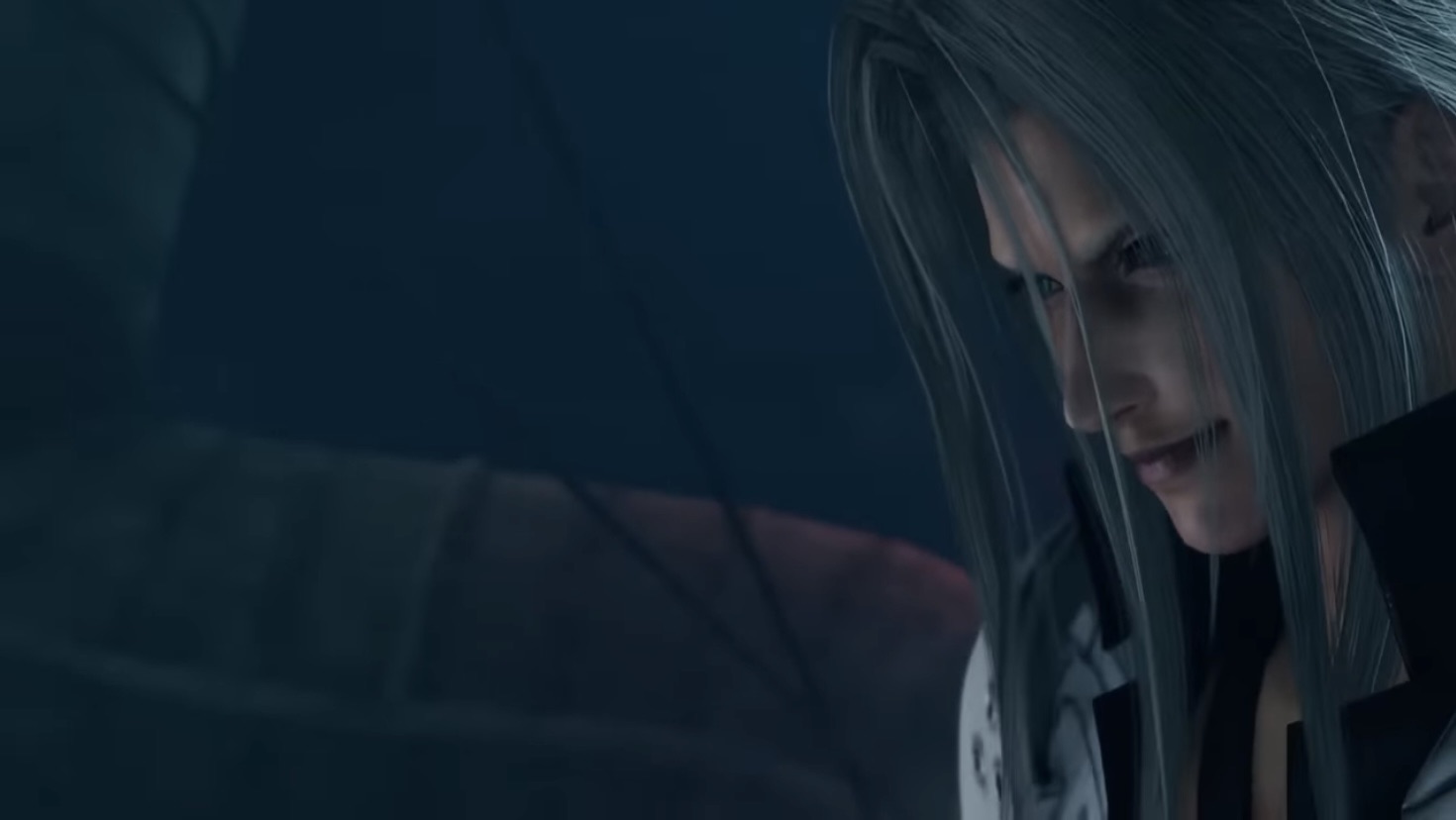
Square also seemed to feel that Sephiroth was going to need to have more presence this time around. It’s not a bad thing.

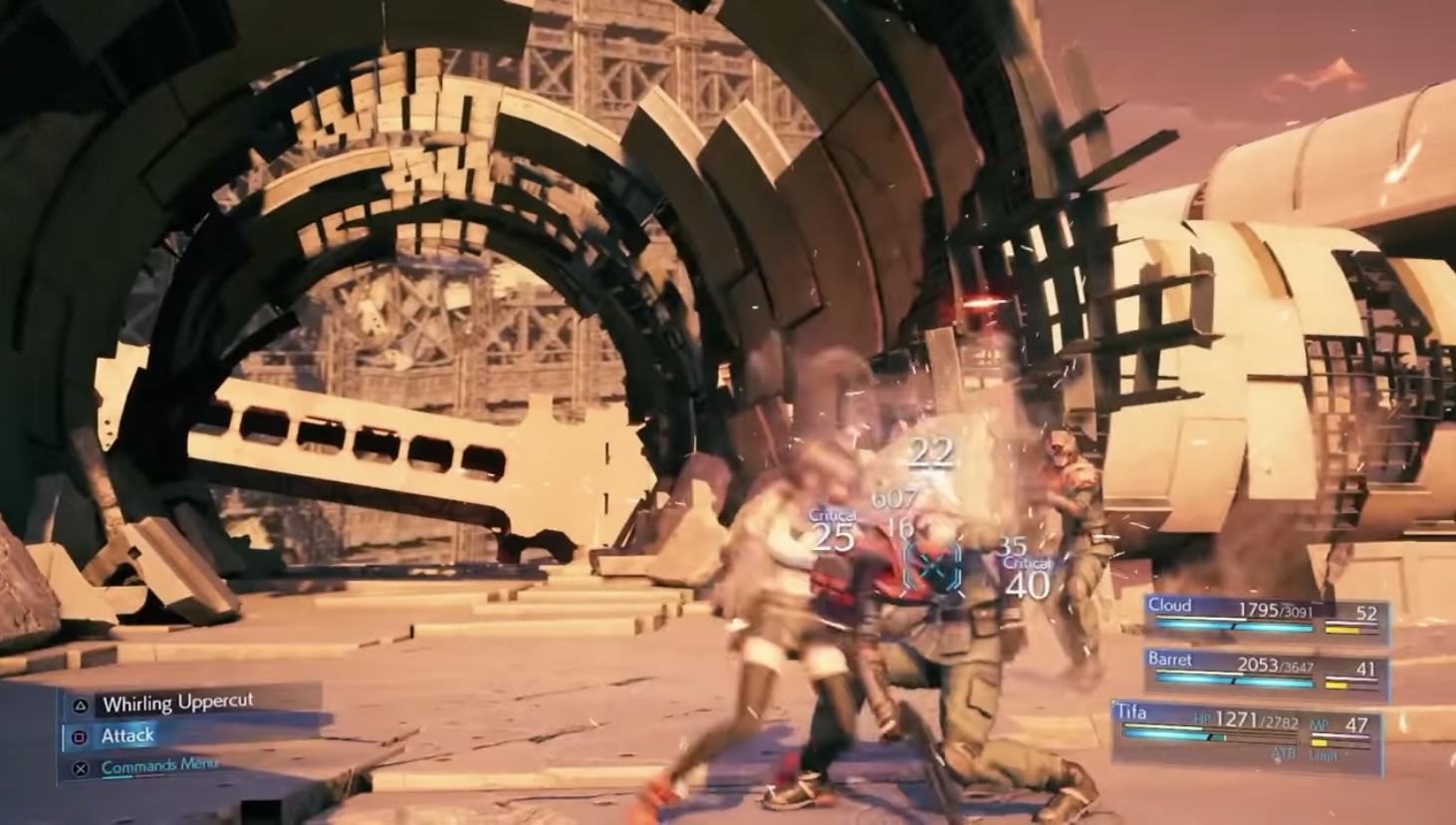
Square Enix apparently felt that a straight remake wouldn’t work. Gamers today don’t want traditional, turn-based, role-playing experiences according to whatever market data they have. I disagree, and it sure seems like the Persona series is doing quite well for itself with a more traditional battle system, but it is what it is. FFVII Remake takes a more action-oriented approach to its gameplay. Before release, there was some talk of the game being able to be played in both ways, but it was over-stated. In battle, which still restricts the player to a team of 3 party members max, you’re free to move around the field, attack, block, and dodge. The only relic of the original game is there is still an Active Time Battle system in place. Basically, you can do basic actions all of the time, but in order to perform other functions you need to wait on that ATB meter. Each character has two reserves of ATB and most abilities, spells, or items need just one store, but a few require two. Summons still exist, but they can only be used in certain fights and are basically restricted to boss battles. You know you can use one because a Summon Meter will just appear on screen. Once filled, any member of the party can initiate a summon provided they have the materia equipped (each character is limited to one summon and said summon can only be equipped to one character). Once summoned, the creature stomps around the battle field and any character can use one of their ATB stores to make the beast attack. Once it’s timer runs out, it then unleashes the ultimate attack we know and love from the original game and takes off.

Get ready for a new action-oriented experience.

Speaking of materia, that system is back and works mostly in the same fashion as before. Each character can equip a weapon and one piece of armor which may have one or more slots for materia. Materia is how characters equip spells and abilities and successfully defeating enemies in battle will earn players both experience and AP. AP is what materia uses to “level up,” and doing so will allow the Fire materia to learn Fira and ultimately Firaga, the best version of the fire spell. Once mastered, materia no longer spawns another version of itself which is a disappointment so players will have to scour the region for freebies or purchase additional sets if they want multiple characters to equip the same set.

The weapon system has been overhauled to add its own level-up component. Each weapon a character uncovers has a special ability tied to it and using that ability allows the character to eventually learn that ability. Once learned, the character can use that ability with or without the weapon. It’s a bit like the old Job System in that learning the abilities associated with a certain job would allow the base version of the character to make use of them, only now you don’t have to pick and choose which abilities to equip, but instead have access to all. The weapons also earn their own ability points which can be spent to unlock features for the weapon like Attack +3 or critical hit modifiers and such. This helps keep even the earliest weapons viable throughout the game as their attack, defense, and other stat modifiers can continually improve. And every weapon earns “experience” even when not in use. It’s not the Sphere Grid though, so each weapon still has a specialty and basically every character will have a weapon that’s more conducive to defense or magic use, though nothing radical enough to change a character’s obvious archetype (i.e. Aerith will always be more suited to magic and healing than physical combat).

One aspect of the remake most are likely to appreciate is the expanded role of characters like Biggs and Wedge.

The story of the game is essentially an expanded version of the Midgar portion of the original. You’ll be exposed to more regions of the city and there will be lots of little quests (yes, many of the “fetch” variety) for the player to take part in for one of the dwellers below the plate above. You’re still Cloud (Cody Christian), ex-Soldier and merc for hire by the eco-terrorist group Avalanche. Its Midgar chapter is spearheaded by Barret (John Eric Bentley), a fiery single father willing to go to great lengths to topple the Shinra Corporation which he blames for killing the planet. Tifa (Britt Baron), Cloud’s childhood friend, is part of the group as are non-player characters Jessie, Wedge, and Biggs. During their journey they’ll meet Aerith (Briana White), a flower sales person who belongs to an ancient race known as, appropriately enough, the Ancients and of course there’s the villain, Sephiroth (Tyler Hoechlin).

Sephiroth didn’t play a huge role in the original game’s Midgar portion, but he does here. I suppose from a practically standpoint, Square Enix didn’t want to force players to wait a dozen years to tangle with the legendary swordsman so inserting more encounters into the early part of the game isn’t as crazy as it sounds. What is a bit more crazy is that this FFVII Remake is not a direct remake of the original game. If you haven’t played it and don’t want any sort of spoilers then STOP READING! I intend this review to be both a review of the game and a reaction piece, so you have been warned.

This is a remake of the Midgar portion of the original so all of the familiar faces you would expect to find will be found, but oddly the game doesn’t make them all playable like Red XIII here.

The game is more like a remake of assets, but it exists in conjunction with the original game. For those completely new to Final Fantasy VII, it might be more confusing, but also possibly less. That’s because it takes awhile for the game to more explicitly tell you that the original story (game) already happened, and this story is Sephiroth trying to change the outcome. Throughout the game these shadowy ghosts will keep appearing and it’s unclear what it is they’re doing, but is later explained that they’re the shadows of destiny and they’re fighting to maintain the proper timeline. Sephiroth is trying to destroy them since he, and I guess it’s another spoiler for a 27 year old game, is defeated in the end of that game. Approaching the remake this way does have a practical element at play in that players who did play the original will have something new to look forward to. Whether this is the approach those players wanted is a matter of debate, or more like discourse.

The debate used to be Aerith or Tifa, but after Remake Jessie has inserted herself into the conversation!

Aside from those new plot elements, the game is quite linear in nature. That was true of the original, especially the Midgar portion, so I suppose it’s not a surprise here. It still doesn’t change the fact that it feels restrictive and there are definitely portions of the game that feel like padding. Square Enix was trying to turn what was 7-10 hours max into a full, gaming, experience so some padding was bound to happen. When I finished the game I was at the 42 hour mark and I felt like I had squeezed everything out of the game that I could in one playthrough. As an experience, there were times I was quite invested, and times when I was not. The fact that I had a 7 month gap between sessions at one point probably doesn’t bode well, but in the game’s defense, that gap was primarily due to Tears of the Kingdom so it’s not a massive insult to be sidelined because of that game.

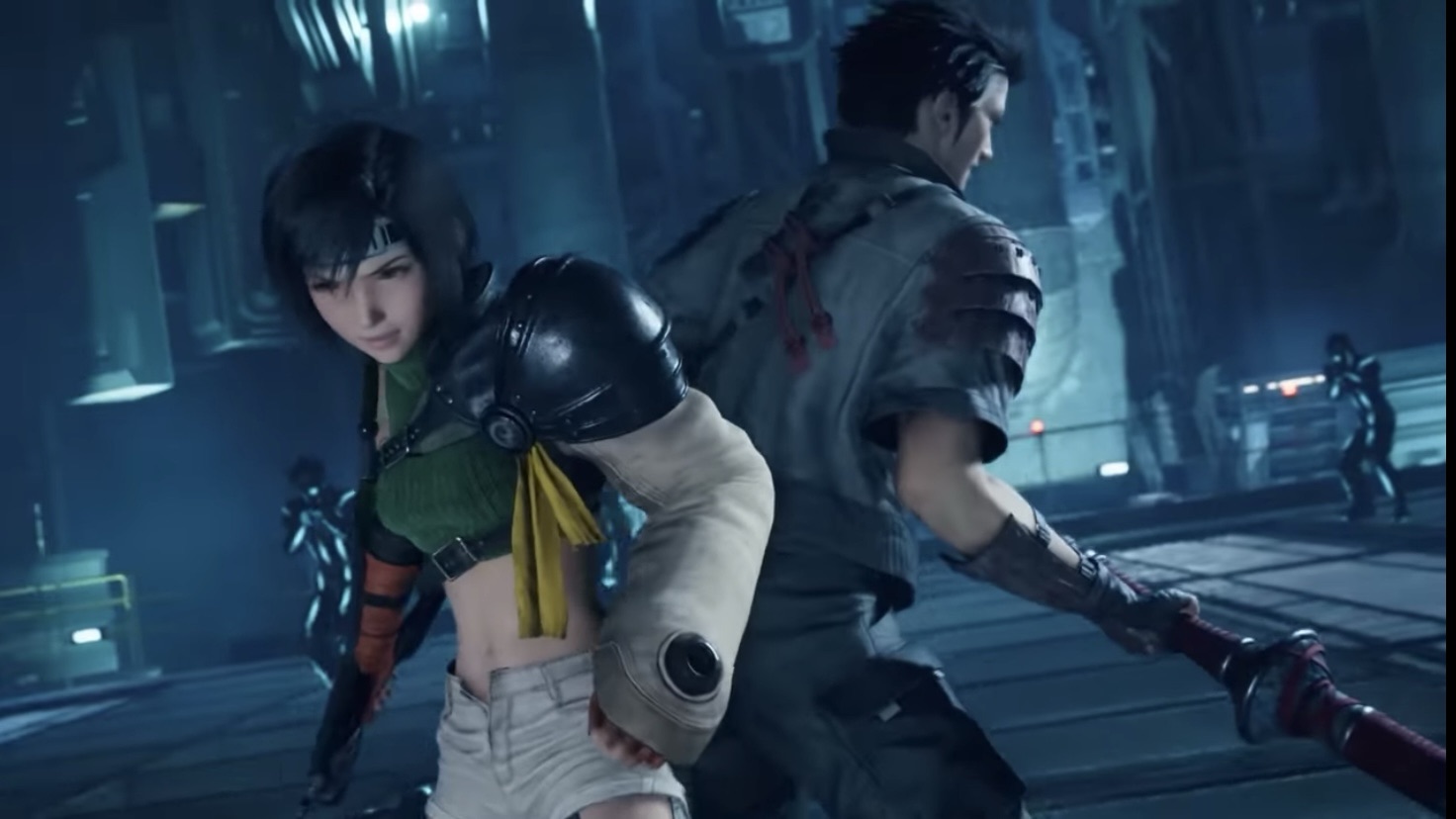
Yuffie is the star of the Intergrade portion and I think I might like playing as her more than Cloud.

Since I am reviewing the Intergrade version, I should say a few words on that. This version primarily adds a new intermission starring Yuffie (Suzie Yeung) which sees her journey to Midgar in order to hook-up with Avalanche to steal some materia from Shinra. She is still her young, plucky, self and is a pretty true to her origins portrayal. It’s referred to as an intermission, but it’s set pretty early in the events of the main story so the title is a bit misleading. It’s essentially more of the same though and provides players an early glimpse at a character they otherwise would not have encountered until the sequel. The game does add a new mini game via a sort of board game Yuffie can challenge folks to called Fort Condor. It’s more like a real-time-strategy/tower defense game in practice with the “board” just affecting how many units the player can have and what magic is available. The game uses an ATB system and the units available have their own cost. They’re not finite though as you have 4 available units at any one time and using one just sends it to the back of the line. There’s a triangle strategy element applied to the units, and the first player to destroy the other’s main base is the victor. There’s also a timer for each game and if it hits zero then the first player to take out an outpost (each player has a base and two outposts) wins. It’s fine, and the games are pretty quick, but it’s also frustrating because once you place a unit that’s it. It does what it wants and sometimes you just want your units to concentrate on the base or an outpost, but they’ll get distracted by enemy units.

Intergrade also introduce this tower defense/RTS mini game that’s not too bad.

The actual sequence with Yuffie adds a little something to the story. Mostly, it brings in some elements from Final Fantasy VII‘s expanded universe and I’m not sure how well that will be received since most of those games were bad. It’s also a vehicle for the villainous Scarlet (Erin Cottrell) as she gets more facetime. Playing as Yuffie is a bit different, and she has one party member who works in tandem with her. I found playing as Yuffie to be mostly entertaining. There are things to figure out about how she attacks and how her abilities play a role in her actions. It’s probably a 5-6 hour experience and is, once again, pretty linear. Actually, it starts off more open than it finishes which is a bit odd. Completing it will unlock an additional epilogue to the main game so it’s worth experiencing, though the epilogue doesn’t contain anything essential so no worries about feeling lost if you don’t play it. There are undoubtedly going to be references to Intergrade going forward, but probably not anything that can’t be explained quickly in the games to come.

There’s no doubt the game improves upon the scope of the original, but some changes (like summons being the domain of boss battles only) feel restrictive and lacking in creativity.

I feel like I’ve told you a lot about how this game operates, but I don’t think I’ve really told you how I feel about it. It’s taken me a long time to figure that out. The initial demo left me feeling almost more perplexed than before, and after spending over 40 hours with this one I still can’t say if I even like this battle system or not. I like RPGs of all varieties and I like action games, but I like my Final Fantasy to be traditional. And I really like my Final Fantasy VII to feature a traditional, turn-based, battle system. I fell off of the series with Final Fantasy XII and that game’s battle system made it a chore. I finished it, but I never wanted to play it again. Since then, they’ve become more action focused and thus more vapid. Yes, you can take a less action approach with this game, but it’s essentially just putting the game on auto-pilot while you interrupt it here and there to cast a spell or something. It does not make the game a turn-based experience and it will likely drive you to just interact with it more because the AI is mediocre. More than anything, I just find it frustrating how non-committed Square Enix has been to just giving fans the remake they wanted. They resisted for years to even consider it, but then when they finally did, decided to do something else. It’s not as bad as a bait and switch just using the name Final Fantasy VII to sell a brand new game, but it sure is annoying.

Barret is still a foul-mouthed bad ass, as he should be.

There are things that I like about the game that have been improved upon. We get to see a lot more of Avalanche and the characters are given time to show nuance. That aspect of the remake has been well-served by the expanded approach. The visuals are obviously terrific and I think these redesigns for the main cast are superior to what we got in every other piece of Final Fantasy VII media. The score is still catchy and there’s an epic feel to a lot of the major moments of the story and it’s the music that really helps sell that. The voice acting is great and overall I feel like I have a much larger attachment to these characters than I did back in ’97. That might make a certain moment to come more impactful, if it happens at all. The odd approach to the narrative means we don’t know what’s next. We have an idea, but we don’t know for certain. I don’t know how I feel about that. I’m not someone totally resistant to change and mixing up the story a bit is okay, but basically doing it like a multiverse story feels almost played out at this point. I know this one was in development for a long time so it might just be bad luck that we’ve been inundated with multi-verse angles in media, but it is what it is. I just hope the story doesn’t turn out like Kingdom Hearts where it becomes so convoluted and up its own ass that I end up ceasing to care. And if a certain death gets undone it will feel cheap.

One piece of legitimate criticism of the game would be that if it wants to be an action game it could be a lot better in the action department.

Final Fantasy VII Remake is a hard game to assess. It should be able to stand on its own merits, but Square Enix chose not to allow it to by tying it to the original game in the way that it did. It’s one part remake, and in a way one part sequel, or parallel story. Complete newcomers to Final Fantasy VII won’t have the same experience as those who played the original. They can read about it on a wiki or something, but it’s not exactly the same. Their enjoyment will hinge more on the battle system and other mechanics – and you either like them or you don’t. There’s definitely an element of style over substance here. My major critique of this era of Final Fantasy is that these action-oriented battles aren’t on par with actual action games. They just feel like mediocre action titles with some RPG window dressing. Some of that is due to the RPG nature of the game where enemies, bosses especially, can unleash attacks for which there’s no real defense. They’re just going to happen. The best moments of the game’s battle system, for me, was when these were kept to a minimum and I felt like I had more agency over what was going on. There’s a boss battle late in the game which does a good job of incorporating the environment and provides for cover. More of that, please.

Where will the story take our hero? Normally with a remake we’d know, but not this time.

If you’re a big fan of Final Fantasy VII, you’re probably going to play this. You actually probably already have since it’s four years old. I waited for the PS5, and when the original came out in 2020, I was also hopeful the sequels would come faster and that I could just hold out for the complete experience. When it became obvious that was going to take somewhere in the neighborhood of 10 years, I abandoned that notion. At least I waited long enough to get the Yuffie story. I do plan on playing the next game, Rebirth, and unless I absolutely hate it I can’t see myself skipping the finale whenever it arrives. Hopefully the chances Square Enix is taking with the story at least pay off, but I know there’s no way to shake the feeling that every time I play this I’ll just be lamenting what could have been?

I did a lot more video game posts, and Final Fantasy especially, in the early days of this blog. Here’s a few, hopefully they haven’t aged horribly:

Final Fantasy VII Remake – Demo Impressions

It’s been a long time since I discussed the possibility of a Final Fantasy VII remake. After mentioning it here and there in other posts, I made a dedicated post on the subject six years ago. And six years ago isn’t even the start of all of this hype, so it’s safe to say this…

Keep reading

Final Fantasy VII – To Remake, or Not to Remake?

In the gaming community, a popular topic of conversation seems to always stem around remakes.  They’re fairly popular and have become more so due in large part to the rising price of game development and the profitable business known as nostalgia.  Games cost a ton of money these days to develop, and with little change…

Keep reading
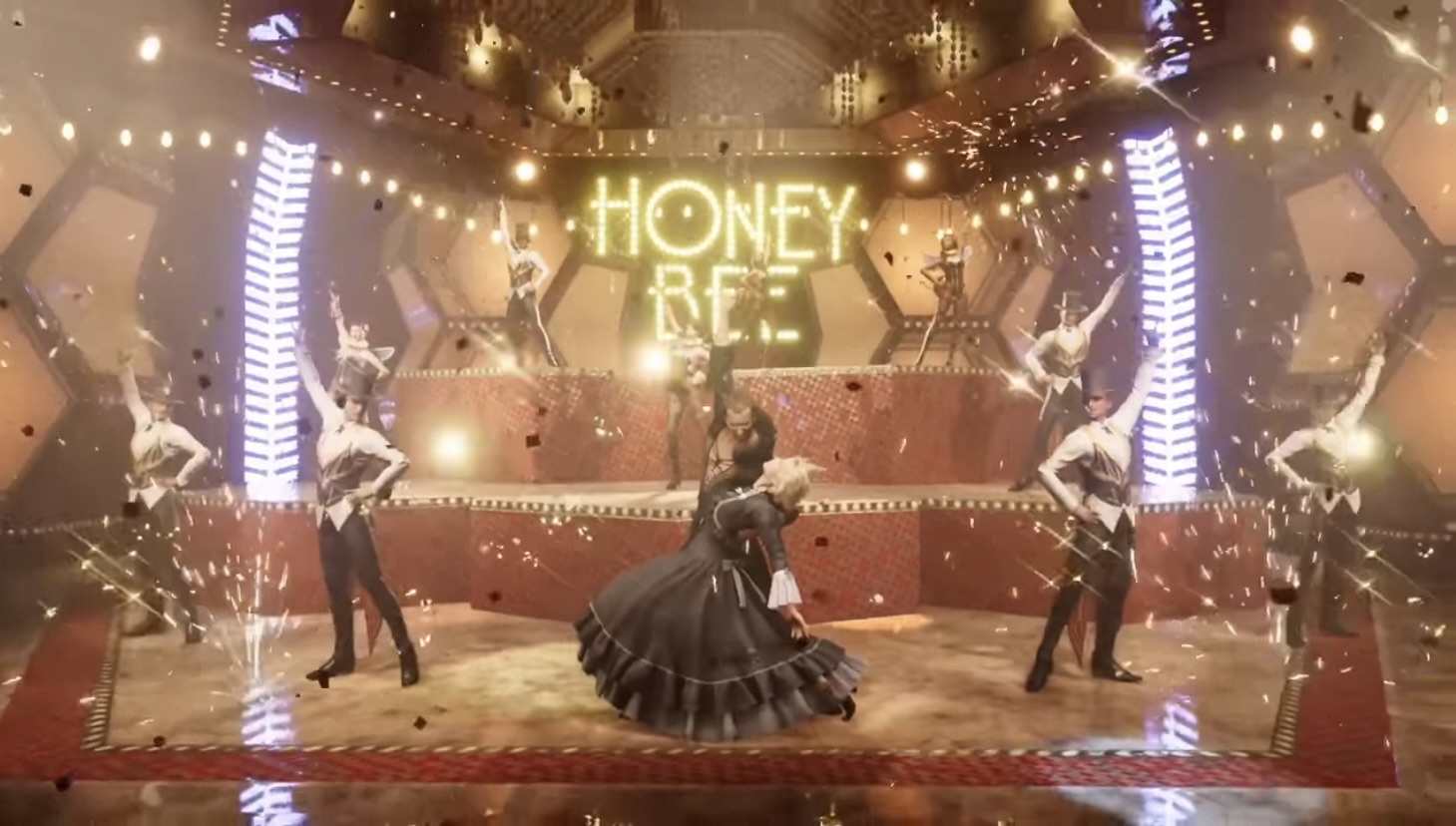
Final Fantasy X HD Remaster

Over the years I’ve talked a lot about Final Fantasy but I’ve never posted a game review for any of the numeric titles in the long-running series. Well that ends today as I post my thoughts on the somewhat recently released Final Fantasy X HD Remaster. One opinion I have stated on more than one…

Keep reading

Twisted Metal (2023)

When I was a kid, Christmas was a big deal. Obviously, it’s a big deal for any kid that celebrates it, but it was an especially big deal for my grandmother on my mother’s side (Grandma). I wasn’t really aware of it, but she felt like she was in competition to get my sister and I the best stuff when it came to the holiday. It’s what she looked forward to the most. Unbeknownst to me at the time, but in the summer of 1995 my Nana, that’s my grandmother on my dad’s side, was already planning on giving me my own television for Christmas. Now, my mom has just one sibling, but my dad has eight. Nana had to figure out her own system for the holidays because she had nearly 20 grandkids to buy presents for. It kind of went when you’re little you get toys, and when you’re a teen, you get cash. It was that sweet spot in the middle where she tried to get you something nice, and in 1995, getting a TV was pretty damn nice even if it was a modest 13″ device. And because of the expense of the holiday, Nana had to plan that stuff out all year so she was in position to get the best deals she could.

To bring this on topic, me getting a TV meant Grandma had to really step up her game so the second the Sears Wish Book started showing up she had me seated at a table picking through it looking for the best possible item. I was pointing to little things here and there and I could tell she was getting uncharacteristically frustrated at my modest selections. She prodded me for something “big,” and in my memory, right after she said that I flipped the page and saw it staring right at me: the Sony PlayStation. At that point, PlayStation was brand new and retailed for $300. My mom immediately said “No,” but Grandma was quiet. I could tell the wheels were turning as she stared at that glossy print. Then came the bargaining. “Well,” she started, “between clothes and toys that’s probably pretty close to what I spend on each grandchild at Christmas.” Right then and there, I knew it was locked-in. Grandma had made up her mind and my mother was not going to talk her out of it. It would be the only thing I got that Christmas that came from a store. Grandma did knit me a blanket and I still have that blanket to this very day even though I haven’t had a grandma for over 10 years. And that PlayStation? Yeah, I still have that too.

Twisted Metal, the show, has settled on John Doe as its lead – a goofball smuggler who has somehow survived 20 years in this hellscape.

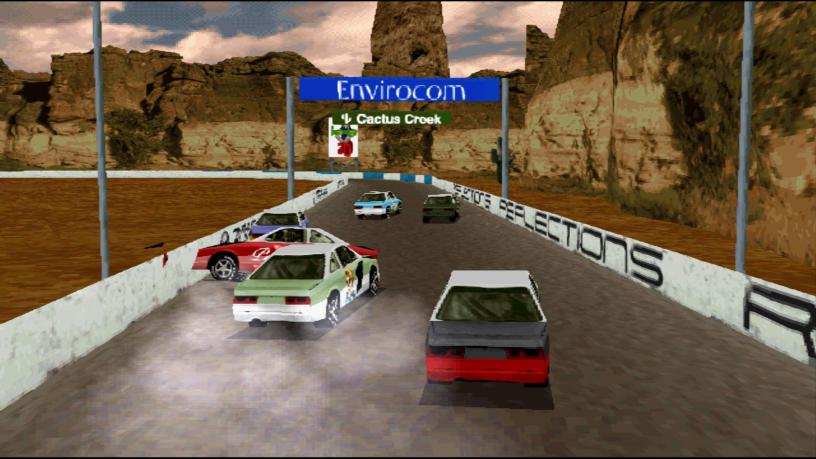
The funny thing about that PlayStation is, in my mind, it was an unattainable thing like a NeoGeo or a Sega CD. I never thought I’d have one prior to that day, so I didn’t even know what games were really on it. I asked “Santa,” even though I had long outgrown that, for Doom because I had played it a bit at a friend’s house on his PC and GamePro gave it a perfect score. Outside of that, I was clueless. When I did get that PlayStation, I was surprised to see it came with a demo disc. It had a few playable demos on it – I recall Jumping Flash having a level and you could try and three fighters from Battle Arena Toshinden could be tried out. In addition to those, there were video demos and one of those was Twisted Metal. It turns out, I’m not that into Doom, so I quickly spent whatever money I had collected between report cards and the holidays to get another game and Twisted Metal was the one I settled on. I loved it! And I loved the sequel even more when it came out. Twisted Metal Black is one of my all-time favorites, so yeah, you can consider me a fan of the series.

The uneasy relationship between John and Quiet is going to be relied upon as the pairing that anchors the show.

And since I’m such a fan, you would think I would have been excited when it was announced that the video game was being adapted for television. Truth be told, I could not have cared less. I assumed it would be hot garbage. How do you turn a glorified demolition derby into compelling television without it being just that – a glorified, now scripted, demolition derby? I’m no poet or anything, but at the height of my fandom in middle school I even tried turning the first game into a story and gave up. Even I, who enjoyed doing all kinds of fanfic and stuff like that, couldn’t make it work for an audience of one. There are definitely some colorful characters associated with the franchise and the story mode in Twisted Metal Black was fairly entertaining, but I just didn’t see how it could work.

Then it got some decent names attached to it. The game was adapted for television by the team of Rhett Reese, Paul Wernick, and Michael Jonathan Smith. Reese and Wernick have worked together on films such as Zombieland, Deadpool, and their respective sequels. Reese even got started working with Disney writing films like Dinosaur and Monsters, Inc. That’s a pretty interesting resume, and Zombieland certainly feels like it might work with cars. Anthony Mackie was attached to star and the supporting cast was announced to include Stephanie Beatriz, Thomas Haden Church, Neve Campbell, and the duo of Joe Seanoa (better known to wrestling fans as Samoa Joe) and Will Arnett as Sweet Tooth with Arnett providing the voice for the character. I was forced to admit that I was intrigued, so when the show dropped on Peacock this summer I decided to take it for a spin.

Twisted Metal is set 20 years after the Apocalypse. The show doesn’t go into great detail about what happened, but essentially there was a massive failure in the power grid. I don’t know if it was a global catastrophe, or just related to the United States, but essentially everything went to Hell. Cities were sectioned off and the presumably wealthy and powerful remained inside the walled off municipalities while the rest of humanity was left to fight over the scraps. John Doe (Mackie) is a milk man. He basically does deliveries of various products between cities which makes him a target for vandals and such. It’s not an easy life, but it’s the only one he knows as he’s been doing it since he was a kid. He has no memory of his family or who he is, he just has a partially burnt picture to remind him of the life he once had.

Neve Campbell plays the mysterious Raven, who like a lot of characters in this show, seems to just be borrowing the name of someone from the games without being a true adaptation.

In the very first episode, John is given a special task by Raven (Neve Campbell), the head of the San Francisco city, to retrieve an item for her in New Chicago. The journey is essentially a suicide mission, but if John pulls it off in 10 days he’ll be invited inside to live out the rest of his days in relative peace. He gets a little taste of life on the inside as a show of sorts before accepting the job and we’re off and running. Along the way, he’ll meet Quiet (Stephanie Beatriz), a mute woman who was previously traveling with her brother until they ran afoul of Agent Stone (Thomas Haden Church). He’s the self-appointed lawman that’s going to bring the country back to law and order and his methods are brutal and fascist. He’s been able to amass a following though, which includes the duo of Mike (Tahj Vaughans) and Stu (Mike Mitchell). And then, of course, there’s Sweet Tooth who resides in Vegas and is someone no one wants to cross paths with.

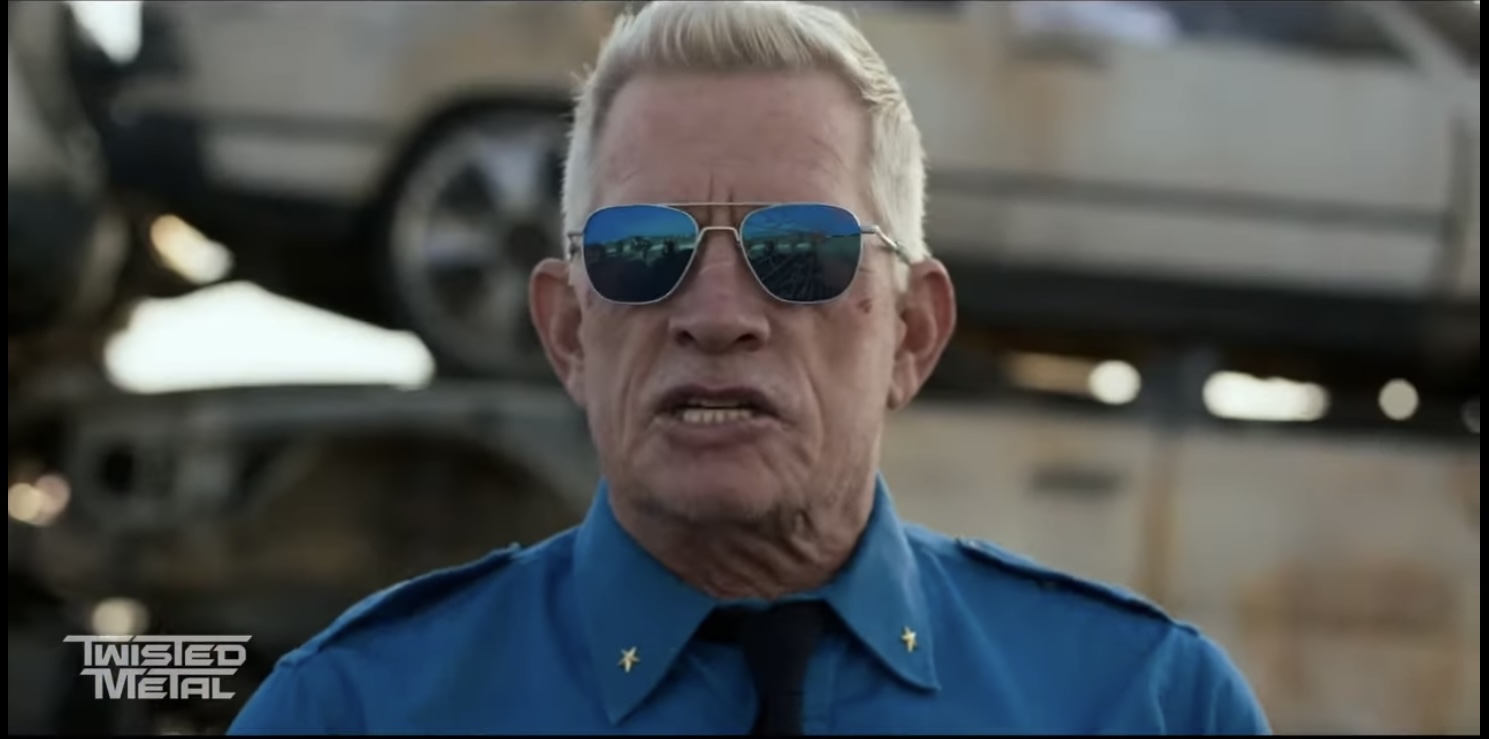
Thomas Haden Church gives one of the best performances in the series as the uncompromising lawman Agent Stone.

Through circumstance, John and Quiet are going to end up an unlikely duo and that’s the foundation of the show. It’s basically an odd couple pairing that’s also a bit like a buddy cop road trip. Quiet and John are going to clash. John is a rather cheerful sort who wants everyone to like him, while Quiet is…quiet. She would rather not speak, though we’ll quickly learn that’s by choice. She’s had a tough go of things so it’s understandable that she would have a hard time relating to John, but she has her own priorities as well. And since our co-leads are male and female, there’s going to be some sexual tension to play up as well. It’s all very conventional, which is the show’s greatest failing. The dialogue is not nearly as inventive as we’ve seen in other projects by Reese and Wernick. Maybe that’s because the actors in those films did more ad-libbing? They want there to be a lot of jokes and witty remarks from our leads, but it all feels contrived. There’s not a natural chemistry between our leads, but it does at least get better. Oddly, the tipping point for me was the show’s eighth episode which is all about John’s car – go figure.

Come one, give us more of the clown!

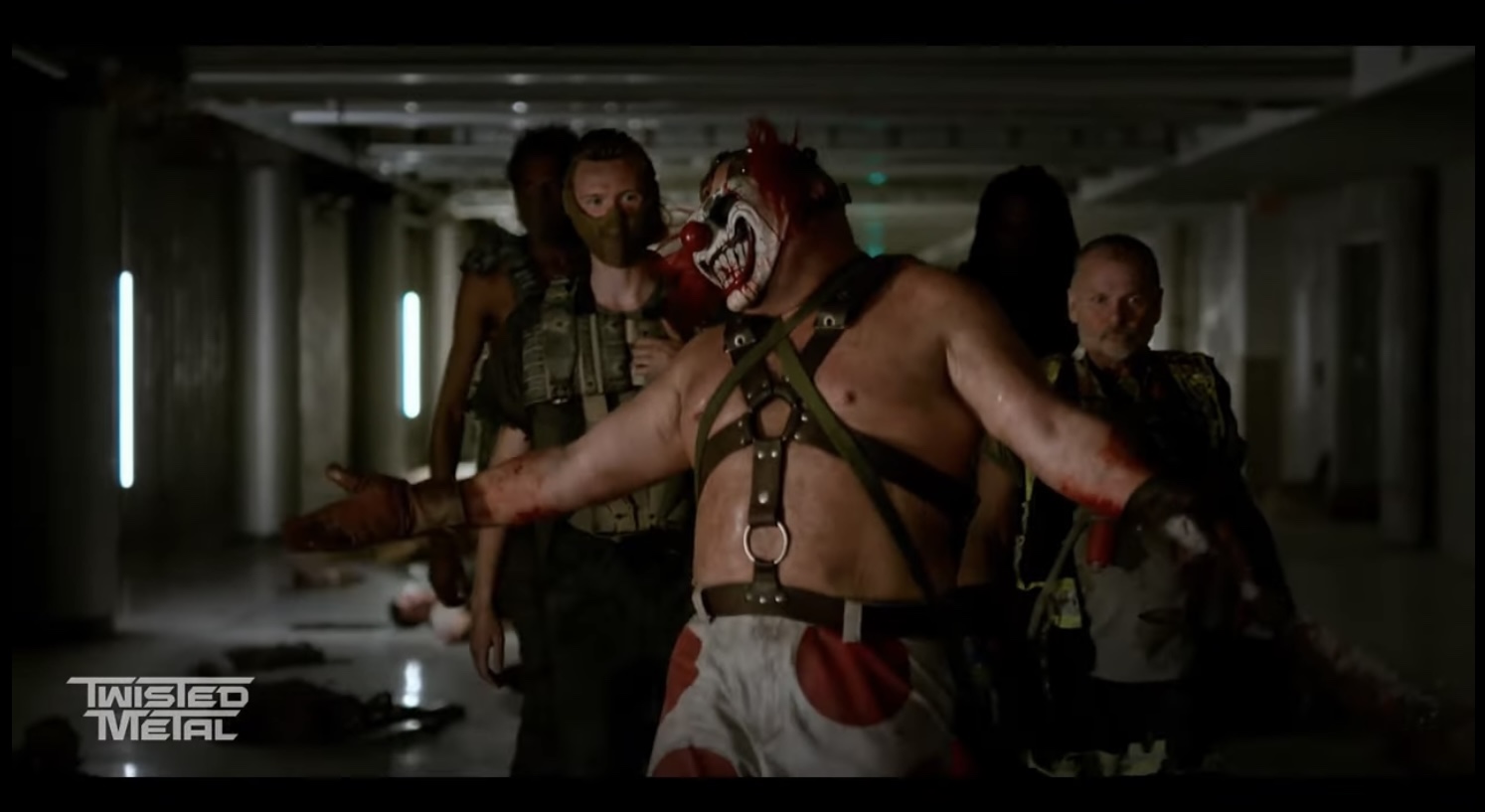
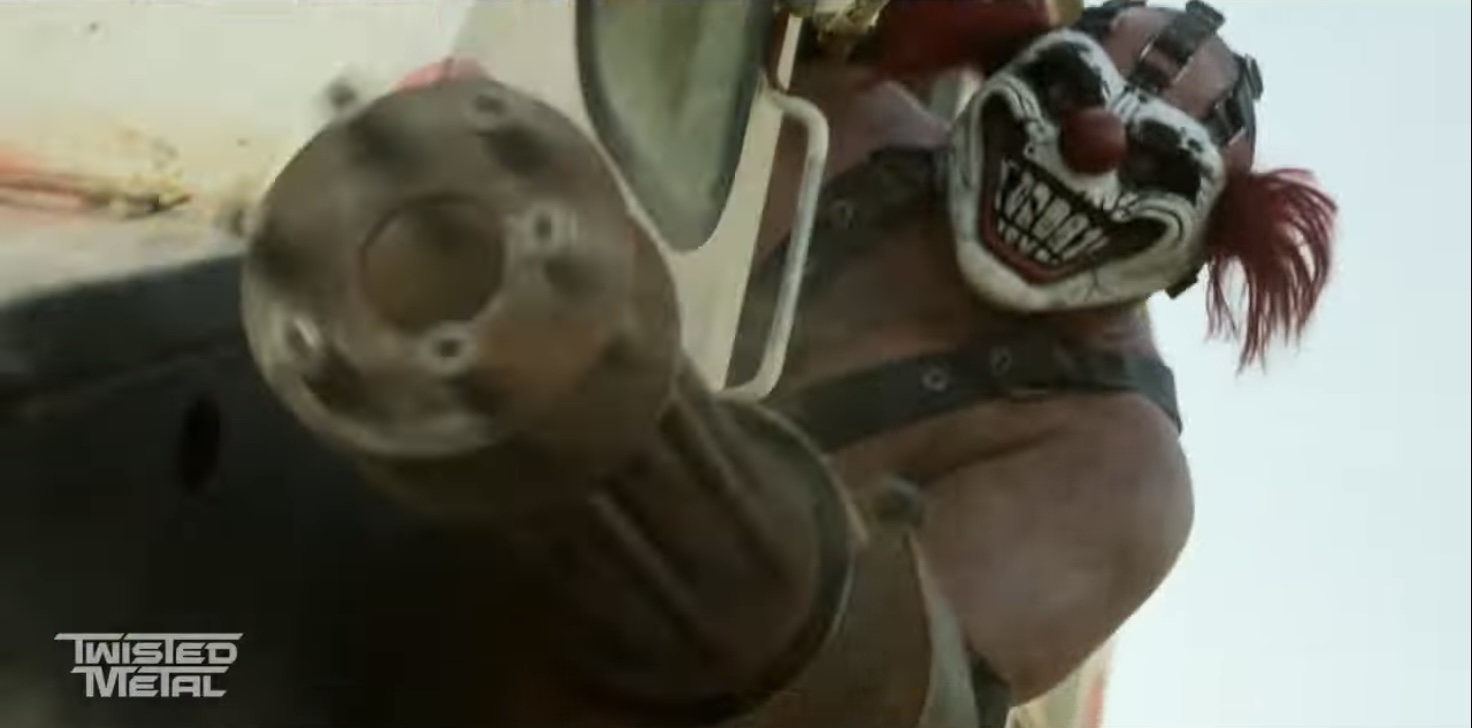
What might frustrate viewers is the character of Sweet Tooth. He’s basically the star of the video game franchise and he’s introduced quickly in this show, but then disappears for long stretches. He’ll eventually get a pairing of his own (and I’m not talking about Harold, though he’s here too) that actually does work. I don’t want to spoil anything, but he finds himself riding with a character he plays off of well. Sweet Tooth is an aspiring performer and if people respond in an inauthentic way to his art he, well, kills them. He’s the type of character that others need to walk around on eggshells with even if he appears to be friendly with them. It’s pretty conventional stuff, but it works to create tension and at least with him I wasn’t always certain what was going to come next. The portrayal is great, there just isn’t enough of it.

As for the rest, there’s not a ton from the video games for viewers to latch onto. And that’s a good thing, as a direct adaptation would have failed spectacularly. There are plenty of references and even characters from the games, but they’re all changed-up quite a bit. They play more like homages, and in some cases the connection is little more than a name (wait till you see why they call him Mr. Slam). John Doe could be the same John Doe that’s in Twisted Metal Black, but his backstory is completely different. His car, which he named Evelyn, vaguely resembles some of the Roadkill vehicles from the series, but he’s basically a brand new character. As for Quiet, I’m not sure if she is modeled after anyone. If she is, it’s not obvious. Along the way, there are other vehicles that will certainly remind viewers of the same from the games. The show doesn’t just stick to the games most fans view favorably, meaning you will see some references to the 989 games so I suppose that’s good for those who grew up with Twisted Metal 3 and 4.

The presumed wealthy have been able to wall themselves off from the rest of the world and inside it’s basically like nothing happened.

The look of the show is very much in-line with other post-apocalyptic films and TV shows, though it’s merely window-dressing. This setting appears to have plenty of gas available and the characters have little issue finding food. They didn’t want it to be play like a survival genre show like The Last of Us, so I get it, but for some it may be irritating. It appears to have a solid budget as most episodes take place in a completely different location from the previous one. For a show based on a video game about car combat, there isn’t a ton of that throughout, but they did save some fireworks for the finale. And when it wants to, it can be a pretty cool exhibition of stunt driving and practical effects. Explosions, flipped cars, plenty of gruesome kills. You’re going to see a lot of people get killed in various and bloody ways. It’s all done with a pretty light tone which is what one would expect from Reese and Wernick. There’s a lot of jokes, many of which are of the obvious variety, but some genuine laughs can be found too. It’s probably not a great ratio though as I’d say 1 out of 4 one-liners land as intended. Some of the corny remarks are certainly intended to be just that, but plenty are not and will likely induce a groan or two.

Mike Mitchell’s Stu is perhaps the most sympathetic character of the first season and the one that’s easiest to root for. He was great.

Twisted Metal is definitely a show that’s probably better than it has any reason to be, but is it good? I waffled on that one as I watched each of the 10 episodes over the course of two weeks. Rarely when an episode ended did I feel compelled to jump into the next one, which is how I was able to spread it out. I can’t tell if the actors were just handed subpar material to work with, or if they’re just not getting it. I poked fun at the humor elements, but even the dramatic stuff can fall flat. It did at least get better and I was satisfied with where it ended up. Outside of the Sweet Tooth stuff, it just took until really that 8th episode before it became something I wanted to watch as opposed to something I was just killing time with. There’s one episode that’s essentially a bottle episode where John and Quiet are stuck inside a fast food joint for the entire duration of the episode. I felt like that was supposed to be the most important episode of the season, but it just didn’t land, and again, it’s because the leads just didn’t gel in a satisfying manner. There’s a way too on the nose metaphor about letting go in that episode that is supposed to land as a poignant moment, but for me it just looked like amateur hour. And even after 10 episodes, I’m still not sure if I’m sold on the John/Quiet pairing. And while I liked the performance of Beatriz probably more than any other actor in the show, I felt Quiet too often changed gears. She went from angry, tortured, woman who refused to speak to a quip-machine way too quickly and often for me. It’s like the show was only interested in the opposites attract aspect of their leads for a little while and then decided they should both essentially be the same and bounce one-liners off each other.

If there is a second season, it sounds like we’re for more of this and less ball pit shenanigans.

The first season ends with a setup for a second season. And if that second season comes to fruition, it looks like it could be more like the video games than this season. I don’t know if that’s necessarily a good thing, but I suppose they’ve earned the right to try. Per Peacock, where this show is streaming, it supposedly had a strong debut and the critical reception seems to be at an acceptable level. The budget for the first season was around $45 million and unless Peacock locked-in the cost for a second season with the talent involved, it stands to reason a season two will cost a little more than that. Is it enough? I have no idea as I don’t think anyone can figure out what streaming shows merit additional seasons and what don’t. And presently there are some pretty big strikes taking place over that issue so who knows? If you want some light entertainment (with gory violence) or are just curious to see how Twisted Metal could work as a show it’s probably worth a look. With each episode being about a half hour, it doesn’t take long to get through it. It just sucks that it takes a while to get going so some may not see it through to the end. As for me, I don’t regret spending approximately five hours of my life in this world and there was some enjoyment in spotting the references. It’s probably about as good as an adaption of the game could be and I think it does a reasonable job of finding the game’s ton as something between the wackiness of Twisted Metal 2 and the dark and grim Black. I’m not really that curious on where the show goes from here, but it definitely left me wanting a new, and good, Twisted Metal video game. Make it happen, Sony!

If you’d like to read some dated thoughts on Twisted Metal, or maybe a Twisted Metal-adjacent toy review, then check these out:

Greatest Games: Twisted Metal Black

The vehicular combat genre of games has been around for almost as long as video games have.  They either take the form of a more traditional tank battle or a more outlandish game of chicken with machine guns and rocket launchers.  As such, tracing its origins proves quite difficult.  For me, the vehicular combat genre…

Keep reading
Twisted Metal (2012)

If you frequent this blog you may have noticed that I do not post many negative reviews.  That’s because, for the most part, I’d rather talk about things I like and enjoy and not things that irritate me or make me mad.  There have been some exceptions.  I set out to review all of the…

Keep reading
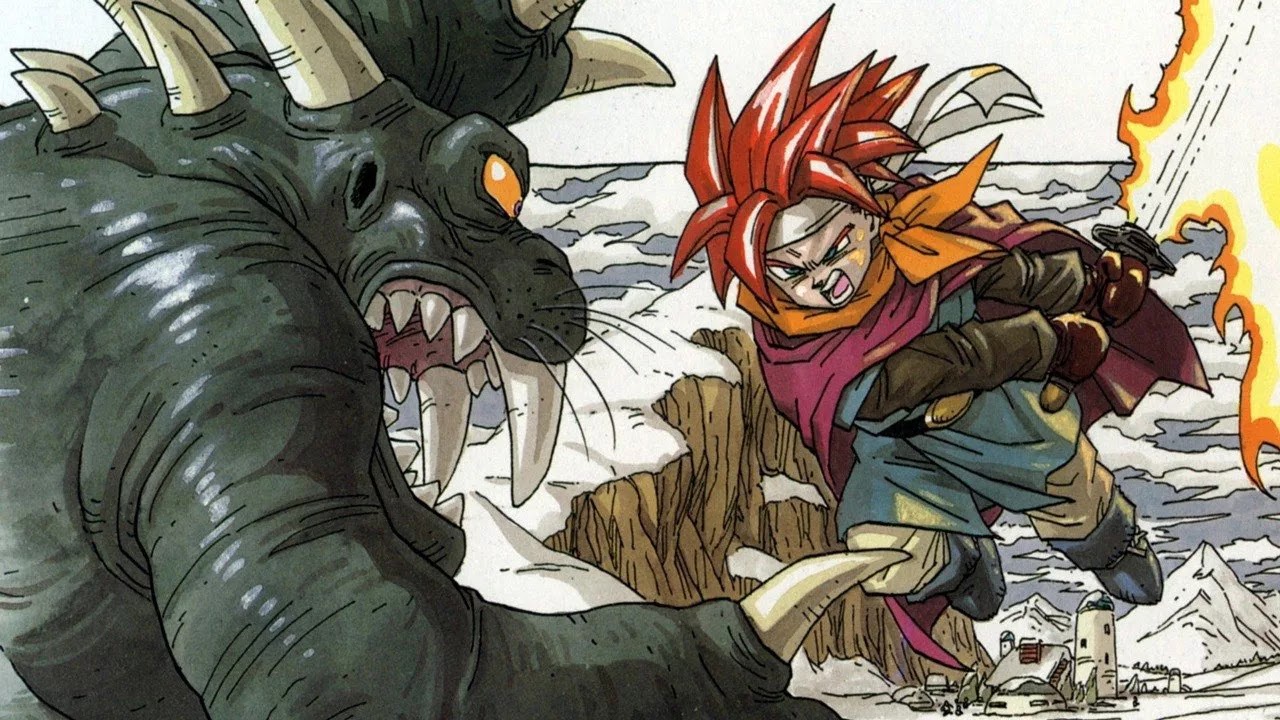
Marvel Legends Deadpool 2 Two-Pack

Look through my various toy reviews and you’ll probably notice that I’m not much of a Marvel guy. That wasn’t always the case for me though as I was huge into Marvel Legends once upon a time. I basically stopped around the time Hasbro was awarded the Marvel license. I felt there was a dip…

Keep reading
Chrono Trigger (DS)

Chrono Trigger was originally released in 1995, but has been re-released numerous times since.

One of the great hallmarks of the Japanese Role-Playing genre of video games is Chrono Trigger. The 1995 Super Nintendo game was crafted by a dream team of the era’s best RPG developers. Produced by Squaresoft, the title was a collaboration between Square and Yuji Horii, who at the time was best known as the creator of Dragon Quest. The designer for the title was Hironobu Sakaguchi who was credited as the father of Final Fantasy. For RPG fans in the 90s, Squaresoft working on an RPG that was essentially Dragon Quest + Final Fantasy was an RPG fan’s wet dream. How could it be get any better than that? Well, it did, because numerous other talented individuals worked on the title. Akira Toriyama handled (Dragon Quest, Dragon Ball) character designs and a young artist by the name of Tetsuya Takahashi was also part of the art department for the game. Composers Yasunori Mitsuda and Nobuo Uematsu were onboard to provide the music while a trio of Final Fantasy vets, Akihiko Matsui, Takashi Tokita, Yoshinori Kitase, handled the directing duties. A lesser name at the time, Masato Kato (Xenogears, Final Fantasy VII), contributed as a writer on the project and would come to be the main architect of the Chrono Trigger story.

Needless to say, this was a huge project for Squaresoft and the Super Nintendo in the mid-90s and was the spiritual merger of Square and Enix years before that merger would become a reality. Unfortunately though, the game was almost too big and too late arriving in the first quarter of 1995 after the Japanese launch of Sony’s PlayStation and roughly 6 months before that console’s US release. Another obstacle to the game’s success was its price. In the US, the retail price of a new copy of Chrono Trigger was $80, a pretty massive sum of money for a single game that wasn’t part of an established franchise. RPG gamers, particularly in Japan, had reason to be excited for Chrono Trigger and were likely willing to pay such a price, but the casual gamer had no idea what this was and the JRPG subgenre was still finding its footing in the west. All of that is to say, it’s not particularly surprising that, despite largely strong review scores in gaming mags, the game didn’t sell vast quantities when initially released. The production run was likely modest, and many people simply missed it.

It’s easy to see a little Dragon Ball in Toriyama’s designs for Chrono Trigger.

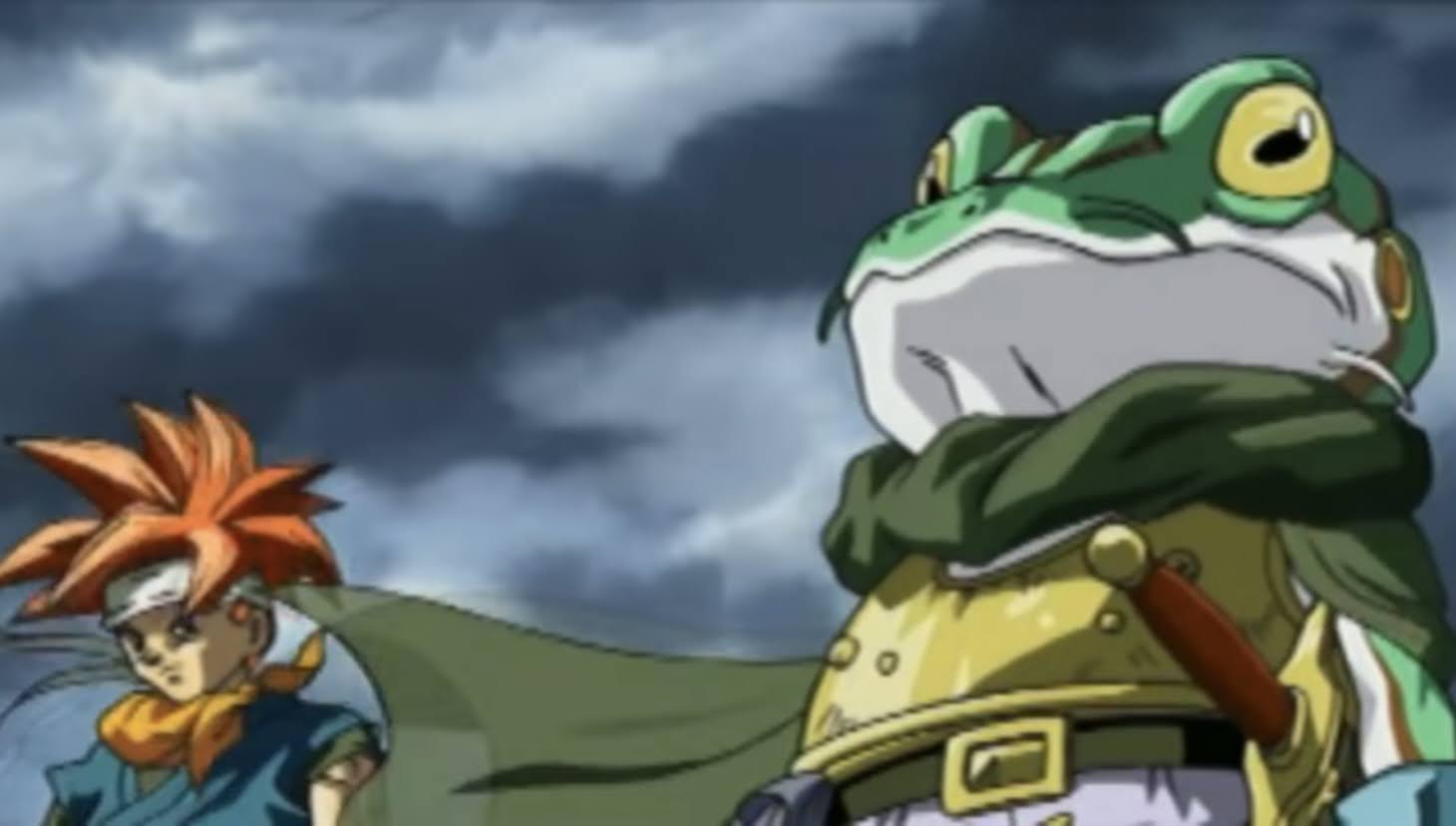
In 1995, I didn’t quite miss Chrono Trigger, but I also didn’t get the full experience. The title was a rental for me, and even though SNES JRPGs aren’t as long as modern ones, a single rental still wasn’t enough time to experience everything the game had to offer. I distinctly remember getting to the point where the character Frog leaves the party, and I don’t believe I made it much farther. The game somewhat quickly came to be regarded as a missed classic. I think this was largely due to the explosion in interest in the genre following the release of Final Fantasy VII, but even a mere 2 years after the SNES release, the game was already hard to come by. Prices on the after-market were routinely $100 or more, and even though we should have still been used to higher priced games, it was hard to justify that kind of expense when brand new PlayStation titles were $50.

For many, their first introduction to Chrono Trigger would come from emulation. Emulators for 8 and 16 bit consoles were becoming popular and many used them as an alternative to paying exorbitant after-market prices for rare games. I know I gave Chrono Trigger another shot on an emulator, but I don’t recall making it very far. For me, there was always a logic hump to get over when it came to playing console games on the PC. I also lost interest because not long after that Squaresoft announced a PlayStation port of Chrono Trigger. The title would be released alongside Final Fantasy IV as Final Fantasy Chronicles in 2001 (ironically, quite late in the lifecycle of the original PlayStation). I was a day one buyer of the bundle and it was in that form that I finally completed a playthrough of Chrono Trigger. Unfortunately, the PSX version of the game wasn’t the best way to experience it. In porting the SNES game to the disc-based PSX a new problem was unleashed: load times. The loading was a necessary evil to enjoying the game as simply going from gameplay to the menu included a load of approximately 5 seconds. It may read as inconsequential in text, but in playing the game it’s annoying and monotonous. Still, it wasn’t all bad for the PSX version as it did include some flashy new animated segments from Toriyama’s Bird Studio and animated by Toei, who also animated Toriyama’s most famous franchise Dragon Ball.

Aside from availability, the big selling point of the PSX release were the new cutscenes.

The PlayStation release was a flawed one, but not so flawed that it could sap all joy from Chrono Trigger. Still, I have wanted to replay the game for years now, but was reluctant to return to that PSX port even though I still own it. And ever since 2008, there really has been no need to as that is when Square-Enix released what many consider to be the definitive version of Chrono Trigger on the Nintendo DS. The DS version kept the good parts of the PSX port but returned the functionality of the SNES version. It also contained improvements in the form of a refined translation and display mode tailored to the DS which basically removed all visual clutter from the main screen and moved it to the bottom one. It also made the game portable, and really the only sacrifice one has to make is the loss of being able to easily play the game on a television. When the DS version came out it slipped under my radar. I was likely just too preoccupied with whatever I was playing at home to grab it. Only recently did I finally rectify that, though similar to the SNES version back in the late 90s, my procrastinating did hurt me in the wallet to some degree though not as badly as it would have in 2000.

My desire to play Chrono Trigger in 2021 stems from the fact that most of my experience with the game was in an inferior form 20 years ago. Since then, the game’s reputation has only managed to grow and many now regard it as the greatest RPG of all-time. The RPG podcast Axe of the Blood God even did a March Madness style bracket for its listeners to vote on that resulted in Chrono Trigger besting the likes of Final Fantasy VII, Skyrim, and The Witcher 3 to be crowned the best ever. Now, one RPG podcast is hardly the final say on any single game, but I found it telling that a subscription-based userbase for an RPG podcast would still settle on Chrono Trigger as one would imagine anyone paying to listen to an RPG podcast is quite likely a diehard RPG enthusiast. And I personally had no real qualms with the result myself as I personally hold Chrono Trigger in very high regard and the end result made me realize that I just need to experience it again for myself.

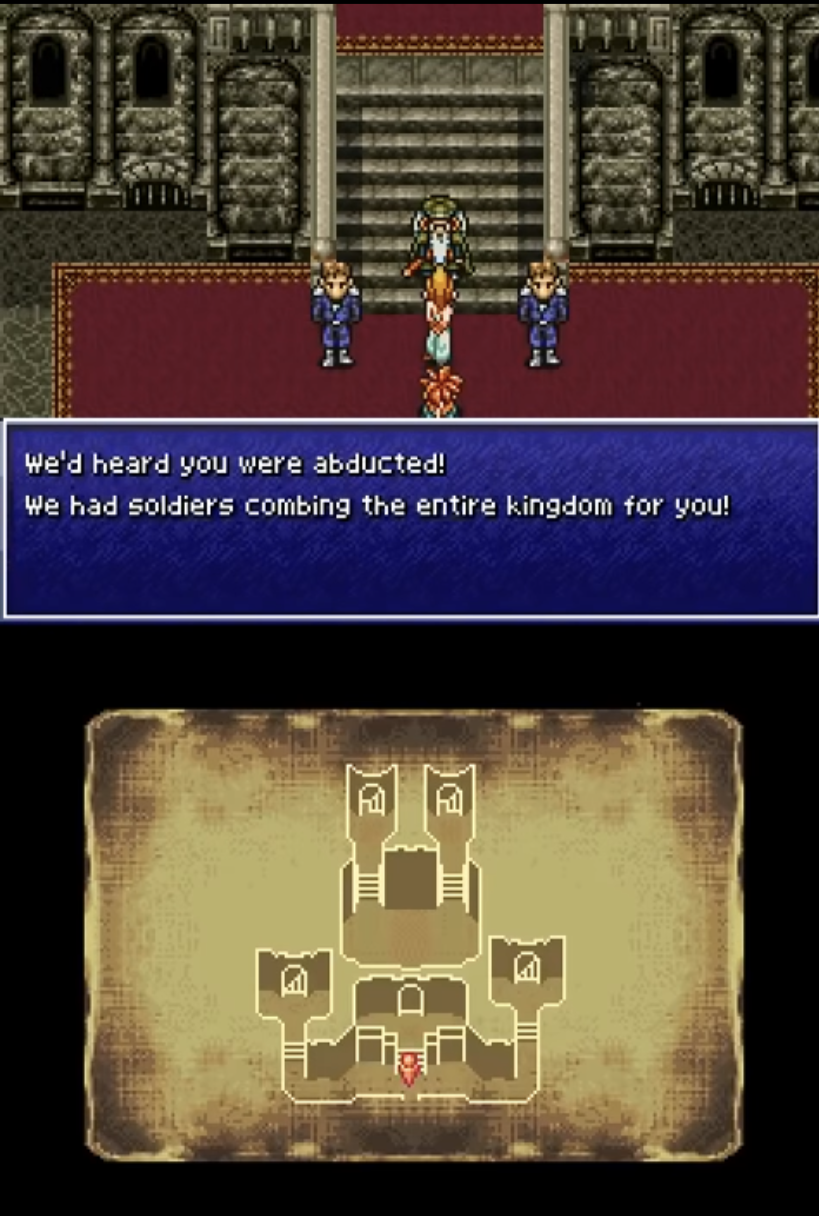
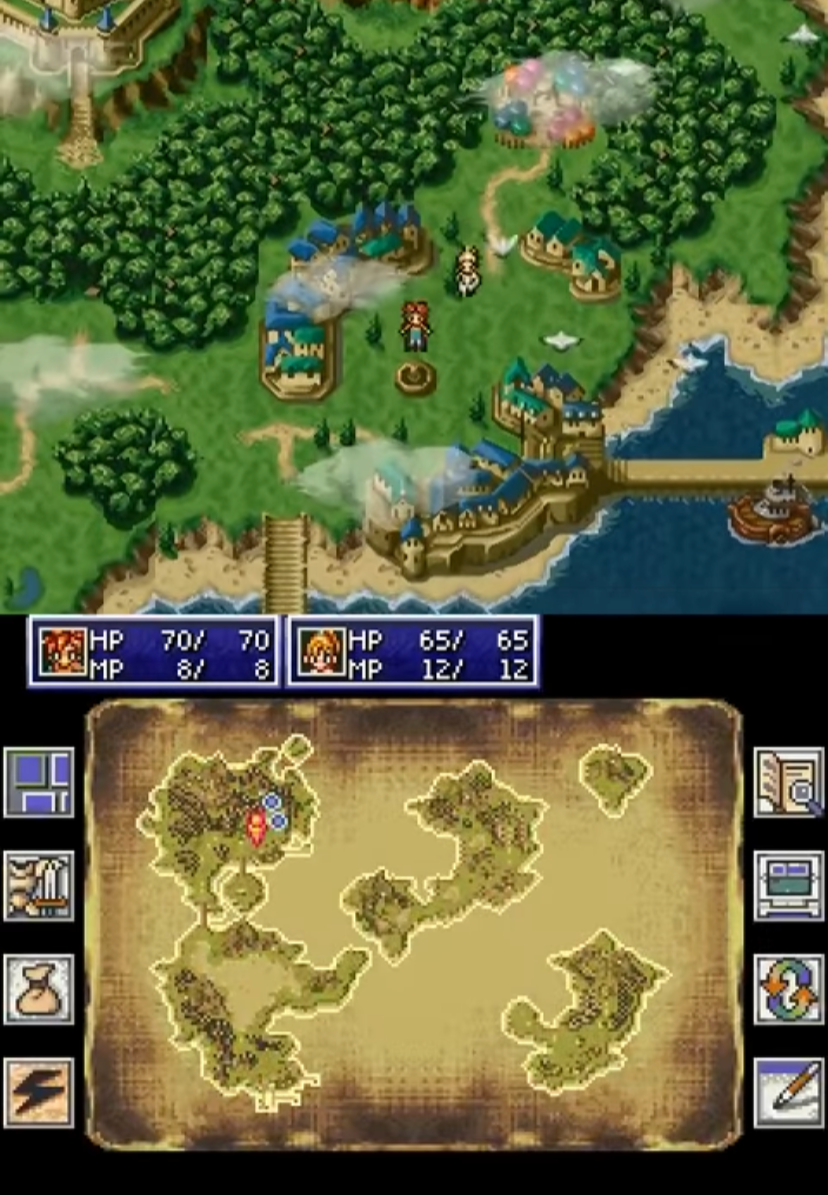
The DS version really declutters the main screen by moving all of the informative graphics to the bottom screen.

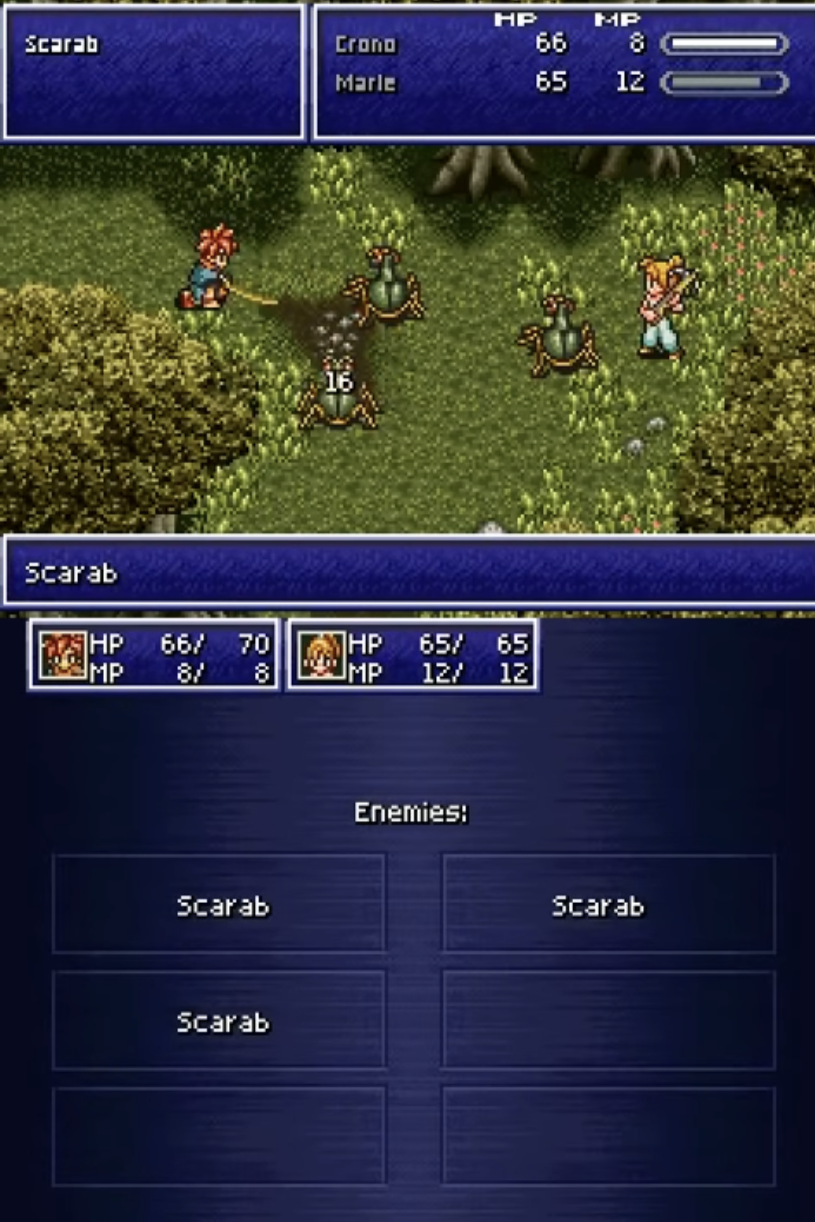
If you’ve read this far and have no idea just what Chrono Trigger is allow me to explain. It’s a pretty traditional JRPG from the 90s. As the player, you control and manage a party of up to 3 characters with more in reserve as you go from town to town in the game talking to non-player characters to find information on where to go. Traveling from these towns to the next destination unfolds over a world map; a zoomed out view of the game’s world where characters can traverse miles in seconds. Upon entering hostile areas, the player will encounter enemies which triggers a battle sequence. Unlike its peers, Chrono Trigger’s transition from exploration to battle is entirely seamless. There’s no change to the art style, no loading of a new screen, the characters just simply pull out their weapons and commence fighting. In battle, characters can attack, use magic, use items, or flee when it’s their turn. Turns are determined by the character’s underlying speed score which affects how quickly their action meter fills. For RPG veterans, they know this as Square’s Active Time Battle System first implemented in Final Fantasy IV and Chrono Trigger makes no real changes to it. Where Chrono Trigger does distinguish itself from Final Fantasy is in the removal of random encounters on the map as enemies will now appear on screen before a battle begins. The other distinguishing trait is in the Tech system, which I’ll get to shortly. For the most part though, the game plays like any other JRPG. When the battle is over, character’s gain experience which contribute to them leveling-up and seeing their base stats improve. They also gain ability points which are applied automatically to their magic and skills and will eventually result in them learning a new ability. Characters can also be outfitted with a weapon and three forms of armor that enhance their native abilities and are gradually replaced overtime as better equipment becomes available.

What sets the wheels in motion is essentially a misunderstanding and an overzealous Chancellor.

That all is pretty conventional, but Chrono Trigger changes this up a bit with its emphasis on time and its Tech system. The word tech is essentially a synonym for magic in other games, though the game doesn’t consider all techs “magic.” They’re the abilities characters learn as they get stronger and the only way to learn a new tech is for a character to participate in combat, which is different from earning experience towards leveling up as inactive characters will still earn experience. Techs come in various forms, some are simply strong physical attacks, others are elemental spells like Water and Fire, and some are support abilities like healing and buffs. Each character has their own unique techs to learn and they basically shape how that character should be used. Some are naturally more physical fighters with the character Ayla in particular lacking a magic attack. Some are magic attackers, some are more of a support character, and a few try to blend both. That part is pretty standard, the part where Chrono Trigger introduces a new wrinkle is in the form of dual and triple techs. Each character will eventually learn a tech that’s compatible with another character. This starts off slowly, but by the end of the game basically every character has a tech that works with another. Learning them is simply a matter of the two characters participating in battle together when they both know the tech needed to create the dual tech. Like standard techs, they take on various forms and can be healing or attacking in nature. Some allow the non-magic users like the previously mentioned Ayla to add an elemental component to an attack, but mostly they’re just high impact moves as the damage output is greater than the sum of its parts. The same is true for triple techs which just incorporate all three active characters.

The Tech system is certainly flashy which helps cover up its lack of depth. Very little player input is required to learn them and it becomes more about balancing risk vs reward. Especially early in the game when the speed of the characters is both slower and more varied. Dual and triple techs are only usable when all of the characters involved have full action gauges so waiting on slower characters means there are moments when characters aren’t doing anything. Towards the end of the game it’s less of an issue as you will likely have access to multiple characters that have maxed out or near maxed out speed. The only added wrinkle is there is one, optional, character that has no dual techs and only a few, hidden, triple techs. Deciding whether or not to utilize that character can be tricky because you’re losing the ability to combine attacks. That character is also entirely offensive in nature which means someone else is going to have to be the healer in the party and usually that character is weaker and not the best choice for dual-teching. By the end of the game though, it’s again rendered somewhat moot as there is at least one character capable of healing that also can dish out plenty of damage.

I know they don’t make any sense, but I do miss the World Map that was prevalent in every JRPG in the 90s.

The main focus of the game’s plot and design revolves around the ability to travel through time. The game begins with the main character, default name Crono, encountering a runaway which leads to the main character getting into a rather sticky situation. It’s not particularly unique for the genre, but it will result in the player getting sent 400 years into the past. As you progress through the game more periods become available. They’re accessible via permanent warps in certain areas and they’ll take you to the future and even further into the past. A key component of advancing the plot involves traveling to the future to obtain something only available there and then going back in time to change something in a later period. Even though you’re essentially playing with the time stream the whole game, it’s still a linear experience for the vast majority of the game. Only towards the end does it open up a bit, as do many of its peers, when the player gains access to a vehicle that both flies and functions as a time machine removing the need to backtrack to specific warp points.

The game is certainly still fun after more than 25 years. The game cycles characters through early on which keeps things fresh and exciting. Level-ups occur at a brisk enough pace and new abilities are added at a suitable pace as well which can become addicting. Seeing each era available in the game also provides incentive to keep going, it’s once you’ve seen them all that the game starts to lose a little steam. Players will naturally gravitate towards a preferred trio only really swapping characters out to make sure abilities aren’t neglected. It’s helpful that you can swap at will, though saving the game is still relegated to the world map and designated save points. By the end of the game, a tedium will start to set in as it becomes apparent that Chrono Trigger’s lack of random encounters doesn’t mean all confrontation is avoidable. Rather it would be more appropriate to describe Chrono Trigger as a game of scripted encounters. Many enemies are onscreen, but completely unavoidable. This becomes annoying in traversing to the various time warps as many will always feature battles in certain spots, even when the party is far beyond the enemy’s talents. One optional string of quests late in the game involves going back and forth between a dinosaur village in two time periods that is just a constant string of fetch quests and backtracking. You will come to know all of the encounters in your way as you battle through them again and again. You may even come to miss random encounters as at least they had some variety as opposed to these scripted ones which never change.

The seamless transitions from exploring to battle are pretty neat, though the non-random encounters aspect of the game has been oversold.

Where the game has not suffered though in the ensuing years rests in its presentation. Toriyama’s digitized character designs are still as charming as ever and the inclusion of the anime cutscenes serve as a reminder of what these sprites represent. The script is mostly light-hearted with plenty of moments of humor. I don’t think anything in this game made me laugh out loud, but it was something I definitely enjoyed for the most part. The score is also a strength, even on tiny DS speakers, though I do feel like it’s missing a signature track similar to how Final Fantasy back in the 90s had its victory theme. The world design is enjoyable though with eras of typical fantasy fare, but also there’s the variety inherent in the future world and prehistory period. The future is quite impressive given the sheer amount of clutter forced into each area. It could have become too messy and busy to look at, but instead remains impressive after all of these years. Certainly, if you’re more of a modern gamer and something like the PlayStation 3 was your first console you may not appreciate the visuals as much as someone who started gaming in the 70s or 80s, but hopefully most will still find them pleasant enough.

And this takes me to my final thoughts and how I view Chrono Trigger as both a product of its time and something that is inherently timeless. Which is to ask, is Chrono Trigger worthy of being viewed as the best RPG ever? I find it hard to argue that it is. I can certainly see how someone who first played it in the 90s can form an attachment to it. It has a terrific team behind it, looks great, sounds great, and it’s just different enough from a Final Fantasy or a Dragon Quest to feel unique. And if you’re into time travel then you really have a recipe for a terrific gaming experience. Where I think it comes up short though is largely in its systems. There’s almost zero customization available to the player as each character has a defined role. Actually, if anything, their roles aren’t defined quite enough as it’s not hard at all to just pick 3 favorites and stick with them. Especially towards the end of the game when all techs have been learned and you can just spam the best dual and triple techs to get past just about every encounter. Enemies basically have just two tricks, they’re either susceptible to physical attacks or magic ones, and not much else. All of the challenge is found in the first 10 hours or so when you’re forced to adapt on the fly, but come the end of the game when it should be getting harder it’s actually getting easier. The final dungeon is almost painfully boring as it’s very linear and offers little or no challenge. I just powered through with the team of Crono, Ayla, and Frog and never had to turn to another character. And I didn’t do any grinding (which is actually another feather in the game’s cap) and was around level 50 come the end. I wasn’t having a bad time with the game or anything like that, but I was certainly ready for it to be over and was reminded why I never embarked on a New Game+ back on the PSX version.

The game boasts an enjoyable cast of characters, though main character Crono is basically just a cipher for the player.

That’s not to say that Chrono Trigger isn’t a competent RPG or an enjoyable experience in 2021. It very much is, and I think a lot of people fell in love with the game because it is so accessible and the presentation is rather flashy for a game form 1995. It’s just not the deep, RPG, experience some might prefer in the genre. I think there’s still a debate over whether or not it’s even the best SNES RPG available. Final Fantasy VI is quite epic in scope with a touch more depth, while Final Fantasy V is very much a systems-focused RPG experience at the expense of story and presentation. In looking at the offerings in the console generation to follow, I still think highly of Final Fantasy VII and I’m also a big proponent for the game’s sequel, Chrono Cross. Then you have games like Suikoden II, Tactics Ogre, Xenogears, and more and I’m reminded that the late 90s and early 2000s really were the golden age of the RPG, the JRPG in particular. And I’m left to honestly wonder if this game can compete with the likes of Skyrim and The Witcher. Those modern titles offer something almost completely different in terms of gameplay, but if I was in one of those annoying scenarios that literally never happen and I had to pick just one RPG to play forever am I picking Chrono Trigger? Am I even considering it? I don’t think so. There is a New Game+ option once the game is over and there are extra endings to uncover, but like the systems, they’re more style than substance. I probably will play through this again since I have the DS version now, but I’m not currently itching to so it may be awhile.

One thing I am certain about in my replay of Chrono Trigger is that the DS version is indeed the way to go. I love making this a portable experience and even though you can’t save at will, at least a DS can be placed into sleep mode to hold your progress. The new display is superior to what came before it with the menu shortcuts on the bottom and the gameplay on the top. I enjoy having the cutscenes even if they don’t add a ton they’re still enjoyable to look at. And from what I can tell, the new translation is superior to what I remember, though admittedly it has been a long time since I looked at the original. The added DS specific content is kind of worthless though. You get a battle arena and a new dungeon that’s just more tedious than anything, but if you’re not tapped out on the game’s combat by the end it’s there. It’s also entirely optional and adding this new content to the game did nothing to harm what had already been created. If you liked Chrono Trigger before, you’ll still like it now. And if you’ve ever enjoyed a classic JRPG, you’ll probably like this as well. It moves at a good clip and it’s very approachable. I would just caution first-time players to not come into it expecting the greatest RPG known to man because that’s an impossible standard for any game to live up to.


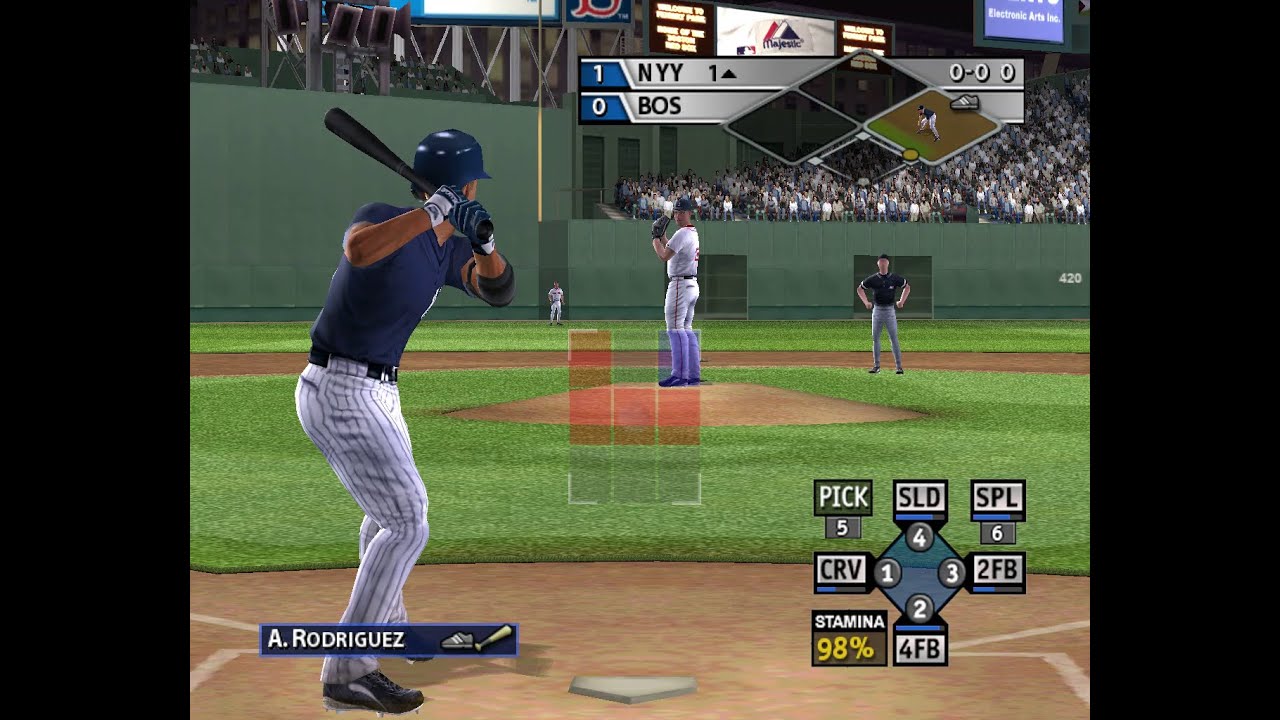
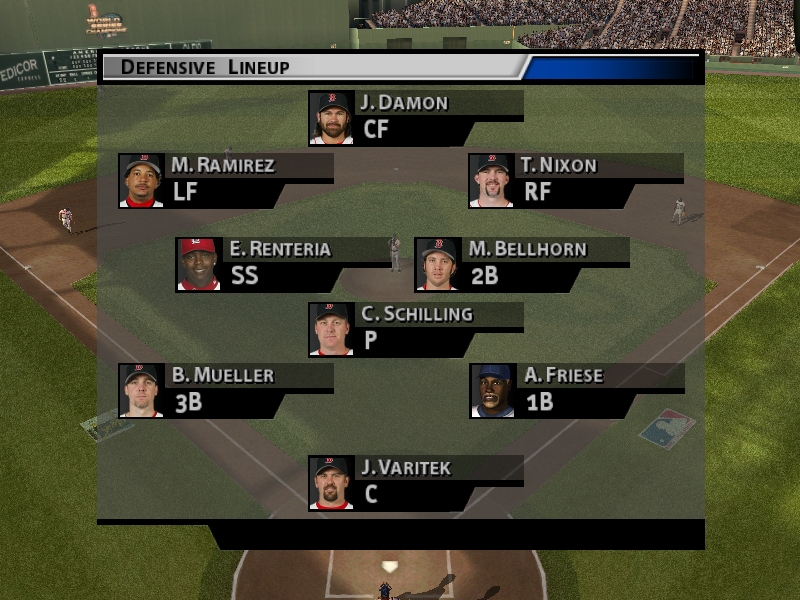
Catching up with MVP Baseball 2005

MVP_Baseball_2005_CoverartWe’ve had a warm winter up here in New England. That’s been especially true of late as Spring has really been in the air, even though it’s technically still weeks away. Whenever the weather starts to warm and the air has that damp taste to it, I start to think of baseball. Open windows, lemonade, Wiffle Ball out in the yard, and Spring Training on TV. Or rather, that would be true if not for the fact that we’re all basically self-quarantining this year thanks to the COVID19 virus, but I digress. This time of year makes me especially nostalgic for my college years when I had time to consume baseball in ridiculous quantities. I’d watch Baseball Tonight on ESPN religiously and look forward to the annual publication of the Baseball Prospectus handbook. As a fan of the Boston Red Sox, it was an especially good time to be a baseball junkie as the team finally captured World Series glory during that period. I had grown up a fan of the team watching the likes of Roger Clemens, John Valentin, and Mo Vaughn, among others always wondering what it would be like to see the team actually win something, but never really expecting it to happen.

It was during this period that I also spent many, many, hours with baseball video games. I had played some games on the my Nintendo Entertainment System when I was a kid, but the first baseball video game I fell in love with was the inaugural World Series Baseball for the Sega Genesis. I actually took the time to play through an entire season in that game more than once. The menus and interface were rather clunky, but the game itself was a blast to play. Back then, it was still a novelty just to have the actual Major League Baseball Player’s Association license alongside the actual MLB license. Many games had one or the other so you either had real teams with no-name players or real players on generic teams. After the 16-bit era ended, I drifted away from sports gaming. Falling in love with fighters, RPGs, and the occasional platformer meant I just didn’t have time. Perhaps getting a bit burnt out on some of those games is what brought me back when the PlayStation 2 era took off.

I bounced around from franchise to franchise initially when it came time to find a baseball game to enjoy. The first I came to love was 3DO’s High Heat. The gameplay was simple, but really fun, and it was the first title where I encountered a Guess Pitch gimmick as well as what has come to be known as Zone Hitting. Guess Pitch allowed you to predict what pitch was coming, guessing right meant a boost to performance while guessing wrong meant a penalty should you swing. Zone Hitting was an alternative to the cursor approach of World Series Baseball. With a cursor, you moved a reticle around the strike zone to try and guess where the pitch would arrive. You could try to adjust on the fly as well, though on the Genesis the response time made that difficult. With analog controls, it was easier, but it was never a mechanic I liked. Zone Hitting simplifies the cursor mechanic by breaking the strike zone down into nine zones or areas:  upper left, upper middle, upper right, middle left, middle-middle, middle right, bottom left, bottom middle, and bottom right. With a right-handed batter at the plate, pushing up and to the left (10 o’clock or so) meant your batter would try to hit a pitch that was up and in. It was a similar philosophy to cursor hitting, but required less precision. It made it much easier to adjust on the fly to a pitch and felt like a more realistic approach to the game.

High Heat was a lot of fun, but it really lacked the bells and whistles of other games. I would move onto the newer iteration of World Series Baseball put out by Sega and 2k which had the ESPN license as well. The 2003 version was the first time I played a baseball game that let you pitch with a camera placed behind the pitcher, like a television broadcast. I sunk many, many, hours into that game even though I never felt like I truly loved it. I wanted something more, and EA had an answer.

EA had been the market leader in the 32 bit era with its Triple Play franchise. That one was allowed to grow stagnant though and was in need of a serious overhaul. The PS2 edition was not well received, causing EA to make the drastic decision to axe the franchise in favor of a new one:  MVP Baseball. MVP immediately caught my attention due to the inclusion of a pitch meter. Borrowing the popular mechanic often seen in golf sims, the pitch meter was a way to add more player involvement to baseball. Basically every baseball game up to that point left the precision of where a pitch ends up to the A.I. of the pitcher being used. The meter puts some of that back in the hands of the player as they push a face button on the controller corresponding with the pitch they want to start the meter and hold it down to increase velocity. As the meter fills it turns from blue to red. Letting go brings the meter swinging back the other direction where another timed press needs to be initiated to stop the meter in a green zone. Depending on the effectiveness of the pitcher, the effectiveness of the selected pitch type, amount of velocity, and the pitcher’s level of fatigue, determines how large this green area is. This helps to separate the good pitchers from the poor ones, but also means players who are really good at using the meter can get the most out of the back of their bullpen.

batterpitcher

The standard view of the game. EA was quite proud of the picture-in-picture base-running at the time.

The first version of MVP Baseball was a bit rough around the edges. I passed on it, but I did so with the intent of buying the next version assuming EA ironed out the kinks. And they did, for the most part, as MVP Baseball 2004 ended up being my chosen game that summer. It was great, and the only blemish was the dreaded lefty glitch. Left-handed hitters had their power squashed to the point where the only way to usually hit a home run was to hold up and in on the analog stick and sit dead red. Come the following year though, that glitch was rectified and it was no longer exceedingly difficult to launch bombs with a hitter like David Ortiz. In addition to that, the game also had a robust Owner Mode added to go along with the popular Dynasty Mode from the prior year. Single-A affiliates were added to both modes giving players access to a deep minor league system. Additional mini games sweetened the deal and many fans seemed to agree that MVP Baseball had become the premiere baseball video game of its time.

Unfortunately, that was the last iteration of MVP Baseball as a Major League franchise. A few months before release, EA shocked the sports gaming world by locking up the exclusive video game rights to the National Football League. This put an end to the 2k franchise NFL 2k and set off a mini arms race for league rights. 2k responded by locking up the exclusive third party rights to Major League Baseball. This meant the end for both of my preferred sports franchises, and I was devastated. A college edition of MVP followed, but it just wasn’t the same for me. The only silver lining is that 2k’s deal did not prevent first-party publishers from licensing MLB for their games opening the door for Sony San Diego’s MLB The Show which has become the new standard in baseball sims. 2k’s World Series Baseball deteriorated into mediocrity eventually leading to the cancellation of the franchise. As far as I know, nothing is preventing EA from getting back into the baseball business, but baseball games aren’t as hot as football so apparently nothing has convinced the publisher to do just that.

As I have with the last edition of NFL 2k, I’ve found myself compelled to revisit the greatness that is MVP Baseball 2005. I’ve never been as compelled to return to it as I was with the NFL product, but I think that has a lot to do with the quality of The Show. The Show was never shy about taking from MVP what worked making the early versions of it feel like a clone of sorts. It eventually found its own identity, and I’m quite confident in stating that modern versions of that franchise are superior to MVP Baseball 2005, something I also had to begrudgingly admit when it comes to modern Madden vs NFL 2k5. Still, that doesn’t mean MVP has been rendered irrelevant. There’s a reason a dedicated modding community has continued to exist for the PC version keeping the game as up to date as any other. Since I have a PS2 copy, I can’t take advantage of such things, but that’s fine by me as part of the joy of playing this is seeing the old rosters largely populated by players who have since retired.

manny05

Most of the players look all right, some are certainly better than others. Most have this same “dead eye” look Manny has.

EA has always been great at adding a layer of polish to the presentation of its games and MVP carries on that tradition. A fun video intro gets the game rolling along with an introduction from a real life player, coach, or fans letting you know “If it’s in the game, it’s in the game,” a slogan heard many times back then. Boston’s Manny Ramirez was the cover athlete for this edition I guess owing to him being named World Series MVP the prior season. Since this is the game that comes fresh off that legendary title, it makes it quite easy for me to find affection for it, even if the 2005 Red Sox weren’t a particularly fun bunch.

I’m playing this game on a PlayStation 3 hooked up to a modern television. I feel this should be mentioned because out of all of the sports genres, baseball games have benefitted the most from high definition. It makes the batter/pitcher interface a lot easier to see for my aging eyes, so going to a more grainy presentation like this takes some adjustment. MVP added a new mechanic for the 2005 edition that color codes pitches as they’re being delivered. The best and most difficult pitchers hide the ball during their wind-up making it tough to see what’s coming until the ball has left their hand. No color means a fastball variant, while red indicates a breaking ball, green a change-up, and purple for sinking pitches. This makes up for the game’s resolution being too low to properly show rotation on the ball. And since pitchers change speeds often, it doesn’t make things that much easier. A pitcher that throws both a curveball and a slider, for instance, has an advantage over one that just has one breaking ball as there is still a reaction element at play as both are colored red. I find the older I get the worse I am at reacting to a good fastball, so in replaying this one I find I like to wait for a change-up and only sit on heat if it’s something I know I can handle.

kevinmillar

Meet Bizarro Kevin Millar.

The graphics in 2005 when the game launched were pretty good, but obviously are a bit lacking today. For the most part, the superstars look the way they should. I think the game does better with the players who have extensive facial hair as it allows them to cover-up a jawline. On the Sox, Jason Varitek and David Wells look particularly good, while Curt Schilling and Keith Foulke hardly resemble their real-life self at all. This was also an era where there were still scab players in the Majors from the 94 strike season who were never allowed entry into the MLBPA as a result. That means a guy like Kevin Millar is replaced by a fake player who does not resemble the real world version in the slightest. Barry Bonds also famously opted out of the licensing agreement apparently thinking he could land his own game or something (he never did) so he’s also been replaced by a fake guy. Some animations are also better than others. Certain swings look great and others do not. Surprisingly, Manny Ramirez’s swing is a bit iffy even though he was the cover athlete. I think that’s partly the result of too much scrutiny being put on him because he’s the cover athlete to make his swing unique and “special” when it really didn’t need much.

hittingminigame

The mini games were a lot of fun in 2005 and they still are today.

I found the mini games were a good place to start in coming back to this title. The pitching mini game is pretty addicting as it turns pitching into a block puzzle game. You have a time limit and need to accrue a certain amount of points to move onto the next round. To do so, you toss pitches at the strike zone which has been filled with colored bricks which correspond to a given pitch in the pitcher’s arsenal. Simply breaking a brick with a pitch will net you some points, but to really drive up the score you have to stack like-colored bricks to create a large swath of that color and then bust them all up with a single pitch. The hitting mini game has you select a hitter and a pitcher (just for their delivery animation, their arsenal of pitches isn’t affected as all will be able to throw everything) to swing at ten pitches. Before each pitch is thrown, the game tells you what it wants you to do with the pitch and gives a general idea of where the pitch will be. Usually, it will want you to either hit a fly ball or grounder, and it will want it to one of the three fields:  left, center, right. Hit both goals and you get a bunch of points plus a point for each foot the ball travels, hit just one and you get a smaller goal or if you miss the goal all together you can still salvage some points via the foot bonus. Miss and go the complete opposite way and you’ll incur a penalty. A foul ball always results in a score of zero. In the field are also obstacles and opportunities for more points. Hit a tractor cutting the grass for an extra 1,000 points, while strike one of the discarded automobiles beyond the outfield fence will also net a small bonus. There’s a vortex that will spit the ball back at home plate as well as ramps which will either reward or penalize the hitter by either speeding up the ball or deadening it. Both games are quite fun, but I found the hitting one to be especially addicting. It’s great to play with a slugger, but I think my favorite hitter to use may be Ichiro since his bat control is amazing.

The other modes, and the ones I used to spend most of my time, are Dynasty and Owner Mode. Dynasty is your typical season or franchise mode. You select a team and basically take over the duties of a general manager. You build the team using the funds dictated by the owner and oversee development of the minor leagues as well. You’re free to play the games, sim them, or manage them. Manager Mode is pretty entertaining and allows you to make a managerial decision for each plate appearance in a game. It’s a quick way to resolve a game while also giving you some involvement. The Show has implemented such, but takes it too far by actually putting you in the game for every pitch which just makes it drag and defeats the purpose.

Owner Mode was new for the 2005 game and it’s basically a more robust version of Dynasty, but with a few added quirks. For starters, you begin the mode by building a new stadium. It’s kind of neat, but really limited. It also feels a bit sacrilegious to select the Chicago Cubs only to not play in Wrigley. This is mostly done though to force you to start from scratch as the way to make money in this mode is by selling tickets and other items related to the ballpark. You need to amass a lot of money to add more seats and concessions if you want to afford the best players. This actually makes selecting a big money power house like Boston or New York really challenging as you’ll struggle to make payments early on. You may even need to jettison some of those expensive veterans just to scrape by.

Owner Mode is pretty neat for what it is, but it’s almost too involved for my taste. I much prefer to be a virtual GM and leave the mundane stuff like ball park maintenance to someone else so Dynasty Mode is where I’m at. And Dynasty Mode is quite good at what it wants to do, but it does come up short compared with modern titles. For one, the interface was never great. Some of the menus are clunky and I miss the feedback of The Show’s trading screen which let you know if a proposed trade was likely to be accepted or not. It feels like a guessing game and since you don’t even know what an A.I. controlled team is after you have little to go on. The same is true for negotiating contracts with players. On my virtual Red Sox team, Bronson Arroyo was unhappy because he was only making 300k. He wanted 2 years at 3M, but I countered with 3 years and that apparently pissed him off. I then upped my offer to 3.5M per year, and he just got angrier. You would think a guy would love a 1,000% pay increase and job security, but I guess not?
05redsox

It is quite a trip to look at these old rosters populated almost exclusively by players who are now retired.

The Player Morale feature is perhaps the most annoying. Players are basically controlled by how often they play relative to the role dictated by their contract, how well they’re playing, and by how much money they’re making. What’s really annoying is that the default roles are way off. Every starting pitcher on the Red Sox, for example, is classified as an MLB Ace. This means they expect to be in the #1 starter position on the depth chart, but obviously there can be only one. Curt Schilling is rightly classified as an ace as that was his status at the time, but even Tim Wakefield has that distinction as does Wade Miley who in the real world had signed a small deal with Boston because he was coming off a major injury. Similarly, guys in the lineup who were added to be platoon players (i.e. they only start when the pitching matchup favors them due to the handedness of the pitcher) like Jay Payton are rated as “MLB Every Day” so they expect to start every day. When players are not deployed in their specified role, you can try and sign them to a new deal to better reflect it, but good luck there. The only other options are to either trade them, release them, or demote them. Somewhat thankfully, the game does not have a realistic system for sending players to the minors so anyone can be sent down. In the real world, a veteran can’t be demoted without consent forcing you to release them.

Another unrealistic aspect in the game concerns minor league players. Twenty years ago, the MLB PA was really hesitant to allow actual money in its games and accurate contracts. They felt it did them no favors to have fans be able to easily see how much money they were making. That was loosening by the time MVP 05 came out, but perhaps it’s why the contract system isn’t perfect. In the real world, a player needs to accrue six seasons worth of service time to qualify for free agency which makes it very easy to hang onto up and coming players. In MVP, they just have a contract that must be dealt with like any other so you could actually lose that star shortstop on your Triple A team before he even sets foot in the Majors. It’s annoying, but it was the standard then. One thing the game does do well though is give you opportunities to improve these prospects via the mini games. During Spring Training, you can put your best prospects through those games which earns them a permanent boost to their underlying stats. My biggest complaint with The Show is that prospect development sucks with most just staying the same. In this game, your can’t miss prospect will likely blossom into a true star if you keep at it. The other unrealistic aspect of Dynasty Mode lies in the offseason. That’s when the draft takes place, even though that actually happens during the season in the real world. It’s not a big deal, but worth pointing out. The offseason is also condensed into 6 weeks for free agency in which you make an offer, sim to next week, and go from there. You’ll be able to track the best offer made to each player and adjust accordingly, or they’ll sign. This is where the player role actually adds to the experience as you may not want to pay someone to be your ace pitcher, for instance, but perhaps you can offer more money. Every player has a desired contract length, amount, and role so it allows for some variety in the negotiations.

mvpminors

A fairly robust Minor League system makes player development a lot fun, but also introduces more cumbersome rosters to manage.

Dynasty Mode is fine for what it is, but none of it really matters if the actual game doesn’t hold up. I’m happy to say that while it certainly has aged, the game is still fun to play. First of all, it moves much faster than modern games which is very much appreciated. I’m used to a game taking over an hour, but I find most of these ones take about 35-40 minutes. The pitch meter takes getting used to, but it’s still a strong mechanic. Hitting is a little less enjoyable. MVP uses zone hitting, referred to as the Pure Swing System, though with the added quirk that pushing up on the stick is done to hit a fly ball while down is meant to influence a grounder. It’s an odd mechanic, but the game largely seems to work best with the old “see the ball, hit the ball” belief and just put the stick where the ball is. If the pitcher throws a down and in fastball, just put the stick down and in. You may still elevate the ball. That’s something that seems more true of the 05 game than the 04 one, but I don’t know if anything was actually changed.

The shortcomings of the game itself are largely technological, but the clunky menus do still present a minor obstacle. Outside of games, managing your various rosters is a chore. They’re slow and not well organized and I wish players had numerical ratings instead of these meters for comparison. In game they’re only marginally better. If you try to access every thing via the Pause menu, you’ll find them slow and lacking in options. For example, you can’t access your bullpen while your team is hitting, so if you forgot to get someone warming before the previous half inning ended then you’re stuck with your current pitcher. That is, unless you realize you can access your bullpen from the Quick Menu achieved by holding down R2 at anytime. The Quick Menu is convenient, but it’s silly that certain functions are only accessible via it. Like many sports games, you’ll also encounter a glitch here and there. I’ve recently run into two such glitches. On one, the A.I. controlled outfielder threw wild into the infield following a flyball out. The ball sailed past the catcher and then just sat on the grass. No one would go get it. Thankfully, I had a runner on second so I had him run around the bases and score which moved things along. It was disappointing though as I was in a one-run game at the time and that was a cheap way to double my lead. Another glitch occurred when my third basemen caught a little pop-up. I don’t know why, but it was scored a hit even though the ump said “Out.” I even checked the replay to make sure it wasn’t a high chopper or something or to see if my player dropped the ball, but no such thing occurred. Thankfully, I got the next batter to hit into a double play.

By far though, the biggest weakness I found with MVP 05 was the artificial intelligence of opposing managers. Even though each game in Dynasty Mode has an impact rating, opposing managers treat every game the same. If you’re in an elimination game and get out to an early lead against the starter, don’t expect him to be pulled. And if he is, you can bet the mop-up man is coming in and he’s going to pitch multiple innings no matter what. He might even do that multiple days in row! You can’t see how much stamina the opposing pitcher has unless you’re in manage mode, but the A.I. managers have no qualms about throwing a guy who is spent. It makes the Playoffs feel less special than they should. I also find the difficulty hard to manage. Simply put, playing on “Pro” or medium difficulty results in a game that’s way too easy. I routinely win games 8-1 or 5-0 on that setting. Bump it up to hard and the inverse becomes the norm. I also found it really hard to strike guys out. Back in the day, I was good enough at the game to hold my own on the hardest setting, so maybe just playing a hundred hours would solve this problem, but I no longer have that kind of free time to devote to a sports game.

The other presentation aspects of the game are less important to me, but worth mentioning. Duane Kuiper and Mike Krukow provide the commentary and at the time it was considered really good, but now sounds really limited. Sometimes they give away plays right off the bat which is annoying like when you’re trying to run down a lazy fly and Kuiper calls it a hit while still in the air. The licensed music is basically a mixed bag, you might like it, you probably won’t. It gets repetitive, though I was surprised at how nostalgic it made me feel. Granted, those feelings didn’t last all that long.

I’ve said a lot of words about MVP Baseball 2005 and I could keep going. There’s a lot to dissect with sports titles like this because there are so many nuances to the gameplay, too many to cover them all. Some of those nuances matter more to certain players, but ultimately I think the gameplay here is still fun and a good representative of what the actual game of baseball was like in 2005. I wish the A.I. was better and the contact system more realistic, but if I want that I have modern titles to look to. The real question is will someone who never played this game who has heard how great it was for 15 years be impressed if they pick it up today? It depends on their perspective. If they weren’t playing games 15 years ago, then they probably won’t, but if they’re at least modestly familiar with baseball games of yesterday then they just might be blown away. Anyone who spends enough time with it will probably find something to like, even if it’s just the mini games or the oddly addicting Manager Mode. In short, the game holds up as one of the best baseball titles ever made.


Final Fantasy VII Remake – Demo Impressions

Final-Fantasy-7-Remake-DemoIt’s been a long time since I discussed the possibility of a Final Fantasy VII remake. After mentioning it here and there in other posts, I made a dedicated post on the subject six years ago. And six years ago isn’t even the start of all of this hype, so it’s safe to say this game has been a long time coming. And it’s almost here. In order to drum up excitement (and maybe quell some negative press at release), Square-Enix released a free demo for the remake on the PlayStation Network this week. To access it you simply need a PlayStation 4 and a network connection. You do not need to be a subscriber to Sony’s paid online service. The demo should take about 10 minutes to download and install and contains roughly an hour’s worth of content, so if you’re curious about the game and have yet to check out the demo you might as well go rectify that right now.
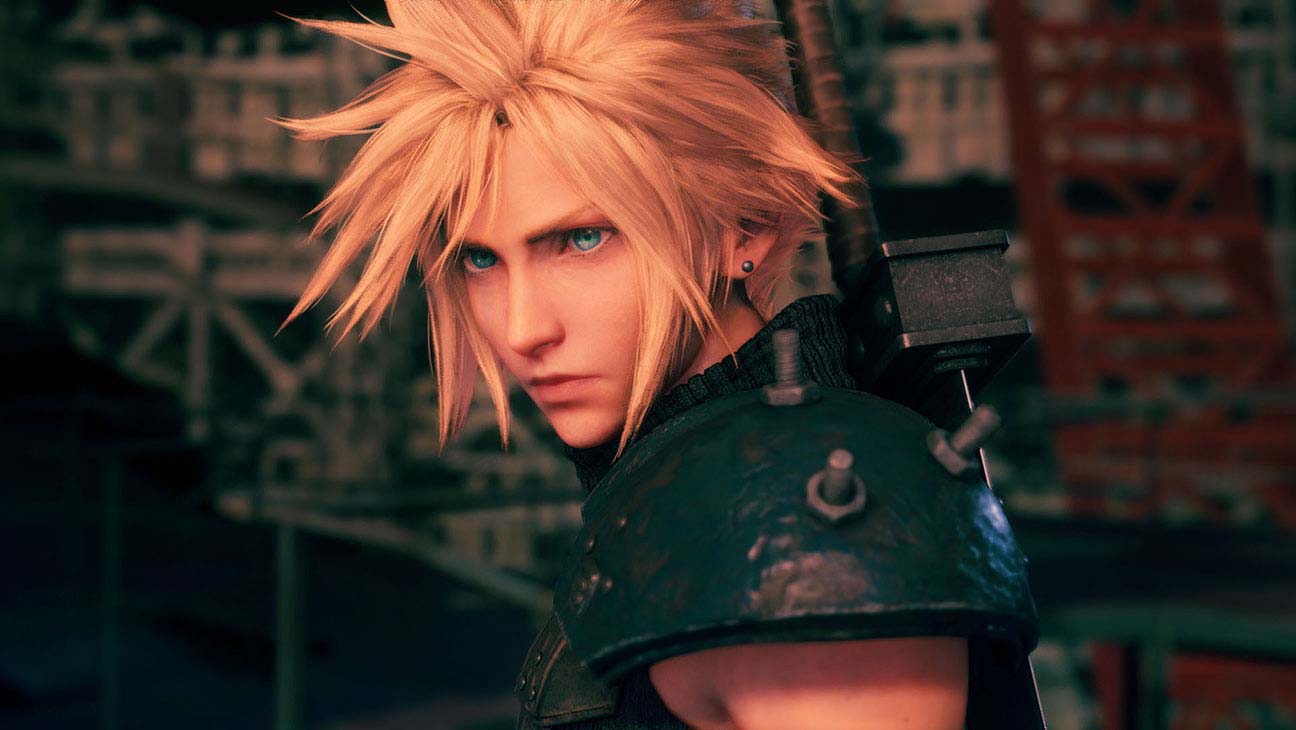
The demo contains what I assume will be the start to the main game. If you played the original Final Fantasy VII then it will be quite familiar. You take on the role of Cloud, a mercenary in the employ of Barret Wallace and his organization, Avalanche, which is in the process of storming a mako reactor in the city of Midgar owned and operated by a company named Shinra. As Cloud (who is given that name outright, so no more choosing your own name), you’re expected to take orders, do the job, and collect a paycheck at the end. The goal of the mission is to take down and destroy this reactor, which Barret explains rather passionately is destroying the planet. Basically, if you’re familiar with the original game this is all routine, but if you’re a newcomer you may have some questions, but those will have to wait for retail.

cloud_demo

Cloud is back, and he’s still going with that hairstyle.

It has been an exceptionally long road getting to this point. Final Fantasy VII was released to huge publicity way back in 1997 and is a very popular and beloved title. For many, it was probably their introduction to the franchise as it was only the fourth entry in the series released outside of Japan. And by far, it was the most publicized, though the US version of Final Fantasy VI was no slouch in terms of marketing. It’s hard to say when the thirst for a remake arrived, but it was definitely here after Square unveiled a PlayStation 3 tech demo that contained images of Final Fantasy VII with a new engine. At the time, Square intended this to be just a demo of what a Final Fantasy title could look like on the new hardware, but naturally many fans just wanted to see these resources used to create a new version of a game they loved.

A remake of Final Fantasy VII never arrived during the PlayStation 3’s lifespan, and it was rarely even hinted at. The company line soon came to be “We hear you,” and fans were expected to just keep voicing their desires for a remake in hopes it would one day happen. Well, that day has just about come and it’s going to be met with some degree of dissatisfaction, but overall I think this title will do well for Square-Enix.

support_characters_demo

And all of your friends are back too, like Biggs, Wedge, and Jessie!

First of all, fans have known what to expect leading up to this point. Gone is the old mechanics of the Active Time Battle System and in its place is a more action-oriented gameplay system. Anyone who has played Final Fantasy XV or even Kingdom Hearts III should feel relatively comfortable with this new system, but anyone going straight from Final Fantasy VII to this will likely be left with their head spinning. At the start of the demo, the player just controls Cloud who battles solo. As enemies come into view, Cloud goes from a passive state to a combat position seamlessly. Mashing the square button is really all that needs to happen in order to win the day against these early foes, but there’s a bit more going on under the hood.

As Cloud attacks, his ATB meter fills. Yes, a relic of the past still exists in some form this time out. When that meter fills, Cloud can use Abilities, Spells, and Items at his whim. Pressing the X button brings up a menu which greatly slows down the action onscreen allowing the player to cycle through the options at his or her leisure. In the demo, Cloud has some abilities that should sound familiar, like Braver. These moves do extra damage and consume ATB. For spells, Cloud has access to Fire which isn’t of much use in the demo, save for when Cloud has to fight flying enemies he can’t quite reach with his sword. Under items are a bunch of familiar options like potions and ethers.

cloud_barrett_demo

Oh, and lets not forget the big guy. Barret is the only other playable character in the demo.

Adding a little extra layer of complexity is the fact that Cloud has two methods of attacks. Think of this as a relic from the Squaresoft classic Bushido Blade as Cloud basically has two stances. He begins in Operator mode which is his default approach. With a tap of the triangle button he can move into Punisher mode. In this state, his sword flurries are more elaborate and deal considerably more damage. He also moves much slower making it harder to evade enemy attacks. Blocking or taking damage will knock Cloud out of this mode, so it’s something that is to be deployed in moderation. At work, is a system of staggering in which repeated blows on an enemy fill a bar below their health. When that fills they become staggered and momentarily incapacitated. You won’t get to play with this too much in the demo as the fodder will like fall first, but it would seem the standard play is to attack an enemy until staggered, then bust out Punisher mode to deal additional damage while they can’t move.

About midway through the demo, Barret will enter the fray. When a second member joins the party in battle, switching between the two is as simple as pressing a button. Barret works in the same manner as Cloud, except he’s a ranged fighter and not nearly as fast or nimble. He can more easily hit flying enemies and instead of a Punisher mode he has a charged attack that gradually fills. He also has access to the spells Thunder and Cure, though you should have plenty of potions to render the latter useless for the demo. You can give the A.I. controlled party member commands during battle, though for the demo I found it mostly unnecessary. When controlling Cloud, Barret did a good job of attacking enemies Cloud could not, but I suspect in larger frays with three characters in the main game it may become more necessary to micro-manage the combatants.

aerith_demo

The demo will give you a look at the mysterious flower girl, but don’t expect it to settle the Aerith/Aeris debate.

Combat in the Final Fantasy VII remake has the potential to add layers of complexity. And in some ways it already feels that way, though much of the confrontations in this demo can be resolved by simply mashing the attack button. It remains to be seen if that’s just simply a matter of this being a demo, or if that will be the general flow of combat for lesser enemies (the equivalent of the original’s random encounters) or if the game will demand more from these enemies as it moves along. Near the end of the demo is a boss encounter in which you will have to do more and pay attention to Cloud’s suggestions. He’ll yell out to Barret how to deal with the enemy, and as the player, you’re expected to do the same. These range from what magic to utilize and where to strike. It’s during this battle that you’ll likely encounter Limit Breaks for the first time. They seem to work as they did in the original, though with Braver being a standard move, Cloud’s first Limit Break is now Cross-Slash. I did not see Barrett’s in my play-through.

When not in battle, the game is pretty much just a nicer version of the original. The camera is always behind Cloud, but can be manually controlled via the right analog stick. The visuals are on par with the best titles Square-Enix has produced so you’re not likely to find many complaints there. Cloud more or less resembles his Advent Children self, but he has been noticeably reworked some and I think he looks a little better now. He’s still a touch goofy looking since he’s an anime design made real, but it’s fine. The voice acting is good as well and since these characters have all spoken before since the original game’s release it’s not as surprising as it might have been fifteen years ago. In short, if this game is a failure the production values will have little to do with that.

sweeper

The sweeper is one of the few enemies in the demo that will let you try out more of your arsenal.

Exploring the environment of this demo is not exactly exciting, but it’s also a tutorial disguised as a mission. I don’t want to make assumptions about the rest of the game based on this section. There are some chests scattered about, but they’re all in plain sight. There are boxes Cloud can smash with his sword to uncover items and even some simple obstacles that need to be cleared. Cloud can basically just run, run faster, and swing his sword. When he needs to jump he’ll do it automatically. It appears the old equipment and materia systems will work largely the same, though the game doesn’t give you an introduction to that aspect in the demo. Oddly, I found you have to use the real-time item list (accessed via the X button whether in or outside of battle) to heal via potions and can’t do it from the pause menu. It would be nice to see an auto-heal feature in the main game.

Ultimately, what is going to make or break this game is the combat system and how that aligns with expectations. There are certainly plenty of fans of the more recently released Final Fantasy XV that will likely welcome a more modern, action-oriented, battle system. There are also those who will yearn for the days of old and the turn-based system. There was a rumor making the rounds over the summer that the game could be made into a turn-based one, but that is not the case. You have options to greatly slow it down, but it will never be truly turn-based. It’s more you can make it similar to a Bioware RPG in which you could basically pause the action, issue commands, then resume. I am not surprised that Square went modern with its combat system, though I have reservations about it. The generic encounters are rather mind-numbing. Again, you could say the same of the original, but relentlessly mashing buttons somehow feels more tedious than the old system. As such, I kind of wish it went even more action and added multiple attack buttons, combos, and a more robust parry system. The thought being if you want this to be an action game, just make it an action game. The boss fight does show how the system can be expanded, but the battle was long and when it was over I don’t know that I felt accomplished. I was kind of just glad to be done with it.

scorpion_demo

The climax of the demo is a battle with the Scorpion Sentinel, also a boss from the original. He’s much harder this time around, but still quite manageable.

The other elephant in the room is also just what can fans expect of this initial installment of Final Fantasy VII Remake. Square-Enix has almost gone silent on the subject since it was announced, but this game is not the entire Final Fantasy VII experience. The assumption, which has mostly been confirmed, is that this game only covers the Midgar portion of the original. It basically ends with the rescue of Red XIII, who is reportedly not even playable in the full version. We do not know how many games this remake will span. We know it’s more than one, and that is all. My guess is that it will be three games, just because publishers seem to like trilogies, but how it ties in with the sequels remains unknown. Fans will want their characters to carry-over, but if this stretches beyond two games it seems unlikely the third would be a PlayStation 4 game. There’s no timetable for the release, and considering how long it took to get this out, I have my reservations about diving into an incomplete experience.

This demo largely accomplishes what it needs to. Fans get a taste for how this very intriguing game will work and play. That’s all a demo really needs to do. It can’t answer whether or not the final release will be worth it, but it provides some indication of what to expect. I do think that game, which I presume is around a 15 hour experience, will be largely good. The questions though about when the next installment will arrive gives me some trepidation, enough so that I will not be a day one buyer. I don’t feel like I need to get to this right away considering the full story won’t be available for years. It makes it easy to back-burner as I still have other titles to finish. I think there will be plenty of fans of the old game to make this a commercial success, so I don’t think there is presently any danger of Square abandoning the project. And from a value standpoint, it can be all but assumed that eventually, when all is said and one, there will be a Kingdom Hearts styled package release of all of the titles at a friendlier price.

Final-Fantasy-7-Remake-Opening-Movie-Trailer

The “full” game arrives April 10 on PlayStation 4.

Those are all things to consider. If you don’t care about the release schedule then by all means play the demo, decide if it’s something you want more of, and go ahead and buy it. I expect there will be critical voices out there on Twitter and such, and they will be loud, but not very impactful in terms of sales. This game will do well because there is so much anticipation for it. And because of that anticipation, Square-Enix was right to take its time and basically build this from the ground up, even if I would have personally been really tickled by a “downgrade” in the form of a sprite-based remake. I expect modern gamers to respond well to the new combat mechanics, though I do wonder if people experiencing this for the first time will be left underwhelmed. They may not understand what made the original so big and exciting to begin with. For them, we’ll only be able to offer up a “I guess you had to be there,” explanation and leave it at that.


Bring Arts Weltall Action Figure Review


img_4425One of my favorite games from my youth is the role-playing game Xenogears. I think I even declared it as my favorite game of all time when I reviewed it here a few years ago. I don’t know if it is my all-time favorite or not, but it’s still right up there because it did a lot of the things well that I enjoy in a game. Especially for a game released in 1998. In case you’re not familiar, Xenogears is a Japanese RPG published by then Squaresoft and released for the PlayStation game console. It was unique at the time because it chose to mostly stick with two-dimensional sprites for its characters, but placed them in a three-dimensional world. If you’re looking for a modern comp, think Octopath Traveler only with more jaggies – a lot more jaggies.

Xenogears told the story of Fei Fong Wong, an orphaned boy in his late teens with no memory of his past living in a quiet village that will not remain quiet for very long. The village ends up becoming a casualty of war, so to speak, as a battle causes a large robot to be deposited there. Fei ends up piloting this robot, referred to as a gear in the game, because he’s called to do so by an unspeakable force and he ends up bringing death and destruction to the village. Ostracized from the community, but in possession of this very lethal gear, Fei ends up getting caught up in something much bigger than he could have ever imagined. He’ll make new friends, encounter new foes, and even fall in love across two discs of gaming goodness. Things will get pretty wacky with split personalities and a destiny being revealed that seems to involve destroying God. It’s a head scratcher and probably more than a little pretentious, but damnit, that’s what we expected of JRPGs in the 90s!


I’ve played through and completed Xenogears on more than one occasion, and I’m sure every time I’ve engaged it I’ve thought to myself, “Man, it would be really cool if there were action figures for this game.” And for a long time, there were not. With 2018 marking the game’s 20th anniversary though, Square-Enix decided to partner with action figure company Bring Arts to do right by this game for the first time in a long time.

Bring Arts is known for collaborating with Square-Enix on several properties. The company’s figures are usually highly articulated and well-detailed, but also can be rather pricey. Finding places that carry them in the US can be troublesome, with places like GameStop usually only willing to stock a few figures of the most popular franchises. Xenogears, despite being permitted to brand itself as a Greatest Hit back in the day, is not a terribly popular franchise so I have not seen a single figure from the line in a physical store. That doesn’t mean there aren’t any carrying them, but it did mean I didn’t get too excited when I heard toys were coming.


Bring Arts first released last year a figure of Fei, as he being the star character that made sense. They then followed with a figure of Elly, one of the other central characters in the show. They look pretty good, but I took a pass because they’re not cheap and also not really what I dreamed of acquiring. Finally, Bring Arts just recently released it’s third figure:  Weltall. When I played Xenogears back in 98 it was Weltall and the other gears designed  by Kunihiko Tanaka that I was thinking of when I wished there were toys based on the property. Weltall is Fei’s gear, and he’s got a nice look to him. He comes across like a hybrid of a Gundam mixed with one of the orbital frames from Eva. It’s mostly blue with glowing red eyes and has wings, or fins, that don’t seem to do anything affixed to its back. Weltall doesn’t use any weapons in the game and instead fights as Fei does with martial arts techniques. It can shoot a Kamehameha like blast, but it doesn’t have guns or a giant sword

img_4451

SH Figuarts Vegeta for scale.

The Bring Arts version of Weltall is not to scale with the previous figures. It essentially exists in its own world as the figure itself is only slightly taller than Fei, even though Fei is meant to sit inside the gear and pilot it. It would have been cute if Bring Arts included a tiny Fei with the toy, but sadly the company opted not to. I don’t have Fei, or Elly, so it’s not something that really matters to me, but I suppose if you’re adding Weltall to a Xenogears display it might annoy you a bit.

img_4441

Weltall setting Vegeta up for his patented Stunner.

Weltall comes in a nice window box package that’s easy to get into. Once removed, Weltall has a nice feel to it. The figure is all plastic, but has a gun-metal finish to it that makes it at least resemble sheet metal from a distance. It would have been cool if Bring Arts could have included a lot of diecast with this piece, but considering the MSRP is around $90 maybe it’s good that it does not. The figure does feature swappable, diecast, feet which is pretty interesting. It reminds me a bit of the Teenage Mutant Ninja Turtles action figures from SH Figuarts which had diecast shins for balancing. Placing the diecast feet onto the figure allows it to more easily be posed in one-legged positions. Scratching is always a concern with diecast parts so you’ll want to take care when removing them, but they swap on and off easily and the paint application is consistent from plastic to diecast so they don’t look out of place.

img_4446

The feet, see if you can tell which is diecast and which is plastic.

Weltall comes with additional hands for posing, including a set of gripping hands. Considering the gear doesn’t use weapons I’m not really sure what good gripping hands are, but they’re included. He has some “chop” hands and energy blast hands, which are permanently bent back. Same for the two fingers pose hands he’s got. The wings, or whatever they are, need to be attached to the figure manually and they snap on easily enough. I was concerned these pieces would throw off the weight of the figure and make it harder to stand, but they’re nice and light and I didn’t have any issues there. I heard some folks were dissatisfied with the paint on the first figures in this series, but I’m happy to report my Weltall looks great.


Weltall has a lot of articulation, some of which is rather creative. There are numerous plates on the figures body, some of which you need to swivel a bit before moving a limb. This isn’t a toy you ever want a kid to just grab and start fiddling with as a lot could go wrong. There are some sliding joints in the shoulders and thigh area that help make the limbs clear some of these plates so that the arm or leg can have a full range of motion. The ankles also extend a few millimeters for enhanced positioning as well which is really cool. The extra hands and feet all snapped off and on for me rather easily and this toy in general required little in the way of breaking-in. The only limitation I could find articulation-wise was with the chest and abdomen, which really aren’t able to do much. Since this is a robot, I suppose it doesn’t need a true ab crunch. The sculpt of the torso is also quite nice so at least nothing was sacrificed for the sake of articulation.

img_4452

The beauty of diecast feet.

Weltall comes across as a pretty high quality piece of plastic. The likeness is dead-on, and the inclusion of diecast feet was pretty neat. It does mean the figure comes with that hefty price tag though. The MSRP appears to be around $90, but I’ve seen the figure for sale at marks both above and below that figure. Diligence and patience are your friends if you want to get this figure for as little as possible. It’s a niche product, so there’s always the chance Bring Arts ships too many and it ends up on sale, but it almost seems too niche for that. I was fortunate to find a brand new figure on eBay that was an actual auction listing that started at a penny. As result, I ended up only paying around $65 for my figure. I say “only” but that’s obviously in comparison with the asking price as $65 for a six-inch scale action figure is a lot of money. As a result, this isn’t a toy I can recommend to casual fans and collectors. If you’re a diehard Xenogears fan like myself that has always wanted a figure of Weltall then yeah, go ahead and splurge, but otherwise you’re probably better off staying away.

img_4453

The figure also comes with a stand, but honestly, it doesn’t need it.

I’ve seen some individuals in the Xenogears fanbase openly speculating on what’s to follow Weltall. I’ve even seen some say they’re waiting for the red version of Weltall from the game, Weltall-Id, but that seems a bit risky to me. Bring Arts has not announced or shown any other figures from Xenogears, and I don’t expect any to follow. Since Weltall-Id could be done fairly easily, I suppose a future variant is possible (maybe a convention exclusive?), but new sculpts seem unlikely to me. This line feels like a rather simple celebration of the game’s age and three figures based on the most recognizable characters/gear feels like a fitting tribute. Would I want more? That’s actually a tough question. I love Weltall, and Weltall II was fine, but also not much different from Weltall 1. Of the other gears, I suppose Andvari was pretty cool and I did enjoy Fenrir, I’m just not sure I liked any of them to want to drop another 80 or so bucks a piece. Most of my favorite designs actually belonged to the bad guys, live Alpha Weltall and Wyvern, and I don’t know if Bring Arts would dare make figures based on those instead of another hero character. I guess we’ll cross that bridge should we get there.

img_4449

Blast away.

For now, this Weltall action figure is a pretty neat way to celebrate 20 years of Xenogears. It’s basically exactly what I wanted, just at a price point higher than I would have liked. If more gears come along I’ll certainly take a look, but if this is the only action figure I ever own from Xenogears then that’s okay by me.


Ranking the Games of the PlayStation Classic

psx classic gamesWhen the PlayStation Classic was announced a few months ago it was only revealed what 5 of the included 20 games were going to be. It was odd, but considering most places pre-sold out I suppose it didn’t matter. When Nintendo had success with the NES Classic Edition, it meant we were in for more of these devices. Myself and many others tried to predict what would be included on a potential SNES Classic and most people probably came pretty close to nailing the final line-up. Nintendo is heavy with first-party titles and its brand is forever connected with the likes of Mario and Link. With Sony, that first-party recognition isn’t there. During the height of the original PlayStation, Crash Bandicoot was positioned as the company’s mascot, but he wasn’t even owned by Sony. His games were just published by Sony, but the character would eventually come to be owned by Activision. Still, it seemed inconceivable that Sony would pass over Crash, and yet they did! He will not be appearing on the PlayStation Classic as Sony has finally unveiled the remaining 15. I knew predicting the line-up would be more difficult than doing so with the SNES Classic, but apparently I didn’t realize just how hard it would be as I went a putrid 1 for 15 with my predictions.

I suppose if I wanted to give myself bonus points I could dampen that showing by saying I at least hit on two additional franchises. And two of my requested titles (Intelligent Qube and Super Puzzle Fighter II Turbo) actually made it, even though I thought it would be a long shot to see them included. There’s no hiding from it though, I whiffed big time and I’ll own that. The actual line-up has likely surprised many and it has some nice surprises and some not-so-nice surprises. It’s a weird line-up, and since the PSX era did have some weird games I suppose that’s appropriate. There are three puzzle games among the 20, no 2D fighters, and only one title each from Konami, and Square-Enix. That means no Mega Man, Lara Croft, or Alucard. Were publishers not willing to “play ball” with Sony and its machine? Or was Sony just not willing to pay more for bigger titles? The Japanese version does have some different titles, including Parasite Eve and SaGa Frontier, but the Japanese market is a lot smaller than the North American one so maybe Sony is trying to maximize profits outside of Japan and is less concerned about the home country.

alucard

There are a lot of contenders for biggest snub, but Alucard might be the biggest.

This is not an optimal line-up of games, but does that make it bad? Lets suss it out and rank these titles starting with the least appetizing:

20. Battle Arena Toshinden – A decent looking launch title, it was quickly overwhelmed by Namco’s Tekken franchise. Most people forget about this franchise, and with good reason. It’s not a good game, and it’s odd to use this one instead of the better sequel, but even that game isn’t great.

destruction derby

Excited to revisit this one?

19. Destruction Derby – This game was a one-trick pony when it was released in the launch window of the PlayStation. It was cool to see cars explode and get smashed-up and it was sort-of perversely fun inflicting damage on other vehicles, but it was all empty calories. No one should be playing this game in 2018.

18. Tom Clancy’s Rainbow Six – This was one of the most heavily marketed games of its era. I probably saw more commercials for Rainbow Six than I did Final Fantasy VII. It’s okay, but the PSX port was pretty abysmal. Anyone playing Rainbow Six in 1998 probably shouldn’t have been playing it on PSX. Electronic Gaming Monthly even awarded it a dubious 3.8/10.

17. Jumping Flash! – We knew this one was included, and I even argued it had a place given it was a launch title and was just so very “of the era.” That doesn’t mean it’s particularly good and by today’s standards it’s quite ugly. Unlike the games listed before it though, it has a certain curiosity factor going for it that will make it worth a look when the PS Classic drops, but it might not be a game you actually stick with.

16. Cool Boarders 2 – If you like snowboarding and “extreme” sports games, then you’ll probably have this one ranked higher. It’s all right, but most people will probably wonder why it’s here and not Tony Hawk’s Pro Skater (it’s the licensing, folks).

twisted metal 1

I probably logged over 100 hours with this game, but I’ve never wanted to replay it after Twisted Metal 2 came out.

15. Twisted Metal – I loved this franchise on PlayStation, well the first two games at least. The first one though has not aged well at all, and even in the moment, I knew I was playing a junky game, but it had a certain fun factor. The sequel though is way better and actually still playable. I considered it the most obvious lock for the mini console even ahead of Metal Gear Solid so the fact that this game is included but the sequel is not blows my mind.

14. Oddworld:  Abe’s Odyssey – I said the PS Classic has three puzzle games, but you could make the case Oddworld is more of a puzzle game than a true platformer. This game was hyped a bunch as being a game that gave the player numerous ways to solve a problem, but it didn’t really play out that way. It was interesting, but hardly great. It’s graphical approach should hold up well enough though.

13. Wild Arms – One of the previously announced titles, I gave my speech on it already. It’s serviceable, and its simple JRPG mechanics mean it will always remain playable. It’s just a bit crazy to think that this machine has only three RPGs when the PSX was an RPG behemoth, and Wild Arms is one of the three.

12. Grand Theft Auto – GTA was a surprise hit for the PC when it was released, and it was somewhat surprising to see it get a PSX port. It was also the first title I was denied an ability to purchase at a GameStop. Like modern GTA titles, it was arguably at its best when it was just played like a sand box causing mayhem. Unlike modern GTA titles, the actual missions and story isn’t that rewarding and the game was really difficult. It was at least a little easier to handle on the PSX than with a keyboard. It should still be fun to screw around with, but might not have much legs with the PS Classic.

Intelligent-Qube

The inclusion of Intelligent Qube is a bit of a surprise. Is it a system-seller? Probably not, but it’s worth a look if you end up getting a PS Classic.

11. Intelligent Qube – This was a surprise inclusion, but a worthwhile one. It’s an interesting puzzle game that’s at least not another brick-falling puzzler. I don’t know how well it’s held up because it’s been many years, but it should be playable and may be a dark horse contender for many folks’ most played title on the Classic.

10. Resident Evil (Director’s Cut) – There’s no denying this title was huge for the PSX, and the Director’s Cut version was superior to the original. It is possibly the worst in the franchise on the PSX though and its controls are not something I look forward to returning to. It took many hours to get a handle on them in 1996 and I’m not sure I still have such skills. Maybe it’s like riding a bike?

9. Syphon Filter – This was basically Sony’s attempt at a first party MGS or Rainbow Six. It was fine for what it was, though I’d prefer a dual shock to play it. It’s going to look ugly, and even Gabe Logan’s running animation looked horrendous in ’99. It might surprise though, and the only reason why I didn’t include it in my prediction was because I didn’t think Sony would release it without dual shock support.

8. Ridge Racer Type 4 – A totally competent racer, but let’s face it, this isn’t the racing game you want. Gran Turismo was the first-party behemoth, but I’m guessing licensing issues made it impossible to include. WipeOut was an alternative racer, but one I’d consider more fun than Ridge Racer. I would have taken Crash Team Racing over this one, honestly, and I’m not sure if I’d even play this more than once on the PS Classic. The racing genre is one that basically improves a lot with better technology, so going back isn’t always fun unless it’s more of an off-beat title. I suspect this still plays well enough though, which is why I’m ranking it this high.

persona

I’m happy to see the original Persona included in this collection, but it’s also not a hard to find game so I wish something like Valkyrie Profile was included instead.

7. Revelations:  Persona – The first game in what is now known simply as the Persona series is the biggest surprise inclusion on the PS Classic. This was not a popular game when it was released, and Persona still has more of a cult franchise vibe than a mainstream one. The first game is not as good as more recent entries with the series really blossoming with Persona 3. It is still playable though, and it’s more strategy-oriented battle system differentiates it from Wild Arms and FFVII. This one is a nice surprise and unlike the original Final Fantasy on the NES Classic, fans who are only familiar with the newer entries might actually enjoy playing the first in the series as opposed to just checking it out for the sake of curiosity.

6. Mr. Driller – The nice thing about puzzle games is that they age well. Mr. Driller is another surprise inclusion. It was well-received in its day, but not really a system mover or anything. It’s fun and charming though and if you like puzzle games with a slight Tetris vibe then you’ll get some mileage out of this one.

5. RaymanRayman was all over the place in the mid-90s. He was so omnipresent that I kind of wrote him off for this system as I never associated him with PlayStation. His game is pretty good though, and its 2D approach should hold up just fine. I never loved Rayman, but I never hated his games either.

4. Metal Gear Solid – I’m not crazy about this list of games, if you haven’t noticed, but I do think it’s pretty top-heavy. The last four are mostly interchangeable, and I wouldn’t be surprised if Metal Gear Solid tops many lists such as this one. My reasoning for placing it 4th is because I think we’re missing out on some of the bells and whistles with this version by not having the dual shock support and a memory card full of Konami games. I also think the game hasn’t aged too well and recent entries in the series really helped to smooth out the gameplay experience. It’s still a fantastic game, it’s just not as fantastic as it could be on the PS Classic.

puzzle fiighter

This is a great choice for inclusion. I have nothing bad to say about Puzzle Fighter.

3. Super Puzzle Fighter II Turbo – This is probably my favorite puzzle game. It’s incredibly addicting and the rare puzzler that might be more fun in two-player mode than single-player. It’s got a lot of charm and personality and its sprites should hold up very well. I’m a bit surprised at its inclusion, especially given the omissions of traditional Capcom fighters, but also delighted.

2. Final Fantasy VII – We’ve all probably played it. And even though there’s been backlash towards this title over the years because it’s the most recognizable from the long-running series, that doesn’t mean it’s still not in the conversation for best Final Fantasy game. It’s readily available on other platforms so its inclusion isn’t sexy, but it’s also necessary. If you’ve got about 40 hours, you should give this one some time.

tekken 3 jin

The visuals may not wow you like they did in 98, but Tekken 3 is still a blast to play.

1. Tekken 3 – And the best game of the PS Classic is Tekken 3. A late era title, it actually holds up quite well in the visuals department and the game is simply one of the best 3D fighters ever made. It has a huge roster of characters, some fun additional modes and characters, and there should be something for everyone in terms of fighting styles. If you don’t like 3D fighters then maybe this won’t win you over, but I spent many hours with this one and I’d actually be excited to run through it again and try to unlock all of the additional characters and modes. Well, maybe not Tekken Force Mode.


So that’s it; the PlayStation Classic and its 20 games. Are you going to get one? Did you already pre-order one and are reconsidering that decision? I’m over-all not impressed with these 20 games, the majority of which I don’t need to revisit. Even some of the games that I think are fine I still don’t want to really play in 2018. Why play Twisted Metal when you can easily play Twisted Metal Black? Why play Rayman over the easily acquired (and cheap) Rayman Legends? I wasn’t that excited over this console to begin with, as the nostalgia factor just isn’t quite there for me with the PSX era. If the list had turned out to be something closer to what I predicted I might have been tempted. With this list, though? I’m looking at spending 100 bucks to play Persona, Intelligent Qube, and Mr. Driller as the other games I really enjoy I still own for PlayStation and can play them right now if I want. I have a first-gen PS3 hooked up to my TV right now so nothing is stopping me from popping in Tekken 3 if I wish to play it. I’m not everyone though, so for those who loved the PSX and maybe sold all of their old games I can at least see some appeal, but I still feel like this roster is one big missed opportunity.


Forecasting and Perfecting the PlayStation Classic

cute ps

Aww, it’s so adorable!

Sony announced the PlayStation Classic on September 19th and it is set to go on sale December 3rd. Following in Nintendo’s footsteps, the PlayStation Classic is a mini version of the original console with 20 pre-loaded games, a single controller, and HDMI output. It will have support for saves via a virtual memory card as well as numerous display modes to toggle through that will try and preserve the original look of the games or try to smooth them out and update them for today. At $100 MSRP, the PlayStation Classic finds itself priced in-between the SNES Classic and the soon to be released Neo Geo Mini. Making things more interesting, and also frustrating, is that Sony chose to only reveal 5 of the system’s 20 pre-loaded games:  Final Fantasy VII, Jumping Flash, Tekken 3, Ridge Racer Type 4, and Wild Arms. It’s an odd form of marketing, but Sony must feel confident it will have strong pre-sales to hold back that information for the time being. It also likely thinks it will help build excitement for the machine if they drip-feed consumers. Maybe it will be a weekly event to reveal another game or two. There are 10 weeks separating the system’s announcement and release so such a strategy is possible, or they could just come in bunches.

Choosing to withhold information on the included games is likely an annoyance for prospective consumers. I know I personally am not pre-ordering a gaming device in which I don’t even know what games I can play on it will be. It does however create the fun scenario in which people like me can speculate on what will be included and also what should be included. Those are two very different questions as if it were up to me I would load this thing up with RPGs, but I’m sure Sony will want a more balanced lineup. Adding further intrigue is the fact that Sony isn’t the first-party powerhouse that Nintendo is. With the SNES Classic, it was relatively easy to predict what games would be included because so many of them were Nintendo developed titles. Those games were not only among the best the system had, but also cost Nintendo next to nothing to include. With Sony’s machine, they’ll likely be cutting sizable checks to Capcom and Square-Enix with this thing.

Lets rundown the games I think Sony is going to include. Since we already know five of them, that means I need to only come up with 15 for this exercise. This is a prediction, so I’ll also include my opinion on if I think the game should be included, and where not, what I would include instead with the idea being I wouldn’t boot a fighting game to add a strategy one and will aim to stay within the genre. Let’s start with the included games:

cloud

This was expected.

Final Fantasy VII – This is likely the PlayStation’s biggest game, not the best-selling, but in terms of what it meant to the console. This legitimized Sony with the hardcore crowd since Sony was able to pry a successful Nintendo franchise away from The Big N. And even though it’s readily available on Sony’s Eshop and will soon be available on The Switch, Sony basically had to include it here.

Jumping Flash – This is a game that has not aged well. It’s going to be ugly, and may even make you nauseous due to the first-person perspective, but in terms of early launch window games few spring to mind as being of the era than Jumping Flash. It’s a relic, but one forever tied to Sony’s machine. As a legacy game, it feels appropriate to include.

Ridge Racer Type 4 – Squaresoft may have stole the headlines when it announced FFVII would be on a Sony console, but lets not forget how important Namco was for the PSX early on. Namco supported Sony’s machine rather extensively, and one of its signature series was Ridge Racer. Ridge Racer would eventually be over-shadows by the gear-head adored Gran Turismo series, but its arcade approach remained fun and Type 4 was probably the best of the bunch and is rightfully included.

Tekken 3 – Another Namco staple, the first Tekken was a launch window title and a worthy adversary for Sega’s Virtua Fighter series. It proved to be the best of the 3D brawlers on Sony’s machine far surpassing the likes of Battle Arena Toshinden. Tekken 3 was the final Tekken released for the original PlayStation and it represents the pinnacle for the franchise for the era. It was gorgeous for the time and felt like a game that pushed the system beyond what anyone thought it could do. It’s still my favorite entry in the series and it most certainly belongs here.

Wild Arms – The Sony produced RPG had the benefit of arriving before FFVII. While some blame that game for the lack of success enjoyed by Wild Arms, I knew more than one person who purchased this title simply because they couldn’t wait for FFVII. It’s a totally serviceable RPG and it has its share of fans, though it’s never been a favorite of mine. On one hand, it does represent the early era of PSX role-playing games, but I would not have included it.  Suggested replacementBlood Omen:  Legacy of Kain – a top-down action RPG, Blood Omen was the start of a successful Sony franchise for Kain and eventually Raziel. It had a lot of style, and as a fellow 1996 title and pseudo RPG it would be a suitable replacement. If something could be done about the horrendous load times in bringing it to the system then all the better. It’s possible the sequel, Soul Reaver, will be among the other 15 and if that is the case then I would not include this one.

And now for the predictions! I’m ordering them from most likely to least, and it should be noted, this is entirely subjective for the most part though I’m avoiding any game that was intended to be played with the Dual Shock controller (like Ape Escape), with one noted exception.

tm2 axl

Twisted Metal was arguably Sony’s premiere franchise in the 90s.

Twisted Metal 2:  World Tour – The most successful Sony first-party franchise during the PSX era was probably Twisted Metal, and that franchise’s best game was easily Twisted Metal 2:  World Tour. It took everything that made the first a surprise hit and improved upon it. Better presentation, better controls, a huge roster, and new gameplay additions made this one a blast to play. It’s probably pretty ugly by today’s standards, but still playable and likely still infectious.

Metal Gear Solid – FFVII was the signature third-party game, and franchise, for the PlayStation’s early days, but it feels like it was supplanted some-what by Metal Gear Solid. MGS revolutionized what could be done from a cinematic perspective and its attention to detail was something seldom seen in gaming. It was an instant masterpiece, and also the game that will most suffer by the lack of Dual Shock support. If It wasn’t so important to the legacy of the PlayStation I’d say hold off for an eventual Dual Shock version of the PlayStation Classic.

Final Fantasy Tactics – Another game that is readily available, but also one synonymous with the PlayStation. Final Fantasy Tactics took the guts of Tactics Ogre and gave it a new coat of paint. It’s also a bit more accessible, but just as serious about its story. FFT wasn’t what folks who had just played FFVII were expecting, so it got kind of lost in the shuffle, but has since been more appreciated and is routinely cited as one of the best RPGs ever released. It would feel weird to not include it.

crash bandicoot

I’ve never been a Crash guy, but I won’t deny him his rightful place.

Crash Bandicoot 2:  Cortex Strikes Back – Crash was conceived as the original PlayStation mascot meant to oppose Mario and Sonic. It didn’t really work out that way, since Sony didn’t even own the character, but for awhile he was utilized that way. Arguably his best contribution to that era were the commercials (“Hey, plumber boy!”), but the games were pretty good in their own right. Not really my cup of tea, it would be hard though to deny Crash a spot on the PlayStation Classic and most agree that his second outing was superior to the first. They would also probably argue the third was even better, but I’m guessing Sony is placing an emphasis on earlier games which is why they may opt for this one over Warped.

Resident Evil 2 – Really, the only thing that makes me thing think Resident Evil 2 might not be included is the fact that Capcom is working on a remake as we speak. For that reason, it may prefer to include the original or even the less celebrated third entry. Everyone likely agrees that RE2 was the superior title, so in the interest of keeping things simple, I say Capcom relents and lets Sony have it.

Castlevania:  Symphony of the Night – We’ve long since past the era when Symphony of the Night was an under-appreciated classic. Famously released to a hostile public because it dared to be 2D, most have come to realize how silly a notion it was to declare 2D gaming obsolete and have embraced SoTN as one of the very best games in the long-running franchise. And those that didn’t realize it at the time certainly did when Castlevania 64 was released.

Street Fighter Alpha 3 – Most associate the 16 bit era with the height of the fighting genre, but it was still alive and well come the 32/64 bit era as well. PlayStation was not known for its excellence with 2D fighters, leaving that to Saturn and eventually Dreamcast, but Street Fighter Alpha was an exception. And of the games released in that series for the system, Alpha 3 was the best.

wipeout xl

I had a lot of good times with Wipeout.

Wipeout XL – Perhaps an aggressive ranking, but Wipeout felt like an important franchise during the early days of the PlayStation. The Psygnosis developed futuristic racer could have been mistaken as an F-Zero clone, but the physics and course design made it so much more. XL was the pinnacle for the series, and assuming Sony can work out the licensing issues, I expect it will be included.

Tomb Raider – Lara Croft’s humble beginnings were as an ugly, pointy-breasted, mess of polygons that I’m not sure people even in the moment felt looked particularly good. She was tough to control, but wasn’t a tank like Jill Valentine, and her adventure was pretty damn difficult. She did move onto other consoles, but Tomb Raider always felt like a Sony franchise and it’s likely viewed as important to the console, even though I do not want to revisit it. Suggested ReplacementParasite Eve – not exactly a one for one, but the shooter/RPG hybrid was quite interesting for its era, and as a franchise that never made it off of the PSX, it would be nice to see it here. The sequel is better, but may be hard to get into without knowing what happened in the first.

The Legend of Dragoon – Seeing how successful Final Fantasy was on its machine, Sony decided to get into the RPG business with The Legend of Dragoon. Seemingly thinking RPG fans enjoyed length over anything else, TLoD was gigantic and is probably the longest RPG on the system. It also looked great, and its battle system was okay. Aside from that, it’s not very good, but since Sony produced this one it won’t cost them much to include it and they probably view it as a signature title for the system. Suggested ReplacementValkyrie Profile – Oh boy, does this system not lack for RPGs. You could easily fill the console with 20 RPGs and not run out of quality software. Xenogears is my favorite, and it has an outside shot of being included, but a game that’s also good and brutally expensive is Valkyrie Profile. It would be great to see Sony use the PlayStation Classic as a means of delivering hard to find games to the consumer, but I’d be shocked if they included this one. It would probably cause me to buy one though, since getting a PlayStation Classic is way cheaper than buying this one second-hand.

Gran Turismo 2 – Assuming Sony can sort out the licensing issues, this one feels like a no brainer. Gran Turismo is one of Sony’s premiere franchises, and even though it’s faded some, it’s still remembered quite fondly. And given that its sim approach makes it way different from Ridge Racer, there’s room for it on the Classic as well. Though for me personally, it’s also a game I wouldn’t play.  Suggested ReplacementCrash Team Racing – so it’s not exactly a sim, but I struggled to come up with a more appropriate replacement. CTR was stealthily the second best kart racer of the era, behind Diddy Kong Racing and ahead of Mario Kart 64. Yes, you read that correctly. MK64 is the most overrated game in that long running series and doesn’t hold up, but CTR is frantic, fast, and fun. The only problem is you’d pretty much need to get a second controller.

mega-man-x4

X found a home on Sony’s console, where Zero was allowed to flourish alongside him.

Mega Man X4 – Capcom is not shy about loaning out Mega Man for compilations, and since he’s featured on both the NES Classic and SNES Classic it stands to reason he’ll appear here. The X series was the most prominent on Sony’s console, and X4 was the best of the Mega Man games released for the system which also included the underrated Mega Man 8. And yet, it doesn’t feel like the most “PlayStation” of the Mega Man games…Suggested ReplacementMega Man LegendsMega Man X4 was just released as part of a compilation of X games. It’s easy to come by. What’s less easy is Mega Man’s first foray into RPGs on the PlayStation, Mega Man Legends. I won’t argue it’s better than Mega Man X4, because it’s not. It just feels like a more appropriate release. The only thing that would change my mind is if Nintendo is already developing a Nintendo 64 Classic and intends to include the port, Mega Man 64, on its machine. If that’s the case, then stick with X4.

Tony Hawk’s Pro Skater 2 – The Tony Hawk series was a huge hit on Sony’s machine, and the second game was the most well-received. It was basically the first and only skateboarding sim worth playing, and I knew many people obsessed with this game that weren’t even that into skating (but the ones who were into skating were even more obsessed). There are challenges in bringing it to the PlayStation Classic, but I would bet Sony finds a way to get it done. Suggested ReplacementBushido Blade – Confession time! I never liked the Tony Hawk games. Sorry! And since there is no skateboarding sim worth replacing it with, I’ll go with the sword-fighting sim from Squaresoft. Bushido Blade was a really neat take on fighting games as it aimed for more realism. Not total realism, just more. And it primarily did that via one-hit kills. If a guy gets slashed across the gut with a sword that shouldn’t merely take away some of his health bar, it’s going to incapacitate him. As a result, fights could be really brief, but most actually turned into endurance matches. They were tense, and in order to succeed you had to get your opponent to fall for a feint or just get careless leaving them open for an attack. It’s a toss-up which version is superior, this or the sequel, but most seem to lean towards the first since it had more weapon options.

Suikoden IISuikoden II has become such a popular game long after the PlayStation era came to a close that I think it’s actually likely that Sony includes it. It’s on their web store for Vita/PS3/PSP and it was presented as a pretty big deal when it first showed up. Sony probably has a solid relationship with Konami and won’t have too much trouble bringing this one to the PlayStation Classic, but it remains possible that Sony thinks this would be too many RPGs and leaves it out. That would be a very bad move.

parappa smooth

Expect PaRappa to appear on the PS Classic, but don’t expect him to look this smooth.

PaRappa The Rapper – Sony’s flagship rhythm game was pretty well-received. It also helped to popularize what came to be known as cell-shaded graphics. It was recently remastered and re-released, which is why I’ve placed it at the bottom of this list. It’s possible Sony doesn’t want to eat into that at all, plus it’s going to look pretty terrible in comparison, but it’s popular enough to merit inclusion. Had it not been for that re-release I’d have pushed this into the top 10 easily. Suggested ReplacementTobal 2 – I don’t really care for PaRappa, or rhythm games in general, so for my last slot how about something exciting? The SNES Classic certainly benefitted from including the previously unavailable Star Fox 2, and if Sony wants to drum-up some similar excitement announcing Tobal 2 for a North American release would be one way to do so. I believe it was prepped for one, but abruptly cancelled as the era was winding down and the first game did not sell particularly well. As a result, some of the localization may still exist, and if it doesn’t then that might not be much of a hurdle anyway as fighting games usually don’t require much, so how about it, Sony? Give us some sizzle!


Well, that’s it! What do you think? Is this something you would buy? Think I pretty much nailed it or did I miss something obvious? Surely, they’ll try and get a Spyro game onto this thing, but I’m not sure at what game’s expense (alright, probably Suikoden II, but maybe Sony will do the right thing and not include The Legend of Dragoon)? The PlayStation was perhaps my most favorite system as it came around when I was most interested in gaming. I was in my early teens so I was able to obsess over gaming without the distraction of what would follow in high school. Picking just 20 games just highlights how many games have to be excluded, so let’s go out with some honorable mentions. For the most part, these are games I would definitely include on my personal PlayStation Classic, but acknowledge Sony is unlikely to do so for one reason or another:

valkyrie profile

Oh please! Oh please! Oh please!

Xenogears, Final Fantasy IX, Chrono Cross, Tomba!, Klonoa: Door to Phantomile, Vagrant Story, Lunar: Silver Star Story Complete, Mega Man 8, Mega Man X5, Rogue Trip, Street Fighter EX Plus a, Brave Fencer Musashi, Colony Wars, Legacy of Kain: Soul Reaver, Front Mission 3, Spider-Man, Alundra, WWF Smackdown 2: Know Your Role, Super Puzzle Fighter II Turbo, IQ: Intelligent Qube


The Mini Console Wars are Upon Us

ps classicPlug and Play games have been around for several years now. They’re those cheap little Atari-styled joysticks you see at electronics stores that when plugged into a television allow one to play games like Pac-Man and Asteroid. They’re novelty machines and an inexpensive way to say to someone “Remember this?” I don’t know how successful they’ve ultimately been, but they’ve persisted and may be responsible for bigger publishers to look at and say there’s more here than meets the eye.

Companies love money, and they love finding ways to make money off of things that require little or no capital. When Nintendo launched its Virtual Console service with the Wii it was a simple and inexpensive way for the company to monetize outdated games. Previously, Nintendo’s path to doing so was via its portable line which was always a generation behind the main consoles in terms of power. Porting a SNES game to Gameboy Advance was cheap, and gamers liked playing games they enjoyed roughly five years past on-the-go. It was a novelty, but a good game is a good game. When consoles finally reached the point where DVD and Blu Ray mediums meant storage was no longer an issue, retro compilations came into fashion. Few sold big numbers, but they didn’t have to since the cost to emulate the software was fairly cheap.

pacman

The start of the retro craze?

All of that changed when Nintendo unveiled its NES Classic Edition System in 2016. The tiny device was immediately attractive to older gamers because it was so cute and tastefully done. Pre-packaged with 30 “classic” games at an attractive low MSRP of $60 helped to make it the hottest item of the 2016 holiday season. Nintendo famously could not meet demand, and it’s taken the company nearly two years to finally make the system readily available. Since then it’s also released the SNES Classic Edition. That came with a second controller and 21 games for the higher MSRP of $80, roughly approximating the price Nintendo has always placed on its NES games relative to its SNES games via the now dead Virtual Console service.

Since Nintendo had such unbelievable success with its products, it’s no surprise then that other companies have followed suit. Sega has licensed its Genesis hardware for similar mini consoles with the added feature that most have contained an actual cartridge slot to play physical Genesis software. The results have been less well received though as the Genesis knock-offs have been rather clunky. Prior to that, Sega was arguably ahead of the curve by licensing its product for portable systems. They too were pretty clunky though and I’ve never had someone actually recommend one to me.

neo geo x

SNK and Tommo tried to make the Neo Geo affordable and practical, but it didn’t work out.

The newest entrant to hit retail is actually an older one as well. SNK too was ahead of the curve with its Neo Geo X released in 2012. The NGX was basically the precursor to the Nintendo Switch. It was a handheld console with 20 pre-loaded Neo Geo games and room for expansion via game cards. It came with a dock that resembled the Neo Geo AES console and once placed inside that dock the games could be played on a television with the included AES style joystick. It was an ambitious, and expensive (but what Neo Geo item isn’t?), toy manufactured by Tommo as opposed to being a true SNK console. The hardcore fanbase didn’t have pleasant things to say. From stretched visuals to input lag, the NGX was more of a novelty than a true way to experience the Neo Geo. After all, most of the system’s best games are available across many consoles now and emulated quite well. SNK was so dissatisfied with the machine that it eventually ordered Tommo to cease and desist production less than a year after release.

The NGX may have been a failure, but it didn’t discourage SNK from trying something similar again. Likely influenced by Nintendo, the Neo Geo Mini is now a thing set for release next month. Unlike the Nintendo machines, the SNK Mini is both a portable and a dedicated home console machine. It resembles a little arcade cabinet and comes with 40 games pre-installed. It looks like it will be rather clunky and cramped when enjoyed as a portable, but it supports standard Neo Geo controller pads so it likely will get the job done when plugged into a television. Like all things Neo Geo, it’s pricier than the competition and will set you back 90-110 dollars, but SNK has an extremely loyal fanbase that will likely guarantee this thing is a sell-out.

neo geo mini

The Neo Geo Mini certainly scores points for cuteness, but how functional it is seems suspect when not plugged into a television.

And of course, the impetus for this post, is the just announced PlayStation Classic. Unlike the Neo Geo Mini, the PlayStation Classic looks to be a straight-up knock-off of Nintendo’s products. A mini PlayStation with 20 pre-loaded games and a single controller for $100, it’s a fairly no-frills duplicate. Sony has only announced 5 of the 20 games, and they’re a pretty representative snapshot of what the original PSX offered:  Final Fantasy VII, Jumping Flash, Wild Arms, Tekken 3, and Ridge Racer Type 4. Sony made the decision to package the system with one standard PlayStation controller, which means no analog. The choice to do so is being spun as a way to celebrate the original release of the console nearly 25 years ago, but I’m guessing it was really done for cost reasons. The machine also resembles the original launch model right down to the additional port on the system’s rear (it’s guarded by a removable plastic tab and I don’t know if its present for aesthetic reasons on the PS Mini or if it’s hiding an additional function).

genesis classic

Sega has made half-hearted attempts to duplicate Nintendo’s success, but the results have been subpar at best.

The PlayStation was the highest selling console of the 1990s so there’s likely a lot of gamers who hold the system in high regard. Even so, there are factors working against Sony with the PlayStation Classic. For one, Sony has actually been very good at making its classic games easily available. The PlayStation 4 may have been left in the dust in some respects, but both the Vita and PS3 can download and emulate almost all of the biggest games released for the original PSX. They’re not free, but they’re also not prohibitively expensive and the cost varies from publisher to publisher. Likely Sony’s biggest ally in those days was Squaresoft, now Square-Enix, which has made almost all of its PSX games available in Sony’s Eshop. And if you’re one of the few who (like me) purchased a PlayStation TV then you have yet another avenue for experiencing these games. Even games like the ultra rare Suikoden II can be played rather effortlessly these days.

ps classic close

The PlaySation Classic is about what you would expect.

The other issue Sony is going to run into is its price point and lack of analog support. Some classic PSX games made full use of the Dual Shock controller including Metal Gear Solid and Ape Escape. Other games were retro-fitted to utilize the new controller and made better, like Resident Evil 2. Since the console does utilize USB for its controller input it’s possible it will support the Dual Shock 3 and 4 as an input method, but it stinks to not just include that out of the box. And of course, the $100 price point is another tough sell. It follows the path Nintendo laid out with its retro machines of adding another 20 dollars for each successive console generation, but it does feel like there is a limit for what people are willing to spend. Gaming enthusiasts will still have interest, but will Sony be able to successfully attract that casual crowd that really drove sales for the Nintendo units? Considering the Sony brand isn’t as famous as Nintendo’s, despite the obvious success of the PlayStation consoles, it would appear that this unit is destined to be less popular. And on the business side of things, Sony just doesn’t have as many firs-party titles as Nintendo making the licensing more expensive. That’s likely reflected in the price-point, but it’s also possible that Sony also just isn’t going to pull in the same profit per unit that Nintendo can manage.

Revealing only 5 of the included 20 games from the start feels like a gamble on Sony’s part. Does the company think that the excitement of the initial announcement will be enough to drive pre-orders into near sell-out numbers? It’s possible, but it also feels like there’s a lack of confidence in the software. A lot of Sony’s biggest games come with obvious licensing hurdles. Gran Turismo boasted hundreds of actual vehicles. Tony Hark’s Pro Skater contains the likeness of dozens of unaffiliated skaters as well as sponsorships as well. Even Jet Moto and Wipeout featured in-game sponsorships or licensed music. It’s unlikely these licensing agreements factored in new retail releases down the road and license holders need to be re-engaged in some cases in order to include them. All of these things cost Sony money and might discourage the company from including some of the system’s most memorable games.

psc ad

The choice of controller may be a hindrance, but we’ll see.

Just like the remaining 15 games, it also remains to be seen how Sony views its newly launched Mini Console business. Does the world really need a PS2 Mini at this point? I’d argue no, but I also would not be surprised to see Sony try. They may wait to see if Sega or Nintendo jumps into that generation first though before dipping their toe into those waters. It’s also possible Sony sees this as the first of multiple mini PlayStation devices. Perhaps a second could mimic the redesign of the PSOne and include analog support. Maybe this one due out in December is to be expandable or new versions could arrive that include a different variety of games. We don’t yet know if there will be regional differences with these consoles as there were with the Nintendo ones too. And lastly, we don’t know how well this system will be at emulating these games. While many hold up from a fun-factor perspective, visually they have not aged well and may look troublesome on modern televisions. Sony at least has experience with the PlayStation TV (I bet Sony really kicks themselves now for not designing the PS TV to resemble a mini PlayStation) so we know they can make a quality plug and play device at a modest price point, but we also don’t know if we can expect the same level of quality from this device. All of these questions, and the fact that I still own most of my favorite PSX era games in a physical form, has me less than enthused about the PlayStation Classic. I’m not pre-ordering it, but I’m also not ruling out a purchase somewhere down the road. It is fun to think about though, and it certainly reaffirms the notion that we’re not through yet with mini consoles.