The Misfits Box Set

The Misfits Box Set (1996)

The Misfits Box Set (1996)

The Misfits came onto the punk scene in the late 1970’s. Founded by Glenn Danzig and Jerry Only, The Misfits embraced the do-it-yourself motto of the punk scene and would record and self-publish numerous EPs during the band’s existence. Following the band’s break-up in the early 80’s, Glenn Danzig would go on to front a new band, Samhain, which would eventually garner a major label record deal and become Danzig. Despite that though, The Misfits refused to die. Danzig would release a few posthumous albums, notably the compilations Legacy of Brutality and Misfits (later referred to as Collection 1). Come the early 90’s and most Misfits albums had been given a CD release via Caroline Records and Danzig’s Plan 9 label. Suddenly, The Misfits were more popular than ever before with the iconic Crimson Ghost becoming a mainstay in concert crowds. A lot of this new-found popularity came in part thanks to Metallica and its cover of classics Misfits tunes “Green Hell” and “Last Caress.” There was new demand for Misfits material, and after being excluded from the more recent releases, Jerry Only and his brother Doyle wanted to get in on the action. There was lots of legal wrangling between the two camps and it all eventually lead to an agreement where both parties would share merchandising rights and Only could resurrect a new version of The Misfits. This also lead to the creation of The Misfits Box Set in 1996, a release meant to compile all of the Misfits recordings lost to time in one box.

It wasn’t until recently that I finally purchased The Misfits Box Set. When the set was released in ’96, I was just getting into The Misfits. As a kid, I didn’t have the capital to fork over for a box set and was forced to grow my Misfits collection in pieces. By the time I was in high school and had a part-time job I already owned all of the albums contained within the box set in their stand-alone version and it no longer made sense for me to purchase the box set. Plus by then the set had been reissued with the newer pressings being decidedly less extravagant than the original. Being the collector that I am today, I finally saw fit to hunt down a first edition box set. I waited a long time for the right set to make itself available, and it finally did. I now own what is arguably the most important Misfits release from the 1990’s and I’m pretty happy with the decision.

The Misfits Box Set was definitely a lot cooler when it came out than it is today due to the original scarcity of the material. Thanks to the internet, Misfits vinyl is a lot easier to come by than it was 20 years ago (though that doesn’t make it cheap) and Caroline has since issued a stand alone version of Static Age that’s superior to what is contained here. When it came out though it was something special. Spread across four discs are Collections 1 and 2 (the latter being brand new at the time), Legacy of Brutality, Evilive, Earth AD/Wolfsblood, Static Age, and the Sessions disc. The only album missing is Walk Among Us, which Caroline did not have the distribution rights for. The gems of this release were certainly the last two discs, Static Age and Sessions.

Static Age was released for the very first time with the box set.

Static Age was released for the very first time with the box set.

Static Age was the first album recored by The Misfits. It’s story is rather interesting as Glenn secured studio time for it when a major label tried to start an offshoot label called Blank Records. Unbeknownst to them, Glenn had already started a label under that name and had secured the trademark. Rather than sell it, he gave it up in exchange for the studio time to make Static Age. After the album’s completion, the band was unable to secure a distribution deal for it. They basically would chop the album up and spread the recordings across a few self-published releases, notably Bullet and Beware. A lot of the songs that were never released would eventually make it onto Legacy of Brutality but with the guitar and bass tracks overdubbed by Danzig (so he didn’t have to pay anyone royalties). Static Age is still my favorite Misfits recording as it’s the band’s most diverse. There are elements of rock, punk, jazz and metal on the release and some of my favorite songs are on it such as “Hybrid Moments” and “Last Caress.” Caroline would release the album as a stand-alone in 1997 with three additional tracks: “She,” “Spinal Remains,” and “In the Doorway.” These tracks were unfinished at the time though “She” was released on Collection 1 and “Spinal Remains” on Legacy of Brutality. All three tracks are awesome, and I particularly enjoy “In the Doorway” which is sort of the forgotten Misfits tune. I don’t know why Caroline did not include them for the box set, but it’s a shame that the Static Age released here is basically incomplete.

The Sessions disc was the other main attraction of the box set and remains so today. A lot of the tracks on this release are from the various seven inch recordings that never made it to disc. It starts off with the two tracks from the first ever Misfits release, Cough/Cool, and presents a very different sound as the band did not feature a guitarist originally. Helping to soften the blow of the missing Walk Among Us tracks are the original Walk Among Us recordings. The band had basically recorded the album before securing a record deal. When they were able to land one with Slash Records the label had the band re-record the entire album. The originals are preserved here, some of which I consider superior to the final album version. I particularly enjoy the slowed down versions of “Violent World” and “I Turned Into a Martian.” The Sessions disc does get repetitive as several songs are featured more than once, but I’d rather the set contain too much as opposed to too little.

Former Samhain and Danzig bassist Eerie Von provided the liner notes for the box set.

Former Samhain and Danzig bassist Eerie Von provided the liner notes for the box set.

The packaging for the box set has changed over the years and the first edition remains the best. The set comes housed in a coffin-shaped box with faux wood grain printed on it. Inside the box is lined with a soft red insert. The discs are stacked in individual cases and a fiend pin is included at the base of the box. A booklet with new artwork is also included. The booklet contains a fairly lengthy biography on the band written by former Misfits photographer and Samhain/Danzig bassist Eerie Von. The booklet contains lot of old pictures of the band and various show flyers while also attempting to be a source for Misfits lyrics and a discography. After the release of the box set, it would be revealed that Glenn Danzig had no involvement with it and the lyrics are just the best guesses of some fans and former members (Danzig would, years later, release his own lyric book with select Misfits tracks) which makes a lot of the material inaccurate.

The discs themselves are rather cool as Caroline spent the few extra bucks to make them special. Since Misfits releases are so short in length, the albums could be consolidated to four discs. Each of the first three discs comes in a hard, glossy, black plastic case with raised lettering. Somewhat understated, but also elegant in its simplicity. Static Age received special treatment as it came in an irregularly sized, hinge-less, case. Opening it on the first try is a bit of a puzzle as its seams are hidden quite well. It slides apart, and inside is a small booklet and the actual disc. The outer case is all black with a large raised visage of the Crimson Ghost on the front and the track list on the back. It’s a unique design and not one I’ve seen repeated elsewhere. Repressings of the box set would be done on the cheap with these special cases replaced with two standard jewel cases, each housing two discs, making the first edition the more special of the two. Content wise, all versions contain the same amount of tracks though the pin was supposed to be excluded from future editions (some fans have reported getting a pin in the reissues meaning Caroline probably kept including them while they still had stock available).

More popular in death than in life, The Misfits legacy will likely live-on as more kids discover the band every day.

More popular in death than in life, The Misfits legacy will likely live-on as more kids discover the band every day.

The legacy of The Misfits is undeniable at this point. Even today, rumors persist of the band reforming for a live performance or new album. The box set was an unquestionably cool release at the time that is less special today thanks to The Misfits being more accessible than ever before. It’s pretty awesome that a band that broke up before I was even born could suddenly be more popular in the 90’s than it was at any time previous, which lead to a new version of The Misfits being born. I was never into Jerry Only’s version of The Misfits, but it is neat that it’s around for those who want it. I have had the pleasure, on more than one occasion, of seeing Danzig together with Doyle perform some of these tracks and it was an experience I’ll likely never forget. For the collector, this box set is pretty much essential and for new fans eager to spend some money it’s also a pretty nice gateway to The Misfits. There’s enough here that a casual fan would never have need to purchase another Misfits disc. Caroline did a good job of making the release (the first edition, anyways) feel special and it’s one of the better box sets I own.


Ranking the WrestleMania Main Events: The Top 3

We are now just a little over 24 hours away from WrestleMania XXX. Considering it’s the 30th edition of the WWE’s flagship show we should expect something grand and whether we get it or not will surely be debated come Monday. What has come before it has been a mix of good and bad, immortal and forgettable, but these last three main events have all been great, for one reason or another. Though as a sort-of final thought on the WrestleMania main events on the whole, I would offer that they do not represent the best of WrestleMania. In doing this feature I realized that most of the greatest matches of all time occurred during the undercard. I’m not sure what that says about the event, other than that Hulk Hogan was a pretty poor and predictable wrestler, but I suppose it doesn’t matter much in the long-run so long as the entire show is good. That said, these last three matches actually do represent the best of the card from their respective WrestleManias and the fans should have been sent home happy after witnessing these three.

wrestlemania153. The Rock vs Stone Cold Steve Austin (WrestleMania XV)

The main event for WrestleMania XV is your classic good guy battles through adversity and comes out on top at the biggest show of the year. It’s a pretty common formula for the industry and that’s because it works. WrestleMania often has the good-guy challenger come out on top in the main event with successful title defenses being pretty rare. Successful heel title defenses are even rarer. For XV, The Rock was the undisputed top heel in the business, and fresh off a long feud with Mankind, he was set to take on Austin. Austin and The Rock had previously battled over the Intercontinental title so a match between the two wasn’t foreign to wrestling fans, but by 1999 both were so huge that it felt like an all new feud. Austin was coming off of his feud with Vince McMahon which had finally resulted in an actual match between the two at St. Valentine’s Day Massacre the previous month. The feud would carry-over in the next pay-per view, Backlash, but was at long last starting to wane.

Austin and The Rock put on a great show for the fans with lots of outside the ring work and humorous character spots. This match strikes a nice balance between wrestling and entertainment. The Rock’s character was so over-the-top that his main event matches needed to have something special added to them to take advantage. Their follow-up WrestleMania match at XVII had a little more of this extra-curricular stuff, but the finish to it was too drawn out and I disliked Austin’s heel turn, which is why I rank this one ahead of it. Hopefully we one day get another match-up between two huge superstars like this in a WrestleMania main event (some would argue we did with Rock and Cena, but Cena’s love from fans is not universal like Austin and Rock’s was in 1999) because it is awesome when the crowd is this into it.

Two of the best.

Two of the best.

2. Shawn Michaels vs The Undertaker (WrestleMania XXVI)

Shawn Michaels and The Undertaker stole the show at WrestleMania XXV in what many fans consider the greatest WrestleMania match of all time. WWE recognized how well-received it was so they did it again at WrestleMania XXVI only this time in the main event and with Michaels’ career on the line as the match stipulation. Other than the career vs streak booking, there were no actual titles on the line in this main event and no one cared. At this point, Undertaker’s “streak” is bigger than any belt when it comes to WrestleMania. Maybe next year I’ll rank his best WrestleMania matches and that way I can find out just when the streak became a major plot device for the WWE. It’s now the only time The Undertaker even wrestles giving WrestleMania this video game vibe where Undertaker is like the final boss of the last level.

I believe I am in the minority when I say the rematch between Michaels and Undertaker is actually my favorite of the two. They’re both excellent, but I enjoy the added drama of Michaels’s career being on the line (though I also love the moonsault-tombstone ending of the previous match) which helps add even greater weight to the whole thing. This match seemed quicker with fewer pauses for rest holds and such (aided greatly by Undertaker not botching a suicided dive to the outside of the ring). Undertaker and HBK just work exceptionally well as opponents. HBK has always been able to effectively sell his own offense despite often being much smaller than his opponents. Michaels is also the perfect size to sell Undertaker’s more high impact offense as he can carry Michaels around the ring and toss him like a rag doll, if he so pleases.

The two go all out, which is something a superstar can do if he knows it’s his last match or that it will be his only match of the year. There’s a nice diving moonsault to the outside by Michaels and plenty of stiff shots. As I mentioned earlier, the storyline ending is just icing on the cake and Michaels gets the send-off he deserves as one of the greatest of all time. This one was a strong contender for greatest WrestleMania main event of all time, but it comes up just a little bit short to the next one.

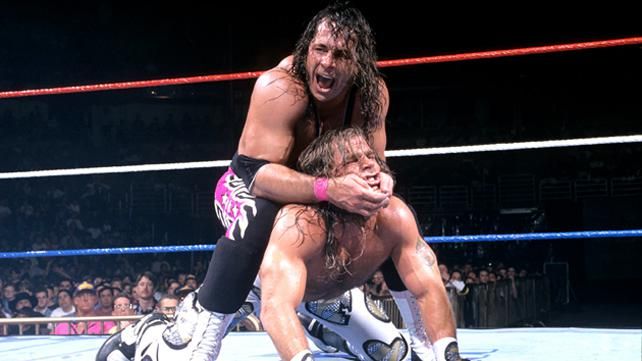
Michales and Hart would battle for over an hour to determine the WWF Champion.

Michales and Hart would battle for over an hour to determine the WWF Champion.

1. Shawn Michaels vs Brett Hart (WrestleMania XII)

The Iron Man Match. That’s all that really needs to be said to any wrestling fan and they’ll know what you’re talking about. Iron Man Matches had occurred before but most fans had never heard of it. Even today, it’s not a common match type as it requires its competitors be willing and able to wrestle for an hour. I think many guys could pull it off, but not sell it as a great match. Even two guys in excellent physical shape like Shawn Michaels and Brett Hart had to stop for rest holds and such, but the vigor at which they’re able to go at each other impresses me every time I view this match.

For those unaware, an iron match is a timed match in which the competitor who scores the most “falls” in the allotted time limit wins the match. For this contest that meant pinfalls, submissions, count outs, and disqualifications were all on the table. The beauty of this match was that there were no falls recorded during the sixty minute time limit. When it seemed like the match would end in a draw, Brett Hart was ordered back to the ring to continue into overtime where Michaels eventually won via pinfall for his first WWF Championship. The finish is great, but getting to it was better. Yes, there are the previously mentioned rest holds and slow parts, but the match really takes off during the middle stages and the two competitors somehow keep it going. There are great moments of aerial superiority from Michaels, while Hart is able to sink in a  sharpshooter at one point as well. Michaels and Hart worked so well together that it’s a shame they didn’t have more main events at WrestleMania (they were supposed to main event WrestleMania XIII, but Michaels pulled out due to injury). Their chemistry in the ring is unrivaled as they’re able to realistically sell each other’s offense and pull off what should be unrealistic counters. They have a flow like two expert dancers and their contrasting personalities help to elevate the show side of the match. The Iron Man Match is not only the greatest main event in WrestleMania history, it’s also the greatest match in WrestleMania history and it will take one-hell-of-a-match to knock it off the top of the mountain.


Ranking the WrestleMania Main Events (11-4)

We’re now just one week away from WrestleMani XXX, which means I need to get this feature wrapped up!


Triple H and Jericho felt like natural rivals whenever they matched-up.

Triple H and Jericho felt like natural rivals whenever they matched-up.

11. Triple H vs Chris Jericho (WrestleMania XVIII)

WrestleMania XVIII is remembered for pretty much one match:  Hollywood Hogan vs The Rock.  It was Hogan’s first official match since re-signing with the WWF and the Montreal crowd didn’t seem to care that he was supposed to be the heel heading into it. It was a fun match, but the main event was pretty damn good too. It featured the newly crowned Undisputed Champion Chris Jericho vs Triple H, making his second appearance in a WrestleMania main event. Jericho and Triple H are a natural pairing. Both guys are good, technical wrestlers and Triple H’s more power-oriented offense complements Jericho’s up-tempo maneuvers just fine. The only thing that kind of sucks about this match is that the outcome is never really in doubt as it was pretty much a given that the WWF would put the strap on Triple H after letting Jericho have his fun for a bit. It was nice while it lasted though.

10. John Cena vs The Rock (WrestleMania XXVIII)

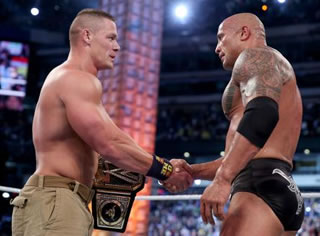
The first match-up between John Cena and The Rock is markedly better than the second. The year-long build-up worked well and seeing The Rock back in the ring was a novelty that hadn’t grown stale. Yes, he still wasn’t in great ring shape as the match was plagued some-what by rest holds and the like, but the two guys played off each other well and the finish was well-executed. This was one of the few matches in recent years where I had an interest in the outcome. Would the WWE let its top star get disrespected over and over by a visitor ultimately losing to said visitor in the main event of its most prestigious event? Would The Rock bother making a comeback just to lose to an opponent he seems to genuinely consider inferior to himself? The capper was the event being held in Miami, Rock’s hometown, so I was pretty sure Cena would be asked to take the loss. What I wasn’t expecting was the finish to be a clean loss, with Cena attempting to humiliate The Rock by performing the People’s Elbow only to have Rock bounce-up and nail him with the Rock Bottom for the 1-2-3.


Note to aspiring wrestlers:  this is not how to land a shooting-star press.

Note to aspiring wrestlers: this is not how to land a shooting-star press.

9. Kurt Angle vs Brock Lesnar (WrestleMania XIX)

This match is mostly remembered for Lesnar’s botched shooting-star press towards the end. Lesnar had created a buzz for himself long before he debuted on WWE television by performing the shooting-star press at Ohio Valley. For a man his size to be able to pull off such a crazy maneuver was unheard of. Turns out, big men aren’t meant to fly like that because when he unveiled it at WrestleMania he damn-near killed himself. It overshadows what is a great match of technical excellence. The only low-note for me is the early going where Angle and Lesnar both try to one-up each other with amateur wrestling maneuvers. I never understood why guys would choose to go in such a direction. Pro Wrestling is popular because it’s not the ground-based amateur style. We want flashy! Whenever guys with that kind of background step into a ring though it’s as if they feel they need to acknowledge where they came from. I’m very impressed by the fact that Kurt Angle has won Olympic gold in wrestling, but I don’t want to watch it.

8. Triple H vs The Rock vs Mick Foley vs The Big Show (WrestleMania XXVI)

The only four-way-dance in WrestleMania main event history! The genesis for this match was unconventional. Most had assumed that The Rock and Triple H were destined to headline WrestleMania 2000 as The Rock was the hottest thing going and Triple H was the company’s biggest heel (and Austin was still on the shelf following neck surgery). To keep Hunter’s momentum going, they had him battle Foley for two pay-per-views ultimately defeating him a retirement match at No Way Out. Vince McMahon, in a rare bit of booking with his heart, wanted Foley to realize his dream of main eventing a WrestleMania so he convinced him to come back for this one match just a month after his retirement. Foley was apprehensive, but went ahead with it as it’s just not something any pro wrestler can turn down. And since The Big Show wasn’t doing anything, they added him to the mix as well as part of this four-way feud between the McMahons. It wasn’t a classic match, and the most memorable spot is probably Foley coming up well short on a diving elbow to the announcer’s table, but it ended with Triple H vs The Rock anyways so it’s not like the fans were denied the match they were probably supposed to have. And with Triple H coming out on top it was really the first time in WrestleMania history that the event ended with a bad guy wearing the WWF Championship.


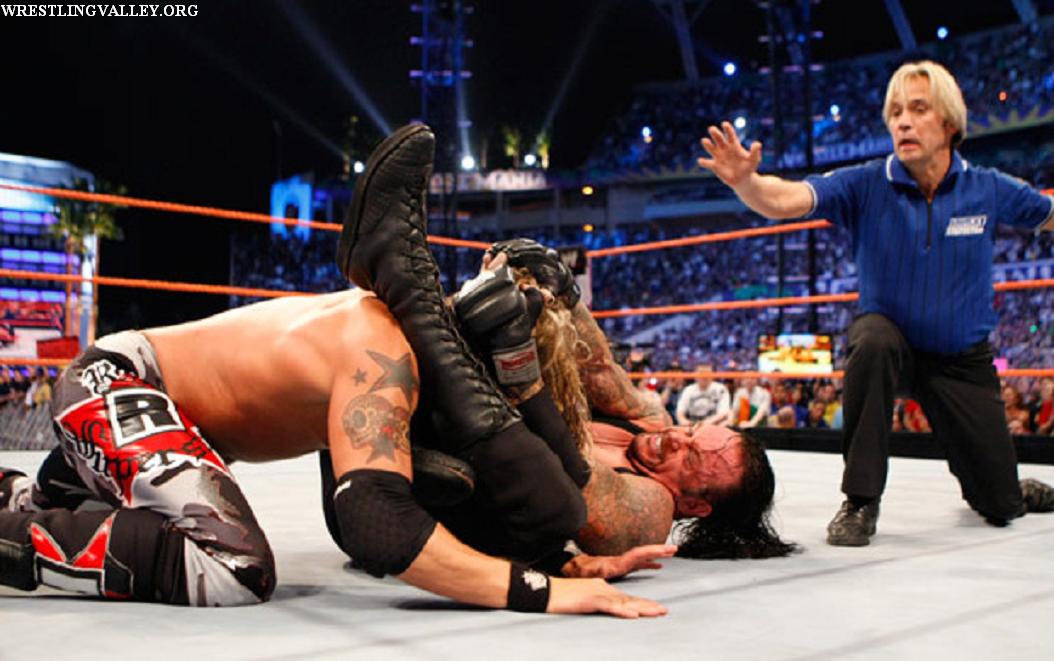
Undertaker earned a rare WrestleMania main event submission victory over Edge.

Undertaker earned a rare WrestleMania main event submission victory over Edge.

7. The Undertaker vs Edge (WrestleMania XXIV)

For all of the success that The Undertaker has enjoyed at WrestleMania, he really hasn’t appeared in many main events. At least he can say the ones he’s appeared in were all pretty good. This match with Edge is a pretty good representation of a good Undertaker match. Edge and Taker work really well together with Edge being one of my favorite opponents for The Undertaker for that very reason. At this point, The Streak was a plot line so there was little doubt that The Undertaker would come out on top, but despite that, the finish was still surprising and even a bit sudden with Undertaker locking in his Hell’s Gate submission maneuver for the victory allowing The Phenom to hoist a major championship at the show’s close for just the second time in his career.

6. John Cena vs Shawn Michaels (WrestleMania XXIII)

Shawn Michaels can wrestle a great match with seemingly anyone. Not that John Cena is an Ultimate Warrior or anything, but he’s certainly not one of my favorite workers. This match may not be a WrestleMania classic, but it’s great entertainment. It starts off kind of slow but the two eventually pick-up with the pace with a lot of back and forth momentum swings. HBK is the heel here and it’s the role I’ve always preferred for him. Once again he proves he belongs in the WrestleMania main event and it kind of makes me wish he could be included in all of them. Certainly he should have been in more during his career but at least the ones we have are preserved forever.

5. Triple H vs Shawn Michaels vs Chris Benoit (WrestleMania XX)

Oh boy, how do you rank this one? I suppose the easiest thing to do is to just judge it based on the merits of the match alone, which to probably no longtime wrestling fan’s surprise, is to say it’s fantastic. These are three of the best workers in the history of the business on the grandest stage going all out to entertain the masses. The only negative thing I can say about the match itself is that too often one guy gets taken out for too long of a time. It would be one thing if a guy was taking a piledriver to the concrete and being down for five minutes but it mostly seemed like generic maneuvers were keeping guys down just to keep the match a series of one on one confrontations. Such is the weakness of the triple threat match. Of course, judging the match in such a way ignores the elephant in the room which is that Chris Benoit is a known murderer who committed the unthinkable act of killing his own family. It’s impossible to separate the wrestler from the man when such has taken place, so I do not blame anyone if they have no interest in watching this match today. For me, it does harm the match quite a bit as the big storyline within the match is Benoit trying to win his first major championship in WWE, and at the time, the ending was immensely satisfying and one of the best examples of pure joy being on display in the ring. Sadly, the image of Eddie Guerrero and Chris Benoit celebrating at the conclusion of the match is beyond bittersweet today.


One of the more memorable images from any WrestleMania conclusion.

One of the more memorable images from any WrestleMania conclusion.

4. Stone Cold Steve Austin vs The Rock (WrestleMania XVII)

WrestleMania XVII is justifiably remembered as one of the best WrestleManias of all time. It’s main event was a pretty big deal at the time too with two mega-stars in Austin and The Rock. The only other main event that even compares in terms of how popular both guys were heading into the match is Hogan vs The Giant; these two guys were just hugely over with the fans. Austin was competing for the Championship for the first time since his return from neck surgery and The Rock was not expected to just role over for the big star. With Rock becoming the top baby face in Austin’s absence, the decision to turn Stone Cold heel at the match’s conclusion was reached. Austin was the main driver behind this as he was concerned his character was growing stale. Plus he liked playing the bad guy. He also admits that if he could push the reset button on anything in his career it would be the end of this match. The two battled and had an astoundingly entertaining match with good in-ring spots as well as out of the ring spots. There was violence and comedy, and the end certainly left people talking. I too think the heel turn for Austin was a bad move. Not because he shouldn’t be a bad guy, but just the way it was done to have him suddenly align himself with Vince McMahon in such a way. It just wasn’t believable for his character. If he had used McMahon to win and then nailed Vince with a stunner or something it would have made more sense and let Austin play a tweener kind of role. Instead he became a sniveling coward which effectively killed his character.


Ranking the WrestleMania Main Events (19-12)

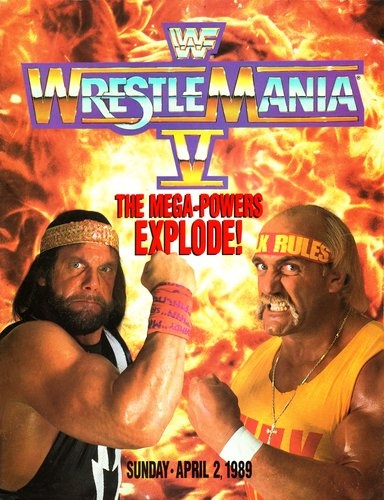
The year long feud between Macho Man and Hulk Hogan came to a head at WrestleMania V.

The year long feud between Macho Man and Hulk Hogan came to a head at WrestleMania V.

19. Hulk Hogan vs Macho Man Randy Savage (WrestleMania V)

The clash of the Mega Powers!  The WrestleMania V main event was another early WrestleMania main event that wasn’t much to write home about, but one thing it did have was legs.  The main event for WrestleMania V was unofficially booked at the conclusion of WrestleMania IV when Savage won the WWF Championship to close out the night with the aid of Hogan.  For the next year the two would tag team and feud with Dibiase and The Giant until conflict would surface between the two.  With both guys being pretty popular with fans, the WWF needed to turn one heel and it unsurprisingly went with Savage, who despite being the champion, was not as over with the fans as Hogan.  When the two finally collided, it was a case of excellent booking with a good pay-off, the type of thing that doesn’t really happen in today’s world of short attention span fans.   As I alluded to at the start, the match itself was rather poor.  Savage was a real in-ring talent, but there was nothing he could really do to elevate Hogan and the match ended up being a typical Hulk Hogan match.

18. Triple H vs Batista (WrestleMania XXI)

Batista was a real throw-back superstar.  The only things separating him from guys like Hogan and The Warrior were tattoos and a crew cut.  He had the look of the behemoth and the grace to match.  His matches never did much for me and this encounter with Triple H was a dud.  The two would go on to have better match-ups centered more around gimmicks (maybe someone realized a straight wrestling match just wasn’t playing to their strengths), but never any real classics.  Triple H has also been a pretty good worker and he has the reputation of being a technical wrestler.  Personally, I’ve always felt his reputation was forced.  Great technical wrestlers can elevate their opponents and find a way to have good matches, I don’t think Triple H has ever been that guy and he certainly wasn’t able to pull a good match out of Batista at WrestleMania XXI.

17. The Undertaker vs Sycho Sid (WrestleMania XIII)

This is a match that really has no business being as good as it is.  That’s not to say it’s a classic by any means, but before I sat down to re-watch it recently after all of these years I was expecting the worst.  My preliminary thoughts on this list had this match coming in at around number 27 or so, but here it is at 17.  Sid Justice, at the time going as Sycho Sid, is not much of a wrestler.  He was a big guy and could do some big moves, but when it came to selling a match he was awful and that part of his game is on display in this one.  Despite that, there were some good moments and he and Undertaker were able to tell a pretty decent story.  By contrast, Undertaker has always been a big guy who was a plus worker, a hard combination to find, and both guys aren’t so big that they can’t take each other’s big moves and make them look good.  The match does suffer from too many interruptions (I’m not sure if Sid was balking at losing clean to Undertaker or if the Brett Hart run-ins were just meant to setup a new feud), but otherwise is solid entertainment.

16. Triple H vs John Cena (WrestleMania XXII)

With these last few matches, we’ve entered into the part of the list where the matches aren’t bad matches, but they’re not exactly main event at the biggest show of the year quality matches.  This is another match that kind of surprised me when I watched it recently.  I’m not a John Cena fan.  Like Batista, he’s a throwback to the eighties.  He’s a superman like Hogan was where he’ll take a beating and then suddenly kick-out of a big move and hit his finisher for the win.  He’s an attraction as he was in his match with Big Show years earlier where he got the giant up onto his shoulders.  This match though is a pretty hard hitting affair with some good pacing (after a slow start).  It’s nothing to write home about, but the fact that it’s not one of the worst matches is an accomplishment I wasn’t sure it would have.

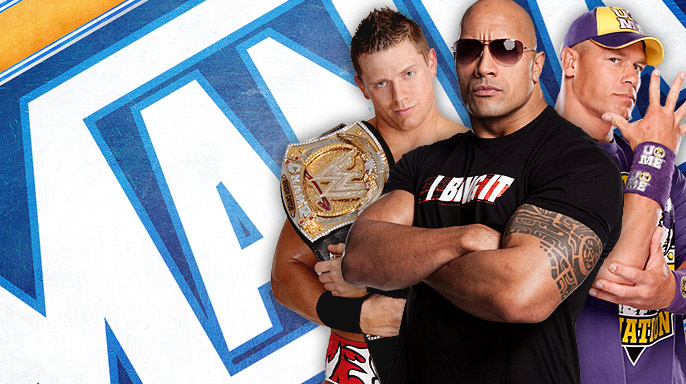
The Rock loomed large at WrestleMania XXVII despite not even being on the card.

The Rock loomed large at WrestleMania XXVII despite not even being on the card.

15. John Cena vs The Miz (WrestleMania XXVII)

As a match, this one is probably worse than the previous two.  I’ve already shared my thoughts on Cena, but The Miz is no better.  He’s Cena without the look.  As a heel, which he was at the time of this match, he was pretty good at getting heat.  In the ring though he’s sloppy, lacks polish, and has a pedestrian arsenal.   The build-up to this match though had almost nothing to do with The Miz, who was actually the champion heading into WrestleMania!  No, the storyline centered around John Cena and the host of WrestleMania XXVII:  The Rock.  When The Rock returned to Monday Night Raw he almost immediately began picking a fight with John Cena.  Their feud would carry over into the next year’s WrestleMania, especially after The Rock played a role in the outcome of this match between Cena and The Miz, and it’s the buzz that surrounded this match that helps elevate it.  Otherwise, this was a main event more befitting of Raw than WrestleMania.

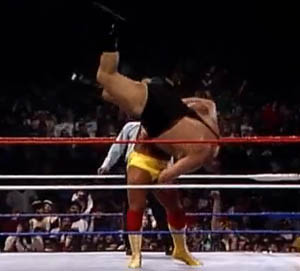
I'm pretty sure there's a law somewhere that says I have to post this picture if I'm going to talk about WrestleMania III.

I’m pretty sure there’s a law somewhere that says I have to post this picture if I’m going to talk about WrestleMania III.

14. Hulk Hogan vs André the Giant (WrestleMania III)

In terms of build-up and anticipation, there is no equal when it comes to Hogan vs The Giant.  This is the main event that shattered the all-time attendance record and would stand for a long, long time.  The Giant was a huge attraction and was billed as being undefeated over his career.  Hogan was Hogan, the biggest current attraction in the wrestling world. André had also never wrestled for the championship, mostly because promoters didn’t need him to and allowed for them to have two big matches on a card: an André the Giant match, and a world championship match.  Of course, come 1987 André was a shell of his old self and nearing the end, and Hogan was…well, I think I’ve ripped on him enough at this point.  This match is awful.  The Giant can barely move and Hogan is forced to try to sell his limited offense.  The only part of the match worth watching is “The Slam” at the end.  That was a huge moment and the crowd reaction sells it perfectly.  If this were a list of best moments from a WrestleMania main event, that would be the easy choice for number one.  It’s a big enough moment that it elevates a garbage match up to number 14, which isn’t too bad if you ask me.  It was one Hell of a slam.

13. Stone Cold Steve Austin vs Shawn Michaels (WrestleMania XIV)

Transitioning from the original mega stars of wrestling to perhaps two of the biggest in recent memory, here we have a match that really could have been something special.  It is special, but only because it marked the first time Austin won the WWF Championship and the added Mike Tyson factor at ring-side.  Unfortunately though, this was when Michaels was in tremendous pain following a serious back injury at Royal Rumble.  The injury would force him into retirement for four years before a comeback, but during the match it’s clear that Michaels isn’t right.  Some of it is a sell-job since play-by-play man Jim Ross wasn’t hiding the fact that Michaels was hurt, but a lot of it is legit discomfort.  Because of this, the match is real slow-paced with lots of rest holds and a feeling of restraint throughout.  It’s disjointed, but the finish was strong and the crowd certainly didn’t seem to mind once Austin hit the stunner.  Still, it’s hard to watch this and not wonder what could have been.

12. John Cena vs The Rock (WrestleMania XXIX)

Cena and The Rock ended their three year long feud at the conclusion of WrestleMania XXIX.

Cena and The Rock ended their three year long feud at the conclusion of WrestleMania XXIX.

The most recent main event, and part two of the Cena/Rock feud (unless you count their confrontation at WrestleMania XXVII as part one, then it’s part three) and at this point it was starting to run out of steam.  As much as people loved The Rock, myself included, it was hard to disagree with Cena’s assertions that at least he was a full-time wrestler, unlike The Rock.  The Rock was coming off as disingenuous, but he was still making people laugh.  In the ring though, it was becoming clear that Rock wasn’t the same guy as he was years ago, which is understandable.  This version of The Rock was really bulky, and since he wasn’t a full-time wrestler, he really didn’t have the stamina to carry a one-on-one match.  The two made it work the prior year, but come WrestleMania XXIX it was clear they were out of ideas as both guys resort to hitting their signature moves over and over.  Having a wrestler kick out of another guy’s big move can be a really effective way to sell the enormity of a match, but three times?  Four times?  It just loses impact.  In defense of The Rock, he did get injured during the match which may have affected his performance.  The enormity of the feud and star power of the characters is what elevates this match to this spot, not the in-ring performance.


Ranking the WrestleMania Main Events (29-20)

images-202It’s that time of year when WWE programming is officially declared as being “on the road to WrestleMania!”  This year, WrestleMania will be on April 6th and the main event will likely be a triple-threat match consisting of WWE Heavyweight Champion Randy Orton, Batista, and Daniel Bryan.  I say “will likely be” because technically Bryan needs to defeat Triple H in a one-on-one contest earlier in the card to secure his spot in the main event, which feels like a certainty considering the hostile crowd reactions of late towards the original main event of Orton and Batista.  No matter who is in the main event, this WrestleMania will be historic for the simple fact that it’s WrestleMania XXX.  Back in 1984 when the first WrestleMania hit pay-per-view it was considered a huge gamble for the then World Wrestling Federation.  The fact that we’re approaching the 30th edition of this event is remarkable.

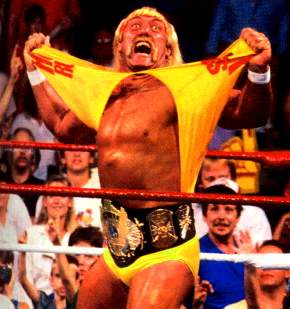
WrestleMania is the big one.  For the WWE, it’s the Superbowl of professional wrestling.  And as we’ve learned over the years, just because the Superbowl contains the top two teams in the NFL each year, it doesn’t mean we’re about to see the best game of the year.  WrestleMania, and its main event in particular, is guilty of that same phenomenon.  WrestleMania has been host to some of the best matches in professional wrestling history, some of which have been main event matches, but there have been a whole host of bad ones too.  The early events are particularly guilty of this as the main event was dominated by Hulk Hogan.  Hogan is arguably the most popular wrestler in history.  Kids loved him because he was basically a super hero in the ring, but from a wrestling perspective he was awful.  His arsenal of moves was pedestrian and his no-sell antics were cartoonish.  For wrestling fans, particularly modern ones, his matches are terrible.

Hulk Hogan was involved in some capacity with the WrestleMania main event a record nine times, all of which occurred within the first nine WrestleManias.  WrestleMania IV was the only one he did not compete in, while WrestleMania IX was billed as Bret Hart versus Yokozuna, only for an impromptu match between Hogan and Yokozuna to come together after the fact (it lasted for all of a minute).  And in those eight matches Hogan participated in, he only would lose one.  Yes, Hogan dominated the early period of WrestleMania.  Since his departure, other wrestlers have come close to matching the amount of main events that Hogan amassed.  Triple H has logged six main event appearances while Shawn Michaels has managed five.  John Cena, who currently is very much active in the WWE and not likely to quit anytime soon, has also managed five giving him a legit shot at matching, or even surpassing, Hulk Hogan for main event appearances.

Hulk Hogan was synonymous with WrestleMania for the better part of its first decade.

Hulk Hogan was synonymous with WrestleMania for the better part of its first decade.

As far as the WWE is concerned, Cena or Triple H probably already holds the record.  That’s because the WWE often likes to declare multiple main events for WrestleMania (which is why when discussing Stone Cold and the Rock you will often hear it said that Austin vs Rock is the only match to be included in the main event three times at WrestleMania, even though it was the final match of the night only twice).  As far as I’m concerned, the main event is a singular phrase, and therefore, there can be only one per card.  For this feature, I’ve decided to rank the final matches on each WrestleMania card one through twenty-nine to name a best match.  It should be said that a list of the twenty-nine best WrestleMania matches would likely look very different.  After all, some of the most talked-about matches in the history of the event did not occur in the main event.  I’m talking about matches like Steamboat vs Savage, Undertaker vs HBK, or any of the many ladder matches that have taken place over the years at WrestleMania.  Coming up with the thirty or so best matches would just be too daunting a task for me, but with the help of the brand new WWE Network, revisiting and ranking the best main events is a task I think I can handle.

29. Lawrence Taylor vs Bam Bam Bigelow (WrestleMania XI)

When it comes to WrestleMania, one thing fans are certainly assured of is a celebrity appearance or two.  Vince McMahon seems to love it when he can get a celebrity to participate in his events as a way of legitimizing what the WWE does, even if most of these appearances are looked-down upon by his hardcore fan base.  This trend began with the very first WrestleMania and continues today.  When a celebrity takes on the form of a guest ring announcer or valet most fans can excuse it, but when they get in the ring?  And when that celebrity is in the main event?!  It’s nothing short of awful.  To his credit, professional football player Lawrence Taylor doesn’t embarrass himself in the ring against Bam Bam Bigelow, but the two hardly put on on a match worthy of occupying any main event, let alone the main event at WrestleMania.

28. Hulk Hogan and Mr. T vs Rowdy Roddy Piper and Mr. Wonderful Paul Orndorff (WrestleMania)

The very first WrestleMania was the riskiest, and to make sure the event was a success, McMahon recruited any celebrity he could and even found one to include in the main event.  Mr. T, star of The A-Team, made numerous appearances for the WWF and was able to attract a lot of attention from the mainstream media.  Piper was able to get legitimate heat and people genuinely wanted to see Hogan and Mr. T kick he and Paul Orndorff’s ass.  The crowd was into it, which is the only good thing I can say about this main event.  Other than that, it’s awful.  Mr. T looks the part of a wrestler when he’s standing still, but when he tries to get involved he’s sloppy and out of place.  The other guys are unable to direct him and coach him to a decent match.  Hogan and T come out on top, but it’s not a fun ride getting to the finish.

Hulk Hogan vs King Kon Bundy at WrestleMania 2 has never been confused with a "classic" Mania match.

Hulk Hogan vs King Kon Bundy at WrestleMania 2 has never been confused with a “classic” Mania match.

27. Hulk Hogan vs King Kong Bundy (WrestleMania 2)

It’s somewhat surprising that WrestleMania has been the success that it is considering two of the first three matches on my list are occupied by the first two WrestleMania main events.  Hogan was able to avoid being in, what I consider, the worst main event in WrestleMania history, but the next few spots aren’t going to be too kind to the Hulkster.  This match appears in this spot not because it’s awful, but mostly because it’s so uneventful.  It took place in a steel cage and I can’t decide if that helped or hurt it as it limited what the already limited competitors were able to do.  Bundy was a mountain of a man whose size limited what Hogan could do to him.  He was also too big to scale the cage walls, not that he and Hogan were likely to orchestrate a big spot from up high even if he could.  At least Hogan won by going over the cage instead of out the door, because it always sucks when a cage match ends without someone at least climbing over it.

26. Hulk Hogan vs Sid Justice (WrestleMania VIII)

If you wanted to find a silver lining for the previous match, at least it was for the WWF Championship so that gives it some buzz.  This match between Hogan and Sid Justice was a non-title match, but the fans didn’t seem to care as they were pretty loud and solidly behind the Hulkster.  Sid is about as limited in the ring as Hogan, and when two big men with limited arsenals clash there just isn’t much room for a good match.  By now, Hulkamania was nearing its expiration date and the Hogan formula was well-established which meant there were no surprises, aside from the match ending in a DQ victory for Hogan.  This was a pointless main event at a forgettable WrestleMania.

25. Hulk Hogan vs Sgt. Slaughter (WrestleMania VII)

The main event for WrestleMania VII was supposed to mirror the conflict in Operation Desert Storm with the American aligned Hulk Hogan taking on the champion and Iraq sympathizer Sergeant Slaughter.  Slaughter was portrayed as a turncoat and traitor to America, which helped get the crowd into it.  In the ring, it was just another Hogan match where two guys wail on each other for ten minutes or so before Hogan “Hulks up” and takes care of business.

WrestleMania VI was hyped as The Ultimate Challenge by the WWF.

WrestleMania VI was hyped as The Ultimate Challenge by the WWF.

24. Hulk Hogan vs The Ultimate Warrior (WrestleMania VI)

Some things that seem awesome when you’re a kid appear totally different through the eyes of an adult.  By WrestleMania VI, Hulkamania was running wild.  The super hero thing was working for Hogan, so why couldn’t it work for someone else?  Enter the Ultimate Warrior, who was basically an even more cartoonish version of Hogan.    He did everything Hogan did but just seemed crazier and looked more wild with his flowing locks and wild tassels.  He was impressive looking to me when I was a kid, but when I look at him now he just looks like a steroid junkie.  In the ring, he was arguably worse than Hogan as his arsenal consisted of clotheslines, shoulder tackles, and slams with the guerrilla press followed by a running splash being his version of Hogan’s big boot and leg drop.  He would even “Hulk-up” like Hogan, often running in place or grabbing the ropes for power, according to the announcers.  The whole show of the Warrior was ridiculous, and it’s no surprise he didn’t have the lasting power that Hogan did.  This match is now mostly just notable for being the only time Hogan lossed clean as a baby-face to someone.  Considering how much of a rip-off the Warrior was, it’s almost shocking that Hogan agreed to it.  The match itself is terrible, with Hogan either teasing a heel turn at one point or just plain forgetting that he was supposed to sell a leg injury.  Warrior even botches the press slam, but at least his splash looked okay.

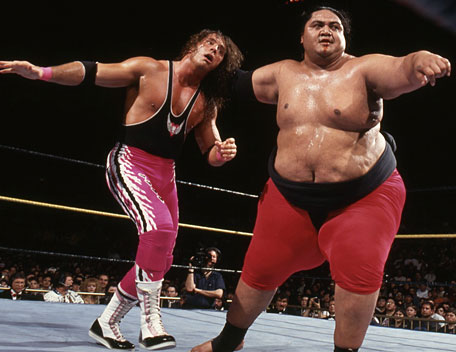
23. Brett “The Hitman” Hart vs Yokozuna (WrestleMania IX)

Vince McMahon, and the rest of the wrestling industry, seems to love big men.  They’re viewed as attractions on their own and usually don’t even need an interesting opponent to be a draw.  Unfortunately, they’re also usually terrible in the ring due to their size.  Yokozuna is one such big man.  Billed as over 500 pounds, he’s every bit that and more.  He was supposed to be a sumo wrestler, though like most gimmicks, this was untrue but it didn’t matter because he looked the part.  He was huge and fat, and as a result, he couldn’t do much in the ring, and when he did, he became winded pretty quickly.  Brett Hart, one of the all-time great technical wrestlers, deserved better for his first WrestleMania main event.  Hart’s the type of performer that can elevate a poor opponent, but there was no elevating Yokozuna.  You either liked the spectacle or did not.  I did not, and this match is a series of clotheslines and rest holds.  Hart did manage to apply the sharpshooter, though it was kind of silly looking.  After the match ended in a Yokozuna victory, his manager Mr. Fuji quickly challenged Hogan to a match that the Hulkster would win in less than a minute.  This ridiculous finish is why I rate this match as slightly worse than the next one…

Yokozuna was a very big man.

Yokozuna was a very big man.

22. Brett Hart vs Yokozuna (WrestleMania X)

A rematch of WrestleMania IX, only with the roles reversed with Yokozuna now the defending champion.  Both guys had to wrestle a match on the undercard, and the short-of-breath Yokozuna had even less stamina than usual for the main event.  This match is actually probably worse than the one at WrestleMania IX, but without the stupid finish.  Instead Hart wins and a bunch of wrestlers come out and celebrate with him.  Yokozuna, mercifully, never appears in another WrestleMania main event.

21. Triple H vs Randy Orton (WrestleMania XXV)

This was a joyless match.  Both guys are solid technical wrestlers, with Triple H probably being the better of the two.  Neither guy is so good that on paper this would be expected to be a classic, but a good, solid match was certainly likely.  I don’t know why these guys didn’t try to put on a better showing.  It was the main event of WrestleMania XXV for crying out loud!  Instead, this was a main even fitting of television.  They just don’t do anything to make it feel special, and adding to the lack of atmosphere is the fact that the crowd isn’t into it.  Both guys immediately blow through their special moves and a lot of the early part of the match consists of both men laying on the canvas.  It picks up slightly in the second half, but never to an exciting level.  This match just sucks, and for now, is the last main event Triple H has appeared in at WrestleMania.

20. Macho Man Randy Savage vs The Million Dollar Man Ted DiBiase

Randy Savage spent the better part of the 80’s playing second fiddle to Hulk Hogan, even though he was clearly the superior wrestler.  His match with Ricky The Dragon Steamboat at WrestleMania III is one of the all-time classics.  Come WrestleMania IV, the WWF finally saw fit to put the strap on him, but of course, Hogan was involved.  DiBiase was one of the great workers of his generation and a classic heel.  Given different circumstances, these two could have had a great match, but the format for WrestleMania IV was not conducive to that.  WrestleMania IV consisted of a tournament for the vacated title (Hogan and André the Giant battled to a double DQ which is why he wasn’t in the main event) which meant both Savage and DiBiase had wrestled multiple times already.  As a result, the main event was pretty conventional, with both Hogan and The Giant getting involved on the outside.  Savage would get the win with the flying elbow drop, setting the stage for a year-long storyline that would lead into WrestleMania V.


A Week With the WWE Network

sg-ntwk_sizzle_today_revIt’s been a long road for World Wrestling Entertainment to launch its own network.  As early as September 2011, the WWE was teasing the network to its fans.  Once the calendar flipped from 2011 to 2012, WWE was ready to announce that its own network would launch by year’s end.  2012 came and went, with nary a word spoken about the network.  Fans were left to wonder if the network would go the way of GTV and vanish from thought.  After all, no one even knew what the WWE was trying to do with its own network.  Was it to be a premium cable channel?  An on-demand network?  What kind of content would fill the network?  Did anyone even really want a channel dedicated to wrestling 24/7?

WWE was quiet until late in 2013 when it came to the subject of its seemingly dead-on-arrival network.  And then, like a perfectly executed heal turn, the network was announced to great fanfare.  The long hiatus was put to good use by WWE as nearly every question that could be asked was answered immediately.  The WWE Network would be an on-demand internet channel in the same style as Netflix or Hulu.  For ten dollars a month, fans would receive access to the network and their ten dollars would go a long way:  access to new series, access to every WWF/WWE/WCW/ECW pay-per view, on-demand episodes of Raw, Smackdown, Nitro, Hardcore TV, etc.  And the kicker, every new WWE pay-per view was included live.  That meant that individuals who subscribed in April would get all of the historical content plus Wrestlemania XXX for just ten bucks.  The catch?  Well, the only catch was the announcement that a subscription was a six month commitment making the entry level price sixty bucks for Network access.  As far as catches go, this is a perfectly reasonable one otherwise fans would be constantly signing up and canceling their subscriptions just for ten dollar pay-per views (for those unaware, a WWE PPV usually runs fifty to sixty dollars, with Wrestlemania sometimes going higher).

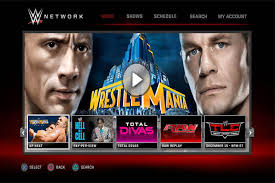
The WWE Network has a very simple and easy to use interface, though improved search features would be appreciated.

The WWE Network has a very simple and easy to use interface, though improved search features would be appreciated.

This past Monday, the WWE Network was officially launched.  The Network is available on several platforms including PC, Mac, iPod/iPad, smart phones, PS3/PS4, Xbox 360, Roku, and probably some I’m forgetting.  The only notable exclusions right now are Smart TVs (other than Samsung), Nintendo devices, and Xbox One.  Some Smart TVs will receive support this summer, as well as Xbox One, though no word on the Wii U.  Regardless, most households have at least one of those things and should be able to access the WWE Network provided they have a broadband connection.  The first week is free on laptop and desktop devices, but I was intrigued enough to pay the sixty bucks for the six month commitment.  After one week, how do I feel about my purchase?

Initially, a little wary.  Because of the hype, and because of the free access, the servers were absolutely flooded when the Network launched on the 24th of February.  I didn’t have any problems signing up for it (unlike many folks), but when it came time to watch it quickly became obvious that the Network could not meet the demands of wrestling fans.  I first tried watching Wrestlemania XIV on my PS3.  My PS3 is on a wired connection (unlike my PS4, plus I have a remote for the PS3) so it seemed like the best way to view the network.  The PPV started with no problems and I was having a pretty damn good time with it.  The picture, up-converted since it wasn’t originally aired in HD, was sharp.  Best of all, the old WWF logo wasn’t blurred out, nor were Stone Cold Steve Austin’s one-finger salutes.  I was quite impressed and genuinely surprised at how well the experience was going, until I tried to fast-forward.  That’s when everything went to Hell and the PPV endlessly went into a buffering loop until eventually the PPV quit and I was back at the main menu.  Repeated attempts to re-launch the event stalled, and I eventually gave up.

Night two went even worse.  It started off the same, but when trying to launch an event it would only last a few minutes before crapping out.  I tried the Network on my laptop over Wi-fi, just for the Hell of it, and had the same results.  Night three was more of the same as well, and it wasn’t until Thursday that I finally was able to view an entire PPV event.  By then, the interface had been improved slightly by adding chapters to each event, making navigating to a favorite match a lot easier.  And ever since then, everything has been running smooth as silk.

As you may have guessed, I’ve been practically glued to my couch all weekend basking in wrestling nostalgia.  I’ve watched several events at this point, mostly reliving the glory of the Attitude era, but also pausing for some WCW and ECW events.  I made it a point to check out some of the more controversial items to see how WWE handled them, below:

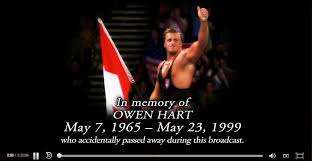
The brief Owen Hart tribute that appears before Over the Edge '99.

The brief Owen Hart tribute that appears before Over the Edge ’99.

Over the Edge 1999 – this is the event made famous for tragic reasons as Owen Hart fell from the rafters and perished in the ring.  The camera did not catch the accident live, but the original broadcast obviously couldn’t ignore it.  WWF chose to continue with the show, but it has never been aired since or released to home video.  The WWE Network version contains a tribute to Owen at the beginning, and all mention of the accident has been cut from the program.  It’s pretty eerie watching the matches that took place after it, as it’s easy to see the concern and dread on some of the wrestlers faces.

Chris Benoit – Benoit is famous for pretty horrific reasons, and ever since he murdered his wife and son in 2007 he has not been mentioned or shown in video by the WWE.  All events that he took place in are here on the Network, uncut.  I heard there was to be a disclaimer before events containing him, but when I watched Wrestlemania XX and ECW One Night Stand there was none.  I though perhaps they would cut some of the praise aimed at Benoit from the announcers or promos, but no alterations appear to have been made.  Benoit and Eddie Guerrero’s past match celebration at the end of Wrestlemania XX is even still intact.

Other censorship – WWE promised there would be no censorship, but there are edits made to some programs.  Brief nudity, such as was the case at Fully Loaded ’98, has been blurred.  Some licensed music tracks have been removed as well, and oddly, some wrestlers have their entrance music changed.  I watched a match between Chris Jericho and Fake Goldberg which took place at WCW Fall Brawl and Jericho’s music had been replaced with his WWF Y2J theme.

In addition to all of the past PPV events, the WWE Network will have original programming as well. Of the ones announced, the Monday Night War has the most potential.

In addition to all of the past PPV events, the WWE Network will have original programming as well. Of the ones announced, the Monday Night War has the most potential.

Currently, there are no episodes of Nitro on the network and the advertised Monday Night Wars program has not been added yet either.  One surprising inclusion so far has been DVD only programs.  Last night I enjoyed watching Stone Cold Steve Austin:  The Bottom Line on The Most Popular Superstar of All Time, the documentary released on home video in 2011.  Either WWE is pulling out all the stops early, or this is a sign that other wrestler documentaries will be added that were previously only available on DVD/Blu Ray.  Other original programs, such as Legends House, have yet to be added but I don’t know if anyone is really looking forward to that one…

The real test for the WWE Network is coming:  Wrestlemania XXX.  Will the servers be able to handle it?  I’m also curious about their plans for the future, as right now all of the press releases for the Network make it a point to say 12 pay-per view events are included.  Does that mean the pay structure will change by this time next year for pay-per view events?  Questions aside, right now I would call the WWE Network a success.  It’s quite possible that after six months I’ll have had my fill, as I’m not huge into the current product, but maybe I’ll be convinced to keep it.  If you’re a long-time fan though, or someone who’s into the current product, this is for you!


The Wind Rises

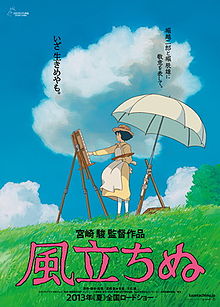
Kaze_Tachinu_poster“The wind is rising!  We must try to live!” – Paul Valéry

The above quote opens the latest release from Studio Ghibli and director Hayao Miyazaki; The Wind Rises.  It’s a quote that is suitable for the film as it implies that change is coming, but we must carry on.  The Wind Rises is to be the last directorial effort from Miyazaki, Japan’s most celebrated director of animated films, and it is an appropriate piece for him to go out on.  The Wind Rises tells the tale of Jiro Horikoshi and his dream to design what he calls beautiful airplanes.  Jiro is based on the airplane designer of the same name who is famous for creating Japan’s Mitsubishi A5M and A6M Zero and the basis for the film was derived from a quote he once gave:  “All I wanted to do was make something beautiful.”  The film has two sides to it with one being a mostly faithful account of Horikoshi’s challenge in developing his first successful airplane and the entirely fictional account of his personal life.  The end result is a tale of hope, triumph, love and life and is perhaps Miyazaki’s finest piece since My Neighbor Totoro.

The film opens with a young Jiro dreaming of flying a plane.  The opening sequence is perhaps the most fun for the animators as Jiro’s dreams are filled with nightmare creatures seemingly stemming from his despondence over his imperfect vision.  The character admits early on to himself that he will never fly because of his eyes, but in a dream meets with Italian airplane designer Giovanni Caprone, who will be a recurring visitor amongst Jiro’s dreams throughout the film offering him guidance on how to be a great engineer.  It’s these dreams that inspire Jiro to be an airplane engineer and the film advances time to show us his journey to become an engineer.

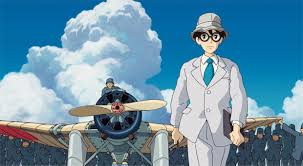
Jiro leading one of his designs to the testing grounds.

Jiro leading one of his designs to the testing grounds.

Jiro is portrayed as a sweet and good-natured man.  He is willing to help those in need, and a chance encounter with a young woman and her maid on a train plays a pivotal role in the film later on.  During the train ride the great earthquake of 1923 strikes and Jiro carries the maid to safety after she breaks a leg.  He seeks nothing in return and doesn’t even share his name with the women before departing.

Jiro lands a job out of school and his employment takes him to Germany where he is introduced to pre World War 2 Germany’s policies.  Being Japanese, he is not trusted by the soldiers as he seeks to learn about Germany’s engineering when it comes to aeronautical design.  Despite this, he is able to learn some techniques and apply them to a new aircraft, which unfortunately crashes during the test run.  To clear his head, his company sends him on a retreat for some rest and relaxation which is where he encounters the young woman he met years earlier on the train, Naoko.  The two fall in love, and though it seems predictable, their scenes are handled with such tenderness and care that the audience is left to root for them, even if it seems as if they’re destined to fall for each other.  Jiro learns there is a dark side to his budding romance as Naoko is afflicted with tuberculosis.  This forces them to move quickly with their life together.  Naoko insists on getting better before discussing marriage, but in time relents once Jiro has to leave for work.

Jiro must deal with failure throughout the film.

Jiro must deal with failure throughout the film.

The last act of the movie involves Jiro and his attempt to finally build a worthy aircraft that his company can sell to the Japanese military, while Naoko wages a silent battle at their home with her illness.  I don’t want to get into too much detail about the film’s plot, but suffice to say it’s a bittersweet tale that includes ups and downs with the story refusing to linger on anything for too long.  In that, it mirrors life which is a constant push and pull.  There are many themes the film likes to go back to.  Early on a supporting character mentions the importance of having a family to go home to, crediting it with helping a man work harder at the office, which is shown later in the film once Jiro is married.  In his dreams, Caproni asks Jiro if he prefers to live in a world with pyramids, or with no pyramids, using this as an explanation for why he would design airplanes that will eventually be used for war.  And all throughout the film, the wind acts as a character itself playing a pivotal role in one of the film’s final scenes.

As this is a work from Studio Ghibli, it hardly needs stating but deserves to be anyways, that this film is gorgeous.  The animation is predominantly hand-drawn, but some computer generated imagery is used for some of the film’s effects.  The film has a bright palette though Jiro is often garbed in white, gray, or a very light lavender, which serves to isolate him from his surroundings.  This suits the character as he is often oblivious to his surroundings, so consumed in his work and willing to overlook the fact that his designs are made for war.  The country-side settings are sure to evoke memories of Totoro, and the film’s whimsical feel and care-free pace further serves to draw comparisons to Miyazaki’s old masterpiece.

The wind is a character of its own, its actions often directly influencing the lives of the human characters in the film.

The wind is a character of its own, its actions often directly influencing the lives of the human characters in the film.

The sound design is excellent, with great use of natural sounding effects and an excellent score from Joe Hisaishi.  The english dub was handled by Disney and the film distributed in North America on their Touschstone label.  The dub is the usual high quality that viewers have come to expect from Disney as the company has handled the majority of Studio Ghibli’s dubs.  Serving as Jiro is Joseph Gordon-Levitt with supporting roles from the likes of Emily Blunt, John Krasinski, and Martin Short, the latter serving as the scene-stealing character Kurokawa, Jiro’s boss throughout the film.

The Wind Rises may be an animated movie, but it’s not for children.  The film’s pace is too slow and plot is too mature to entertain most children.  The film is best described as a drama and should appeal to older fans of Miyazaki’s works.  That said, it’s a wonderful piece of film with fantastic visuals, a compelling plot, and terrific performances.  Hayao Miyazaki may never get the recognition he deserves from international audiences, but anyone involved with film appreciates and respects the work he does.  It’s both wonderful and sad that this movie exists, knowing it is to be the last written and directed by Miyazaki, but in that sense it mirrors the film superbly.  What a truly awesome way to cap off a career!


The Legend of Zelda: A Link Between Worlds

images-194One of the greatest games of all time has to be The Legend of Zelda:  A Link to the Past for the Super Nintendo.  Following the misstep that was Zelda II:  The Adventure of Link, Nintendo put out what I consider the true sequel to the original Zelda.  A Link to the Past took the gameplay model established in the original game and expanded upon it tenfold.  A parallel world, new items and power-ups, a much better and more powerful gameplay engine.  Simply put, A Link to the Past was Zelda perfected and no title in the franchise has exceeded it, though some have come close.  As is the case with most Zelda games, A Link to the Past did not have a direct sequel (unless you count Link’s Awakening for the Gameboy) and subsequent games in the franchise basically function as a retelling of the Zelda legend.  That is, until now, with the release of A Link Between Worlds last fall for the 3DS.  Creating a direct sequel now for A Link to the Past could be viewed as an immense challenge on the part of Nintendo, or a sign that the company is running out of ideas and looking to cash-in on a classic game.  As far as I’m concerned, an all new Zelda title for the 3DS is a good thing regardless of what ties it has to other games, but I won’t deny it tickled me to go back to the Hyrule I knew over twenty years ago.

As best as I can tell, A Link Between Worlds takes place generations after the events of A Link to the Past.  The map layout is the same though and fans of the old game should feel right at home in this one.  Plot wise, it’s basically tried and true Zelda:  an evil wizard kidnaps the princess and wreaks havoc across the land and only Link can reunite the three components of the triforce and save the day.  Replacing the dark world from the first game is Lorule, an alternate Hyrule that uses a similar color palette to the familiar dark world but is broken apart with large chasms sealing off routes.  The game is quite pleasing to the eyes without being a graphical powerhouse.  Character and enemy designs from A Link to the Past are recreated here with more detail and more color.  The soundtrack is upbeat containing many familiar tunes as well as some new compositions.  It often suits the setting exceptionally well, and rarely ever does a Zelda soundtrack disappoint.

Link's newest ability allows him to become a painting on a wall and move around on it.

Link’s newest ability allows him to become a painting on a wall and move around on it.

A Link Between Worlds not only looks familiar, but also plays familiar.  Link obtains most of the items from the first game with really only one or two new ones playing any kind of significant role.  Link is controlled with the circle pad this time around instead of a directional pad, which is to be expected and functions fine, though I did find it challenging to be precise with projectile weapons, something I don’t remember being a problem in A Link to the Past.  There’s some emphasis placed on the early dungeons to show multiple levels at once for Link to traverse, presumably to take advantage of the 3D, but is mostly abandoned quickly.  I did not play the game in 3D, but I suppose it’s fine for those who like it.  As one can probably deduce from that statement, there are no 3D-specific puzzles in this game such as the ones found in Super Mario 3D Land that force the player to switch on the function, which is fine by me.

Where A Link Between Worlds looks to separate itself from other Zelda titles is with the merge ability Link acquires early in the game.  Merge allows Link to become a painting and move along walls.  He can go behind some objects this way or slip through cracks and around corners, as well as apply the power in other creative ways.  It did take me some getting used to, but overall I found it to be an enjoyable addition to the game and one of the better gimmicks to be featured in a Zelda game.  Utilizing the power is easy, but it does take some time to get one’s brain trained in a way to make use of it.  There were a few times I was stumped on how to reach a treasure chest or other location only to realize the solution was pretty obvious once my mind caught up and applied the merge ability correctly.  Aside from that, most of the other challenges and puzzles should feel familiar to Zelda veterans as they’ll know when to use the hookshot or drop a bomb.

Veterans of A Link to the Past should feel right at home here.

Veterans of A Link to the Past should feel right at home here.

The setup for A Link Between Worlds is basically identical to A Link to the Past.  The game starts off in Hyrule with Link having to make his way through three early dungeons before a confrontation at Hyrule Castle opens up a path to Lorule.  Link is able to traverse worlds via fissures that appear in walls and various structures that require him to merge with the surface and slide in.  As these fissures are found, they’ll appear on the map permanently and some areas are only reachable by exploiting them.  Surprisingly, only one dungeon requires the player to bounce between worlds which is something I thought would be exploited further.

The other heavily advertised feature of A Link Between Worlds is the non-linear nature of the game’s dungeons.  Once the player reaches Lorule, they can conquer the dungeons in any order they wish (save for one, which requires an item obtained from beating another) before heading off to Lorule Castle for the final battle.  This feature is enabled by having all of the traditional Zelda items available to Link from the get-go.  Very early in the game, a merchant by the name of Ravio opens up shop in Link’s house.  Here Link can rent any item for a small fee and hang onto it until he falls in battle.  Link can rent as many items as are available, so if the player enters a dungeon that requires the ice rod, for example, the player can simply go rent it if he hasn’t already.  Most players, myself included, will probably rent every item right away and risk having to rent them all again should a game over screen rear its ugly head.  Making the game non-linear in this way is kind of fun, but does lessen the reward for getting through a dungeon.  Each one still has something for the player to find, but not really on the same level as the usual.  It would have been nice if Nintendo added more items to the game for players to find to make-up for this, but oh well.

Many of the game's bosses feel familiar too.

Many of the game’s bosses feel familiar too.

A Link Between Worlds has one other distinguishing feature when compared with its predecessor:  it’s exceptionally easy.  Aside from Zelda II, no Zelda title really has a reputation for being a hard game, but most of them are challenging and have at least one dungeon that sends gamers running to the nearest FAQ.  A Link Between Worlds contains no such dungeons and most Zelda veterans will never see a game over screen when playing it.  I do not consider myself an exceptional gamer, but I did not die once while playing this game.  In addition to that, I had no trouble finding every heart piece, each of the lost maimais (little squid-crab hybrids hidden around Hyrule and Lorule), or toppling the game’s gauntlet scenario twice.  The dungeon puzzles are clever at times, but aren’t likely to leave gamers stumped for any significant length of time.  As for the enemies, I think many are made easier this time around because just about all of them can be taken down with the sword.  Even some enemies from A Link to the Past, such as those statues with a central eye, that required a certain item to fell can be taken down with the sword.  It’s also the type of game that starts off harder than it finishes, mostly because adding hearts remedies any challenging enemies or bosses weak.  Most of the bosses also are retreads of past ones, so there’s less trial and error.  Also making every item available at the start contributes to an easier game.  All of them consume stamina when used, which regenerates over a short period of time, so players can spam the powerful fire rod if they so desire and most enemies are susceptible to the freezing powers of the boomerang and hookshot (and if they aren’t, there’s the ice rod).

Difficulty issues aside, A Link Between Worlds is an enjoyable Zelda title that I was sad to see end.  It’s about as long as most handheld Zelda titles.  Playing at a very deliberate pace and obtaining all items, chests, and so on, the game lasted exactly 20 hours and 2 minutes for me according to the logs on my 3DS.  It was a fairly swift 20 hours with most of the game’s dungeons lasting anywhere from 15 minutes to a half hour at most.  A lot of my time was spent roaming Hyrule and Lorule and at least an hour was spent on the Octorok baseball mini-game.  Once the game is finished a harder hero mode becomes available.  I haven’t tried it, but apparently the only difference between that and the regular game is that enemies do more damage, which should help to make the game at least a little more challenging.  If Nintendo set out to eclipse A Link to the Past then it came up short, and from that perspective A Link Between Worlds is a disappointment.  As a Zelda game though, it’s great entertainment and something all 3DS owners should pick up.


Final Fantasy VII – To Remake, or Not to Remake?

images-190In the gaming community, a popular topic of conversation seems to always stem around remakes.  They’re fairly popular and have become more so due in large part to the rising price of game development and the profitable business known as nostalgia.  Games cost a ton of money these days to develop, and with little change in the pricing structure of games once they hit retail, profit margins aren’t what they used to be.  I haven’t seen any hard studies on the matter, but I would assume that publishers make less per game sold today than they did twenty years ago.  Just look at the credits for a game developed in 1994 and compare that to a modern game.  I recently completed Assassin’s Creed 4 on the PS4 and the end credits ran as long, if not longer, than most films.  All of those people have to be paid, so either they’re getting paid peanuts (and many probably are) or the take-home is much smaller than it used to be.  Remakes allow developers and publishers to take existing software, sink little resources into the remaking of it, and release it at a comparable price to a new game.  Square-Enix is one such company that has made a habit out of this strategy with its Final Fantasy franchise, but one game has yet to be remade in any sort of way despite being arguably the most popular game every put out by Square:  Final Fantasy VII.

Whenever remakes are discussed, the potential for a Final Fantasy VII remake coming up is inevitable.  Part of that is due to the game’s immense popularity, and part of it is due to the fact that Square-Enix used the game’s likeness to create a Playstation 3 tech demo years ago.  Such a strategy was a huge tease to fans of the game seeking a remake.  Square-Enix will even bring it up seemingly on an annual basis and offer reasons for why it hasn’t happened while leaving the door open to the possibility just a crack, giving fans legitimate or false hope, depending only on one’s perspective.  The supporters for the game are vast in numbers, though there is a contingent that has risen up over the years downplaying the impact of Final Fantasy VII.  That’s mostly due to the fact that Final Fantasy VII was the jumping-on point for many fans.  Much like when a band gets popular with a specific record, the old fans tend to want to keep a part of that band for themselves and look down upon fans of the newer material.  Final Fantasy VII is a great game, and many of its detractors exist just to downplay it in comparison with a prior game, or just never liked Japanese RPGs to begin with.

Many fans feel like Square could do a better job with FFVII if given another shot, mostly because Cloud looks like this in the original game.

Many fans feel like Square could do a better job with FFVII if given another shot, mostly because Cloud looks like this in the original game.

Many Final Fantasy games have received either a port or a remake over the years, with the most recent being the HD release of the PS2 games Final Fantasy X and and X-2, set for release next month on the PS3 and Vita.  Final Fantasy X is a popular and well-received entry in the series, but for some its remake is a source of frustration considering it’s a more recent release when compared to Final Fantasy VII, so why is it getting an HD release first?  Well, as most can probably deduce, it comes down to money.  Being a PS2 game, Final Fantasy X can be upscaled to HD and touched up here and there with minimal effort, and more importantly, minimal cost.  The game will still look old, but still mostly pleasing to the eye.  Playstation 2 games as a whole have aged pretty well.  Early generation Playstation One games on the other hand, have not.  An HD version of FFVII would likely not improve the look of the title any, and may even harm it.  Even when it was released, FFVII was not considered a tour de force when it came to graphics.  Certain aspects of the game were praised, such as the FMV summons and cut scenes, but the general look of the game was mostly just passable with its blocky characters and pre-rendered backgrounds.  For a re-make, FFVII would require a new game engine and would need to be recreated from the ground up.  Square-Enix could use an existing engine and could probably farm a lot of the textures and models needed from other games, but the cost would be considerable making it more like a brand new game in terms of production, as opposed to a remake.

As a result, none of the Playstation-era Final Fantasy games have received a make-over since release.  Final Fantasy VIII isn’t looked on fondly, so that fact makes it unlikely for re-release, but Final Fantasy IX was mostly well-received by fans and critics and that too has not been re-done.  As a later era title, an HD remake would suit the game far more than one would for Final Fantasy VII.  If anything, it’s surprising none of these titles were ported to the PSP, but availability on the Playstation Network has made it so that they can be purchased and downloaded to Sony’s portables, as well as the PS3, and enjoyed as they were originally released.

If Square-Enix is growing tired of this topic, it only has itself to blame after inviting this kind of attention with a PS3 tech demo of FFVII.

If Square-Enix is growing tired of this topic, it only has itself to blame after inviting this kind of attention with a PS3 tech demo of FFVII.

The lack of a physical re-release for Final Fantasy VII likely irritates fans almost as much as the lack of a re-make, and that’s mostly due to the fact that so many other titles have been released in its place.  The NES era games have all been re-released, and in some cases, remade all together.  The SNES games have also all been re-released or remade on other platforms, most notably Final Fantasy IV which has been re-released multiple times and also completely redone for the PSP.  A sequel was also commissioned and released in installments before being released as a physical game.  If supporters for a FFVII re-make are looking for companions in misery, they at least can turn to the group looking for a Final Fantasy VI re-make.  Final Fantasy VI and VII are often considered the best in the series.  I blogged years back on the subject and selected VII as my favorite, but in truth my opinion changes with the wind.  FFVI has had the benefit of re-release on the Gameboy Advance and Playstation, but outside of those two it really hasn’t been touched much.  Working against both games is their reputation as all-time greats, which probably does intimidate, to some degree, Square-Enix as they know any attempt at a reimagining for both games will be held to considerably high standards.  Square-Enix likely could have remade VI instead of IV with the Final Fantasy III engine crafted for the DS, but maybe felt like fans would be less willing to accept a half-way attempt at a remake of such a beloved game.

Whichever game you would prefer to see remade, it’s undeniable that supporters for a Final Fantasy VII remake have been teased far more than those holding out hope for a VI remake.  Square-Enix, and the gaming press, have kept the topic alive over the years and I sense that fans are starting to tire of it.  Most seem to have the attitude of “just announce a final decision already or don’t talk about it at all.”  I suppose I share that sentiment, as I don’t care to read about Square-Enix or one of its producers musing on the subject and offering no substance.  Part of the reason why the subject seems to be coming up more and more is due to the fact that a lot of gamers aren’t satisfied with the current Final Fantasy XIII themed games.  Ultimately, the question is simply should Square-Enix take the time (and money) to re-make Final Fantasy VII?

There may never be a remake, by the film sequel Advent Children did offer fans a glimpse of what their favorite characters might look like in a modern game.

There may never be a remake, by the film sequel Advent Children did offer fans a glimpse of what their favorite characters might look like in a modern game.

In short, the answer is “Yes.”  Square-Enix could approach a remake in two ways: build it form the ground up, or just attempt a better looking game from the original.  The ground-up approach wouldn’t necessarily mean a brand new engine.  Square-Enix could opt to use the same engine currently in use for Final Fantasy XV which is being developed for the Playstation 4 and Xbox One.  They’re also developing numerous other “next-gen” games they could utilize.  Going in the other, less-ambitious, direction, Square-Enix could opt for a remake more on par with the Final Fantasy IV ones, which aimed to improve the look of the original but not up to current home console standards.  That engine was crafted for the old portables and obviously would not be suitable for a FFVII remake now, but Square-Enix could use the FFXIII engine, or if aiming to be even less ambitious, a PS2 era engine.  Upgrading FFVII to resemble a game like FFXII would be a huge improvement over the original and something fans may even accept if released for a modest price.

Considering how big the game is and how beloved by its fan-base it’s become, Square-Enix probably feels like a Final Fantasy VII remake can’t be done on a conservative scale.  This is likely the biggest obstacle standing in its way.  That means if Square-Enix decided to green-light the project today, it would have to do so as a PS4/Xbox One game for retail release at the standard price of $60.  In addition to re-crafting the look of the game, Square-Enix would also be faced with the decision of whether or not to dub the game.  When FFVII was originally released, the characters didn’t speak and would not do so until FFX.  A sequel movie for FFVII was made a few years back, so Square-Enix has already given a voice to the main characters, but it’s still a large undertaking to dub an old game for multiple audiences.  Such an undertaking means Square-Enix is basically faced with the choice of remaking FFVII or making a new game such as a potential FFXVI.  Square-Enix’s strategy with the previous generation of consoles was to make a new game, FFXIII, and then reuse the resources to create multiple sequels.  Square-Enix never used to make direct sequels to its Final Fantasy games but I suspect it started to because of the rising cost of game development.  A sequel to FFXIII was a lot cheaper to make than a brand new game, primarily because development time was shortened with gameplay mechanics that could just be carried over as well as textures and character models.  I would propose this time around, Square-Enix opt to not make a direct sequel to FFXV and instead remake VII.  XV already started off as Final Fantasy Versus XIII, a would-be spin-off/sequel for the original FFXIII that never made it out of development Hell.  It’s likely not going to happen, but if FFVII is ever to be remade then this seems like the now or never point.

Even if a remake never happens, at least we'll always have the original to fall back on.

Even if a remake never happens, at least we’ll always have the original to fall back on.

At the end of the day, I find myself asking do we even need a remake for Final Fantasy VII?  It’s only being discussed as much and as often as it is because it was such a well-received game in the first place.  If it’s already a classic, does it need a new version?  After all, nobody is asking for remakes to Casablanca or The Wizard of Oz even though technology has advanced monumentally since those films came out.  I would argue it is different with video games as opposed to film.  Classic films are restored and re-released on new formats all the time, Final Fantasy VII hasn’t even received that much attention.  The game is somewhat crude looking by today’s standards, more so than even the game that preceded it.  The sprites of Final Fantasy VI have aged much better than the polygons of Final Fantasy VII, and a fresh take on the game could make the world even more expansive than before (just go ahead and look at the world map of FFVII, there isn’t much going on that makes it feel “alive”).  Fans want a remake because they honestly believe the game can be improved, which isn’t something you hear when discussing remakes for famous films.  It feels like it’s worth doing because it is, and there’s little question a remake will sell extremely well for Square-Enix, and that’s the biggest reason why fans are still holding out hope.


RoboCop (1987)

220px-Robocop_filmIt’s not that I’m against remakes, I just don’t always see why they’re necessary.  I understand why they happen though.  Movie-making is high risk, big budget stuff and it’s hard to get a major studio to back an unknown.  Remakes of known commodities are easier to predict and therefore are seen as less risky.  That doesn’t mean I have to like them, though.

RoboCop is an action film released in 1987 on Orion pictures.  It was directed by Paul Verhoeven who was kind of like the poor man’s James Cameron in the 1980’s.  It was not a star-studded picture, nor was it a big-budget Hollywood blockbuster, but it garnered a positive reception when released and spawned a franchise.  RoboCop came out in that odd period for action films where they were all R-rated violent affairs but would end up being marketed towards kids.  RoboCop earned an X rating on account of its violence and required several cuts to get down to an R rating, but that didn’t stop the studio from licensing the character for toys and comic books.  The film has since been restored for the home video market, first on DVD and more recently on Blu Ray, and while the violence present in the film would likely not earn an X or NC-17 rating today it’s still a strong R due to its graphic death scenes.

Special effects were certainly the name of the game in the 80’s when it came to action films, but RoboCop does possess a strong narrative to back the action up.  The story isn’t terribly unique as it involves a crime-riddled city (in this case, a futuristic Detroit) where cops struggle on a daily basis to restore order.  Officer Murphy finds himself in a pretty unsatisfactory situation on his first day in Detroit and ends up getting himself killed.  The weapons manufacturer that owns the Detroit PD has him converted into the first cyborg cop and they send him out to clean up the city.  Murphy’s memory is wiped in the process, and a lot of the film deals with him trying to reconcile the shadows of his past with his new life as he searches for an identity.  The other main vehicle for the plot involves two corporate executives at OCP, the employer of the police force and creator of RoboCop, as one executive is pushing an all-robot edition version of RoboCop called ED-209, and the other is behind the RoboCop property.  Woven throughout the story are little snippets of news broadcasts which provide more context for the current state of Detroit.  Verhoeven has a very dark sense of humor as his view of this potential future is certainly pessimistic.  There are also little bits of black comedy throughout such as when an orbiting “peace station” malfunctions and fires its laser cannon at a community or when a guy gets sufficiently blown away by a malfunctioning robot and a character calls for a paramedic.

The costume designers and makeup artists did a superb job in turning Weller into RoboCop.

The costume designers and makeup artists did a superb job in turning Weller into RoboCop.

Even without the solid plot, RoboCop would have been worth checking out for the visual effects and costume designs when it came out.  Today it looks a bit dated in places, specifically with the ED-209 character who was created using stop-motion techniques.  RoboCop was probably one of the last mainstream action movies to utilize the technique as computer generated imagery was just coming into form at the time.  Some shots looks better than I expected, but others make it plainly obvious that ED-209 is a glorified muppet.  The other effects are mostly practical ones with lots of exploding splatter wounds and excellent costume and makeup work.  RoboCop looks great and is entirely believable given the context of the film.  Even when his helmet is removed and Murphy’s face is exposed the effects are convincing.  Peter Weller does a good job of giving just enough humanity to the RoboCop character and manages to play the role of a robot without sounding too corny.  Kurtwood Smith, who younger readers are likely to recognize from his role of Red on That 70’s Show, is a scene stealer as the sadistic Clarence Boddicker and is the type of villain most will love to hate.

The film's R rating didn't prevent RoboCop from making the leap to Saturday morning in 1988.

The film’s R rating didn’t prevent RoboCop from making the leap to Saturday morning in 1988.

Nearly 25 years after its release, RoboCop holds up well, quite well actually.  Because of its hokey title and premise it’s easy to overlook RoboCop as just another sci-fi action romp from the 80’s.  I’ve seen it several times, both the theatrical cut and the uncut version, and I tend to forget in between viewings just how good the film is.  I’m hesitant to call it amazing, but I can’t think of an action film from that era that I’d prefer to watch over RoboCop, which brings me to the new film that just came out this week.  I have no plans to see it, not because of some anti-remake principle, but just because it doesn’t look very good.  Without the vision of Paul Verhoeven, RoboCop likely will be just another action piece.  Considering super hero films are so popular these days, I fully expect the new RoboCop to have a super hero feel to him complete with all of the cliches of the genre.  For any adult that finds the RoboCop concept appealing, I’d recommend to them they just seek out the 1987 original.  It’s not hard to come by and pretty cheap.  I think I paid ten dollars for my blu ray copy and while the release is extremely light on special features, it contains the full uncut film in HD (the restored scenes are not HD quality though) and that’s really what’s most important.  The only purpose the new film has is to restore RoboCop as a kid-friendly franchise.  The R-rated RoboCop was pretty easy to market to kids, so a PG-13 one figures to be even easier (Orion and MGM would realize RoboCop was too profitable to keep as an R-rated franchise for the third film, RoboCop 3).  It will be interesting to see how audiences respond to the new RoboCop, but even if it’s a flop, we still have the 1987 movie to turn to.