Category Archives: Danzig

Danzig – The Soundtracks

Considering The Hangover Part II just opened this past weekend, which contained a new studio track from Danzig, it makes this post a bit more topical than most.  Glenn Danzig has had few brushes with motion picture soundtracks over the years.  Some, like the first of “The Hangover” films, contained a track already included on a Danzig release.  In that case the song “Thirteen” from Danzig 6.  Danzig has also seen the song “Mother” included on the Grand Theft Auto soundtrack and it has also shown up in other places, though I believe that particular one was the only released soundtrack to include it.  And then there are other films that included originals.  Again, these are few but in an effort to be all encompassing where Danzig is concerned I’ve decided to make a short entry on these rare gems.

Glenn Danzig and the Power and Fury Orchestra – “You and Me (Less Than Zero)” – 1987

The Less Than Zero soundtrack cover

This song was actually among the first Glenn Danzig wrote after joining the Def American label.  The label was handling the soundtrack for the film, Less Than Zero, and Rick Rubin asked Danzig to contribute.  Glenn wrote the song and modeled it after Lulu’s 1967 hit song “To Sir, With Love,” though it was not considered a cover.  The song was written by Glenn with the idea that someone else would record it.  Thus, it’s not a typical Glenn Danzig song by any stretch of the imagination.  The lyrics focus on a dying friendship, making it topical with the film, and features a small orchestra and choir.  Apparently, whoever was supposed to record the song was unable to do so or didn’t want to, so Rubin asked Danzig to step in.  Eerie Von either didn’t like the bass line or Rubin didn’t like how he played it, so studio musician George Drakoulias filled in, which is why the name of the band on the credits wasn’t Danzig (and also, since the song was not indicative of the Danzig sound one can see why the band was called something else).  Nonetheless, fans should be happy with how things worked out because this is a rare little gem of a track.  The borrowed melody is poppy and infectious and Glenn really cuts loose on vocals in a way he had never done before.  The southern choir adds a neat dimension to the song and is something that never appeared on a Glenn Danzig recording before or after this track was released.  Sadly, the song wasn’t used at any point in the film, though the other song Danzig contributed to the soundtrack was.  Performed by the legendary Roy Orbison, the Danzig-penned “Life Fades Away” dress-up the closing credits to the movie.  If you haven’t heard either and consider yourself a Danzig fan, you would do well to scour the nearest used record store for a copy of this soundtrack (and checkout the youtube link at the bottom to hear “You and Me (Less Than Zero)”)

Danzig – “Deep” – 1996

Songs in the Key of X

The title to this soundtrack is Songs in the Key of X:  Music From and Inspired by The X-Files.  It’s a soundtrack for the Fox television series the X-Files and it’s not.  It had nothing to do with the feature length film released a few years later and was intended as a complimentary piece for television fans.  Most of the songs were never featured in the show and actor David Duchovny was reportedly the one responsible for getting Danzig onto the soundtrack.  This was also during Danzig’s flirtation with industrial music, and the song he contributed was similar in sound to what he would put out on Danzig 5.  “Deep” starts off like a slow brooder that shares some lyrical similarities with the track “Sadistikal” off of Danzig 4.  It has an odd inorganic drum pattern under the verse and some industrial noise.  Danzig’s vocals are clean and the song breaks into a big chorus where the guitars come in.  A re-mix titled “Deeper” would later appear on the 2000 reissue of Danzig 5, and several more remixes would appear on the reissued Sacrifice EP.  Some fans seem to really dig this track and prefer it to most of the songs on Danzig 5, but I find it kind of drab.  The remix “Deeper” is a little better, but this song as it appears here is merely okay (though I do agree that it sounds better when compared with some of the stuff on Danzig 5).  For those looking to score a copy of this song on CD, good news, because you don’t have to purchase this soundtrack if you’re not interested in the other bands.  This track was also included on 2007’s The Lost Tracks of Danzig and if you’re a Danzig fan and you don’t have that already, what are you waiting for?!

Danzig – “Black Hell” – 2011
DanzigLegacyFireLetters

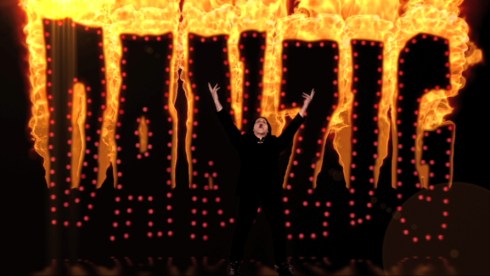
“Black Hell” would receive a video clip years later as part of The Legacy TV Taping.

From the soundtrack to The Hangover Part II, “Black Hell” could have the distinction of being the last properly released Danzig track.  It’s no secret that Glenn Danzig is getting older and has become disenchanted with the music business which allows for the possibility that 2010’s Deth Red Sabaoth is it for him.  There’s likely a covers record coming and at least one additional original Danzig song is known to have been recorded and left off the last album, titled “Long Dark Road.”  Either way, there’s not much left in the pipeline.  Things could change, since about 4 years ago Danzig said he was done touring and as we speak, the band is preparing to head for Europe, so if you wish to hold out hope go for it.  “Black Hell” is similar in style to “Thirteen,” which as I mentioned earlier, was included on the soundtrack and film The Hangover.  Apparently director Todd Phillips is a big Danzig fan, which is how this relationship was born.  “Black Hell” opens with a slow kick drum beat and a simple guitar strum and Danzig singing over it in a deep, ominous voice.  The lyrics are fairly standard for Danzig and after the first verse a haunting electric guitar riff comes in.  Eventually the song builds to a big chorus, and carries this sound through to its conclusion.  It’s a fairly simple track but effectively moody.  I especially like the use of the electric guitar which stays in the background (I should note, the strum riff is also played on an electric).  The vocals have a layered effect on the chorus with one really high one that adds to the song’s apocalyptic feel.  Unfortunately, the songs aren’t sold separately on digital music stores and if you want it you have to buy the whole soundtrack, which is mostly terrible.

That’s it though, just three original songs included on soundtracks.  I would say one is great, one is average, and one is kind of a throw-away.  It’s hard to say if Danzig will have any future contributions to soundtracks, though I’d consider it unlikely.  I did not mention the song “Underbelly of the Beast” from The Crow: Salvation soundtrack because it’s just a remix of “Belly of the Beast.”  It, like “Deep,” is also included on The Lost Tracks of Danzig.


Danzig (1988)

danzig-180417e0-c57b-438b-b499-e0062a80bee4If I’m going to make an entry for every Danzig release it makes sense to start with the debut self-titled album from 1988.  I’ve already written about the series of events that led to the formation of Danzig in the late 80’s and how the band ended up on the Def American label.   To re-hash quickly:  Rick Rubin wanted to sign metal bands, liked Samhain, gave Glenn Danzig a four album deal.  Simple enough.

The first record was recorded in 1987 and released in 1988.  The demon skull that had been the logo for Samhain was carried over as the logo for Danzig.  The cover of the record, and the approach, is simple and straight-forward; all black with the skull featured prominently across the front and back cover.

This is the album Rick Rubin allegedly had the most influence over.  This makes sense considering the band was a new property for the label and getting off to a good start would go a long way towards securing future success.  Rubin is famous for his stripped-down, no frills approach when taking on rock and metal acts.  He is reportedly a big fan of AC/DC and that was what he wanted to do with Danzig.  He wanted the guitars to be a feature point and the drums to contain minimal fills.  The vocals would be up front and feature little studio polish.  The bass was kind of left behind, either because Rubin didn’t feel it was essential or didn’t care for bassist Eerie Von’s playing.

John Christ was called upon a lot to set the stage for most of the tracks.  His guitar playing is at times stiff but the edge with which he plays compliments the tracks here.  His play is often aggressive and the solos are varied.  This is really his debut record as a guitar player and he makes a good impression.  Chuck Biscuits is kind of held back a little and would offer some stand-out performances on future releases, but what’s here is solid.  He does have a few standout moments, particularly on “Am I Demon,” and overall accomplishes what Rubin intended.  Danzig’s vocals are clear, though a bit under-stated for him.  He only has a few opportunities to really belt out a chorus and the vocals aren’t as high in the mix as one would expect given he is the focal point of the act.  Kind of like with Biscuits, Glenn would have better performances in the future but what is here is good, but not mind-blowing.

That good but not great line is an easy way to summarize the album as a whole.  The album includes some now classic tracks but there’s an air of restraint about the whole thing, which is odd considering how intense previous Glenn Danzig albums had been.  “Twist of Cain” is the opener, and is now a long-time crowd pleaser.  It’s a meandering hard rock number with a lot of metal cliches in the lyrics.  It’s mid-tempo, like most of the tracks on this album, and while I love the song I’ve always felt the drums lacked punch.  Particularly the opening.  The riff would become the standard Danzig riff.  Variations on it will appear all through-out future albums, but none ever top the original.  Songs like “Not of This World” and “Am I Demon” bring a little more speed to the table and when played live would often be sped-up even further.  Again, there’s an energy in these tracks but it feels like the band is holding back.

The Danzig logo was allegedly lifted from the cover of an obscure comic by Marvel called Crystar: Crystal Warrior, though Glenn insists to this day that he designed the logo. Here’s the cover, you decide.

The songs that were never intended to be fast numbers work the best under this approach.  “Soul on Fire” is probably the most complex song on the album, and quite possibly the best.  It settles into a nice groove and Glenn gets his croon going for the verse.  The chorus has a nice drum pattern, and if you listen closely you’ll notice a saxophone (or something sounding like a sax) buried under the mix which is pretty unique for a Danzig record.  The outro throws in some faster riffing and adds nice variety to the song.  “She Rides” is a slow brooder.  Really cheesy, but really effective.  I hear it used to be popular at strip clubs, which isn’t surprising.  The album’s closer “Evil Thing” is one of the few tracks that doesn’t feel like it’s being held back by anything.  Danzig’s wails sometime degenerate into snarls and the drums bring a great ferocity to the tempo.  It’s a track with more personality than most.  The future hit “Mother” also appears on this album, but one can see why it wasn’t a hit initially since it kind of just exists on this record as almost filler.  I should note for any Metallica fans out there, that James Hetfield has an uncredited role on back-up vocals on “Twist of Cain” and “Possession.”

The first Danzig album is a solid but under-stated debut for the new band.  So much so that one questions why producer Rick Rubin would opt for such an approach when something bolder might have worked better.  This album did come out during MTV’s highly influential peak and the band wasn’t able to produce a video that fit their criteria, which likely harmed sales.  Had the video for “Mother” been in-line with their standards perhaps it takes off in 1988 as opposed to 1993.  That’s not a criticism of the band though, as the band should conduct itself however it wishes and caving to corporate pressure isn’t very “metal.”  Missteps aside, this is a good album and an essential piece for any Danzig fan, there’s just better stuff ahead.

Top Tracks:

  • Twist of Cain
  • Soul on Fire
  • Evil Thing

Danzig

By now, it should be obvious that a post on this blog  titled “Danzig” is not going to be about the former port city in Poland.  Danzig is my favorite band and I make no attempt to hide that simple fact.  I could try to explain why I love Danzig so much but I’m sure I would find it difficult to adequately convey what it is I so admire about the man/band.  I’ll keep it simple and say I’m drawn to the rebellious nature of the music and Glenn Danzig’s infectious croons.  It doesn’t bother me that Danzig isn’t more beloved by music fans, though I steadfastly believe there’s a Danzig song out there for everyone.  I take pride in my extensive knowledge of all things Danzig so I thought it would be fitting to add to this blog a one-stop Danzig information center.  And by that I don’t mean stats on Glenn Danzig’s height or witty posts about piles of bricks in front of his house, I’m strictly talking about the music.  What are the albums worth checking out?  The best songs, lineups, and so forth?  Those are the questions I want to answer.

I will throw in some background information since this is the lead-in post.  Danzig is a band, but it’s Glenn Danzig’s band.  He writes all of the music and calls the shots.  Glenn grew up in Lodi, New Jersey and first began making a name for himself with the horror punk group The Misfits which got its start in the late 1970’s.  The Misfits were first conceived as a pretty straight-forward American punk band, but would later adopt the horror gimmick which gave the band a marketable identity.  The Misfits weren’t around for very long but made a lasting impression.  Unfortunately for those in the band, a lot of the success came well after the band’s demise in 1983 but the band’s influence can be felt all over the punk and metal genre.

Glenn’s next band was Samhain.  I already made an entry on Samhain so I won’t say too much about that band here.  Simply put, Samhain was a darker take on The Misfits with more influences from goth and metal.  Glenn wanted to do something a bit more serious while still keeping some of that horror camp The Misfits were known for.  Samhain was also short lived, for it was as Samhain that Glenn and the boys garnered the attention of record producer Rick Rubin who would sign the band in 1987 to his newly created Def American label.  It was at that time the band would be re-titled Danzig.

The man himself, circa 1992.

The Misfits and Samhain were both plagued by lineup changes throughout their existance.  Initially, Danzig was conceived as a super group with Glenn as the focal point.  The label would bring in difference musicians to play with Glenn to keep things fresh.  The initial lineup wasn’t full of names, but it had talent.  Eerie Von was the lone holdover from Samhain on bass, largely because he and Glenn were good friends.  Von wasn’t a gifted bass player, but bass was never a part of the production Rubin focused on so he put up little fight in letting Glenn retain Eerie.  Rubin brought in veteran drummer Chuck Biscuits to play on the first record.  Biscuits is a goofy guy with an even goofier name but one Hell of a drummer.  He was good enough that both Glenn and Rick saw no reason to make any changes for the following records, there was no point.  The ever persistent John Christ was hired to play guitar after auditioning numerous times to be in Samhain and Danzig.  I’m not sure what won him the job, perhaps it was a lack of options, but Christ’s style would fit the band’s early sound quite well.  What probably was supposed to be a one record deal ended up lasting for the duration of the band’s contract with American Recordings.

The first Danzig record was released in 1988.  Produced by Rubin, it featured a stripped-down sound with Rubin emphasizing on capturing the band’s live sound in studio.  He would force the band to get their parts recorded in one take and there was very little post-production and mastering.  The album was not a hit, and even though it would contain the track “Mother” the song wouldn’t garner much airplay initially.  Part of that was due to the Satanic imagery of the song’s video, making MTV wary of playing it without some censorship put in place.  It was this image that would also lead to the parent label, Geffen Records, from ever having it’s name or logo featured on a Danzig record despite being the distributor.  All of this mystique seemed to amuse Glenn and probably ended up helping create a dangerous image that attracted a younger audience.

Because the band was not an overnight success, Rubin would lose some interest and devote less time to producing the follow-up records.  The band’s second album, Lucifuge, would follow in 1990 and Danzig III: How the Gods Kill in ’92.  By now the band had gained a strong underground following, culminating in a sold-out Halloween show at Irvine Meadows during the How the Gods Kill tour.  Four tracks from that show, plus three new studio tracks including an Elvis cover, would comprise the 1993 Thrall: Demonsweatlive EP which was released alongside a slightly remixed version of “Mother” with a new video.  This video would receive airplay on MTV and it soon became a modest hit, propelling the band’s debut record and EP to gold status.

The band would follow-up the success of “Mother” with Danzig 4p in 1994.  4p would do well but not as well as the label was hoping for.  The single “Cantspeak” cracked the Top 100, making Danzig technically a 2-hit wonder, and the tour was fairly successful.  The band would also be asked to play on the main stage of the inaugural Ozzfest and did a support tour with Metallica as well, during which Glenn would join the guys on stage in some cities to do some classic Misfits tracks.

Danzig would prove disastrous for Disney’s image.

It was also around this time that the band began to fall apart.  Chuck Biscuits’ drug problems became too much to contend with and he would be replaced by new comer Joey Castillo for the 4p tour.  Glenn had long wanted to replace John Christ on guitar and by ’94 the feeling had become mutual and the two agreed to part ways following the tour.  It was at this time that Eerie Von also chose to leave, citing burn-out and being genuinely disappointed that the other guys were leaving.  The label, now known as American Recordings, was also showing little or no interest in re-upping on a new deal so Glenn shopped his talents around and was able to land a seven figure deal from start-up Hollywood Records.  This marriage would last only one album, the much maligned Blackacidevil, as the band’s parent company Disney wanted nothing to do with a band that was often associated with Satanism.  The deal would be terminated, and what would follow would be several years of legal battles between Glenn and Disney.

It wouldn’t be until 1999 when Danzig would resurface.  Now on Emagine Records, the band still consisted of Glenn and Joey Castillo on drums, but also had Josh Lazie on bass and Jeff Chambers on guitar.  This lineup would record Danzig 6:66 Satan’s Child, an album built up as a return to form for Danzig but ultimately would not meet those expectations.  Following the album’s completion, Chambers was replaced by Todd Youth (allegedly because he didn’t fit the band’s image) and Lazie would leave of his own accord and be replaced by Howie Pyro.  The first leg of the Satan’s Child tour featured a mini Samhain reunion and would prove to be the highlight of the tour.

With the collapse of the Emagine label, Danzig would self produce everything and seek out distribution deals.  He inked one such deal with Spitfire for the 2002 follow-up to Satan’s Child, Danzig 777 I Luciferi.  The same lineup as the previous tour recorded this one, but all would be replaced afterwards.  Circle of Snakes would follow in 2004, the tour for which featured a guest appearance by former Misfits guitarist Doyle.  Together he and the band would play a short set of Misfits songs during the Danzig set.

Now in his mid 50’s, Danzig proved with “Deth Red Sabaoth” that he’s not done yet.

Circle of Snakes would be the last album for Danzig for quite some time.  During his hiatus he would put out a classical album, Black Aria II, the follow-up to his original collection of classical music put out in 1992.  2007 saw the release of the long-awaited and much anticipated Lost Tracks of Danzig, a two-disc set spanning the band’s entire existence containing mostly unheard tracks.  It wasn’t until 2010 when a new Danzig record would be released, the well-received Deth Red Sabaoth, which may end up being the final proper Danzig album.  Only time will tell.  It so far has lead to a mini resurgence for the band.  Not only did it sell well, but Danzig even found himself on the soundtrack to the blockbuster hit The Hangover, introducing his song “Thirteen” to a whole new audience.  The band also has a new song featured on the sequel’s soundtrack set for release on May 24th, titled “Black Hell.”

It’s my intention to post a review for each Danzig record, the major releases and the smaller ones including both Black Aria records.  I’ve already posted reviews for Danzig II and Danzig 4, so check back for a review of the 1988 self-titled record in the near future.  I haven’t decided if I’ll just review them all chronologically or not, but eventually they’ll all be posted and hopefully readers find them both interesting and useful.

Listen to Danzig!


#1: Danzig II – Lucifuge

Danzig II – Lucifuge (1990)

My choice for my favorite album of all time should come as no surprise to anyone who knows me personally.  I’ve already expressed my admiration for all things Glenn Danzig previously, but this should drive that point home.  It may seem like an odd choice, but this is my list where the only criteria is enjoyment, so deal with it.

Danzig II – Lucifuge is a great record.  I suppose considering that I’m ranking it as the best kind of speaks for itself.  It’s a marriage of hard rock and blues that stands out amongst the Danzig catalog.  Glenn Danzig is a musician that has touched on several genres including rock, metal, industrial, and even classical.  It is perhaps one of Danzig’s greatest strengths that as a listener you know you’re in for a new experience each time he releases a new album.  That’s not to say he hasn’t had his missteps along the way, but Danzig II is not one of them.

Released in 1990 after a solid debut in 1988 on producer Rick Rubin’s newly created Def American label (the first Danzig record was actually Def American’s first ever release), Danzig II was meant to build off the first one and take the band to new heights.  Because of the imagery associated with the band, parent company and distributor Geffen Records refused to have their name appear on any of the releases and the band found airplay hard to come by on both radio and MTV.  There was a lack of buzz at the label as a result, so Ruben took a more hands off approach with the band’s sophomore effort than he did with the first one.  This gave Glenn Danzig almost total control over how the album sounded and it’s easy to hear the difference in approach between this record and its predecessor.

An image from the “Devil’s Plaything” video, perhaps my all time favorite song. When Danzig dusted this one off for the 2008 tour the place went nuts, prompting a remark after the song from Glenn that went something like, “I guess you guys liked that one.”

Rubin went for a stripped down rock approach on the first Danzig LP.  On this one, the direction has never been clearly stated but it seems like Glenn and the boys wanted to introduce some more blues elements.  That influence is most notably felt on the acoustic sing-along “I’m The One,” a throw-back track to the old blues guitar men and early country artists.  There’s still plenty of rock and the album’s opener “Long Way Back From Hell” is a perfect example of that.  It begins with a dive riff that goes into an up-tempo chorus.  Right away, it sounds faster than anything that was present on the debut album.  Danzig’s vocals are in top form as he belts out the chorus and asks the listener if they wish to join him and the band on this devilish voyage.  “Snakes of Christ” slows things down a bit and places Christianity in the band’s crosshairs.  It’s songs like this that helped to earn the album a parental advisory, despite an absence of profane language.

There are quite a few songs with unique sounds on this record for the band.  “Tired of Being Alive” doesn’t quite sound like anything Danzig had done before that or since.  It’s pretty much straight up rock with a real catchy riff.  The chorus features some layered vocals that also was a departure in sound.  “Blood and Tears” was Glenn Danzig’s first real ballad, a quiet number with a big chorus and one of the album’s standout tracks.  “777,” the original title track before Glenn opted for Lucifuge, experiments with melding acoustic guitars with electric ones giving the chorus a real “twangy” sound.  “Pain in the World” is a big Sabbath-like song that has a slow, plodding pace before going into a big, guitar driven outro.  It sounds almost out of place at first, but becomes an acquired taste that gives the album greater variety.

The cover for the LP version, an homage to The Doors.

The album was released across three formats, cassette, CD, and LP, with the CD featuring a different cover than the other two.  The CD booklet on the original release had a neat gimmick where it folded out into the shape of an inverted cross which probably delighted parents across the country.  It was also the album that gave us the classic Danzig logo of a ram skull head mounted on an inverted cross.

For me, Danzig II is sonic perfection.  It features some of Glenn’s best riffs and vocals and all of the songs pack a punch.  The subject matter has become standard fare for Danzig but in 1990 the rebellion and challenges against firmly entrenched institutions was fresh.  A lot of the songs have become staples in the Danzig set-list over the years and it’s cited by many fans as their favorite record.  And for someone with over 30 years in the music industry, such praise should not be taken lightly.

Top Tracks

  • Long Way Back From Hell
  • Devil’s Plaything
  • Blood & Tears

#4: Danzig – 4p

hqdefault-32In case anyone is wondering, no, I did not put this album at number 4 on my list because of its title.  It just worked out that way.  If anything, I’ve depressed this album on my list though I’ve tried not to.  I love this album, and sometimes after listening to it I feel it’s my all time favorite.  It possesses the most variety of any Glenn Danzig release, past or present.  The production is probably the best that Danzig ever saw, be it the vocals, guitar, or drums.  It’s moody, dark, personal, angry, violent – all of the components possessed by a Glenn Danzig fronted band.  And yet, I didn’t always feel that way…

I did not get this album when it came out (appropriately) in 1994.  I didn’t even know who or what Danzig was at the time.  I was too busy playing Sega Genesis and listening to Aerosmith to care.  It wasn’t until late 1997 or early 1998 that I was even aware of who Glenn Danzig was.  It was at that time that I was turned on to The Misfits by my closest friend (whom I owe a great deal to when it comes to music).  Before then The Misfits were just a band with a cool logo I saw on many t-shirts worn by the punk rock kids in my school.  The first song to grab me was “Attitude” off of the Collection II release put out by Caroline.  From that moment on I began to consume everything Misfits.  Their limited, and often repetitive, discography was soon in my possession.  And while I enjoyed it, it often felt like a cruel joke that before I was even born, The Misfits as I enjoyed them, were disbanded.

Finding the re-formed Misfits of the mid-90’s to be a cheap imitation of the real thing, I soon turned my attention to Danzig (I was at the time unaware that the Glenn Danzig fronted band Samhain existed between The Misfits and Danzig).  Wanting to find something current to enjoy, I went to the store with the intent of purchasing a Danzig record in hopes that it would captivate me as much as The Misfits had.  I settled on Danzig 4p, soley because it was the cheapest (10 bucks) and the track list was at least interesting.  Song titles such as “Brand New God” and “I Don’t Mind the Pain” were intriguing and gave me the impression that this would be more dangerous and mature than anything The Misfits had produced.

Upon popping that CD into my stereo when I got home I was met with mixed

Danzig 4p was the last Danzig record to feature the original lineup. Left to right: John Christ, Chuck Biscuits, Glenn Danzig, Eerie Von.

emotions.  The Misfits were fast, aggressive punk rock with a campy horror theme.  This was not.  The opening track, “Brand New God,” was fast and brutal with a slow bridge in the middle that soon brought the track back around to the speed metal it opened with.  A solid effort, in my mind.  After that though, the album descends into mid-tempo and even slower.  “Cantspeak” and “Going Down to Die” contained nothing even faintly resembling anything The Misfits did.  I was let down, and filed the album away.

I did not give up on Danzig after my initial purchase of 4p.  I went back and bought the debut album and allowed the stripped-down rock to grow on me.  I would soon acquire the entire back catalogue liking each album more than the ones I had bought previously.  At some point, probably when I had finally realized and accepted that this band could not be The Misfits, I came back to 4p with eyes open.  I realized how terrible my approach was initially, and musically speaking, it was one of the best things I ever did.

As I mentioned in the opening paragraph, 4p represents many peaks for not just the band, but for the artist Glenn Danzig.  The opening salvo fired by “Brand New God,” is like the ultimate red herring.  Aside from that bridge, it’s direct, simple and unapologetic in its delivery.  It bleeds into track 2, “Little Whip,” which begins quietly before exploding into a monster riff and machine-gun drumming.  The album’s violent beginning descends into its softest spot, the melancholy “Cantspeak” (sic).  Said to be influenced by politics and the general state of the world, “Cantspeak” represents perhaps Glenn Danzig at his most vulnerable.  The back-mask guitar (the inverse of the album’s closer, “Let it be Captured”) gives it a creepy gloom accentuated by the distorted vocals on the chorus.  The verse contains Glenn’s softest vocal delivery, bordering on falsetto.  It is a song that is both beautiful and depressing.

The album meanders along with this approach of dark and gloom.  “Going Down to Die” is one of Danzig’s greatest vocal achievements.  With his velvety croons dressing up the verse, he bellows out the big chorus to tremendous effect.  The bleak “Dominion” closes out the first half and is one of the few songs to follow a simple verse-chorus-verse-chorus-solo-outro pattern.  With it nestled amongst atypical material it comes across as refreshing.

Just when it appeared the album had settled into a distinct sound, “Bringer of Death” brings it back to where it started.  Opening with air raid sirens and machine-gun fire, the song is an uncompromising track focused on the devil, God, and war, and how the three are all intertwined.  Its structure mirrors that of the opening track, right down to the slow bridge before crashing through the outro.  The intermission, “Sadistikal” (sic) follows and provides a hint for the industrial elements Danzig would soon embark on following this release.  It’s not quite a song, but a feeling, designed to make the listener uncomfortable and introspective.  “Son of the Morning Star” follows and returns the album to a slower, quieter state.  The following two tracks present more of a mix, effectively combining the slow and fast in creating perhaps the most radio friendly tracks on the album.  The closer, “Let it be Captured,” is an all out power ballad.  “Going Down to Die” is one of Glenn Danzig’s best vocal performances, but “Let it be Captured” is the best.  The lyrical content is both sweet and sad as Danzig allows himself to appear in a weakened state.  He almost howls throughout the final parts of the song.  A sorrowful wail where the song’s title is repeated over and over.  A hidden track appears on track 66.  It’s basically a hymn and one of those cool, experimental type of hidden tracks that seem to have vanished from today’s releases.

In the end, Danzig 4p is one of the artist’s all-time best.  And for someone who has been releasing music since the 70’s, that’s high praise.  It is an album that both hits the listener in the mouth and drags it down to the darkest depths.  In many ways it is the peak for the original lineup of the band Danzig.  John Christ is employed to great effect on guitar with both hard-hitting riffs and melodic ones.  His delivery proves he is more dynamic than the previous three studio albums had lead many to believe.  He doesn’t get as many opportunities to shine with solos, but when he does he delivers.  Chuck Biscuits is relentless on drums, his best performance ever captured on a

Despite general disinterest on the part of MTV and radio, Danzig was able to establish a strong cult following. 1993-94 represents the band’s peak in popularity culminating in two top 100 singles and two gold records.

recording.  Always a highlight of the band, Biscuits sets the tone on many songs with the highlight performance probably coming on “Bringer of Death.”  Eerie Von, an often forgotten component on bass, is given more room to breath on this album.  His no frills approach suits the work.  And then of course there’s the central figure, Glenn Danzig, on vocals giving his best performance ever.  He howls, wails, and croons his way through the twisting and turning record.  Never again would his voice be this strong on a Danzig release.  Lyrically he was willing to explore more with this album than on previous ones.  The familiar heaven and hell elements were present, but now he was adding in more of an S&M vibe.  Some of the songs are more personal and the pervasive machoism of the previous releases relents some in favor of vulnerability.  Even in some of the slower songs on past records, the protagonist of the songs was usually in control, the only exception being the well-received “Sistinas” from Danzig III.

Danzig hit all of the right notes on 4p and it ends up being a wonderful note for the original lineup to go out on.  Following 4p, Glenn Danzig would leave the Def American label and begin the twilight era of his career composed of uneven releases, multiple labels, and frequent lineup changes.  This isn’t to say that Danzig 4p represents a swan song of sorts for the artist as quality has been put out since, but it was an end of an era and one many fans remember fondly.  And even so, Danzig 4p is an often overlooked album by both Danzig fans and hard rock fans in general.  Which in many ways represents the album’s sound of both tragedy and triumph.

Top Tracks

  • Cantspeak
  • Going Down to Die
  • Let it be Captured