Hugh Harman was one of the early stars in the field of animation. In fact, we talked about one of his shorts already this year, but perhaps his most famous and most celebrated is the 1939 anti-war film Peace on Earth. According to Harman, the short subject was nominated for The Nobel Peace Prize, but no such record exists of that officially happening. Perhaps it was merely in the conversation and Harman was mistaken or the record of its nomination was simply lost to time. Either way, it’s often a distinction tacked on to any conversation about the short, but in truth, it doesn’t need such accolades to justify its relevance as the short carries a very simple, relatable, and irrefutable message.
The cartoon centers around the lyric and Bible verse “Peace on Earth / Good will to men,” or as stated by Luke “on Earth, peace, good will toward men.” It came during a time when the world was moving towards another global conflict that would eventually be labeled World War II with many people alive still able to remember the first World War. It’s understandable why there would be a lot of uneasiness at that time, and Harman seemed to think that Christmas would be the appropriate backdrop for this anti-war piece. It was released by MGM in December of 1939 and would receive an Academy Award nomination, though it lost to Disney’s The Ugly Duckling. It’s certainly a bit heavy-handed, so maybe that explains why it wasn’t embraced more in the moment, but it came to be relegated as one of the best short subjects that takes place during Christmas. In my youth, Cartoon Network could be guaranteed to show it every Christmas Eve, usually late at night and possibly right around midnight, and that’s where I saw it most. Laying in my bed, unable to sleep due to the excitement to follow the next day, watching as many Christmas cartoons as I could find on television.
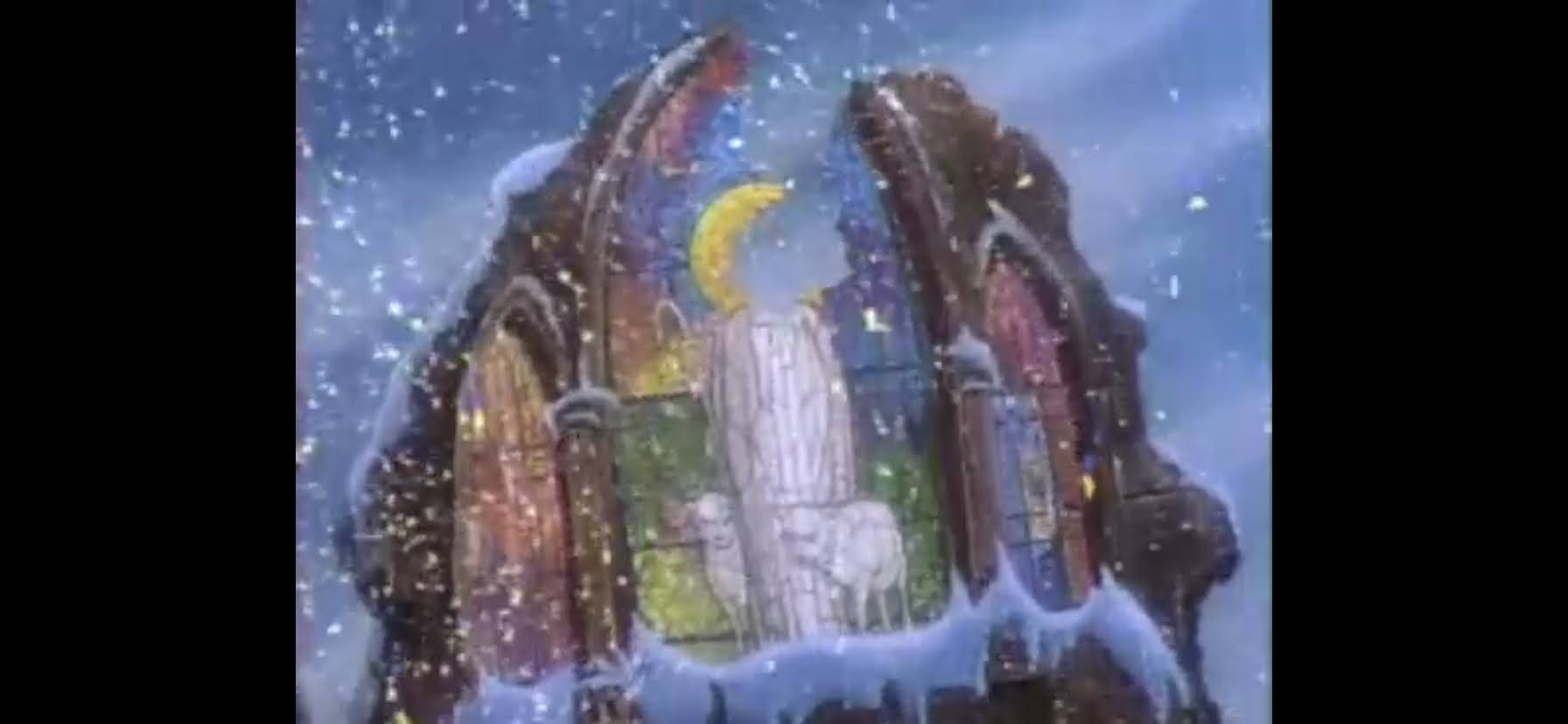
Not many Christmas cartoons begin with a look at a church in ruin.
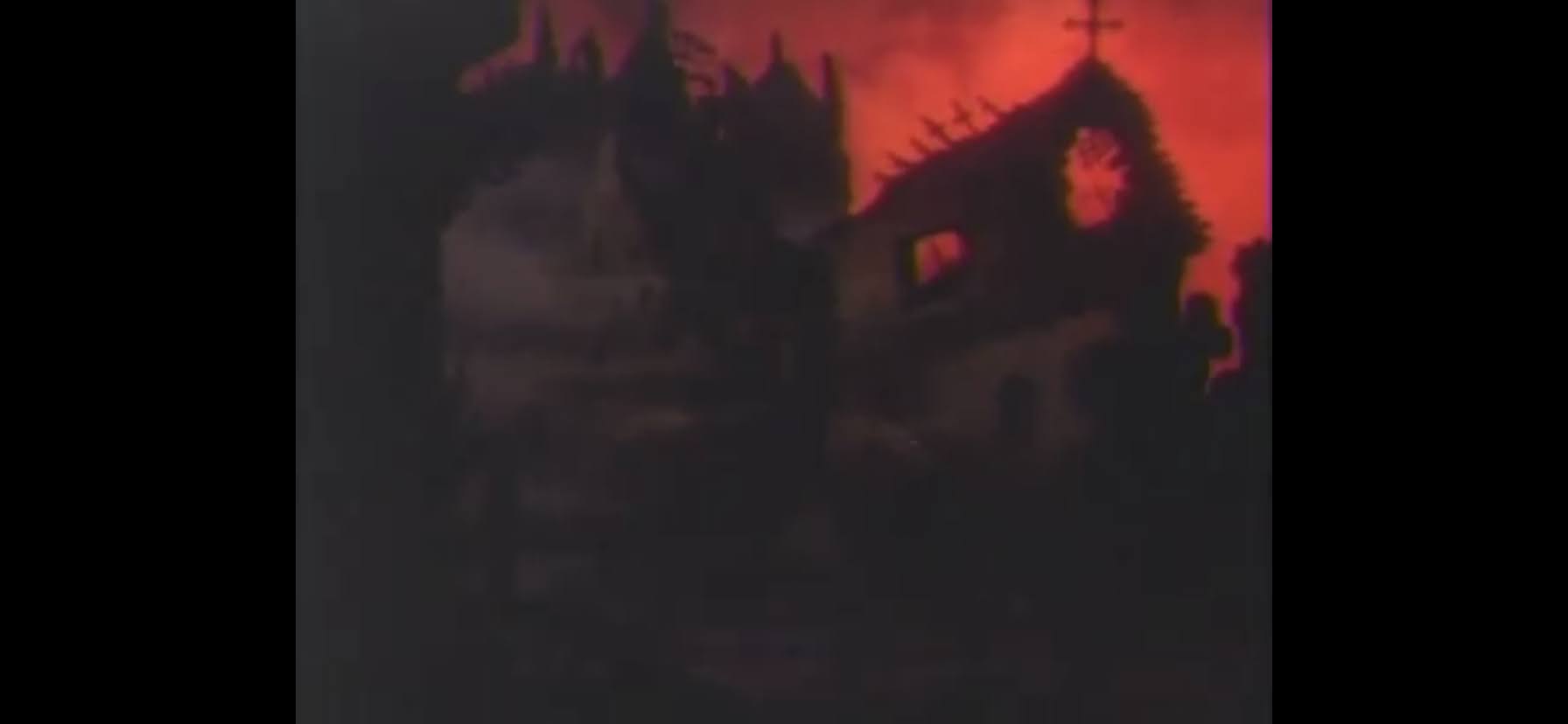
The short opens with an animated title card. “Peace on Earth” is in an elegant font while shadowy men run by and a church appears to burn in the background. The camera pans across weapons of war all covered with snow and the ruins of an old church, possibly the burned out one from before. A choir can be heard singing an original composition, sort of. It’s “Hark! The Herald Angels Sing,” but the words have been adjusted to really emphasize the “peace on Earth” portion of the song. At least I think it’s original as the old audio and the fact that it’s sung by a choir can make it hard to decipher the lyrics. There are other songs out there called “Peace on Earth” that may or may not be the same or similar. Either way, it sounds lovely enough.
Sing it, boys! That’s the good stuff!
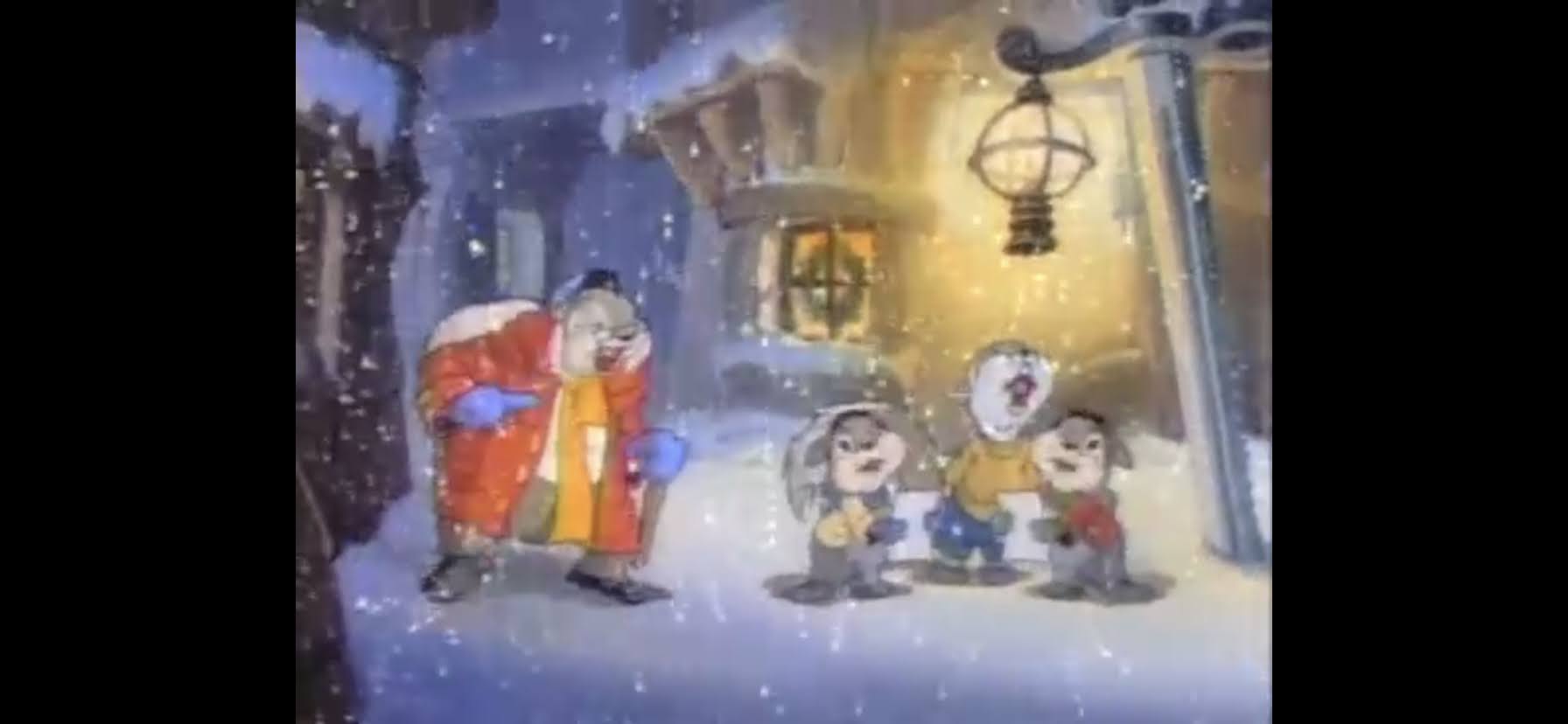
It’s a snowy, nighttime, setting and an old, gray, squirrel (Mel Blanc) is walking through town. The song is originating from a trio of carolers that appear to be red squirrels or chipmunks. They’re anthropomorphized and wearing clothes while the buildings appear to be made out of human items so they’re not giant animals like Mickey Mouse or even Bugs Bunny. The old squirrel walks with a cane, but he’s got a big smile on his face as he sings along really emphasizing the whole “Peace on Earth, good will to men,” part. He encourages the carolers in their singing and when he reaches a small house with a wreath on the door he pauses to remark how it’s a wonderful world! He sure is in high spirits.
I want to call this a cozy, Christmas, setting, but there’s really nothing Christmassy in the shot.
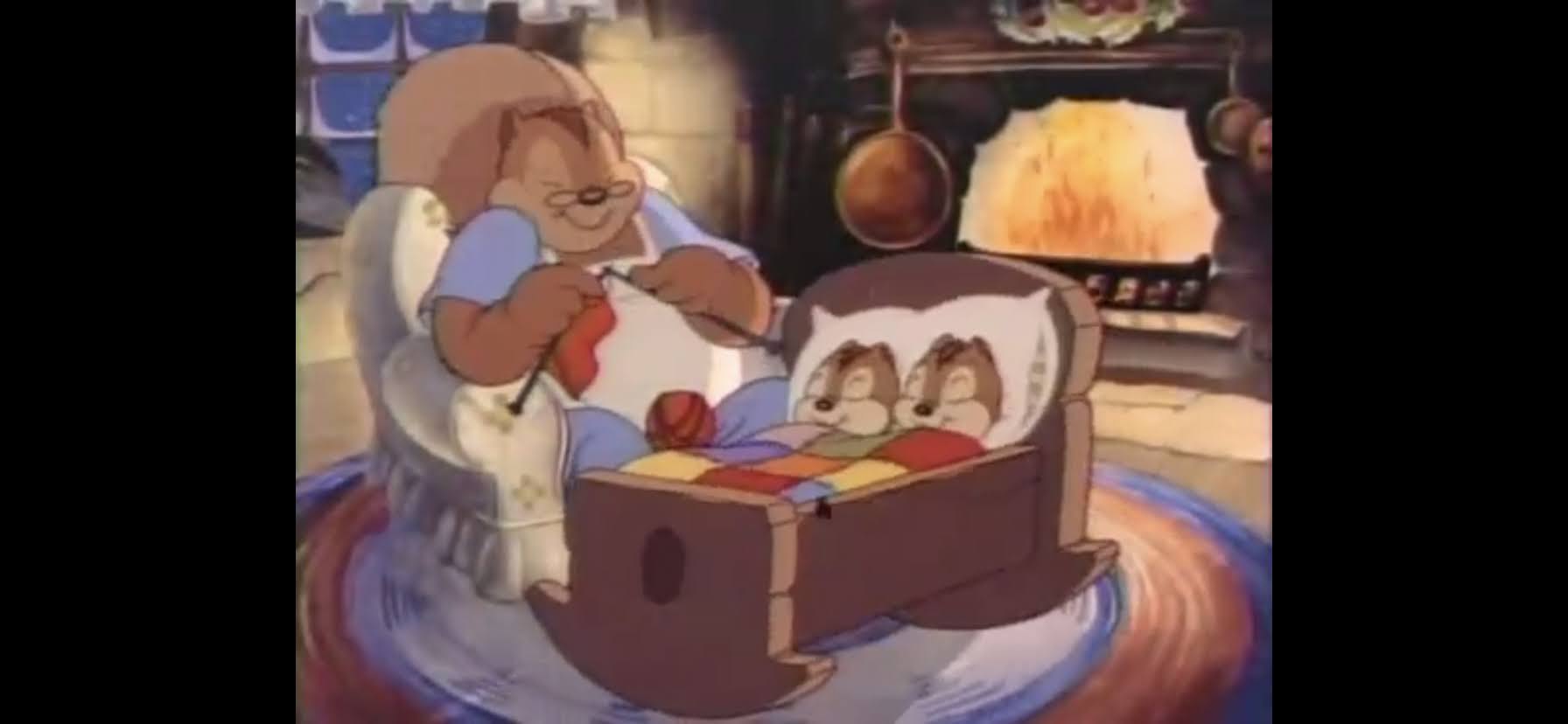
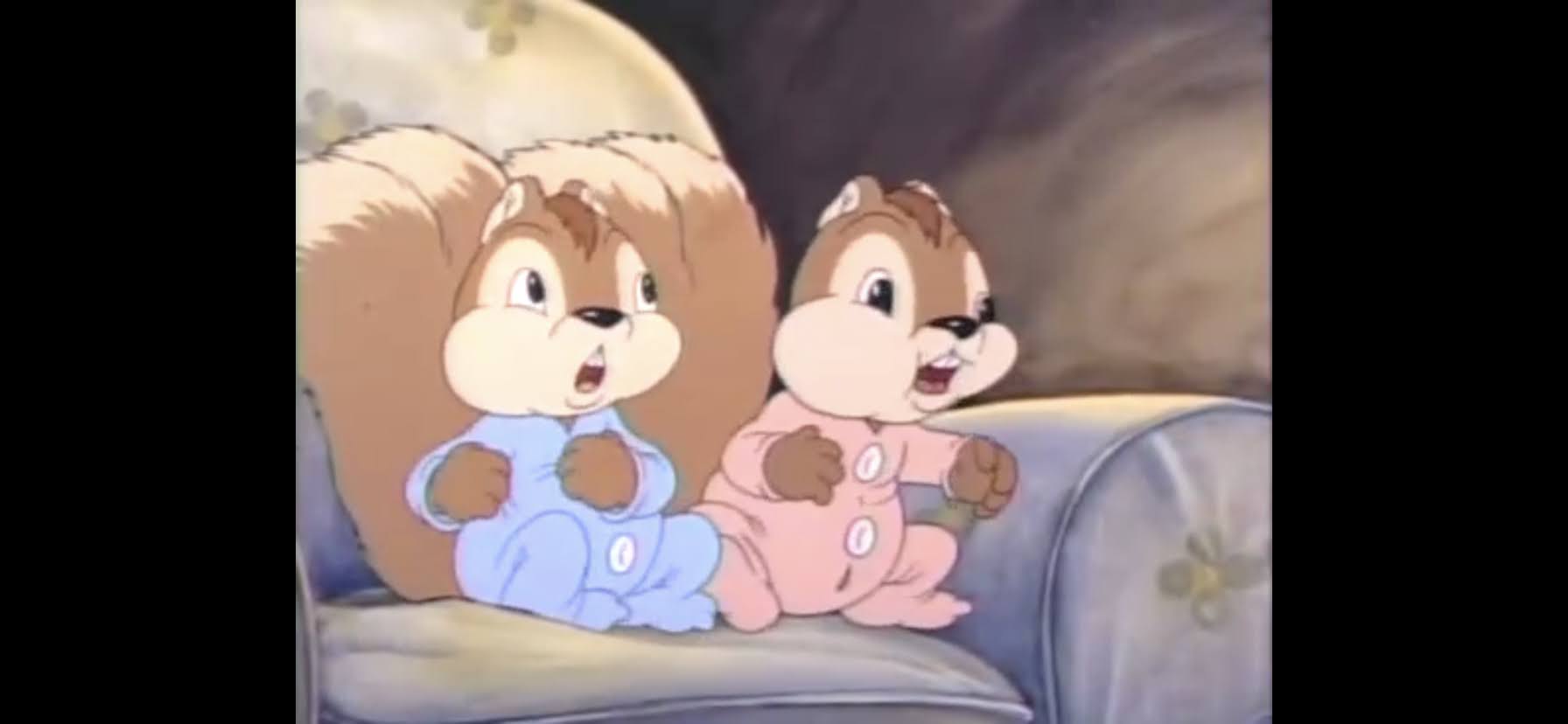
In a small house, a mother squirrel knits while two smaller squirrels sleep in a cradle. One is in blue pajamas and the other pink so I’m guessing they’re brother and sister assuming animals abide by the gender norms of the era. The old squirrel bursts in singing his song and the two little ones wake up instantly shouting “Grandpa!” It would appear grandpa here mated with a red squirrel at some point if the mother is his daughter. We don’t know, as she will only have one line. I have to give her credit for not getting ticked off with the old guy for waking the children.
Uh oh, it’s grandpa and he’s ready to party!
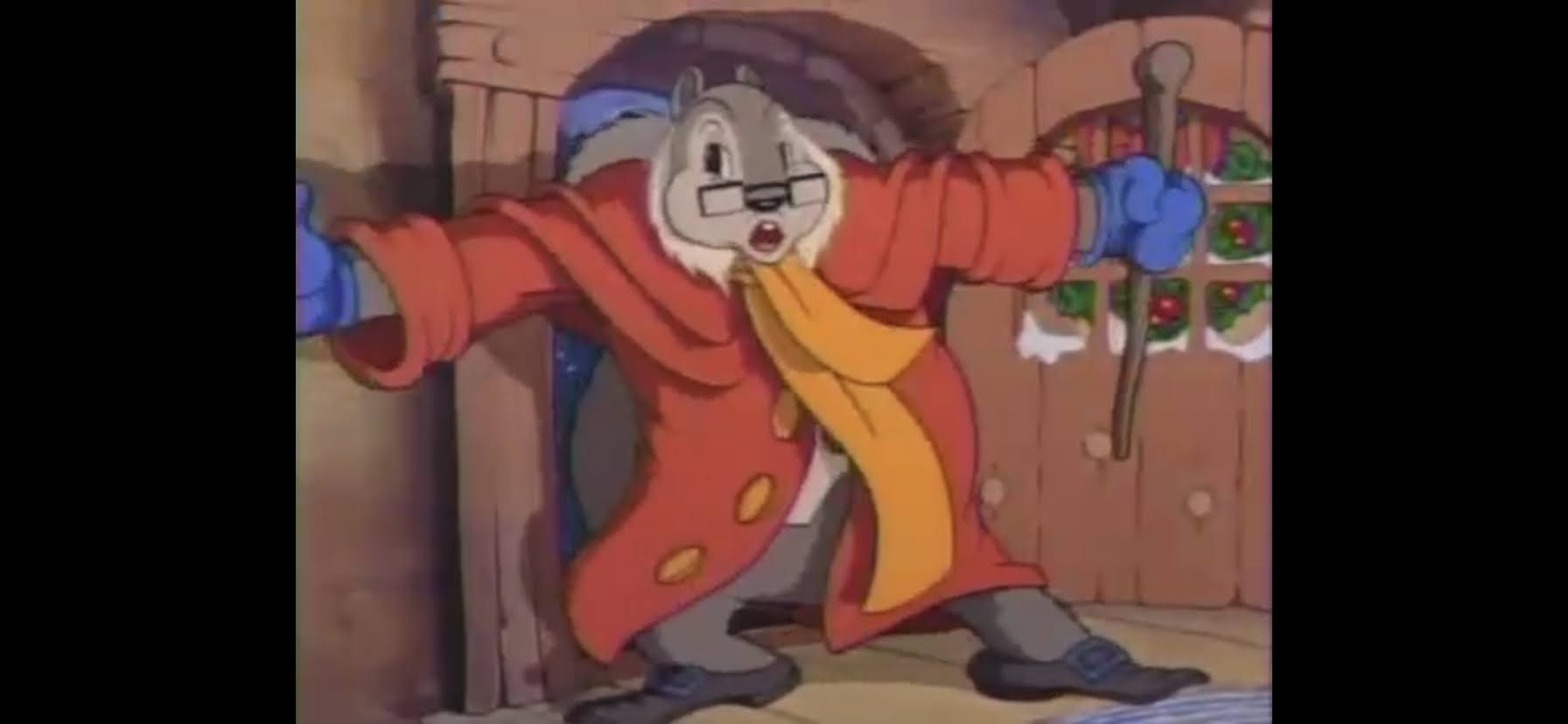
The kids and their grandfather exchange “Merry Christmas,” and all that. There’s apparently no material component to animal Christmas as the grandfather has not come baring gifts or anything, they’re just happy to see him as they jump into his arms. He waddles over to an arm chair the mother vacated for him, but she failed to remove her ball of yarn and crocheting tools and the poor guy sits on them. He pops up immediately and for a moment appears ready to lose his cool, but he just tosses the yarn aside and sits down. That little gag is basically the only physical comedy we’re going to get in this one.
Settle in kids, it’s time to talk about the apocalypse.
The whole time the grandpa squirrel has been walking around he’s been continuing the song and also just muttering to himself the “good will to men,” line. One of the children then asks their grandfather what the line means. It would seem there are no more men so the kids have no reference point for them. Well, this just means we’re going to have to have a bit of story time as old grampy squirrel tells the kids about who man was and why he’s no longer around.
It’s easy to see why they’d fear us.
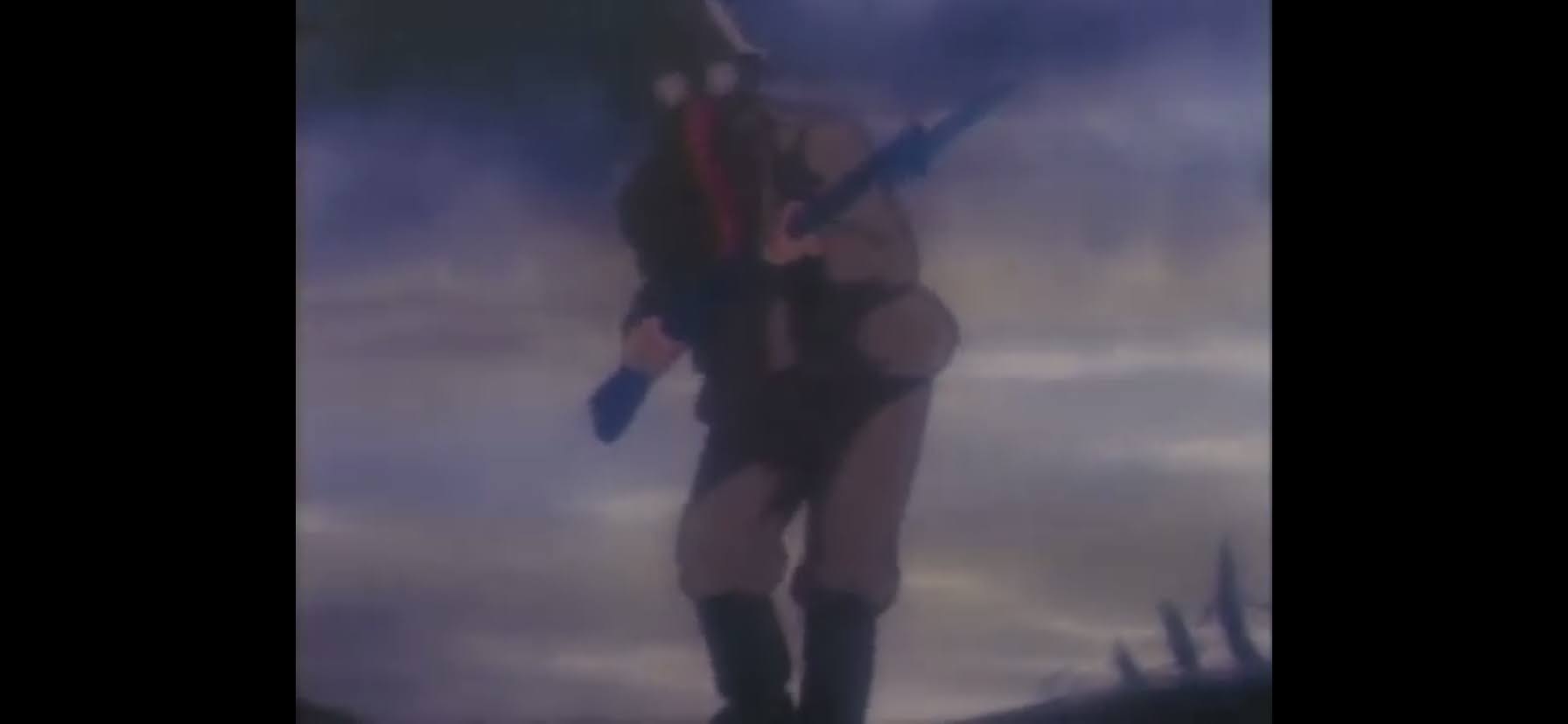
How does a squirrel describe men to those who never saw them? Well, as monsters! He rises from the chair to demonstrate and all we see are the shadows of the characters on the wall, but they soon fade and are replaced with images of men. He describes them as great, big, monsters with iron pots on their heads that walked on two legs that carried terrible looking shooting irons. The image we see is of a soldier wearing a helmet and gas mask carrying a rifle. The uniform is brown and likely deliberately nondescript so as not to put the blame on what’s to follow on any one group of people, but all people.
A banner Bugs Bunny would support.
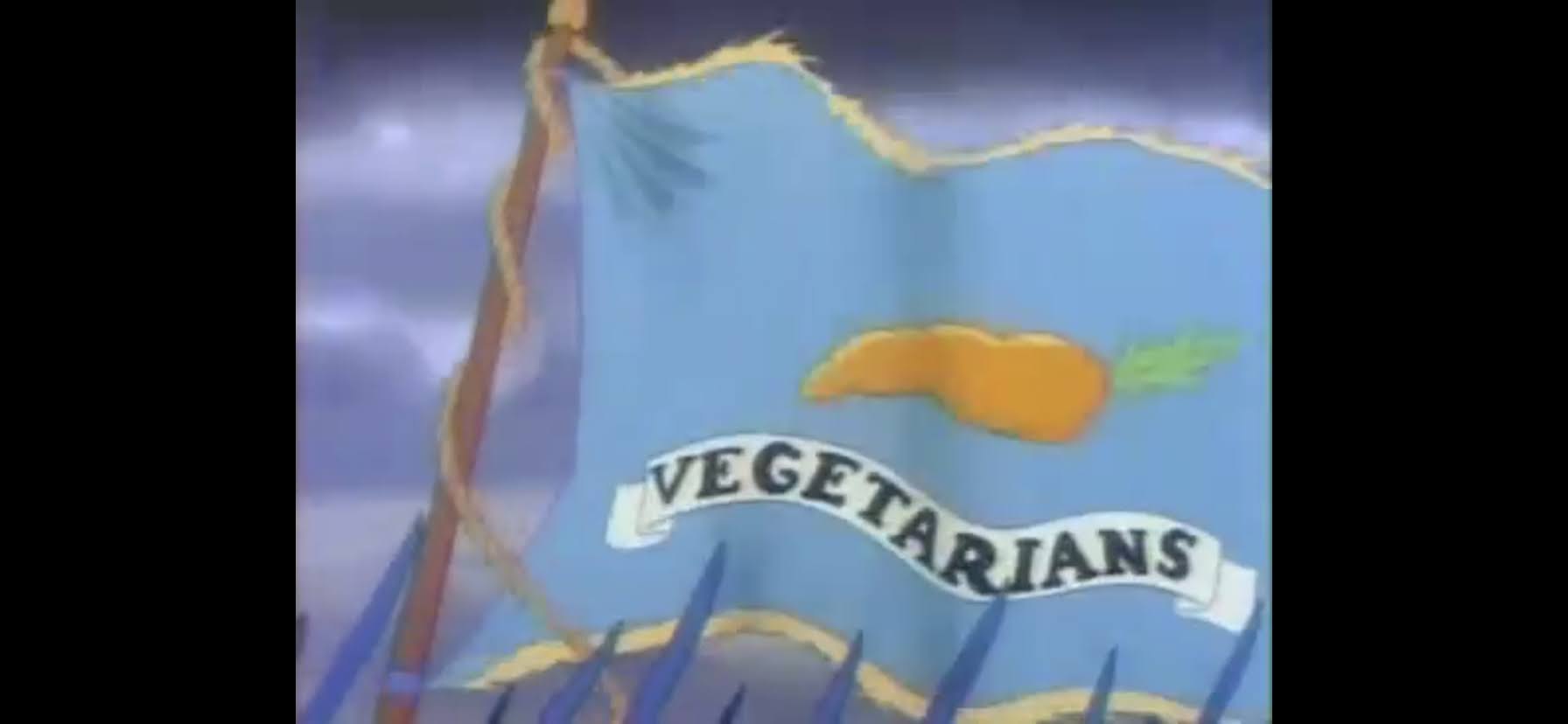
The grandfather continues to describe the man we’re looking at and mistakes the hose on the gas mask for man’s nose. As he describes them, we cut back to the little home and the two kid squirrels are a little scared. One of them expresses relief that all of them are gone and the other agrees. The grandfather then goes on to say he couldn’t figure them out and describes them as always fighting. When one argument was settled, another came up. This whole time we’re watching tanks and artillery getting moved into position and the grandfather describes the escalating hostility as so silly that vegetarians began waging war against meat eaters. We see that displayed via banners of war, another rare instance of legitimate humor in this one.
Now he’s getting into it!
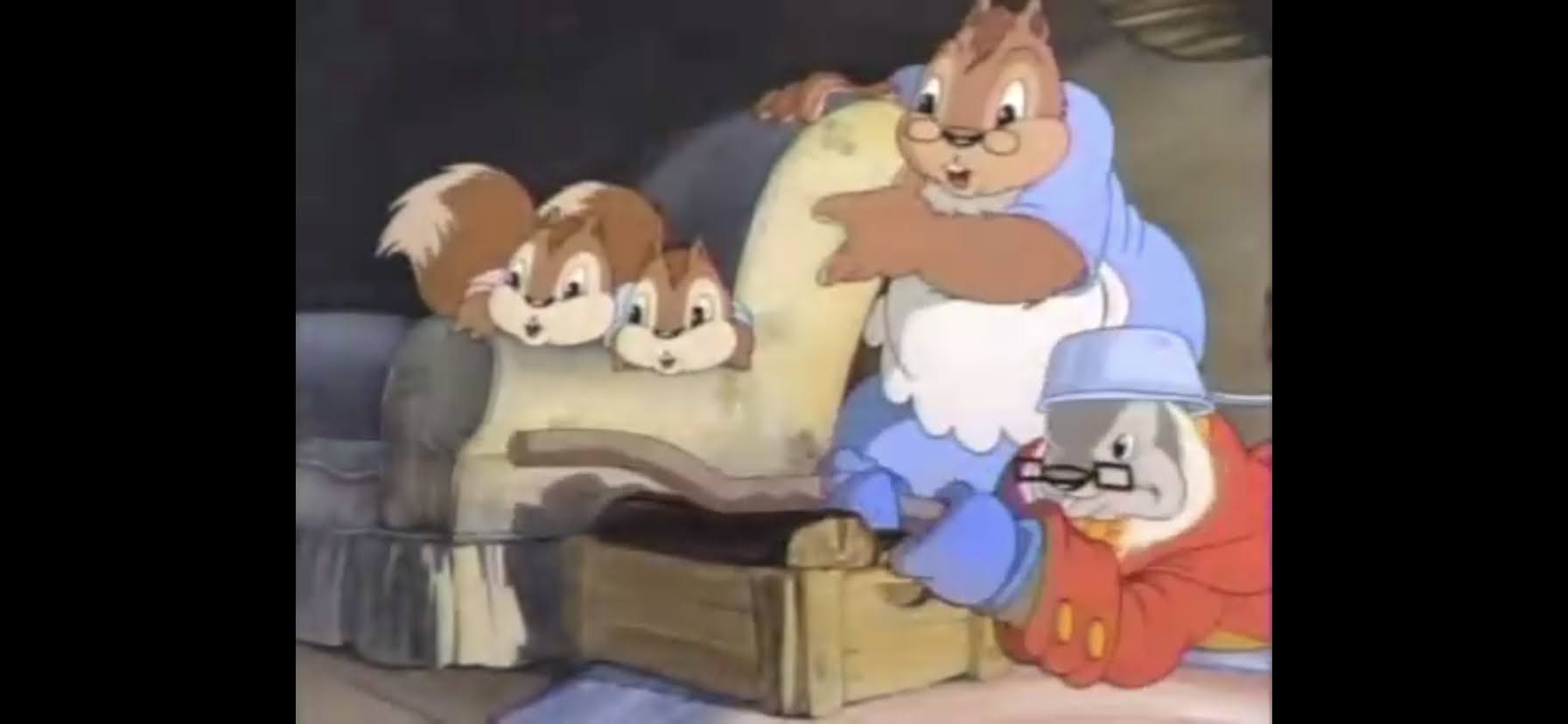
He then goes on to say that one day they got into a terrible fight. Now we’re seeing those weapons of war being used, and the burning church from the intro is back as men run past it. Artillery weapons are firing, planes are dropping bombs, and soldiers are banging away. The grandfather is shown acting things out by swinging his hat and cane around in the living room and banging on a pot. He describes hearing a whistling sound, which we then cut back to the scenes of war and recognize them as bombs. The music has been steadily rising in intensity as well. There’s explosions, soldiers firing machine guns, troops running around and that same background of the flaming church shows up again. The sequence ends with soldiers at a stationary machine gun and fades to show the grandpa mimicking them using his cane as the gun and rattling it over some logs. He’s wearing the pot on his head.
The death of the last man.
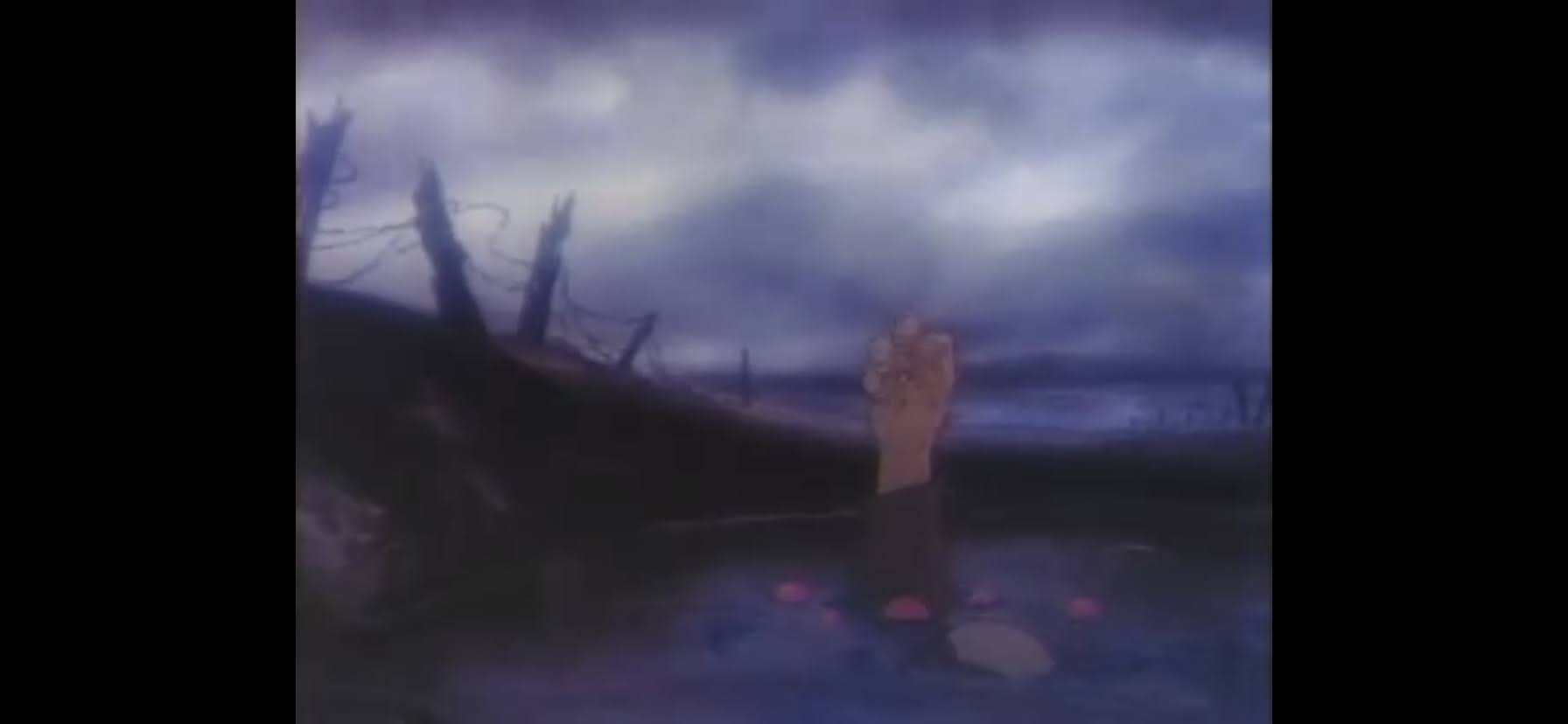
The children then ask what happened next and the grandfather confirms it was terrible. Just two men were left. We see one soldier aiming from inside a trench and another waist deep in a swamp. A gun shot rings out and the soldier recoils, but before he falls he’s able to squeeze off a round of his own presumably hitting the other. The swampy soldier then sinks to his demise.
The world belongs to them now.
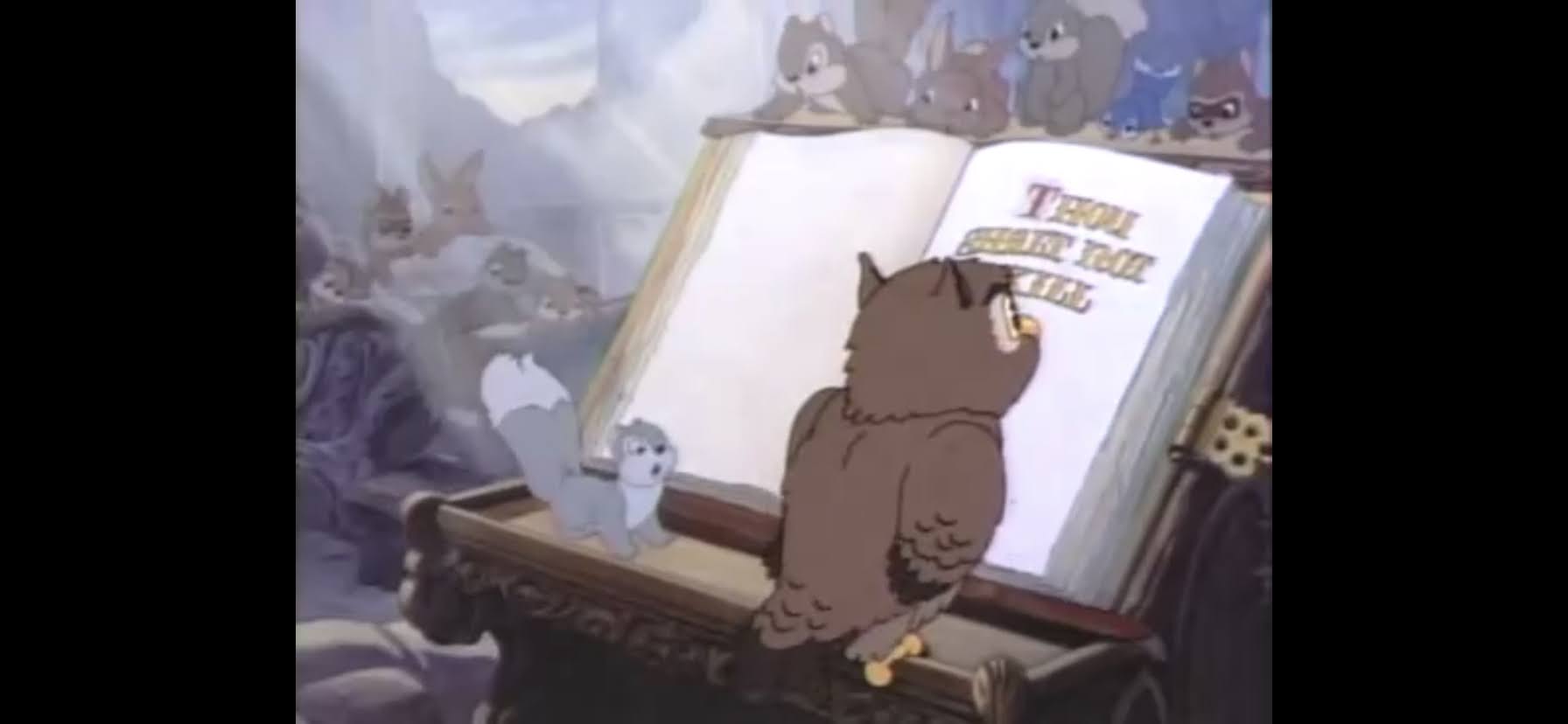
Among the tattered trees and desolation, the woodland critters poke their heads out. As they begin to explore the now man-less world, a mournful instrumental of the main theme plays. They soon flock to a blown out church and a younger version of the grandfather squirrel approaches a wise owl looking over a book. It’s a version of the Bible, likely the old testament, and when the squirrel asks what it says he reads aloud the commandment before him, “Thou shalt not kill.” He then flips through the pages and remarks that it seems like a collection of mighty good rules, but man chose to ignore them. He comes to rest on a page that reads, “Ye shall rebuild the old wastes.”
All right, we get it!
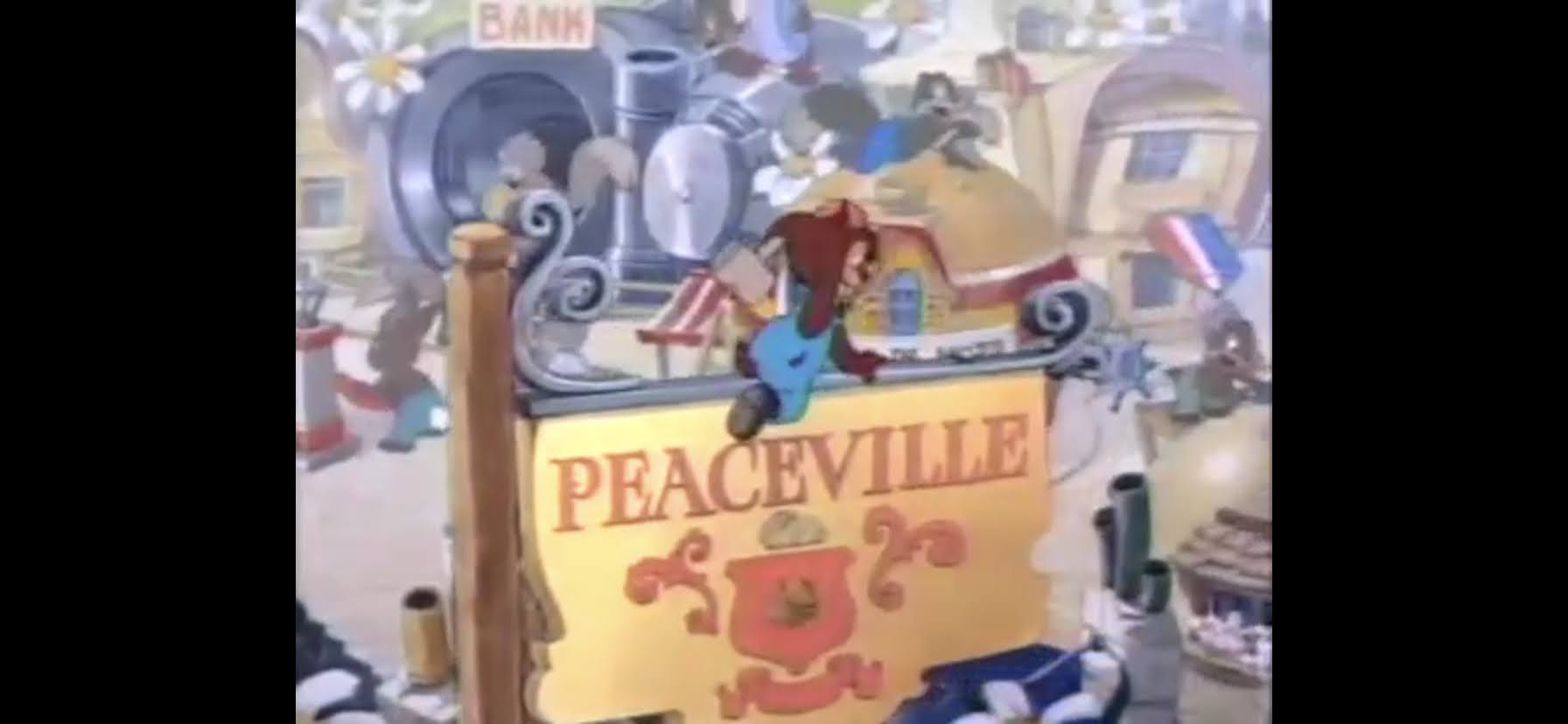
Upon hearing that, the other animals (which are basically all small mammals and a few birds) declare that’s what they’ll do. They’ll rebuild! They start picking up the wreckage left behind, mostly old helmets from fallen soldiers, and start building around them. The music picks up and the scene shifts to a brightly lit setting. The animals are now wearing clothes and utilizing tools to build their new society from the ashes of war. If you didn’t get the message of this short, the name of the town will drive that point home for you: Peaceville.
They fell asleep once they got past all of the killing.
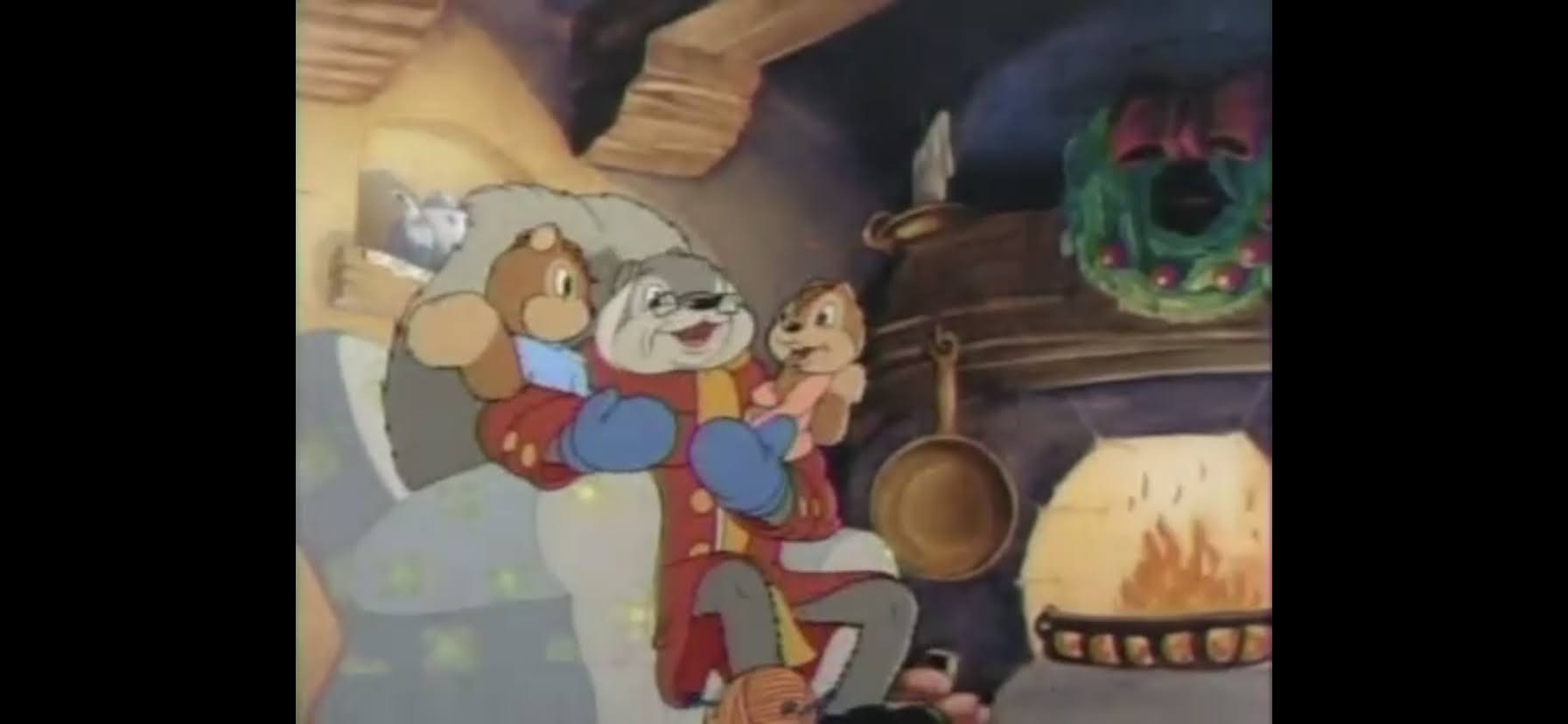
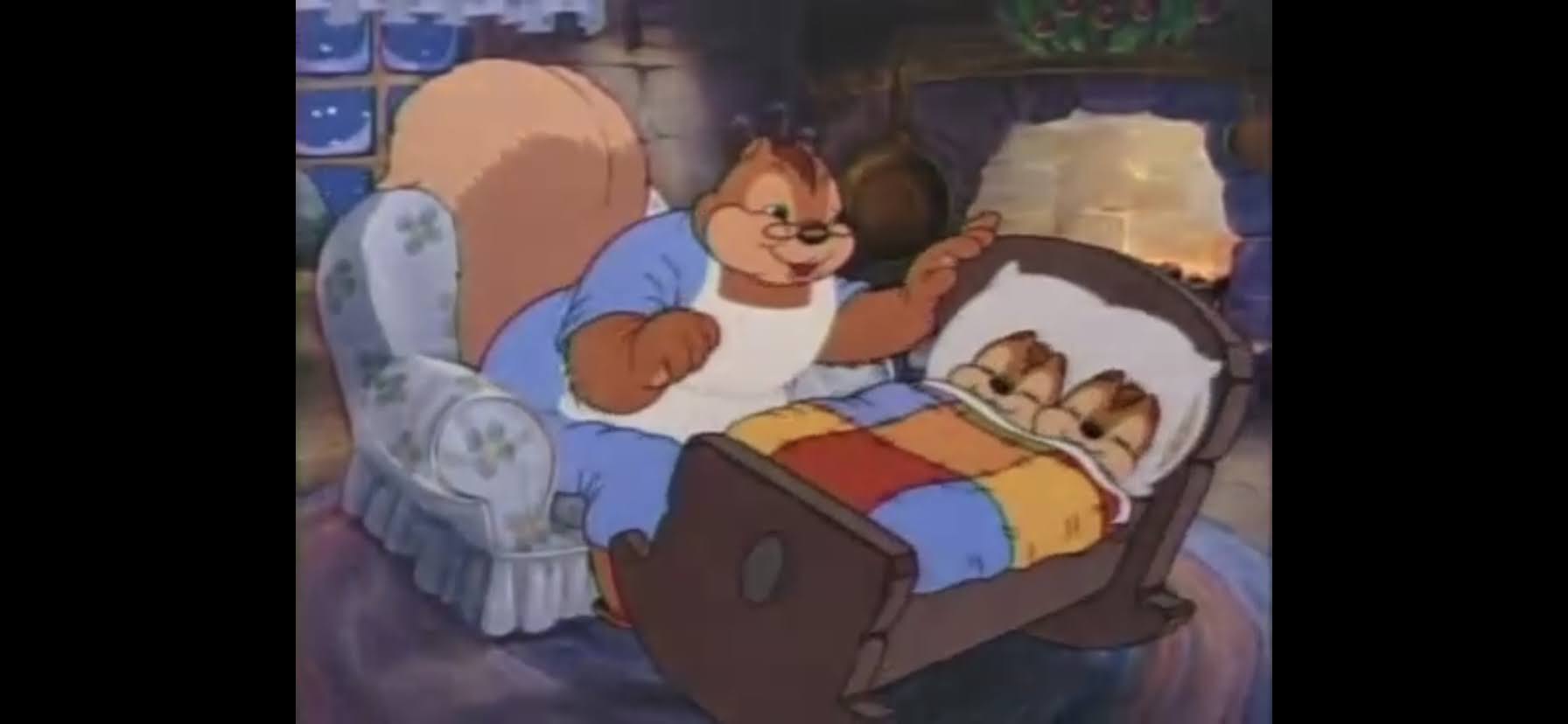
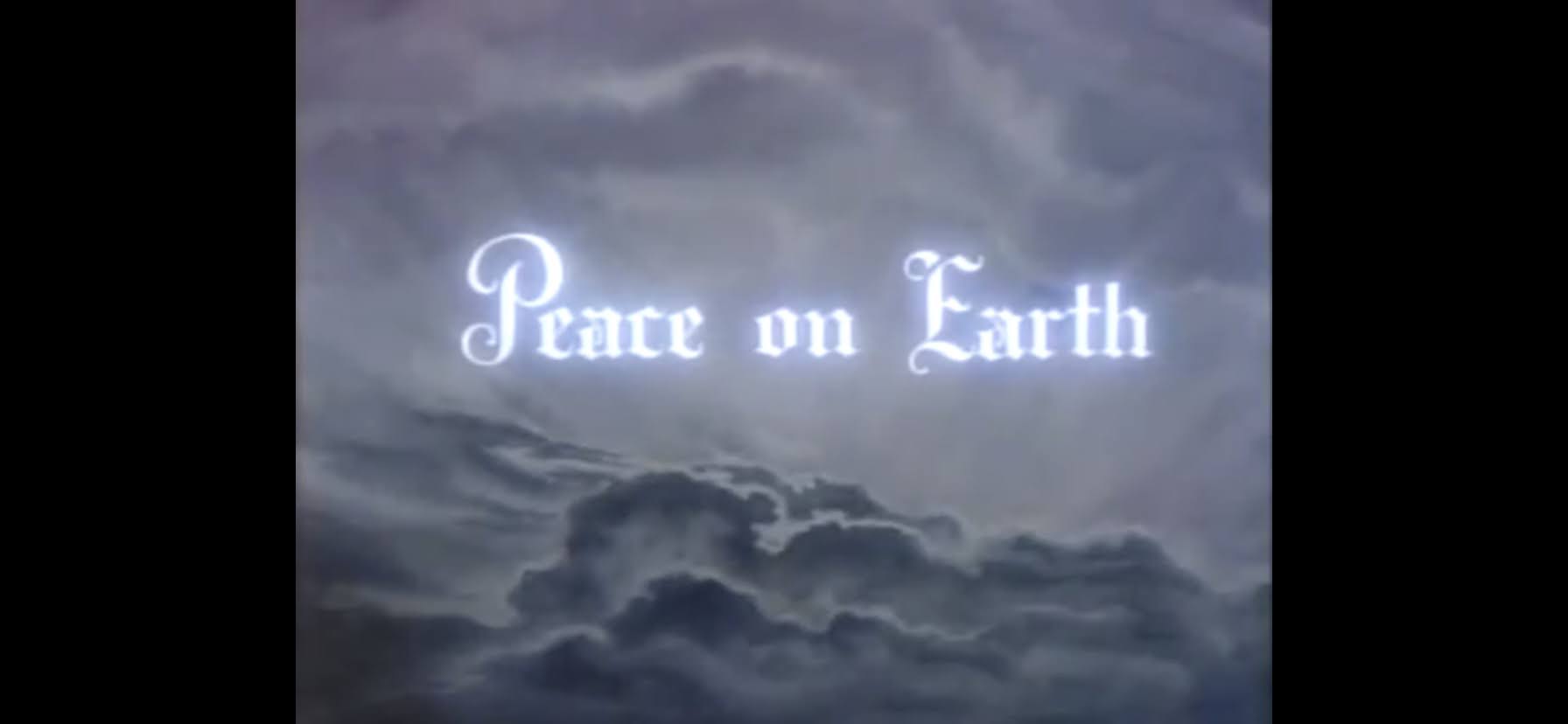
The camera pans over the animals building and it transitions to a shot of the town in the present day. The choir comes back in singing “Peace on Earth” and the camera pans across the town until it comes to rest on the little house where the story is being told from. The carolers then shift to “Silent Night” and the grandpa is shown sitting in the armchair with his grandkids in his arms fast asleep. He’s finishing his story, but before he can actually finish the line “Good will to men,” the mother “shushes” him. He smiles and puts the kids back in the cradle then he hobbles his way towards the door grabbing his hat along the way and reciting over and over to himself “Peace on earth.” He leaves, though without his cane, and the camera pans back over to the mother squirrel who finally gets a line, “Sleep in heavenly peace.” The image fades to one of clouds with the words “Peace on Earth” in the center of the screen. It fades out and we see the clouds with beams of light passing through them.
The mother finally gets to do something just before the thing ends.
That’s how Peace on Earth concludes its message. It’s a nakedly obvious message, but one that really can’t be refuted. The Harman directed short is able to sidestep most politics of the day by not depicting any one army and puts the failure of war squarely on all of mankind. The mood is sort of hopeful as we see the animals come together to build their own society, but at the same time it feels pessimistic since, you know, all of mankind had to die in order for peace to be achieved. It gives the short a time capsule feel as this was likely the mood of many a person as the world was on the verge of all-out war once again. The short also offers a solution in the form of the Bible, or church, which feels a bit dated now since it seems all of the worst people are backed by evangelicals in the United States, at least. The messages are still there, but few seem interested in following the basic tenants.
There certainly are some cutesy looking animals in this one.
It’s a nice sentiment that’s baked into this one, but it’s also pretty on-the-nose. It feels like “Oscar bait,” but at least that’s reflected in the budget. The animation on this one is Disney level. I am having a hard time thinking of many non-Disney shorts that look this good. Maybe some of the early Tom and Jerry stuff or the Chuck Jones early works that were deliberately trying to imitate Disney. The characters all have that round, soft, look to them which makes them pleasant to look at while the men are done in a realistic style. Some of their movements may be rotoscoped, but it’s hard to know for certain. The backgrounds are highly detailed, though they are a bit few. Especially in the scenes of war as many are recycled and they got a lot of a mileage out of that burning church background. I suppose it’s fine though since they look good and there are only so many ways to portray a darkened, war-torn, setting in an 8 minute short. The quality of the score also matches the production quality of the images as it’s very cinematic and often intense.
The short gets a lot of mileage out of this background, but at least it’s a good one.
I don’t know if Peace on Earth is worthy of being considered for a Nobel Peace Prize, but it is a good cartoon. It does straddle the line as far as taste goes so I can see it being too much for some who might respond in a cynical fashion. And I can also see plenty of folks finding it profound. For me, my response is more in the middle. It’s a sweet little cartoon and I enjoy the visuals, but it could use some subtlety as well. As a kid, there was a shocking element to the short for me the first time I saw it when it just tosses out that mankind is gone. As an adult, it’s less shocking and on my darker days almost seems likely. As a Christmas cartoon, I think it appeals more to the devout since the religious aspect of the holiday is pretty front and center without actually mentioning Jesus. The modern trappings of Christmas aren’t present, and that’s fine. We don’t need Santa in everything.
That’s the goal. It sure would be nice to live to see it.
If you want to check out Peace on Earth, MeTV will probably air it either on the show Toon in With Me or as part of its Tom and Jerry Saturday morning block. Considering today is a Saturday, it might air this morning or next Saturday. If you can’t catch an airing of it though, it has been preserved on the Internet Archive and can be streamed there as well as in other places. It’s not hard to find and these 8 minute shorts don’t even need to be as good as Peace on Earth to make them worth watching at this time of year.
Can’t wait until tomorrow for more Christmas? Check out what we had to say on this day last year and beyond:
One of the big, early, cartoon stars was Popeye the Sailor. Popeye starred in newspaper strips, radio plays, and theatrical shorts with contemporaries like Mickey Mouse and Bugs Bunny. His star has faded over the years, but few would deny Popeye’s place among the greatest cartoon stars of all-time. Come the 1960s though, Popeye and…
In the world of film, 1994 belonged to Jim Carrey. On television, 1995 belonged to TV shows based on those 94 movies. Well, not exactly, since all of the shows based on Jim Carrey movies made little impact, but like yesterday’s show I’d hesitate to call today’s subject a failure. The Mask began life as…
So it’s come to this. We’re doing Family Guy. I don’t mean to come across as a snob or some animation elitist (after all, we already did Robot Chicken), but I don’t care for most of Family Guy. That wasn’t always the case. When the show originally aired on Fox I actually liked it quite…
The early 90s saw an influx of cartoons produced solely with the intent to sell to cable networks. Previously, most cartoons were packaged from film or created for broadcast networks which would get the first run on major network affiliates and then gradually migrate to smaller stations. With cable becoming more affordable, it was fast becoming a home for original content and not just re-runs. In the early 90s, two of the biggest suppliers of cartoon programming for cable were USA and The Family Channel.
The Family Channel began as The Christian Broadcasting Network and was a satellite only option until 1981. Owned by Pat Robertson, the channel would grow in popularity and profitability through the 1980s, resulting in Robertson having to sell it or risk CBN losing its non-profit status. So sell it he did, but don’t weep for old Pat, for he basically sold it to his son who founded a new, for-profit, entity. They would eventually sell the channel again to Fox in 1997, and it was sold again to The Walt Disney Company in 2001 who still owns it to this day where it has been rebranded as Freeform. The last remnant of the old CBN Family Channel is that the network still carries Robertson’s show, The 700 Club, which was mandated as part of the terms of the sale. It now airs late at night at 11 PM on the east coast and contains a disclaimer before it that basically indicates the channel wants nothing to do with the content of the show, but apparently Robertson is satisfied.
The Legend of Prince Valiant is a surprisingly gritty, cartoon, portrayal of medieval war.
In the early days of The Family Channel, when the CBN had been annexed from its name, one of the cartoons it acquired the rights to was The Legend of Prince Valiant. Based on the comic strip of the same name by Hal Foster, the show aired from 1991-1993 and followed the exploits of Prince Valiant: a young man who lost his home to invaders, but found new purpose as a member of King Arthur’s Knights of the Round Table. It’s a story that starts off like a typical revenge fantasy, but becomes a story that’s more about emotional growth, friendship, and forgiveness. Being essentially an offshoot of The Legend of King Arthur, it’s not particularly hard to see why the show would be deemed suitable by the powers that be at The Family Channel. While the knights do not appear driven by Christ, there are plenty of opportunities for references to Christianity and the image of these fantastic knights certainly conjures images of The Holy Grail and the Crusades. Also not surprising is that it’s depiction of Merlin is as a man of science and the book who does not possess any actual magic.
What doesn’t stand out as particularly “family friendly” is the level of violence present in the show. In the early 90s, cartoons did start to get away with more as they moved away from over-the-top “toon” comedy and towards something a bit more grounded. In Batman: The Animated Series, which would premiere a year after this show, we started to see characters with realistic weaponry. Premiering shortly after that show was X-Men, and while that show went with lasers and such for weapons, it did famously kill off a character in the second episode while other characters openly used the words “die” and “death.” On The Legend of Prince Valiant, heroes and villains are routinely seen killing individuals. They rush into battle and bash each other with swords or fire arrows that actually hit their mark. The show does not get gratuitous with it though as there is little to no blood and most of the characters that die are nameless soldiers and barbarians. It’s always refreshing to see some level of realism in a show that involves violent confrontations (as opposed to a show like G.I. Joe), and the fact that this one was on cable likely allowed it to be as graphic as it was. The fact that it was on The Family Channel makes it a bit surprising, but hey, give credit where credit is due as I’m impressed the network was comfortable with the violence present. I’ve always felt it’s far more irresponsible to sell violence without consequences to kids, when not presented in an obviously unrealistic manner.
As part of the show’s second season we’re treated to a Christmas episode. Titled “Peace on Earth,” the episode is one about war, as the title implies. It’s not that different from the MGM short of the same name as far as theming goes, though obviously this one does not feature talking rodents. Many of the episodes in this show follow an arc, but several are also stand-alone. This is one of those stand-alone episodes which is not particularly surprising as many Christmas episodes of long-running series tend to do the same. This is good for me since I was not a regular viewer of this one. I recall the show’s existence, but something about it seemed dorky to me for some reason. Maybe it was just the title with the word “prince” in it causing me to think of the prince characters in Disney films, or it was due to my dislike of the other King Arthur themed show King Arthur and the Knights of Justice that came in ’92.
Not the setting I was expecting to start this one.
The episode begins with a look at space as a narrator tells us about Earth. In keeping with making The Family Channel’s Christian owners happy, the narrator refers to space as empty and desolate aside from Earth. He then starts musing about war and peace and how humanity risks destroying its home through war setting the stage for our story. I could not find a credit for this narrator, but it sounds like it could be Merlin who is voiced by Alan Oppenheimer. He sounds deflated as he refers to peace as a fool’s dream, but then triumphant as he refers to it as a dream worth dreaming about for there are heroes in our midst. We then see a young Arthur pulling the sword Excalibur from its stone and as the camera frames around it, it transforms!
Wait, which one is the bad guy?
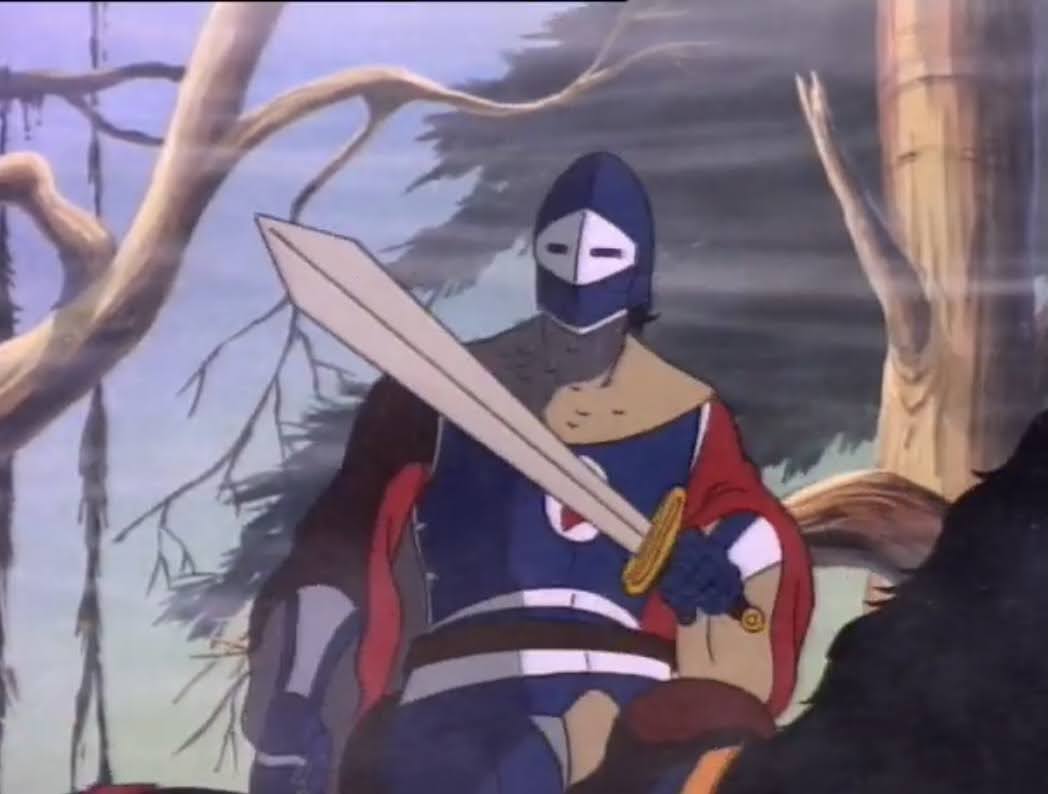
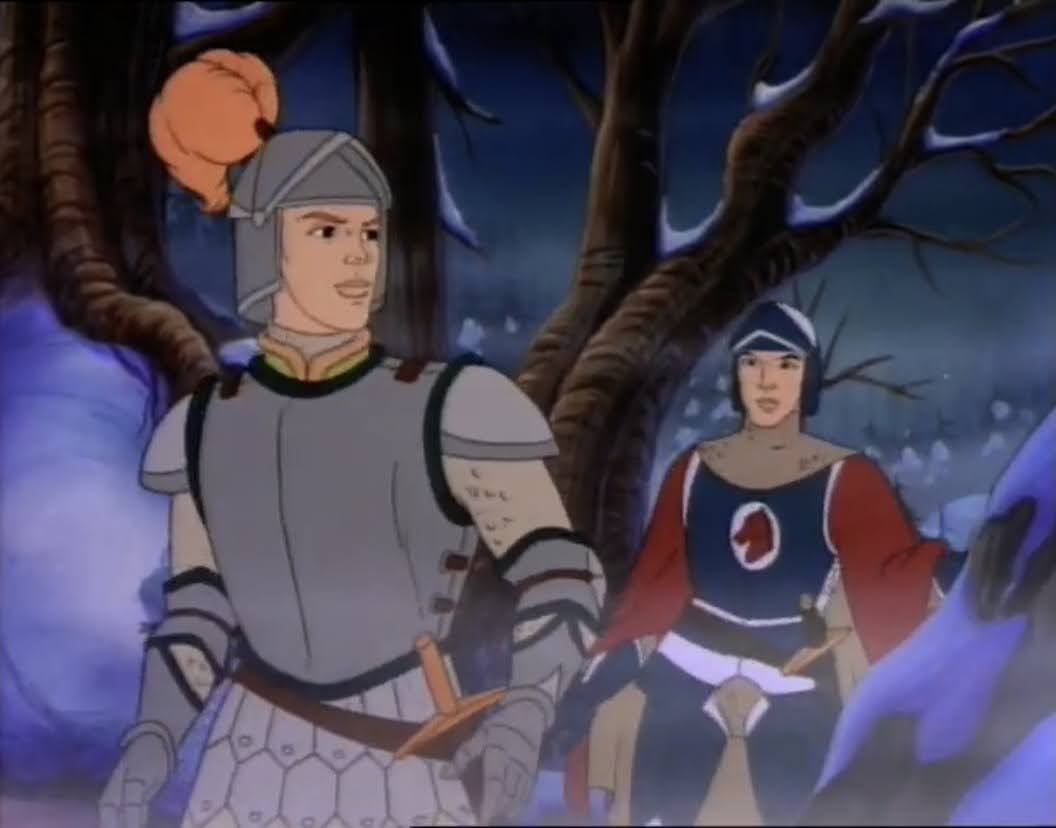
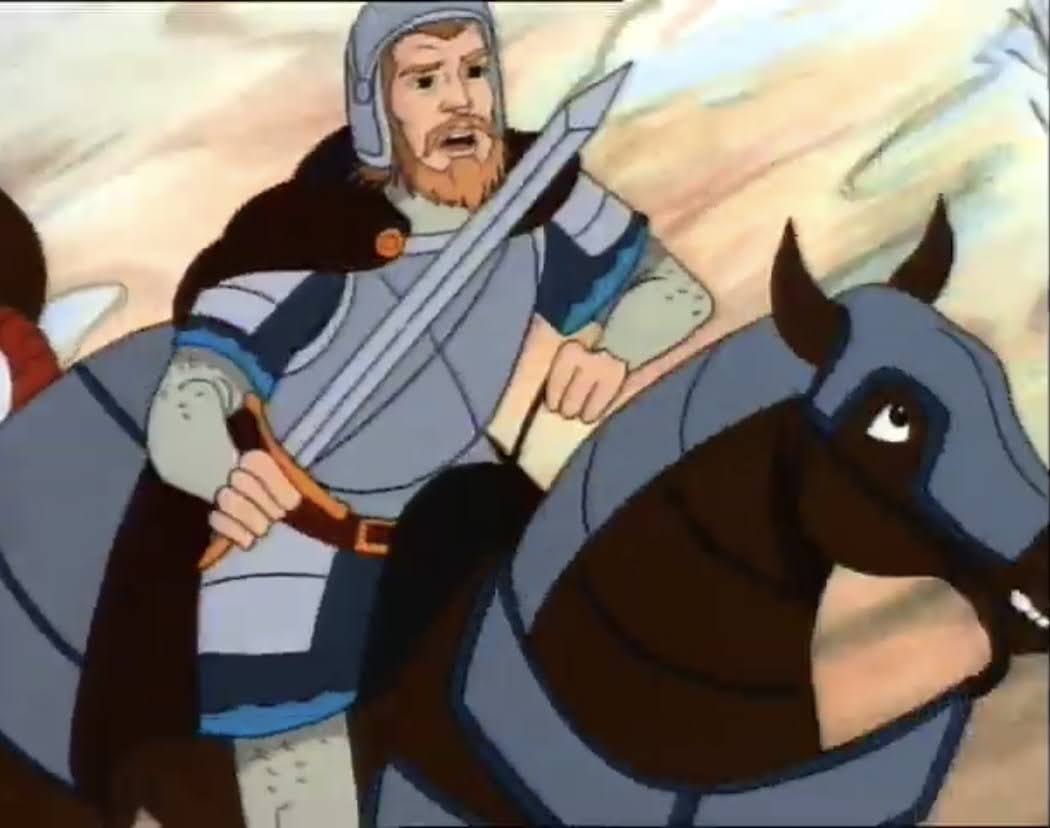
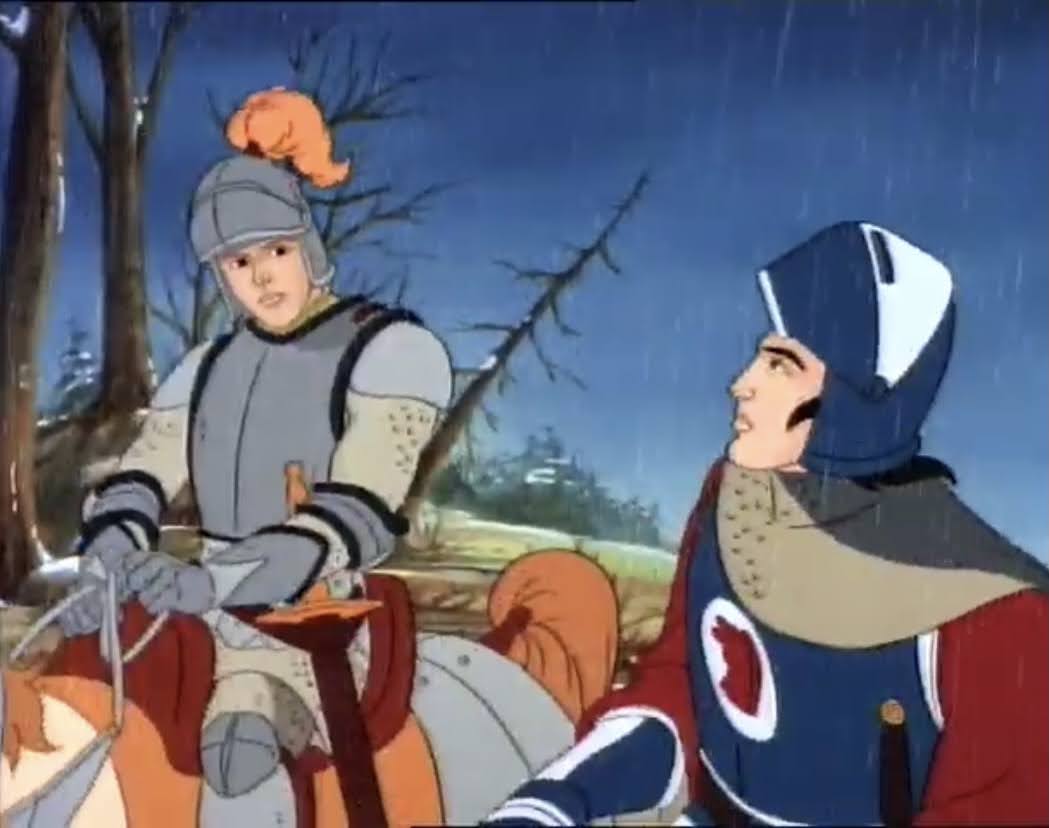
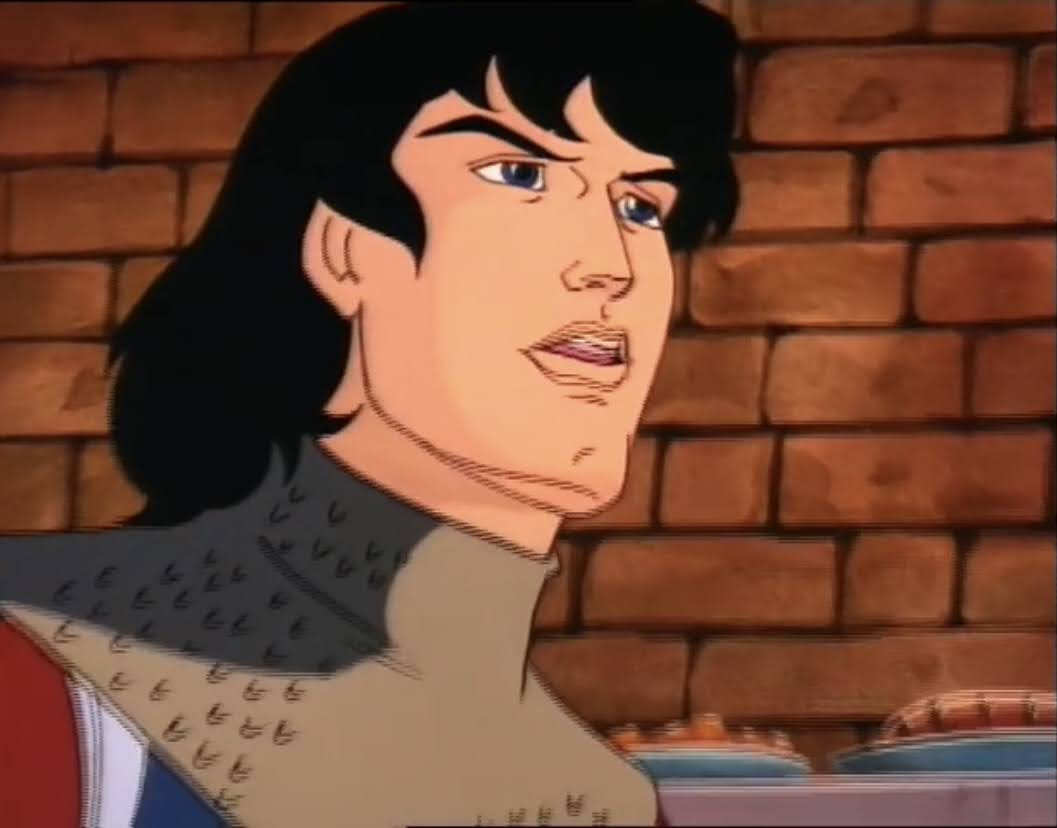
It transforms because it needs to transition to a new shot as it takes the form of Prince Valiant’s blade for he’s stuck battling barbarians. He wears dark blue armor and actually looks the part of a villain as he rides atop his horse hacking at men who apparently can’t afford armor or swords. They attack with spears and mace as Valiant (Robby Benson) is knocked from his horse, but saved by his companion Arn (Michael Horton) and Rowanne (Noelle North) retrieves his horse. Valiant thanks Arn for the help as the trio note the fog in this forest is so dense they can hardly keep track of each other. The other knights, Bryant and Gawain, are missing while the barbarians they were battling have fled. Rowanne decides they should regroup as well as she dismounts her horse and gives the beast some oats. She bemoans that she can’t believe they’ve been away from Camelot so long and notes she’s lost track of the days. It’s at this point Valiant informs us that it’s December 23rd providing Arn the opening to sarcastically remark, “What a lovely place to spend Christmas.”
For some reason we need to know what’s happening in Camelot throughout this one, even though it’s profoundly uninteresting.
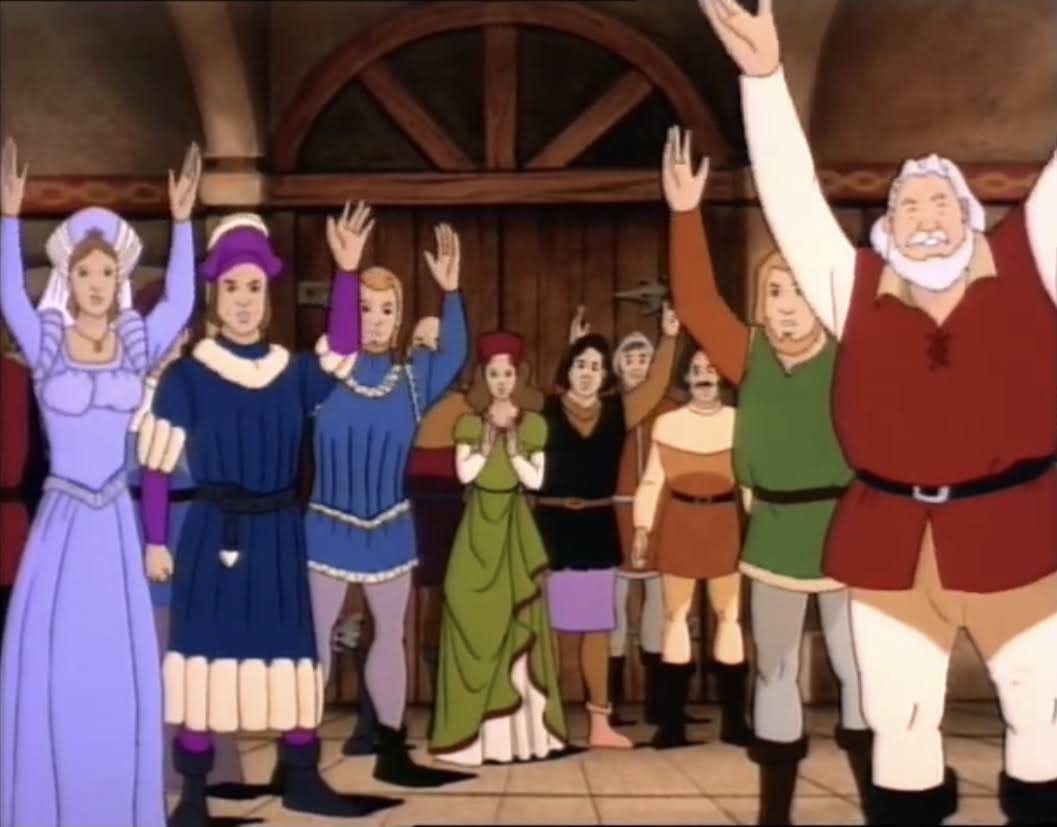
We then turn to Camelot, a far more joyous location. Townsfolk appear to be gearing up for the holiday as a couple kisses beneath a red plant of some kind (miss-colored mistletoe?) and the camera pans past a manger display, the most secular image we’ll see in this one. A little boy looks delighted by the sight, but his mother tugs him away as she must be raising him to practice something other than Christianity. We then see King Arthur (Efrem Zimbalist) and Queen Guinevere (Samantha Eggar) welcoming a priest followed by Lady Daniella (Sarah Partridge). It would seem the lady has arrived as an emissary from the region of the Misty Isles where a Princess Alita dwells, a romantic interest for Prince Valiant. It would seem Daniella is to spend Christmas at Camelot and she has a special message from the princess to deliver to Valiant and no one else. When she requests an audience with the knight, she’s informed by the king that he and the other knights are away assisting the people of North Gallis who are at war with Lindem. The queen remarks she’s hopeful that Valiant and the other knights will return in time for the Christmas celebration and then offers to show Daniella to her quarters. As the two women walk away, a young boy named Denys (Edan Gross) runs up to Arthur asking if it’s time to ring the bells. Arthur informs him that the Christmas bells shall not ring until Valiant and the knights return home safely. Denys seems rather disappointed by this, but Arthur encourages him to make merry and sees him off. He then grows a bit more melancholy himself as he remarks out loud that he hopes, and prays, for a safe return as the camera lingers on a church steeple. See, this show doesn’t need to expressly reference Jesus to get in plenty of Christian stuff.
I do appreciate a nice, gloomy, setting.
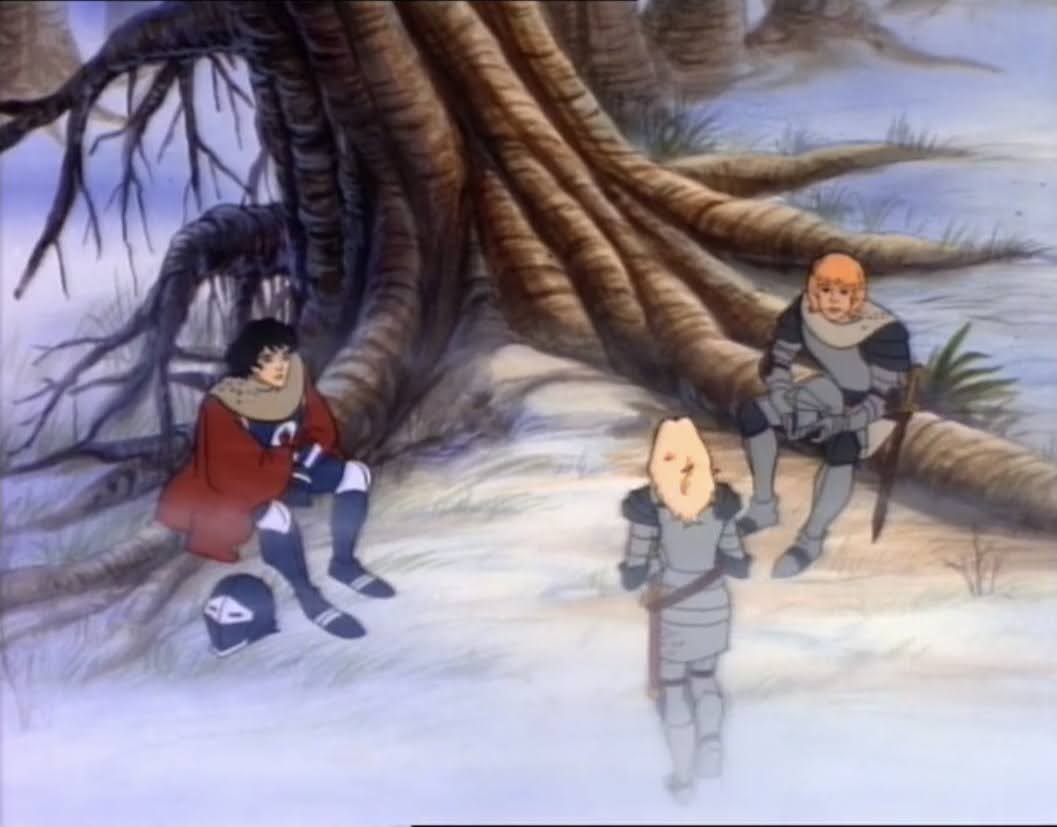
The image of the church fades to one of gray skies as we return to North Gallis. Valiant and Arn sit musing on the futility of war. Arn gets all poetic and remarks he believes the people of this region see the futility of it all as they lay dying at his feet. Cheerful stuff! Rowanne has walked off and returns with a helmet full of blackberries. It would seem they’re out of season and Rowanne refers to them as their own Christmas miracle. The knights eagerly eat the blackberries which must be saturated in Rowanne’s sweat and taste just delightful. I feel like I should point out, that this is definitely one of those shows that looks okay when no one is moving. Once the knights undertake even simple gestures, it basically looks like shit.
The way Valiant gets injured is ridiculous, but I do like how the show trusted the animation to demonstrate his sword arm was rendered useless as he’s forced to awkwardly battle with his left hand.
The knights are soon interrupted by the sounds of battle. They run to their steeds while Rowanne dumps their Christmas miracle on the ground so she can wear her helmet again. To just add a little extra drama, as they ride off to battle the horses trample the remaining blackberries on the ground. They should have just went all the way and made them raspberries so the juice left behind would better resemble blood. After a transition, the music grows more foreboding as we see a young kit emerge from its burrow. The mother fox quickly pulls it back into the burrow as five men go marching past. Elsewhere, Valiant remarks things seem too quiet to his companions as they slowly ride through the foggy woods. They approach a line of bushes that turns out to be a blind, for it drops and some barbarians emerge from behind it throwing rocks. Despite the rocks looking fairly harmless for a man in armor, one seems to hurt Valiant’s arm as another nearby blind drops and more men come running out wielding swords and sticks. Valiant discards his shield so he can switch to his left arm to wield his sword as he clumsily fends off attackers. He gives the order to retreat, and Arn and Rowanne seem happy to run away. As they do, Rowanne’s horse trips and throws her from its back. Worse, it lands on her leg leaving her trapped. As the tide of battle quickly turns, their fellow knights Gawain and Bryant finally show up to drive away the barbarians. We even see a flash of what appears to be pink blood as a barbarian gets cut down. As Rowanne reaches her sword, a man approaches and stands on her hand. As he raises a club he advises that she “Prepare to die,” but one of her fellow knights shows up to crack him in the skull with a club. As he slumps against a nearby tree, I notice the attacker had a sword on his belt, so why the club?
It turns out that Prince Thomas is quite the field medic.
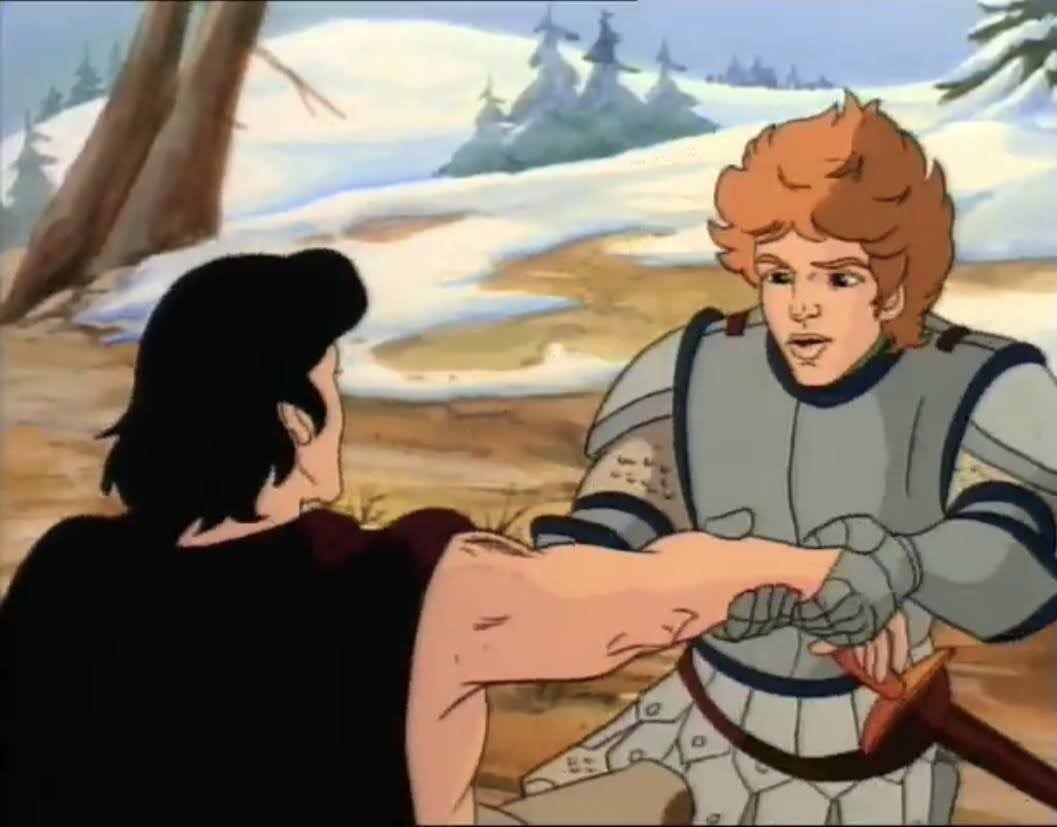
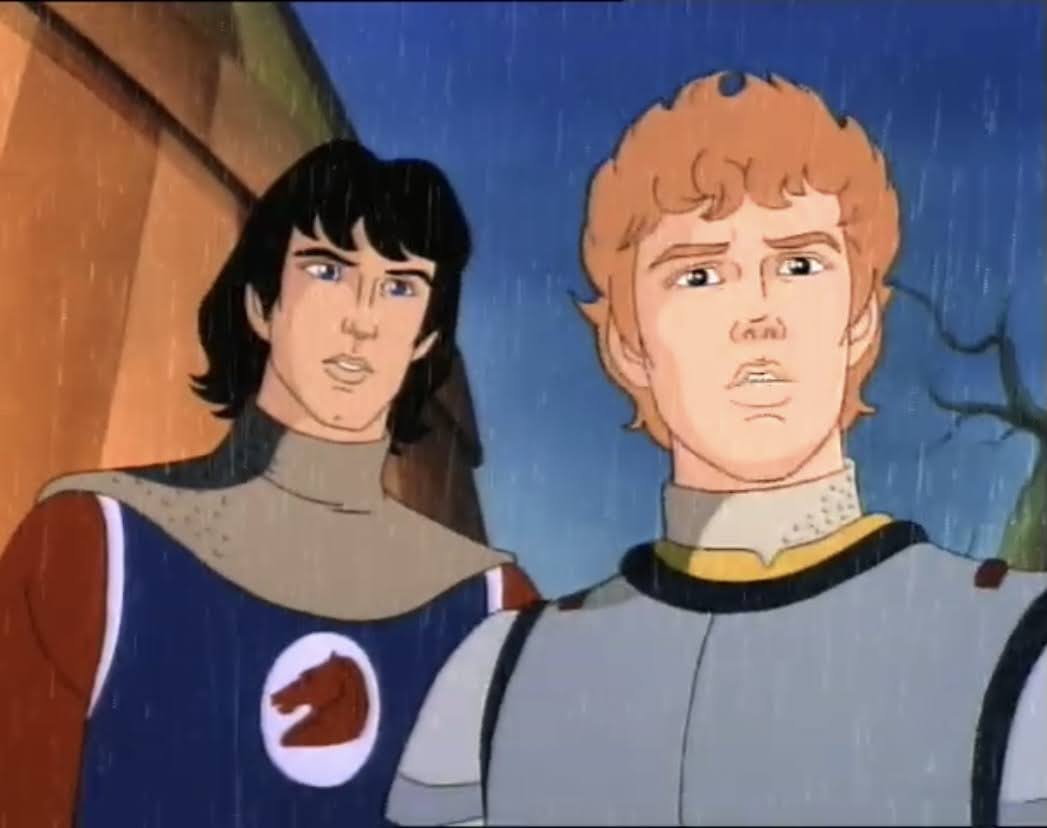
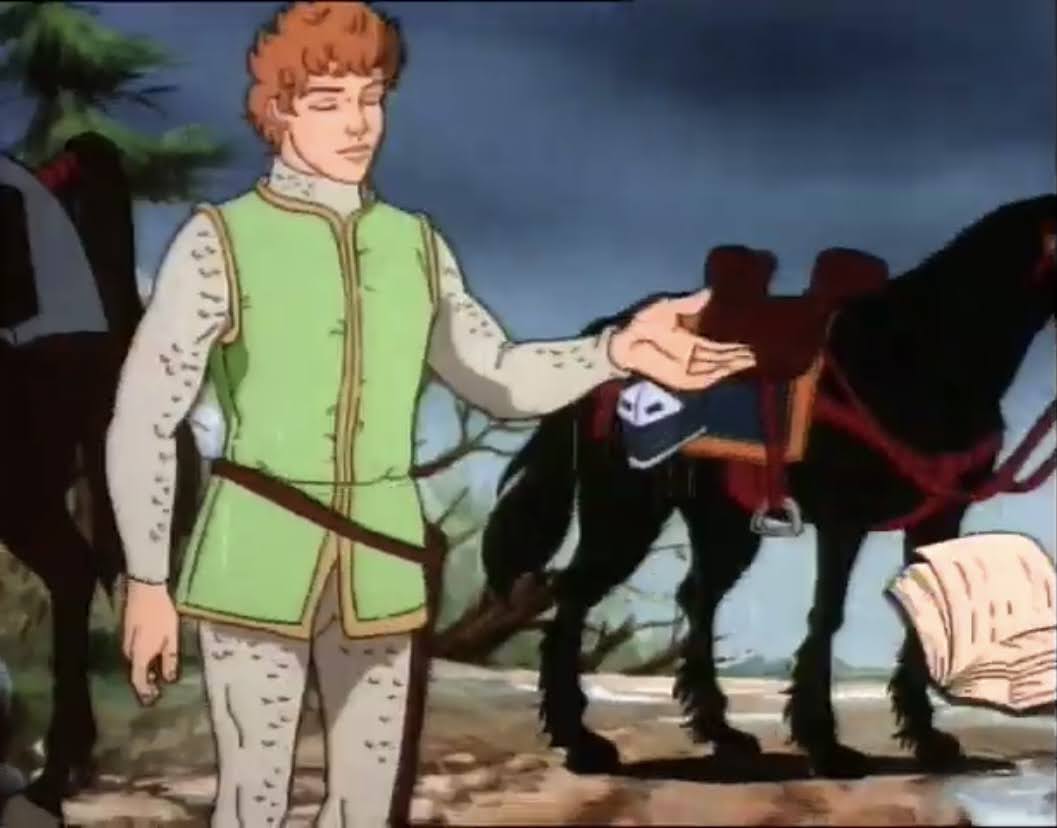
We’re then taken to a camp setting where Valiant and his companions are licking their wounds. Valiant informs Bryant (Dorian Harewood) that his arm feels limp and useless while Arn notes that Rowanne is lucky to have not broken her leg. They are then approached by the king of North Gallis, King Weldon (Mark Hamill), who introduces his son to them, Prince Thomas (Fred Savage). He was apparently the one who saved Rowanne and she thanks him, but is taken aback by how young the boy is when he removes his helmet. Thomas immediately takes interest in Valiant and notes that the knight has suffered a dislocated shoulder. Valiant apparently has no idea what that means and is surprised when the young prince pulls his arm out, but is quickly in awe when he feels it pop back into place.
The pot in the foreground wouldn’t be a problem if they didn’t have a character in the background interacting with it.
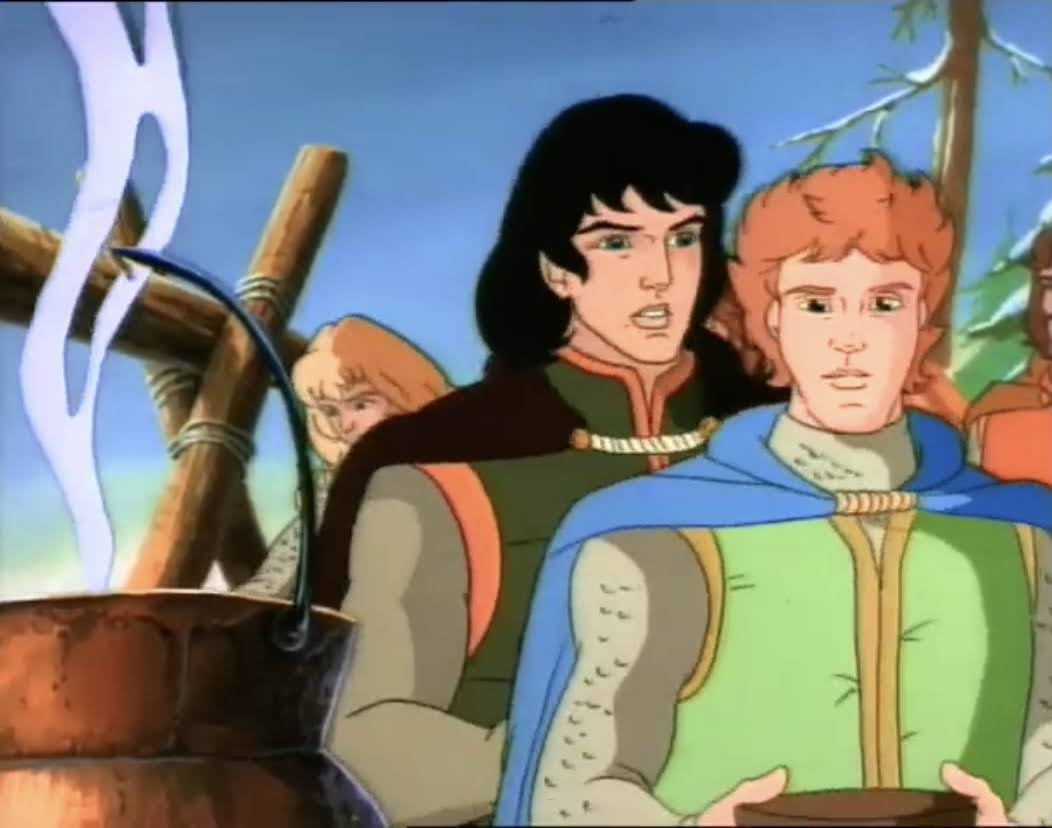
Thomas then leads Valiant around their camp and provides some backstory on the conflict that has been waging here for years. It would seem the people of Lindem aim to overtake the sanctuary, a church-like structure positioned above their camp. Inside the walls of the sanctuary is a relic and whoever possesses the relic rules over the land. Valiant is somewhat aghast at the notion that a mere object is what the people are fighting over. As the two scoop soup from a pot, I feel inclined to point out that the shot was incorrectly configured and the image of the pot was placed over the cel containing the characters. When Valiant and Thomas walk away from the pot towards the camera, they actually remain behind the pot which looks odd as other characters continue to take from it. Rowanne and Arn are then given another moment to yet again bemoan their fate on Christmas. To drive the point home that war is bad, especially at Christmas, the camera pans across the sullen camp and rests on a man laying on a cot. He appears to be feverish, and his hyperventilating visage is used to transition to a barbarian like man making merry.
Check out the sword on Merlin!
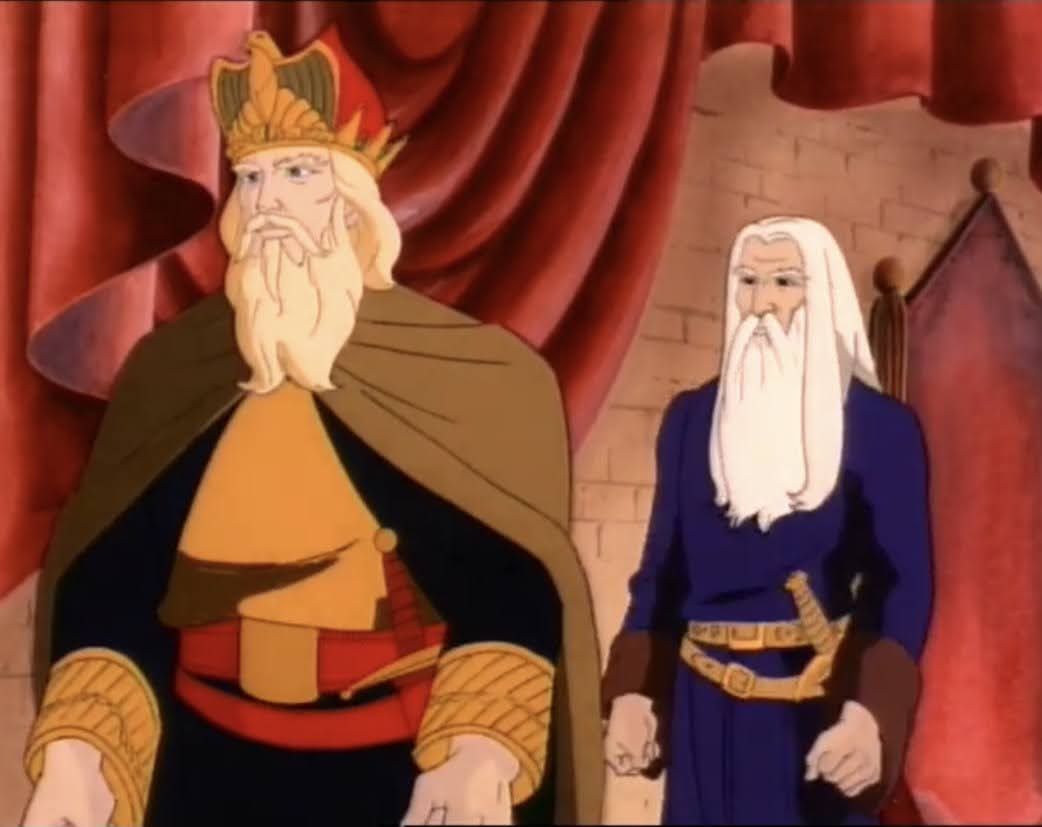
We’re back in Camelot and a celebration of the holiday is taking place in the castle. The barbarian dude is apparently a guest of Arthur’s and one probably enjoying his drink. Some guests are in costume, while others are not, but it is certainly a much different atmosphere from that of the camp. Lady Daniella is again speaking with the king about the whereabouts of Prince Valiant. She is so determined to deliver this apparently secret message to him that she’s willing to ride out to North Gallis herself, but the king won’t entertain such a notion. He continues to assure her that the knights will return in time for Christmas. As she takes her leave, Arthur confides in Merlin that it feels inappropriate to celebrate while the knights are in danger. Merlin then tells him that Christmas is important to the people of Camelot and reminds him that he drew Excalibur from its stone on Christmas Day. As he goes on about the holiday’s importance, he surprisingly fails to mention anything secular instead referring to it as a symbol of hope and one the people need. Arthur agrees, though feels the need to remind us that his knights are senselessly fighting a foolish war. Nearby, Denys gets the attention of Lady Daniella and informs her that he has a message from Prince Valiant for the princess. It seems Valiant wasn’t sure he’d make it home in time for Christmas, so he instructed Denys to give Lady Daniella a necklace he had procured for the princess. She’s happy to take it as the two hope for the knight’s safe return.
These guys are going to have many heart-to-hearts in this one.
In North Gallis, Thomas is leading Valiant to the sanctuary in hopes that showing Valiant the relic inside will perhaps allow him to understand why the two factions are at war with each other. The two talk and it allows Valiant to inform Thomas that the people of Camelot were at war like Thomas’s people currently are, but King Arthur put an end to that. He tells Thomas of Arthur’s creed that might does not equal right, and the young knight seems enthused by this. Before the two can complete the surprisingly frightful walk to the sanctuary, the droning horns of battle are sounded and the two are forced to return to the camp.
It just wouldn’t be a Christmas episode without a Christmas tree.
The droning horns are juxtaposed with brassy, cheerful, ones as we return to Camelot for the delivery of the castle’s Christmas tree. The large tree is pulled into the main square and erected as the people place candles on it (Christmas trees have forever been a fire hazard). Arthur, from a balcony, places a candle atop the tree and the animators make no effort to make this look plausible as it just sits there. He makes a brief speech about the lighting of the tree welcoming the Christmas spirit and he prays it will remain in their hearts forever. He declares “Peace to all,” and the townsfolk return the sentiment in a rousing manner. The camera lingers on the candle atop the tree, which fades into a snow-covered evergreen elsewhere.
This guy’s worse than Rickon Stark.
That evergreen is quickly fire-bombed as it is time for battle, and the music is appropriately suspenseful. It sounds very similar to something I’ve heard elsewhere, as we have synth stings to heighten the drama. Maybe it just sounds like something that could have been included on X-Men? King Weldon declares “Death to Lindem,” as he leads his forces to battle against catapult fire from the men of Lindem. Valiant, who rides with Rowanne, Arn, and Thomas, are under fire and Thomas tells them to follow him for he knows a way around their forces. They come up behind the catapults and take out the men there, as we see Bryant and Gawain rush into battle. Bryant tells Gawain to mind his flank, advice that would have been useful 10 seconds earlier for he gets sliced on the arm by an attacker. Another knight cleans up as Weldon races after the retreating men of Lindem. They discard torches as they flee into the woods which ignites the trees on the edge of the woods. Weldon brings his horse to a stop and looks up as a flaming trunk begins to fall. Rather than move, he just screams and lets the thing fall on him and his horse.
A more ruthless king would have the heads of those who defied him.
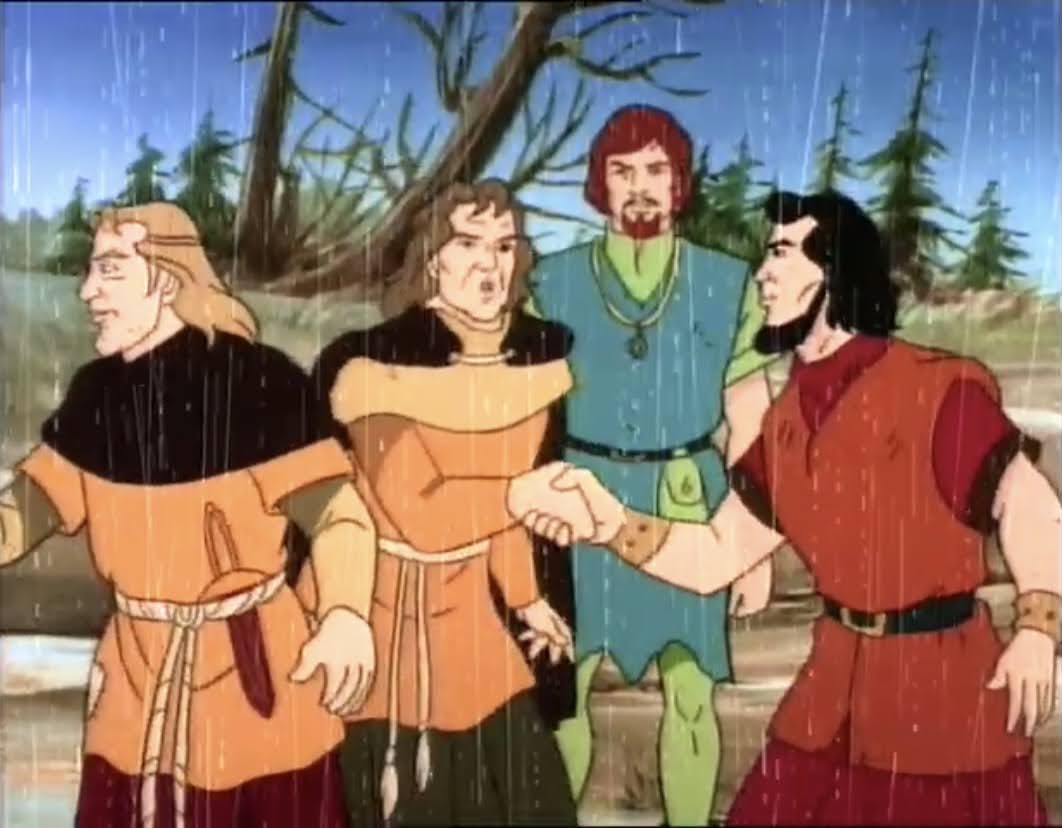
We are then returned to a gloomy camp where rain has started to fall. Thomas is shown at his father’s side, his body completely wrapped in bandages. The king apparently has succumbed to his wounds, leaving Thomas ruler of his people. As his men await their orders, Valiant informs Thomas that the path of battle is now his to walk. He and he alone can put an end to this constant state of war. Thomas is unsure and remarks that the ways of Camelot may not work here, but Valiant assures him that there is a path. Thomas then emerges from the tent to find a group of men thirsty for revenge for their fallen king. When Thomas informs them of his path of peace, they rebel and let their new king know that they will seek vengeance, with or without him. As they run off chanting death to Lindem, Thomas confides in Valiant. As Thomas walks away, Valiant tells him they must find a way to end this cycle of violence, or “God help us all.” They’re really making that CBN proud!
We return to snowy Camelot where the bells remain quiet still. Denys is in the tower looking out over the kingdom as Merlin enters. He asks the sage how it can be so peaceful in Camelot, but so violent elsewhere? Especially on Christmas Eve! Merlin tells the young man that war is an addiction and that some feed on the violence it spawns. When Denys asks how it can end, Merlin just looks up and asks “How, indeed?” Way to be useful, Merlin.
These two just can’t get enough of their little chit chats.
Under dark, rainy, skies, the people of North Gallis and Lindem prepare for battle. Arn, once again calling attention to it being Christmas Eve, wonders how this can ever end? Bryant doesn’t care as he just wants to see it end in battle so they can get out of this God-forsaken place. His words, not mine. He leads them into battle, but Thomas hangs back causing Valiant to pause. It is then that Thomas informs the knight that he can no longer be party to this ongoing mayhem. He intends to end it, but he needs Valiant’s help. Valiant reminds him that the people of Camelot swore an oath of allegiance to his father, which is extended to him. He is more than willing to help Thomas, but Thomas warns him he’ll need Valiant to risk his very life.
This show was fairly realistic until now.
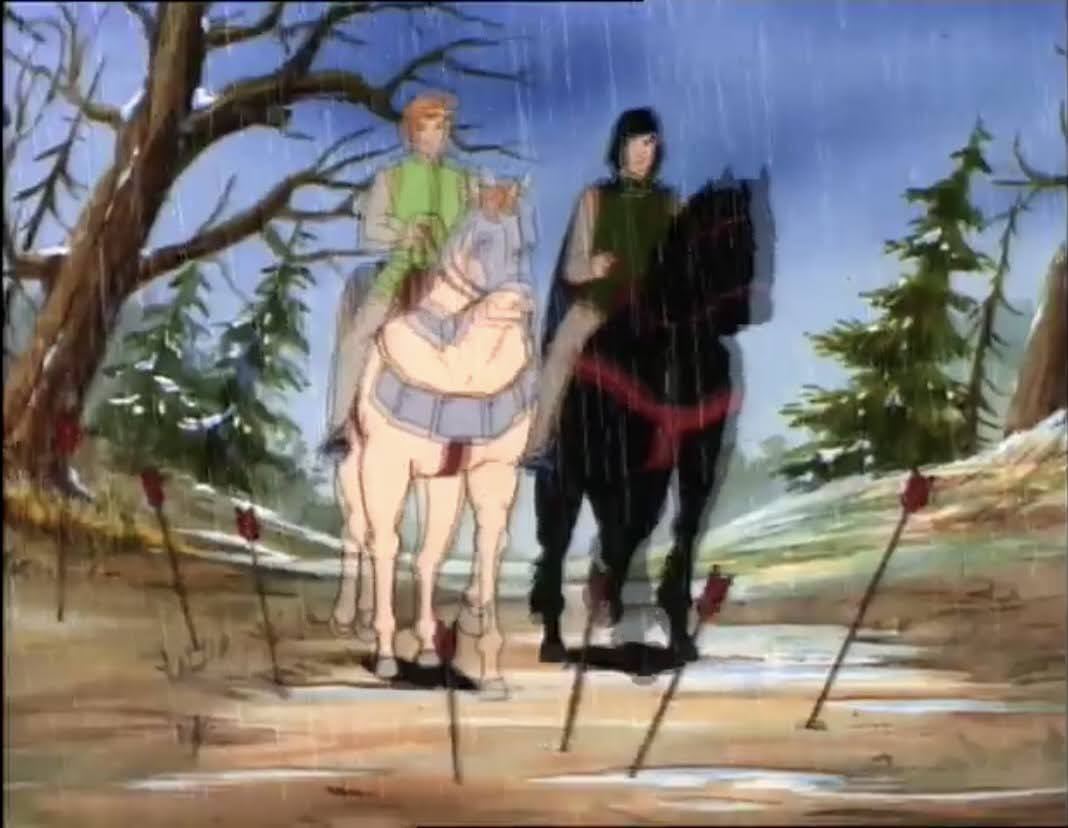
The battle has begun, and the people of Lindem are seemingly well-positioned with arrows. They launch volleys at the charging North Gallis knights. The melee units meet on the field as well bashing sword against shield with neither side appearing to have an advantage. The people of North Gallis have archers of their own which they use as an equalizer. On the outskirts of battle, Thomas and Valiant remove their armor and ride calmly into battle. Lindem fires at them, and everyone is apparently a terrible shot suddenly as every arrow misses its mark. When the two draw closer, the commanding officer instructs his men to hold their fire, noting they’re warriors, not murderers.
Oh great, it’s a book.
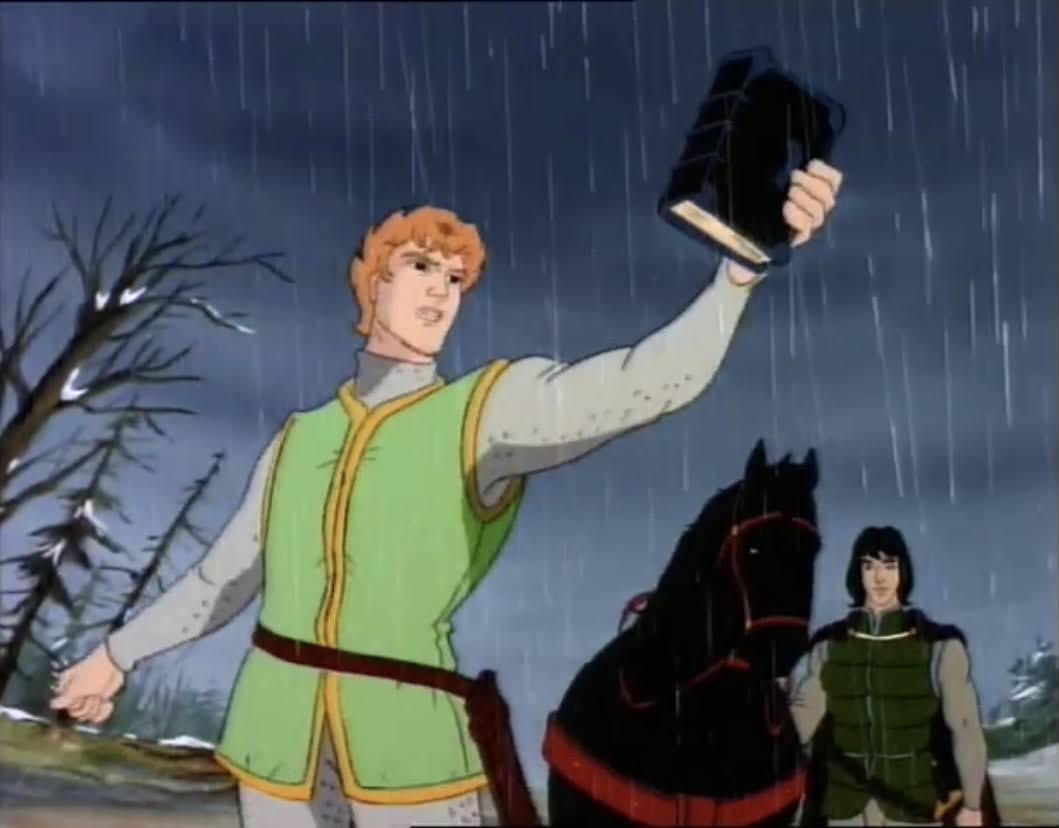
Thomas is then able to dismount and address the people before him. He calls to all of them to stop this violence and in order to do so produces the relic: a book. He remarks they’ve been fighting over this book for so long that no one can even recall what it says. He opens it to read a passage aloud, and I am totally expecting it to be the Bible, but it turns out it’s just a book with some very on-the-nose advice:
The symbolism is strong with this one.
People of North Gallis and people of Lindem, we have been at war far too long. Our soil was stained with the blood of the innocent. Our homes lie in devastation and our families are scattered and broken. And we’ve done it all in the name of this. A book. A book that has lain unopened for so long that no one alive today can even recall what it says, “Let it be decreed that this land belongs to no one king or another. That this land belongs to the people. And that it shall be the shelter and domain of those who dwell upon it, in peace.”
And now they’re all friends! Break out the ale, let’s sing Christmas carols!
Apparently, that’s all it took to end this war. Everyone appears moved by the simple expression of peace and they soon throw down their arms. The passage may not have been biblical, but it leads to a Church-friendly exchange as the warring factions shake hands and utter, “Peace be with you.” At the end of his reading, Thomas also casually tossed the book aside where it came to rest in the mud (maybe that’s why they didn’t want it to be a Bible) driving the point home that it’s foolish to allow a mere object to dictate who rules over another.
These knights know how to make an entrance.
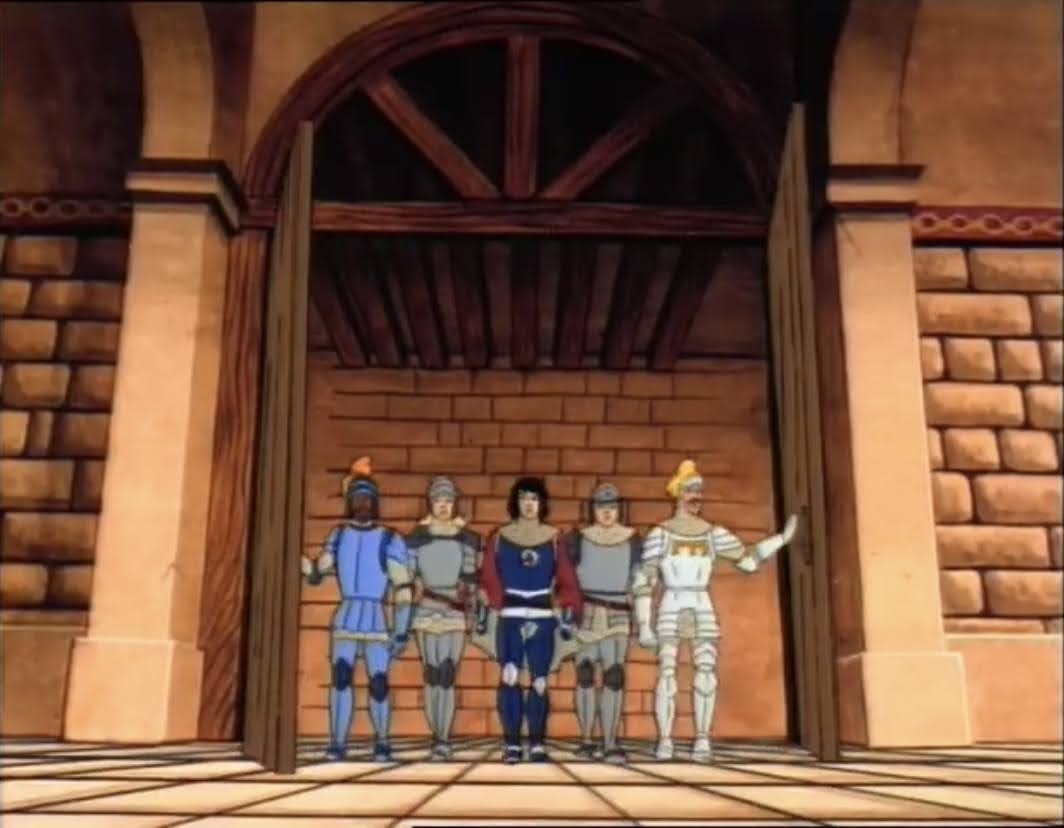
We then return to Camelot once more and it’s Christmas Day. The people are gathered for a slightly more subdued celebration. Lady Daniella approaches the king and queen and presents a gift to them, a statue, on behalf of the Misty Isles. She also extends the most useful gift of all, thoughts and prayers, for the safe return of the knights of Camelot. Right on cue, the doors to the ballroom open and Valiant enters with the other knights. He marches right up to King Arthur and drops to one knee informing the king he brings good news for there is, at last, peace on Earth. The people gathered around all cheer, and a juggler tosses a blue ball into the air which transitions to that of a planet, possibly Neptune. We’re back in space, and Merlin is musing on the subject of peace on Earth. He positions that if peace on Earth is nothing but a dream, then let us all be dreamers, one and all. The camera centers on Earth from the point-of-view of the moon and we fade to black.
He did it! He said the episode’s title!
I expected something melancholy with a touch of Jesus, and The Legend of Prince Valiant did not disappoint. The subject of peace on Earth has been associated with Christmas for generations, and for a show often set during times of war, it’s an appropriate premise for a Christmas episode. It does add quite a bit of the cliché sentiment of “Not at Christmas!” but I certainly wasn’t expecting this one to rise above that. There is perhaps a bit too much of it though as basically every scene in Camelot can be distilled down to that premise and a few filler scenes in North Gallis do the same. The episode, being only 22 minutes or so, isn’t long enough for this to get really annoying, but there certainly is a tiresome element to it. The secular elements are few and understated to the point that it might frustrate viewers looking for more Jesus in their Christmas specials to not see the special take it further. On the flip-side, there’s not enough of it to truly discourage those who don’t want that in their entertainment.
It’s hardly gratuitous, but it’s surprising to see how much violence is present in this show.
What allows “Peace on Earth” to be a bit better than the standard fair is the production and the violence the show is known for. Now, when I say production, I’m mostly talking about the sound design. The animation, done by Sei Young Animation Co. Ltd, is nothing special. It’s probably below average for the era, but I don’t mean that as a slight against Sei Young for I assume the company didn’t have a huge budget to work with. The music though is quite well done and was handled by the duo known as Exchange (Steve Sexton and Gerald O’Brien) while the voice cast is really quite excellent. Robby Benson finds a nice balance between corn and sincere for the very earnest lead character, Prince Valiant, while the rest of the cast finds the right tone for even the lamest of lines. I really enjoyed Efrem Zimbalist as the stoic King Arthur while Fred Savage was a nice surprise in the role of Thomas. The script isn’t particularly good, but the actors treat it like Shakespeare and do an admirable job of selling the story’s sincerity.
It’s a slightly irregular special, but it still has a happy ending.
As a Christmas special, this one is certainly a bit different than others. The theme of peace isn’t really as explored as some others, though there is another subtext that’s essentially “home for the holidays,” but it’s definitely not emphasized as much as the premise of peace. The episode either ran out of time, or the writers decided whatever holiday message Princess Alita had for Valiant was not important in the wake of peace being brokered between the warring factions of Lindem and North Gallis. I likened this one to the classic holiday short Peace on Earth early on and I wonder if it’s that short’s near perfection that causes others to avoid the subject. Who can really get the message across better? Prince Valiant certainly doesn’t, but it’s not without value. The eventual resolution isn’t particularly satisfying, but it had to be wrapped-up somehow. At least there was a price to pay for peace, though as viewers we’re hardly allowed to care about the life of King Weldon, so that lessens the cheapness of it all. It would have been a bit too grim to have the young Thomas give his life in sacrifice to achieve peace, so the book thing is fine.
The Legend of Prince Valiant is a mostly forgotten cartoon series, but it’s not uninteresting. The entire series is available on DVD and also streaming for free on YouTube. This definitely is not the prototypical Christmas episode that puts one in a happy, celebratory, mood, but it’s okay. I wasn’t that enthused about diving into this one, but I came out of it not regretting my time with it. If you want to see some mostly nameless men die for peace in the name of Christmas, then this is the one for you.
Can’t wait until tomorrow for more Christmas? Check out what we had to say on this day last year and beyond:
After doing write-ups for the two cartoons inspired by Jim Carrey films from 1994, you must have figured I’d do the third today! Just as Carrey stormed the cinematic gates with Ace Ventura: Pet Detective, The Mask, and Dumb and Dumber in ’94, the television world followed suit in ’95 with an animated series based…
There was a huge demand for cartoons in the early 90s. Cable was expanding and needed content for all ages while a new broadcast network was also making noise. That network was Fox, and after scoring primetime hits with Married…with Children and The Simpsons, the network started to look at other areas where it could…
For today’s installment, we’re taking a trip back to Cartoon Network of 1997 and the animated short I Am Weasel – “Happy Baboon Holidays.” I Am Weasel originated as a segment as part of the Cow and Chicken show, which was part of the second wave of Cartoon Cartoons to become a full-fledged show. Like…












 The Nostalgia Spot