

When Batman: Arkham Asylum was released in 2009 it ushered in a new era for the caped crusader where video games were concerned. Prior to that, Batman had not had a good video game in a long, long, time. Depending on your opinion of his efforts, you may have gone all the way back to The New Adventures of Batman and Robin for the Super Nintendo, or even further back to the Sunsoft classic Batman for the Nintendo Entertainment System. His outings on the PlayStation and Nintendo 64 weren’t particularly memorable and he all but skipped on the PlayStation 2 era. The low point may have been the cancellation of the The Dark Knight video game tie-in as it felt like DC throwing up their hands and saying, “We can’t make this work with Batman.”
Rocksteady Studios was up to the challenge and Arkham Asylum proved so good that Sony basically ripped it off for its successful Spider-Man video games. Rocksteady was able to craft a simple, but relatively malleable, combat system for Batman that had some challenge, but mostly succeeded in making the player feel like they were playing as Batman. Random thugs weren’t going to get the better of Batman unless they were in mass quantities and heavily armed. The one-button attack system made handling Batman a breeze and the stealth elements added on top of that complemented the action well. If there was one critique, it was that the environment was a little closed off so for the sequel Rocksteady gave Batman run of the city. Arkham City was more of a sandbox game, but mostly played the same. Boss encounters also had more variety and many still view it as the pinnacle of Batman video games.
For the sequel, Rocksteady bowed out. Enter WB Games Montreal which crafted Arkham Origins for release in 2013. The game was mostly well received, but not as enthusiastically as its predecessor. WB Games Montreal did receive praise for largely carrying forward the game mechanics fans had grown accustomed to and the franchise continued to roll along. Developed alsongside that release, was Arkham Origins Blackgate. Blackgate was the handheld version of the game released on the PlayStation Vita and Nintendo 3DS. Development on Blackgate was entrusted to Armature Studio which had cut its teeth previously on the Metal Gear Solid HD Collection also released on the Vita. Blackgate would be the studio’s first original game and it too was released in 2013.
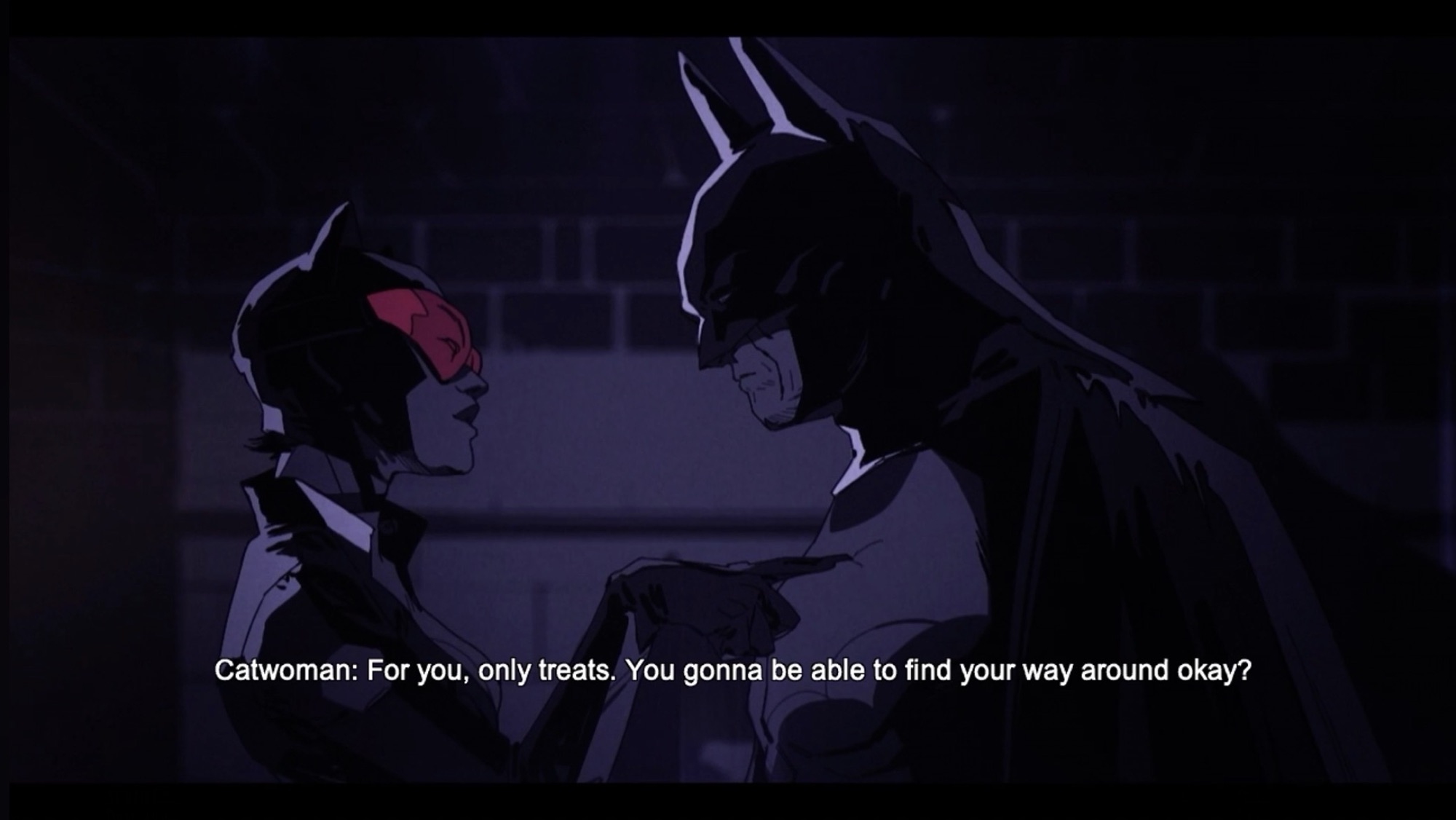
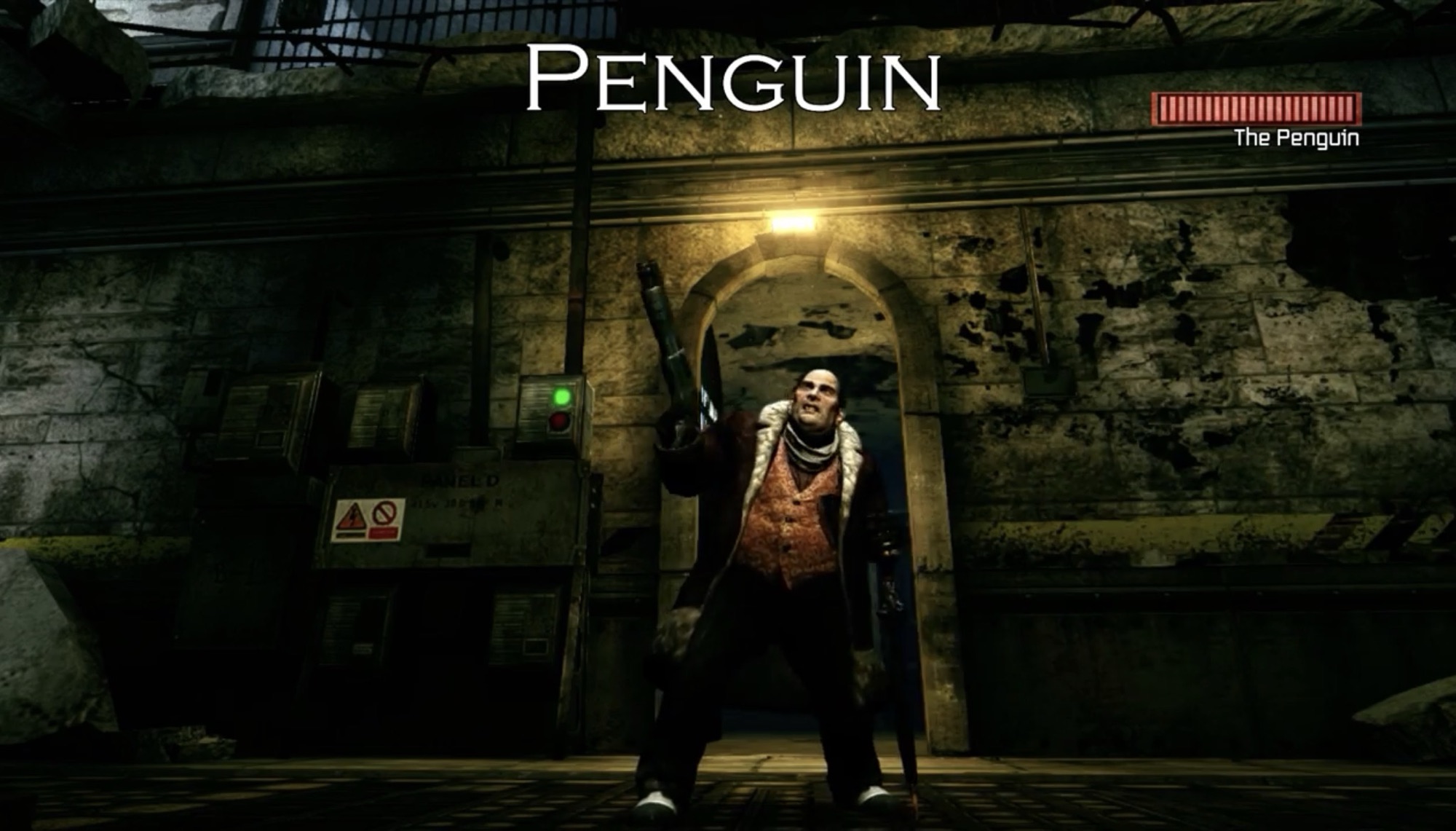
When Blackgate came out I was instantly intrigued. As an owner of the PlayStation Vita and the 3DS, a portable take on the Arkham series of games held some appeal. Blackgate also wasn’t a direct port of any of the console games. It was its own thing and is technically a sequel to Arkham Origins as far as plot goes. Batman (Roger Craig Smith) encounters Catwoman (Grey DeLisle) at the start of the game which serves as the tutorial mission. Shortly after, there’s a prisoner revolt in Blackgate prison and Batman heads in to investigate. Three of the biggest crime bosses in Gotham: Joker (Troy Baker), Black Mask (Brian Bloom), and the Penguin (Nolan North), have taken over and each rule over a segment of the prison. Catwoman is also there, but willing to aid Batman in helping to free the hostages the criminals have taken and ultimately save the day. Batman will have to explore Blackgate in a non-linear fashion acquiring various gadgets to help him progress through the prison.

I did not play Blackgate in 2013, but always wanted to. Recently, I had a chance to rectify that and I was intrigued by what I found. I know I read reviews in 2013 for the game and ultimately passed, but what I had read I had mostly forgot. What I did know going in was that Blackgate was a 2.5D action game. The environment and character models are all rendered in 3D, but gameplay is largely restricted to a 2D plane. There are some moments in the game where Batman can move into the foreground or background, but they are few and far between. Other times the environment will curve or swing into either the foreground or background, but having Batman just walk in a straight line will cause him to just follow the path. It’s also what the cool people on the internet refer to as a Metroidvania. That’s a non-linear action title that plays in a style similar to Metroid and the nonlinear entries in the Castlevania series.

Despite the perspective change, Blackgate plays a lot like its big brother on the home consoles. The systems are largely still intact. When it comes to combat, the player is encouraged to chain attacks together with just the press of one attack button. There’s a separate parry button with onscreen indicators for when to use it as well as the ability to perform a cape stun maneuver. Successful attacks continue the chain as do successful paries. Early in the game, enemies will likely be a cakewalk, but tougher ones are introduced later that either have weapons or a means of defending themselves. For criminals armed with firearms, Batman can’t take them head-on. For those enemies you’re expected to play it sneaky either via alcoves high up or by utilizing passages in the ground. Batman can perform stealth takedowns when in the proper position and they are preferable to running in Leroy Jenkins style.
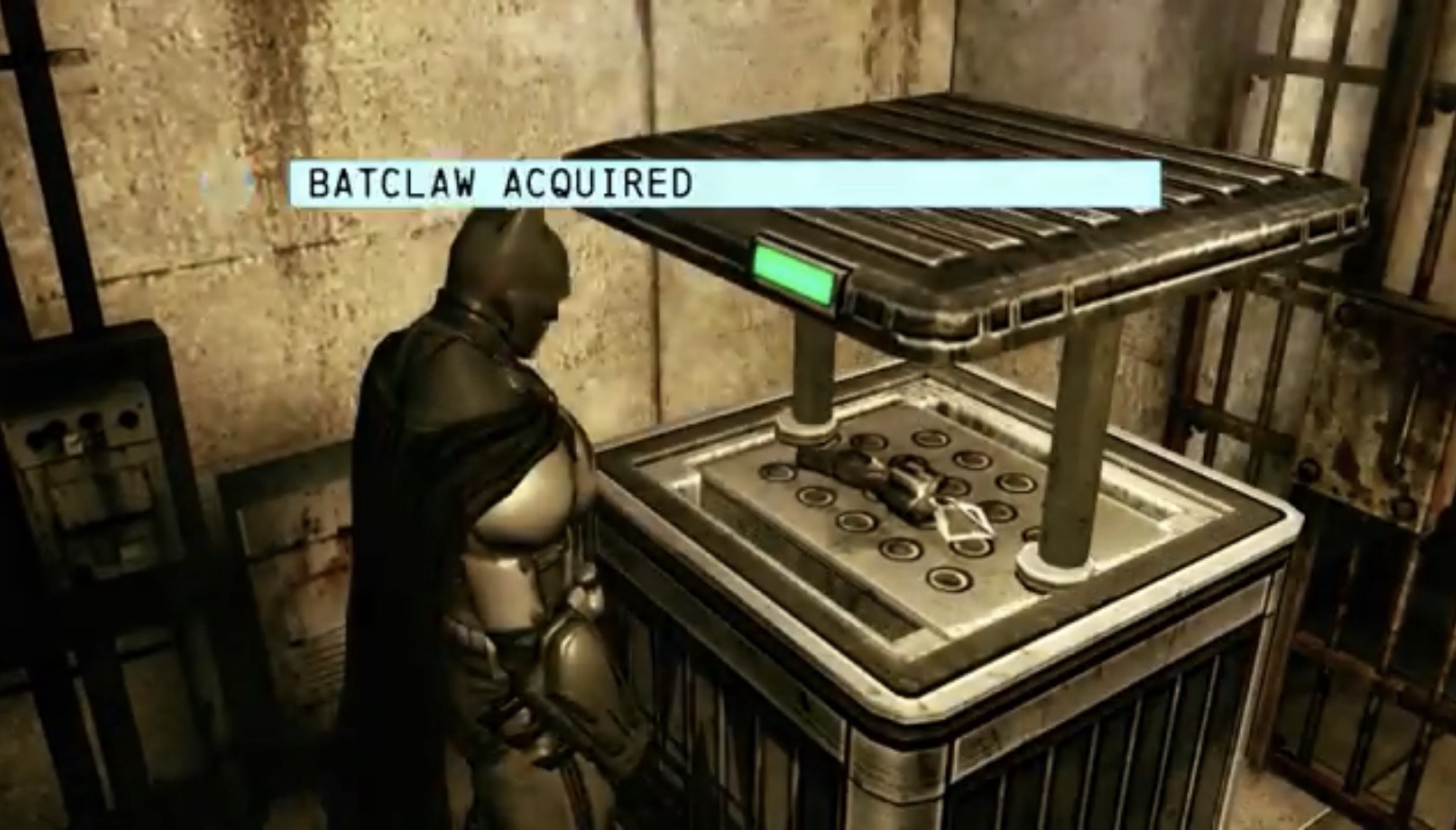
As Batman makes his way through Blackgate, he will encounter gates that prevent him from progressing deeper. In order to progress he will have to either upgrade his hacking device or uncover a new tool. At the start of the game, he is only armed with a Batarang and grapnel gun, but along the way he’ll acquire the Bat Claw, the line launcher, and an explosives gel gun. The claw allows Batman to pull down things like vent covers while the line launcher lets him cover long gaps and even opens up the background and foreground elements to a degree. The explosive gel can only be used on specific spots to blow holes in the environment. At any point Batman can also enter Detective Mode as he can in the other games which can reveal weak points in walls and other secrets and help Batman progress. The three boss characters can be encountered in any order and as such it means there aren’t any items tied to any of them. Most just require you to use Batman’s base abilities in a certain way to clear the encounter. Also hidden throughout Blackgate are weapon and armor upgrades, new costumes, and collectibles that just add a little extra length to the game. One playthrough takes about 7 – 8 hours and the only reason to go back is to defeat the boss characters in a different order to unlock another costume.
Playing through Blackgate is largely an enjoyable experience, but there are some quirks that hamper things. The locked perspective takes away the ability for Batman to just point and shoot his grapple gun and can make navigation a chore at times. There is one area in particular where Batman has to deactivate a bomb with a timer on it and I could see where I needed to go, but the rules of the game wouldn’t let me just go there because it was in the background. A lot of context items are all assigned to the X button as well which can get clunky when you don’t want Batman to interact with the environment. X also makes Batman run so you can imagine how that might get in the way. Blackgate is also broken up into different maps and navigation can be a chore. The map system isn’t particularly intuitive and it’s also locked to the menu screen so you constantly have to refer back to it. Batman also can’t simply exit a section and has to work his way back to an exit which gets very tedious. There is no fast travel system. There’s not a lot of variety to the scenery, though apart from that the game generally looks and runs smooth. Story advancement is done with stylized still image cutscenes, but fully voiced which might feel like a downgrade for the handheld, but I honestly didn’t mind. Voice acting is strong while the overall sound design is fine, though a bit repetitive. Music is a little sparse, but it suits the vibe of the game.
Back in 2013, I passed on Blackgate because the reviews were just kind of ho-hum. No one seemed impressed by the game and since there was Arkham Origins available for the main console experience it probably made Blackgate seem worse by comparison. More than ten years removed from that environment, Arkham Origins Blackgate plays like a slightly different sort of game and it’s honestly pretty fun. It probably drags on a little too long as it feels like that 8 hour runtime is padded out by lots of backtracking. Repeat playthroughs would certainly go much quicker, but there’s really no reason to go back. The extra costumes are all pretty terrible and of the era. There are no classic looks for Batman which is a little disappointing, and while I like the standard costume enough, it would have been cool to go old school. The boss encounters also aren’t great. They’re not as repetitive as they were in the original Arkham Asylum, but they are underwhelming. Especially the final boss which left me thinking “That’s it?”
Batman: Arkham Origins Blackgate must have sold well enough because there are plenty of copies floating around for a decent price. The Vita experience was a good one and I don’t know if the same is true of the 3DS. The game is also available on Steam so it’s rather playable. What works best is the novelty of a portable Batman experience on par with what the console games were doing while also not trying to be an exact copy. I’d like to see another Batman adventure in a similar style, maybe one that plays a little faster and actually does more to separate itself from the console games so we’re not constantly comparing the two as we play.
For more Bat-content, check these out:

Batman: Caped Crusader
In the far off land of 2021 we received word that a new animated Batman series was in development and attached to it was none other than Bruce Timm. Timm was one of the main creative minds behind Batman: The Animated Series and the DC Animated Universe it spawned so this news was met quite…
Keep reading
Batman – The Adventures Continue #50: Batman
If you’re a repeat visitor here at The Nostalgia Spot, then you’ve probably noticed that around here there is a high opinion of the television show Batman – The Animated Series. I did a re-watch of the series that spanned more than two years and also checked out the various films based on the property.…
Keep reading
Batman Beyond – The Complete Series (Blu Ray)
Last year, when Warner Home Media announced a new Blu Ray set for the series Batman Beyond, I decided to wait. I had been an early consumer for the similar Batman: The Animated Series set the prior year and had some misgivings. The price on that set fell and a slimmed down version was even…
Keep reading The Nostalgia Spot