Tag Archives: disney

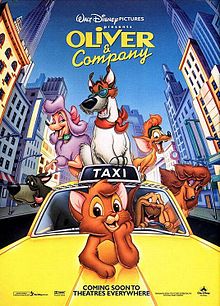
Oliver & Company

Oliver & Company (1988)

Oliver & Company (1988)

Memories are a funny thing.  What we choose to remember and forget really isn’t up to us.  The brain just kind of erases and deletes things as it sees fit without any conscious thought or action.  And when it comes to what we see and how we perceive our world, the brain has more say in that than we are often aware.  The eyes allow one to see, but it’s the brain that has to decode the feed like a receiver and actually tell the body what is there.  As a result, we can often remember things not how we saw them, but how we perceived them.  It gets really interesting when trying to recall a first memory. I have a few that could be considered my first memory and they’re all from around age 2.  The thing is though, I don’t know if these memories are real or if I’ve created them in just trying to reach back or from hearing a story.  It can be kind of wild to really think about it, and perhaps I’m better off just accepting what my brain says are my earliest memories.

One early memory I’m pretty confident in is my first trip to a movie theater.  I don’t know what went into it, where it was, or even what we did when there, but I do know that the first movie I ever saw in a theater was Disney’s Oliver & Company.  Oliver & Company came out in 1988 so I would have been around 4 years old.  Now everyone is used to films coming out on DVD or Blu Ray around six months after a film debuts in theaters.  When I was a kid this was not the case at all.  Some were released in about a year, but with Disney it was several years or not at all.  Disney spent a ton of money on its animated films and many did not turn a profit during the initial theatrical run.  Disney banked on theatrical re-releases to stay afloat so the company was very careful in what it released for the home market.  This philosophy was in place until The Little Mermaid was released and the home video market was thriving.  At that point, Disney had made a bunch of money already off the film and figured to make a whole lot more if it was available for Christmas.  The Little Mermaid was the film that followed Oliver & Company.  As such, Oliver & Company didn’t see a home video release until 1996, long after I stopped caring about Disney movies.

The film starts off like it might be a buddy flick with Oliver and Dodger before the cast is eventually expanded upon.

The film starts off like it might be a buddy flick with Oliver and Dodger before the cast is eventually expanded upon.

Because of Disney’s home video release schedule, when I sat down recently to watch my newly purchased copy of Oliver & Company on Blu Ray it was the first time I had seen the movie since I was four years old and in a theater for the first time.  It was kind of a surreal experience as I watched this film.  There were things I remembered, like Tito’s “Hey man, check it out,” line, and there were things I forgot I remembered like Dodger’s memorable “Why Should I Worry?” song.  There were also many things I had completely forgotten.  Before I sat down to watch the film a second time I could not have even begun to speculate on what the villain looked like.  I probably would not have remembered the name of the little girl (Jenny) and I certainly would not have been able to recall any of the names of the other dogs in the picture.  In many ways I felt like I was seeing the film for the first time, but there was an old familiarity there as well that created a rather warm experience.

Oliver & Company is probably not a film remembered by many.  I wasn’t even aware of the Blu Ray release and I’m someone who is pretty plugged into these kinds of things.  That’s not to say the film isn’t noteworthy for a few reasons.  Most notably, it was the film that basically laid the groundwork for all of the Disney animated features to follow.  Films that would prove to be far more successful than Oliver & Company (not that Oliver & Company wasn’t a success, it just wasn’t as big as the films to follow) like Beauty and the Beast and The Lion King.  It was the first to really utilize that Broadway format of interspersing narrative and song in a very MTV like fashion.  Sometimes the plot feels almost ancillary, as if it exists simply to move the film to the next music video.  I’m not a fan of this approach, and as a result, I tend to prefer Disney’s older films to the modern ones but there are films that are able to succeed with this approach.  Oliver & Company does, but on the most basic level.  It’s harmless entertainment and it has a good heart but there’s no deep undercurrent to the plot or there really aren’t any big visual moments.  The villain of the film is only ever lurking on the periphery.  He’s menacing, but not on the level of any of the big villains to follow.  This is partially due to the film’s short running time (74 minutes) and due to the fact that the story is a fairly simple one.

Marin's Tito ends up being the star of the film.

Marin’s Tito ends up being the star of the film.

The protagonist of the film is a small orange kitten named Oliver trying to find a place for himself in the world.  As indicated by the title, this is an adaptation of Dickens’ Oliver Twist but only loosely so.  There are quite a few celebrities on the cast for this one including a young Joey Lawrence as Oliver.  Billy Joel plays Dodger, a street-wise dog who is basically the alpha of a pack of thieving canines doing the bidding of the mostly harmless thief Fagin, played by Dom DeLuise.   Cheech Marin plays Tito, the wise-cracking chihuahua and Bette Midler is a pampered poodle named Georgette.  The cast does a good job with what they are given with Marin probably showing the best.  The music is obviously a big part of the picture and the opening number “Once Upon a Time in New York City” is performed well by Huey Lewis.  Joel’s number “Why Should I Worry?” is the star of the film.  It starts off as a smooth jazz number before the heat gets turned up.  It’s infectious.  The rest of the musical numbers fall pretty flat though.  Midler’s “Perfect Isn’t Easy” is supposed to be another big number that makes use of some early CAD technology but it just isn’t there.  The film kind of meanders along for the last half of the picture as a result.

Visually the film resembles a lot of the other Disney works that utilize the Xerox technology that debuted with One-Hundred and One Dalmatians.  The edges of the characters are rough and sketch-like.  Some of the backgrounds are as well.  It works when the film is trying to present some of the grimier locations in New York but it doesn’t work for the glitzy Times Square.  Disney’s animation, like its profits, took off after Oliver & Company and the company was willing to invest a bit more into each successive picture.  This isn’t a bad looking movie and it has its own visual charms, but it does lag behind Disney’s better works.

Oliver & Company is a really unremarkable movie but one that does hold a lot of nostalgic value for me.  If I didn’t have such a unique relationship with it I probably would not own it.  That’s not to say that it’s bad or anything.  I did enjoy watching the film for what it is, but it is mostly disposable entertainment.  For adult animation fans, this is hardly essential viewing, but if you have kids that will consume anything Disney then they will have some fun with Oliver & Company.

Dreaming of Kingdom Hearts 3

images-125

UPDATE 3/8/2014: Square-Enix has posted a survey for Kingdom Hearts, and if there is something you want to see in Kingdom Hearts 3 (Gargoyles!), this is the best way to make your voice heard!

Watching Gargoyles these past few weeks has got me thinking about the upcoming PS4/Xbox One game Kingdom Hearts 3.  So far, little information, aside from confirmation the title has been in development, has been released regarding the next entry in the Kingdom Hearts series.  For those unaware, the Kingdom Hearts games were initially conceived as a marriage between Disney and Square’s Final Fantasy.  Several games have been released in the series and, for the most part, they all follow a pattern of having the main character visit various different worlds based on classic and current Disney films.  Gargoyles has got me thinking about how cool it would be to see that world brought to the series as it would seemingly lend itself well to the video game form.  There was a game based on the series created for the Sega Genesis.  It was a late arrival on the Genesis and while it boasted some rather slick animation it was bogged down by poor gameplay mechanics and a repetitive design.  It is my understanding that the only rules for selecting worlds for Kingdom Hearts are that they be from Disney films, but not Disney owned films.  This would eliminate the various Marvel films produced by Disney as well as any future Star Wars ones.  It also appears to apply to Pixar films as well as so far no worlds from a Pixar film have shown up.  It also excludes any worlds from Disney television, but in the case of Gargoyles, this rule could be circumvented by the existence of Gargoyles The Movie:  The Heroes Awaken.  It’s kind of cheating as the direct-to-video movie is just the first five episodes edited into a 90 minute film but lets not get too technical.

Using my own memory, and with help from Wikipedia, I’ve come up with the below list of Disney films to appear as worlds in the Kingdom Hearts series:

  • Sleeping Beauty
  • The Little Mermaid
  • Aladdin
  • The Nightmare Before Christmas
  • Winnie the Pooh
  • Peter Pan
  • Hercules
  • Tarzan
  • Pinocchio
  • The Lion King
  • Steamboat Willie
  • Pirates of the Caribbean
  • Alice in Wonderland
  • Cinderella
  • Snow White
  • Beauty and the Beast
  • Mulan
  • Tron
  • Lilo & Stitch
  • The Hunchback of Notre Dame
  • The Three Musketeers
  • Fantasia

This list may not be exhaustive, and does contain some unusual selections.  “Steamboat Willie” stands out as it’s not a feature-length film, but as Mickey’s most recognizable short, it’s not surprising to see it included.  It also, like pretty much all of Disney’s classic shorts, was originally released to theaters.  The Three Musketeers also stands out as it was a direct-to-video release so it appears their self-inflicted rule does not mean the film needed to be theatrically released.  Square has done a good job of hitting most of Disney’s biggest properties.  There is also a good balance of old and new, but there’s still plenty of room for more.  Below are some thoughts of mine regarding where the franchise could go for its next outing:

Bambi – Bambi the character has already appeared as a summon in the KH series but he’s never had his own world.  As one of the few classic pictures to not have a world, it makes sense for Bambi to step into a larger role.  His world is not particularly unique considering it’s just a forest, but a world created around the forest fire scene from the film’s climax could have some interesting gameplay mechanics.  For one, it would make the world visually interesting and the fire could be the result of one of the film’s antagonists.  Bambi could be an assist character and, together with Sora, they would be tasked with extinguishing the blaze.  The world could either be full of peril due to the fire, or there could be a time limit in place.  Considering Bambi is one of Walt’s greatest achievements, it just makes too much sense to include it eventually.

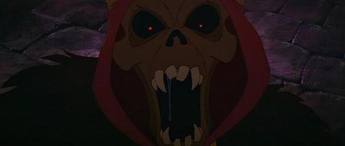
And to think, some at Disney felt The Horned King would be too scary for kids...

And to think, some at Disney felt The Horned King would be too scary for kids…

The Black Cauldron –   The Black Cauldron is, unofficially of course, Disney’s black sheep.  It differs quite a bit in tone from the works that preceded it in that there’s a distinct absence of humor throughout.  A lot of critics disliked the film, and while it appears to have spawned a cult following, it’s still one of the lesser films put out by Disney.  It’s inclusion here is not a defense of the film, I haven’t it seen it in so long that I really can’t offer much of an opinion on it, but it’s world would actually appear to fit in quite well with the KH universe.  The Horned King would make a natural complement for Maleficent and the Fairfolk could be incorporated as well.  The film almost makes too much sense for inclusion, leading me to believe the only reason it has not been is because the film is so obscure.  It’s also possible that Disney doesn’t own any of the characters outright and legal issues may not make it worthwhile to include.

Toy Tinkers – I am an unabashed Donald Duck fan so I wanted to include one of his shorts on this list.  I initially thought “Trick or Treat” would work well because of the Witch Hazel and her special potion that brings inanimate objects to life, but such a world would have a lot in common with Fantasia and Halloweentown.  I settled on “Toy Tinkers” because it would allow the inclusion of a Christmas themed world and a unique gameplay opportunity.  I conceive it as a world in which Sora has been shrunk somehow and is caught in between the fire-fight between Donald and Chip and Dale.  There would be debris raining down and perhaps Sora would help Chip and Dale thwart Donald somehow.  It would be a bit of comedic relief and a fun bit of level design.

This would seem to be a natural conflict for a video game.

This would seem to be a natural conflict for a video game.

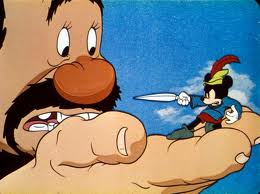
The Brave Little Tailor – My thought process for this level is similar to the above for “Toy Tinkers,” so I consider this an either/or arrangement.  In the short, “The Brave Little Tailor,” Mickey is tasked with defeating a giant.  For KH, the scenario seems obvious and Sora would either replace Mickey or assist him in taking down a giant.  It would feel similar to my “Toy Tinkers” scenario because Sora would be taking on a foe much larger than he, so the two would perhaps feel too alike if they both appeared in the same game.  Nonetheless, it would be fun to challenge the giant and a tailor themed Mickey could be an interesting assist character.  This could also easily be swapped out in favor of a Mickey and the Beanstalk themed level.

Duck TalesDuck Tales would appear to not be eligible due to the fact that it was a television property, but it sneaks in because it did have a feature-length release, Treasure of the Lost Lamp.  If the level had to be based on that film, then no matter, it could be a pseudo Indiana Jones type of deal with cave exploring with Uncle Scrooge, the nephews, and maybe even Launch Pad.  Classic Duck Tales villains could still be included as well.  Ultimately, I just want to see Scrooge’s giant vault of gold coins included complete with diving board.

Toy Story – Yes, I know and covered it already, it would appear that Pixar films are a no-go when it comes to KH.  However, Pixar’s films have become as much a part of the Disney brand as Mickey and Snow White and their presence is felt throughout Walt Disney World and Disney Land.  And if there is to be one exception made for Pixar, why it has to be Toy Story, no?  It makes too much sense for inclusion as Sora could be transformed into a toy of some kind and have to team-up with Woody and the gang to foil Sid.  The level basically designs itself and there are so many action sequences from the three films that the designers could look to for inspiration.  Come on Square/Disney, it’s time to invite Pixar to the party.  Do it!

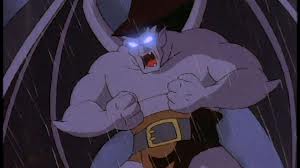
I'd be delighted to see any of the films/shorts from this list incorporated into KH3, but mostly I just want to kick some ass with Goliath by my side.

I’d be delighted to see any of the films/shorts from this list incorporated into KH3, but mostly I just want to kick some ass with Goliath by my side.

Gargoyles – We’ll end this with what started it in the first place, Gargoyles!  Gargoyles, as primarily an action-adventure cartoon, makes a lot of sense for a video game.  Goliath would be a pretty bad-ass support character and Demona seems like a perfect villain for KH (though MacBeth and Xanatos would work as well).  There would be some fun music to source, and most of the voice cast has maintained a relationship with Disney to this day including Keith David (voice of Goliath) who recently voiced the villain for Disney’s The Princess and the Frog.  Gargoyles would also allow Square to set a level in New York, specifically the skies above New York.  The castle would make for both a great visual and fun setting for an all out battle with Demona or the Steel Clan.  Someone send the developers of Kingdom Hearts 3 a copy of the first season (or the movie, but they would need a VCR on hand to watch it) and then try to stop them from making use of it!

There’s actually plenty of other films Square could source for Kingdom Hearts 3 that I didn’t even bring up.  The Sword in the Stone or Robin Hood seem like natural fits, or perhaps because they’re too conventional they’ve been ignored.  101 Dalmatians also seems like an easy film to incorporate and Cruella De Vil would be a natural as a villain for the series.  And considering it drew inspiration from video games, I feel like I have to mention Wreck-It Ralph.  I actually fully expect a Wreck-It Ralph scenario of some kind to appear in KH3, either as the game world Fix-It Felix Jr. or maybe a Sugar Rush style mini game.  I consider all of my selections as long shots and I’d be surprised to see most of them.  It actually wouldn’t shock me if Disney lifted the embargo on Pixar films and allowed a Toy Story level, just because the property is so popular, and the giant sequence I described (most likely to occur in the form of Mickey and the Beanstalk) also strikes me as a legit possibility for a KH world.  The others are merely dreams or wishes, and as much as it would delight me to see Goliath and crew in Kingdom Hearts 3, I also acknowledge it’s mostly a pipe dream.  Perhaps if I wish upon a star…


Gargoyles: Season One

Gargoyles - The Complete First Season (2004)

Gargoyles – The Complete First Season (2004)

In the early 90’s, Fox cornered the market when it came to television shows for young demographics, particularly boys in that 7-12 age group.  They had hit shows with Batman The Animated Series, X-Men, and Power Rangers and their Saturday morning programming was unrivaled.  Batman, in particular, ushered in an era of cartoons where the writers didn’t feel like they had to dumb-down the show to please its audience.  The stories were mostly grounded within the fantasy world the show created, while X-Men wasn’t afraid of creating serialized episodes that asked more from its viewers.  These weren’t stand-alone episodes with the same throw-away clichés prevalent in most children’s programming.  And while the shows were, first and fore-most, children’s shows they didn’t make adults feel like idiots for watching.

Disney, by contrast, had seen its viewership decline.  The once popular Disney Afternoon programming was mostly content to keep things the same.  Duck Tales and Tailspin were successful early on, and Darkwing Duck was Disney’s own answer to Batman but with a comedic core.  If Darkwing Duck was supposed to reel in Batman viewers then Disney missed the point.  Putting a cape and mask on a character and having him fight crime isn’t what people tuned into Batman for.  Those viewers wanted to see the show take itself seriously, present real threats, and overall just make it a credible show.  Disney needed a show that matched Batman’s tone and not his costume, so they turned to comic book writer Greg Weisman and from that relationship came Gargoyles.

Gargoyles could be described as modern fantasy mixed with Greek tragedy.  Stylistically, the show is reminiscent of the aforementioned Batman and X-Men with similarities to contemporary cartoon Jim Lee’s Wild C.A.T.S.  The color palette is muted with lots of deep violets and blues and plenty of black.  The first season has a split setting between modern-day New York and turn of the first millennium Scotland.  The gargoyles, lead by the hulking Goliath, are a humanoid, bat-like race that spends the daylight hours encased in stone and owns the night.  In 994 Scotland, they’re protectors of a castle inhabited by humans that, for the most part, view the gargoyles in an unfavorable light.  When the gargoyle clan finds itself betrayed by those it trusted, most are smashed to death during the day while the few survivors are magically encased within stone until the castle they inhabit rises above the clouds.

The Manhattan Clan (left to right):  Lexington, Brooklyn, Goliath, Hudson, and Broadway.

The Manhattan Clan (left to right): Lexington, Brooklyn, Goliath, Hudson, and Broadway.

The existence of the extraordinary gargoyle race is all but wiped away from history, but one noted wealthy individual by the name of David Xanatos, is well-aware of their past.  It is he who purchases the castle along with the gargoyles and moves them to Manhattan where he places it atop a massive skyscraper, thus ending the spell placed upon them.  The rest of the first season deals with the gargoyles coming to terms with what happened to them a thousand years ago and finding a way to relate to this new, modern world and find their place in it.  Themes of tragedy, isolation, trust, family, and acceptance help frame the show.  In this there are many similarities to X-Men as both the gargoyles and mutants find themselves as unwelcomed protectors of humanity.  Their isolation, seemingly alone in this world with the exception of their one human ally, Elisa, helps evoke the Batman similarities.

Detective Elisa Maza heads the short list of allies for the Manhattan Clan.

Detective Elisa Maza heads the short list of allies for the Manhattan Clan.

The remaining gargoyles, now known as the Manhattan Clan, are a small group of varying personalities.  Goliath is the unquestioned leader.  He’s noble, proud and a bit stubborn at times.  He’s always learning and isn’t immune to mistakes, but he does everything with purpose and conviction.  Hudson is the elder statesman of the clan and its former leader.  He prefers to stay on the sidelines and leave the fighting to the younger gargoyles.  Brooklyn, Broadway, and Lexington are the younger members of the clan and rookery mates, which is gargoyle speak for siblings.  Brooklyn is a curious sort who seems to model himself after Goliath while Lexington is consumed by modern technology.  The gluttonous Broadway is sometimes relegated to comic relief though the show mostly avoid slapstick and jokes.  Rounding out the clan is the dog-like Bronx who is the only gargoyle incapable of speech and lacking in wings.  Detective Elisa Maza is the sole ally of the gargoyles in season one.  She’s a strong-willed character who is able to give the gargoyles leads on the goings-on of their enemies while also sometimes acting as almost a mentor to Goliath.

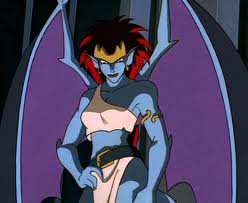
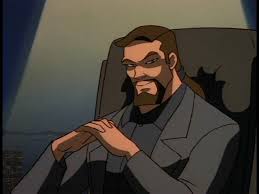
Much like the clan itself, the rogues gallery for the show is kept fairly compact for the first season.  It’s dominated by Xanatos, who poses as an ally early on to the clan but is soon revealed as duplicitous and self-serving.  His main weapons are cunning and money, but he also possesses some high-tech weaponry including his own cybernetic army of gargoyles.  He splits time as the main foe for the clan with Demona, Goliath’s former lover who was complicit in the destruction of their clan a thousand years ago.  While her intentions were without malice, her persona is consumed with a bloodlust for humanity as she blames them for their near extinction.  She is the Magneto to Goliath’s Charles Xavier.  Other villains include the sportsmen MacBeth and the television actors turned criminals The Pack, a group of men and women who fashion their personas after wild canines.

Demona, Goliath's former lover, is one of the primary antagonists for season one and beyond.

Demona, Goliath’s former lover, is one of the primary antagonists for season one and beyond.

The show opens with a very ambitious five-part mini-series titled “Awakening” (it was also released direct-to-video as Gargoyles:  The Movie) that sets up the series.  Right from the start, viewers are able to get a sense of the large-scale story-telling the show is aiming for while also being able to take in the peak of the show’s production values.  The animation quality is a grade above the usual afternoon cartoon fare, making it possibly the best looking cartoon of the mid 90’s.  The score is also exemplary and the voice acting contains notable actors such as Keith David (Goliath, various voices) and Edward Asner (Hudson) as well as numerous vets of various Star Trek programs.  Following the five-part debut, the show mostly settles into stand-alone episodes that also call upon happenings in previous ones.  Each gargoyle, with the exception of Bronx, is basically given his own episode to star in which helps the viewers get better acquainted with each one individually.  It’s similar to the tactic utilized by X-Men in season two and is an effective way to flesh out an ensemble cast.  There are thirteen episodes in total for season one, and pretty much all of them are good.  Some standouts include “Deadly Force,” which stresses the importance of gun safety without being ham-fisted (possibly created because main character Elisa is shown wielding realistic weaponry as opposed to fantasy, laser type devices).  “Her Brother’s Keeper” helps define what family means to the gargoyles and how it’s not so different from what it means to humans.  “Reawakening” is the bookend for the season and is a satisfying conclusion for the show’s first major arch.

Xanatos would be the other main foe for the gargoyles.

Xanatos would be the other main foe for the gargoyles.

What I appreciate most about the show is its commitment to realism.  This is a show starring unreal creatures but it takes them very seriously.  Their culture is defined as is their biology when Goliath points out early on that they can’t fly, merely glide on air currents.  As previously mentioned, Elisa is armed with a realistic handgun as are most of the police force.  Many of the villains do use lasers and other such fantasy fare but they come across as credible, in part due to a willingness to throw around phrases like “Die!” at their targets.  And when it’s called for, the show is not afraid to show blood which helps add severity to a scene.  The show also wasn’t afraid to be a little progressive as it’s revealed (casually) that Elisa is of mixed-race, having a white father and black mother.  And if you’re a fan of keeping movies and television as they were, you’ll be happy to know that the numerous shots of the New York skyline have not been edited to remove the twin towers.  Recent shows like Teenage Mutant Ninja Turtles and Beware the Batman have mostly empty city streets and lifeless scenery, it was refreshing to watch Gargoyles with its fully realized and very much alive New York.

The DVD release for season one is fairly basic.  There are animated menu screens depicting the gargoyles emerging from their stone prisons accompanied by music and sound effects.  The transfer is of good quality for this type of release and the case is a standard DVD case with a hinged insert for the second disc.  Bonus features include the original show pitch by Weisman which is worth a look just to see the original designs of the gargoyles.  There’s also a brief feature on The Gathering of the Gargoyles, a convention that used to be held in the US for fans of the show, that I suppose is worth a look though it’s basically just a bunch of fanboys and girls gushing over the program.  There’s also audio commentary on the fist five episodes, but I have yet to check it out (and probably won’t as it’s just not my kind of thing).

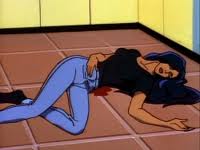
The show did not shy away from placing its characters in real danger.

The show did not shy away from placing its characters in real danger.

Gargoyles felt overlooked during its hey-day and today feels kind of like a forgotten series.  This is due, in part, to Disney’s stubbornness over releasing the entire series on DVD.  Season one was released in 2004 with the first half of season two following in 2005.  The rest of season 2 was in limbo until recently when it was released quietly as part of the Disney Movie Club.  Still remaining are the thirteen episodes from the abbreviated season three, rebranded as The Goliath Chronicles .  While fans would likely appreciate having those thirteen released, all but the season premiere were done without Weisman and thus are not considered canon by him for the show’s storyline, which lived on in comic book form for a short while following the show’s cancellation.  Unlike many cartoons from my youth that I have chosen to revisit, Gargoyles still holds up and impressed me a great deal.  I would love to see Disney revisit the show with Weisman for either a short fourth season or direct-to-video movie to provide additional closure.  Expect to see more of Gargoyles from me as I make my way through both volumes of season 2.


The Best of Pixar

DownloadedFile-22In honor of the recently released to theaters Monsters University, I thought it would be fun to look back on the feature-length films put out by Pixar Animation Studios (in conjunction with Disney) and come up with a top 10.  This proved to be a pretty difficult task and I consider this list, especially the top 5, to be quite fluid.  Pixar has really eclipsed Disney as the premier creator of animated films.  It could be argued that before it, Japan’s Studio Ghibli had knocked Disney off the top of the mountain but Pixar now stands tall over all.  And while their output has dwindled in quality just a tad bit lately, it seems like the studio is likely to maintain that status for at least a few more years.  This list is not going to give each film the space it deserves, or else it would run into the tens of thousands of words.  I also want to add that I do not think Pixar has made a bad film yet, though I also have not seen Cars 2 which has been the worst reviewed film put out by the studio.  I didn’t see it because I didn’t really care for the original, though I didn’t hate it or anything.  I also did see Monsters University this weekend, and while I don’t think it makes their top 10, it was enjoyable entertainment.

10. Brave

Brave is hindered by that fact that it’s one of the more recent films put out by Pixar so it hasn’t had as long of a time to leave a lasting impression (and as you can imagine, nostalgia points count).  Brave is a refreshing take on the princess genre and Merida is a very likable and easy to root for character.  The visuals are splendid and the conflict unique, though the setting and style is perhaps a bit too similar to the previously released Dreamworks film How to Train Your Dragon.  This is a film I plan to revisit and I expect my appreciation for it will only grow from here.

9. The Incredibles

Perhaps a controversial selection as I know The Incredibles is a favorite for many.  For me, I absolutely love the concept of a super hero family and this was probably my most eagerly anticipated work from Pixar.  Perhaps it was the weight of expectations that resulted in my initial disappointment.  It just didn’t resonate with me the way I thought it would.  I very much enjoyed the Mr. Incredible character, but the rest of the family didn’t appeal to me as much.  The film is also a little overstuffed and could have used some trimming.  Every time I re-watch it I wonder if this is the viewing that will make me fall in love with it, but so far that hasn’t happened.  Despite that, I still look forward to the eventual sequel and will continue to enjoy the in-jokes thrown at comic book fans.

8. Toy Story 2

Toy Story was such a smashing success that it made sense for a sequel to follow.  Because these films take so long, Pixar first released A Bug’s Life before getting to Toy Story 2.  Serving as director for all three feature-length films was John Lasseter, who wisely realized he couldn’t expect to continue to direct everything put out by the studio.  Toy Story 2 is an excellent sequel that contains enough of what made the original so memorable without feeling like a re-tread.  Visually, it is far superior to the first.  Some people seem to prefer it to the original, but for me I enjoyed the plot from the first one more and found the end chase more thrilling than the sequence that closes out this one.  This one is still great though, and Jessie’s song is really well done, making Toy Story one of the best franchises in recent memory.

7.  Ratatouille

Remy is one of Pixar's best creations.

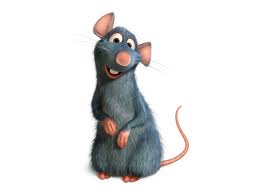
Remy is one of Pixar’s best creations.

This where the list starts getting hard for me.  I didn’t have much trouble ranking the first three, but now we’re getting into the films I truly love.  Ratatouille is a clever tale about a rat named Remy, who is one of the most well-crafted of any of Pixar’s leads.  He’s interesting, flawed, likable, and well-acted by the animators and voice actor Patton Oswalt.  This one isn’t as emotionally heavy as some of Pixar’s other films, but it is so much fun and it’s still a treat to experience all of Remy’s highs and lows.  I feel like I could watch this film every day and not get sick of it.

6.  Toy Story

The one that started it all.  Toy Story was a marvel when it was first released in 1995.  At that time, no one really thought computer generated images could captivate in the same way as hand-drawn animation and we were all proved wrong.  While I will always prefer more traditional animation, I both love and appreciate what today’s artists are capable of with CGi.  Toy Story doesn’t look as good now as it did back then (especially the dog and human characters), but that doesn’t detract from the wonderful and clever story about what goes on in the toy box when kids aren’t around.  It’s an easy to grasp concept and one that offers so many possibilities for visual gags and story potential.  The Woody (Tom Hanks) and Buzz (Tim Allen) rivalry is played up so well that it’s a shame it’s not as heated in the sequels.  Toy Story is a modern classic that is sure to delight and captivate audiences for generations to come.

5.  Wall-E

Wall-E is a rather bold film when one considers its audience.  The first act is absent of any dialogue as we explore a ruined earth with only a mute little robot to guide us.  It’s thru director Andrew Stanton and the supremely talented animators at Pixar that we’re able to connect and care about this little robot.  Wall-E, despite being a robot, is able to convey so many human emotions thru just the movement of his telescope-like eyes and limited vocalizations.  The film’s only weakness is how effective these early scenes are in comparison to the easier to follow scenes in space where humans dwell.  Some thumb their noses at the conservationist tone taken by the film, but I found it to be good satire and consider Wall-E a true treasure amongst american animation.

4.  Toy Story 3

I can’t say I was all that excited for another sequel for Toy Story, even though I very much enjoyed the first two.  I was so wrong when I finally sat down and watched Toy Story 3 and found myself completely blown away.  I didn’t realize how much I wanted to see the world of these toys explored with better technology over what was available for the first two.  The world popped and is an absolute feast for the eyes.  That wasn’t exactly a surprise, but the fact that the film had a plot that appealed to me even more than the first two is what truly shocked me.  I fell in love on the first viewing, and the additions of Michael Keaton and Ned Beatty to the all ready stellar cast was the cherry on top.

3.  Monsters Inc.

We have officially entered the splitting hairs section of my list.  1-7 was hard, 1-5 was harder still, and 1-3 feels almost pointless.  On any given day, any of these next three could be cited as my favorite from Pixar, but I’ve settled on this order for today.  Monsters Inc. was the first of the Pixar feature-length films to not be directed by Lasseter.  Pete Docter oversaw this one and would establish an ability to really make an emotional connection with the audience.  Monsters Inc. is kind of like a buddy comedy with leads Mike and Sully (portrayed by Billy Crystal and John Goodman), only in a fantastic setting.  The world of the monsters is fully realized and more than just a little clever.  This is the first CGi film I can recall where so much hair, or fur, was included and the results are spectacular.  It’s the addition of the Boo character though, that puts it over the top and gives it the weight I mentioned earlier.  This film’s ending is so perfect, it gets me every time.  I’m not sure if it’s not my favorite ending to any movie ever.  I love it!

2.  Finding Nemo

A lot of these films were all conceived around the same time.  I get the sense that the powers that be at Pixar decided on a bunch of worlds they wanted to see animated and went off of that.  Finding Nemo is Pixar’s undersea adventure and the results are breathtaking.  The world is so simple yet so complex, it is probably the film that benefitted most in the switch from DVD to Blu Ray of any other I’ve seen.  All of Pixar’s films are incredible looking, but Finding Nemo contains one of the more heart-warming father-son stories contained in any piece of entertainment.  And outside of that plot, the characters encountered along the way are amongst Pixar’s most memorable.  Whether it’s the possessive seagulls, laid-back Crush, or the unforgettable Dory, there’s something amazing in every scene.  I’m so glad that Pixar has chosen to revisit this world, even if it has no chance of matching up to the original.  Though Pixar has proved me wrong before.

1.  Up

The odd paring of the aged Carl with the youthful Russell paid off for Pixar.

The odd paring of the aged Carl with the youthful Russell paid off for Pixar.

If Wall-E was considered a bold move for a family movie, then what does that make Up with its octogenarian for a lead?  I suppose the marketing and merchandising department was disappointed when it found out that Carl Fredricksen (Ed Asner) action figures weren’t likely to generate the kind of revenue Disney is used to, but I like to think they were okay with that once they saw the film.  Up is a wonderful piece of animation, and if Pete Doctor’s previous directorial effort Monsters Inc. is considered weighty, Up is a virtual anvil.  The montage that takes place at the beginning of the film which sums up the life of Carl and Ellie is wonderfully moving, and like Wall-E, done so without any dialogue.  The sequence is masterfully done, and if viewers found it a bit too sad then I hope the rest of the film makes up for it.  The main plot pairs up Carl with the youthfully exuberant Russell.  This odd-couple pairing can be forgiven for being too obvious because it’s executed so well. The emotional response generated by this film seems so authentic, and it’s the rare animated film I can honestly recommend to viewers of all tastes.  And then there’s Dug.  Dug, who resembles no dog from the real world and yet makes me think of every dog I’ve ever met (any nice dog, anyways).  His mannerisms and thoughts are so spot-on it makes it seem like an easy thing to so faithfully convey a dog’s emotions, but it’s really not.  Up is absolutely wonderful, and not just among my favorites put out by Pixar or Disney, but one of my favorite movies of any I’ve seen.  It will take a lot from Pixar to top it, but I hope they like a good challenge.


The Chronological Donald Volume One

The Chronological Donald Volume One

The Chronological Donald Volume One

Mickey Mouse is the character that launched an empire.  When Walt’s darling little mouse took to the screen he captured the hearts of millions of movie-goers in the 1930’s, adult and children alike.  And even though he’s no longer a big part of Disney’s animation output, the theme parks and other merchandising have made sure that Mickey has never faded far from the spotlight. His earliest exploits though are thematically different from what is presented as Mickey Mouse today.  Sure the obvious distinction of Mickey no longer appearing in black and white is clear, but it’s his character traits that are most notable.  In his earliest days, Mickey was more like Bugs Bunny in that he was a bit of a trouble-maker.  He was never on Bugs’ level in that regard, but he did partake in things some parents were not overly fond with.  The cartoon that famously introduced the character Pluto, “The Chain Gang,” begins with Mickey in prison, of all places.  He smoked, he drank, and he could be a bit of a jerk in those old cartoons.  Walt Disney, after hearing the complaints from some parents, decided he needed Mickey to be the face of his company, and as a result, he needed to clean him up just a bit.  His cartoons still needed the characteristics he was about to excise from Mickey, so he took them (and then some) and applied them to a new character, an anthropomorphic duck he named Donald.

Donald took off like a rocket.  His easily irritable and temperamental nature made him a hit with fans who either rooted for him or against him.  His tendency to exhibit wild mood swings added a charge of electricity to his cartoons; fans knew the tantrum was coming, they just didn’t know when.  At first, Donald appeared alongside Mickey for the most part, but soon his popularity earned him his own series allowing him to surpass Mickey himself in terms of popularity.  To date, no other Disney character has appeared in more cartoons than Donald and he’s appeared in more comic strips than any character who doesn’t wear tights and fight crime.  Donald Duck is recognized all over the world and has become an institution, so it should come as no surprise that he has several DVD releases in the Walt Disney Treasures line as well.

I love Donald and always have.  I liked Mickey too when I was a kid, and I always had a fondness for Pluto, but Donald was my favorite.  He’s just an inherently funny character and a lot of that comes from the performance of Clarence “Ducky” Nash, Donald’s voice actor from the 1930’s thru to the early 80’s concluding with Mickey’s Christmas Carol.  That semi-intelligible voice is perfect for the character.  It sounds like something that would come from a duck, if a duck could speak.  Of course, that impression may only exist because Donald has been around for over 70 years but that certainly must have been the sentiment when Nash was awarded the role.  Sometimes it’s nearly impossible to figure out what Donald is saying, but that adds to the humor.  Early on, other duck characters that would appear in Donald cartoons, including Daisy, would speak like Donald but overtime that was dropped.  Donald’s nephews, Huey, Dewey, and Louie, exhibited a lesser but similar speech pattern until DuckTales when they were basically made to speak somewhat normal.

Sharks find ducks tasty.

Sharks find ducks tasty.

The Chronological Donald was released in four parts from 2005-2008.  As the name implies, the shorts appear in chronological order beginning with Donald’s debut from the Silly Symphonies series “The Wise Little Hen.”  This makes Donald the rare character to debut in color before black and white.  His first appearance with Mickey came in the short “Orphan’s Benefit” which can be found on the set Mickey Mouse in Black and White.  It would have been nice to have it here too to mark the occasion as several other sets contain overlapping cartoons, but oh well.  After “The Wise Little Hen,” the rest of the shorts are Donald cartoons though he wasn’t officially given his own series until 1937 with the first short being “Don Donald.”  Mickey doesn’t appear in any of these cartoons (with the exception of one brief cameo), but Pluto and Goofy make appearances as Disney seemed to enjoy pairing Donald with those two.  This set also contains the debut of Donald’s nephews in the cartoon appropriately titled “Donald’s Nephews.”  We’re also introduced to Donald’s cousin Gus in one short who never made another appearance that I’m aware of.

For the most part, these shorts try to put Donald in a new role in each one.  That role is either an official one like “Officer Duck” or making him a golfer or a celebrity chaser.  Some of the ideas repeat, such as “Donald’s Ostrich” and “Donald’s Penguin.”  There’s repeating gags too, of course the most famous being Donald’s tantrum where he thrusts out one arm and swings the other while hopping up and down.  If he doesn’t assume this pose in every cartoon, well then he does in almost every one.  It’s hard for me to choose a favorite, as several shorts here are ones I’m familiar with from my childhood so they have a nostalgic quality for me.  “Sea Scouts” is one where Donald and his nephews are sailors and have to contend with a shark.  It’s a mostly slapstick affair with a great sequence of Donald trying to keep from getting swallowed by the shark.  “Beach Picnic” is another where Donald finds his water float to be uncooperative and Pluto finds himself victimized by the irascible duck.  This cartoon also contains the Pluto fly paper gag, one that shows up in several other cartoons.

This set was created before the vault concept was created for this series.  For those unaware, the vaulted cartoons are ones that contain offensive material.  Leonard Maltin is the host for the set and he does comment on some of the shorts.  The most common bit of offensive material is stereotypical portrayals of native americans.  Anyone around the age of thirty who grew up watching old Warner Bros. shorts or Disney cartoons (including feature-length films such as Peter Pan) should be familiar with this kind of material.  I don’t tell people how to raise their kids so if you’re not familiar with this kind of stuff and are weary about showing it to your kids do some research.  In the case of Donald Duck shorts, a great many can be viewed on video sites for free making it easy to preview the material first.

Things rarely end well for Donald.

Things rarely end well for Donald.

Of course, if you want to purchase such a set for your kids know that it isn’t easy.  Disney only released a limited amount figuring only collectors and Disney diehards would be interested so walking into a store and simply buying a set of Donald Duck cartoons is basically impossible.  Volume One was produced in larger numbers than others but still can command a hefty price.  Amazon has it currently priced at $65 and volume two at $54 with volumes three and four jumping over $100.  I don’t know if they’re worth it, but if you do love Donald and want some of his cartoons you will find this to be a quality set.  The DVDs came housed in a plastic DVD case which in turn is packaged in a silver tin.  The only negative to the packaging is that the tin can be prone to denting in the shipping process.  The cartoons look great for the most part, especially when one considers how old they are.  Some have survived better than others and it shows on some with the usual white Donald being a little dingy or sometimes yellowed.  The quality of the animation can’t be dulled by age though, and if anything, it only looks more impressive in today’s age where a lot of animation is low-budget or computer generated.  Hand drawn animation is practically dead and this set certainly helps to bring the viewer back to the golden age for animation.  Animation fans and Disney fans would do well to track these sets down.  I own three of the four, and the completest in me likely demands that I eventually get the fourth.  I’ve watched them all and on a lazy Sunday morning it’s not uncommon to find me on my couch with a cup of coffee and Donald Duck playing on my TV.

The shorts:

  • 1934
    • The Wise Little Hen
  • 1936
    • Donald and Pluto
  • 1937
    • Don Donald
    • Modern Inventions
    • Donald’s Ostrich
  • 1938
    • Self Control
    • Donald’s Better Self
    • Donald’s Nephews
    • Polar Trappers (with Goofy)
    • Good Scouts
    • The Fox Hunt (with Goofy)
    • Donald’s Golf Game
  • 1939
    • Donald’s Lucky Day
    • The Hockey Champ
    • Donald’s Cousin Gus
    • Beach Picnic
    • Sea Scouts
    • Donald’s Penguin
    • The Autograph Hound
    • Officer Duck

Walt Disney’s Lady and the Tramp

Lady and the Tramp (1955))

Lady and the Tramp (1955)

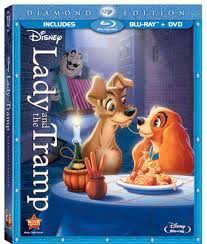
It wasn’t my intention to double-up on the Disney posts but with it being Valentine’s weekend why not take a look at one of Disney’s most famous love stories?  It’s kind of funny that arguably Disney’s best stab at a love story involves two dogs considering all of the prince and princess relationships they’ve produced over the years.  There’s something special and endearing about the romance of Lady the cocker-spaniel and that loveable Tramp.  I think it has a lot to do with the fact that most people like dogs and this movie was clearly worked on by such people.  It gives the story a genuine feeling.  There’s often a feeling of audience manipulation with these Disney tales be it the need to be a good boy found in Pinocchio or the importance of growing up in Peter Pan.  Lady and the Tramp isn’t so obvious with its message, if it has one.  It’s one of the simpler tales produced during Disney’s prime years, along with Dumbo, and some of that is likely due to it not being based on a popular tale of old.  Lady and the Tramp is just a nice piece of entertainment, and one of my favorite Disney movies to date.

Incidentally, the fact that Lady and the Tramp wasn’t based on a well known story made Walt Disney nervous.  He felt that audiences would be less interested in the film as a result so he made sure a novelization was released before the film.  There was also a Disneyland TV special that aired before the movie premiered and basically went over the entire plot (this is included on the DVD and Blu Ray release, for those interested) scene for scene.  I don’t know why Disney felt that way, but it does seem odd to me.  I’ve also considered it one of the film’s strengths that it’s not a retelling of a popular fairy tale.  Those stories are well and good, but there’s little surprise for even younger viewers.  Also surprising is that the film was not well received initially.  Audiences gobbled it up but critics hated it, even panning the artwork.  Such a notion seems shocking to me when I watch it today and it seems like all of the critics that hated it either changed their mind or are dead.

If the puppy Lady sequence doesn't warm your heart then you simply have no soul.

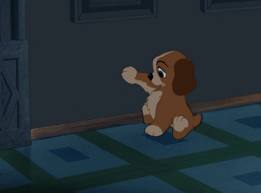
If the puppy Lady sequence doesn’t warm your heart then you simply have no soul.

Visually, Lady and the Tramp is a remarkable picture.  Disney artists have become famous for their attention to detail when it comes to drawing animals.   Look up the making of pretty much any such picture from them and you’ll find the artists drawing from real life as they observe their subjects.  They’ve been doing it for years and it becomes clear why when watching any such film because the animals move and react in fantastic ways.  The common and expected movements of walking, sitting, begging, running, and so on are spot on for the canines in this film.  The subtler ones are also perfect such as when Lady is confused or is trying to get her beloved Jim Dear’s attention.  The animators also clearly want the audience to experience this world as the dogs do.  Every scene is from a dog’s point of view as Lady’s home is always displayed at floor level.  It’s rare to see a human’s face and often the people in the background are still paintings.  The animators want you to focus on the dogs, the humans are just ancillary.  Lady and the Tramp is also noteworthy for being the first animated feature to be shot in wide-screen Cinemascope.  This is a plus as it gives us even more artwork to take in!  Whether it’s the dogs themselves or the lovingly painted scenery, this film is a feast for the eyes.

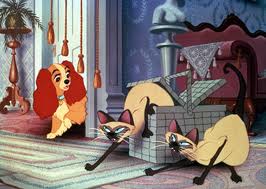
These cats are jerks.

These cats are jerks.

Disney films are often as famous for their visuals as they are their songs.  Lady and the Tramp is more subtle in its use of music but is fantastic in its execution.  The music all works within the narrative and even after immediately watching it I have to think hard to remember when the film breaks into song.  That’s because it’s used so effectively and works with the picture as opposed to being an in-film music video.  One of the more popular spots for song is the introduction of the siamese cats (“We are siamese if you please,”) which is short and effective and sure to stick with you.  The most famous song though is easily “Bella Notte,” the song sung to Lady and Tramp by the italian restaurant owners during their iconic scene.  I’m not sure if there’s a more famous scene in any other Disney feature than the one where Tramp and Lady share their famous plate of spaghetti.  Describing the scene to someone who has never seen it is futile.  It sounds cute but utterly ridiculous.  The scene was shot and animated with such care though that it works.  It will charm you the first time you see it just as much as the fiftieth.

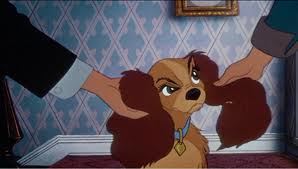
The animators had no trouble getting these dogs to display a wide range of facial expressions.

The animators had no trouble getting these dogs to display a wide range of facial expressions.

The film looks great, the film sounds great, but it wouldn’t be anything without a good plot.  Lady and the Tramp was a combination of storyman Joe Grant’s own tales about his English Springer-Spaniel and a short story Disney himself enjoyed called “Happy Dan, the Whistling Dog.”  It’s a tale about two worlds colliding as the upscale Lady falls in with the lowborn Tramp.  Tramp is a tramp of his own choosing apparently and rather enjoys his carefree lifestyle where as Lady can’t imagine life without her masters, Jim Dear and Darling (if Lady is aware of what their real names are she doesn’t let on).  Lady is introduced in the film’s first scene as Jim presents his wife with a Christmas present containing her.  The sequence that follows is perhaps the film’s best as we see the young couple get introduced to life with a puppy.  Jim wants to be stern with Lady on her first night and establish a nightly pattern where as Lady just wants to sleep with her new mom and dad.  Lady, of course, wins out and gets accustomed to life as the center of attention in the household.  It’s not until Jim Dear and Darling are expecting their first child that she gets a peak at what life could be like as second fiddle.  This is how Tramp is able to work his way in initially, and when Aunt Clara comes to babysit and views Lady as a nuisance, Tramp is there to seal the deal.  Lady gets a taste of what life is like for Tramp, the good parts and the bad, and our budding lovers are forced to confront their differences and Tramp is shown he needs to change if he wants to win the heart of his Lady.

Some Disney stories are scary and some are even sad, but Lady and the Tramp shuns most of these conceptions and remains a mostly fun picture with a very warm and happy outcome.  There are some scenes featuring action and suspense that may be a little frightening for young children, but this one is pretty tame by any standard.  Dog lovers will especially fall in love with this picture as it’s practically a love letter to our canine compadres and really only presents them in a favorable light.  Maybe those who do not have much affection for dogs will find this one harder to enjoy than others, but for my money this is one of Disney’s most watchable films and belongs in any movie collection.


Walt Disney’s Peter Pan

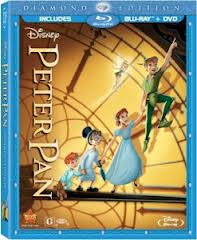
Walt Disney's Peter Pan (1953)

Walt Disney’s Peter Pan (1953)

The story of the boy who shunned time and refused to grow up is a timeless one that has captured the hearts of many who experienced it.  Michael Jackson was famously said to be obsessed with the story.  He probably took things too far.  Walt Disney was another individual who found the story captivating and the producer within knew he could market it to a wide audience.  He was so eager to get Peter Pan into production that it was originally planned as the follow-up to the hugely successful Snow White and the Seven Dwarfs but the technology of the time wasn’t where it was needed in order to fulfill Disney’s vision.  Disney also had a harder than expected time of securing the rights to create the film.  All of this meant putting Peter Pan off for a little while and it would eventually see release in 1953 making it the 14th film in the Disney Classics series.  It was also the last Disney film to be released via RKO while later pictures would be released through Disney’s own Buena Vista Distribution.

Watching old films from my youth can be enjoyable for many reasons.  There’s the intrinsic nostalgia value of seeing something I remember fondly.  There’s also the feeling of a new discovery.  Peter Pan falls into the latter as it wasn’t a film I was exposed to much as a child.  VHS tapes could be pretty pricey when I was a kid, especially Walt Disney releases that tried to make things seem more special with better packaging and a heightened sense of tradition.  The whole vault concept was around then too, which for those unaware, is the concept by Disney of only supplying stores for a set amount of time with a given film before ceasing production.  I remember the commercials would make it seem like these films would never be released again, which of course wasn’t true as most have been released multiple times since.  As a kid, I never owned Peter Pan or saw it in theaters but I was exposed to it.  It’s possible I had only seen it once before watching it recently following its latest release on Blu Ray.  This kind of viewing experience is almost more fun as I get to approach the film almost for the first time where I’m more apt to take notice of the things I wouldn’t have as a kid.  For the most part, only the film’s opening scene felt familiar to me.  I attribute that to a poor attention span as a child.  Even something with a running time under 80 minutes is a long period for a child to sit still.  More often than not, when a movie was put on in front of me I’d watch the first twenty minutes before being inspired to play.  Only the most exciting moments could hold my attention.

Peter's grand entrance.

Peter’s grand entrance.

The film opens with the audience being introduced to the Darling family.  The Mr. and Mrs. are getting ready for a party while the children are getting ready for bed.  Mr. Darling is presented as a bit of a neurotic while Mrs. Darling is calm and together.  The eldest of their children, Wendy, is a bit of a romantic with a love of fairy tales, especially Peter Pan.  She has two younger brothers, John and Michael.  John is the brainier of the two with a very naive sense of the world around him as illustrated by his willingness to fight pirates and Indians.  Michael is the youngest and most impressionable.  They’re all of a good nature with Wendy being the most strong-willed and the boys the most impressionable.  Nana, the nurse dog, may be a canine but embodies the characteristics of a nanny.  She dotes on the children and tries, in vain, to keep the nursery clean and organized.  She is only slightly anthropomorphized in that she doesn’t speak or display any ability to maneuver in a way unfamiliar to a dog but is obviously of a human intelligence.  A series of events leads to Mr. Darling getting short with the children and expressing a need to his eldest that she grow up.  Wendy, unlike 99.9% of young girls, is heartbroken when her father informs her it’s time she move out of the nursery and into her own bedroom.

Peter Pan is introduced soon after as the Mr. and Mrs. leave for a party with the children tucked in for the night.  Peter is presented as a boy of about twelve who embodies all of the characteristics of a child but heightened in a way to make them obvious.  He’s brash, egocentric, and almost incapable of anything resembling empathy.  He takes no situation seriously and is used to getting his way.  He’s also fun-loving, care-free, and eager to share the fun experiences of life with other children.  He has no desire to mature and grow up and seeks only to play for the rest of his days.  With him is Tinker Bell, his pixie companion, as the two are attempting to retrieve Pan’s shadow which somehow ended up in the Darling household.  The children are delighted to meet the real Peter Pan, and when he proposes they join him in Never Land, the boys are most excited to go.  Wendy is a bit more reserved but the thrill of flying and seeing Never Land is too much for her to ignore.
Captain Hook is consumed by his need for vengeance against Peter Pan, who famously chopped off his hand.  I wonder what he was called before that happened?

Captain Hook is consumed by his need for vengeance against Peter Pan, who famously chopped off his hand. I wonder what he was called before that happened?

The setting of London is presented always at night giving it a cold and charmless quality.  Never Land is almost always presented during the day and is bright and colorful.  It’s populated by a host of interesting characters that are both charming and menacing though rarely scary.  Even the film’s chief villains, the pirates, are presented in a colorful manner.  The man-eating crocodile, who seems to only have an interest in Captain Hook, is more funny than frightening and even the youngest of children are unlikely to be scared by this film.

Captain Hook is the film’s primary antagonist.  He embodies all of the characteristics of a traditional Disney villain.  He’s mean-spirited, hot-tempered, cowardly, and manipulative.  The film suggests a mutiny may play out early in the film as Hook has kept the ship docked in Never Land as he has become obsessed with getting revenge against Pan, the boy who chopped off his hand and fed it to the crocodile.  His first mate, Mr. Smee, is his most loyal servant that is ceaselessly bossed around by Hook.  The film hints that he may be a decent person but never expressly confirms that.  Also joining the supporting cast are the Lost Boys who all dress in animal-like costumes and follow Pan whole-heartedly.  There are Indians on the island of Never Land as well who appear to engage in a friendly rivalry with the Lost Boys until the chief’s daughter, Tiger Lily, goes missing.  Perhaps the most interesting member of the supporting cast is none other than Tinker Bell.  Tinker Bell has become a popular character with young girls in recent years, even starring in her own series of direct-to-video movies.  I’ve never seen any of those films for what I hope are obvious reasons, so I don’t know how she is portrayed in them but I assume it is not how she is portrayed in Peter Pan.  Young fans of the character may be surprised to see she is a jealous, brat of a pixie.  Her actions can, in part, be blamed on Peter who she clearly has strong affection for but he is dubious of such feelings.  She is almost instantly jealous of Wendy and the attention Peter gives her.  Tinker Bell is so jealous and spiteful of Wendy that at one point she attempts to trick the Lost Boys into killing her.  Her actions actually cast her as a minor villain to Hook’s role of primary antagonist.  Only by redeeming herself in the end does she avoid the label of true villain

Tinker Bell has become a star since her debut in "Peter Pan," despite being a very unlikable character.

Tinker Bell has become a star since her debut in “Peter Pan,” despite being a very unlikable character.

The story plays out rather expectedly with Wendy eventually seeing the faults in Peter’s view of the world and accepts the responsibility of growing up.  There’s a spectacular confrontation between Pan and Hook, while the stubborn character of George Darling sees the beauty in viewing the world through the eyes of a child.  It’s a nice little tale on the wonders of youth that doesn’t beat the audience over the head with the notion of being a responsible adult.  As with pretty much all Disney films, the exquisite visuals are set to song at times with most of the songs fitting into the narrative of the story as opposed to the broadway approach of the recent animated outputs.  The only exception to this rule is the film’s most famous song, “You Can Fly!,” which occurs during the flight from London to Never Land.  It’s a fun, uplifting, tune that is very much in the same style as all of the Disney songs from that era with a choir of individuals used for the vocals.  It has that old, fuzzy, quality to the vocals but still manages to sound clear.  “A Pirate’s Life” is probably the other well-known song from the film, with the “What Made the Red Man Red?” being known for more dubious reasons (more on that to follow).  As someone who doesn’t often enjoy the song portions of Disney films, I can say these are not too intrusive but I did grow bored with most of the sequences, the only exception being the flying scene.  “You Can Fly!” is the kind of uptempo song I can get into and enjoy and the scene is just long enough that it doesn’t overstay its welcome.

The film is not without controversy, as illustrated by this image.

The film is not without controversy, as illustrated by this image.

Over the years Peter Pan has become noteworthy for reasons beyond its visuals or story.  The portrayal of the Indians has become somewhat of a touchy subject as it contains many of the old Hollywood stereotypes.  When first encountered they greet others with the tired expression “How?,” and often charge into a scene with the battle-cry formed by shouting while patting their mouths repeatedly with an open palm.  Their skin is of a reddish tint, some being obviously exaggerated, and the children hold a negative view of the Indians.  At least John and Michael do, while the Lost Boys basically view them as playmates.  The film early on teases that Indians are a savage and stupid lot, but this is the viewpoint of the naive John and the film dispels this notion by having him humorously outsmarted by the Indians while he explains their stupidity to the other boys.  For anyone who grew up being able to view old Looney Tunes shorts on television, the portrayal of Indians in this film is far from shocking.  This was commonplace for the era and as recently as the early 90’s this kind of thing was shown during children’s programming.  I learned in school at a very early age that this was not an honest portrayal of Native Americans, and kids today might not even be familiar with the old “How?” greeting, but some unfamiliar with this film who buy it for their kids may be caught by surprise.  To add a little extra shock value is the musical number “What Made the Red Man Red?” which is certainly not politically correct by today’s standards.  I find it hard to get worked up by the number though, considering the most popular sport in the country today has a team in the nation’s capital called the Redskins.  Beyond the reference to color, I didn’t pick anything out of the song that sounds particularly offensive, but I’ve never read the lyrics either.  Apparently it suggests they became red as a result of blushing in their pursuit of women or something.  Unquestionably, if the film were made today the song wouldn’t exist and it’s possible the Indians wouldn’t be included at all.  If it sounds like something that would bother you then by all means look elsewhere for entertainment.  There are plenty of other animated films out there with less controversial material.

On the whole, Peter Pan is a mostly enjoyable film and, controversy aside, a fairly harmless one at that.  It doesn’t set out to make any bold, life-affirming statements and exists primarily as entertainment.  As far as visual entertainment goes, it’s well done though it lacks a definitive visual moment such as Monstro from Pinocchio or the forest fire in Bambi.  The flying sequence comes close, but falls a bit short of iconic status.  It makes up for this with its signature song, “You Can Fly!,” and by having a very even presentation with no wasted scenes.  At a running time of just 76 minutes, it doesn’t overstay its welcome and has a neat and tidy presentation.  It’s an entertaining movie, more so for children than adults, but it does possess the ability to charm even older audiences.  I don’t love it like I do some of the other Disney animated features, but it’s something I can watch from time to time and it’s a film that’s worthy of the term “classic.”


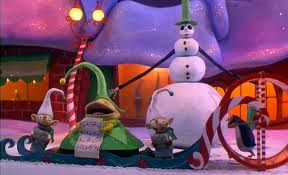
The Nightmare Before Christmas

Tim Burton's "The Nightmare Before Christmas" (1993)

Tim Burton’s “The Nightmare Before Christmas” (1993)

There was a time when I had no idea that The Nightmare Before Christmas was a Disney property.  When I first saw it around Halloween of 1993 during its original theatrical run, it was credited to Touchstone Pictures, which unknown to me at the time, was a spin-off of Disney.  Disney used Touchstone to market to older audiences and when the executives got a look at how creepy the imagery of Nightmare was they decided it was best to distance it from the Disney brand.  That’s not to say they expected failure or anything, on the contrary, Disney hoped to cash in on the Henry Selick directed picture due to its unique animation style.  That was another thing I wouldn’t become aware of for years.  The picture, often marketed as Tim Burton’s The Nightmare Before Christmas, was directed by Mr. Selick.  Burton crafted the story and worked on the character designs, script, and screenplay but had little involvement in the actual production.  This was due to him being a pretty hot commodity at the time and a certain Batman picture demanded a lot of his time.  Also, he had little desire in overseeing the tedious process of stop motion animation.  And who can blame him?  It’s a process that would drive many a person insane!

I remember being unsure of the film before first seeing it as a kid.  The adults taking us kids seemed more excited about it, though I’m not sure why.  Maybe it was the concept of marrying Halloween and Christmas into one film, or perhaps it was the visual style that is unique, if nothing else.  I think it was that visual style that initially put me off.  Not because it looked scary, but because Jack didn’t look like a skeleton in the traditional sense.  There’s a silliness to the look of the characters that’s lacking in true scares.  The vampires are a good example as they’re pear shaped and corny.  The look of most of the weird characters resembles that of Beetlejuice, one of Burton’s other popular films of the era.  I was way into X-Men at the time and preferred a realistic look to my characters, so I guess it’s not that surprising in hindsight why I had my reservations about the picture.

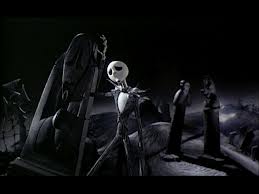
The film's protagonist, Jack The Pumpkin King, is bored and depressed over the whole Halloween thing and turns to Christmas for help.

The film’s protagonist, Jack The Pumpkin King, is bored and depressed over the whole Halloween thing and turns to Christmas for help.

Of course, they proved to be unfounded as myself and everyone I went with that day enjoyed the film immensely.  I’ve stated many times in my reviews of other properties that I care little for musicals and that was true of child me as well.  The Nightmare Before Christmas is heavy on song, more so than the traditionally animated Disney pictures of that time, and yet I still found it enjoyable.  There’s a humor to a lot of the film that’s present in the songs as well.  Most especially the “What’s This?” sequence where Jack is observing the differences between Halloween Town and Christmas Town (“The children are throwing snowballs instead of throwing heads,”).  That’s not to say they don’t get annoying, as sometimes the characters seem to break into song for the sake of doing so (such as when Jack explains Christmas Town to the rest of the gang), and I’m left wishing they’d just talk like regular folks instead.  The quality of the songs seems to vary too.  Danny Elfman was in charge of the film’s music (and also provided Jack’s singing voice) so I suppose he can be forgiven since he isn’t known as a Broadway composer.

Even though the film is a musical, it’s the visuals that make or break it.  And since the film has proven immensely popular ever since its release, it would seem to be that the visual style was accepted by the general public.  Selick has proven to be a master of the stop motion technique, and though films since have surpassed Nightmare in terms of animation quality, this film still holds up quite well today.  The characters animate very well and, for the most part, and lack the floaty quality many seem to have in the old Rankin/Bass Christmas specials.  Selick and his team don’t settle for the easy way in most scenes as characters tend to always be moving in some way as opposed to remaining still.  The only noticeable shortcut, if you will, seems to be the facial expressions of the non Jack characters.  Jack famously had over 400 heads to show various expressions while minor characters presumably had only one, save for maybe a back-up or two.  Sally had to use the same head so as not to disturb her hair, which would have caused a nightmare for the animators.  I suppose then it’s not surprising the lead character is bald.

While Halloween Town is presented in mostly black and white, Christmas Town is the exact opposite.

While Halloween Town is presented in mostly black and white, Christmas Town is the exact opposite.

The animation helps set Nightmare apart from other Disney fare, but the general look of the settings is also quite unique.  Halloween Town is very much rooted in German Expressionism.  There’s hardly a straight building in the town as everything juts out at seemingly impossible angles.  Several characters live in towers and crowded spaces.  Halloween Town seems pretty small in general, with mostly barren land surrounding it.  I suppose some would describe it as “gothic” (which would explain why so many goth girls in my high school seemed obsessed with Jack and Sally), but that seems lazy.  There’s very little color used as it’s mostly shades of gray.  And where color is present it’s often found in minor accents on the characters as opposed to the setting.  In contrast, Christmas Town is an explosion of primary colors and the objects Jack takes from it contrast nicely when they’re present in Halloween Town.  Watching the scene in Christmas Town almost makes one think a Dr. Seuss film would be a good idea for Henry Selick to oversee (as opposed to those wretched live-action films).

Jack playing Santa.

Jack playing Santa.

Tim Burton may get too much credit for Nightmare’s success, but one thing that can’t be taken away from him is the success of the film’s plot.  Dreaming up a world where each holiday has its own world separate from reality is pretty neat, but then taking the next step of having one wage war on the other is quite clever indeed.  Though Halloween Town doesn’t wage war on Christmas Town, they do seek to take over its holiday for at least one year.  Jack is a character of good intentions, but he lies to himself about what it is he’s doing without thinking about the implications this will have on Christmas Town, and Santa Claus to be specific.  He, for example, sees nothing wrong with sending off Boogie’s henchmen to kidnap Santa.  This makes him selfish, as he’s only thinking about curing his own seasonal depression, and short-sighted since he fails to predict the villainous Oogie Boogie’s eventual involvement.  And yet, we as the viewer know that he’s inherently good and he does set things right in the end.  The romance between Jack and Sally feels a bit forced, but I guess expecting for more development in that area out of a children’s moving may be asking too much.

The film settles in at 76 minutes, which is not uncommon for stop motion.  It doesn’t feel that short to me, maybe that’s due to my tepid response to the musical pieces, but it doesn’t feel long or anything.  And I give credit to all involved with the property that no stupid sequels exist such as Jack visits Easter Land or Valentine Town.  There are some spin-off video games and such, though I’ve never experienced any of them.  The unique dual holiday format of the film makes it extremely marketable for Disney, so perhaps that’s good enough for them to not seek out a sequel.

I watched The Nightmare Before Christmas this year for the first time in many years.  I was curious how I would respond to it after so long.  Despite being almost shunned by Disney for most of its life, it very much feels like a Disney picture, though Burton’s involvement is obvious as well.  Some of the songs made my eyes roll, but the visual effects are too charming to resist.  I enjoy the film’s humor and the fact that it separates itself from other holiday films and specials, but also makes sure to harken back to them at times with tongue firmly planted in cheek (“My what a brilliant nose you have!”).  While I don’t disagree with Disney’s decision to originally release the film through Touchstone, I don’t think it’s overly scary for young kids.  Most will recognize the film for what it is, but as always, parents know their kids best and might prefer to watch it first before showing it to the really young.  The film probably doesn’t rank as one of Disney’s best, but it is a fun film to revisit during this time of year, and I regret not purchasing it sooner.


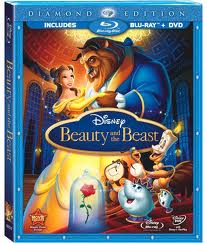
Walt Disney’s Beauty and the Beast

Beauty and the Beast (1991)

Recently I made an entry on the much beloved Disney classic Pinocchio.  In that entry I professed my love for the Disney classics, the films, the characters, the shorts – love em!  When I picked up Pinocchio recently on Blu Ray I also grabbed several others.  I did it in part for some free tickets to Finding Nemo 3D but mostly I did it out of my love for nostalgia.  My modest Disney Blu Ray collection now includes seven films and it’s a mixture of old and modern.  After getting re-acquainted with Pinocchio, I thought it would be interesting to take a look at a more modern, but perhaps equally loved, film:  Beauty and the Beast.

Beauty and the Beast came along during Disney’s renaissance period that began in the late 1980s with The Little Mermaid.  Prior to that film, Disney films had experienced a noticeable drop in quality.  Once praised for being good quality, family entertainment, most of the newer films were regarded as children’s movies that adults had to stomach in order to keep the little ones happy.  Disney was also being challenged by Universal Pictures and their animated films which were suddenly the biggest thing in animation.  To reinvigorate the brand, Disney went back to the its roots and started adapting classic stories and fables for its feature-length films.  The films were also heavily influenced by broadway.  Disney films always contained some element of song but now the films contained full musical numbers featuring elaborate choreography and big moments.  The Little Mermaid was a rousing success, as were many of the films that followed throughout the 90s.

Beauty and the Beast arrived two years later and was met with even more praise by critics.  Beauty and the Beast is perhaps best known now for being the first animated film nominated for an Academy Award for best picture.  It didn’t win, but just being nominated was a big achievement for the genre.  It followed in the same style as The Little Mermaid combining a classic story with state-of-the-art animation and catchy musical numbers.  I saw it as a kid, and my family had a copy of the VHS, though I always kind of associated it with Cinderella and considered it more of a “girl’s movie.”  That’s what young boys do, and as an adult I’m not much concerned with those things.  I was eager to see it again and hoped to perhaps see what made so many kids and adults enjoy it twenty years ago.

I’ve always enjoyed the Beast’s look.

Now, I mentioned in my Pinocchio review that I prefer the older style of Disney films in their approach to song.  I can’t deny some of the songs from the modern films are catchy and well put together, but I just hate how they disrupt the flow of the narrative.  Beauty and the Beast is not immune to this malady, but I knew that going in so I just tried to enjoy the songs for what they were.  As a spectacle, “Be Our Guest” is quite impressive and even pretty entertaining to watch.  The inhabitants of the Beast’s castle are fun to behold as they’re mostly animated inanimate objects.  There’s Lumiere the candlestick holder and Cogsworth the clock as well as many others.  Mrs. Pott’s reciting of the title song is also delivered quite well and actually doesn’t completely halt the narrative.  Some of the musical numbers I didn’t care for though include the opening to the film which includes the song “Belle.”  It’s a little silly and kind of drags.  Another one that people seem to enjoy is “Gaston” where the villainous character of the same name is celebrated.  It’s kind of amusing for a bit, but like “Belle” just drags on too long.  I guess I’ll just never like the broadway approach.

At any rate, the musical numbers aren’t going to make or break the film for me.  The film’s plot is going to play a much large role, and as far as tales go, Beauty and the Beast is a good one.  I’m sure most are familiar with it, but the gist of it is an unkind prince was cursed to take on the form of a beast.  If he can’t find love he’ll remain that way forever.  Enter Belle, the beauty component of the title, whom the Beast imprisons in his cursed castle.  Not only was the Beast cursed, but so too were all of his servants who really got the short end of the stick.  While Beast is large and fearsome, others end up as footstools and dressers.  It’s actually Belle’s father who first stumbles upon the Beast’s castle (how the villagers did not know of its existence is a plot-hole best left alone) while running from some wolves.  The Beast does not take kindly to strangers, so he locks up the poor old man in a dungeon.  When Belle comes to find him, she trades her freedom for his.  The Beast, naturally thinking she may be the one to break the curse, agrees to keep her at the castle.

The ballroom scene is one of Disney’s most breathtaking sequences ever committed to celluloid.

What follows is a gradual melting of the Beast’s heart as Belle learns to see the gentle soul within.  Back in the village, the vain Gaston is plotting to make Belle his trophy wife and when Belle’s father returns with tales of a hideous beast he sets out to kill him.  It’s a fairly predictable plot, especially if you’re familiar with the old tale in one of its many forms, but it’s executed well.  The voice acting is especially good and I can’t recall a single performance that I didn’t like.  The Beast (played by Robby Benson) is the star for me as his delivery contains the perfect amount of savagery and humanity.  Others seem to really enjoy the over-the-top performance of Richard White as Gaston but I found him a bit too cliché for my taste.  I think he could have been toned down a little and still would have worked just as well.

As far as animation goes, the work put out by Disney is routinely praised as top-notch and Beauty and the Beast is no exception.  The animation is fluid and the color palette vibrant.  The lighting, the textures, the motion – it’s all stellar.  The Blu Ray release has been visually enhanced as well though to mixed results.  The outdoor scene that opens the film is almost too bright and colorful, but the darker and bolder scenes in the Beast’s castle never looked better.  There’s also a new scene included with a new song that was cut from the original release.  I didn’t find it to be anything special (obviously, since I don’t care for the musical numbers) but it doesn’t harm the film in any way.

With these films I’m mostly taken aback by just the sheer quality of the animation.  Watching Belle’s hair flow or her dress rustle is gorgeous.  I have such great admiration for hand-drawn animation, and while I do love the stuff Pixar puts out, it’s just not the same as good old hand-drawn art.  I’ll never out grow it!

The film may be predictable, but that doesn’t mean it isn’t still moving.

Comparing the modern works to the ones from long ago is actually quite difficult considering the approach.  They’re all-together different and really the only comparisons that are easy to make are the technical ones regarding the animation.  Beauty and the Beast is certainly more flashy than those old films, but I don’t know that automatically makes it the better looking film.  I’ve really enjoyed watching the classics and each time I watch them I notice something new to appreciate.  Beauty and the Beast, and the other Disney works from that era, did bring the company back into the world of family entertainment.  That sounds kind of unattractive in a sense, the term family entertainment, but I take it to mean entertainment for all ages.  You don’t need kids to enjoy the Disney classics, and you don’t need them to enjoy Beauty and the Beast.  I’ll always be partial to the older films, but this is a good one on its own merit and one of the better films to come out of the 90s, animated or otherwise.  The little boy version of me would probably be somewhat surprised to hear me say that, though he’d probably be shocked to know I can’t wait for the eventual Blu Ray release for The Little Mermaid!


Walt Disney’s Pinocchio

Pinocchio (1940)

Back in the 1930’s, Walt Disney captured the hearts of movie-goers across the globe with Snow White and the Seven Dwarves, the first attempt at a theatrical length animated film.  Snow White was a rousing success and proved that animation had a place in the film scene.  Before Snow White, animation was mostly relegated to shorts set to music.  Mickey Mouse helped bring spoken dialogue to animation before Snow White, but for grander tales Disney turned to new characters and old stories.

Pinocchio was the follow-up to Snow White and was based on an old italian children’s story.  Compared to the english translations of the Pinocchio stories, the film wasn’t that long in following.  The tone of the story for Walt’s take was much different as the original Pinocchio is almost unlikable.  He’s basically a bad kid and while the Pinocchio of the film runs astray, it’s mostly through ignorance.

I spent the better part of a week this past summer in Walt Disney World, so I’ve been on a major kick.  Disney makes a ton of money off of park admissions but they make even more on the general good feelings relayed to the patrons that translates into merchandise sales.  As a lover of traditional hand-drawn animation, I have a great appreciation for the Disney classics.  I like some more than others, and I like some of the modern classics as well, but the old ones have a certain charm.  Pinocchio is one of my favorites though, and it was one I had not seen in decades until I found a new copy of the Blu Ray release hanging around a store (it has, per Disney’s rather annoying policy, re-entered the dreaded Vault for the time being so after market prices are obscene) and snatched it up once I saw how much even amazon.com was listing it for.

Pinocchio and his “conscience,” Jiminy Cricket.

I can’t imagine the pressure that the production staff was under following Snow White.  Production began before Snow White’s completion so starting out the only pressure put upon them was by Walt himself, which apparently was fairly immense since his ambition knew no bounds.  Pinocchio was supposed to be the third feature-length release following Bambi, but delays on Bambi moved Pinocchio up.  Snow White was, and is, a marvel of animation but Pinocchio is just plain better.  Pinocchio himself, is mostly responsible for this.  Pinocchio, as most probably know, is a wooden marionette for much of the film and he moves and behaves just as one would expect.  His rear end tends to rise when he walks, his limbs flop around, and he often exploits his ability to rotate his head 360 degrees.

Not to be done outdone, the supporting cast is done awfully well.  Geppetto, particularly in the scene where he’s frightened by a sound in his house early in the film, is wonderfully animated.  His knees are rattling and he’s clearly on edge.  Figaro, the cat, is reminiscent of Pluto in his mannerisms and behaves mostly as a cat would be expected to.  He’s very curious and approaches new objects cautiously.  Even when the story calls for the character to behave with human emotion, it still seems authentic.  Monstro, the massive whale in the film’s final act, is quite impressive and frightening.  He has a real hand drawn look, like a moving canvas, the way the water interacts with him is so impressive.

I love how Figaro the cat is animated. So many of his mannerisms remind me of my own cat.

There are other trick shots and fantastic pieces throughout the film.  Pinocchio’s reflection in Cleo’s fish bowl is a particular treat, and the sequence where Lampwick turns into a donkey is done so well it’s unsettling.  His hands gnarl into hooves as he paws at Pinocchio in desperation.  Of course, the film’s most iconic scene is where Pinocchio’s nose extends until it becomes a full tree limb on his face.  The attention to detail throughout this film is a wonder, even 70 years later.  It’s just incredible to behold and an obvious labor of love.

I confess I have a love/hate relationship with the music in Disney films.  The score and effects are always excellent, it’s where the characters break out into song that I never fell in love with.  A lot of these scenes break the narrative for me, especially in the modern classics where the sequences are obviously influenced some by music video.  In Pinocchio, the songs are worked into the narrative as seamlessly as could be done.  That’s due in part to Pinocchio being an impressionable youth which makes it believable that adults might turn to song to drive a point home.  The songs are not overdone, and quite nice too.  The film is most known for “When You Wish Upon A Star,” the unofficial song of Disney at this point, and it’s such a wonderful and perfect song for this film.  There’s something extremely affecting about the melody and the vocals by Cliff Edwards (as Jiminy Cricket) just accent it so well.

And what would Pinocchio be without its wonderful narrative?  The story of a puppet brought to life by the wishes of a lonely old man who longs to be a real boy.  There’s such a warmth to the Geppetto character when he interacts with Pinocchio.  Jiminy Cricket is an excellent sidekick for Pinocchio and an interesting concept as Pinocchio’s conscience.  The story is certainly a fantasy, but it’s handled with such care that we as the audience are able to buy into it.

Possibly the most memorable scene from the film, Lampwick’s transformation.

Pinocchio himself is handled well.  He is, in many ways, what one would expect of a puppet suddenly brought to life.  He’s impressionable and curious, a blank slate of sorts, which is why he needs the Jiminy character.  We see him go astray and get into trouble, but we know he possesses a sweetness to his personality which never makes him unlikable, only misguided.  And when the plot calls for him to rise to the occasion, we get to see the real Pinocchio.  We root for him and wish for him to succeed in becoming a real boy.

It seems one can’t have a conversation about Pinocchio without talking about the fear injected into the film.  A lot of the older Disney films were willing to use fear as a story-telling device.  Pinocchio’s imprisonment is quite unsettling, and the scene with Lampwick is one of the scariest things I ever saw as a kid.  It succeeds both visually and thematically as being a frightening scene as the formerly cocky Lampwick is reduced to a whimpering child.  The whole sequence is sort of a lesson to kids, be a good kid or become a jackass, and perhaps there’s an element of propaganda or audience manipulation in place.  It works with the film though.  The film is not so scary that kids shouldn’t watch it, just maybe more at the seven or eight year old mark as opposed to three or four.

Is this Walt’s best? I sure think so.

The film’s pay-off is certainly rewarding following the scarier scenes and the fantastic escape from Monstro.  It’s conclusion is joyous and sweet and may even leave you with a misty eye or two.  It’s a fitting end for such an incredible picture.  If you become too engrossed with the plot to really take notice of the animation splendors before you, the Blu Ray includes an hour-long documentary on the making of Pinocchio that’s quite informative.  The scope of this film is just breath-taking and there’s no doubt in my mind that this is Disney’s ultimate high point.  It’s a perfect marriage of amazing technical feats with a delightful narrative.  There’s no superlative that can do it justice.  It’s a title truly deserving of the “classic” label.

I’ve acquired quite a few Disney films over the years and some of the collections of animated shorts.  I’ll probably turn to them for posts from time to time so expect more Disney themed posts in the months to come.