Tag Archives: nintendo

The Wii U and Gaming in the HD Era

Last Sunday, Nintendo unleashed upon the world its latest console:  the Wii U.  For some, the Wii U is the beginning of the latest era of gaming while others simply view it as Nintendo’s entry into the current HD generation of consoles.  Regardless of your opinion, this is a new console and new consoles are something to get excited about.

I had made the decision to reserve a Wii U for myself awhile back so picking up the deluxe bundle on launch day was no problem.  I also picked up a new Pro controller and a copy of New Super Mario Bros. U.  As far as console launches go, the Wii U appears to have had a mostly successful one.  When I picked up mine it was around 1 o’clock and the Best Buy I went to was already sold out of the deluxe bundle.  The sales receptionist I spoke with wasn’t certain, but did think they still had a couple of the standard bundles in stock.  For those unaware, the deluxe version comes with more internal memory (32 GB vs 8), a copy of Nintendo Land, a charging dock for the GamePad, and comes in black as opposed to white.  For the extra fifty bucks, it seemed like a smart choice to me though for those stuck with the smaller unit know that the Wii U works with most external HDD so expanding upon that 8 GB of memory shouldn’t be too difficult.
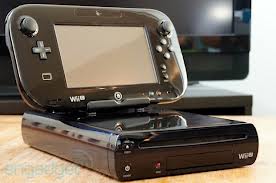
If I had to use one word to sum-up the GamePad, it would be: Big.

The Wii U is quite similar to its predecessor in terms of looks.  It’s fairly small and plain looking.  It still makes use of a sensor bar and Wii remotes and the main home screen remains mostly unchanged.  The big change obviously comes in the Wii U’s GamePad, a combination of a tablet and a standard controller.  It has four face buttons, twin analog sticks, and four shoulder buttons including two triggers.  It has a slot for a stylus as well as home, power, and TV buttons.  The TV button allows you to pair your GamePad with your television and use it as a second remote.  It’s functional and kind of neat for when you have your GamePad on your lap.  The controller is fairly large, but light.  It’s nearly the same size as the console itself.  It’s light feel is welcomed, but it does make the controller feel a bit cheap.  Shaking it causes the buttons to rattle, and the shoulder triggers are not analog meaning there’s no sensitivity to them (pushing it all the way in or slightly has the same in-game effect) which is a bit of a letdown.  The touchscreen though is large and quite nice with very good picture quality.  It doesn’t seem to be quite as good as the Playstation Vita’s OLED screen, but gets the job done.  It communicates with the Wii via wireless and infrared and there’s no noticeable lag.
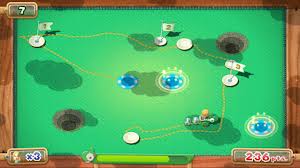
The Yoshi’s Fruit Cart game is one of the more interesting ones on Nintendo Land.

How the GamePad functions with the Wii U is obviously what will make or break the system.  Nintendo Land is the game that’s supposed to put the GamePad’s features front and center which makes it almost a required purchase for early adopters.  Nintendo Land is basically a collection of mini games each one based on a different Nintendo property.  Some of these IPs are pretty well known, like Zelda, while others not so much, such as Balloon Fight.  I’m not a big fan of mini game collections so I haven’t really got into Nintendo Land.  There is some cool stuff in there though.  The Ninja Battle game has you aiming your GamePad at the TV and sliding your finger towards the screen to toss ninja stars.  The Yoshi Cart game has you draw a line on the GamePad for your cart to follow to pick up fruit on the way while avoiding obstacles.  The catch is that the fruit and obstacles only appear on the TV screen while the GamePad is blank.  Games like the Zelda adventure are mostly straight forward.  The GamePad can be used to view the scenery by physically moving it, or the player can just look at the screen.  Nintendo Land seems to just scratch the surface without really showing anything revolutionary.  It will be interesting to see how Nintendo makes use of the GamePad in their classic franchises.
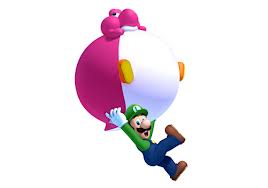
Baby Yoshi returns in NSMBU.

There’s no wondering when it comes to Mario though, since he has a new game at launch.  New Super Mario Bros. U is pretty similar to the previous entries in the series, GamePad or no GamePad.  I’m only a few levels deep, so I can’t say if it’s better or worse than the other entries in the series yet.  I can say that I like the Super Mario World inspired layout, and I like the inclusion of Yoshi even if he’s added as he was in the Wii game where he can only be used in certain levels.  I haven’t tried any multiplayer with it, so I can’t even comment really on the GamePad’s use there but in the single player game it’s really only used as a second screen.  Such a feature does have its uses as you don’t even need the television on to play the game, but it is disappointing that Nintendo couldn’t find a way to make use of its new toy with its flagship series.

It’s pretty nice that Nintendo has finally entered the HD era, but what isn’t nice is that they’ve also adopted a lot of what makes this era of gaming so frustrating.  The Wii U is the victim of the dreaded day one update, which means the second you plug in that new console it’s going to prompt you to update the operating system.  Ditto for both Nintendo Land and NSMBU.  The OS update took me well over an hour to update and install, while the Nintendo Land update took around a half an hour and NSMBU around 15 minutes.  That’s pretty damn annoying and one of the things that makes me long for the days of old.  Also complicating things, is the Wii U is the victim of severe loading times.  Changing screens takes around 15 seconds on the unit and booting up a game is far from seamless.  I don’t know if this is something that can be improved upon with future updates or if we’re just going to have to deal with it.

The Wii U has some things going for it, but it’s definitely not the revolution that the Wii was.  Playing the Wii for the first time felt incredibly fresh and new, while I didn’t get the same feeling when playing the Wii U.  It’s certainly fun, and there’s probably better software out there (like Scribblenauts Unlimited) for showing off the GamePad, but right now the console is far from a must buy.  Get it if you love Nintendo or want to have the latest thing, otherwise most will be fine waiting for the first big Nintendo game on it or price drop.


New Super Mario Bros. 2

New Super Mario Bros. 2 (2012)

For awhile it seemed like Nintendo had adopted a one Mario title per console policy.  Back on the original Nintendo when Mario was first making a name for himself we were treated to several wonderful titles that lead into the launch of the Super Nintendo which gave us Super Mario World.  After that though, Mario stopped showing up as frequently in his own adventures.  Sure he’d pop up here and there to play some sports and race some go-karts, but he was held to one lone outing on the Super Nintendo, Nintendo 64, and the Gamecube.  And it wasn’t like he was taking his talents to the handhelds, after Super Mario Land 2 he pretty much stopped showing up there as well.  The Gameboy Color and the Gameboy Advance didn’t even have a Super Mario Bros. game of their own, just ports of the old ones.

The Nintendo DS looked to be heading in the same direction when it launched alongside a port of Super Mario 64.  It was around that time that Nintendo had really fallen back in terms of market share, losing considerable ground to Sony in its native Japan and lagging behind both Sony and Microsoft in other parts of the world.  Nintendo needed a boost, so they turned to their old reliable mascot.  They decided to appeal to their older gamers through nostalgia and crafted a game that was as much about entertaining the gamer as it was about being a tribute to the original Super Mario Bros.  That game ended up being New Super Mario Bros. and when it arrived on the scene in 2006 for the DS gamers and critics alike were taken back to the good old days where Mario hopped and bopped his way through a level and found a flag pole at the end.  New Super Mario Bros. quickly became the best-selling title on the DS as the handheld took off.  The Nintendo Wii arrived later that year and really helped boost Nintendo’s popularity.  For that console, three traditional Mario games have been released to date which is quite a change in direction.  The Wii was given the Galaxy series as well as its own entry in the New Super Mario Bros. franchise.  The successor to the Wii, the Wii U, is expected to launch this fall with its own New Super Mario Bros. game and the Nintendo 3DS just received New Super Mario Bros. 2 this past Sunday.

For the Nintendo 3DS, New Super Mario Bros. 2 is the second dedicated Mario title following last fall’s Super Mario 3D Land.  3D Land was tasked with bringing Mario into stereoscopic 3D.  It retained a lot of the 2D Mario gameplay mechanics, but instead of Mario only being able to fall off 2 sides of a platform, he can fall off all 4!  Keeping the basic gameplay to something akin to the 2D titles kept gamer’s in their comfort zone while positioning the camera to acknowledge that this was indeed a fully realized world that Mario inhabited allowed for Nintendo to make better use of the 3D effect.  It worked quite well and 3D Land ended up being well-received.  It’s probably already the best game on the 3DS and it hasn’t been challenged all that seriously since its release.

Mario’s new power-up: Pimp Mario.

New Super Mario Bros. 2 has no such gimmicks to sell.  It exists as simply the next game in the franchise.  It doesn’t seem to care about the system’s 3D capabilities and the game actually looks awful with 3D enabled.  And if we needed a reminder that this game represented a piece of the Nintendo cash-cow there’s a new emphasis on coin-collecting this time around with the ultimate goal, or rather the challenge put forth by Nintendo, being to collect one million coins.  In previous titles, the act of coin-collecting was just an impulse and a way to “buy” additional lives for Mario.  It’s no secret that recent games have sort of made a mockery of this.  Even without making every effort to obtain every coin on-screen most gamers have had no trouble racking up hundreds of extra lives for Mario as the games have become progressively easier.

To better emphasize this approach Nintendo has given Mario a new power-up:  the gold flower.  This power-up functions like the regular fire flower power up only now Mario is gold and his fireballs turn enemies and brick blocks into coins.  The fireballs have more density to them as well and pass right through enemies to take out whatever is in their path.  It’s the lone new power-up and it doesn’t show up a whole lot in the regular game unless one seeks it out via the various Toad Houses.  It is featured prominently in the new Coin Rush mode that gives the player a randomized trio of levels to rush through and collect as many coins as possible.  This mode is the one that works in conjunction with Nintendo’s street pass feature and gamers can challenge one another to beat their high score just by walking passed each other with a street pass enabled 3DS in pocket.  The mode is okay, and one million coins is quite a challenge (most will have roughly 40,000 after beating the game, so you have your work cut out for you should you attempt the million mark), but it adds nothing to the gameplay.

The original NSMB was not a very ambitious title.  In fact, it seemed intentionally basic as it tried to harken back to the original SMB.  The levels were straight-forward and Mario’s only plentiful power-ups were the fire flower and star.  There were a couple of new ones, but they appeared sparingly and almost seemed like they were included just for fun.  As a kid, I can remember discussing with other kids how cool it be if Mario could get even bigger by consuming more mushrooms.  Nintendo must have heard those conversations as it introduced the mega mushroom which made Mario the size of the screen and blessed him with destructive powers on par with Godzilla.  To pair with this, Nintendo introduced the mini mushroom which shrunk Mario down to miniscule size and allowed him to walk on water and enter pipes too small for normal Mario.  There was also a turtle shell power-up that appeared in some stages though it was mostly a dud.  It gave Mario some protection in a ducking position and allowed him to slide into enemies.  It certainly wasn’t as imaginative as the super leaf.  The mini mushroom ended up being the best of the three as it opened up new gameplay possibilities the others really didn’t.  Some critics seemed to really love NSMB, and while I definitely had a ton of fun with it, I never once thought of it as being superior to Mario’s best.  I actually thought it might end up being a one and done kind of thing, but it made so much money for Nintendo that proved impossible.

I was hoping the sequels would be more ambitious, but the first sequel really didn’t add much.  NSMBWii added co-op play and a couple of new power-ups like the unwieldy penguin suit and the propeller suit.  It was a big game, and a fun one, but it seems Nintendo is only really interested in imitating the old games and not really pushing things.  Which brings me back to New Super Mario Bros. 2.

The Koopalings, or Koopa Kids, are back and they’ve even brought with them an old toy!

NSMB2 borrows a page from Super Mario 3D Land and resurrects an old favorite, this time the super leaf.  The leaf was present in 3D Land but in that game it bestowed Mario with a tanooki suit.  This time it’s returned to its old function which is to give Mario raccoon ears and a tail and allows him to fly, just as it did in Super Mario Bros. 3.  The mega mushroom and mini mushroom are here as well, but their presence is more like a cameo than anything as they show up quite sparingly.  Gameplay wise, it’s the same old thing as Mario goes from world to world, level to level, combating Bowser and trying to save the princess.  The Koopalings return and Mario will have to topple one at the end of each of the game’s five levels before taking on Bowser at the end of world six.  That’s not a typo.  There are only six worlds this time around when traditionally there’s always been eight.  There are secret worlds but having only six main ones is kind of a letdown.  The secret worlds are the Mushroom, Flower, and Star worlds.  The Mushroom and Flower worlds can be accessed by finding secret exits in one of the levels which lead to warp canons.  Instead of the canons firing Mario (or Luigi, don’t want to forget about him!) to the world it fires him through a special stage.  These stages are brief but remind me of Sonic the Hedgehog as Mario is forced to run full speed.  Mario has to time his jumps perfectly and bounce off of enemies to clear gaps.  Or he can use a super leaf and mostly fly over the whole thing.

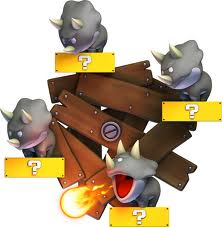
These canon levels end up being some of the game’s most challenging, because the rest is a cake-walk.  Super Mario 3D Land was pretty easy and I had over a hundred extra lives when I beat it, but in this one I had over 400.  It’s just not a hard game.  At all.  The boss encounters are particularly pathetic.  There’s a castle and a fortress in each world.  In the fortress, Super Mario World’s Reznor returns as the boss there.  If you forgot, Reznor is actually a group of fire-breathing dinosaurs on a big wheel contraption.  In SMW, Mario would have to bop all four off their place on the wheel while the ground he stood on was destroyed.  Reznor gets a bit more inventive in this one as some fortresses feature dual wheels, but the floor is much slower to deteriorate making the encounters even easier than they were in SMW.  The boss fights with the Koopalings are at least more imaginative than they were in SMW, but again, they’re probably easier too.  None of them are particularly memorable and I certainly never died while taking them on.  The final encounter with Bowser can be counted on to up the difficulty though, right?  Ehh, not really.  It’s two parts, and the first part is just a new take on the original Bowser boss fight and exists merely as a nod to SMB.  The second part is where it’s supposed to get hard, but without spoiling anything, it’s not.  After beating the six words plus two secret ones, the Star World is opened.  I thought maybe the Star World would be like the Special World from SMB and feature the game’s biggest challenges but it really doesn’t.  The levels are shockingly basic though the final castle is noticeably more challenging than any other level.  At the end of that castle gamers will encounter Dry Bowser, a skeletal version of the terrible turtle, but the mechanics of the fight are exactly the same as they were before.

Remember these guys? They’re back too.

It’s been established that the game is exceptionally easy and not particularly long, but that doesn’t mean it isn’t any fun.  I’ve had a pretty good time steering Mario along his course to rescue the princess.  One thing the NSMB series may have over the likes of SMB3 is in its controls.  Mario handles like a dream which may be one reason why these games seem so much easier than the old ones.  It’s much easier to stop Mario from sliding off a platform or to time his jumps precisely.  He has the perfect amount of weight and very rarely did I die and found myself blaming the controls.  The star coins scattered through-out the levels present a fun challenge.  They’re often not cleverly hidden but they’re also not always in plain sight.  They’re definitely easier to obtain in this game than some of the past ones.  In other games there’s usually a handful that would kill me over and over as I tried to snag it but there wasn’t a single one in this game that I had trouble with.

At the end of the day, I’m left to ponder the question at what point do I expect something more?  I’ve always had fun playing these games in the New Super Mario Bros. franchise but I don’t get the sense that Nintendo takes them entirely serious.  It’s been six years and three titles, but at no point have any of these games approached the heights of Super Mario Bros. 3 or Super Mario World.  And it’s not that I expect them to, as those are two of the greatest games ever made, but it’s just I don’t feel like Nintendo is even trying to top them.  I bought NSMB2 last Sunday and have since invested 12 hours into it and have accomplished everything.  I beat every level and acquired every star coin.  I could just play it over and over until I get a million coins, but I think I’ll hate the game if I play it that much.  There’s supposedly going to be some downloadable content in the future, but I don’t know how I feel about that.  I feel Nintendo already short-changed us on the levels in the game, so paying for more doesn’t sit well with me.  I’ll reserve judgement though for a later date.  Ultimately, anyone who buys this game knows what they’re buying.  This franchise is if anything consistent and it will entertain you, just don’t expect it to do so for very long or to offer much challenge.


What to Make of E3 2012?

If you’re even remotely into video games then you know that every June the Electronic Entertainment Expo (better known as E3) takes place in LA and all of the major players in the video game world unveil to the public what they have in store for the masses.  Often times E3 is the first chance for gamers to get a look at the next big “thing” from the major developers, be that thing a new console or the return of a beloved franchise.  This year’s E3 promised to reveal more about Nintendo’s next machine, the Wii U, and the public figured to get its first look at the latest in long-running franchises like Halo and Super Mario Bros.  As for surprises, well it was entirely possible, though not likely, we’d get some info on the successors to the Playstation 3 and Xbox 360 and maybe a new 3DS.  Now that E3 2012 is in the books, what did I think of it?  I’m glad you asked!

Microsoft/Sony

I’m lumping these two together for reasons that will be obvious once I’m done.  Both console publishers weren’t expected to unveil new hardware at E3 and instead would aim to boost their current market share.  Microsoft, predictably, threw a bunch of Kinect stuff at the attendees since that’s presently making them a boatload of money even if the “hardcore” gaming community couldn’t care less about it.  There was Halo 4 though, which was the game most Xbox fans were interested in.  As the first Halo not developed by Bungie, there is some uncertainty surrounding it but it seems like most were satisfied.  Beyond that it was mostly third party games that were spotlighted and some kind of fancy touch-screen junk.  Ho-hum.

Sony was expected to tout the Vita to PS3 connectivity in hopes of boosting the Vita’s severely lacking sales.  Sony’s presentation ended up looking like a business meeting at times and was a total snooze-fest.  They did talk up the connectivity of the Vita and PS3, but really didn’t get behind the Vita like I thought they would.  Like Microsoft, the emphasis was on third-party releases but Sony did flash some new exclusives such as The Last of Us and the latest from Heavy Rain developer, Quantic Dream; a new title similar to Heavy Rain called Beyond:  Two Souls.  I was surprised at how shitty 2012 looks for the Vita as the best titles coming to the handheld are PS3 ports like Sly Cooper: Thieves in Time and Guacamelee, making me feel less secure in my purchase.

Studio Ghibli is being used to help develop a game? You bet I want in on that!

If you can’t tell, I was pretty unimpressed with the offerings Sony and Microsoft made.  The game that excited me most on their machines was probably Ni No Kuni, the Level 5 and Studio Ghibli collaboration for the PS3 that’s already out in Japan.  I already knew enough about that title though, so it wasn’t like E3 was some big unveiling for it.  Plus it’s a JRPG which doesn’t attract much attention these days.  There was really nothing from Square-Enix, which surprised me, other than their produced revival of Tomb Raider which got a lot of people talking (IGN gave it the title of best game of E3), but I just can’t get excited about a Tomb Raider game.  Microsoft and Sony essentially punted on E3, and with next year’s E3 expected to showcase their new machines, I suppose it’s understandable.

Nintendo

Nintendo had the most to gain with E3 2012 so I expected the Big N to pull out the big guns.  After all, E3 marked the best opportunity for the company to sell the public on its latest console the Wii U, while also pumping up the money-printer known as the 3DS.

Before I get to the Wii U, let’s look at the 3DS.  Interestingly, around this time last year the handheld was floundering and Nintendo was already contemplating a price cut which it would eventually implement.  That price reduction, along with some better software, propelled the 3DS to the top of the sales charts.  Nintendo may be losing money on each unit sold right now, but it’s better than having them sit on the store shelves.  It was thought that Nintendo would show off a 3DS Lite, or as media reports before the show appeared to leak, a 3DS XL which would basically combine the existing hardware with the Circle Pad Pro attachment.  These reports proved erroneous, for now anyways, as Nintendo did not have a new 3DS to show off.  This probably has a lot to do with the current model both selling well and at a loss.  Why sink more R&D into it now?  Nintendo will likely wait for sales to slow down before unveiling a new SKU.

Ghost-busting, Luigi style.

As for the games, well the 3DS didn’t show off much new, and instead finally gave the public a glimpse into games it had already announced but had yet to really show off.  These games included both a new entry in the Paper Mario franchise and a sequel to the decade-old Luigi’s Mansion.  Both were on display at E3 this year and both pretty much delivered what I think most gamers were expecting.  Neither one appears to break the mold much, and Paper Mario:  Sticker Star has some weird sticker gimmick that I’m not sure I like, but gameplay-wise both titles appear solid.  Luigi’s Mansion:  Dark Moon is perhaps slightly more interesting just because it’s a franchise Nintendo has yet to exploit.  The first game, released as a Gamecube launch title, was a solid enough title but one that felt like it needed a sequel to fully realize its potential.  It’s surprising a sequel has taken this long and hopefully it’s a more complete game this time out.

I hope you like coins…

The big, new, title for the 3DS announced just before E3 is New Super Mario Bros. 2.  New Super Mario Bros. is one of the DS’s all-time best sellers, while New Super Mario Bros. Wii is one of the all-time best sellers period, so it’s no surprise the game is returning in 2012.  NSMB2 looks to be more of the same.  Nintendo is bringing back the leaf power-up, much as it did with Super Mario 3D Land, though this time it’s function is identical to it’s original powers in Super Mario Bros. 3, complete with P Meter and all.  It’s also incorporating the Wii version’s simultaneous play, as two players can play as Mario and Luigi at the same time, which sounds like more fun than it looks.  This edition also places emphasis on coin collecting (one of the new power-ups, a gold fire flower, lets Mario turn pretty much everything into coins) with the goal being to collect a million over the course of the game.  It’s unclear if that’s some sort of requirement or just a challenge, but it’s not something that has me excited at all.  Coin collecting, and collecting things in general in platformers, is mundane.  I don’t mind a few hidden items, like the star coins, which are usually some-what challenging to get, but just grabbing coins is often an after-thought.  The games are so easy that the player doesn’t really have to go out of their way to get coins and yet will still end up with over 100 lives.  I’ve recently been playing a lot of the Super Nintendo classic Super Mario World and I wish Nintendo would look to that title for inspiration.  The challenge in that game was finding numerous secret exits and extra levels which was far more gratifying than coin collecting.  NSMB2 does at least return the Koopalings, something I wish had been included in Super Mario 3D Land, so that’s a plus.

It also wasn’t enough to have just one new entry in the New Super Mario Bros. franchise as Nintendo also showed off New Super Mario Bros. U, the lead title for the new Wii U console.  It’s basically what you would expect, though Nintendo hopes to high-light the Wii U’s new controller.  By doing so, the Wii U game uses the Wii remotes for general play, but one person can use the new controller to add items to the levels, kind of like a Dungeon Master or something.  The game will have co-op play and will have a different set of levels than the 3DS game plus Yoshi and a new suit; the flying squirrel.

Mario’s new suit: The Flying Squirrel. At least it makes more sense than the raccoon tail.

That little segue brings me to the Wii U and why I really couldn’t care less at this point.  If you weren’t aware, the Wii U’s main selling point is this new controller.  It’s basically like a DS only with one screen and two analog sticks.  The touchscreen on it will be used differently for each game.  In ZombiU, it’s used to display little puzzles like key-code readers for doors and it’s designed to get the player to look away from the screen while hoards of zombies are descending upon the player to enhance the excitement.  In Batman: Arkham City, it just displays Batman’s gadgets and instead of selecting them with a touch of a button you use the touchscreen.  It’s also used to steer his remote bat-a-rang and control his de-encoder device.  A new title called Nintendo Land figures to show off other uses for the controller (the game is basically the Wii U’s version of Wii Sports, though marketed better by using Nintendo characters) but Nintendo hasn’t committed to it as a pack-in title, which would be a huge mistake, in my opinion.

If the uses for the controller do not wet your appetite, then I’m afraid there isn’t much going for the Wii U.  For me, it just doesn’t sound all that interesting.  It’s basically taking the DS experience to the home console.  And it’s being reported a single charge will only get you about 2 and a half hours of gameplay out of the controller which will make owning two a necessity for anyone looking to game for that length of time.  Also hurting it is the fact that some titles, like Arkham City and Mass Effect 3, will have been available for quite some time on other consoles by the time they’re released.  Do the additions to Arkham City make you want to buy it again?  I think for most the answer will be “no.”  And it’s also being reported that the Wii U may not even be as powerful as the 360 and PS3.  All of this tells me that Nintendo needs to get its big franchises onto this thing fast if it expects to move a bunch of units, because I don’t see any system sellers for it right now.

Wreck-It Ralph

I love this concept, hopefully it’s utilized well.

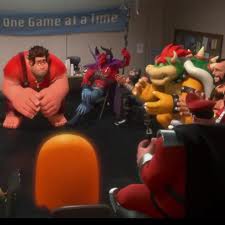
Have you heard about this one?  E3 isn’t known for movie reveals, but there’s also never been a movie like Wreck-It Ralph.  Best described as video game’s Who Framed Roger Rabbit?, Wreck-It Ralph is an animated feature from Disney that’s like a love letter to gaming.  The main character (voiced by John C. Reilly), is the antagonist in a Donkey Kong-like game who is sick of being the bad guy.  The trailer features a visually amusing gag of Ralph sitting in a therapy session with some of gaming’s biggest villains including Bowser and M. Bison.  The CG-animated film is directed by Rich Moore who was the lead director on the first several seasons of Futurama which certainly bodes well for the film.  I love the concept, but honestly found the trailer underwhelming.  The jokes just weren’t very funny, but I’ll refrain from passing judgement until I actually see it.  The film is currently set for a November release.

All in all, I think E3 2012 was one of the least interesting E3’s in recent memory.  Perhaps if Nintendo had yet to unveil the Wii U it would have been more exciting, but we already saw this thing in action a year ago and this year it was all about the launch-window software, which really didn’t impress.  Nintendo also didn’t unveil any pricing, which has me concerned, as I’m sure the company doesn’t want to sell this thing at a loss like it currently is doing for the 3DS.  I’m expecting a bare-bones release, as in one controller and no pack-in games, for around $300.  Any higher and Nintendo is crazy.

And if Nintendo failed to seize the moment, Microsoft and Sony weren’t willing to steal the spotlight.  Neither company really unveiled anything new and preferred to rest on its laurels.  Sure this year’s E3 was the public’s first look at Halo 4 and The Last of Us, but I think we all have a reasonable expectation of what they’ll play like.  There were no new games shown that have me excited, and the most interesting for me was Beyond:  Two Souls but that one is still a long way off.  2012 started off with a bang, but the fall looks to be easier on the wallet, I’ll leave you to decide if that’s a good thing or not.


Circle Pad Pro: Revelation or Ruination?

Today Nintendo released a new peripheral for its handheld system, the 3DS.  Dubbed the Circle Pad Pro, this attachment adds additional buttons to the 3DS along with an additional circle pad.  To make things slightly more annoying for gamers, it’s only available through Gamestop and will set you back $20.  Me, being the curious person I am (and since I received a gift card to Gamestop for Christmas), I hit the store and picked one up for myself.

The Circle Pad Pro, the best friend of the 3DS or hungry parasite? You decide.

An additional analog stick, or circle pad, is something many gamers wanted on the 3DS from the start.  While it certainly wasn’t a make or break feature, it’s nice to have.  Ever since Sony released its first version of the Dual Shock controller for the Playstation, the dual analog setup has become commonplace on controllers.  Often one stick controls player movement and the other manipulates the camera.  Other games, like first-person shooters, use one stick for movement and the other to aim.  A genre that was once cumbersome with a controller now has gamers feeling right at home.  And going from that setup to a non dual analog setup can be a bit odd, which is probably why upcoming Playstation Vita sports two analog “nubs.”  As I played through Ocarina of Time 3D I sometimes would find myself feeling for another analog stick out of habit to move the camera, and finding none.

Even though an additional analog input is something I would like to have, my initial reaction to the Circle Pad Pro was muted.  Peripherals often never work out well for consumers.  They’re often expensive, cumbersome, and lacking in support beyond an initial batch of games.  Very few end up being worthwhile.  Then again, no one has really tried to release something like this for a portable.  I’m trying to come up with something similar and the best I can come up with is the Gameboy Printer and Camera.  Neither was worth owning.

It looks like it's trying to swallow the 3DS.

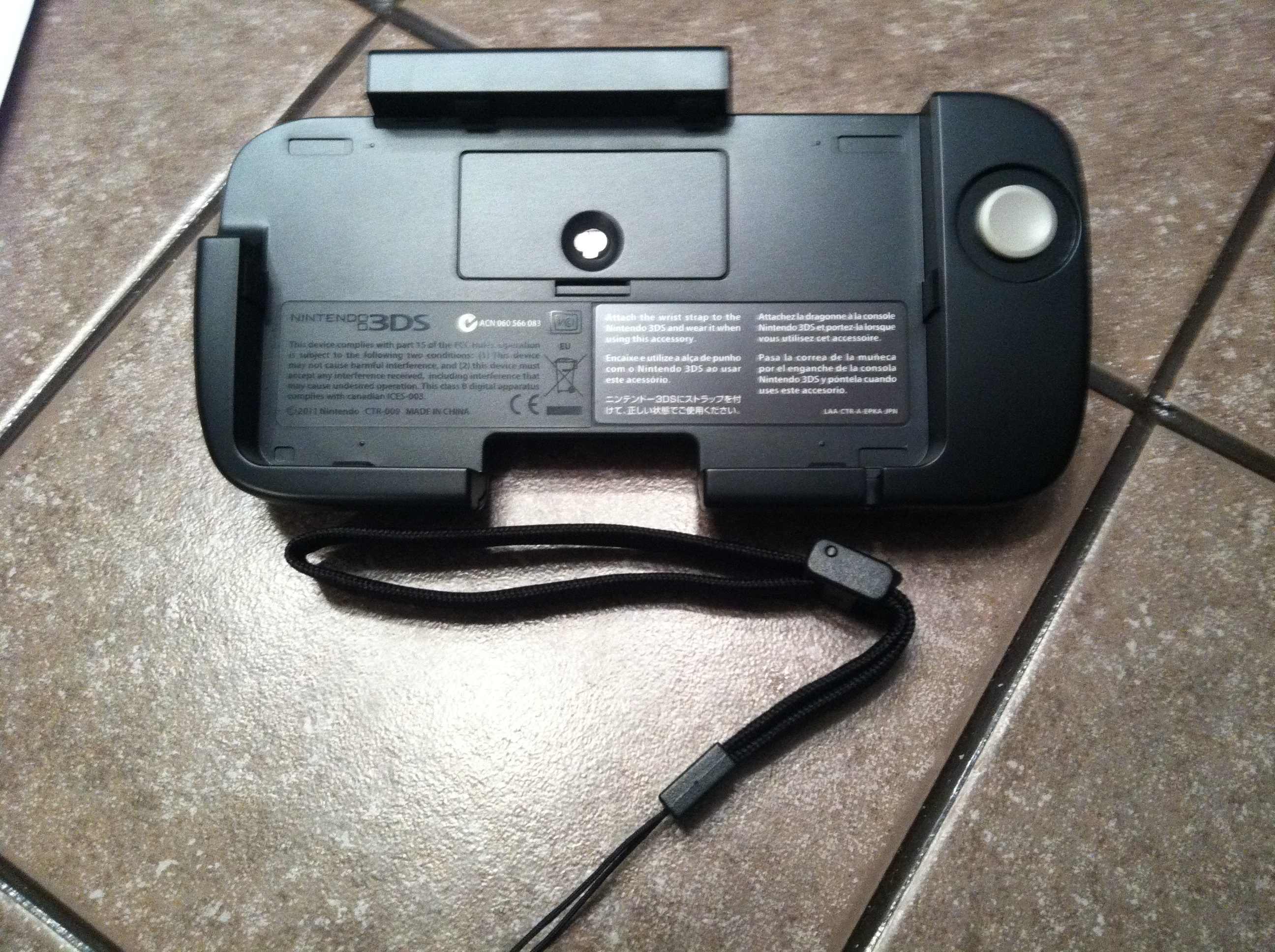
The Circle Pad Pro almost looks like it could be a stand-alone device.  It’s much bigger than the 3DS as it’s meant to house the system like a cradle.  The 3DS fits into it snugly without any locking mechanism that could scratch the system or wind up broken.  The fit is tight enough that there’s really no worry about the system sliding out, but just in case Nintendo did include a wrist strap.  The Circle Pad Pro runs off a single AAA battery (included) which is a good thing because the battery life on the 3DS is bad enough as is. For some reason Nintendo decided to fasten the battery cover in place with a non-removable screw.  It’s good that the screw can’t fall out and get lost, but why was that even necessary?  It’s annoying.  The Circle Pad Pro does add considerable weight to the system, making it weigh just about as much as a first generation PSP.  It’s also quite bulky and definitely detracts from the portability of the system. This isn’t something that fits in most pockets.  And as far as I know, the Circle Pad Pro only comes in matte black, so if you have a blue or a pink 3DS it’s going to be quite the eye sore.

The peripheral may be bulky, but how does it feel?  Pretty nice, actually.  The 3DS is small and the rectangular shape may be efficient but it’s far from comfortable.  Often my hands are pretty tired and cramp after 45 minutes with the system, especially after some Mario Kart.  I’ve spent roughly the same amount of time with my first play session with the Circle Pad Pro and can report little to no discomfort.  The attachment makes the system feel more like a controller and the added weight is actually a welcome thing when it comes to the ergonomics of the device.  The second circle pad feels just like the one on the system, which means it’s a tad loose for my taste but it certainly gets the job done.  In addition to the additional circle pad, the Circle Pad Pro also adds two additional shoulder buttons to the 3DS.  They’re clicky buttons, not triggers, but feel fine.

Rear view, for those who like that sort of thing.

It’s not all gravy though.  The peripheral does cover up the game card slot so the 3DS needs to be removed from the Circle Pad Pro to switch out games.  It also covers up the wireless switch and stylus port, which is kind of annoying.  The added plastic on the right side of the system also makes reaching the face buttons a little awkward.  That will definitely take some getting used to.  Nintendo at least wisely left space for the AC input so you can use the Circle Pad Pro while the 3DS is plugged into a wall outlet.

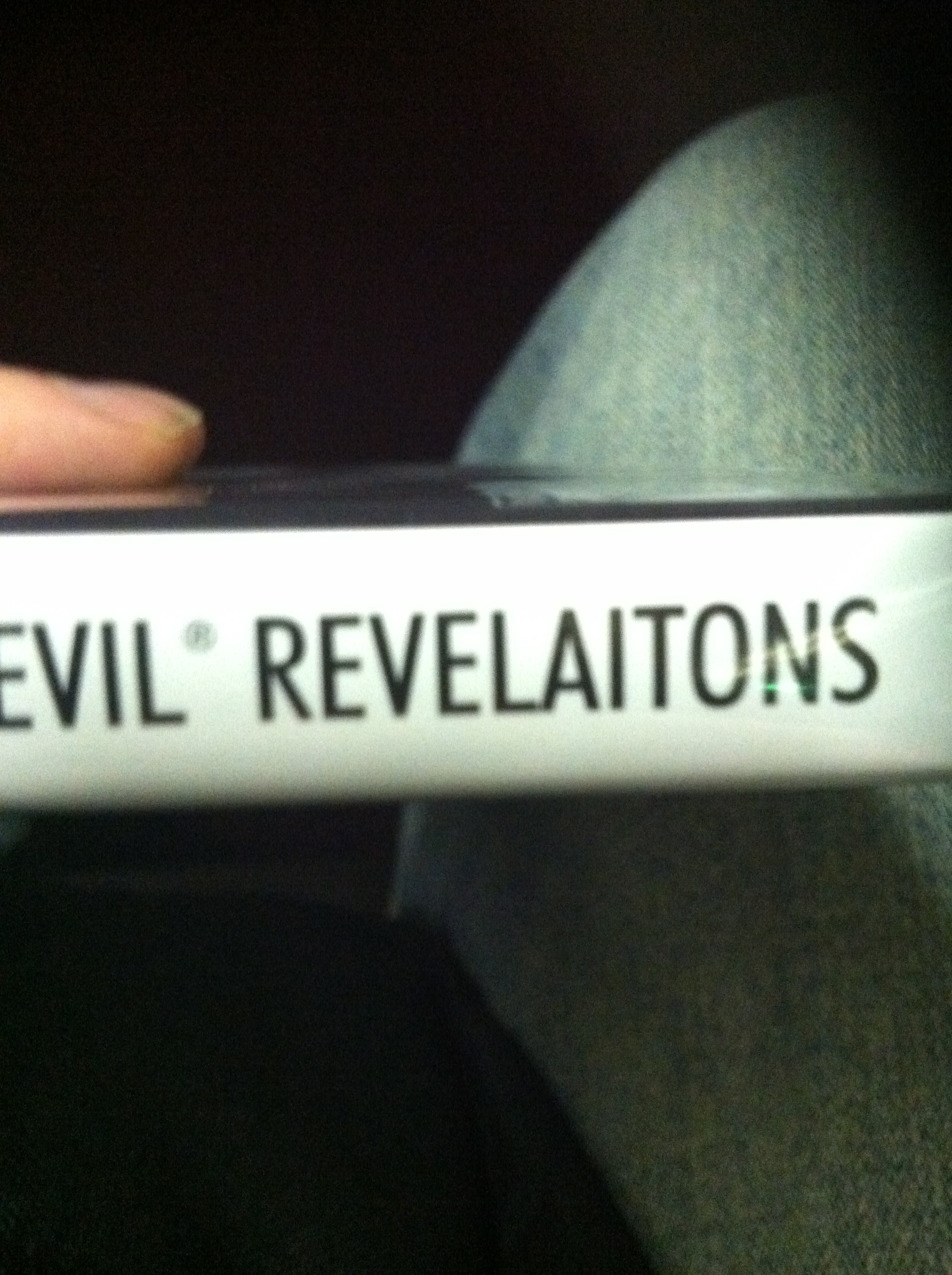
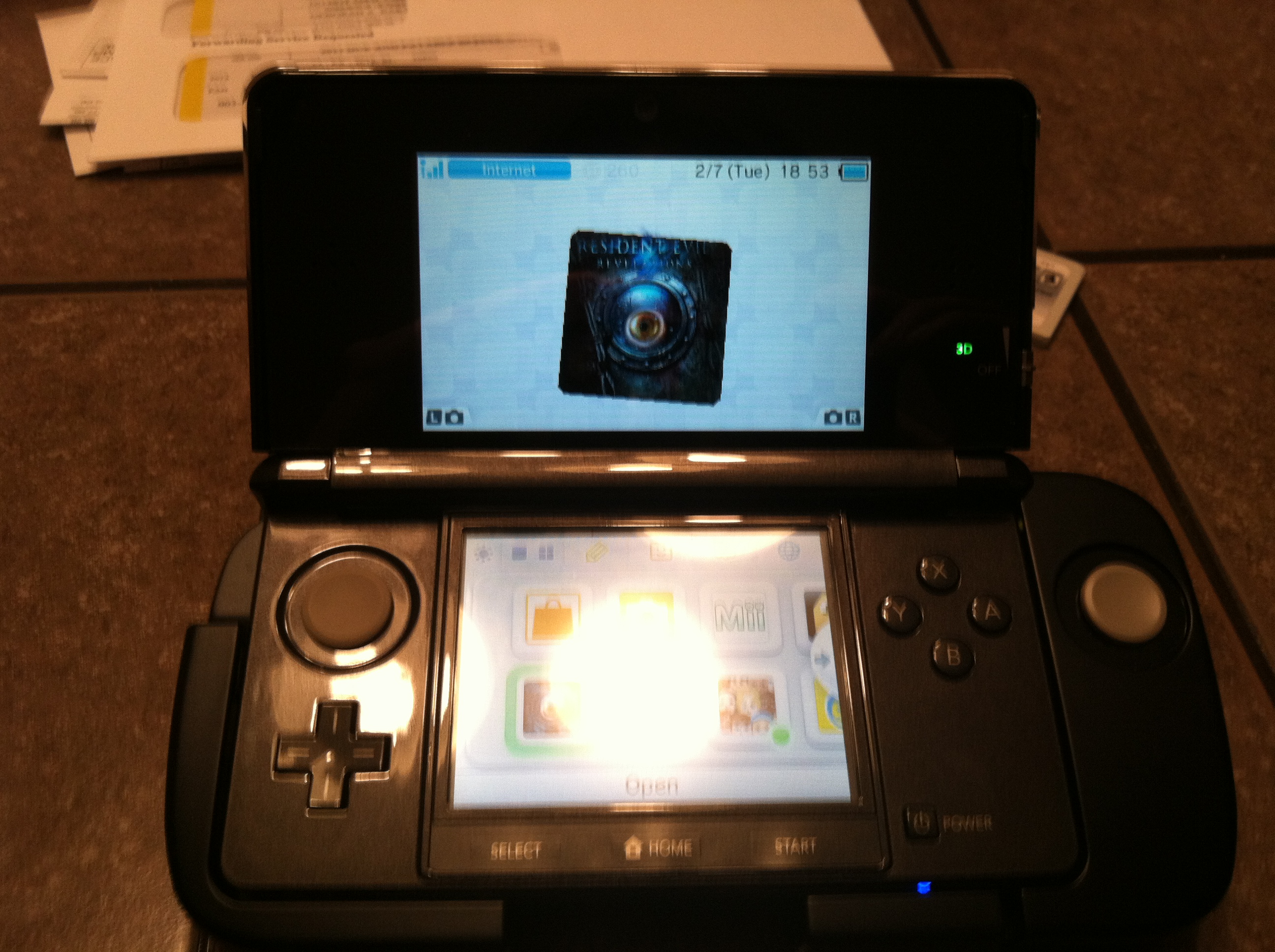
The Circle Pad Pro could be a flawless addition to the 3DS but it would be terribly useless without software that supports it.  That’s why Nintendo held it back for today which just so happens to be the day Resident Evil: Revelations arrived in stores.  Some of you may have already read about that one and how Capcom released it with an embarrassing typo on the game case’s spin, and if you’re wondering, yes it appears every copy is like that.  Apparently anyone who picks up a copy of the game with the typo can get a free replacement insert but I have no idea why anyone would be bothered to go through the trouble.

Oops.

I picked up a copy of Revelaitons (sic) alongside the Circle Pad Pro.  I was surprised to see that there’s no mention of the device on the game’s packaging.  I figured there would be a tell-tale graphic of some kind alerting would-be consumers that the software supports the Circle Pad Pro but I guess not.  Worry not gamers, Revelations does indeed support the Circle Pad Pro and firing up the game with the Circle Pad Pro attached will cause the game to ask if you wish to make use of it.  I obviously haven’t played enough of the game to render a verdict on how good or bad it is, but I can report that the Circle Pad Pro works, for the most part.

The left circle pad controls your character, Jill, and the right circle pad pivots the camera and makes her turn, pretty much just like a first-person shooter.  When a baddie appears on the screen, pressing the new ZL button causes Jill to draw her firearm and the ZR button shoots.  The regular old R button (actually, that’s kind of new too as the Circle Pad Pro replaces the R button on the 3DS with a new button) causes Jill to bust out her knife or other equipped secondary weapon.  When running around, the ZR button appears to function as the action button which feels kind of odd but I imagine I’ll get used to it.  The face buttons do not appear to be used much though one uses herbs to restore Jill’s health when prompted.  I actually didn’t try the game without the Circle Pad Pro, but I can’t imagine the control scheme working better.

Ready for action!

Visually, Revelations appears to be a stunner.  It’s comparable to Resident Evil 4 or some of the best looking games on the PSP.  A lot of time was definitely invested in Jill as she looks noticeably better than some of the scenery.  The backgrounds I’ve seen have been a little drab but there was some nice lighting on the first scenario which takes place on a darkened ship.  The game immediately places the player in some close quarters which is an uncomfortable feeling, a good thing for a survival horror game.  There’s a lot to take in on the 3DS’s rather small screen and I did experience some minor eye strain after a little while.  And if you’re curious, most of that was spent with the 3D featured turned off (I mostly hate 3D).

I’m pretty optimistic for Revelations.  It feels like Resident Evil and it’s pretty nice looking.  I do find aiming kind of cumbersome as hitting the ZL button immediately brings you into a first-person perspective.  Jill feels kind of slow but the enemies seem pretty quick.  I’ll have to see if that becomes frustrating or not further into the game.  As for the Circle Pad Pro, it does get the job done but if no one supports it then it will just collect dust.  Metal Gear Solid 3D figures to make use of it, and there’s rumors Kid Icarus might as well.  We’ll just have to wait and see.  If it doesn’t bother you to spend the extra dough to get a little more out of Revelations, then I say go for it.  At least it’s not as expensive as the 32X.


Greatest Games: Super Mario RPG: Legend of the Seven Stars

Super Mario RPG: Legend of the Seven Stars (1996)

In the early to mid 90’s Nintendo was still king.  Sega had carved out a very nice, and in some parts of the world larger, fan-base but Nintendo was still the first word that came mind when video games were brought up.  By the end of the 90’s Sony would establish itself as the new leader of the pack, but that didn’t really weaken the Nintendo brand too much.  At the same time, Squaresoft was killing it with the Final Fantasy franchise and beyond.  When it was announced that Nintendo and Square were working together on a role-playing game expectations could not have been set higher.

That collaboration would give birth to Super Mario RPG: Legend of the Seven Stars, one of the Super Nintendo’s final acts of brilliance.  I, to this day, still feel like I missed out a bit on how great the SNES was.  I had one, like just about everybody.  When I first heard that a Super Nintendo was coming to market I wanted it without ever having seen it.  I didn’t have a subscription to a game magazine or anything, and not many of my friends did either.  I think the first time I saw what the SNES even looked like was at a cousin’s house.  I begged for one but would have to wait a little while until one Christmas where I had my Ralphie moment to find it hidden behind a kitchen chair.  It was awesome, but by next Christmas I wanted a Genesis because it had Mortal Kombat with blood.  Pixelated red stuff was really important to a 9 year old.  I received a Genesis the very next Christmas, one year after I got my SNES.  From there I never received another SNES game.  I think my mother and grandmother (the two most likely to buy me Christmas and birthday presents) assumed the Genesis was superior or something and would just buy me Genesis games.  As a result, most of my SNES play was through rentals or much later on through ports on the Playstation or other means.

Mario was able to jump and avoid enemies on the "world map" areas. Contact with an enemy would take the player into battle mode.

Super Mario RPG was a game I experienced in a limited fashion when it was first released.  On the surface, it was kind of an absurd title.  Mario, the plumber, in an epic Final Fantasy style adventure?  It had an interesting visual style though, a pseudo 3D engine that kind of looked like claymation, and an isometric 3 quarters perspective.  I rented it with a friend, multiple times I think, though we understandably could never beat it in one night.  I had another friend who owned it and showed me the ending since he beat it.  I never thought to borrow it and play through it myself, probably because by then I had a Playstation and was at that age where it didn’t make sense to go backwards from the more powerful console to the lesser.  When emulation started to rise in popularity on the internet I downloaded it and played through it.  And then once the Wii and its Virtual Console came along I downloaded it again and played through it from start to finish, this time seeing everything the game had to offer.

The antagonist for Super Mario RPG; Smithy!

Super Mario RPG is one of those games that’s just plain fun to play.  It would be easy to credit that to the Mario charm but I give most of the credit to Square.  Square could have taken the easy way out and just palette swapped Final Fantasy VI with Nintendo characters and called it a day.  Instead, they took the essence of what made a Mario game a Mario game and incorporated that into an RPG formula.  Mario is the premier platform hero, and Square wisely identified that and incorporated something that’s fundamental in most games into a genre where it’s completely foreign:  the jump button.  Mario could jump, which added a new amount of depth to the world.  Mario traverses a world not completely unlike his usual Nintendo adventures.  As he encounters enemies he can jump on them which brings the game into battle with Mario scoring an early hit.  He also has platforms to traverse and jump across.  These challenges are fairly limited and there’s nothing as challenging as the hardest Super Mario Bros. levels were accustomed to, but it does add to the experience and help make it decidedly “Mario.”

The battle system also received an overhaul to best suit the plumber and his pals.  It’s still turn-based like the majority of RPGs at that time, but it incorporates more button presses.  These commands take the form of either button mashing or timing based.  Hit the attack button at the proper time for just about every attack and the character will score an additional hit up to a certain point.  It’s possible to ignore these extra commands if one is so inclined, but it’s far more rewarding to make use of them.  The more powerful attacks were suitably more difficult to pull off but also more rewarding.  This also worked on defense as well, as characters could avoid taking full damage on some attacks with a well-timed button press.  The game does a good job of changing things up at the right time as well so that just when you’re getting comfortable dodging the para-kooopa’s attack or timing Mario’s mallet strikes just right, a new enemy comes along or a new weapon.

The weapons and skills also have a lot of Mario charm incorporated into them.  Mario has his fire power to make use of and his jump attack.  He can also wield a mallet at times like he did way back in his debut in Donkey Kong.  My favorite weapon is probably Bowser’s chain chomp which he wields like a bolas by spinning it over his head and then tossing it.  Oh yeah, this game also pairs up Mario and Bowser!  Such a pairing would repeat itself, but this is the first time it happened in a game and it was pretty cool.  Not only was it fun to pair Mario and Bowser, but it’s also nice to give Mario a different antagonist.  And since the Princess joins the party as well, this makes Super Mario RPG the rare Mario game where the plumber isn’t out to rescue the Princess from Bowser.

The "star" of Super Mario RPG? Geno certainly was a hit with fans, and many would like to see a return engagement with Mario.

Square would jointly create additional characters with Nintendo to flesh out Mario’s party.  In battle, only 3 characters can be used at once but up to 5 were selectable by the game’s end.  In addition to the 3 mentioned before, Mario was also teamed up with a cloud kid named Mallow (who thinks he’s a frog) and the toy come to life Geno.  Geno has since become a fan-favorite and often comes up whenever a new Smash Bros. game is mentioned as a potential player character.  Despite the fan reaction to him, he’s yet to make another appearance in any Nintendo game.  Square actually holds the copyright on Geno (or at least holds it jointly with Nintendo) which is why he is unlikely to ever surface again as a playable character (he does have an item cameo in Mario & Luigi: Superstar Saga).  The party Mario ends up forming contains the usual assortment of offensive-minded characters, healers, and so on.  It’s nothing too deep, but the variety is solid enough.

If there’s room for improvement it’s with the story-line and difficulty of the game.  It’s standard fare for an RPG to have a big, dramatic plot, which is something Mario has never been known for.  The story here is rather simplistic and not a driving force of the game.  Square wisely interjects humor wherever it can giving this title a different feel from most of the genre.  And considering Nintendo didn’t give Square much to work with in terms of plot depth based on older Super Mario Bros. games, they did a pretty admirable job.  And while the gameplay is complex enough to separate the title from introductory RPGs such as Mystic Quest, it still feels like Square made it as accessible as possible for Nintendo’s audience.  There’s some challenge to the game but nothing crazy.  There’s no point in the game which requires the player to go out and level grind to get through a certain dungeon or any white knuckle boss encounters.  Even the optional, hidden boss Culex (a Final Fantasy themed boss) isn’t very difficult to best.

The game is by no means perfect, but it offered a fun and refreshing take on the RPG genre when it was first released.  The charm of the title was infectious, and it’s approach to battle would show up in both future Nintendo titles and future Squaresoft games.  Because the relationship between the two companies soured shortly after the release of Super Mario RPG, a true sequel has never been created.  Instead fans have received several spiritual sequels in the form of the Paper Mario series and the handheld Mario & Luigi games.  Both franchises borrow heavily from Super Mario RPG, but neither is a copy and paste affair.  For the most part, the humor has been carried over and made an essential part of the game’s story-telling.  Bowser is also rarely the ultimate foe and is sometimes a playable character as well.  Timing based attacks are the norm for the battles and for the most part the games have been a lot of fun.  Turning Mario into an RPG star seemed like a pretty crazy idea in 1996, but it worked out better than probably anyone could have hoped for.  The current games have been fun, but I still think the original Super Mario RPG is the best.