Category Archives: Music

Danzig 6:66 Satan’s Child

Danzig 6:66 Satan’s Child (1999)

Following the critical and commercial failure of Danzig 5: Blackacidevil, Danzig was returned to the underground.  The 9 figure record deals were no longer out there, few promising bands were looking to open for the group, and the band members became as unstable as ever.  There was a tour for Blackacidevil that even included a spot on the main stage at Ozzfest but after that Glenn Danzig was seldom heard from.  He focused more time on his independent comic book company, Verotik, and found himself in court battling with the executives at American Recordings for the rights to the unreleased material from his days at that label.  Eventually, Glenn would set his sights on recording the next Danzig record, the one that would become Danzig 6:66 Satan’s Child and would be the first of many to be heralded as a “return to form” for the band.

When an album bombs as bad as Blackacidevil did, it makes sense for the artist to reexamine the approach taken on previous efforts compared with that one.  For Danzig, this was simple enough.  The early records were rooted in the blues and could best be described as hard rock or heavy metal.  Yes, there were things about each album that separated them from one another but the core was mostly the same.  For Danzig 5, that core was loosely interpreted.  And while it could be argued the foundation was mostly the same, the layers on top certainly were not which helps define Blackacidevil as an industrial record with some techno and metal elements thrown in.  A confident producer would explain that to Glenn and would push him away from that approach as it clearly just didn’t work.  It would be one thing if the album was conceptually brilliant, but commercially misunderstood, but that really wasn’t the case.  The problem is, Glenn was no longer working with a big producer, and is a very prideful man.  For awhile, he insisted that Blackacidevil was his favorite record and spent more time defending it than he has anything else he has done.  Regardless, even he had to admit the best way to promote a new record was as a back to basics kind of thing.  The problem was, that wouldn’t really describe Satan’s Child too well.

More than three years elapsed between Danzig 5 and Danzig 6, so when Satan’s Child arrived in the fall of 1999 the core fan base that had stuck with Danzig was eager to get a listen.  This was before mp3 had really exploded so most fans, myself included, were mostly left in the dark until the album was released.  Before release, Danzig’s new label E-Magine, a young label hoping to better utilize the internet as a legitimate means of distribution, released the album’s first single online, “Five Finger Crawl,” as well as a snippet of “Unspeakable.”  It’s actually a bit confusing which one truly was the first single.  “Five Finger Crawl” was made into a video and some metal-oriented radio stations were playing it while others received CD singles of “Unspeakable.”  Either way, “Five Finger Crawl” was my introduction to Danzig 6 and I mostly enjoyed it.  This was the era where nu-metal was dominating the heavy music scene.  Drop D tuning was in fashion to add a pervasive heavy-ness to most records.  Danzig opted to tune even lower, to C, for this record.  And while Danzig 6 is not an industrial record, it does contain more effects than the previous 4 albums.  There’s an eeriness to “Five Finger Crawl,” accentuated by Glenn’s whispering vocal delivery, particularly the line “You leave me cold.”
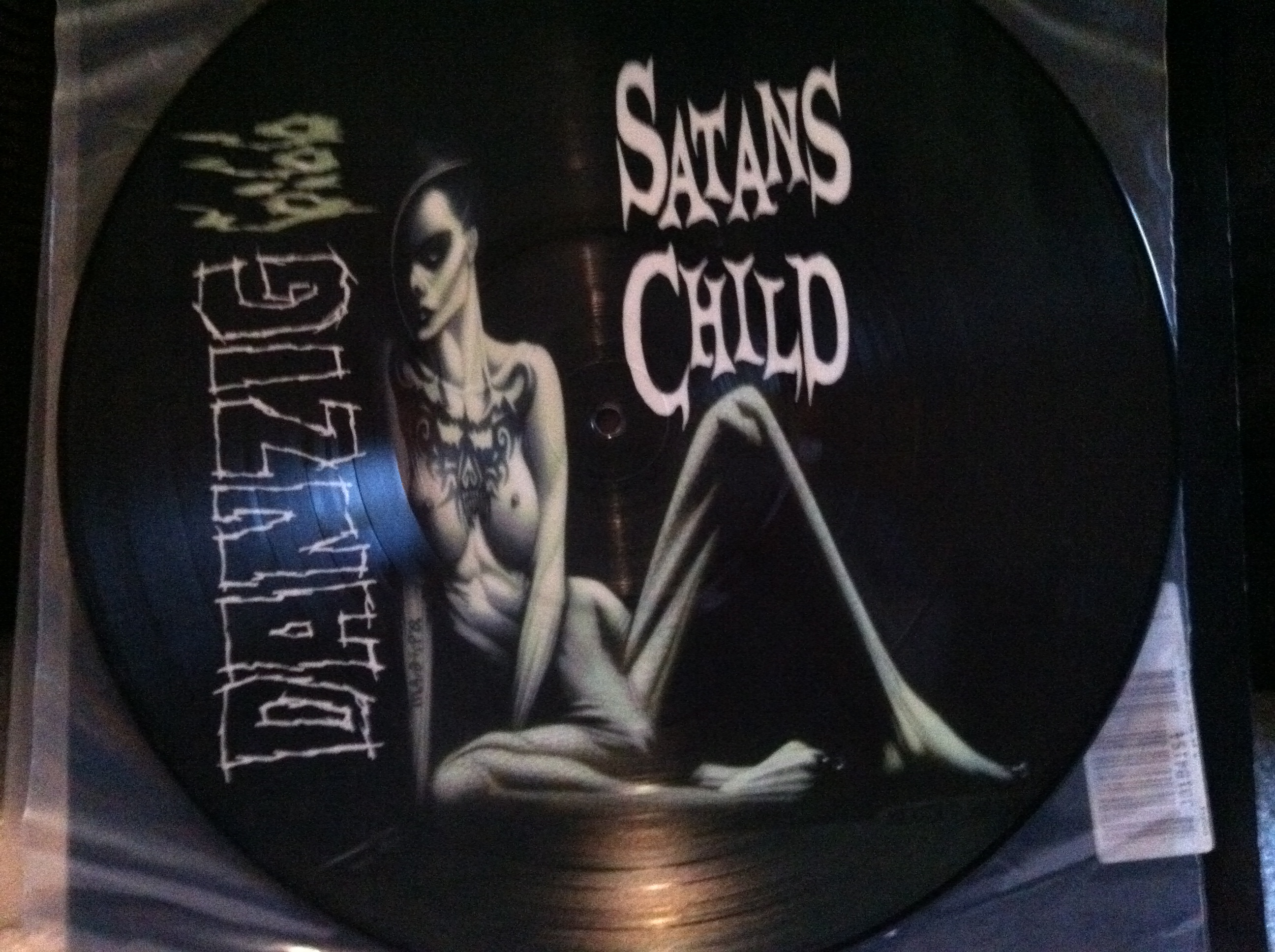
The limited edition picture disc release, featuring the internet only cover of the CD version by Martin Emond.

The mood of the track is still decidedly Danzig, in the end.  The thing that had fans talking though were the vocals.  Glenn whispers throughout much of “Five Finger Crawl” before hitting a shouting chorus.  On that chorus, his vocals sound deep and slightly hoarse.  This had fans worried about what kind of shape Glenn’s vocal chords were in.  The song alleviates some of those fears to a degree with the close, where an unfiltered Danzig wails the “You leave me cold,” line, but there’s still a hint of hoarseness on there as well.  We would find out during the press tour of the album, that Glenn opted to record his vocals digitally this time, and offered up the excuse that he augmented his vocals to sound the way he hears them when he sings to himself.  The result is a deeper Glenn on this record, but he also uses a whisper track on many songs which create a hoarse quality.  The whisper track is cool when used a bit conservatively, but it probably is overused on this record.  With most things Danzig though, the truth often lies somewhere in the middle.  He may have chosen to record his vocals in a certain way, but perhaps he also did that to help mask the fact that they just weren’t what they used to be.  The tour would confirm as much.  The good news is that later records would show improvement, but unfortunately Danzig 6 marks a low point for vocals on a Danzig record.

That is not to say the vocals do not have any shining moments here.  On the contrary, I already mentioned the close of “Five Finger Crawl” as being exceptional, but songs like “Lilin” and “Cold Eternal” showcase Glenn’s vocals just as well.  There are low moments though, such as the thunderous “Apokalips,” a decent enough song, but one where Glenn’s vocals border on annoying as he has a shrill quality to his shouts.  Overall, the vocals are not a make or break thing for the record, and perhaps actually end up being the album’s best feature, because unfortunately it ends up lacking in several others.

For one, the structure of the songs are perhaps too basic.  There are really no memorable guitar riffs and very few guitar solos to liven things up.  Josh Lazie’s bass is audible, but not spectacular.  Joey Castillo’s drumming is solid, if not a bit restrained.  He’s capable of so much more.  I assume Glenn thought little of session guitarist Jeff Chambers, which helps explain why the guitars come across as an afterthought at times.  Or perhaps creatively he was just in a funk.  The band recorded over 20 tracks for this album which tells me that Glenn was really indecisive with this one and was probably at some-what of a crossroads with his band.  I should take the time to point out that the slide guitar on “Cold Eternal” is a nice touch and does add some nice texture to that track.

If the approach musically was a bit boring, then it makes sense that the finished songs are as well.  There are some nice tracks here that I have already mentioned.  One I didn’t was the closer “Thirteen,” the song Glenn penned for Johnny Cash in the early 90’s and finally recorded himself.  It would later show up in the hit film “The Hangover.”  It’s a simple but cool little track and it’s lyrics suit the public persona of Glenn Danzig.  Sadly, the lyrics on that one represent the album’s peak in that department, for in some instances they’re just bad.  “Cult W/Out a Name” is a decent enough rocker, but the lyrics there are just embarrassing.  Some, such as “I am teeth of fire/taste a thousand shames” annoy because they don’t make sense, but others annoy me because they’re just stupid “I am street designed.”  “Belly of the Beast” is one where the ending of each line rhymes with the next, just for the sake of doing so.  Again, if the music accompanying these lyrics was more interesting they could be overlooked, but here they’re hard to ignore.

The back of the picture disc, also the back cover of the CD version. Apparently Glenn was really into black and pink around this time. They had to kick Jeff Chambers out of the band to include more devil chicks.

Thankfully, most of the tracks are absent the industrial fuzz that permeated Blackacidevil, but not all.  “East Indian Devil (Kali’s Song)” is a track that could have fit on Blackacidevil, which isn’t a good thing.  The vocals are heavily distorted, and there’s little melody to the song structure.  It’s one I am happy with skipping over.

In the end, was Danzig 6:66 Satan’s Child a return to form for the band?  Only in the sense that it left behind most of the industrial elements of Danzig 5.  This is still a rather weak output when compared with the rest of the Danzig catalogue.  It’s an okay listen, but there’s just few standout tracks.  It’s no surprise that this album is hardly ever featured in the live set these days, and future releases would improve upon it.

Top Tracks

  • Five Finger Crawl
  • Cold Eternal
  • Thirteen

Danzig Legacy 10/29/2011 NYC

danzig_october30

From The Village Voice.

You may be wondering how a self-professed giant fan of Glenn Danzig could sit on writing a review for perhaps the greatest show a Danzig fan could ever hope to attend for a week.  Well, thank mother nature for that one for knocking out my power for 5 days immediately following the show.  Do you think 5 days in the cold (and horrendous traffic on interstate 91) could dampen my thoughts on this show?  If you said “Hell no,” then you’d be right.

Last Saturday my best friend and I attended this monumental show.  From the moment the Danzig Legacy show for Chicago was announced I was torn.  This was a show I had to attend but could I really justify the cost in flying out to Chicago to catch it?  Compound that with the fact that likely no one I know would be willing to do the same made it a tough proposition.  Thankfully, shortly there-after two additional dates were added and one included New York City.  Now that I could handle easily as my best friend just so happens to live in the city so I’d have a place to crash and a bud for the show.  It’s what most people would refer to as a no-brainer.

I talked about the actual show in a previous post, so I’ll spare you the specifics here.  All you need to know is that this was designed to be a career spanning set list for Mr. Danzig.  The majority of it would focus on the current band, Danzig, but there was also a set for the goth-punk outfit Samhain and the legendary Misfits.  It would have been cool to see more emphasis on the reunion aspect.  The current Danzig line-up of Tommy Victor, Steve Zing, and Johnny Kelly was used for both the Danzig portion and the Misfits portion.  Kelly was switched out in favor of former Samhain drummer London May for that portion of the show.  For the Initium and Unholy Passion songs, bassist and original Samhain drummer Steve Zing would return to his position behind the kit with May handling bass duties.  When the set list got to the November-Coming-Fire portion, May would switch with Zing and handle the drumming for the tracks he originally sat-in on.  And for the Misfits set, former axe-man Doyle would join the Danzig band and pound his way through the classic tracks.  Musically, Doyle adds little to the songs but his commanding stage presence and over the top persona really add to the energy of the show.  It would have been awesome if more guys could have attended, but Glenn Danzig isn’t really known for keeping in touch with his old band mates.  Misfits bassist Jerry Only would have been out of the questions, and to be honest, it really wouldn’t have done anything for me to see him there.  I would have loved to see original Samhain and Danzig bassist Eerie Von though, and I consider it a real shame he and Glenn had a falling out after he left Danzig as they were friends for years.  If original Danzig guitarist John Christ had popped in for a track or two that would have been pretty awesome as well, but he and Glenn were never really the best of friends so it’s understandable.  Damien is someone I thought had a chance of picking up the old axe and stepping onto the stage with Samhain, but he was either busy, never asked to join, or just didn’t want to.

Regardless, seeing the guys who were there perform songs I never expected to ever see performed was something special.  The venue, the Hammerstein Ballroom, is a nice open area with tiered balconies that accommodated the largest crowd I’ve ever seen for a Danzig show.  I was seated in the first balcony section and had a great view of the floor and the stage.  The section was packed, and the people on the floor were jammed in tight.  I don’t know if the second balcony was completely full but there were quite a few people that I could see from my limited vantage point.  Security really wasn’t busting anyone’s balls for taking pictures, a rarity at a Danzig show, though stage hands were using laser pointers to point out people obviously boot-legging the show.  I took a couple shots with my iphone, but they didn’t come out great (iphone’s really suck when zoom is used) so I won’t bother to upload any for this post.  Some great videos did make it to youtube though, for those interested.

The set list was the same as the one from Chicago that I posted earlier.  It was great to hear “Overture of the Rebel Angels” back where it belongs, though I would have preferred something other than “Skin Carver” to kick off the show.  Even though I’m not particularly fond of the song, it did do the job and the crowd was really into it shouting the chorus back at Glenn.  Glenn looked to be in great shape for the event.  Noticeably slimmer than usual, he jumped around the stage like a man half his age.  His voice, while not quite the same as it was in the 90’s, was strong and the levels were great as I didn’t notice any one instrument over-powering the others.  Steve Zing was a great addition to the live band a couple years ago, and his bass-playing is more than capable.  He adds enthusiasm and isn’t afraid to get close with the crowd.  Johnny Kelly’s drumming is awesome, and I think that’s an opinion most people share.  Tommy Victor has been the most maligned member of the band, as his style is different from previous Danzig guitarists so his solos differ as well.  I never particularly care how a guitarist plays the solos live, as long as they’re still good.  To that end, I have no problem with Tommy.  Is he my favorite Danzig guitarist?  No, but he doesn’t harm the product.

Overall, the set list for the first Danzig section was pretty awesome.  After “Skin Carver” and a couple cuts from the new record, it switches back to “Twist of Cain” and moves in a chronological order for the remainder of the set.  The usual favorites are played, with the exception of “Devil’s Plaything,” my all-time favorite Danzig track which rarely gets played.  I personally had only seen the band do it once on the 20th anniversary tour in ’08, for this one they go right into the song following “Her Black Wings” omitting the intro.  I was some-what disappointed by this, but it was cool to hear the crowd kind of surprised when the riff kicked in and it still proved to be the highlight of the Danzig set for me.  After “It’s Coming Down,” the band disappeared to the back and the Danzig back-drop was lowered, replaced by a giant image of the November-Coming-Fire back-drop and soon “Initium” could be heard coming from the speakers.

After the intro finished, the band burst onto the stage to the familiar sounds of “Samhain” leading the way.  Glenn returned to stage sporting the dog mask he wore for the final Samhain performance back in 1987.  The band ripped through the song and others from their debut album and the crowd seemed into it, though perhaps not as into it as they were the Danzig stuff.  This wasn’t that big of a surprise to me as Samhain has always been the Glenn Danzig band to get the least amount of attention.  There was a point in my life where I didn’t even know a band had existed for Glenn in between The Misfits and Danzig.  The crowd certainly was into the Misfits cover, “Horror Biz,” but once things kind of slowed down with “Unholy Passion” the crowd energy kind of dyed down.  That’s too bad, as “Let the Day Begin” followed which has always been my favorite Samhain song, though I have to admit, it sounded a little off live.  I’m not really sure what it was, but it kind of lacked intensity.  “To Walk the Night” was awesome though, as was “Mother of Mercy” but by that point the crowd had almost completely checked out.  I tried not to let it bother me, but it did.  Ingrates!

This is the reason why many turned out for the show.

After the Samhain set, the band once again vanished to the back and a new Misfits backdrop replaced the Samhain one.  This made the crowd go crazy as an instrumental track took over featuring generic haunted house noises and a howling wolf.  It seemed like the wait was longer than the change-over to the Samhain stuff, but eventually some distorted guitar tones filled the air as Doyle marched onto the stage to a huge ovation.  The rest of the band soon followed and the air in the venue was charged!  Glenn provoked the audience with an “Are you ready?!” before the band blasted-off into “Death Comes Ripping.”

The floor was turned into a sea of bodies, feet, arms, and torsos flying every which way as the band bludgeoned our eardrums.  This is how I wished the crowd had been the whole night!  Every line of every song was being screamed back at Glenn as they tore through the old classics.  There would be a pause between most songs as Doyle would change guitars (presumably due to broken strings more than tuning issues) but the crowd seemed to enjoy the brief respite.  Every song seemed to get the same ovation, which is to say a huge one.  For me, the high-light was definitely “Last Caress” which closed out the set.  I have always wanted to hear that song live ever since I was a kid in middle school, and to finally hear it was practically overwhelming.

When the set ended, the band once again vanished backstage and the Danzig backdrop was raised once more.  When the band returned to the sound of machine gun fire it tore into “Bringer of Death.”  Even though that’s a song that would normally elicit a big response from the floor, the crowd seemed like it was tapped out.  Sure the pit got moving a bit when the situation arose, but it was nothing like it had been during the earlier stages of the show, and certainly not even close to what it was for the Misfits stuff.  Little changed for the next two tracks, as the band went back to the debut album for “Not of This World” and required closer “Mother.”  It was all too obvious why most people showed up, and that was to see Glenn and Doyle do the Misfits stuff.  Expected, but it still kind of bummed me out to not see people go nuts for the other classics.  In my section, hardly anyone even left their seat all night.  I have never been to a show where people actually remain seated.  It was bizarre.  My friend and I tried to stand during the first part of the show, but people behind us complained.  So long as the people in front of us remained seated (they had stood up for the first part of the show too, they’re true fans, but had sat down once the first set ended) we would do so as well so as not to incite the ire of those behind us, but damn if I didn’t feel like an old loser for sitting at a metal/punk show.

After the conclusion of “Mother,” the band did the usual pre-encore stuff and said its goodbyes.  The stage hands then set to work on getting the crowd to call the boys back on stage but the crowd was mostly quiet.  Talk about frustrating.  A chant would go up for “Danzig!” here and there but die quickly.  Maybe the crowd didn’t know what to chant for, since it obviously wanted some more Misfits tunes, but it was still kind of embarrassing.  Even though the response was lackluster at times, Glenn never let it bother him.  He was in a pretty good mood all night.  I guess he knew what the people wanted and was fine with it.  That was a change from when I saw Danzig and Doyle together in Boston in 2005, where the crowd was dead all night save for when Doyle was on stage.  This enraged Danzig to the point that he didn’t even do an encore.  That was also my buddy’s first Danzig show, and it always bothered me it ended that way.  He was concerned this time around when the crowd was so lackluster before the encore that it would happen again.  Thankfully, the band did re-emerge on stage with Doyle once more leading the way.  The band ripped into “Skulls” and the place once again went nuts.  When it was over though, it was over for good.  Glenn thanked us and gave his usual “Take care,” before vanishing into the snowy evening.

When it was over it was like my body crashed.  I had been waiting and looking forward to this show for so long and for it to be over was kind of a drag.  Still, I had the time of my life and even though the crowd let me down at times it was still the best Danzig show I’ve ever attended.  Just to see the band in top form hitting on the majority of my favorite songs spanning over 30 years of material was unreal.  I never, ever, expected to see Glenn Danzig do a show like this even in my wildest dreams.  He’s always been against this type of thing but I think his attitude over the years has mellowed quite a bit.  He had also frequently said the Samhain thing would never happen again after doing a semi-reunion in 1999, a tour that never came close to me, so I felt particularly lucky to catch it this time.  He seems to take delight in doing the old Misfits songs with Doyle, so much so that it’s surprising he doesn’t do it more.  The band as a whole really feeds off the crowd when it goes nuts for those old tunes and I imagine the view from the stage is something out of this world.

Glenn Danzig isn’t getting any younger so it’s tough to say how many shows are in the future.  Since he resides in the LA area, I suspect there will always be shows going on out there to some degree, particularly around Halloween.  For those of us in other parts of the country though, there’s the possibility that this could be it.  While I don’t feel that is the case, it was in the back of my mind last Saturday that this could be the last Danzig show I attend.  I’d like to think that when such a time comes he’ll let everyone know with a farewell tour, but it also wouldn’t shock me to see him just disappear quietly.  If this was the last Danzig show I’m able to attend, then that was one Hell of a way to go out.  Bravo, boys!


Danzig III: How the Gods Kill

Danzig III: How the Gods Kill (1992)

On the eve of the second of four shows in the Danzig “Legacy” tour, it seems like an appropriate time for the last review of the original four Danzig albums from the Def American days.

The third full length album for Danzig would mark a turning point.  The first two albums had been fairly rock-oriented but Danzig III would bring back some of that metallic edge found in Glenn Danzig’s previous band, Samhain.  Danzig III: How the Gods Kill arrived in 1992 to little fanfare, but the band was on the verge of breaking out.  Mostly ignored by MTV due to the band’s “satanic” imagery, Danzig would break thru the network’s censors with the first video from the album, “Dirty Black Summer.”  Soon the band found themselves as guests for shows like Headbanger’s Ball and things started to pick up commercially as well, culminating in a massive Halloween show at Irvine Meadows that same year.

The band would hit its commercial peak following the release of the follow-up EP, Thrall-Demonsweatlive, but Danzig III is the album that got everything rolling and has become a favorite for many fans of the band.  The album was also the first for the band to receive a special release.  The album was released as a box set with a VHS of the video for the title track.  The box itself contained the full cover image done by H.R. Giger, a modified version of his piece Master and Margarita.  Fans could also purchase their own Danzig dagger from the fan club via mail order which has since become an expensive collector’s item.

The cover of the “Dirty Black Summer” single with the Giger interpretation of the Danzig classic skull logo.

The third Danzig album is the first album with the label where Glenn and the boys had almost total control.  Glenn Danzig had received a producer credit for Danzig II along with Rick Rubin, and though Rubin would receive one for Danzig III as well, it has long been stated by Glenn that by this time Rubin had little involvement with the band.  That is evident in the sound of the album.  Rubin is famous for taking bands and stripping them down to a very basic sound which is what he did with the band’s debut album.  Danzig II added more blues elements and the band flexed its creative muscle a bit more with songs like “Blood & Tears” and “Pain in the World.”  Danzig III would keep some of that blues base but add a heavier production.

This is quite apparent in the album’s opener, “Godless,” a dark and foreboding track with an explosive center.  Danzig sings in a throatier voice this time around achieving a deeper sound.  The guitars have crunch, but the tone lightens when the time comes for guitarist John Christ to shred.  This more visceral style probably isn’t what suits a technical player like Christ best, but he pulls it off just fine.  Eerie’s bass is actually audible on most tracks this time around, as opposed to just a few like with the previous two albums, which helps contribute to the album’s forceful low-end.

The first single, the previously mentioned “Dirty Black Summer,” was a good choice as it’s probably the most accessible song.  It’s a blues-rock number where Glenn’s evil croons take center stage.  The vocal hiccup between lines in the chorus gives it a unique quality, though the silly subject matter makes it a bit tough to take serious at times.  The thunderous “Left Hand Black” may be the album’s heaviest moment and its rebellious chorus an easy crowd pleaser.

The standout tracks are the title track and the ballad, “Sistinas.”  The title track effectively uses the old trick of start quiet and build to an explosive chorus before slowing things down for the outro.  It begins with a nice piano melody and some soft singing by Glenn.  When the song gets bigger the guitars come in with pinch harmonics in excess.  Despite the simple approach, the song is quite effective and a great high point.  In contrast, “Sistinas” starts quiet and remains so.  Danzig croons away like a modern-day Elvis with some desperate, uncharacteristic lyrics.  It’s so good it’s the type of sappy ballad even a metal-head can get into.

That said, the album isn’t perfect.  “When the Dying Calls” is one of the band’s weaker closing numbers for an album and “Do You Wear The Mark?” is a shameless rip-off of Black Sabbath’s “Into the Void.”  Glenn really stretches his vocal chords for “Bodies,” and the result is something between okay and annoying and “Heart of the Devil” has some lyrics that are almost too campy to ignore.  Glenn Danzig has always walked the line between campy and cool and every now and then he strays a little too far to one side.

Danzig III – How the Gods Kill may have its flaws, but it’s an album that’s definitely worthy of one’s attention.  The good far outweighs the bad and while it’s not among my favorite Danzig releases, it’s in the next tier of very good along with the likes of the first record and the most recent, Deth Red Sabaoth.  Because this is the point in the band’s life where a lot of fans hopped on board, it holds a special place for many so I can see why it often is cited as the group’s best effort.  I have to respectfully disagree, but I have listened to this album a great many times, and plan to continue to do so.

Top Tracks

  • Godless
  • How the Gods Kill
  • Sistinas

Danzig – “Legacy”

I’ve  been waiting awhile to post on this subject, mostly to see how things get finalized, but as we’re now one week away from the inaugural show it seems I can’t wait any longer.  For those unaware, Danzig – “Legacy” refers to four shows to be played over the next month that will cover the entire Glenn Danzig catalogue, including his time with The Misfits and Samhain.
For someone who seems reluctant to discuss the past in interviews, Glenn Danzig has not been shy about including some fan service into his live shows.  For many years it was not uncommon to hear the occasional Misfits or Samhain song at a Danzig show, often an old track being used as a reward of sorts for good audiences.  Then in 1999 came the Samhain reunion tour which was a part of that year’s Satan’s Child tour.  For those shows, Glenn was joined on stage by former Samhain drummers Steve Zing and London May, with the two switching off between bass and drum duties.  Pete “Damien” Marshall was not available so then current Danzig guitarist Todd Youth subbed for him.  Then in 2005, Danzig was joined by former Misfits guitarist Doyle on stage for a set of old Misfits classics.  The mini set would take place in the middle of the Danzig set and then carry over into the encore.

I expect blood for the Samhain set.

Danzig – “Legacy” is shaping up to be a combination of the two.  I don’t know who’s idea it was to do this, but it was first announced as part of the RiotFest which will take place in Chicago on October 7th.  Not long after additional shows were announced for New York (29th), LA (31st), and Austin (November 4th).  The participants are expected to be the same as before, with Steve Zing (now the current Danzig bassist) and London May representing Samhain and Doyle from The Misfits.  Some of the flyers state three sets will be played, one for each band, but the format of the show is still up in the air.  Also up in the air is who will be playing guitar for Samhain, though Glenn recently stated it will probably be current Danzig guitarist Tommy Victor.  I suppose there’s still an outside chance that Damien could show up for a show or two, specifically the NY one as I think he still resides in the area, but former Samhain/Danzig bassist Eerie Von has ruled himself out.

It would have been nice to get a true reunion with some old Danzig and Samhain members joining the party (I won’t even allow myself to consider the possibility of a Misfits reunion with Jerry Only) but you’re not going to hear me complain.  I missed out on the Samhain reunion in ’99 so I’m beyond excited at the chance to catch it again.  This announcement really snuck up on people and the general consensus among the fans seems to be shock and delight.

There’s a lot of possibilities for set lists considering the music spans over 30 years but there are some songs I would love to hear.  I’m betting the sets won’t be far off from what’s been done in the past, but that won’t shut off my imagination.  If I had it my way, the show would go something like this:

  • Overture of the Rebel Angels (intro)
  • Hammer of the Gods (Danzig)
  • Snakes of Christ (Danzig)
  • Left Hand Black (Danzig)
  • How the Gods Kill (Danzig)
  • Death Comes Ripping (w/Doyle)
  • 20 Eyes (w/Doyle)
  • All Hell Breaks Lose (w/Doyle)
  • Astro Zombies (w/Doyle)
  • Last Caress (w/Doyle)
  • Skulls (w/Doyle)
  • Hybrid Moments (w/Doyle)
  • We Bite (w/Doyle)
  • She (w/Doyle)
  • Horror Business (w/Doyle)
  • Initium (following a short intermission)
  • Samhain (Samhain)
  • All Murder, All Guts, All Fun (Samhain)
  • Black Dream (Samhain)
  • The Howl (Samhain)
  • Archangel (Samhain)
  • Unholy Passion (Samhain)
  • In My Grip (Samhain)
  • To Walk The Night (Samhain)
  • Let the Day Begin (Samhain)
  • Descent (Samhain)
  • November’s Fire (Samhain)
  • Twist of Cain (Danzig)
  • Deth Red Moon (Danzig)
  • Mother (Danzig – because they pretty much have to play it)

Encore:

  • Devil’s Plaything (Danzig)
  • The Hungry End (Samhain)
  • Die Die My Darling (w/Doyle)
  • We Are 138 (w/ Everyone)

A man can dream.


UPDATE – 10/8/2011

The first show of this brief four show tour occurred last night in Chicago and the set list looks mighty fine.  I hope it doesn’t change at all when it comes time for the New York show.  The band lineup was as expected, with London May and Doyle being the only additions to the regular Danzig lineup of Tommy Victor, Johnny Kelly, and Steve Zing.

Overture of the Rebel Angels
SkinCarver
Hammer of the Gods
Rebel Spirits
Twist of Cain
Her Black Wings
Devil’s Plaything
How the Gods kill
Dirty BlackSummer
It’s Coming Down

Initium
Samhain
All Murder, All Guts, All Fun
Horror Biz
Unholy Passion
Let the Day Begin
To Walk the night
Mother of Mercy

Death Comes Ripping
Vampira
Bullet
Martian
Night of the Living Dead
Halloween
Astro Zombies
Last Caress

Bringer of Death
Not of This World
Mother

Skulls


Opeth – Heritage

Opeth - "Heritage" (2011)

On September 20th, 2011, Opeth unleashed its tenth studio album on the world, titled Heritage.  Nearly every (legitimate) sub-genre of heavy metal under the sun has been attached to Opeth at some point or another, but with Heritage none could be found for the long-time head bangers can really no longer be called a metal band.  Make no mistake, Heritage will be and is a divisive album for Opeth fans and the metal community.  In the short time it has been available here in the US, most of the reactions to the album have been extreme in one direction or another.  Some fans feel its progressive rock sounds are brilliant and the birth of something new and exciting for the band while others feel its absence of traditional metal is both misleading and a poor choice.  For me, the truth lies somewhere in the middle, though I’m leaning more towards the “brilliant” crowd.

Truly, the album is an exercise of confidence for Opeth.  Confidence in each other, confidence in their ability, and confidence in the music itself.  For a band that’s been around for over 20 years to so drastically change things up is both admirable and frightening.  On the surface, this sounds like no other Opeth that came before it, including the other absence of metal record Damnation from 2003.  Look closer though and some traditional Opeth sounds can be found.  The lead track and early crowd pleaser “The Devil’s Orchard,” is quite close to a traditional Opeth track but without the heavier elements of the band’s past.  The obvious jazz elements present on the album are what really distinguish it from past works.  The lead guitar work is often frenetic and engaging, and bassist Martin Mendez is given a lot of room to breath on this record and the results are quite excellent.  Where the album really abandons the past is with the more abstract titles like “Famine” and the jazz-fusion mid-section of “Nepenthe.”  And seemingly to add a completely different sound to the album there’s “Slither,” the Dio tribute track that’s the closest thing to pure rock Opeth has ever recorded.

Opeth live in "Woostah," Massachusetts on the Heritage Tour, 9/20/2011.

While the album is indeed good, it’s hard not to argue that a certain aspect of the band has been lost along the way.  Yes, Opeth has always dabbled in prog rock and their music has often contained complex rhythms and time changes but it was still always heavy metal, Damnation aside.  Heritage is truly a progressive rock album, and judging it on that basis alone it’s good, but not earth shattering.  Opeth will not be confused for King Crimson.  Comparing it with past releases, and it’s actually quite similar to the more progressive moments on Watershed, the band’s previous album.  If this sound is the future for Opeth (and lead singer and principal composer Mikael Åkerfeldt left open the possibility of bringing back the death metal component) then I find myself with some mixed emotions.  The defining aspect for Opeth, to me, has always been the duality between the light and dark, heavy and serene.

I’d be less concerned if I didn’t think the direction for Heritage would carry over to the live show, but one look at the Worcester, MA set list from the first night of the tour is quite a thing to ponder.  For those not interested in checking the link, the only songs played were those devoid of Opeth’s heavier side.  Songs from the new album were joined by older songs such as “A Fair Judgement” and “Credence” with nothing even remotely metal finding its way into the set.  I was in attendance for the show and it was quite interesting to feel the tension in the air.  The crowd was fairly receptive to the band but the air was charged as people were just waiting for something big and heavy to release that tension but it never came.  The new tracks did work really well live, which I expected as there’s a very natural and organic sound to the record, and most of the older tracks sounded quite good as well.  It still would have been nice to hear “The Lotus Eater” or “Deliverance” as a final song or encore.  This new approach even prompted a sort-of apology from Mikael as he kind of thanked the crowd for dealing with the difficulty of being an Opeth fan.

Heritage leaves Opeth in a curious position.  No one, not even the band, seems to know where this is going to lead.  Opeth has a reputation and a fan base that won’t let its popularity be diminished much, if at all, by this new direction.  It’s even possible the band could attract new fans, those who always liked the band’s mellow side but not the death metal aspect.  I won’t even try to speculate but I will continue to look forward to and consume everything this band releases.  Opeth is an extraordinarily talented outfit that never fails to put out engaging, thought-provoking, music and in that Heritage is just like all of their previous observations.

Some technical thoughts on the collector’s edition release:

The collector's edition of the album includes quite a lot of stuff.

The bonus tracks, “Pyre” and “Face in the Snow,” are quite good but also sound as if they were left off the album for a reason.  “Face in the Snow” is the better of the two and sounds like it could have easily fit onto the Damnation record.  It kind of ends abruptly though and I wish some more thought had been put into that part of the song.  The two tracks, like the bonus tracks on Watershed, are annoyingly included on the DVD portion of the release and not the CD.  There’s a widget on the Opeth facebook page that’s supposed to let users download the tracks by inserting the DVD into their PC/Mac, but it wouldn’t work for me.  I contacted customer service for Push Entertainment, the company responsible for the widget, and they just suggested I clear my cache which solved the problem.

The DVD also includes a 5.1 mix of the album, so if you have a killer set up it might be worthwhile to give it a listen.  The real attraction, for me, is the included “Making of Heritage” documentary directed by Mikael himself.  It’s very similar to the one included on Watershed and goes in depth into the recording process of the album.  Mikael talks a lot about how Heritage was conceived and explains why it sounds the way it does, which considering the album’s drastic change in direction, is quite enlightening.  I am a terrible musician myself so I always enjoy and am fascinated by those opposite.  Watching the more mundane sections of the documentary are extremely interesting to me, they may not be for some.

The deluxe version of the album also contains a 7″ for the two bonus tracks, so at least owners of that can listen to them on something other than a television.  Each track has its own side, so no cool back-side artwork like the Throat of Winter single.  The deluxe version also contains the album on 180 gram vinyl and spans two records.  This version of the LP has a lenticular cover which is pretty cool.  There’s an oversized artbook and lyrics insert, as well as a print of the cover on sturdy paper.  I’d love to frame the print but it’s hard to find a quality 12×12 frame at stores.  The whole thing is housed in a hard slipcase with the cover art on the front and normal back cover design as well.  It’s quite pricey, but cool for the collector.  There’s still some available at the label’s webstore.

Top Tracks:

  • The Devil’s Orchard
  • Slither
  • Folklore

Edguy – Age of the Joker

Edguy - Age of the Joker (2011)

I’m not sure what my expectations were for the new Edguy album, Age of the Joker.  Ever since 2004’s Hellfire Club, the band’s first outing on Nuclear Blast, Edguy has been incorporating more and more elements of traditional metal and hard rock into their music and less of the power metal they were known for.  This has caused a bit of a rift with their fan base.  Some long for the days of Theater of Salvation and Mandrake and a great chorus of fans deride the band’s new sound.    At the same time, the group’s exposure increased and as a result so did its popularity, and we all know what that does to the “hardcore” fan base.

Hellfire Club served as a breakout, and the following album Rocket Ride furthered that while also further removing the band from its power metal roots.  Following Rocket Ride, frontman and brainchild Tobias Sammet took some time off to create the next Avantasia record before returning for 2008’s Tinnitus Sanctus.  Tinnitus once more saw a reduction of the power metal sound, almost eliminating it entirely, in favor of more mid-tempo tracks and hard rock riffs.  The press was fairly positive at first, but fans did not seem to enjoy it as much.  The album was unbalanced and for every good track there seemed to be an under developed one.

Tobi and the boys are back with their 9th studio album.

For those who hopped off the Edguy band wagon following Tinnitus Sanctus I will say the latest album Age of the Joker is a marked improvement.  However, those longing for the old power metal sound should not bother.  Some of the pre-release hype for AOTJ has called it a return to form but that seems quite misleading.  If trying to compare AOTJ with prior Edguy works is necessary, then I would say it is best described as a melding of Hellfire Club’s heavy riffing with Tinnitus Santus’ rock undertones.  And really, the album is at its best when it goes for that sound.  When the band tries to stretch the songs out into something epic, such as with the lead track “Robin Hood,” things stumble and the band struggles to keep the song interesting.  In the very specific case of “Robin Hood,” the subject matter just doesn’t lend itself well to an epic 8 minute song.  Sammet tries to play it tongue and cheek with some sophomoric humor thrown in (Robin Hood is just trying to get someone to caress his “Little John”) but the vocal melody for the chorus just doesn’t fit.  Some of the attempts at humor fall flat as well, such as Robin being out for “bling,” and the middle section just doesn’t work.

The album is immediately redeemed with the next song, “Nobody’s Hero,” a blistering rock track with a great chorus.  The lead riffs are some of the album’s best and everything comes together well.  The momentum is carried on into the anthemic “Rock of Cashel” but does stumble once again when the band tries to stretch out another long track with “Pandora’s Box.”  The song meanders along alternating between the interesting and the dull.  The middle section features an oddly placed blues section where Tobi’s vocal cadence reminds me of Bad era Michael Jackson.  That’s not necessarily a bad thing, but it did make me nearly laugh out loud while listening to the album on the train.

The rest of the album contains more high marks with songs like “Breathe” and “Faces in the Darkness.”  The album never truly breaks out a power metal track like Tinnitus did with “Speedhoven” but that’s okay.  Most of the songs are well developed and contain plenty of trademark catchy Edguy melodies.  Sascha Paeth is back in the producer’s chair and the result is the typical polish one would expect of a Sascha Paeth album.  Everything has a nice sheen to it without sounding over produced.  If I had one complaint with the production it’s that the line between Edguy and Avantasia continues to blur.  I guess so long as both outfits continue to put out quality records that’s not such a big deal.

The rest of the album isn’t all gold.  “Behind the Gates to Midnight World” is too long and could have been trimmed down, and I find the album’s closer to be overly sappy and corny, but every Edguy album apparently needs to contain a Bon Jovi-like ballad to round things out.

Overall though I’ve enjoyed Age of the Joker quite a bit.  I don’t know where I would place it amongst Edguy’s other albums but time shall sort that out.  Start to finish it’s one of their catchiest releases that will likely prove pretty accessible for new fans.  Old fans who enjoyed Hellfire Club and Rocket Ride will find plenty to like here as well, though if you’re looking for that speedy, Helloween type of stuff you’re probably better off looking elsewhere.

Top Tracks

  • Nobody’s Hero
  • Faces in the Darkness
  • Fire on the Downline

Danzig 5 – Blackacidevil

Original cover artwork for “Blackacidevil” (1996) in long form. The bottom half is what appeared on the CD cover. If Danzig 5 had received a proper LP release, it can be assumed it would have been a gatefold. Danzig 5 is the only Danzig album to not have a vinyl release.

The fifth LP from Danzig was a unique one, and to this day a lot of the elements introduced on it have never been heard from again.  It also represented a lot of firsts for the band.  It was the first Danzig album to appear on a label other than Rick Rubin’s American Recordings.  It was also the first without the band members that had appeared on all four full-length albums previous; Eerie Von, John Christ, and Chuck Biscuits.  For Von, this was the first non Misfits album to feature a bassist other than he.  Outside of the soundtrack only “You and Me (Less Than Zero),” every Samhain and Danzig recording had featured Von on bass (years later, Glenn would state he or John Christ recorded a lot of bass tracks for prior albums).  And really, other than himself, Glenn had only worked with two bassists up to this point, the other being Misfits veteran Jerry Only.  John Christ was dismissed following the 4p tour, and Biscuits before that.  Replacement Joey Castillo would handle most of the drum duties for Danzig 5 (where an electronic beat wasn’t employed) and bassist Josh Lazie was brought on board.  The album did not feature a permanent guitar player, but Alice in Chains axe-man Jerry Cantrell was featured on a couple of tracks.

Blackacidevil (pronounced black acid devil) is the first and only full-length release for Danzig on Hollywood Records.   As I mentioned in my Danzig over view entry, Hollywood’s parent company, Disney, would object to featuring a band such as Danzig on their label and the agreement was terminated shortly after the release of Danzig 5.  This resulted in a low press run of the first edition of the album and the PR for it came to an abrupt halt.  Not that a longer one would have made much of a difference as Blackacidevil was not received well by music critics and fans alike.

Blackacidevil represents Glenn Danzig’s greatest risk and greatest failure.  Under the security of a brand new record agreement and without the influence of a big name producer, Glenn was free to approach his fifth studio album however he wanted.  Choosing to go industrial, he produced an uneven album with almost all of the elements of his previous albums absent.  The lyrics are almost hyper-sexualized, borrowing thematically from Glenn’s comic book line, “Verotik.”  Some of the songs, like the title track, feature heavy repetition creating a mad-man like state as if the song could have been constructed by a serial killer.  Songs like the opener “7th House,” are relentless in their melody-abandoned approach.  In that specific example, think 4p’s opener “Brand New God” but with an even simpler structure and heavy vocal distortion.

The song structures for the most part are very basic in their approach, harkening back to the debut album.  The coat of electronic production and vocal distortion disguise the simple song structures and give the album an easy scapegoat.  Even without the distortion, this album likely would have been poorly received.  Glenn has stated he viewed Danzig 5 as a continuation of Samhain, or where he thought Samhain was heading.  I found that to be a cop-out, or a piece of revisionist history.  I’ll concede that the first two Danzig records interrupted the natural Samhain progression, but How the Gods Kill and 4p were a logical continuation.  Danzig 5 just represents where Glenn’s head was at the time and the current climate of both popular music and the band’s state made the time right for experimentation.

I commend Glenn for being an artist who does what he wants, when he wants.  He doesn’t generally make music for a label (though Rubin and American Recordings obviously had some say) or for his fans, and he shouldn’t.  And while I generally am not a fan of Blackacidevil, it isn’t all bad.  For the most part, the vocal distortion just does not suit Glenn’s voice.  It gives him a higher tone that’s borderline screeching.  The electronic beats just don’t do it for me, and really, the industrial genre is not one I’m particularly fond of.  This album just wasn’t made for me.

Where the album does shine is with certain tracks.  The one most often cited as being the hidden gem is the bluesy “Come to Silver.”  Originally intended to be a Johnny Cash song, it’s a distorted, slow tempo track that features some excellent guitar work by Cantrell.  Here the vocal distortion adds a chilling touch to the song which suits its lyrics.  Years later an undistorted, acoustic version would be released that fails to match the original’s atmosphere.  The original album closer, “Ashes,” is another chilling track that paints a bleak and desperate picture.  The vocals are clean and feature a falsetto delivery at times by Glenn.  He once described it as similar to 4p’s closer “Let it be Captured,” but darker and a song that never truly climaxes.

“Sacrifice” was the album’s lead single.  It’s not a unique track, as its drum track is basically a sped-up version of Nine Inch Nails’ “Closer,” but it strikes a nice balance between metal and industrial.  “See All You Were” is a track I enjoy, but I wish I could hear a non-distorted vocal track.  I’m convinced there’s a great vocal performance buried under all the muck.

The Emond cover for the 2000 re-issue. The added tracks were “Deeper,” “Bleedangel,” and “Don’t Be Afraid.”

Other than those 4 tracks, the rest are throw-aways for me.  Some of them, such as “Serpentia,” are what I consider the worst tracks Glenn Danzig has ever recorded.  In 2000, Glenn’s then current label E-Magine would re-release Blackacidevil with new cover artwork by Martin Emond and three additional tracks.  The added tracks offered little, though the re-mix of “Deep” is okay and probably superior to the original.  For fans of industrial, I suspect this album leaves something to be desired and for fans of Danzig most will find little to enjoy.  This is the album that, for better or worse, changed everything for Danzig.  After this, the large venue shows all but dried up and Danzig was returned to the underground from whence it came.  There were no more 9 figure record deals or Top 100 singles and the albums that followed would best be classified as uneven.  I’m not sure what Glenn’s attitude towards this album is today.  For years, he insisted it was misunderstood and one of his favorite releases.  Following 2000 though, Danzig 5’s influence on future live set lists was all but erased.  When the band Danzig celebrated its 20th anniversary by playing a chronological set list, Danzig 5 was curiously skipped over.  That is likely the closest thing to an admission of failure we are likely to receive from Glenn Danzig.

Top Tracks

  • Sacrifice
  • Come to Silver
  • Ashes

Danzig – Deth Red Sabaoth

Danzig – “Deth Red Sabaoth” (2010)

It’s been just over a year since Danzig released its most recent (and perhaps final) album, Deth Red Sabaoth.  As the years have dragged on Danzig releases have become some-what few and far between.  Not including 2007’s The Lost Tracks of Danzig, there had not been a proper Danzig release since 2004’s Circle of Snakes.  It probably comes as no surprise that six years is the longest gap between Danzig releases.  Is it age, disinterest, the music industry, or something else that lead to such a long break period for the band?  As with most things, it’s probably a combination of those and more that made Danzig fans wait six years for a new album, but thankfully, the wait was worth it.

It’s a rather poorly kept secret that Danzig albums have not been as consistent since the band’s departure from American Recordings.  And for my money, one of the worst albums in that span was the previous album to DRS, Circle of Snakes.  The production was muddy, the melodies and lyrical subject matter uninspired.  Sure there was a track here and there that worked, but as a whole the album was a throw-away.

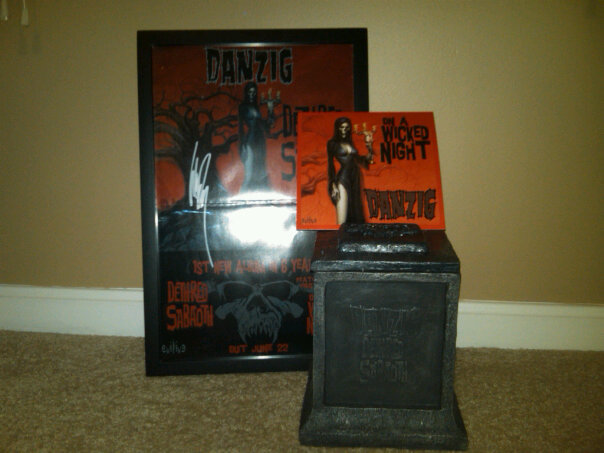
The special edition release, complete with a Danzig urn.

Deth Red Sabaoth returns Tommy Victor (Prong) on guitar and brings Johnny Kelly (Type O Negative, Seventh Void) in on drums.  Bass duties were filled by Glenn Danzig himself (with former Samhain drummer Steve Zing handling bass duties for the touring band) along with drums for the track “Black Candy.”  Danzig self-produced the album and went for a lo-fi sound with unmastered vocal tracks and an all analog approach (which, surprisingly, is making a bit of a comeback as the Foo Fighters recently did the same).  The end result is perhaps the heaviest album Danzig has ever done.  There’s really no “Sistinas” or “Blood and Tears” on this one as most of the tracks are thick and heavy.

The album’s opener, “Hammer of the Gods,” is a blistering track slightly reminiscient of “Am I Demon?” from the first album.  The guitars have chop with dashes of pinch harmonics thrown in.  The chorus has a nice melody, and a slow bridge in the middle helps to usher in a frenetic final act for the song.  A good crowd pleaser and natural opener.  The second track, “The Revengeful,” carries the momentum forward with an even more liberal use of pinch harmonics.  The track has a nice, bouncy, groove to it with some classic Danzig cheese lyrics.

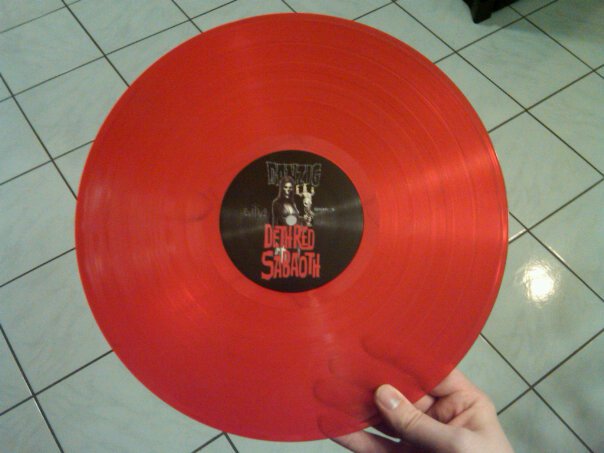
In addition to the CD release, Deth Red Sabaoth was also released on vinyl in 3 versions; black, picture, and red.

The first single of the album, “On A Wicked Night,” is one of the rare soft moments from the album.  One of those throw-back start slow and pick up tracks, it’s pretty catchy though it is one place where the vocals could have used some re-mastering.  It’s also repetitive, but the run time is short enough to keep it from becoming too monotonous.   My personal favorite track on the album, “Deth Red Moon,” has more melody than most of the tracks and strikes a nice balance.  The addition of a shaker on the chorus adds nice texture and it would have been a natural choice for a single as well.

Other standouts include the bluesy “Ju Ju Bone” and the ultra-heavy “Black Candy,” which is sure to rattle your dash board.  The album’s closer, “Left Hand Rise Above,” is similar in structure to “Without Light, I Am” from Danzig 7, only without the extended outro.  A great song for Glenn Danzig to really bellow and a good note to go out on.

The album is not without some low points though.  The two-part “Pyre of Souls” drags on a bit as the same riff is used through-out the entire duration of the song.  Not a bad track, but one where I’m always ready for it to end.  “Night Star Hel” is heavy but without much melody, though the extended instrumental outro does redeem it some and would kill live.  The low-fi production is both a strength and a hindrance.  There are some tracks where I wish some touching up had been done.  The guitar riffs are mostly solid, but Victor’s solos can be a chore at times.  He opts for a frenetic style that can comes across as noodling.  This shred approach sounds great on some tracks, but on others it doesn’t work as well and it would have served better to use some restraint.  I consider this more a criticism of Glenn than Victor, since he makes the  calls for how he wants the solos to sound.

If there’s another weakness of the album it’s that there isn’t a true all-time classic found on here.  I really enjoy “Deth Red Moon” but it’s not a top 10 Danzig track, maybe not even a top 20.  It’s an album that borders on greatness but never quite achieves it.

That said, Deth Red Sabaoth is finally that return to form so many fans had been longing for since Danzig 4.  It’s a very enjoyable record and one no Danzig fan should miss.  I picked this album up the day before its official release and it hasn’t left my car CD player since.

Top Tracks

  • Hammer of the Gods
  • Deth Red Moon
  • Left Hand Rise Above

In Flames – Sounds of a Playground Fading

In Flames - Sounds of a Playground Fading (2011)

Nothing destroys credibility as quickly as popularity.  In Flames emerged from the Swedish metal scene as pioneers of the melodic metal sound.  After screwing around with lineups for a few years and recording a couple EP’s, the band put it all together and gained notoriety with 1995’s The Jester Race.  Their breakout, Whoracle, followed in 1997 containing memorable tracks such as “Episode 666” and “The Hive.”  1999’s Colony further refined their sound and cemented the band at the top of the extreme metal hierarchy.  The bands blend of crushing death metal with Iron Maiden inspired riffing and guitar harmonies were the next big thing in the European metal scene.

Of course, this type of sound has never played all that well in America, but around the same time nu-metal bands like Slipknot suddenly made it okay for a vocalist to sing with a rasp on mainstream radio.  It’s not surprising that the next album from In Flames, Clayman, would contain some influence of that style.  The harshness of the vocals was toned down and some “bouncy” riffs were thrown in.  The band opted to shift its focus away from the twin guitar attack of founding member and principle song writer Jesper Stromblad and Bjorn Gelotte and instead focus on crafting a catchy chorus.  Vocalist Anders Friden went with more of a rasp as opposed to a death grunt for the majority of his vocals and even worked in more “clean” vocals than he had done in the past.  His lyrics also strayed from the more abstract and towards more personal, everyday kind of emotions that listeners could better identify with.  The result was In Flames’ most accessible album.  The songs were undeniably catchy, though longtime fans felt like a part of the band’s core sound had been lost.

The band has often felt a little disconnected ever since.  The follow-up to Clayman, Reroute to Remain, stands as the band’s most experimental record.  The production was slick, almost too polished, and the band explored more vocal effects for a lot of the album’s choruses.  The album that followed, Soundtrack to Your Escape, is considered by most fans to be the band’s worst.  Uninspired riffs and bland production marred the release as almost all semblance of what In Flames pioneered in the 90’s was removed.

Thankfully, the band came back strong in 2006 with Come Clarity.  That album has become a polarizing one with many long-time fans dismissing it, but for my money, it brought back enough of the band’s old sound while moving everything forward.  Unfortunately the follow-up, A Sense of Purpose, was too conservative and ended up sounding like a collection of leftovers from the Come Clarity sessions.

Which brings us to today, the eve for the release of In Flames’ latest record Sounds of a Playground Fading.  The album’s title evokes bad memories of lousy Korn records, but after a few listens I can at least safely say there’s little Korn found on this one.  That’s not to say all semblance of that bouncy, new millennium In Flames sound is gone, but the album is not an embarrassment.  The fans that left with Clayman and Reroute aren’t going to be brought back though, as the sound In Flames is going with definitely trends modern.

Sounds of a Playground Fading is not without merit.  It strikes me as the band’s most experimental since Reroute.  Some of the production techniques the band picked up there are employed here but with more subtlety so as not to over-indulge.  This is the band’s first record without Stromblad so there was a lot to be concerned with going in but I think they did well by their old mate.

The opening track has a nice acoustic intro.  I expected it to explode into a monster riff but the song mostly eases the listener into a quick, jerky one.  Anders’ vocals are pretty consistent with what he’s done on the last few albums.  They’re at their best when they have a ferocity to him, usually obtained with slight distortion and some layering.  Longtime fans will probably mostly agree that “The Puzzle” is the album’s best track as it captures the most of the old death metal sound.  The vocals on the chorus are intense and there’s a nice bridge section for the guitars to show off a bit.  Gelotte handles most of the lead work, I’m unsure how much new/old comer Nicolas Engelin contributed there or if he mostly handled rhythm duties, but there are some nice harmonies mixed in.  Mostly they’re just for show and nothing really approaches the complexity of the old stuff.  One of the other standout tracks, “A New Dawn,” is a good example of the band trying new sounds as the song successfully brings in string instruments to accentuate the chorus.

There are some dull tracks that could be classified as typical newer In Flames.  The first single, “Deliver Us,” is one of those tracks that just doesn’t do a whole lot.  The chorus is catchy enough, but not more so than some of their more modern tracks. “All for Me” has a disjointed melody that just doesn’t work for me.  “The Attic” is less a song and more an intermission, and the album’s closer “Liberation” will be a polarizing one.  I read one listener describe it as reggae but I wouldn’t go that far.  It does contain perhaps Ander’s most natural sounding vocals when compared with any other track.  I honestly can’t decide if like it or not, but I suppose I don’t hate it and for curiosity’s sake alone it’s better than the last few In Flames album closers.  It’s also not the worst track, as that title goes to “The Jester’s Door,” some sort of spoken-word thing that degenerates into a Nine Inch Nails knock-off.

In the end I think the fan-base for In Flames will remain divided.  Fans that enjoyed the last few albums will probably enjoy Sounds of a Playground Fading while those who only care for the band’s more extreme sound will find little to enjoy outside of a track or two.  Those types will especially find tracks such as “Where the Dead Ships Dwell” off-putting because it’s almost pop rock melody.  The newness of the album is still very strong so it’s hard to say where it will fit in ultimately with the rest of the band’s catalogue.  The first half of the album is definitely stronger as I find myself losing focus during the second half.  I feel comfortable saying it’s at least better than A Sense of Purpose but won’t threaten to overtake any of the band’s best works, Come Clarity included.

Top Tracks

  • The Puzzle
  • Fear is the Weakness
  • A New Dawn

Danzig – The Soundtracks

Considering The Hangover Part II just opened this past weekend, which contained a new studio track from Danzig, it makes this post a bit more topical than most.  Glenn Danzig has had few brushes with motion picture soundtracks over the years.  Some, like the first of “The Hangover” films, contained a track already included on a Danzig release.  In that case the song “Thirteen” from Danzig 6.  Danzig has also seen the song “Mother” included on the Grand Theft Auto soundtrack and it has also shown up in other places, though I believe that particular one was the only released soundtrack to include it.  And then there are other films that included originals.  Again, these are few but in an effort to be all encompassing where Danzig is concerned I’ve decided to make a short entry on these rare gems.

Glenn Danzig and the Power and Fury Orchestra – “You and Me (Less Than Zero)” – 1987

The Less Than Zero soundtrack cover

This song was actually among the first Glenn Danzig wrote after joining the Def American label.  The label was handling the soundtrack for the film, Less Than Zero, and Rick Rubin asked Danzig to contribute.  Glenn wrote the song and modeled it after Lulu’s 1967 hit song “To Sir, With Love,” though it was not considered a cover.  The song was written by Glenn with the idea that someone else would record it.  Thus, it’s not a typical Glenn Danzig song by any stretch of the imagination.  The lyrics focus on a dying friendship, making it topical with the film, and features a small orchestra and choir.  Apparently, whoever was supposed to record the song was unable to do so or didn’t want to, so Rubin asked Danzig to step in.  Eerie Von either didn’t like the bass line or Rubin didn’t like how he played it, so studio musician George Drakoulias filled in, which is why the name of the band on the credits wasn’t Danzig (and also, since the song was not indicative of the Danzig sound one can see why the band was called something else).  Nonetheless, fans should be happy with how things worked out because this is a rare little gem of a track.  The borrowed melody is poppy and infectious and Glenn really cuts loose on vocals in a way he had never done before.  The southern choir adds a neat dimension to the song and is something that never appeared on a Glenn Danzig recording before or after this track was released.  Sadly, the song wasn’t used at any point in the film, though the other song Danzig contributed to the soundtrack was.  Performed by the legendary Roy Orbison, the Danzig-penned “Life Fades Away” dress-up the closing credits to the movie.  If you haven’t heard either and consider yourself a Danzig fan, you would do well to scour the nearest used record store for a copy of this soundtrack (and checkout the youtube link at the bottom to hear “You and Me (Less Than Zero)”)

Danzig – “Deep” – 1996

Songs in the Key of X

The title to this soundtrack is Songs in the Key of X:  Music From and Inspired by The X-Files.  It’s a soundtrack for the Fox television series the X-Files and it’s not.  It had nothing to do with the feature length film released a few years later and was intended as a complimentary piece for television fans.  Most of the songs were never featured in the show and actor David Duchovny was reportedly the one responsible for getting Danzig onto the soundtrack.  This was also during Danzig’s flirtation with industrial music, and the song he contributed was similar in sound to what he would put out on Danzig 5.  “Deep” starts off like a slow brooder that shares some lyrical similarities with the track “Sadistikal” off of Danzig 4.  It has an odd inorganic drum pattern under the verse and some industrial noise.  Danzig’s vocals are clean and the song breaks into a big chorus where the guitars come in.  A re-mix titled “Deeper” would later appear on the 2000 reissue of Danzig 5, and several more remixes would appear on the reissued Sacrifice EP.  Some fans seem to really dig this track and prefer it to most of the songs on Danzig 5, but I find it kind of drab.  The remix “Deeper” is a little better, but this song as it appears here is merely okay (though I do agree that it sounds better when compared with some of the stuff on Danzig 5).  For those looking to score a copy of this song on CD, good news, because you don’t have to purchase this soundtrack if you’re not interested in the other bands.  This track was also included on 2007’s The Lost Tracks of Danzig and if you’re a Danzig fan and you don’t have that already, what are you waiting for?!

Danzig – “Black Hell” – 2011

DanzigLegacyFireLetters

“Black Hell” would receive a video clip years later as part of The Legacy TV Taping.

From the soundtrack to The Hangover Part II, “Black Hell” could have the distinction of being the last properly released Danzig track.  It’s no secret that Glenn Danzig is getting older and has become disenchanted with the music business which allows for the possibility that 2010’s Deth Red Sabaoth is it for him.  There’s likely a covers record coming and at least one additional original Danzig song is known to have been recorded and left off the last album, titled “Long Dark Road.”  Either way, there’s not much left in the pipeline.  Things could change, since about 4 years ago Danzig said he was done touring and as we speak, the band is preparing to head for Europe, so if you wish to hold out hope go for it.  “Black Hell” is similar in style to “Thirteen,” which as I mentioned earlier, was included on the soundtrack and film The Hangover.  Apparently director Todd Phillips is a big Danzig fan, which is how this relationship was born.  “Black Hell” opens with a slow kick drum beat and a simple guitar strum and Danzig singing over it in a deep, ominous voice.  The lyrics are fairly standard for Danzig and after the first verse a haunting electric guitar riff comes in.  Eventually the song builds to a big chorus, and carries this sound through to its conclusion.  It’s a fairly simple track but effectively moody.  I especially like the use of the electric guitar which stays in the background (I should note, the strum riff is also played on an electric).  The vocals have a layered effect on the chorus with one really high one that adds to the song’s apocalyptic feel.  Unfortunately, the songs aren’t sold separately on digital music stores and if you want it you have to buy the whole soundtrack, which is mostly terrible.

That’s it though, just three original songs included on soundtracks.  I would say one is great, one is average, and one is kind of a throw-away.  It’s hard to say if Danzig will have any future contributions to soundtracks, though I’d consider it unlikely.  I did not mention the song “Underbelly of the Beast” from The Crow: Salvation soundtrack because it’s just a remix of “Belly of the Beast.”  It, like “Deep,” is also included on The Lost Tracks of Danzig.