Tag Archives: link

The Legend of Zelda (The Animated Series)

Title screen from the Zelda cartoon (1989).

Title screen from the Zelda cartoon (1989).

Back in the 1980’s you could not get away from Nintendo.  The Nintendo Entertainment System was flying off store shelves and Super Mario was turned into a household name.  It only made sense that Mario and other Nintendo properties would have a lot of marketing power.  There were toys, pencils, lunch boxes, cereal, soda and so on.  It was Mario Mania!  Not surprisingly, Nintendo licensed the stomper of koopas for television and it wasn’t long before kids were sitting down in front of the tube to watch the Super Mario Bros. Super Show.  Hosted by former WWF personality Captain Lou Albano, as Mario, and Danny Wells (Luigi), the Super Mario Bros. Super Show began with two in a live-action setting before leading into a cartoon.  The live-action segments are probably the best remembered parts of the show because they’re quite absurd by any standard, especially for people who didn’t live through it.  The theme song was also pretty memorable, “The Plumber’s Rap,” and the ending theme “Do the Mario!” has enjoyed a second life on youtube.

The show only ran from September 1989 to December of the same year but since it aired every weekday afternoon it spawned 65 episodes worth of content.  It would be replaced with new Mario cartoons that didn’t feature the live-action segments and were based on later games in the Super Mario Bros. series.  They would be featured with another Nintendo cartoon, Captain N:  The Game Master, as part of the Nintendo Power Hour on Saturday mornings.  Before that though, Mario was on five times a week in live-action form, and four times in cartoon form.  The cartoon was mostly based on the American version of Super Mario Bros. 2 but with some differences.  The creators wisely left out the whole vegetable tossing angle in favor of fire flowers and the antagonist of the series was King Bowser Koopa instead of Wart.  It was basically an adventure type of show where Mario, Luigi, Toad, and the Princess Toadstool would travel to different parts of the Mushroom Kingdom while foiling the schemes of Koopa.  There would often be a musical number and many episodes were parodies of popular movies and stories.  It was a very gimmicky show, like a lot of cartoons from that era, and it’s one that really hasn’t aged that well.

Remember these guys?

Remember these guys?

Now the show aired five days a week, but the Super Mario Bros. cartoon only aired four days a week.  That’s because every Friday Mario took a day off and made room for another hero:  Link.  Link, of course, is the hero of the Legend of Zelda games who was also pretty popular at that time.  The Zelda cartoon was different in tone from the Mario one.  Yes, it was still geared towards kids but it shunned a lot of the tired chase sequences and movie parodies that were commonplace in the Mario cartoon.  The show revolves around Link, the hero of Hyrule, as he defends the castle and its coveted Triforce of Wisdom from the forces of the evil sorcerer Ganon.  The show is based off of the first Zelda game with some references made to its sequel as well.  Link is pretty clearly modeled after the character illustrations from those booklets and wields the same dinky little sword he has in Zelda II.  Ganon, on the other hand, looks to be more of a concept.  In both games, he’s pictured as a big green/blue pig who does have some magical powers.  In the show, he has more of a wizardly look with an ugly pig-like face.  He’s actually more menacing looking this way, but he’s not going to get in there and mix things up with Link.  He’d rather stand back and let his minions do the fighting, who are not surprisingly incompetent.  He’s in possession of the Triforce of Power (the show makes no mention of the Triforce of Courage) and has an endless supply of Moblins and Stalfos.

Other characters include a fairy named Spryte, who is likely modeled after the generic fairies from the Zelda games.  She is kind of the Tinker Bell to Link’s Pan in that she likes Link, but he only has eyes for the princess Zelda.  Zelda appears in each episode and is portrayed in a way that probably surprised viewers at the time.  Zelda shuns the traditional princess attire and instead sports trousers and tunic much like Link.  She’s not the typical damsel in distress and seems pretty capable of taking care of herself.  She does have a snotty side, and because she’s the target of many of Ganon’s schemes, she does often require saving from her “hero.”
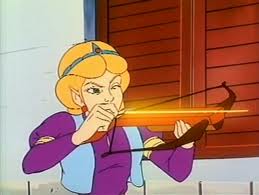
Zelda is not afraid to get her hands dirty.

Zelda is not afraid to get her hands dirty.

The portrayal of Link in this series is what many fans dislike about the show most.  Link, in the games, really had no personality.  Even in the modern games, he doesn’t have much of a personality so I don’t know what fans were expecting from the character, it just wasn’t this.  Link is a brash, cocky, and kind of lazy character.  He views his title of “hero” as a job and one that just gets in the way of his pursuit of Zelda.  Not an episode goes by where Link doesn’t beg the princess for a kiss, and because viewers need a reason to tune in, he never gets one.  He’s also been given a catch phrase, “Excuuuuuse me, princess!”  Some day I would like to watch the entire series and count how many times Link says that line (according to Wikipedia, it was 29 times).  The show only produced 13 15-minute Zelda cartoons, but I’m willing to bet that Link easily averaged more than two occurrences of that catch phrase an episode.  Sometimes the line makes sense, and sometimes it’s just shoe-horned into the script.  It even occurs during the opening credits.  Link may have said that stupid line more often than Michelangelo said “Cowabunga” on the TMNT cartoon, on a per episode basis.
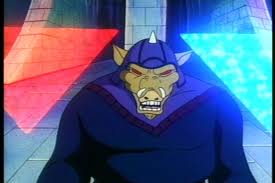
Ganon and the two things he covets most.

Ganon and the two things he covets most.

Anyways, that aside, the show is of a better quality than the Mario cartoons, though that isn’t saying much.  In general, each episode features Ganon executing a new plan to capture the Triforce.  Some of these are more clever and entertaining than others.  There’s one where Ganon goes Robin Hood and to sneak into a magic contest, there’s another where a Zelda clone infiltrates Hyrule, and there’s even a frog prince story-line where Link finds himself the victim of a magic spell (and if you’re wondering, no, Zelda doesn’t break the curse with a kiss).  That said, there isn’t anything in the writing to this show that’s going to impress.  It’s pretty standard fare for the period.  One thing I can appreciate though is the attempt of the writers to explain a few loose ends from the video game.  Namely, how can Link carry so much crap around with him?  Apparently, he has a magic pouch that causes items to shrink down to micro size to fit in.  Throughout the series he and Zelda will often pull out items from the games like the boomerang, bow, and bombs.  Other enemies make appearances too like the octoroks and just about every boss character from the original game.  If you’re watching it to spot items from the game, you’ll have some fun with the show.

Animation wise, the show is mostly crap.  It’s not awful to look at but this is a DiC produced show and DiC liked to put out lots of licensed cartoons on the cheap.  They would get a large amount of cartoons made in a short amount of time so that the shows could go direct to syndication and exist for a few years and bounce around several channels.  I think, on average, the animation here is better than what’s in the Mario cartoons but that’s not saying a whole lot.  The audio is okay though and the Zelda theme is used throughout, which doesn’t hurt it.  Link’s voice, when he’s not saying that regrettable line, is all right.  Ganon is voiced by Len Carlson who should be familiar to fans of 80’s and early 90’s cartoons as he got around.  He uses a shrill voice for Ganon that works for this portrayal of the character.  Zelda is voiced by Cynthia Preston and I always enjoyed her voice.  I don’t really know why but I was drawn to it as a kid.  Maybe because Link sexualized her and I wasn’t accustomed to seeing that in other kid shows of the time.

She's such a tease.

She’s such a tease.

The Legend of Zelda cartoon is not something that is remembered because it’s a wonderful companion piece to the video games, it’s remembered for nostalgic purposes only and is a kind of humorous reminder of how games were marketed back in the day.  A lot of fans prefer the Zelda themed episodes of Captain N to this show because Link was more of a hero type in that show than he is here.  That show really isn’t any better on the whole as it was just another marketing tool (and all of these old cartoons are basically shunned by Nintendo today) to move video games.  This isn’t a show that most adults can turn on and digest over an hour as it’s pretty damn bad.  It’s kind of funny to laugh at, and I can say I do enjoy it more than the Mario cartoons, but if I didn’t watch it as a kid there’s no way I’m making it thru more than one episode.  The complete series was released by Shout a few years ago and can probably be had on the cheap for those looking to experience it.  Those that have never seen it would probably be better off just watching some clips on the internet as opposed to spending real money on the series.
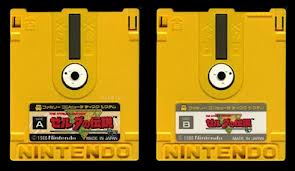
The Legend of Zelda

The Legend of Zelda (1986)

The Legend of Zelda (1986)

It likely comes as no surprise that the author of a blog titled The Nostalgia Spot enjoys playing old games.  I love having old consoles laying around the house, either hooked up to a television set or even just sitting in a closet waiting for a rainy day.  It’s almost a sort of nostalgic high to snap a cartridge into a Sega Genesis or hear that familiar spring when pushing a cart into place on a Nintendo Entertainment System.  Because so many of these systems are existing in a closet or attic, it can be a bit of a chore to relive the old days but thankfully digital distribution is here to make things easier.  Sure, nothing is better than the original experience.  Often times if there’s an old game I feel like I missed out on I’m more apt to find a used copy on the internet than download it.  The one exception is in the portable realm.  Nintendo is one such company that has released a lot of its old titles for download onto portable gaming systems.  I’d actually argue the company hasn’t released enough.  It has a tendency to focus on old portable games when selecting new ones to release and not enough on old NES or SNES games.  A lot of the classics are available though, and that’s why I’ve been spending a lot of quality time with an old favorite recently:  The Legend of Zelda.

I’ve actually had a copy of The Legend of Zelda on my 3DS for awhile now.  I bought the system at launch only for Nintendo to drop the price dramatically not long after due to lackluster sales.  To avoid ticking off the early adopters Nintendo released 20 free games to these “Ambassadors,” as they called them.  They were ten NES games and 10 Gameboy Advance games.  Among those ten was The Legend of Zelda.  Initially these releases were bare-bones lacking some of the features of the typical downloadable games.  As the games were released to the public though, Ambassadors were able to re-download them for free with the save state feature.  The feature is certainly a nice one to have, especially for a game like The Legend of Zelda which popularized the save feature in console games.  The feature was rather crude by today’s standards, but the re-release fixes that and allows the user to save whenever he or she wishes, which is a necessity for gaming on the go.

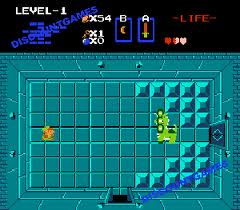
The boss of the first (and 8th) dungeon is a cake-walk.

The boss of the first (and 8th) dungeon is a cake-walk.

For the most part, I don’t blog about the all-time classic titles, there’s just enough of that stuff all over the web.  Sometimes a game becomes so old though that people tend to forget about just how good it is.  No one I know would say The Legend of Zelda is a bad game, bust most would the caveat that it’s “good for its era.”  That is just not true.  This is a title that does not need to get by on reputation.  Before playing it I had spent a few weeks playing a recent RPG released for the 3DS:  Paper Mario Sticker Star.  The Paper Mario series is a pretty good one, but Sticker Star is not a very good game.  It’s far from awful, but it’s so tedious and needlessly gimmicky that I just found it tiresome.  I saw it thru to the end but really wanted to wash the stink away.  I didn’t have a new game lined up, so I dug into those ambassador titles and settled on The Legend of Zelda.  Now, I’d be lying if I said it was easy to jump right into.  There’s always a bit of a culture shock when going back nearly 30 years with an old game.  That’s when one realizes just how used to today’s comforts they’ve become.  With The Legend of Zelda we’re talking about an early generation NES game.  It’s not even considered good looking for an NES game.  The backgrounds are pretty sparse, all of the dungeons look the same (save for the color), and Link (the protagonist, for those unaware) doesn’t have much personality.  Pretty much the entire plot to the game was contained in the booklet that came with it, so don’t expect much in the presentation department.  This is just a really simple looking game.

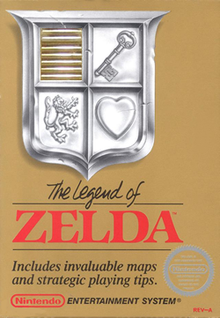
Pretty much everyone is familiar with the gold NES cart, but fewer are aware that in Japan the game was originally released for the Famicom Disk attachment.  This was never released in other parts of the world, which is what necessitated the inclusion of a battery for saving in the American cart.

Pretty much everyone is familiar with the gold NES cart, but fewer are aware that in Japan the game was originally released for the Famicom Disk attachment. This was never released in other parts of the world, which is what necessitated the inclusion of a battery for saving in the American cart.

Despite that though, it really didn’t take me long to get sucked in.  It actually didn’t take me as long as I would have guessed.  Once I got my feet wet and found that first dungeon I was off and running.  Things started coming back to me, I started getting used to how to approach each enemy again, and I started to have fun.  Lots of fun.  This game has no business being this good still.  It’s also crazy how similar it is to every game in the franchise.  It’s easy to forget where the series started when chasing down Ganondorf or watching Link turn into a wolf, but the same basic game design has remained the same since 1986.  It’s funny to me, and a bit misguided, how Nintendo has tried to give gamers a new experience by adding some silly gimmick to recent Zelda titles but has never really attempted to change the experience.  Majora’s Mask is probably the lone exception on console games, while the portable titles have mixed things up to some degree while maintaining a familiar interface.  Though even there, Nintendo has still muddled things with gimmicks like touch controls or trains.  Nintendo consistently fails to realize that it often implements change, like touch controls or the waggle controls on the Wii edition of Twilight Princess, for the sake of doing so and rarely addresses the actual gameplay experience.  Whether gamers are pressing a button or flicking their wrist, they’re still making Link swing a sword.

Tangent aside, it’s actually a great deal of fun to be reminded of where the series started.  I always liked this title back on the NES, and the sequel only reinforced that, so I suppose it shouldn’t surprise me that I still like it.  The game probably would be less fun for someone who has never played it.  There are so many little things one has to do to make it thru to the end that the game just doesn’t even clue you in on.  Throughout the game there are these old hermits living in caves that offer advice.  Some of it is cryptic but does have value.  Some of it seems like nonsense, a mistranslation perhaps.  Then there are other secrets that just have no indication whatsoever.  The entrance to Level 8 is one such thing where Link has to burn a random bush on the overworld map.  Most bushes aren’t affected by the candle item Link has to use to burn this one particular bush down, but the player is still expected to figure it out somehow.  I suppose this bush isn’t completely inconspicuous, but others are.  There are a few hidden stores or caves that a player isn’t going to find without help.  And that may have been the idea as there were numerous tip hotlines and the like for games back in the 1980’s.  Nintendo would get in on the action with Nintendo Power though this game arrived before that.  And Zelda games weren’t the only offender, but it’s something that really isn’t heard of in modern games.  We’d consider it poor design.  In other words, if this is your first time playing this game, expect to be in need of a walkthrough at some point.

The ones in blue are a pain to deal with.

The ones in blue are a pain to deal with.

Aside from some confusing moments, the game actually isn’t too difficult provided you know what you’re doing.  If one never upgraded the sword or Link’s armor then the game would get really hard.  I actually got the magic sword one dungeon later than I could have and that last dungeon with the mid-level sword was a bastard.  The game takes some getting used to in order to figure out just how close Link needs to get in order to defeat enemies.  Early on I found myself taking unnecessary hits but once I found my bearings I was okay.  Most of the enemies move faster than Link, and since this was before the invention of his spin attack, it can be challenging to keep them at bay.  The boomerang becomes Link’s best friend and remains so for most of the game as it freezes enemies on contact.  Keeping Link’s health maxed out is also a tremendous asset as that lets him shoot beams out of his sword.  Some enemies though are just plain hard to defeat without taking damage.  The wizrobes are probably the most challenging as they take 3 hits with the magical sword to defeat.  Striking them also doesn’t interrupt their movement or attack, and they can teleport all over the screen.  Needless to say, getting out of a room full of them without taking any damage is a true challenge.  The boss encounters, on the other hand, are all pretty easy as long as you know what you’re doing.  The final boss, Ganon naturally, can only be killed with a silver arrow and it’s entirely possible to reach him without ever finding said arrows making survival an impossibility.

Ultimately, I’m making this entry because I’ve been surprised with how much enjoyment I’ve been able to squeeze out of this title recently.  If you’re a younger gamer who never played the original Legend of Zelda then I suggest you do.  There are many options for playing it in this day and age as it’s been re-released more times than I can remember.  The easiest way to get it is via download from Nintendo and I think it only costs five bucks, but I’m not certain.  This is one title that has withstood the test of time, Zelda II on the other hand…