
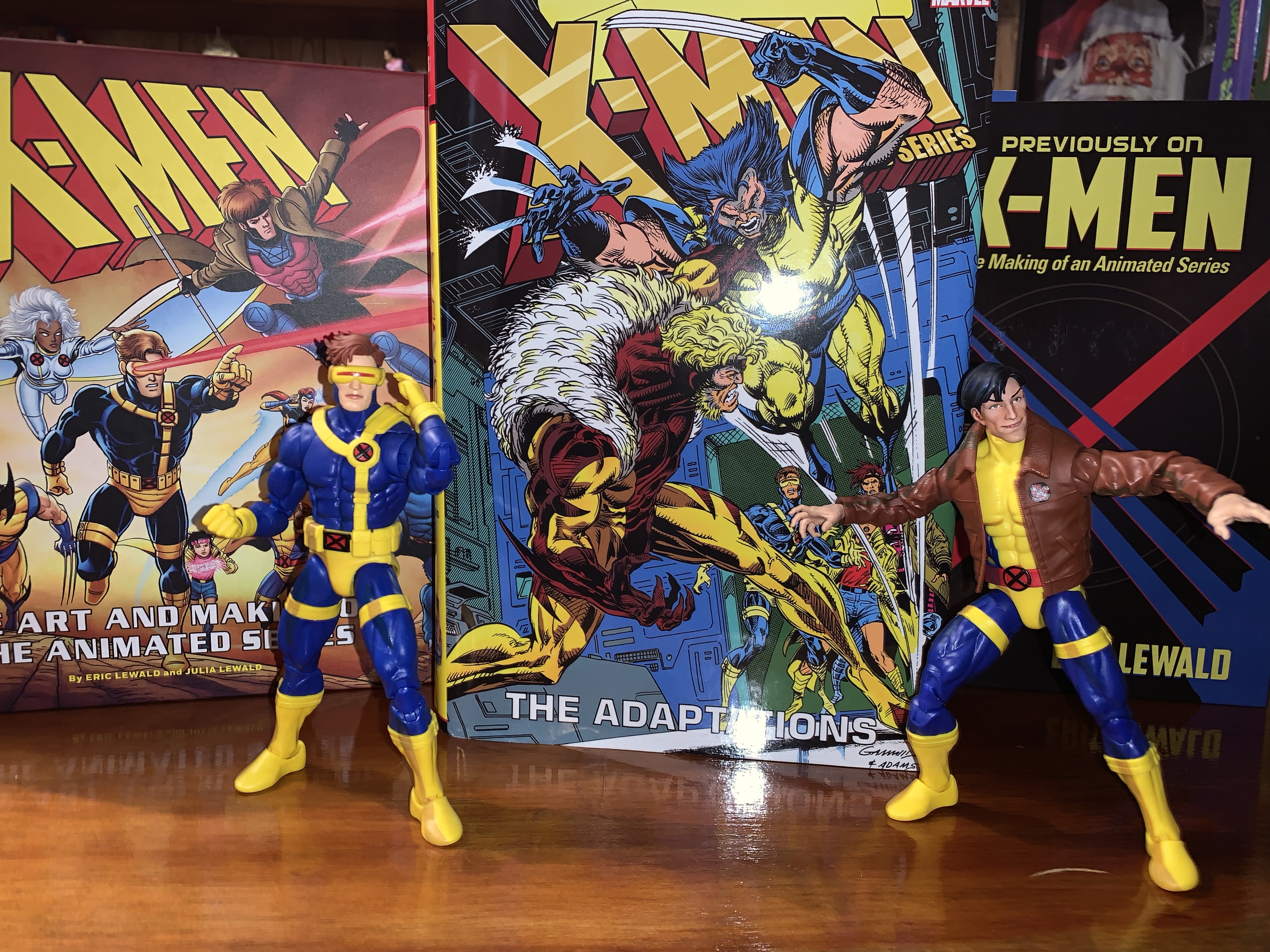
Halloween 1992 was when things really changed for the X-Men. A high-selling comic book was about to blow open and enter the mainstream with a hit new Saturday morning cartoon series. Spearheaded by Eric Lewald for Saban Entertainment, X-Men would become the highest rated children’s program on the Fox Network and the overall highest rated children’s program in 1993. At least, until a little show called Mighty Morphin Power Rangers came along. Even following that, the show remained a hit for the network and it’s likely that without the success of the cartoon we never would have had the film series that followed.
When Fox agreed to bring the spandex-clad mutants to network television it did so with Saban and Graz Entertainment who had their own ideas for the show. Lewald was the showrunner who oversaw a team of writers that crafted the inaugural season, most of whom were unfamiliar with the comic from which their characters were taken from. As a result, the first season was largely unique. It was not pulled from the comics with the exception of the “Days of Future Past” arc. Sure, the characters largely acted and behaved like their comic book counterparts, but the plots and character history were pretty much all new. I don’t think this necessarily played a huge role in what followed, but if the new show wasn’t just copying and pasting what the comic books had done then it made sense for a comic companion to tag along. Enter X-Men Adventures, a comic book adaptation of the animated series. Writer Ralph Macchio (no, not that Ralph Macchio) was handed the teleplays for the first season and was paired with varying teams of artists to bring the show to the pages. The first issue arrived in November 1993 and would run until March 1996 concluding with the “Dark Phoenix” arc. After that, the book split away from the cartoon series rather than adapt what was dubbed Season 4 and beyond, but up to that point, it had largely remained in lockstep with the show.
As a kid, I didn’t bother with X-Men Adventures despite my love for the cartoon. In my mind, it felt redundant. Why buy a comic version of something I already saw on TV when I could get a comic book that told a whole, new, story? Now that I’m older and fond of reminiscing on things I enjoyed as a child, I’m more curious about something like X-Men Adventures. Surely, the comic would present opportunities to frame things differently. How would it handle something like the death of Morph? Would the characterizations be the same? Would some characters assume more of a spotlight or less of one? I probably could have answered such questions with relative ease and not much of an expense. Being a 90s comic, X-Men Adventures isn’t terribly hard to come by secondhand, especially if you’re one who is unconcerned with condition.
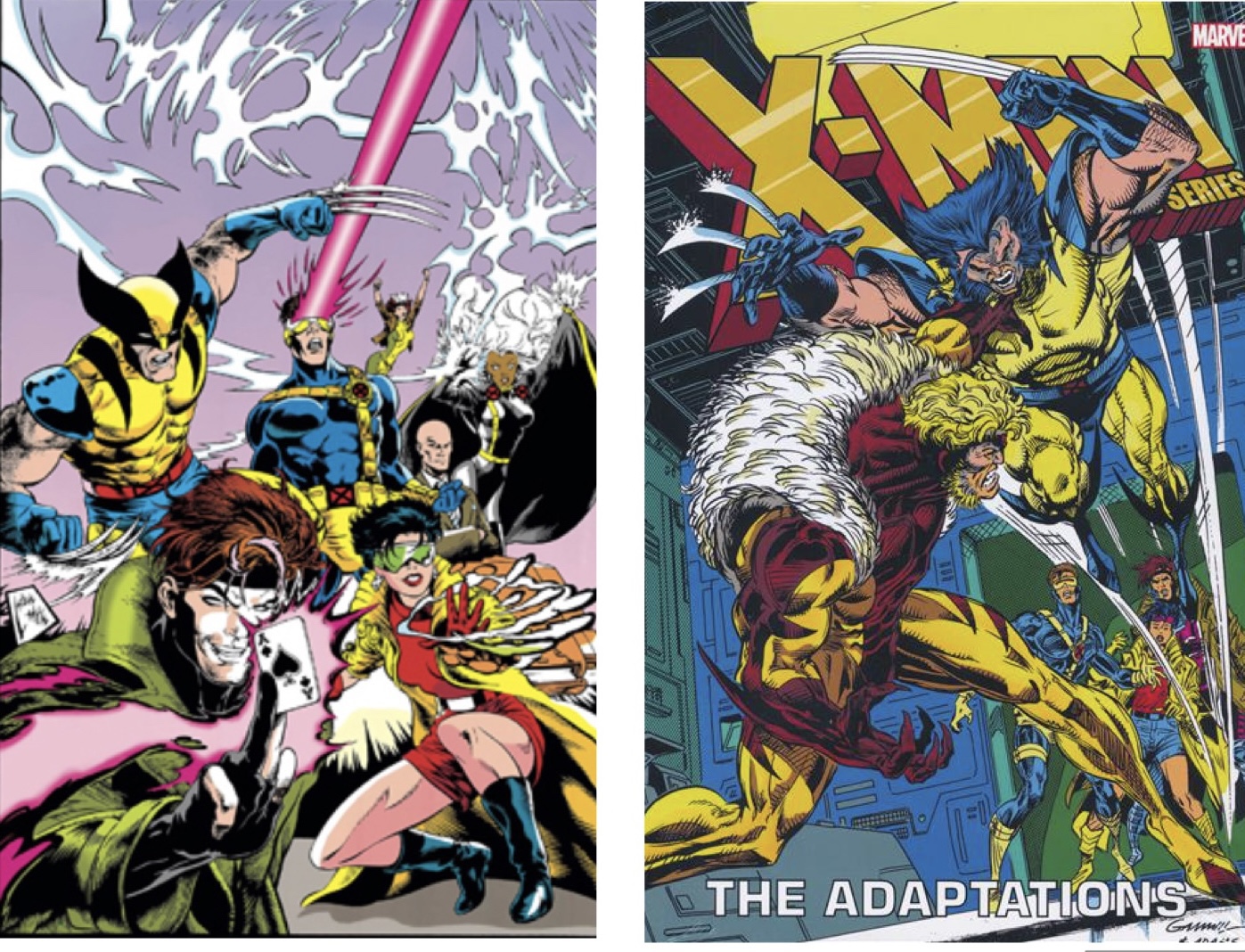
Rather than scour the back issues at a local comic shop, I turned to a new publication: X-Men: The Animated Series – The Adaptations. That mouthful of a title was released earlier this year. It’s a hardcover collection of X-Men Adventures totaling the first 41 issues, or said another way, all of the issues that mirrored the show. It’s a heavy, meaty, tome that’s nearly 1,000 pages with most of them devoted to the old issues. The paper is a nice white, though it has some transparency and isn’t as thick as it could be. The main cover illustration is the same as the very first issue of X-Men Adventures by Steve Lightle. The version I have is the variant cover which depicts Wolverine battling Sabretooth in the War Room and it’s done by Kerry Gammill and Greg Adams. The collection is expensive with an MSRP of $125. That was too rich for me so I played the waiting game eventually scoring one for less than $60 off of eBay. This one had bent corners that likely had been damaged during the shipping process. The eBay listing also had a typo in the title which may have helped to keep it on the site long enough for me to notice. Either way, I was willing to accept some cosmetic damage in exchange for a price that was more than half off. Now several weeks later, I’ve read this thing cover to cover and am ready to share my thoughts.

X-Men Adventures volume 1, which is thought of as the first season, spanned 15 issues which is longer than the show’s 13 episode first season. As such, the first season of books is more expansive than that season and also more expansive when compared with the seasons that followed. My guess would be that with the show being new, and being tinkered with practically right up until air date, there was a lot less that was nailed down and thus there was more room for Macchio’s own interpretation. It’s also interesting that the characterizations of the book’s characters are far more reliant on their comic history. This is seen most with Magneto who is very much a villain in these books as opposed to a friendly rival. He’s not going to team-up with these X-Men to take down the Sentinels and he’s far more willing to inflict pain upon them as well. The costumes for the characters also all mirror the comics. Jean is more yellow and blue with long hair, Apocalypse isn’t purple, and Sabretooth doesn’t have the massive physique of his animated counterpart. Fights, like Wolverine vs Sabretooth, can be more violent with actual blood spilled and our boy Wolverine is also free to smoke cigars and drink beer.
By far, the thing I was most interested in seeing was how the books handled the death of Morph. In the show, his death is essentially offscreen, though the characters deal with it in a pretty realistic manner. It wasn’t some Saturday morning “zapped to another dimension” sort of end for old Morph. In the books, it’s foreshadowed with a rather grizzly depiction of Morph with half of his face burned off. I’m not sure the character needed to have these visions, but it was an interesting way to go about it. When the time comes for him to actually die, it’s handled in a far more personal manner with Beast cradling Morph in his arms as he draws his dying breath. Of course, the character would be brought back in Season Two which was never the plan at the time. It does muddy things a bit since his death was so final in the books. Did the Mutant Control people haul Beast away and just leave Morph’s corpse behind for Sinister to come along and swipe? Apparently so, because no other explanation is offered.

Morph’s death was one area where the books could go into more detail and be a bit more showy than the cartoon. It’s also pretty unique as the rest of the issues largely unfold in a more expedited fashion after the first season. The first 15 issues are far more dense and interesting as a result, while the rest are still enjoyable, but missing that extra component. Some stories, like the Omega Red confrontation or Wolverine’s parlay with Alpha Flight, end far too abruptly to feel satisfying. If you didn’t like how the X-Men defeated Omega Red in the show, then you really won’t like it here. And since comics always seem to operate with the idea that any issue could be someone’s first, there’s a lot of needless exposition from characters explaining their thoughts, motivations, powers, etc. too plainly. It feels demeaning to the reader and like a dumbing down of the material at times, something the show seems careful to avoid.
The other aspect of these stories that threw me the most was just the changing art styles. These books never seemed to have a single vision for very long when it came to the art. Andrew Wildman was the penciler for the first six issues. He had a slightly more realistic style than some, but it’s not bad. Chris Batista then takes over for two issues and he has a more streamlined approach which actually might suit the animated look a bit better, though I think I still prefer Wildman. Wildman would return for the 9th issue and hang around through issue 13 and then back again for the final issue of the first season. In between is an issue by Nick Napalitano. All three pencilers for that first season complement each other well, but later seasons have more divergent takes, some of which I like and some of which I don’t. By the end, Ben Herrera was handling a lot of the load and I’m just not into his style. It’s very reflective of what the 90s comics were producing at the time, and even then, it wasn’t a style I enjoyed. My least favorite issues were the ones done by Hector Collazo. He seemed to take to heart that this comic was an adaptation of a cartoon because his style could best be described as toony. I’d enjoy it on a Looney Tunes or Animaniacs book, but not an X-Men one.

Reading through this book basically gave me what I was looking for: familiar stories told through a different lens. The only downside for me was how the second and third seasons were more streamlined with less room for freelancing, if you will. The first season was by far the most enjoyable part of the book, though I am curious about the issues not included. Following the third season, Macchio basically was allowed to continue writing stories for this version of the X-Men, but ones that didn’t follow the show. Those works are collected in another trade paperback that I should probably give some thought to acquiring. If you’re someone like me curious about what another interpretation of the beloved show could look like, this isn’t a bad experience. I don’t think it’s worth the asking price so I’d recommend getting it used or on sale. The actual quality of the book is pretty nice, though there are the occasional page that came out slightly blurry from the printer. It seems to be an issue that becomes more frequent further into the book. It may also be something that’s not consistent from copy to copy. Either way, it’s a tough ask at full price. A lot of places have it marked down to around 80 dollars, which is still a lot, but better than $125. I’m not sure I’d even recommend it at that price, but definitely consider a look if you ever find it closer to 50 bucks.
Interested in living in the world of X-Men as established by the animated series?

Previously on X-Men: The Making of an Animated Series
A lot of cartoons made an impact on me as a child. My first love was The Real Ghostbusters. Its goofy cast of characters and excitement were plenty of fun and there were interesting toys to supplement the series with, which was pretty much the goal of all cartoons in the 80s. The Teenage Mutant…
Keep reading
X-Men: The Art and Making of the Animated Series
A few years ago, I talked about my love of X-Men, the animated series, via a book review of Previously…on X-Men by Eric Lewald. That book chronicled the development of the 92 animated series that helped propel the Fox Kids Network to the top of the Saturday morning leaderboards through notes from the author and…
Keep reading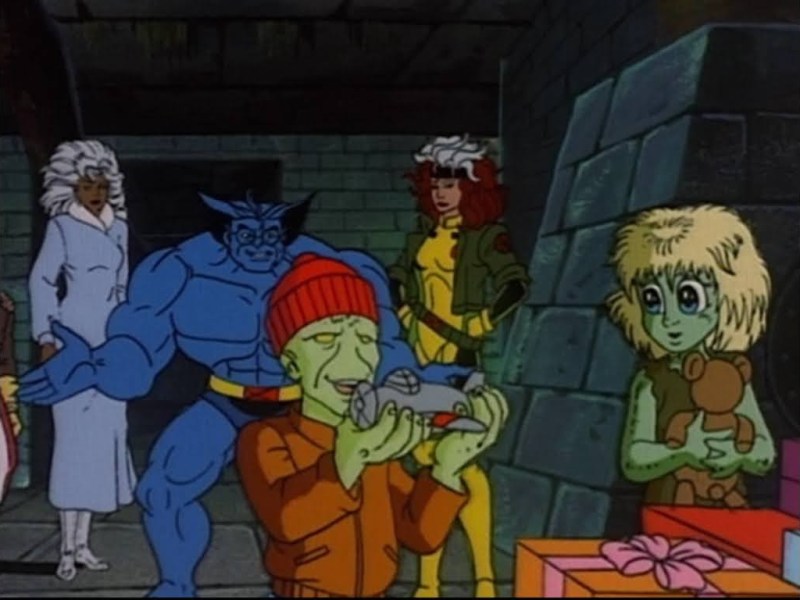
Dec. 18 – X-Men – “Have Yourself a Morlock Little X-Mas”
Today, The Christmas Spot temporarily alters it’s name to The X-Mas Spot. As a sort-of celebration for the animated series X-Men turning 30 this past Halloween we’re going to look at the show’s lone holiday special – “Have Yourself a Morlock Little X-Mas.” The show X-Men was a pretty serious affair as far as kid…
Keep reading The Nostalgia Spot
Leave a comment