Tag Archives: playstation vita

Batman: Arkham Origins Blackgate

When Batman: Arkham Asylum was released in 2009 it ushered in a new era for the caped crusader where video games were concerned. Prior to that, Batman had not had a good video game in a long, long, time. Depending on your opinion of his efforts, you may have gone all the way back to The New Adventures of Batman and Robin for the Super Nintendo, or even further back to the Sunsoft classic Batman for the Nintendo Entertainment System. His outings on the PlayStation and Nintendo 64 weren’t particularly memorable and he all but skipped on the PlayStation 2 era. The low point may have been the cancellation of the The Dark Knight video game tie-in as it felt like DC throwing up their hands and saying, “We can’t make this work with Batman.”

Rocksteady Studios was up to the challenge and Arkham Asylum proved so good that Sony basically ripped it off for its successful Spider-Man video games. Rocksteady was able to craft a simple, but relatively malleable, combat system for Batman that had some challenge, but mostly succeeded in making the player feel like they were playing as Batman. Random thugs weren’t going to get the better of Batman unless they were in mass quantities and heavily armed. The one-button attack system made handling Batman a breeze and the stealth elements added on top of that complemented the action well. If there was one critique, it was that the environment was a little closed off so for the sequel Rocksteady gave Batman run of the city. Arkham City was more of a sandbox game, but mostly played the same. Boss encounters also had more variety and many still view it as the pinnacle of Batman video games.
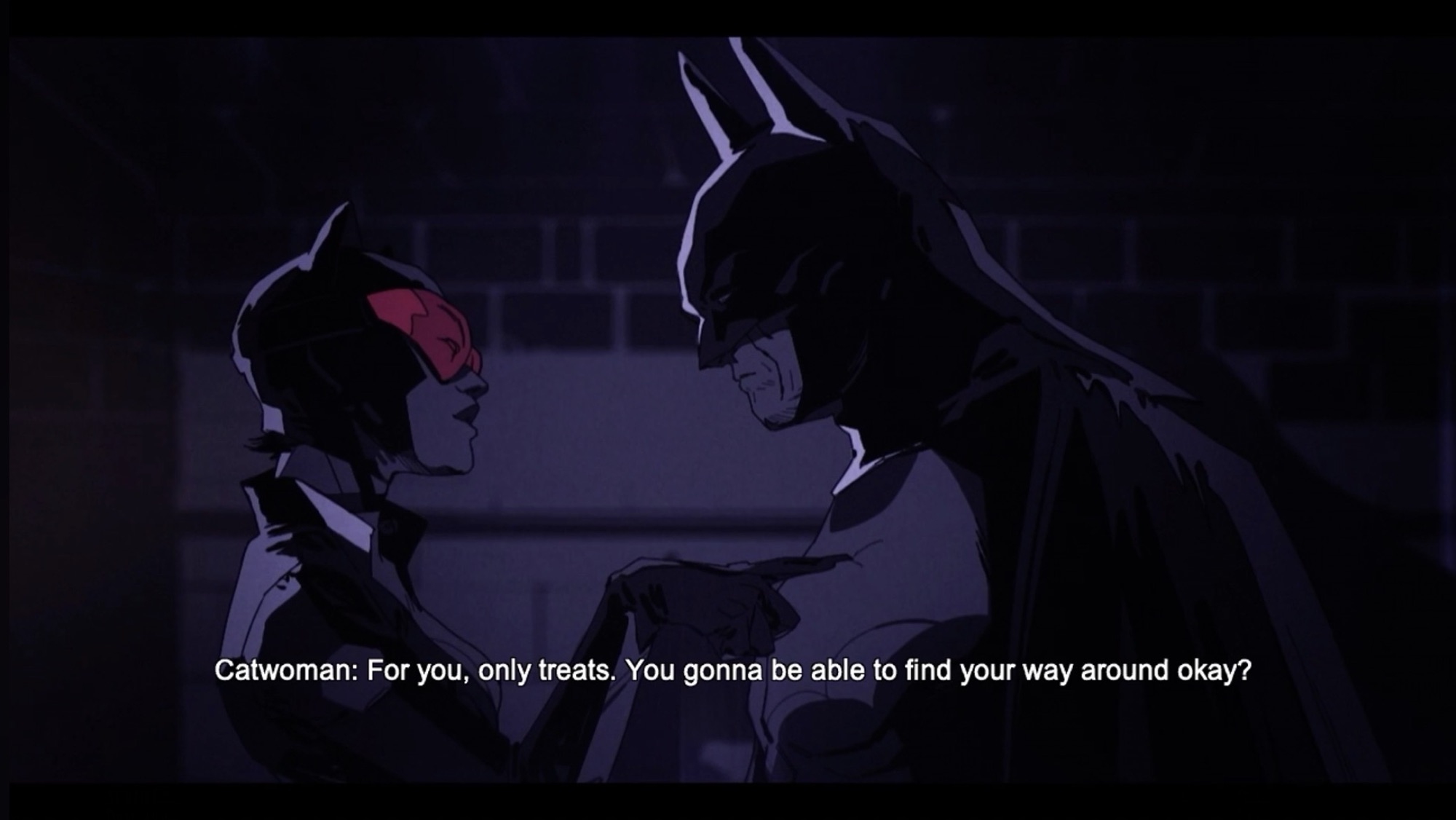
In this one, Batman has to work with Catwoman to quell a prison riot.

For the sequel, Rocksteady bowed out. Enter WB Games Montreal which crafted Arkham Origins for release in 2013. The game was mostly well received, but not as enthusiastically as its predecessor. WB Games Montreal did receive praise for largely carrying forward the game mechanics fans had grown accustomed to and the franchise continued to roll along. Developed alsongside that release, was Arkham Origins Blackgate. Blackgate was the handheld version of the game released on the PlayStation Vita and Nintendo 3DS. Development on Blackgate was entrusted to Armature Studio which had cut its teeth previously on the Metal Gear Solid HD Collection also released on the Vita. Blackgate would be the studio’s first original game and it too was released in 2013.

When Blackgate came out I was instantly intrigued. As an owner of the PlayStation Vita and the 3DS, a portable take on the Arkham series of games held some appeal. Blackgate also wasn’t a direct port of any of the console games. It was its own thing and is technically a sequel to Arkham Origins as far as plot goes. Batman (Roger Craig Smith) encounters Catwoman (Grey DeLisle) at the start of the game which serves as the tutorial mission. Shortly after, there’s a prisoner revolt in Blackgate prison and Batman heads in to investigate. Three of the biggest crime bosses in Gotham: Joker (Troy Baker), Black Mask (Brian Bloom), and the Penguin (Nolan North), have taken over and each rule over a segment of the prison. Catwoman is also there, but willing to aid Batman in helping to free the hostages the criminals have taken and ultimately save the day. Batman will have to explore Blackgate in a non-linear fashion acquiring various gadgets to help him progress through the prison.

This is how you will be viewing Batman most of the time – from the side.

I did not play Blackgate in 2013, but always wanted to. Recently, I had a chance to rectify that and I was intrigued by what I found. I know I read reviews in 2013 for the game and ultimately passed, but what I had read I had mostly forgot. What I did know going in was that Blackgate was a 2.5D action game. The environment and character models are all rendered in 3D, but gameplay is largely restricted to a 2D plane. There are some moments in the game where Batman can move into the foreground or background, but they are few and far between. Other times the environment will curve or swing into either the foreground or background, but having Batman just walk in a straight line will cause him to just follow the path. It’s also what the cool people on the internet refer to as a Metroidvania. That’s a non-linear action title that plays in a style similar to Metroid and the nonlinear entries in the Castlevania series.

Utilizing stealth and Batman’s Detective Mode is crucial to surviving Blackgate.

Despite the perspective change, Blackgate plays a lot like its big brother on the home consoles. The systems are largely still intact. When it comes to combat, the player is encouraged to chain attacks together with just the press of one attack button. There’s a separate parry button with onscreen indicators for when to use it as well as the ability to perform a cape stun maneuver. Successful attacks continue the chain as do successful paries. Early in the game, enemies will likely be a cakewalk, but tougher ones are introduced later that either have weapons or a means of defending themselves. For criminals armed with firearms, Batman can’t take them head-on. For those enemies you’re expected to play it sneaky either via alcoves high up or by utilizing passages in the ground. Batman can perform stealth takedowns when in the proper position and they are preferable to running in Leroy Jenkins style.
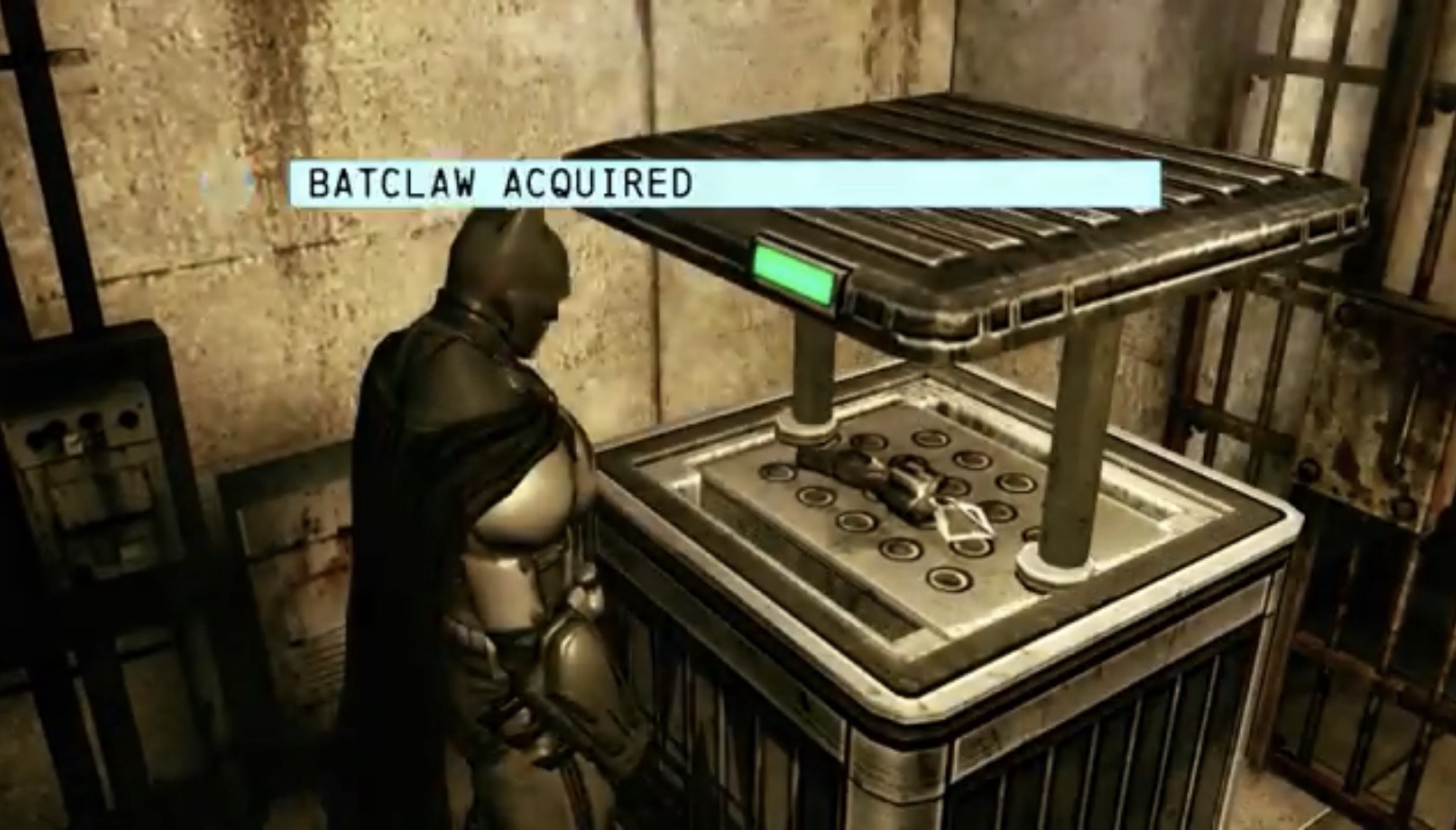
Why does he always need to re-find his equipment every game?

As Batman makes his way through Blackgate, he will encounter gates that prevent him from progressing deeper. In order to progress he will have to either upgrade his hacking device or uncover a new tool. At the start of the game, he is only armed with a Batarang and grapnel gun, but along the way he’ll acquire the Bat Claw, the line launcher, and an explosives gel gun. The claw allows Batman to pull down things like vent covers while the line launcher lets him cover long gaps and even opens up the background and foreground elements to a degree. The explosive gel can only be used on specific spots to blow holes in the environment. At any point Batman can also enter Detective Mode as he can in the other games which can reveal weak points in walls and other secrets and help Batman progress. The three boss characters can be encountered in any order and as such it means there aren’t any items tied to any of them. Most just require you to use Batman’s base abilities in a certain way to clear the encounter. Also hidden throughout Blackgate are weapon and armor upgrades, new costumes, and collectibles that just add a little extra length to the game. One playthrough takes about 7 – 8 hours and the only reason to go back is to defeat the boss characters in a different order to unlock another costume.
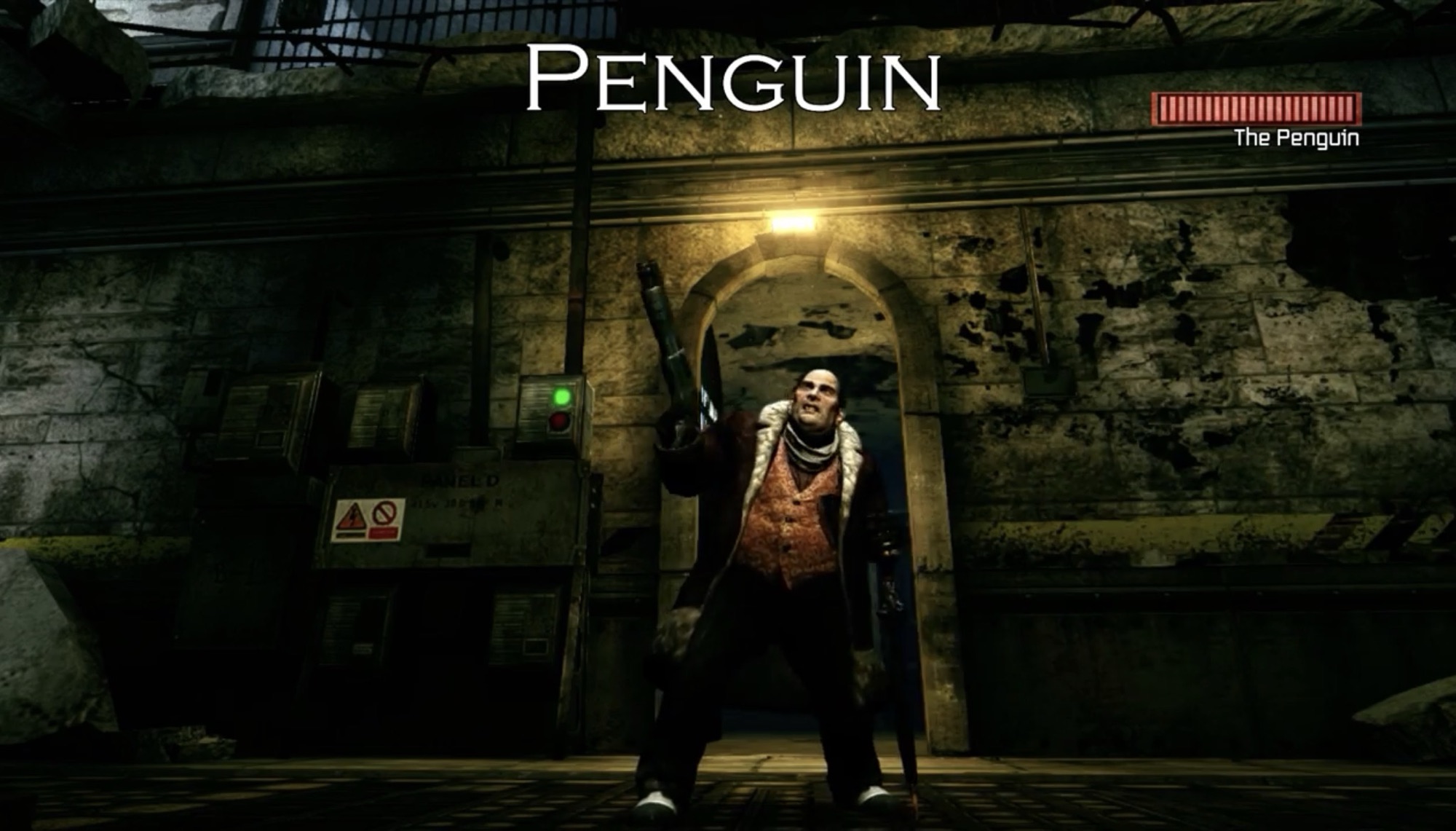
All of the boss encounters are uniquely constructed – none of that “Ride the big guy” stuff from Arkham Asylum.

Playing through Blackgate is largely an enjoyable experience, but there are some quirks that hamper things. The locked perspective takes away the ability for Batman to just point and shoot his grapple gun and can make navigation a chore at times. There is one area in particular where Batman has to deactivate a bomb with a timer on it and I could see where I needed to go, but the rules of the game wouldn’t let me just go there because it was in the background. A lot of context items are all assigned to the X button as well which can get clunky when you don’t want Batman to interact with the environment. X also makes Batman run so you can imagine how that might get in the way. Blackgate is also broken up into different maps and navigation can be a chore. The map system isn’t particularly intuitive and it’s also locked to the menu screen so you constantly have to refer back to it. Batman also can’t simply exit a section and has to work his way back to an exit which gets very tedious. There is no fast travel system. There’s not a lot of variety to the scenery, though apart from that the game generally looks and runs smooth. Story advancement is done with stylized still image cutscenes, but fully voiced which might feel like a downgrade for the handheld, but I honestly didn’t mind. Voice acting is strong while the overall sound design is fine, though a bit repetitive. Music is a little sparse, but it suits the vibe of the game.

Back in 2013, I passed on Blackgate because the reviews were just kind of ho-hum. No one seemed impressed by the game and since there was Arkham Origins available for the main console experience it probably made Blackgate seem worse by comparison. More than ten years removed from that environment, Arkham Origins Blackgate plays like a slightly different sort of game and it’s honestly pretty fun. It probably drags on a little too long as it feels like that 8 hour runtime is padded out by lots of backtracking. Repeat playthroughs would certainly go much quicker, but there’s really no reason to go back. The extra costumes are all pretty terrible and of the era. There are no classic looks for Batman which is a little disappointing, and while I like the standard costume enough, it would have been cool to go old school. The boss encounters also aren’t great. They’re not as repetitive as they were in the original Arkham Asylum, but they are underwhelming. Especially the final boss which left me thinking “That’s it?”

Batman: Arkham Origins Blackgate must have sold well enough because there are plenty of copies floating around for a decent price. The Vita experience was a good one and I don’t know if the same is true of the 3DS. The game is also available on Steam so it’s rather playable. What works best is the novelty of a portable Batman experience on par with what the console games were doing while also not trying to be an exact copy. I’d like to see another Batman adventure in a similar style, maybe one that plays a little faster and actually does more to separate itself from the console games so we’re not constantly comparing the two as we play.

For more Bat-content, check these out:

Batman: Caped Crusader

In the far off land of 2021 we received word that a new animated Batman series was in development and attached to it was none other than Bruce Timm. Timm was one of the main creative minds behind Batman: The Animated Series and the DC Animated Universe it spawned so this news was met quite…

Keep reading
Batman – The Adventures Continue #50: Batman

If you’re a repeat visitor here at The Nostalgia Spot, then you’ve probably noticed that around here there is a high opinion of the television show Batman – The Animated Series. I did a re-watch of the series that spanned more than two years and also checked out the various films based on the property.…

Keep reading

Batman Beyond – The Complete Series (Blu Ray)

Last year, when Warner Home Media announced a new Blu Ray set for the series Batman Beyond, I decided to wait. I had been an early consumer for the similar Batman: The Animated Series set the prior year and had some misgivings. The price on that set fell and a slimmed down version was even…

Keep reading

The Legend of Heroes: Trails of Cold Steel II

81lhuCL-5kL._SX342_Here at The Nostalgia Spot, we don’t just celebrate that which is old, but also that which celebrates the old. Few modern devices apply as well as a JRPG video game. The JRPG once dominated the video game landscape in the later stages of the 16-bit era and through the 32-bit era. Following that, the western style of RPG began to dominate the RPG subgenre. Titles from the likes of Bioware and Bethesda were often praised while former titans such as Final Fantasy and Dragon Quest slunk to the sidelines.
Today, the JRPG is basically a niche genre though plenty of developers still support it. As you could probably guess, these developers are largely Japanese and many of the games do not make it out the far east, but a surprising amount still do. Many of them are smaller budget releases for older hardware such as the Playstation 3 and Playstation Vita, which are both home to Falcom’s Trails of Cold Steel series of games.

Back in February, I reviewed the first entry in this supposed three-part epic (now four). After over 80 in-game hours and several months of play, I’m here to review the sequel. If you did not read my entry or experience the first game yourself, all you really need to know is that Trails of Cold Steel II very much carries forward the JRPG experience with a few twists and additions to the formula here and there. You control the young Rean Schwarzer, a military student, who together with his classmates has become embroiled in a civil war that really broke out at the conclusion of the first game. Rean possesses many JRPG tropes in that he’s an orphan with unexplainable powers who is genuinely kind-hearted and a natural leader. The sci-fi, steam punk, setting means guns and tanks are met on the battlefield with swords, spears, and magic. Cats talk and ships fly while everyone takes turns hitting each other. Really, if you do not like the slow pacing and gameplay style of traditional JRPGs then you will not like Trails of Cold Steel II.

The-Legend-of-Heroes-Trails-of-Cold-Steel-II_2016_03-11-16_006-555x328

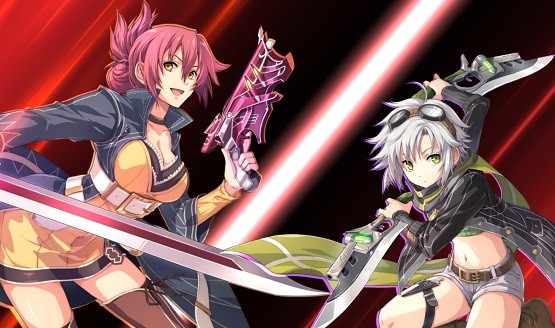
Activating an Overdrive triggers a splash screen with still images of the participating characters. Expect to see many awkward poses for the women designed for maximum titillation.

The game picks up immediately where the first one left off. I do not mean to spoil the conclusion of that game, but if you intend on experiencing these games cold then maybe skip this paragraph. At the conclusion of the first game, mech battles were introduced and Rean was separated from his allies and crash-landed in the mountainous region near his home of Ymir. Rean will have to reunite the members of Class VII, who as fugitives of the Noble Faction, have all gone into hiding. All of your equipment from the first game is gone, though you do start out at level 40 instead of 1. Rean will also have to re-form social links with his allies and earn experience for his Master Quartz, as that is sadly reduced to level 1. The only thing that really carries over if you import cleared save data from the first game is your romantic interest and a bonus item depending on what level you were at when you finished the first game. The romantic interest only contributes an extra bit of dialogue here and there as you’re free to pursue another woman should you wish. And for those of you hoping to make Rean romance once of his male companions, you unfortunately cannot.

legend-of-heroes-trails-of-cold-steel-2-battle-q2

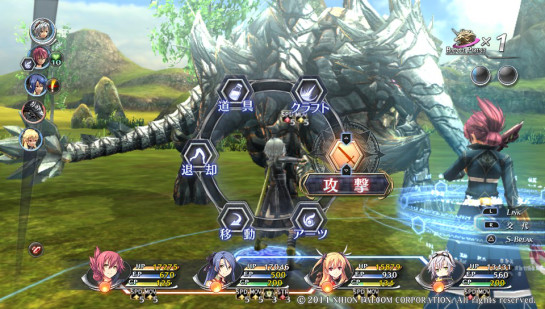
Battles should feel largely familiar to those who played the first game, and that is not a bad thing.

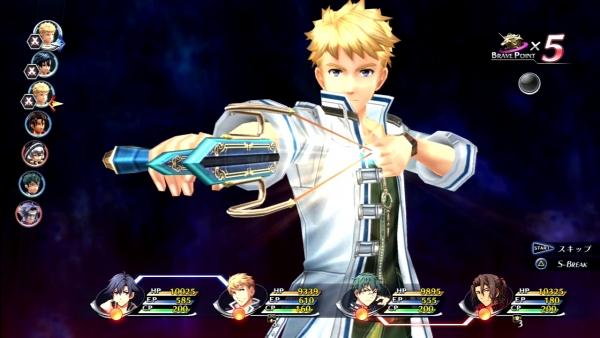
The battle system is largely the same as the first game, but there are a few twists to liven things up. The Overdrive system is new and is comprised of two meters that gradually fill up during the course of battle. It usually takes several encounters with enemies to fill both completely, but once one meter is full, two characters can participate in an Overdrive series of attacks. Activating Overdrive is done during a character’s regular turn in battle, and whomever they are linked with will be the second participant in the Overdrive. What it does is provide a bit of a recovery effect to hit points, magic points, and craft points while giving the duo the next three turns in battle, meaning whomever activates it will get two turns with the second character getting a turn sandwiched in-between. All actions during an Overdrive will lead to a critical hit, if a physical or craft maneuver is used, and in the case of a magical “Arts” attack, ignore casting time and take effect immediately. Overdrive is very useful for boss encounters, especially if you have magic users who match-up well and can unleash a triad of devastating attacks in a row. The only catch to the Overdrive function is that the ability for characters to work with one another must be unlocked via special blue trial chests hidden throughout the world. Rean is the only character who can use Overdrive with anyone right away.

trails-of-cold-steel-ii-prologue-1

These two will become fast friends.

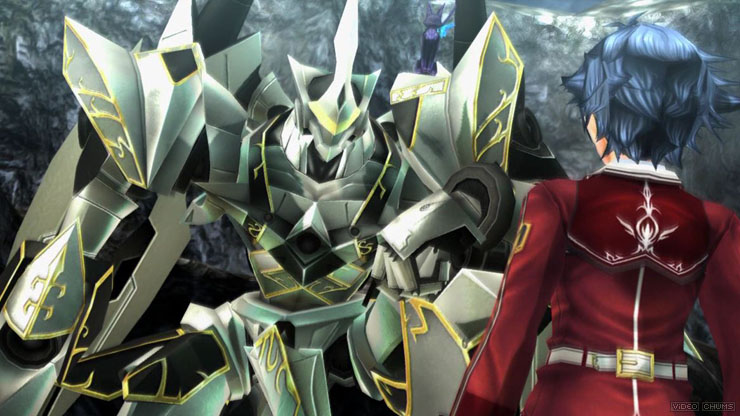
The other new addition comes in the form of mech battles, which were introduced at the very end of the first game. These encounters are largely scripted throughout the game, meaning you’re never able to just roam around in a mech and lay waste to your enemies. Rean is on his own in these battles, but he can utilize his allies as support characters. For the most part, the mech fights are just a simpler version of standard encounters that focus more on resource management. CP is at a premium and EP can be restored by your support character, but it will cost them a turn. Support characters also have their own Arts abilities, usually two per character, that often take on the form of one attack and one buff/debuff maneuver. You’re also very dependent on link attacks, when you land a critical blow you gain one brave point and 3 are needed for finishing moves and 5 for special unite attacks with your support character, and gaining enough brave points sometimes feels like a matter of luck. Your opponents will usually have three places on their person that can be attacked and you have to guess which is the weakest given their current stance. They’ll change stances during battle, and thus change their weak point. Hitting a weak area is the best way to score a link point, but it isn’t a guarantee. Despite this though I found the mech confrontations to be a nice change of pace and the randomness didn’t make them all that more difficult, just longer.

The rest of combat is largely the same. You’re permitted four members of your active party with often four or more in reserve. You can switch out a character with another during their turn without any sort of penalty. Characters can link with one another, and overtime their link level will increase allowing for follow-up attacks following a critical hit and other bonuses. Characters can attack either traditionally, with magic, or with crafts. Crafts are carried over from the first game, and as you level up your old crafts will be replaced with better ones. When a character has a minimum of 100 craft points, out of a maximum of 200, they can unleash devastating S-Crafts that consume all of their CP but can be activated at any moment. I found in this game I really exploited crafts more than I did in the first game, perhaps because it seems like it was easier to restore craft points quickly. I relied far less on the S-Craft moves, often only using them to finish off a boss or disrupt the flow of battle if the enemy was about to get a guaranteed critical attack or other bonus. Delay is the name of the game in Trails of Cold Steel II as it’s an affliction that can basically delay an enemy’s turn to the point where they never even land an attack. Bosses are resistant to it, but few are immune. Once you figure that out, the game becomes pretty easy though there are harder difficulty settings that I did not play on. There were still a few moments where things got tough, but for the most part I saw the Game Over screen very infrequently.

The-Legend-of-Heroes-trails-of-cold-steel-II-screenshot-001-600x338

Fie is a master of the delay technique and will likely be a mainstay in most battle parties.

The game moves at a quicker pace than its predecessor, and the environment is changing almost constantly as you no longer have the Military Academy to return to after every mission. The entire map of the fictional Erebonia is also open to you from a  very early point in the game until the end. For the most part, you’re free to pursue main objectives as well as side quests and activities at your own leisure. Usually quests come in groups with some being hidden. Ignoring the side quests and undertaking the required main quest will often cause you to forfeit attempting the side quests. At certain points you’ll also have downtime in certain locations where you’re given bonding points to spend on your allies at your own discretion. Using one leads to a scene where you will usually learn something new about your companion and ultimately earn a bunch of link experience. These points are finite on a first play through and it’s impossible to see every character’s bonding events, so don’t even try. Just spend them on the characters you like best. There are a few mini games, like fishing and snow boarding, which have their own rewards if you see them through, but are mostly just simple diversions.

The game’s story and presentation obviously needs to be interesting enough to support a roughly 80 hour campaign. As I said about the first game, the structure of the bonding events naturally lend to Persona comparisons. And, as was also the case with the first, if you’re looking for Trails of Cold Steel II to match that series in its character development and personality you will be let down. The main cast of Class VII are a bunch of milquetoast, boring, adolescents who never fail to do the right thing. They’ll give each other a pep talk and are rarely modest. If one compliments another then a compliment returned is sure to follow. They’re likable, but decidedly boring, and they’re embroiled in a conflict that has a GI Joe level of actual casualties which minimizes the story’s impact. There are some interesting twists in the story’s plot, and there at least a few NPCs who’s allegiance is cloudy for much of the game, but for the most part the game is kind of a breezy romp despite the war backdrop. Basically all of the voice actors returned from the first game, and they’re adequate though you’re sure to find some you like more than others. Some of the girls tend to have such a high pitch voice it can become grating, but that’s not atypical of anime localisations.

Cold-Steel-II_06-15-16

In addition to the members of Class VII, you’ll also be able to make use of guest characters at certain points in the game.

The rest of the presentation is merely adequate. Being that this is a PS3/Vita game, the visuals are not all that impressive. Even judging by the standards of the hardware, they still come up short in places. Generally, the character models look good but the environments are small and bland. Most of the locales you’ll visit in this game are lifted directly from the first game with only a few exceptions. The game features what is basically a tradition for developer Falcom in that it opens with an anime intro set to some up-tempo synth metal reminiscent of the New Wave of British Heavy Metal style. It’s fun, but don’t expect to see much more in the way of anime scenes or that style of music. The rest of the soundtrack is more atmospheric and fairly basic. There’s not a ton of variety, but it has its moments.

Add it all up, and what you have in Trails of Cold Steel II is a very competent JRPG that tries to combine a lot of elements from other popular games in its genre and does so adequately, but without really mastering any. The combat is the game’s clear star as its combination of turn-based actions with strategic formations is rewarding, but perhaps leads to instances where it can be exploited too easily. The story isn’t high art, but it’s not boring and I am genuinely curious to see where the series goes with the third installment (currently in development for PS4), though I’ll continue to hope they find a way to make the characters more interesting. Trails of Cold Steel II is an easy title to recommend for JRPG enthusiasts, especially those looking for some gaming on the go with the Vita.


The Legend of Heroes: Trails of Cold Steel

loh_sen_no_kiseki_cover

The Legend of Heroes:  Trails of Cold Steel

There was a time when the term RPG meant really only one thing, at least for kids and teens in the 90’s:  Final Fantasy. Now the term is probably more synonymous with Bethesda and Bioware games, the “western” style of RPGs, with the eastern take being some-what of an endangered species. The “JRPG” as we know it is mostly relegated to older consoles and portables. Even popular JRPG franchises like Final Fantasy have adopted a more western style of real-time combat. Others settle for takes on the MMORPG, like the Xenoblade series, which is also more of a western creation than an eastern one.

That old style is hard to come by, either because it doesn’t sell well or the perception exists that gamers today don’t want to play a game where combat is largely turn-based and the game unfolds in a mostly linear fashion. There are, of course, some exceptions as Nintendo’s Fire Emblem, a tactical RPG but a genre that still largely adheres to the same constraints as traditional JRPGs, and Atlus’ Persona series still garner a lot of attention. In the case of Persona, it’s been a long time since Persona 4 was released, but Persona 5 is finally set for release in the spring so we’ll get a good idea of how popular the JRPG can still be.

Some developers are keeping the genre alive, and Nihon Falcom is one of them. Falcom has been around almost as long as video games have been and Falcom was one of the first Japanese developers of RPG computer games. Falcom has never had much exposure in the US and if I had to guess, the developers most popular title is the Ys series. If you had a Sega CD then you may know them for Popful Mail, one of the few Sega CD titles worth playing. Falcom’s most popular franchise for a longtime in its native Japan was Dragon Slayer, which was basically on par in terms of popularity as Dragon Quest and Final Fantasy, for a time. The Legend of Heroes franchise splintered off from Dragon Slayer in the mid 90’s and has become a franchise all its own, and possibly Falcom’s biggest. It has slowly made its way out of Japan, first with the Trails in Sky series on Sony’s Playstation Portable. Trails of Cold Steel is the most current, and Xseed has handled the western distribution for the first two titles which have been released on both the Playstation 3 and Playstation Vita.

Trails of Cold Steel was first released in Japan in September 2013. It wouldn’t see a US release until December 2015. Of course, by then the Playstation 4 was out and selling well, but apparently the game has been successful enough for Xseed to continue bringing the series to the US with Trails of Cold Steel II arriving in the summer of 2016. The third game in the series is still in development for the Playstation 4.

trailsofcoldsteelcharacters

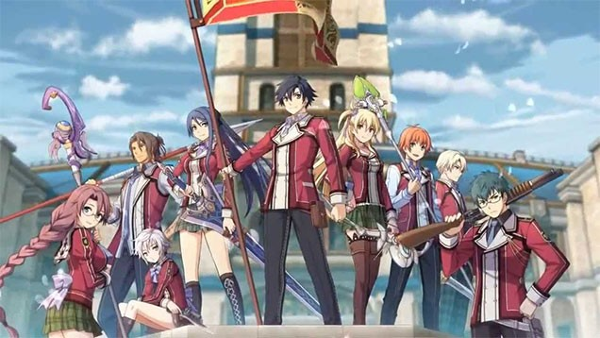
Class VII from left to right:  Emma, Gaius, Fie, Laura, Rean, Alisa, Elliot, Jusis, and Machias.

My exposure to Trails of Cold Steel has been via the Playstation Vita, with some play taking place on the even less popular Playstation TV peripheral. As such, I can’t compare it to the PS3 version, but from what I’ve seen the two look similar, but it wouldn’t surprise me if the console version performs a little better in terms of frame-rate. The game, and its sequel, supports the cross-save functionality so if you wish to buy both versions you can save between the two. Trails of Cold Steel is my first exposure to the Legend of Heroes franchise, but it’s my understanding it contains same narrative homages to the Trails in the Sky games without being a direct sequel.

The game takes place in a fictional setting called Erebonia where opposing factions are quietly trying to seize political control of the region. The main conflict is between the Noble Faction, those who have ruled via birthright, and the commoners who have risen to high-ranks via political means. There’s no active war taking place at the game’s onset, but it becomes clear throughout that tensions are high. Complicating things is that a terrorist organization has shown itself whose motives are unclear at first. They seem to want to stir the pot and challenge the empire, but naturally you have to play the game to learn more.

coldsteel_thumb

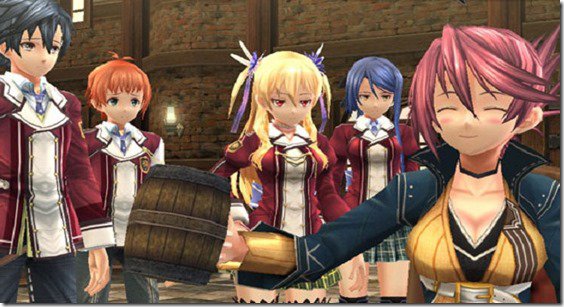
Class VII’s instructor, Sarah, who very much enjoys a good beer.

Caught up in all of this is Rean Schwarzer. Rean has just enlisted at Thors Military Academy, a prestigious academic institution that welcomes students from all social classes. Historically, Thors still recognizes a student’s class standing and organizes its dormitories appropriately, but Rean has learned he is to be a part of Class VII, a new experiment by the academy that is forcing nobles and commoners to work cooperatively. Rean’s class contains an eclectic mix of students, both male and female, and naturally conflicts emerge. Part of the game’s narrative is working to resolve these conflicts while advancing the storyline and building relationships. Class VII contains nine students, four boys and five girls, and the games structure unfolds in such a fashion that the player is rarely in control of more than five students at any one time, with Rean being the clear main protagonist.

The game utilizes a day structure reminiscent of the Persona series. Days unfold at a methodical pace with the player having certain tasks to complete during the day, some forced and some optional, with each day ending when the player decides to end it. Most of these are fetch quests and some are dungeon crawls. Once a month Class VII is dispatched on field studies to different parts of the continent which is when the party is split-up, shrinking the cast of main characters temporarily. Doing so allows the story to play-up inter-class conflicts while allowing the player to experiment with different party combinations in a less intimidating way. It also allows for the story to show the current state of affairs in different parts of the world which pays off later in the game. Also like Persona, Rean can establish bonds with his peers and learn more about them during what the game calls bonding events. It’s not as robust as what is found in Persona 4, or as rewarding, but it is still an effective way of developing characters.

maxresdefault-6

The battle menu. Linked characters are denoted by the beams of light on the ground and connecting their portraits. The portraits on the left indicate action order. The icons beside the portraits denote special bonuses on that action such as EP charge, healing, and so on.

The gameplay is mostly classic JRPG, but with some twists. Navigating the field is pretty traditional and comparable to Final Fantasy X. There’s no throwback overworld or anything, and most settings contain a hub town with branching areas of hostility. Enemies appear on the screen and will react to your avatar by either attacking or running. Avoiding enemies is pretty simple, but of course avoiding conflict won’t help you in the long run as you need to defeat enemies to earn experience and get stronger. Characters can attack enemies in the field, and landing a blow on an enemy’s flank will stun them allowing you to engage the enemy with an advantage. Rean is the main character, but any character in the party can be utilized to navigate the field and they all have different weapons. Certain characters, like the shotgun wielding Machias, can break parts of the environment or attack enemies from a distance. It gives the player a chance to figure out how they would prefer to navigate the world and approach enemies. I typically stuck with Rean as his wide-arcing sword slash makes it easy to flank enemies for an easy combat advantage. Certain large enemies can’t be stunned on the field, but flanking them can still impart a bonus.

Combat itself is like a hybrid of Final Fantasy X and a  tactical RPG. Characters can be moved and positioned on the battlefield which is mostly useful for taking advantage of area-based attacks and arts (the game’s version of magic). Four characters can partake in battle at any given time, with reserves able to swap in and out of the active party at any given turn. The order of attack is displayed on the screen so you know when the enemy will next attack, but the order can be influenced with delay tactics and other conventions. Characters typically can attack, use an art, use an item, run, or use a craft. Crafts are basically special attacks and abilities that utilize CP, which is accumulated primarily by attacking and taking damage. Throughout the game characters will unlock special crafts which can be triggered with 100 CP, but are more effective when triggered with 200 CP, which is a full CP gauge. These attacks are basically massive, highly damaging, maneuvers that often can help turn the tide of battle as they can be triggered at any point, allowing the player to bypass an enemy turn.

trails-of-cold-steel-the-school-year-comes-to-a-close-8

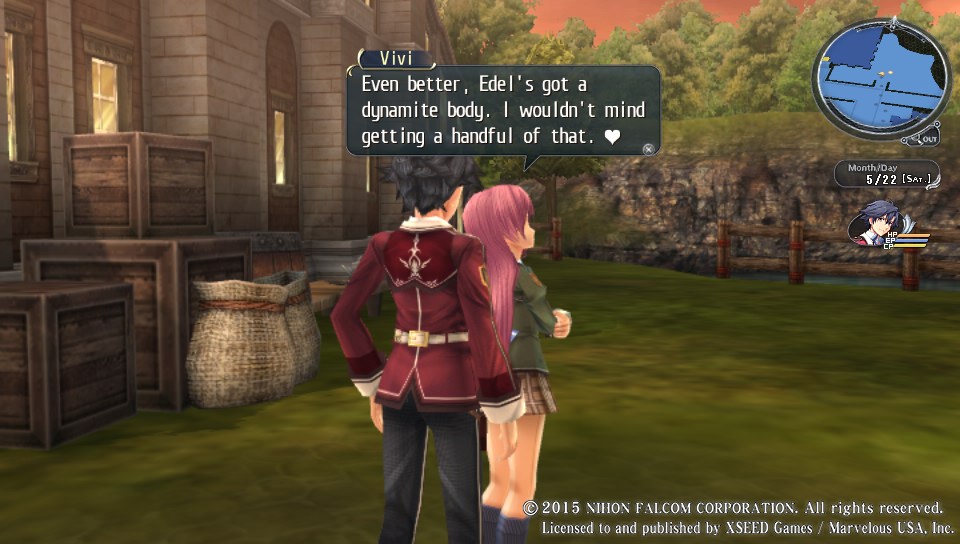
The females seem to enjoy pointing out Emma’s bust, even though every girl “of age” is pretty well endowed in this game.

Characters can also link with other characters, and the more often a character links with another the higher their link level will rise. The main benefit of linking characters is that when one lands a critical hit the other is able to utilize a follow-up attack. As the game progresses more benefits open up, and increasing the link level between characters also opens up other benefits like one character automatically curing another after damage is taken. These link levels are not confined to just Rean and everyone else, but even between the secondary characters. The bonding events open to Rean will increase the link level faster, so naturally Rean will have a higher level with his comrades than they will with each other.

Outside of combat, characters can be equipped with character specific weapons, armor, and accessories. They also have what is called an ARCUS unit which contains slots that quartz can be equipped to. Quartz are essentially materia from Final Fantasy VII. They’ll contain elemental based arts as well as passive abilities and restorative arts. They’re elemental based, and certain slots can only take certain types of quartz. Throughout the game you will earn Sepith from enemies and treasure chests, and Sepith is used to open up more slots on each character’s ARCUS unit to equip more quartz. Each character can also equip a Master Quartz which earns experience like a character and grows throughout the game. These Master Quartz also have a greater impact on a character’s underlying stats and help influence how a character should be played, if they’re a tank, healer, etc. Naturally, characters are predisposed to certain play styles and deviating from that is probably more trouble than its worth, but it can be done.

Being that I am a big fan of both Final Fantasy X and tactical RPGs in general, I naturally find the combat mechanics of Trails of Cold Steel to be mostly excellent. If I had one major complaint it’s that the Crafts are a bit overpowered and easy to take advantage of. At the same time, I also played through the game on the normal setting and harder ones are available so my criticism is some-what empty. For the most part, the combat is addicting and enjoyable. It’s easy to get used to, but also possesses depth, and that’s all gamers really want out an RPG combat system.

2015-12-29-153744

Lesbian characters are depicted as especially lustful with one of them being a downright creep who hits on young girls.

Technologically speaking, Trails of Cold Steel offers little to get excited by. It’s a PS3 game, that even by PS3 standards, is unimpressive to behold. The main characters all look good, but the settings are small and bland. The game uses an anime style that is mostly pleasing to look at, and there’s even a few instances of actual anime used to enhance the story-telling. Xseed’s localization is pretty good, with lots of veteran anime voice actors onhand to give the game a professional sound. The music is also excellent, though at times can get a little too repetitive. There were some frame-rate dips in combat, and some slowdown as well. It’s mostly cosmetic though and didn’t affect my ability to deal damage or anything.

The game’s approach to story-telling is pretty consistent. Trails of Cold Steel is often serious, but also inserts a lot of humor into the mix. Some of the humor can be fairly juvenile with there being an abundance of gay jokes, or instances of male characters being spooked by something gay. Interestingly, lesbian characters are approached in a completely different manner and are often depicted as sex-hungry perverts. These characters are also accepted by their peers, so in one sense the game is progressive, but in other respects it feels like a sixteen year old heterosexual male wrote portions of the scripts. I didn’t find any of this offensive, but at times I felt like I was older than the game’s target audience. There are also numerous jokes about breasts, especially directed at the Emma character who is depicted with a large bust even by video game standards.

trails-of-cold-steel-schools-in-for-summer-6

Meanwhile, the game’s lone fat girl isn’t exactly portrayed in a positive light.

The main plot unfolds very methodically and in a very linear fashion. That more than anything is probably what is most likely to turn off a modern gamer accustomed to Elder Scrolls or Mass Effect. The game’s plot is a slow burn, and finding every available side quest in a given day often requires you to speak with every NPC you come in contact with, some of which won’t give up their quest on the first try. I took my time with the game, and it took over 80 in game hours for me to complete. Part of the reason why the game moves so slowly is because it is the first game in what is projected to be a trilogy so it’s possible future games in the series will unfold at a brisker pace. Of course, I won’t know for sure until I finish the sequel (which I am actively playing).

Completion of the game unlocks a new game plus, a pretty common convention in modern games. During the first play through, it’s impossible to see every bonding event in the game so completists will need at least two play-throughs. Players can also save a cleared game save to carry over into the sequel. For the most part, carrying over a save just gives some bonus items depending on Rean’s level and rank at the game’s conclusion. There’s also an opportunity to establish a more romantic relationship with the game’s female characters that also appears to carry-over. The game definitely steers the player towards one character in particular, and I took the bait figuring I would experience the story the developers most want to tell. I’m not sure if other characters take on a romantic relationship with Rean or if it’s more a friend type of thing, but it’s nice to have some variety in the gameplay experience. Since the characters are all teens, don’t expect any Bioware styled sex scenes or anything, it’s mostly puppy love.

character_link_status_tocs

The Link menu makes it easy to keep track of the combat links earned throughout the game.

Playing Trails of Cold Steel often made me think of Persona 4. As I spent more time with the game I thought of that game less as ToCS has a very different tone than Persona. It definitely borrows a lot from that game in its setup, and most of the stuff it borrows it does not improve upon and kind of half-asses. That, however, is really the only main fault I found with the game. Sometimes the characters did frustrate me, as they tend to be so unfailingly nice and pure, I’d like to see an edge to at least some of them even if the main protagonist is as dull as a butter knife. There’s also a twist at the end of the game that felt rather forced and unnecessary, but I can’t say it really affected my enjoyment of the game. It also closes with some hints at what’s to come in the sequels with a positive spin on the gameplay. I do appreciate the wide scope of the game’s narrative, and it has a very ambitious feel to it. Hopefully Falcom can deliver on that front.

If you like the JRPG genre and have a Vita or PS3 handy, I do recommend Trails of Cold Steel. I do recommend with some trepidation as the series is unfinished, and there’s no promise the third game in the series will be released outside of Japan at this time. Its predecessor series, Trails in the Sky, was never concluded in the US and I’ll be disappointed if the same happens here. Though for now, I’ll enjoy what I have. Trails of Cold Steel isn’t the next big thing by any means, but it’s a game that’s done pretty well and gives hope that the JRPG is not a dying genre.