Tag Archives: final fantasy

Final Fantasy VII Rebirth

My video game reviews are rarely timely. I just don’t have the available free time to plow through a video game like I once did, especially not a lengthy role-playing game. Nonetheless, the subject of a Final Fantasy VII remake has been a big one to me and I would be remiss if I didn’t collect my thoughts on the subject here in this space. It was nearly a year ago that I did just that with part one of a projected three-part project that is the Final Fantasy VII remake. That first part basically covered the Midgar portion of the story from the original game taking what was probably an eight hour experience and turning it into a 60 hour one. The second part of that journey arrived the same day as my review of the first and I think most had an idea of where it would leave off relative to the main story, and most were right. It has taken me the better part of eight months to work my way through this second chapter, titled Final Fantasy VII Rebirth, and I have some thoughts to share.

As is probably the case with every article, blog, etc. on the subject, spoilers are ahead for those who did not experience the original Final Fantasy VII or Final Fantasy VII Remake. I’ll not spoil this game outright, at least not without warning, so if you’re looking for a delayed opinion on a game you’re considering for yourself then you’re safe for now. The game picks up right where Remake left off and our heroes are fleeing Midgar and planning their next move following the destruction that took place and their encounter with the big baddie of the game: Sephiroth. Remake ended on a controversial note. Basically, it was revealed that what we’re playing is a remake in a meta sense, but only Sephiroth is aware. Final Fantasy VII happened. Sephiroth lost and the planet was spared. Now, he gets to try again by toying with the whispers of fate, as it were. In a way, it’s not important to the player if this is a redo or all happening for the first time, except for the fact that it was revealed at the end of Remake that Zack (Caleb Pierce) is alive. If you’ve played the original, or the prequel game Crisis Core, then you know Zack should be very much dead. He died saving Cloud and that inspired Cloud to basically become Zack, in a sense. With him alive it’s confirmation that Sephiroth (Tyler Hoechlin) has indeed altered history and anything can happen from here.

This guy showing up at the end of Remake certainly raised a few eyebrows.

That little detail may have caused a few fans to raise their pitchforks at the game’s conclusion, but if you thought this meant that the experience going forward would be vastly different then put those pitchforks away. Oh, there are indeed some changes, but the events of Rebirth largely follow in the footsteps of the original game. With just a whole lot more. How does one take a 40 hour experience and stretch it across three modern games? Why, with padding of course! Final Fantasy VII Rebirth is a long game and it took me just shy of 130 hours to roll credits on it. I did not do everything in this game either. I started off trying to keep up with every nook and cranny offered up by the experience, but at some point I decided if I ever wanted to beat this thing that I needed to play in a more focused manner. You see, this game has a mini game for seemingly everything. They add considerable padding to the experience especially if you want to get the top score and receive the best reward. The game is also structured in that there are a series of areas you visit which are fairly vast on their own. Each one comes with a bunch of tedium to extend them: encounter every enemy, find a bunch of special areas, tame a chocobo, beat a unique boss, etc. There is a flow to it, so it’s not a truly tedious experience, but there will be times when the game just plain doesn’t respect your time.
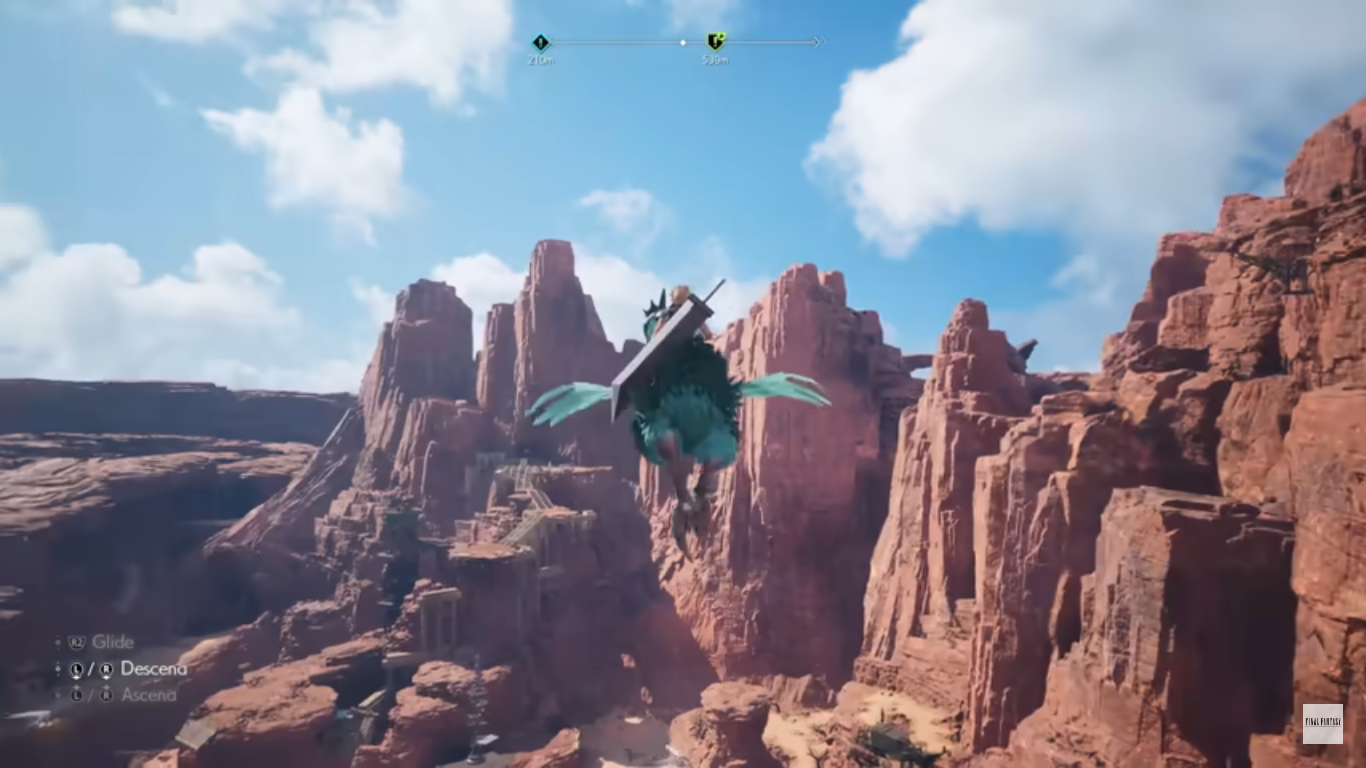
If you felt Remake needed more chocobos then you’ll be happy with Rebirth.

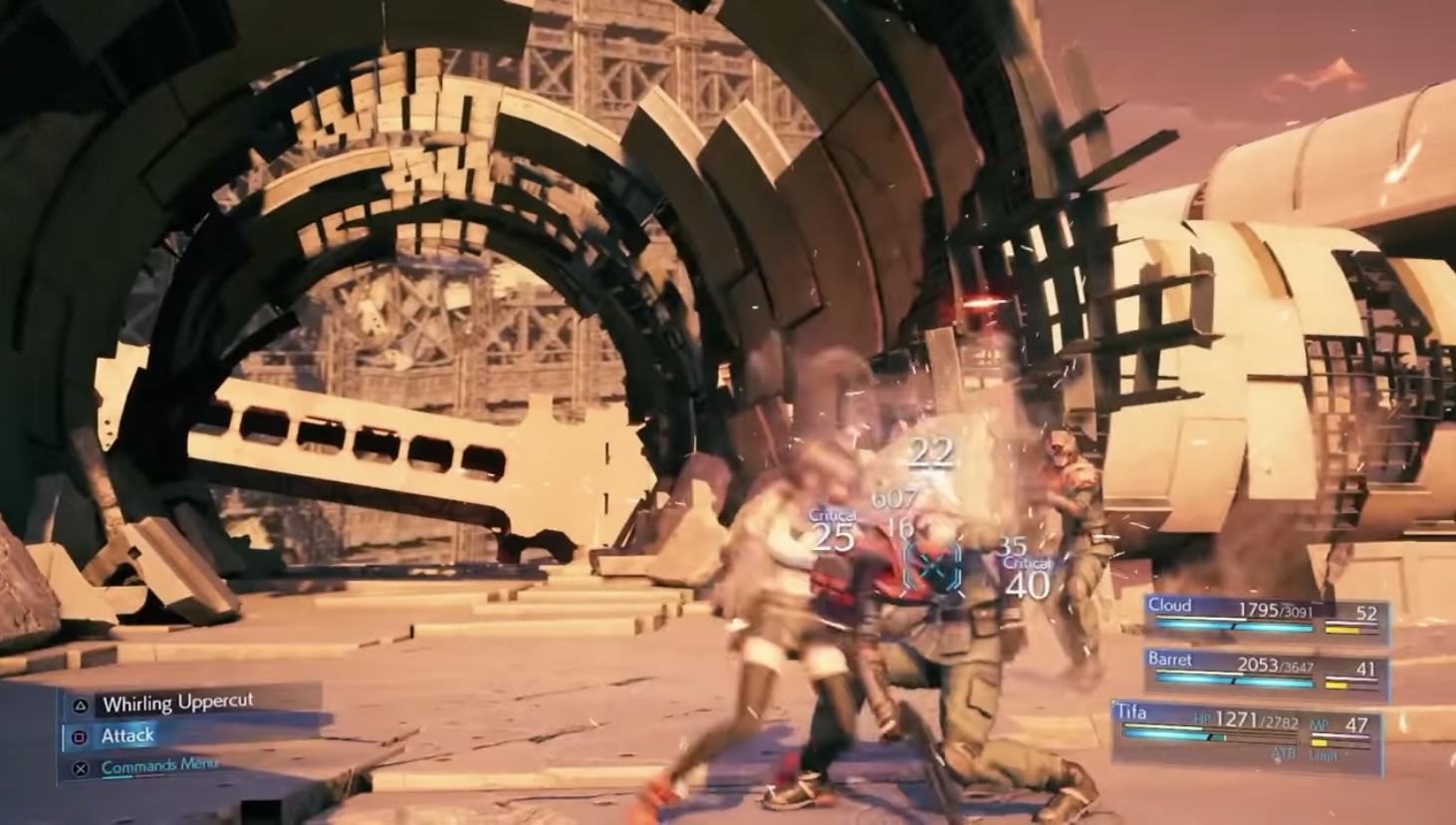
A game that is going to require such an investment of time better be fun to play. If you enjoyed the combat system in Remake, then you’ll be happy with Rebirth. Your characters all basically start over though. Same with your materia, the equip-able orbs that allow your characters to access spells and special abilities. Nothing is carried over from the prior game even though these are supposed to be all combined. The combat is still an action game. You can pause (technically, slow down time to a near pause) combat to issue commands to your characters, but there’s no turn-based option available. Combat is basically still mostly mashing the attack button, accumulating ATB bars, and then using them to unleash special moves and spells. Your party will grow quite a bit larger this time around with the additions of Red XIII (Max Mittelman), Yuffie (Suzie Yeung), and Cait Sith (Paul Tinto), but you can only take three into battle at any given time. There’s no swapping in reserves, though there is a reserve action available when things gets dire.

There are new faces in Rebirth, but like Red XIII in Remake, some are more like teases of things to come.

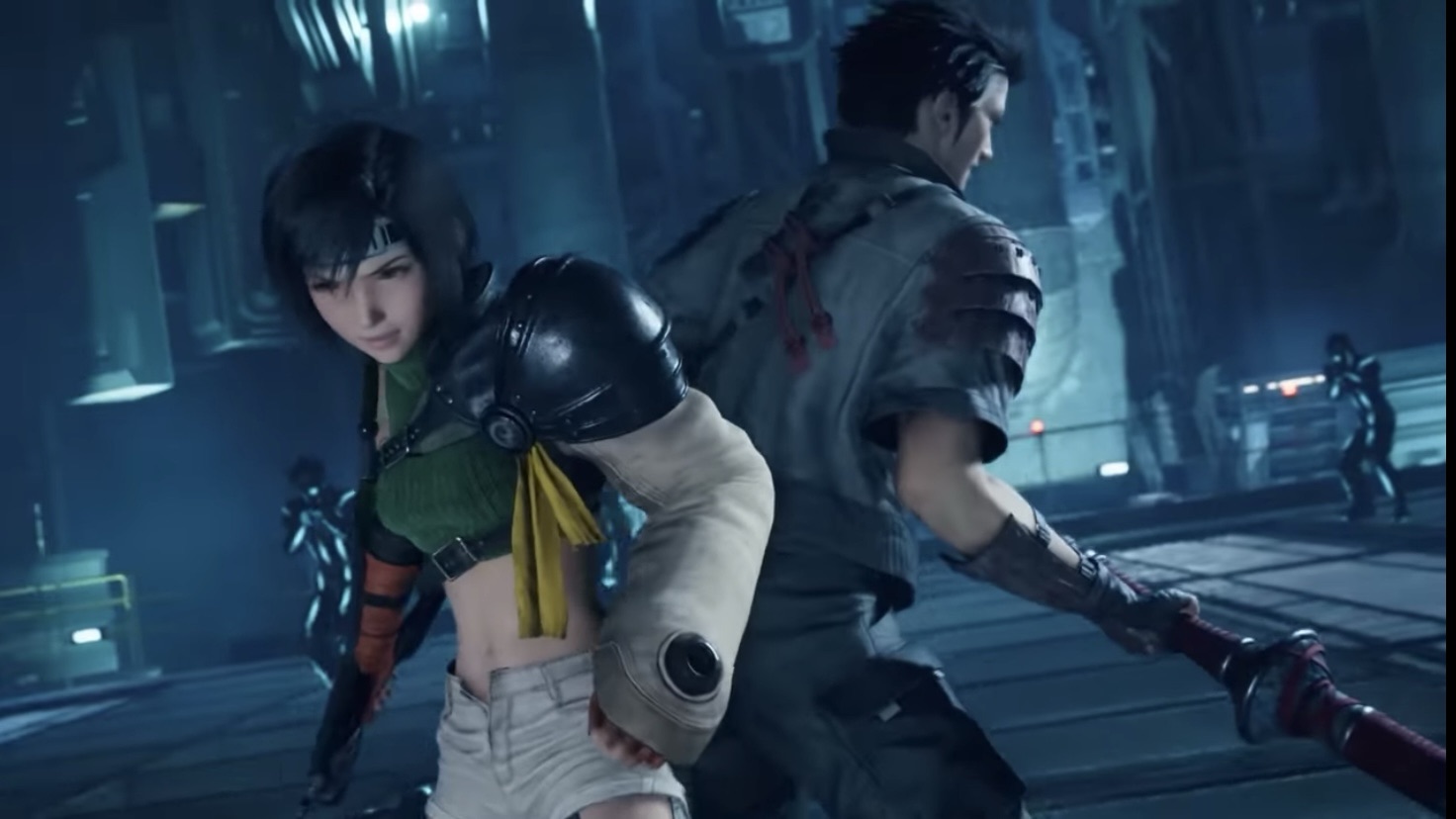
Every character plays a little different to make them unique. Our returning fighters in Cloud (Cody Christian), Aerith (Briana White), Tifa (Britt Baron), and Barret (John Eric Bentley) still control the same. Yuffie, who was part of the Intergrade DLC for Remake, is a hybrid melee/ranged attacker who relies on speed and is largely unchanged from that game. Red XIII was introduced in Remake, but not playable. In this one, he’s an attack/support character and his special ability is tied to his Vengeance gauge. It builds up during combat and at any point Red XIII can go into a Vengeance mode which makes him stronger, faster, and opens up new moves. Cait Sith is more of a wild card character with moves tied to chance. Cait is the small, anthropomorphic, cat and he rides an oversized moogle. The moogle can be called upon and used to dish out damage and most of Cait Sith’s abilities are tied into it.

The weapon system this time around has been altered. Rather than each weapon needing to level up via a grid type system, each character just has their own progression board of sorts to unlock abilities through. The weapons now just have a special ability and equipping the weapon and using that ability a set amount of times allows the character to learn it permanently. Weapons also have their own materia slots and their own pool of equip-able abilities. This does mean that the evergreen nature of the weapons in the last game is sort of lost. You’re far more likely to just run with the latest and greatest weapon acquired unless said weapon specializes in magic when you want the character to focus on melee attacks. The board each character has will modify base stats and also allow for the learning of magic abilities that do not require MP. It’s a unique grid for each character, so it’s not like Final Fantasy X‘s sphere grid where everyone is on the same thing, but a different starting area.
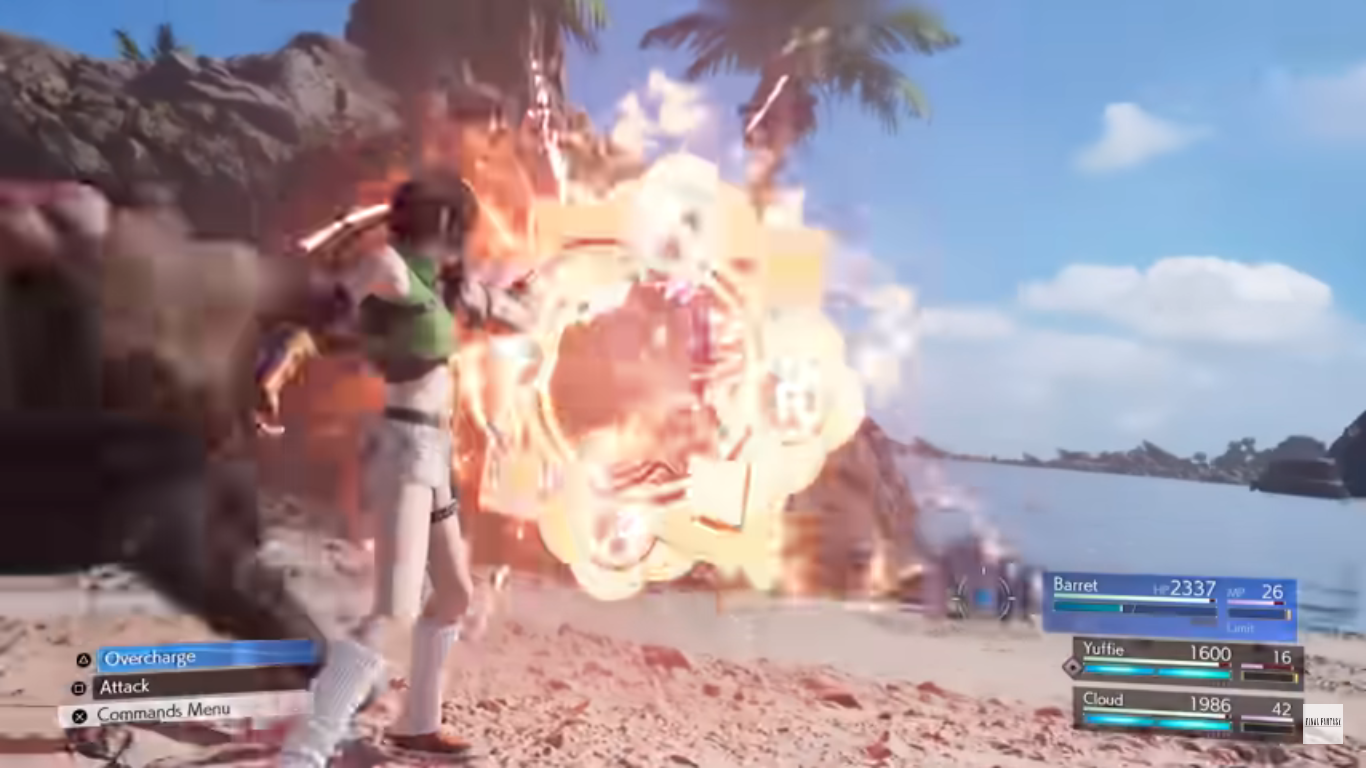
Synergy skills allow characters to team-up to unleash potent attacks in battle.

A key component of these new grids (which the game refers to as folios) is the ability to unlock Synergy skills. Synergy skills are basically team-up moves and they have to be unlocked. When a character uses an ability in battle, they fill a separate ATB bar. Once two characters have filled the required amount of ATB bars for their move, they can then use it. These moves often do a tremendous amount of damage, but also have other special functions. Many are focused on dealing extra damage to foes that have already been staggered. The Refocus ability, which grants an extra ATB gauge in battle, is also now tied to Synergy skills. Others speed up the limit gauge or leave the characters in a state where they have unlimited MP for a short while. They’re pretty useful and when it comes to harder boss fights they can be the key to turning the tide in one’s favor so it pays to make sure your favorite characters to play as have learned a Synergy skill or two.
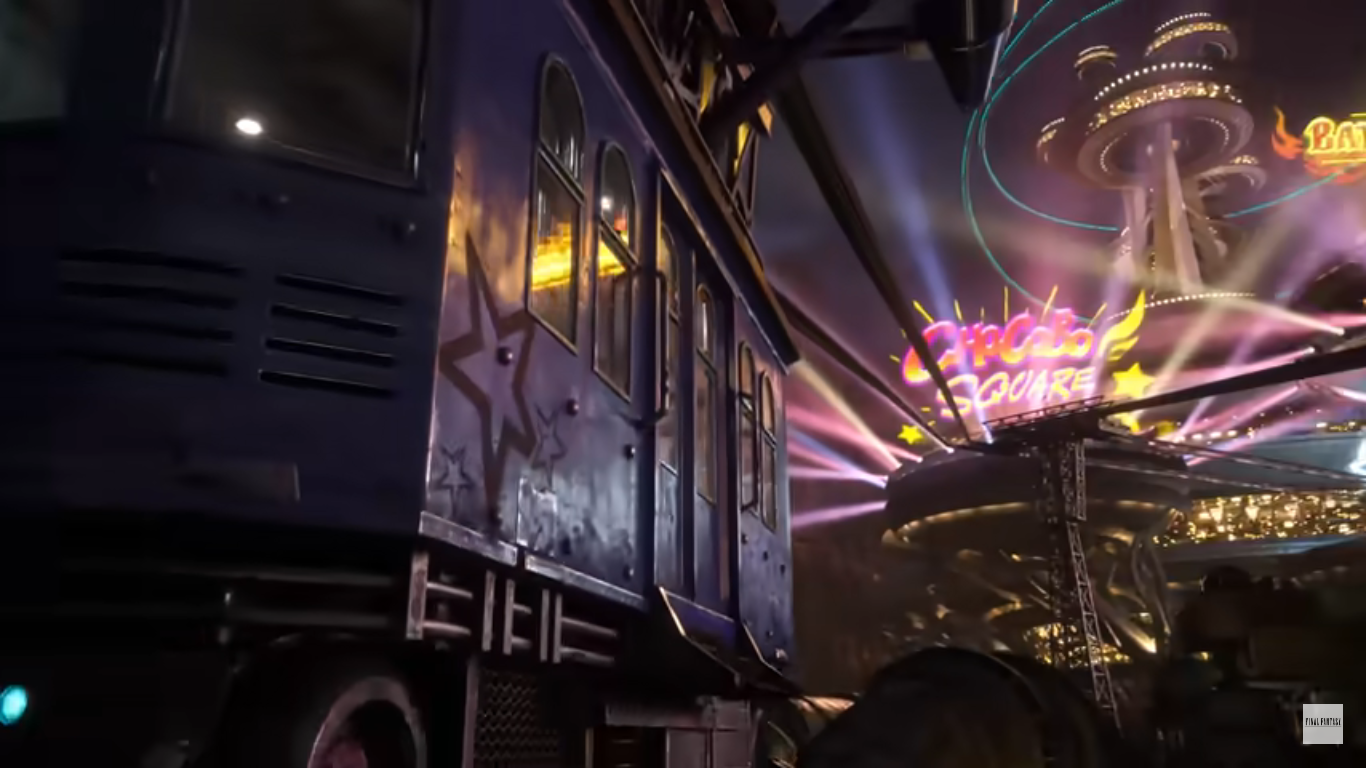
The Gold Saucer now feels more like the experience it was supposed to be in the original game.

The presentation for Rebirth is, as you would have probably expected, quite lovely. There’s a variety of environments on display and characters animate and emote exceptionally well. The soundtrack is as good as ever making liberal use of the original game with some new twists thrown in. Voice acting is also very good and at no point will you feel like Square Enix cheaped out anywhere. About the only thing that can feel limiting is when reaching the edge of a map and encountering the ever annoying message that you cannot pass further. The locations though are technically connected so you could basically walk the entire map which I would not recommend. At some point water travel will become a possibility making it even more obvious that this is all one big area.

As most probably imagined, there are more summons to go around in this one.

There is a lot to do and a lot to see in Rebirth. I have no idea how fast this game could be completed if one ignored a lot of that extra stuff, or how much harder it would be. I played on normal and encountered plenty of challenging fights. Some of the hardest will be the summons. In order to acquire a summoned creature, you have to first beat them. You do so via Chadley, who returns from the first game, and his combat simulator. There are special shrines scattered about a region that if encountered can weaken the summoned creature, but most will still put up a good fight. Once acquired, they can only be used when the summon gauge pops up in battle, which does seem to happen far more often this time around than in Remake. Once summoned, they hang around, deal some damage, and have their own abilities that anyone in the party can tap into. Once their time is up, or the summoner is defeated, they unleash their ultimate attack and vanish. There isn’t a whole lot of strategic value to them, they almost feel like window dressing and something the game has to have since it was a part of the original. It’s still fun seeing them for the first time, at least.

The other distractions all vary in quality. Some I enjoyed, some I couldn’t wait to be done with. Chocobo racing is back only now it’s more like Mario Kart. It’s also not entirely optional, but also not super difficult. There were times I was pretty annoyed though, but those instances may have been in the optional races. There’s also a card game that Cloud can partake in called Queen’s Blood. It takes a little getting used to, but the game does a solid job of bringing the player along as more complicated cards are introduced. I did manage to complete that entire side quest without too much trouble. It’s probably the best of the many mini games which largely do not impress, but also don’t really annoy. The only one I truly detested was the piano playing mini game. I just can’t get accustomed to it and never even managed a B playing a part. I got the impression even back in the demo that it was going to be way too time consuming to get good at so I didn’t bother. Thankfully, there are no moments in the game where you’re required to play piano and actually play it well. There are some moments where you do have to play and it’s a bit awkward, but we can’t all be winners.
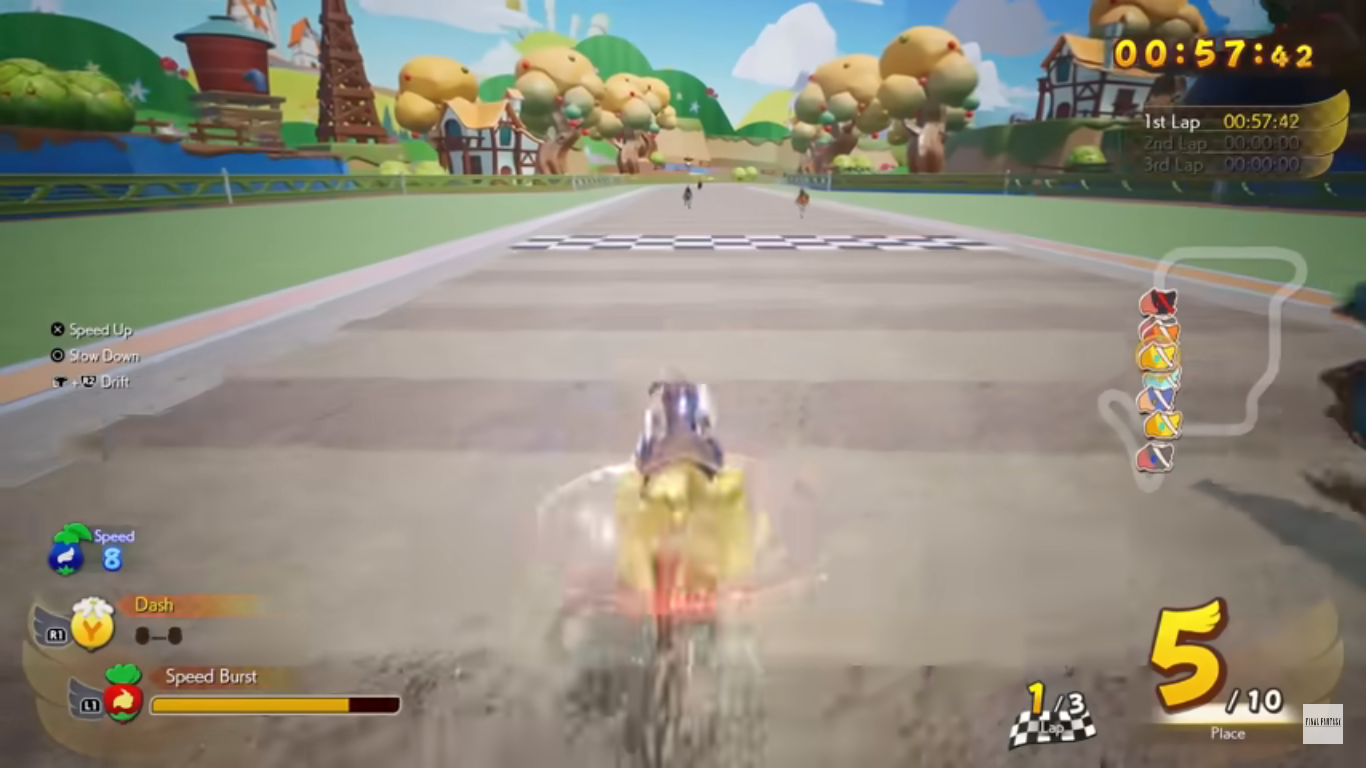
It’s back!

Final Fantasy VII Rebirth is basically more of the same when compared with Remake, just a whole lot more. It’s probably way longer than it should be and I can think of plenty of ways it could have been cut down. Anytime I was forced to watch Cloud crawl through something or walk slower I couldn’t help but think this could be going a lot faster. Why do I need to control an airplane that isn’t even being piloted by one of my characters to get to a new area when it could just be captured with a quick cut scene? A lot of side quests are fetch quests that don’t add anything to the narrative, and I really hated that a series of items you collect all throughout the game just leads to an optional, high level, area I have no desire to see through. There’s a crafting element included, but it adds very little to the experience other than an excuse to just put a bunch of collectible crap on every map. The game is, for me, undoubtedly a more complete experience than Remake, but at almost every step of the way there’s this feeling that the designers are just trying to stretch this experience out to the game’s detriment.

The game is so similar to Remake that any issues one had with that game will carryover to this one. I still don’t love the combat system. I don’t hate it, but I still feel like this game is stuck between a subpar action game and a JRPG. It’s not going to satisfy action game fans or JRPG fans entirely, instead it tries to meet them all halfway. It would have been so easy to make it an optional turn-based game, but Square Enix refused. And yeah, you can pause and issue commands or switch to another character on the fly, but the game is still bad at letting you truly dictate to your party members what you want them to do. There was one optional fight where I had to take out a certain enemy first. The problem was, the other enemies in the fight were all weaker. The challenge is basically you have to fight against the game because you can’t reliably get your party members to focus on the target and the target alone. I had to redo it several times because someone would end up taking out one of those lesser enemies first resulting in a failure. Even doing the fight solo was a pain as it’s very easy to accidentally switch targets and the auto-targeting sucks.

And now we do have to talk about it. The big thing. Spoilers ahead!

Do you feel that pit in your stomach upon seeing this? If you do, it’s a totally normal reaction.

As all likely guessed, this game ends with the City of the Ancients and Sephiroth’s attack. The death of Aerith is quite possibly the most famous death in the history of video games. I am struggling to even come up with anything close to it. This game totally blows it by doing what it spends too much of the game doing: it drags it out. The impact of the moment is completely lost because of how drawn out the process is. It also intentionally muddles things too by turning to something I think many are sick of: the Multiverse.

Yes, we’re going full multiverse in this one. It’s basically hinted at throughout the game as there are short sequences where we’ll check in on Zack who is watching over both Aerith and Cloud. Aerith is in some sort of coma, while Cloud has apparently succumbed to mako poisoning. Biggs is also alive, and the game waits until the end to reveal what’s going on which is essentially that Sephiroth is trying to unite a whole bunch of multiverses. I suppose it’s not the game’s fault that Marvel has gone headlong into this type of story-telling over the past few years, but it’s a trope that I’m personally so sick of. It’s not adding to the experience of Final Fantasy VII and just feels like change for the sake of change. I still expect the events of the final game to play out largely as expected, only instead there will probably be some additional final encounter with Sephiroth. Maybe it will bring in other Final Fantasy universes and Sephiroth will team-up with Kefka while Cloud and Squall race to find Tidus for one massive, shark-jumping, finale! I doubt that, and I hope we’re not heading for something that ridiculous, but I’ve gone from slightly intrigued by the possibilities presented at the end of Remake to downright soured.

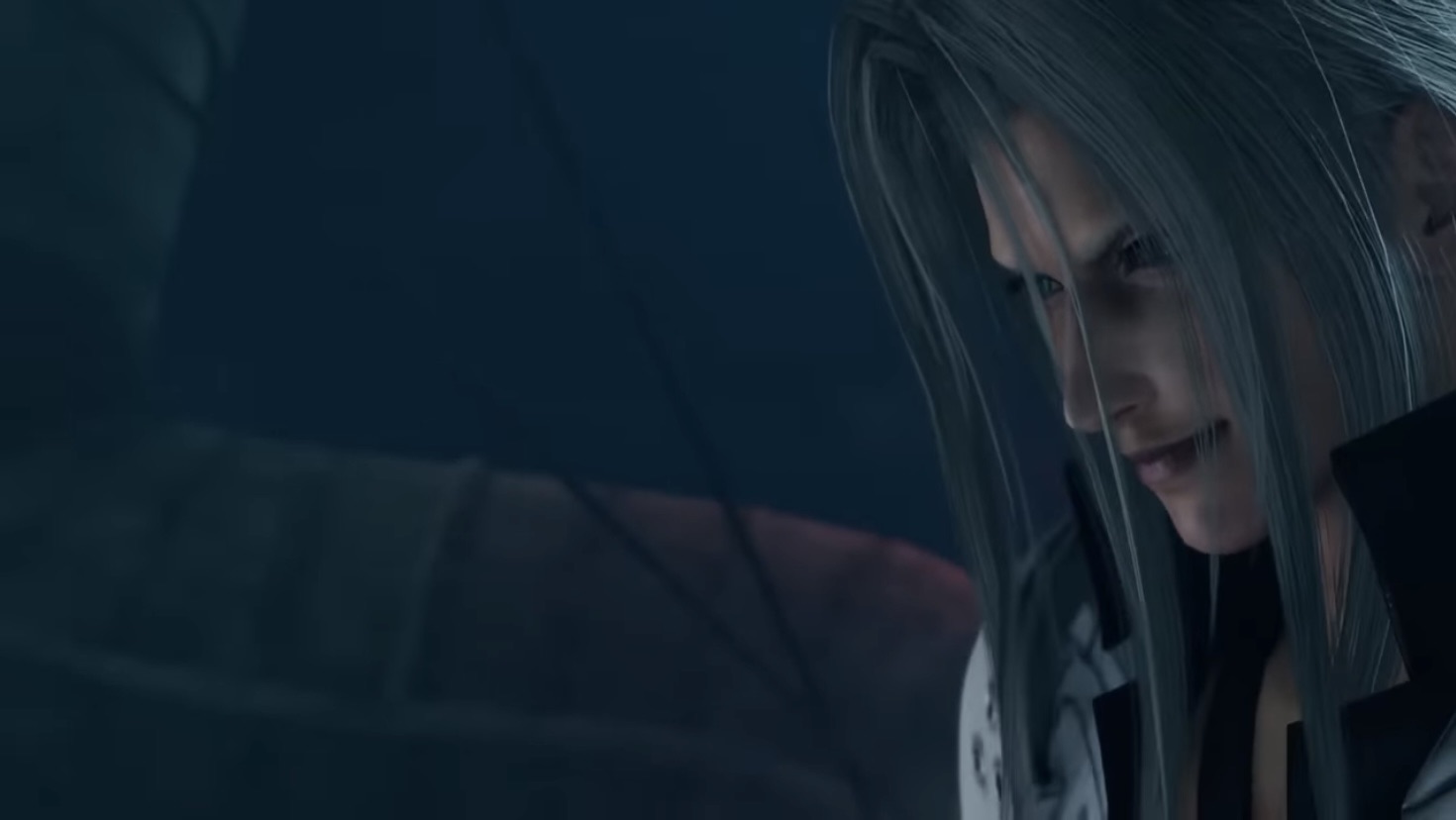
There will be more battles with Sephiroth to come, but what shape will they take?

The remake of Final Fantasy VII was never going to be easy. Redoing the game with prettier graphics might have satisfied many, but also would have felt pointless. The game does at least benefit from having the player spend more time with these characters. They’re far more fleshed out, their personalities more apparent, and I genuinely enjoy spending time with them. I am invested in their journey, even if aspects of it frustrate me. Aerith was done dirty. Not because she was killed off, but because it wasn’t allowed to resonate like it should have. Perhaps the fallout in whatever comes next (I’m guessing it will be called Reunion) will find a way to rectify that. And at least they didn’t chicken out, which I was a little afraid would happen and this new timeline would lead to one where Aerith doesn’t die. Not because I want her dead or anything, far from it as she’s a delightful character, but because her death should hurt and it shouldn’t be something we can ignore.

All this is to say that I have complicated feelings on this game. I did with Remake, and I still do with Rebirth. Chances are, I’ll feel the same way when all is said and done. Can I recommend it? Yeah, sure, if you have 100 hours to spend on a game. If you don’t then I totally understand. I find the task a daunting one and I’m nearing a point in my life where I don’t really want a game to last that long. As a fan of the original Final Fantasy VII, it is nice to see these characters from a different angle and experience them in a new way. I can’t compare the two games because they’re such different experiences, but the best thing I can say about Rebirth is that I don’t regret the 130 hours I’ve spent with it. I just don’t really want to spend any more time with it.

Check out some of my other Final Fantasy thoughts below:
Final Fantasy VII Remake – Intergrade

It took a long time for it to be realized, and a long time for me to play it. It’s debatable which Final Fantasy title is best and nostalgia will always play a big role. For many, Final Fantasy VII was the first Final Fantasy game they played. Previously, only three titles had made it…

Keep reading

Final Fantasy X HD Remaster

Over the years I’ve talked a lot about Final Fantasy but I’ve never posted a game review for any of the numeric titles in the long-running series. Well that ends today as I post my thoughts on the somewhat recently released Final Fantasy X HD Remaster. One opinion I have stated on more than one…

Keep reading

Final Fantasy VII – To Remake, or Not to Remake?

In the gaming community, a popular topic of conversation seems to always stem around remakes.  They’re fairly popular and have become more so due in large part to the rising price of game development and the profitable business known as nostalgia.  Games cost a ton of money these days to develop, and with little change…

Keep reading

Final Fantasy VII Remake – Intergrade

It took a long time for it to be realized, and a long time for me to play it. It’s debatable which Final Fantasy title is best and nostalgia will always play a big role. For many, Final Fantasy VII was the first Final Fantasy game they played. Previously, only three titles had made it to US shores, but it seemed like each new game was more popular than the last. I know for me personally, I had quite a few friends who were into what we then knew as Final Fantasy III so whatever was next in the franchise would be on my radar and the radar of many I knew. When the company then known as Squaresoft pivoted from Nintendo to Sony, it felt like one of the first major “gets” for the new PlayStation console. And when images started circulating in gaming magazines of those initial summons it basically blew everyone away. I’m guessing a lot of people just saw the media and bought into the hype based on that and were pretty damn confused when they actually sat down to play it. No matter, the hype was real as Final Fantasy VII was a big seller for Square and Sony catapulting both the company and franchise into new heights.

Cloud is back, which means so is Sephiroth.

Back in 2005, Squaresoft created a demo for the PlayStation 3 and opted to use familiar characters in order to demonstrate the power of the new console. Bad move. Did they learn nothing from Nintendo and their Gamecube demo? When fans saw Cloud and Sephiroth battling like never before it just created more hunger for a remake. Fans clamored for one for years, but Square Enix was mum on the topic or would flat-out say there are no plans. The call for a remake eventually became too impossible to ignore and it was finally announced that one was on the way in 2015. It would still be another 5 years before the game was released, and it turned out, only one third of the game was made and released. Sort of like how the original had 3 discs, the remake will be 3 separate games. It’s disappointing, more because we are now on the eve of the second game being released and it’s been four years, but that’s the reality of modern game design. It’s expensive and time-consuming and Square Enix knows it has a hit on its hands so it’s going to extract every dollar it can. I guess the story will finally be concluded in 2028 when we’re all wondering when the PlayStation 6 will be released (or apparently already playing it if Sony is to be believed).

To create the remake, Square turned to a lot of the folks responsible for the original game. Tetsuya Nomura, who was a writer and character designer on the original, was given the title of director for the remake. This came as a surprise to him since he was knee deep in the long-delayed Kingdom Hearts 3 at the time, which probably explains why Naoki Hamaguchi and Motomu Toriyama alse receive a direction credit. Kazushige Nojima returns as writer and Toriyama receives credit for that as well. Legendary composer Nobuo Uematsu returned to write the main theme while Masashi Hamauzu and Mitsuto Suzuki are primarily responsible for any new compositions.

Get ready to experience the game again, only much flashier this time.

As someone who fell in love with Final Fantasy VII back in 1997, I have been on team re-make for decades now. The original is still very playable and quite good, but the visuals are supremely dated in a mostly not-quaint way. I have far more affection for classic sprite-based game design from the 16 bit era than I do the chunky polygons of the PSX era. Even in ’97, it felt like we were all lying to ourselves when we said these games were a definite visual upgrade to what we had before. They definitely were when looking at the cinematics, but those are essentially just CG movies inserted onto the disc. As video game visuals, they’re kind of fake. The battle engine graphics were fine though. Some quality of life improvements certainly couldn’t hurt either.

Square also seemed to feel that Sephiroth was going to need to have more presence this time around. It’s not a bad thing.

Square Enix apparently felt that a straight remake wouldn’t work. Gamers today don’t want traditional, turn-based, role-playing experiences according to whatever market data they have. I disagree, and it sure seems like the Persona series is doing quite well for itself with a more traditional battle system, but it is what it is. FFVII Remake takes a more action-oriented approach to its gameplay. Before release, there was some talk of the game being able to be played in both ways, but it was over-stated. In battle, which still restricts the player to a team of 3 party members max, you’re free to move around the field, attack, block, and dodge. The only relic of the original game is there is still an Active Time Battle system in place. Basically, you can do basic actions all of the time, but in order to perform other functions you need to wait on that ATB meter. Each character has two reserves of ATB and most abilities, spells, or items need just one store, but a few require two. Summons still exist, but they can only be used in certain fights and are basically restricted to boss battles. You know you can use one because a Summon Meter will just appear on screen. Once filled, any member of the party can initiate a summon provided they have the materia equipped (each character is limited to one summon and said summon can only be equipped to one character). Once summoned, the creature stomps around the battle field and any character can use one of their ATB stores to make the beast attack. Once it’s timer runs out, it then unleashes the ultimate attack we know and love from the original game and takes off.

Get ready for a new action-oriented experience.

Speaking of materia, that system is back and works mostly in the same fashion as before. Each character can equip a weapon and one piece of armor which may have one or more slots for materia. Materia is how characters equip spells and abilities and successfully defeating enemies in battle will earn players both experience and AP. AP is what materia uses to “level up,” and doing so will allow the Fire materia to learn Fira and ultimately Firaga, the best version of the fire spell. Once mastered, materia no longer spawns another version of itself which is a disappointment so players will have to scour the region for freebies or purchase additional sets if they want multiple characters to equip the same set.

The weapon system has been overhauled to add its own level-up component. Each weapon a character uncovers has a special ability tied to it and using that ability allows the character to eventually learn that ability. Once learned, the character can use that ability with or without the weapon. It’s a bit like the old Job System in that learning the abilities associated with a certain job would allow the base version of the character to make use of them, only now you don’t have to pick and choose which abilities to equip, but instead have access to all. The weapons also earn their own ability points which can be spent to unlock features for the weapon like Attack +3 or critical hit modifiers and such. This helps keep even the earliest weapons viable throughout the game as their attack, defense, and other stat modifiers can continually improve. And every weapon earns “experience” even when not in use. It’s not the Sphere Grid though, so each weapon still has a specialty and basically every character will have a weapon that’s more conducive to defense or magic use, though nothing radical enough to change a character’s obvious archetype (i.e. Aerith will always be more suited to magic and healing than physical combat).

One aspect of the remake most are likely to appreciate is the expanded role of characters like Biggs and Wedge.

The story of the game is essentially an expanded version of the Midgar portion of the original. You’ll be exposed to more regions of the city and there will be lots of little quests (yes, many of the “fetch” variety) for the player to take part in for one of the dwellers below the plate above. You’re still Cloud (Cody Christian), ex-Soldier and merc for hire by the eco-terrorist group Avalanche. Its Midgar chapter is spearheaded by Barret (John Eric Bentley), a fiery single father willing to go to great lengths to topple the Shinra Corporation which he blames for killing the planet. Tifa (Britt Baron), Cloud’s childhood friend, is part of the group as are non-player characters Jessie, Wedge, and Biggs. During their journey they’ll meet Aerith (Briana White), a flower sales person who belongs to an ancient race known as, appropriately enough, the Ancients and of course there’s the villain, Sephiroth (Tyler Hoechlin).

Sephiroth didn’t play a huge role in the original game’s Midgar portion, but he does here. I suppose from a practically standpoint, Square Enix didn’t want to force players to wait a dozen years to tangle with the legendary swordsman so inserting more encounters into the early part of the game isn’t as crazy as it sounds. What is a bit more crazy is that this FFVII Remake is not a direct remake of the original game. If you haven’t played it and don’t want any sort of spoilers then STOP READING! I intend this review to be both a review of the game and a reaction piece, so you have been warned.

This is a remake of the Midgar portion of the original so all of the familiar faces you would expect to find will be found, but oddly the game doesn’t make them all playable like Red XIII here.

The game is more like a remake of assets, but it exists in conjunction with the original game. For those completely new to Final Fantasy VII, it might be more confusing, but also possibly less. That’s because it takes awhile for the game to more explicitly tell you that the original story (game) already happened, and this story is Sephiroth trying to change the outcome. Throughout the game these shadowy ghosts will keep appearing and it’s unclear what it is they’re doing, but is later explained that they’re the shadows of destiny and they’re fighting to maintain the proper timeline. Sephiroth is trying to destroy them since he, and I guess it’s another spoiler for a 27 year old game, is defeated in the end of that game. Approaching the remake this way does have a practical element at play in that players who did play the original will have something new to look forward to. Whether this is the approach those players wanted is a matter of debate, or more like discourse.

The debate used to be Aerith or Tifa, but after Remake Jessie has inserted herself into the conversation!

Aside from those new plot elements, the game is quite linear in nature. That was true of the original, especially the Midgar portion, so I suppose it’s not a surprise here. It still doesn’t change the fact that it feels restrictive and there are definitely portions of the game that feel like padding. Square Enix was trying to turn what was 7-10 hours max into a full, gaming, experience so some padding was bound to happen. When I finished the game I was at the 42 hour mark and I felt like I had squeezed everything out of the game that I could in one playthrough. As an experience, there were times I was quite invested, and times when I was not. The fact that I had a 7 month gap between sessions at one point probably doesn’t bode well, but in the game’s defense, that gap was primarily due to Tears of the Kingdom so it’s not a massive insult to be sidelined because of that game.

Yuffie is the star of the Intergrade portion and I think I might like playing as her more than Cloud.

Since I am reviewing the Intergrade version, I should say a few words on that. This version primarily adds a new intermission starring Yuffie (Suzie Yeung) which sees her journey to Midgar in order to hook-up with Avalanche to steal some materia from Shinra. She is still her young, plucky, self and is a pretty true to her origins portrayal. It’s referred to as an intermission, but it’s set pretty early in the events of the main story so the title is a bit misleading. It’s essentially more of the same though and provides players an early glimpse at a character they otherwise would not have encountered until the sequel. The game does add a new mini game via a sort of board game Yuffie can challenge folks to called Fort Condor. It’s more like a real-time-strategy/tower defense game in practice with the “board” just affecting how many units the player can have and what magic is available. The game uses an ATB system and the units available have their own cost. They’re not finite though as you have 4 available units at any one time and using one just sends it to the back of the line. There’s a triangle strategy element applied to the units, and the first player to destroy the other’s main base is the victor. There’s also a timer for each game and if it hits zero then the first player to take out an outpost (each player has a base and two outposts) wins. It’s fine, and the games are pretty quick, but it’s also frustrating because once you place a unit that’s it. It does what it wants and sometimes you just want your units to concentrate on the base or an outpost, but they’ll get distracted by enemy units.

Intergrade also introduce this tower defense/RTS mini game that’s not too bad.

The actual sequence with Yuffie adds a little something to the story. Mostly, it brings in some elements from Final Fantasy VII‘s expanded universe and I’m not sure how well that will be received since most of those games were bad. It’s also a vehicle for the villainous Scarlet (Erin Cottrell) as she gets more facetime. Playing as Yuffie is a bit different, and she has one party member who works in tandem with her. I found playing as Yuffie to be mostly entertaining. There are things to figure out about how she attacks and how her abilities play a role in her actions. It’s probably a 5-6 hour experience and is, once again, pretty linear. Actually, it starts off more open than it finishes which is a bit odd. Completing it will unlock an additional epilogue to the main game so it’s worth experiencing, though the epilogue doesn’t contain anything essential so no worries about feeling lost if you don’t play it. There are undoubtedly going to be references to Intergrade going forward, but probably not anything that can’t be explained quickly in the games to come.

There’s no doubt the game improves upon the scope of the original, but some changes (like summons being the domain of boss battles only) feel restrictive and lacking in creativity.

I feel like I’ve told you a lot about how this game operates, but I don’t think I’ve really told you how I feel about it. It’s taken me a long time to figure that out. The initial demo left me feeling almost more perplexed than before, and after spending over 40 hours with this one I still can’t say if I even like this battle system or not. I like RPGs of all varieties and I like action games, but I like my Final Fantasy to be traditional. And I really like my Final Fantasy VII to feature a traditional, turn-based, battle system. I fell off of the series with Final Fantasy XII and that game’s battle system made it a chore. I finished it, but I never wanted to play it again. Since then, they’ve become more action focused and thus more vapid. Yes, you can take a less action approach with this game, but it’s essentially just putting the game on auto-pilot while you interrupt it here and there to cast a spell or something. It does not make the game a turn-based experience and it will likely drive you to just interact with it more because the AI is mediocre. More than anything, I just find it frustrating how non-committed Square Enix has been to just giving fans the remake they wanted. They resisted for years to even consider it, but then when they finally did, decided to do something else. It’s not as bad as a bait and switch just using the name Final Fantasy VII to sell a brand new game, but it sure is annoying.

Barret is still a foul-mouthed bad ass, as he should be.

There are things that I like about the game that have been improved upon. We get to see a lot more of Avalanche and the characters are given time to show nuance. That aspect of the remake has been well-served by the expanded approach. The visuals are obviously terrific and I think these redesigns for the main cast are superior to what we got in every other piece of Final Fantasy VII media. The score is still catchy and there’s an epic feel to a lot of the major moments of the story and it’s the music that really helps sell that. The voice acting is great and overall I feel like I have a much larger attachment to these characters than I did back in ’97. That might make a certain moment to come more impactful, if it happens at all. The odd approach to the narrative means we don’t know what’s next. We have an idea, but we don’t know for certain. I don’t know how I feel about that. I’m not someone totally resistant to change and mixing up the story a bit is okay, but basically doing it like a multiverse story feels almost played out at this point. I know this one was in development for a long time so it might just be bad luck that we’ve been inundated with multi-verse angles in media, but it is what it is. I just hope the story doesn’t turn out like Kingdom Hearts where it becomes so convoluted and up its own ass that I end up ceasing to care. And if a certain death gets undone it will feel cheap.

One piece of legitimate criticism of the game would be that if it wants to be an action game it could be a lot better in the action department.

Final Fantasy VII Remake is a hard game to assess. It should be able to stand on its own merits, but Square Enix chose not to allow it to by tying it to the original game in the way that it did. It’s one part remake, and in a way one part sequel, or parallel story. Complete newcomers to Final Fantasy VII won’t have the same experience as those who played the original. They can read about it on a wiki or something, but it’s not exactly the same. Their enjoyment will hinge more on the battle system and other mechanics – and you either like them or you don’t. There’s definitely an element of style over substance here. My major critique of this era of Final Fantasy is that these action-oriented battles aren’t on par with actual action games. They just feel like mediocre action titles with some RPG window dressing. Some of that is due to the RPG nature of the game where enemies, bosses especially, can unleash attacks for which there’s no real defense. They’re just going to happen. The best moments of the game’s battle system, for me, was when these were kept to a minimum and I felt like I had more agency over what was going on. There’s a boss battle late in the game which does a good job of incorporating the environment and provides for cover. More of that, please.

Where will the story take our hero? Normally with a remake we’d know, but not this time.

If you’re a big fan of Final Fantasy VII, you’re probably going to play this. You actually probably already have since it’s four years old. I waited for the PS5, and when the original came out in 2020, I was also hopeful the sequels would come faster and that I could just hold out for the complete experience. When it became obvious that was going to take somewhere in the neighborhood of 10 years, I abandoned that notion. At least I waited long enough to get the Yuffie story. I do plan on playing the next game, Rebirth, and unless I absolutely hate it I can’t see myself skipping the finale whenever it arrives. Hopefully the chances Square Enix is taking with the story at least pay off, but I know there’s no way to shake the feeling that every time I play this I’ll just be lamenting what could have been?

I did a lot more video game posts, and Final Fantasy especially, in the early days of this blog. Here’s a few, hopefully they haven’t aged horribly:

Final Fantasy VII Remake – Demo Impressions

It’s been a long time since I discussed the possibility of a Final Fantasy VII remake. After mentioning it here and there in other posts, I made a dedicated post on the subject six years ago. And six years ago isn’t even the start of all of this hype, so it’s safe to say this…

Keep reading

Final Fantasy VII – To Remake, or Not to Remake?

In the gaming community, a popular topic of conversation seems to always stem around remakes.  They’re fairly popular and have become more so due in large part to the rising price of game development and the profitable business known as nostalgia.  Games cost a ton of money these days to develop, and with little change…

Keep reading
Final Fantasy X HD Remaster

Over the years I’ve talked a lot about Final Fantasy but I’ve never posted a game review for any of the numeric titles in the long-running series. Well that ends today as I post my thoughts on the somewhat recently released Final Fantasy X HD Remaster. One opinion I have stated on more than one…

Keep reading

Final Fantasy VII Remake – Demo Impressions

Final-Fantasy-7-Remake-DemoIt’s been a long time since I discussed the possibility of a Final Fantasy VII remake. After mentioning it here and there in other posts, I made a dedicated post on the subject six years ago. And six years ago isn’t even the start of all of this hype, so it’s safe to say this game has been a long time coming. And it’s almost here. In order to drum up excitement (and maybe quell some negative press at release), Square-Enix released a free demo for the remake on the PlayStation Network this week. To access it you simply need a PlayStation 4 and a network connection. You do not need to be a subscriber to Sony’s paid online service. The demo should take about 10 minutes to download and install and contains roughly an hour’s worth of content, so if you’re curious about the game and have yet to check out the demo you might as well go rectify that right now.
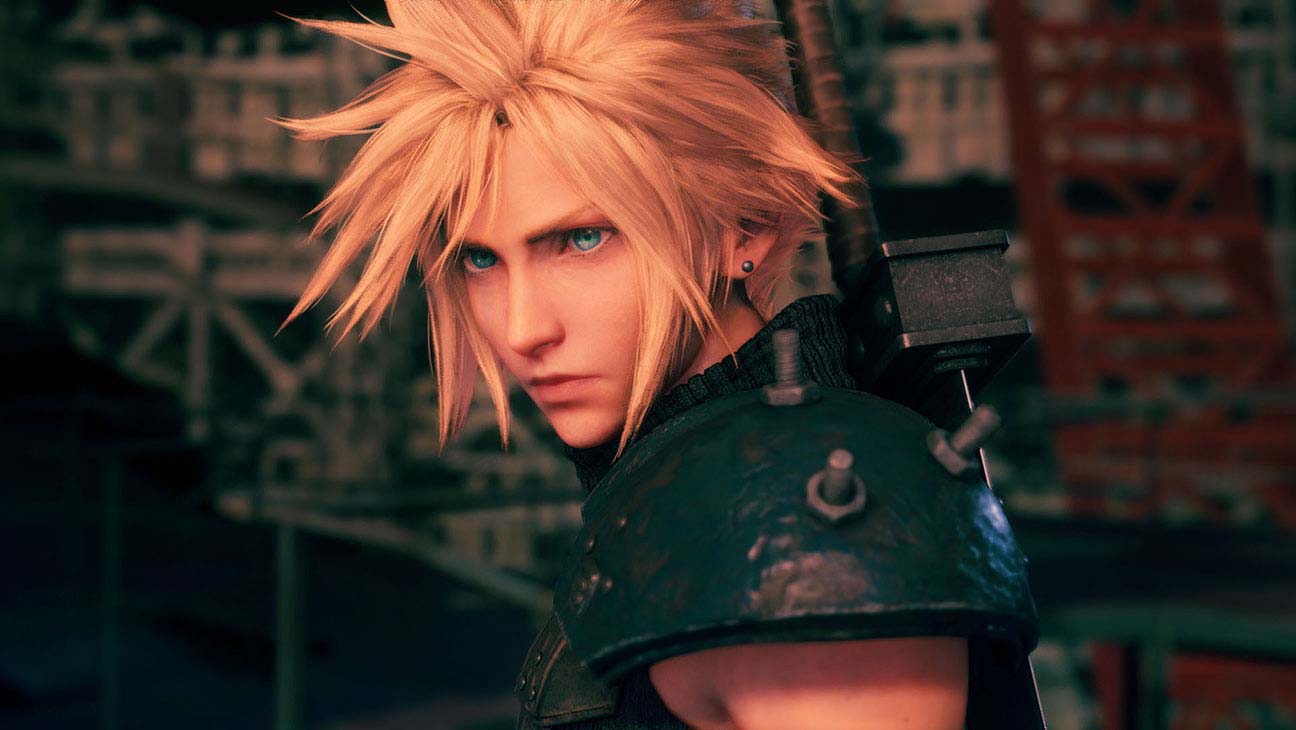
The demo contains what I assume will be the start to the main game. If you played the original Final Fantasy VII then it will be quite familiar. You take on the role of Cloud, a mercenary in the employ of Barret Wallace and his organization, Avalanche, which is in the process of storming a mako reactor in the city of Midgar owned and operated by a company named Shinra. As Cloud (who is given that name outright, so no more choosing your own name), you’re expected to take orders, do the job, and collect a paycheck at the end. The goal of the mission is to take down and destroy this reactor, which Barret explains rather passionately is destroying the planet. Basically, if you’re familiar with the original game this is all routine, but if you’re a newcomer you may have some questions, but those will have to wait for retail.

cloud_demo

Cloud is back, and he’s still going with that hairstyle.

It has been an exceptionally long road getting to this point. Final Fantasy VII was released to huge publicity way back in 1997 and is a very popular and beloved title. For many, it was probably their introduction to the franchise as it was only the fourth entry in the series released outside of Japan. And by far, it was the most publicized, though the US version of Final Fantasy VI was no slouch in terms of marketing. It’s hard to say when the thirst for a remake arrived, but it was definitely here after Square unveiled a PlayStation 3 tech demo that contained images of Final Fantasy VII with a new engine. At the time, Square intended this to be just a demo of what a Final Fantasy title could look like on the new hardware, but naturally many fans just wanted to see these resources used to create a new version of a game they loved.

A remake of Final Fantasy VII never arrived during the PlayStation 3’s lifespan, and it was rarely even hinted at. The company line soon came to be “We hear you,” and fans were expected to just keep voicing their desires for a remake in hopes it would one day happen. Well, that day has just about come and it’s going to be met with some degree of dissatisfaction, but overall I think this title will do well for Square-Enix.

support_characters_demo

And all of your friends are back too, like Biggs, Wedge, and Jessie!

First of all, fans have known what to expect leading up to this point. Gone is the old mechanics of the Active Time Battle System and in its place is a more action-oriented gameplay system. Anyone who has played Final Fantasy XV or even Kingdom Hearts III should feel relatively comfortable with this new system, but anyone going straight from Final Fantasy VII to this will likely be left with their head spinning. At the start of the demo, the player just controls Cloud who battles solo. As enemies come into view, Cloud goes from a passive state to a combat position seamlessly. Mashing the square button is really all that needs to happen in order to win the day against these early foes, but there’s a bit more going on under the hood.

As Cloud attacks, his ATB meter fills. Yes, a relic of the past still exists in some form this time out. When that meter fills, Cloud can use Abilities, Spells, and Items at his whim. Pressing the X button brings up a menu which greatly slows down the action onscreen allowing the player to cycle through the options at his or her leisure. In the demo, Cloud has some abilities that should sound familiar, like Braver. These moves do extra damage and consume ATB. For spells, Cloud has access to Fire which isn’t of much use in the demo, save for when Cloud has to fight flying enemies he can’t quite reach with his sword. Under items are a bunch of familiar options like potions and ethers.

cloud_barrett_demo

Oh, and lets not forget the big guy. Barret is the only other playable character in the demo.

Adding a little extra layer of complexity is the fact that Cloud has two methods of attacks. Think of this as a relic from the Squaresoft classic Bushido Blade as Cloud basically has two stances. He begins in Operator mode which is his default approach. With a tap of the triangle button he can move into Punisher mode. In this state, his sword flurries are more elaborate and deal considerably more damage. He also moves much slower making it harder to evade enemy attacks. Blocking or taking damage will knock Cloud out of this mode, so it’s something that is to be deployed in moderation. At work, is a system of staggering in which repeated blows on an enemy fill a bar below their health. When that fills they become staggered and momentarily incapacitated. You won’t get to play with this too much in the demo as the fodder will like fall first, but it would seem the standard play is to attack an enemy until staggered, then bust out Punisher mode to deal additional damage while they can’t move.

About midway through the demo, Barret will enter the fray. When a second member joins the party in battle, switching between the two is as simple as pressing a button. Barret works in the same manner as Cloud, except he’s a ranged fighter and not nearly as fast or nimble. He can more easily hit flying enemies and instead of a Punisher mode he has a charged attack that gradually fills. He also has access to the spells Thunder and Cure, though you should have plenty of potions to render the latter useless for the demo. You can give the A.I. controlled party member commands during battle, though for the demo I found it mostly unnecessary. When controlling Cloud, Barret did a good job of attacking enemies Cloud could not, but I suspect in larger frays with three characters in the main game it may become more necessary to micro-manage the combatants.

aerith_demo

The demo will give you a look at the mysterious flower girl, but don’t expect it to settle the Aerith/Aeris debate.

Combat in the Final Fantasy VII remake has the potential to add layers of complexity. And in some ways it already feels that way, though much of the confrontations in this demo can be resolved by simply mashing the attack button. It remains to be seen if that’s just simply a matter of this being a demo, or if that will be the general flow of combat for lesser enemies (the equivalent of the original’s random encounters) or if the game will demand more from these enemies as it moves along. Near the end of the demo is a boss encounter in which you will have to do more and pay attention to Cloud’s suggestions. He’ll yell out to Barret how to deal with the enemy, and as the player, you’re expected to do the same. These range from what magic to utilize and where to strike. It’s during this battle that you’ll likely encounter Limit Breaks for the first time. They seem to work as they did in the original, though with Braver being a standard move, Cloud’s first Limit Break is now Cross-Slash. I did not see Barrett’s in my play-through.

When not in battle, the game is pretty much just a nicer version of the original. The camera is always behind Cloud, but can be manually controlled via the right analog stick. The visuals are on par with the best titles Square-Enix has produced so you’re not likely to find many complaints there. Cloud more or less resembles his Advent Children self, but he has been noticeably reworked some and I think he looks a little better now. He’s still a touch goofy looking since he’s an anime design made real, but it’s fine. The voice acting is good as well and since these characters have all spoken before since the original game’s release it’s not as surprising as it might have been fifteen years ago. In short, if this game is a failure the production values will have little to do with that.

sweeper

The sweeper is one of the few enemies in the demo that will let you try out more of your arsenal.

Exploring the environment of this demo is not exactly exciting, but it’s also a tutorial disguised as a mission. I don’t want to make assumptions about the rest of the game based on this section. There are some chests scattered about, but they’re all in plain sight. There are boxes Cloud can smash with his sword to uncover items and even some simple obstacles that need to be cleared. Cloud can basically just run, run faster, and swing his sword. When he needs to jump he’ll do it automatically. It appears the old equipment and materia systems will work largely the same, though the game doesn’t give you an introduction to that aspect in the demo. Oddly, I found you have to use the real-time item list (accessed via the X button whether in or outside of battle) to heal via potions and can’t do it from the pause menu. It would be nice to see an auto-heal feature in the main game.

Ultimately, what is going to make or break this game is the combat system and how that aligns with expectations. There are certainly plenty of fans of the more recently released Final Fantasy XV that will likely welcome a more modern, action-oriented, battle system. There are also those who will yearn for the days of old and the turn-based system. There was a rumor making the rounds over the summer that the game could be made into a turn-based one, but that is not the case. You have options to greatly slow it down, but it will never be truly turn-based. It’s more you can make it similar to a Bioware RPG in which you could basically pause the action, issue commands, then resume. I am not surprised that Square went modern with its combat system, though I have reservations about it. The generic encounters are rather mind-numbing. Again, you could say the same of the original, but relentlessly mashing buttons somehow feels more tedious than the old system. As such, I kind of wish it went even more action and added multiple attack buttons, combos, and a more robust parry system. The thought being if you want this to be an action game, just make it an action game. The boss fight does show how the system can be expanded, but the battle was long and when it was over I don’t know that I felt accomplished. I was kind of just glad to be done with it.

scorpion_demo

The climax of the demo is a battle with the Scorpion Sentinel, also a boss from the original. He’s much harder this time around, but still quite manageable.

The other elephant in the room is also just what can fans expect of this initial installment of Final Fantasy VII Remake. Square-Enix has almost gone silent on the subject since it was announced, but this game is not the entire Final Fantasy VII experience. The assumption, which has mostly been confirmed, is that this game only covers the Midgar portion of the original. It basically ends with the rescue of Red XIII, who is reportedly not even playable in the full version. We do not know how many games this remake will span. We know it’s more than one, and that is all. My guess is that it will be three games, just because publishers seem to like trilogies, but how it ties in with the sequels remains unknown. Fans will want their characters to carry-over, but if this stretches beyond two games it seems unlikely the third would be a PlayStation 4 game. There’s no timetable for the release, and considering how long it took to get this out, I have my reservations about diving into an incomplete experience.

This demo largely accomplishes what it needs to. Fans get a taste for how this very intriguing game will work and play. That’s all a demo really needs to do. It can’t answer whether or not the final release will be worth it, but it provides some indication of what to expect. I do think that game, which I presume is around a 15 hour experience, will be largely good. The questions though about when the next installment will arrive gives me some trepidation, enough so that I will not be a day one buyer. I don’t feel like I need to get to this right away considering the full story won’t be available for years. It makes it easy to back-burner as I still have other titles to finish. I think there will be plenty of fans of the old game to make this a commercial success, so I don’t think there is presently any danger of Square abandoning the project. And from a value standpoint, it can be all but assumed that eventually, when all is said and one, there will be a Kingdom Hearts styled package release of all of the titles at a friendlier price.

Final-Fantasy-7-Remake-Opening-Movie-Trailer

The “full” game arrives April 10 on PlayStation 4.

Those are all things to consider. If you don’t care about the release schedule then by all means play the demo, decide if it’s something you want more of, and go ahead and buy it. I expect there will be critical voices out there on Twitter and such, and they will be loud, but not very impactful in terms of sales. This game will do well because there is so much anticipation for it. And because of that anticipation, Square-Enix was right to take its time and basically build this from the ground up, even if I would have personally been really tickled by a “downgrade” in the form of a sprite-based remake. I expect modern gamers to respond well to the new combat mechanics, though I do wonder if people experiencing this for the first time will be left underwhelmed. They may not understand what made the original so big and exciting to begin with. For them, we’ll only be able to offer up a “I guess you had to be there,” explanation and leave it at that.


Ranking the Games of the PlayStation Classic

psx classic gamesWhen the PlayStation Classic was announced a few months ago it was only revealed what 5 of the included 20 games were going to be. It was odd, but considering most places pre-sold out I suppose it didn’t matter. When Nintendo had success with the NES Classic Edition, it meant we were in for more of these devices. Myself and many others tried to predict what would be included on a potential SNES Classic and most people probably came pretty close to nailing the final line-up. Nintendo is heavy with first-party titles and its brand is forever connected with the likes of Mario and Link. With Sony, that first-party recognition isn’t there. During the height of the original PlayStation, Crash Bandicoot was positioned as the company’s mascot, but he wasn’t even owned by Sony. His games were just published by Sony, but the character would eventually come to be owned by Activision. Still, it seemed inconceivable that Sony would pass over Crash, and yet they did! He will not be appearing on the PlayStation Classic as Sony has finally unveiled the remaining 15. I knew predicting the line-up would be more difficult than doing so with the SNES Classic, but apparently I didn’t realize just how hard it would be as I went a putrid 1 for 15 with my predictions.

I suppose if I wanted to give myself bonus points I could dampen that showing by saying I at least hit on two additional franchises. And two of my requested titles (Intelligent Qube and Super Puzzle Fighter II Turbo) actually made it, even though I thought it would be a long shot to see them included. There’s no hiding from it though, I whiffed big time and I’ll own that. The actual line-up has likely surprised many and it has some nice surprises and some not-so-nice surprises. It’s a weird line-up, and since the PSX era did have some weird games I suppose that’s appropriate. There are three puzzle games among the 20, no 2D fighters, and only one title each from Konami, and Square-Enix. That means no Mega Man, Lara Croft, or Alucard. Were publishers not willing to “play ball” with Sony and its machine? Or was Sony just not willing to pay more for bigger titles? The Japanese version does have some different titles, including Parasite Eve and SaGa Frontier, but the Japanese market is a lot smaller than the North American one so maybe Sony is trying to maximize profits outside of Japan and is less concerned about the home country.

alucard

There are a lot of contenders for biggest snub, but Alucard might be the biggest.

This is not an optimal line-up of games, but does that make it bad? Lets suss it out and rank these titles starting with the least appetizing:

20. Battle Arena Toshinden – A decent looking launch title, it was quickly overwhelmed by Namco’s Tekken franchise. Most people forget about this franchise, and with good reason. It’s not a good game, and it’s odd to use this one instead of the better sequel, but even that game isn’t great.

destruction derby

Excited to revisit this one?

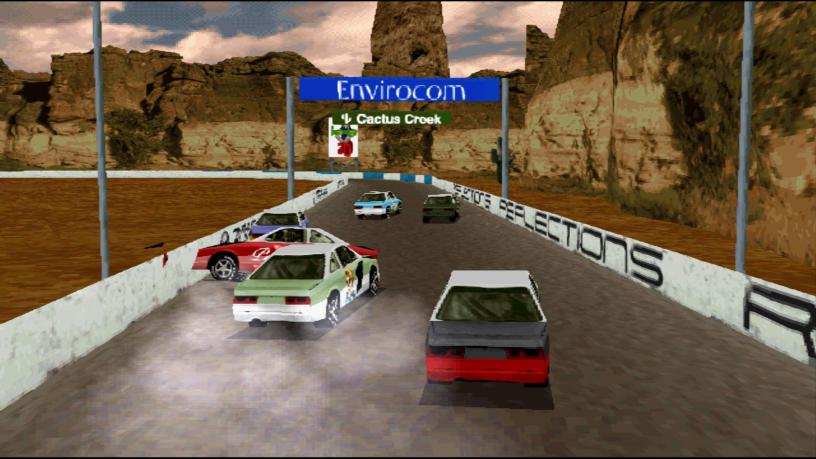
19. Destruction Derby – This game was a one-trick pony when it was released in the launch window of the PlayStation. It was cool to see cars explode and get smashed-up and it was sort-of perversely fun inflicting damage on other vehicles, but it was all empty calories. No one should be playing this game in 2018.

18. Tom Clancy’s Rainbow Six – This was one of the most heavily marketed games of its era. I probably saw more commercials for Rainbow Six than I did Final Fantasy VII. It’s okay, but the PSX port was pretty abysmal. Anyone playing Rainbow Six in 1998 probably shouldn’t have been playing it on PSX. Electronic Gaming Monthly even awarded it a dubious 3.8/10.

17. Jumping Flash! – We knew this one was included, and I even argued it had a place given it was a launch title and was just so very “of the era.” That doesn’t mean it’s particularly good and by today’s standards it’s quite ugly. Unlike the games listed before it though, it has a certain curiosity factor going for it that will make it worth a look when the PS Classic drops, but it might not be a game you actually stick with.

16. Cool Boarders 2 – If you like snowboarding and “extreme” sports games, then you’ll probably have this one ranked higher. It’s all right, but most people will probably wonder why it’s here and not Tony Hawk’s Pro Skater (it’s the licensing, folks).

twisted metal 1

I probably logged over 100 hours with this game, but I’ve never wanted to replay it after Twisted Metal 2 came out.

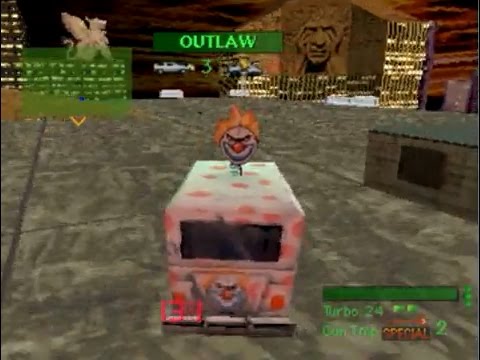
15. Twisted Metal – I loved this franchise on PlayStation, well the first two games at least. The first one though has not aged well at all, and even in the moment, I knew I was playing a junky game, but it had a certain fun factor. The sequel though is way better and actually still playable. I considered it the most obvious lock for the mini console even ahead of Metal Gear Solid so the fact that this game is included but the sequel is not blows my mind.

14. Oddworld:  Abe’s Odyssey – I said the PS Classic has three puzzle games, but you could make the case Oddworld is more of a puzzle game than a true platformer. This game was hyped a bunch as being a game that gave the player numerous ways to solve a problem, but it didn’t really play out that way. It was interesting, but hardly great. It’s graphical approach should hold up well enough though.

13. Wild Arms – One of the previously announced titles, I gave my speech on it already. It’s serviceable, and its simple JRPG mechanics mean it will always remain playable. It’s just a bit crazy to think that this machine has only three RPGs when the PSX was an RPG behemoth, and Wild Arms is one of the three.

12. Grand Theft Auto – GTA was a surprise hit for the PC when it was released, and it was somewhat surprising to see it get a PSX port. It was also the first title I was denied an ability to purchase at a GameStop. Like modern GTA titles, it was arguably at its best when it was just played like a sand box causing mayhem. Unlike modern GTA titles, the actual missions and story isn’t that rewarding and the game was really difficult. It was at least a little easier to handle on the PSX than with a keyboard. It should still be fun to screw around with, but might not have much legs with the PS Classic.

Intelligent-Qube

The inclusion of Intelligent Qube is a bit of a surprise. Is it a system-seller? Probably not, but it’s worth a look if you end up getting a PS Classic.

11. Intelligent Qube – This was a surprise inclusion, but a worthwhile one. It’s an interesting puzzle game that’s at least not another brick-falling puzzler. I don’t know how well it’s held up because it’s been many years, but it should be playable and may be a dark horse contender for many folks’ most played title on the Classic.

10. Resident Evil (Director’s Cut) – There’s no denying this title was huge for the PSX, and the Director’s Cut version was superior to the original. It is possibly the worst in the franchise on the PSX though and its controls are not something I look forward to returning to. It took many hours to get a handle on them in 1996 and I’m not sure I still have such skills. Maybe it’s like riding a bike?

9. Syphon Filter – This was basically Sony’s attempt at a first party MGS or Rainbow Six. It was fine for what it was, though I’d prefer a dual shock to play it. It’s going to look ugly, and even Gabe Logan’s running animation looked horrendous in ’99. It might surprise though, and the only reason why I didn’t include it in my prediction was because I didn’t think Sony would release it without dual shock support.

8. Ridge Racer Type 4 – A totally competent racer, but let’s face it, this isn’t the racing game you want. Gran Turismo was the first-party behemoth, but I’m guessing licensing issues made it impossible to include. WipeOut was an alternative racer, but one I’d consider more fun than Ridge Racer. I would have taken Crash Team Racing over this one, honestly, and I’m not sure if I’d even play this more than once on the PS Classic. The racing genre is one that basically improves a lot with better technology, so going back isn’t always fun unless it’s more of an off-beat title. I suspect this still plays well enough though, which is why I’m ranking it this high.

persona

I’m happy to see the original Persona included in this collection, but it’s also not a hard to find game so I wish something like Valkyrie Profile was included instead.

7. Revelations:  Persona – The first game in what is now known simply as the Persona series is the biggest surprise inclusion on the PS Classic. This was not a popular game when it was released, and Persona still has more of a cult franchise vibe than a mainstream one. The first game is not as good as more recent entries with the series really blossoming with Persona 3. It is still playable though, and it’s more strategy-oriented battle system differentiates it from Wild Arms and FFVII. This one is a nice surprise and unlike the original Final Fantasy on the NES Classic, fans who are only familiar with the newer entries might actually enjoy playing the first in the series as opposed to just checking it out for the sake of curiosity.

6. Mr. Driller – The nice thing about puzzle games is that they age well. Mr. Driller is another surprise inclusion. It was well-received in its day, but not really a system mover or anything. It’s fun and charming though and if you like puzzle games with a slight Tetris vibe then you’ll get some mileage out of this one.

5. RaymanRayman was all over the place in the mid-90s. He was so omnipresent that I kind of wrote him off for this system as I never associated him with PlayStation. His game is pretty good though, and its 2D approach should hold up just fine. I never loved Rayman, but I never hated his games either.

4. Metal Gear Solid – I’m not crazy about this list of games, if you haven’t noticed, but I do think it’s pretty top-heavy. The last four are mostly interchangeable, and I wouldn’t be surprised if Metal Gear Solid tops many lists such as this one. My reasoning for placing it 4th is because I think we’re missing out on some of the bells and whistles with this version by not having the dual shock support and a memory card full of Konami games. I also think the game hasn’t aged too well and recent entries in the series really helped to smooth out the gameplay experience. It’s still a fantastic game, it’s just not as fantastic as it could be on the PS Classic.

puzzle fiighter

This is a great choice for inclusion. I have nothing bad to say about Puzzle Fighter.

3. Super Puzzle Fighter II Turbo – This is probably my favorite puzzle game. It’s incredibly addicting and the rare puzzler that might be more fun in two-player mode than single-player. It’s got a lot of charm and personality and its sprites should hold up very well. I’m a bit surprised at its inclusion, especially given the omissions of traditional Capcom fighters, but also delighted.

2. Final Fantasy VII – We’ve all probably played it. And even though there’s been backlash towards this title over the years because it’s the most recognizable from the long-running series, that doesn’t mean it’s still not in the conversation for best Final Fantasy game. It’s readily available on other platforms so its inclusion isn’t sexy, but it’s also necessary. If you’ve got about 40 hours, you should give this one some time.

tekken 3 jin

The visuals may not wow you like they did in 98, but Tekken 3 is still a blast to play.

1. Tekken 3 – And the best game of the PS Classic is Tekken 3. A late era title, it actually holds up quite well in the visuals department and the game is simply one of the best 3D fighters ever made. It has a huge roster of characters, some fun additional modes and characters, and there should be something for everyone in terms of fighting styles. If you don’t like 3D fighters then maybe this won’t win you over, but I spent many hours with this one and I’d actually be excited to run through it again and try to unlock all of the additional characters and modes. Well, maybe not Tekken Force Mode.


So that’s it; the PlayStation Classic and its 20 games. Are you going to get one? Did you already pre-order one and are reconsidering that decision? I’m over-all not impressed with these 20 games, the majority of which I don’t need to revisit. Even some of the games that I think are fine I still don’t want to really play in 2018. Why play Twisted Metal when you can easily play Twisted Metal Black? Why play Rayman over the easily acquired (and cheap) Rayman Legends? I wasn’t that excited over this console to begin with, as the nostalgia factor just isn’t quite there for me with the PSX era. If the list had turned out to be something closer to what I predicted I might have been tempted. With this list, though? I’m looking at spending 100 bucks to play Persona, Intelligent Qube, and Mr. Driller as the other games I really enjoy I still own for PlayStation and can play them right now if I want. I have a first-gen PS3 hooked up to my TV right now so nothing is stopping me from popping in Tekken 3 if I wish to play it. I’m not everyone though, so for those who loved the PSX and maybe sold all of their old games I can at least see some appeal, but I still feel like this roster is one big missed opportunity.


Forecasting and Perfecting the PlayStation Classic

cute ps

Aww, it’s so adorable!

Sony announced the PlayStation Classic on September 19th and it is set to go on sale December 3rd. Following in Nintendo’s footsteps, the PlayStation Classic is a mini version of the original console with 20 pre-loaded games, a single controller, and HDMI output. It will have support for saves via a virtual memory card as well as numerous display modes to toggle through that will try and preserve the original look of the games or try to smooth them out and update them for today. At $100 MSRP, the PlayStation Classic finds itself priced in-between the SNES Classic and the soon to be released Neo Geo Mini. Making things more interesting, and also frustrating, is that Sony chose to only reveal 5 of the system’s 20 pre-loaded games:  Final Fantasy VII, Jumping Flash, Tekken 3, Ridge Racer Type 4, and Wild Arms. It’s an odd form of marketing, but Sony must feel confident it will have strong pre-sales to hold back that information for the time being. It also likely thinks it will help build excitement for the machine if they drip-feed consumers. Maybe it will be a weekly event to reveal another game or two. There are 10 weeks separating the system’s announcement and release so such a strategy is possible, or they could just come in bunches.

Choosing to withhold information on the included games is likely an annoyance for prospective consumers. I know I personally am not pre-ordering a gaming device in which I don’t even know what games I can play on it will be. It does however create the fun scenario in which people like me can speculate on what will be included and also what should be included. Those are two very different questions as if it were up to me I would load this thing up with RPGs, but I’m sure Sony will want a more balanced lineup. Adding further intrigue is the fact that Sony isn’t the first-party powerhouse that Nintendo is. With the SNES Classic, it was relatively easy to predict what games would be included because so many of them were Nintendo developed titles. Those games were not only among the best the system had, but also cost Nintendo next to nothing to include. With Sony’s machine, they’ll likely be cutting sizable checks to Capcom and Square-Enix with this thing.

Lets rundown the games I think Sony is going to include. Since we already know five of them, that means I need to only come up with 15 for this exercise. This is a prediction, so I’ll also include my opinion on if I think the game should be included, and where not, what I would include instead with the idea being I wouldn’t boot a fighting game to add a strategy one and will aim to stay within the genre. Let’s start with the included games:

cloud

This was expected.

Final Fantasy VII – This is likely the PlayStation’s biggest game, not the best-selling, but in terms of what it meant to the console. This legitimized Sony with the hardcore crowd since Sony was able to pry a successful Nintendo franchise away from The Big N. And even though it’s readily available on Sony’s Eshop and will soon be available on The Switch, Sony basically had to include it here.

Jumping Flash – This is a game that has not aged well. It’s going to be ugly, and may even make you nauseous due to the first-person perspective, but in terms of early launch window games few spring to mind as being of the era than Jumping Flash. It’s a relic, but one forever tied to Sony’s machine. As a legacy game, it feels appropriate to include.

Ridge Racer Type 4 – Squaresoft may have stole the headlines when it announced FFVII would be on a Sony console, but lets not forget how important Namco was for the PSX early on. Namco supported Sony’s machine rather extensively, and one of its signature series was Ridge Racer. Ridge Racer would eventually be over-shadows by the gear-head adored Gran Turismo series, but its arcade approach remained fun and Type 4 was probably the best of the bunch and is rightfully included.

Tekken 3 – Another Namco staple, the first Tekken was a launch window title and a worthy adversary for Sega’s Virtua Fighter series. It proved to be the best of the 3D brawlers on Sony’s machine far surpassing the likes of Battle Arena Toshinden. Tekken 3 was the final Tekken released for the original PlayStation and it represents the pinnacle for the franchise for the era. It was gorgeous for the time and felt like a game that pushed the system beyond what anyone thought it could do. It’s still my favorite entry in the series and it most certainly belongs here.

Wild Arms – The Sony produced RPG had the benefit of arriving before FFVII. While some blame that game for the lack of success enjoyed by Wild Arms, I knew more than one person who purchased this title simply because they couldn’t wait for FFVII. It’s a totally serviceable RPG and it has its share of fans, though it’s never been a favorite of mine. On one hand, it does represent the early era of PSX role-playing games, but I would not have included it.  Suggested replacementBlood Omen:  Legacy of Kain – a top-down action RPG, Blood Omen was the start of a successful Sony franchise for Kain and eventually Raziel. It had a lot of style, and as a fellow 1996 title and pseudo RPG it would be a suitable replacement. If something could be done about the horrendous load times in bringing it to the system then all the better. It’s possible the sequel, Soul Reaver, will be among the other 15 and if that is the case then I would not include this one.

And now for the predictions! I’m ordering them from most likely to least, and it should be noted, this is entirely subjective for the most part though I’m avoiding any game that was intended to be played with the Dual Shock controller (like Ape Escape), with one noted exception.

tm2 axl

Twisted Metal was arguably Sony’s premiere franchise in the 90s.

Twisted Metal 2:  World Tour – The most successful Sony first-party franchise during the PSX era was probably Twisted Metal, and that franchise’s best game was easily Twisted Metal 2:  World Tour. It took everything that made the first a surprise hit and improved upon it. Better presentation, better controls, a huge roster, and new gameplay additions made this one a blast to play. It’s probably pretty ugly by today’s standards, but still playable and likely still infectious.

Metal Gear Solid – FFVII was the signature third-party game, and franchise, for the PlayStation’s early days, but it feels like it was supplanted some-what by Metal Gear Solid. MGS revolutionized what could be done from a cinematic perspective and its attention to detail was something seldom seen in gaming. It was an instant masterpiece, and also the game that will most suffer by the lack of Dual Shock support. If It wasn’t so important to the legacy of the PlayStation I’d say hold off for an eventual Dual Shock version of the PlayStation Classic.

Final Fantasy Tactics – Another game that is readily available, but also one synonymous with the PlayStation. Final Fantasy Tactics took the guts of Tactics Ogre and gave it a new coat of paint. It’s also a bit more accessible, but just as serious about its story. FFT wasn’t what folks who had just played FFVII were expecting, so it got kind of lost in the shuffle, but has since been more appreciated and is routinely cited as one of the best RPGs ever released. It would feel weird to not include it.

crash bandicoot

I’ve never been a Crash guy, but I won’t deny him his rightful place.

Crash Bandicoot 2:  Cortex Strikes Back – Crash was conceived as the original PlayStation mascot meant to oppose Mario and Sonic. It didn’t really work out that way, since Sony didn’t even own the character, but for awhile he was utilized that way. Arguably his best contribution to that era were the commercials (“Hey, plumber boy!”), but the games were pretty good in their own right. Not really my cup of tea, it would be hard though to deny Crash a spot on the PlayStation Classic and most agree that his second outing was superior to the first. They would also probably argue the third was even better, but I’m guessing Sony is placing an emphasis on earlier games which is why they may opt for this one over Warped.

Resident Evil 2 – Really, the only thing that makes me thing think Resident Evil 2 might not be included is the fact that Capcom is working on a remake as we speak. For that reason, it may prefer to include the original or even the less celebrated third entry. Everyone likely agrees that RE2 was the superior title, so in the interest of keeping things simple, I say Capcom relents and lets Sony have it.

Castlevania:  Symphony of the Night – We’ve long since past the era when Symphony of the Night was an under-appreciated classic. Famously released to a hostile public because it dared to be 2D, most have come to realize how silly a notion it was to declare 2D gaming obsolete and have embraced SoTN as one of the very best games in the long-running franchise. And those that didn’t realize it at the time certainly did when Castlevania 64 was released.

Street Fighter Alpha 3 – Most associate the 16 bit era with the height of the fighting genre, but it was still alive and well come the 32/64 bit era as well. PlayStation was not known for its excellence with 2D fighters, leaving that to Saturn and eventually Dreamcast, but Street Fighter Alpha was an exception. And of the games released in that series for the system, Alpha 3 was the best.

wipeout xl

I had a lot of good times with Wipeout.

Wipeout XL – Perhaps an aggressive ranking, but Wipeout felt like an important franchise during the early days of the PlayStation. The Psygnosis developed futuristic racer could have been mistaken as an F-Zero clone, but the physics and course design made it so much more. XL was the pinnacle for the series, and assuming Sony can work out the licensing issues, I expect it will be included.

Tomb Raider – Lara Croft’s humble beginnings were as an ugly, pointy-breasted, mess of polygons that I’m not sure people even in the moment felt looked particularly good. She was tough to control, but wasn’t a tank like Jill Valentine, and her adventure was pretty damn difficult. She did move onto other consoles, but Tomb Raider always felt like a Sony franchise and it’s likely viewed as important to the console, even though I do not want to revisit it. Suggested ReplacementParasite Eve – not exactly a one for one, but the shooter/RPG hybrid was quite interesting for its era, and as a franchise that never made it off of the PSX, it would be nice to see it here. The sequel is better, but may be hard to get into without knowing what happened in the first.

The Legend of Dragoon – Seeing how successful Final Fantasy was on its machine, Sony decided to get into the RPG business with The Legend of Dragoon. Seemingly thinking RPG fans enjoyed length over anything else, TLoD was gigantic and is probably the longest RPG on the system. It also looked great, and its battle system was okay. Aside from that, it’s not very good, but since Sony produced this one it won’t cost them much to include it and they probably view it as a signature title for the system. Suggested ReplacementValkyrie Profile – Oh boy, does this system not lack for RPGs. You could easily fill the console with 20 RPGs and not run out of quality software. Xenogears is my favorite, and it has an outside shot of being included, but a game that’s also good and brutally expensive is Valkyrie Profile. It would be great to see Sony use the PlayStation Classic as a means of delivering hard to find games to the consumer, but I’d be shocked if they included this one. It would probably cause me to buy one though, since getting a PlayStation Classic is way cheaper than buying this one second-hand.

Gran Turismo 2 – Assuming Sony can sort out the licensing issues, this one feels like a no brainer. Gran Turismo is one of Sony’s premiere franchises, and even though it’s faded some, it’s still remembered quite fondly. And given that its sim approach makes it way different from Ridge Racer, there’s room for it on the Classic as well. Though for me personally, it’s also a game I wouldn’t play.  Suggested ReplacementCrash Team Racing – so it’s not exactly a sim, but I struggled to come up with a more appropriate replacement. CTR was stealthily the second best kart racer of the era, behind Diddy Kong Racing and ahead of Mario Kart 64. Yes, you read that correctly. MK64 is the most overrated game in that long running series and doesn’t hold up, but CTR is frantic, fast, and fun. The only problem is you’d pretty much need to get a second controller.

mega-man-x4

X found a home on Sony’s console, where Zero was allowed to flourish alongside him.

Mega Man X4 – Capcom is not shy about loaning out Mega Man for compilations, and since he’s featured on both the NES Classic and SNES Classic it stands to reason he’ll appear here. The X series was the most prominent on Sony’s console, and X4 was the best of the Mega Man games released for the system which also included the underrated Mega Man 8. And yet, it doesn’t feel like the most “PlayStation” of the Mega Man games…Suggested ReplacementMega Man LegendsMega Man X4 was just released as part of a compilation of X games. It’s easy to come by. What’s less easy is Mega Man’s first foray into RPGs on the PlayStation, Mega Man Legends. I won’t argue it’s better than Mega Man X4, because it’s not. It just feels like a more appropriate release. The only thing that would change my mind is if Nintendo is already developing a Nintendo 64 Classic and intends to include the port, Mega Man 64, on its machine. If that’s the case, then stick with X4.

Tony Hawk’s Pro Skater 2 – The Tony Hawk series was a huge hit on Sony’s machine, and the second game was the most well-received. It was basically the first and only skateboarding sim worth playing, and I knew many people obsessed with this game that weren’t even that into skating (but the ones who were into skating were even more obsessed). There are challenges in bringing it to the PlayStation Classic, but I would bet Sony finds a way to get it done. Suggested ReplacementBushido Blade – Confession time! I never liked the Tony Hawk games. Sorry! And since there is no skateboarding sim worth replacing it with, I’ll go with the sword-fighting sim from Squaresoft. Bushido Blade was a really neat take on fighting games as it aimed for more realism. Not total realism, just more. And it primarily did that via one-hit kills. If a guy gets slashed across the gut with a sword that shouldn’t merely take away some of his health bar, it’s going to incapacitate him. As a result, fights could be really brief, but most actually turned into endurance matches. They were tense, and in order to succeed you had to get your opponent to fall for a feint or just get careless leaving them open for an attack. It’s a toss-up which version is superior, this or the sequel, but most seem to lean towards the first since it had more weapon options.

Suikoden IISuikoden II has become such a popular game long after the PlayStation era came to a close that I think it’s actually likely that Sony includes it. It’s on their web store for Vita/PS3/PSP and it was presented as a pretty big deal when it first showed up. Sony probably has a solid relationship with Konami and won’t have too much trouble bringing this one to the PlayStation Classic, but it remains possible that Sony thinks this would be too many RPGs and leaves it out. That would be a very bad move.

parappa smooth

Expect PaRappa to appear on the PS Classic, but don’t expect him to look this smooth.

PaRappa The Rapper – Sony’s flagship rhythm game was pretty well-received. It also helped to popularize what came to be known as cell-shaded graphics. It was recently remastered and re-released, which is why I’ve placed it at the bottom of this list. It’s possible Sony doesn’t want to eat into that at all, plus it’s going to look pretty terrible in comparison, but it’s popular enough to merit inclusion. Had it not been for that re-release I’d have pushed this into the top 10 easily. Suggested ReplacementTobal 2 – I don’t really care for PaRappa, or rhythm games in general, so for my last slot how about something exciting? The SNES Classic certainly benefitted from including the previously unavailable Star Fox 2, and if Sony wants to drum-up some similar excitement announcing Tobal 2 for a North American release would be one way to do so. I believe it was prepped for one, but abruptly cancelled as the era was winding down and the first game did not sell particularly well. As a result, some of the localization may still exist, and if it doesn’t then that might not be much of a hurdle anyway as fighting games usually don’t require much, so how about it, Sony? Give us some sizzle!


Well, that’s it! What do you think? Is this something you would buy? Think I pretty much nailed it or did I miss something obvious? Surely, they’ll try and get a Spyro game onto this thing, but I’m not sure at what game’s expense (alright, probably Suikoden II, but maybe Sony will do the right thing and not include The Legend of Dragoon)? The PlayStation was perhaps my most favorite system as it came around when I was most interested in gaming. I was in my early teens so I was able to obsess over gaming without the distraction of what would follow in high school. Picking just 20 games just highlights how many games have to be excluded, so let’s go out with some honorable mentions. For the most part, these are games I would definitely include on my personal PlayStation Classic, but acknowledge Sony is unlikely to do so for one reason or another:

valkyrie profile

Oh please! Oh please! Oh please!

Xenogears, Final Fantasy IX, Chrono Cross, Tomba!, Klonoa: Door to Phantomile, Vagrant Story, Lunar: Silver Star Story Complete, Mega Man 8, Mega Man X5, Rogue Trip, Street Fighter EX Plus a, Brave Fencer Musashi, Colony Wars, Legacy of Kain: Soul Reaver, Front Mission 3, Spider-Man, Alundra, WWF Smackdown 2: Know Your Role, Super Puzzle Fighter II Turbo, IQ: Intelligent Qube


Final Fantasy XV – Platinum Demo Impressions

FFXV-Platinum-Demo-Xbox-One-Screenshot-2016-03-31-07-56-02

Final Fantasy XV – Platinum Demo

This is going to be a rare quick one from me. Square-Enix on Wednesday night released a ton of information about its upcoming game, Final Fantasy XV, including a release date, collector’s edition stuff, and so on. Along with that was a demo release dubbed the Platinum Demo. You may be aware, but last year a more traditional demo was released for FFXV as a pre-order bonus for PS4 versions of Final Fantasy Type-0, an upscaled PSP game previously unreleased outside of Japan. I did not play that demo as I really didn’t have much interest in a PS4 version of a PSP game, but I did download this new one.

The Platinum Demo is a non-traditional demo, unlike the first demo released. Instead of being dropped into a sequence from the upcoming game, the demo has you play through a  dream sequence starring a child version of the game’s main character, Noctis. This dream sequence is not going to be included with the full-version of the game, which gives it a unique experience, but it’s also fairly traditional in the sense that it gives the player an understanding of how the game will play.

Tetsuya Nomura was the original director of Final Fantasy Versus XIII, which has since become Final Fantasy XV. Nomura is best known as the mind behind Square’s Kingdom Hearts series. As such, it should come as no surprise that elements from that series have found their way into FFXV, and yet it still does come as a shock to find that FFXV essentially is a Kingdom Hearts game. What I mean by that is that the game is a true action RPG and the feeling of just about everything gameplay-wise is Kingdom Hearts. Be it the combat, the camera, the way Noctis even jumps, it all feels like Kingdom Hearts. This is not really a good thing, in the opinion of this writer. The strength of Kingdom Hearts has always been less on the gameplay and more on the fan-service combing Disney and Square products. I’ve always found the gameplay to be adequate, and it’s improved, but it’s also always been flawed. Sora felt stiff, floaty, and the camera is just a constant battle. The series has improved since the original, but the criticism still remains. The FFXV demo has all of that, just no Mickey Mouse.

screenshot_3.0.0

The Platinum Demo places the player in the role of a child version of Noctis and explores some fantastic settings.

The demo itself guides you through it in a pretty tame way. Death is apparently impossible and the enemies, aside from the boss at the end, are pretty inept. A familiar friend serves as the guide for Noctis, Carbuncle, who’s appeared as a summon in multiple Final Fantasy games. He’s been redesigned only slightly, appearing as a fox/kitten hybrid that would feel right at home in a Pokemon game. I cannot deny, he’s pretty cute, and he also looks pretty believable. Easily the demo’s strongest point is the presentation, as the game looks great. There are a few moments of self-indulgence that serve it well, though also a couple of hiccup moments where the frame-rate seems to chug. We’ll have to wait and see how the main game holds up. Supposedly completing the game will allow Carbuncle to be used in the main game so there’s incentive to not only finish the demo, but keep it installed on your PS4/Xbox One.

final-fantasy-xv-isnt-just-a-video-game-its-a-whole-new-universe-358-body-image-1459408025-size_1000

A familiar foe is waiting at the end.

The demo is fairly linear, though it does give the player some time to just mess around. It offers a few locations, one of which sees Noctis miniaturized in a home which is quite a bit of fun to explore. There’s also some “plates” on the floor that serve as triggers. Most of these speed up time to show-off the day/night cycle and some give Noctis a new weapon to try out. A select few transform Noctis into either a car, crocodile-like monster, or a deer-like monster. They’re kind of neat, and I have no idea (aside from the car) if these transformations are indicative of anything in the main game, but they’re a fun diversion here. The final boss encounter of the demo seems to be the only moment where the combat is opened up a bit and we get a better idea of how the game will eventually play out. Like Kingdom Hearts 3D, Noctis is able to warp around the battlefield and utilize attacks from advantageous positions. These attacks consume MP, which is constantly regenerating, and seem like they’ll be necessary components of future battles in the game. The game presents button prompts for counters and attacks, which I assume is part of the learning process. I didn’t feel like I got a good grasp of what was going on, and there’s definitely going to be a learning curve to combat even though it’s fairly simple at its base.

The Platinum Demo for Final Fantasy XV left me unconvinced. Immediately when it ends the demo asks if you would like to pre-order the full game and I did not have to think long about how to answer that. I’m still holding out hope that the full game will turn out well, but I’m struggling to understand the creative direction of this title. I know it started off as a spin-off, and the decision to make it the next proper title in the series was probably more of a financial decision than anything, but the game just feels unnecessary. It’s way too similar to Kingdom Hearts right now. Fans of that series who have thought to themselves “I really want Final Fantasy to play more like this” should be happy. Others will probably just wonder what happened to one of gaming’s most iconic franchises. Final Fantasy has a real identity crisis on its hands. I don’t know where the series needs to go, but I feel like this isn’t the best destination for it.


Final Fantasy X-2 HD Remaster

Final Fantasy X-2 HD Remaster (2014)

Final Fantasy X-2 HD Remaster (2014)

It was way back in July that I posted about the remastered Final Fantasy X which was released in March on both the Playstation 3 and Playstation Vita. It is now the end of January and I’m just getting around to talking about the companion game with that release:  Final Fantasy X-2. It’s not because I’m lazy, though I have neglected this blog some during that timeframe, but because I actually just recently finished Final Fantasy X-2 even though it was the only game I played on my Vita in that span of time. I didn’t split time between my Vita and 3DS, I actually haven’t touched that system in nearly a year, it’s that I just had enough content to keep myself busy. Now, my handheld gaming is basically confined to my work commute, which became a 3 day commute over the summer thanks to the wonders of telecommuting. Those three days total about 4 hours of gaming per week so maybe it’s not that crazy a game could last me nearly six months but it is pretty cool that between March 2014 and January 2015 I only played one release on my Vita and was perfectly satisfied. That’s getting the most out of forty dollars.

Final Fantasy X-2 has the distinction of being the first true sequel for the Final Fantasy franchise. That seems crazy considering this is an ongoing series stretching back to the late 1980’s, but every longtime fan knows that all of the Final Fantasy games were self-contained games with only thematic and gameplay similarities making them all one franchise. The characters, settings, plots were all different. While some were certainly similar in setting, especially the first five games, they all differentiated themselves quite distinctly. There have been some mega-popular games in the series and ones that fans probably wanted a sequel to more than Final Fantasy X, but be it for creative reasons or economic ones, it was Final Fantasy X that received the first sequel. Final Fantasy X ended on a pretty final note. There certainly were questions about what the characters would do following the events of that game, but not really more than any other title. It wasn’t exactly an “everyone lived happily ever after” ending, but it was far from being a cliffhanger. The direction of the sequel wasn’t obvious, but Square-Enix rightly chose which character to center the sequel around.

The main cast (left to right): Rikku, Yuna, Paine.

The main cast (left to right): Rikku, Yuna, Paine.

Yuna was the pseudo-protagonist of Final Fantasy X. While the main character, Tidus, often reminded the player that this was his story, it would be more appropriate to say it was their story when referencing both Tidus and Yuna. For much of the game, Yuna was Sherlock Holmes to Tidus’ Watson and we were experiencing her journey as a summoner through the eyes of a different character. In Final Fantasy X, Yuna was reserved, somewhat shy, and lacking in confidence. She grew throughout her journey, but the events at the end would lead one to wonder just how she would adjust to her new life. Final Fantasy X-2 picks up two years after the first game’s conclusion and we find a Yuna bursting with energy and a sense of adventure. Together with Final Fantasy X hold-over (and her cousin) Rikku, plus new-comer Paine, she travels Spira in search of lost spheres which are essentially records of Spira’s past. There’s a market for such spheres as Spira comes to grips with the loss of its center, the Yevon religion, which was exposed as fraudulent during the events of Final Fantasy X.

When Final Fantasy X-2 was originally unveiled, the thing most gamers and press seemed to key in on were the three main characters:  Yuna, Rikku, and Paine. It might not be obvious based on their names, but all three characters are female. And all three were the only playable characters (sort of, more on that later) in the game. This was pretty significant for the time as Final Fantasy had never really had a female lead, let alone an all female party. It was a pretty bold move, especially in the West where the video game fanbase is almost exclusively male. Not surprisingly, there was some backlash and amongst my friends I came upon those who had no interest in playing a “girl” or “gay” game (we were in high school and certainly still growing up). It didn’t help things that the game essentially opens up with the characters attending a J-Pop concert where Yuna is the apparent performer. The game makes the declaration that it isn’t going to shy away from the fact that the main characters are women. They could have portrayed them in a masculine or more subtle way but chose not to. The only thing I would criticize the game designers for is the overly sexualized nature of the characters. Some of the battle attire the girls where is just not at all practical and pretty ridiculous.

If you're going into battle against knives, guns, and who knows what else, this doesn't seem like the best choice of attire.

If you’re going into battle against knives, guns, and who knows what else, this doesn’t seem like the best choice of attire.

Because of some of the design choices, the game alienated people from the start and it has often felt like an overlooked title in the Final Fantasy series. I played the Playstation 2 version and enjoyed some aspects of it while I didn’t others. At the time, I think I was suffering from some RPG fatigue because I remember the game being a slog for me. I finished it, but it was sort of a joyless experience. I wasn’t thrilled to play the HD version as a result, but fortunately for me I enjoyed the game a lot more the second time around.

The foundation of the game is fundamentally solid. It’s essentially Final Fantasy V complete with the return of the Active-Time Battle System and the job class system, with some tweaks. The job system is now known as the dress sphere system, but it works the same. Characters are free to choose between any dress sphere which includes staples such as the warrior, white mage, black mage, thief, and so on along with a few unique to the game. The major twist for X-2 is that characters can switch between dress spheres during battle, providing they equipped them to their character’s Garment Grid. The Garment Grid is like a mini Sphere Grid from Final Fantasy X that features open nodes that can be equipped with any dress sphere. The character can move from one node to another during one turn in battle, but must move to adjacent nodes. The grids also bestow other special abilities like certain spells or stat buffs. It’s pretty customizable and a lot of fun to mix and match dress spheres among the three characters. Each girl is obviously better suited for certain spheres, Rikku is the speed character while Paine is the strongest attacker, but all three girls can make any dress sphere work. The lone weakness of the system is that some dress spheres are far superior to others, which lessens the enjoyment of mixing things up, but I found it pretty addicting to keep mastering different dress spheres by unlocking all of their abilities.

The rest of the game functions a little different from traditional Final Fantasy titles as well by going with a mission based approach. The game is separated into five chapters with each one containing a few story-line based missions that must be completed. The rest are ancillary but strongly encouraged. Just plowing through the game, I suspect someone could beat it in around twenty hours but it wouldn’t be as much fun. There are plenty of dull missions but most add something either in the form of humor or challenge. Particularly at the end of the game, there are several challenging missions that will definitely consume a lot of time. Completing tasks contribute to the completion percentage of the game, with the obvious goal being to achieve 100% and getting the “best” ending. It’s possible to do so on the first play-through, but there’s a lot of junk you would never hit on without a guide. Silly things like talking to certain characters in a specific order can ruin your shot at 100%. It can be frustrating to be forty hours into the game and find out you have no shot at 100% on one play through, but that’s what Square-Enix was going for as they wanted gamers to play the game a second time as your completion percentage will carry over.

The J-Pop stuff is pretty silly, but it is by no means a game-breaker if it's not your cup of tea.

The J-Pop stuff is pretty silly, but it is by no means a game-breaker if it’s not your cup of tea.

Thematically, Final Fantasy X-2 is a much lighter experience compared with its predecessor. Final Fantasy X wasn’t exactly a melodrama, but it had some weightier tones. X-2 somewhat embodies that J-Pop intro in that it’s mostly a game featuring three women having the time of their lives. There is some tragedy to the story, especially in the wake of the events of Final Fantasy X, but it’s mostly a fun experience. The music, even with a couple of J-Pop tracks I could do without, is quite good and on par with the rest of the franchise. Changes made going from the PS2 original and the HD version are minimal from a visual standpoint, but the game received additional content not previously available to western audiences. There are two new dress spheres, one of which is actually very useful, and a new monster capturing mechanic that actually expands the playable battle party. It wasn’t something I took advantage of, but it’s cool for those who want it.

The major addition to the game is the inclusion of The Last Mission scenario. The Last Mission takes place after the events of the main game and sees Yuna, Rikku, and Paine reunite for one final mission. It’s almost a completely different game as it’s basically a rogue-like, dungeon-crawler instead of a typical JRPG like the main game. I personally found it to be a real drag, and getting through it for the additional storyline content was not an enjoyable experience for me. The storyline was also pretty trivial and the lesson in it felt forced like it was coming from a completely different voice than from those behind X-2’s plot. I would suggest that if you do not enjoy the gameplay, as I did, then save yourself the time and just watch the cut scenes from it on youtube. They’re everywhere.

The Last Mission is a very different experience and one I didn't care for, but maybe I'm in the minority.

The Last Mission is a very different experience and one I didn’t care for, but maybe I’m in the minority.

The last piece of new content is the Bonus Audio which is being referred to as an audio drama on the internet. It’s basically a story that takes place after X-2 and centers on a new character (if you do not want spoilers, then skip ahead to the next paragraph). The new character is actually the daughter of Auron, and she wants to meet up with those who knew her father. To make a long-story short, the end result is that Yuna is once more a summoner for a Yevon-like organization, Sin returns, and she and Tidus break-up over some really silly stuff. I know some people did not like that Tidus died, or ceased to exist, at the conclusion of Final Fantasy X and the perfect ending of X-2 basically remedies this. I was fine and happy with how FFX concluded, not because I hated Tidus, but because I respected the story it told. I actually wish they never brought him back since I prefer death be treated as permanent in pretty much any story I experience. To bring him back though and then have Yuna break-up with him over some silly insecurities such as the ones presented in the audio drama just seemed like bad story-telling. I do not know if this audio was meant to be a spring-board for a Final Fantasy X-3, I doubt Square-Enix has any interest in going back to Spira, but if it was I hope they soundly rejected it. Listen to it only if you’re absolutely curious because the story sucks, to put it bluntly.

Final Fantasy X-2 is a perfectly acceptable Final Fantasy title, and a damn good game. I do not think it is better than Final Fantasy X and it’s not in my top five Final Fantasy titles, but it’s probably right in the middle somewhere. If you’re like me and either felt you short-changed it back when it was originally released or ignored it all together, I would suggest giving it another go. If you didn’t like Final Fantasy X then don’t bother, but if you loved Final Fantasy III and V because of the job system then maybe you should take a look regardless of your thoughts on Final Fantasy X. It’s a fun game and it stands out among other Final Fantasy titles, and given how many there are, that’s an accomplishment worth celebrating.


Final Fantasy VII – To Remake, or Not to Remake?

images-190In the gaming community, a popular topic of conversation seems to always stem around remakes.  They’re fairly popular and have become more so due in large part to the rising price of game development and the profitable business known as nostalgia.  Games cost a ton of money these days to develop, and with little change in the pricing structure of games once they hit retail, profit margins aren’t what they used to be.  I haven’t seen any hard studies on the matter, but I would assume that publishers make less per game sold today than they did twenty years ago.  Just look at the credits for a game developed in 1994 and compare that to a modern game.  I recently completed Assassin’s Creed 4 on the PS4 and the end credits ran as long, if not longer, than most films.  All of those people have to be paid, so either they’re getting paid peanuts (and many probably are) or the take-home is much smaller than it used to be.  Remakes allow developers and publishers to take existing software, sink little resources into the remaking of it, and release it at a comparable price to a new game.  Square-Enix is one such company that has made a habit out of this strategy with its Final Fantasy franchise, but one game has yet to be remade in any sort of way despite being arguably the most popular game every put out by Square:  Final Fantasy VII.

Whenever remakes are discussed, the potential for a Final Fantasy VII remake coming up is inevitable.  Part of that is due to the game’s immense popularity, and part of it is due to the fact that Square-Enix used the game’s likeness to create a Playstation 3 tech demo years ago.  Such a strategy was a huge tease to fans of the game seeking a remake.  Square-Enix will even bring it up seemingly on an annual basis and offer reasons for why it hasn’t happened while leaving the door open to the possibility just a crack, giving fans legitimate or false hope, depending only on one’s perspective.  The supporters for the game are vast in numbers, though there is a contingent that has risen up over the years downplaying the impact of Final Fantasy VII.  That’s mostly due to the fact that Final Fantasy VII was the jumping-on point for many fans.  Much like when a band gets popular with a specific record, the old fans tend to want to keep a part of that band for themselves and look down upon fans of the newer material.  Final Fantasy VII is a great game, and many of its detractors exist just to downplay it in comparison with a prior game, or just never liked Japanese RPGs to begin with.

Many fans feel like Square could do a better job with FFVII if given another shot, mostly because Cloud looks like this in the original game.

Many fans feel like Square could do a better job with FFVII if given another shot, mostly because Cloud looks like this in the original game.

Many Final Fantasy games have received either a port or a remake over the years, with the most recent being the HD release of the PS2 games Final Fantasy X and and X-2, set for release next month on the PS3 and Vita.  Final Fantasy X is a popular and well-received entry in the series, but for some its remake is a source of frustration considering it’s a more recent release when compared to Final Fantasy VII, so why is it getting an HD release first?  Well, as most can probably deduce, it comes down to money.  Being a PS2 game, Final Fantasy X can be upscaled to HD and touched up here and there with minimal effort, and more importantly, minimal cost.  The game will still look old, but still mostly pleasing to the eye.  Playstation 2 games as a whole have aged pretty well.  Early generation Playstation One games on the other hand, have not.  An HD version of FFVII would likely not improve the look of the title any, and may even harm it.  Even when it was released, FFVII was not considered a tour de force when it came to graphics.  Certain aspects of the game were praised, such as the FMV summons and cut scenes, but the general look of the game was mostly just passable with its blocky characters and pre-rendered backgrounds.  For a re-make, FFVII would require a new game engine and would need to be recreated from the ground up.  Square-Enix could use an existing engine and could probably farm a lot of the textures and models needed from other games, but the cost would be considerable making it more like a brand new game in terms of production, as opposed to a remake.

As a result, none of the Playstation-era Final Fantasy games have received a make-over since release.  Final Fantasy VIII isn’t looked on fondly, so that fact makes it unlikely for re-release, but Final Fantasy IX was mostly well-received by fans and critics and that too has not been re-done.  As a later era title, an HD remake would suit the game far more than one would for Final Fantasy VII.  If anything, it’s surprising none of these titles were ported to the PSP, but availability on the Playstation Network has made it so that they can be purchased and downloaded to Sony’s portables, as well as the PS3, and enjoyed as they were originally released.

If Square-Enix is growing tired of this topic, it only has itself to blame after inviting this kind of attention with a PS3 tech demo of FFVII.

If Square-Enix is growing tired of this topic, it only has itself to blame after inviting this kind of attention with a PS3 tech demo of FFVII.

The lack of a physical re-release for Final Fantasy VII likely irritates fans almost as much as the lack of a re-make, and that’s mostly due to the fact that so many other titles have been released in its place.  The NES era games have all been re-released, and in some cases, remade all together.  The SNES games have also all been re-released or remade on other platforms, most notably Final Fantasy IV which has been re-released multiple times and also completely redone for the PSP.  A sequel was also commissioned and released in installments before being released as a physical game.  If supporters for a FFVII re-make are looking for companions in misery, they at least can turn to the group looking for a Final Fantasy VI re-make.  Final Fantasy VI and VII are often considered the best in the series.  I blogged years back on the subject and selected VII as my favorite, but in truth my opinion changes with the wind.  FFVI has had the benefit of re-release on the Gameboy Advance and Playstation, but outside of those two it really hasn’t been touched much.  Working against both games is their reputation as all-time greats, which probably does intimidate, to some degree, Square-Enix as they know any attempt at a reimagining for both games will be held to considerably high standards.  Square-Enix likely could have remade VI instead of IV with the Final Fantasy III engine crafted for the DS, but maybe felt like fans would be less willing to accept a half-way attempt at a remake of such a beloved game.

Whichever game you would prefer to see remade, it’s undeniable that supporters for a Final Fantasy VII remake have been teased far more than those holding out hope for a VI remake.  Square-Enix, and the gaming press, have kept the topic alive over the years and I sense that fans are starting to tire of it.  Most seem to have the attitude of “just announce a final decision already or don’t talk about it at all.”  I suppose I share that sentiment, as I don’t care to read about Square-Enix or one of its producers musing on the subject and offering no substance.  Part of the reason why the subject seems to be coming up more and more is due to the fact that a lot of gamers aren’t satisfied with the current Final Fantasy XIII themed games.  Ultimately, the question is simply should Square-Enix take the time (and money) to re-make Final Fantasy VII?

There may never be a remake, by the film sequel Advent Children did offer fans a glimpse of what their favorite characters might look like in a modern game.

There may never be a remake, by the film sequel Advent Children did offer fans a glimpse of what their favorite characters might look like in a modern game.

In short, the answer is “Yes.”  Square-Enix could approach a remake in two ways: build it form the ground up, or just attempt a better looking game from the original.  The ground-up approach wouldn’t necessarily mean a brand new engine.  Square-Enix could opt to use the same engine currently in use for Final Fantasy XV which is being developed for the Playstation 4 and Xbox One.  They’re also developing numerous other “next-gen” games they could utilize.  Going in the other, less-ambitious, direction, Square-Enix could opt for a remake more on par with the Final Fantasy IV ones, which aimed to improve the look of the original but not up to current home console standards.  That engine was crafted for the old portables and obviously would not be suitable for a FFVII remake now, but Square-Enix could use the FFXIII engine, or if aiming to be even less ambitious, a PS2 era engine.  Upgrading FFVII to resemble a game like FFXII would be a huge improvement over the original and something fans may even accept if released for a modest price.

Considering how big the game is and how beloved by its fan-base it’s become, Square-Enix probably feels like a Final Fantasy VII remake can’t be done on a conservative scale.  This is likely the biggest obstacle standing in its way.  That means if Square-Enix decided to green-light the project today, it would have to do so as a PS4/Xbox One game for retail release at the standard price of $60.  In addition to re-crafting the look of the game, Square-Enix would also be faced with the decision of whether or not to dub the game.  When FFVII was originally released, the characters didn’t speak and would not do so until FFX.  A sequel movie for FFVII was made a few years back, so Square-Enix has already given a voice to the main characters, but it’s still a large undertaking to dub an old game for multiple audiences.  Such an undertaking means Square-Enix is basically faced with the choice of remaking FFVII or making a new game such as a potential FFXVI.  Square-Enix’s strategy with the previous generation of consoles was to make a new game, FFXIII, and then reuse the resources to create multiple sequels.  Square-Enix never used to make direct sequels to its Final Fantasy games but I suspect it started to because of the rising cost of game development.  A sequel to FFXIII was a lot cheaper to make than a brand new game, primarily because development time was shortened with gameplay mechanics that could just be carried over as well as textures and character models.  I would propose this time around, Square-Enix opt to not make a direct sequel to FFXV and instead remake VII.  XV already started off as Final Fantasy Versus XIII, a would-be spin-off/sequel for the original FFXIII that never made it out of development Hell.  It’s likely not going to happen, but if FFVII is ever to be remade then this seems like the now or never point.

Even if a remake never happens, at least we'll always have the original to fall back on.

Even if a remake never happens, at least we’ll always have the original to fall back on.

At the end of the day, I find myself asking do we even need a remake for Final Fantasy VII?  It’s only being discussed as much and as often as it is because it was such a well-received game in the first place.  If it’s already a classic, does it need a new version?  After all, nobody is asking for remakes to Casablanca or The Wizard of Oz even though technology has advanced monumentally since those films came out.  I would argue it is different with video games as opposed to film.  Classic films are restored and re-released on new formats all the time, Final Fantasy VII hasn’t even received that much attention.  The game is somewhat crude looking by today’s standards, more so than even the game that preceded it.  The sprites of Final Fantasy VI have aged much better than the polygons of Final Fantasy VII, and a fresh take on the game could make the world even more expansive than before (just go ahead and look at the world map of FFVII, there isn’t much going on that makes it feel “alive”).  Fans want a remake because they honestly believe the game can be improved, which isn’t something you hear when discussing remakes for famous films.  It feels like it’s worth doing because it is, and there’s little question a remake will sell extremely well for Square-Enix, and that’s the biggest reason why fans are still holding out hope.


Dreaming of Kingdom Hearts 3

images-125

UPDATE 3/8/2014: Square-Enix has posted a survey for Kingdom Hearts, and if there is something you want to see in Kingdom Hearts 3 (Gargoyles!), this is the best way to make your voice heard!

Watching Gargoyles these past few weeks has got me thinking about the upcoming PS4/Xbox One game Kingdom Hearts 3.  So far, little information, aside from confirmation the title has been in development, has been released regarding the next entry in the Kingdom Hearts series.  For those unaware, the Kingdom Hearts games were initially conceived as a marriage between Disney and Square’s Final Fantasy.  Several games have been released in the series and, for the most part, they all follow a pattern of having the main character visit various different worlds based on classic and current Disney films.  Gargoyles has got me thinking about how cool it would be to see that world brought to the series as it would seemingly lend itself well to the video game form.  There was a game based on the series created for the Sega Genesis.  It was a late arrival on the Genesis and while it boasted some rather slick animation it was bogged down by poor gameplay mechanics and a repetitive design.  It is my understanding that the only rules for selecting worlds for Kingdom Hearts are that they be from Disney films, but not Disney owned films.  This would eliminate the various Marvel films produced by Disney as well as any future Star Wars ones.  It also appears to apply to Pixar films as well as so far no worlds from a Pixar film have shown up.  It also excludes any worlds from Disney television, but in the case of Gargoyles, this rule could be circumvented by the existence of Gargoyles The Movie:  The Heroes Awaken.  It’s kind of cheating as the direct-to-video movie is just the first five episodes edited into a 90 minute film but lets not get too technical.

Using my own memory, and with help from Wikipedia, I’ve come up with the below list of Disney films to appear as worlds in the Kingdom Hearts series:

  • Sleeping Beauty
  • The Little Mermaid
  • Aladdin
  • The Nightmare Before Christmas
  • Winnie the Pooh
  • Peter Pan
  • Hercules
  • Tarzan
  • Pinocchio
  • The Lion King
  • Steamboat Willie
  • Pirates of the Caribbean
  • Alice in Wonderland
  • Cinderella
  • Snow White
  • Beauty and the Beast
  • Mulan
  • Tron
  • Lilo & Stitch
  • The Hunchback of Notre Dame
  • The Three Musketeers
  • Fantasia

This list may not be exhaustive, and does contain some unusual selections.  “Steamboat Willie” stands out as it’s not a feature-length film, but as Mickey’s most recognizable short, it’s not surprising to see it included.  It also, like pretty much all of Disney’s classic shorts, was originally released to theaters.  The Three Musketeers also stands out as it was a direct-to-video release so it appears their self-inflicted rule does not mean the film needed to be theatrically released.  Square has done a good job of hitting most of Disney’s biggest properties.  There is also a good balance of old and new, but there’s still plenty of room for more.  Below are some thoughts of mine regarding where the franchise could go for its next outing:

Bambi – Bambi the character has already appeared as a summon in the KH series but he’s never had his own world.  As one of the few classic pictures to not have a world, it makes sense for Bambi to step into a larger role.  His world is not particularly unique considering it’s just a forest, but a world created around the forest fire scene from the film’s climax could have some interesting gameplay mechanics.  For one, it would make the world visually interesting and the fire could be the result of one of the film’s antagonists.  Bambi could be an assist character and, together with Sora, they would be tasked with extinguishing the blaze.  The world could either be full of peril due to the fire, or there could be a time limit in place.  Considering Bambi is one of Walt’s greatest achievements, it just makes too much sense to include it eventually.

And to think, some at Disney felt The Horned King would be too scary for kids...

And to think, some at Disney felt The Horned King would be too scary for kids…

The Black Cauldron –   The Black Cauldron is, unofficially of course, Disney’s black sheep.  It differs quite a bit in tone from the works that preceded it in that there’s a distinct absence of humor throughout.  A lot of critics disliked the film, and while it appears to have spawned a cult following, it’s still one of the lesser films put out by Disney.  It’s inclusion here is not a defense of the film, I haven’t it seen it in so long that I really can’t offer much of an opinion on it, but it’s world would actually appear to fit in quite well with the KH universe.  The Horned King would make a natural complement for Maleficent and the Fairfolk could be incorporated as well.  The film almost makes too much sense for inclusion, leading me to believe the only reason it has not been is because the film is so obscure.  It’s also possible that Disney doesn’t own any of the characters outright and legal issues may not make it worthwhile to include.

Toy Tinkers – I am an unabashed Donald Duck fan so I wanted to include one of his shorts on this list.  I initially thought “Trick or Treat” would work well because of the Witch Hazel and her special potion that brings inanimate objects to life, but such a world would have a lot in common with Fantasia and Halloweentown.  I settled on “Toy Tinkers” because it would allow the inclusion of a Christmas themed world and a unique gameplay opportunity.  I conceive it as a world in which Sora has been shrunk somehow and is caught in between the fire-fight between Donald and Chip and Dale.  There would be debris raining down and perhaps Sora would help Chip and Dale thwart Donald somehow.  It would be a bit of comedic relief and a fun bit of level design.

This would seem to be a natural conflict for a video game.

This would seem to be a natural conflict for a video game.

The Brave Little Tailor – My thought process for this level is similar to the above for “Toy Tinkers,” so I consider this an either/or arrangement.  In the short, “The Brave Little Tailor,” Mickey is tasked with defeating a giant.  For KH, the scenario seems obvious and Sora would either replace Mickey or assist him in taking down a giant.  It would feel similar to my “Toy Tinkers” scenario because Sora would be taking on a foe much larger than he, so the two would perhaps feel too alike if they both appeared in the same game.  Nonetheless, it would be fun to challenge the giant and a tailor themed Mickey could be an interesting assist character.  This could also easily be swapped out in favor of a Mickey and the Beanstalk themed level.

Duck TalesDuck Tales would appear to not be eligible due to the fact that it was a television property, but it sneaks in because it did have a feature-length release, Treasure of the Lost Lamp.  If the level had to be based on that film, then no matter, it could be a pseudo Indiana Jones type of deal with cave exploring with Uncle Scrooge, the nephews, and maybe even Launch Pad.  Classic Duck Tales villains could still be included as well.  Ultimately, I just want to see Scrooge’s giant vault of gold coins included complete with diving board.

Toy Story – Yes, I know and covered it already, it would appear that Pixar films are a no-go when it comes to KH.  However, Pixar’s films have become as much a part of the Disney brand as Mickey and Snow White and their presence is felt throughout Walt Disney World and Disney Land.  And if there is to be one exception made for Pixar, why it has to be Toy Story, no?  It makes too much sense for inclusion as Sora could be transformed into a toy of some kind and have to team-up with Woody and the gang to foil Sid.  The level basically designs itself and there are so many action sequences from the three films that the designers could look to for inspiration.  Come on Square/Disney, it’s time to invite Pixar to the party.  Do it!

I'd be delighted to see any of the films/shorts from this list incorporated into KH3, but mostly I just want to kick some ass with Goliath by my side.

I’d be delighted to see any of the films/shorts from this list incorporated into KH3, but mostly I just want to kick some ass with Goliath by my side.

Gargoyles – We’ll end this with what started it in the first place, Gargoyles!  Gargoyles, as primarily an action-adventure cartoon, makes a lot of sense for a video game.  Goliath would be a pretty bad-ass support character and Demona seems like a perfect villain for KH (though MacBeth and Xanatos would work as well).  There would be some fun music to source, and most of the voice cast has maintained a relationship with Disney to this day including Keith David (voice of Goliath) who recently voiced the villain for Disney’s The Princess and the Frog.  Gargoyles would also allow Square to set a level in New York, specifically the skies above New York.  The castle would make for both a great visual and fun setting for an all out battle with Demona or the Steel Clan.  Someone send the developers of Kingdom Hearts 3 a copy of the first season (or the movie, but they would need a VCR on hand to watch it) and then try to stop them from making use of it!

There’s actually plenty of other films Square could source for Kingdom Hearts 3 that I didn’t even bring up.  The Sword in the Stone or Robin Hood seem like natural fits, or perhaps because they’re too conventional they’ve been ignored.  101 Dalmatians also seems like an easy film to incorporate and Cruella De Vil would be a natural as a villain for the series.  And considering it drew inspiration from video games, I feel like I have to mention Wreck-It Ralph.  I actually fully expect a Wreck-It Ralph scenario of some kind to appear in KH3, either as the game world Fix-It Felix Jr. or maybe a Sugar Rush style mini game.  I consider all of my selections as long shots and I’d be surprised to see most of them.  It actually wouldn’t shock me if Disney lifted the embargo on Pixar films and allowed a Toy Story level, just because the property is so popular, and the giant sequence I described (most likely to occur in the form of Mickey and the Beanstalk) also strikes me as a legit possibility for a KH world.  The others are merely dreams or wishes, and as much as it would delight me to see Goliath and crew in Kingdom Hearts 3, I also acknowledge it’s mostly a pipe dream.  Perhaps if I wish upon a star…

Greatest Games: Xenogears

Xenogears (1998)

Xenogears (1998)

For me, all of my entries in my “Greatest Games” subcategory have been building towards this one.  My intention with the series was to present some of the games I felt were among the best I had ever played while shying away from the obvious choices.  After all, plenty has been said about A Link to the Past or Super Metroid.  While I made entries about Chrono Cross and Twisted Metal Black I was constantly looking ahead to that one game I preferred above all others.

Xenogears arrived during the RPG boom of the late 1990’s.  Developed by Squaresoft under direction from Tetsuya Takahashi, the game was originally supposed to be Final Fantasy VII but it became too dark and too sci-fi in nature to continue as such.  Takahashi was allowed to continue with the project as opposed to seeing it outright canceled but at a much reduced budget (more on that later).  Many Final Fantasy collaborators contributed to the project including executive producer Hironobu Sakaguchi.  When the game was complete, most of the staff would go on to develop Chrono Cross before eventually departing Square with Takahashi to form Monolith Software.

The game begins with our hero Fei in a rather innocent setting.

The game begins with our hero Fei in a rather innocent setting.

Takahashi was nothing if ambitious when creating Xenogears.  It was conceived as being just a part of a much larger narrative and is in fact titled as Episode V in the game’s credits.  The narrative focus of the game is epic in scope with a lot of talking points and several cut scenes, some of which are done with CG and others in full animation.  It’s a long game, one that will take most players around fifty hours to complete on the first play-through.  It’s story focuses on the young Fei Fong Wong, a typical RPG lead in that he has no family and knows very little about his past.  The plot will see Fei discover his true purpose, which is of course a significant one, as he journeys across the globe with a cast of characters out to save the world.  The story is nothing new in setup, but how Xenogears approaches it helps to differentiate it from the flock.  There are many religious undertones to the game’s narrative, some of which nearly scared Square out of an international release.  The game takes itself very seriously and though there are moments where comedy is utilized they’re not frequent.  The game has been criticized for being too pretentious, but it is a fairly enjoyable experience even if it can be hard to understand.
Part of the reason many consider Xenogears to be so pretentious is due to the fact that it tries to be too many things.  There are elements and themes taken from classic philosophy as well as modern sci-fi conventions found in the likes of Blade Runner.  The plot of the game seems to bounce around in focus with lots of twists and turns.  It’s fairly common for games in this genre to start off with one goal and finish with something completely unrelated, but Xenogears takes it to a new level.  The game does a good job of remaining interesting the whole way through but perhaps it would have benefited from a tighter structure.

Giant robots called gears play an important role in Xenogears.

Giant robots called gears play an important role in Xenogears.

The gameplay for Xenogears incorporates a lot of genre staples but also introduces some new concepts.  Players travel from town to town either on foot or via transportation and can talk and engage with non-player characters along the way which is often necessary to advance the plot.  Battles are initiated via random encounters on the overworld map or in dungeons.  Once a battle is commenced, the player takes control of a party of up to three individuals chosen beforehand or dictated by the game.  From there it’s a variation of the Final Fantasy Active Time Battle system where a speed score dictates the order and frequency of each character’s attacks.  When it’s the player’s turn, the options are also fairly straight-forward and include attack, defend, run, item, or magic.  The magic command is usually called ether or spirit but functions in the same way as a typical magic attack in most RPGs would.  When the player selects a standard attack is where things change.

In Xenogears, each character has a certain amount of attack points that can be used per turn.  At the beginning of the game there are six per character, but it increases over time.  Each face button on the Playstation controller corresponds with an attack command and has a point value:  triangle is one, square is two, X is three, and circle cancels or ends the attack.  A player can combine the buttons in any way up to the maximum available or use as few as one.  Certain attack combinations will trigger deathblow animations where the character will execute a more powerful move.  Performing the necessary sequence over and over is the only way to learn them but the game keeps track for you in the menu so you don’t have to guess.  The buttons do not have to be entered with any sort of speed so it’s not like a rhythm game or a fighter.  If the player chooses to use fewer than the available attack point total then the remainder goes into a bank for the rest of the confrontation.  As the player accumulates additional attack points, combos become available.  Combos basically allow the player to chain deathblow attacks in one turn allowing for a massive amount of damage to be unleashed.  As a result, most encounters (particularly boss encounters) end up being a balancing act where the player has to decide if it’s better to go all out from the start or build a character (or characters) up to unleash a giant combo.

Cut scenes like this nearly kept the game from getting a release outside of Japan.

Cut scenes like this nearly kept the game from getting a release outside of Japan.

That’s just one half of combat as Xenogears’ main feature is that of gear combat.  Gears are giant robots piloted by the game’s protagonists and allow the player to take on much larger foes.  Each character has access or will gain access to a gear during the course of play.  The gears basically mirror the character they’re paired with so the ones effective at dealing out the most damage on foot will be the same in their gear.  Even certain magic attacks are unusable by the gears while some are only usable on foot.  One of the more unique characters in the game, Billy utilizes guns and so his gear does as well.  On foot, each attack button corresponds to a different gun and the same is true in his gear, though it uses different ammunition.  Gear battle is very similar to character battle but has some notable differences.  For one, the player can only use two combinations of attack buttons but instead of having attack points each gear has a supply of fuel.  Each attack consumes fuel with triangle attacks consuming the least and X attacks consuming the most.  As a gear attacks, its attack level goes up.  At level one, triangle deathblows can be used.  At level 2, square deathblows become available, and so on.  There are four levels a gear can reach:  1, 2, 3, and Infinity.  Infinity is the most powerful and only becomes available late in the game.  It’s also not attainable simply by performing four non deathblow attacks in succession.  Instead, there is just a chance a gear can reach infinity when in level 3 and certain gears have a better chance of doing so than others.  Infinity opens up the best deathblows and lasts for three turns so when a gear is able to reach it it usually swings the tide of battle.

The character Elly is a central figure of the Xenogears plot.

The character Elly is a central figure of the Xenogears plot.

Gears also present some challenges not felt when fighting with the human characters.  I mentioned the fuel already which can run out.  If a gear runs out of fuel then it can’t attack, which presents a problem.  Each gear can use a turn to charge which replenish fuel but not a significant amount (unless the player equips a gear with charge-boosting items) and is not something one wants to rely on.  Gears also cannot replenish their hit points easily in battle.  Gears can be equipped with restorative items but they consume a lot of fuel.  Often times, this will cause the player to wait as long as possible to use such an item but then they find themselves in a situation where the gear is now low on fuel exchanging one problem for another.  Basically, the game forces the player to think a little differently when engaged in gear combat and that helps keep the game fresh.  The game is pretty much divided into equal parts gear combat and non-gear combat which does help to keep things interesting.

Outside of combat, character customization is pretty standard.  Each character can be equipped with stat-boosting items and armor with the best items becoming available towards the game’s conclusion.  Only some characters utilize weapons in combat just as only some have magic attacks.  Most will fit into the attack role or the support role with a few select characters performing adequately in both roles.  The game does do a good job of making the characters feel different.  I mentioned Billy earlier as one such character due to his use of firearms.  Another, Maria, always attacks with her gear even while on foot and another character has no gear at all, she can just grow to tremendous heights instead.  As character participate in battle they earn experience points and level up, in turn becoming stronger.  Gears do not receive any benefits from their pilot leveling up.  Instead, they can be upgraded through-out the game with better equipment including engines and frames which increase the gear’s stats as well as its hit points.

A lot of the combat takes place in gears.

A lot of the combat takes place in gears.

There are other things to keep players interested in the game.  Outside of battle players can search the world for players of the game Speed.  Speed is a real-world card game (when I was a kid we called it Spit) where the determining factor of who wins is who plays the fastest.  Defeating these players will often net a useful item and certain secret items can only be obtained via this mini game.  Another mini game is a gladiator type of coliseum where the battles take place in real-time.  The player can select from basically every gear in the game and compete in a fast-paced one on one battle.  It kind of reminds me of the Dragon Ball Z fighting games in that the characters zip around pretty fast and alternate between melee attacks and long-range energy projectiles.  At any rate, both mini games offer decent distractions and are entertaining in their own right.

Visually the game is a fairly solid performer given its era.  The designers opted to use sprites for the characters instead of polygons and while they animate nicely they are quite pixellated.  Backgrounds tend to be on the sparse side and the texture mapping is average.  Backgrounds are a hybrid of 2D and 3D and most areas can be rotated via the shoulder buttons on the controller.  It’s a bit odd watching the game try to rotate around a 2-dimensional character but it does help for timing jumps (something else that helps differentiate the title from a typical RPG, albeit in a minor way).  When the game transitions to gear battle everything becomes rendered in 3D.  The gears are fairly solid-looking and each has its own visual personality.  Attack animations are pretty understated when compared with other games from the genre.  There’s very little in the way of “wow” moments but nothing is really off-putting either.  If anything, the sprite-based approach helps in the long run as many games that opted to use polygons look woefully dated by today’s standards.  The score is quite good and on-par with Final Fantasy’s best, though some of the sound effects are a bit lackluster.  The FMV and anime sequences are not numerous but that helps give them added impact when they do show up.

Xenogears tends to take itself quite seriously.

Xenogears tends to take itself quite seriously.

There is one other thing I have yet to mention about this game that many view as a glaring negative. I mentioned how the project was an ambitious one but I have yet to mention that it was so ambitious it went over budget.  If a Final Fantasy game runs over budget at Square it’s probably not that big of a deal but when an unestablished title does it presents a problem.  Since there was no money left a large section of the game had to be cut, but since the title is so narrative heavy, it could not just be annexed from the game.  Instead, when the player reaches the point in the game where the cuts took place (early in disc 2) they’re treated to a mostly black screen with the exception of Fei seated in a chair.  Here a seemingly endless amount of text is displayed as Fei takes on the role of narrator and explains to the gamer what took place next.  Other characters speak as well, but the presentation remains the same with the exception of a couple of gameplay rendered shots.  The scenarios being described were supposed to be playable but unfortunately are not.  And this section goes on for a good 45 minutes or so.  I remember the first time I reached this point of the game (I’ve played through it multiple times) it was really late at night and I just wanted to go to sleep but had to keep going and going to get through it.  The game does give you the option to save a couple of times so at least there’s that.

Xenogears may not be visually impressive by today's standards, but it still has its moments.

Xenogears may not be visually impressive by today’s standards, but it still has its moments.

As a result, the game feels like it never got what it deserves, which is what every game deserves:  to be completed.  Xenogears sold modestly well but with the creators behind it all leaving to form Monolith it basically ended the possibility of there ever being a true sequel.  Xenosaga was initially conceived as being a part of the Xenogears lineage, but either legal decisions forced that to change or an artistic change was made.  Xenogears presents a pretty open and shut story with little room for a natural sequel, but I would love to see Square return to it as a remake.  The game could be left as is or it could be cleaned up completely with an all new engine.  Some pacing issues could be addressed, but most importantly, the portions of the game cut could finally be restored either thru a new gameplay section or via fully animated cut scenes.  Since Takahashi no longer works for Square, it would have to be done without him but considering the ground work has been laid already it wouldn’t be that difficult.  Xenogears deserves to be experienced the way it was initially conceived and I would personally prefer to see it remade over Final Fantasy VII, a remake many people have been hoping for.  Maybe it will happen one day (though probably not), but even if it never does Xenogears remains my favorite game of all-time.  I know it’s not the greatest game ever made, but it doesn’t have to be in order to win me over.

For those who have never played it, second-hand copies of Xenogears can still be found fairly regularly on auction sites like eBay.  Square-Enix also released the game onto the Playstation Store so Playstation 3 owners can experience the game that way.